Diesel

Generator use

From Jan 1, 2025 to Dec 31, 2025 the generator ran for 1531 hours. With an average fuel consumption of 4L/hr, a total of 6124L of diesel fuel were burned in 2025. Besides the cost of purchasing and delivering this amount of fuel, there is the carbon footprint to consider. Using a Google AI derived average of 2.6 kg of C02 produced per L of diesel burned, a total of 16 TONS of C02 were produced in 2025, not to mention the particulate matter, volatile organic compounds or nitrous oxides generated from burning the diesel. This sure makes a good case for replacing the old solar panels with more efficient ones and using faster charging Lithium batteries to reduce generator run time.

From the data I was able to download from 2023 to 2025 I produced a few charts and tables. We can see some irregular events like the high generator use in Jan 2024 and the higher use in the fall of of 2025 possibly from the increased use of the Student House (Figure 1).
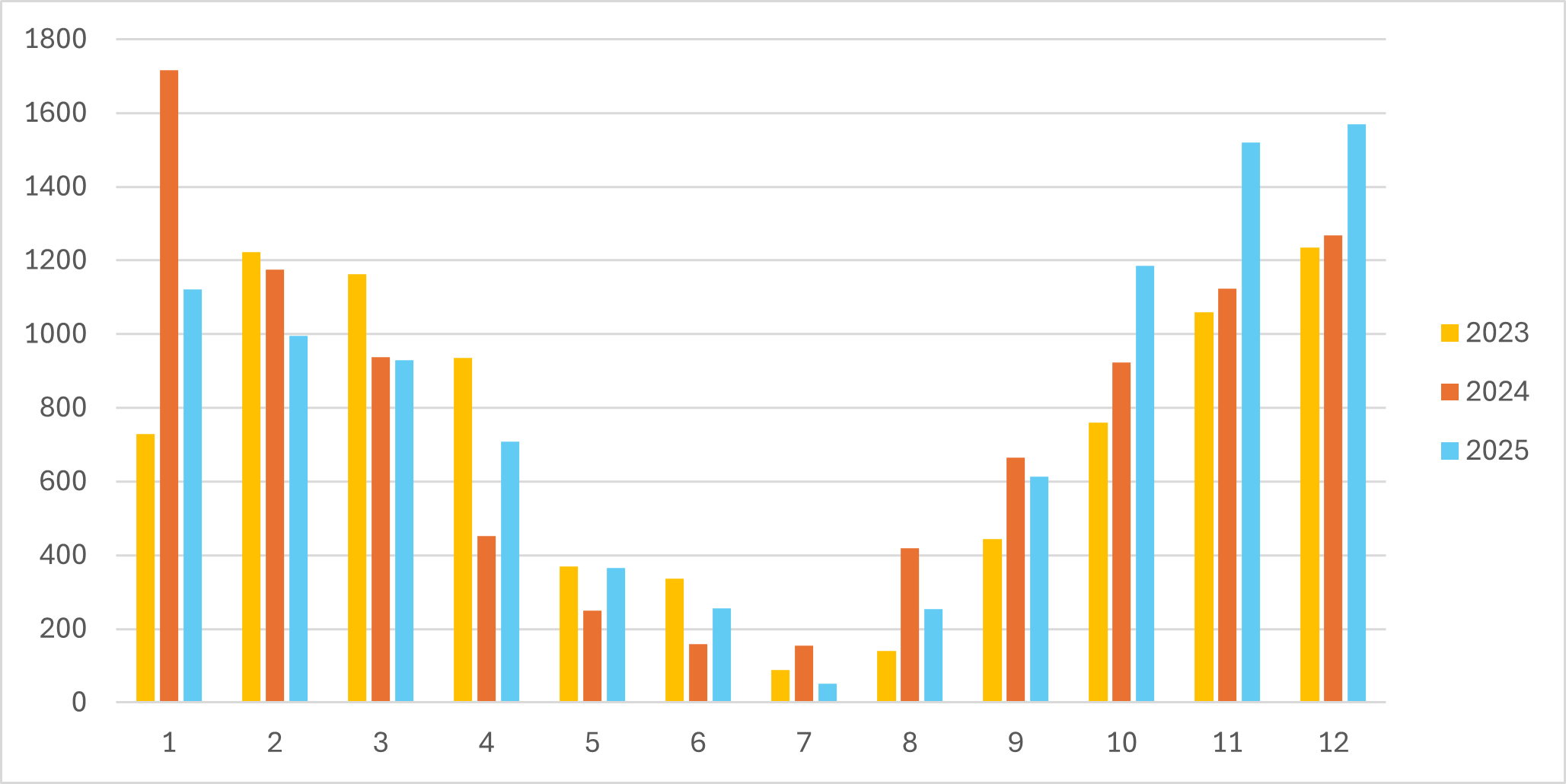
Figure 1. Energy (kWh) produced by the generator each month from 2023 to 2025.

In terms of solar production we can see the great benefit derived from replacing the faulty connectors on the solar panels on June 11 2025 (Figure 2 and see the post from 18 | June | 2025 | Race Rocks Ecological Reserve-)
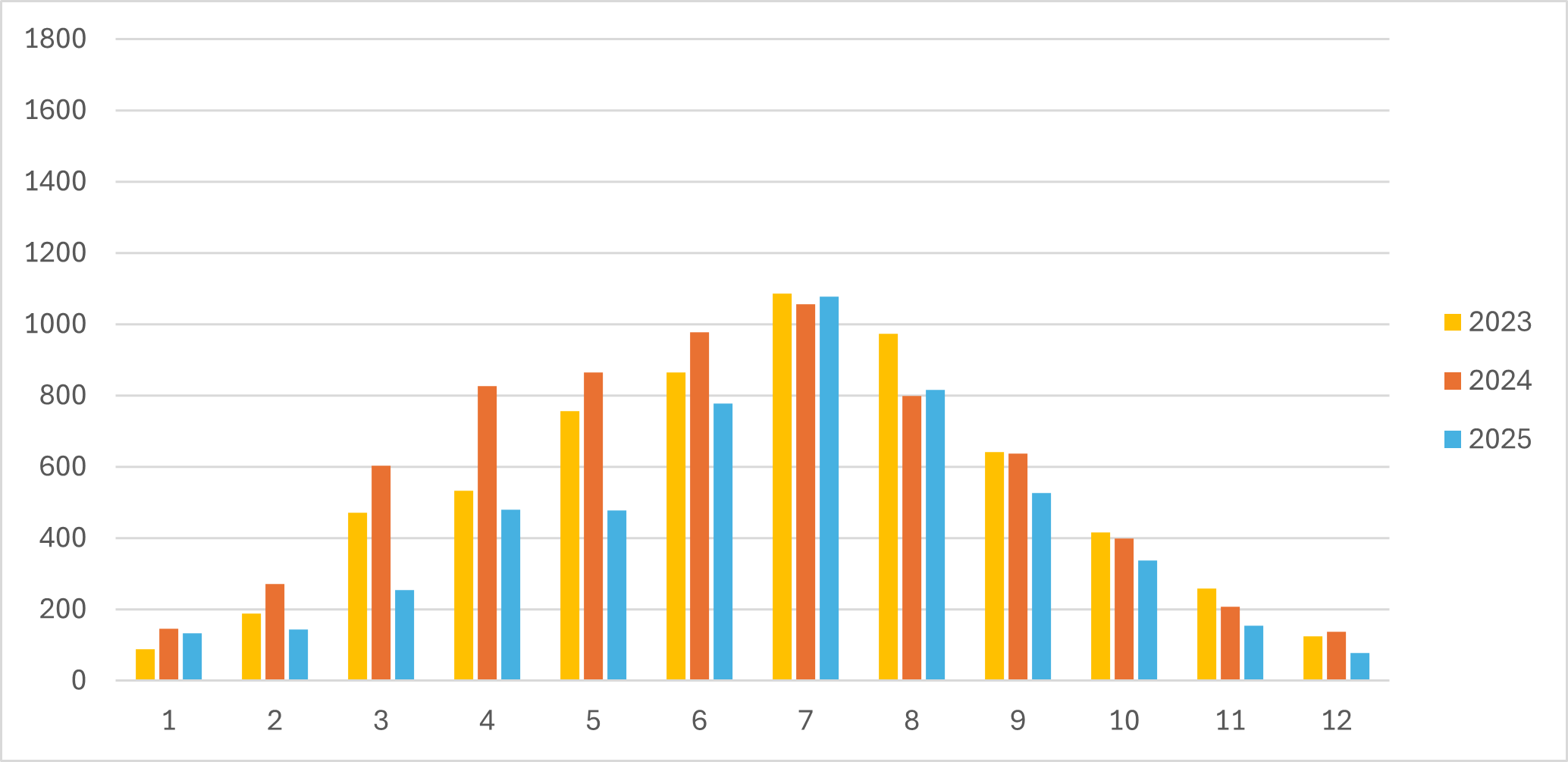
Figure 2. Energy (kWh) produced from solar each month from 2023 to 2025.

There is, as expected, a marked seasonal variation in generator use (Figure 3 and Table 1).  On average throughout the year, we are getting 60% of our energy from the generator and 40% from solar.  In an ideal world we would flip this ratio or even better, rely mainly on solar energy.  This brings me to why I took this deep dive into the data.  The notice from OpticsRE software package that the online data archives available for download were soon being reduced to 6 months (which prompted me to download all historical data) coincided with a request from Seafront to calculate average fuel consumption. Today we had an off-grid energy specialist visit Race Rocks.  Hopefully a more efficient, green energy power system is in our future!
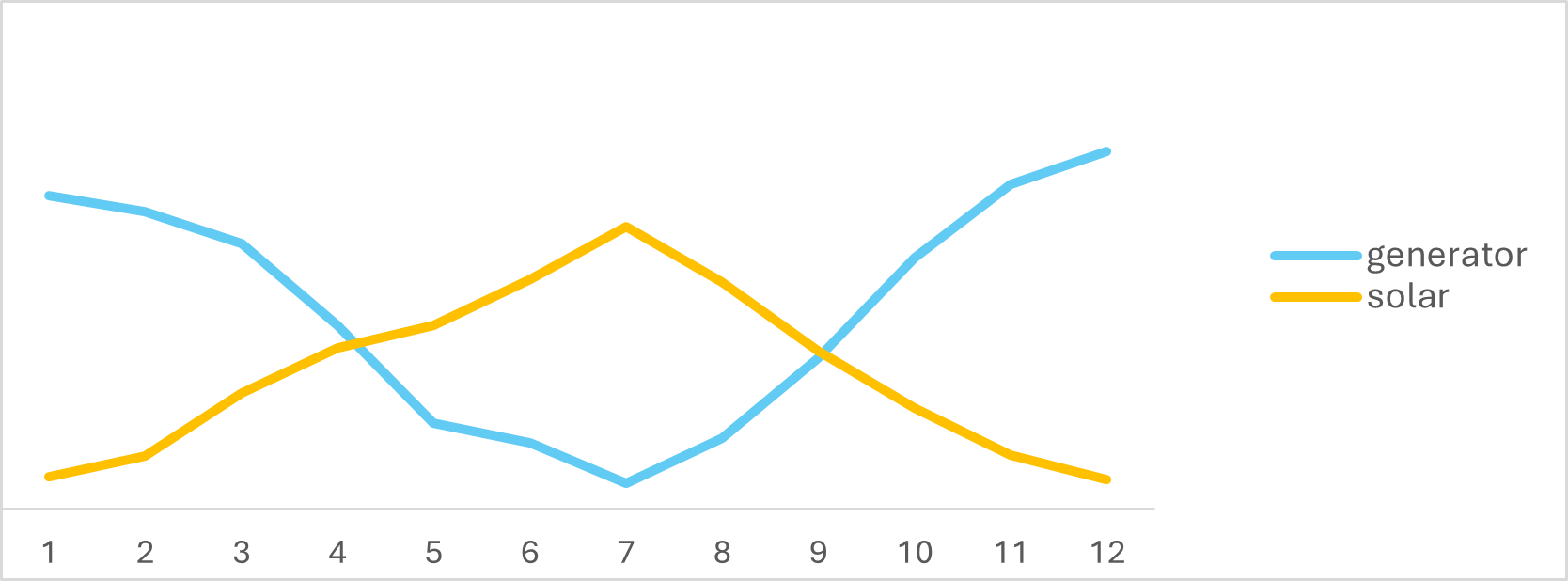
Figure 3. Relative distribution of power from the generator and from solar for each month, using data from 2023 to 2025.

Table 1. Average monthly kWh produced by the generator and from solar, using data from 2023 to 2025.

Wildlife notes

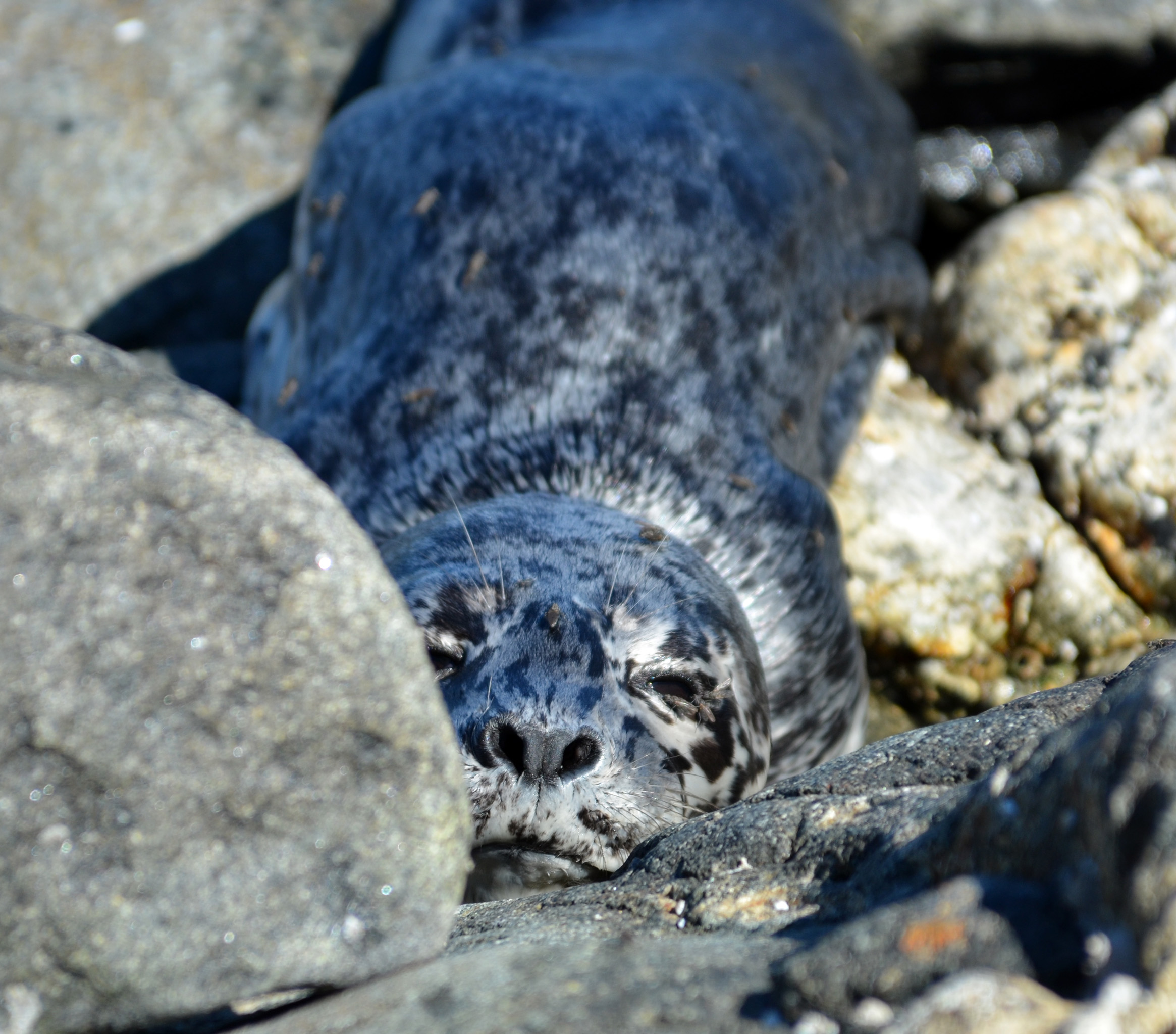
No remarkable events to report. The female elephant seal moved another 20m today.

Facility work

  • transferring diesel to the generator building and filling fuel tanks
  • joining Greg, Richard and the energy specialist on a power system inspection
  • downloading and formatting data, producing pivot tables and charts

Vessels

  • Ecotourism: 0
  • Private: 2 people on jet skis

Weather

Skies overcast. Winds light and variable. Glassy seas and fog by late afternoon. Daytime temperature 10 degrees.
 

Waiting

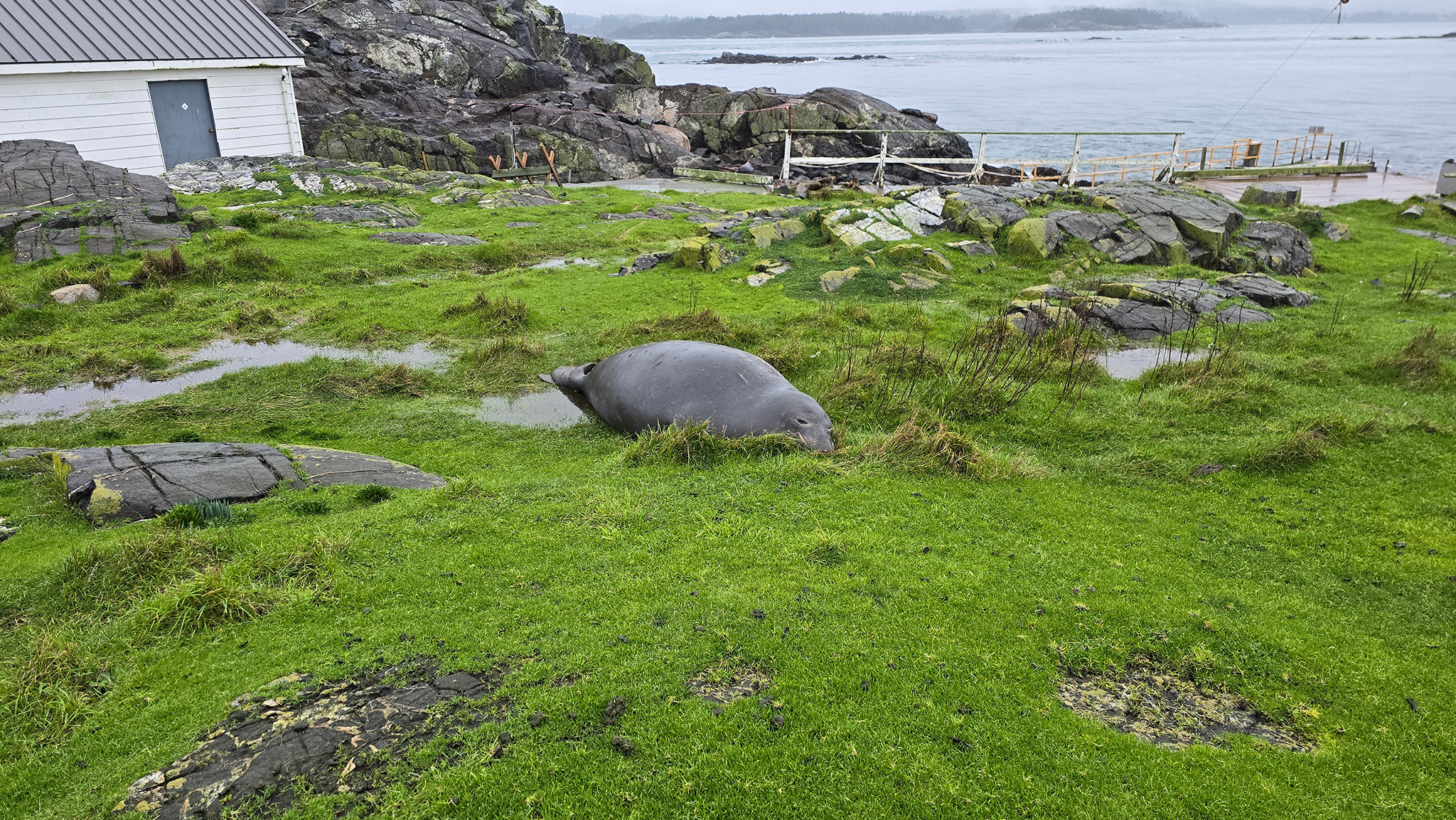
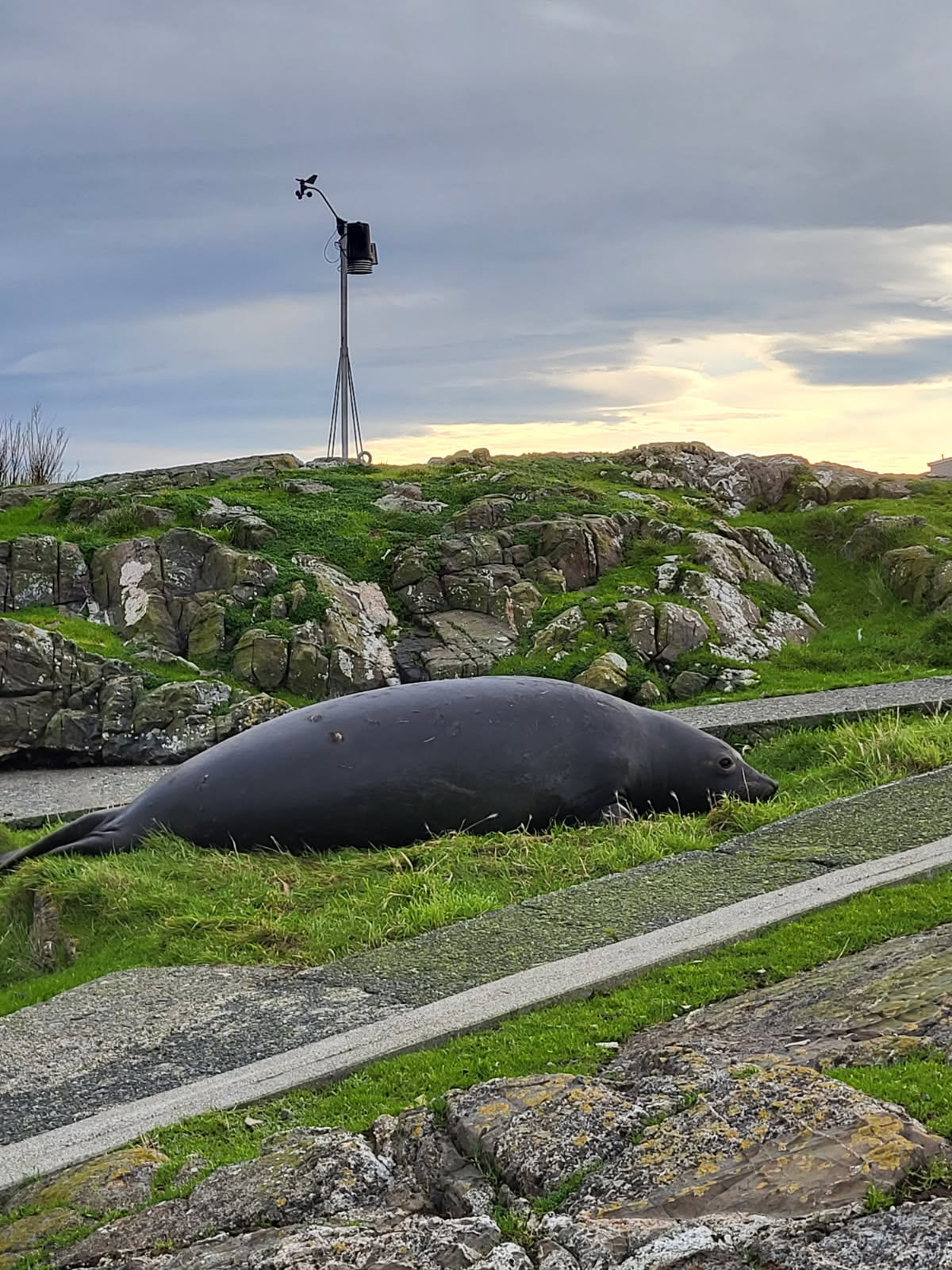
It was a quiet wet day here. The grass is soggy, puddles are present and parts of the island are muddy.  This is my first winter here so seeing standing water is novel. It is also quieter than I expected as most of the sealions in the area are on the outer rocks. The female elephant seal is still here. She moved 3 times today covering a distance of 20m. Pregnant or not, it’s a hard slog for a seal to move about on land. She mostly sleeps and rarely makes a sound. Pregnant or well-fleshed?

Water puddles and the female elephant seal.

Facility work

  • topped up battery fluids, cleaned battery tops, squeegeed the battery room floor
  • sorted and entered data from old generator logs to determine fuel usage.
  • downloaded and archived the OPTICSRE events and report data

Vessels

  • Ecotourism: 1
  • Private: 0

Weather

Skies overcast with periods of rain. Light winds 2 to 9 knots, NE veering to SE by evening. Daytime temperatures: low 9, high 11.

Exciting news

I’m a riddle in nine syllables
An elephant, a ponderous house
…………….…
On the rock and there’s no getting off.

I’ve named our new visitor, who I have been told is likely a pregnant elephant seal, “Sylvia” – inspired by her poem “Metaphors”, parts of which are shown above. I watch and wonder if she is a first-time mom or does she even know she is pregnant? She is calling out in the dark of night. I hope she stays, gives birth here, and the pup survives its first month. Hopefully our camera arrives from the repair shop sooner than the pup!

This is just a quick post on my first evening here to share the exciting news. The female arrived on Race Rocks January 10th. The photos were taken by Cedric Torres.

A short stay

It has been almost four months since I was last here in July. Things have changed considerably. The water making system is operational and with an ample supply of water and student help, and the hard work of the waterfront staff and Ecoguardians, the buildings, walkways and decks have been scrubbed clean and the weeds are under control. The place looks fantastic!

The vegetation is green and all evidence of the summer nesting season chaos (gull nests, egg shells and chick corpses) has been blown away. The number of gulls is greatly reduced. The pigeon guillemots are absent. The cormorant population has exploded. A group of thirty plus oyster catchers were seen but they have given up on their evening fly abouts. The Canada geese are back and a lone snow goose.

East Beach is no longer covered with hundreds of turnstones and surfbirds. The beaches and rocks now belong to the sea lions and they make sure you know it. They would take over the entire island if it weren’t for the electric fence and removing them from the boat ramp when I collect the sea water data is a daily battle.

Noses in the air, refusing to move

Sea lions on East Beach

Sea lions on the west shore

With the gull population, and their rain of excrement, dramatically reduced, my summer morning ritual of cleaning the solar array has been replaced with electric fence patrol and repair. During my short stay from Nov 10 to 14, I have been occupied with fence upkeep, general cleaning, battery maintenance, getting firewood and transferring diesel.

Cutting rounds in the sunshine on Tuesday

An electric log splitter was delivered on Wednesday. I had mixed emotions, having a fondness for splitting wood but I am over it. It is an amazing new addition and sure made fast work of the splitting.

It has been a great short visit to Race Rocks. I am grateful for the opportunity to experience this incredible place at this time of year.

DND Activity

Several blasts on Nov 13 caused minor disturbance to the sea lions.

Facility work

  • electric fence repair
  • battery fluid levels
  • cutting and splitting rounds of firewood
  • diesel delivery – 530L

Vessels

Nov 10 – ecotourism: 3
Nov 11 – ecotourism: 4, private: 4
Nov 12 – ecotourism: 2
Nov 13 – ecotourism: 0

Weather

The weather has ranged from crisp sunshine to high winds with driving rain.

Nov 10 – partly cloudy, W gusting 37 knots, daytime temp 10 -11
Nov 11 – partly cloudy, veering from SW to E 10 knots, daytime temp 8 – 10
Nov 12 – cloudy, NE 6-12 knots, daytime temp 9 – 10
Nov 13 – overcast, rain, W 3-27 knots, daytime temp 9 – 11

Too busy to look

Wildlife notes

Nothing out of the ordinary to report today. I think I was just too consumed with my indoor tasks, cleaning, packing, planning, paperwork, talking with the next Ecoguardians etc. to pay enough attention.

This is my last post. I leave tomorrow. Before I go I’d like to thank those who supported me and provided assistance. First and foremost, I’d like to thank my supervisor Greg for all he has done, for always being there and always answering his phone. Thank you to Garry the Park Warden for his encouragement, Mike and Richard the waterfront staff for their assistance, Laura the marine biology instructor for letting me join her tours, Ann and Andrew for their help with bird ID, Hans for verifying the new plants found on the island and Val from Eagle Wing for keeping me informed on animals beyond my line of sight. I’d also like to thank Derek for helping with the camera issue and Kendra for talking to me when I worry about a young seal pup. And to the person who donated to Race Rocks in my name, thank you for reading and for acknowledging my effort on the posts!!!

It is a great privilege to be here. I will miss everything, except the toilet anxiety: am I properly positioned over the right compartment, pee or poo or what if both happen, or did I forget to open to the poop flap?

Mostly I will miss having so much to observe, smell, hear and feel (the sky, wind, waves, tide, plants, birds, seals, sea lions, whales…) and the experience of spending my days is awe and filled with wonder.

Facility work

  • cleaned solar panels
  • contributed to next month end report
  • emails, correspondence
  • cleaning house, organizing

Vessels

  • Ecotourism: 26
  • Private: 3

Weather

Clear skies. Fresh westerly breeze until late afternoon, strong breeze in the evening. Daytime temperatures: low 11, high 14.

Goodbye Race Rocks. Christine Chourmouzis, July 20, 2025.

Last breath

Wildlife notes

Large, older Stellar sea lions are starting to arrive and settle on the islands and rocks in the area. There are still a few gulls with eggs. The oldest gull chicks are starting to grow their feathers and are jumping and stretching out their wings. The oldest oystercatcher chicks are almost full size, their beaks are orange except at the tips and are also stretching their wings. Harbour seal pups haven’t been dropped off on at East Beach for the past two days. The population of black turnstones and surfbirds has exploded. There are so many of them and they are all nattering away – no wonder the ruddy turnstone keeps to itself.

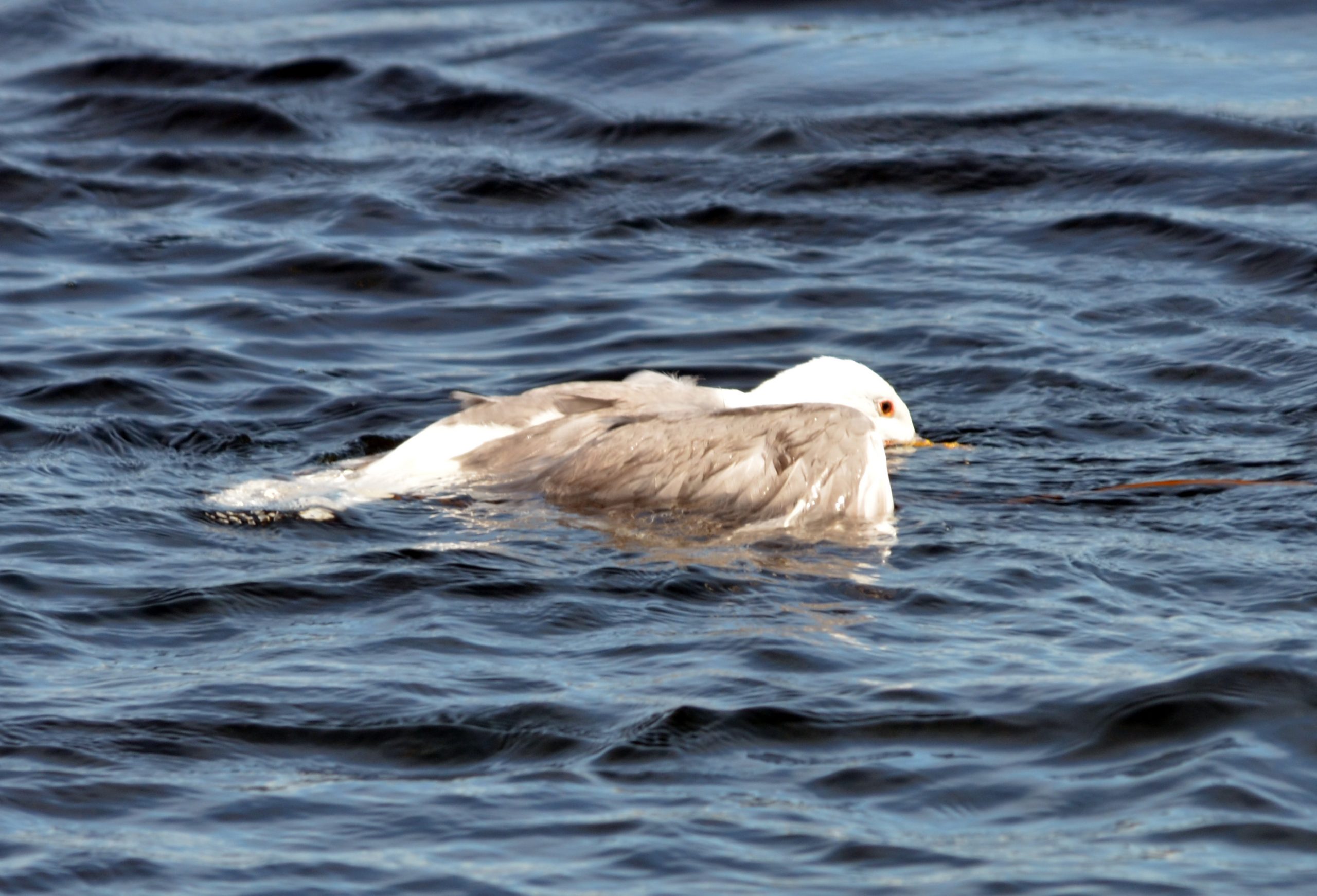
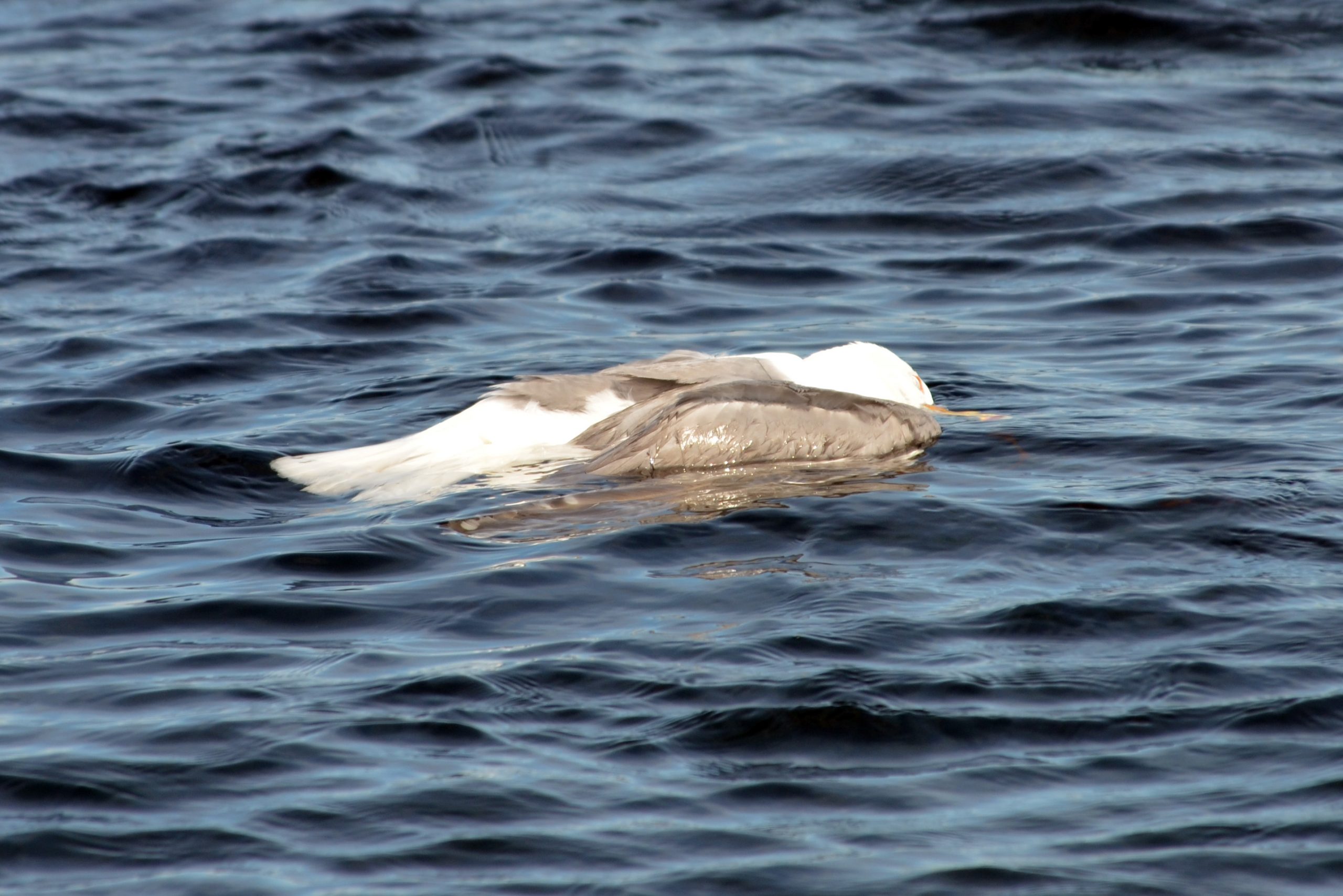
On a sad note, I watched an adult gull take its last breath. It was floating in the back eddy at East Beach, with one wing bent in an odd position. For the 10 minutes I watched, it didn’t struggle or move except to lift its heavy head out of the water. I don’t know how it got there or what happened to it. It was gone when I checked 30 minutes later. Sure there are so many gulls all over the world but still it feels odd displaying these moment of death photos. If it had chicks, they will likely also die as one parent can’t both feed and protect the chicks.

Facility work

  • cleaned solar panels
  • measured battery specific gravity
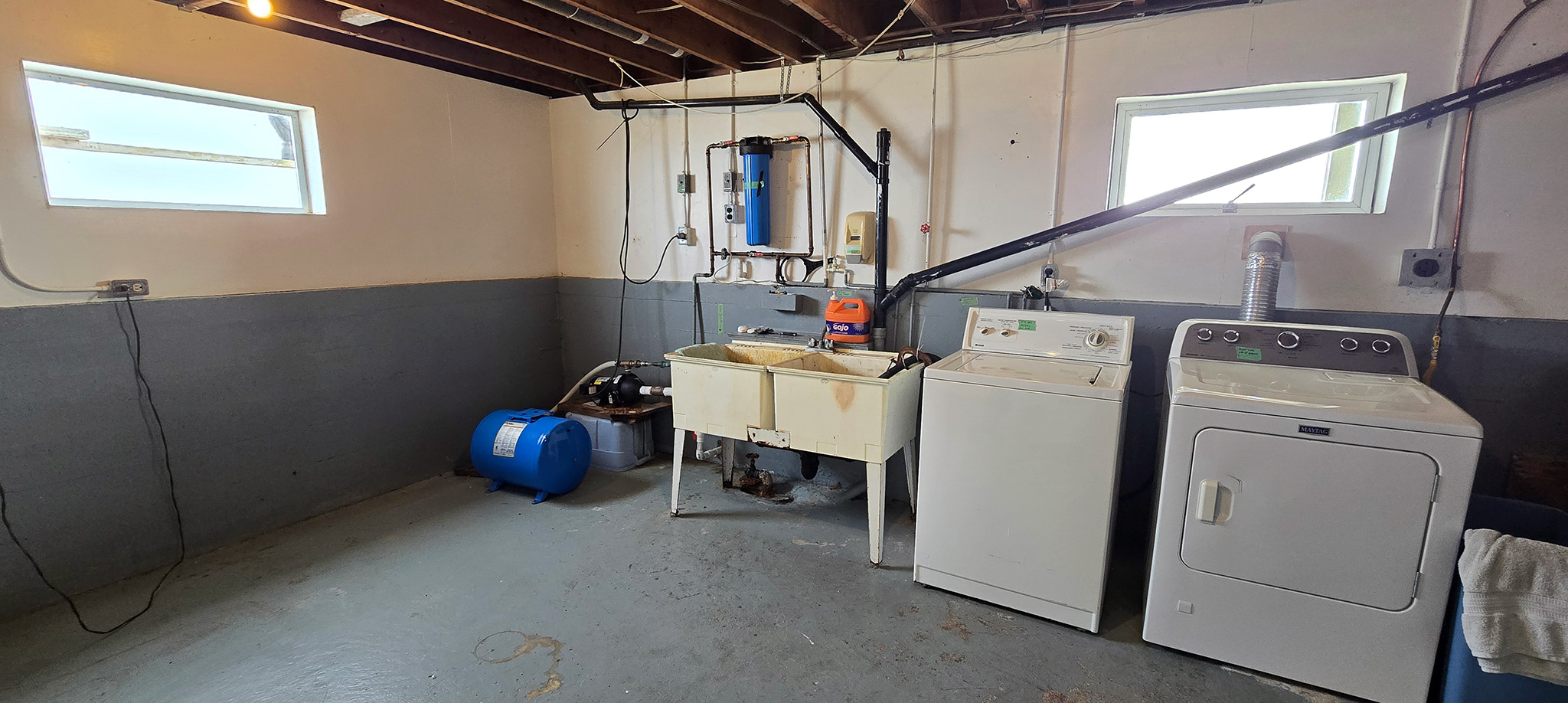
  • finished cleaning the laundry room (walls, windows, ledges and shelves), swept and cleaned woodpile area in basement

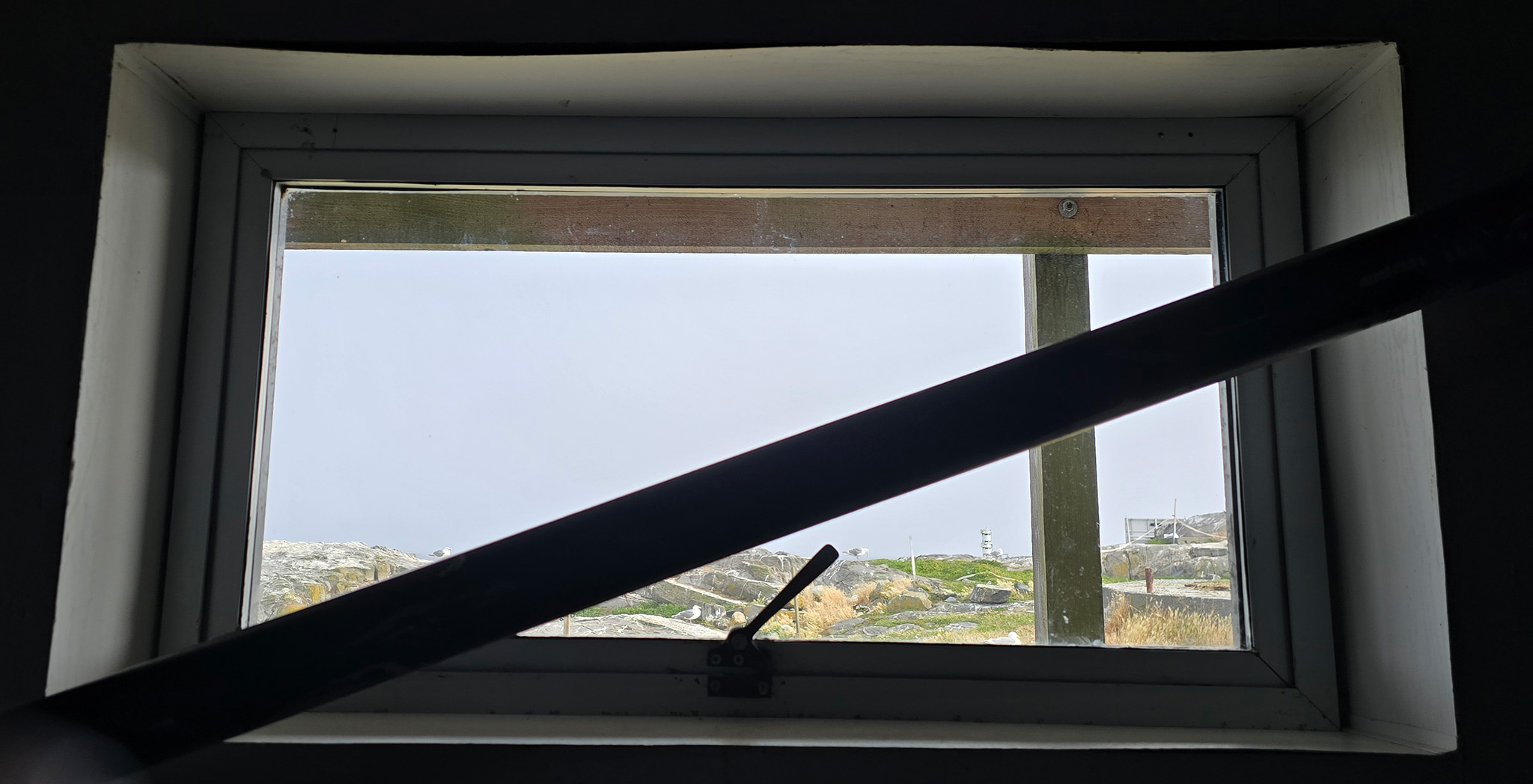
After…so nice to look out the windows.

The laundry room.  The last of my cleaning jobs as I only have one and a half days left.

Vessels

  • Ecotourism:22
  • Private: 2

Weather

Skies partly cloudy. Strong WNW or W breeze until evening then near gale force. Daytime temperatures: low 12, high 14.

July 18 Census

Mammals:

  • Steller sea lion: 1 South Islands, 4 on Middle Rock
  • California sea lion: 0
  • Harbour seal: 101 plus 5 pups (July 11: 181 adults, one pup, July 4: 54 adults, one pup, June 27: 258)

Birds:

  • Gulls: 612 (July 11: 1309, July 4: 514)
  • Pigeon guillemot: 139
  • Cormorants: 32
  • Bald eagle: 3
  • Black oystercatcher: 14 adults (saw 8 chicks today, likely 10 or more, no visual yet on the Energy Building chicks)
  • Harlequin duck: 2
  • Surfbird: 70
  • Black turnstone: 141
  • Ruddy turnstone:  2
  • Brown pelicans: 49

Wildlife seen this week inside the reserve but not observed today include: humpback whale, wandering tattler, western sandpiper, least sandpiper, short-billed dowitcher. Note gull count does not include this years chicks.

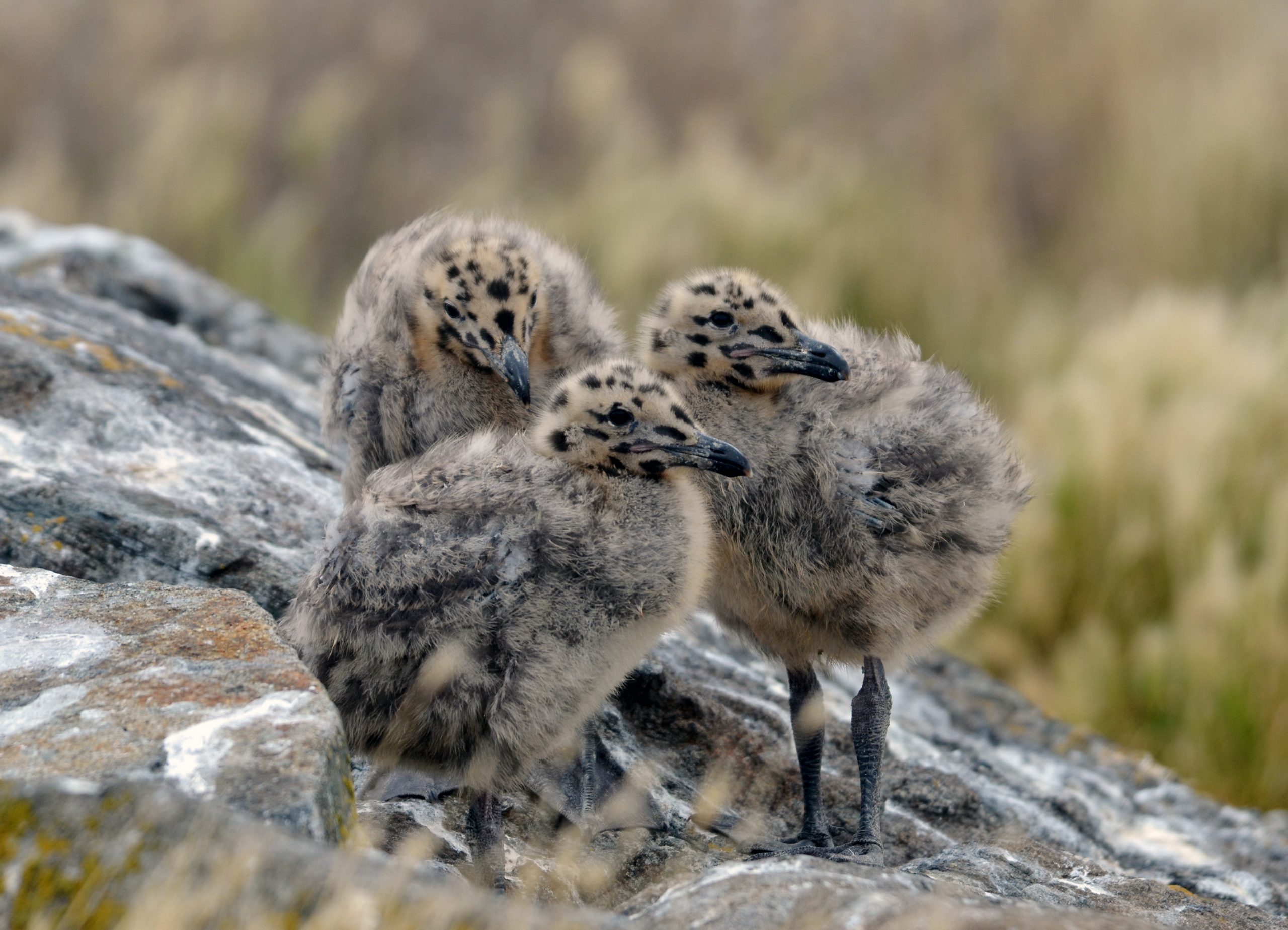
Glaucous winged sea gull chicks, not included in the census numbers.

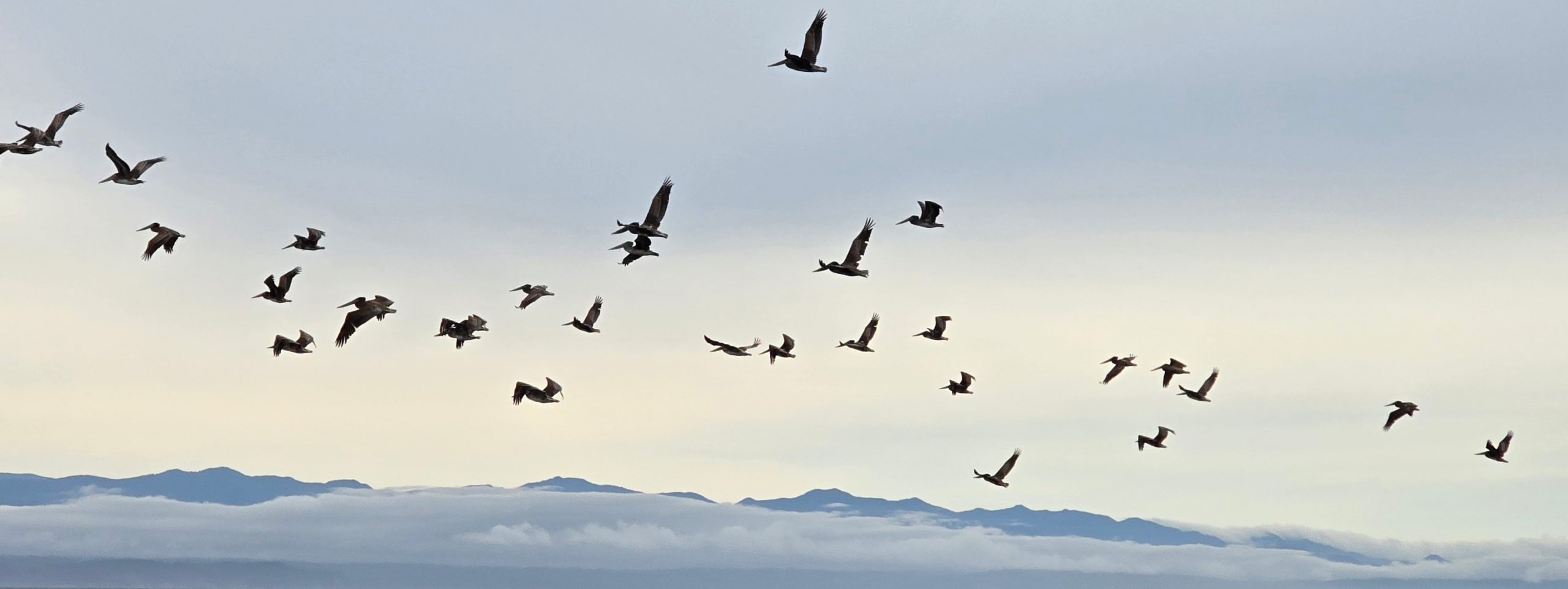
A squadron of brown pelicans, at least 49 of them, flew over the western end of the island several times. They landed in the water and were around for about 30 minutes.

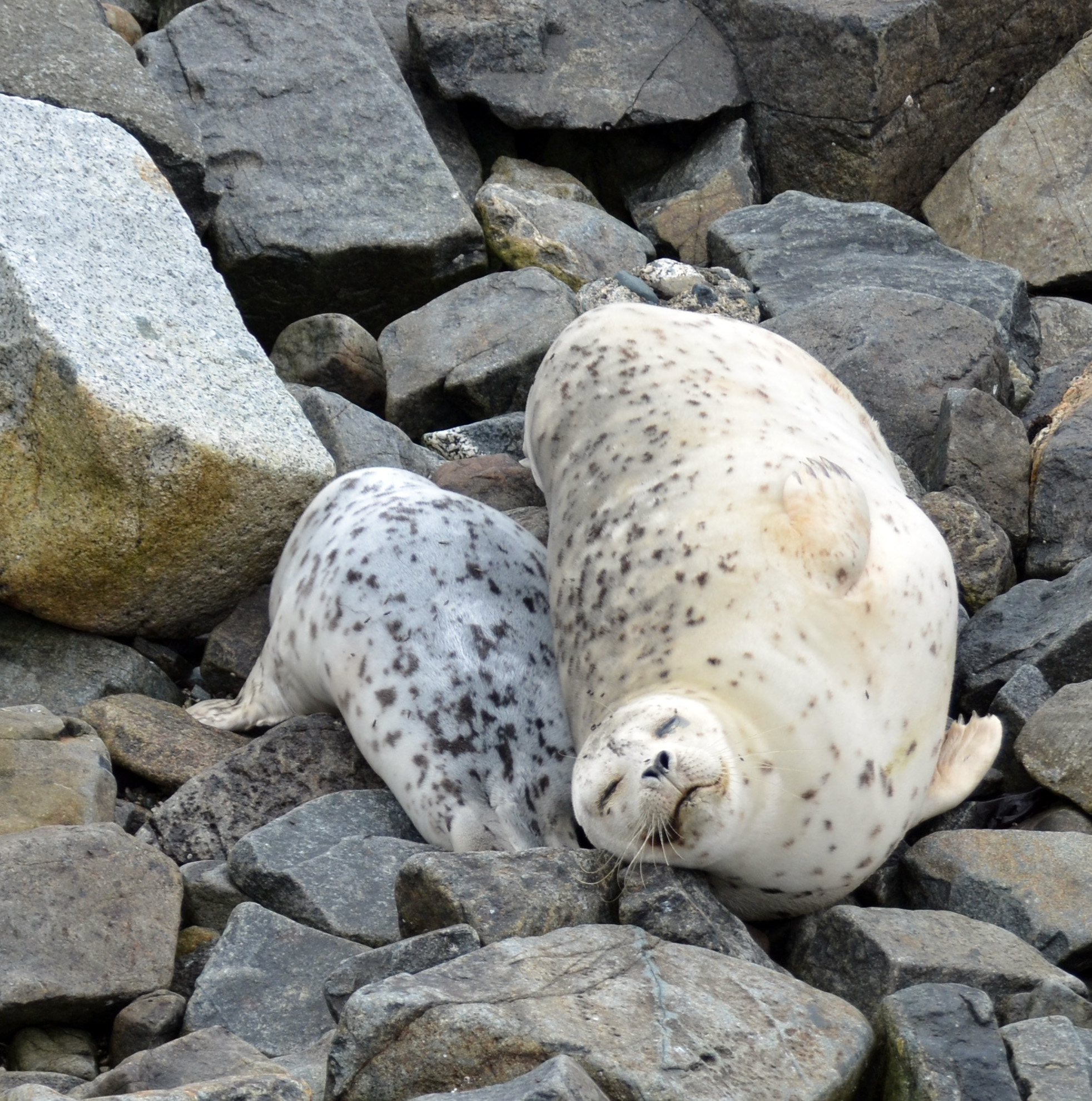
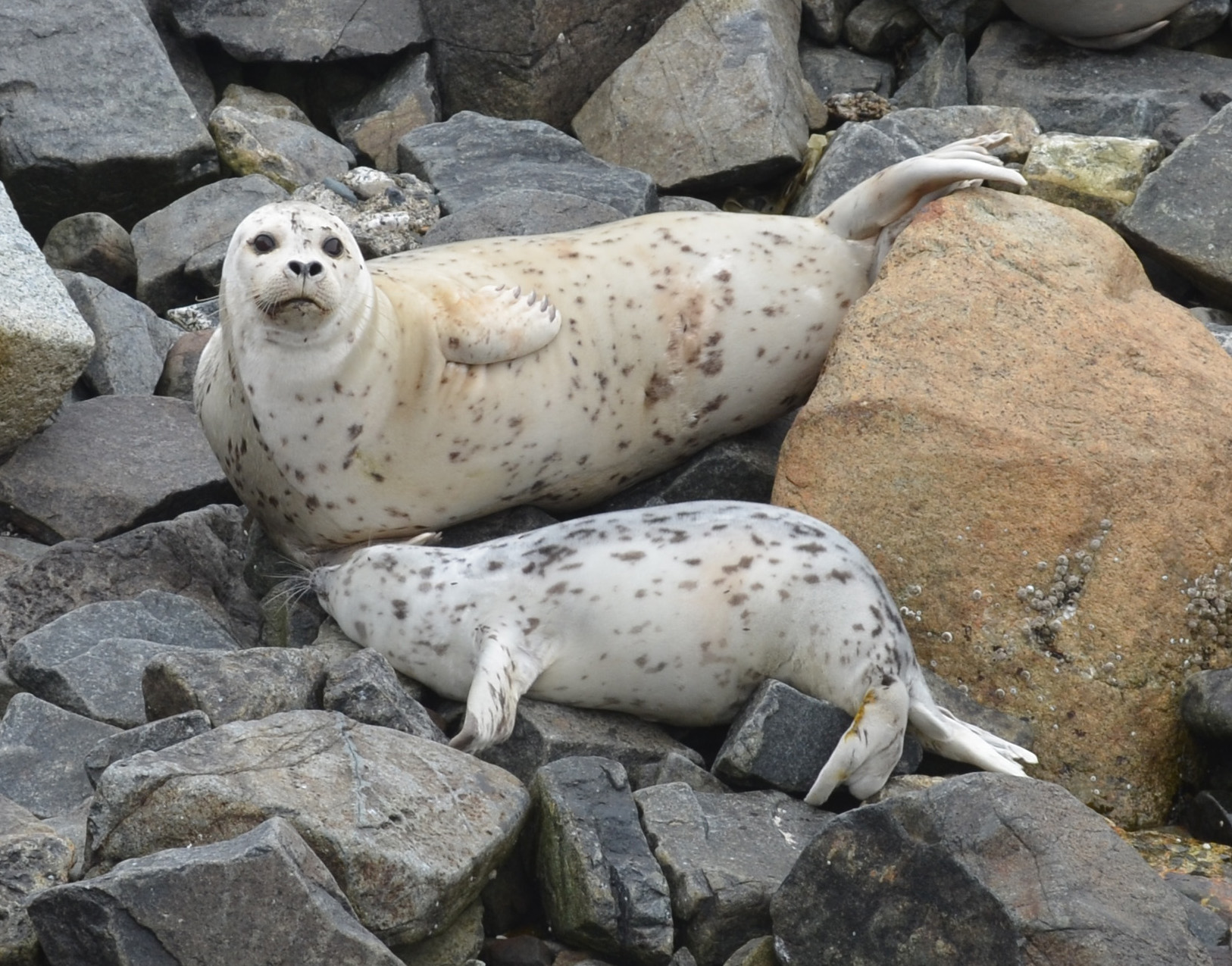
The harbour seal pubs stay with their moms for 4 to 6 weeks before they are weaned and will double in size during that time. The white seal pup first photographed on July 2 and 3 has put on a lot of weight.

Facility work

  • cleaned solar panels
  • topped up battery fluids

Vessels

  • Ecotourism: 17
  • Private: 2

Weather

Strong westerly breeze until afternoon, gale force in the evening, gusting 40 knots. Day time temperatures: low 11, high 16.

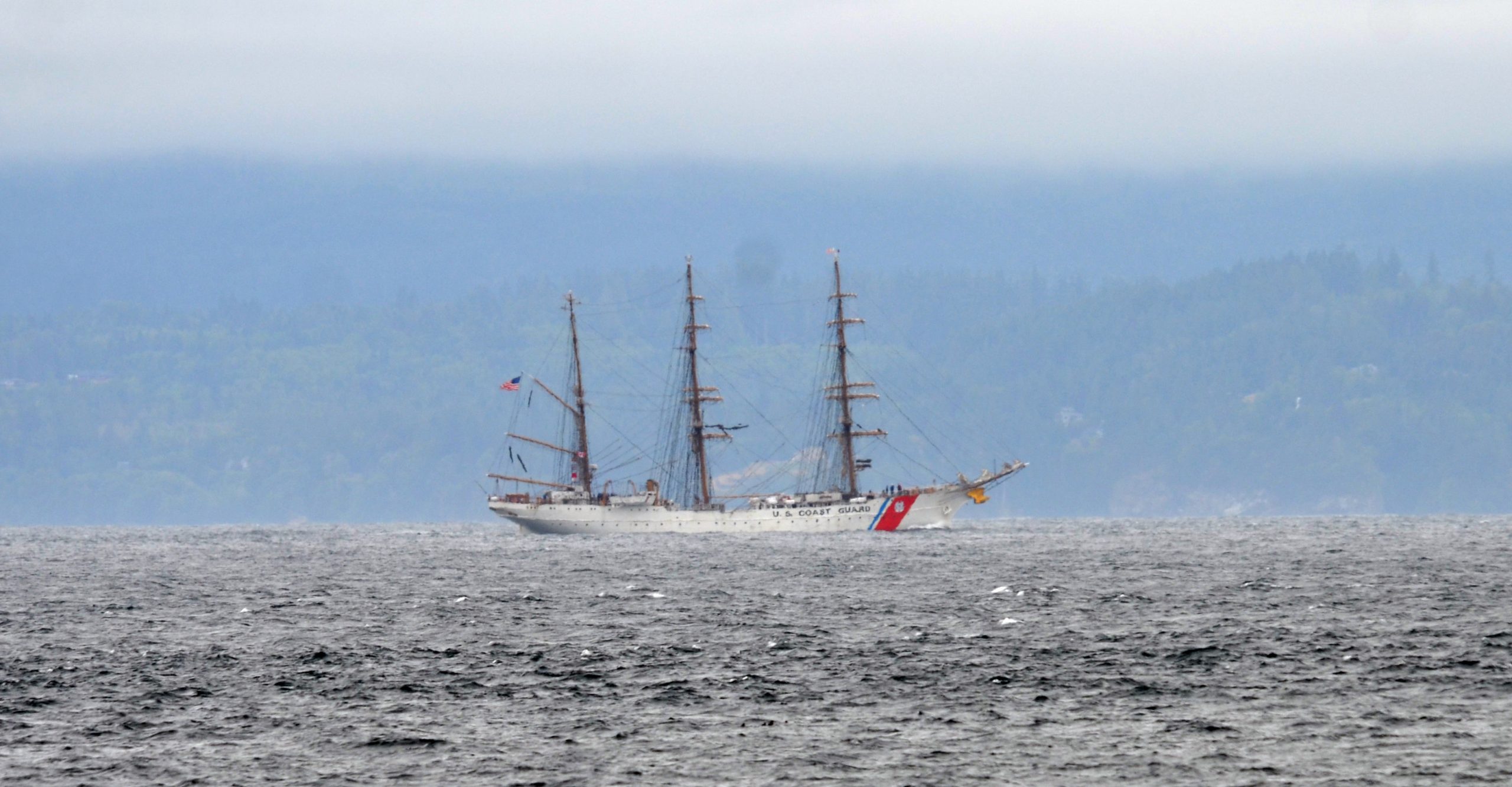
US Coast Guard tall ship heading west up Juan de Fuca Strait. Shame it was heading upwind as it would have been fantastic to see the sails up.

Wandering tattler

Wildlife notes

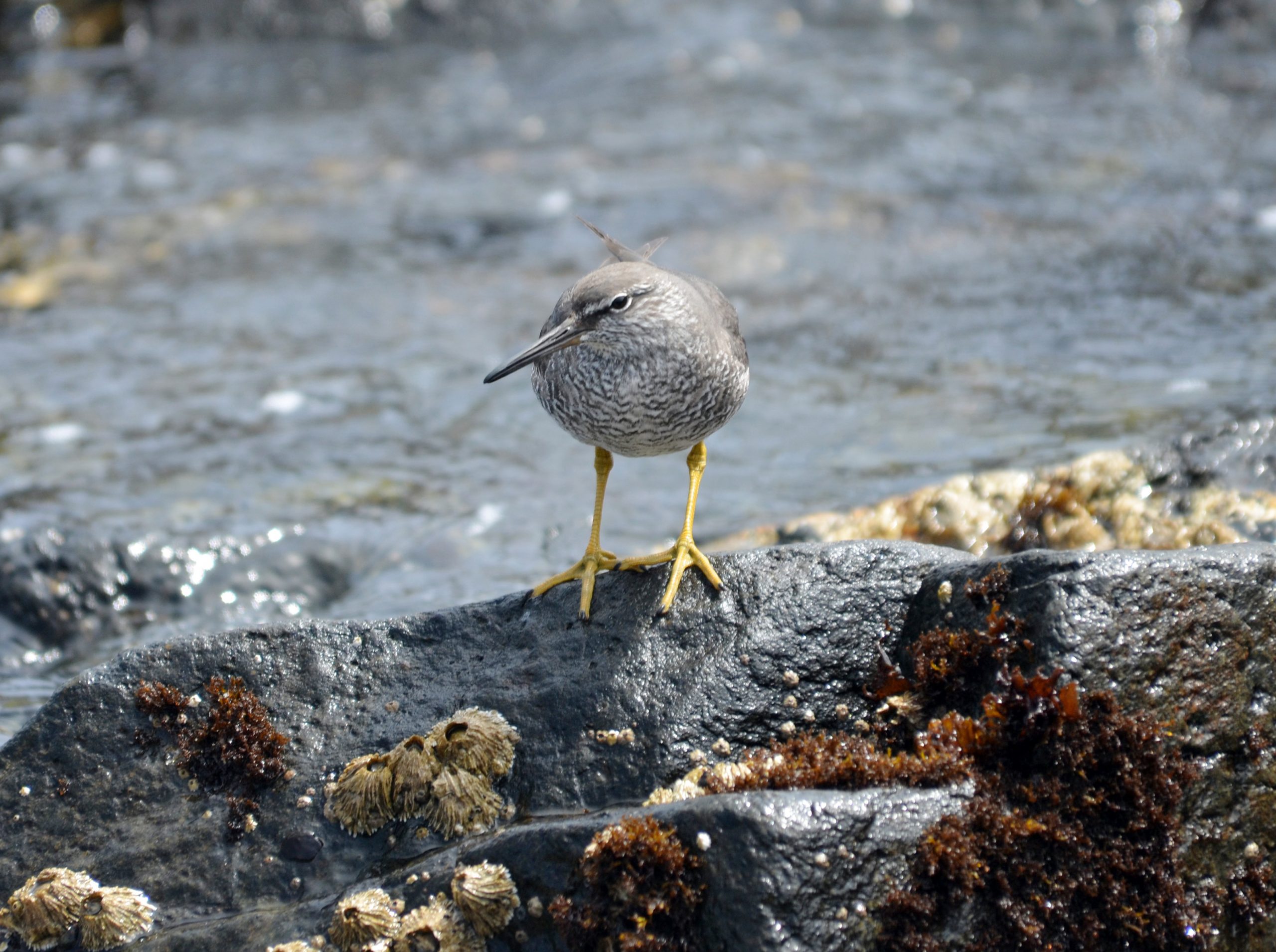
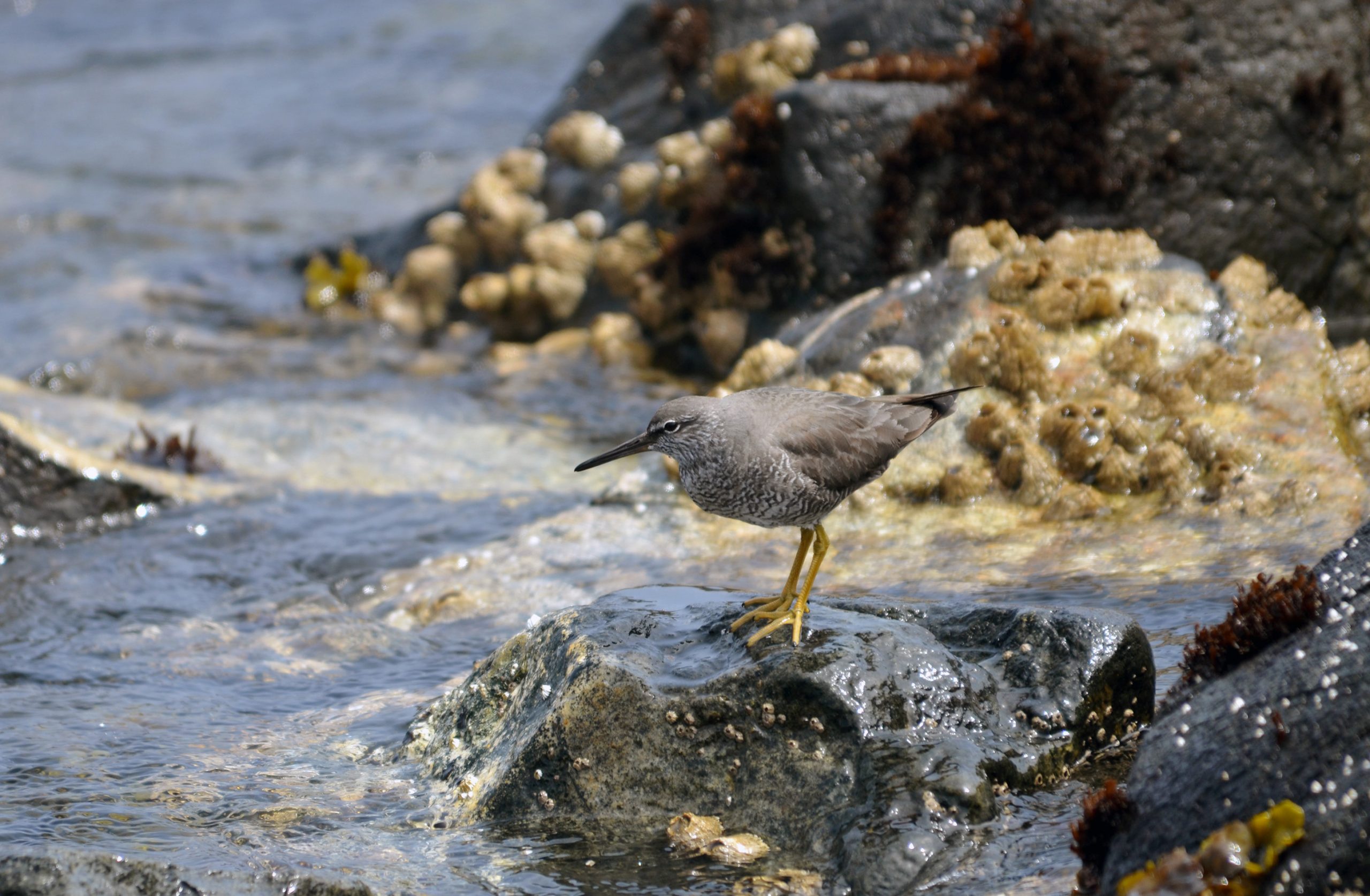
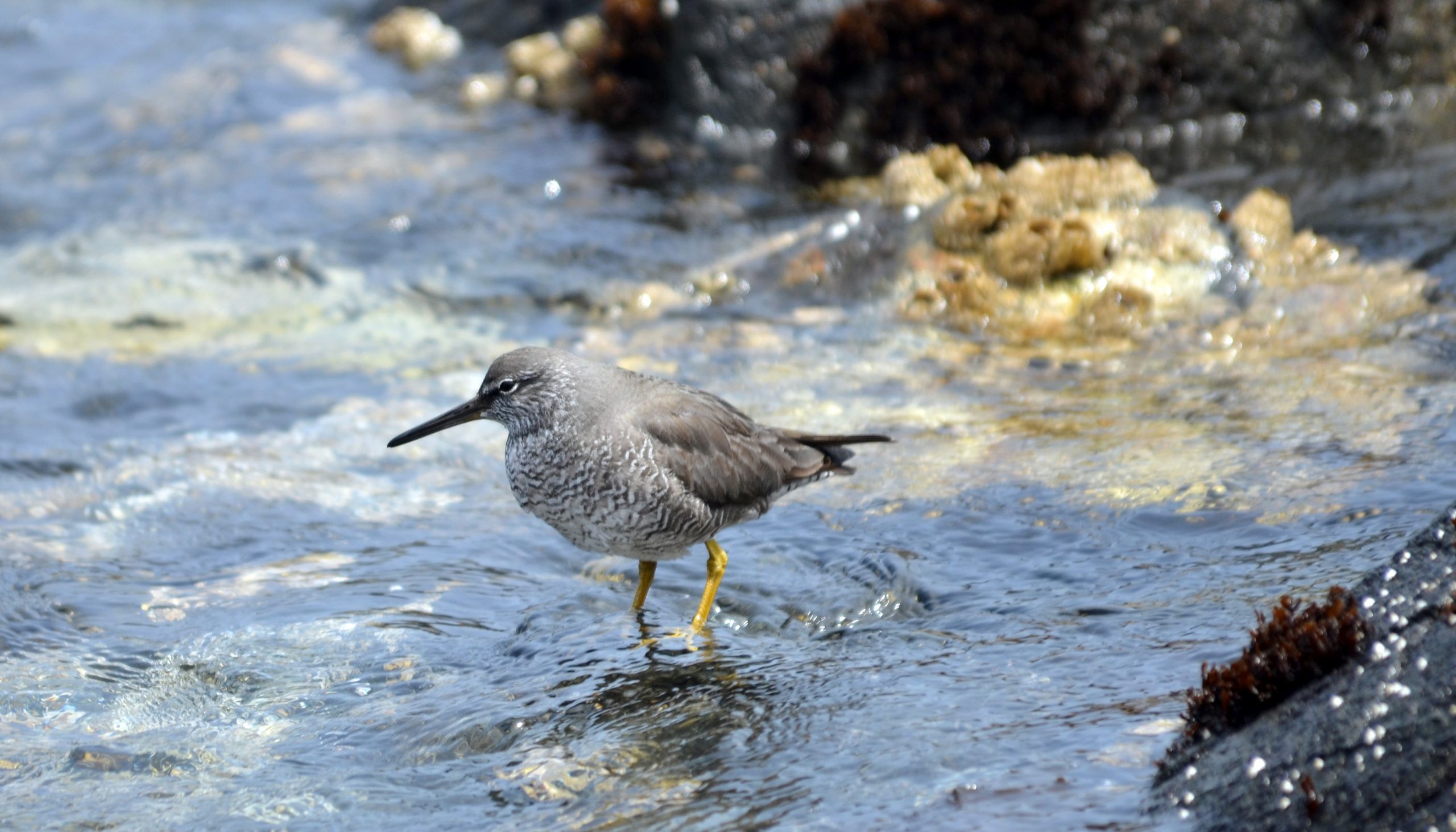
A wandering tattler was feeding at the rocks near the Jetty. I last saw one on May 17.  This time I could get good photos and actually sit for a while on the Jetty and watch it bob its tail and feed. I have so many photos – I’ll share just three. With regard to the gulls, nothing out of the ordinary to report. There are still just a few birds left on the nest with eggs and I have been spared seeing chicks killed by angry neighbours. I witnessed some close calls but the chicks were able to stand again and run away. It seems the best outcome results when chicks squat and freeze during an attack. I notice the same for myself – if I move away quickly from an angry, challenging parent on the ground, they chase me, but if I stop and hold my ground, they do the same. This doesn’t work if they are in the air. I was weed whacking today with the ear muffs on completely oblivious to their overhead threats and vocal warnings.  I need two hands to hold the tool so there really is no choice but to hope for the best and go change my clothes afterwards. Only four more sleeps. I shall miss this place dearly.

Wandering tattler

Facility work

  • cleaned the solar panels
  • weed whacked the walkways

Vessels

  • Ecotourism: 12
  • Private: 0

Weather

Moderate to fresh westerlies, building to strong in the late afternoon. Daytime temperatures: low 10, high 12.

Cleavers and searocket

Wildlife notes

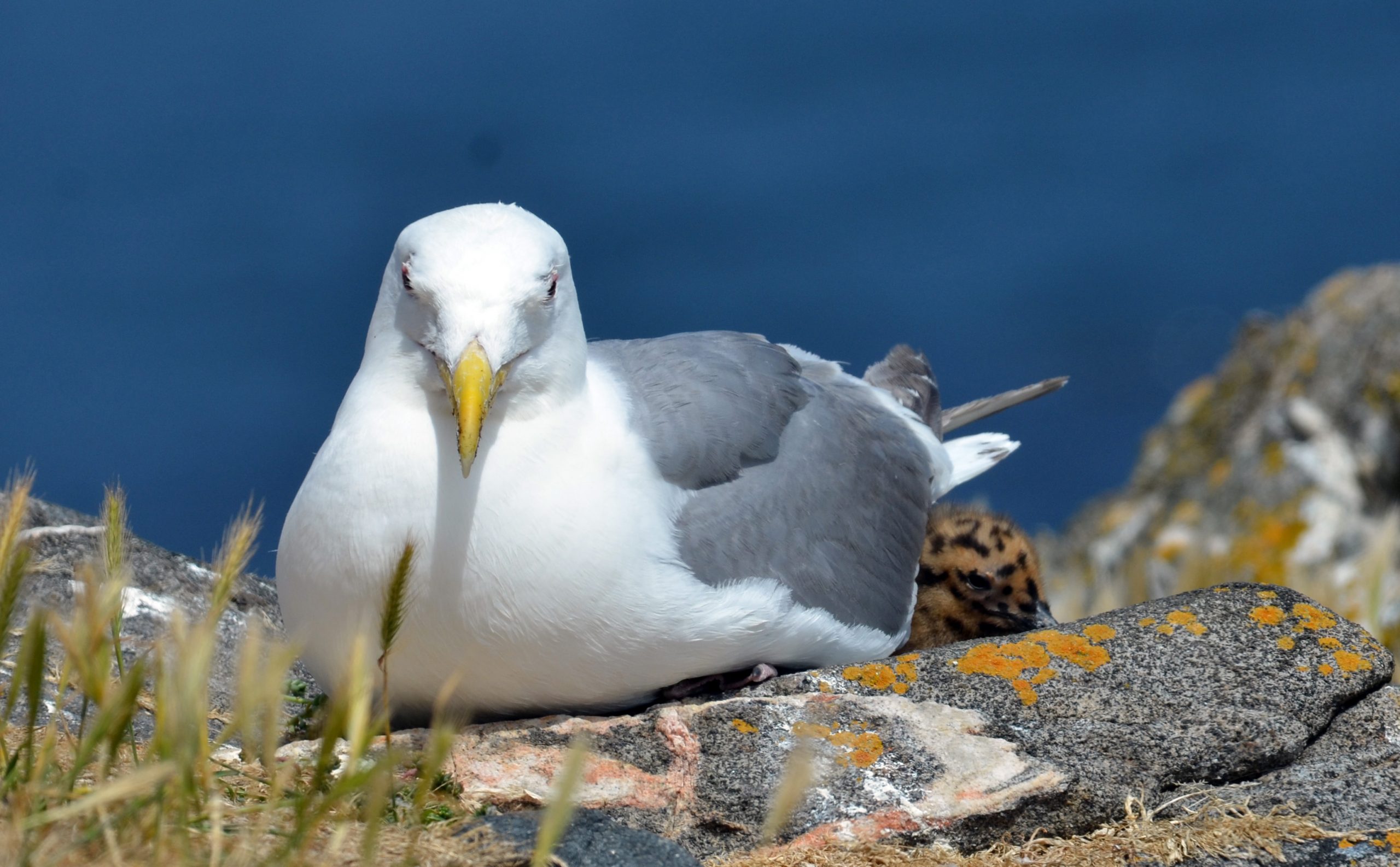
Sea lions are starting to return in low numbers but they are hauling out on Middle Rock. There are very few gulls left with unhatched eggs and some of the late layers have abandoned their third egg after the first two hatched. The eggs I found previously with their shells partially missing/chipped away (like on July 9th) have been discarded from their nests.

A gull and its chick – not to be messed with!

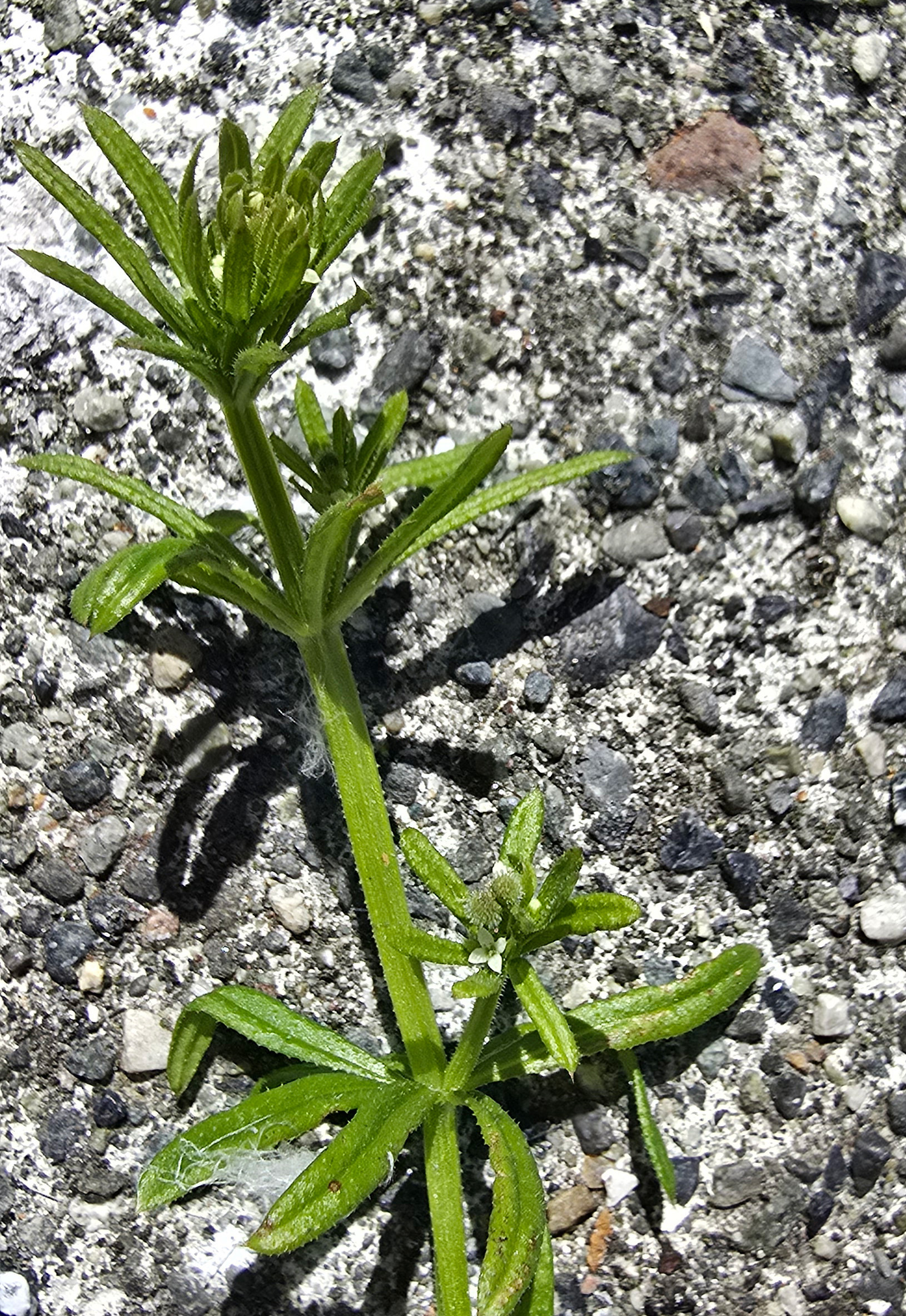
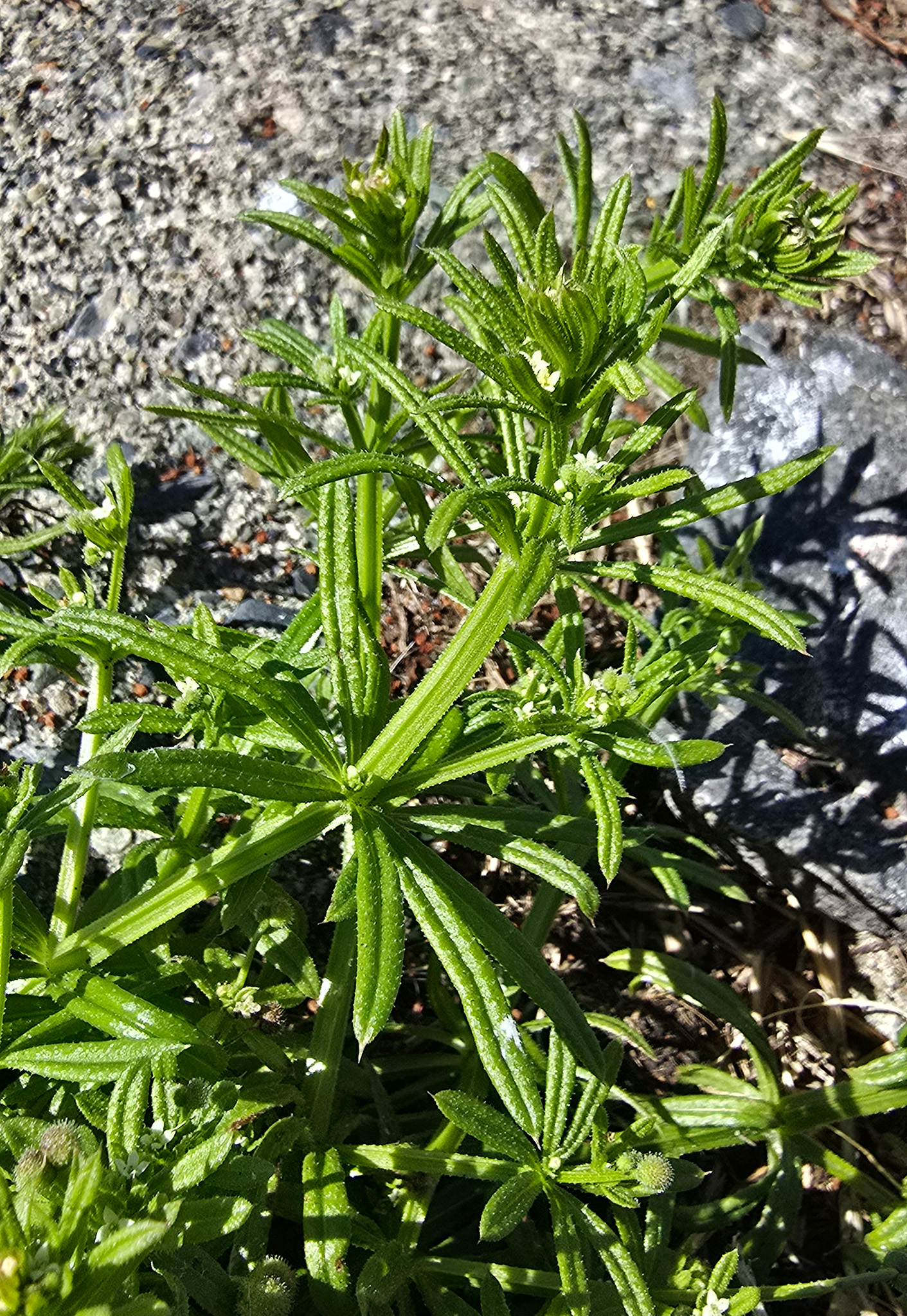
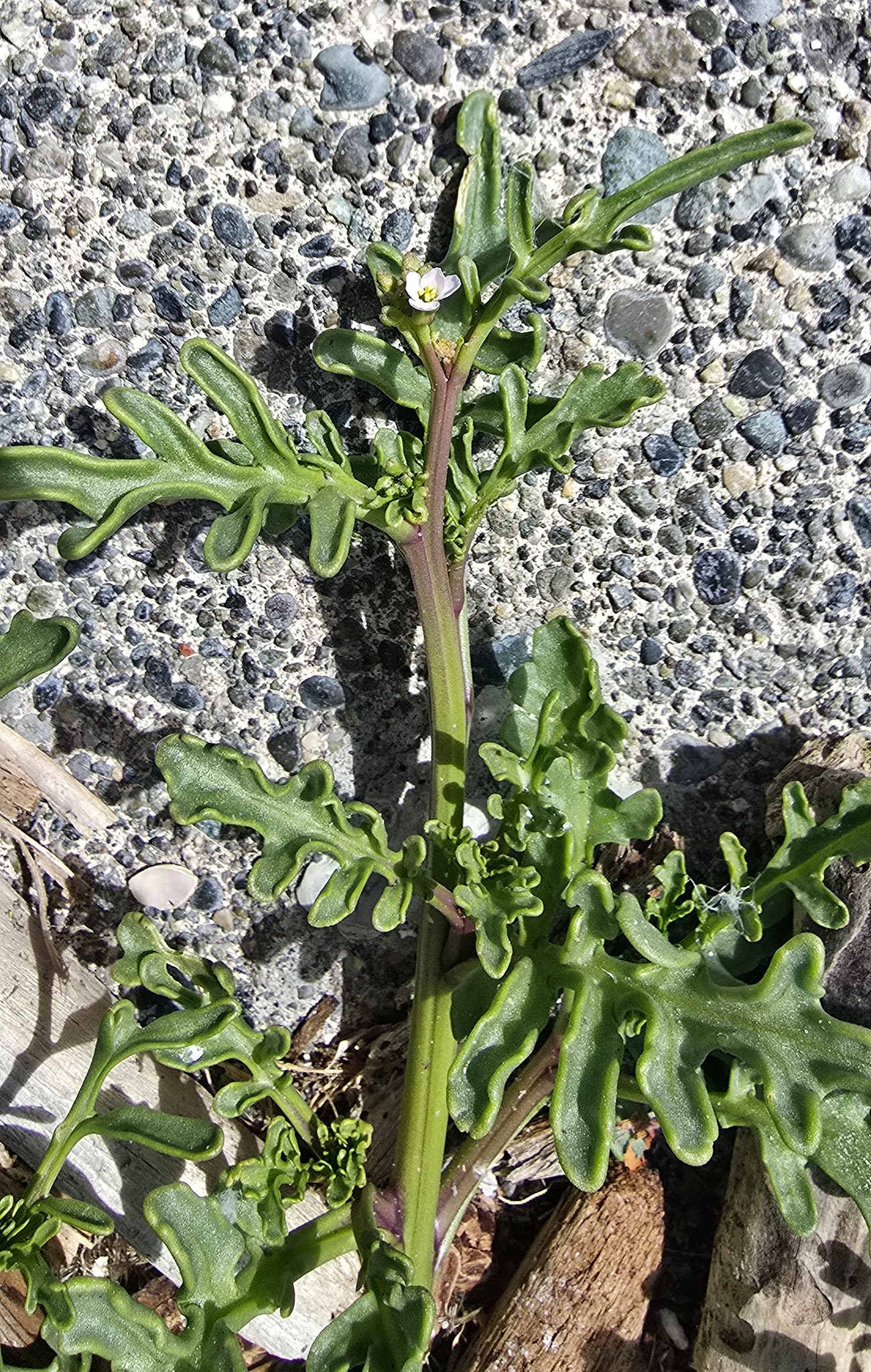
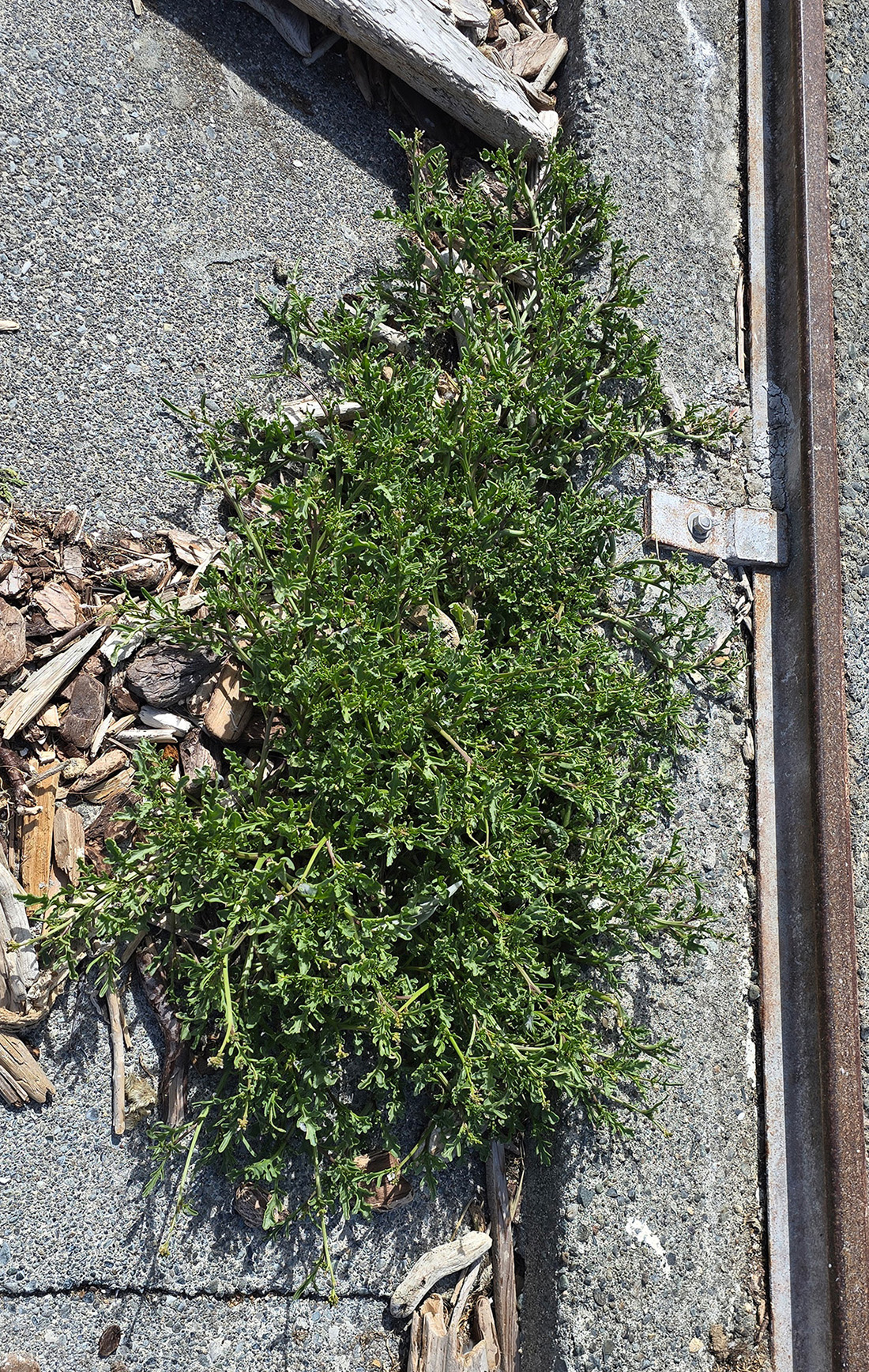
I have two more introduced species on Race Rocks to report. Cleavers, catchweed, sticky willy, or goosegrass (Galium aparine) was found in the rocks behind the Energy Building. Geese seem to eat it and that may explain how it got here. The second plant, European searocket (Cakile maritima), is growing on the boat ramp in a crack in the concrete. It is common in coastal areas in Europe, Asia and North Africa and may have come to North America in ship ballast water.

Facility work

  • cleaned solar panels
  • weeding
  • studying the Programmers Guide for the Mate3s power system controller and the programmed setpoints

Vessels

  • Ecotourism: 21
  • Private: 1

Weather

Skies clear. Winds variable and light until late afternoon, moderate SWS in the evening. Daytime temperatures: low 12. high 20.

First warm day

Today we reached 27 degrees C at 5pm (the highest temperature since I arrived on May 15th) but three hours later it was back to a breezy 15 degrees.  I have been spoilt and will suffer when I leave Race Rocks and face real heat. Just 6 more sleeps :(
Wildlife notes

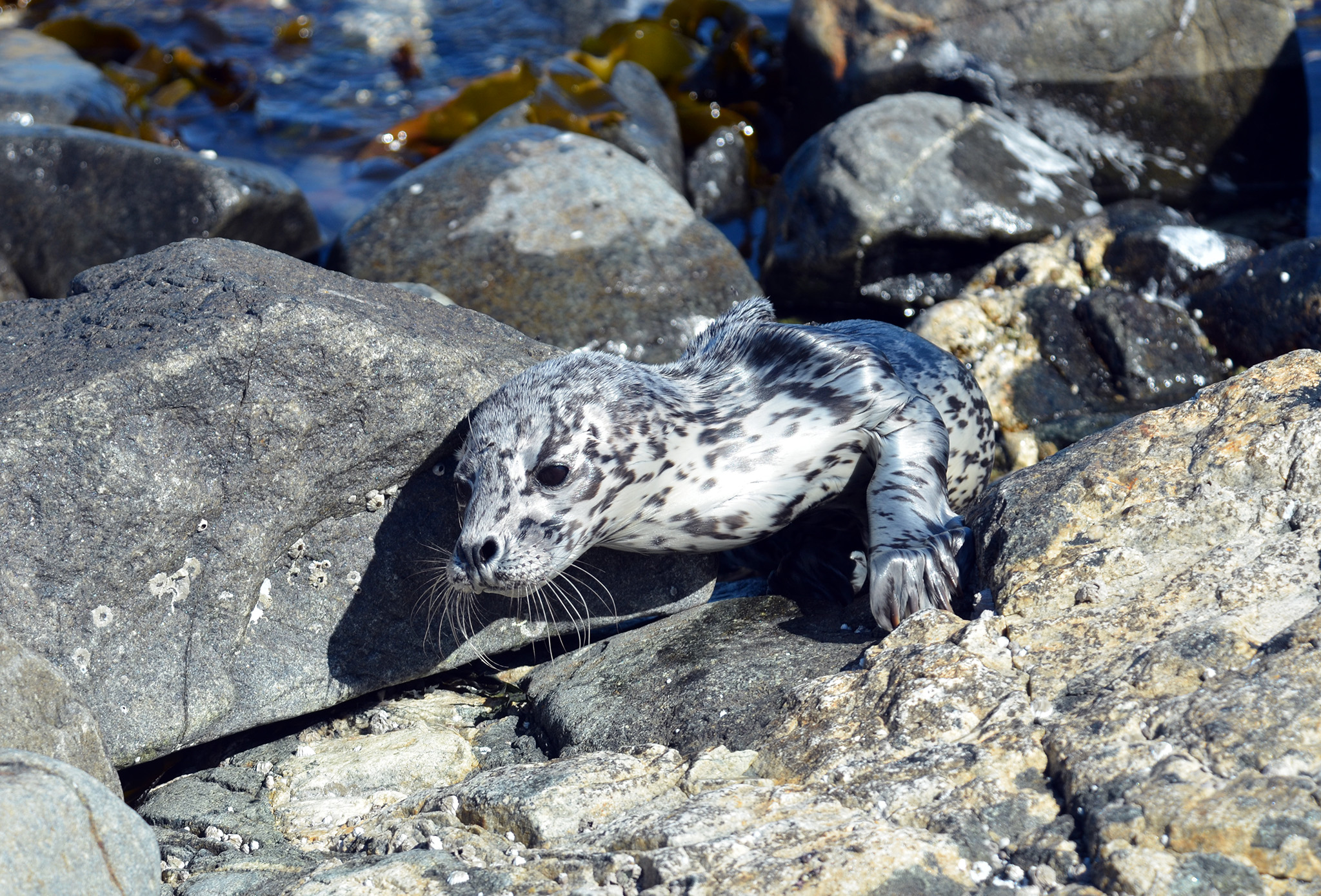
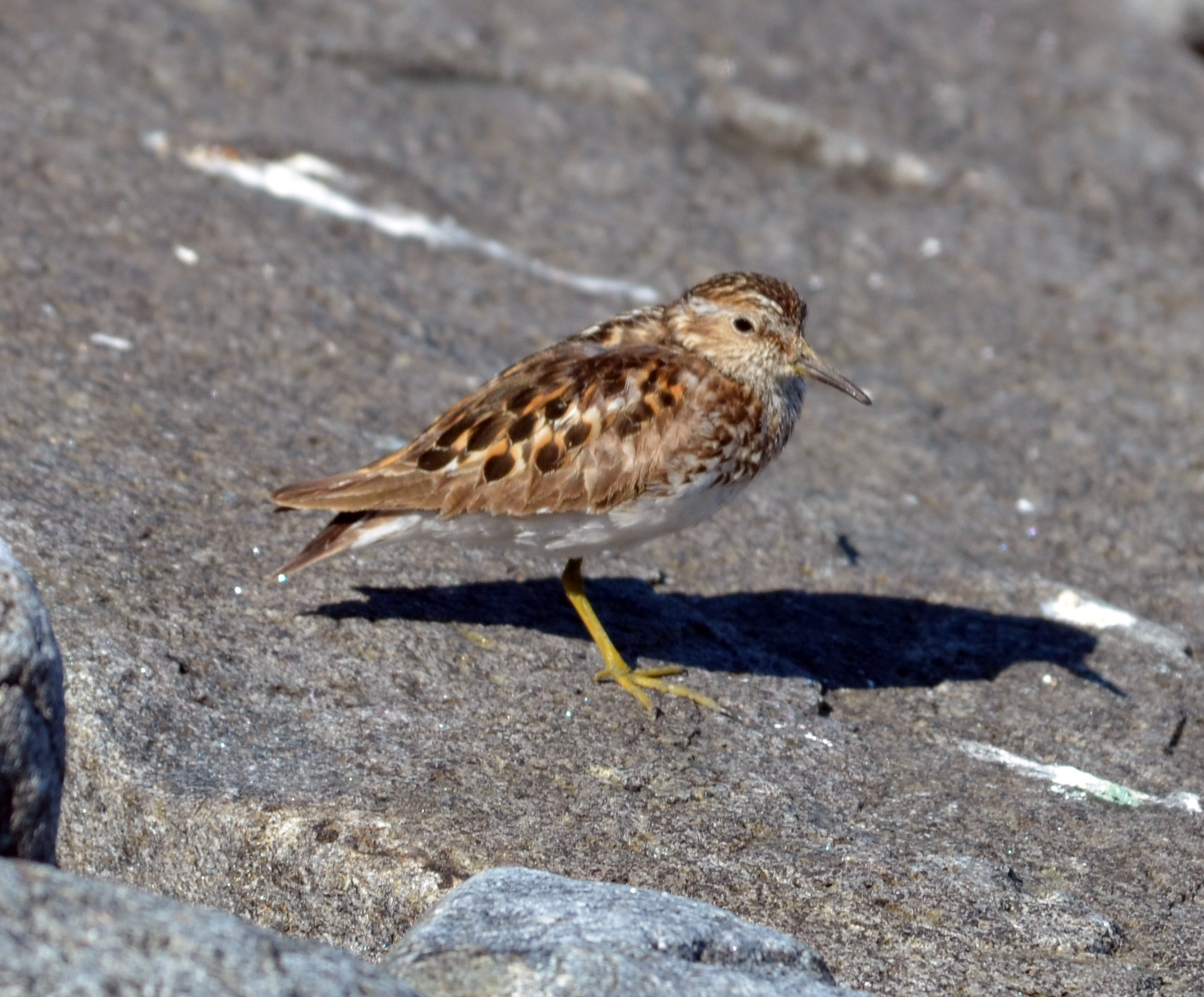
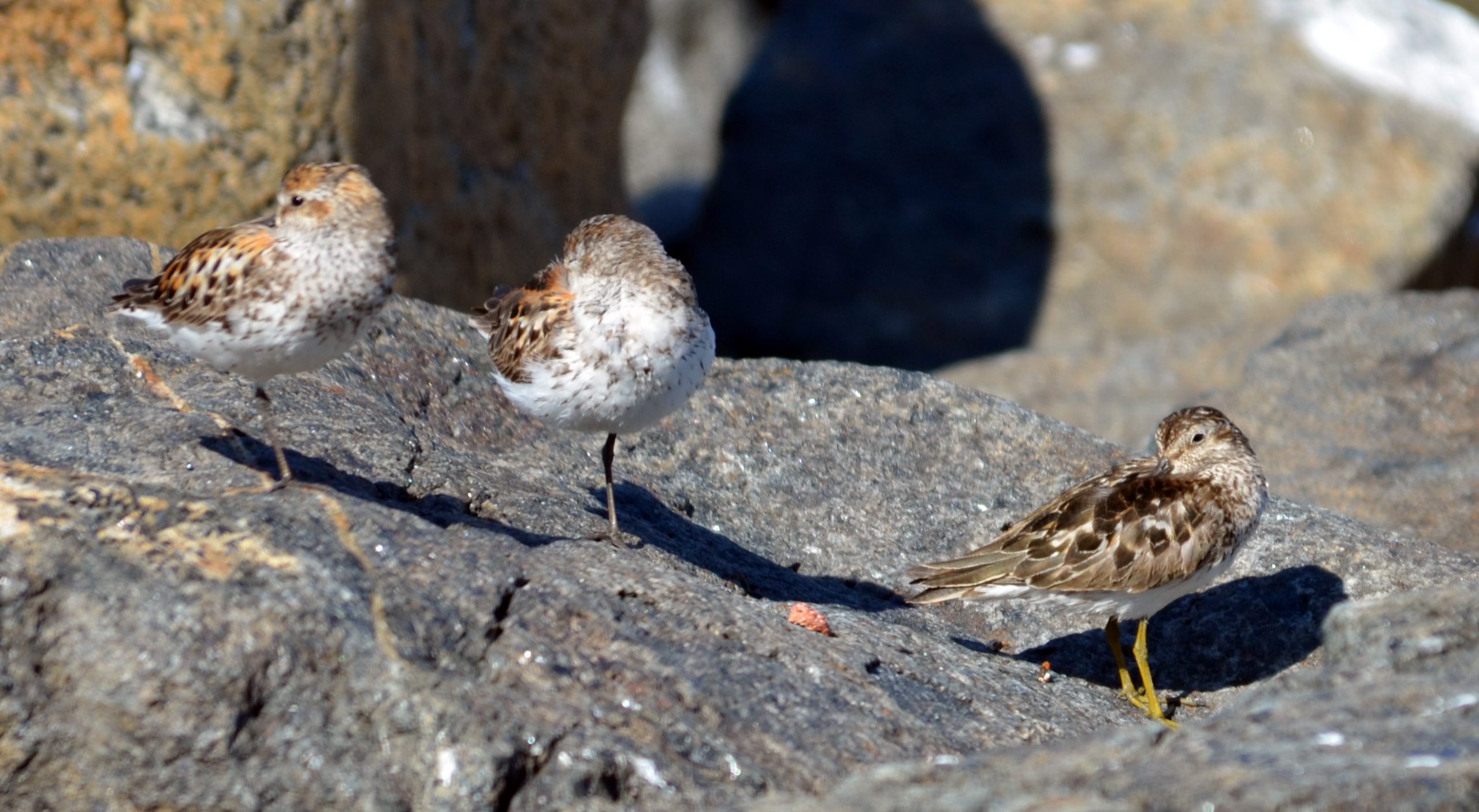
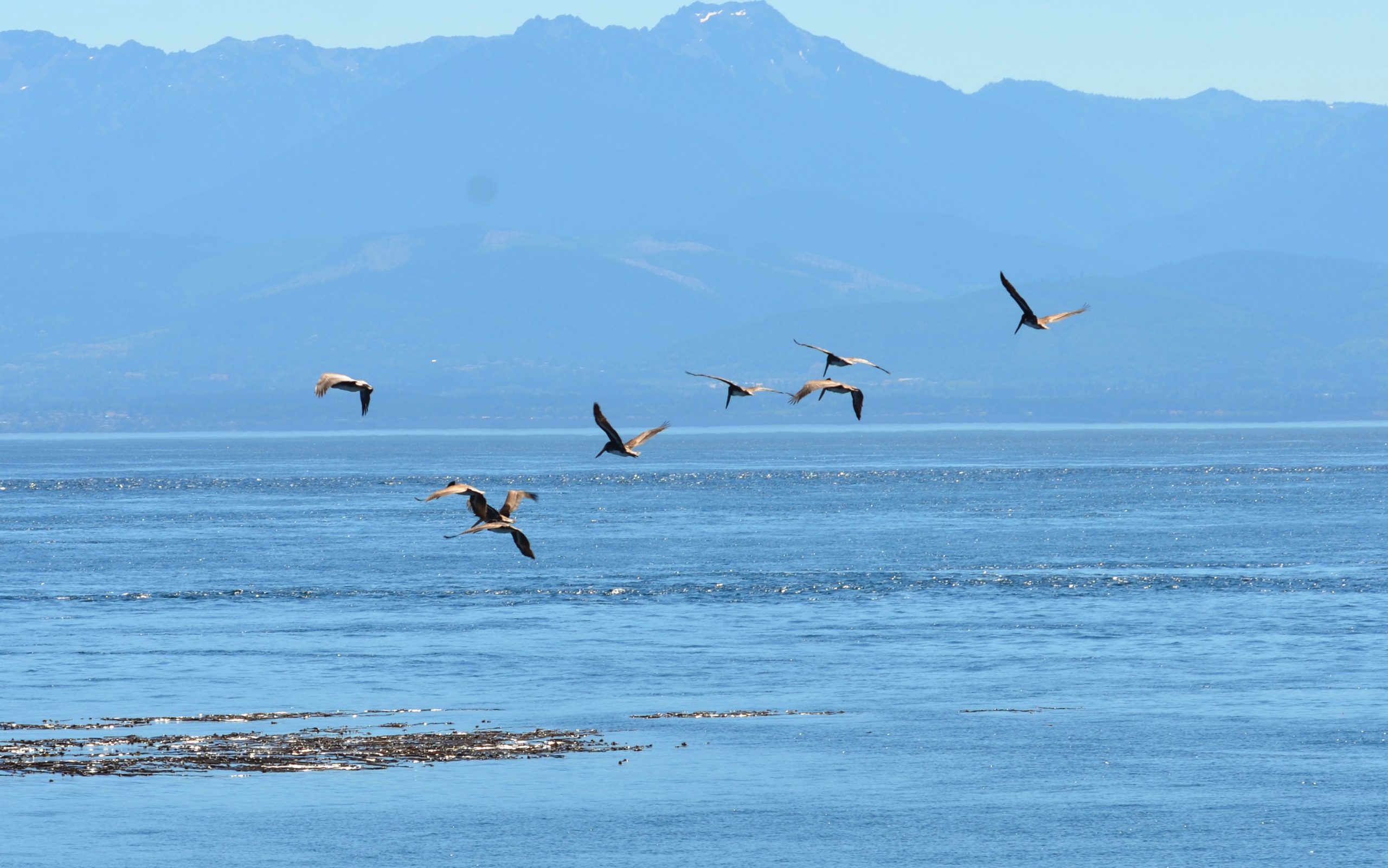
The highlights of the day were the 9 pelicans doing a flyby, another harbour seal pup on East Beach and finally, photo confirmation of the least sandpiper. The seal pup was tiny and had different face markings than the last ones at East Beach so it could be a new addition. I sat on the rocks below the compost pile for a while watching it struggle to move higher up the beach to escape the rising water. Sitting still with the flies also gave me a chance photograph the least sandpiper.

Harbour seal pup pulling itself up the rocks.

Least sandpiper

Least sandpiper with two western sandpipers.

Pelicans flying over Race Rocks.

Facility work

  • cleaned the solar panels
  • weekly meeting with Greg
  • studying the Outback power systems manual

Vessels

  • Ecotourism: 15
  • Private: 2

Weather

Mostly light to gentle breeze, direction variable. Skies clear. Daytime temperatures: low 13, high 27.