
| Race Rocks Gull Survey April 3 2024 |
| Andrew Jacobs | 5 April 2024 at 21:35 | |
|
||
| Race Rocks Gull Survey April 3 2024 |
Today, it was time for the weekly animal census on Race Rocks – a longstanding tradition (see the full archive, here) that allows us to keep track of an ever-fluctuating population of birds and marine mammals. The morning weather wasn’t particularly promising, with wind, rain, and dark overcast skies.
Combined with high tides and a rough sea state, perhaps it wasn’t entirely surprising that the numbers seemed a bit lower than usual – with the harbour seals in particular mostly hiding out in the waves surrounding the South Rocks, and thus rather tricky to count. Alas – who was about?

Census equipment – species list, binoculars, and a clicker to keep track of everyone
March 27th Animal Census
Birds:
Oyster catcher: 22
Harlequin duck: 15
Gulls: 195
Cormorant: 73
Pigeon guillemot: 101
Juvenile eagle: 1
Adult eagle: 1
Canadian geese: 9
Shore / Surf birds: 15
Turnstones: 10
Marine Mammals:
Steller sea lions: 14
Harbour seal: 21
Male Elephant seal: 1 (back on land after a lengthy morning expedition)
Female elephant seal : 0
California sea lion: 24

The weather did eventually start to calm down a bit – still hopeful to catch my first RR sunset of the trip later tonight!
Facility Work:
Noted Vessel Traffic:
Weather – Current:
http://www.victoriaweather.ca/current.php?id=72
Weather – Past:
Census done by Students of WestCoast Adventure College during their stay here for classes
Birds
Mammals
Single group close to shore of Great Race Rock.
Two pairs flying around on arrival.
Ones, twos and threes scattered around. A few initially on grassy areas when we arrived before moving towards the shoreline.
At least five singles scattered around.
Scurrying around grassy area when we arrived then moved towards rocky shoreline. One definitive, two formative.
Two together on south side which I had good views of through my scope for a couple of minutes as they moved in and out of view between rocks. I moved closer for a better look but they vanished either walked around the back of the little island or flew off.
Later I had superb views of a definitive bird (see definitive wing coverts) on the north shore but only for a couple of minutes before the bird quickly moved west along the shore and around a corner.


Most moulting into alternate plumage.
One in alternate plumage.
All loafing on West Race Rock.
Two definitive, two first cycles.
At least a couple of definitive birds, a couple of second cycles and three first cycles (juv).
Definitive and two first cycles (juv).
130 in main flock on Great Race Rock. 10 on West Race Rock. 40 others scattered around. Approximately 95% of adults with primaries darker than mantle to varying degrees so likely this number includes some individuals that may better fall under ‘Olympic Gull’.
Estimate for the number of especially distinctive hybrids.
At least a handful of ‘Cook Inlet Gulls’. Likely were more which I may have overlooked or incorrectly called ‘Olympic’.
240 in main flock on west side. 27 on West Race Rock. 25 on north side. Approximately 90% were definitive birds.
Estimate of the number of indetermined hybrids.
Distant on water and another in flight.
Majority loafing on north side of Great Race Rock near gull flock.
Majority loafing on north side of Great Race Rock near gull flock.
Majority loafing on north side of Great Race Rock near gull flock.
Spread out loafing on high points of islands.
Three appeared just as we were leaving hawking low around jetty for insects.
Lurking along edge of rocks. Fairly dark chocolatey and rufous bird. Slim bill. Prominent yellow at base of supercilium.
https://ebird.org/checklist/S160741512
Best Wishes to you if you celebrate anything special this time of year!
Ecological Notes:
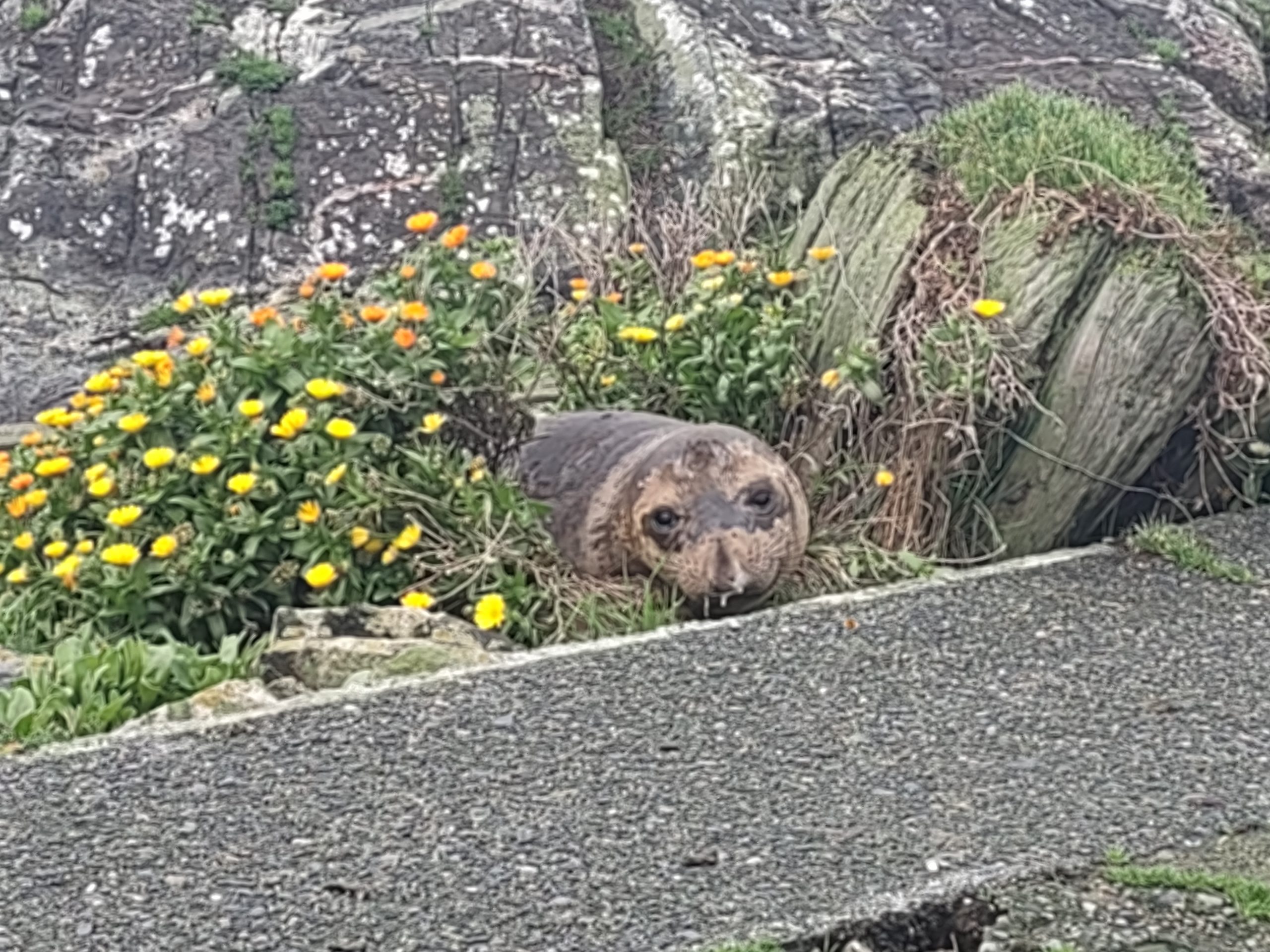
“You can’t see me here”
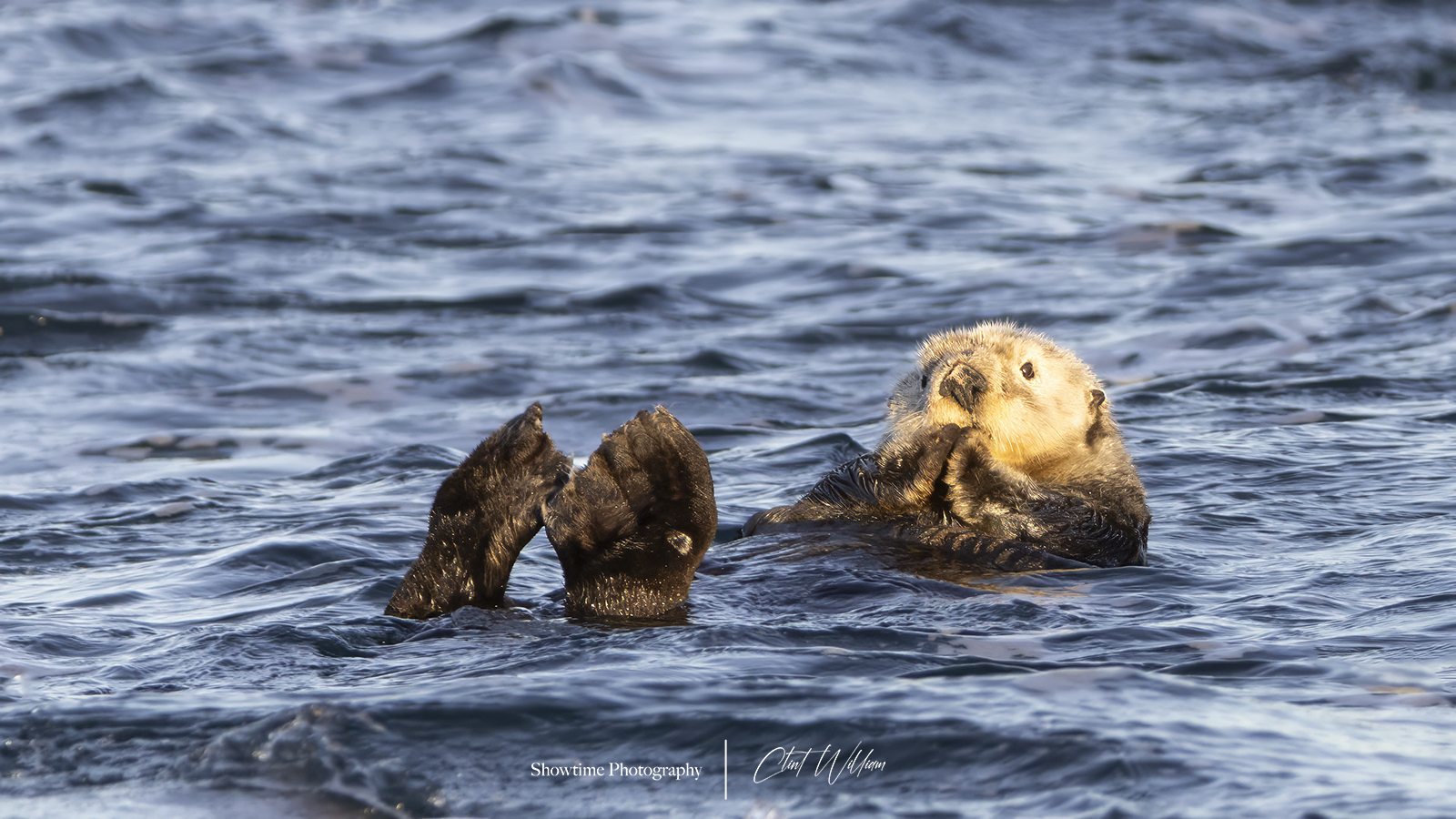
“Ollie” the sea Otter Photo submitted by Clint William
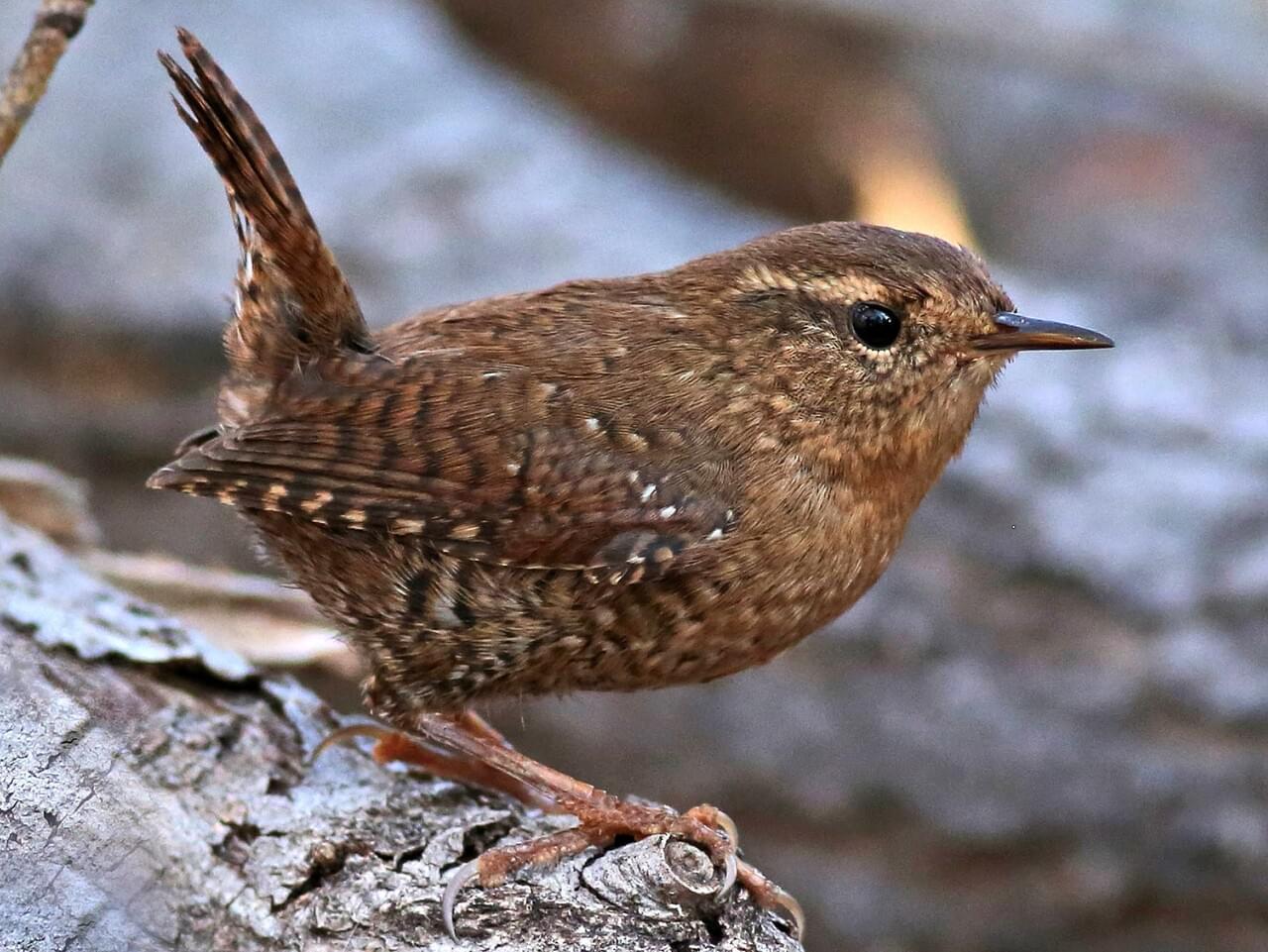
photo by Mason Maron
Visitors:
Facility Work:




Noted Vessel Traffic:
Weather Events:
Ongoing winter weather, unseasonably warm, winds direction shifting daily, very little rain
** All wildlife photos taken at the furthest distance possible, and may be cropped to improve detail! **
Weather – Current:
http://www.victoriaweather.ca/current.php?id=72
Weather – Past:
Mammals
Several Humpback Whales visible from the reserve
Ecological Notes:

Visitors:

Siri, Finn, Maria, Annabelle, and Edgar

Always curious!

Sea Urchins

Young Bull Kelp
Facility Work:


Noted Vessel Traffic:
Noted Infractions:
Weather Events:
** All wildlife photos taken at the furthest distance possible, and may be cropped to improve detail! **
Weather – Current:
http://www.victoriaweather.ca/current.php?id=72
Weather – Past:
Ecological Notes:

Visitors:
Facility Work:


DND events:
Noted Vessel Traffic:
Weather Events:
** All wildlife photos taken at the furthest distance possible, and may be cropped to improve detail! **
Weather – Current:
http://www.victoriaweather.ca/current.php?id=72
Weather – Past:
Hey, look who’s back! I’ve been on Race Rocks since Saturday for a quick relief stint and will be heading back to the “Big Island” on Tuesday. This is my first trip to Race in September, and it’s very different from trips earlier in the season.
We are just about at the peak of songbird migration on Vancouver Island, so I was optimistic that I might see or hear more birds going over. The few birds on the ground have almost all been Savannah Sparrows. There was one raven here on Sunday, but other than that, no passerines seen or heard–yet.

Savannah Sparrow
Seabird activity has been off the charts outside of the marine protected area with reports of many jaegers, shearwaters, and of course, gulls of several species. Within the Race Rocks limits, it has been variable. Upon arrival on Saturday, I estimated more than 8,000 gulls in view, most of them California Gulls. There have been good numbers of Heermann’s Gulls, especially youngsters. The number of Glaucous-winged Gulls–the ones that breed on Race Rocks–are lower now that most of the young have dispersed. Despite scouring the flocks, I was unable to detect any less common gulls or the terns that have been spotted nearby. However, eight Brown Pelicans were nearby. They must have blown out with the wind on Saturday night! Since the grand welcoming, the gulls have spread out more throughout the area, often following the Humpback Whales and Orca that are keeping the growing number of ecotourism boats in business.

Welcoming party

Brown Pelican in the kelp
Pigeon Guillemots, one of the most abundant species earlier in the year, have moved offshore. They will spend the winter in their pale gray and white plumage, a startling contrast to the sharp black and white with bright red feet that we see here in the summer. The shorebirds that rested here each evening in July and August are largely gone, with just a few Black Turnstones, Surfbirds, and Black Oystercatchers onsite along with a few other stragglers. There was one species I missed in August that put in an appearance. Two Wandering Tattlers were here on Sunday and one posed for photos on Monday.

Wandering Tattler
The population that has exploded since I was last here are the sea lions. California and Steller’s stacked like cordwood all around the outskirts of Great Race and the surrounding islands. It is quite clear that they would be at the door if it weren’t for a perimeter fence that (mostly) keeps them to the outer portion of the island. The work of a September ecoguardian is largely to keep the buildings and equipment zone sea lion free!

Sea lions aplenty!
The days are getting shorter, and it feels like the winds are getting stronger. Winter is coming!
More photos from the last few days:


A week goes by quickly out here! First, an update:
The branded Steller’s sea lion I reported in my last post has a history that includes a previous trip to Race Rocks. 746R was branded at Rogue Reef (Southern Oregon) on July 12, 2009. He has been all over Carroll Isl WA, Graves Rock SE AK, Castle Rock CA, Barkley Sound BC, Race Rocks in 2016, Sucia Island WA, Ewing Isl WA and Cape Arago OR as recently as July 7 this year. This and other marked sea lions are being studied by Susan Riemer of the Oregon Department of Fish and Wildlife. If you see marked sea lions, she really appreciates hearing about your sightings.
The last few days have had all of the weather possibilities for this time of year except hot. Foggy much of the time, windy most of the rest, and sometimes foggy and windy just to change things up. No rain, but humidity in the high 90s. I’m always struck by how different the temperatures can be just a couple of kilometres away. The wind yesterday actually broke the electric fencing tape on the jetty, which I fixed this morning.
Despite the wind, it’s been a good week for shorebirds. Another new one for me here (but not for Race Rocks) was a Sanderling. Normally seen chasing and being chased by incoming waves on a sandy beach, they do spend some time in more rocky environments.

The thick stubby bill and “spangled” back pattern are characteristics of Sanderling

The red colouring on the neck had me hoping it might be a MEGA rarity, but it was not.
The predominant gull at Race Rocks this time of year is the Glaucous-winged Gull. They are the regular breeders in this area. But gulls don’t necessarily stick to their own kind. When they hybridize with Western Gulls, the offspring are known as Olympic gulls. When they hybridize with Herring Gulls, the offspring are known as Cook Inlet Gulls. There is a gull that I’ve been watching that I think may be one of the latter.

Note the white “window” in the outer primary feather

The orbital ring is orange-yellow like both the Western and Herring gulls. The iris is darker than a Herring gull and lighter than most Glaucous-winged Gulls.
I’ll be passing these and other photos on to someone more “gullible” than I am!
The Second Nature from Pearson College has been making the rounds with alumni and friends of the school. Some of them had to look hard to find us through the fog!

Thanks to Greg Dickinson and Pearson College for providing this opportunity to me again.
Visitors:
Facility Work:
More photos:


Details
Several groups, largest was eight birds. Many smart drakes. Some males moulting into formative plumage too.