Gathering of the Gulls

Today started fairly clear, then clouded over. In the afternoon it was sunny for a few hours and eventually the sky darkened and at dusk the rain started. The barometer rose to almost 1019 hPA mid-day and then fell. The forecast is for clearing and light east winds with sunshine on the horizon.

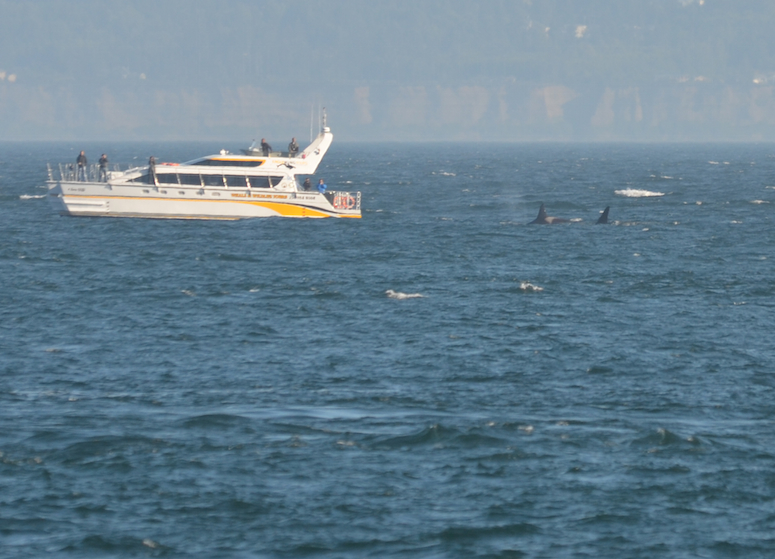
Twelve commercial whale-watching vessels were observed working in the Ecological Reserve. They were in the area watching a Humpback feeding very close to the western reserve boundary, transient orcas to the southwest and southern resident killer whales to the northeast.

Today was census day due to thick fog yesterday.

Animal Census

Steller Sea Lion 338

California Sea Lion 908

Harbour Seal             178

Northern Elephant Seal 5

Sea Otter 1

Southern Resident Killer Whale (26 observed within one mile of ER during count week, (Race Passage, east, west and south of RR)

Biggs Killer Whale (Transients) (9 during count week Race Passage & southwest)

Humpback Whale (3 observed within one mile of ER during count week)

Minke Whale (1 observed within one mile of ER during count week just east of North Rock)

Canada Goose 20 attempting to be full time

Harlequin Duck 5

Surf Scoters 30 (flying through to east)

Double-crested Cormorant 12

Brandt’s Cormorants 27

Pelagic Cormorant 5

Black Oystercatcher 5

Black Turnstone 7

Surfbirds 13

Kildeer 2

Total gull count 2469

Estimated numbers

Glaucous-winged Gull 350

California Gull 50

Thayer’s Gulls 1500

Herring Gull 1

Ring-billed Gull 1

Western Gull 1

Heerman’s Gull 15

Mew Gull 20

~531 unidentified gulls

Common Raven 2

Savannah Sparrow 10

Fox Sparrow 2

Song Sparrow 2

Junco 3

Pacific Wren 1


Other chores were routine. There were no visitors.


Count Day

The sky was partially overcast early but cleared a bit in late morning. Then it clouded over and finally started to rain as it socked in just before dark. The wind started out east-northeast then turned to west late morning before backing all the way around to southwest. The barometric pressure is rising as I write this log and the forecast calls for clearing in the morning and sunshine. Winds will turn to westerly 10 – 15 knots Friday afternoon.

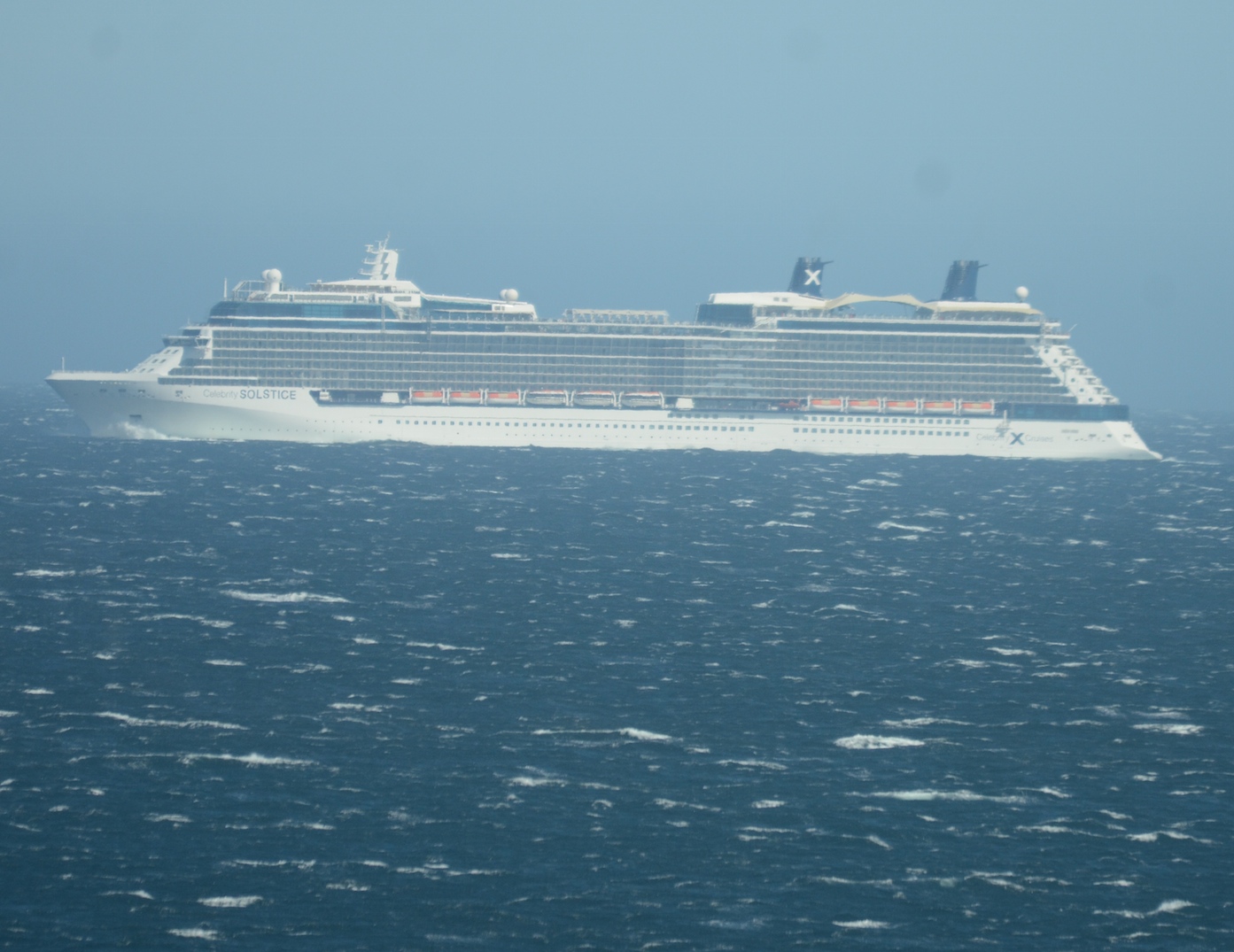
Commercial whale watching vessels made fifteen observed visits to the Ecological Reserve today. One vessel regularly comes in fast and not slowing until well inside the go slow boundary and then consistently speeds up early. The same vessel can be seen hop-scotching ahead of endangered southern resident killer whales as the pass by and in the reserve, sitting almost on top of the sea otter. It is a large, noisy vessel that reliably pushes the limits of respectful whale watching and will end up by hitting an animal or worse. Most of the operators realize that this sort of behaviour is not sustainable.

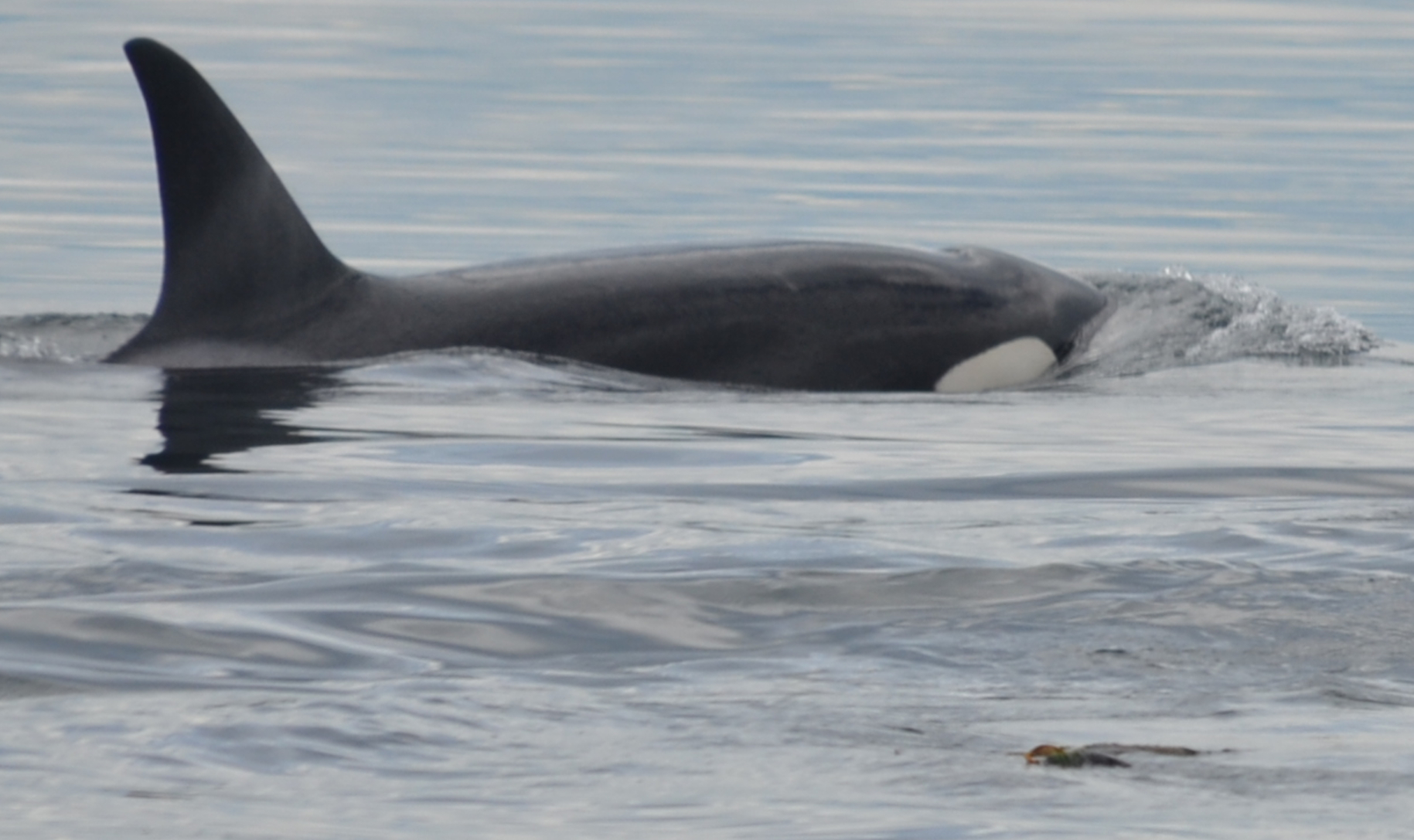
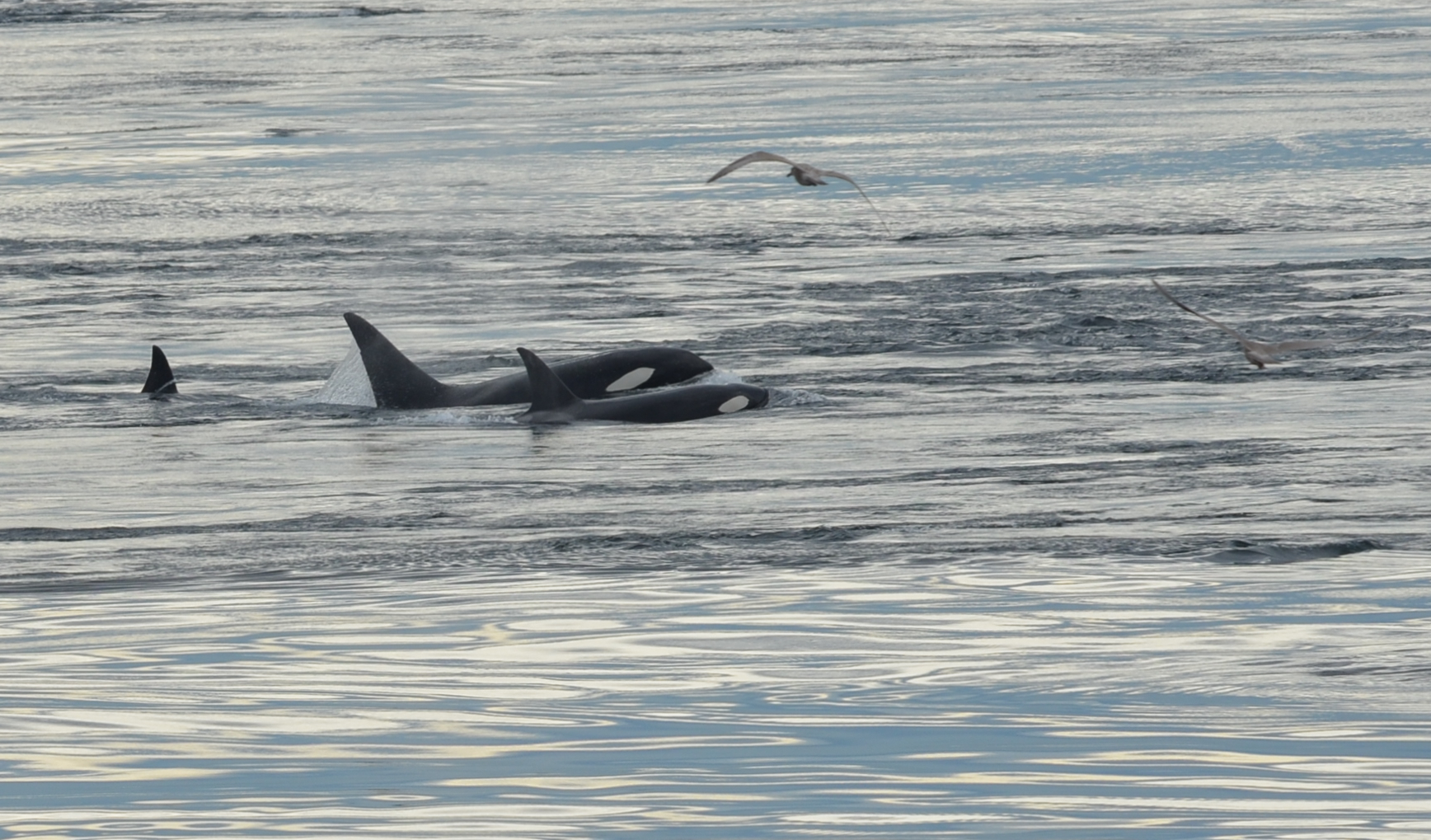
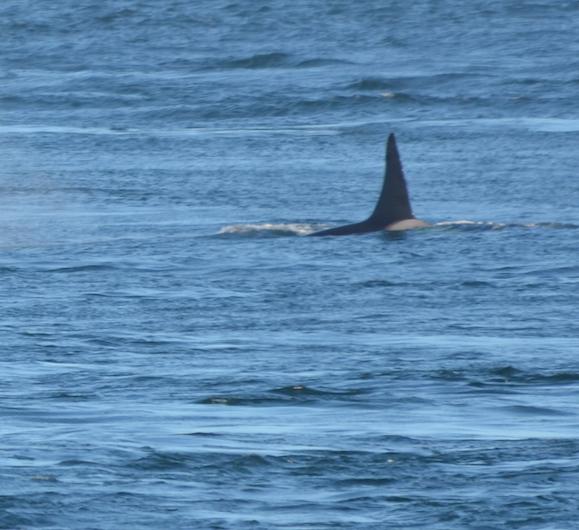
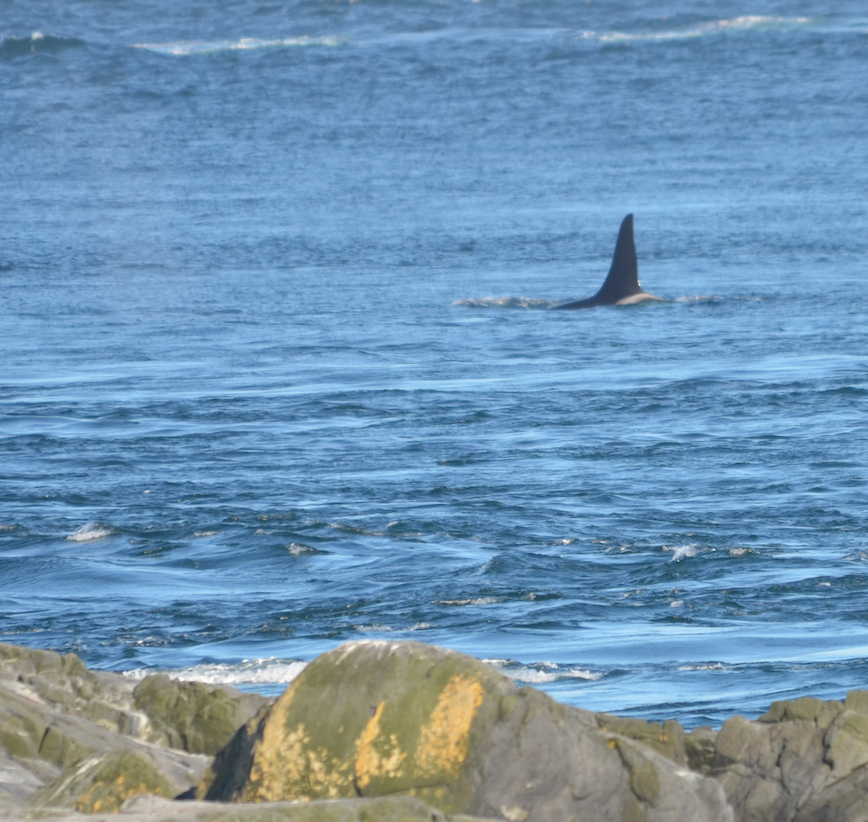
Biggs Killer Whales were already being followed by the whale-watching fleet before they came into the Ecological Reserve from the east and milled in and around South Seal Rocks and the breaking rock just off the energy building. There were many sea lions in the water, some craning their necks to see better and others just trying to maintain as much time as possible in the air, by repeatedly leaping airborne. I am not sure if the killer whales made a kill or not but sense that they did. There was some fancy criss-cross swimming by the first three whales, then a little one accompanied by a bigger one arrived on scene. This was followed by a few minutes with all the whales underwater and gull action above, which made me think food leftovers. After that they left, heading south and then southeast, dogged by the fleet. Two vessels came into the reserve while the whales were already inside. It is possible that they were not aware on entering but they did not leave once they were aware of the whales’ presence.

Ecologically, the transition from summer into fall continues. Salmon migration is still strong and birds, pinnipeds and cetaceans abundant. The size of the multi-species feeding flocks on the water, is increasing daily with some aggregations (outside the protected area) appearing to have thousands of gulls.

Thursday is animal census day so here are the numbers for charismatic mega-fauna.

Steller Sea Lion 303

California Sea Lion 578

Harbour Seal 187

Northern Elephant Seal 11

Sea Otter 1

Southern Resident Killer Whale (2 in ER during count week, additional 18 in Race Passage during count week)

Biggs Killer Whale (Transients) 6 today (3 more during count week)

Humpback Whale (3 during count week)

Canada Goose 0 full time (flock of ~25 chased off almost daily)

Harlequin Duck 0

Double-crested Cormorant 25

Brandt’s Cormorants 22

Pelagic Cormorant 6

Unidentified cormorants 17

Black Oystercatcher 5

Black Turnstone 11

Kildeer 3

Glaucous-winged Gull total 453 (325 – adults; 128 – juveniles)

California Gull 847

Thayer’s Gull 180

Mew Gull 24

Herring Gull 0

Ring-billed Gull 2

Western Gull 2

Heerman’s Gull 36

Adult Gull spp (Unidentified) 242

Juvenile Gull spp (Unidentified) 223

Savannah Sparrow 9

Fox Sparrow 1

Unidentified Sparrow 1

Junco 3

Horned Lark (2 in count week)

Pacific Wren 1

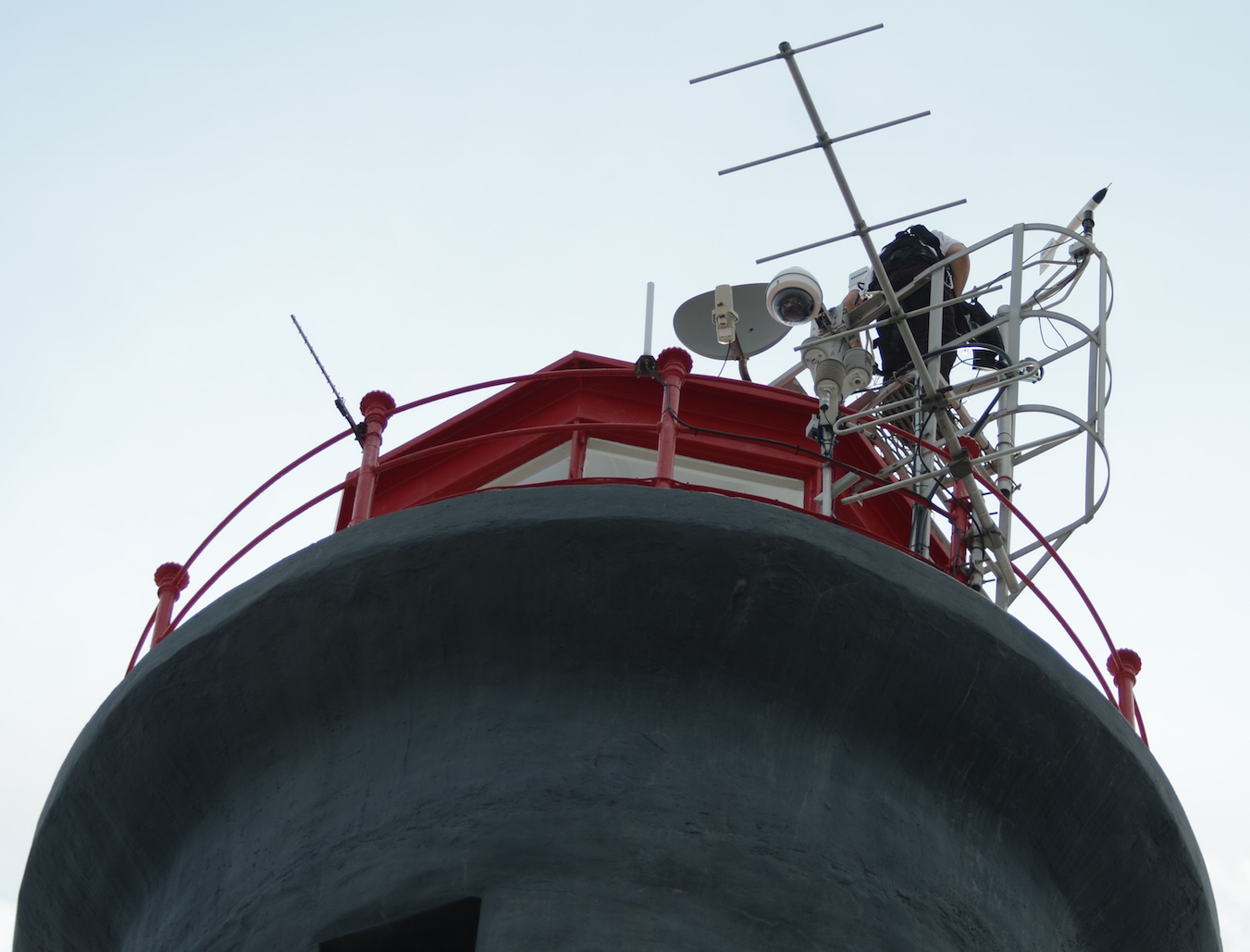
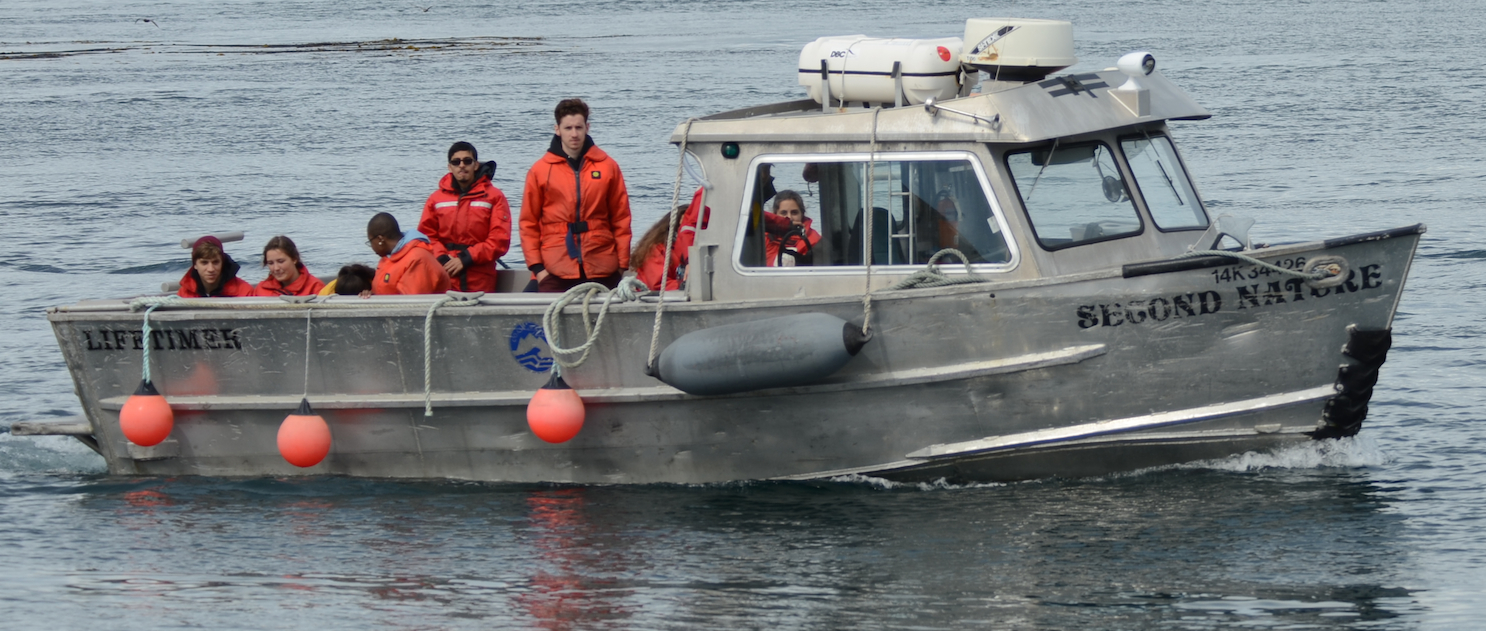
Routine chores continue. There were six visitors today. Two very self contained Environment Canada technical service officers came out to do annual maintenance on their weather station up on the tower. If you were looking on camera # 1 you may have had a close-up view of them at work, calibrating, replacing and maintaining their instruments in full climbing gear. Thanks go out to them as well for the help they gave us before leaving the island. Two national geographic photographers came out to get a sense of the diversity of wildlife and of course take photos. Two young people who may potentially become eco-guardians also visited. Thanks go out to Don for helping move fuel, a heavy job. Well done. Courtney drove Second Nature to get them all out here and back safely and she was accompanied by Jasper, volunteer extraordinaire.


Elephant Seals Hang On.

The overcast morning sky cleared by noon, clouds pushed out by light northeast winds. In the afternoon, the wind turned to west and then in the evening to southwest. The barometer rose to 1013 hPA today. The forecast continues to call for rain along with variable winds at 5 – 15 knots.

There were only six whale watching visits observed in the Ecological Reserve today and no sports fishers. The large military explosions punctuating yesterday’s alternate sea lion swims and haul-outs continued today.

Today was census day at Race Rocks.

Steller Sea Lion 313

California Sea Lion 649

Harbour Seal 155

Northern Elephant Seal 14 (Two on Great Race -#5850 + female; 12 on Middle Rock)

Sea Otter 2

Southern Resident Killer Whale 16 (during count week)

Humpback Whale 3 (during count week)

Canada Goose 4 full time (2 adults 2 goslings) (flock of 25 chased off twice)

Harlequin Duck 1

Double-crested Cormorant 83

Pelagic Cormorant    9

Cormorants spp 18

Black Oystercatcher  6

Black Turnstone 12

Kildeer 2

Mew Gull 134

California Gull 11

Herring Gull

Glaucous-winged Gull total ( 277- adults; 74 – juveniles)

Ring-billed Gull 1

Gull spp 62

Song Sparrow 1

Savannah Sparrow 22

Fox Sparrow 1

Junco 3

Barn Swallows 2

American Pipet 1

A crew from operations at Pearson College, visited today and were very helpful in getting freshwater flowing again in the Eco-guardian’s House, amongst other things. Courtney was at the helm of Second Nature, Jeff brought all the plumbing gear and know-how to replace the pump and Jasper (PC Alumnus year 20) a curious, environmental engineer figured out a few of diesel pumping mysteries. A big shout out to all three. Thanks for the support.


Making Sense of the Census.

The sun shone through a bit more today even as clouds and much needed rain continued. West winds blew at about 10 knots most of the day as the clouds were pushed steadily inland. The barometer is now back up to where it was last Friday before the big nose-dive into Saturday’s storm. The forecast looks a little brighter for Friday and Saturday before a return to wet and cool.

Whale watching activity in the Ecological Reserve was very subdued today as the black and whites moved north and east yesterday. Only four visits by commercial whale watching boats were observed in the Ecological Reserve. One sports fishing vessel and a couple of rental boats also came through obviously oblivious to the speed reduction zone within the reserve boundaries .

Thursday is census day and here are the results of this week’s animal census.

Steller Sea Lion 497

California Sea Lion 522

Harbour Seal 81

Northern Elephant Seal 2

Sea Otter 1

River Otter 1 seen (probably more)

Southern Resident Killer Whale 7 (during count week)

Biggs (Transient) Killer Whale 5 (during count week)

Humpback Whale 1 just outside of reserve but may have transited border

Canada Goose 4 full time (2 adults 2 goslings) (24 visited once during count week)

Harlequin Duck 1

Double-crested Cormorant 11

Pelagic Cormorant 12

Brandt’s Cormorant 1

Black Oystercatcher 29

Black Turnstone 95

Ruddy Turnstone 1

Western Sandpiper 3

Kildeer 1

Dunlin 1

Glaucous-winged Gull 276 (193 – adults; 83 juveniles)

California Gull 61

Western Gull 1

Heerman’s Gull 26

Peregrine Falcon 1

Common Raven 2

Savannah Sparrow 3

It is of note that there have been no Pigeon Guillemots seen since I arrived. Last year there were chicks, still  being fed by their parents, on the nests in the rubble area just west of the jetty at this time of year and later. I am hoping that the river otters have not been visiting these ground-breeding birds and will look for evidence of what has been going on there.

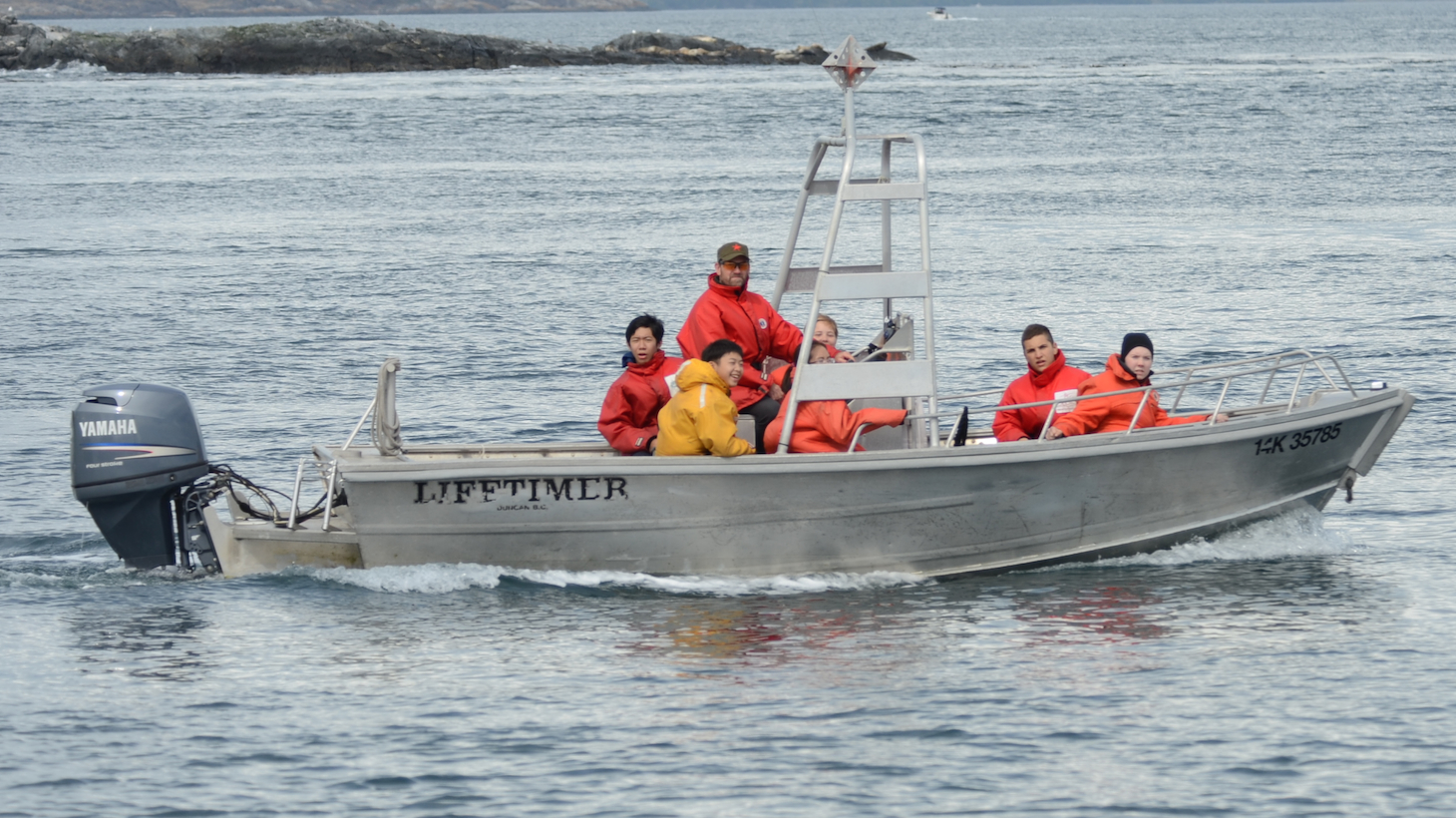
Maintenance work was routine and the only other visitors to the reserve were the Pearson College students having their orientation by vessel. Courtney kindly delivered paper, which was appreciated as there was none.

Pearson College students doing orientation week activity at Race Rocks Ecological Reserve.

Pearson College students doing orientation week activity at Race Rocks Ecological Reserve.

super friendly philosophy teacher


Cool and Wet

The cool, wet weather these last couple of days at Race Rocks was a long time coming and the ceiling is still thick enough so that peak solar radiation levels are about half the norm for this month. The little bit of soil is sucking up the moisture and there is already some visible return of green, a colour almost defeated by the drought. The wind didn’t do much until late afternoon today and there was no wind most of the morning. By early afternoon it was up to 10 knots southeast, only to fall off again as it swung to a feeble southwest in the evening. The barometer continues to crawl out of the hole created by Saturday’s storm and it is almost back up to 1010hPa. From the forecast, it looks like periods of rain will continue as the cold front moves southward over the next few days and then we will be back into the summer pattern of westerly winds and possibly sunshine, if not fog.

There was quite a bit of whale watching activity in the area today. There were 18 visits made by commercial boats operating inside the Ecological Reserve and more outside. All but two vessels abided by the rules, taking it slow, being respectful and courteous to each other and mindful of the large concentration of animals in this protected area. From the radio chat and observations, I was able to ascertain that there were both Biggs’ and Southern Resident Killer Whales in the vicinity. Both pods passed just outside the reserve heading west about a half mile to the south. There was also a humpback feeding just east towards Victoria.

One, large, whale watching speeder may have taken his cue from the only “sports”-fishing boat that came into the reserve today. A Grady-White-type boat with halibut gear, came inside behind a line-up of whale watchers and then roared off from inside Middle Channel as if his urgency trumped the wildlife values in this congested area. Later one of the well respected companies had a large vessel observed taking off at speed after a visit to the sea lions, closer than 100m. I hope the animals in the water were able to get out of his way.

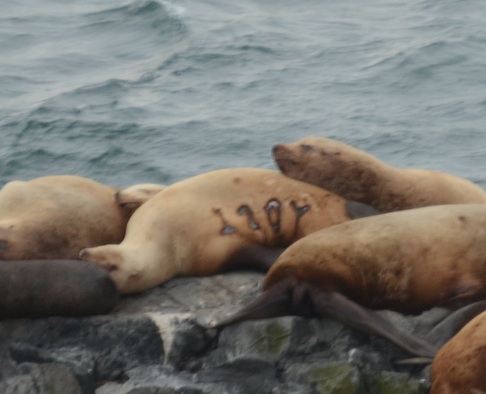
There were a number of sea lions with major wounds noted today and I will try to photo-document them on a drier day. Of note were fresh, severe gashes on at least three Steller Sea Lions and what appeared to be propeller marks on two Californians. Most of the sea lions spend their time sleeping when they are not off foraging or tussling with each other. The Californians that are awake though, are always barking.

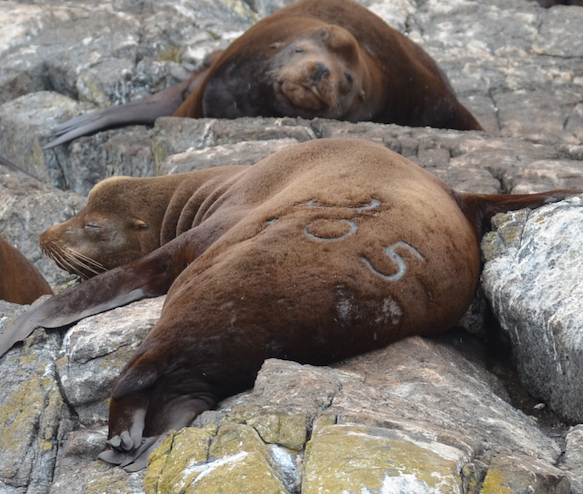
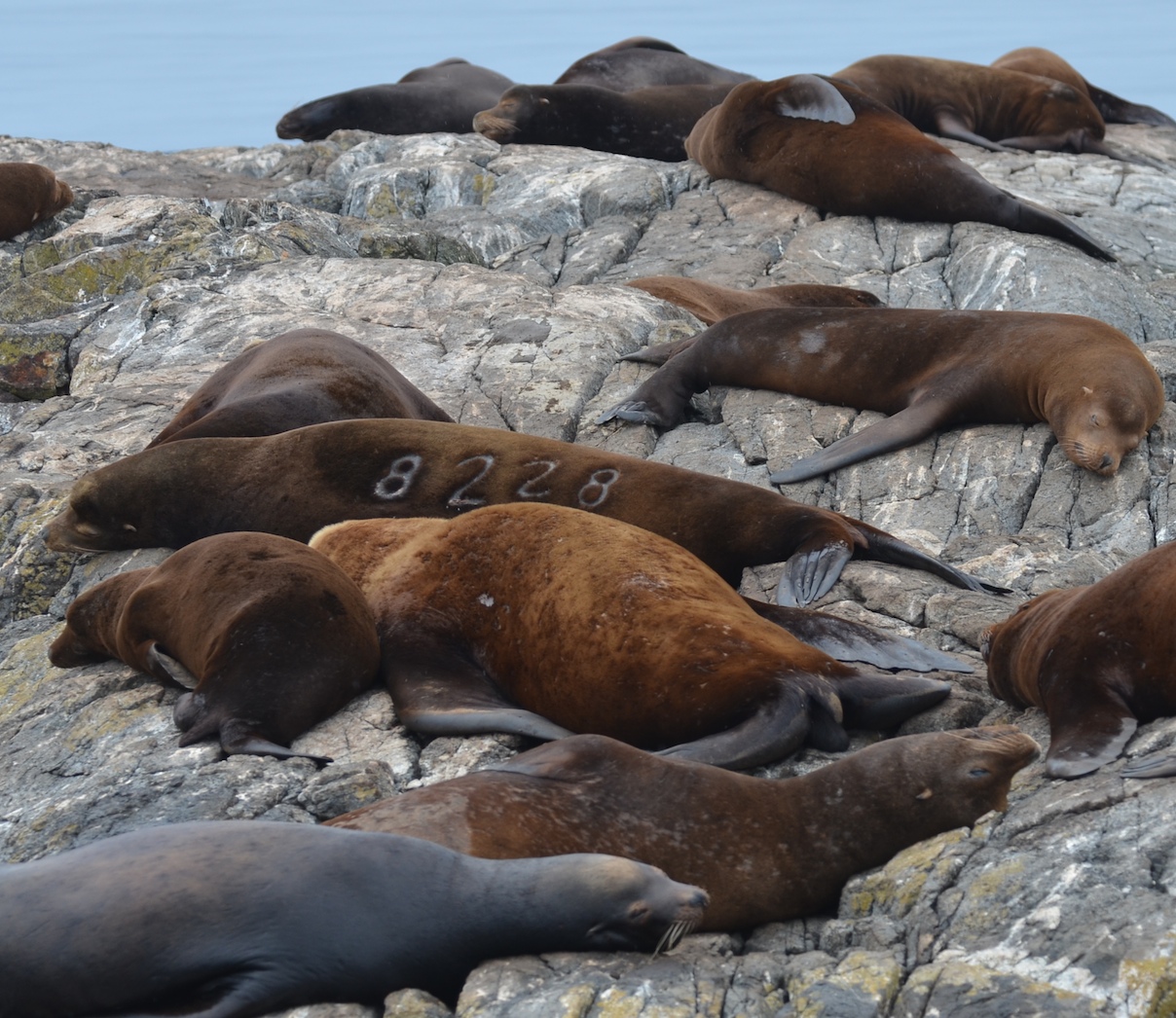
I tried to document three branded California Sea Lions today but only succeeded in recording one full number without question, # 8228 on the left side. I got one partial # U_05 on the rump and another partial #U14__. I didn’t see any branded Steller’s yet.

The pre-summer cast of avian characters, is back and it is really a privilege to be here again to witness Race Rocks as the change to autumn happens. I saw at least 95 Black Turnstones busy foraging all over the island today. They roost together on the south shore in the evening, making it easier to get a good count . They are back from a summer away at nesting sites along the western Alaskan shores of the Bering and Chukchi Seas. Cormorants probably didn’t go far but the Double-Crested Cormorants I saw today definitely do not nest in the reserve.

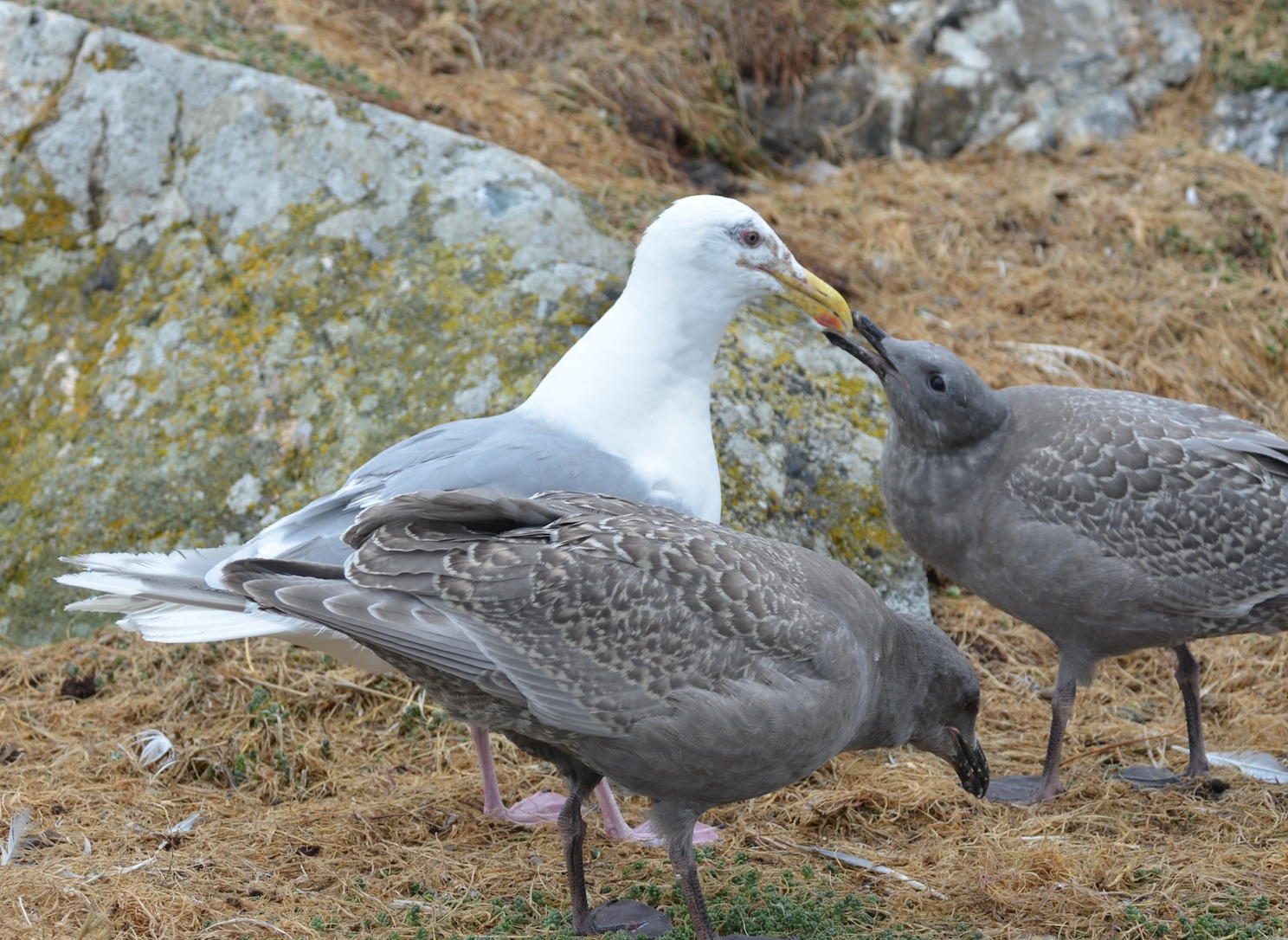
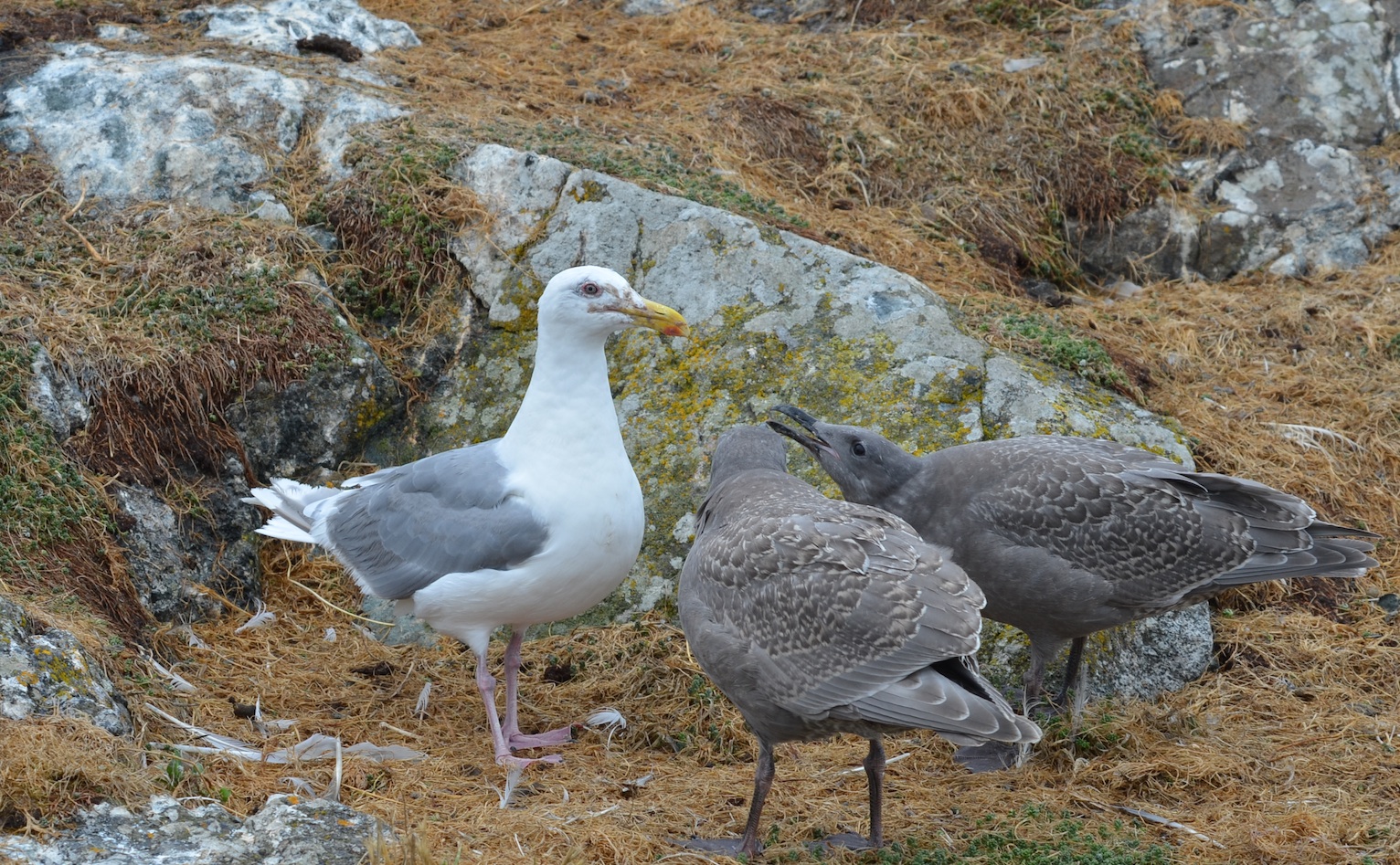
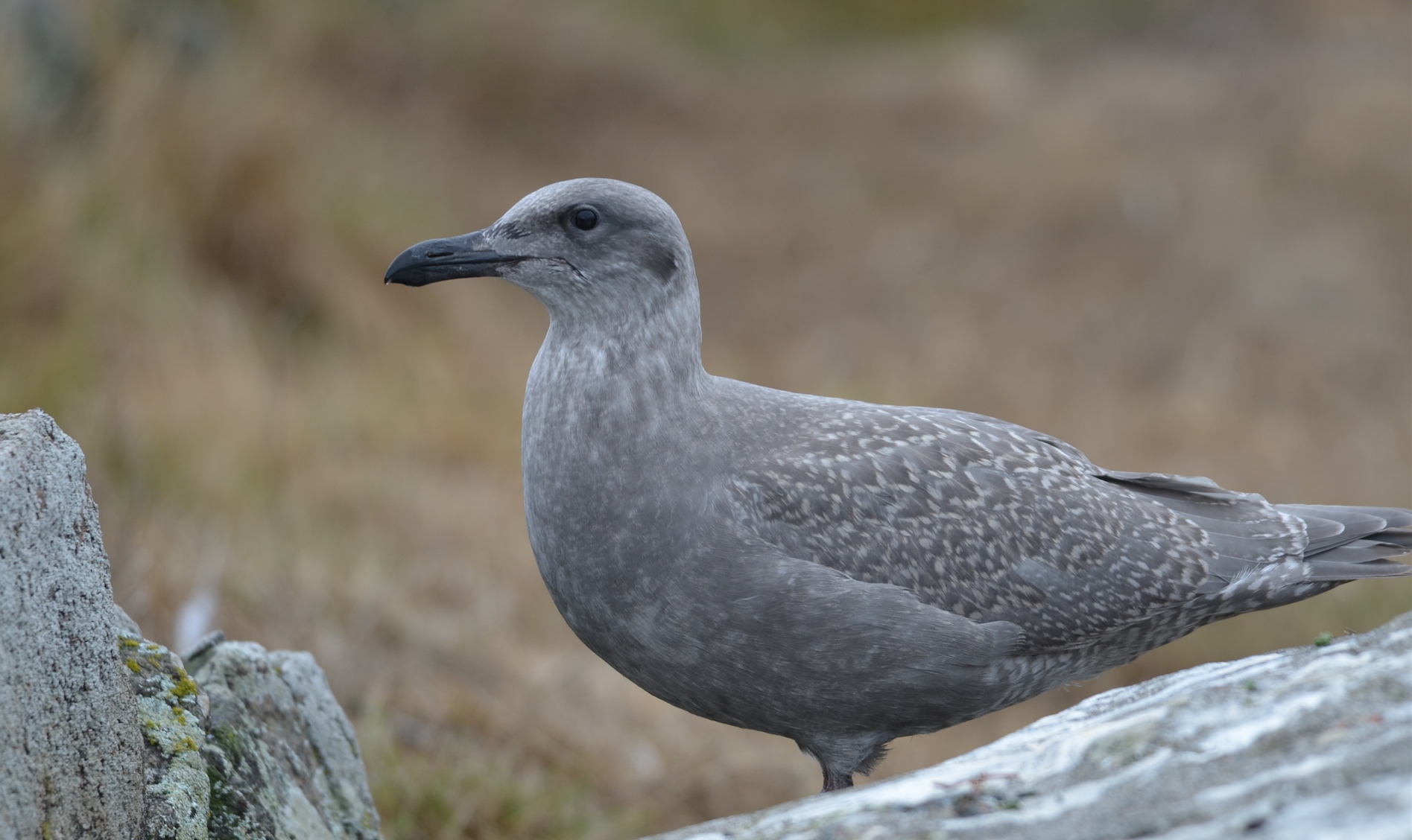
Most of the Glaucous-winged Gull chicks have fledged and left the island but there are still a few slow pokes who are busy begging from worn-out looking parents for food. Amazingly some adults are feeding three big chicks that appear larger than the adult. There is evidence of fresh predation on these young gulls and River Otter is the prime suspect as it seems to be nocturnal or crepuscular activity and one of the remains was dragged right in to the otter den entranceway. As was noted last year, it appears that the head of the gull is enveloped in its neck skin as if the skin was torn and pulled up like a turtle-necked sweater coming off inside out.

A newly fledged Glaucous-winged Gull with handsome new feathers.

A newly fledged Glaucous-winged Gull still not confident enough to fly away on a new adventure.

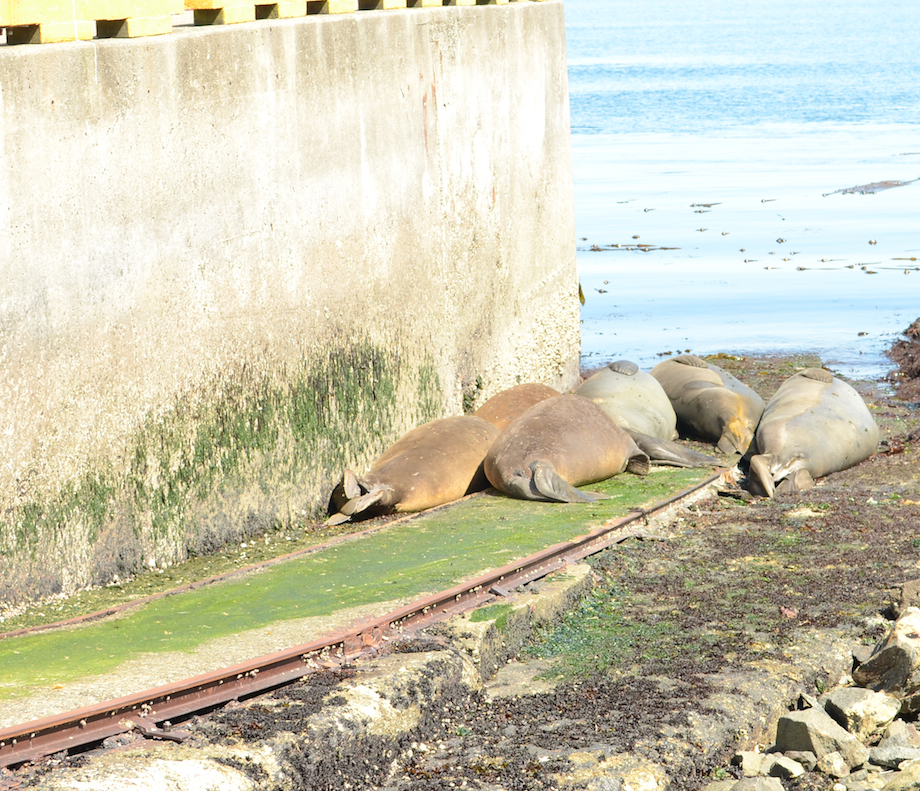
The Northern Elephant Seals surprised me. I knew there was one here on the marine railway ramp on Great Race because Guy and Christine had mentioned it and it hauled out just before they left yesterday. It is a really well fed young one, completely plumped out since I last saw them after their horrendous moulting fasts of the late spring. Another five Northern Elephant Seals are visible with the scope from the top of the tower, on Middle Rocks amidst the sea lions. Of the five, one appeared to be very small, perhaps young of the year and the other four were larger juveniles perhaps including a small adult female. I will try to get a better handle on this in the days to come.

There were no visitors today as I got back into routine chores and was constantly reminded of the incredible natural setting that makes this place so special.

Gale warning forecast

We began the day with 32 knots and the wind never stopped rising to 40.7 knots around 8:00PM. What a pretty windy month!

All the birds were in the sheltered side away from the wind so it was easy to spot them. Before dusk we saw 10 Turnstones, 2 Western Sandpipers and 3or 4 Dunlins. They were not around a few days before. Exciting!

I even found a ladybug, a small one in the house. Another new species on this small rock

No whale watchers today …Thanks to the wind.


Double-Billing (Thursday-Friday)

Thursday was a howler. The wind started early and blew ferociously all day. Although it developed into a classic westerly, it actually started out from the west-northwest, which is closer to the direction running down the outside coast of Vancouver Island (NW). Most of the day, it was westerly from 30 – 40 knots and late in the afternoon there gusts over 40 knots. The fog that formed early on the Port Angeles side of the Strait was blown away early and the sky stayed clear until just after sunset when clouds became visible in the west. The barometer has been rising since Wednesday and the forecast is for continued gale warnings and mix of sun and cloud.


It really calmed down on Friday. The westerlies with a touch of southwest, continued but at moderate speeds of 15 -25 knots. Although there were clouds to the west early in the morning, they evaporated quickly and it was full on sunshine all day. The barometer is dropping from a high of 1020 hPa and the forecast is for strong winds and mostly clear skies.

There were no whale-watching boats, or sport fishers on Thursday, as the weather and sea conditions were just too wild. Friday was a totally different story with 16 whale-watching vessels observed, visiting the Ecological Reserve. Some vessels made multiple visits.

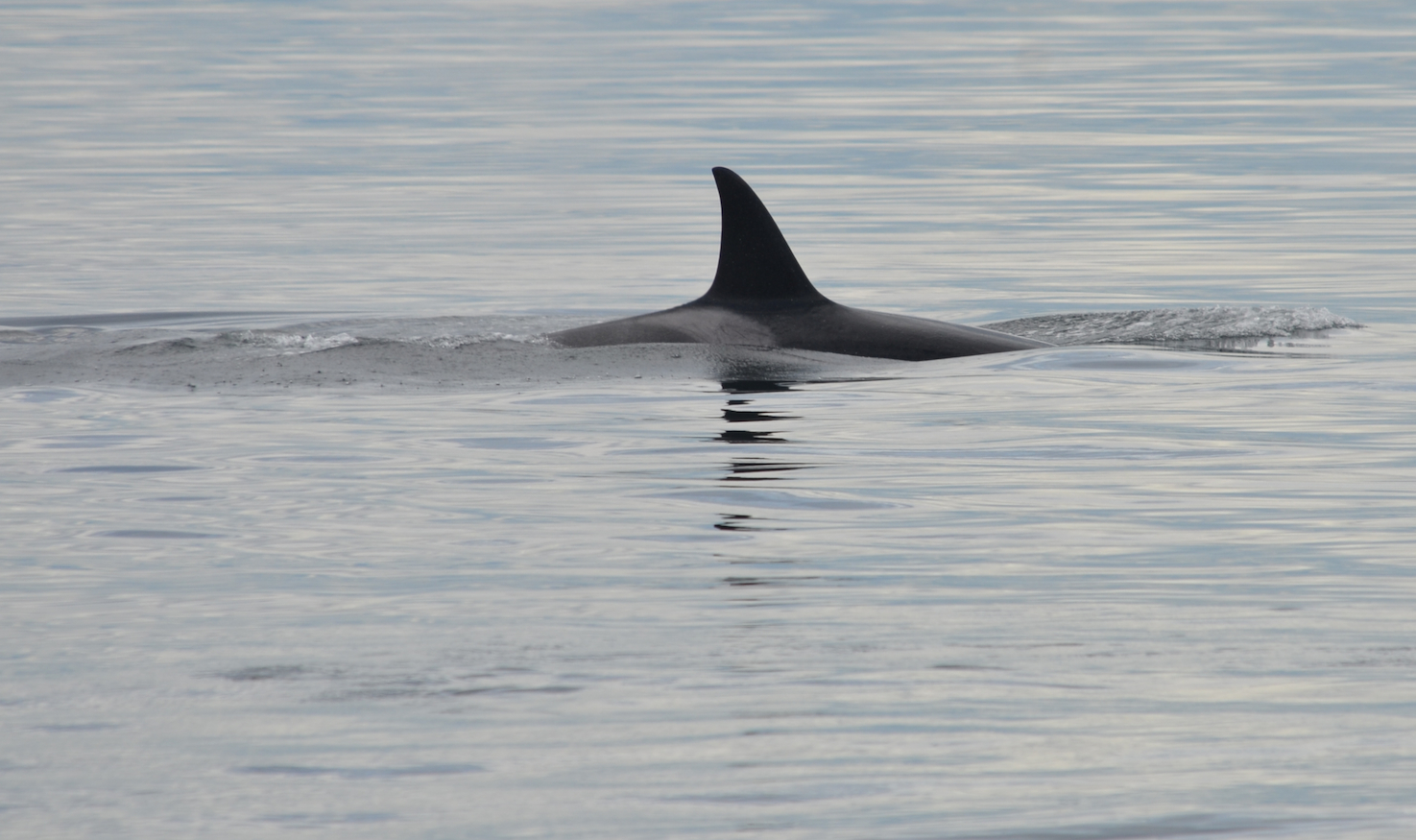
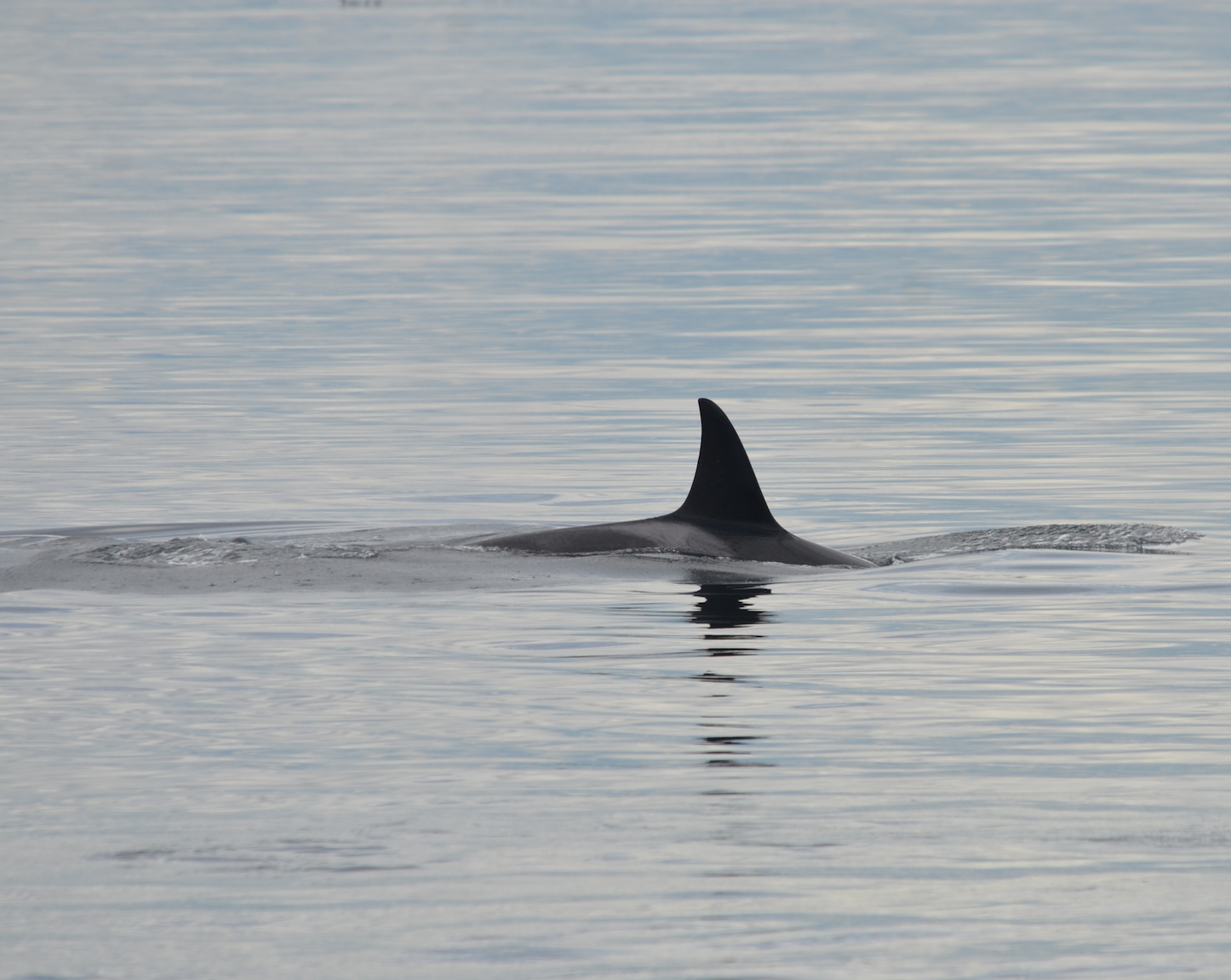
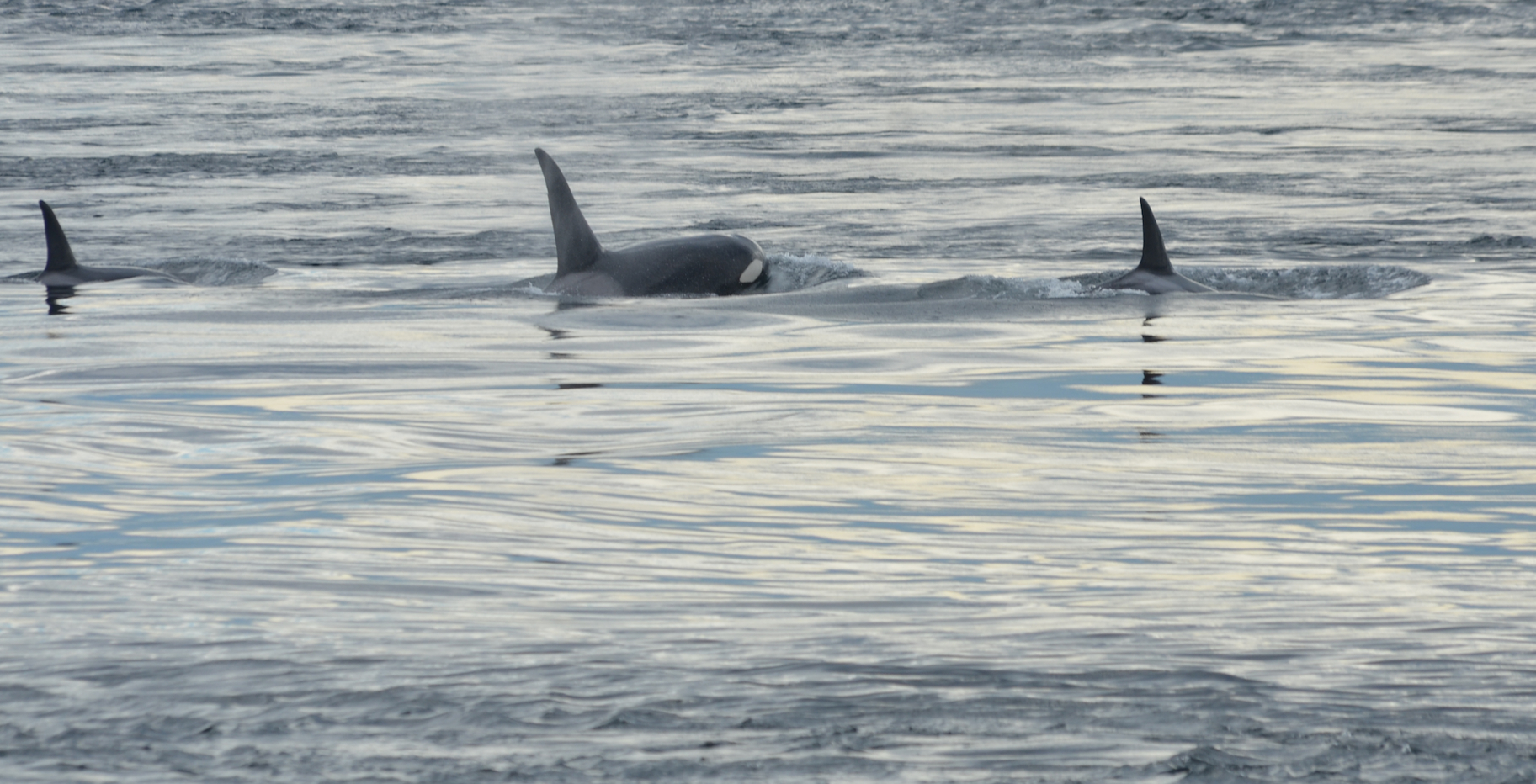
There was a lot of whale activity within and around the Ecological Reserve. Both a Minke Whale and a large Humpback were feeding just to the southeast and south respectively and three different pods of Killer Whales moved through the area in the afternoon and evening, including small group of Bigg’s Killer Whales (Transients), two pods of southern residents ( J-pod and L-pod according to the whale-watching boats). One of the SRKW pods came right into the Reserve within fifty meters of South Rock, heading east. There were two large adult males, one small calf and about 15 individuals all together. Another ~ 20 individuals were travelling in the same direction about one mile to south, at the same time. It appeared as though the two groups met up and mingled to the east of Race Rocks. Time for the sockeye to be running.

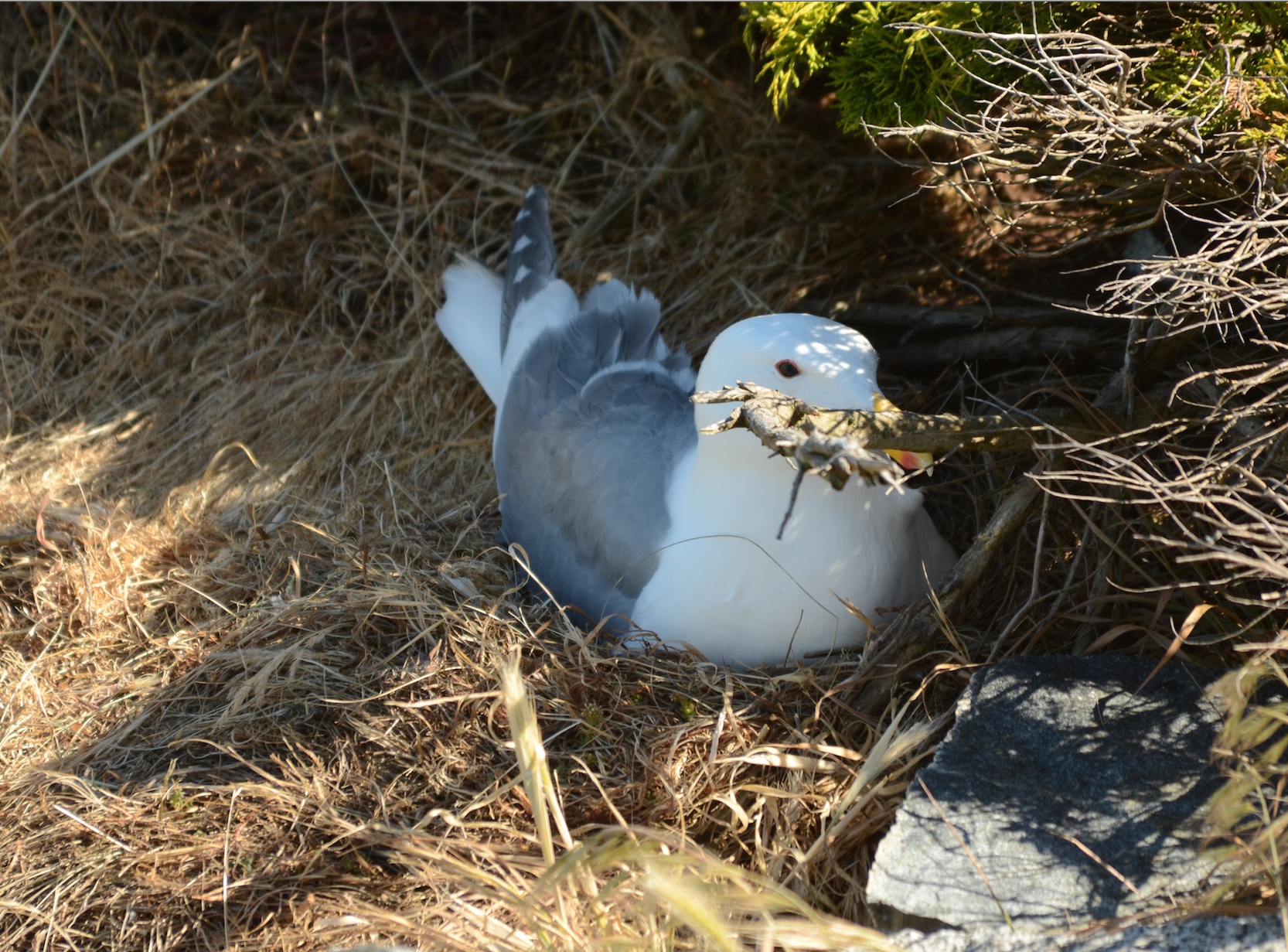
gwgu on nest juniper

Other ecological happenings are progressing as has been reported on for the past few weeks. I started a Glaucous-winged Gull nest survey Thursday and finished surveying about one third of the island. On Friday the female Northern Elephant Seal # 5866’s tags were noted. Chunk and Floyd have been peacefully moulting, sleeping and travelling up and down the ramp for several swims a day (more like lolly-gagging in the water).

Thursdays are animal census day. It is worth noting that the winter resident bird species such as Black Turnstone, Harlequin Duck and many species of gulls that nest elsewhere are gone now and so are the transitory migrant shorebirds and other migrants that stop off briefly or for a while. The sealions are at their lowest number which is expected since they too should be on or heading towards their breeding grounds. Census results follow.

Northern Elephant Seals 10 (including 5 on Great Race)

Harbour Seals 218

California Sealions 5

Northern or Stellers Sealions 2

River Otter 1

Sea Otter 1

Canada Geese 24 (= 10 goslings + 14 adults) (many appear to have swum away)

Pelagic Cormorants 3

Double Crested Cormorants 5

Bald Eagles 2 (1 adult, 1 sub-adult)

Black Oystercatchers 10 (5 nesting pairs all incubating)

Kildeer 2

Pigeon Guillemots 110

Caspian Terns 2

Glaucous-winged Gulls total 424 (402 adults in nesting areas; 22 sub-adults in roosting/resting area). Most gulls are incubating now, although some are still getting started.

There were no visitors on Thursday and two visitors Friday, who did a retreat in the science house. They came and went in Second Nature with Chris.

Chores and maintenance were routine today and I am glad to report that I am able to wash windows again.


How Low Can It Go?

Thick fog met me at dawn, not the sleepy kind that coffee cuts through, but dripping wet, zero visibility, fog created through the convergence of cold ocean water and warm air. The fog retreated and advanced repeatedly before it was beaten back by high wattage sunshine. The westerly wind blew throughout, at 5 – 15 knots only rising near sunset to closer to 20. The barometer started a gradual drop in pressure late morning yet the forecast is for sunshine and continuing westerlies.

There were a few whale watching boats in the area mid-morning with two observed in the Ecological Reserve. Sports fishing boats were seen in the general area but outside the Reserve.

The elephant seals found the trek to seawater quite an effort today and some of them gave up for a few hours on the way to have a swim. Getting back up the hill was even more of an effort.
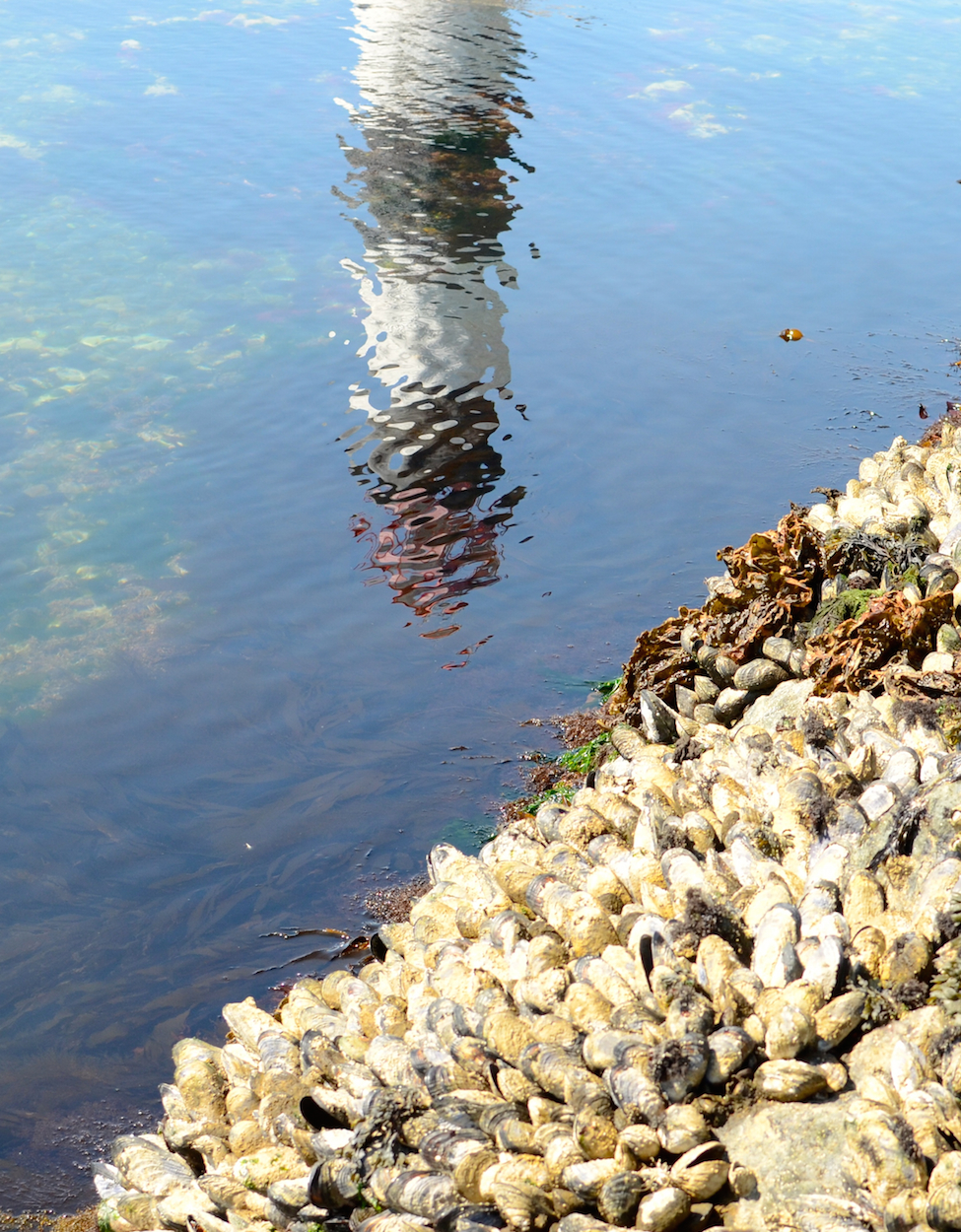
The tide is a long way out.

The tide is a long way out.

Observational efforts were focused in the inter-tidal and on the mega-fauna census today. Another really good tide (0.5m) allowed me to do a large algal survey and find more marine invertebrate species. I will share some of the invertebrates here and come back to the seaweeds tomorrow. In each photo, if you look closely you will notice smaller and smaller animals in a wall to wall competition for space or is it sharing of space.
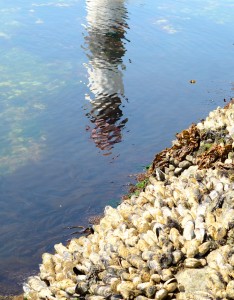
The human history and natural history are intertwined.

Both the natural and human history at Race Rocks are profound.

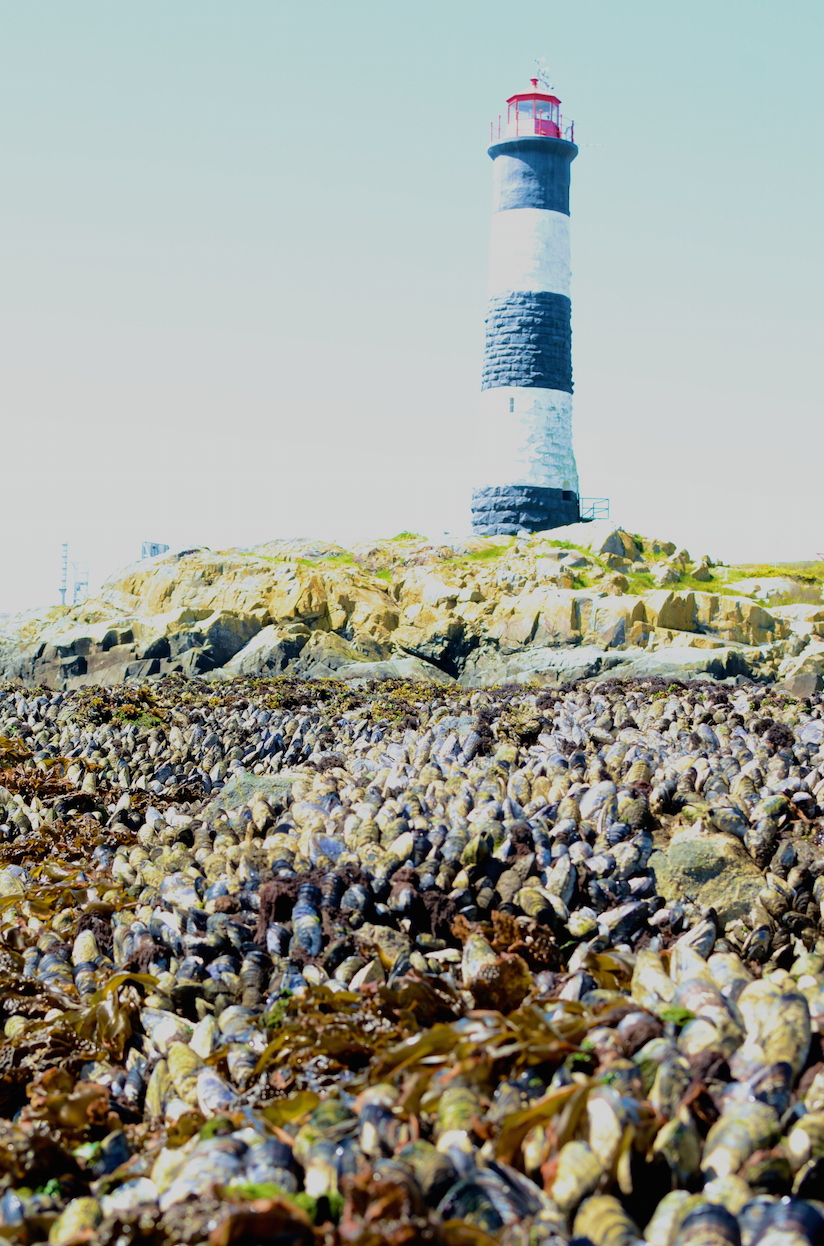
California Mussel beds are ‘old growth’ and substantial on Great Race. The large area provides important habitat creating significant diversity.
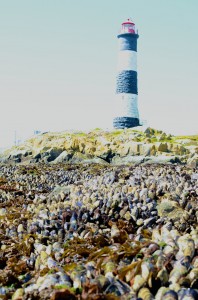
 

Extensive mussel beds on the south side of Great Race.

Extensive mussel beds on the south side of Great Race.

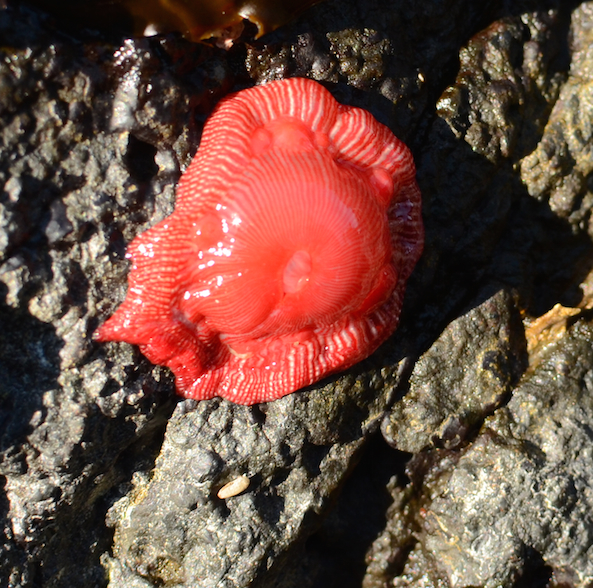
A brooding sea anemone (Epiactus prolifera) with numerous offspring attached low on the column near the pedal disc.
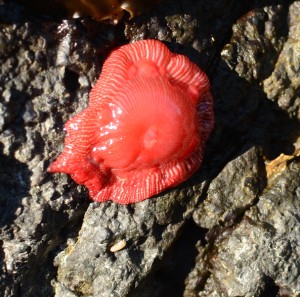
Epiactus prolifera

The mottled sea anemone (Urticina crassicornis) is quite common in the low inter-tidal on the south side of Great Race.
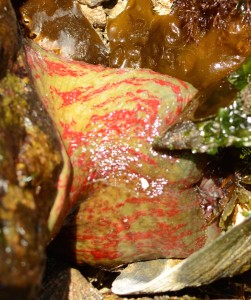
Urticina crassicornis

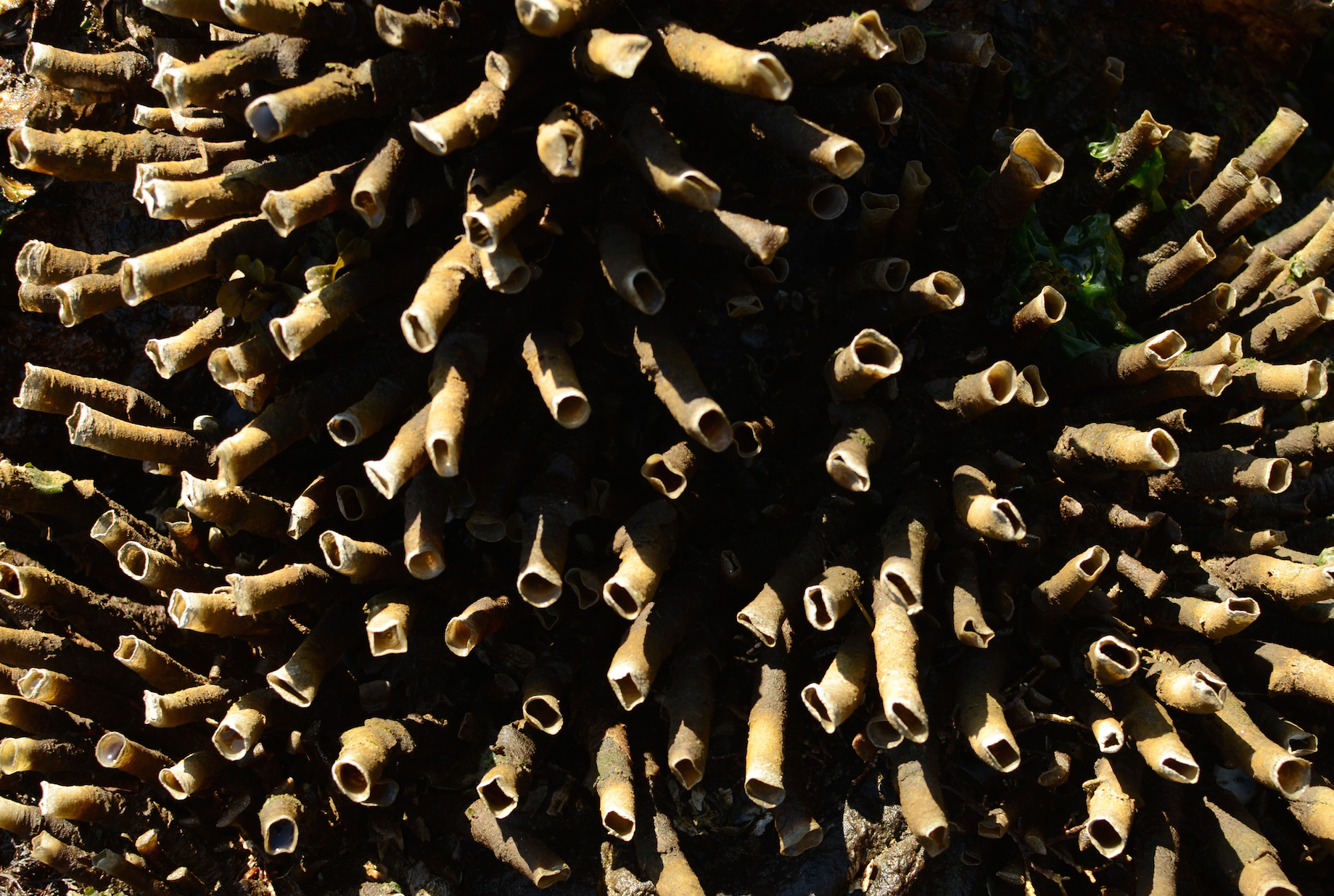
This species of tubeworm, named after Vancouver (Eudistylia vancouverensis) is usually more abundant sub-tidally. Here in the high current area between Great Race and South Islands, it is common in the low inter-tidal.
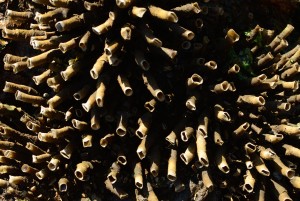
Eudistylia vancouverensis There is a lot of gigantism on the Pacific coast but here at Race Rocks even the giant species seem even more abundant and bigger than I have seen them elsewhere.
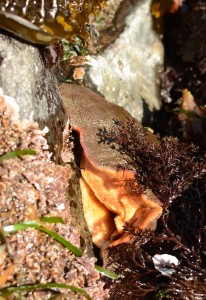
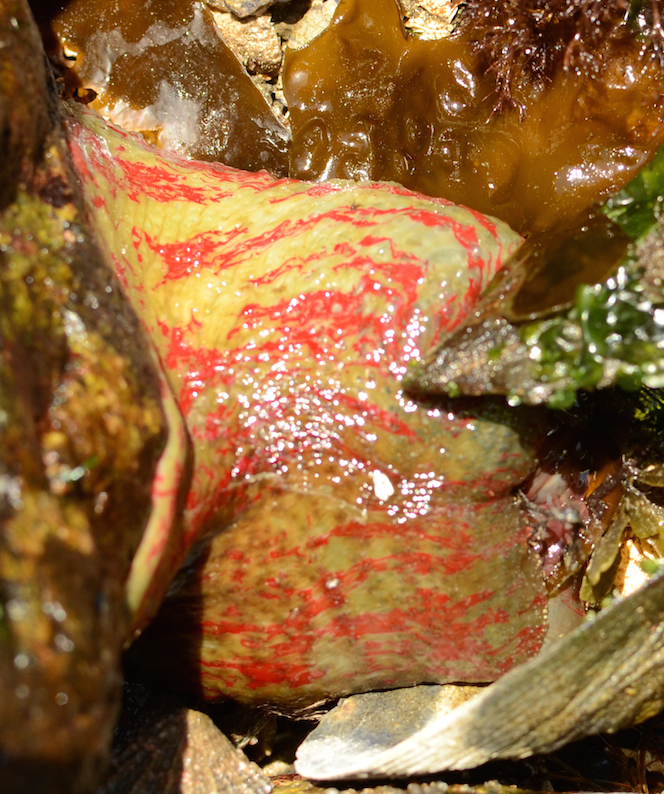
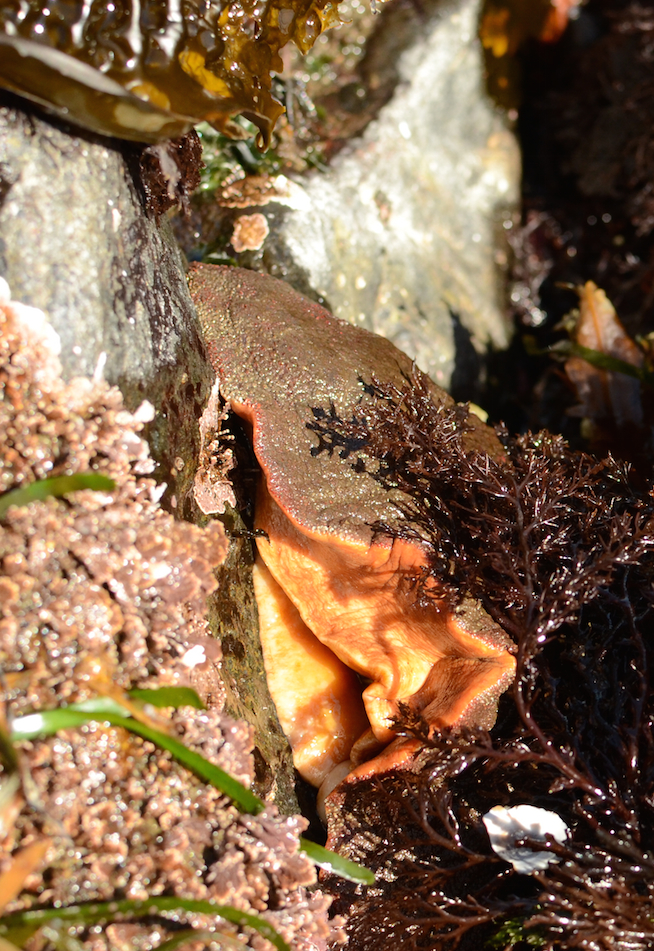
Cryptochiton

The gumboot chiton (Cryptochiton stelleri) is an important grazer in the inter-tidal. They are very abundant here.
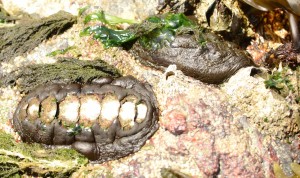
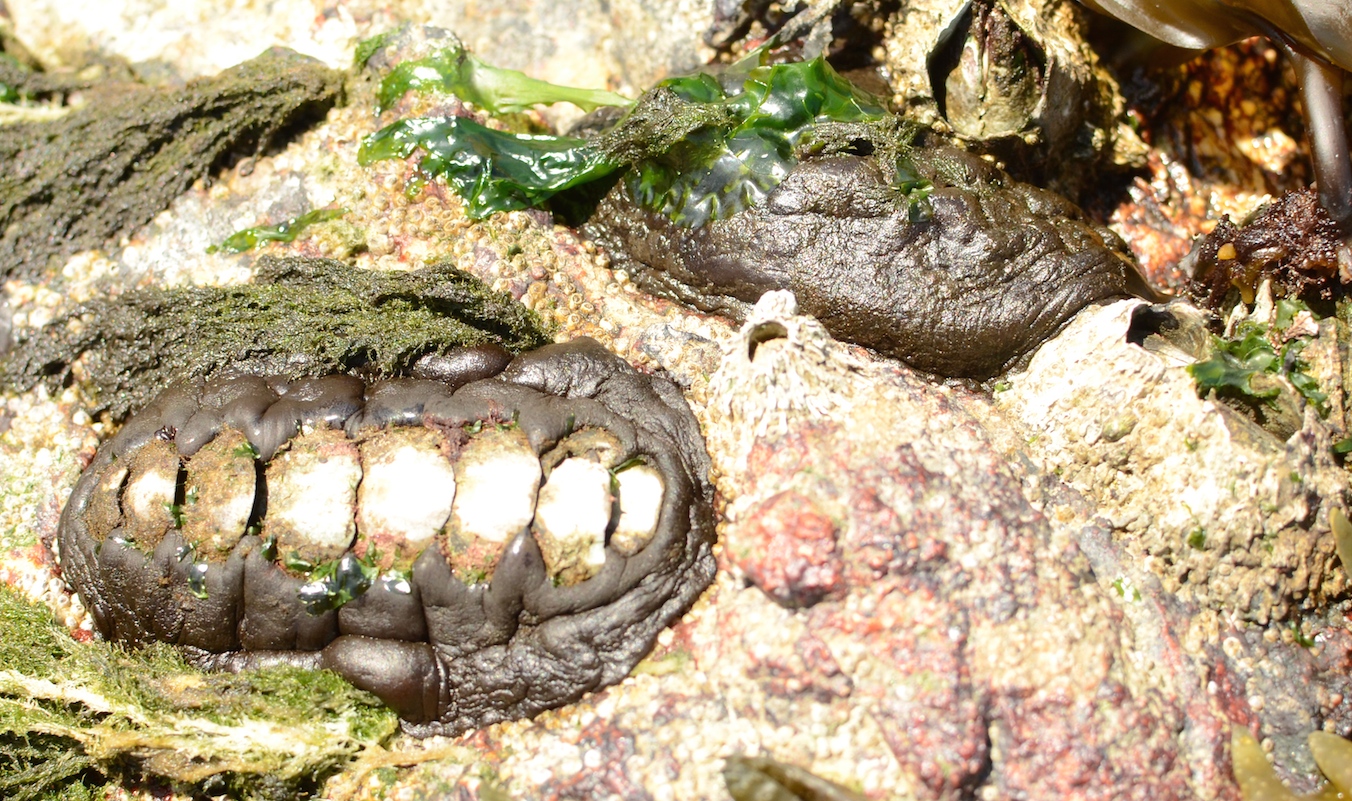
Katharina

The Black Leather Chiton (Katharina tunicata) is another grazer and like the gumboot chiton grows both very large and is super abundant here.
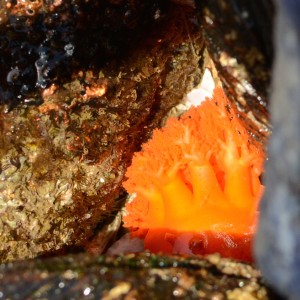
 

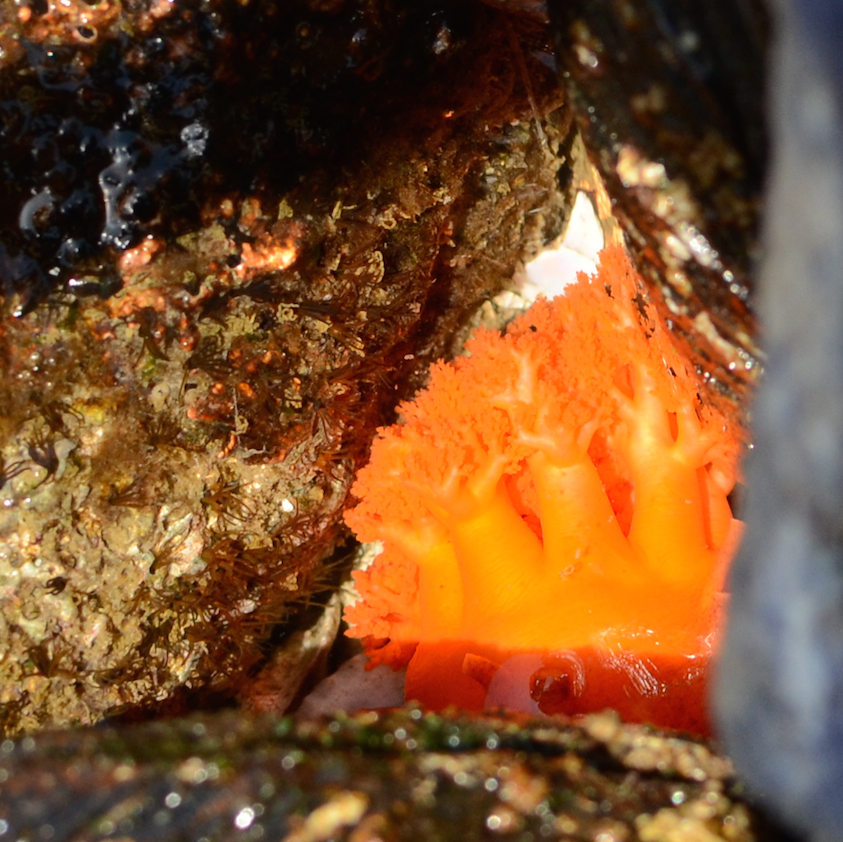
Cucumaria Dodecaceria

Orange sea cucumbers (Cucumaria miniata) are really abundant both in tide pools and under the edges of boulders and there a lot of boulders on the south side.


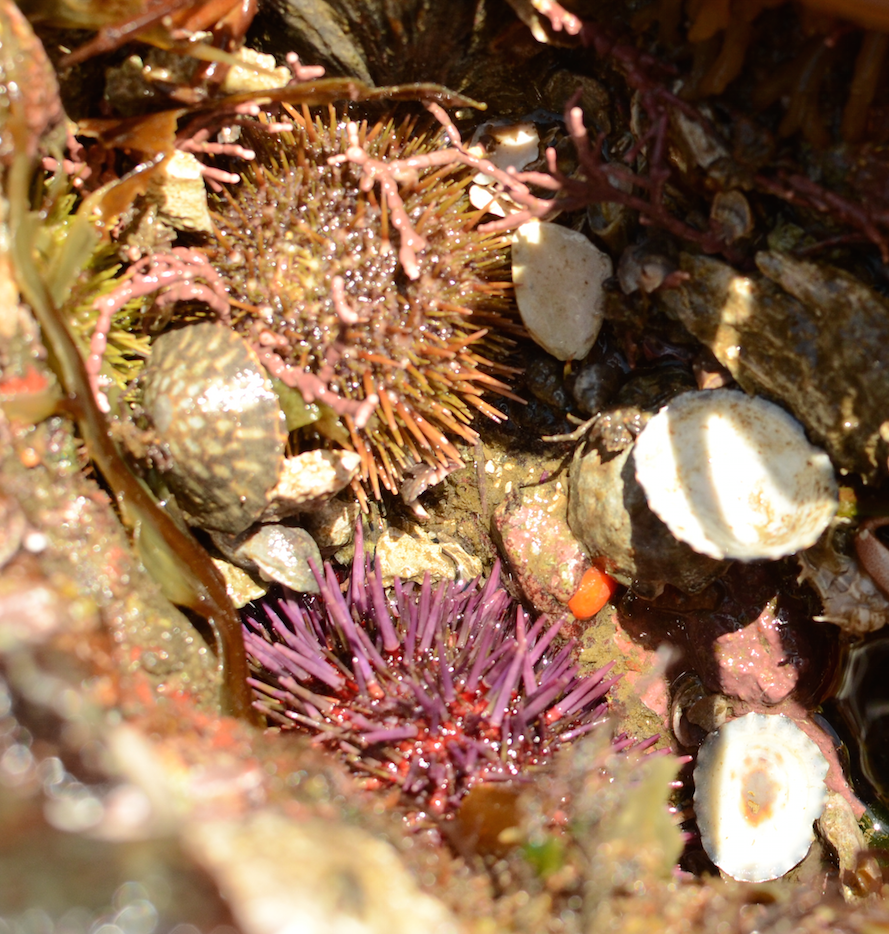
Three species of sea urchin were observed today, adding the green urchin (Stronglyocentrotus drobachiensis) to the list. The green and purple both like to “dress-up” aka cover themselves, with shells, seaweeds and even bits of wood. Here they were using empty limpet shells in an area frequented by oystercatchers.
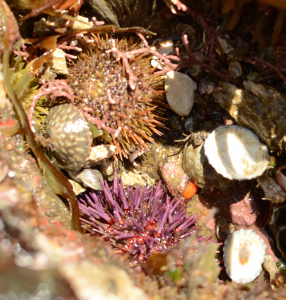
drobachiensis rostangia

Green and purple sea urchins with a small orange nudibranch to their left (Rostanga pulchra) that usually lives on the red sponge Ophlitasponge.


Today was large animal census day and the results are as follows:

Humpback Whale (young (small) animal) 1

Northern Elephant Seals 34 (including 15 on Great Race)

Harbour Seals 179

California Sea lions 17 (includes brand U792)

Northern Sea lions 20 (mostly old males)

Sea Otter 1

Canada Geese 36 (includes 18 goslings)

Harlequin Ducks 8

Pelagic Cormorants 0

Double Crested Cormorants 6

Bald Eagle 2 adults, 3 sub-adults

Black Oystercatchers 10

Greater Yellowlegs 1

Black Turnstones 0 (none seen in spite of searching)

Western Sandpipers 2

Least Sandpiper 2

Pigeon Guillemots 148

Glaucous-winged Gulls total 607 (458 adults in nesting areas; 60 adults in roosting/resting area; 79 sub-adults in roosting/resting area)

Western Gull (hybrid?) 1

Herring Gull 2 (Juv.)

Common Raven 1

Northwestern Crows 2

Barn Swallows 2

Savannah Sparrow 6

There were no visitors today. Chores were routine.
 

The Day After Blue Planet Day

Winds started out very light from a northerly direction and eventually backed all the way through east, southeast and around to westerlies, 15 to 20 knots and gusting, in the afternoon. Although there were some clouds and showers it seemed to be a nice day, but when you look at cumulative solar radiation values they were less than half of yesterday’s values at just below 300 Langleys. The barometer fell gradually all day and levelled out near dusk ending up at ~100.5 HPa. The strong wind warning remains in effect and is forecast to be strongest in the afternoons for the next few days.

Whale watching boats were back today after the storm subsided and four were observed in the Ecological Reserve. They were meeting and exceeding the Marine Mammal Regulations and although a couple of the smaller cowboys did manage to get between Great Race and South Islands. They were going so slowly and cautiously that the sealions that didn’t even wake up as the boats passed by.

No sports fishers or other vessels were observed in the ER.

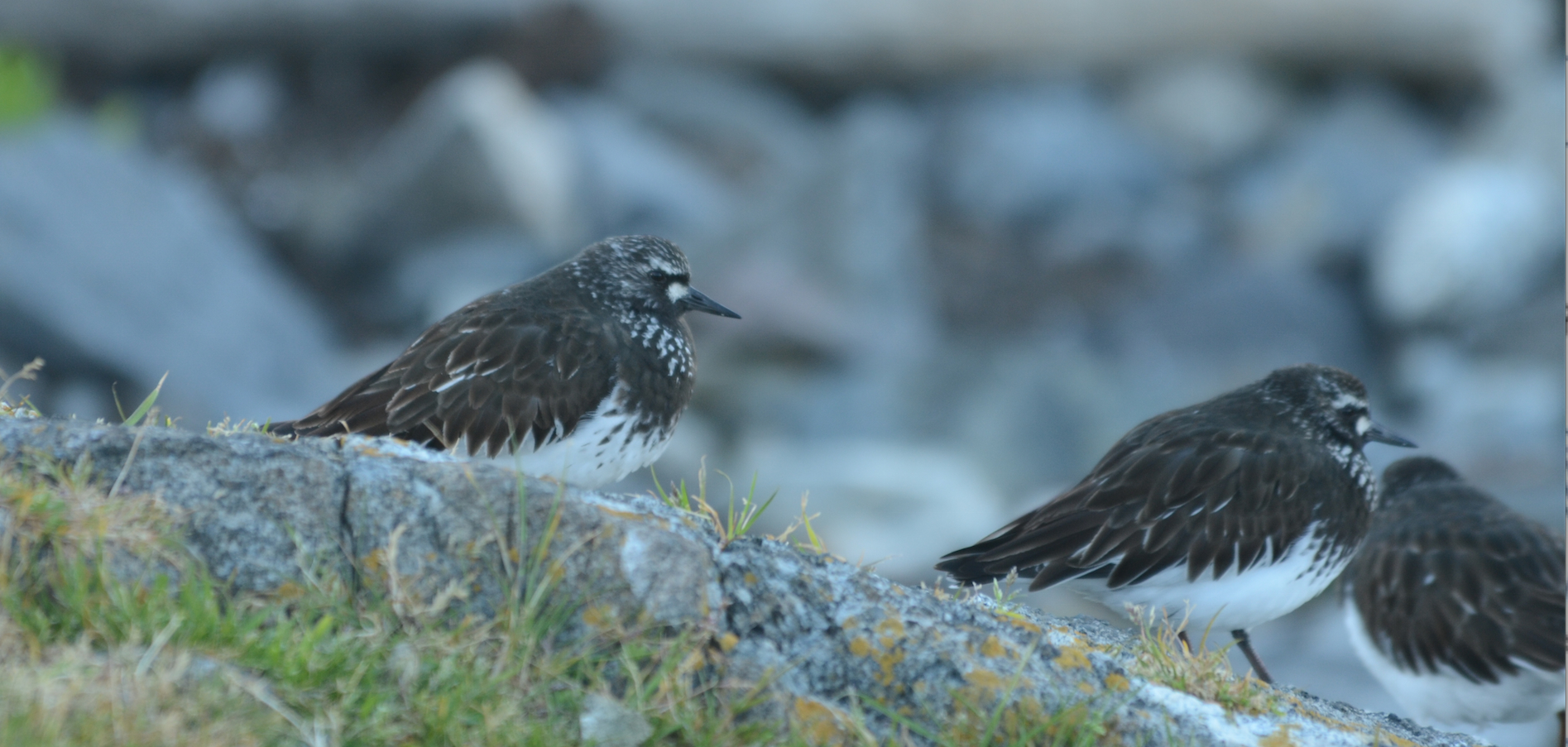
Black Turnstones in all their summer finery.

Black Turnstones in all their summer finery.

One branded Steller’s Sealion was noted hauled out on the South Islands. This female with brand # 120Y was born at St. George Reef, California in 2002.

Female Steller's (or Northern) Sealion # 120Y. This animal was born in northern California and will be 13 years old this summer.

Female Steller’s (or Northern) Sealion # 120Y. This animal was born in northern California and will be 13 years old this summer.

Today was animal census day and the results are as follows:

Northern Elephant Seals 34 (8 on Great Race)

Harbour Seals 44 (note 137 counted following day, less windy)

California Sea lions 11

Northern Sea lions 38

Sea Otter 1

Canada Geese 18

Harlequin Ducks 4

Pelagic Cormorants 4

Double Crested Cormorants 5

Bald Eagle 2 adults, 2 sub-adults

Killdeer 1

Black Oystercatchers 10

Black Turnstones 15

Surfbird 23

Dunlin 4

Pigeon Guillemots 383

Glaucous-winged Gulls 488 adults 18 sub-adults

Caspian Tern 1 (flying through)

Common Raven 1

Barn Swallows 2

Savannah Sparrow 6

There were no visitors today. Chores were routine.


All About the Wind.

The west wind blew all night and by daylight, the 30 to 35 knot winds had sucked in low cloud, rain and rough seas from offshore. Winds increased to 35 gusting to 40 knots in the late morning and continued unabated all afternoon. Air temperature was close to yesterday’s sea surface temperature of 9.7 o C and with the wind chill was hovering around 4oC. Light levels were the lowest of the last week and not even 60% of yesterday. The barometer bottomed out just before midnight last night and has been slowly creeping up and out of its hole today. Gale warnings remain in effect for tomorrow with the wind predicted to turn southeast Thursday.

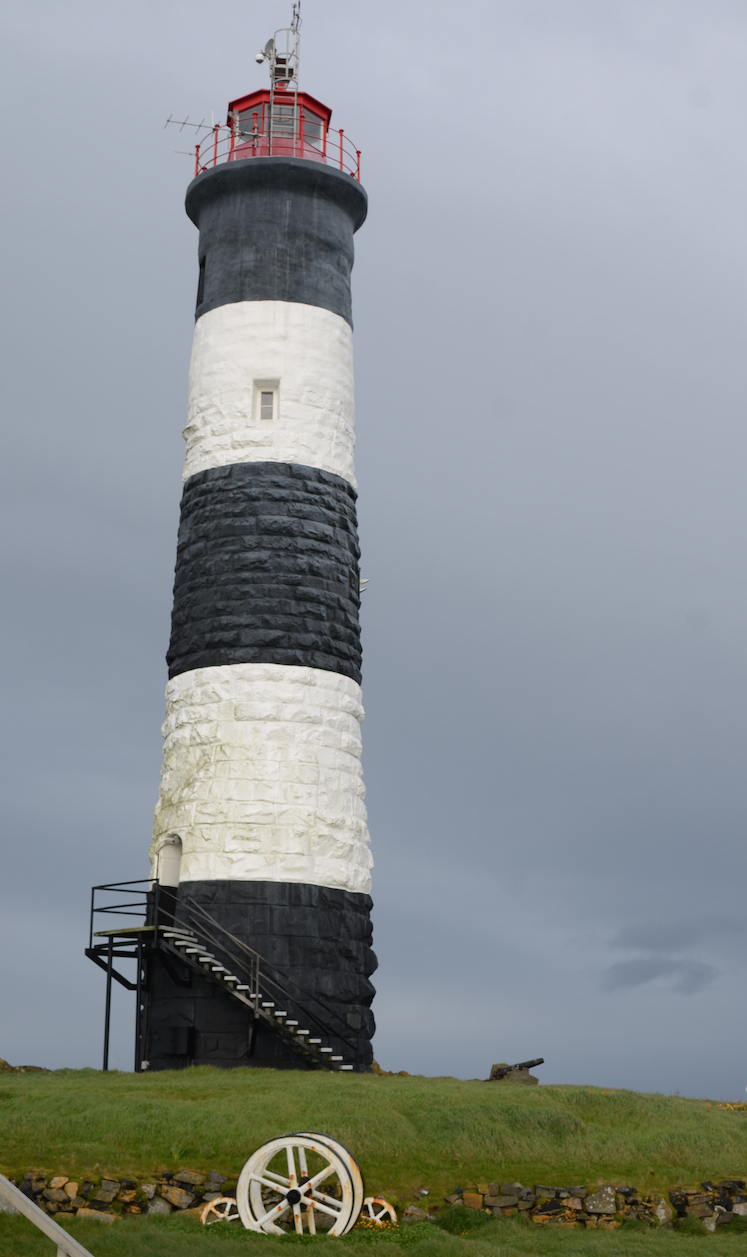
The only thing not affected by the wind today was the stone tower.

Standing firm after 155 years.

Standing firm after 155 years.

There were no whale-watching tour boats in the Ecological Reserve today. Sea conditions were not conducive.

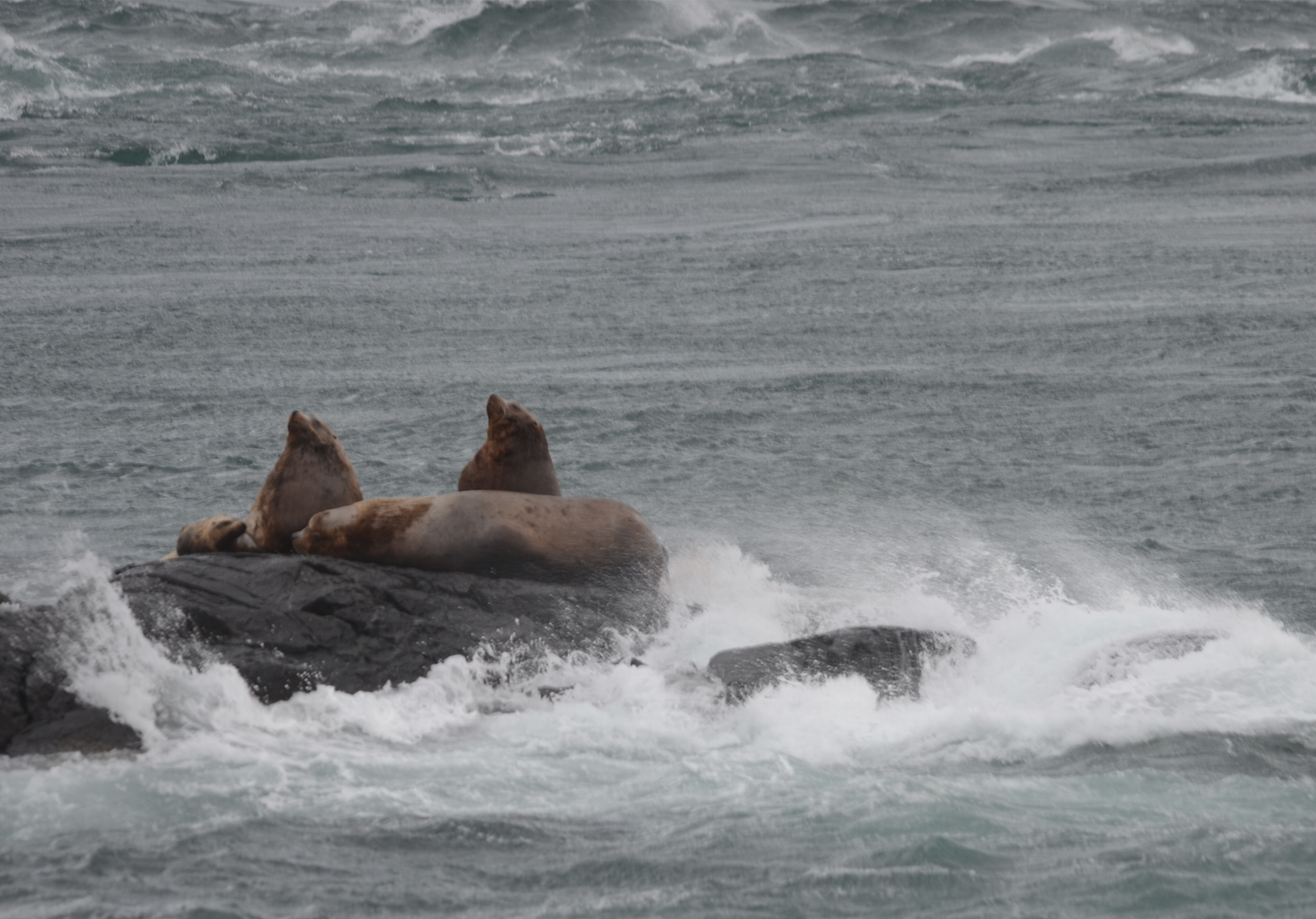
The ecological focus today was to observe how the mega-fauna behaved in the wind. Only a few sealions hauled out, the remainder rested in the water near the haul-out where it was probably quite a bit warmer without the wind chill factor.

This is a day when having blubber really makes sense.

This is a day when having blubber really makes sense.

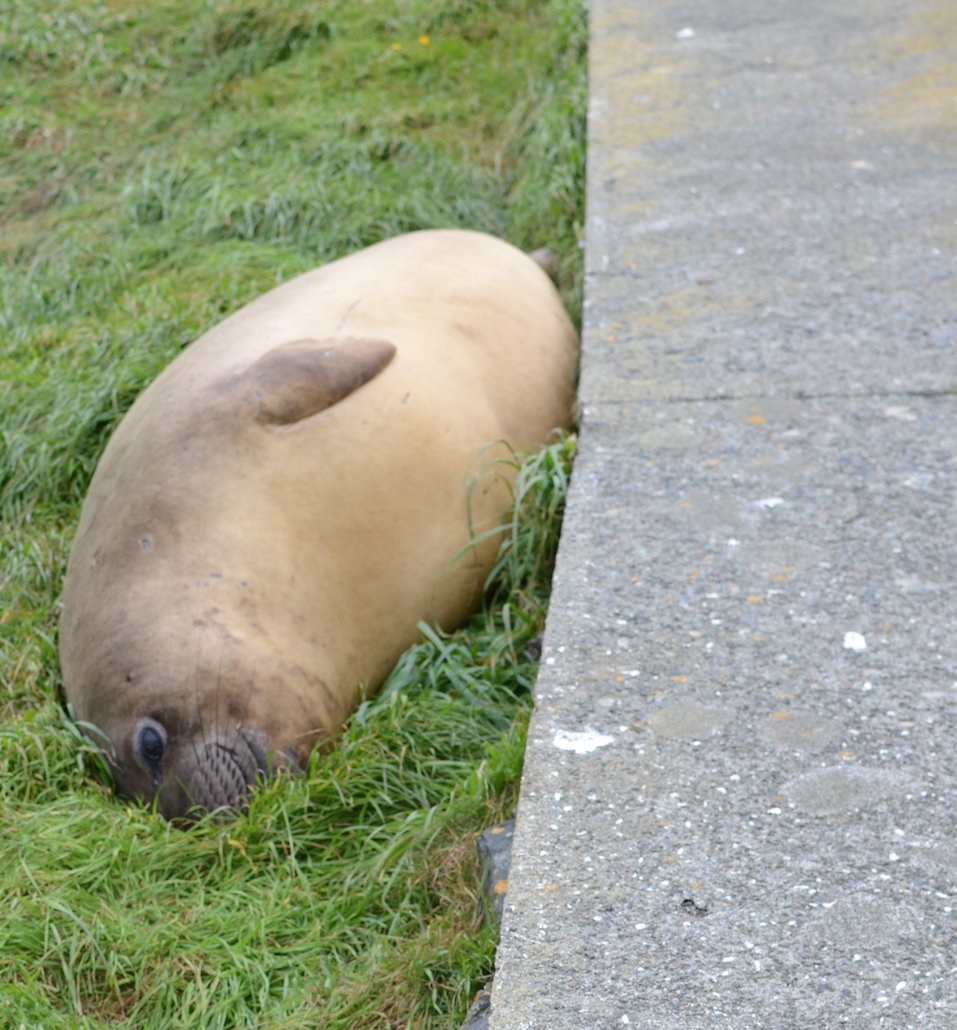
The Northern Elephant Seals made a huddle and “took turns” being in the coveted central, heating position. One female slept off by herself, maybe not quite as warm but definitely more peaceful. Only #5850 went for daily ablutions, the others stayed dry, even if a bit mucky.

Female Northern Elephant Seal huddles up to sidewalk.

Northern Elephant Seal huddles up to sidewalk.

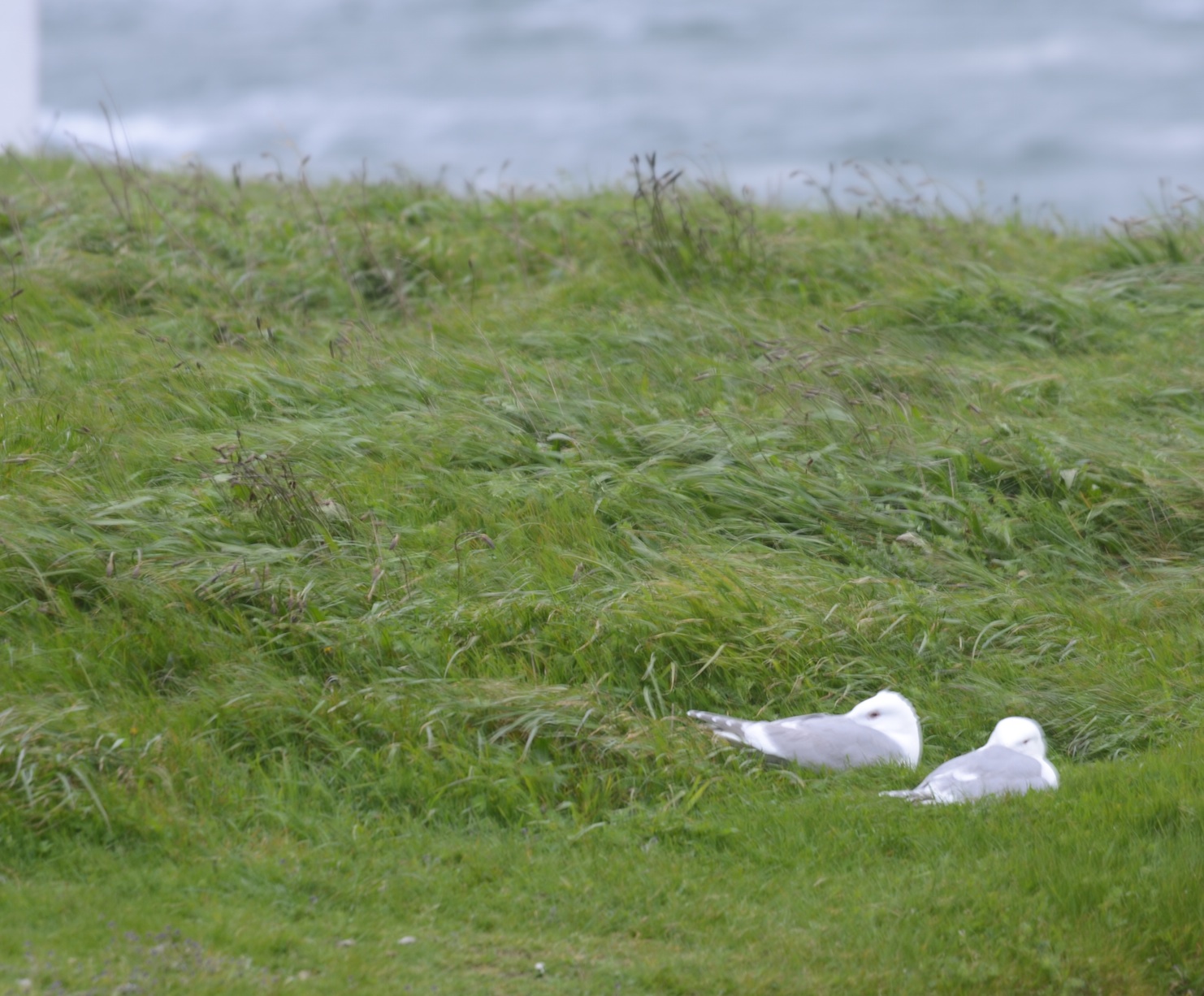
Glaucous-winged Gulls hunkered down with heads under wings, keeping a low profile and perhaps holding on with their toenails, as they seemed to totter and grimace during the big gusts. The geese with nests were on them with ganders close by guarding and staying low. The three pairs that are still trying to set up nests were observed chasing gulls . The Bald Eagles, so ubiquitous every other day for the last 25 days, were nowhere to be seen, nor were oystercatchers, turnstones, nor guillemots.

GwGu in wind

Two marine science classes were supposed to visit today but the weather just didn’t cooperate and Courtney wisely cancelled the trips. Thus there were no visitors and chores were basic routine.