Wild Goose Chase

Weather & Sea Conditions

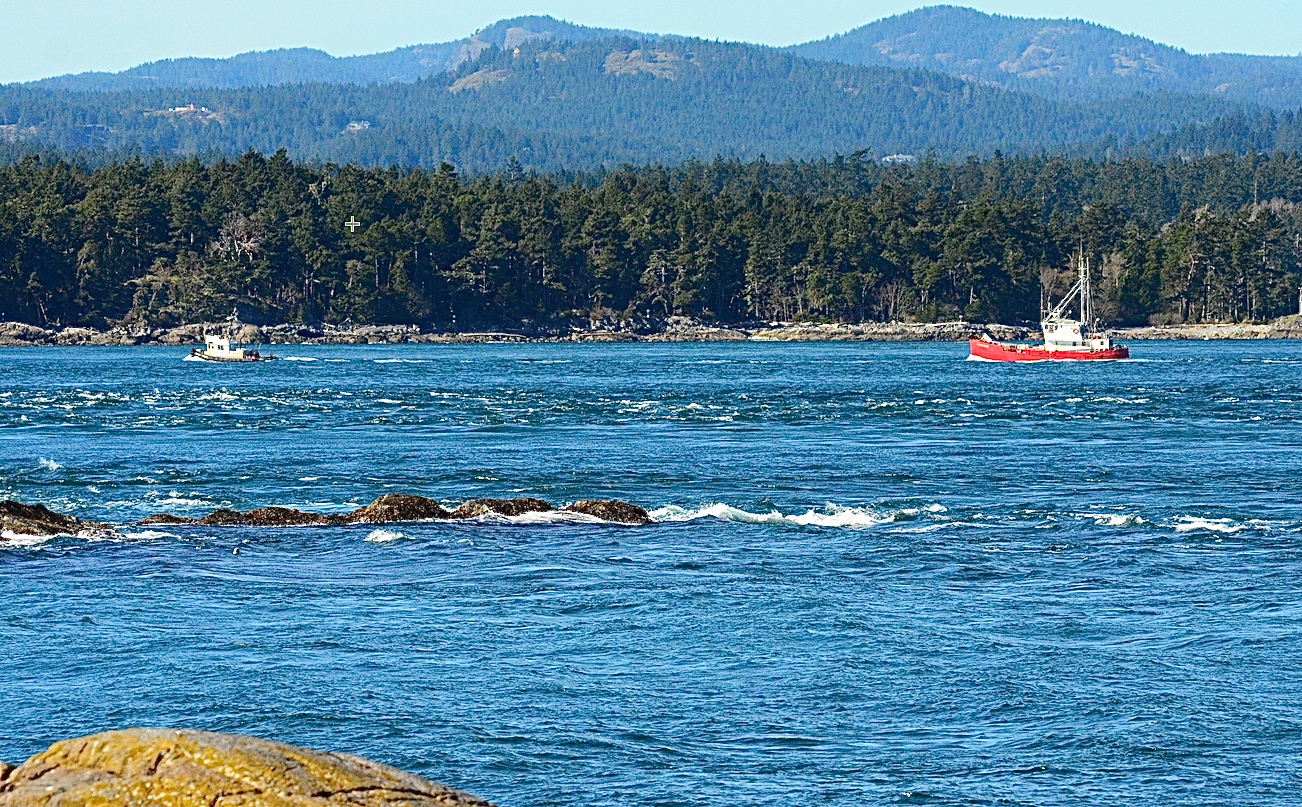
At dawn, the west wind was already blowing 30 knots and gusting. Although it dropped to 20 – 25 knots at times, the west wind continued to bring dramatic clouds and showers along with brief glimpses of sunshine and rainbows, throughout the day. The marine forecasters call for the wind to back to southwest and they estimate that the SW wind will diminish to 10 -15 knots, late overnight and drop to light, early Tuesday morning. Showers and the mix of sun and cloud are predicted to continue. Seas were rough today to the west and out in the Strait, while the entrance to Pedder Bay and the eastern horizon remained a little calmer in the lee.

Vessels

No vessels were observed in the protected area or passing nearby, today.

Ecological and General Observations

Canada Geese are more and more insistent that they belong on Great Race and two pairs are actively nesting now. Even if the eco-guardian were to spend 24/7 chasing off geese, it would be ineffective as they are incredibly persistent, very strong and have a certain goose cunning that harkens back beyond the etymology of ‘wild goose chase’. Without the large numbers of geese that were present last year and the crushing effects of dozens elephant seal dozers, the grass does appear to remain a little longer, but then it has been a wet spring.

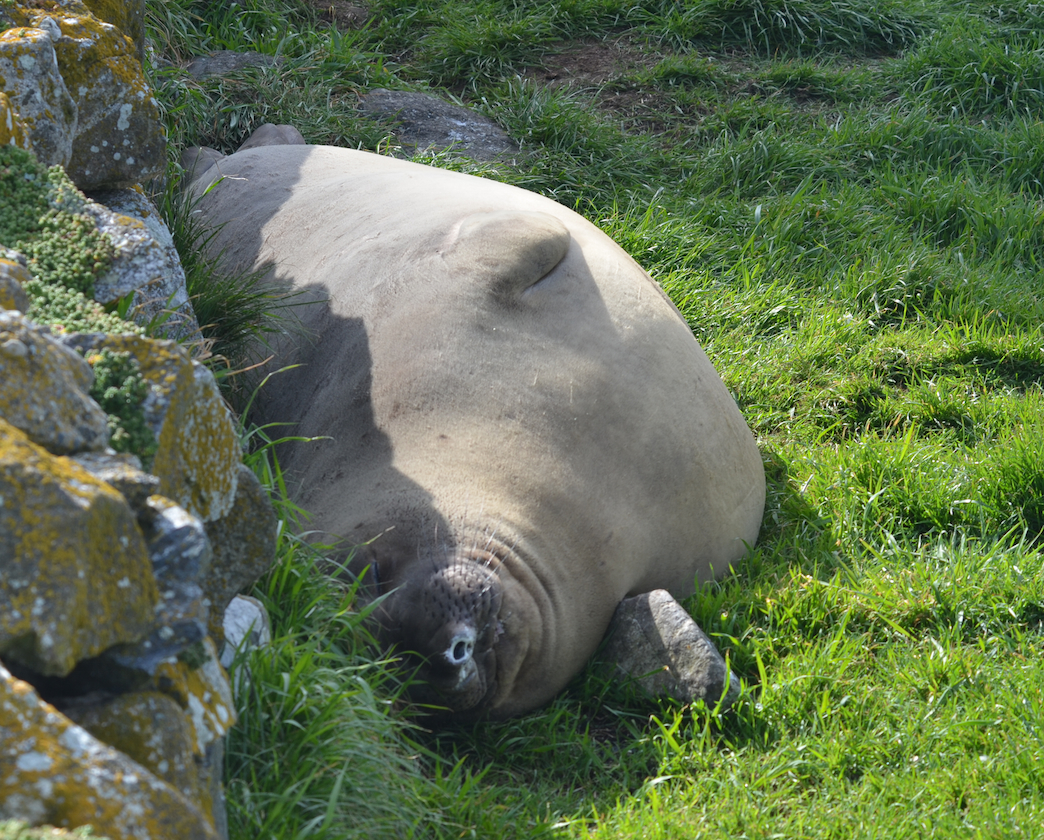
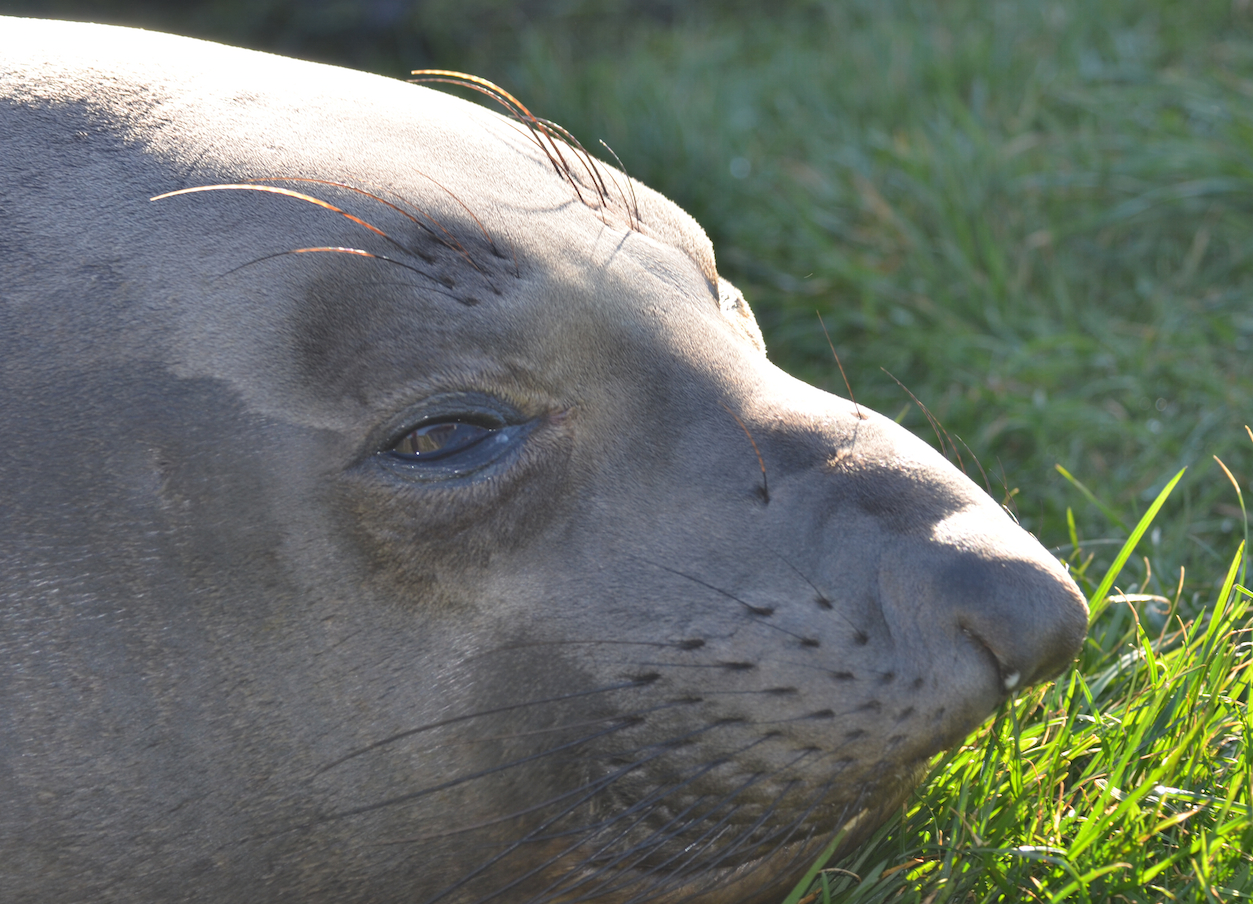
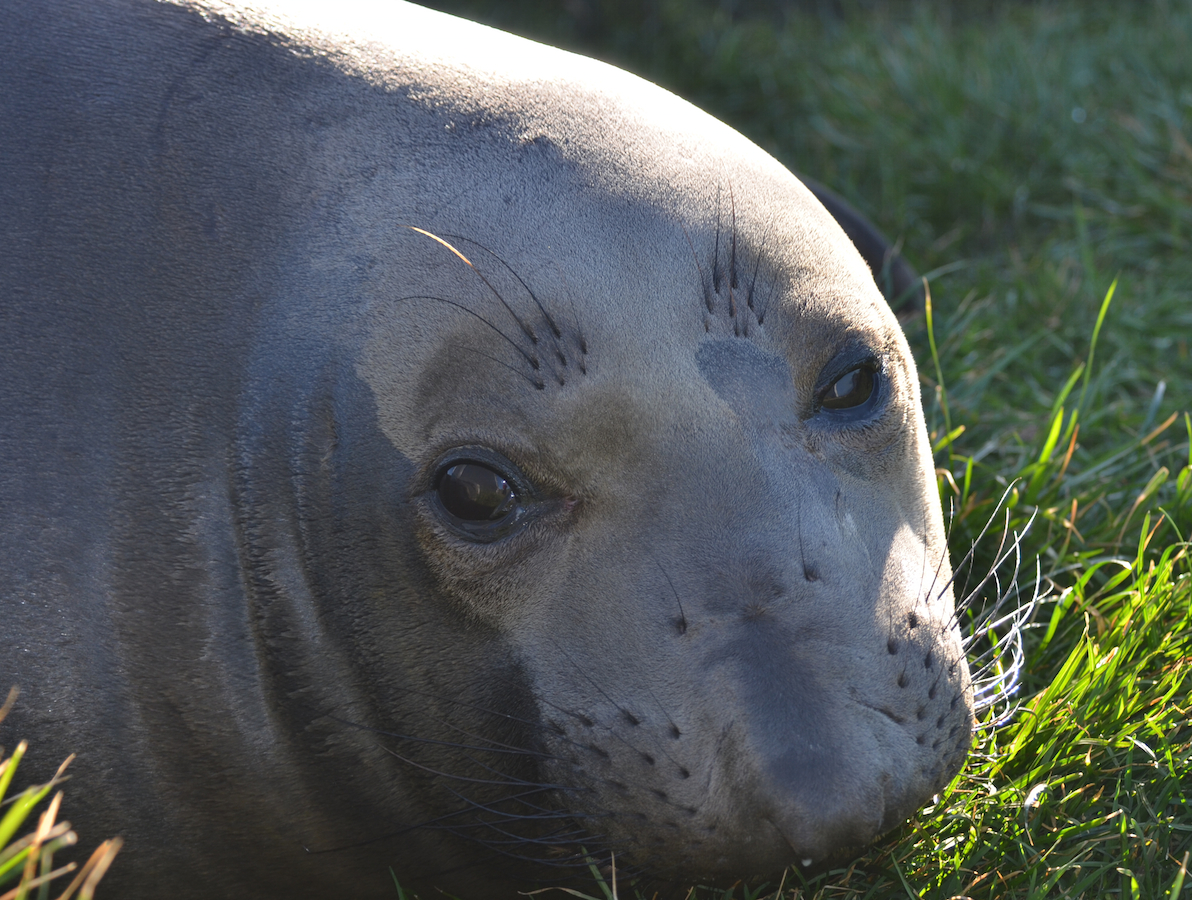
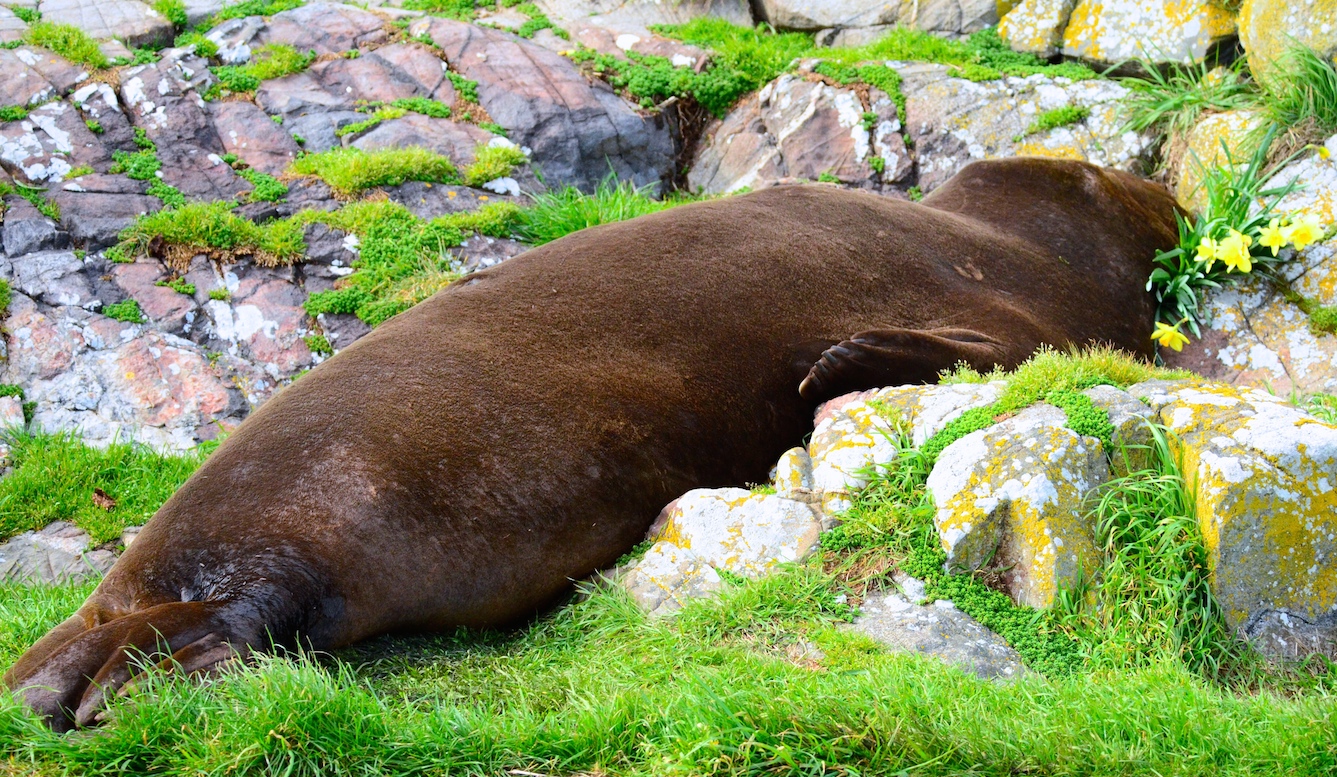
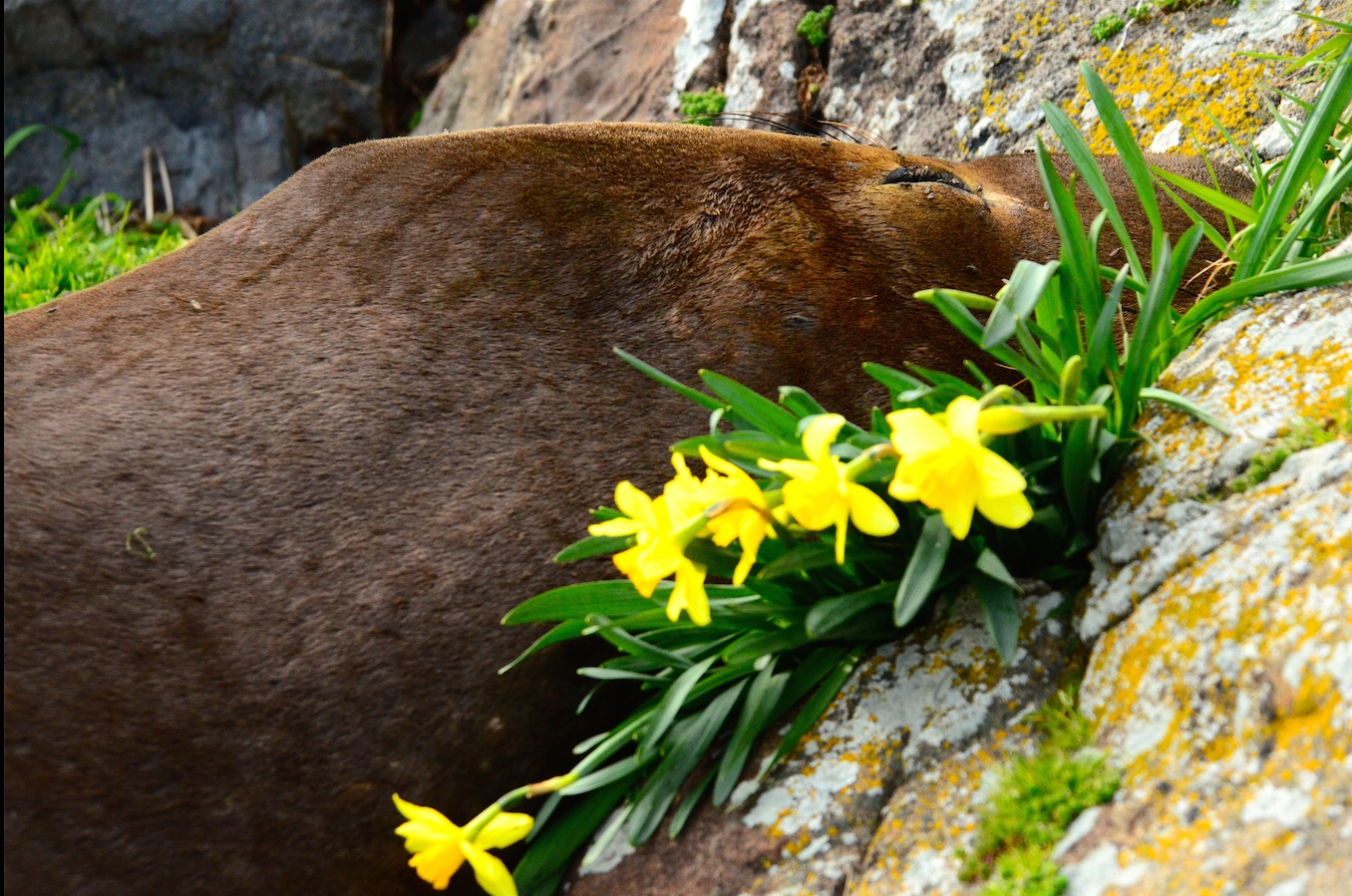
Beulah, the large female Norther Elephant Seal staying in the garden, went for a dip this morning and on her return she seemed to enjoy ‘frolicking’ in the long grass, head down undulating through the greenery. She also found a clean place to sleep, next to an old, lighthouse heritage, rockery bed. After watching the elephant seals purposefully destroy the tulips last year, I picked a bouquet when she moved into that part of the garden and they are brightening my world on the little desk in the house.

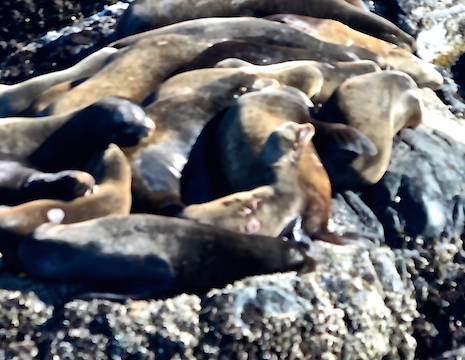
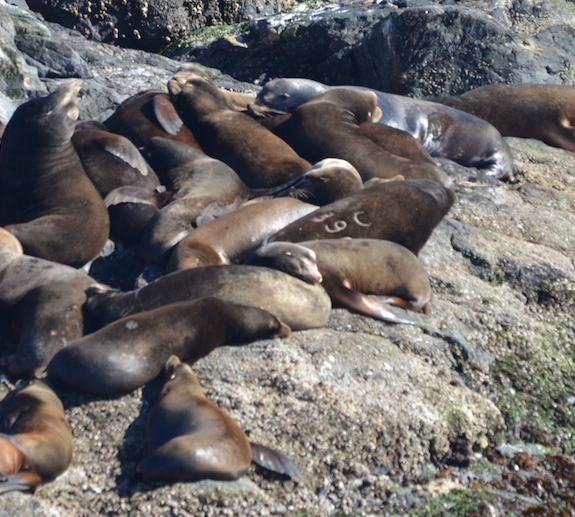
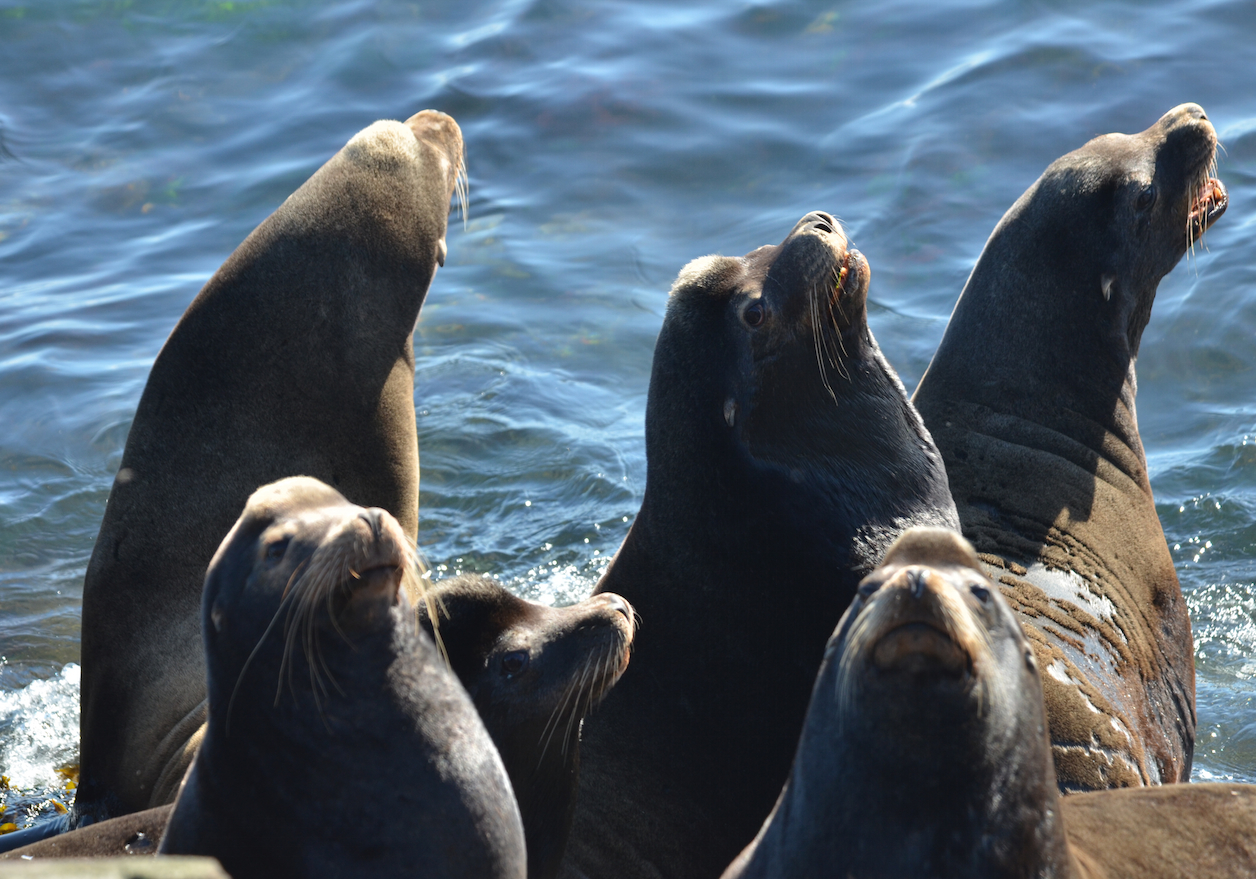
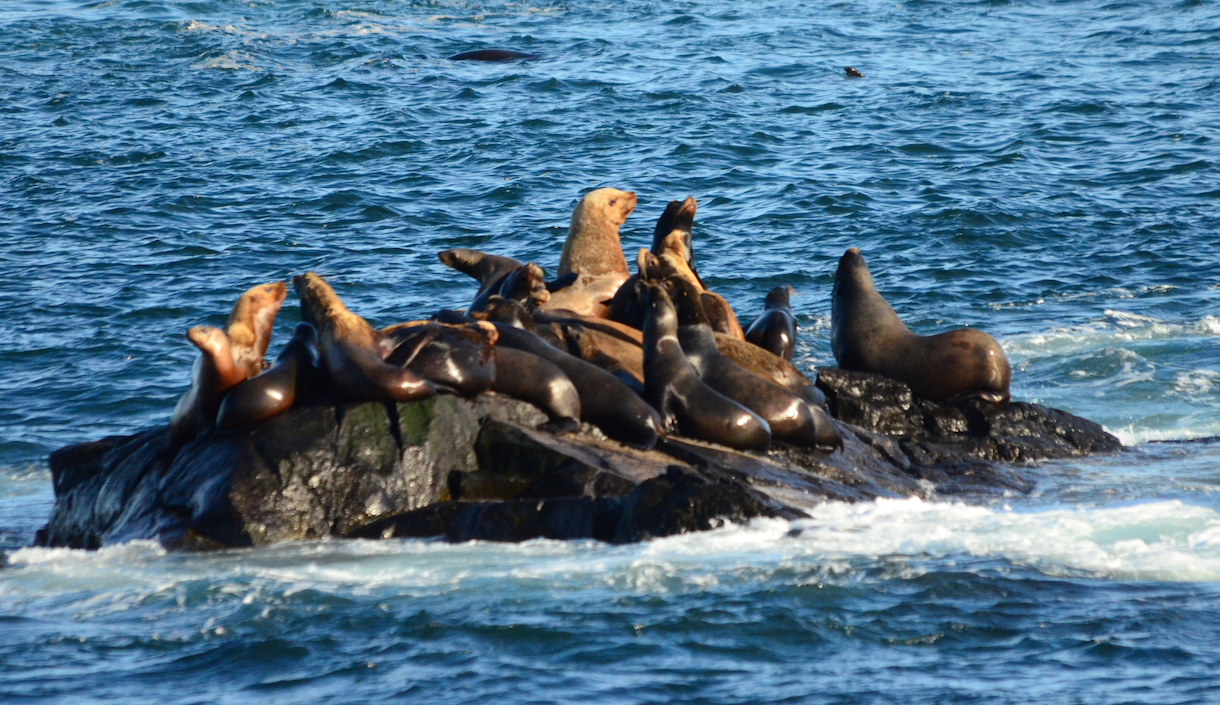
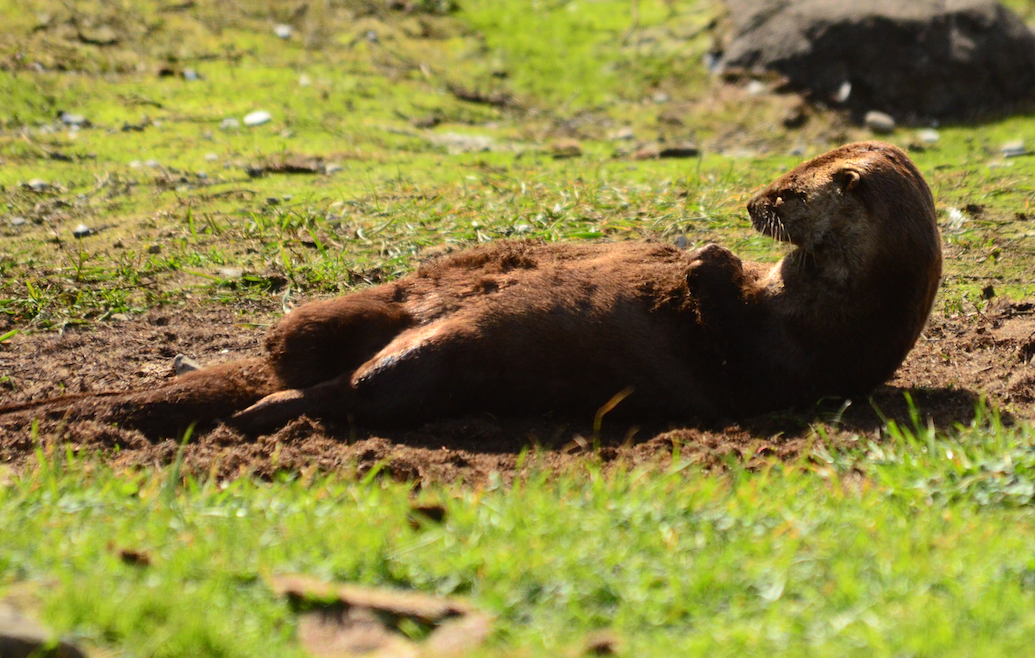
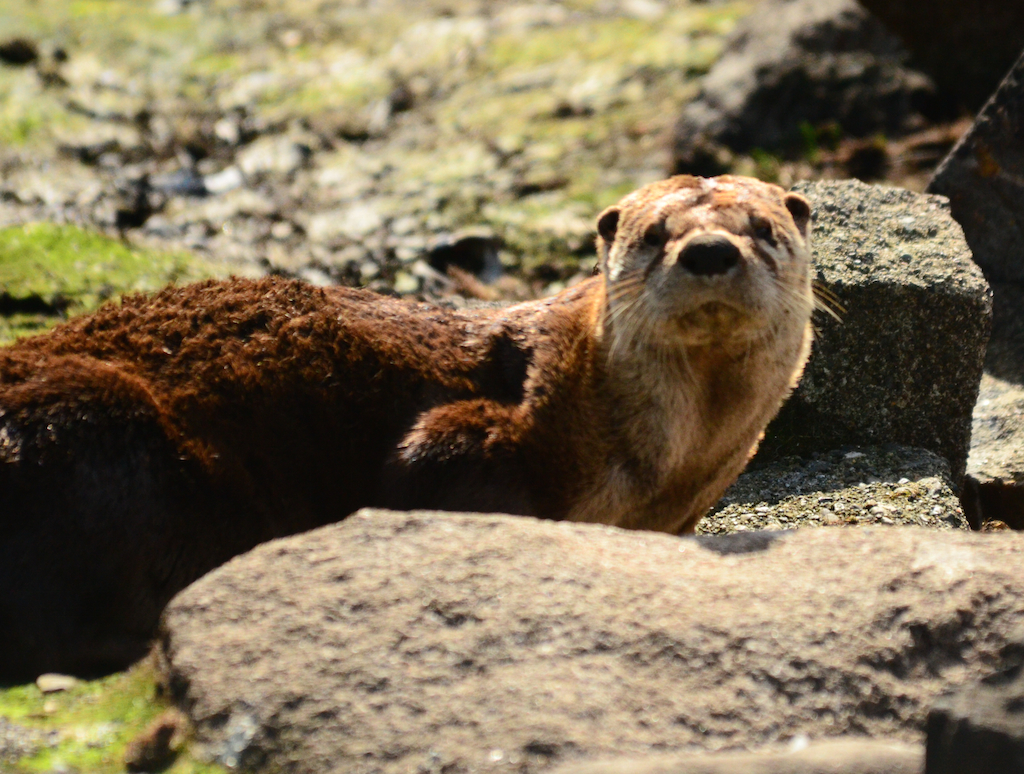
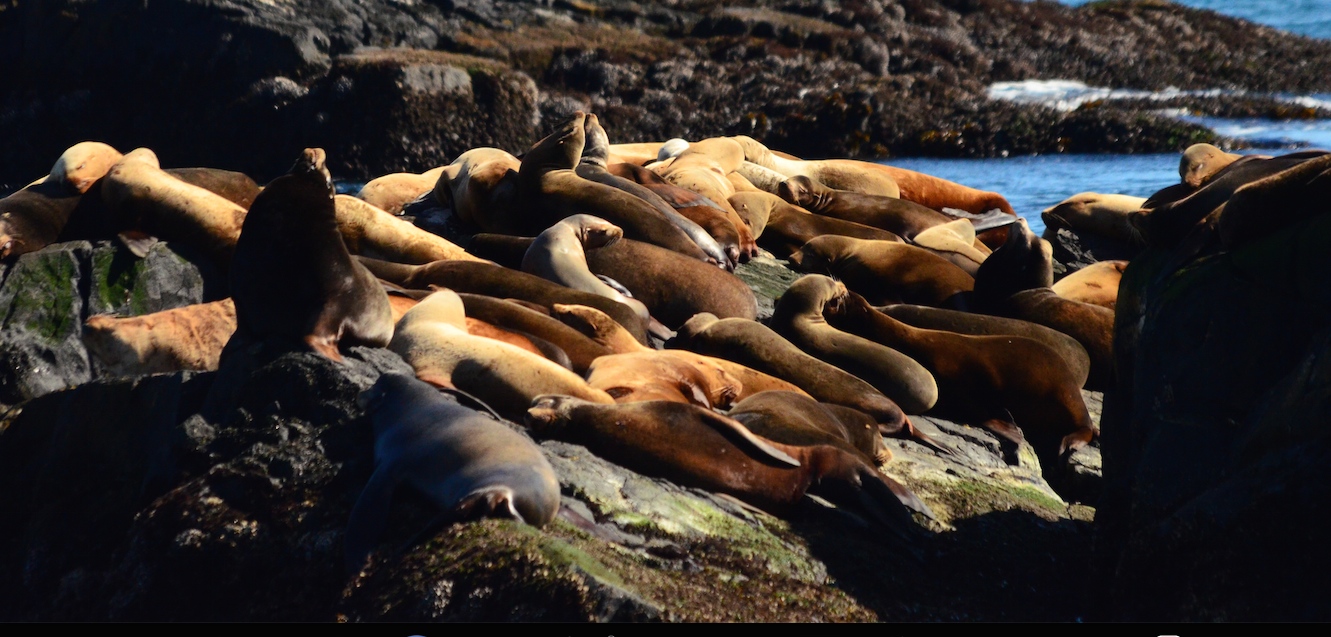
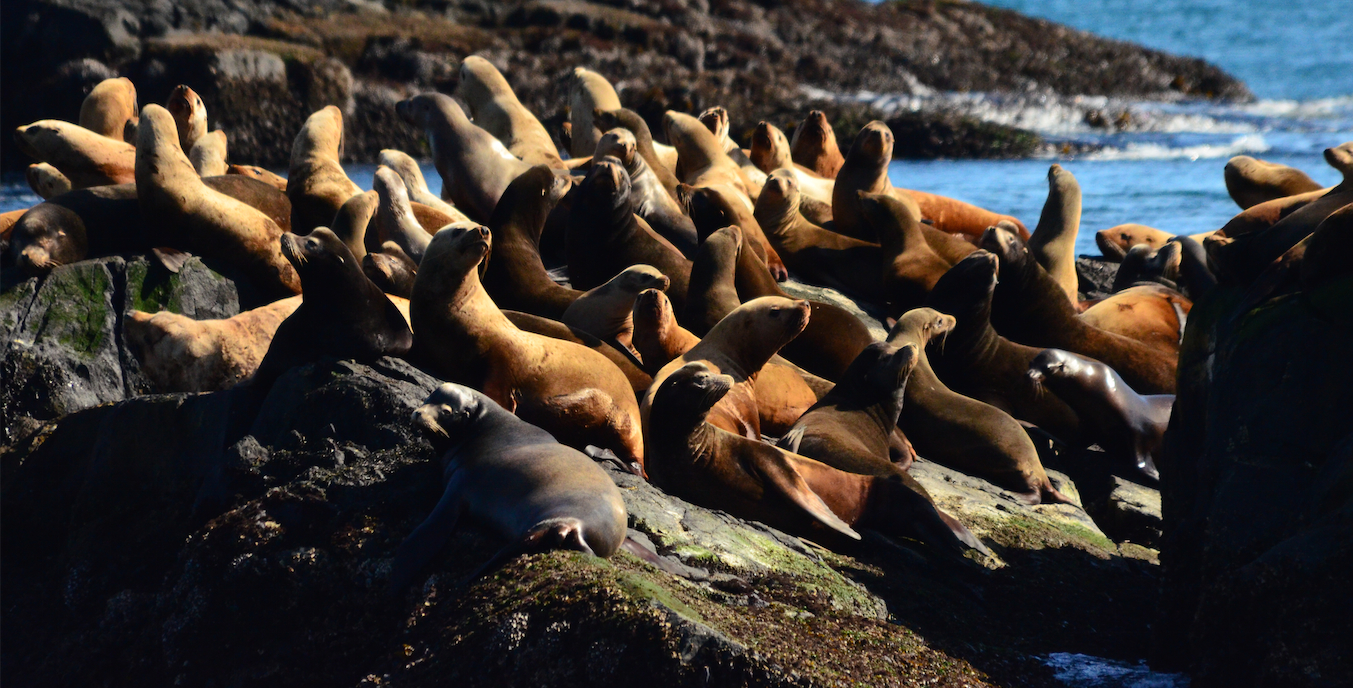
More and more adult male California Sea Lions are hauling out on Great Race, This afternoon there were ~50 on the south side and a dozen more on the west side. Younger animals and Steller’s continue to haul on South Rocks. Yesterday evening, I discovered a new (to me) den for the old, male River Otter. I knew that there was an otter spot nearby due to the telltale ‘calling cards’ left outside the den area but it took a while to find it. He is barely visible and very protected, sleeping under one of the big boulders just northeast of the compost.

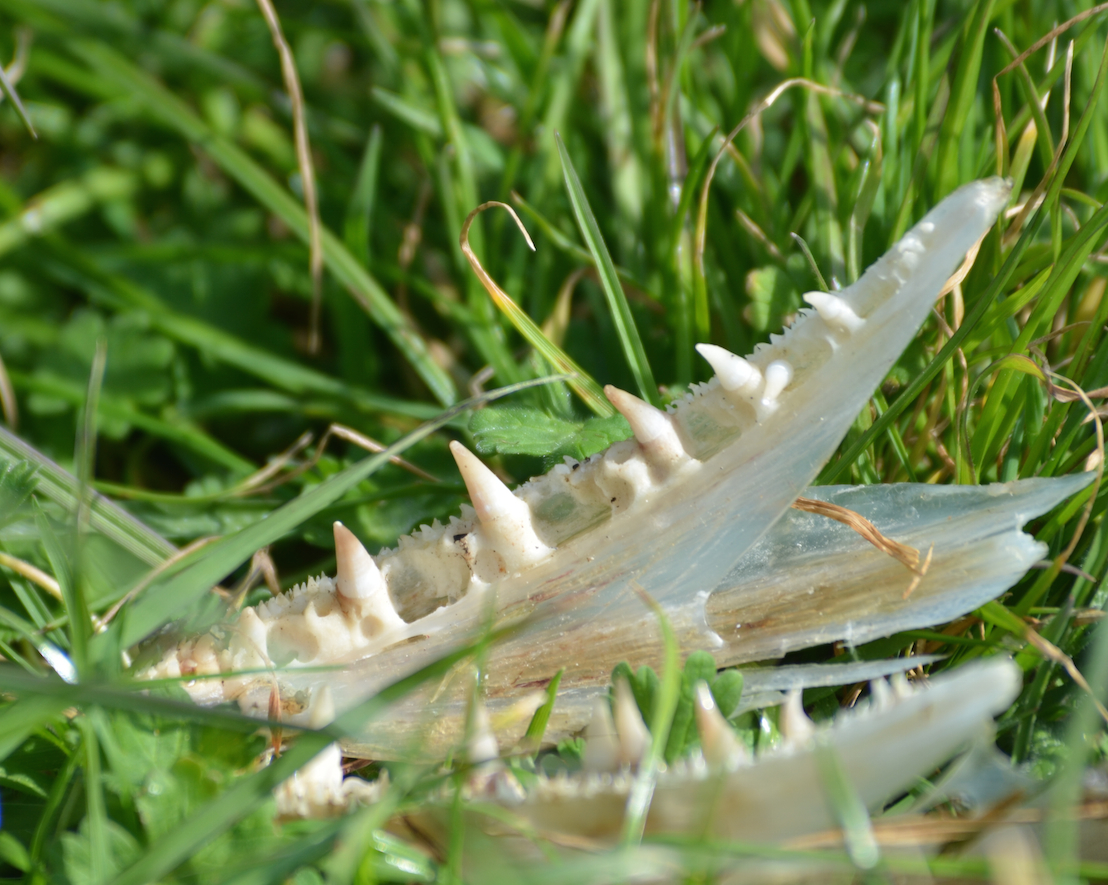
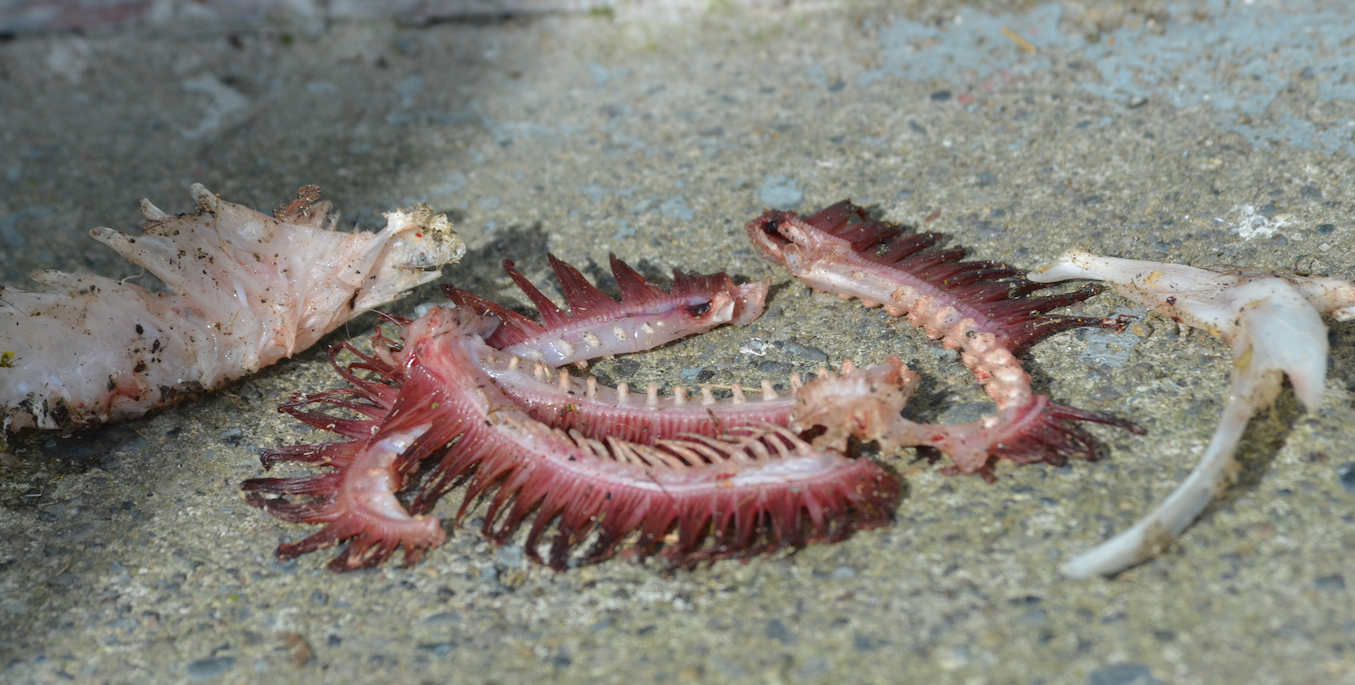
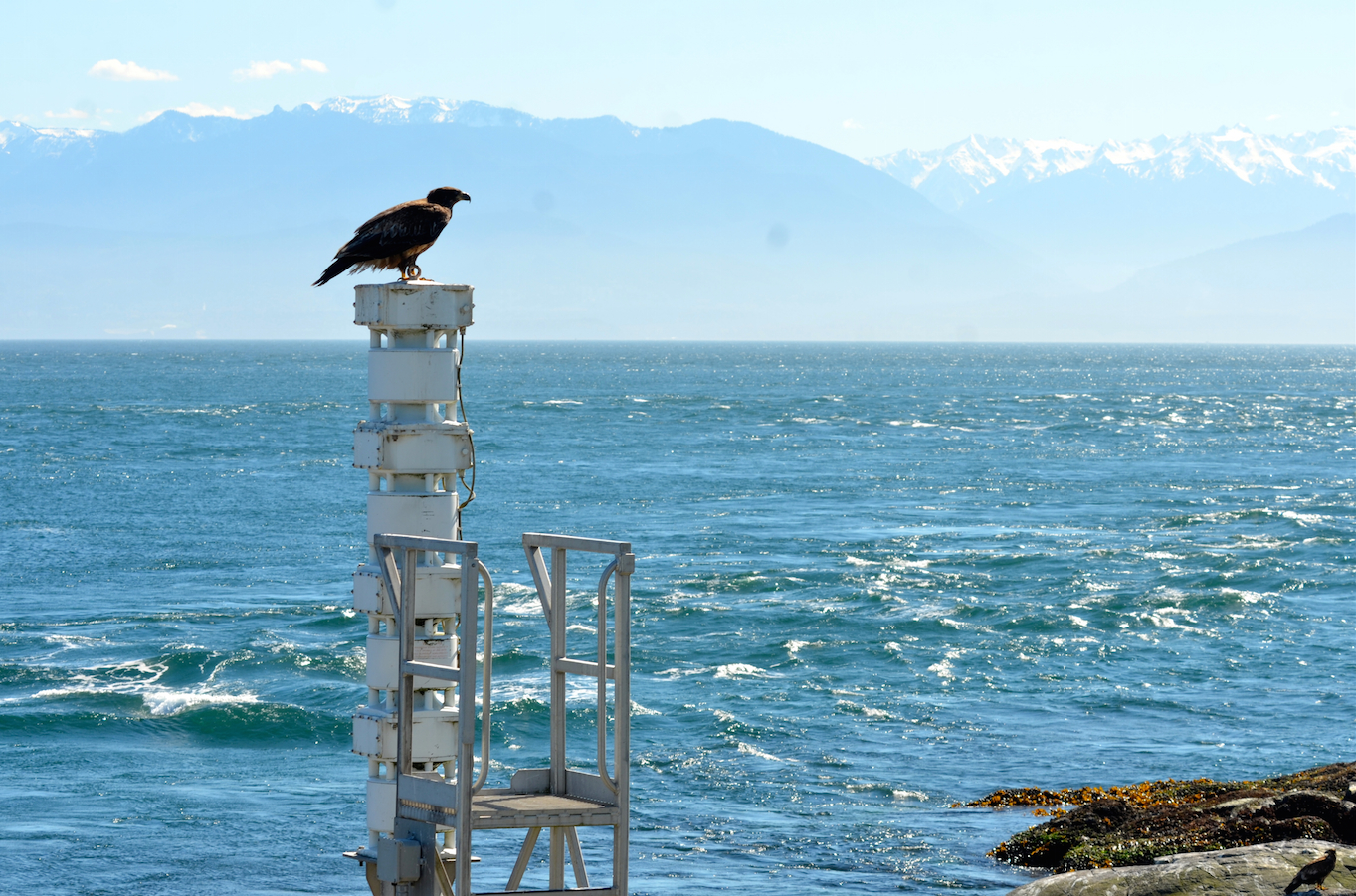
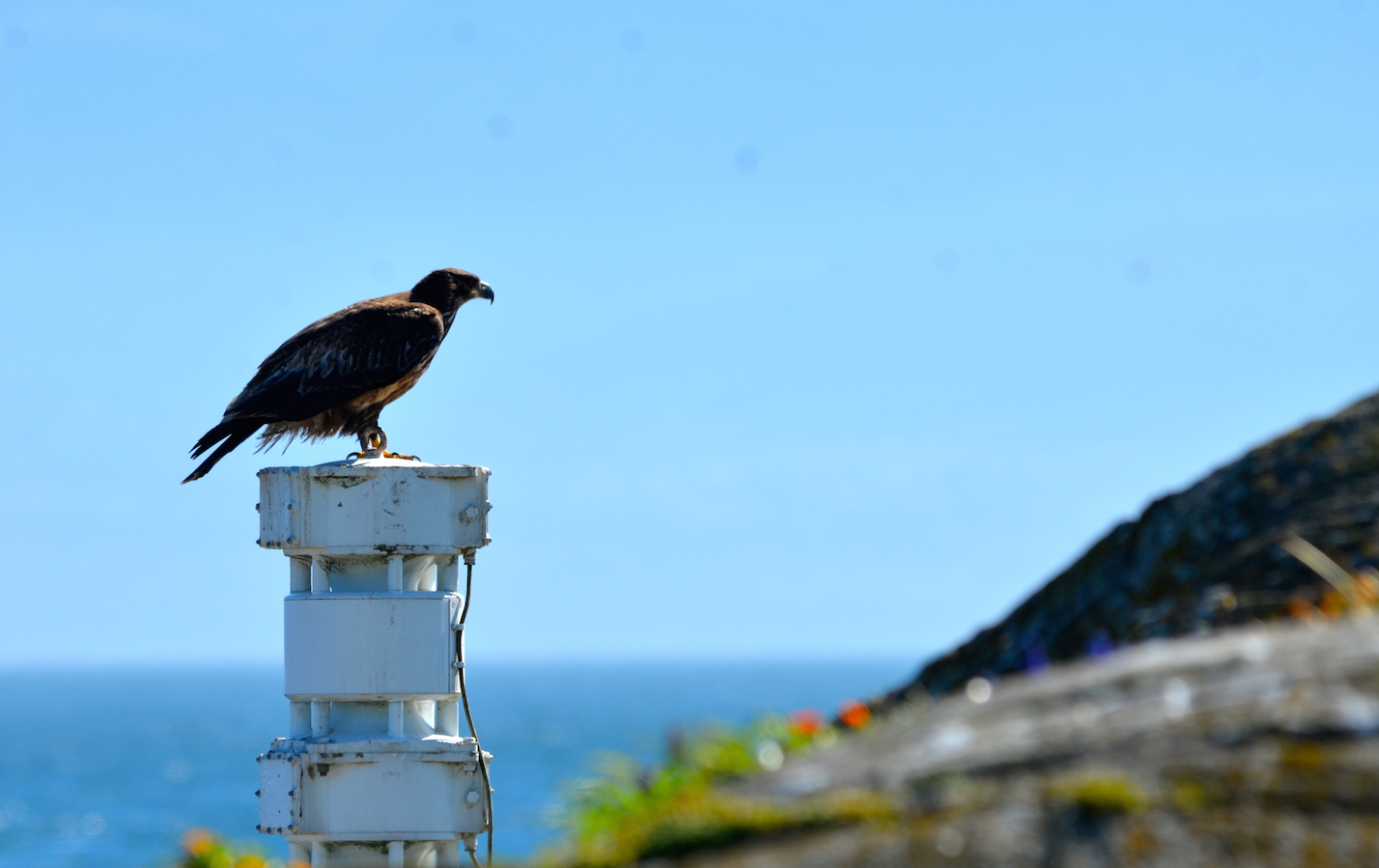
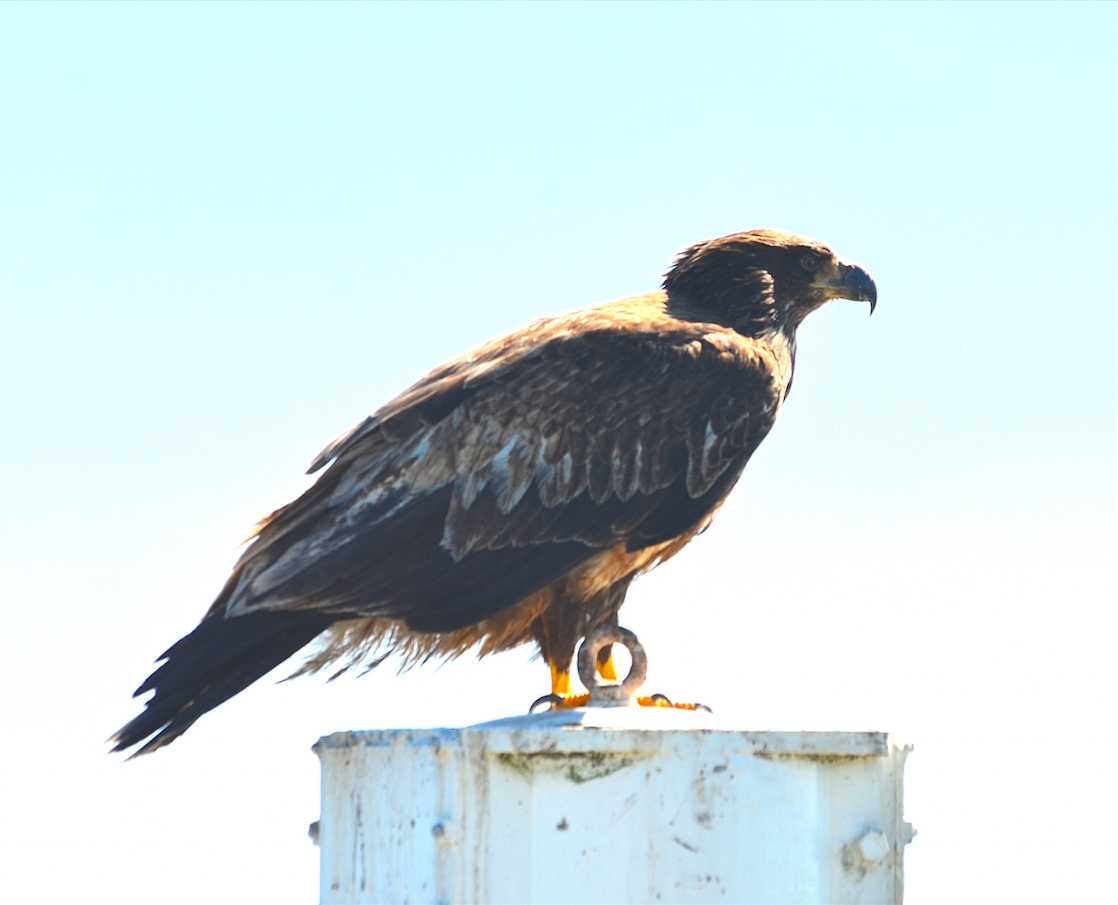
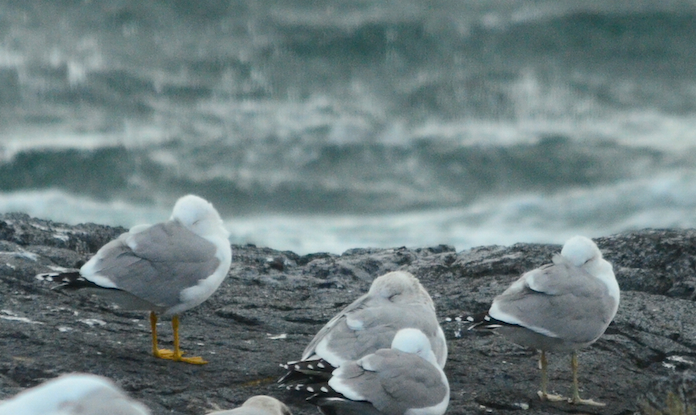
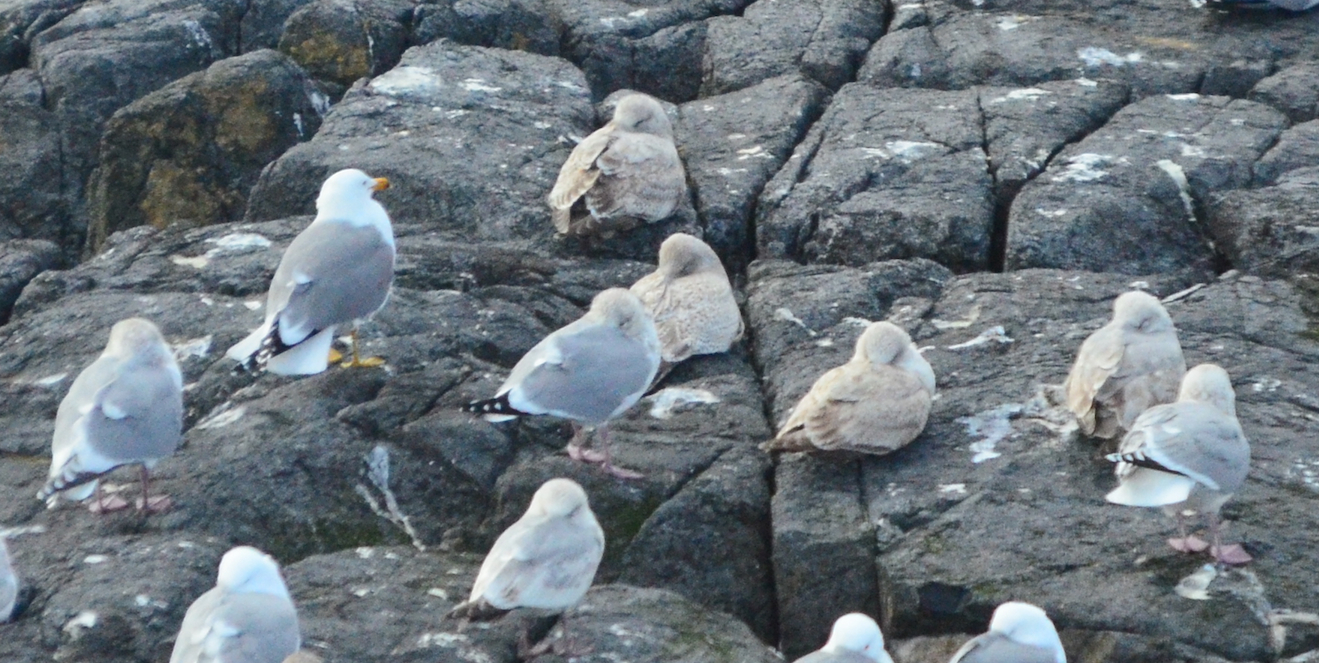
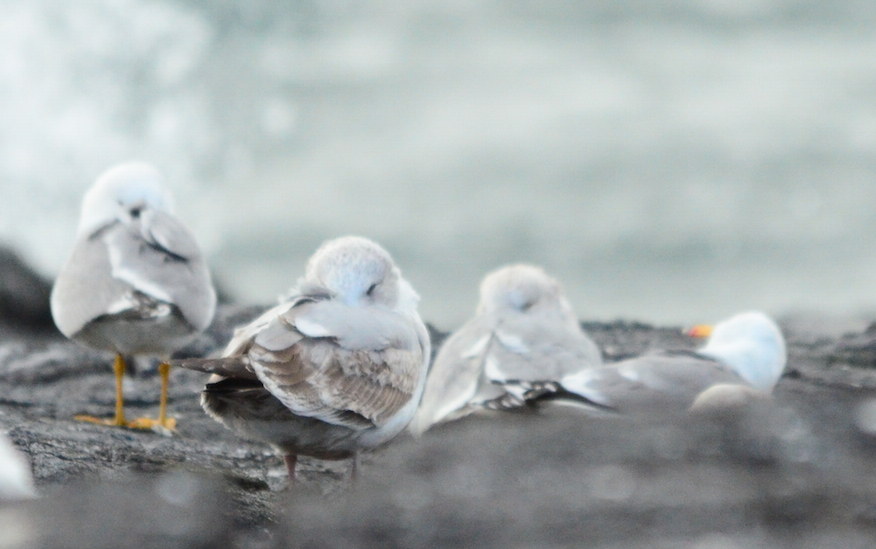
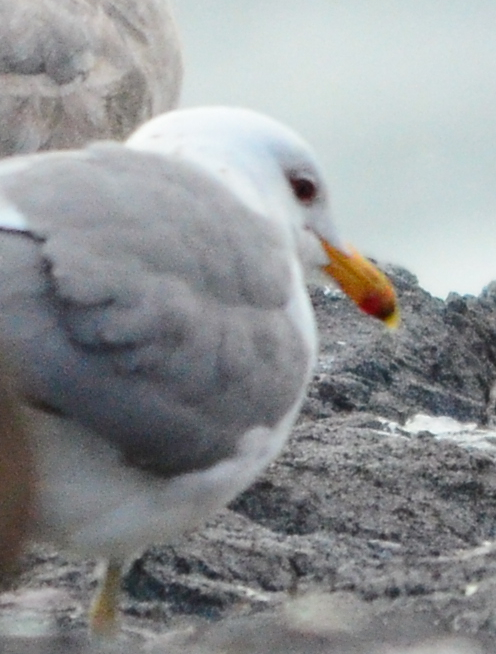
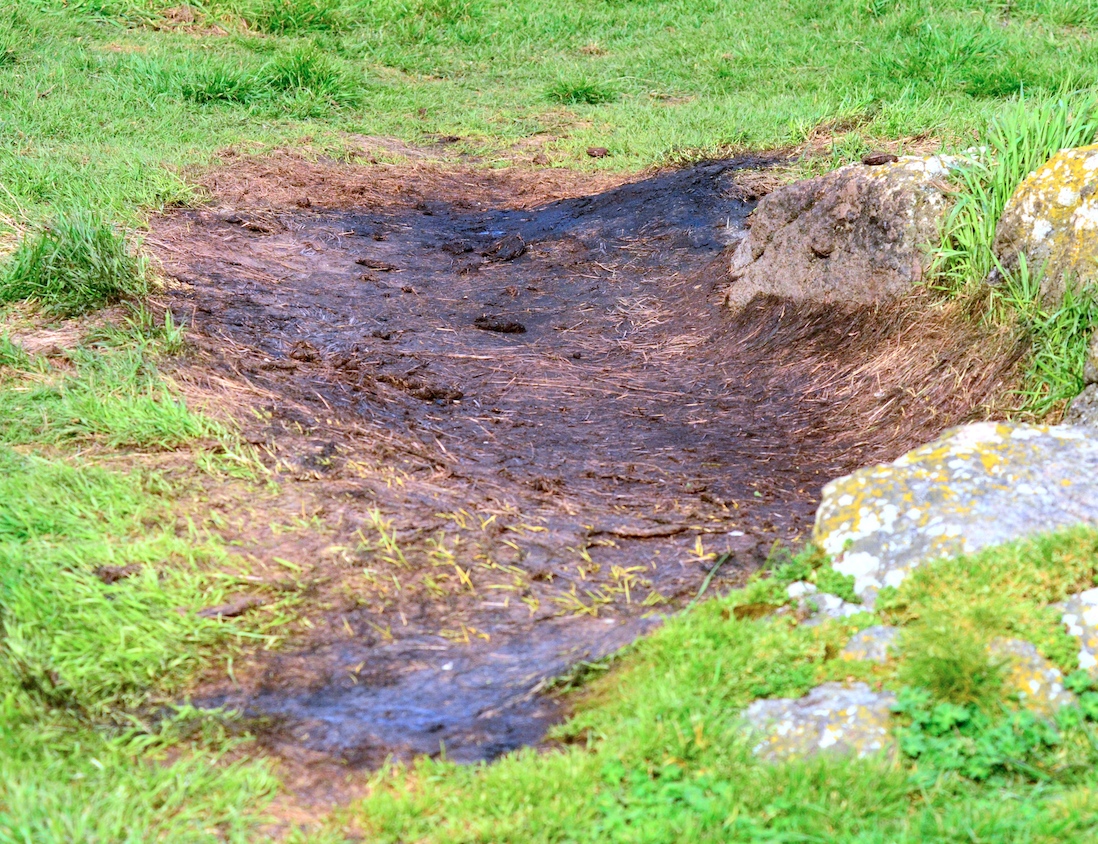
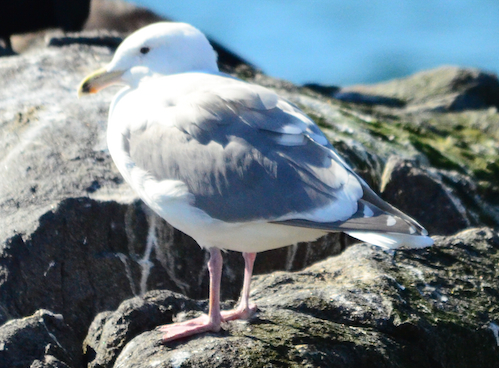
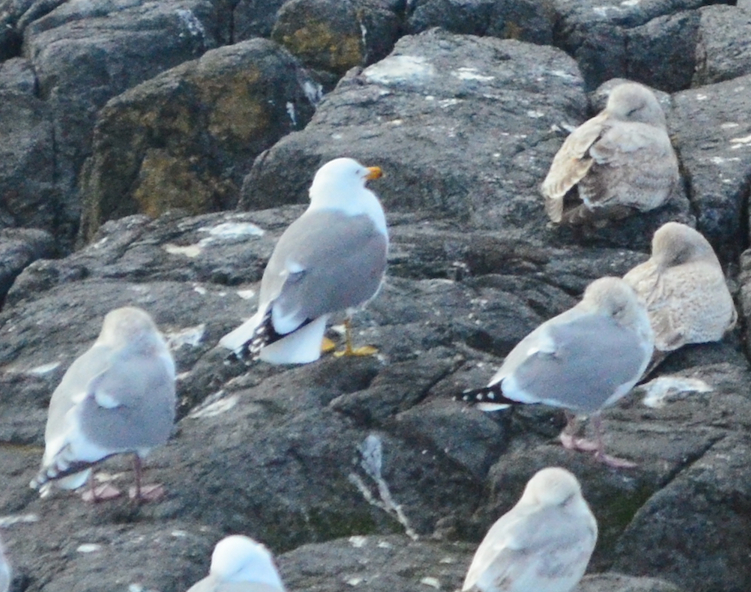
The Bald Eagles continue to spend the day in the Ecological Reserve; most active early and late, chasing gulls. There is a lot of evidence of piscivory on the island, but some of the remnants are hard to pin on any particular predator. The gulls here eat a lot of small forage fish like herring and marine invertebrates like chitons but there are also remains that look more like either River Otter or Bald Eagle leftovers (see images).

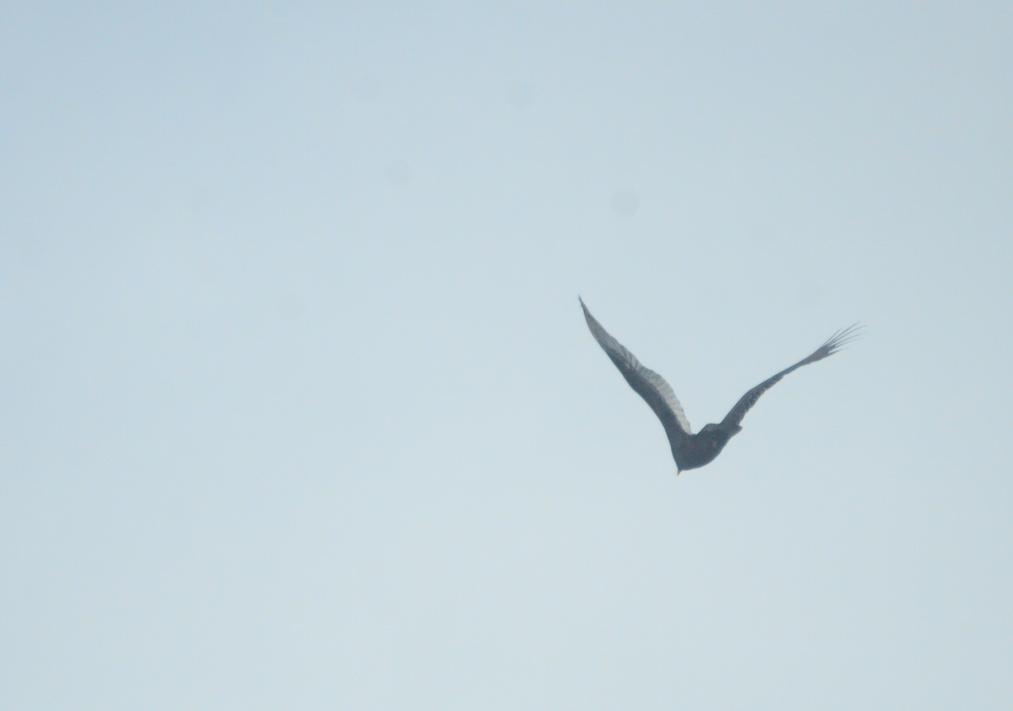
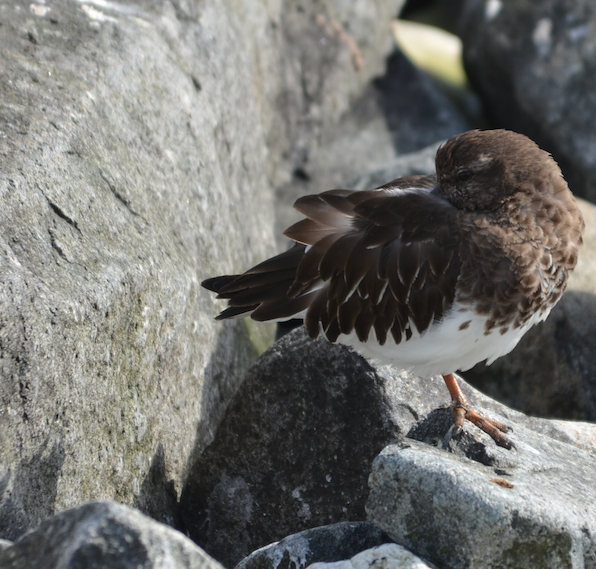
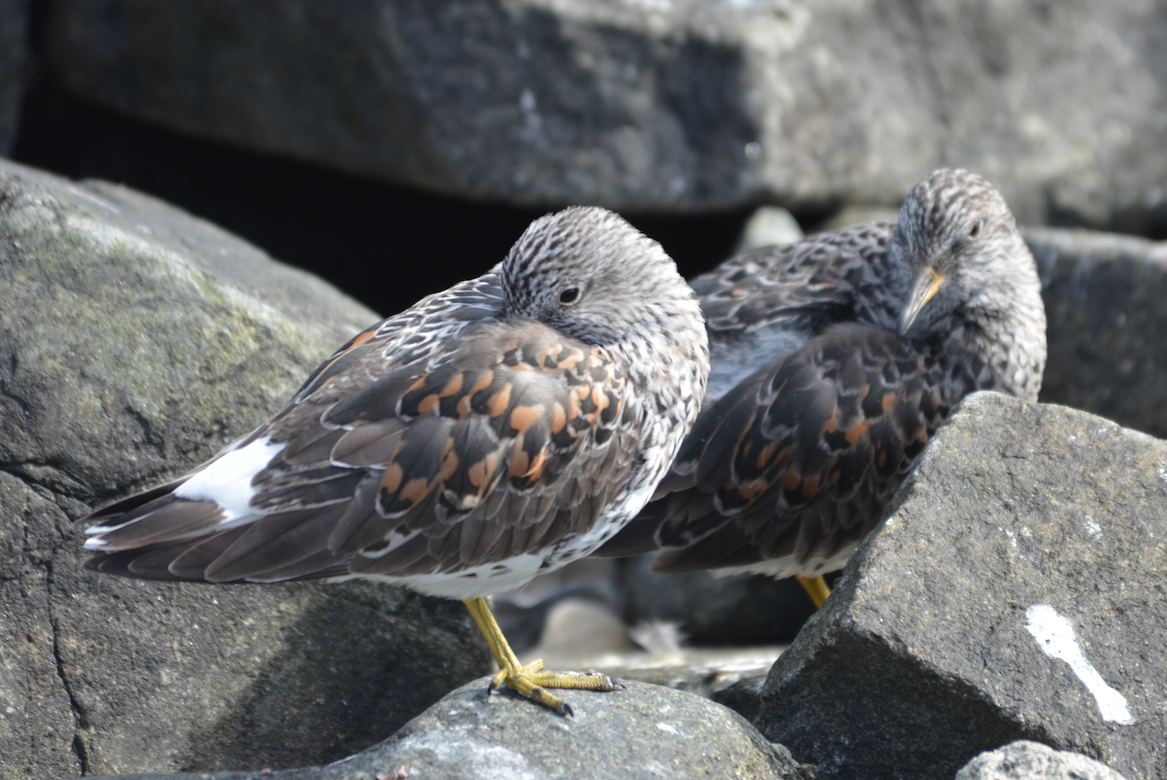
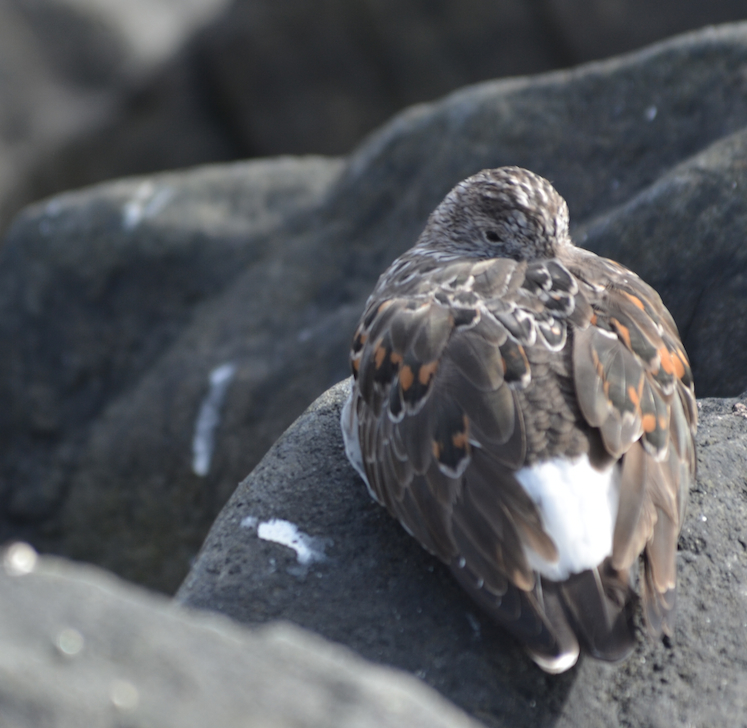
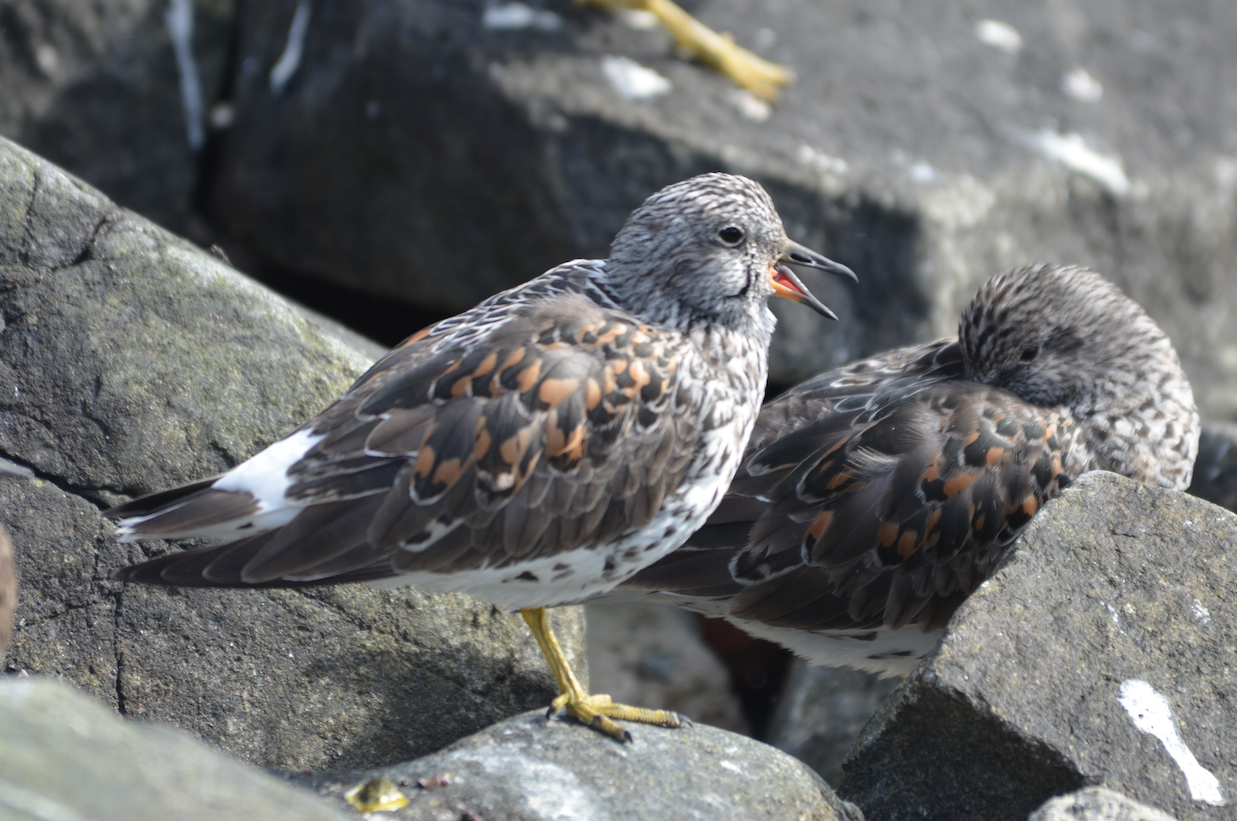
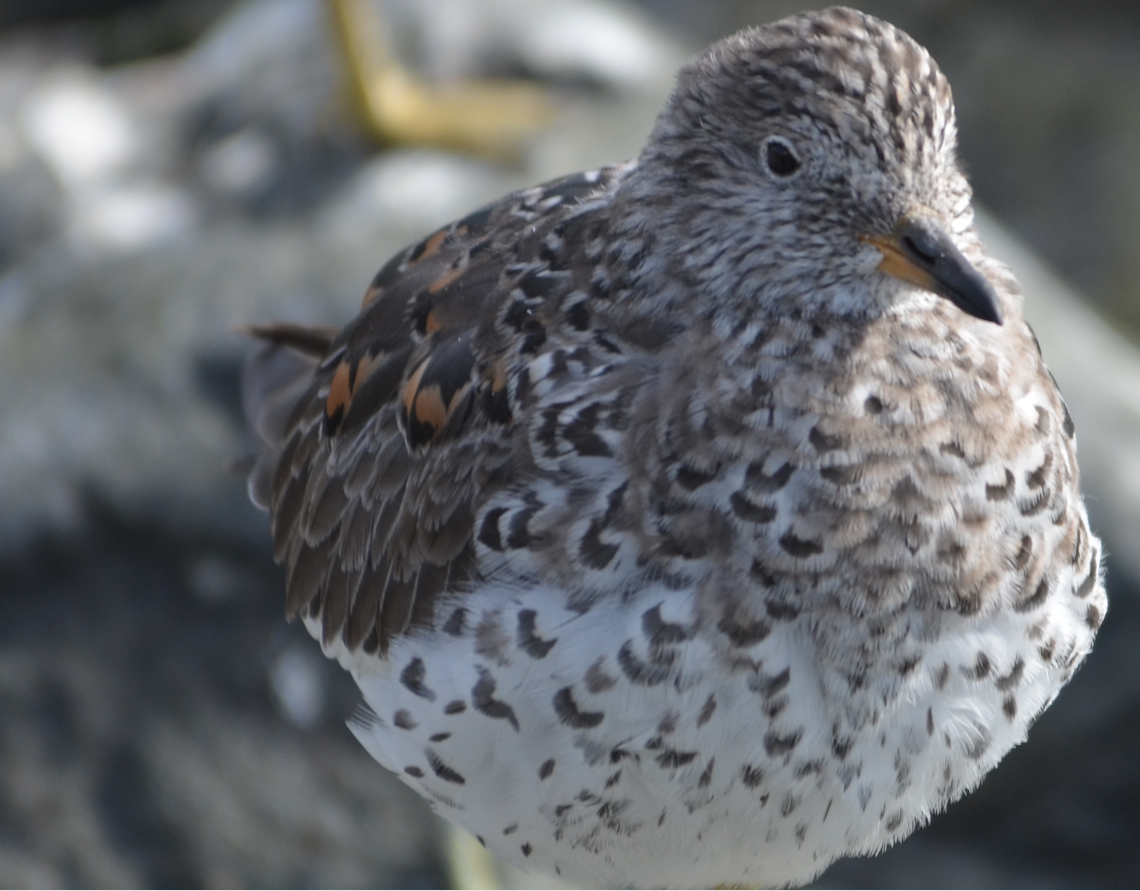
A Turkey Vulture stopped and rested near camera 5 today. I was hooked up to a staff meeting by conference call or I would have gone outside to photograph it. I did get a photo through the window, before it was swept away by the west wind. Black Turnstones continue to be present in high numbers, resting and fattening up before their northward migration.

Chores & Visitors

Chores today were routine and there were no visitors.

Conservation Message

If you are a commercial boater or if you use docks and harbours, you may be interested in two really excellent booklets on Green Boating and Displacement Hull Fuel Efficiency put together by the T. Buck Suzuki Environmental Foundation. Their Green Boating Guide covers good marine practices in seven main areas: wildlife protection, habitat protection, waste discharge, fluid handling, solid waste, fuel efficiency, and cleaners. The Fuel Efficiency Guide covers ways to reduce fuel consumption through both operational and design measures. Another way to look at savings on fuel is that it also reduces carbon dioxide pollution to the atmosphere. CO2 is not only a greenhouse gas, ~ 40% of it ends up in the ocean causing the shift in basic chemistry which is called ocean acidification, global warming’s evil twin.

There is a real shift in attitude happening amongst boaters of all types, as more and more people realize that we have to profoundly change our basic routines and behaviours in order to have a sustainable ‘blue’ future. I call it investing in green and keeping it clean for a blue economy. If you use social media please use the hashtag #green4blue to connect with other people going green for a blue future. Check out the booklets here for great ideas on how you can make a positive difference on the water.

http://www.bucksuzuki.org/images/uploads/docs/GBGweb2012.pdf

http://www.bucksuzuki.org/images/uploads/docs/FEGweb2012.pdf

Aussi disponible en français http://www.bucksuzuki.org/publications/

.
 

Lantern Fish Found

Weather and Sea Conditions

The day started with a beautiful sunrise and then quickly clouded over, clouds pushed in by light, southeast winds. Late afternoon, the wind veered through southwest to a light westerly.  The barometric pressure, which started at 1017hPa dropped all day and was below 1010 hPa by 19:30.
Light levels were the low today and the accumulated solar radiation for the day was just over 250 Ly, measured in Langleys. That was about half of yesterday’s sunshine. Although it was calm today, the forecast has a gale warning in effect and the west wind is expected to pick up to 35 knots tonight. Monday is expected to be windy, mainly cloudy with a 40 percent chance of showers.

Vessels

Victoria’s first cruise ship of the season, went past last night and today regular whale-watching vessels including Five-Stars and Pacific Explorer were back working in the protected area after an absence of at least a month and maybe more. The more regular visiting catamaran, 4-Ever Wild, cruised through carefully and respectfully. Several sports fishers passed through the reserve slowly, today and all fishing activity observed, was outside of the conservation area. There were many vessels in the vicinity, anchored and fishing for halibut, stretching out from Beechey Head to Constance Bank.

Ecological

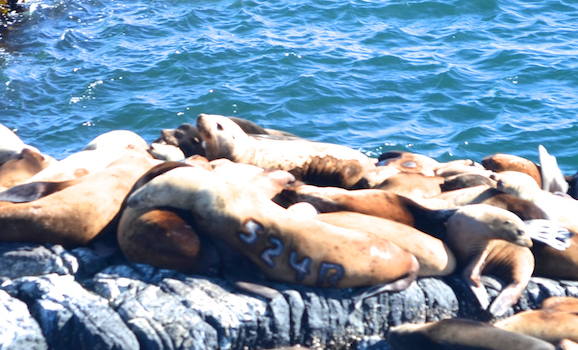
Several branded sea lions were photographed and included in the gallery here. The two California Sea Lions were X279 (brand still very pink) and X 10_ , where _ represents a number not yet identified. U390, from the Columbia River region was also photographed. The branded Steller’s Sea Lion noted was 524R a migrant from southern Oregon. Beulah, the large female Northern Elephant Seal was back on Great Race, adorning the lawn at first light and seven other elephant seals can be seen on Middle Rock.

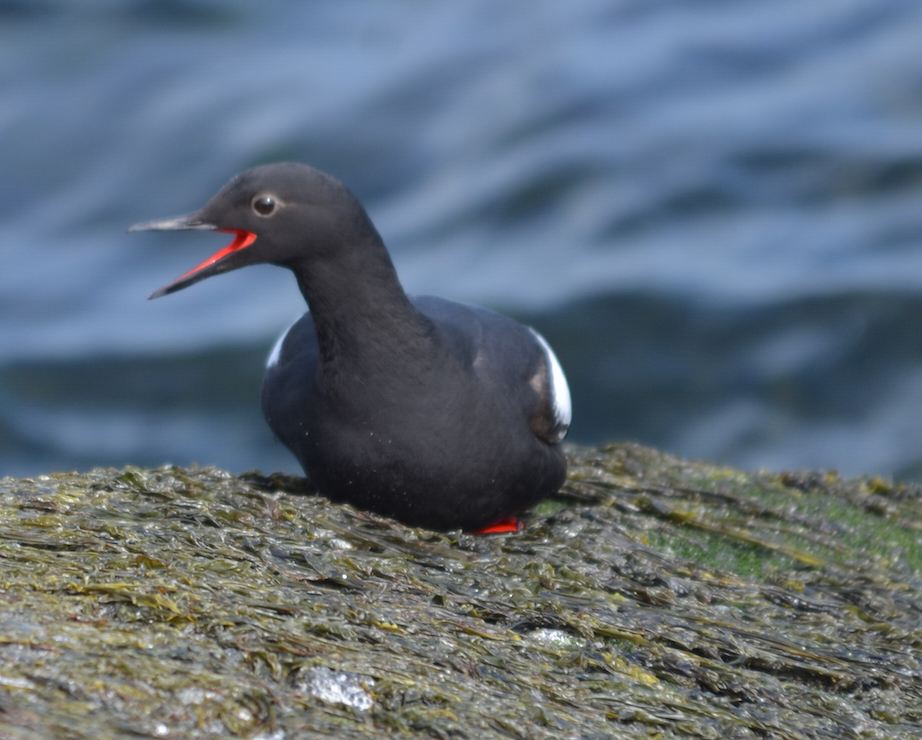
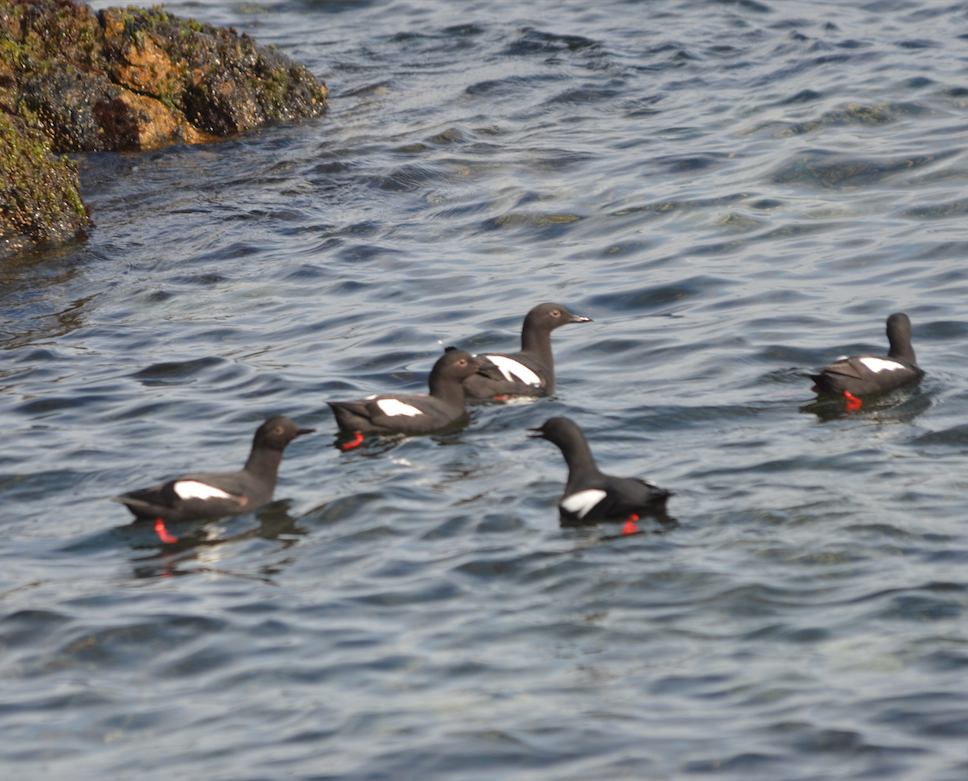
At least 200 Pigeon Guillemots were in and around Great Race in the morning, but gone by early afternoon. The eagles continue to chase gulls on Great Race as well as perching on North Rock, West Rock, South Rock, Middle Rock and Turbine. The geese do not seem to be bothered by the eagles and sometimes land right beside them. There were also over 30 Surfbirds resting here today, even though none were seen during the last census. They were in a mixed flock with Rock Sandpipers and Black Turnstone on the boulder area to the east of the main house.

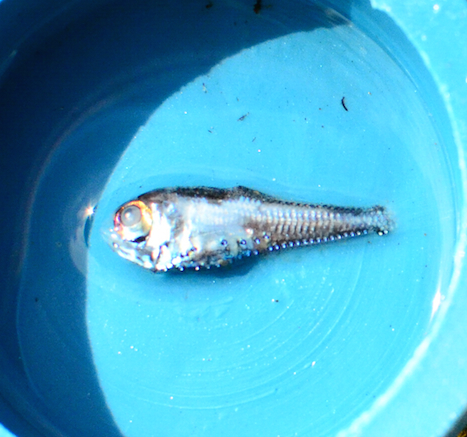
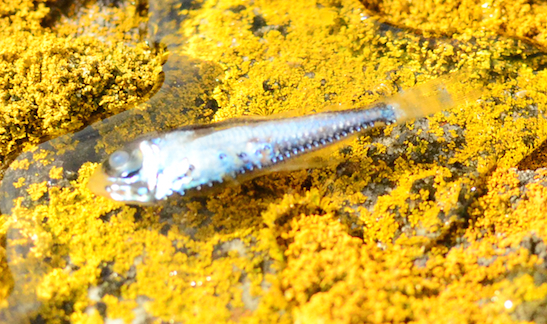
I found an unusual little (~2.5 cm. long) fish on the marine railway this morning. It was very fresh looking, but dead and undamaged. It looks like a member of the myctophid family.

Also known as a lantern fish, this little myctophid has a typical upturned jaw and rows of fluorescent blue photophores along its abdomen and on its sides. The photophores are packed with bioluminescent bacteria and allow the fish to communicate with light signals in the dark. The eyes are very large (relatively) because these fish are usually in very low, light conditions. Myctophids are very common fish in the ocean, but are not commonly seen, as they usually live deep, in the twilight zone and only come up during their nightly, vertical migration. I am not sure how it ended up on the ramp but currents here could have played a part.

Chores/Visitors

I went off-island briefly this morning and everything worked smoothly. Chores were routine today and there were no visitors.


Eagles Use Foghorn Daily


The morning started with either low cloud or high cloud. The sun shone under the fog on the Victoria side and on the Sooke side it thickened and the ceiling lowered to become more fog-like. Port Angeles was obscured early. The fog lifted from east to west and resulted in a beautiful clear day with a west wind of 20 – 25 knots, constant throughout the day. Barometric pressure held fairly steady as well, at 1016 -1017 hPa. The marine forecast for the central Strait has a strong wind warning in effect, calling for west winds of 20 to 30 knots and there are showers in forecast.

No whale watching vessels were observed today. One ‘sports’ fishing vessel was observed inside the boundary today but no fishing activity was observed in the protected area.

Second Nature visited briefly with Kyle at the helm and a second person that was supposed to be measuring things.

Today was census day and the results are below. It should be noted that the Bald Eagles were hunting gulls all day on Great Race Island. Although no takes were seen, the gull population thinned significantly during the day and the gull numbers today may not reflect a representative sample of the true numbers seen this week.

Animal Census

2016 01-Apr
River Otter 1
Northern Elephant Seal 8
Harbour Seal 176
Northern Sea Lion (Steller’s) 28
California Sea Lion 103
Canada Goose 5
Brandt (flying through) 75
Harlequin Duck 11
Surf Scoter 0
Common Merganser 2
Brandt’s Cormorant 2
Double-crested Cormorant 3
Pelagic Cormorant 3
Cormorant (not ID’d to species) 0
Bald Eagle (juvenile) 4
Bald Eagle (adult) 2
Red-tailed Hawk 1
Killdeer 4
Black Oystercatcher 12
Black Turnstone 70
Surfbird 0
Rock Sandpiper 0
Dunlin 2
Mew Gull 0
Glaucous-winged Gull (+ Xs in nesting area) 210
Glaucous-winged Gull (+ Xs outside of nesting area) 98
Thayers Gulls 0
Calfiornia Gulls 3
Western Gull 1
Common Murres 12
Rhinoceros Auklets 2
Pigeon Guillemot 40
Common Raven 2
Northwestern Crow 2
Fox Sparrow 1
Song Sparrow 1


A Subdued Day on the Rock

Light northeasterly winds and grey skies made for a subdued day. The barometric pressure dropped a little, from 1020 to 1010 hPa. The forecasters are calling for a westerly gale starting after midnight, with showers and a risk of a thunderstorm.

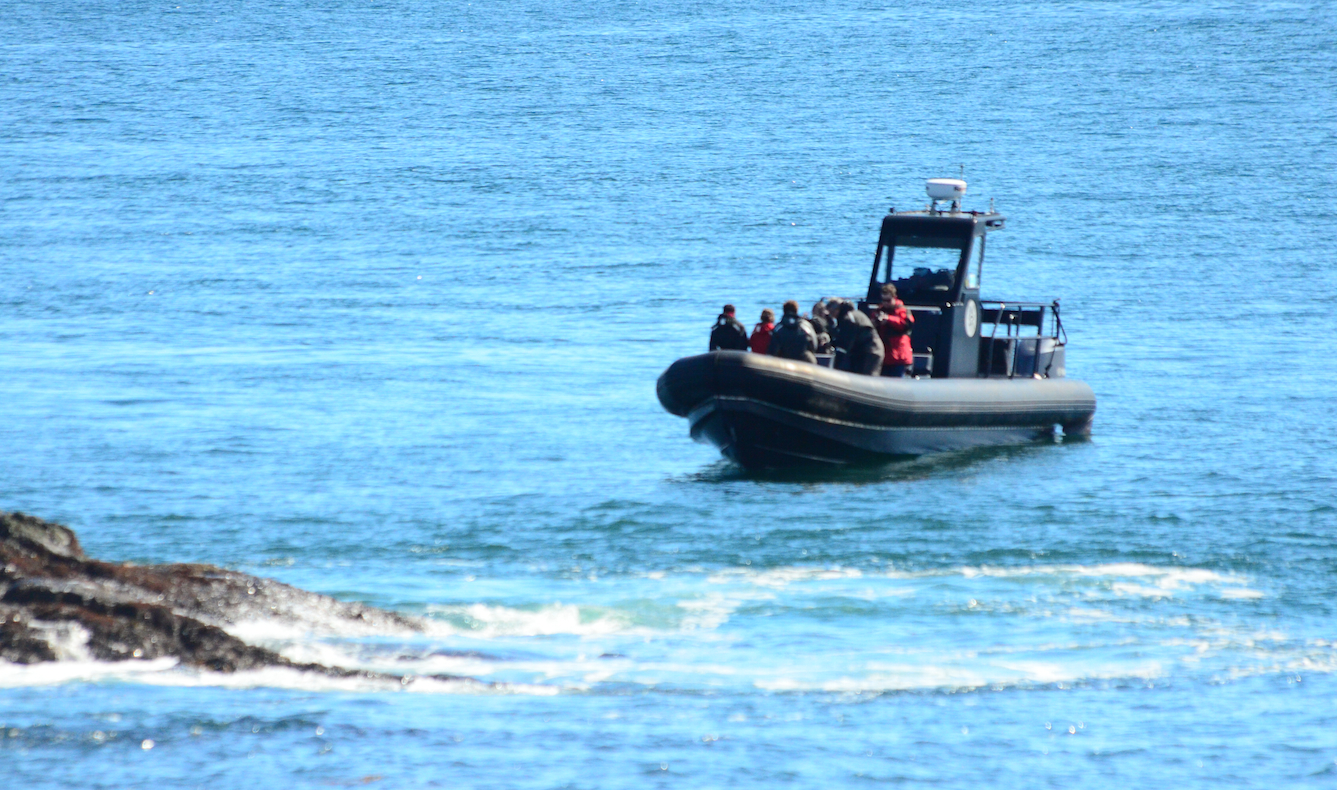
Five whale-watching vessels were observed working in the protected area today and there were lots of sports fishing boats in the area, not fishing in the Fisheries and Oceans conservation area.

The usual Saturday dive charter was operating in the protected area and had his divers in the water on the ebb tide. They were picked up over by Turbine Rock.

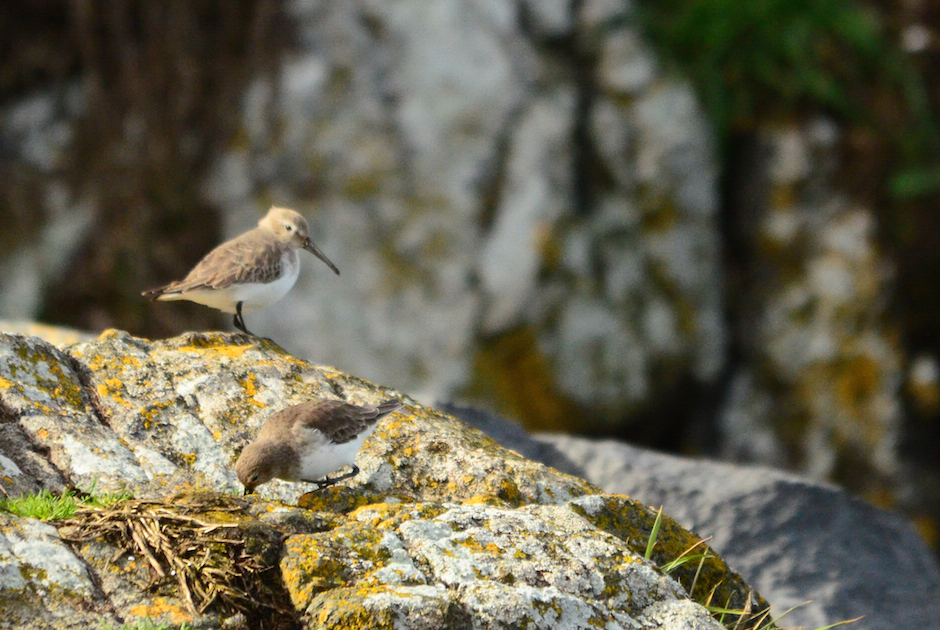
Ecologically, more migrants are passing through each day. More Dunlin were spotted today, all with two legs. There were larger numbers of Black Turnstone and Surfbirds today as well. California Sea Lions are hauling out on Great Race again now, a little too close to the house for a quiet night. Geese are starting to arrive in the middle of the night too and they always do a lot of honking on touch down.

Work was mostly cleaning up and packing for a few days away. If the weather cooperates, I will head home tomorrow and Riley will take over until March 31st. I look forward to reading Riley’s blog.


Classic Spring Day

Weather Observations

Today was quintessentially spring. It was already getting light at 05:30 and although there were a few clouds around during the day, it was sunny all day. The UV Index reached almost four, which is rated as moderate. Accumulated solar energy for the day in Langleys was the highest day this week at over 450. (One Langley = 11.62 watt hours per meter2.) Winds were 5 – 20 knots from the west until evening, when they switched to light easterly breezes. There was a significant ocean swell late in the day. The barometer was steady most of the day at ~ 1020 hPA. The marine forecast is calling for light winds becoming easterly 10 to 15 knots early Saturday morning.

Vessel Observations

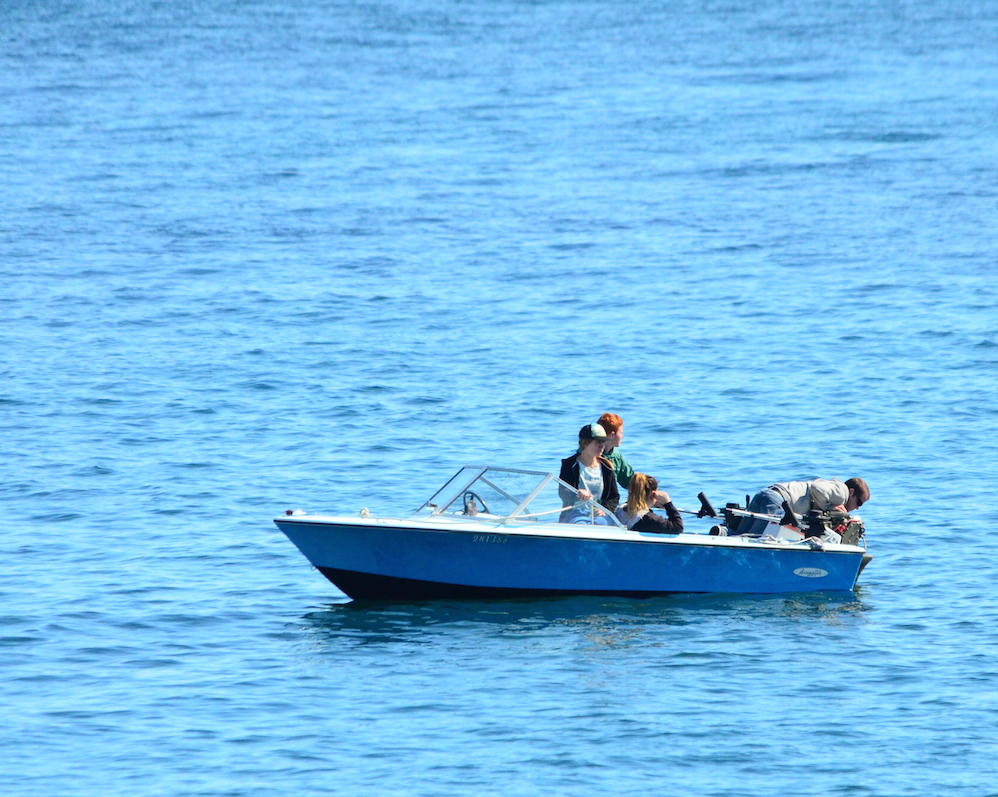
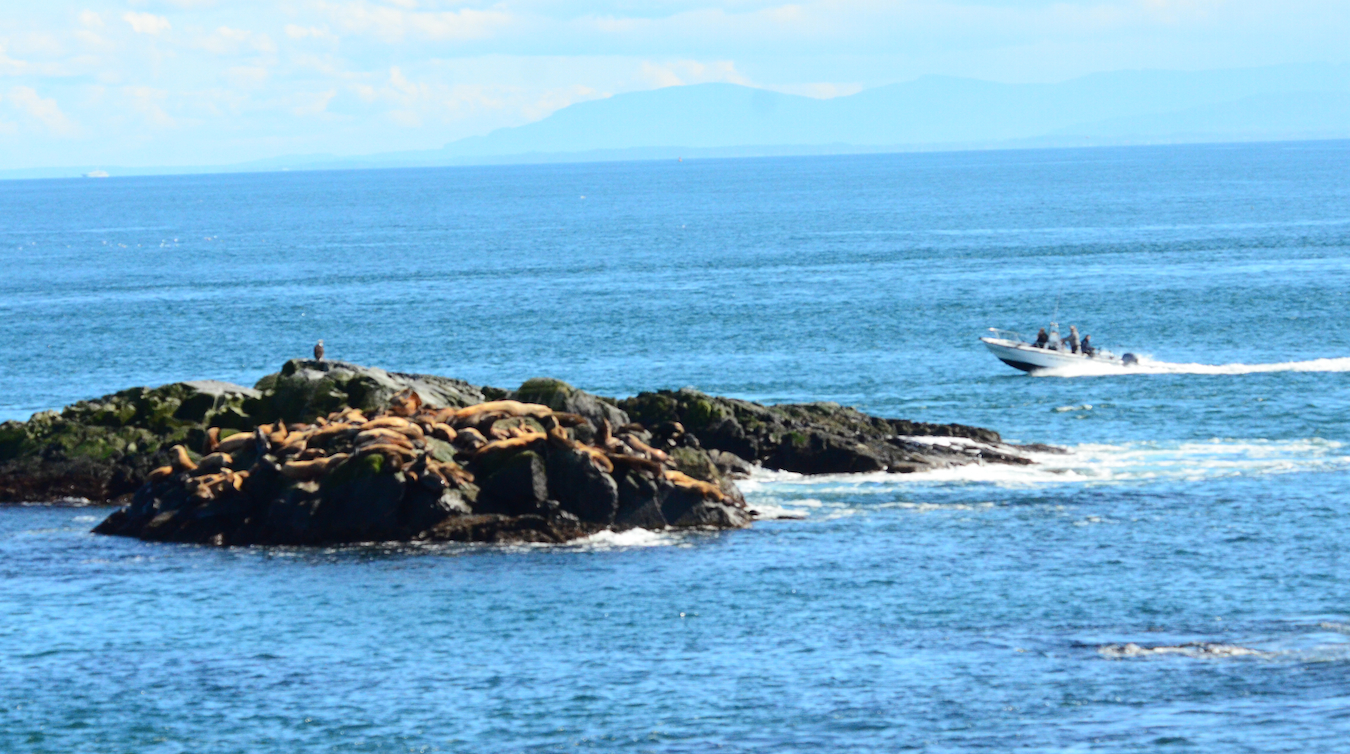
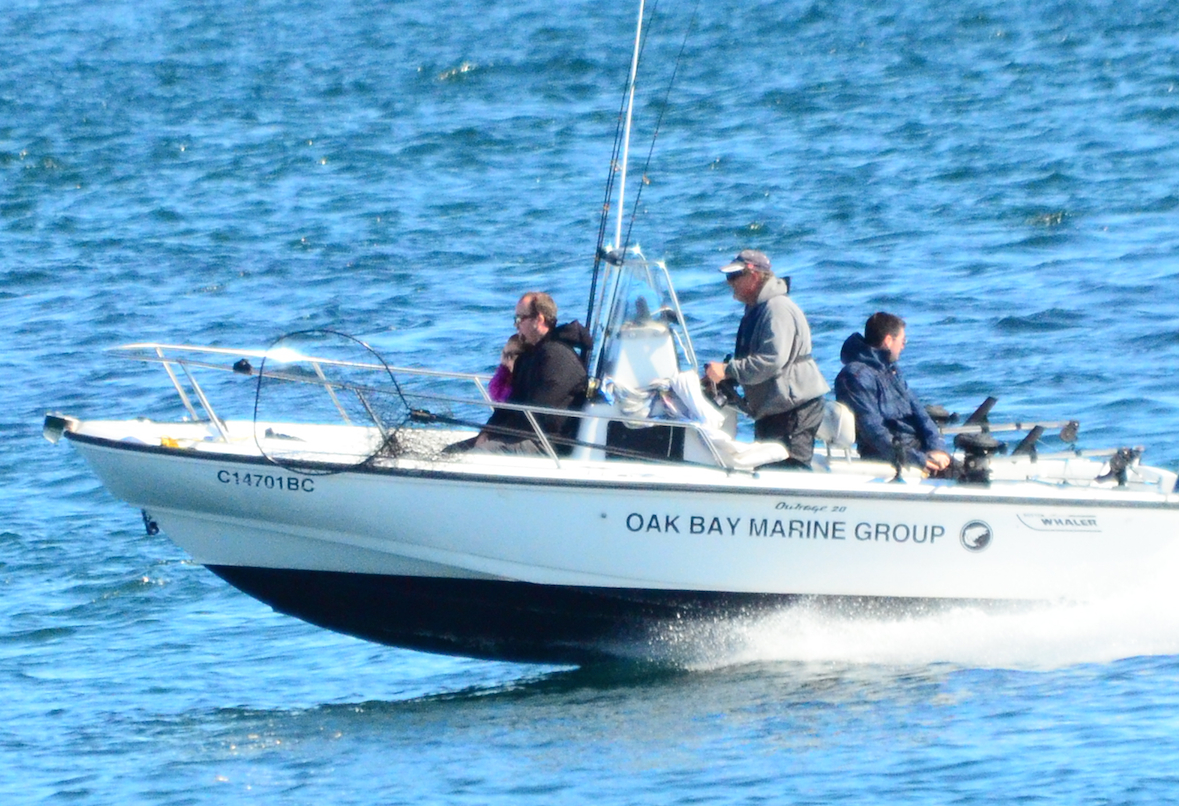
There were seven visits by whale-watching vessels into the Ecological Reserve. Except for getting too close to the rocks and wildlife, most operators followed the regulations and were careful. The same company that is problematic almost daily has a new larger vessel that sped in the Reserve twice today. The company was notified. Not all vessel operators in this company’s fleet behave badly however the reputation of the company will suffer with a hothead at the helm and so will animals involved in collisions. One speedboat broke down between Great Race and South Rock. The engine cover was off and they were drifting (slowly). I asked them if they were okay and they said they were fine. Soon after, the two-stroke sprung to life in a cloud of fumes and they motored off towards Pedder Bay. An Oak Bay Marine Group vessel followed one of the whale watchers in behind South Rock today and then sped out of the Protected Area. Pedder Bay Marina was advised although they are able to track their boats so can tell where the vessel is and how fast it is going.

Today was animal census day and the results follow.

2016 25-Mar
River Otter 1
Northern Elephant Seal 2
Harbour Seal 72
Northern Sea Lion (Steller’s) 78
California Sea Lion 176
Canada Goose 2
Harlequin Duck 12
Surf Scoter 0
Common Merganser 1
Brandt’s Cormorant 42
Double-crested Cormorant 71
Pelagic Cormorant 43
Cormorant (not ID’d to species) 75
Bald Eagle (juvenile) 7
Bald Eagle (adult) 2
Killdeer 4
Black Oystercatcher 12
Black Turnstone 30
Surfbird 6
Rock Sandpiper 1
Dunlin 2
Mew Gull 0
Glaucous-winged Gull (+ Xs in nesting area) 558
Glaucous-winged Gull (+ Xs outside of nesting area) 529
Thayers Gulls 0
Calfiornia Gulls 11
Western Gull 1
Common Murres 0
Pigeon Guillemot 93
Northwestern Crow 2
Fox Sparrow 1
Song Sparrow 1
Ruby-crowned Kinglet 1
Red-winged Blackbird 1

Maintenance

Chores were routine, plus tank shed reorganization and basement clean-up. Month-end report started.

Sunlight levels excellent for making water, doing laundry and charging batteries.


Green with Shades of Blue

March 17 was a windy day on Race Rocks. The early morning east northeast wind  kept intensifying and it was blowing 25 – 30 knots northeast by noon. It kept up for the rest of the day. The barometric pressure started to drop from a high of 1026 hPa, in the afternoon. The forecast includes a gale warning, with the easterlies continuing under sunny skies for at least tomorrow.

One whale-watching vessel was observed working in the Protected Area today and several others were seen transiting the area. Sports-fishing boats were all outside the reserve.

The Nanoose Yarder, a tug, headed west through Race Passage with the fishing vessel, Arctic Fox II in tow. The Arctic Fox II was damaged by fire in Cowichan Bay last winter and looks like she will need some serious TLC before heading out again to troll for tuna, offshore. DND blasting continued.

The impression that the gull population was rising daily, returning en masse was not wrong. Nest site locations from last year are almost fully occupied. Pairs are standing close, pulling vegetation and starting to jockey for position with neighbours. No actual nest building has been observed yet. Canada Geese have been discouraged.

The idea that more California Sea Lions were showing up was backed up by more brands observed today and of course by the counts themselves.  Today was animal census day and results are posted below.

2016 17-Mar
River Otter 0
Northern Elephant Seal 0
Harbour Seal 131
Northern Sea Lion (Steller’s) 41
California Sea Lion 123
Canada Goose 0
Harlequin Duck 15
Surf Scoter 0
Common Merganser 0
Brandt’s Cormorant 40
Double-crested Cormorant ~100
Pelagic Cormorant 28
Cormorant ~50
Bald Eagle (juvenile) 9
Bald Eagle (adult) 3
Killdeer 2
Black Oystercatcher 26
Black Turnstone 42
Surfbird 2
Rock Sandpiper 0
Dunlin 0
Mew Gull 0
Glaucous-winged Gull (+ Xs in nesting area) 486
Glaucous-winged Gull (+ Xs outside of nesting area) 229
Thayers Gulls 10
Calfiornia Gulls 6
Western Gull 1
Common Murres 1
Pigeon Guillemot 76
Northwestern Crow 2
Fox Sparrow 1
Song Sparrow 0


Today was a catch-up day inside and chores were routine.

Arctic Fox Nanoose Yarder 2


A Quiet Day (Except for the Explosions)

As predicted, winds were light today, starting in the southwest, then switching to west, 5 – 15 knots. Although it was sunny, there was a real nip in the air first thing. The barometric pressure continued its slow rise today, reaching 1025.5 before steadying. Tomorrow’s forecast calls for more sunshine and a low of 2o C, while and winds to switch to east, 20 – 25 knots.

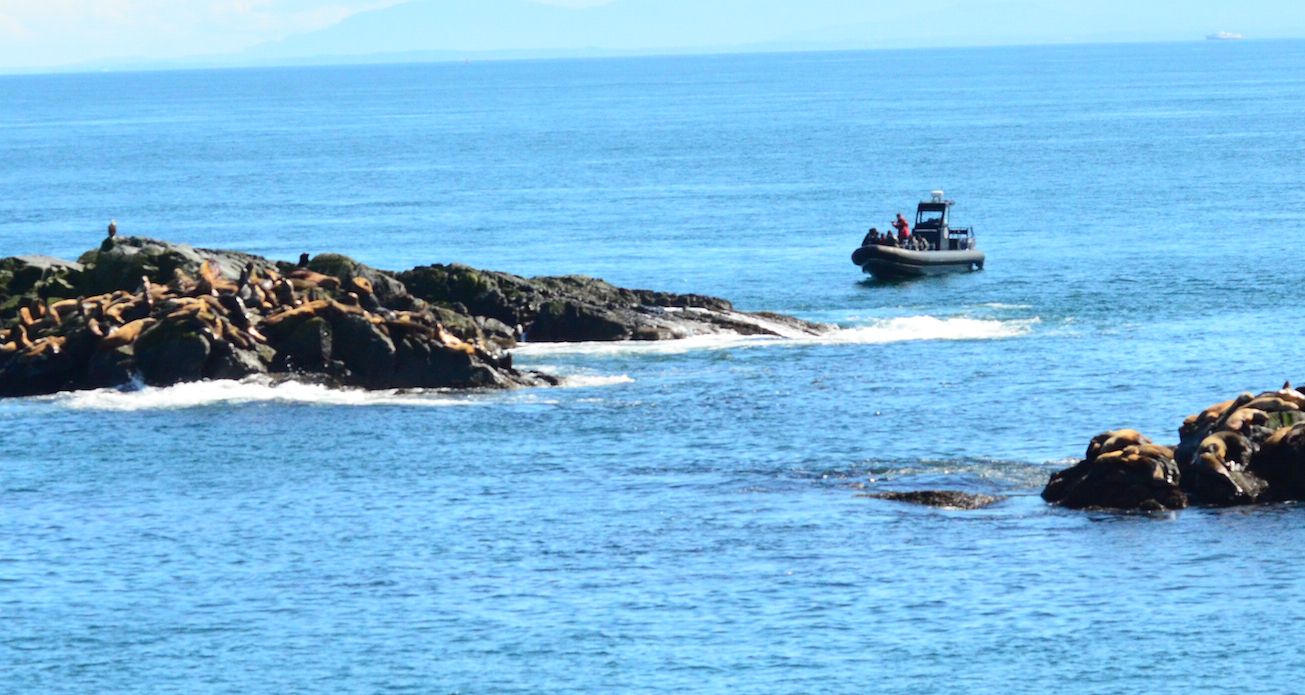
Several whale watching boats visited the Ecological Reserve today, stopping by South Rocks to see the sea lions and eagles. It was a beautiful day to be out on the water. A few sports fishing boats passed close by and fished outside the Protected Area. There were more explosions from across Race Passage today and it was unusual that they continued after dark.

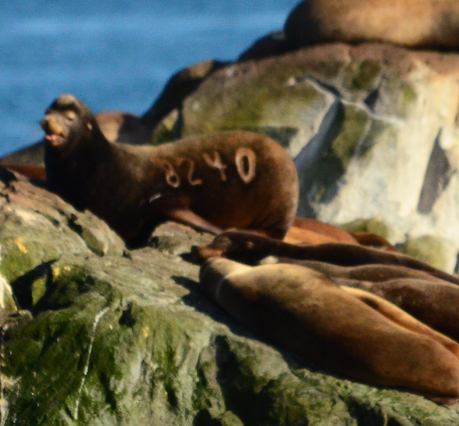
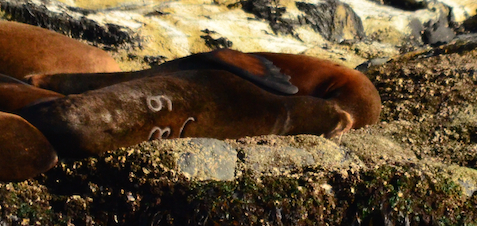
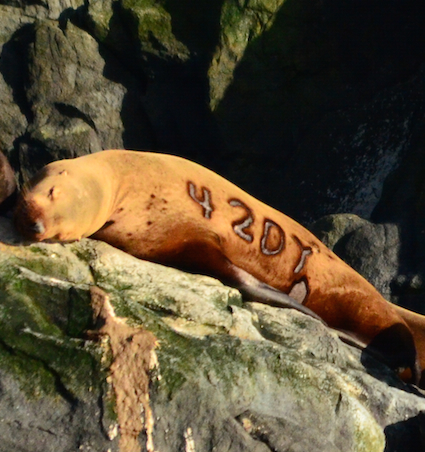
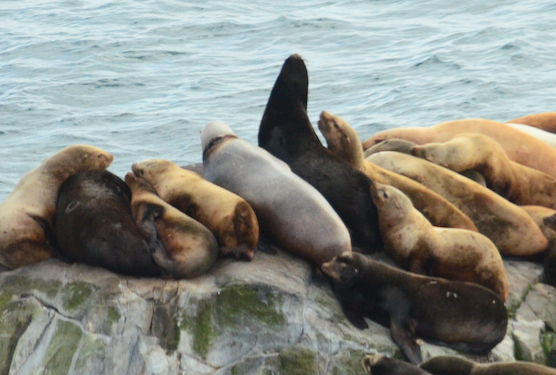
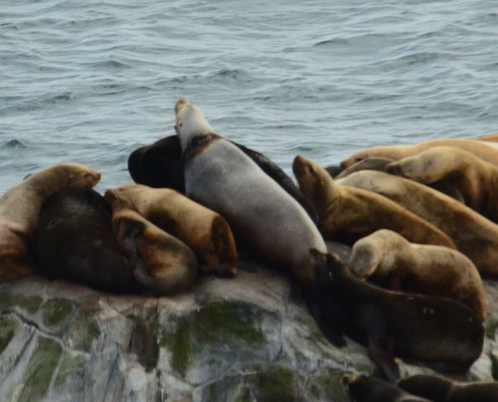
Images of sea lions sleeping on South Rock before and after an explosion can be seen below. Three branded sea lions were photographed today; two California Sea Lions #U68 (brand on posterior) and #8240 (brand on left side) and one Steller’s Sea Lion #42DY.I remember #8240 from last fall but had not noticed him until today during this shift. There appear to be more sea lions daily.Tomorrow is census day. At dawn this morning, Alex noticed a small seal, possibly a Northern Elephant Seal and a Sea Otter on the ramp.

Forage fish were active at the surface again today; guessing that they are herring are on their way back out to offshore habitat after spawning. The fish attract the fishers and by late morning there were three adults and 12 juvenile Bald Eagles in the Protected Area. They favour sitting in large groups on South and West Rocks but they also use Great Race in a more solitary way. The Canada Geese seem to be staying away and the large number of eagles may be deterring them from feeling comfortable on Great Race.

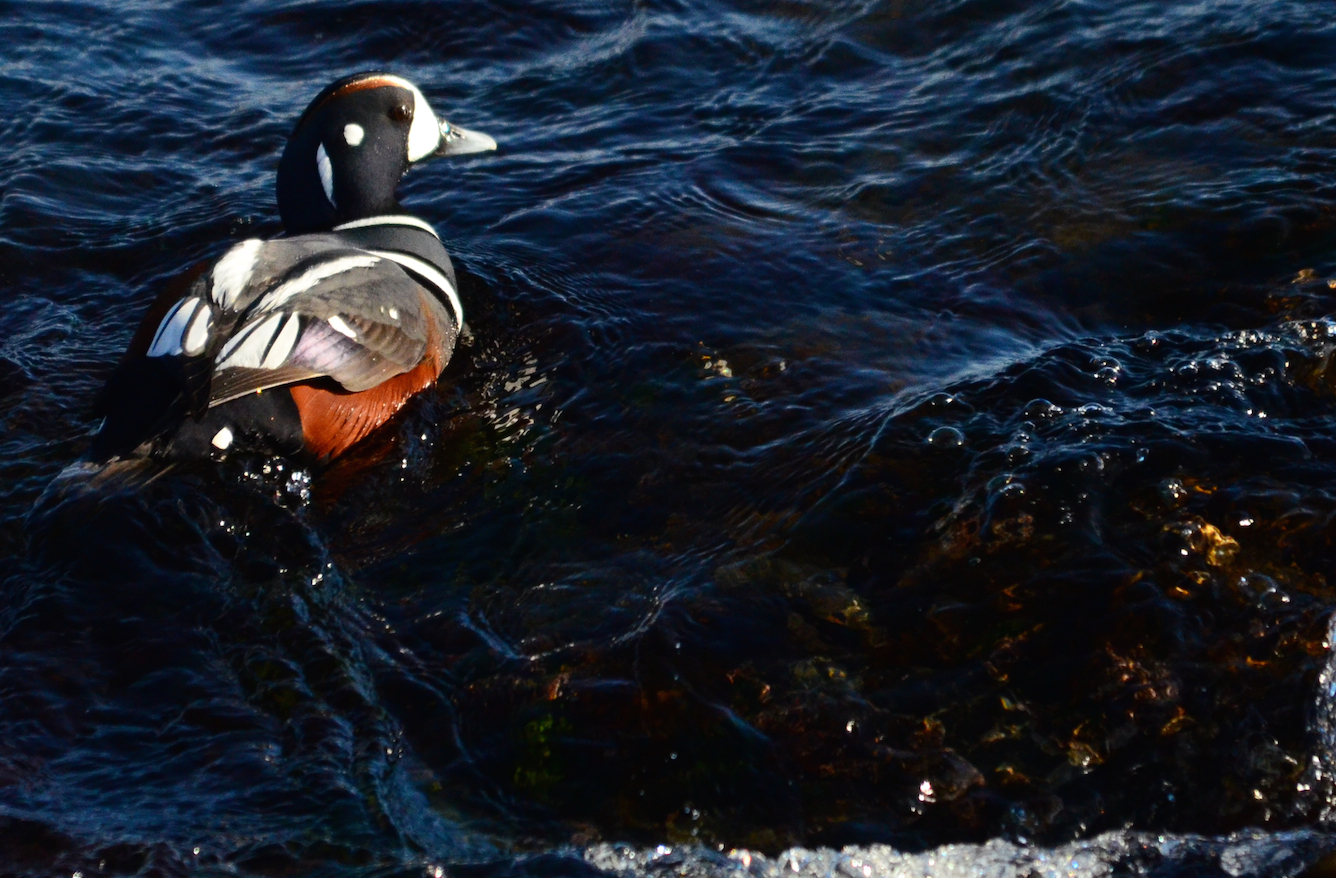
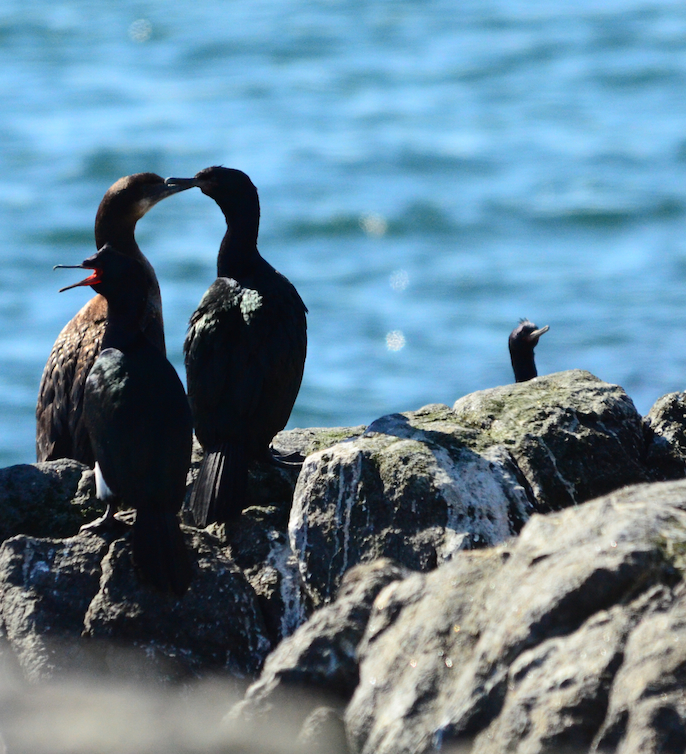
Harlequins continue to astound and inspire with their gorgeous plumage and amazing diving abilities. All three species of cormorant Pelagic, Brandt’s and Double Crested were busy in the Ecological Reserve today. It appears that they like to forage where there are convergences and upwelling. They dry their feathers, roosting in the wind and sun on the west end of Great Race, Turbine and Middle Rocks.

Chores were routine today.


Back to Westerly Gales

Weather-wise, yesterday was wild weather and today dramatic. After yesterday’s log was posted and the internet was out,  the wind turned to southeast and sustaining over 50 knots. The barometer bottomed out at ~987 hPa  in the early hours of the morning and then started to rise again. As today’s entry goes on the web-site ~17:00 it is at 1006 and climbing.

This morning, the sea was still in motion with a substantial swell (~1m) from the southeast that was knocked down later by the flood tide and west wind. The wind switched to west fairly early in the morning and it has been blowing 20 – 30 knots all afternoon. (Oh for a wind turbine that doesn’t harm birds.)

The forecast for Friday is a switch to east overnight, 5 – 15 knots, turning back to west 10 – 15, by late afternoon. Showers to continue.

No vessels were observed in the Ecological Reserve today. Explosions resumed around noon, with the red flags flying a warning to all.

Geese are starting to prefer Rocky Point’s grassy areas and that is a good thing. The high density of eagles here could be unsettling. A Bald Eagle was observed taking a cormorant today. The big adult ate about half of it. Another slightly smaller, adult (male?) approached, waited and they switched off carefully in the wind so the carcass would not fly off. The male (?) ate most of the rest, before taking off with remains in talons, as gulls moved in to clean up. There were a few different species gulls resting here today. The Harbour Seals didn’t show up yesterday or today, nor did the Pigeon Guillemots.

One tagged California Sea Lion was photographed; tag and brand # X79. A necklaced Steller’s Sea Lion was observed and photographed. It look a lot like one that was here last fall except that the plastic on the neck may be coming apart. The animal is vigorous. While under observation, it climbed off one rock, swam across head held high and climbed up another rock, to the top of the ‘dog pile’.

Today was census day and here are the results.

2016 10-Mar
River Otter 0
Northern Elephant Seal 0
Harbour Seal 0
Northern Sea Lion (Steller’s) 26
California Sea Lion 82
Canada Goose 2
Harlequin Duck 11
Surf Scoter 12
Common Merganser 2
Brandt’s Cormorant 25
Double-crested Cormorant 50
Pelagic Cormorant 18
Cormorant ~100
Bald Eagle (juvenile) 3
Bald Eagle (adult) 2
Killdeer 2
Black Oystercatcher 13
Black Turnstone 21
Surfbird 7
Rock Sandpiper 2
Dunlin 2
Mew Gull 0
Glaucous-winged Gull (+ Xs) 138
Thayer’s Gulls 61
California Gulls 12
Common Murres 6
Pigeon Guillemot 0
Northwestern Crow 2
Fox Sparrow 1
Song Sparrow 0


Chores were routine and there were no visitors.

Wild Goose Chase

Last night’s north easterlies created a bit of a symphony: percussion on soffits accompanied by back door whistling its multifarious tunes. Morning started with the call of Canada Geese arriving, southerly winds (10 – 15 knots) and rainy skies. By late morning the wind direction had changed to west and the sky eventually cleared to a mix of sun and cloud by late afternoon. The gentle to moderate westerly is forecast to continue tomorrow bringing a 30% chance of showers. The barometer has been rising all day, so things are looking up.

‘Sports’ fishers were seen passing and fishing in the distance today and there were no sightings of whale watchers in the Ecological Reserve.

I went out to clear off the geese first thing and saw a pair mating in the water. That inspired me to ramp up daily goose patrols. No sign of nests yet, but there are a few pairs that are hormonally persistent. The large number of Bald Eagles is potentially helping keep the geese nervous. I saw an adult eagle flying with some sort of large bird, hanging from its talons but could not tell if it was a goose or a cormorant. The gulls seem to be setting up their territories, even though it still seems quite early for anything very serious. Pigeon Guillemots, Glaucous-winged gulls, and Black Oystercatchers are all in breeding plumage, as are many of the three species of cormorant.

Chunk actually moved today, leaving his dead, stink zone for fresh flowers and a sloped recline on the other side of the paths. I also saw him open one eye as I walked past, a small feat of energetic response. He really is wiped out from all of his male activities.

A California Sea Lion, which is equally lethargic, is hauled out beside the derrick and he looks quite emaciated with backbones and ribs showing. The rest of Sea Lions that remain look healthy and haul out tightly together in two spots, a small group just down to the northwest of the Science House and a larger group on the South Islets. There are a few branded animals but I haven’t been able to get photos yet. A male Steller’s 76Y (left side) and a couple of rump branded Columbian California Sea Lions. 76Y was branded at St. George Reef in northern California, just south of Oregon, in 2002 as a pup. 443Y is just going into its third year and was branded at Rogue Reef in southern Oregon, just north of the California border, in 2013.


There were no visitors and chores were routine.


Back on the Rock: March 2– 4th

Wednesday morning, while tide, wave height and current speed were just right; we slipped a crew change through a narrow window between two gales. As we waved goodbye, and I turned to get moved in, the barometer started to drop again.

After four and half months away, it was good to be back on Great Race with its familiar views of the Strait of Juan de Fuca. As an averred naturalist, I couldn’t help notice that North Rock was bristling like a military brush cut, with 350 – 400 cormorants. All three species Pelagic, Double-crested and Brandt’s, were ‘drying out’ on this strategic roost after foraging in the sea. An adult Bald Eagle swooped in and the cormorants en masse, hit the water. The tidal ebb started to clear them out to sea, pulled by moon and pushed hard by rainwater rising in the Salish Sea. The cormorants dispersed and the counting moment was over; some flew, some dove and others disappeared into the gloom, as more rain squalls swept in.

Concentrating on moving in and checking all systems in order, counts were put on hold for Thursday’s census. Chunk, the big, pup-killing, male Elephant Seal was lying where he had apparently been, on and off, for a week. He was a little too close to the path for comfort, which meant that coming and going to the energy building involved tip-toeing by, while keeping a look-out for his eyes to open and being ready to run, if necessary. Of course it is never necessary but absence makes the fear forget.

Riley left things fairly ship shape and I knew that everything was going to be fine when the old Lister generator roared to life. In the evening, the wind gradually rose to 36 knots, ESE, a speed and direction that makes the back door of the house whistle a weird, three-toned tune, but it didn’t keep me from a deep sleep.

Seawater sampling came early and the morning weather was fairly wet and windy. The sun broke out with rainbows in the afternoon and the wind dropped to less than 10 knots. As the sun sets now, the forecast is calling for light winds, a chance of showers Friday morning with rain again by afternoon.

Once established that it was a beautiful afternoon, three small whale-watching boats came out to watch the sea lions on South Rocks. It always makes me a little nervous to see them with their human cargo in close to the south reefs and the sea lions. Their insurance companies probably wouldn’t be too keen on that sight either.

Today was census day and there were interesting differences in the timings of comings and goings of different species. Today, the Pigeon Guillemots were here at first light and numbers kept increasing until about noon. They were all gone by late afternoon. The Black Oystercatchers were together in a squawky flock early in the morning and then dispersed. The sea lions hauled out mostly in the morning but additional individuals hauled throughout the day. The cormorants started roosting late morning and were mostly back in the water by late afternoon. The Harbour Seals hauled out in the late afternoon. There were few gulls in the morning, but by mid-day some were pairing up and looking like they might already be standing near their nest sites. By late afternoon there were over 200 gulls roosting on the island but they were gone by the time I came back from shutting down the generator at 21:00. The Killdeer, as usual arrived after dark.

The diverse temporal use of the Ecological Reserve by different species would be missed in a standard count where the observer passed through during a set amount of time. By having an Eco-Gaurdian here throughout the day, a much more thorough accounting of the different species use of the Protected Area is possible.

Here are the results of the animal census:

2016 03-Mar
River Otter 1
Northern Elephant Seal 1
Harbour Seal 72
Northern Sea Lion (Steller’s) 36
California Sea Lion 41
Canada Goose 6
Harlequin Duck 16
Surf Scoter 11
Common Merganser 1
Brandt’s Cormorant 50
Double-crested Cormorant 150
Pelagic Cormorant 100
Cormorant 50
Bald Eagle (juvenile) 9
Bald Eagle (adult) 2
Killdeer 2
Black Oystercatcher 24
Black Turnstone 23
Surfbird 1
Mew Gull 2
Glaucous-winged Gull (+hybrids) 214
Pigeon Guillemot 147
Northwestern Crow 2
Fox Sparrow 1
Song Sparrow 1

Friday’s weather was windy and wet. There was a lull early, as it switched for a short time to southwest but then turned back with a vengeance to strong northeast and big seas. The forecast is for a switching back and forth from southeast veering to southwest and back. It is blowing north 24 knots as I post this Friday evening, but is supposed to come down to light variable in the morning, rising againSaturday afternoon.

One whale watching vessel used the Ecological Reserve today and like yesterday’s boats, it too ventured into the danger zone of breaking reefs on the south side. The ebb was so large at the time that there were standing waves and a huge overfall along the string of rocks, islets and shallows. After a few tippy moments, they got out of there and I was glad they were all safe and sound.

I fought entropy today doing a few minor cleanups, making kindling and moving propane tanks around (downhill and empty). The usual chores also kept me busy. I tried to figure out what is going on with the camera, which has not yet fully cooperating. Now that I am through the technical barriers and able to post the blog I will be doing so daily and hope to post photos soon.