Sensitive Oystercatchers

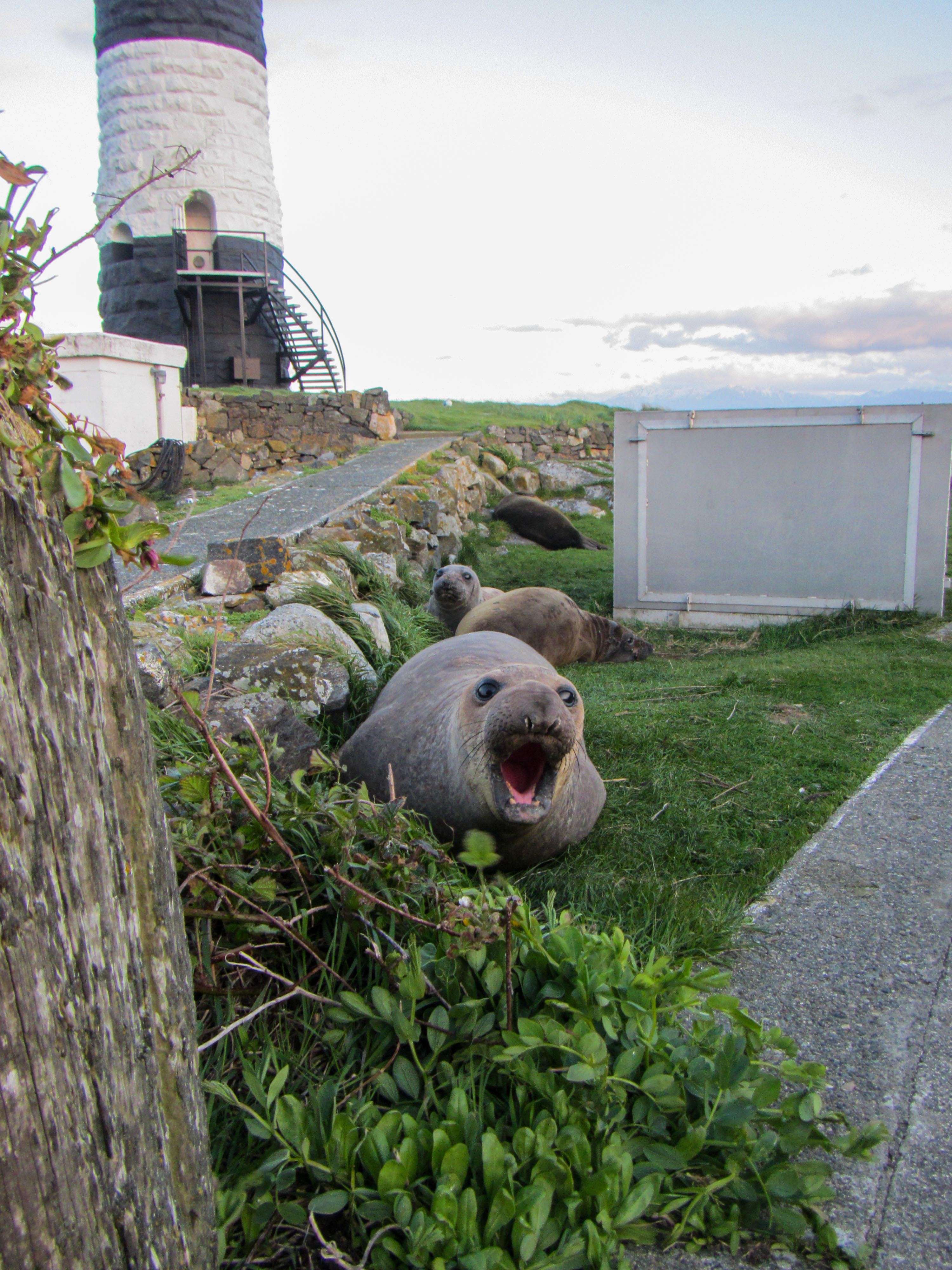
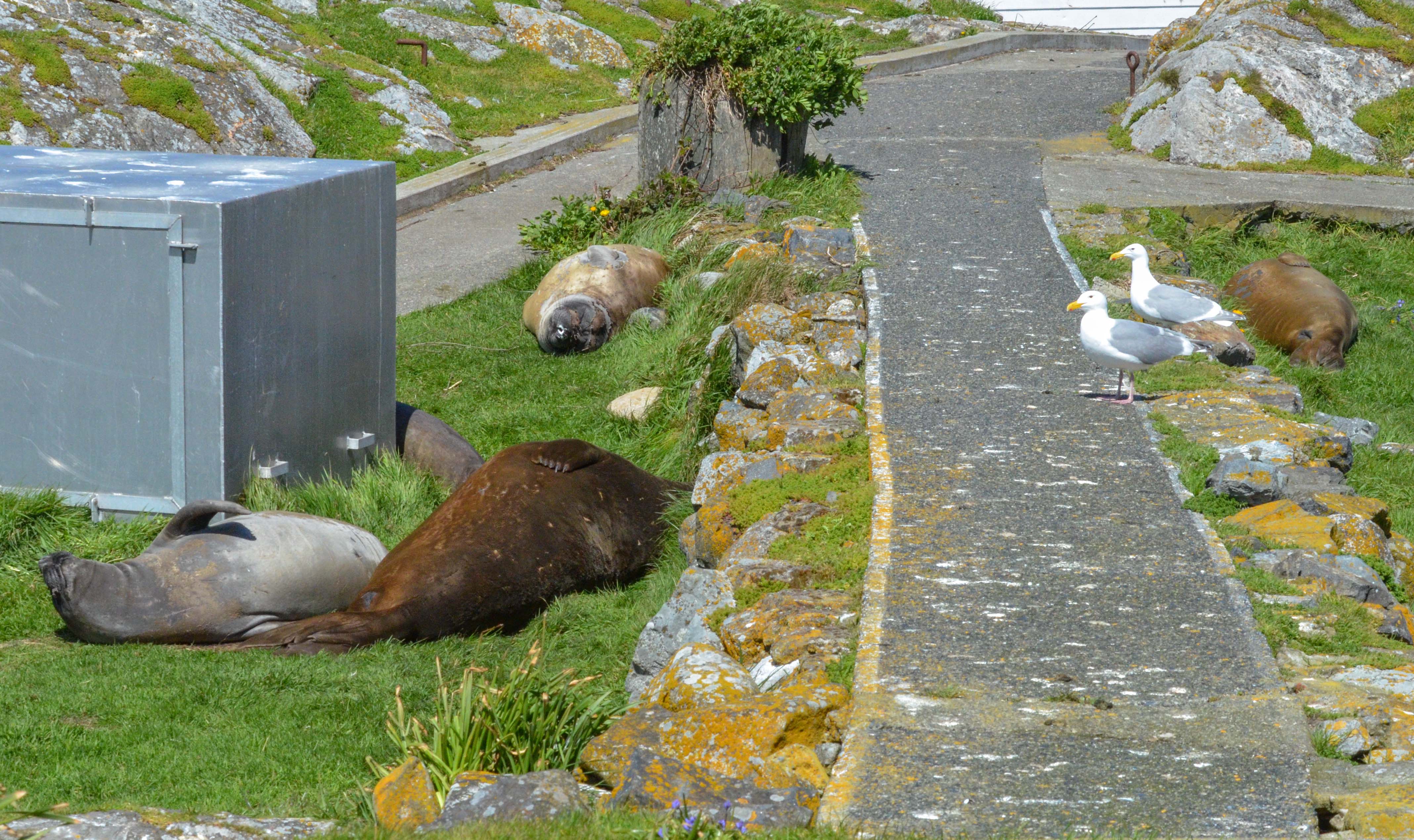
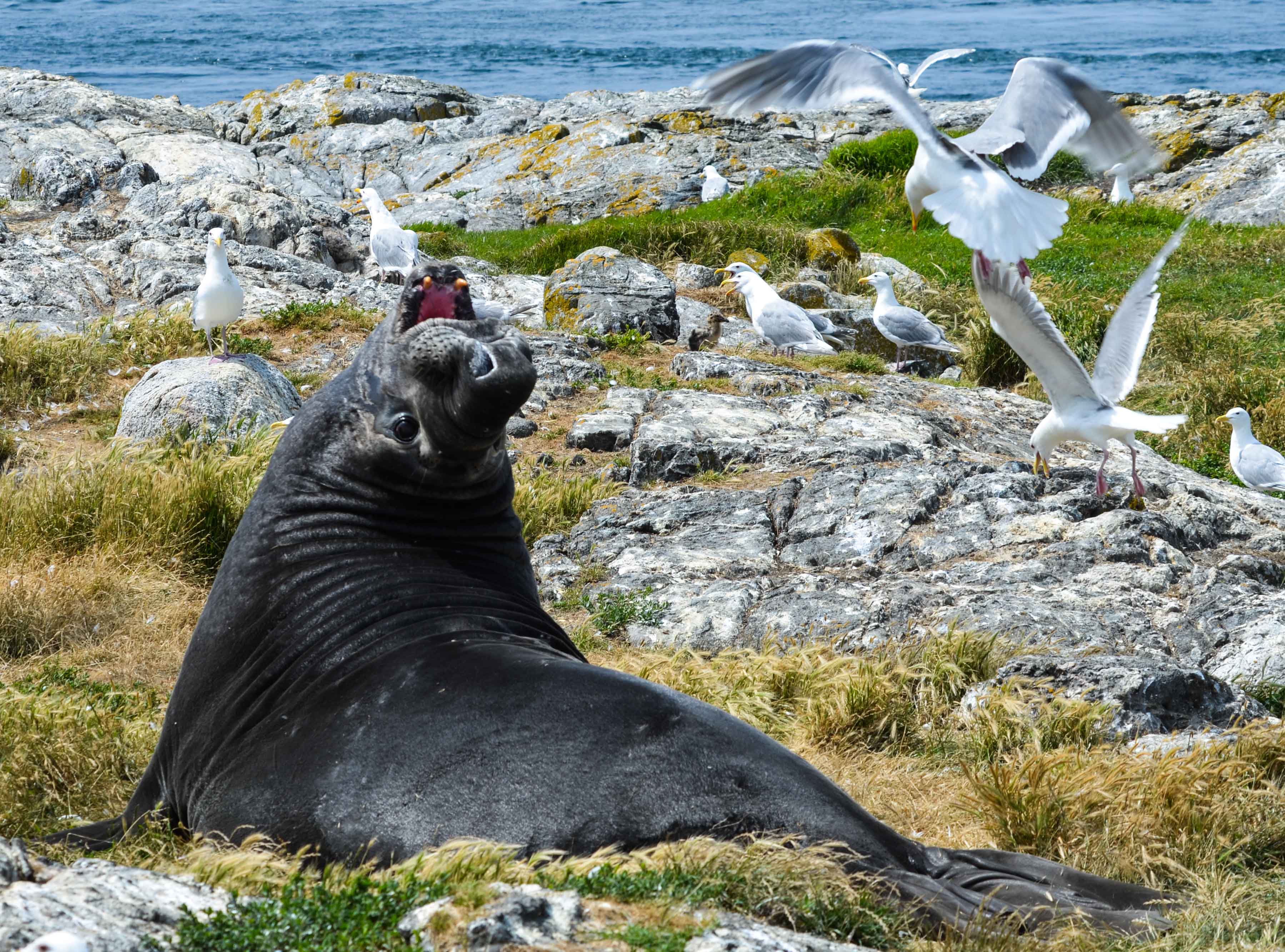
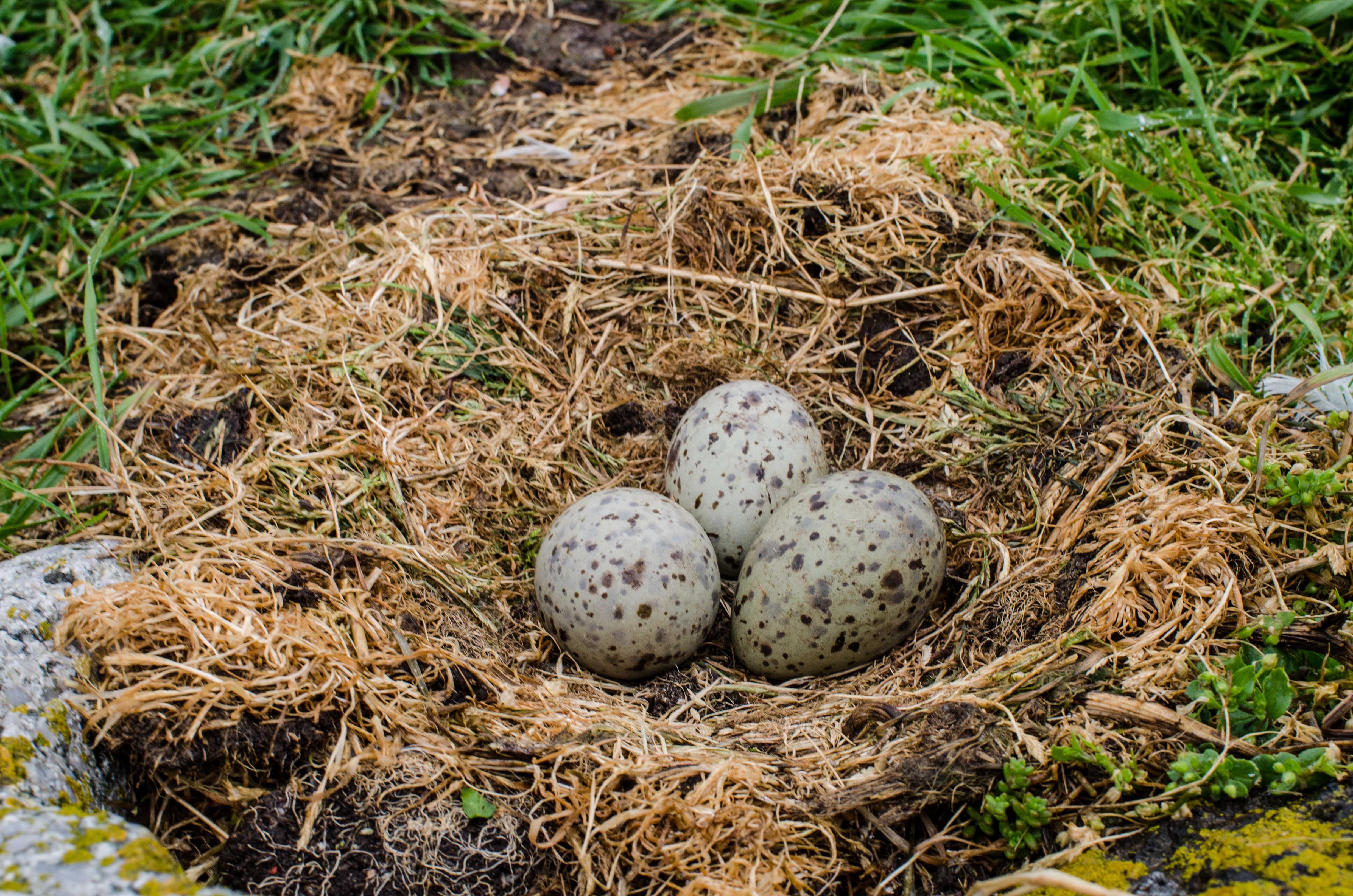
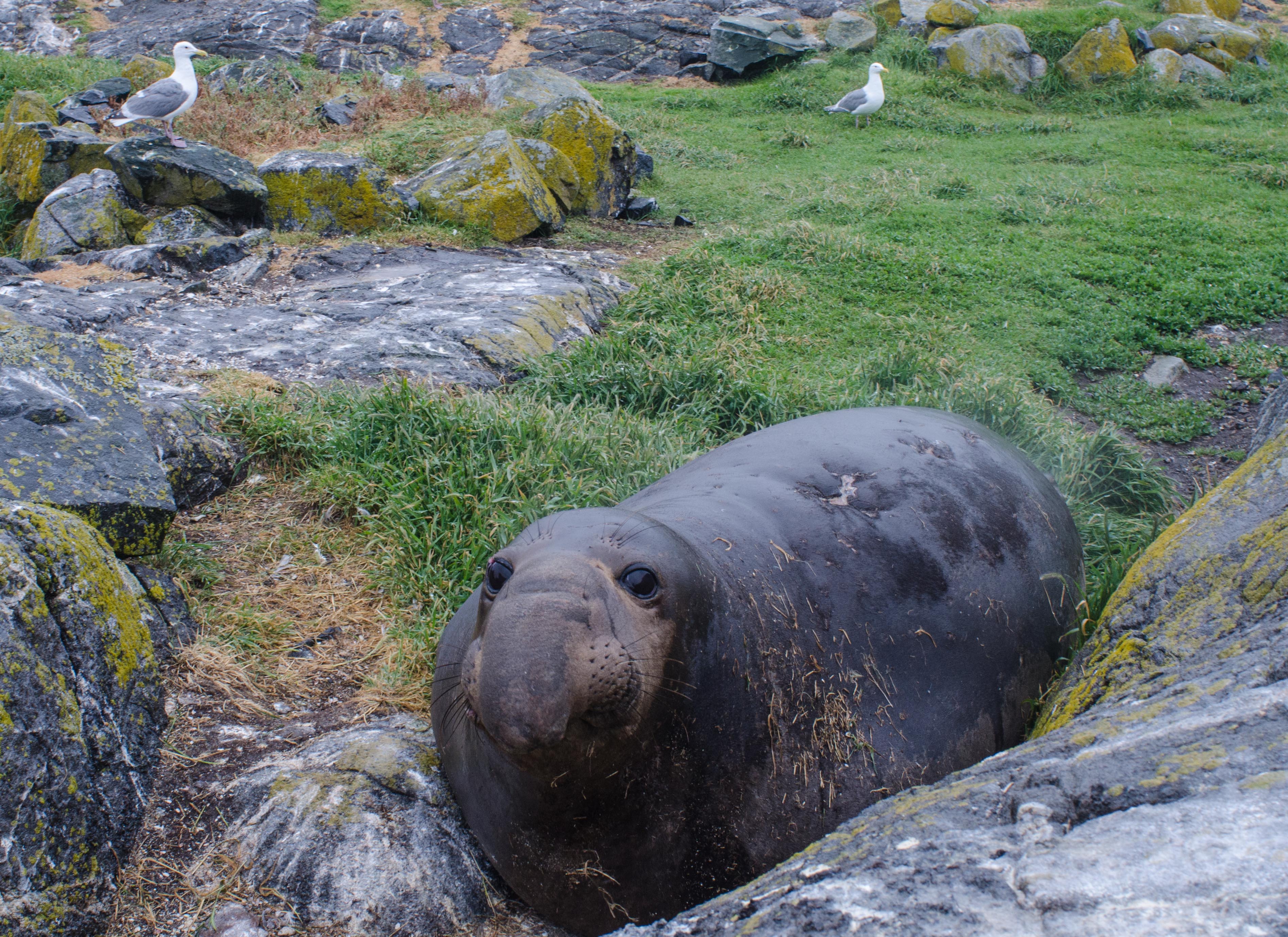
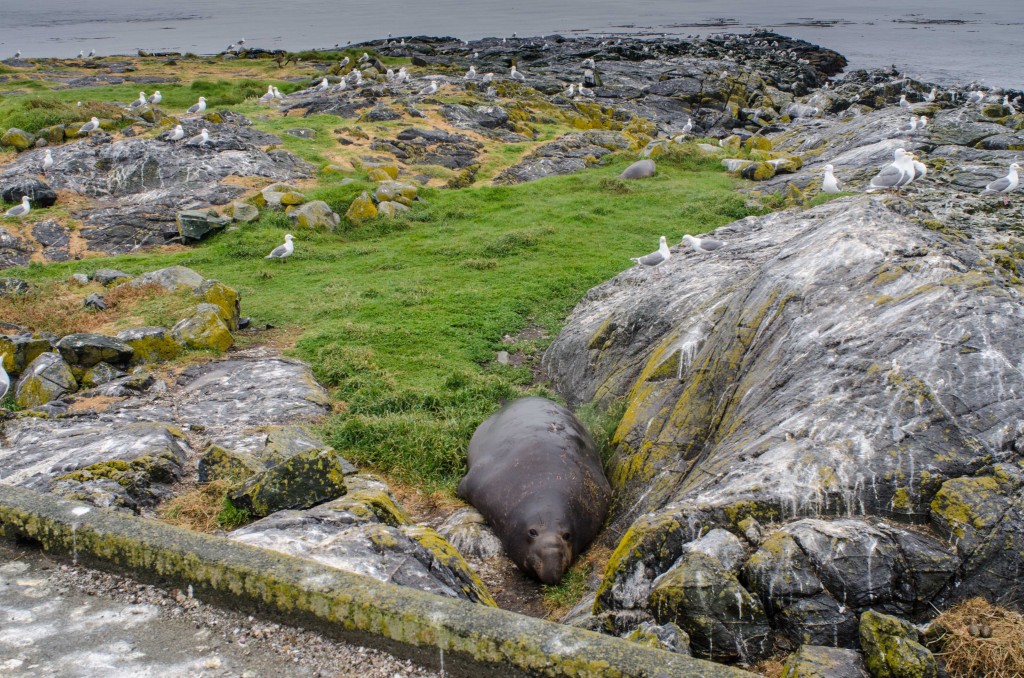
June is half over and I have about 10 days before Julie comes out to take over for the summer. I am trying to get some painting done in the dry and relatively windless spells, but one of the issues I am facing is trying not to disturb the oystercatchers nesting near the top of the ramp by the majority of railings. They immediately leave the nest when I get anywhere near, and won’t return til I am well clear. I worry about the eggs cooling too much, so I scrape the rails for 10 minutes then depart for an hour… Fortunately I have lots of time on my hands! Meanwhile only a couple juvenile e-seals remain and just as well because Misery’s curiosity is quite terrifying to them. Here one scrambles up the rocks to escape.
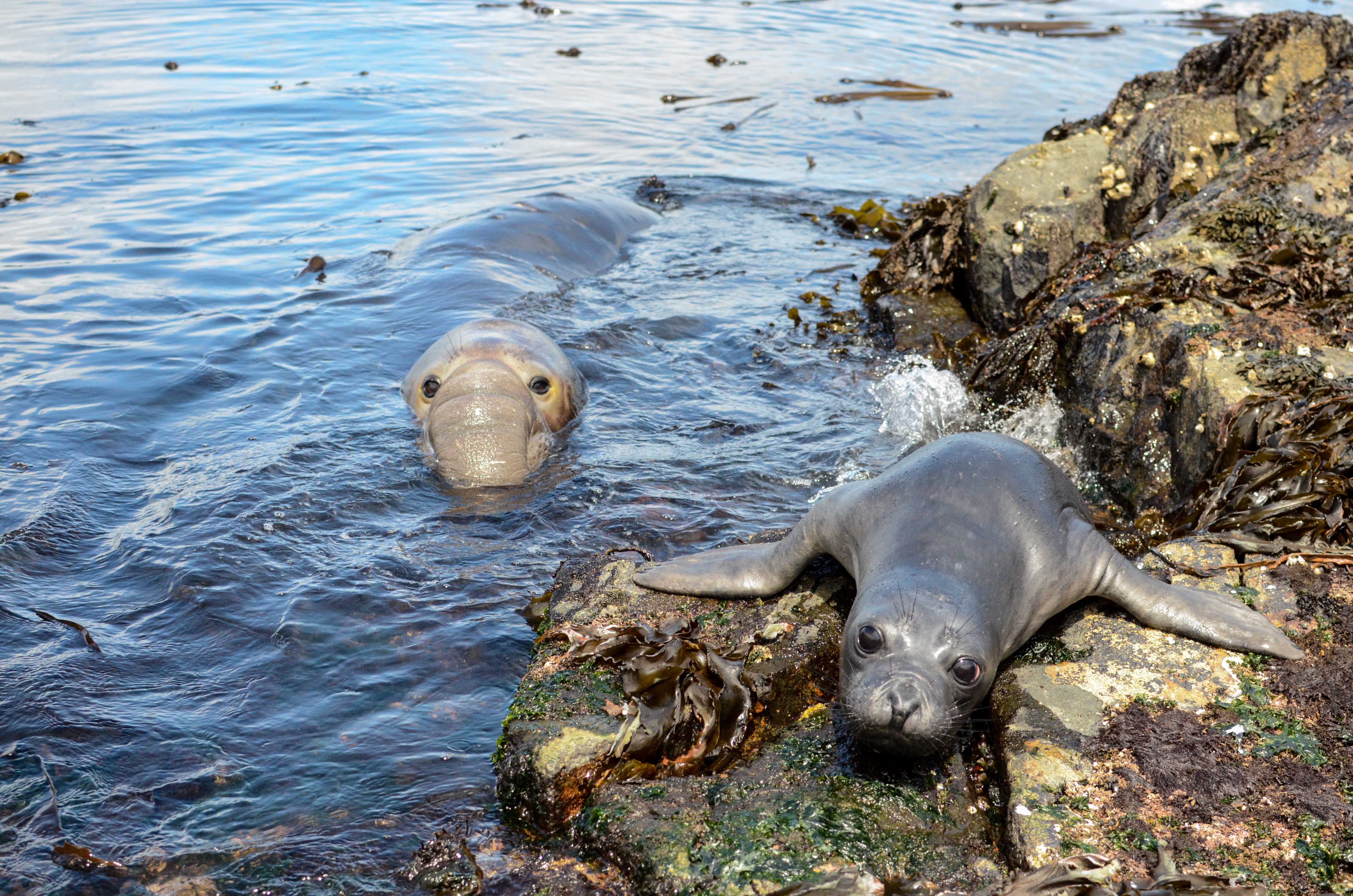
Best keep a safe distance...

Best keep a safe distance…

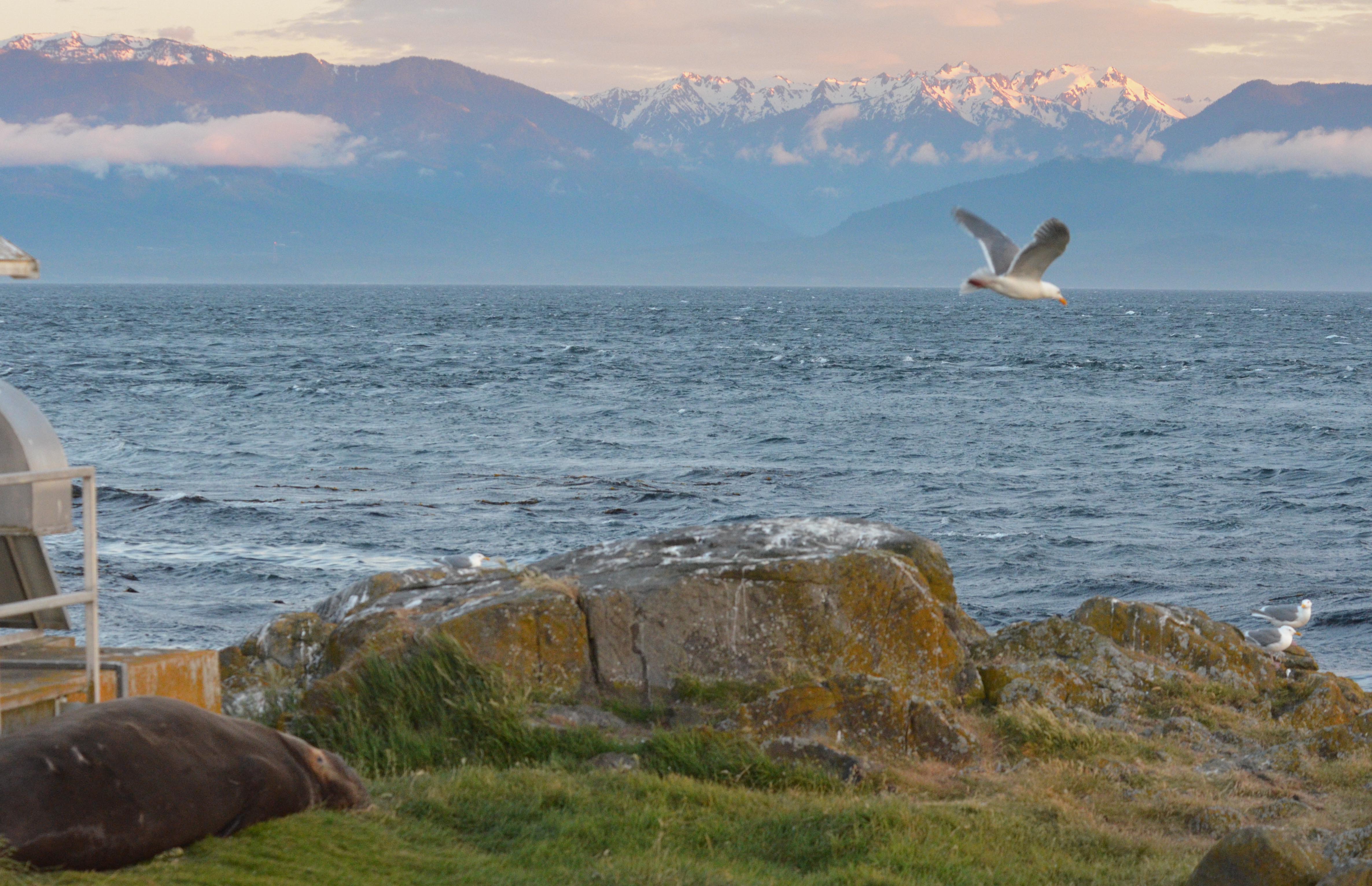
Sunset on Olympics

Sunset on Olympics


The Pigeon Guillemots are nesting in the larger cracks in the rocks; another reason to keep a low profile and limit my wandering around the island. They are adorable little birds!
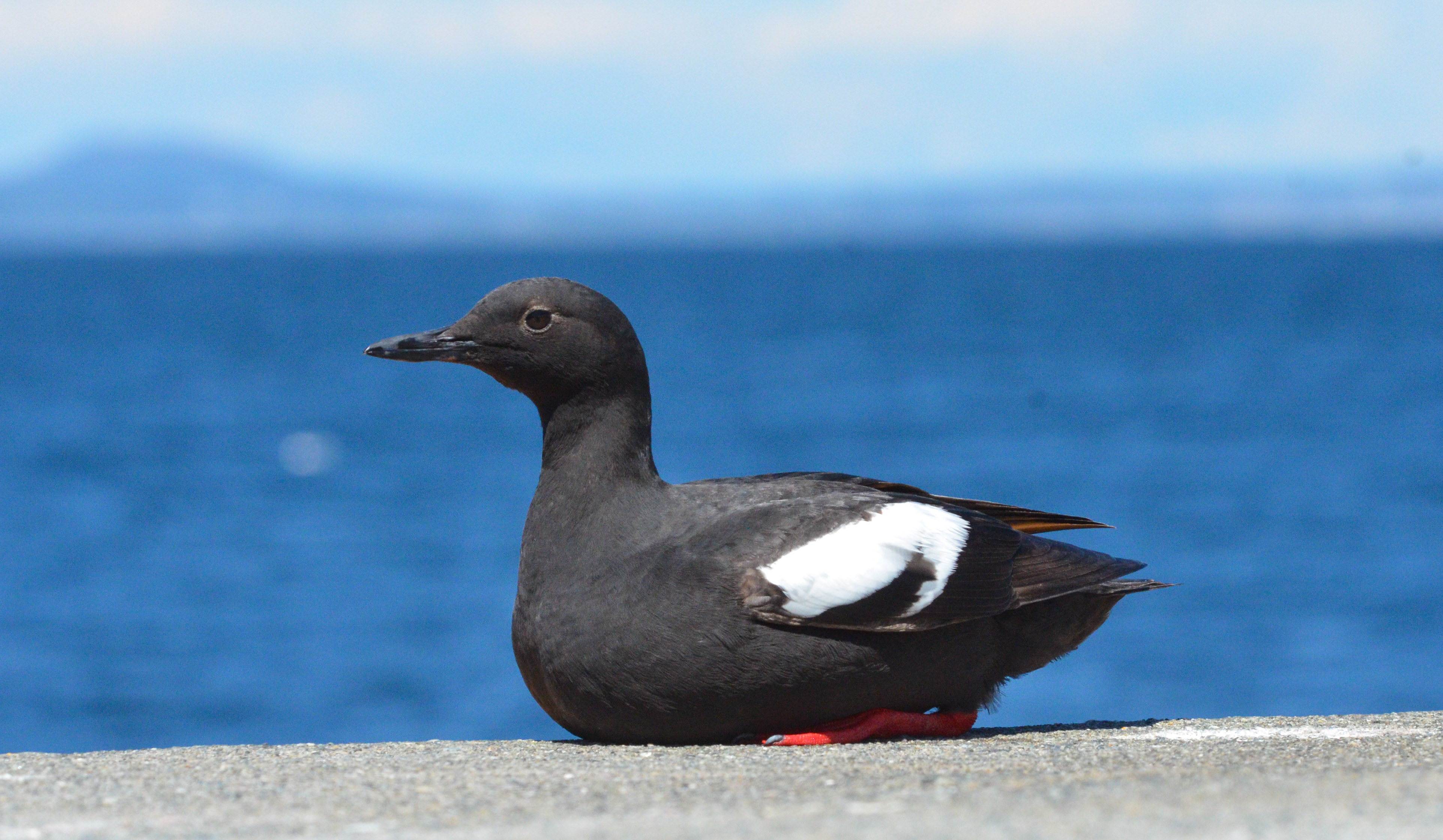
Pigeon Guillemot
Pigeon Guillemot

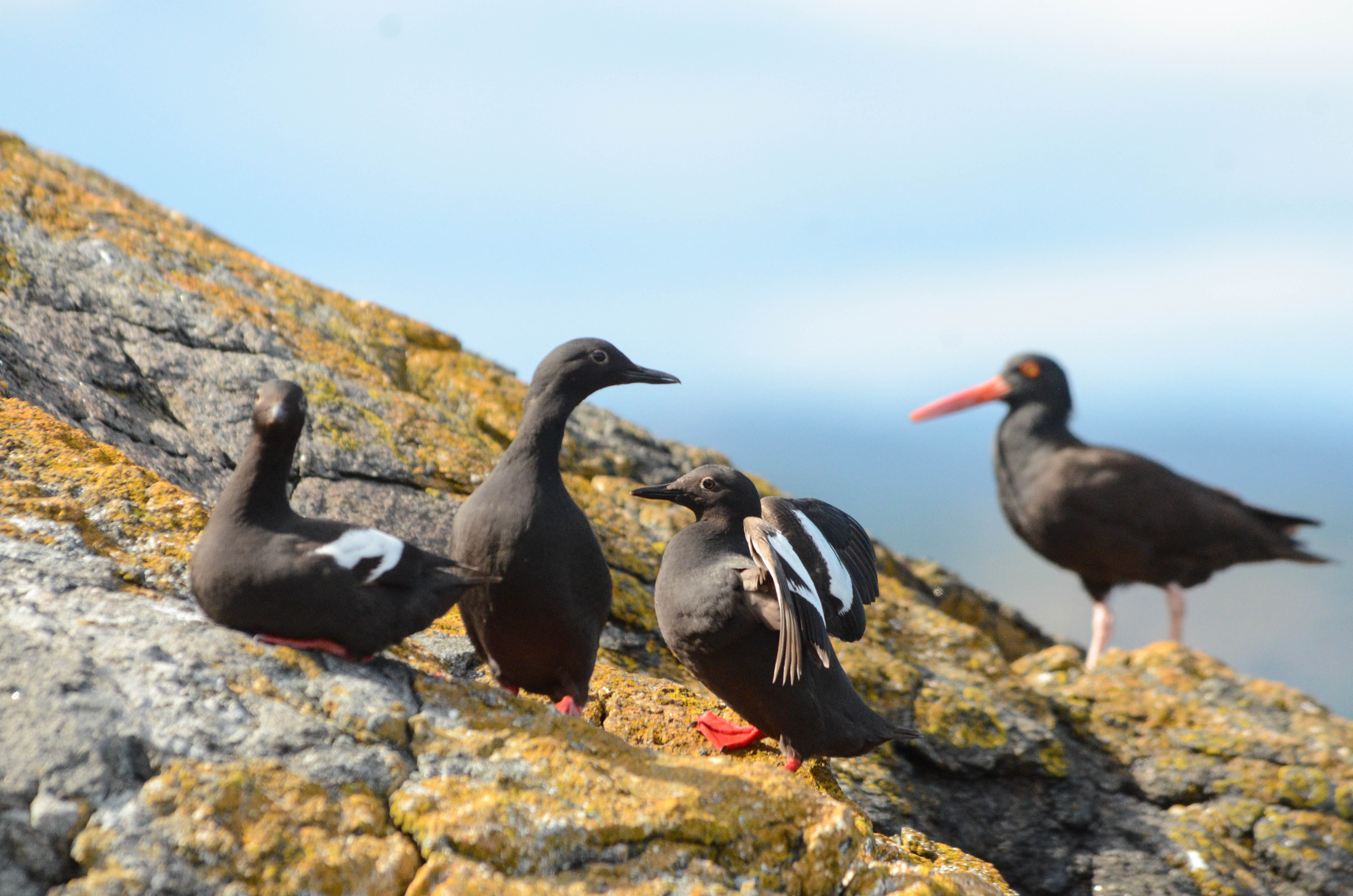
Pigeon Guillemots and Oystercatcher
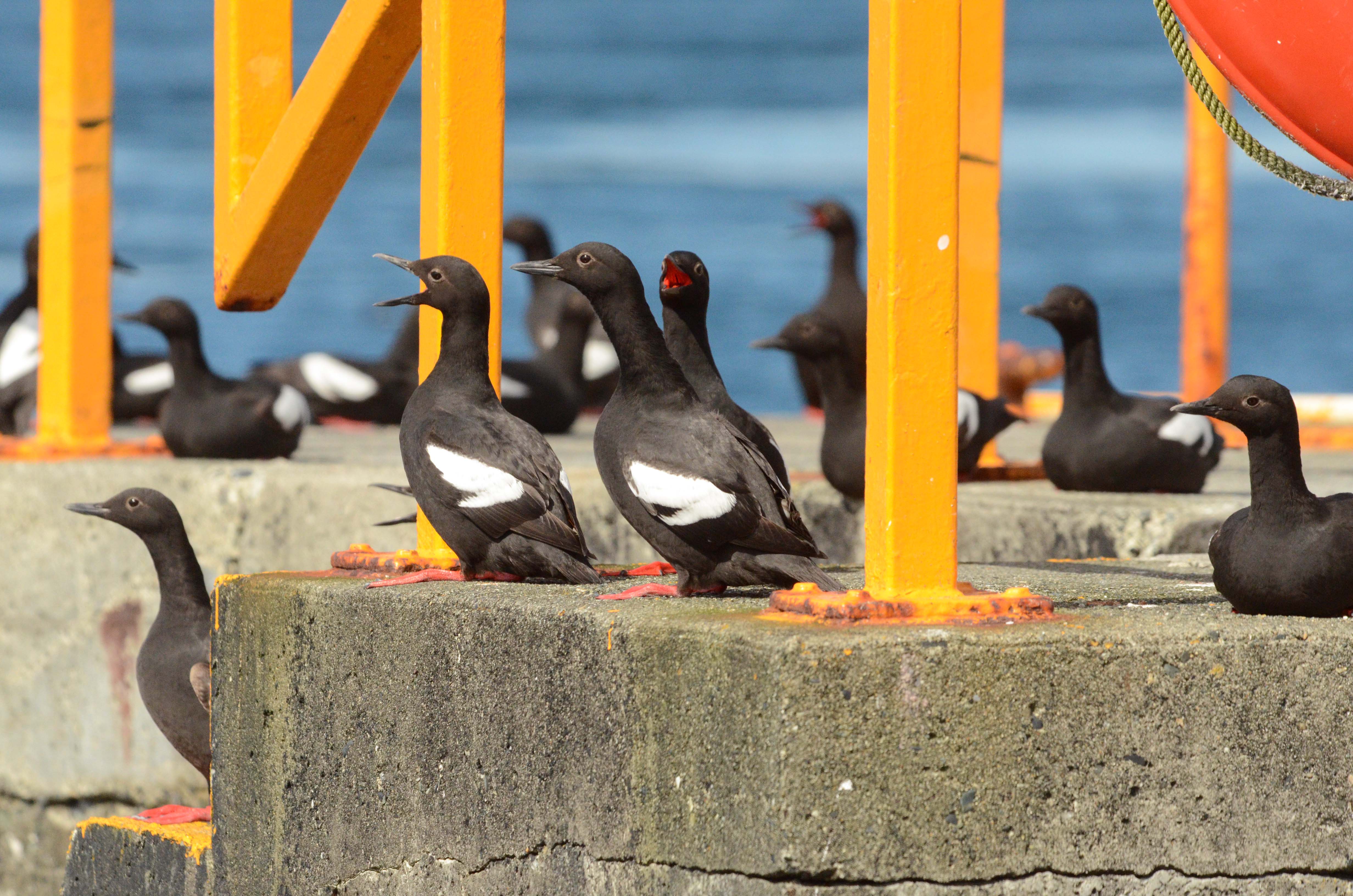
Pigeon Guillemots and Oystercatcher


Pigeon Guillemots

Pigeon Guillemots on the Jetty


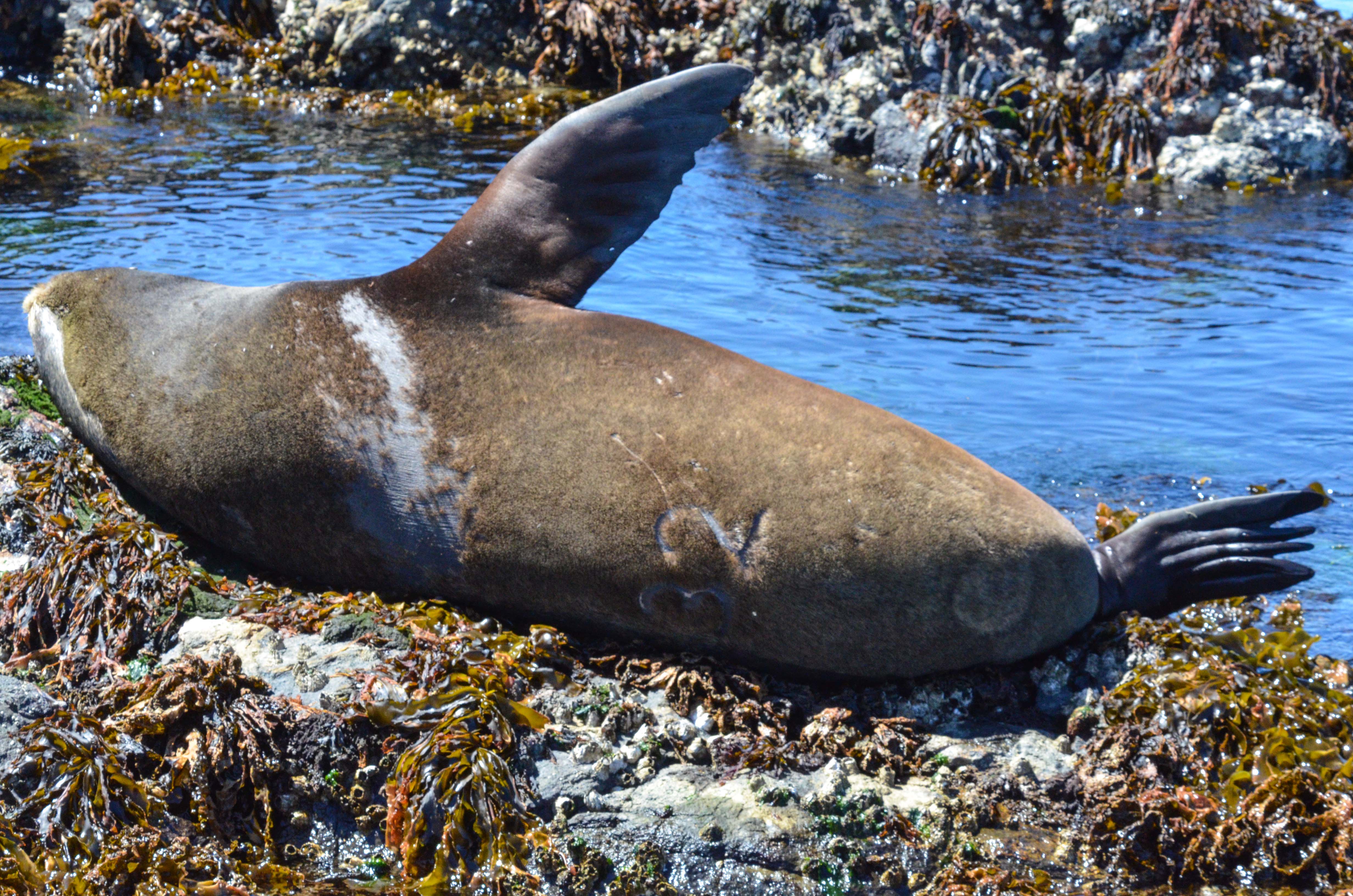
Branded California Sea Lion 1032
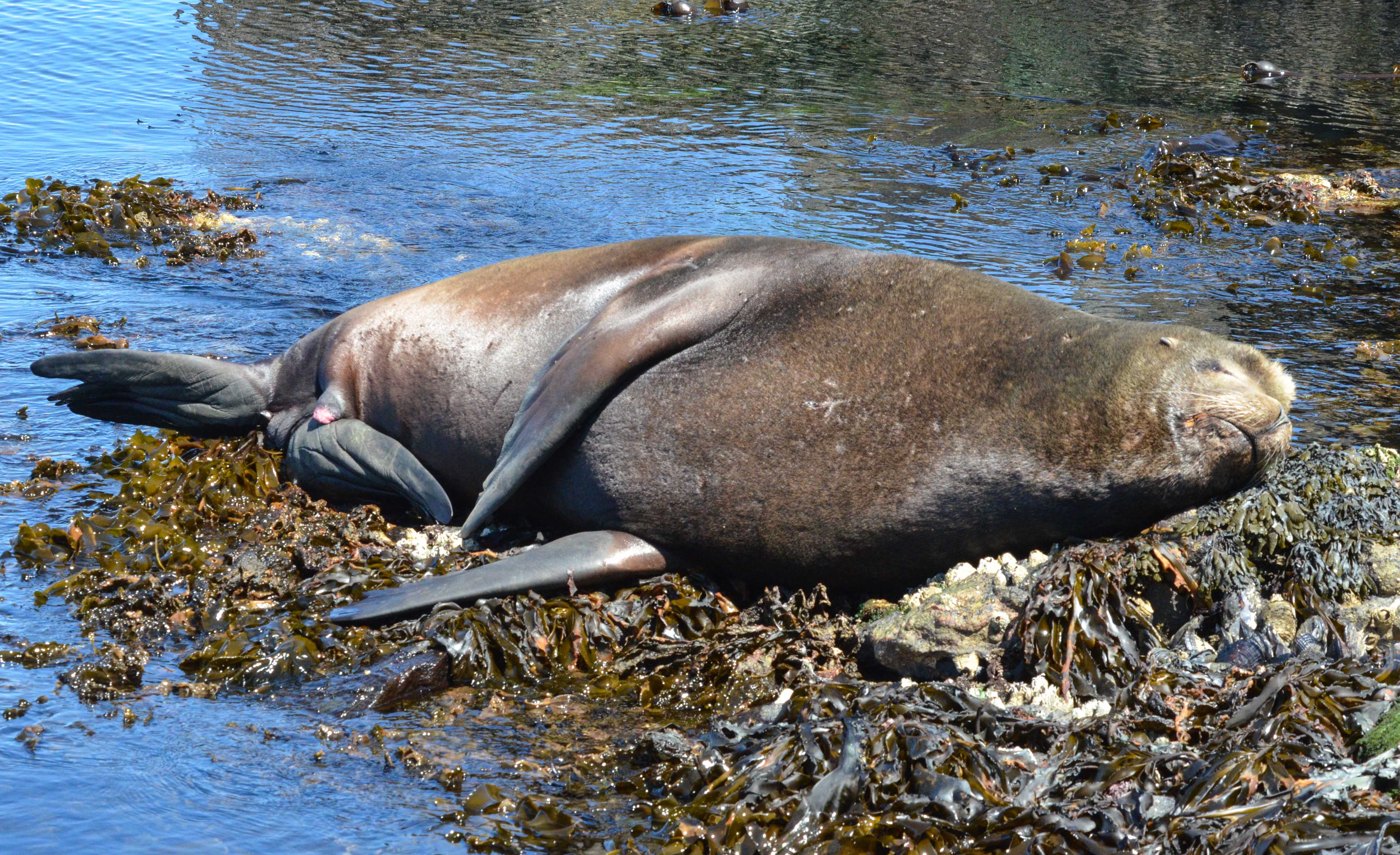
Branded California Sea Lion 1032


Branded California Sea Lion 1032 en flagrante
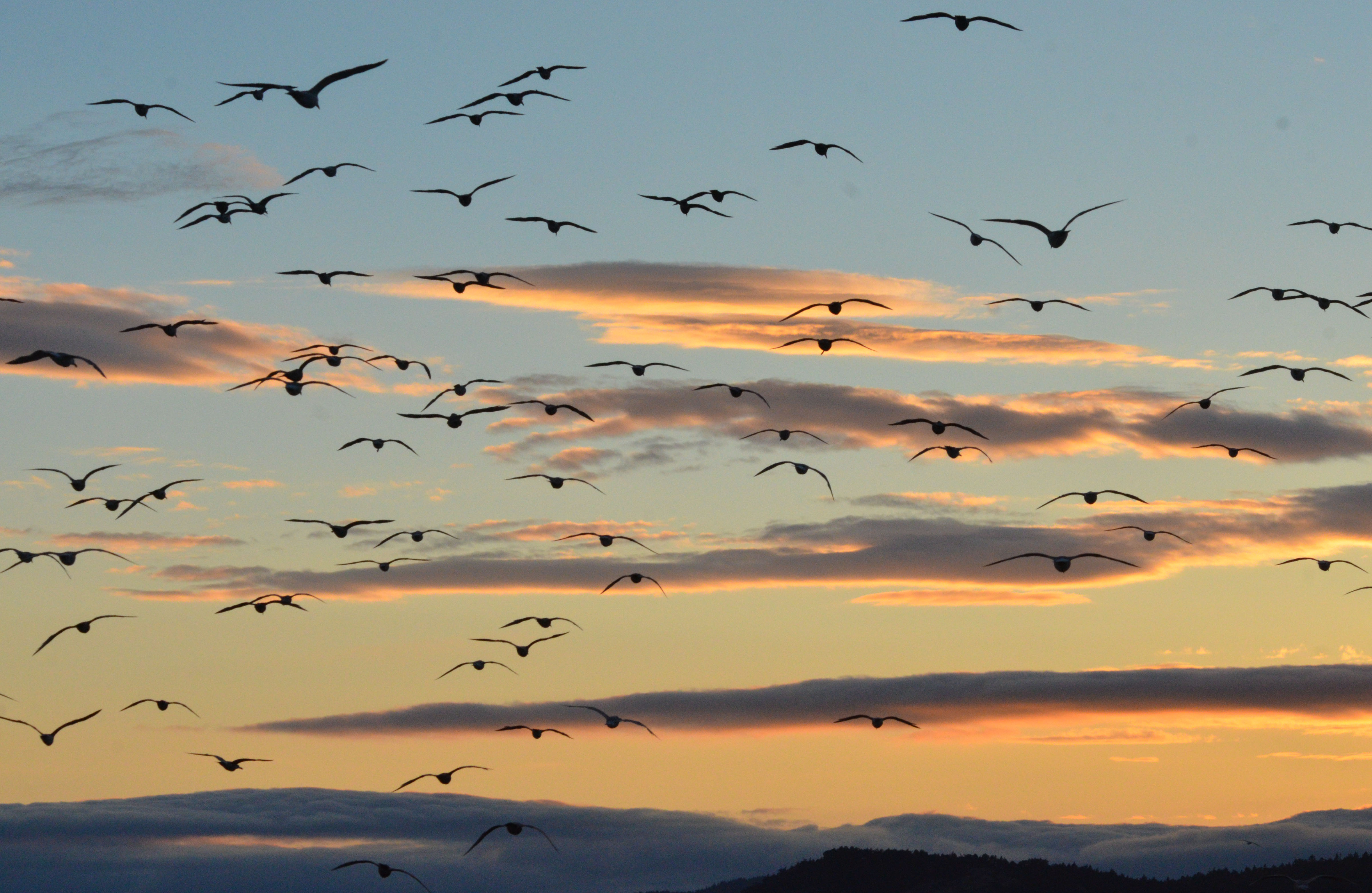
Branded California Sea Lion 1032 en flagrante


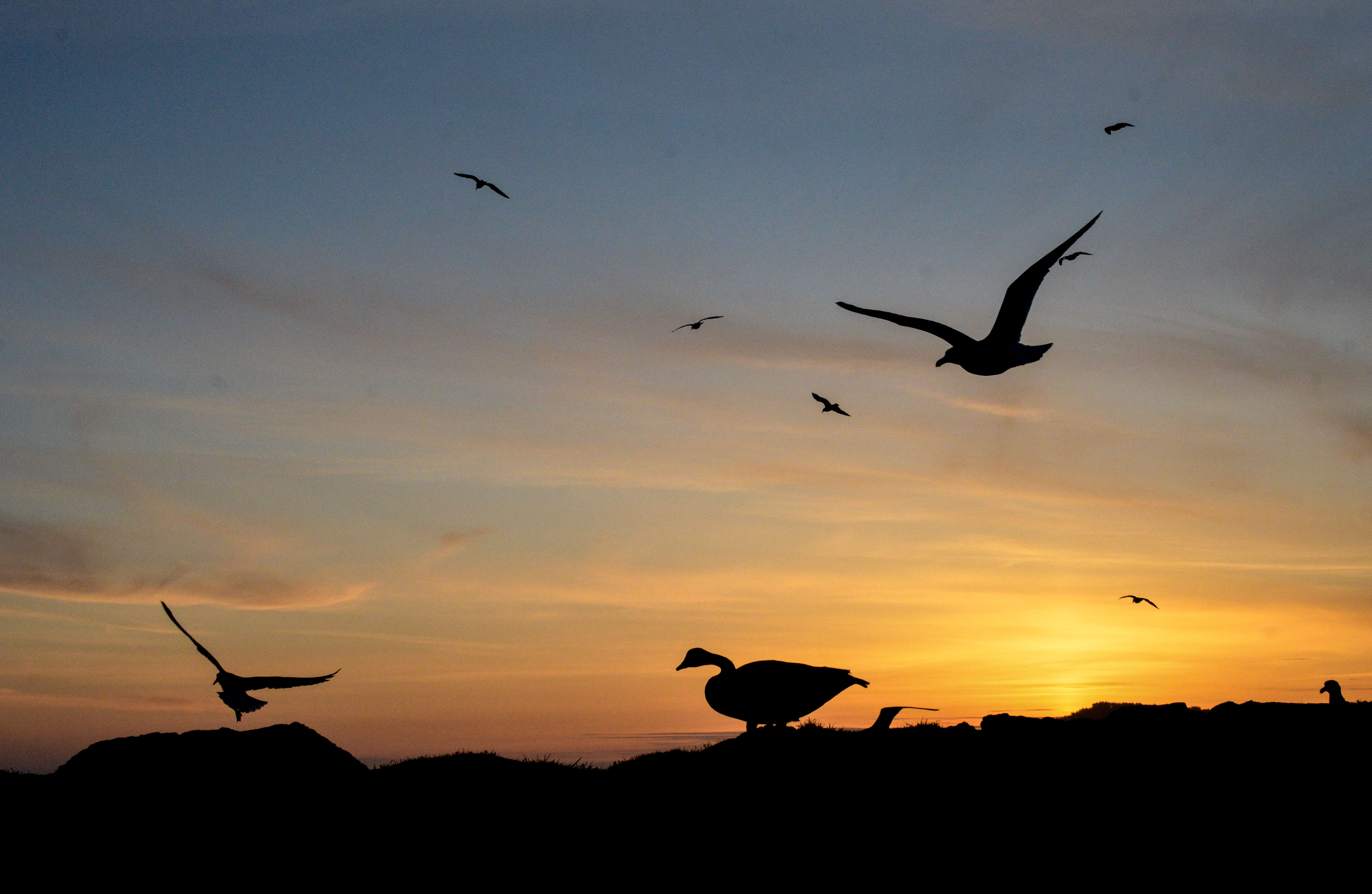
Sunset Flock of Glaucous-winged Gulls
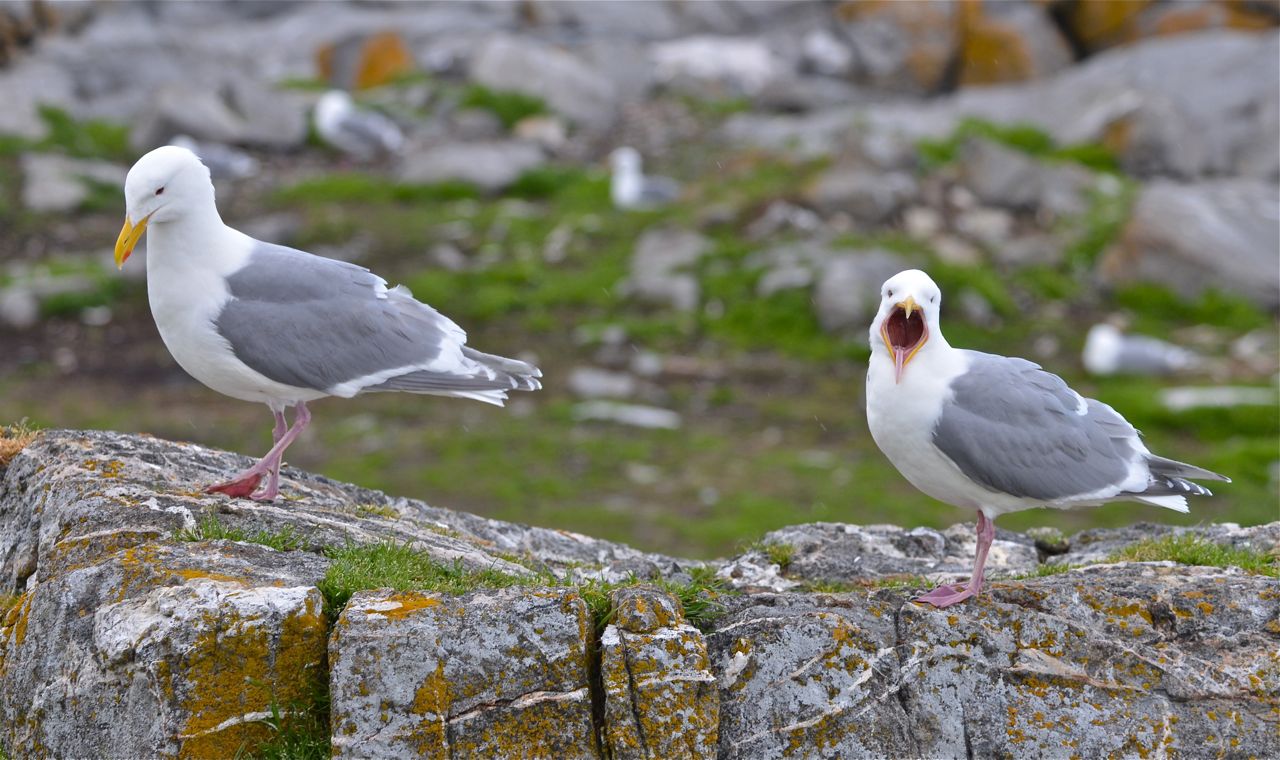
Sunset Flock of Glaucous-winged Gulls
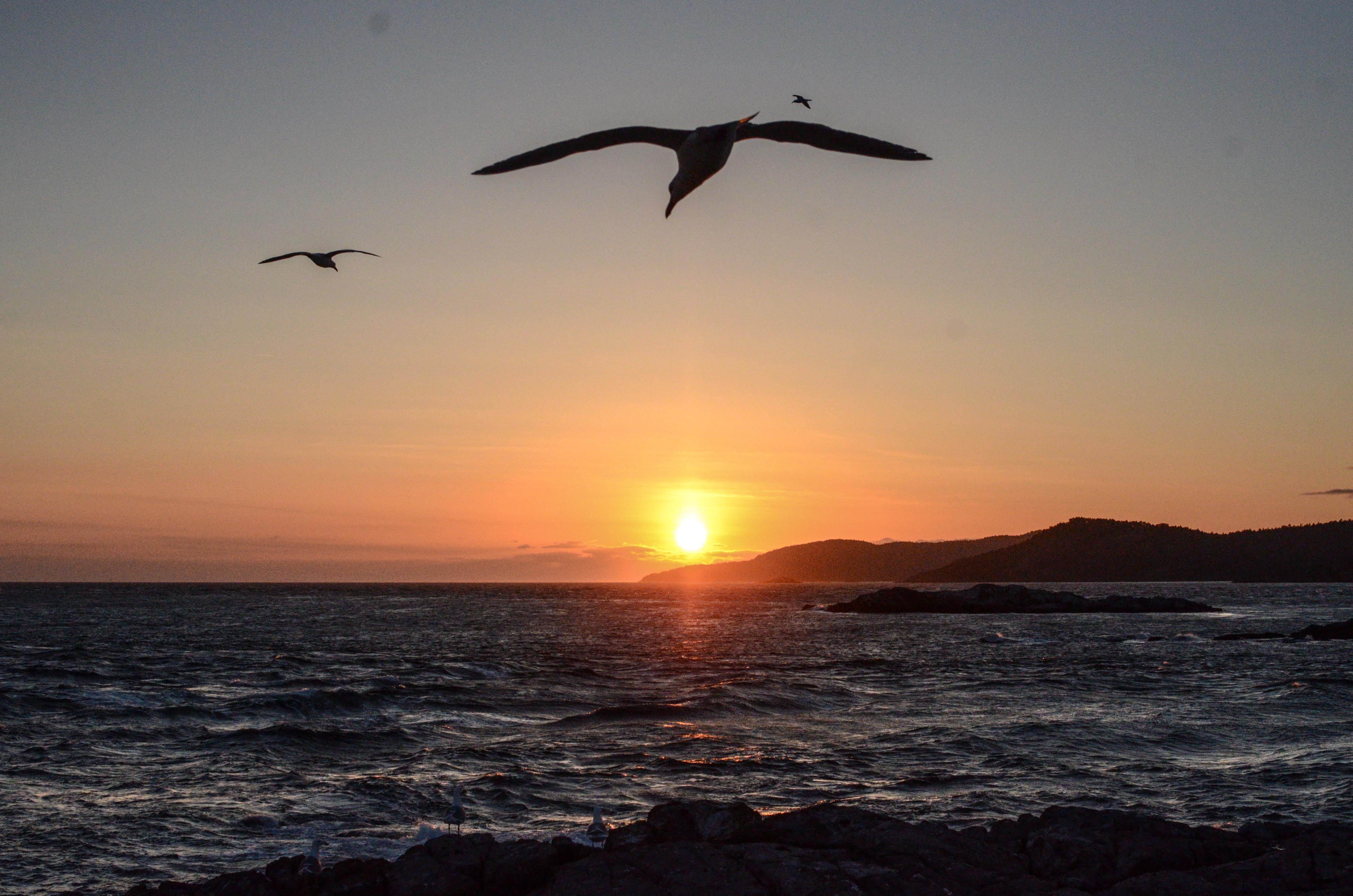
Where do the gulls go at night?

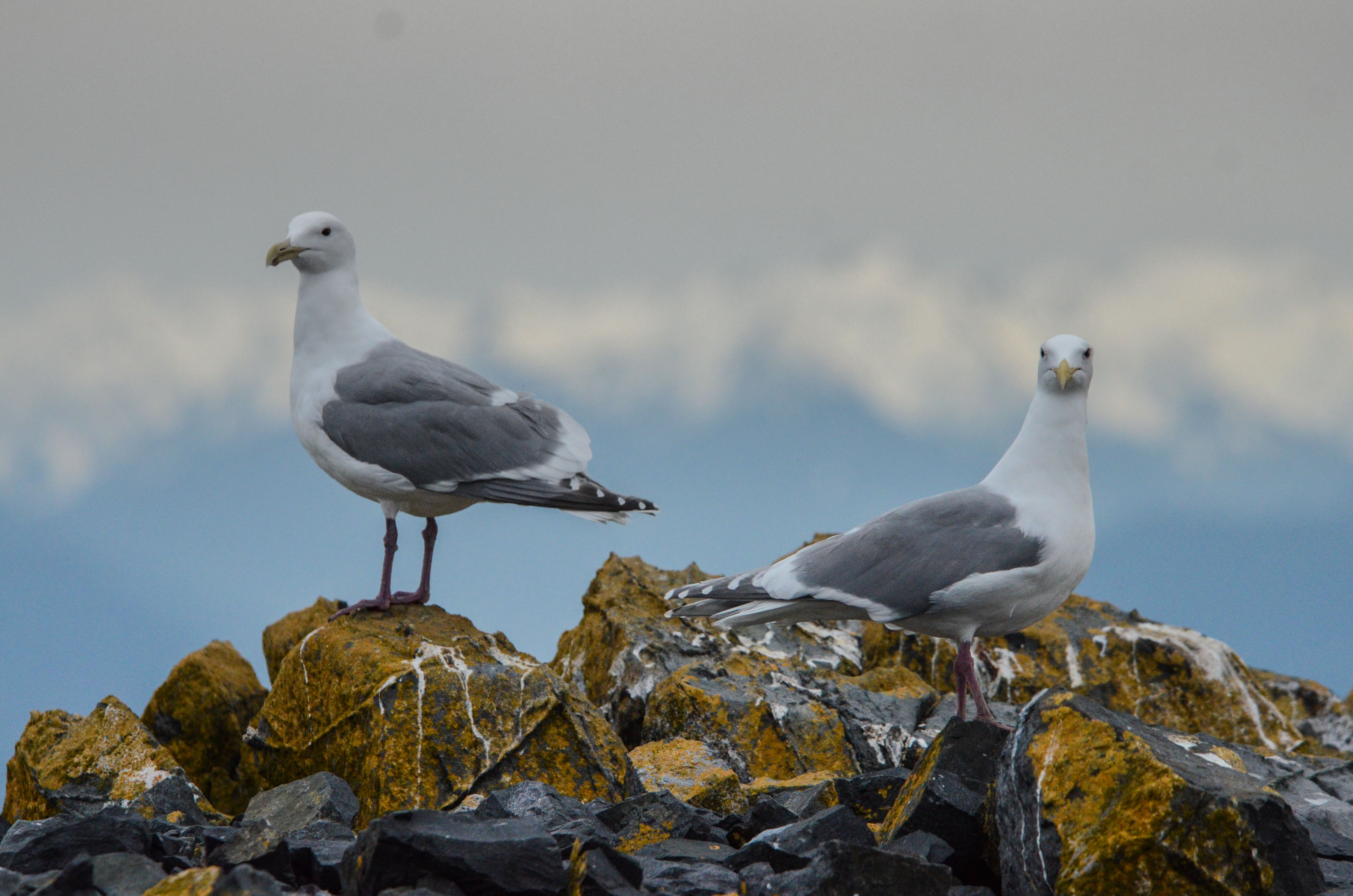
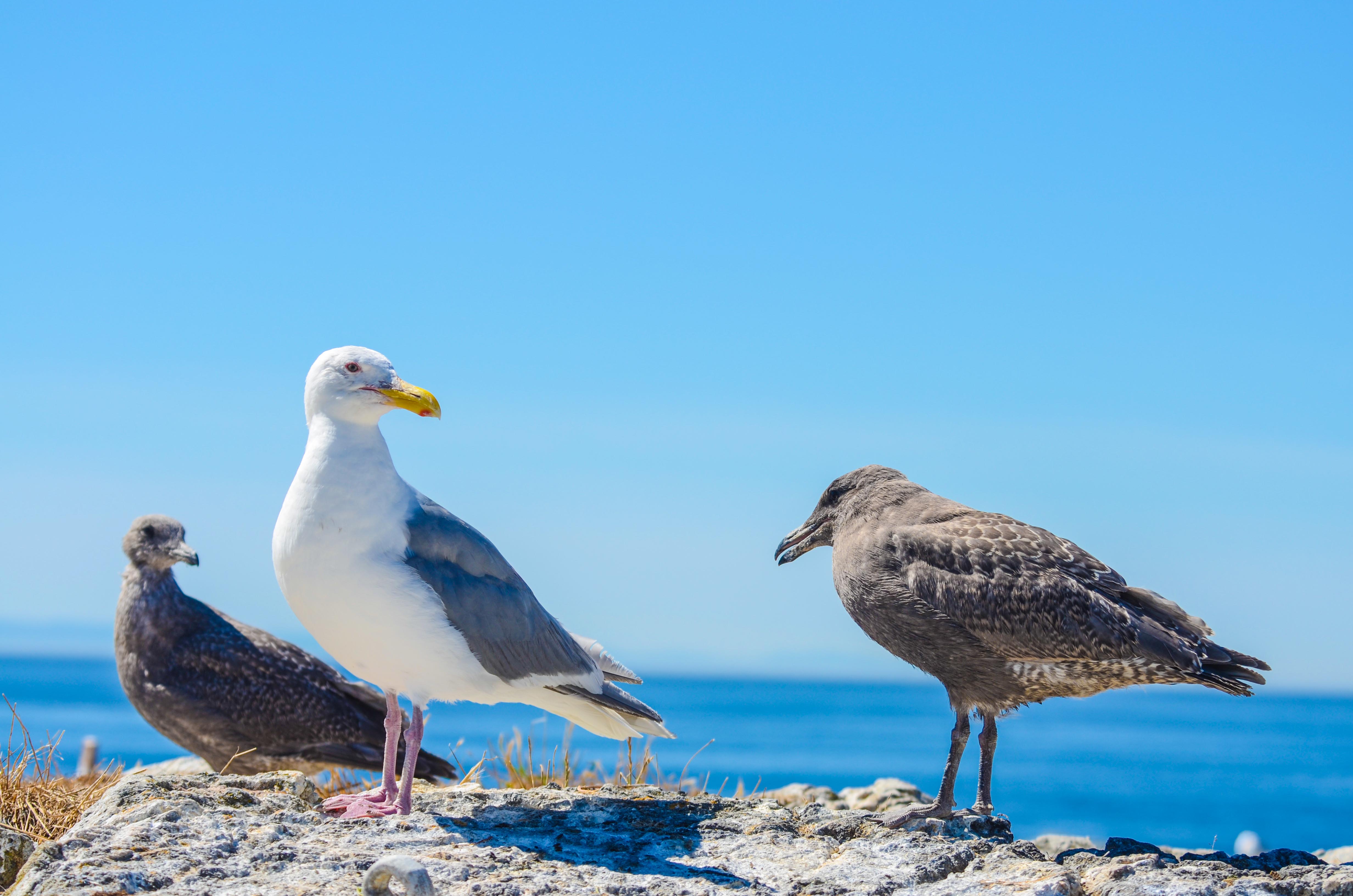
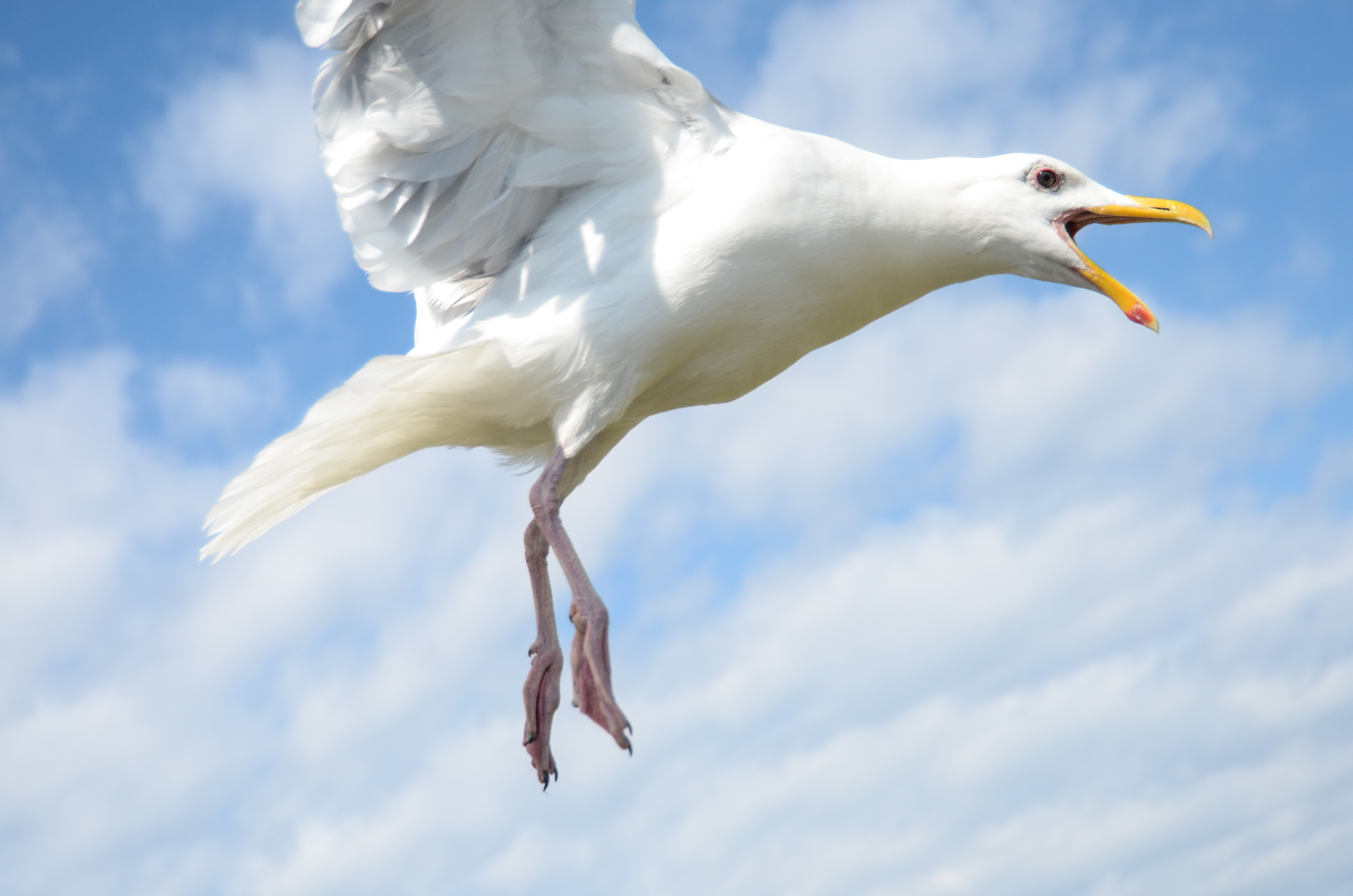
Glaucous-winged Gull

Glaucous-winged Gull

The Glaucous-winged Gulls (Larus Glauscens) is an almost ever-present fixture of Great Race Islet. This time of year from dawn to dark they can be seen occupying their potential nesting locations, building those nests, and settling territorial disputes with their neighbours. But many nights, when I head out to turn the generator off, I discover a silent and empty island; 300 gulls have simply disappeared, gone to some mysterious location I can only guess at. Do they prefer to sleep on the water? Do they feed on certain foods at night? What’s going on out there at night!
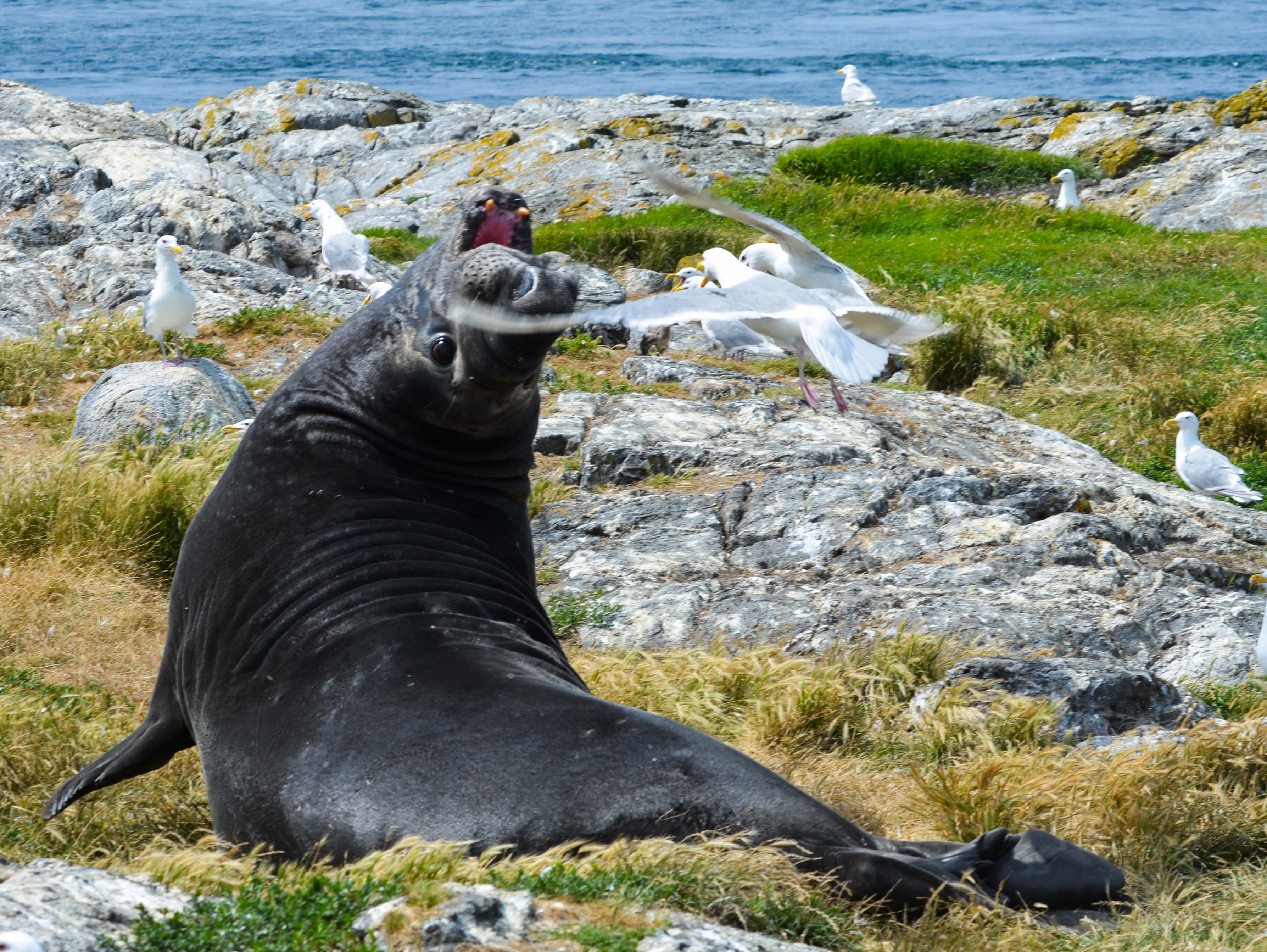
Sunset Soaring

Sunset Soaring

Regardless, I can tell you that Glaucous-winged Gulls are an extraordinary bird, at home on the lightest of breezes or duelling with the 50 knots gusts of an afternoon’s Westerly gale. Only in their ubiquitousness do we loose sight of their beauty and efficiency. They are masters of their realm.
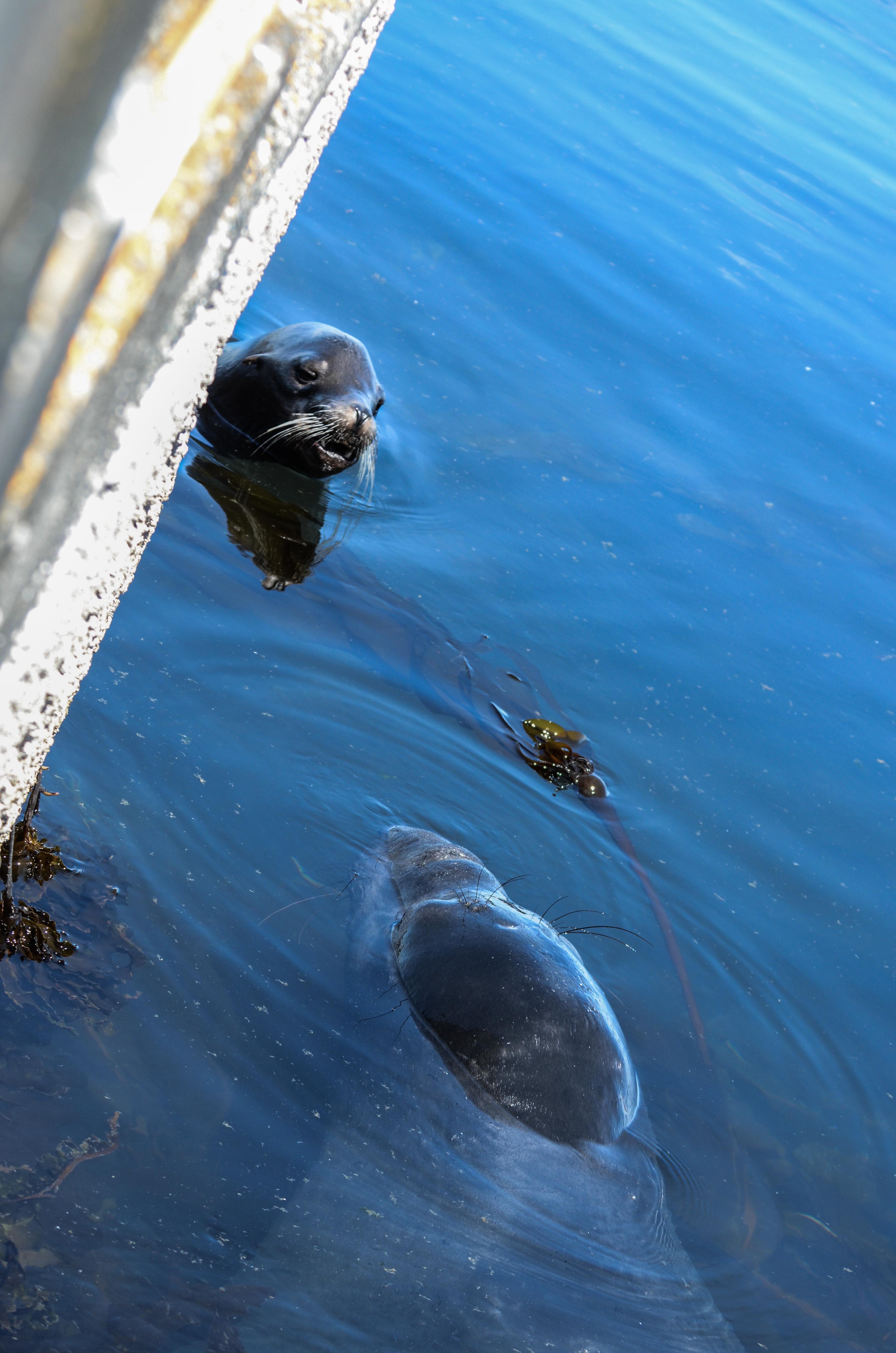


The Hub of Activity

The Hub of Activity

In other news, yesterday there were 10 elephant seals in the yard and on the boatramp! This is a new record for Great Race. There are 4 young males, Bertha the mature female and 5 smaller females. A good-sized male is out on Middle Rock but it doesn’t look big enough to be Misery.


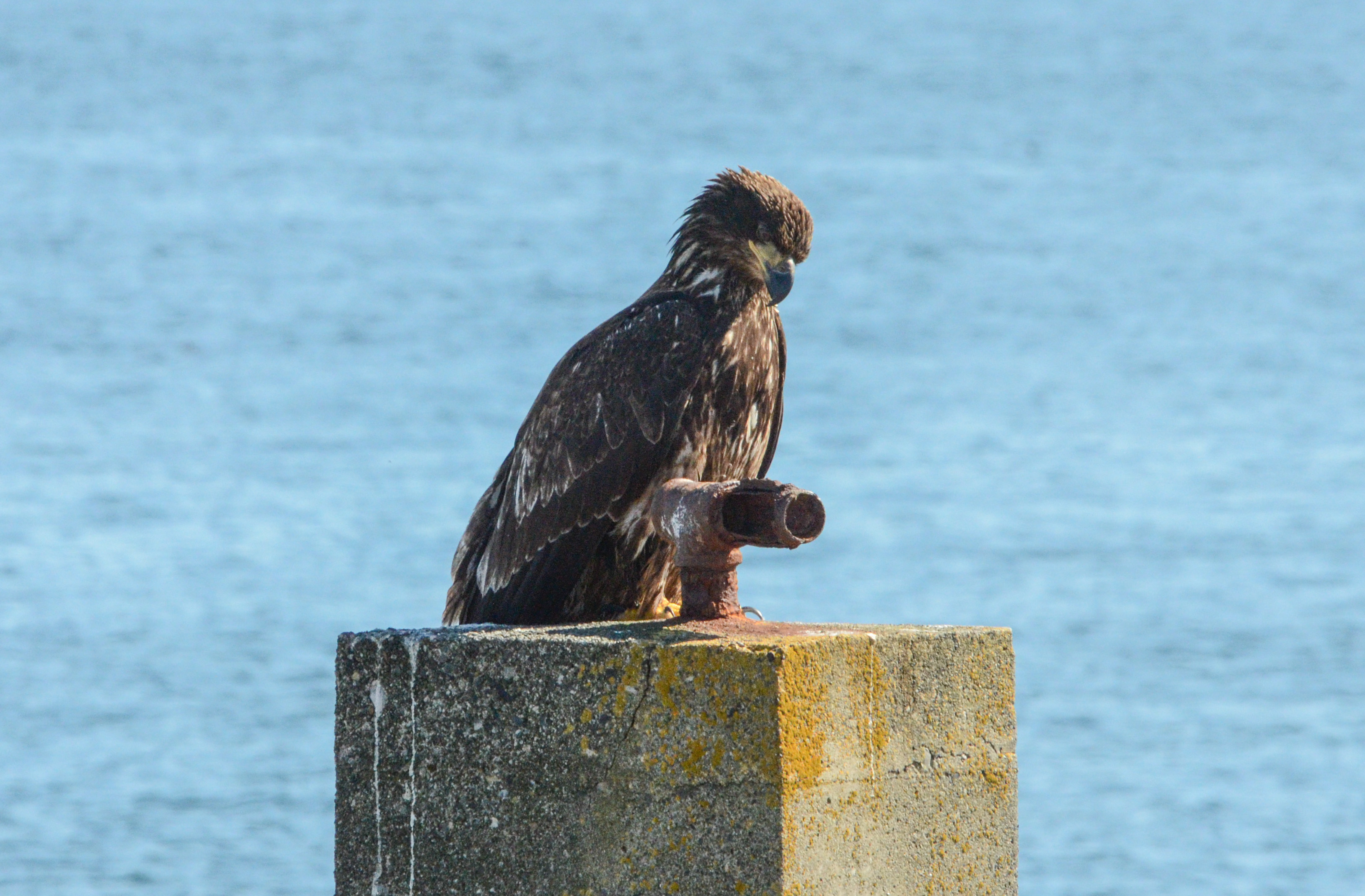
Juvenile Bald Eagle

Juvenile Bald Eagle

Many eagles are in the reserve, most juveniles. I watched one hunt a gull this morning and was surprised how the eagle targeted an individual gull and chased it for over a kilometer out to sea before I lost sight of them both.

Bertha is Back

And more beautiful than ever!

Bertha and gang avoiding the strong Westerlies

Bertha and gang avoiding the strong Westerlies

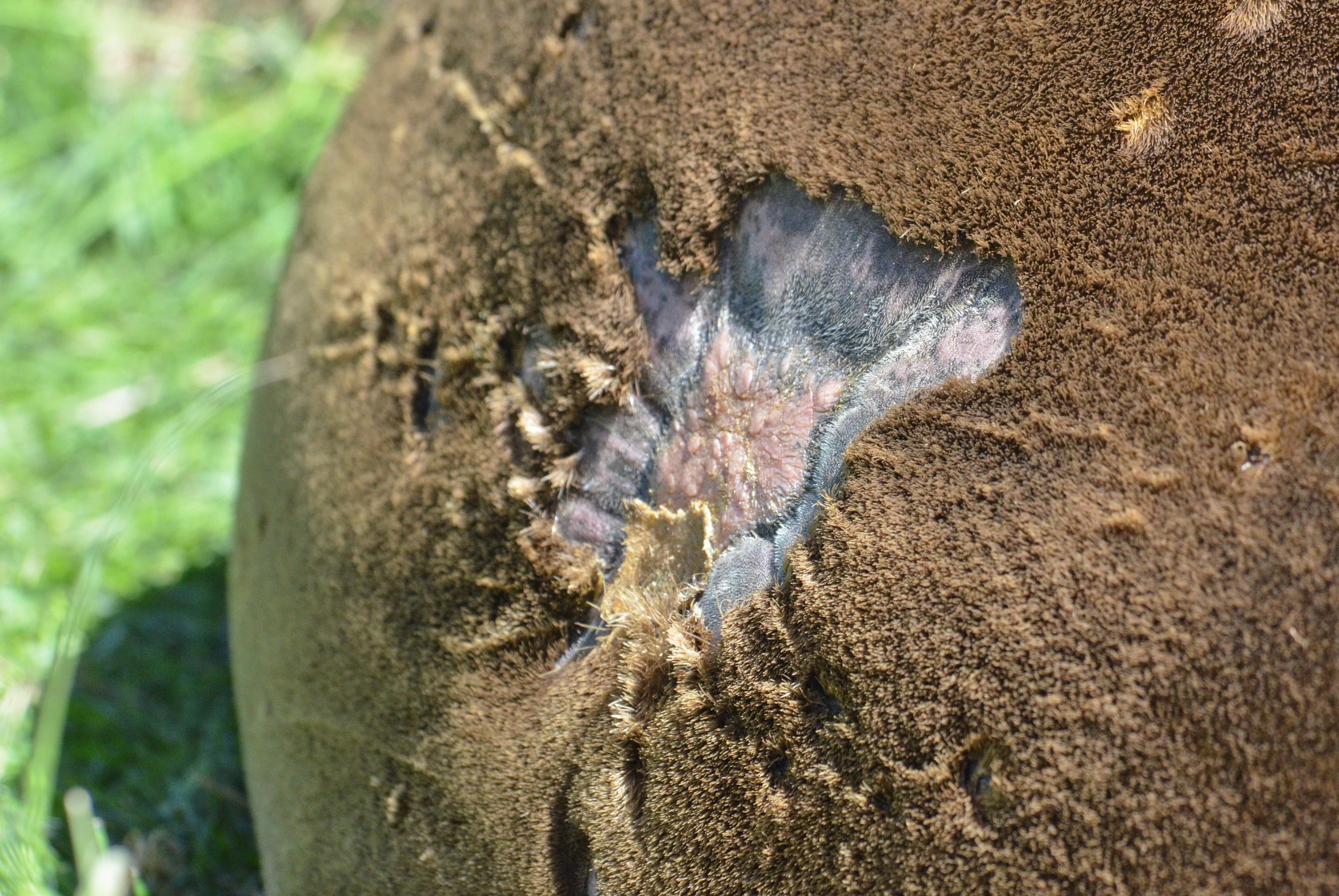
Bertha's Scar

Bertha’s Scar

This morning 5 elephant seals were on the island, probably seeking some degree of shelter from the 35 knot Westerly wind that has been blowing all day. 4 are juveniles, but in the middle of the pile lies Bertha looking sleek and glossy-brown. She is easily identified by the large scar on her chest and her clouded left eye. Last year she arrived on Great Race on April 15th. I think she has been in the reserve for a little while now but I had not been able to identify her while she rested on Middle Rocks.


Biding their time...

Biding their time…


We appear to have about 300 Glaucous-winged Gulls on the island this spring. My estimate is that there are about 25% fewer individuals than last spring, when I counted about 200 breeding pairs. Other animals noted in the past few days have been several Dunlins, a small flock of Barn Swallows, a Whimbrel and what resembled a Solitary Sandpiper. I also saw for the first time a Mink (Mustela Vison) on Great Race; quite a swim for the little athlete!
Erik and I did an oil and filter change on the generator. Hopefully it will be the last one and we will soon be able to afford to install a wind generator to provide the last 20% of energy we require. We run the generator about 2.5 hours a day this time of year.

We had 3 groups of student this month, 2 roofers, 3 techs from Environment Canada, and several college staff. Tour boats and fisherfolk are being seen more regularly in the reserve as the nicer weather begins. We had to ask one group of fishers to pull their lines and leave the Reserve. Infractions are almost always due to ignorance and I am lobbying the government to post a few signs which, unattractive as they may be, could go a long way towards ameliorating those infractions.

Birdyfull Sunset

Birdyfull Sunset

The return of the elephant seals

Elephant seals (on left is 8 foot female)

Over a week ago the last elephant seal had departed so I was surprised to see a new untagged seal arrive August 23. Since then, two have joined it and they all appear to be female. I recognize none of them and the larger one I measured to be nearly 8 feet long. The 3 don’t appear to have been fasting either and the 8-foot female in particular is quite large.

The new Glaucous-winged gulls born in late June are now flying all over the place and their parents are far less protective. The two pictured are the same from my earlier posts.

On a different subject, the island’s bird calls have been almost completely replaced by the sea lions’ barking now.

Glaucous-winged gulls

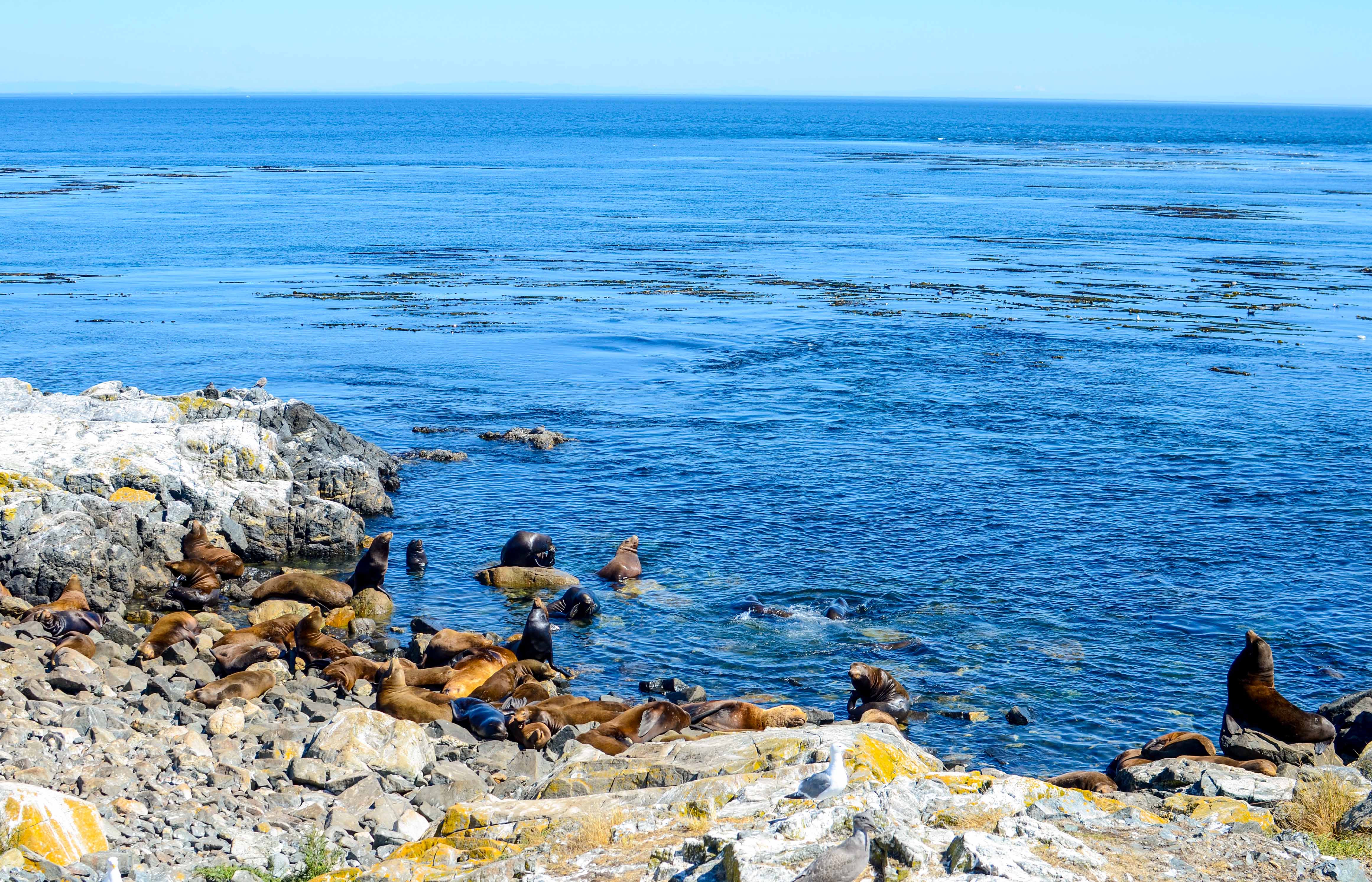
The sea lion numbers have grown and since August 21 have gradually moved from the jetty to the rocky shore on the East side of the island.

Sea lions on rocky East shore


21 July Update


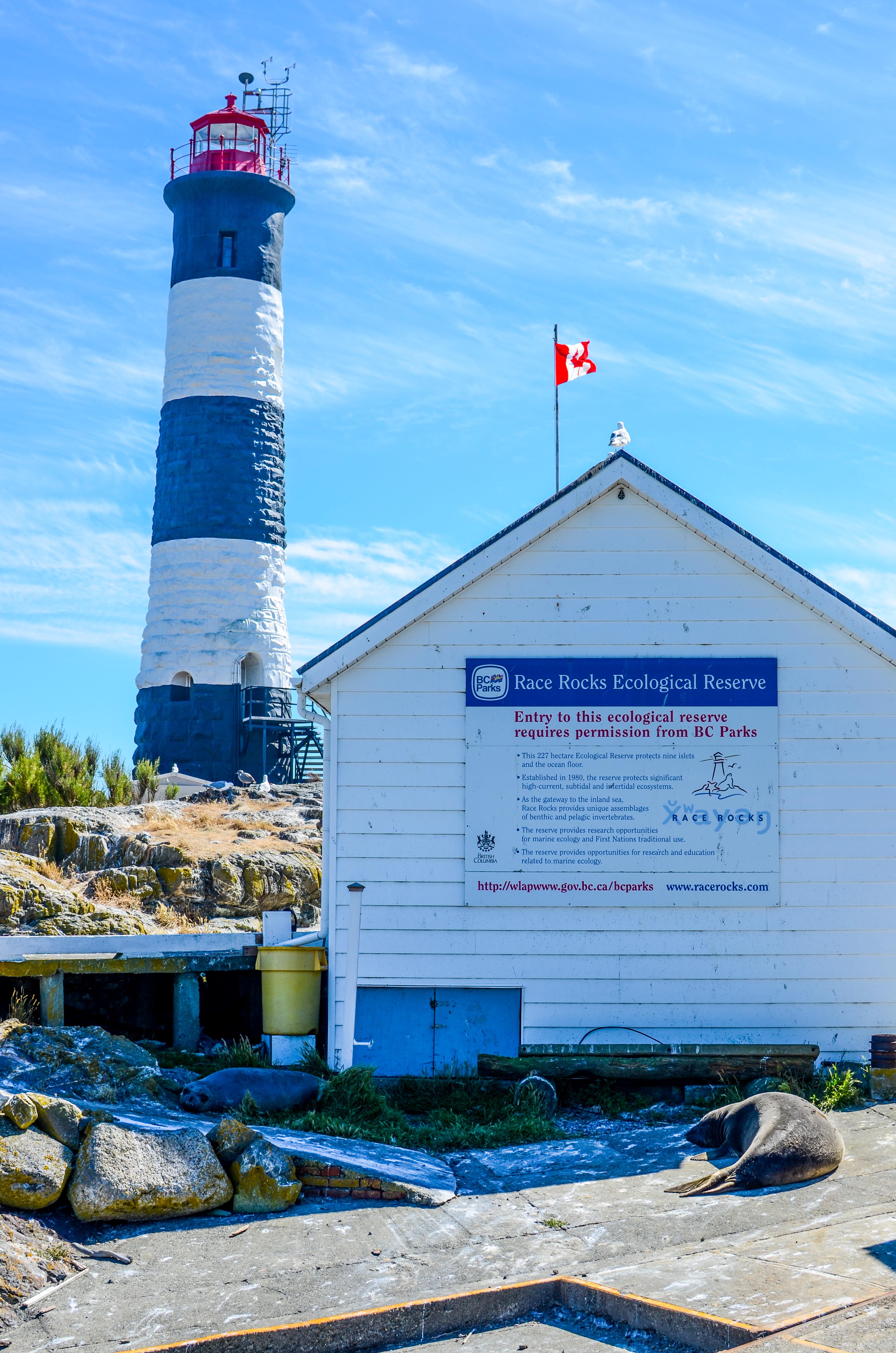
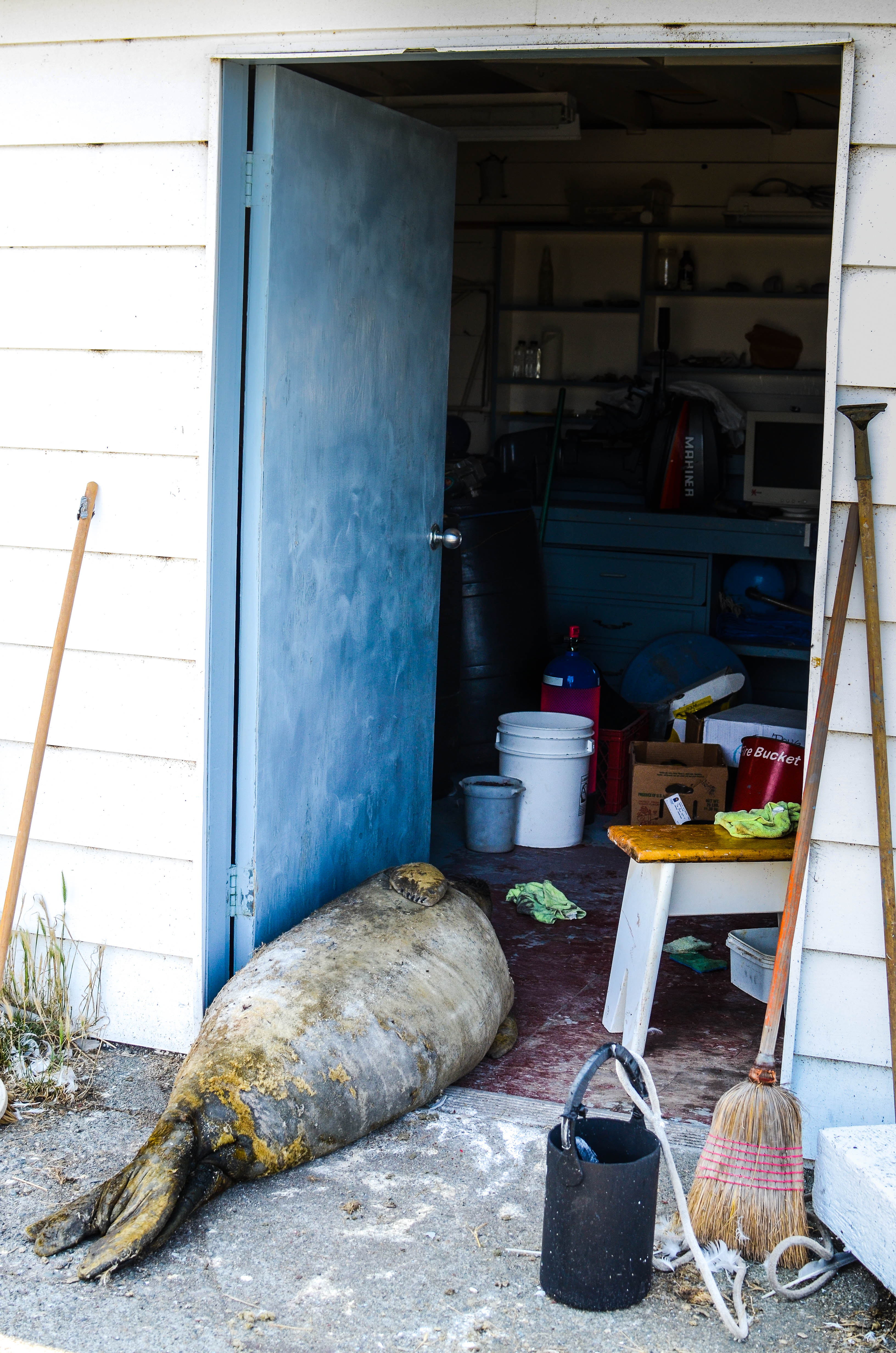
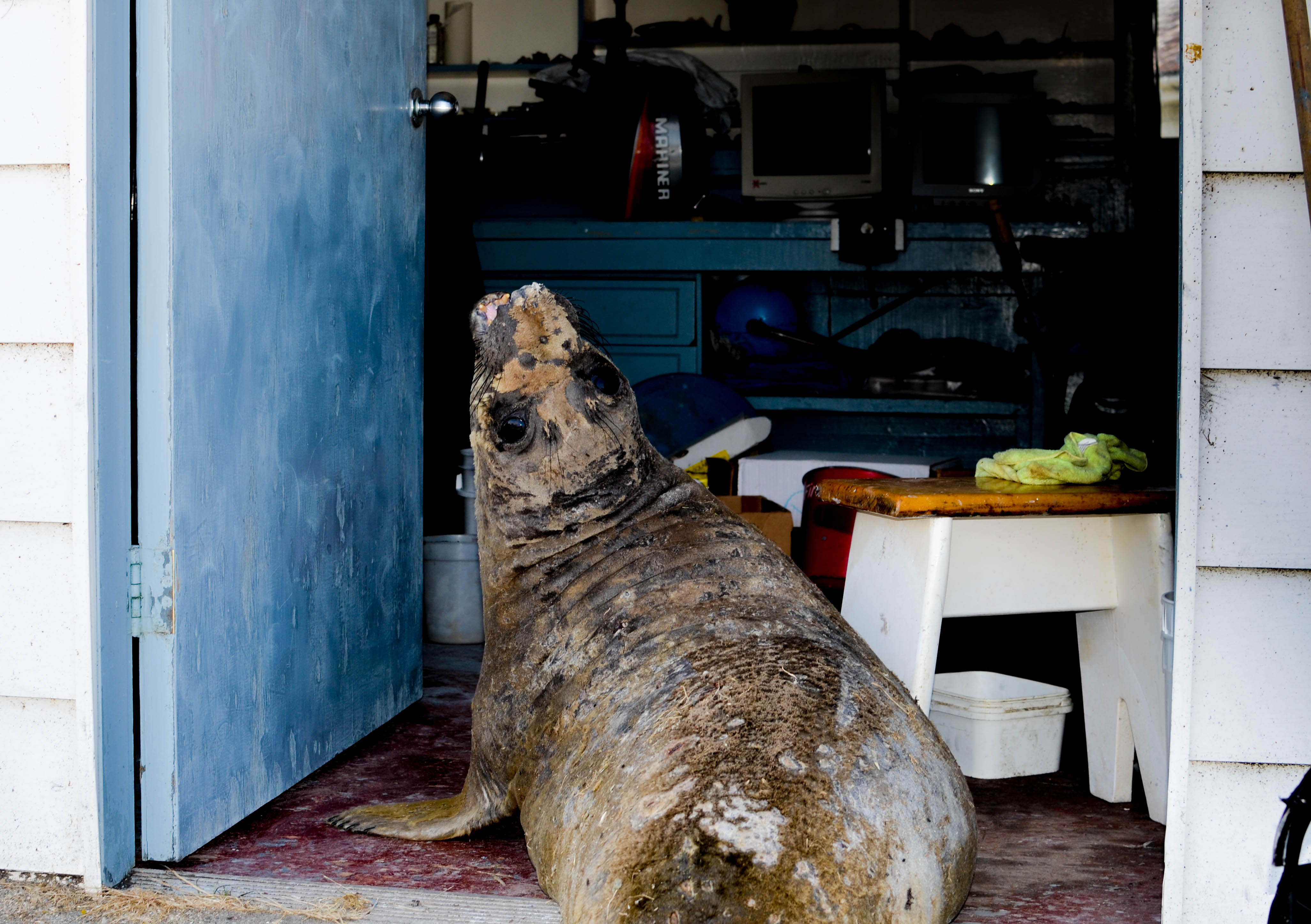
Today I scrubbed the tank room door with TSP (grease cleaner/remover) in order to paint it. Because it needs time to dry I decided to go and sand down the jetty in preparation for its paint job. In the short span it took me to do so our elephant seal friend managed to worm its way halfway into the tank room from ~10 metres away… Again!

After some prodding it finally manoeuvred out of the doorway. Although it seems rather humorous, this incident raises more serious questions about measures we will have to take in the future if the elephant seal population continues to rise.

The jetty, for example, which is the most preferred spot for water entries and exits, is hardly large enough to accommodate the two adult males we have here as it is.


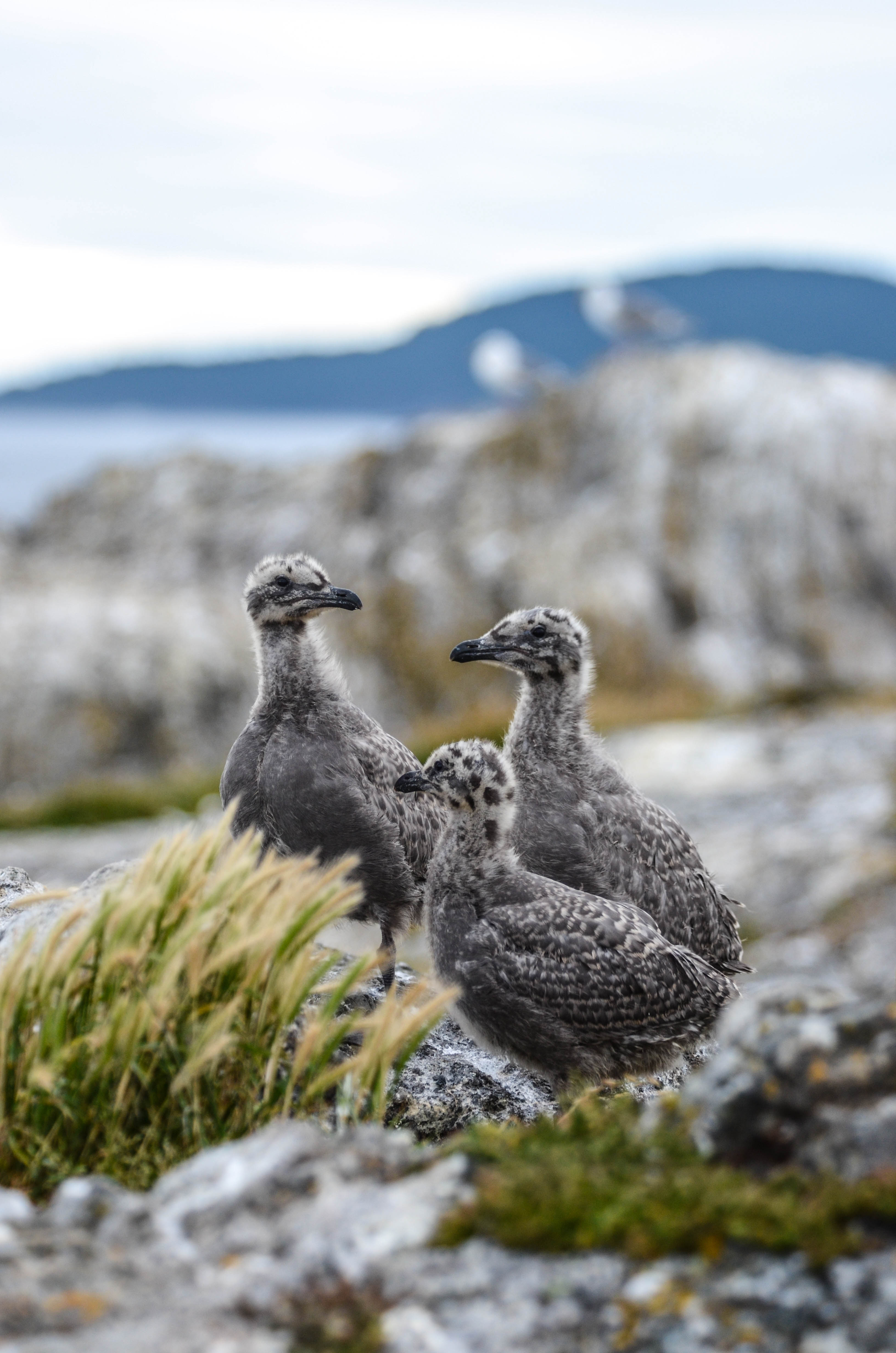
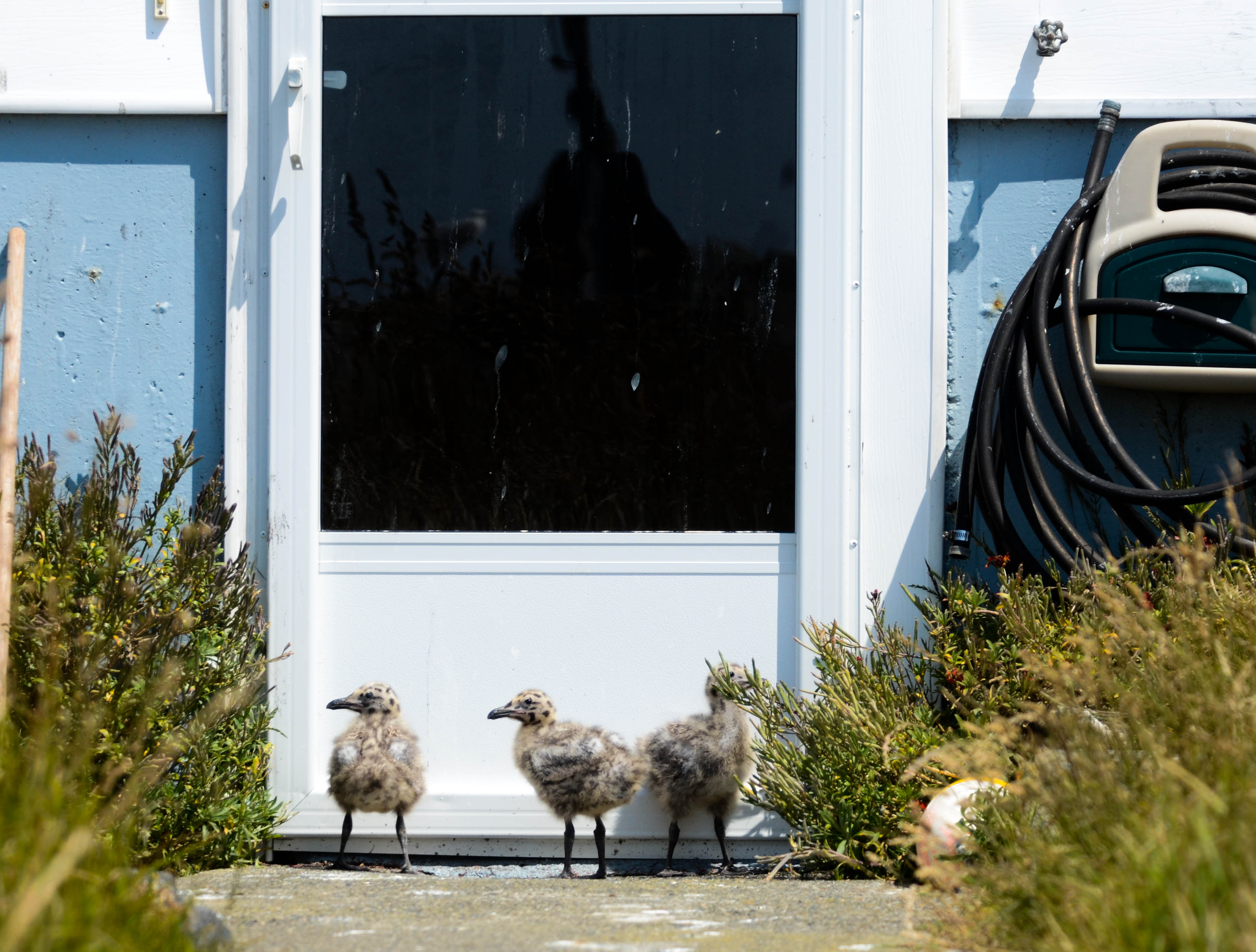
Also, an update on the progress of the 3 chicks shown left. Many chicks on the island are starting to show signs of trying to fly.

A different 3 have decided to block my doorway for the past week or so.

Yesterday Chris Blondeau came to clean camera 2 (the underwater camera) and there were six other visitors who toured the island.


Elephant seal encounters

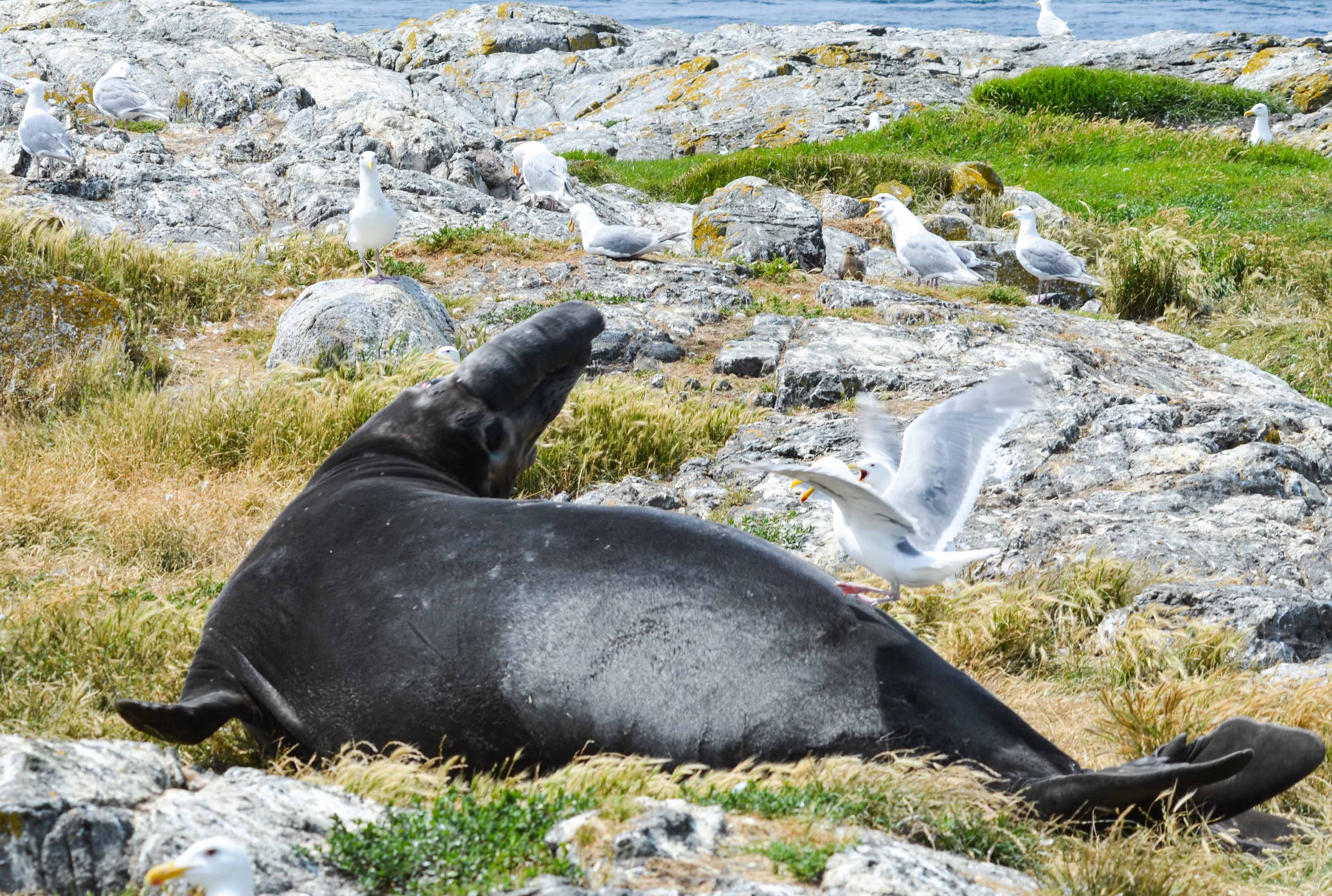
The elephant seals have had some funny encounters with some of the other animals on the island. There have been some close calls between the seals and the gulls, though I’m not sure on whose part.


On their way to and from the water each day, the seals cross over bird nesting areas (which are hard to avoid on the island). Recently they have been visiting the water more often so this is becoming a larger problem for the gulls who frantically call in defence of their young. I must say they put up a good fight. The above shots show two gulls who, while attacking Misery, dare to land on his back to distract him and deter his path. It made for quite the stand off.

Chunk with Sea Lion

The elephant seals have also been interacting with the sea lions more, who have been hanging around the jetty more frequently. Unlike the gulls, the sea lions (both Stellar and California) happily share the space. Yesterday when docking the boat there was a sea lion on the boat ramp amidst 4-5 elephant seals in the water and on the ramp. However, if confronted the sea lion knows who the alpha male is and makes for a quick depart, as this one (pictured right) did just after the photo was taken.


The fog is lifting!


View looking to North Race

Today was my first view of the mainland for the past couple of days excluding a few glimpses here and there.The past week has brought constant fog and winds of 20-40 knots which means boat traffic has been minimal. (At least as far as I can see!)


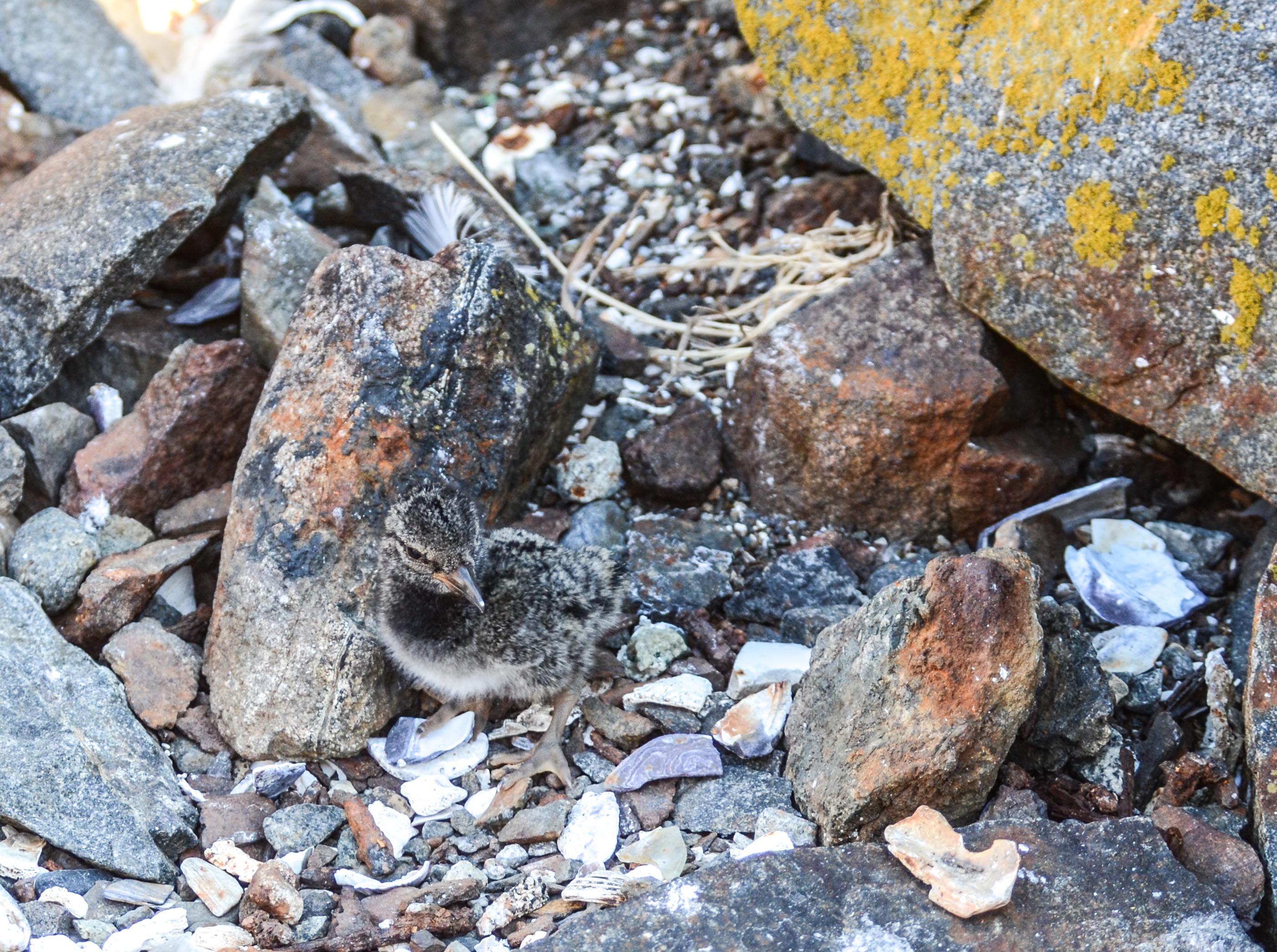
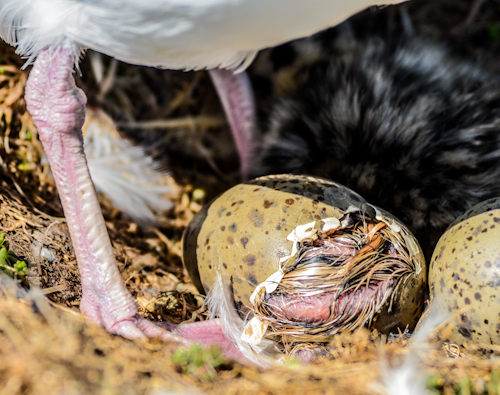
Newborn Black Oystercatcher

Today though, the sun has come out and with that yet another newborn. The Black Oystercatchers  (Haematopus bachmani) are hatching. These birds live mainly in the intertidal zone. Where the chick is shown in the photo below is where it just hatched and effectively camouflages itself. Quite a difference from its nest to that of the gulls’.

On another note, the elephant seals are spending more time wading in the water and are holding their breath for longer periods. I was startled the other day when I looked near the jetty to see one limp underwater only to realize it was snoozing and would come up for air every few minutes.

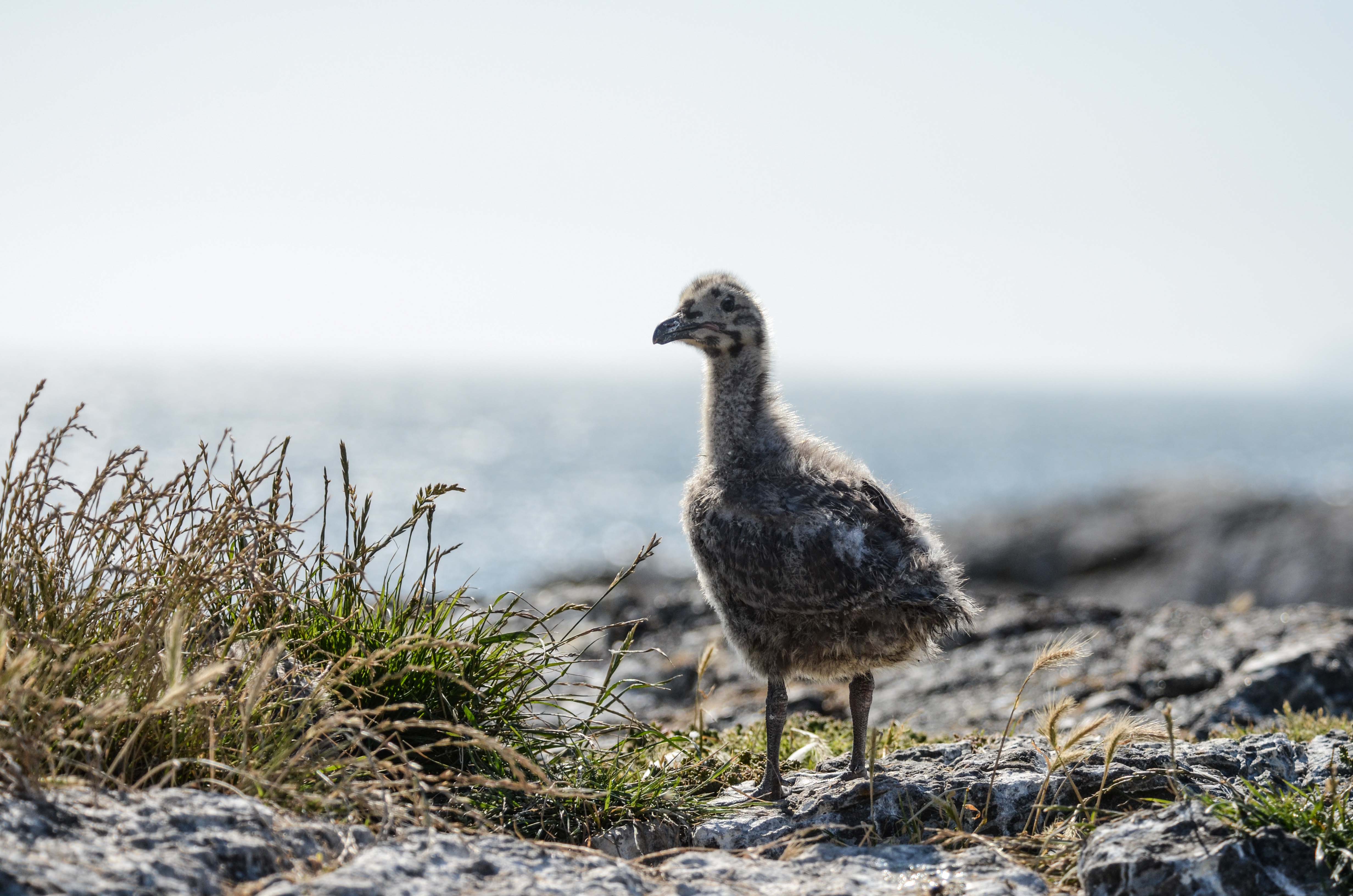
Glaucous-winged gull juvenile


And finally, an updated picture of one of the three infant gulls in past posts. It has become more difficult to get pictures of all three because they are more mobile now.


New and old faces

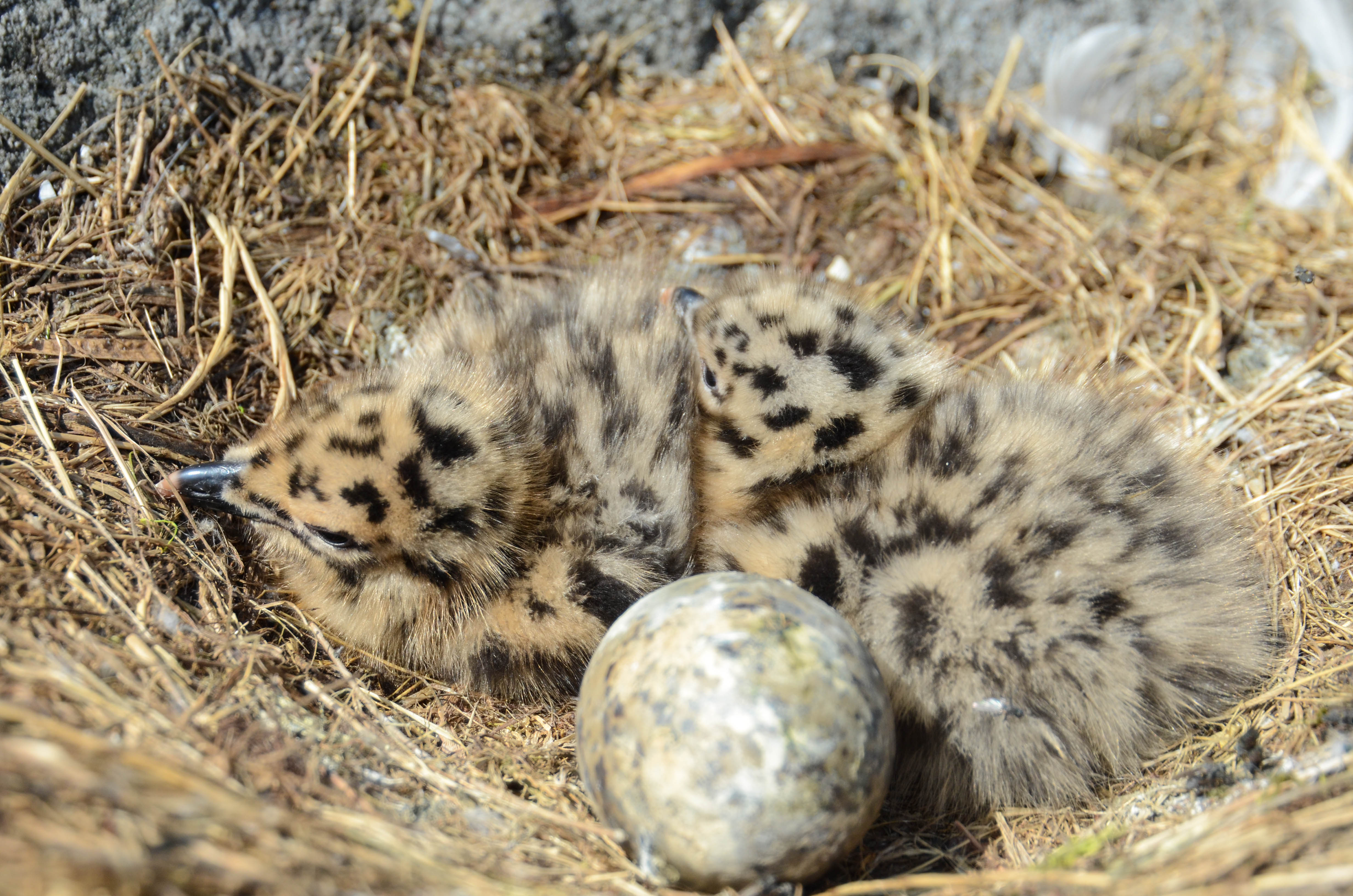
Glaucous-winged Gull with chicks

The past few days have seen a good deal of development with the wildlife on the reserve. Newborn gulls and elephant seals are still competing for the spotlight. The picture below of the gulls are the same three that Mike posted as newborns on his last post (June 29th) and luckily they have indeed been thriving since.


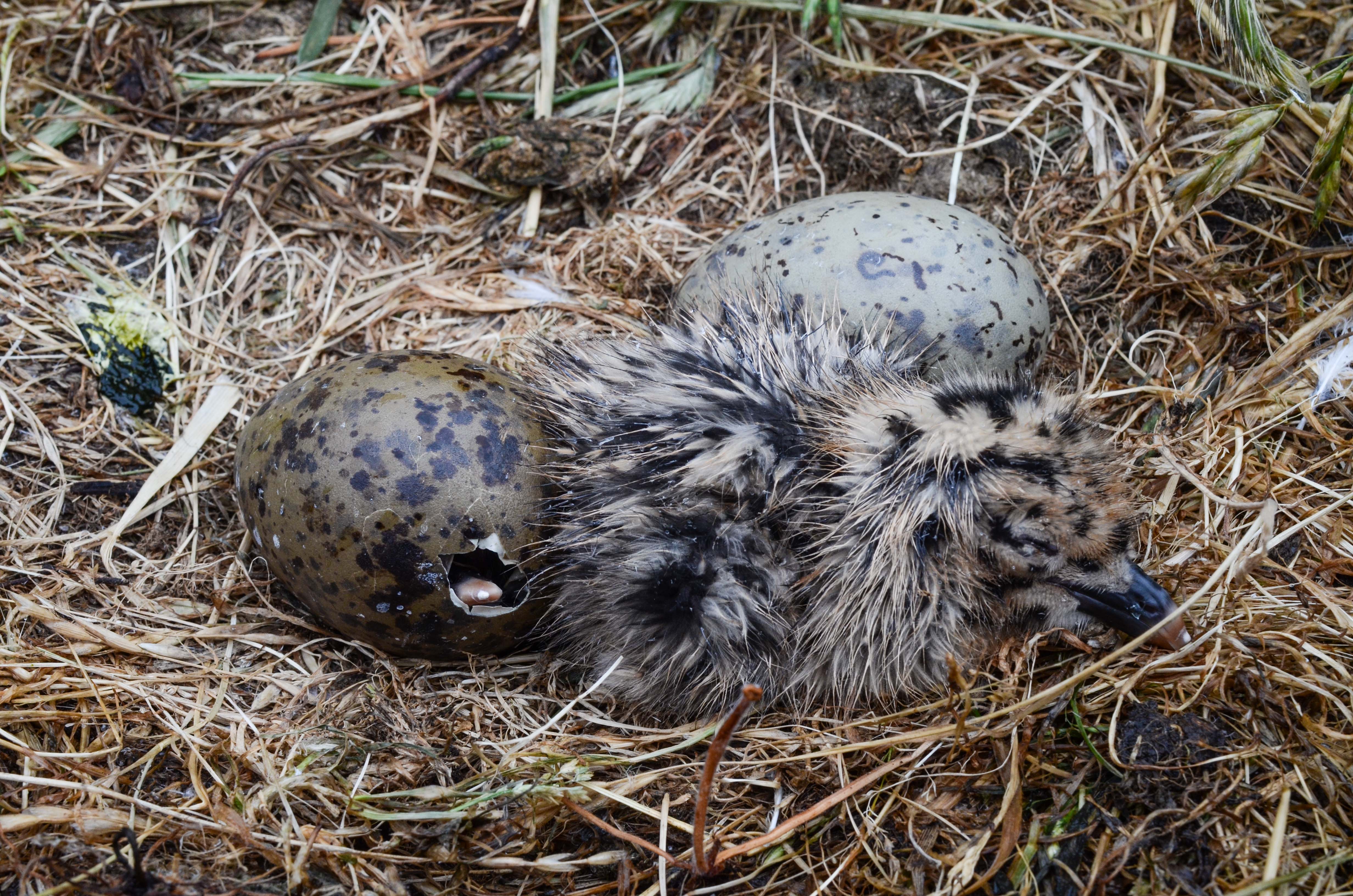
Hatching glaucous -winged gull chick

A few more are born each day and they can take hours to fully hatch.


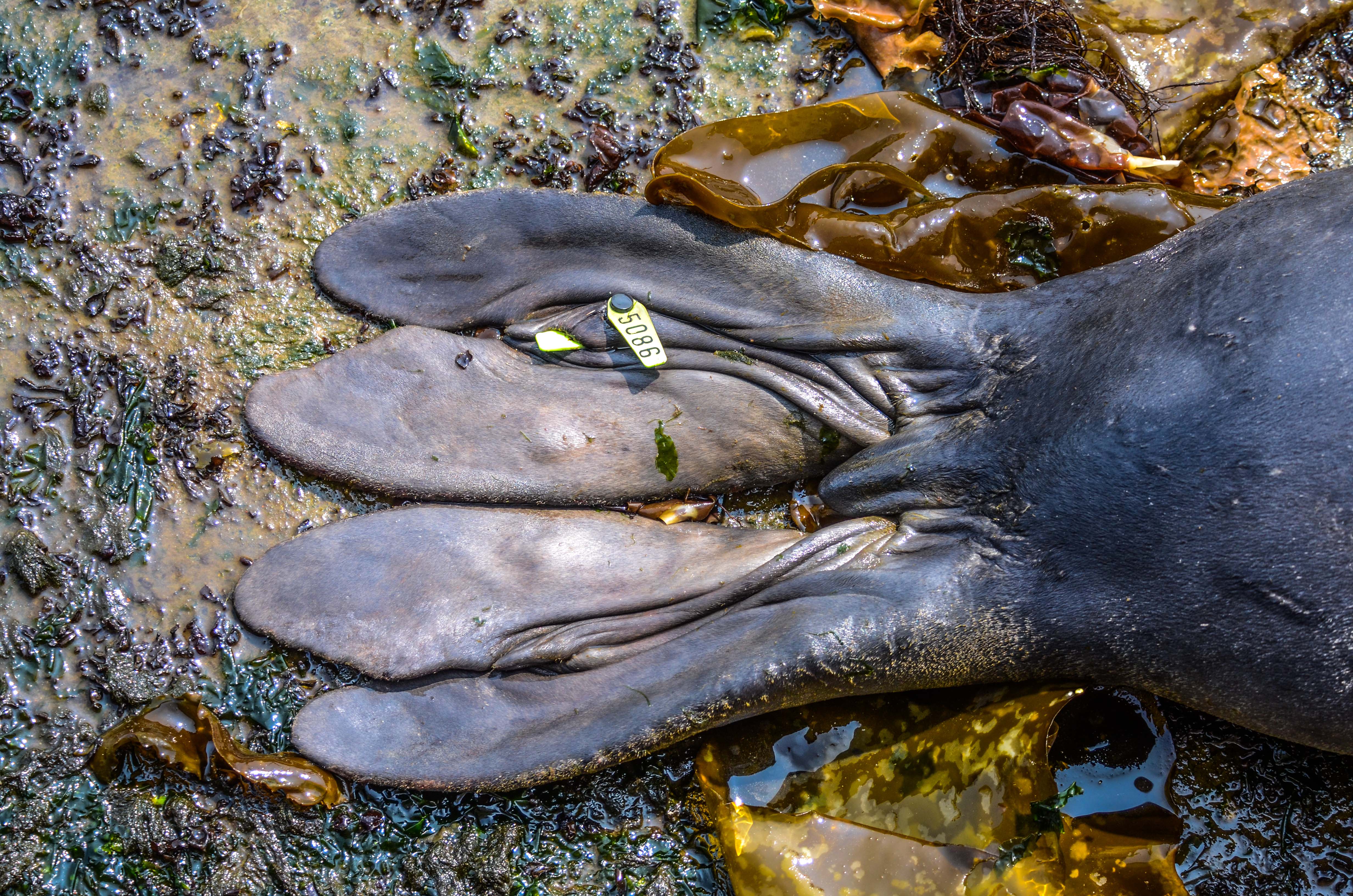
Elephant seal with green tag #5086

Yesterday we had two new visiting elephant seals. One had a green tag which implies that it was tagged by a team in California, on an eco-reserve in Ano Nuevo. March 10th, Alex posted a photo of an elephant seal that had been tagged twice. This appears to be the same one (minus one of its tags). She’s done a beautiful job of moulting.


Mike’s Last Day

I am off for the summer and Julie will be taking over, keeping a watchful eye over the animals and encouraging the public to maintain respect for the their well-being by motoring slowly within the reserve and maintaining a comfortable distance.

Same three gull chicks taken earlier

The big news of the last few days is the birth of numerous Glaucous-winged Gull chicks. They look adorable for the first few weeks with their leopard spots! Let’s keep our fingers crossed that the parent can find enough food for them to thrive.


Newborn Glaucous-winged Gull June 29, 2012

These two pictures of the chicks were taken 24 hours apart. In the first you can see the egg-tooth of the emerging chick.


Mad Momma

The Gull parents are quite protective. I have had my hat knocked off and felt their warm white rain a few times… Last night I got splashed in the eye, much to my discomfort and annoyance. I’m sure there is a poetic justice to the experience though; at least from the Gull’s perspective!

End of May

Hold the presses! I just got back from the top of the tower where I was washing the windows. My eyes were drawn to a huge lump on Middle Rocks. With the binoculars I could see what appears to be 3 bull elephant seals, a few cows and a juvenile. That makes at least 14 elephant seals in the reserve! I wonder if it is Misery?

It is hard to tell that June begins tomorrow, due to the fog and damp. But there are certainly signs of summer beginning to show up in spite of the weather. The first Glaucous-winged Gull eggs are being laid, the Oystercatchers are getting more secretive


But the really BIG news is that a new-to-me bull elephant seals arrived yesterday. He isn’t as big as Misery but he is bigger than Zeke. I would guess he is a few years away from becoming a Beachmaster. He caused quite a commotion rampaging around and roughing up a few females before he found a nice spot to sleep for the next few days. I have named him Chunk, for both his size and the large scars down his back, which appear to be caused by a boat propellor a few years ago. (Ed note: These were actually caused by a fight with Misery last year. ) The scars look fairly well healed but some pretty big chunks were carved out by the prop.