A Changeable Spring Day.

During the early part of the morning, the flag hung vertically, stuck to the flagpole, wetted by fresh rain. Later in the morning, when it occasionally fluttered, it was from almost imperceptible, easterly zephyrs. After lunch it blew north 10-15 knots for a while before switching over to the afternoon westerlies mid afternoon. Although there was significant rain (see figure below) throughout the day, there was also lots of sunlight and we surpassed yesterday’s level by over 30%. The barometer started rising in the early morning and by 17:30 was at 1008 hPa. The forecast for Saturday is for a continuation of the afternoon westerly pattern.
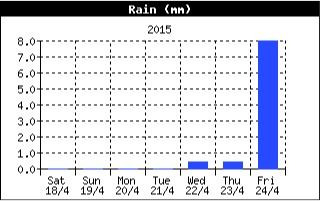
A graph of  the past week's rainfall recorded by a Davis instruments tipping bucket rain gauge.

A graph of the past week’s rainfall recorded by a Davis instruments tipping bucket rain gauge. Check the web-site for lots of cool data.

Only one whale watching boat was observed in the Ecological Reserve, just at dusk, although several headed west and back through Race Channel. One sports fishing boat fished very close to the boundary at Rosedale, but clearly outside. The Life Saving vessel ‘Spirit of Sooke V’ came through middle Channel this afternoon at a very stately pace and then swung around and went in between South and Great Islands and returned to the west.

A pod of at least four Killer Whales passed to the south of Race Rocks, heading west at ~07:00. It was not possible to determine which population and there were probably quite a few more than four. They were quite spread out and moving fairly fast, travelling about half way out to the US/Canada border (yellow can buoy) from Race Rocks. A flock of 23 Black Brandt flew through Middle Channel about the same time, also heading west. The Barn Swallows appear to be staying on the island somewhere; at least they were here bright and early. This place is certainly a haven for an insectivore. I hope they stay.
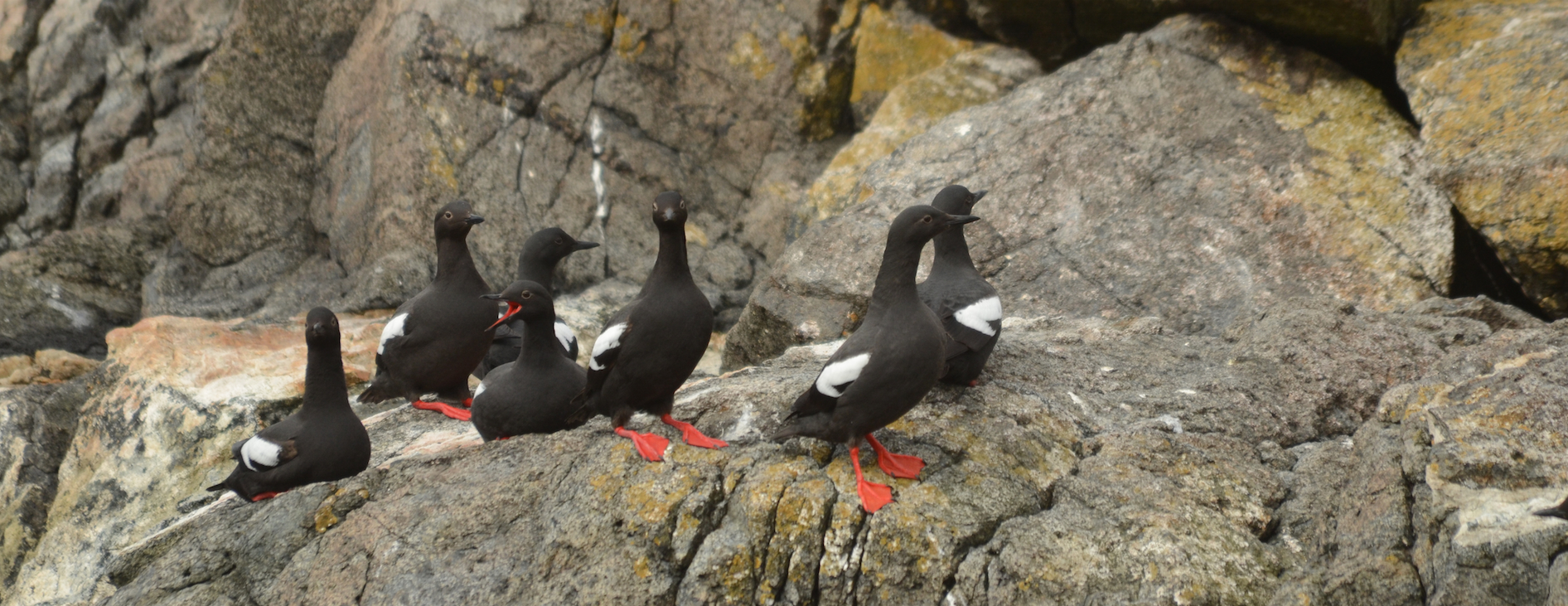
Pigeon Guillemots are members of the auk family, related to murres. They swim underwater using their wings and steer with their feet.
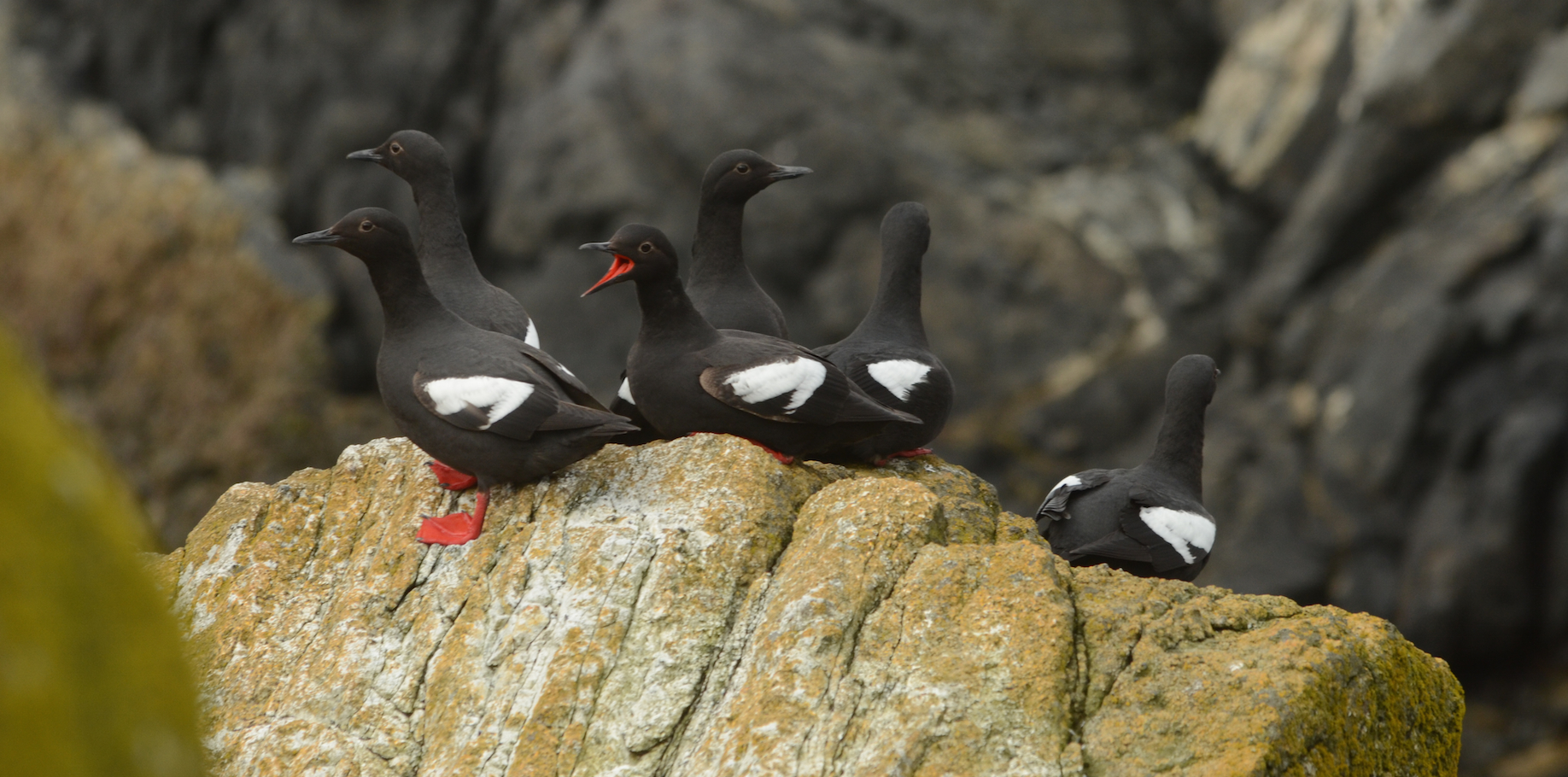
Pigeon Guillemots are members of the auk family, related to murres. They swim underwater using their wings and steer with their feet.


Right now they are in their alternate, or breeding plumage, otherwise in the winter their colouring is more like a winter murre or murrelet with lots of white, gray and dark gray.

Right now they are in their alternate, or breeding plumage, otherwise in the winter their colouring is more like a winter murre or murrelet with lots of white, gray and dark gray.

The Pigeon Guillemots are spending more time on land as spring progreses. These true seabirds are ill equipped for walking with their feet used as rudders for underwater flight, and set far back on their muscular little bodies. I don’t think they are actually nesting yet but certainly getting use to land. Their favorite roosting spots are in the surge channel between the energy building and the science house, on the jetty and its’ upland scree and cliff area and on the little cliffs just southeast of the light-tower.

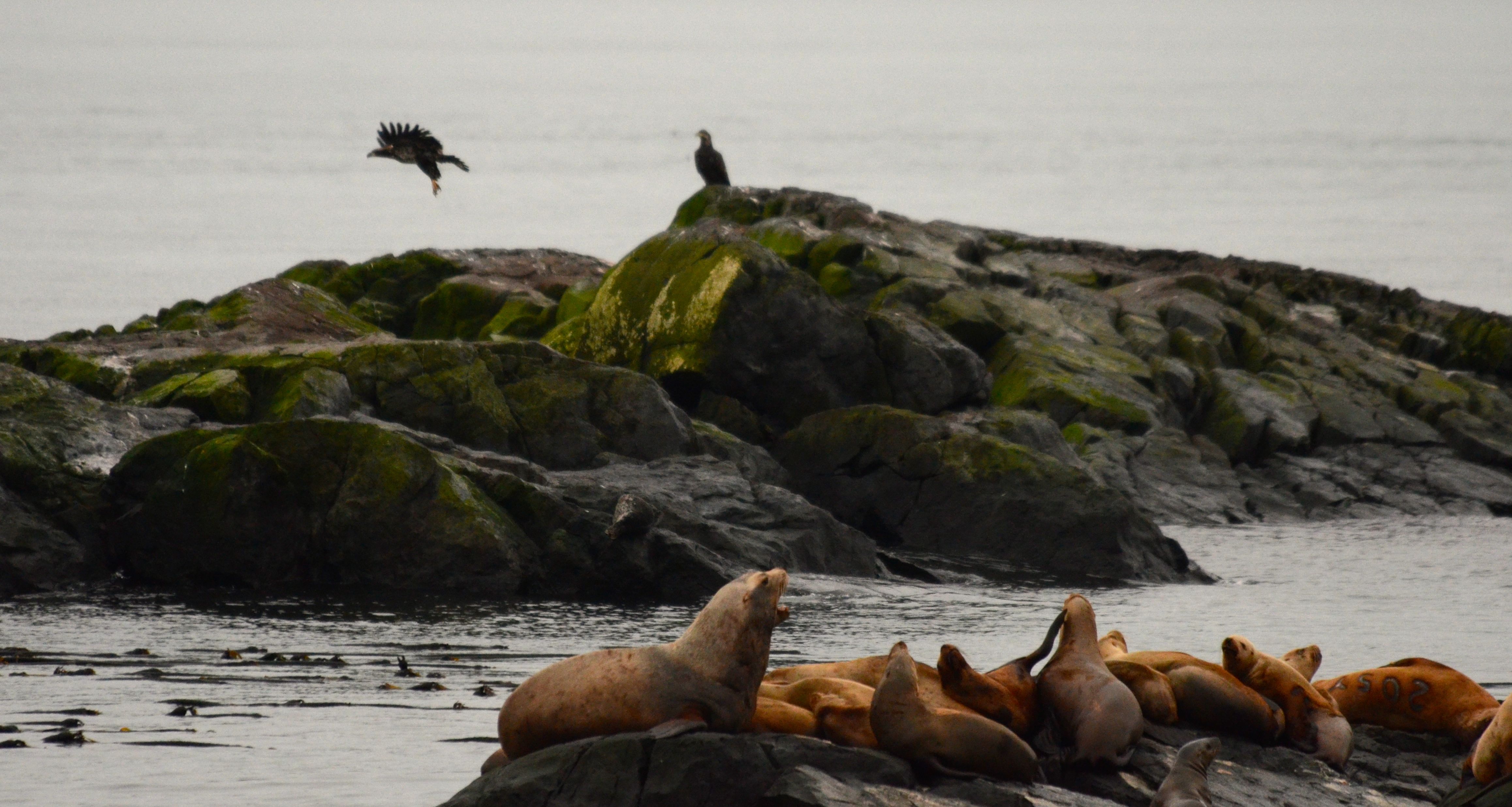
Now that the winds have settled down, the eagles are back and making determined attempts on the Canada geese. They also spend a considerable time on the pinniped haul-out rocks.

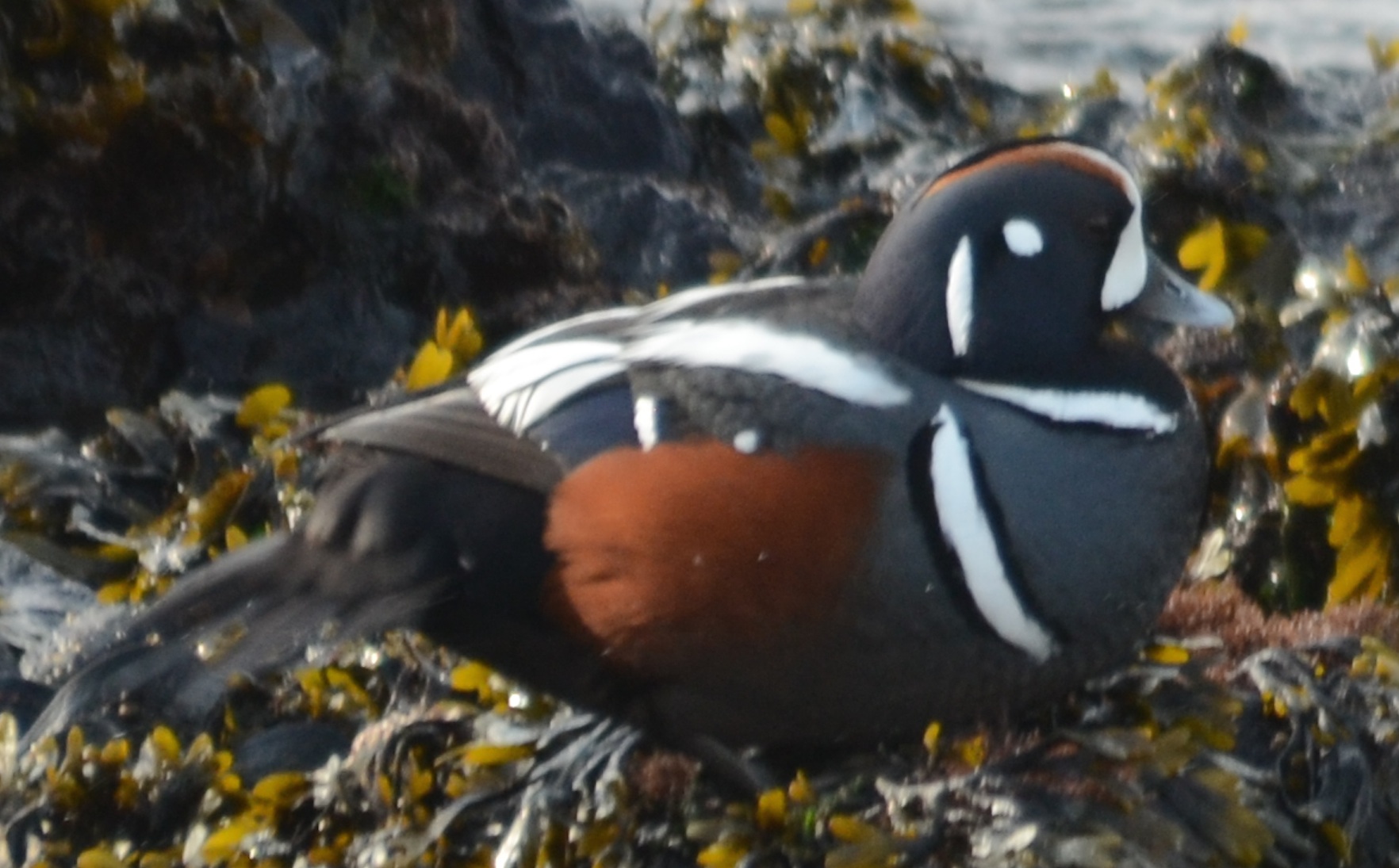
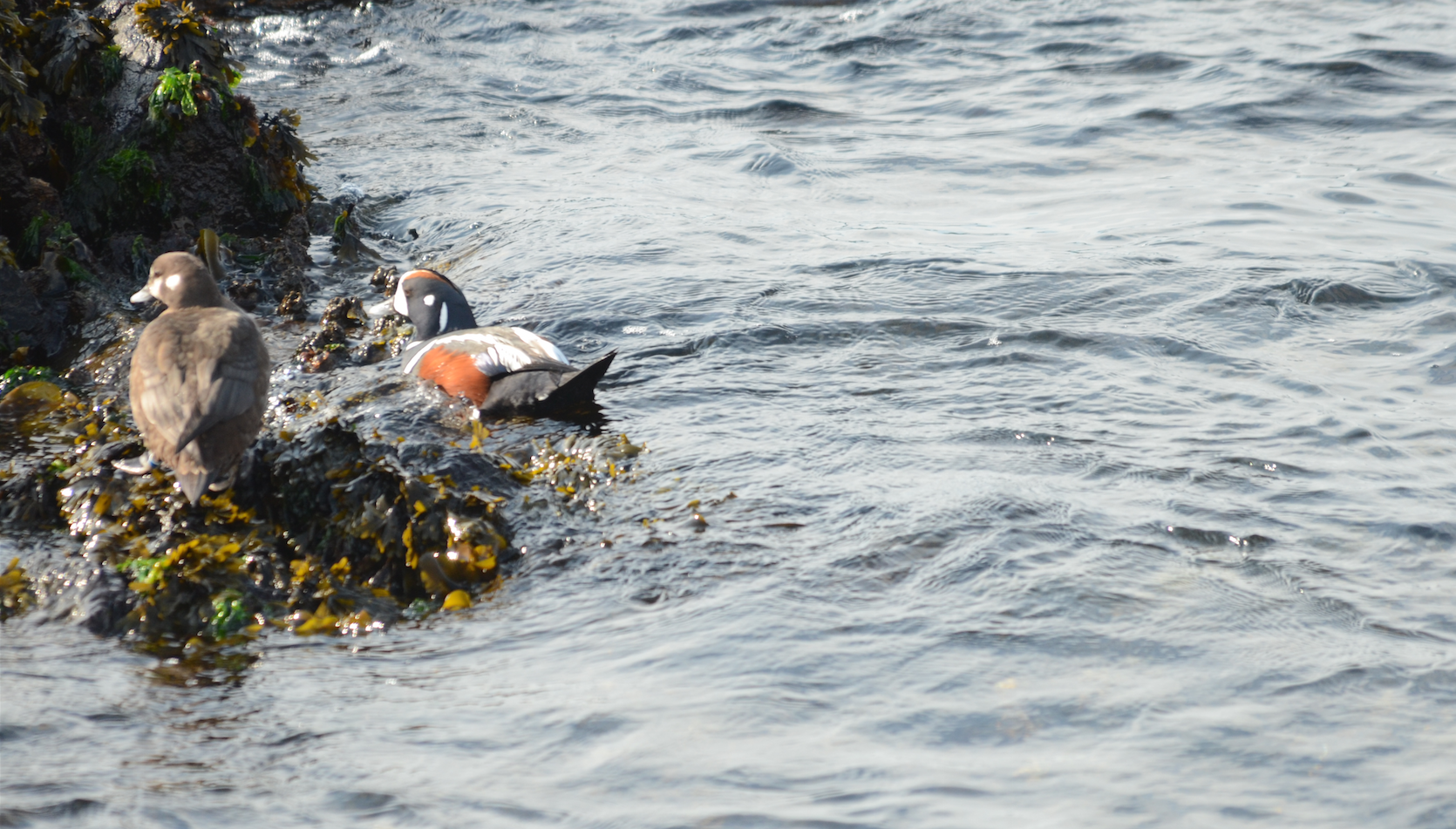
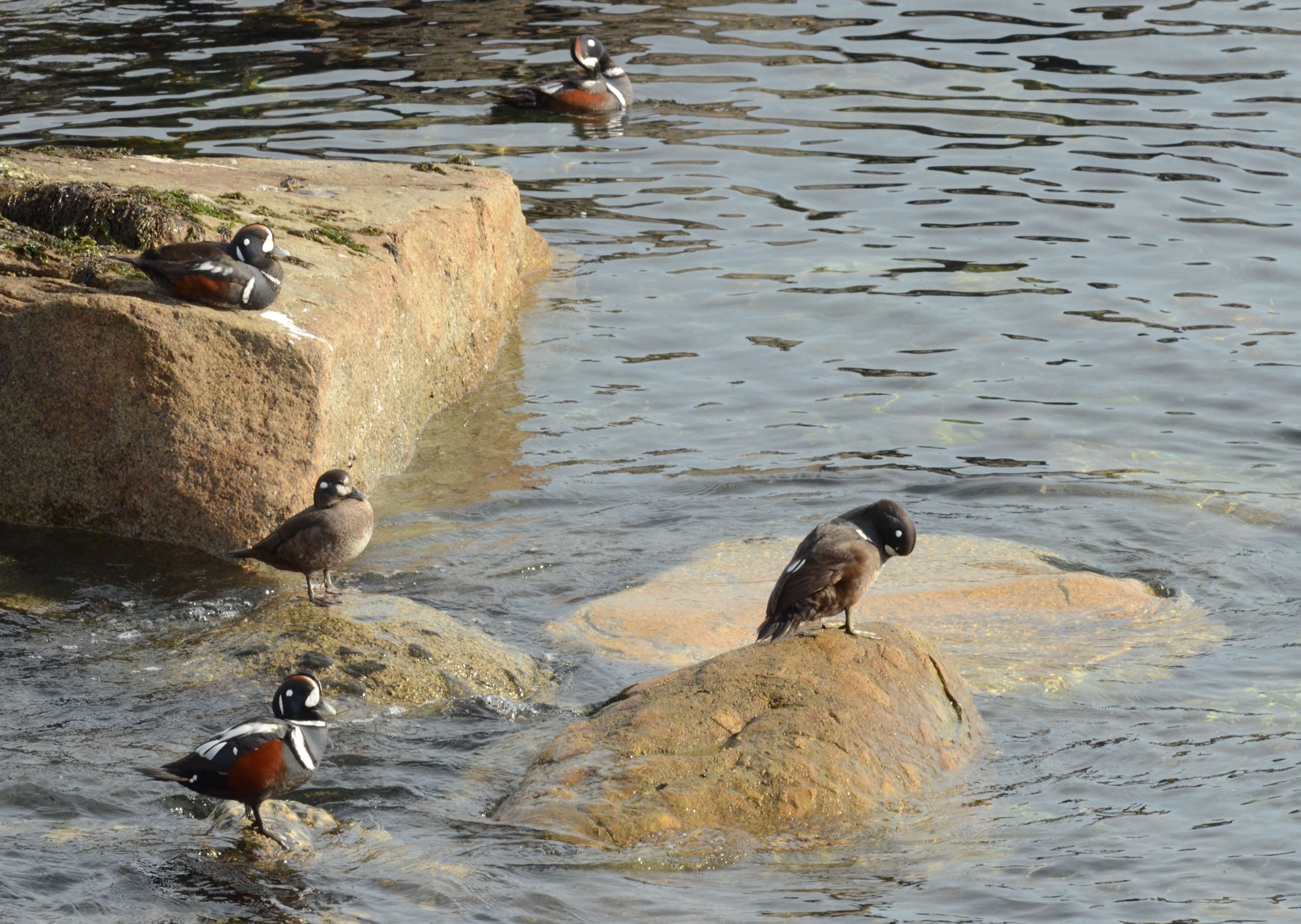
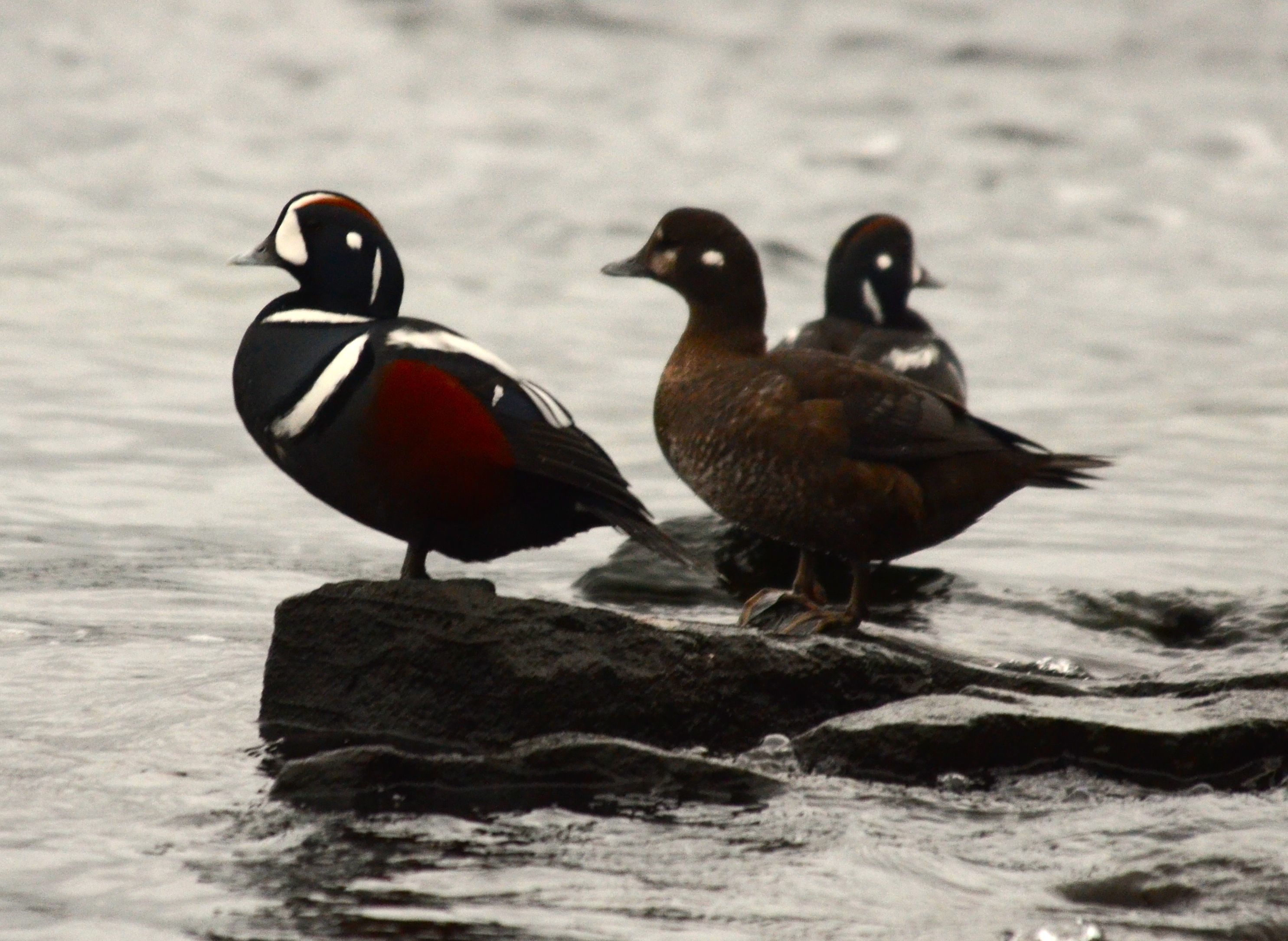
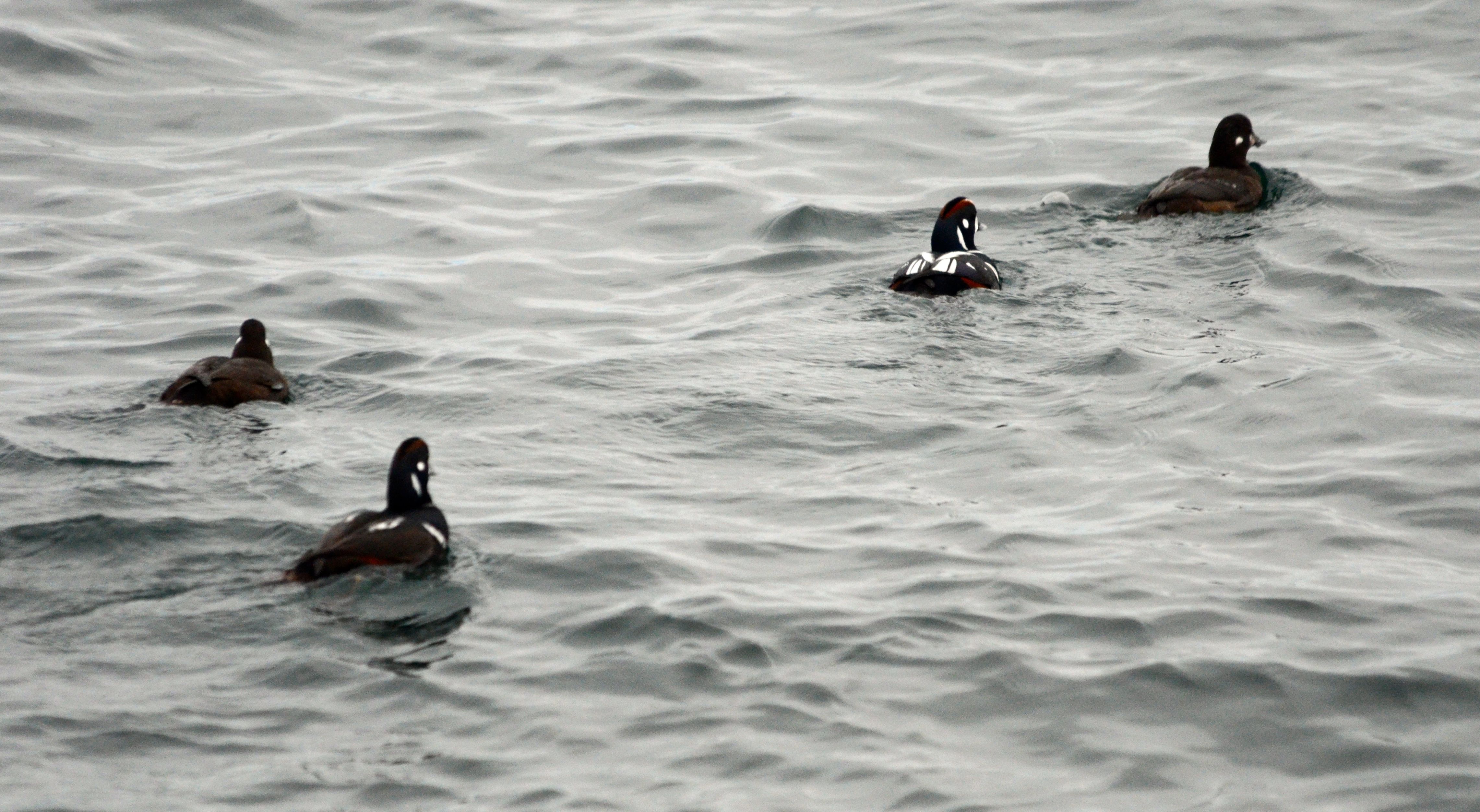
I keep expecting the Harlequin Ducks to leave and head for the mountains, where they nest and lead their summer  lives. There are at least four here still and probably more.
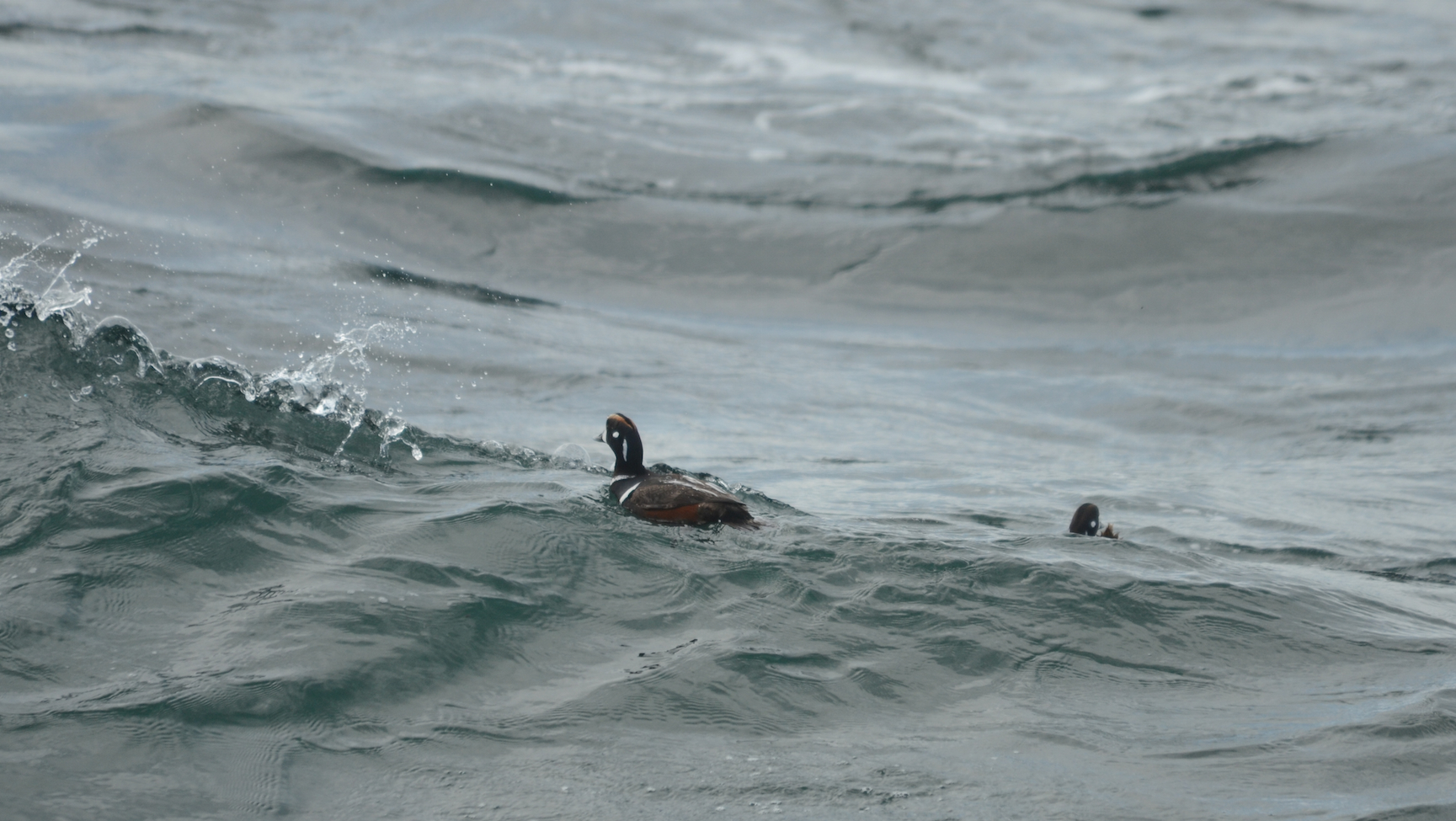
Harlequin Ducks are also supreme under-water swimmers and specialize in white water: in rushing  mountain rivers and streams in breeding season and in the sea the rest of the time.

Harlequin Ducks are also supreme under-water swimmers and specialize in white water: in rushing mountain rivers and streams in breeding season and in the sea the rest of the time.

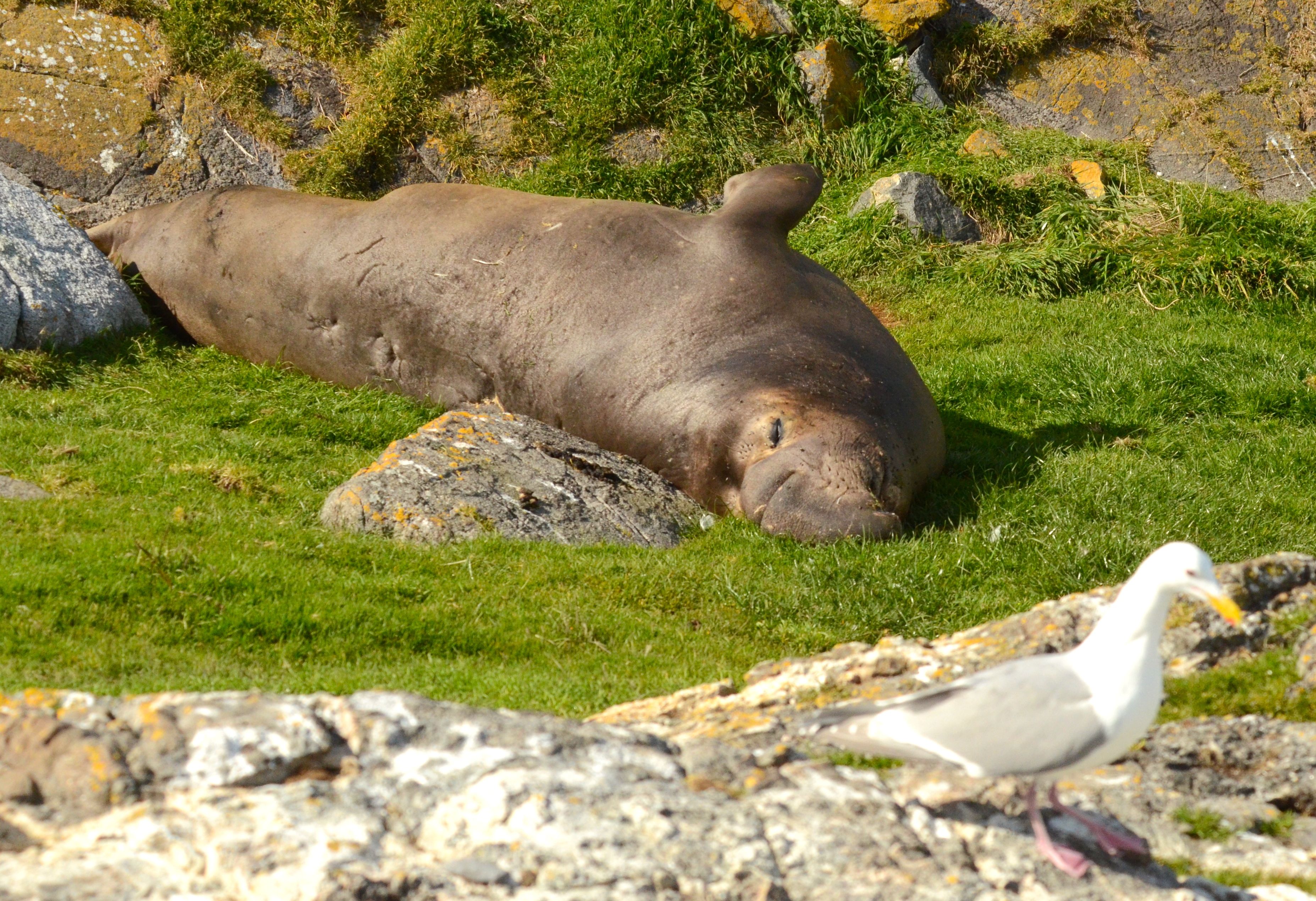
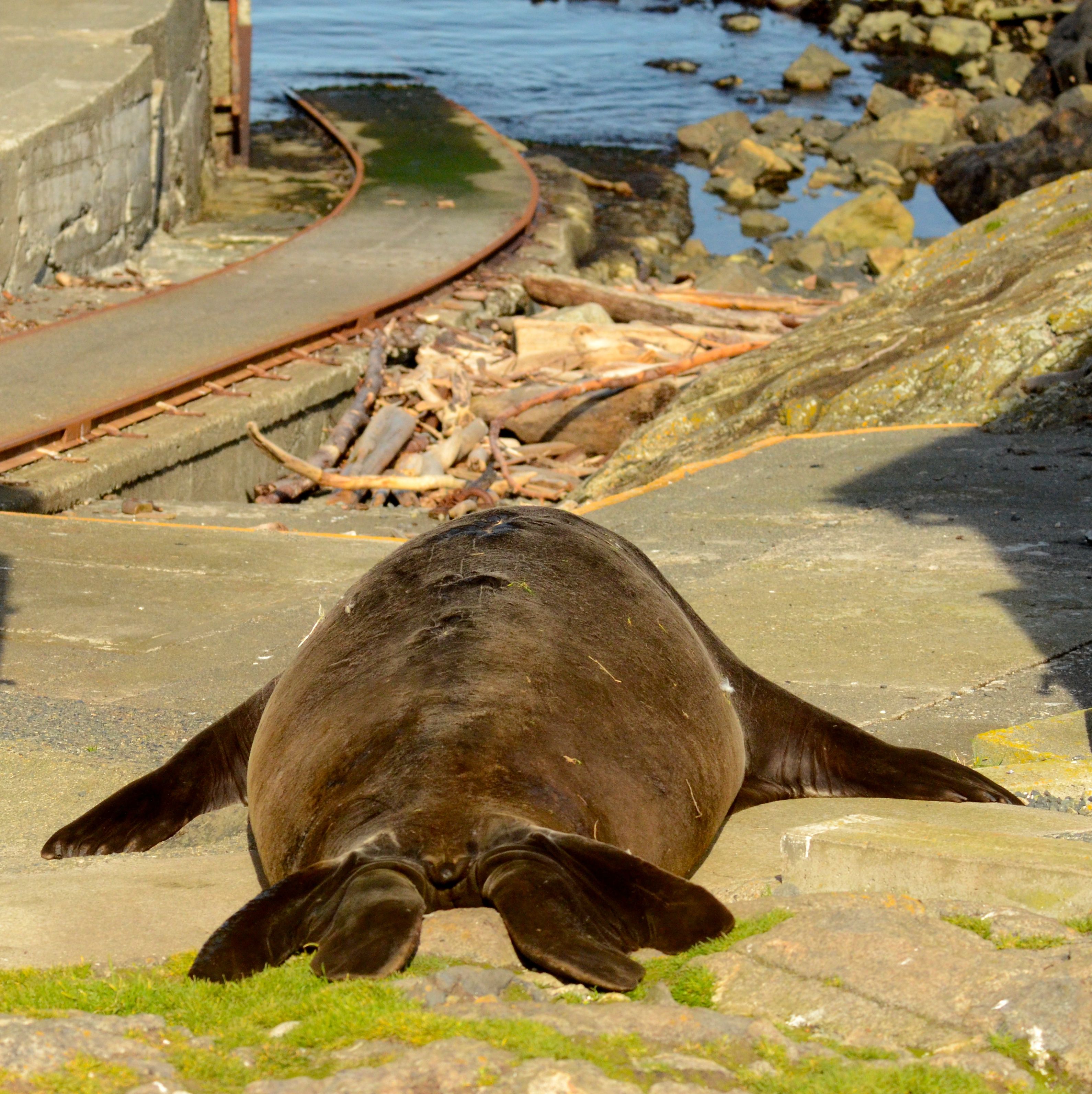
A new (to me), young, female Northern Elephant Seal joined the Great Race elephant seal group today bringing the total to nine, five males and four females. #5850, the three year old male, embraced the new female (literally) and although he is the smallest of the males on the island, while the other males were practicing their jousting he had his ‘pinky’ out and was snuggling up to the new arrival. It is the first time I have seen seals hold ‘hands’.

A student group is arrived just before dinner and are staying over. They will be part of a first year biology field trip that will be here most of tomorrow. Work was routine today but the day was anything but routine. Amazing place.
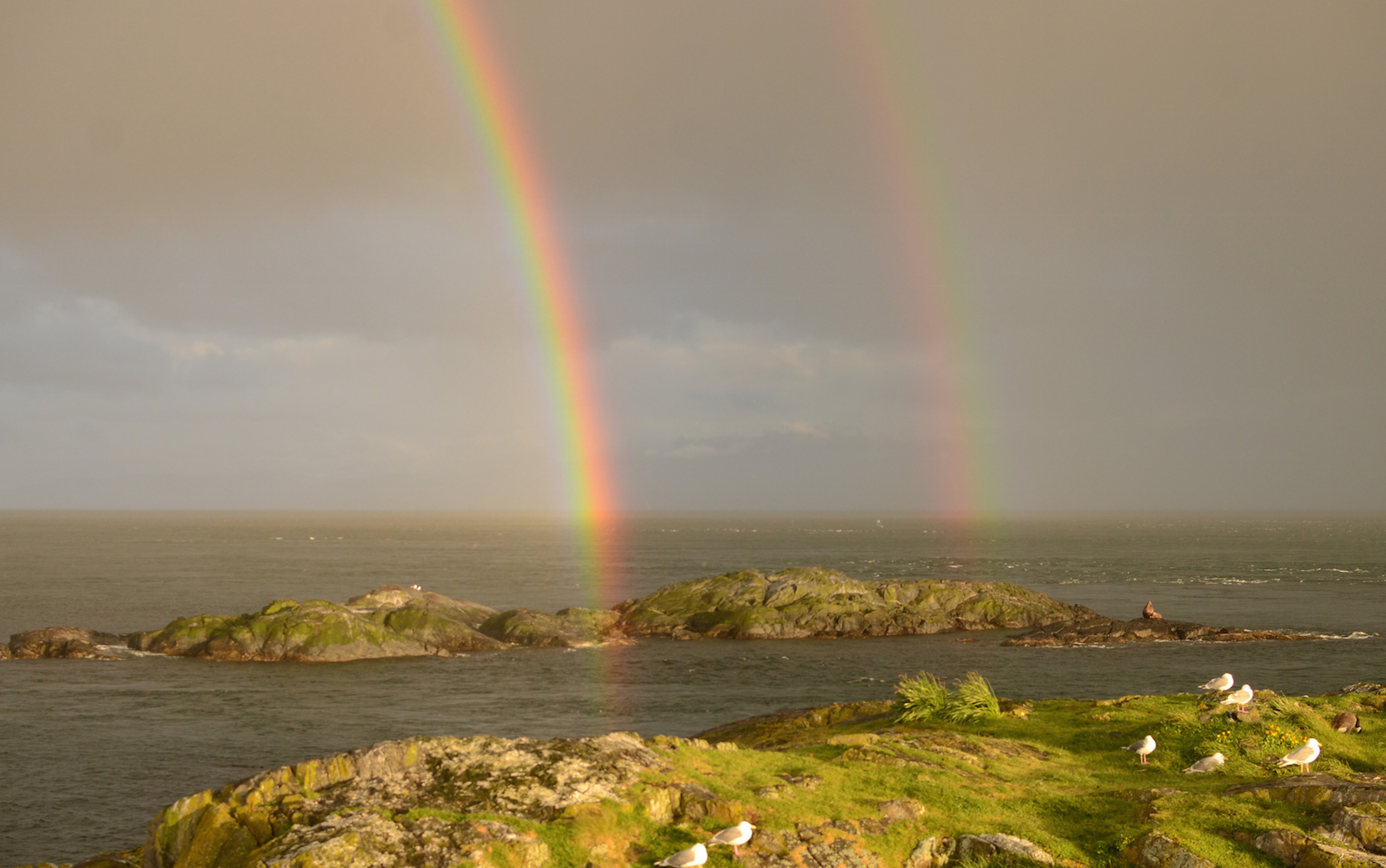
double rainbow

The Day After Blue Planet Day

Winds started out very light from a northerly direction and eventually backed all the way through east, southeast and around to westerlies, 15 to 20 knots and gusting, in the afternoon. Although there were some clouds and showers it seemed to be a nice day, but when you look at cumulative solar radiation values they were less than half of yesterday’s values at just below 300 Langleys. The barometer fell gradually all day and levelled out near dusk ending up at ~100.5 HPa. The strong wind warning remains in effect and is forecast to be strongest in the afternoons for the next few days.

Whale watching boats were back today after the storm subsided and four were observed in the Ecological Reserve. They were meeting and exceeding the Marine Mammal Regulations and although a couple of the smaller cowboys did manage to get between Great Race and South Islands. They were going so slowly and cautiously that the sealions that didn’t even wake up as the boats passed by.

No sports fishers or other vessels were observed in the ER.

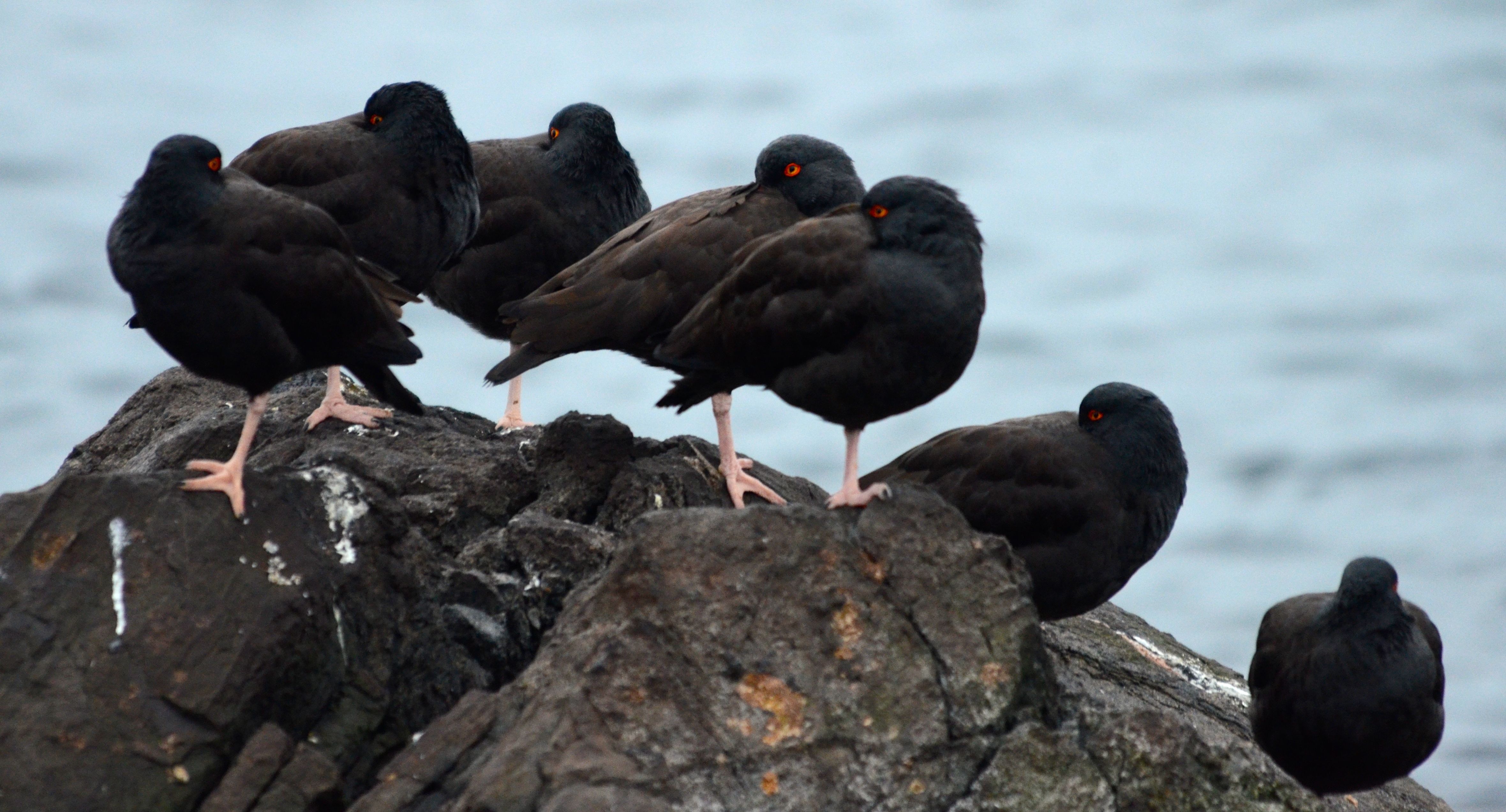
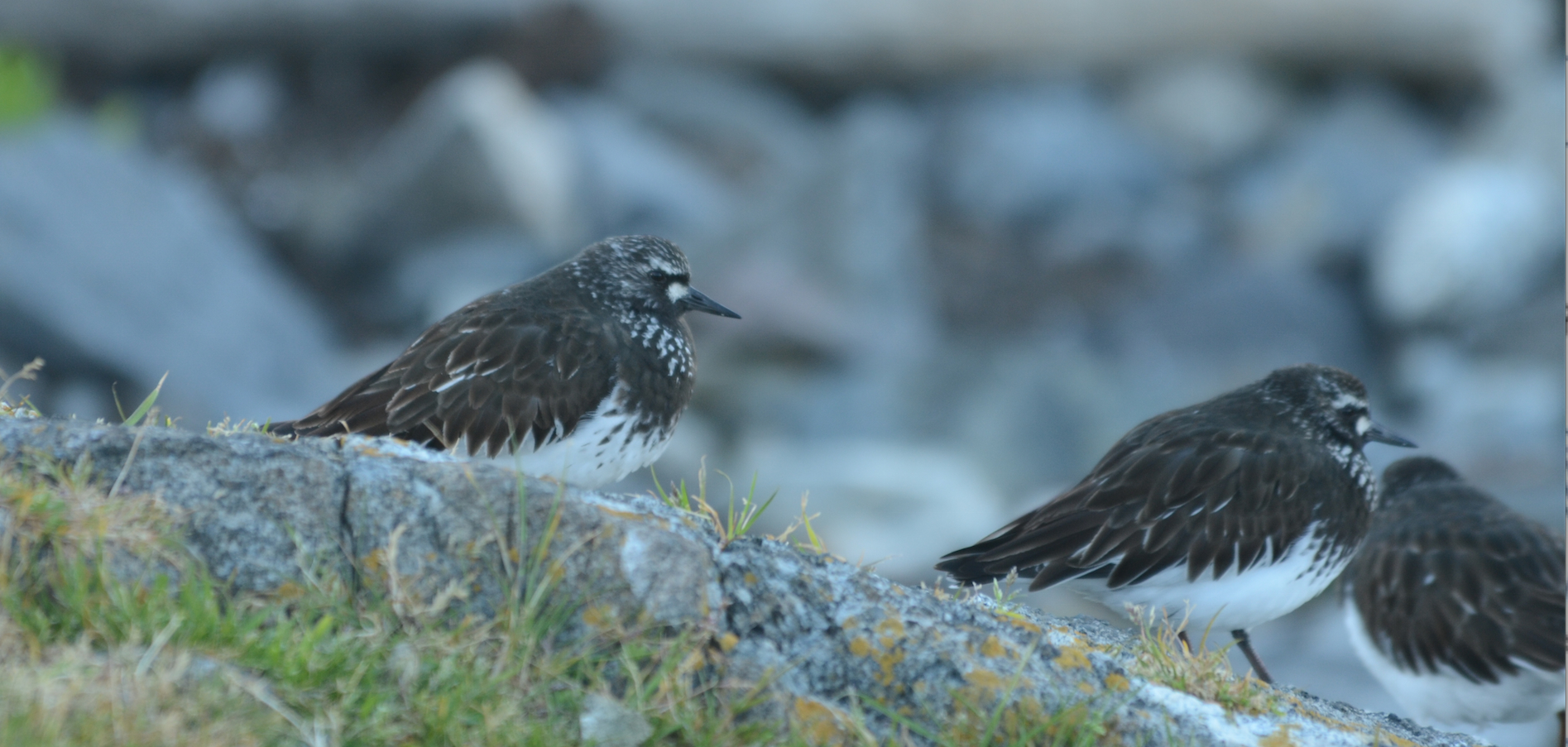
Black Turnstones in all their summer finery.

Black Turnstones in all their summer finery.

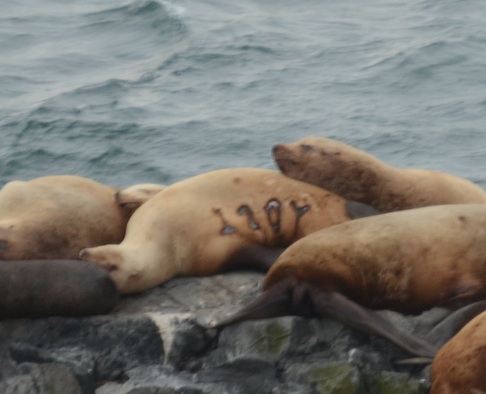
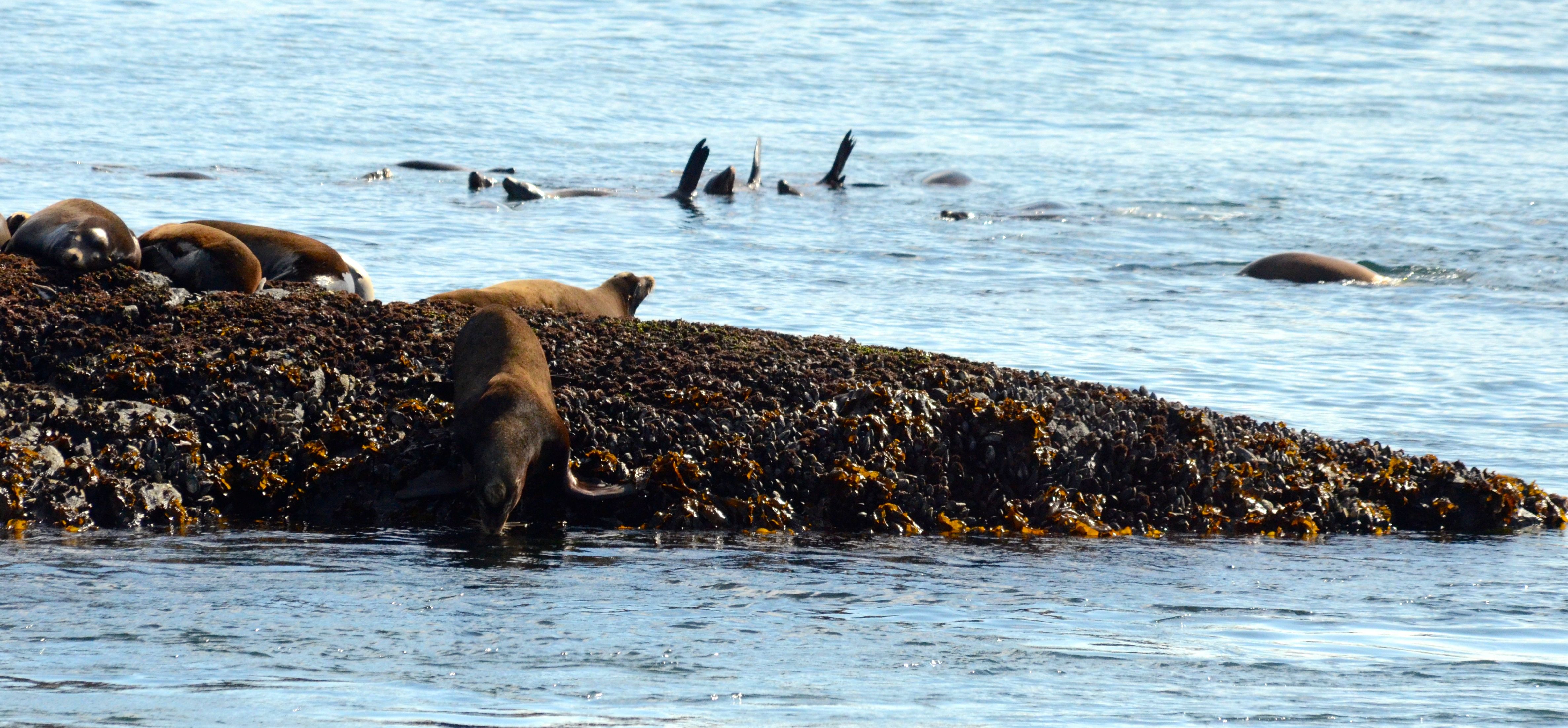
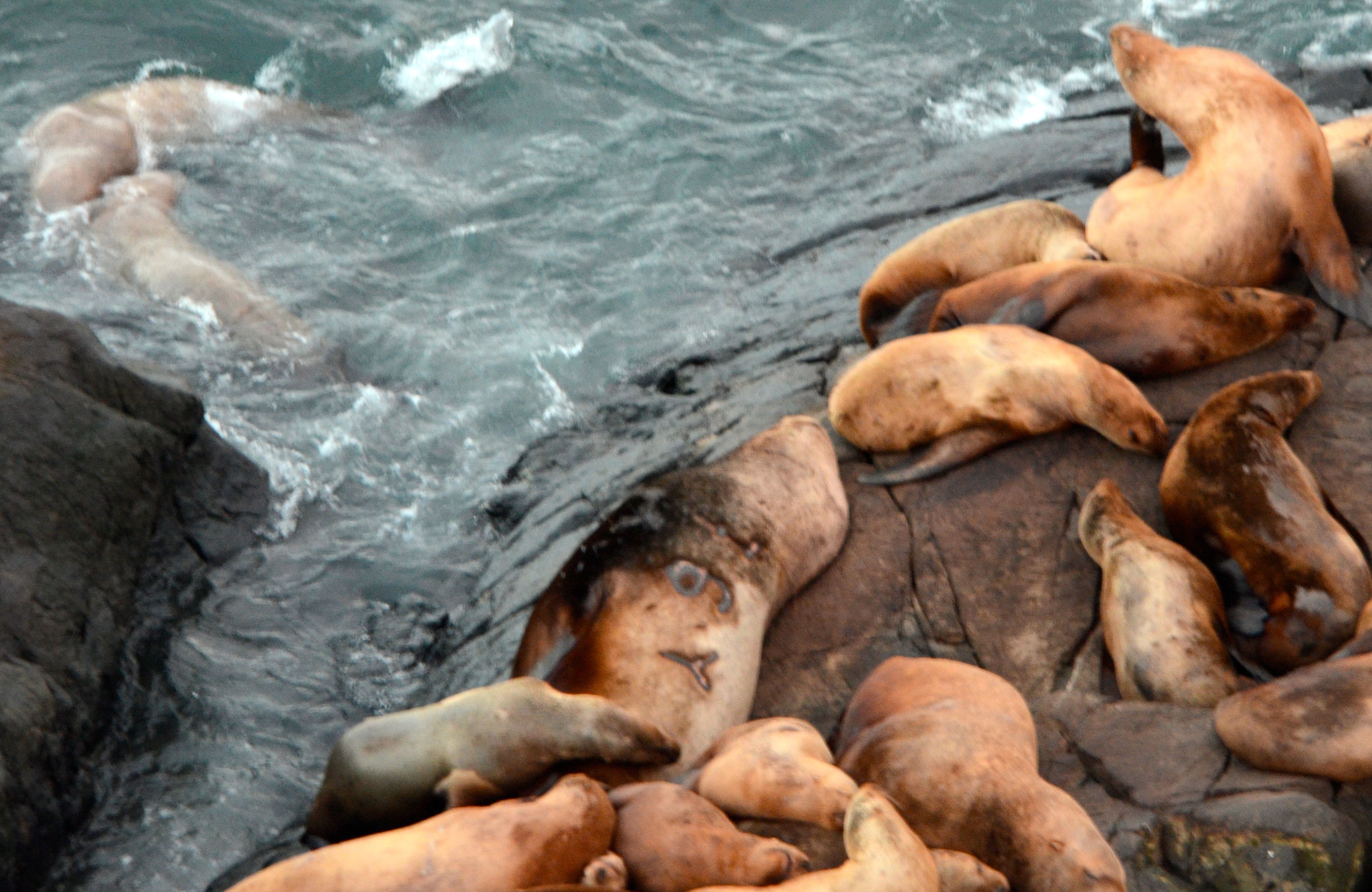
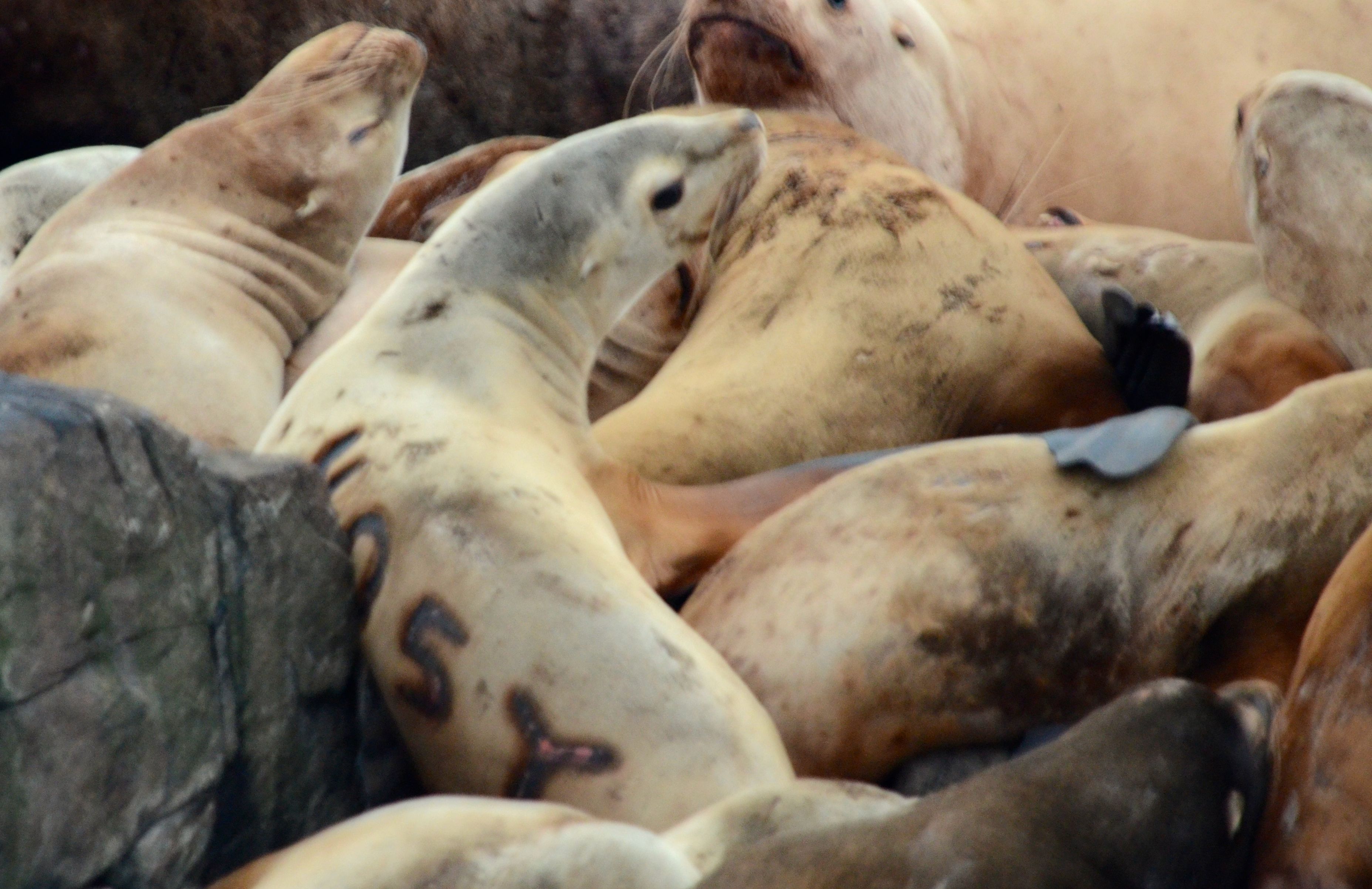
One branded Steller’s Sealion was noted hauled out on the South Islands. This female with brand # 120Y was born at St. George Reef, California in 2002.

Female Steller's (or Northern) Sealion # 120Y. This animal was born in northern California and will be 13 years old this summer.

Female Steller’s (or Northern) Sealion # 120Y. This animal was born in northern California and will be 13 years old this summer.

Today was animal census day and the results are as follows:

Northern Elephant Seals 34 (8 on Great Race)

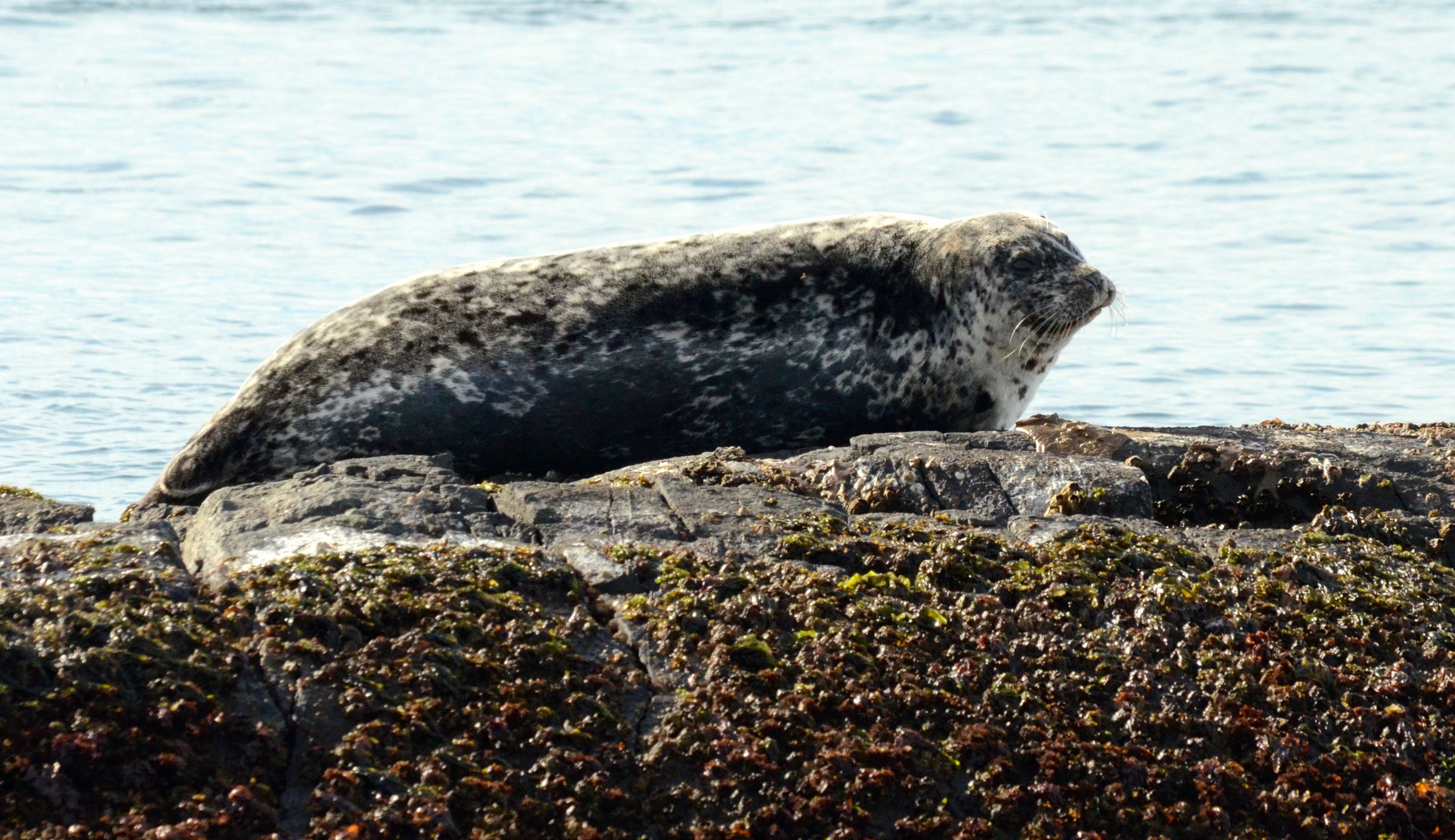
Harbour Seals 44 (note 137 counted following day, less windy)

California Sea lions 11

Northern Sea lions 38

Sea Otter 1

Canada Geese 18

Harlequin Ducks 4

Pelagic Cormorants 4

Double Crested Cormorants 5

Bald Eagle 2 adults, 2 sub-adults

Killdeer 1

Black Oystercatchers 10

Black Turnstones 15

Surfbird 23

Dunlin 4

Pigeon Guillemots 383

Glaucous-winged Gulls 488 adults 18 sub-adults

Caspian Tern 1 (flying through)

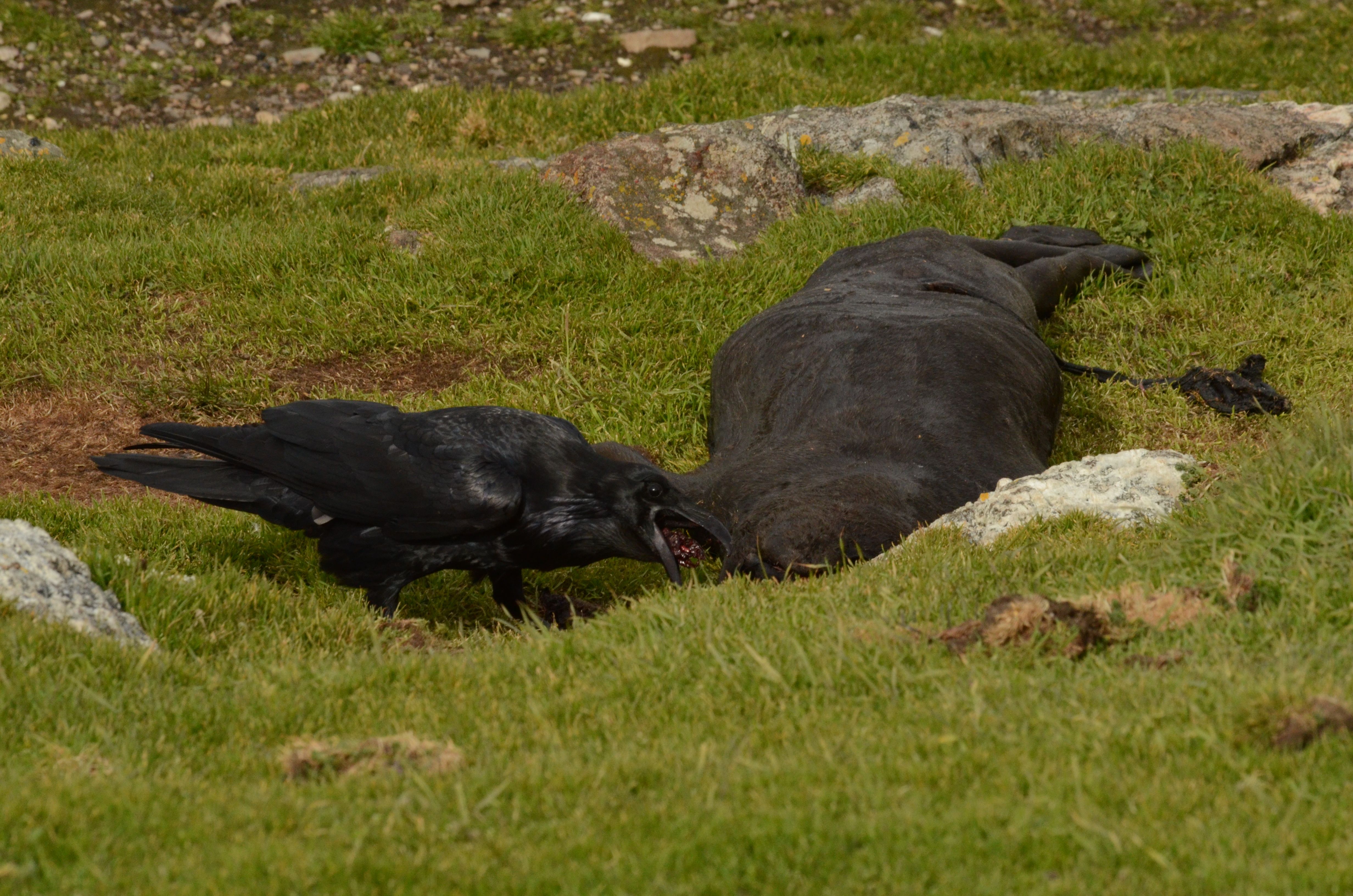
Common Raven 1

Barn Swallows 2

Savannah Sparrow 6

There were no visitors today. Chores were routine.


A Stellar Day

Calm seas, sunshine and light winds combined to make it a very pleasant day. The wind really didn’t do much and direction changed throughout the day from west to southeast and back again. There was enough sunshine  to power the solar panels, run the de-salinator  and build up the batteries. The barometer declined slowly all day after a high start and the forecast is for a mix of sun and cloud tomorrow with a strong westerly winds predicted.

Two whale watching boats used the Ecological Reserve today.   From where they were, I am guessing that they enjoyed the pinnipeds and sea otter as well as the birds. Several sports fishing boats transited through at high speed and one fished close to the boundary.

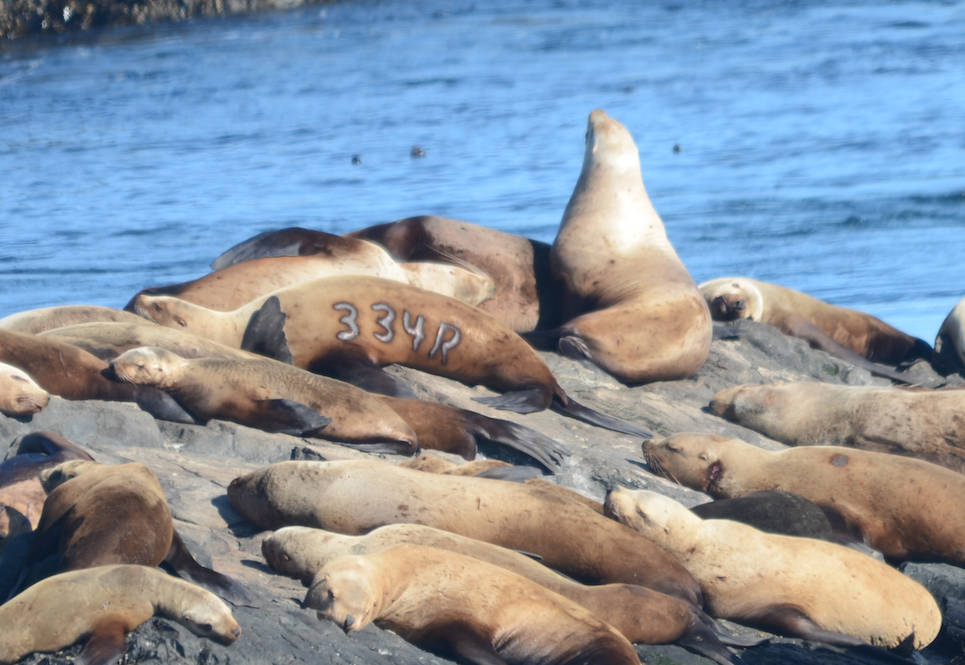
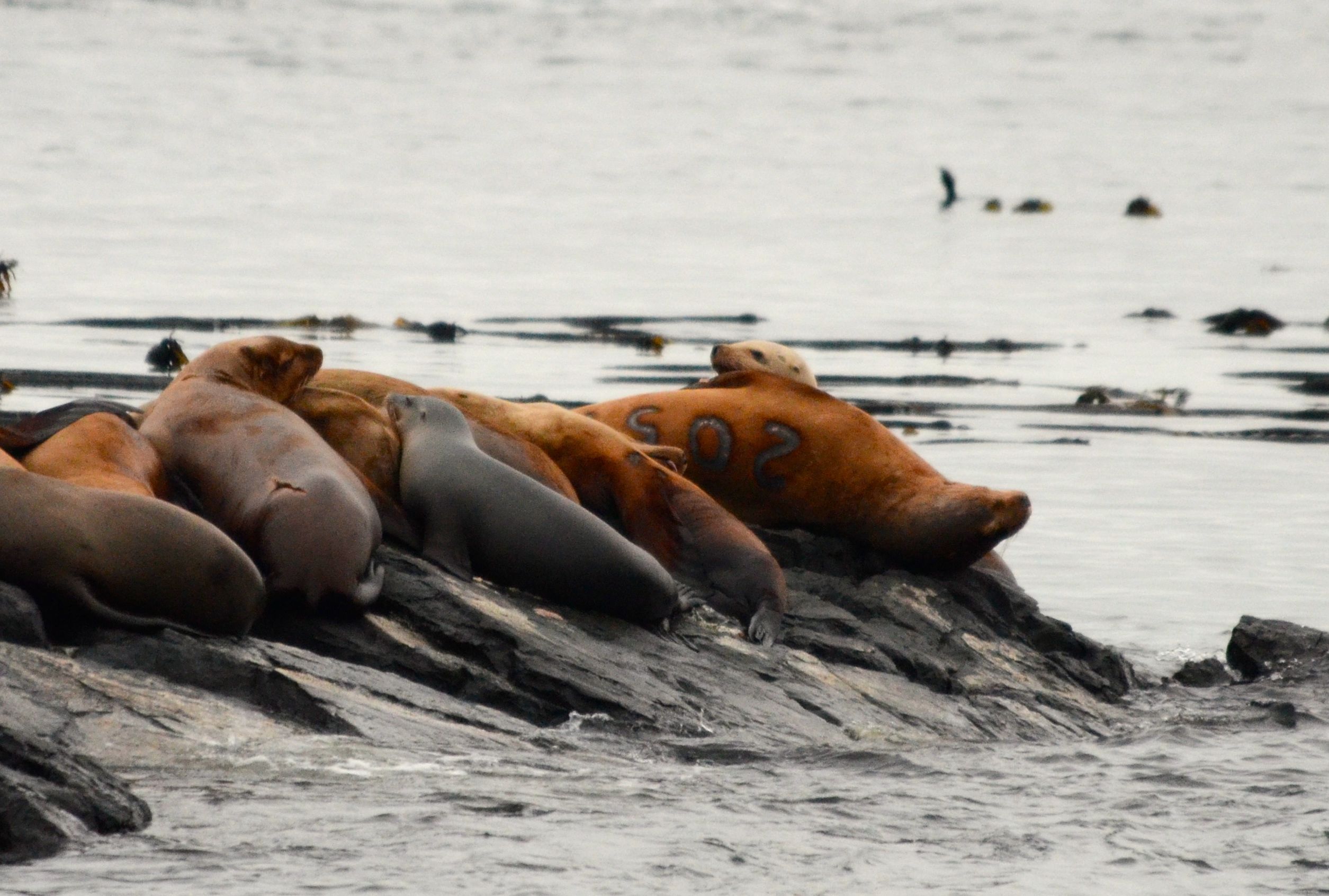
Female Steller’s or Northern Sealion #334R was photographed today. She was branded as a pup in July 2003 at Rogue Reef in  southern Oregon.

Northern or Steller's Sealions hauled out on South Islets,  a female born in southern Oregon, branded with #334R is visible.

Steller’s Sealions hauled out on South Islets, a female born in southern Oregon in 2003, and branded with #334R is visible.

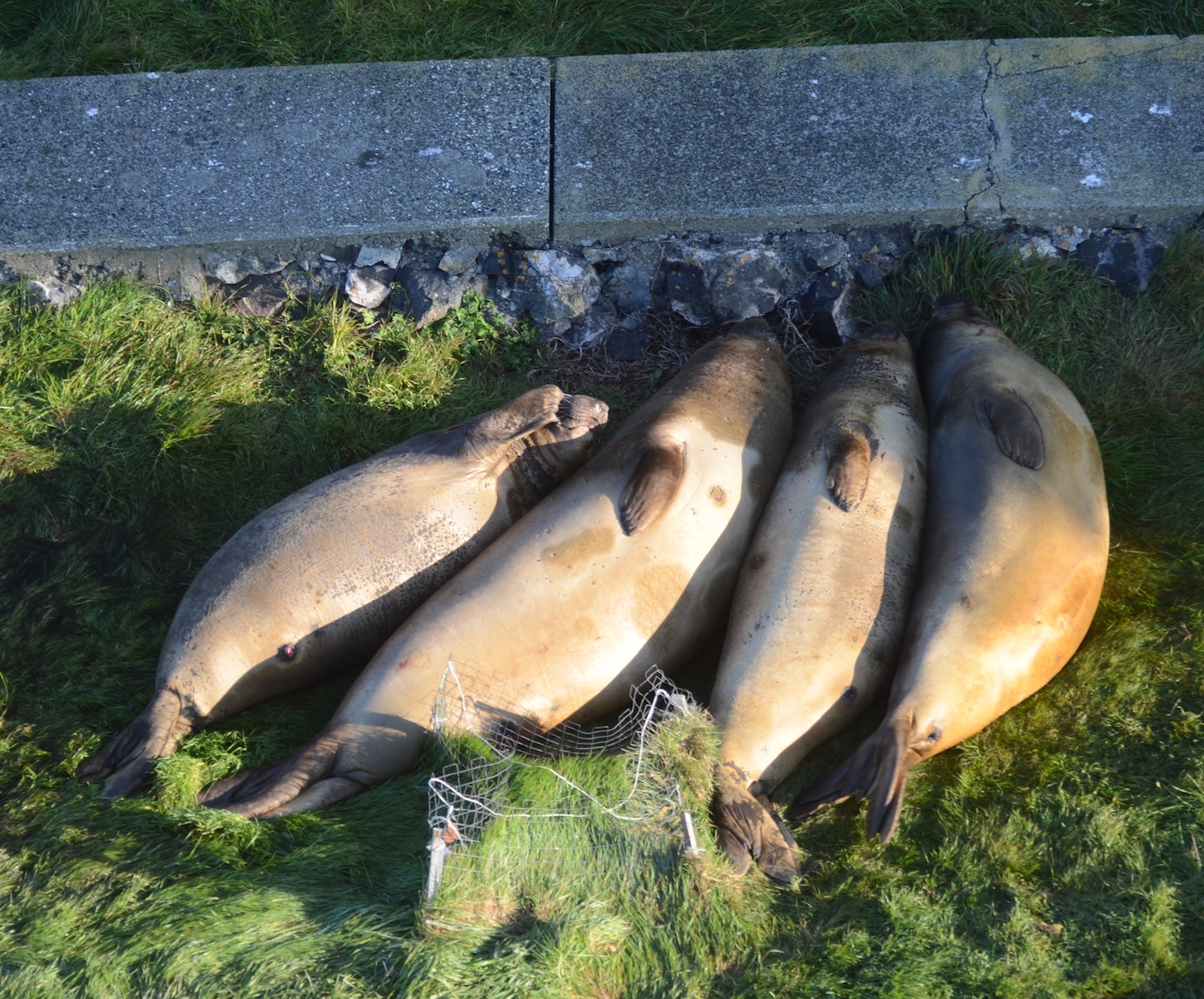
The Northern Elephant Seals continue to grace Great Race and I am getting used to them not reacting at all to my presence on the walkways.

Four Northern Elephant Seals like peas in a pod, next to the walkway to my house with their tails in the goose exclusion cage.

Four Northern Elephant Seals like peas in a pod, next to the walkway to the basement door.

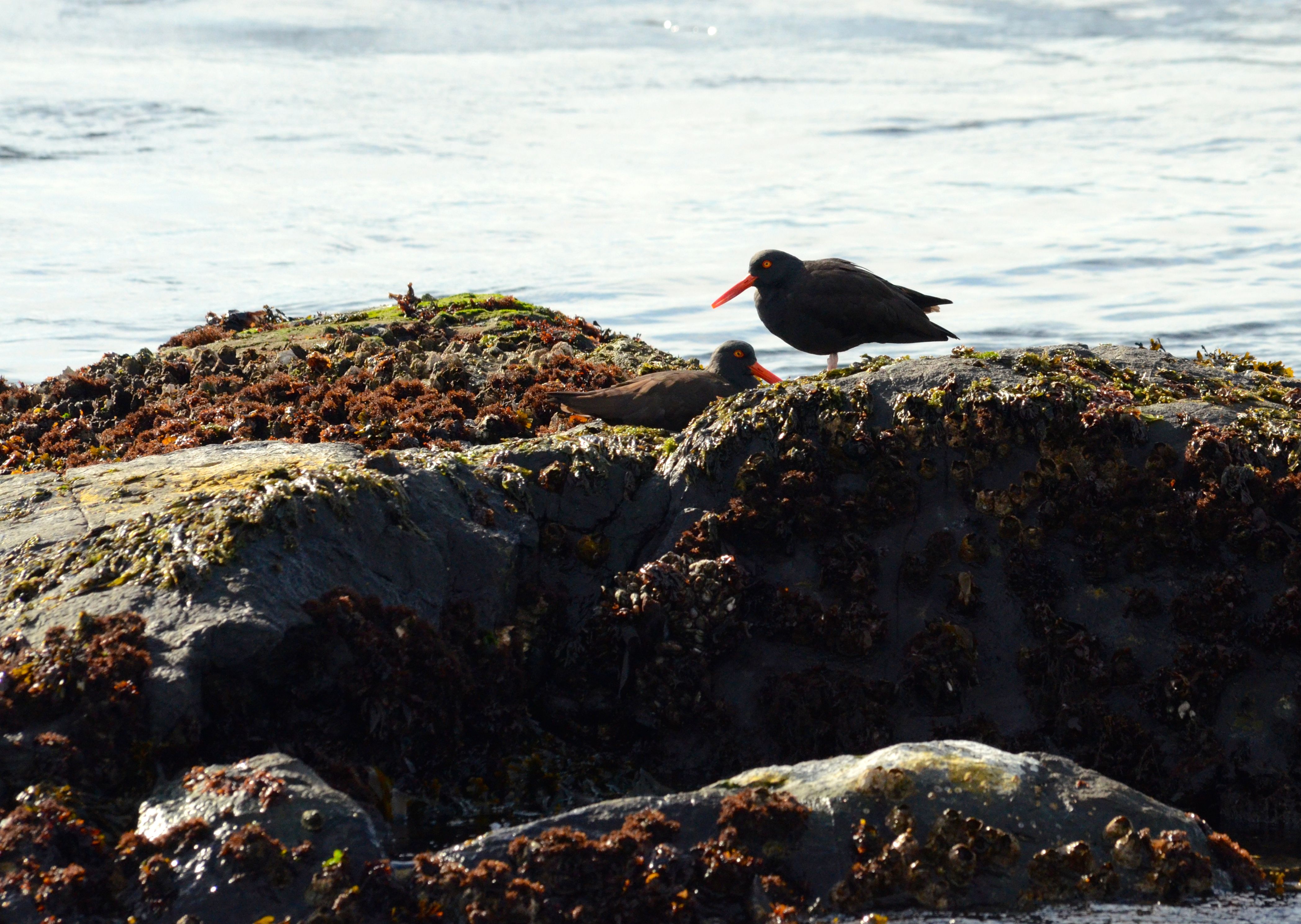
The Glaucous-winged gulls are starting to mate and gather nesting materials. The Canada Geese are busy defending territory and brooding eggs. Black Oystercatchers are likewise busy when not foraging in the intertidal where limpets seem to be their favourite food.

Today was Animal Census Day and here are the results:

Northern Elephant Seals 26

Harbour Seals 147

California Sea lions 30

Steller’s Sea lions 36

Sea Otter 1

Canada Geese 18

Harlequin Ducks 3

Pelagic Cormorants 8

Double Crested Cormorants 7

Bald Eagle 2 adults, 5 sub-adults

Killdeer 1

Black Oystercatchers 10

Black Turnstones 9

Surfbirds 8

Pigeon Guillemots 164

Glaucous-winged Gulls 345

Northwestern Crow 6

Common Raven 1

There were no visitors today and maintenance chores were routine including running the fire pump to fill cistern.


Thursday is Census Day at Race Rocks

The weather was fine today with sunshine from dawn until about four o’clock. Winds were very light and the direction shifted around west, from northwest to southwest. As the barometers drops, rain is forecasted, southeast winds and then improving with only scattered showers by tomorrow afternoon.

The fine weather brought two small sports fishing boats into the Ecological Reserve today, both fishing and speeding inside the Ecological Reserve boundary.  My guess is that neither of them were aware of the Eco-Reserve and its protection from speeding and jigging.

There were three, whale watching boats in Reserve today and several others that passed outside of the boundaries. One of the attractions for the whale watchers were Biggs’ Killer Whales, also known as transients. The ‘T”s as they are known to the tour operators were travelling from west to east when I saw them and they passed very close to the seal haul-out on North Rocks before I lost them to view. It looked like four individuals. I saw a single, adult male Killer Whale two days ago, it was just a one-off sighting and I didn’t spot it again in spite of watching for quite a while. That one was also probably also a Biggs, just from the behaviour.

Today was Mega-fauna census day and here are the results.

Bigg’s (Transient) Killer Whales 4

Northern Elephant Seals 12

Harbour Seals 117

California Sea lions 69

Northern Sea lions 21

Canada Geese 24

Harlequin Ducks 9

Pelagic Cormorants 18

Double Crested Cormorants 15

Brandt’s Cormorants 12 (Flying through.)

Great Blue Heron 1

Bald Eagle 2 adults, 3 sub-adults

Killdeer 2 (at least two, difficult to count in the dark)

Black Oystercatchers 10

Black Turnstones 22

Surfbirds 37

Rock Sandpipers 7

Dunlin 11

Pigeon Guillemots 241 (Not a complete count. Had planned to quickly move over and do a north count but unable to count other side due to disruption with speeding boat and subsequent mass pandemonium and movement of birds everywhere.)

Glaucous-winged Gulls 365

Herring Gulls (present earlier in week)

California Gulls (present earlier in week)

Ring-Billed Gulls (present earlier in week)

Peregrine Falcon 1

Northwestern Crow 2

Common Raven 1

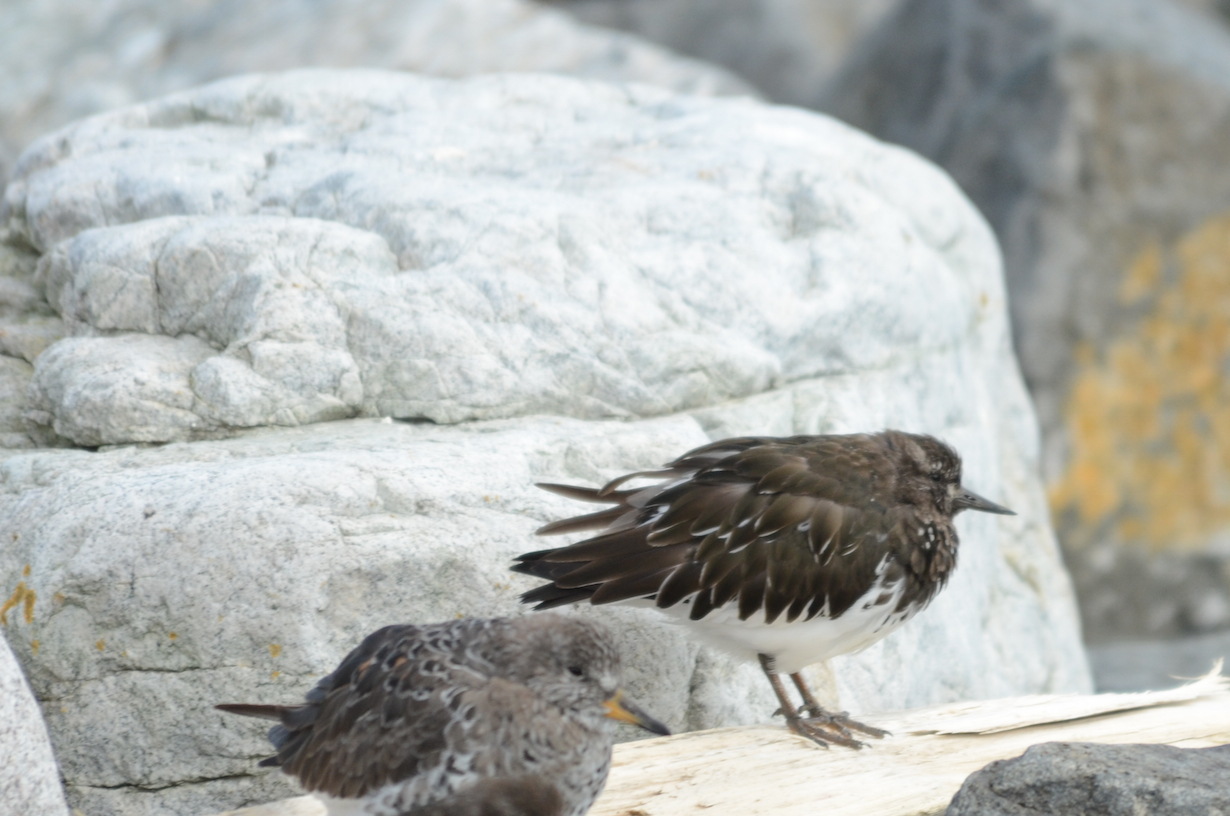
The Back Turnstone was one of the many species of shorebirds shown in yesterday's mystery photo. Easy to distinguish from Surfbird when they are side by side.

The Back Turnstone was one of the many species of shorebirds shown in yesterday’s mystery photo. Easy to distinguish from Surfbird when they are side by side.

Male Harlequin Duck sitting on rockweed in the inter-tidal.

Male Harlequin Duck sitting on rockweed in the inter-tidal.

What a difference between drake and hen. These 'white water' birds nest in the mountains by rushing streams and rivers.

What a difference between drake and hen. These ‘white water’ birds nest in the mountains by rushing streams and rivers.

It was a busy day with lots accomplished. I managed to get the weather station back up and connected to the Internet, thanks to good instructions. I have been on a bit of a wild goose chase, mapping out the nest locations of the Canada Geese. I troubleshot water loss problem (to no avail) and ran both the desalinator and generator. Sweeping the walkways and tidying up wood is ongoing. The census took quite a while and was totally enjoyable. This is such a special place, a real biodiversity hotspot especially underwater. What we see on the surface is like the tip of the biodiversity iceberg or the biomass (food) pyramid. All that biological activity can traced right back to plankton and sunshine that drives it. Sunshine made most of the fresh water today, thanks to the solar panels and desalinator.

Back on the Rock

Last night’s storm blew in just as shift-change finished. Nick Townley waved goodbye from Second Nature as Chris Blondeau, still in his dry-suit from the diving activity, pulled the vessel out into the tidal stream and headed her back to Pedder Bay.

Nick Townley

Nick Townley ( a photo from last fall, selfie?).

Six students from Pearson College came out to the rock for the weekend and I started my shift with great company. Their goal was to catch up on studies (and sleep (my guess)) and to have their own experience in this gem of a biodiversity hotspot.

As we unpacked and settled into the two houses, heavy rain followed the black horizon moving in quickly from western Strait of Juan de Fuca. It was very nice to be snug inside as it was a wild night with heavy squalls. There were quite a few rattles and thumps that I didn’t recognize from last fall’s storms. Morning broke with gusts over 30 knots in the tower and alternate clearing skies and rainbows shone through and faded out on all sides. It was a white water scene with wind and current colliding in a frenzy. The barometer which had taken a nose dive Thursday and Friday, climbed back up to over 1024 HPa from Friday’s low of 1009. By noon, the westerly winds had dropped to 12 knots and the afternoon and evening was uneventful; overcast with showers and light winds shifting to northwest.

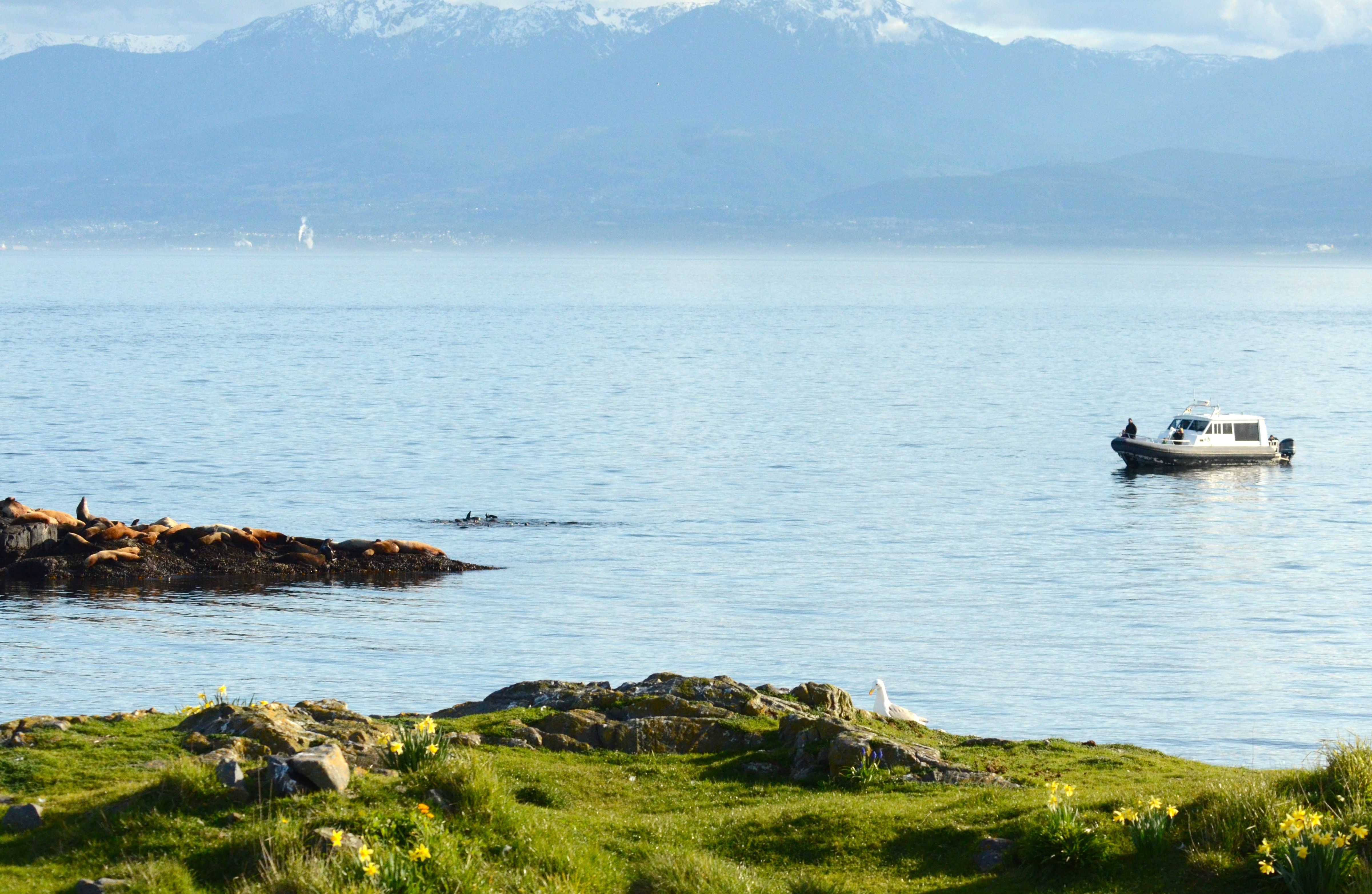
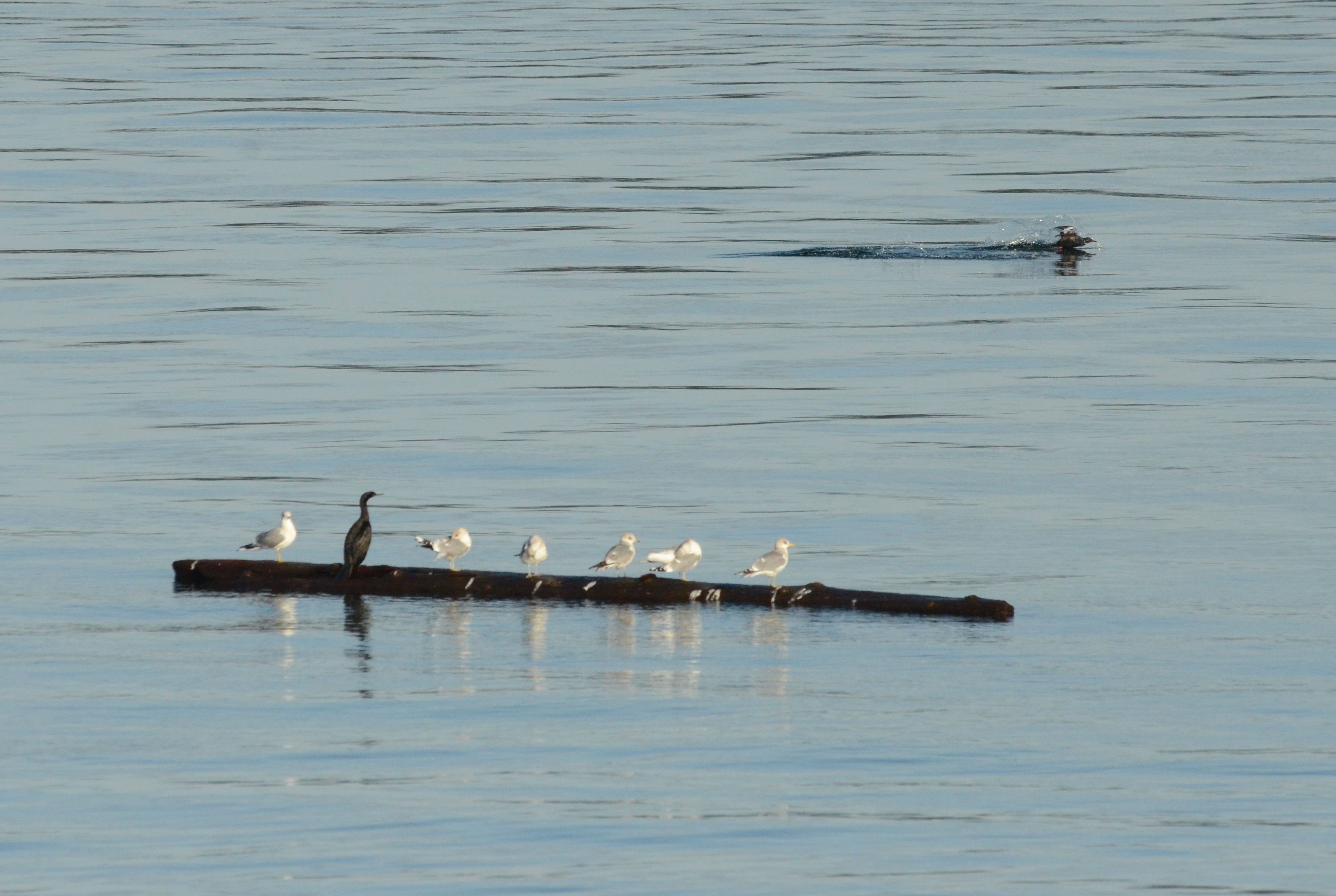
Although there was no fishing activity in the Ecological Reserve (ER) today, five wildlife viewing tour boats were noted. I was surprised by the number of both Northern and California sealions still hanging out and there were at least 75 Harbour Seals hauled out in the afternoon (not a complete count. I saw two pairs of adult bald eagles and numerous other birds including Canada Geese, Black Oystercatchers, Harlequin Ducks, Black Turnstones, Pigeon Guillemots, Double-crested and Pelagic Cormorants and an interesting mix of gulls. Many of the Glaucous-winged Gulls are already paired up and getting excited about spring. They are scattered around Great Race in all the places that there were nests last year. A much more condensed flock of gulls with about 100 birds was hunkered down in the lee of the rock on the west side of the science house. This flock was a mix of some unexpected visitors including Herring Gulls, Ring-Billed Gulls and even a few California Gulls, probably en route somewhere else. As dusk fell last night I heard the calls of Killdeer and it really felt like my home away from home.

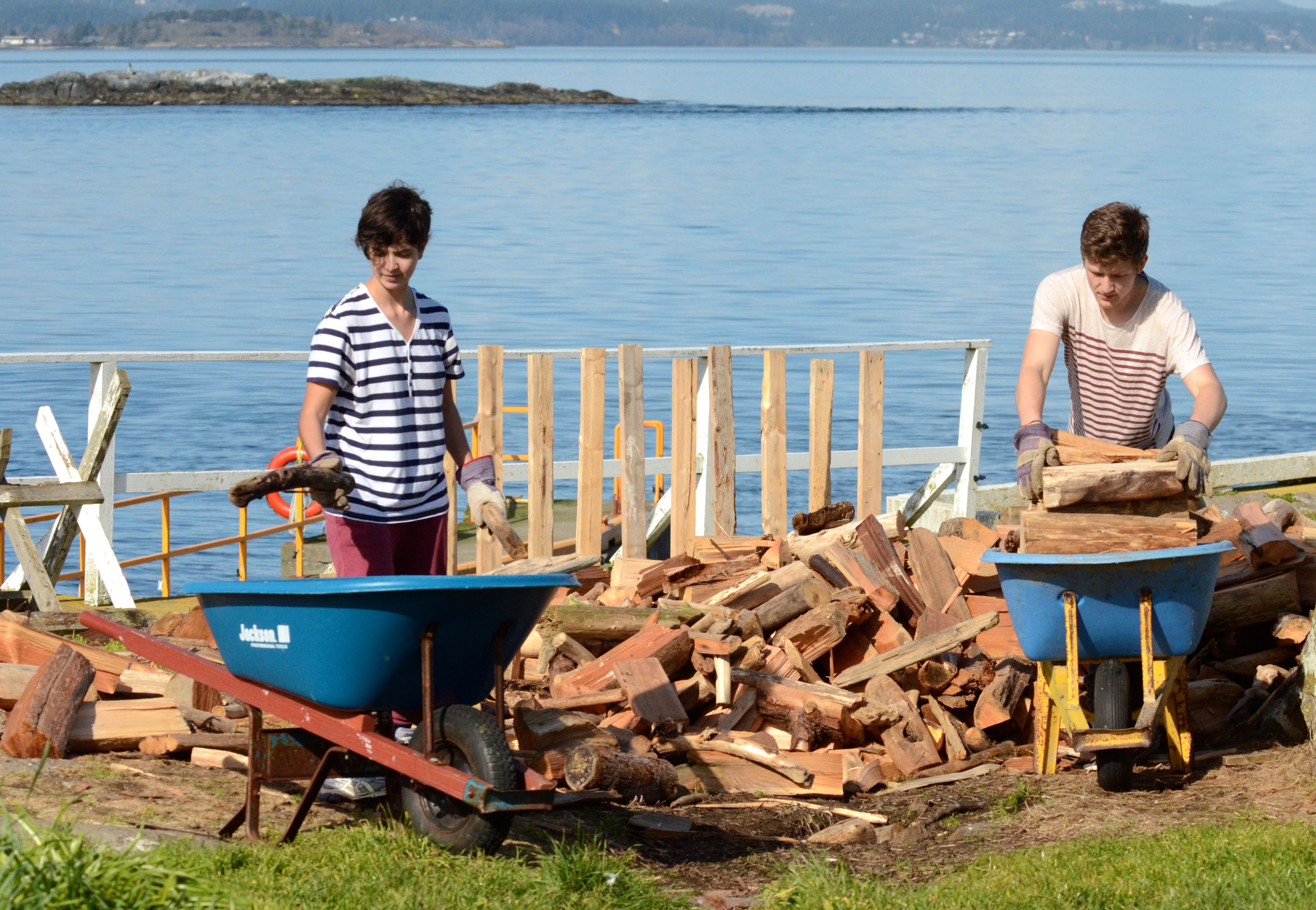
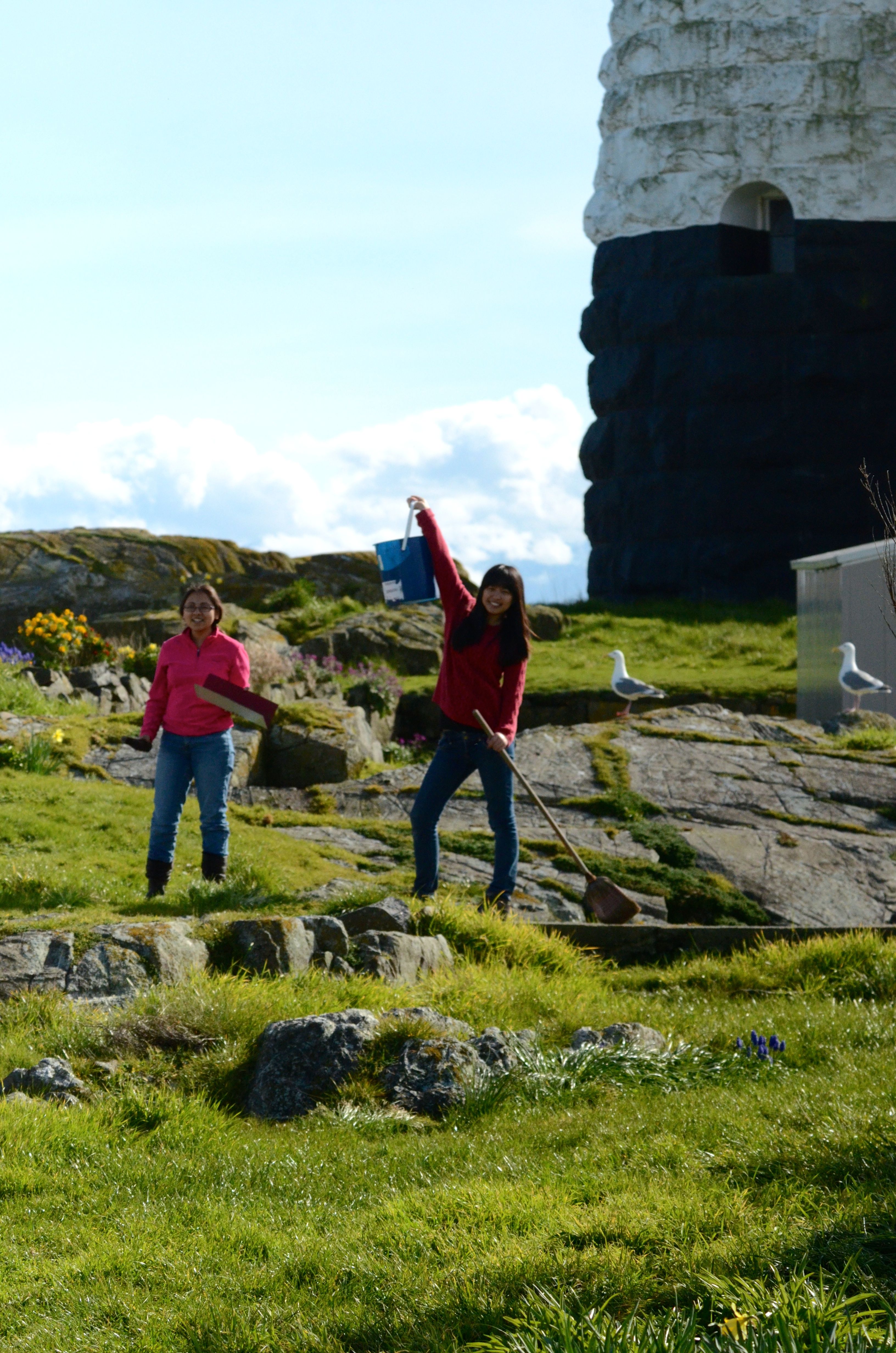
It was great to get back up the tower again and have a good look around and for fun and more exercise, I started clearing off some of the winter’s woody debris accumulated on the marine railway. Greenlanders Hana and Malou joined in and we made it into a bit of a game, practicing our aim and strengthening arms. When we finished there was a stream of wood heading out to sea and we hoped that the whale watching boats were avoiding the busy tide lines.

March 19 – Last Day of Winter- Census

Raining
Wind: NE 4-14 knots
Air Temperature: Low 8.8°C, High 10.3°C
Ocean Temperature: 8.8°C

The wet conditions were helpful with cleaning some exterior walls and windows. The rain water cistern was filled up from the roof. The rain also helped wash away the algae and slime on the walls, along with some scrubbing.

The low light and rain made the census difficult. In recent days, there has been a much higher number of harbour seals hauled out on the rocks. The sea lions also spent most of the day in the water. It was not possible to distinguish between the species of cormorants on Turbine or Middle Rock.

There were no boats seen in the reserve today.

Census results:
Steller Sea Lion: 59
California Sea Lion: 62
Harbour Seal: 21
Bald Eagle: 7
Cormorant: 27
Canada Goose: 24
Gull: 352
Black Oystercatcher: 4
Harlequin Duck: 9
Pigeon Guillemot: 13
Surfbird: 4
Black Turnstone: 16
Rock Sandpiper: 6
Savannah Sparrow: 1

March 12 – Sunny Census Thursday

Sunny
Wind: 0-13 knots SW in the morning, NE from mid morning to afternoon and SW in the evening
Air Temperature: Low 9.9°C, High 13.2°C
Ocean Temperature: 9.0°C

Three Pearson students came to Race Rocks this morning. Karen, Sunny and Hanne joined Martin, who has been here since Monday.

The students did some work this afternoon: sweeping all 99 steps of the lighthouse and continuing the process of stowing the chopped wood in all the nooks and crannies of the buildings, to be used next winter to heat the main house.

There was DND blasting happening in the morning and early afternoon on Bentinck Island, less than 1km away from the ecological reserve.

Today’s high temperature of 13.2°C, as measured at the ground weather station, was the highest recorded since 2006, when the weather station was installed. A high of 14°C was recorded by the instruments at the top of the lighthouse.

Three eco tour boats visited the reserve. One boat came very close to a group of sea lions swimming and others hauled out on the South Islands.

The low tide of 1.1m at 13:52, exposed lots of species from the low tide zone into the air. The shore and tidal pools were full of life: mussels, barnacles, limpets and lots of other flora and fauna of the sea. The oystercatchers and shore birds were having a feast.

There were no small birds perching birds seen today. There are usually a few fox, sparrows, savannah sparrows and occasionally juncos and robins zipping around the island.

Here are the results from today’s Megafauna Census:
Elephant Seal: 1
Steller Sea Lion: 54
California Sea Lion: 43
Harbour Seal: 52
Bald Eagle: 9
Great Blue Heron: 1
Crow: 1
Oystercatcher: 4
Double Crested Cormorant: 12
Brandt’s Cormorant: 21
Gull: 247
Canada Goose: 14
Pigeon Guillemot: 9
Harlequin Duck: 13
Surfbird: 3
Black Turnstone: 10
Rock Sandpiper: 2

March 5 – Census Thursday

Sunny with occasional clouds
Wind: 0-5 knots from N and switching around to SW throughout the day
Air temperature: High 10C, Low 6C
Ocean temperature: 8.9C

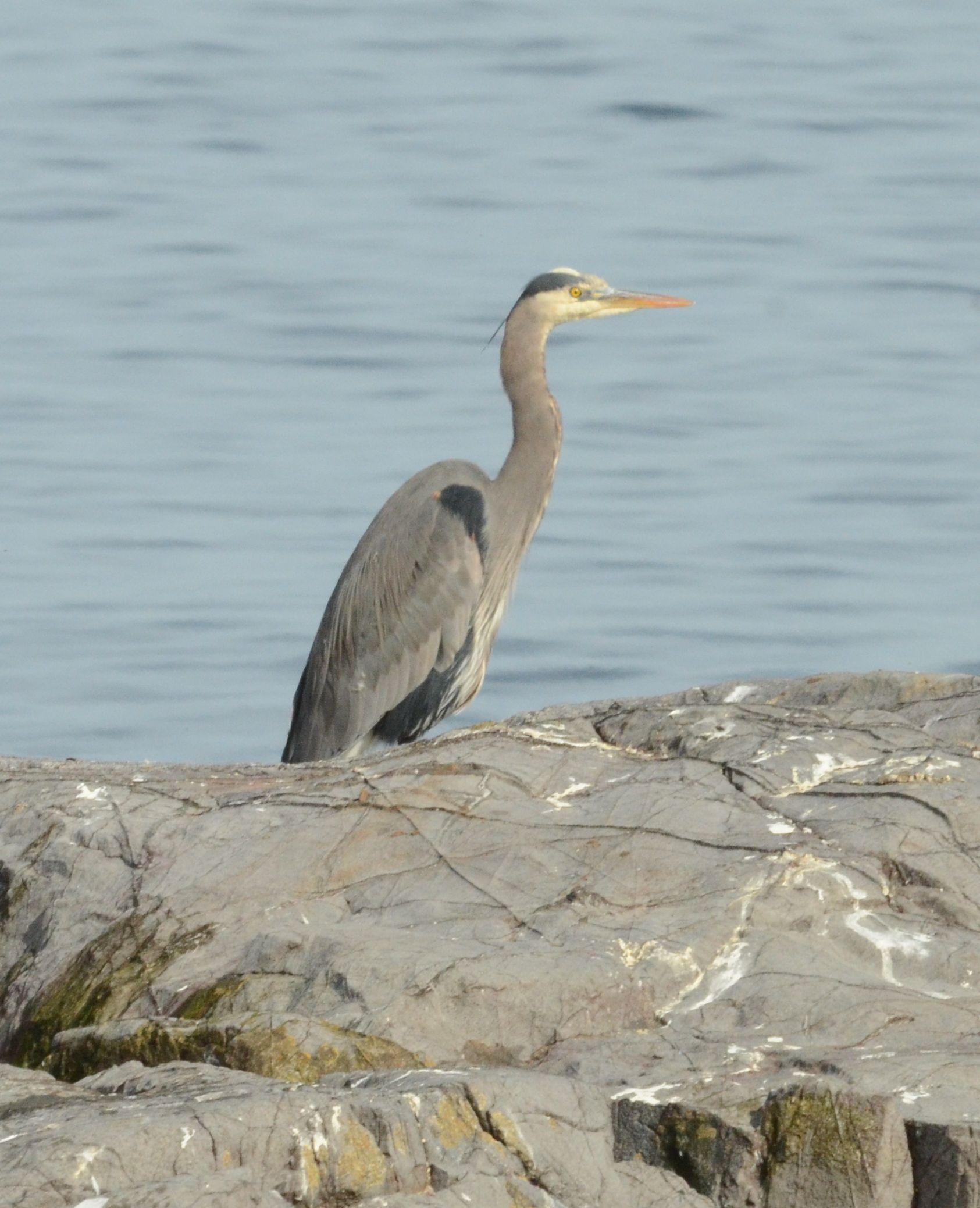
A great blue heron hung out on northeast side of Great Race for the afternoon. The oystercatchers are travelling around in pairs and are quite vocal. The gulls have spread themselves out around the island as they start to find nesting sites. Chunk returned to Great Race during the night. He spent the day resting against a boulder and the rock below the helicopter pad. The female elephant seal is relaxing in the same spots as yesterday, to the west of the main house.

Today’s census results:
Elephant Seal: 2
Steller Sea Lion: 18
California Sea Lion: 28
Harbour Seal: 41
Bald Eagle: 6 (3 adult, 3 juvenile)
Raven: 2
Great Blue Heron: 1
Double Crested Cormorant: 9
Brandt’s Cormorant: 15
Black Oystercatcher: 8
Canada Goose: 17
Pigeon Guillemot: 36
Gull: 103
Harlequin Duck: 11
Surfbird: 2
Black Turnstone: 15
Savannah Sparrow: 1

One eco tour boat and one recreational boat visited the reserve today.

Weekly Census

The wind varied in velocity and direction throughout the day.  Fog settled in overnight as the wind blew between 15-25 knots from the southwest.  In the daylight hours, the wind blew from the south and west between 7-32 knots.  The barometer dropped slightly from 1008 hPa to 1004 hPa.  It was overcast with patches of sun and rain throughout the day. The temperature reached a high of 12.8oC at noon.

There was one whale watching boat seen in the reserve, in the mid afternoon.

I saw humpback whales (Megaptera novaeangliae) twice today, both times from the kitchen window.  The whales were surfacing just south of Great Race Rocks, within the boundaries of the Ecological Reserve.  At 9:30am, I saw two humpbacks blow, surface and dive westward.  At 3:20pm, I saw one humpback surface and dive eastward.  I am not positive if they were different whales, so I counted them as two in the census.

Two branded steller sea lions were seen seen today.  76Y was a pup in 2002 when it was branded in St. George Reef, California.  443Y was branded in 2013, when it was a pup at Rogue Reef, Oregon.

Here are the results of the weekly census:

Humpback Whale: 2
Steller Sea Lion: 244
California Sea Lion: 216
Harbour Seal: 39
Northern Elephant Seal: 4
Bald Eagle: 5 (2 adults, 3 juveniles)
Canada Goose: 18
Crow: 2
Harlequin Duck: 4
Double Crested Cormorant: 61
Pelagic Cormorant: 142
Black Oystercatcher: 25
Gull: 411
Black Turnstone: 8
Rock Sandpiper: 6
Surfbird: 11
Savannah Sparrow: 2
Fox Sparrow: 2

Birds and Sea Lion Brands

The wind was calm, not rising above 10 knots.  It blew from the northeast, swinging around to the south in the middle of the day, and settling on the east at night.  The barometer dropped from 1020 hPa to 1009 hPa, with a few short rises throughout the day.  The temperature reached a high of 10.8oC, at the ground station.

There was one whale watching boat seen in the reserve, just before sunset.

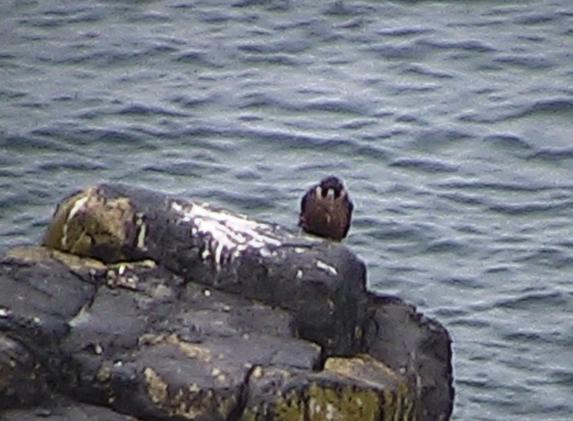
Pam Birley, the dedicated webcam viewer from the UK, spotted a peregrine falcon again this morning.  She was able to capture a photo of the peregrine from Camera 1, see below.  Pam thinks it’s a young one, because it has dark brown chest feathers.

I wasn’t able to spot the peregrine, but I saw two branded steller sea lions.  See the photos below of brands 205Y and 405Y.  The steller sea lion branded 405Y was born in 2013, at Rogue Reef, Oregon.  The steller sea lion branded 205Y is a female born in 2004 at St. George’s Reef, California.   The sea lion is well known to Pat Gearin, from the NOAA. Pat emailed me with some details about the sea lion: “She is an unusual animal because she has not returned to CA to have her pups but instead has settled at Carroll Island, WA where she has had at least two pups over the last 4 years.  I think the animal next to her in your first photo may be her juvenile which is still nursing.  Steller’s sometimes nurse their pups for over 2 years.”