Dec 24th

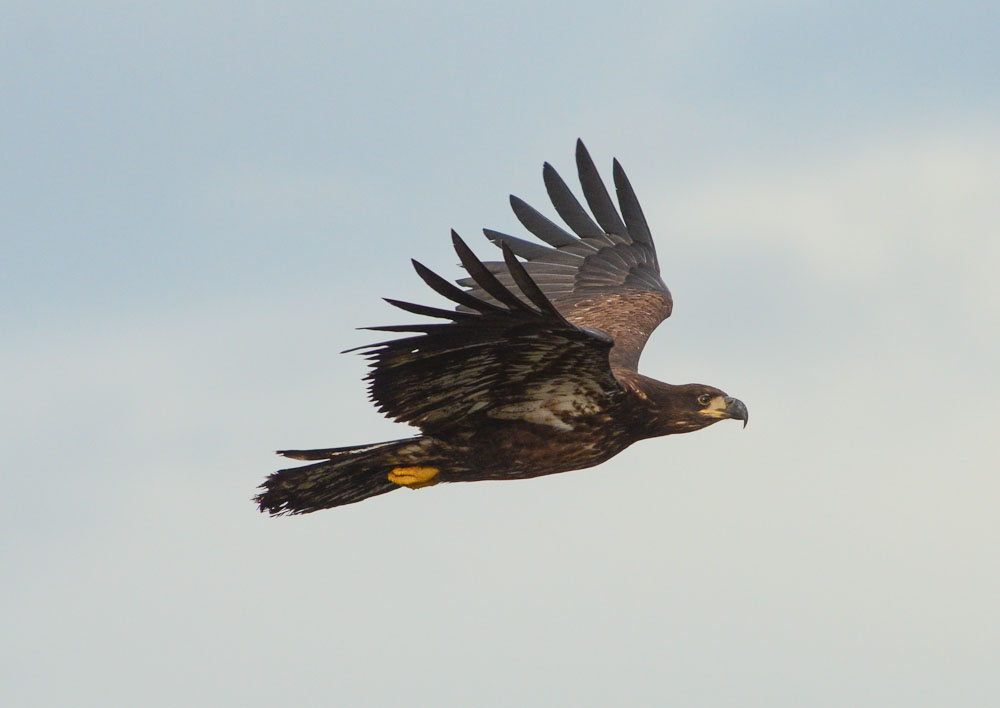
Have had some really nice weather out here since the storm. Pelicans are still stopping in and flying through the reserve, mostly in pairs or singles.  Bald Eagles have been quite active in the mornings hunting.
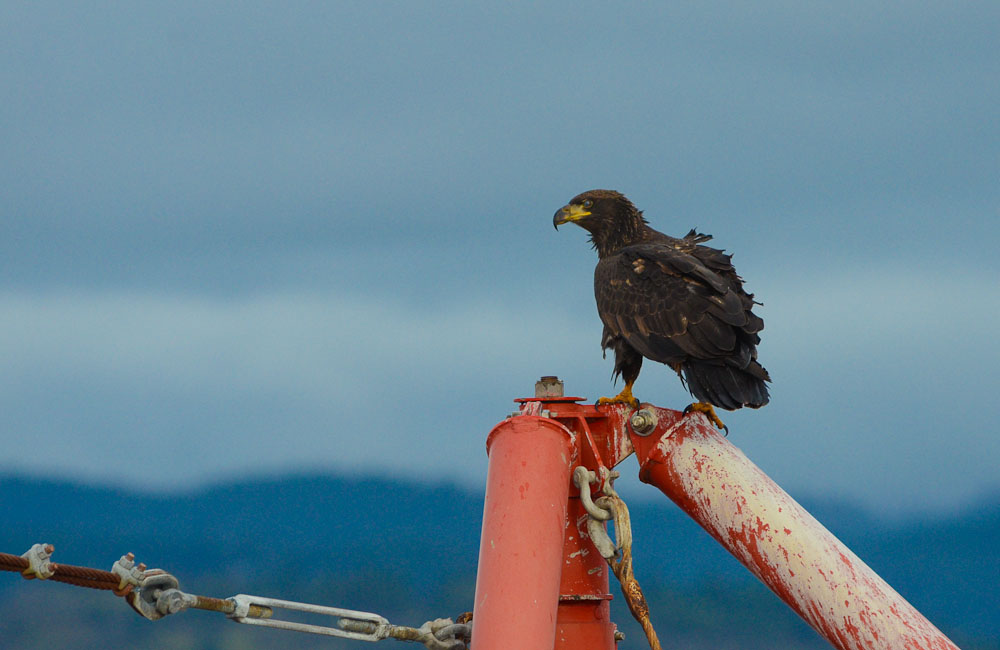
 

On top of the crane, the eagle had just finished eating what looked like some part of a seagull.  In this picture the eagle’s nictitating membrane is covering the eye.  According to Baldeagleinfo.com, “every three or four seconds, the nictitating membrane slides across the eye from front to back, wiping dirt and dust from the cornea. Because the membrane is translucent, the eagle can see even while it is over the eye.”
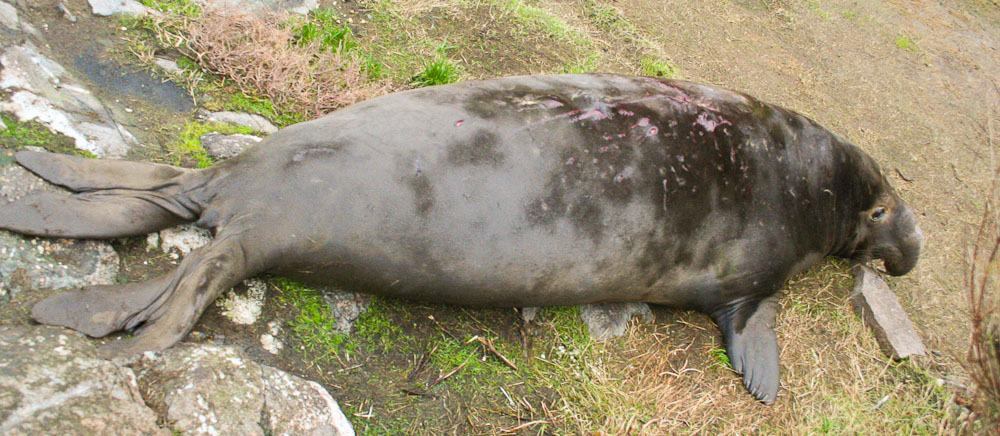
A few nights ago Zeke got some fresh wounds on his back from Misery, it was not as bad as the the last time.  Him and Misery have been on the main island for several days now. I have not been seeing as many female elephant seals since the storm.  
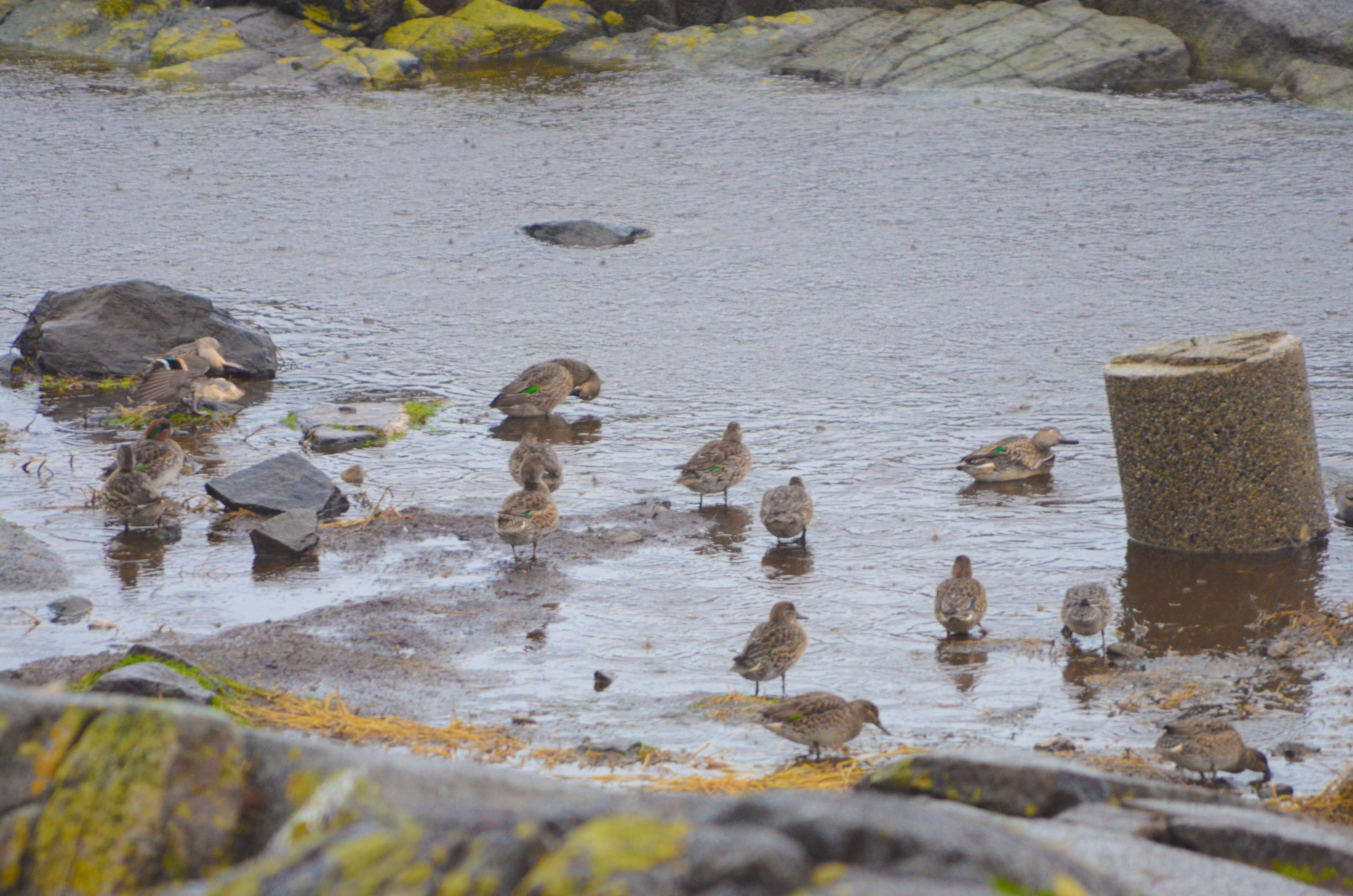
On Dec 19 there were 15 Green Winged Teals in a pool on the NE side of the island.  This  is the first recorded sighting of this bird in the reserve.


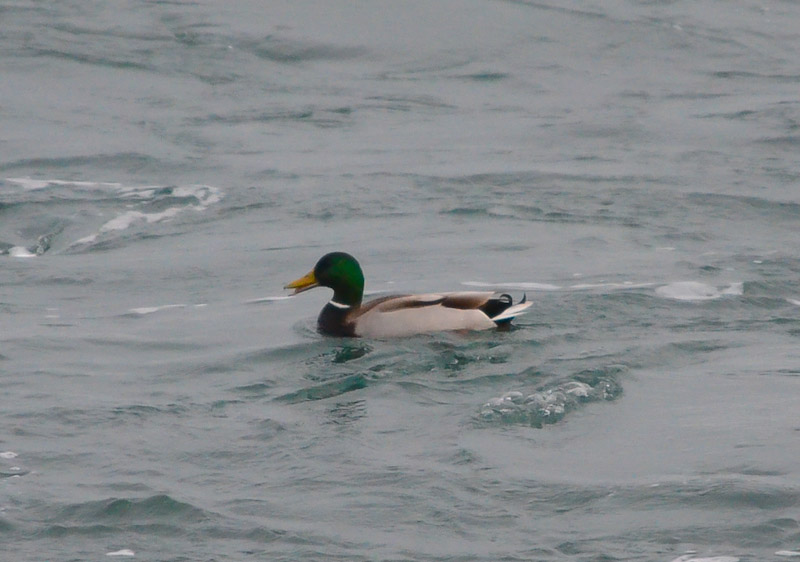
There has also been a Mallard duck in the reserve for over a week.  Pam Birley first sighted it around Dec 18th, it was also the first recorded sighting of this bird in the reserve.
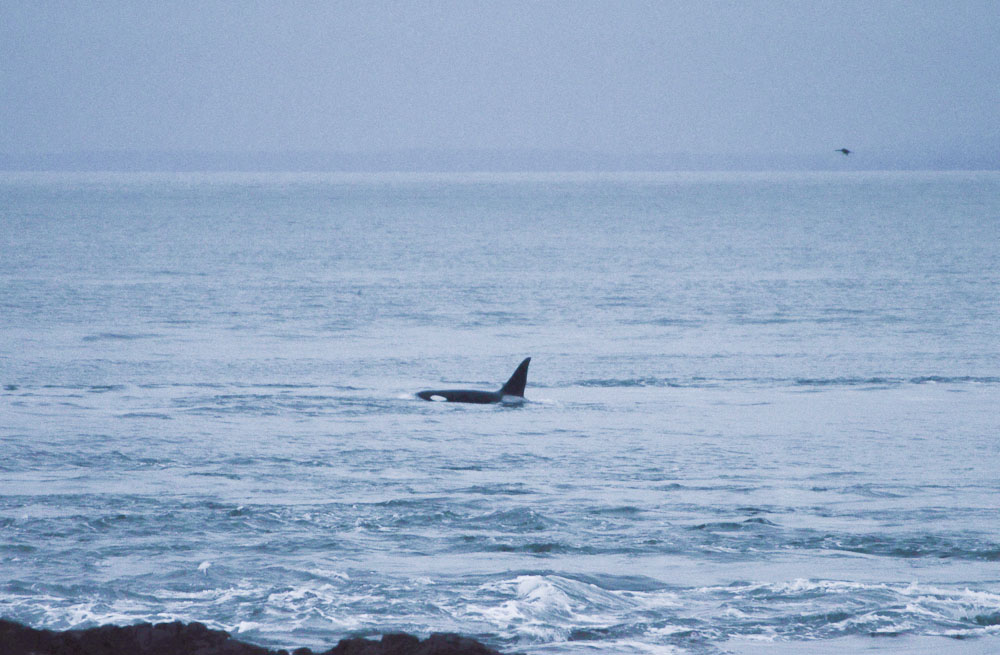


Yesterday after sunset a lone adult orca passed through the reserve going over Rosedale Reef.
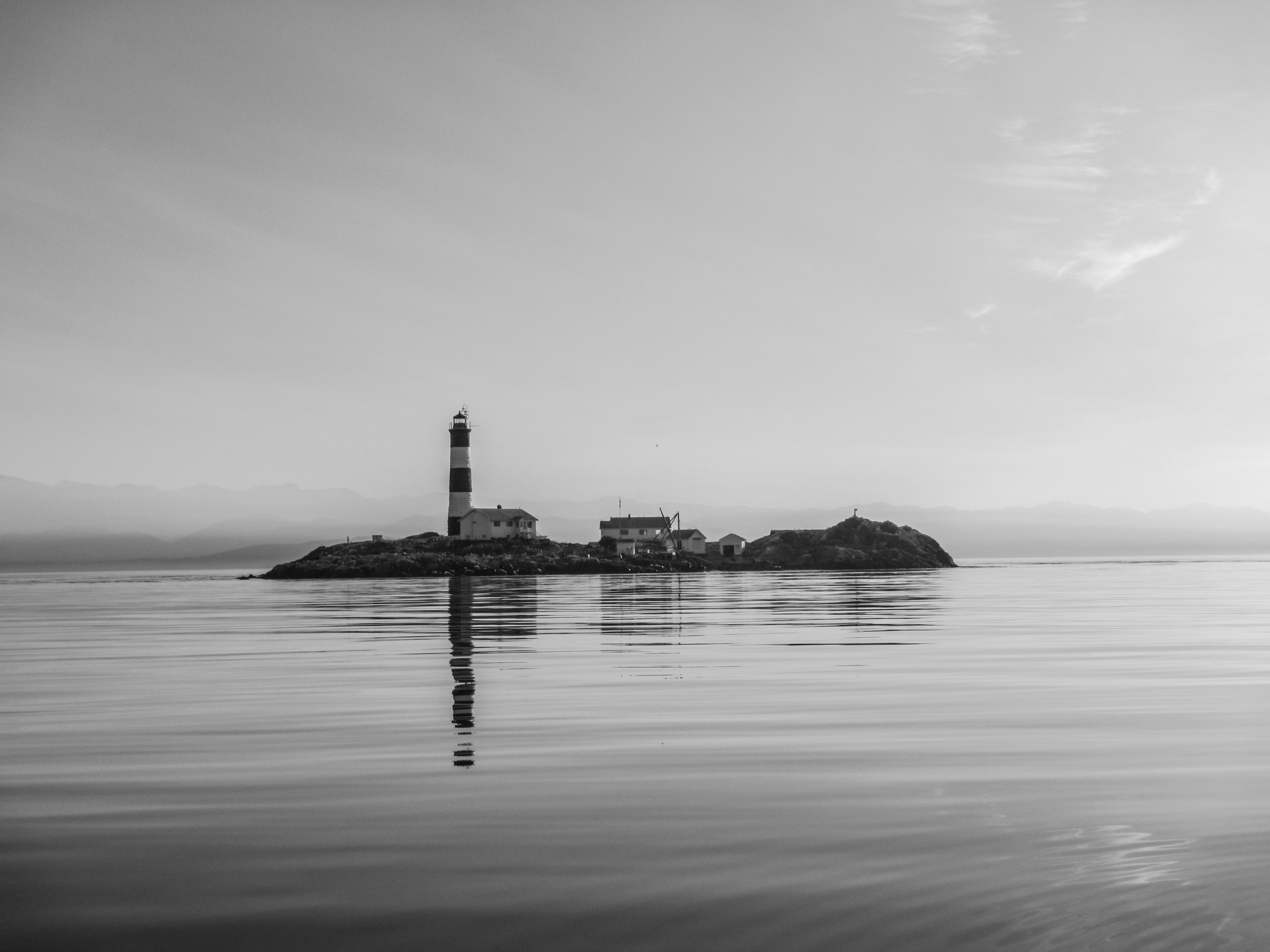
 

Changes in the weather

The first gentle sou’east weather pattern with clouds and rain occurred in the last few days. The rain is most welcome to wash away a summers worth of gull and pinniped excrement. This island can be smelled from a kilometer away!

At the edge of the world…

Surrounded by ankle-biters!

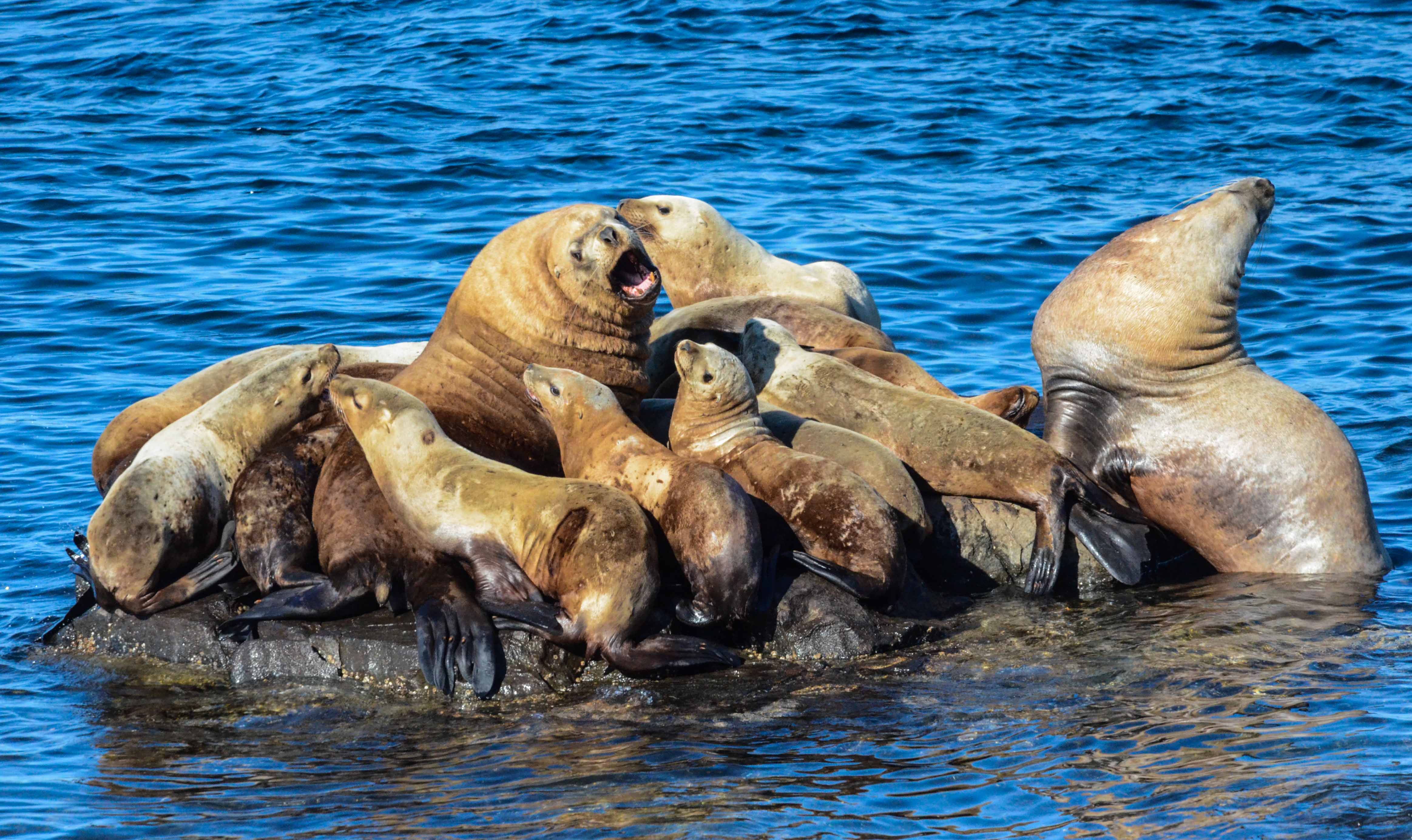
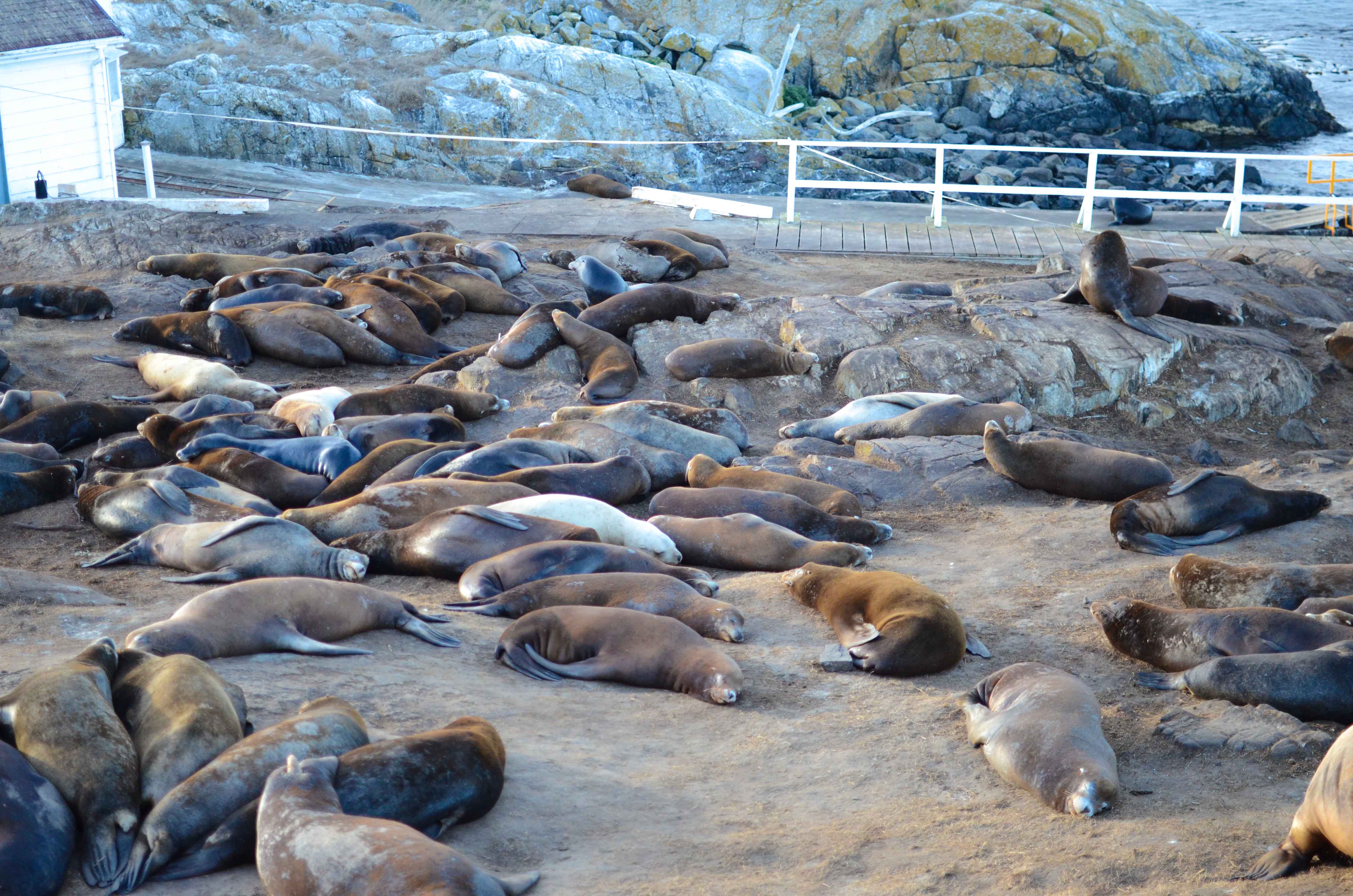
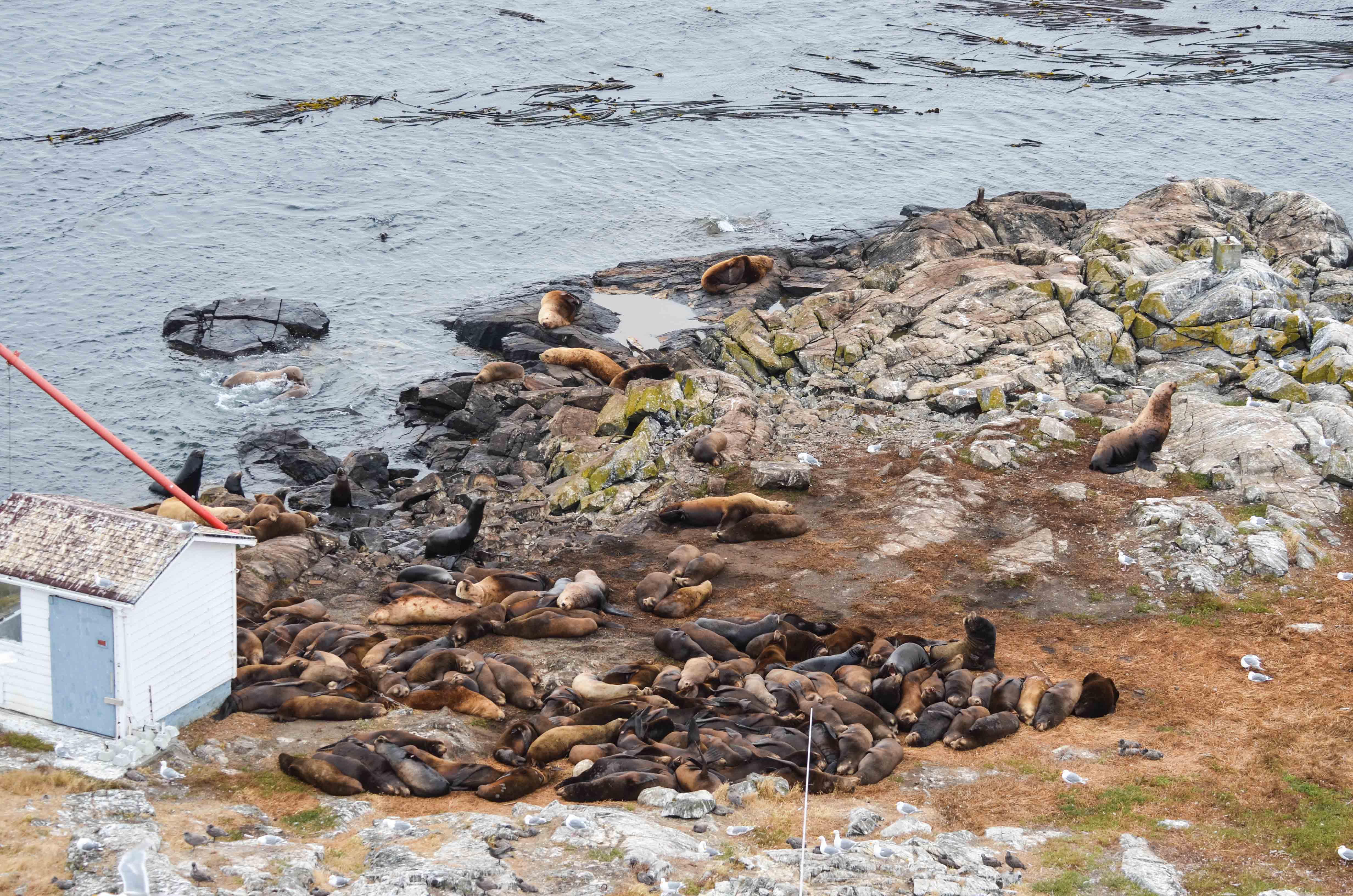
About 2/3s of the sea lions have left since the weather change. We are down to around 140 animals, perhaps 75 are Stellers down from the 175 of 10 days ago. Californians make up the remainder down from 225. Quite a few juveniles have showed up in the last week.


More birds are showing up. In the last few days several Harlequin ducks and a few dozen cormorants returned to dot the shoreline with the oystercatchers. Flocks of Bonaparte gulls feed on minnows in the eddies, forced to the surface from the deeper water by murres and rhinoceros auklets. Killdeers are spending the nights here. I hear them when I shut down the generator at night. Close to 30 sparrows are flitting about, and yesterday a few eagles and ravens were hunting and scavenging. Late developing gull chicks are on the menu. The flock of turnstones forages in the sea lion haulout ignored by the sea lions.

Tour boats are becoming less frequent and sport fishermen are waning too… yesterday for example a pod of orca passed with only 2 boats watching them rather than 8-10.

The Latest News

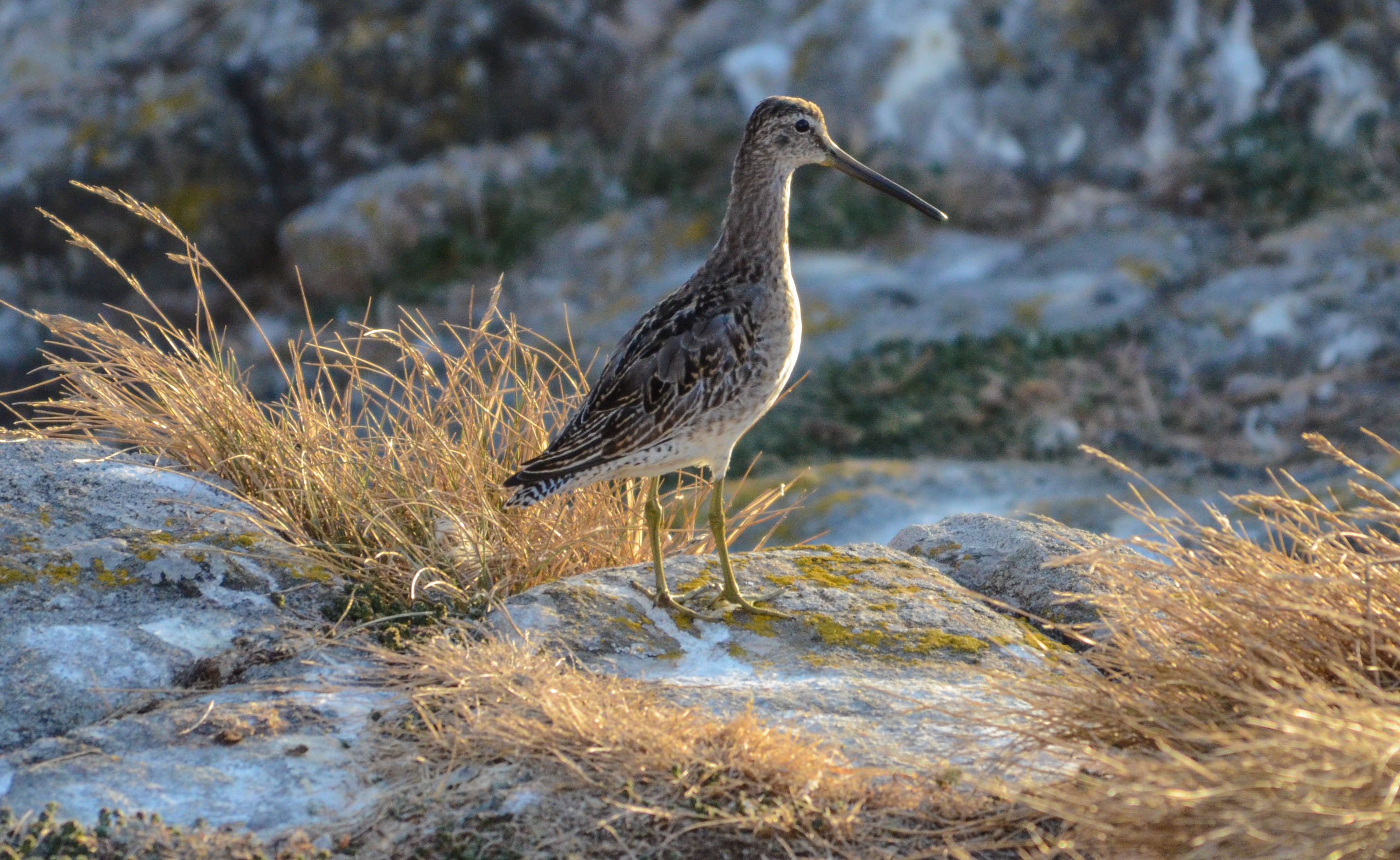
As observed with the Horned Larks last week, the southward migration of birds has begun. I was lucky enough to spot this Long-billed Dowitcher searching for food in the tufts of grass.

An unusual Long-billed Dowitcher in early winter plumage.


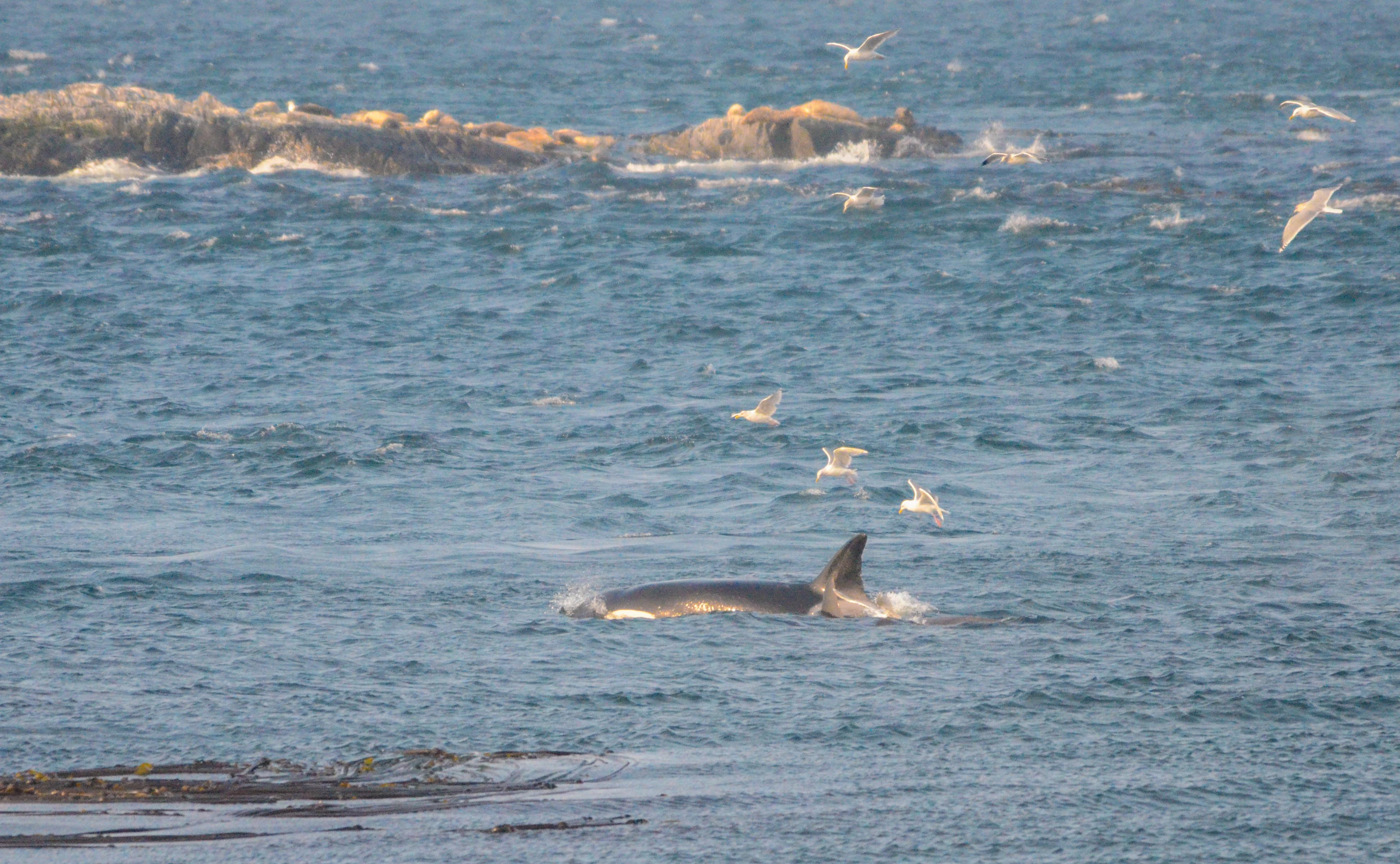
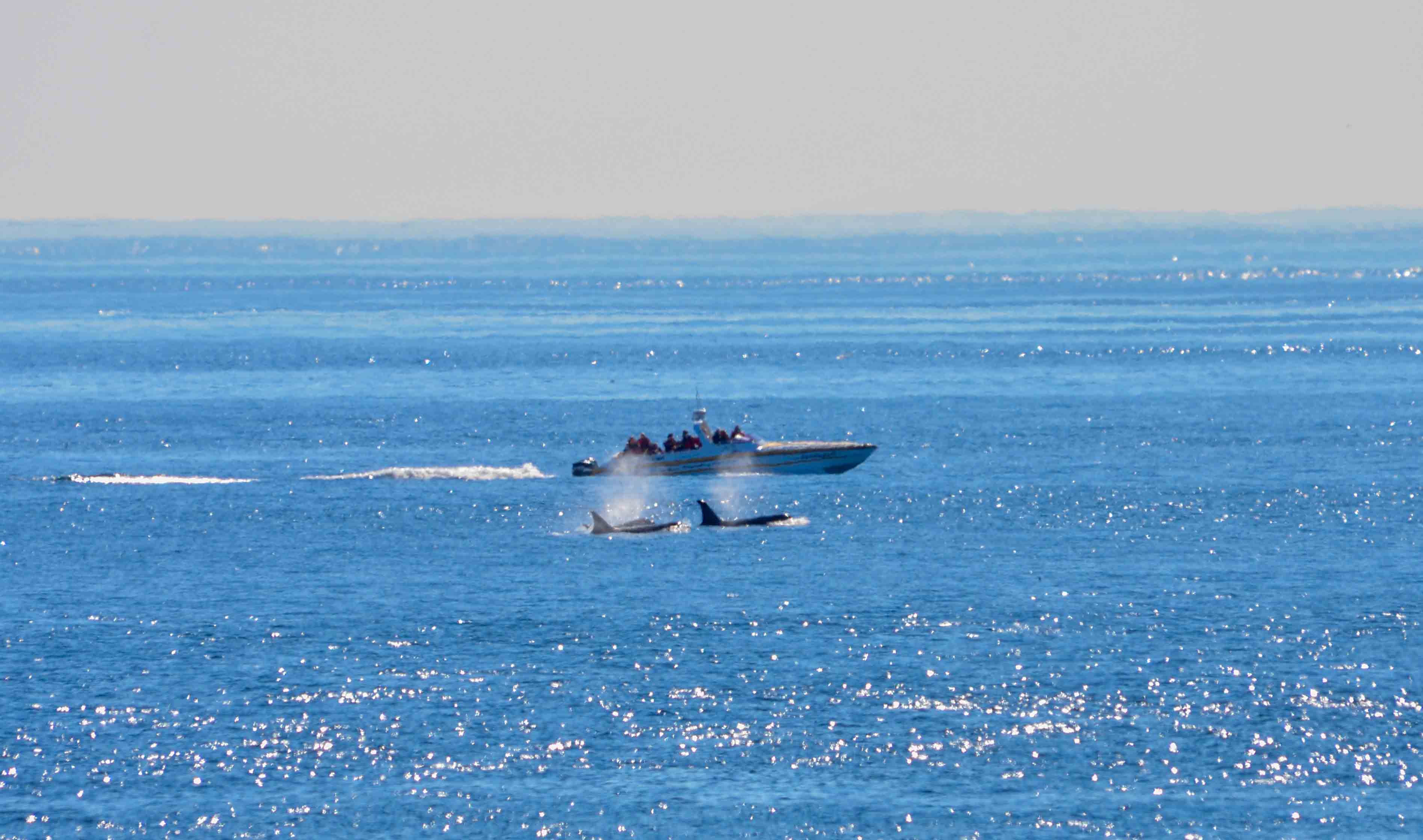
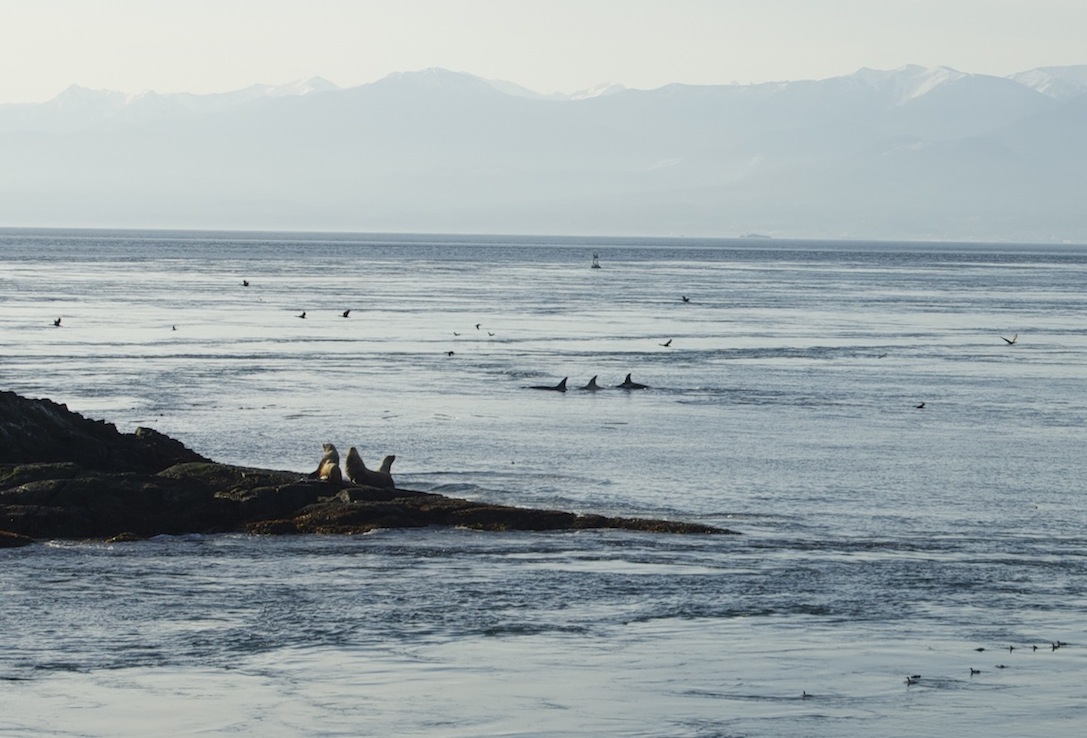
Another visitor the the reserve was a small pod of transient orca who created a scare surrounding some sea lions in the kelp bed. The orca thought otherwise of hunting the big carnivores in the tangle of the kelp bed and moved off toward William Head.

If you look close you can see a second small gray fin of a baby or juvenile.


The Sea Lions continue to dominate the environment. I had let them have their way and they surrounded the house and covered the yard. Eventually it became too much and I employed the electric fence to reclaim some territory.

The front yard became a popular haul-out.


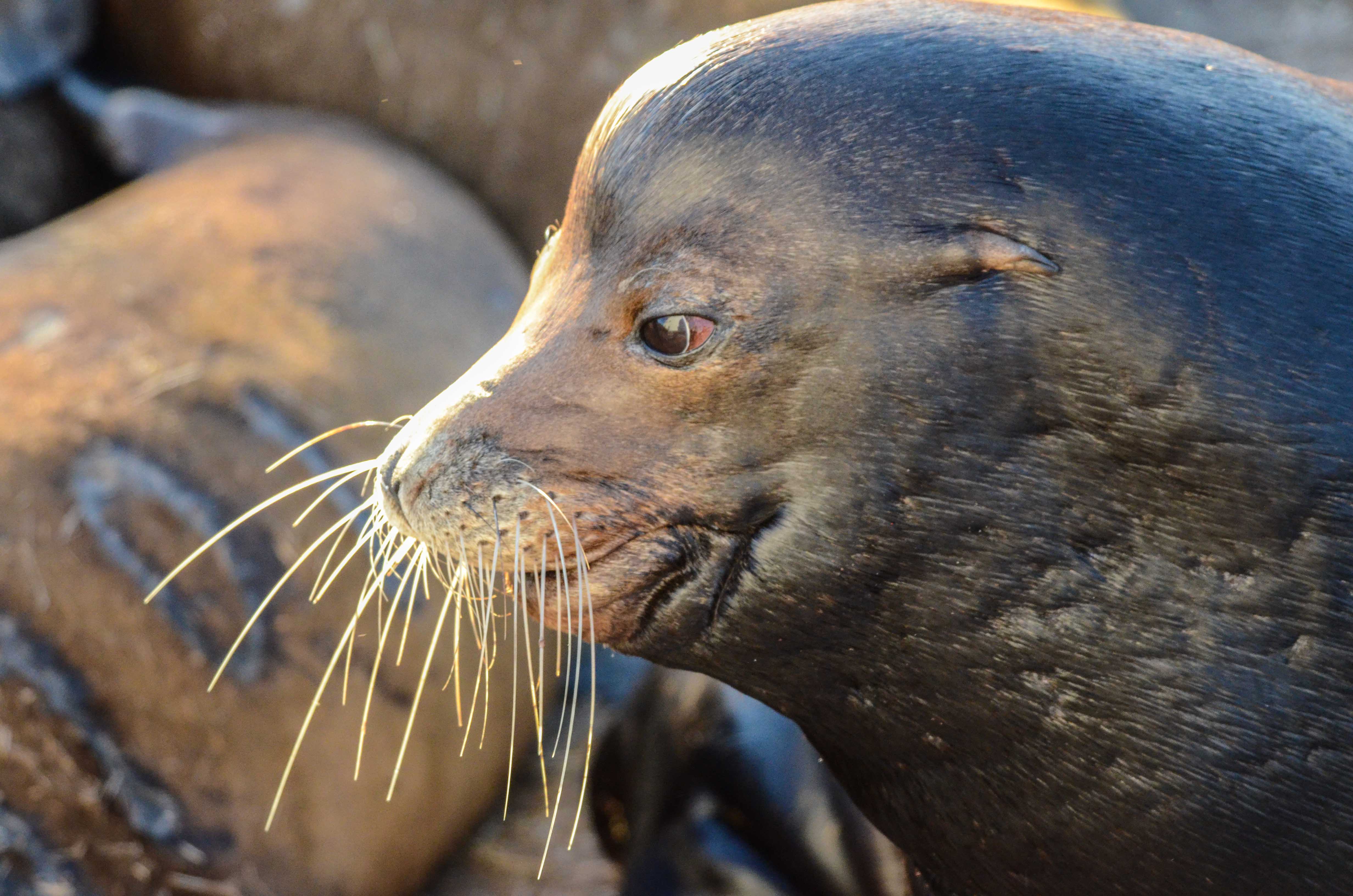
Expressive vibrissae – Californian

Orca Sighting

Mid-morning of 16 August a pod of orcas passed eastward on the north side of the island. There were only a half dozen or so, suggesting a transient pod. Of course, there were many whale watching vessels in the area. It saddened me to see some approach closer than the recommended 100m and not turn their motors into neutral and it sickened me to see an Eagle Wing Tour boat actually chase alongside the pod in the reserve. There should be more respect for these marine mammals, especially while in the reserve.

Orcas east of Race Rocks

Nonetheless, it was an amazing sight!

The sea lions have crept their way further up from the water. The image below was captured 18 August.


18 August 2012

Also, for the past 3 nights the bioluminescence of the phytoplankton (Noctaluca) in the water was been remarkable. The outline of the sea lions glow when they take to the water. This is curious because normally for phosphorescence to occur there needs to be rain and then sun and until today there has been no rain.

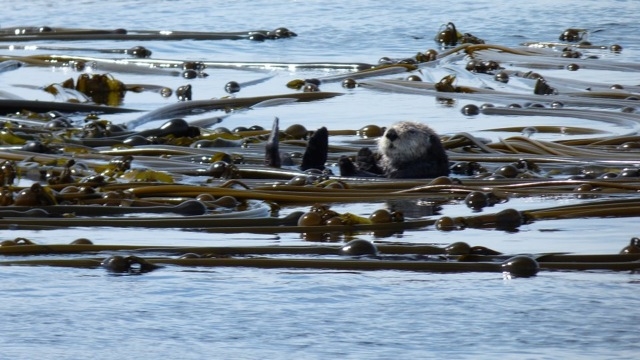
Animal Census First Sea Otter at Race Rocks

Sea Otter in race ROcks Kelp Beds, photo by Adam Bird

Sea Otter in Race Rocks Kelp Beds, photo by Adam Bird on June 10/2012

Things have been fairly quite lately regarding birds and mammals here, though one of the eco-tour boats reported seeing a Sea Otter (Enhydra lutris) in a kelp bed on Monday! The percussive blasts from Rocky Point military testing range scared off most of the Sea Lions last Thursday and only a few have returned in the last couple days. A large pod of orca passed through and near the reserve on Tuesday. Thanks to Suna, Doris and Ishmael for the census.

Elephant Seals: about 10
Steller Sea Lions: 2
California Sea Lions: 2
Harbour Seals: 204
Glaucous-winged Gull: 246
Surfbirds: 18
Pigeon Guillemots: 108
Canada Goose: 13
Bald Eagle: 3
Black Oystercatcher: 12
Northwestern Crow: 1
Raven: 1
Sparrow: 4
Sea Otter: 1
Caspian Terns: 6
Herring Gulls: 20

Weekend Tallies

I lost track of the number of visits by tour boats this long weekend. It was at least 50. An orca pod hard been somewhere off Sooke so all the boats went through and visited on the way back. Sunday afternoon the pod transited the edge of the reserve heading East towards Trial Island and Victoria. Consequently there have only been about 5 boats here today (the rain and fog might be contributing to that number). I had to phone one of the operators as one of their new operators was oblivious to the guidelines here in the reserve. They apologized and promised to have a word with him.

I asked a pleasure fish boat to cease fishing in the reserve, and he was happy to comply. Ignorance is so often a factor in issues of conservation and human impact.

I was lucky enough to see, but not photograph a Red Knot. This unusual shorebird is an infrequent visitor to our shore and is likely migrating to above the Arctic Circle. Several other unidentified solitary shorebirds have also been seen, and more California Sea Lions are showing up. The rain is much appreciated as no more than a few millimetres have fallen in almost 2 months.

Bird and Mammal Count

At least 8 orcas passed by Race Rocks Sunday morning

For Sunday March 25:

Black Oyster Catcher (Haematopus bachmani): 7 pairs

Canada Goose (Branta canadensis): 3

Surfbirds (Aphriza virgata): 100+

Cormorants (Phalacrocorax penicilatu, P. pelagicus, and/or P.auritas): 200+

Gulls (mostly Larus glaucescens): 230+

Pigeon Guillemots (Cepphus columba): 30+

Harlequin Ducks (Histrionicus histrionicus): 5

Harbour Seals (Phoca vitulina) : 30+ S islands

Northern Sea Lions (Eumetopisa jubatus): 14 S islands, 1 Middle Rocks

Elephant Seals (Mirounga angustirostris): 3 Middle Rocks, 1 Great Race

Orcas (Orcinus orca): 8 in the morning going E between S Islands and Rosedale Reef Buoy

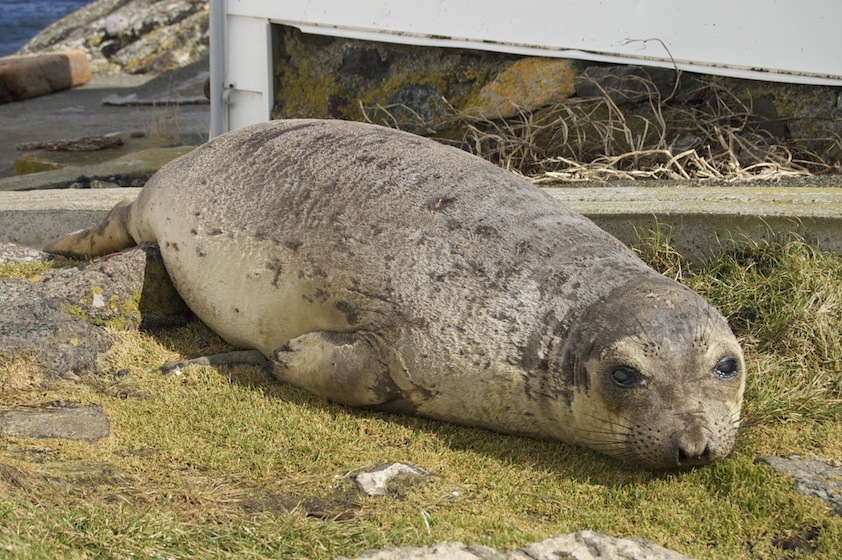
Moulting elephant seal

On Monday a young moulting female elephant seal showed up near the boat ramp. She spent a couple days on the jetty until a NE wind picked up. Squall is still on the S side of the house, she seems to be mostly finished moulting now.  This morning she was making her way N towards boat ramp but Misery perked up and growled, she turned back and stayed on the cistern.

On Monday around dusk a pod of about 7 orca whales passed by the S side of the reserve near the Rosedale Reef buoy.

It has been quite calm and clear the past few days but a 20 knot NE wind this morning.

orcas sighted again

Aside

The elephant seal was pretty vocal last night but there was no sign or sound of him today.  Yesterday at sunset I think I saw the horned owl on top of the flag pole. This morning several Bald Eagles were rounding up the gulls on great race.  Before noon a vessel from Pinnacle Divers came into the reserve.  They did a dive near the jetty and a second one off of the E rocks.  While unloading divers near the jetty the boat accidentally contacted the kelp bed off the NW side of the jetty.  I contacted the company by phone and left a message.  Around 14:00 hrs a Prince of Whales vessel entered the reserve.  There were around 30 Northern Sealions hauled out on N Rock.  On the vessels approach to N Rock some sealions exited into the water.  I contacted the company by phone and spoke with a staff member.   Around 14:30 hrs 3 or more Orcas approached the reserve from the SW passing W of the reserve heading N.  Have been gathering scrap wood, propane tanks, garbage etc. today for offloading tomorrow with a boat trip from the college planned for the morning.

Transient and resident orcas and humpbacks!!

Transient & Resident orcas as well as Humpback whales brought eco-tour vessels from all over the Salish Sea to Race Rocks today. 41 vessels were counted as of 15:00. A maximum of 12 vessels were in the reserve at any one time. The manoeuvring and repositioning of 20+ vessels in Race Passage and surrounding the Race Rocks Ecological Reserve was enough at times to drown out the sea gulls and sea lions on Great Race.
The Vancouver-based Vancouver Whale Watching had two boats transit the reserve in pursuit of both orcas and humpbacks. A spokesperson for Vancouver Whale Watching indicated that their vessels do not pursue or chase the whales, they are there to watch them. The Explorathor Express and Explorathor II both entered the reserve from the W (watching whales from behind) as the orcas and humpbacks transited W to E through the N and S ends of the reserve.
The Peregrine, a Washington-based ecotour vessel followed the pattern of the previous two boats.
I am happy to report that local eco-tours showed respect for the Ecological Reserve and did not enter the waters surrounding Race Rocks when the whales were present.
The FastCat vessel however did not wait until it was 400 yards away from Great Race before exceeding 7 knots as it exited the reserve to watch whales as they moved East. There were 41 visitors to the island today.