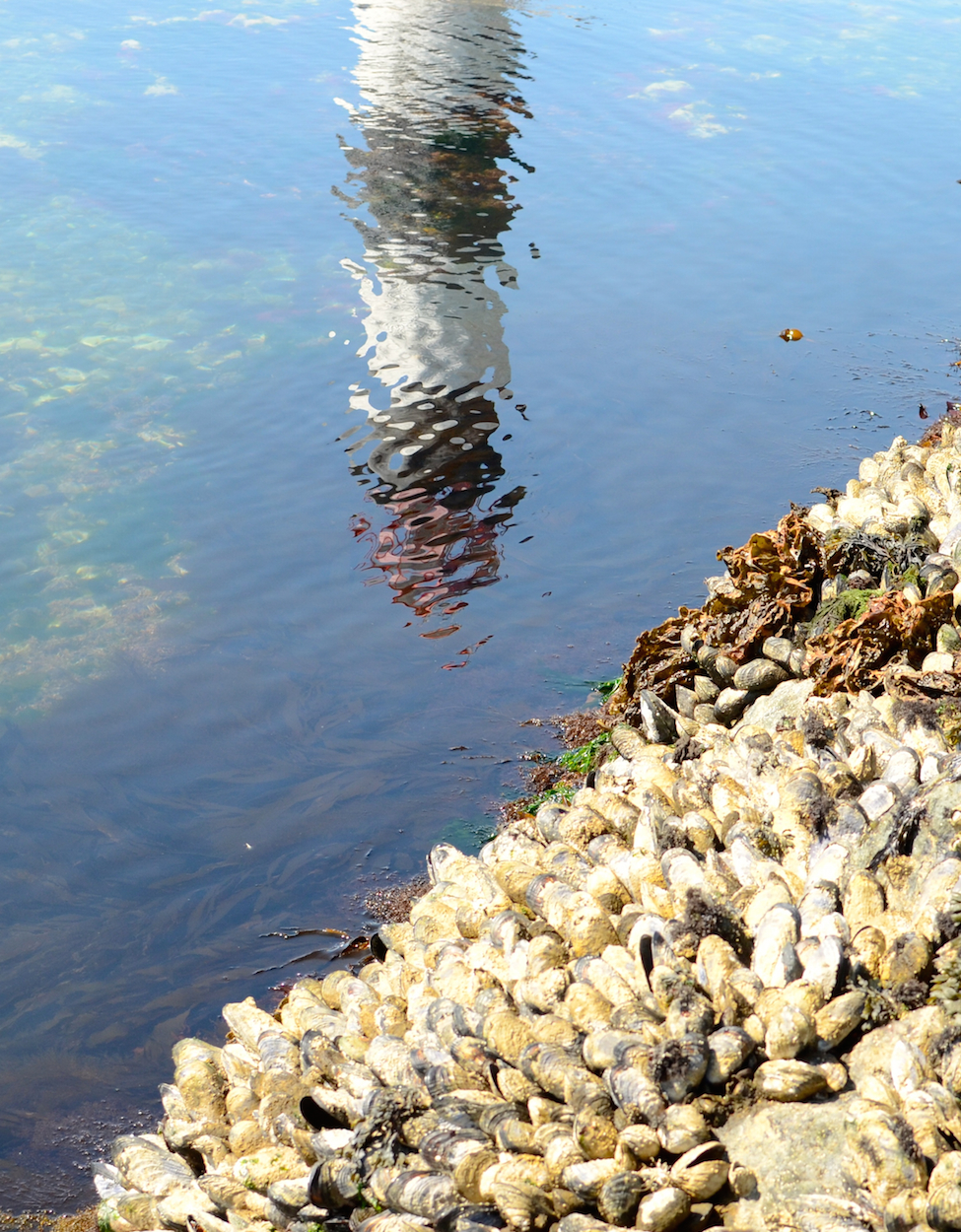
Ghosting through the Kelp Forest.

I had trouble with a temprarily unavailable log-in page when I went to to post my log blog last night, so am posting the two days together now.

The westerly blew throughout both days and fog obstructed the views. Yesterday it cleared after 4 PM and by 6 PM, thick fog had moved back in and visibility was back down to several hundred meters. Today it cleared earlier and stayed clear until sunset (at least). Wind speed both days varied between 10 and 25 knots over the course of the day and in varied direction from west-southwest to west. Yesterday the barometer went up to 1015 hPa from 1014 and then started dropping. Today, it was steady until noon and then it started dropping going as far as 1010hPA by 8 PM. The forecast for today was correct: strong westerly wind warnings, fog “patches” and sunshine. Tomorrow the wind warning has been upgraded to a gales and the rest remains the same.

Six whale watching vessels were observed working in the Ecological Reserve yesterday and today I saw three. They all abided by the rules and regulations more or less. Some boats/skippers may be used to pushing the distance limits but I did not observe negative impacts.


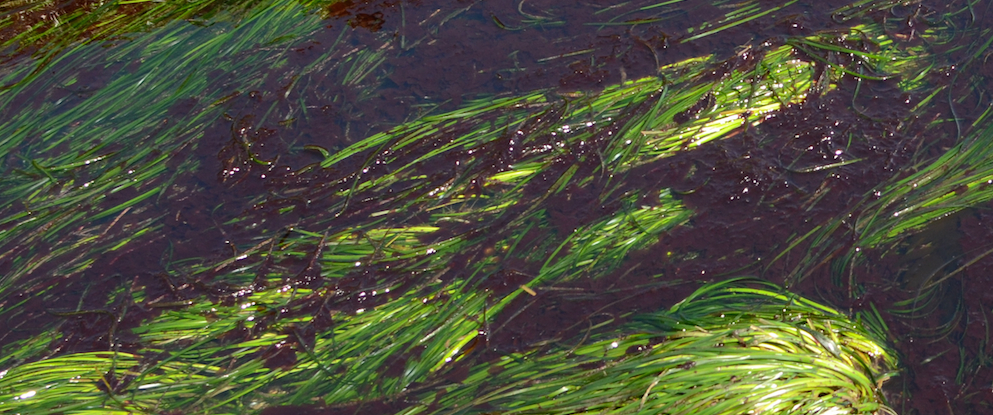
I was lucky enough to see Chunk ghosting around the island from the top of the light tower and it was a surreal sight. He started out in the surge channel in front of the science house and swam around anti-clockwise. If it wasn’t for his white scar, I might have missed him, as it was a bit foggy. He only came up to look around and make a right angle turn to avoid a reef, once. He moved elegantly with hind flippers sweeping side to side, ever so slightly and propelling his huge mass along at a good speed. He seemed to purposefully seek out the kelp and sweep through it. The pale grey, submarine shape shifted in and out of the kelp, hugging the coastline, in shallow water. How different this must be from his normal habitat offshore and in the deep. If that is what our Canadian elephant actually does. It would be nice to know where they go when they are not here.
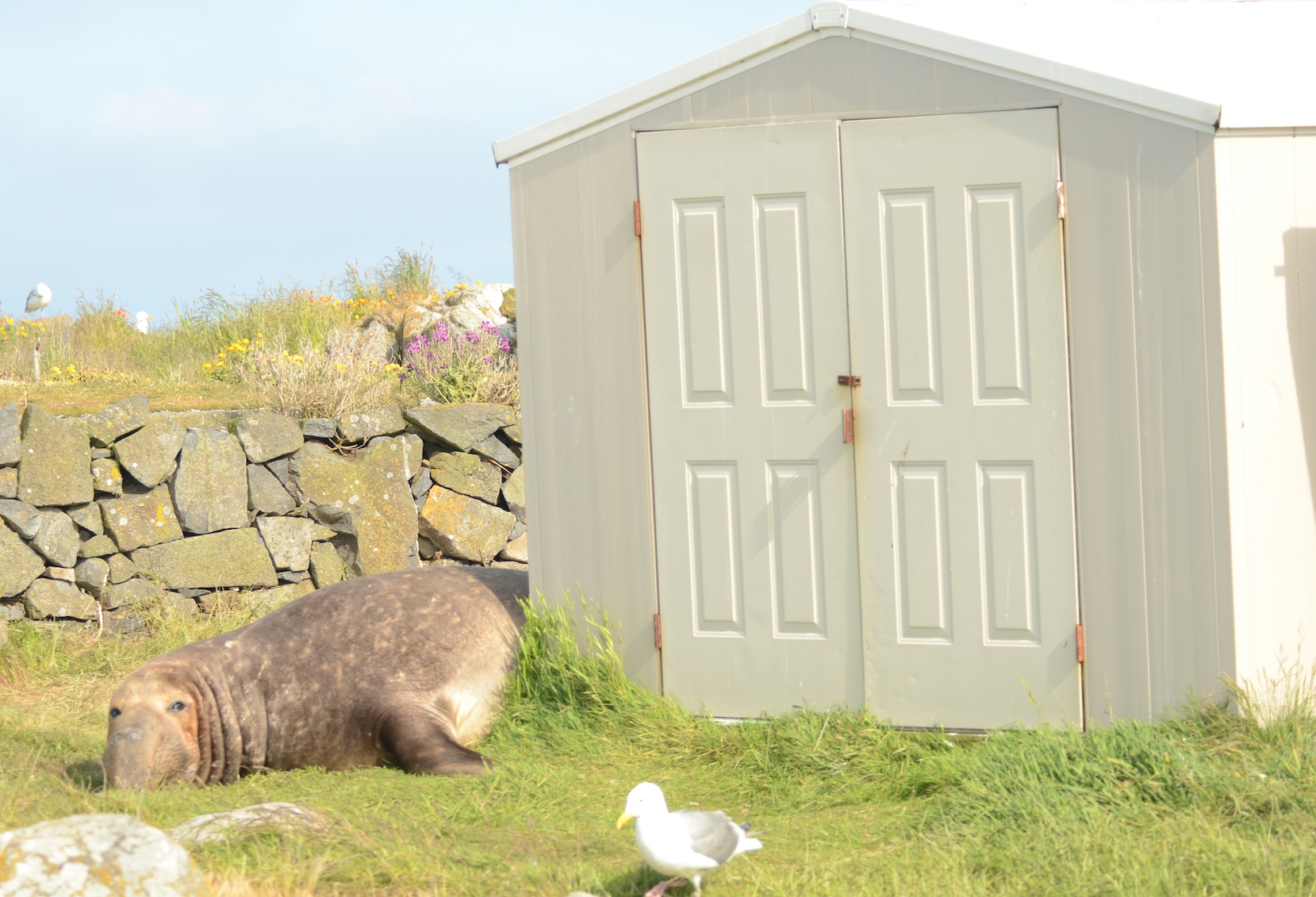
Floyd as water watchdog.

Floyd as water watchdog.


I was glad that I topped up the freshwater the day before yesterday as Floyd decided to sleep right up against the freshwater tank-house yesterday and today. It would have been a challenge to get in and out to check water-levels with his head jammed in between the Diefenbunker and the tank-house.
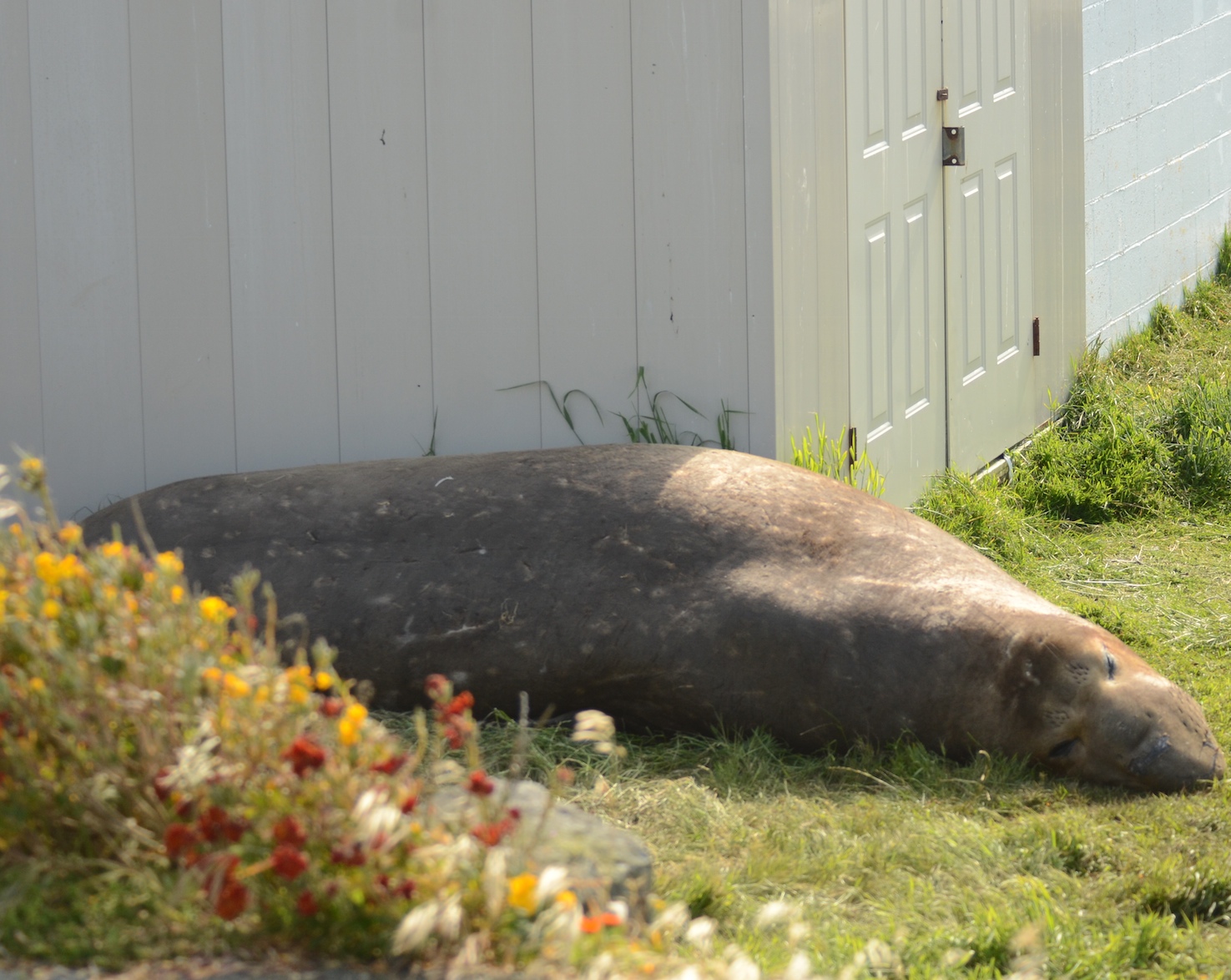
How to avoid Floyd

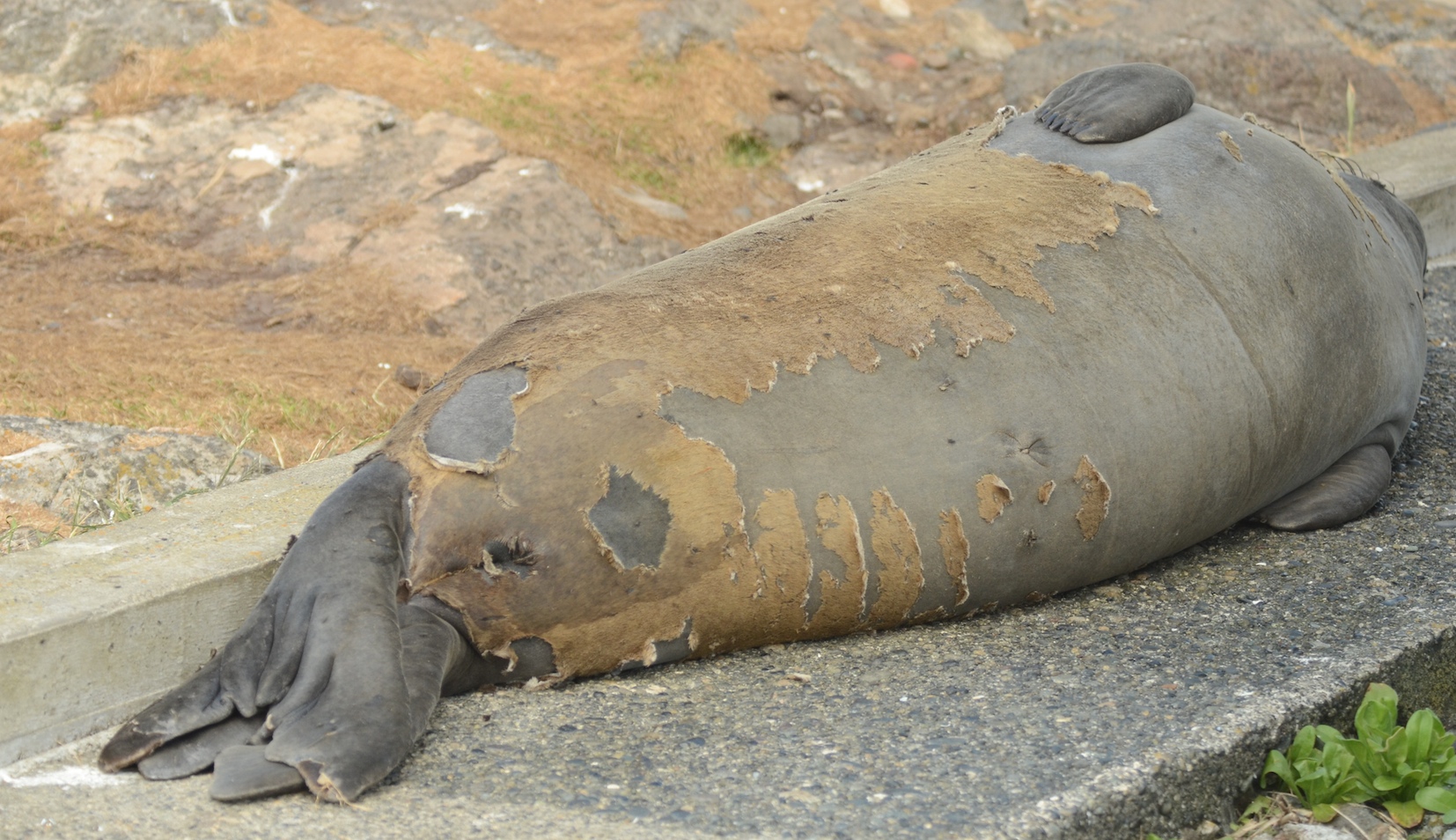
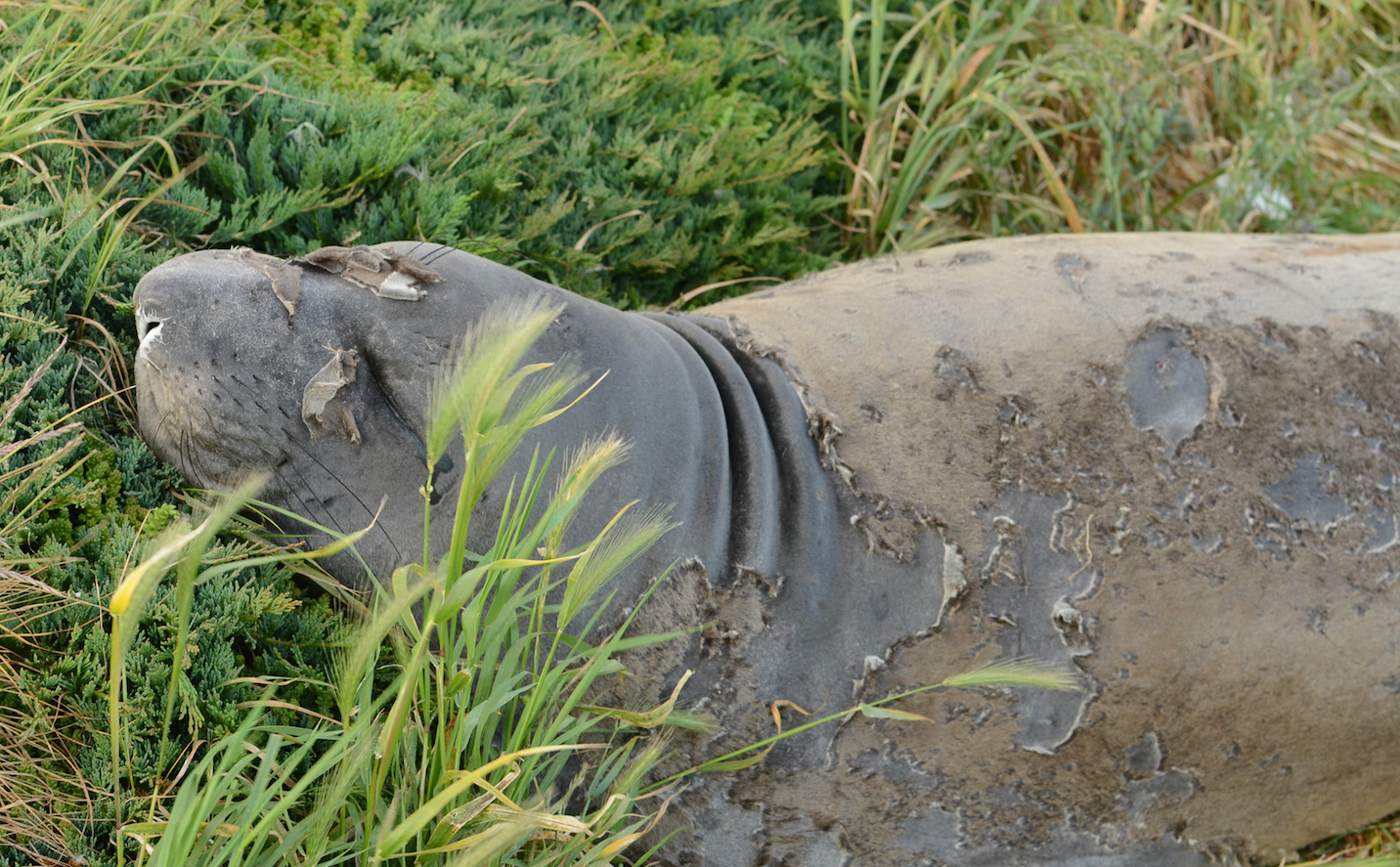
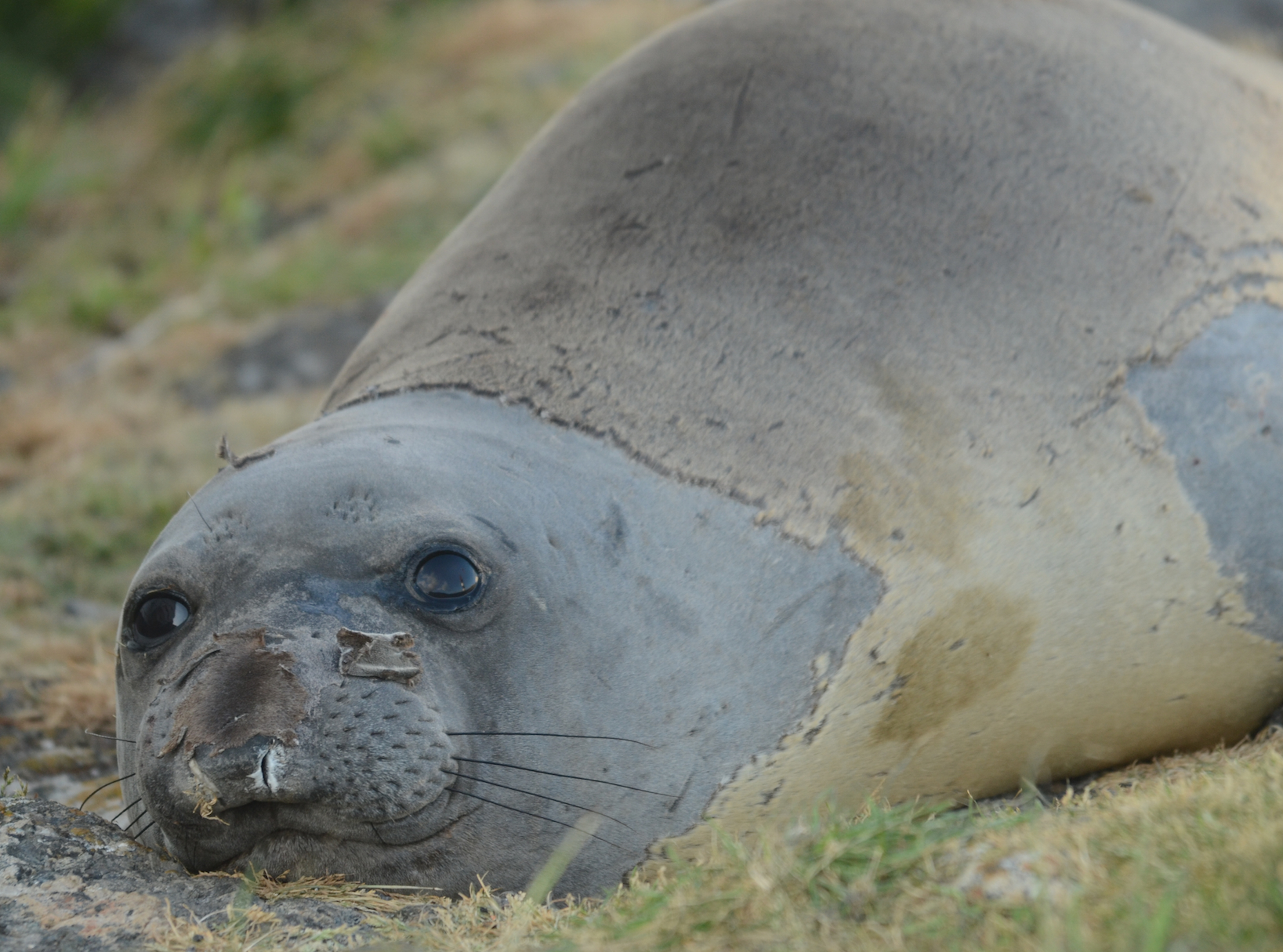
The two-year-old northern elephant seals that looked so bad before moulting are now starting to look much better as their moult progresses. This one still looks a bit scabby but no more oozing and bleeding sores.
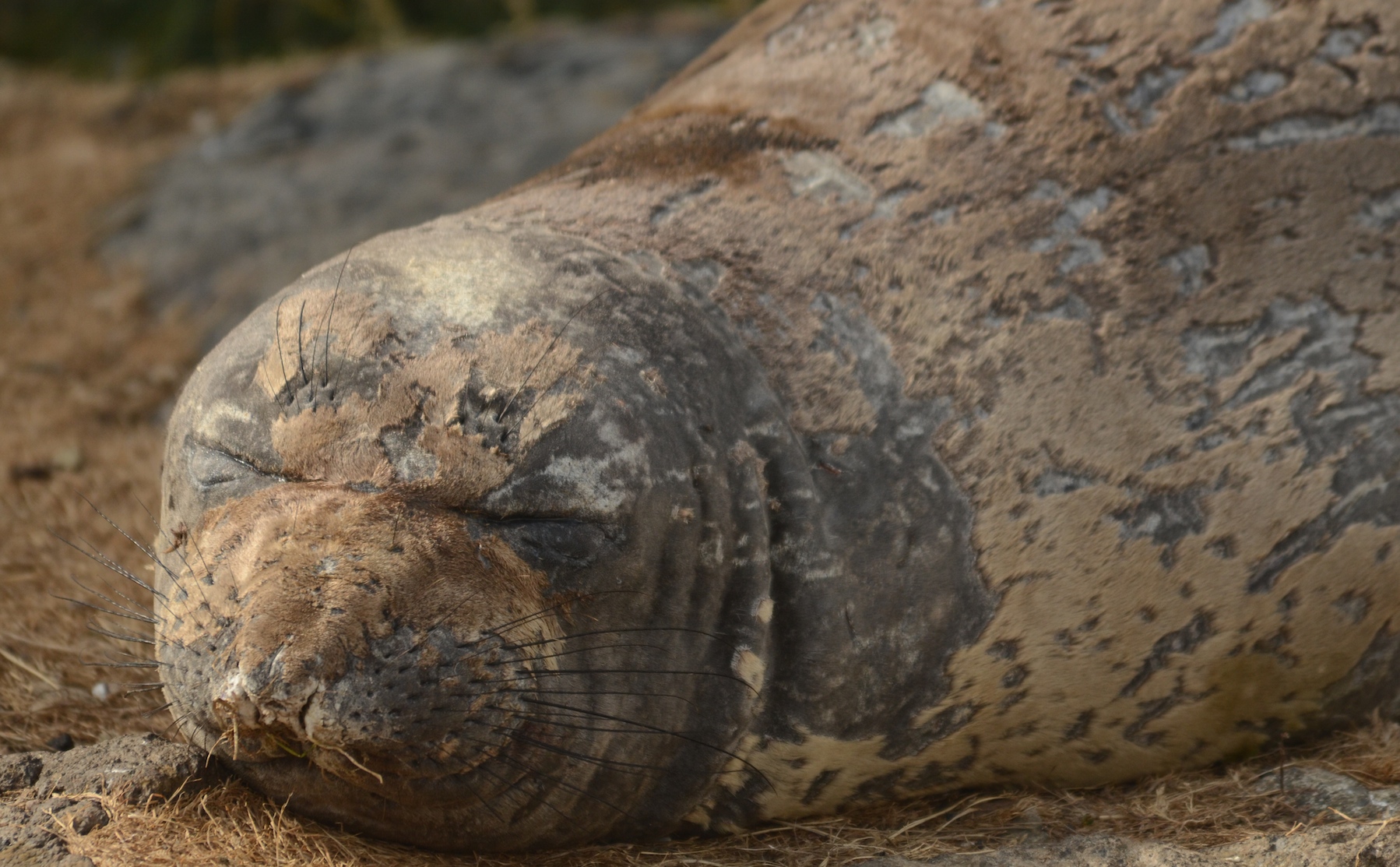
scabby moult

According to my favorite vet, Marty Haulena of the Vancouver Aquarium (Who else knows about such things?), “when there are deep cracks, bleeding and large ulcers it becomes part of a syndrome known as northern elephant sealskin diseases (NESSD) and that syndrome is not well understood though it is likely a combination of secondary bacterial infection, immune-mediated disease, and endocrine problems. It is most likely to occur in yearlings during their first or second major moult. If minor they can survive” Thanks Marty for letting me know.
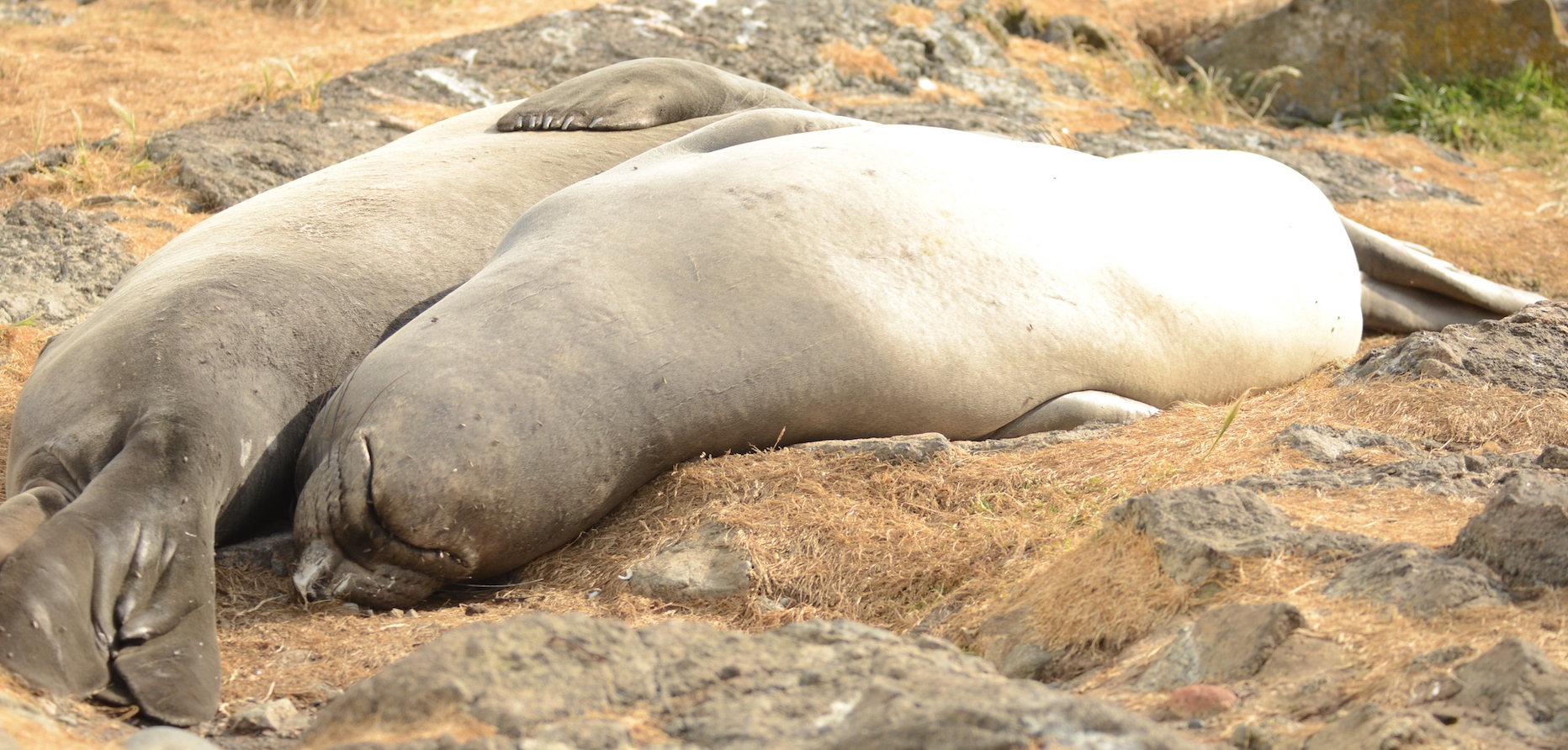
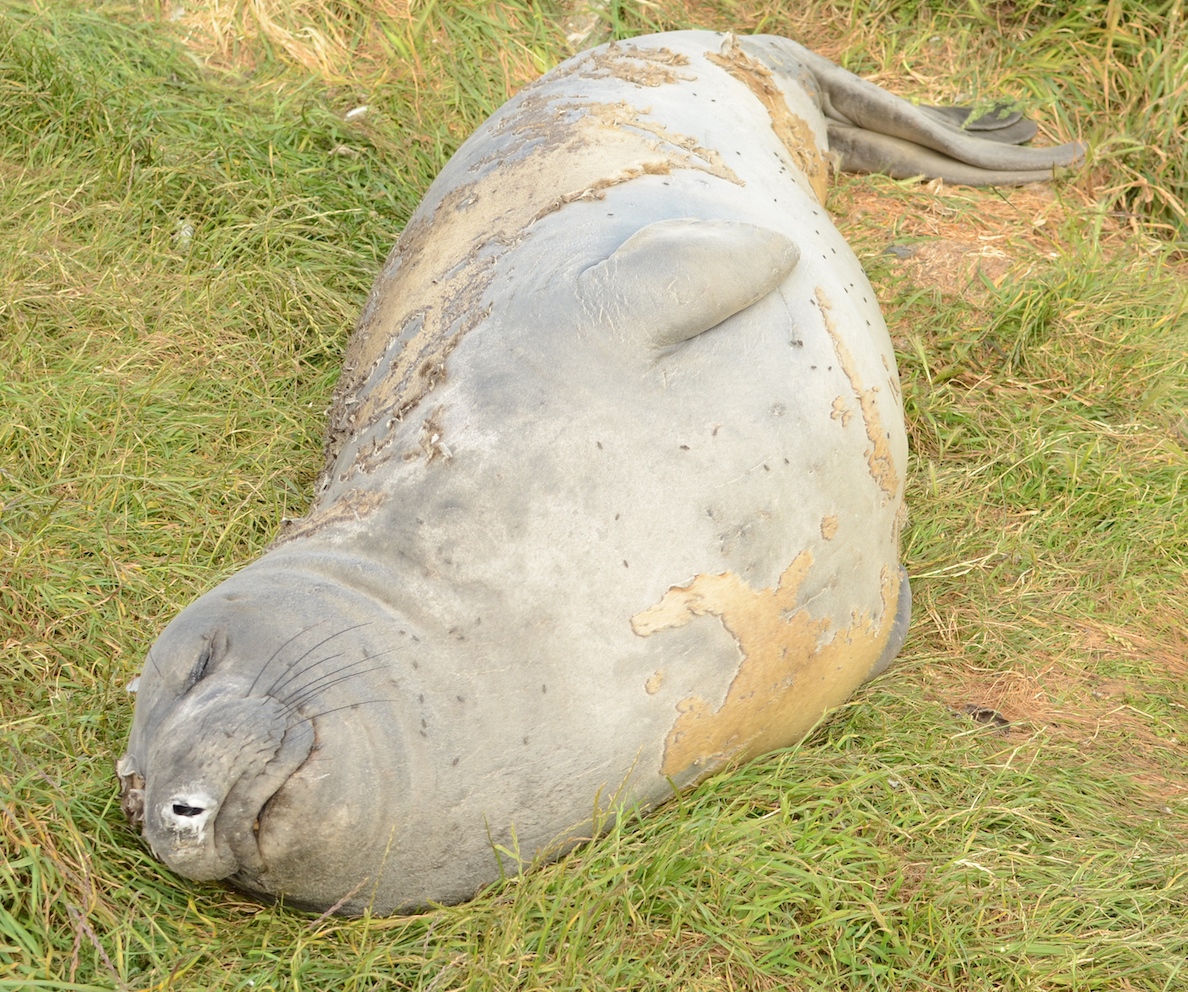
These two have been moulting, losing weight and sleeping more and more since they arrived a couple of months ago.

These two have been moulting, losing weight and sleeping more and more since they arrived a couple of months ago.

Thursday was census day and here are the results.


Northern Elephant Seals 22 (including 16 on Great Race)

Harbour Seals 110

California Sea lions 19

Northern or Stellers Sea lions 25 (One male with a neck ring, one female with a two year old, is branded but could not see brand.)

River Otter 1

Sea Otter 1

Canada Geese 23 (+ 26 goslings, one gosling missing) (note one adult (non-breeding) taken by eagles)

Harlequin Ducks 0 (left last week)

Pelagic Cormorants 16

Double Crested Cormorants 3

Bald Eagle 1 adults, 2 sub-adults

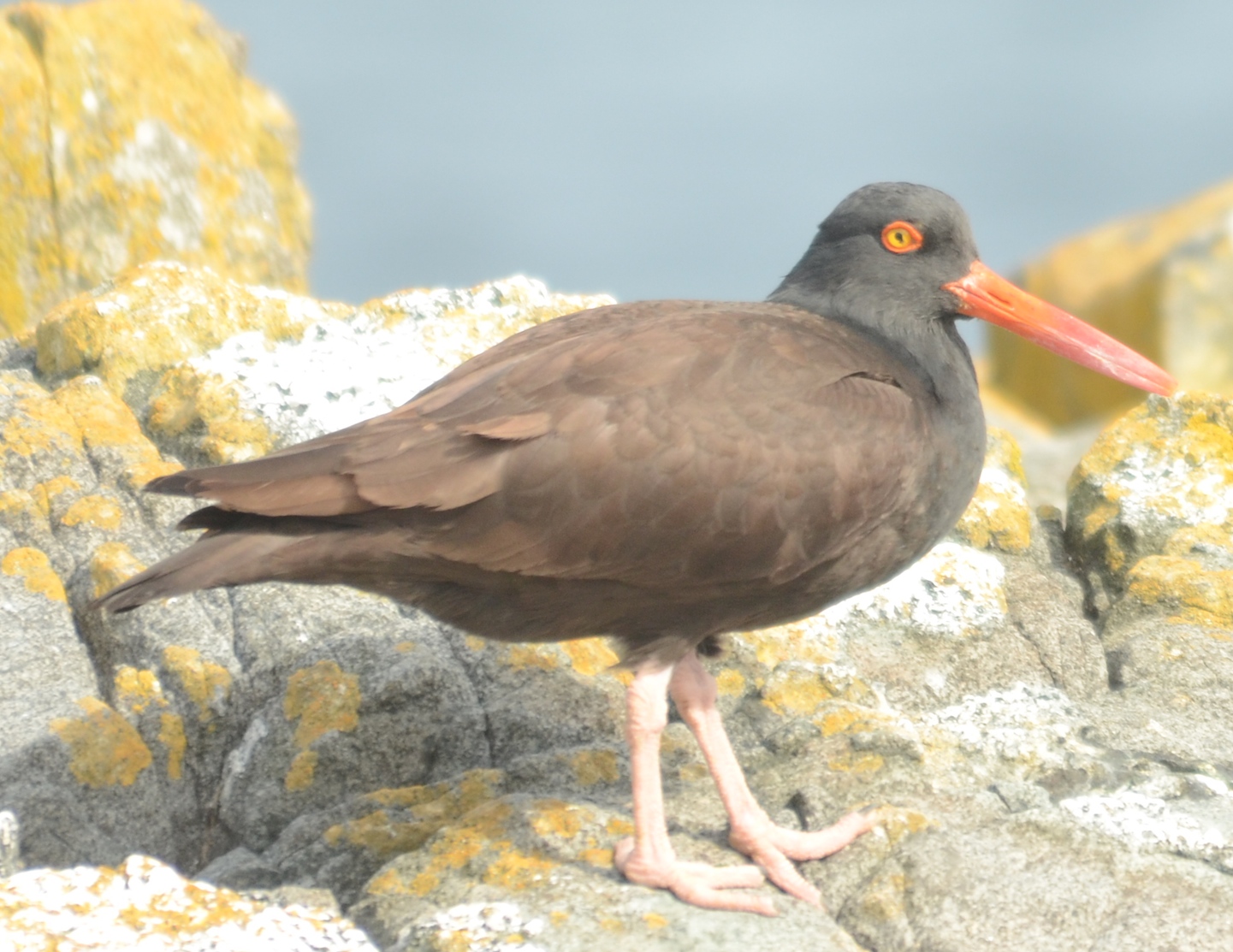
Black Oystercatchers 10

Kildeer 2

Pigeon Guillemots 211

Glaucous-winged Gulls total 444 (436 adults in nesting areas; 8 sub-adults in roosting/resting area) Some gulls starting laying and incubating.


There were no visitors either day and chores were routine. I leave for Portugal tomorrow Christine will be doing the blog. Back June 7th.


Well Timed with the Race

Winds were calmer today and came from the same general direction, ranging from west to southwest, at a respectable 10 to 20 knots for most of the day. The speed picked up at bit in the evening, pushing behind the first Swiftsure sailboat back with 25 to 30 knots. The sky was partially overcast for much of the day but it was bright and sunlight levels were energetic. The barometer continued its climb started late Thursday, peaked late in the afternoon, and started the inevitable slide back down. The forecast is calling for more wind this evening and more of the same tomorrow.

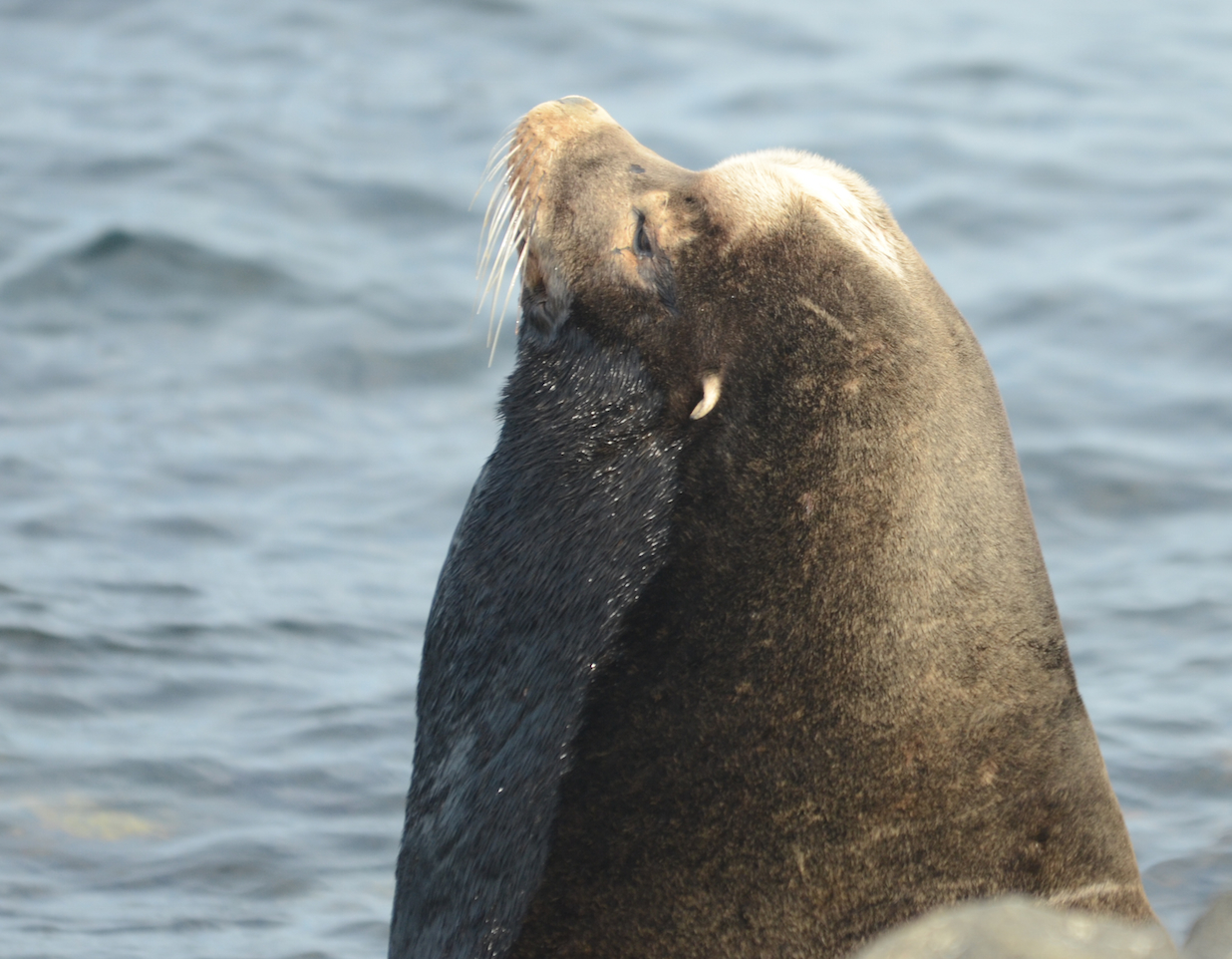
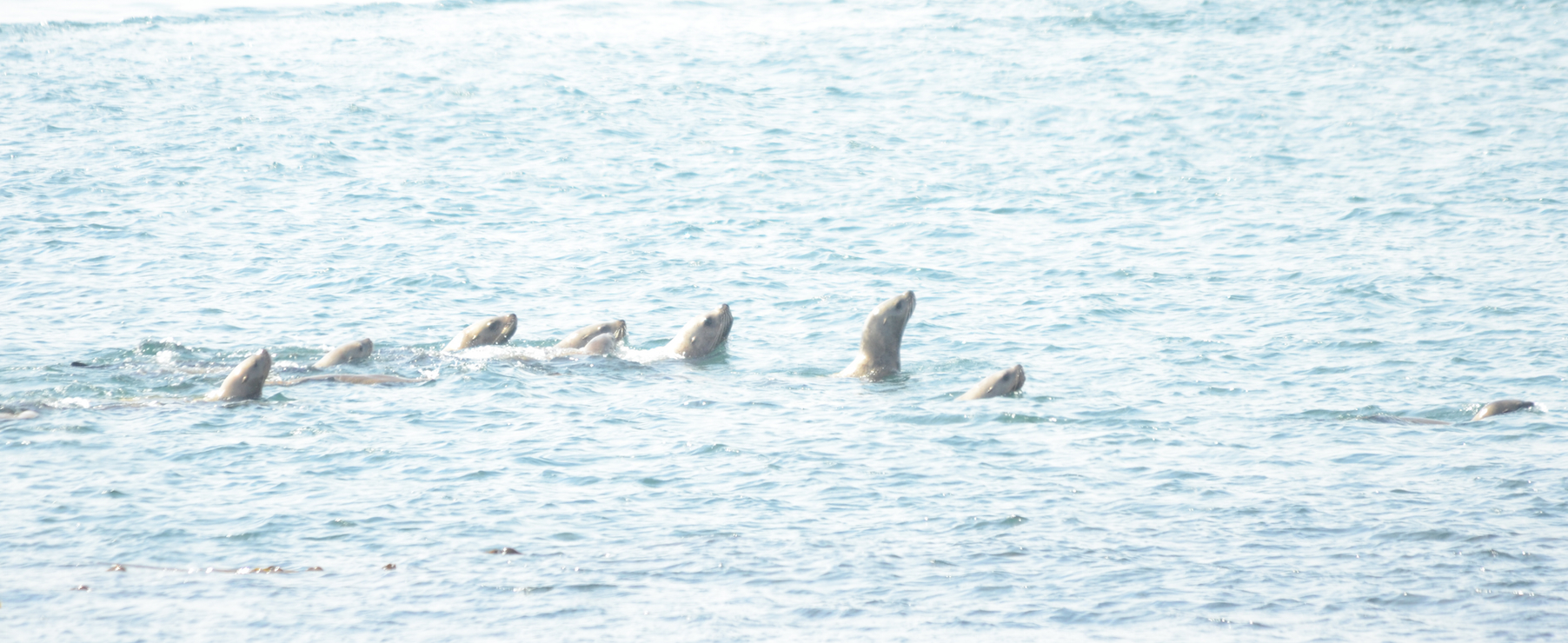
Stellers Sealions craning their necks to see the sailboats racing by Race Rocks.

Stellers Sealions craning their necks to see the sailboats racing by Race Rocks.

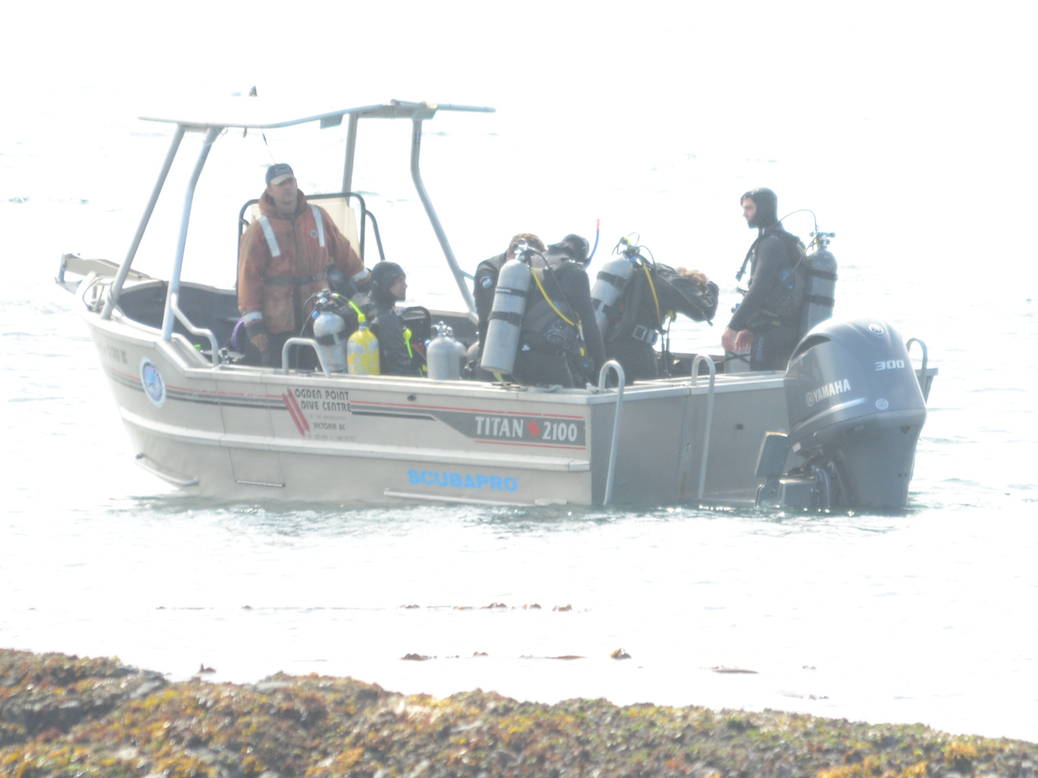
There were a lot of vessels, all around Race Rocks today as the Swiftsure Sailing Race passed by, mid-morning and began returning in the evening. None of the sailboats in the race were observed within the Ecological Reserve although a few were drawn close to North Rocks by the currents. Six whale watching boats were noted working in the Ecological Reserve in the morning and one in the afternoon. The usual Saturday dive charter tended a group of divers off South Islands.

Divers enjoy the incredible biodiversity underwater at Race Rocks. The Ecological Reserve includes the creatures on the bottom, so it is a sustainable diver destination with responsible operators like Ogden Point Diving gate-keeping.

Divers enjoy the incredible biodiversity underwater at Race Rocks. The Ecological Reserve includes the creatures on the bottom, so it is a sustainable diver destination with responsible operators like Ogden Point Diving gate-keeping.

The Northern Elephant Seal moult continues, as does mating, nest building, laying and incubating by Black Oystercatchers. The Pigeon Guillemots and Glaucous-winged Gulls are not far behind and the Canada Geese are way out ahead with some gaggles of goslings already larger than chickens.

This female Northern Elephant Seals contributed a skin sample without knowing it.

This female Northern Elephant Seals contributed a skin sample without knowing it.

Skin samples and vibrissae were collected today, from the ground where moulting animals had been lying. Luckily they leave and go for a swim once and a while, so this is a non-invasive way to take a sample. The hope is that funds for isotopic analyses can be found. Information generated by these analyses will give information about diet and trophic level and could be particularly meaningful for tagged animals, for which there is already baseline data. Some of these animals, such as 5850, also had a satellite tag earlier in its life. There is very little information published on the only Northern Elephant Seal colony in Canada.

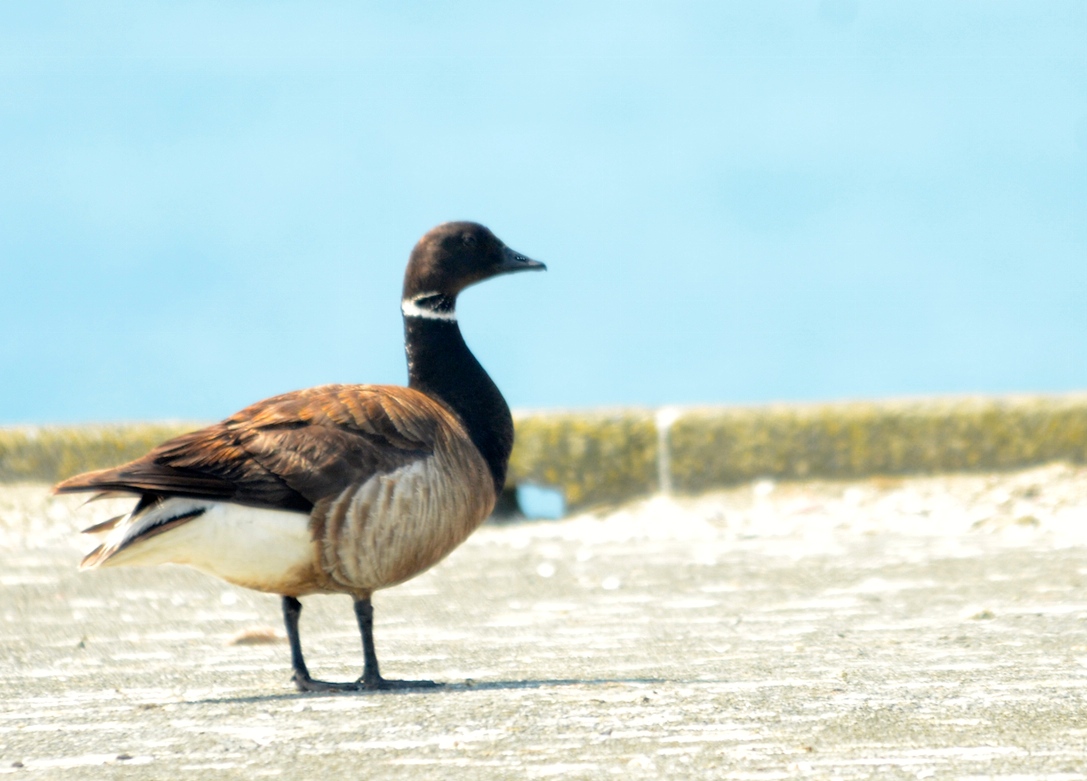
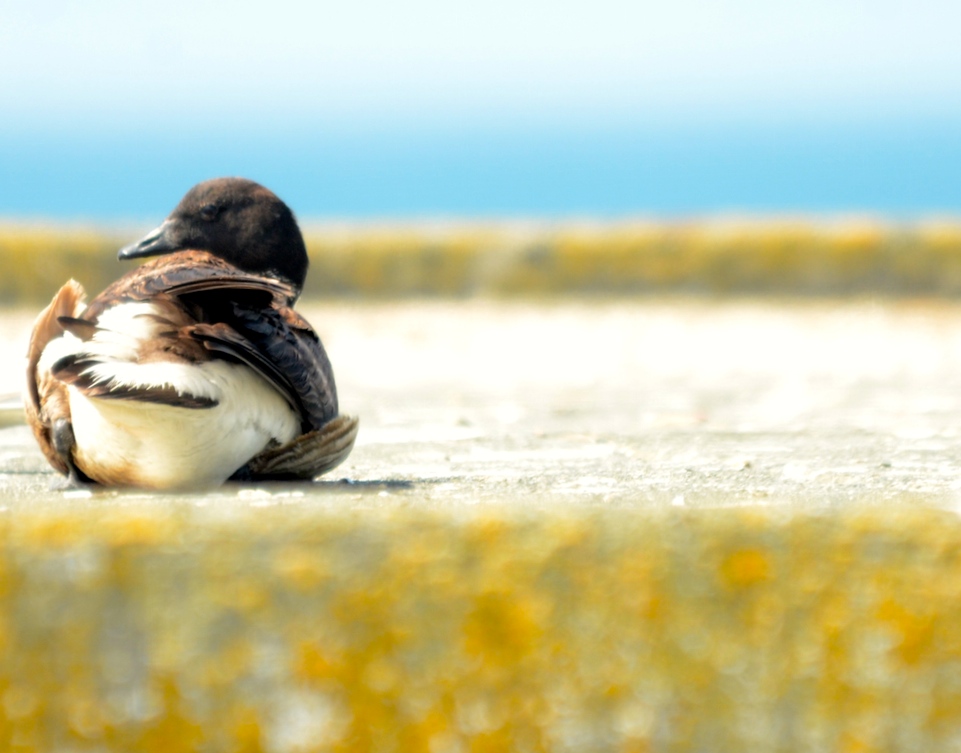
A single Brant visited today, stopping off on the helicopter-pad to have a rest and preen. Oddly enough the gulls were not that welcoming. It didn’t stay long enough for the Canada Geese to notice.

Brandt makes a landing on the heli-pad.

Black brant goose makes a landing on the heli-pad. It has a long way to fly before it nests in the tundra of the high arctic.

Brandt

There were no visitors today and chores were routine, of the entropy defying type. Solar power was used to run the desalinator and make lots of fresh water today in spite of clouds.


Yellow-headed Blackbird

Again it was a day dominated by the west and west-southwest winds. It was blowing 30 to 35 knots at dawn but the velocity subsided and most of the day it blew 20 to 25 knots. Skies were partially overcast and as predicted there were a few showers. Air temperature remains low, and is not much different than flooding sea surface temperature at ~ 9.7 oC. ranging between 10 oC and 12 oC .The wind is also chilling and today had the highest wind speeds of the week. The barometer rose today from 1008 to 1013 hPa and is dropping now while the forecast calls for gales and a gale warning has been issued. Saturday is supposed to be mainly cloudy with a 30% chance of showers.

There were four whale-watching boats observed, working in the Ecological Reserve today. No other vessels were observed in reserve.

Female Northern Elephant Seal # 5086 is on day seven of her moult now and has made great strides in losing skin during the last 24 hours. She has achieved the two thirds moulted milestone and is still grouchy.

5086_Day 7

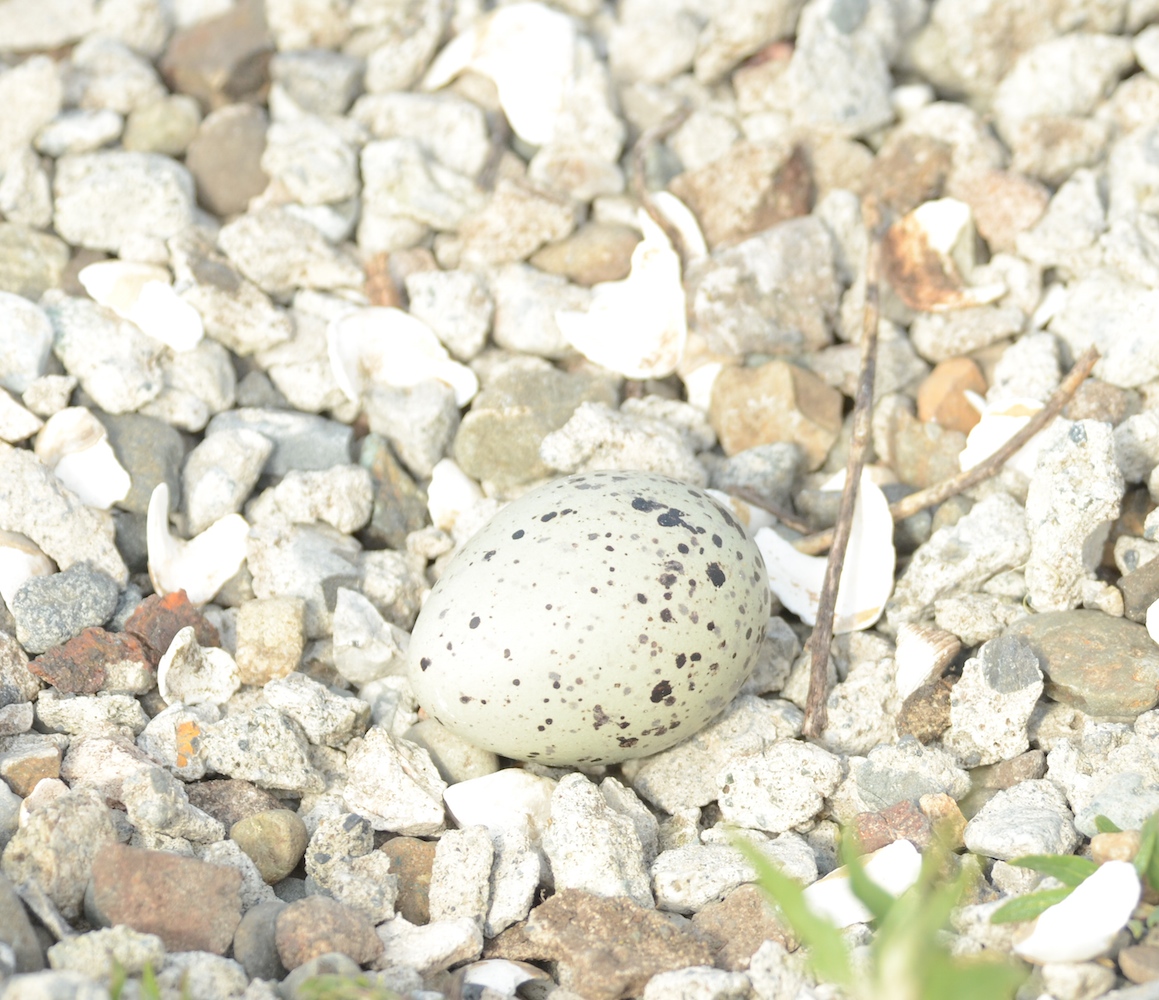
Black Oystercatchers are without a doubt nesting now and there are eggs in their terribly spartan nests, which have none of the comforts of home like soft vegetation or down.

Untitled bloy egg2

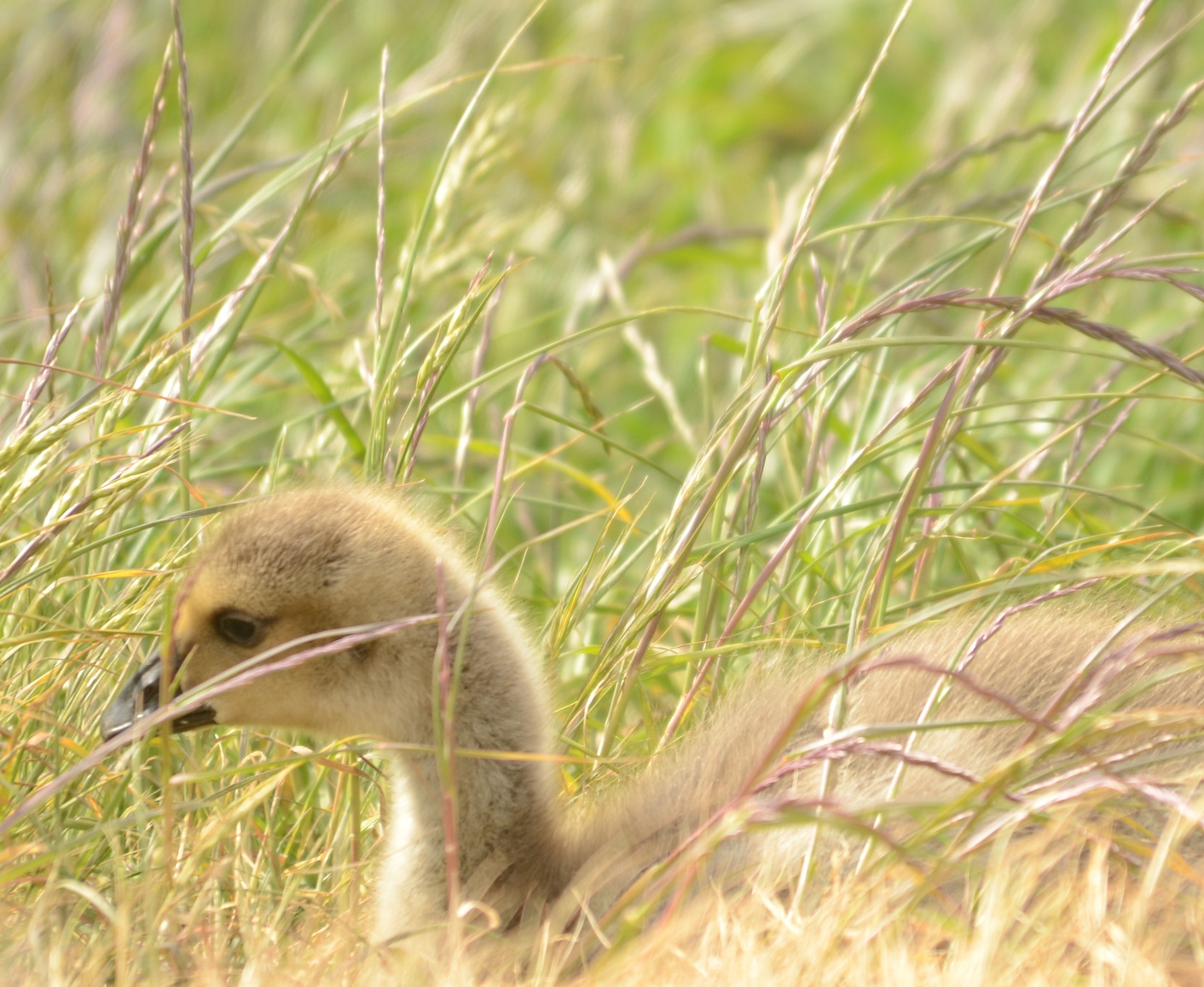
Some of the goslings are getting quite large and although they may be considered pesty, they are still fascinating to watch.
gosling

The California Sealions are moving back onto Great Race and I awoke to a chorus of them doing a call and response outside my bedroom window this morning.
ZACA

Thanks go out to Don Stewart for spotting and identifying an Anna’s Hummingbird on Great Race today, I believe this is a new addition to the species list here.

DCS

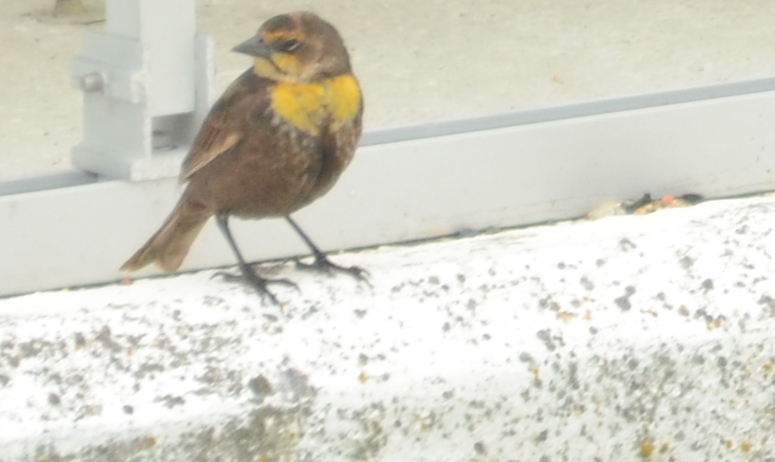
Another thank you to Rocky Point Bird Observatory for identifying a Yellow-headed Blackbird, another possibly new bird to the island. It has been hiding in the long grass and thistles near the base of the Light Tower and it has been difficult to get a photo fast enough. Today it flew to the roof of the Energy Building which made a photo much easier.

Yhblkbrd

Yesterday was census day but it was too foggy much of the day to do a good census. Here are the results from today’s census.

Northern Elephant Seals 26 (18 on Great Race, 8 on Middle Rock)

Harbour Seals 228

California Sealions 14

Northern (Stellers) Sealions 26

Canada Geese 24 (+ 21 goslings)

Harlequin Ducks 6

Pelagic Cormorants 8

Double Crested Cormorants 13

Bald Eagle total 3; 1 adult, 2 sub-adults

Black Oystercatchers          14

Kildeer                                   2

Pigeon Guillemots              230

Glaucous-winged Gulls total 564 (556 adults in nesting areas; 8 sub-adults in                           roosting/resting area)

California Gulls                    6

Common Raven                  1

Northwestern Crow             1

Anna’s Hummingbird         1

Yellow-headed Blackbird   1

Chores were routine today. Courtney came out with the new switch box for Camera 2 and installed it. Camera 2 is working again now but a close-up study on diatom film. Don left on Second Nature.


Strong Wind Warning Continued.

The west-southwest wind continued unabated, varying only in speed, which ranged from 15 to 35 knots and favoured the high end. Race Rocks was shrouded in thick fog until late afternoon and when it cleared, the fog retreated past Beechey Head, west towards Sooke. The air temperature hovered at 10oC after it cleared; just a fraction of a degree above sea surface temperature and 12 oC colder than Pedder Bay. The barometer was fairly steady at ~ 1008-1009 dropping towards the end of the day to 1007 hPa. A strong wind warning remains in effect and the forecast calls for a 30% chance of showers tomorrow.

Nine whale watching boats were observed working in the Ecological Reserve today. We could hear them well before we could see them due to the fog. After the fog lifted several more vessels arrived.

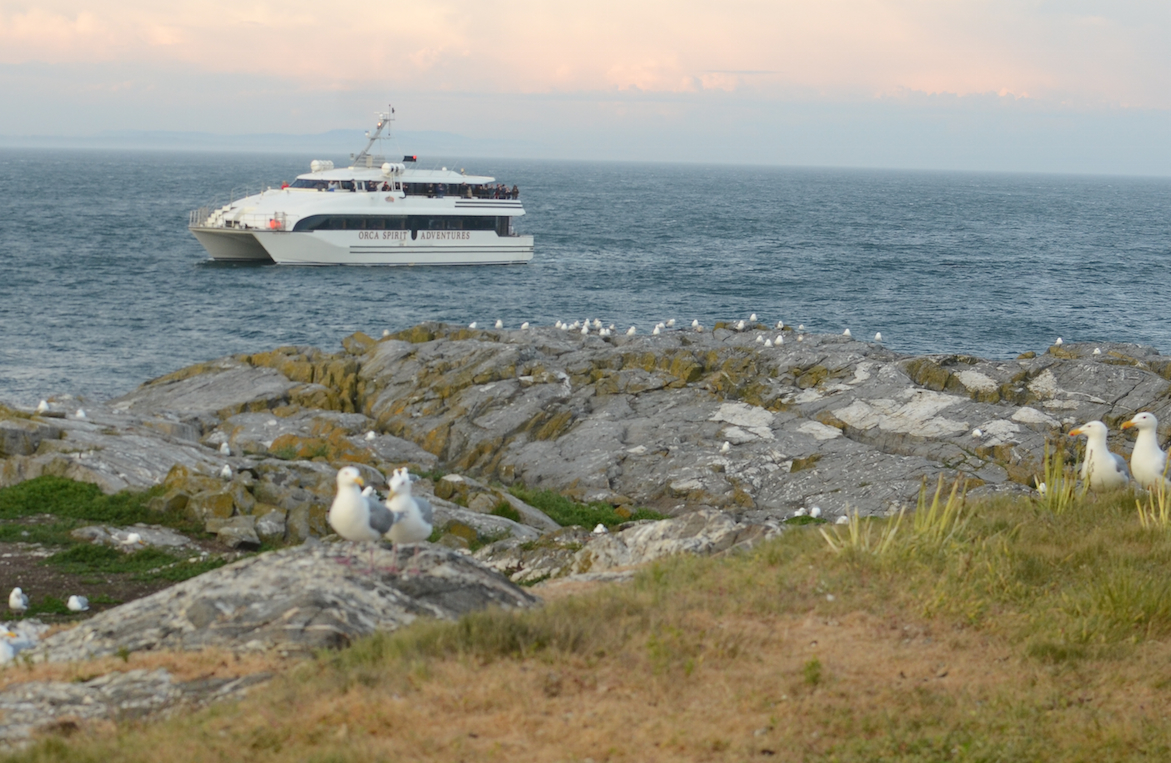
orca spirit

One of the two Orca Spirit whale watching vessels approaches Middle Channel slowly and cautiously.

Military blasting mid-day was large and shook the houses knocking things off of shelves in the science house. The Northern Elephant Seals did not even open their eyes or roll over while the Steller’s and California Sealions put their heads-up and a few of the larger individuals went into the water. The loud noises did not seem to ‘phase’ the other animals.

The ecological happenings include synchronized nuptial flights and dives by Pigeon Guillemots, mating and nest building by the gulls, Pigeon Guillemots and Black Oystercatchers. The Canada Goose goslings are putting on an incredible growth spurt, not surprising, I suppose as they eat all day. In the opposite extreme the Northern Elephant Seals are losing mass and girth as their moult continues and some of the smaller ones especially, are starting to look like they need to eat. Fourteen elephant seals graced the garden today. Tagged female #5086 is six days into her moult and is still less than one third moulted.

5086 day 6 molt

This female (tag # 5086) is on the sixth day of her moult.

huddle

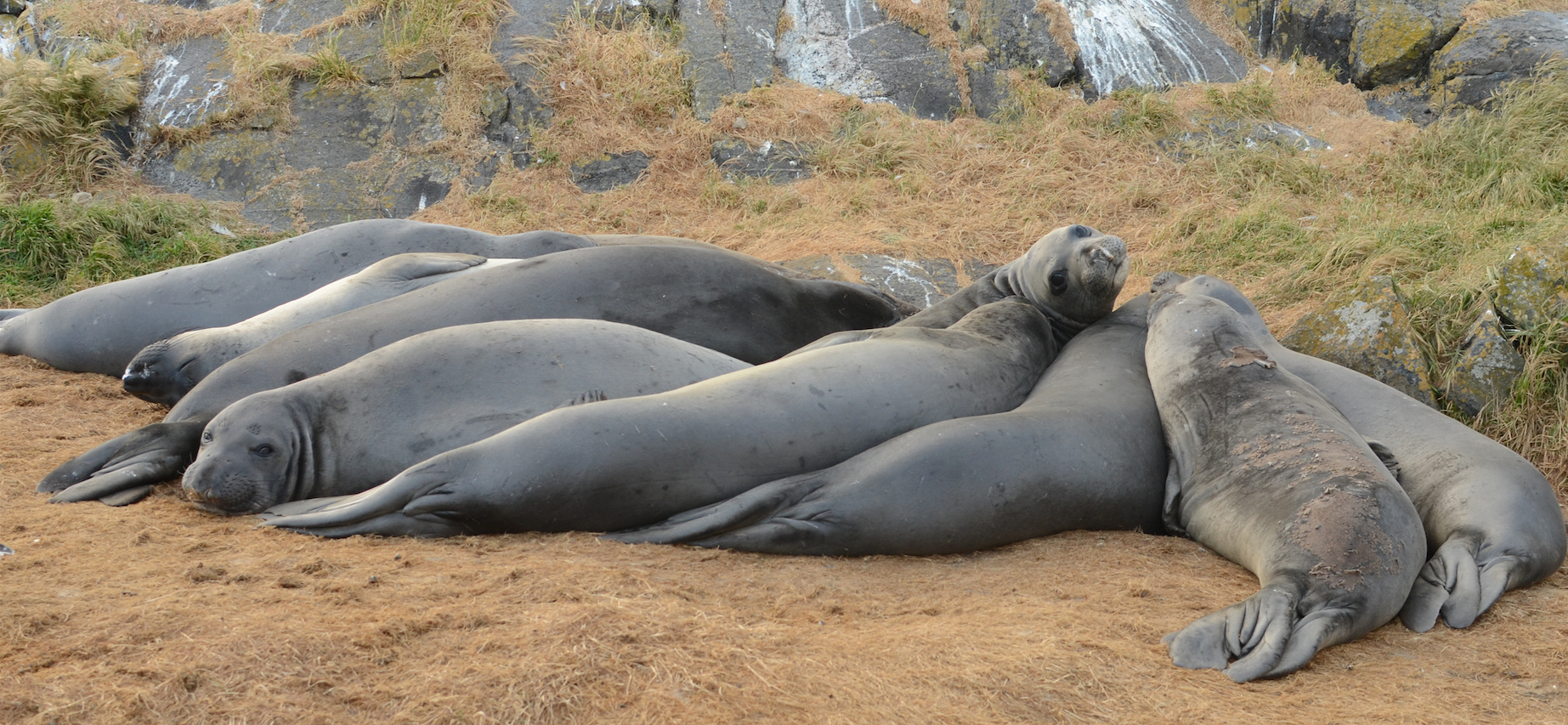
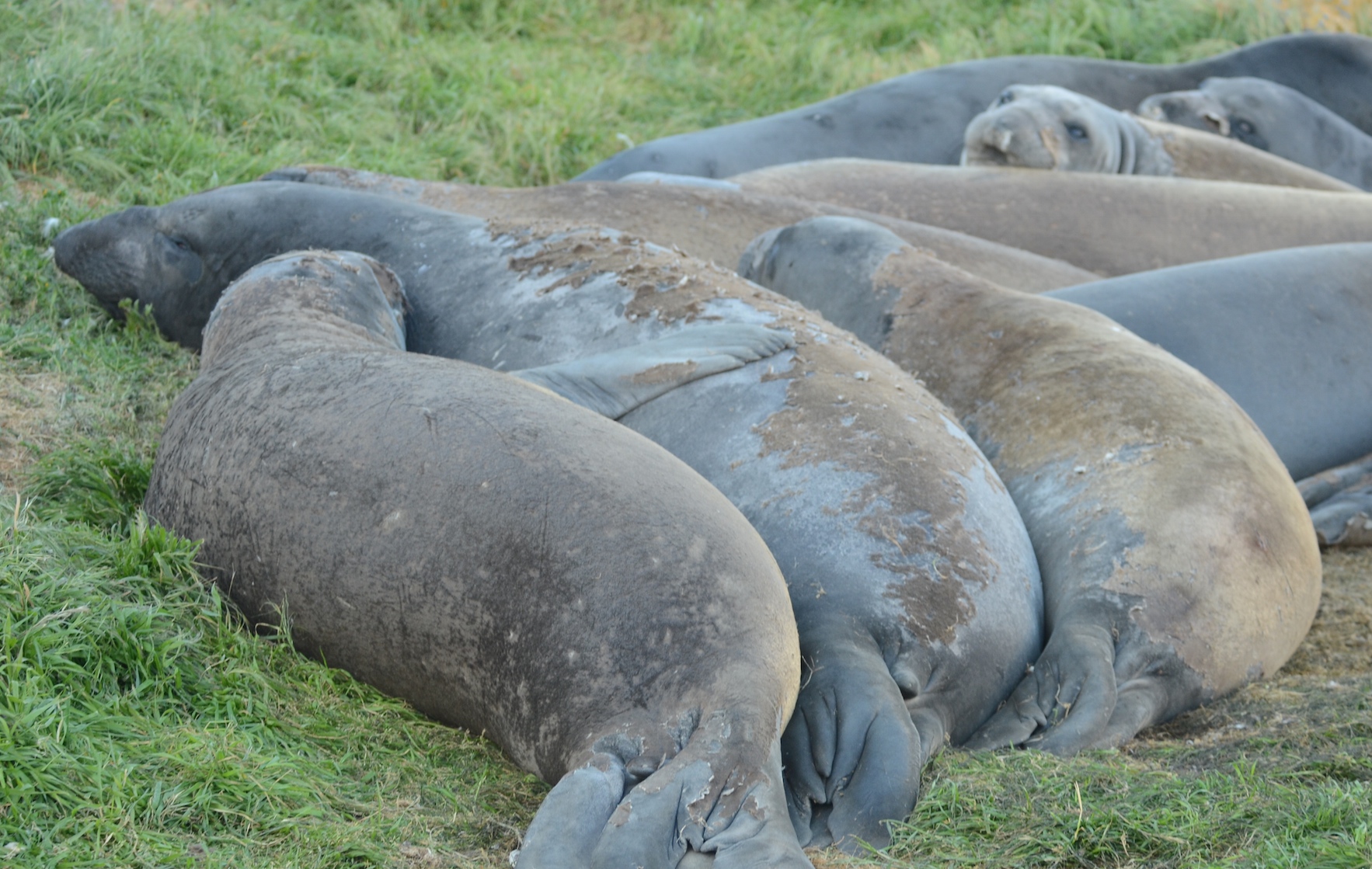
Most of these young animals, with the exception of the second from left, are almost finished their moults. Occasionally they wake up rearranged themselves do a bit of jousting and then go back to sleep.

Thursday is usually census day but the fog was too thick to do the counts at the optimal times, so it is postponed until tomorrow.

Don came back to the island with me yesterday evening to help out and have a visit. This afternoon Courtney brought Guy & Christine out in Second Nature to finish training on the generator and desalinator. Emil, a PC student, his brother and parents came along as well for a bit of an island tour and had a chance to observe the Northern Elephant Seals.


Chores were of the mundane and routine variety.


Finally Field Exam.

It blew west 15 – 20 knots all day as the barometer slowly climbed to 1016 hPa and leveled off. The early, overcast sky gave way to sunshine by late morning and it continued brilliantly until sunset. The forecast is for more of the same with the strong wind warning continuing.

Two whale watching boats were observed working in the Ecological Reserve and both followed guidelines and regulations, treating the Reserve and its wildlife with respect. Several sports fishing boats passed through the Ecological Reserve at low speed and only one halibut sports fishing boat was slow to slow, in the go-slow zone, doing at least 15 knots but eventually remembering and slowing.

All of the ecological happenings reported on, in the last week or so continued today. Great Race was busy with Northern Elephant seals coming and going from their bathing routines, moulting, sleeping and jousting. The gulls, guillemots and oystercatchers continued to prepare for the next generation and Canada Geese were out and about, promenading their goslings. A raven was seen taking one small gosling that had been noted dead earlier, near a nest in front of the science house. Both species of sealion seem more vocal this week, with the Steller’s mostly on West Rocks and the Californians more spread out but definitely back at South Islands.

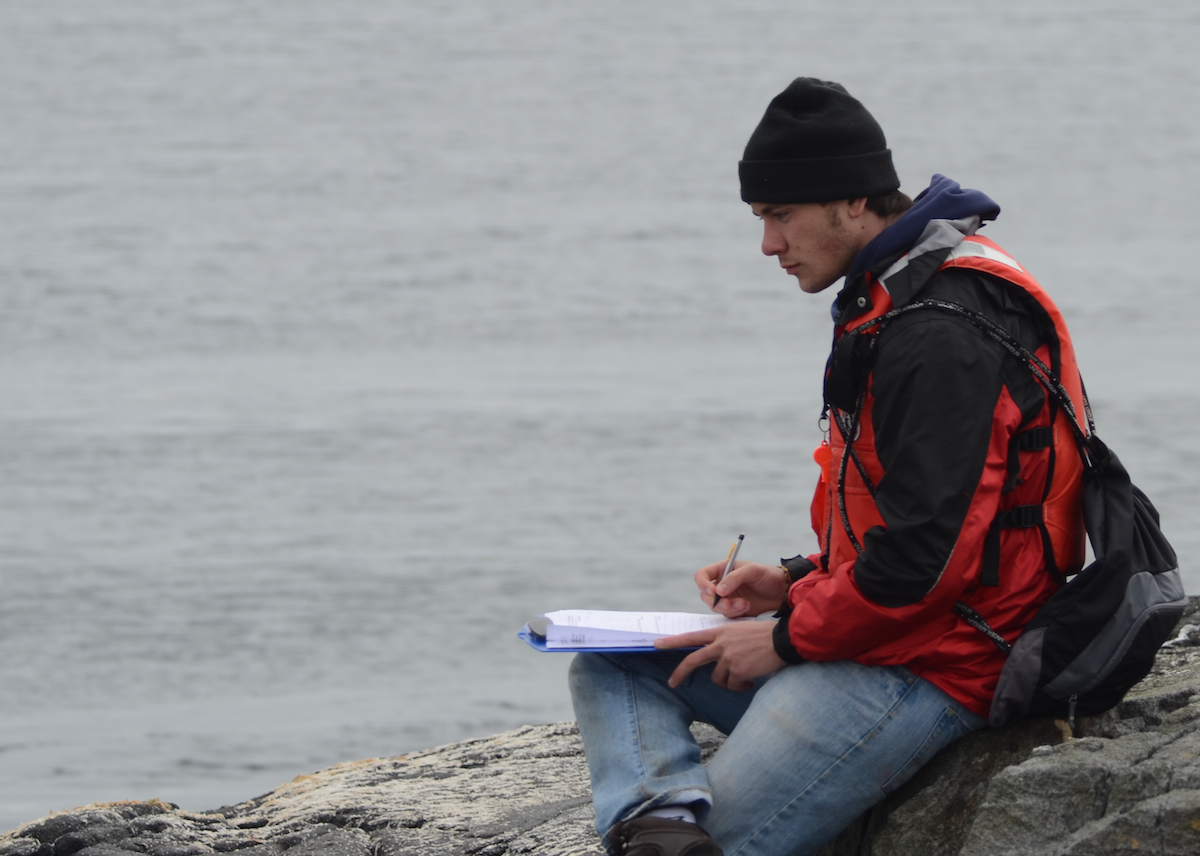
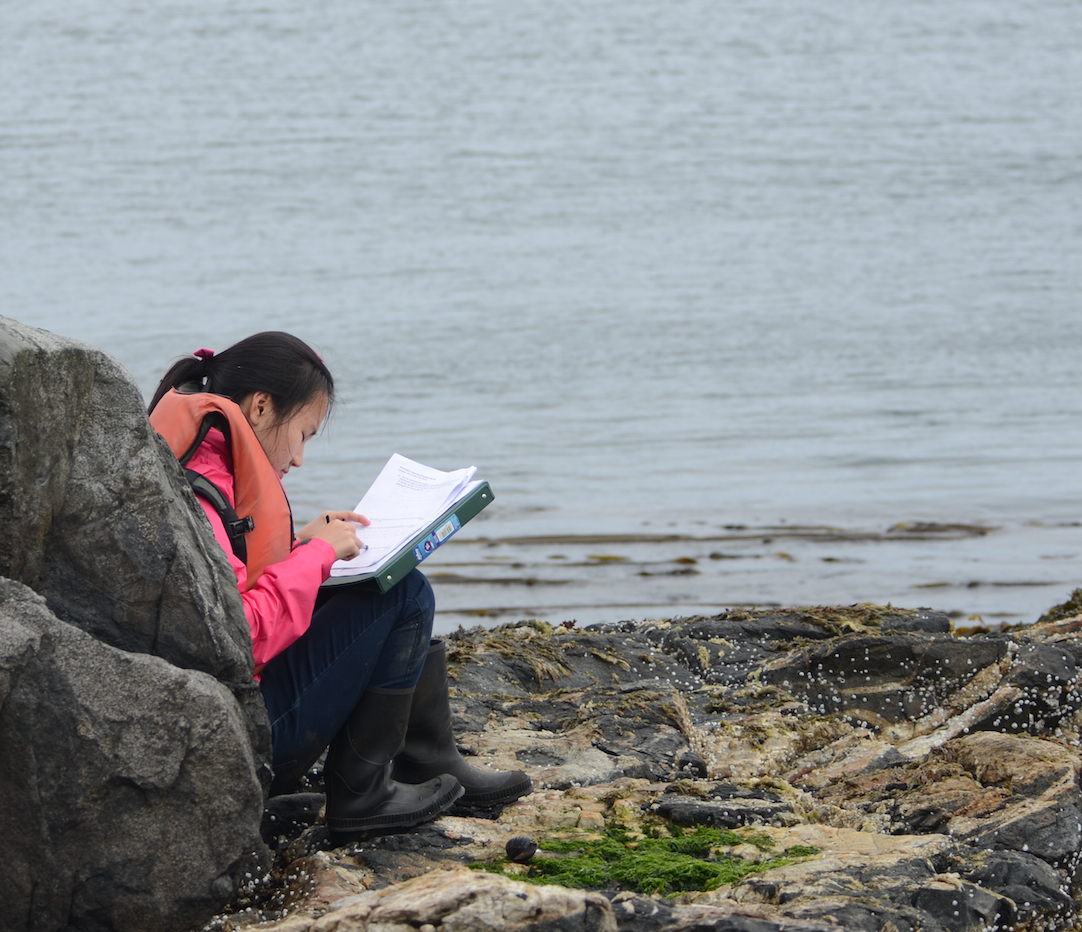
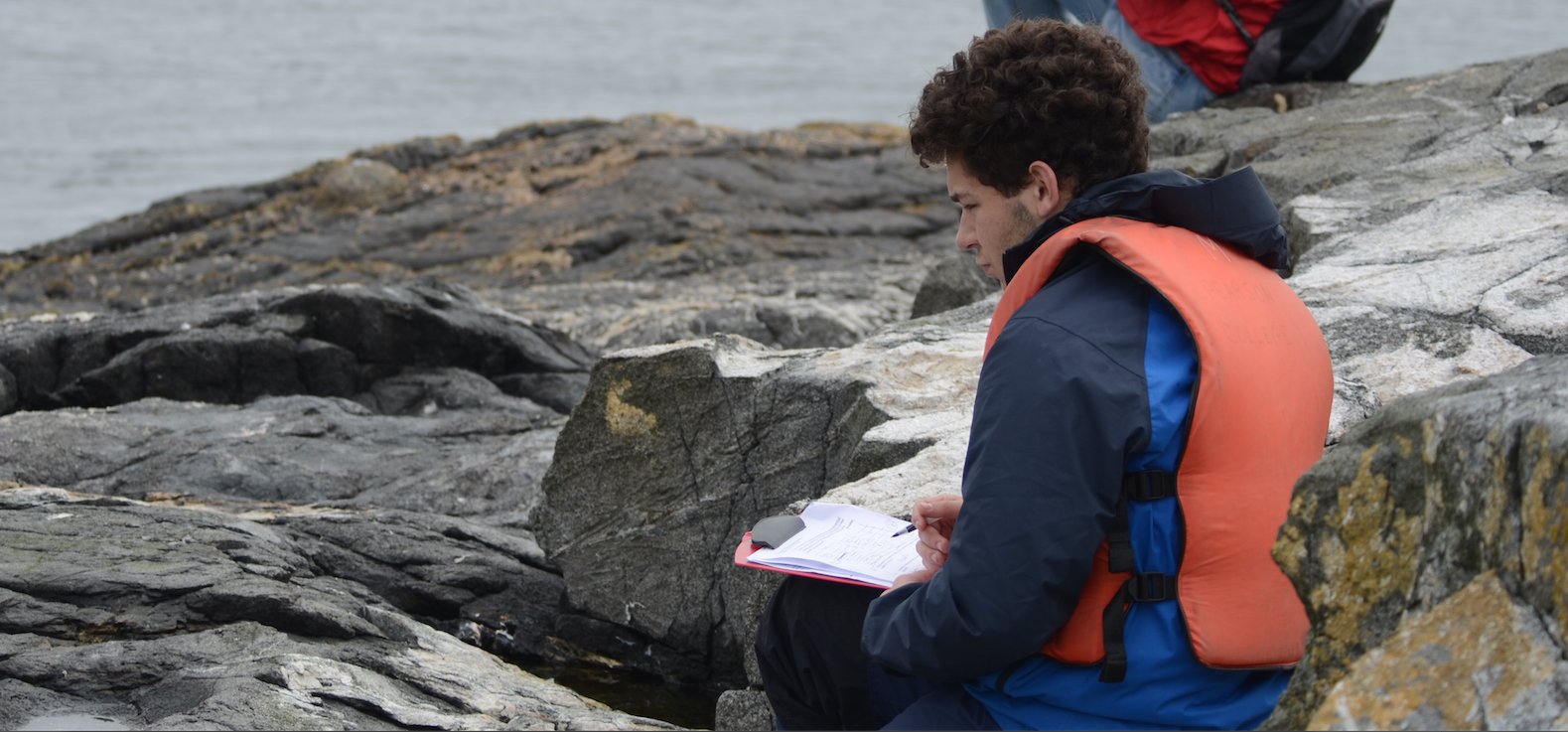
Today was busy with visitors as Laura and 36 first year marine science students arrived early to do their marine science field exam. Chris and Courtney, shuttled the class out in Second Nature and Hyaku. An extra trip in Hyaku brought out author Peter Johnson who is researching lighthouses for an up-coming book, along witha guest photographer. Hanne, a second year marine science student from Pearson College also arrived on that trip and she photographed the first years hard at work and enjoyed observing elephant seals with Courtney.

connor

Connor continuing to learn from nature even as he writes exam.

Ha biodivers

Ha finishes off answers on biodiversity and species richness, surrounded by diverse intertidal species.

more biodivers

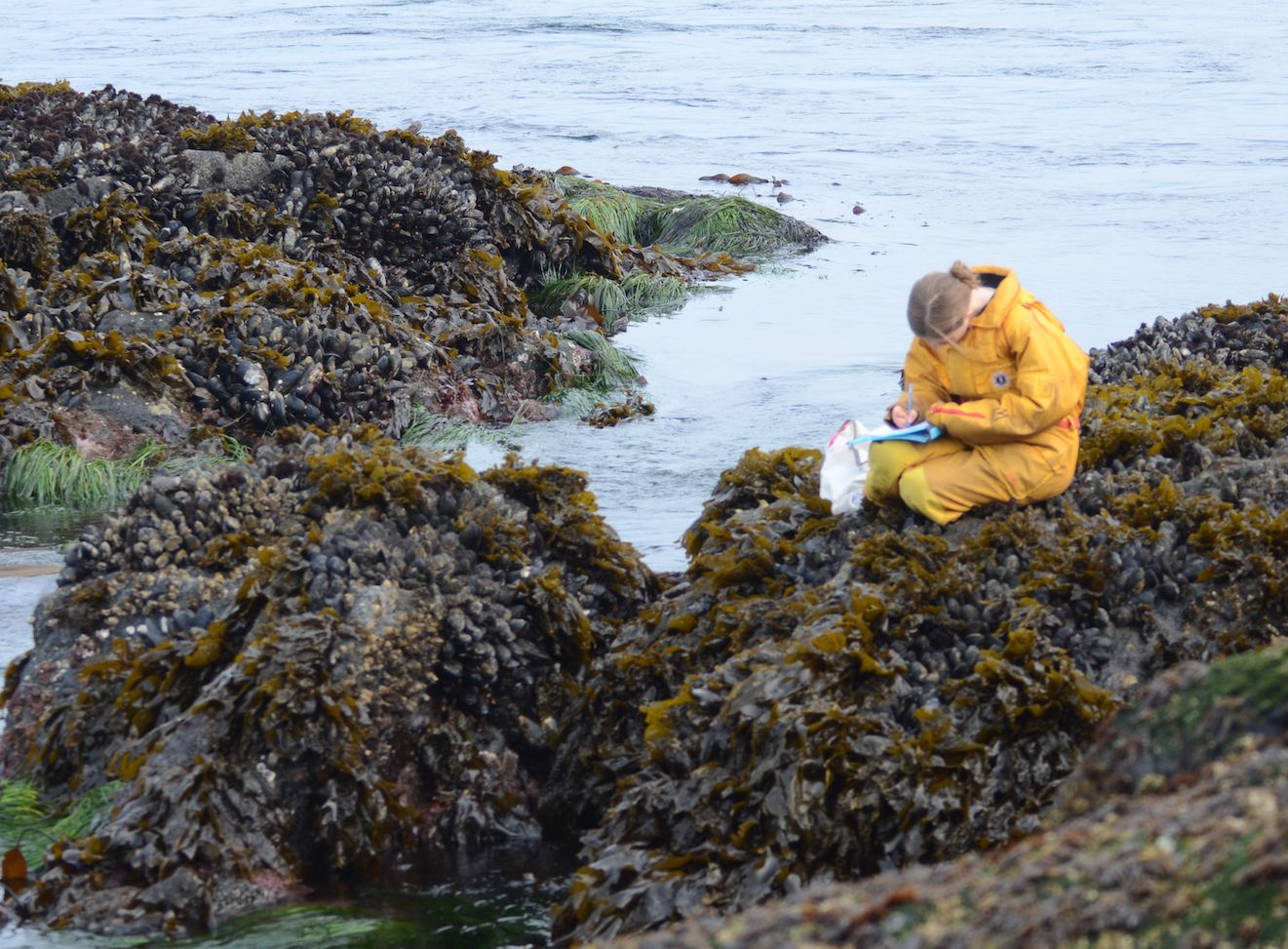
Determining a relationship between tidal height and intertidal diversity.

marsci exam west

‘Delightful dichotomies and wondrous waves’ is the intriguing title of this exam station.

My family continued their visit and helped out in lots of different ways, from assisting boats and people on the jetty, to encouraging me in becoming more proficient and comfortable running the derrick. I assisted Laura and students with the field exam, which is very unique. This is one exam the students will  never forget.


May 8

Although it started out from the north-northeast, for most of the day, the wind blew from the southeast. Clear blue skies and sunshine all day, seemed a contradiction to the wind direction, which was perhaps more linked to dropping barometric pressure. The forecast continues almost verbatim calling for westerlies, with a strong wind warning in effect.

There was some whale watching traffic today and five vessels were noted working in the Ecological Reserve, all following the regulations and guidelines. Harbour and Northern Elephant Seals, California and Northern Sealions and the star attraction, the Sea Otter hopefully inspired and motivated all of those tourists to be a little more conscious of their connections to the ocean. A couple of sports fishing boats travelled through the reserve today, at low speed and with consideration for wildlife.

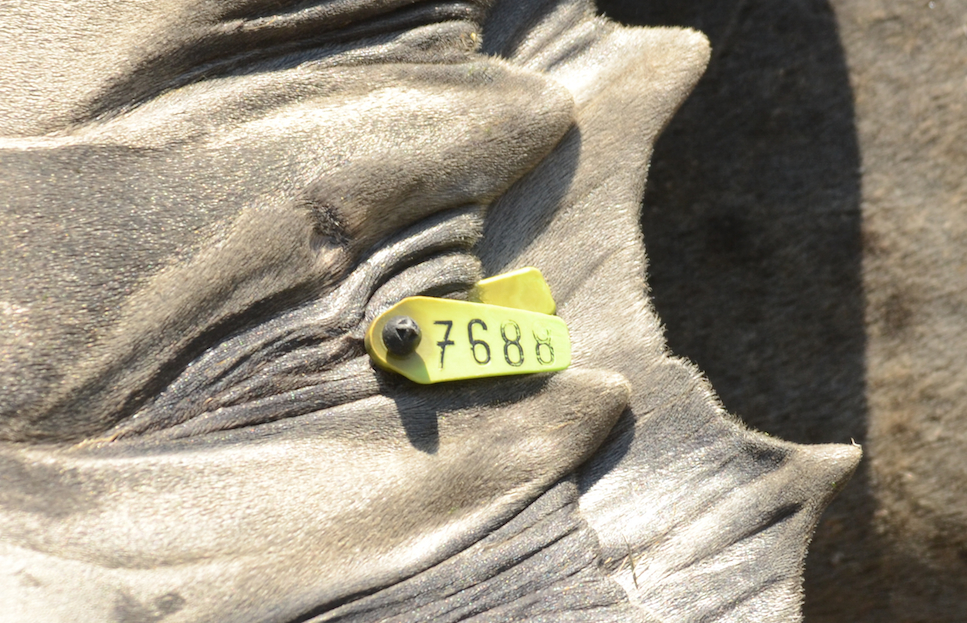
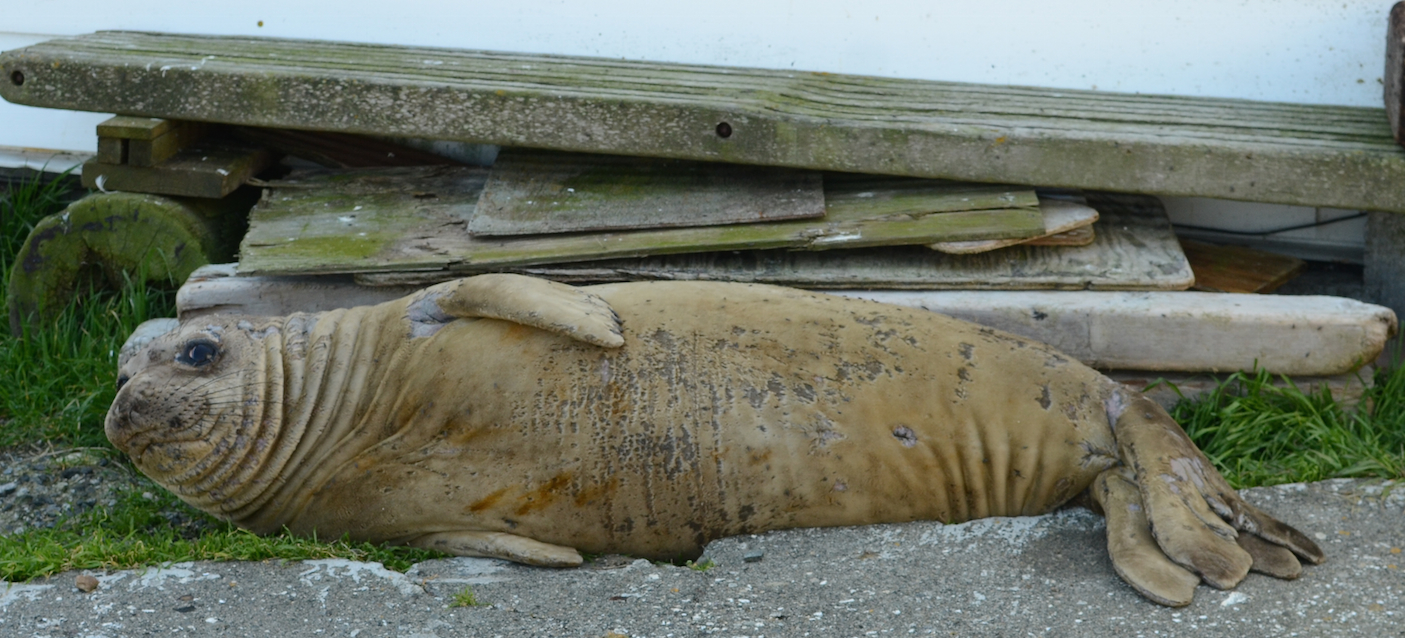
There were 16 Northern Elephant Seals on Great Race today so I took more measurement and moult progression photos, still missing a couple through the measuring “device”. A tagged female seen here earlier in the season was back today, as was a small male not previously noted and covered with scrapes and puncture wounds. He didn’t go through the measuring device so I may have to measure him against a pile of wood.

Mian7688 mina no measure

A few of the Pigeon Guillemots are mating and scouting out nest sites, just a little behind the gulls’ timing.

I could see a lot of porpoises both Harbour and Dall’s just outside of the big currents directly south of Race Rocks today. They were probably a mile outside the Ecological Reserve Boundary.

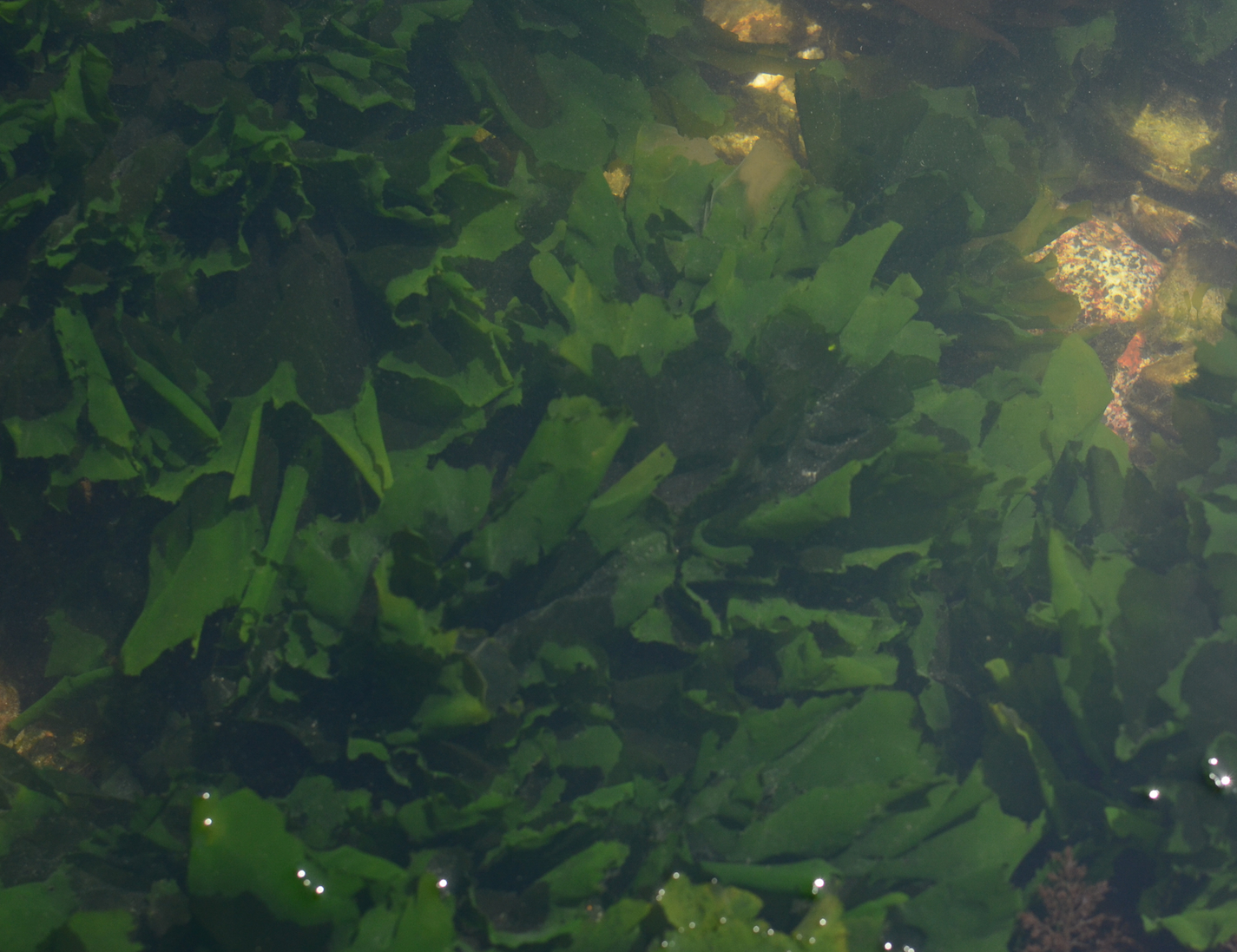
Race Rocks has a rich inter-tidal flora that is often neglected in favour of its interesting fauna, so today I will dive into a few more algae. Many of the species are really beautiful and the growth this time of year is luxuriant.

Sexy Ulva

This two toned Ulva lactuca is going reproductive (aka sexy seaweed).

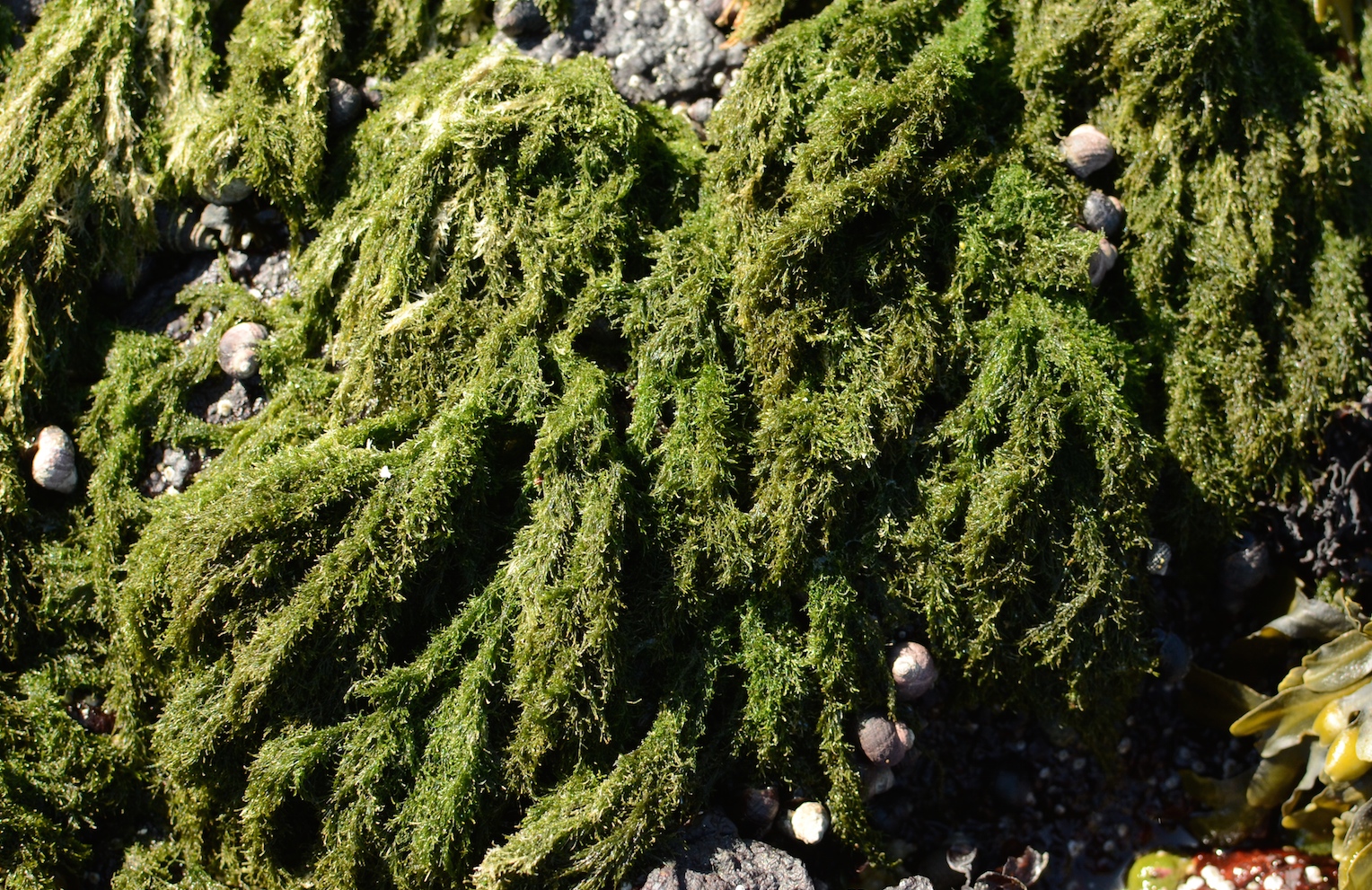
spongemorpha

Spongomorpha is a green algae with tiny little hooks that bind the strands together like dreadlocks.

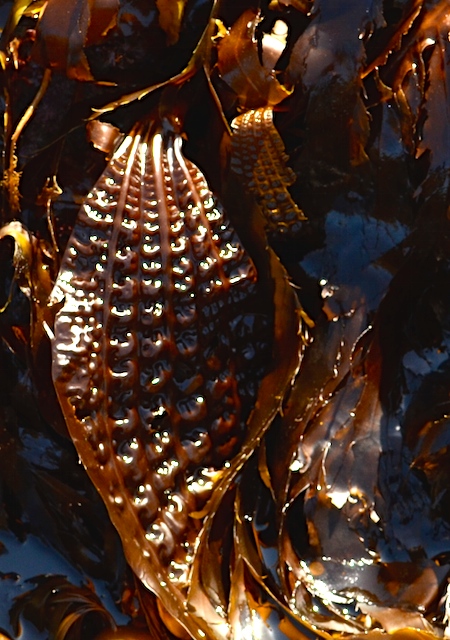
costaria2

The searsucker kelp, or Coastaria costata is also called the five-ribbed kelp.

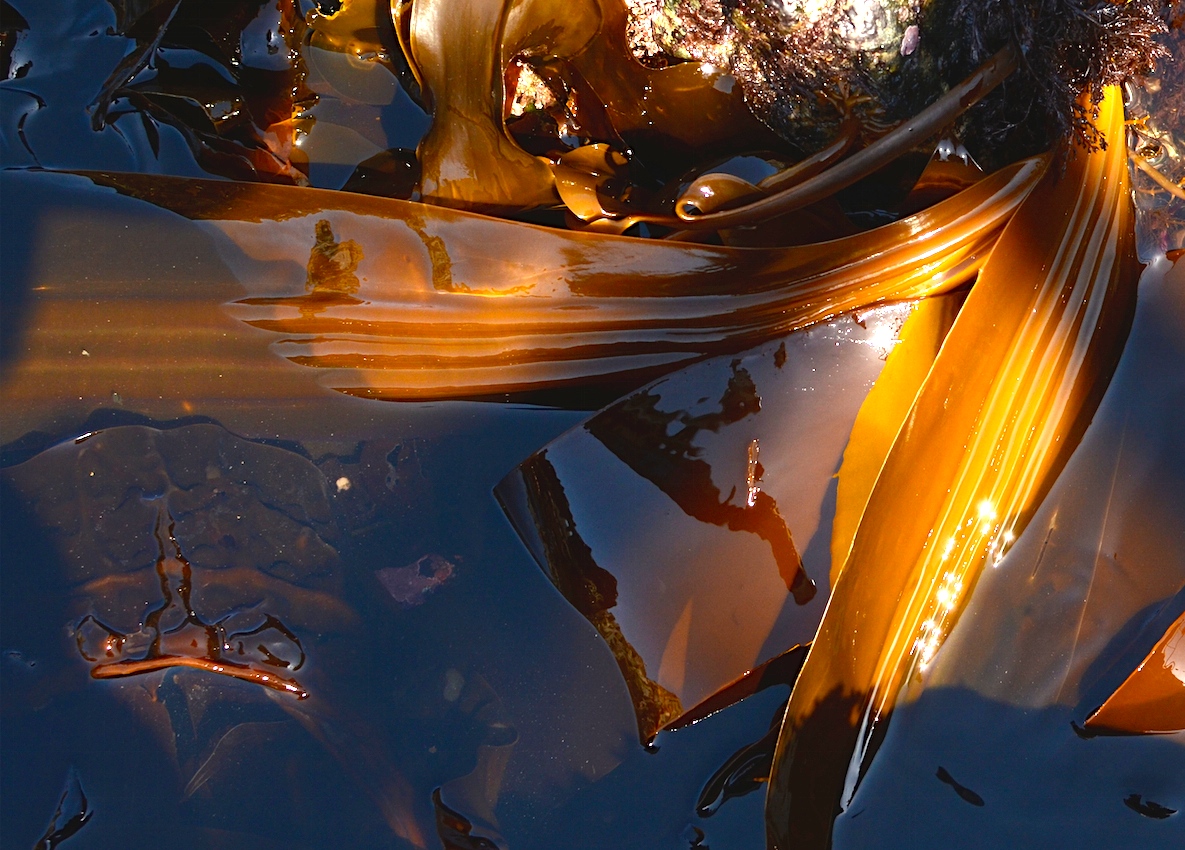
cymathere 2

Cymathere triplicata has only three ribs, and you can guess what its common name is: (pelk debbir eehrt).


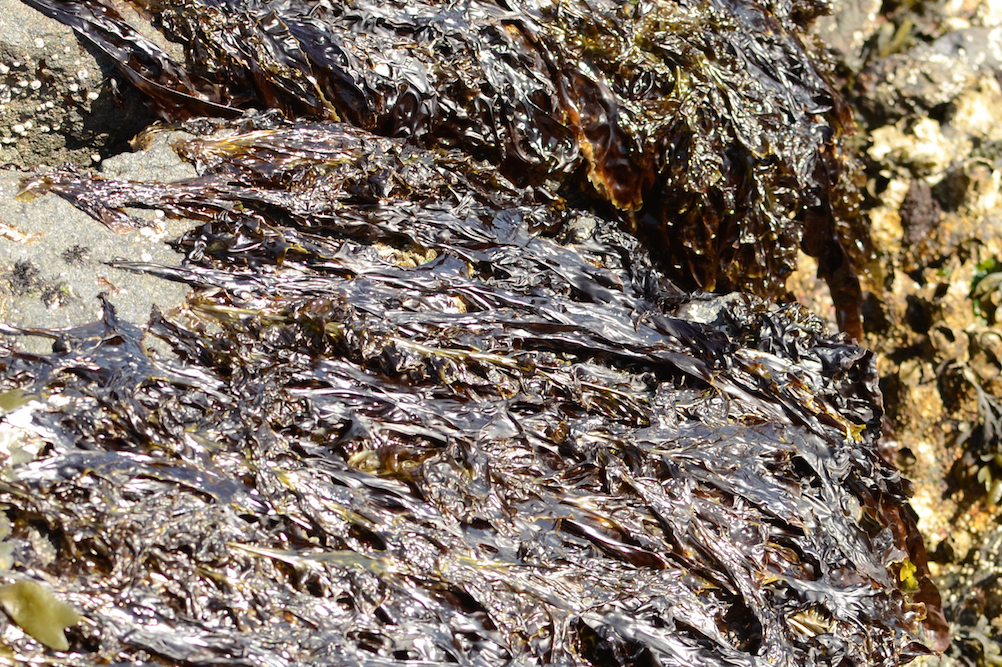
nori2

This is one of the many species of nori found on the shore here. I am not sure if it is Porphyra or one of the new translations. The Whelsh name for it is laver.

smithora2

Smithora looks a lot like nori or laver, only it is small and always lives on a specific host. Here it is growing on surfgrass.

Odanthalia

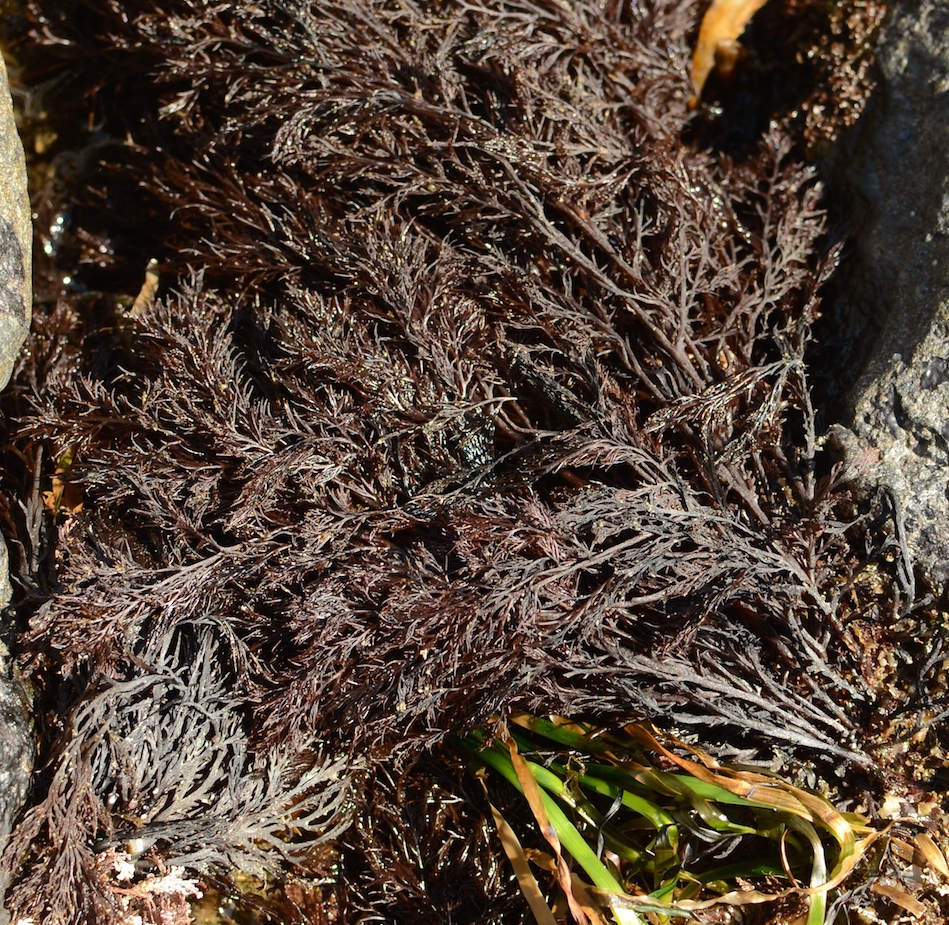
Odonthalia floccosa is a perennial red algae that herring like to spawn on.


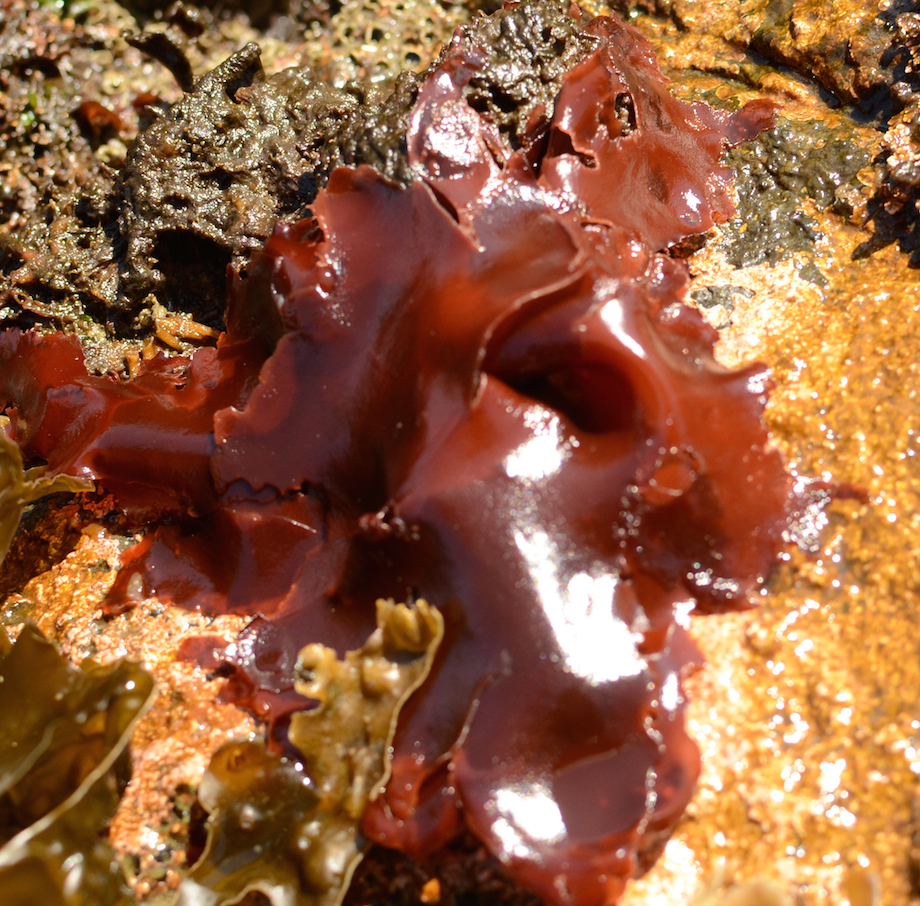
Constantinea is another perennial red. It grows like an umbrella with the  stipe (stem) in the middle.

Constantinea is another perennial red. It grows like an umbrella with the stipe (stem) in the middle.

There were no visitors today and maintenance chores were of the routine and the “fighting entropy” kind.

How Low Can It Go?

Thick fog met me at dawn, not the sleepy kind that coffee cuts through, but dripping wet, zero visibility, fog created through the convergence of cold ocean water and warm air. The fog retreated and advanced repeatedly before it was beaten back by high wattage sunshine. The westerly wind blew throughout, at 5 – 15 knots only rising near sunset to closer to 20. The barometer started a gradual drop in pressure late morning yet the forecast is for sunshine and continuing westerlies.

There were a few whale watching boats in the area mid-morning with two observed in the Ecological Reserve. Sports fishing boats were seen in the general area but outside the Reserve.

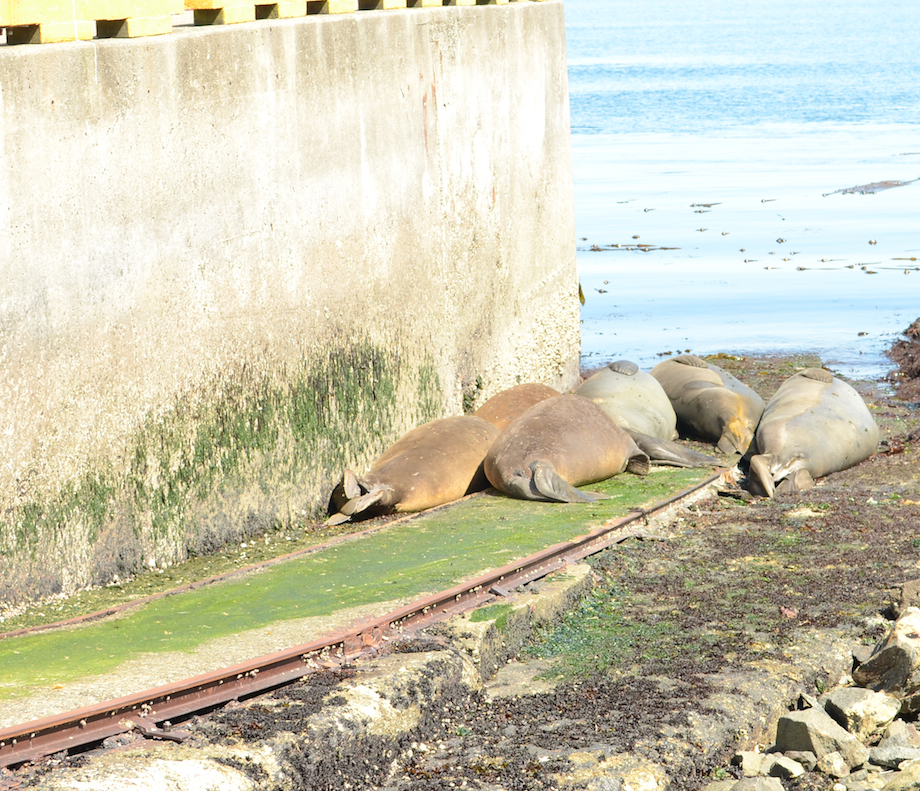
The elephant seals found the trek to seawater quite an effort today and some of them gave up for a few hours on the way to have a swim. Getting back up the hill was even more of an effort.

The tide is a long way out.

The tide is a long way out.

Observational efforts were focused in the inter-tidal and on the mega-fauna census today. Another really good tide (0.5m) allowed me to do a large algal survey and find more marine invertebrate species. I will share some of the invertebrates here and come back to the seaweeds tomorrow. In each photo, if you look closely you will notice smaller and smaller animals in a wall to wall competition for space or is it sharing of space.

The human history and natural history are intertwined.

Both the natural and human history at Race Rocks are profound.

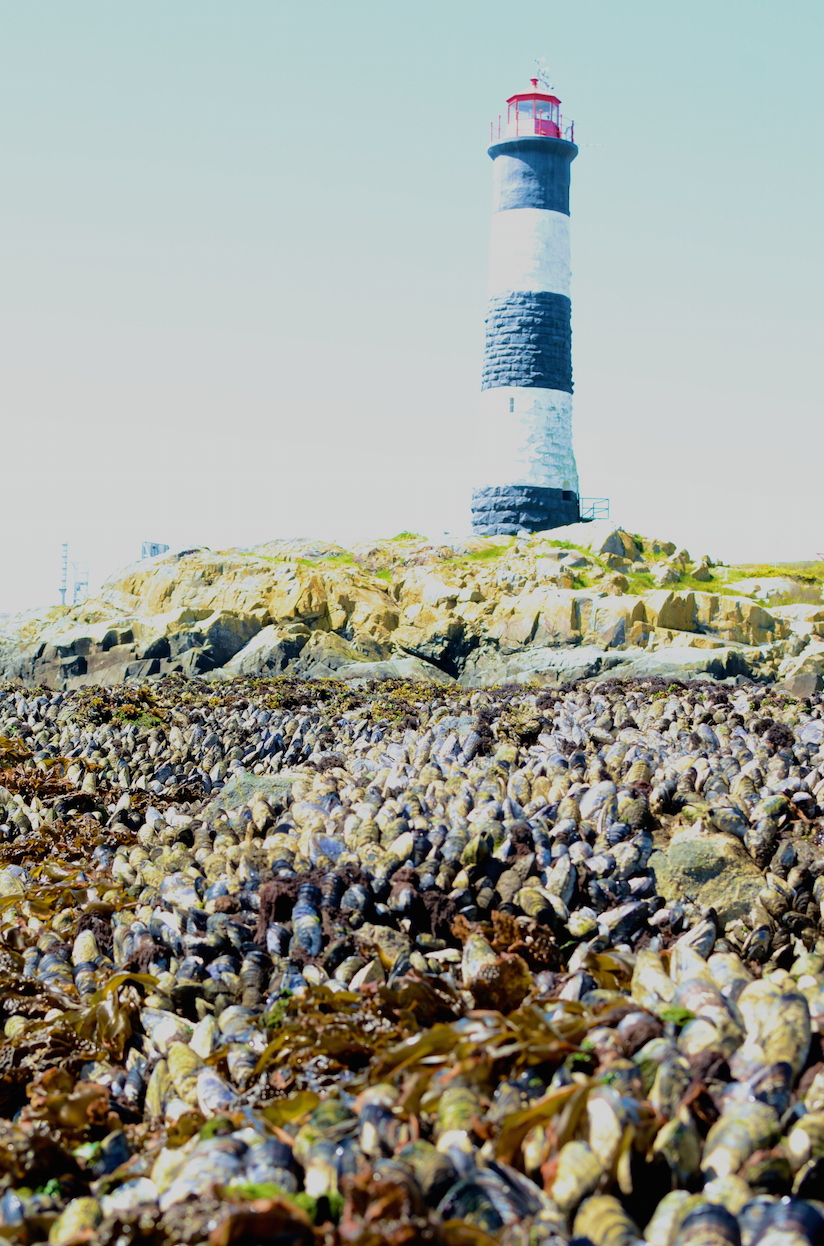
California Mussel beds are ‘old growth’ and substantial on Great Race. The large area provides important habitat creating significant diversity.


Extensive mussel beds on the south side of Great Race.

Extensive mussel beds on the south side of Great Race.

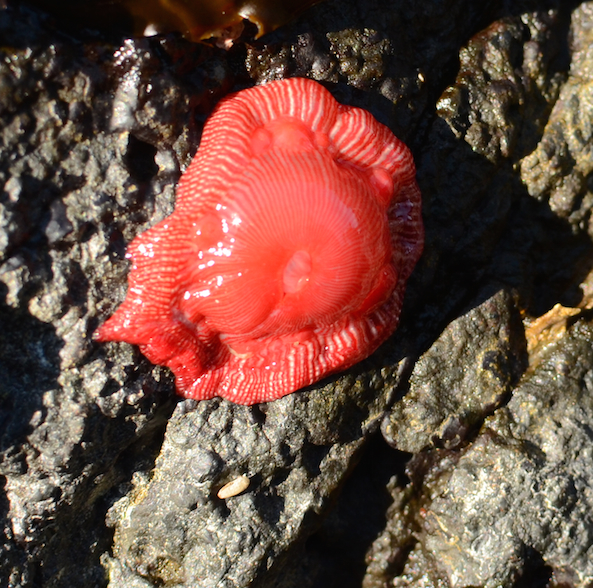
A brooding sea anemone (Epiactus prolifera) with numerous offspring attached low on the column near the pedal disc.

Epiactus prolifera

The mottled sea anemone (Urticina crassicornis) is quite common in the low inter-tidal on the south side of Great Race.

Urticina crassicornis

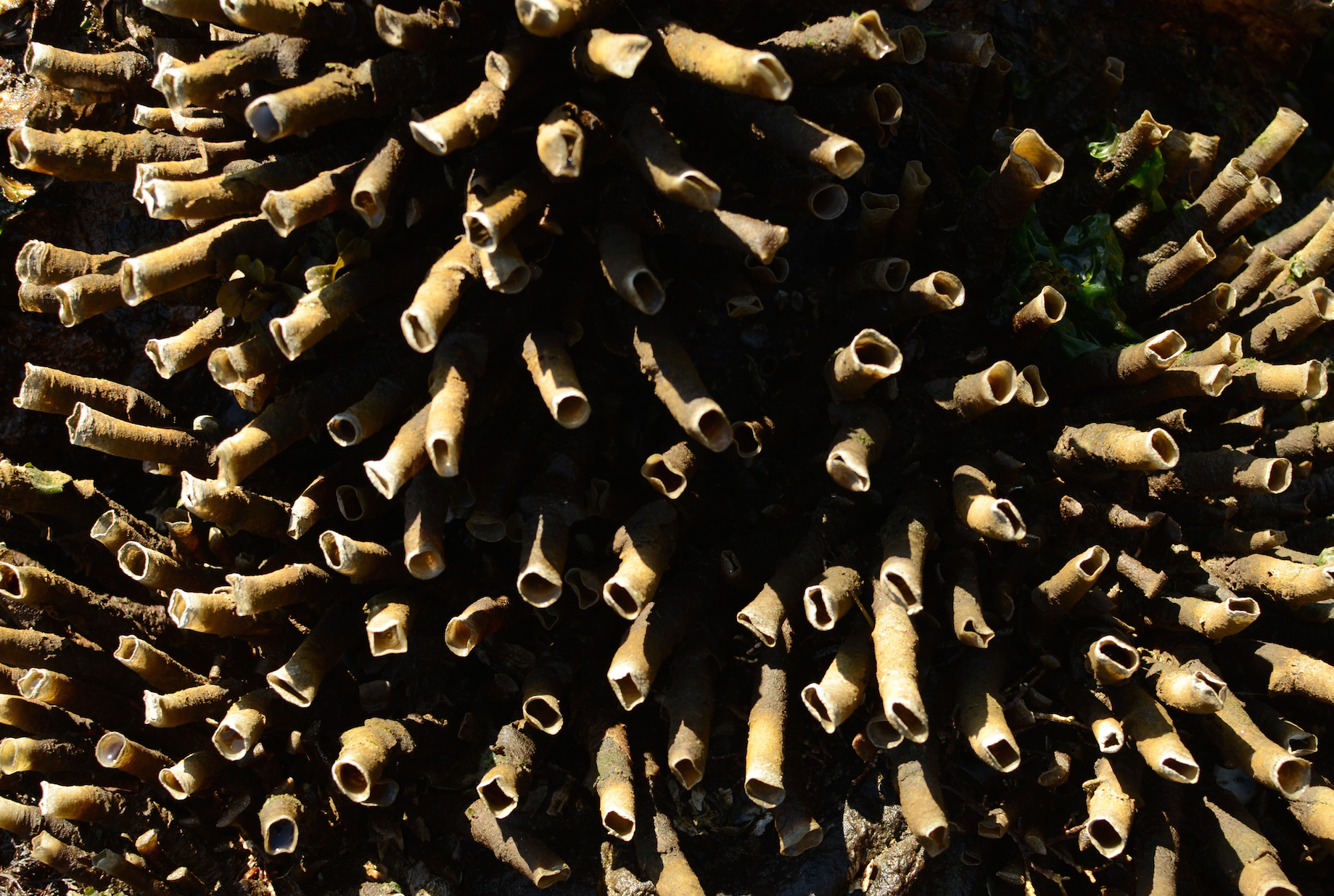
This species of tubeworm, named after Vancouver (Eudistylia vancouverensis) is usually more abundant sub-tidally. Here in the high current area between Great Race and South Islands, it is common in the low inter-tidal.

Eudistylia vancouverensis There is a lot of gigantism on the Pacific coast but here at Race Rocks even the giant species seem even more abundant and bigger than I have seen them elsewhere.

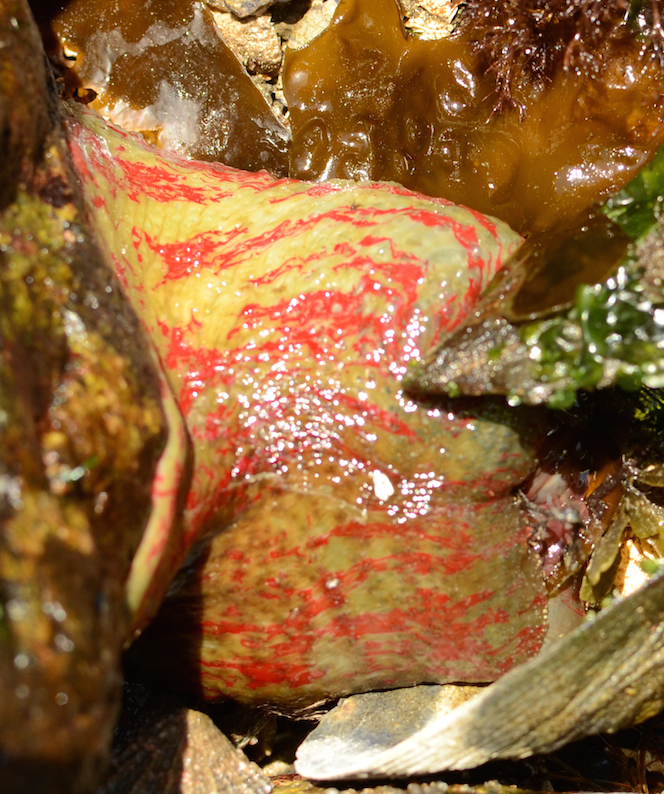
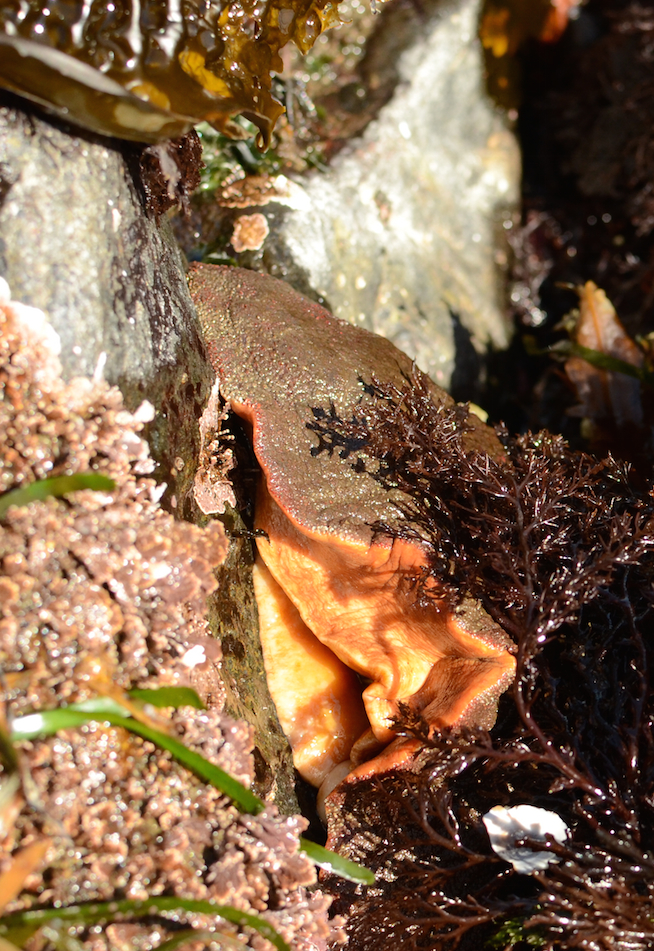
Cryptochiton

The gumboot chiton (Cryptochiton stelleri) is an important grazer in the inter-tidal. They are very abundant here.

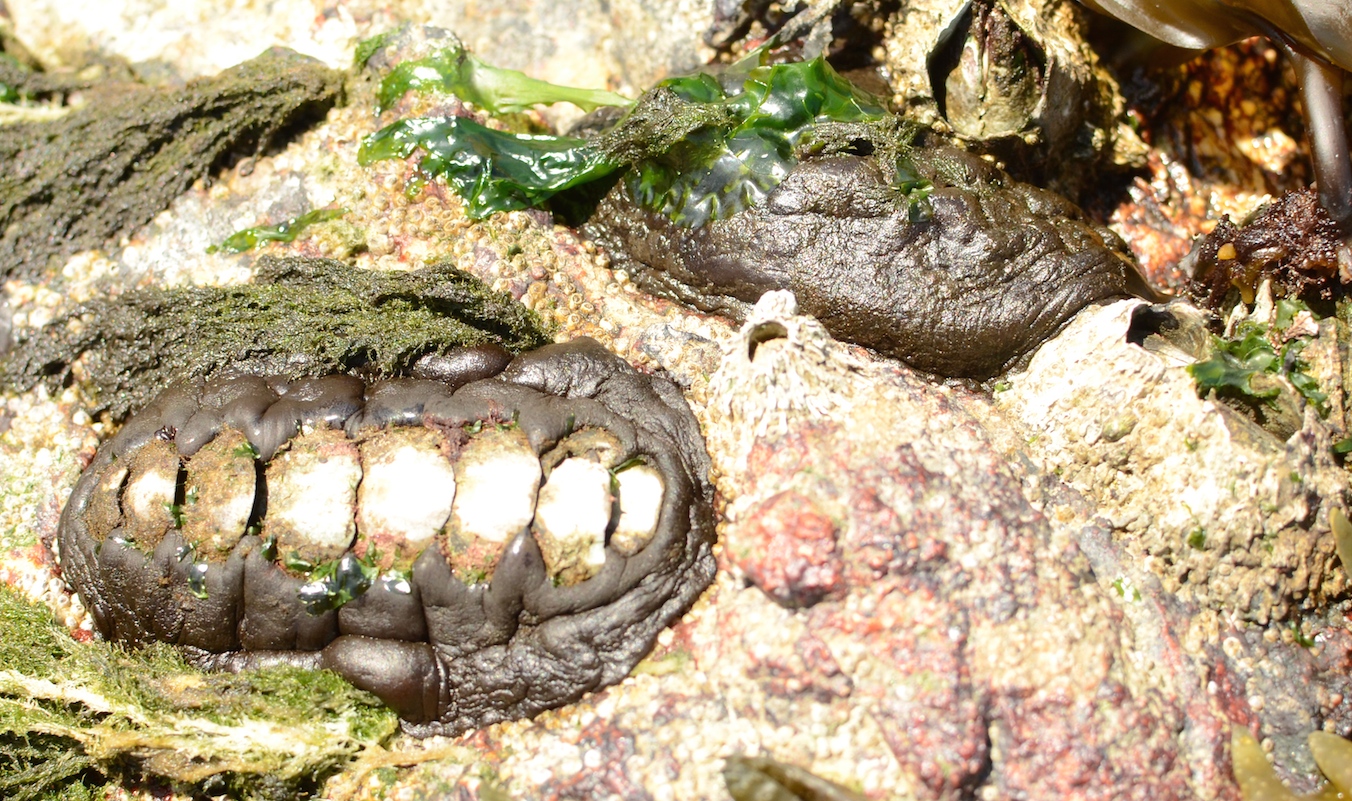
Katharina

The Black Leather Chiton (Katharina tunicata) is another grazer and like the gumboot chiton grows both very large and is super abundant here.


Cucumaria Dodecaceria

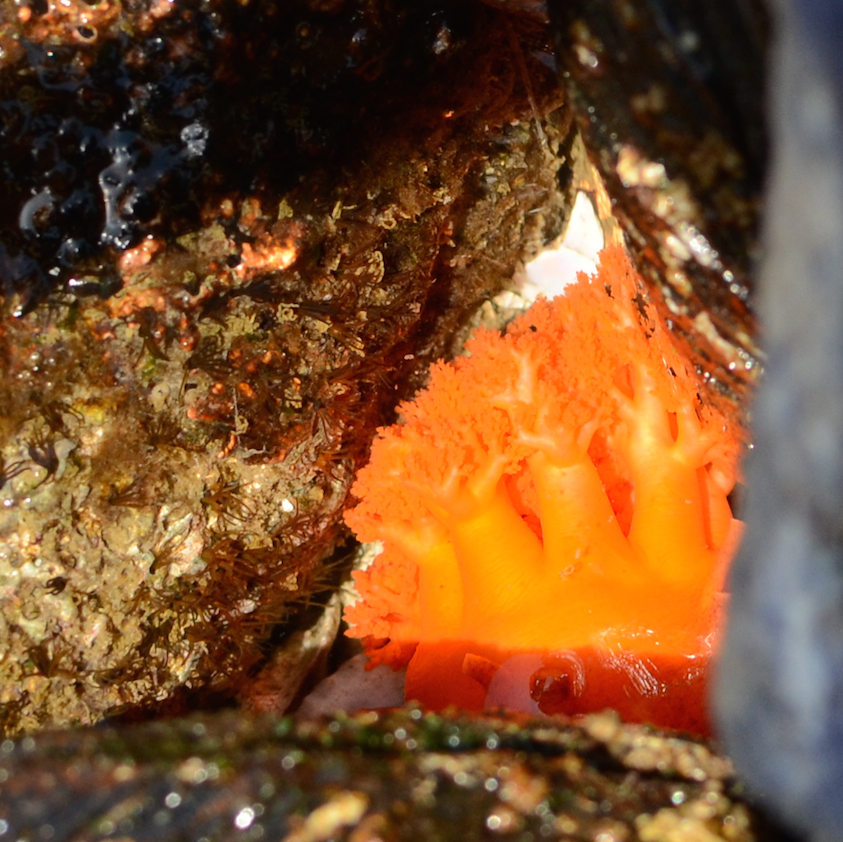
Orange sea cucumbers (Cucumaria miniata) are really abundant both in tide pools and under the edges of boulders and there a lot of boulders on the south side.


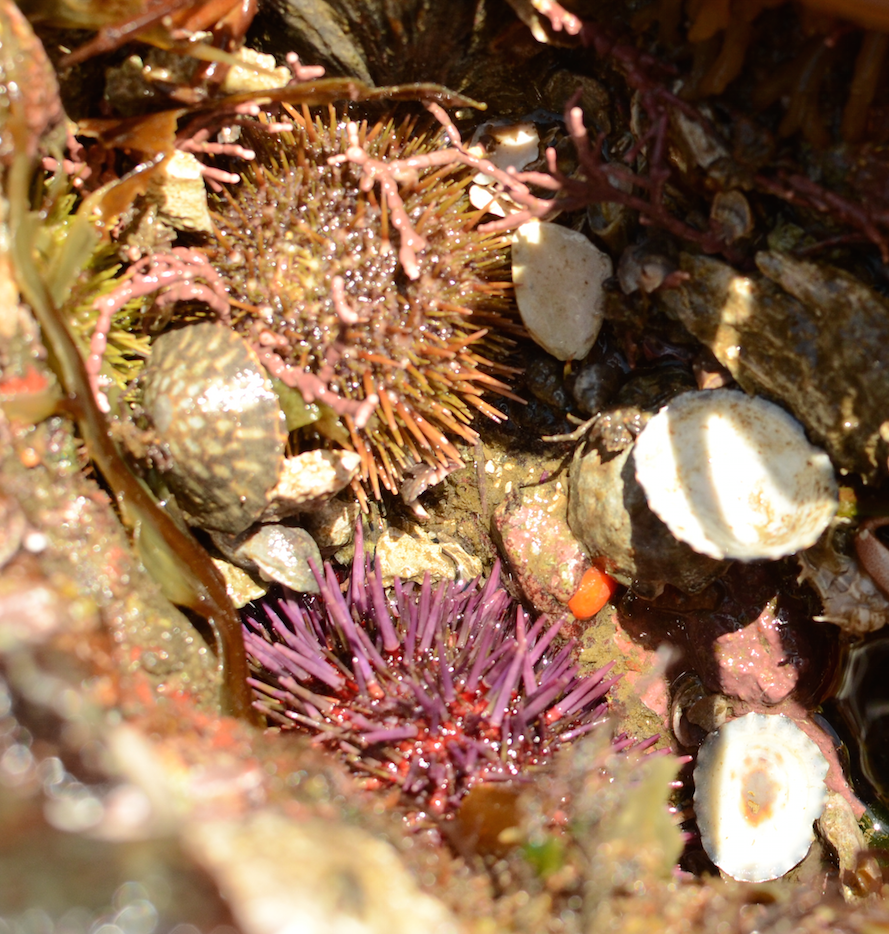
Three species of sea urchin were observed today, adding the green urchin (Stronglyocentrotus drobachiensis) to the list. The green and purple both like to “dress-up” aka cover themselves, with shells, seaweeds and even bits of wood. Here they were using empty limpet shells in an area frequented by oystercatchers.

drobachiensis rostangia

Green and purple sea urchins with a small orange nudibranch to their left (Rostanga pulchra) that usually lives on the red sponge Ophlitasponge.


Today was large animal census day and the results are as follows:

Humpback Whale (young (small) animal) 1

Northern Elephant Seals 34 (including 15 on Great Race)

Harbour Seals 179

California Sea lions 17 (includes brand U792)

Northern Sea lions 20 (mostly old males)

Sea Otter 1

Canada Geese 36 (includes 18 goslings)

Harlequin Ducks 8

Pelagic Cormorants 0

Double Crested Cormorants 6

Bald Eagle 2 adults, 3 sub-adults

Black Oystercatchers 10

Greater Yellowlegs 1

Black Turnstones 0 (none seen in spite of searching)

Western Sandpipers 2

Least Sandpiper 2

Pigeon Guillemots 148

Glaucous-winged Gulls total 607 (458 adults in nesting areas; 60 adults in roosting/resting area; 79 sub-adults in roosting/resting area)

Western Gull (hybrid?) 1

Herring Gull 2 (Juv.)

Common Raven 1

Northwestern Crows 2

Barn Swallows 2

Savannah Sparrow 6

There were no visitors today. Chores were routine.


Just the Usual Cast of Characters

Relentless westerly winds buffeted Race Rocks today starting before dawn and continuing through dusk. With the 25 – 30 knot winds (gusting higher), came sweeps of clouds and showers. The barometer was fairly steady at 110 hPa and the forecast is for more strong winds and showers.

There were no fishers or eco-tour boats today. The sea was quite rough and the big currents of the full moon pulled them even higher.

The Northern Elephant Seal numbers on Great Race continue to be 15 and they formed a huddle for most of the day in the lee of the only hill to hide behind.


Seal huddle.

Seal huddle.

Moulting head and flippers first.

Moulting head and flippers first, the old fur and skin form a garment.

The Glaucous-winged Gulls are at various stages in their preparations for parenthood and some appear to still be awaiting their mates.

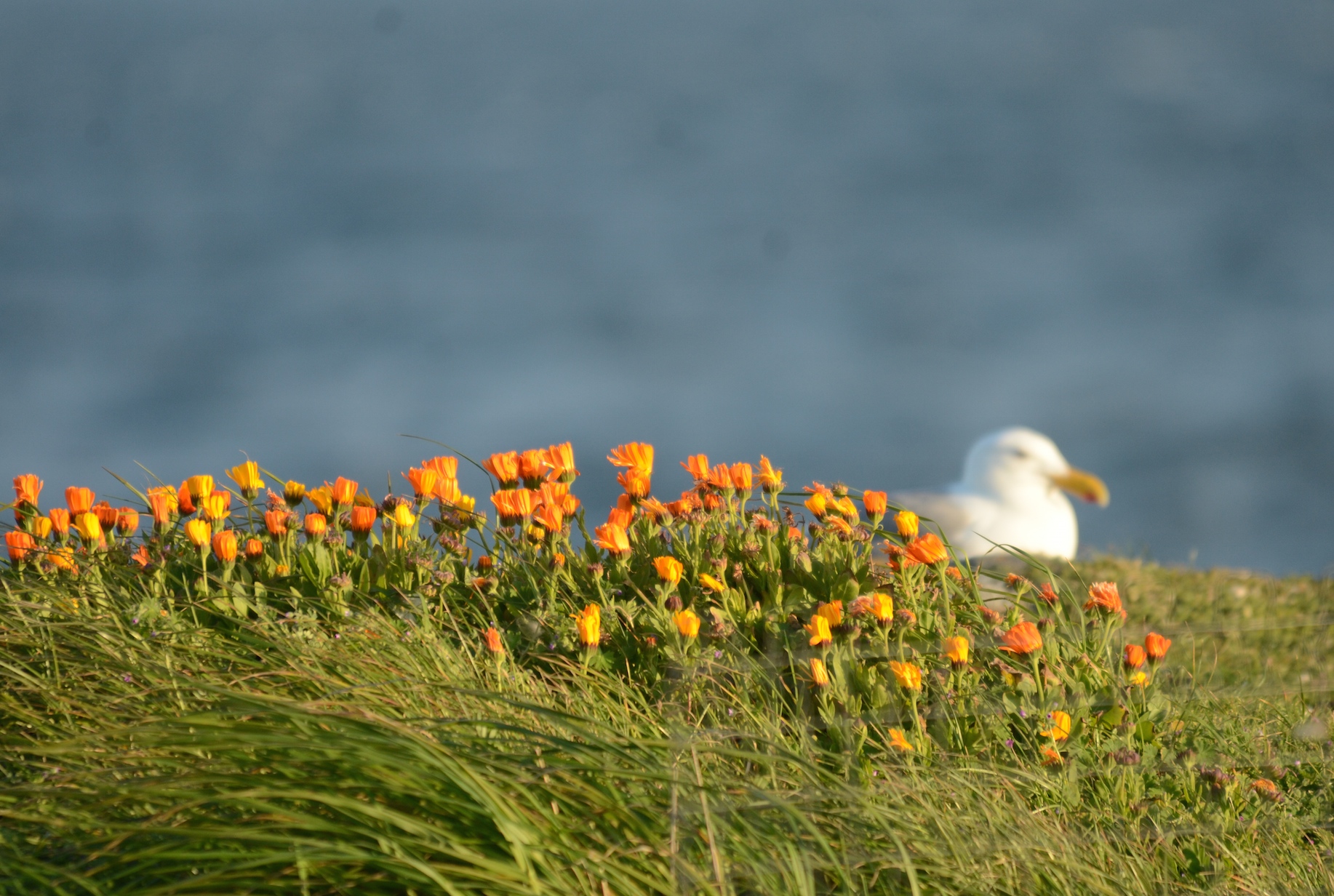
Calendula blooming near Glaucous-winged Gull nest.

Calendula blooming near Glaucous-winged Gull nest.

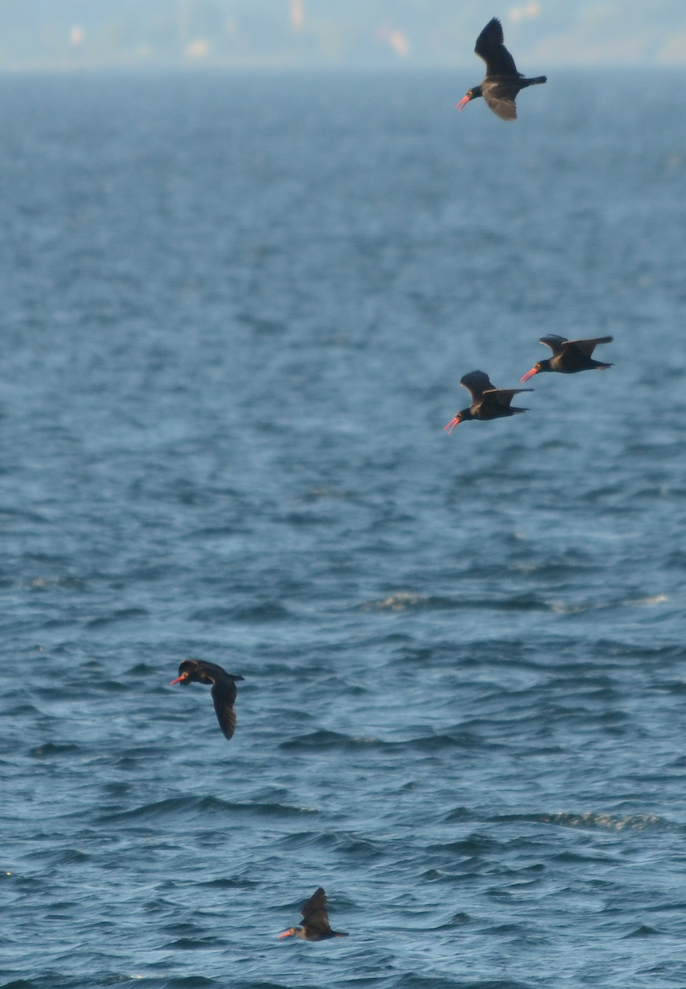
Black Oystercatchers out for an evening flight.

Black Oystercatchers out for an evening flight.

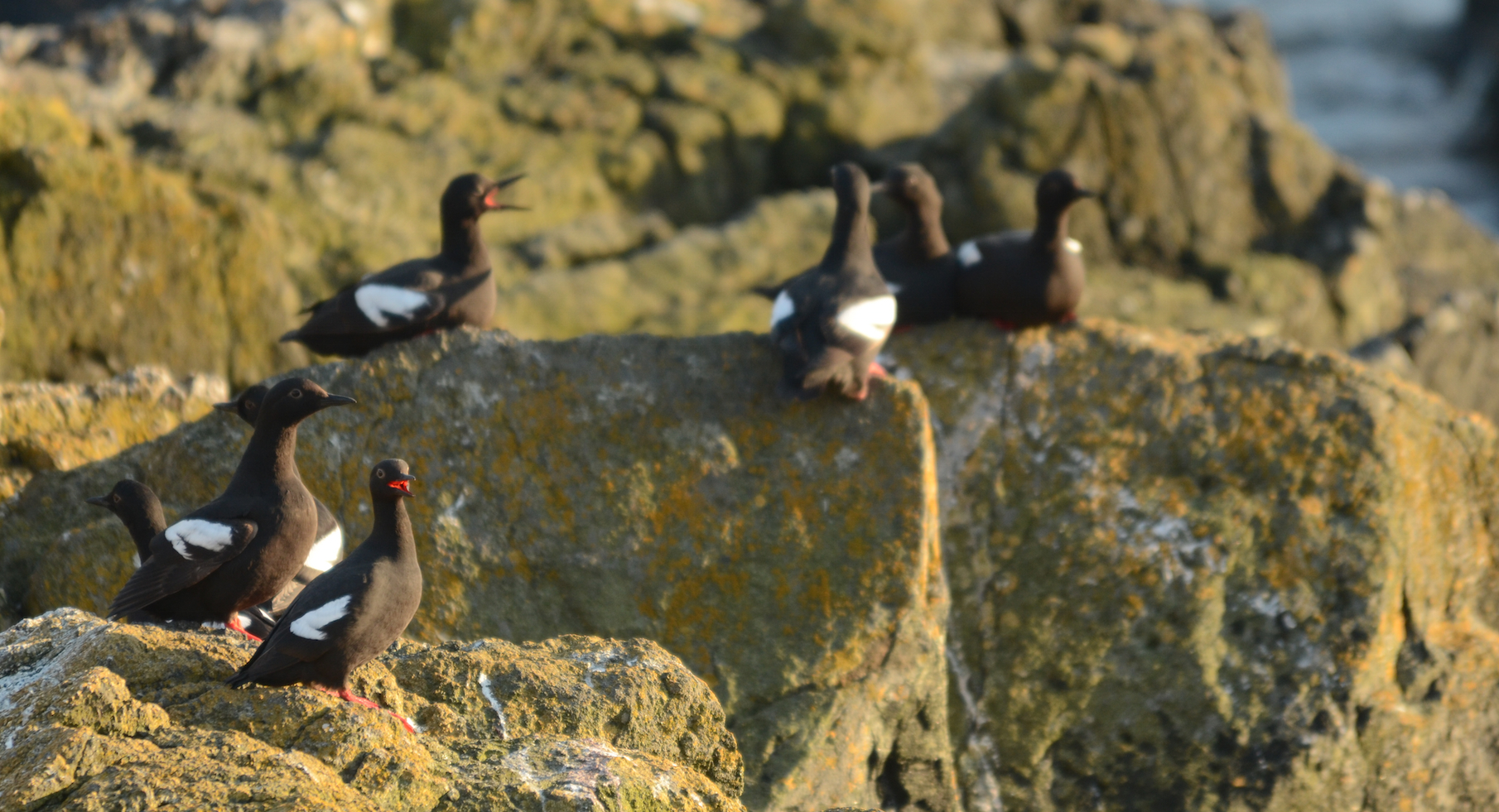
The Pigeon Guillemots are quite accustom to being on land again now.

Guillemots at home on Great Race now.

Guillemots at home on Great Race now.

There were no visitors and chores were routine maintenance.

April Almost Gone

The wind didn’t do much today other than puff a few light breezes in from the west with a few periods rising to 5 to 10 knots. It was mostly overcast with a few bright interludes and generally rather unremarkable in terms of weather. When the sun did shine through it had intensity foretelling the growing season. The barometer was fairly steady all day and is just starting to drop as I write this. The forecast is for a mix of sun and cloud, a chance of showers and a strong wind warning in effect for Friday afternoon.

There were nine whale watching vessels observed in the Ecological Reserve today, a bit of a spike, possibly due to a large cruise ship at Ogden Point.

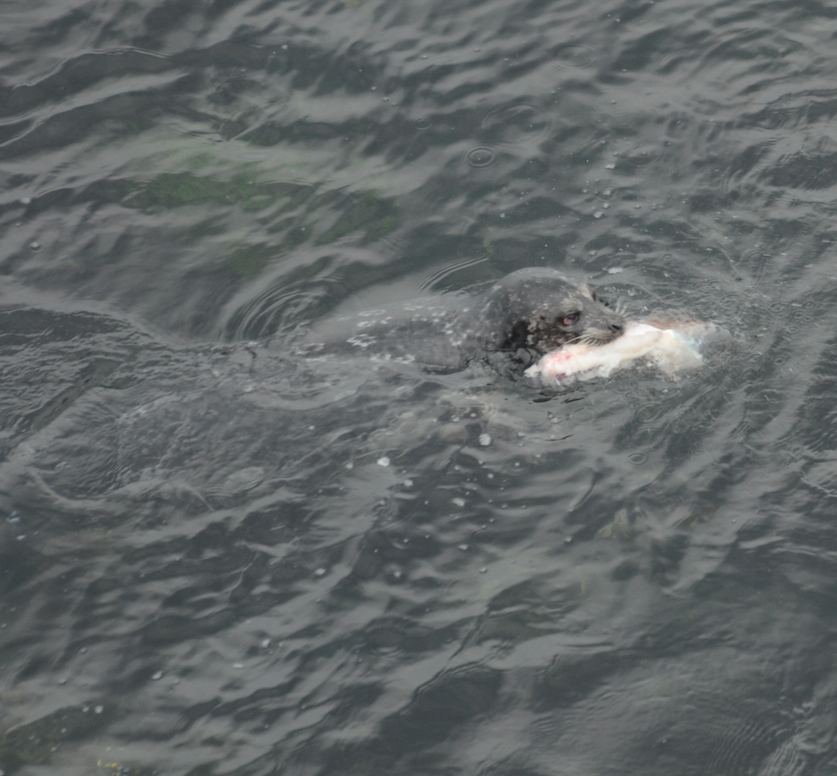
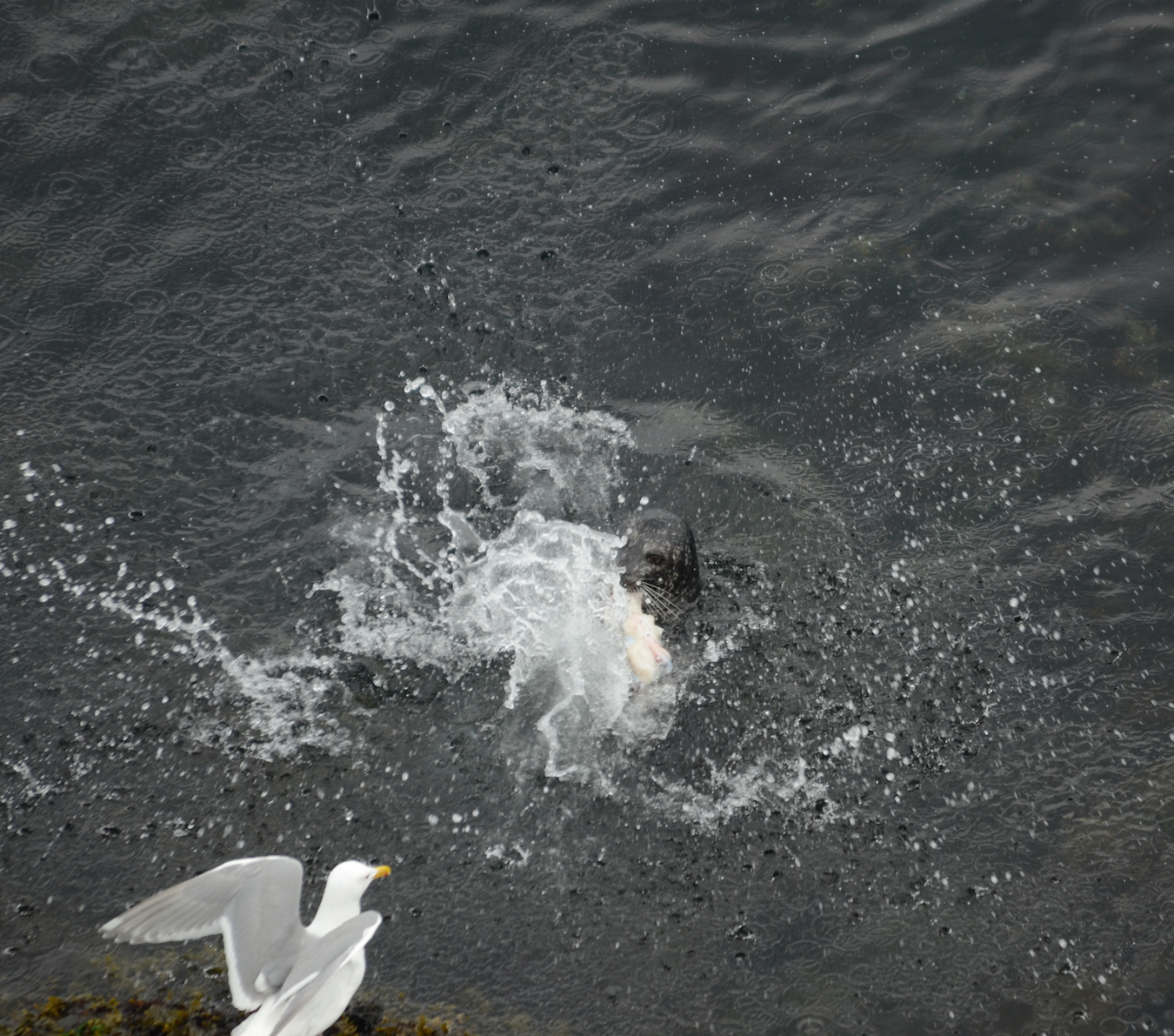
I watched a Harbour Seal tearing up and eating a fish today. It looked like it might have been a lingcod (Ophiodon elongatus).

This Harbour Seal was really exerting itself to rip up a lingcod.

This Harbour Seal was really exerting itself to rip up a lingcod.

Seal with Ling


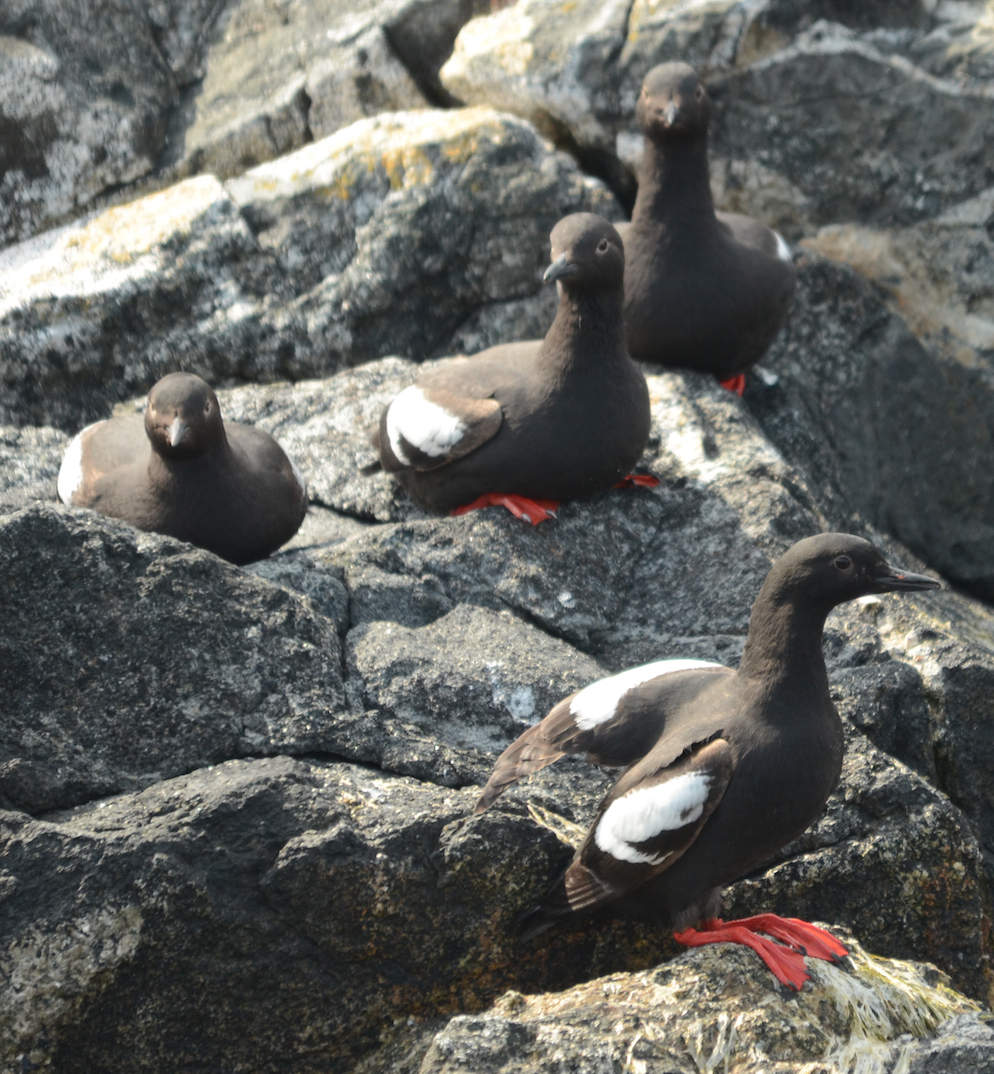
The Pigeon Guillemots are getting really comfortable on land again.

The Pigeon Guillemots are getting really comfortable on land again.

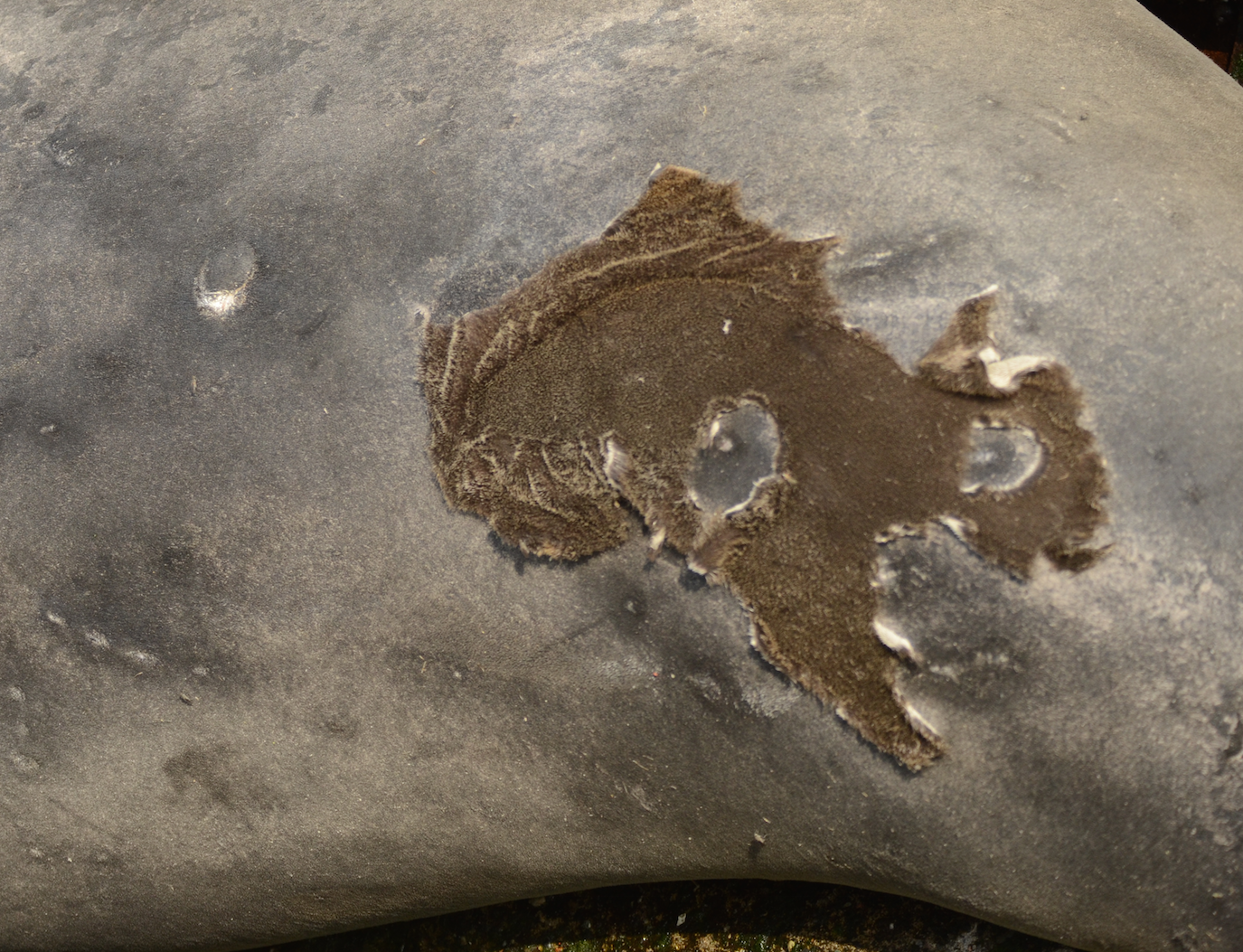
This female elephant seal has no tags and I have been calling her circle sister because of the circular marks on her back. As you can see her moult is almost complete and the circles are  at least a little visible on the new coat so I will still be able to identify her as an individual.

This is the back left side of the newly moulted "circle sister", still identifiable by the small circular scars.

This is the back left side of the newly moulted “circle sister”, still identifiable by the small circular scars.

Today was animal census day and the results are as follows:

Northern Elephant Seals 30 (12 on Great Race)

Harbour Seals 102

California Sea lions 23 (includes brand C323)

Northern Sea lions 55 (includes brand 460Y)

Sea Otter 1

Canada Geese 18

Brant ~210 (passing through)

Pacific Loon 1

Harlequin Ducks 8

Pelagic Cormorants 5

Double Crested Cormorants 6

Bald Eagle 2 adults, 2 sub-adults

Killdeer 1

Black Oystercatchers 9

Black Turnstones 8

Whimbrels 10 (yesterday)

Pigeon Guillemots 268

Glaucous-winged Gulls 317 adults, 5 sub-adults

Common Raven 1

Barn Swallows 2

Savannah Sparrow 10

Red-winged Blackbirds 4

There were no visitors today. Chores were routine.


Fine Day in Spite of the Forecast.

Light northeasterly winds brought some morning showers and kept it cool until late morning. The light northeasterly continued in the afternoon but solar radiation levels went up to a high of over 800 watts per m2 bringing up air temperature to a high of over 13oC. The barometer was fairly steady until noon and then started to fall very gradually. The marine forecast has a strong wind warning in effect overnight diminishing to a 20 knot westerly by early afternoon tomorrow. As I write this in the early evening the north-northeasterly is freshening to over 20 knots.

Three whale watching vessels were observed in the Ecological Reserve today… Sports fishing vessels were observed fishing nearby but not in the ER.

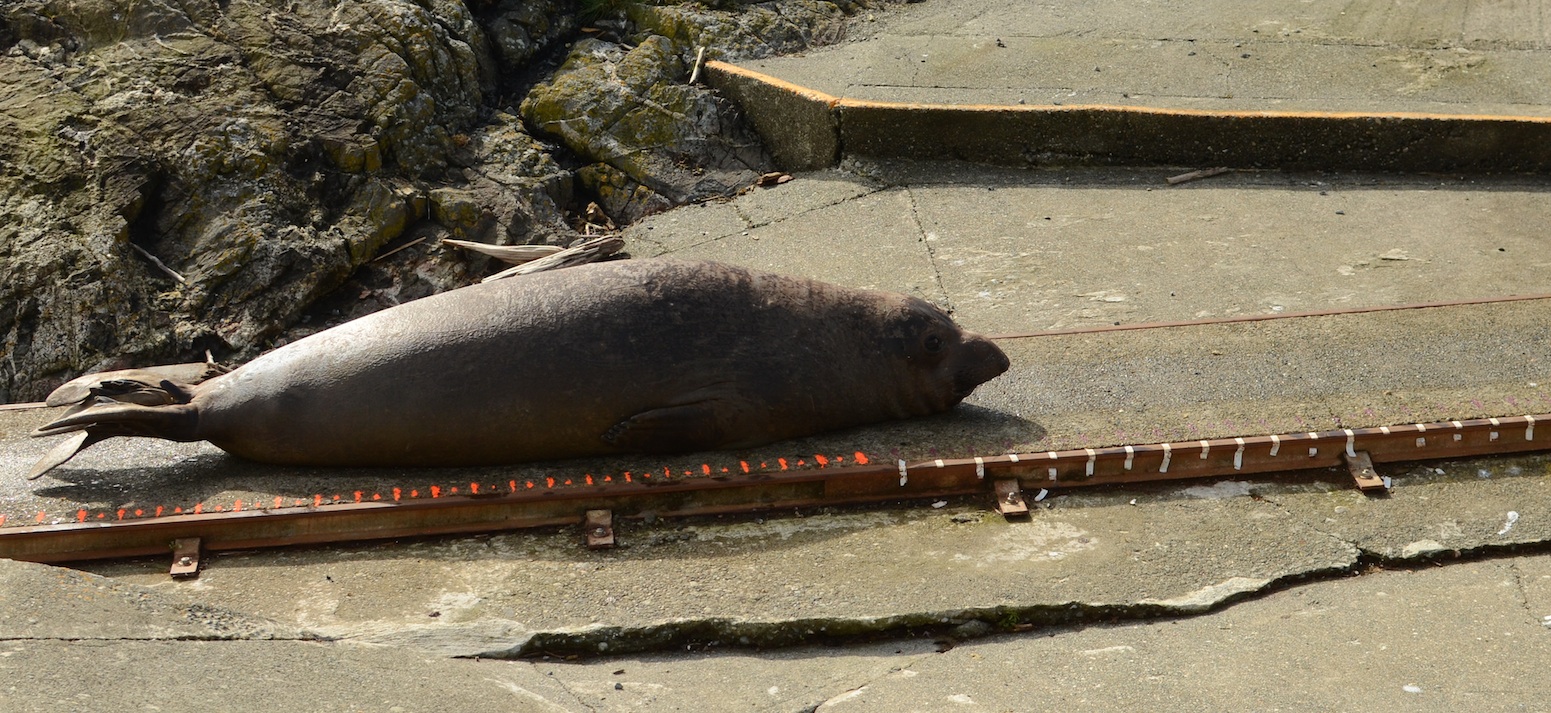
More measurements and individual moult progression, observations were made on the Northern Elephant Seals on Great Race today.

A very cooperative "pose" for length measurements. Note the little tail up in the air between the rear flippers.

A very cooperative “pose” for length measurements. Note the little tail up in the air between the rear flippers.

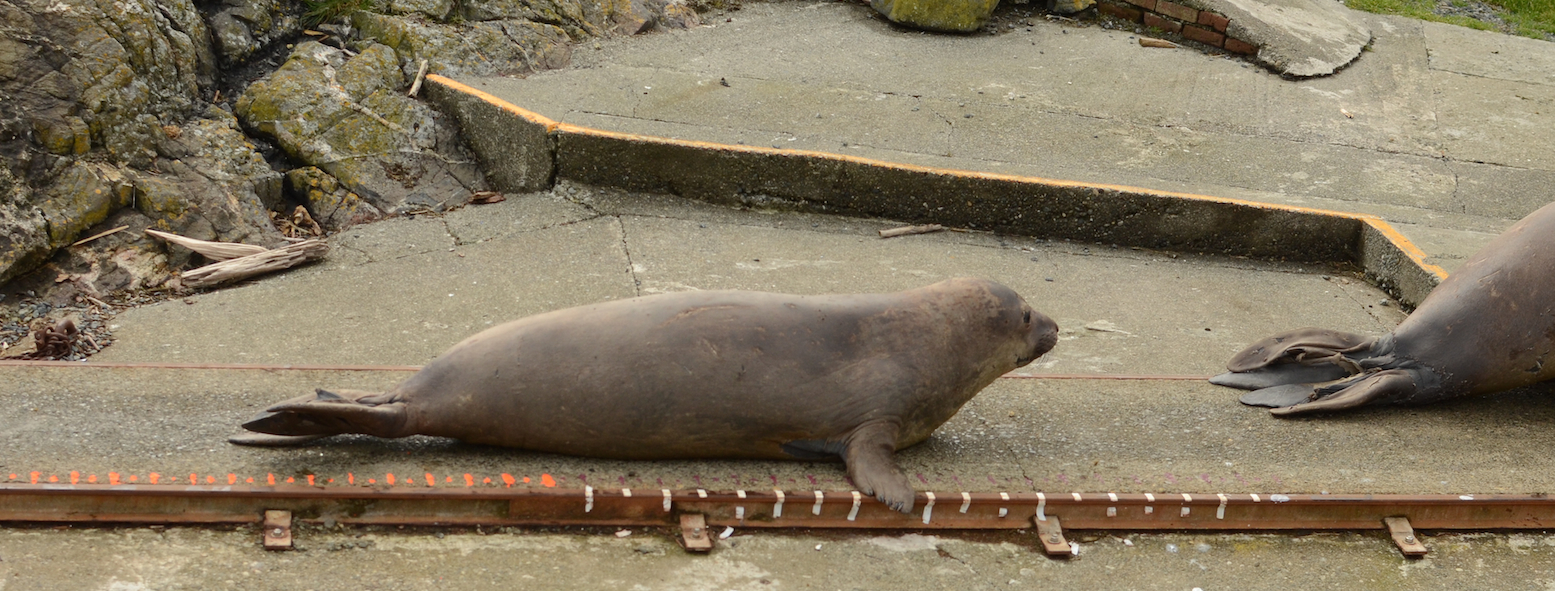
Traffic jam on the elephant seal measuring device.

Traffic jam on the elephant seal measuring device.

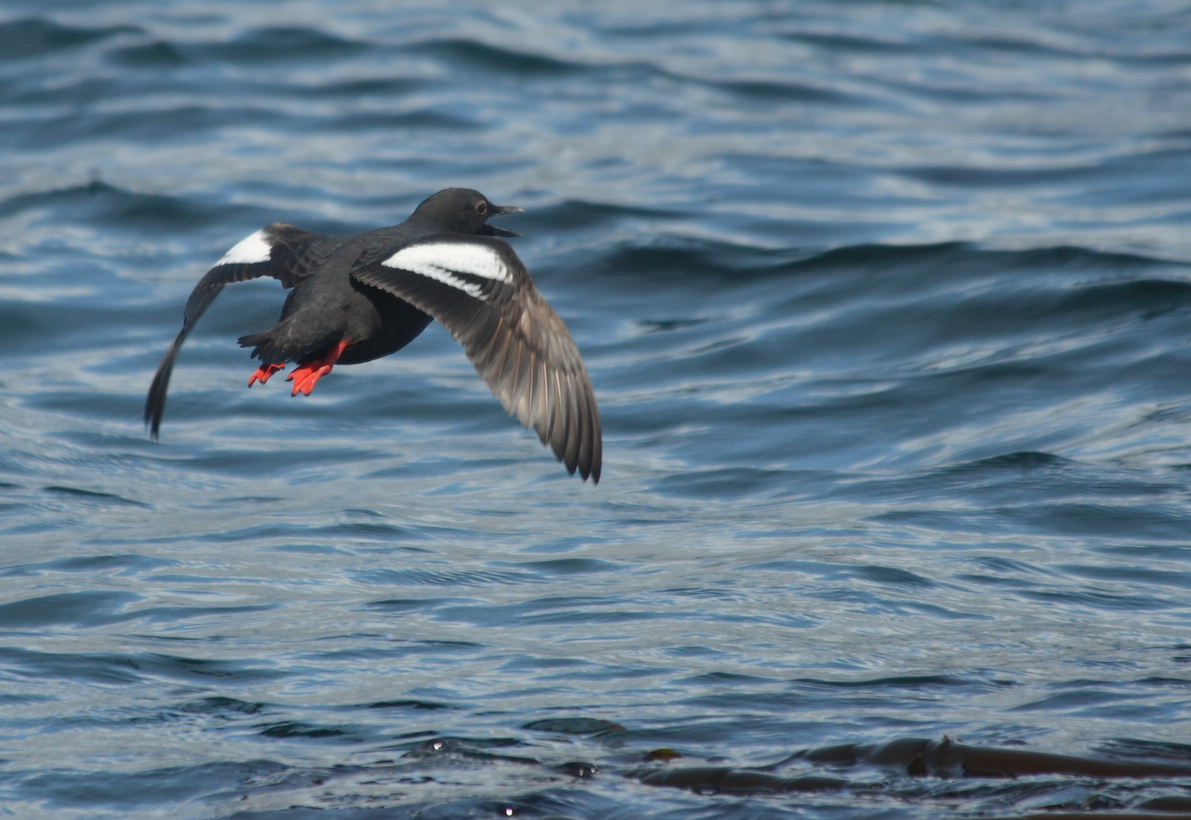
Pigeon Guillemots and Glaucous-winged Gulls were observed mating today, so nesting sites will soon be imperative.

Pigeon Guillemots are getting prepared for nesting.

Pigeon Guillemots are getting prepared for nesting.

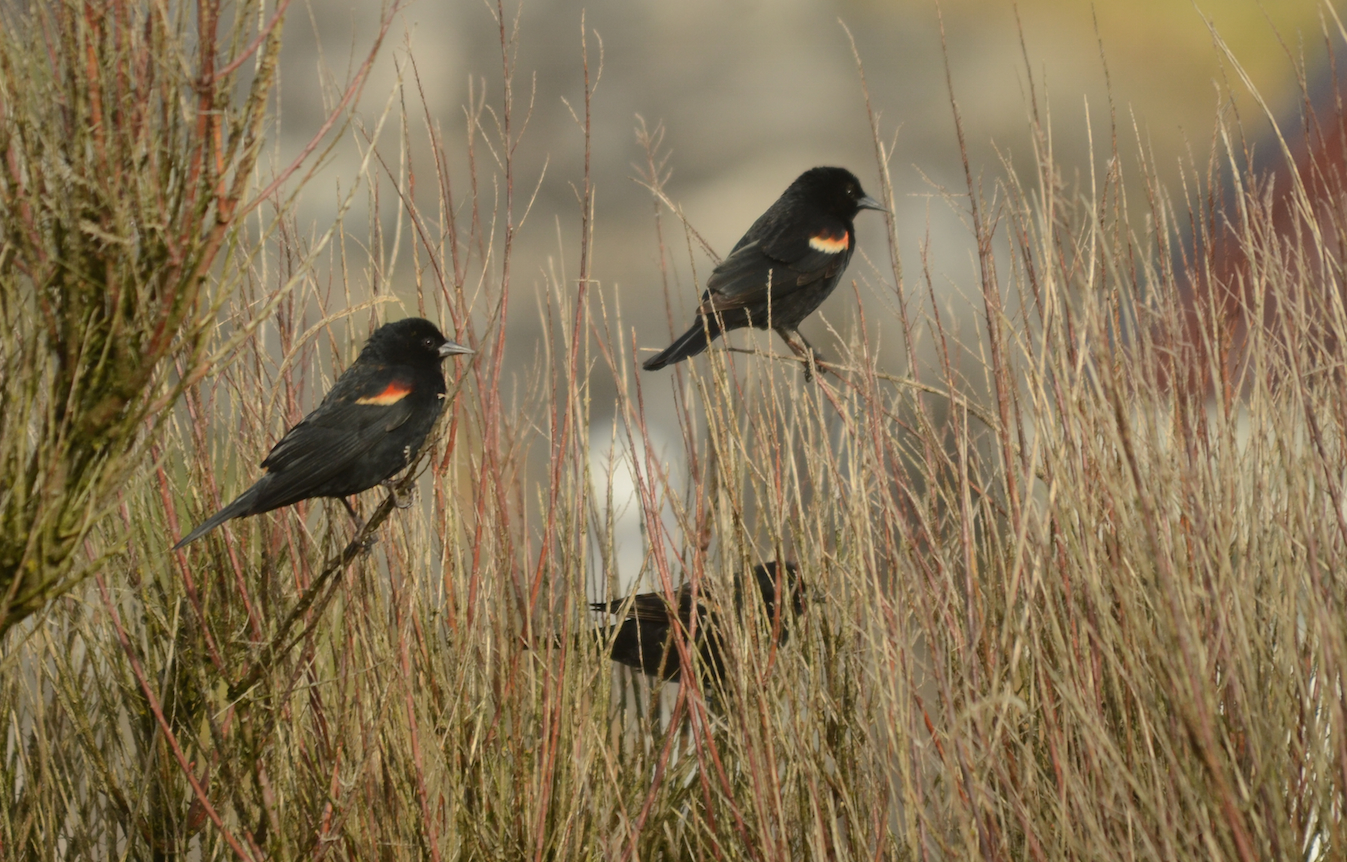
Six Red-winged Blackbirds (Agelaius phoeniceus) landed on the light-tower and then paid a short low elevation visit to Great Race Island today. This is possibly a new record.

A brief visit was made by six Red-winged Blackbirds.

A brief visit was made by six Red-winged Blackbirds.

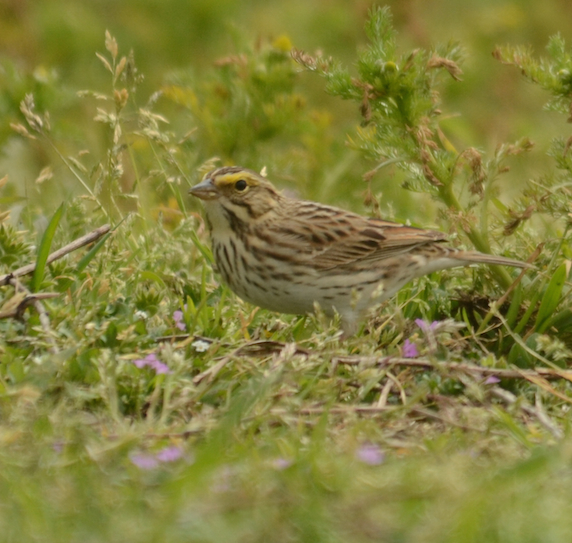
Savannah Sparrows may be nesting somewhere nearby: I am still looking for their nests.

At least ten Savannah Sparrows are seen daily now.

At least ten Savannah Sparrows are seen daily now.

There were no new visitors today and maintenance chores were routine.