Lontra canadensis: River Otter–The Race Rocks Taxonomy

raisanov410ottereat

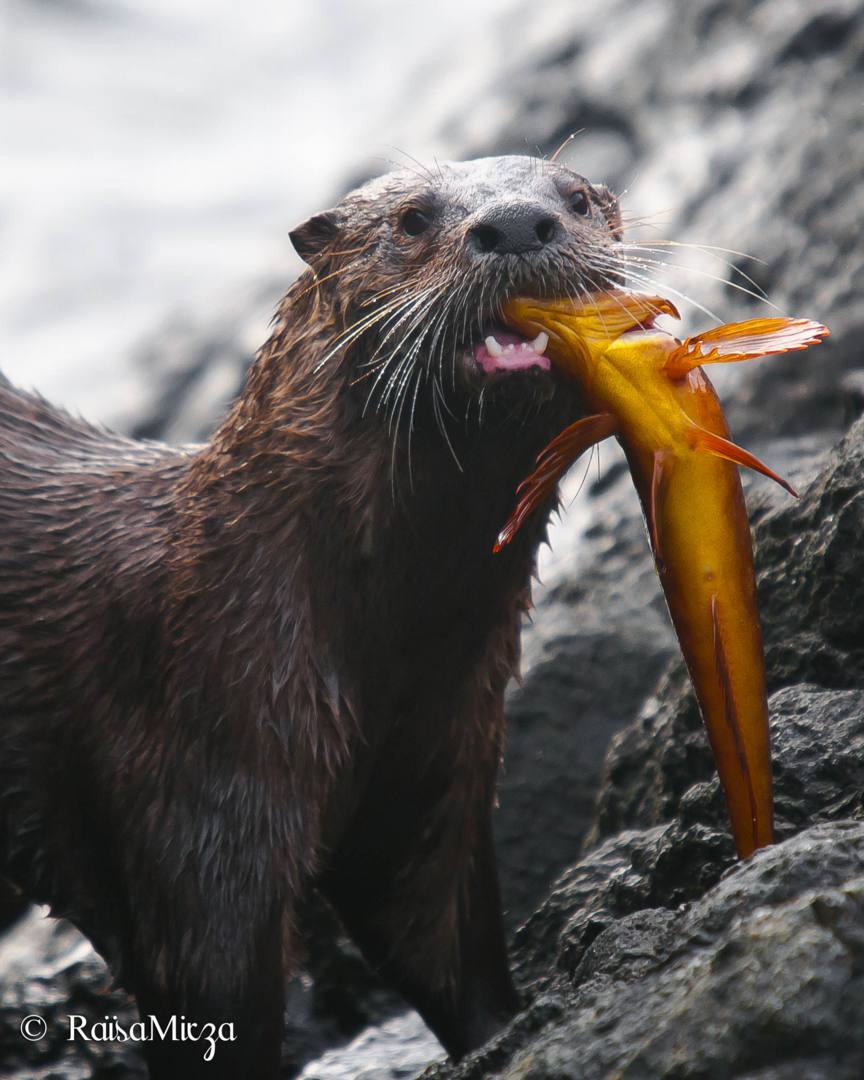
This otter has just caught a female kelp greenling. I consider this one of the best ecological pictures of the year at Race Rocks–Photo by Raisa Mirza Nov 4 2010


Location of River Otters at Race Rocks:
rmmar09lontra

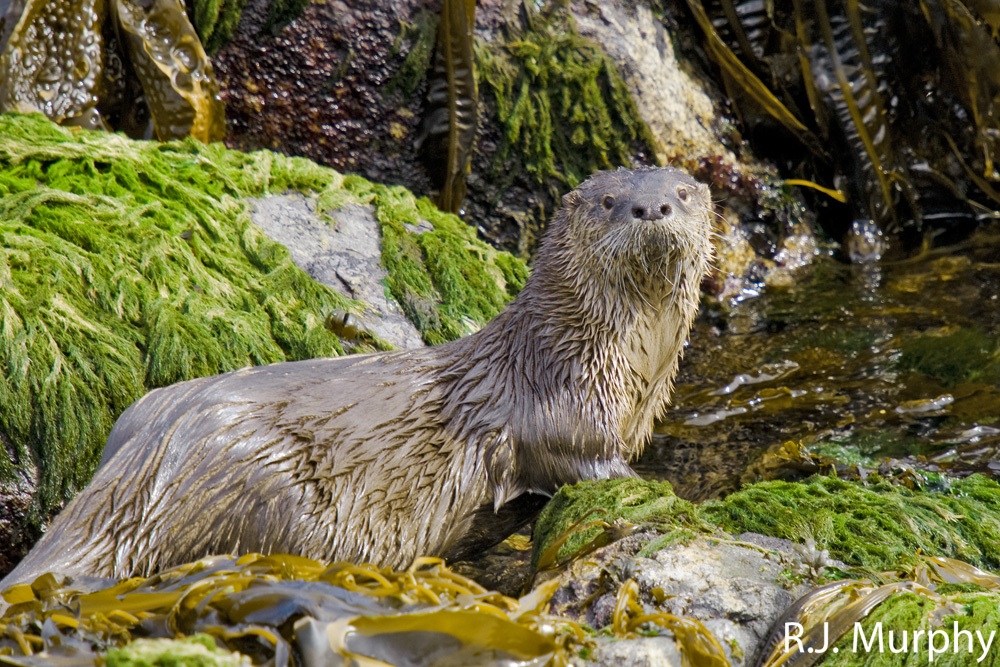
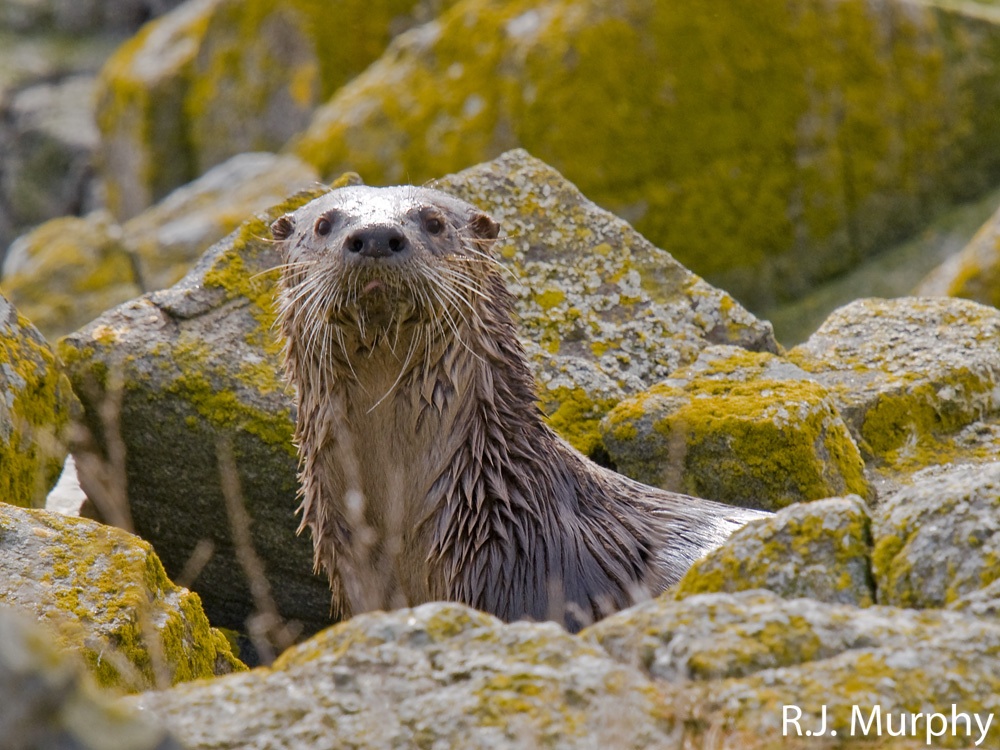
Ryan took these photos of a rover otter in March 2009. The otter was coming out of the water on the East side of great Race.

The river otter Lontra canadensis, formerly Lutra canadensis, does not really have a natural habitat at Race Rocks because they usually inhabit small bays and inlets around Vancouver Island. However they have in the past made homes in holes under man-made paths and buildings at Race Rocks. They currently have made a home under a pile of rocks formed when the Coast Guard blasted the island to make a helicopter pad in the late seventies. Most of the other man-made habitats have been eliminated. Interesting local ecology/behaviour/adaptations:
The river otter is the largest of the family Mustiladae. It is a metre or more  in length with around a third of its body taken up by its tail. It has webbed feet and claws which are useful for use in the marine and terrestrial environments in which they live.
They have thick fur with long hairs enabling them to survive low temperatures. Ryan took this image of otter tracks at Race Rocks in December 2008 when we had a few weeks of cold weather and the snow actually stayed for a few days.
rmmar09lontra2

See more photos of Ryan Murphy on his Flickr website:

When diving in murky waters through which they cannot see properly they use their whiskers to detect prey. River otters are able to communicate with each other using chirps, whistles, chatters, chuckles, screams and growls.They are one of the most playful species constantly sliding on the ground, chasing each other.

Domain: Eukarya
Kingdom: Animalia
Phylum: Chordata
Class: Mammalia
Order: Carnivora
Family: Mustelidae
Subfamily: Lutrinae
Genus: Lontra
Species: canadensis pacifica (Schreber, 1977)
Common Name: River Otter

ottertrackThey have thick fur with long hairs enabling them to survive low temperatures. Ryan took this image of otter tracks at Race Rocks in December 2008 when we had a few weeks of cold weather and the snow actually stayed for a few days.

When diving in murky waters through which they cannot see properly they use their whiskers to detect prey. River otters are able to communicate with each other using chirps, whistles, chatters, chuckles, screams and growls.They are one of the most playful species constantly sliding on the ground, chasing each other.
Distribution elsewhere:
They occur along the Coast of Vancouver Island, often frequenting bays and estuaries and coastal marshes. The closest area where they are regularly found is Pedder Bay. There, we frequently see them on the college docks and on the southern shoreline. . Along streams and rivers in most of midwest and southwest USA (except Hawaii) they are common. Their population and density however varies with location. They can become a pest when they move onshore under buildings near the water.Their dead food and droppings create a disagreeable odor. They also can be vicious when cornered by humans or dogs.
Feeding particulars:
The river otter usually feeds on quite a variety of organisms, fish (herring mostly), seagulls (baby ones and eggs), crabs and shrimp. At Race Rocks they revert to birds and their eggs when the supply of herring is low. In July,1998 they wiped out the nests of black oyster catchers. They were also a threat to guillemot nests and were seen  digging away rocks to get to the nests. Whether the pigeon guillemot escaped or not is not known. Glaucous winged gull chicks are also victims. Man made habitat such as space under walkways and under buildings were removed in 2000 resulting in fewer occurrences of them on the islands.

Reproduction:

River otters usually mature at 2 years of age. Females usually get pregnant after three years. Males breed at around 5 years. See this slide show. They have litters of 1-6 with the usual amount being two or three children (kits)per mother. Female river otters have the ability to delay implantation. The young usually stay a year in the womb with a 60 day gestation period. They are quite helpless at birth and are blind. They open their eyes at around 3 weeks. The kits can take care of themselves at 5 or 6 months. However the family usually sticks together for an extra 2 months or until another litter is born.

The river otter breeds in March-April and give birth in late winter/early spring.
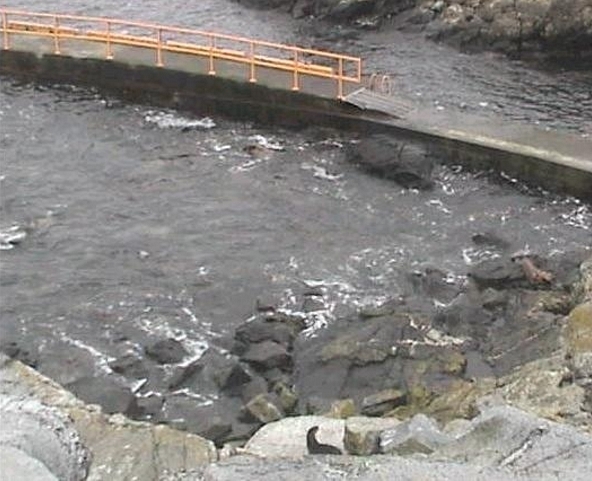
otterThis photo was taken in February, 2008
on the remote camera 5 by Pam Birley. The otter is seen coming out of the rock pile and moving over to the water. Below is a series of images taken by PB on February 29, 2008.

Other Posts on River Otters at Race Rock

Other posts on the Class Mammalia at Race Rocks

taxonomyiconReturn to the Race Rocks Taxonomy and Image File
pearsonlogo2_f2The Race Rocks taxonomy is a collaborative venture originally started with the Biology and Environmental Systems students of Lester Pearson College UWC. It now also has contributions added by Faculty, Staff, Volunteers and Observers on the remote control webcams. Garry Fletcher2003


two Northern Sealions hauled out

Wednesday, July 10, 2002
Good Evening
TEMPERATURE: Max. 18.9 C  Min. 11.3 C Reset 13.5 C
MARINE LIFE: Two mature bald eagles made several attempts to hunt Gr. Race first thing this morning and as always the gulls drove them off towards Whirl Bay everything soon settled back to the routine of feeding and sheltering the chicks.It would appear that there is a healthy supply of fish as the gulls continue to return from sea with full gullets.With any luck at all we will see some chicks fledge this year although the otter is making it’s rounds usually between 2 and 3 a.m. Most of the nests along the shore have been decimated but there are many nests farther inshore that have at least two surviving chicks.The dead seal pup has finally floated away however the female has remained in the dock area and has been joined by three other females with their pups. The geese are still here but with the vegetation so dry I wonder when they will leave for ‘greener pastures’. This afternoon two Northern Sealions hauled out on the western slope of the largest southeastern rocks to soak up some sun but were gone by 19:00.
HUMAN INTERACTION: There were 5 pleasure craft and 6 Ecotour boats in the reserve today.
posted by Carol or Mike S at 6:41 PM
Good Morning
WEATHER: Sky Clear  Vis 15 MilesWind North East 3 Knots Rippled
posted by Carol or Mike S at 5:19 AM

The otter’s nocturnal work.

Thursday, July 04, 2002
MARINE LIFE: 7 orcas (one calf) passed north of the MPA this morning at 9:30, several breached repeatedly sending huge waves into the air on their way west. Two whale watchers came speeding west from Victoria, though skirted the reserve and mostly obeyed the no-wake zone. As a pleasant change, the boats stayed away from the whales and went south to open waters. The whales themselves turned south at Church Point and disappeared west of Great Race.
The otter left a bloody gull sacrum in front of the tank room as the small touch tank was being cleaned. A bloody mass near the high tide mark near the docks is more evidence of the otter’s nocturnal work.
HUMAN INTERACTION:24 tour boats and two pleasure craft through the reserve today. Second Nature dropped off relief for Mike and Carol today before 9 this morning.
posted by Ryan Murphy at 2:49 PM
Good Morning
WEATHER: Sky Part Cloudy  Vis. 15 Miles Wind North West 7 Knots Sea Rippled
posted by Carol or Mike S at 5:32 AM

Several gulls nests have chicks since yesterday

Wednesday, July 03, 2002
Good Evening
TEMPERATURE: Max 14.0 C  Min 9.9 C  Reset 12.0 C  Rain tr
MARINE LIFE: Don’t mind the clouds and cool temperatures but really the constant westerly tends to wear on the nerves, the birds don’t seem to mind it – they just tuck their bills under a wing and nap. Several gulls nests have chicks since yesterday, watched, from the front porch, the first chick hatch from the group of nests closest to the house. It’s a fairly slow process, first a tiny, dark beak breaks through the egg and over a couple of hours the chick pushes it’s way out. The adult is on and off the nest checking the progress and when finally the chick is free of the egg the shell is taken about 3 m away and discarded.In an hour or so the chick is dry with yellowy-brown down-totally unlike the adult.The Oyster Catcher chicks on the other hand look very much like the adults except for bill colour and slightly lighter plumage. The Gulls are usually 2-3 years before they take on all the characteristics of the adults.The dark cloud lurking over this wonderful new life arrives between 1and 2 a.m. creating havoc, devouring some eggs and crushing others, some chicks are crushed and some eaten all the while the adult gulls are in the air screeching piteously diving at the intruder to no avail- the otter is on the hunt again! Haven’t seen the otter for several weeks, not even any signs of it like scat in the usual places- was really hoping it had moved on, maybe to Bentinck Island.Some resident Orcas were in the reserve this afternoon moving quite slowly along the south side of Gr. Race they did a lot of tail slapping,rolling and fishing in the kelp.There was the usual flotilla of whale watcher boats which for the most part abided by the guidelines – however after the Orcas had moved east away from the reserve at about 15:30, 2 ecotour boats went by too fast with respect to the no -wake policy and 3 others were too close to shore just west of the dock where there were feeding Pigeon Guillemots. 1 ecotour operator stopped in the kelp just off the northwest bluffs of Gr Race and pulled kelp into the boat for the passengers.Since this is a protected area such activities are not within the guidelines.
HUMAN INTERACTION: there were 5 pleasure craft through the reserve and 23 ecotour boats.
posted by Carol or Mike S at 7:07 PM
Good Morning
WEATHER: Sky Part Cloudy  Vis 15 Miles  Wind West 25 Gust 30 knots  Sea 3 – 4 Foot Moderate
posted by Carol or Mike S at 5:25 AM