Gathering of the Gulls

Today started fairly clear, then clouded over. In the afternoon it was sunny for a few hours and eventually the sky darkened and at dusk the rain started. The barometer rose to almost 1019 hPA mid-day and then fell. The forecast is for clearing and light east winds with sunshine on the horizon.

Twelve commercial whale-watching vessels were observed working in the Ecological Reserve. They were in the area watching a Humpback feeding very close to the western reserve boundary, transient orcas to the southwest and southern resident killer whales to the northeast.

Today was census day due to thick fog yesterday.

Animal Census

Steller Sea Lion 338

California Sea Lion 908

Harbour Seal             178

Northern Elephant Seal 5

Sea Otter 1

Southern Resident Killer Whale (26 observed within one mile of ER during count week, (Race Passage, east, west and south of RR)

Biggs Killer Whale (Transients) (9 during count week Race Passage & southwest)

Humpback Whale (3 observed within one mile of ER during count week)

Minke Whale (1 observed within one mile of ER during count week just east of North Rock)

Canada Goose 20 attempting to be full time

Harlequin Duck 5

Surf Scoters 30 (flying through to east)

Double-crested Cormorant 12

Brandt’s Cormorants 27

Pelagic Cormorant 5

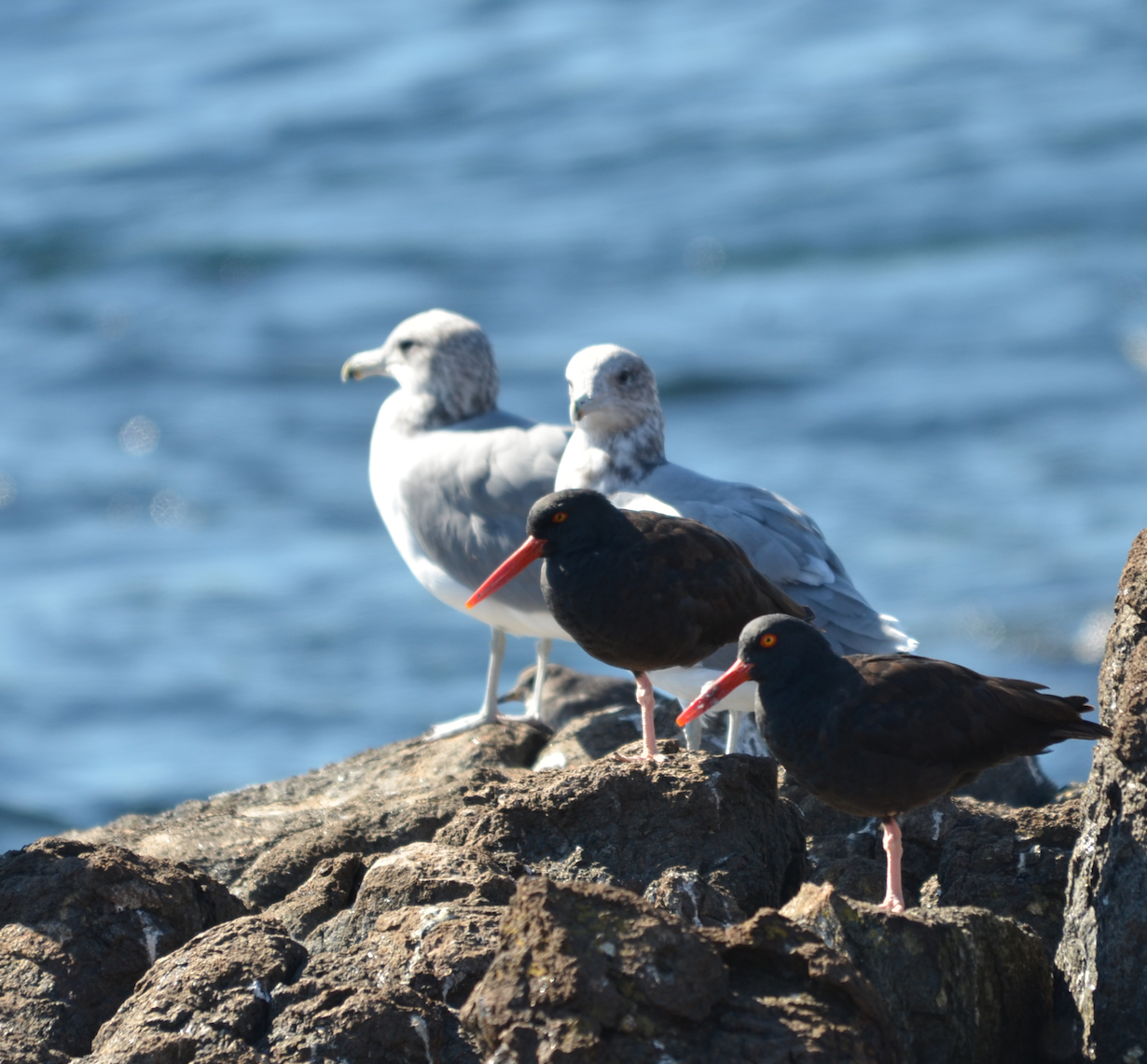
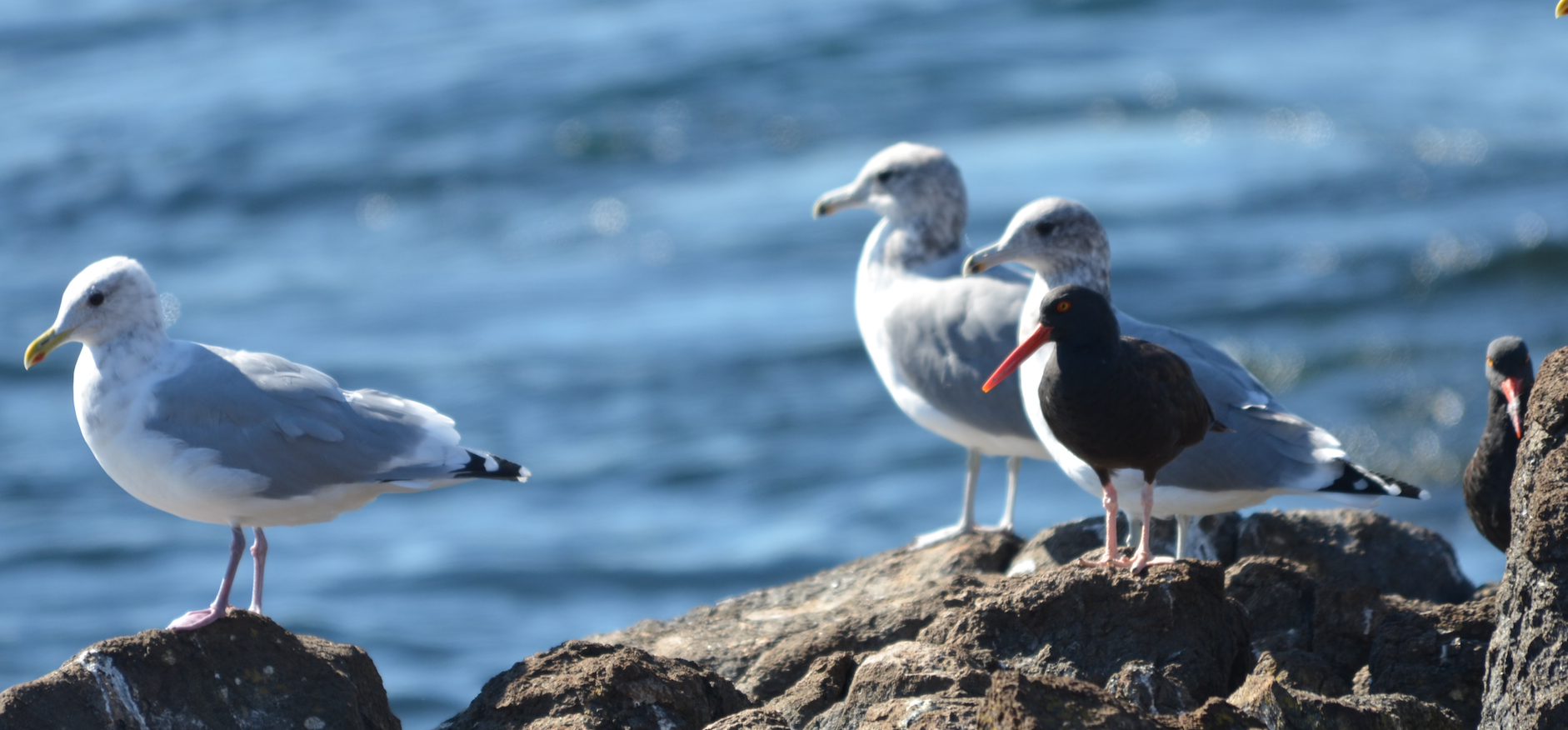
Black Oystercatcher 5

Black Turnstone 7

Surfbirds 13

Kildeer 2

Total gull count 2469

Estimated numbers

Glaucous-winged Gull 350

California Gull 50

Thayer’s Gulls 1500

Herring Gull 1

Ring-billed Gull 1

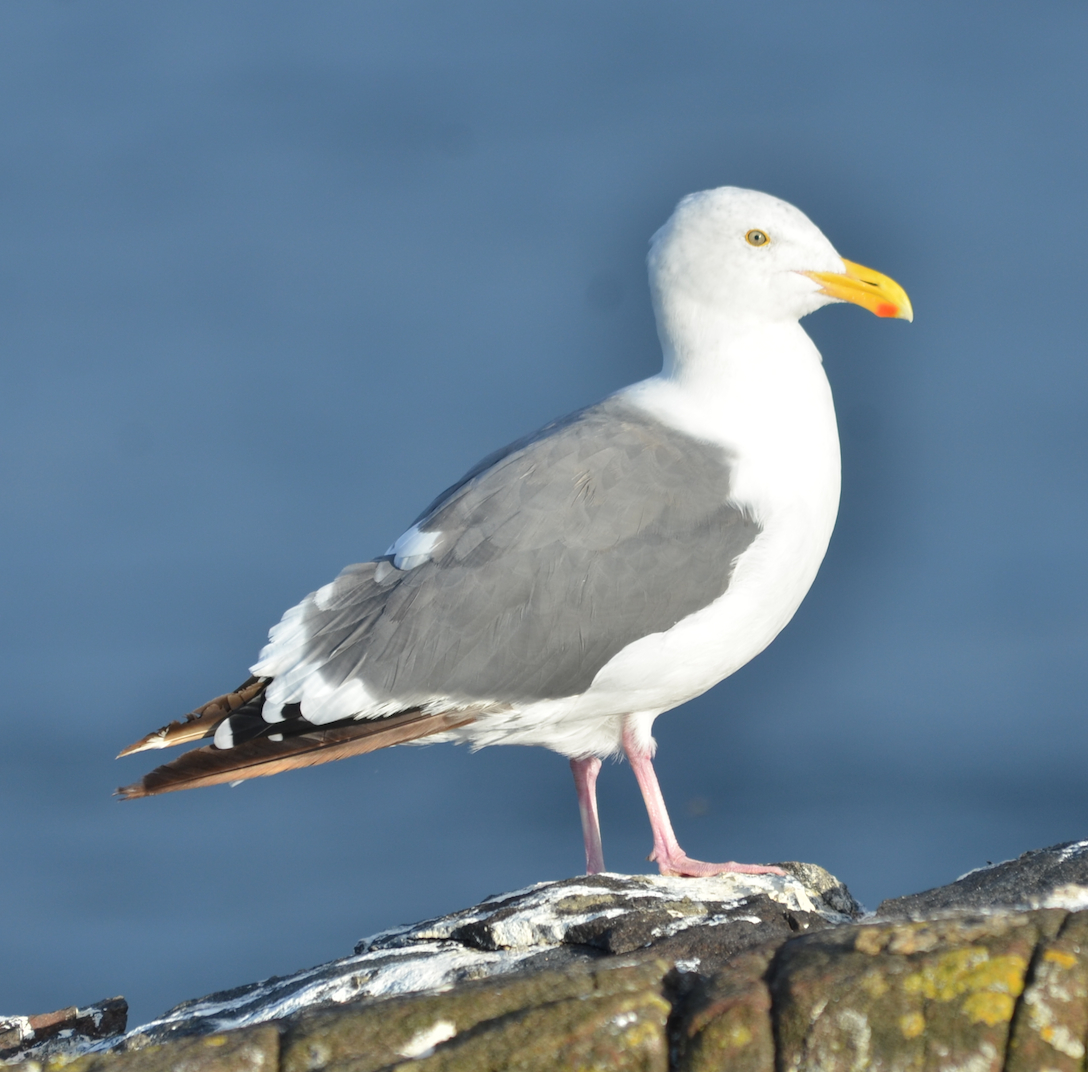
Western Gull 1

Heerman’s Gull 15

Mew Gull 20

~531 unidentified gulls

Common Raven 2

Savannah Sparrow 10

Fox Sparrow 2

Song Sparrow 2

Junco 3

Pacific Wren 1


Other chores were routine. There were no visitors.


In the Fog.

The sky was mostly clear in the morning but fog moved in and dominated the rest of the day. The wind switched from east northeast around to west in advance of the fog and then blew fairly steadily west at 20 – 25 knots. The barometer held its own today at and around 1014 hPA. There is a strong wind warning in effect expecting west 20 – 30 this evening and again late afternoon, evening on Friday. There is a chance of showers on Friday and then it is supposed to clear again.

In spite of the thick fog in the afternoon, eight whale watching vessels were observed working in the Ecological Reserve today. Two “pleasure” craft were also observed, and one almost ended up on Middle Rock. The ebb tide was sweeping swept out to sea as they tracked across from North Rocks and they were pushed into the kelp bed just before Middle Rock before they adjusted course and powered out. They were lucky to not have been stalled by kelp in the wheel.

Ecological observations were limited by visibility today. I could hear the whale watchers talking about a Humpback Whale in the vicinity but did not observe it. The animal census will have to wait until there is visibility. The Canada Geese are arriving after dark now and taking up other stealth tactics to stay on Great Race.

Fog remained thick at the end of the day. Chores were largely Sisyphean in nature as keeping the California Sea Lions away from the houses and buildings becomes a more and more Herculean task given the resources. There were no visitors.


Sumo-sized Sea Lions

It was a copycat kind of day, weather wise, the same as yesterday and the day before. Calm, very light winds and clears skies. The barometer continued the drop started on Sunday and is now below 1012 hPa again. The forecast is calling for a switch to light winds west 10 -1 5 and a mix of sun and cloud until Friday when showers are expected..

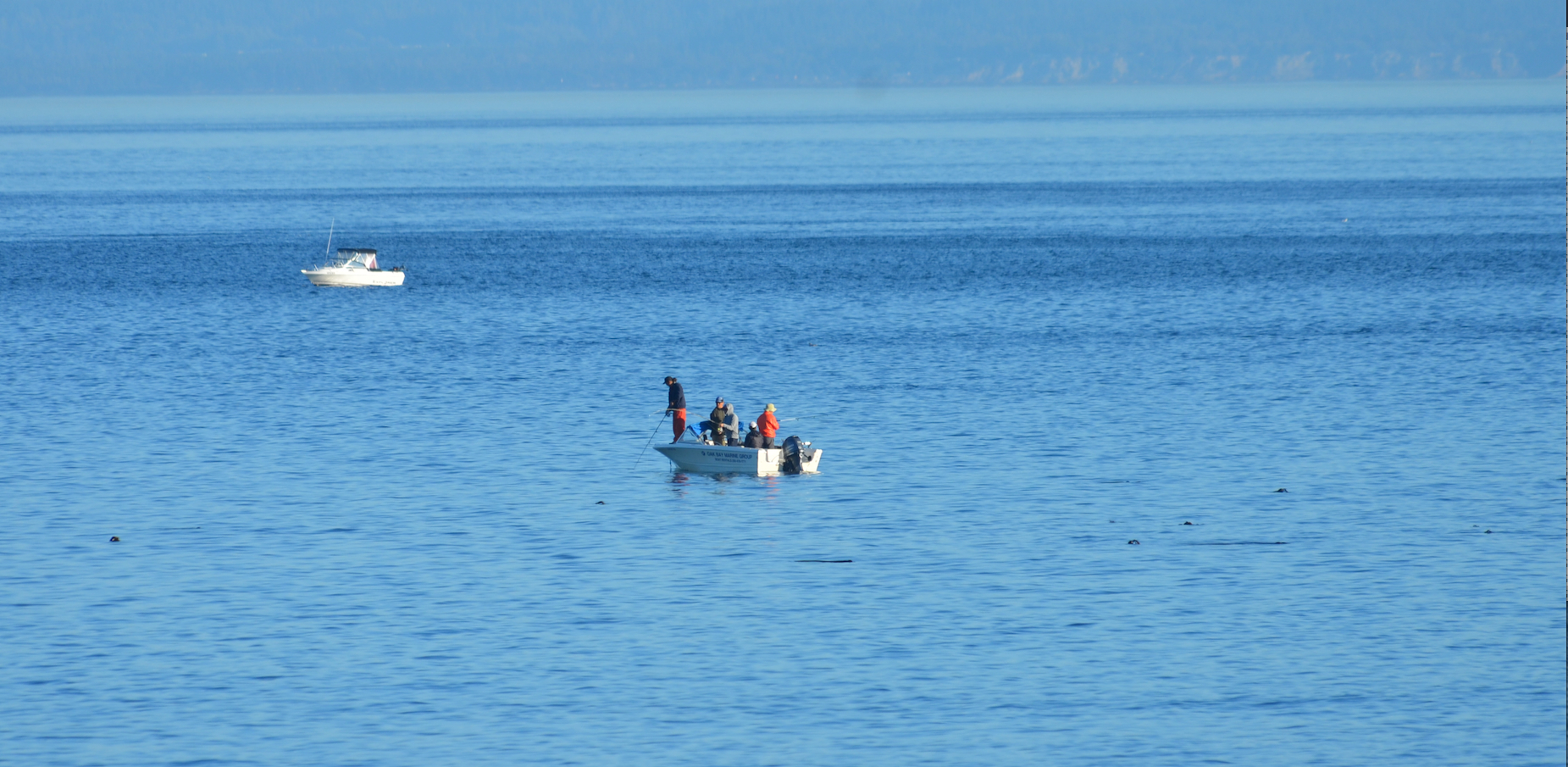
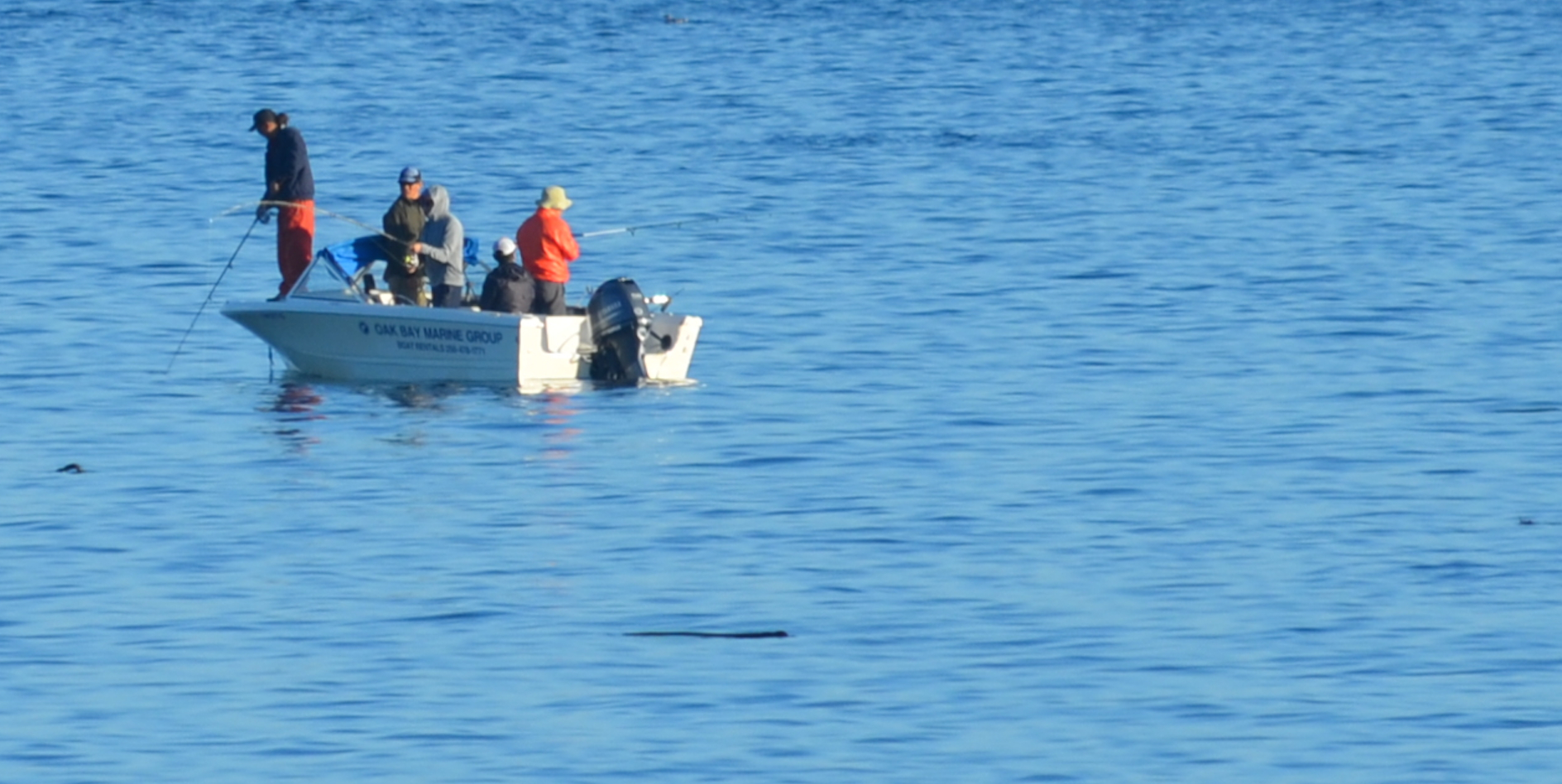
Whale watching traffic in the Ecological Reserve was fairly light with only eight observed visits. All the operators did really well today. They slowed on entry, went with the current, drove in a responsible way that respected the protected area and saved speeding up until they were clear of the reserve. This is the sort of cooperative behavior that is the norm for sustainable operations in reserve. Observations were made of “sports” fishers hauling in lingcod and rockfish in the Race Rocks Rockfish Conservation area.

Although there may have been more elsewhere, there was no lack of whale action around Race Rocks today. Three Biggs Killer Whales were spotted travelling from east to west through Race Passage in the morning and a Humpback Whale went the other way, in the afternoon, spending some time feeding close to North Rocks. There large multi-species feeding flocks in the same area. Perhaps there are balls of forage fish there.

I saw a large kelp raft, first of the season, sweeping out to sea with the ebbing tide today. This annual kelp becomes more and more prevalent in the tidelines as autumn progresses and the winter storms will remove most of it before spring. It is a great carbon sink that fixes large amounts of carbon, which will eventually become entombed on the bottom. Not all of it goes out to sea and sinks though. Kelp that lands on shore is a key part of near shore food webs relying on this large volume of rotting biomass to fuel new generations of shore spawners and out going young salmon.

Chores were routine again and the sunshine is allowing for recovery of freshwater lost earlier in the month. The level is almost back up to where it was on September 5th. There were no visitors.


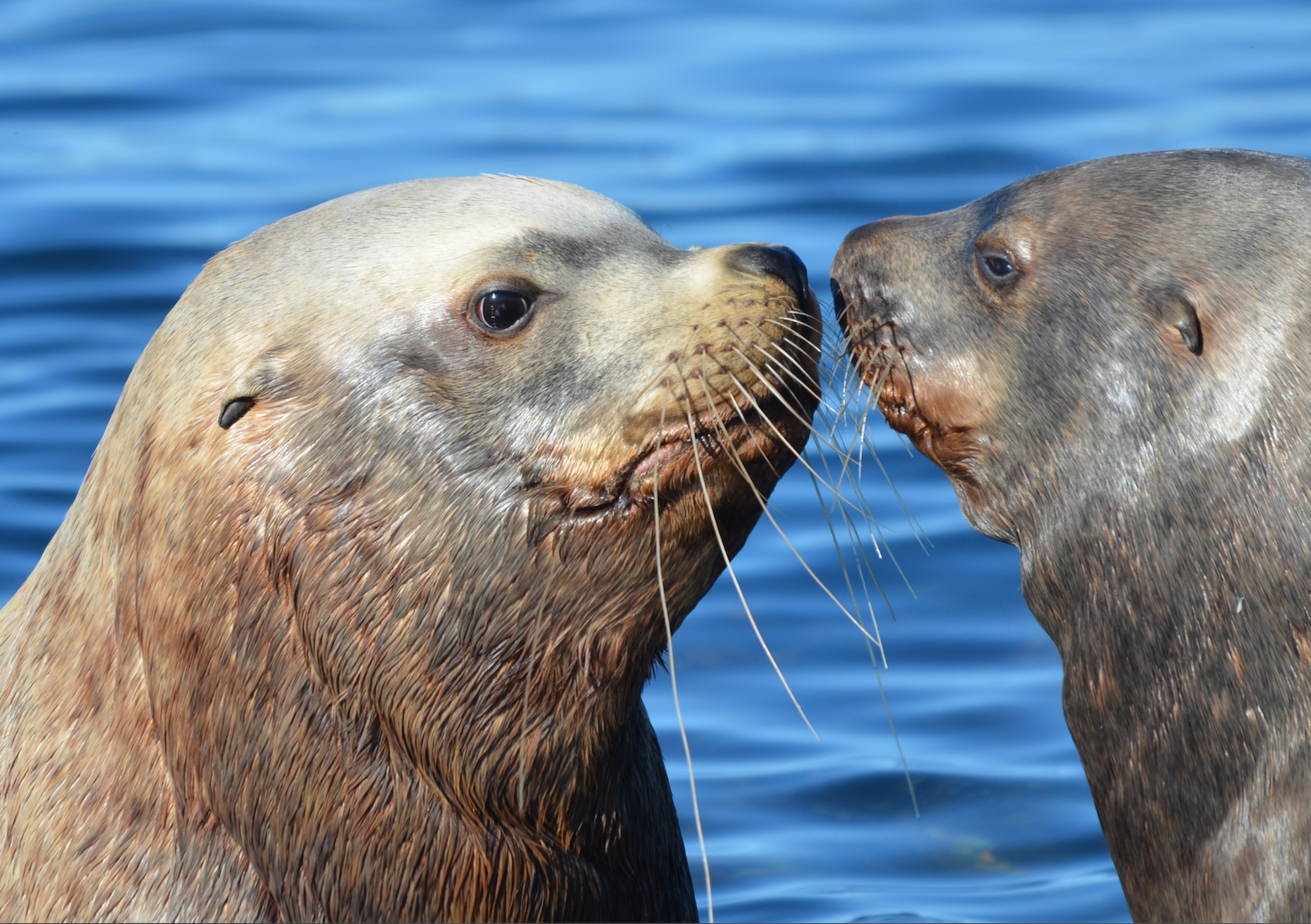
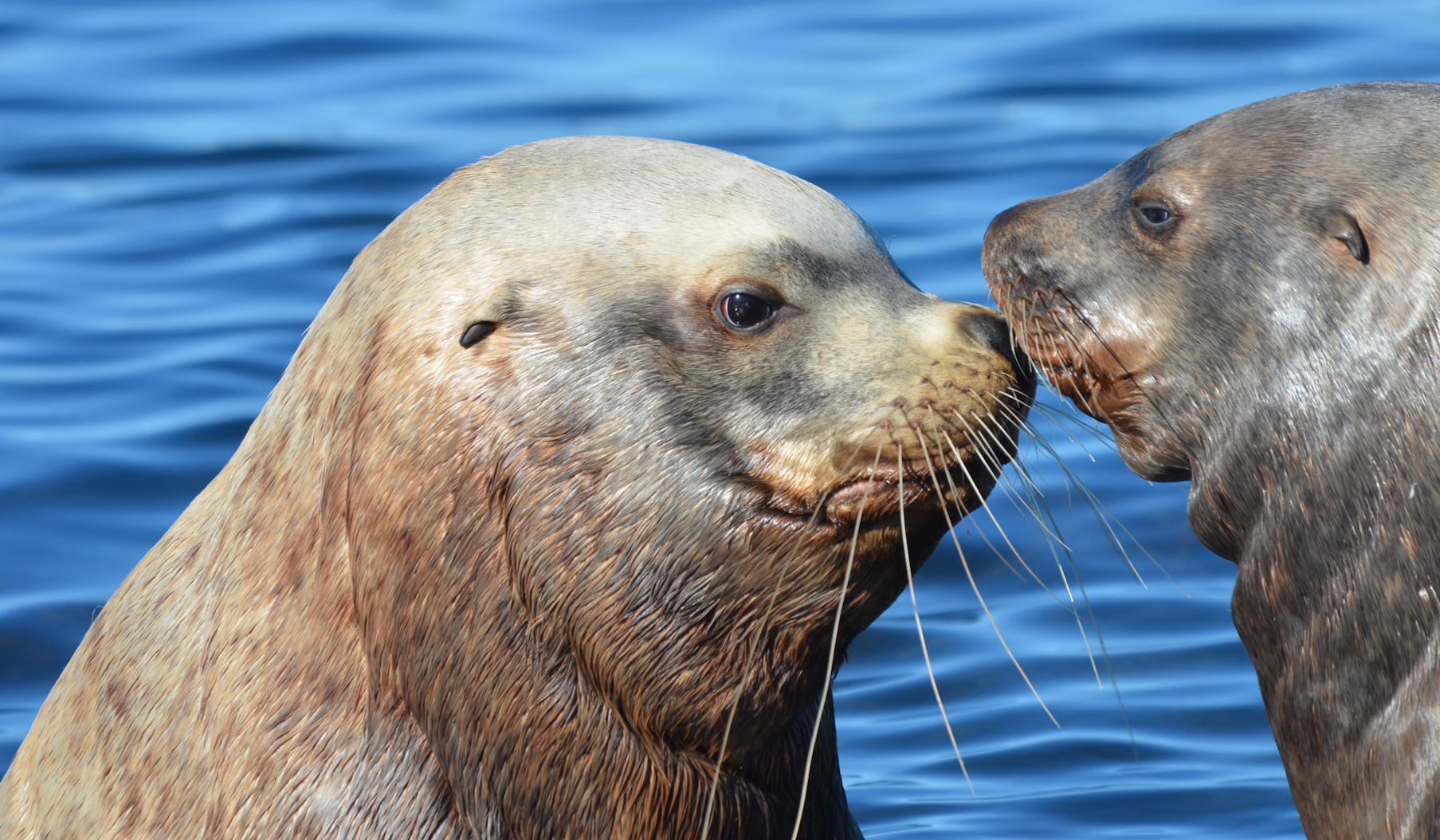
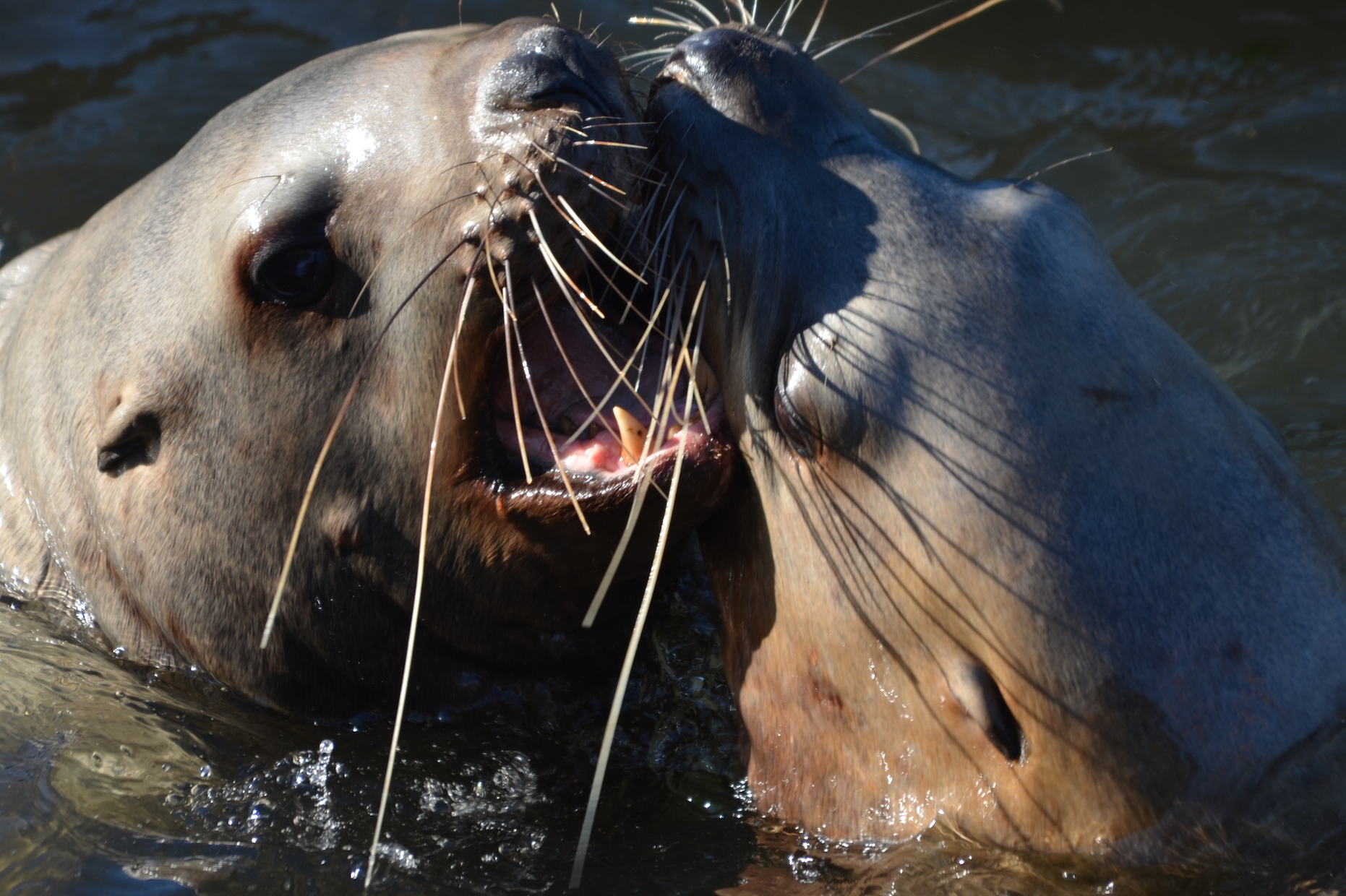
Vibrissae to Vibrissae They Faced Each Other.

Sunrise saw the big moon ‘dropping’ in the west this morning and clear sunny skies reigned supreme all day. The falling barometer continued its descent today but the forecast looks good with today’s light easterly winds continuing tomorrow.

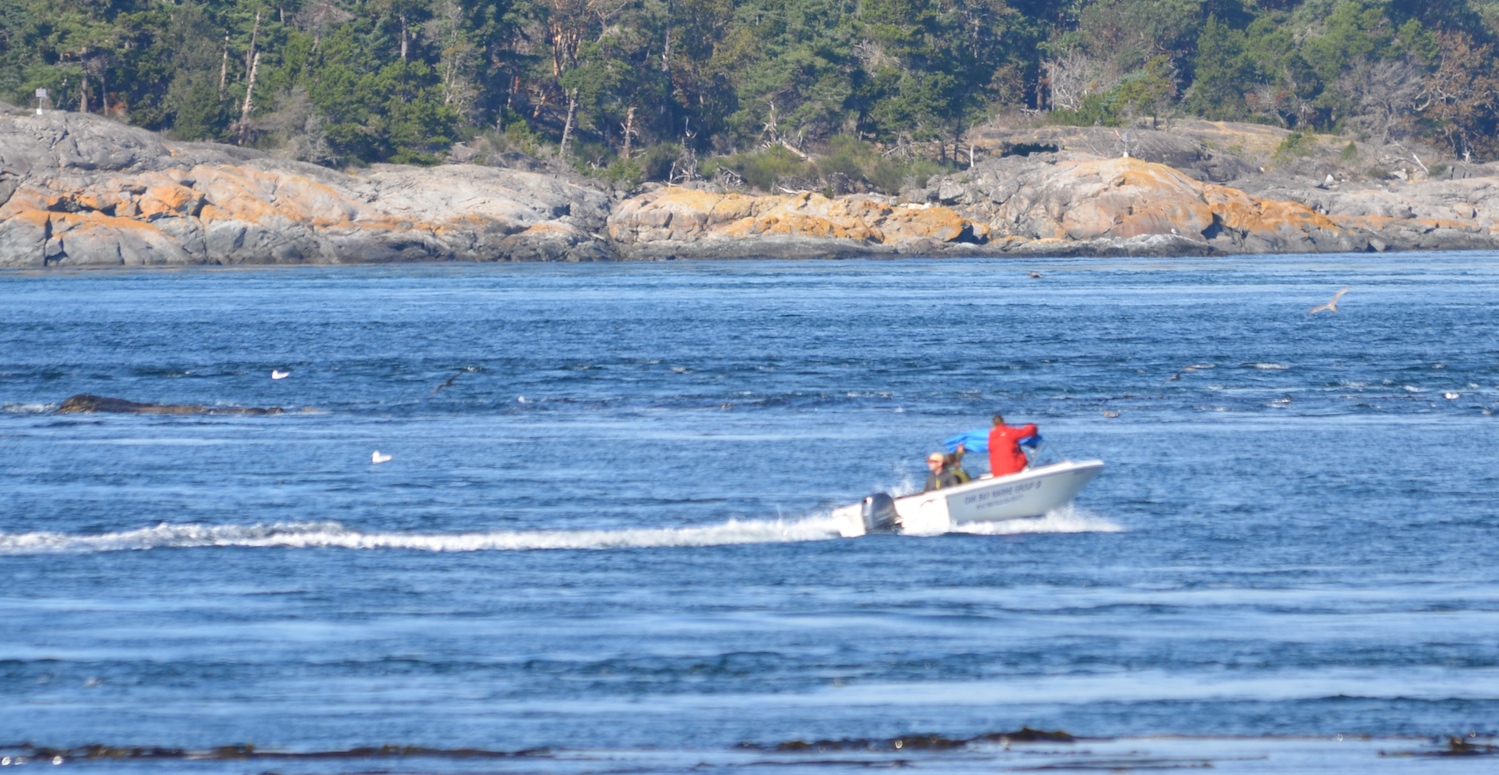
Fifteen whale watching vessel visits to the protected area, were observed today. Speed on arrival and departure continues to be an issue with a few operators however the large majority of operators are driving at a slow, respectful and careful speed. A couple of the larger vessels with shallow draught are acting more and more as though they are little speed boats weaving in and out of the rocky islets, in areas which are, by agreement with the industry, off-limits. The agreement was established by consensus, to ensure sustainable whale watching operations within the protected area. Just in case institutional (or other) memory has been lost: travel is supposed to be confined to Middle Channel, going with the current. All of the companies using the Ecological Reserve for profit should be thinking about the example they are setting for pleasure craft and the sustainability image of their company (not to mention their marine insurers who would probably not be too happy about the risks being taken by the few).

Minke, Humpback and Biggs Killer Whales brought the whale watchers to the area today and the seals, sea lions and sea otter brought them into the Ecological Reserve. At low tide the sea otter can be seen in the kelp bed on the southeast corner of the reserve but I am not sure where he goes at high tide. He has moved back there after merciless whale watching traffic as close as was physically possible. While it did not appear to ‘bother” him having large powered vessels lurching over him, decks crowded with people gawking and taking photos, I can certainly understand the move.  The Bigg’s Killer Whales travelled west past Race Rocks today again using the shallow Eemdyk Passage behind Bentinck Island, which is directly across Race Passage from Race Rocks. Quite a few Harbour Seals haul out in there. There was a Humpback Whale feeding next to Church Rock in the morning and a Minke Whale travelling to the east was observed just east of North Rocks. There were Southern Resident Killer Whales in the area according to the VHF radio but I did not have a chance to spot them.

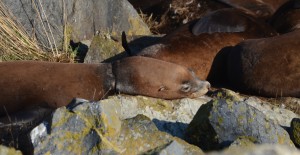
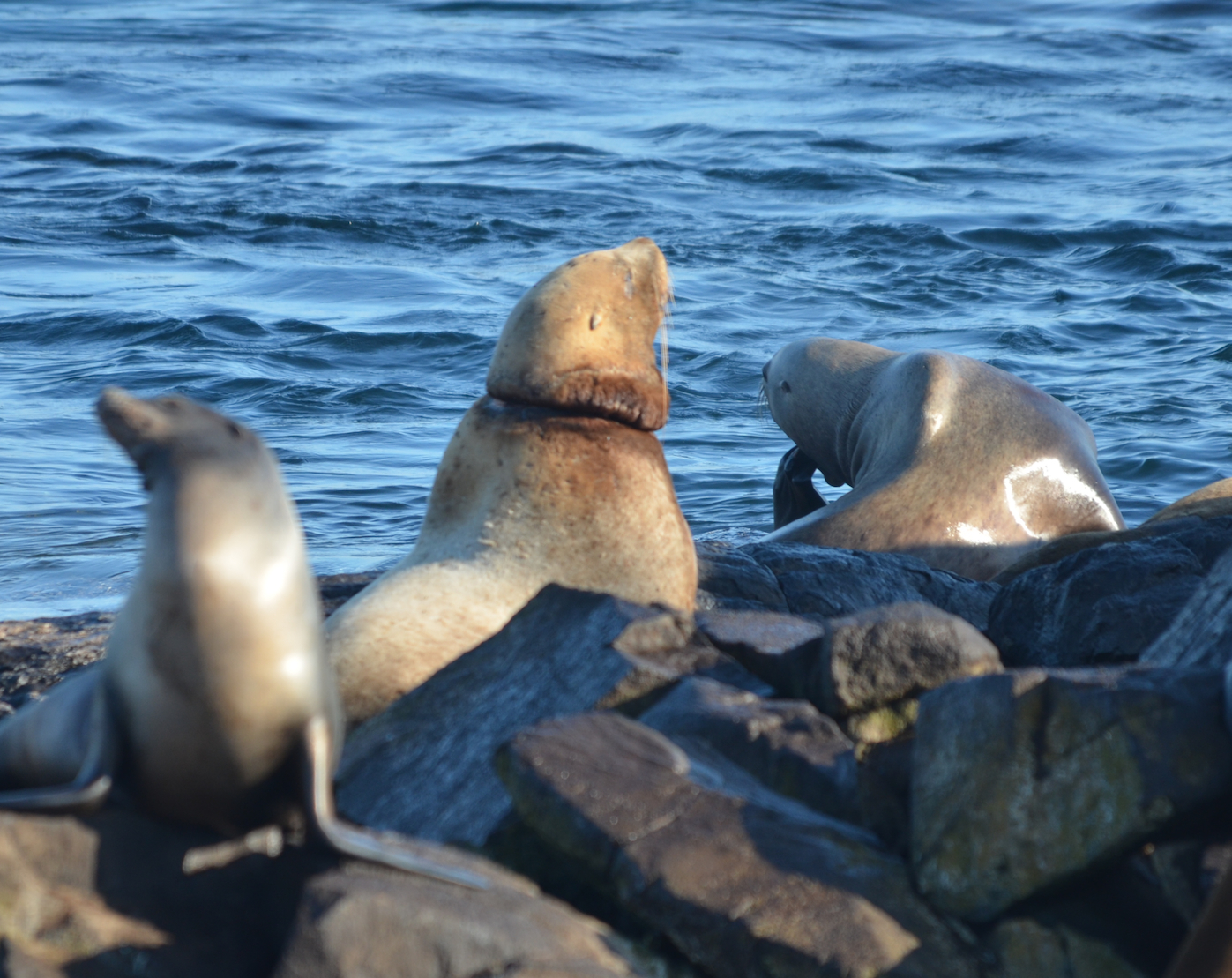
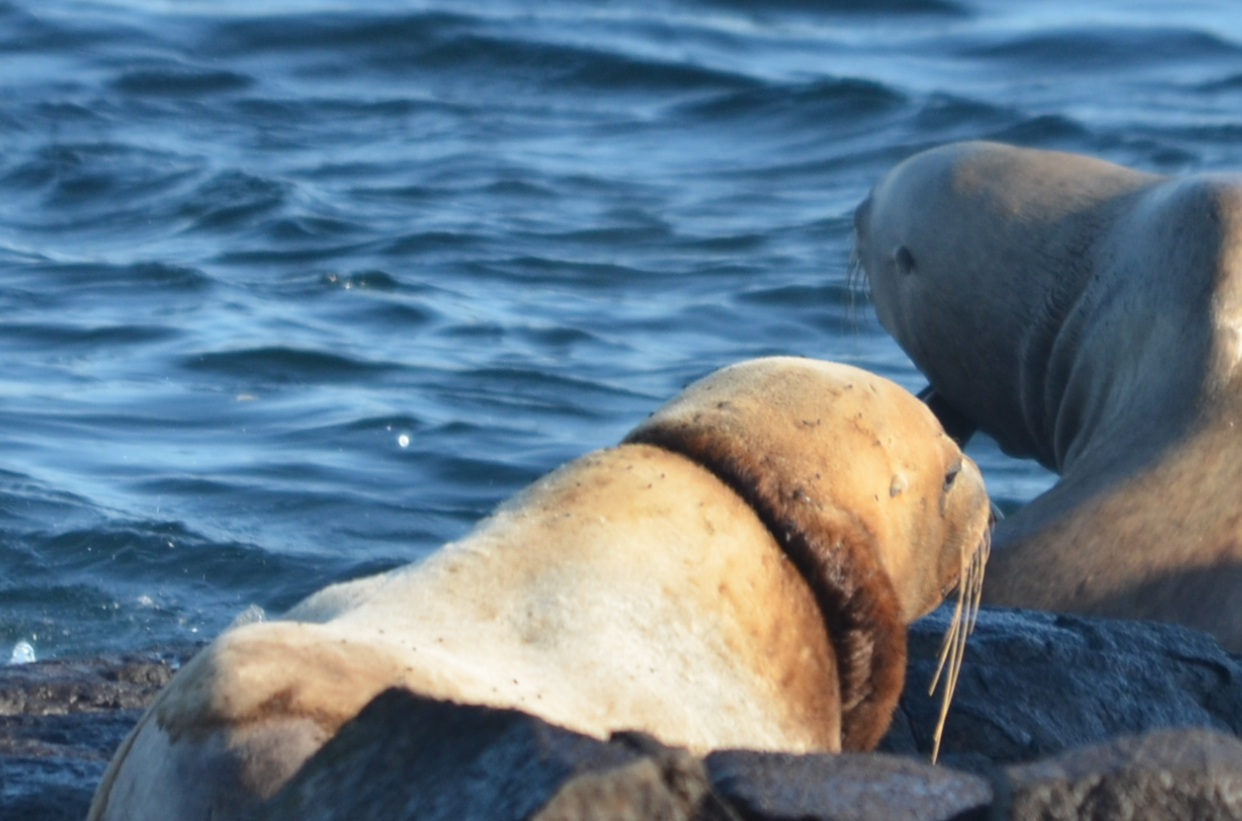
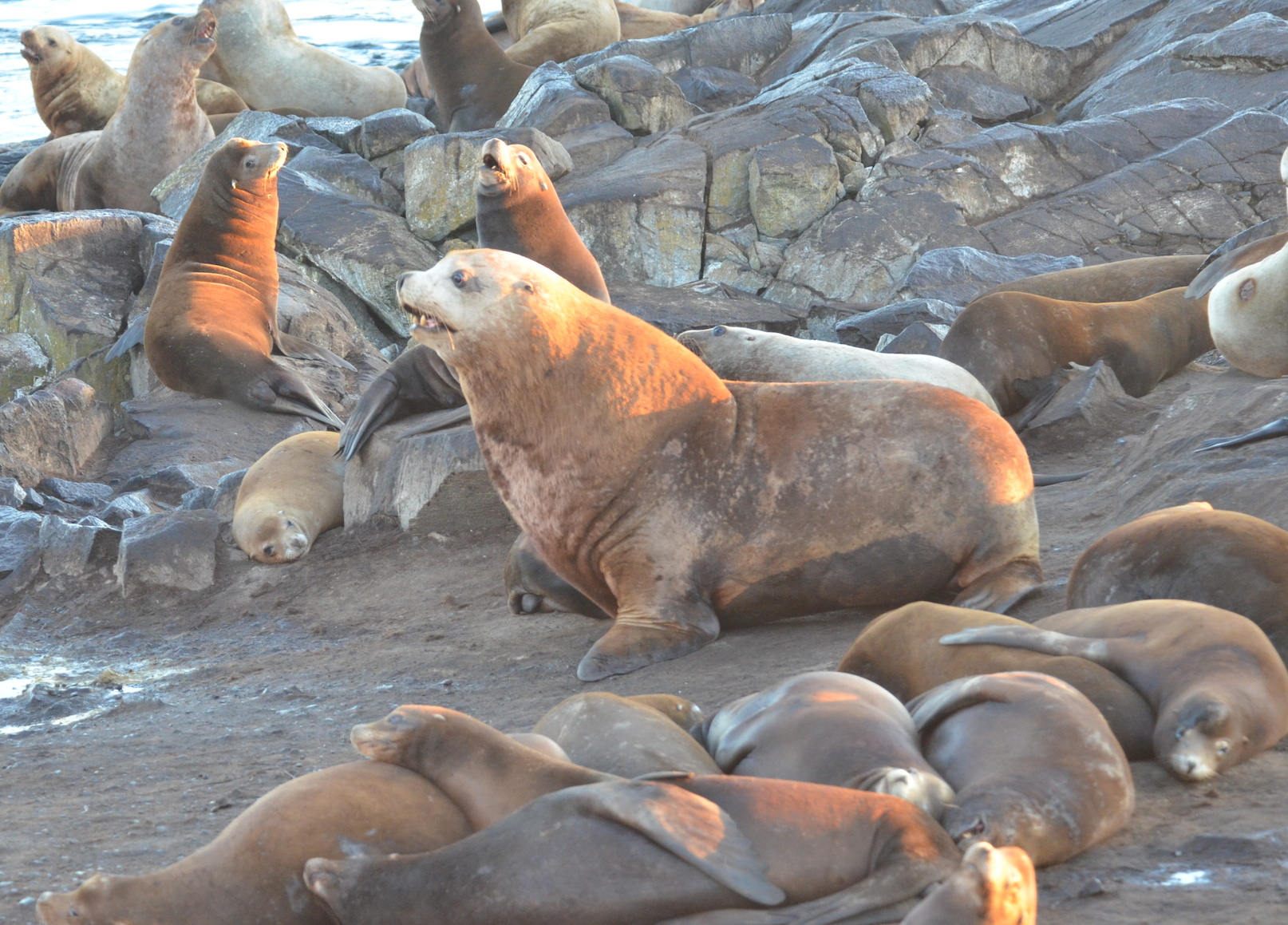
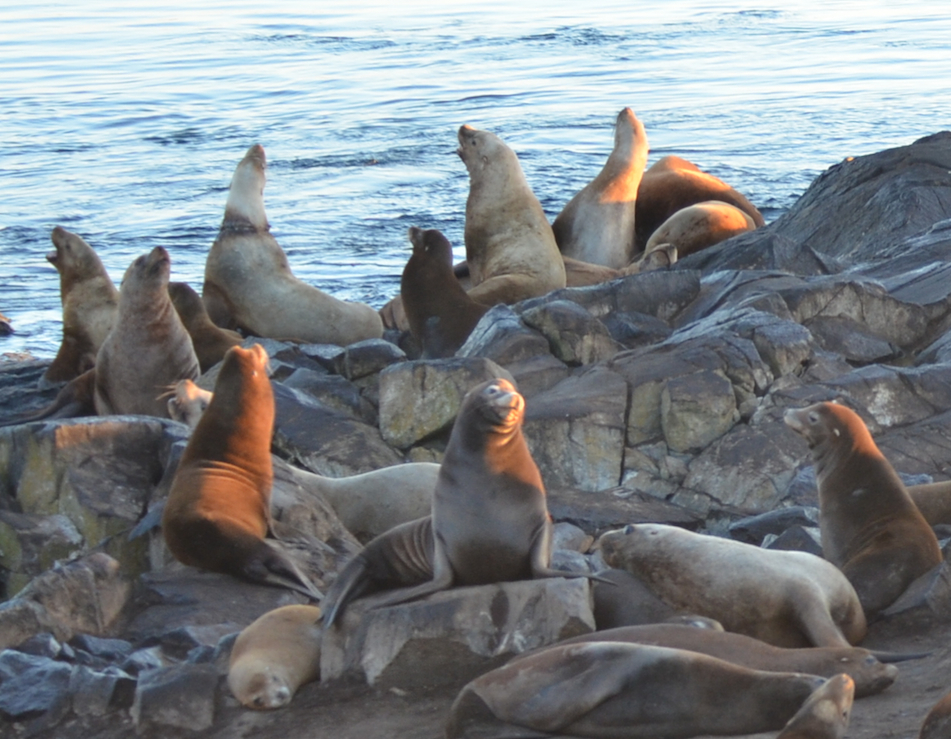
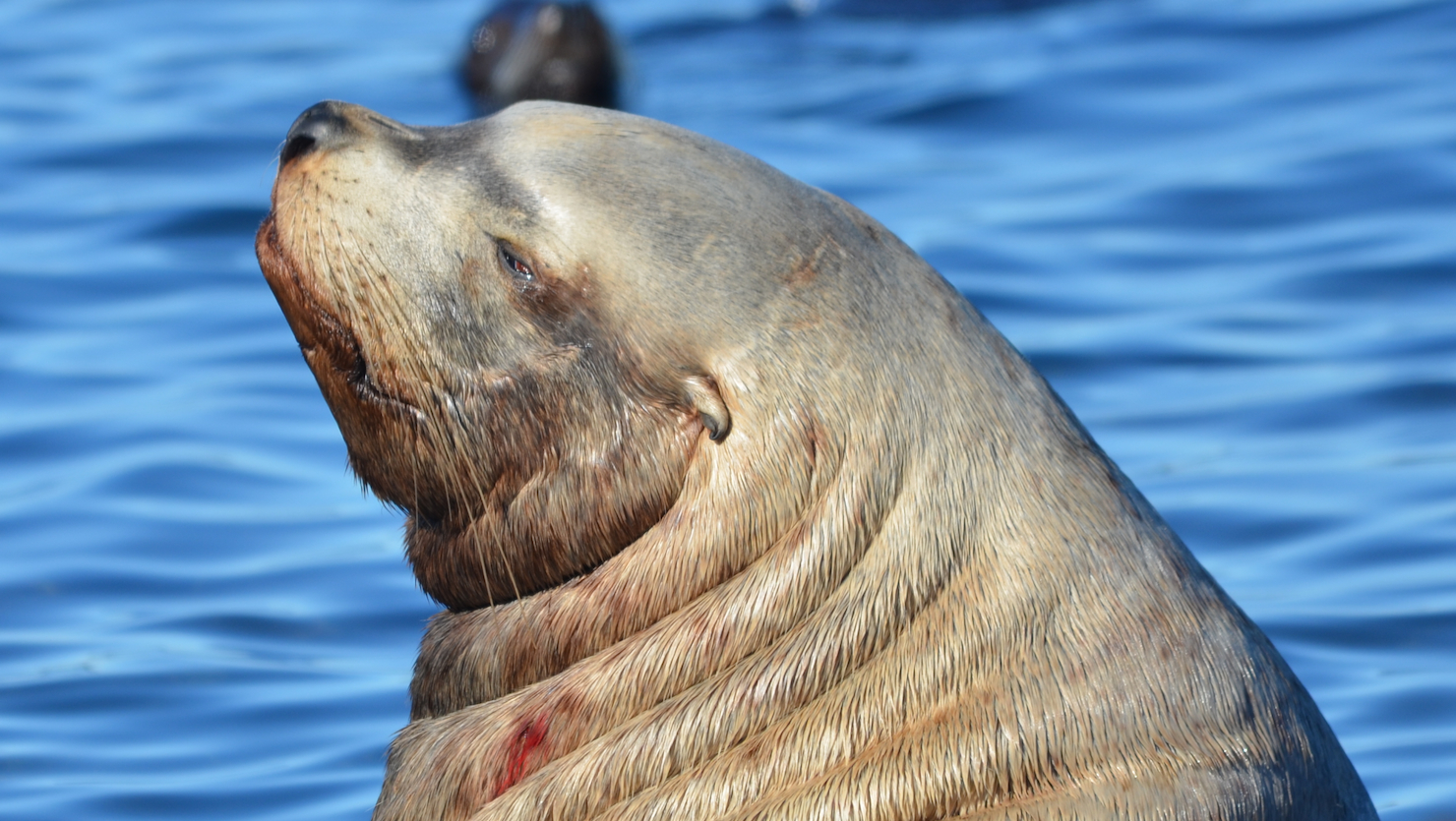
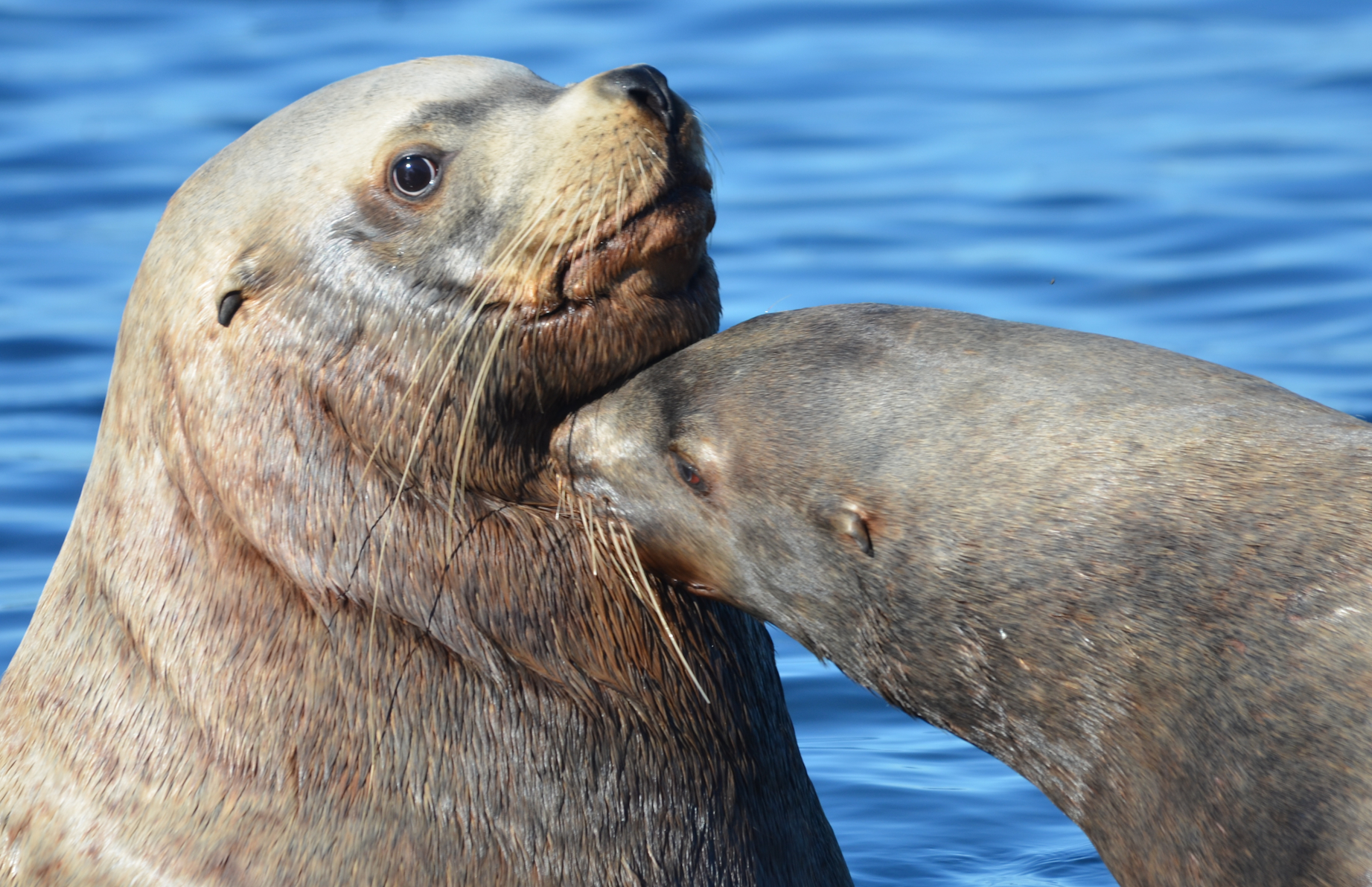
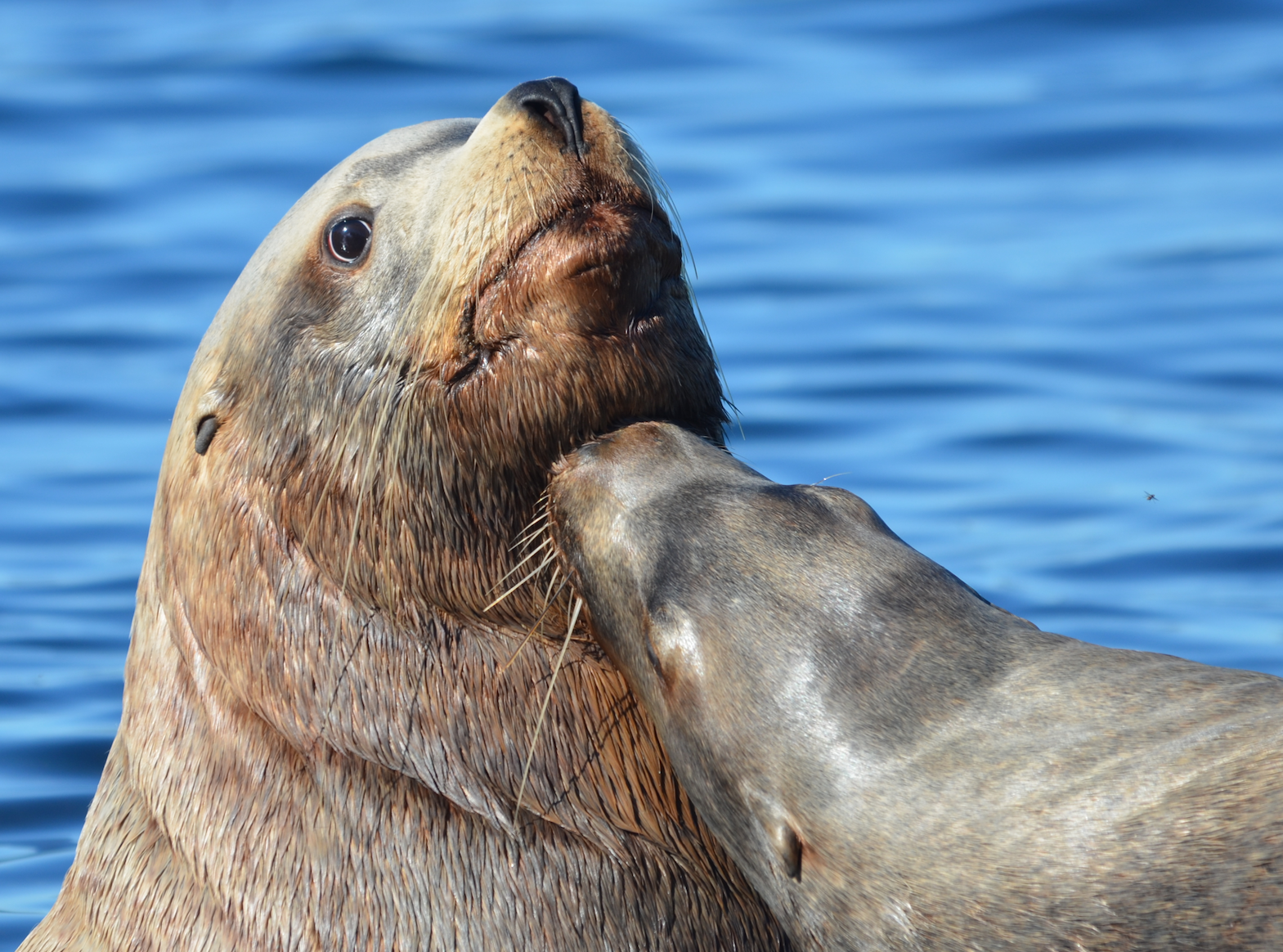
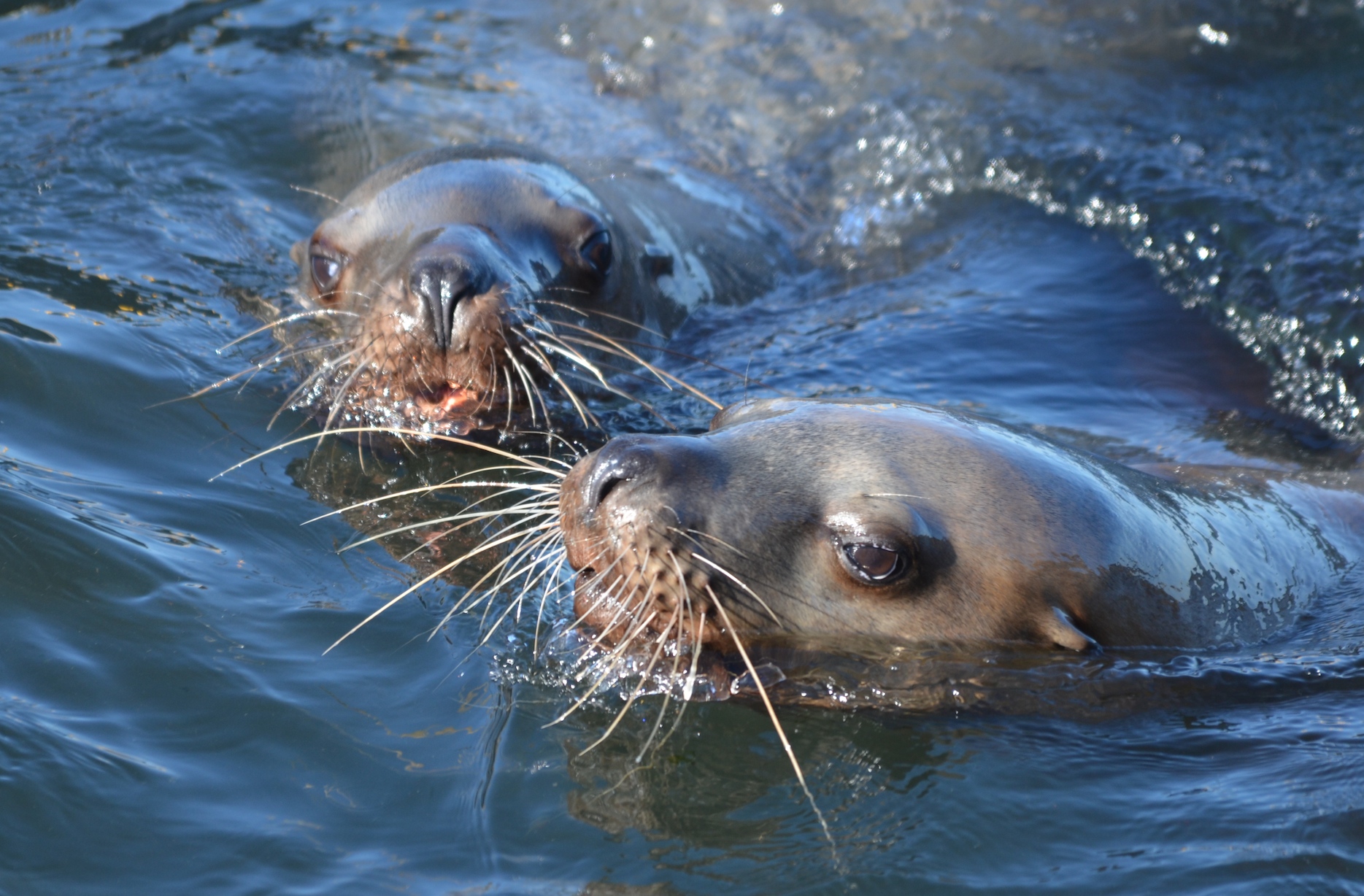
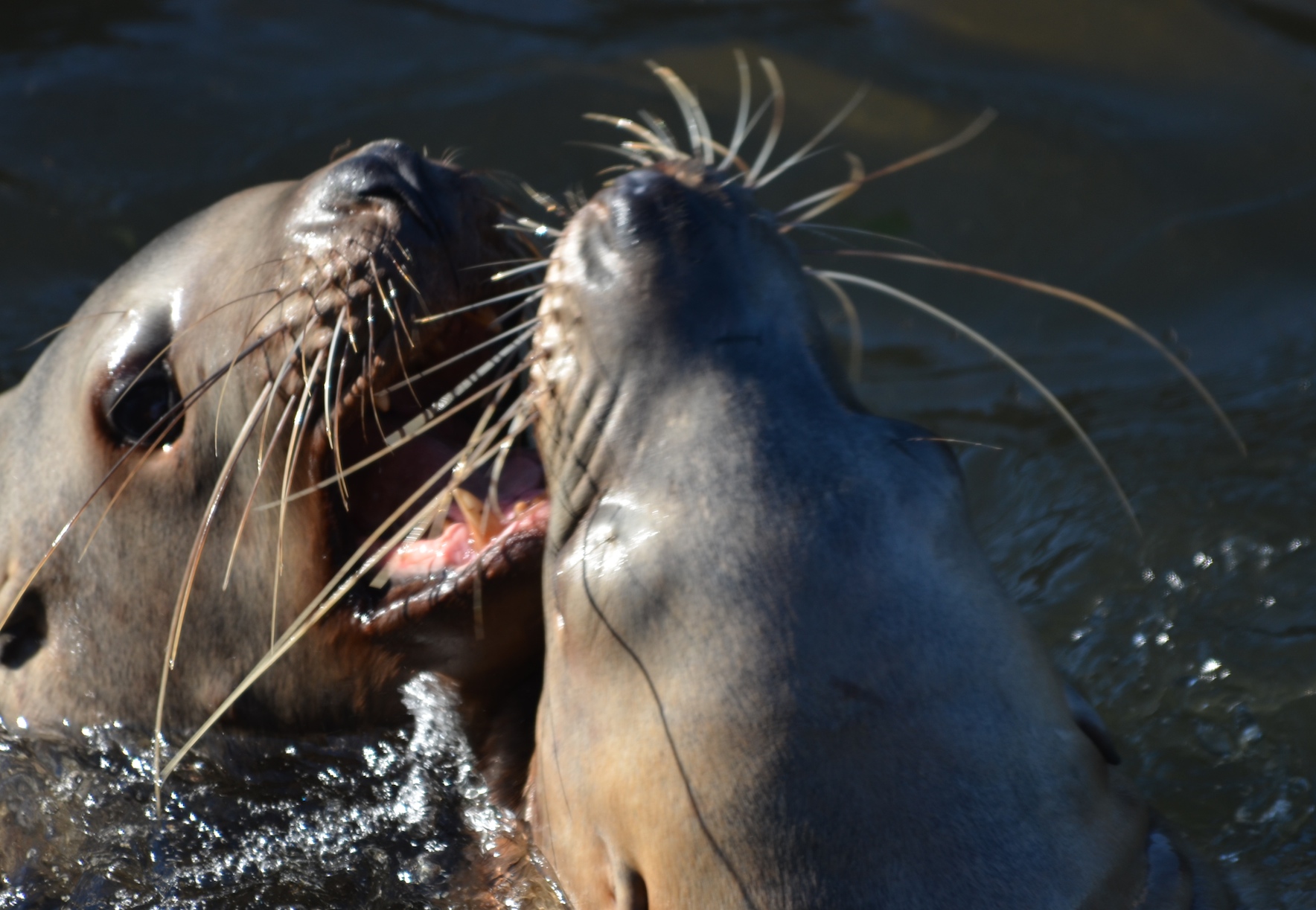
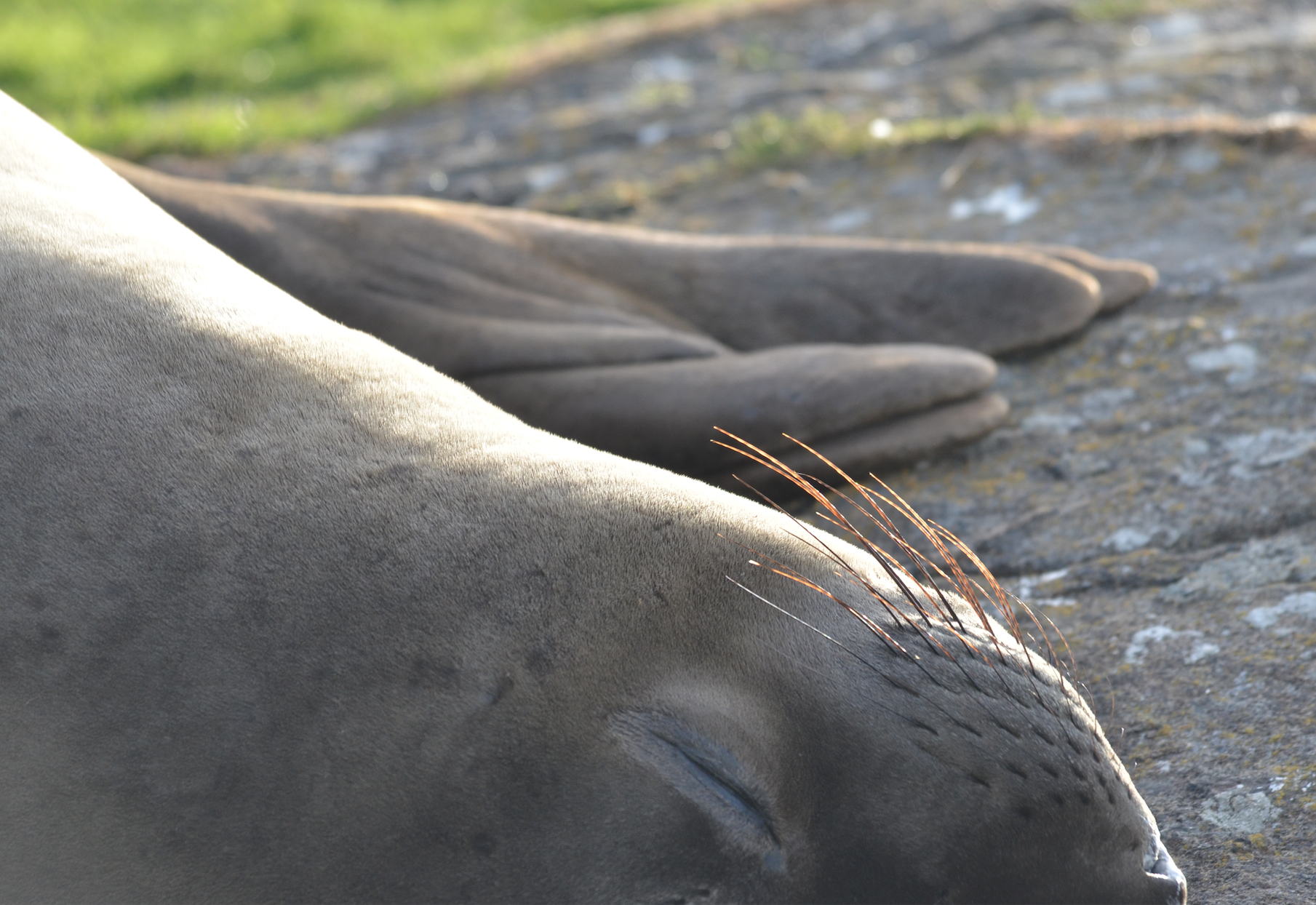
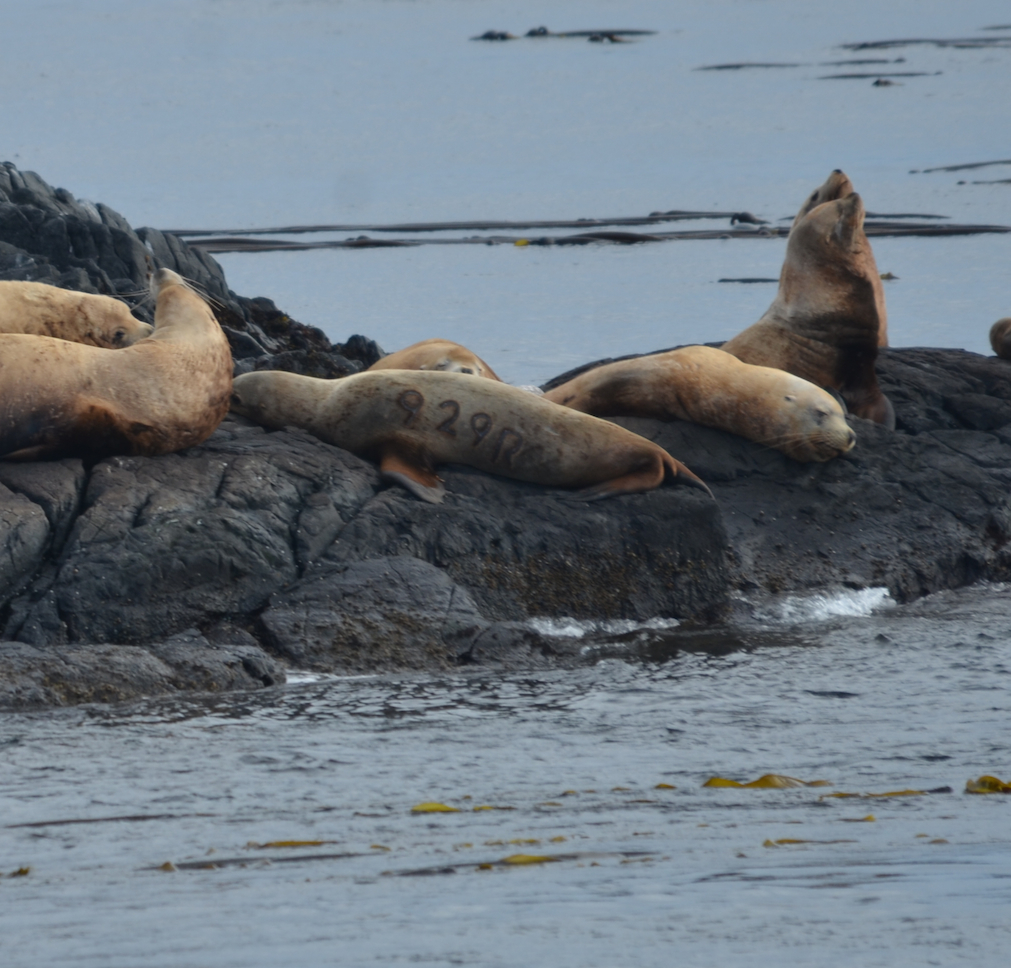
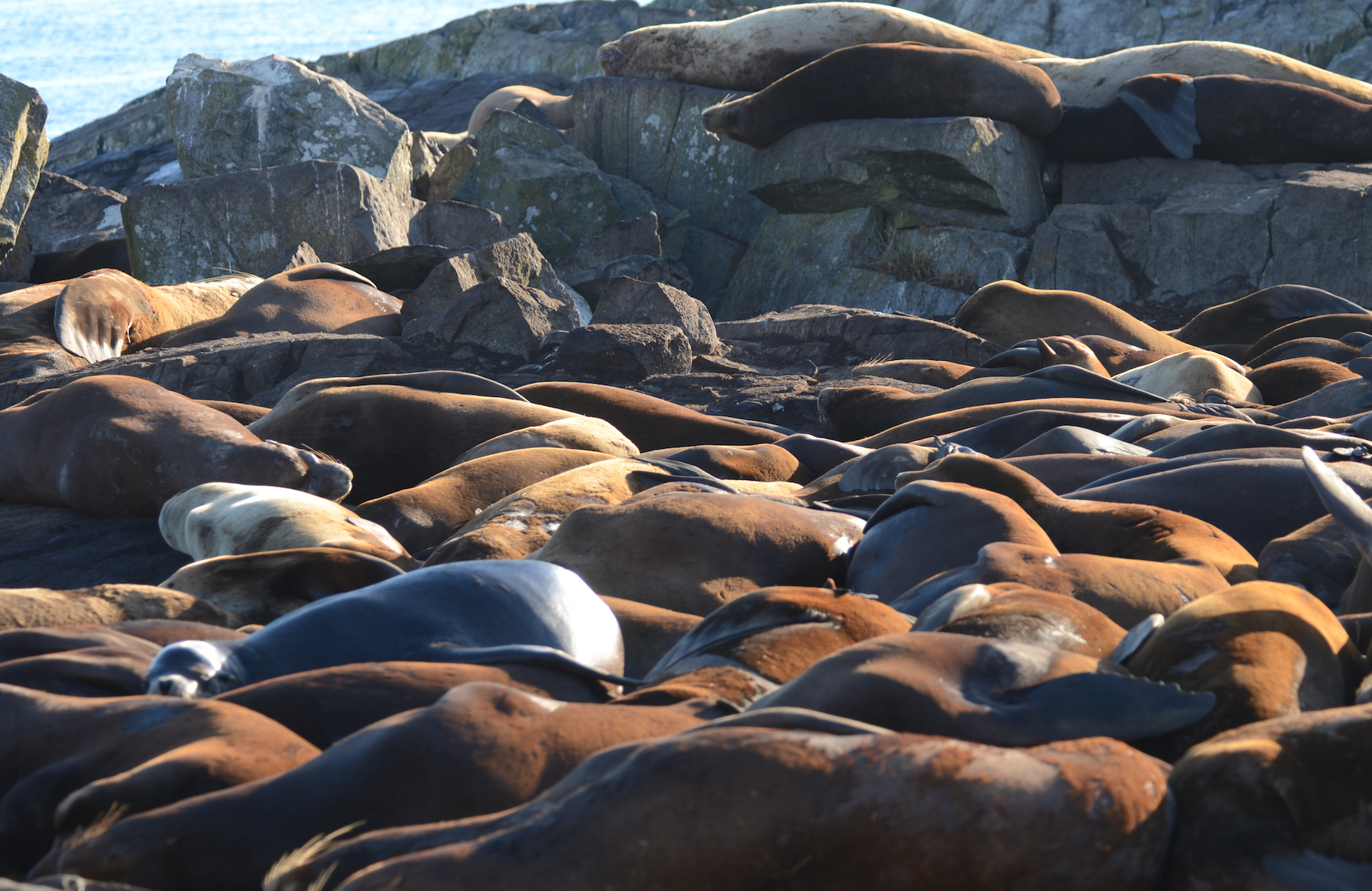
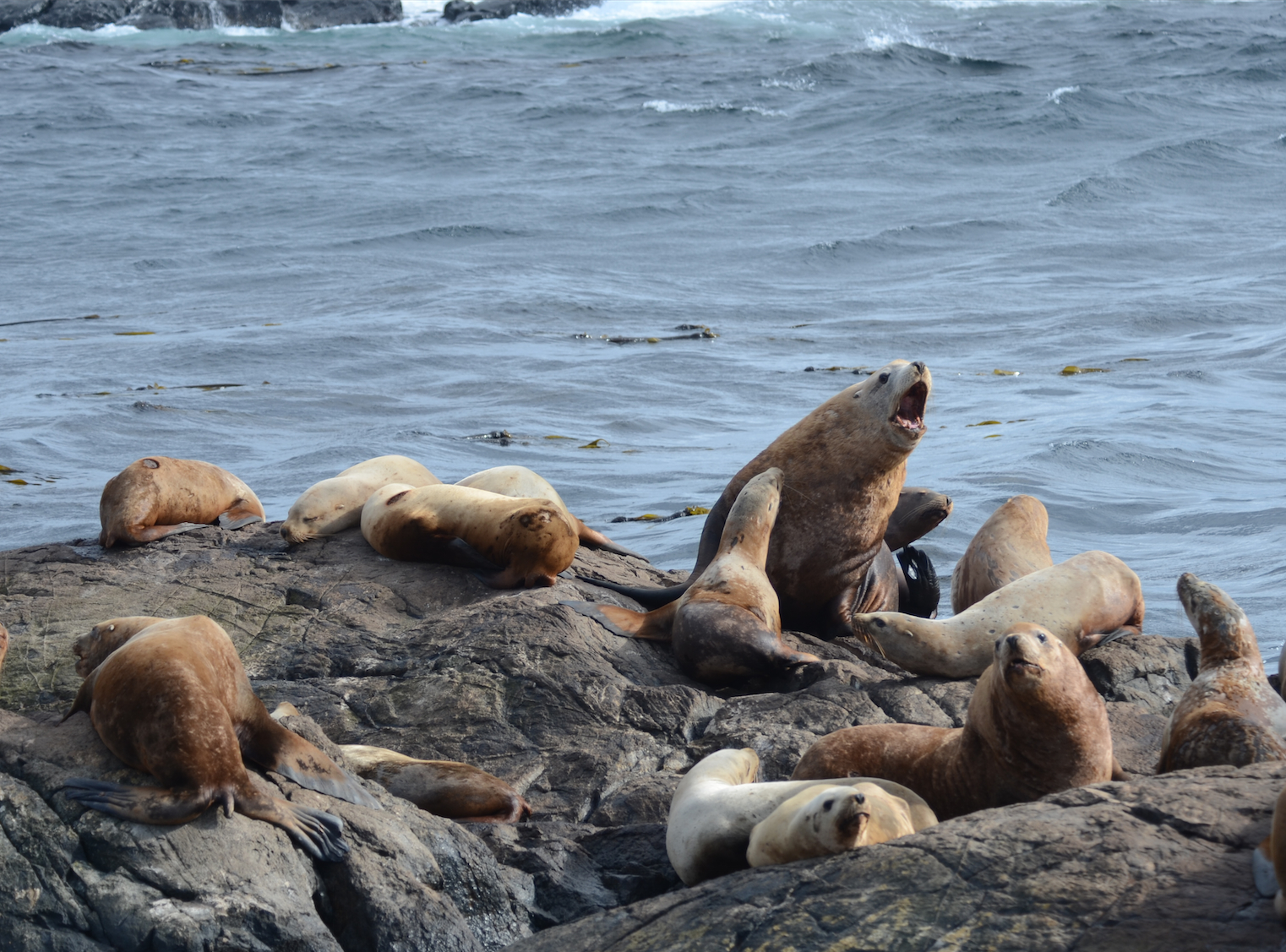
I did have the opportunity to observe some Stellers Sea Lions and take a few photos of two younger ones playing together and an older “couple” that seemed quite wise. I know that may sound anthropomorphic but what I observed was the animal on the left licking the neck of the big old bull and then the two muzzling each other gently lip to lip. It was the gaze of the big old male that seemed to tell a story about a long life. I can’t really explain it so here is a quote from Carl Safina who is very articulate about animal’s inner lives.

“We have no trouble saying that an animal who’s vigorously eating is hungry, and one resting after exertion is tired; yet we can hardly force ourselves to acknowledge that when they’re playing they’re having fun, or that when they’re acting affectionate they’re feeling the bond,” Safina said. “Why? Because denying them all experience reinforces our favorite story: that we are so very special.”

From Beyond Words: What Animals Feel and Think by Carl Safina, 2015

On the sustainability front, today was a great day for solar power and I made lots of fresh water with solar power using the desalinator. Chores were routine and there were no visitors.


Sisyphian Struggles with Sea Lions

It was another beautiful day at Race Rocks with light north-westerlies turning to west and the barometer climbing considerably higher than it has in a week. The forecast is for more of the same with light winds – easterly in the morning then switching to west.

A few commercial operators were working in the Ecological Reserve today including one boat that calls itself a party boat. It came in fast and then went back and forth through Middle Channel seven or eight times before leaving. They also sat right in the middle of the current running against it but staying stationary for long periods of time. Strange but true.

The usual Saturday morning dive charter was here with divers in the water right in front of the sea lion haul-out on north Great Race, also as usual. Total, there were five tourism vessels working in the protected area, including three whale watching vessels. Only a few pleasure craft went through today. Most of them slowed and followed the rules. The exception was a rental boat that went through the reserve at high speed, stopped, changed direction and then roared off at full throttle right through an area with lots of animals in the water.

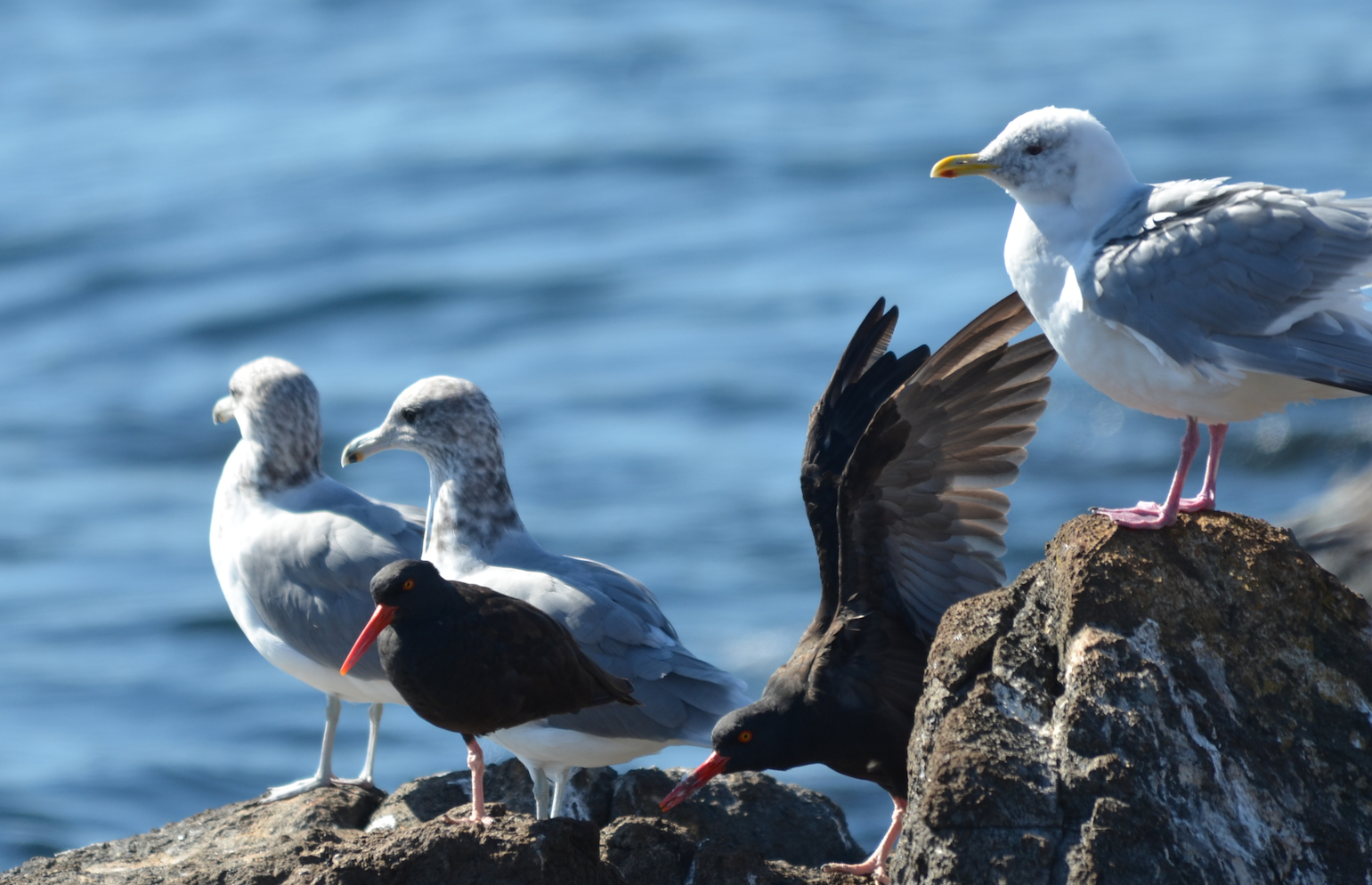
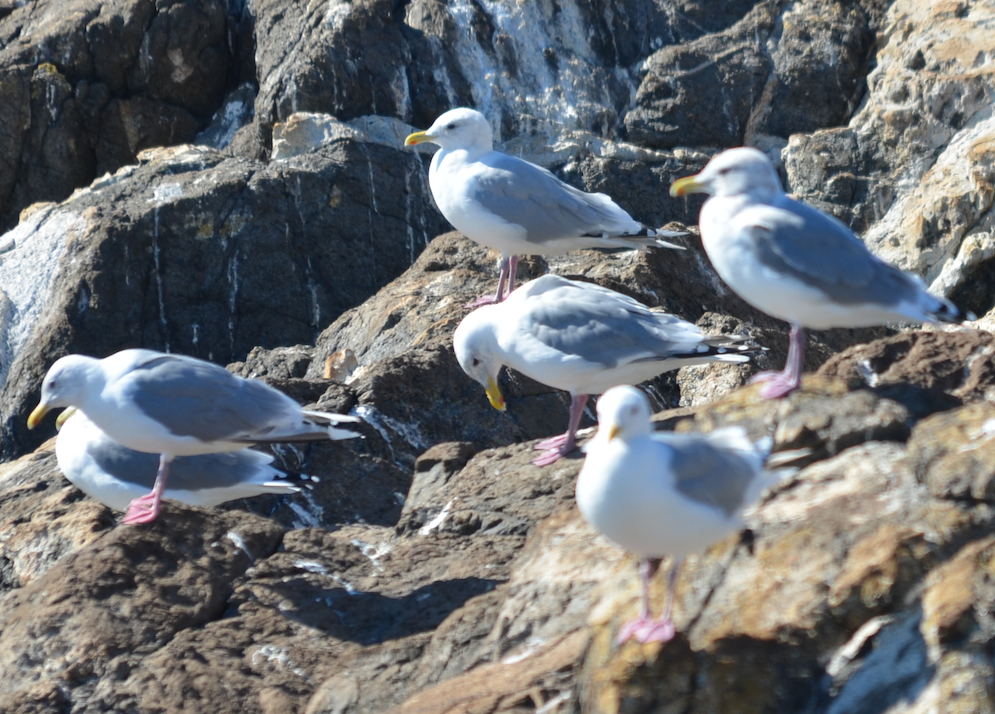
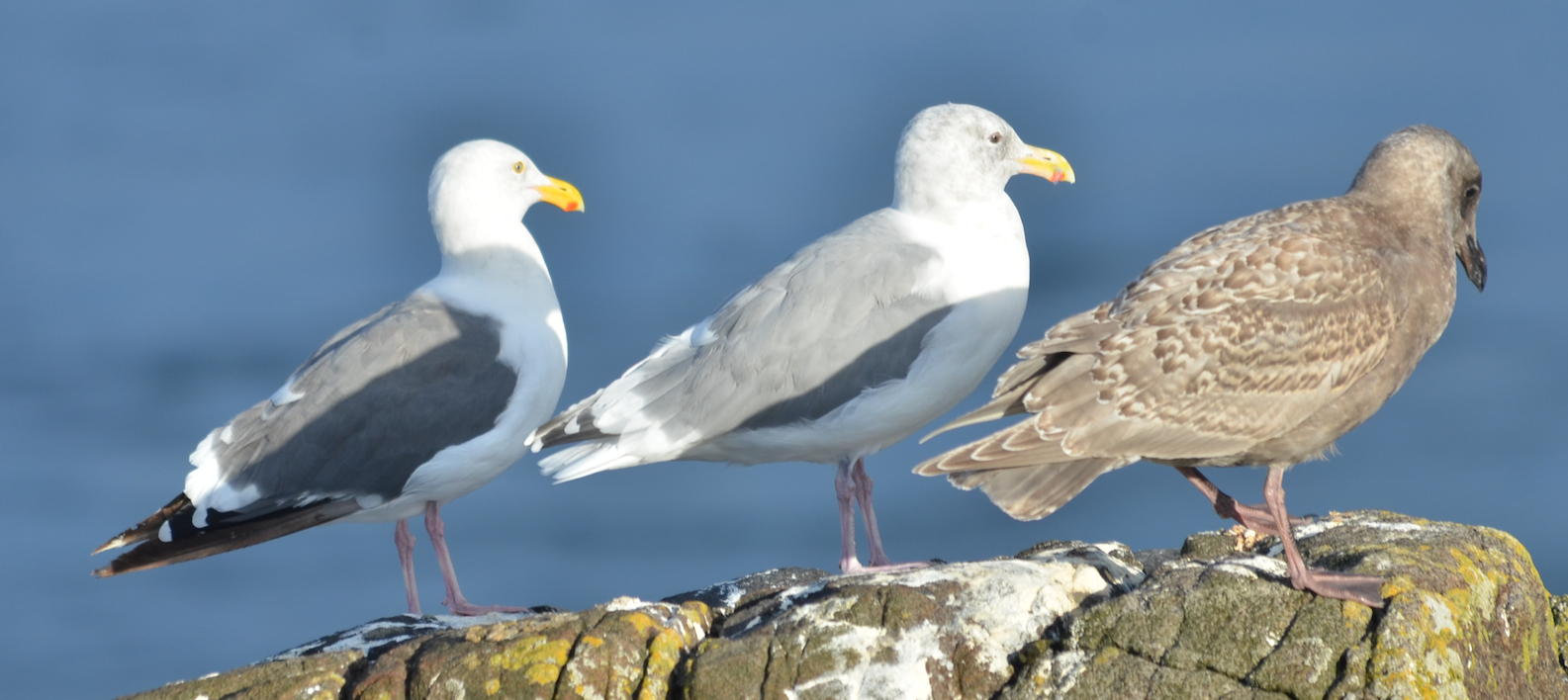
The ecological trends described in the Log during the last week continue as do the difficulties of identifying gulls, especially large numbers of multiple species, with different ages and stages of plumage all stirred up with hybridization and lots of exceptions to the rules. Yes folks, gull is officially a four-letter word and the jury is still out on some identifications.

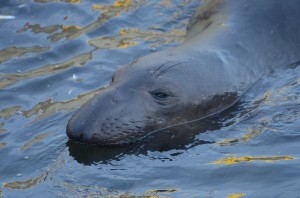
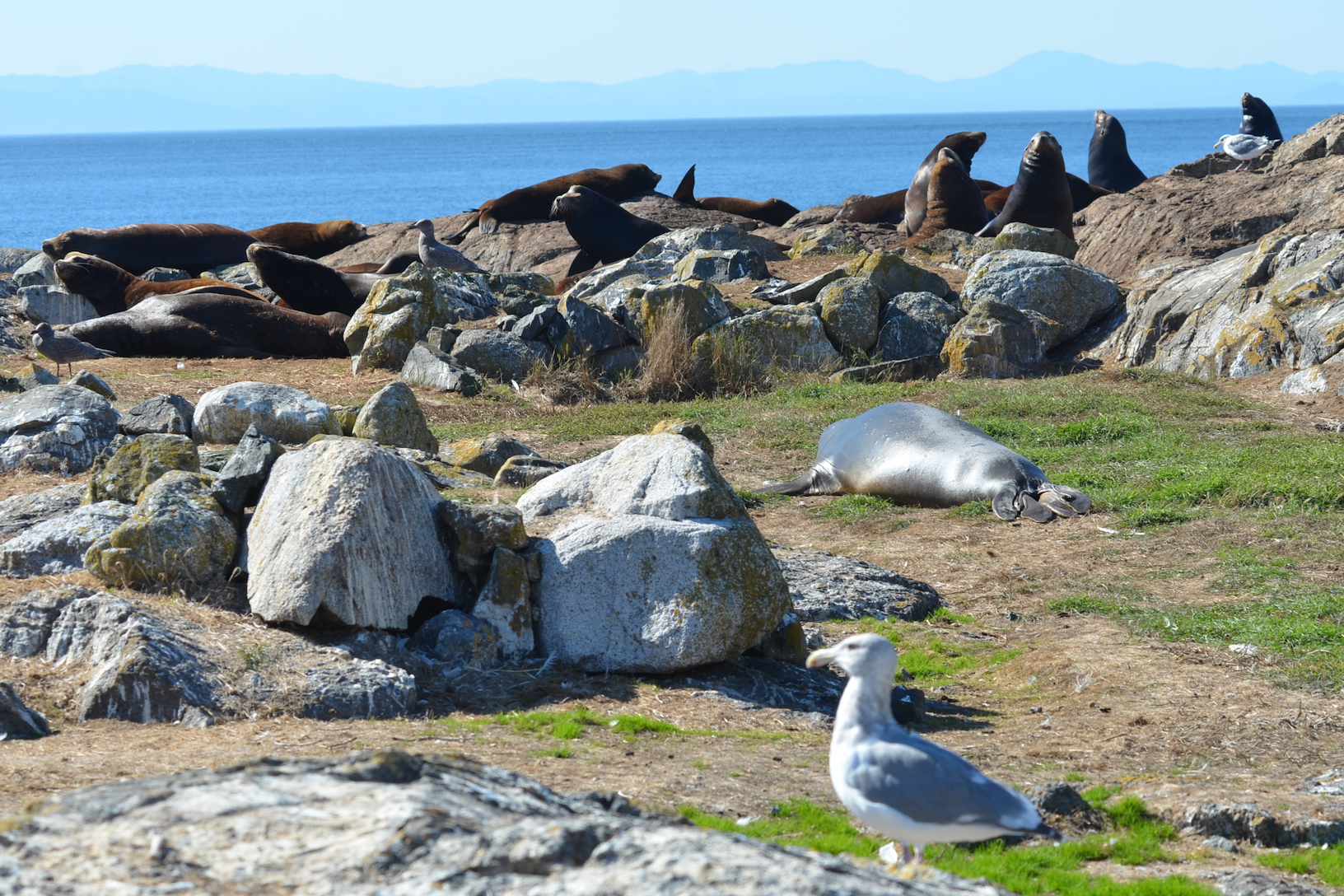
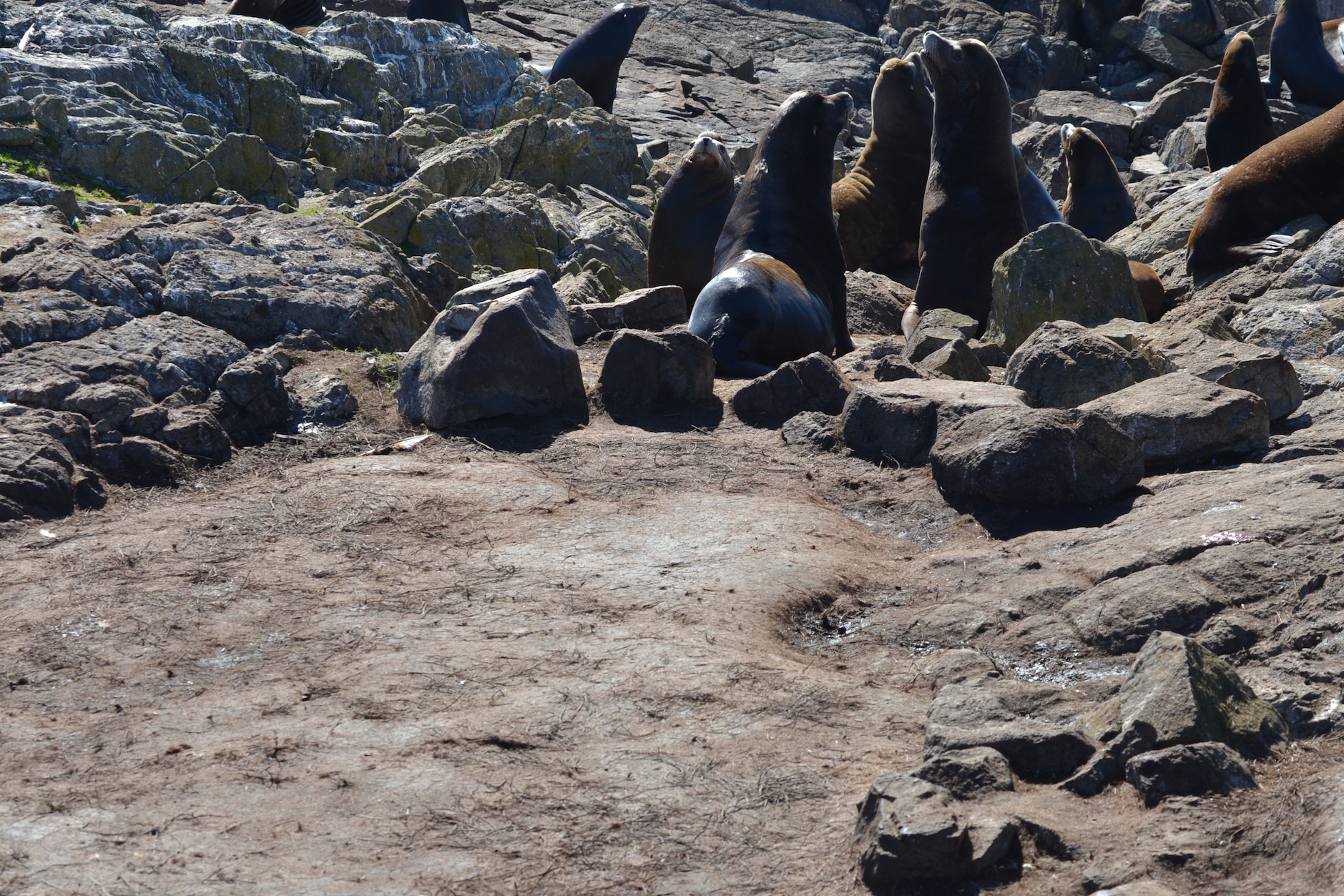
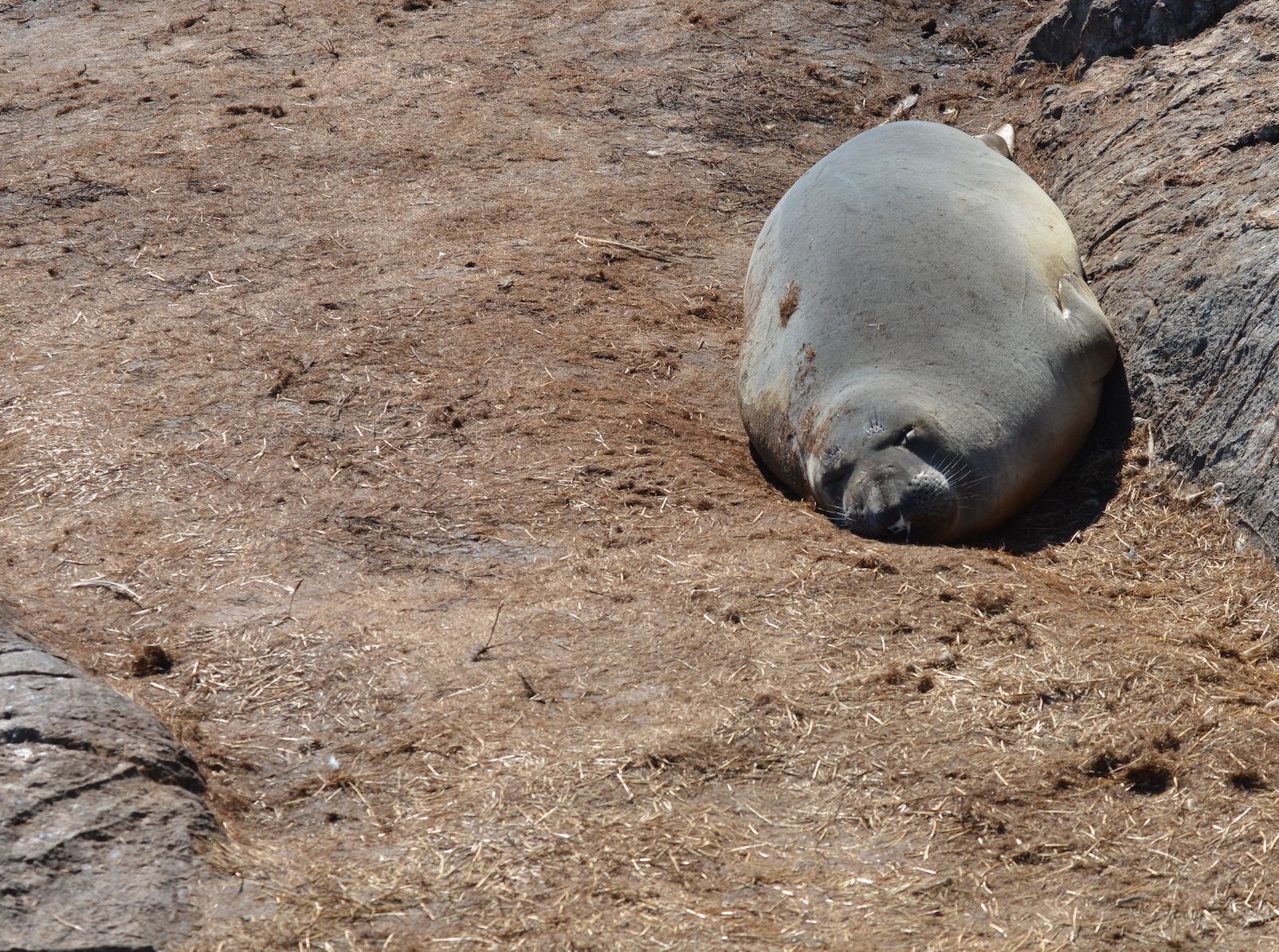
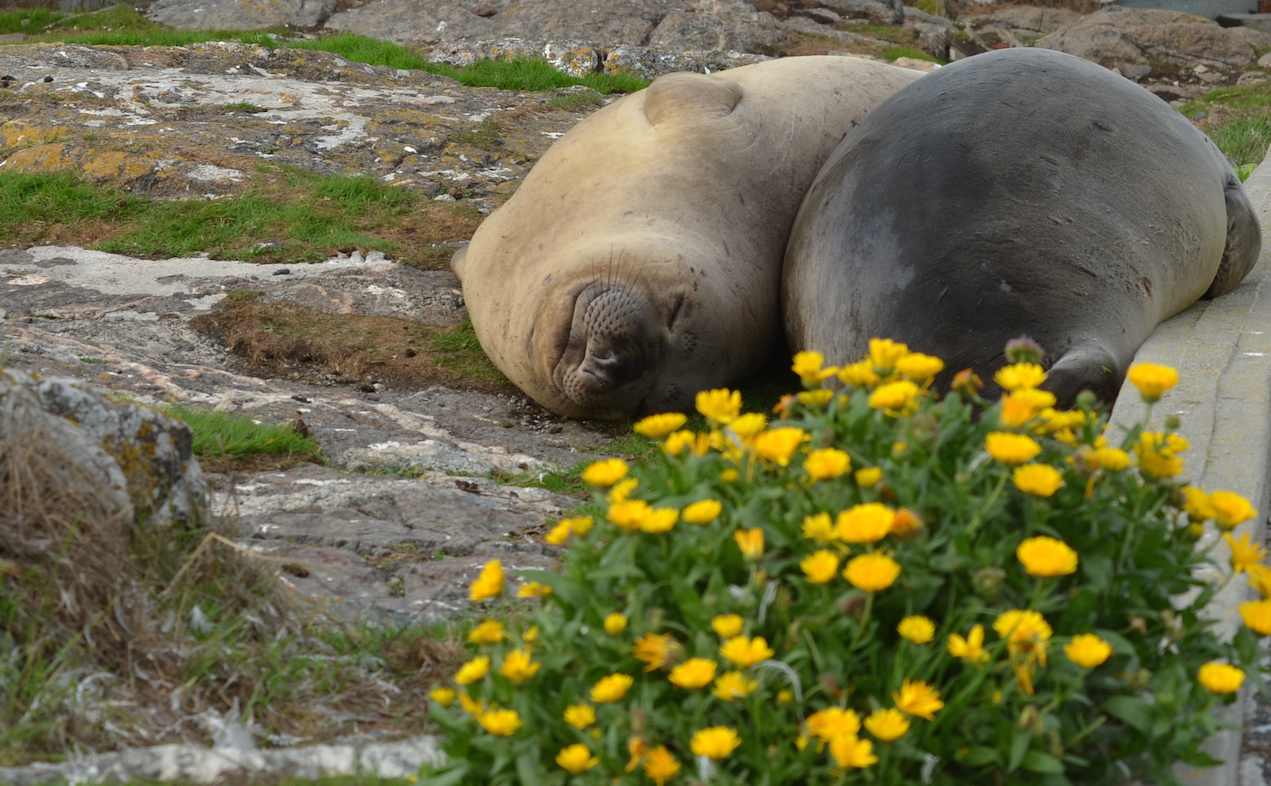
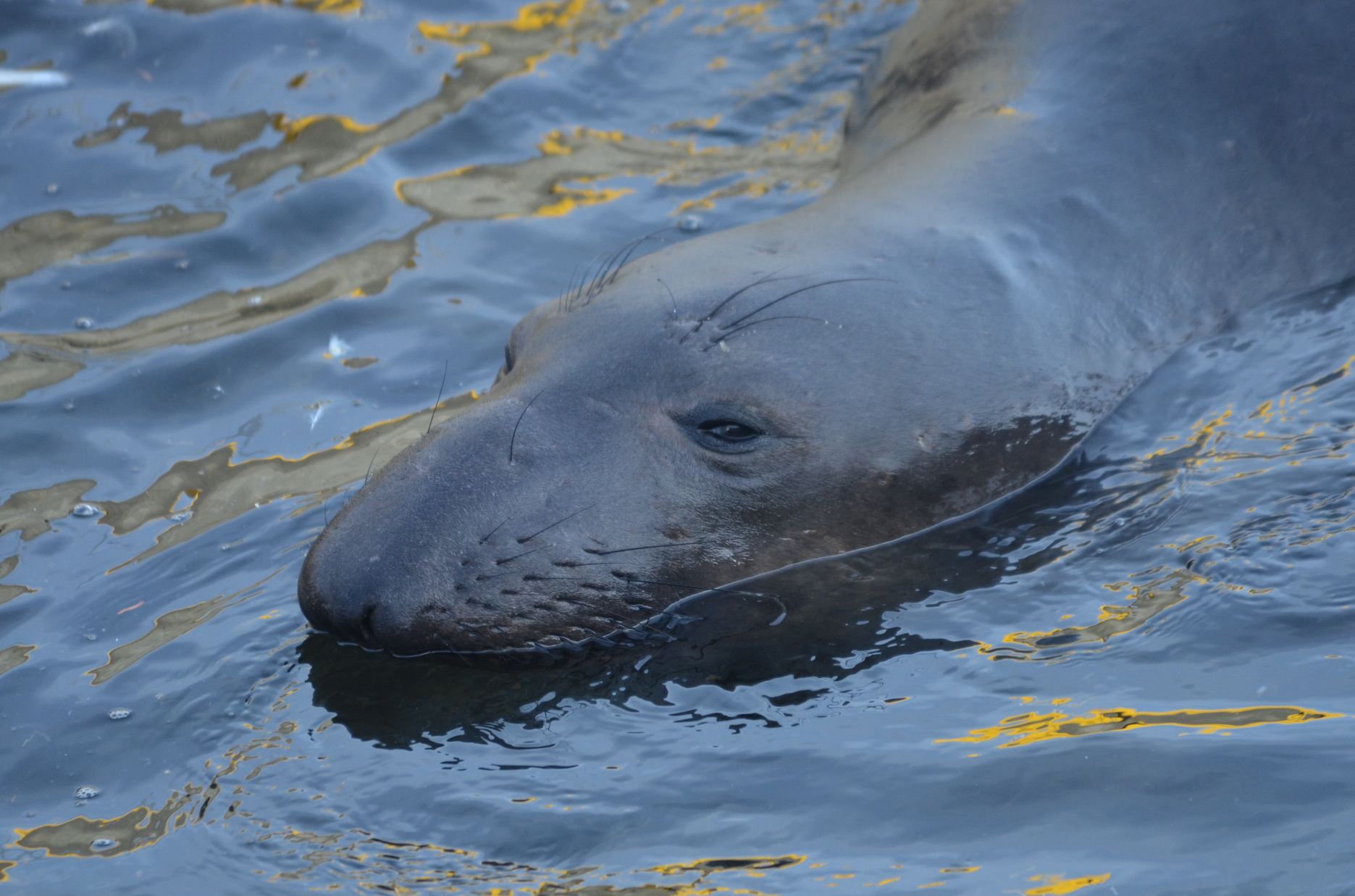
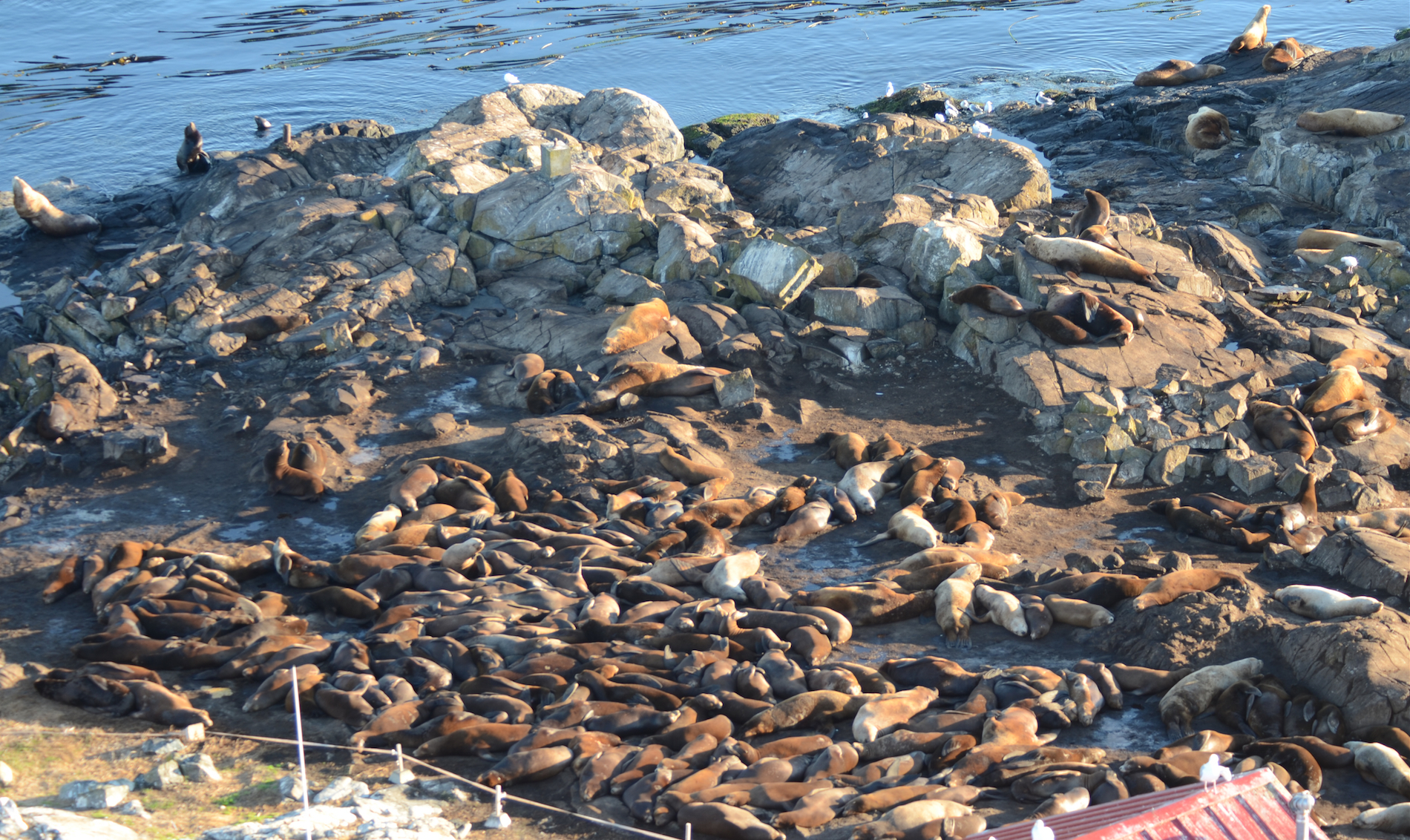
The sea lions continue to haul out and it seems that there are more Stellers Sea Lions hauling in the last few days, especially on Middle Rocks. Perhaps they are relaxed enough to haul out, after a day or two without explosions across the way. The extra sea lions on Middle Rocks may be why four young Northern Elephant Seals showed up at Great Race today; #5850 and three companions, all about the same size or smaller, two males and a female (the smallest).

Chores consisted of fighting entropy, not unlike Sisyphus, with similar results. There were no visitors.


Killdeer Calling in Daylight

The sun set behind Makah and Clallam territory on the American side of the Strait tonight meaning that autumn is the new reality. What a glorious end to a day that just kept improving. Serious clouds followed earlier heavy fog and the threat of rain was kept at bay by light and variable winds, most of the day. The wind finally turned to west 15 – 20 and the sky cleared. The barometer stayed above 1015 all day and the tendency now is rising, which bodes well for tomorrow. The forecast is calling for some clouds and a 30% chance of showers tomorrow followed by a mix of sun and cloud.

There wasn’t much vessel traffic in reserve today, just a couple of well behaved pleasure boats passing through and three whale watching vessels.

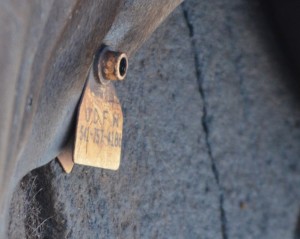
The young male Northern Elephant Seal #5850 returned to haul out up on the grass at Great Race Island today. He was tagged in Ana Nuevo Island as a weaner in 2012 and has now lost all but one of his tags. Today he had a male companion about the same size and they spent a little time sparring before falling into deep sleeps. The little female he was with last time spent most of the afternoon asleep underwater, on the bottom, just off the jetty.

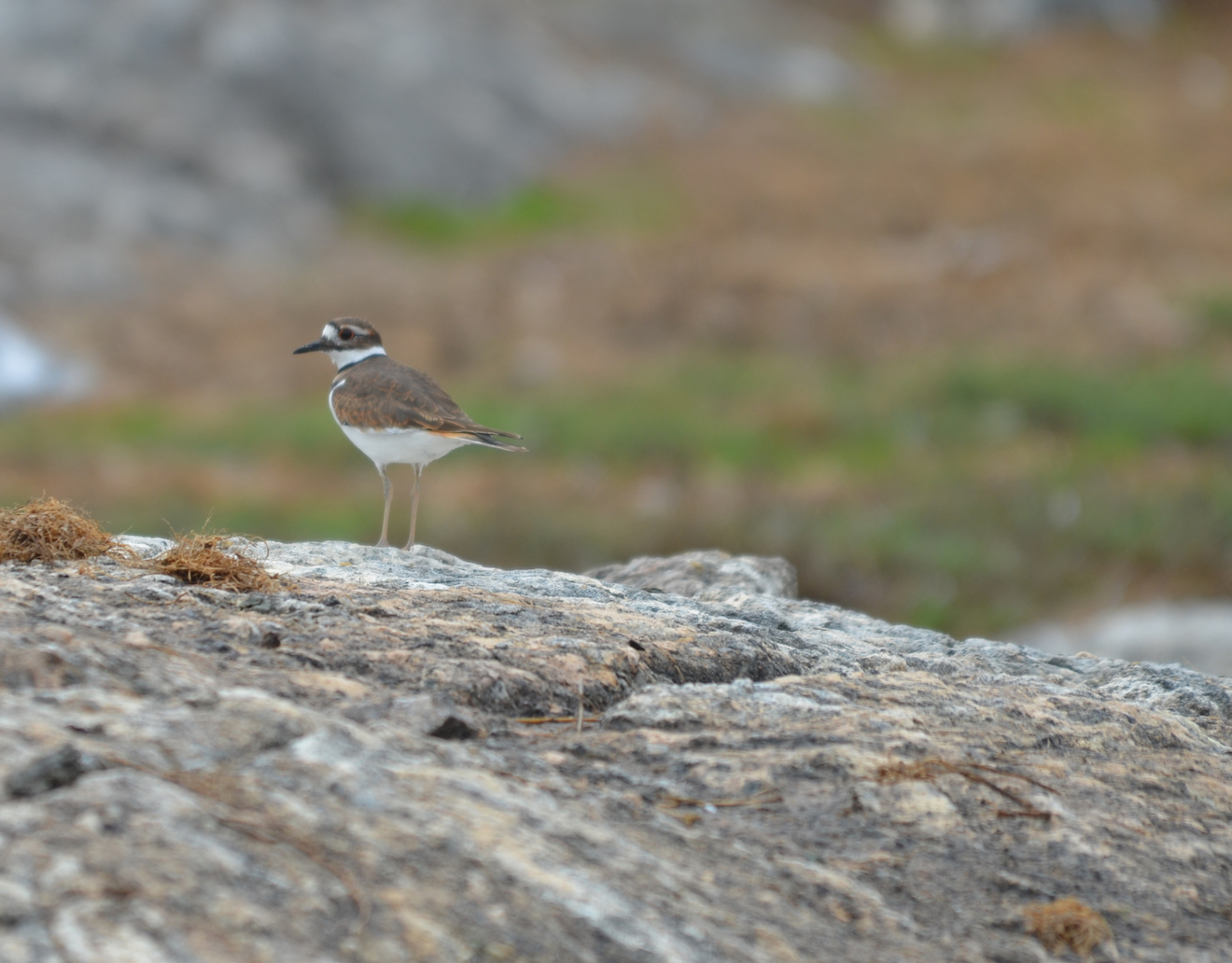
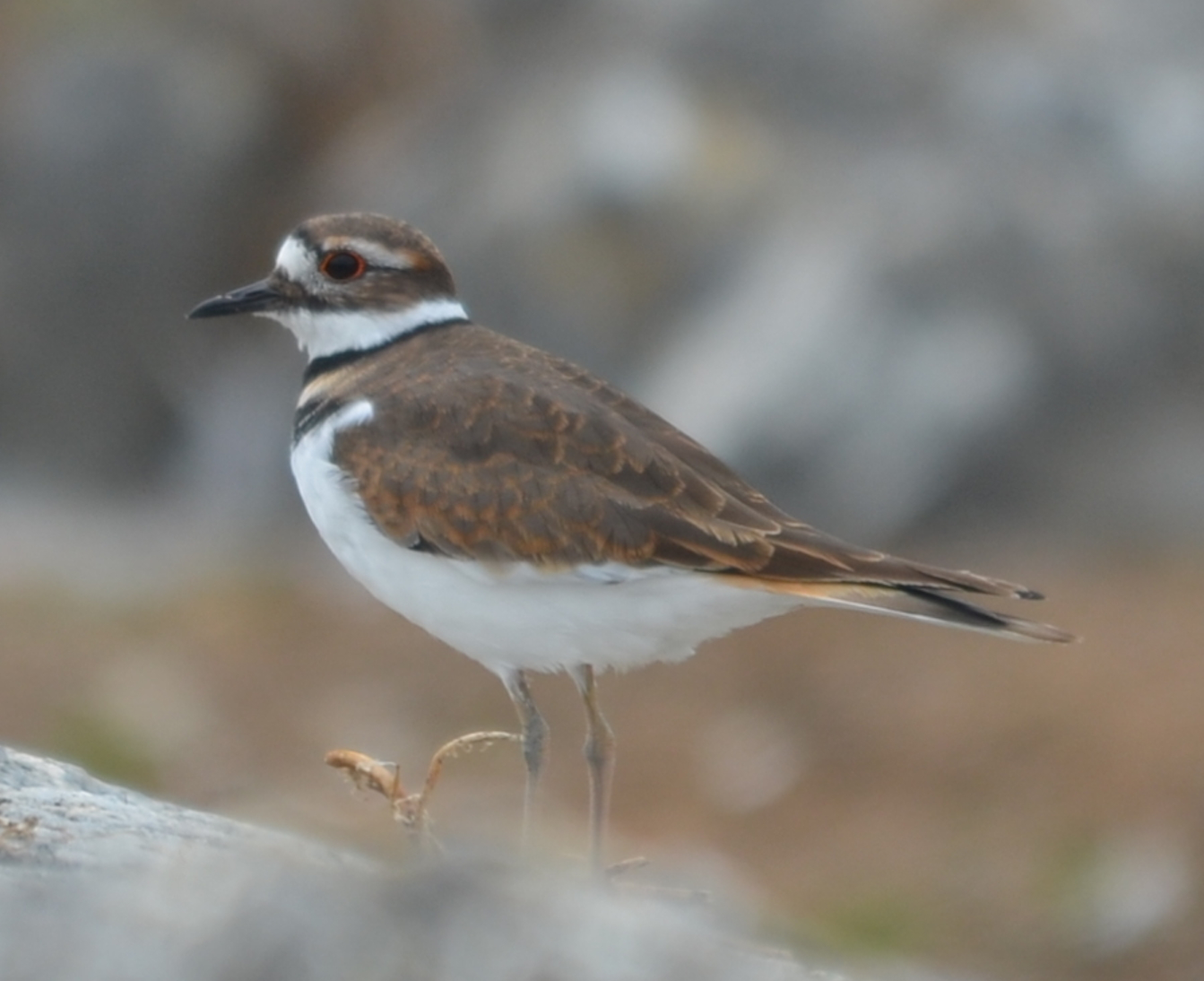
Every night at Race Rocks just after dark I hear Killdeer calling and today I had a chance to see them in daylight, which is a rarity; beautiful birds with very large eyes.

I would love to know where they usually go during the day and why they fly out to Great Race for the night.

The number and diversity of gulls here right now is a little staggering and there are a few that I am having trouble identifying. There is one with yellow eyes like a Herring Gull but smaller in stature with a smaller less fierce looking head. Do Thayers and Herring Gulls hybridize now?

Other than re-stringing the jetty fence, chores were routine today and there were no visitors.


After the Autumnal Equinox.

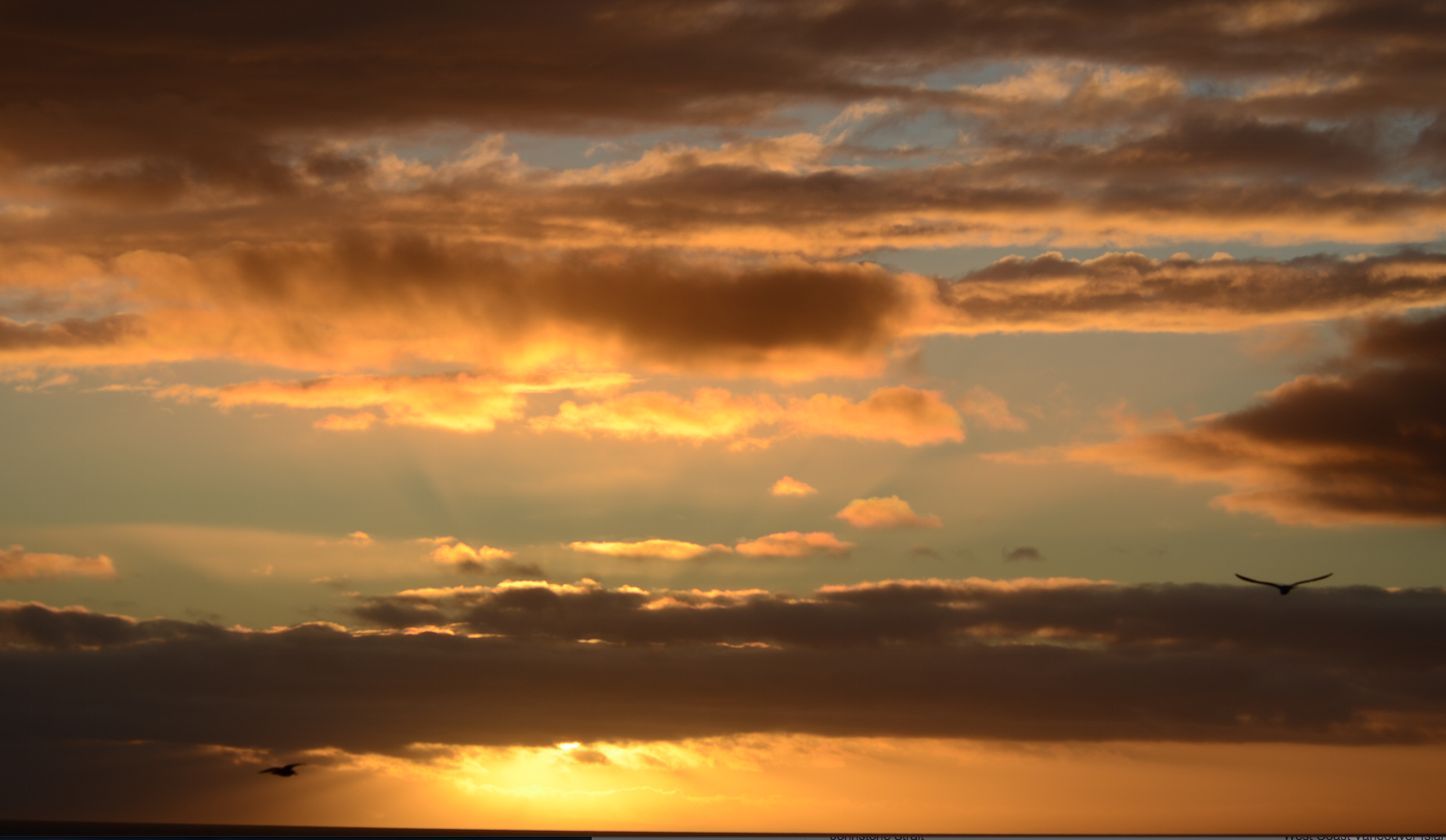
The day started clear with clouds distant, to the east. A steady north by northeast wind of between 5 and 10 knots seemed to gradually bring the clouds around but Race Rocks remained in the donut hole as it often does, with sun dominating until late afternoon. The barometer is holding steady, if averaged over the last two days at ~ 1014 hPA, but the tendency now, is falling again, at the end of the day. There was no colour for sunset as the clouds built and the forecast calls for showers for the next few days, with easterly winds turning to westerly and fog patches dissipating near noon tomorrow.

It was a quiet day on the whale-watching front with only four visits to Race Rocks Ecological Reserve by commercial operators. There was an equal number of “pleasure” craft but they were not all as well behaved, with one of the Pedder Bay Marina rentals fishing in reserve. The marina is now able to track their rentals using GPS. They are really good about contacting their renters, when called and persuading them to move out of the Rockfish Conservation Area which is closed to sports fishing, for finfish in the Ecological Reserve.

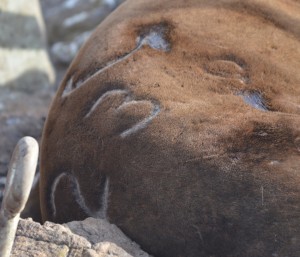
There were repeated explosions across the way. A good ending for explosives I suppose, if you consider the alternatives. It seems to make the sea lions jittery and by that I mean more likely to stampede and go into the water. The Stellers seem more sensitive to disturbance in general.

Ecologically, the sea lion moult continues, elephant seals are trying to get up onto Great Race but there are a lot of sea lions in the way. Northern Elephant Seal # 5850 was back again this morning but didn’t make it up the ramp due to sea lion congestion. Later I saw him doing the ‘wave’ up the rocks in front of the Science House. Another individual seal joined the sea lion mosh pit east of the Eco-guardian’s House and others still hold their own on the top of Middle Rocks completely surrounded and outnumbered by Stellers Sea Lions but not bothered. The Sea Otter has been absent for a couple of days.
Bull kelp stipes are becoming more and more covered with epiphytes and their blades are loaded with spore patches increasing chances of a good settlement for the next generation. Cross jellies and barnacle moults continue to dominate the large zooplankton visible to the naked eye and the phytoplankton bloom has cleared which probably means either a crash or more likely lots of grazers like copepods and euphausids (aka krill). What ever cleared the phytoplankton certainly improved visibility into the water considerably. It is pretty cool to watch the big Steller’s Sea Lions ghosting through the kelp forest.
Black Oystercatchers are back, congregating on Great Race after an absence. More gulls and cormorants arrive in the area daily. There continues to be large, mixed-species feeding flocks including gulls and divers and multi-species gull feeding flocks associated with sea lion salmon kills. Salmon and halibut continue to swim past and around Race Rocks as evidence by the predators in the area, including human fishers talking about their catches on the radio. The Canada Geese are attempting a come back and it is difficult to keep them off as they just sit on the water waiting for the coast to clear. Every night the Killdeer return to Great Race as night falls.

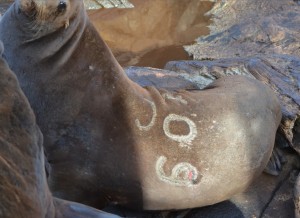
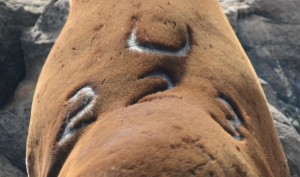
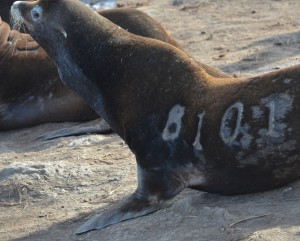
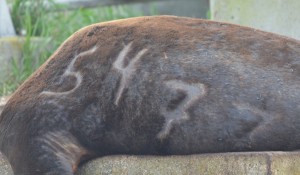
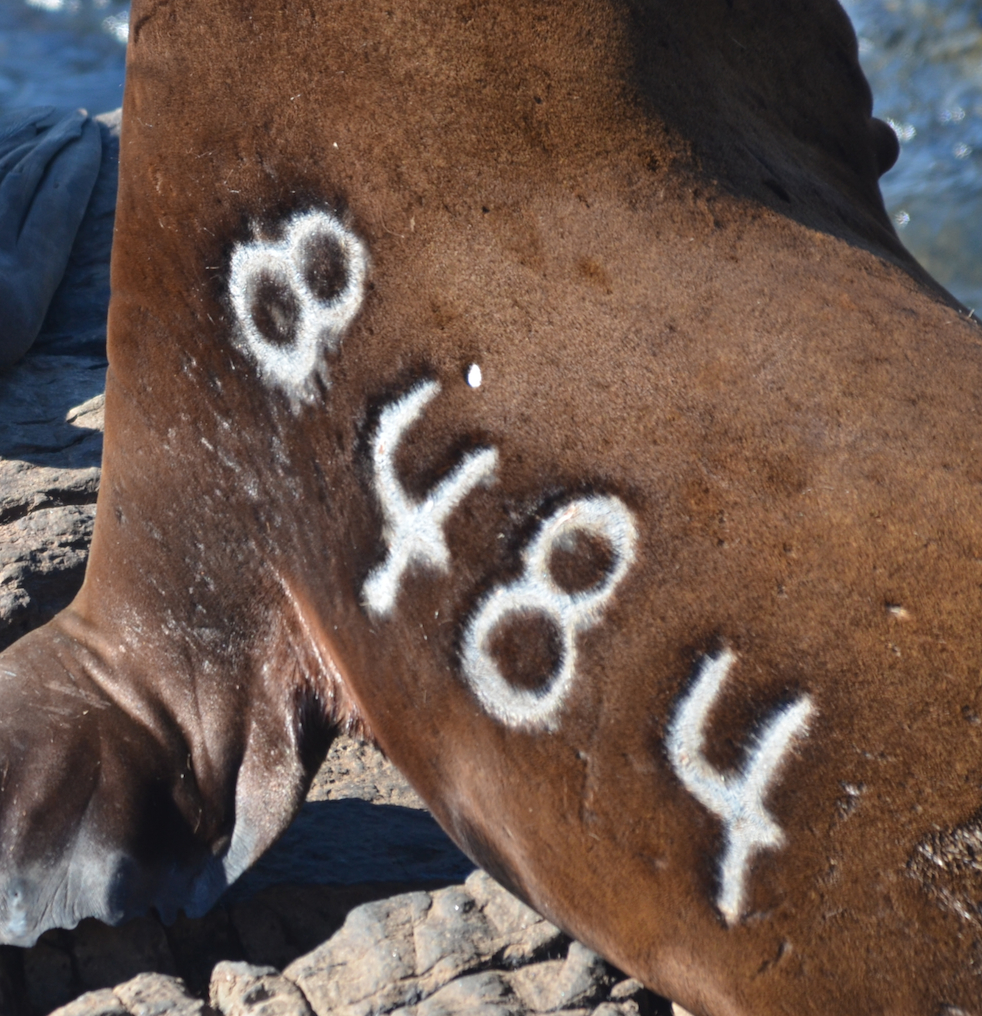
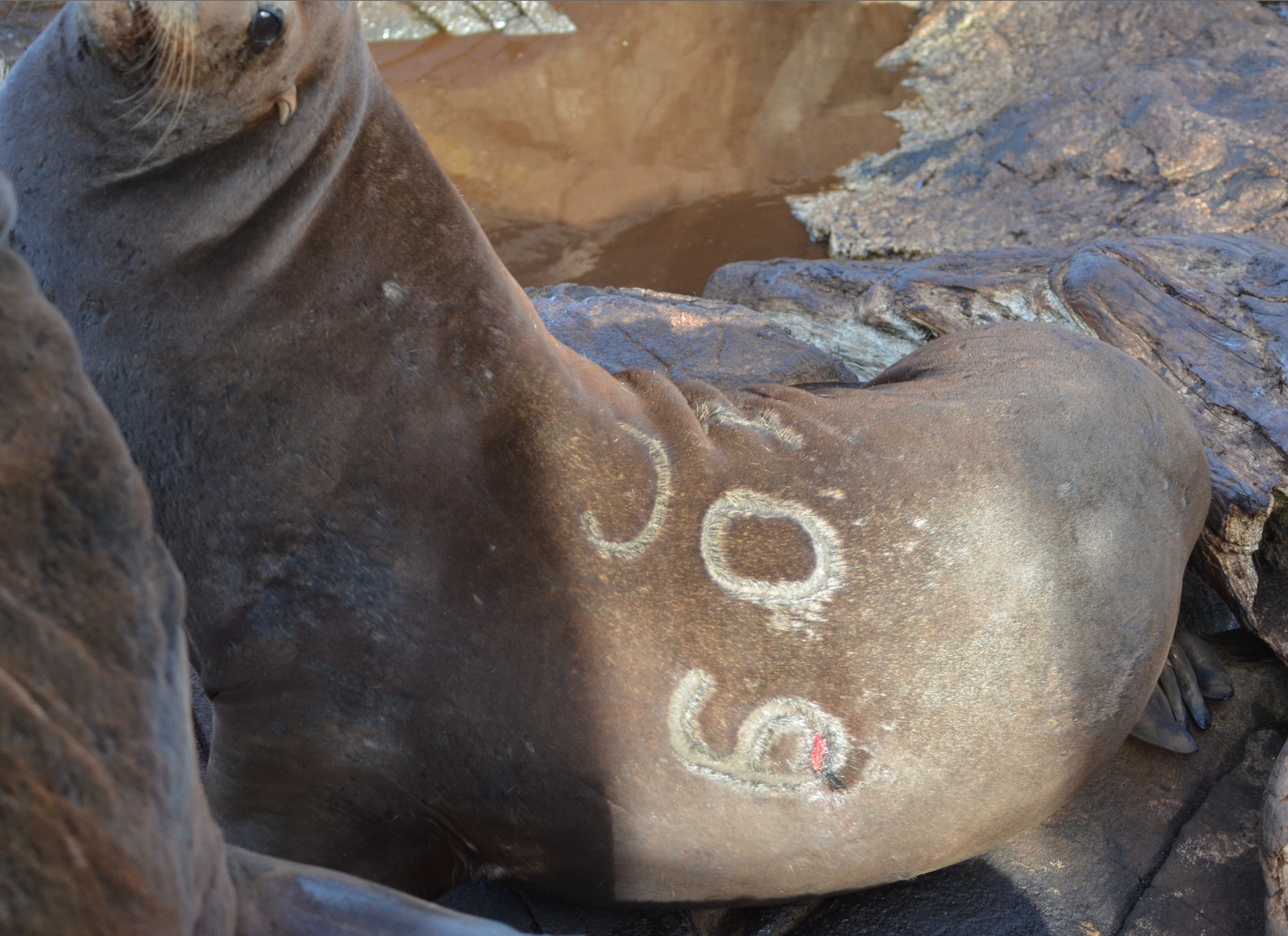
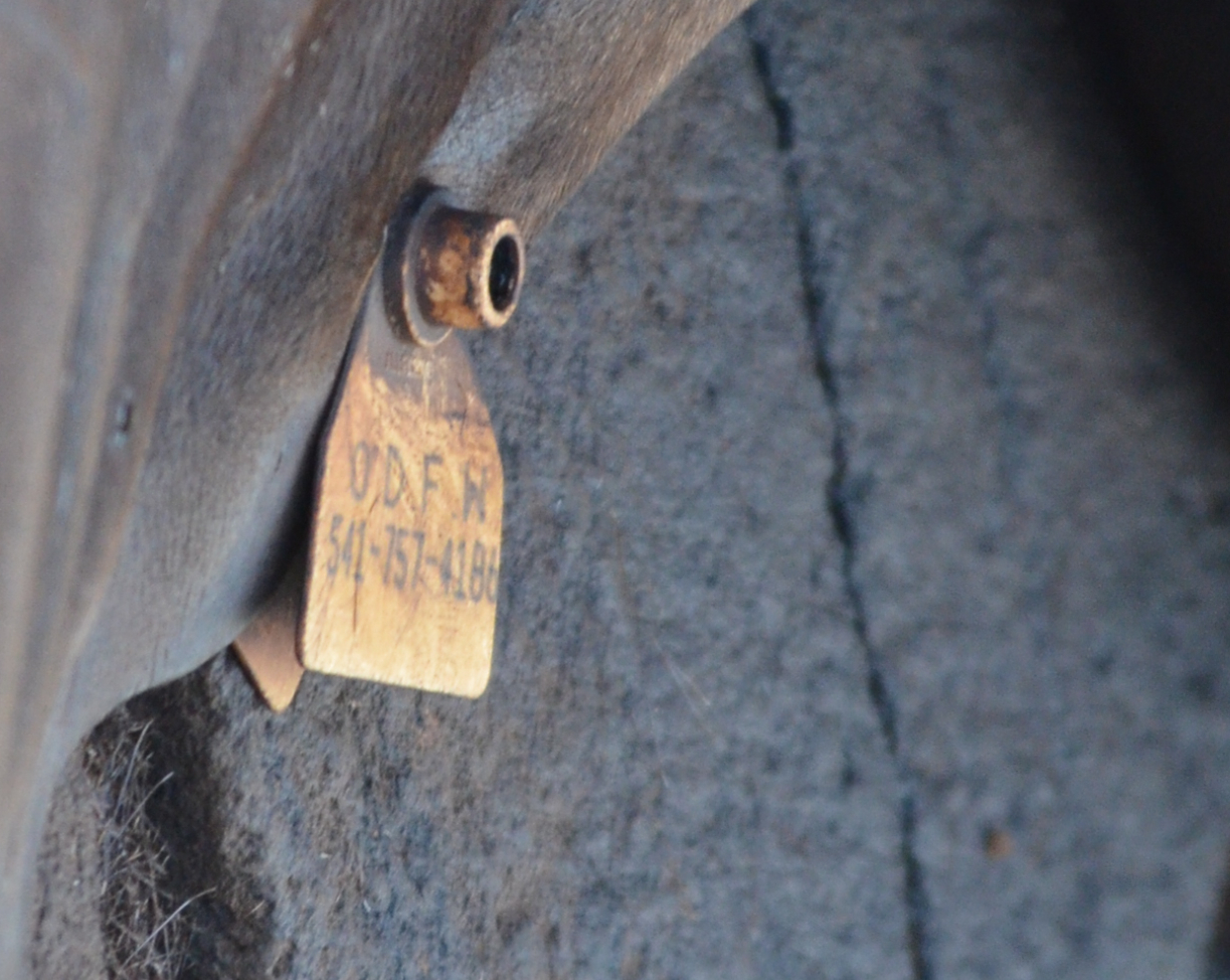
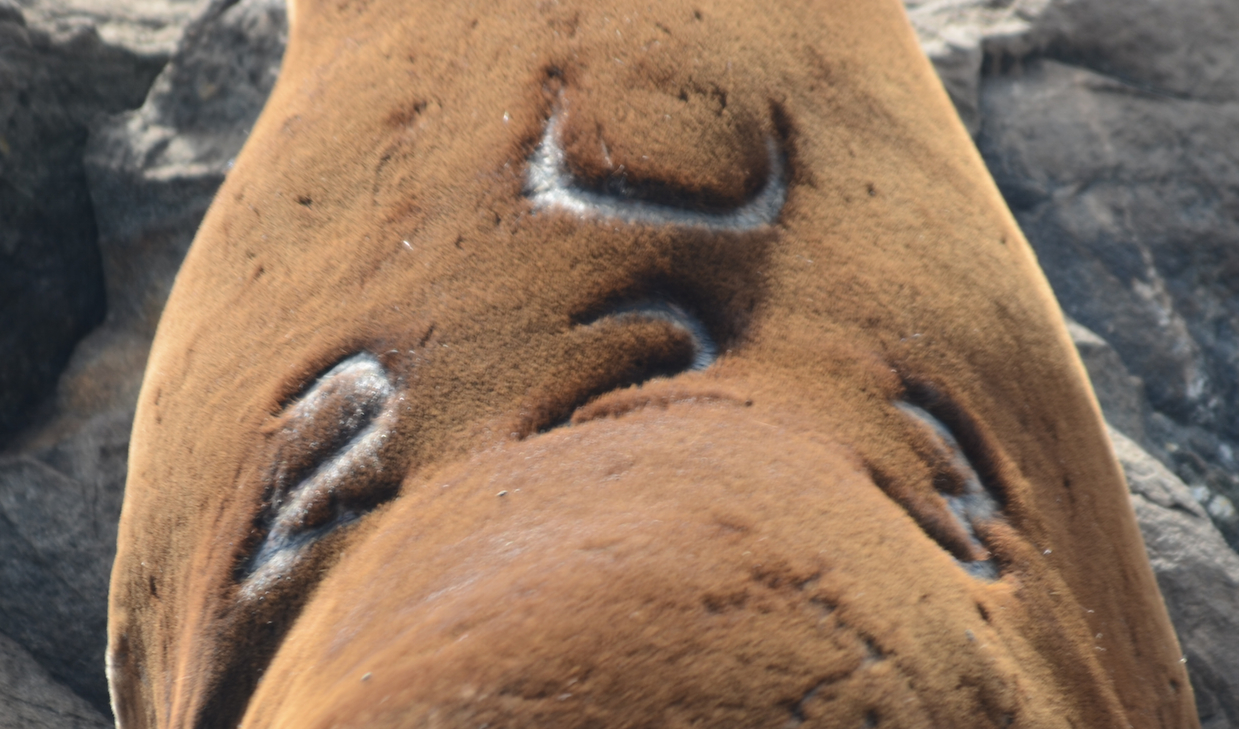
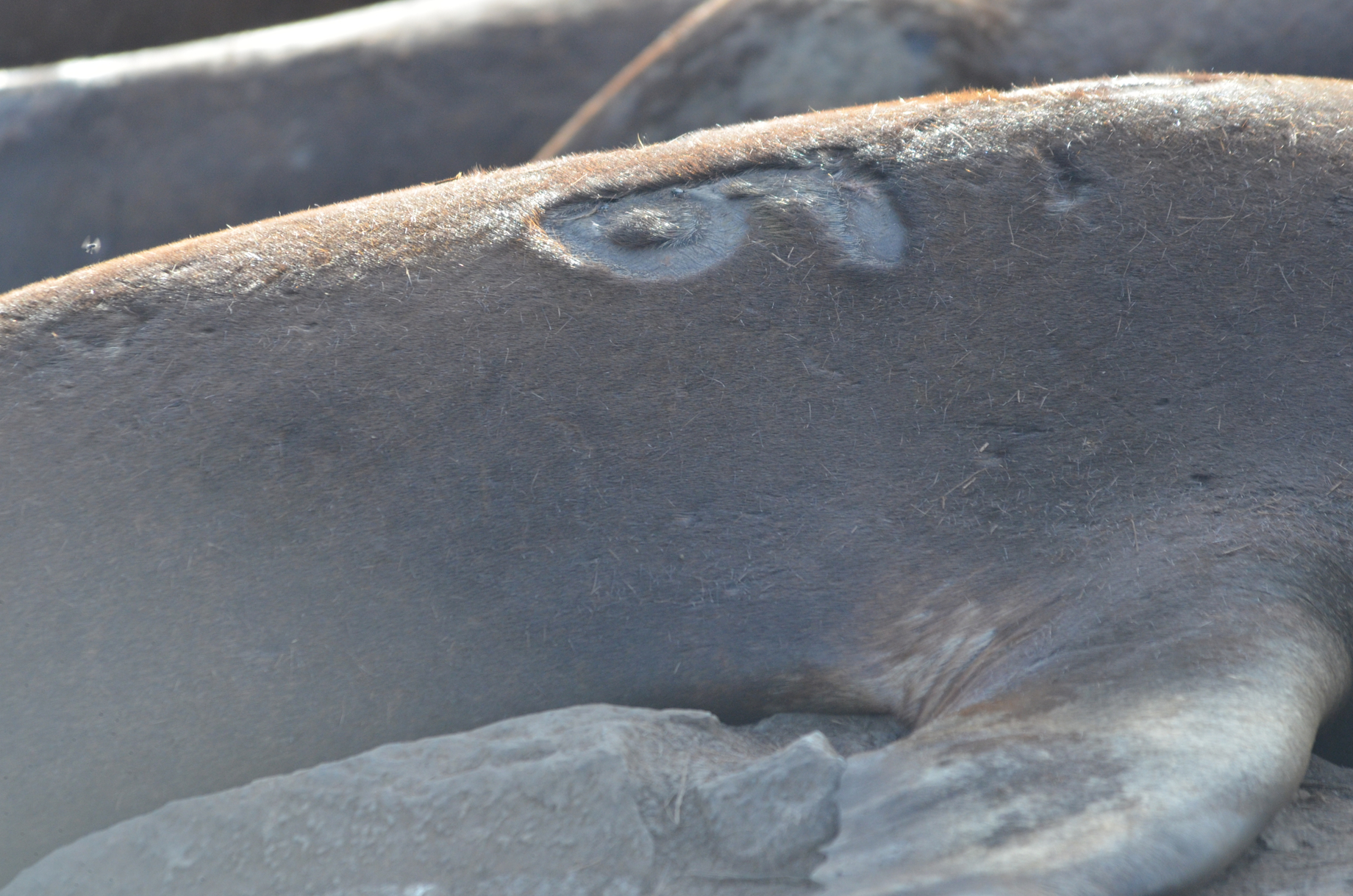
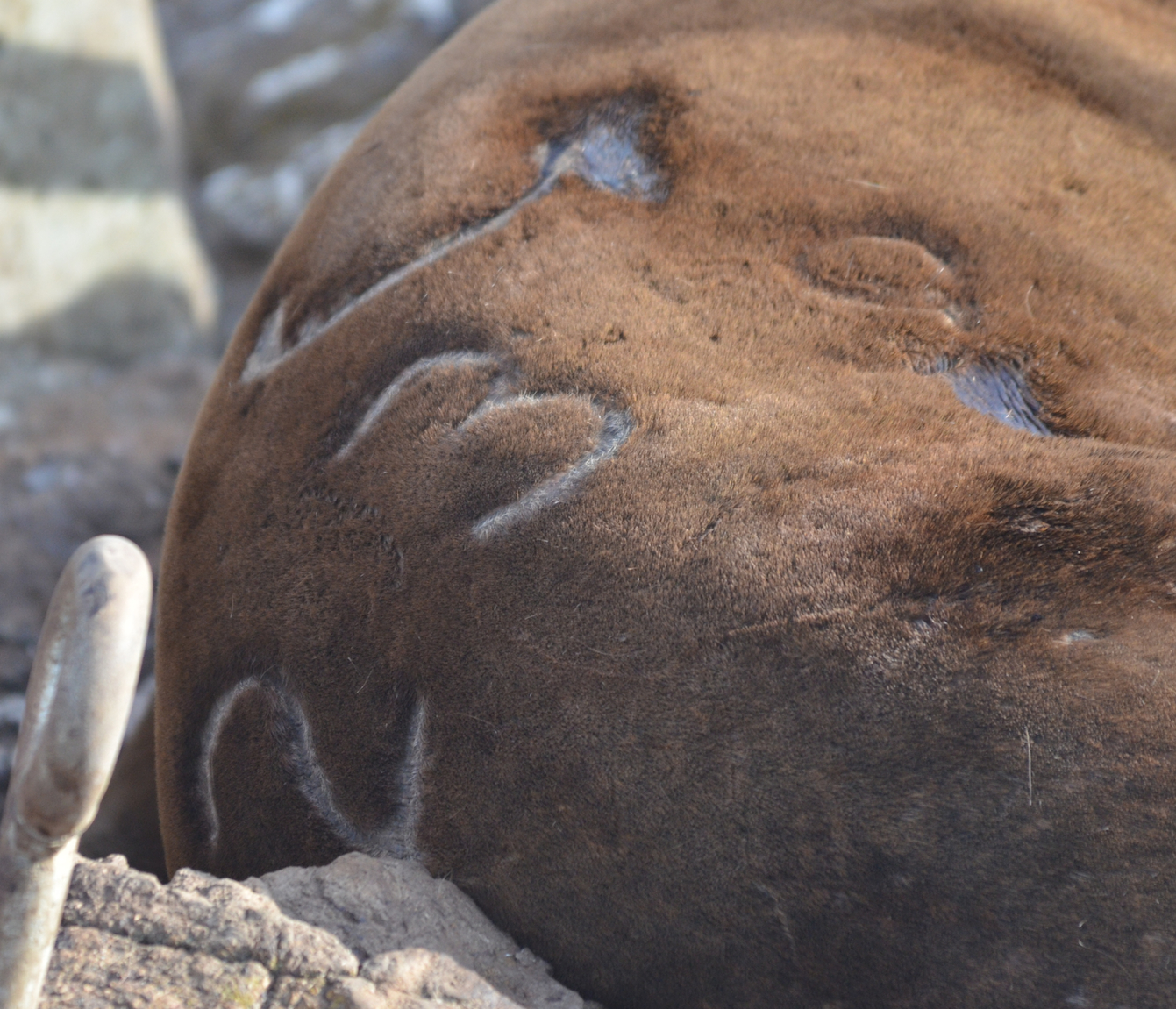
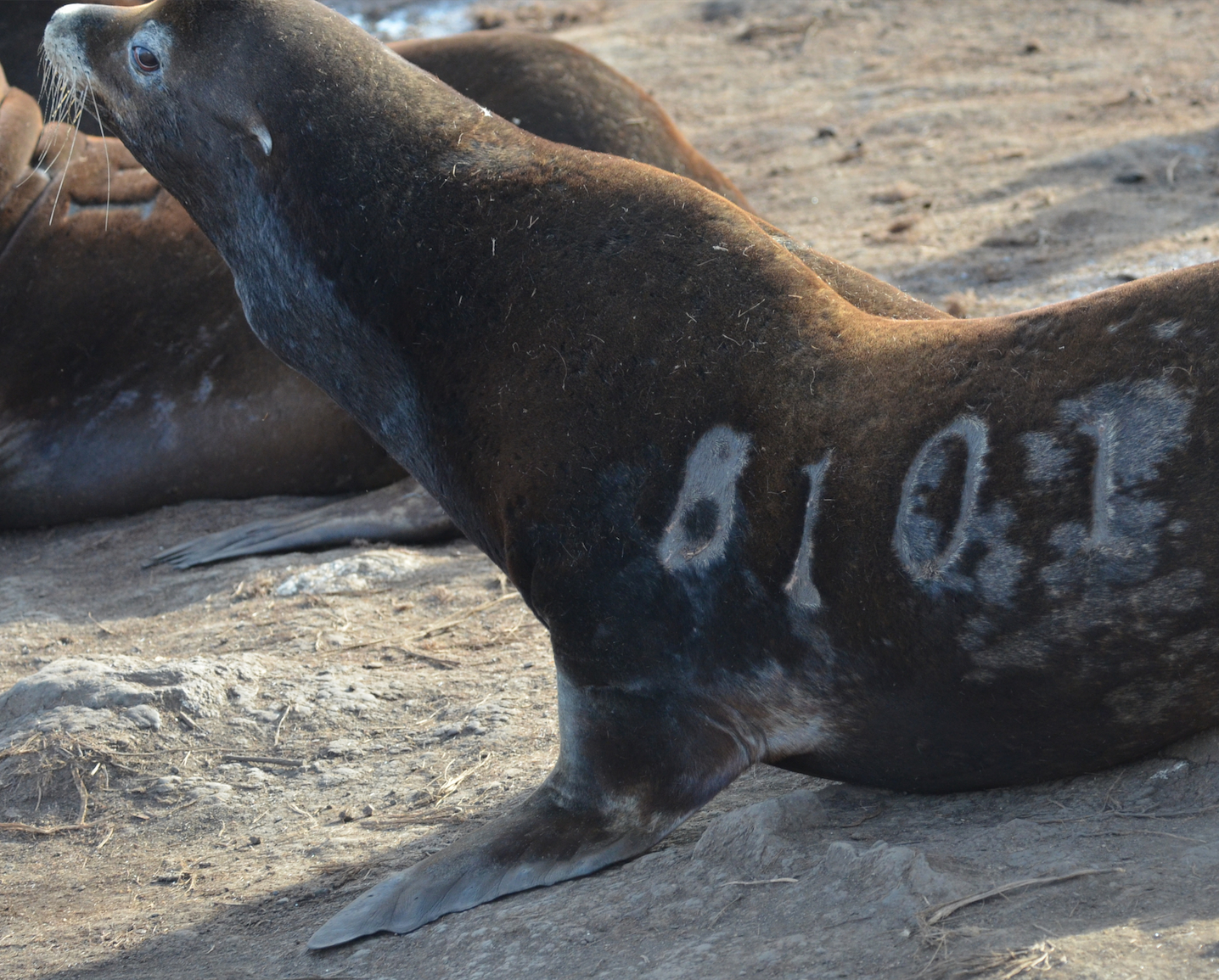
Sea Lion brand and entanglement photography continues as do the daily chores to keep this place running sustainably. There were no visitors today.


Killer Whales Late for Class

It was a clear day from glorious sunrise to subdued sunset. The wind was 5 to 15 knots in the west – southwest quadrant and solar radiation was high, though not quite as high as yesterday; 400 Langleys today and just over that on Monday. As I write the  Log blog, clouds are creeping in and blanketing the mountains on the American side and the barometer is falling again. Forecasts call for a switch to southeast winds, which usually brings wet weather. Wednesday is supposed to be increasingly cloudy and rain is supposed to follow.
Only eight commercial whale watching vessels were noted in the Ecological Reserve boundaries today and five of those were in the afternoon associated with Biggs (Transient) Killer Whales on the other side of Race Passage. The Killer Whales were on the Vancouver Island side of the passage and spent several hours in and around Bentick Island and Emdyck Passage and William Head. Several pleasure craft passed through the reserve today, all without speeding or fishing in reserve. There was one overflight during the first class field trip: a small fixed-wing aircraft that passed over west to east and then returned passing over a second time. Although one red flag was up all day at the military site there were no obvious explosions.

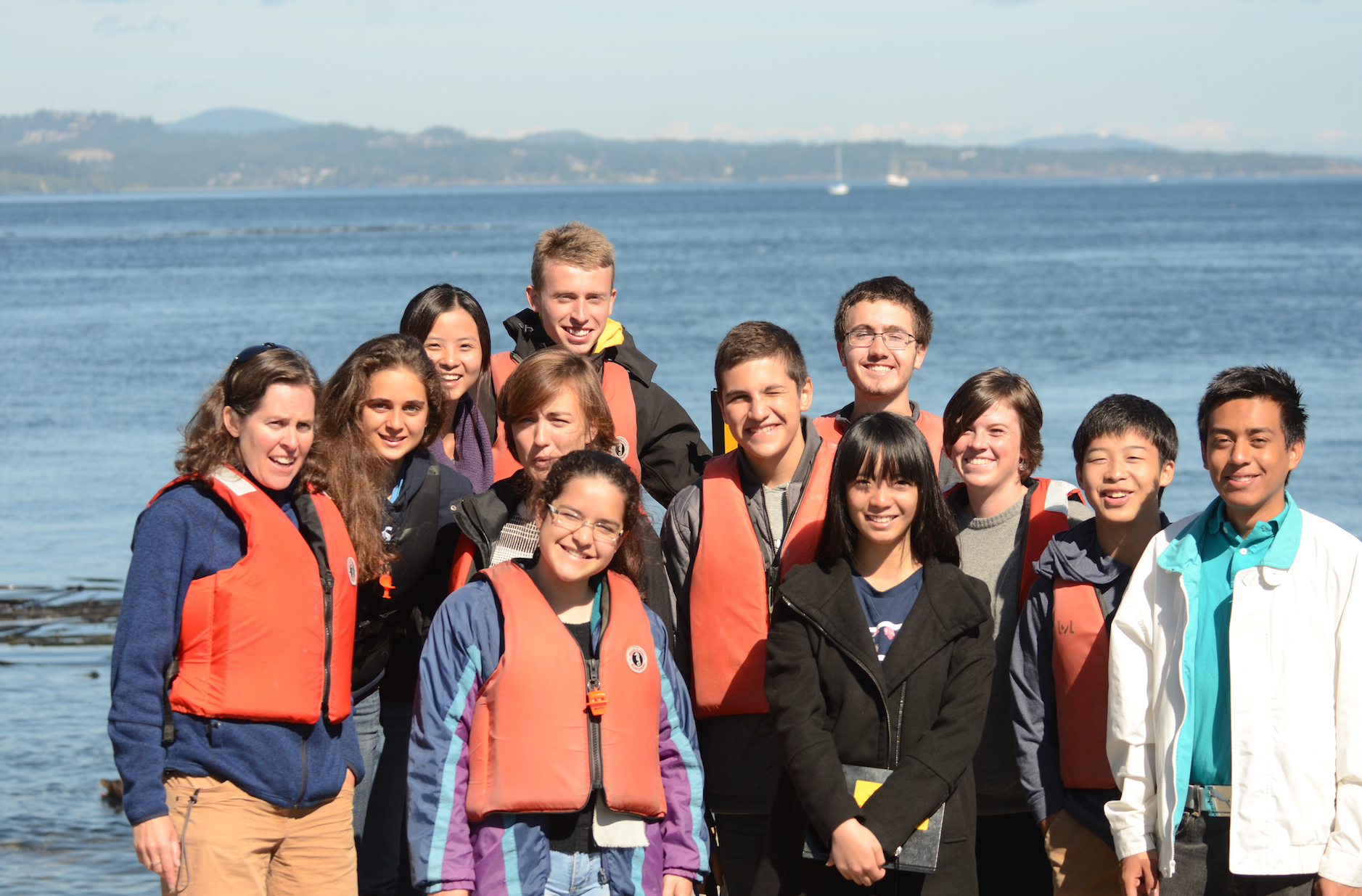
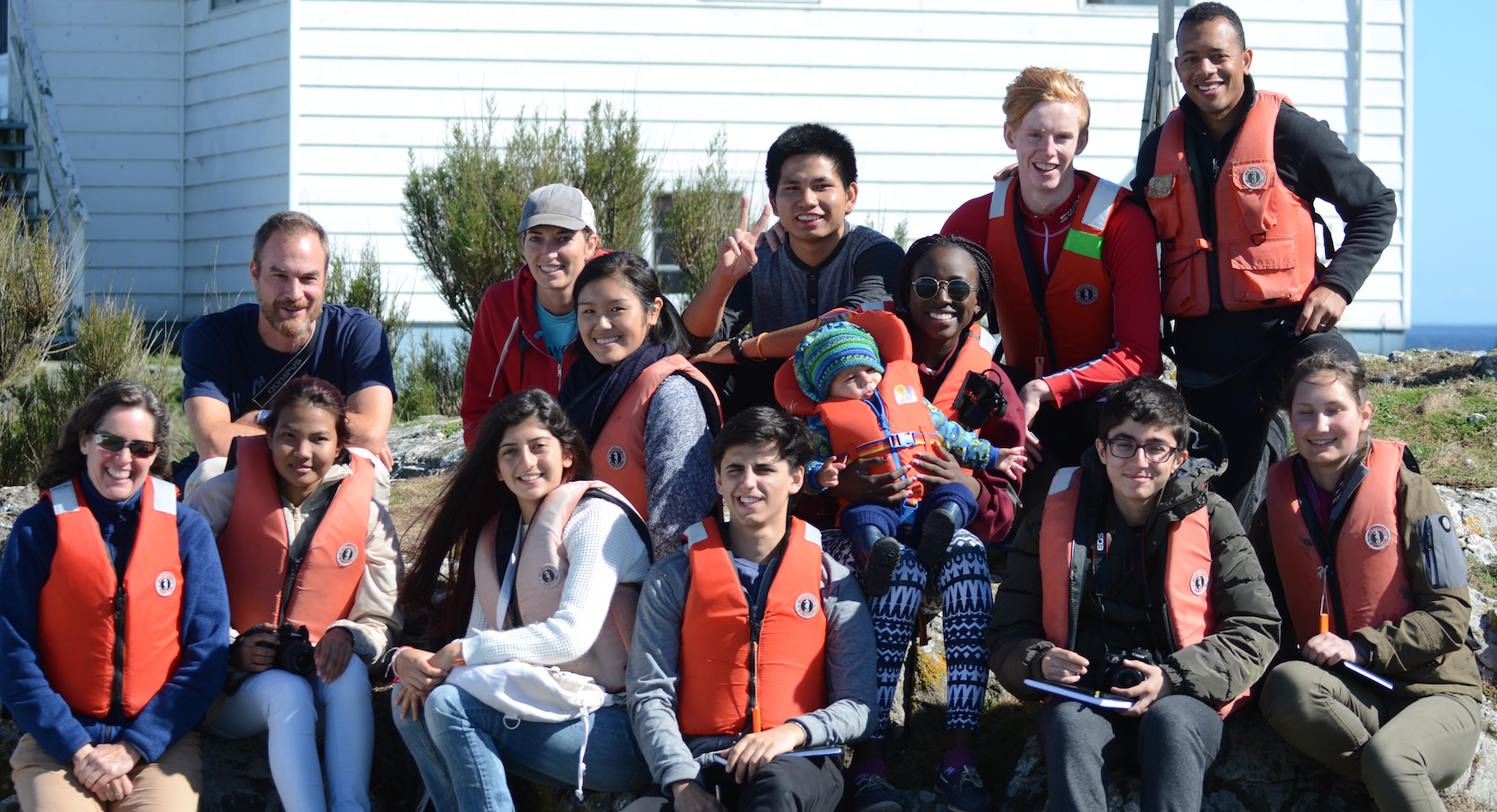
Pearson College students spent part of the day here today. Two of Laura Vehegge’s classes of marine science students came for their first field trip of the year to Great Race Island. I was hoping they would have a chance to see the Sea Otter, at least one pod of Killer Whales and maybe a couple of Humpback Whales, but no. After all they have just started a species list that they will be adding to for the next two years, so they will have other opportunities.

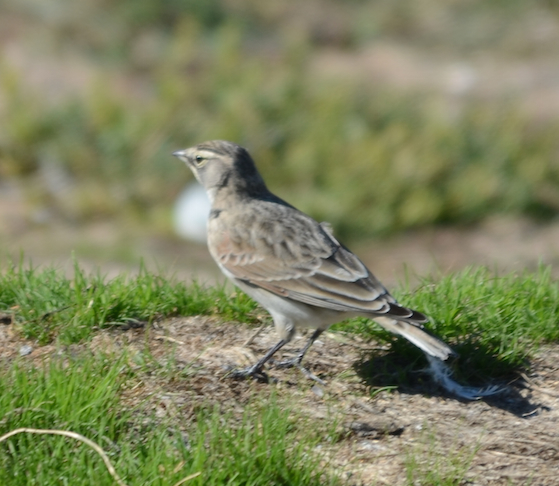
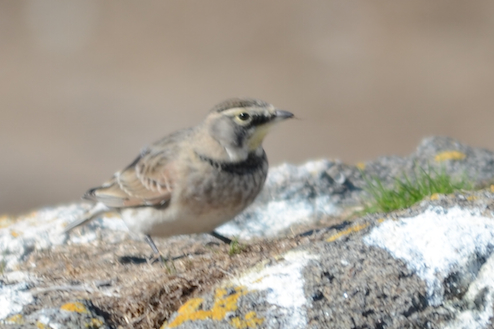
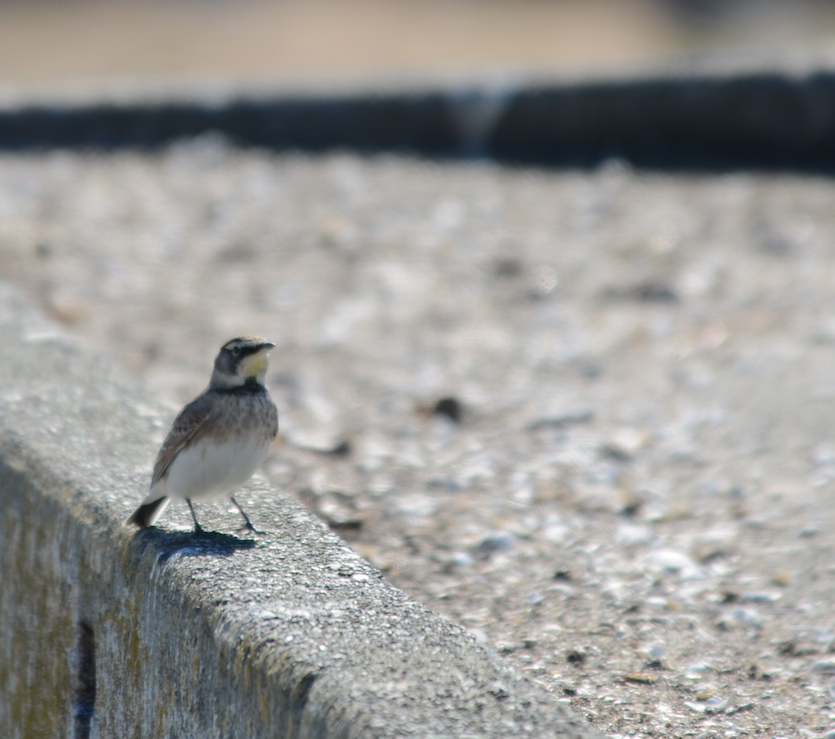
Today the students were also working on journal entries about their marine animal observations. They were lucky enough to see California and Stellers Sea Lions, Northern Elephant and Harbour Seals and lots of Glaucous-winged Gulls. There were also Mew Gulls, California Gulls and if they were sharp-eyed, Heerman’s Gulls. Those were the ubiquitous species, but for me, the more interesting and unusual species were two new, avian visitors that showed up today; a male and female Horned Lark. I send a shout out to Victoria Natural History Society on Twitter for helping with the identification. A flock of 24 Canada Geese landed and were on the island for a very short visit.

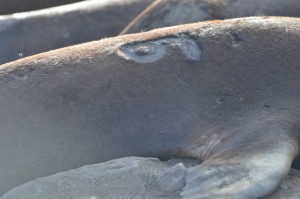
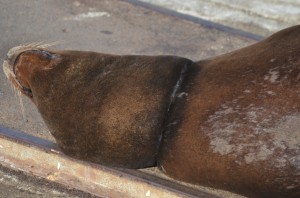
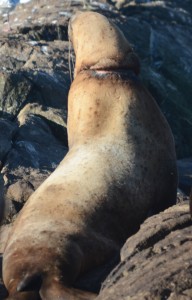
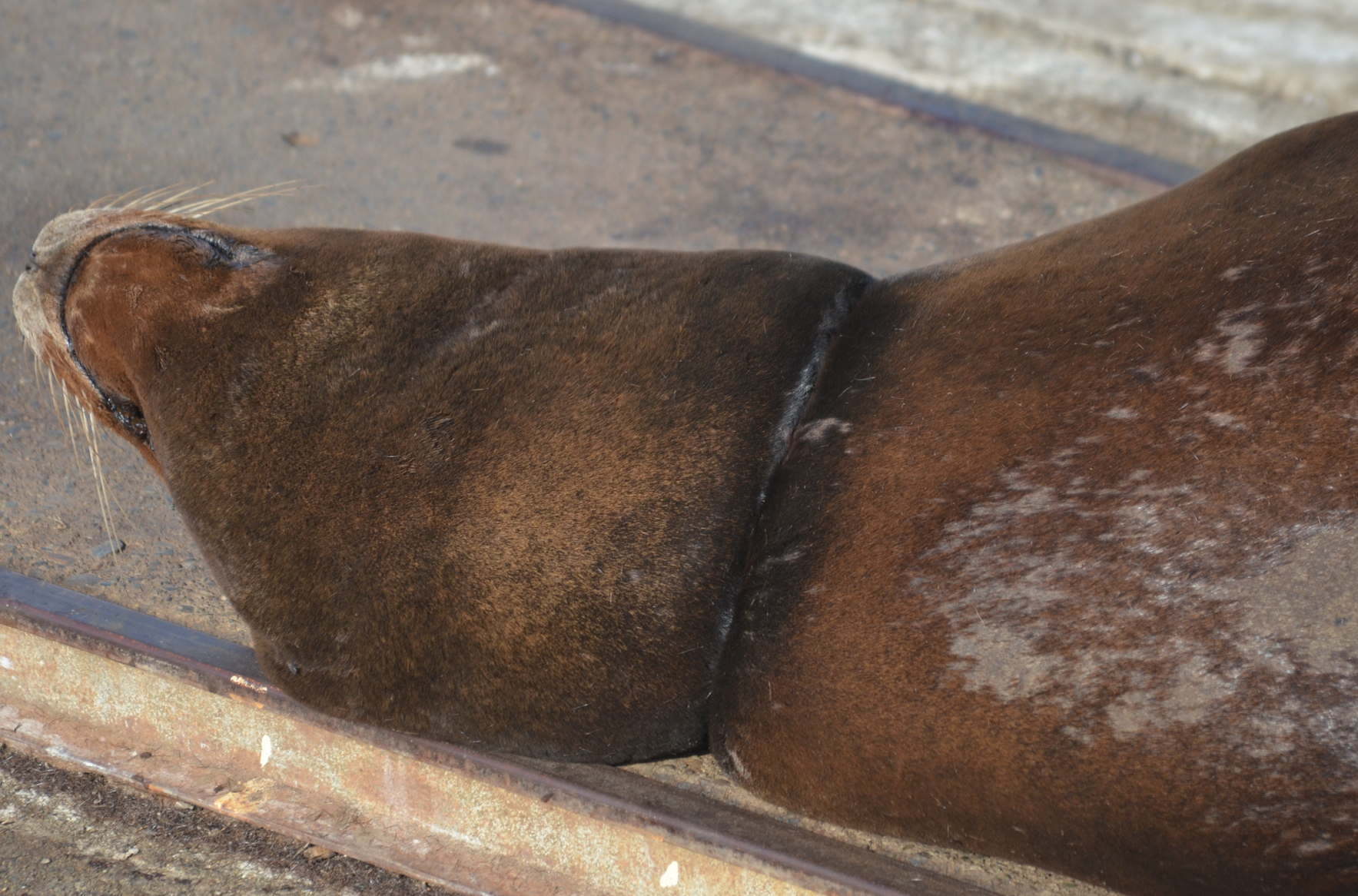
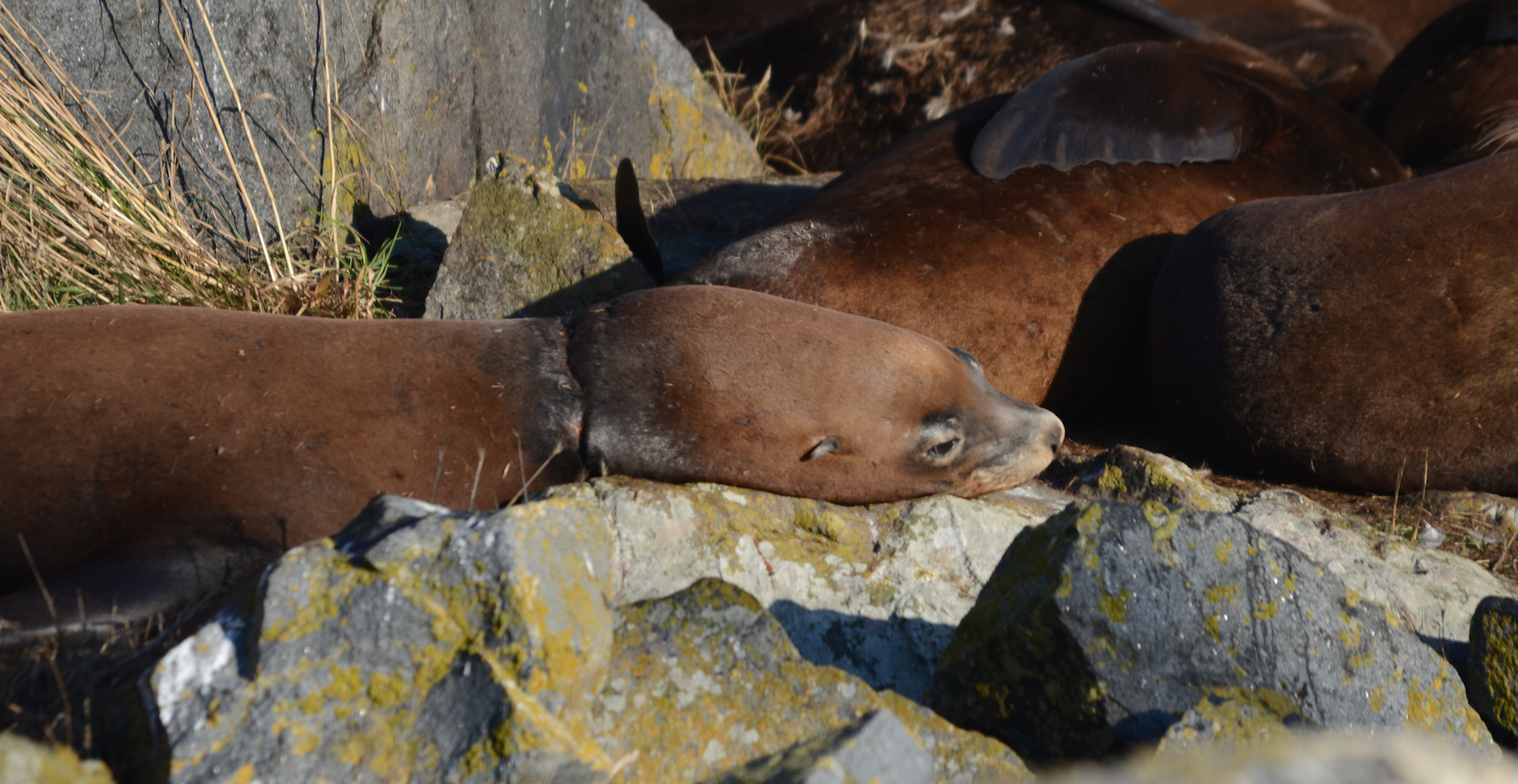
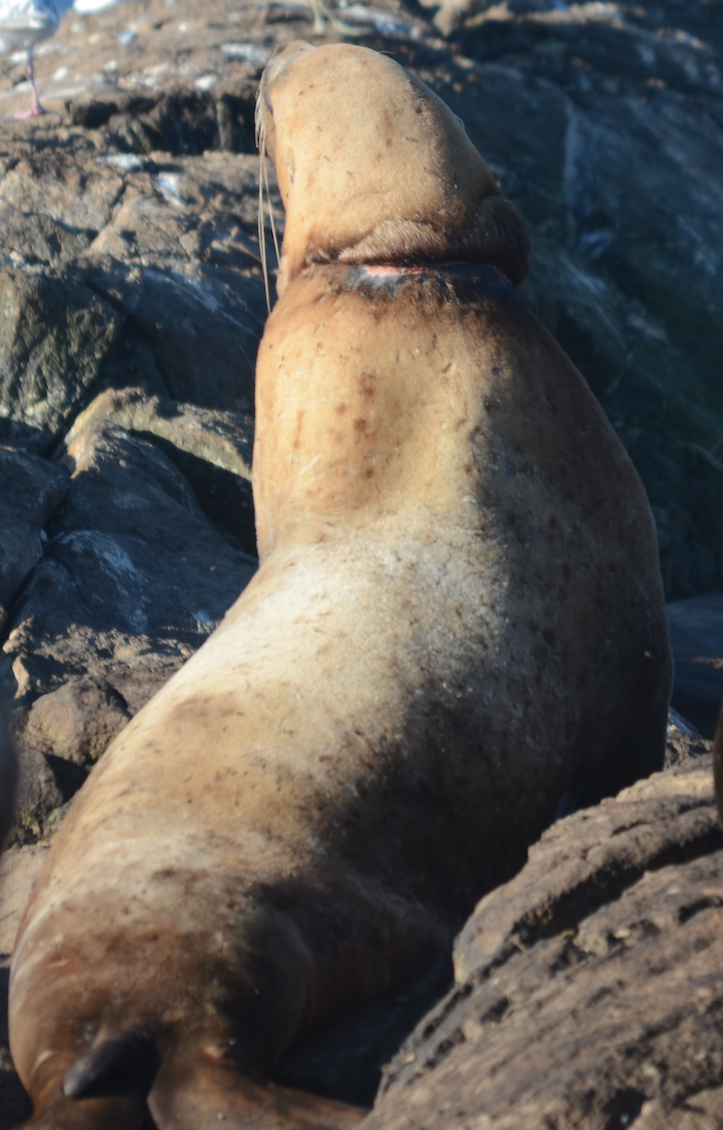
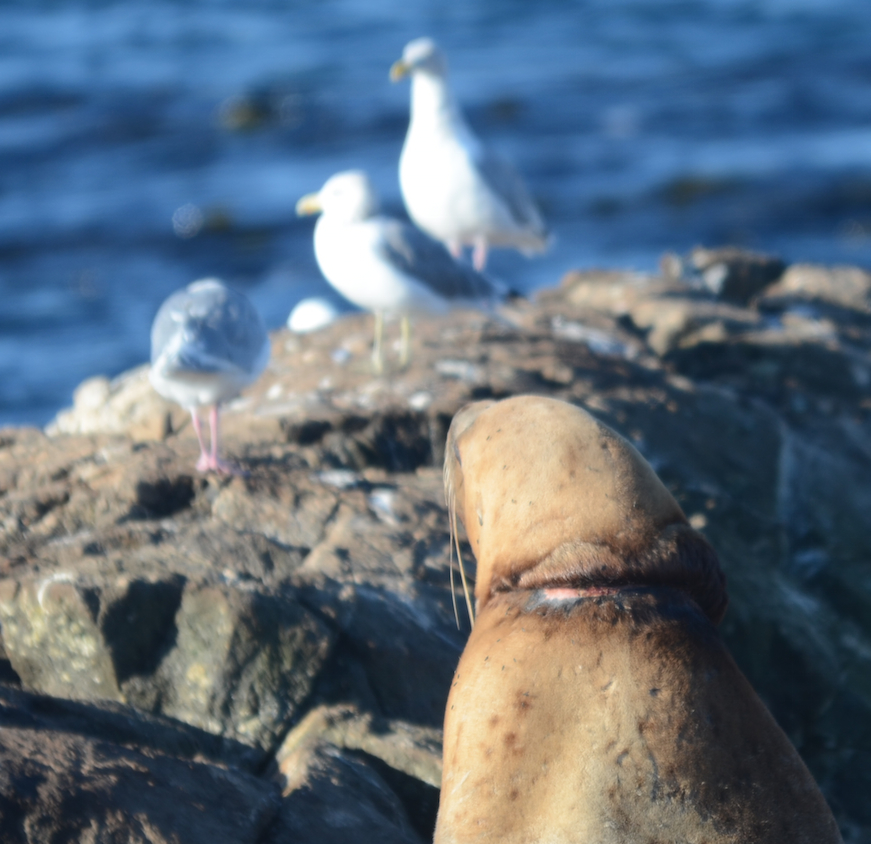
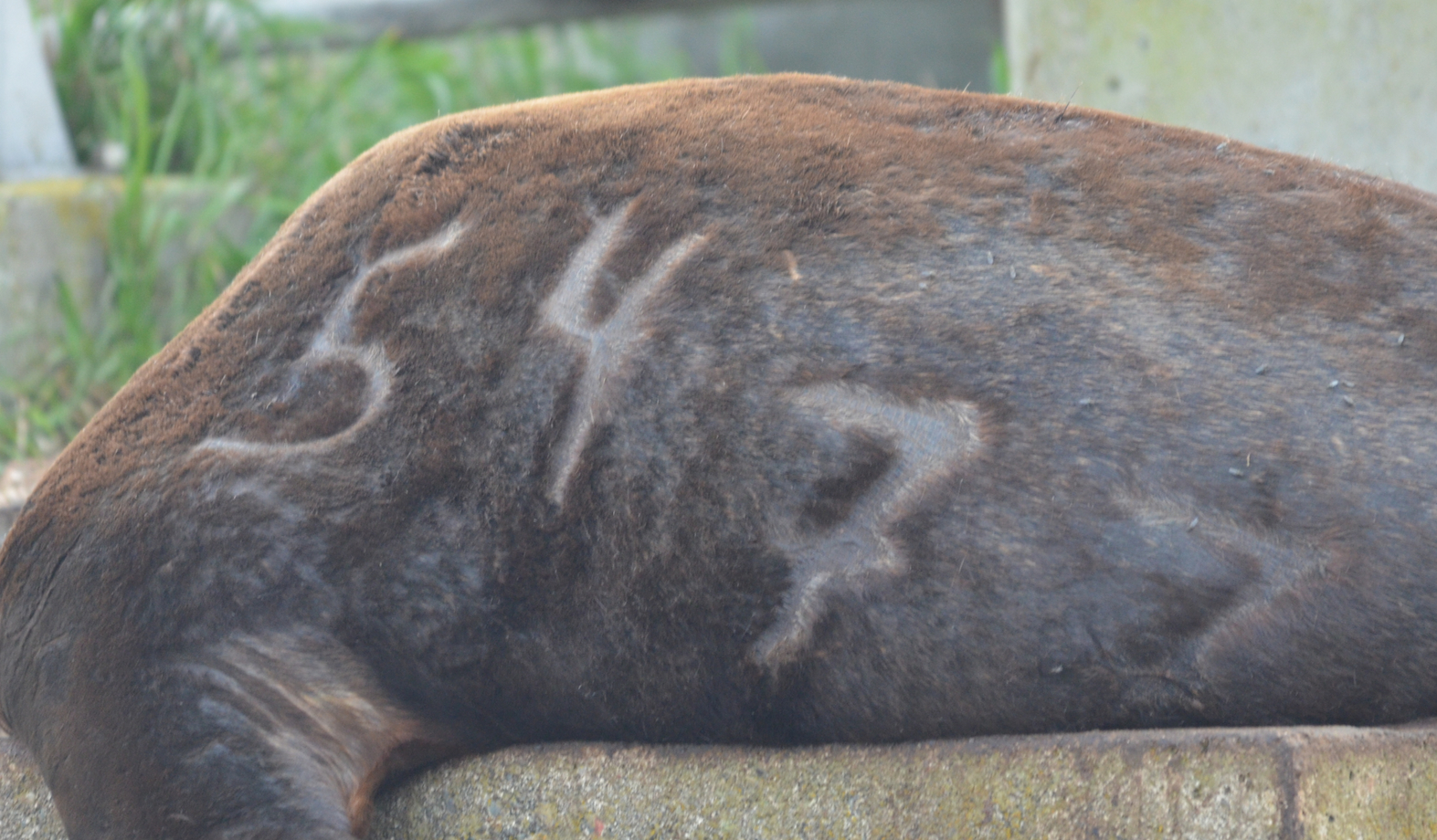
Laura’s classes witnessed the down-side of plastic in the ocean today. Is there an up-side? They had the ‘opportunity’ to observe three neck-laced sea lions. Those two California Sea Lions and one Steller Sea Lion with plastic straps around their necks will likely not survive long unless they get the specialized attention of Vancouver Aquarium veterinarian, Dr. Martin Haulena. Dr. Haulena has worked extensively with sea lions and is one of the few people able to do this sort of animal welfare work. This is another good reminder for all of us to avoid plastic if possible, recycle it and just in case it “gets away” cut all possible entanglers before disposing of it. There are a lot of really good efforts towards reducing plastic in our seas and there is a real need.

The Killer Whales mentioned above showed up late in the afternoon and missed both classes.

It was good to see Courtney with Year 20 volunteer Jasper, as a deck-hand on Second Nature. He had quickly graduated to skipper in training by the third run to Race Rocks.


Watching the Watchers

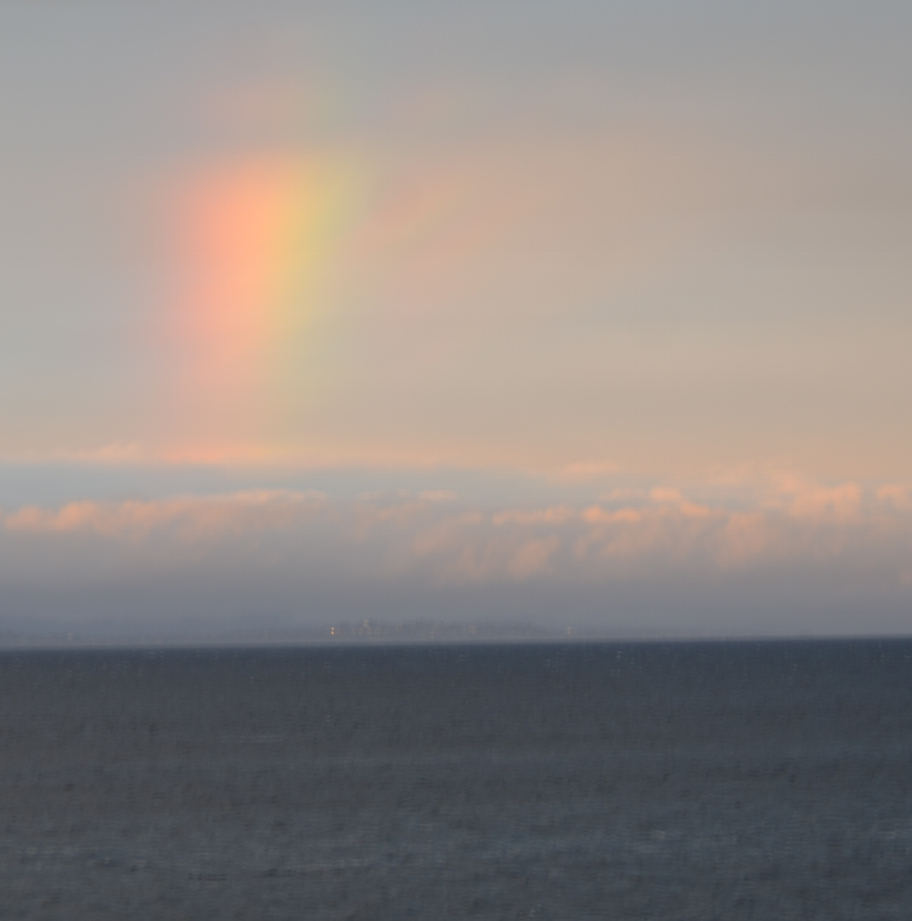
Morning broke revealing thick fog at Race Rocks. Pushed around by light east by southeast winds along the Vancouver Island shore, the fog came and went. Across the strait in Washington it cleared first and stayed bright. The fog was gone by mid-morning and change was in the air. Over the course of the morning and early afternoon, the wind backed through northeast all the way to west. A dark line on the western horizon told of a storm coming and it hit quickly rising from 10 knots to 35 with higher gusts, in short order. Rain followed and there was a good wet blow autumn-like blow until it cleared with spectacular quadruple rainbows just before sunset. The barometer started to rise an hour before it started to clear in the early evening and the forecast is for winds to diminish to light overnight and 10 -15 west Monday afternoon. The clear skies are supposed to hold.

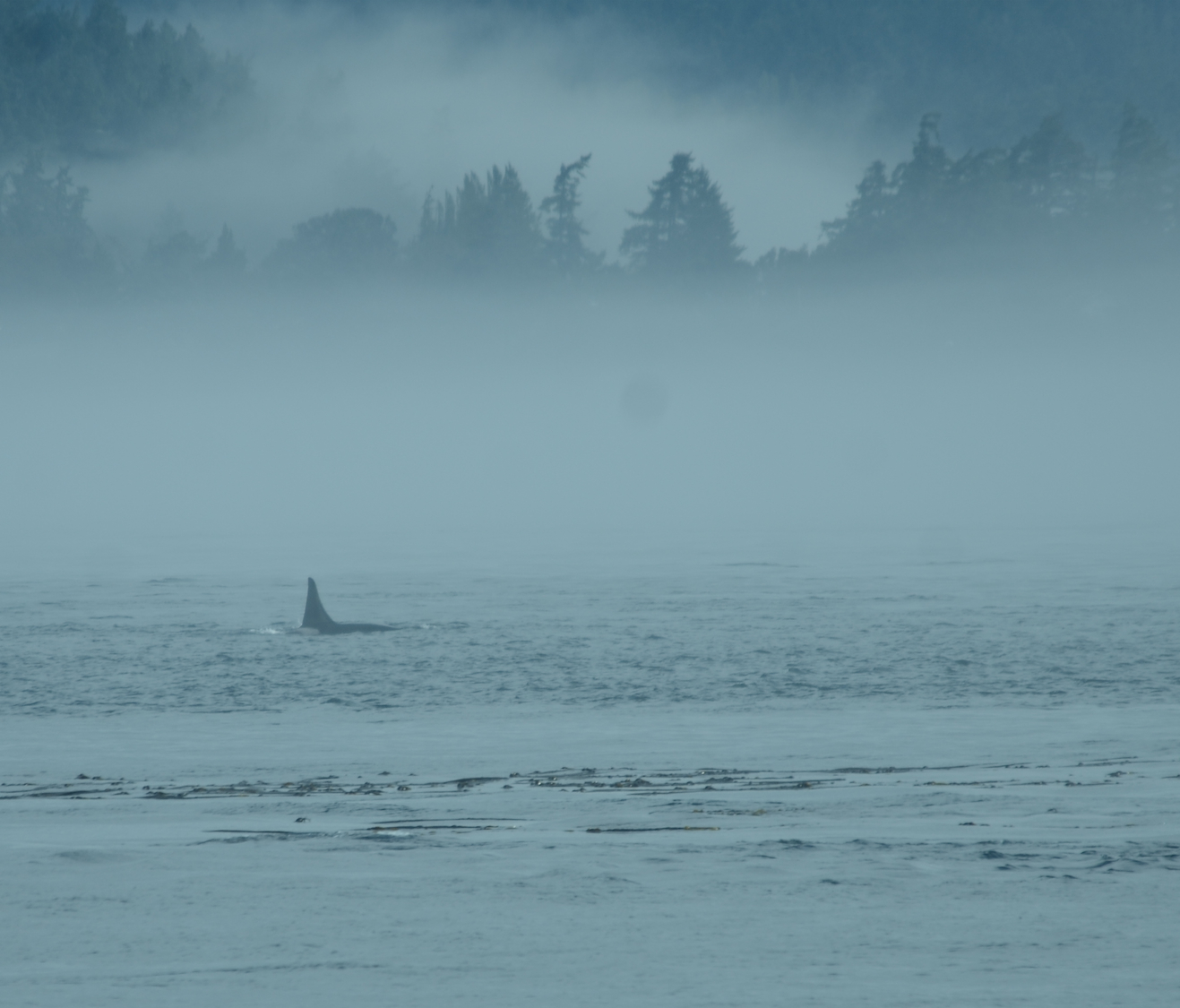
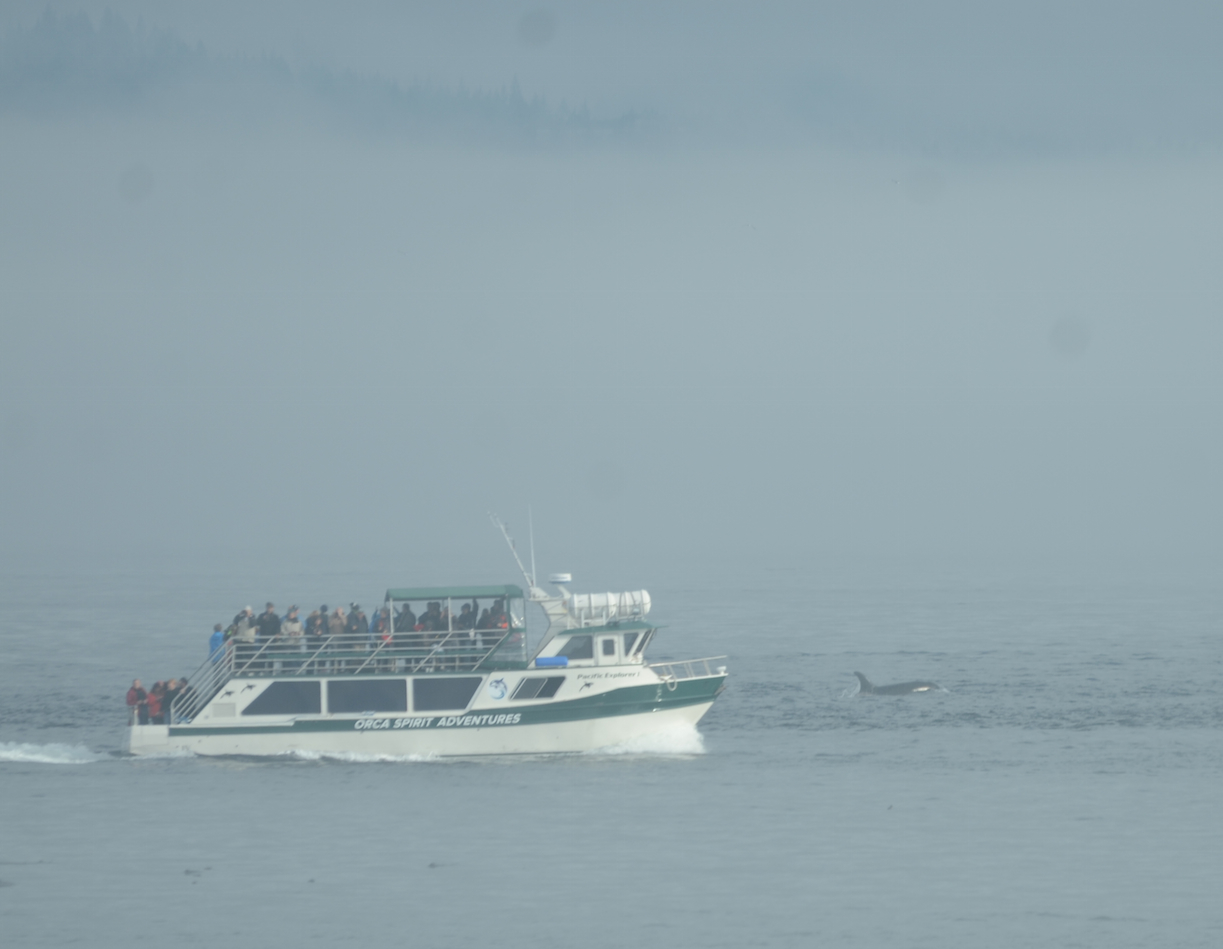
While the fog was receding and there was just a thin strip left along the north side of Race Passage, we were able to witness the moving sight of Southern Resident Killer Whales heading eastward. There were at least twenty animals and possibly more and they were moving at about four knots. There were a couple of really large bulls, lots of mid-size animals, one fairly small and one tiny one swimming with another little one. Several of the big bulls passed close to North Rocks and there was some tail slapping just to the east of the reserve. These animals are very endangered and yet very resilient. These are the surviving members of family groups that were hunted for live capture and sale to aquariums where they were (are) shown for the price of admission. Now that they are listed under Canada’s Species at Risk Act as Endangered animals, they are accompanied daily by a great parade of commercial whale watching vessels. The first vessel to spot them alerts the others and they hopscotch them, lay in wait for them and pass them off to others so they won’t be “lost”.

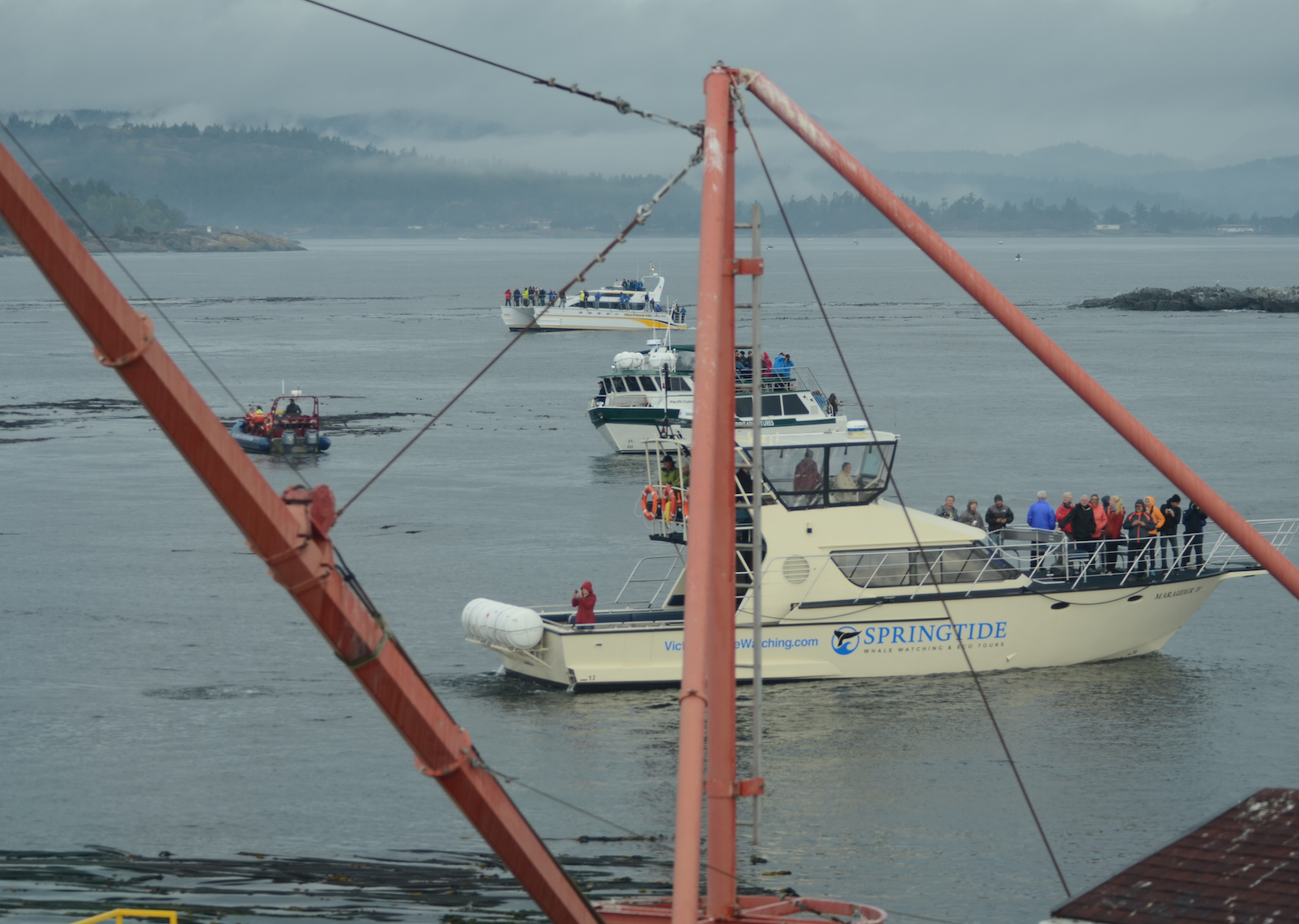
The parade came to Race Rocks again today with 28 visits observed in the Ecological Reserve by commercial whale watching vessels. At one point there were six vessels right in front of the jetty. Most of the vessels paid a close visit to the Sea Otter. Sea otters are one species we can celebrate as a conservation success story, in some places maybe even too much of a success. This is a species that was extirpated, reintroduced, listed successively as endangered, threatened and now is down-listed to special concern. People and policies do make a difference when it comes to recovery of species at risk and there are simple things we can all do to help make a positive difference.

Chores today were routine and we had no visitors.

Elephant Seals Hang On.

The overcast morning sky cleared by noon, clouds pushed out by light northeast winds. In the afternoon, the wind turned to west and then in the evening to southwest. The barometer rose to 1013 hPA today. The forecast continues to call for rain along with variable winds at 5 – 15 knots.

There were only six whale watching visits observed in the Ecological Reserve today and no sports fishers. The large military explosions punctuating yesterday’s alternate sea lion swims and haul-outs continued today.

Today was census day at Race Rocks.

Steller Sea Lion 313

California Sea Lion 649

Harbour Seal 155

Northern Elephant Seal 14 (Two on Great Race -#5850 + female; 12 on Middle Rock)

Sea Otter 2

Southern Resident Killer Whale 16 (during count week)

Humpback Whale 3 (during count week)

Canada Goose 4 full time (2 adults 2 goslings) (flock of 25 chased off twice)

Harlequin Duck 1

Double-crested Cormorant 83

Pelagic Cormorant    9

Cormorants spp 18

Black Oystercatcher  6

Black Turnstone 12

Kildeer 2

Mew Gull 134

California Gull 11

Herring Gull

Glaucous-winged Gull total ( 277- adults; 74 – juveniles)

Ring-billed Gull 1

Gull spp 62

Song Sparrow 1

Savannah Sparrow 22

Fox Sparrow 1

Junco 3

Barn Swallows 2

American Pipet 1

A crew from operations at Pearson College, visited today and were very helpful in getting freshwater flowing again in the Eco-guardian’s House, amongst other things. Courtney was at the helm of Second Nature, Jeff brought all the plumbing gear and know-how to replace the pump and Jasper (PC Alumnus year 20) a curious, environmental engineer figured out a few of diesel pumping mysteries. A big shout out to all three. Thanks for the support.