August 24 and 25

Aside

On Wednesday, a Coast Guard Helicopter arrived with a repair crew to deal with the foghorn.  While the Glaucous-winged Gulls around the helipad were disrupted temporarily, and many California Gulls on the Middle Islands took to the air, most were back in their places within a few minutes. The marine mammals from harbour seals to elephant seals were relatively unaffected, with the exception of several Steller’s sea lions which briefly moved from the jetty area.  They returned within 10 minutes of the helicopter’s departure. Although the foghorn was given a clean bill of health in the good weather, it failed again on Thursday when the fog lasted several hours. The Coast Guard was notified.

Several branded sea lions are being seen.

A Common Raven (not common on Race Rocks) flew over the island around noon.

Census numbers show changes in the birds that have been breeding here. Most of the PIGU have moved on now that young have fledged. Likewise, GWGU numbers are dropping as young gulls take to the air.

Harbour seals and shorebirds have been adjusting to increasing presence of sea lions, with the former loafing more on the outer islets, and the shorebirds bunching up more against the rocks on the east of the island rather than on the beach.

This will be my last post as relief ecoguardian this year. It’s been a pleasure to be here again amongst the wildlife. I hope my personal project–renewal of the compost–will be appreciated by the ecoguardians who follow. For a more personal and detailed look at life as a relief ecoguardian, please check out my blog at http://nightingaleadventures.blogspot.ca

Ecological Notes:

  • The young elephant seals appear to have moved on. The alpha male continues and has started his molt, moving between the Science Building for resting and the jetty for relief.
  • Passerines seen in the last two days were Brown-headed Cowbird and Common Raven.
  • Branded Steller’s sea lions (882R, 998E, 431Y, and 486Y) and 1 branded California sea lion (V29) were seen during census on Wednesday.  882R and a new California sea lion (U958) were seen on Thursday. The latter also visited Race Rocks in 2020.
  • Bird action on the water over the last two days, with many birds feeding on the tide lines.
  • 2 California sea lions breached the fences on Thursday Both were escorted back to the other side of the fences.
  • See photos below for more ecological sightings.

Census (Wednesday, August 24):

Mammals

  • Elephant seal: 1 (1 adult male)
  • Steller sea lion: 210 (including branded (882R, 998E, 431Y, and 486Y)
  • California sea lion: 343 (including branded V27)
  • Harbour seal: 237
  • Sea Otter: 1
  • Harbour porpoise: 14 (to the west of the reserve)

Birds

  • Black oystercatcher: 5 (4 adults 1 chick )
  • Killdeer 1
  • Black Turnstone: 85
  • Surfbird: 10
  • Common Murre: 300, plus another 550 beyond the reserve
  • Pigeon Guillemot: 28
  • Rhinoceros Auklet: 8
  • Heermann’s Gull: 2
  • California Gulls: 800, plus another 500 beyond the reserve
  • Glaucous-winged Gulls: 343 adults 141 chicks
  • Pelagic Cormorant: 1
  • Brandt’s Cormorant: 11
  • Common Raven: 1
  • Brown-headed Cowbird: 1

Weather:

  • Yesterday (Wednesday, August 24):
    • Sky: Brief period of fog in the morning, then clear
    • Wind: Variable calm-25 kts
    • Sea: rippled to 2′ chop
    • Temperature Low 12oC, High 18oC
  • Today (Thursday, August 25):
    • Sky: Foggy until mid-afternoon, clear and sunny to overcast
    • Wind: W/WSW 16-37 kts
    • Sea:  light chop turning to high waves by evening
    • Temperature Low  12oC, High  20oC

Facility Work:

  • Solar panels cleaned daily. Windows washed.
  • Fence line visually inspected and several posts put back into place.

Vessel Traffic:

  • Many Canadian ecotour boats have been nearby and heading through the waters of the ecological reserve. Cruise ships are going through daily.

Here are photo highlights from the past two days. Click on the photos for larger views and captions.
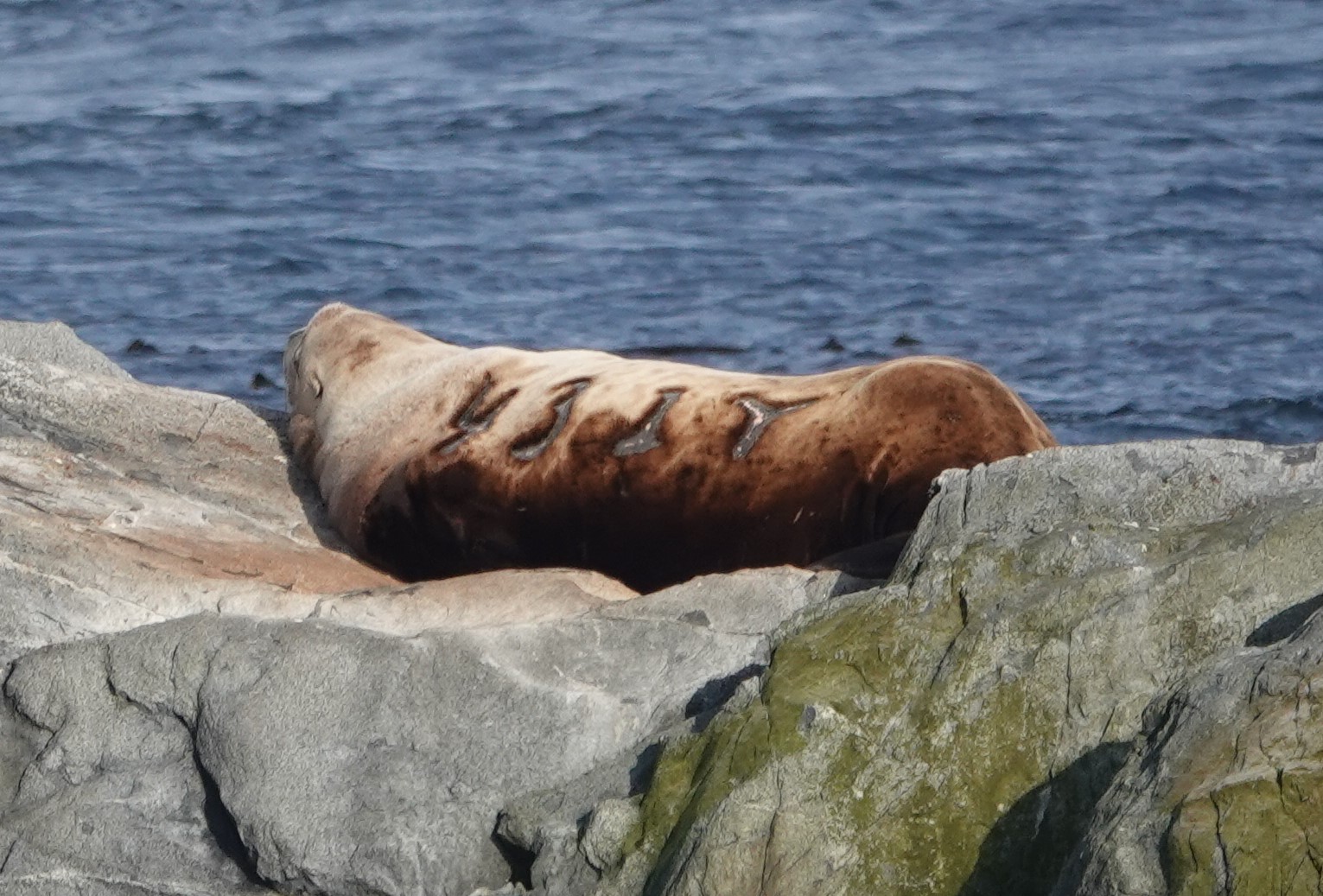
431Y remains at Race Rocks
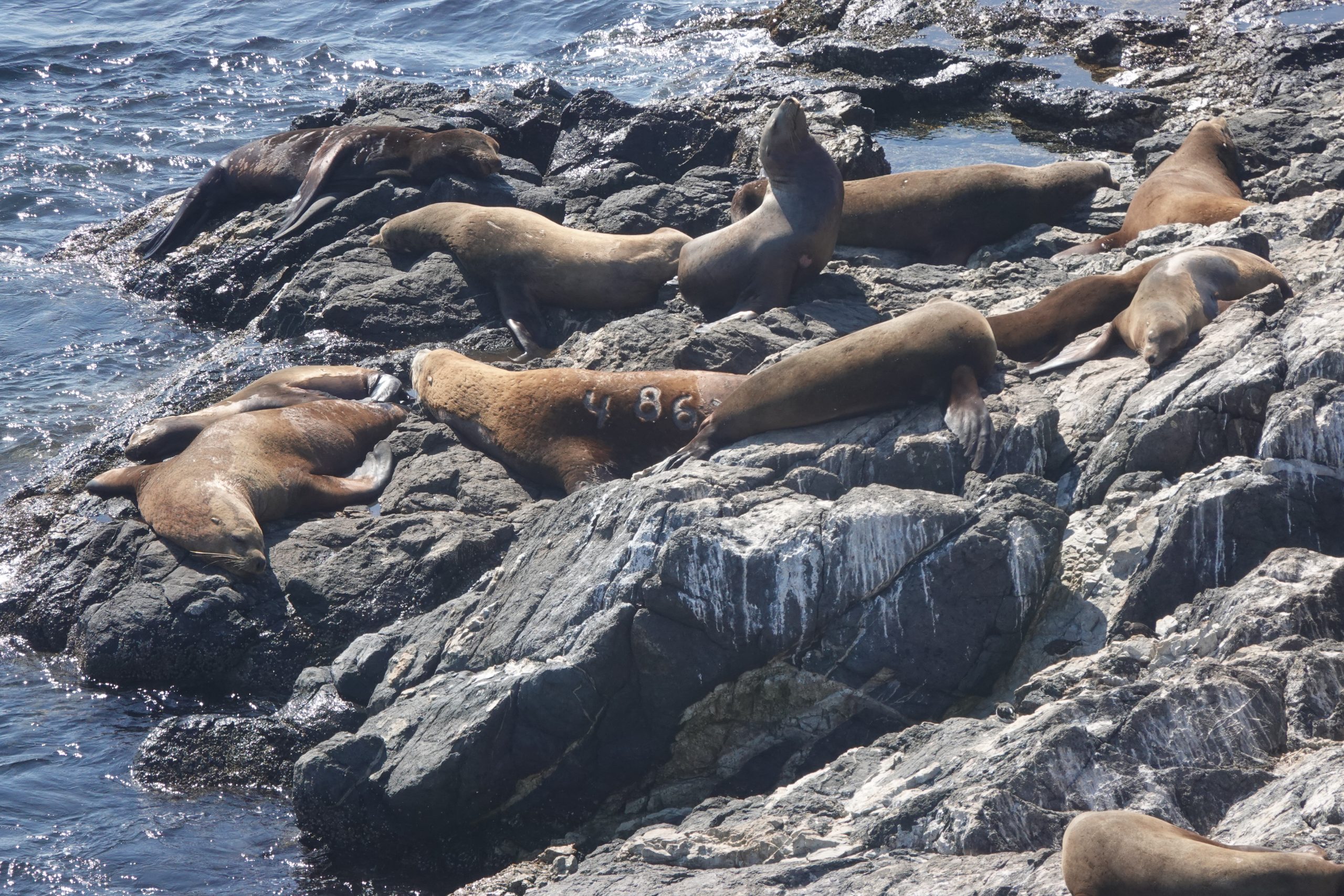
486Y still on Race Rocks
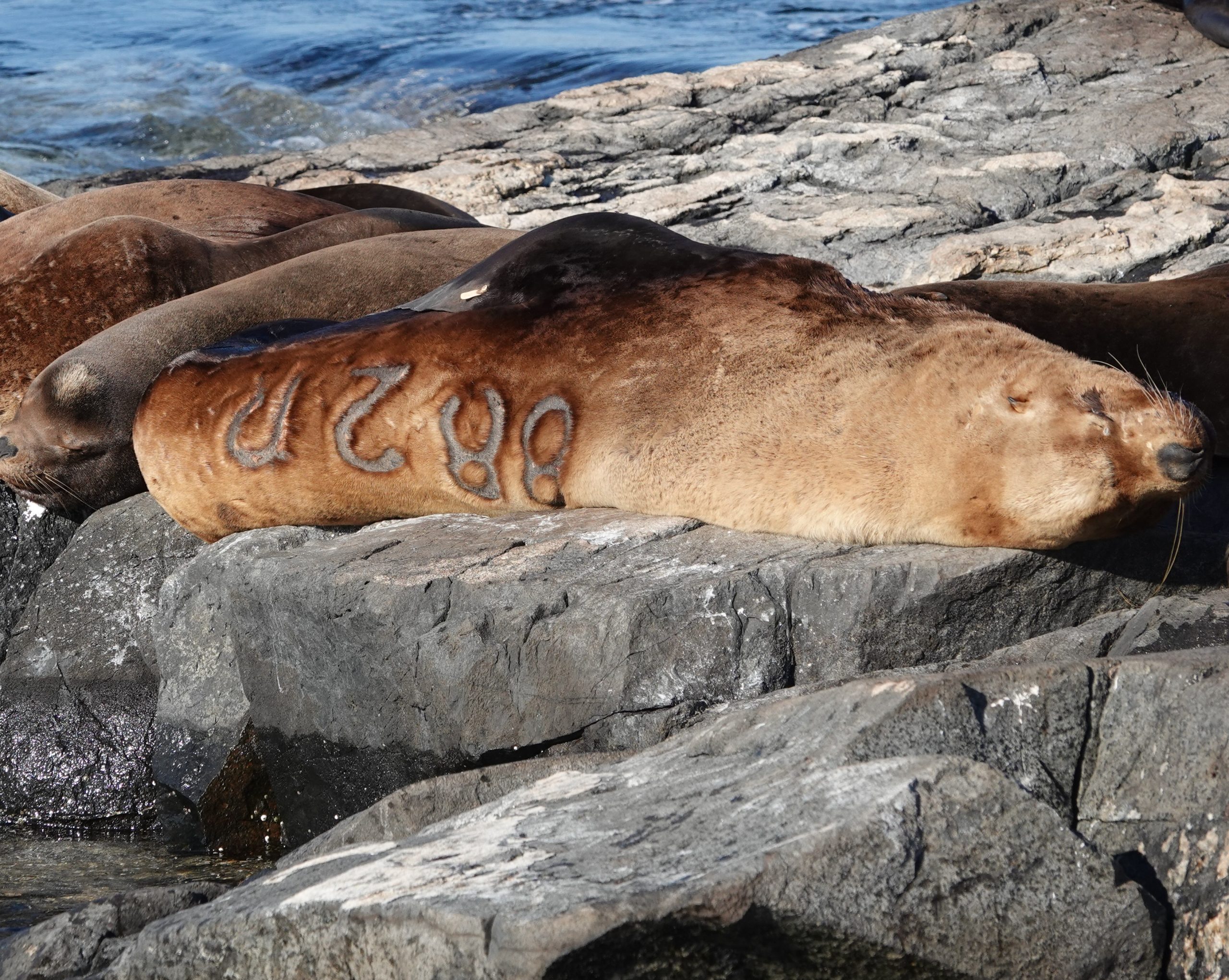
882R branded at Rogue Reef, OR in 2011
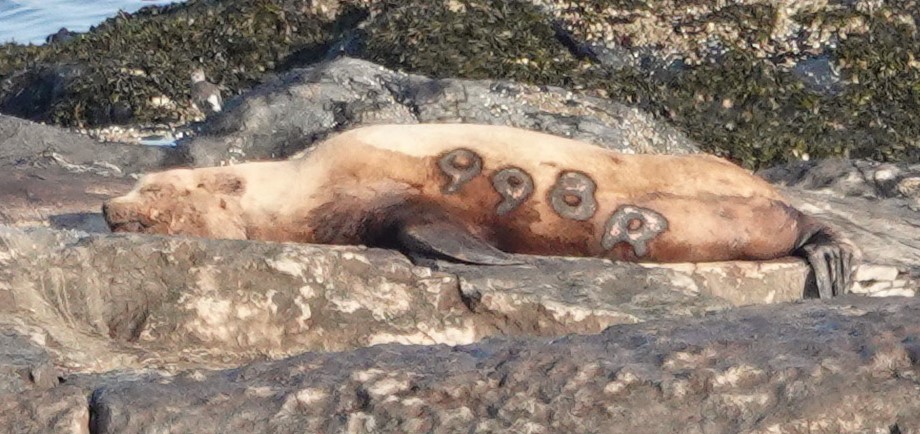
998R still on site
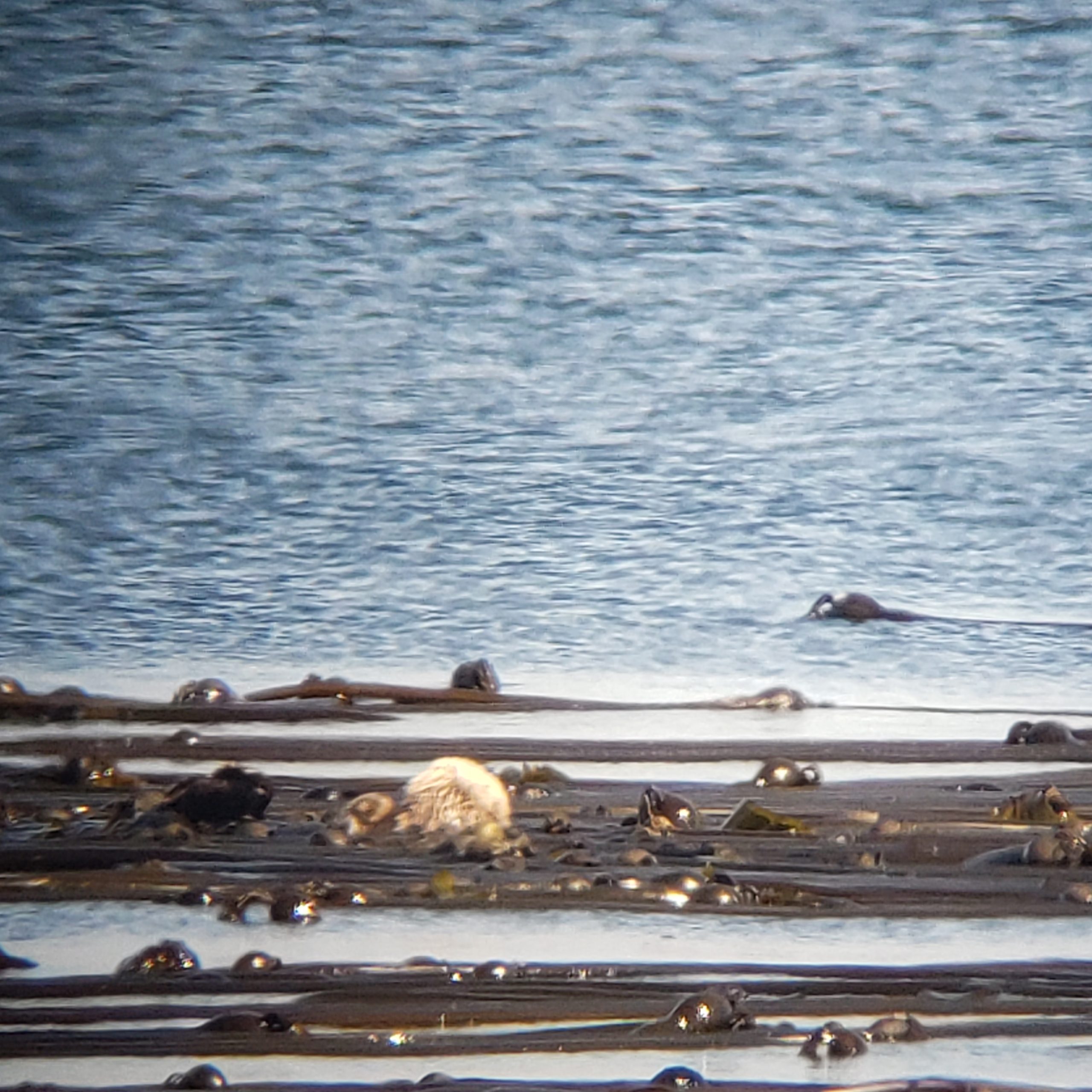
Sea Otter is back in the kelp off the east side of Race Rocks.
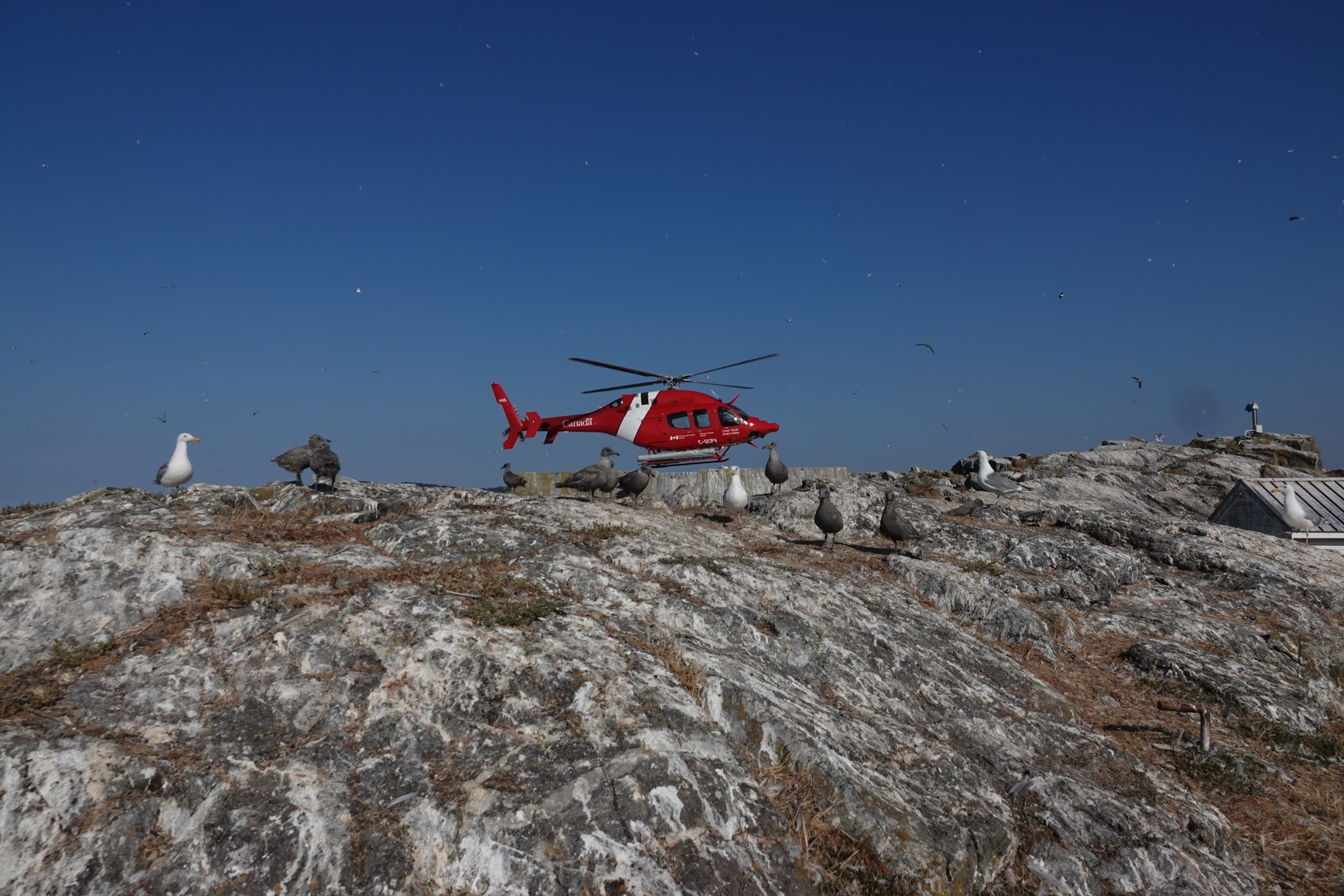
Foghorn repair crew landing
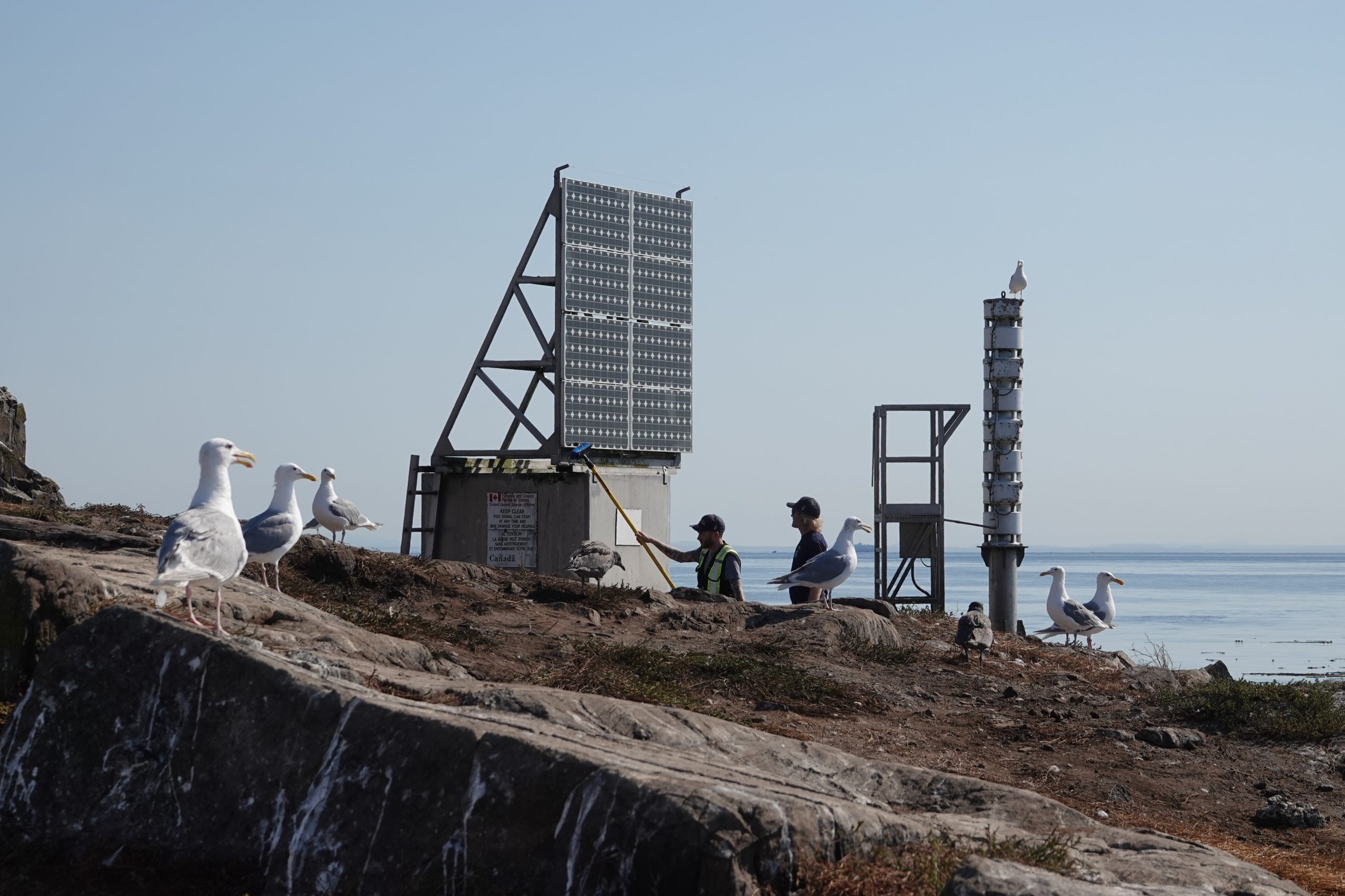
Coast Guard crew cleaning their solar panels.
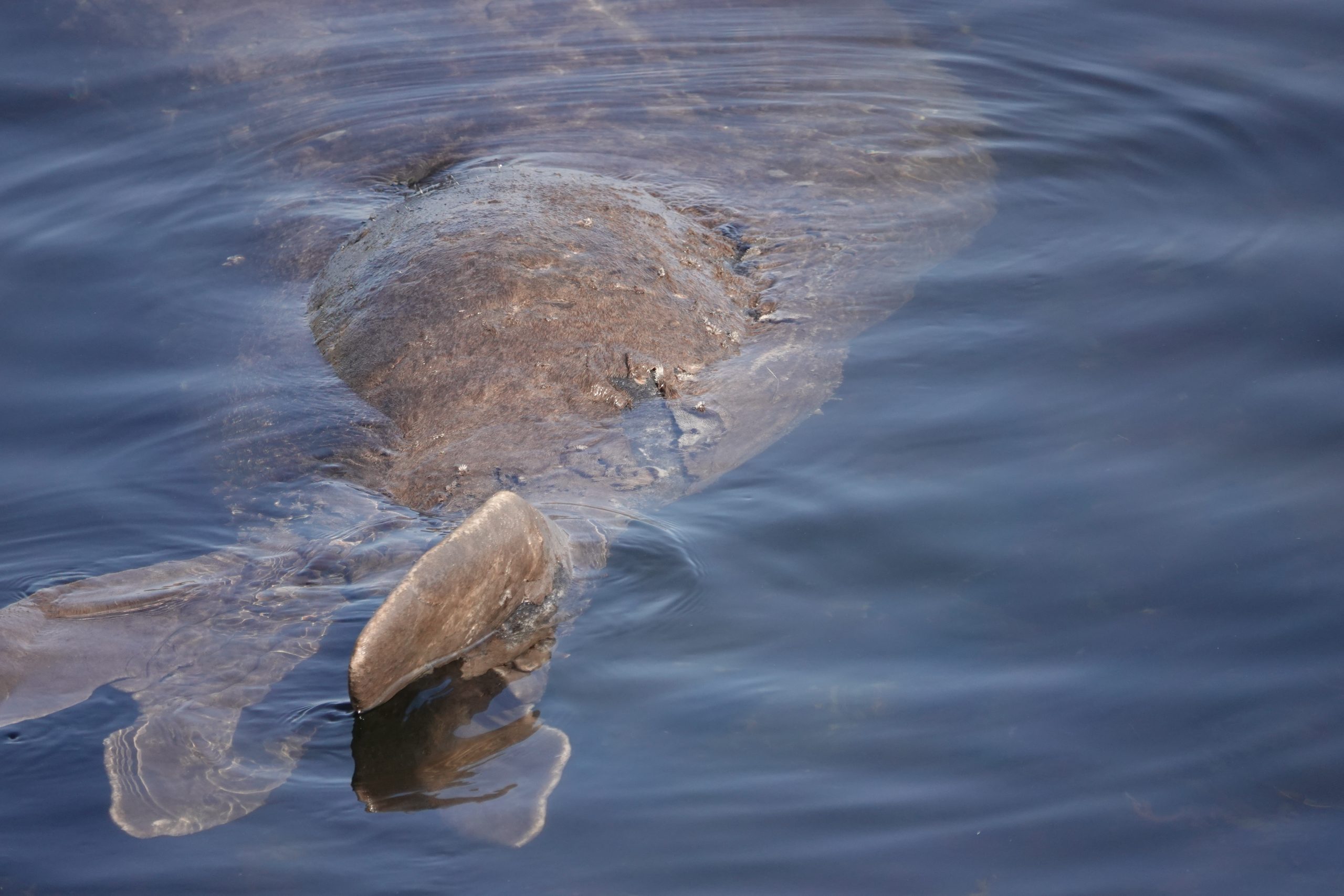
Alpha male elephant seal beginning his annual molt.
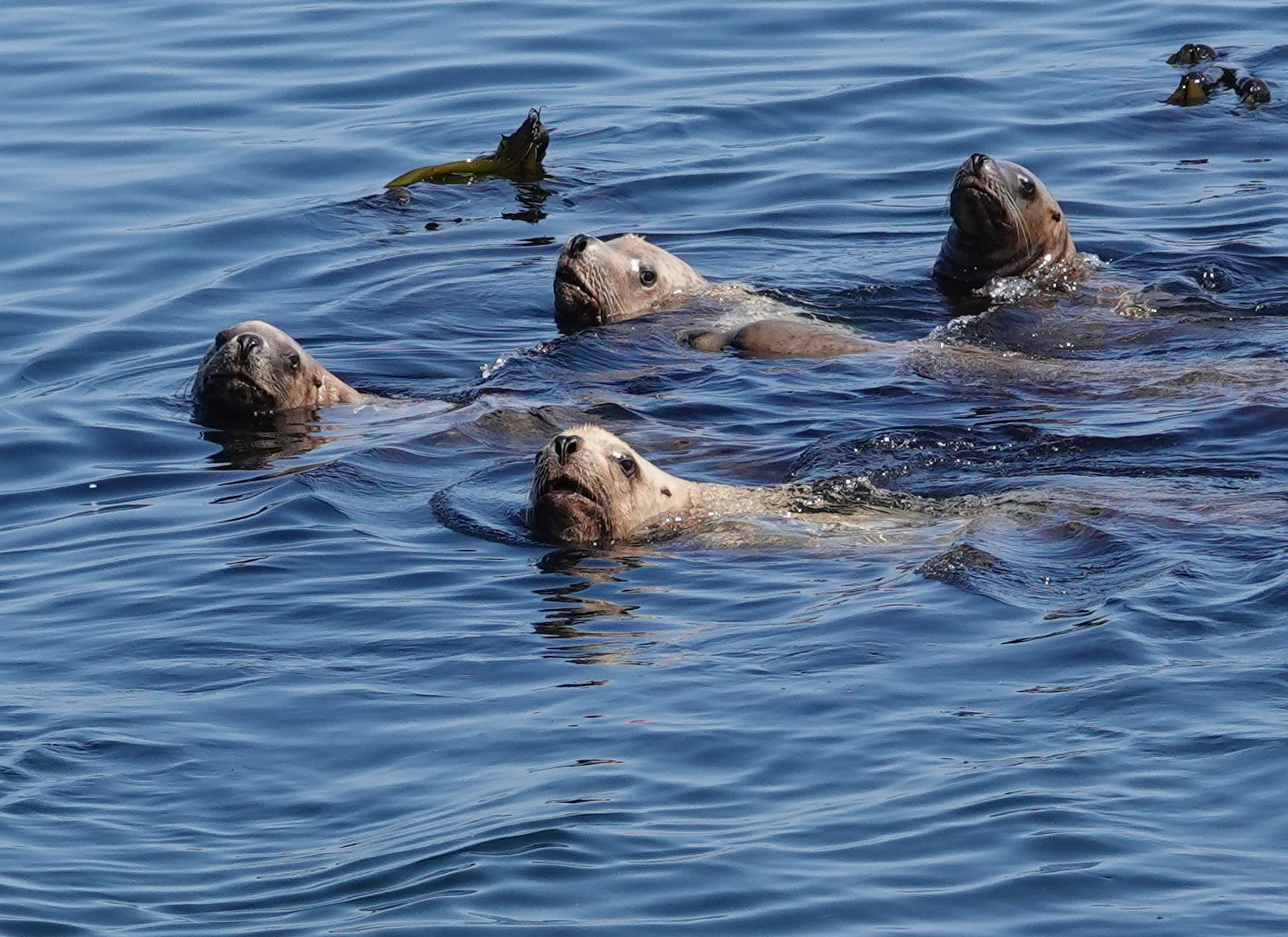
Steller’s sea lions
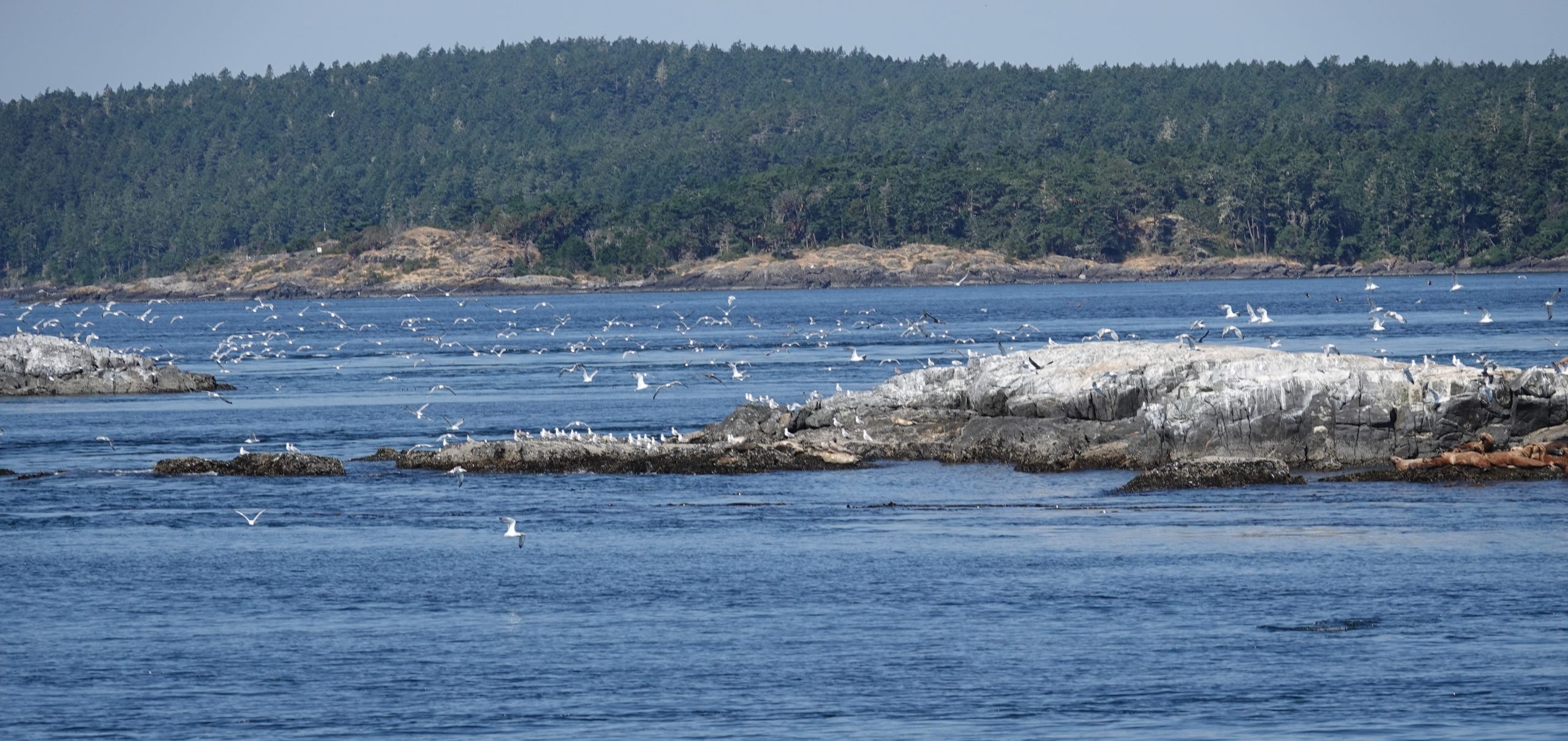
California Gulls circling during helicopter approach
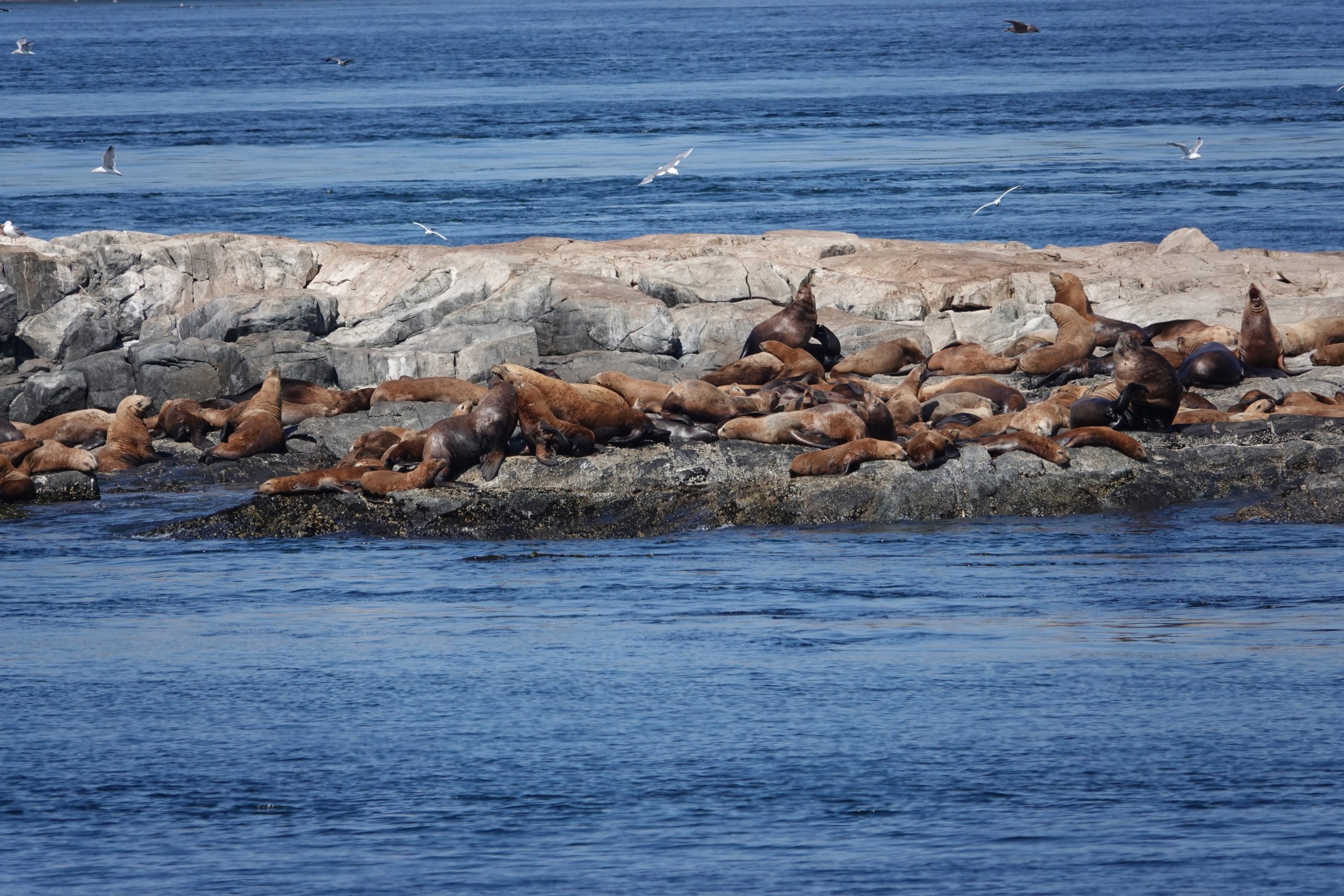
Marine mammals were unperturbed by the helicopter.
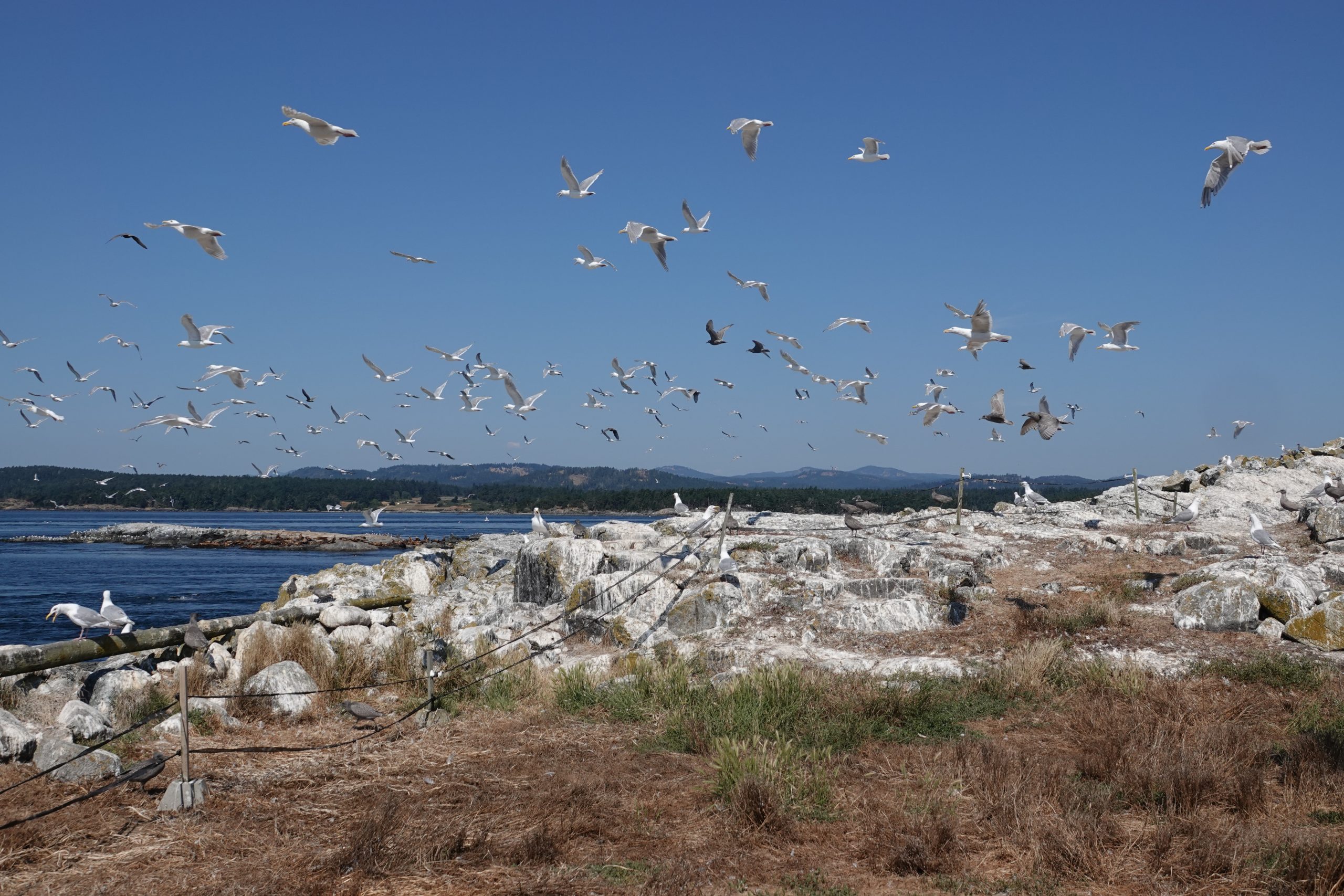
Adult and some juvenile gulls departing as helicopter landed.
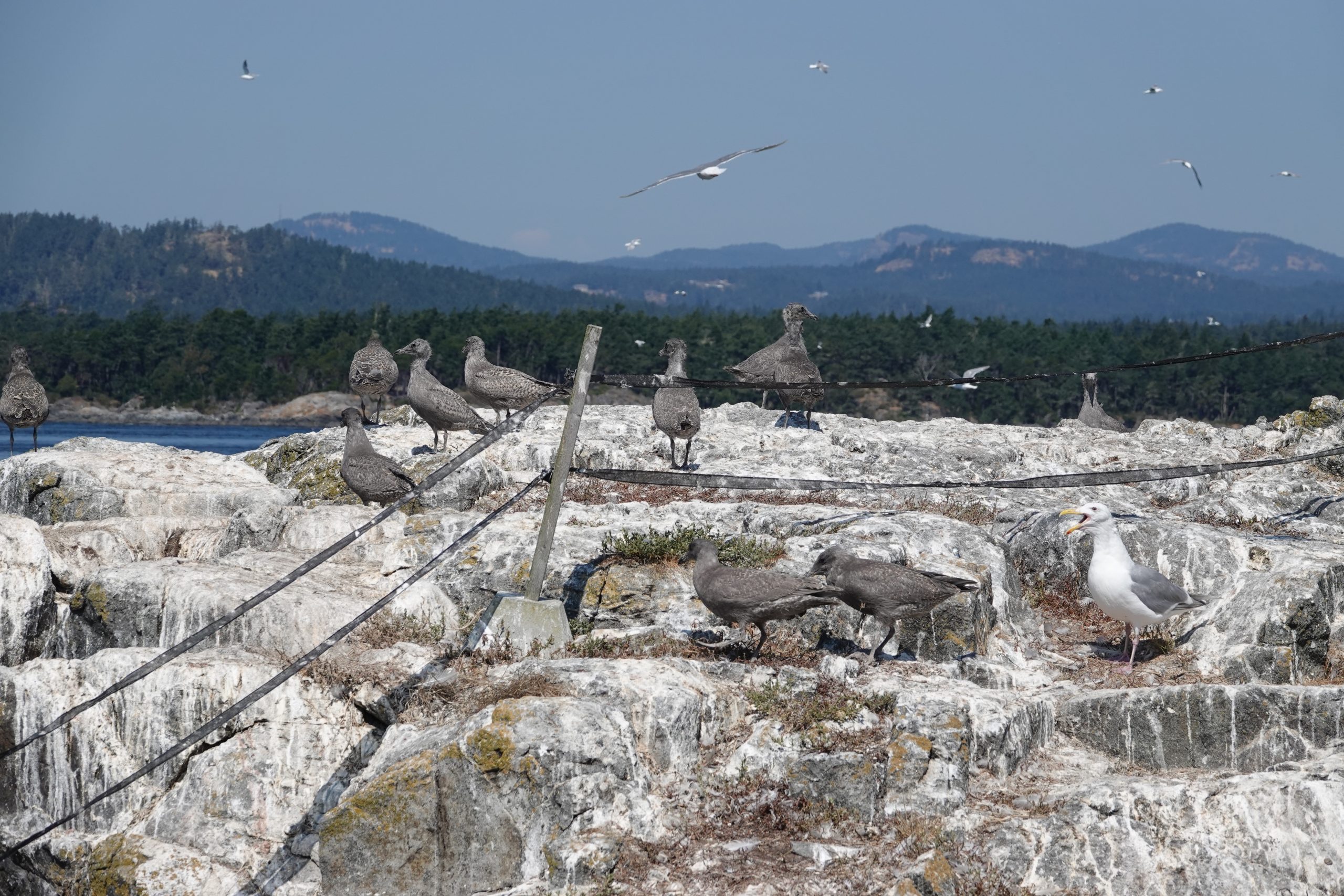
Youngsters gathered into creches when the adults left due to helicopter landing
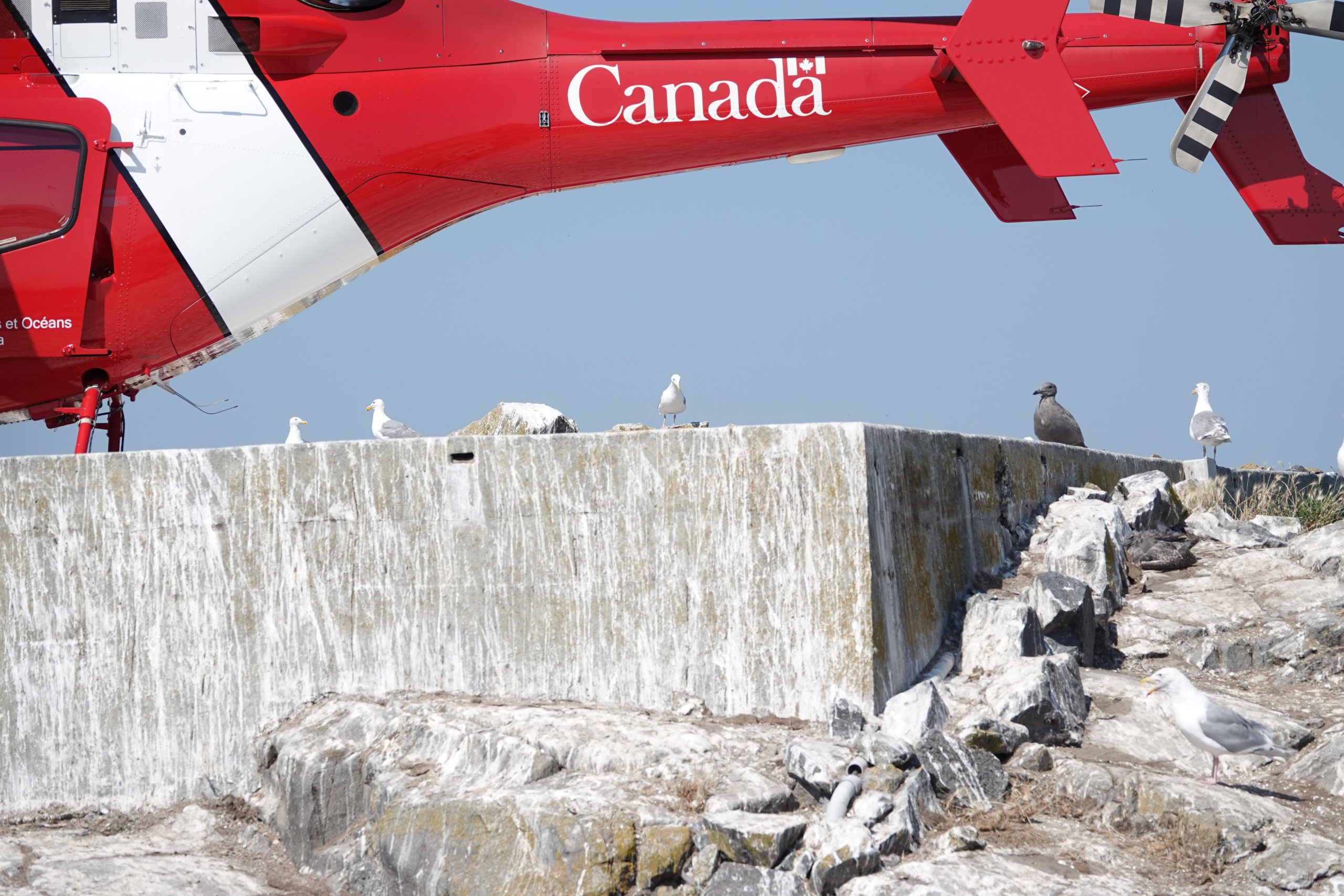
It didn’t take long for the gulls to resume normal activities.
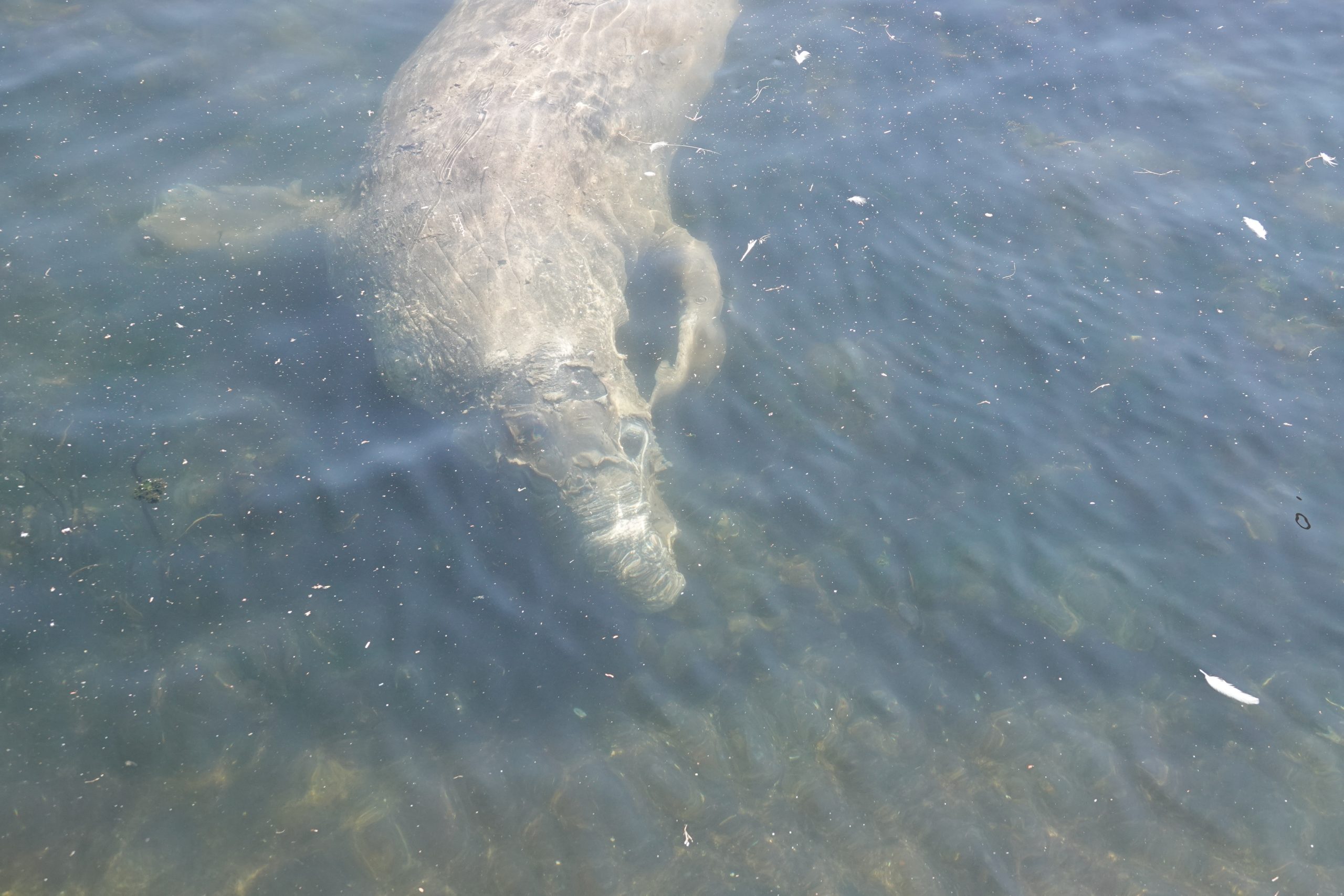
Alpha male elephant seal beginning his annual molt.
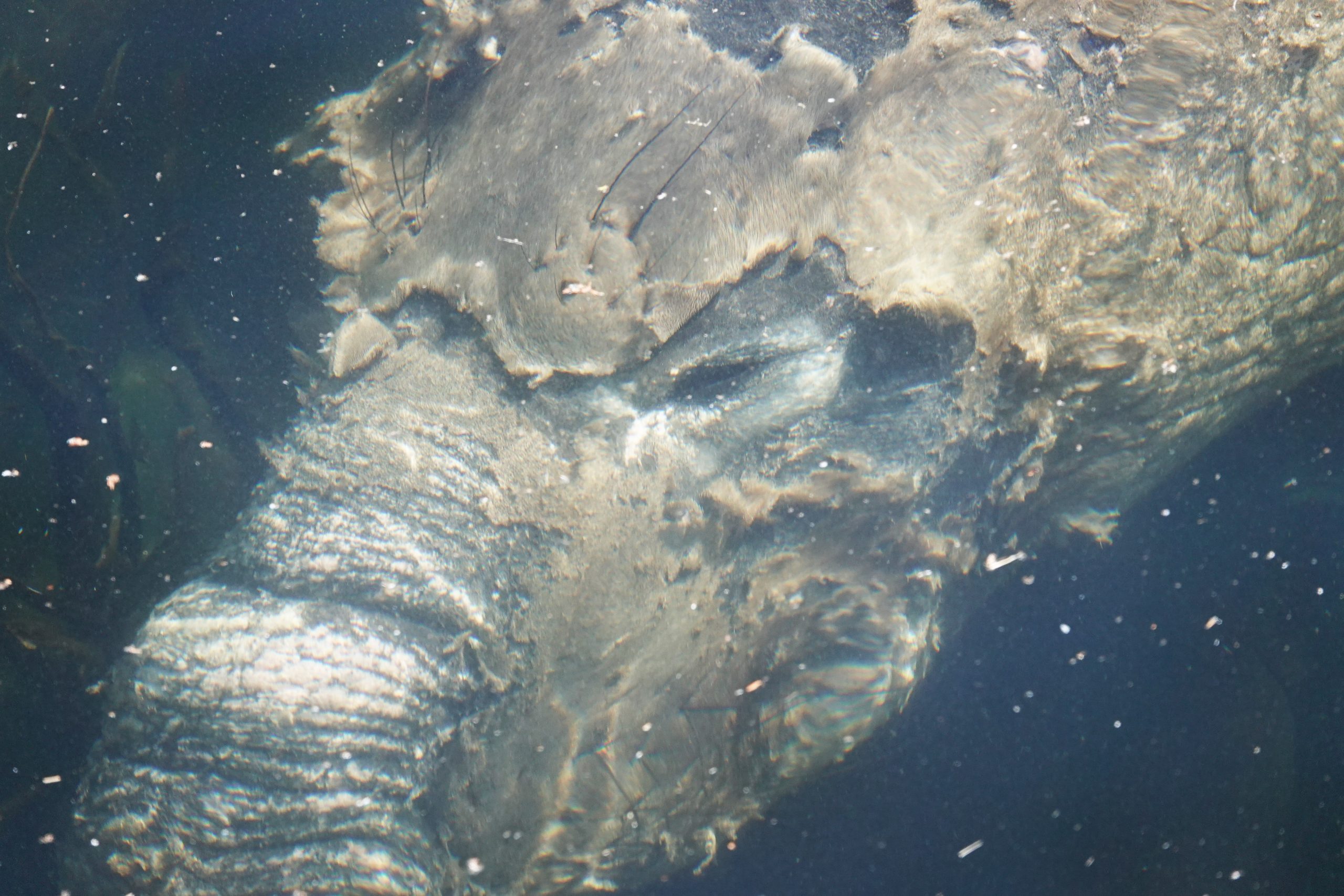
Alpha male elephant seal beginning his annual molt.
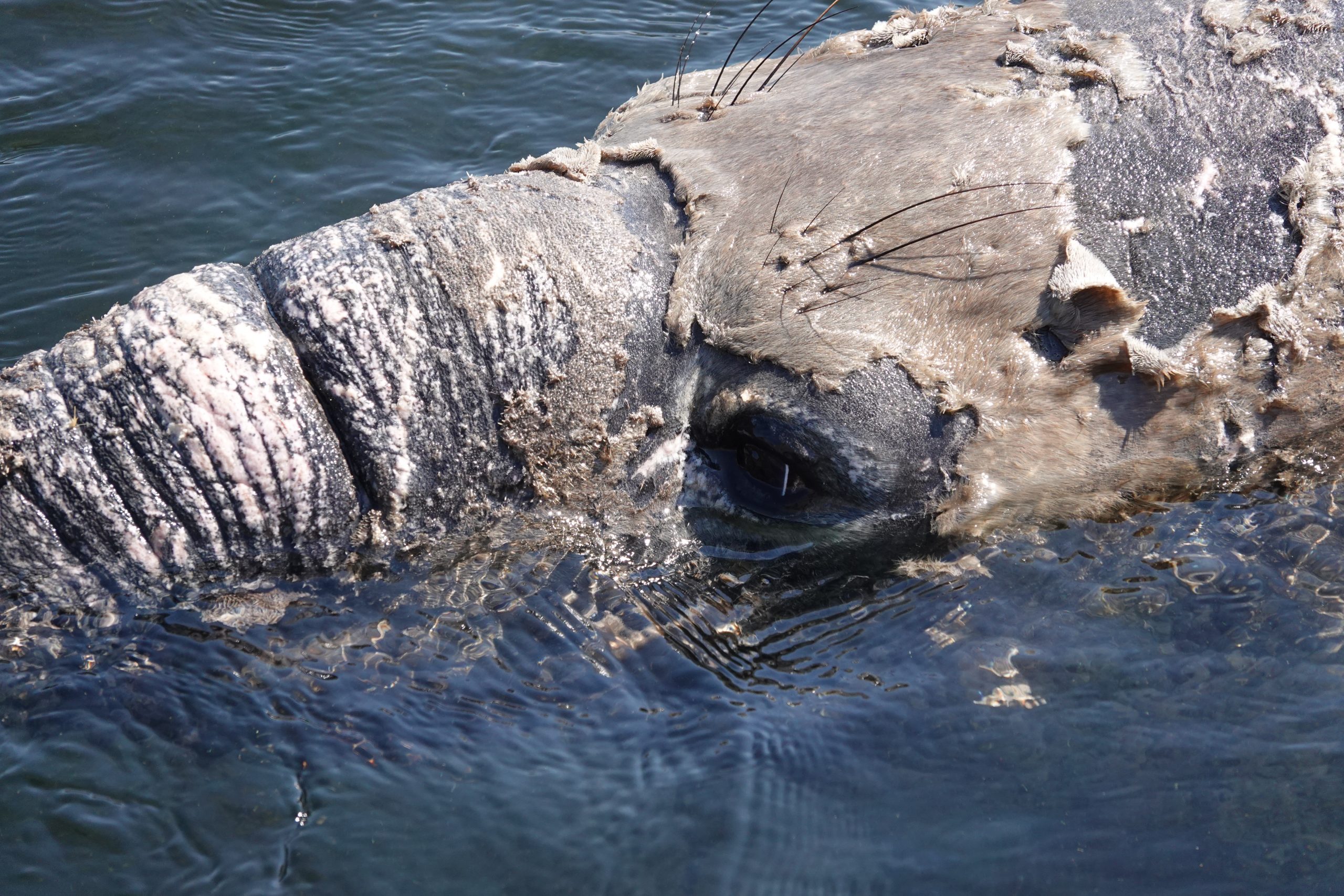
Alpha male elephant seal beginning his annual molt.
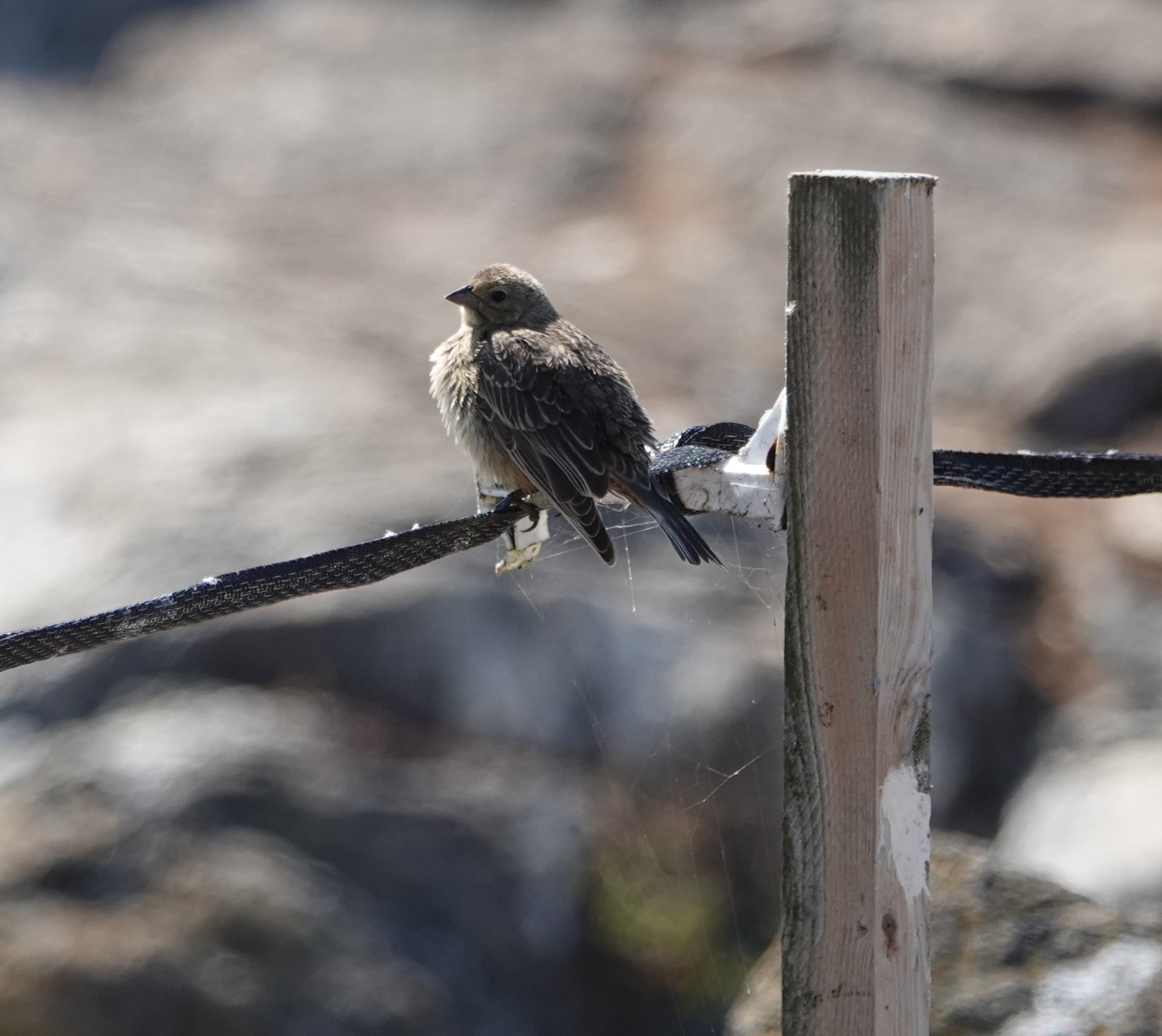
Brown-headed Cowbird
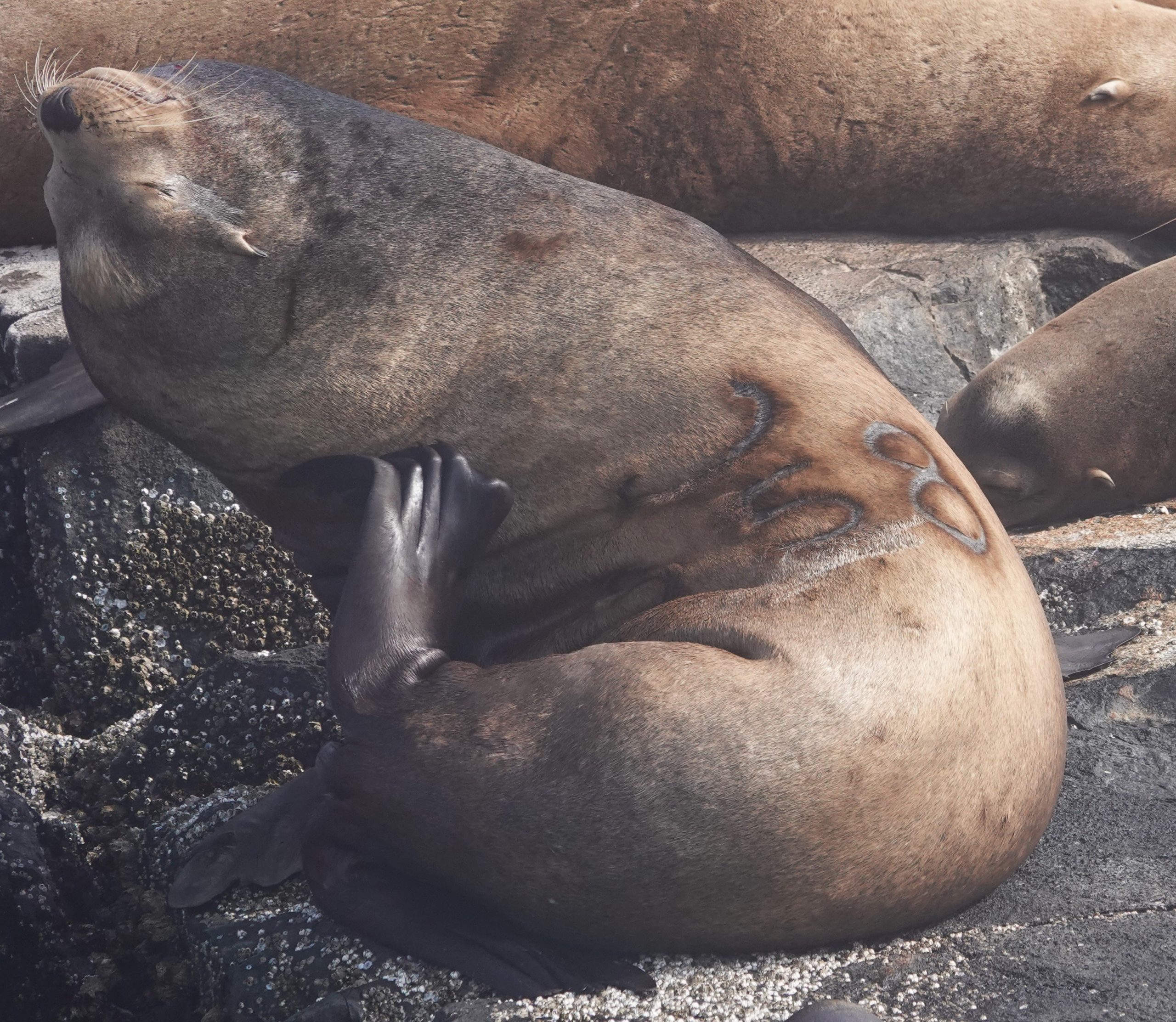
U958 was branded in Astoria, OR in 2015 and was previously seen at Race Rocks in 2020.
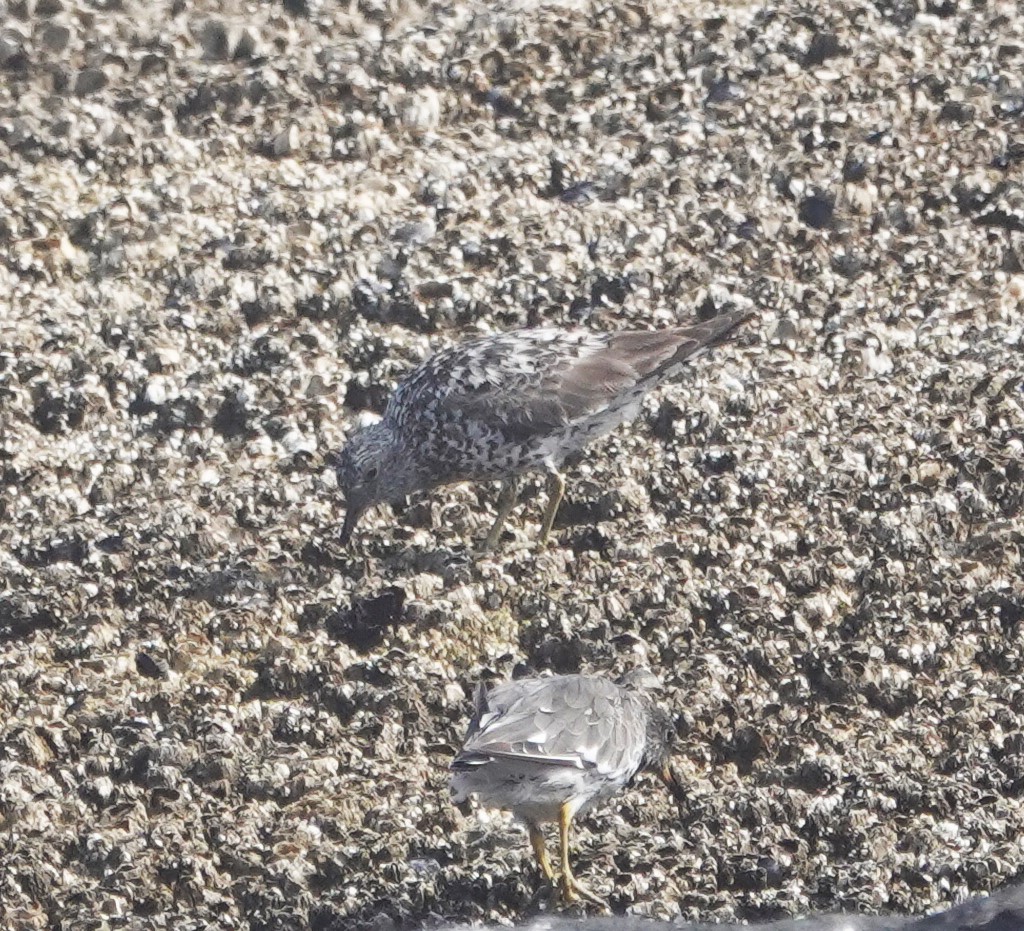
Surfbird molting from its breeding plumage.
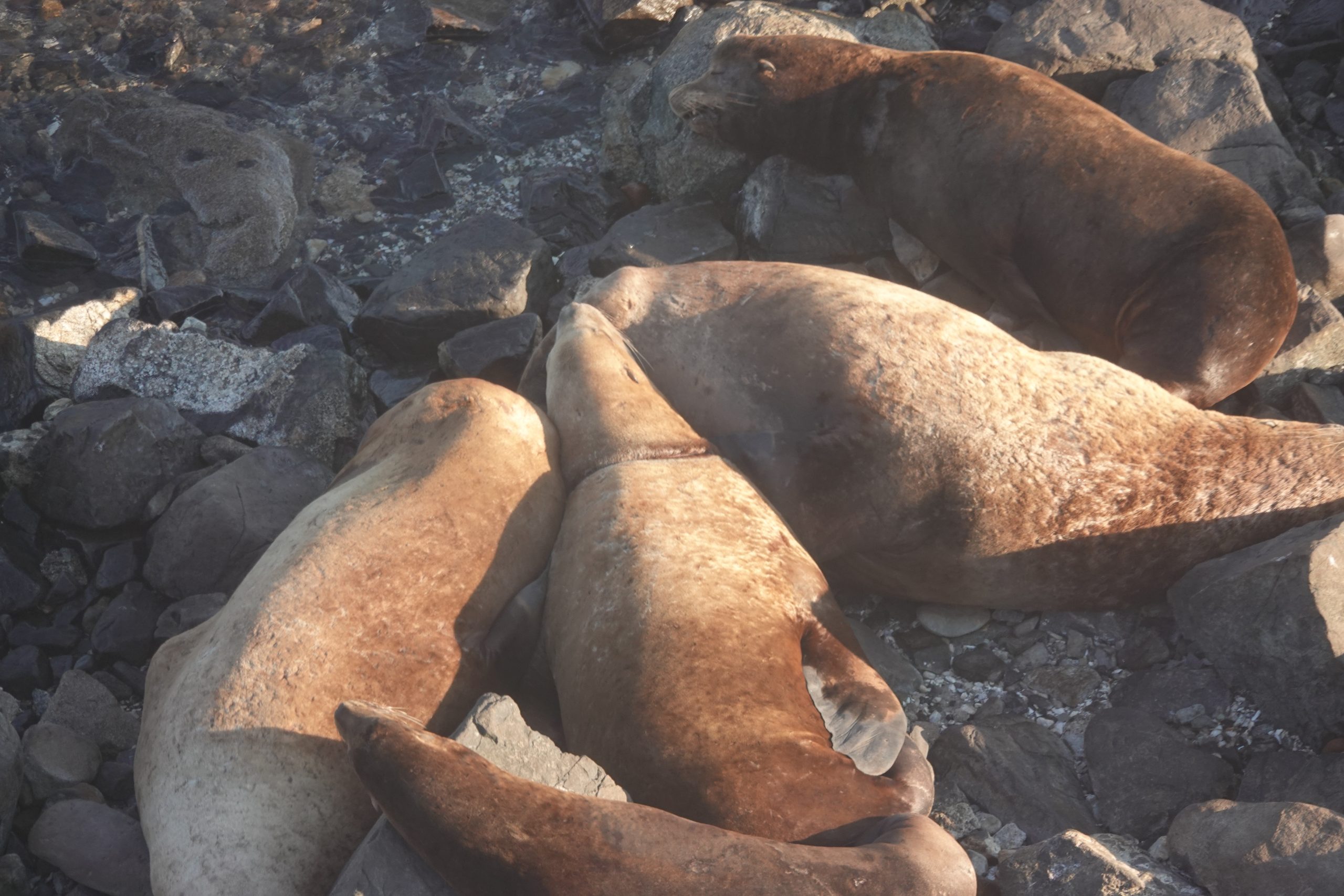
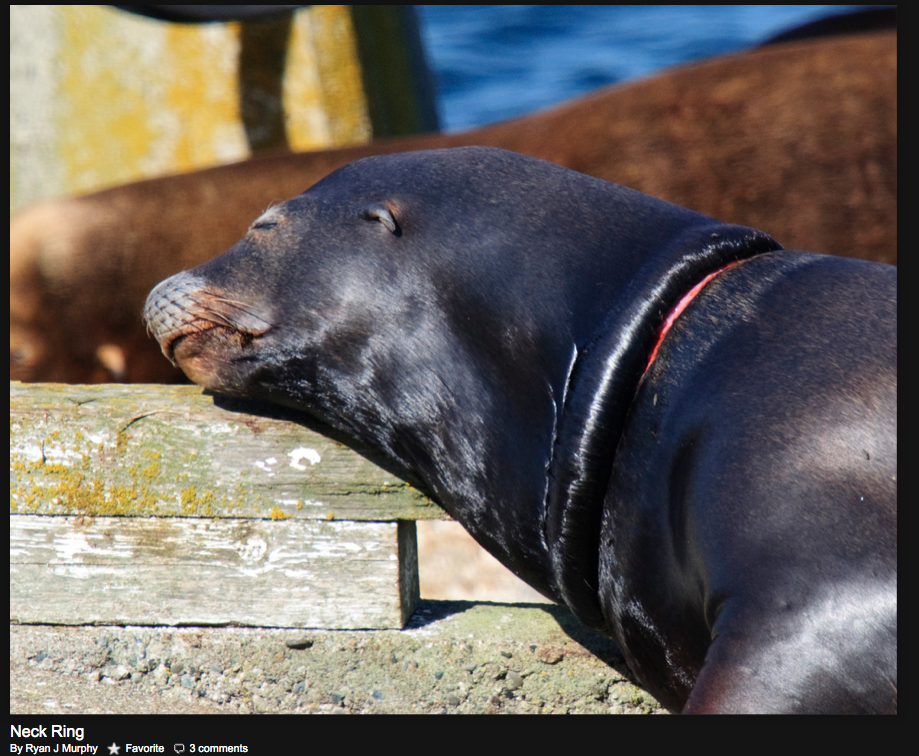
Neck wound caused by entanglement.
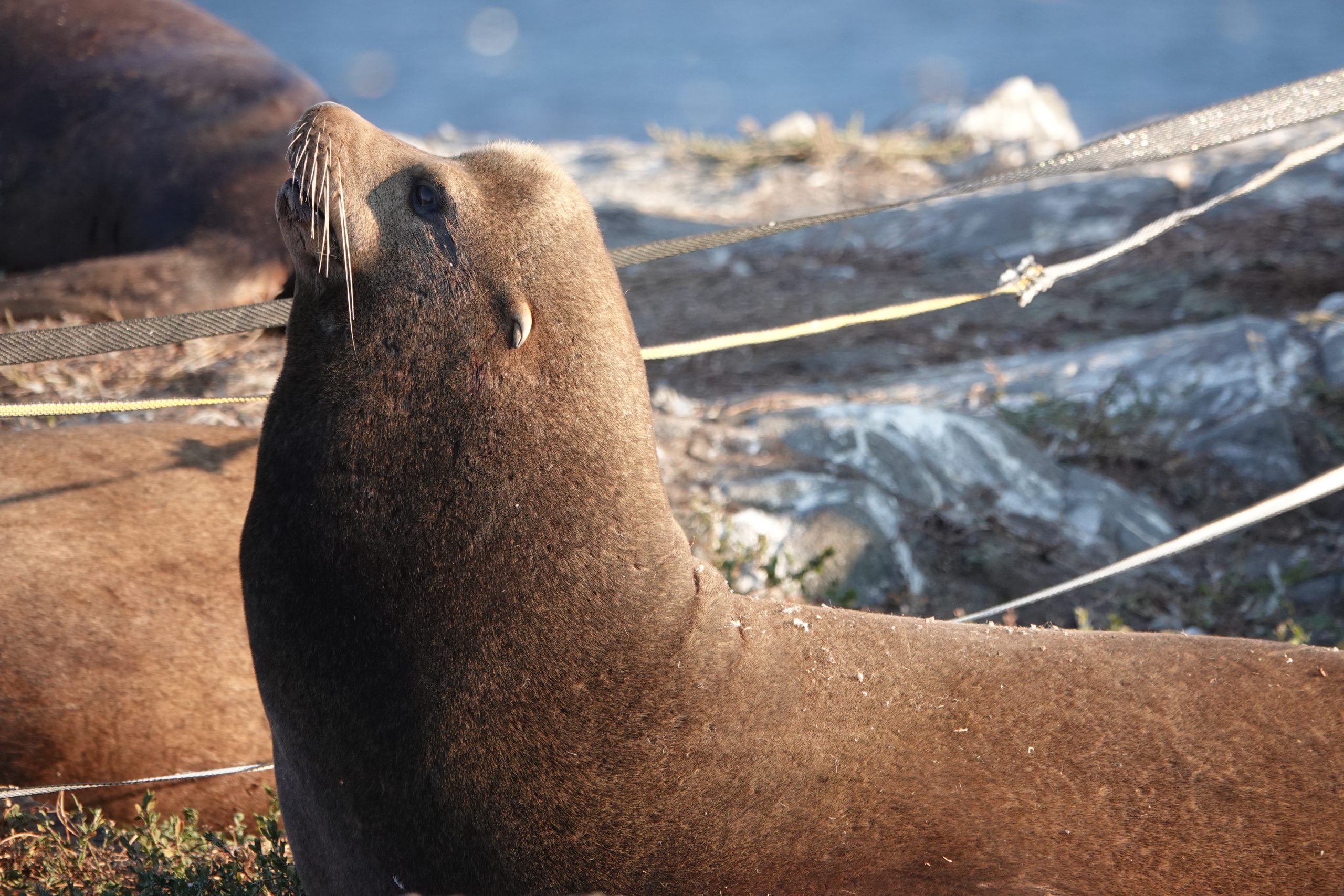
Fence breach!
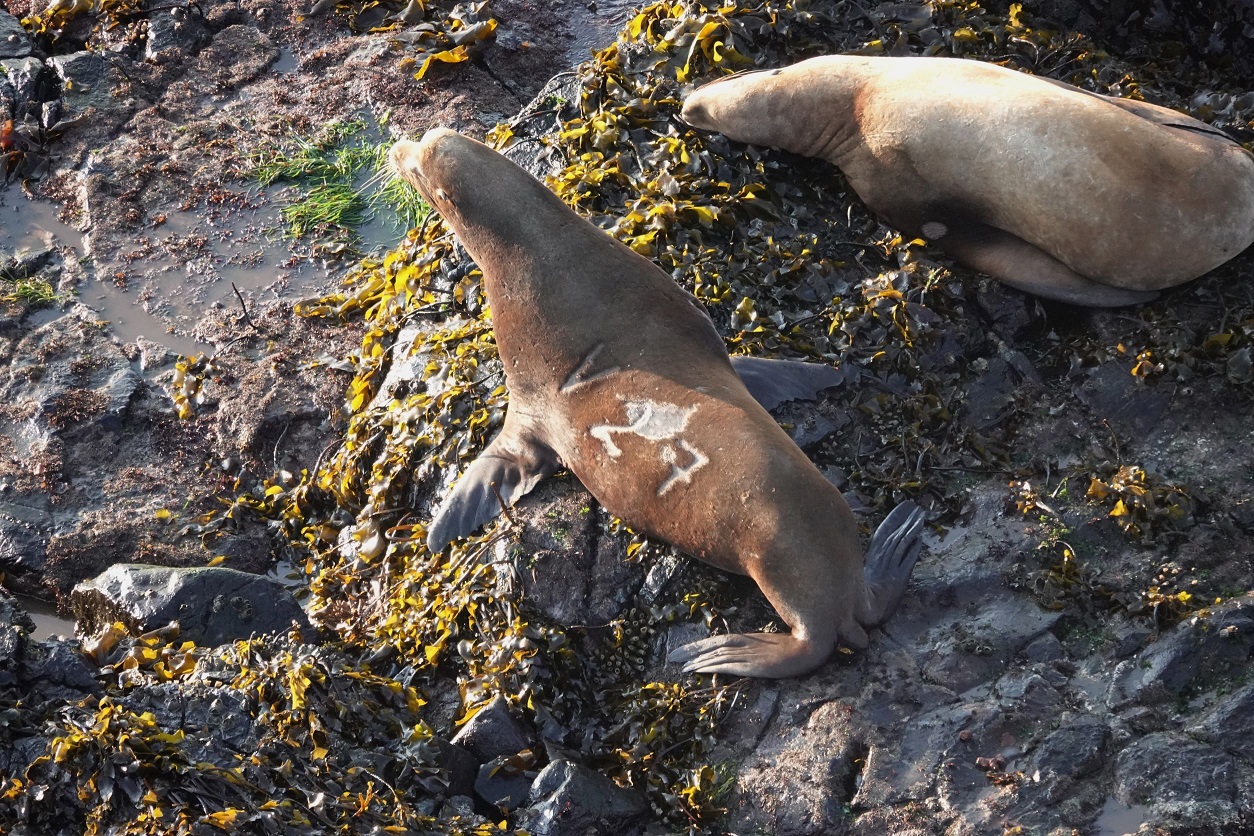
California sea lion branded at San Miguel Island, California in 2010.
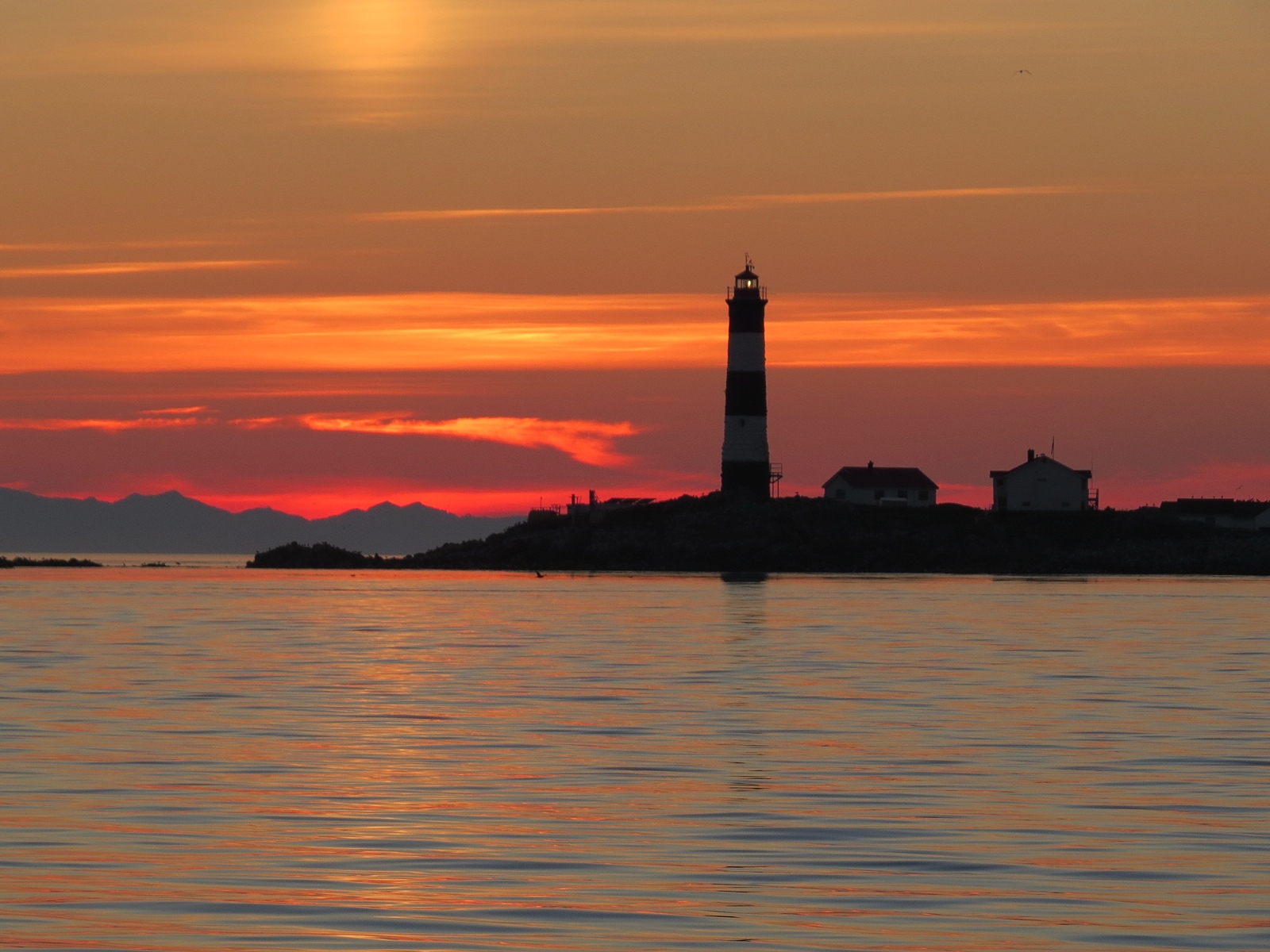
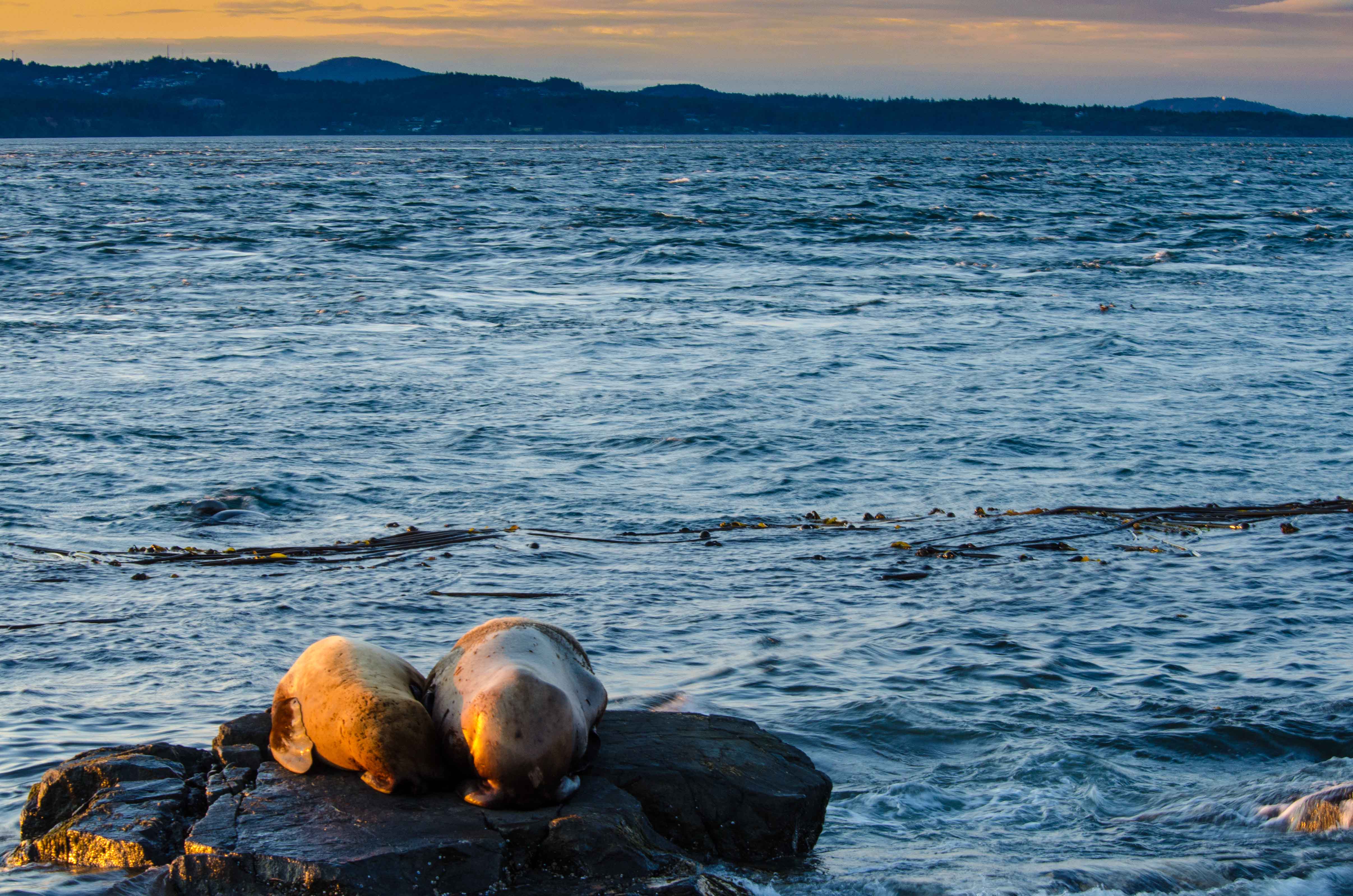
Sea Lions are arriving

Aside

More and more California Sea Lions are showing up. There are about 10 on the rocks beneath the winch house as I write this. This photo however is of two Stellar’s enjoying the sunset after they cleared the rock of Californians.

I noticed three more Red Knots on the foreshore, and a corvus caurinus (crow) made it out for a visit. North-western crows are rare visitors here and I have only observed solitary excursions.

Work this week has comprised of painting the railings around the main house and walkway. We got the water desalinator working again, and some of the old computer equipment was removed from the student house.

Several dive groups have made underwater excursions just off the dock in the last week. We continue to see a lot of tour boats in the reserve.

This afternoon I noticed the first Glaucous-winged Gull egg in a shallow grass nest a few feet from my doorstep. I will have to stick to the sidewalk for a few months while the nesting and hatching play out.

orcas sighted again

Aside

The elephant seal was pretty vocal last night but there was no sign or sound of him today.  Yesterday at sunset I think I saw the horned owl on top of the flag pole. This morning several Bald Eagles were rounding up the gulls on great race.  Before noon a vessel from Pinnacle Divers came into the reserve.  They did a dive near the jetty and a second one off of the E rocks.  While unloading divers near the jetty the boat accidentally contacted the kelp bed off the NW side of the jetty.  I contacted the company by phone and left a message.  Around 14:00 hrs a Prince of Whales vessel entered the reserve.  There were around 30 Northern Sealions hauled out on N Rock.  On the vessels approach to N Rock some sealions exited into the water.  I contacted the company by phone and spoke with a staff member.   Around 14:30 hrs 3 or more Orcas approached the reserve from the SW passing W of the reserve heading N.  Have been gathering scrap wood, propane tanks, garbage etc. today for offloading tomorrow with a boat trip from the college planned for the morning.

Values Input Statements from each of the Community representatives on the Race Rocks Advisory Board

Aside

Race Rocks Advisory Board resource documents
This file was for the use of the Race Rocks Advisory Board in order to make available the Values Input Statements from each of the Community representatives on the Board

Race Rocks Public Advisory Board Values Input
March 25, 2010
Past, present, future use
PEARSON COLLEGE
Lester B. Pearson College’s first significant interaction with the area was in 1977 as a location for marine biology field trips and diving. Faculty and students initiated the process of getting it preserved as an ecological reserve in 1979 and assisted BC Parks in the preparation of the Management plan. Since that time there has been a continuous record of student, faculty and staff involvement in doing ecological monitoring in the reserve and in student and visitor field trips. Pearson College has supported student research at Rocks and the faculty and students have assisted outside scientists in research projects there. (See this version with Links to Examples)
Each year it provides boat cover for the Christmas Bird Count by the Victoria Natural History Society. A college faculty member, now retired has continued to serve as Ecological Reserve warden for BC Parks since 1980. In 1997, the college took over full time management of the Ecological Reserve and the island facilities on a long term lease from BC Parks. The College has a high level of participation in R&D and energy projects such as the AXYS wind resource assessment buoy testing and the Integrated Energy Project involving solar and tidal energy for the Island. There is an ongoing program of retrofitting and enhancement of efficiency to the infrastructure through additional solar panel installations; LED and CFL lighting and battery energy storage has resulted in close to 60 % reduction in fuel consumption and resulting emissions.
It has also implemented more efficient water systems and is currently upgrading the composting toilets. The college has also had an ongoing ecological restoration program for the island in an attempt to mitigate ecological footprint of former operations on the island. It has installed and continues to run a weather station and continues the long term daily water temperature and salinity records for monthly submission to IOS. A database is maintained with observations from the ecoguardian and volunteers using remote cameras on tagged and branded marine mammals. In 2000, Pearson College secured a grant from the Millennium foundation for the installation of a LAN on the island and internet connection passing live remote controlled video and audio to the outside world by microwave. The college supports the website racerocks.com which is a non-commercial educational site continually being updated by a volunteer with contributions from staff, students, faculty and outside researchers. This website is used worldwide as a distance education tool, with several specific curriculum programs using the resources contained on the website.
DIVING
Recreational snorkelling/diving since 1900. Present/future use includes – deeper and longer dives, worldwide attention with pristine environment; (decrease in number of non-guided trips) 50% of dive tour customers are boat owners. Trend is toward guided dives (the expertise is valued). Educational briefing supplied with a guided trip. Not a large increase in # of divers (challenging climate in which to dive). Research area potential – archaeology, ecosystem, biology. Fewer safety / distress calls. Limited commercial diving operations.
RECREATIONAL BOATING Continue reading →

Sea lion fracture

Aside

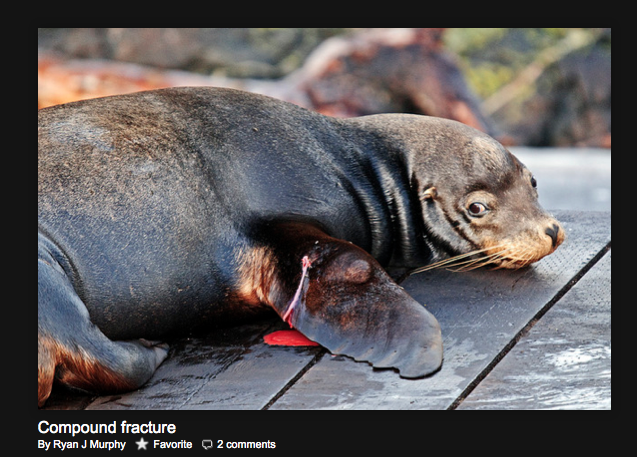
rmfracturenov709Yes, this was interesting… he climbed up the boat ramp (sloped concrete) then walked about 20m up more concrete to an elevation here of about 5m above sea level. This is the landing area for the derrick pictured elsewhere in the photostream. A day after this photo was taken he was there again, with the swelling reduced considerably. I have seen him a couple of times since, and the flipper is very stiff, but he seems to be able to limp to where he wants to go. Today he was 1 of 2 California sea lions left on the jetty here.

Ryan has recorded more  images on his Flickr site:

See this link to the log pages with injured marine mammals.

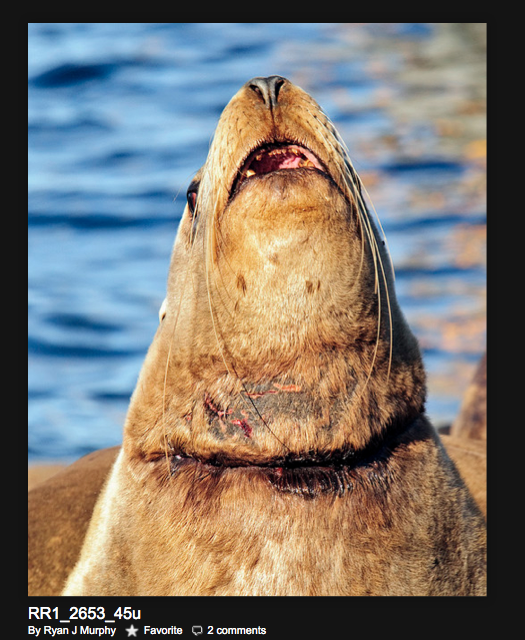
Fisher’s discarded neck-ring on Northern Sea Lion

Aside

rmneckringoct102009More evidence of injuries showing up on the sea lions. Ryan recorded them with images on his Flickr site:

Also see this link to the log pages with injured marine mammals.

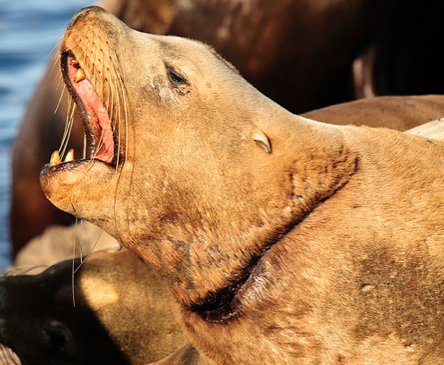
Another neck ring that will painfully kill this animal. This sea lion may be relatively lucky, the position of the ring may cause a chronic ear infection that will kill it more quickly than the typical starvation/asphyxiation deaths that neck rings can cause.rmneckscar

Sea Lion Injuries

Aside

Ryan Murphy took these photos of some of the injured marine mammals showing up at Race Rocks this year . See more on his Fickr Site .

rmsept282009injury

I heard a very interesting interview on CBC Radio today dealing with the presence of empathy in mammals. This image would then appear to depict “pre-concern”, a concept new to me!

An article entitled “Sea lions at Victoria’s Race Rocks injured by debris, boats” just ran in Victoria’s Times Colonist that quoted me. See it here:https://www.racerocks.ca/racerock/news/debris.htm

Anna Hall, a marine zoologist also quoted in the article suggests showing graphic images to children to warn them of the dangers posed to sea lions. This series is a response to that suggestion and not biased propaganda as I have been accused of.

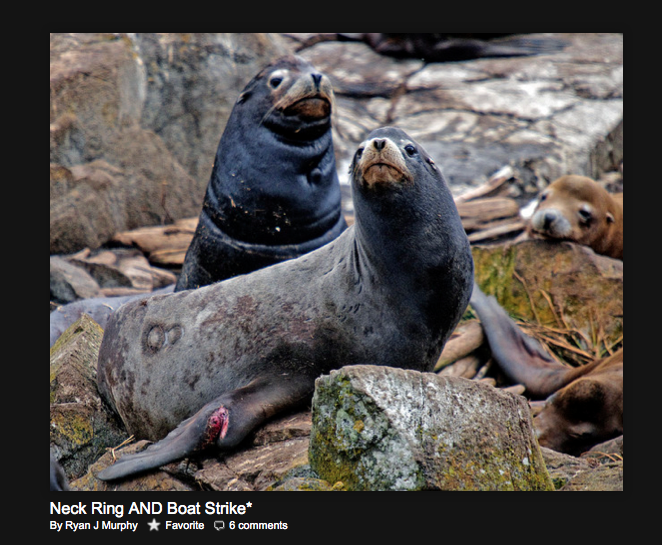
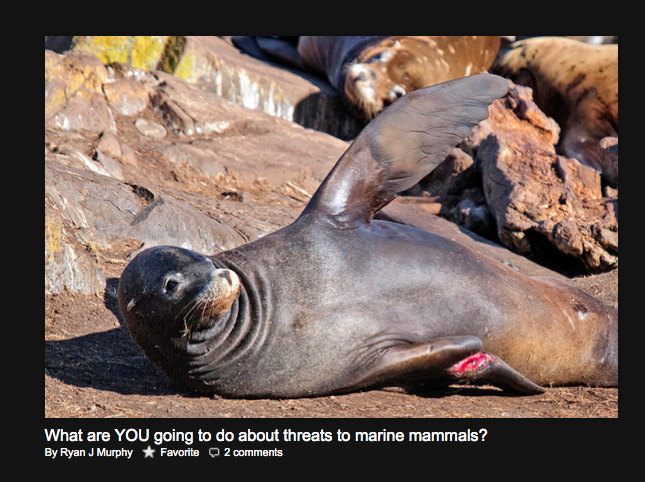
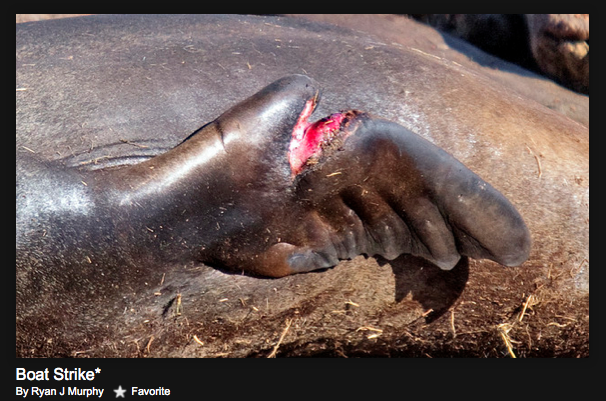
This image summarizes the article’s headline. Two California sea lions, one with some marine junk entangled around its neck (a death sentence), and another whose front flipper has been nearly severed by a boat’s propeller (it is currently wasting away from not being able to hunt for food).

An update from a NOAA research biologist and a veterinarian who specializes in marine mammals: Both experts agree the wound has been present for so long that the original source of the trauma is impossible to say with scientific certainty. Possible causes include orca bite, entanglement, and boat strike.
The sliced flipper has been cautiously identified as either a whale or orca attack, or a boat strike.