DAILY SEA SURFACE TEMPERATURE AND SALINITY OBSERVATIONS
Institute of Ocean Sciences, North Saanich, B.C., V8L 4B2
Station: RACE ROCKS
Observer: Christine/Joan Month: July
YSI ID: #9 Year: 2026
YSI YSI
Temp Sal
Day Time ºC ppt
1 15:30 10.2 31.8
2 16:08 10.0 31.7
3 16:42 10.2 31.6
4 17:30 11.0 31.5
5 18:20 11.0 31.2
6 18:56 10.9 31.3
7 8:15 10.4 31.4
8 9:07 10.9 31.0
9 9:47 10.7 30.9
10 10:50 10.8 31.2
11 11:45 10.9 31.1
12 12:31 10.0 31.9
13 13:30 10.1 31.9
14 14:30 10.2 31.4
15 15:40 10.0 32.0
16 14:15 10.1 31.7
17 17:39 10.0 32.1
18 18:14 10.4 31.7
19 18:59 11.0 31.5
20 19:30 11.5 31.3
21 20:15 11.1 31.3
22 9:23 10.9 31.4
23 10:41 11.3 31.0
24 12:00 11.6 31.0
25 12:58 11.4 30.9
26 14:06 11.3 31.1
27 14:36 11.0 31.2
28 15:06 11.0 31.5
29 15:48 10.6 31.7
30 16:12 10.8 31.8
31 16:32 10.8 30.3
Monthly Archives: July 2026
Squeegee Skills and Other Wisdom
I was lucky to spend time with Christine, following her around like a baby seal learning to swim in the slow eddy of the South Seal Rocks. Together we went through some of the duties of an Ecoguardian; the log, making water, battery and solar panel maintenance, the census, how to prepare the house for a change of shift. In a day and a half of showing me the ropes, I could feel myself catching her infectious love for this place with each story-saturated task.
Brushes and squeegees in hand at the base of the energy building, she turned and offered a piece of advice that encapsulated something of both the reality and the magic of this place:
“Whatever you’re doing here, you have to be doing it 100%. Focus on one thing at a time.”
There’s near-perfect cell service and wi-fi across the rocks, and we carry a handheld VHF; but when it comes to emergencies, it might still be a while before any help can arrive. Living and working here, situational awareness is non-negotiable.
And what a delight! In a world where one is often juggling five tasks with one hand, typing twenty-three replies with the other while three different media streams play in each ear, it’s a relief to focus entirely for a moment on the placement of my rubber boot on a ladder rung. Standing on the roof in the morning sun and stiff sea breeze, surrounded by a symphony of gulls and sea lions, it’s not hard to enjoy being fully present. (Also, this would be a rather inconvenient spot to break an ankle.)
Wildlife
-
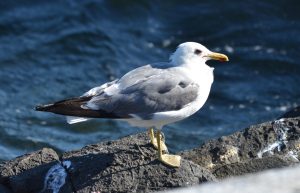
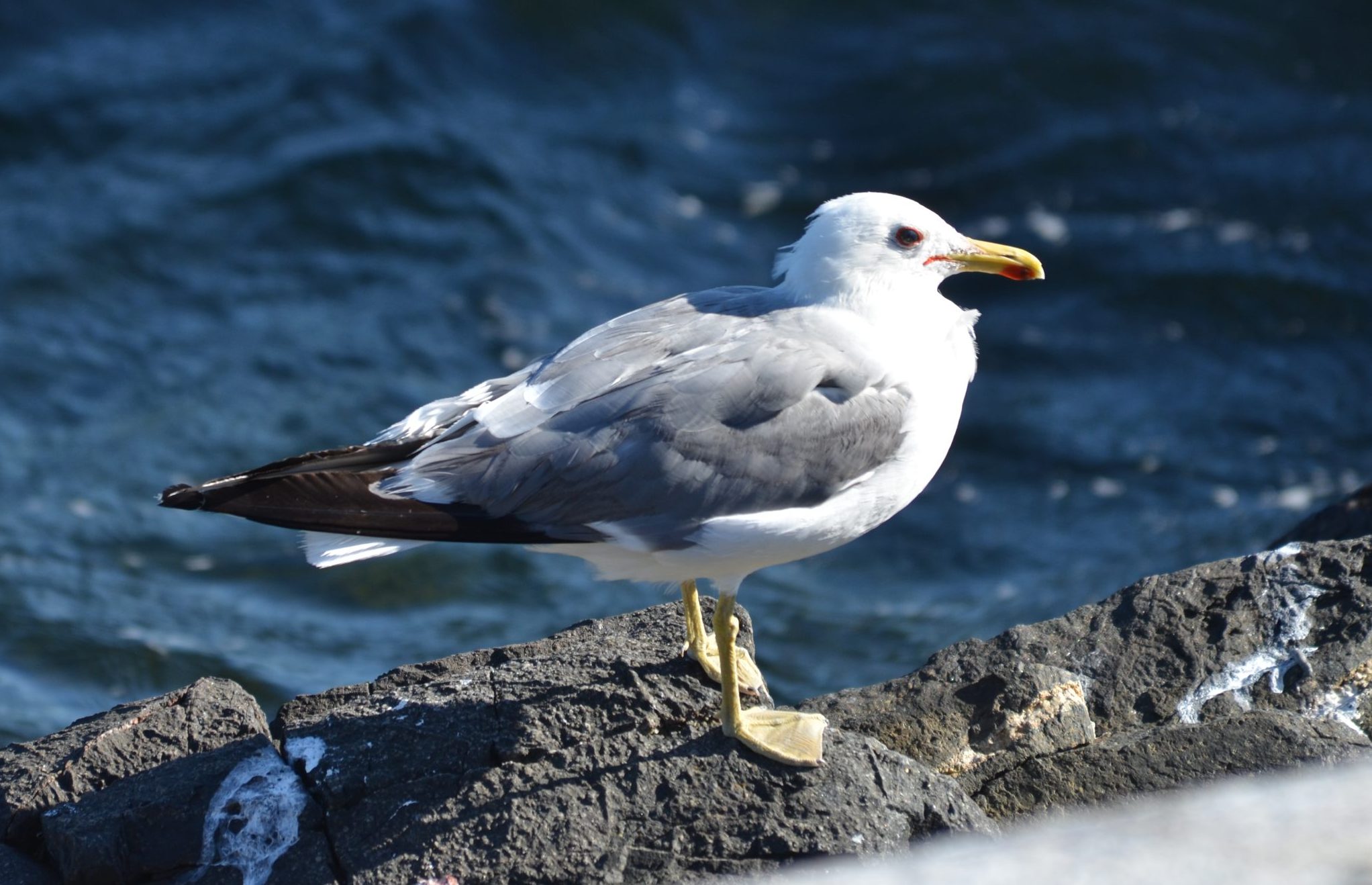
- A visiting gull on the southeast shore. It looks to me to be a California gull, based on the dark eyes, black wingtips and distinctive yellow legs.
-
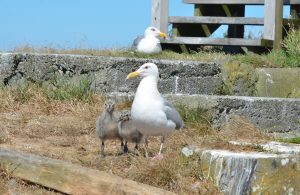
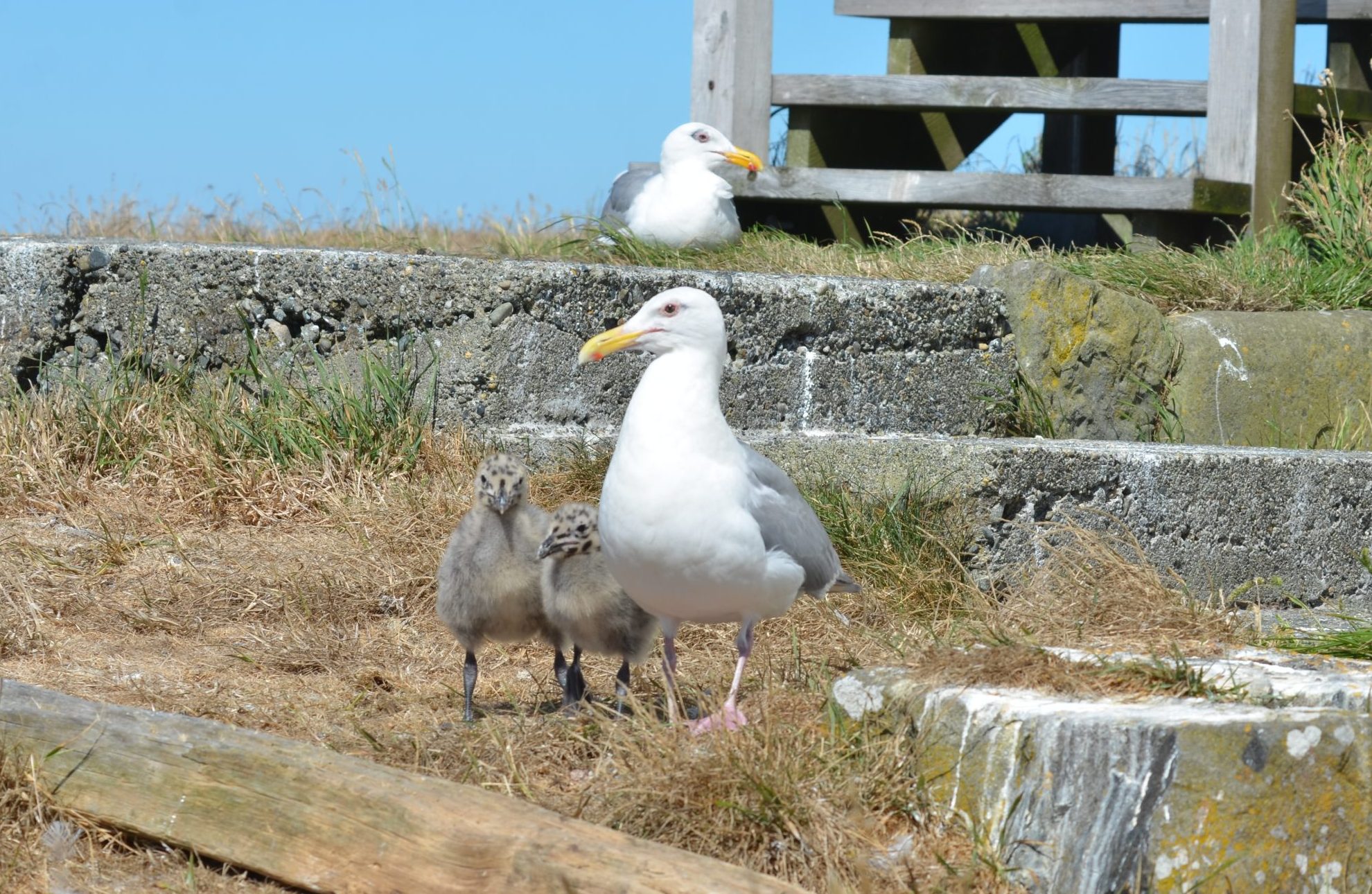
- These two glaucous-winged gull chicks typically hang out in the main doorway to the eco guardian house. We’re becoming well acquainted, as they never seem to be in much of a hurry while I wait for them to move aside.
-
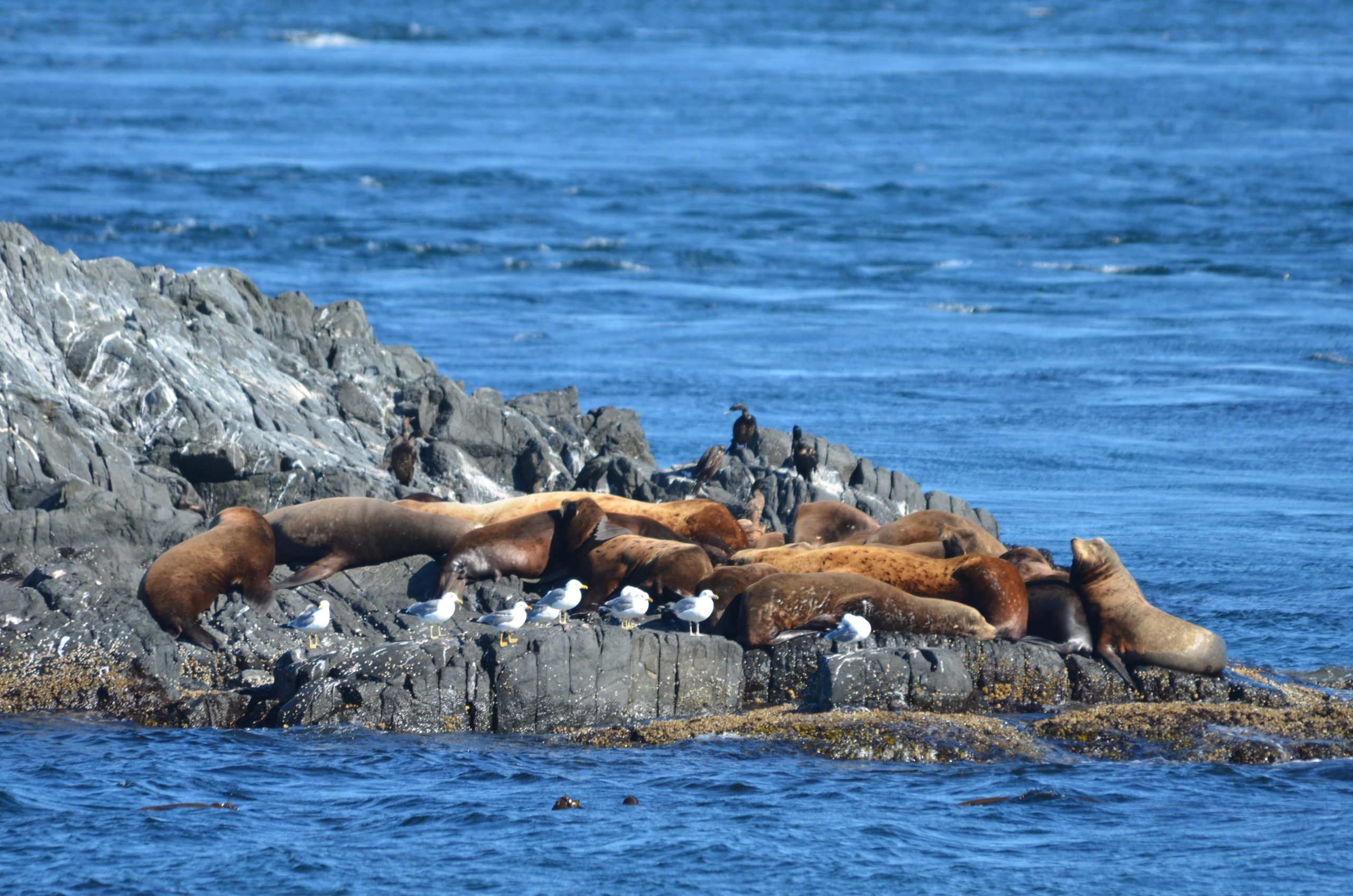
- The sea lions are moving in! Before long they’ll be everywhere but for now they’re mostly sticking to the south islands and a few spots near the jetty.
Facility Work
– Daily water sample
– Topped up batteries
– Gathered final monthly report figures
– Cleaned Ecoguardian living space
Vessels
– Ecotourism: 16
– Private: 2
Weather
Sunny. Mostly westerly wind, increasing from 10 to 31 knots by early evening. Temperature from 12 to 18.4 degrees.
The passing of the broom
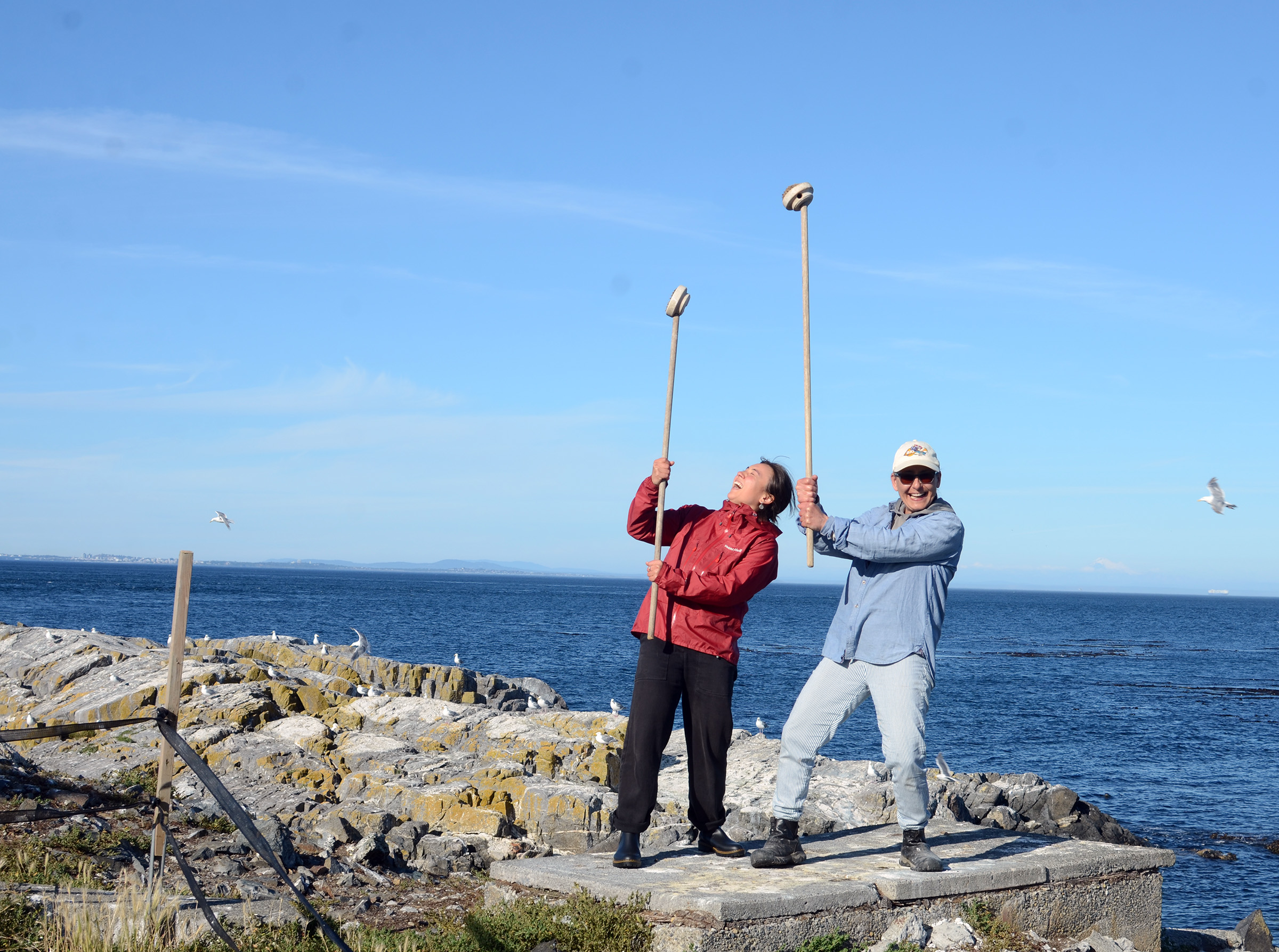
Eva is now the Ecoguardian at Race Rocks. She has received the most essential summer survival tool – the gull broom. This is my last night here and Eva’s first.
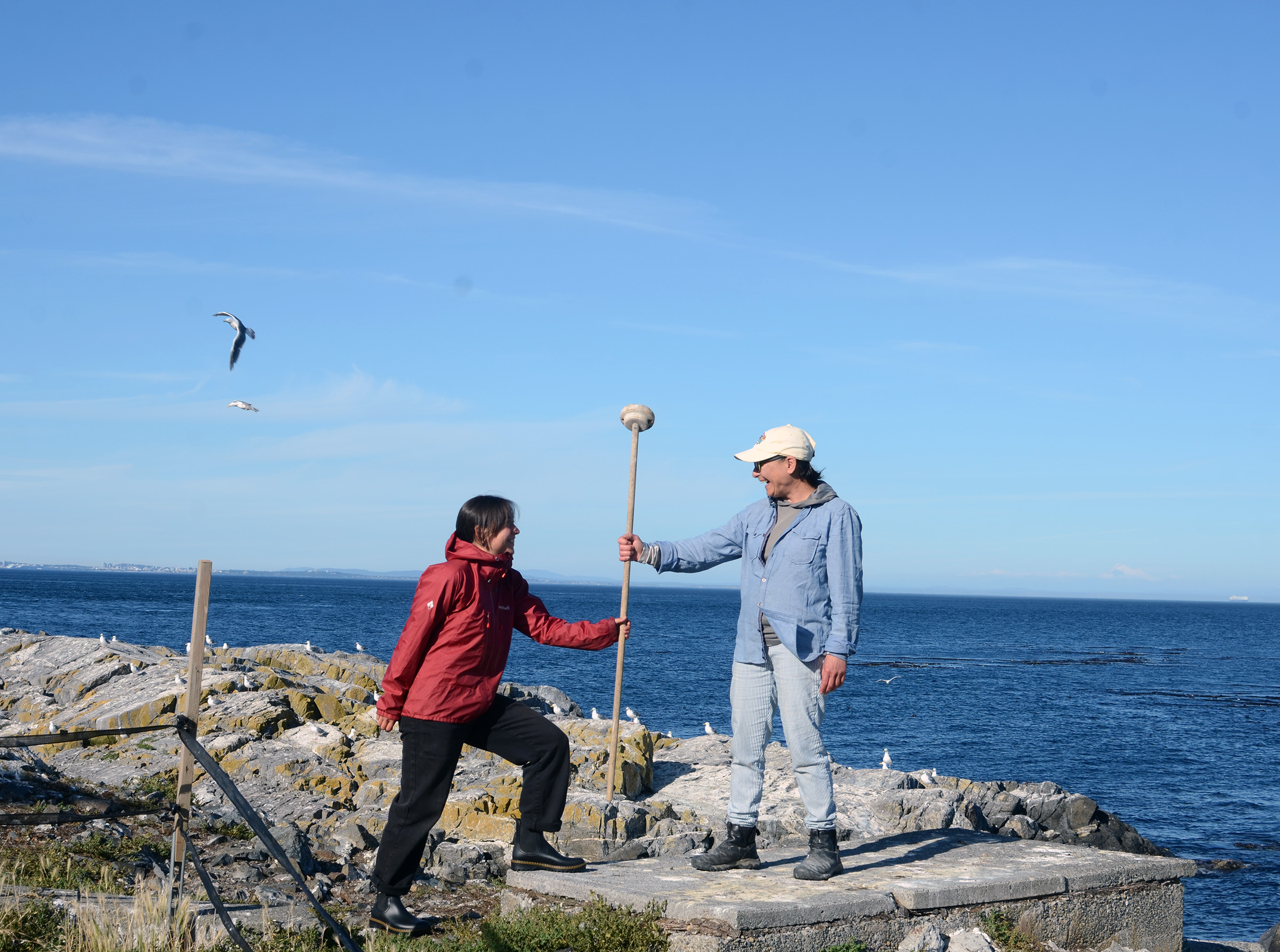
“The passing of the broom”, the Ecoguardian initiation ceremony.
Wildlife notes
Nothing of note other than another gull chick with an eye issue was found today. The area affected extends past its eye. This one lives near the cistern.
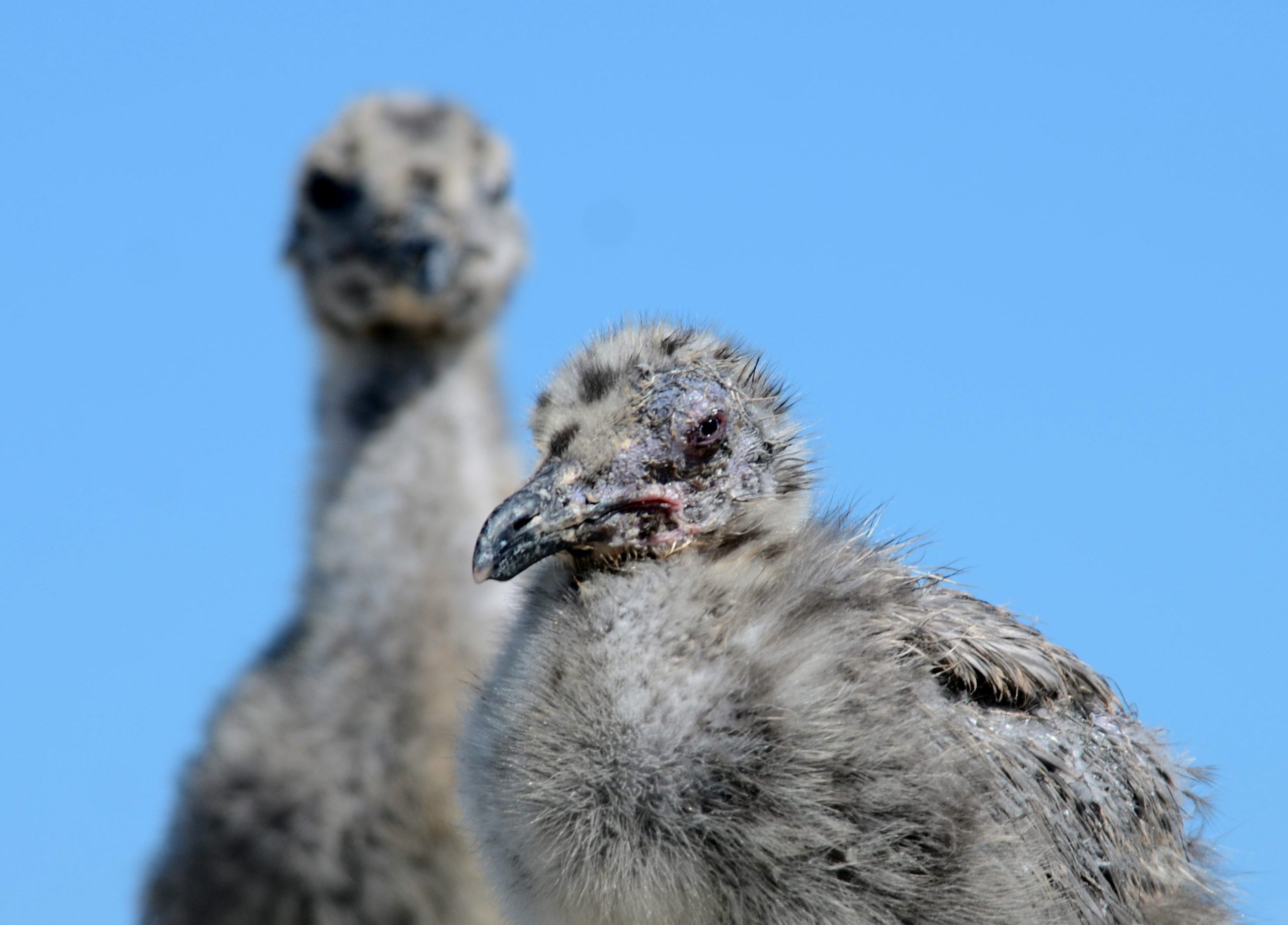
A gull chick with eye damage. This is the third one found in the past few days.
Facility work
- cleaned solar panels
- cleared a path to the bunker
- helped Eva settle in
Vessels
- Ecotourism: 18
- Private: 0
Weather
Scattered clouds. Winds predominately westerly 11 to 24 knots. Daytime temperatures 12 to 15.
one eye and yellow eye
Wildlife notes
I have observed two gull chicks with only one eye. For one chick the eye socket appears almost closed over. The other chick looks much worse off with obvious signs of infection and it is hard to look at. The two chicks seem to move about slower than their nest mates. If they survive, their lack of depth perception will make life more difficult.
-
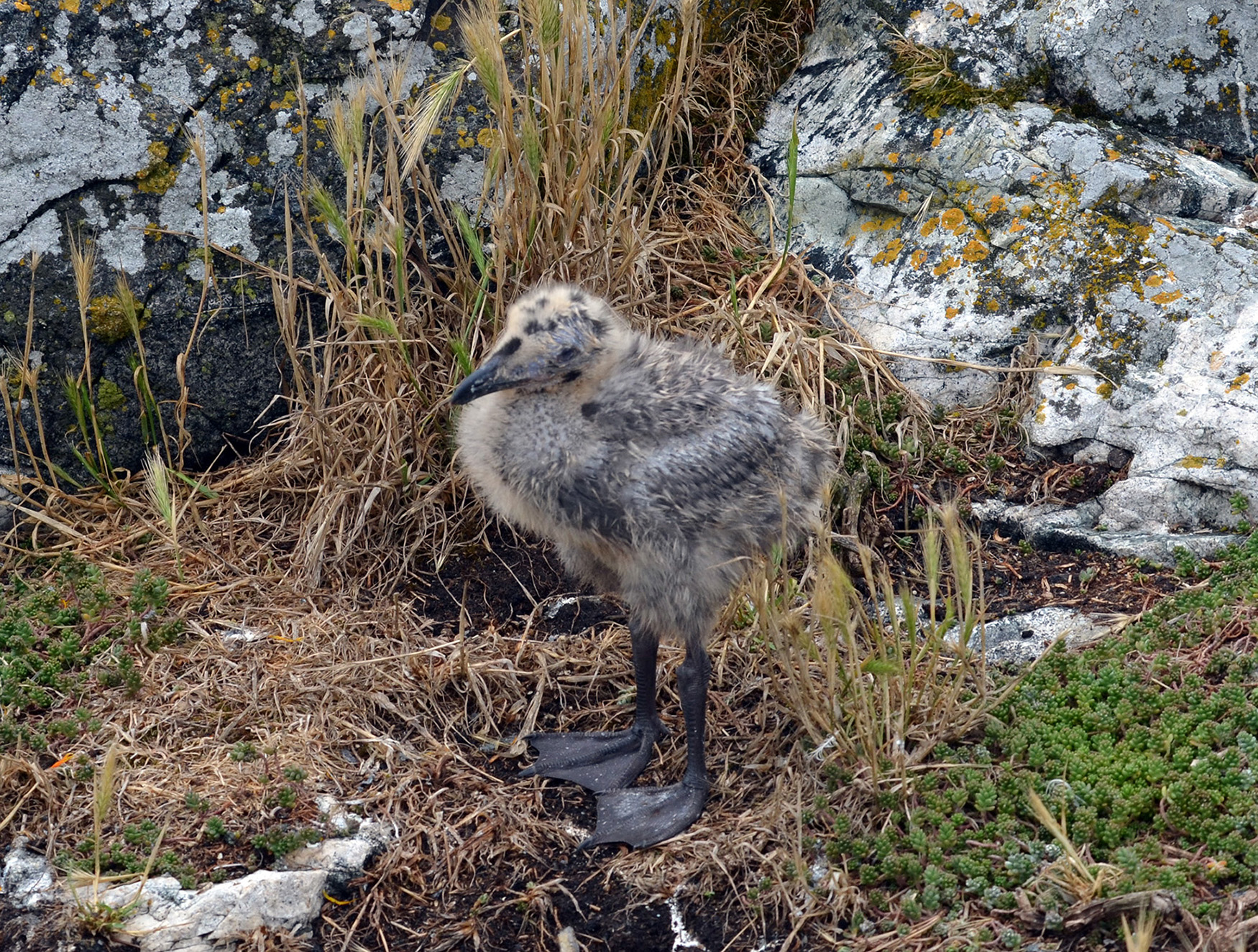
- One-eyed gull chick near walkway
-
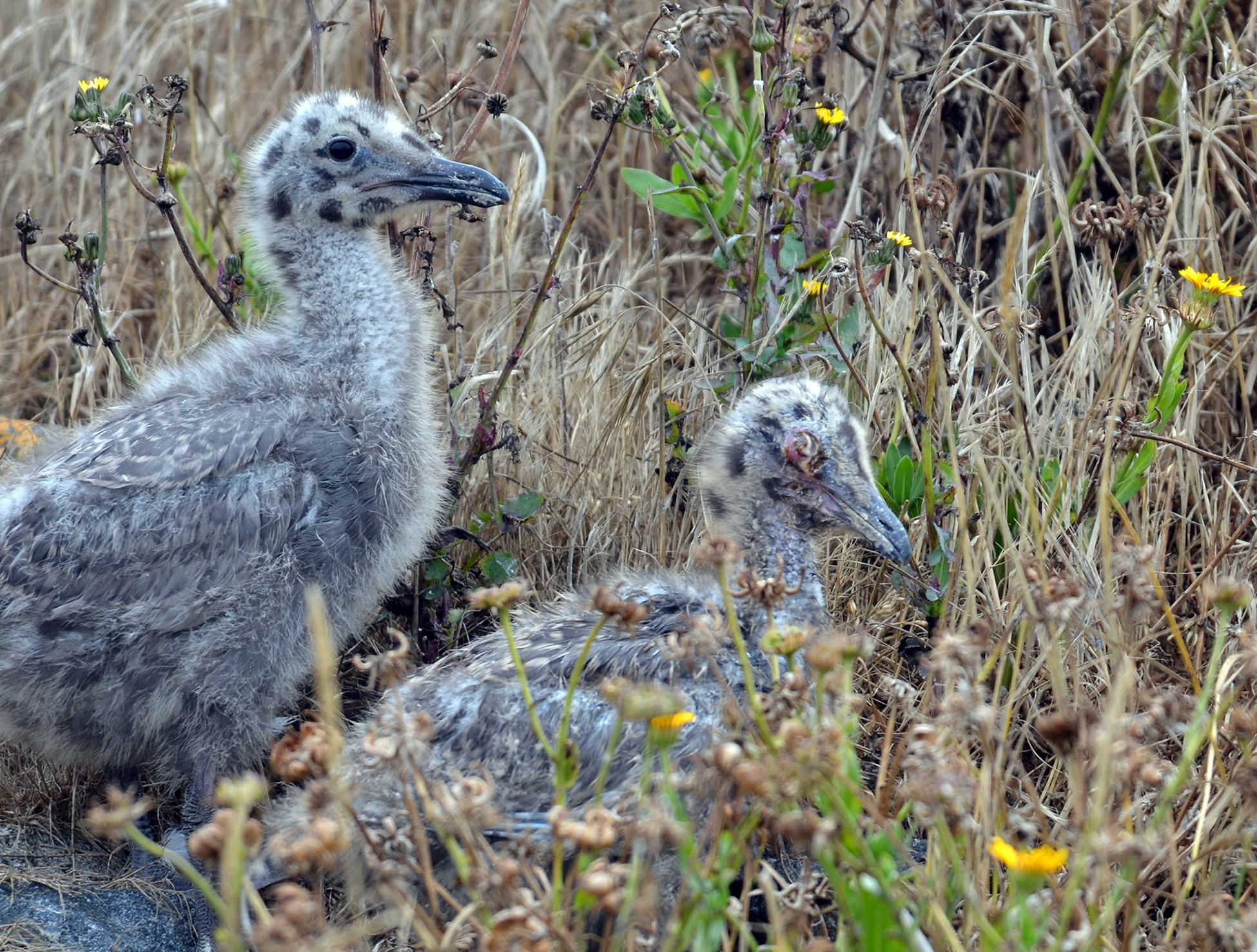
- One-eyed gull chick near Energy Building (click photo if you have the stomach for it)
With much patience and luck, I was also able to get some pictures of the Keeper’s House black oystercatcher parents eyes. I had recently learned they can be sexed by the presence of black flecks in eyes of the females. The Keeper’s House pair did indeed have different eyes!!!
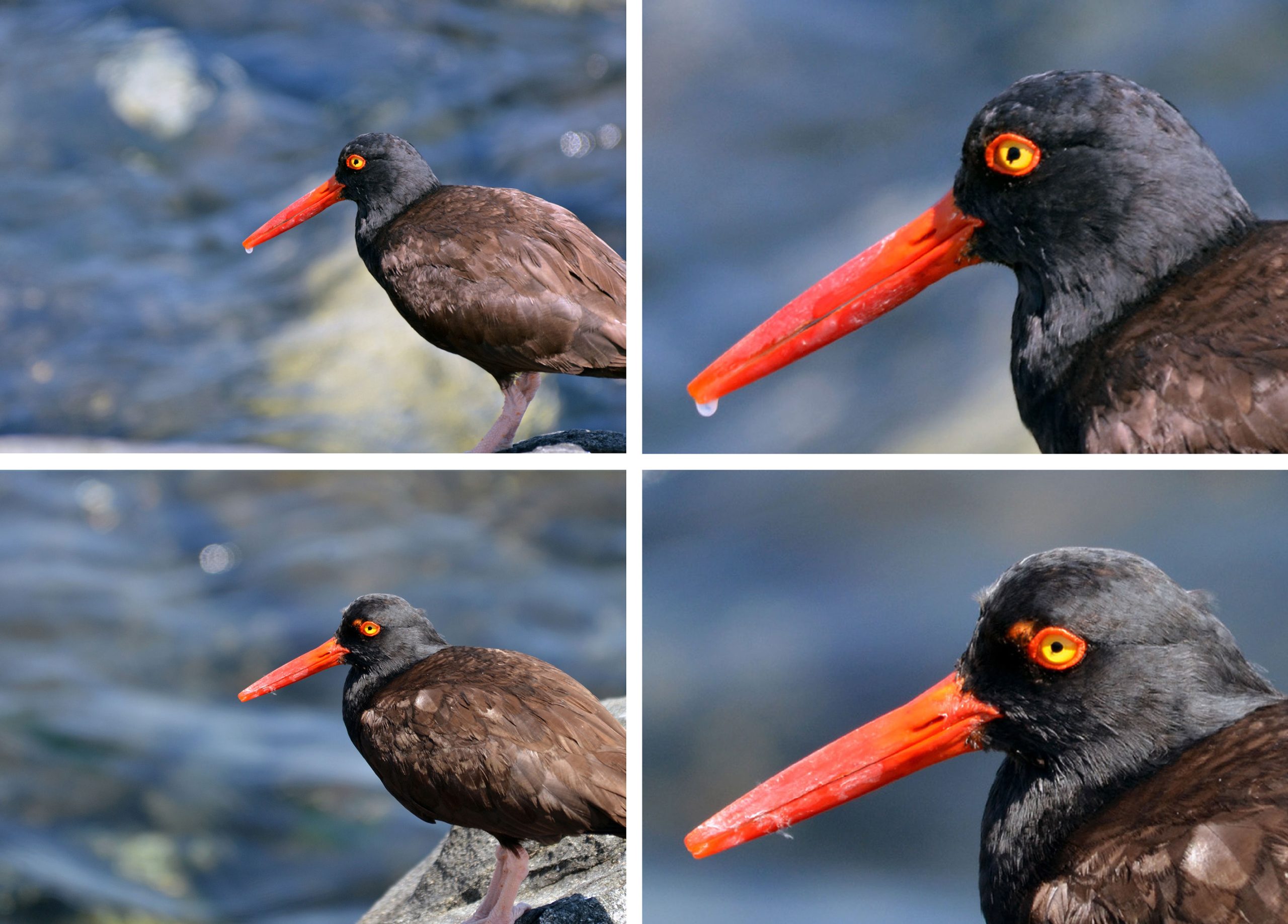
The eyes of the Keeper’s House black oystercatcher parents. The female is likely (93%) the one in the top row with the black fleck on the iris.
Facility work
- cleaned solar panels
- hung the new AED cabinet on the wall in the basement. The AED kit needs to be set up properly but I have to leave that for Eva to finish.
- finished the compost bin modifications
- started organizing things as Eva is coming tomorrow afternoon
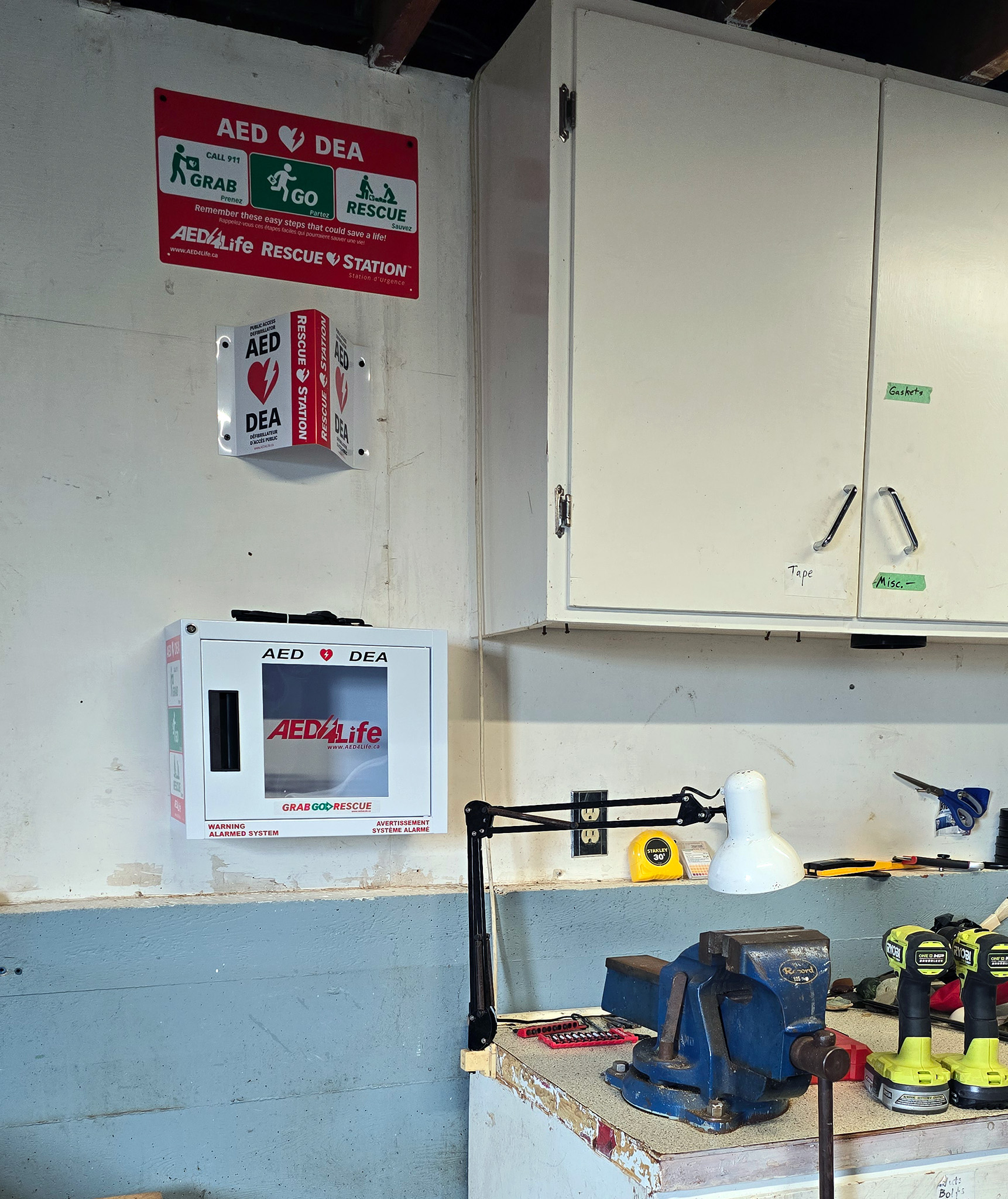
AED cabinet and sign mounted in the basement of the Keeper’s House. With such a shiny white new box, I would have liked to paint the wall first but it can remounted later if that ever happens. I got to use our new measuring tape and driver bits brought here yesterday.
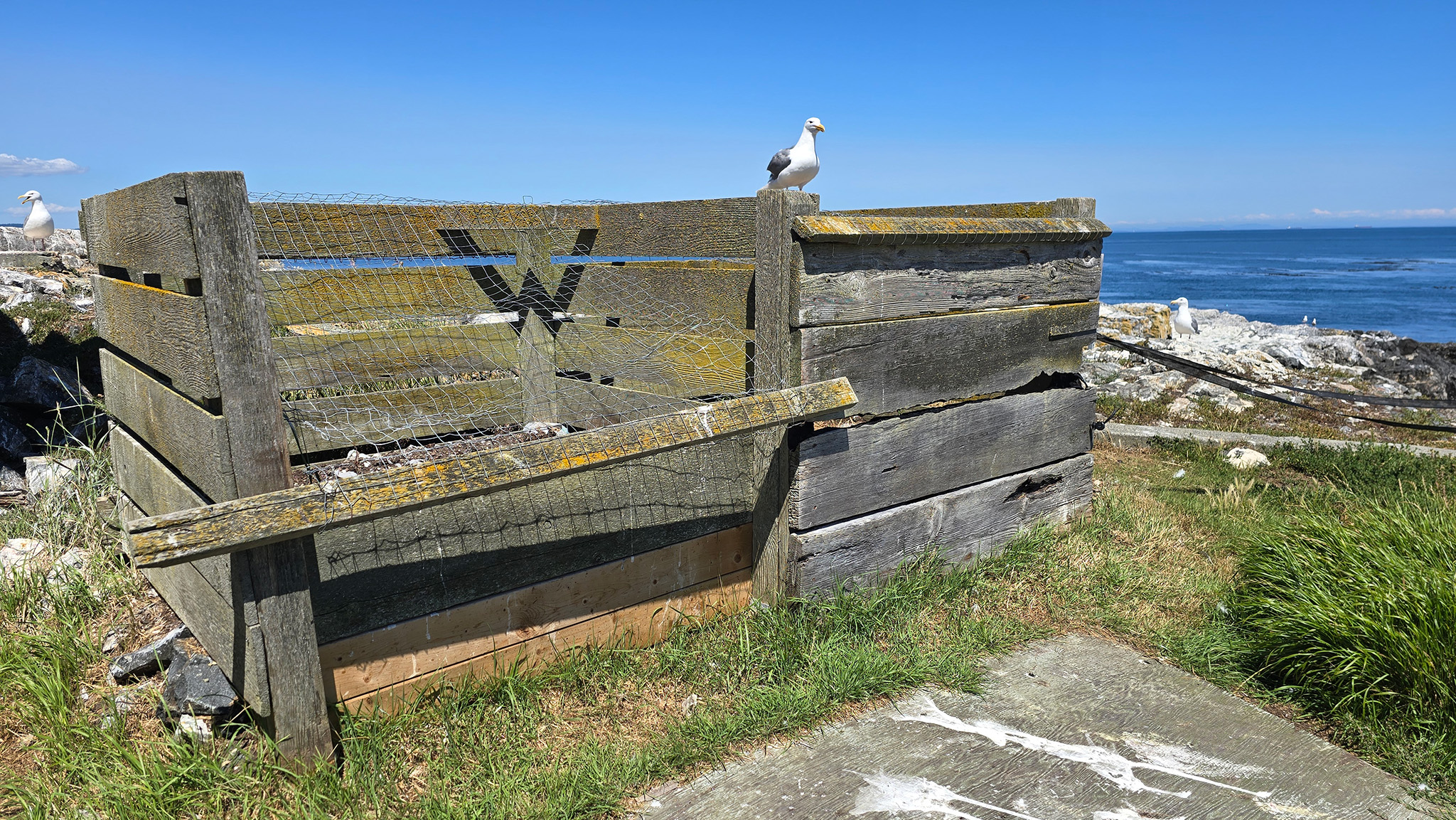
Compost bins BEFORE.
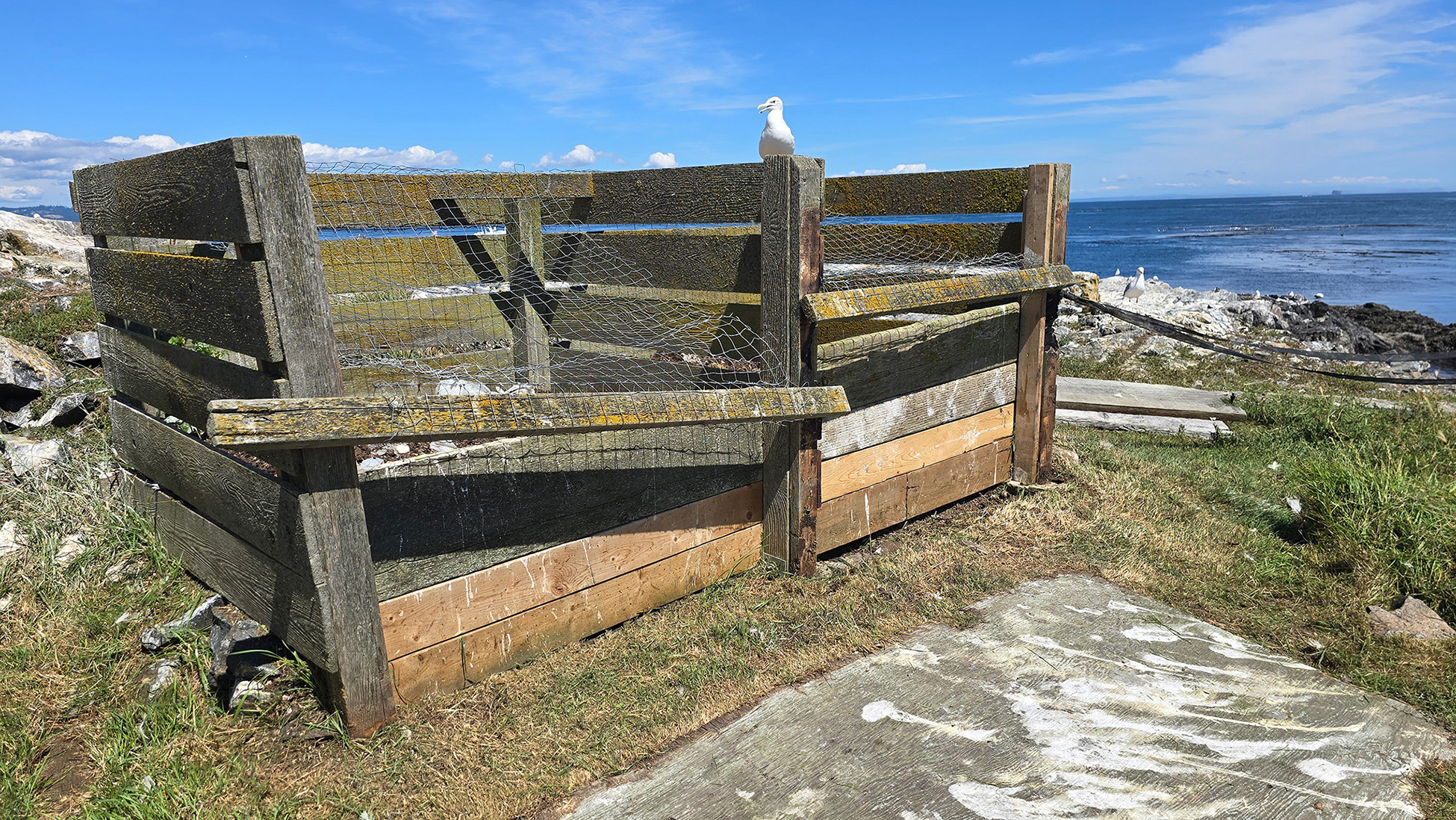
Compost bins AFTER. I reinforced the burnt posts, removed the front boards, added stringers and cut drop boards for the right hand side. Now the contents of the bin can be removed when fully composted. The gull sitting on top has two chicks on the other side of the bins. I am sure she is happy the job is done.
Vessels
- Ecotourism: 19
- Private: 1
Weather
Scattered clouds. Winds westerly 13 to 27 knots. Daytime temperatures 12 to 13 degrees.
SSL 434Y
Wildlife notes
The Stellar and California sea lions have started returning to Race Rocks in the past week. In the weekly animal census from June 13 to July 18 there were between zero and 8 sea lions of each species counted. In a month from now there can be 200 to 300. By the fall, the numbers could double. In the past 12 months, the highest census count was 906 California sea lions (Sept 19 2025) and 525 Stellar sea lions (Nov 18 2025).
Presently on the South Islands there is a 13 year-old male Stellar sea lion who was branded as a pup in Rogue Reef, Oregon. He is breeding age now and the US researchers will be looking for him on their images taken earlier this month at Rogue Reef. He has been seen about once a year in the last three years but it is a mystery where spent the first 10 years of his life. To learn more about how sea lion populations have rebounded in the past 50 years see this post.
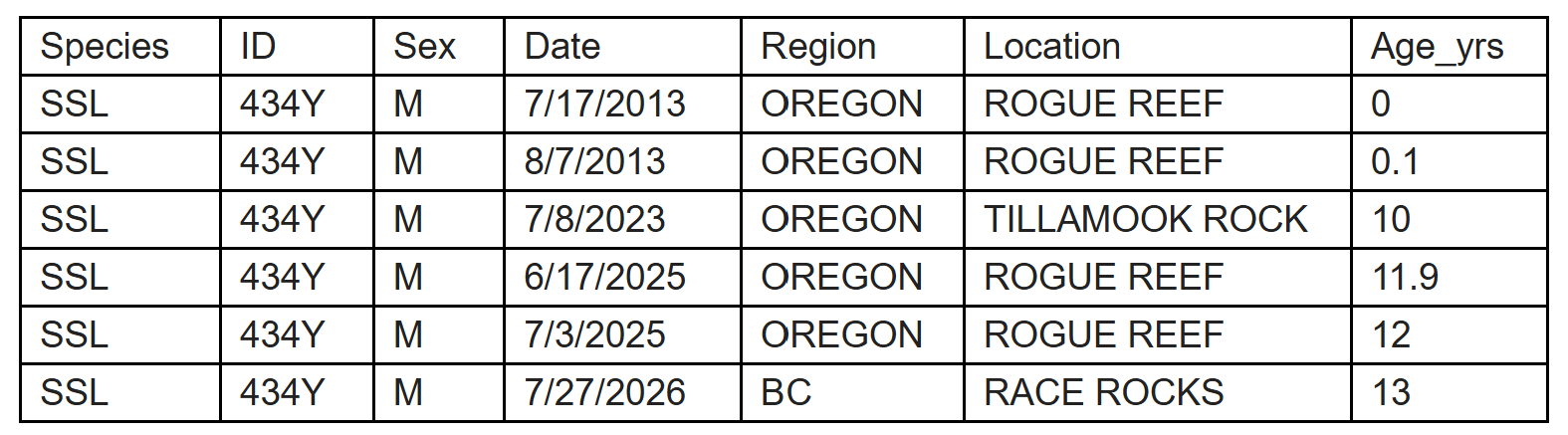
Resighting records for SSL 434Y
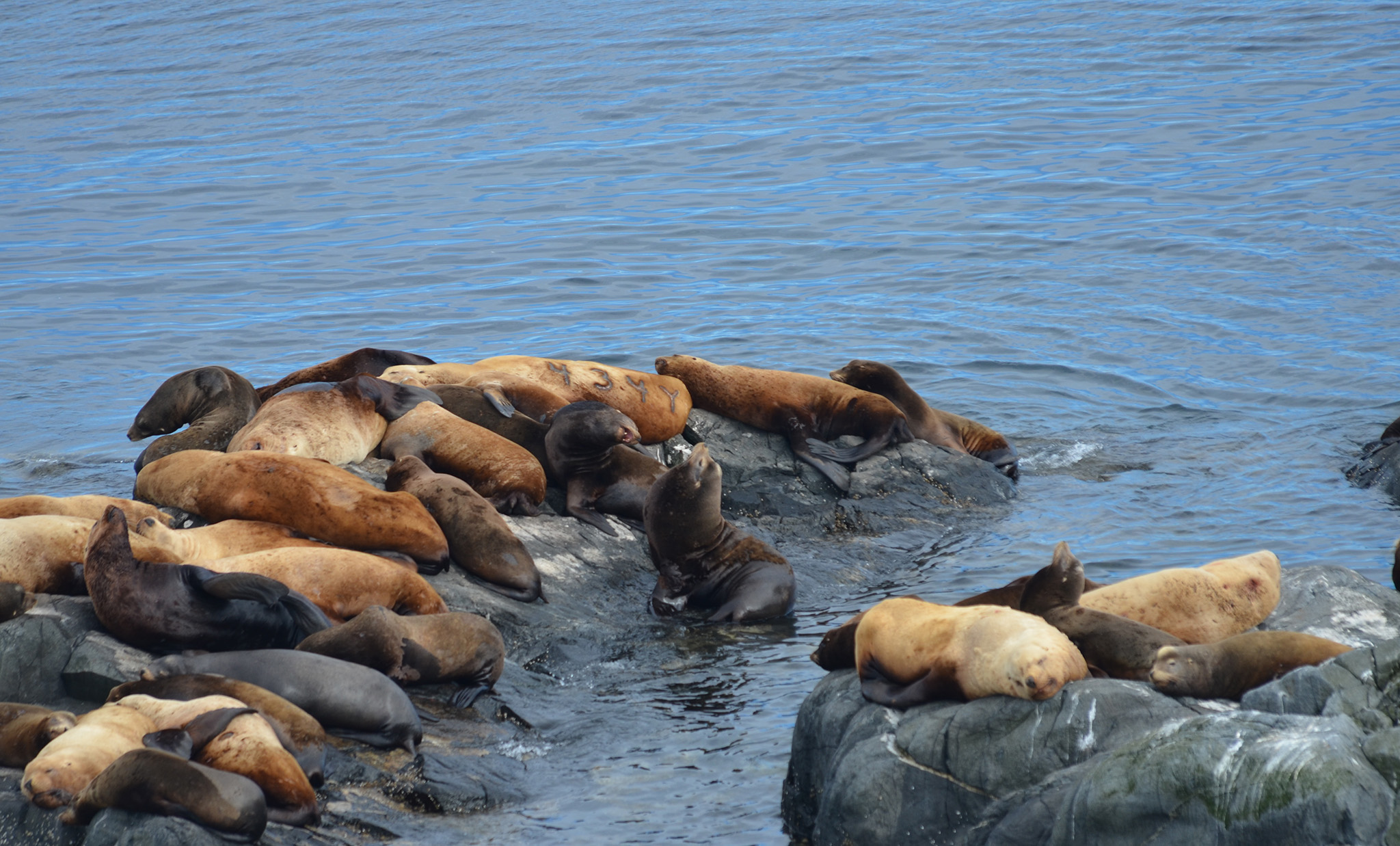
A male Stellar sea lion (434Y) on the South Islands, photographed on July 27, 2026.
Facility notes
- cleaned solar panels
- vacuumed and cleaned window in the Battery Room
- worked on the compost bins
- finished cleaning the Generator Room
The thorough cleaning of the Energy Building is finally complete! I was chipping away at it over the past two months since Old Lister was hauled away on May 28 2026. Many hours spent with ear muffs, vacuum and with a respirator, scrub brushes, rags and degreasers. Smells nice in there now and you can look out the windows.
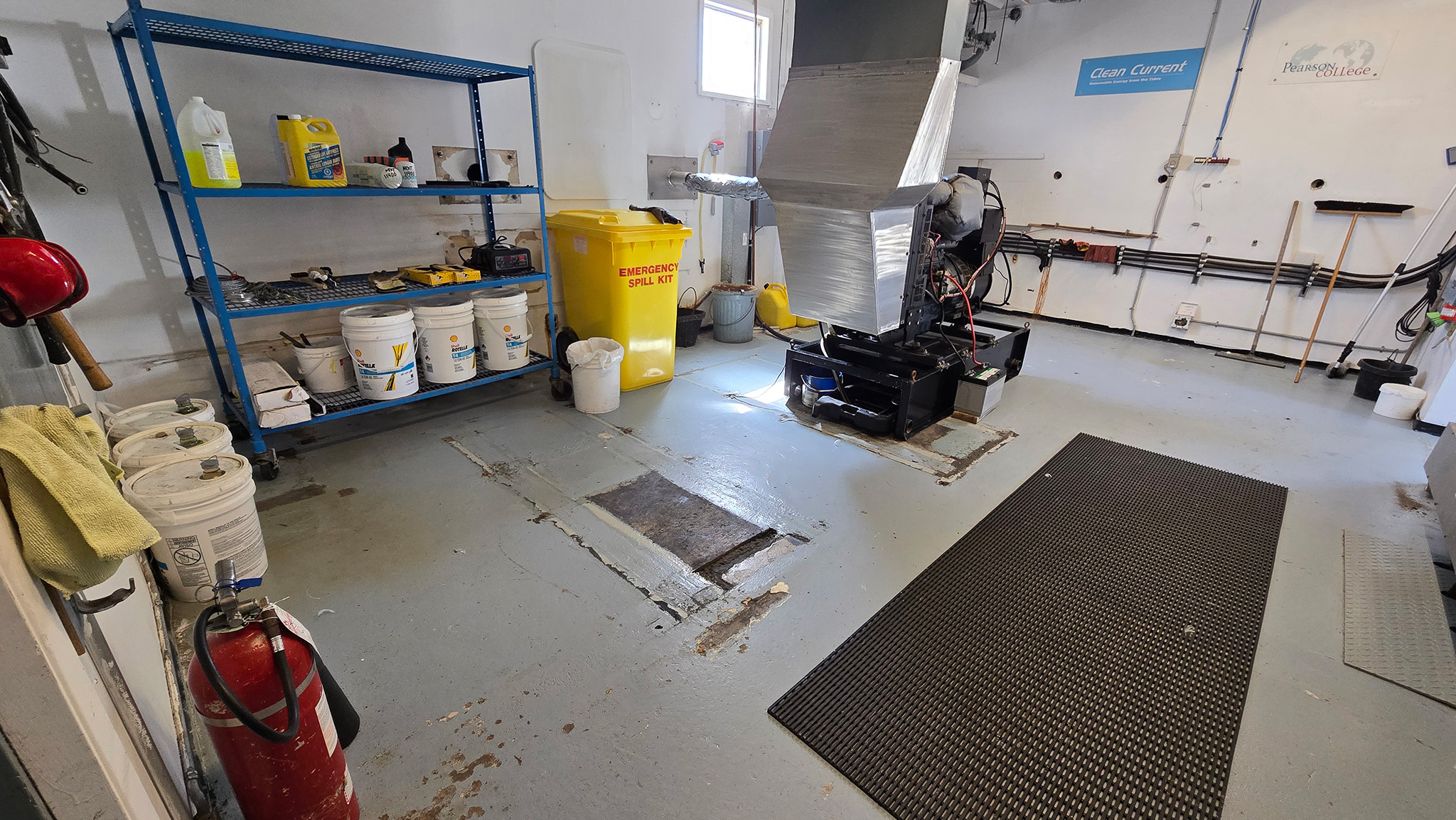
The Generator Room with shelving and the foot print of Old Lister.
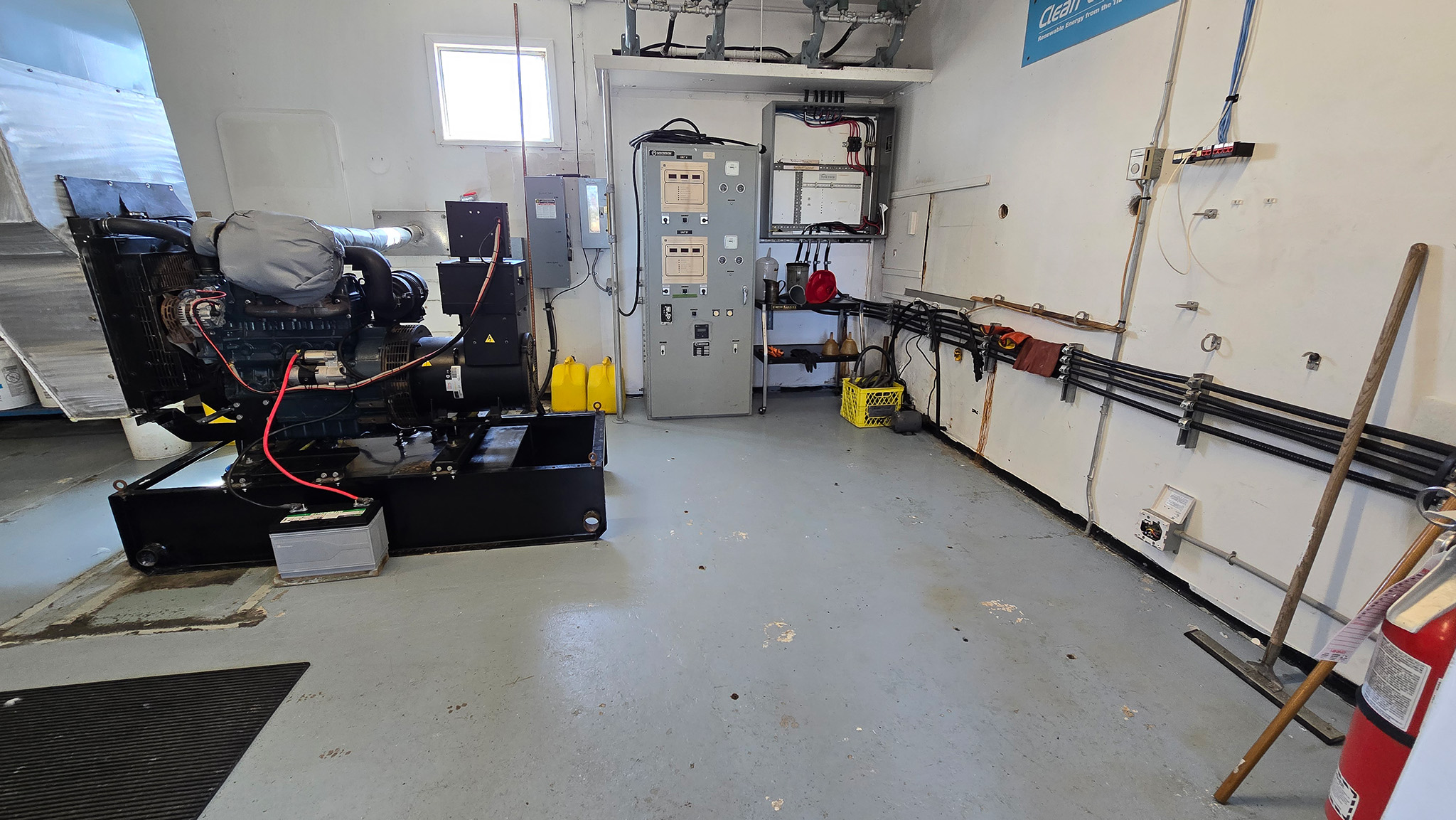
The current diesel generator.
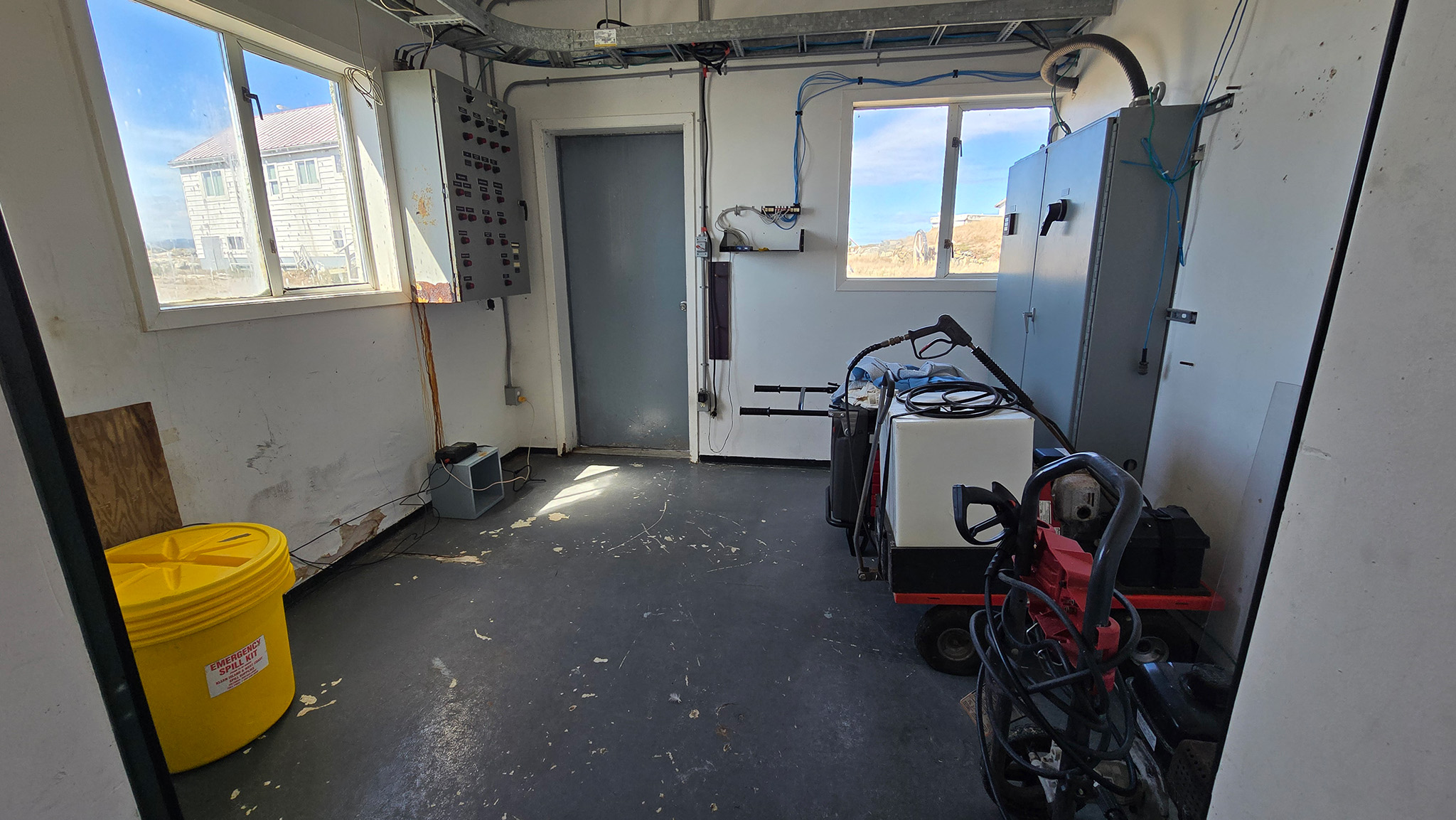
A side room with the power washing equipment and a backup gas generator.
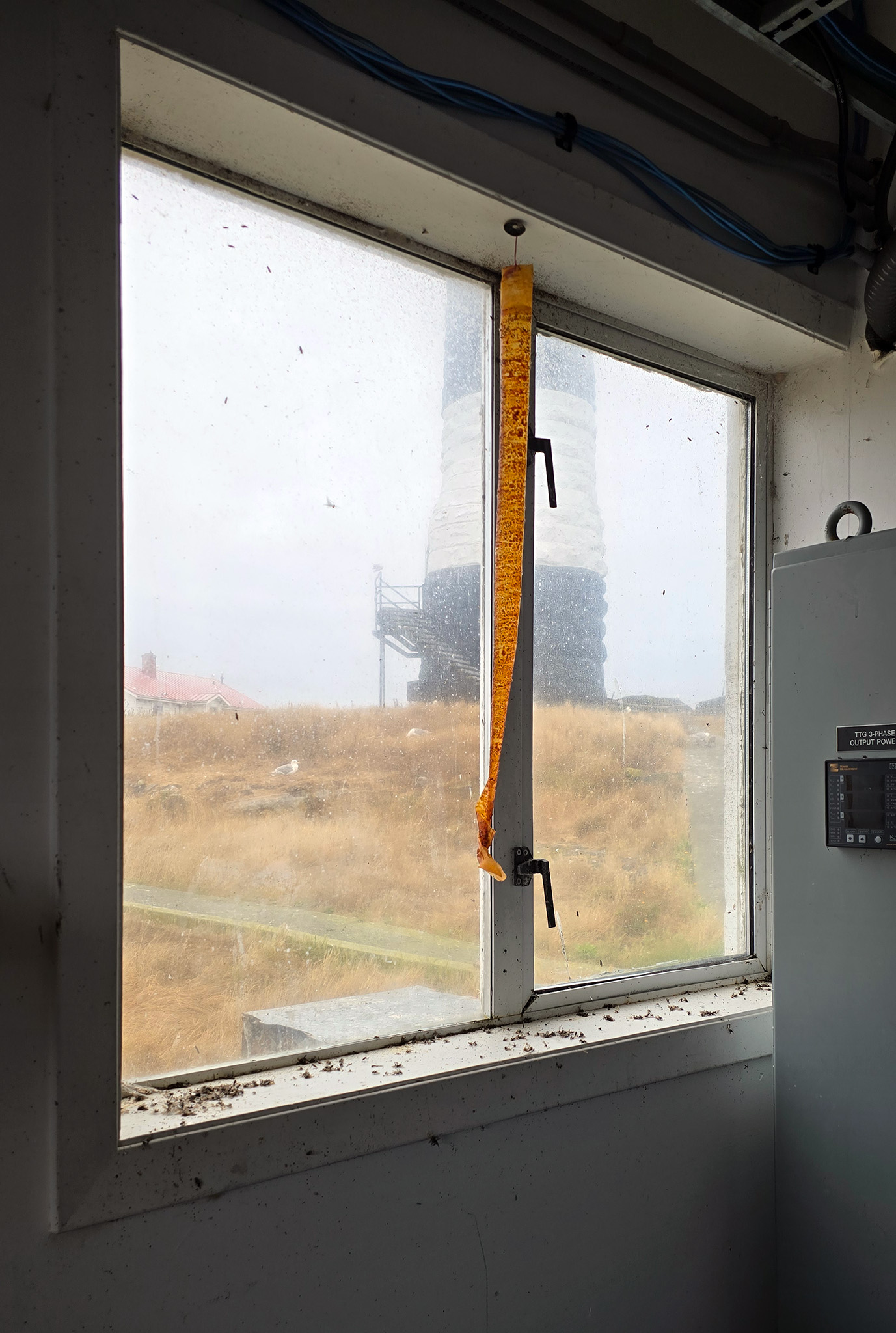
One of the windows before.
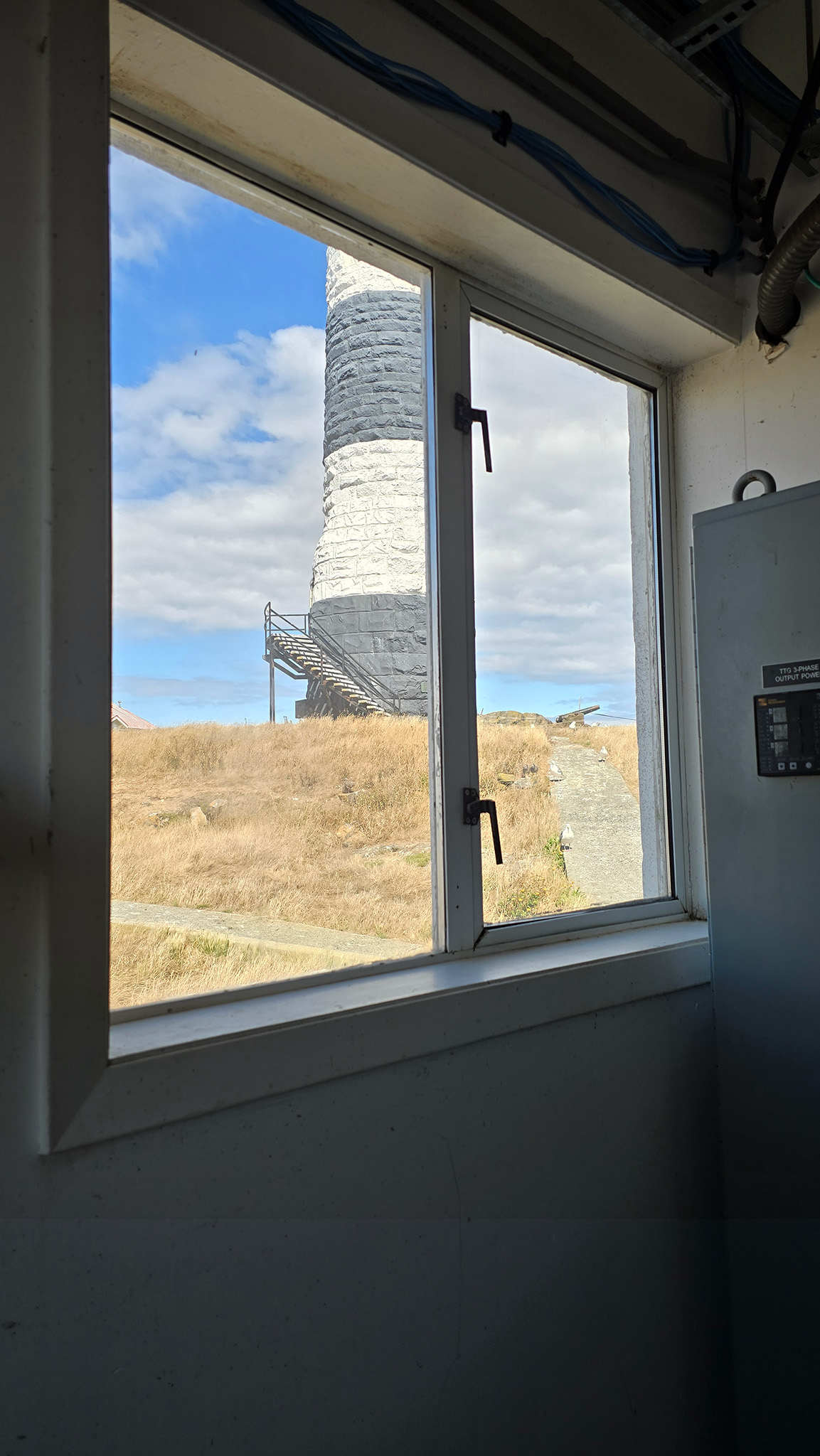
Without the flies and grime.
Vessels
- Ecotourism: 19
- Private: 2
Weather
Light rain in the am. Partly cloudy in the pm. Winds mostly from the WNW 10 to 30 knots. Daytime temperature 13 to 19 degrees.
A month of learning
Wildlife notes
It was a quiet day with glassy flat waters. A perfect day to sit and watch the mom harbour seals play with their pups. Their playful and tender interactions are a delight to watch. It is astonishing to learn that after 4 to 6 weeks when the pups are weaned, their mothers show no further interest in them and leave them completely.
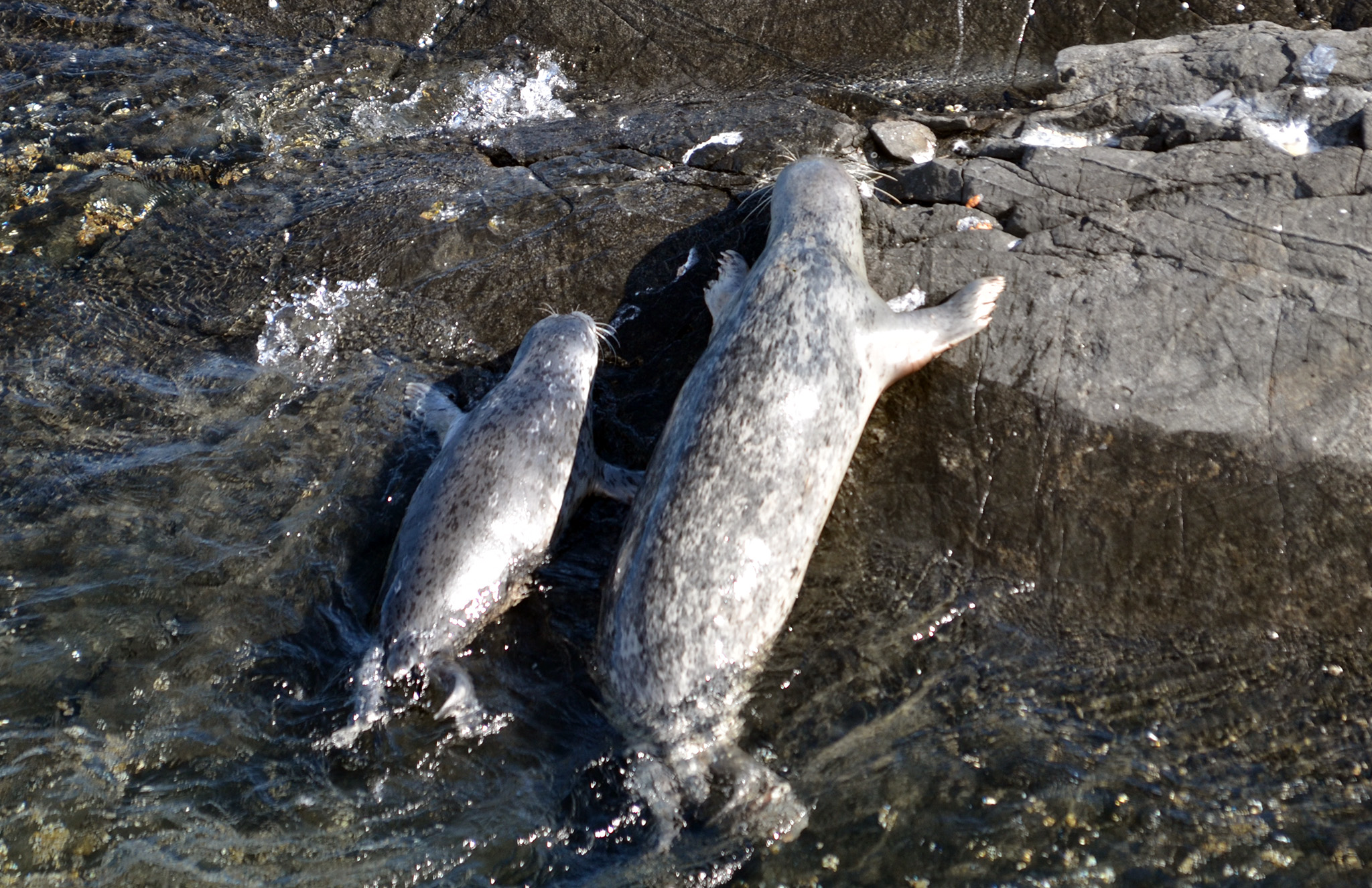
Mom harbour seal teaching and encouraging her pup to haul out. She had tried in several different places but her pup kept loosing interest, preferring instead to dart away, spin and twirl around in the water. She was successful in this spot to get and keep her pup on the rock.
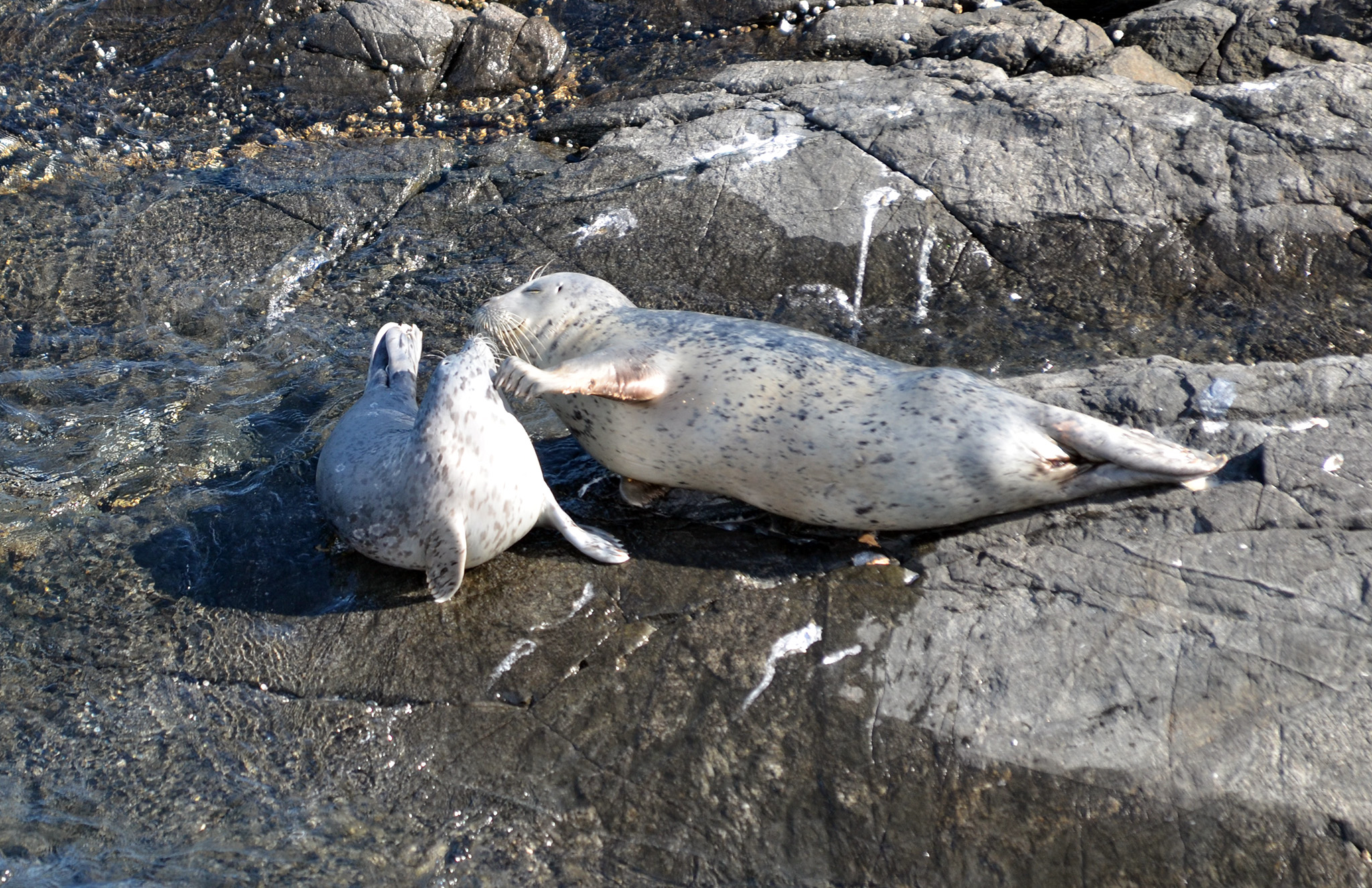
Mom harbour seal giving her pup a scratch.
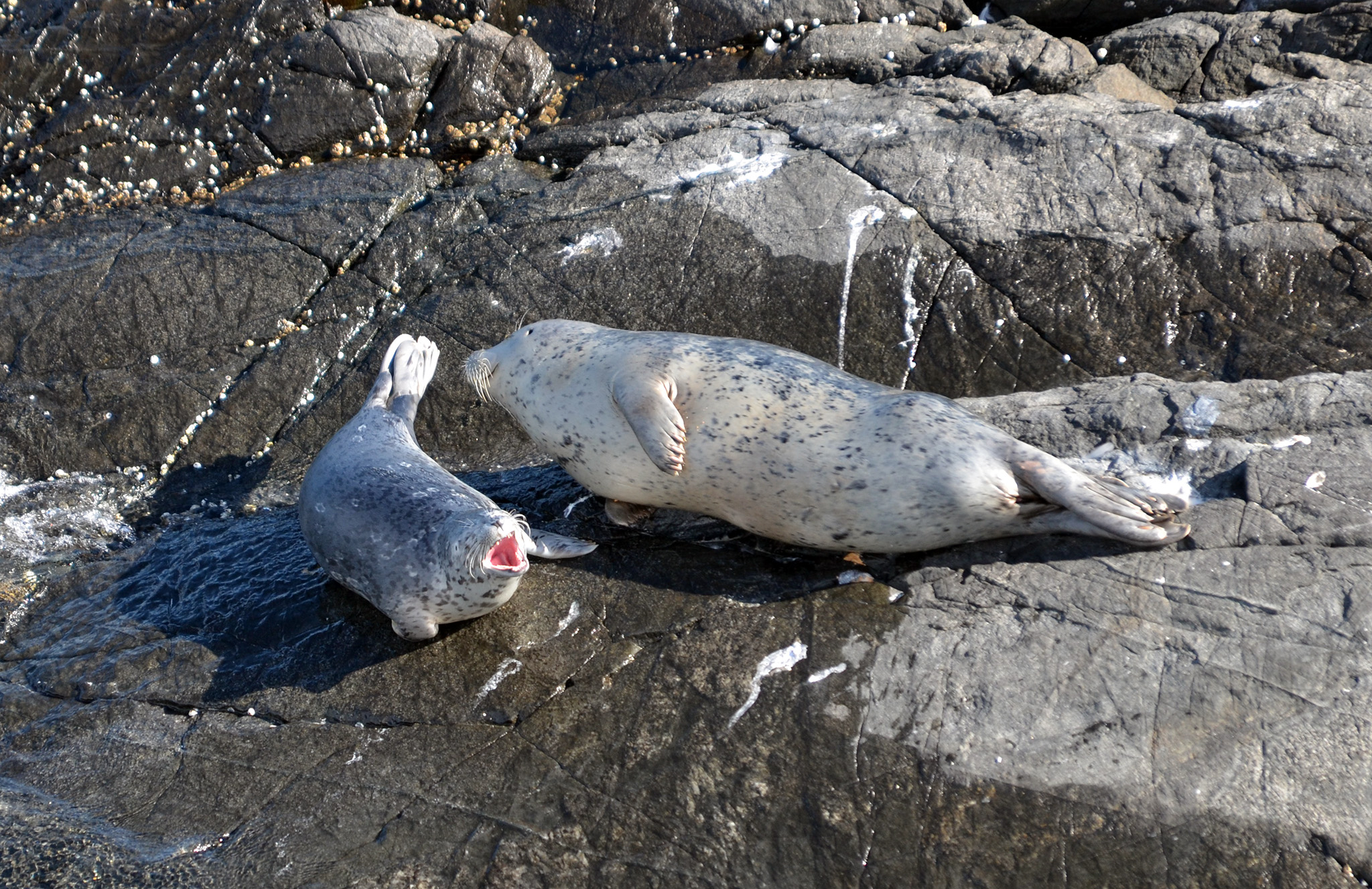
The pup having a good yawn. It had tired itself out and was finally ready to nap.
Facility work
- cleaned the solar panels
- filled the generator and small tidy tank with fuel
- cleaned windows in the generator room
Vessels
- Ecotourism: 22
- Private: 5
- Paddle boarder: 1
Weather
Foggy in am. Short periods of drizzle. Partly cloudy in the pm. Winds veering from NE in the am to W by late afternoon, speeds 8 to 15 knots. Daytime temperatures 12 to 17 degrees.
Showtime
Wildlife notes
Team California, the men’s synchronized swimmers at Race Rocks put in a good practice this morning. These beastly, barking, stinky creatures left their man pile on South Islands to connect with their feminine sides.
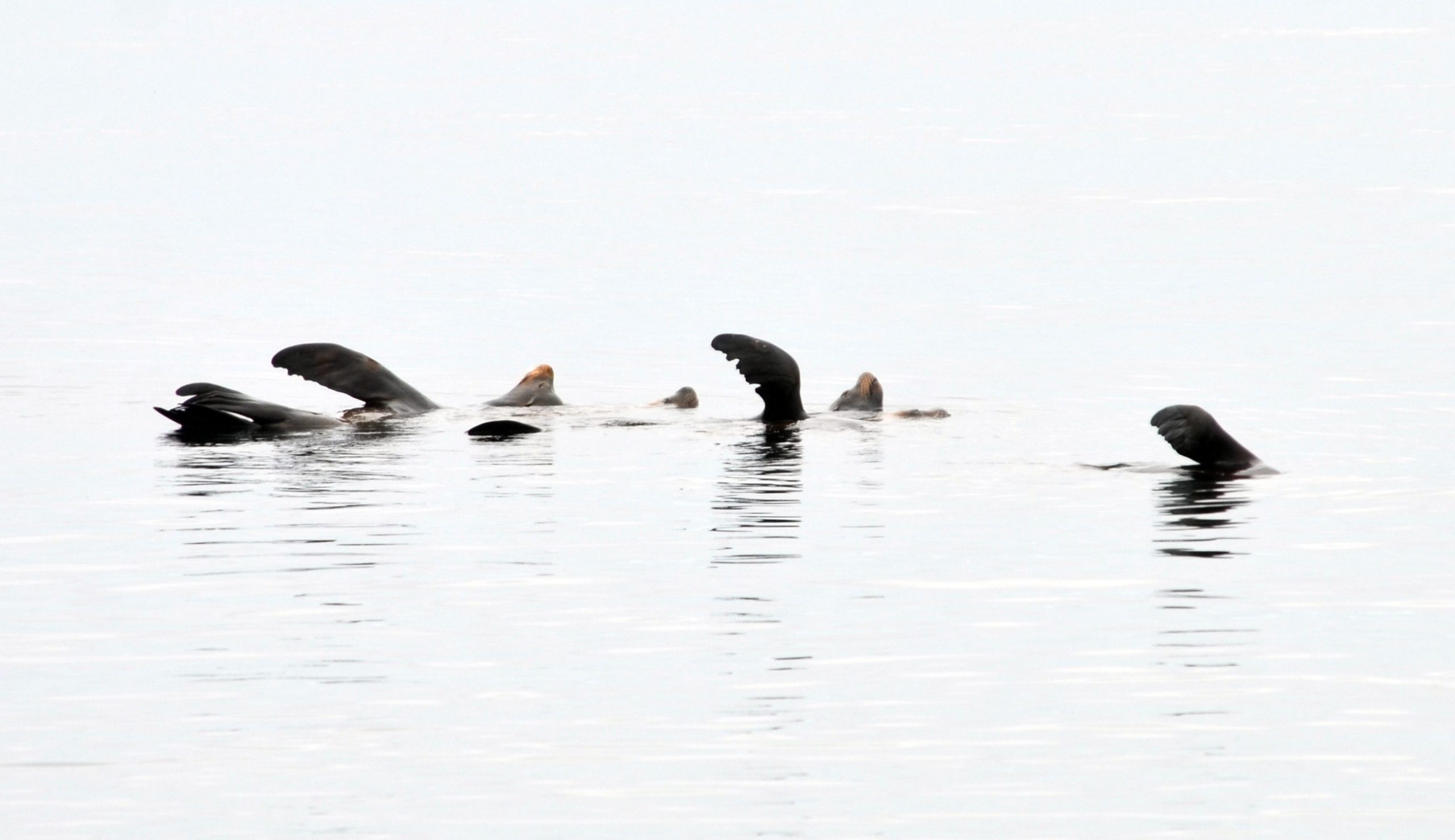
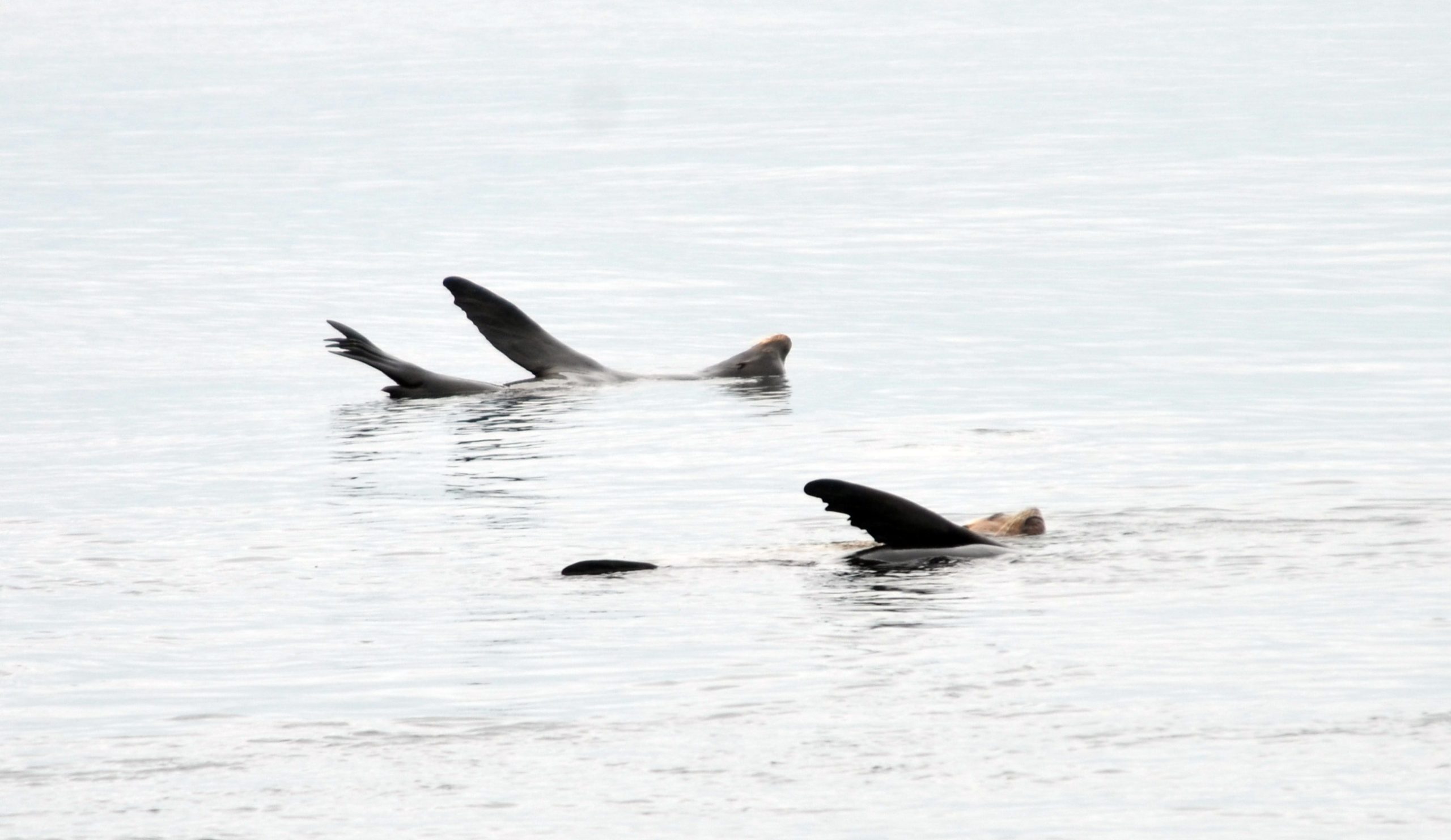
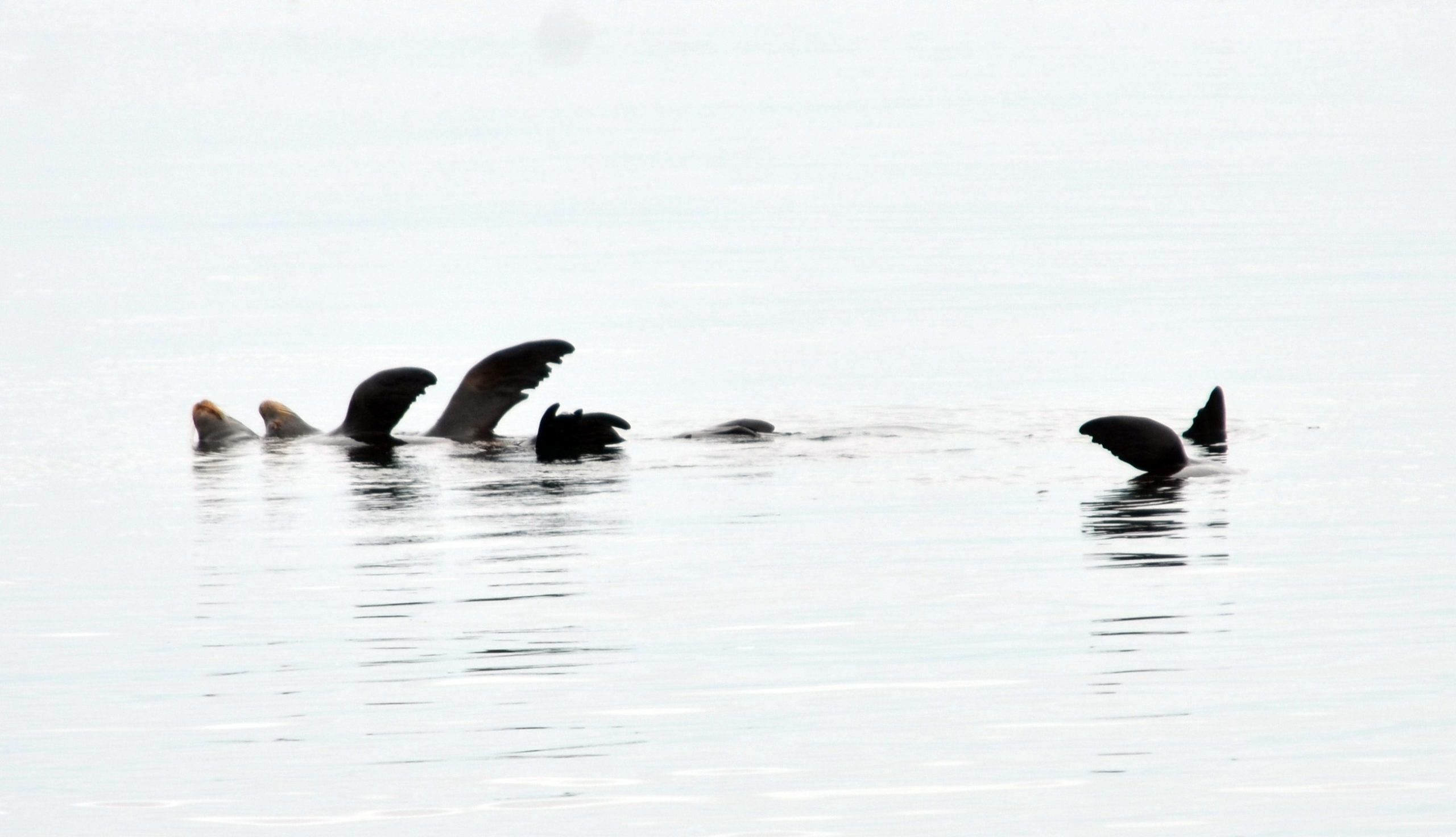
Apparently female California sealions stay closer to home and it is the males that travel north. The sealions are holding their flippers (heat exchangers) in the air to thermoregulate.
Facility work
- filled the cistern with salt water for the next Ecoguardian
- cleaning in the Energy Building
- topped up battery fluids
Vessels
- Ecotourism: 27
- Private: 2
- Kayakers: 2
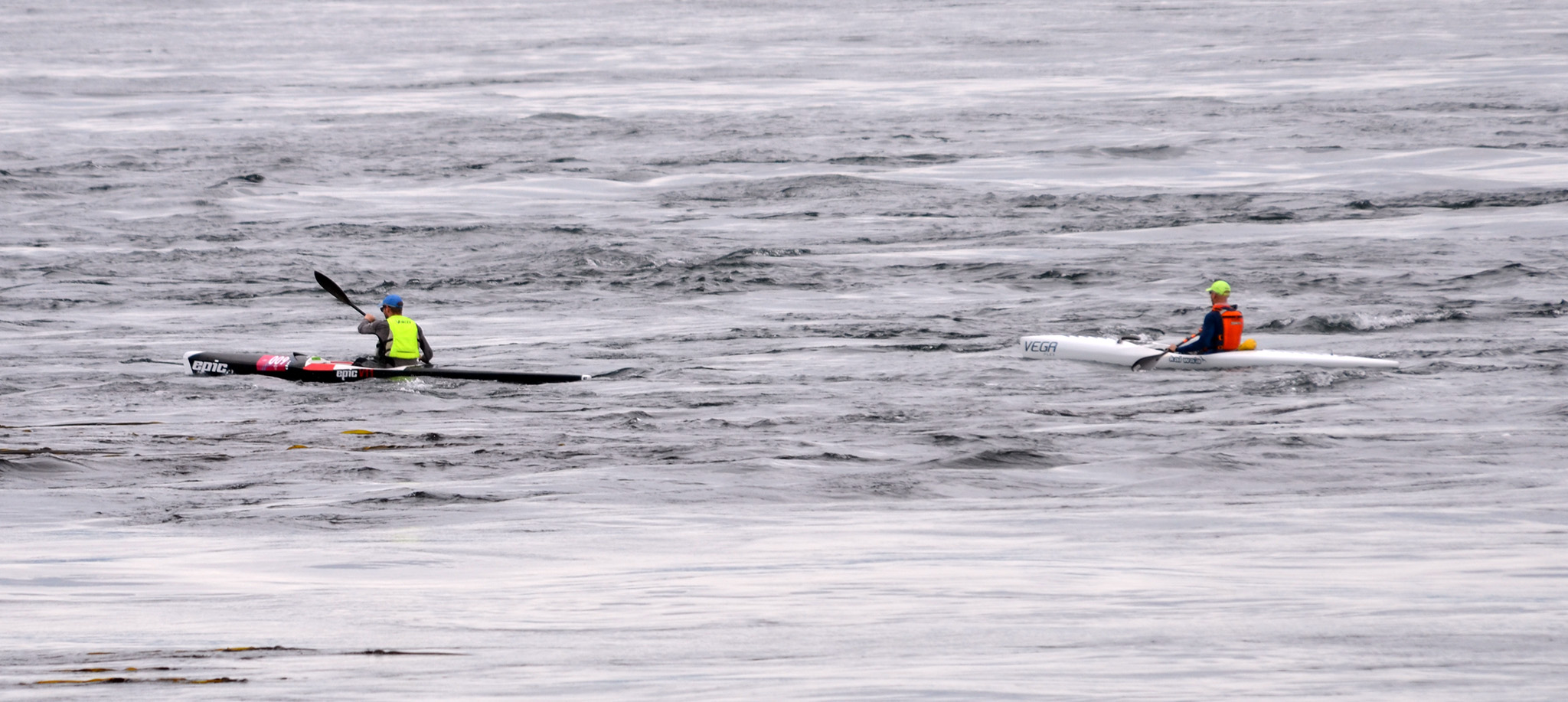
Two very special kayaks. They are high performance open-cockpit ocean kayak/canoe hybrids designed for surfing and racing.
Weather
Light rain into early afternoon. Cloudy in the afternoon. Winds westerly 5 to 10 knots. Daytime temperatures 13 to 15 degrees.
July 25 Census
Mammals:
- California sealion: 17
- Stellar sealion: 29
- harbour seal: 143 plus 6 pups
Birds:
- gulls: 1371 (of these 809 were outside of main nesting area, chicks not counted)
- cormorant: 74
- black oystercatcher: 14 plus 5 chicks
- pigeon guillemot: 234
- bald eagle: 1
- harlequin duck: 3
- surfbird: 39
- black turnstone: 113
- ruddy turnstone: 1
- brown headed cowbird: 1
- Canada goose: 3
Wildlife seen this week inside the reserve but not observed today include: killer whale, humpback whale, short-billed Dowitcher, least sandpiper, western sandpiper, wandering tattler. The majority of the gulls outside the main nesting area (i.e., those on the South Islands, Seal Rocks and on the western shore line of Great Race Rock) were California gulls.
Wildlife notes
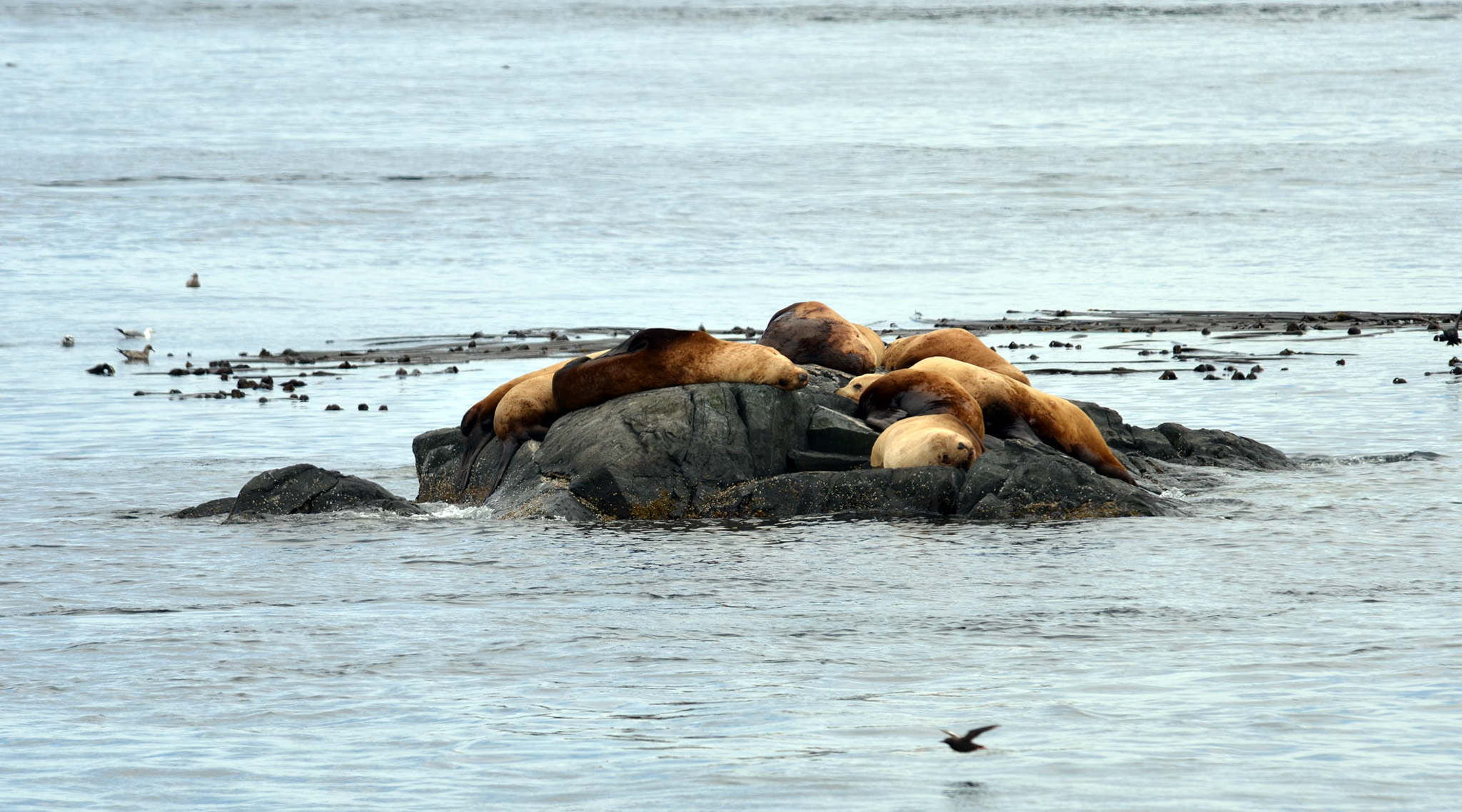
The sealions are returning in small numbers and are mostly on the South Islands for now. This started early in the week with the arrival of some large growling Stellar sealions. California sealions started appearing (and barking) the past two days. It will soon start to get louder at night around here.
There are very few gull eggs left unhatched. Some seem eggs abandoned in shallow or untended nests. The single egg made in a nest spun of grass by the door to the Student Building is starting to hatch. Two eggs were in this nest on June 29th.
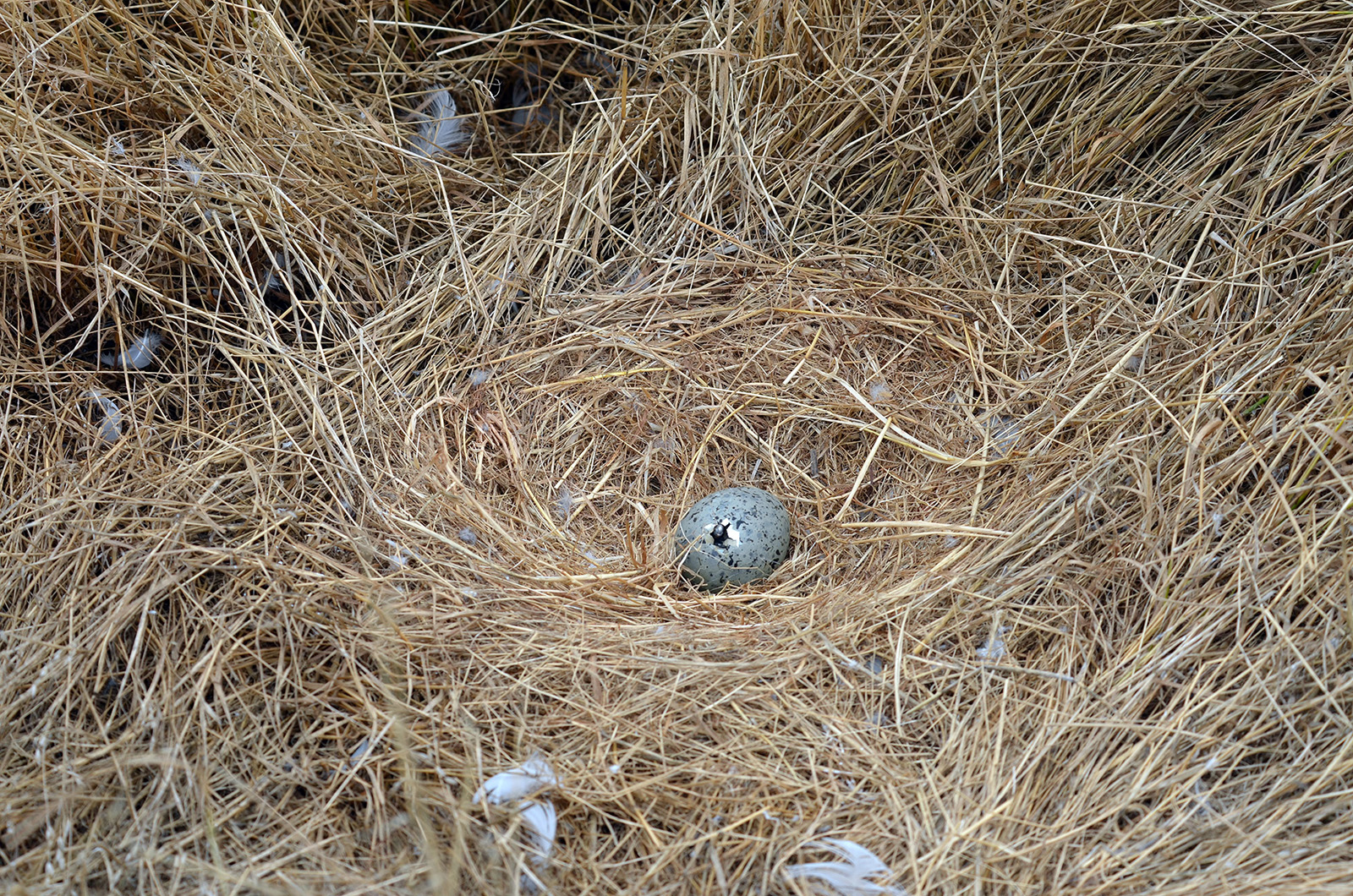
A simple nest made only of grass from the immediate area near the Student Building door. This may be one of the last gull eggs to hatch this year. This means no more short cuts across the grass to get to the Student Building. This is unfortunate as “Intersection” gulls has moved their three chick to the start to the Student Building walkway.
I think we are up to 6 seal pups in the area. Like the gulls, they are spread apart in age are vary is size. The pup on East Beach this afternoon still had its umbilical cord attached so it is a new one since last Census.
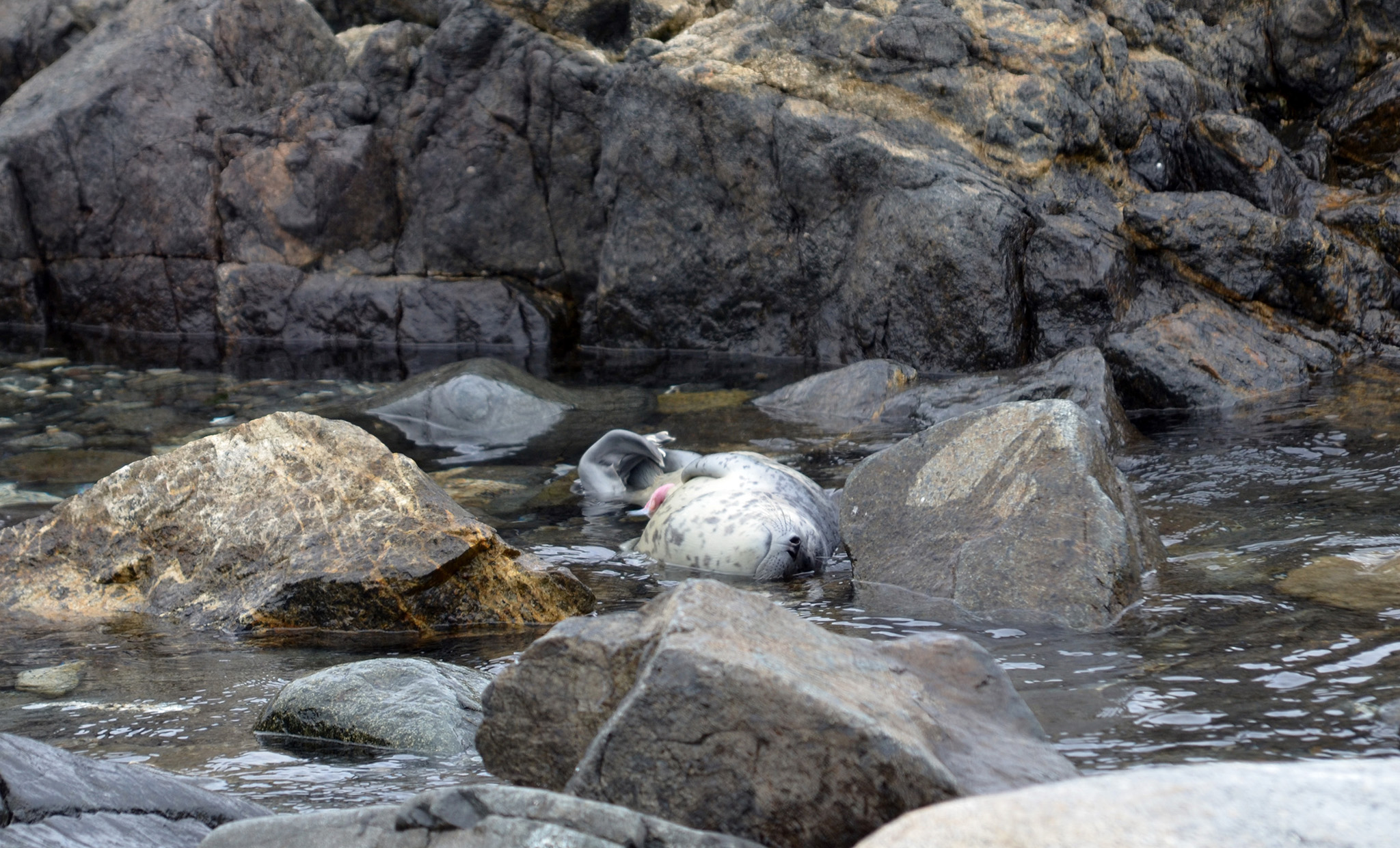
Young harbour seal pup on East Beach this afternoon with its umbilical cord still attached.
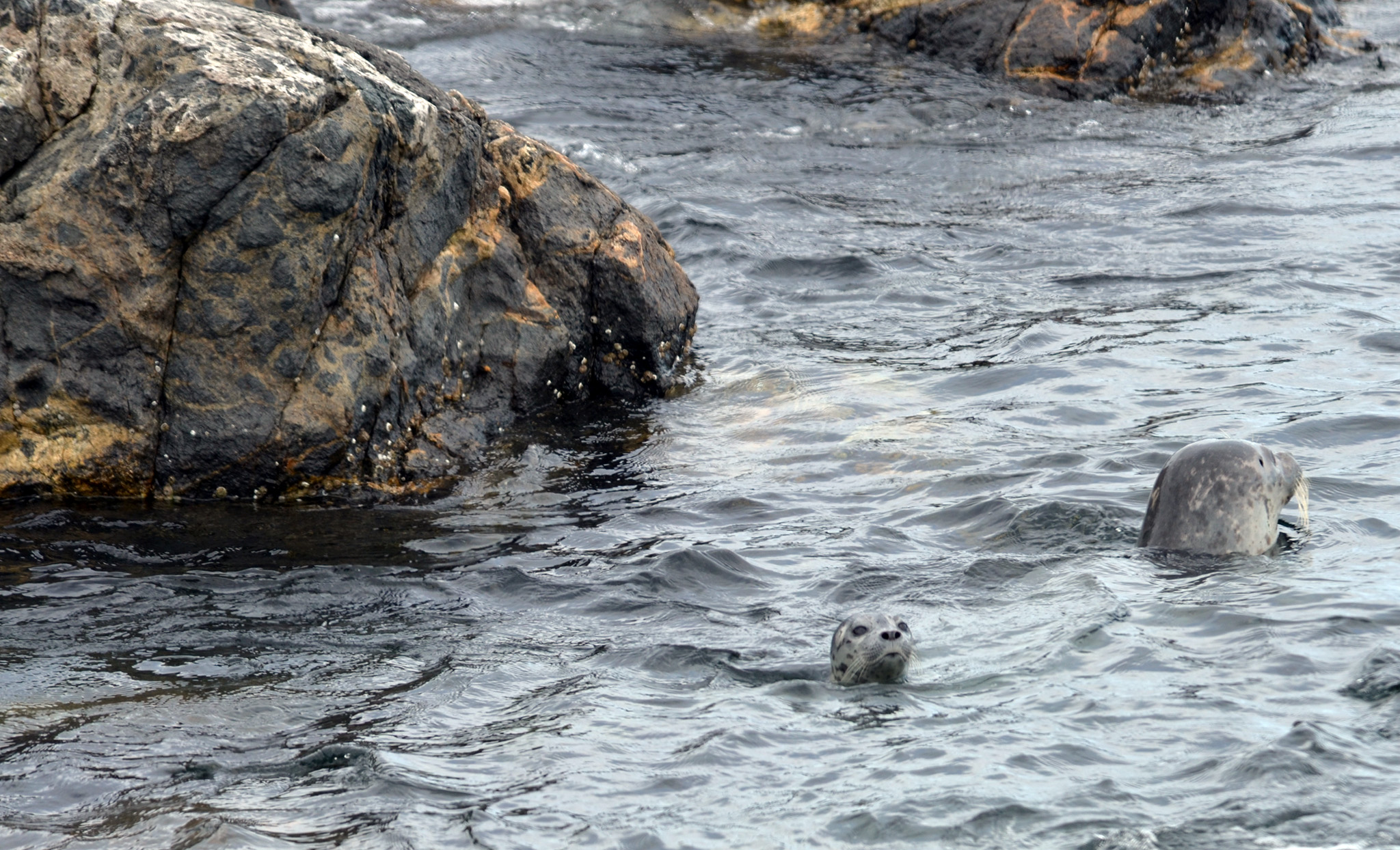
Same young pup swimming away with its mother.
Vessels
- Ecotourism: 24
- Private: 3
Weather
Partly cloudy. Winds from the west and southwest, calm to 15 knots. Daytime temperature 14 to 17 degrees.
Banded gulls CORRECTION
Wildlife notes
One of the banded gulls observed in June was misidentified. The lighting was bad and a brown band appeared black in colour. I was asked to rephotograph the gull to confirm the colour but it took a while for the bird to return. Now it seems to be a regular visitor to the Energy Building. The misidentified gull who was banded in Haida Gwaii has been replaced with a gull who was banded in Port Renfrew. It is not so much of a long distance traveler and comes in second to gull from Tofino for furthest distance away. Below is the updated Race Rocks banded gull summary.
To learn more about the Salish Sea Gull Project and read their annual reports see this post. To report a banded gull follow this link.
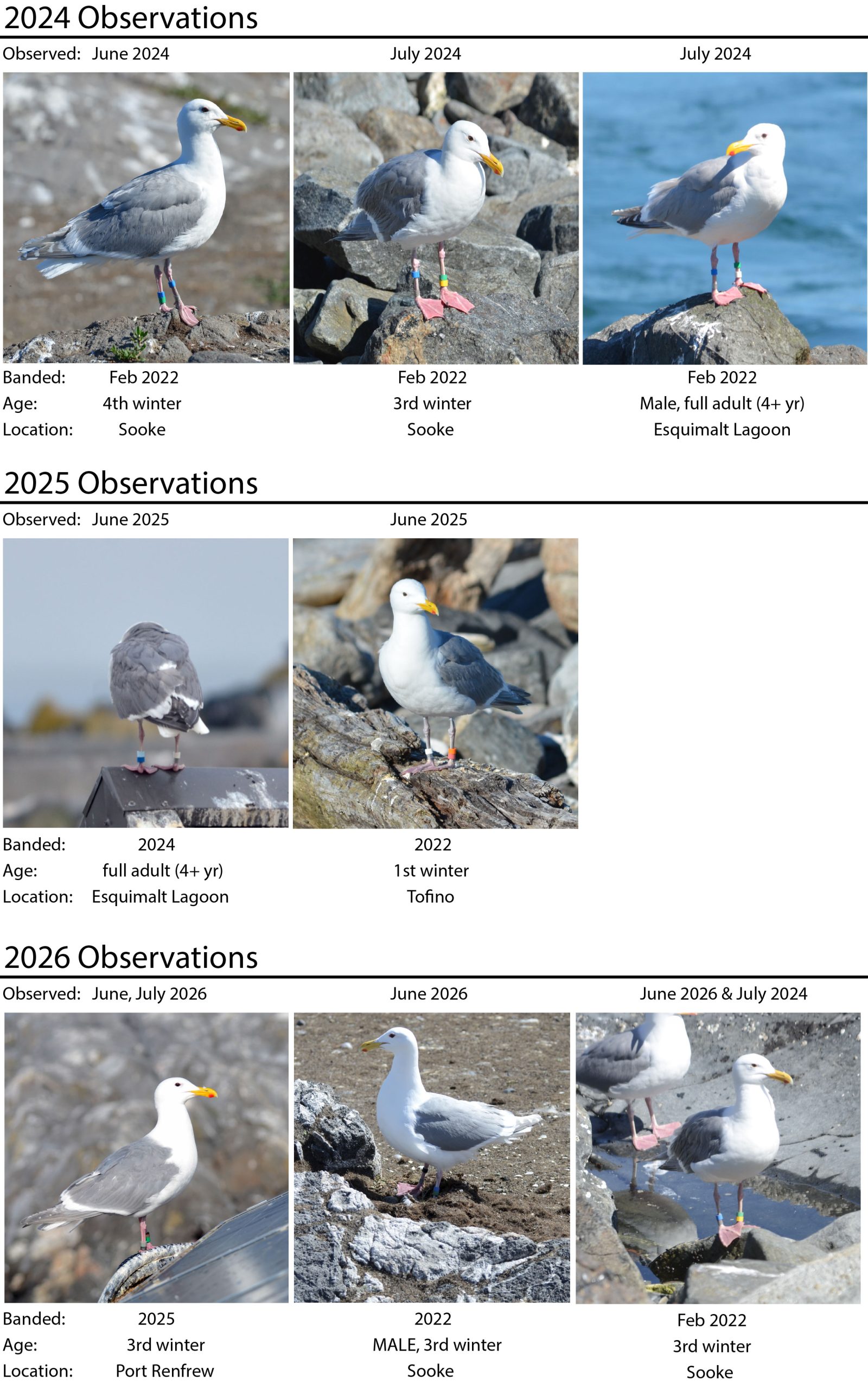
Facility work
- cleaned the solar panels
- ran the desalinator
- worked on the compost
- vacuumed flies
Vessels
- Ecotourism: 14
- Private: 0
Weather
Clear skies. Winds westerly 18 to 35 knots. Daytime temperature 12 to 18 degrees.
Where’s Waldo?
Wildlife notes
The gull chicks are perfectly camouflaged. When young their yellowish coats blend with the grass and as they age and turn greyer they blend into the stones. But it does them little good here. From what I have seen, the leading cause of chick death is not capture by eagle. It is their murderous conspecifics and I think it is not just about the calories. These small chicks seem much less of a meal compared to what I have seen a distressed gull regurgitate.
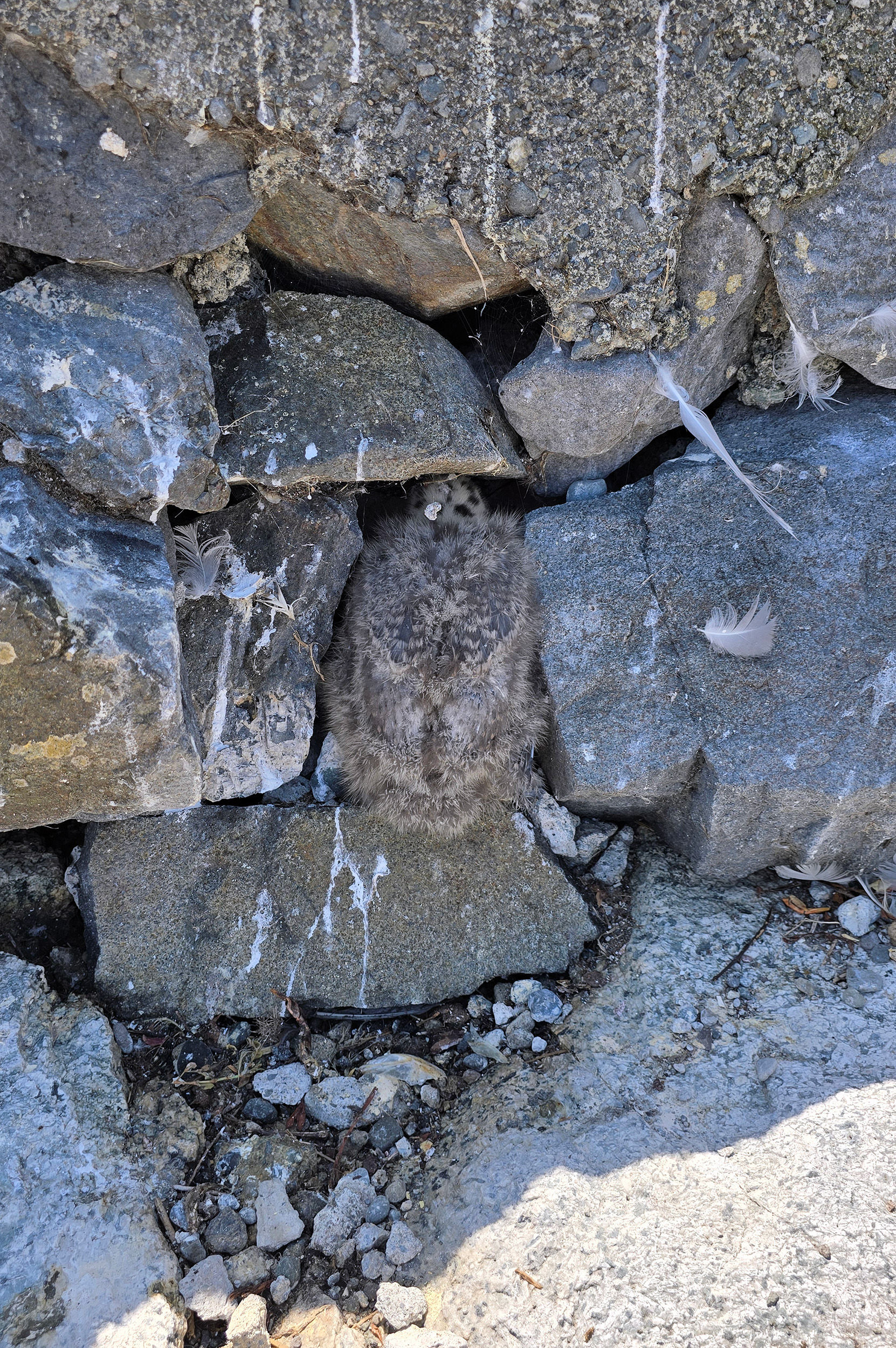
Where’s Waldo? I stopped by this rock wall yesterday to take a photo and didn’t see the chick pretending to be a stone (image center). It was the persistent cries and agitation of a nearby gull that made me inspect the surrounding area.
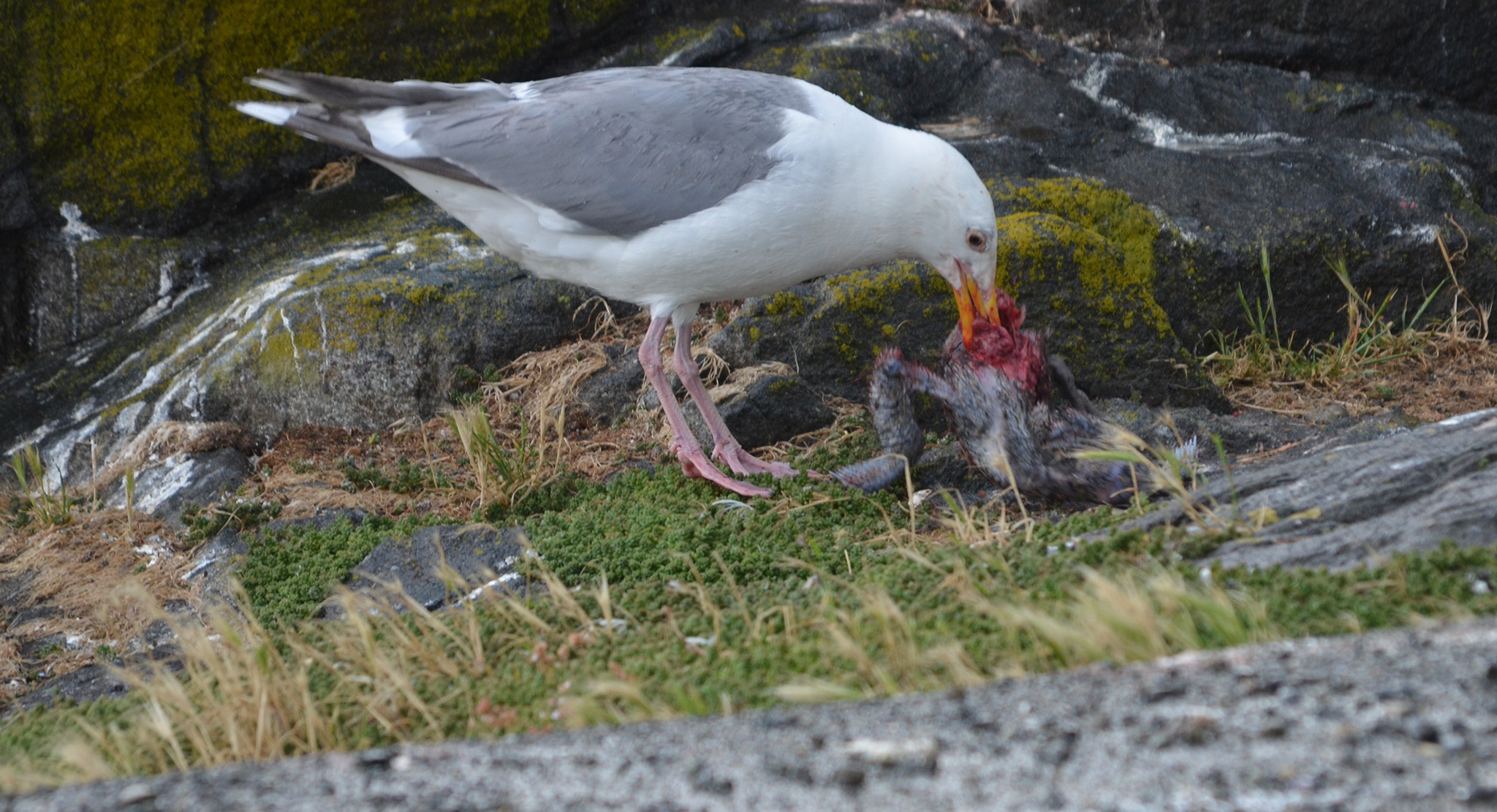
A gull chick being eaten today at the edge of the cistern.
-
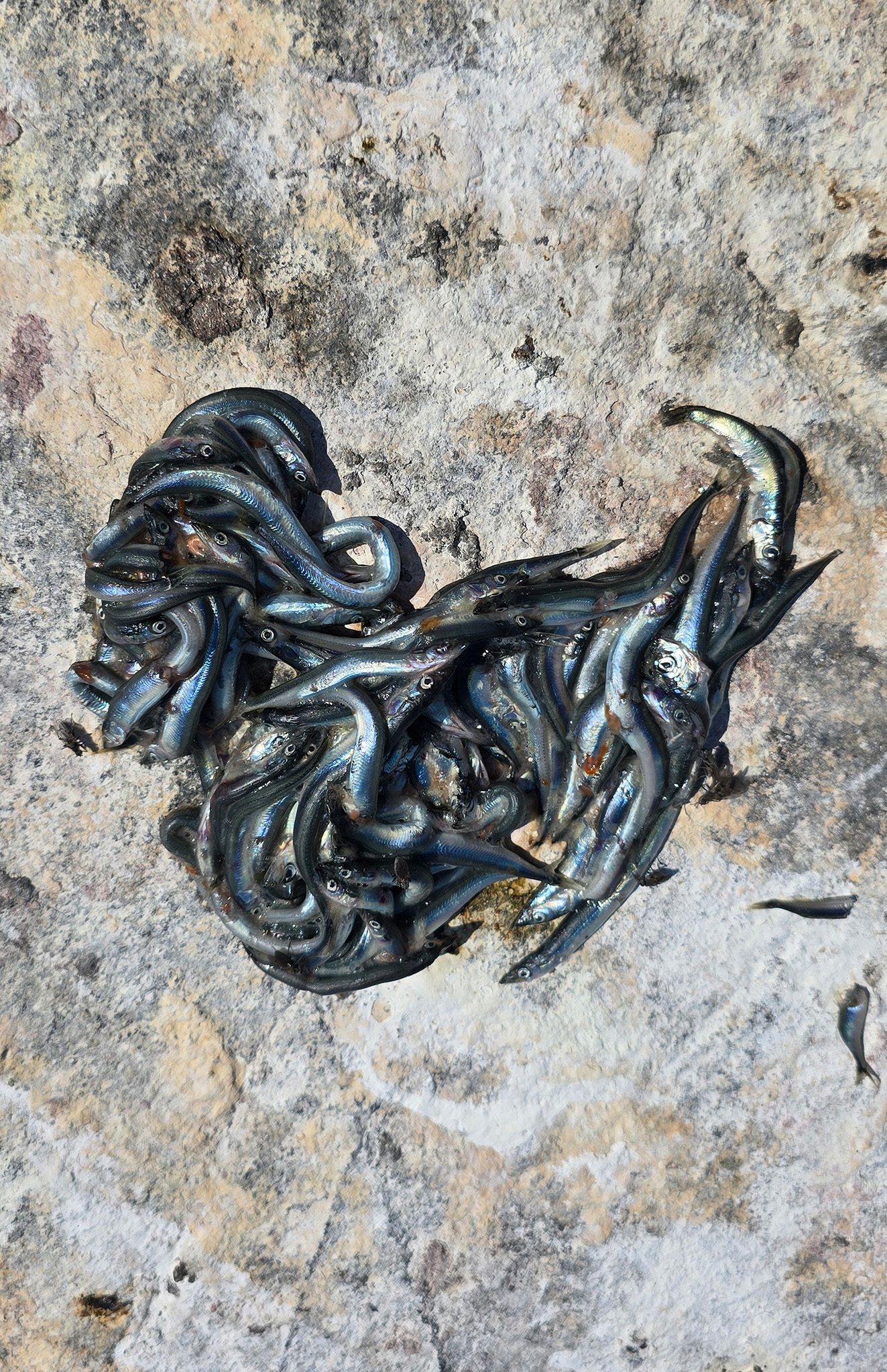
- The stomach contents regurgitated by a distressed gull (July 22 2023).
-
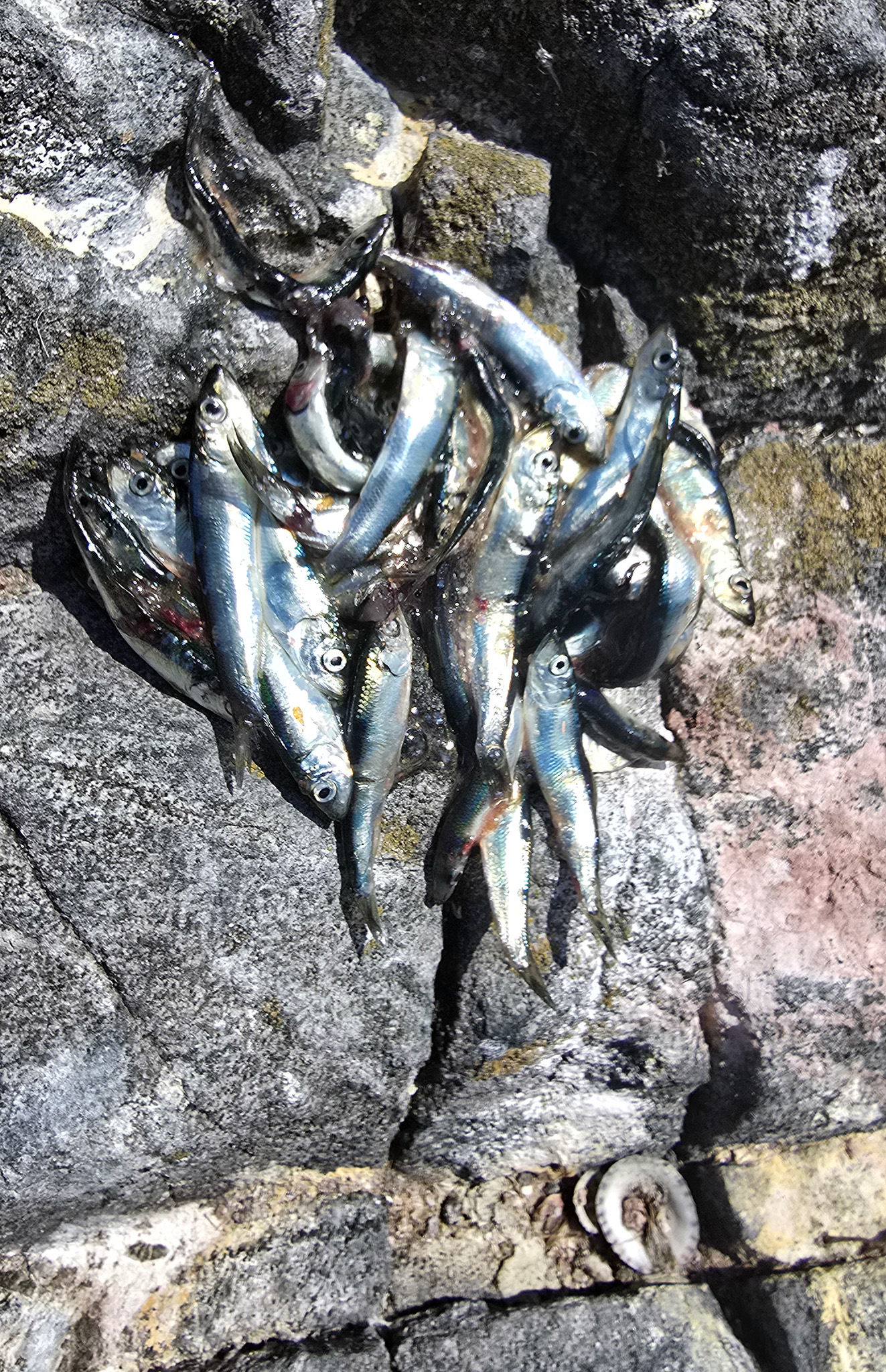
- Another nice sized pile of fish (July 22 2023).
Facility work
- cleaned solar panels
- general cleaning
Vessels
- Ecotourism: 6
- Private: 0
Weather
Partly cloudy. Winds westerlies 17 to 35 knots. Thunderstorm in the afternoon. Daytime temperatures 14 to 17 degrees.