Time to leave?

Wildlife notes

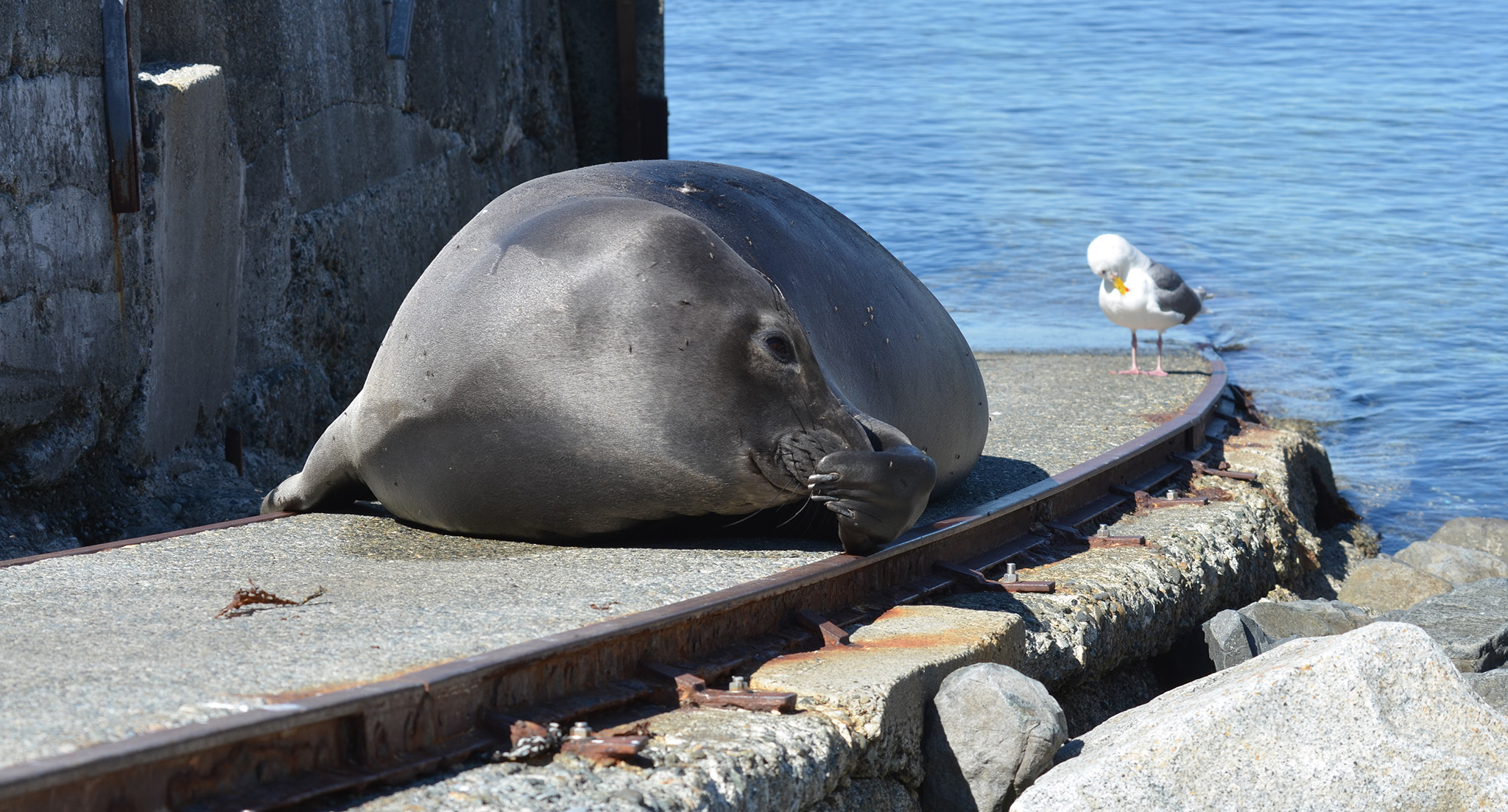
The female elephant seal here has finished her molt and could be heading back to sea any day now. She has been fasting since she arrived in May and has lost a lot of weight during her catastrophic molt where shed and regrew all of her skin and fur.

I believe this female was also here last year at this time as she has the same star shaped scar on the her upper back near her left shoulder. Last year she arrived on May 18, spent 18 days preparing for her molt, spent two weeks shedding and another 18 days preparing for her departure. It wasn’t recorded in the logs this spring when she arrived but if we add 18 days to the day she finished molting this year, which was June 14th, she would leave around July 2nd.  In previous years they seemed to produce a lot more white froth (see June 25 2024 to read about their talents and the white froth) from their nose before they left.  I will miss her and I stare at her a little longer each day as I know her time is coming.
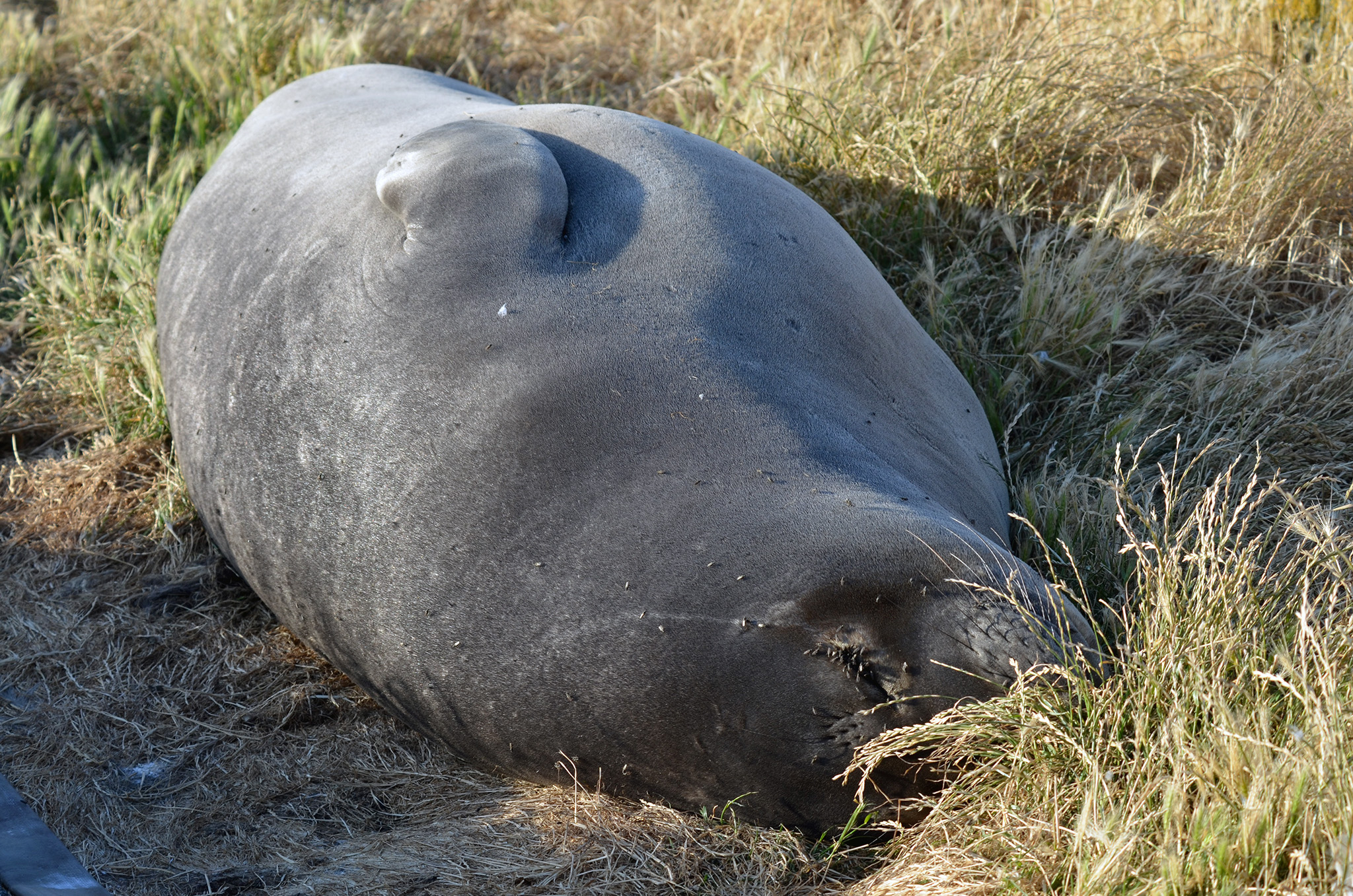
Female elephant seal. I am sure she won’t miss the flies.

Facility work

Greg and Richard came by today for a grocery run and with new line to replace the fraying flag pole halyard. Just in time for Canada Day! I will save the photo of that for tomorrow.

  • cleaned solar panels
  • weeded more areas
  • replaced flag halyard

Vessels

  • Ecotourism: 8
  • Private: 2

Weather

Skies partly cloudy. Winds variable 4 to 16 knots. Daytime temperatures 12 to 13 degrees.
June 2026 Seawater Data

DAILY SEA SURFACE TEMPERATURE AND SALINITY OBSERVATIONS
Institute of Ocean Sciences, North Saanich, B.C., V8L 4B2
Station: RACE ROCKS
Observer: Mike/Christine Month: June
YSI ID: #9 Year: 2026
YSI YSI
Temp Sal
Day Time ºC ppt
1 16:05 9.9 31.5
2 15:57 10.1 31.4
3
4
5 17:35 10.2 31.1
6 18:25 10.2 31.2
7 19:30 10.4 31.2
8 20:30 10.5 30.9
9 21:30 10.5 31.0
10 10:30 10.7 30.9
11 11:20 10.7 31.0
12 12:31 10.9 30.9
13 13:40 10.4 31.5
14 13:32 10.1 31.6
15 14:32 10.1 31.6
16 15:30 10.1 31.9
17 16:15 9.5 32.1
18 17:49 9.9 31.7
19 18:45 10.0 31.8
20 19:37 10.8 31.3
21 20:31 10.9 31.1
22 21:10 11.1 30.8
23 21:35 11.2 30.6
24 11:13 11.8 30.3
25 12:12 11.4 30.3
26 13:09 11.4 30.5
27 13:49 11.1 30.7
28 14:29 10.9 31.1
29 14:55 10.7 31.4
30 15:10 10.3 31.6

Gulls hatching and laying

Wildlife notes

Glaucous-winged gulls and their hybrids

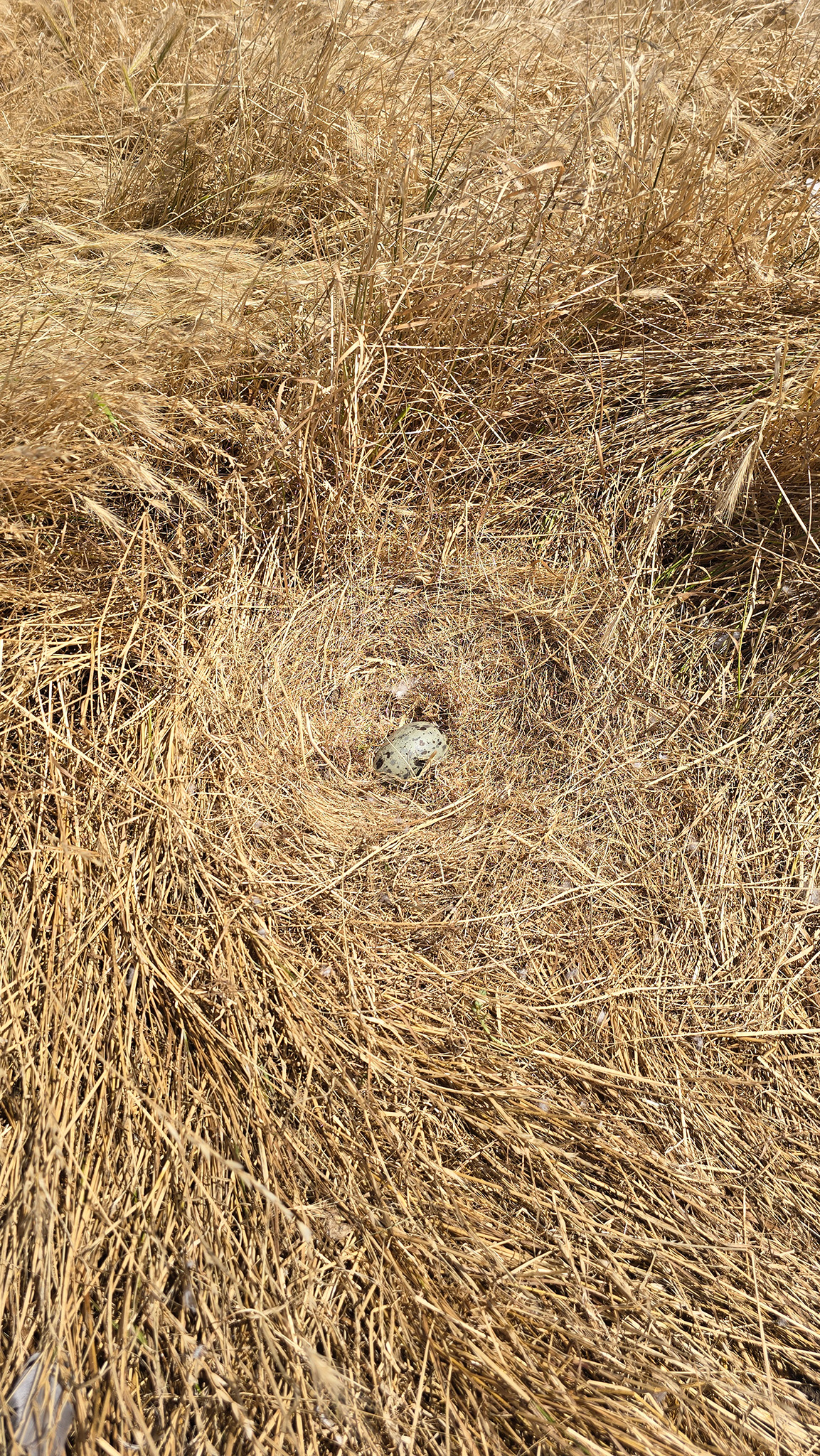
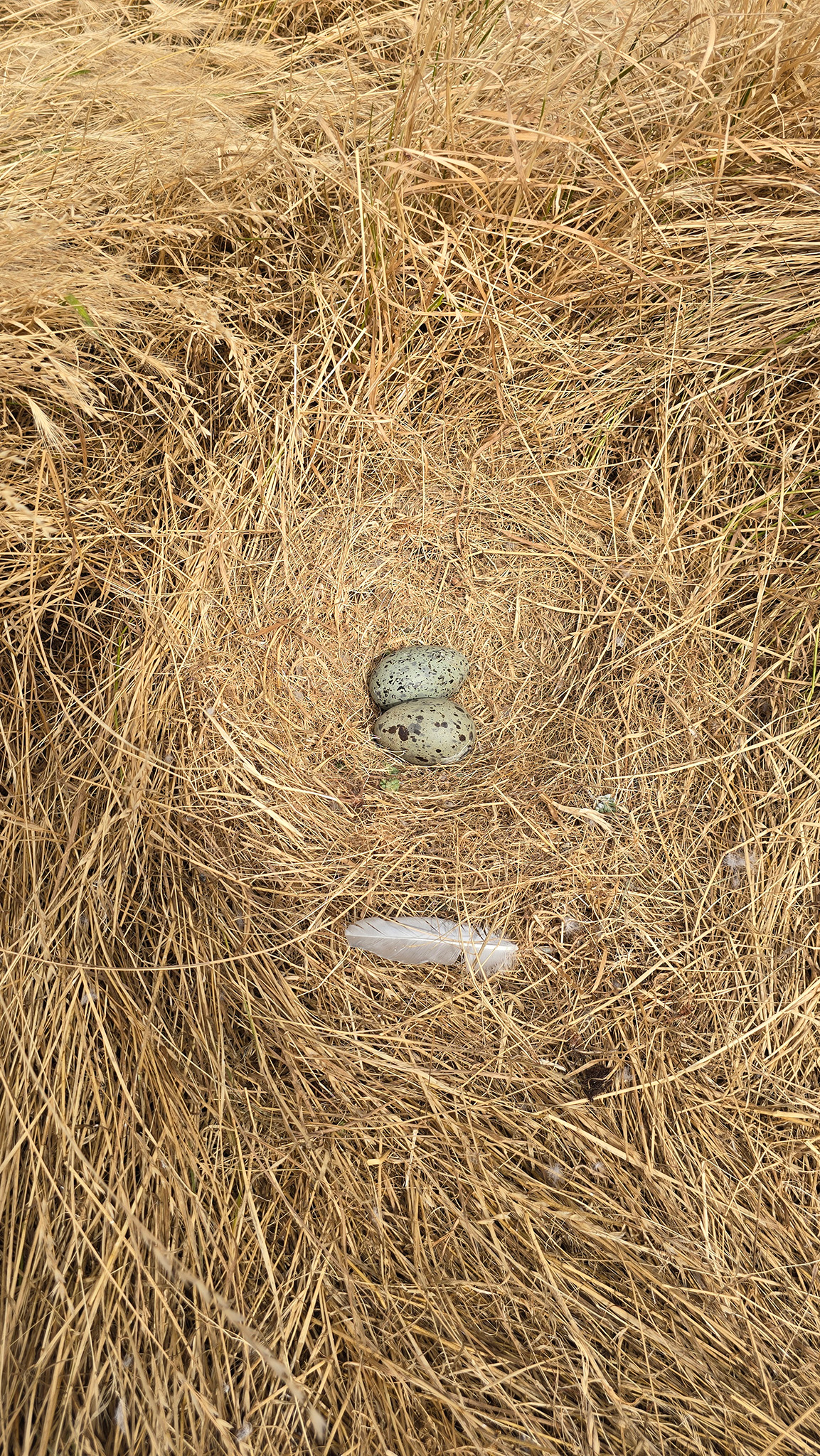
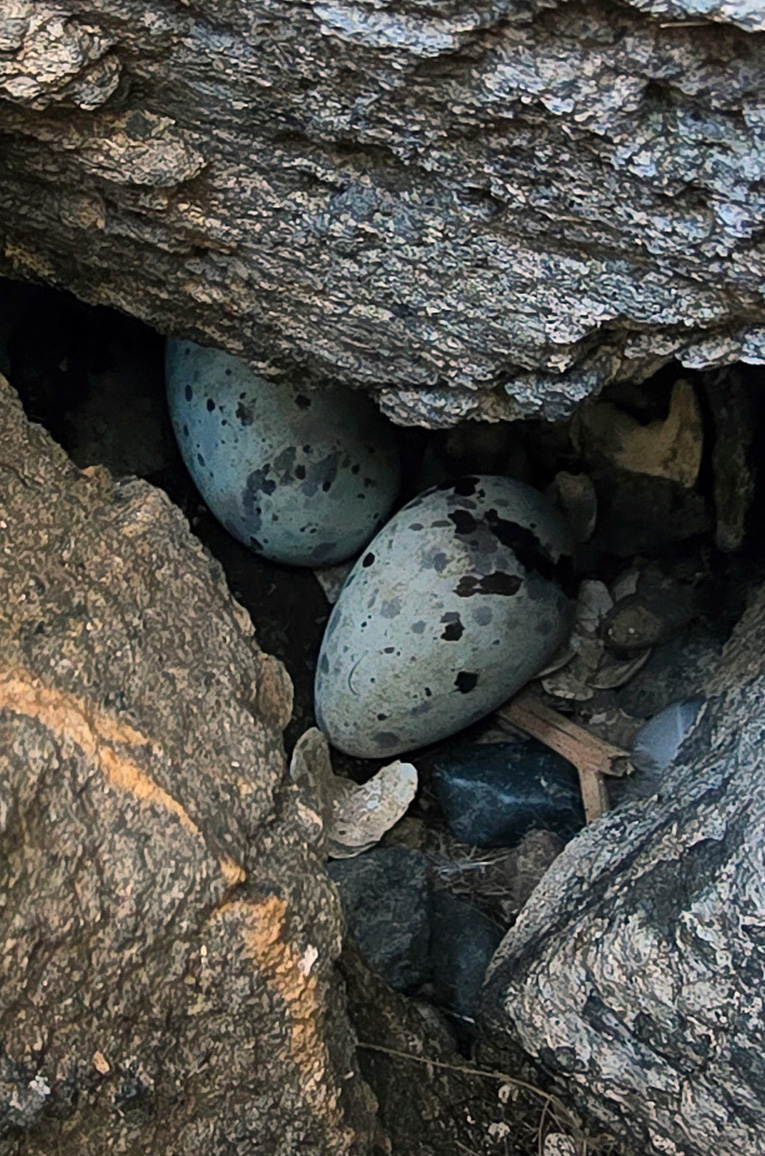
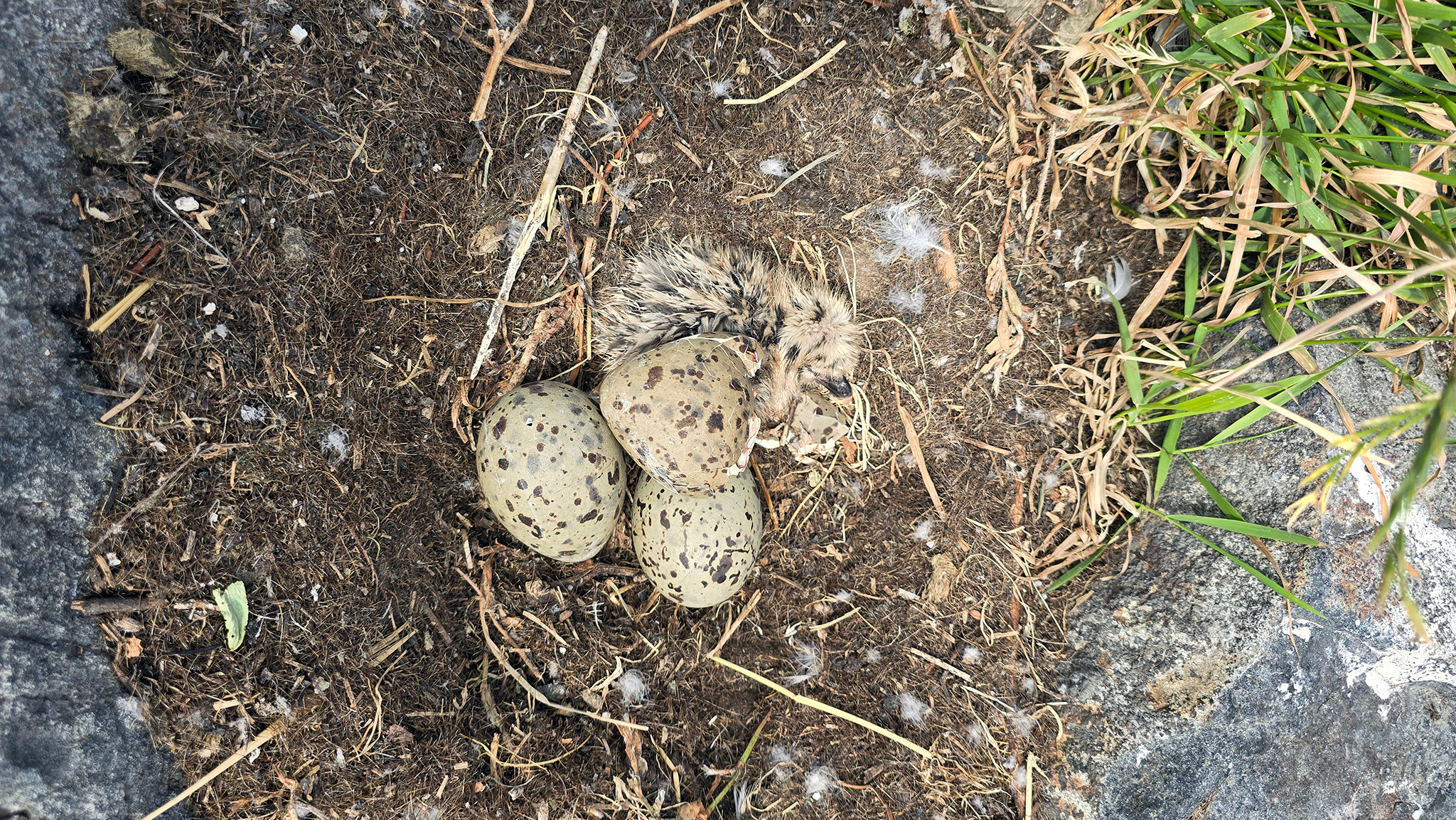
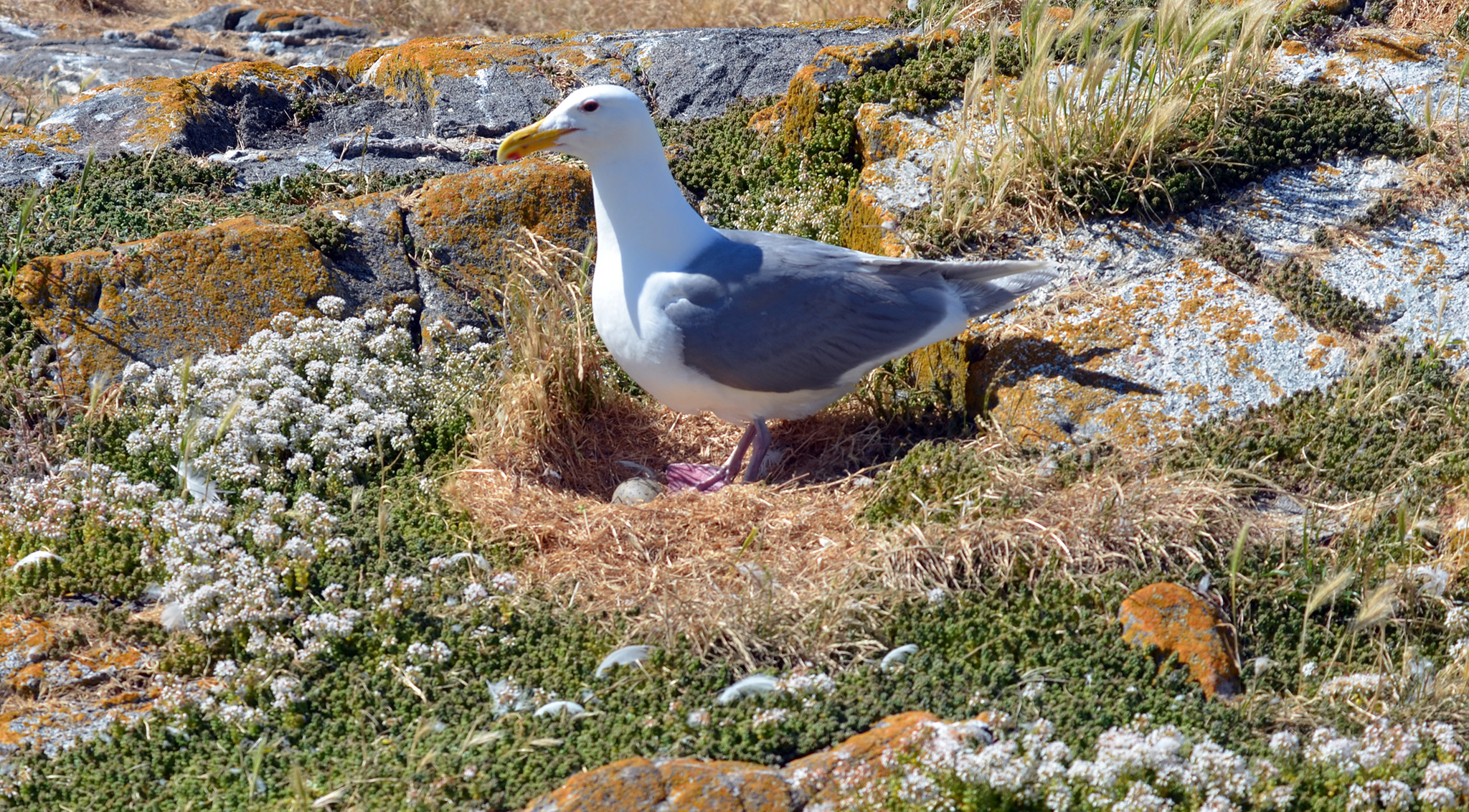
While some gull parents have chicks starting to hatch, others are still laying their eggs.  I think these are the extremes and most chicks will be hatching in another week.  I fear for those chicks who will hatch 26 to 29 days from now. I would prefer to hatch early and grow enough before other chicks and their protective (murderous) parents abound. There is just as much variation in egg laying time as there is in nest shape, materials used, base locations and exposure.  The newely hatched chick is in a nest built up and off the ground with mostly mud and sealion hair.  The photo of the egg laid today is in a nest spun entirely out of grass.

A newly hatched gull chick in a nest at the top of East Beach.

Black oystercatchers

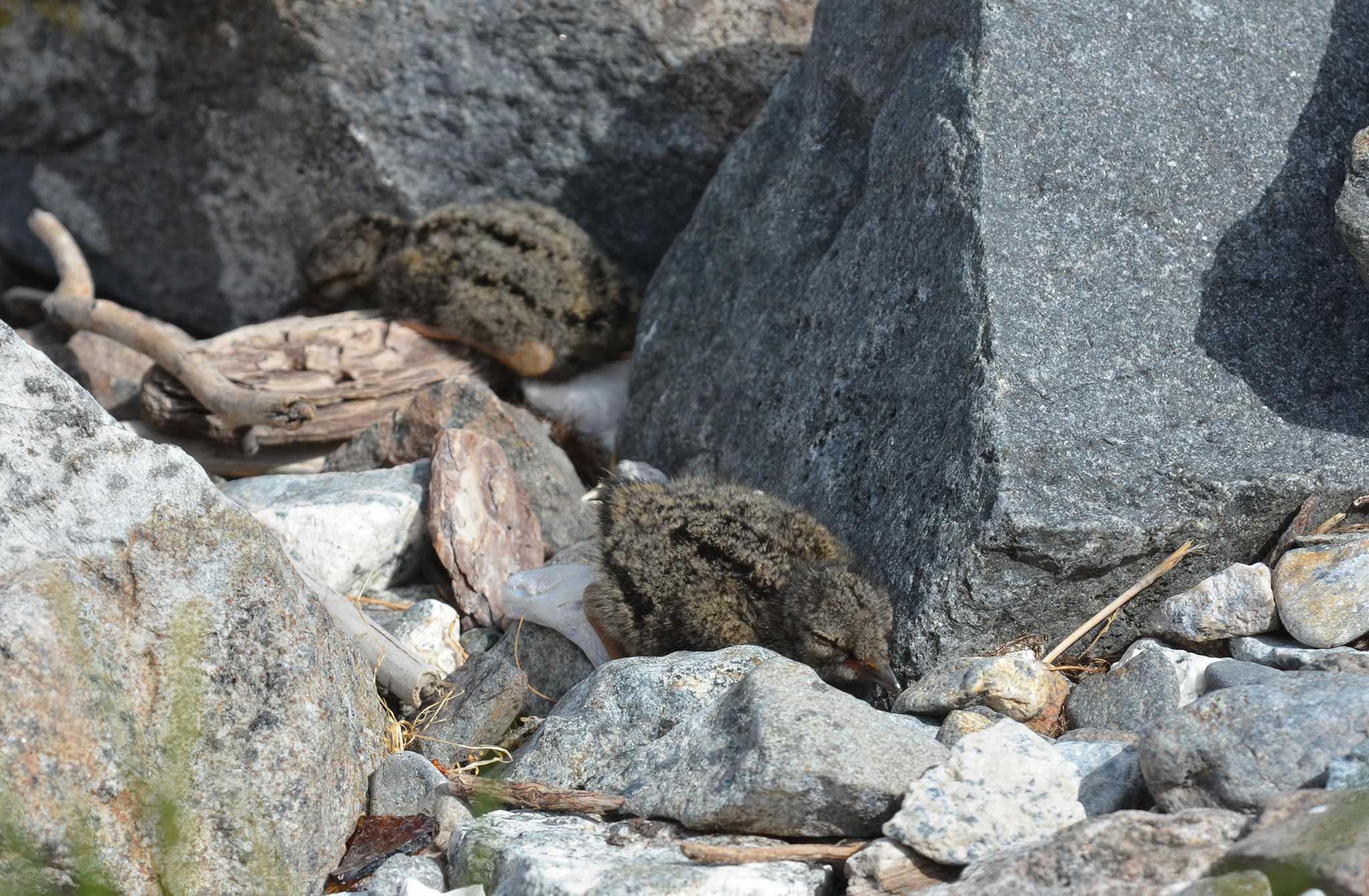
I am sad to announce the Energy Building black oystercatchers only egg was taken yesterday.  The parents have left the area.  Good news is both the East Beach eggs hatched today.  They are very close to the gull nest with the hatched chick shown above so I hope the East Beach parents get their chicks moved before the gull chicks start to wander.

East Beach parents two newly hatched black oystercatcher chicks ordered to lay motionless by their parents.

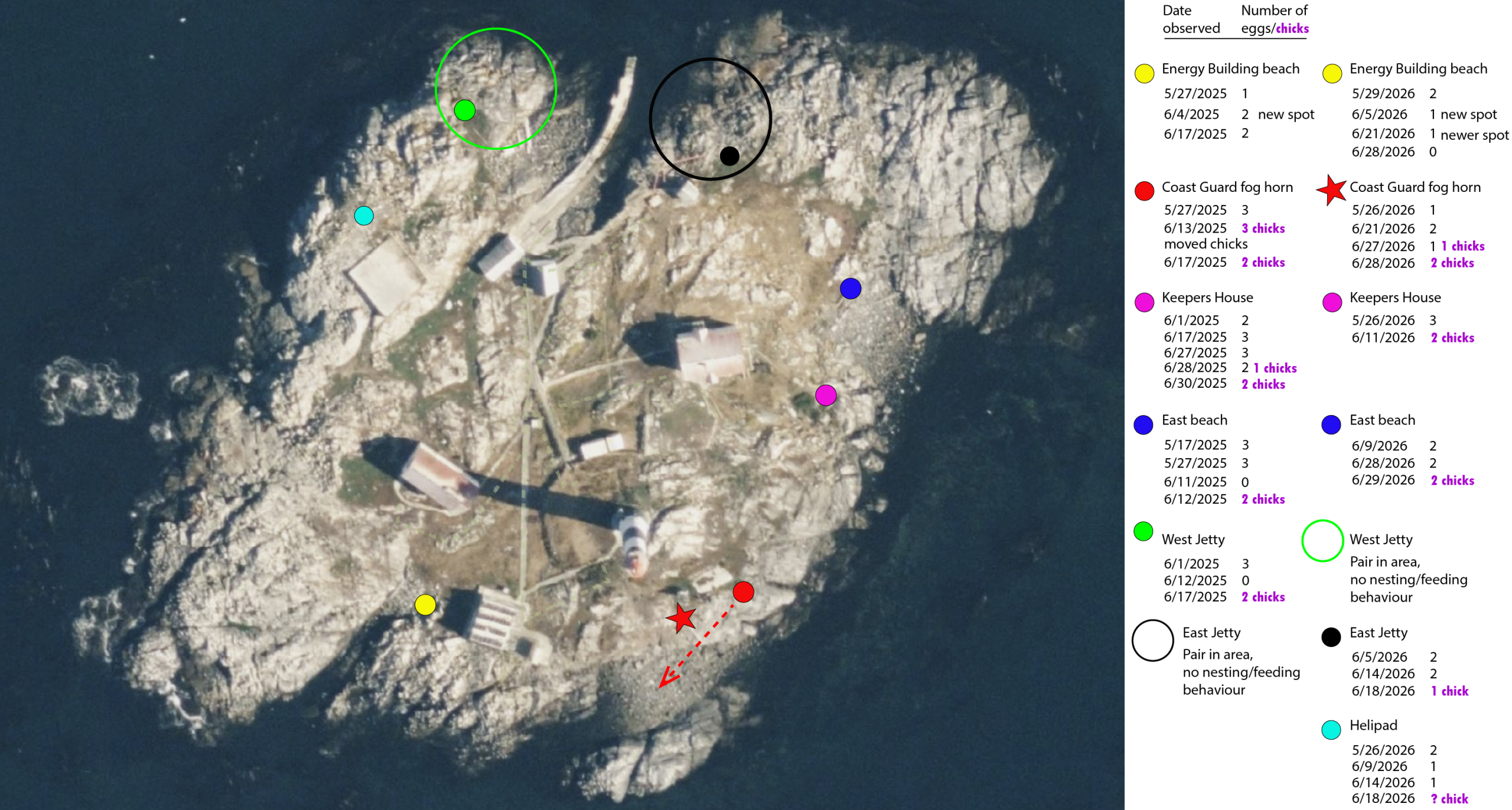
A total of seven oystercatcher chicks have now been visually confirmed from a total of seven paired couples.  The Helipad chick was not observed but assumed to have hatched by the parents behaviour.  The Energy Building pair lost their egg and the West Jetty pair did not lay any. The updated oystercatcher map is below.

Facility work

  • cleaned the solar panels
  • weeding

Vessels

Two people on jet skis blew through the reserve today. Almost as crazy as the person dragging his children around on a inflatable toy.

  • Ecotourism: 14
  • Private: 3
  • Two jet skis

Weather

Partly cloudy. Westerlies 2 to 21 knots. Daytime temperatures 11 to 14 degrees.

Worried

Wildlife notes

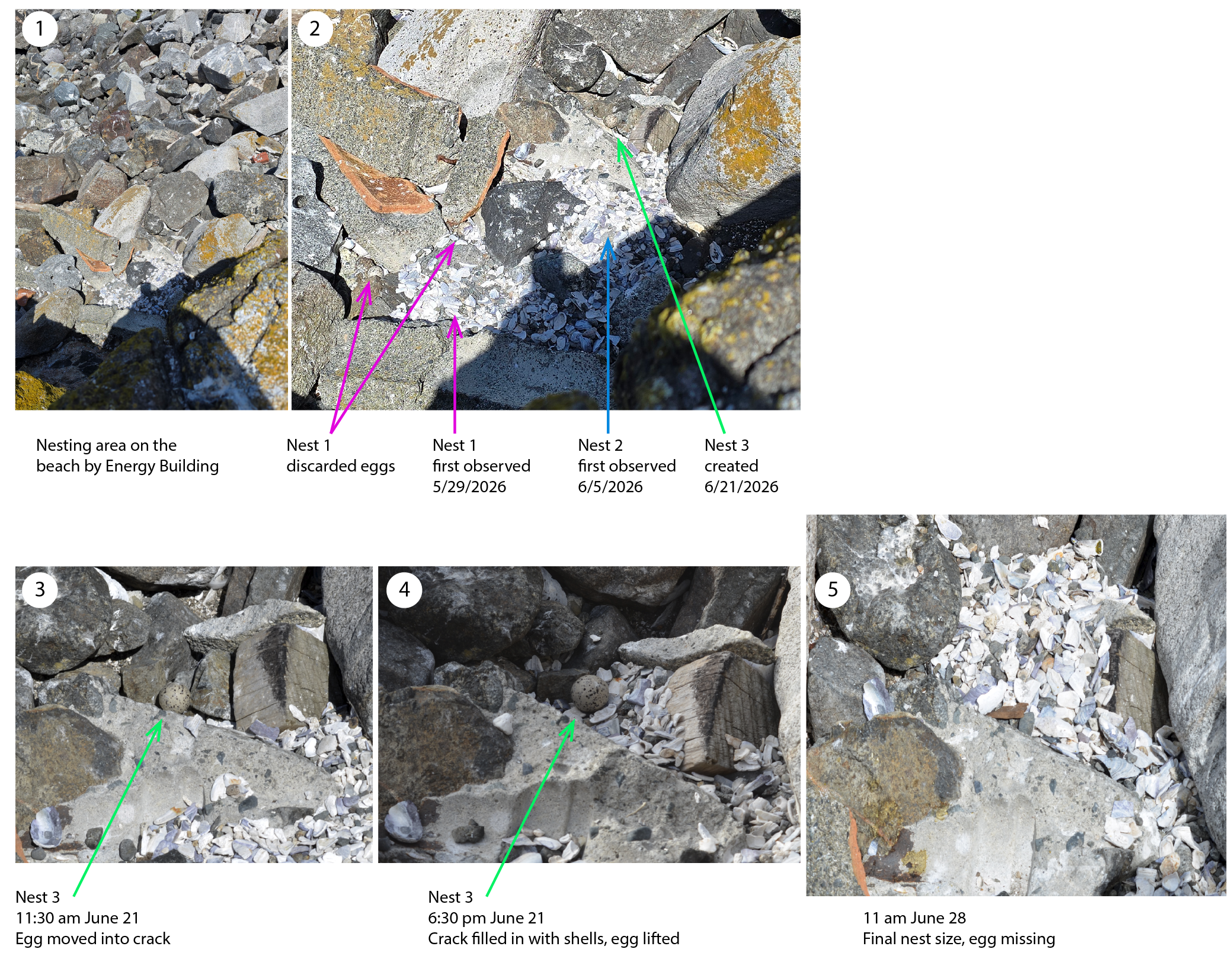
While cleaning the solar panels I noticed a gull near the Energy Building black oystercatcher nest, closer than it would normally be… not a good sign.  These oystercatchers have already had three different nests (see Assiduous for a summary).  What now?  Below is an illustration (click to enlarge) of their three different nest locations (image 1 to 2) and the increasing size of nest three over time (image 3 to 5). I would guess the shells in nest three would be at least six inches deep and all of them in the area could fill a five gallon bucket.

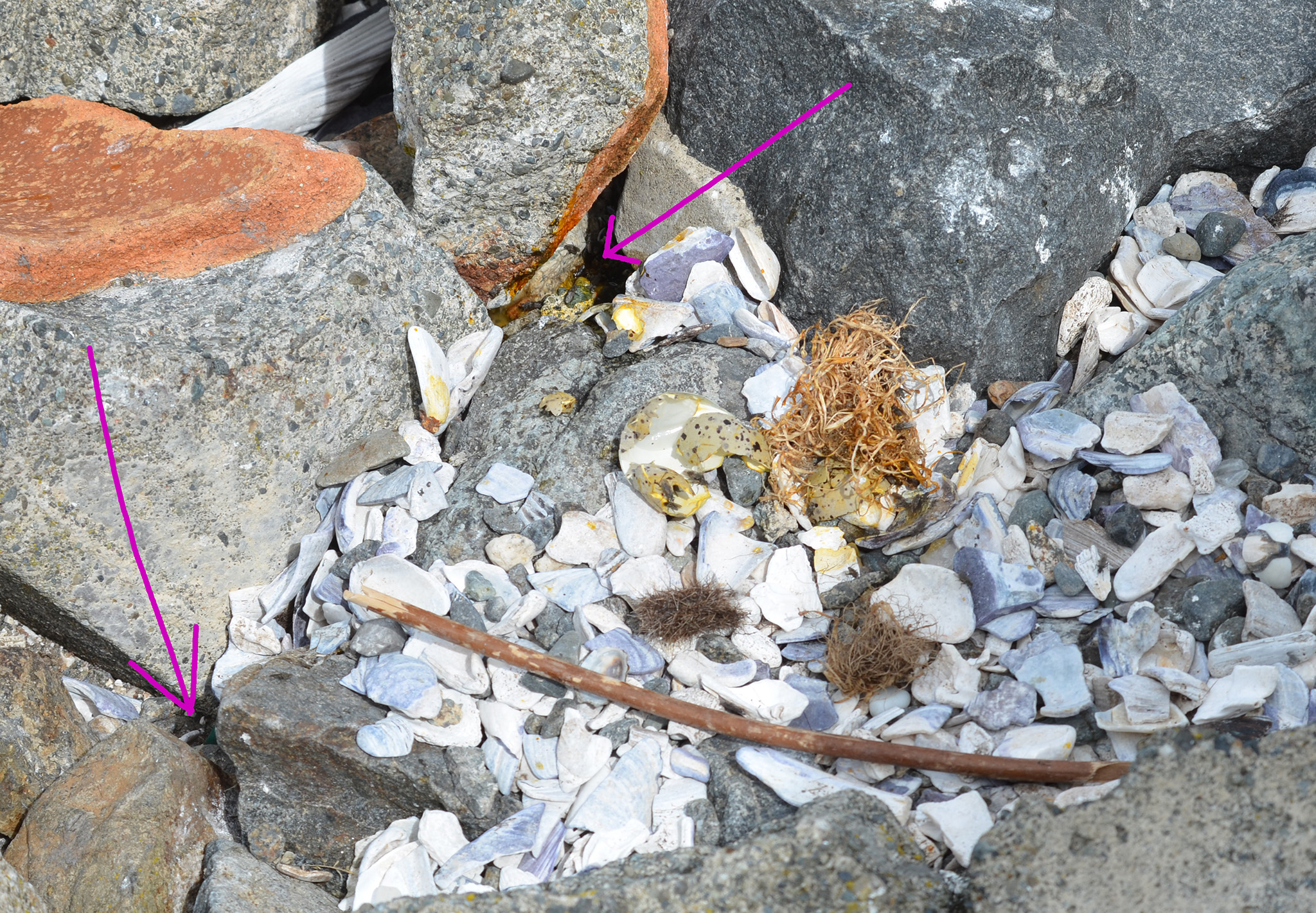
Their single egg was on nest three yesterday. I can’t say if their last egg was eaten or had hatched.  I was away for a few days between observing nest one and two so in terms of timing it could have hatched. The behaviour of the parents (not alarm calling, not together but on other sides of the beach looking to the sea) suggests it was eaten.  There was a crushed shell in the area but from the light yellow colour on the shell inside and on the rocks and its location on nest one, I believe it was one of the two discarded eggs from nest one.  Both discarded eggs are missing.  I will have to watch these parents closely to see if they are feeding or guarding a chick.

Energy Building black oystercatchers nest number one with crushed egg shell in the middle of the nest. The purple arrows show where the discarded eggs from nest one lay until yesterday.


Today I was able to confirm the Coast Guard oystercatchers second egg hatched. They are feeding two little chicks, one and two days old.  They have been moved further away from the gull nests and near the right kind of cover for the chicks.

Coast Guard oystercatcher parent with two chicks as see from the top of the lighthouse. I am certain their eyes are so good they can see me moving up there. They are named after the Coast Guard who maintains the nearby fog horn and solar panel installation.


Facility work

  • cleaned solar panels
  • weeding

Vessels

It was a busy day on the water.  There are a lot of whales around but all out of sight for me :(

  • Ecotourism: 22
  • Private: 9

Weather

Skies clear. Clouds distant. Winds westerly 10 to 22 knots. Daytime temperatures 11 to 15.

June 27 Census

Mammals:

  • California sealion: 1
  • Stellar sealion: 1
  • harbour seal: 214
  • elephant seal: 1

Birds:

  • gulls: 621
  • cormorant: 20
  • black oystercatcher: 14
  • pigeon guillemot: 172
  • Canada goose: 2
  • bald eagle: 1
  • harlequin duck: 1

Wildlife seen this week inside the reserve but not observed today include: Caspian tern.

Wildlife notes

The Coast Guard black oystercatchers have hatched a chick with the second one just starting to peck its way out. Once all the chicks have hatched and they leave the nest, observing, photographing and even counting them will be difficult and time consuming… sitting in one spot for a long time swatting at flies, being far enough away that the parents are relaxed but close enough that you don’t need a spotting scope.  Unlike human children, the chicks are remarkably obedient. Just one peep from the parent and the small, well camouflaged chicks run for cover between the rocks.  I still have not been able to confirm how many of the Keepers House chicks have survived. So far I have only seen one.

The Coast Guard black oystercatchers newly hatched chick and their second egg. One of the black marks on the egg is a hole created by the chick inside.

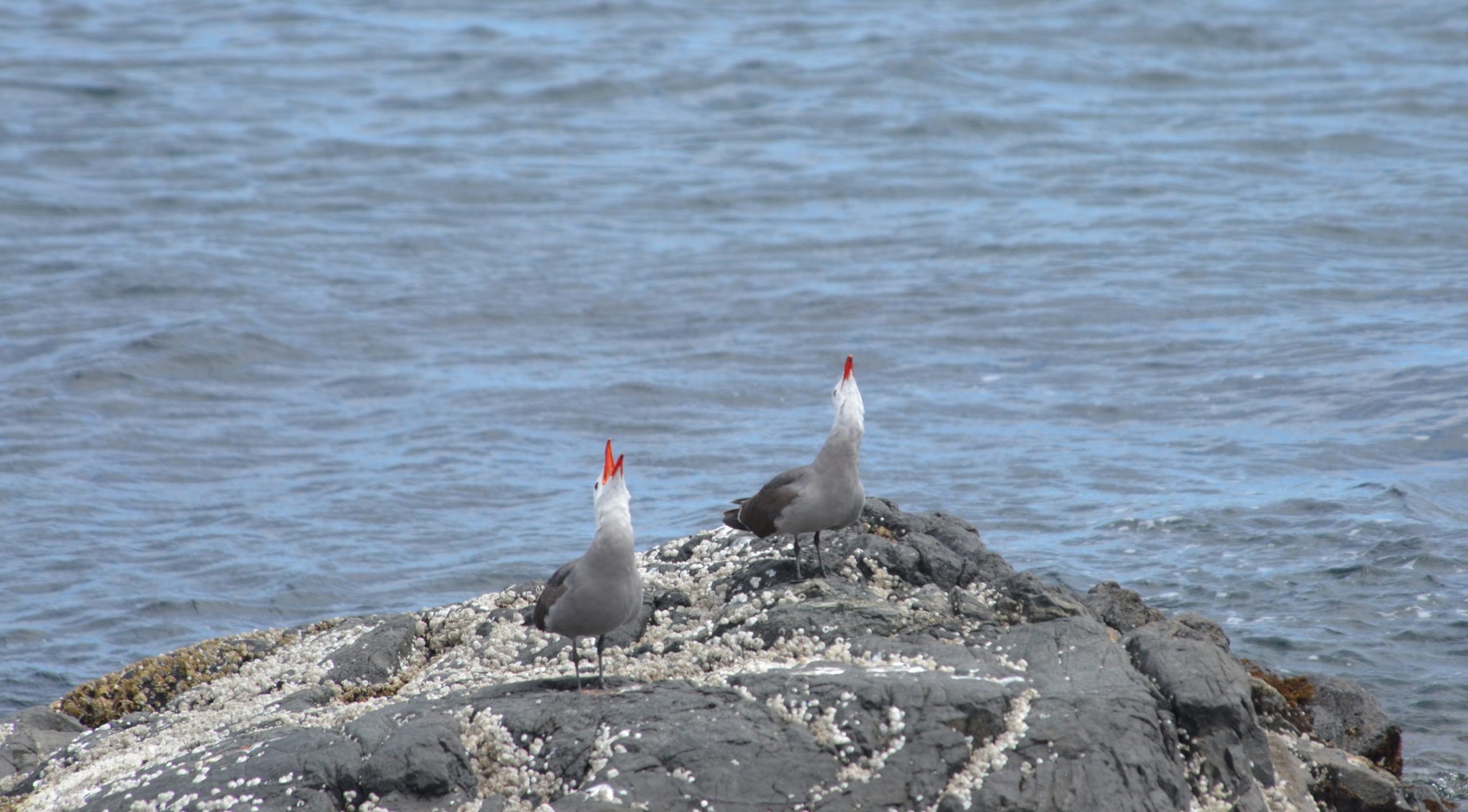
There was a group of 20 Heermann’s gulls on the south shore today.  A classy gull.  It is well dressed and directs its laughter like calls to the skies instead of wildly shrieking in any which direction at any one that will listen.

Two Heermann’s gulls

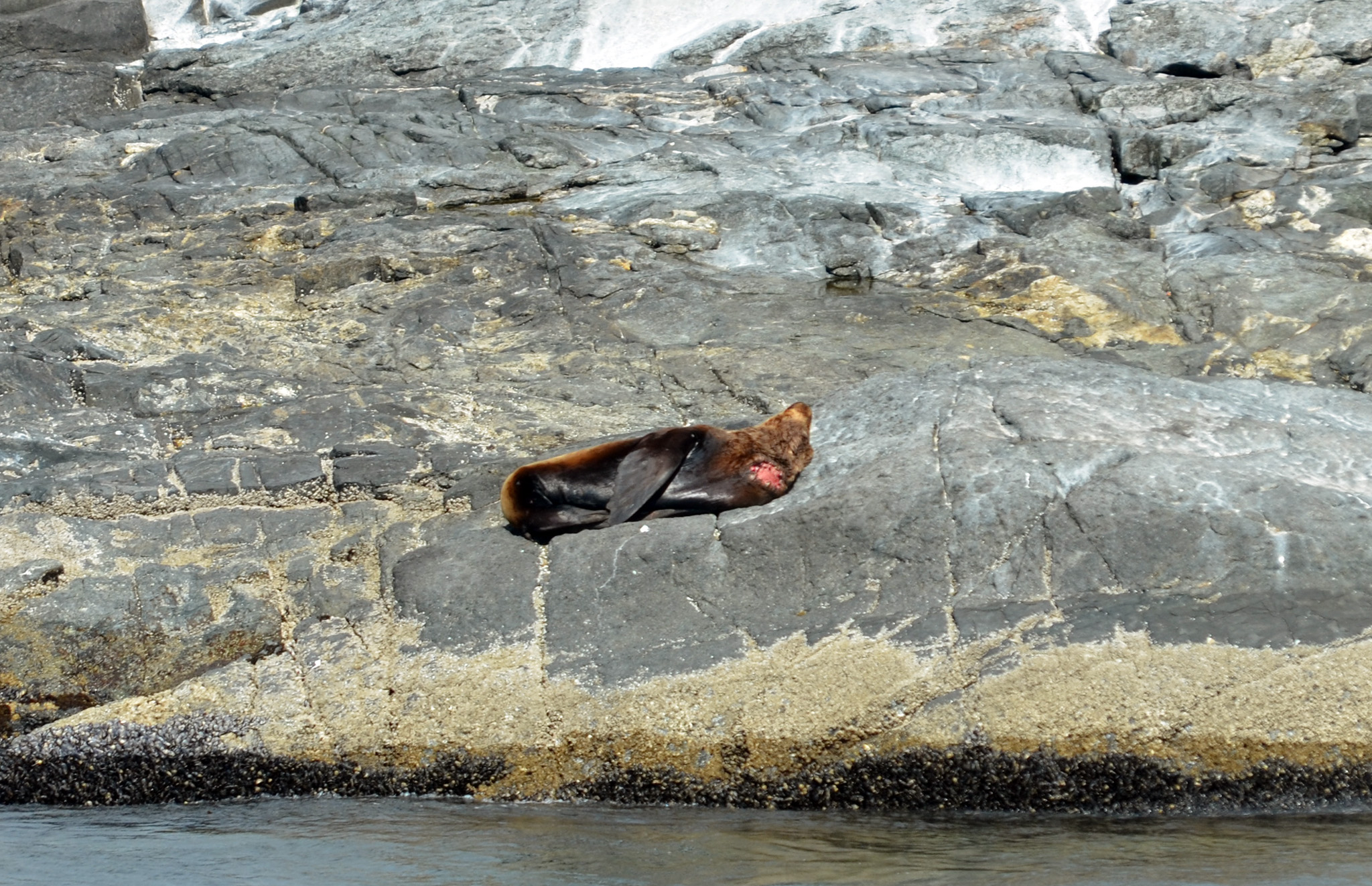
The sealion numbers have been very low the past weeks. Only two sealions were observed today. One was obviously wounded.  I don’t know why the other one isn’t out with the rest of the sealions gorging on fish.

Wounded sealion on Middle Rocks.

Facility work

  • did not clean the panels today, yipee! The generator ran early this morning bringing the batteries to 100%.  Starting with a fully charged battery and sun today, the dirty panels kept the batteries at 99% all day.
  • weeding walkways
  • general cleaning

Vessels

  • Ecotourism: 13
  • Private: 1

Weather

Sunny with scattered clouds. Winds westerly 16 to 24 knots. Daytime temperatures 11 to 15 degrees.

Tools

Wildlife notes

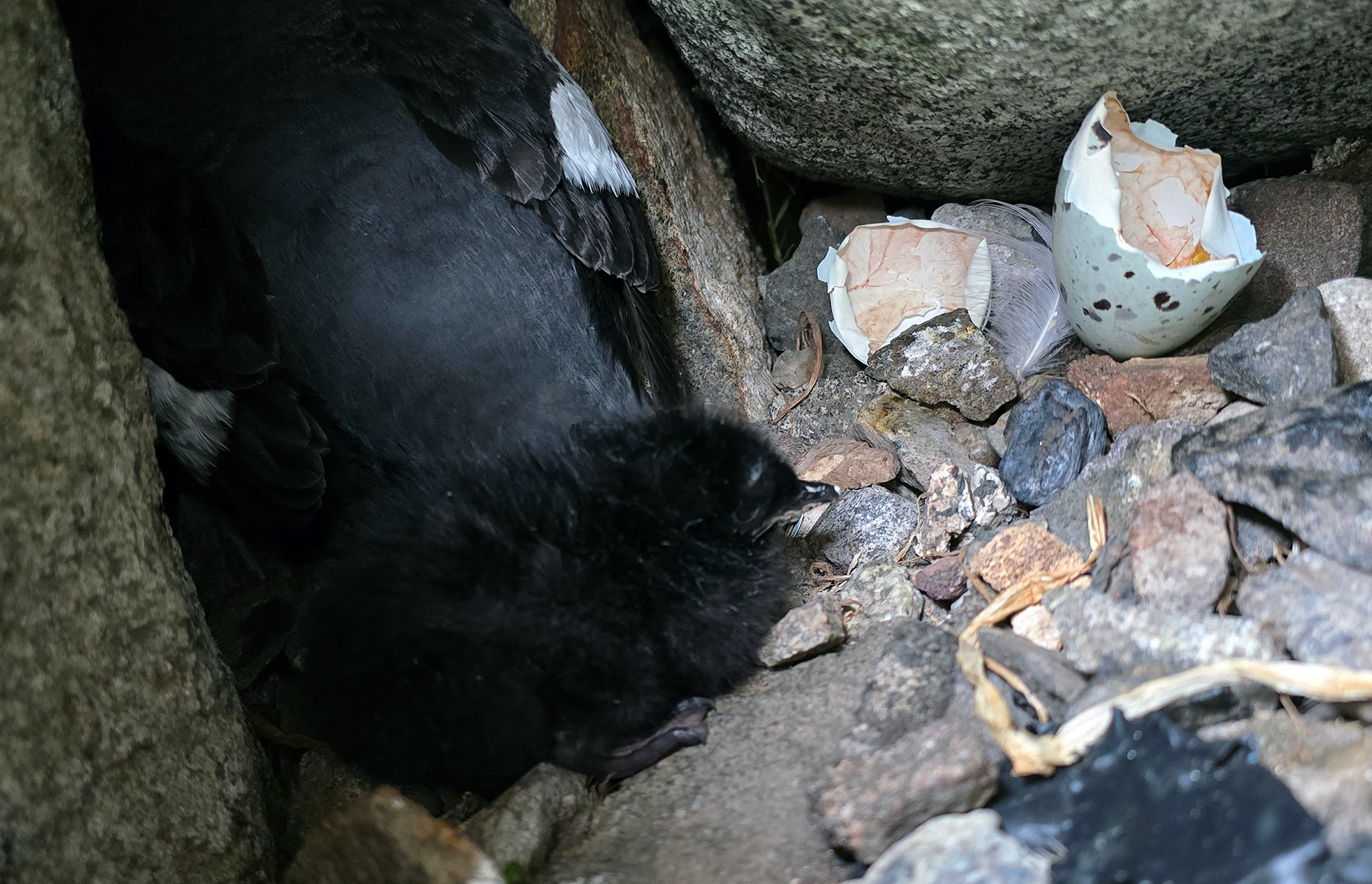
I checked the Keeper’s House pigeon guillemot nest again today. The egg shell pieces have been moved to the side.  The day old chick is all black including its feet.

The day old pigeon guillemot chick in the wall burrow beside the Keepers House.

Facility work

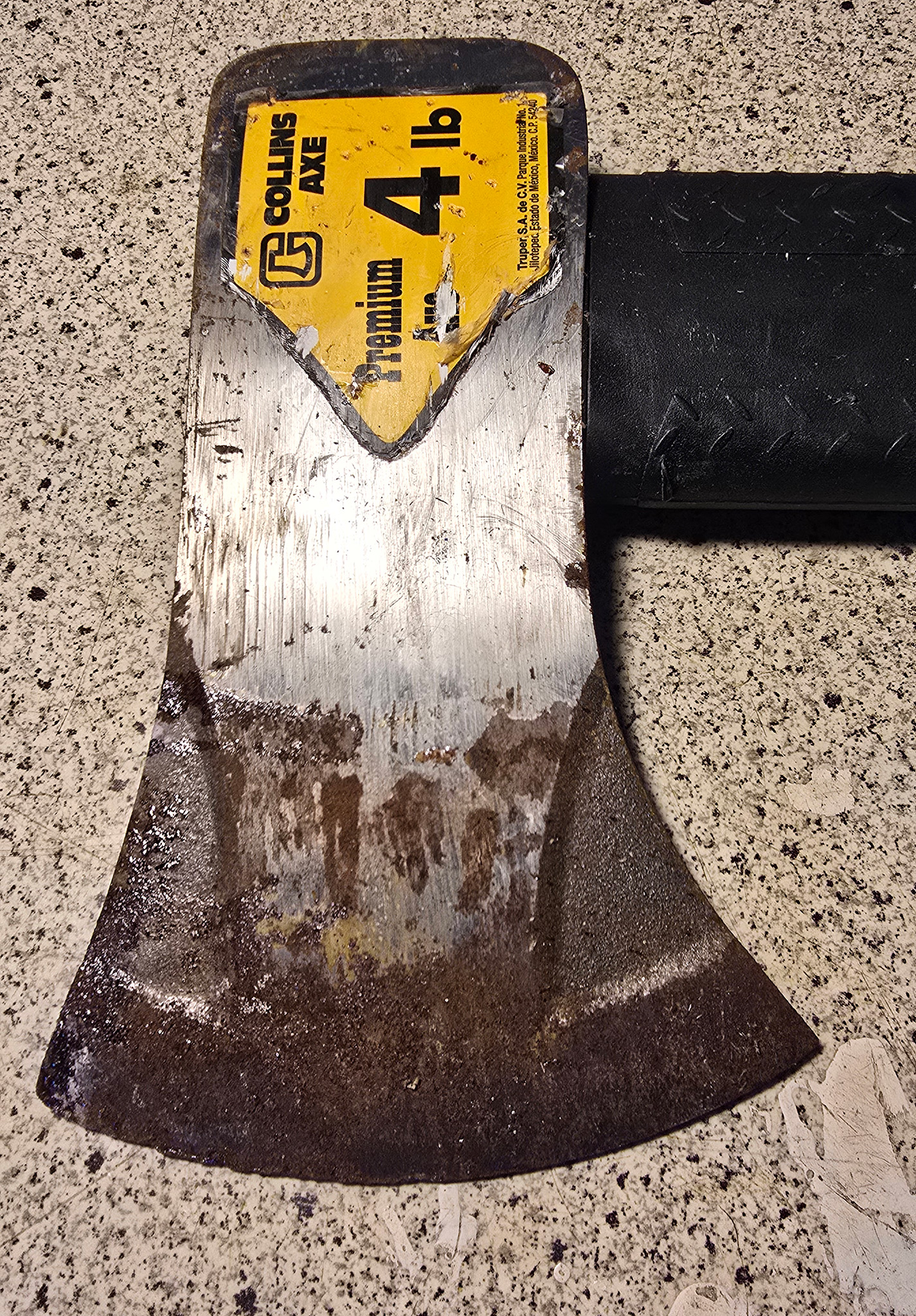
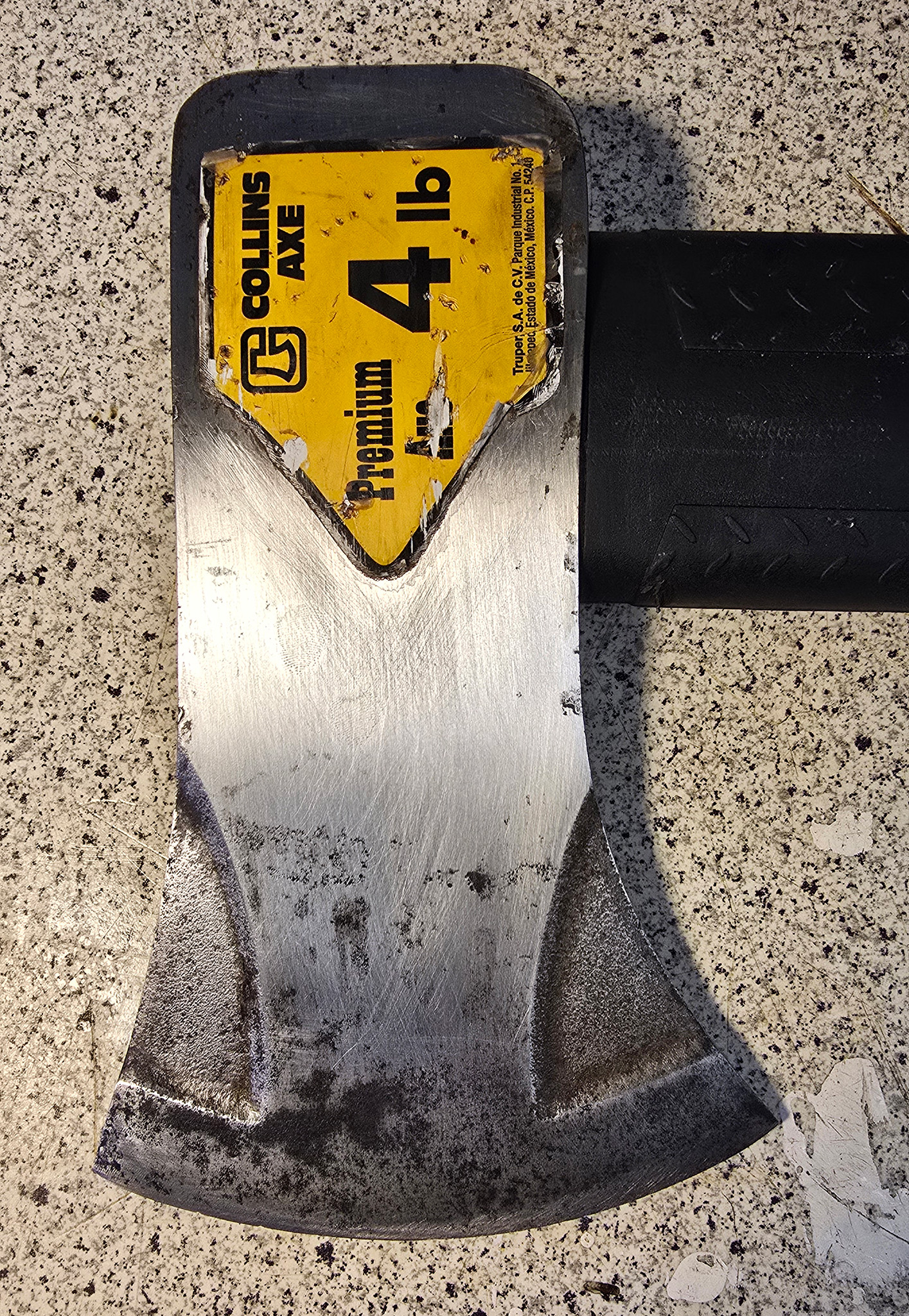
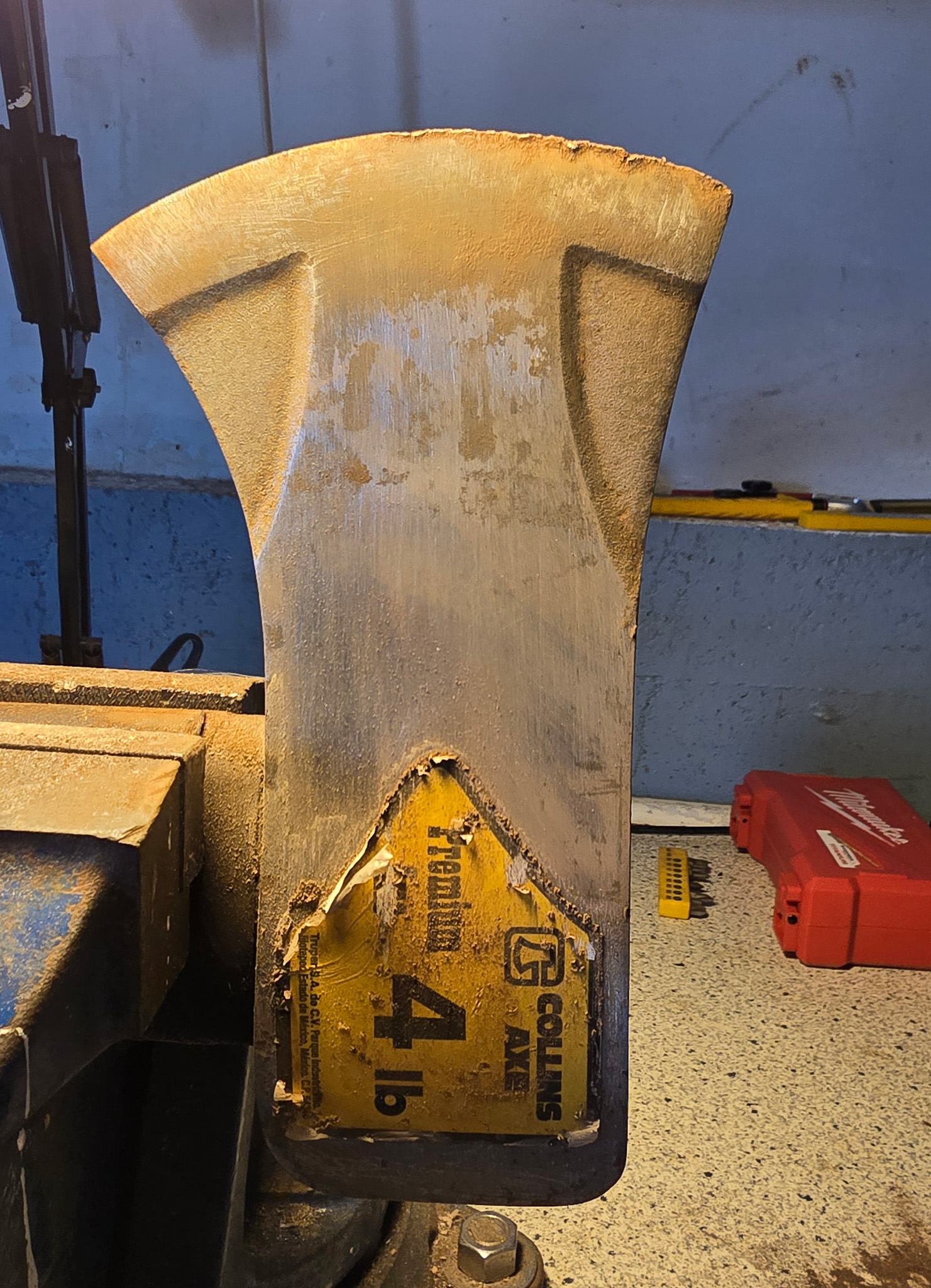
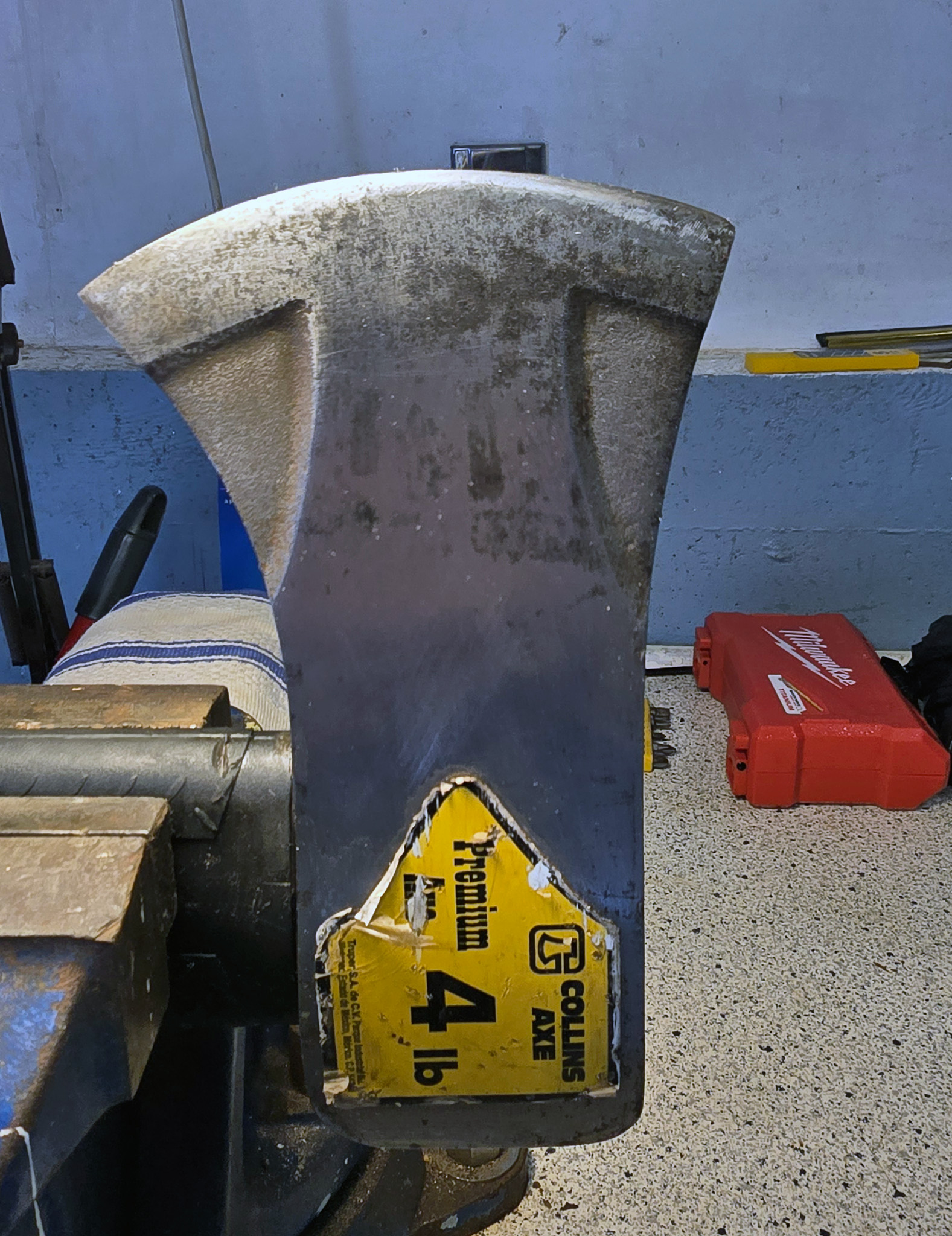
I was so happy when we received a new axe this winter. I had asked for a Fiskar axe but we got a cheaper one. When I found the axe this spring I understood why we don’t get or have nice tools.  They aren’t always well taken care of.  I brushed, sanded, filed, sharpened and oiled the axe.

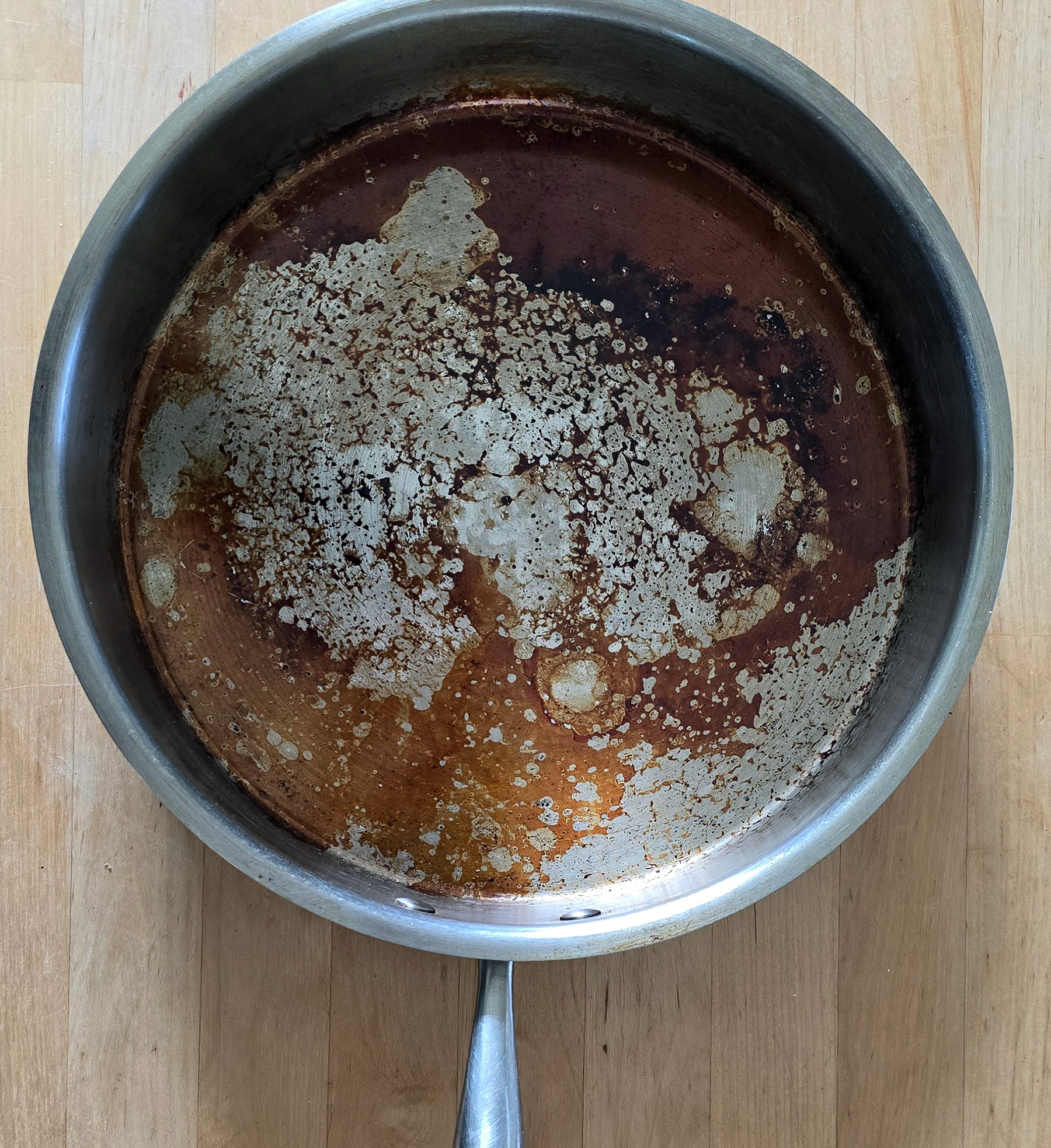
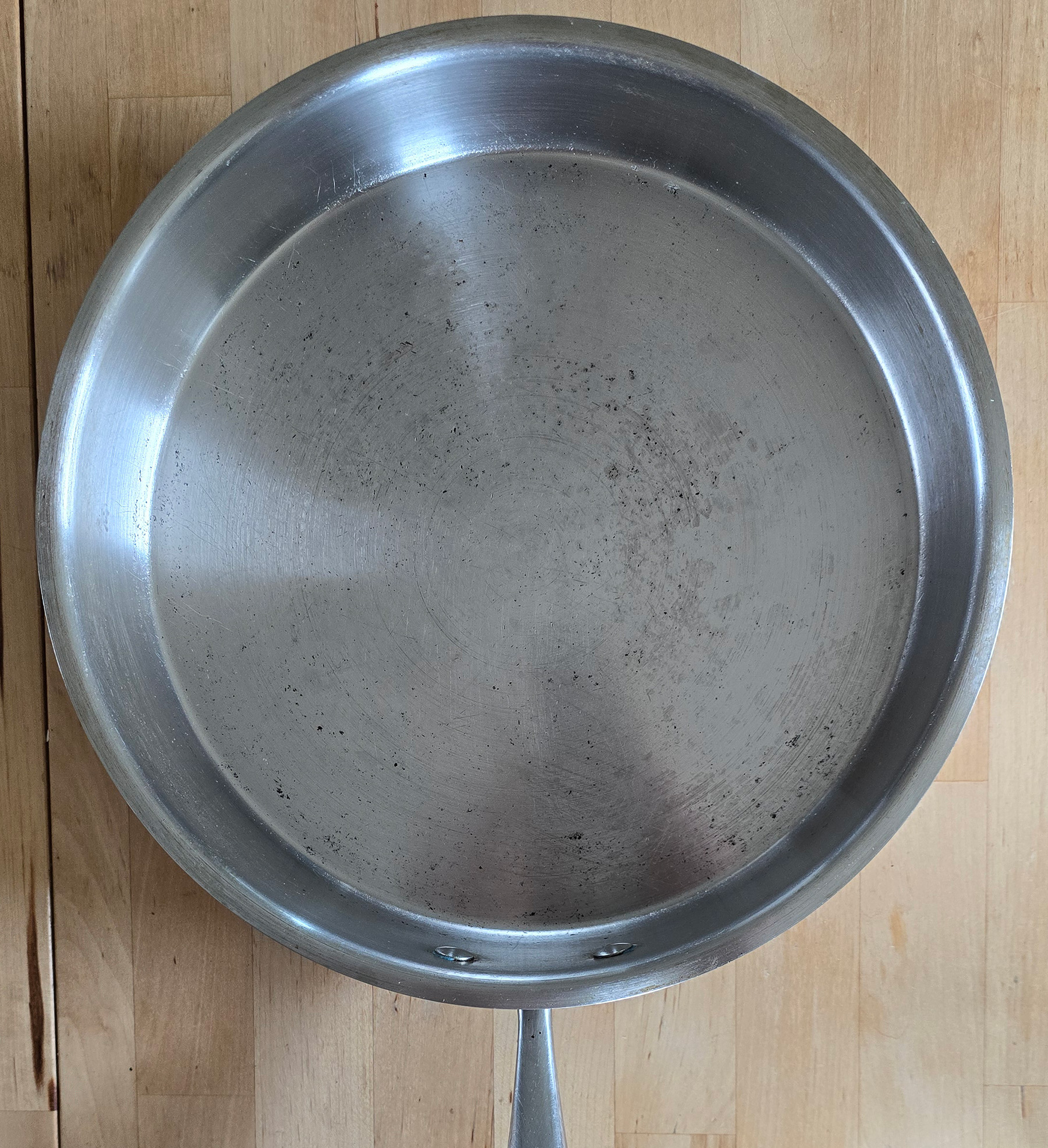
I also went at one of our big frying pans today.  Who severely burns a pan and then hides it at the back of the shelf under some other pans? How does one even accomplish this enamel like coating? In the oven?

  • cleaned in Generator Room
  • cleaned in basement and house
  • topped up battery fluids

Weather

Overcast most of the day.  Scattered showers.  Wind direction variable, speed 3 to 18 knots. Daytime temperatures 12 to 15 degrees.

Pigeon guillemots hatching

Wildlife notes

Here is the news!

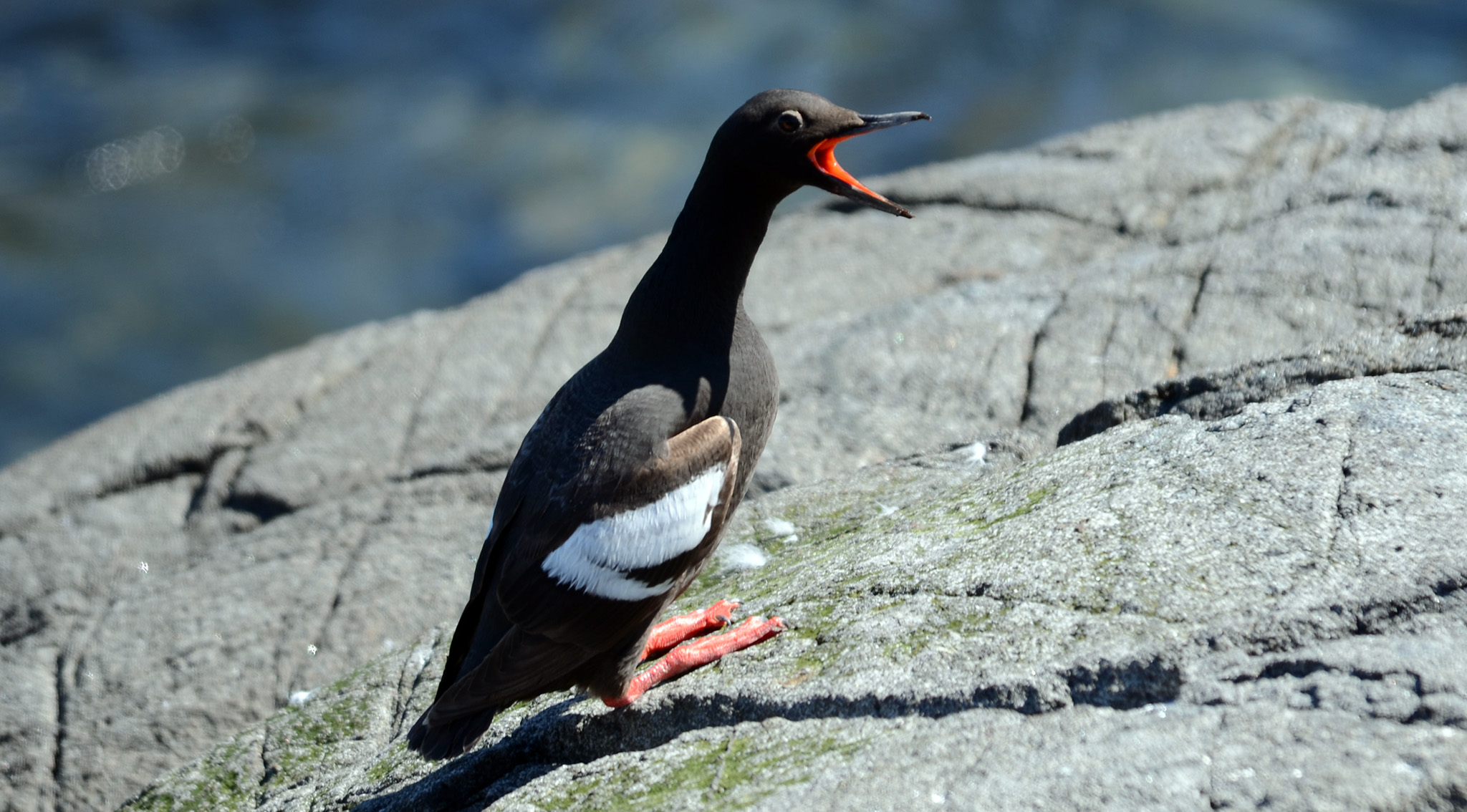
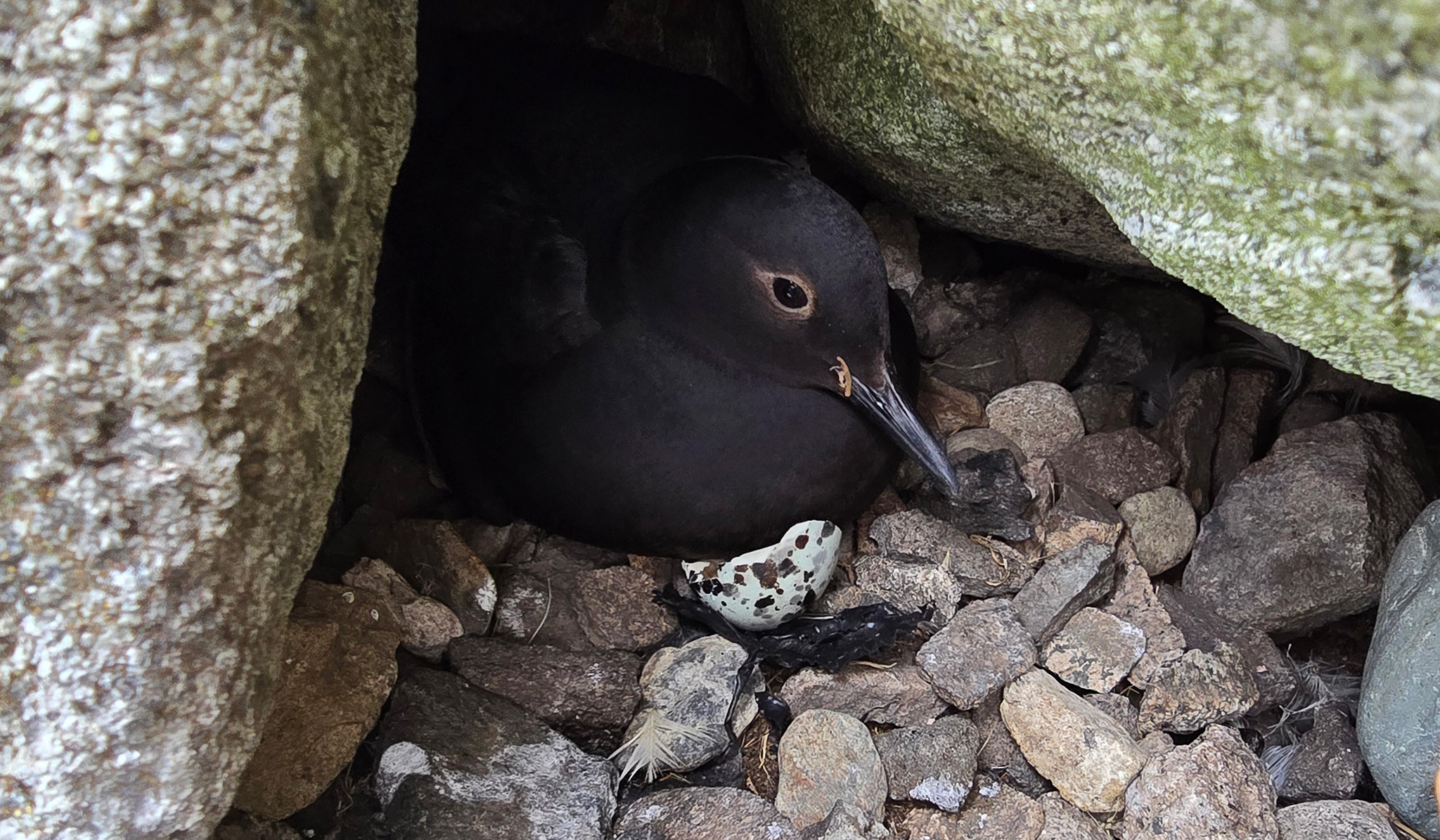
The pigeon guillemots are hatching! Searching for incubation and fledging times I came across the Salish Sea Guillemot Network.  An incredible organization collecting massive amounts of good data.  In 2025 they had 243 citizen-science volunteers who spent 5295 hours surveying 65 colonies recording populations size, number of active burrows, burrows with chicks and the quantity and type of prey delivered to the burrows (their prey is actually selectively sized based on the age/size of their chick!). There is a lot of information, many presentations, the most incredible photos and great merchandise for sale on their website. There is just too much information on pigeon guillemots to summarize here. One thing that struck me was in many places the pigeon guillemots nest in burrows on bluffs (scroll down on this page to see photos of these bluffs).  Here they are in the rock piles and in the rock walls.

Based on their data, they incubate for 32 days and fledge 5 to 7 weeks later, which could be somewhere from the last week of July to the second week of August.  I hope I am here and lucky enough to see one leave a burrow!

Pigeon guillemot in a burrow in the rock wall beside the Keeper’s House. A part of the shell from the one egg in this burrow is in front of the parent.

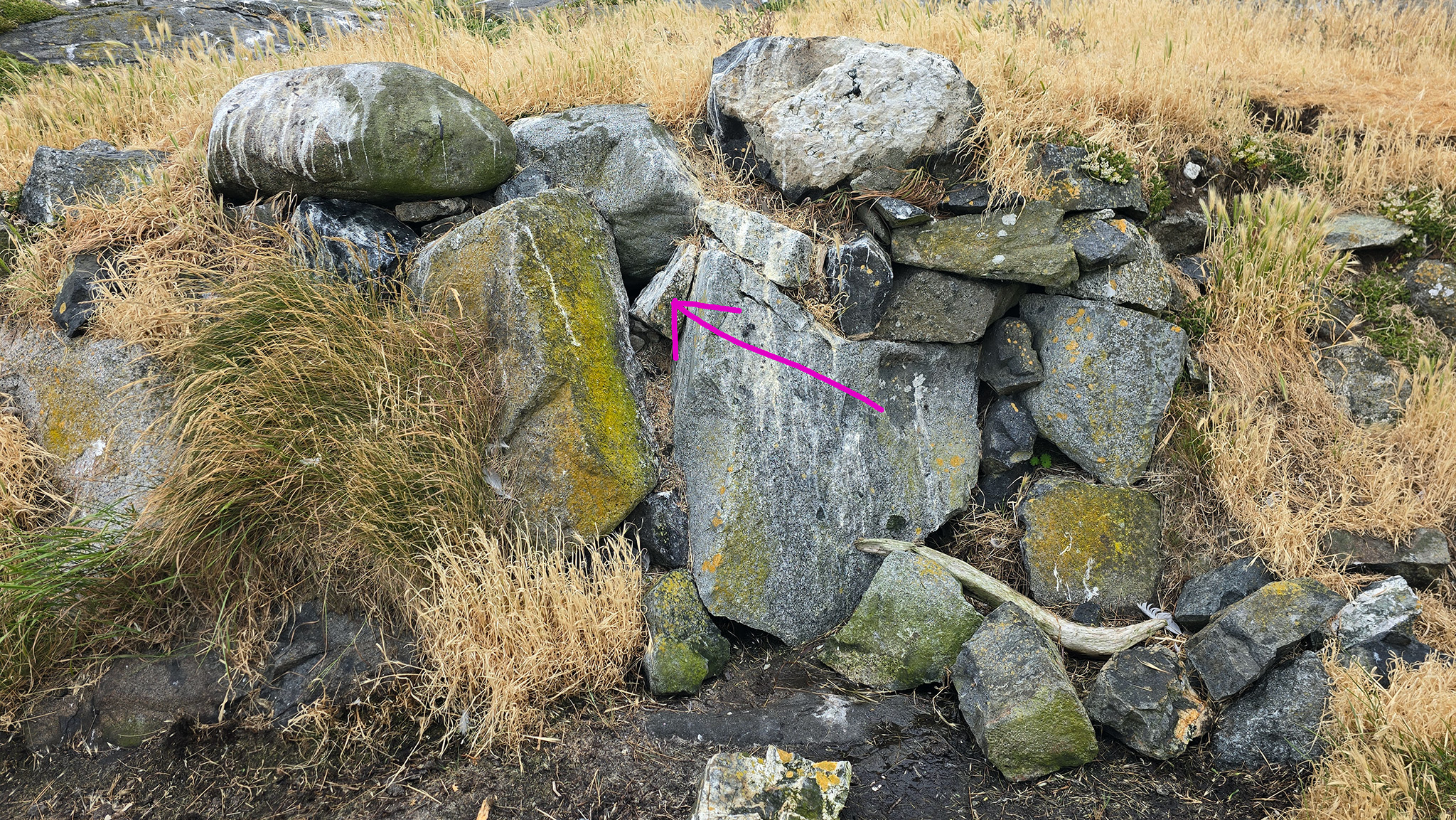
Location of the burrow in the wall by the Keeper’s House.

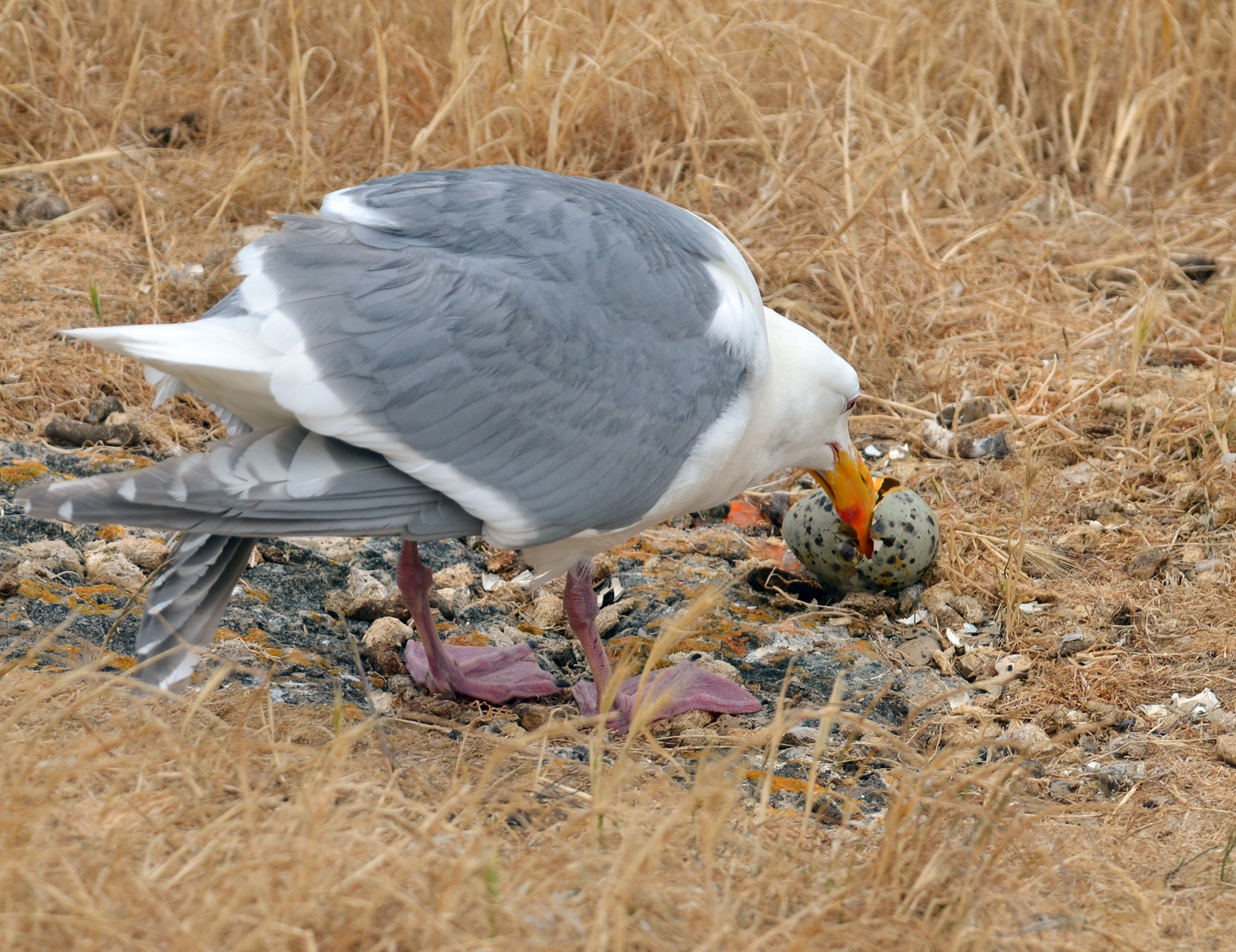
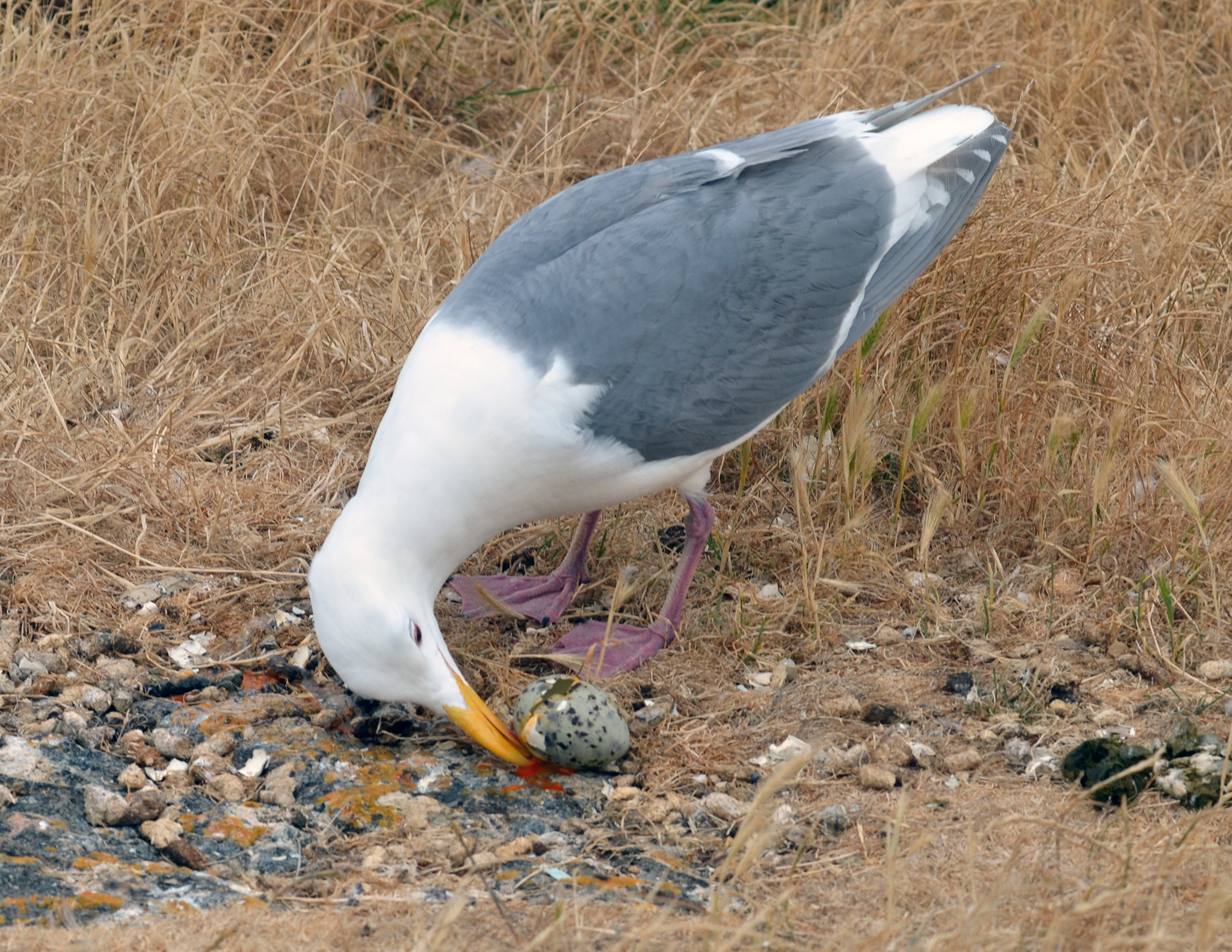
On a less pleasing note, the egg thief is still at it. He is probably the only bird on this island happy to hear the eagle alert call from the black oystercatchers. It is his dinner bell!

Facility work

The generator was running during the day and it was sprinkling, with rain forecast overnight, so I skipped cleaning the solar panels.  Today’s focus was on making water (tank is finally very close to full) and weeding.

Cleared grass from around the back stairs and the compost bins.

Vessels

  • Ecotourism: 18
  • Private: 0

Weather

Skies partly cloudy to overcast. Short periods of rain. Winds variable 5 to 26 knots. Daytime temperatures 11 to 13 degrees.
A forest sailed by

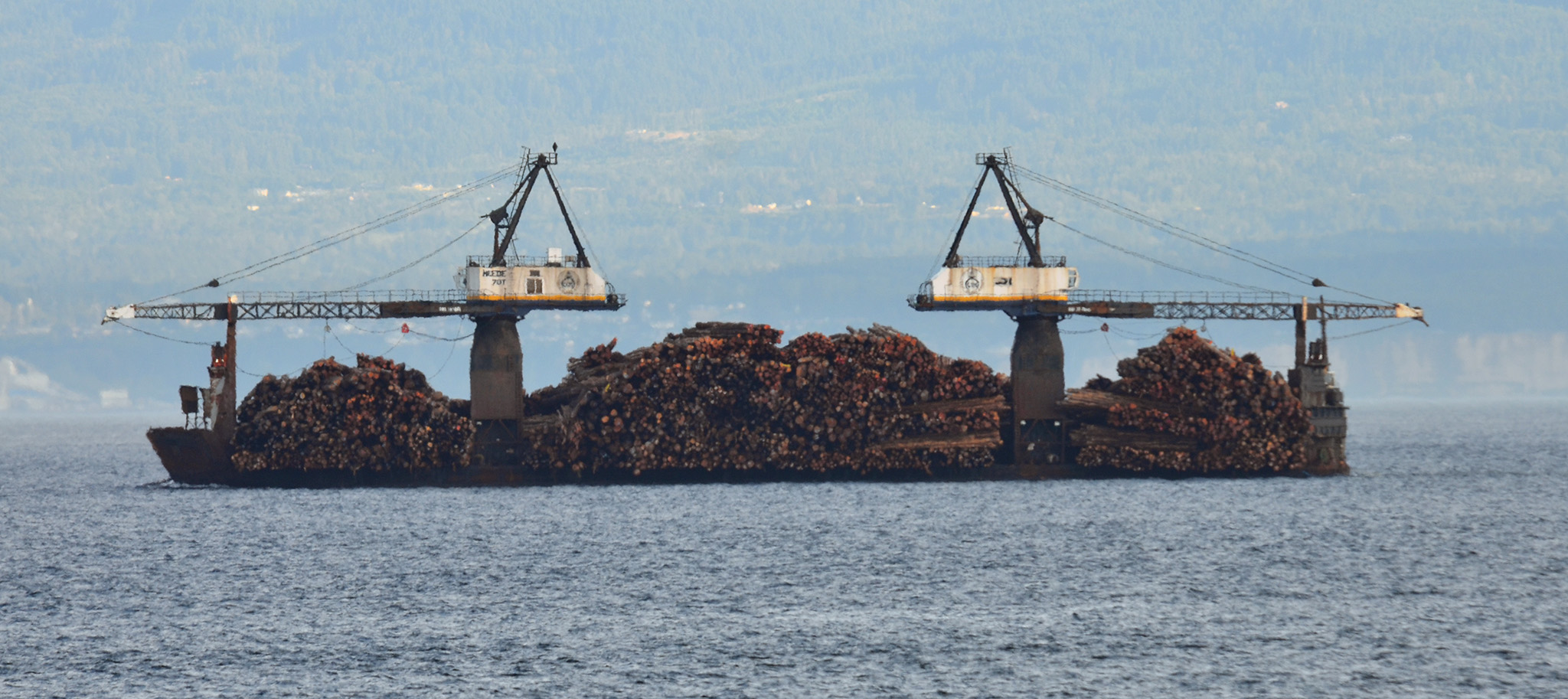
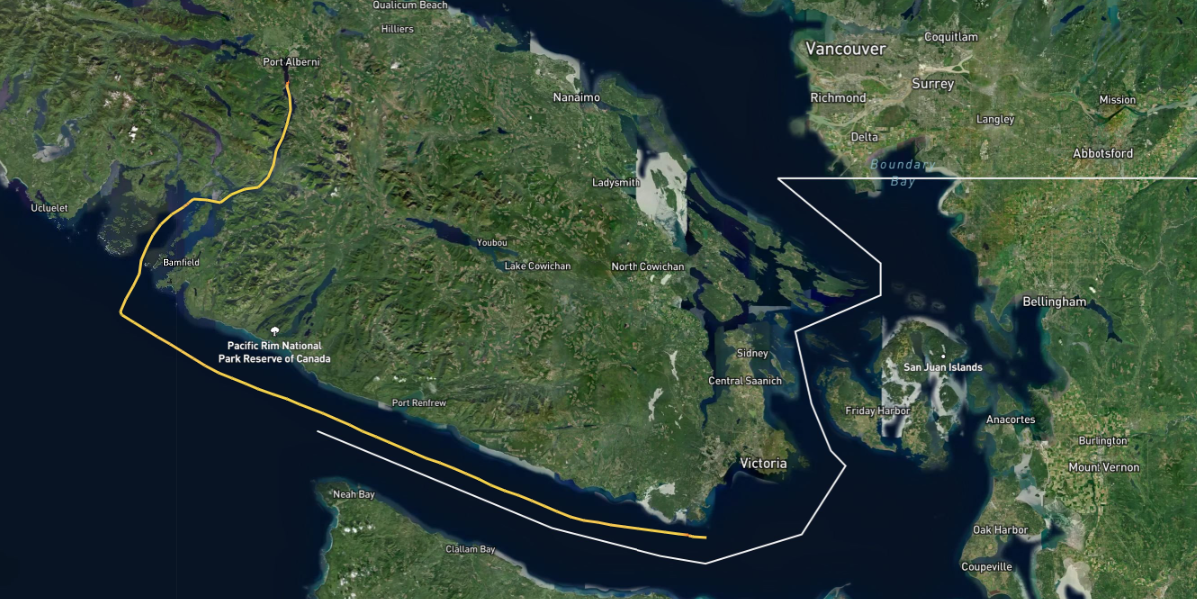
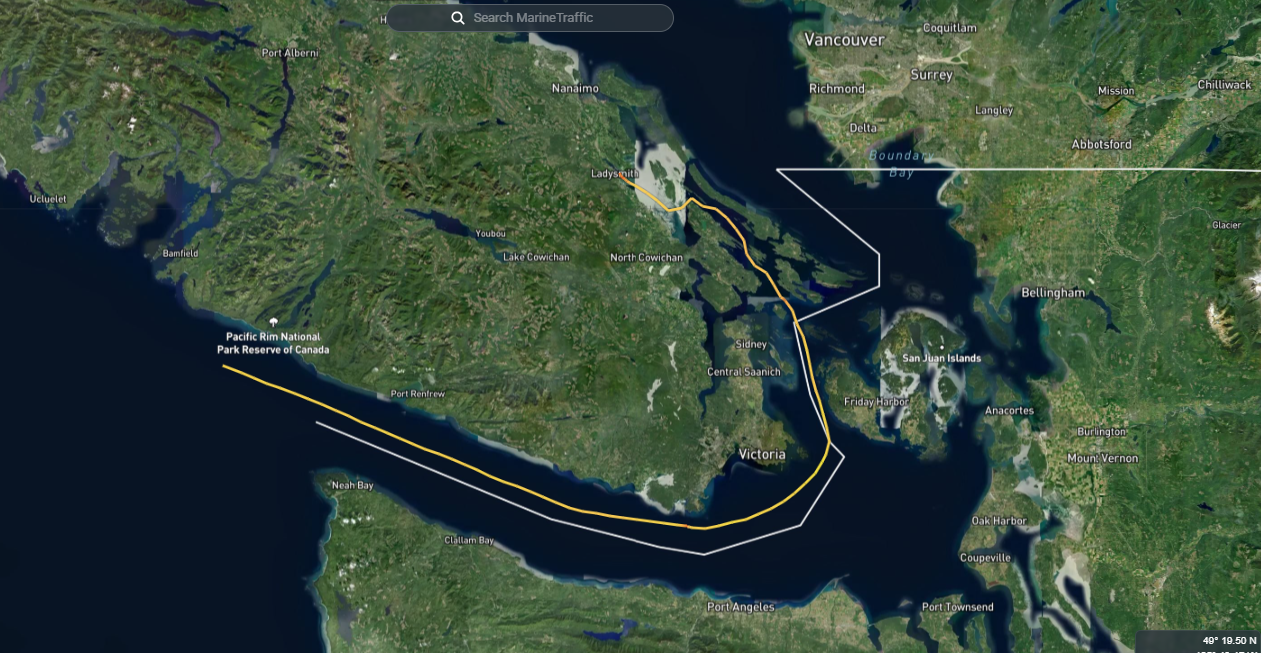
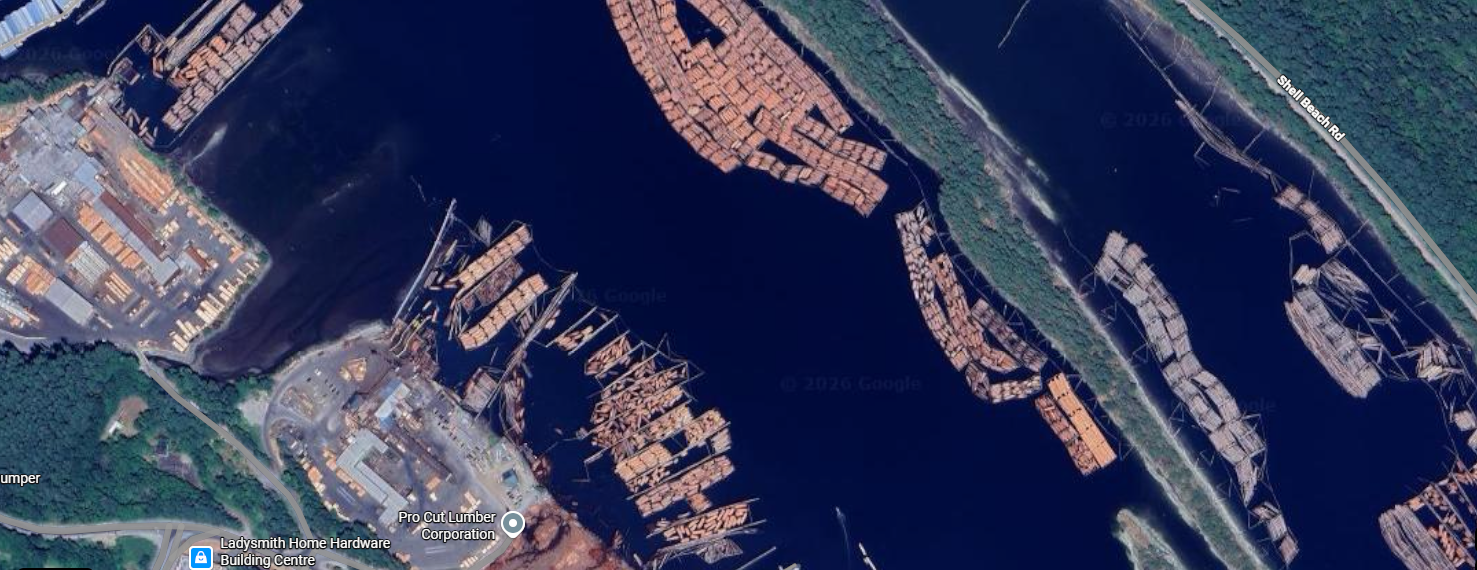
Last year when I reported on the ships passing Race Rocks in a 9 hour time span (11 ships go sailing by), tugs were not included. Last night an enormous barge loaded with log bundles and equipped with cranes passed to the south of Race Rocks at 6:30pm.  Where are they going with all that wood? I went to marinetraffic.com to investigate.  Where it came from was just as interesting. It went from Port Alberni, down the inlet, down and around the southern tip of Vancouver Island and then north to Ladysmith. Say it travelled an average of 6.5 knots, if the tug Coast Island King continued making way north for another 2-3 hours it would have reached the same latitude as Port Alberni. I had a look at Ladysmith on google maps. The amount of logs and the organization required in the sorting and holding grounds is mind boggling! I recommend taking a look.

Log barge passing Race Rocks 6:30pm June 23

Track displayed at 7pm June 23

Track displayed at 9am June 24

Google maps screen shot of a part of Ladysmith harbour


Wildlife notes

I can report that at least one of the nests the egg thief cleared out (see Jail time) has a gull on it again with one new egg.

One of the nests robbed by the egg thief is occupied again

Facility work

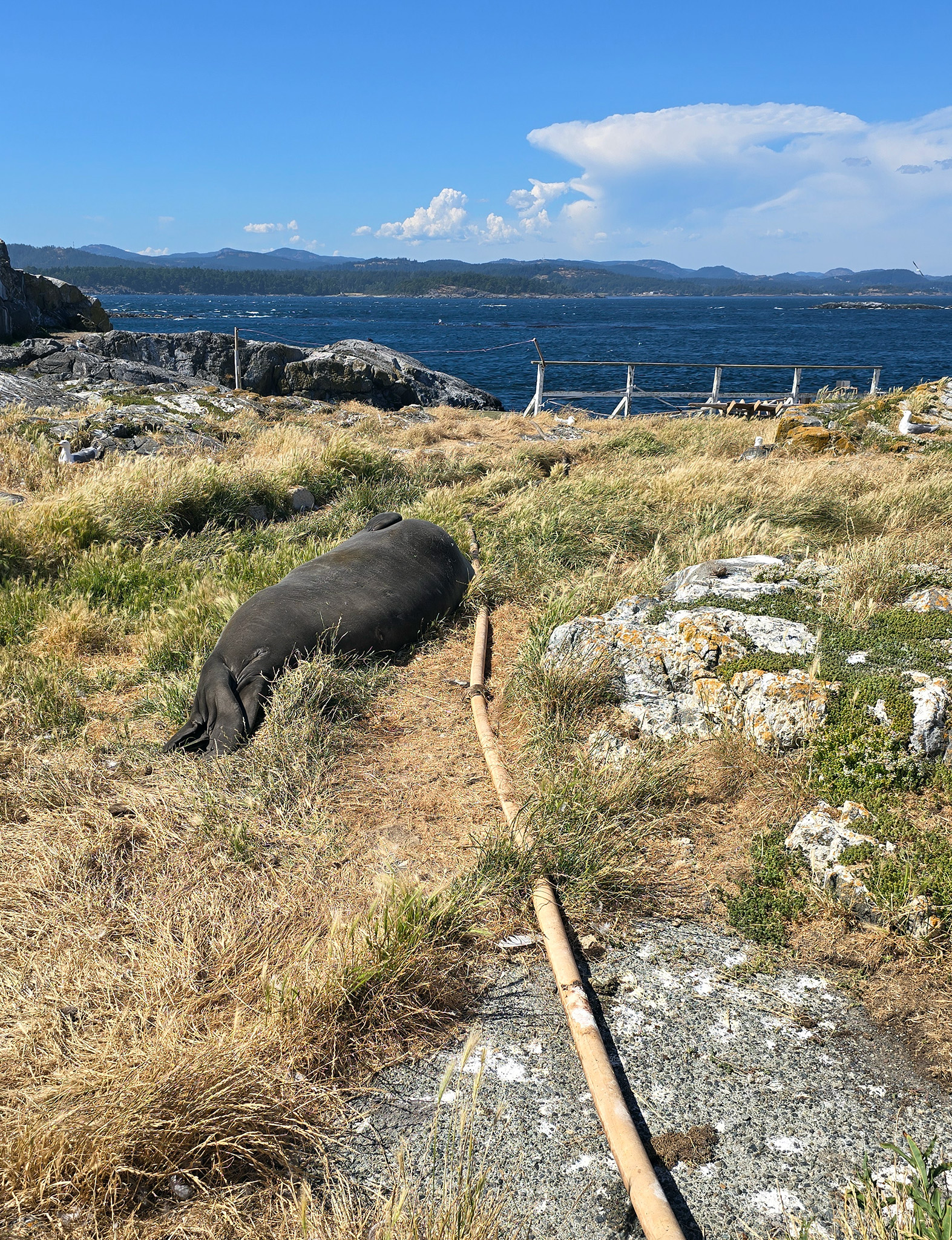
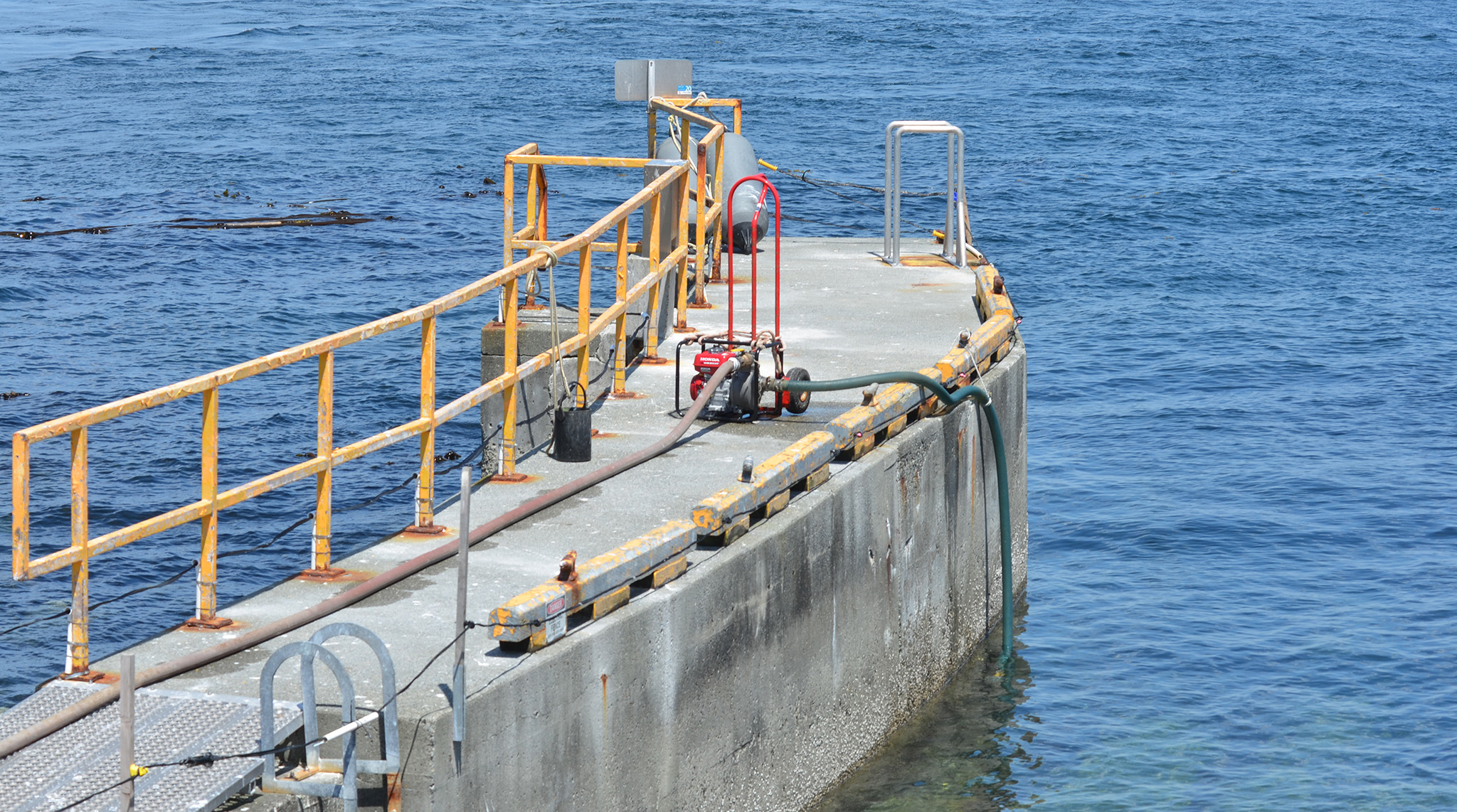
In preparation for the upcoming cloudy and rainy weather and the expected need for the generator, which means ample power to run the desalinator, I added more sea water to the cistern. Half way through the elephant seal decided to lay on the fire hose.  She wasn’t happy with me when I tried to wiggle the fire hose to get her to roll over just a foot or two. She tried to bite it!  That wouldn’t have worked well for her (a shock) or me (a repair) as it was under pressure and full of water.  I decided to move to her other end for more wiggling/encouragement and after some vocalizations she finally rolled over.

  • cleaned the solar panels
  • cleaned the Bunker
  • set up fire pump and topped up the cistern

Fire pump on the jetty pumping sea water up to the cistern

The elephant seal lying beside the fire hose. She really likes to lie beside the rock on her right in the patch with the flattened grass.

Vessels

  • Ecotourism: 18
  • Private: 0

Weather

Clear skies. Winds W 10 to 18 knots in the morning, WNW 33 by early evening, increasing to 38, gusting to 43. Daytime temperatures 12 to 20 degrees.
Running smoothly

Wildlife notes

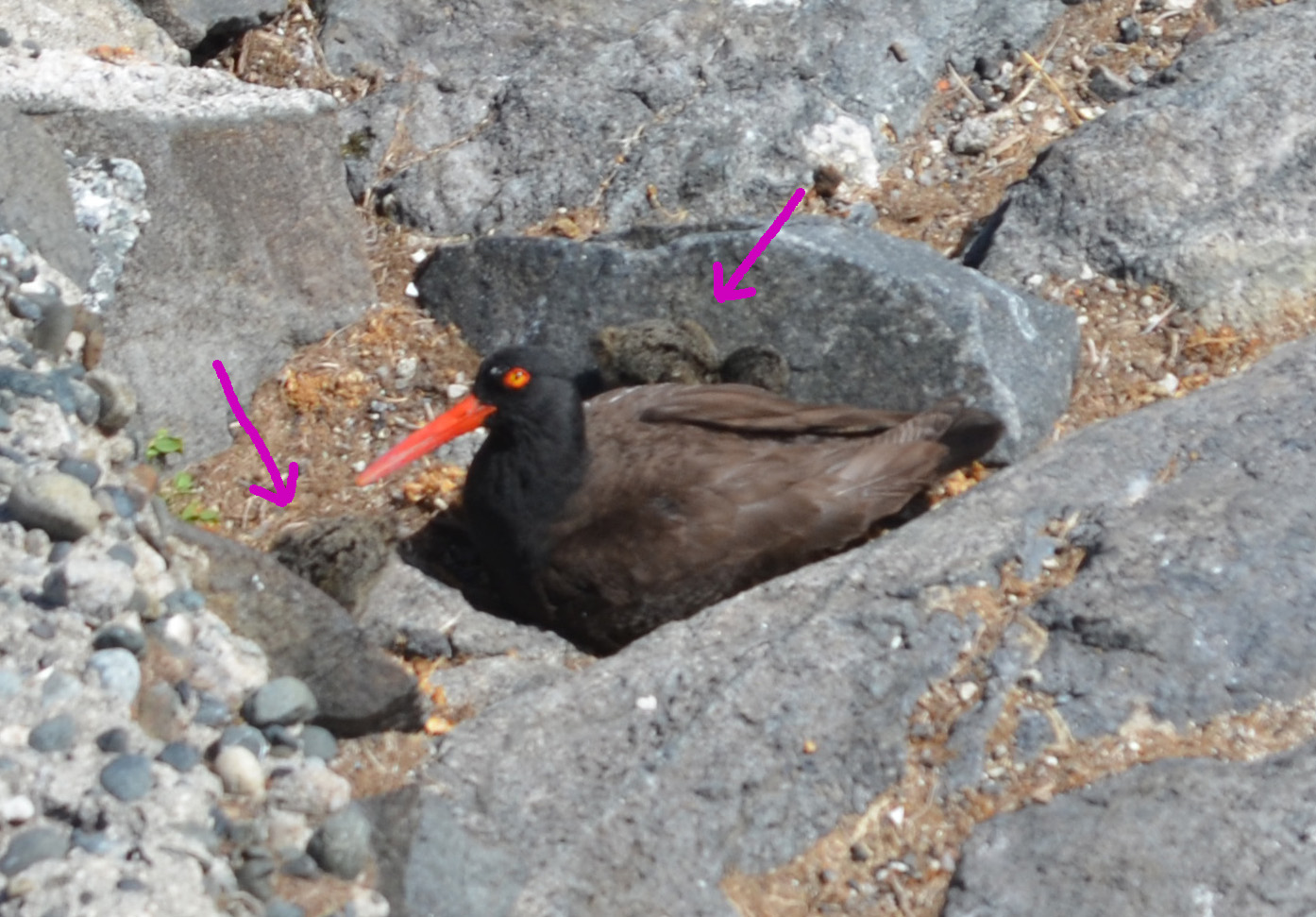
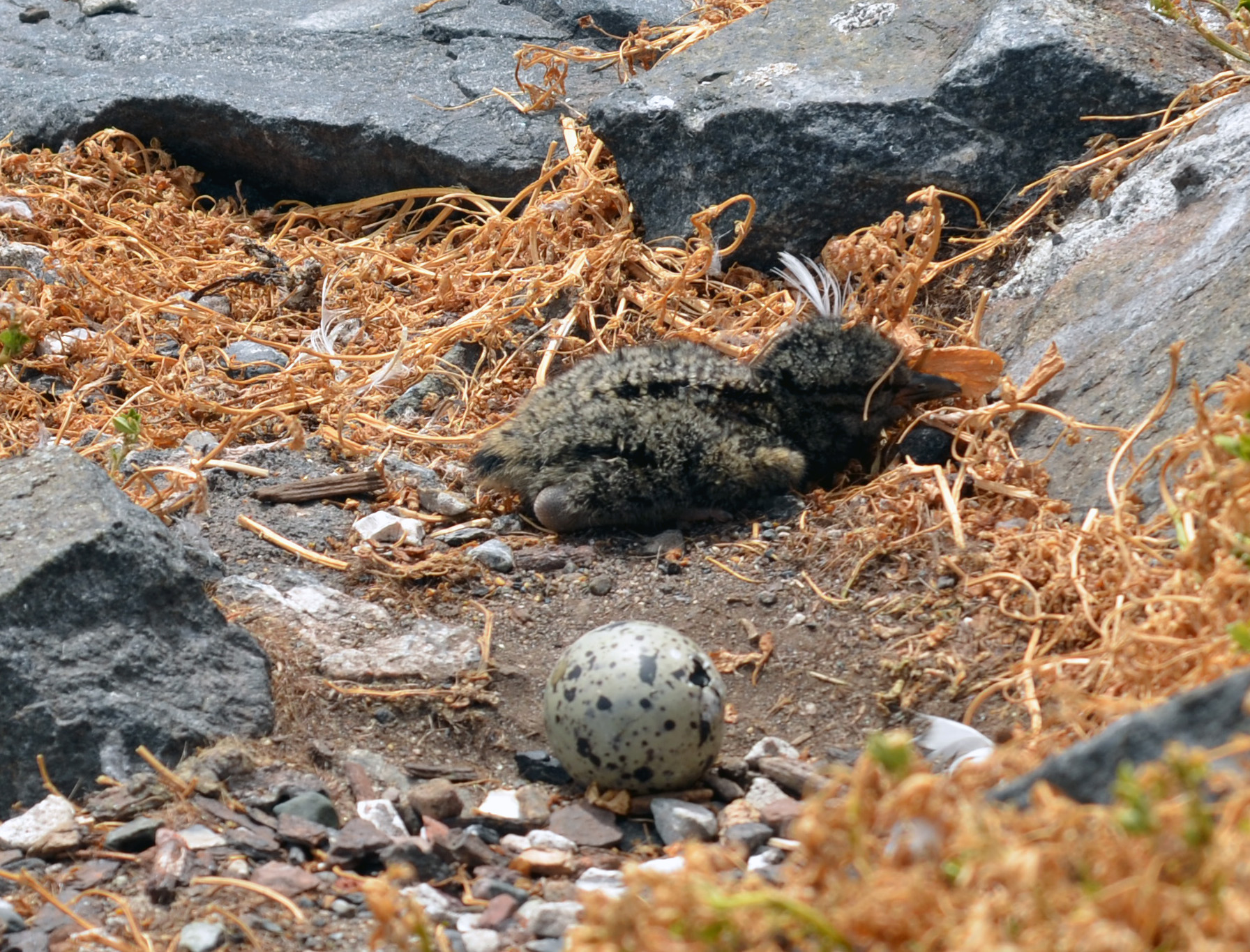
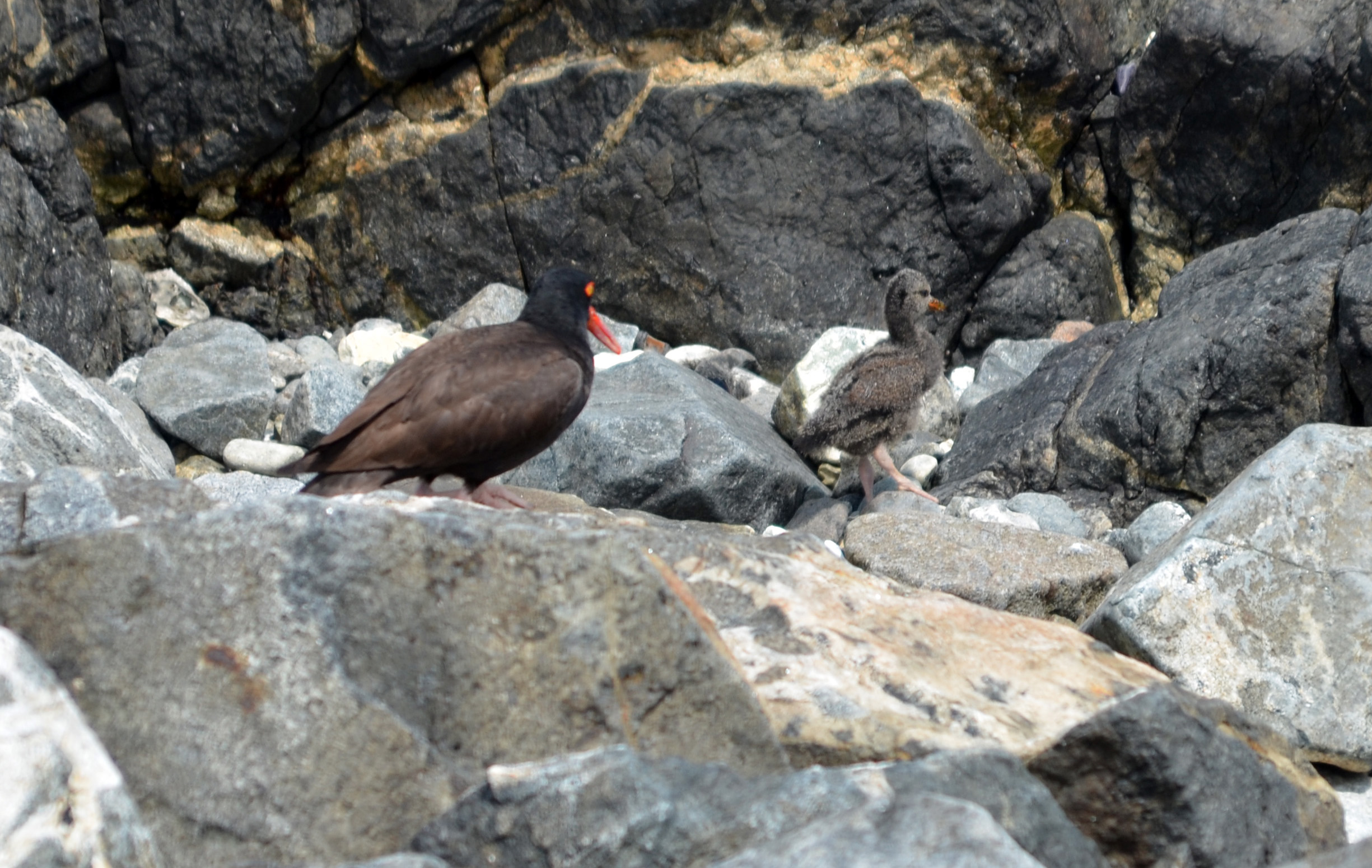
I heard more whales blowing today.  They are still to too far away for a good look or a good photo and certainly too far for a good whiff of their distinctive whale breath. Four purple martins visited this morning and inspected the nesting boxes again but something must not be right for them. All I can say is it isn’t for the lack of flies. The Keeper’s House oystercatchers moved their two two-week-old chicks down to East Beach today where they learn about foraging on the shoreline. The Coast Guard, Energy Building and East Beach oystercatchers eggs have not yet hatched. Below is a photo of the East Beach oystercatcher’s chick from this day in June 2025, already about 10 days old.

The timing is quite different this year. Last year on June 23 the East Beach black oystercatchers chicks were already 10 days old (shown in this photo) and the Keepers House pair’s eggs had not yet hatched.

Facility notes

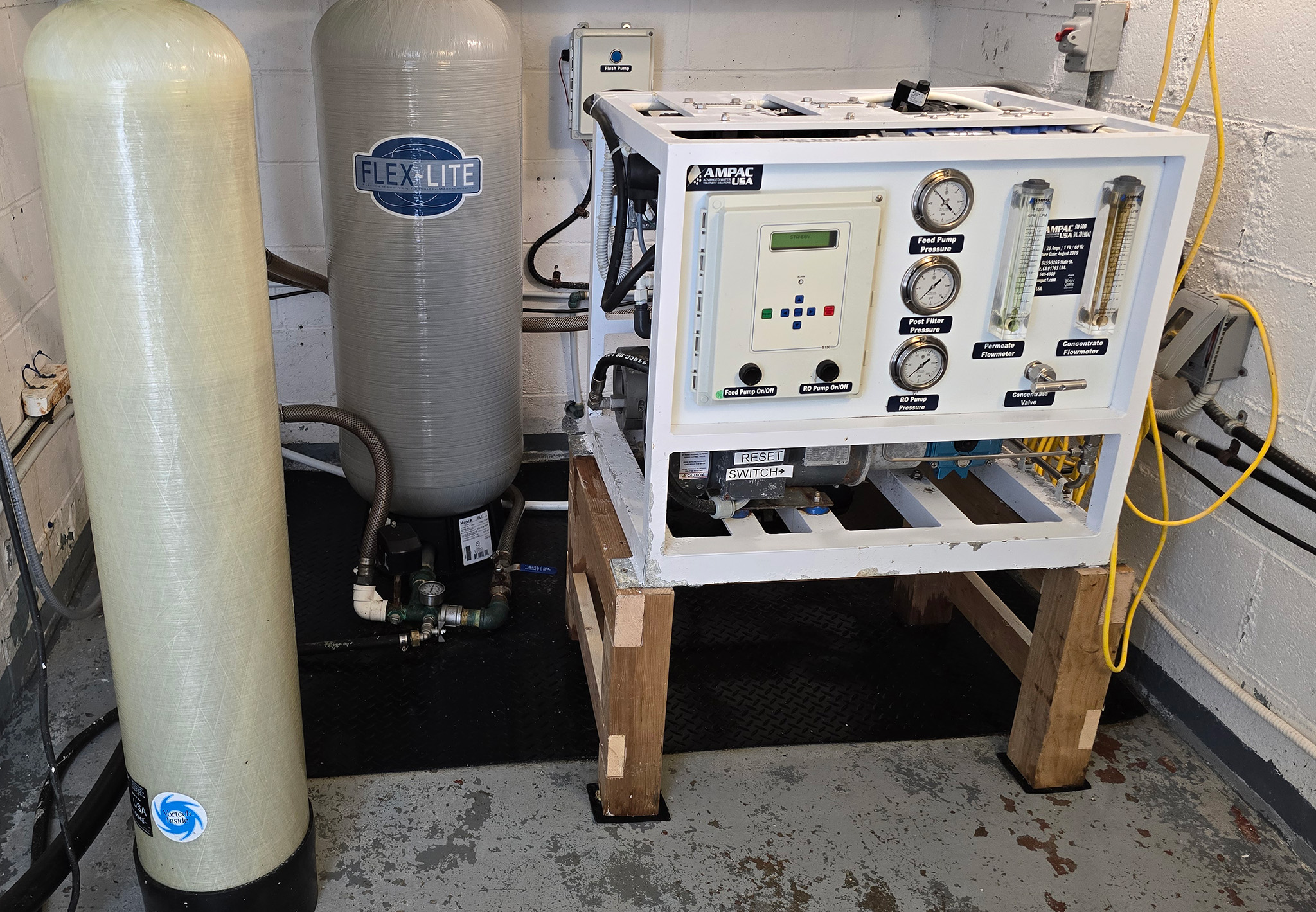
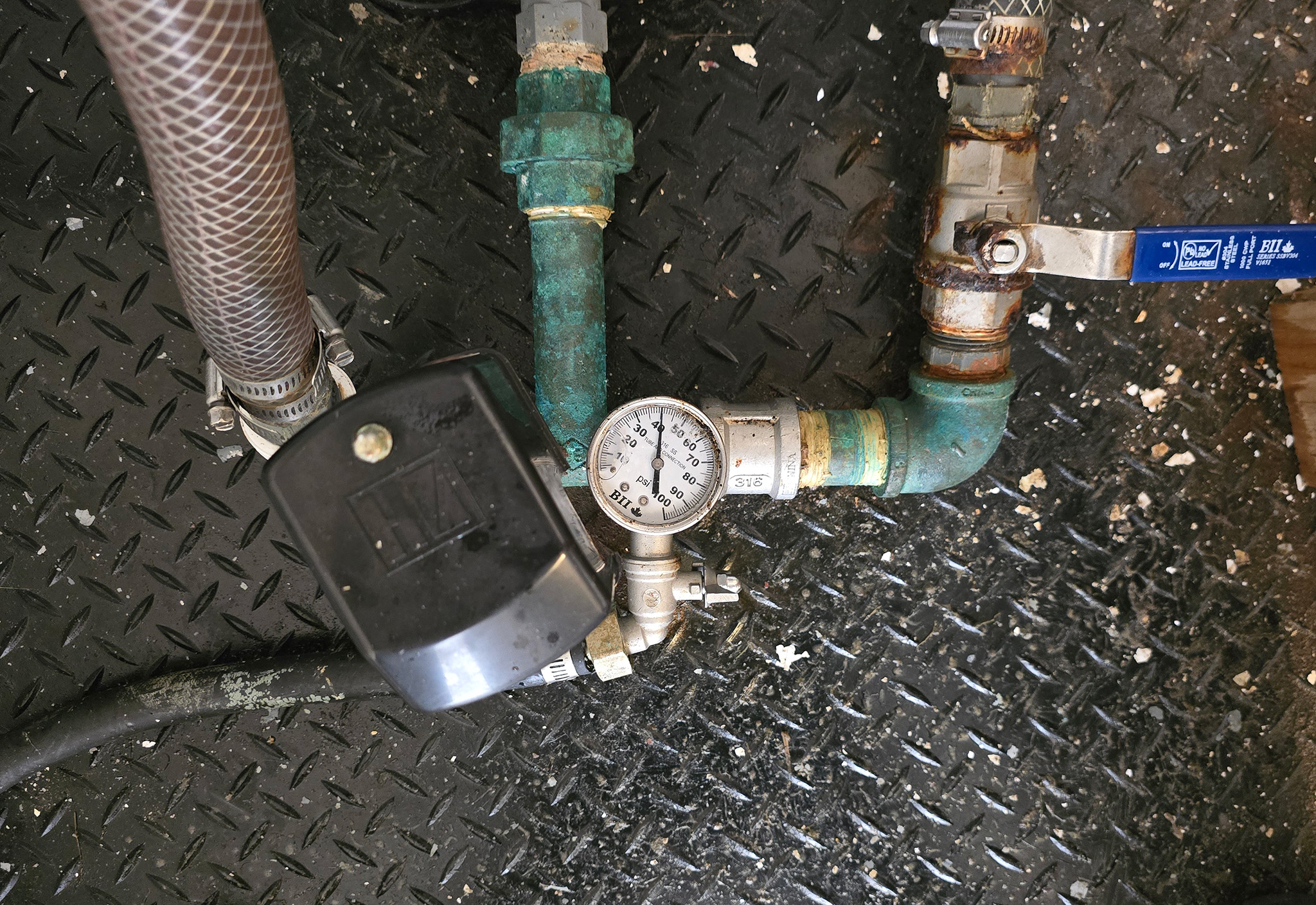
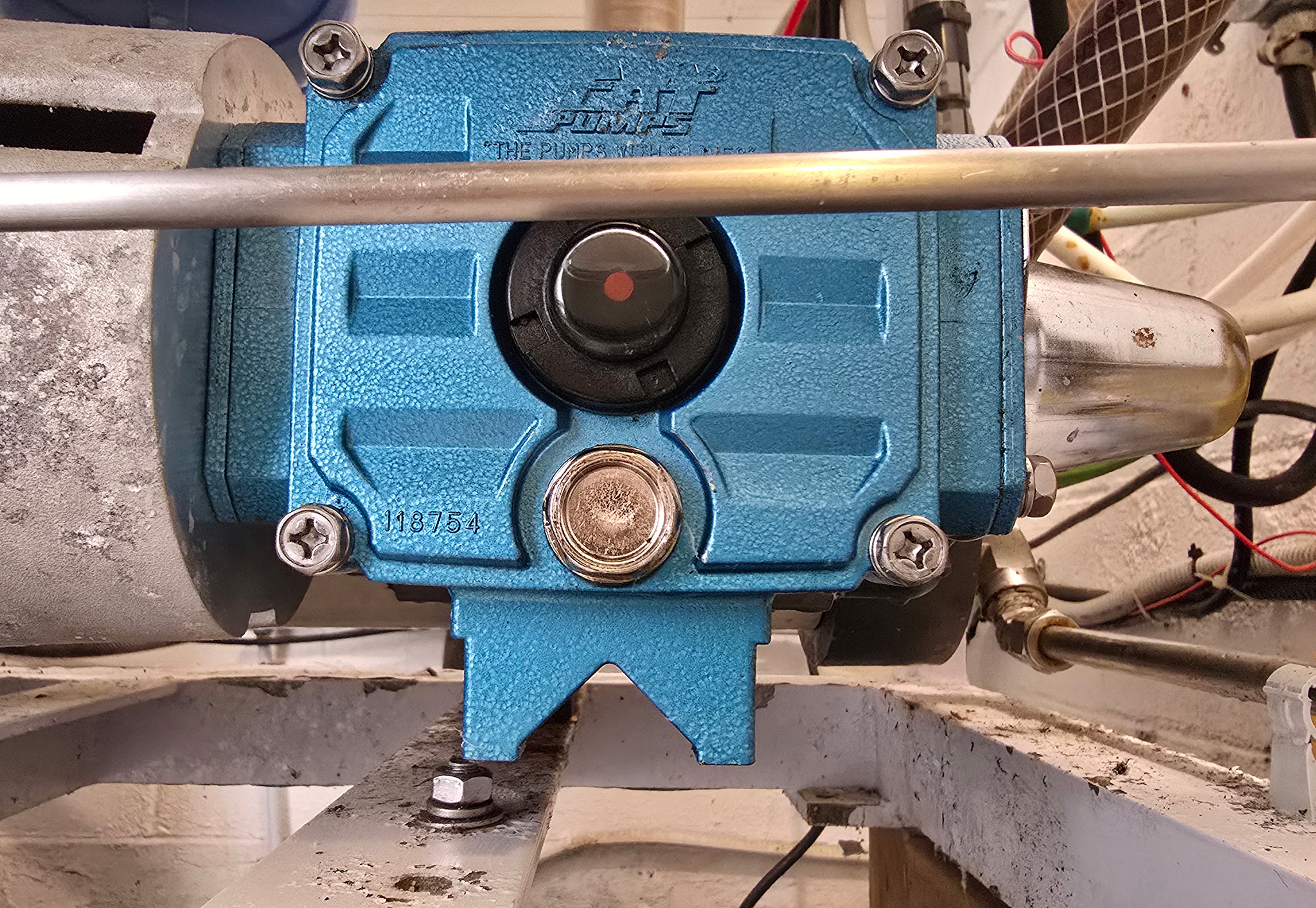
Greg and Richard came by today with a new starter battery for the generator. Great news as we can now trust the generator to start when needed.  Richard built a stand for the desalinator. It now sits high enough to work on properly and away from the rear wall for better access to the filters, so there should less profanity in 6 months when the next set of filters need changing. We also changed the oil for the reverse osmosis pump, another much easier task with the unit raised off the ground. Also the pressure is holding at 40 psi so all of our efforts with the foot valve replacement, the pressure balance tank adjustments and the filter changes have paid off.  Things are running smoothly for the time being in the Bunker.

The desalination unit on a stand. With everything working well I can give this room and floor a good clean up.

  • cleaned solar panel
  • weeding
  • adjusted plumping and raised desalinator onto stand
  • changed oil in RO pump

Vessels (partial count)

  • Ecotourism: 10
  • Private: 3

Weather

Clear skies. Winds variable 3 to 13 knots. Daytime temperatures 13 to 26 degrees.
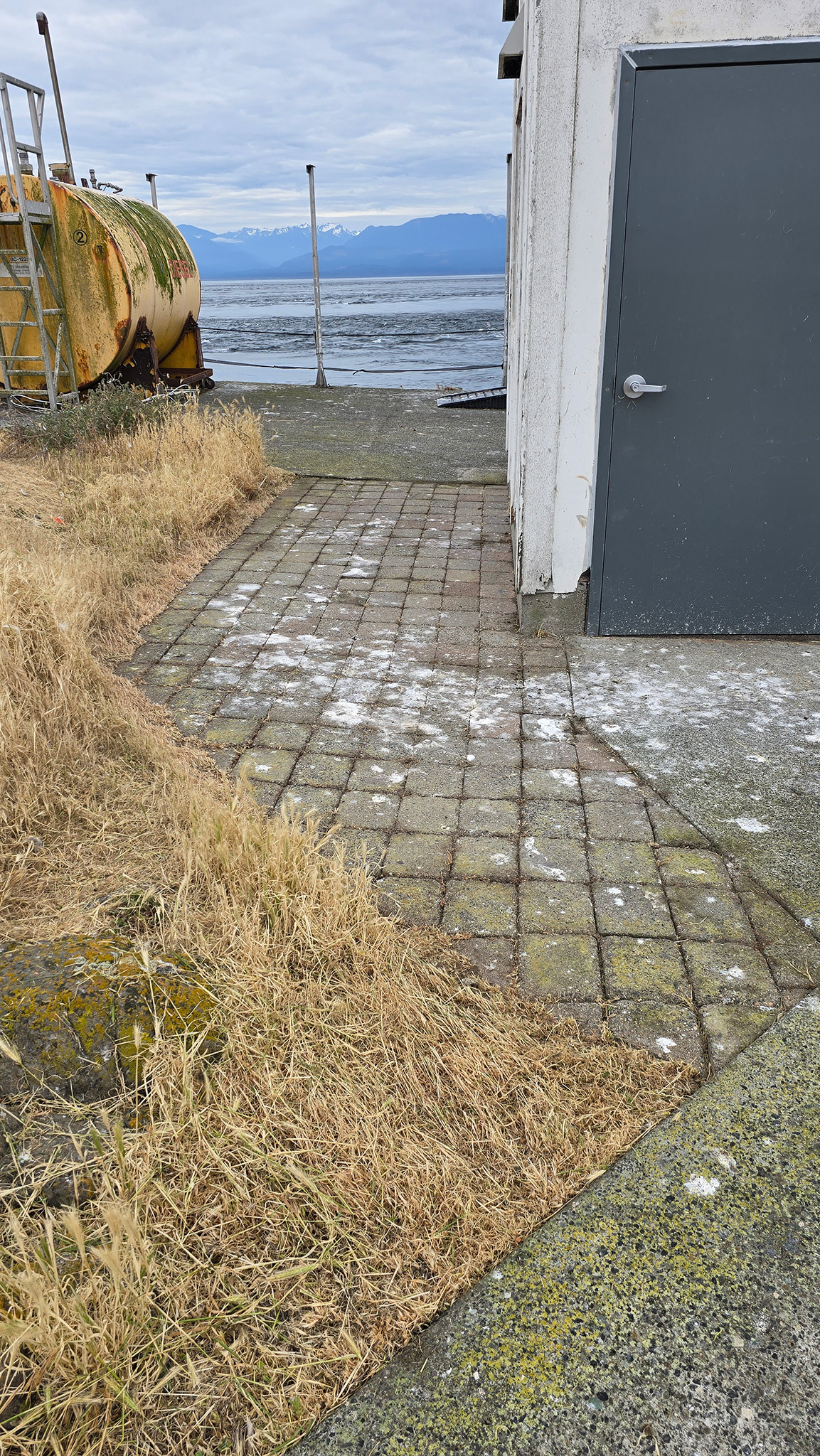
Ovate

Wildlife notes:

New York Times’ WORDLE today was “ovate” – shaped like an egg. What fun in a place like this!

For weeks I have been hoping for a whale sighting. They are here but outside the reserve. Today a humpback was close enough I could hear its blow and I caught sight of a tail. That was biggest excitement for me today. For the gulls it was the eagles circling the island.

A gull and the female elephant seal tending to things.

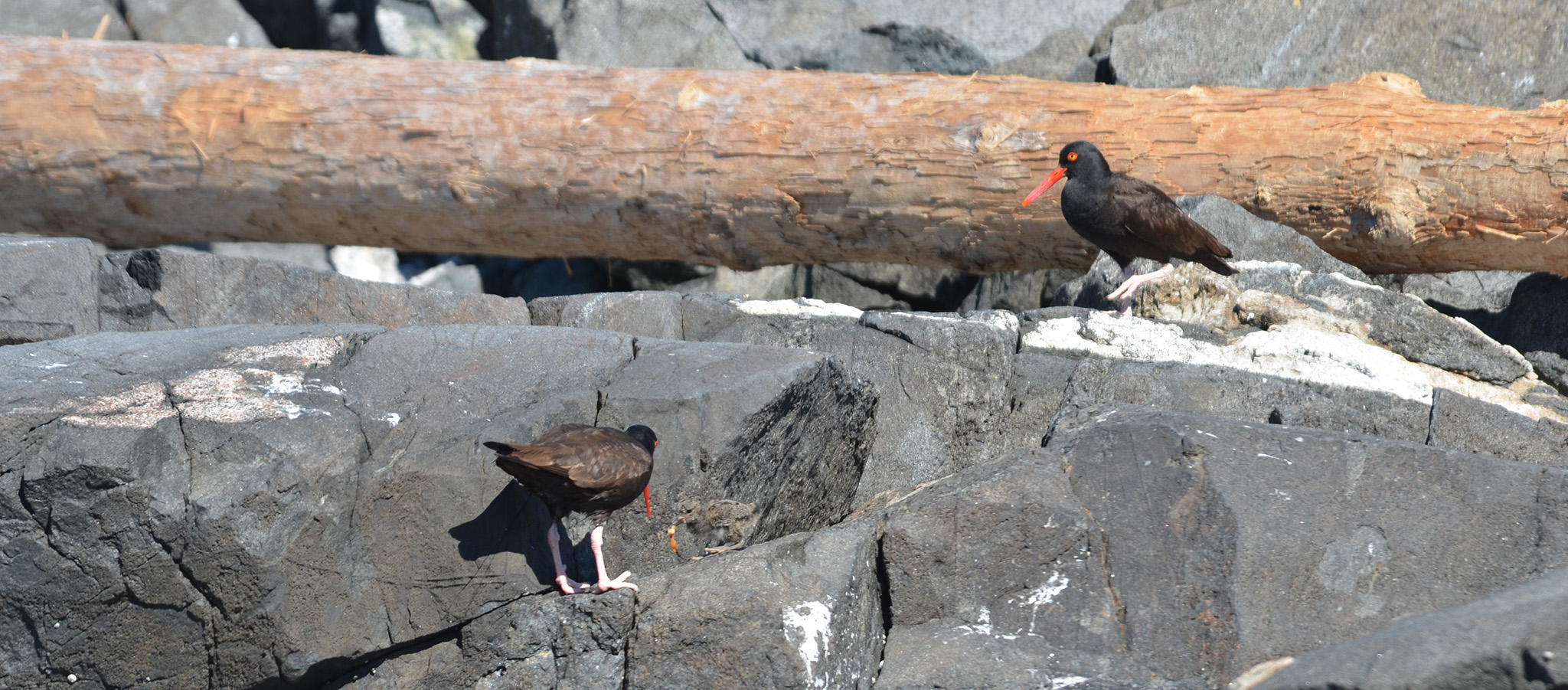
East Jetty black oystercatcher parent feeding its chick something orange.

Facility notes

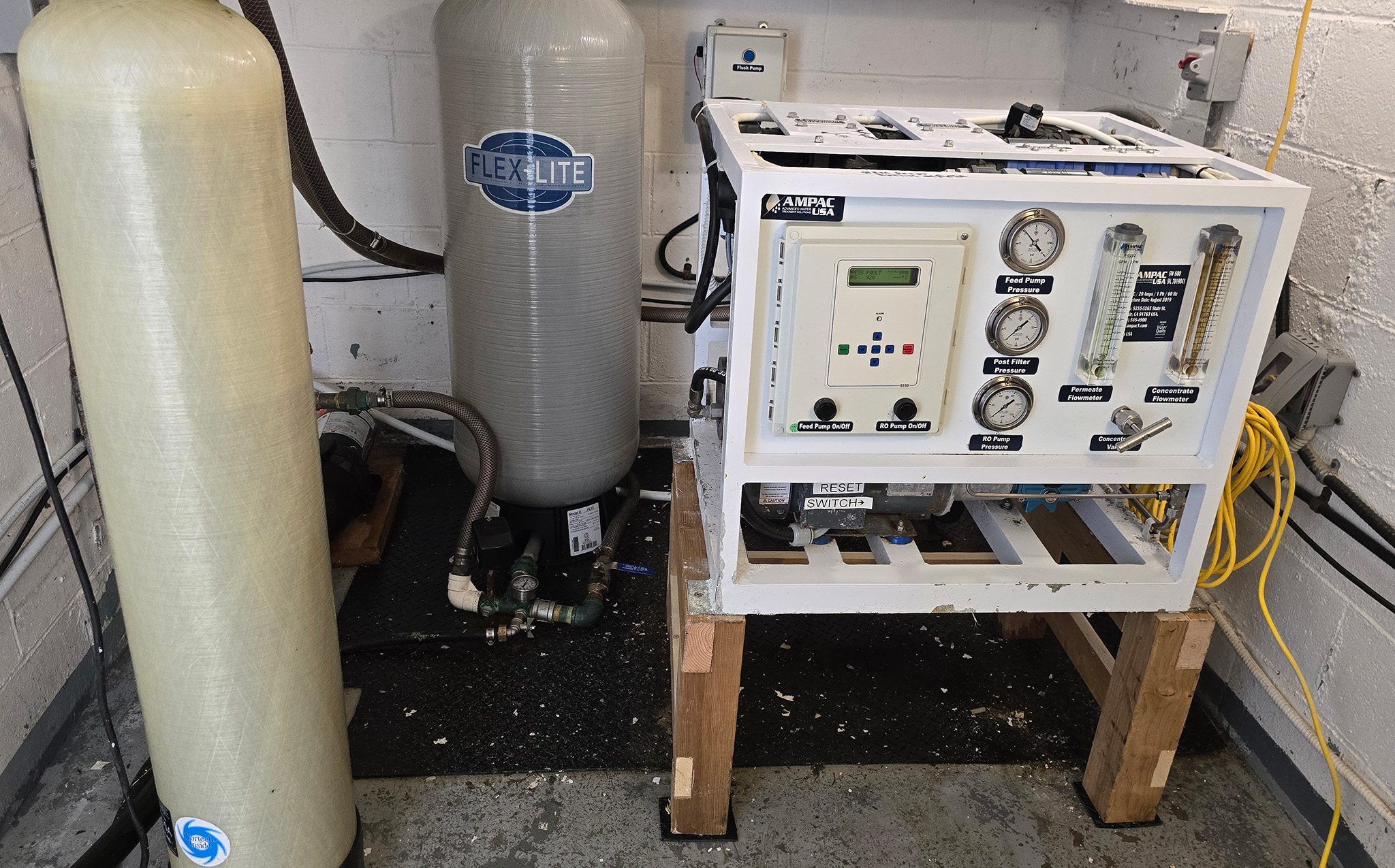
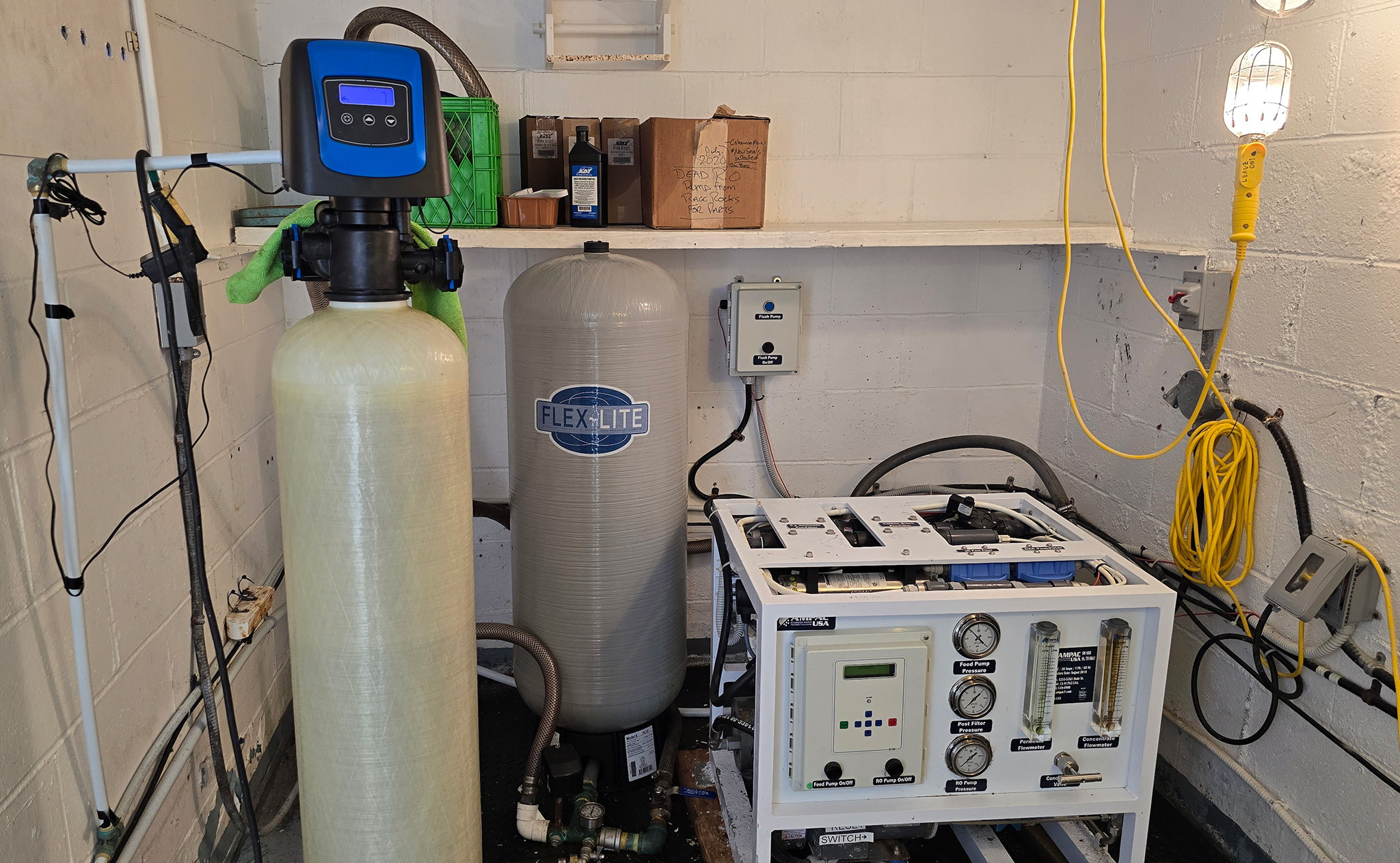
Greg and Richard came by in the afternoon to tackle a few things and haul off another big load of old rusty or obsolete parts, gaskets, fuses, busses, plumbing, light fixtures, pillows etc. Richard sealed the new door frame on the Battery Room and Greg hauled out the air compressor and pressured up the pressure balance tank in the Bunker. I tested it out for a bit and made a 130L of fresh water on solar power, almost enough to make up for the load of laundry I did yesterday costing 150L. The last immediate thing we need is a new starter battery for the generator…hopefully tomorrow.

The desalination equipment inside the Bunker. The pressure balance tank is in the middle with “FLEX-LITE” written on it.

  • cleaned solar panels
  • weeding
  • helping get unneeded items off the island.

Vessels (some were not seen/recorded)

  • Ecotourism: 9
  • Private: 2

Weather

Clear skies. Winds variable, 5 to 17 knots. Daytime temperatures 9 to 24 degrees.