Canadian government plans extra protection to critical Island ocean sites TC June 2017

https://www.timescolonist.com/business/feds-plan-extra-protection-to-critical-island-ocean-sites-1.20641331

Amy Smart / Times Colonist
June 17, 2017 06:00 AM

A proposed expansion of the federal government’s marine conservation powers could speed protection at Race Rocks and eliminate drilling permits in conservation areas such as Hecate Strait.
Fisheries Minister Dominic LeBlanc introduced amendments to the Oceans Act and Canada Petroleum Resources Act this week.
article continues below

The proposal would create interim protection status for sensitive areas, which could include places such as Race Rocks, the biodiverse ecosystem around nine islets in Juan de Fuca Strait.
The interim status would speed conservation in an area by prohibiting new, potentially disruptive activities such as fishing or drilling while the ecosystem is being assessed.
Once interim protection is granted, the Department of Fisheries and Oceans and the Canadian Coast Guard would have up to five years to recommend that a permanent marine protection area be put in place.
Race Rocks has been suggested as a marine protection area since 1998. While its existing status as an ecological reserve already protects it from dumping, dredging and resource extraction, the new designation would add protection to the sea life in its water column, which is not currently protected.
The amendments would also give the minister power to cancel drilling interests in a marine protection area and provide compensation, should no other option be agreed upon.
That could add extra protection to three sponge-glass reefs north of Vancouver Island and in Hecate Strait near Haida Gwaii, said Alexandra Barron, ocean conservation manager for the Canadian Parks and Wilderness Society’s B.C. chapter.
The Hecate Strait and Queen Charlotte Sound reefs are the largest and most pristine glass-sponge reefs in the world. They are 9,000 years old and cover 1,000 square kilometres, reaching heights of an eight-storey building, according to the society.
The reefs were designated a marine protected area in February.
While there is no active drilling because of a moratorium, several oil and gas companies hold legacy permits in the area, said Candace Newman, senior policy adviser with the petroleum management branch of Natural Resources Canada, during a technical briefing of proposed amendments.
“There are a number of interest owners who hold interests or permits in that area,” Newman said.
“They span from the northern part of Haida Gwaii, between Haida Gwaii and the mainland, south to the northern part of Vancouver Island.”
Barron said it’s a positive move, since drilling could continue if the moratorium were lifted.
She said the society is one of many calling for a blanket ban on oil and gas drilling within marine protected areas — not a case-by-case assessment.
“It’s a good start, they’ve taken some important first steps. We would like to see some of those measures go further,” she said.
Fifteen university marine scientists from Victoria to St. John’s, N.L., also penned a letter to Fisheries Minister Dominic LeBlanc Wednesday, saying the marine protection area designation don’t go far enough.
In 2011, the federal government committed to protect at least 10 per cent of Canadian waters by 2020. The Trudeau government has said it will reach the five per cent mark this year.
But the scientists say only about one per cent is protected.
“Of this, only about 0.1 per cent is strongly protected by restricting resource extraction activities that could harm species of conservation value,” the letter says.
This puts Canada behind other G8 countries in both the quantity and quality of protection, it says.
Science shows that the most effective marine-protection policies ban extractive activities in areas of high biodiversity, said Natalie Ban, an assistant professor at the University of Victoria’s school of environment, who signed the letter.
Ban said there’s a “double standard” in Canada’s protection of land and sea resources.
“We would never stand for having oil and gas extraction in one of our terrestrial parks, so why do we allow it in the ocean?” she said.
asmart@timescolonist.com

Corvus caurinus:NorthWestern Crow, Race Rocks Taxonomy

The Norhwestern Crow closely resembles the American crow being black noisy and having forward facing bristles above its nostrils. The nw crow is smaller in size and has a shorter lower caw. It also has a smaller bill, smaller wings and has a greater wing beat rate.They usually inhabit coastal areas such as Race Rocks and are not thought to be birds which migrate. The crow usually forages for food near coast lines and its diet may include dead fish, crab, mussels or clams. In most regions its nest may be located at high elevations or in the branches of Conifer trees. Here at Race Rocks, the closest suitable nesting sites are on Bentinck Island.

Domain Eukarya
Kingdom Animalia
Phylum Chordata
Subphylum Vertebrata
Class Aves
Order Passeriformes
Family Corvidae
Genus Corvus
Species caurinus
Common Name: NorthWestern Crow
Other Members of the Class Aves at Race Rocks.

taxonomyiconReturn to the Race Rocks Taxonomy
and Image File
pearsonlogo2_f2The Race Rocks taxonomy is a collaborative venture originally started with the Biology and Environmental Systems students of Lester Pearson College UWC. It now also has contributions added by Faculty, Staff, Volunteers and Observers on the remote control webcams.

Original text by Lawson Connor, PC student Dec. 2002

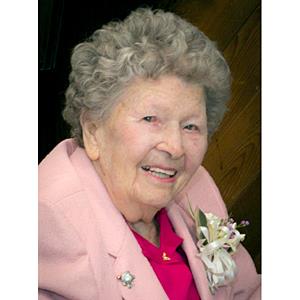
Flo Anderson : In Memoriam

ANDERSON, Florence (Zita) Belle On March 30, 2017 Florence (Zita) Belle Anderson, quietly slipped away at home, while laying next to her beloved husband of seventy-three years, Trevor. Born December 30th, 1924 in Victoria at the family home on Midgard Ave., Flo went to Mount View high school and then onto Victoria College in the historic Craigdarroch Castle. She fondly remembered daydreaming about the formal dances held at the castle. After completion of her college exams, she married Trev (May 20th, 1944, Grace Lutheran Church) on his return from serving in the Canadian Airforce, World War II, North Africa. The newlyweds moved to Boundary Bay where they had their first son Garry. Back and forth across Canada four times, the Anderson family moved to different Airforce stations and radar bases adding Stan, Beth and Adrienne to the family along the way. After Trev left the Airforce in 1960, they lived at Miracle Beach for several years. Then the family moved on to their next adventure – twenty years on five West Coast Lighthouses. Flo’s ingenuity led her to achieve any task that she set her mind to and thrive in new situations. During their last seven years on the lighthouse, she and Trev took on a massive undertaking; building their fifty-six foot sailboat Wawa the Wayward Goose. They launched the two-masted ketch from Race Rocks, February 7th, 1982 and headed off for thirteen years of sailing trips. First they sailed locally amongst the Gulf Islands. Then they circumnavigated Vancouver Island. In July 1985, they headed offshore to Hawaii and onto New Zealand, Tonga, Samoa, Fanning Islands, Pago Pago, returning to Victoria July 1987. Florence had prepared herself by completing a Celestial Navigation course, getting her HAM radio license and joining the Blue Water Cruising Association. They sold Wawa in 1995 settling in Sidney and then in her parents last house in James Bay. Travel has always been a part of Flo’s life. On holidays away from the lighthouse, she and the family travelled on many road trips across North America and an excursion to Portugal and Spain. Flo’s artistic skills started early. She learned to sew, leather work, crochet, tat, spin wool, knit, quilt, draw and paint. While on the lighthouses she taught herself to oil paint and created realistically beautiful wave seascapes. At age seventy, she taught herself to use the computer, wrote a book (Lighthouse Chronicles), found a publisher and went on a book tour around BC. She is predeceased by her parents, Bert and Ida Drader (Victoria), her sisters Nellie Marshall (Niagara Falls, ON) and Eileen Odowichuk (Campbell River) and her brother Bill Drader (Edmonton, AB). She is survived by her husband Trev, sister Julia Guilbault (Victoria), her children Garry Anderson (Phyllis), Stan Anderson (Janet), Beth Cruise, Adrienne Lowden (Jeff); six grandchildren, eight great-grandchildren, one great-great-grandchild and two dear life-long friends Kay Johnson and Arlene Bryan We would like to send a heartfelt thank you to Flo’s Caregivers extraordinaire, Lesley, Joanne, Hughette, Michelle and Wendy. And a special thank you to Dr. Rosenberg and Associates for their compasionate and excellent care. There will be a Celebration of Life June 30th , 1:00 – 3:00 pm at 576 Niagara Street. Flo will be dearly missed by all

This Obituary was published in Victoria Times Colonist from Apr. 22 to Apr. 23, 2017
View the Enhanced Obituary

The passing of our former light keeper and ecoguardian Mike Slater.

Mikeslater

Mike Slater

Carol Slater has just phoned to tell us that her husband Mike Slater passed away this morning. We extend our condolences to Carol and her family and acknowledge the many contributions made by Mike who was the last lightkeeper at Race Rocks , and the First Ecoguardian of the Race Rocks Ecological Reserve. The following posting profiles the life of Carol and Mike when they lived on Race Rocks. https://www.racerocks.ca/slater/


Mike and Slash

Mike negotiating with Slash on whether he should be allowed to go on the docks to take the seawater samples for the day!

Christmas Bird Count-1

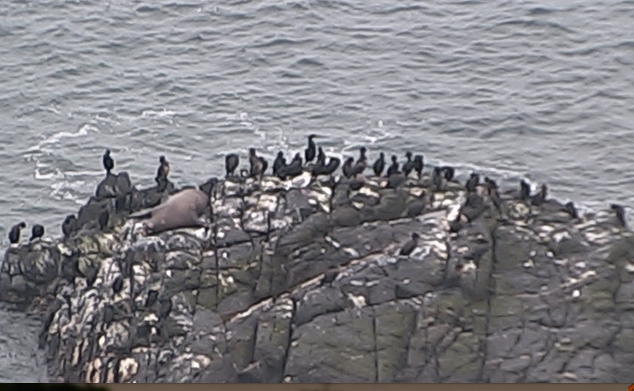
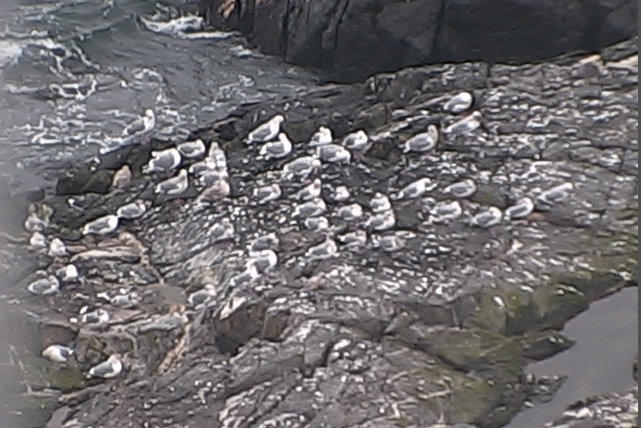
We had lined up several people to go out today for the annual Christmas Bird Count, unfortunately the gale warning and the increasing wind from the North East made it impossible to get anyone out . With an impending storm the birds often disappear and such seems to be the case today. The following general pictures showing the few groupings of birds were taken from the tower camera 1  at mid-day. Alex will provide on the ground details later.

Scorpaenichthyes marmoratus: Cabezon–The Race Rocks Taxonomy

Scorpaenichthyes marmoratus

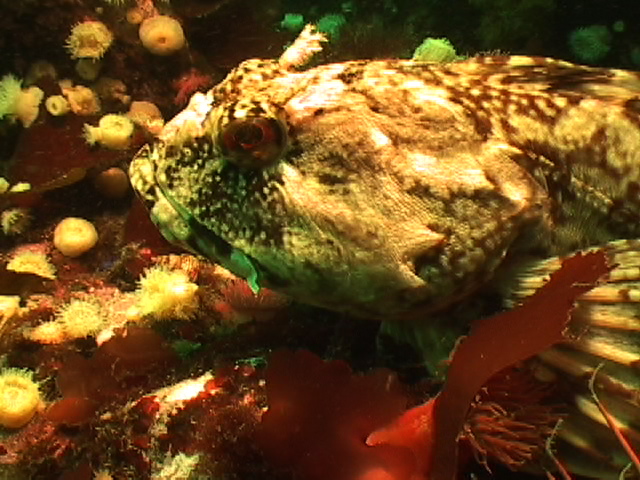
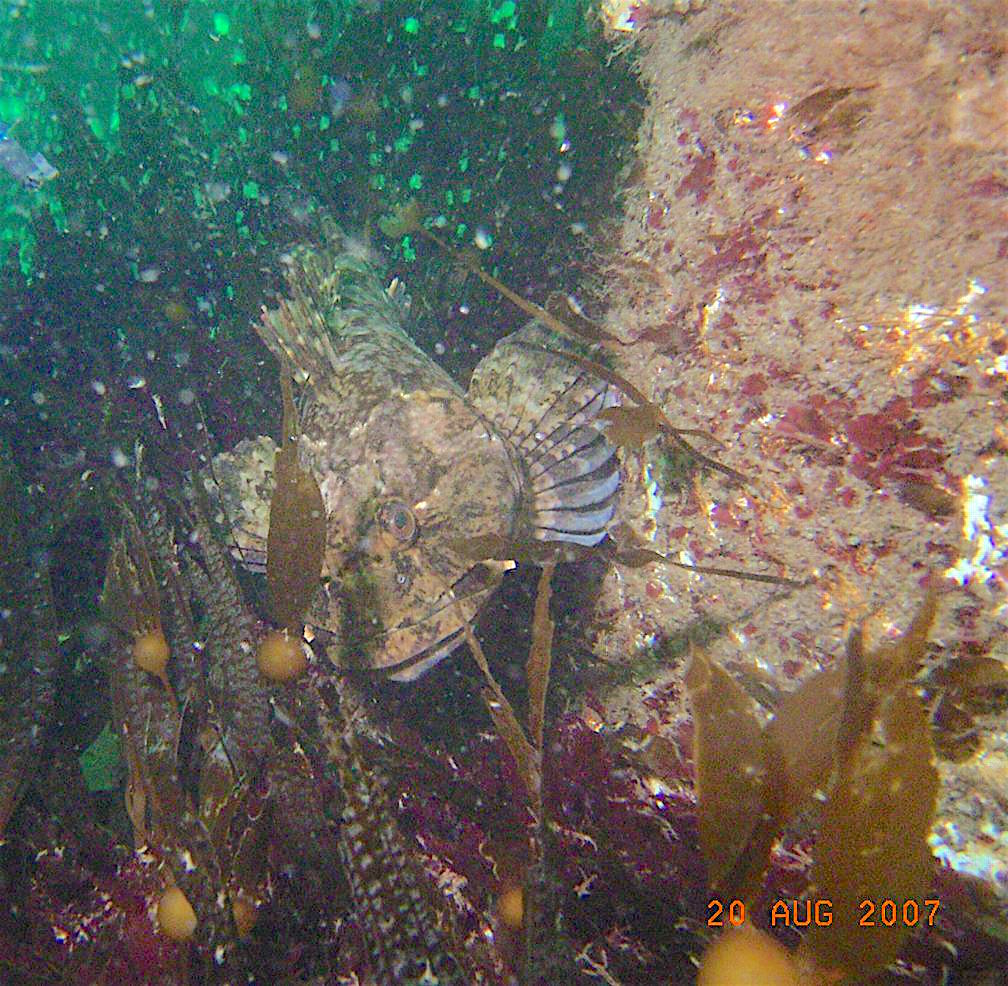
cabezonCabezon are normally benthic or bottom-dwellers, living among rocks and seaweeds in tide pools. Sometimes they live just below the water’s surface among the marine plants. Their coloration allows them to remain well camouflaged. Their habitat is most likely rocky, sandy and muddy bottoms, living in areas with a depth range of 0 to 200 meters. Moreover, young cabezon feed on small crustaceans like amphipods, shrimp, and crabs. The adults feed on crustaceans, marine worms and mollusks, including clams and abalone. They can swallow a whole abalone and later regurgitate the indigestible shell; therefore, their tropic level is that of a secondary carnivore. In addition, the limiting factors that will affect the development and growth of this population in a certain habitat will be the presence of enough light, temperature and the availability of food and living space.

Domain Eukarya
Kingdom Animalia
Phylum Chordata
Sub-phylum Vertebrata
Class Actinopterygii
Order Scorpaeniformes
Family Cottidae
Genus Scorpaenichthyes
Species marmoratus
Common Name: Cabezon, Scorpion Fish

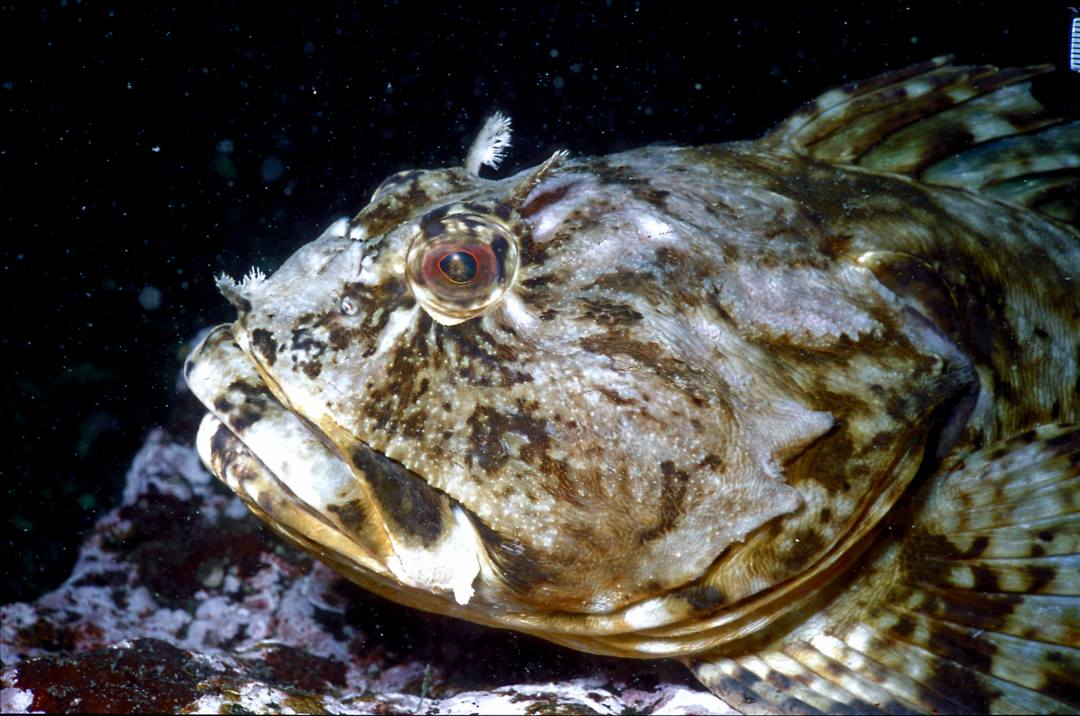
The cabezon ( literally big head in Spanish ) is a benthic fish that lives among the kelp holdfasts and rocky areas, usually very close to the bottom. It is often so confident of its camouflage that it will not move when approached by divers. Note the multi colored eye. These fish will lunge at almost anything that moves on the bottom. Dissections of their stomachs reveal amphipods and small crabs, pieces of kelp (and even rocks they have grabbed when foraging for other invertebrates.)

Their maximum length and weight are 99.0 centimeters and 14.0 Kilograms respectively. This organism can be seen in the Eastern Pacific, which covers the areas from Southeastern Alaska to Punta Abrejos, in Central Baja California, Mexico. Race Rocks is located in the centre of this range. In this map we can see the range of this fish.

mapReference The National Biological Information Infrastructure (NBII) BioBot
http://www.elasmodiver.com/BCMarinelife/BCML%20Chordata.htm


https://www.racerocks.ca/category/species/class-actinopterygii/
Other Members of the Class Actinopterygii at Race Rocks.

taxonomyiconReturn to the Race Rocks Taxonomy
and Image File
pearsonlogo2_f2The Race Rocks taxonomy is a collaborative venture originally started with the Biology and Environmental Systems students of Lester Pearson College UWC. It now also has contributions added by Faculty, Staff, Volunteers and Observers on the remote control webcams.


October,2009 : Original text by Diomedes Saldana Greco

Larus glaucescens: Glaucous-winged gull– The Race Rocks taxonomy

gullfeedLarus glaucescens is omnivorous, feeding on carrion, fish, invertebrates, seaweed and food stolen from other birds. One of the main sources of food for Glaucous-winged gull are the softer bodied invertebrates exposed during the low tide time at Race Rocks. It is also typical of their behavior to take their hard shelled food, such as clams, or gastropods and drop them onto rocks to break them open for eating.

This species is the only species of gull that nests on Great Race Rock. From June to September, there could be over 150 nests on the island. The adults also overwinter at Race Rocks, but occasionally disappear from the islands for a few weeks. They start their complicated behaviours aimed at establishing territories and bonding with mates as early as February or March. Their eggs are laid in June and hatching takes place in early July. In the 2002 season, 100 birds fledged successfully, after several years of failed nesting, probably due to fish shortages in the surrounding waters.

In September, the clean looking feathers of the neck and head take on a mottled gray appearance as they undergo an annual moult.


The following pictures were taken by Ecoguardian Christine Ouradou in July of 2016 and appear in logs from that time.

gulljuvenIn this picture by Evan Ferrari , the young juveniles, capable of flight, still hang around for a daily feeding from their parent

Domain: Eukarya
Kingdom :Animalia
Phylum: Chordata
Subphylum :Vertebrata
Class: Aves
Order: Charadriiformes
Family :Laridae
Genus: Larus
Species :glaucescens
Common Name:  Glaucous-Winged Gull

The Glaucous winged Gull,
In June of 2000, David Mesiha and Satoshi Kimura (PC yr 25) made videos of different aspects of gull behavior while staying on the island. Thus started the archiving of videos for racerocks.com

June 1-16 : Aggression between males is frequent. This takes the form of plucking grass in a standoff and in beak pulling. In this way territories are defined as the nests are being built.

May 1: Breeding in the colony has started and will continue throughout May and June.

This video was taken in early July, 2001, from the north window of the Marine Science centre at Race Rocks. It shows the second day in the life of a sea gull chick. The parents feed the chick a small fish, probably herring or needlefish.
In June, 2016,  Lester Pearson College set up a live camera to follow the development of one of the Glaucous-winged Gull nests with eggs in the Race Rocks Ecological Reserve . Also the camera had infrared night vision.

All entries on this website tagged with Glaucous-winged gull

Other Members of the Class Aves at Race Rocks.

taxonomyiconReturn to the Race Rocks Taxonomy
and Image File
pearsonlogo2_f2The Race Rocks taxonomy is a collaborative venture originally started with the Biology and Environmental Systems students of Lester Pearson College UWC. It now also has contributions added by Faculty, Staff, Volunteers and Observers on the remote control webcams.

Original text by Juan Pablo Hoffmaister, PC student Dec. 2001

Unusual eye pattern of nesting gull

This morning I noticed a Glaucous-winged gull on a nest up close to Camera 5 on the West side. These pictures show an unusual eye pattern??


Ocinebrina lurida : Lurid rock snail–The Race Rocks Taxonomy

snailcol2-1

Ocinebrina lurida : Lurid rock snail. The orange snail on the left is probably Ocenebrina. The others are various litorine snails.

Physical description:
Small,size to 1 1/2 ” (38 mm) solid shell with up to 6 whorls; fine close spiral treads crossing 6-10 axial ribs; Oval aperture with 6-7 teeth or more within outer lip height. Shell height most commonly is up to 40 mm, however usually less, with six to ten large low axial ridges crossed by prominent spiral ridges. Colors range from white, pale yellowish, dark brown, or red. It has a canal well developed, and its aperture is oval.
Classification
Domain Eukarya
Kingdom Animalia
Phylum Mollusca
Class Gastropoda
Sub class Prosobranchia
Order Neogastropoda
Family Muricidae
Genus Ocinebrina
Species lurida
Common Name: lurid rock snail

Global Distribution

Ranges from Sitka (Alaska) to Punta Santo Tomas
(Baja California). 57° N- 32° N, in the Pacific Ocean.

Habitat
Low intertidal zones, visible amongst the fucus and other algae at low tide.It is common on and under rocks and in crevices, commonly, clinging to rocks.

Feeding
The lurid rock snail is the natural predator of the giant chiton, Cryptochiton stelleris . It has been observed feeding on gumboot chitons, where it uses its radula to cut through the dark outer layers on the dorsal surface of the chiton’s girdle in order to eat the yellow tissue beneath. They feed on a number of prey items, ranging from bivalves to other gastropods
Reproduction
They have separate sexes. Fertilization of the egg occurs in seawater. Eggs cases are attached to water.

Interesting facts
It may be confused with Amphissa, because its shell shows a similar mixture of fine spiral lines and axial ribs. It’s less slender than Amphissa,  its canal is better developed, and its aperture is not at all the shape being oval rather than nearly elliptical. The yellow-brown or orange-brown coloration, and the fact that the axial ribs cross the body whorl, enable one to distinguish it from a small specimen of searlesia. Often confused with larger rock snail, Ocinebrina sclera,

References

http://members.shaw.ca/bcshells/bcframe.html

http://people.www.edu/staff/cowlda/KeyToSpecies/Mollusca/Gastropoda/Prosobranchi/
Order_Neogastropoda/Suborder_Rachiglossa/Family_Muricidae/Ocenebra_lurida.html

Peterson Field Guides Pacific Coast Shells Percy A. Morris Houghton Mifflin Company Boston 2nd edition 1980 Canada

Shells & Shellfish of the Pacific Northwest Rick M. Harbo Harbour Publishing 1997
Other Members of the Phylum Mollusca at Race Rocks.

taxonomyiconReturn to the Race Rocks Taxonomy
and Image File
pearsonlogo2_f2The Race Rocks taxonomy is a collaborative venture originally started with the Biology and Environmental Systems students of Lester Pearson College UWC. It now also has contributions added by Faculty, Staff, Volunteers and Observers on the remote control webcams.