Sea Lion Disentanglement

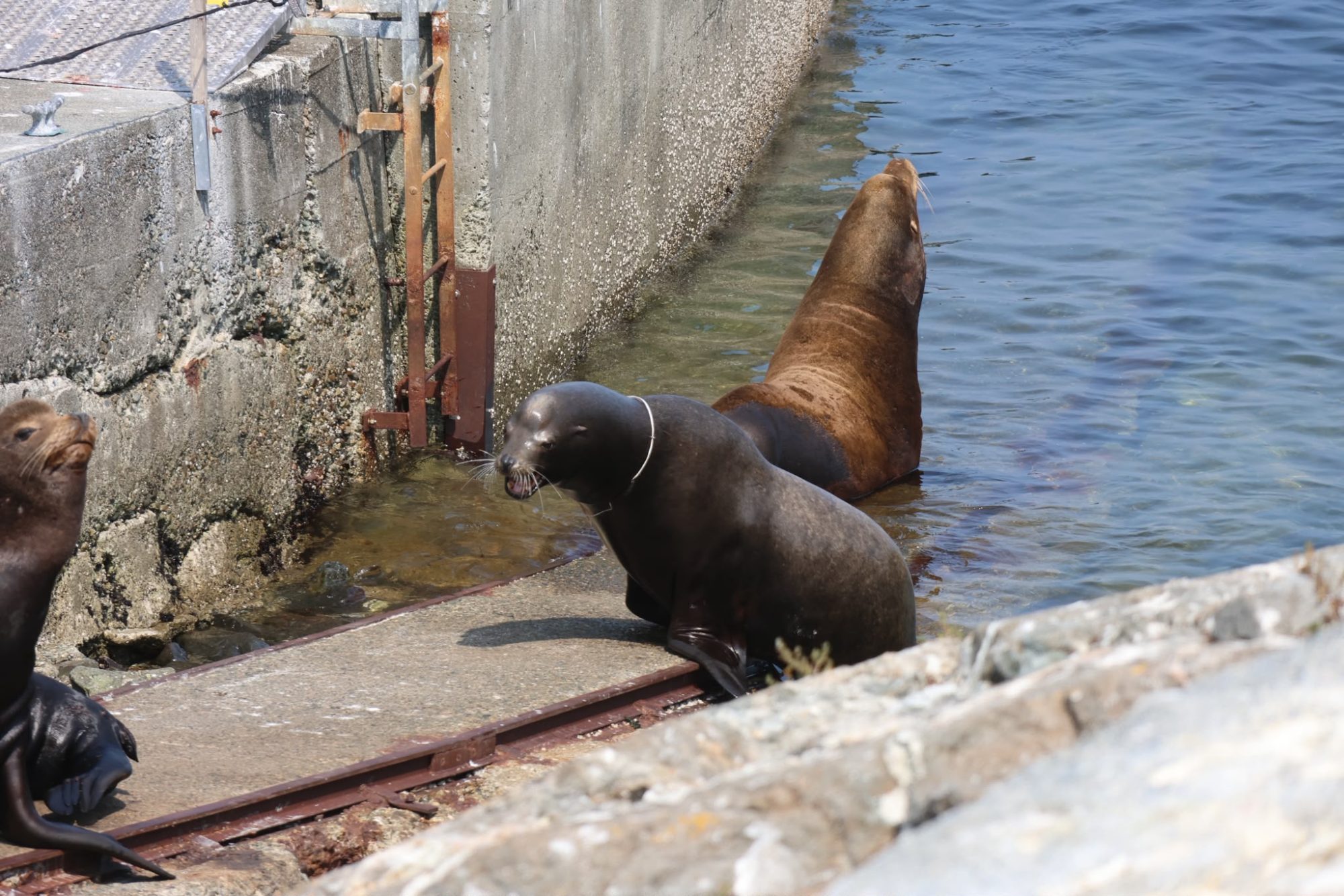
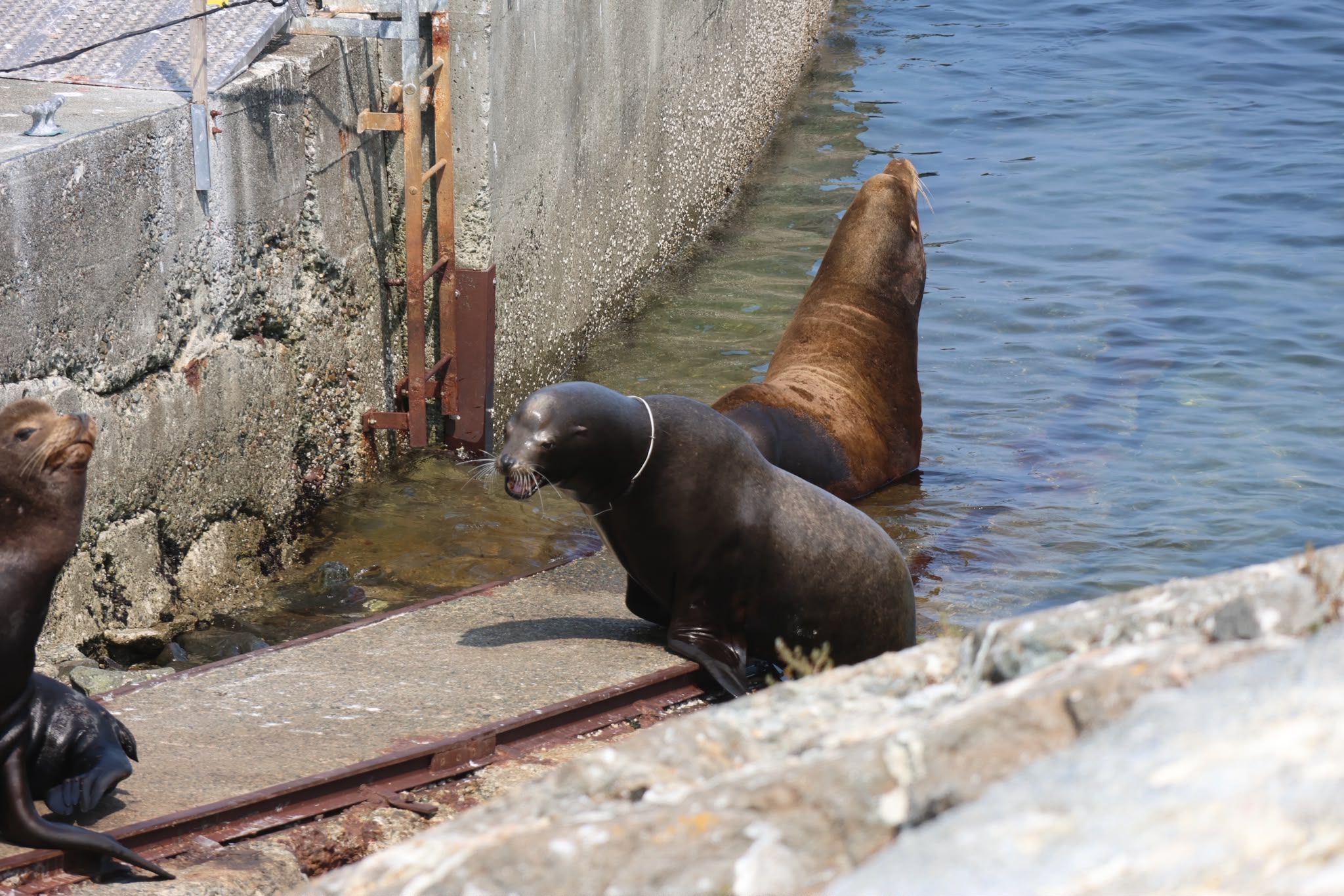
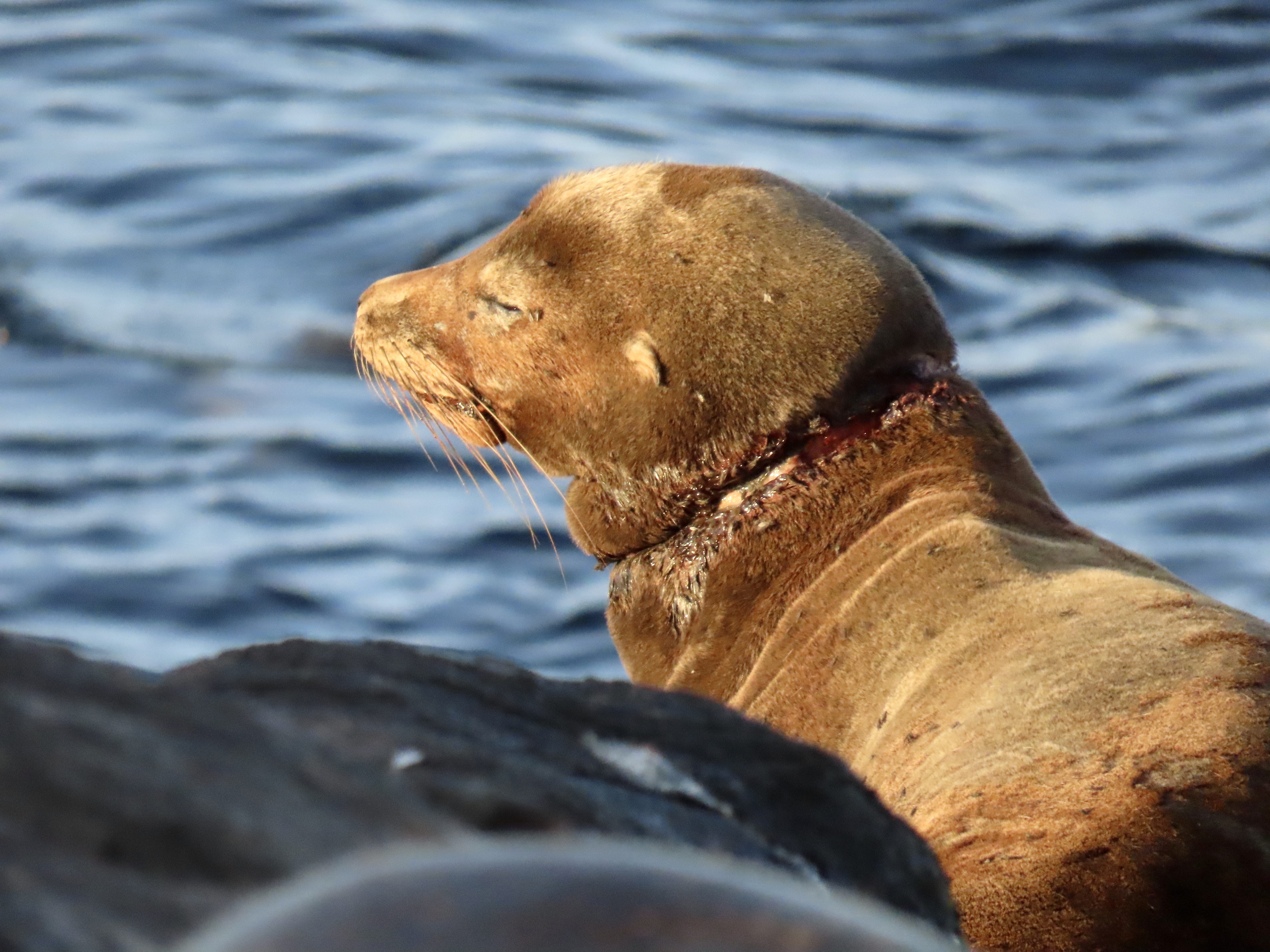
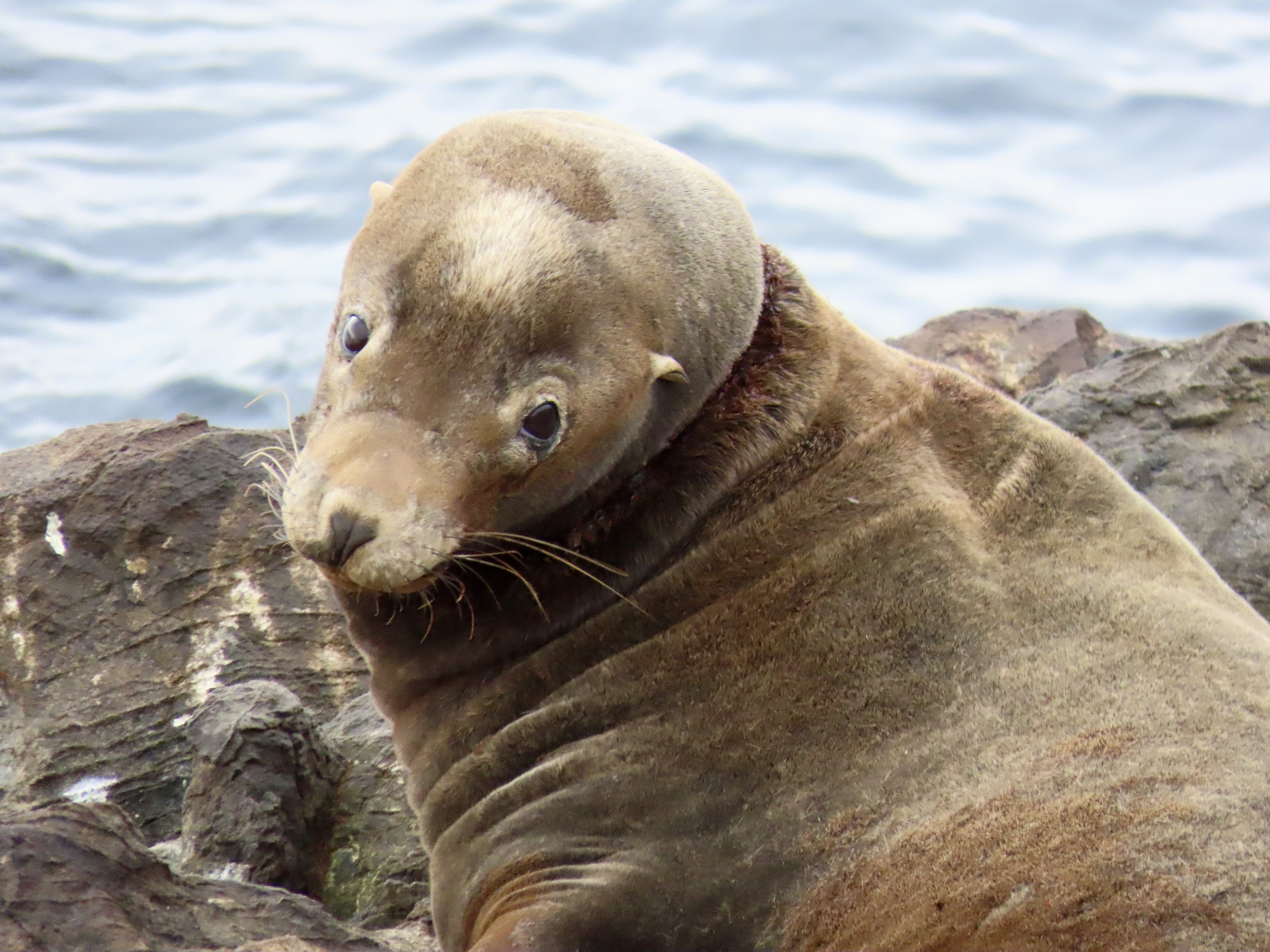
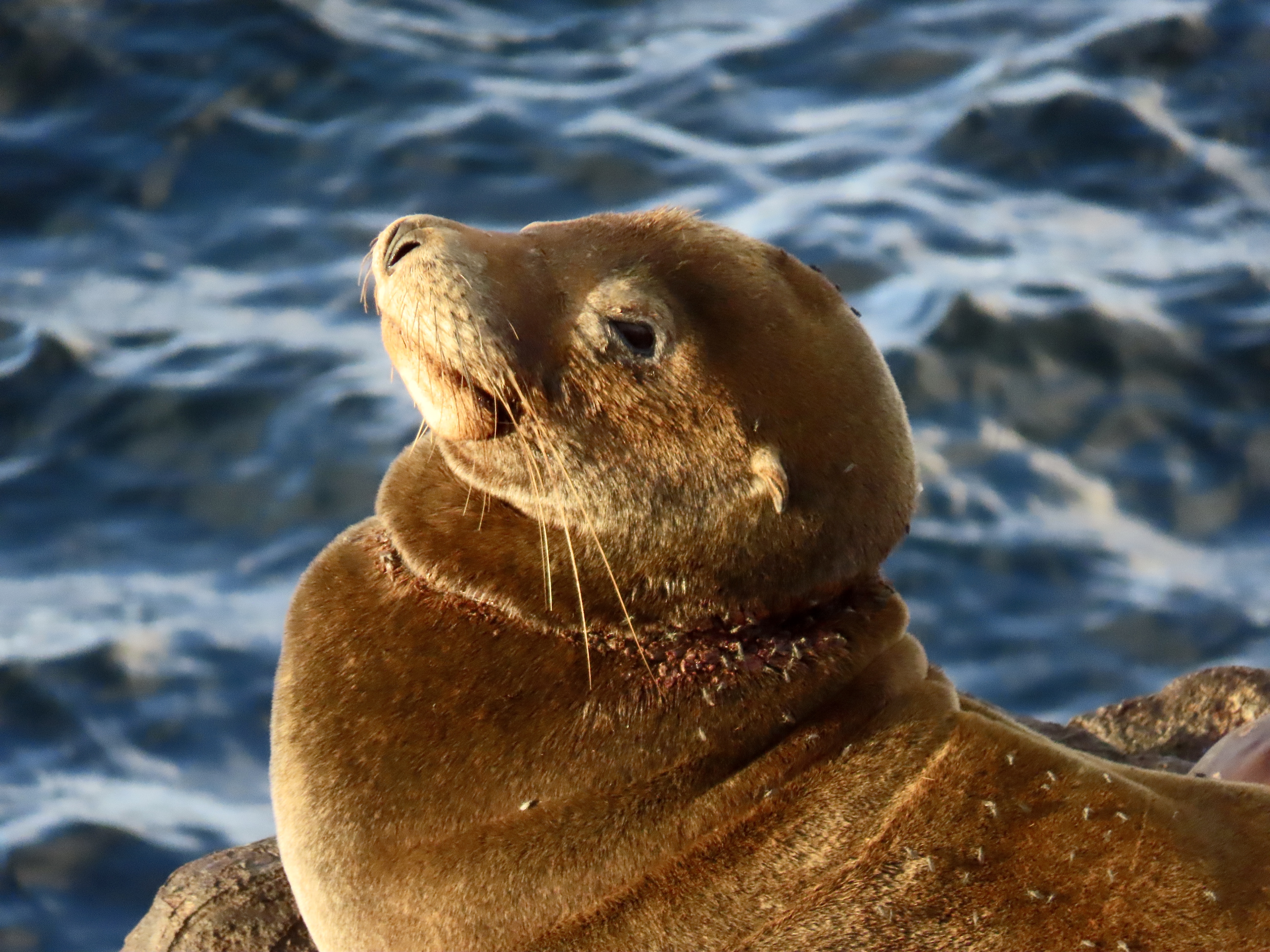
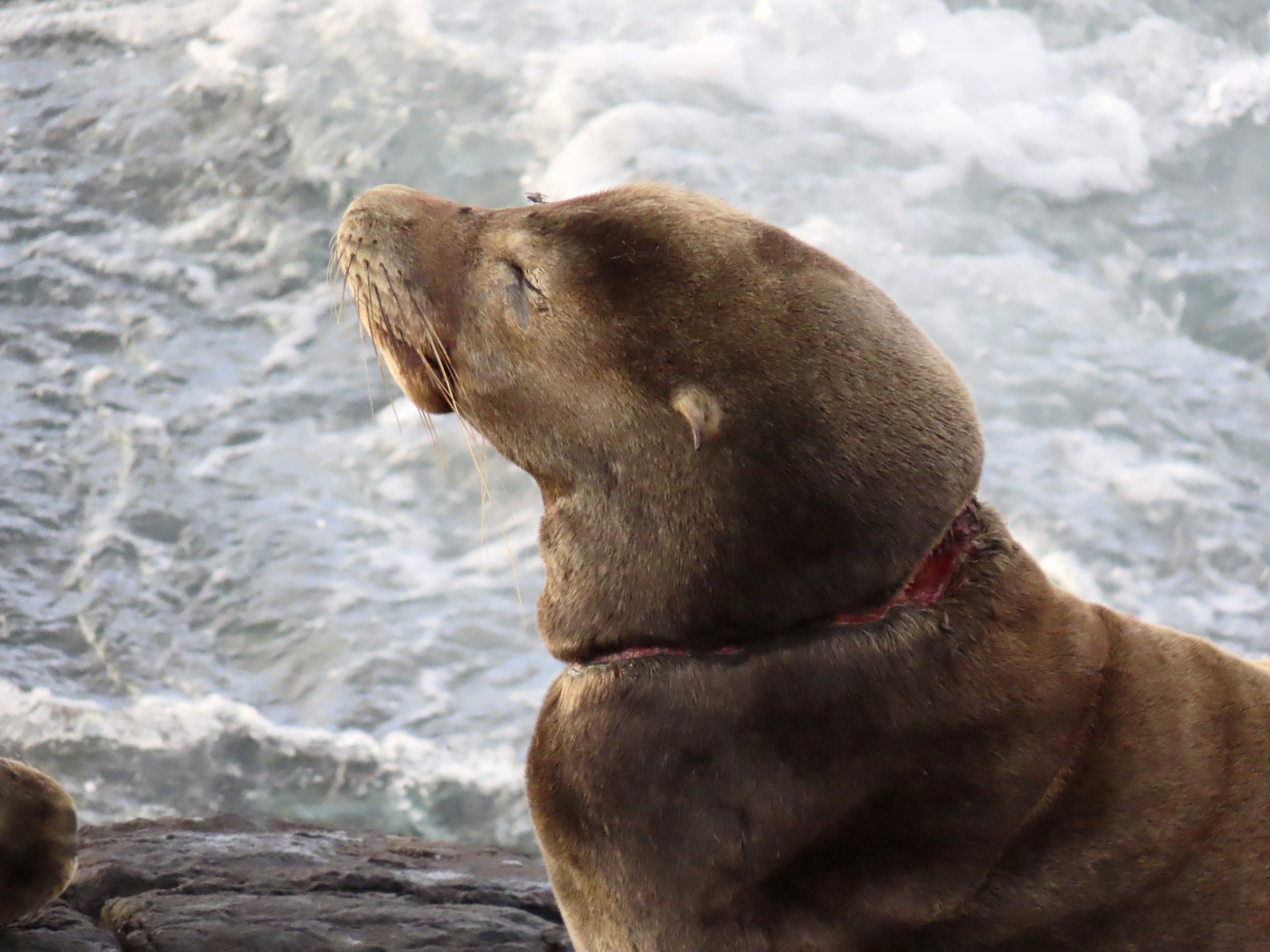
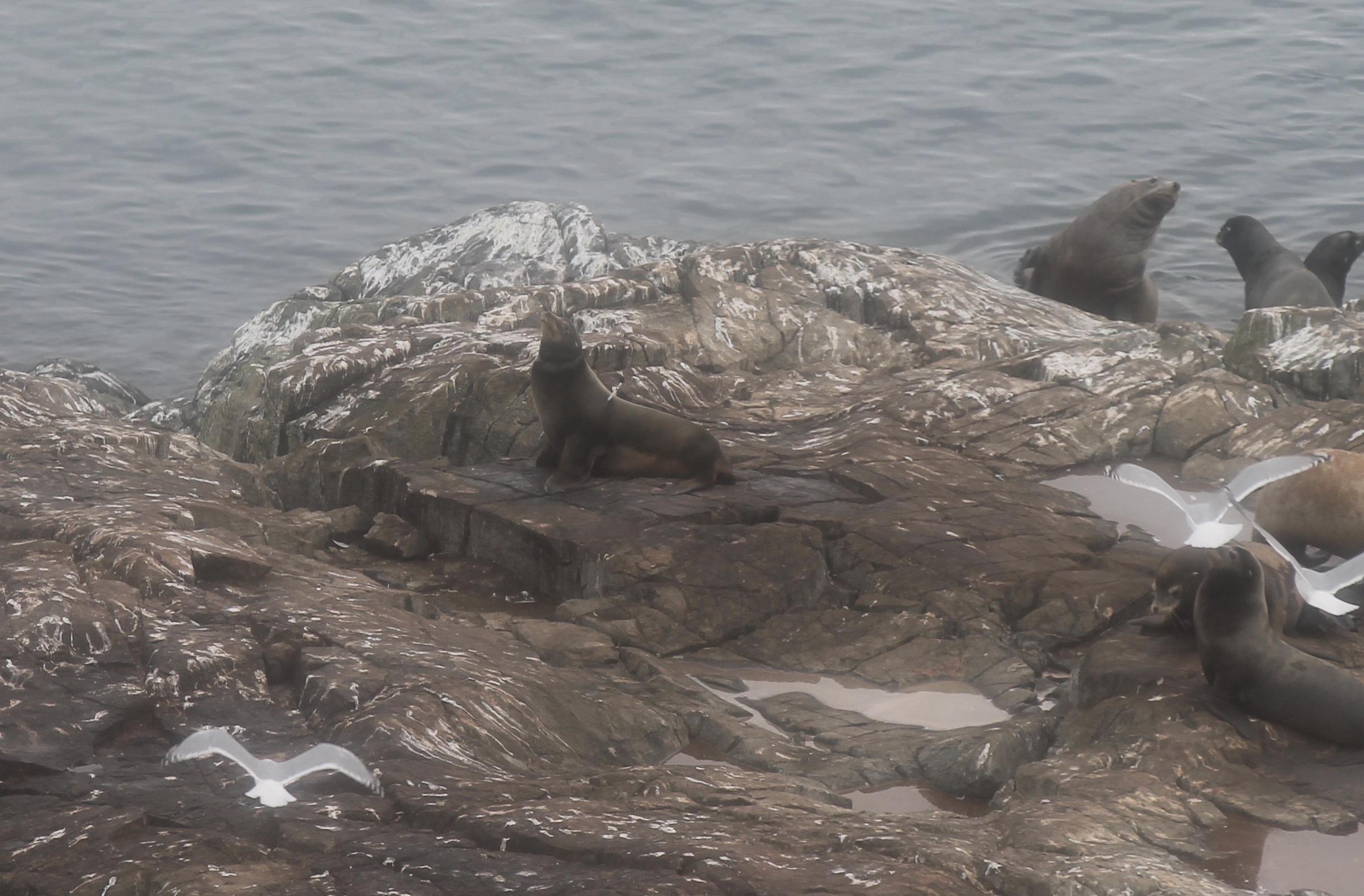
The long-awaited window of fair weather and coordinated schedules finally arrived late this morning, allowing the Marine Mammal Rescue Society (VAMMR) team to carry out an operation for the sea lion caught in plastic line near the jetty. It’s been a few weeks since he was first spotted, and luckily he hung around long enough for this incredible group to come and bring some relief!
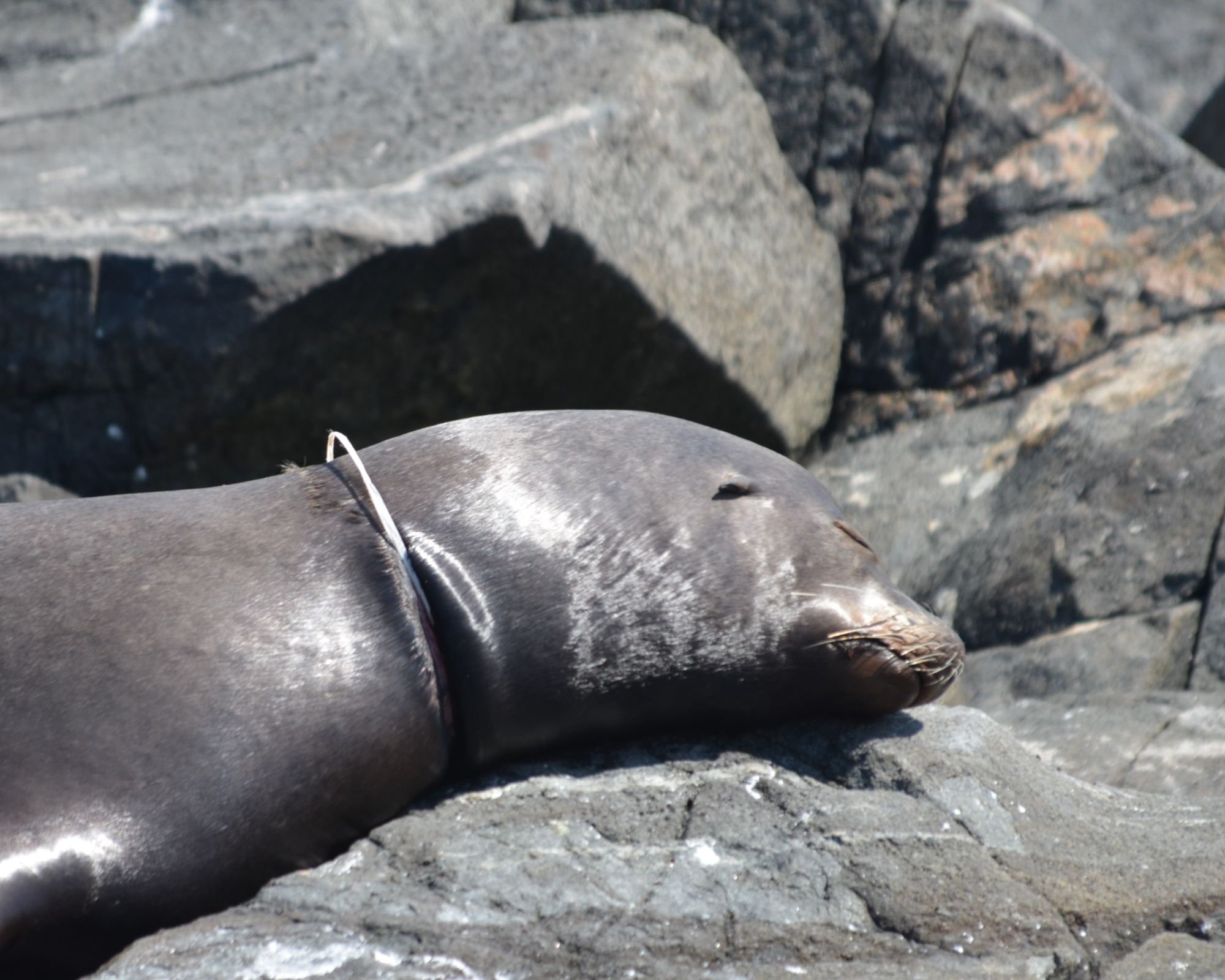

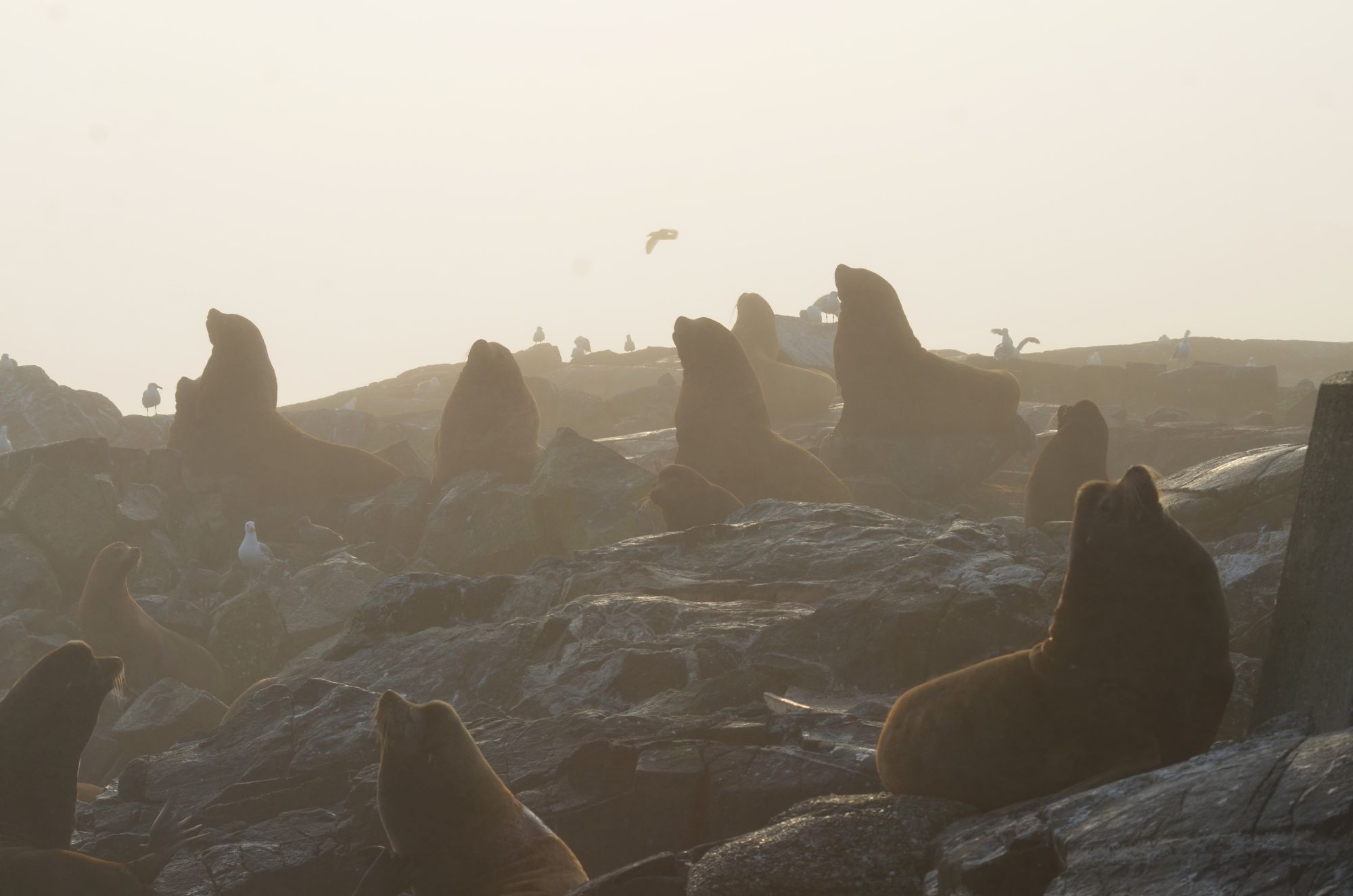
Dense morning fog initially cloaked the shoreline and outer rocks, lending the islands a soft, sunlit glow while complicating the search.
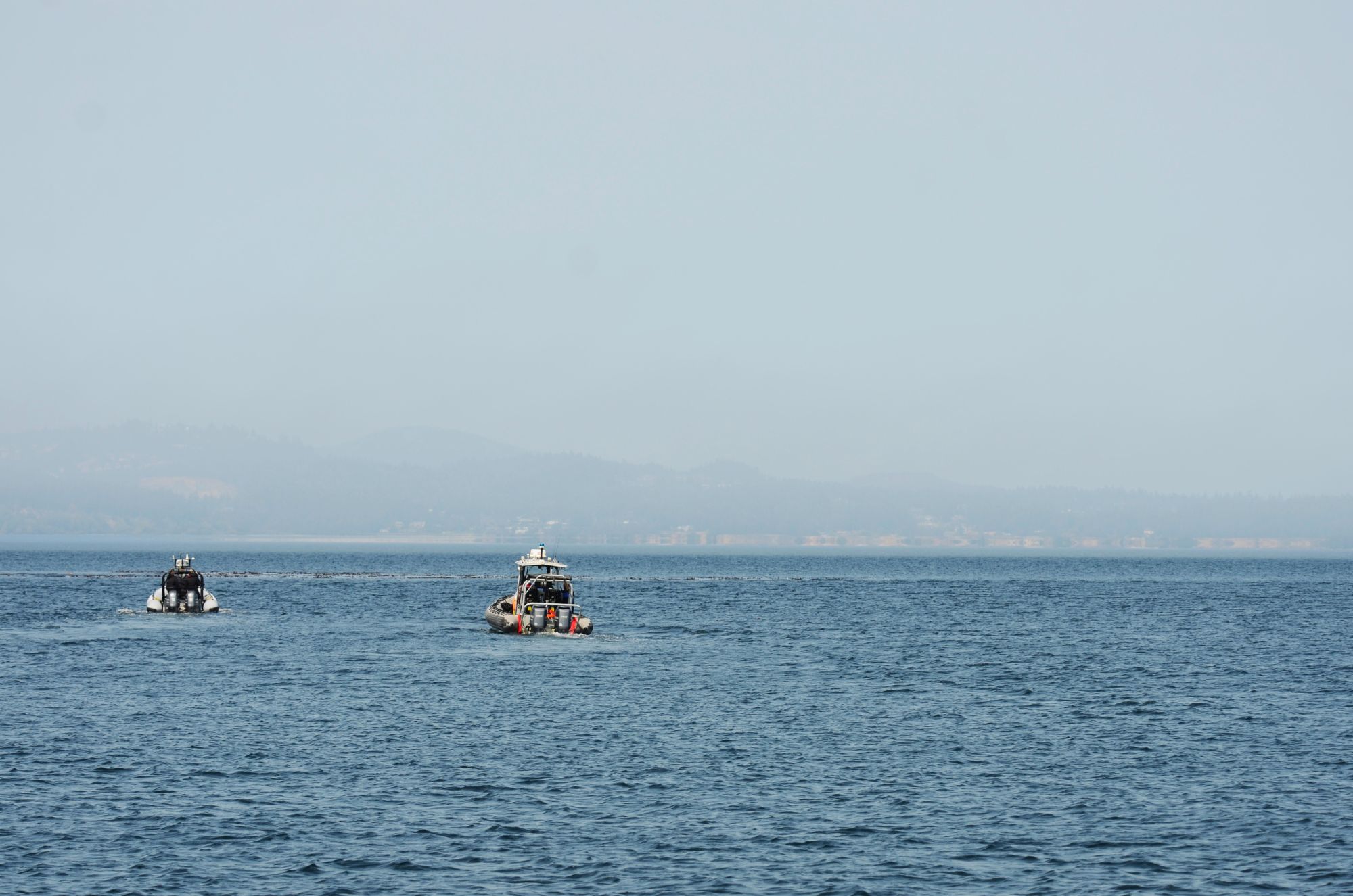
Because of all the activity around the jetty, the entangled sea lion had moved away from his usual resting spot. The team started by surveying the perimeter by water before launching a drone search once conditions calmed.

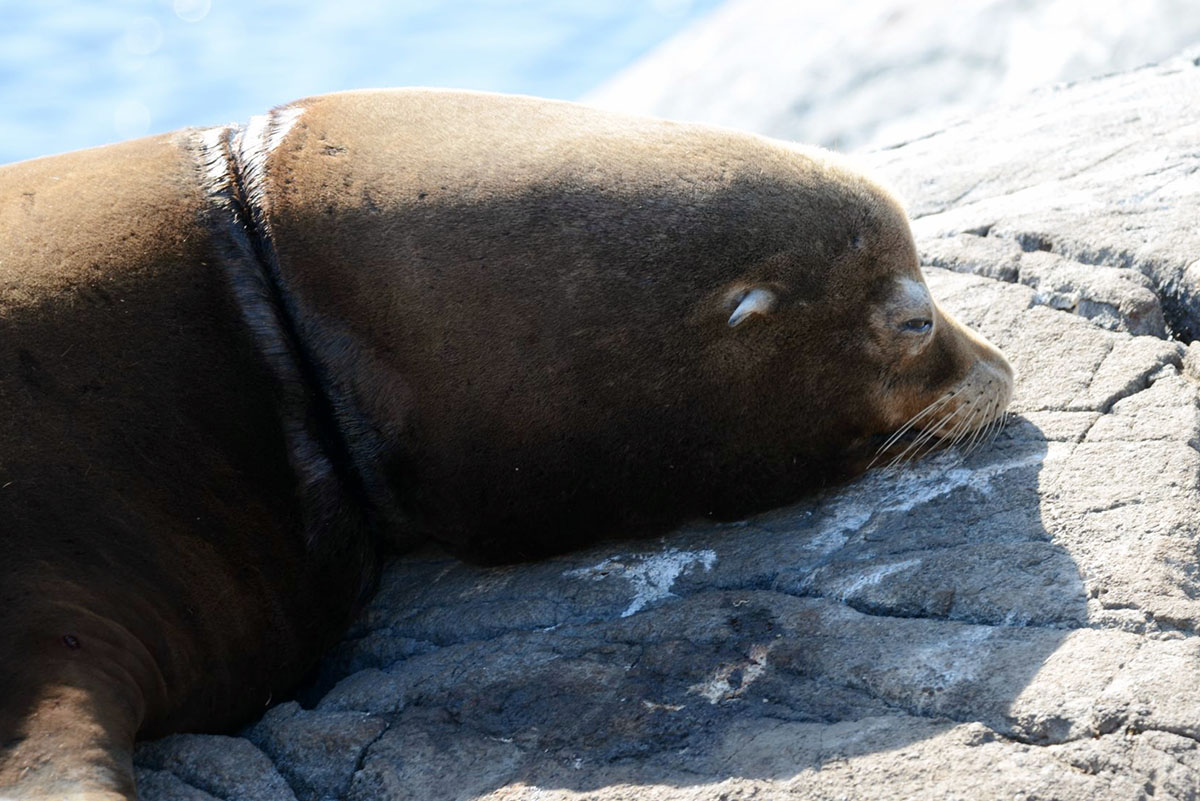
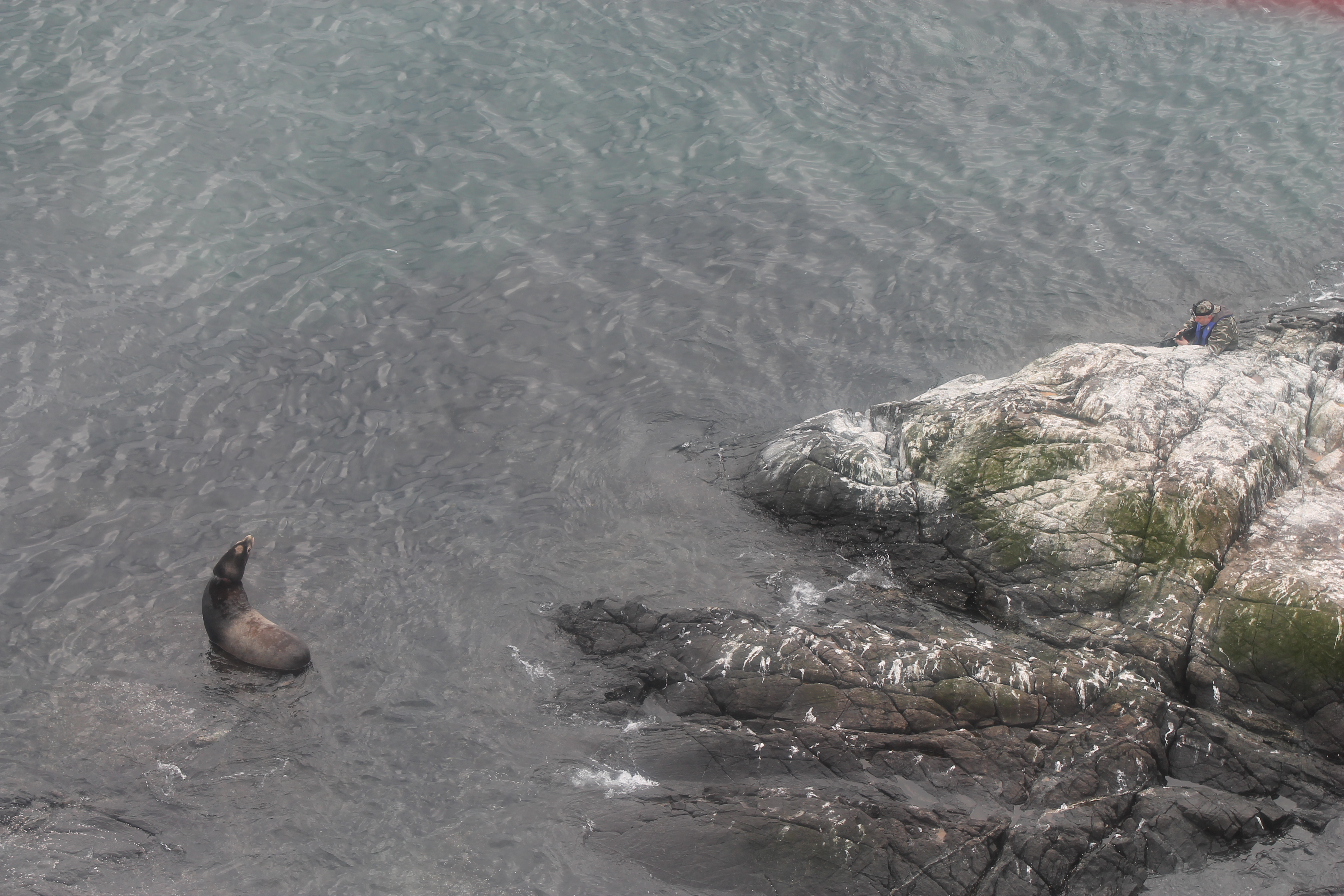
Finally! He was spotted playing in the shallows near the southwest corner by the energy building. Just a few metres away from another sea lion sporting a clean scar from a prior, successfully healed entanglement. Let’s hope our friend has a good recovery and long life as well.
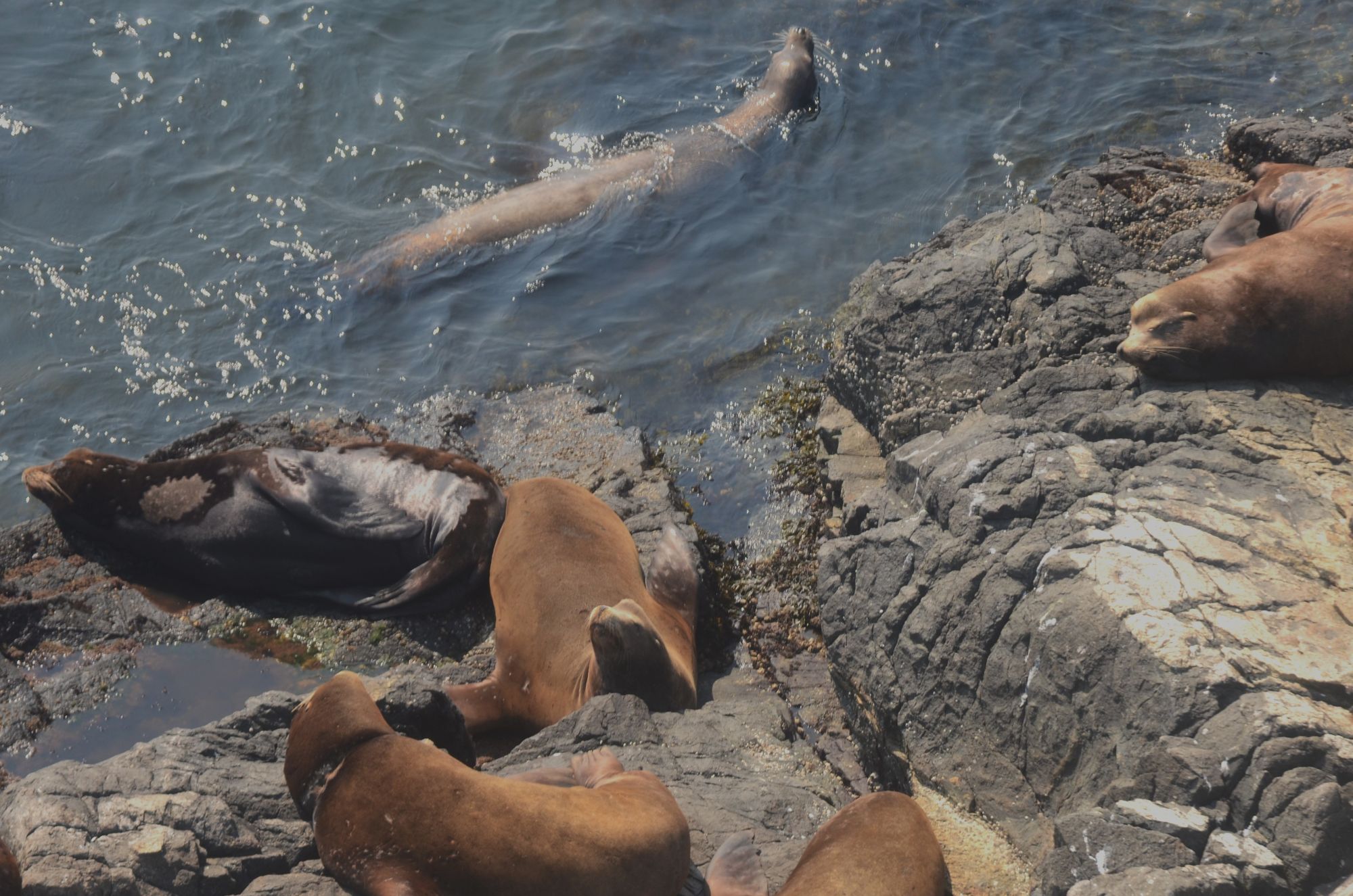
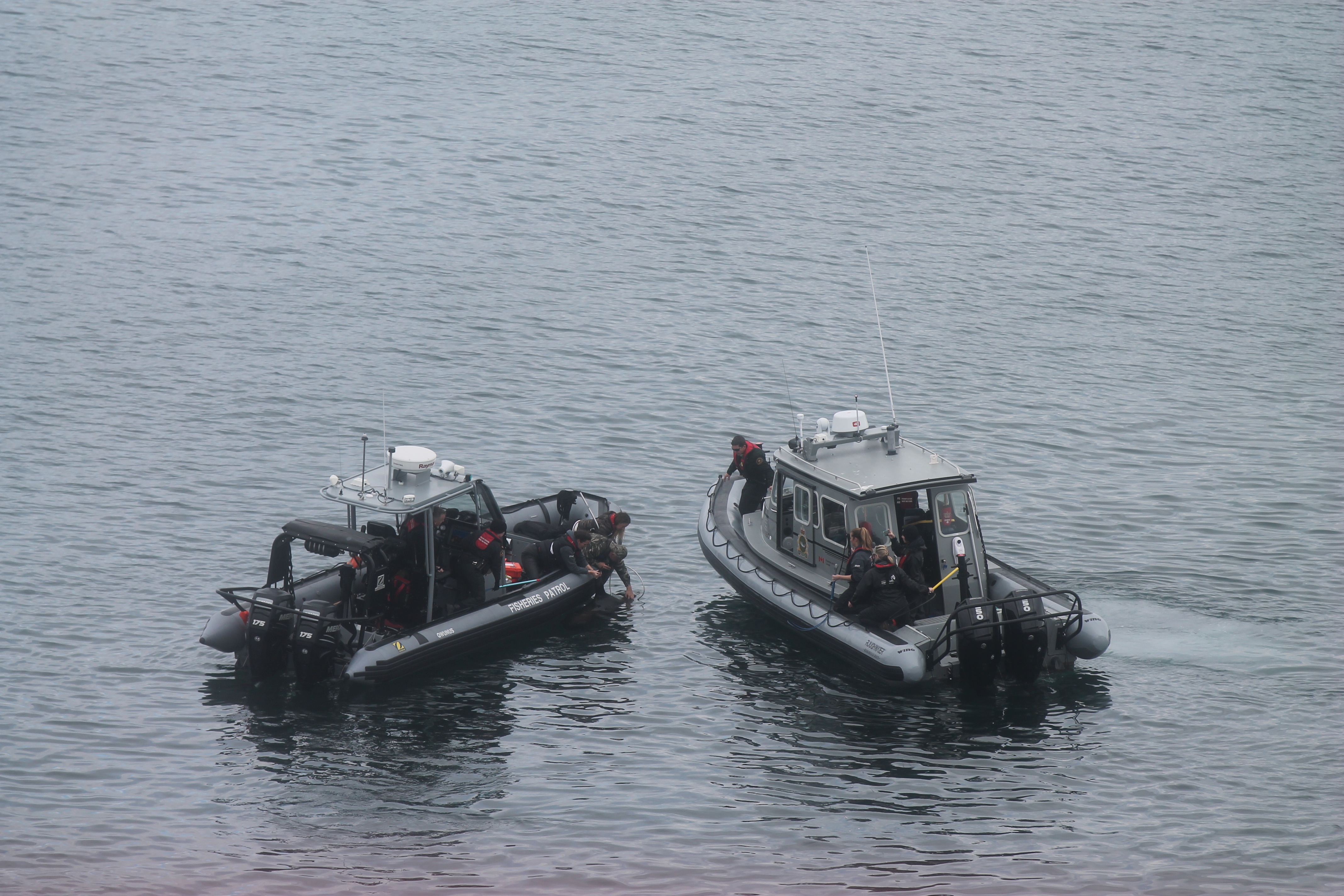
Rather than attempting a risky water intervention, the shore crew monitored the lion from a distance while the support boat stood by in the bay.
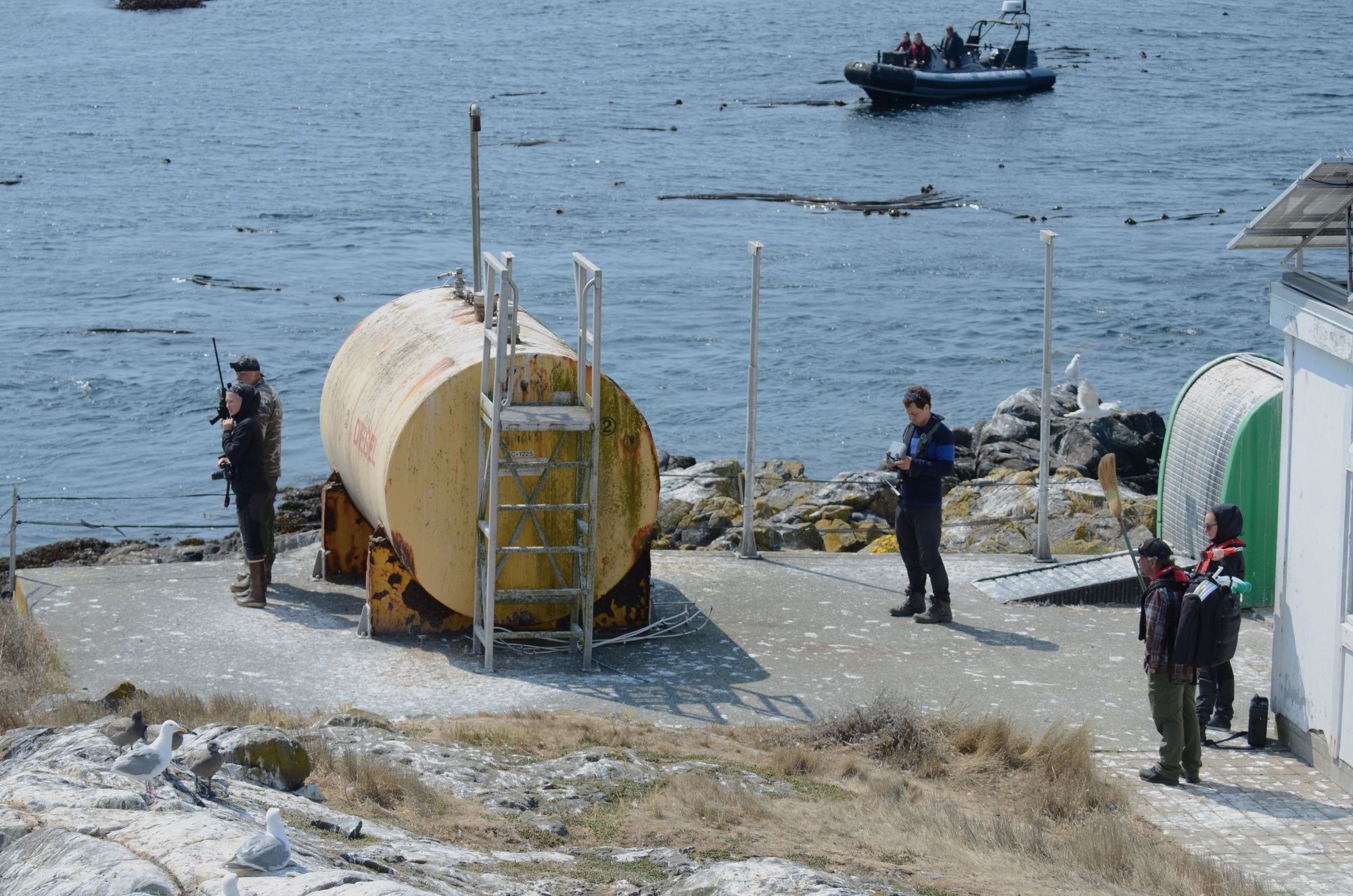
He looked to be thinking about hauling out several times, but there was no chance to safely tranquilize him before he headed back out!
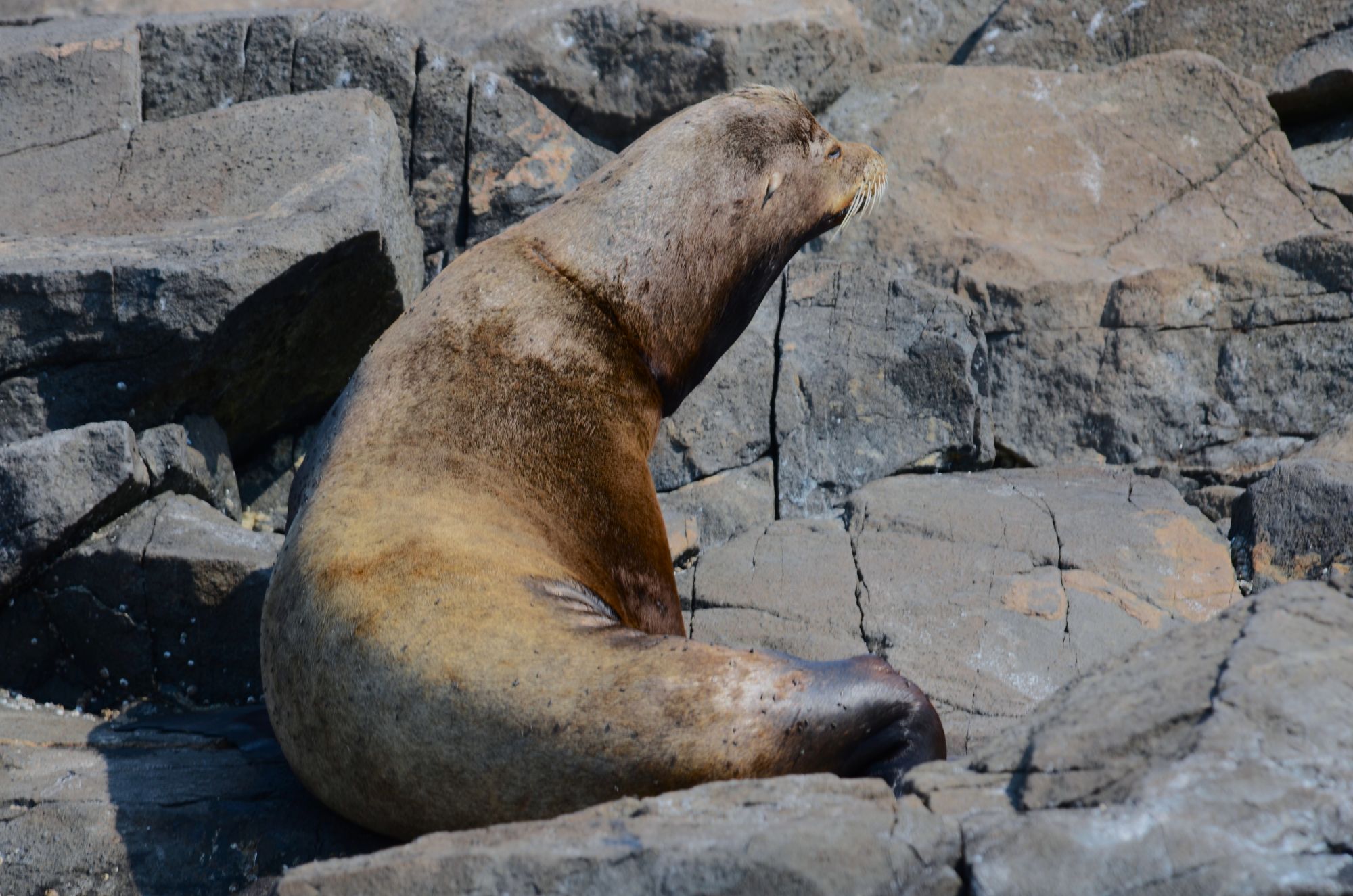
Luckily, he swam back around the rocks and hauled out in his usual spot on the concrete jetty, where access was significantly safer and more manageable.

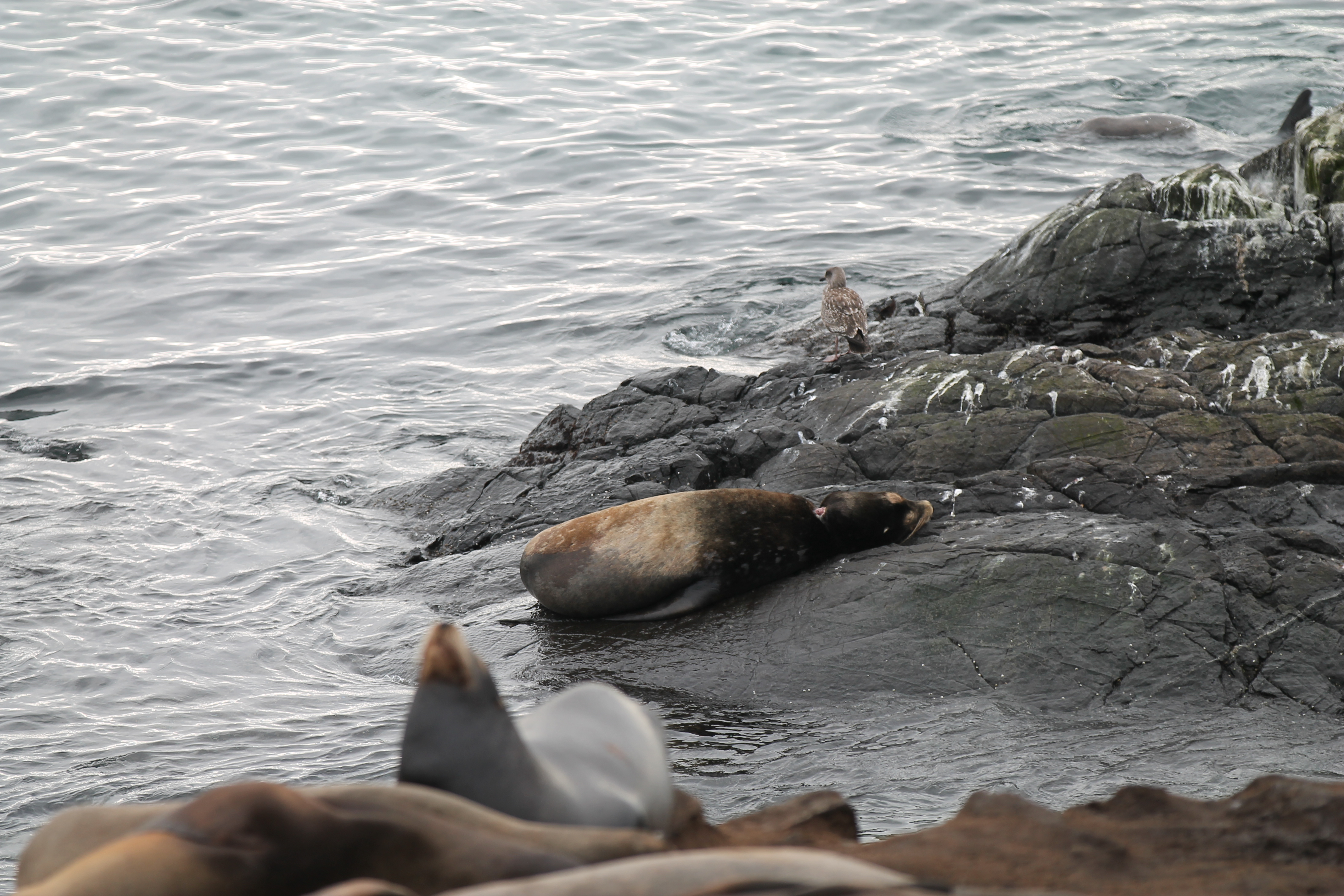
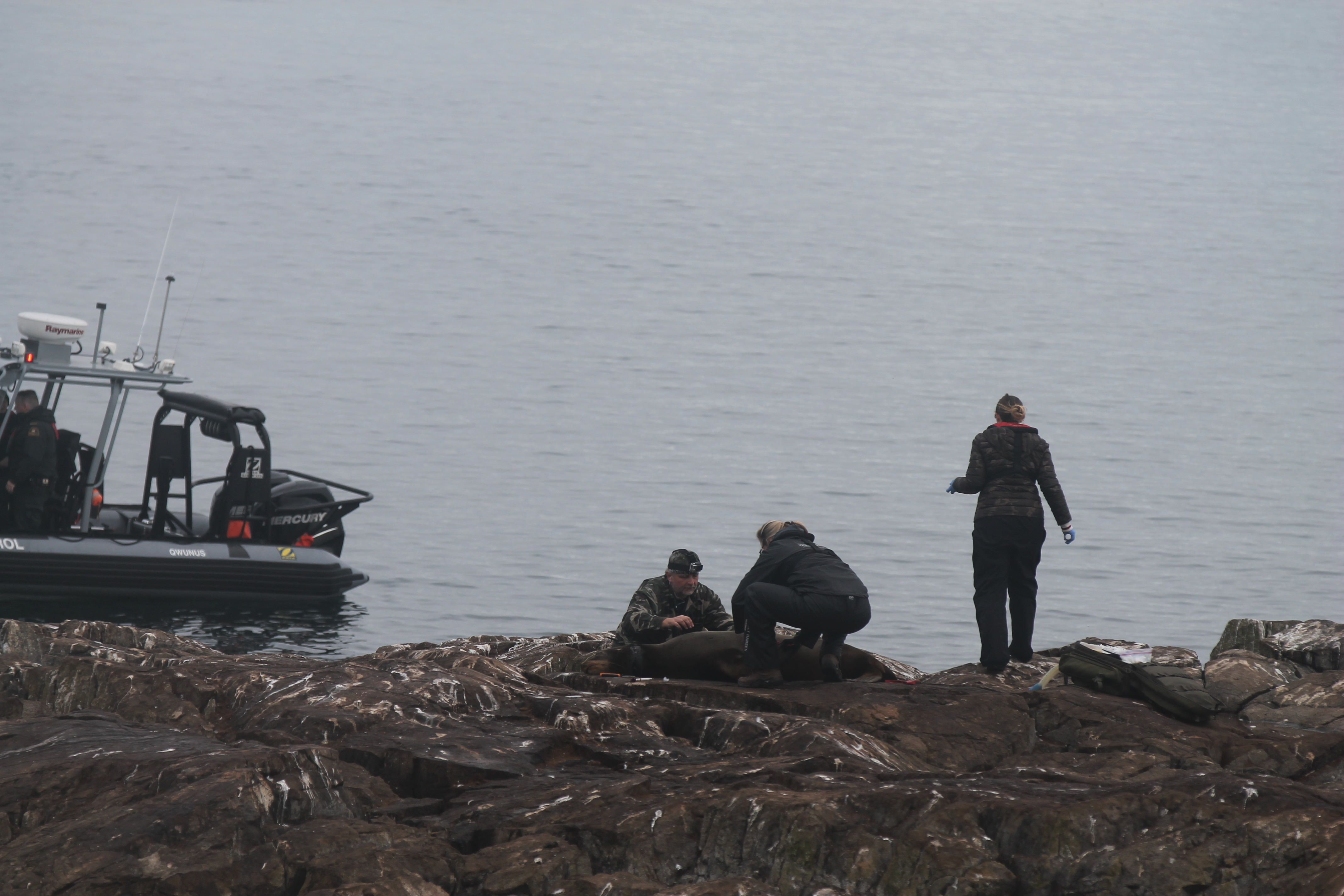
The crew moved in swiftly to carry out the procedure. Marty must have been taking lessons from the seagull chicks, as from my vantage point in the lighthouse (and through the fog) he did a pretty bang-on job of blending in.
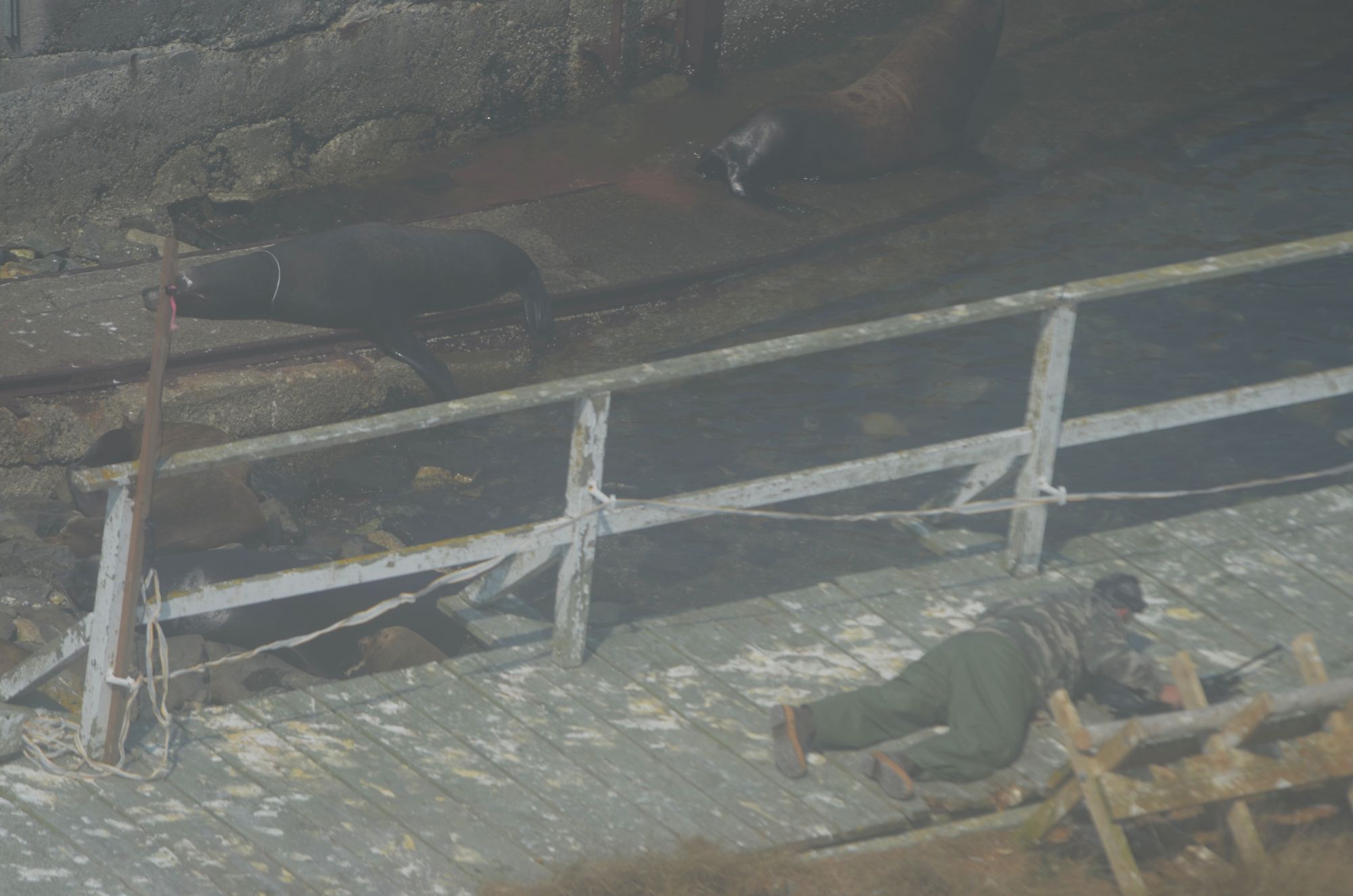
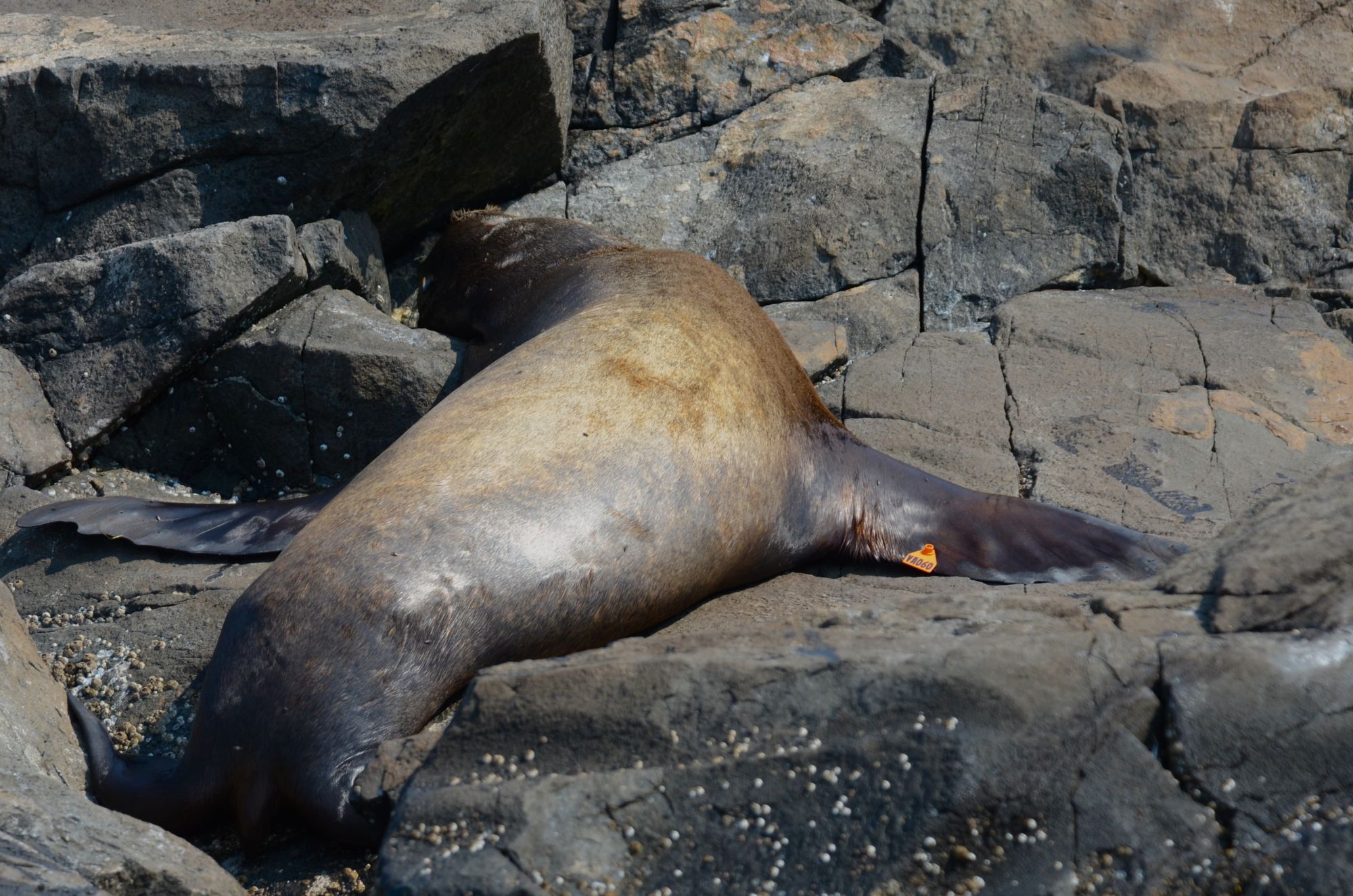
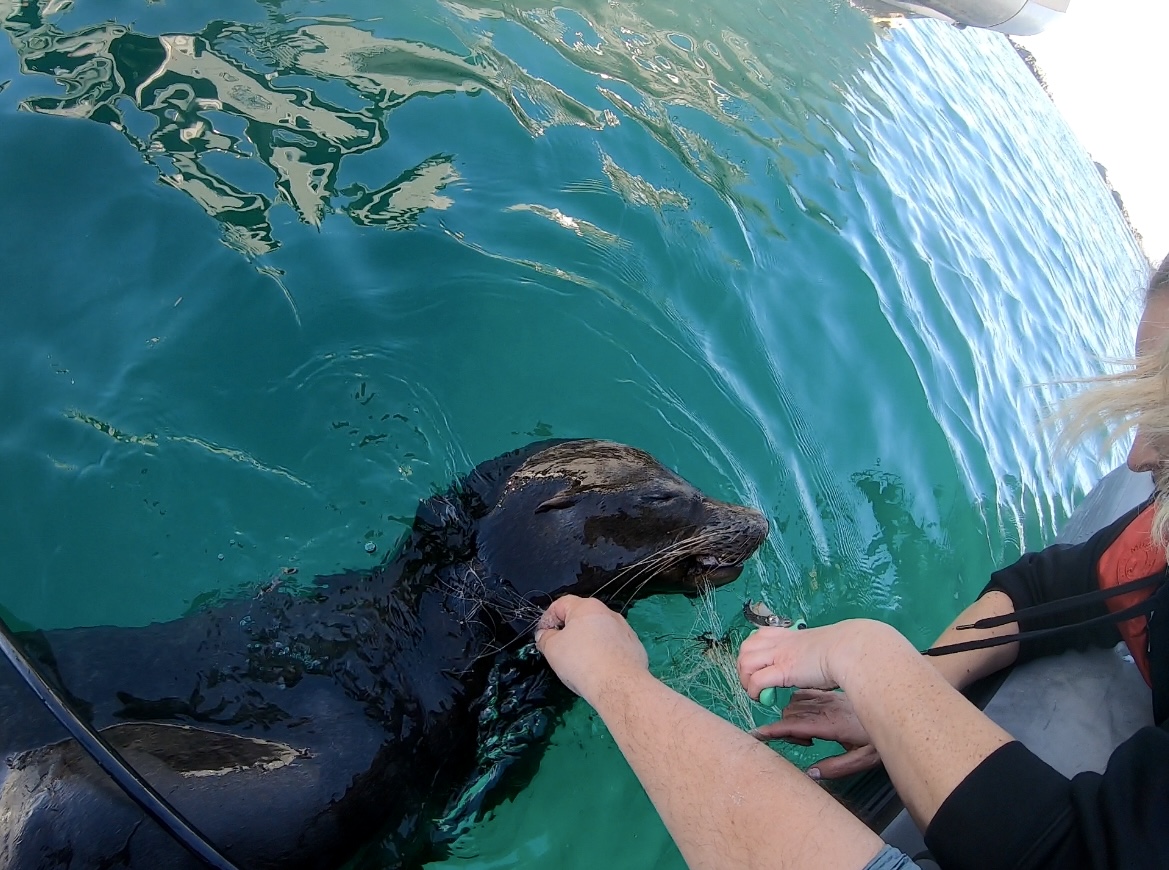
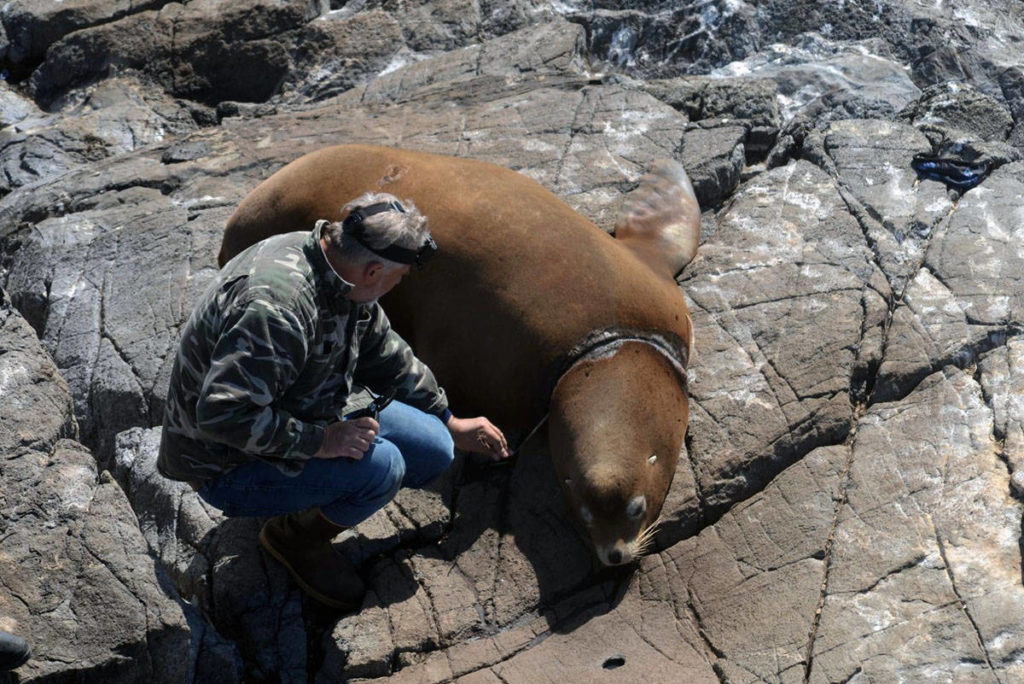
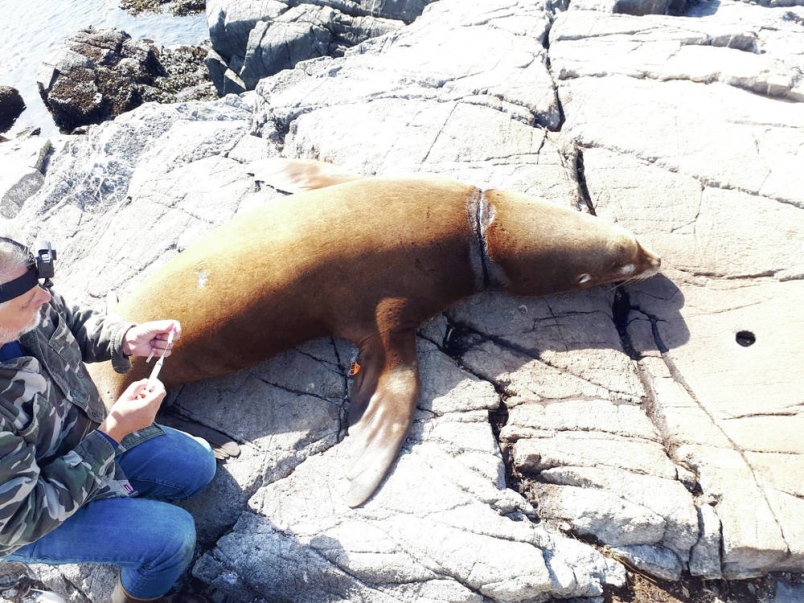
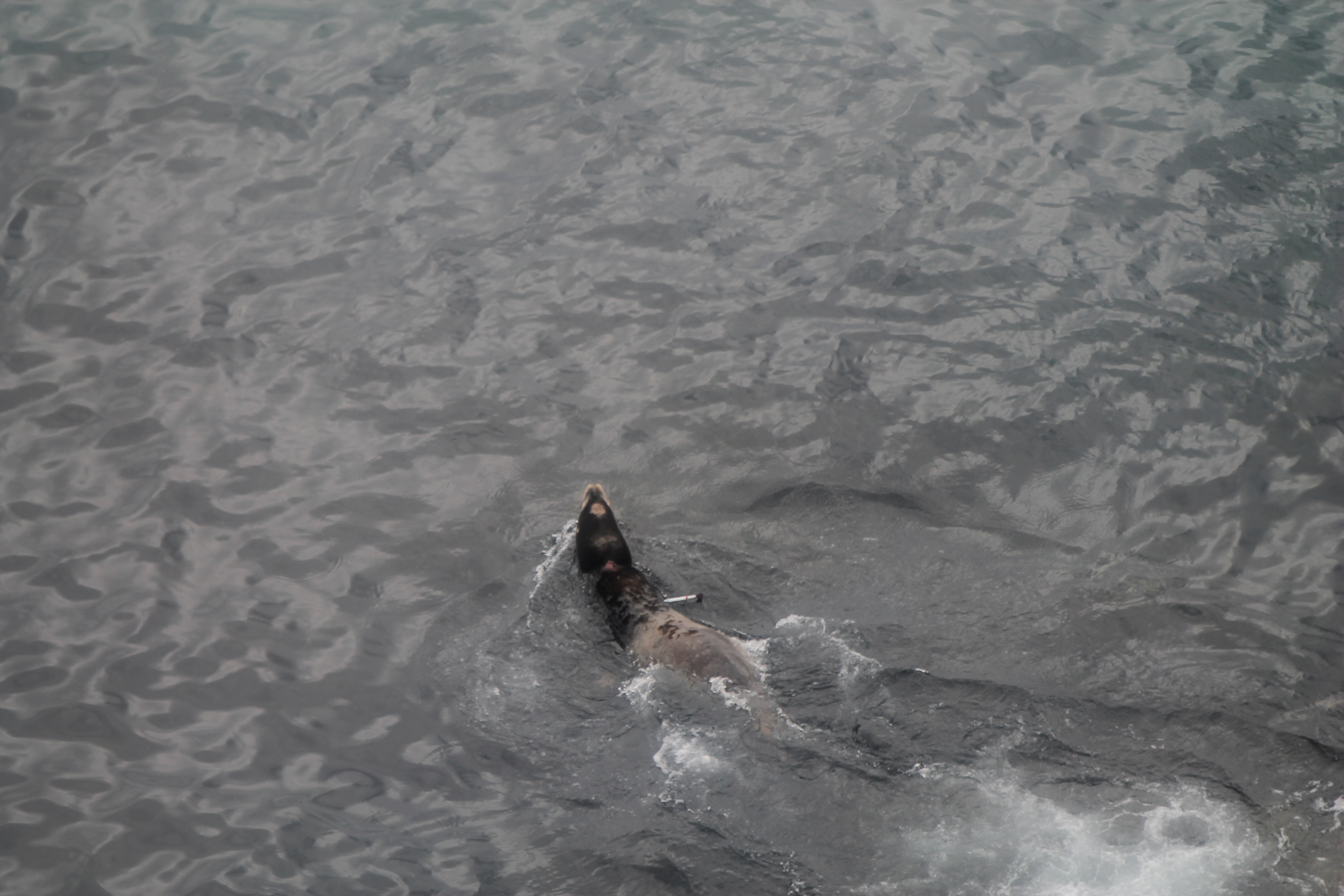
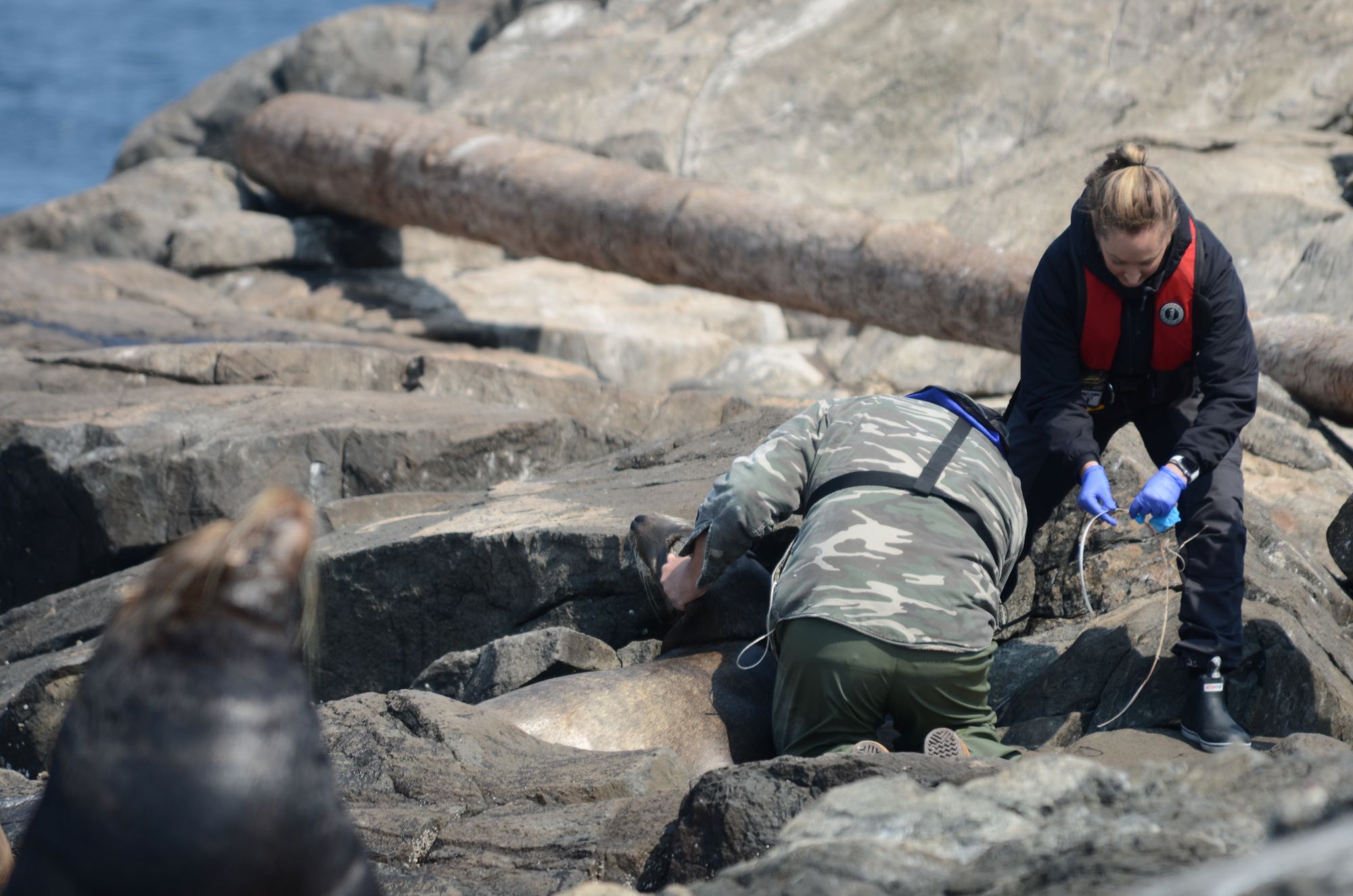
After administering a tranquilizer to safely restrain him, they cut away the constricting plastic line from his neck, collected a small blood sample for analysis, and applied a new identification tag so we can monitor him in future sightings. Once the reversal was administered, he woke up a bit groggy but was visibly relieved to be rid of the plastic before it caused further injury. The entire intervention drew a curious audience both in and on the water.
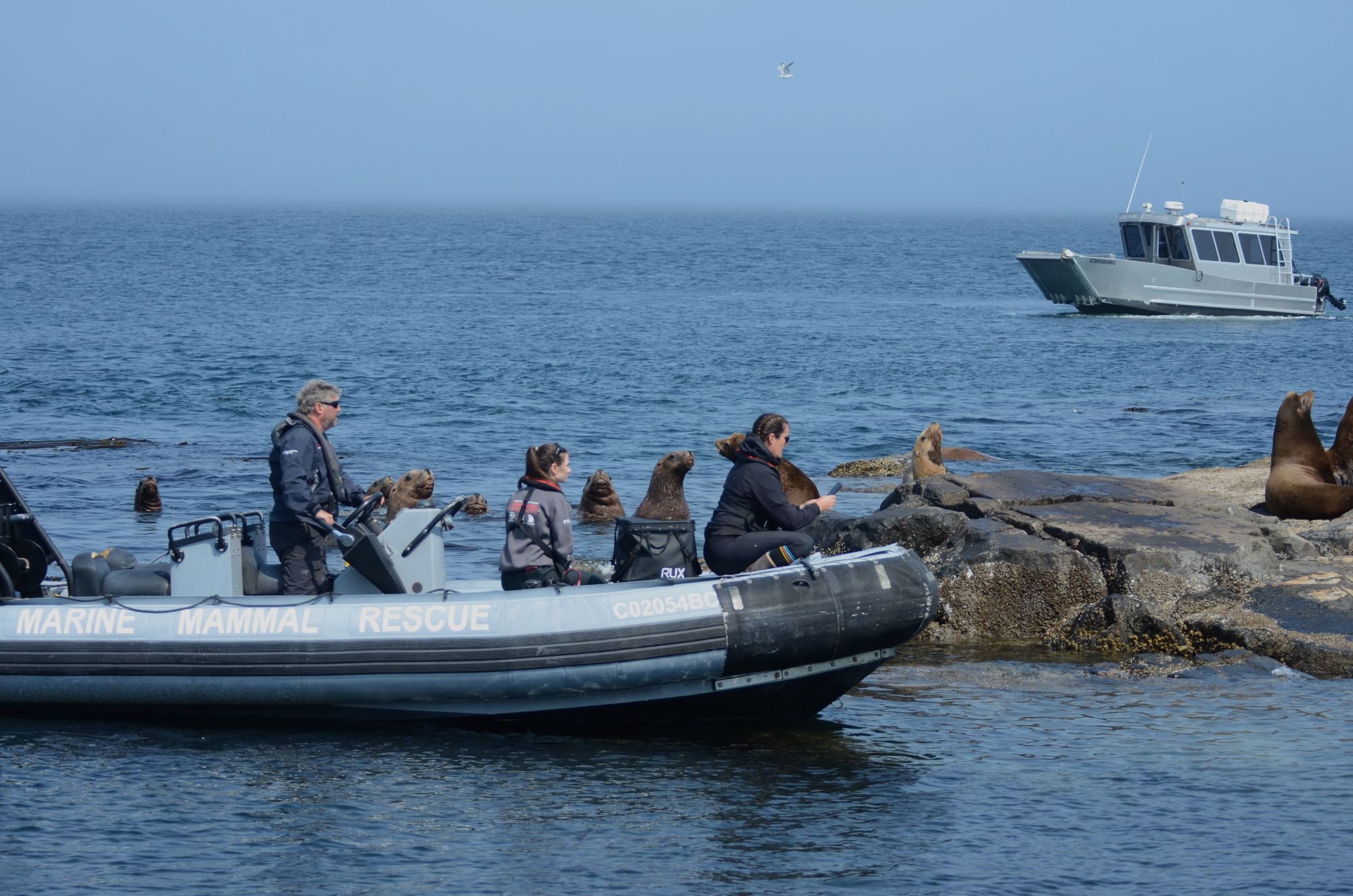
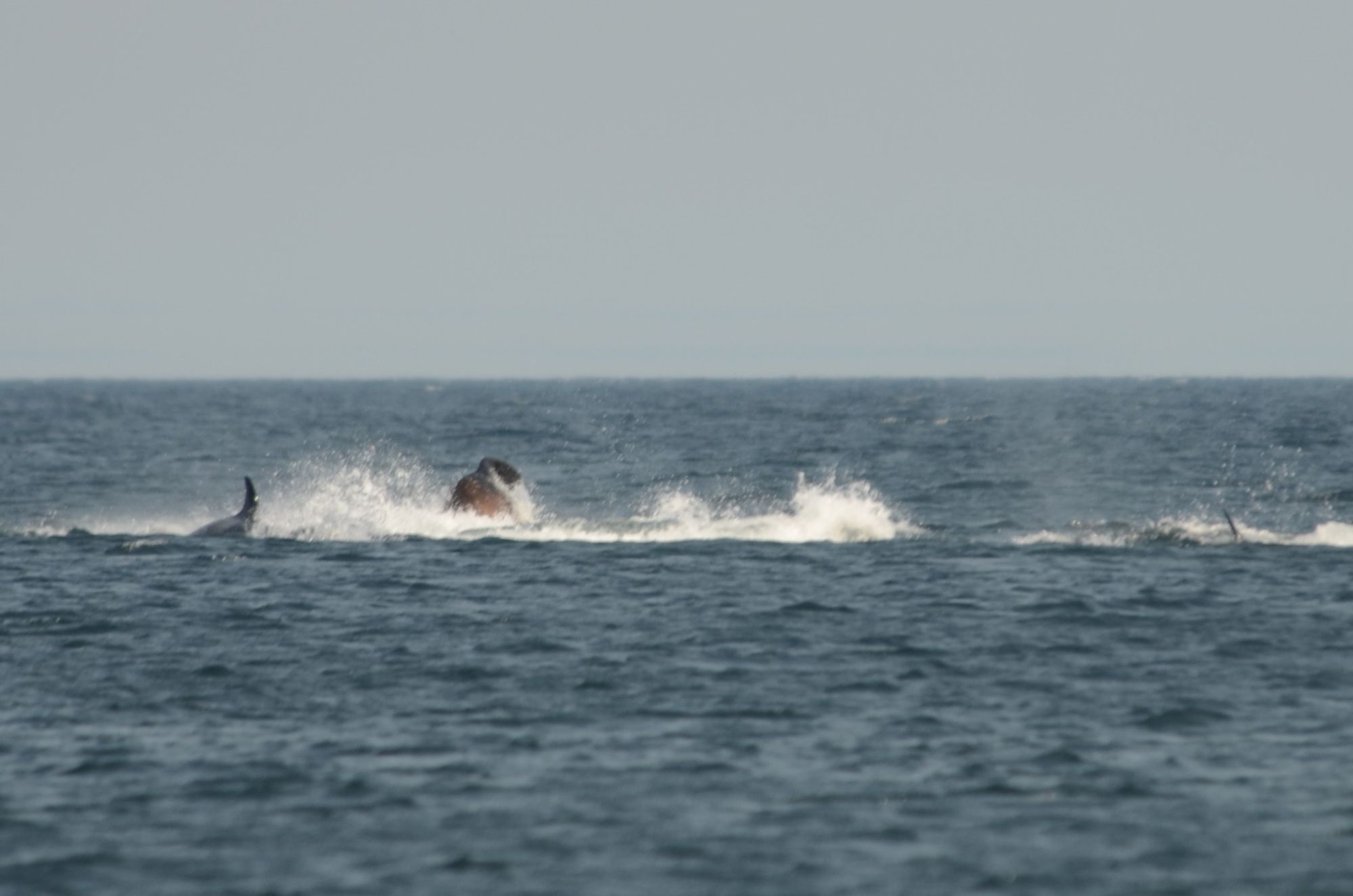
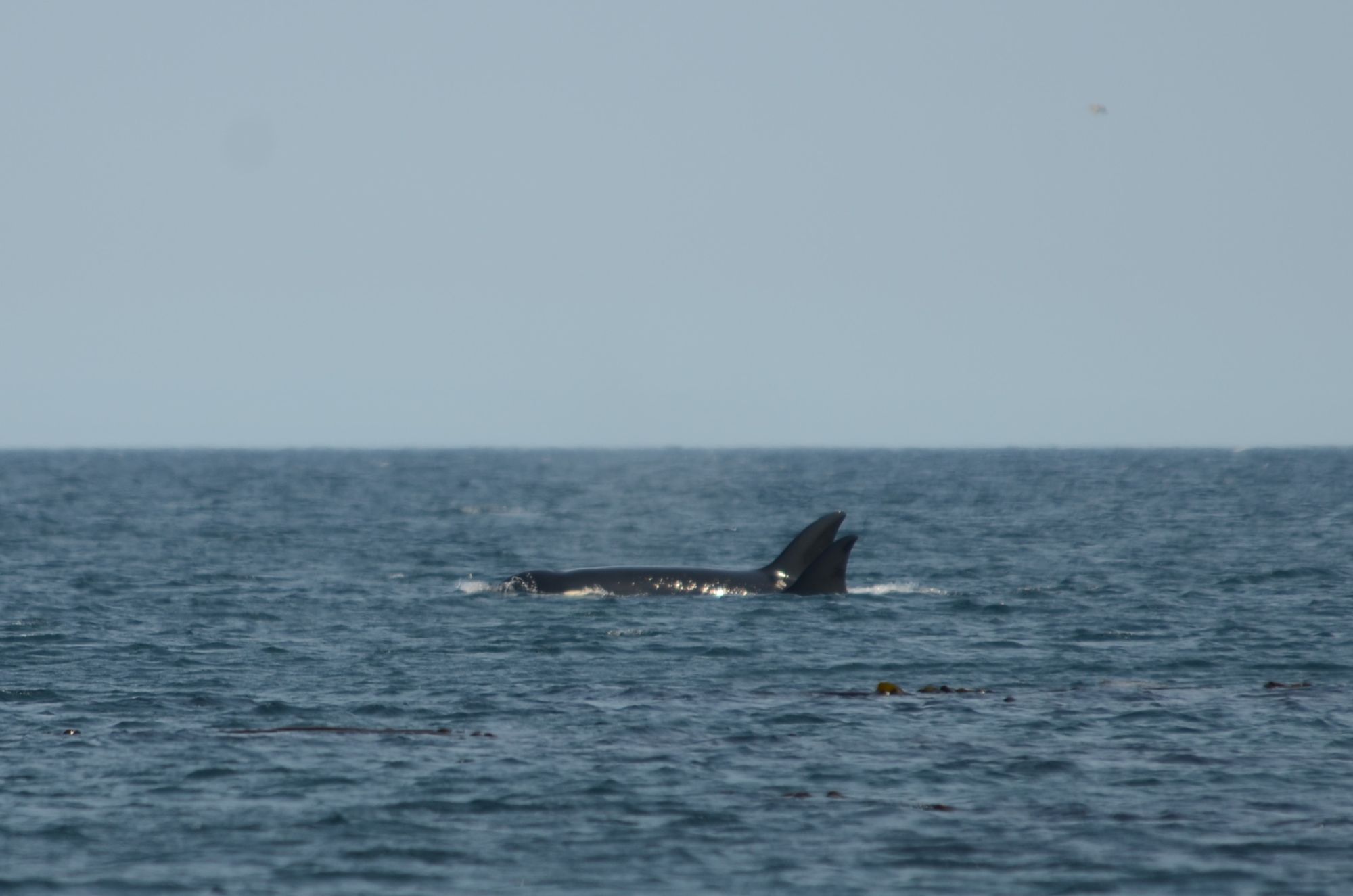
To cap off a demanding day of careful planning and execution, the crew were sent off with the breathtaking sight of a transient orca pod hunting and breaching in the rips just off the rocks. It’s inspiring to see all of the hard work and dedication to our wild neighbours here on the coast- this would not have been possible without the incredible caring people with VAMMR and the DFO.
Facility notes
-Cleaned panels
-Continued repair of fence

Weather
Rolling fog banks throughout the day, sunny otherwise. Winds mainly from the west, from 15 to 25 knots. Temperatures 11 to 12 degrees.
Vessels
Ecotourism: 5
Private: 2
Sea Lion Disentanglement Story

I said there would be more disentanglement photos and information to come, and today is that day.

The following post contains photos of a severely entangled and wounded sea lion so this is your warning to skip this post if you don’t want to see it…but I hope you stay because it has a happy ending.

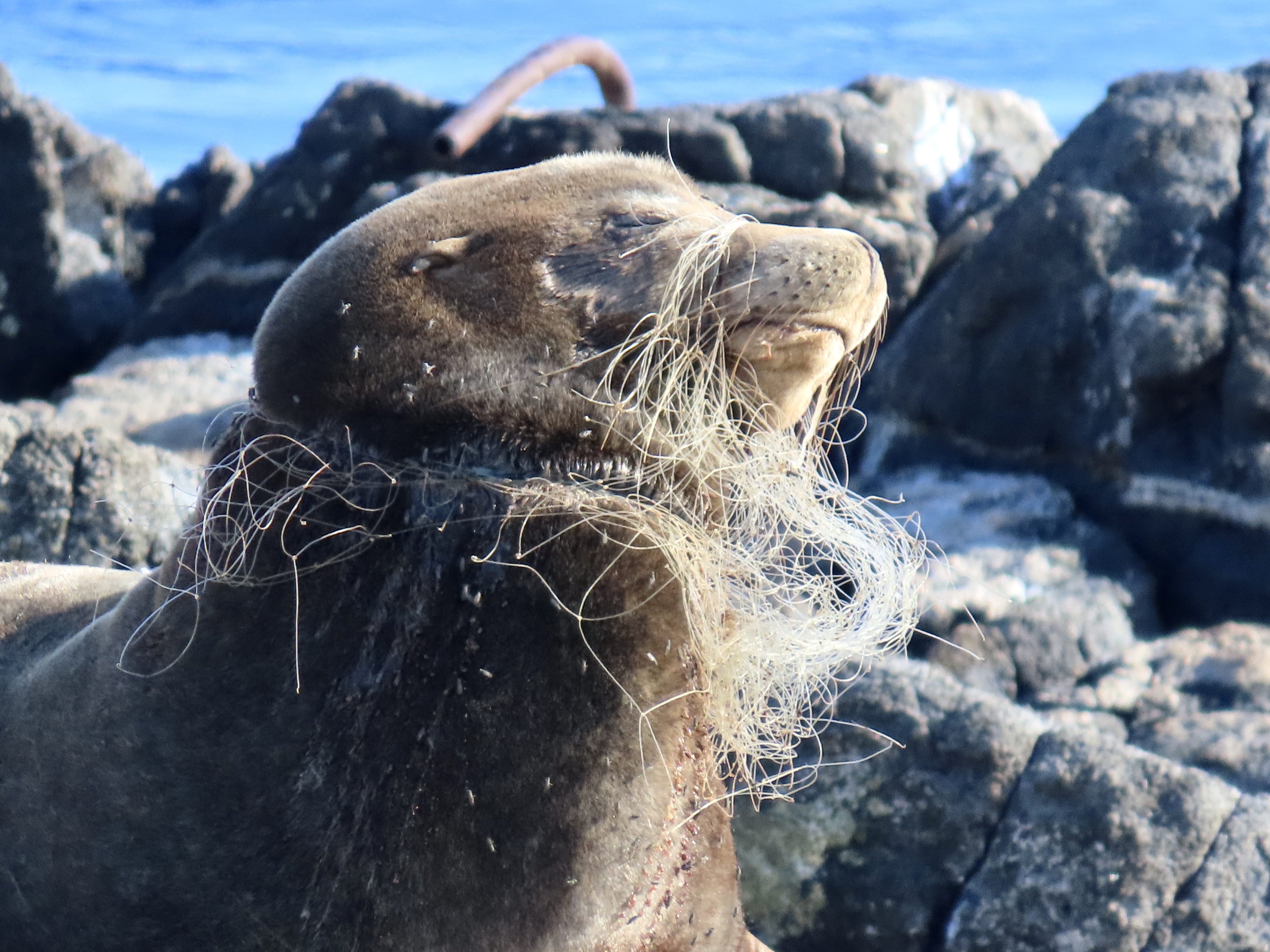
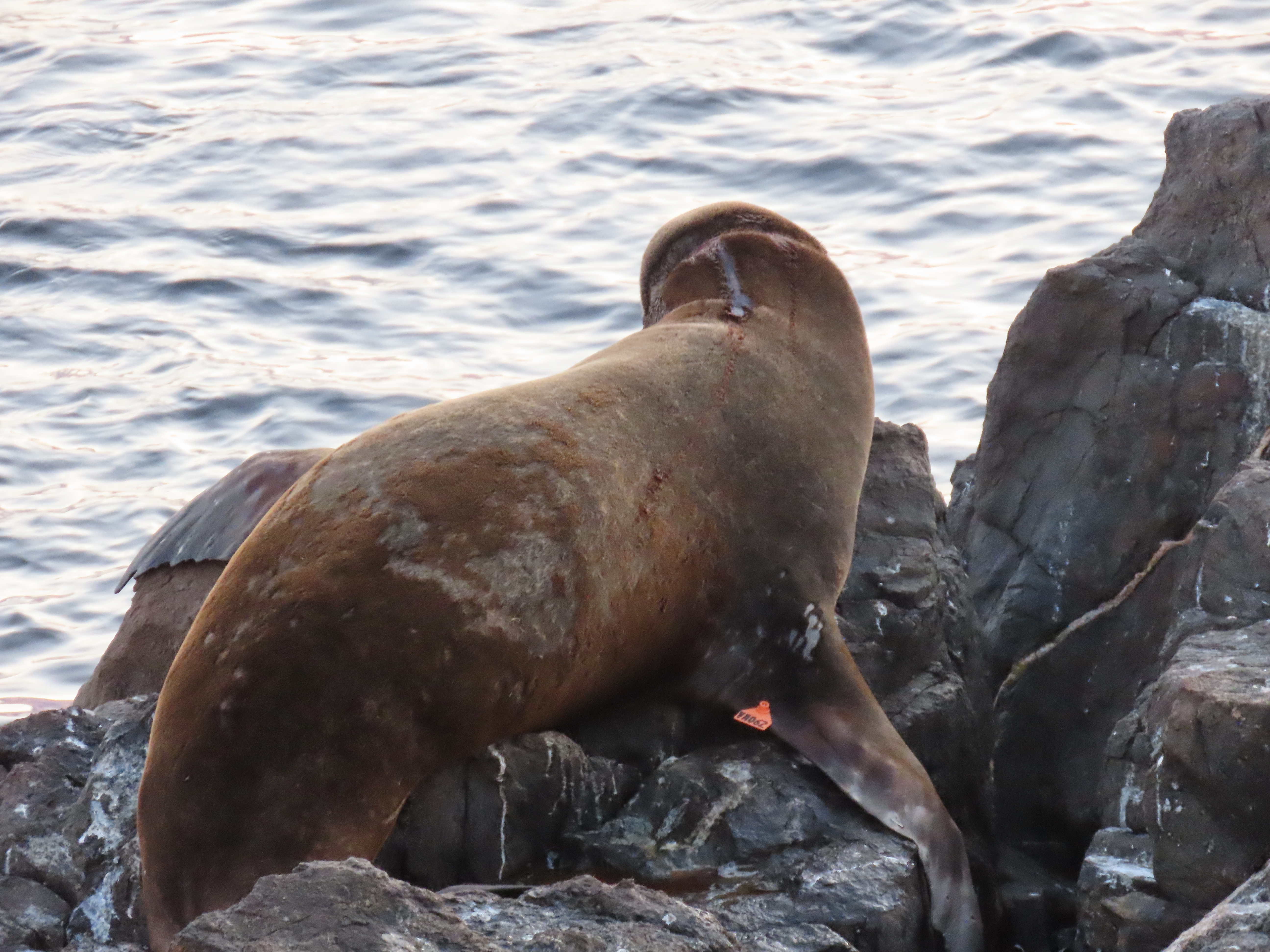
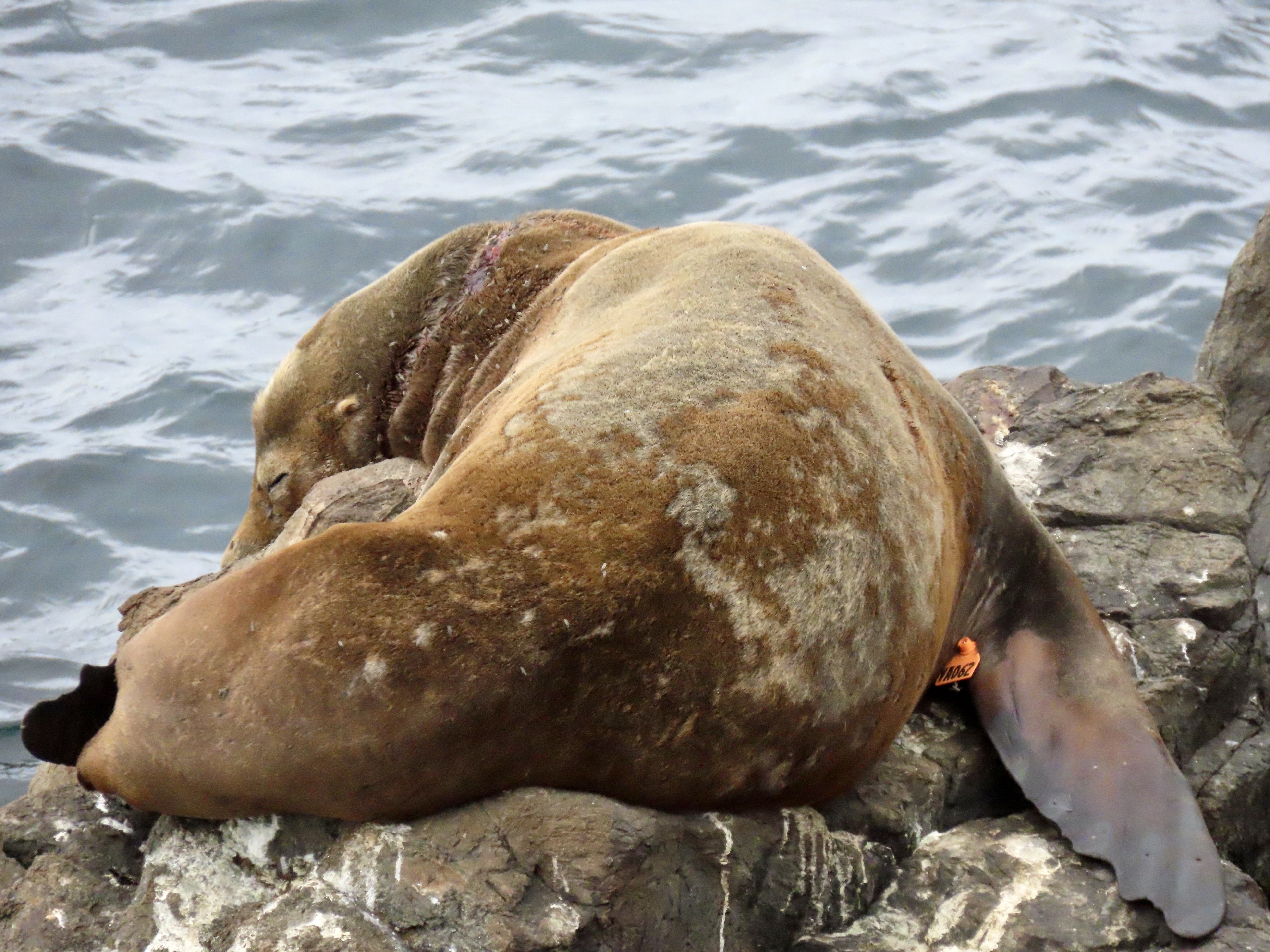
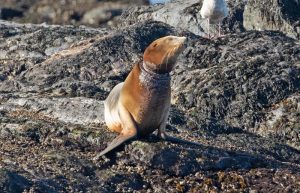
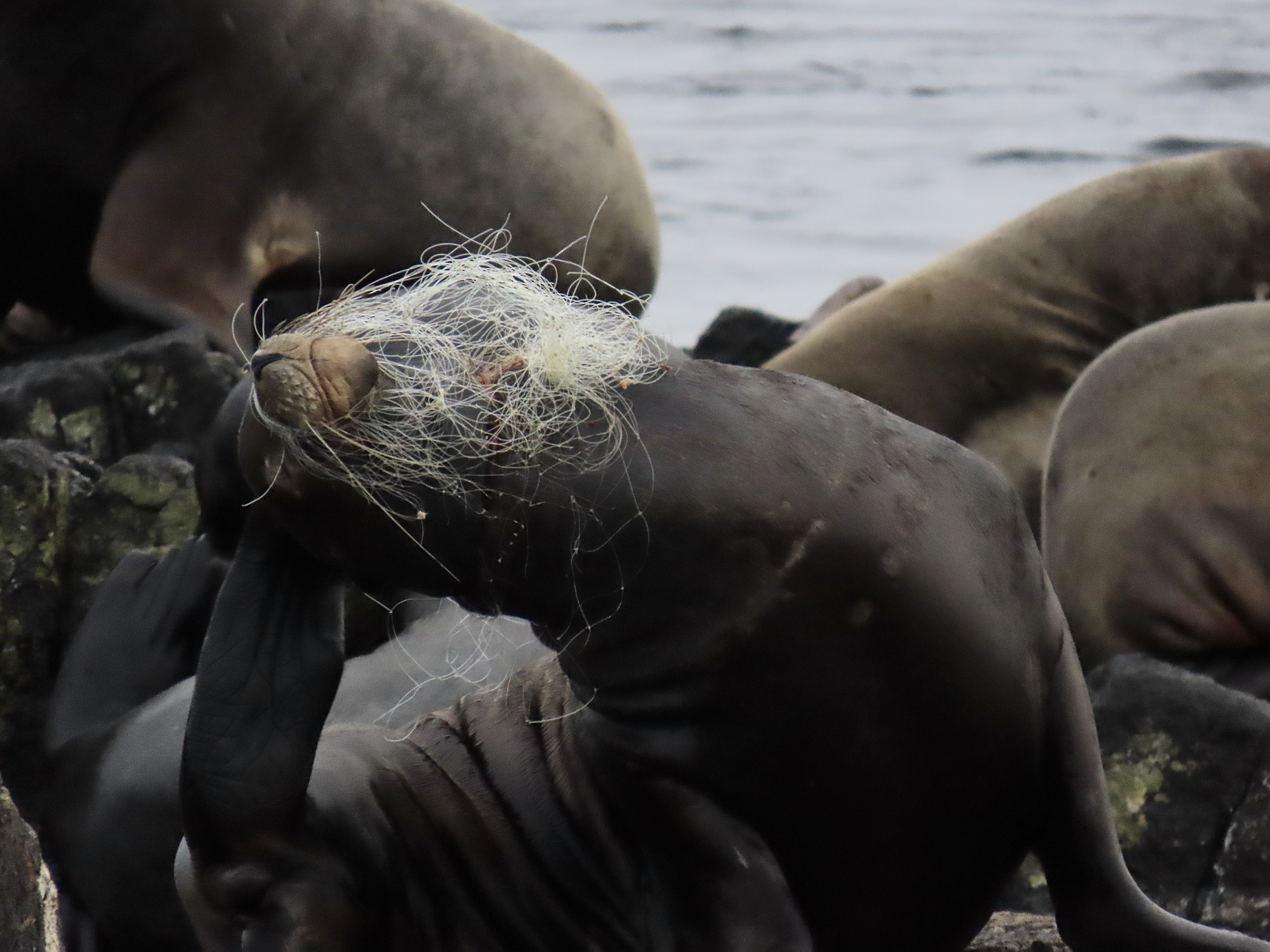
On Sunday, Oct 20th I spotted a California sea lion with one of the worst entanglements I’ve ever seen. With tears running down my face as I photographed it, I immediately reported it to Fisheries and Oceans Canada (DFO) and the Vancouver Aquarium Marine Mammal Rescue Society (VAMMR).

As I’ve mentioned before, sea lion disentanglements are tricky. You need the weather and tide to be calm, you need all teams to be available on the same day, and you need the entangled animal to stay put until that happens. Sometimes it takes weeks or even longer for this to happen.

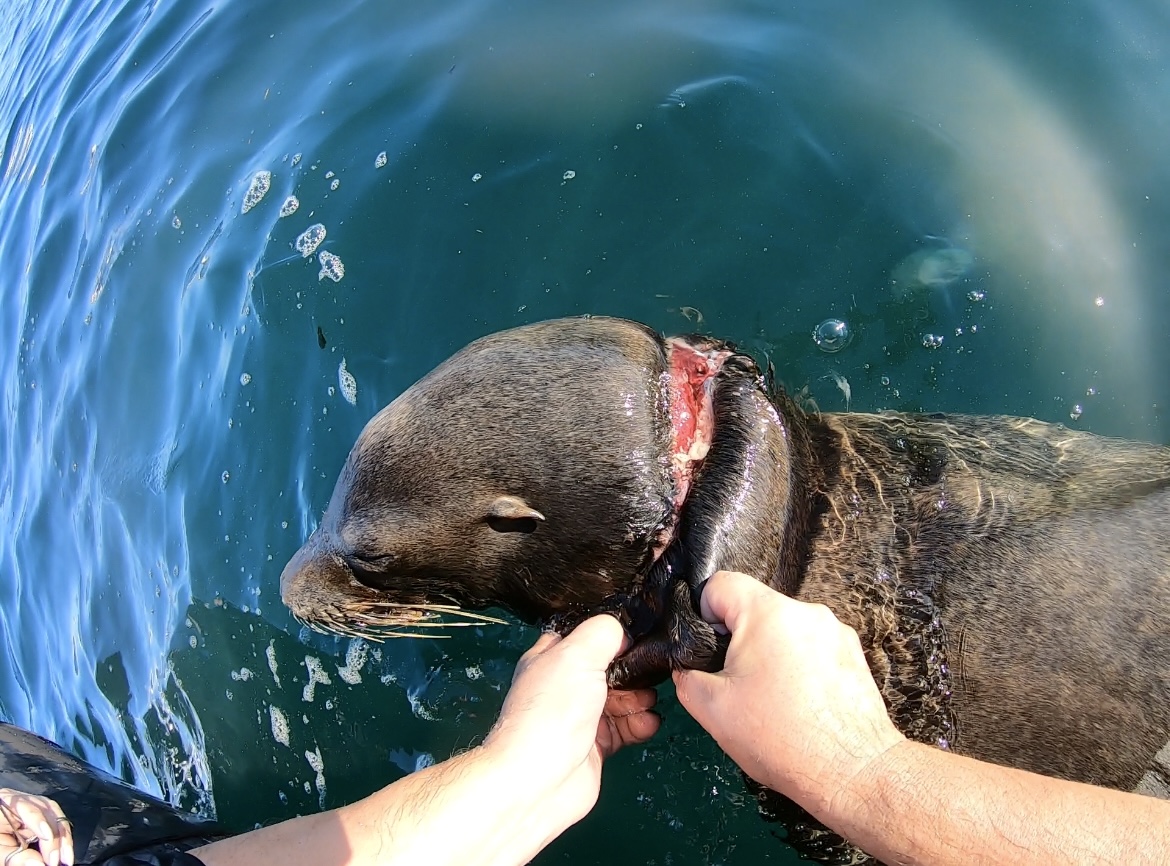
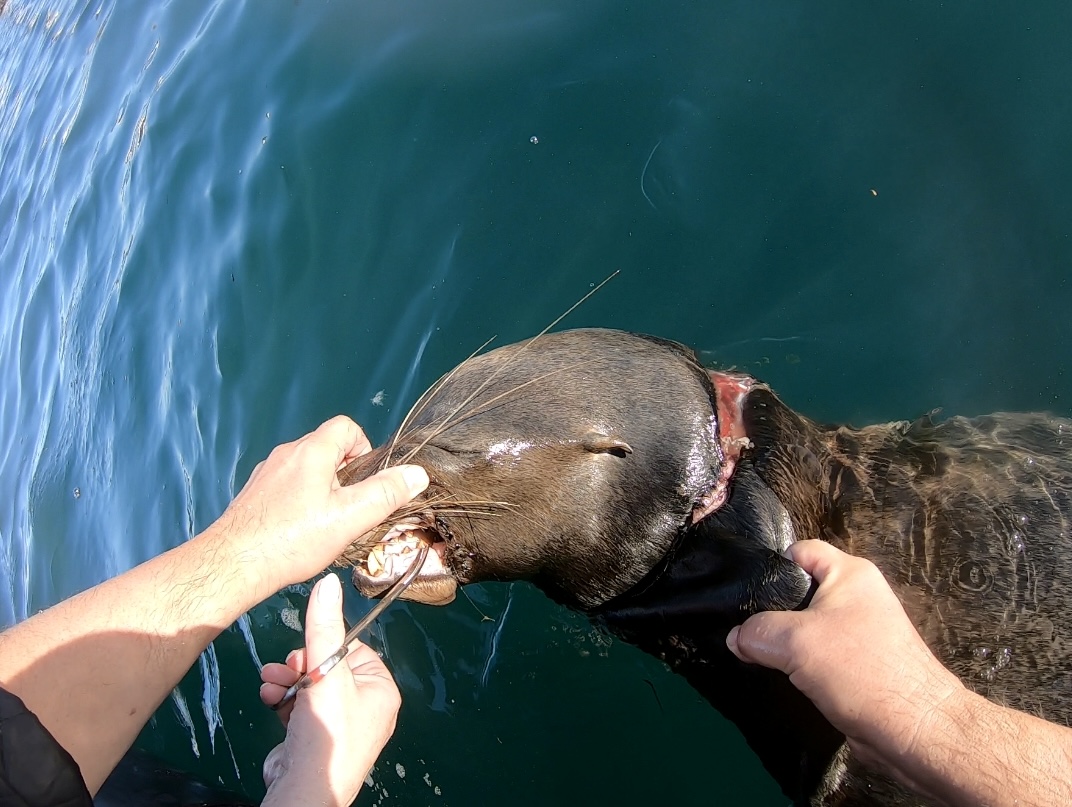
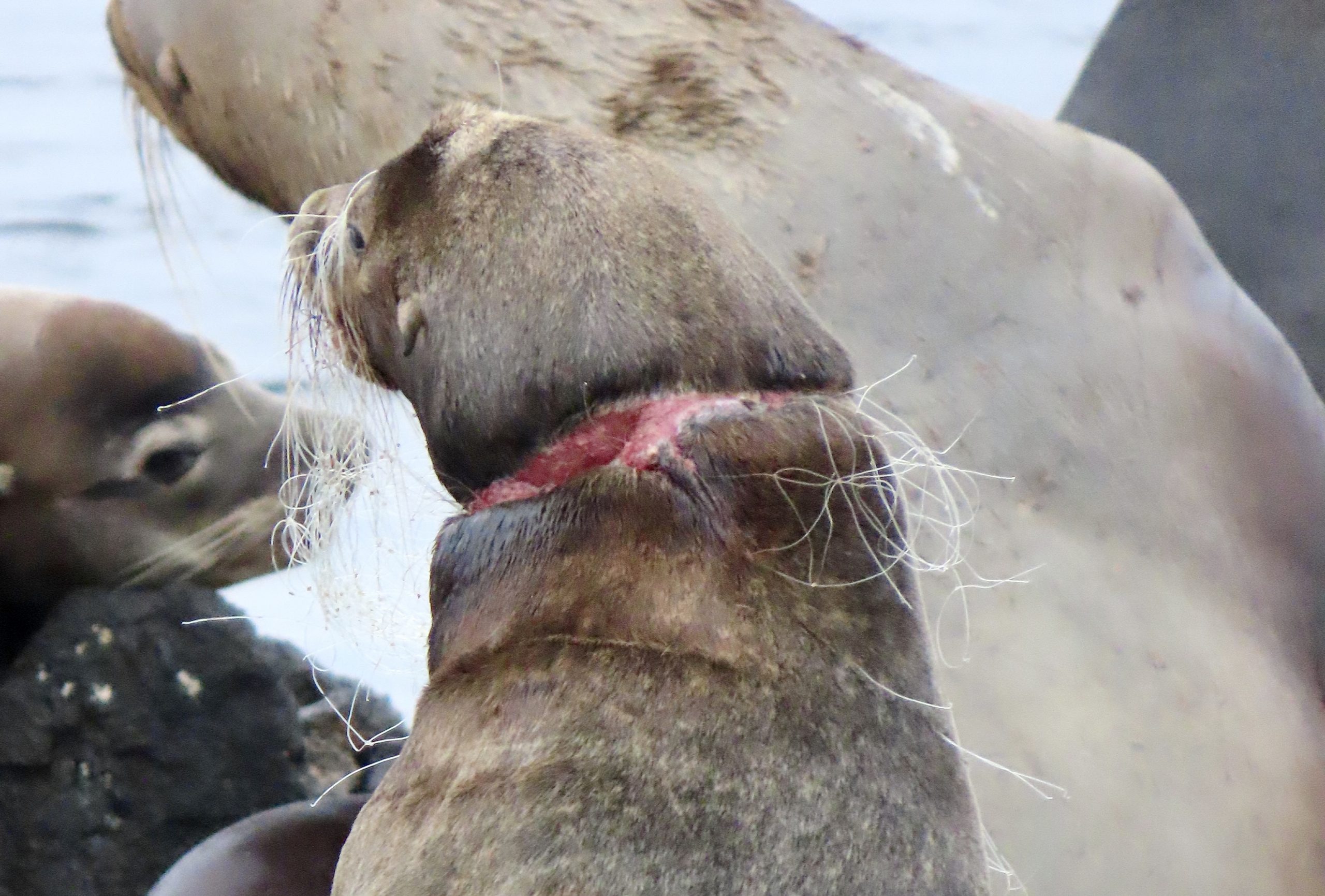
This particular animal didn’t have weeks to wait. The monofilament gillnet was wound so tightly around his rostrum (muzzle) that he couldn’t eat. It was wrapped inside and around his mouth and embedded deeply in his neck. His poor body condition showed that he had been suffering from this entanglement for quite some time.

Within 48 hours of my initial sighting, a plan was in place. A team from VAMMR came out with two teams from DFO, as well as myself and Greg to help this sea lion. The weather was sunny and the ocean was glassy. Perfect conditions and in record timing. Best of all, our entangled lion was still on his rock.

Disentanglements can often be quick – a snip of a packing strap or fishing line, pull it off, tag it, and off they swim – but not this one. The rescue took 75 minutes from sedation to release. Once he was darted with a sedative he entered the water, requiring the teams to remove the entanglement from the boat – making it even harder. The netting was so tight that typical tools couldn’t be used and surgical scissors were required to cut it off.

I’ve worked in the marine mammal rescue field for over 6 years and this response truly left me at a loss for words. It was devastating, harrowing, and relieving all in one. Watching that sea lion swim off and haul out on a nearby rock was incredible and left everyone involved feeling like they were on cloud nine.

Since rescue, I’ve seen the sea lion almost every day on the south side of the main island and I’ve been able to watch him as he recovers. Each day he has been brighter and moved a little more, and yesterday was the first day in a week that I have not seen him. My hope is that he’s gone off to hunt now that he’s feeling better.

I only have a few days left out here so I am crossing my fingers I get to see him one more time.

I am overjoyed with how this response came together and played out. The collaboration between VAMMR, DFO, Pearson College, and BC parks was unmatched and it was such a massive undertaking for this rescue to happen so quickly and it was truly life saving.

As for today…lots of outside tasks done today (none of which beats a disentanglement so I won’t bore you).

Facility Work:

  • Fence repair
  • Propane transfer/change out
  • Algae removal on student house
  • Washed windows

Weather:

  • Sky: Blue sky and sunny
  • Wind: Low of 1 knot, high of 6 knots
  • Sea: Calm
  • Temperature: Low 7•C, High  11•C

** All wildlife photos taken at the furthest distance possible, and may be cropped to improve detail! **

So Many Sea Lions!

I swear the sea lions have doubled in number since yesterday’s census! Or maybe they just ALL decided to hangout around the jetty today. Between the Stellers and the California’s I counted 40 sea lions out front this afternoon! Okay, so maybe they haven’t quite doubled…but there is about 10 more today and that seems significant.

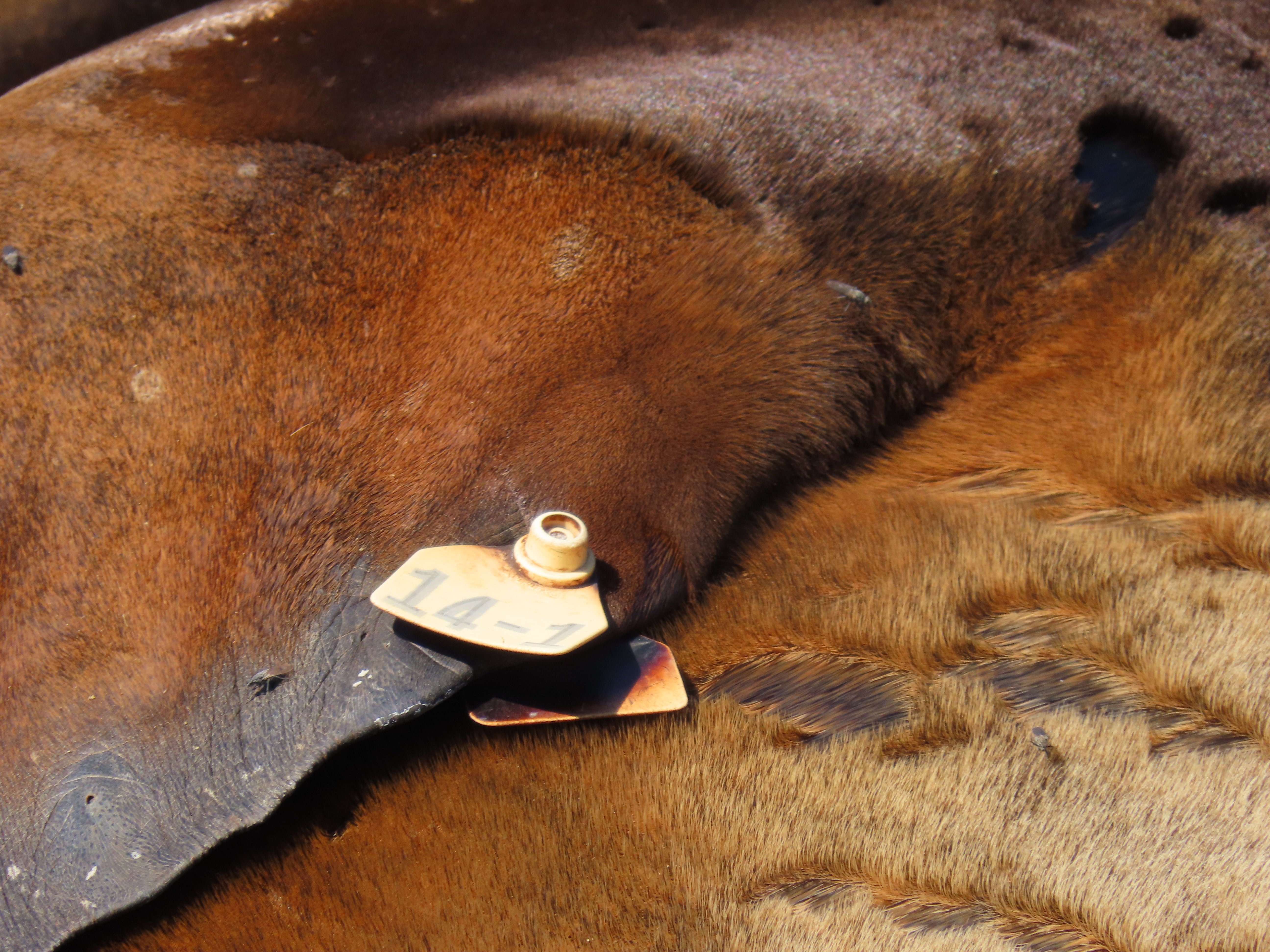
One of the California sea lions had an orange flipper tag with the numbers 14-1 on it. While the Vancouver  Aquarium Marine Mammal Rescue Society uses these tags, this is not the numbering system they use so I’m still on the hunt to find out where he came from. I’ve reached out to a few of my contacts in Washington and California to see if its an American tag but no luck so far. I’ll be sure to update the blog when I find out!

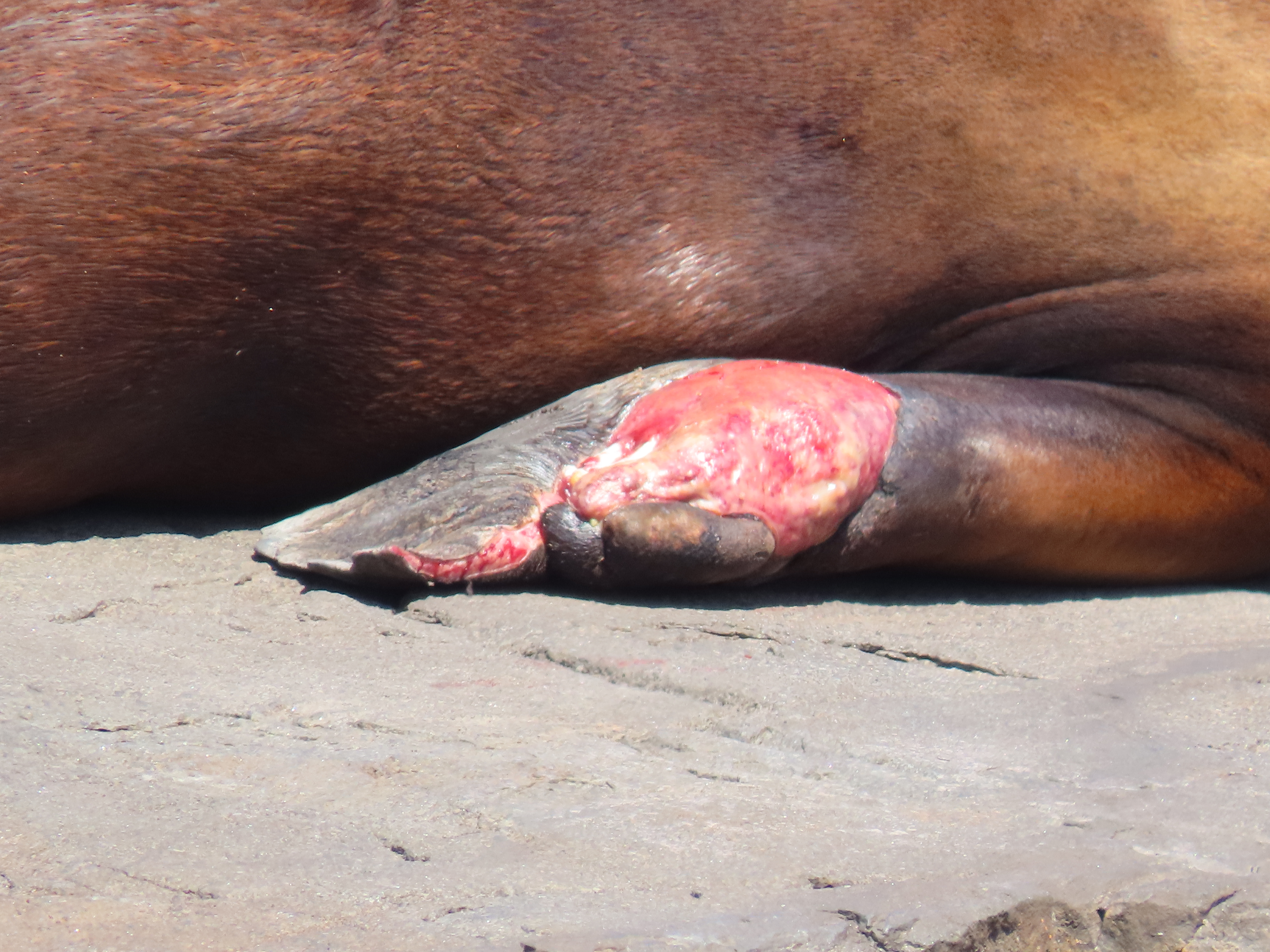
I also noticed a different California sea lion with a large wounded front flipper. The wound was clean and pink with no noted necrosis or signs of infection and he seemed otherwise fat and healthy. All good signs, especially when there is a wound of that size! Fisheries and Oceans Canada (DFO) keeps track of all incidents, disturbances, deaths, injuries, etc when it comes to marine mammals so although this animal doesn’t require intervention I did report it to them so they can add it to their yearly totals. I hope this guy sticks around over the next few weeks so I can observe his healing progress!

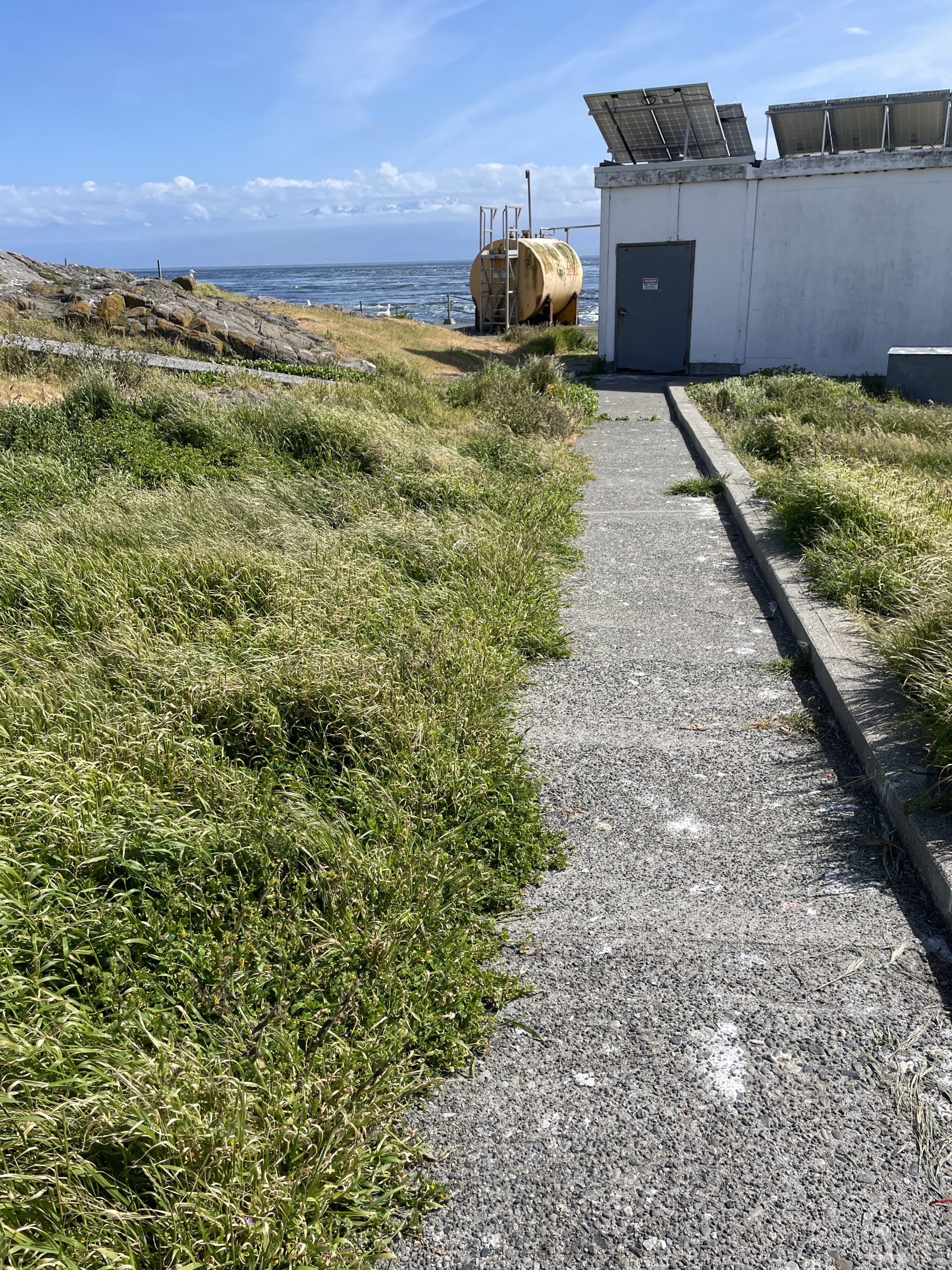
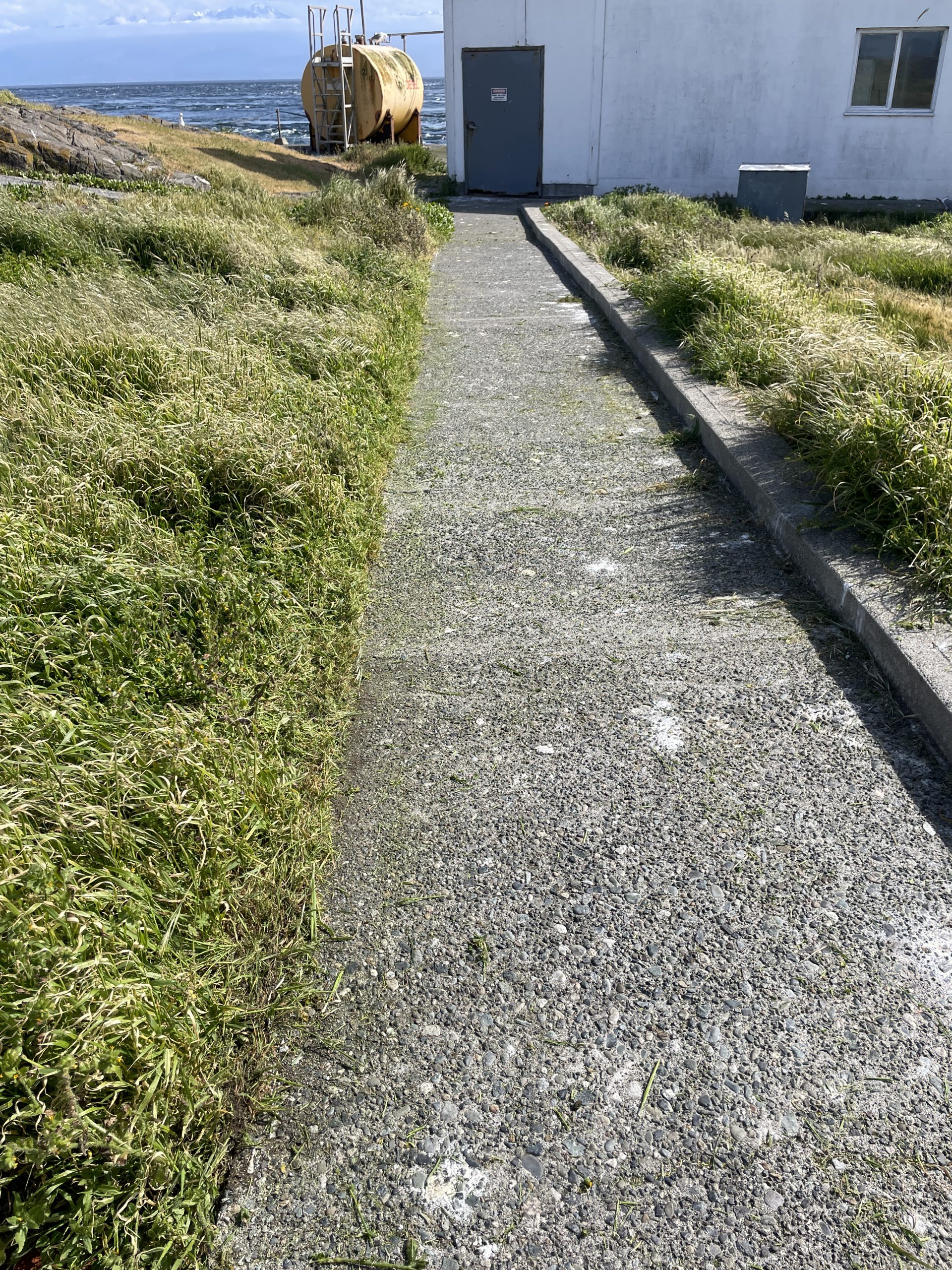
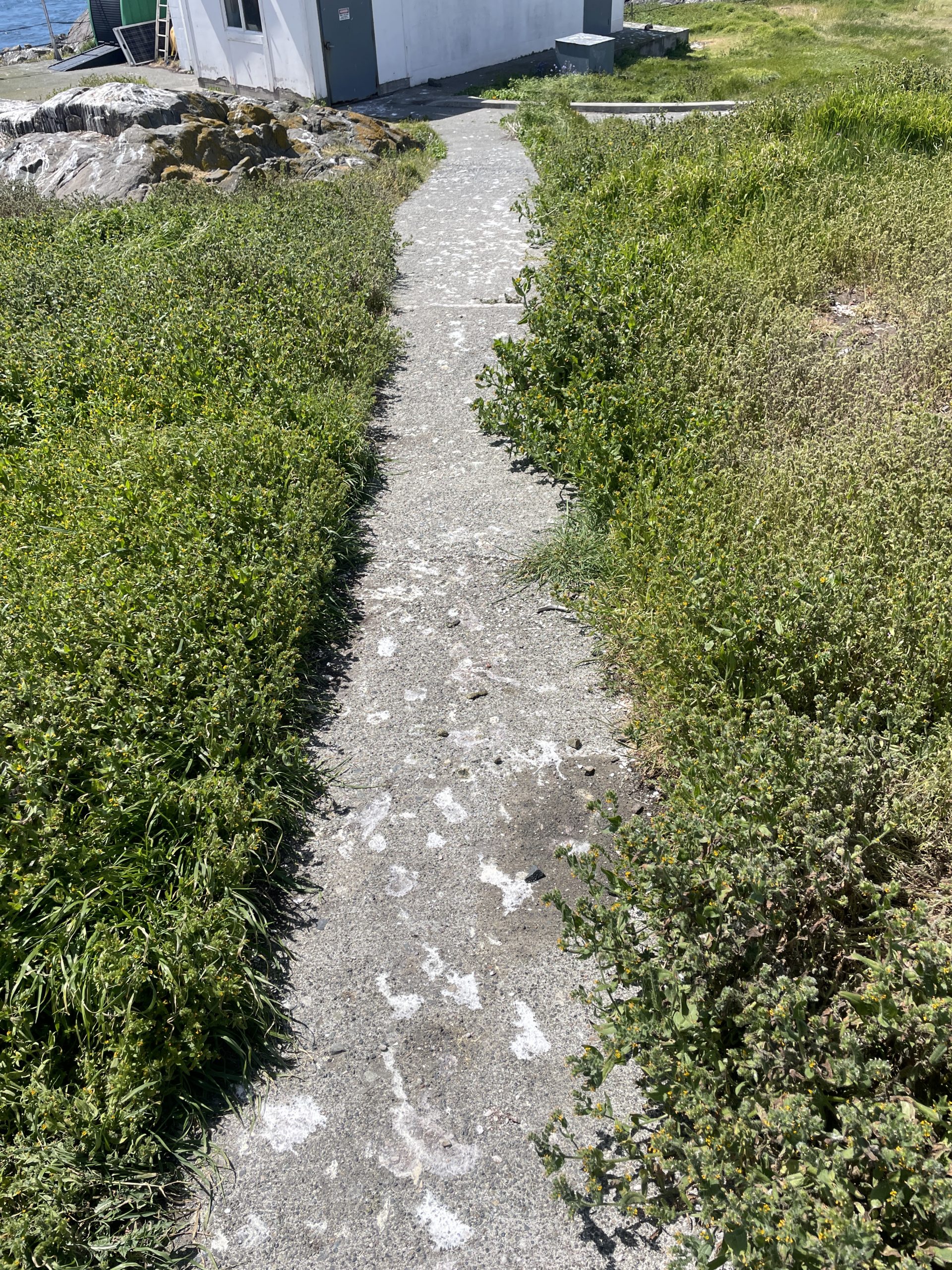
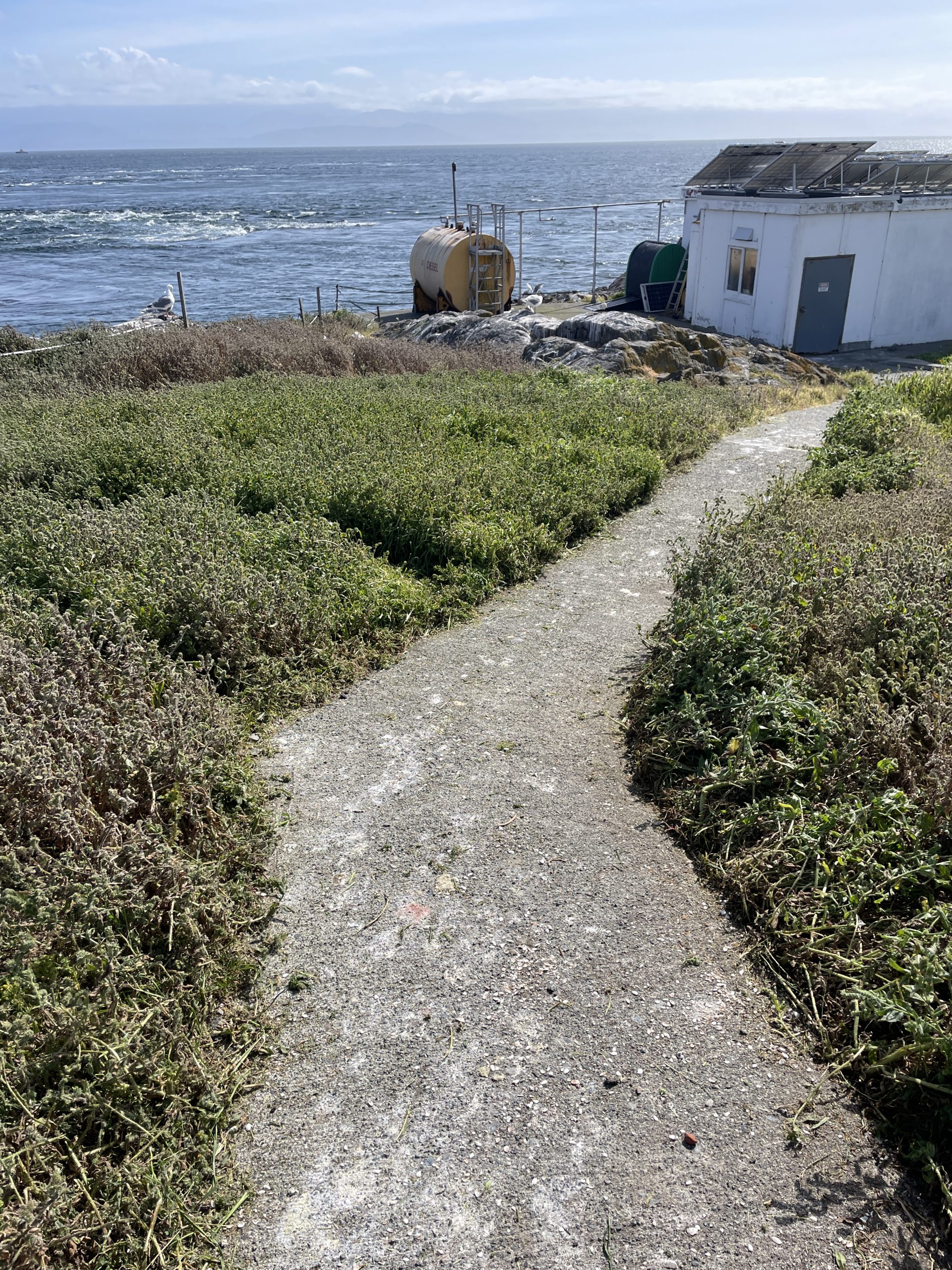
Aside from staring at sea lions, I did do some actual work today. While I love how lush and green the site is right now, the plants have overgrown so much that they’ve made some of the paths nearly non existent. I decided to fix that today with a weed whacker which I had way too much fun with. I got a few done and  I still have a few paths to work through, trying my best to only clear the edges and not take away anything that isn’t necessary. We’ve just had so many guests and students this month that I want to ensure everyone actually has a nice path to walk on!

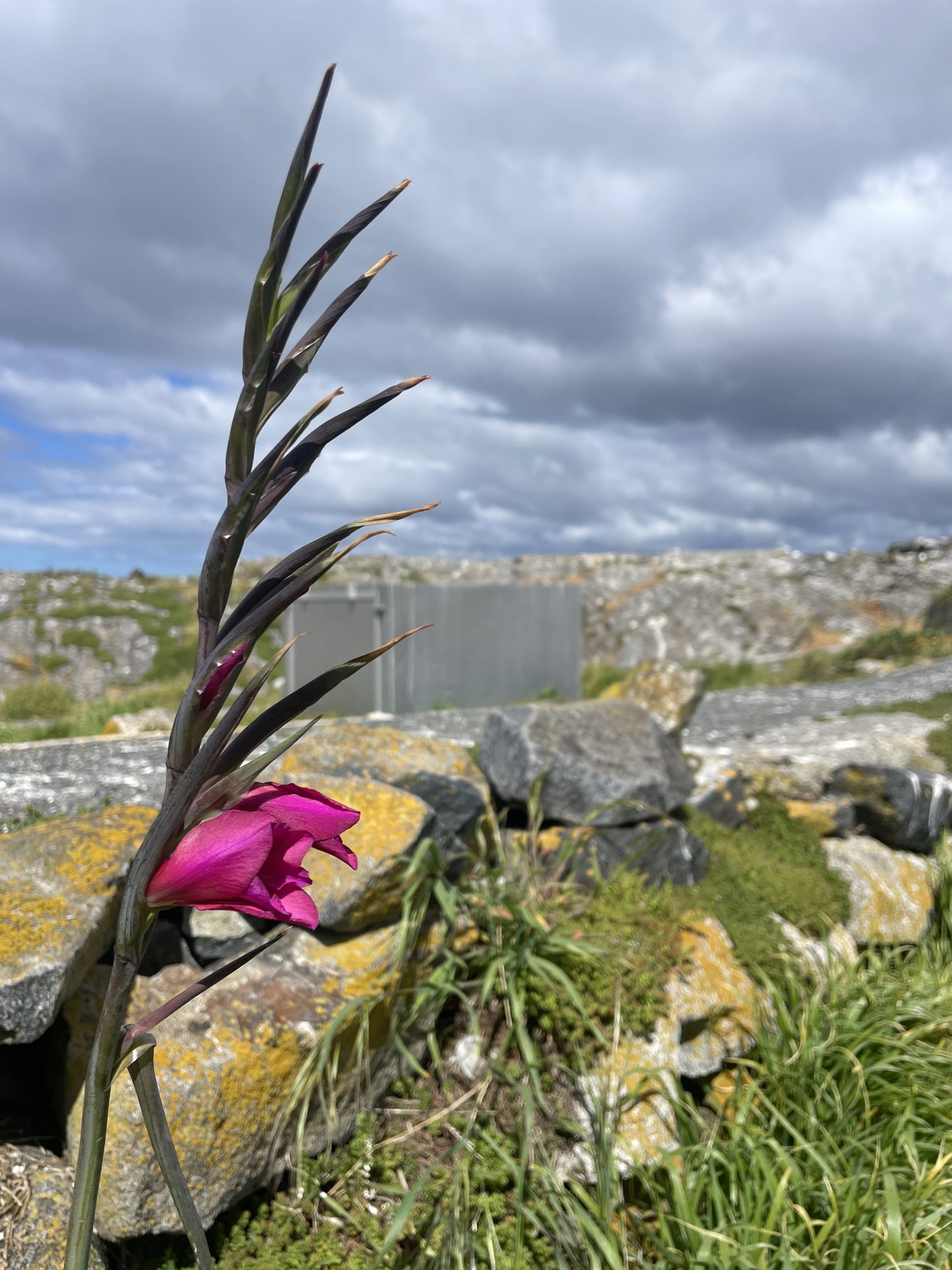
I also found a few new patches of these pretty pink flowers around the house today. It amazes me how many different flowers and plants grow here and I wonder how they got here. Some of them pop up in the most random places so I wonder if they were intentionally planted at one point and have now spread. I enjoy it either way!

Facility Work:

  • Rolled fire hoses
  • Big clean of main house
  • Weed whacked along the paths
  • Cleared out garbage from student house basement

Visitors:

  • Cedric + 2 contractors
Vessels:

– Ecotourism: 7

Weather:

  • Sky: Blue sky, some clouds
  • Wind: Low of 7 knots, High of 17 knots
  • Sea: Relatively calm
  • Temperature: Low 8•C, High 18•C

** All wildlife photos taken at the furthest distance possible, and may be cropped to improve detail! **

Fishing in a Rockfish Conservation Area

DFO Reference : https://www.pac.dfo-mpo.gc.ca/fm-gp/maps-cartes/rca-acs/rca-acs/south-sud/BentinckRaceRocksChart3461-eng.html

June 6, 2021

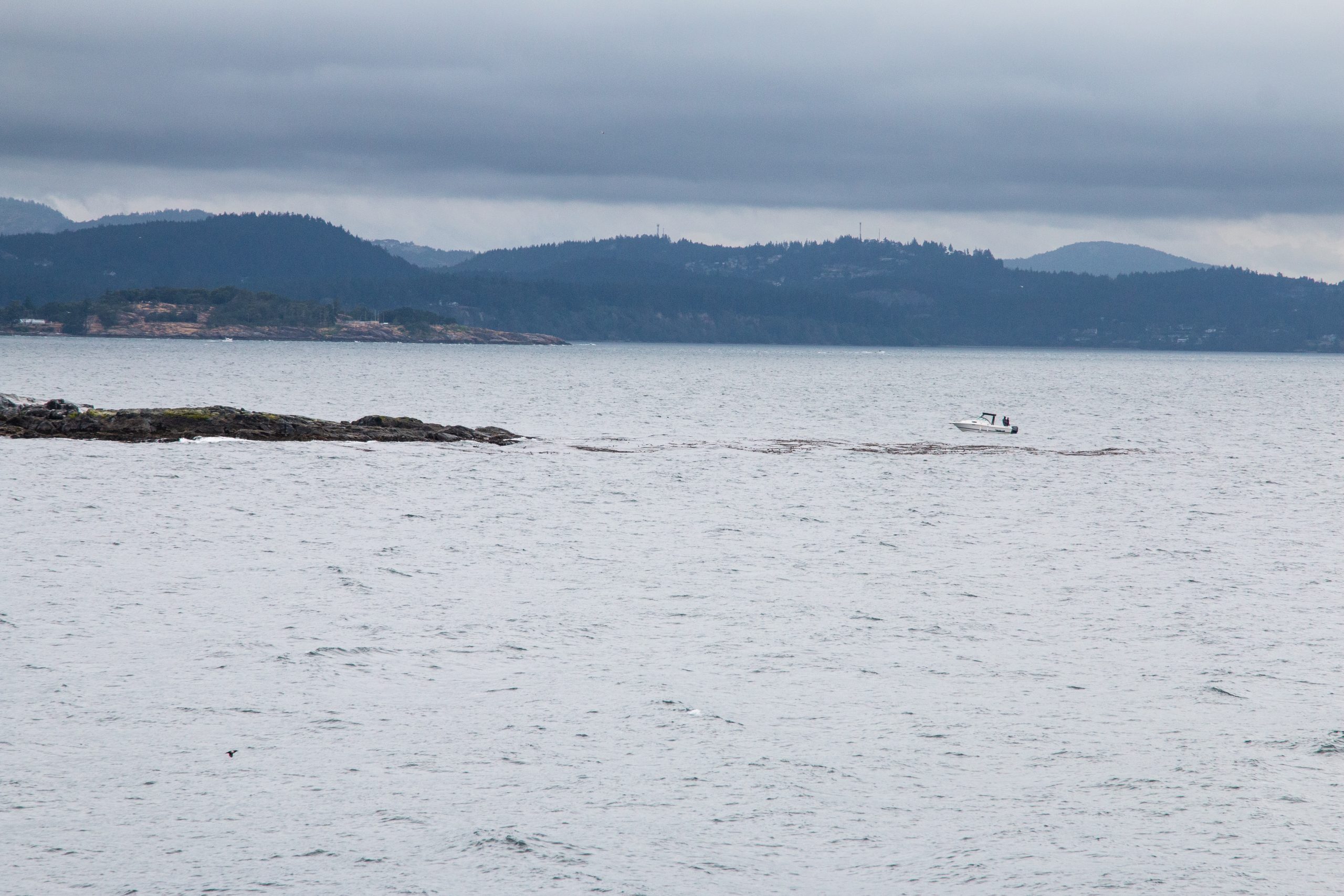
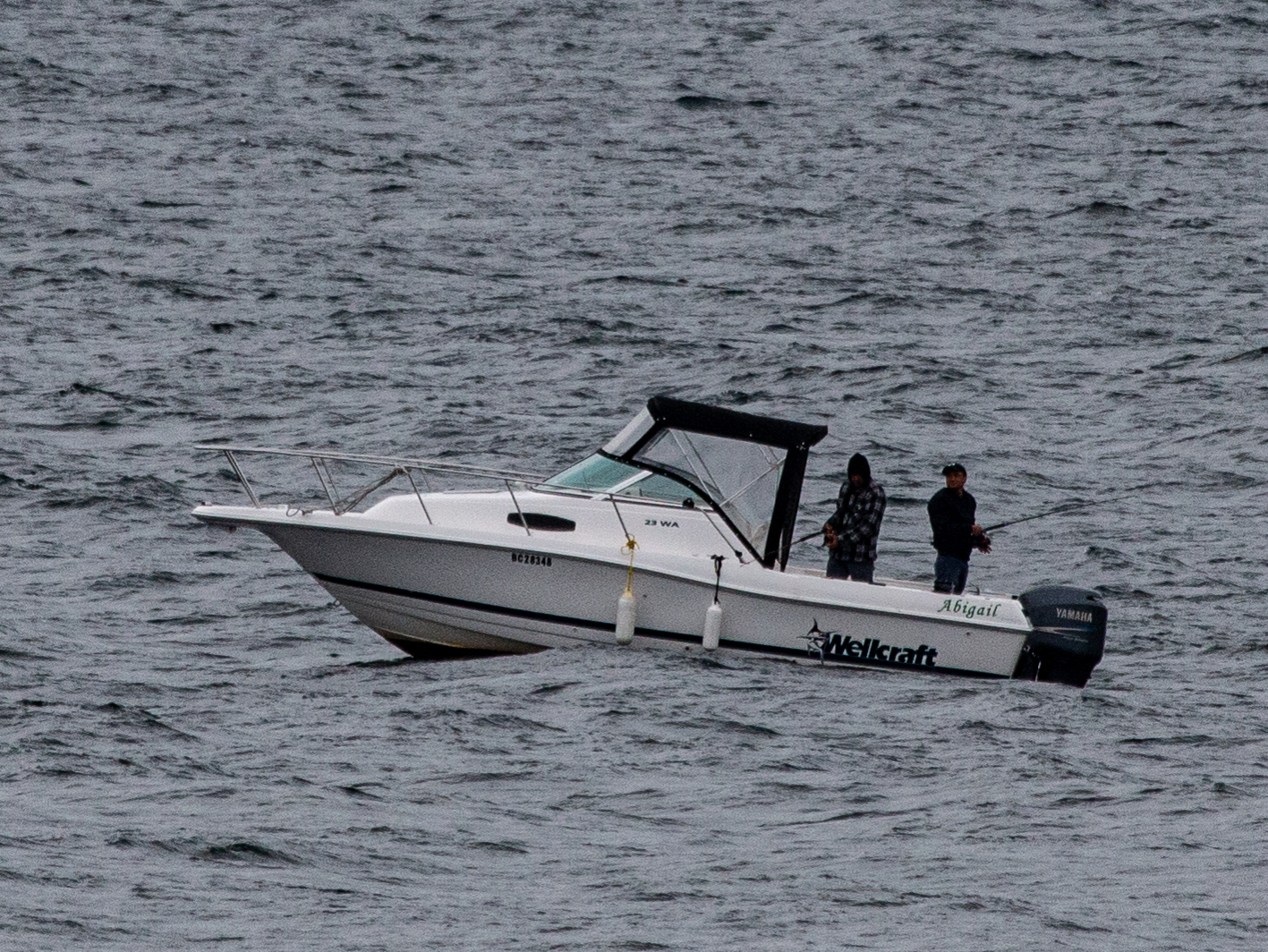
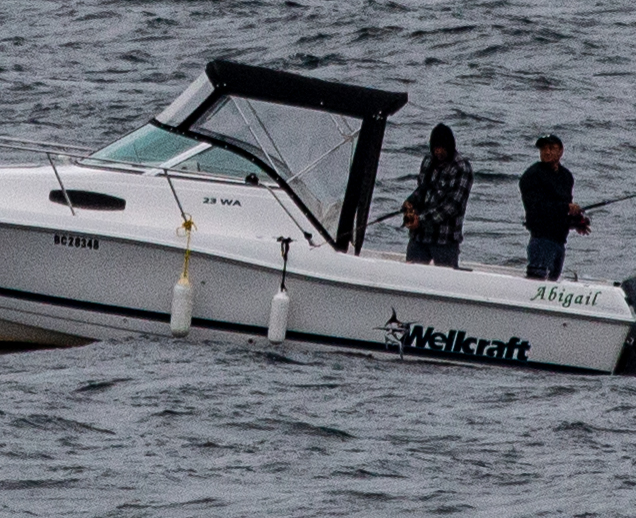
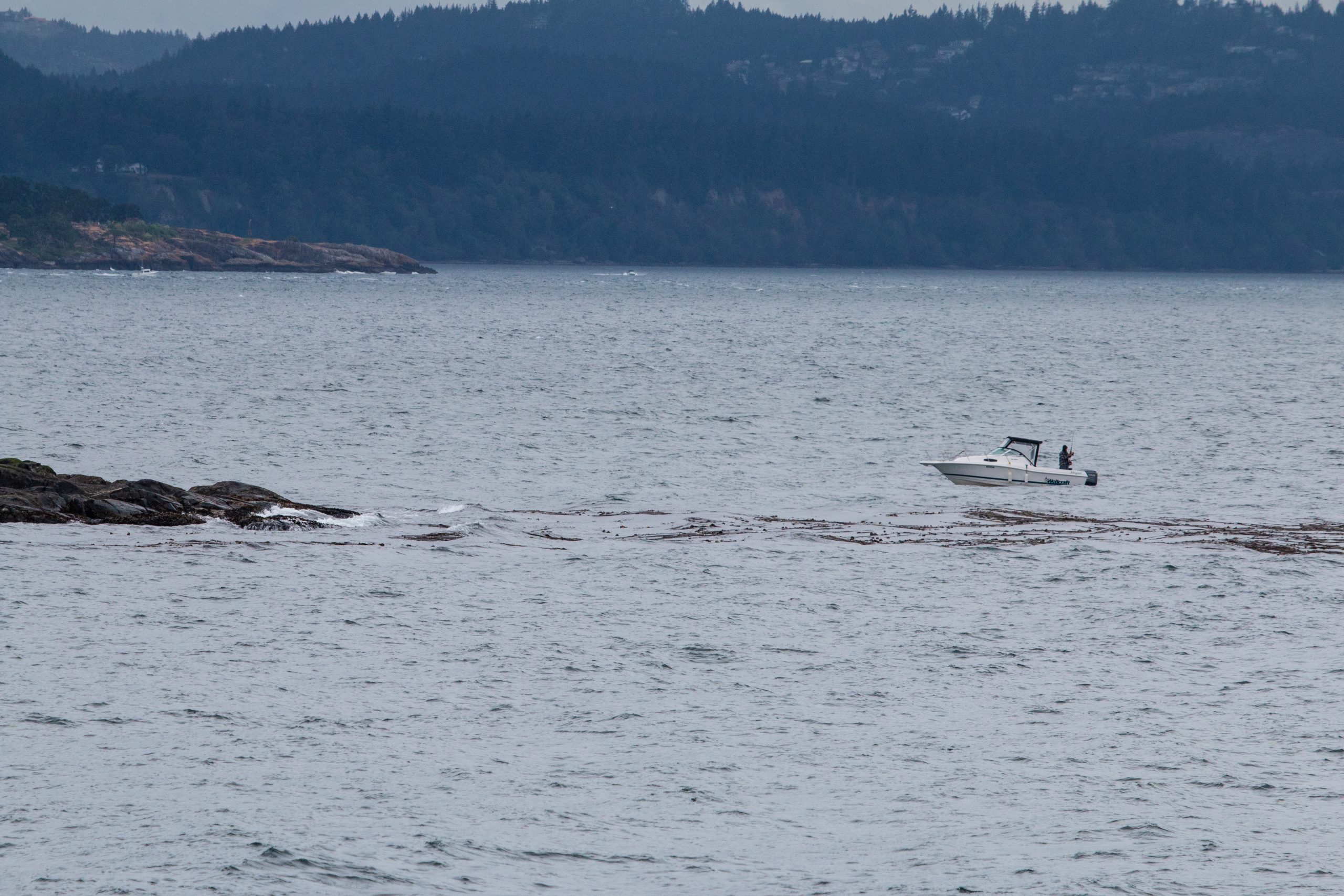
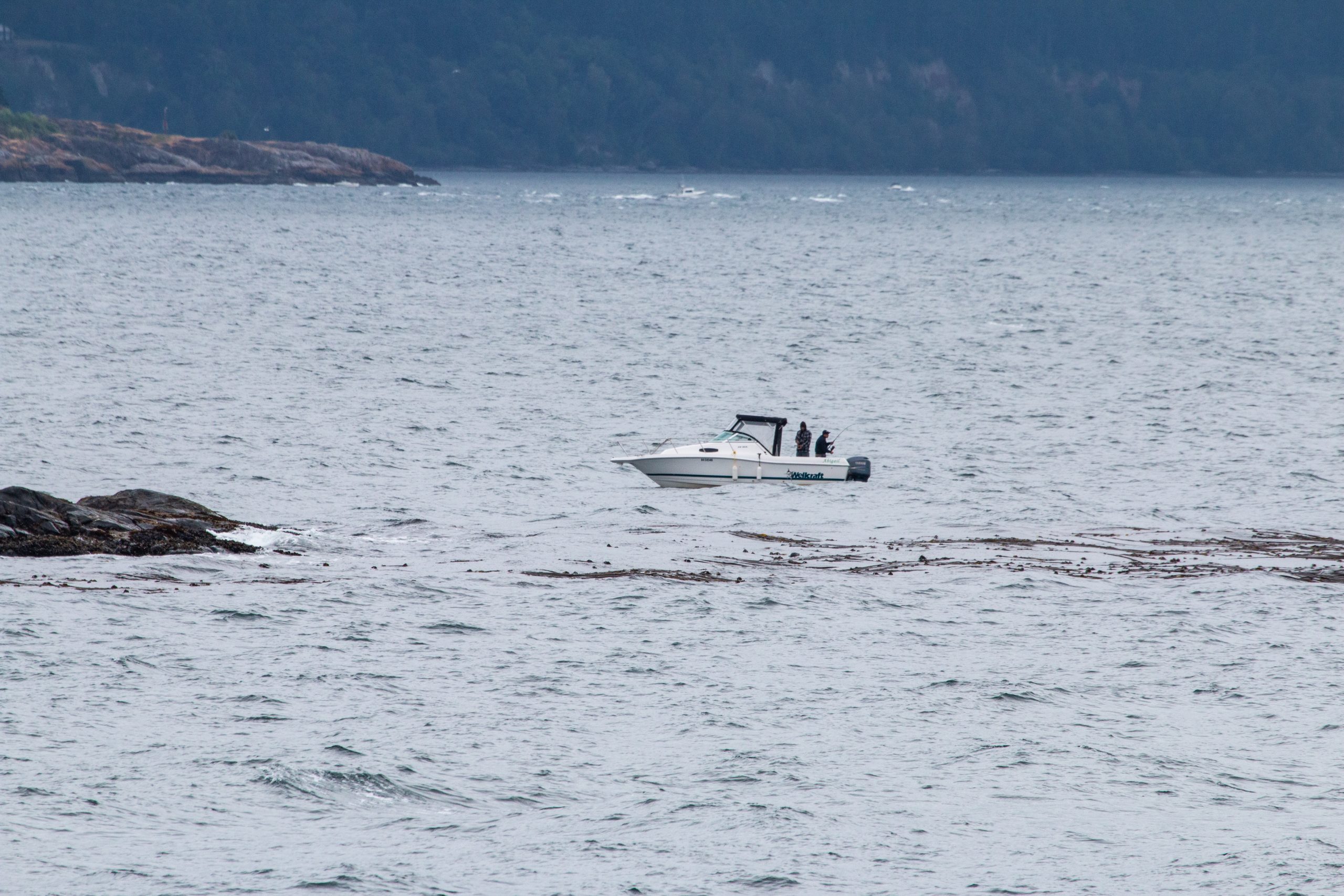
Vessel – Abigail fishing in Race Rocks RCA

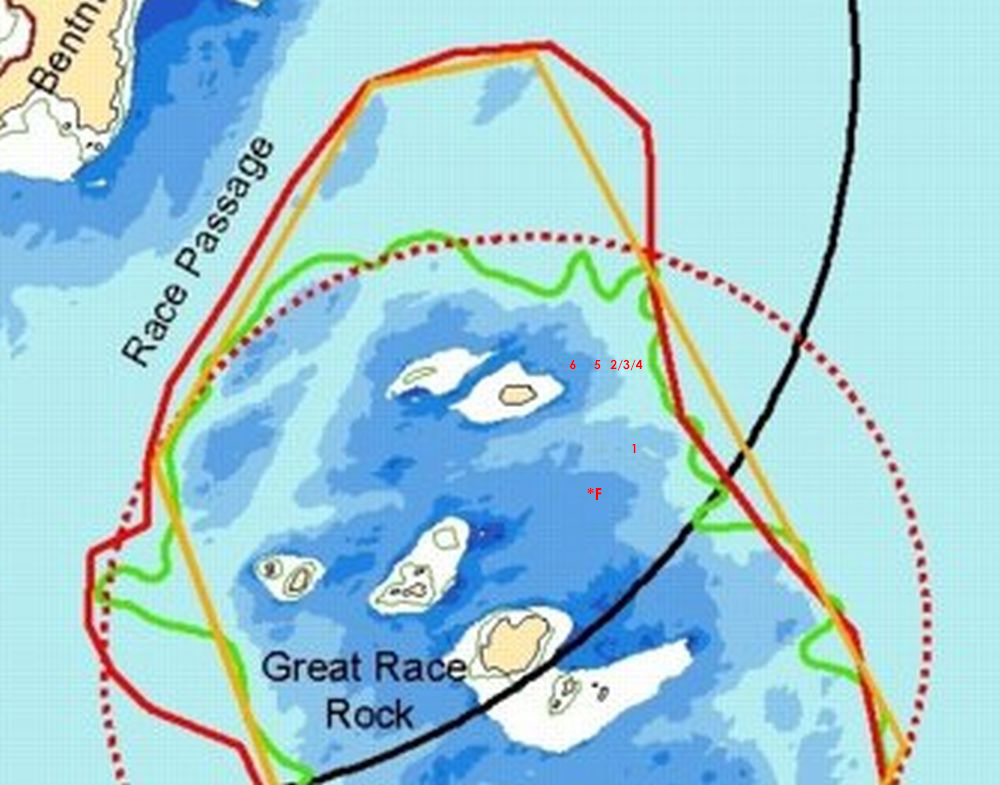
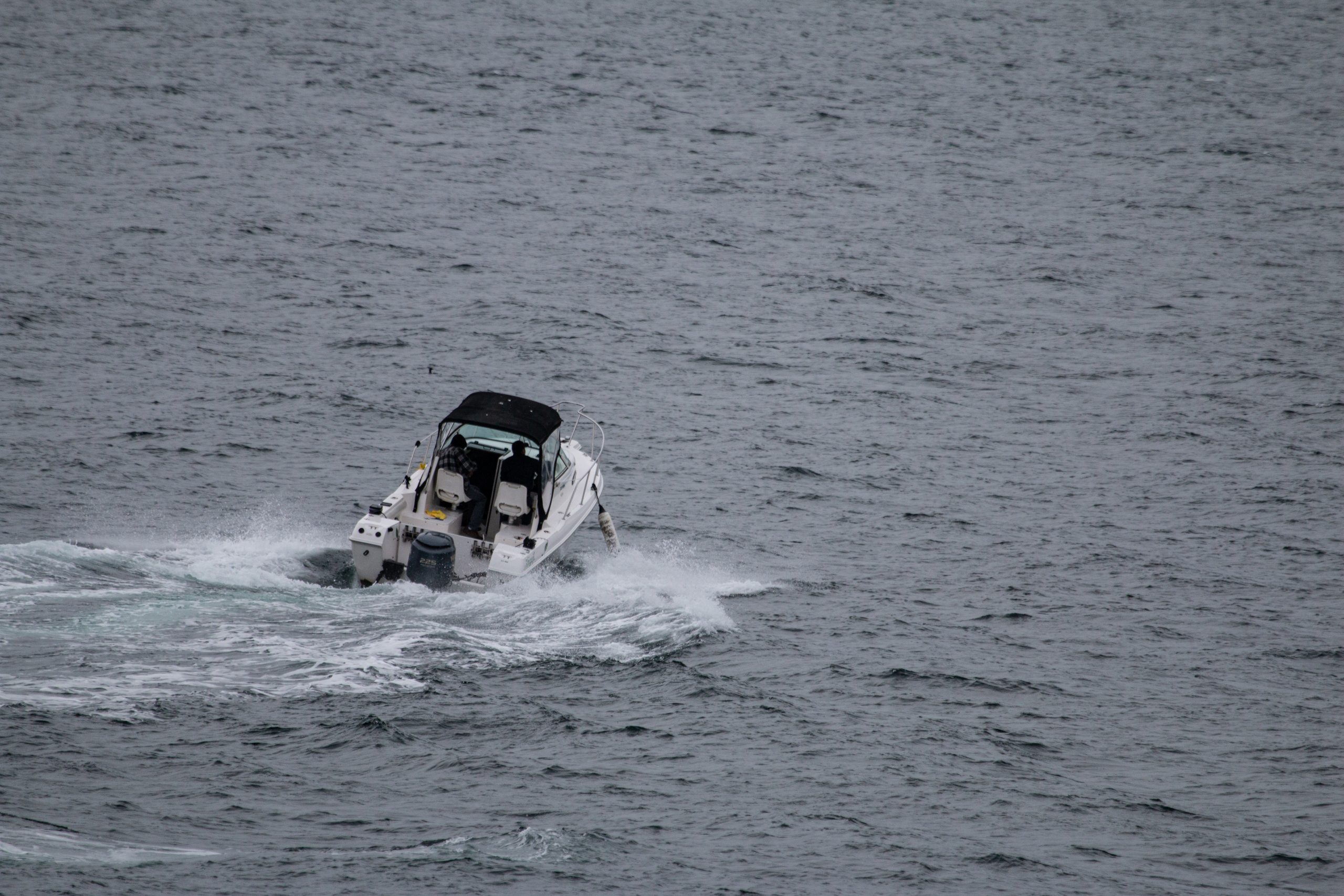
First observed at location *F with binoculars at 0857, they saw me on the deck and reeled in lines. I returned to deck and took photo 1 as they jetted away. (high speed within the reserve)

They returned to the RCA at 0922, photos 2,3,4 taken for overview of location and ID.

After photo 5 and 6, I attempted to contact them on VHF 16 and 68 (was just going to politely suggest they check the regulations for Rockfish Conservation information). They were even closer to the North Rock by this time.

They looked up, reeled in lines fast, and again jetted off.

Reported to DFO Fisheries Violations Hotline – 1-800-465-4336

Emailed in this report to DFO, as requested during phone conversation

DFO

Visitors: DFO was here today looking for the entangled California sea lion. Unfortunately they could not spot the animal.

Weather– Current: http://www.victoriaweather.ca/current.php?id=72
Weather–Past: http://www.victoriaweather.ca/station.php?id=72

Plastic band removed from neck of Greater Victoria sea lion

From The Goldstream Gazette A Marine Mammal Rescue Centre veterinarian removes a plastic packing band from the neck of a Stellar’s sea lion at the Race Rocks Ecological Reserve on Sept. 10. (Courtesy of Mara Radawetz)

Plastic band removed from neck of Greater Victoria sea lion

Entanglement injuries in seals and sea lions a regular occurrence at Race Rocks Ecological Reserve

  • Sep. 10, 2020 12:00 a.m.

A sea lion trapped in human garbage has a second chance at life thanks to the sharp eye of a lighthouse-dwelling ‘ecoguardian’ at Race Rocks Ecological Reserve near Metchosin.

Mara Radawetz and Kai Westby, who live in the island’s lighthouse tower and monitor the reserve on behalf of Pearson College, called in back-up support when Radawetz spotted a California sea lion with a plastic packing band tightly bound around its neck on Sept. 1.

Over the days that followed, the duo spotted the animal again and watched it expressing clear discomfort as a result of the appendage.

“We could see that it was suffering, he would continually scratch at the infected area on his neck,” Westby said. “It had cut through his skin and created a kind of swollen, wet wound.”

The Marine Mammal Rescue Centre (MMRC), assisted by the Department of Fisheries and Oceans, responded to the call for help, but it would be a few days before the rescue could arrive by boat.

Fortunately, the rescue team arrived Sept. 10 and Radawetz was able to again spot the injured sea lion using a high-powered magnification lens from the top of the lighthouse, where the duo does a daily count of the island’s furry, feathered and blubbery visitors, which typically number in the thousands.

READ ALSO: Sooke Whale Watching spots a huge gathering of whales

“Being able to have that eye in the sky was instrumental in being able to successfully help this animal,” Westby said.

With a bird’s eye view, the pair guided MMRC veterinarian Martin Haulena to an area where he could prepare a dart gun with a tranquillizer. Rescue staff aided from the water and land, watching as Haulena crawled over the rocks and got into position, successfully tranquillizing the sea lion.

A sea lion that had a plastic band removed from its neck at the Race Rocks Ecological Reserve wakes up from sedation.(Courtesy of Mara Radawetz)

In addition to removing the plastic band, the vet installed a tracking device and took a blood sample.

Radawetz and Westby said they see a sea lion or harbour seal with an injury due to human impact roughly once a week – and many of those animals don’t have a happy ending.

“We often see not only plastic entanglements but fishing line injuries on the sea lions and the harbour seals,” Radwetz said. The pair said they often see pinnipeds – seals, sea lions and walruses – that have swallowed a fish still on a fishing line, a meal that can cost the animal its life.

“It’s not always possible for us to help them,” Radawetz said.

While one lucky sea lion was able to swim free, Westby and Radawetz hope the incident resonates with people.

Westby added, “I really hope by sharing some of what we see here we can remind people that their actions have impacts and we are seeing those impacts here in Race Rock.”

In September 2019, a sea lion with almost identical injuries was rescued at the Race Rock Ecological Reserve. That animal had a plastic band embedded roughly two inches into its neck.

For more news from Vancouver Island and beyond delivered daily into your inbox, please click here.

READ ALSO: Steller sea lion with plastic around neck rescued on Vancouver Island

Sea Lion Rescued Near Victoria (Times Colonist , Sept 9, 2020)

From: https://www.timescolonist.com/sea-lion-rescued-near-victoria-with-plastic-band-around-its-neck-1.24199804

Veterinarian Martin Haulena from the Vancouver Aquarium’s Marine Mammal Rescue Centre attends to the injured sea lion.

photo: MARA RADAWETZ


A sea lion with a plastic packing band cinched around its neck was rescued near Race Rocks on Sunday, thanks to the combined efforts of rescue teams from Victoria and Vancouver.

The struggling sea lion was first spotted by Mara Radawetz, who lives in the decommissioned lightkeepers’ residence at Race Rocks, just off the southern tip of Vancouver Island. Radawetz, who monitors the Race Rocks Ecological Reserve with partner Kai Westby on behalf ­Metchosin’s Pearson College, saw the sea lion several times during the week in nearby Juan de Fuca Strait, and said the marine ­mammal was clearly in distress.

“He was scratching constantly at his wounds, which were cutting into his skin,” ­Radawetz said.

She contacted Fisheries and Oceans Canada and the Vancouver Aquarium’s Marine Mammal Rescue Centre, Canada’s only dedicated marine mammal rescue facility and one of the largest rescue facilities in the world, to help free the sea lion from the plastic packing band wrapped around its neck.

Two large Zodiac boats ­carrying the rescue team and several veterinarians arrived Sunday morning, and quickly found the sea lion, Westby said. After being given a tranquilizer ­injection by veterinarian Martin Haulena from the Marine Mammal Rescue Centre, the sea lion was brought onto the shores of Race Rocks and treated.

The plastic band was removed and tracking tags were attached to the animal’s front flippers. A blood sample was also taken, to assist with future studies. After being given a drug to reverse the effects of the tranquilizer, the sea lion was back swimming within minutes, Westby said. “It was great to see them help out an animal that was in such great pain.”

Suffering caused by man-made material such as plastic is an increasingly common problem among sea lions, Westby said. As permanent residents on Race Rocks, he and Radawetz see their share of injuries to sea lions.

“It can be pretty sad to see. They live for 20 years or 30 years, and as the animal grows, the band cuts through its skin. It becomes a really painful-looking wound.”

mdevlin@timescolonist.com

Marine Mammal Rescue

On November 4th and 5th the Marine Mammal Rescue Team was here to help out a couple California sea lions that were entangled. They arrive on the 4th and after doing a thorough search around the island there were no tangled sea lions around so we were afraid they may have left the area but thankfully the team stayed the night and the next morning they were able to find two sea lions who needed some help getting the garbage off of their necks. The first animal was on the north east side of island up on the rocks and Marty was able to dart him without him fleeing into the water. His tangle was pretty bad but thankfully the team was able to help him out before it got any worse. I’ve seen him hanging around the same spot since he’s been untangled.

The second one was in a bit of a tougher spot he was already half in the water so he jumped right in as soon as the dart hit him and went for a swim. The dart was very helpful in making him easier to spot as he swam around until he was sedated and the team was able to get a hold of him to help him out.

Overall it was a very successful trip and I am so glad the Marine Mammal Rescue team was able to come out here and help these guys out. I have not seen any new tangles since and I’m keeping an eye out for the two that are on the mend.