Whale watching

Wildlife notes

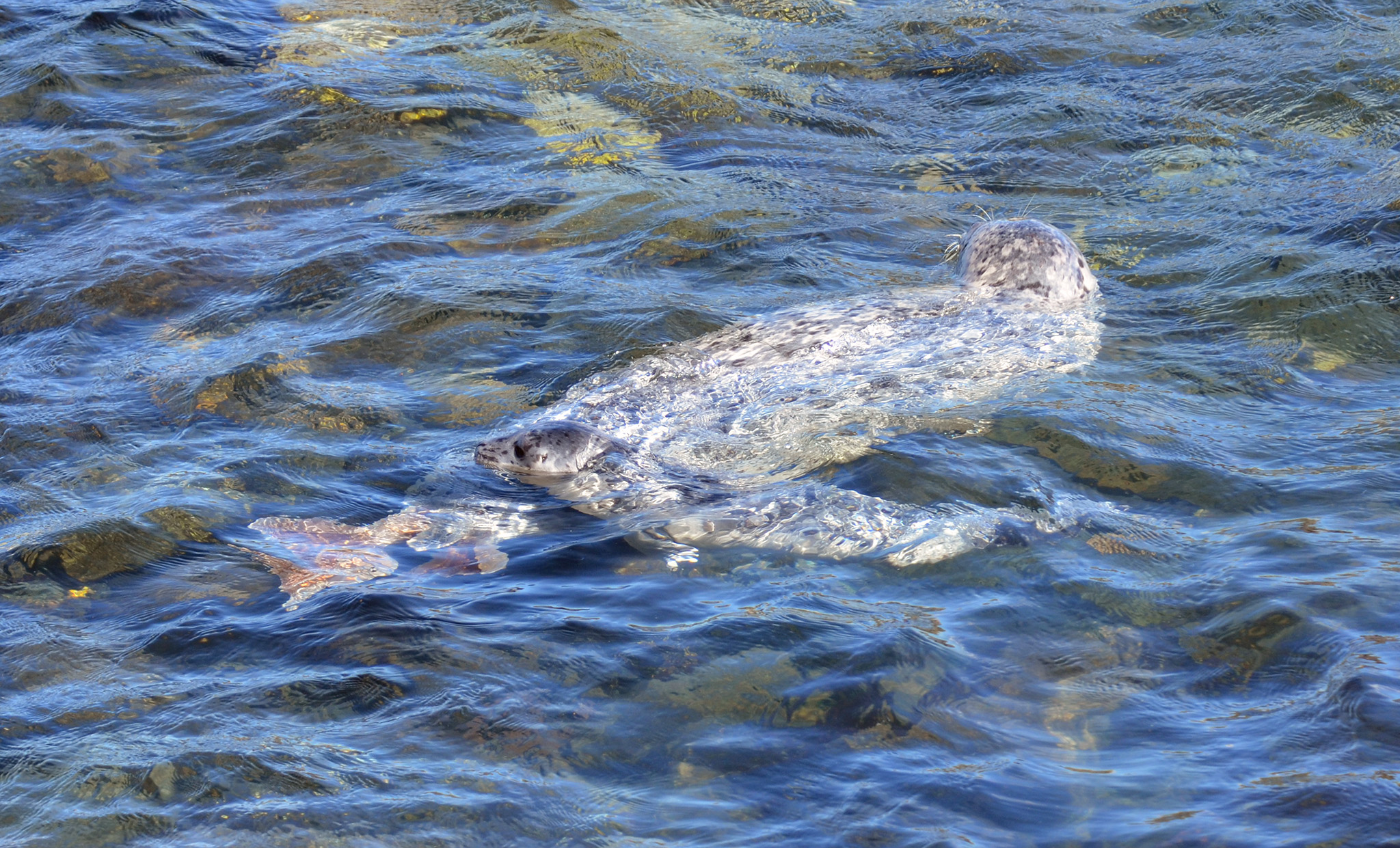
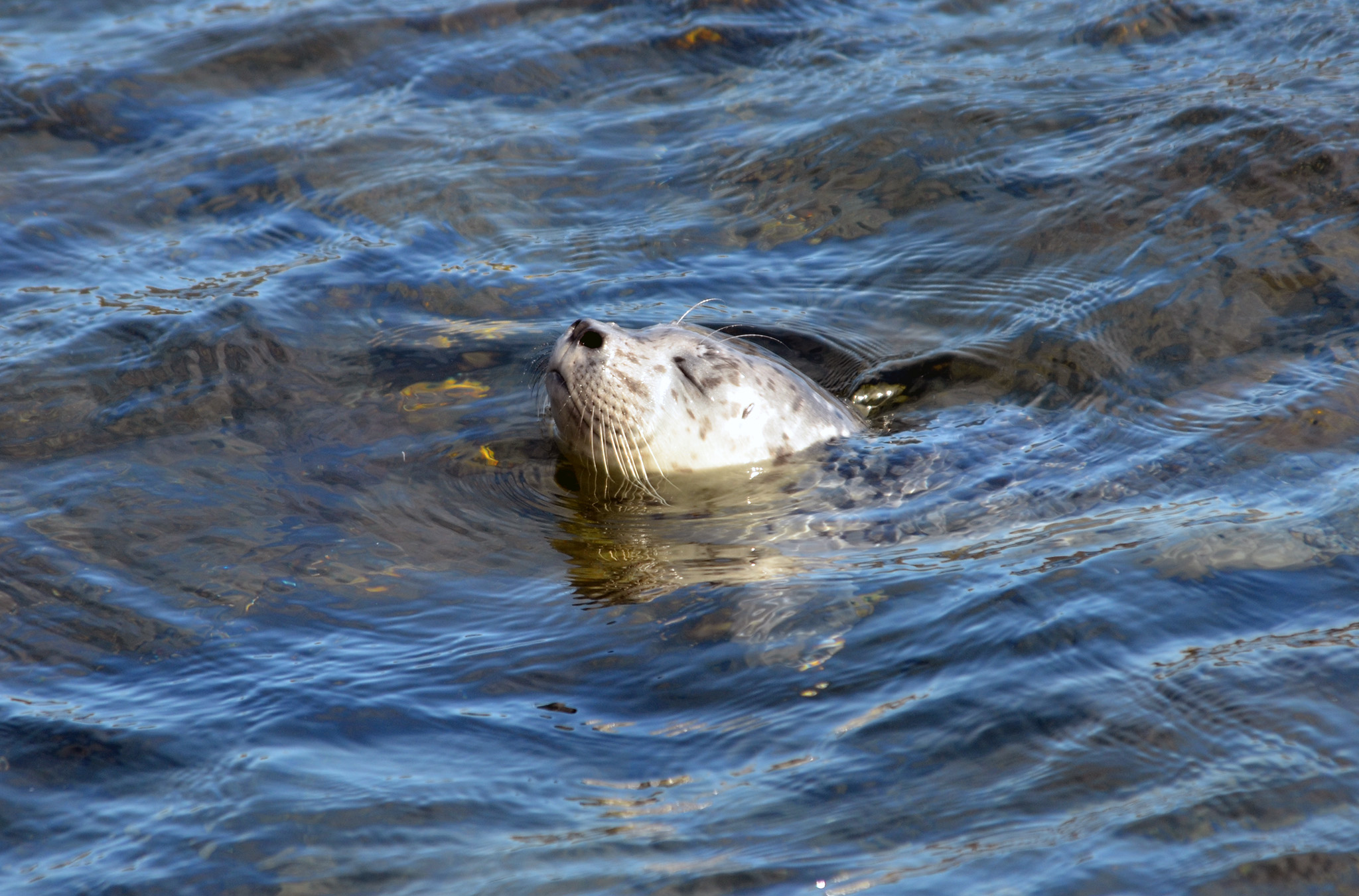
There are so many whales around but mostly they are too far away for me to see them. Today’s treat was a humpback feeding < 1 mile away and two killer whales swimming close to shore between Race Rocks and the South Islands, making a few passes around East Beach. The best part of it was watching the seals watch the killer whales.  They were close to shore in water a few feet deep, alert and in the ready position, not in their usual lazy rock sausage lounging positions.
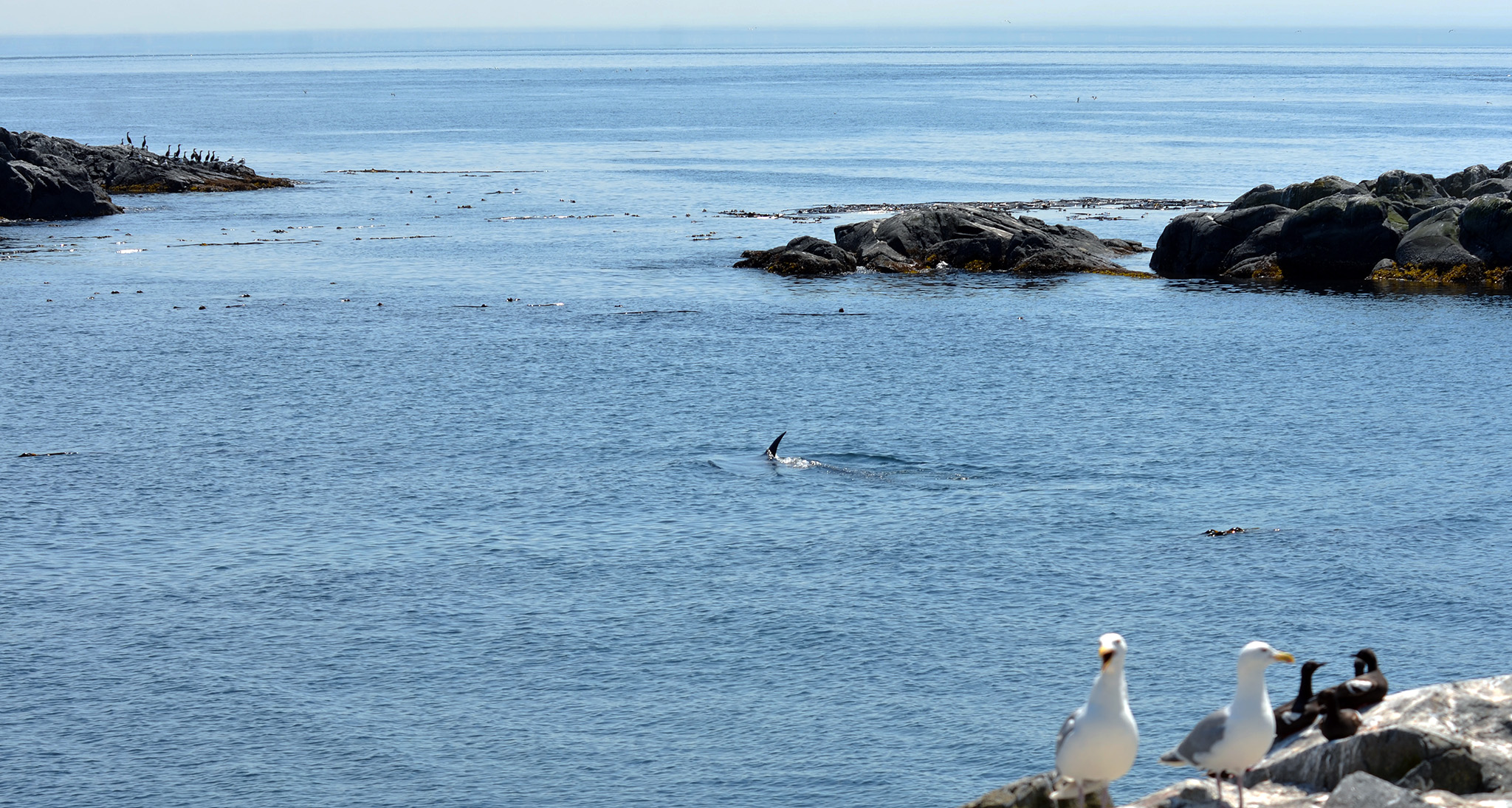
Killer whale in the channel between Great Race Rock and the South Islands.
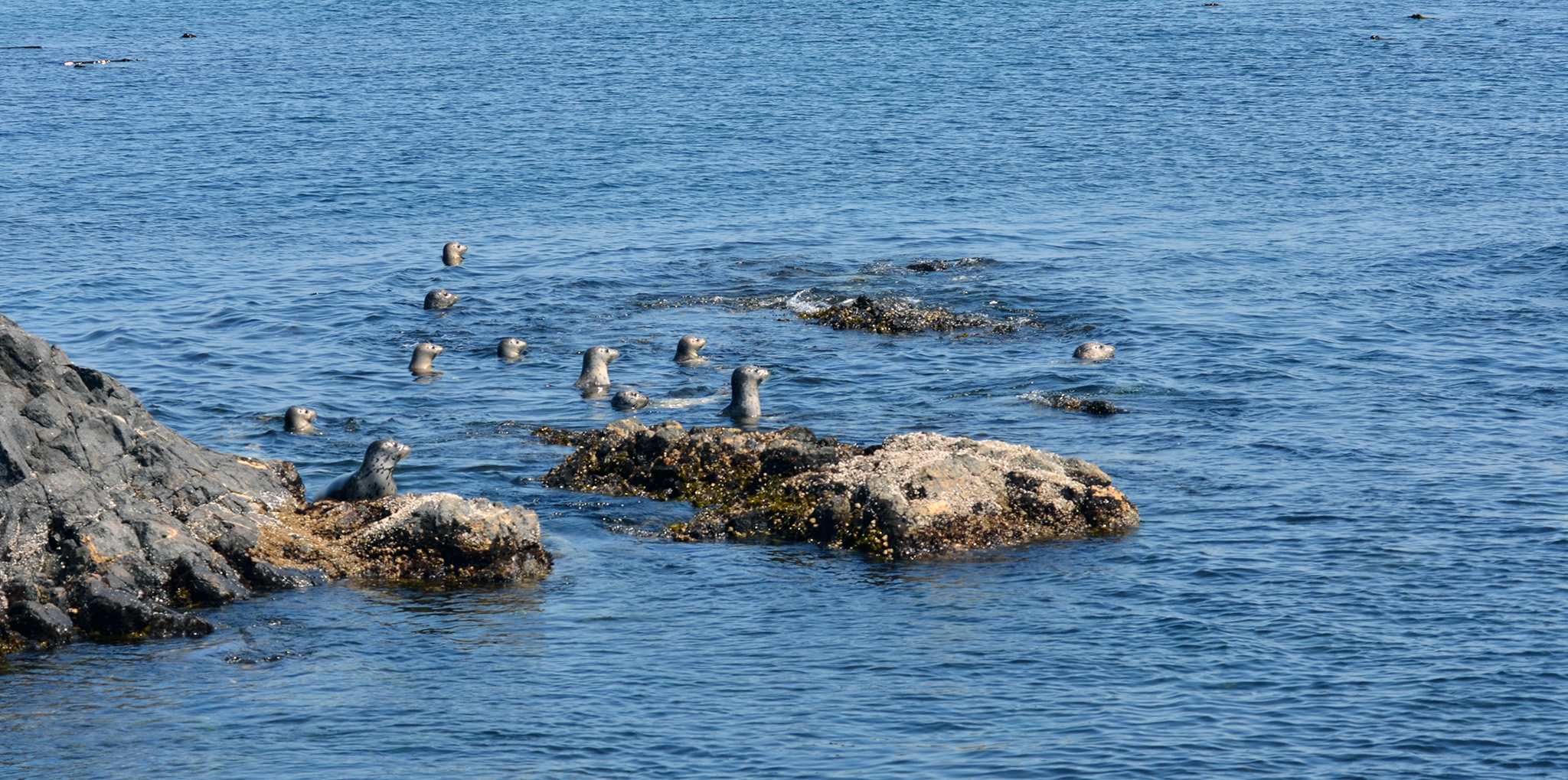
Harbour seals all “stretchy necked” watching for the killer whales.

Facility work

Mike and Richard came with three rolls of pipe for the new water line to the cistern. It was unrolled, laid flat and tied down along the jetty with the hope that it will be better behaved when the time comes to install the line. They took away the old metal composting barrel stored inside the generator building.  We have switched to using the outdoor compost bins which are easier to deal with but the compost that we emptied out of the barrel looked (dark, homogenous and fully composted) and smelled (odorless) fantastic . They also hauled away a drum of used generator oil and more scrap metal.

  • cleaned solar panel
  • unrolled pipe for the new cistern line
  • emptied and removed old barrel composter
  • removed drum of used oil

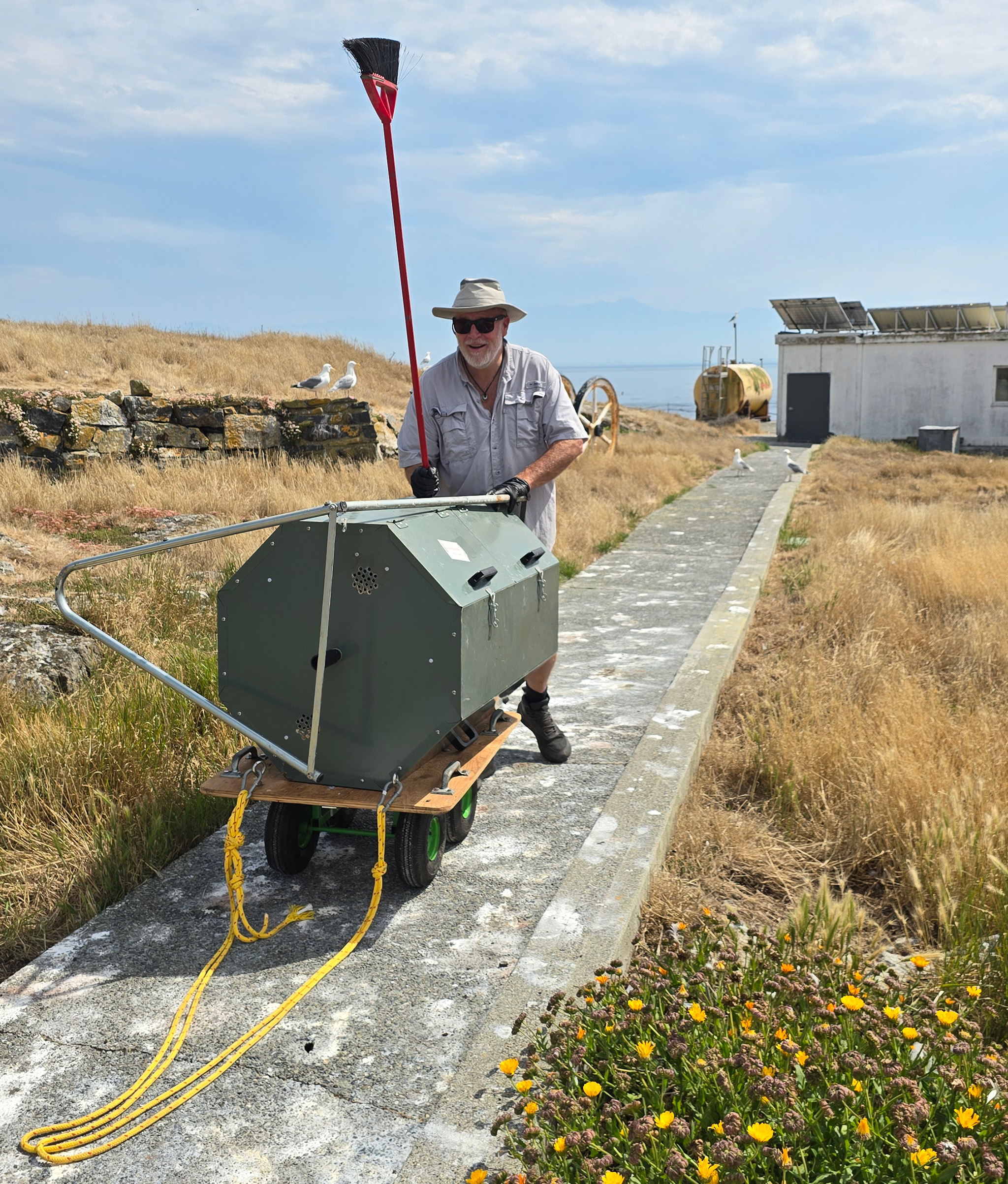
When on a vessel there is an expression “one hand for the boat”, meaning one hand must always be free and dedicated to holding on. Here it is “one hand for the broom”. The broom is a decoy and saves us from direct gull attacks.
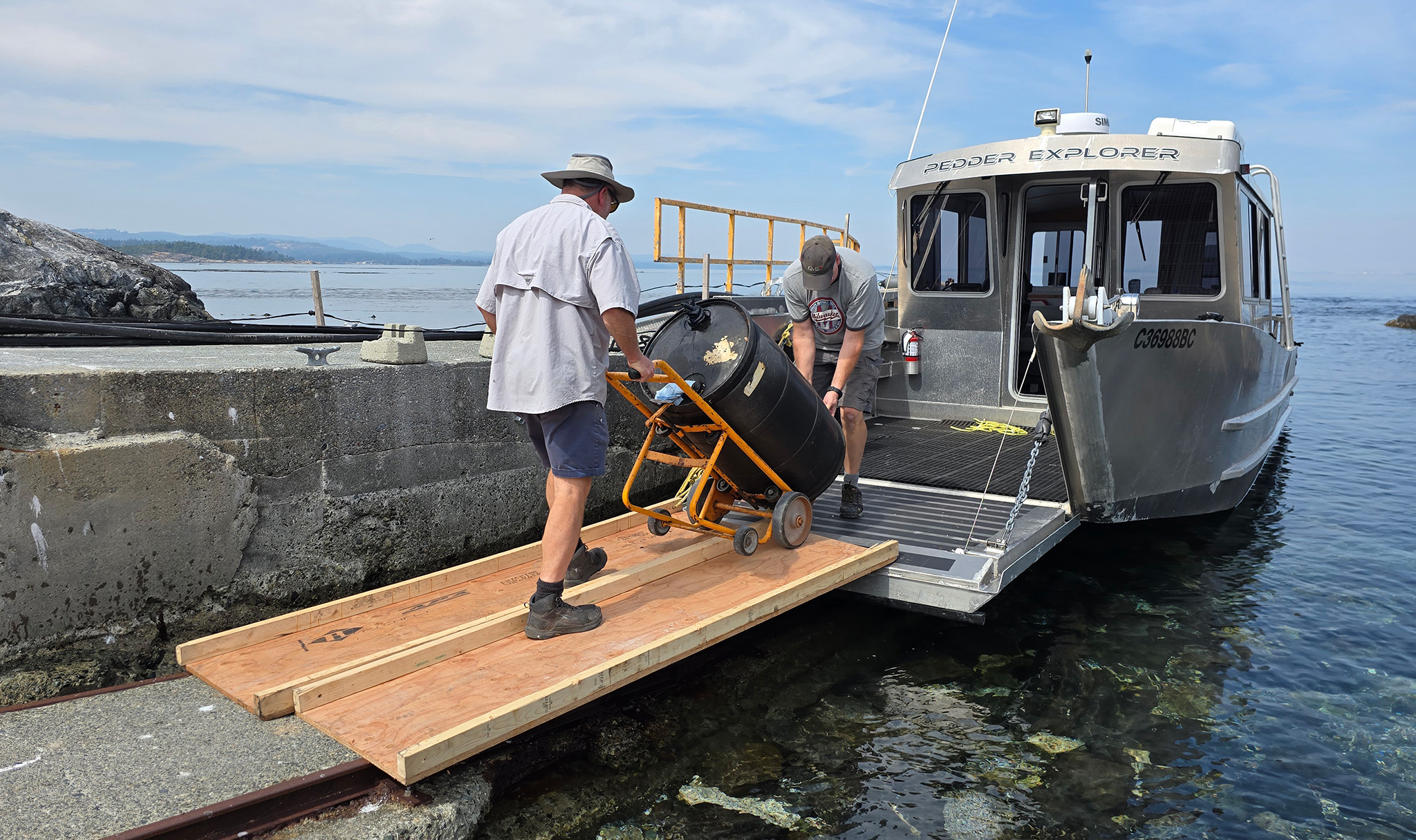
The drum of used oil being loaded onto the boat by Mike and Richard..

Vessels

  • Ecotourism: 13
  • Private: 2

Weather

Clear skies and haze in the am, cloudy in the pm.  Winds variable 1 to 21 knots. Daytime temperatures 12 to 24 degrees.  Warm enough I broke a sweat today!
Brown eyes

Wildlife notes

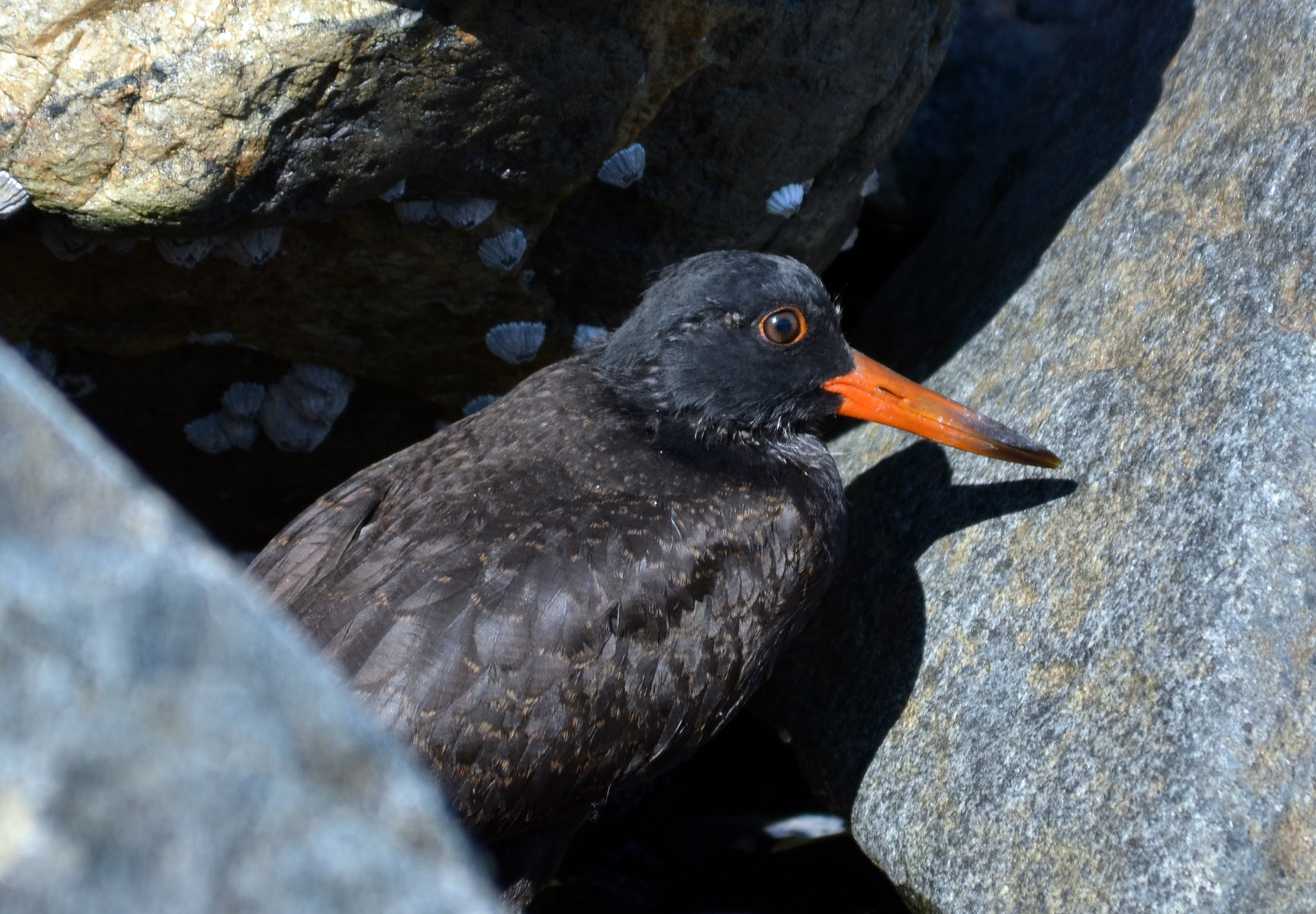
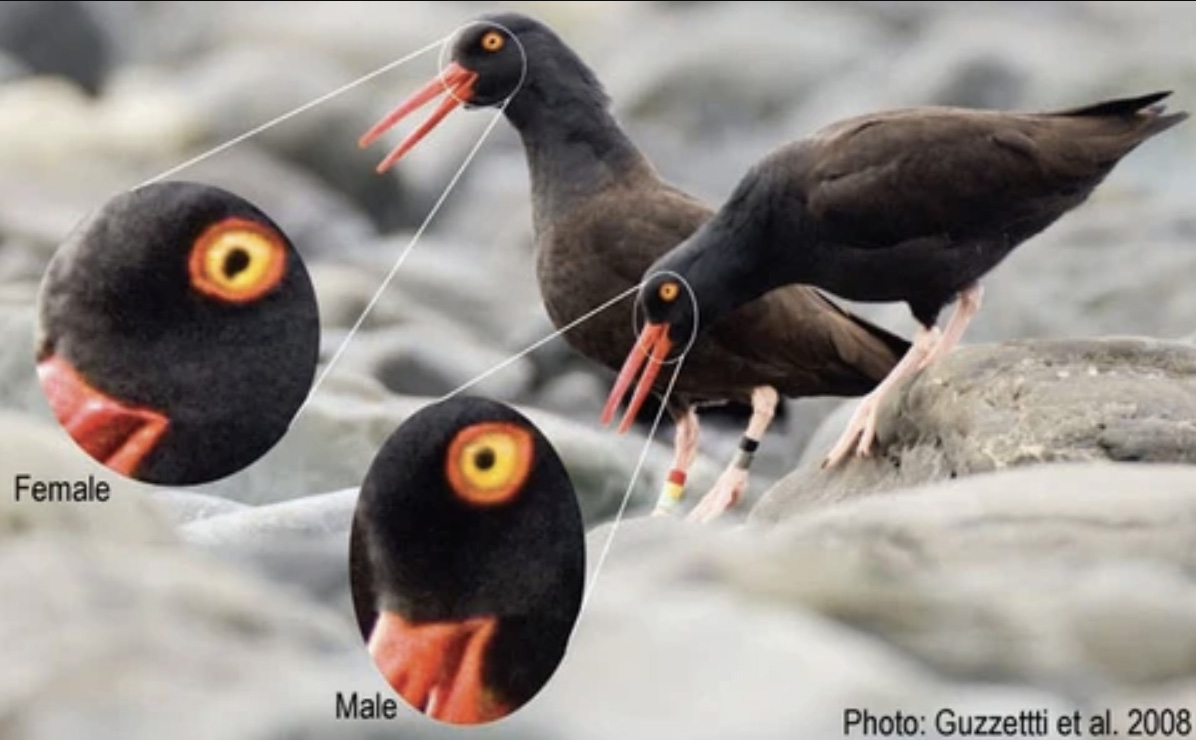
The Keeper’s House oystercatchers are approaching their 6th week. They still seem a bit smaller than their parents and won’t look quite like them for a couple years. Their beaks are not fully orange and they don’t have those piercing yellow eyes and red eye rings.  In trying to determine when they reach adulthood and resemble their parents (year 3), I came across an article (Guzzetti et al 2008) on how their eyes can be used to sex them (93% accurate). Females develop black flecks or specks in the iris! If I manage to get to some good photos showing this on the parents at Race Rocks, I’ll post them. Until then see below.

This photo is from the Cayucos Land Conservancy website and it is from the Guzzetti et al 2008 paper.

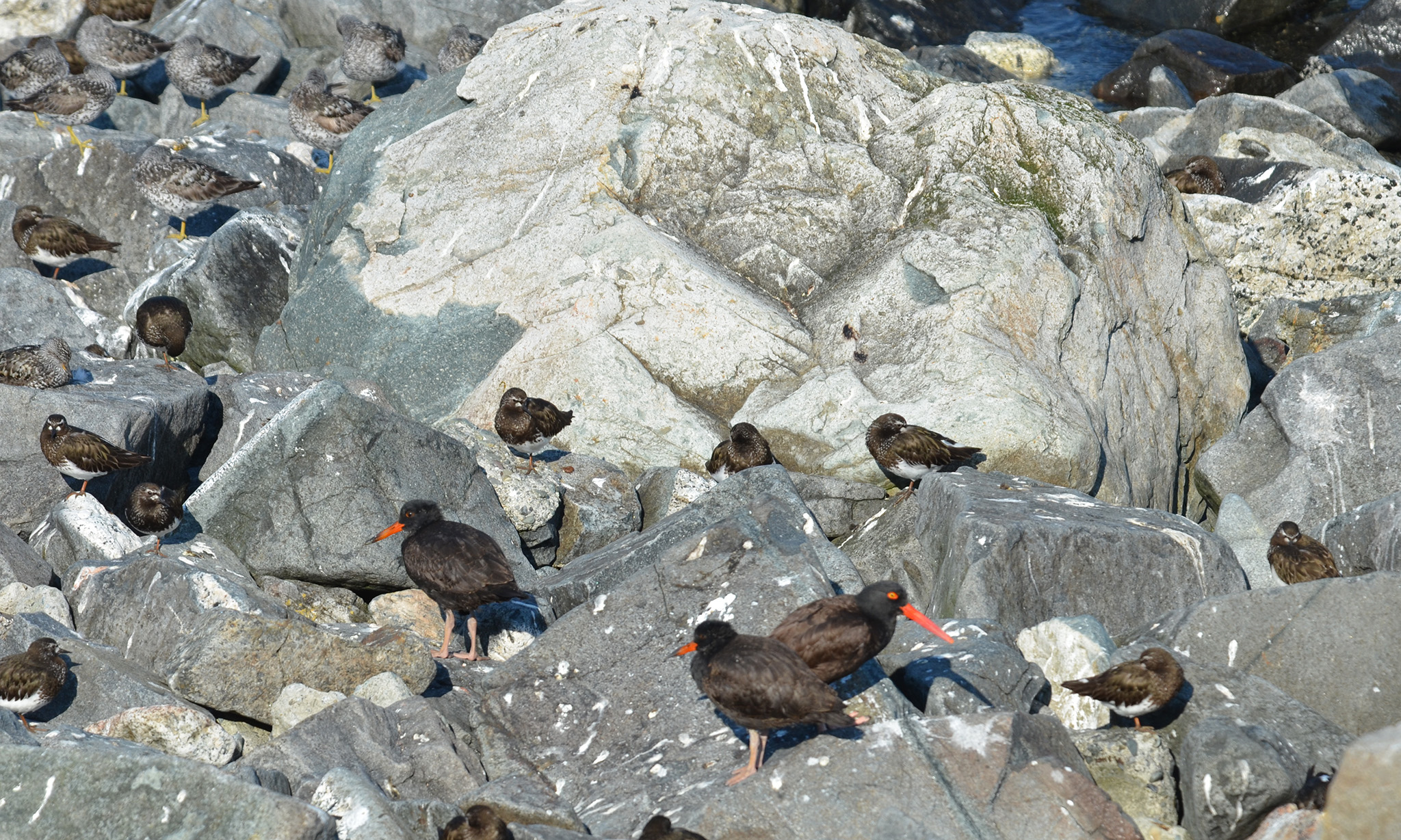
The Keeper’s House black oystercatcher parent and its two brown eyed chicks on East Beach with the turnstones and surfbirds.

Facility work

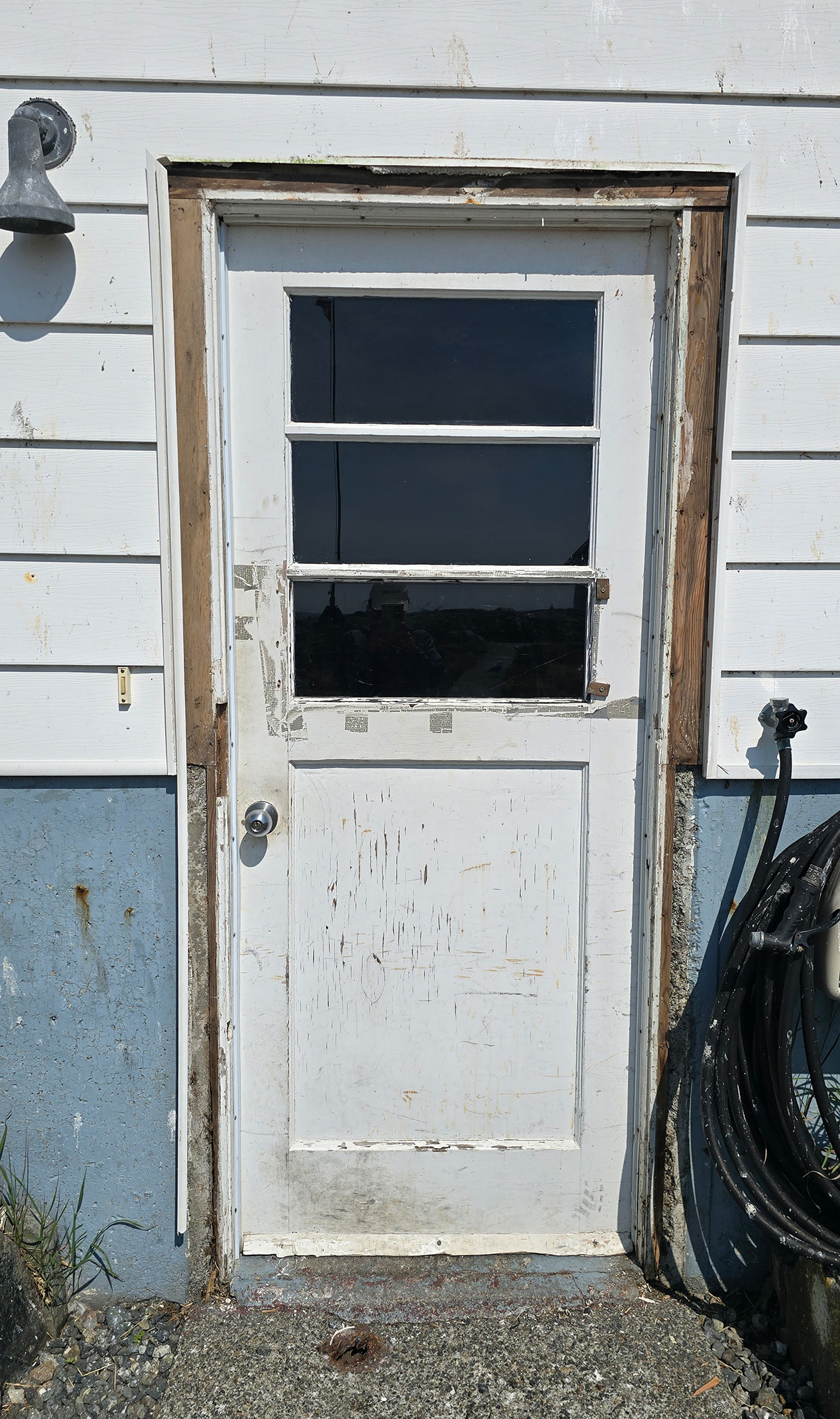
Greg and Richard were here having fun going at the basement door frame with pry bars. The screen door and its trim were removed to determine the full dimensions for ordering a new basement door with casing. It will take 6 weeks or so. The new door should cut down on the whistling sounds and keep in more heat in the winter.

  • cleaned solar panels
  • worked on compost bin
  • 150 metal rods for new electric fence dropped off
  • Keepers House basement screen door removal

Basement door with the screen door and its trip removed.

Vessels

  • Ecotourism: 14
  • Private: 3

Weather

Clear skies.  Distant haze. Winds west 5 to 25 knots. Daytime temperatures 12 to 20 degrees.

Restrictive

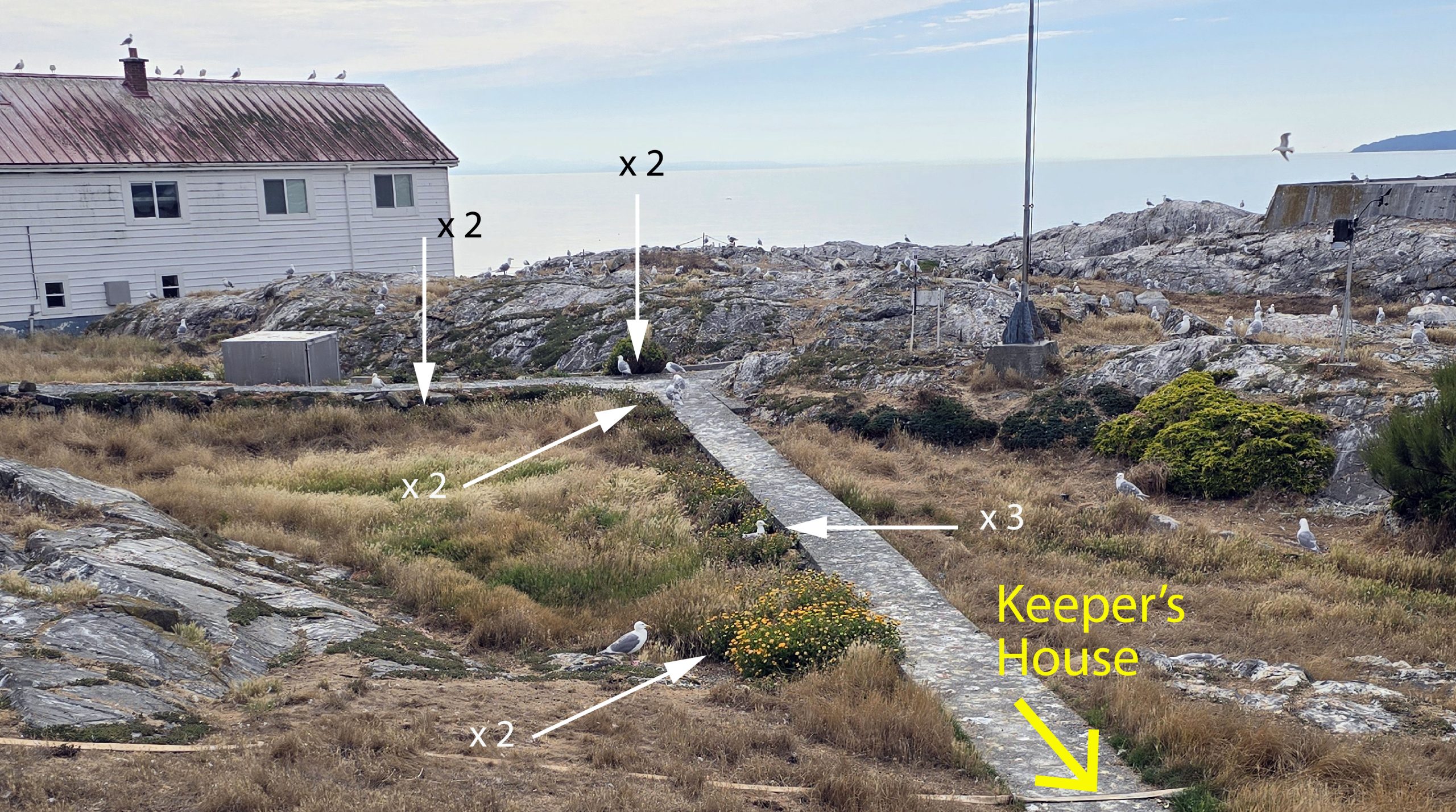
It is becoming increasingly more difficult to go places.  Along the walkway from the Keeper’s House are several gull parents growing bolder by the day.  The walkway is raised 1 to 3  feet depending on the spot and the base of rock provides some excellent hiding spots for the chicks. The chicks dive for cover when I come around and the parents charge on foot or in flight from above, the side or behind.  I used to have only one parent or family to deal with at a time but they let their chicks wander to new locations. Now at the intersection I can have two to three families (Intersection gulls, Sign gulls and Bunker gulls – same as last year) employing different strategies at the same time. I am spinning around trying to use one end of the broom to fend off a ground attack and the other end for the diving gulls while also trying to dodge their poo bombs, which some say are good luck?!? Maybe I may need a second broom and to start singing my song….

Chim, chimney, Chim, chimney, Chim, chim, cher-ee.
An Ecoguardian is as lucky as lucky can be.

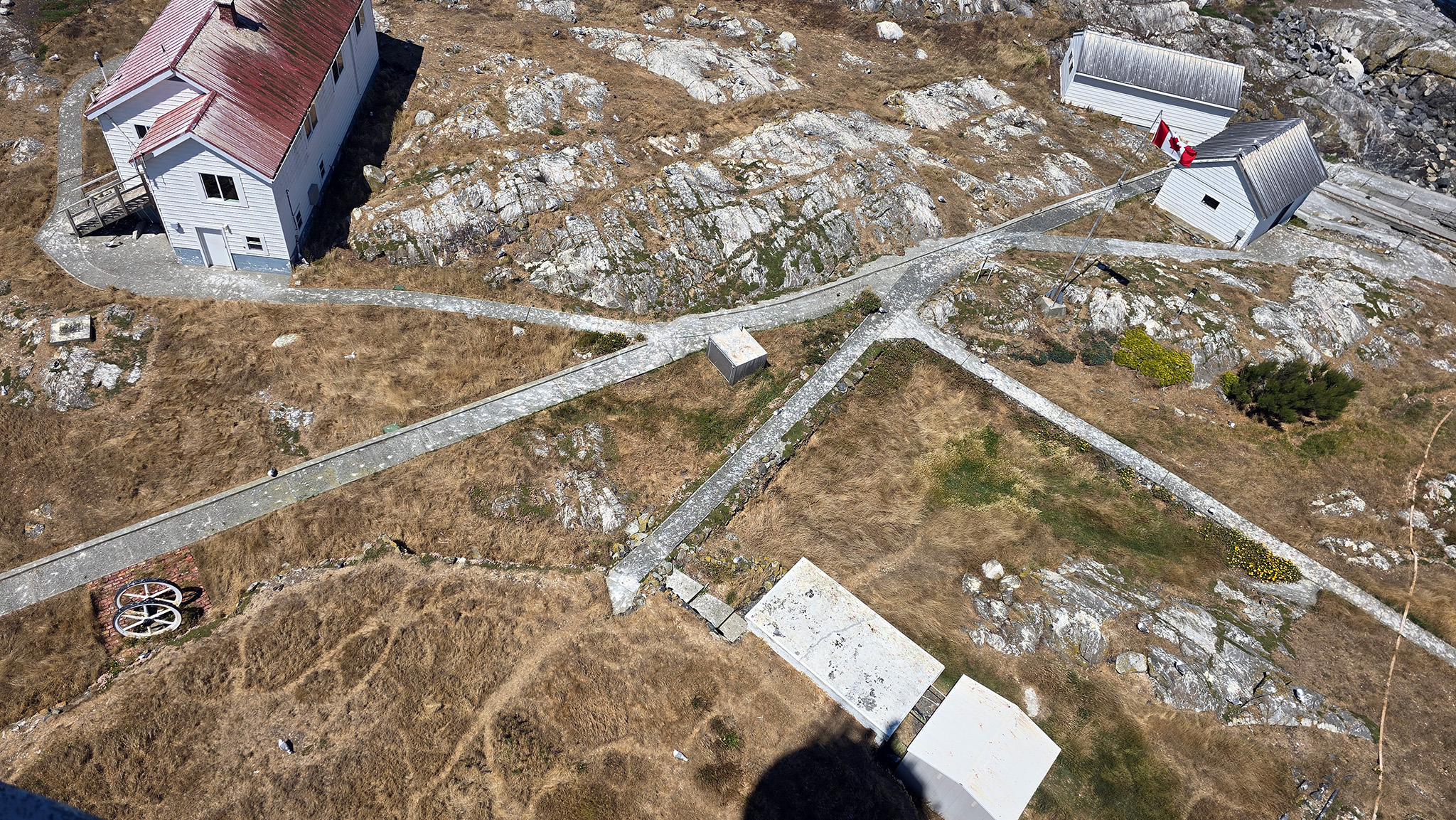
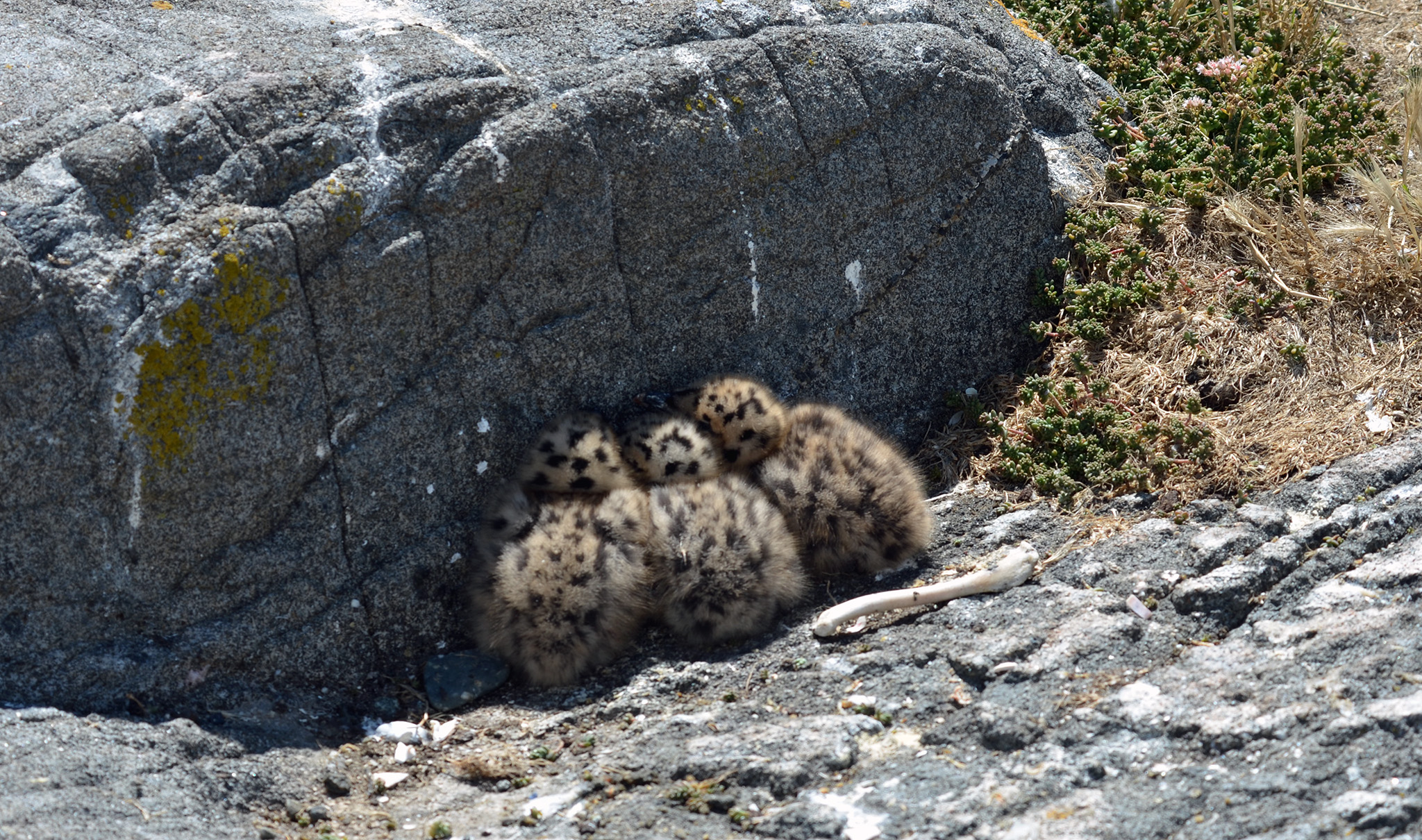
Pathway from the Keeper’s House. The Student House, Energy Building, Lighthouse and desalination plant are to the left and the Tank Shed, Boat Shed and Jetty are to the right. The white arrows indicate the number of chicks hiding at each location.

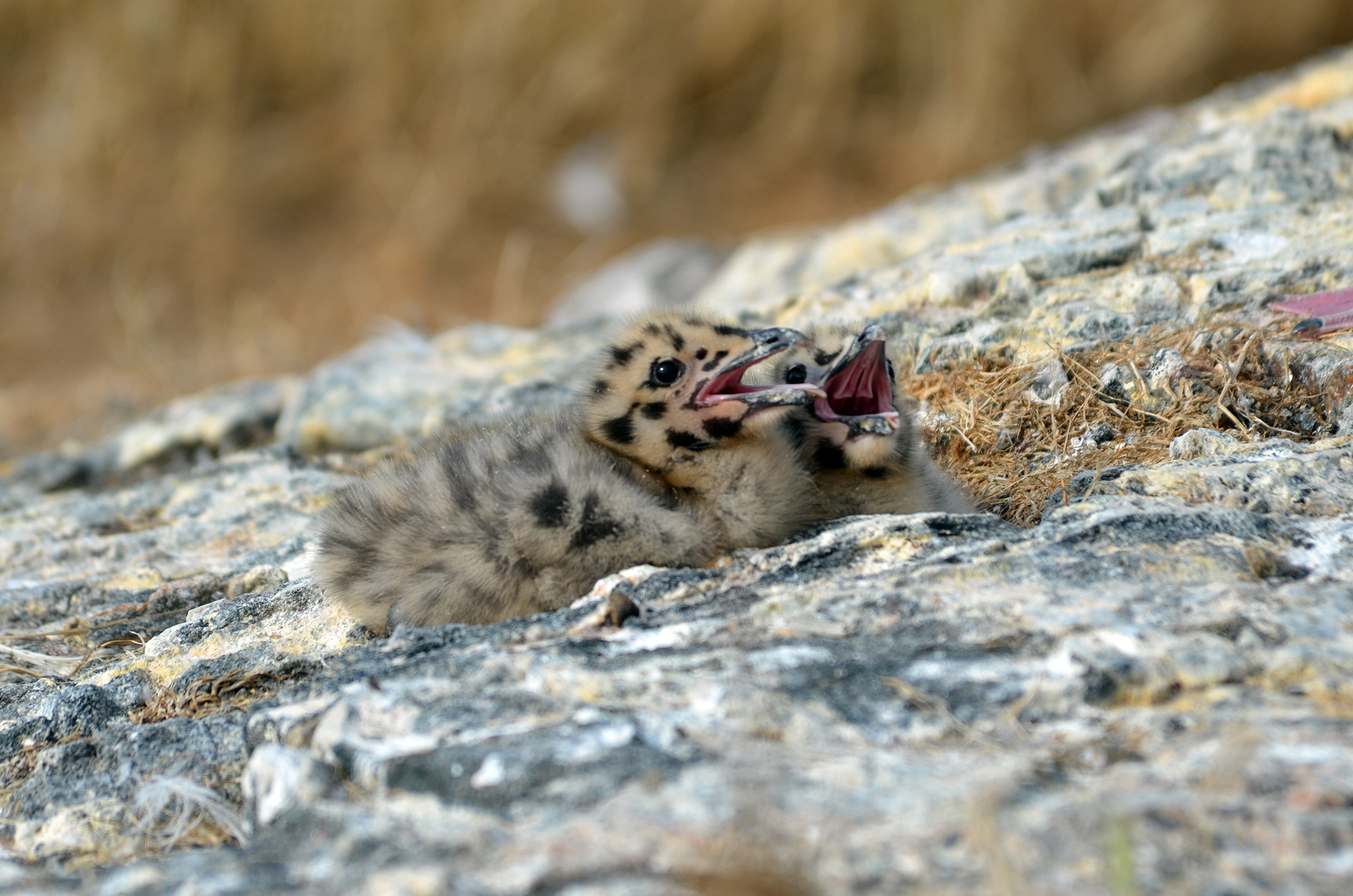
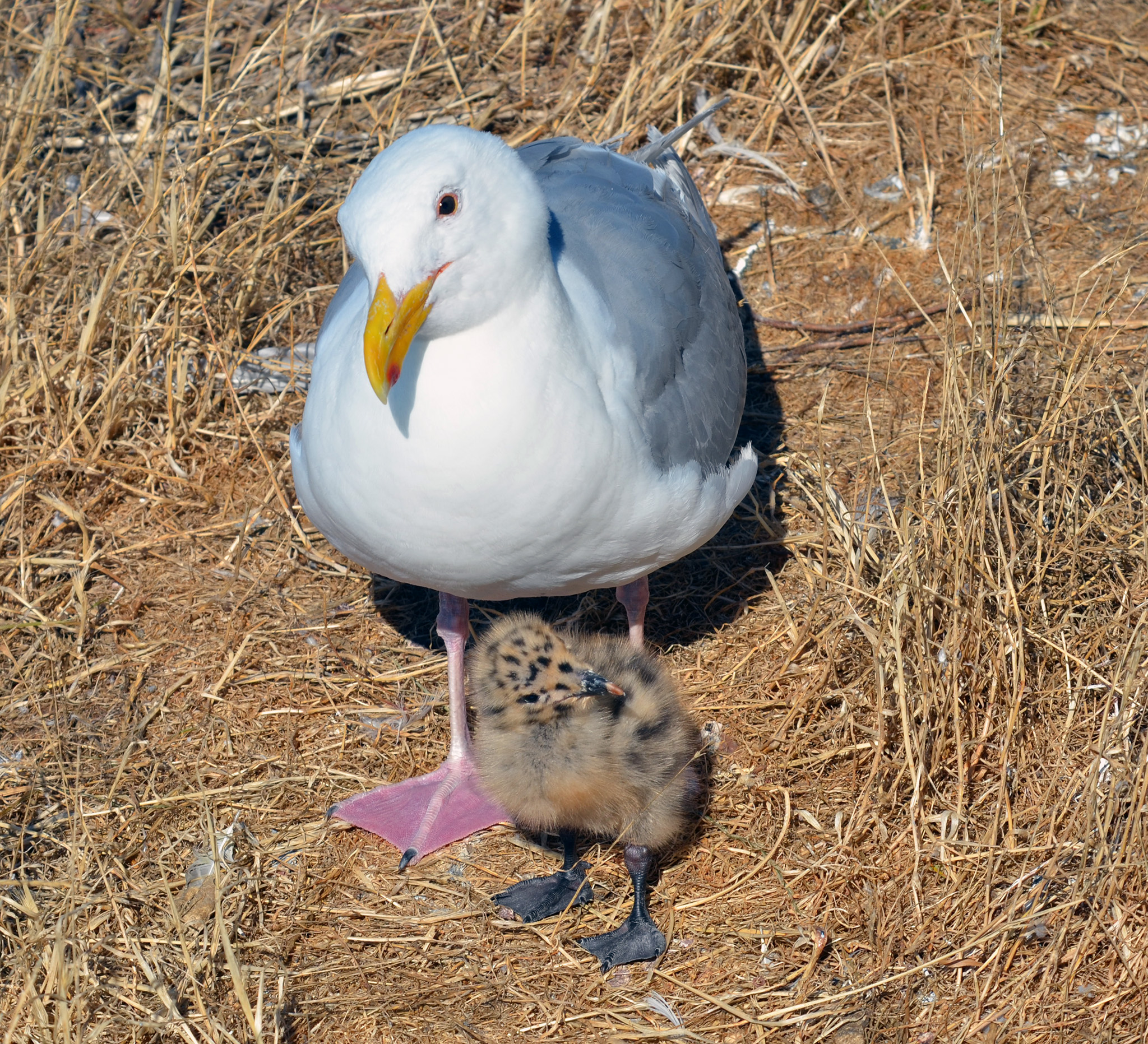
Two young gull chicks.

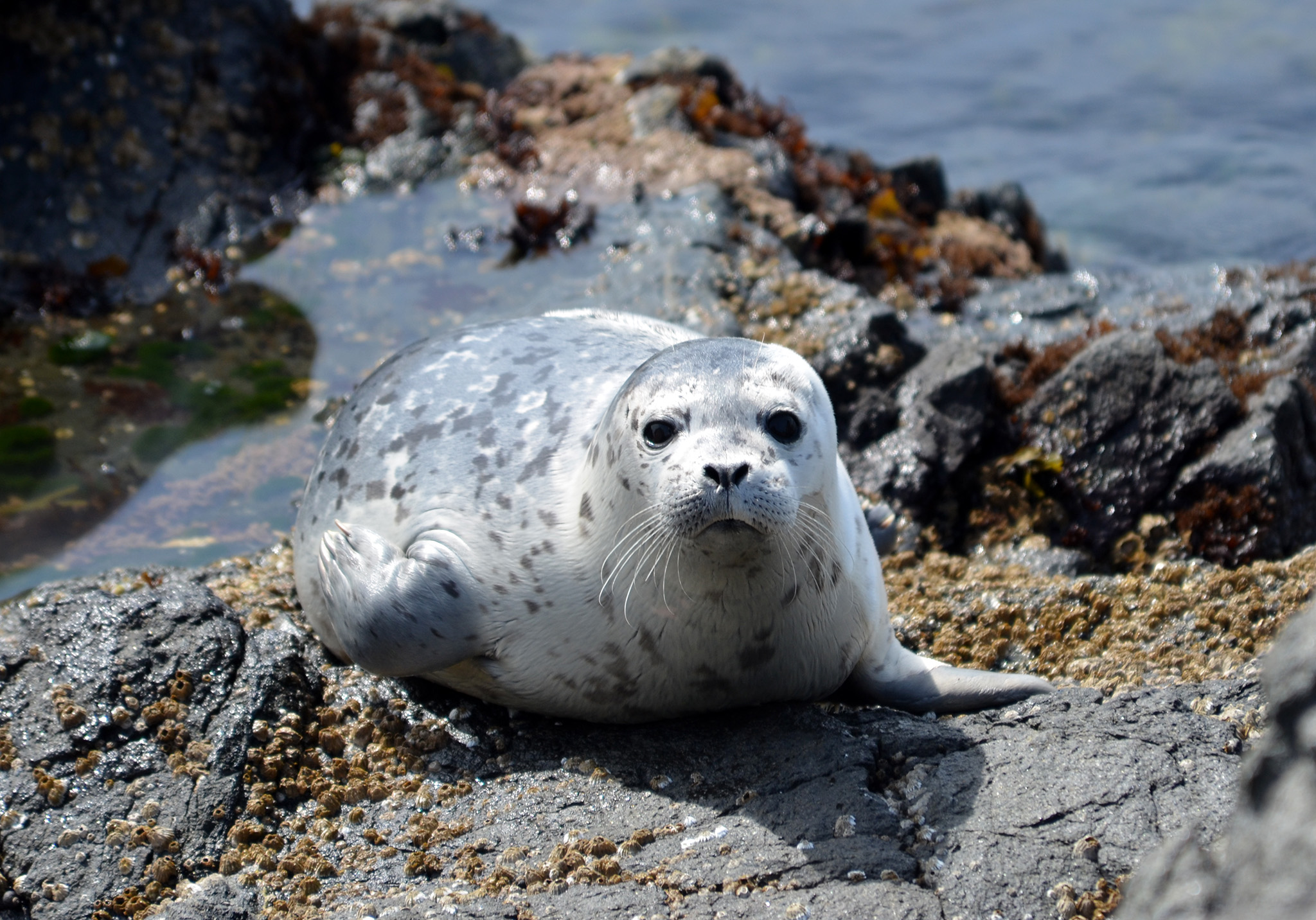
A pudgy seal pup on the rocks by the Energy Building.

Facility work

  • cleaned solar panels
  • worked on door report…soon all locks and buildings around here will be keyed the same!
  • cleaning

Vessels

  • Ecotourism: 18
  • Private: 3

Weather

Skies partly cloudy, hazy at times.  Winds variable in direction, 5 to 13 knots. Daytime temperature 14 to 22 degrees.

Pathways

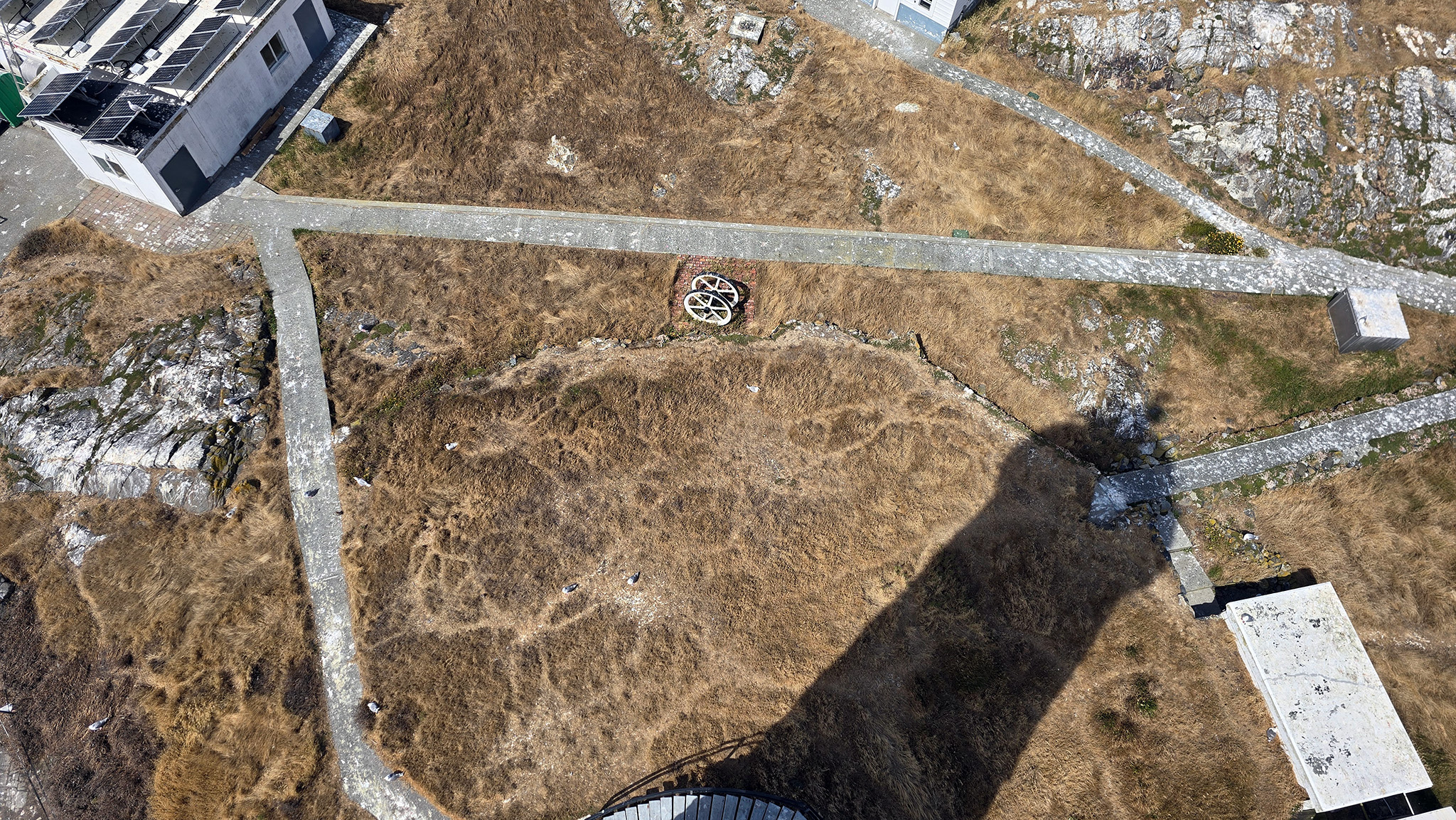
The gulls have worn pathways into the grass at the lighthouse base. When I first noticed them I was reminded of the patterns in a wetland or a braided stream.  These can not be from aimless wandering. If I paced around and created these paths it would be due to mental illness or anxiety.  As crazy as these birds seem sometimes, I have to assume these pathways were worn walking a fixed, purposeful and predictable route while on patrol. There are only about 7 seven nests in this large grassy area, so there is a lot of territory to defend.  They also walk the perimeter along the stone wall, watching for me to pass by on the human pathway or “walkway” – a sturdy, direct, safe route between two points.  If all the concrete walkways connecting the buildings would be equivalent to one gulls pathway network, I expect they get in more “steps” in a day and are infinitely more aware of the daily events in their little “island” than I.

Concrete walkways and gull pathways (bottom left) in the grass at the base of the lighthouse.

Aerial view of the pathways the gulls have trampled into the grass at the base of the lighthouse. Energy building (top left), stairway to lighthouse front door and lighthouse shadow (bottom center), and bunker with desalination plant (bottom right).

Facility work

  • cleaned solar panels
  • measurements for new electric fence
  • started on the compost bins

Vessels

  • Ecotourism: 14
  • Private: 1

Weather

Fog in the early am. Clear skies, wind direction variable, 4 to 17 knots. Daytime temperatures 10 to 19 degrees.

Three gull chicks ordered to hide in a sliver of a shadow.

July 18 Census

Mammals:

  • Stellar sealion: 2
  • harbour seal:  165 plus 5 pups

Birds:

  • gulls: 832
  • cormorant: 67
  • black oystercatcher: 14 plus 4 chicks
  • pigeon guillemot: 51
  • bald eagle: 1
  • harlequin duck: 17
  • surfbird: 41
  • black turnstone: 48
  • ruddy turnstone: 1
  • least sandpiper: 1
  • western sandpiper: 1
  • wandering tattler: 1

Wildlife seen this week inside the reserve but not observed today include: California sealion, short-billed Dowitcher, a passerine. Pigeon Guillemots are underrepresented.

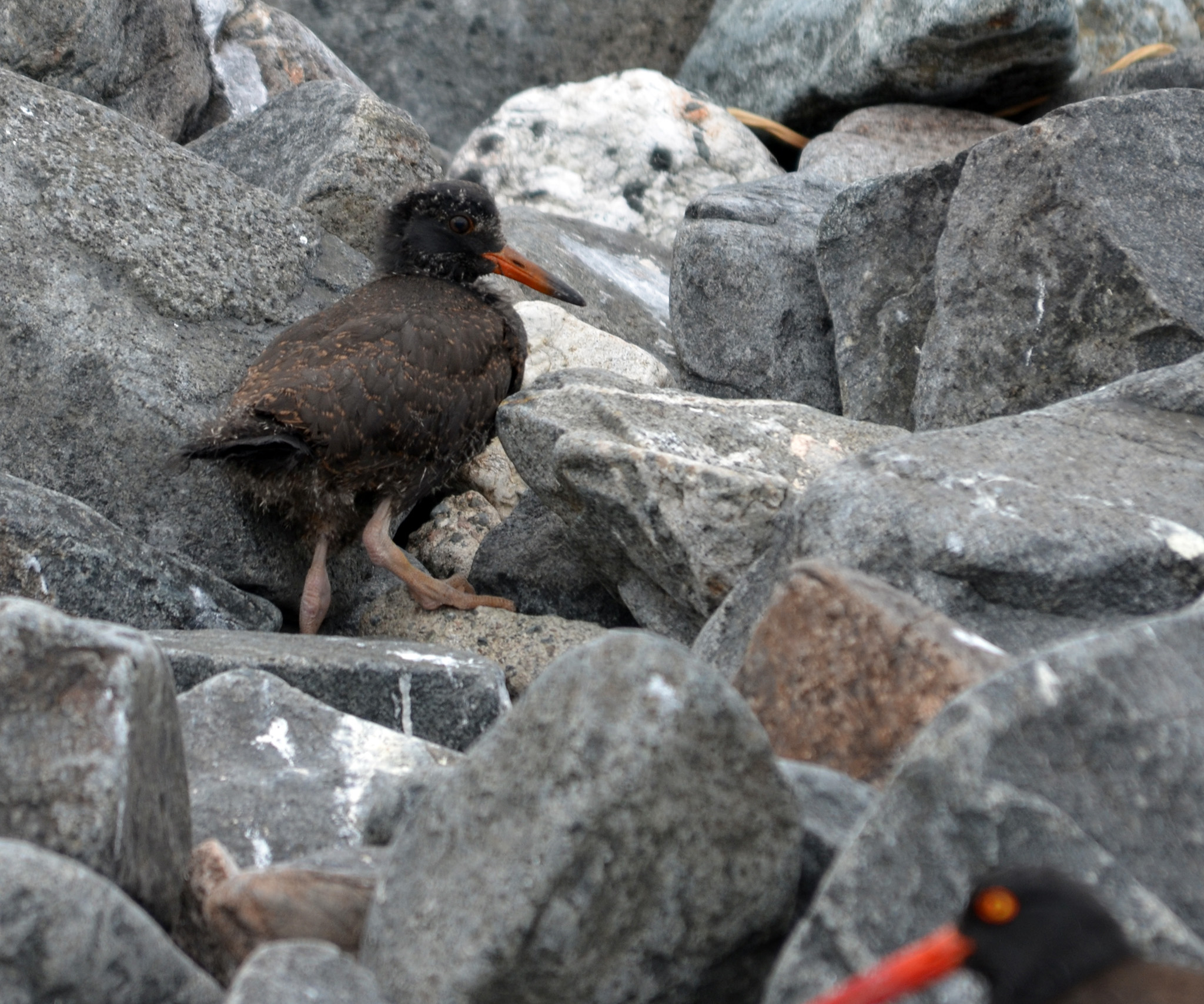
The 5 week-old Keepers House black oystercatcher chick “hiding” motionless in the rocks on East Beach. Its beak not yet fully orange, full sized or blunt tipped.

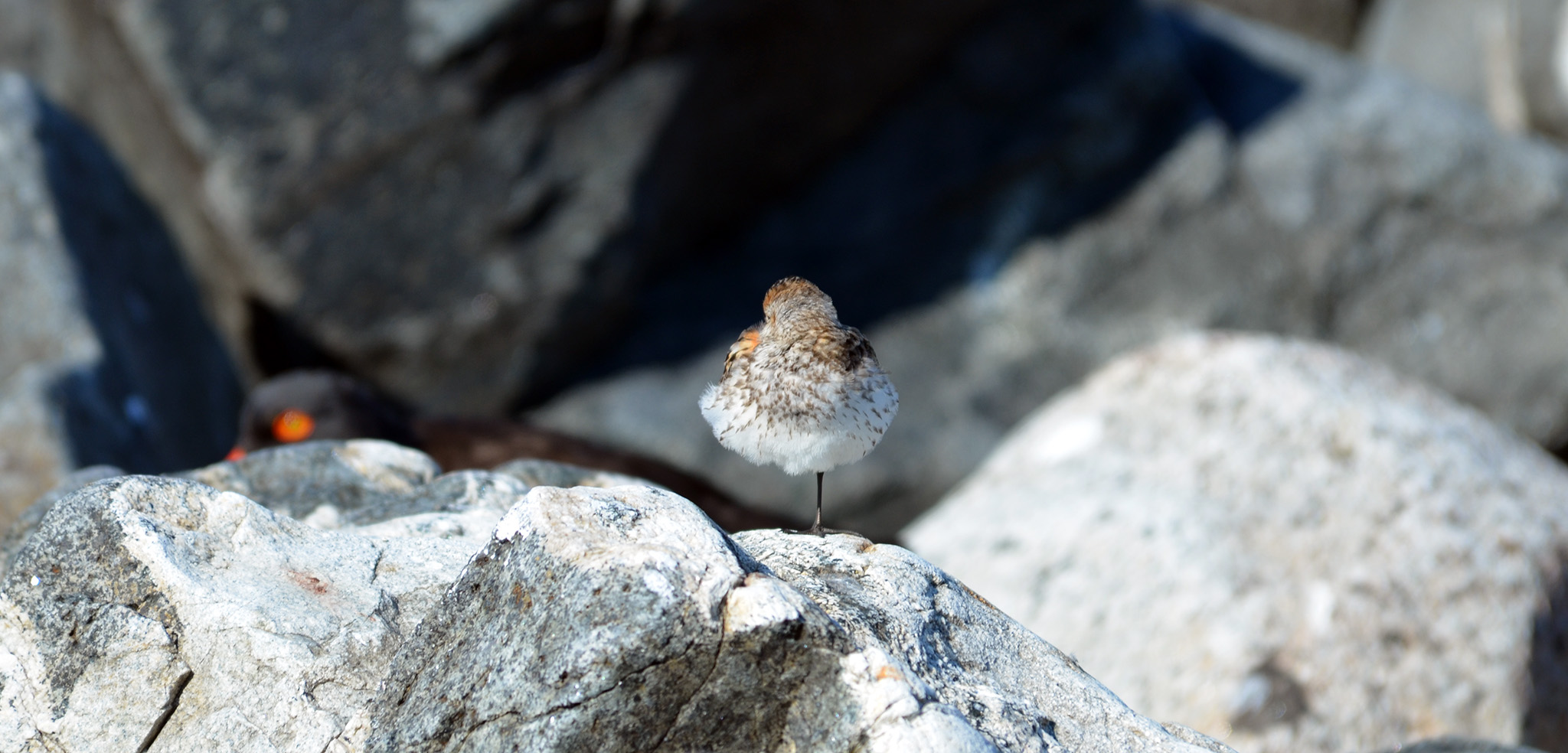
Tiny western sandpiper on East Beach. The Keepers House black oystercatcher parents in the background, always on watch.

Facility work

Thanks to Joan, the lamp room and lighthouse stairs look terrific and it was a clear view through the glass.

  • cleaned solar panels
  • battery maintenance

Vessels

  • Ecotourism: 12
  • Private : 0

Weather

Fog in the am. Clear skies. Winds westerlies 17 to 26 knots. Daytime temperatures 12 to 17 degrees.

July 11 Census

Mammals:

  • Stellar sealion: 1
  • harbour seal:  124 plus 3 pups

Birds:

  • gulls: 890 (733 Race Rocks plus 157 on South Island)
  • cormorant: 33
  • black oystercatcher: 14 plus 7 chicks
  • pigeon guillemot: 131
  • bald eagle: 1
  • harlequin duck: 7
  • surfbird: 17
  • black turnstone: 7
  • least sandpiper: 4
  • western sandpiper: 1

Wildlife seen this week inside the reserve but not observed today include: California sealion, barn swallow, brown headed cowbird, purple martin, Canada goose.

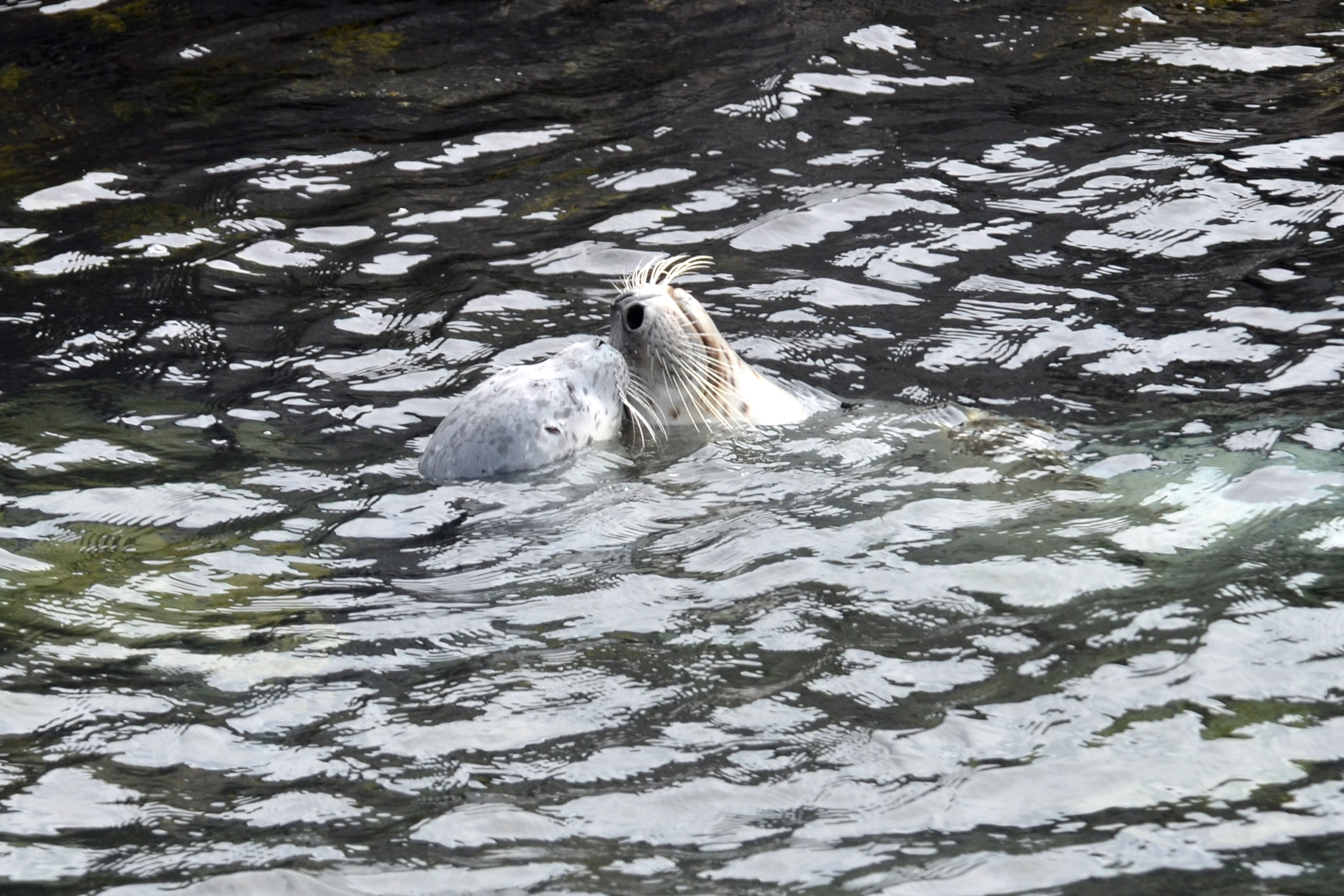
Mom and seal pup nose touching.

Wildlife notes

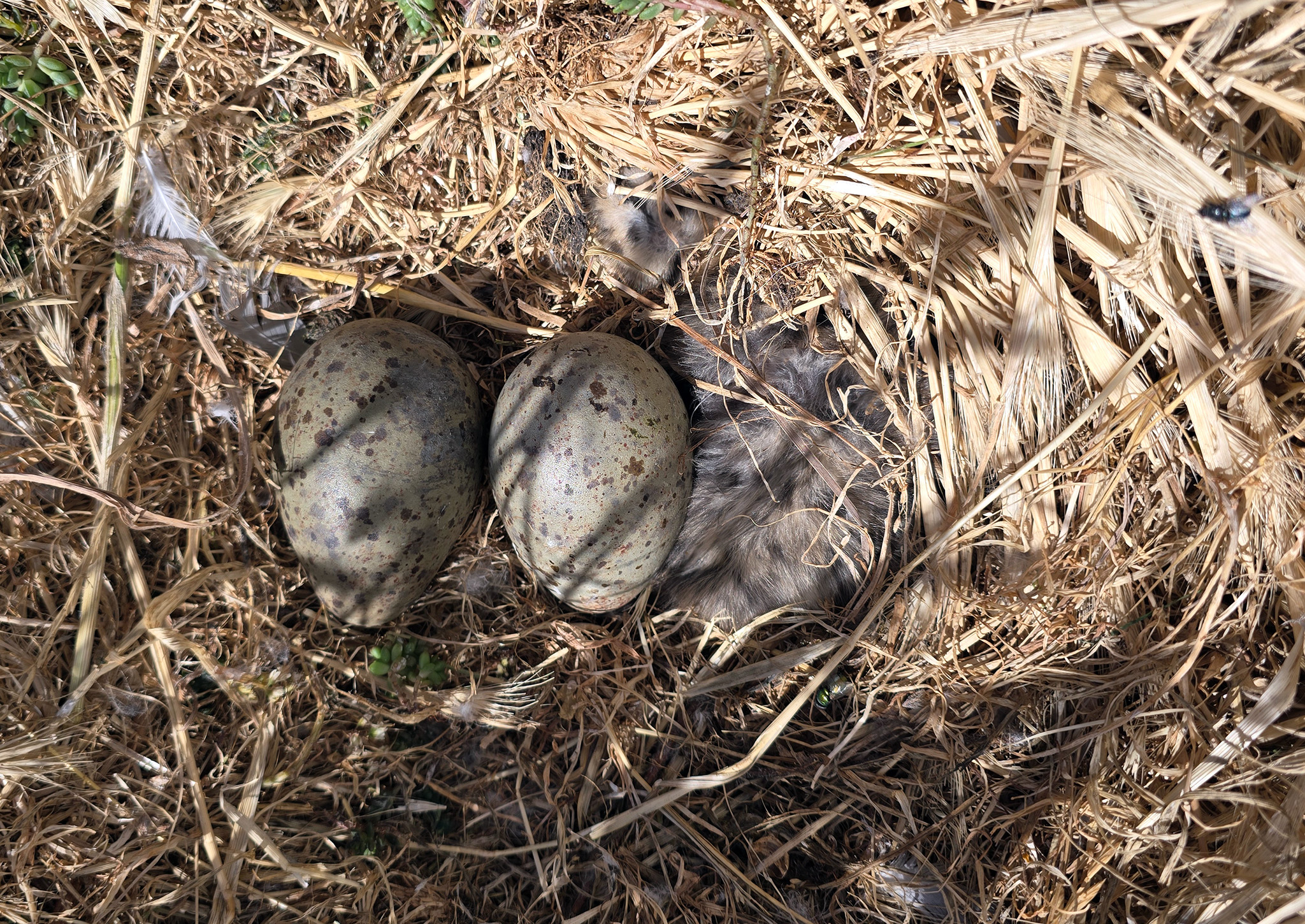
There are more dead gull chicks to be found scattered about – deposited on the walkways, lying in front of nests, one even incorporated with grass into the side of a nest. Odd that the gulls remove shells from their nests but they don’t seem to clear away the dead.

This nest is Window Gull’s nest by the tank shed. Last year only one of her three chicks survived. The first two to hatch were lying on the sidewalk. This year her first chick to hatch and die has been become part of the nest, woven in with grass, attracting shiny green flies.

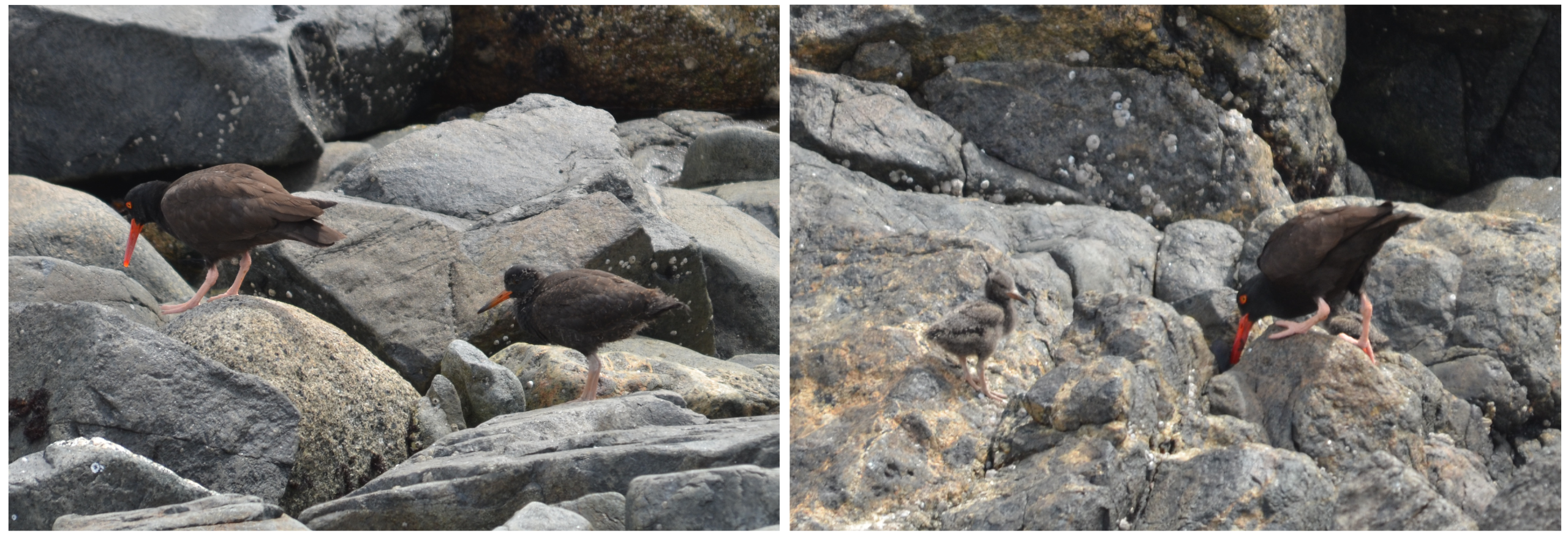
The oystercatcher chicks are doing well.  The largest, the Keepers House chicks are a month old and growing rapidly.  A size comparison for a two week old and month old chick is below.

One month old black oystercatcher chick.

Black oystercatcher chick versus parent size for a month old (left) and a two week old (right).

Facility work

Getting things ready for Joan, the next Eco guardian, who will come in tomorrow and stay for 5 days. I am glad to be able to meet her in person. When I first came in 2024 she was a great help, always answering her phone and my many questions.  I will return to Race Rocks next week.

  • cleaned solar panels
  • cleaned Keeper house outside windows
  • hung three more smoke/CO2 detectors, fixed loose weatherstrip
  • organizing, cleaning house

WORDLE TODAY !!!
Another good word for Race Rocks

Vessels

  • Ecotourism: 20
  • Private: 1

Weather

Partly cloudy. Winds predominately westerlies 7 to 19 knots. Daytime temperatures 11 to 16 degrees.

Gone

Wildlife notes

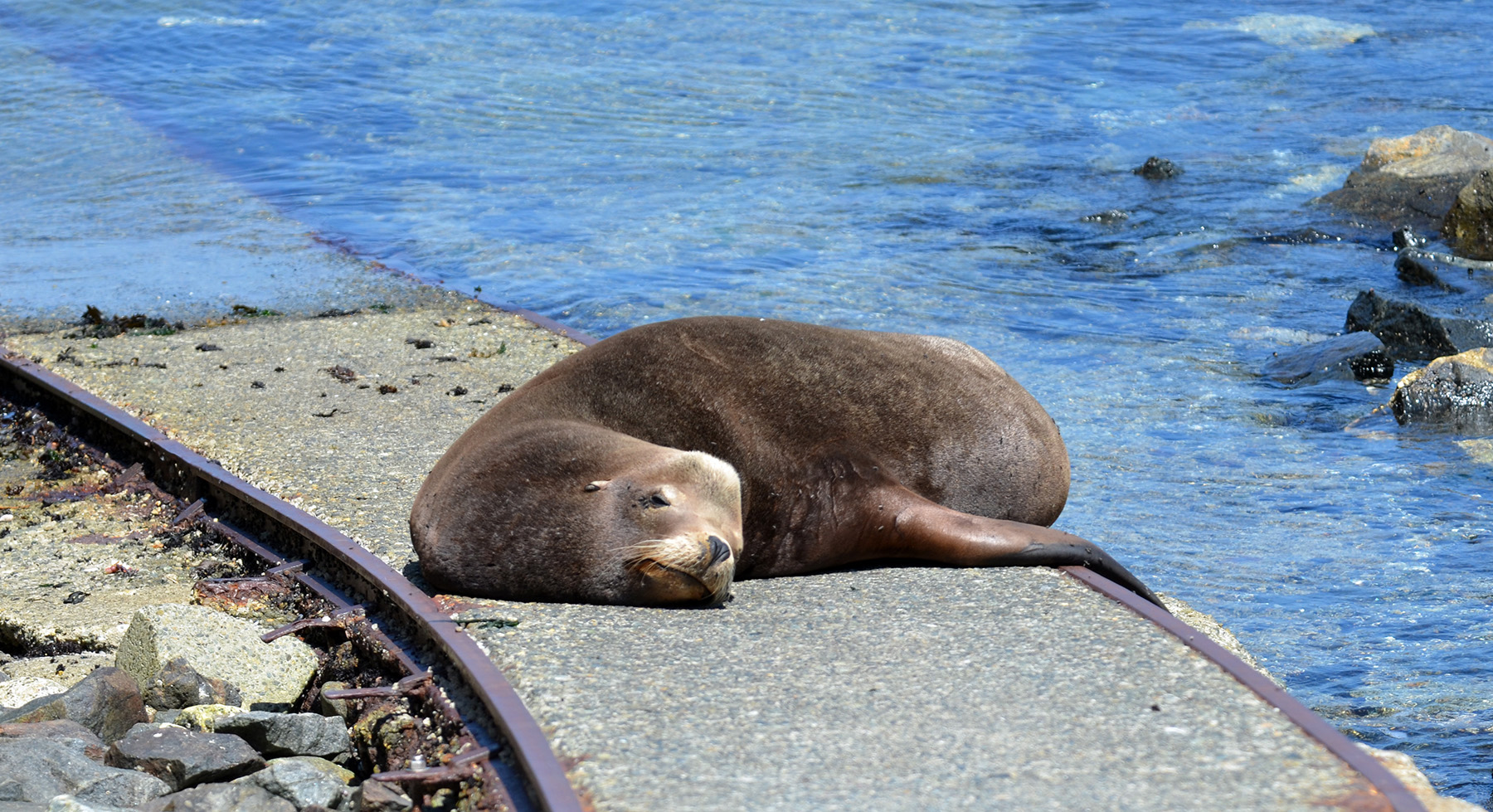
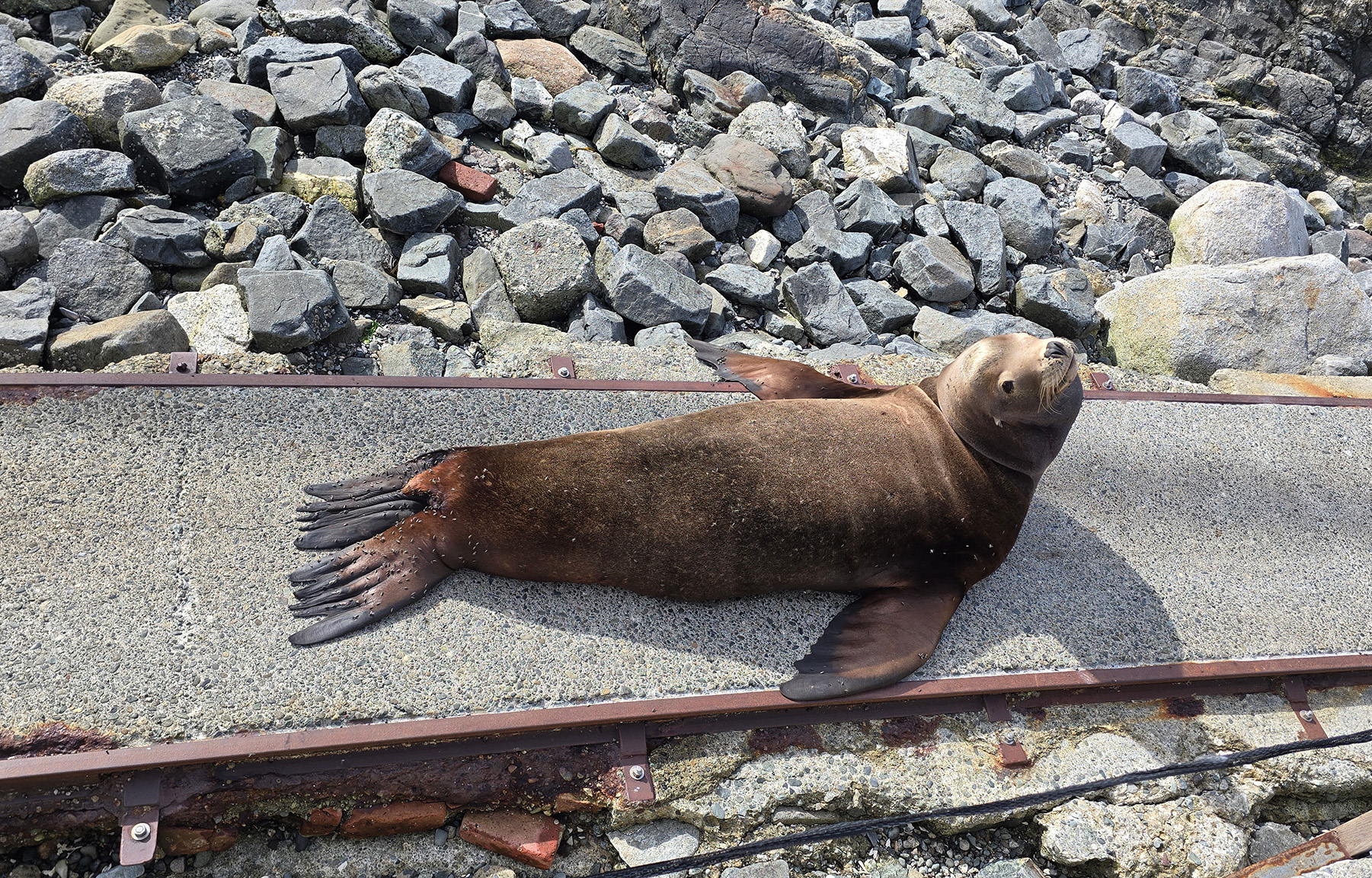
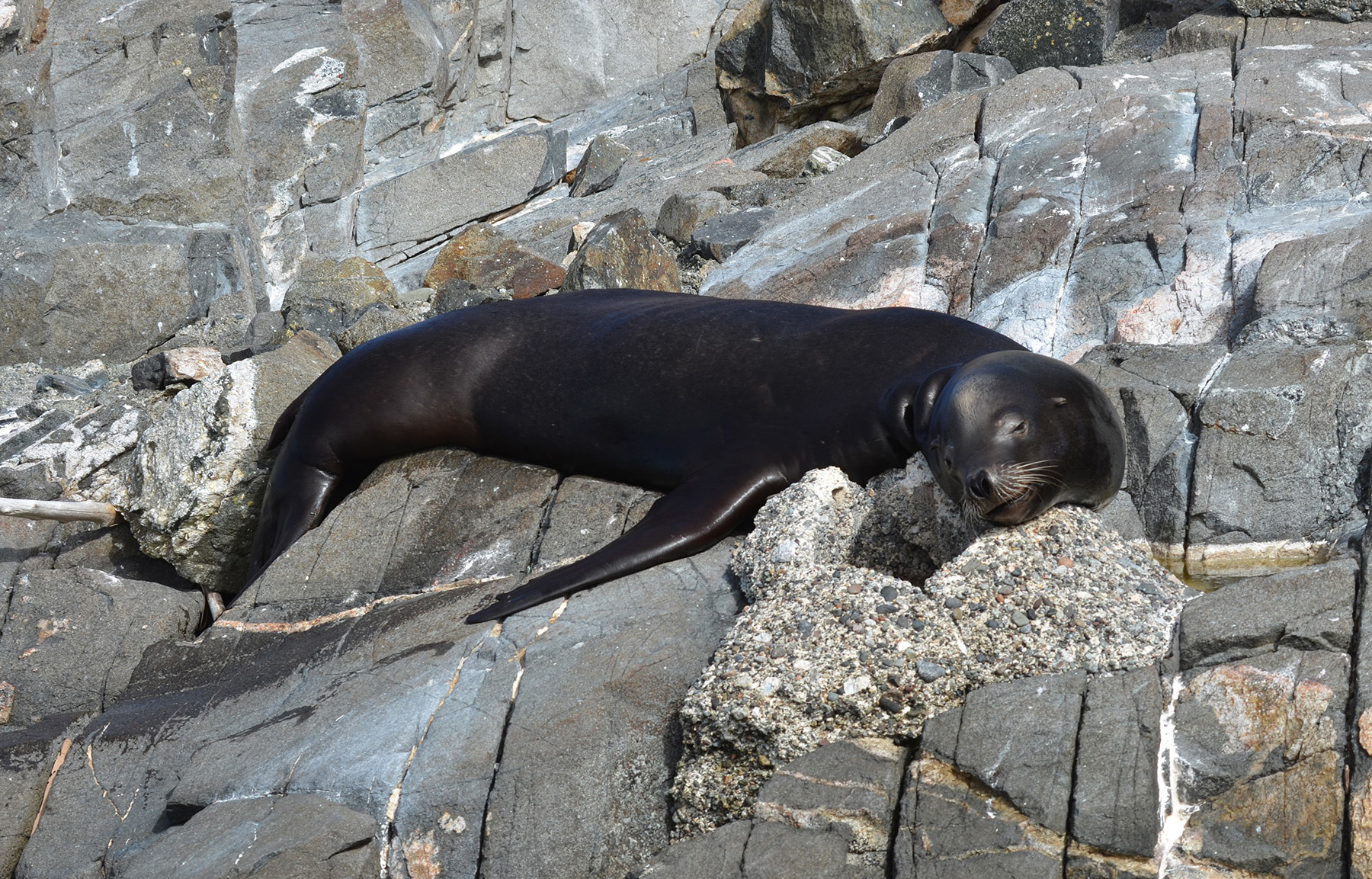
The unwell California sealion has left the boat ramp. I searched the area from the top of the lighthouse but couldn’t locate him. I can’t imagine he could have swam far in his condition.  The little chick with the injured leg is still with us. I thought it would go the other way around but it is hanging on, determined to learn how to walk/move around and get to its siblings and supper.

I saw another harbour seal mom and her pup so we are at three pairs now. The shallow and sheltered water on East Beach and the rocky beach to the south of the Energy Building are two areas the moms spend time with their pups.  Their nose touching is so precious. It is a delight to watch them. I can’t adequately describe their close interactions and bond so here is a video I found of what a pup is able to do in its first hour of life and another video showing a mom with her one day old pup trying to get it on land to nurse, ending with some nose touching.

Harbour seal mom and her young pup in the sheltered waters south of the Energy Building. The pup still has a section of umbilical cord attached so it is between one and 5 days old.

Young harbour seal pup resting in the water.

Facility work

  • cleaned solar panels
  • battery maintenance

Vessels

  • Ecotourism: 13
  • Private: 1

Weather

Skies with scattered clouds. Winds SW 18 to NW 30 knots. Daytime temperatures 12 to 14 degrees.


Day 5

Wildlife notes

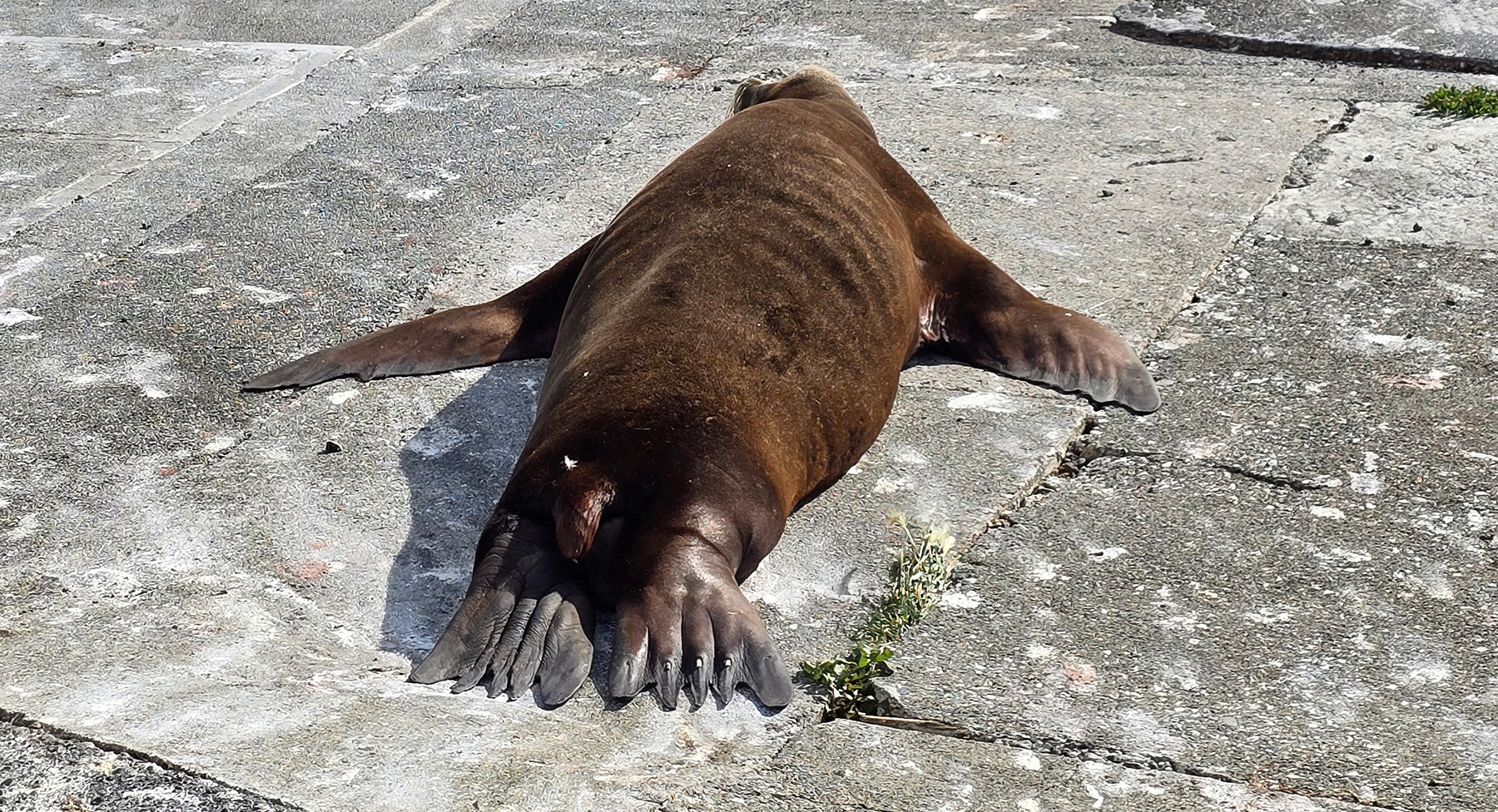
The unwell California sealion has been here for 5 days. Its rib and spine bones are visible. It goes for a short float at least once a day but is only able to move its front flippers. He had the energy to haul himself onto the rocks this afternoon but does not look any better.  The gull chick with mobility challenges (shown yesterday) is likely about 5 days old. It is now noticeably smaller than its nest mates and spends most of its time exposed in the wind, all alone.  I would guess the sealion will be with us longer.

Some of gulls and pigeon guillemots are still sitting on eggs. For the gulls it may be around 20% of the total nesting population, for the guillemots I could not venture a guess, but more guillemots are seen with prey in their beaks.

Facility work

The generator and the desalinator ran this morning.  I hadn’t planned on it but I used all the water produced during the 5 hour run. The gulls were right on target this morning so I needed a shower (this is no place for a ponytail), did a load of laundry (was out of clean shirts) and used a lot of mopping and cleaning water in one of the side storage basement rooms that was cleared out recently. The solar panels were skipped today as the winds were strong and the generator was running.

Vessels (partial count today)

  • Ecotourism: 13
  • Private: 1

Weather

Skies with scattered clouds. Winds westerlies 23 to 29 knots.  Daytime temperatures 11 to 16 degrees.

Happy Sad

Wildlife notes

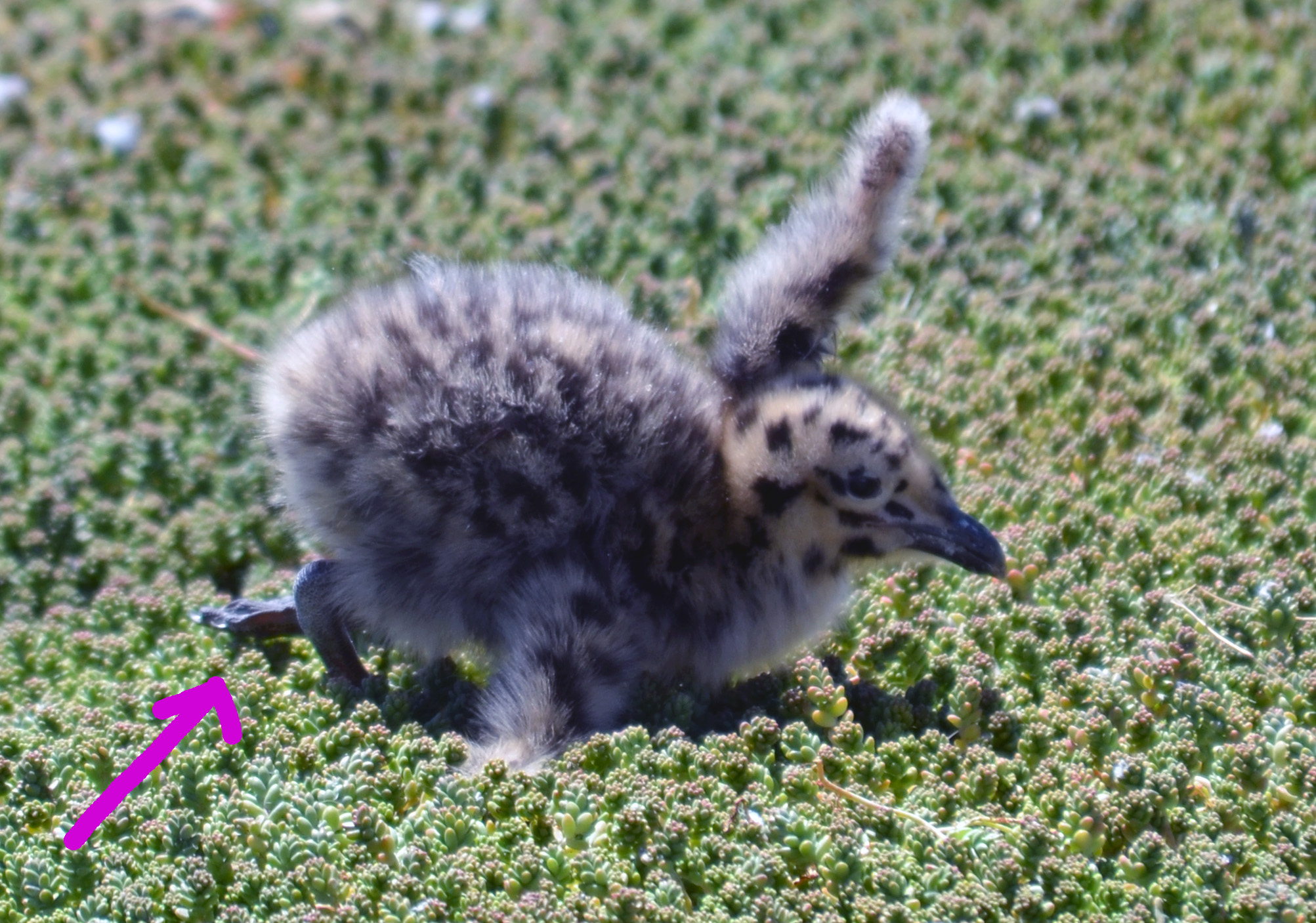
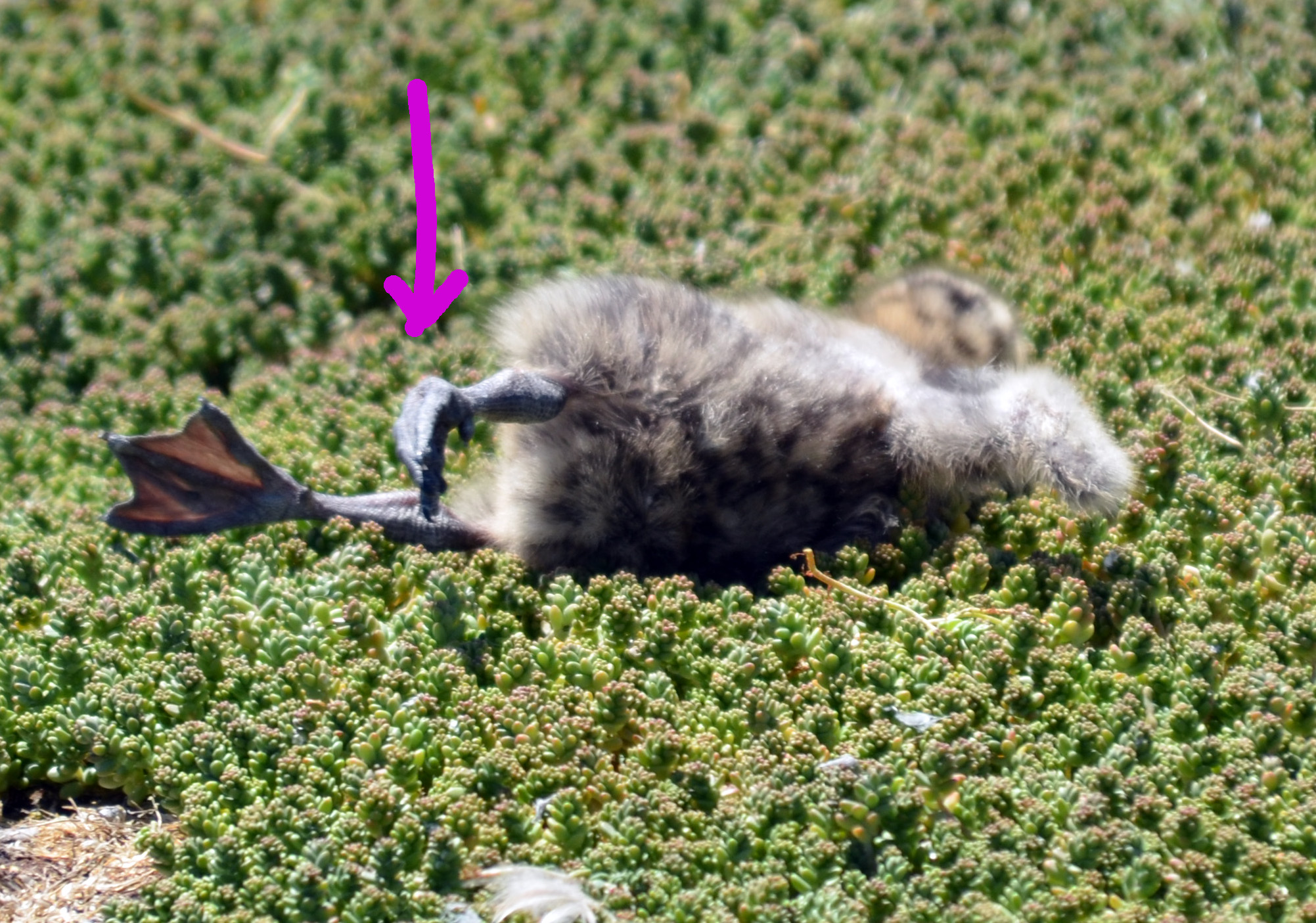
There is so much new life here but not everyone makes it. And there isn’t much sympathy around for those that don’t.  The group of three chicks near the cistern photographed on July 5th will soon be down to two. One of them has an injured leg and moves with great difficulty. The left leg drags behind and it tries to use its wings as “legs” to propel forward but ends up flipping itself over. Its siblings don’t care and neither does its parent.  A parent will arrive with a belly full of fish, lower its head and give a long call for the chicks to come. The disabled chick can hear it and watch its siblings run in response. The parent will not go to the disabled chick and there is no way it can make it to the dinner table before the meal is over. They say animals don’t feel self pity but surely they feel the pain of injury and starvation. The California sealion, who is still on the boat ramp, is also likely suffering in pain. It is hard to watch.

Gull chick trying to walk with its wings and one good leg. Its injured left leg (purple arrow) is dragging behind.

Flipped over chick trying to right itself. Arrow points at its injured left leg.

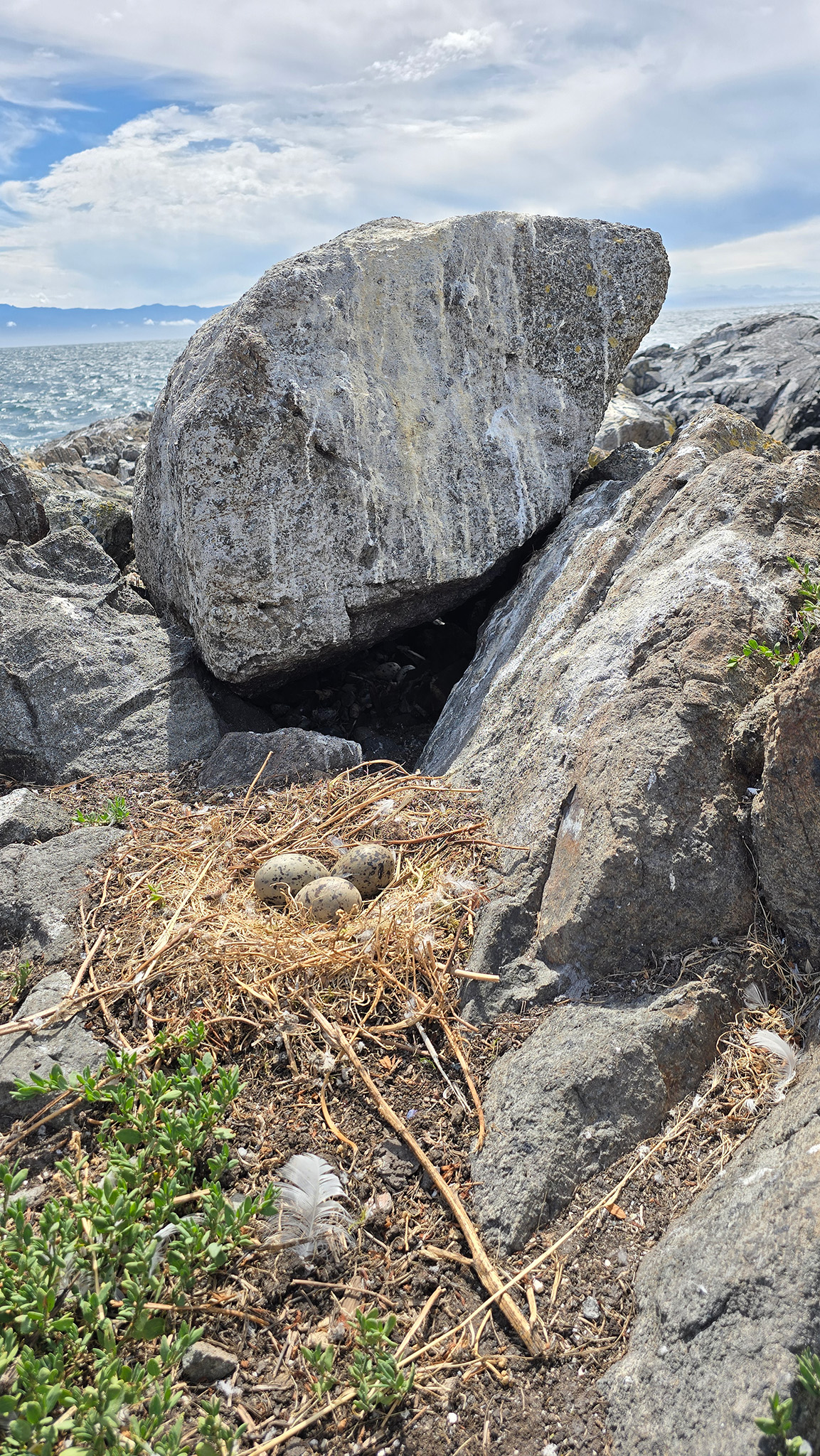
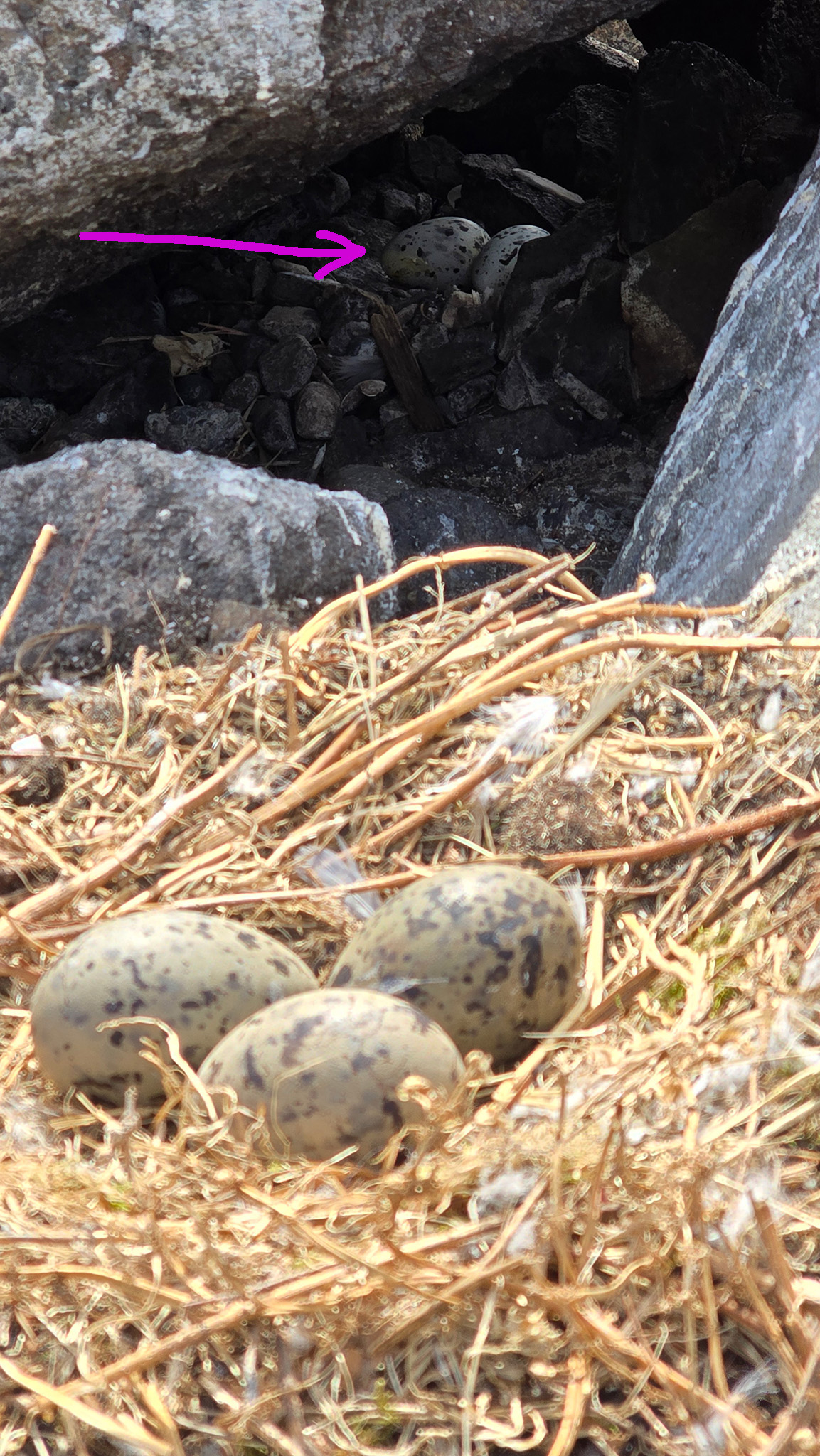
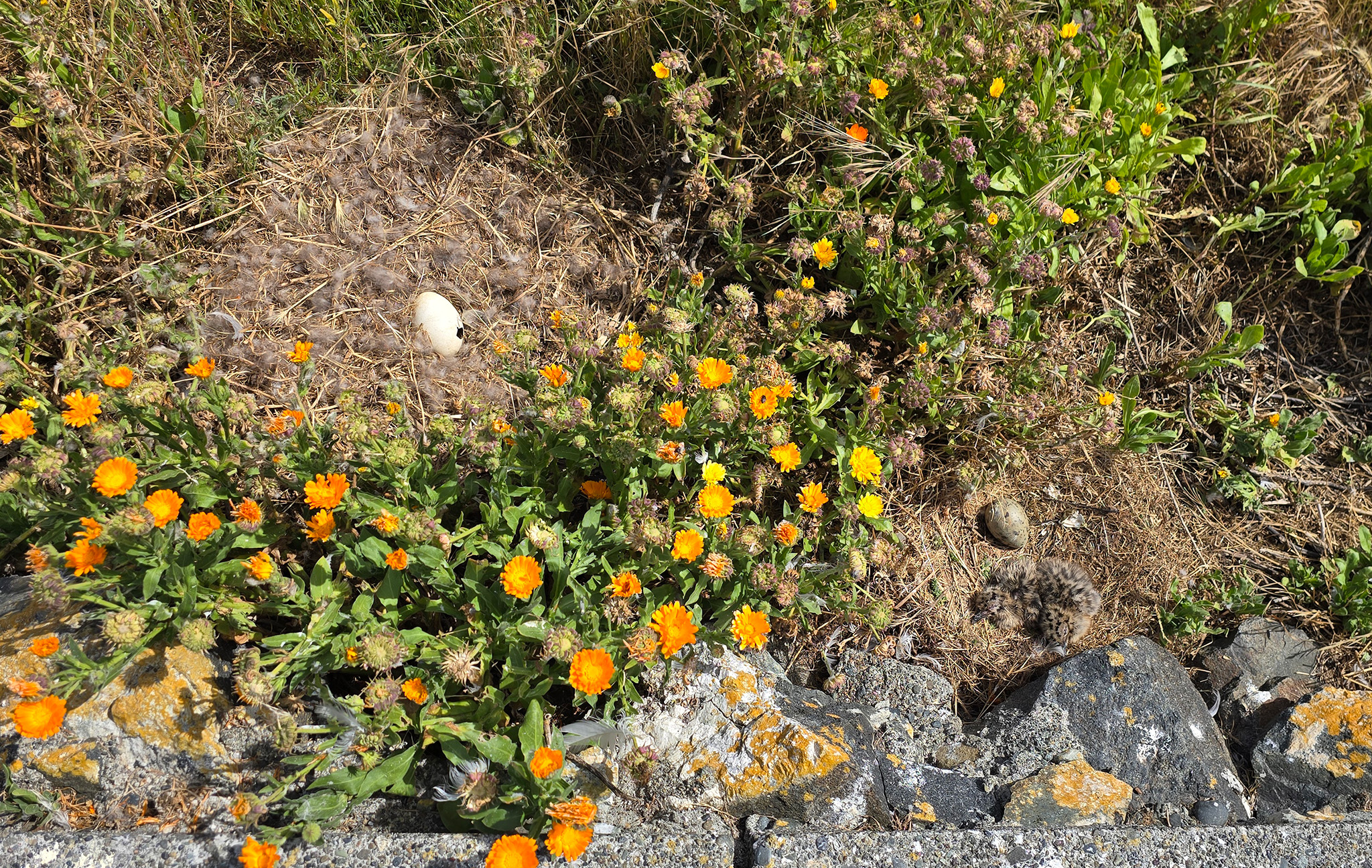
There is both happy and sad news for the sidewalk buddies, the Canada goose and glaucous-winged gull nesting beside each other. When I arrived on May 25 the goose was already sitting on her addled egg. That was 45 days ago and she was likely on the nest for at least 50 days: twice as long as it would normally take to hatch her eggs. She gave up yesterday. Today her egg was broken and strewn about by the gulls. The gulls were successful and hatched their last chick today. All three chicks made it. Good for them, bad for me when I use the sidewalk.

The nests of the Sidewalk Buddies. The Canada goose nest is the larger one on the left, the gull nest is on the right. The gull nest has two hatched chicks with one starting to hatch. It takes a day for a chick to fully emerge from an egg.  Photo from July 7, 2026.

The last bit of good news to report is a second harbour seal mom and new pup were spotted today from up in the lighthouse. The pup still has a short section of its umbilical cord attached and is well fleshed.

Facility work

  • cleaned the solar panels midday when wind speed dropped below 25knots

Vessels

  • Ecotourism: 20
  • Private: 0

Weather

Skies with scattered clouds. Winds predominately westerly 19 to 34 knots. Daytime temperature 11 to 15 degrees.

Inside day

Wildlife notes

Nothing out of the ordinary to report. More chicks have hatched and the sickly California sealion is still here. I found him in the grass with the gulls this morning and encouraged him to head back down to the boat ramp. I didn’t feel good about it and hope when my time comes, I am allowed a comfortable and safe place to lay.

Facility work

This January a summary was written about our power production on Race Rocks comparing what was produced from burning diesel and from the solar panels. For a summary of the amount of diesel burned and tons of CO2 produced here in 2025 see the January post.

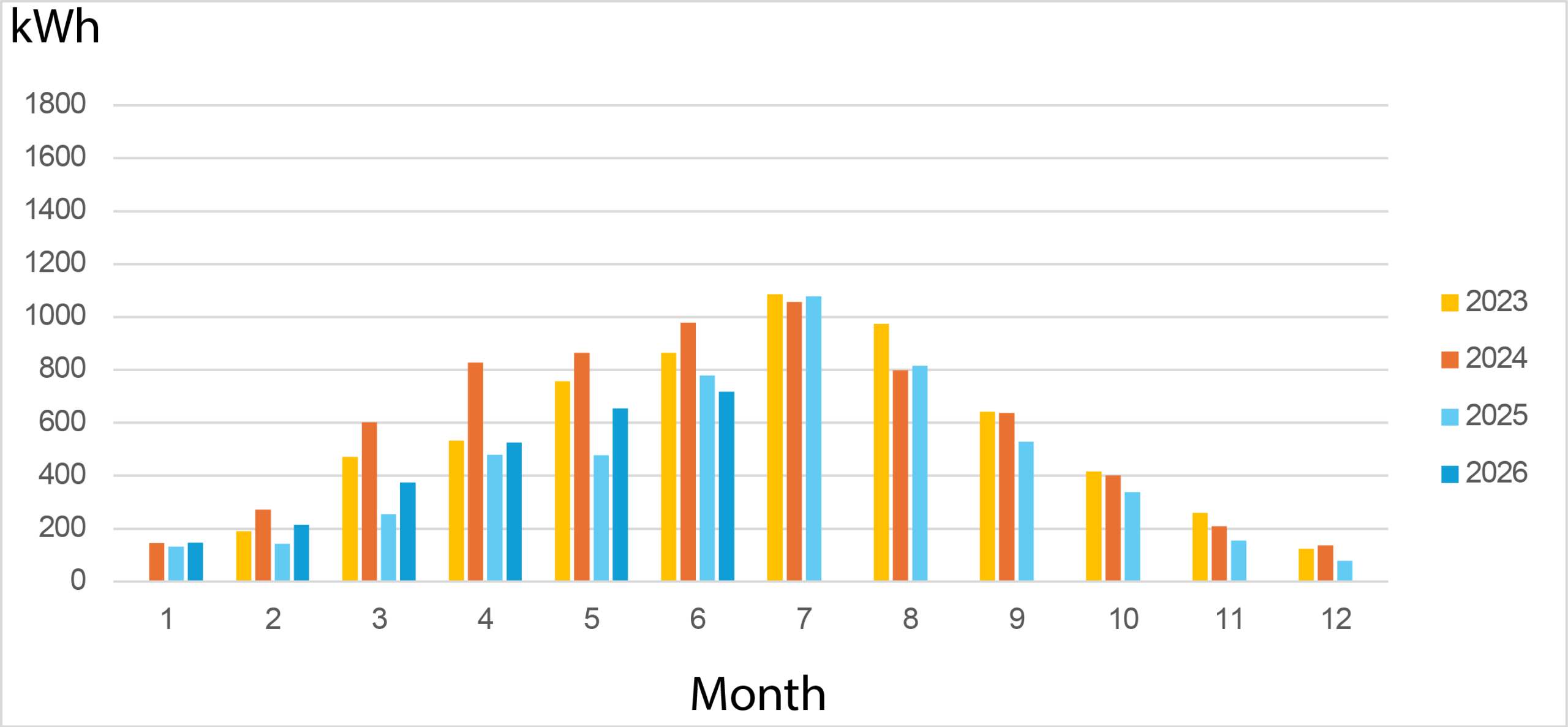
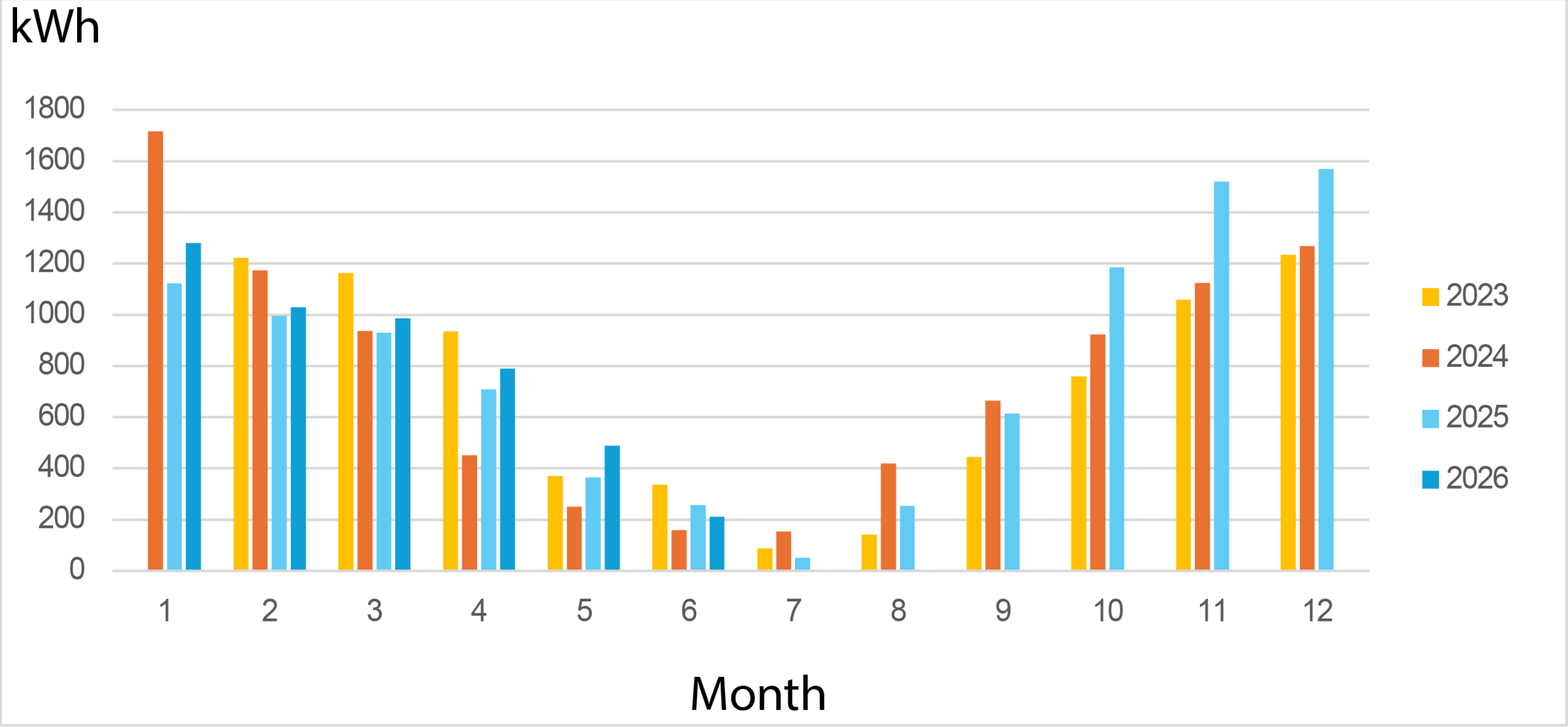
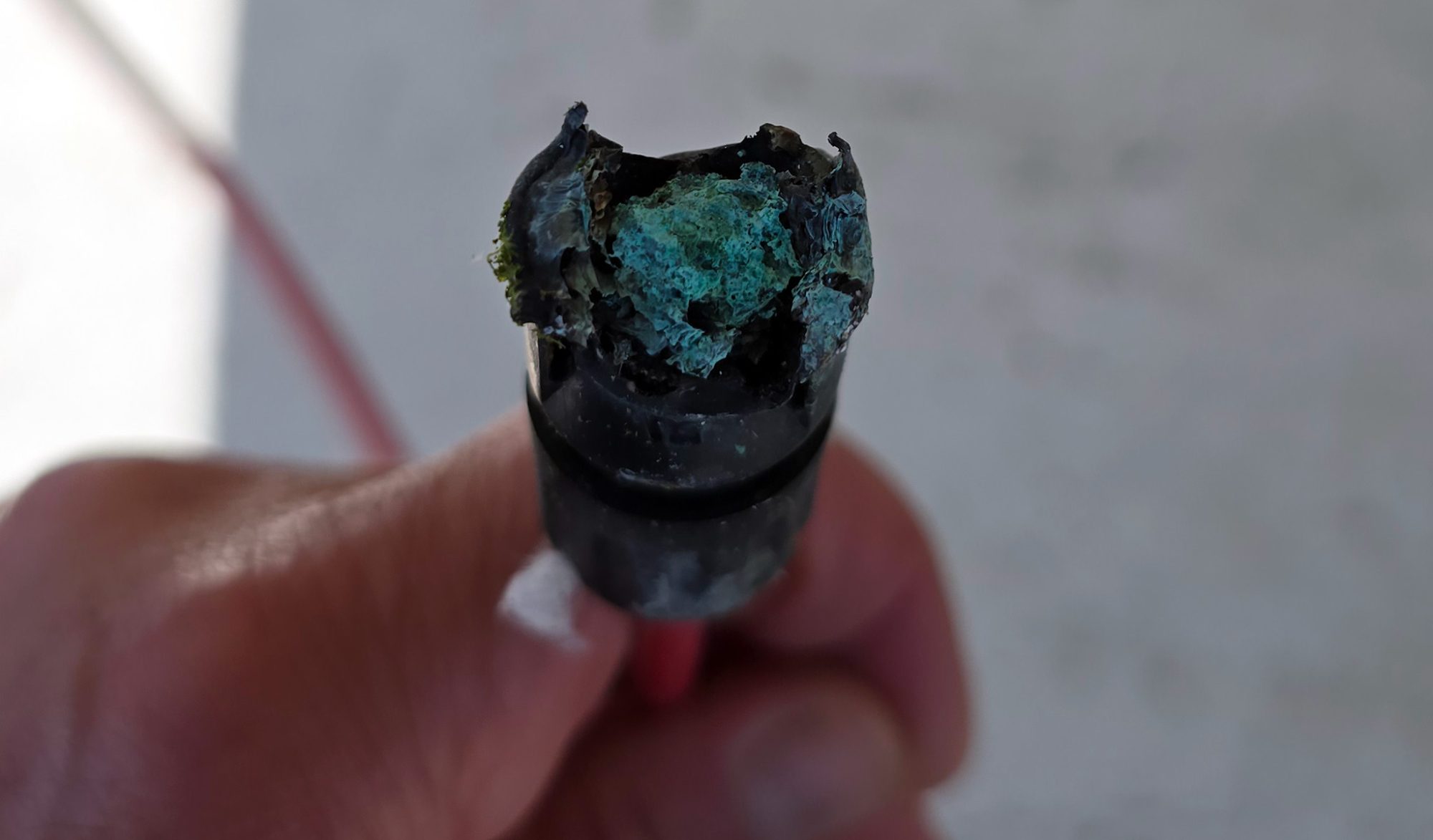
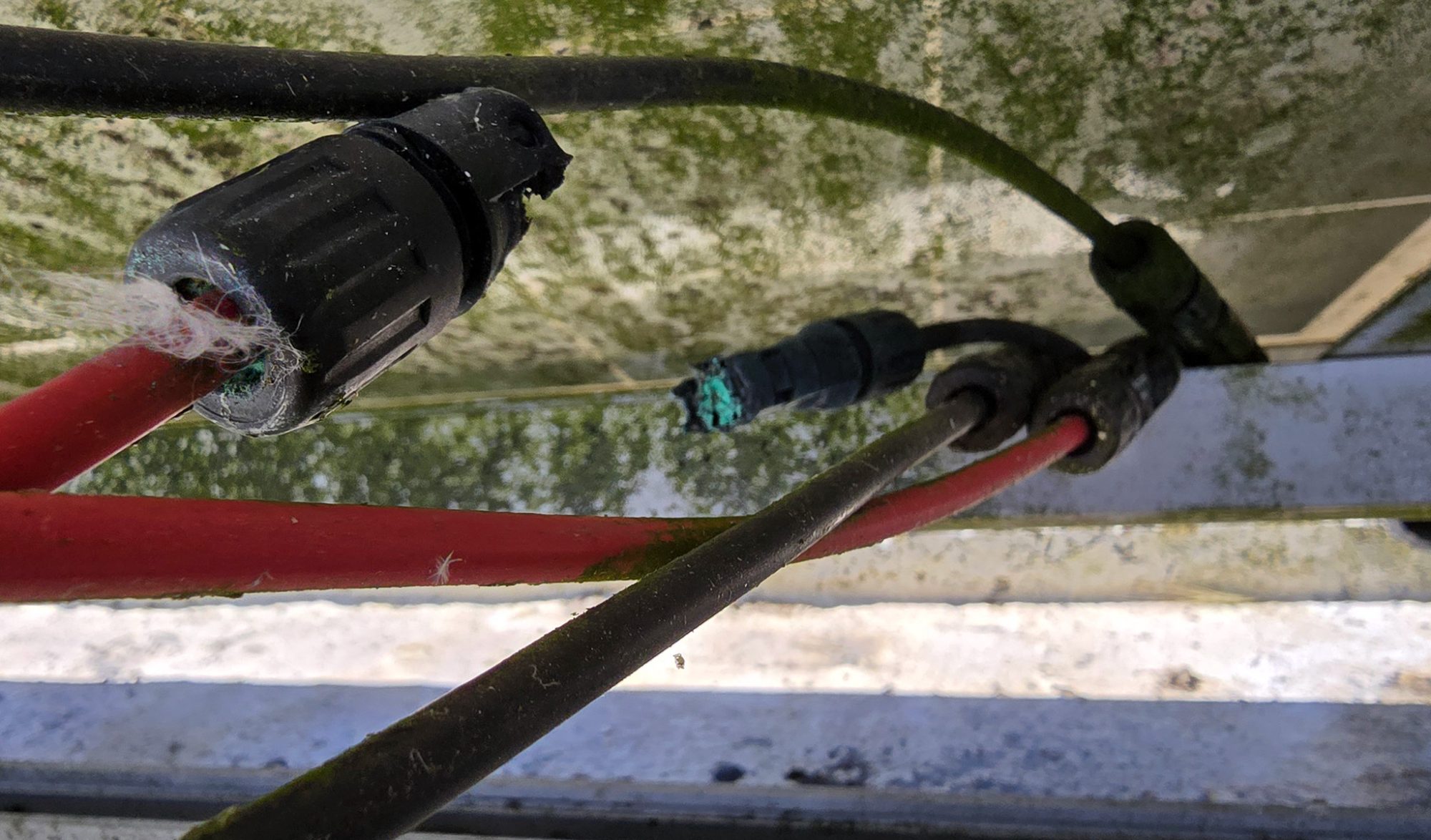
Since it was so windy, I decided to stay inside and download the last 6 months of data from OpticsRE (the online software package that displays the data) before it was overwritten and update the summary graphs. I was reminded of this task recently when I discovered another corroded solar panel connector. Last year at this time to help recoup some of our solar production a technician came out and replaced all the connecters, which made a big difference. It is described in the post from June 18 2025 and can also be seen in Figure 1 below. The light blue bars are lower than they should be from February to June 2025 then jump back up in July after the fittings were replaced. We are experiencing the same thing this year – the dark blue bars are lower than they should be. Since the entire solar array and battery storage system will be upgraded in a few months, we will just limp along at reduced capacity until then and take advantage of excess power days when the generator is running.

Figure 1. Energy (kWh) produced from solar each month from 2023 to 2026.

Figure 2. Energy (kWh) produced by the generator each month from 2023 to 2026.


  • data download and summary
  • solar panels not cleaned due to high winds
  • cleaned inside windows and organized

Vessels

  • Ecotourism: 2
  • Private: 0

Weather

Partly cloudy. Steady westerlies 29 to 34 knots, gusting 40. Daytime temperatures 11 to 15 degrees.