Larus californicus: California Gull

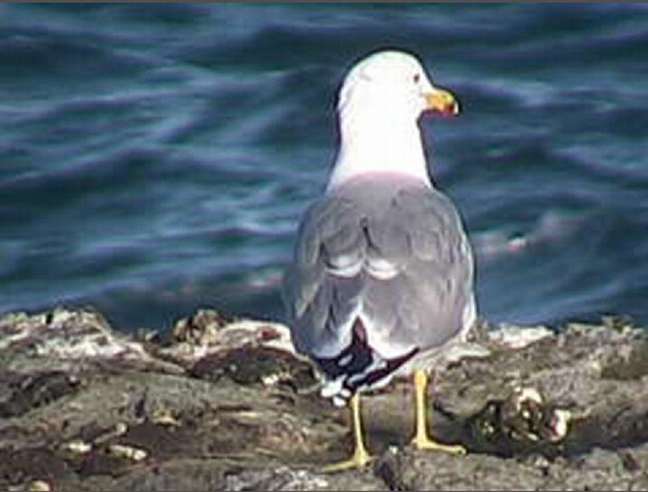
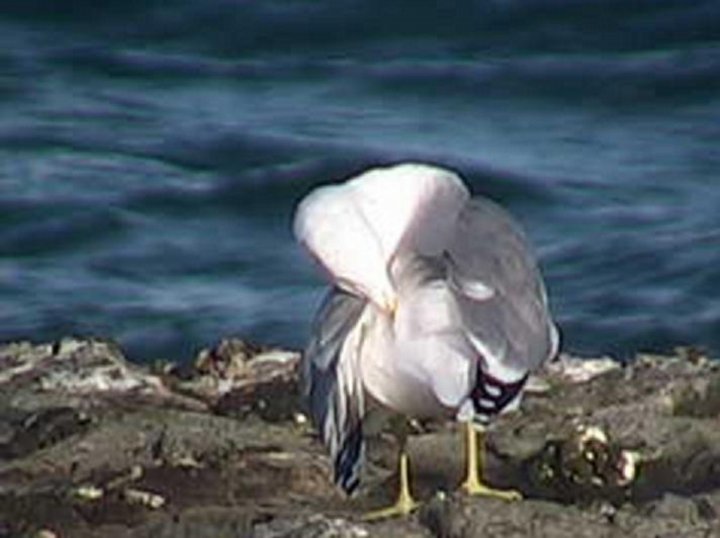
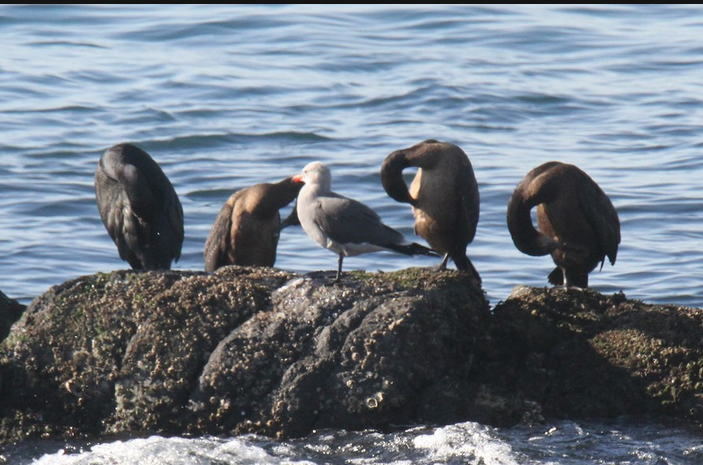
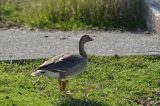
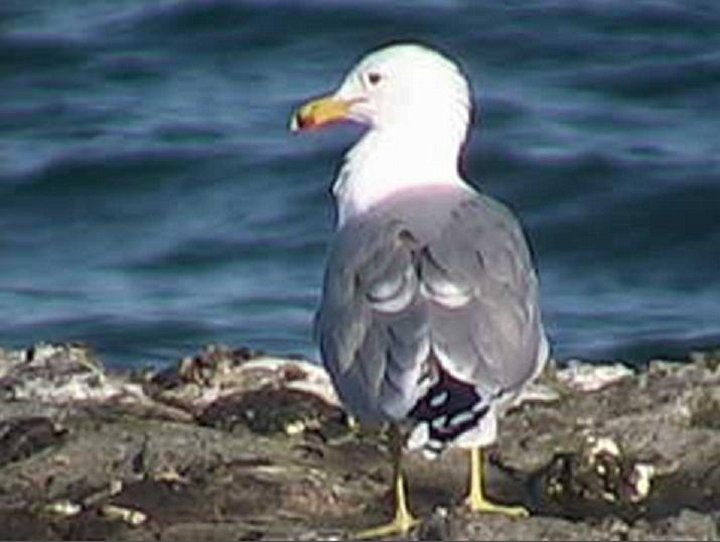
In March 2010 Pam Birley captured this gull with the remote camera. She wrote “I saw a California gull recently and attach pics.  You don’t seem to have any in the taxonomy pages.   It’s not a rare gull but this maybe the first I have seen at RR.” Indeed it is one of those gulls which has fallen through the cracks so this is a rather late addition to our taxonomy.

This adult plumage is reached after 4 years. Note the black tip on the bill and the yellow legs which distinguish it from the Western Gull.
Domain Eukarya
Kingdom Animalia
Phylum Chordata
Sub-Phylum Vertebrata
Class Aves
Order Charadriiformes
Family Laridae
Genus Larus
Species californicus
Common Name: California Gull

Other Members of the Class Aves at Race Rocks.
taxonomyiconReturn to the Race Rocks Taxonomy
and Image File
pearsonlogo2_f2The Race Rocks taxonomy is a collaborative venture originally started with the Biology and Environmental Systems students of Lester Pearson College UWC. It now also has contributions added by Faculty, Staff, Volunteers and Observers on the remote control webcams. March 10 2010- Pam Birley

Larus hyperboreus: Glaucous Gull — The Race Rocks Taxonomy

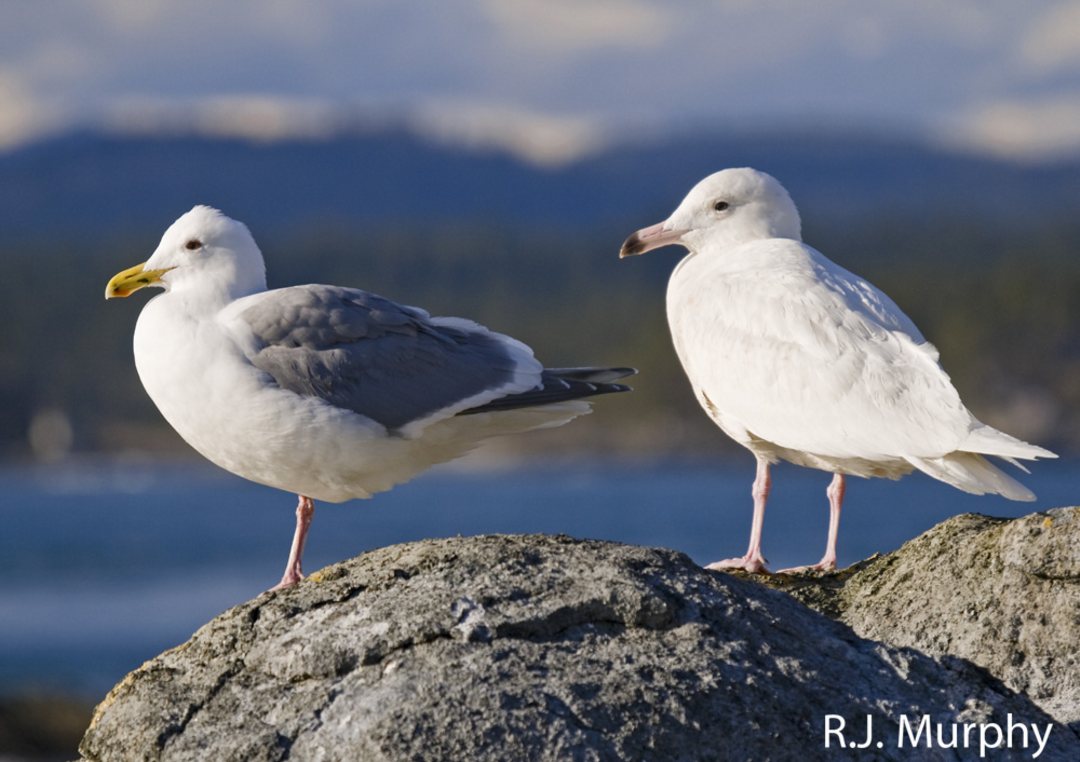
A photo of the rare second year Glaucous Gull on the right, Western Gull on the left. Photo March 8, 2009 by RyanThis is only the third record for this area in the Rocky Point Bird Observatory records.

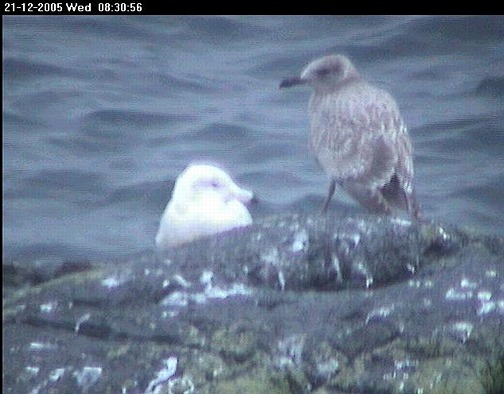
Probable identification of the white gull on the left is the immature Glaucous gull. The gull on the right is an immature Glaucous-winged gull (photo 21st Dec 2005..camera 5 by Pam Birley)

To the left: This is a tentative identification. If it is correct, according to David Allinson of the Rocky Point Bird Observatory, ” this probably represents only the second record for Glaucous Gull (a 1st winter bird) for Rocky Point’s checklist (and a first for Race Rocks too!). The big head, the large bubble-gum pink dark-tipped bill, and white head and body (at least what can be seen) seems to be diagnostic.
However, to be cautious I should only say probable as we cannot see all of the bird.”
This is one of the largest species of gull. It can be up to 66-81 cm. in length. It nests on the tundra, and the range is circumpolar.It moves South in winter but only small numbers reach as far as the Pacific Northwest.”

Domain Eukarya
Kingdom Animalia
Phylum Chordata
Sub-Phylum Vertebrata
Class Aves
Order Charadriiformes
Family Laridae
Genus Larus
Species hyperboreus
Common Name:
Glaucous Gull


Other Members of the Class Aves at Race Rocks.
taxonomyiconReturn to the Race Rocks Taxonomy
and Image File
pearsonlogo2_f2The Race Rocks taxonomy is a collaborative venture originally started with the Biology and Environmental Systems students of Lester Pearson College UWC. It now also has contributions added by Faculty, Staff, Volunteers and Observers on the remote control webcams.
October 2006 Pam Birley

Bird List and Census by D.Donnecke

Daniel Donnecke has contributed his images and counts from a visit to race Rocks on October 30 to ebird.org

https://ebird.org/checklist/S61055064


Pacific wren in the lantern room

Stormy day –wind 25 to 30 knots from the east

When I entered the lantern room around 9 a.m. there was a wren. It went through the metal hatch on the floor where there is a hole but soon came back. eventually, I opened the door and it flew out.

The winter wren was previously recorded in October 2016 and April 2014.


banded immature eagle

wind 11 knots north east

sky clear

water calm visibility >15

Started the day watching the sunrise from the light house as I have for the past 7 days. This was the first morning whales were not visible. the water surface was like a mirror. There was no wind. Many groups of birds, between 20 and 50, were headed south. In the course of 30 minutes I saw over 10 groups. They looked like Alcids and I suspect common murre. There is a poor picture below but when I enlarge it I can make out the markings..
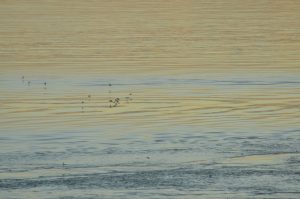


I saw what I believe was a dolphin twice. Just a blow much smaller then the whales and almost no animal visible. I only saw each blow because I was looking through binoculars at the birds, otherwise I would have missed it.

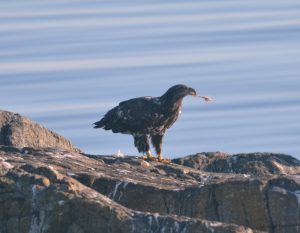
About an hour later I took this picture of an immature eagle eating a gull and when I looked online I could see its’ tag.

The humpback whales were visible again around 10 a.m. and I watched 2 of them for about an hour. There were lots of pectoral fins,dives and mouths breaking the surface followed by bubbles.
 

Maintenance

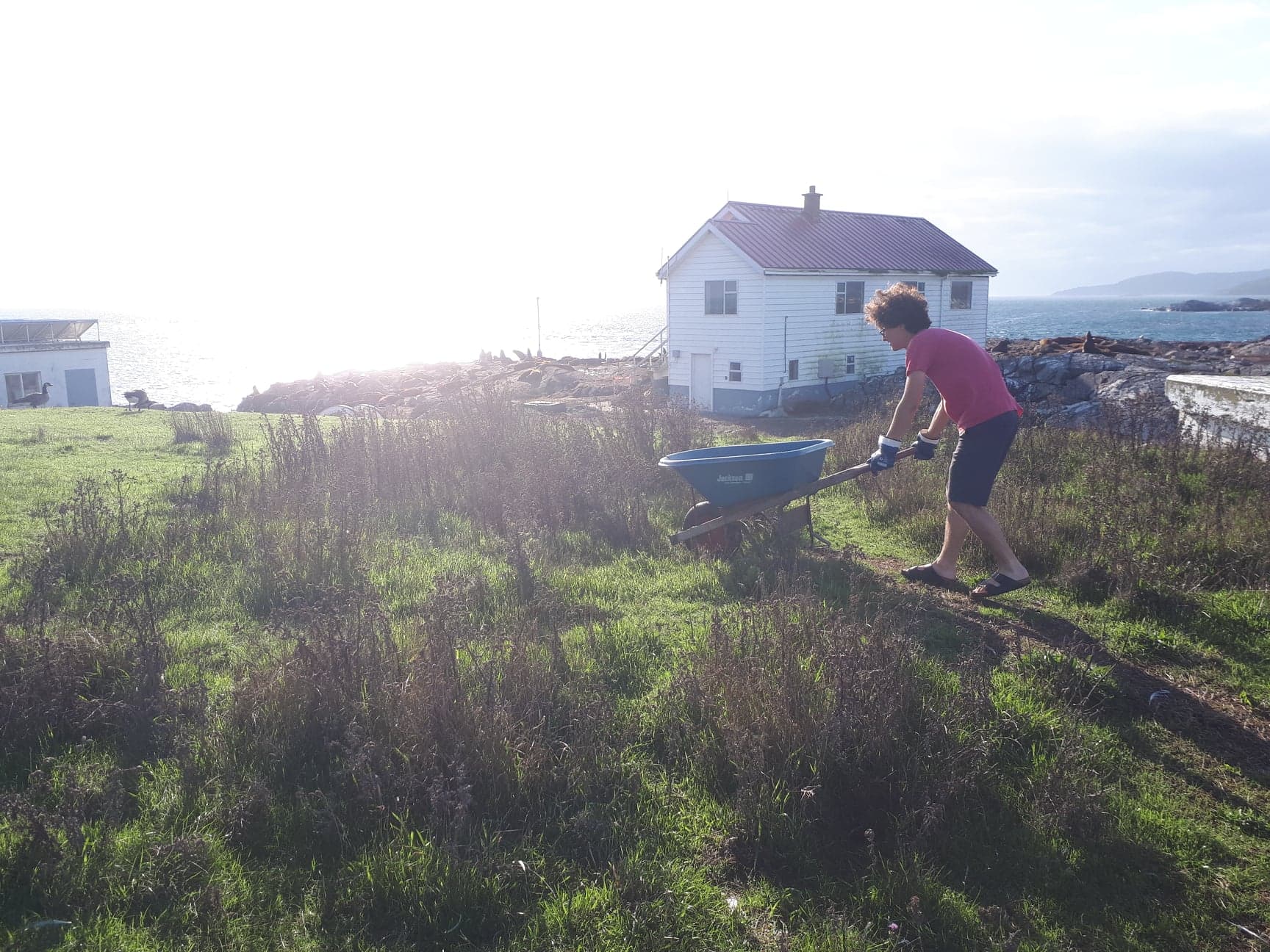
Greg and Guy came out today and filled the water tank, pressure washed around the generator house. We cleaned up some oil that is leaking in the generator house from the coast guard abandoned machinery. Brought fuel up to the generator. This week I brought almost all the wood from under the porch into the house and today I started moving the pile of driftwood by the jetty up under the porch. Also I am planning to have the lighthouse stairs swept by tomorrow (20 left to go). Electric fence mending continues daily.


Whale Watching boats

I have been pleasantly surprised at how respectful the whale watching boats have been. There has not been one incident of the sea lions plunging into the ocean. The boats go slowly and seem to watch the sea lions behaviour and veer away if they notice any activity suggesting anxiety. BUT TODAY after I had watched the humpbacks a boat zoomed over way too close and kept following the whales. they did not drift but actively pursued the whales for over an hour within 10 metres of them or closer. I took lots of photos and will send them to Tyron Pile. it was upsetting to watch. Maybe a new driver?
 

census

visibility greater then 15 kms.

sky clear

wind 6 knots from the northeast

sea calm


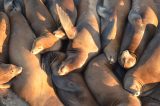
Sea Lions 1072 (including the islets)

Gulls 1660

Cormorants 180

Canada Geese 21

Seals 36

Eagles 2

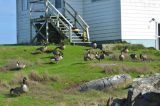
black turnstones difficult to count because they are so camouflaged (see picture below) but more then 50
Many humpback whales
?dolphin

4 distinct groups of whales this morning. Because they were so entertaining I watched them both from the lighthouse and the back porch for several hours. I also saw what I believe was a dolphin, it just broke the surface and it’s spout was much smaller then the whales. It’s spout was straight. I saw it blow several times about 5 minutes apart but I didn’t see it’s body.  it was only about 100 mtres from the lighthouse nowhere near the whales.

harlequin ducks were seen yesterday 2 males and one female

Sandpipers

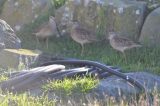
one group of about 200 sandpipers flying south today

I saw 5 groups on October 25 during gale force winds but none were as large as this group.Those were  between 10 and 100 individuals.


Barred Owl Sighting

Weather: 

  • Sky: Overcast, a bit of sun midday
  • Visibility: 10-15+ miles
  • Wind: 5-20 knots NE
  • Water: swells less than a metre

Boats/Visitors: 

    • A few boats cruising by today, mostly tour boats
    • Greg came by today with a group of visitors

Ecological

  • I saw a barred owl last night around 7pm when I went to turn off the generator but it was too dark to get a photo, here is a link to our taxonomy page on the barred owl and the last time it was sighted in November 2010,
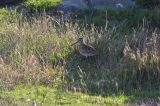
  • There was also a greater yellow legs running around which flew off before I get a photo of it
  • The elephant seal has been hanging out around the jetty for a few days but took off yesterday and I don’t expect to see her returning anytime soon
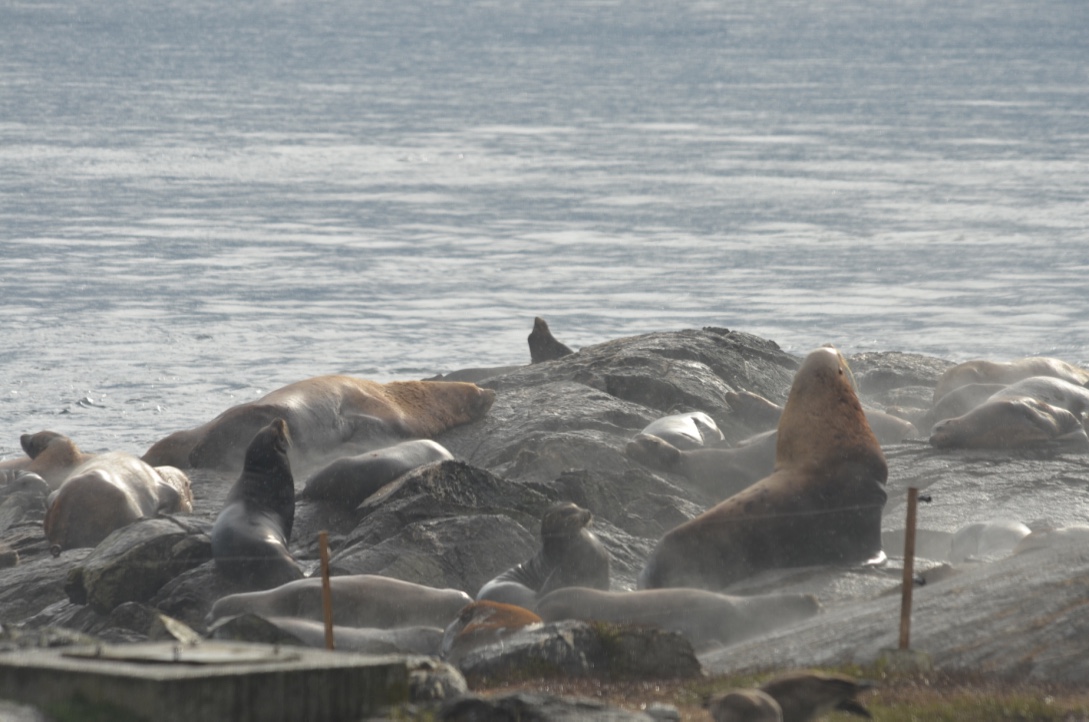
  • plenty of sea lions around and I’m having a difficult time keeping them away from the lighthouse, they come back as soon as I am out of their line of sight, would like to extend the fence to protect the burial cairns and lighthouse but we just don’t have all the material we need, we’ll see about that next season though

Unsafe Snorkeling, Fall Changes, Census

Weather: 

  • Visibility 15+ NE
  • Sky overcast, cloudy
  • Wind 15-25 kn N
  • Water moderate waves, white caps.

Visitors/Boats: 

  • Around 15 whale watching boats yesterday
  • Corey, Guy, and a student with their visiting grandparents visited yesterday, and delivered water- the desalinator is on the horizon!
  • We are ending our term on Race Rocks tomorrow, so Greg and Guy will come for a debrief before the next eco-guardian takes over.

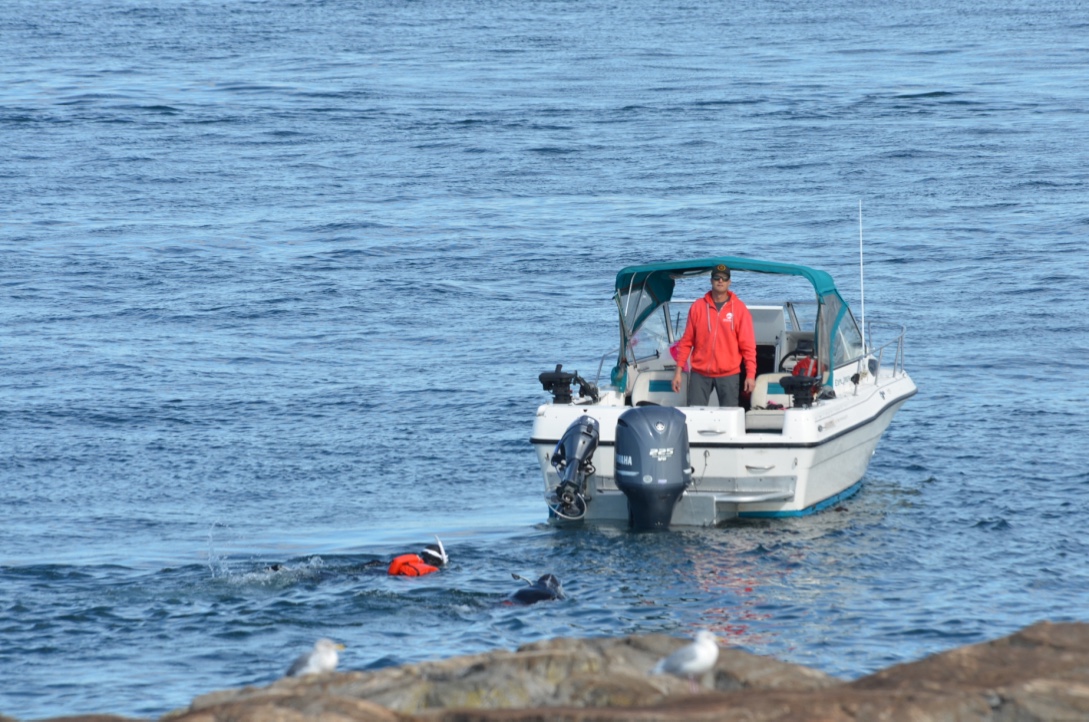
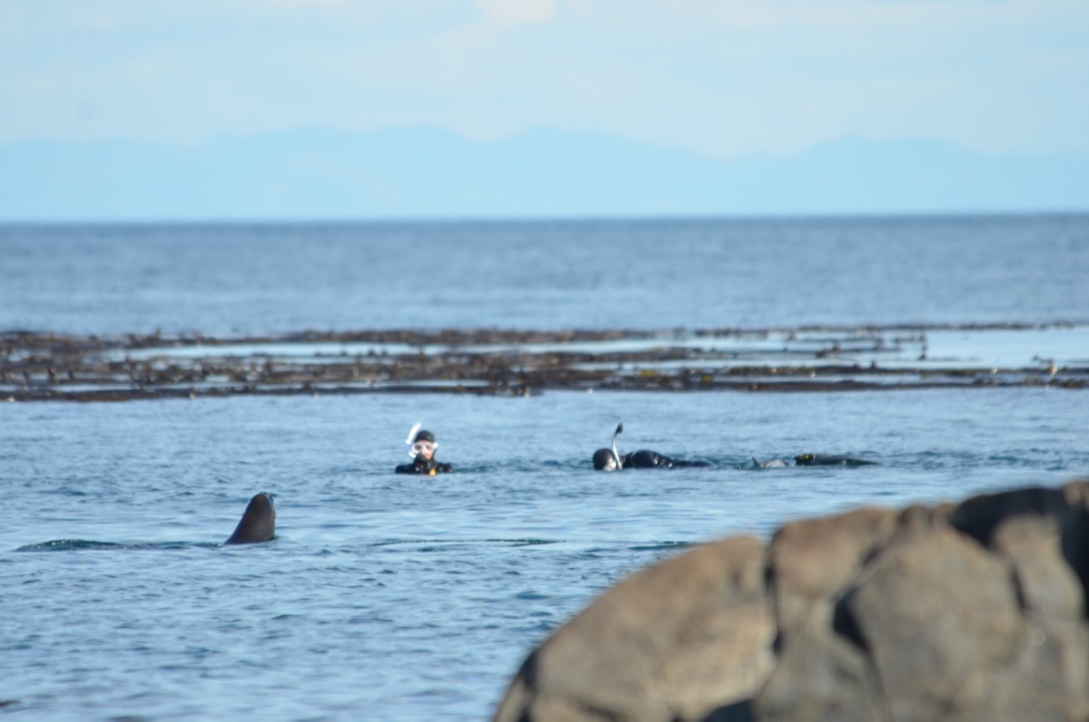
Yesterday we saw a pleasure craft enter the reserve and drop snorkelers into the water less than 100 m from our jetty, within 5 m of shore and the hauled out sea lions. The animals were distressed and swam around the snorkelers barking. The current was flooding very quickly (5 knots), which creates dangerous water currents, eddies, and upwellings. We as well as Corey in Second Nature motioned for the boat to move away, but they simply gathered the snorkelers and moved around the corner where they presumably thought we would not see them. An eco-tourism vessel in the reserve also noticed them and contacted us to let us know, out of concern for their safety given the animals present and the currents at the time.

In the past scuba divers and vessels have found themselves capsized or pulled away from their dive site and rescued by helicopter, and in 2015 a diver went missing and was found deceased days after they disappeared by a fisherman after rescue crews were not able to find them. We were especially concerned for this group’s safety due to lack of float marking their position and the frequent boating traffic through the reserve. In the past, seal pups have been decapitated by vessels passing through too quickly and unable to see them. If these snorkelers had been pulled away by the currents, there would have been a high chance of being struck by a vessel unable to see them in the rough water.

Ecological: 

  • The sea lions population continues to grow! We are having to repair the fences sometimes twice per day. It seems like a more powerful electric fence energizer could be a good idea.
  • We spotted a little Greylag goose among the Canadian geese yesterday.
  • The sea lion that we spotted on Sept. 12th with an apparent propeller wound to his head is still here. He stays near the jetty and seems to have some behavioural anomalies, presumably due to the head injury. He is not afraid of us like the others, and does not move away into the water with the others when we clear the jetty. We haven’t had any problems but are weary that his behaviour could be unpredictable. Marty (the vet that came to aid in rescuing the entangled sea lion) mentioned that sometimes when this happens a shard of their skull can splinter and cause a brain infection. We hope this little guy is on the mend.
  • There have been many Canadian Geese passing through this week; A few days ago we counted over 20. The geese are not native to the island, but according to Gary Fletcher they arrived somewhere in the 80’s as the population of geese on Vancouver Island were introduced/grew. Addling the eggs began somewhere in the late 90’s. Unfortunately, this year two nests survived and hatched goslings, meaning that 20 geese left the island after 8 nested here in the spring.

Census: 

  • 500 Sea lions
  • 15 harbour seals
  • <20 seagulls
  • Approx. 20 cormorants
  • 3 short billed dowitchers
  • 1 Greylag goose
  • 1 sanderling
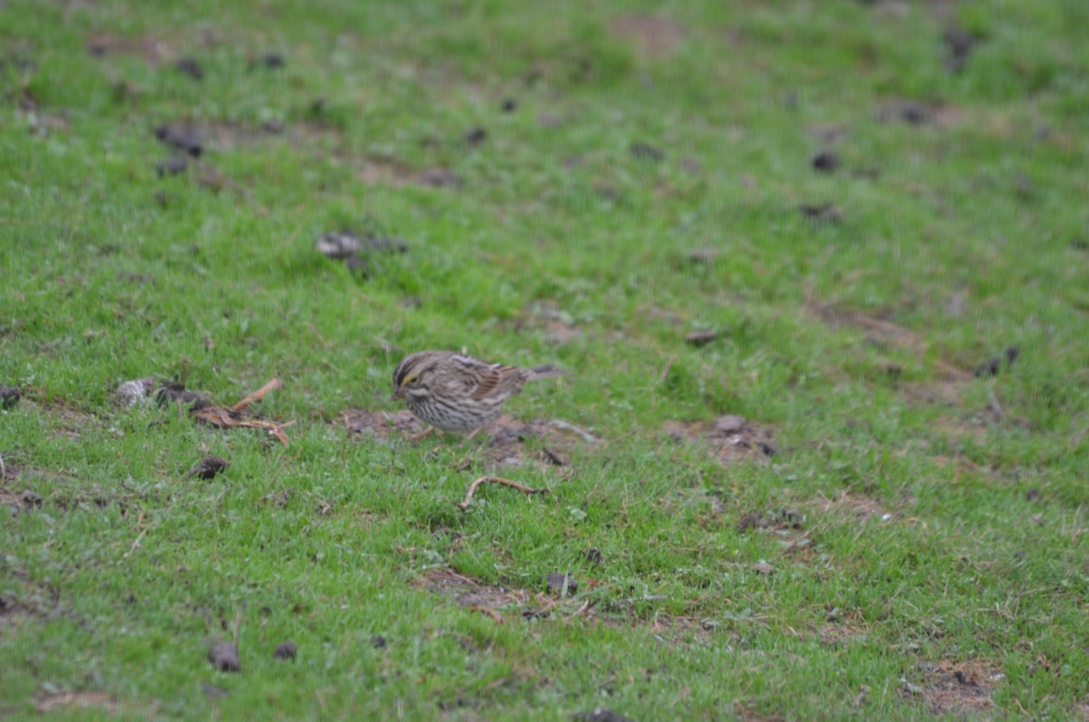
  • 1 Savannah sparrow
  • 20-23 Canada geese

Island Invaders (Invasive Thistle Removal)

Invasive Species: Canada Thistle Removal 

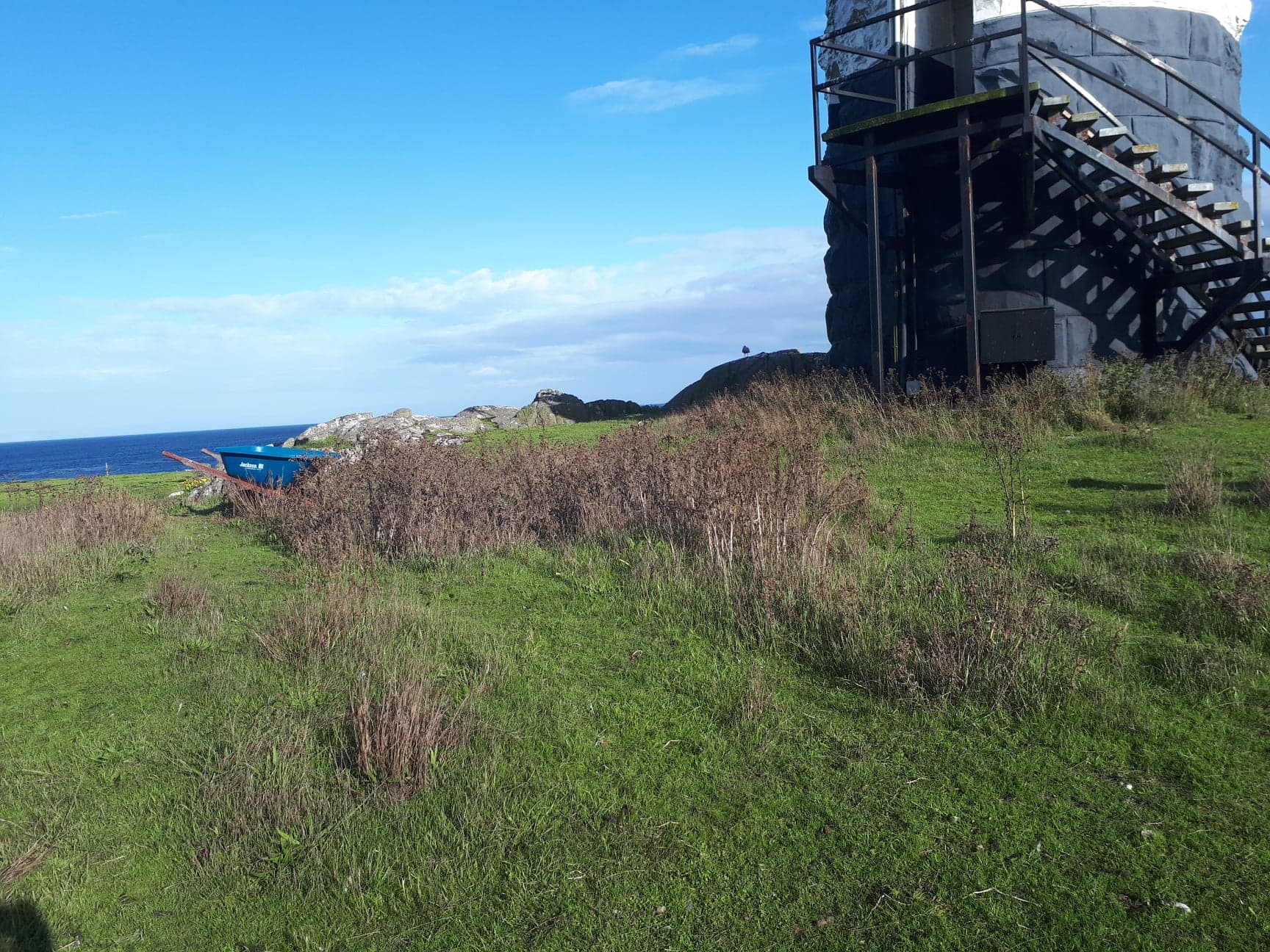
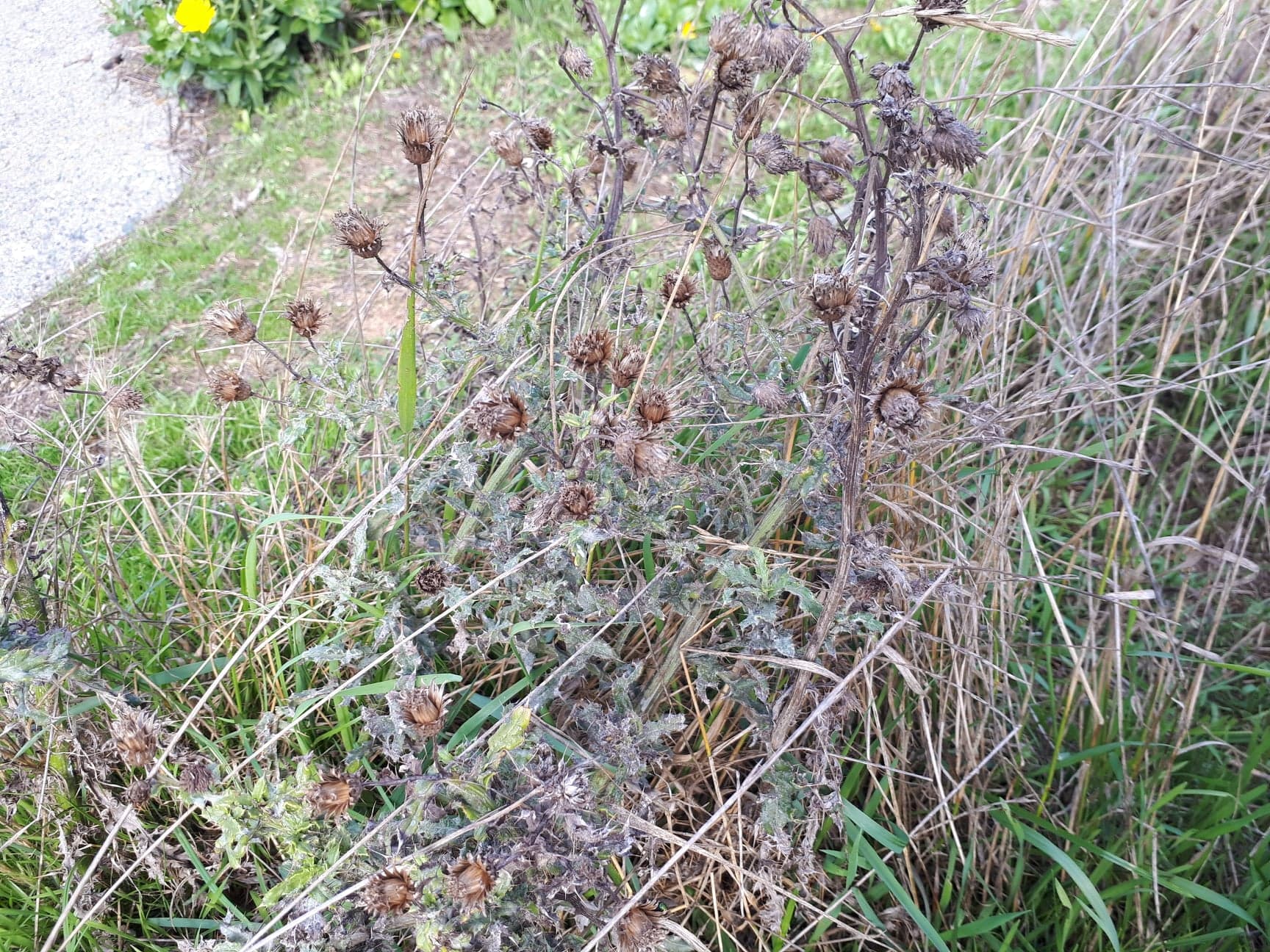
We removed 6 large garbage bags full of invasive “Canada” thistles over the past few days. Considered a “noxious weed” under the BC Weed control act, these perennial (grow back every year) weeds can reproduce through seed and root regeneration. Thought to have been introduced to North America via contaminated crop seed in the 1700’s, this plant is actually native to southeast Europe and Asia. Presumably they were introduced to Race Rocks by a visitor on clothing or equipment, or perhaps by an animal.

They can be a bit laborious to remove, due to their tap root and ability to regenerate through “cloning” (growing back if you leave the root in the ground). Incredibly, the seeds can remain viable for 3-6 years when buried at typical depth, and some up to 21 years (yikes!). Each plant produces an average of 1500 seeds, but can sometimes exceed 5000.

Because of this, we collected them into garbage bags to remove from the island instead of composting them where they would have the opportunity to reproduce. Unfortunately it appeared that these aggressively persistent weeds were whipper snipped in past seasons, allowing the seeds to disperse and roots to regenerate. Hopefully with some attentiveness, they can be eradicated from Race Rocks in the next few years. More information on other introduced plants available in this post from Garry Fletcher, 2006.

Weather: 

  • Sky partly cloudy, some sunshine
  • Visibility 15+ miles (some fog last night)
  • Wind 20-30 knots W
  • Water choppy, whitecaps

Visitors: 

  • Today Laura (Pearson’s marine science teacher), and her class came for a bit for their first trip to Race Rocks! Two more classes will visit in the next couple of days.
  • Less frequent eco-tourism traffic now that the summer tourism has slowed down. They have been getting quite close to the sea lions though, often causing them to climb over each other to get further away from the vessels. Since it has been overcast, we’ve been seeing the use of flash photography much more, which seems to audibly cause quite a stir.

Ecological: 

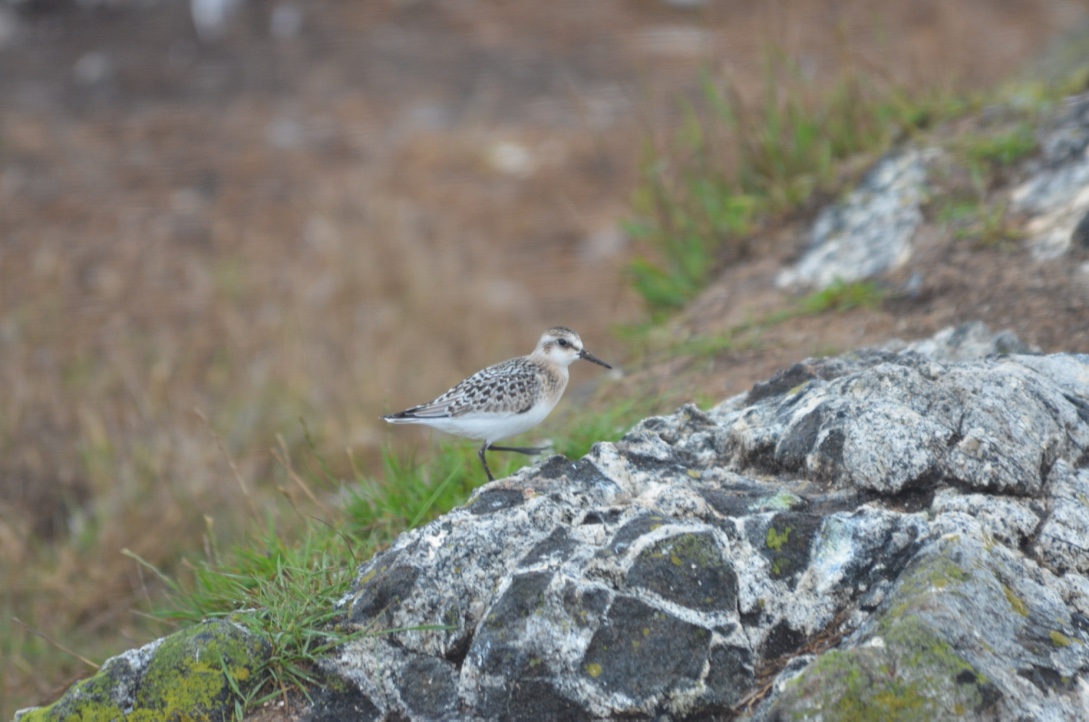
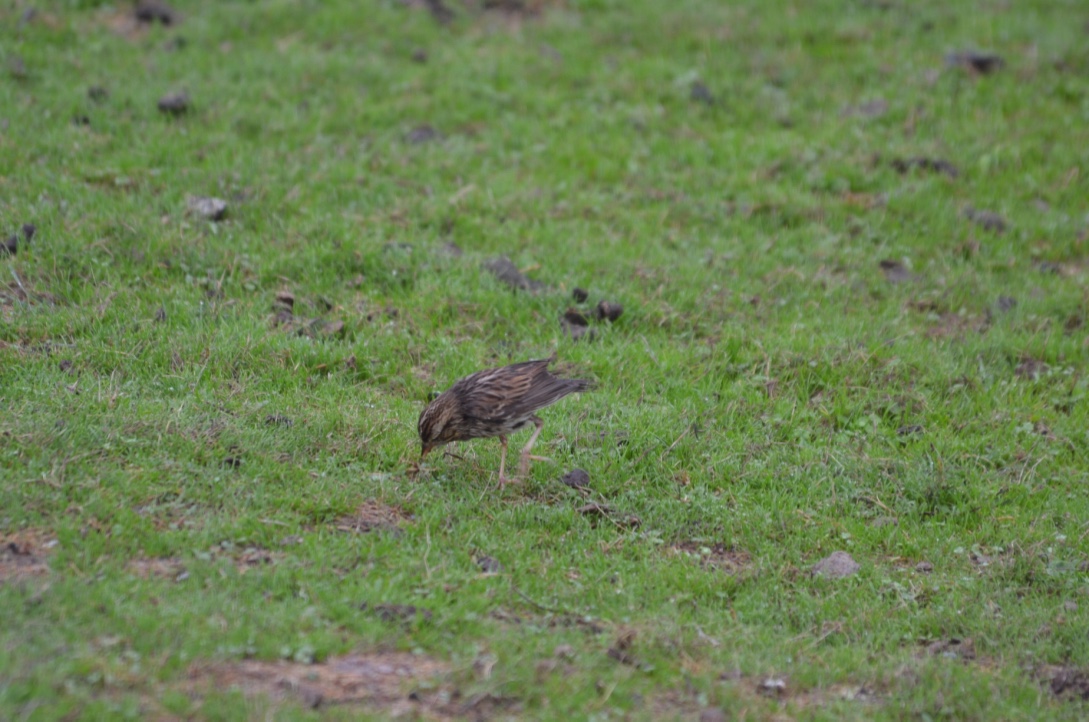
  • There have been some birds passing through that we don’t often see: western sandpiper, savannah sparrow, song sparrow, and juvenile sandpiper (or possibly sanderling- we have a hard time with bird ID!) Also, we think we spotted a yellow warbler a while back, but it was too speedy for us to snap a photo.
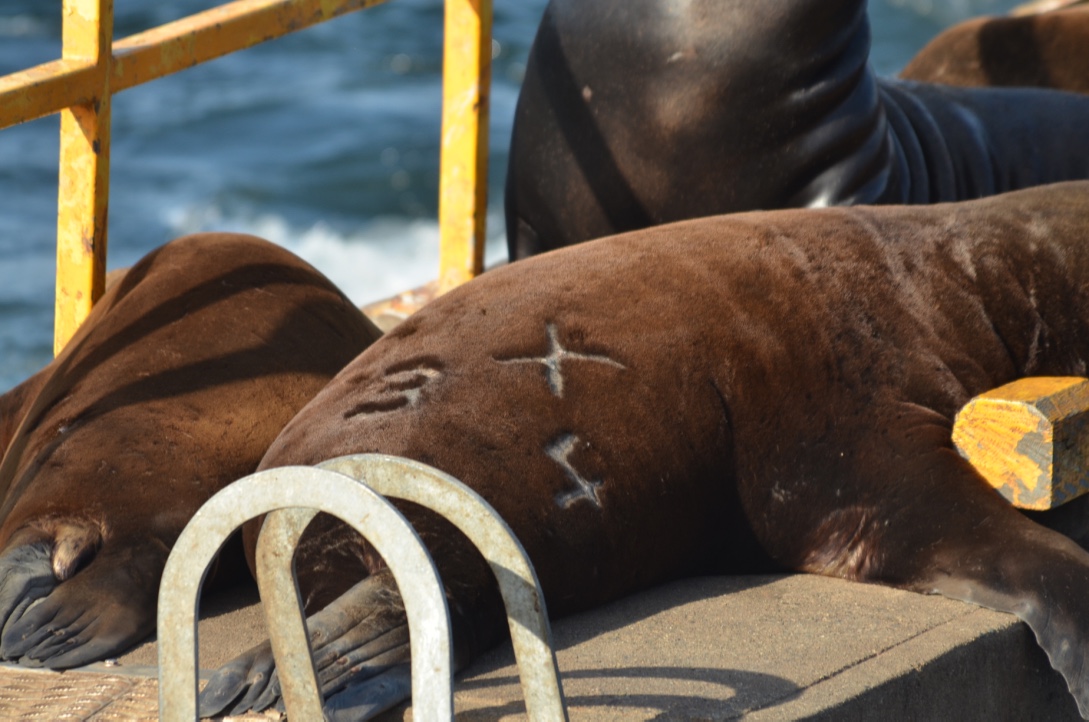
  • The sea lions have continued to haul out- notably, there are typically over 100 animals on the jetty alone.

Suspicious Seagull Suppers, A Busy Few Days

Weather: 

  • Sky partially overcast, some light showers throughout the week
  • Visibility 15 miles this morning, consistent throughout the day, some heavy fog a few days ago
  • Wind 10-15 knots W
  • Water ranging from calm to choppy with waves up to 1.5m over the last few days

Boats/Visitors: 

  • There’s been a lot going on over the past few days! Our apologies for the lapse in updates.
  • On Monday, after a few weeks of planning, the Marine Mammal Rescue team from the Vancouver Aquarium came out to RR with support from DFO, to attempt disentanglement of the troubled sea lions we’ve been spotting. Stay tuned for an in-depth post detailing the days events with many photos and videos! 
  • We have been having minor trouble with the water supply/storage for our house here, but with a little investigation and some extra water deliveries it seems to be changing for the better!
  • With water deliveries, there have been a handful of guests, notably including a guest speaker visiting the college to address students. It’s always nice to see some friendly faces!

Ecological: 

  • The sea lions continue to haul out in larger numbers, but it seems to be tapering off. Our electric fence lines are holding better as they learn (through trial and error) not to push through them.
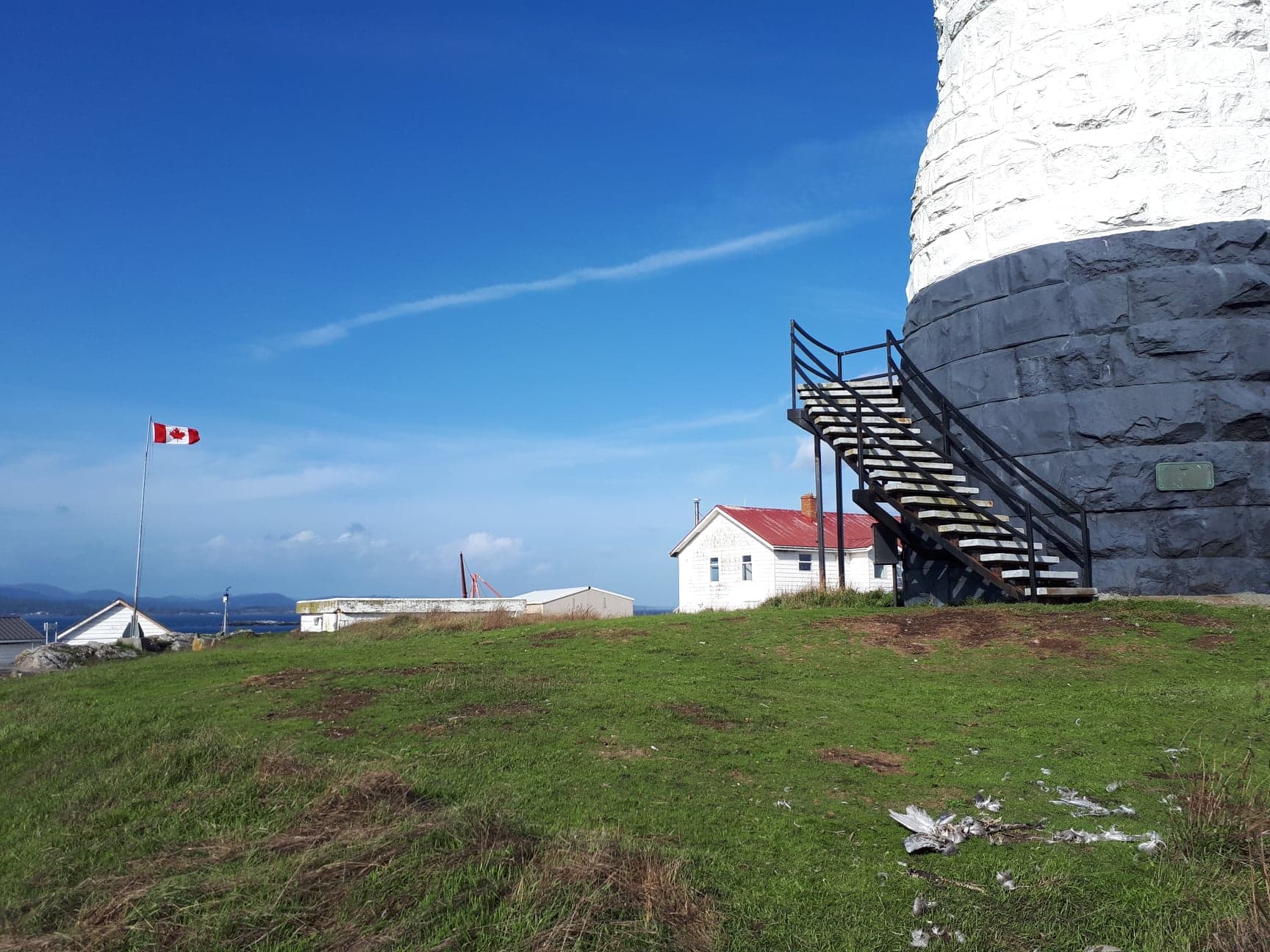
  • Young seagulls are naive to the danger sea lions pose – we have observed juvenile birds being trampled to death by a sea lion simply moving quickly to a different area of the rock. The birds who learn quickly live to fish another day…
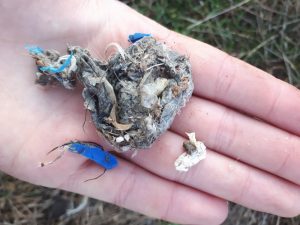
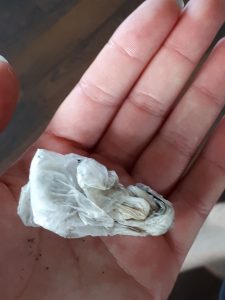
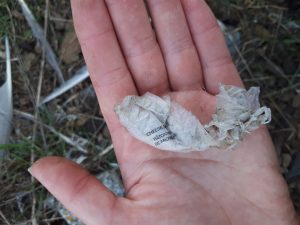
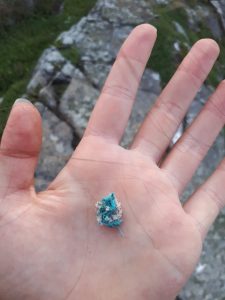
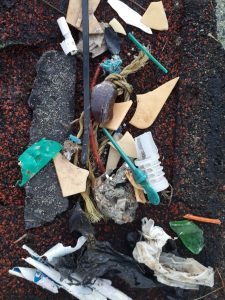
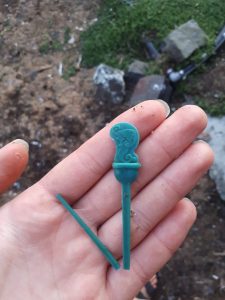
  • Over our time on Race Rocks we have been finding plastic/general garbage across the island compressed into a similar size and shape. After observing a seagull regurgitate a condiment packet (ex: rectangular, fast food style ketchup package), we believe this plastic to be consumed by seagulls on land or at sea, and then carried back to Race Rocks when the birds come to feed their young or rest. Regurgitating the foreign waste, perhaps to feed their offspring or out of discomfort, they deposit this human trash here.
  • Here are some picture showing the plastic/garbage described above:
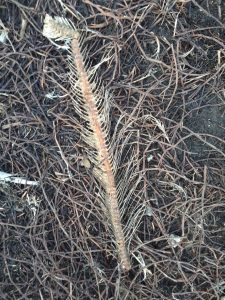
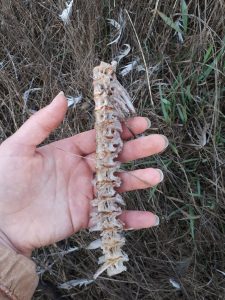
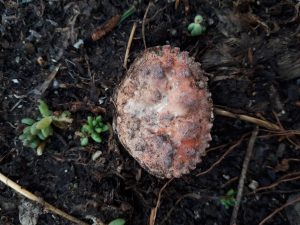
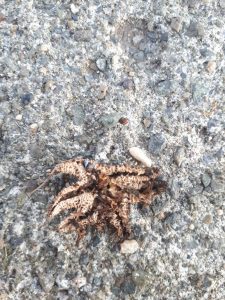
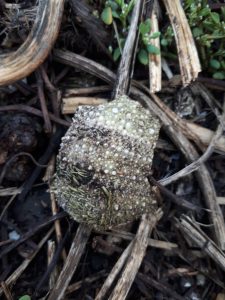
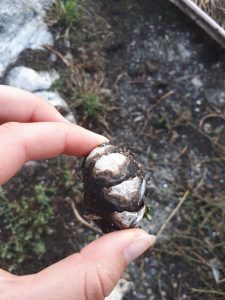
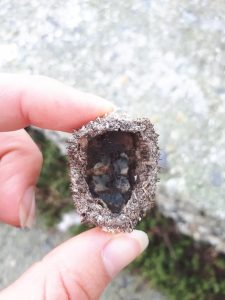
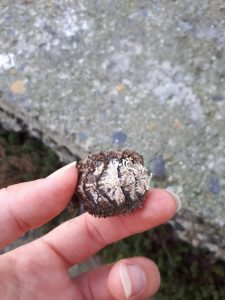
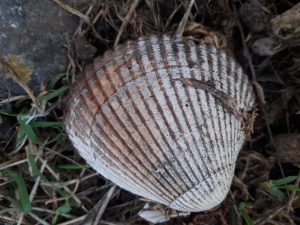
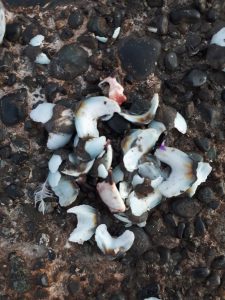
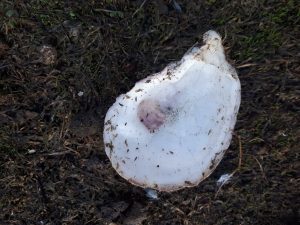
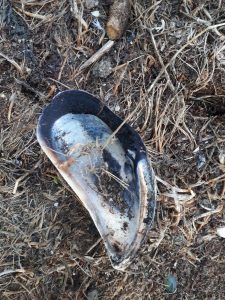
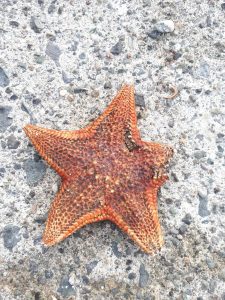
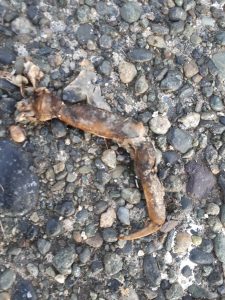
  • On the note of seagull diet, here are some picture of sea life remains found around RR which would seem to be left overs (and examples of what they should be eating) –  talk about sea food from the source!