Twofold Foggy: Friday – Saturday

Friday started with fog again and light southeast winds, from 5 to 10 knots. By late morning there were glimmers of clearing and by mid-day the sun was shining. The wind stayed calm and it stayed fairly clear, with clouds rolling by as the wind turned to west, in the late afternoon. By evening it was still and the sky mostly clear but that must have changed as the was fresh rainwater in the morning. The barometer bottomed out Friday morning at 1007 hPA before rising briefly. It started to drop again mid-day falling until mid-Saturday. The gale warning for Saturday, came true after another very foggy morning and light easterly winds. The turn to westerly was rapid, the fog was blown off and ominous clouds with a black line on the water to the west, foretold of what was to come. It blew up fast, reaching 40 knots and then settled back down to the up and down of 20 – 35 knots. There is gale warning is still in effect and the wind is forecast to lighten overnight, then become easterly 5 to 15 near noon Sunday. (I am collecting rainwater for laundry, bonus.)

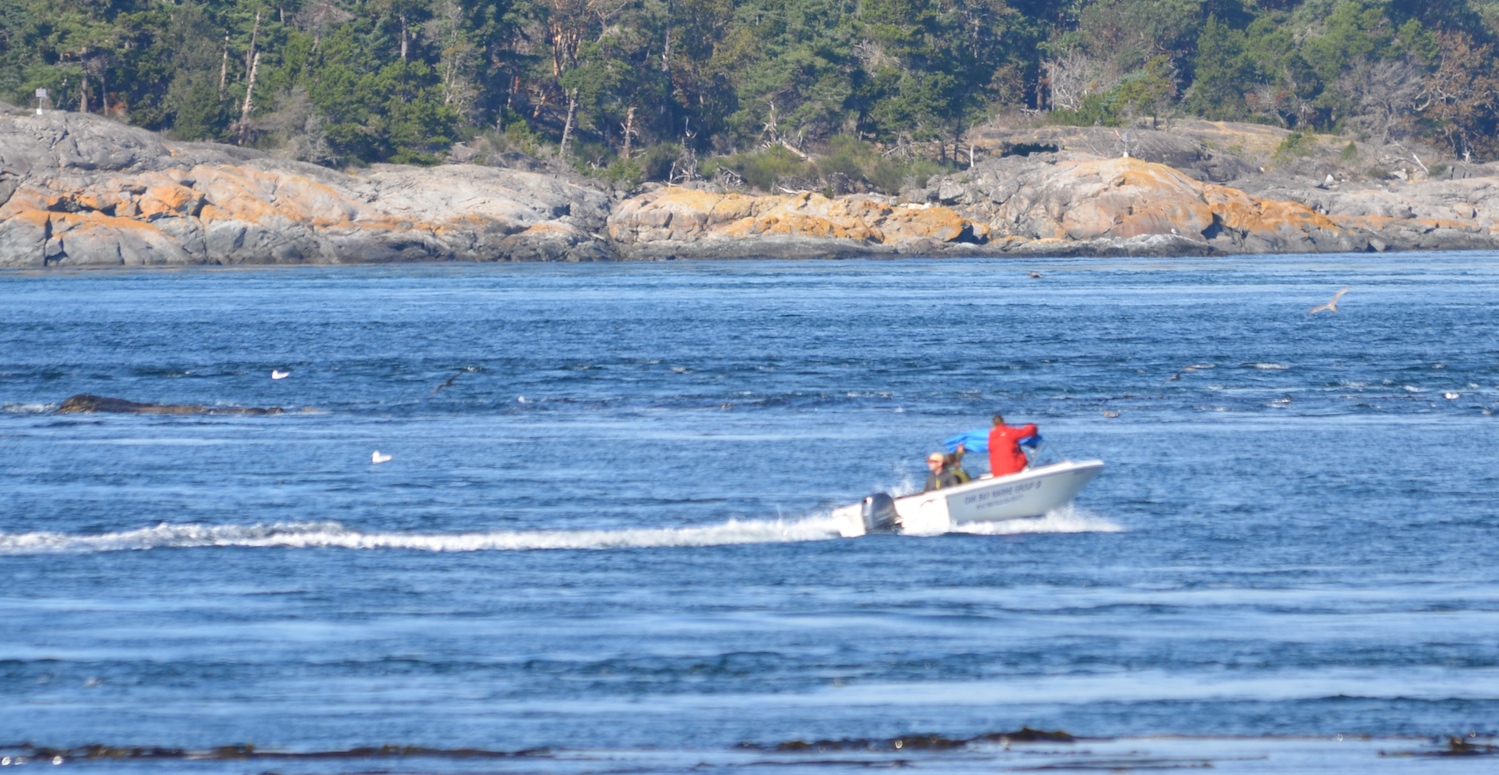
Only two whale watching vessels were observed in the protected area Friday. Two sports fishing vessels also passed through. Saturday was a little busier with five whale watching vessels noted in reserve but there were no pleasure craft, they were probably seeking shelter. It is quite possible that I missed traffic both days due to thick fog reducing visibility.

Thursday was too foggy to do the animal census so it is cobbled together from the brief time slots when visibility permitted on Friday. It is interesting to note that the gull population plummeted after the arrival of the first Bald Eagle to be seen here, since I arrived at the end of August. Not sure if that is coincidental or not.

I only noticed the eagle because of the hundreds and hundreds of gulls moving en masse, from North Rock over to Great Race. When I peeked through the spotting scope, all the cormorants were in the water, the gulls were gone and there sat an adult Bald Eagle. Only the Harbour Seals seemed to ignore its presence.

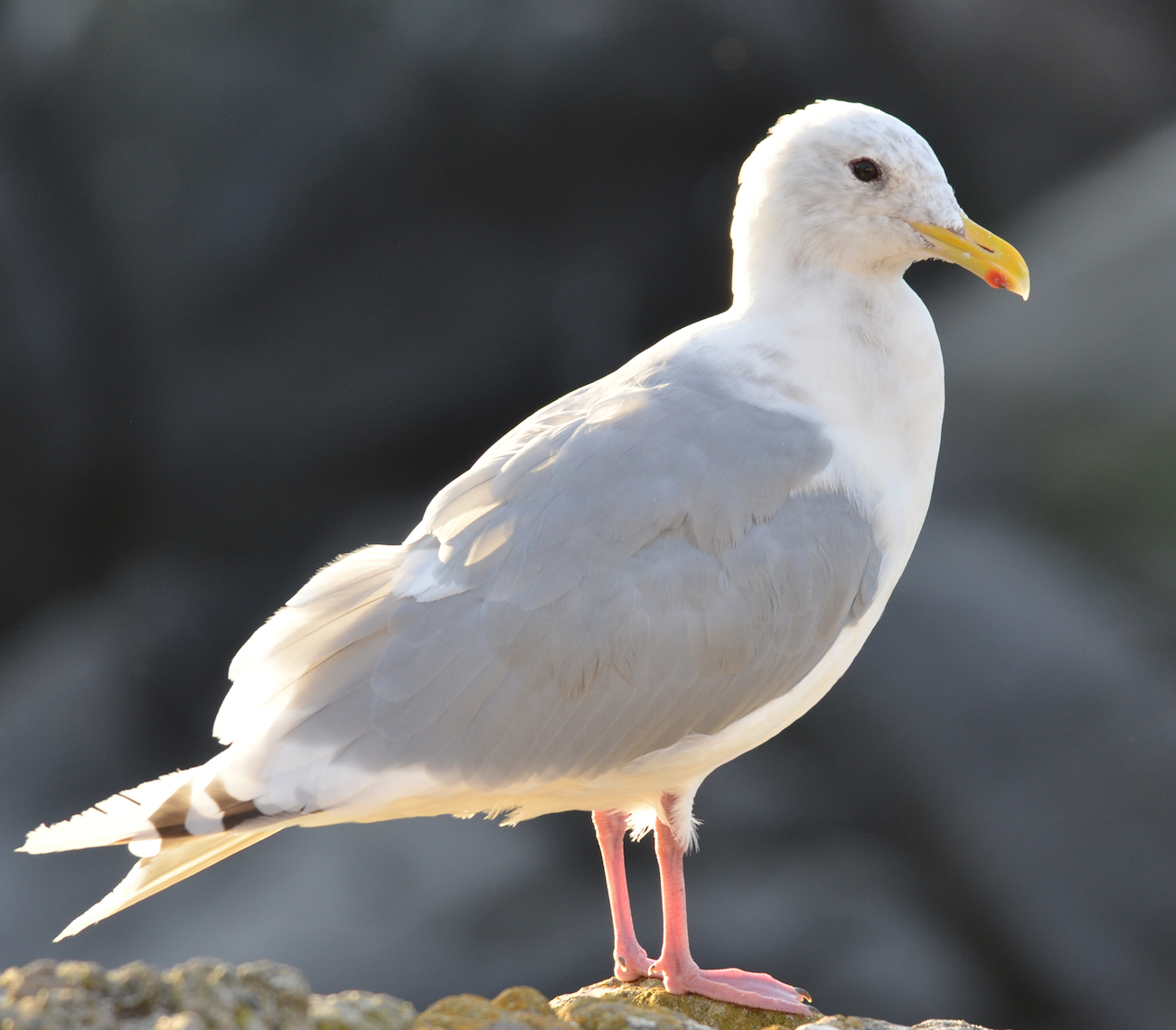
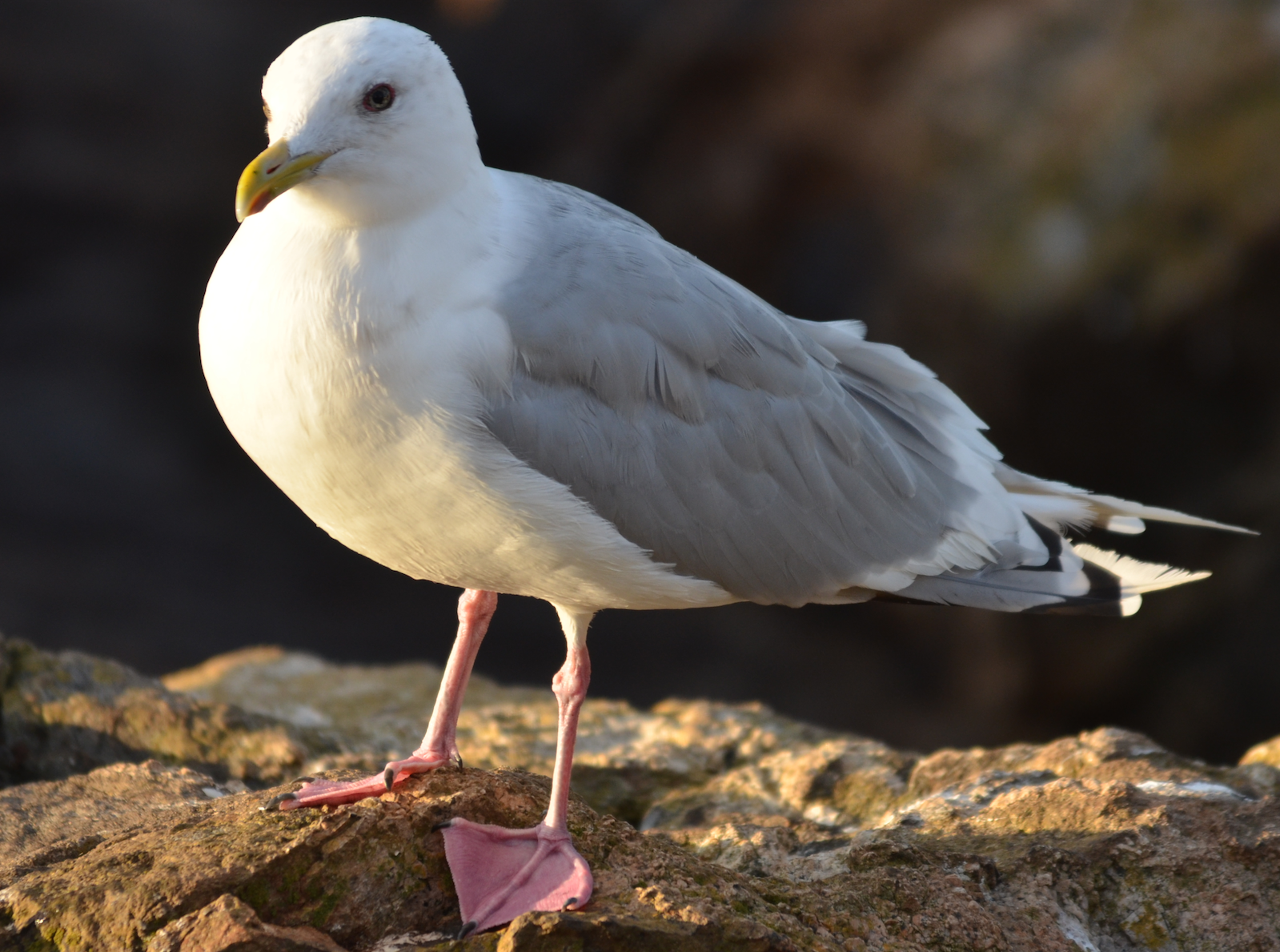
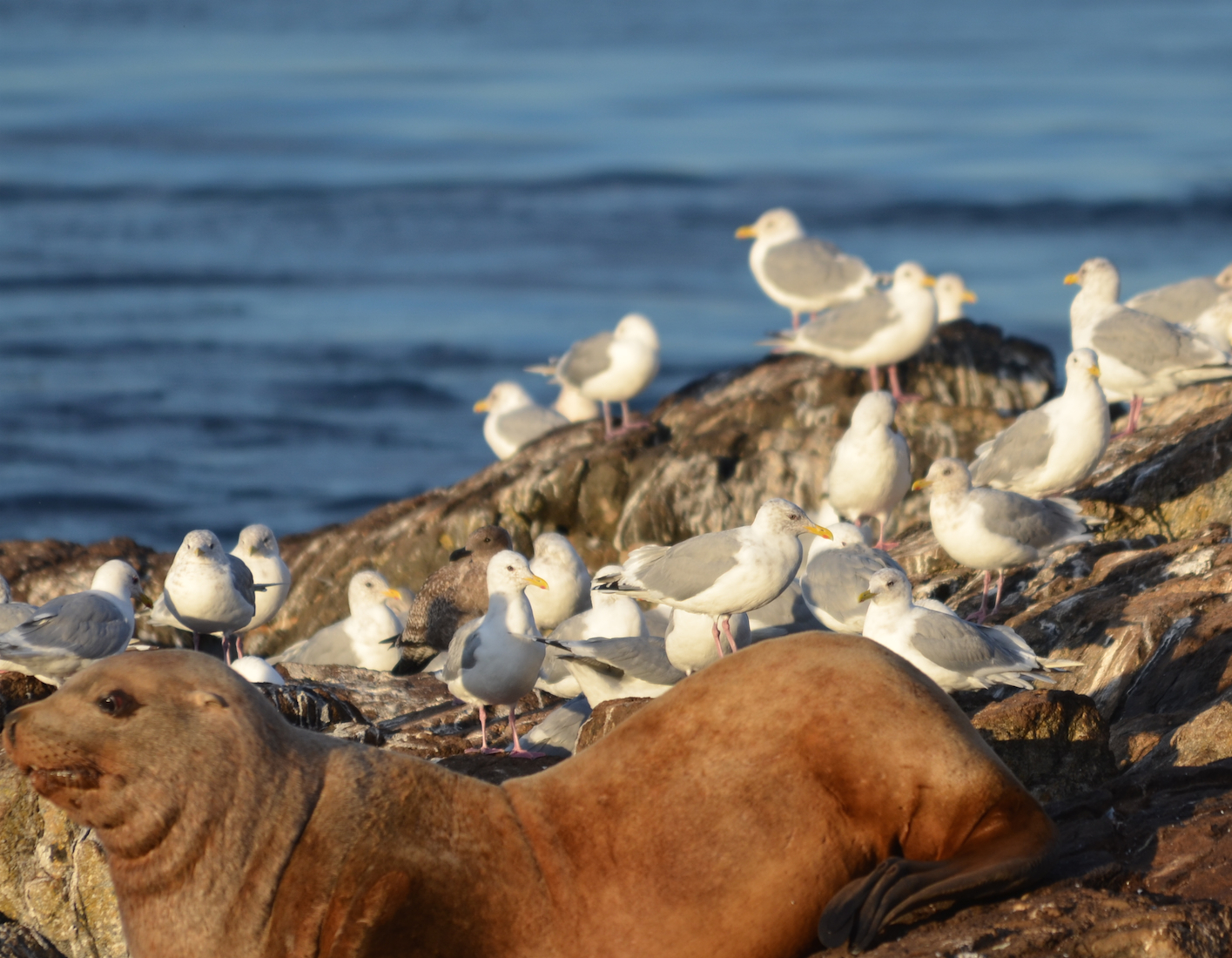
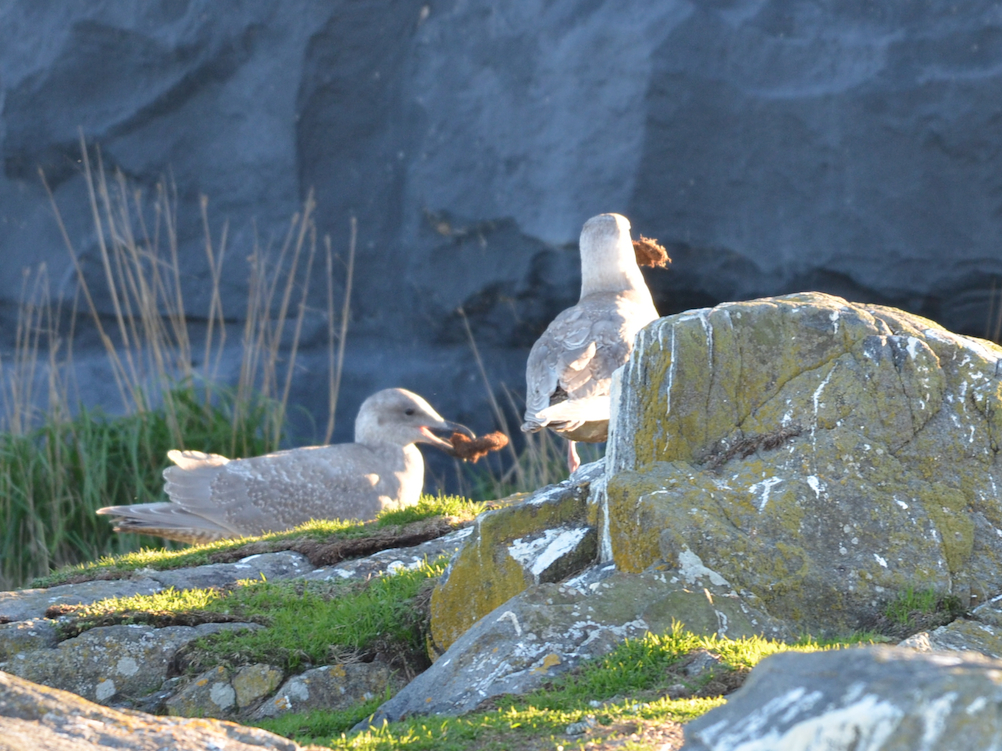
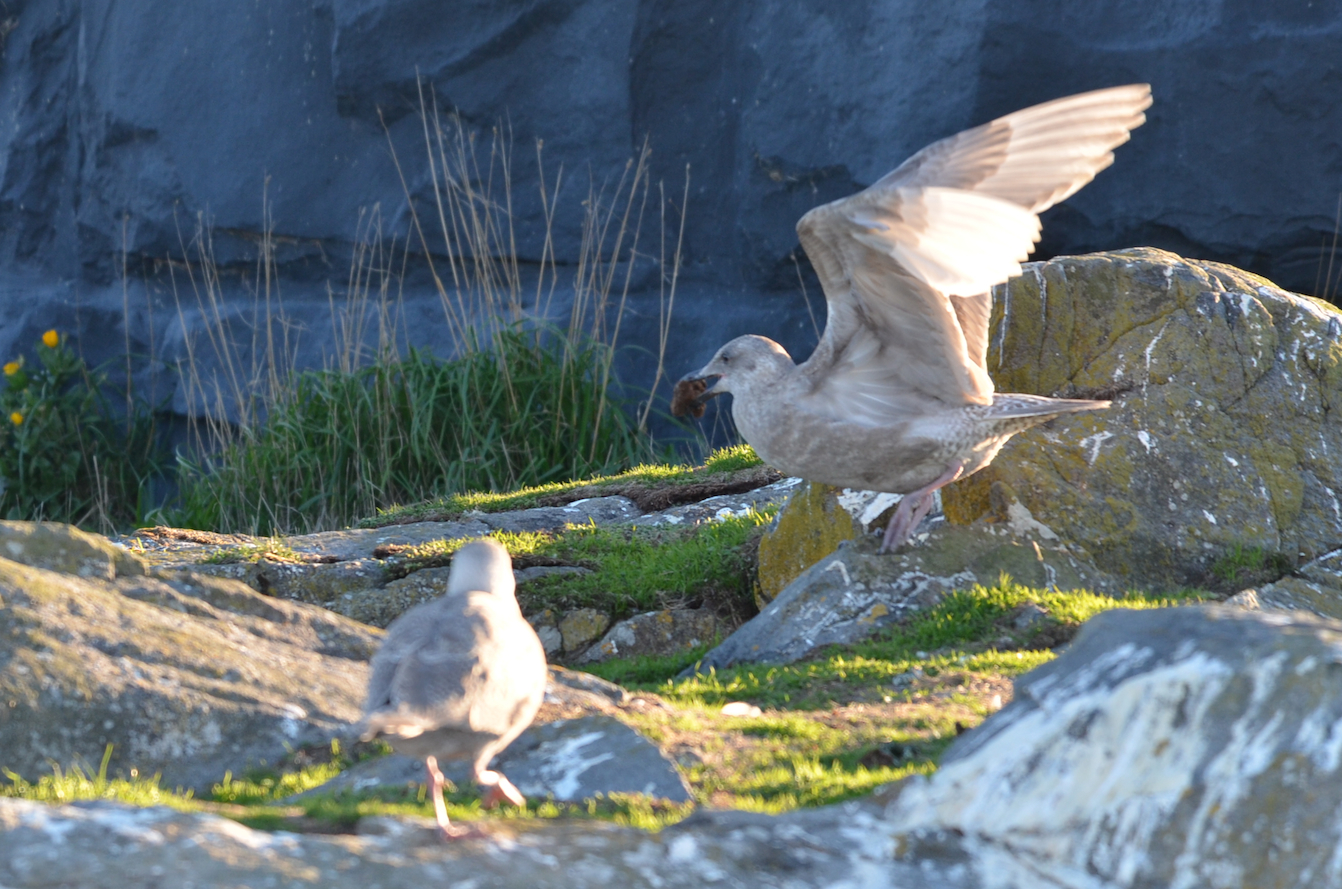
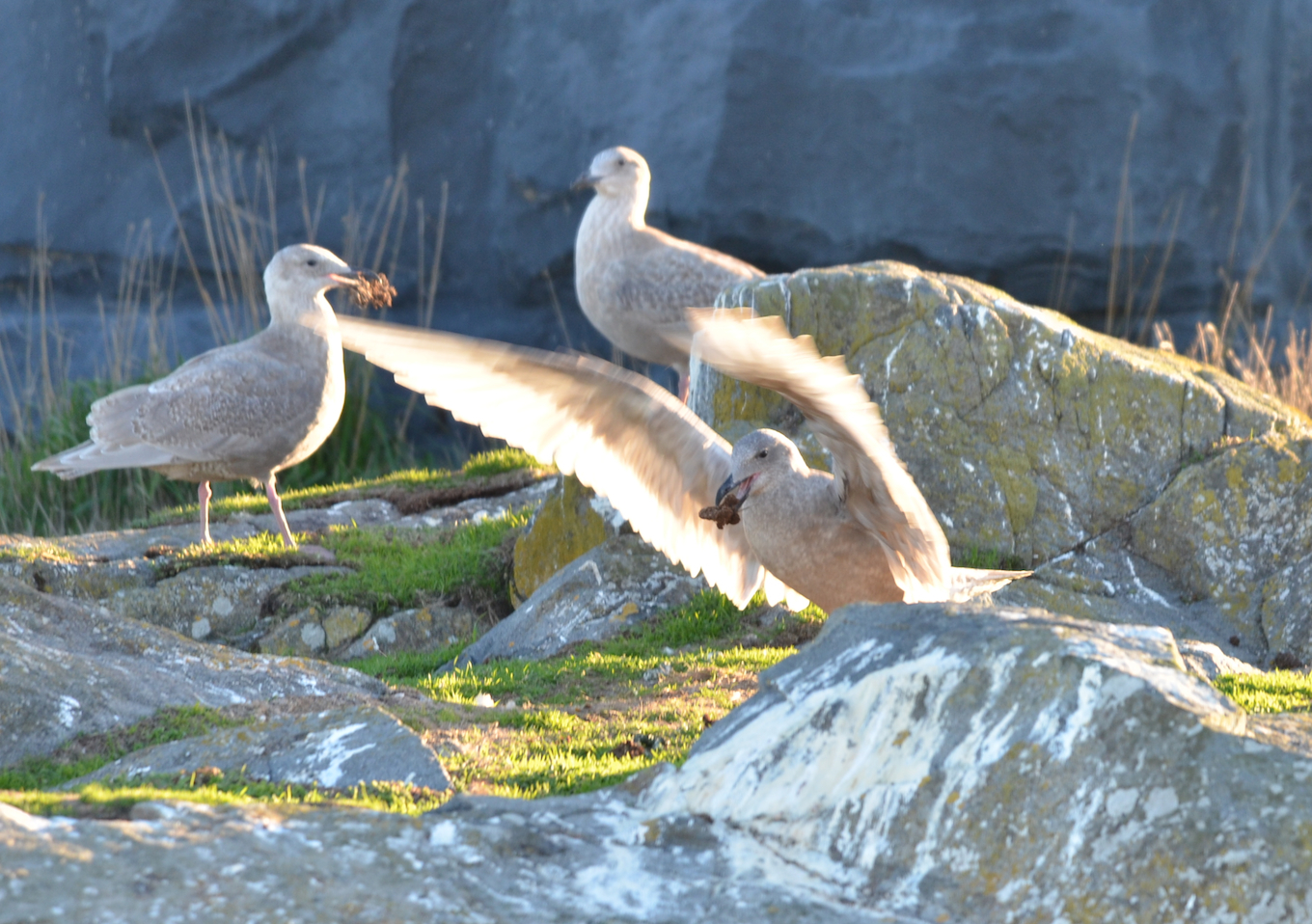
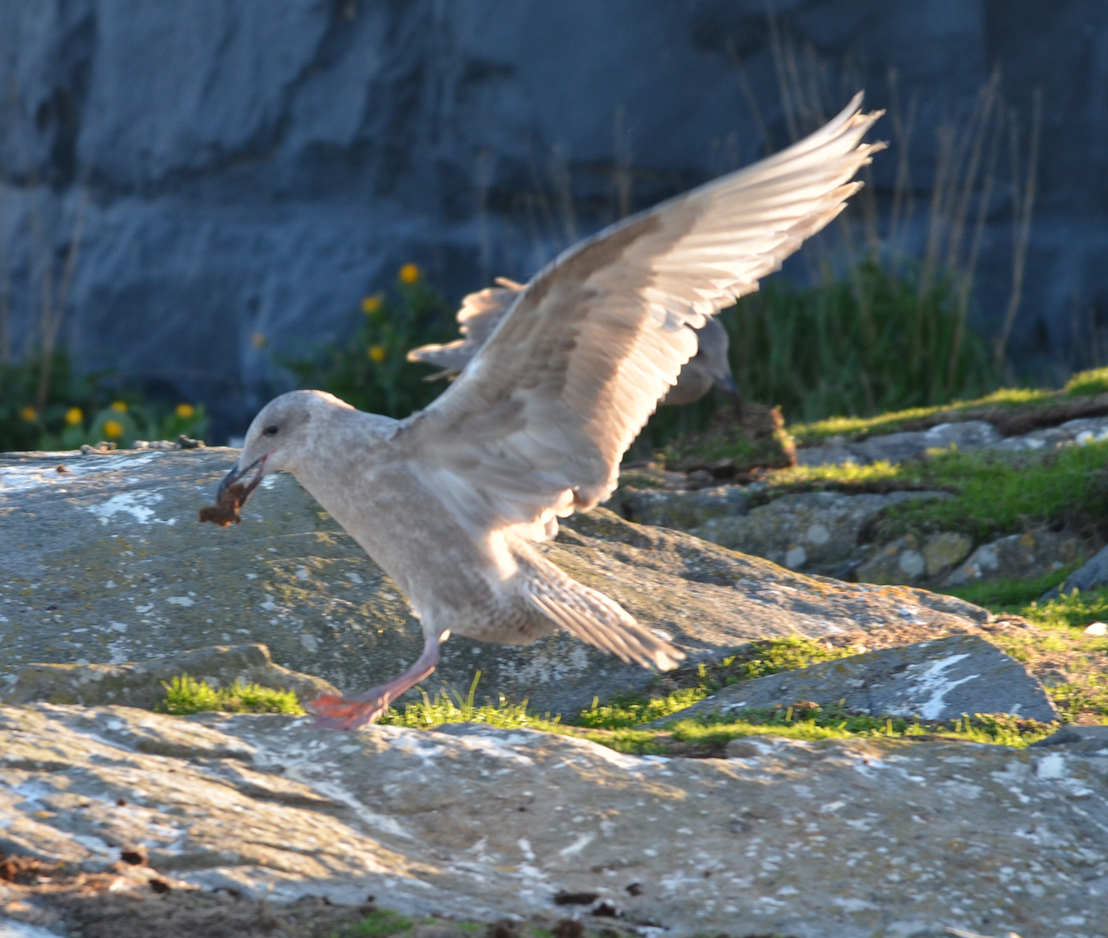
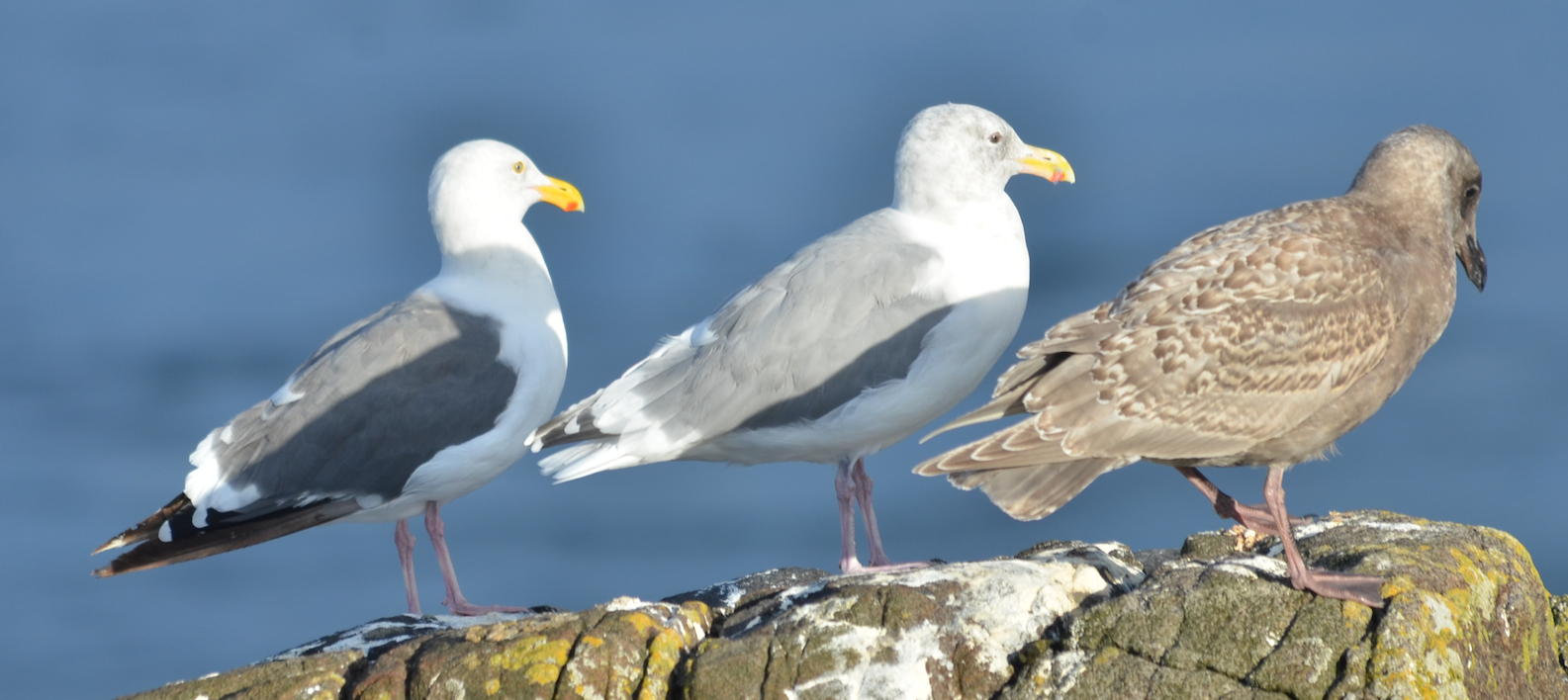
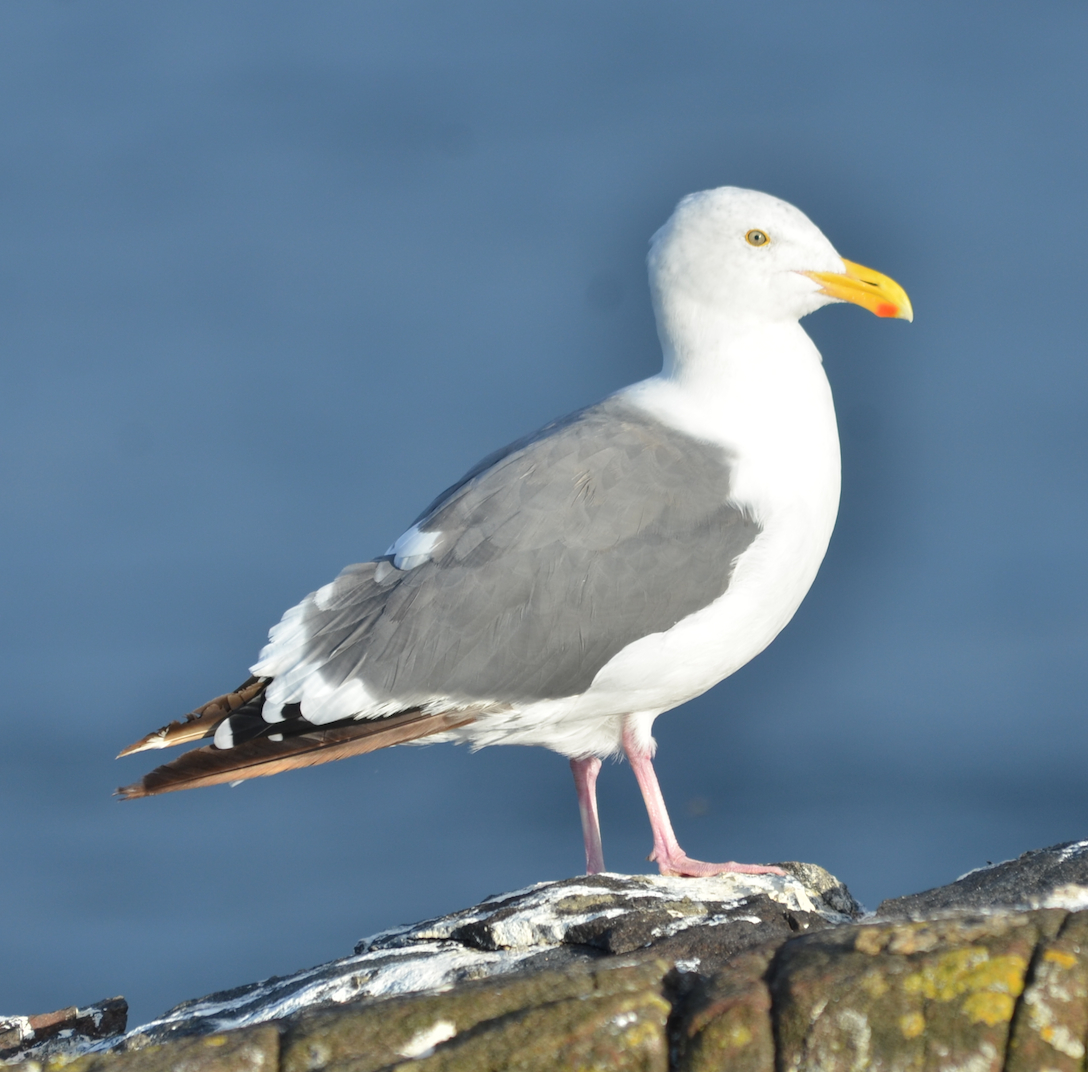
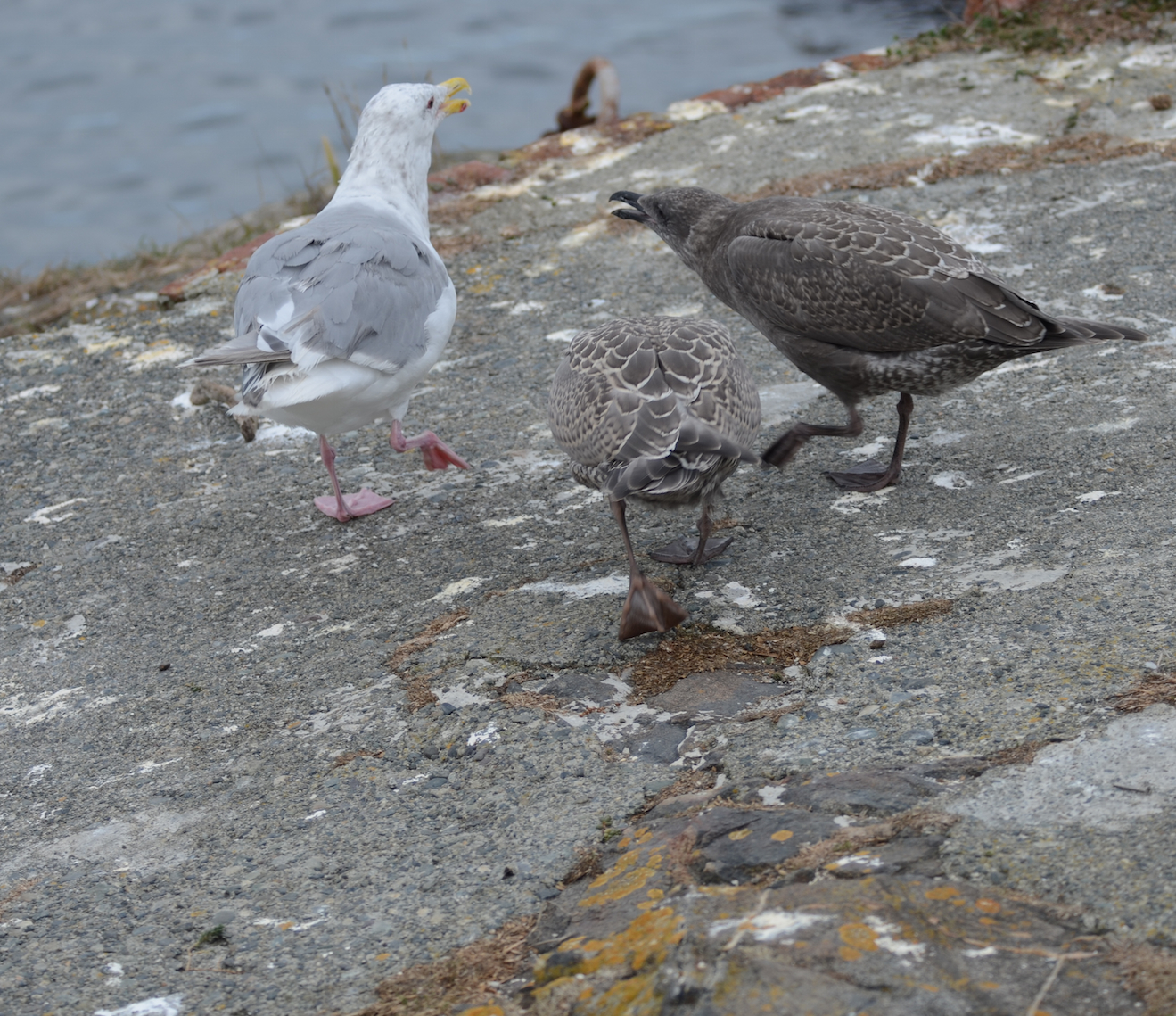
There was no sign of the eagle today and the gull numbers are perhaps even lower. Glaucous-winged juveniles and adults continue to mill around summer territories. Some young ones are still practising picking things up, flying up and dropping them. Most of the adults are fully into their alternate plumage now. Their faces recovering from the physical aspects of feeding young.

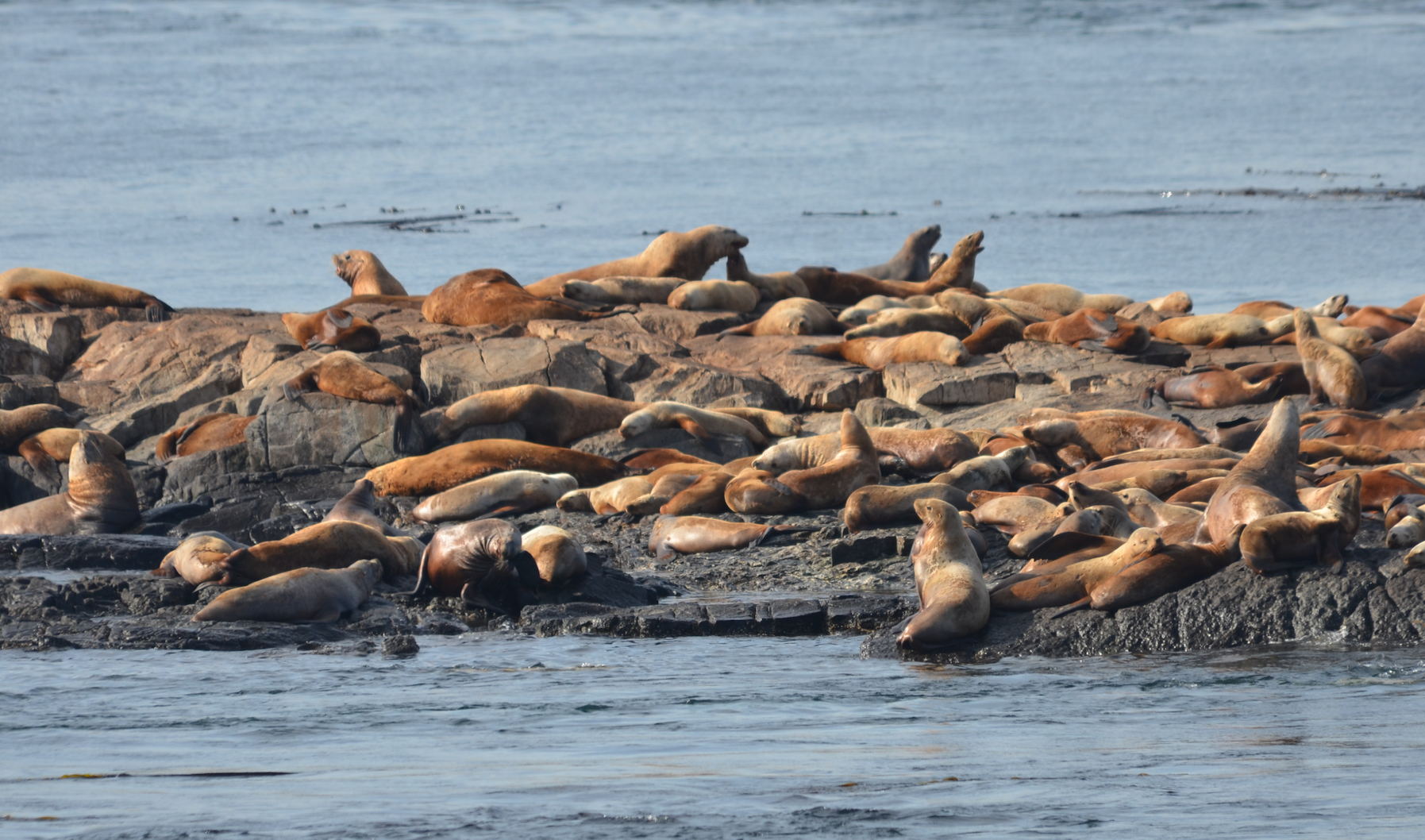
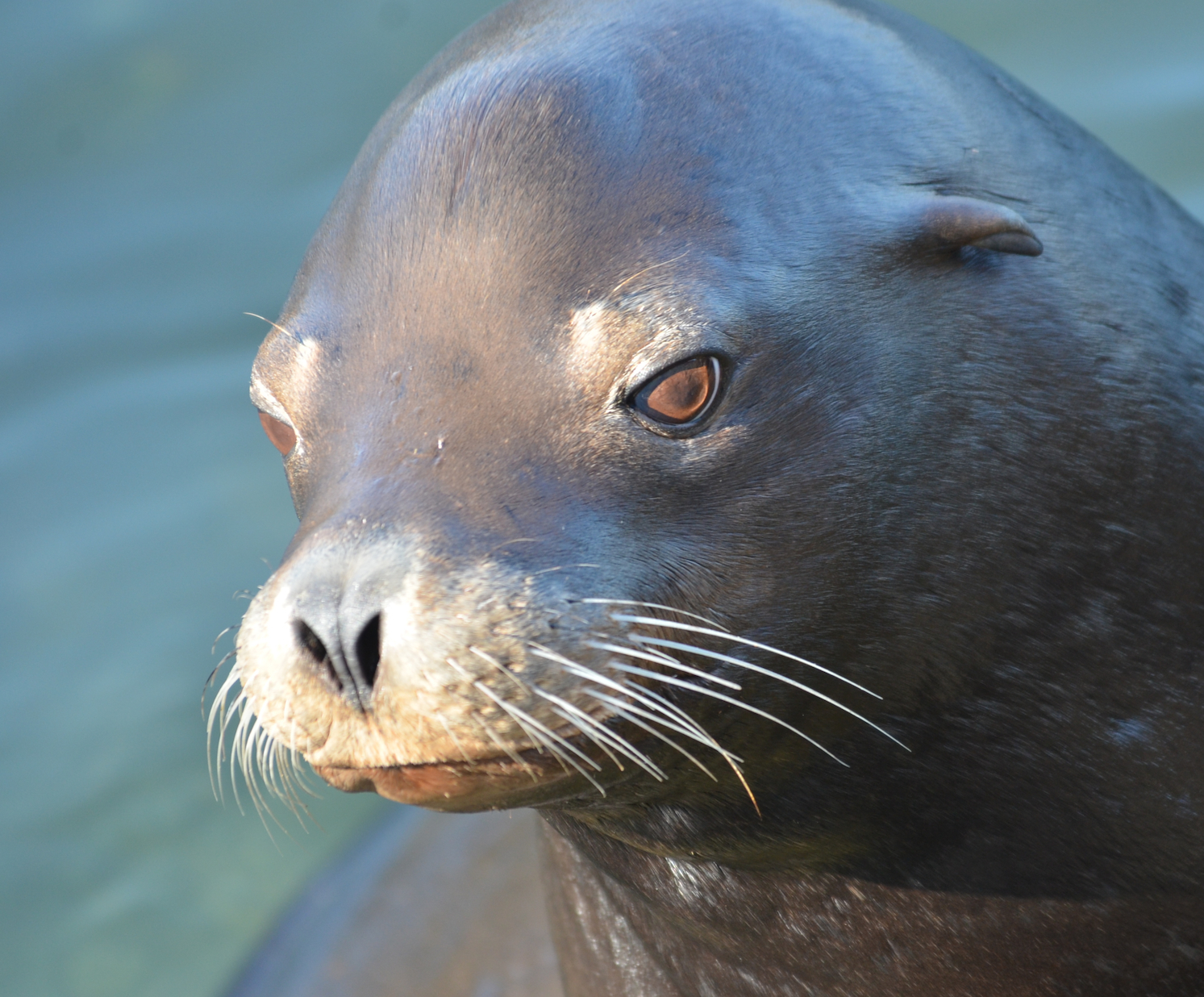
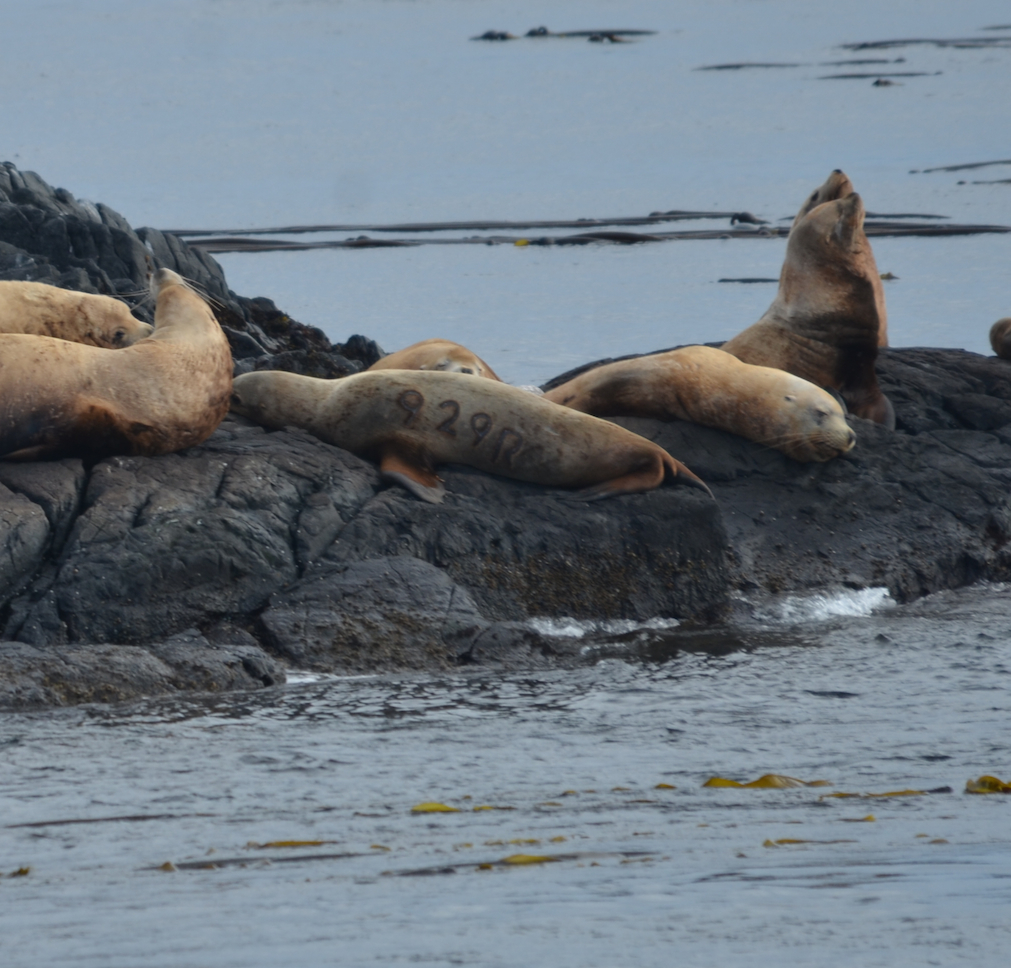
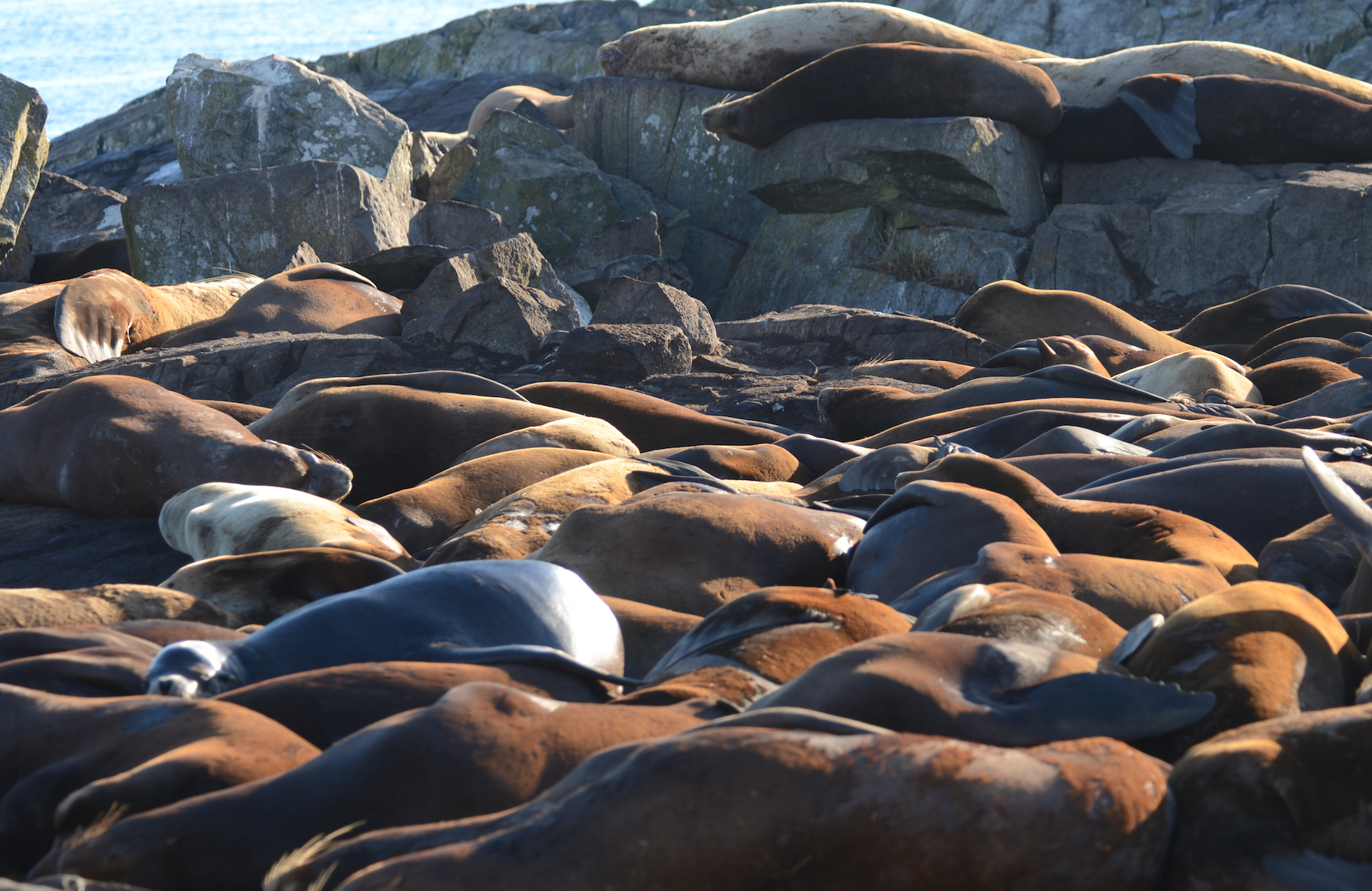
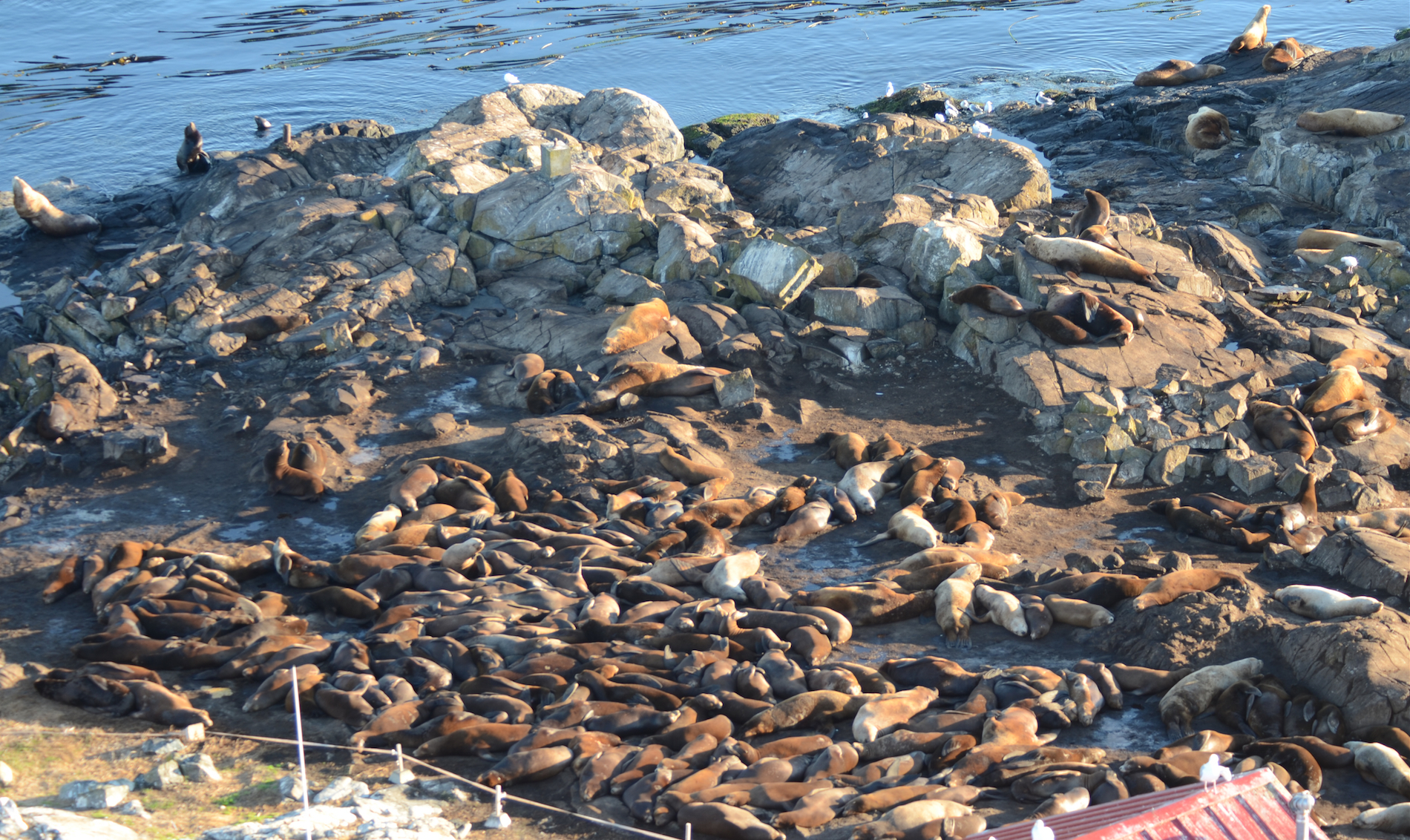
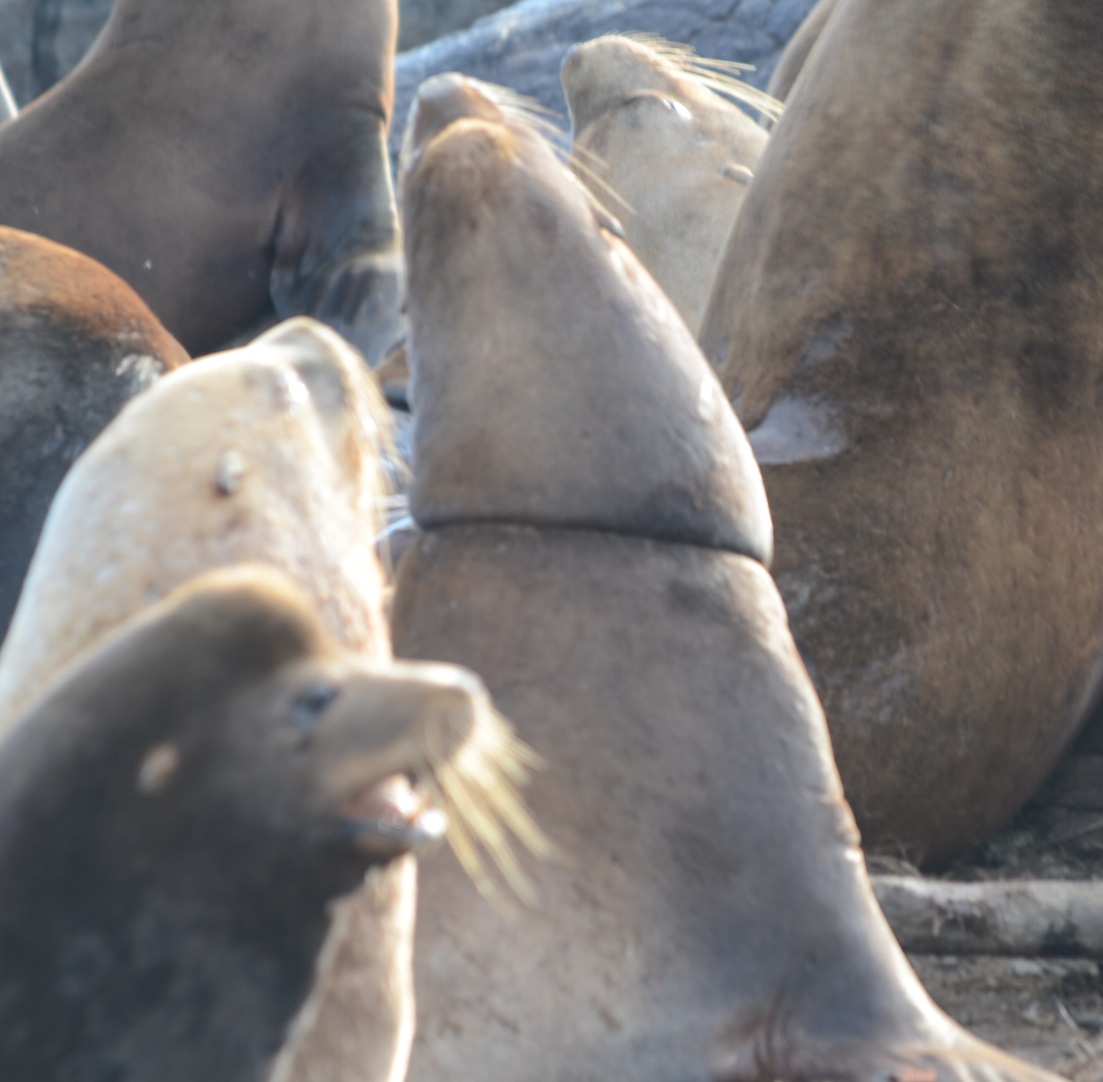
The sea lions are spending more time in the water now that their favourite haul-out spots are worse than pig pens. Some of them have turned to rock climbing and I saw the first scouts up on the heli-pad today.

Animal Census

Steller Sea Lion 317

California Sea Lion 428

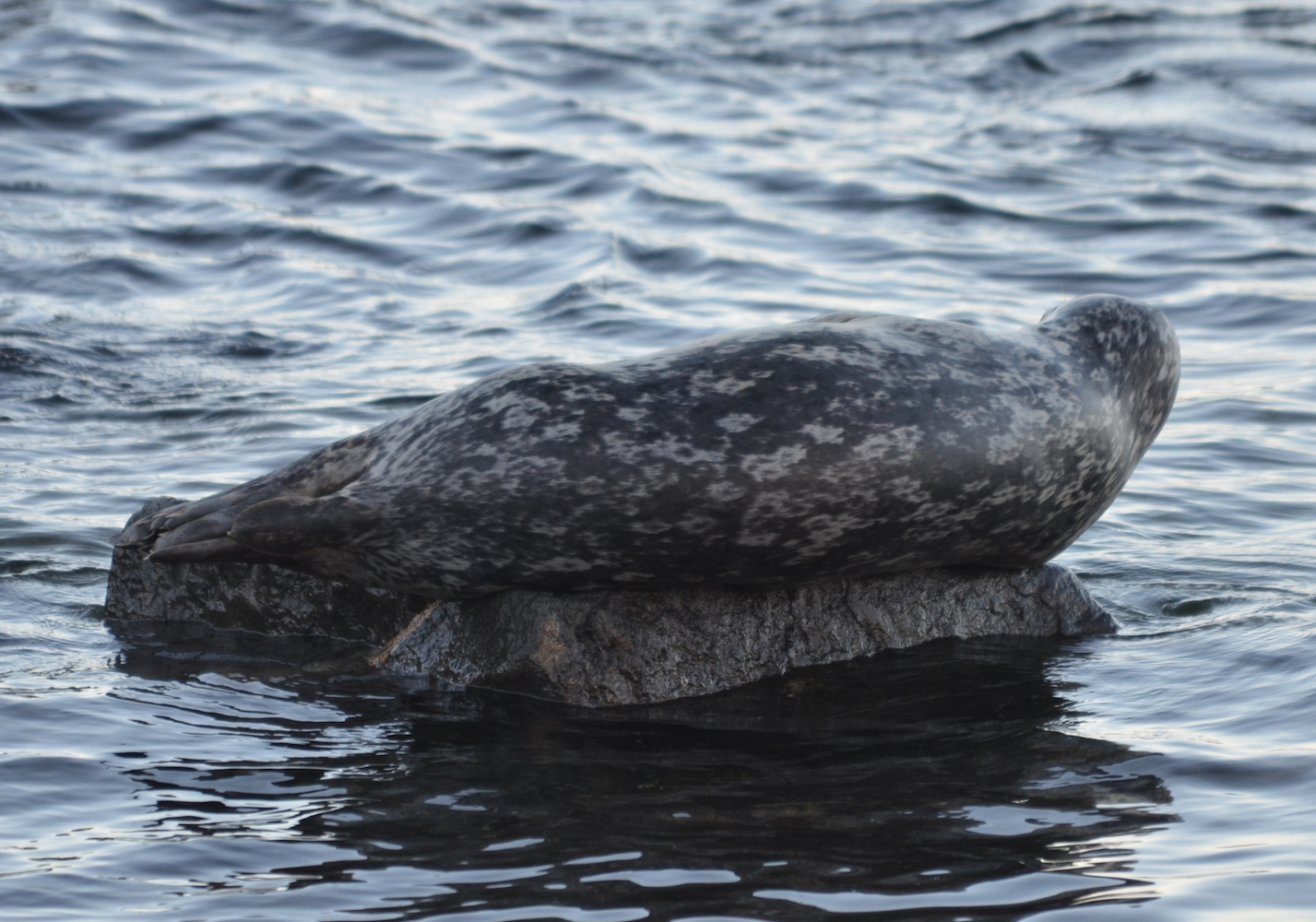
Harbour Seal             156

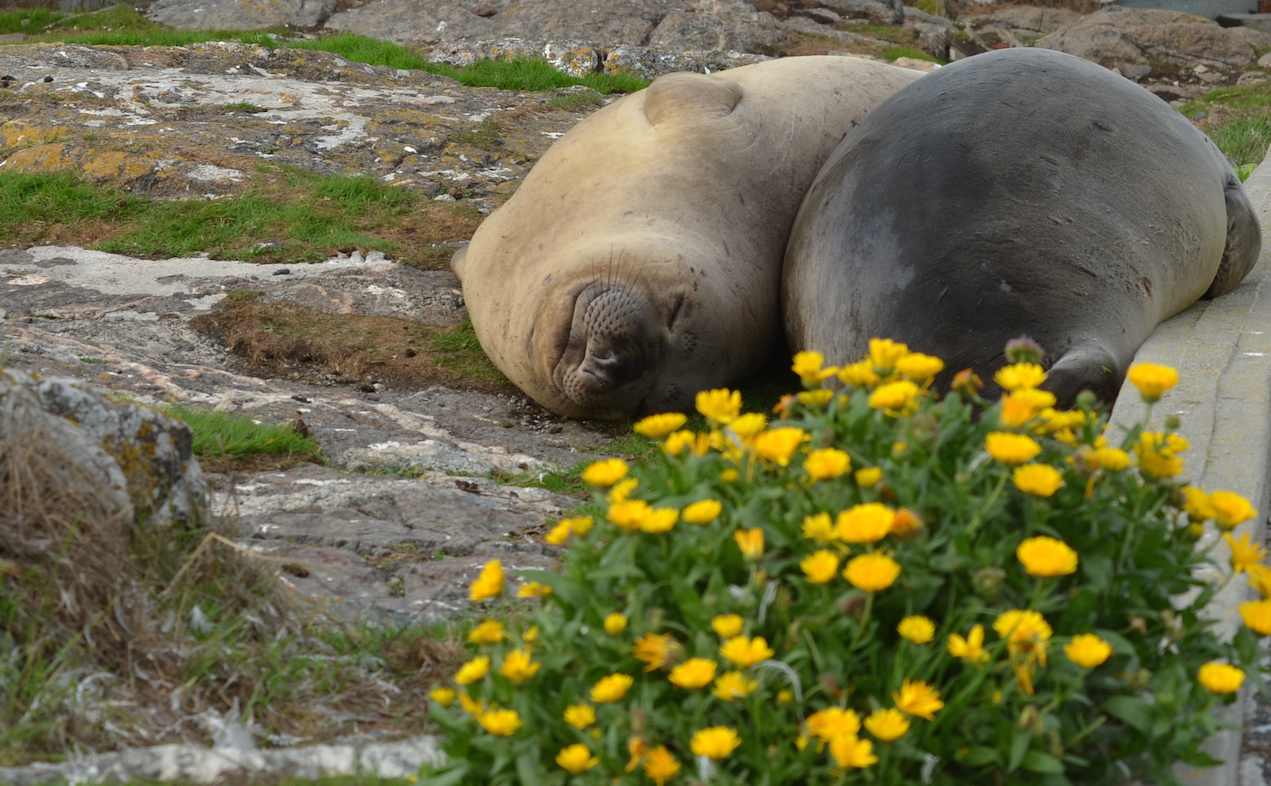
Northern Elephant Seal 6

Sea Otter 1

Southern Resident Killer Whale ( observed within one mile of ER during count week, (Race Passage, east, west and south of RR)

Biggs Killer Whale (Transients) ( during count week Race Passage & southwest)

Humpback Whale 2 (1 observed within ER west side during count week)

Minke Whale 1 ( observed within one mile of ER during count week just east of North Rock)

Canada Goose 4

Harlequin Duck 7

Surf Scoters 73 (flying through to east)

Double-crested Cormorant 35

Brandt’s Cormorants 29

Pelagic Cormorant 9

Bald Eagle 1 adult

Black Oystercatcher 23

Black Turnstone 6

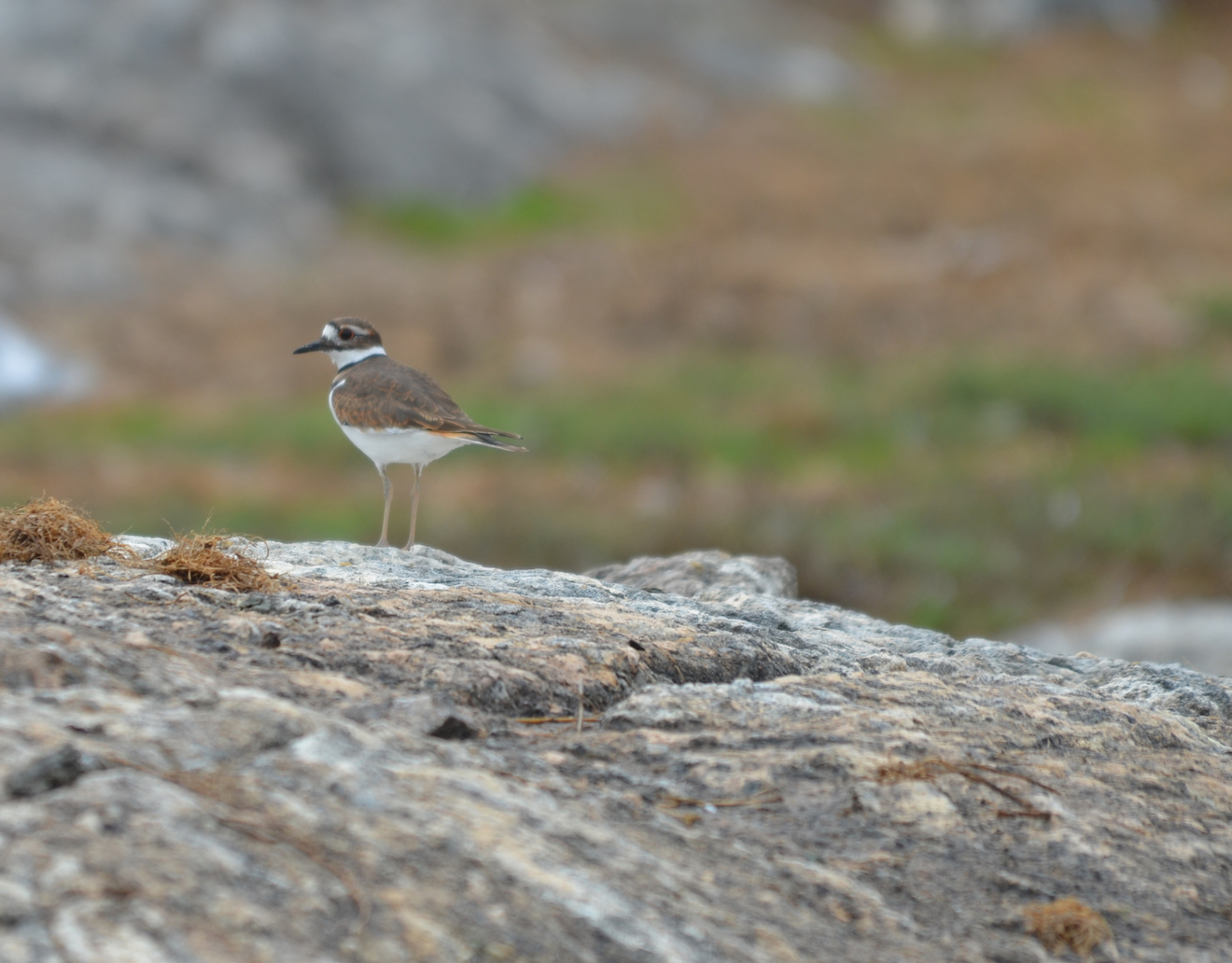
Kildeer 2

Glaucous-winged Gull 258

California Gull 41

Thayer’s Gulls 874

Herring Gull 0

Ring-billed Gull 0

Western Gull 2

Heerman’s Gull 20

Mew Gull 18

Unidentified gulls 361

Total gull count 1574

Common Raven 2

Savannah Sparrow 19

Fox Sparrow 1

Junco 1

Golden-crown Kinglet 1

American Pipet 1


Starting the countdown on my last week on the rock for this shift. I may be back for a bit at the end of October, if extra training is needed for the new folks.
Fog the Defining Feature

Fog was the defining feature of today’s weather. Although visibility was up to 5 nautical miles first thing, it quickly socked in and other than a few momentary lifts and a brief clearing at dusk, the foghorn has been going steadily. Light levels were low and although it was not raining, it was very damp. The barometer started falling just after midnight last night and is still falling. There is a strong wind warning in effect for tomorrow with forecasted south winds of 15 to 25 knots in the morning. Clouds and precipitation are also part of the package.

It was difficult to see vessels in reserve today unless they passed right by the jetty and even then they were sometimes hard to spot. I heard several boats that I could probably correctly identify from their engine sounds but did not record any of those. Four whale watching vessels were noted in reserve.

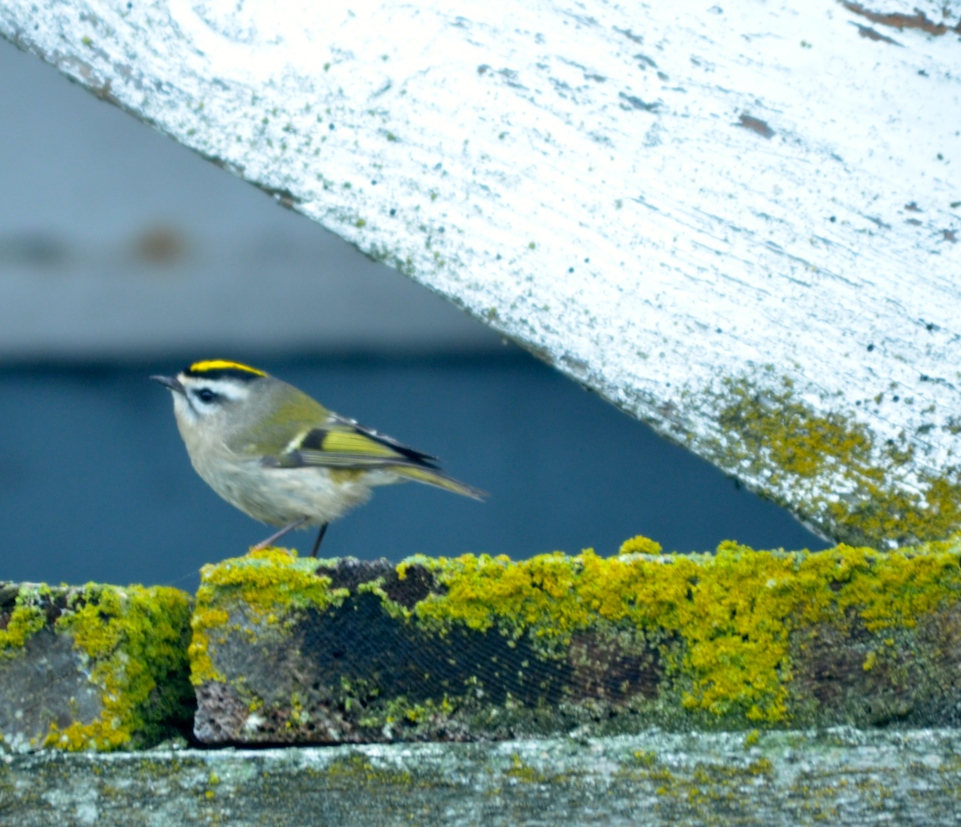
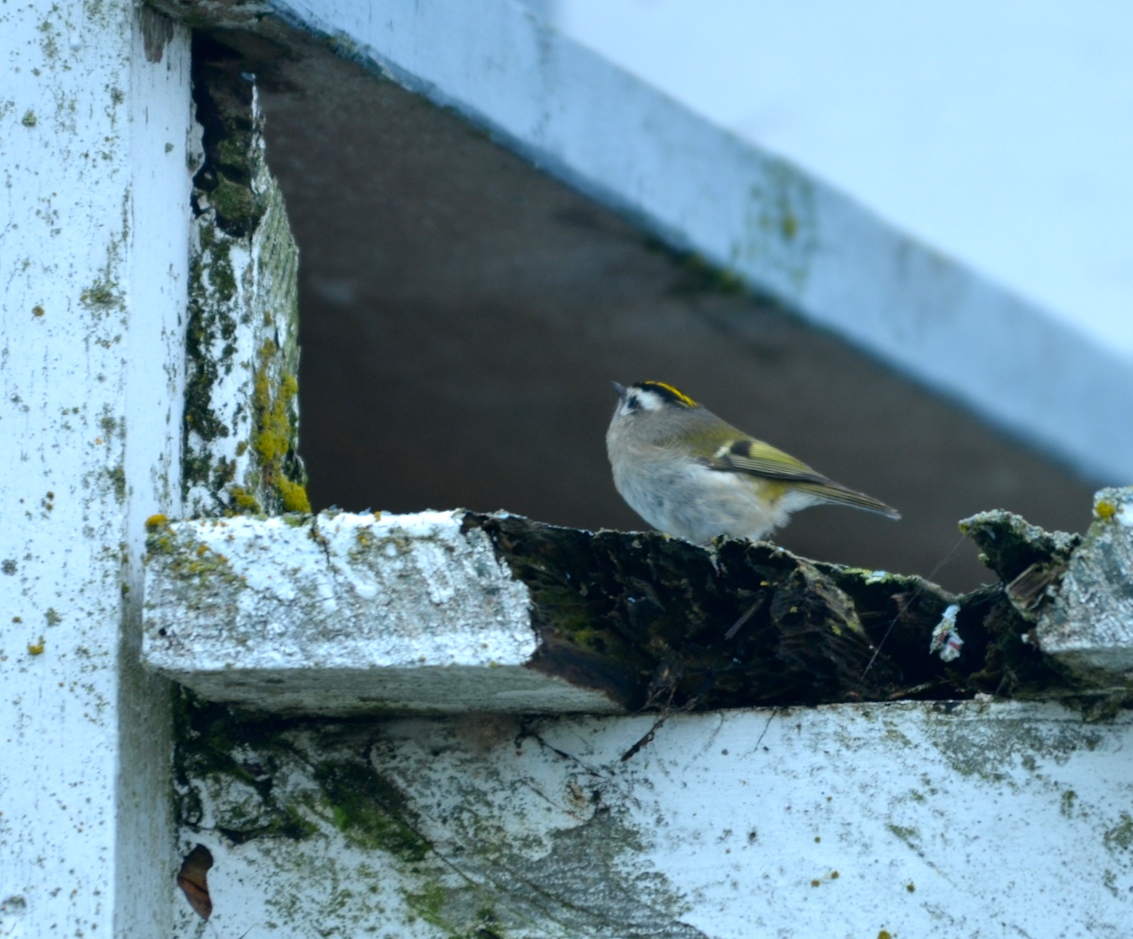
No whales were sighted today due to the low visibility but I had a little visitor who was busy eating insects off the outside of the house, a Golden-crowned Kinglet. It was alternating hiding in the woodpile and catching serious numbers of insects on the house. It is a great little flyer, and able to almost hover as it picks up the bugs. A more likely place to find Golden-Crown Kinglets is high in conifers.

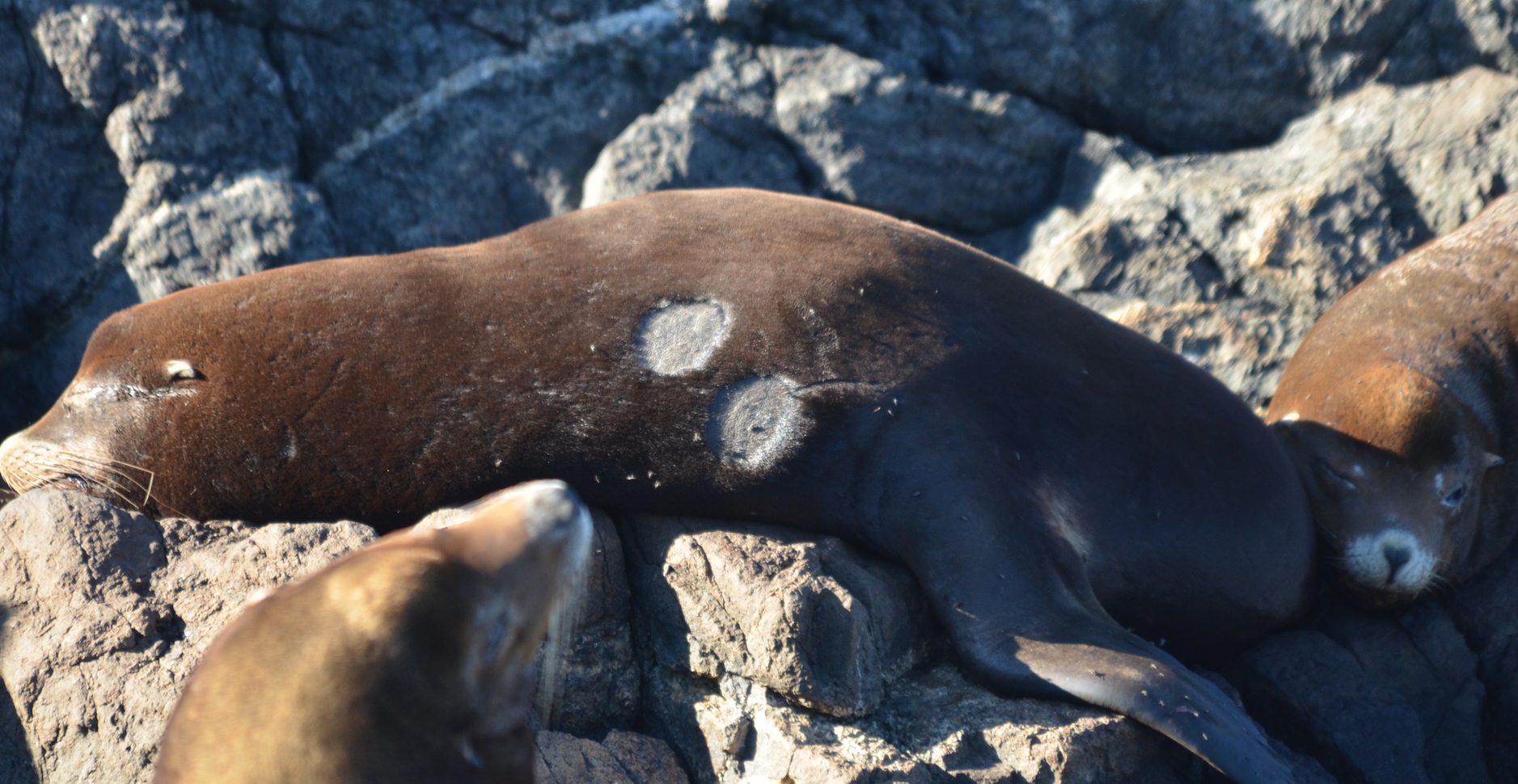
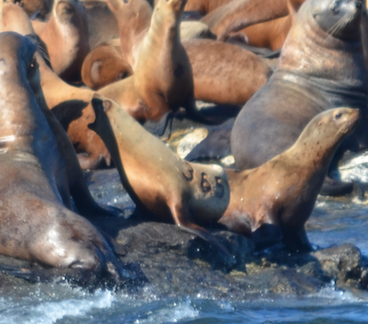
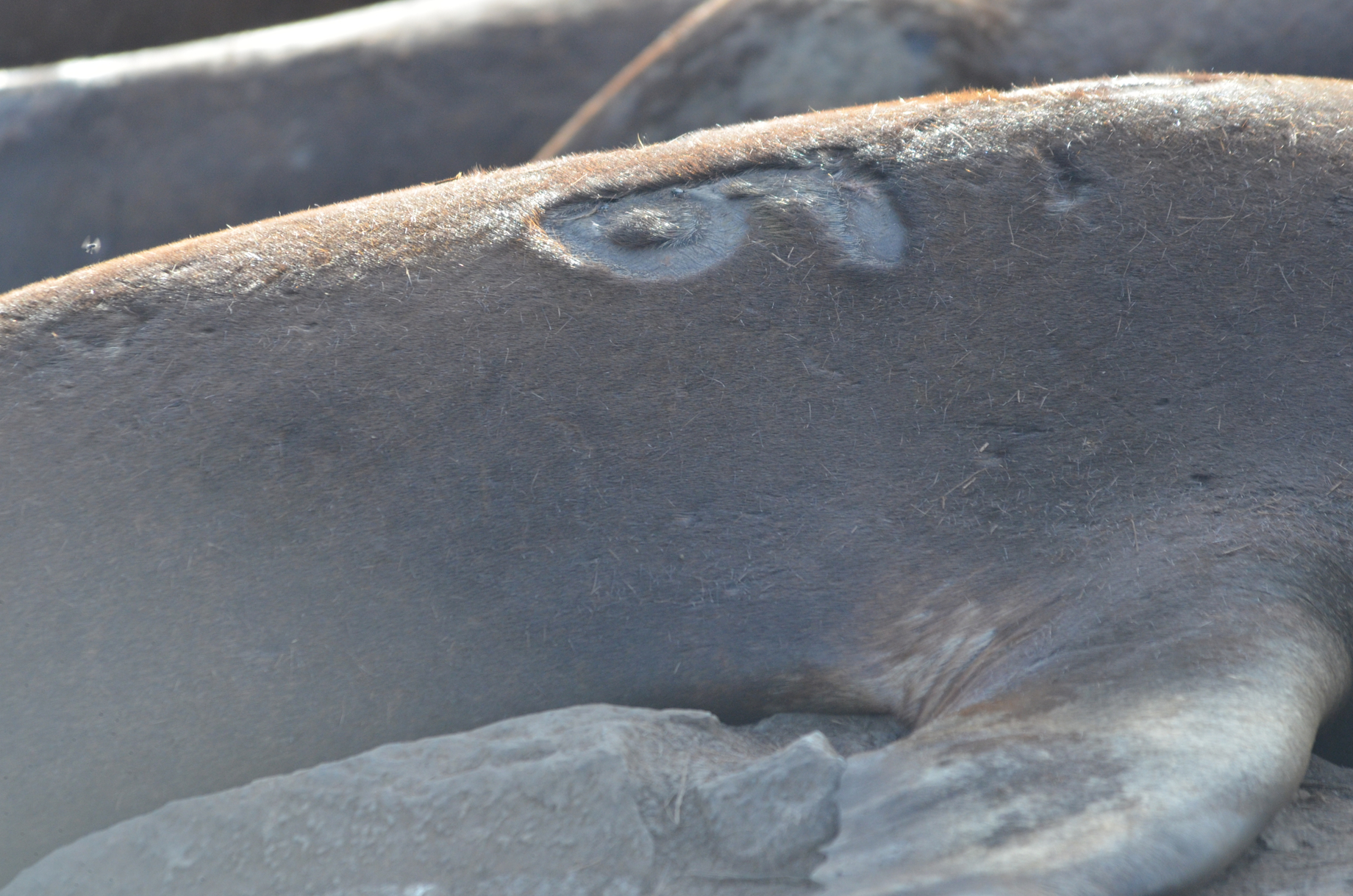
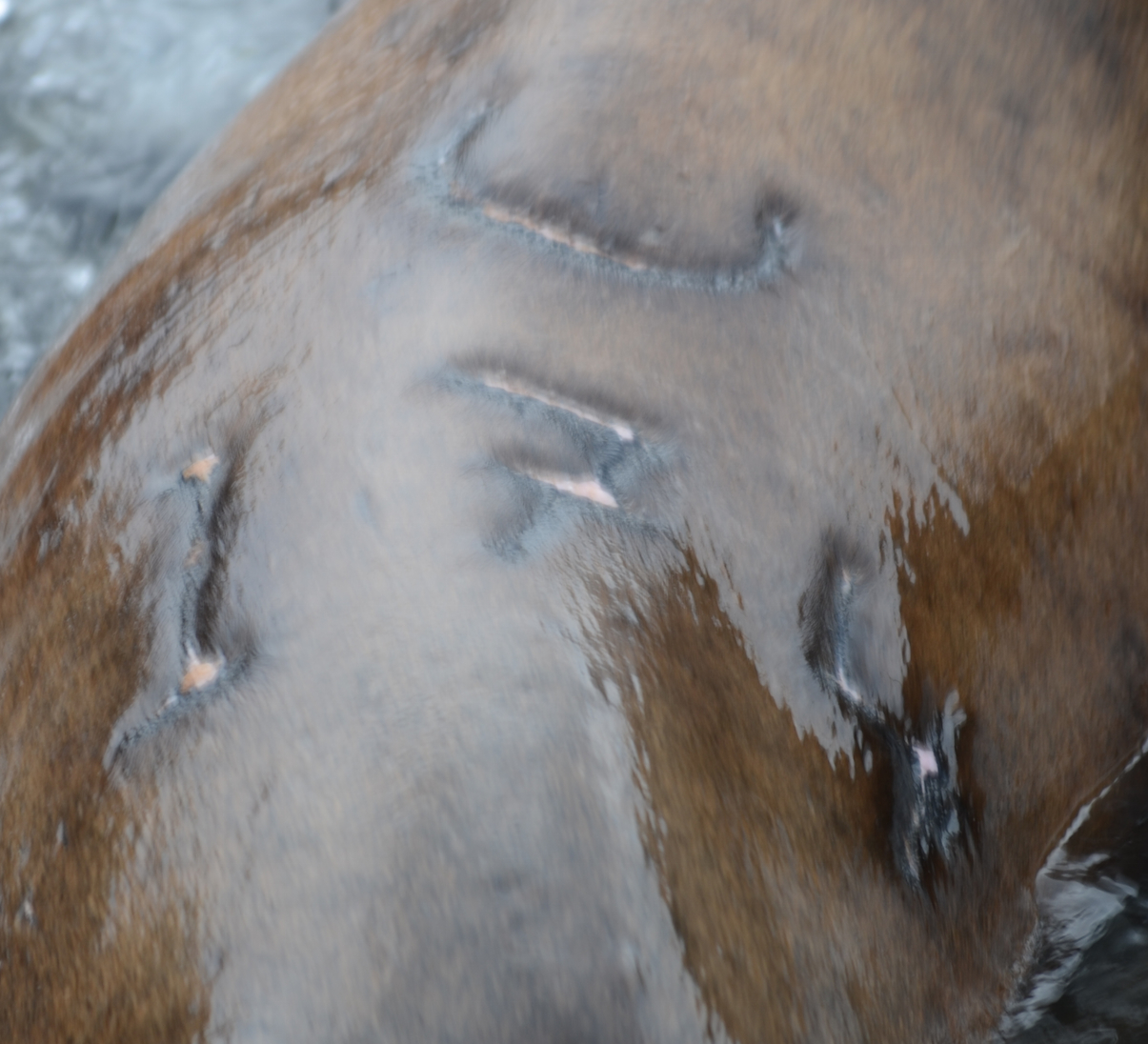
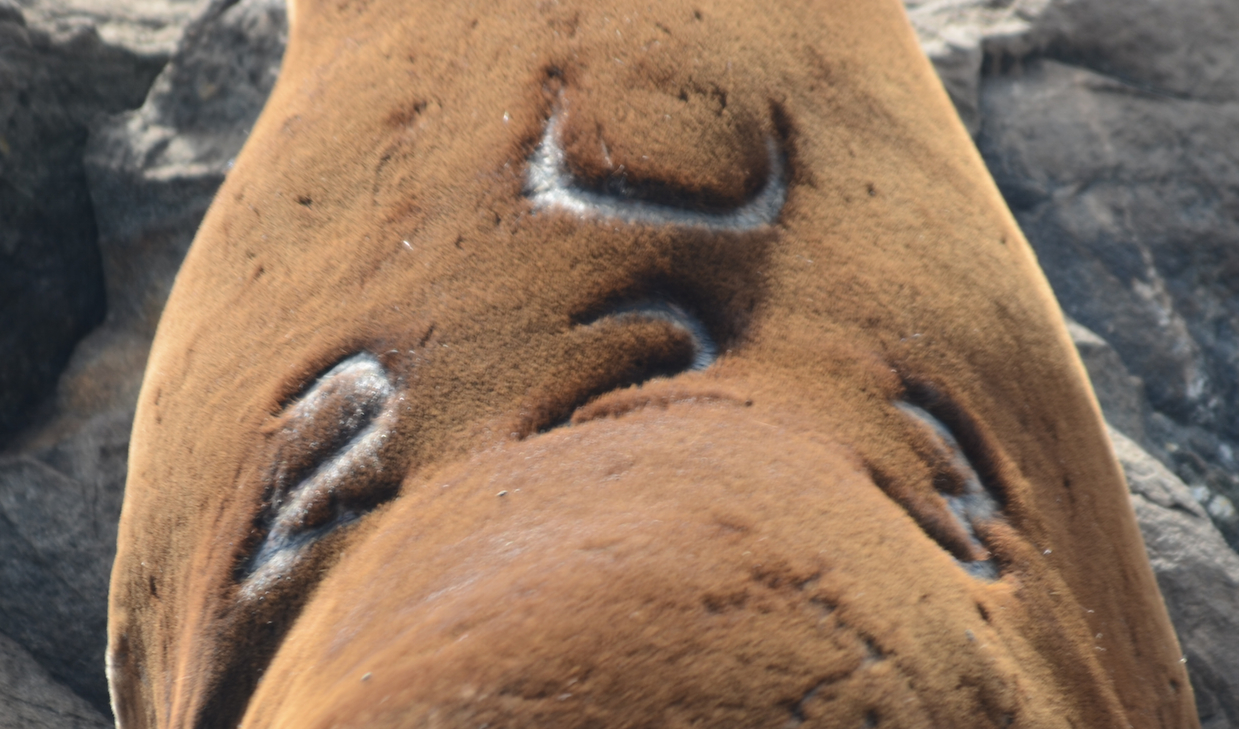
The animal census was put off due to the lack of visibility but my guess is that the California Sea Lion count will be high this week. They are starting to fill in between the boathouse and the shoreline west of the cairns. They are definitely damaging the cairns. One of the Californians there today had a fresh, still quite bright, red Cookie Cutter Shark scar. Many of the California Sea Lions have Cookie Cutter Shark scars. Some have quite a few while they are less common on the Stellers Sea Lions and I have not seen them on the Northern Elephant Seals.

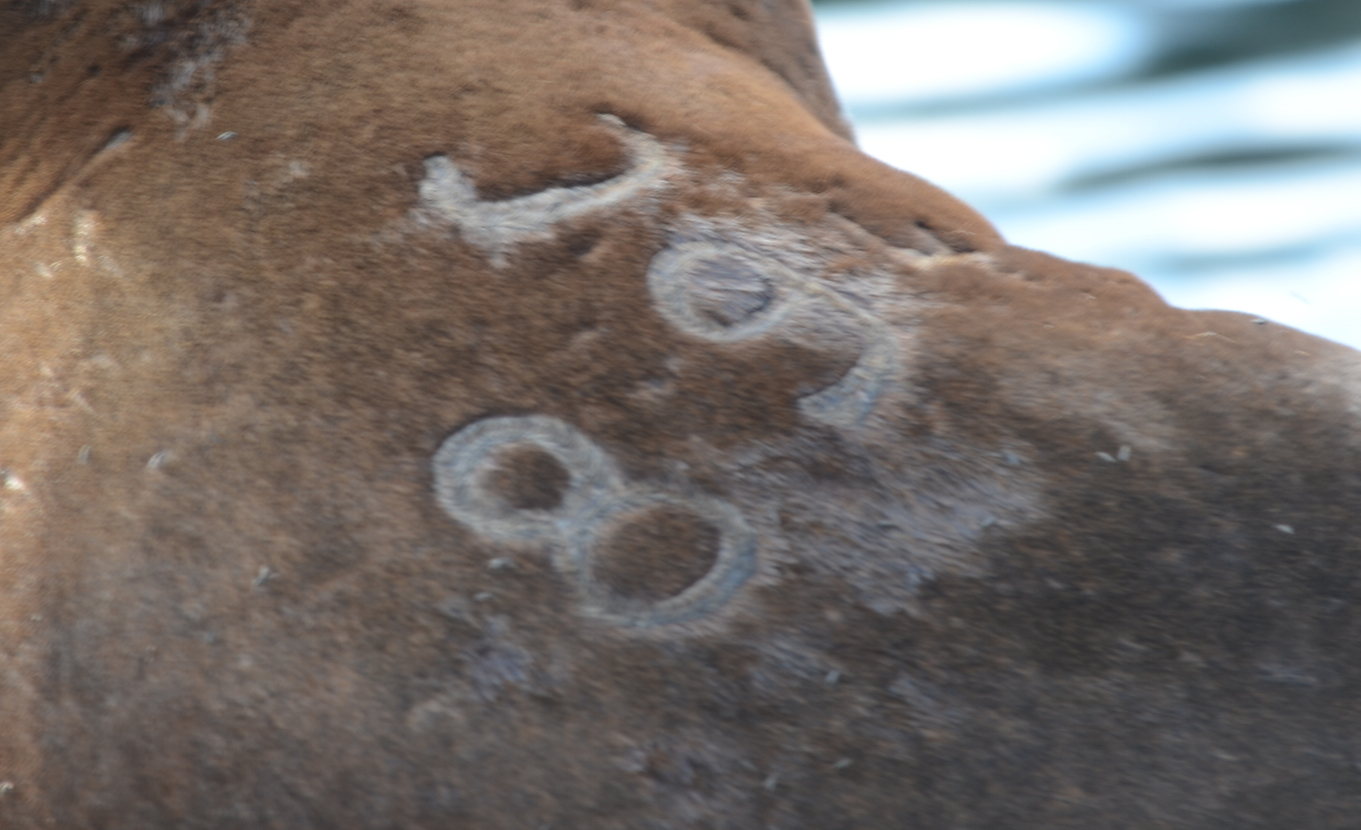
If you didn’t know, the Cookie Cutter Shark is not very big but has this amazing feeding technique not unlike a hole saw, but much more organic. It clamps on with its lips, bites down and then spins its body around. These little dervishes will take circular plugs out of larger animals including whales, resulting in perfectly circular scars a few inches across. They have even been observed taking a chunk out of a Great White Shark. Weird but true they can also feed like regular sharks on smaller prey and they are very common. They are a vertical migrator found up to 3 kilometers down and come up to the surface at dusk, descending again at dawn.

Speaking of weird but true predation stories, a weird thing associated with the California Sea Lions is that they seem to puke up their fish bones and otoliths. The evidence is everywhere, including on each other. On that charming note, I will sign off.

Chores were routine. There were no visitors.


Drizzle, Fog and Steaming Sea Lions

It was a wet, drizzly, foggy day at Race Rocks but very calm. For most of the morning, the wind varied little from  east northeast at less than 5 knots. It only picked up to 10 – 15 knots as it swung around to north northeast in the evening. The forecast for Thursday is similar and while winds are expected to rise to 25- 35 knots southeast on Friday. Periods of rain, cloud and showers are on the horizon in spite of the barometer rising (overall trend) since late Monday.

It was a quiet day on the vessel observation front and only three whale watching vessels were noted in reserve. One ‘sports’ fishing vessel came through at very low speed, well positioned away from the animals.

There was some cetacean activity noted during the day as visibility increased to over 5 nautical miles. This included two Humpback Whales feeding near Rosedale Reef just outside reserve to the south, a Minke Whale just east of North Rock and Dall’s Porpoise to the southwest.

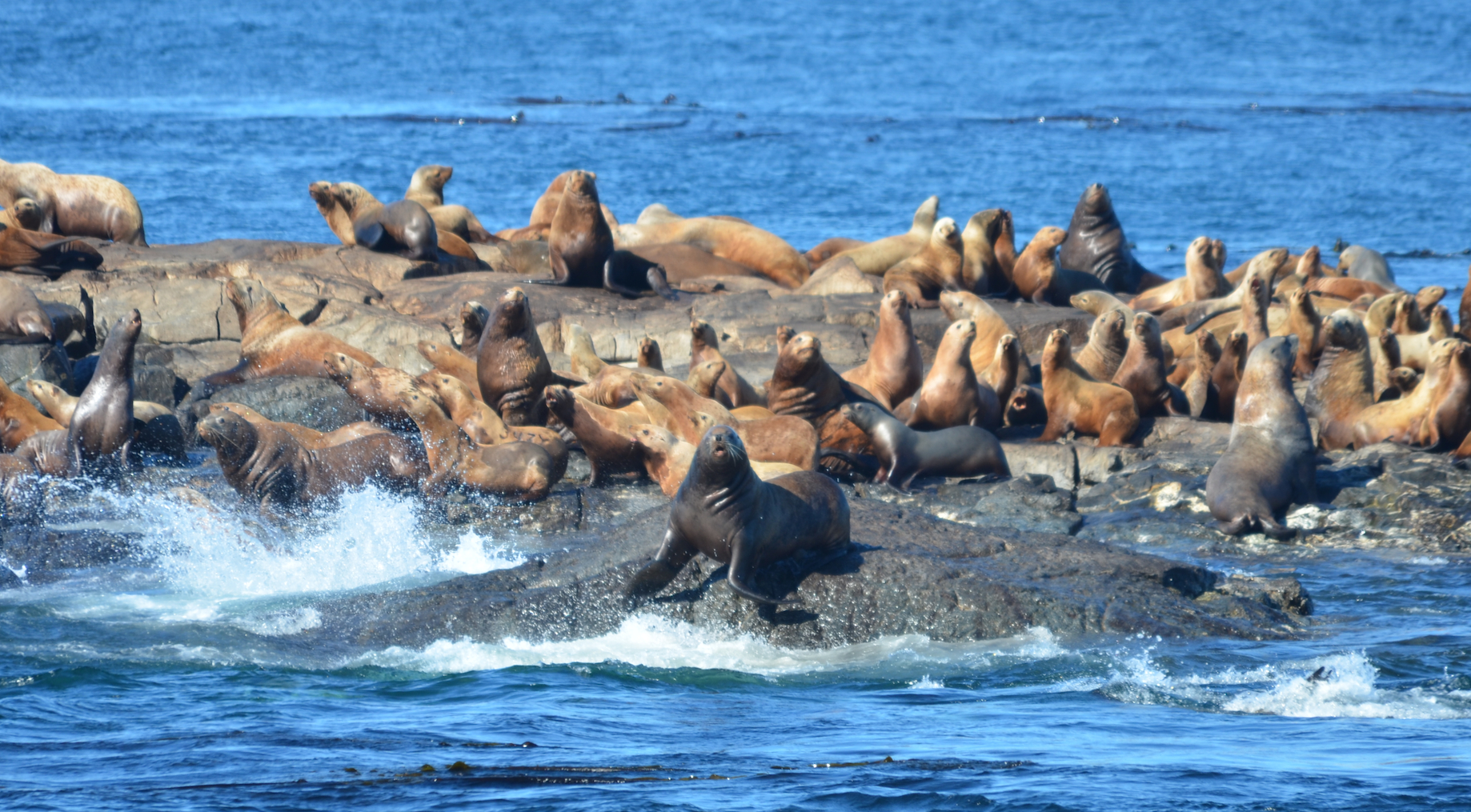
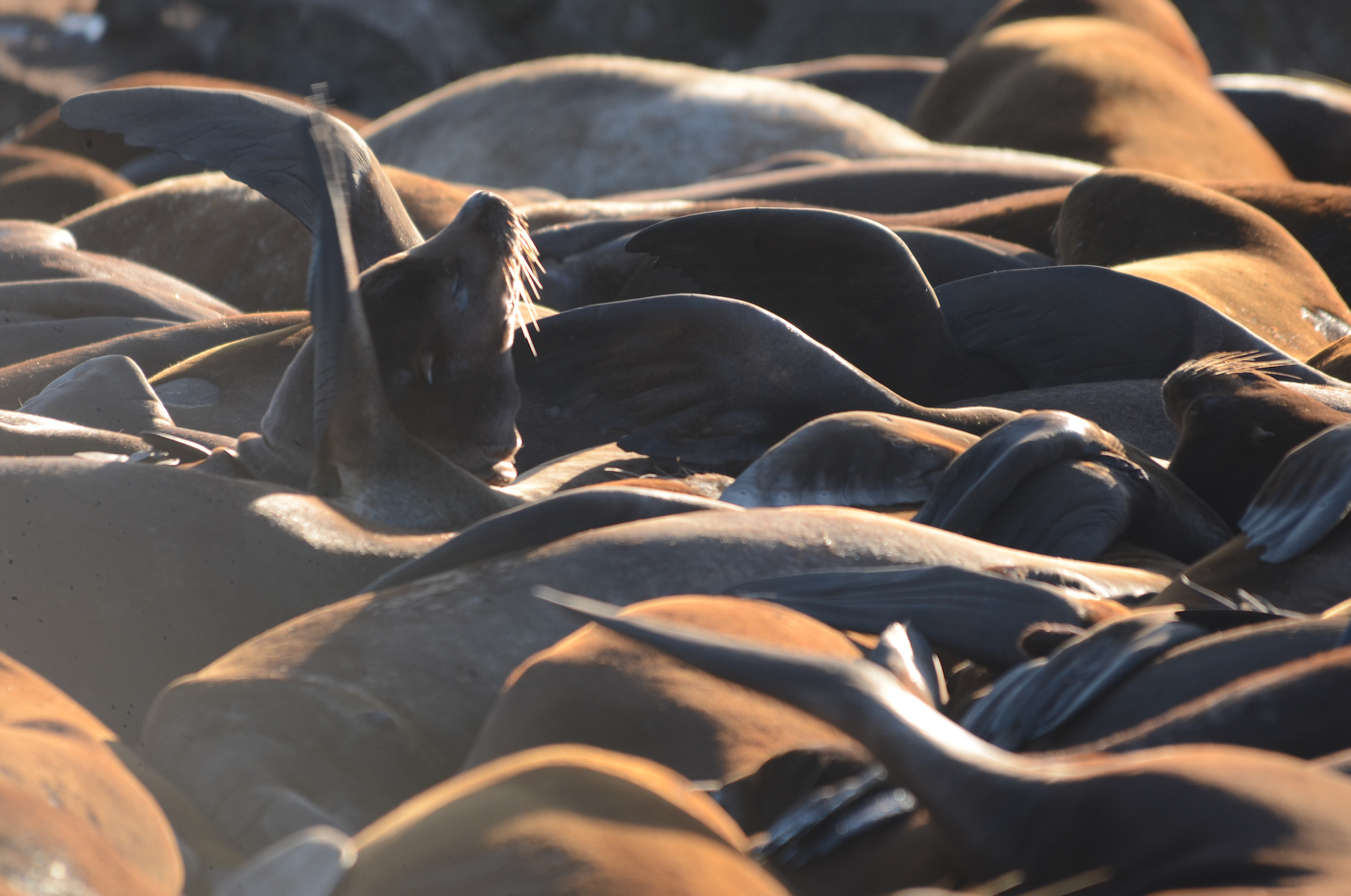
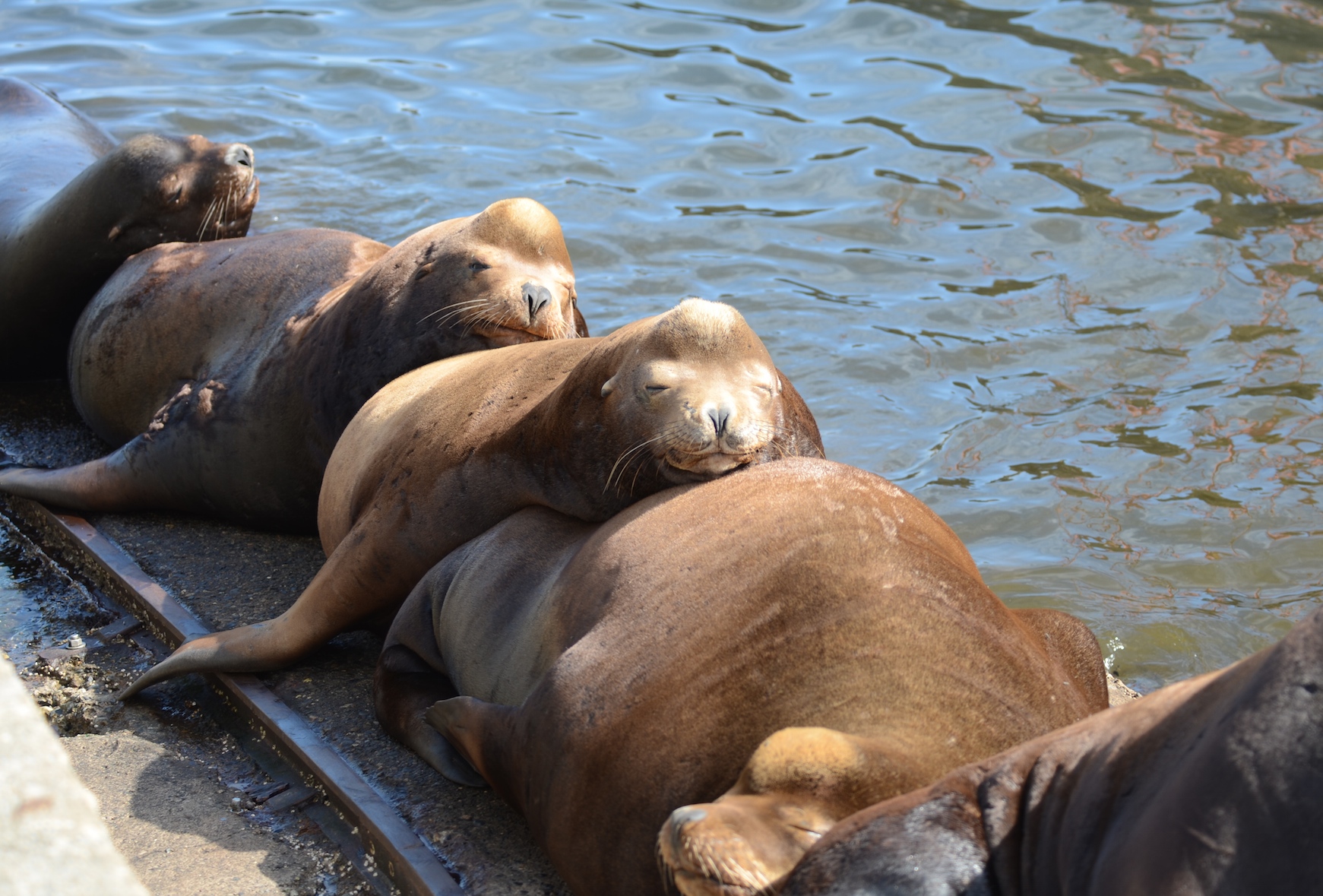
On Great Race, the Sea Lions were steaming today as air temperature hovered around 12 degrees C. and the cooling rain was evaporated off. Part of their haul-out at this time of year is a physiological need to warm their skin during the moulting process, thus the tidy rows of animals pressed against each other and the piling on top of each other to share their body heat. Some California Sea Lions have taken to rock climbing these last few days. They are well established above the boathouse now and at the base of the cliff under camera 5, so the logical (to them) extension was to move further up and there were three of them up by the helicopter pad today. I suspect that they will really like the heli-pad, if they make it that far.

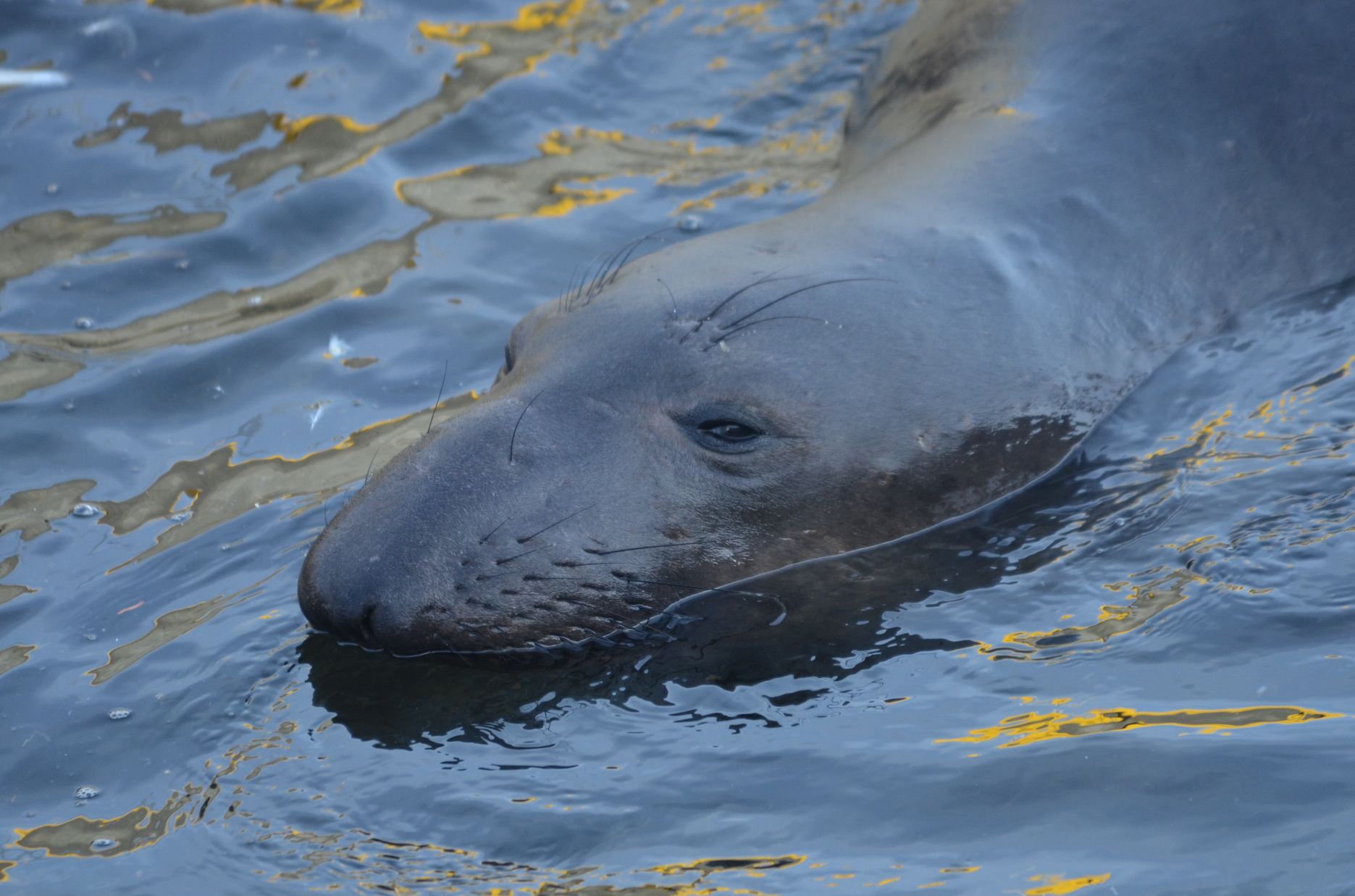
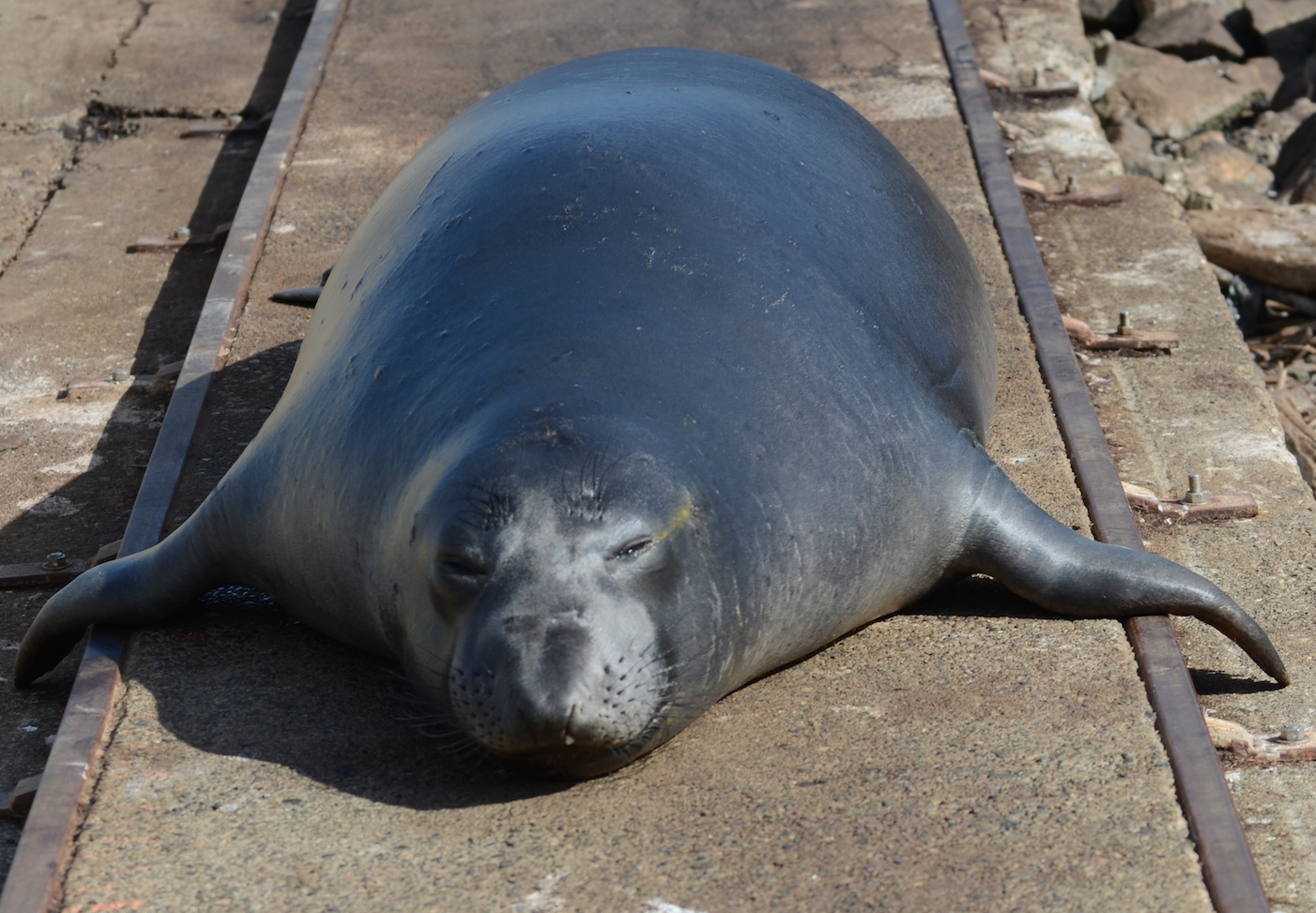
There were six Northern Elephant Seals hanging out in the water around the jetty today.

Adult Glaucous-winged Gulls and this years young, continue to frequent their nesting territories much to my surprise. I have seen them chase off Thayers Gulls. The “visiting” gulls roost in peripheral areas away from the nest sites. A family of four Canada Geese continue to make the island their home.

Chores were as usual and there were no visitors.

Sun-Monday Log: Double Billing Blog

Two more, lovely, sunny days squeezed in with the barometer down at ~ 1010 hPA and dropping. Light southeast wind today and yesterday will switch to variable and east on Thursday and the forecast looks like a change towards showers and southeasters towards the end of the week.

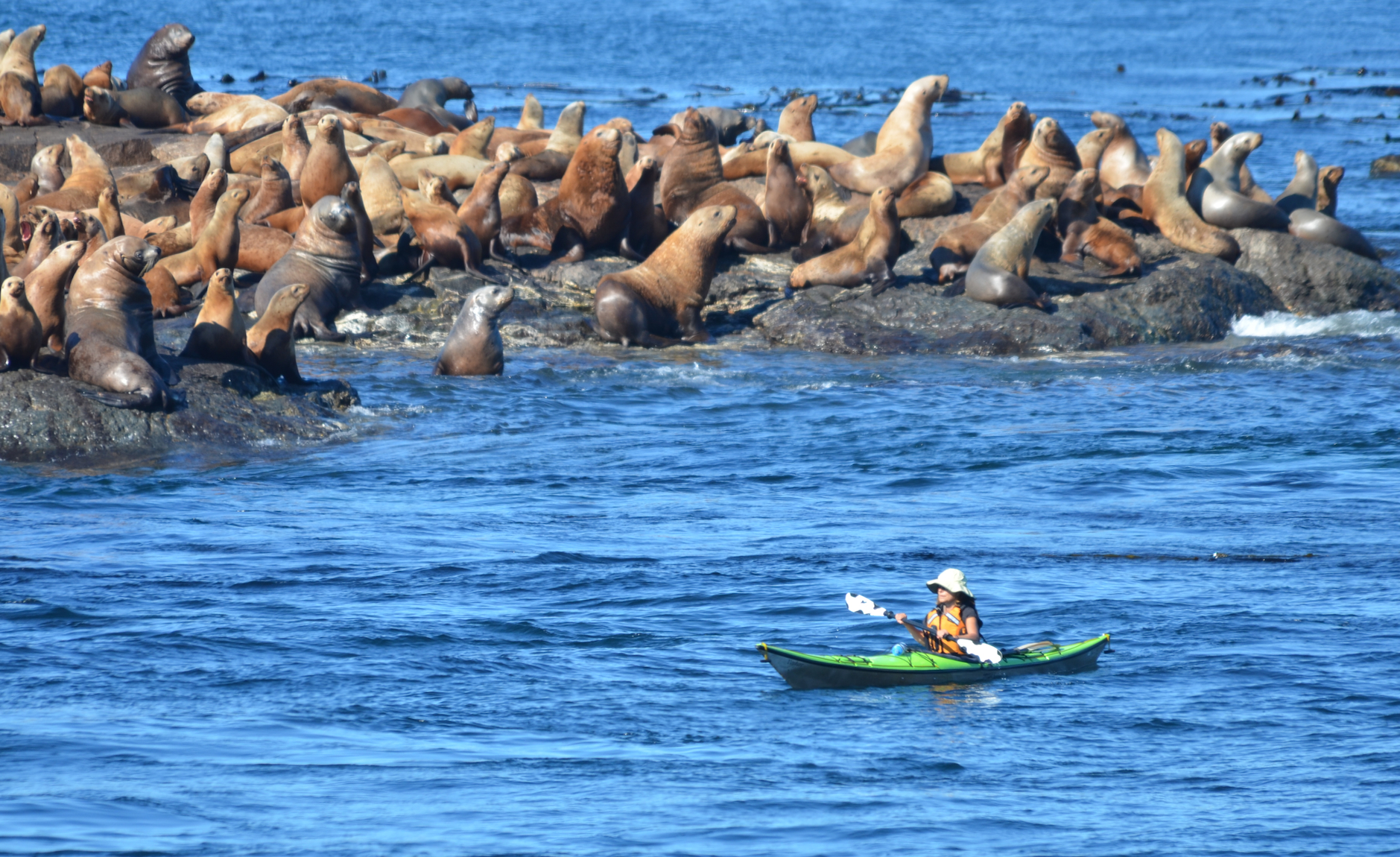
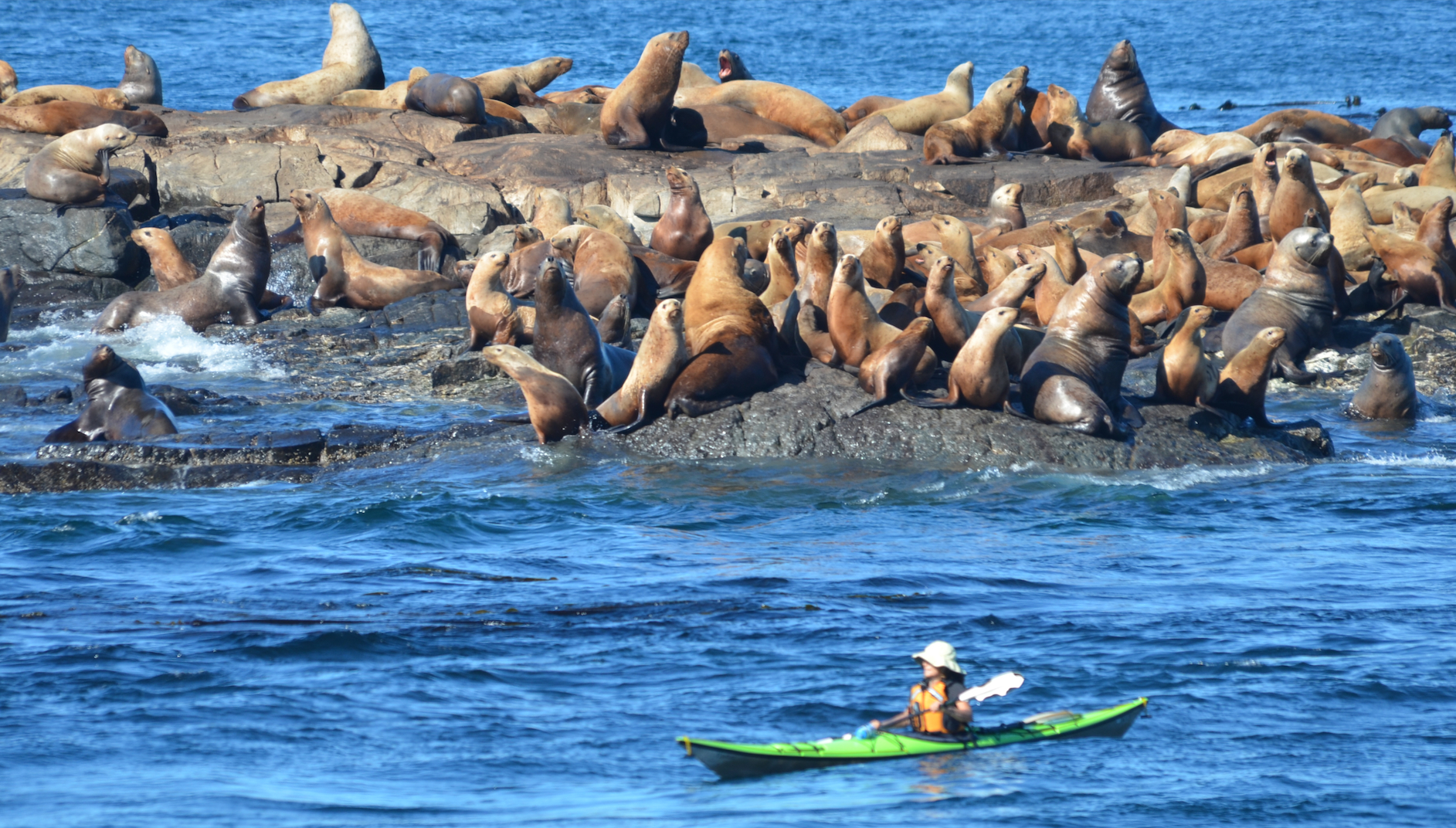
Ten visits by whale-watching vessels were observed in the Ecological Reserve each of the two days being reported. A handful of pleasure craft came through as well and everyone except the same guys who are always in a hurry and one boatful of lucky fishermen, were well behaved. The fishermen were lucky as they must have lost power and were swept over the little reef by Turbine Rock. One was ready with a paddle and the youngest one got the kicker going which got them out of there (eventually). That was exciting, especially for them. Eight kayaks came through the reserve yesterday. The paddlers at the front came through without disturbing any of the animals hauled out. The weakest paddler came by on her own, last. The tide pushed her a bit too close the Middle Rock and the sea lions stampeded. Sometimes it doesn’t take much.

Humpback Whales are feeding close if not in the reserve just about every day now. The individual spotted by the Marine Science students is feeding downstream just to the west of Middle Channel, during ebbing currents. I am curious if it goes down and just orients itself into the flow and filters away. There is a lot of food in the area and large multi-species feeding flocks driven by diving birds such as Common Murres and all three species of cormorants. The gulls, and there are a lot of them, roost on Race Rocks and then rush out to the feeding frenzies which I am assume are either small schooling fish like herring, sand lance or anchovies and/or large zooplankton like krill. These crustaceans are also known as Euphasiids and they look a bit like tiny shrimp with really big eyes. Those are the same sort of treats that Humpback whales like to feed on with their baleen and they use their really big fore flippers that are white on the underside, to herd krill and forage fish.

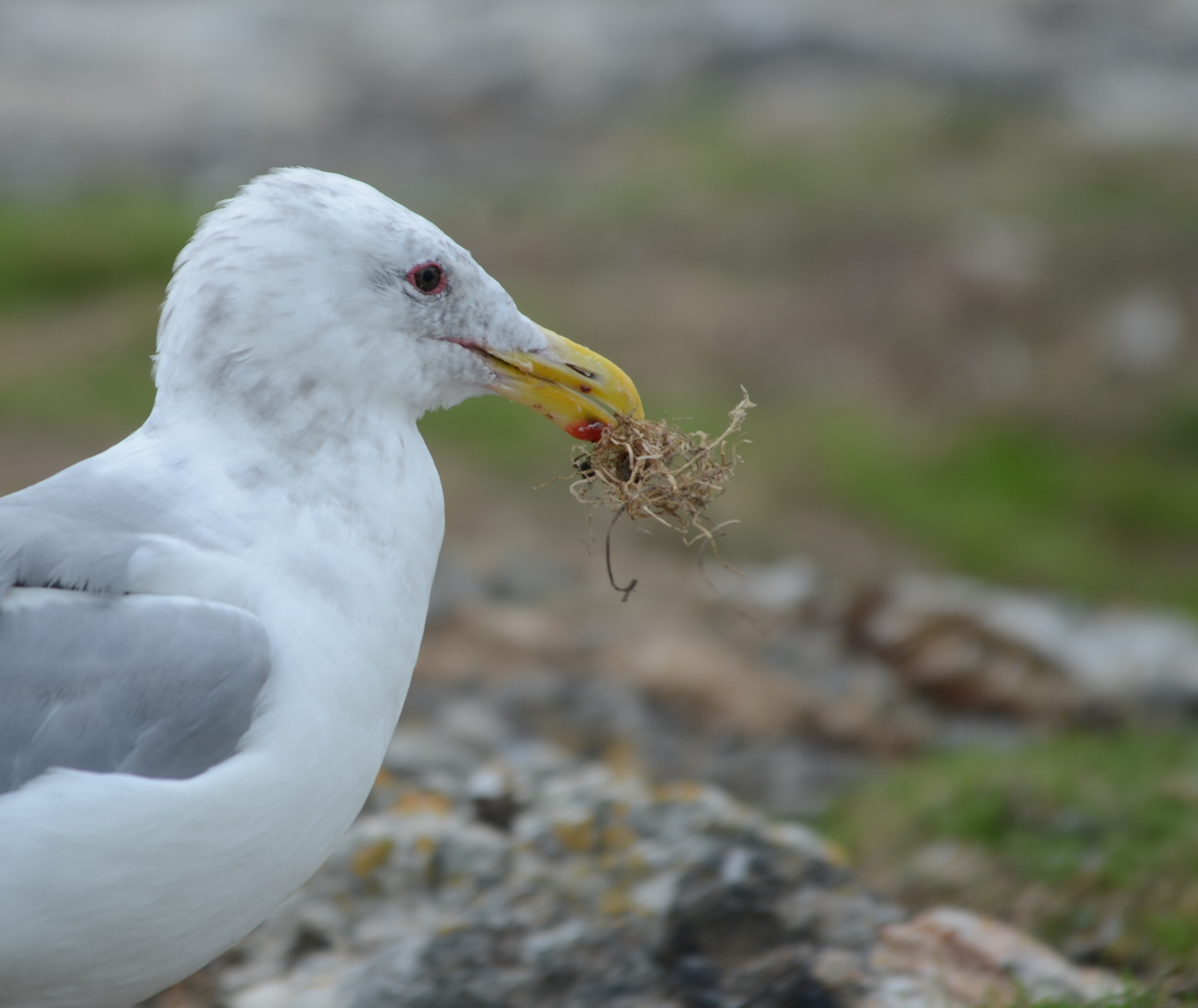
I have come to realize that the Glaucous-winged Gulls are still sitting around on the territories. Something I didn’t notice or understand last year until the spring shift and then I thought that they had just come back from somewhere. The juveniles that were raised here are mostly out foraging but also sometimes ‘hang-out’ where they were raised and also do a fait bit of begging from their parents. This week a lot of them have been practicing picking objects in their bills, flying with them and dropping them. Not sure if they are working on their aim but have noticed rocks, chunks of wood and bark and clumps of vegetation on the walkways. Yesterday morning I found a rock on the roof of the energy building and when I looked around saw the damage done to one of the solar panels.

Other birds seem a lot more refined. It is so nice to see the Harlequin Ducks back again, they are a favourite of mine. More and more Surf Scoters are flying through from west to east and it seems that fall is in the air.


Chores were routine both days and there were no visitors.


Sisyphian Struggles with Sea Lions

It was another beautiful day at Race Rocks with light north-westerlies turning to west and the barometer climbing considerably higher than it has in a week. The forecast is for more of the same with light winds – easterly in the morning then switching to west.

A few commercial operators were working in the Ecological Reserve today including one boat that calls itself a party boat. It came in fast and then went back and forth through Middle Channel seven or eight times before leaving. They also sat right in the middle of the current running against it but staying stationary for long periods of time. Strange but true.

The usual Saturday morning dive charter was here with divers in the water right in front of the sea lion haul-out on north Great Race, also as usual. Total, there were five tourism vessels working in the protected area, including three whale watching vessels. Only a few pleasure craft went through today. Most of them slowed and followed the rules. The exception was a rental boat that went through the reserve at high speed, stopped, changed direction and then roared off at full throttle right through an area with lots of animals in the water.

The ecological trends described in the Log during the last week continue as do the difficulties of identifying gulls, especially large numbers of multiple species, with different ages and stages of plumage all stirred up with hybridization and lots of exceptions to the rules. Yes folks, gull is officially a four-letter word and the jury is still out on some identifications.

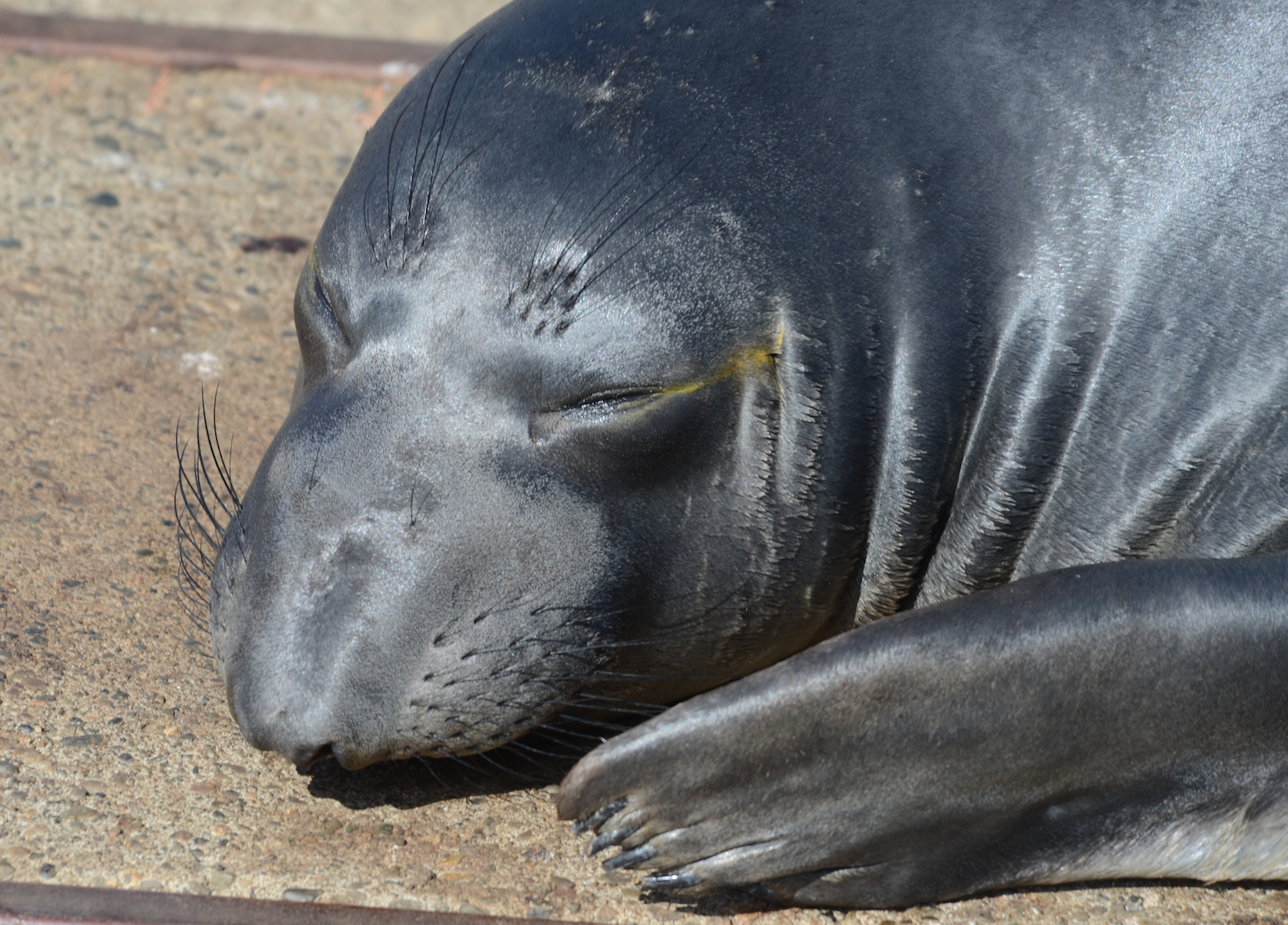
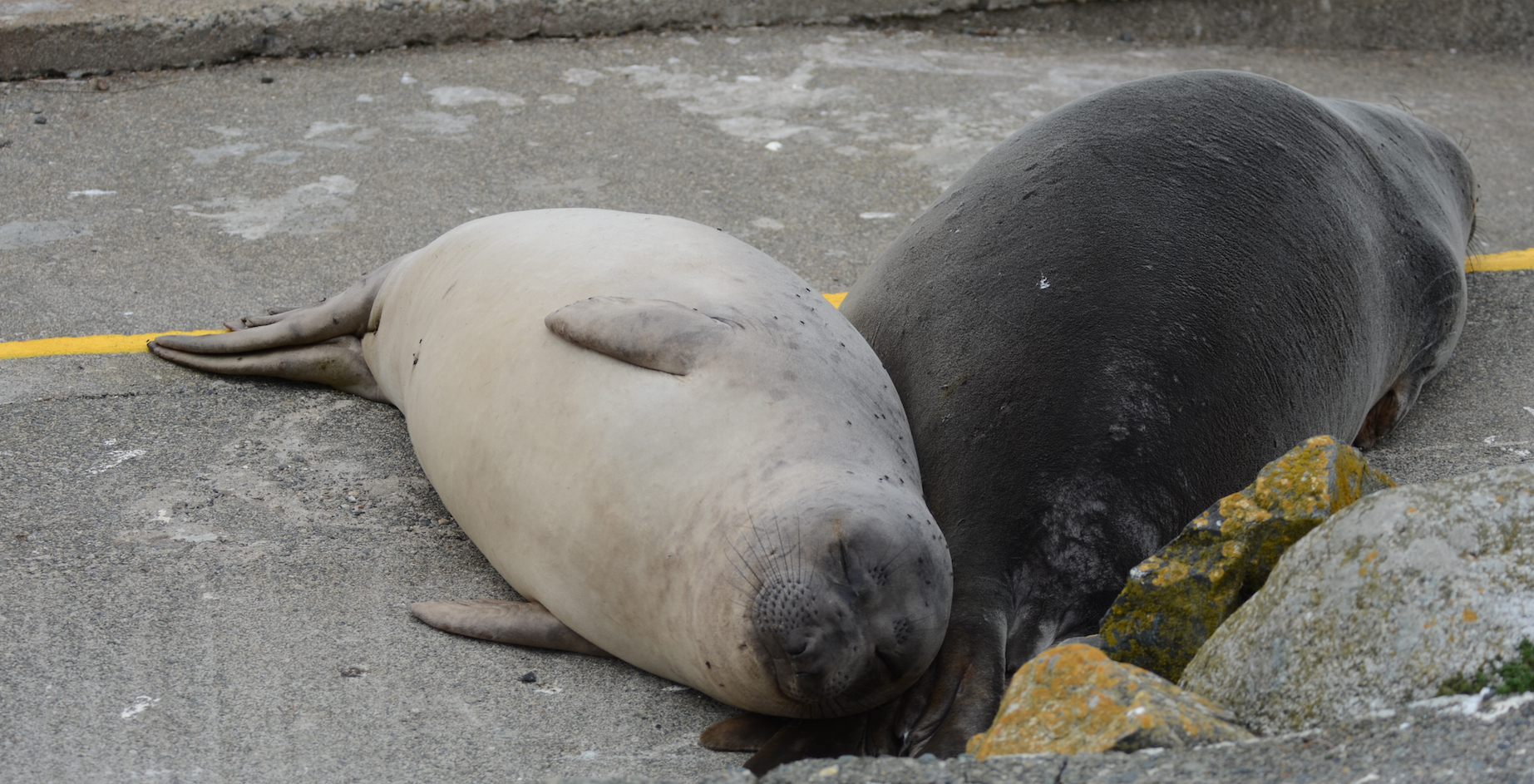
The sea lions continue to haul out and it seems that there are more Stellers Sea Lions hauling in the last few days, especially on Middle Rocks. Perhaps they are relaxed enough to haul out, after a day or two without explosions across the way. The extra sea lions on Middle Rocks may be why four young Northern Elephant Seals showed up at Great Race today; #5850 and three companions, all about the same size or smaller, two males and a female (the smallest).
Chores consisted of fighting entropy, not unlike Sisyphus, with similar results. There were no visitors.


Killdeer Calling in Daylight

The sun set behind Makah and Clallam territory on the American side of the Strait tonight meaning that autumn is the new reality. What a glorious end to a day that just kept improving. Serious clouds followed earlier heavy fog and the threat of rain was kept at bay by light and variable winds, most of the day. The wind finally turned to west 15 – 20 and the sky cleared. The barometer stayed above 1015 all day and the tendency now is rising, which bodes well for tomorrow. The forecast is calling for some clouds and a 30% chance of showers tomorrow followed by a mix of sun and cloud.

There wasn’t much vessel traffic in reserve today, just a couple of well behaved pleasure boats passing through and three whale watching vessels.

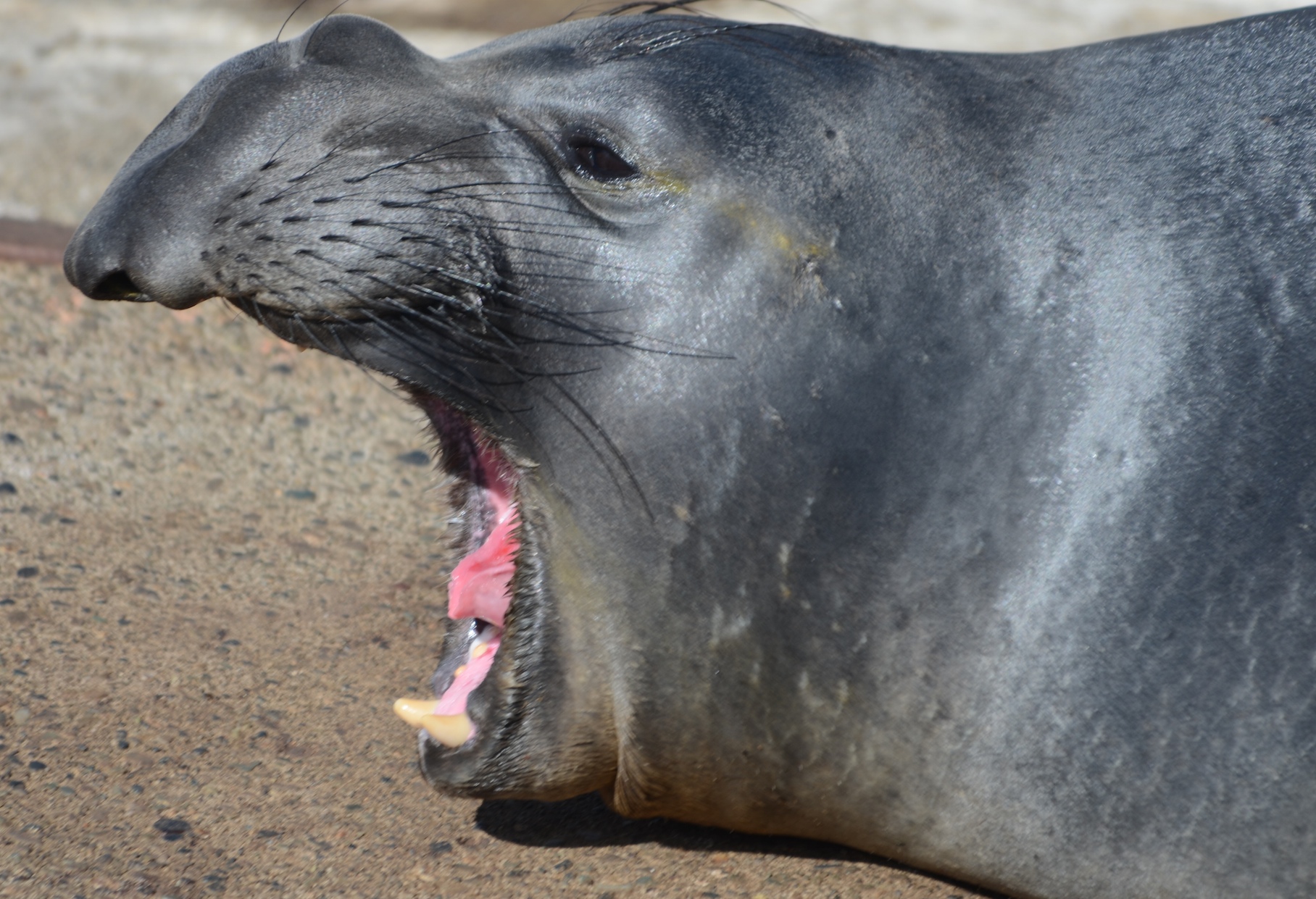
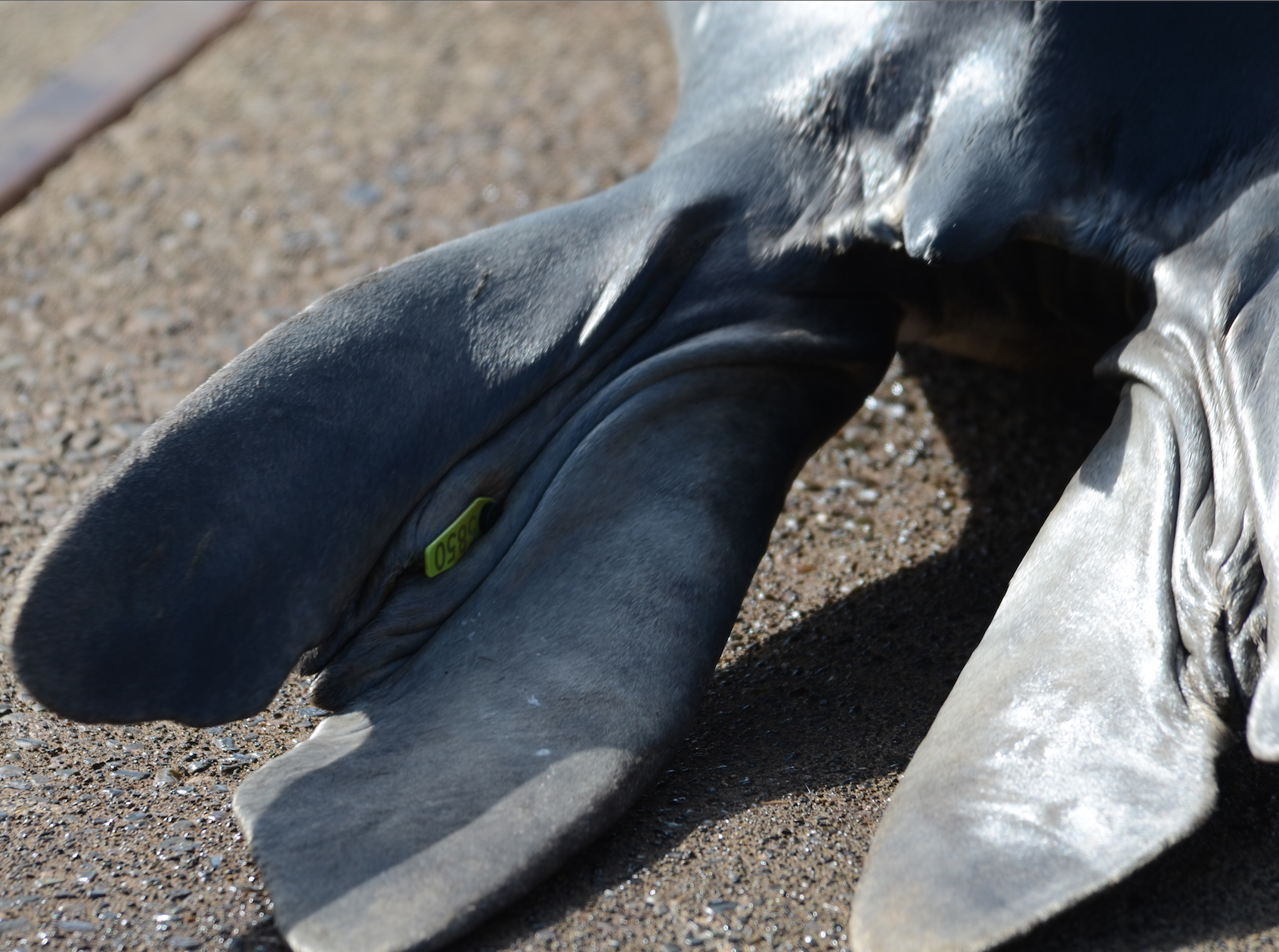
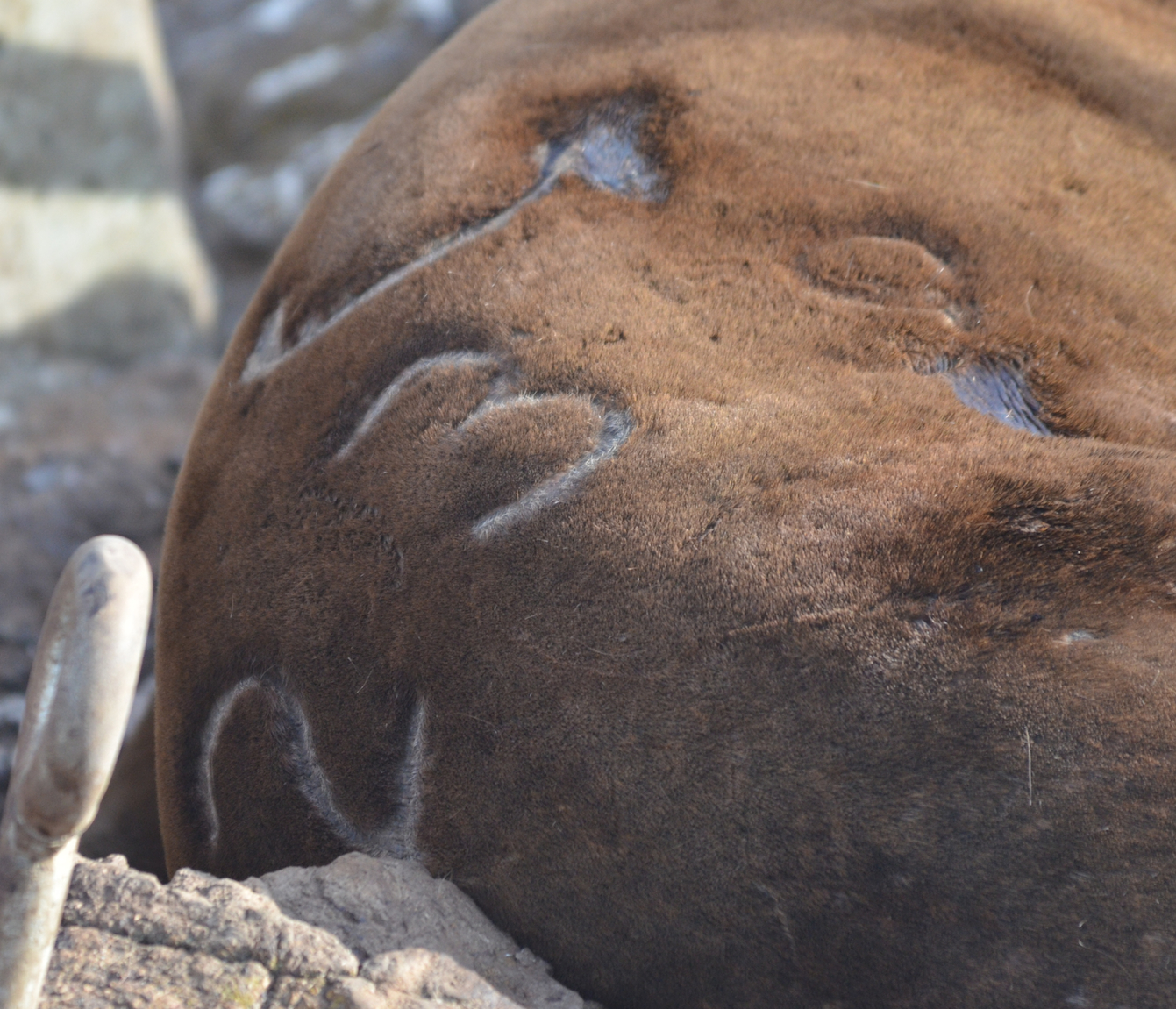
The young male Northern Elephant Seal #5850 returned to haul out up on the grass at Great Race Island today. He was tagged in Ana Nuevo Island as a weaner in 2012 and has now lost all but one of his tags. Today he had a male companion about the same size and they spent a little time sparring before falling into deep sleeps. The little female he was with last time spent most of the afternoon asleep underwater, on the bottom, just off the jetty.

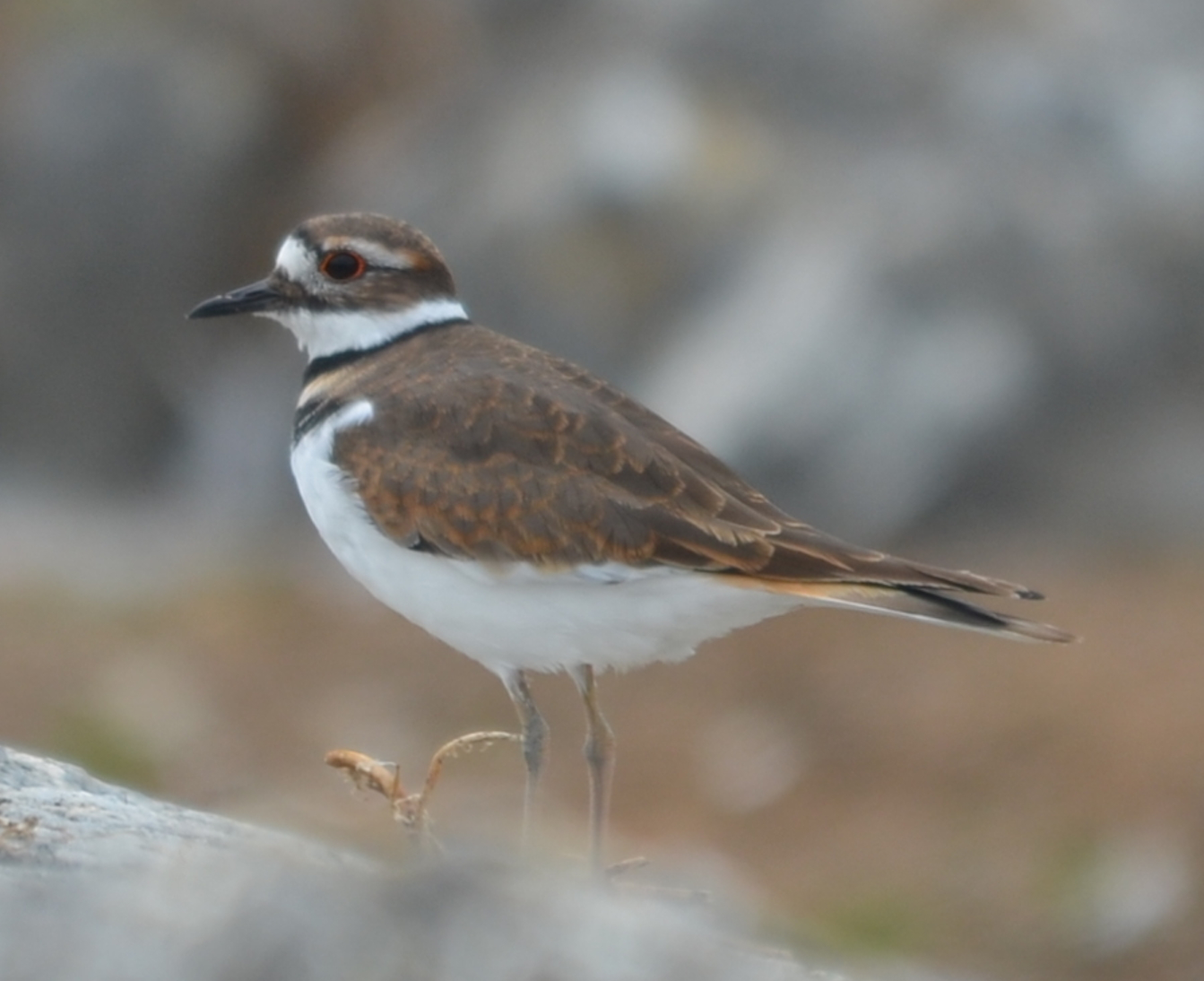
Every night at Race Rocks just after dark I hear Killdeer calling and today I had a chance to see them in daylight, which is a rarity; beautiful birds with very large eyes.

I would love to know where they usually go during the day and why they fly out to Great Race for the night.

The number and diversity of gulls here right now is a little staggering and there are a few that I am having trouble identifying. There is one with yellow eyes like a Herring Gull but smaller in stature with a smaller less fierce looking head. Do Thayers and Herring Gulls hybridize now?

Other than re-stringing the jetty fence, chores were routine today and there were no visitors.


Count Day

The sky was partially overcast early but cleared a bit in late morning. Then it clouded over and finally started to rain as it socked in just before dark. The wind started out east-northeast then turned to west late morning before backing all the way around to southwest. The barometric pressure is rising as I write this log and the forecast calls for clearing in the morning and sunshine. Winds will turn to westerly 10 – 15 knots Friday afternoon.

Commercial whale watching vessels made fifteen observed visits to the Ecological Reserve today. One vessel regularly comes in fast and not slowing until well inside the go slow boundary and then consistently speeds up early. The same vessel can be seen hop-scotching ahead of endangered southern resident killer whales as the pass by and in the reserve, sitting almost on top of the sea otter. It is a large, noisy vessel that reliably pushes the limits of respectful whale watching and will end up by hitting an animal or worse. Most of the operators realize that this sort of behaviour is not sustainable.

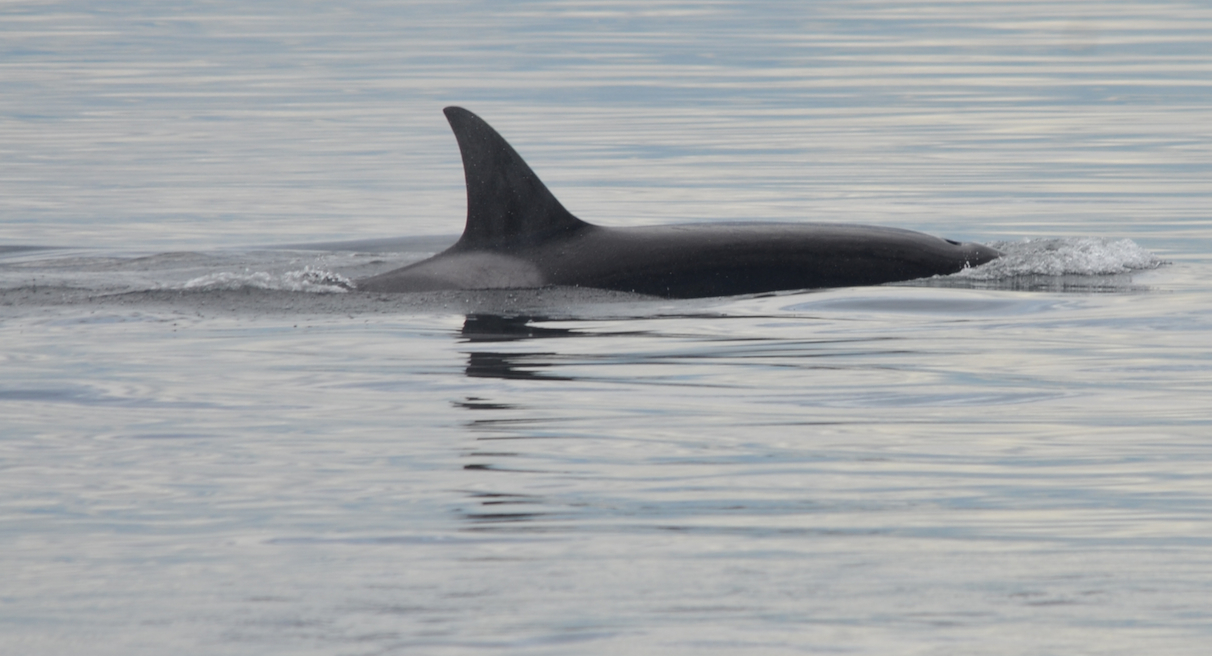
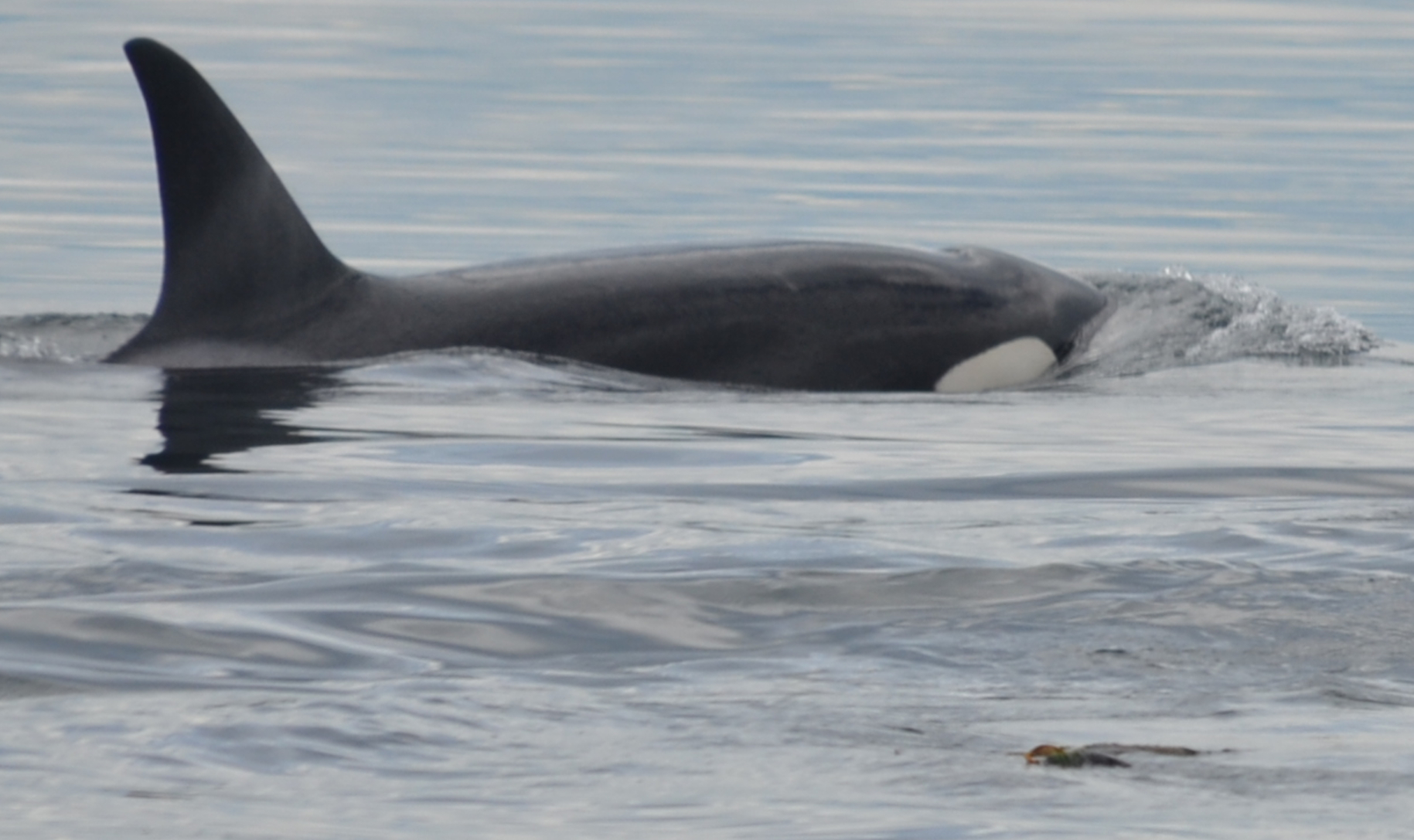
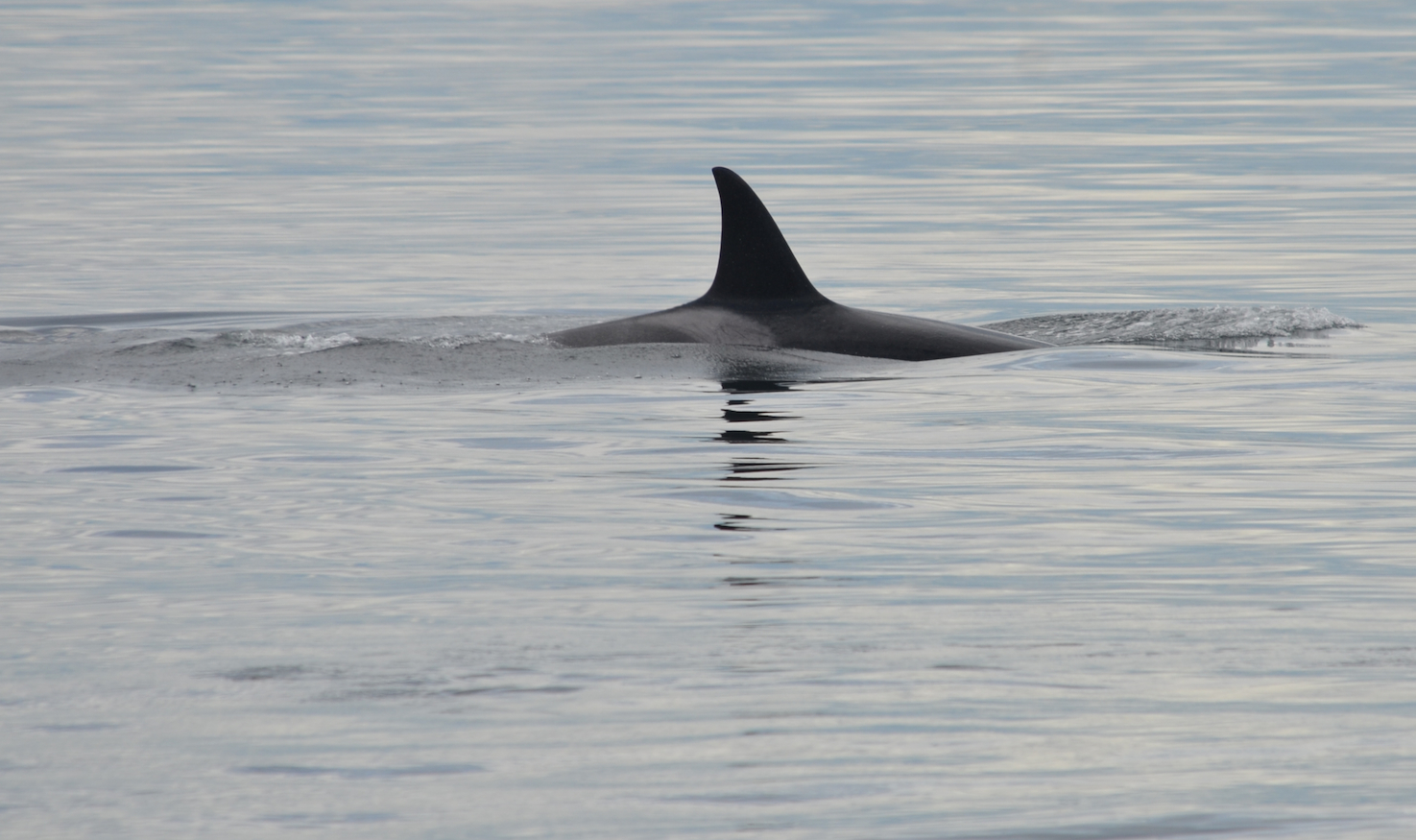
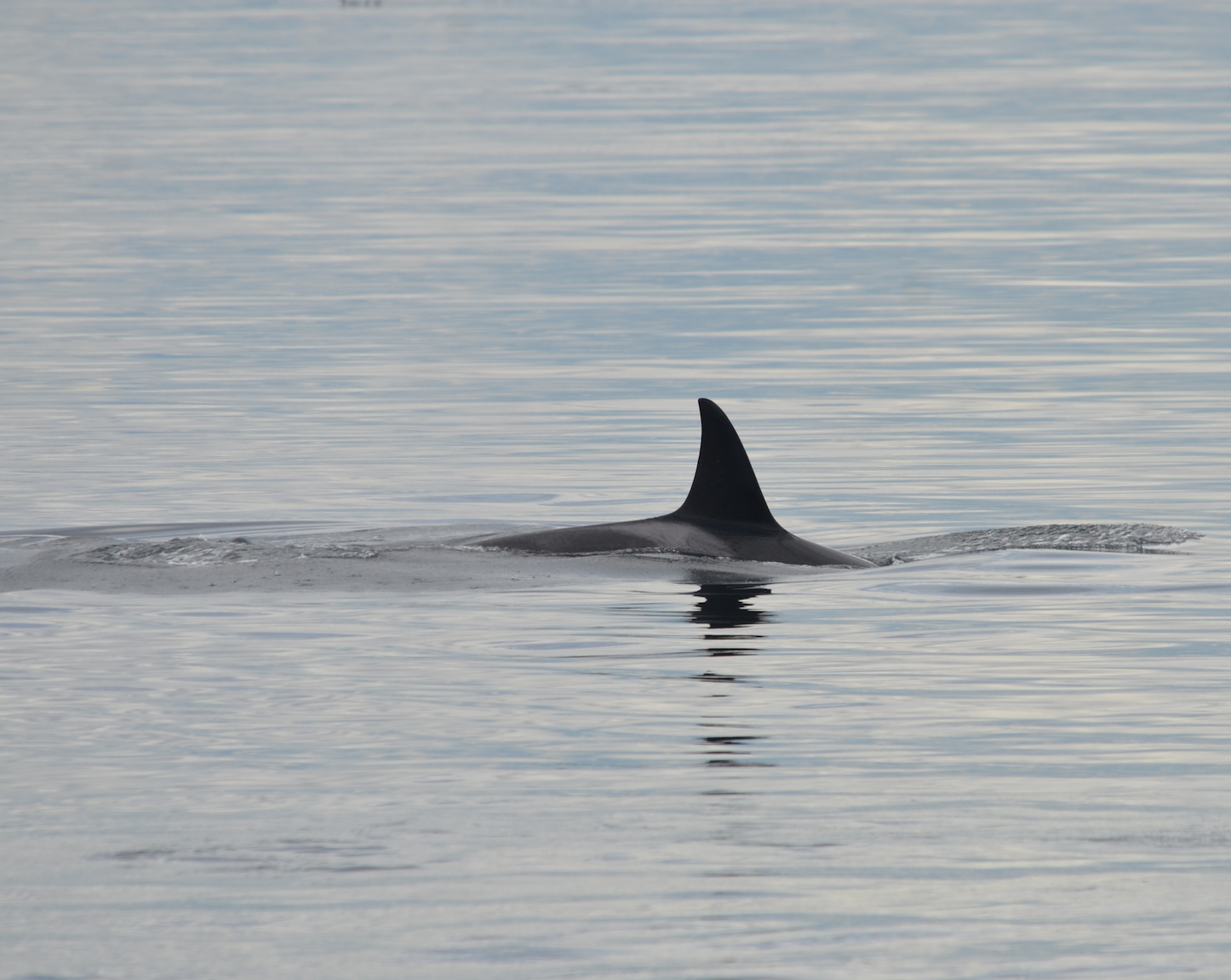
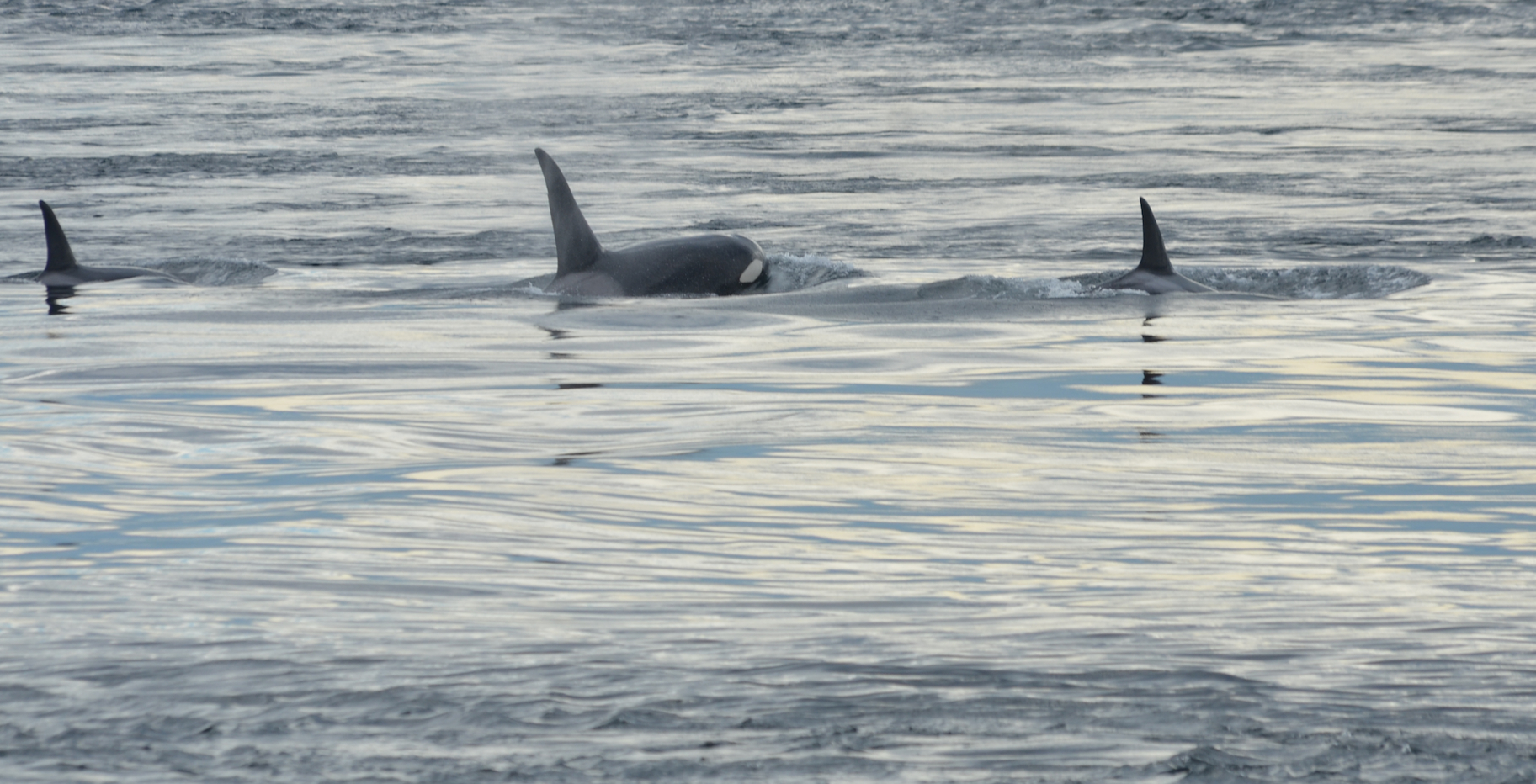
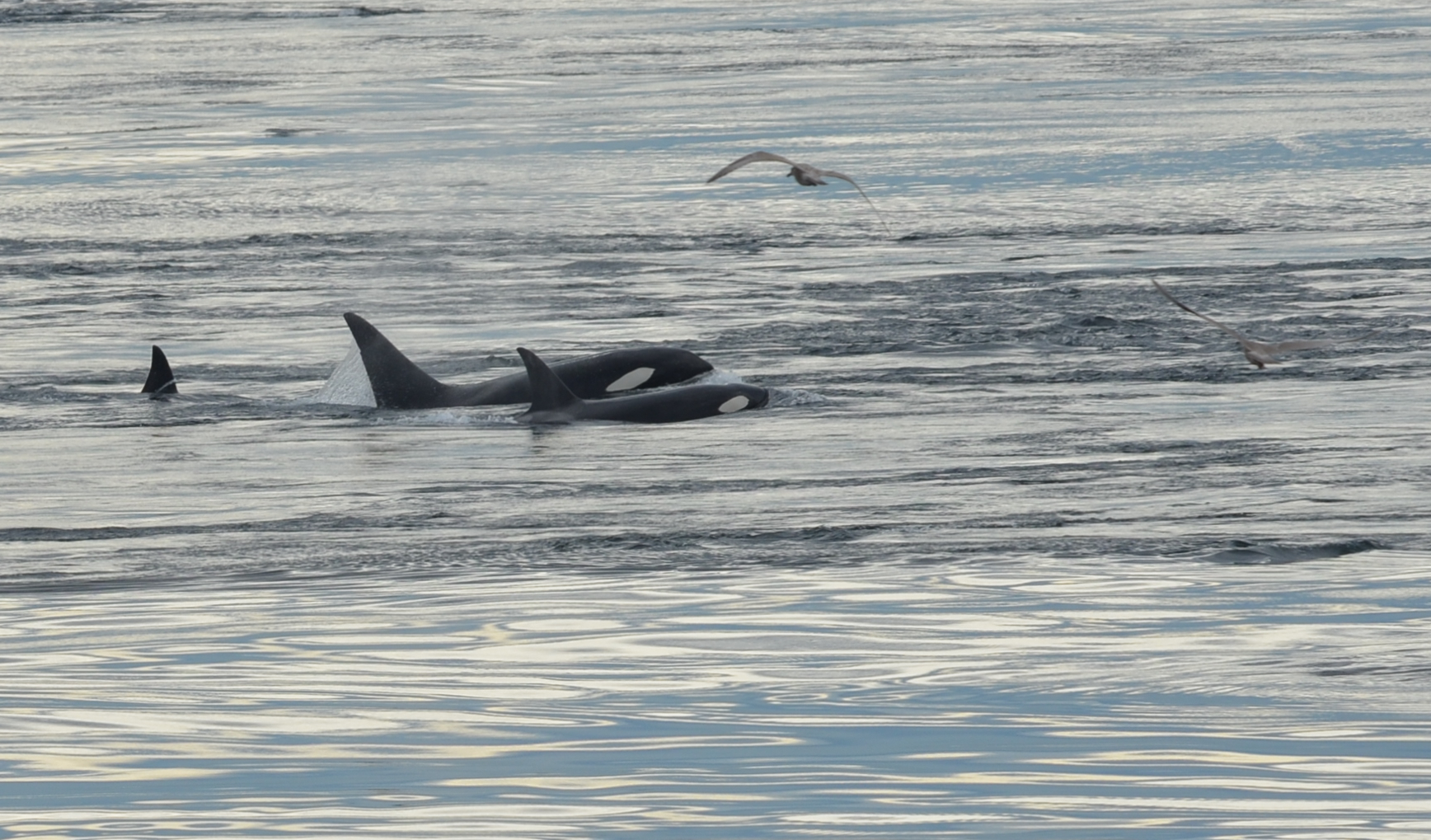
Biggs Killer Whales were already being followed by the whale-watching fleet before they came into the Ecological Reserve from the east and milled in and around South Seal Rocks and the breaking rock just off the energy building. There were many sea lions in the water, some craning their necks to see better and others just trying to maintain as much time as possible in the air, by repeatedly leaping airborne. I am not sure if the killer whales made a kill or not but sense that they did. There was some fancy criss-cross swimming by the first three whales, then a little one accompanied by a bigger one arrived on scene. This was followed by a few minutes with all the whales underwater and gull action above, which made me think food leftovers. After that they left, heading south and then southeast, dogged by the fleet. Two vessels came into the reserve while the whales were already inside. It is possible that they were not aware on entering but they did not leave once they were aware of the whales’ presence.

Ecologically, the transition from summer into fall continues. Salmon migration is still strong and birds, pinnipeds and cetaceans abundant. The size of the multi-species feeding flocks on the water, is increasing daily with some aggregations (outside the protected area) appearing to have thousands of gulls.

Thursday is animal census day so here are the numbers for charismatic mega-fauna.

Steller Sea Lion 303

California Sea Lion 578

Harbour Seal 187

Northern Elephant Seal 11

Sea Otter 1

Southern Resident Killer Whale (2 in ER during count week, additional 18 in Race Passage during count week)

Biggs Killer Whale (Transients) 6 today (3 more during count week)

Humpback Whale (3 during count week)

Canada Goose 0 full time (flock of ~25 chased off almost daily)

Harlequin Duck 0

Double-crested Cormorant 25

Brandt’s Cormorants 22

Pelagic Cormorant 6

Unidentified cormorants 17

Black Oystercatcher 5

Black Turnstone 11

Kildeer 3

Glaucous-winged Gull total 453 (325 – adults; 128 – juveniles)

California Gull 847

Thayer’s Gull 180

Mew Gull 24

Herring Gull 0

Ring-billed Gull 2

Western Gull 2

Heerman’s Gull 36

Adult Gull spp (Unidentified) 242

Juvenile Gull spp (Unidentified) 223

Savannah Sparrow 9

Fox Sparrow 1

Unidentified Sparrow 1

Junco 3

Horned Lark (2 in count week)

Pacific Wren 1

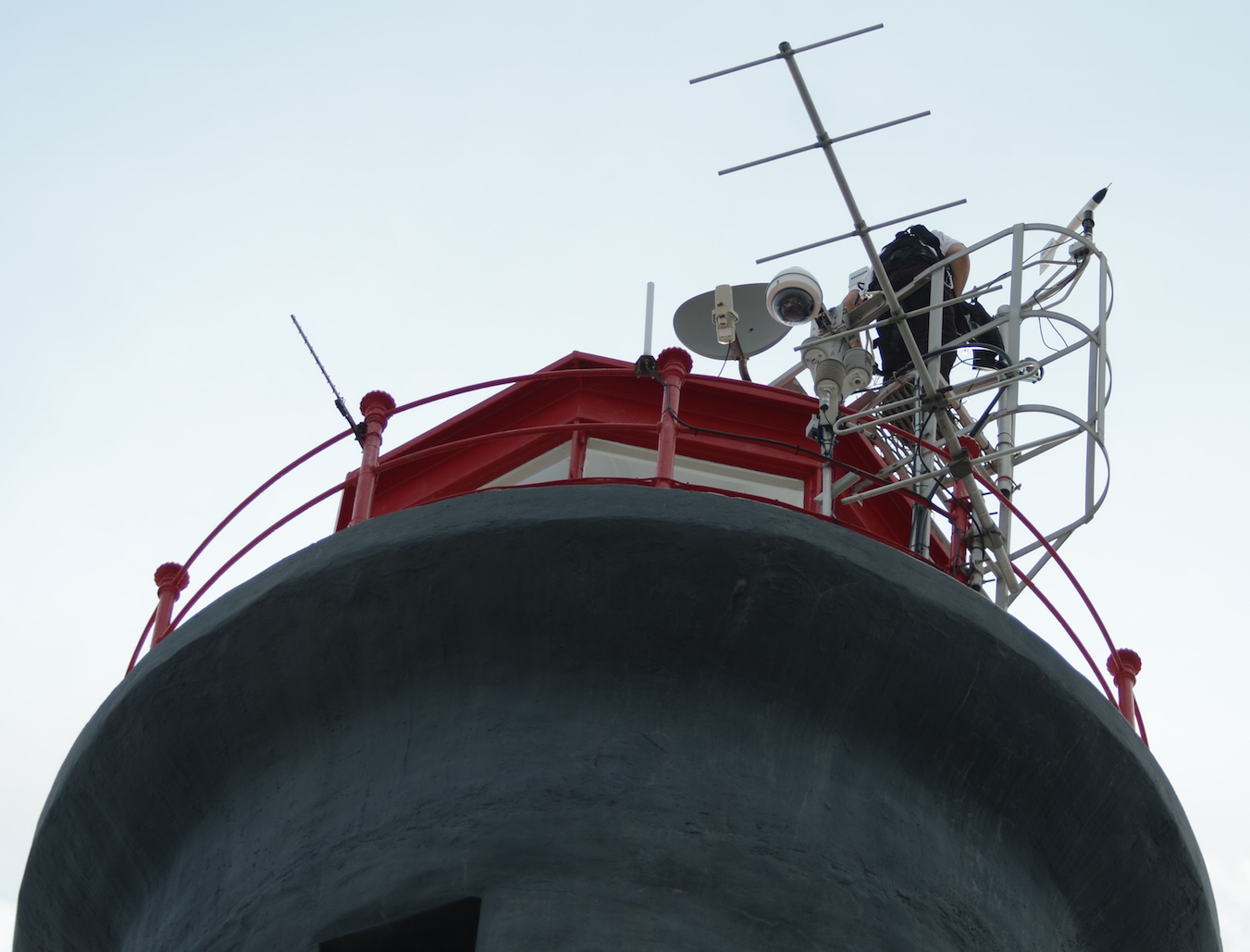
Routine chores continue. There were six visitors today. Two very self contained Environment Canada technical service officers came out to do annual maintenance on their weather station up on the tower. If you were looking on camera # 1 you may have had a close-up view of them at work, calibrating, replacing and maintaining their instruments in full climbing gear. Thanks go out to them as well for the help they gave us before leaving the island. Two national geographic photographers came out to get a sense of the diversity of wildlife and of course take photos. Two young people who may potentially become eco-guardians also visited. Thanks go out to Don for helping move fuel, a heavy job. Well done. Courtney drove Second Nature to get them all out here and back safely and she was accompanied by Jasper, volunteer extraordinaire.


After the Autumnal Equinox.

The day started clear with clouds distant, to the east. A steady north by northeast wind of between 5 and 10 knots seemed to gradually bring the clouds around but Race Rocks remained in the donut hole as it often does, with sun dominating until late afternoon. The barometer is holding steady, if averaged over the last two days at ~ 1014 hPA, but the tendency now, is falling again, at the end of the day. There was no colour for sunset as the clouds built and the forecast calls for showers for the next few days, with easterly winds turning to westerly and fog patches dissipating near noon tomorrow.

It was a quiet day on the whale-watching front with only four visits to Race Rocks Ecological Reserve by commercial operators. There was an equal number of “pleasure” craft but they were not all as well behaved, with one of the Pedder Bay Marina rentals fishing in reserve. The marina is now able to track their rentals using GPS. They are really good about contacting their renters, when called and persuading them to move out of the Rockfish Conservation Area which is closed to sports fishing, for finfish in the Ecological Reserve.

There were repeated explosions across the way. A good ending for explosives I suppose, if you consider the alternatives. It seems to make the sea lions jittery and by that I mean more likely to stampede and go into the water. The Stellers seem more sensitive to disturbance in general.

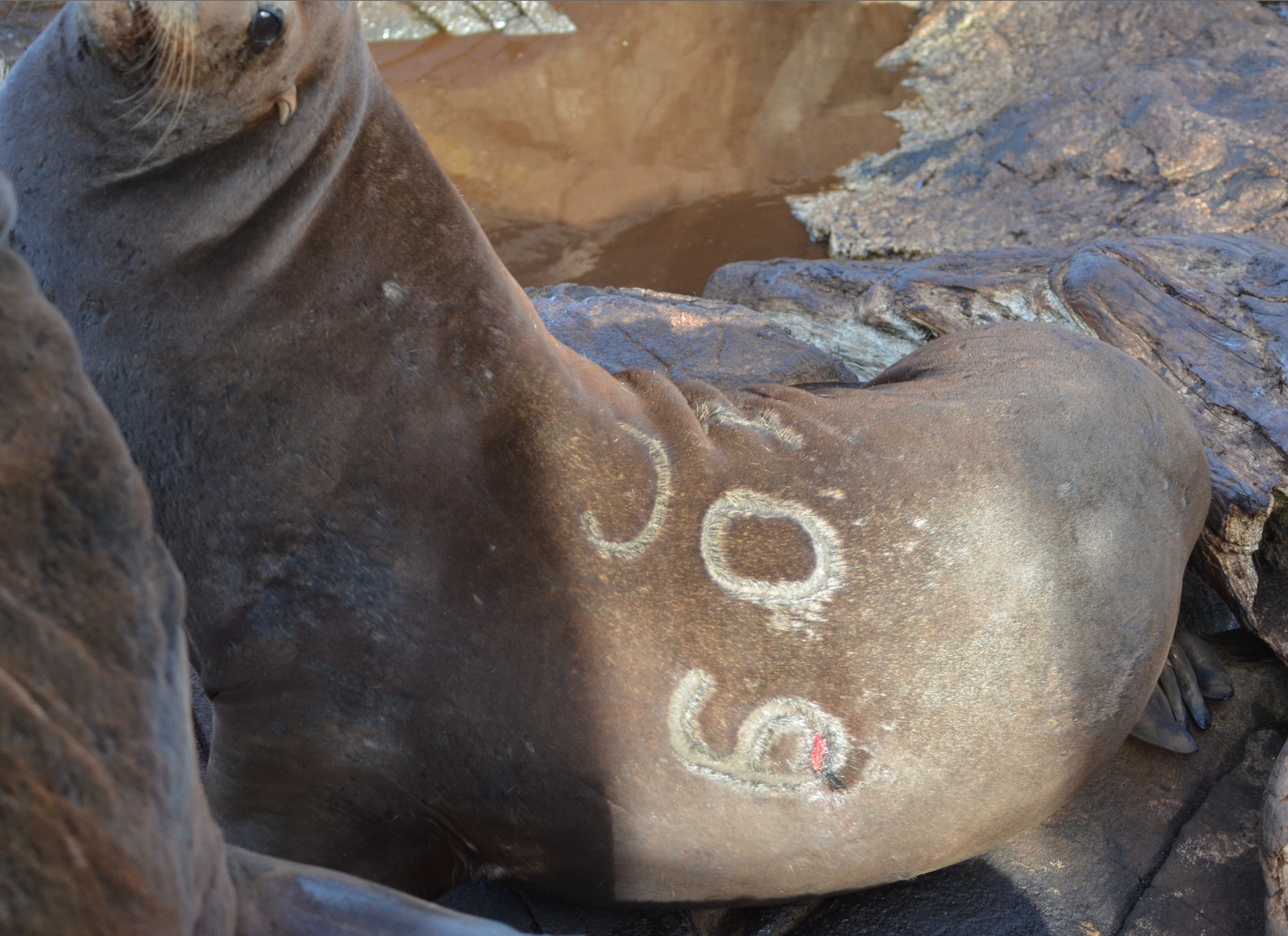
Ecologically, the sea lion moult continues, elephant seals are trying to get up onto Great Race but there are a lot of sea lions in the way. Northern Elephant Seal # 5850 was back again this morning but didn’t make it up the ramp due to sea lion congestion. Later I saw him doing the ‘wave’ up the rocks in front of the Science House. Another individual seal joined the sea lion mosh pit east of the Eco-guardian’s House and others still hold their own on the top of Middle Rocks completely surrounded and outnumbered by Stellers Sea Lions but not bothered. The Sea Otter has been absent for a couple of days.

Bull kelp stipes are becoming more and more covered with epiphytes and their blades are loaded with spore patches increasing chances of a good settlement for the next generation. Cross jellies and barnacle moults continue to dominate the large zooplankton visible to the naked eye and the phytoplankton bloom has cleared which probably means either a crash or more likely lots of grazers like copepods and euphausids (aka krill). What ever cleared the phytoplankton certainly improved visibility into the water considerably. It is pretty cool to watch the big Steller’s Sea Lions ghosting through the kelp forest.

Black Oystercatchers are back, congregating on Great Race after an absence. More gulls and cormorants arrive in the area daily. There continues to be large, mixed-species feeding flocks including gulls and divers and multi-species gull feeding flocks associated with sea lion salmon kills. Salmon and halibut continue to swim past and around Race Rocks as evidence by the predators in the area, including human fishers talking about their catches on the radio. The Canada Geese are attempting a come back and it is difficult to keep them off as they just sit on the water waiting for the coast to clear. Every night the Killdeer return to Great Race as night falls.

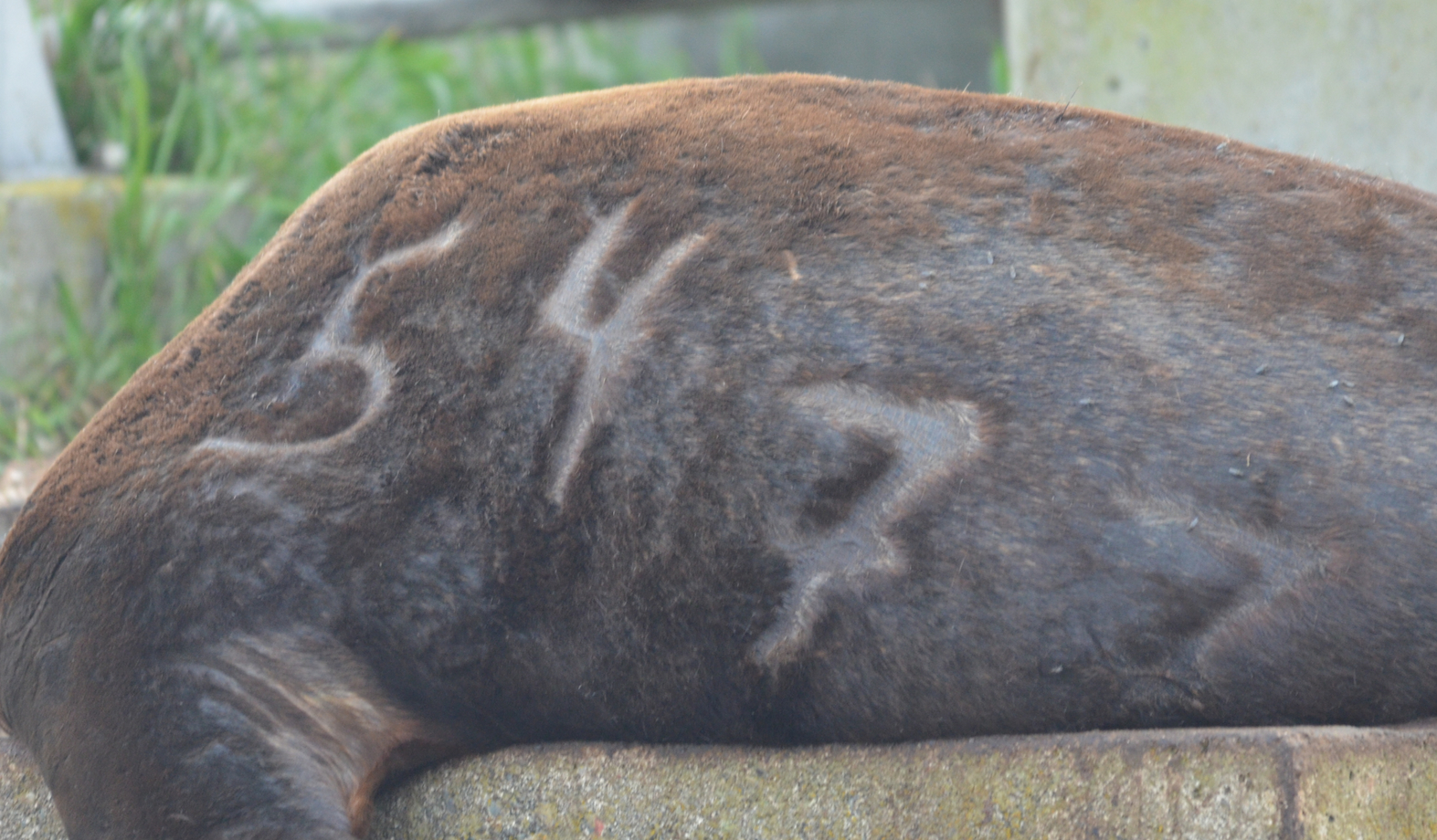
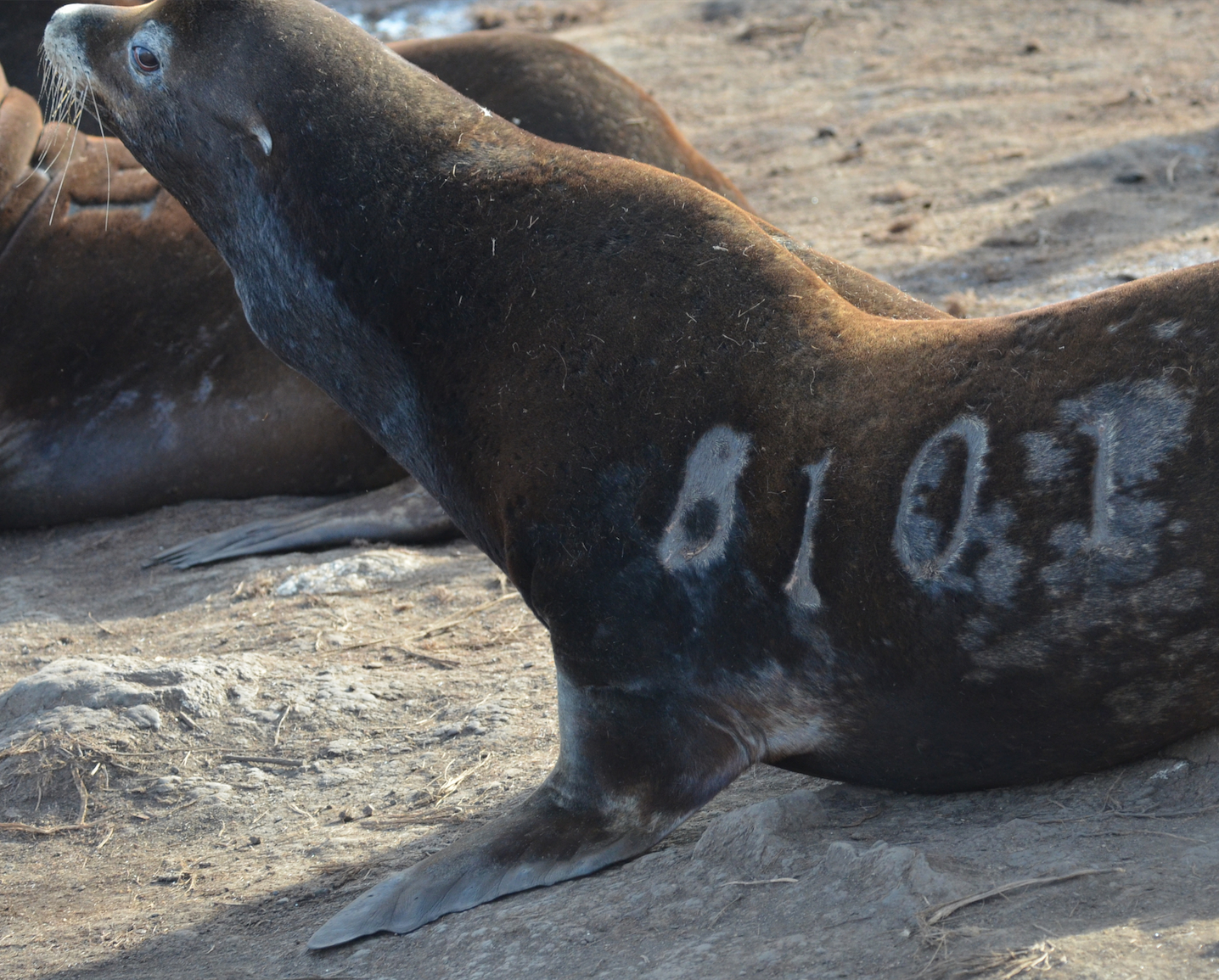
Sea Lion brand and entanglement photography continues as do the daily chores to keep this place running sustainably. There were no visitors today.


Killer Whales Late for Class

It was a clear day from glorious sunrise to subdued sunset. The wind was 5 to 15 knots in the west – southwest quadrant and solar radiation was high, though not quite as high as yesterday; 400 Langleys today and just over that on Monday. As I write the  Log blog, clouds are creeping in and blanketing the mountains on the American side and the barometer is falling again. Forecasts call for a switch to southeast winds, which usually brings wet weather. Wednesday is supposed to be increasingly cloudy and rain is supposed to follow.

Only eight commercial whale watching vessels were noted in the Ecological Reserve boundaries today and five of those were in the afternoon associated with Biggs (Transient) Killer Whales on the other side of Race Passage. The Killer Whales were on the Vancouver Island side of the passage and spent several hours in and around Bentick Island and Emdyck Passage and William Head. Several pleasure craft passed through the reserve today, all without speeding or fishing in reserve. There was one overflight during the first class field trip: a small fixed-wing aircraft that passed over west to east and then returned passing over a second time. Although one red flag was up all day at the military site there were no obvious explosions.

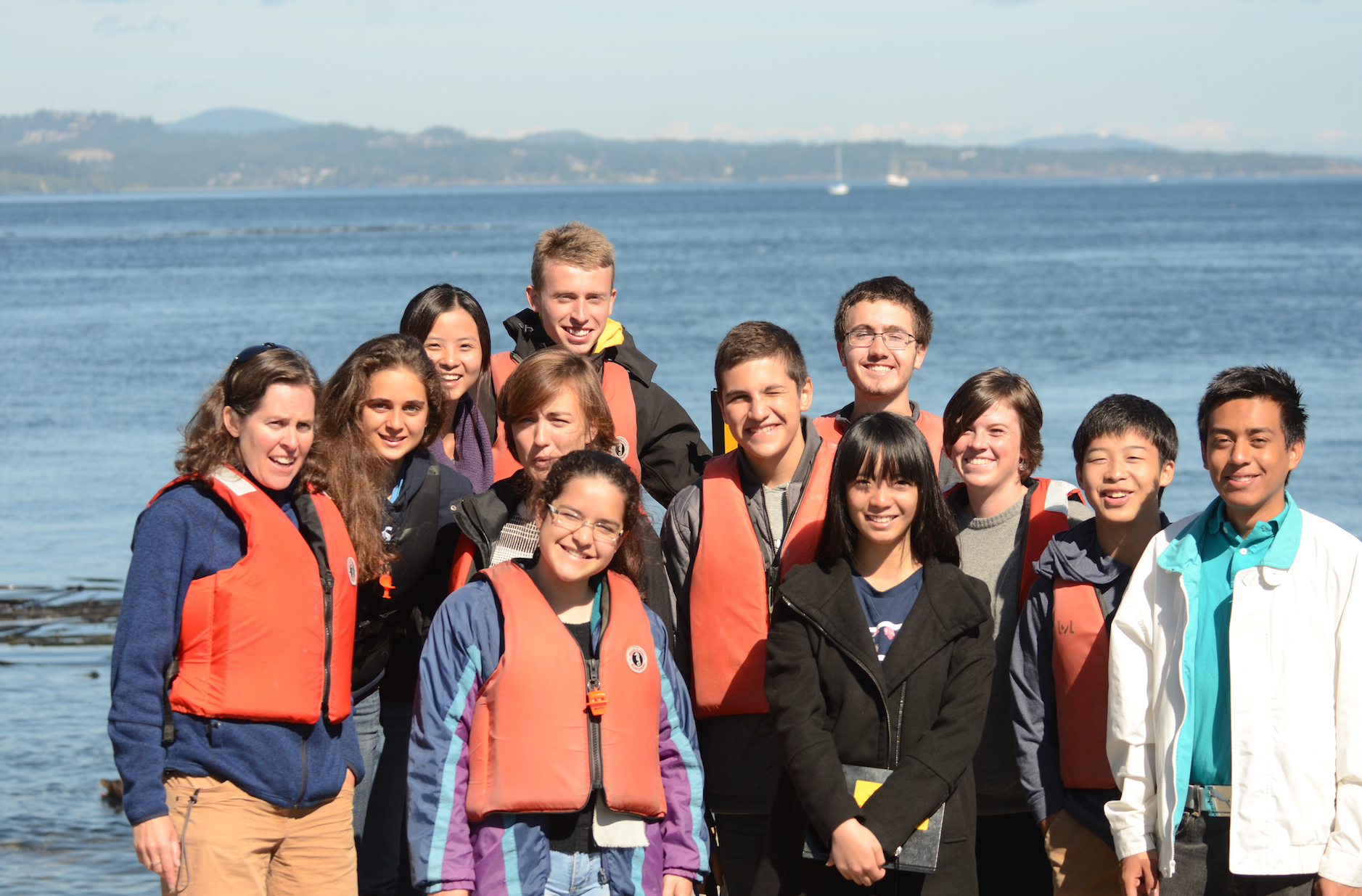
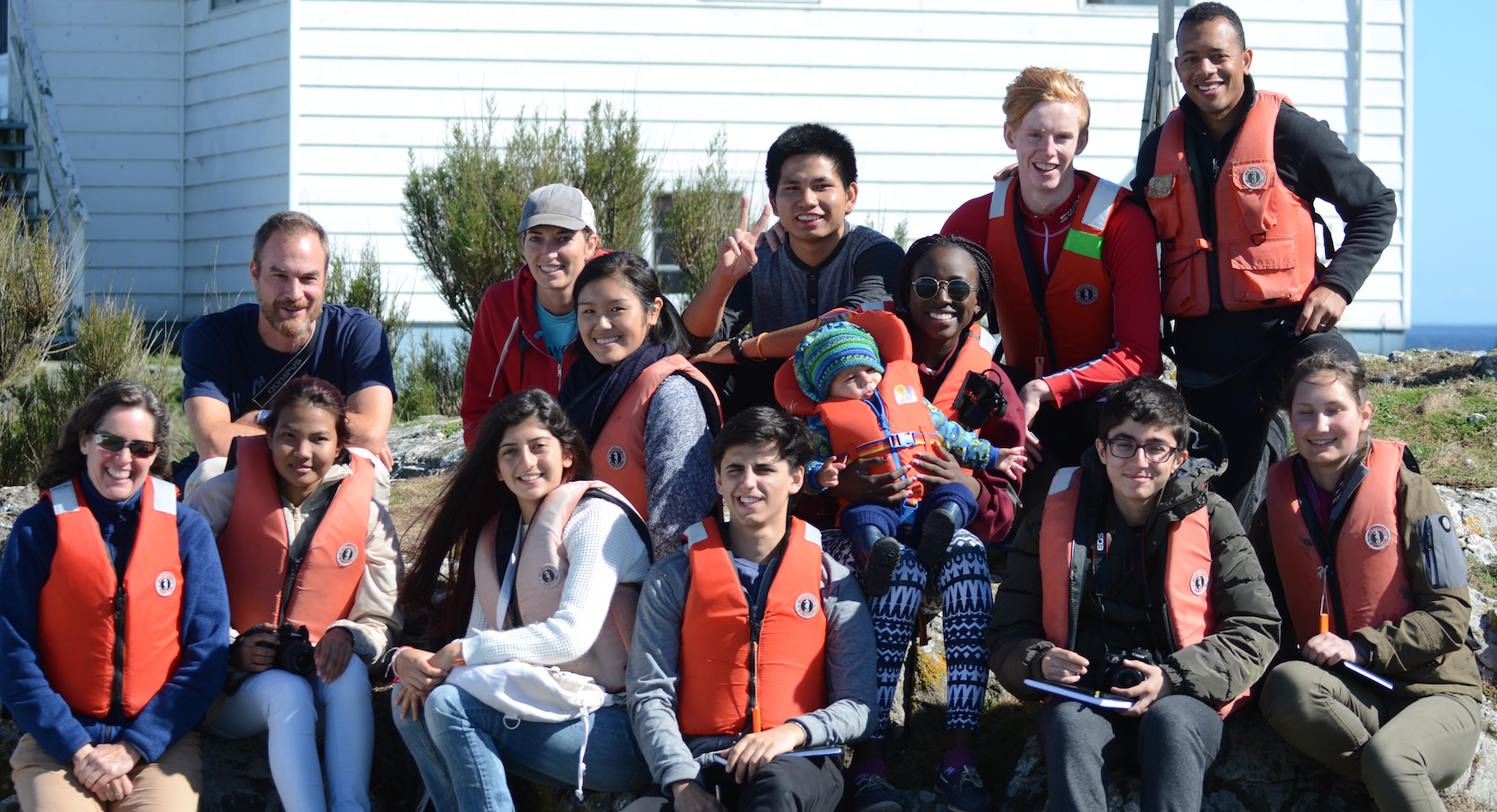
Pearson College students spent part of the day here today. Two of Laura Vehegge’s classes of marine science students came for their first field trip of the year to Great Race Island. I was hoping they would have a chance to see the Sea Otter, at least one pod of Killer Whales and maybe a couple of Humpback Whales, but no. After all they have just started a species list that they will be adding to for the next two years, so they will have other opportunities.

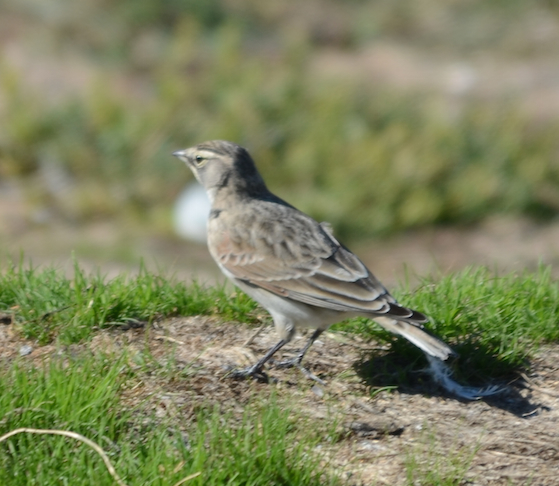
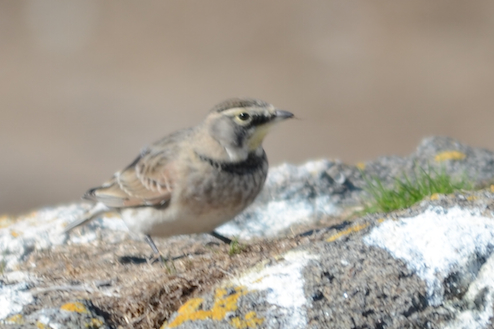
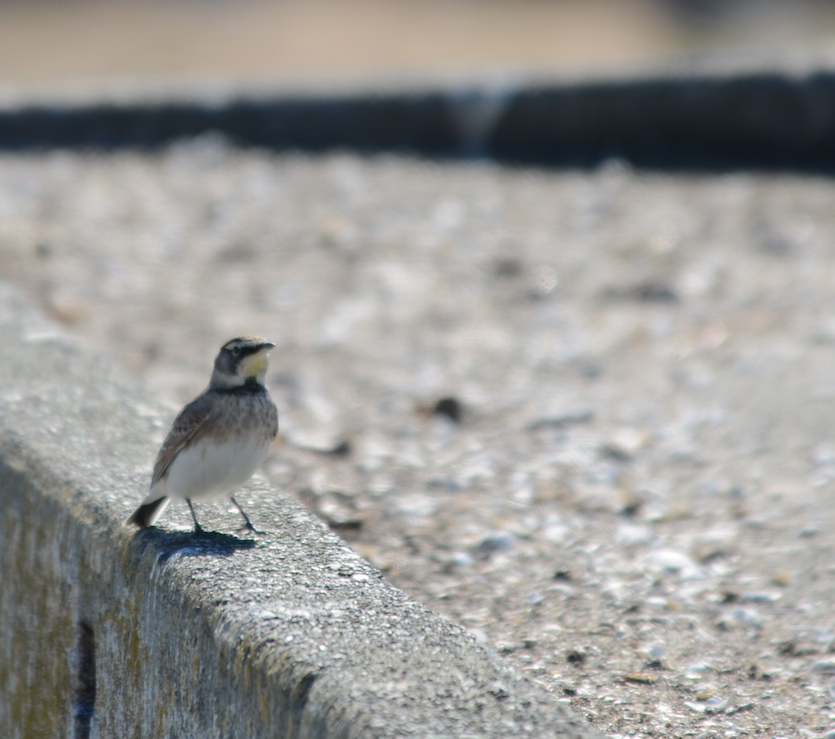
Today the students were also working on journal entries about their marine animal observations. They were lucky enough to see California and Stellers Sea Lions, Northern Elephant and Harbour Seals and lots of Glaucous-winged Gulls. There were also Mew Gulls, California Gulls and if they were sharp-eyed, Heerman’s Gulls. Those were the ubiquitous species, but for me, the more interesting and unusual species were two new, avian visitors that showed up today; a male and female Horned Lark. I send a shout out to Victoria Natural History Society on Twitter for helping with the identification. A flock of 24 Canada Geese landed and were on the island for a very short visit.

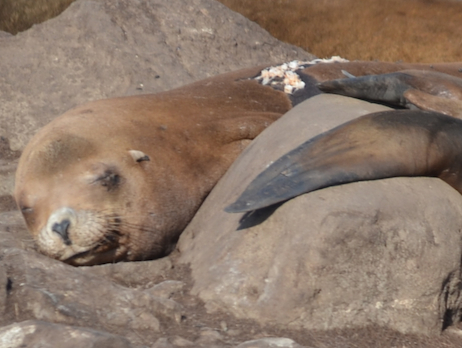
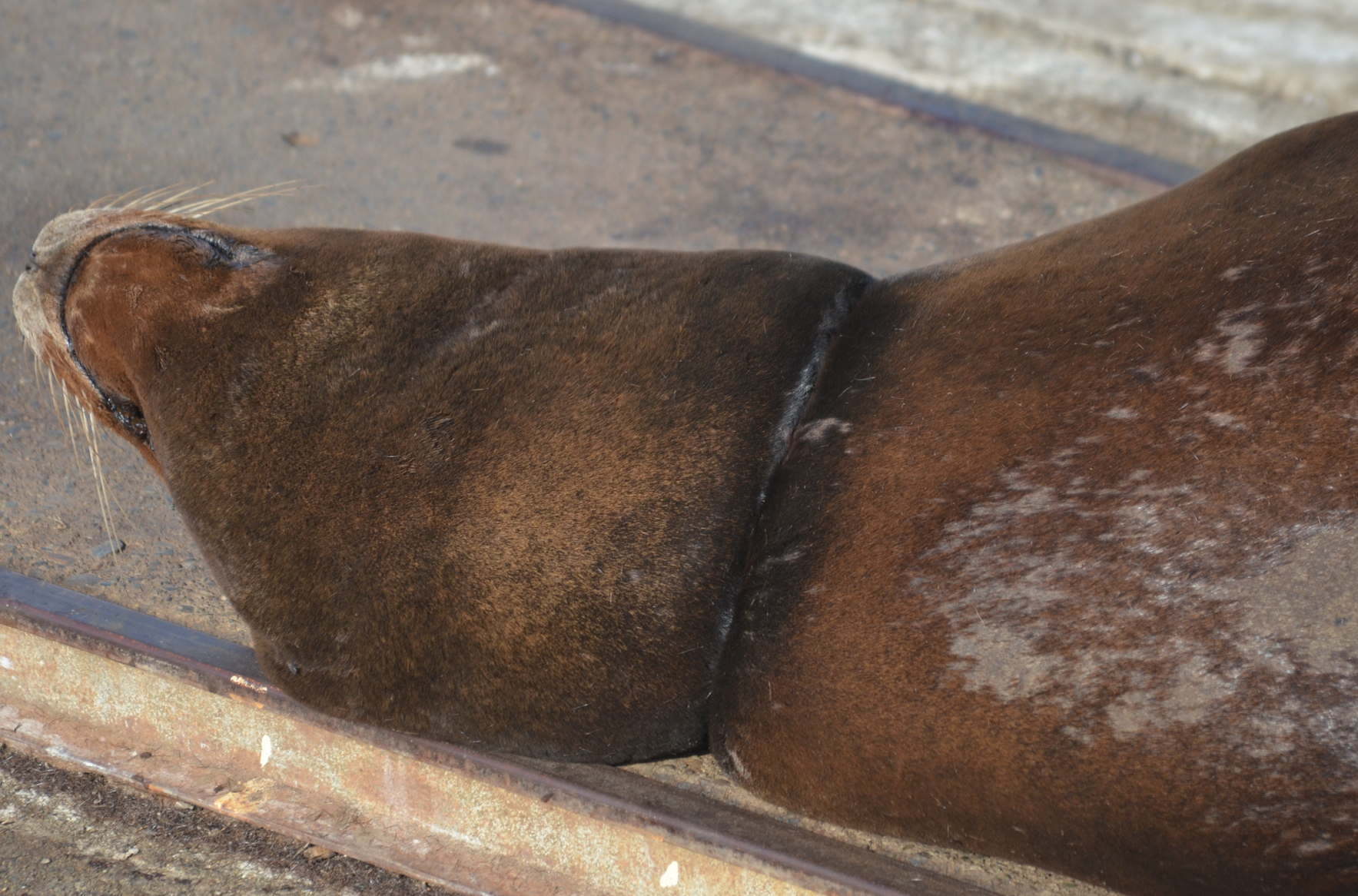
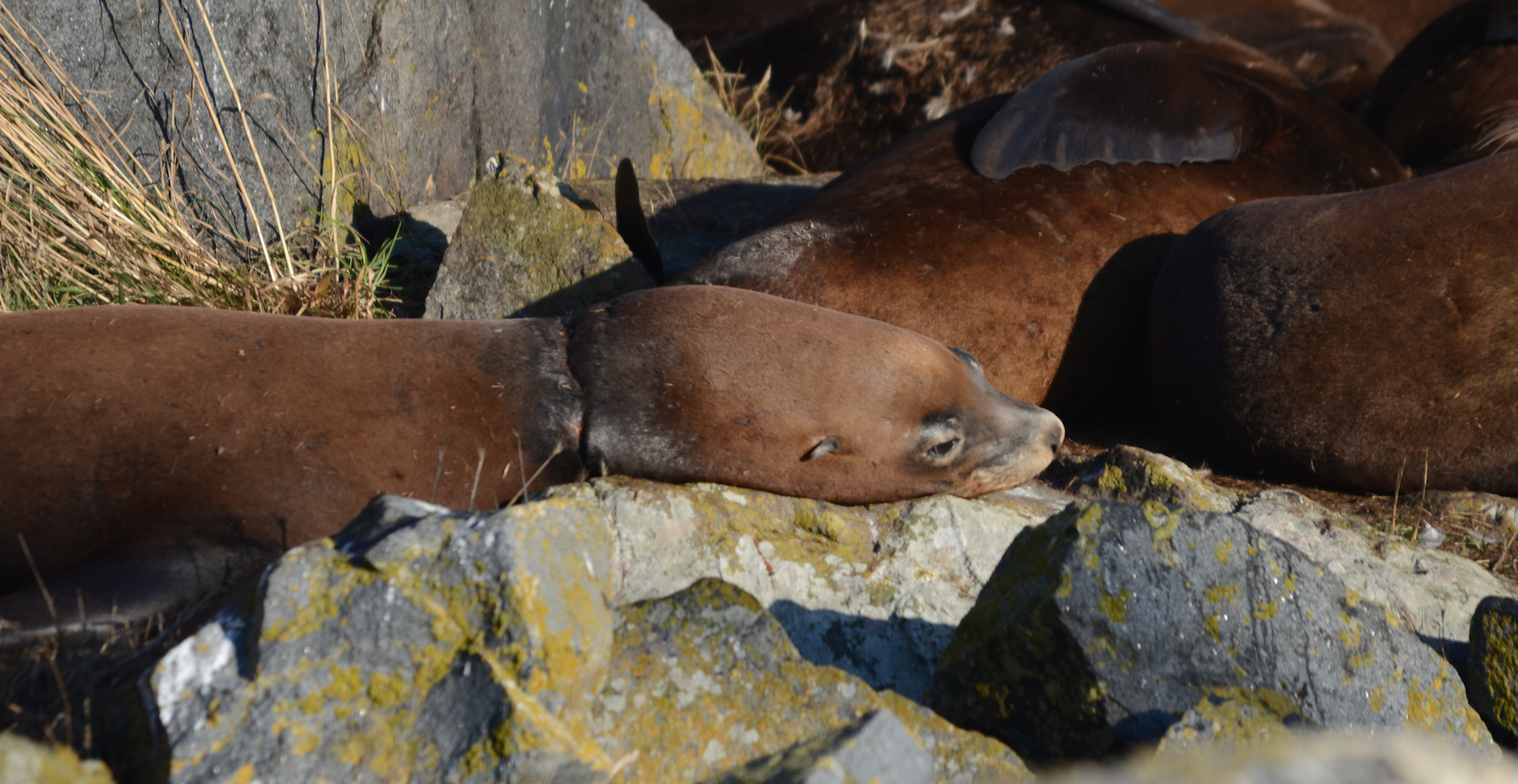
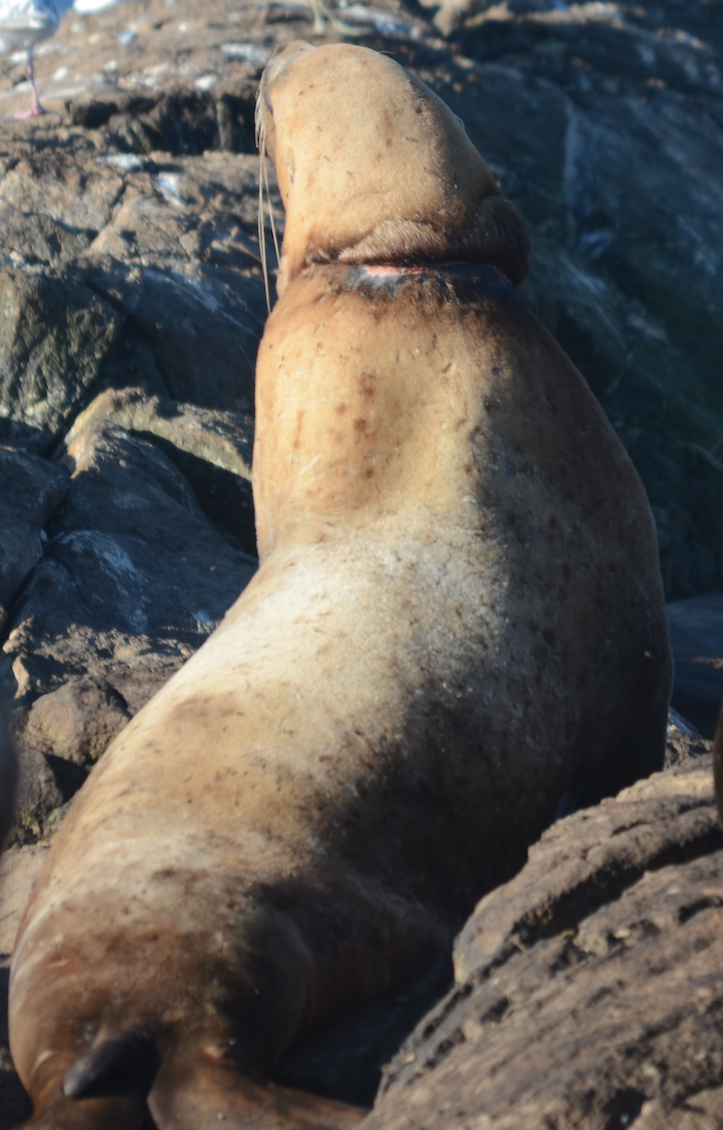
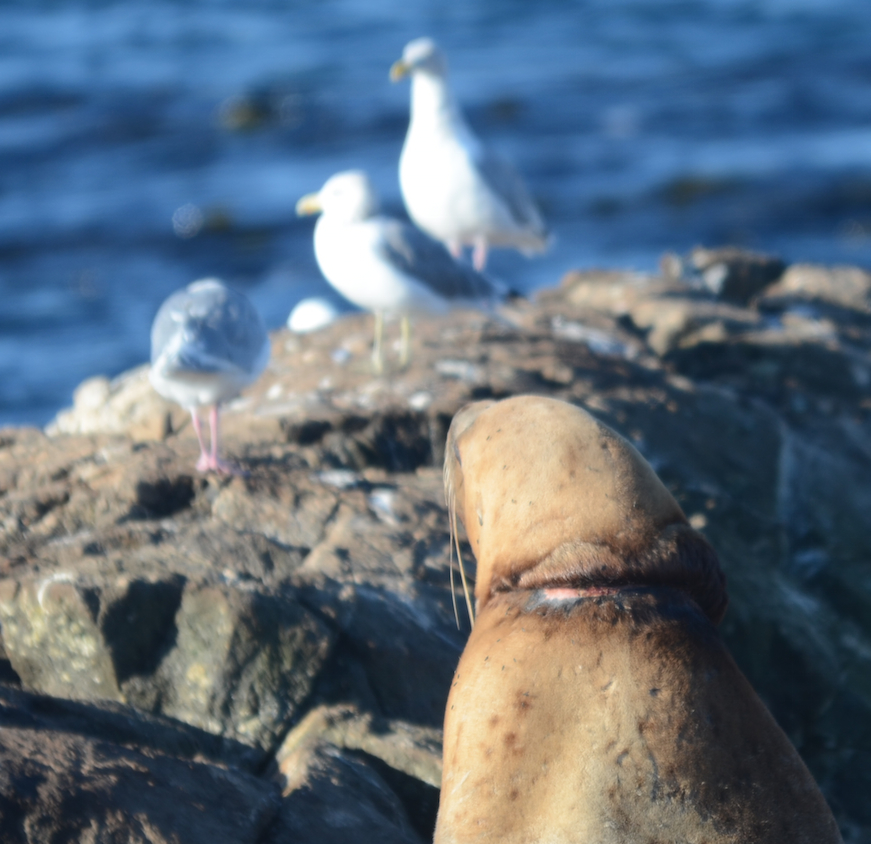
Laura’s classes witnessed the down-side of plastic in the ocean today. Is there an up-side? They had the ‘opportunity’ to observe three neck-laced sea lions. Those two California Sea Lions and one Steller Sea Lion with plastic straps around their necks will likely not survive long unless they get the specialized attention of Vancouver Aquarium veterinarian, Dr. Martin Haulena. Dr. Haulena has worked extensively with sea lions and is one of the few people able to do this sort of animal welfare work. This is another good reminder for all of us to avoid plastic if possible, recycle it and just in case it “gets away” cut all possible entanglers before disposing of it. There are a lot of really good efforts towards reducing plastic in our seas and there is a real need.

The Killer Whales mentioned above showed up late in the afternoon and missed both classes.

It was good to see Courtney with Year 20 volunteer Jasper, as a deck-hand on Second Nature. He had quickly graduated to skipper in training by the third run to Race Rocks.


Explosions and Implosions

The wind blew north by northeast at 5 – 10 knots for most of today. Morning fog seemed to be blown out of the southeast but stayed on the American side of the Strait today and there was sunshine mid-day. By evening the wind had switched to west and the clouds had thickened along the Olympics and out to sea. The so-called marine air (aka fog) out to the west, had a yellowish colour of the kind you see in the haze coming into Korea from China. There may be some leftover forest fire smoke in that mix as yellow is not a normal colour for fog. The barometer continued the climb it started yesterday and reached 1008 hPA this evening. Forecasters are calling for light and variable winds and showers. I have my wheelbarrow out to catch any moisture coming from the sky and it is just starting to spit.

There were twenty visits by commercial watching vessels observed in the Ecological Reserve today and highlights included the sea otters, sea lions, elephant seals and the very large explosions coming from Rocky Point. The explosions sarted late morning and ran through the afternoon. Quite often the blasts do not seem to effect the animals but today they seemed extra substantial, of a magnitude and recurrence that cleared the islands (mostly)  of sea lions, several times. This made for some good sea lion watching in the water, as that is where they spent quite a bit more time than usual, today.

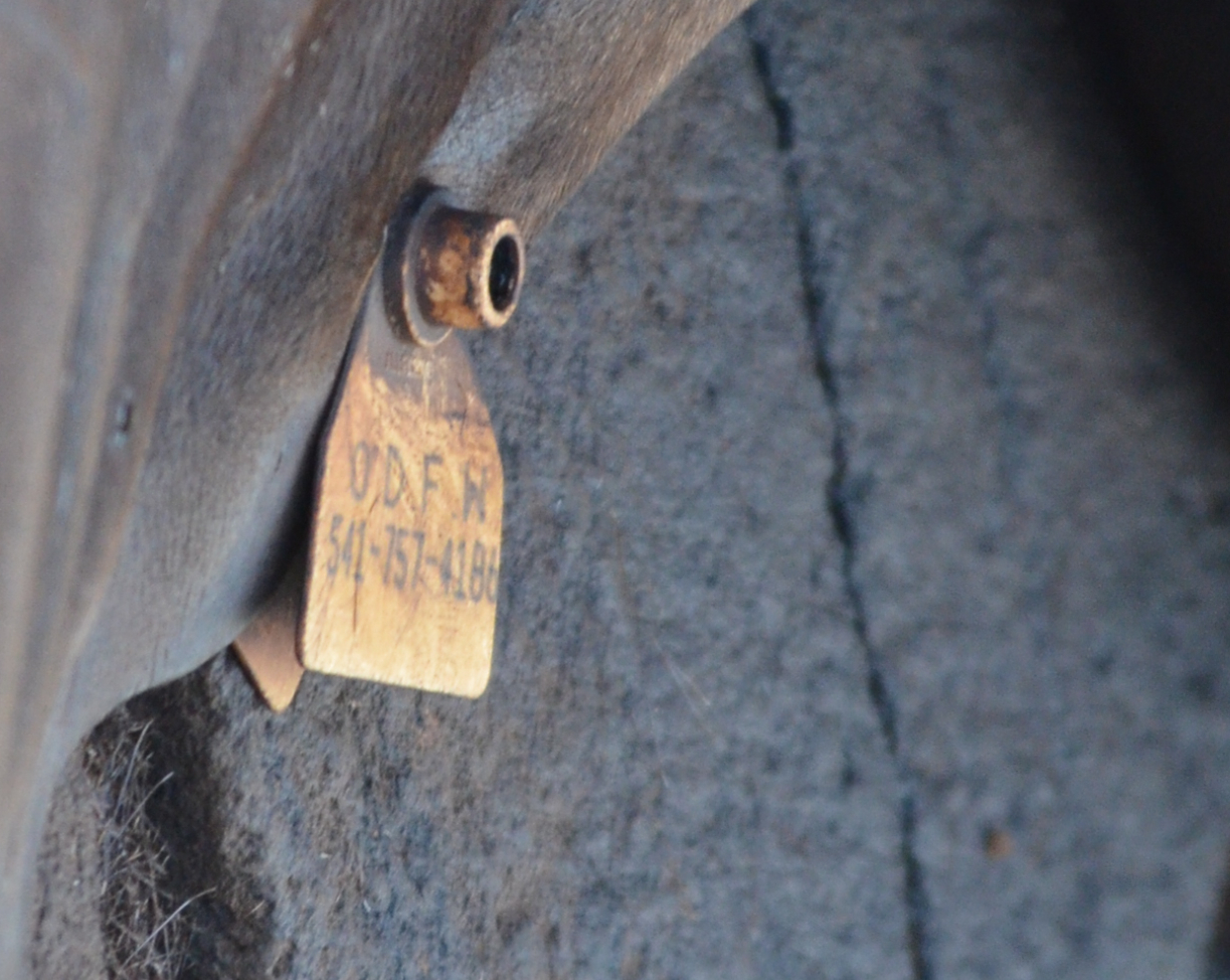
The sea lions also spent a lot of time repeatedly running for the water and then slowly climbing back out and hauling themselves up to resting spots. I doubt that this is part of a normal energy budget during moulting season. The Northern Elephant Seals remained undisturbed by the large explosions and appeared to sleep right through the brouhaha. All the moving around made it easier for photograph to see neck-laced sea lions and brands without worry of disturbance.  Two Northern Elephant Seals visited Great Race today. The young male #5850 who was here both last fall and last spring was here again today with a little female. He has really grown in the last year, especially since his spring moult. Definitely filling in and stretching out his skin. The only tag left is on the inside of his left back flipper.

There were no obvious effects from the explosions on the birds. Many of the adult Glaucous-winged Gulls have returned to their territories and are standing around on their “spots”. It almost seems as if some of them are experiencing empty nest syndrome: some pairs are doing a bit of redecorating, carrying nesting material around, acting out behaviours observed early in the nesting season last May, but with less verve, and of course ‘going gray’. The white head of the adult Glaucous-winged Gull is only white during breeding season and turns into an alternate, mottled gray during the winter. Many are transitioning now. Some adults are still feeding young gulls, although most of the young are also out learning how to forage. The youngest, or perhaps slowest one to develop, is the last one learning how to fly and spends quite a bit of time stretching its wings, taking little hops with the wings out and running while flapping. It will be aloft soon. The last Canada Goose family took flight today and hope is that they will flock off.

Chores were routine except for another plumbing challenge. There were no visitors.