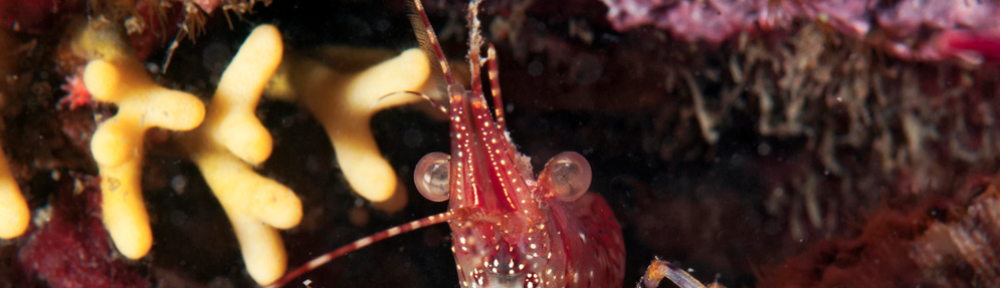
Ghosting through the Kelp Forest.

I had trouble with a temprarily unavailable log-in page when I went to to post my log blog last night, so am posting the two days together now.

The westerly blew throughout both days and fog obstructed the views. Yesterday it cleared after 4 PM and by 6 PM, thick fog had moved back in and visibility was back down to several hundred meters. Today it cleared earlier and stayed clear until sunset (at least). Wind speed both days varied between 10 and 25 knots over the course of the day and in varied direction from west-southwest to west. Yesterday the barometer went up to 1015 hPa from 1014 and then started dropping. Today, it was steady until noon and then it started dropping going as far as 1010hPA by 8 PM. The forecast for today was correct: strong westerly wind warnings, fog “patches” and sunshine. Tomorrow the wind warning has been upgraded to a gales and the rest remains the same.

Six whale watching vessels were observed working in the Ecological Reserve yesterday and today I saw three. They all abided by the rules and regulations more or less. Some boats/skippers may be used to pushing the distance limits but I did not observe negative impacts.


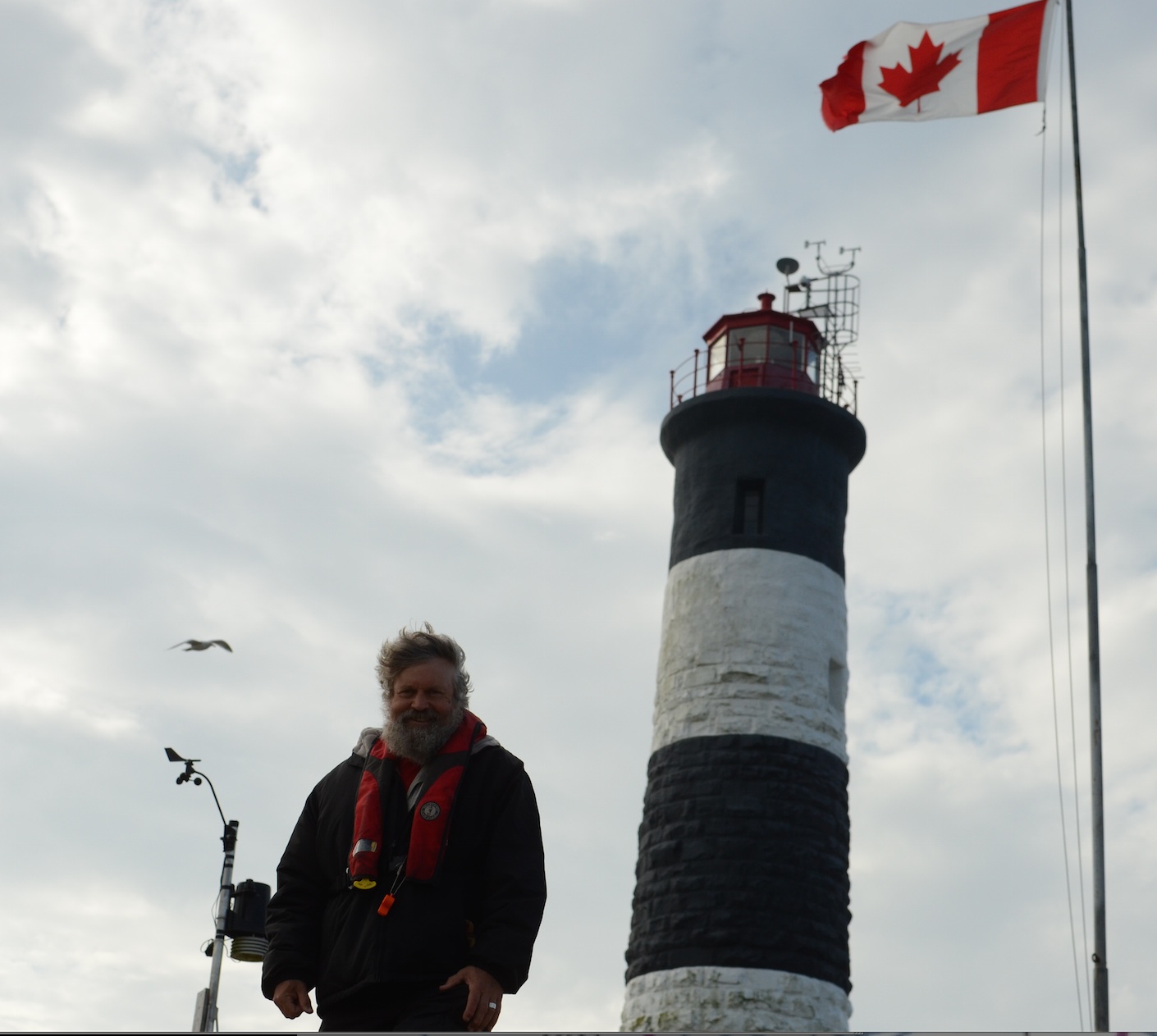
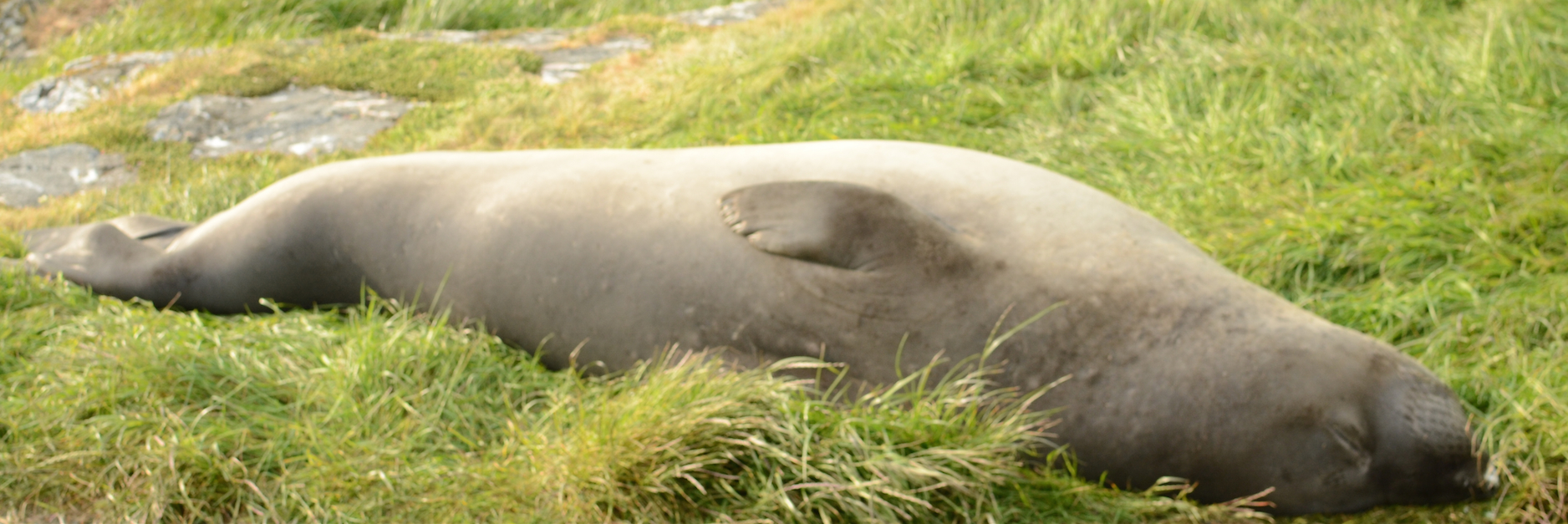
I was lucky enough to see Chunk ghosting around the island from the top of the light tower and it was a surreal sight. He started out in the surge channel in front of the science house and swam around anti-clockwise. If it wasn’t for his white scar, I might have missed him, as it was a bit foggy. He only came up to look around and make a right angle turn to avoid a reef, once. He moved elegantly with hind flippers sweeping side to side, ever so slightly and propelling his huge mass along at a good speed. He seemed to purposefully seek out the kelp and sweep through it. The pale grey, submarine shape shifted in and out of the kelp, hugging the coastline, in shallow water. How different this must be from his normal habitat offshore and in the deep. If that is what our Canadian elephant actually does. It would be nice to know where they go when they are not here.
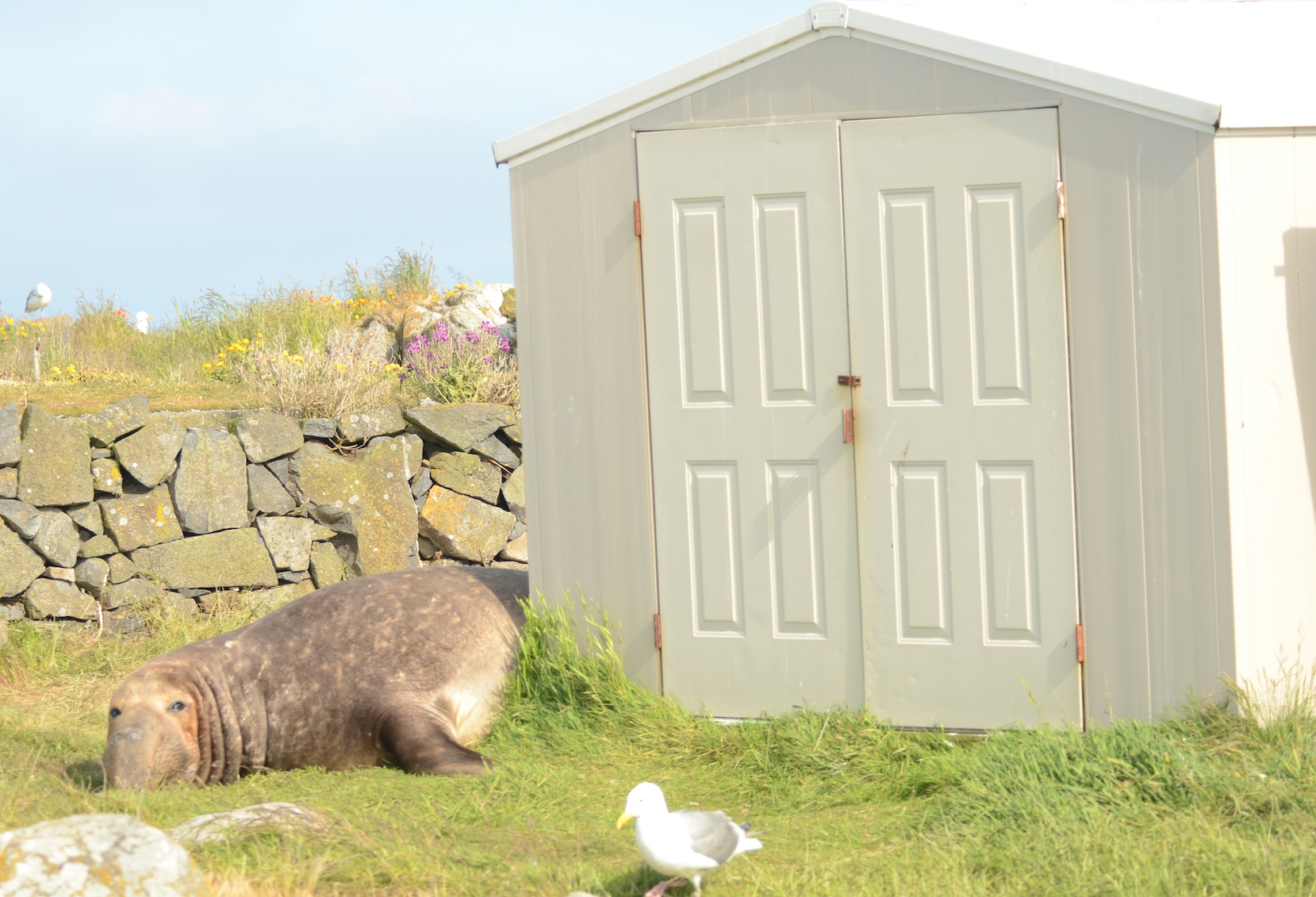
Floyd as water watchdog.

Floyd as water watchdog.


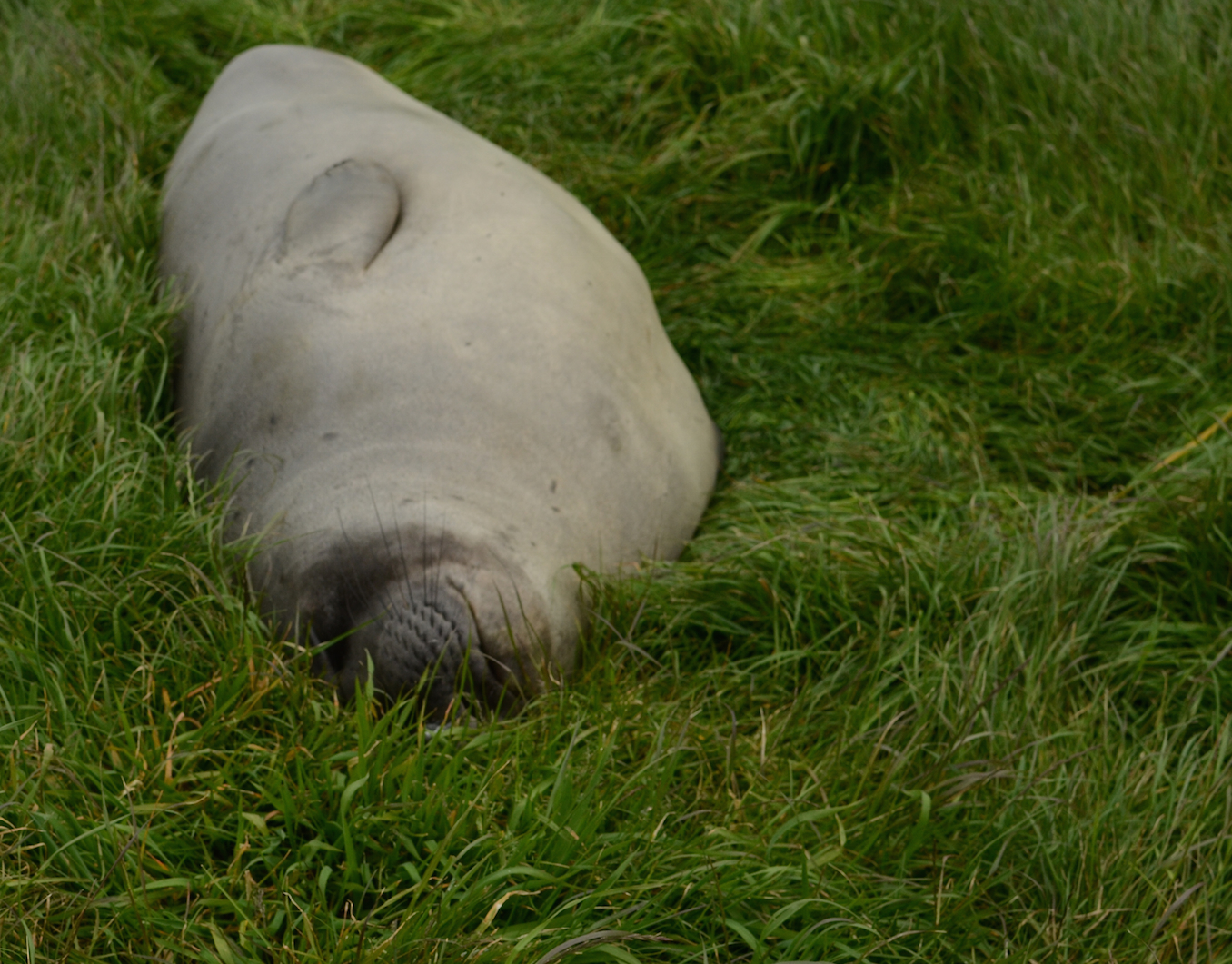
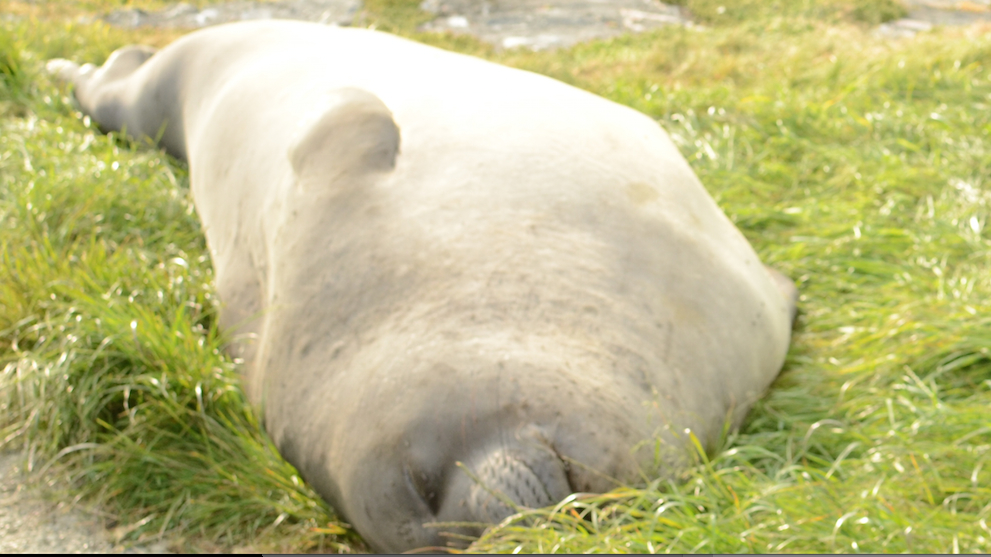
I was glad that I topped up the freshwater the day before yesterday as Floyd decided to sleep right up against the freshwater tank-house yesterday and today. It would have been a challenge to get in and out to check water-levels with his head jammed in between the Diefenbunker and the tank-house.
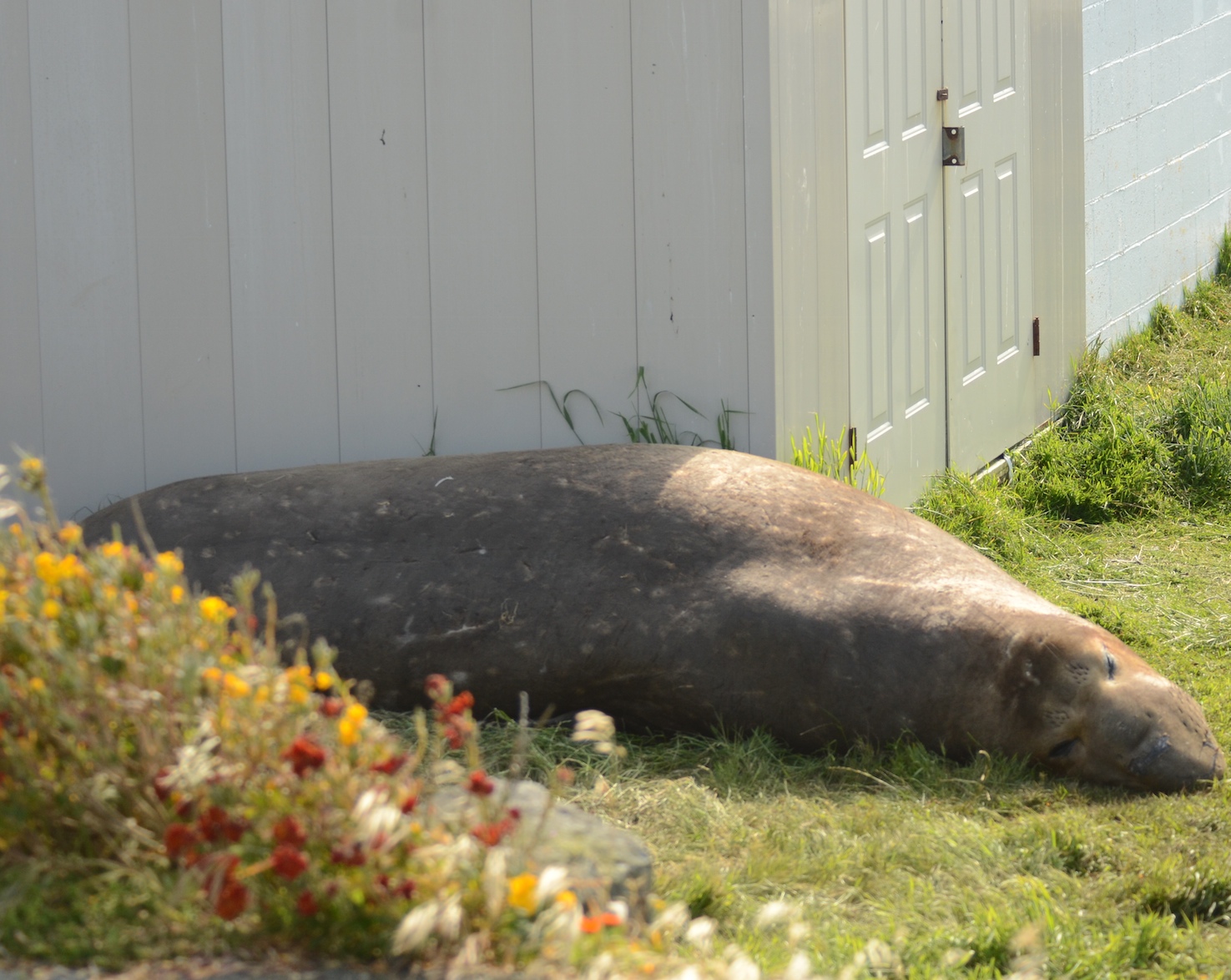
How to avoid Floyd

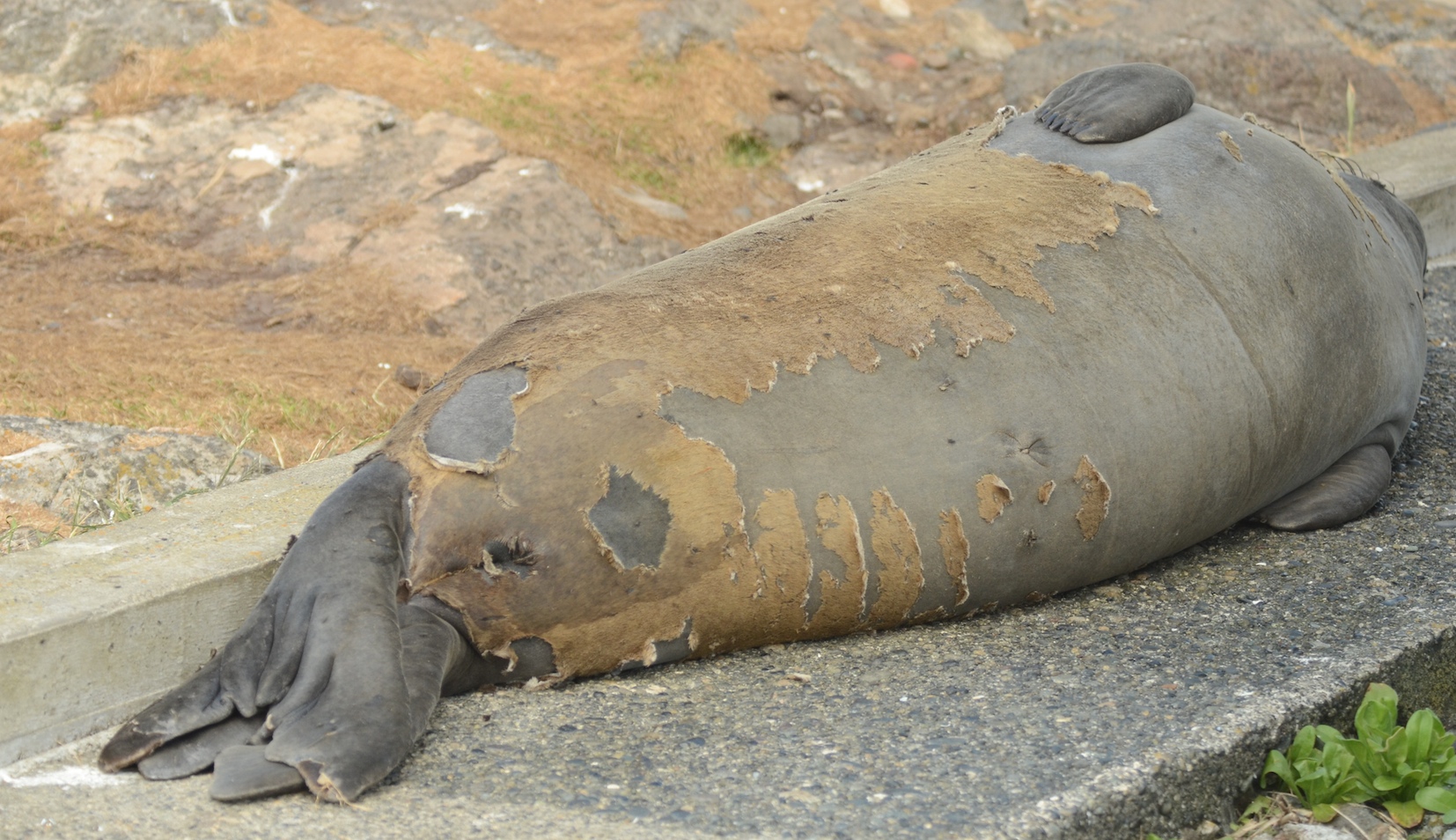
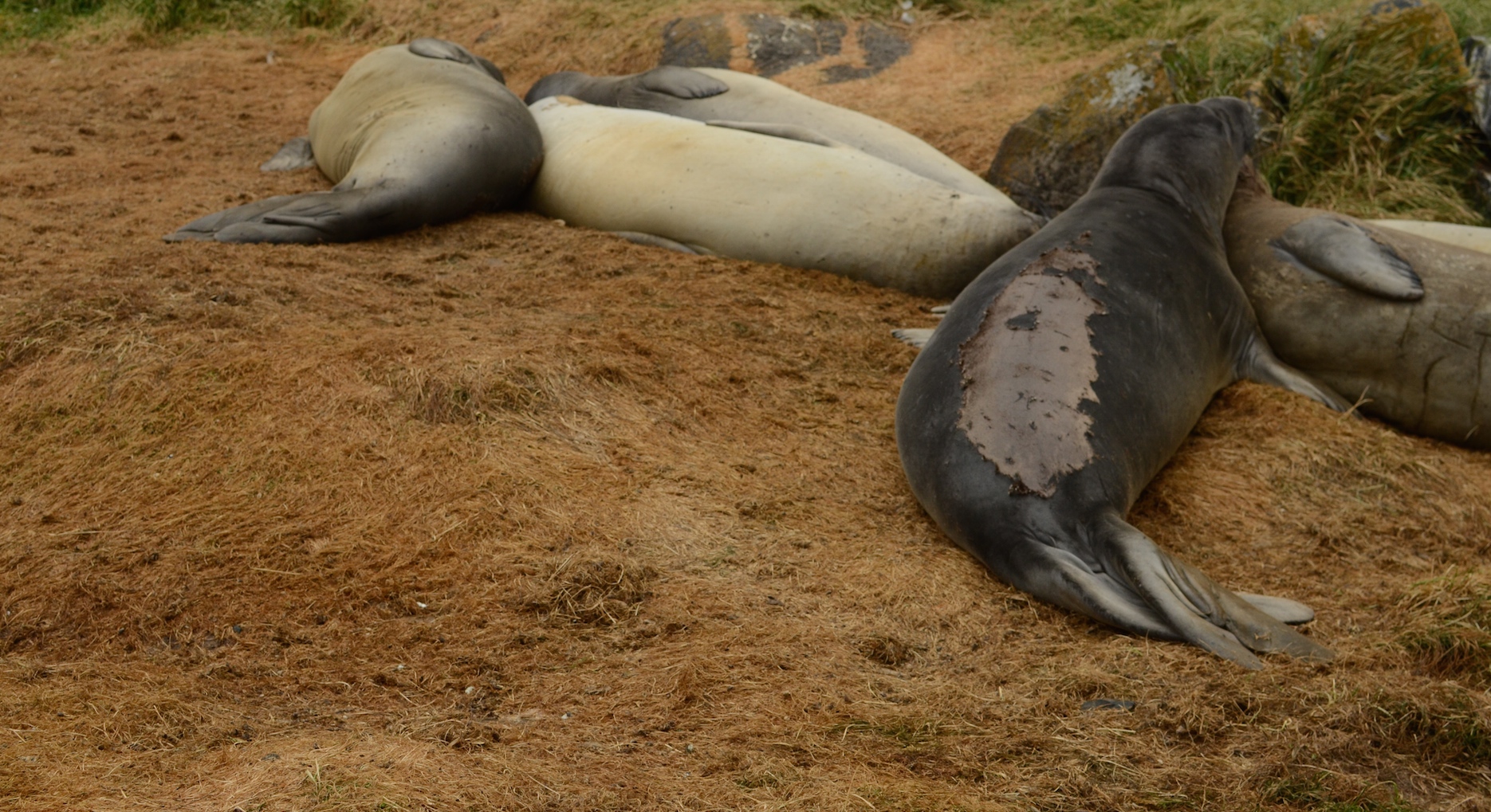
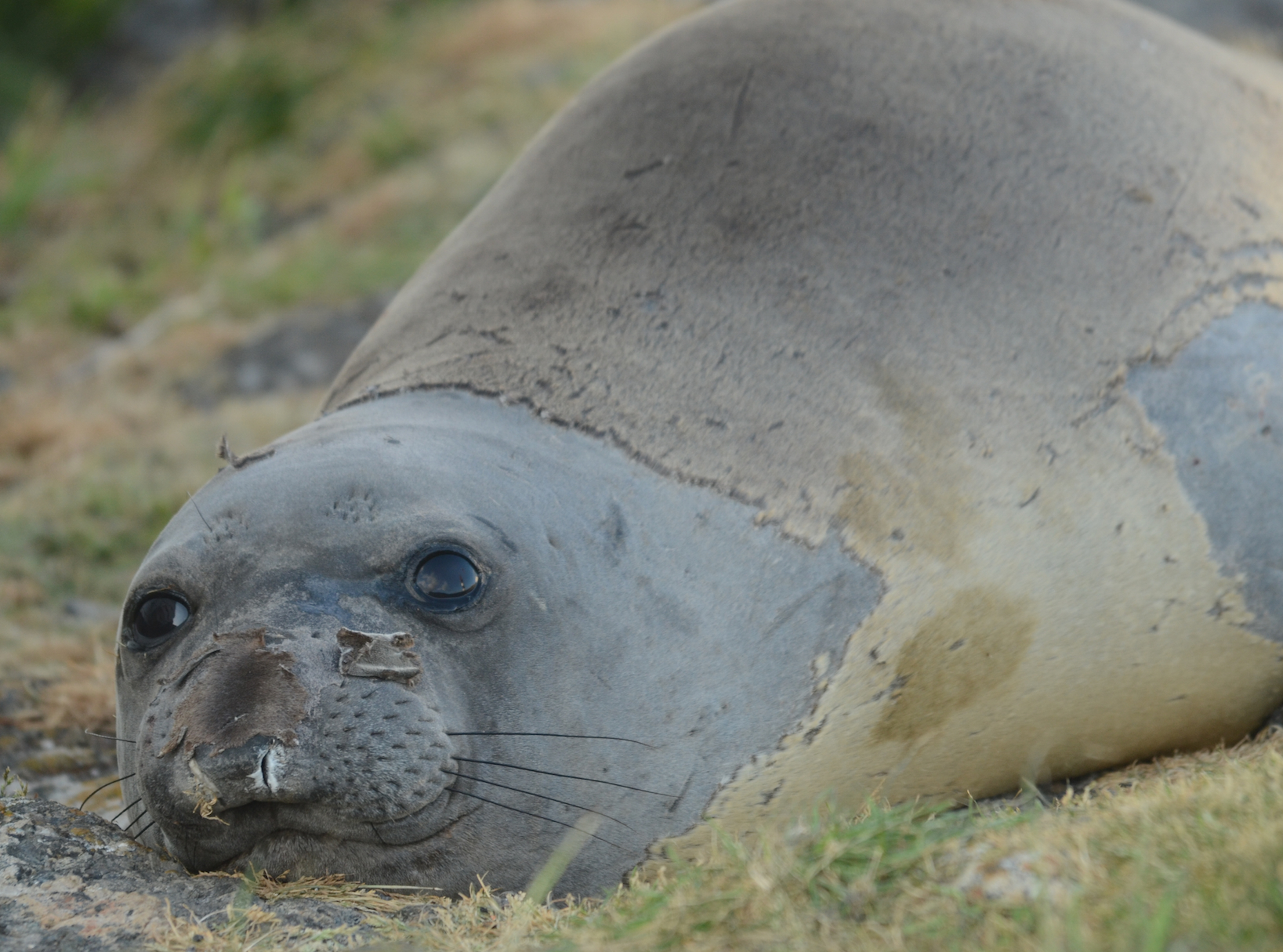
The two-year-old northern elephant seals that looked so bad before moulting are now starting to look much better as their moult progresses. This one still looks a bit scabby but no more oozing and bleeding sores.
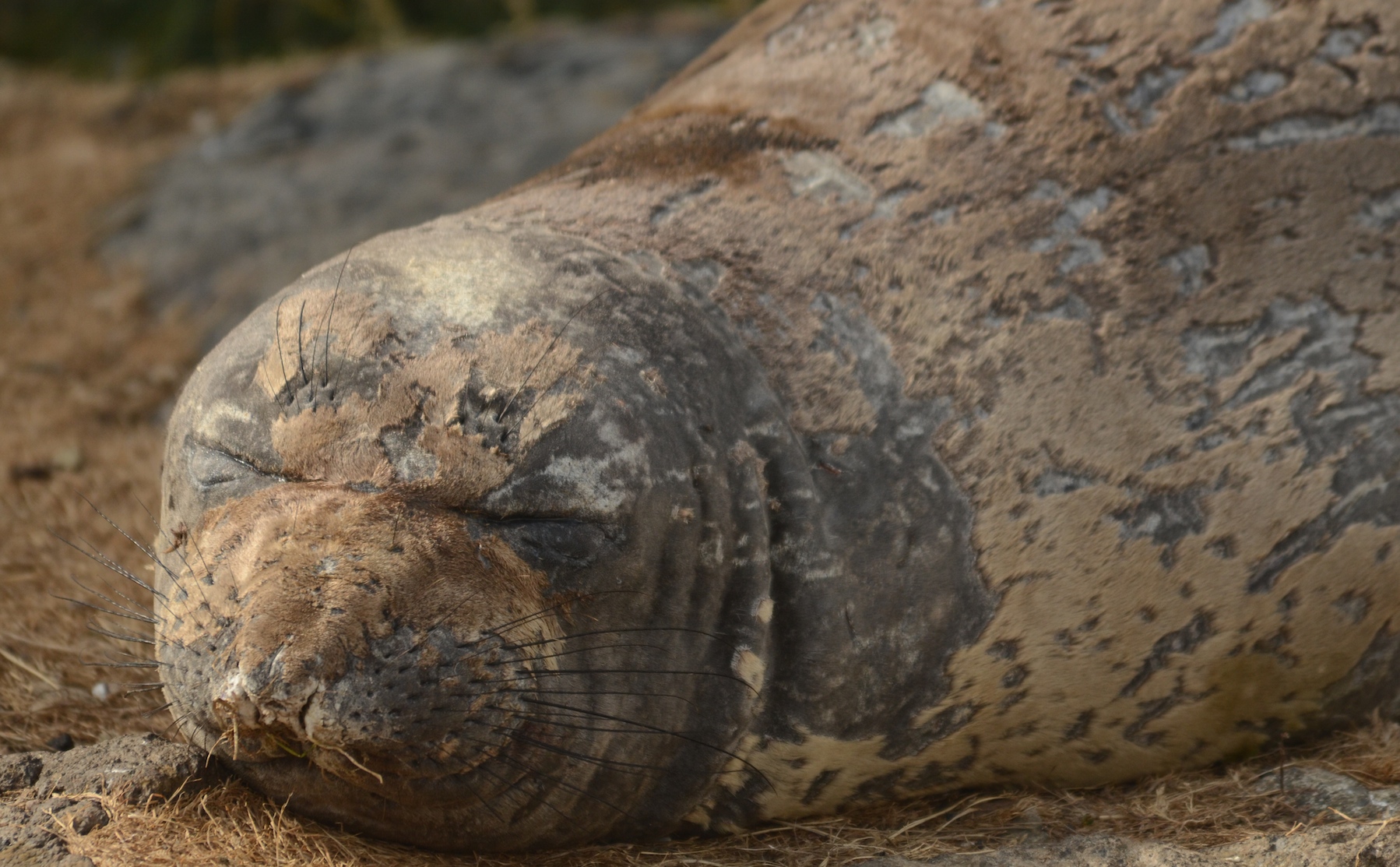
scabby moult

According to my favorite vet, Marty Haulena of the Vancouver Aquarium (Who else knows about such things?), “when there are deep cracks, bleeding and large ulcers it becomes part of a syndrome known as northern elephant sealskin diseases (NESSD) and that syndrome is not well understood though it is likely a combination of secondary bacterial infection, immune-mediated disease, and endocrine problems. It is most likely to occur in yearlings during their first or second major moult. If minor they can survive” Thanks Marty for letting me know.
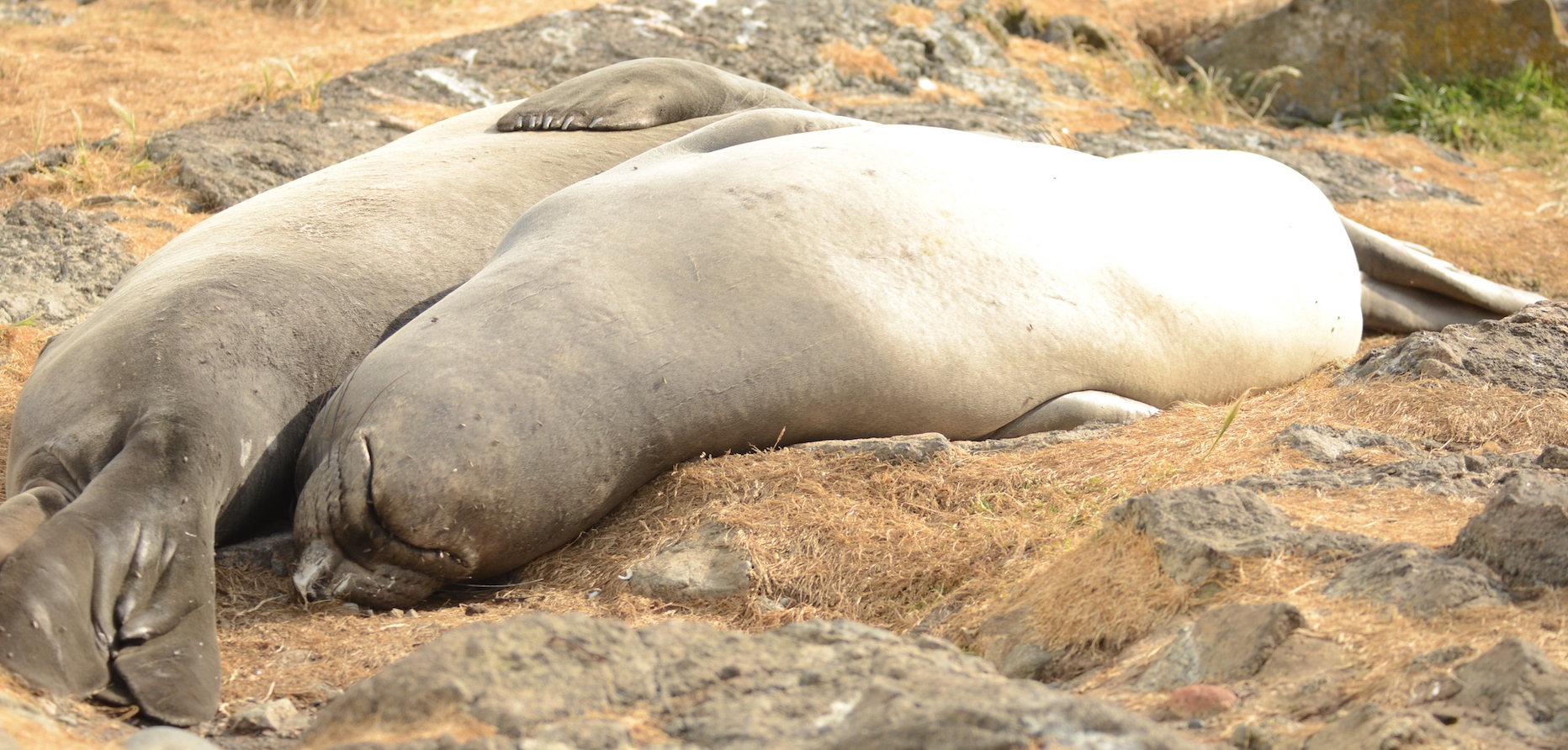
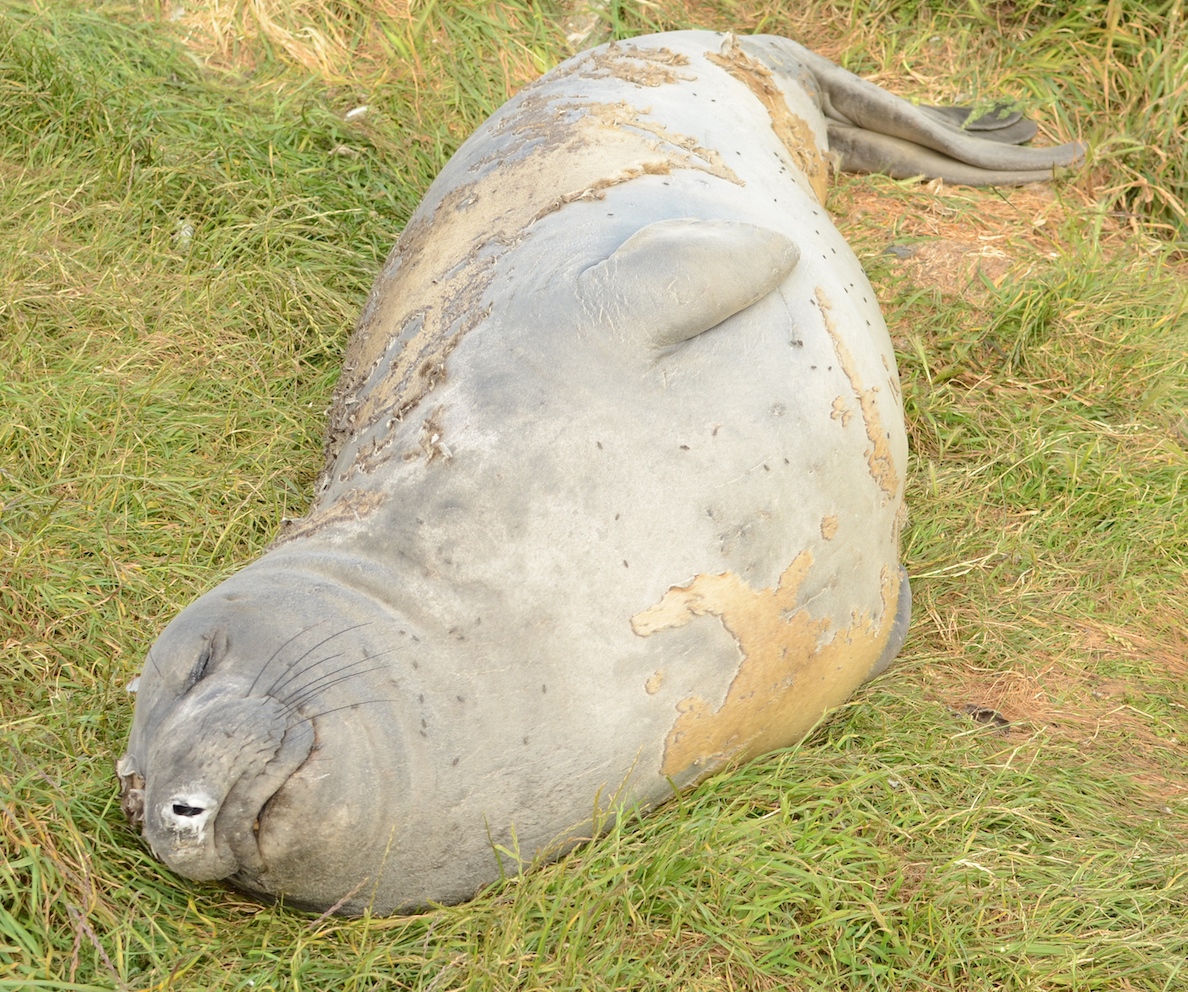
These two have been moulting, losing weight and sleeping more and more since they arrived a couple of months ago.

These two have been moulting, losing weight and sleeping more and more since they arrived a couple of months ago.

Thursday was census day and here are the results.


Northern Elephant Seals 22 (including 16 on Great Race)

Harbour Seals 110

California Sea lions 19

Northern or Stellers Sea lions 25 (One male with a neck ring, one female with a two year old, is branded but could not see brand.)

River Otter 1

Sea Otter 1

Canada Geese 23 (+ 26 goslings, one gosling missing) (note one adult (non-breeding) taken by eagles)

Harlequin Ducks 0 (left last week)

Pelagic Cormorants 16

Double Crested Cormorants 3

Bald Eagle 1 adults, 2 sub-adults

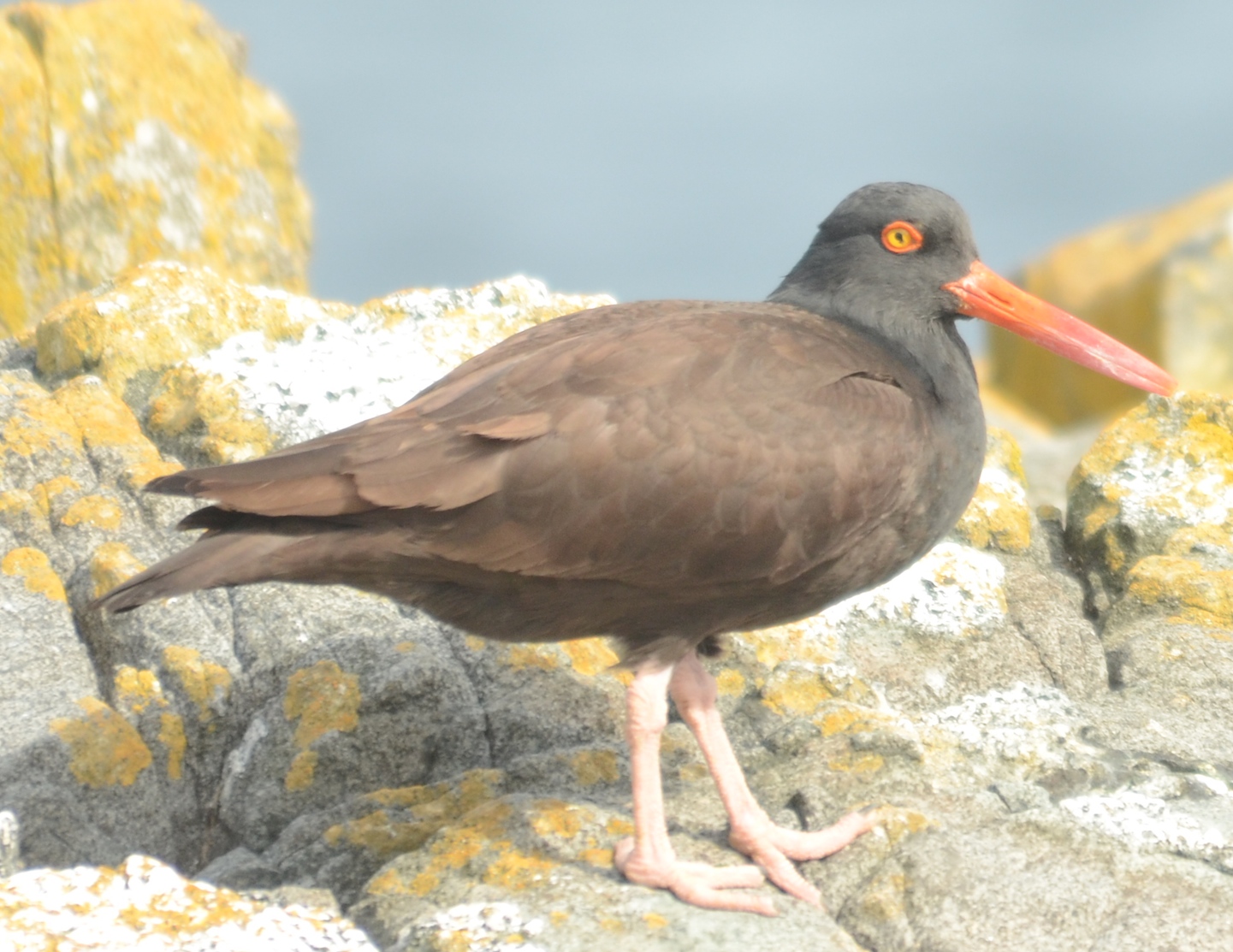
Black Oystercatchers 10

Kildeer 2

Pigeon Guillemots 211

Glaucous-winged Gulls total 444 (436 adults in nesting areas; 8 sub-adults in roosting/resting area) Some gulls starting laying and incubating.


There were no visitors either day and chores were routine. I leave for Portugal tomorrow Christine will be doing the blog. Back June 7th.


May 26

It was another steady, west by southwest day, blowing 15 to 20 knots, from morning to night and clearing out the clouds for a glorious afternoon and evening. There was just enough marine haze on the horizon to make a great sunset. This morning barometer gradually rose to 1016 hPA and then started a slow decline after noon ending up at 1014hPA just before 8:00 PM. The forecast is calling for strong westerlies to continue with a mix of sun and cloud.

Only four whale watching boats were observed in the Ecological Reserve today and everyone was on their best behaviour.

Ecological happenings were subtle today. More sealions are hauling out on Great Race including a few very chunky Stellers bulls. The California Sealions seem to putting the call out for others within hearing range to come and bark in concert. There are more birds mating wherever you look, the Canada Geese goslings are growing incredibly fast and the bull kelp is now forming a broad canopy even on the high tide. The gull bolus contents are shifting to more ‘forage fish’ bone content from the earlier strong bias toward chiton plates and the adults are feeding each other in practice for parenthood?

The Bald Eagles continue to fly in and scare all the gulls, geese and oystercatchers and it looked like they caught something today, but I am not sure what..

Chris and Courtney brought Second Nature out in the afternoon with two visitors from Scotland, (an alumna and her husband), and the two relief eco-guardians Guy and Christine who will be here for the summer. Chris, Courtney and Guy delivered diesel for the generator, using the derrick, barrels, a drum dolly and a fair bit of sweat. It looked scary to me but they pulled it off with aplomb and Chris said it is easier, safer and less risky than the old method, so that is really great.

My chores today were routine. I am going to post this now and update it with photos later in case the Internet goes down again in between. Must run and shut down the generator.


Well Timed with the Race

Winds were calmer today and came from the same general direction, ranging from west to southwest, at a respectable 10 to 20 knots for most of the day. The speed picked up at bit in the evening, pushing behind the first Swiftsure sailboat back with 25 to 30 knots. The sky was partially overcast for much of the day but it was bright and sunlight levels were energetic. The barometer continued its climb started late Thursday, peaked late in the afternoon, and started the inevitable slide back down. The forecast is calling for more wind this evening and more of the same tomorrow.

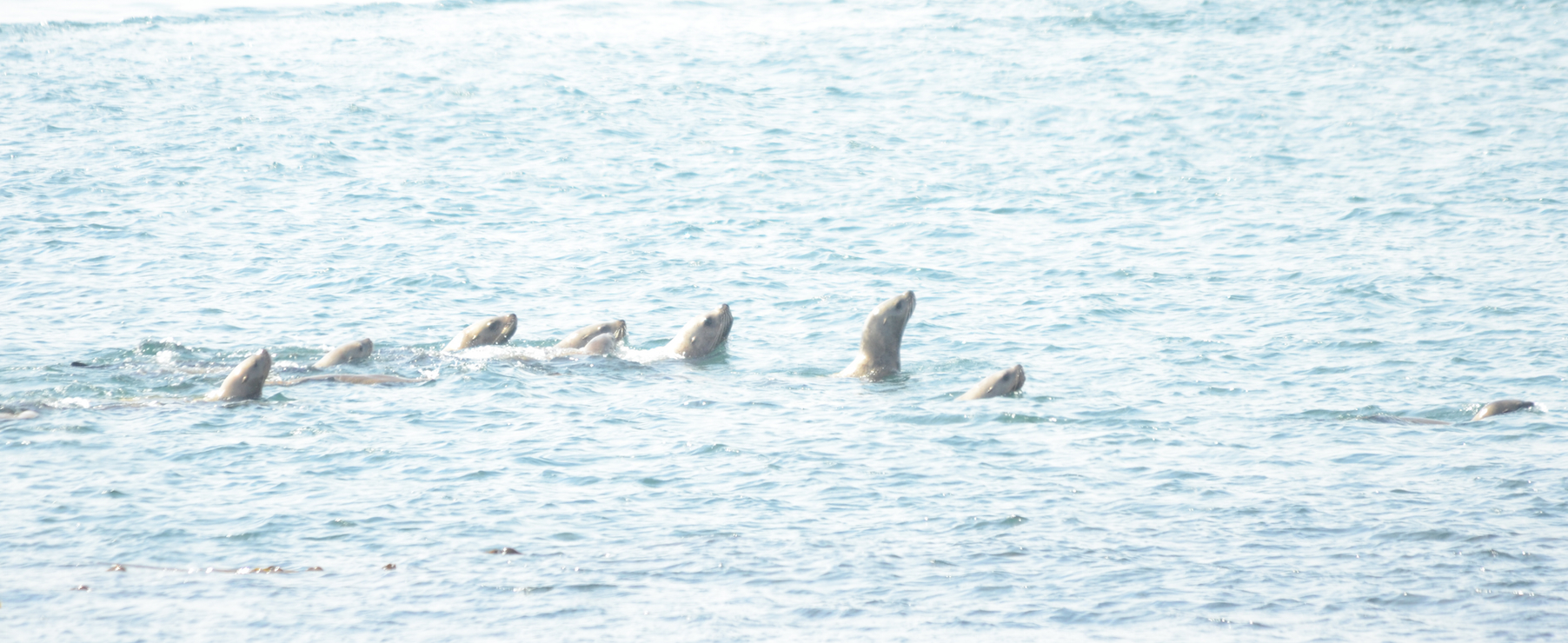
Stellers Sealions craning their necks to see the sailboats racing by Race Rocks.

Stellers Sealions craning their necks to see the sailboats racing by Race Rocks.

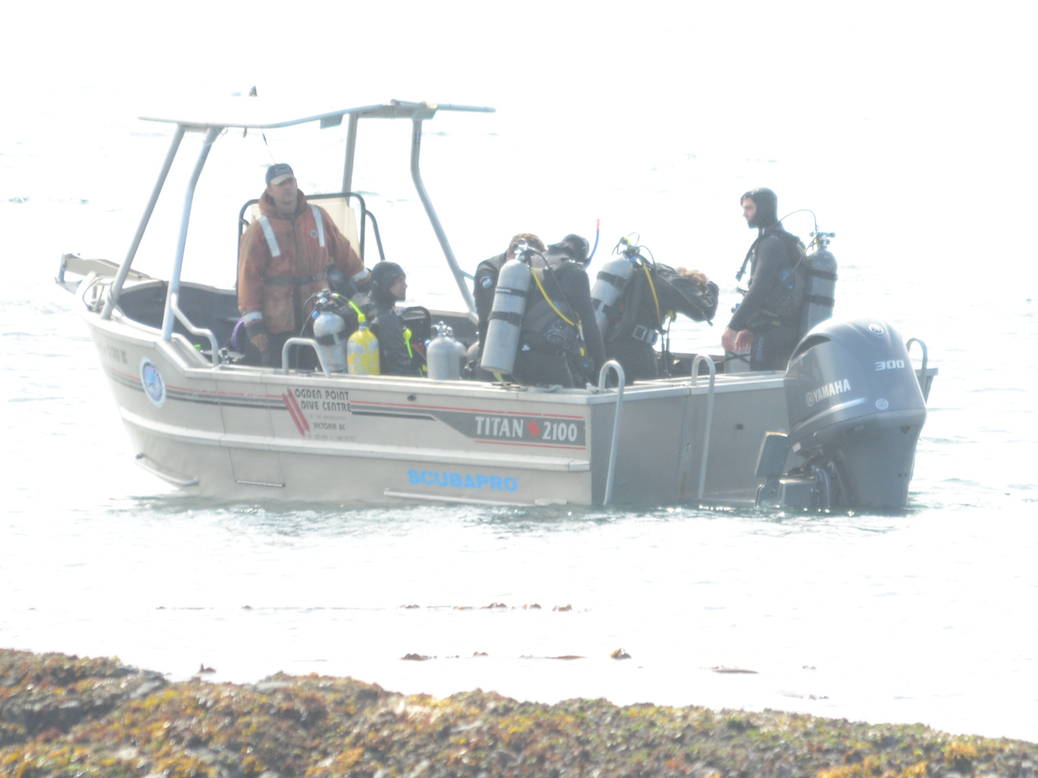
There were a lot of vessels, all around Race Rocks today as the Swiftsure Sailing Race passed by, mid-morning and began returning in the evening. None of the sailboats in the race were observed within the Ecological Reserve although a few were drawn close to North Rocks by the currents. Six whale watching boats were noted working in the Ecological Reserve in the morning and one in the afternoon. The usual Saturday dive charter tended a group of divers off South Islands.

Divers enjoy the incredible biodiversity underwater at Race Rocks. The Ecological Reserve includes the creatures on the bottom, so it is a sustainable diver destination with responsible operators like Ogden Point Diving gate-keeping.

Divers enjoy the incredible biodiversity underwater at Race Rocks. The Ecological Reserve includes the creatures on the bottom, so it is a sustainable diver destination with responsible operators like Ogden Point Diving gate-keeping.

The Northern Elephant Seal moult continues, as does mating, nest building, laying and incubating by Black Oystercatchers. The Pigeon Guillemots and Glaucous-winged Gulls are not far behind and the Canada Geese are way out ahead with some gaggles of goslings already larger than chickens.

This female Northern Elephant Seals contributed a skin sample without knowing it.

This female Northern Elephant Seals contributed a skin sample without knowing it.

Skin samples and vibrissae were collected today, from the ground where moulting animals had been lying. Luckily they leave and go for a swim once and a while, so this is a non-invasive way to take a sample. The hope is that funds for isotopic analyses can be found. Information generated by these analyses will give information about diet and trophic level and could be particularly meaningful for tagged animals, for which there is already baseline data. Some of these animals, such as 5850, also had a satellite tag earlier in its life. There is very little information published on the only Northern Elephant Seal colony in Canada.

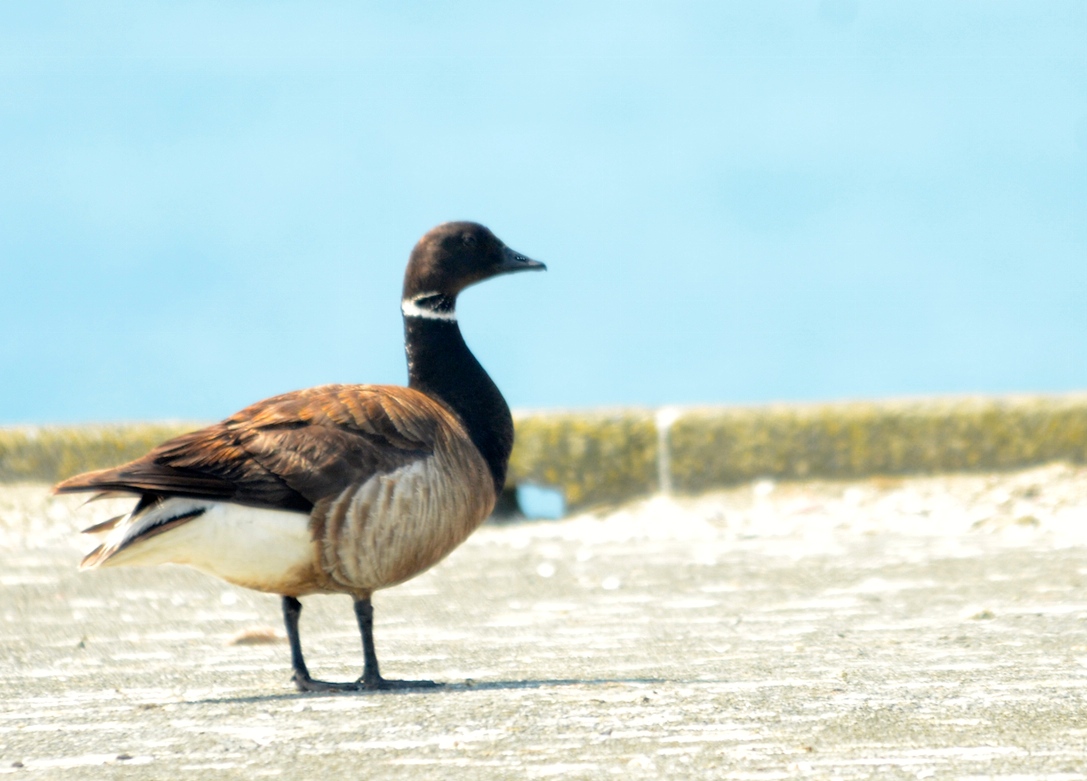
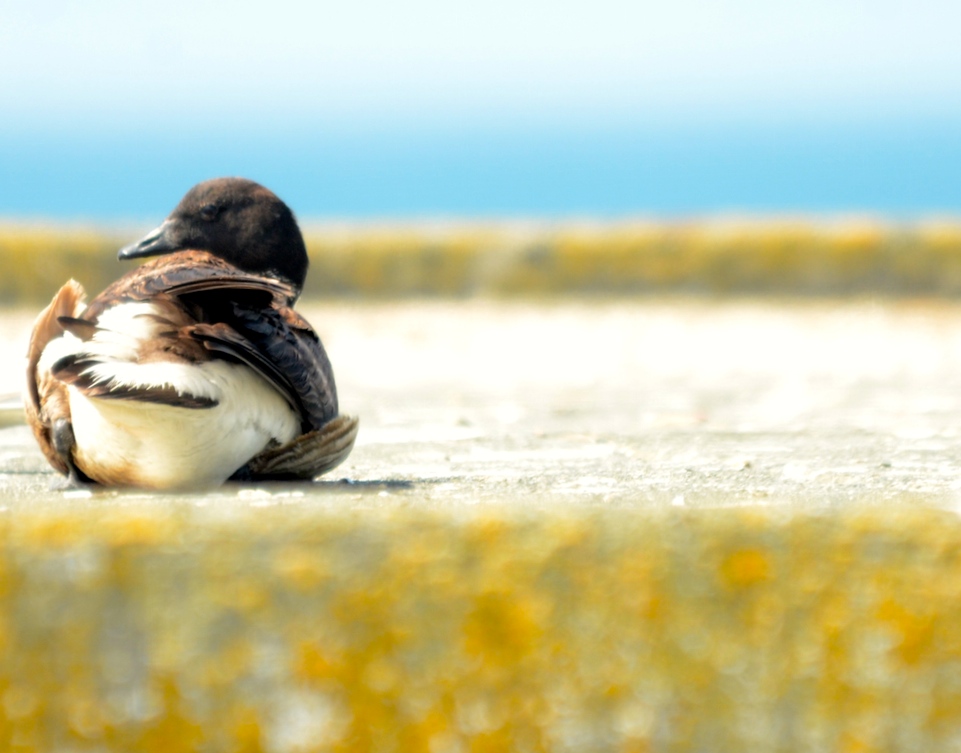
A single Brant visited today, stopping off on the helicopter-pad to have a rest and preen. Oddly enough the gulls were not that welcoming. It didn’t stay long enough for the Canada Geese to notice.

Brandt makes a landing on the heli-pad.

Black brant goose makes a landing on the heli-pad. It has a long way to fly before it nests in the tundra of the high arctic.

Brandt

There were no visitors today and chores were routine, of the entropy defying type. Solar power was used to run the desalinator and make lots of fresh water today in spite of clouds.


Yellow-headed Blackbird

Again it was a day dominated by the west and west-southwest winds. It was blowing 30 to 35 knots at dawn but the velocity subsided and most of the day it blew 20 to 25 knots. Skies were partially overcast and as predicted there were a few showers. Air temperature remains low, and is not much different than flooding sea surface temperature at ~ 9.7 oC. ranging between 10 oC and 12 oC .The wind is also chilling and today had the highest wind speeds of the week. The barometer rose today from 1008 to 1013 hPa and is dropping now while the forecast calls for gales and a gale warning has been issued. Saturday is supposed to be mainly cloudy with a 30% chance of showers.

There were four whale-watching boats observed, working in the Ecological Reserve today. No other vessels were observed in reserve.

Female Northern Elephant Seal # 5086 is on day seven of her moult now and has made great strides in losing skin during the last 24 hours. She has achieved the two thirds moulted milestone and is still grouchy.

5086_Day 7

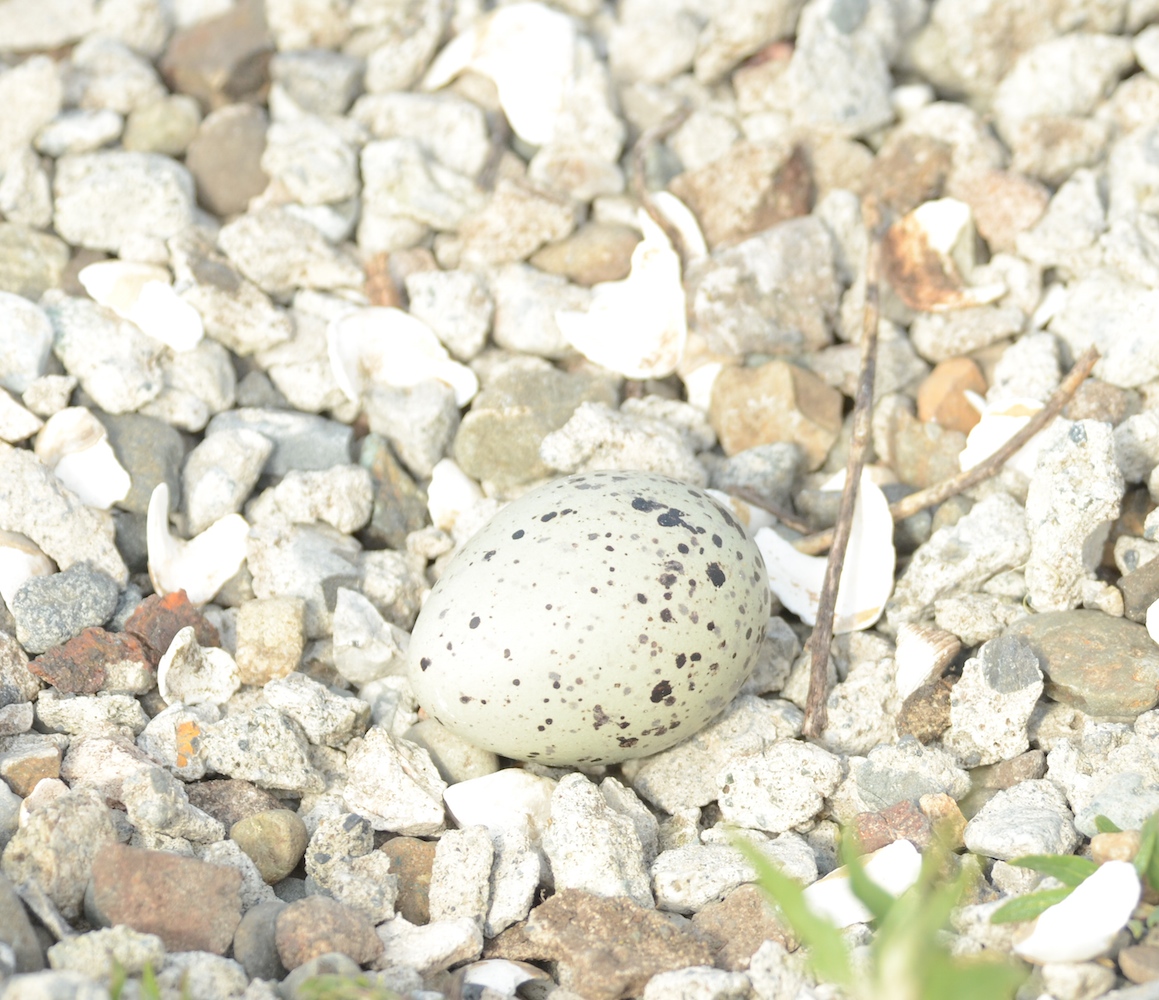
Black Oystercatchers are without a doubt nesting now and there are eggs in their terribly spartan nests, which have none of the comforts of home like soft vegetation or down.

Untitled bloy egg2

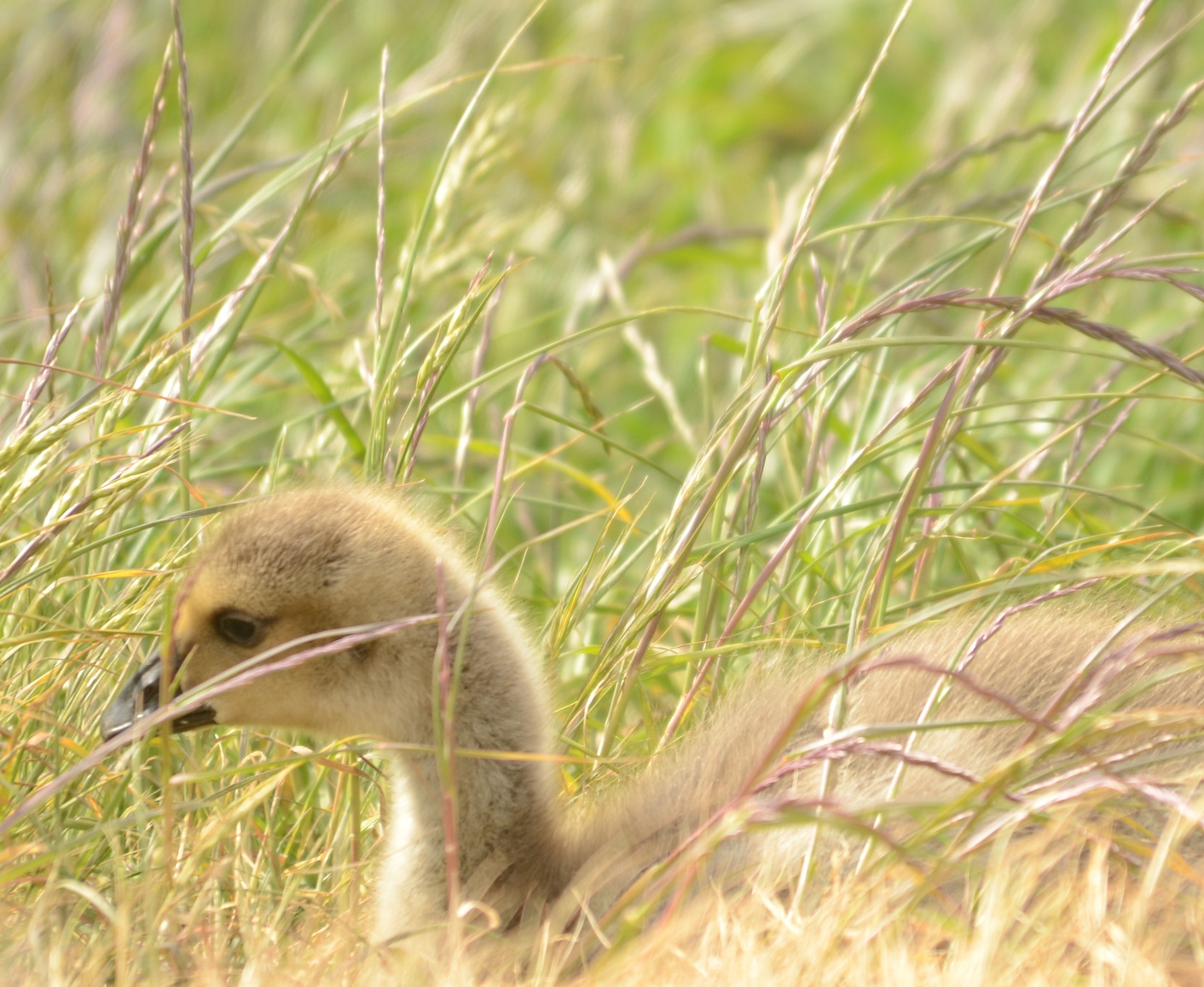
Some of the goslings are getting quite large and although they may be considered pesty, they are still fascinating to watch.

gosling

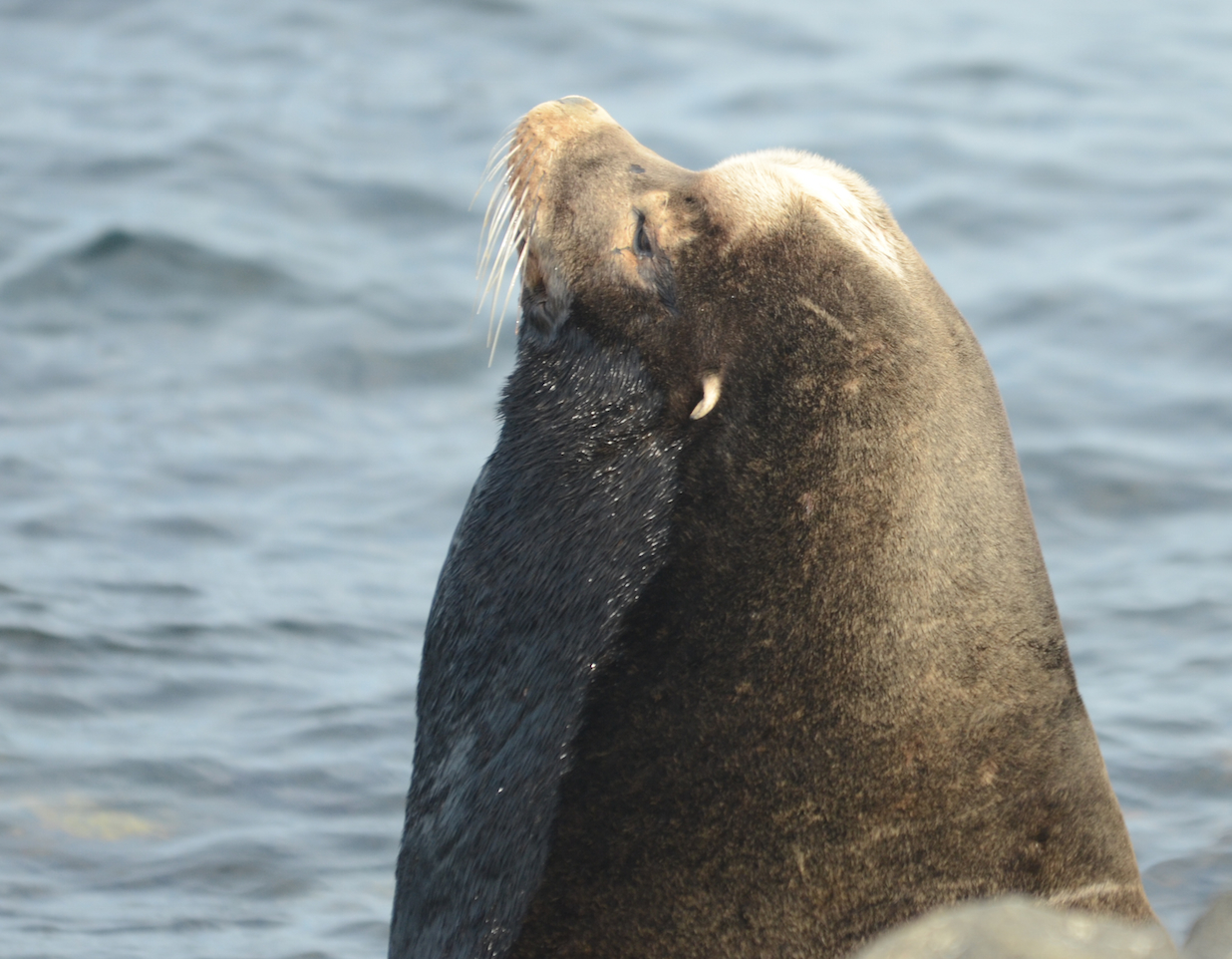
The California Sealions are moving back onto Great Race and I awoke to a chorus of them doing a call and response outside my bedroom window this morning.

ZACA

Thanks go out to Don Stewart for spotting and identifying an Anna’s Hummingbird on Great Race today, I believe this is a new addition to the species list here.

DCS

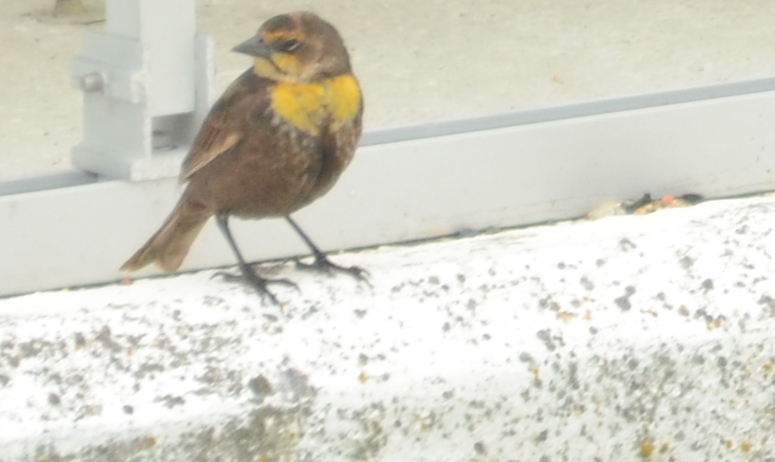
Another thank you to Rocky Point Bird Observatory for identifying a Yellow-headed Blackbird, another possibly new bird to the island. It has been hiding in the long grass and thistles near the base of the Light Tower and it has been difficult to get a photo fast enough. Today it flew to the roof of the Energy Building which made a photo much easier.

Yhblkbrd

Yesterday was census day but it was too foggy much of the day to do a good census. Here are the results from today’s census.

Northern Elephant Seals 26 (18 on Great Race, 8 on Middle Rock)

Harbour Seals 228

California Sealions 14

Northern (Stellers) Sealions 26

Canada Geese 24 (+ 21 goslings)

Harlequin Ducks 6

Pelagic Cormorants 8

Double Crested Cormorants 13

Bald Eagle total 3; 1 adult, 2 sub-adults

Black Oystercatchers          14

Kildeer                                   2

Pigeon Guillemots              230

Glaucous-winged Gulls total 564 (556 adults in nesting areas; 8 sub-adults in                           roosting/resting area)

California Gulls                    6

Common Raven                  1

Northwestern Crow             1

Anna’s Hummingbird         1

Yellow-headed Blackbird   1

Chores were routine today. Courtney came out with the new switch box for Camera 2 and installed it. Camera 2 is working again now but a close-up study on diatom film. Don left on Second Nature.


Patches of Fog.

The fog was hanging like a wall to the west when we left the island early this morning and on return this evening, the fog was just wrapping around the island. Winds stayed west-southwest and were gusting over 30 knots this evening. The barometer started dropping after noon, holding steady at ~1013 hPa., up to that point. At sunset it was down to 1008 hPa. Cumulative solar energy was ~ 550 Langleys today, down from yesterday, so I am guessing there was some fog here during part of the day, as yesterday it was up at 600 Ly. The forecast for tomorrow is for more of the same, westerly winds, a strong wind warning and fog patches. The fog “patch” is a big one extending up the west coast to at least Bamfield.

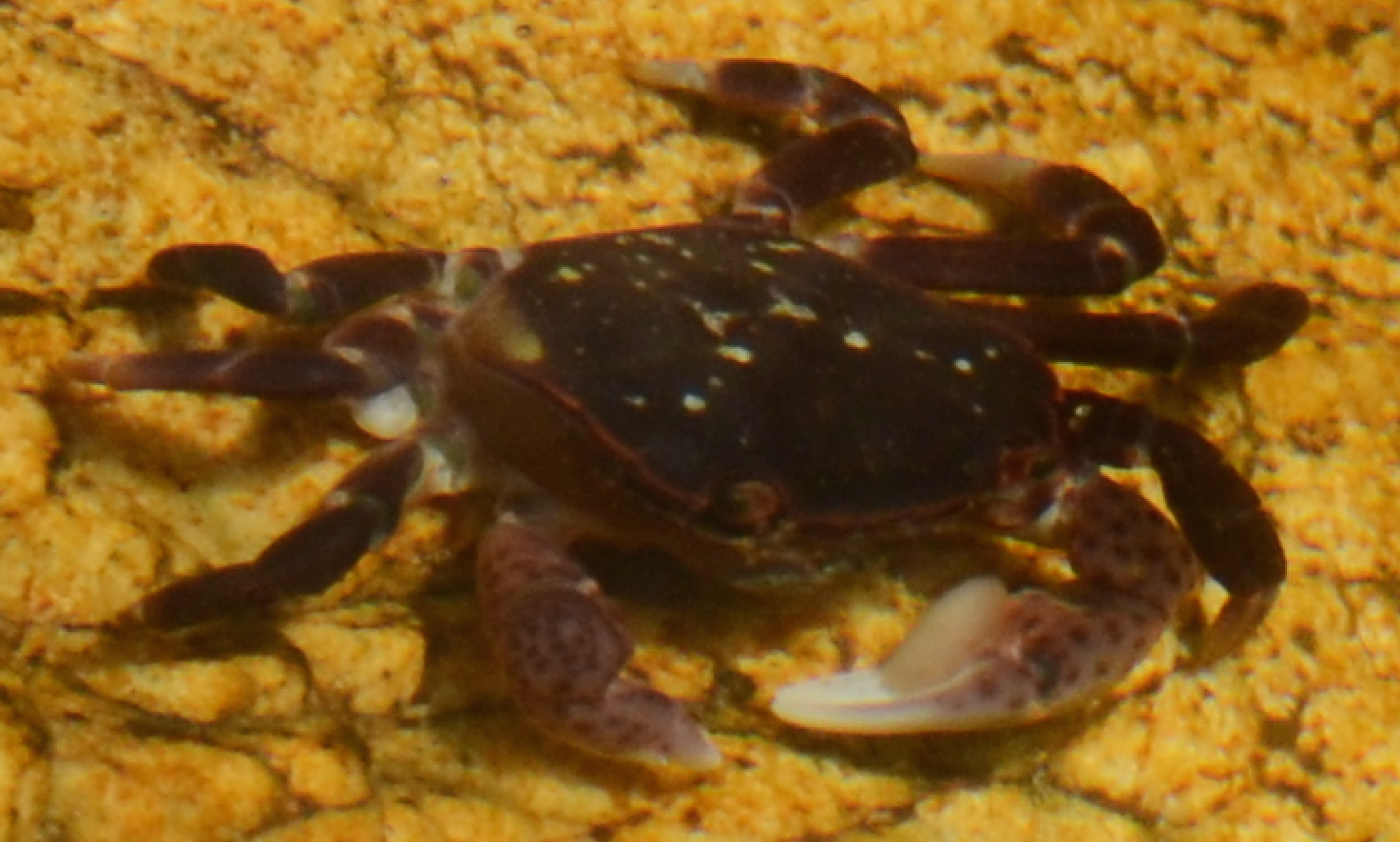
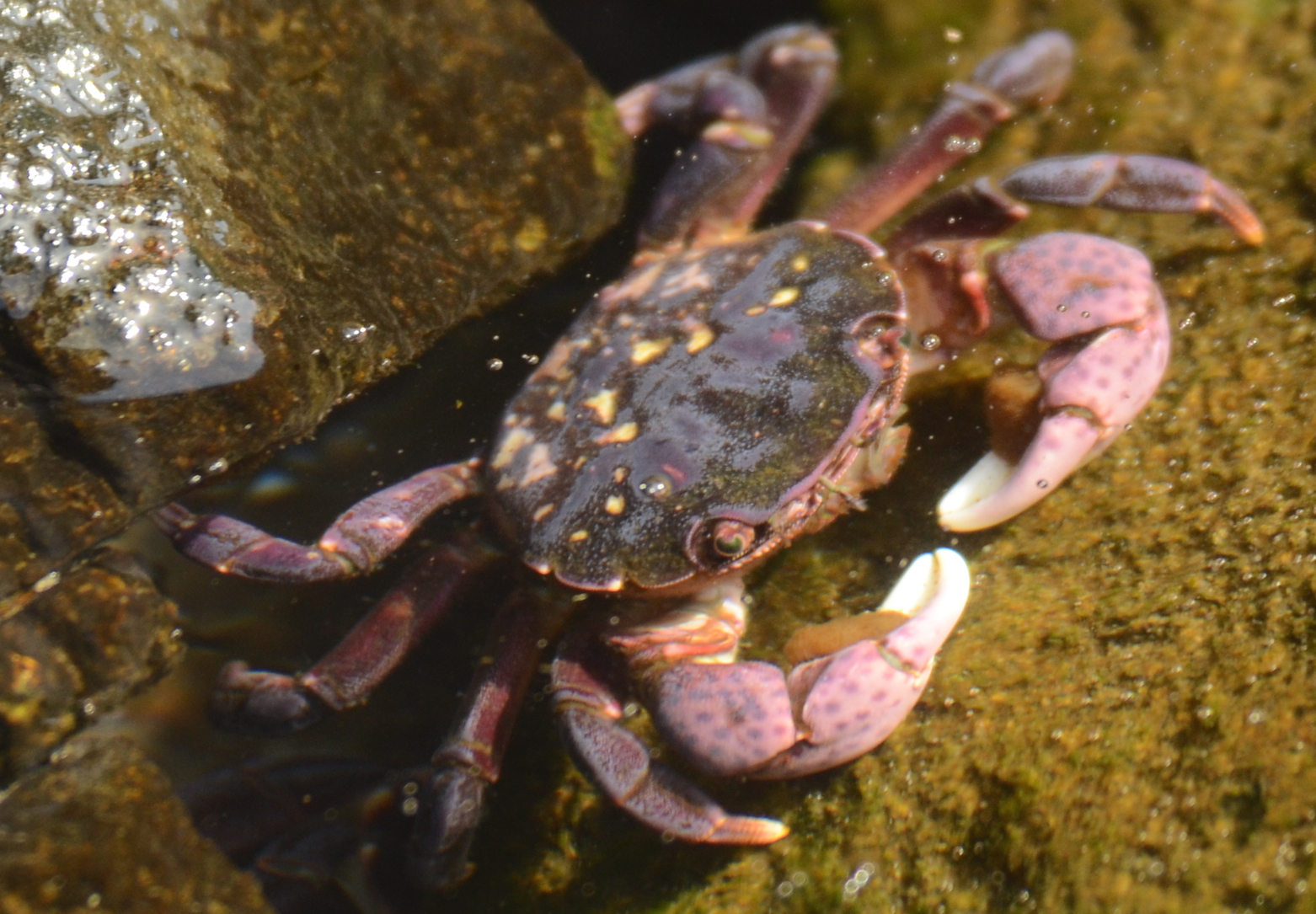
On yesterday’s intertidal foray, there were numerous large Hemigrapsus nudus shore crabs in a fairly high tidal pool with only one rock. This is not the ‘usual’ habitat where I am used to finding this species: but perhaps because of the high current they shelter in high tidal pools instead of under cobbles and boulders, a little lower in the intertidal. It is also possible that some may be another species as some of them have a very rounded instead of rectangular carapace.


Hemigrapsus nudus, the common shore crab in a high tide pool.

Hemigrapsus nudus, the common shore crab in a high tide pool.

hemigrap?

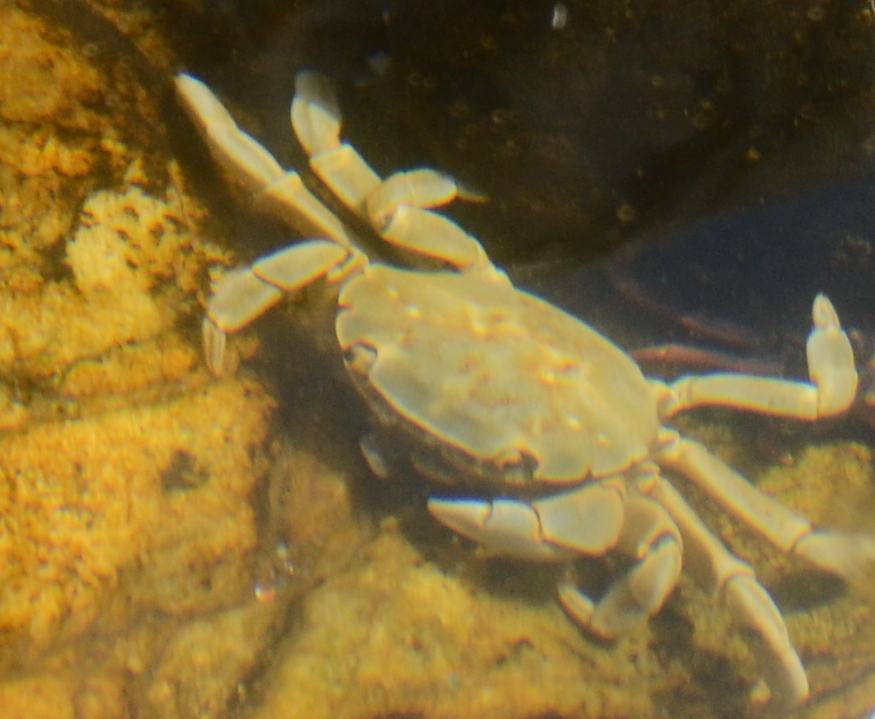
This crab and the one in the next photo have rounded carapaces with definite notches as opposed to the more rectangular carapace of the common shore crabs. Will report back on identification confirmation.

crab_id

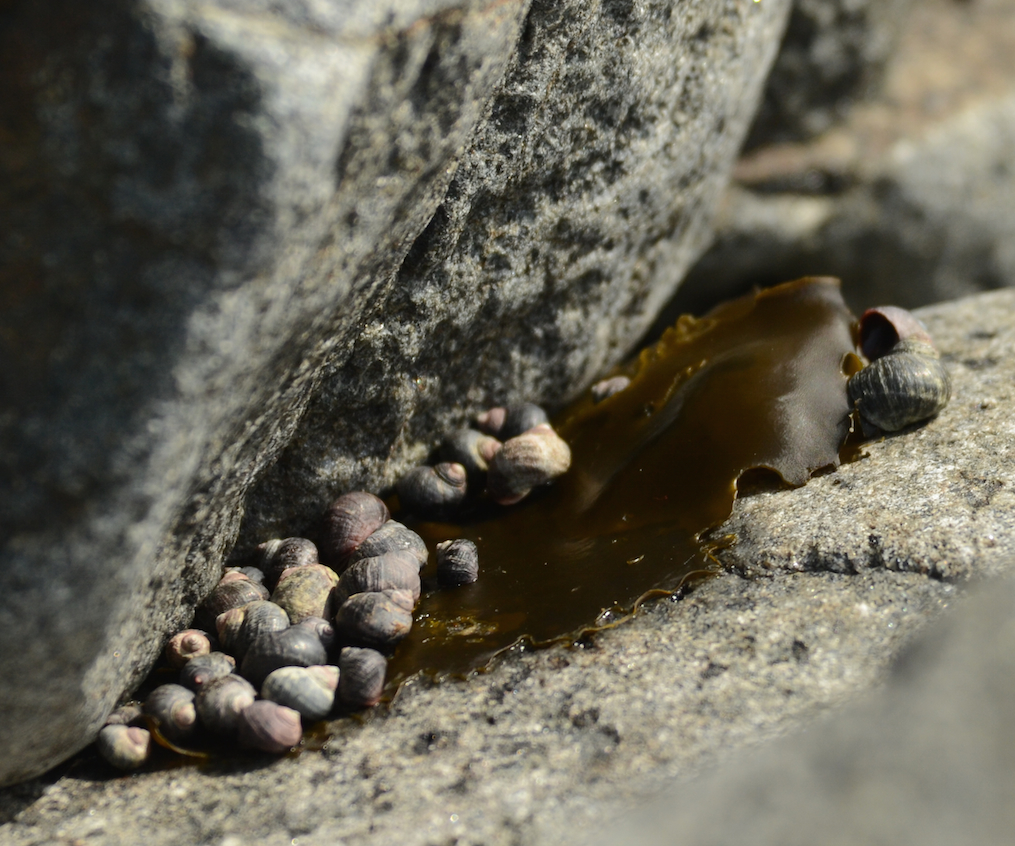
Another example of gigantism here is exhibited in the Littorina spp. or periwinkles. They are much larger than I am used to seeing and every little piece of kelp blown into the high intertidal is immediately (at a snail’s pace) consumed.

A piece of kelp in the high intertidal is a magnet for hungry littorines.

A piece of kelp in the high intertidal is a magnet for hungry littorines.

The elusive Kildeer that normally arrive after dark and leave before light, came early tonight in the fog. Observations of two individuals revealed interesting interactions. One individual fanned out (her?) tail feathers held high, with head down and wings out and down, while the other individual did some serious head bobbing.

It is not known what vessels were or were not in reserve today

The student advisee group and their adults (and small child) left mid-morning today. Don arrived for a few days.

Chores were routine today.

Sonny Saturday.

The west wind blew 20 – 25 knots all day, bringing cloud, drizzle, rain and eventually, late afternoon, sunshine. The strong wind warning remains in effect and the barometer, which has been hovering above 1010 HPa., has started to drop very gradually. The forecast for tomorrow calls for a mix of sun and rain.

Identifiable, commercial tour boats in the Ecological Reserve were limited to five whale watching boats and one dive charter, today. Two Sea Doo- type vessels, came from the direction of Victoria, did a tour around Race Rocks, and headed back.

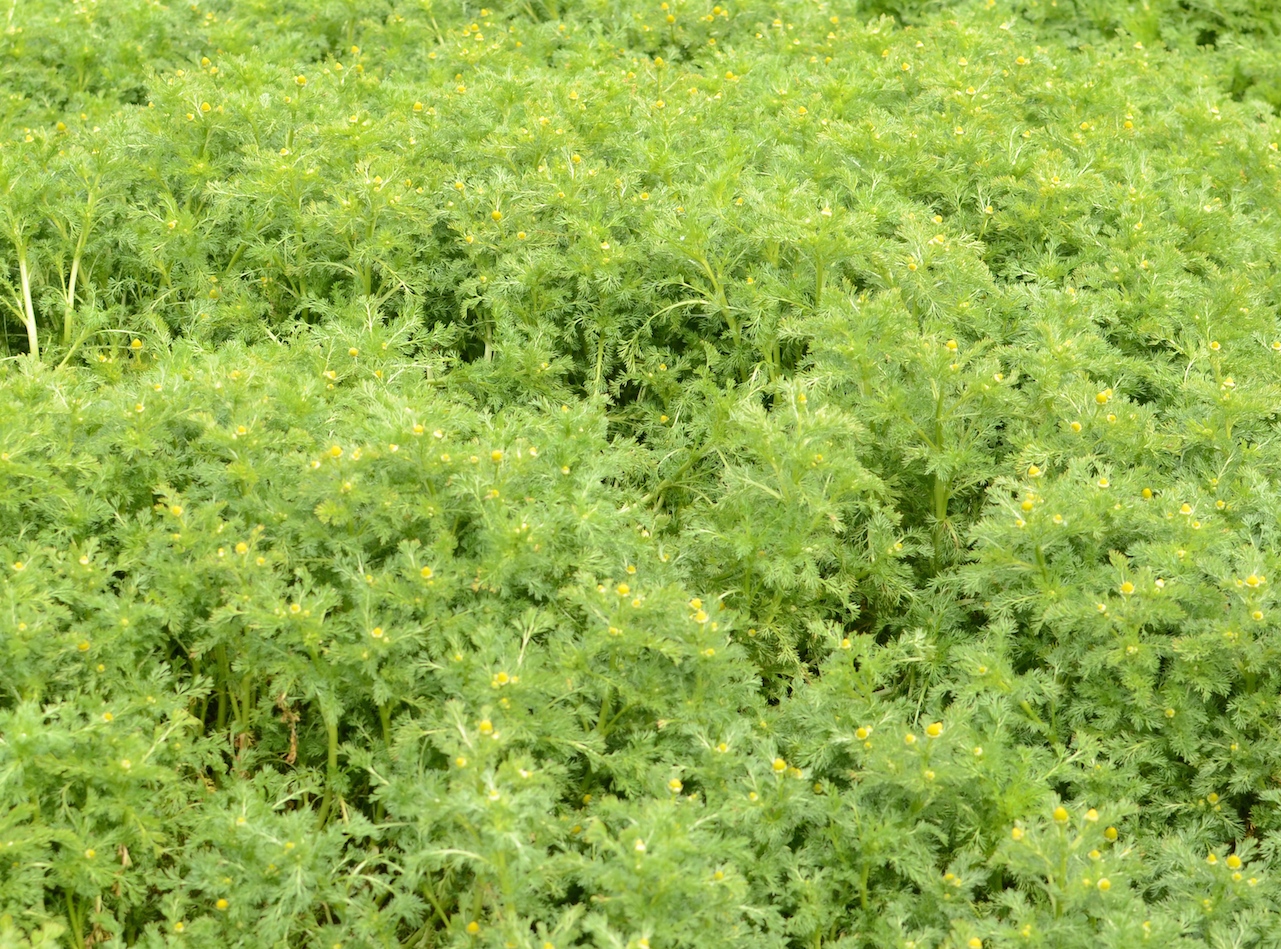
Luxuriant growth of Pineapple Weed, Matricaria sp. has filled in the highly disturbed areas where hundreds of sealions hauled out last fall and winter, compacting the soil and destroying all vegetation. Although considered a weed, the pineapple smell is nice and covers up the devastation left behind by the sealions.

Tall pineapple weed covers the area occupied by sealions last fall and winter.

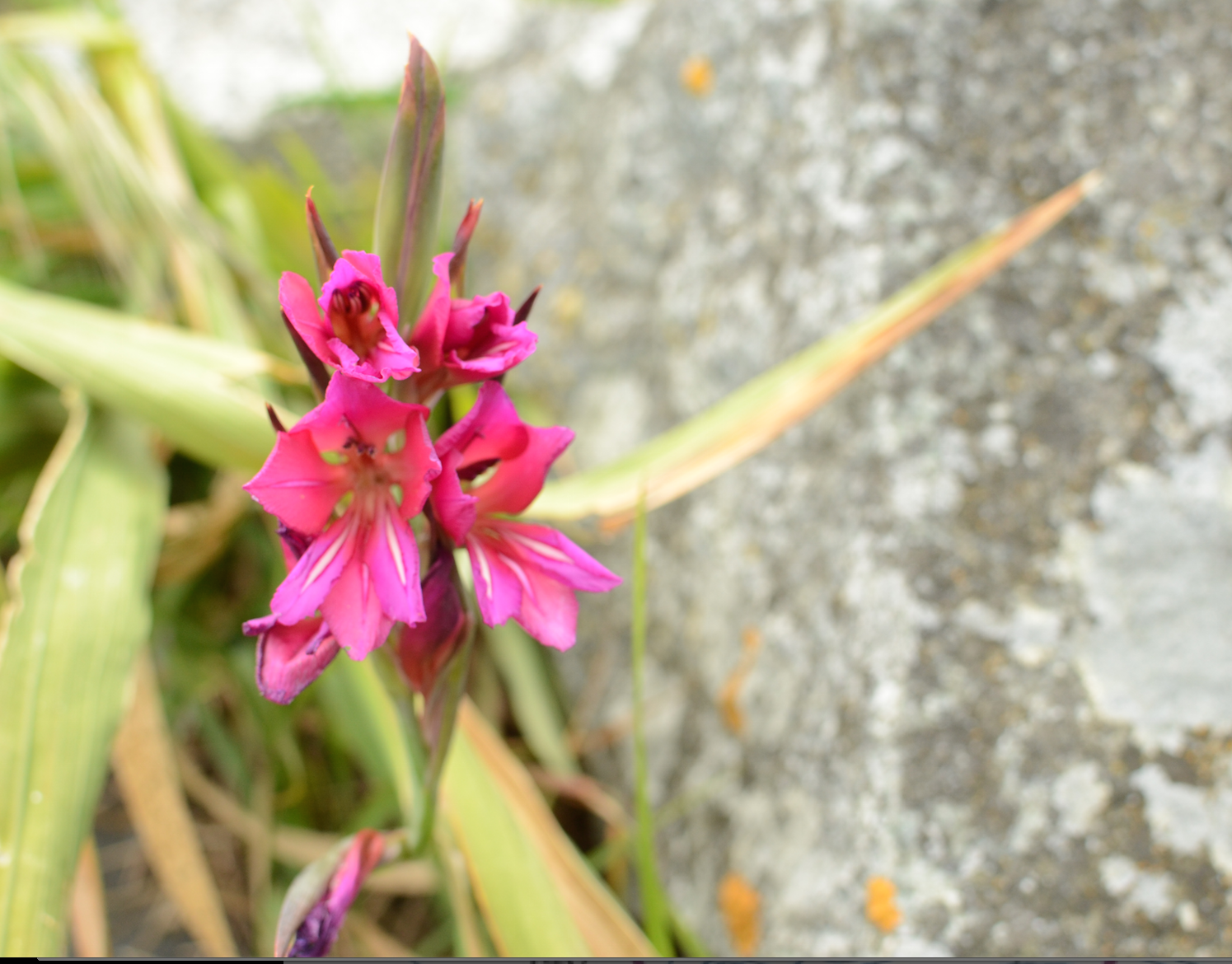
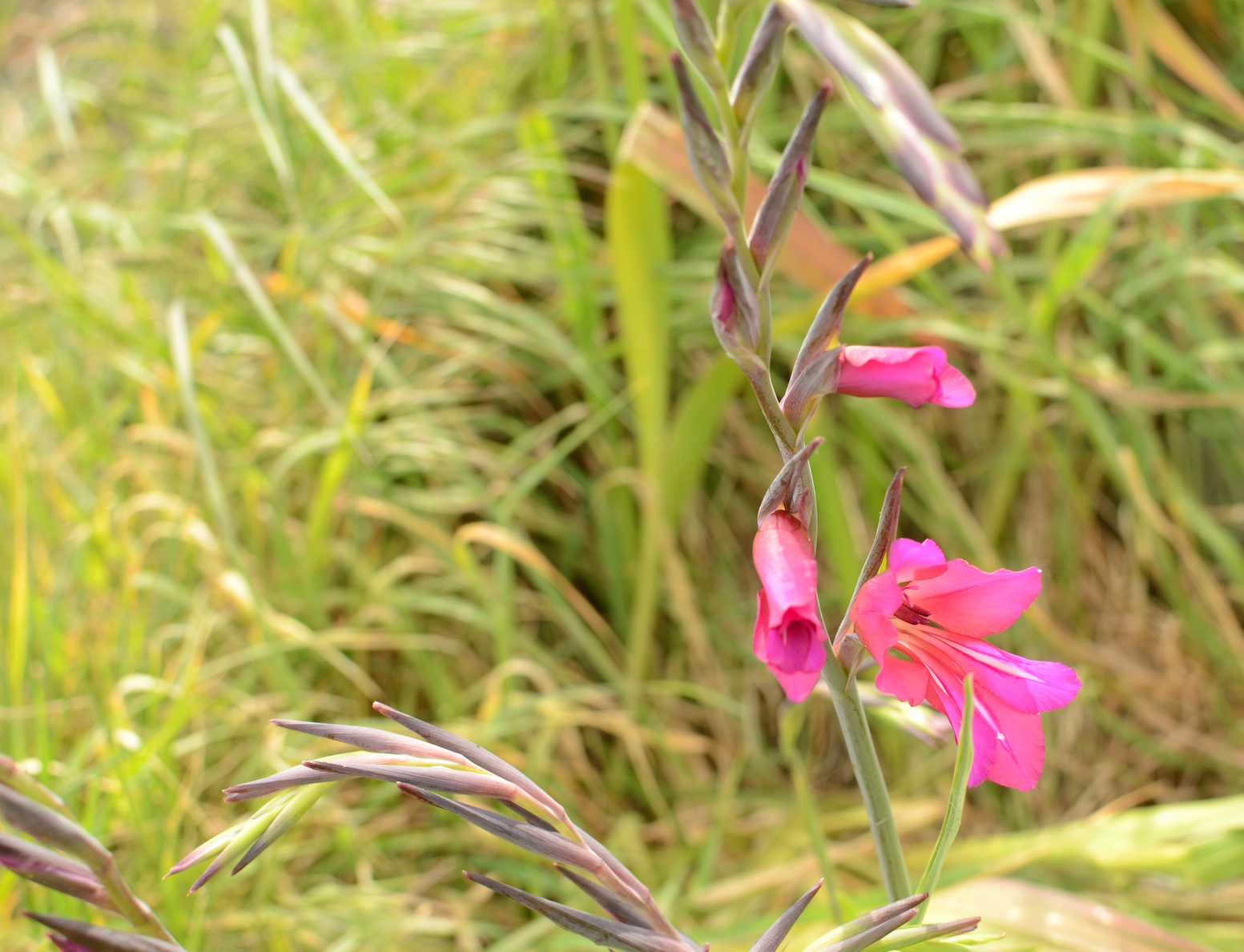
Another species left over from the old gardens here, is blooming right now and very beautiful. It looks like it might be in the iris family but it is not something I am familiar with. So if you are reading this and recognize the plant, please let me know what it is.
You are invited to name (identify) the mystery plant.

You are invited to name (identify) the mystery plant, which may be a heritage lighthouse plant.

Mystery flower.

Mystery flower is Gladiolus imbricatus, originally from southeastern Europe/Turkey. It has been growing unattended for at least fifty years. Thanks to Garry Fletcher for the identification.

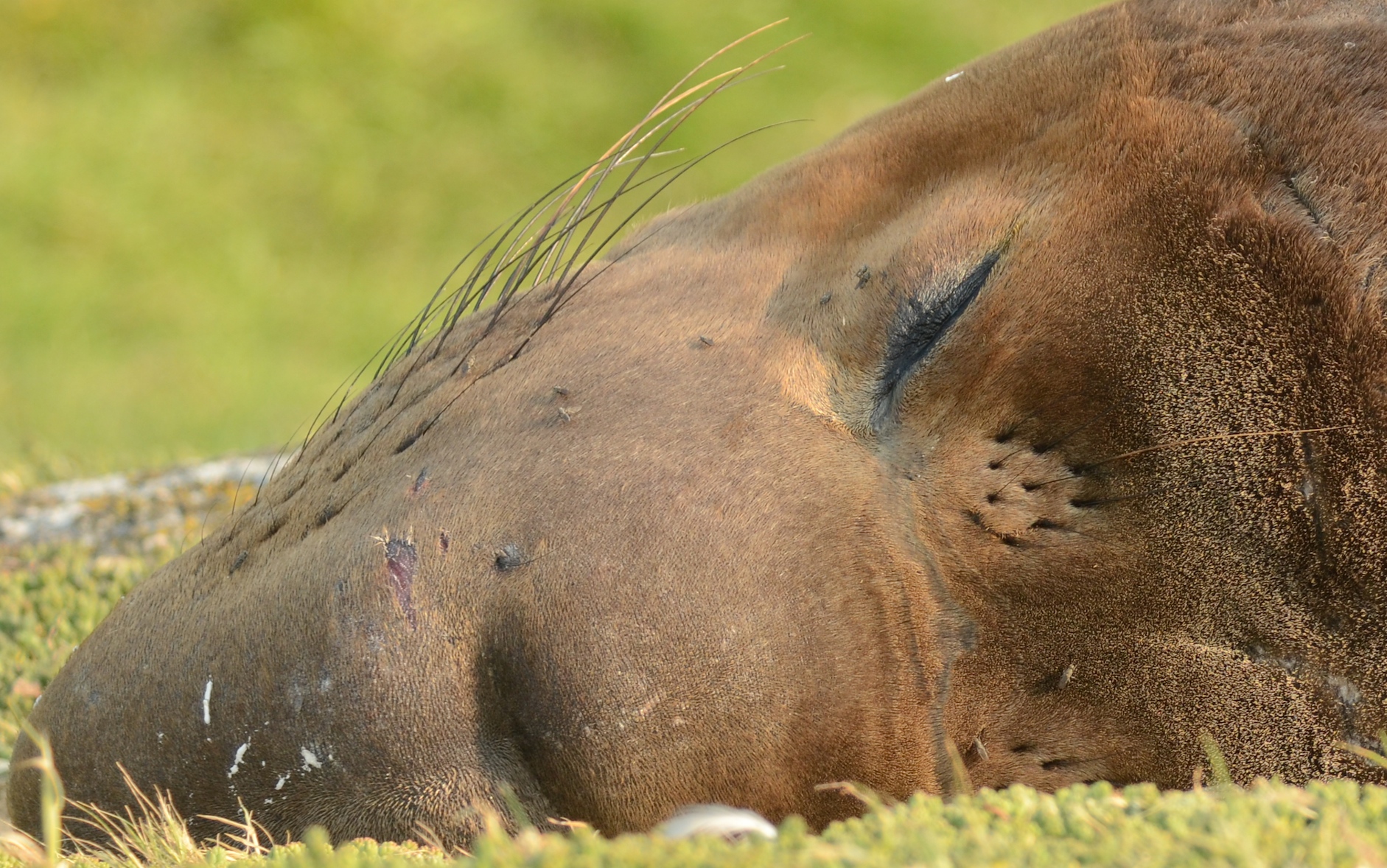
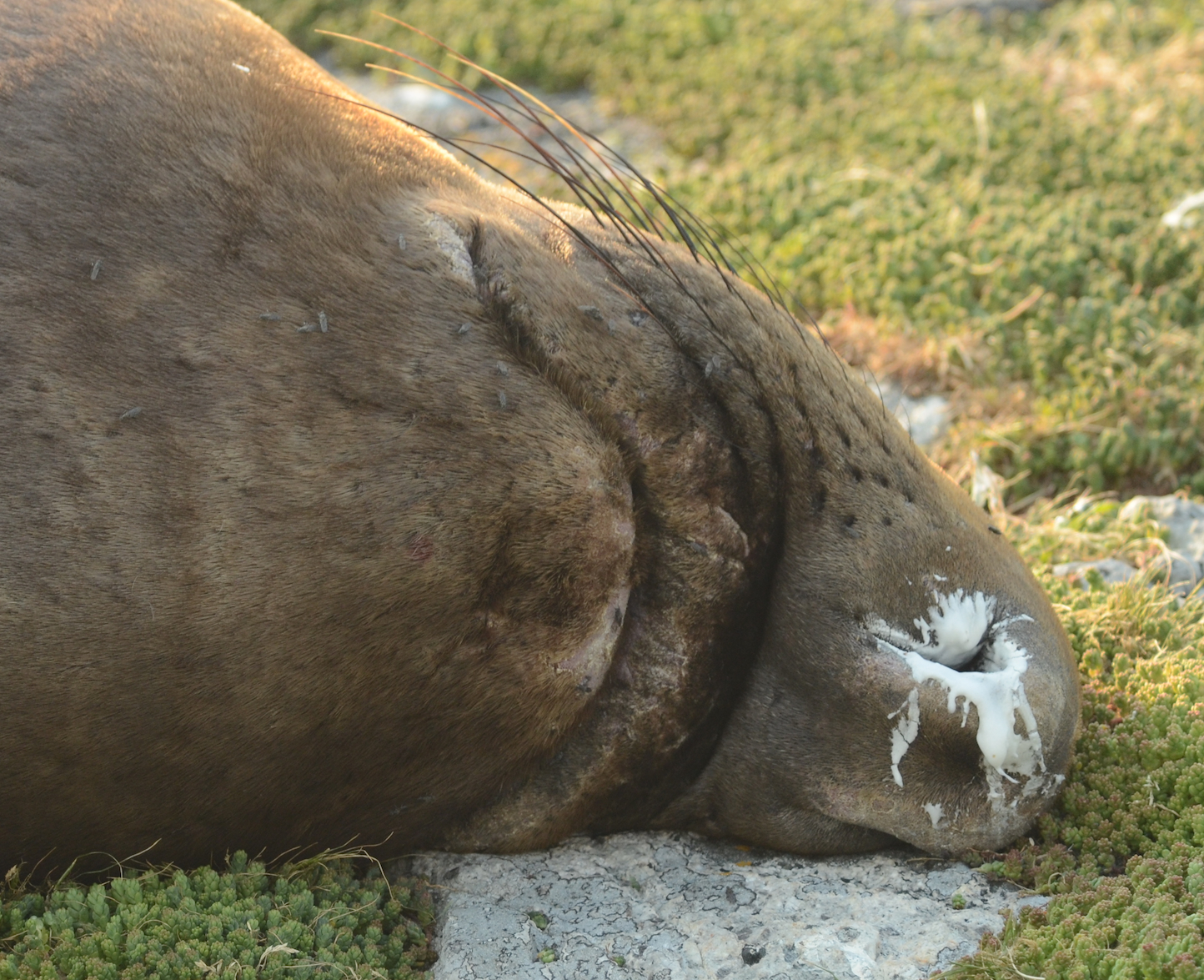
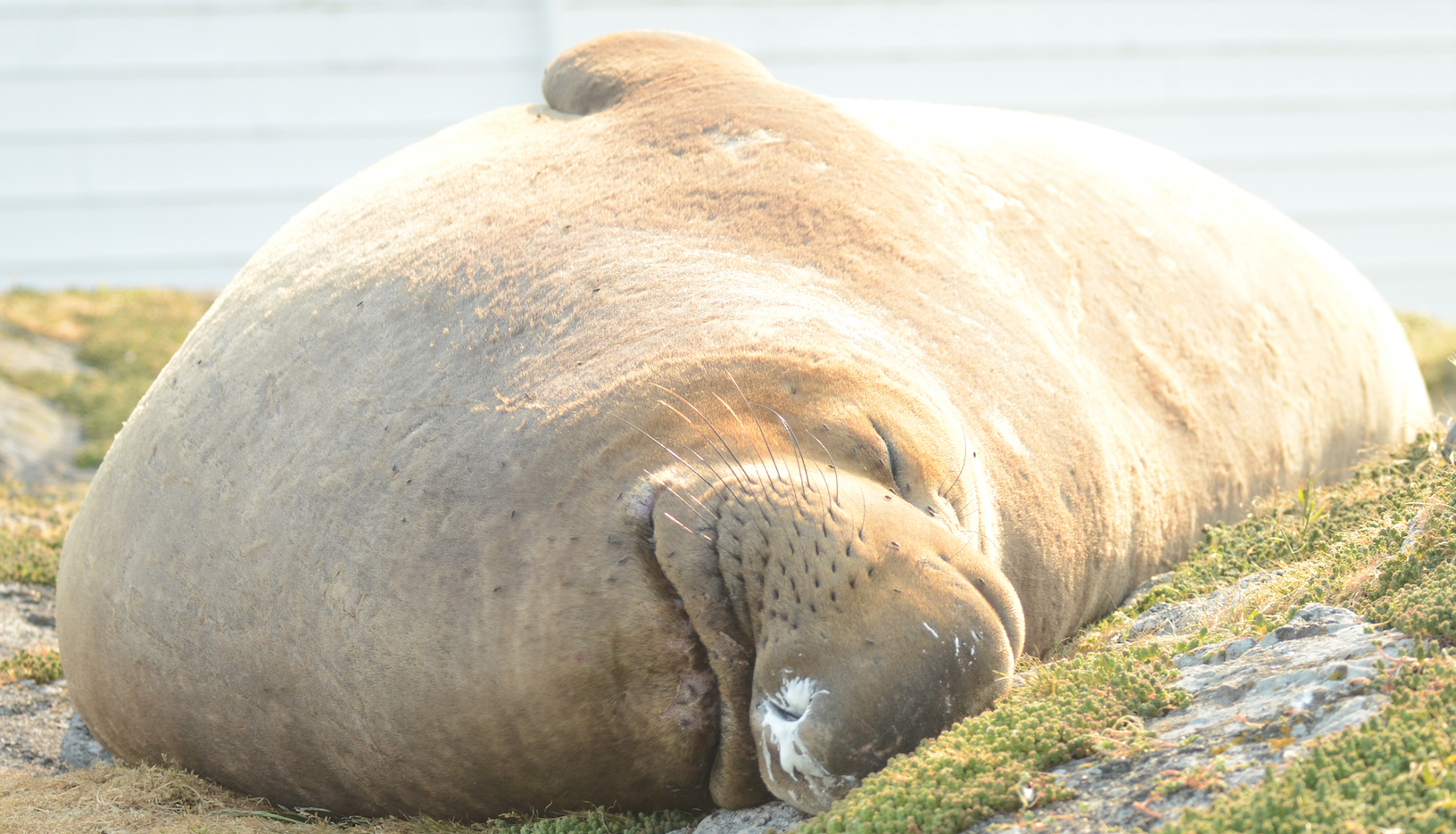
Floyd continues to visit Great Race. He spends extra time in the water, suspended and fairly weightless, understandably more comfortable, considering his great bulk.

Floyd top head floyd ventral face

Floyd sleeping near the science house.

Floyd sleeping near the science house.

Eighteen elephant seals continue to haul out on Great Race and their moults are at different stages, depending on start time. The animals that arrived early appear to have completed their moult except for the regrowth of vibrissae. Animals that arrived recently, like Floyd and the female, 5086 are just starting the process.

Glaucous-winged Gulls looking broody.

Glaucous-winged Gulls looking broody.

Some gulls are already looking broody and sitting like they are practicing for incubation. Mating pairs can be seen throughout the colony.

My family continues to visit. Chores and maintenance included a lot of regular tasks, some monthly jobs and a few extraordinary repairs. The fire-pump ran for several hours today adding to the seawater in the cistern.

Greener Pastures (Covering May 11 & 12)

The wind blew west 20 – 25 knots until early afternoon on Monday when it slowed, came in from the southwest and cleared out the cold, wet clouds. For the rest of the day, it stayed partially overcast with sunny breaks and the forecasted call for more of the same, with showers was spot on. The dropping barometer leveled out a bit Tuesday and the prediction is for continuing strong westerlies, which blew all day 10 – 20 knots. Wednesday looks like a wet one.

Monday morning  was blustery  and bristling with police and military activity on the water, all around but not in the Ecological Reserve. Only two whale watching boats were noted in Reserve on Monday.Tuesday only one whale watching vessel was noted in Reserve. There was a Pedder Bay rental with independent researchers counting seals and sealions. Tuesday, Second Nature arrived with a large contingent of support staff, maintenance, IT and volunteers. Tuesday was punctuated by military blasting.

The elephant seals were on the move today and yesterday. After a dawn swim, Monday, only half the animals moved back behind the boathouse, where most of them have been sleeping for the last couple of weeks. The grass where they were lying, behind the boat house, is a fried brown colour. Although it looks dead, it will probably come back after a couple of weeks like the other crushed and cooked parts.

Elephant Seal lawn treatment results.

Elephant Seal lawn treatment results.

Seven animals, including two females who started the move, found fresh, green grass right outside my basement door. Tuesday was a repeat performance except that we were also graced by the presence of a very large male. It was a short visit and I was too busy to measure him but he was massive.

This before the lawn treatment, the previous photo is after.

This before the lawn treatment, the previous photo is after.

big boy

This big boy is luxuriating in the nice green grass.

This big boy is luxuriating in the nice green grass.

There were at total of 17 Northern Elephant Seals on Great Race Monday and at least two individuals here Sunday that were gone Monday. My guess is that there is exchange with the group hauling out on Middle Rocks and that was reinforced by the big visitor here today.

California Sealions started hauling out on the jetty today.

Some the gull pairs are getting quite good at their acrobatic feats of reproduction which involve the male standing, balanced on the females back.

Chores were minimized Monday due to an injury. There were no visitors Monday and six staff/volunteers Tuesday. The men moved a tidy tank across the island, Max fixed camera 5 and did some trouble-shooting and Courtney started training Guy.


No more vacillation.

Although the wind vacillated early and blew south and southeast for a while, it was another unsettled and chilly day on the rock, dominated by west winds. The barometer is rising and the outlook is for warmer temperatures and more sun as well as continuing warnings for westerly winds.

No sports fishers were observed in the Ecological Reserve today but there was whale watching traffic to the west and three boats were observed in the ER. They all slowed and drove responsibly in reserve.

I caught a glimpse of a few whale blows today but did not see clearly enough to know if it was a small Humpback Whale or a Minke Whale, one of the two. The first blow was off West Rocks and later I saw a couple of blows to the south near Rosedale Reef.

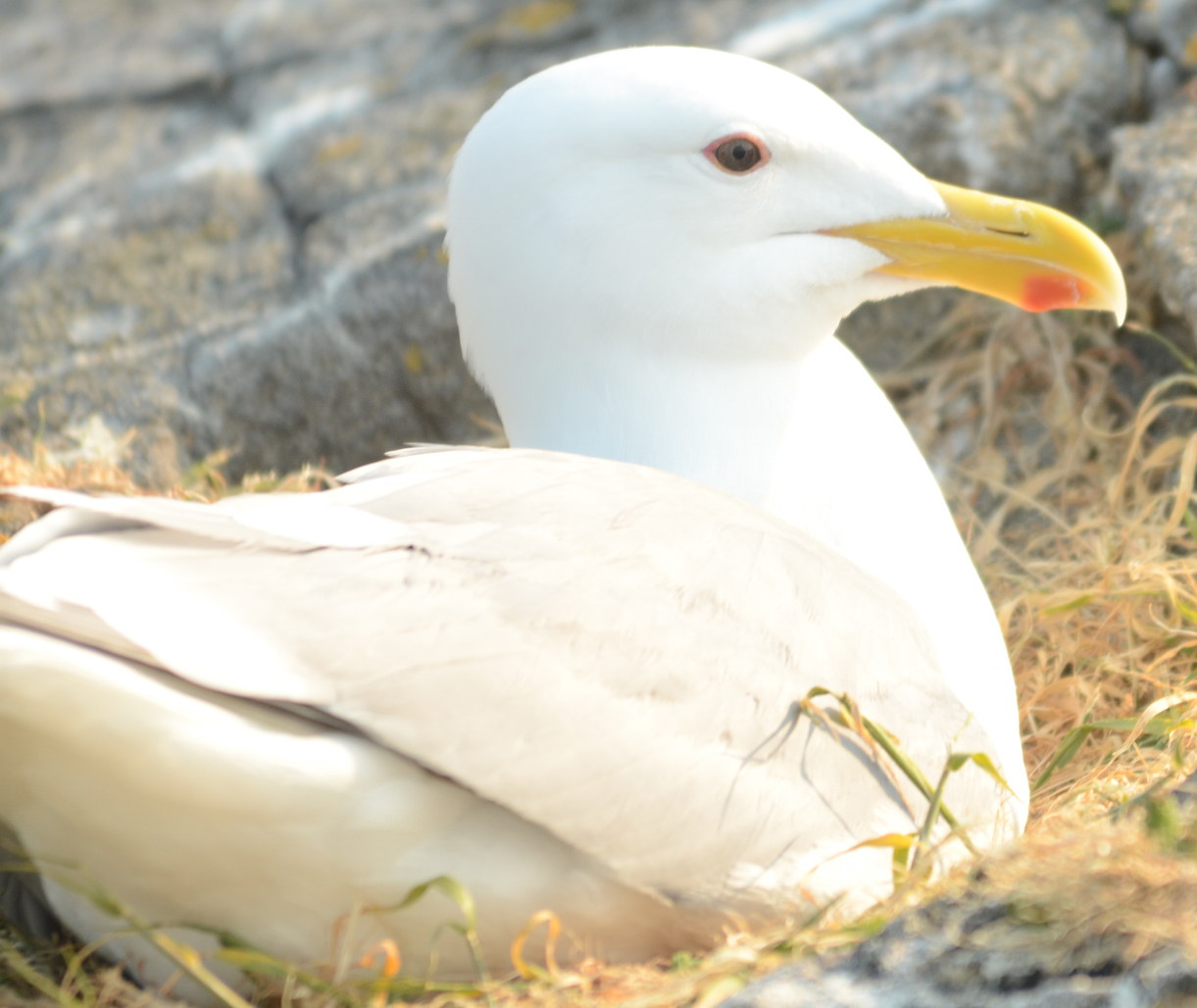
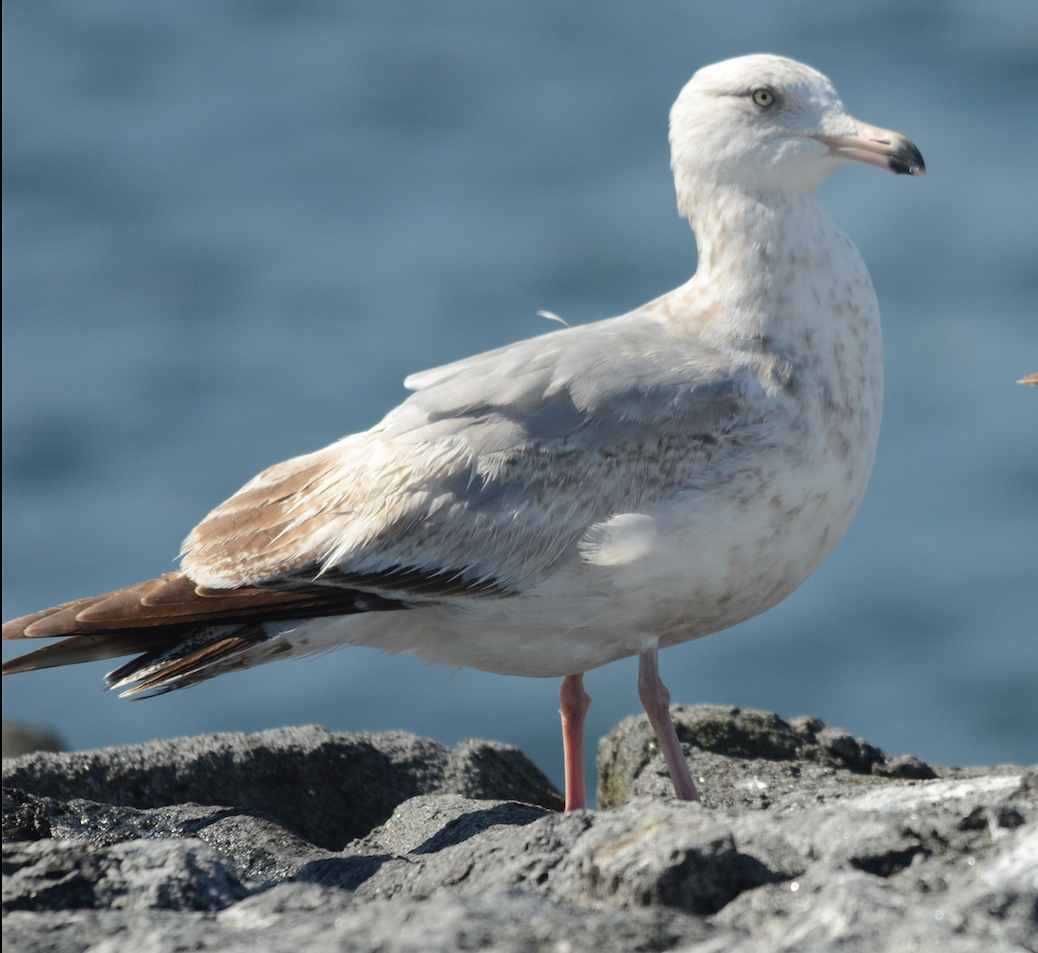
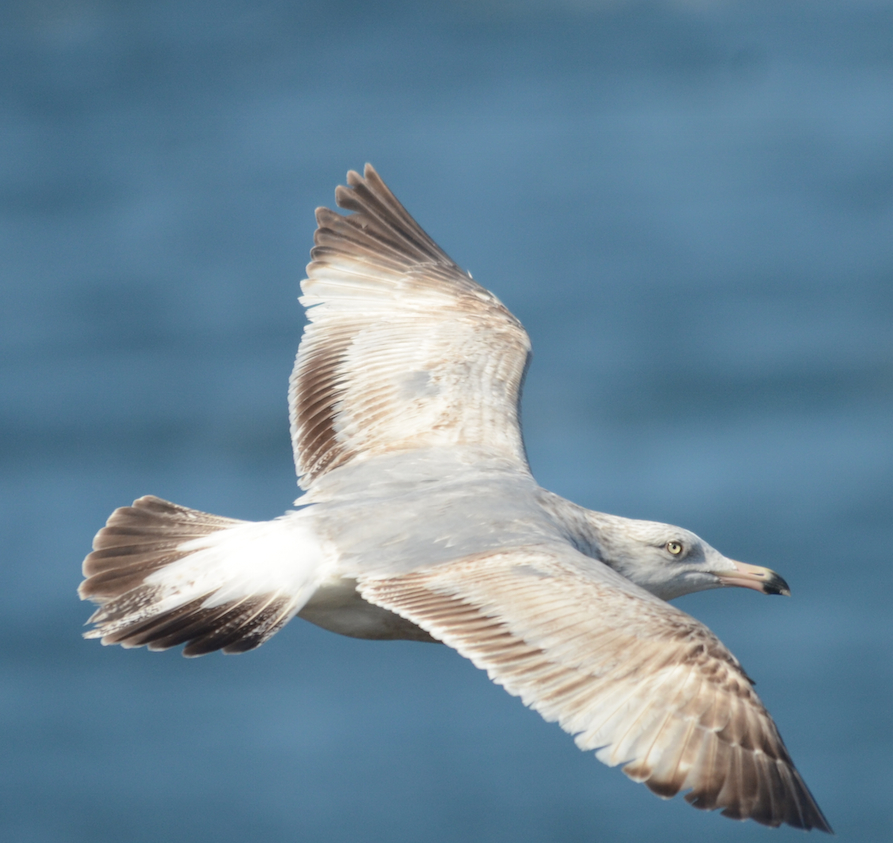
There was an interesting gull visiting today. I think it is a juvenile Herring Gull and have the word out for confirmation.

An unusual visitor for this time of year.

An unusual visitor for this time of year.

HeGu?3

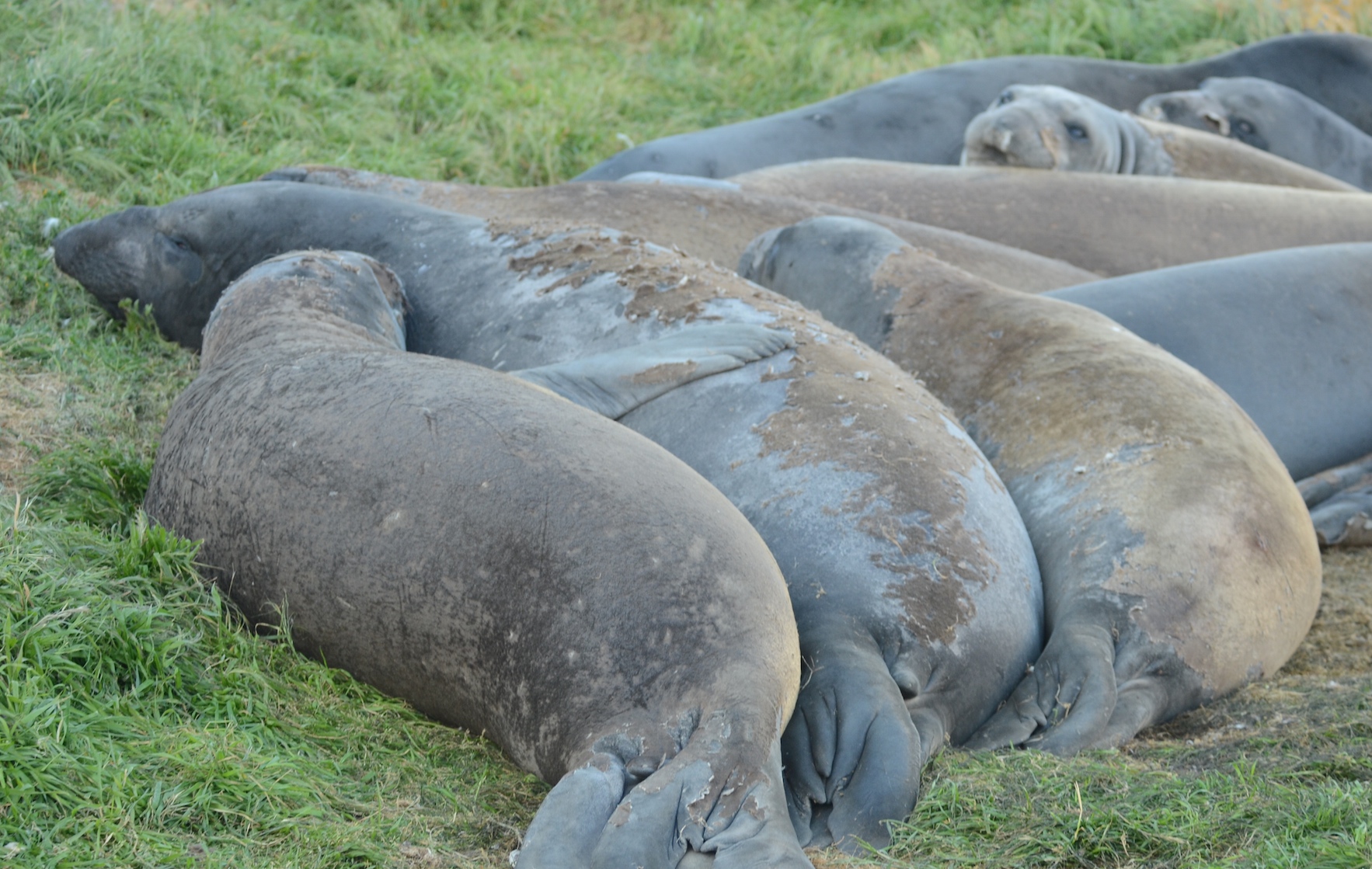
The elephant seals are starting to look a bit wane, as they visibly lose girth, their heads appear bigger and skin looser. The huddle also seems to gain importance and all but a few are skin to skin, perhaps to conserve energy due to heat loss.

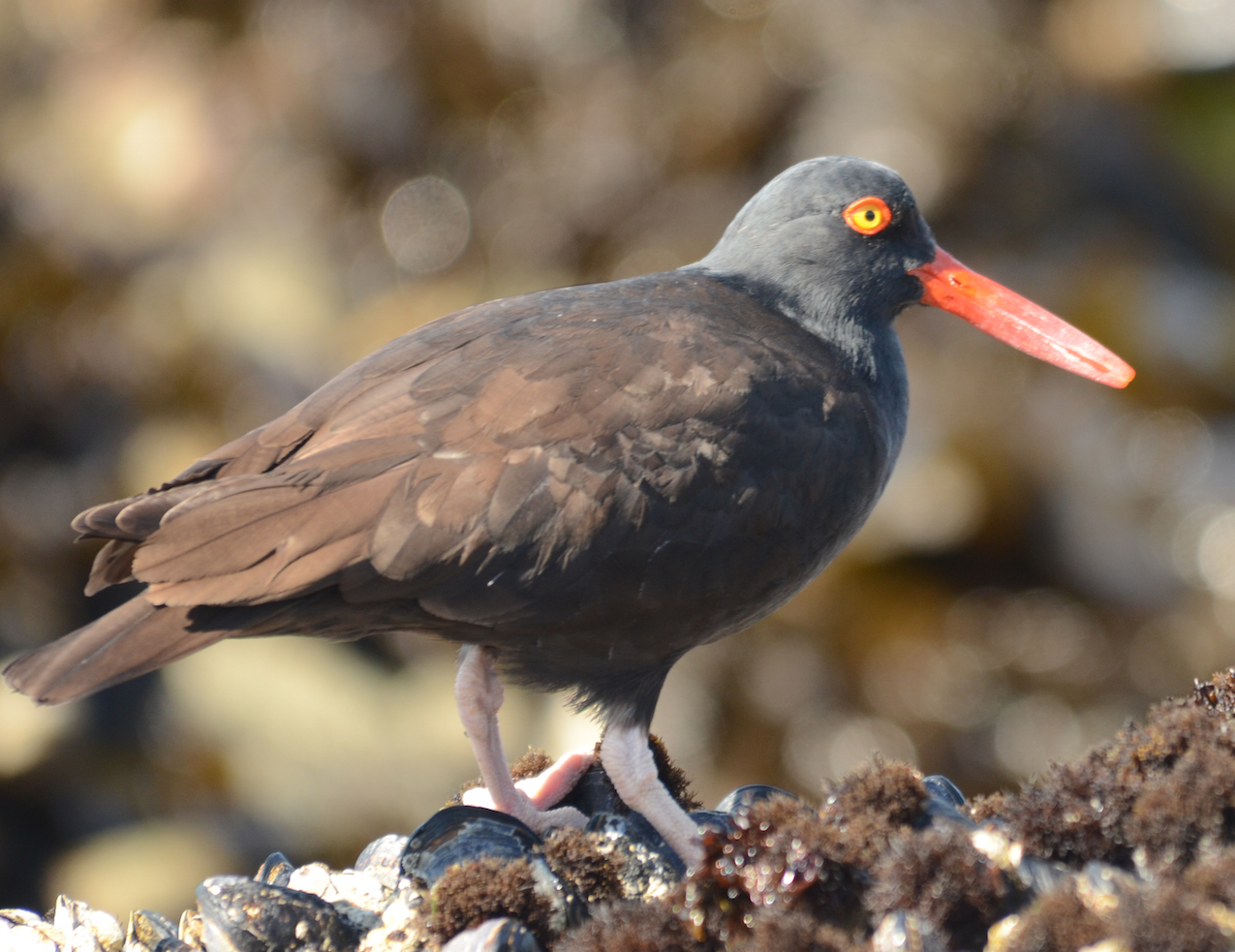
There are very good low tides now and I took time to document some of the tidal pools on the west side today. Black Oystercatchers were feeding on small limpets on the southwest area.

Bloy smaller

Hydroids and Ophlita sponge sp. living closely together in the surge.

Hydroids and Ophlita sponge sp. living closely together in the surge.

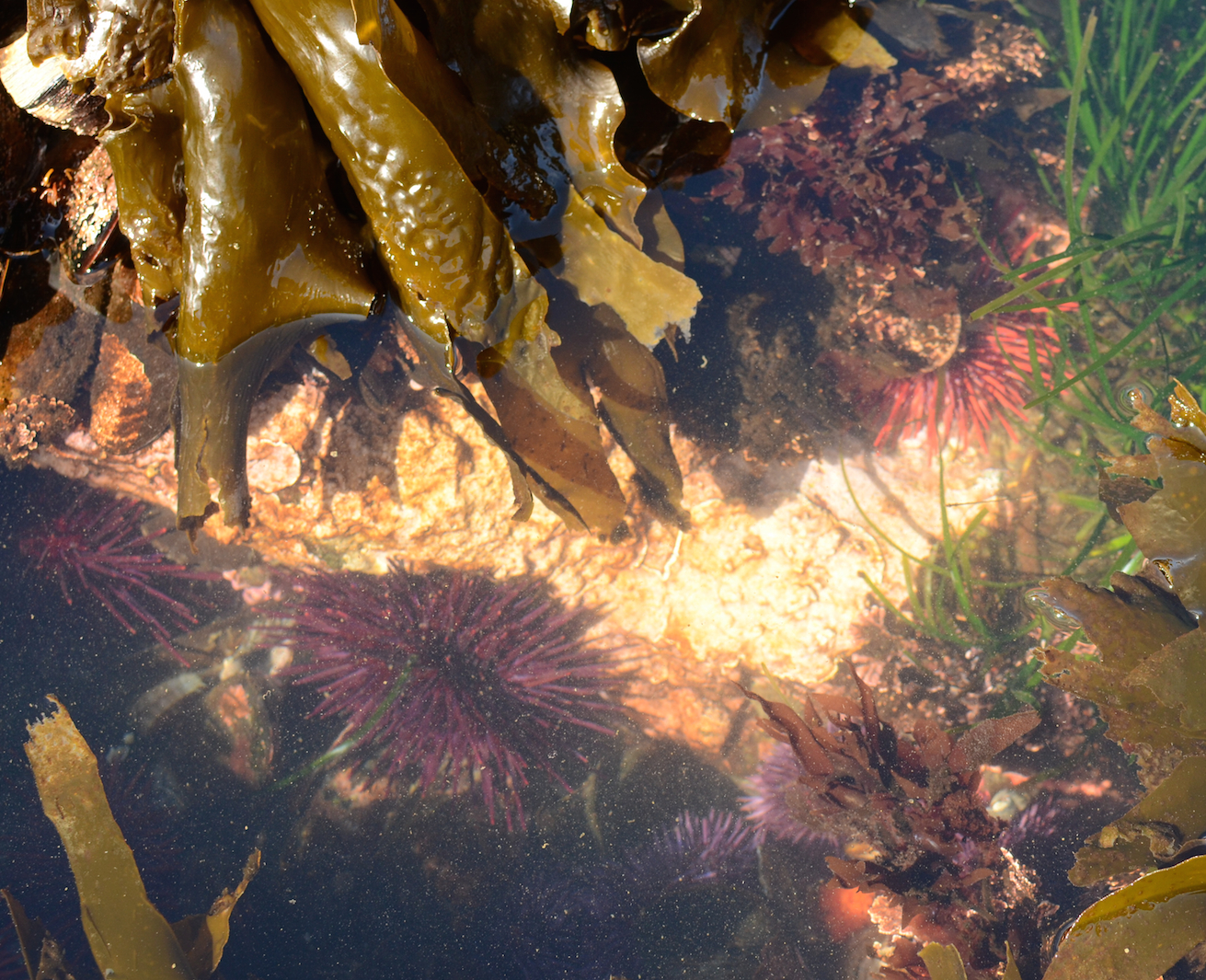
Several people have mentioned that there might be visible impact of Sea Otter predation on the abundance of large calorific marine invertebrates like sea urchins, mussels, cucumbers and large limpets. I was curious and investigated. From a qualitative point of view, there are still a lot of both Red Sea Urchins Stronglyocentrotus fransiscanus and Purple Sea Urchins, S. purpuratus in the lower pools. Not at such high densities as to exclude algal species like Sea Cabbage Saccharina sessilis (taxonomic synonym for Hedophyllum sessile) from the edges of the pools, all the better to have a local food supply.

A nice mix of trophic levels in this tide pool.

A nice mix of trophic levels in this tide pool.

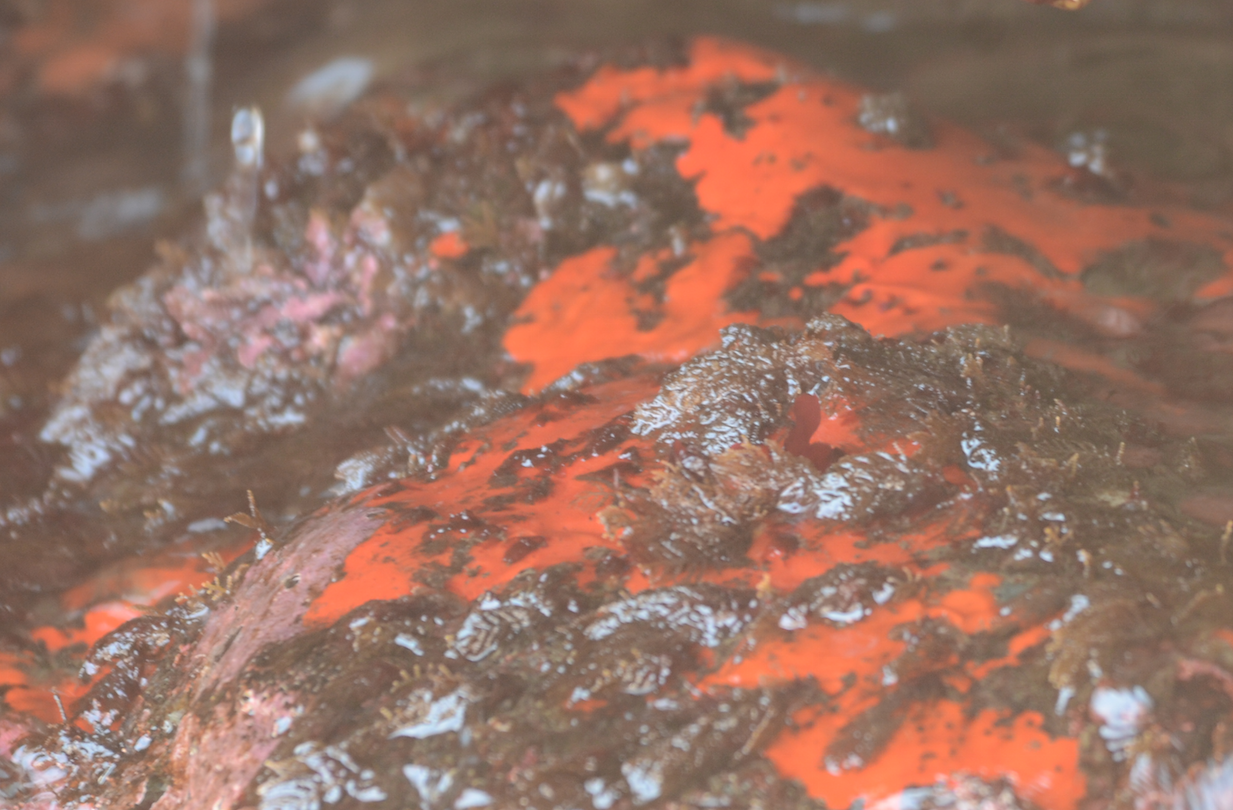
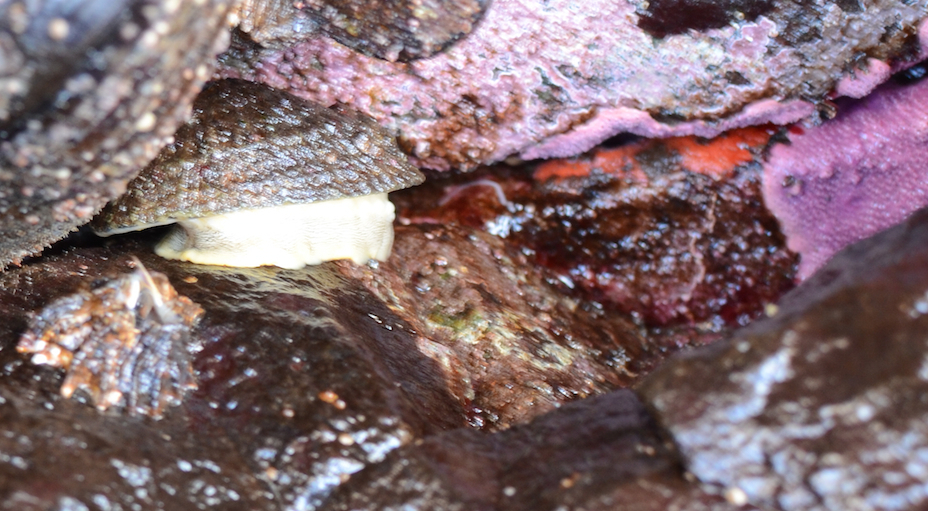
A keyhole limpet and unidentified barnacle sharing space with encrusting red algae and orange sponge.

A keyhole limpet and unidentified barnacle sharing space with encrusting red algae and orange sponge.

The Orange Sea Cucumber, Cucumaria miniata, Keyhole limpet, Diadora aspera and “Dunce-cap” Limpet, Acmaea mitra were also commonly present. Although a few small patches of California Mussels, Mytilus californianus were missing here and there, that could have been from winter storm damage and there was no evidence of heavy predation.

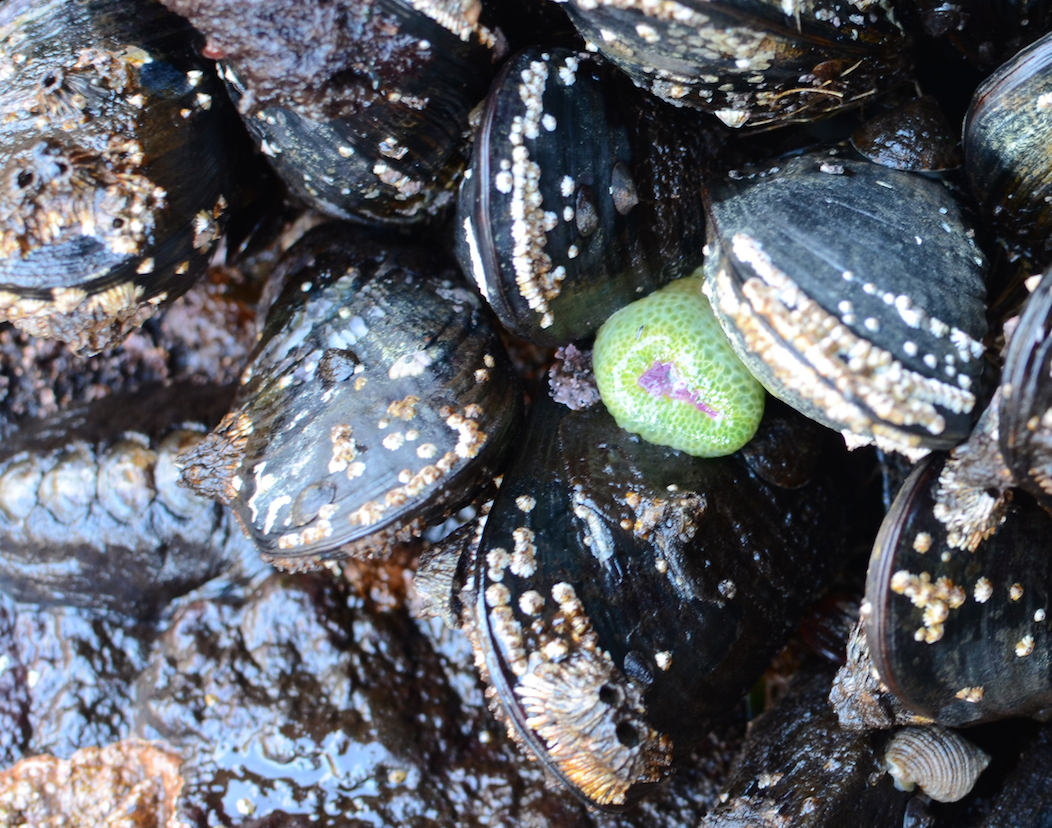
Mussel clumps like this provide habitat for many other species that shelter amongst and under the mussels. Ancient-style grazer on right is a Black Leather Chiton Katherina tunicata (hayushtup on the west coast). the little anemone is Anthopleura elegantissima, the aggregator.

Mussel clumps like this provide habitat for many other species that shelter amongst and under the mussels. Ancient-style grazer on right is a Black Leather Chiton Katherina tunicata (hayushtup on the west coast). the little anemone is Anthopleura elegantissima, the aggregator.

Even eating 25% of its body weight per day, it would take one sea otter a very long time to make a difference in such a productive area. Assuming 10 kg per day it might eat ~3.65 metric tons in a year.

There were no visitors and maintenance chores were routine today.


Just the Usual Cast of Characters

Relentless westerly winds buffeted Race Rocks today starting before dawn and continuing through dusk. With the 25 – 30 knot winds (gusting higher), came sweeps of clouds and showers. The barometer was fairly steady at 110 hPa and the forecast is for more strong winds and showers.

There were no fishers or eco-tour boats today. The sea was quite rough and the big currents of the full moon pulled them even higher.

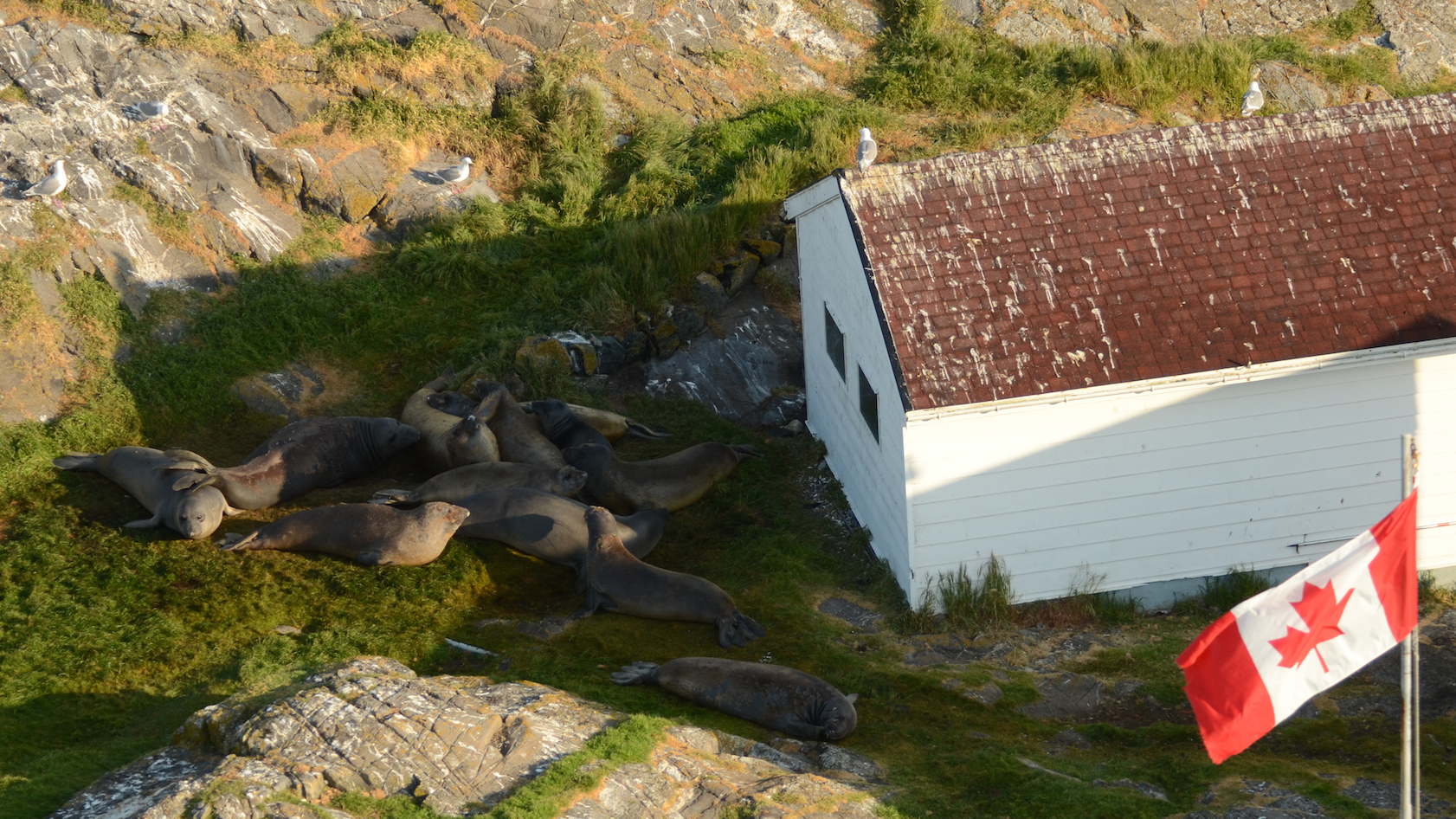
The Northern Elephant Seal numbers on Great Race continue to be 15 and they formed a huddle for most of the day in the lee of the only hill to hide behind.


Seal huddle.

Seal huddle.

Moulting head and flippers first.

Moulting head and flippers first, the old fur and skin form a garment.

The Glaucous-winged Gulls are at various stages in their preparations for parenthood and some appear to still be awaiting their mates.

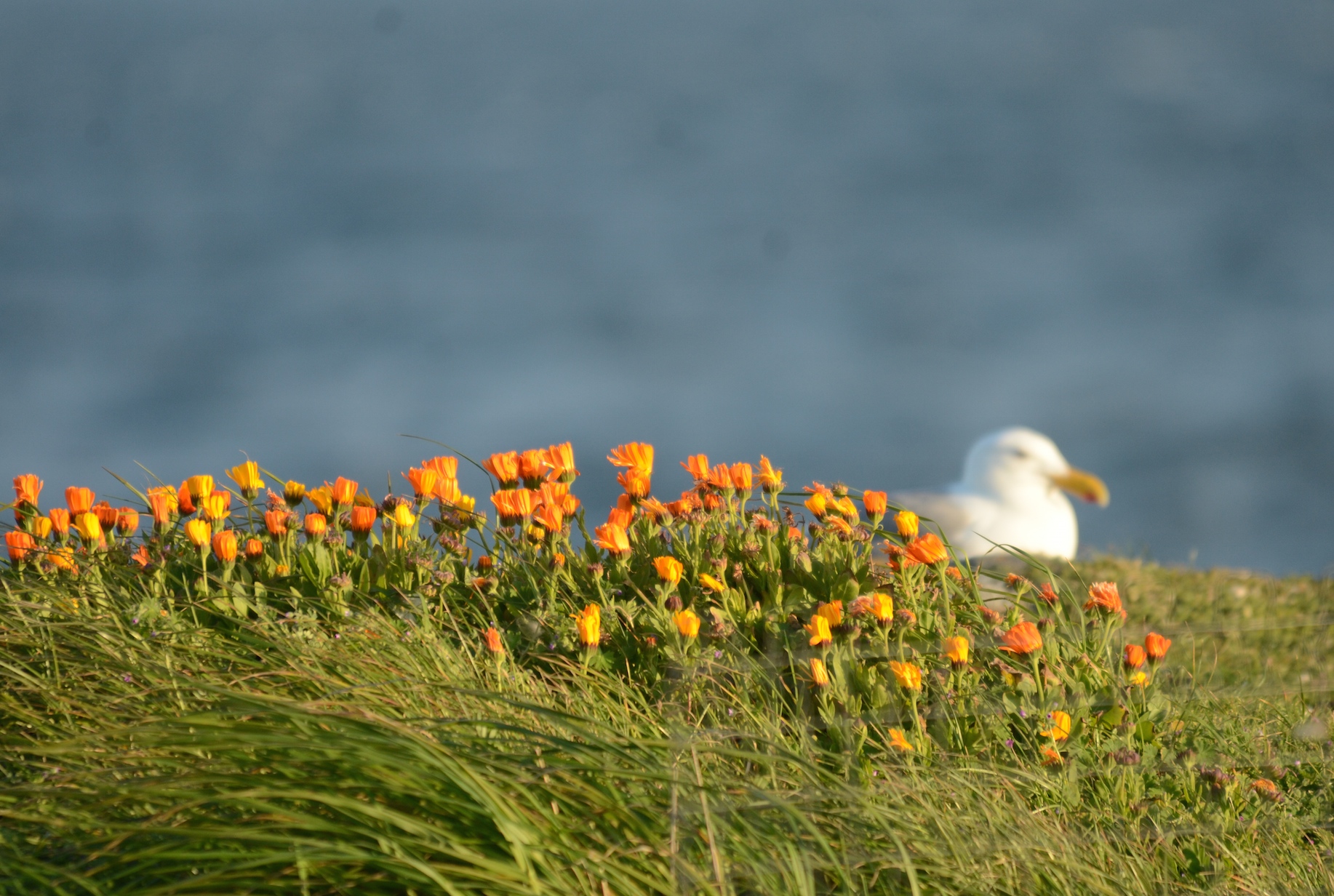
Calendula blooming near Glaucous-winged Gull nest.

Calendula blooming near Glaucous-winged Gull nest.

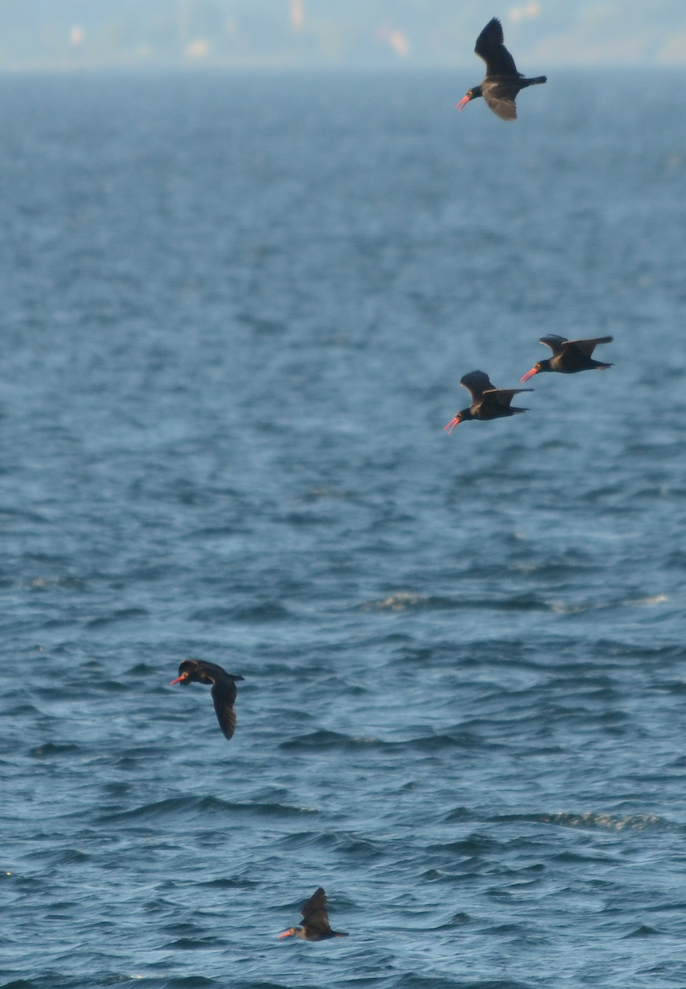
Black Oystercatchers out for an evening flight.

Black Oystercatchers out for an evening flight.

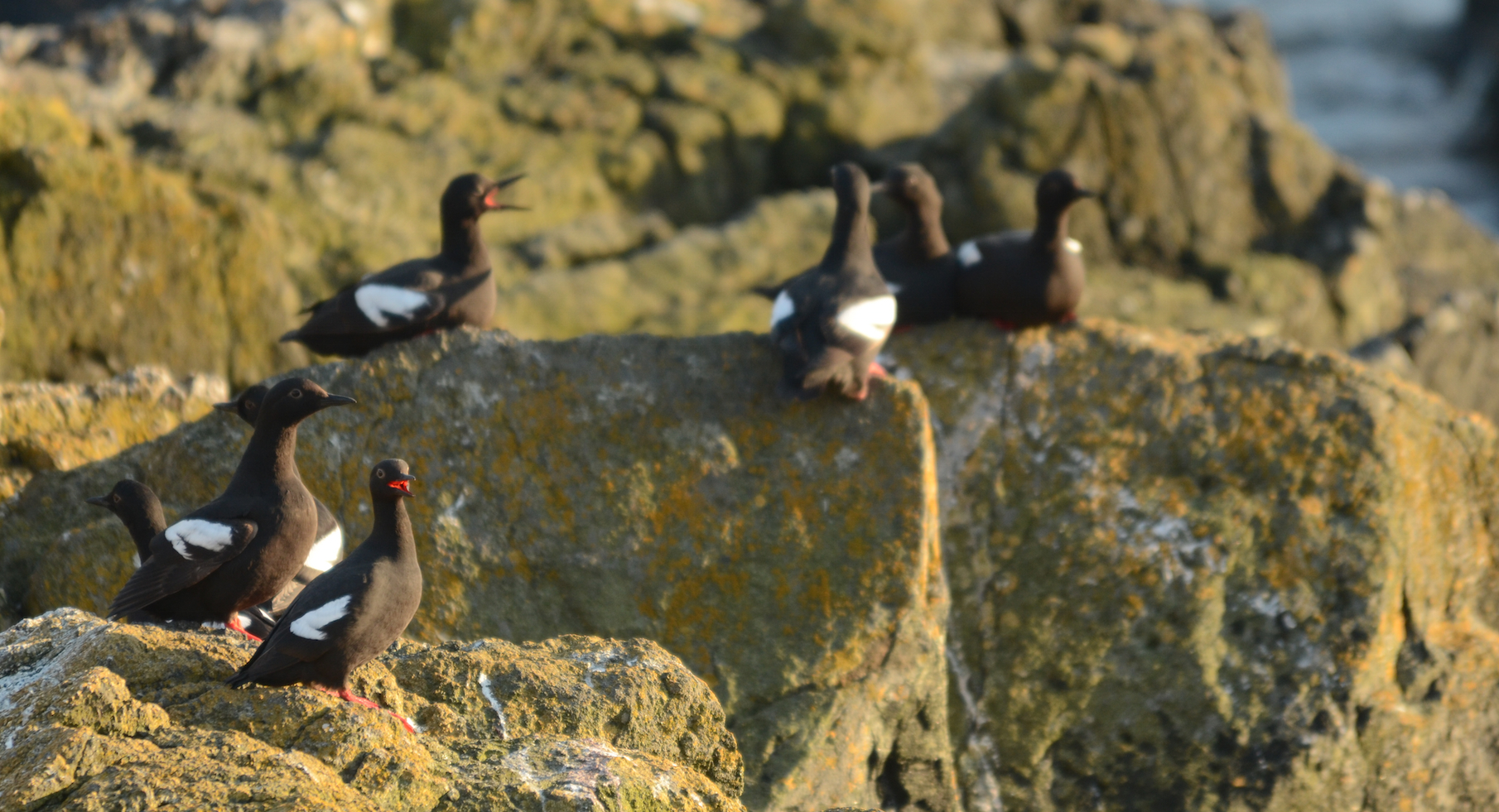
The Pigeon Guillemots are quite accustom to being on land again now.

Guillemots at home on Great Race now.

Guillemots at home on Great Race now.

There were no visitors and chores were routine maintenance.

Blooming Thrift

May 3

The weather today was very similar to yesterday’s, with a flip flop breeze most of the day, finally becoming a 15- 20 knot westerly as dusk approached. Temperatures were a little warmer, 14o C and solar radiation levels about the same. The barometer is still dropping and the short-term forecast looks like more of the same with raining arriving Tuesday.


Two whale watching boats were observed in the Ecological Reserve this morning and a dive charter vessel supported divers in the ER.

Eagles continue to hunt in the ER as does a lone raven that visits daily and drives the oystercatchers mad.


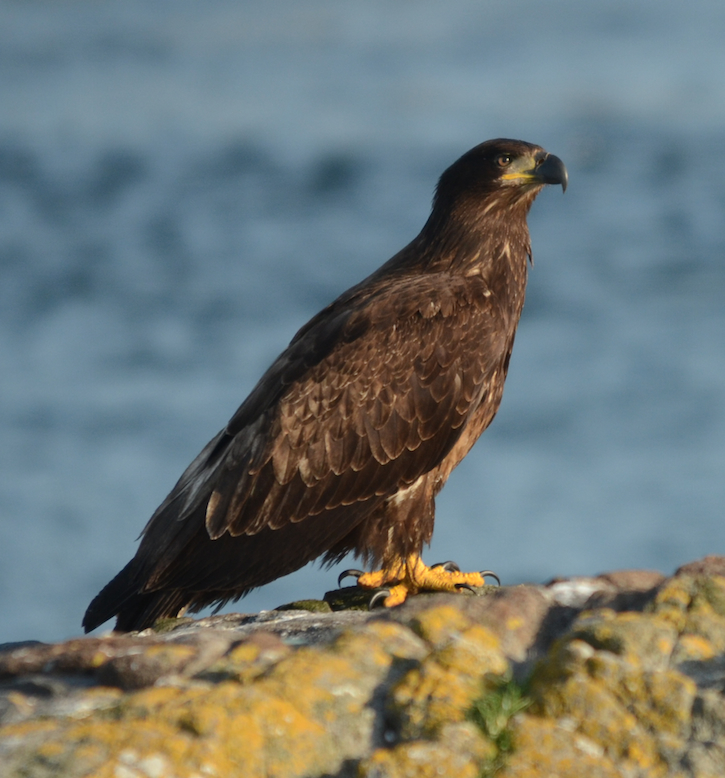
Bald Eagles have been observed catching fish and chasing Canada Geese and Glaucous-winged Gulls in the last few weeks. As long as the wind is not too strong, they are here daily.

Bald Eagles have been observed catching fish and chasing Canada Geese and Glaucous-winged Gulls in the last few weeks. As long as the wind is not too strong, they are here daily.

There were 15 elephant seals on Great Race this morning and most of the day. Their moult continues.

Canada's largest and oldest Northern Elephant Seal colony is thriving at Race Rocks.

Canada’s largest and oldest Northern Elephant Seal colony is thriving at Race Rocks.

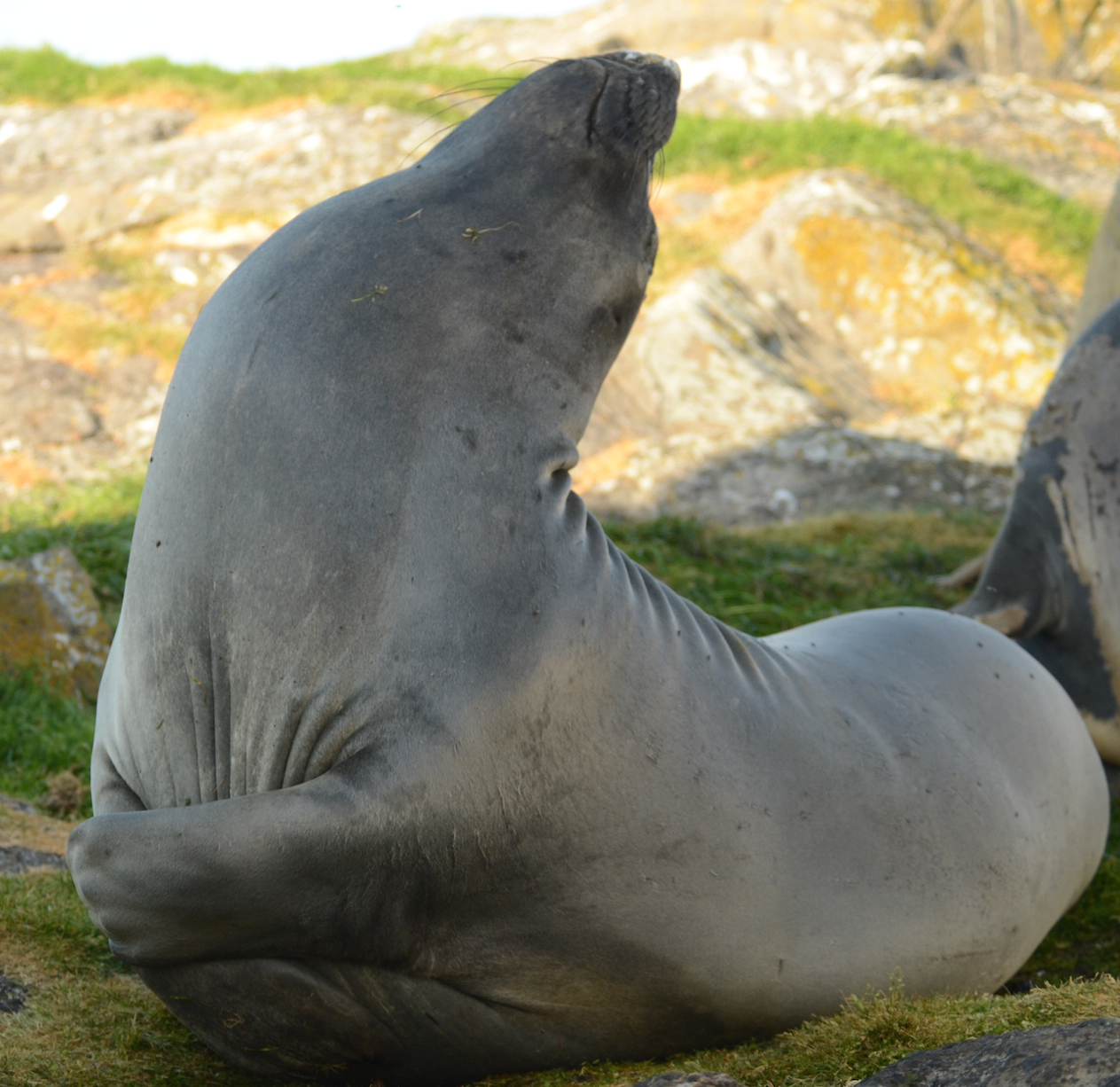
It is an itch business having a total body peel and hair removal.

It is an itch business having a total body peel and hair removal.

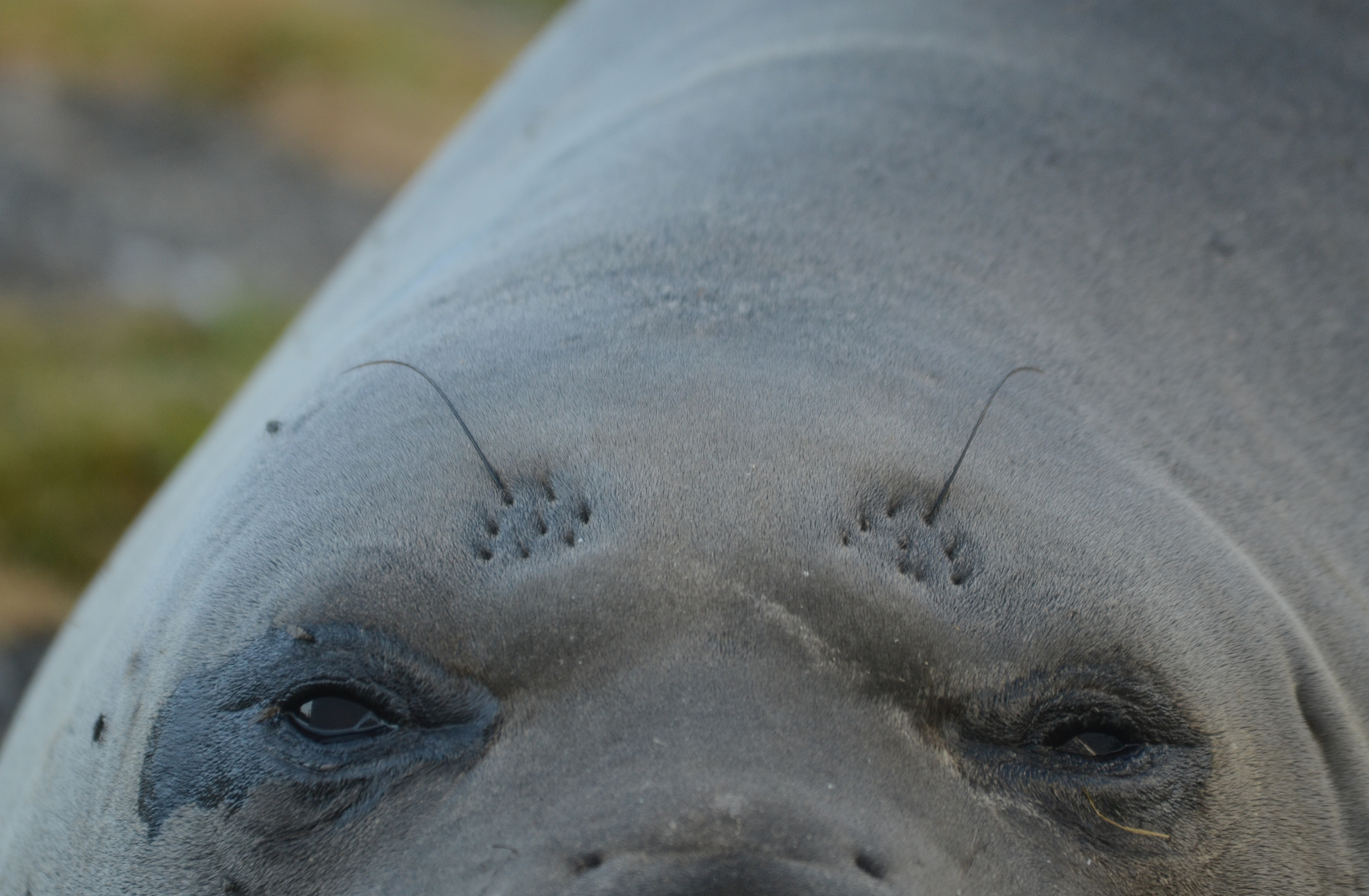
Only two "eyebrow" vibrissae to go. Nice symmetry, no plucking involved.

Only two “eyebrow” vibrissae to go. Nice symmetry, no plucking involved.

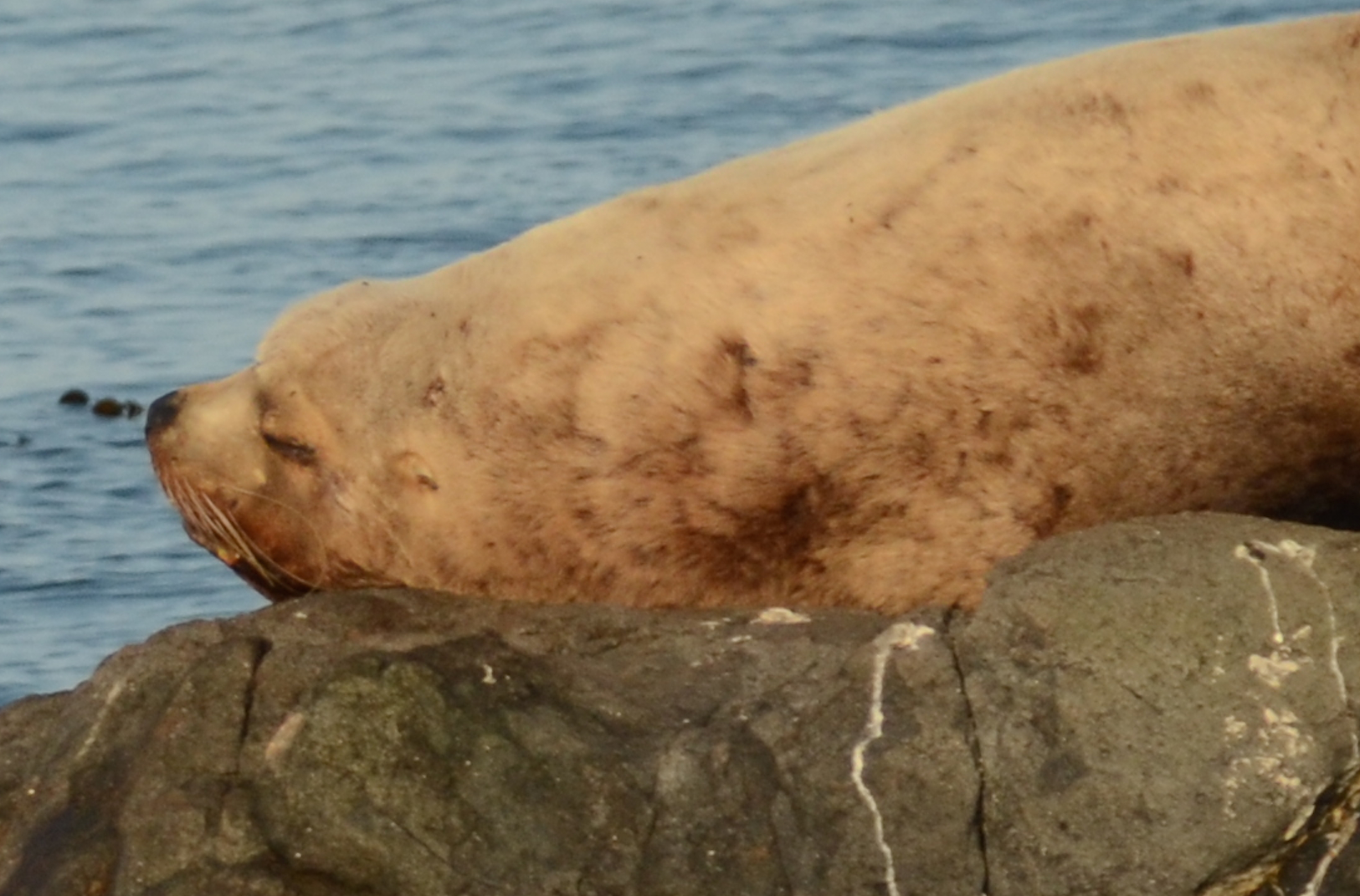
The southwest corner of Great Race is becoming an old age home for male sea lions and there were five hauled out there all day.

An 'old boy' having a snooze on the SW corner of Great Race, the new old boys club.

An ‘old boy’ having a snooze on the SW corner of Great Race, the new old boys club.


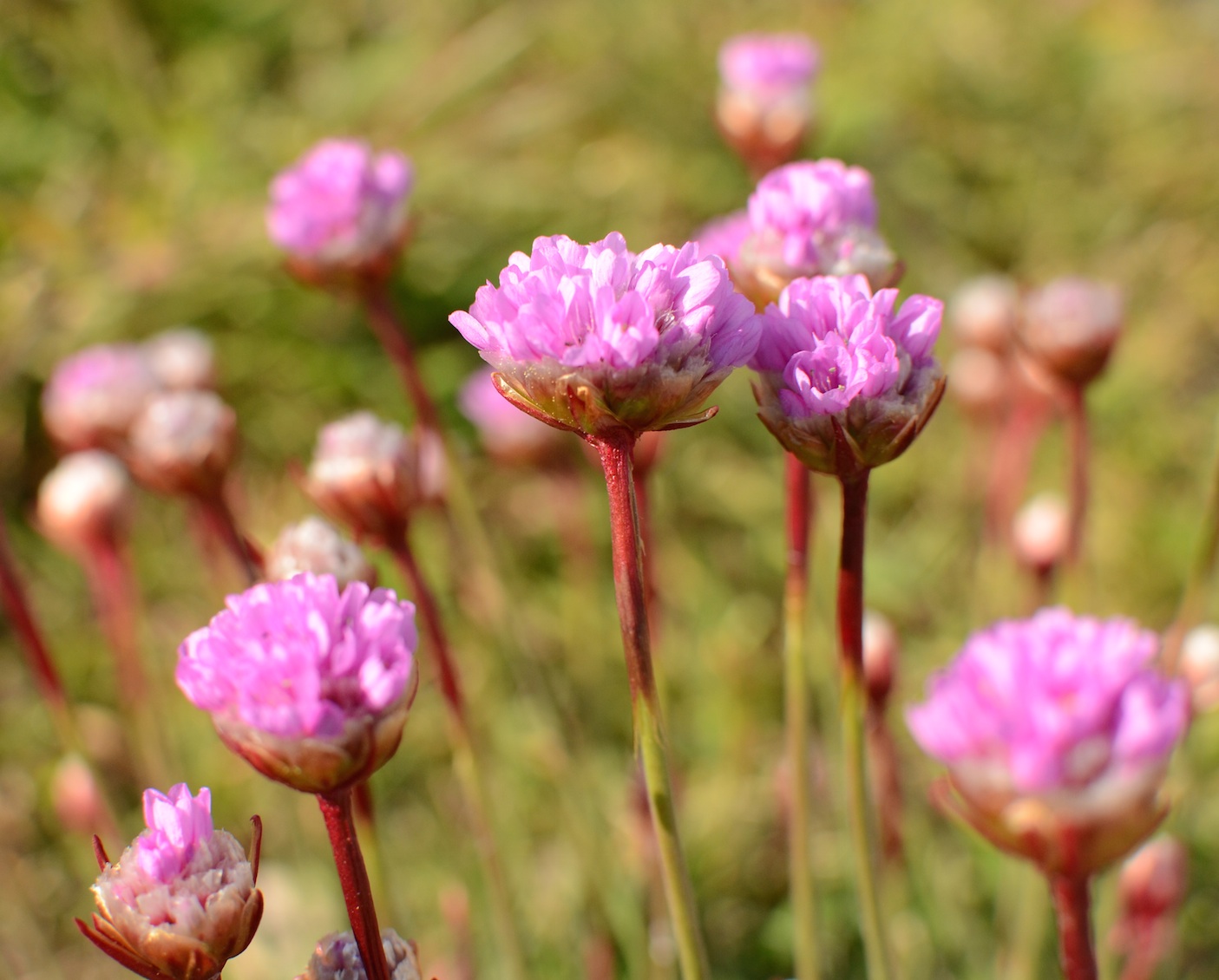
The Sea Thrift is blooming.

Sea Thirft, Armeria maritima supspecies maritima is an introduced species. I 'm not sure which sub-species this is, native or european.

Sea Thirft, Armeria maritima subspecies maritima is an introduced species. I ‘m not sure which sub-species this is, native or european.

I spent a bit of time in the inter-tidal today and soon discovered that the memory cards in the camera were full so I spent a lot more time culling and sorting photographs indoors.


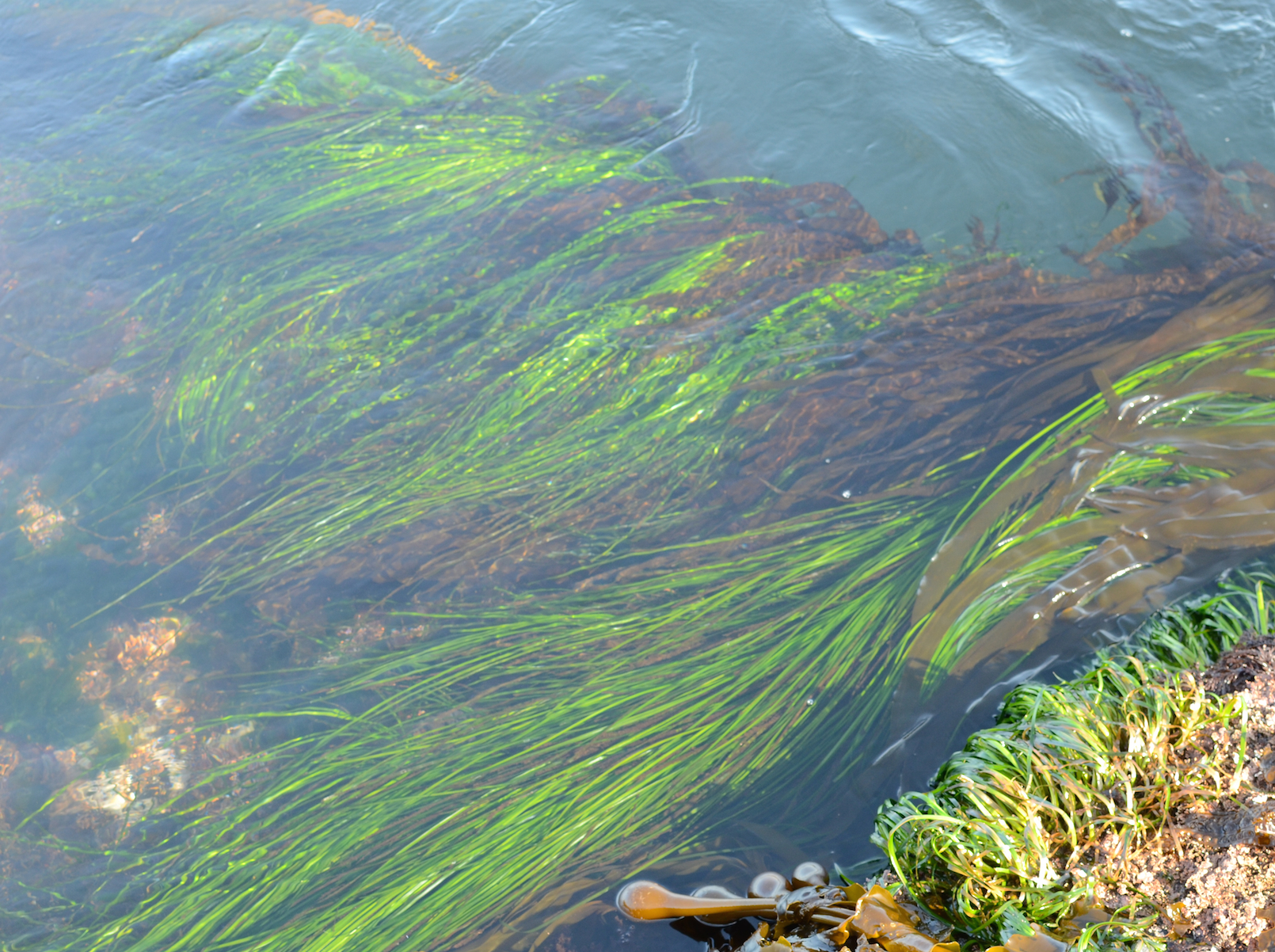
Phylospadix scouleri, also known as surf grass is found in the low tide zone and the top of the sub-tidal. Here it is mixed with Desmarestia aculeata and bull kelp Nereocystis lutkeaena both subtidal species.

Phylospadix scouleri, also known as surf grass is found in the low tide zone and the top of the sub-tidal. Here it is mixed with Desmarestia aculeata and bull kelp Nereocystis lutkeaena both subtidal species.

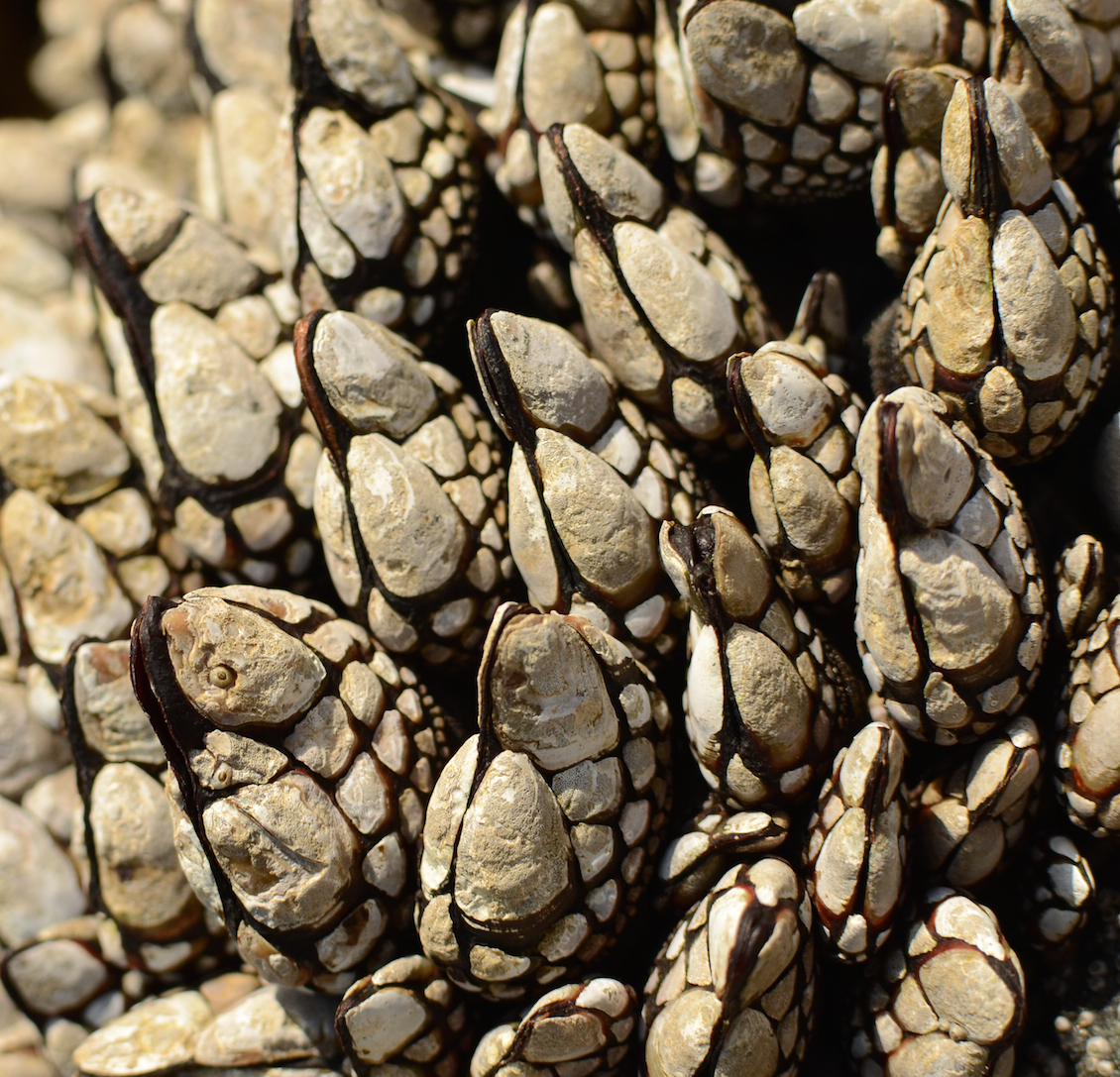
Many of the species found in the inter-tidal at Race Rocks are more usually associated with outer coast, more wave exposed sites. The current here makes it a very rich hotspot for marine biodiversity.

Many of the species found in the inter-tidal at Race Rocks are more usually associated with outer coast, more wave exposed sites. The current here makes it a very rich hotspot for marine biodiversity.

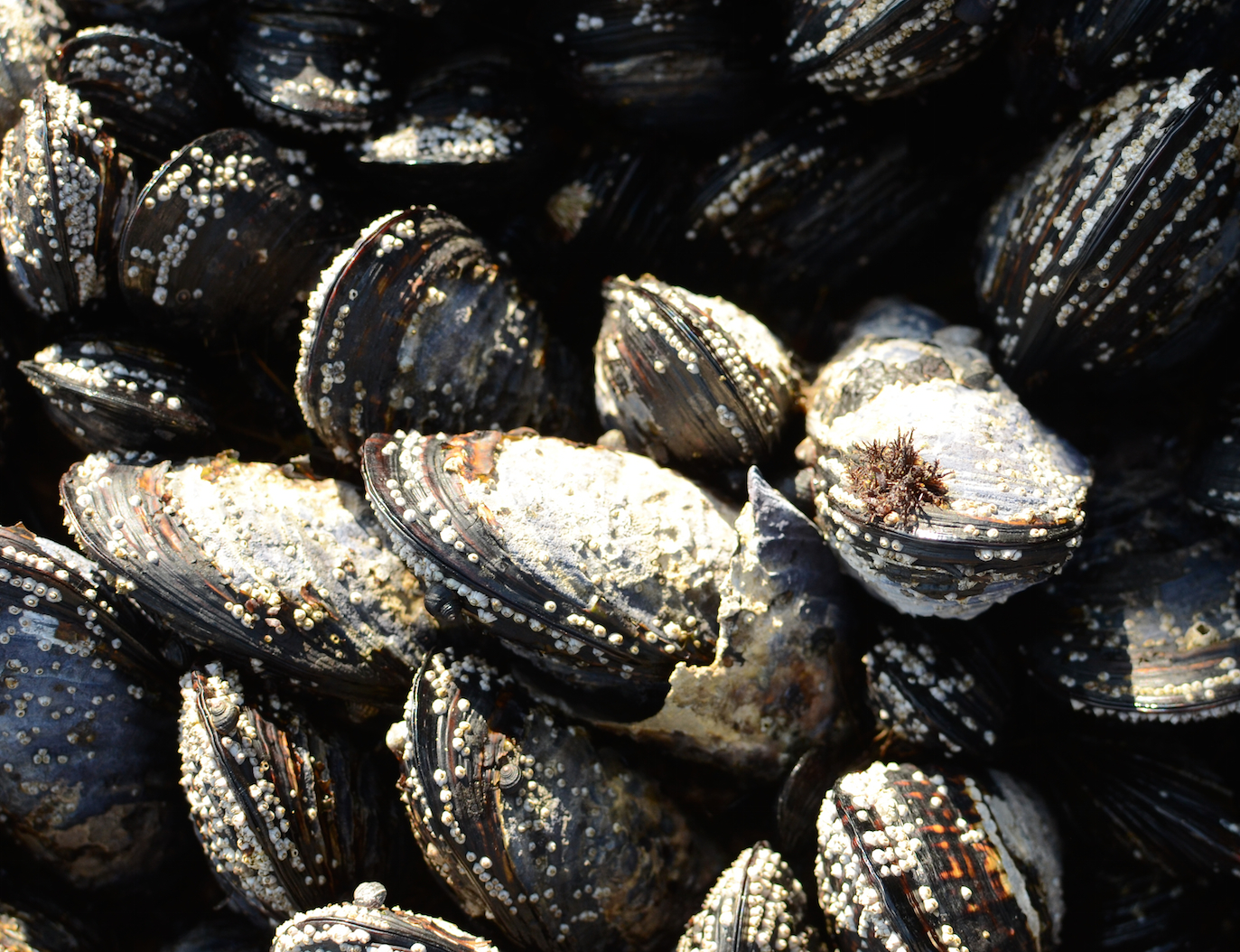
Competition for space and creation of more habitat go hand in hand. Notice set of tiny barnacles on the California Mussels and a spot of Endocladia muricata which is what larval  Mytilus californianus likes to settle out on.

Competition for space and creation of more habitat go hand in hand. Notice set of tiny barnacles on the California Mussels and a spot of Endocladia muricata which is what larval Mytilus californianus likes to settle out on.

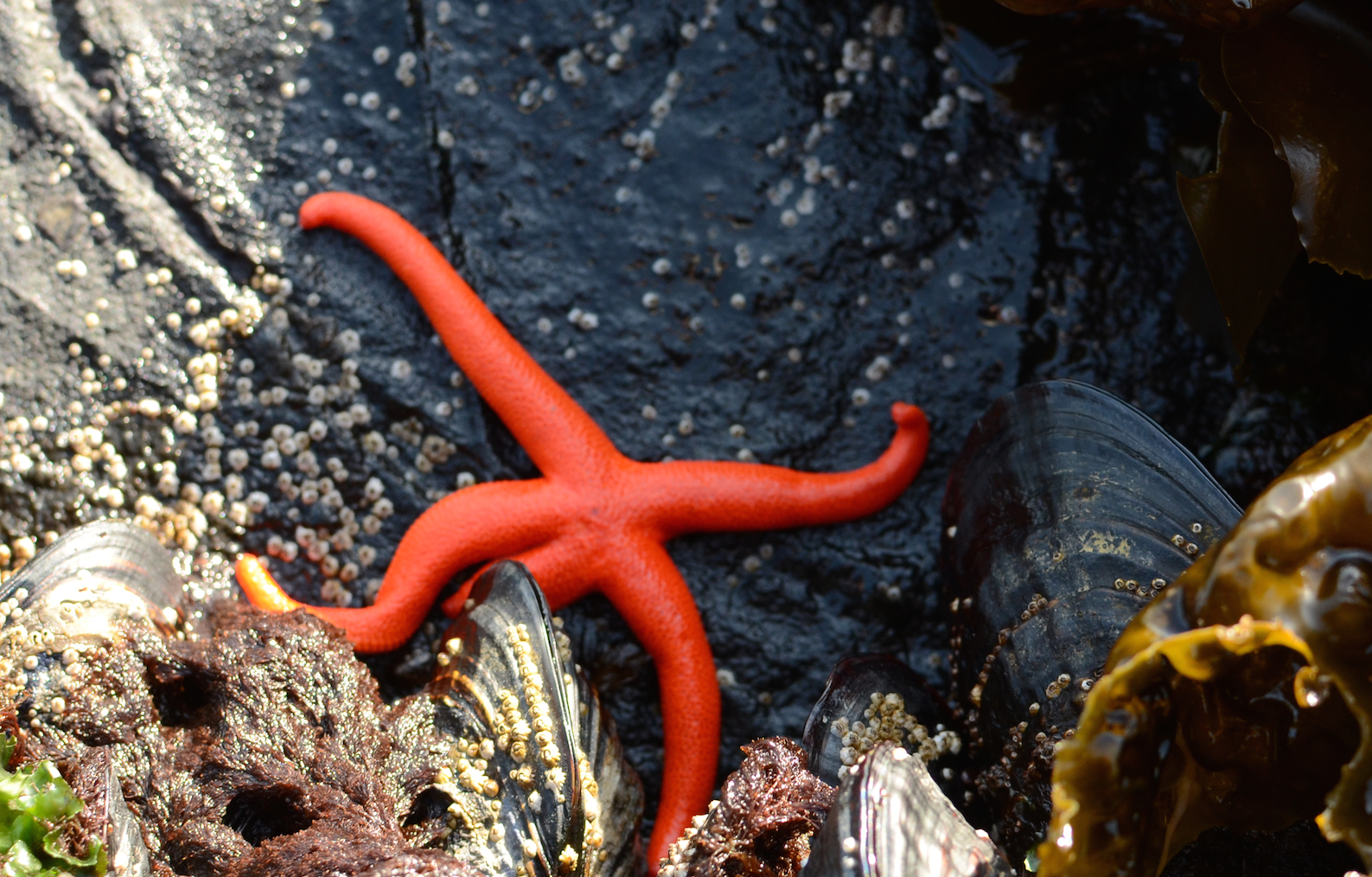
A Henry Star also known as the Blood Star or Henrycia spp.. It will need to find shade to conserve water so that it can breath through its skin.

A Henry Star also known as the Blood Star or Henrycia spp.. It will need to find shade to conserve water so that it can breath through its skin.

There were no visitors and chores were routine.