-110, ‘2010-06-21’, ‘Other’, 0, ‘As we officially kick off summer, I thought I ”d give a bit of an update on life on the island right now. The black oystercatcher chicks have hatched in the nest up beside the jetty and down off the tank room! While outside doing some cleanup yesterday morning, I spotted at least one chick, and I suspect there may be more, as there were three eggs in total. This hatching brings some relief, as all of us were quite worried about this nest. Mother oystercatcher had not been spending as much time on her nest as she should have, what with the high traffic transiting the area. However, last week I cordoned off the area with large ropes and she settled down a lot, just in time for the hatching. I also set up camera 3 beside the nest; it can be viewed at http://www.racerocks.com/racerock/video3.htm. I apologize in advance for the moisture on the lens; we ”ve had some high winds and rain over the last day and it has become a bit dirty. At this point though, I ”m a bit apprehensive to get close and clean it, as it ”s really only a foot away from the nest. There are at least two other nests on the island with chicks; one in the surge channel facing the southeast, and one in the channel facing the southwest. In other news, Bertha has decided to make a reappearance on the island after a few days off in the water somewhere. She is hauled up in her favourite spot behind the tank room. Her bad eye is looking worse than ever, and is dripping quite a lot of serum. #4252 is up beside the base of the lighthouse, on the side adjacent to the desalinator bunker, and seems to be enjoying the shelter of the long grasses. Misery is up around the science house somewhere. From the house this morning, I also noticed a possibly fourth, middle-aged, female elephant seal making her way up from the boat ramp -it may have been Bertha though, it ”s hard to tell). Yesterday, three harlequin ducks were spotted in the southeast surge channel, sitting contentedly on rocks. There appeared to be two males and one female. I took some pictures yesterday, but am not sure if they turned out because of the distance. Check on my Flickr site later: http://www.flickr.com/photos/adamharding/. Most seagulls have now settled down into their nests, with a few still mating. Nest numbers seem to be down from this time last year. Enjoy the solstice!’, ‘adam’, ’07:57:59 ,
Category Archives: Bird Notes
Black oystercatcher update
Human Interaction
A school group with students from Japan and New York came for a tour of the island today.
There were 20 visitors to the island today.
Vessels in reserve:
Eco-Tour: 3
Pleasure: 1
As we officially kick off summer, I thought I’d give a bit of an update on life on the island right now. The black oystercatcher chicks have hatched in the nest up beside the jetty and down off the tank room! While outside doing some cleanup yesterday morning, I spotted at least one chick, and I suspect there may be more, as there were three eggs in total. This hatching brings some relief, as all of us were quite worried about this nest. Mother oystercatcher had not been spending as much time on her nest as she should have, what with the high traffic transiting the area. However, last week I cordoned off the area with large ropes and she settled down a lot, just in time for the hatching. I also set up camera 3 beside the nest; it can be viewed at http://www.racerocks.com/racerock/video3.htm. I apologize in advance for the moisture on the lens; we’ve had some high winds and rain over the last day and it has become a bit dirty. At this point though, I’m a bit apprehensive to get close and clean it, as it’s really only a foot away from the nest. There are at least two other nests on the island with chicks; one in the surge channel facing the southeast, and one in the channel facing the southwest. In other news, Bertha has decided to make a reappearance on the island after a few days off in the water somewhere. She is hauled up in her favourite spot behind the tank room. Her bad eye is looking worse than ever, and is dripping quite a lot of serum. #4252 is up beside the base of the lighthouse, on the side adjacent to the desalinator bunker, and seems to be enjoying the shelter of the long grasses. Misery is up around the science house somewhere. From the house this morning, I also noticed a possibly fourth, middle-aged, female elephant seal making her way up from the boat ramp (it may have been Bertha though, it’s hard to tell).
Yesterday, three harlequin ducks were spotted in the southeast surge channel, sitting contentedly on rocks. There appeared to be two males and one female. I took some pictures yesterday, but am not sure if they turned out because of the distance. Check on my Flickr site later: http://www.flickr.com/photos/adamharding/. Most seagulls have now settled down into their nests, with a few still mating. Nest numbers seem to be down from this time last year. Enjoy the solstice!
Gulls nesting
Over the last few days, a number of gull nests with eggs have been spotted around the island. By now, most gulls have nested, although there are still a number of pairs that appear to be without nests still. Gull numbers seem to be down compared to the same time last year.
Elephant Seals: Bertha seems to have taken off sometime in the last few days, although Misery and #4252 (soon to be named) are still sticking around. A female elephant was spotted on Middle Race several days ago.
Eco-Tour: 5
Elephant seal intrigue
Black Oystercatchers are the species of the day with the first chicks sighted in the nest to the E of the Main Keeper’s house. Camera 1 will just be able to make them out if they stay put. Another nest was discovered directly behind tank #1 that is a “limited-time only” infrastructure feature on the island. 3 nests with eggs:3,2,3 (now 2+chicks,2,3), 2 brooding pairs with undiscovered nests, and 2 pairs with overlapping feeding territories but no suspected nest sites.
Elephant Seal: 3
An eventful day for the elephant seals. More sunlight and less wind than we’ve been used to this spring brought all three Elephant Seals on Great Race down to the water… but not before Misery had a go at mounting Bertha. She escaped up the “steep” path to the grass on top of the foundation left from the original keeper’s house. Bertha then slipped past the sleeping Misery and lay on the ramp right at the water line in the shade but not in the water. Misery woke and detected the deception and came barreling down the path and boat ramp. Bertha took off through the water like a startled harbour seal, moving closer to the hauled-out California sea lions. She did not come back on land until dark. After all his effort, Misery followed just until he was in the water and took to splashing water back across his body which both trickled and steamed off his late winter coat. Once refreshed, he moved further into the water, floating and steaming in the warm sunshine. Seeing/smelling Bertha in deeper waters, he followed her only to have her swim even further away. El seal tagged#4252 was already in the water and Misery soon sensed her and tried to pin her against the rocks in the shallow sea lion haul-out, but she snapped at him and also swam to deeper waters. Just before sunset, Misery returned to land, trumpeting in the shallows. Looking at records (and noting how much girth Misery has put on lately), the habitat use of our two adult bull elephant seals is very different. Misery: showed up for the ‘season’ first in October, was back before Slash showed up for the pupping season, stayed longer through the breeding season, and is now here moulting (as he did this time last year). His moult is delayed 1-2 weeks compared to last year. That all said, Misery has grown significantly this season after spending much of the last 6 months here at Race Rocks, while our dominant bull spends much greater times away before returning with added mass.
Black oystercatchers nesting
2010-06-03′, ‘Other’, 22, ‘Black Oystercatchers are the species of the day with the first chicks sighted in the nest to the E of the Main Keeper ”s house. Camera 1 will just be able to make them out if they stay put. Another nest was discovered directly behind tank #1 that is a “limited-time only ” infrastructure feature on the island. 3 nests with eggs:3,2,3 -now 2+chicks,2,3), 2 brooding pairs with undiscovered nests, and 2 pairs with overlapping feeding territories but no suspected nest sites.’, ‘ryan’, ’23:39:33 ,
Arenaria interpres: Ruddy Turnstone–The Race Rocks Taxonomy
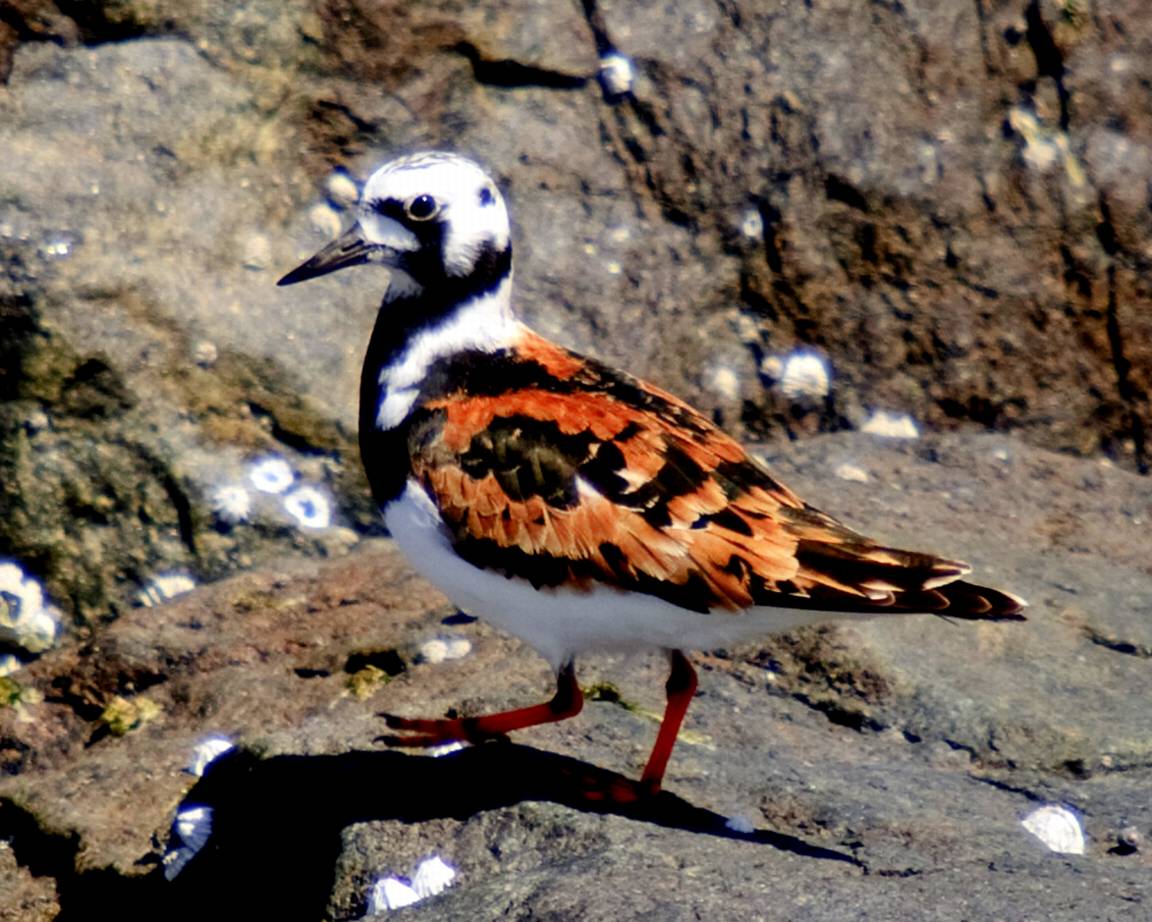
Ruddy Turnstone ,Arenaria interpres -See these photos by Ryan Murphy, May 14, 2010 in his Flickr site.
-
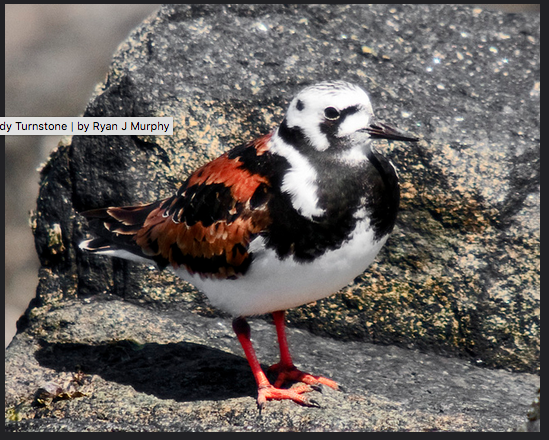
- Ruddy Turnstone , Arenaria interpres
-
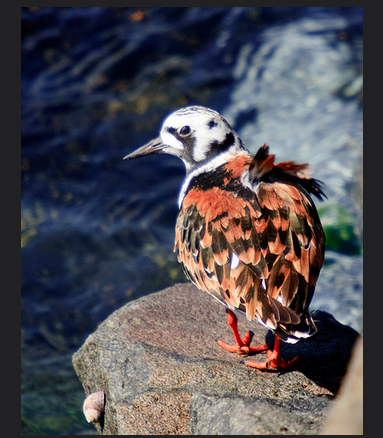
- Ruddy Turnstone , Arenaria interpres
-
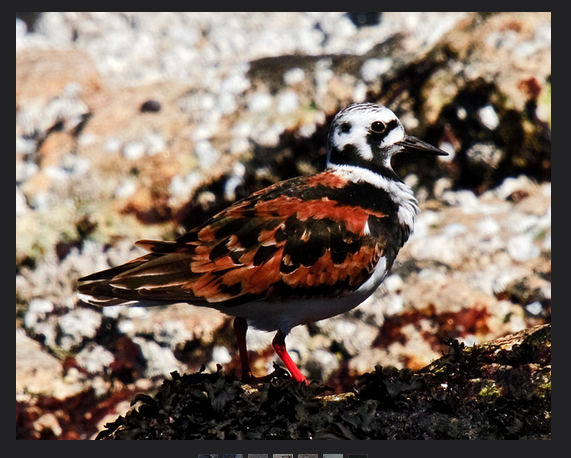
- Ruddy Turnstone , Arenaria interpres
In this video, the Ruddy Turnstone is seen wandering into the centre of the picture, right near the gulls and the elephant seals.Video from Remote camera 5 by GF.
-
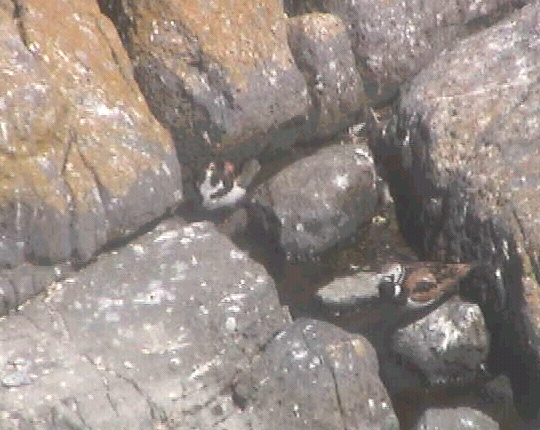
- This pair of Ruddy Turnstones appeared at Race Rocks in the second week of August, 2007
-
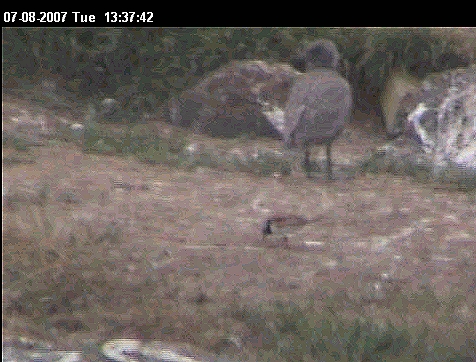
- Pam Birley took these pictures on camera 5 .
Ruddy Turnstones are an uncommon migrant on southern Vancouver Island (best times in May and again in July-August). Usually between 1-3 (rarely more) get reported at this time at various waterfront sites. No doubt Race Rocks is a reliable site for this species (given that close relative Black Turnstone is so regular out there and the habitat is so suitable). Nevertheless, many local birders miss seeing this species in a given year.
(David Allinson)
The only other record of Ruddy Turnstones at Race Rocks was one individual bird observed recorded and in the Christmas Bird Count, 1978
CLASSIFICATION:
Domain Eukarya
Kingdom Animalia
Phylum Chordata
Subphylum Vertebrata
Class Aves
Order Charadriiformes
Family Scolopacidae
Genus Arenaria
Species interpres
Common Name: Ruddy Turnstone
Other Members of the Class Aves at Race Rocks.
 Return to the Race Rocks Taxonomy Return to the Race Rocks Taxonomyand Image File |
 The Race Rocks taxonomy is a collaborative venture originally started with the Biology and Environmental Systems students of Lester Pearson College UWC. It now also has contributions added by Faculty, Staff, Volunteers and Observers on the remote control webcams. The Race Rocks taxonomy is a collaborative venture originally started with the Biology and Environmental Systems students of Lester Pearson College UWC. It now also has contributions added by Faculty, Staff, Volunteers and Observers on the remote control webcams.G. Fletcher |
.
Calidris canutus: Red Knot- The Race Rocks Taxonomy
This shorebird which is listed by COSEWIC as a Species at Risk has a long distance migratory route of 20,000 miles. It nests on the Canadian Tundra and uses both the Atlantic and Pacific flyways. It has made almost annual stop-overs at Race Rocks Ecological Reserve in the month of May last few years. It was first photographed there by Ecoguardian Raisa Mirza in May of 2010. You can see her other photos on her Flickr site.
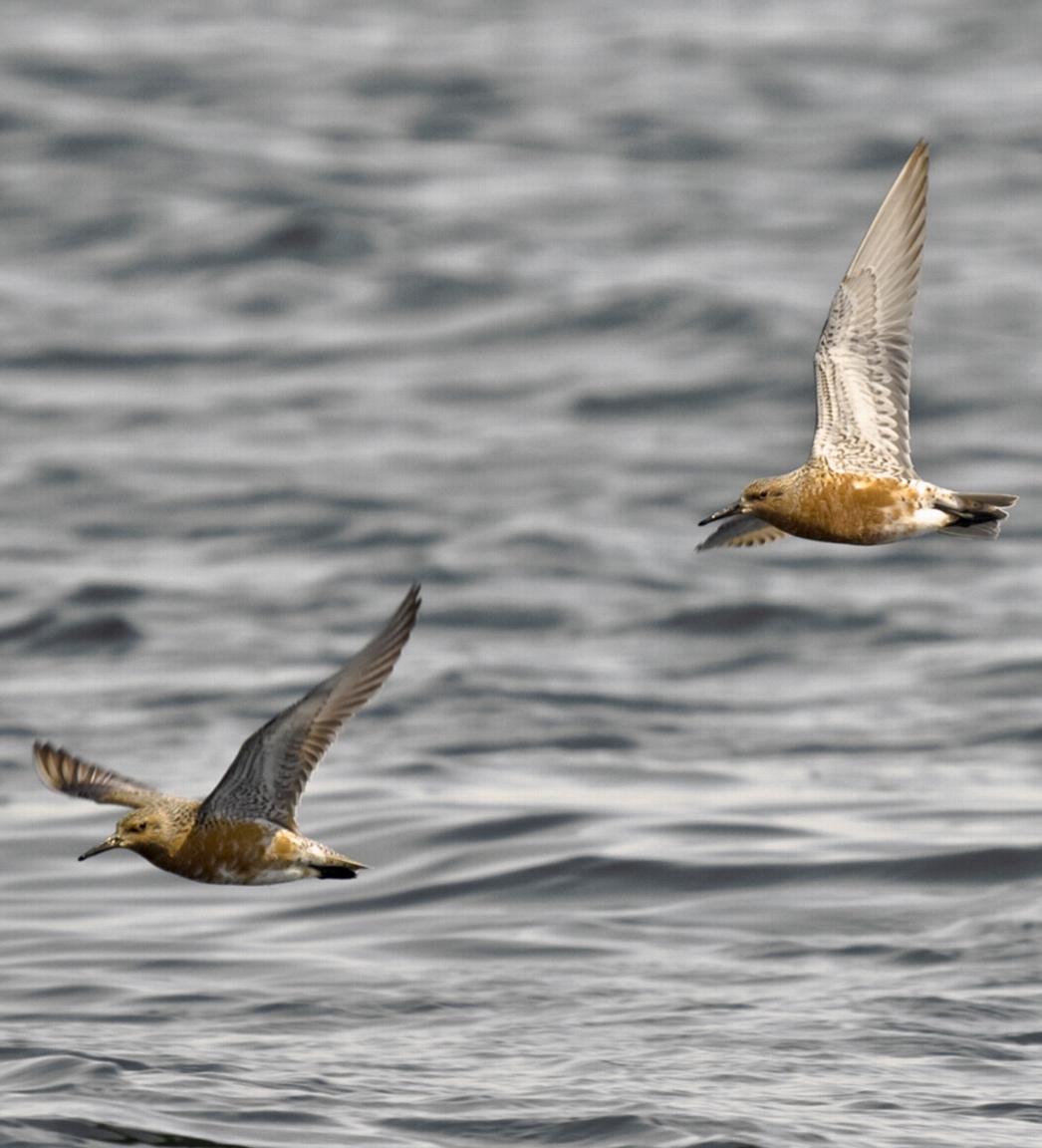
red knot Calidris canutus photographed at Race Rocks by Raisa Mirza on May 9, 2010.
-

- Red Knot photo by Raisa Mirza
-
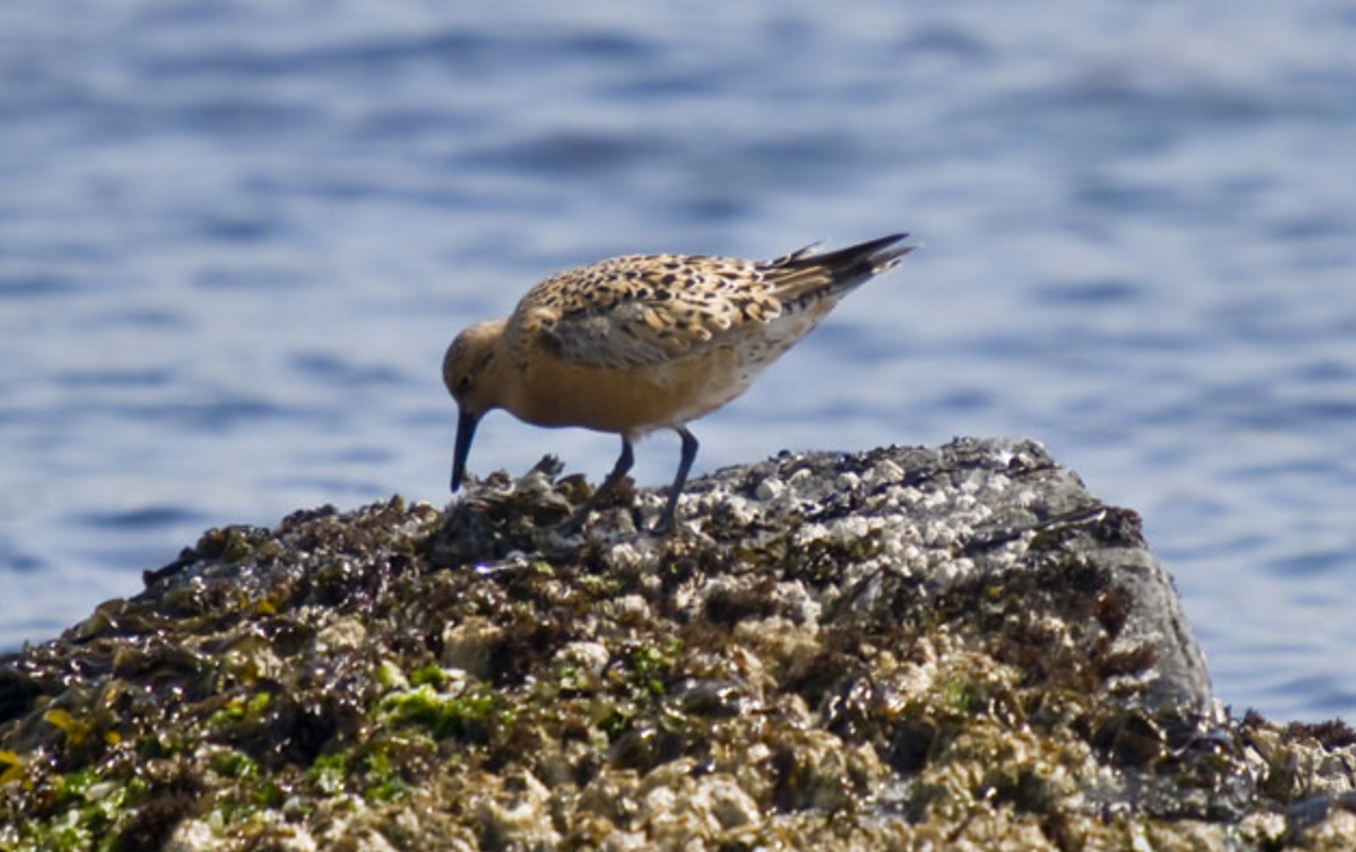
- Red Knot photo by Raisa Mirza
Domain: Eukarya
Kingdom :Animalia
Phylum: Chordata
Subphylum: Vertebrata
Class :Aves
Order :Charadriiformes
Family: Scolopacidae
Genus :Calidris
Species :canutus
Common Name: Red Knot
See other posts tagged with Red Knot
Other Members of the Class Aves at Race Rocks.
| Return to the Race Rocks Taxonomy and Image File |
| The Race Rocks taxonomy is a collaborative venture originally started with the Biology and Environmental Systems students of Lester Pearson College UWC. It now also has contributions added by Faculty, Staff, Volunteers and Observers on the remote control webcams. |
Phoebastria immutabilis: laysan albatross–The Race Rocks Taxonomy
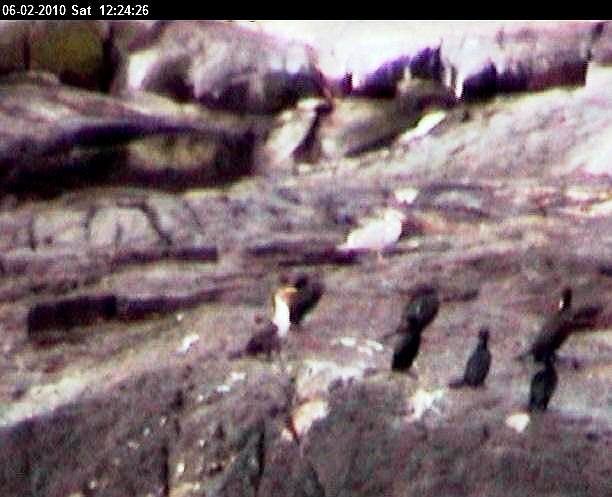
Pam Birley took this photo using the remote cam 5 on February 6, 2010. We have had difficulty identifying it but it looks quite like a Laysan Albatross. Below is a quote from Pam:
“Thought I would draw your attention to this mystery bird, seen on Middle Rock on Saturday. I was actually looking at the seals but this large bird caught my eye because it was so white. I wish I had taken more pictures but only saved this one. It was larger than the Cormorants (Beside it in the photograph) and had a big yellow/orange beak. It was white except for the wing area which was black. It was not a double-crested Cormorant. The only thing I can come up with from Sibley and consulting the internet is a Laysan Albatross. Apparently they only breed in the Hawaiian Islands area but do travel up to the Bering Sea, Alaska and the Pacific NW.”
This article details the ecological issues threatening this bird such as bycatch in the commercial high seas drift net fisheries.
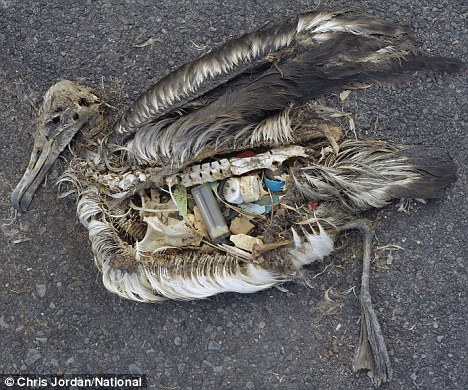 See this article ” How we killed paradise with plastic: Grotesque consequences of our casual throwaway culture” The image from it shown here provides a stark reminder of the tragedy of plastic pollution in the ocean.
Domain Eukarya
Kingdom Animalia
Phylum Chordata
Subphylum Vertebrata
Class Aves
Order Procellariiformes
Family Diomedeidae
Genus Phoebastria
Species mutabilis
Common Name: Laysan albatross
| Other Members of the Class Aves at Race Rocks |
| Return to the Race Rocks Taxonomy and Image File |
| The Race Rocks taxonomy is a collaborative venture originally started with the Biology and Environmental Systems students of Lester Pearson College UWC. It now also has contributions added by Faculty, Staff, Volunteers and Observers on the remote control webcams. Pam Birley, 2010
|
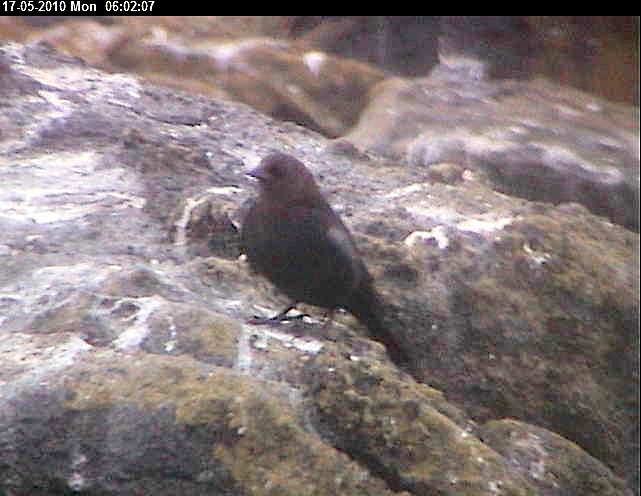
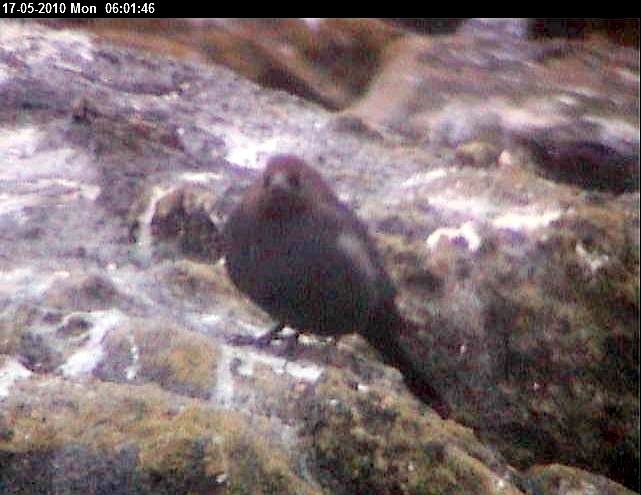
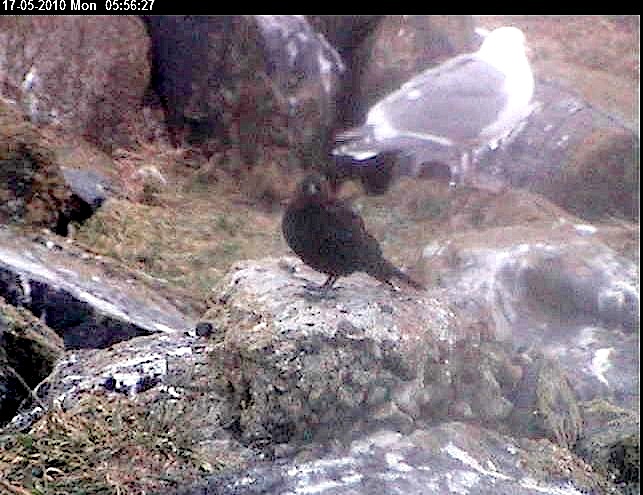
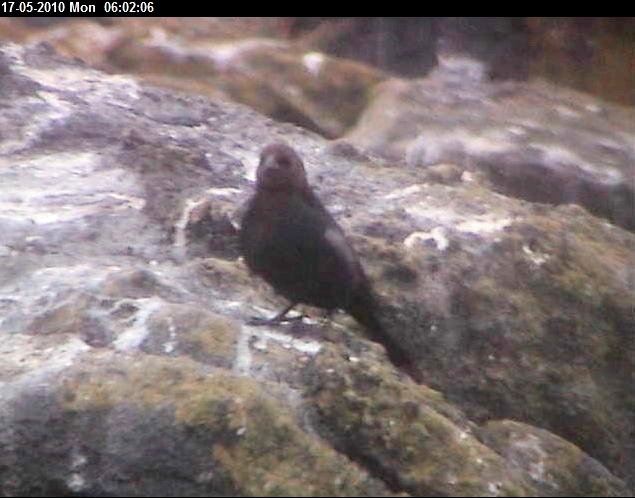
Molothrus ater, Brown-headed cowbird– The Race Rocks Taxonomy
|
||||||
Domain Eukarya
Kingdom Animalia
Phylum Chordata
Sub-Phylum Vertebrata
Class Aves
Order Passeriformes
Family Icteridae
Genus Molothrus
Species ater
Common Name: Brown-headed cowbird.
| Other Members of the Class Aves at Race Rocks |
| Return to the Race Rocks Taxonomy
and Image File |
| The Race Rocks taxonomy is a collaborative venture originally started with the Biology and Environmental Systems students of Lester Pearson College UWC. It now also has contributions added by Faculty, Staff, Volunteers and Observers on the remote control webcams.
Pam Birley |
Phoebastria immutabilis: Lasan albatross–The Race Rocks Taxonomy
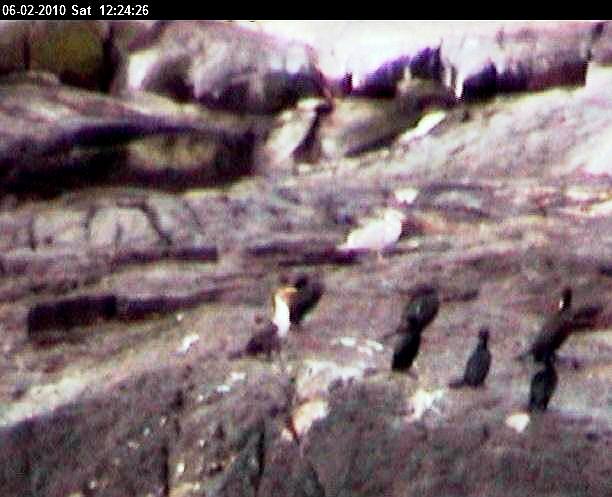
Pam Birley took this photo using the remote cam 5 on February 6, 2010. We have had difficulty identifying it but it looks quite like a Laysan Albatross. Below is a quote from Pam:
“Thought I would draw your attention to this mystery bird, seen on Middle Rock on Saturday. I was actually looking at the seals but this large bird caught my eye because it was so white. I wish I had taken more pictures but only saved this one. It was larger than the Cormorants (Beside it in the photograph) and had a big yellow/orange beak. It was white except for the wing area which was black. It was not a double-crested Cormorant. The only thing I can come up with from Sibley and consulting the internet is a Laysan Albatross. Apparently they only breed in the Hawaiian Islands area but do travel up to the Bering Sea, Alaska and the Pacific NW.” PAM BIRLEY, UK
Domain Eukarya
Kingdom Animalia
Phylum Chordata
Subphylum Vertebrata
Class Aves
Order Procellariiformes
Family Diomedeidae
Genus Phoebastria
Species mutabilis
Common Name: Laysan Albatross
See this article in Bird Life International which details the ecological issues threatening this bird such as bycatch in the commercial high seas drift net fisheries.
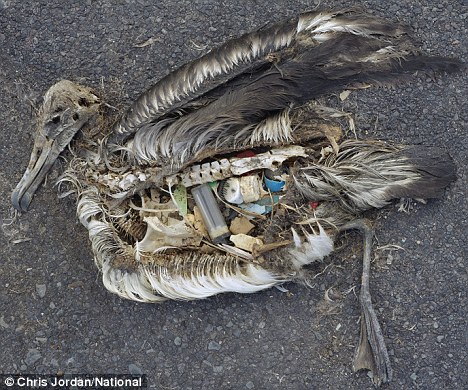 See this article ” How we killed paradise with plastic: Grotesque consequences of our casual throwaway culture” The image from it shown here provides a stark reminder of the tragedy of plastic pollution in the ocean.
|
Other Members of the Class Aves at Race Rocks.
|
| Return to the Race Rocks Taxonomy and Image File |
| The Race Rocks taxonomy is a collaborative venture originally started with the Biology and Environmental Systems students of Lester Pearson College UWC. It now also has contributions added by Faculty, Staff, Volunteers and Observers on the remote control webcams. April 2010- Pam Birley |