Cerorhinca monocerata: Rhinocerous Auklet -The Race Rocks Taxonomy


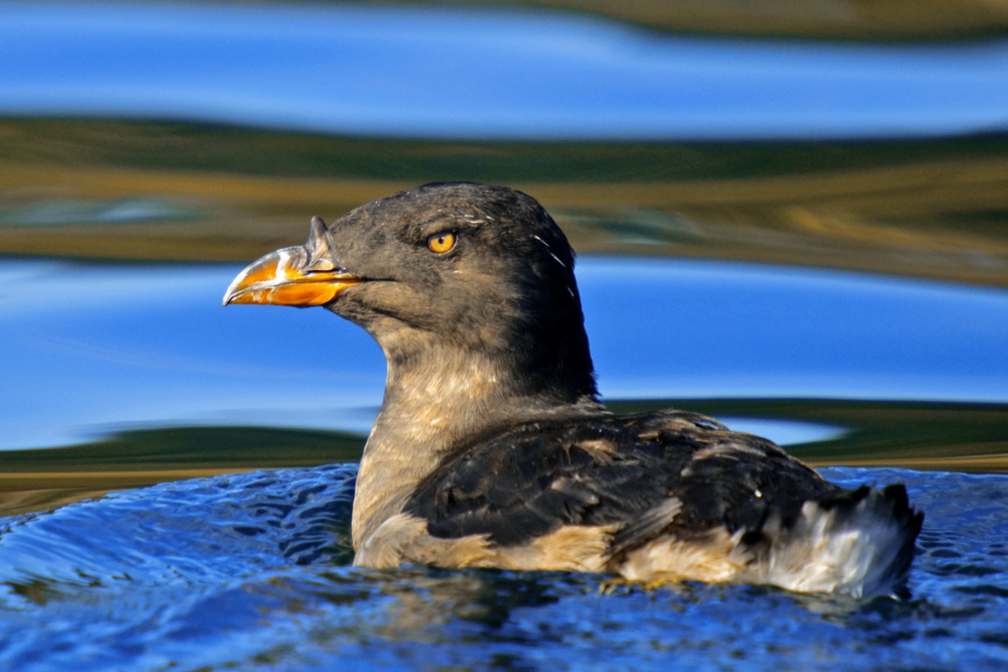
This Rhinocerous Auklet was photographed by Ryan Murphy in Race Passage, late September, 2009
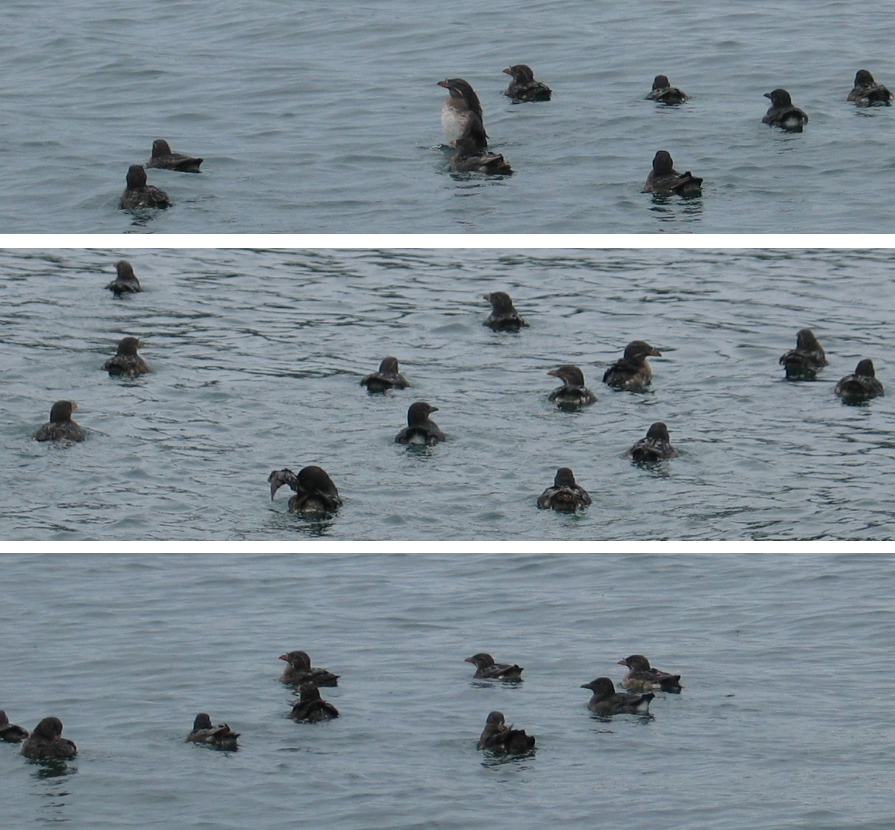
Rhinocerous auklet are frequent fall and winter visitors in the waters around Race Rocks. They forage for feed by diving in groups. The pictures above are of the same group, shown in different positions . Click for enlarged version
Domain Eukarya
Kingdom Animalia
Phylum Chordata
Sub-Phylum Vertebrata
Class Aves
Order Charadriformes
Family Alcidae
Genus Cerorhinca
Species monocerata
Common Name: Rhinocerous Auklet

Other Members of the Class Aves at Race Rocks.
taxonomyiconReturn to the Race Rocks Taxonomy
and Image File
April 2009 Raisa Mirza

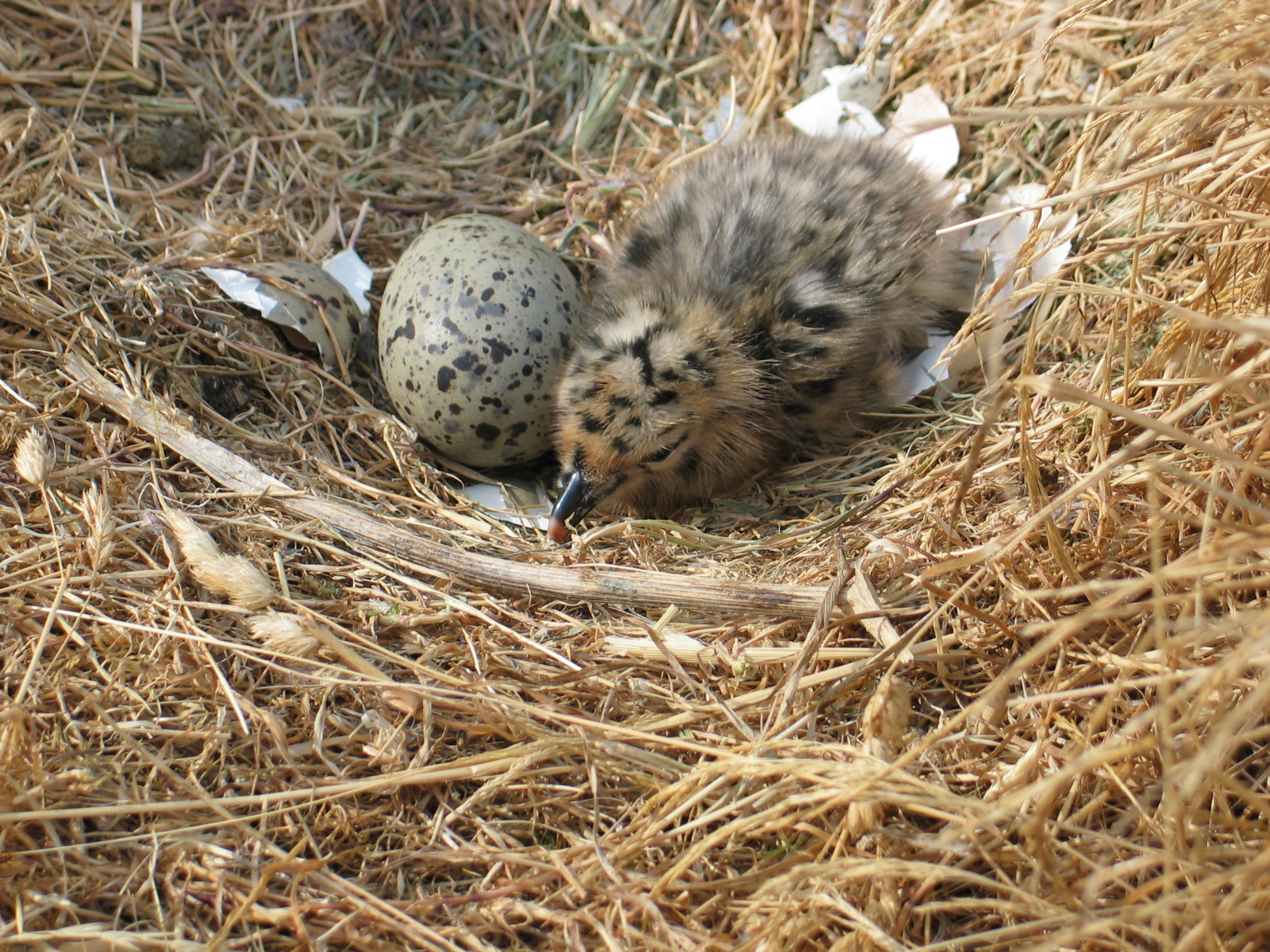
Seagull chicks starting to lift off ground

The baby elephant seal is present outside the concrete pad again today. Its back is covered in small wounds and every move it takes seems to be an effort. It spent all day sleeping beside the jetty. Wondering if it is sick or in poor health..The number of sea lions (both stellar and California) is growing daily. Most are hauled out on the NE corner of Gr. Race and on Middle Rock. Some are also on the southern rocks as well. A flock of four Canada Geese was present on the island for a few hours this morning. Seagull chicks are still growing, with many spreading their wings and starting to lift off from the ground. Carcasses in various stages of decomposition have been found scattered across the island this week, with two new ones beside the cistern spotted yesterday. Slash has not been seen for a week now. A number of infractions from recreational boats occurred today, including viewing animals from less than 100 metres, fishing and traveling at speeds greater than 7 kts. Recreational boaters are reminded that violation of the Marine Mammal Regulations (rev. 2006) may constitute a fine up to $100 000. Adam, 21:25:22

California Sea lions return

The seagull chicks are growing. I haven’t seen any new chicks in the last week or two, which leads me to believe that everyone has now hatched. None of the young have started to fly yet (as far as I have seen), but many of the chicks appear now to at least realise that the protrusions from their bodies may someday put them in the air. It is quite entertaining to watch the chicks hop up and down and flap their wings before falling on their heads! I haven’t seen our family of young geese now for a week or so. I suspect that they have outgrown the island and moved off. This week though we did have two stopovers from geese flocks. The first flock consisted of seven individuals while the second had twelve. Each flock landed for a few hours then left.Slash, as always, is still lazing around in the sun on the island. We did have Beatrice return a few weeks ago, but she only stayed for a day or two. I haven’t seen any more elephant seals these days. Four or five California sea lions have returned to the reserve. Several are currently hauled out on Middle Rock, and several more are hauled out on the northeast corner of Great Race Rock. Unfortunately, they appear to be quite the attraction for whale watching tourists.Many pigeon guillemots are still present across the island, as well as a number of black oystercatchers that can often be seen out on the jetty at night when I do the water sampling.Life underwater is also flourishing, as expected. Yesterday I did two dives off the north side of the island and saw the normal plethora of creatures. Many of my fellow divers also spotted a wolf eel lurking in the upper reef. I unfortunately, missed it.Pam has also reported seeing an otter skulking around too. I’ve been on and off the island in the last week quite a bit, so I guess I must have missed it. -Adam- ’21:27:09′,

Columba livia: Rock Dove–The Race Rocks Taxonomy


Columba livia at Race Rocks
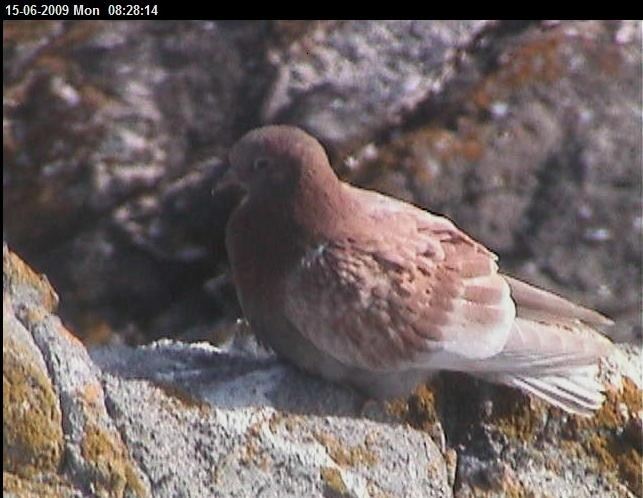
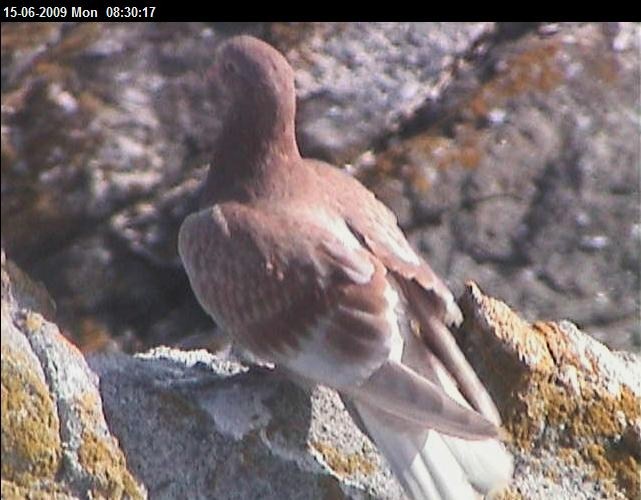
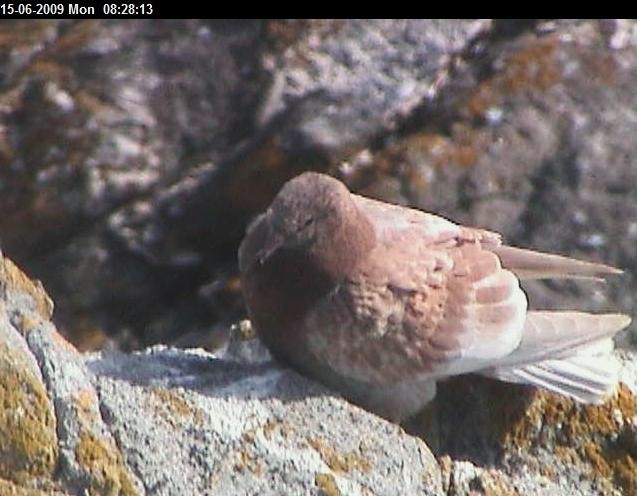
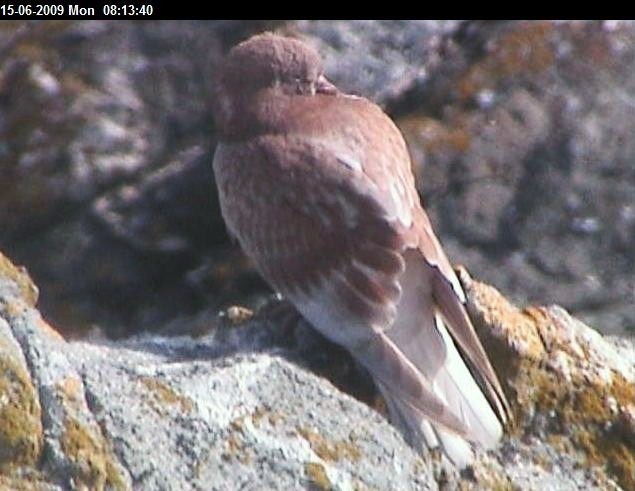
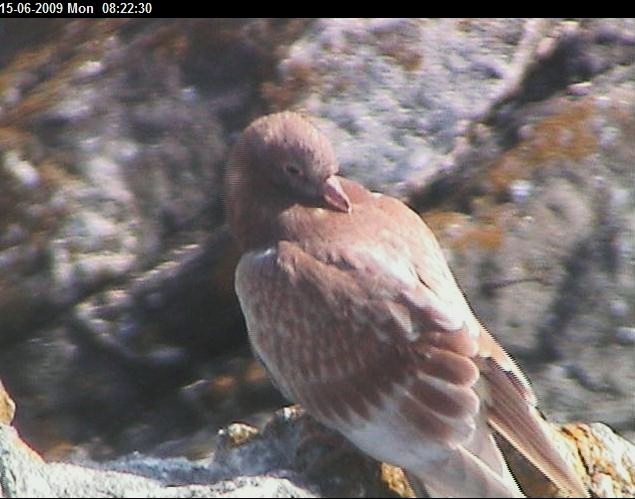
Surprisingly this is the first pigeon we have seen at Race Rocks The week this photo was taken on the remote camera by Pam Birley, it has been non-stop winds from the West over 25km/hr. Perhaps it was just blown away from its normal flock.

Note: Moisture and heat retention by breathing under the wings. This pigeon It appeared on June 15,2009.Most of the pigeons we see around Victoria are the typical grey body with dark bands

Domain Eukarya
Kingdom Animalia
Phylum Chordata
SubphylumVertebrata
Class Aves
Order Columbiformes
Family Columbinae
SubfamilyColumbinae
Genus Columba
Species livia
Linnaeus, 1758
Common Name: Rock Dove, Rock Pigeon

Other Members of the Class Aves at Race Rocks 
taxonomyiconReturn to the Race Rocks Taxonomy
and Image File
pearsonlogo2_f2The Race Rocks taxonomy is a collaborative venture originally started with the Biology and Environmental Systems students of Lester Pearson College UWC. It now also has contributions added by Faculty, Staff, Volunteers and Observers on the remote control webcams.

Pam Birley

Calidris minutillam: Least Sandpiper — The Race Rocks Taxonomy

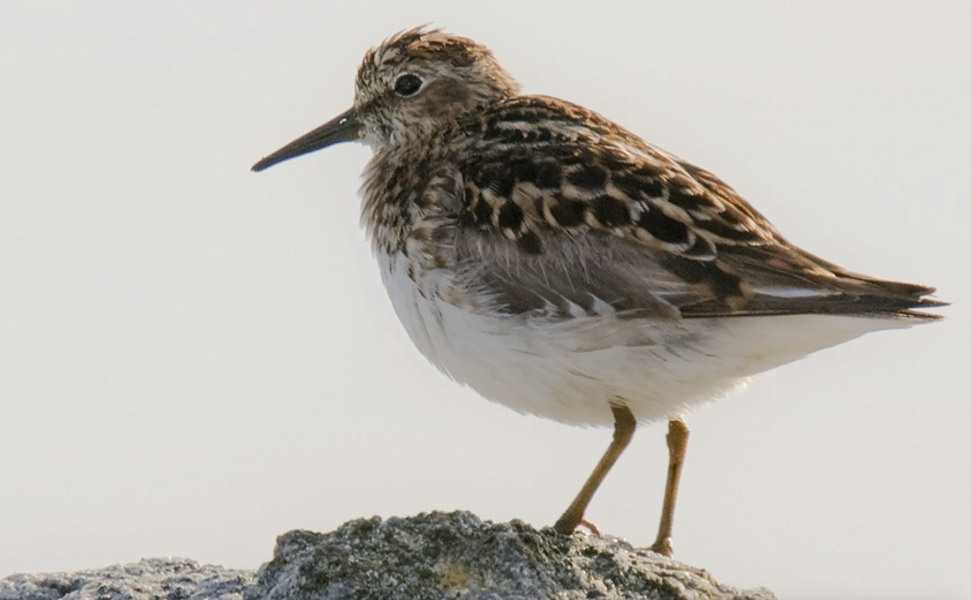
Calidris minutilla, The Least sandpiper photo at Race Rocks by Ryan Murphy

Ryan got this first picture of the Least sandpiper in early May, 2009 . It was foraging along the shoreline, having stopped over in it’s migration to the North.

Domain Eukarya
Kingdom Animalia
Phylum Chordata
Subphylum Vertebrata
Class Aves
Order Charadriiformes
Family Scolopacidae
Genus Calidris
Species minutillam
Common Name: Least Sandpiper

Tringa melanoleuca: Greater Yellowlegs , The Race Rocks Taxonomy


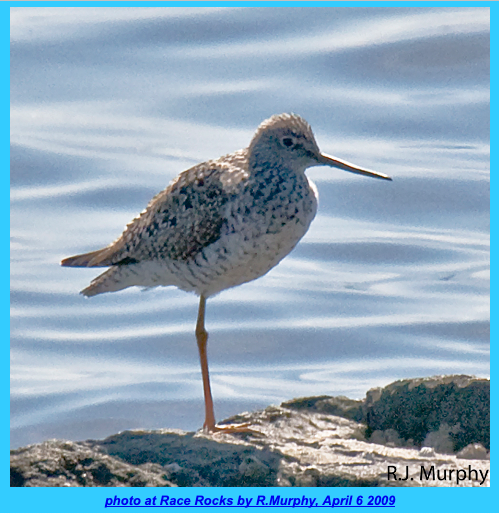
Tringa melanoleuca at Race Rocks Photo R. Murphy
Although this species was first photographed at Race Rocks in 2009, it is a relatively common shorebird that occurs in large numbers when migrating through this area from March to May. Their breeding habitat is bogs and marshes in the boreal forest region of Canada and Alaska, nesting on the ground, in well-hidden locations near water. ( Wikipedia)

David Allinson of the Rocky Point Bird Observatory comments :”This is a moulting into breeding Greater Yellowlegs . Note the legs look pretty yellow to me (but at this time of year and in certain light they can look orangeish). Lots of both Tringa’s are moving through our area right now…(For Greater Yellowlegs, listen for their loud ‘tiew, tiew, tiew’ calls, esp. when in flight…but Lesser’s should be fairly uncommon out there… (they prefer mudflats over rocks; whereas Greater’s can be seen on either).

Domain Eukarya
Kingdom Animalia
Phylum Chordata
Subphylum Vertebrata
Class Aves
Order Charadriiformes
Family Scolopacidae
Genus Tringa
Species melanoleuca
(Gmelin, 1789)
Common Name: Greater Yellowlegs

Other Members of the Class Aves at Race Rocks.

taxonomyiconReturn to the Race Rocks Taxonomy
and Image File
April 2009 Ryan Murphy

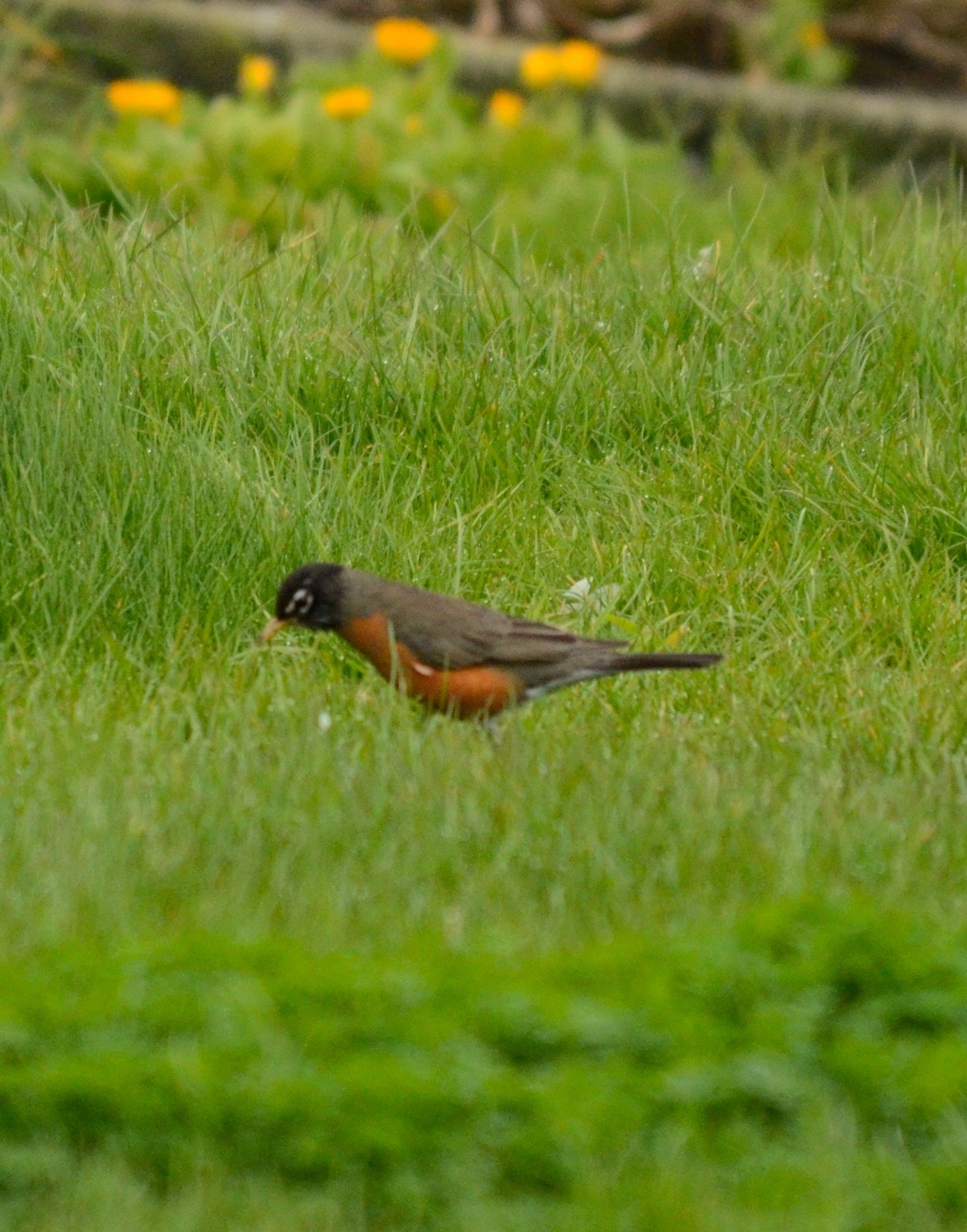
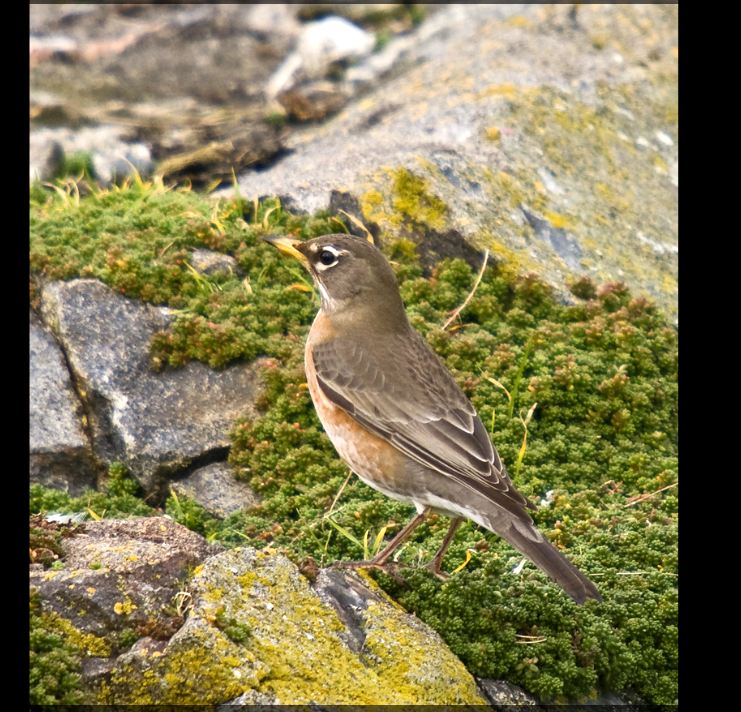
Turdus migratorius: American Robin–The Race Rocks Taxonomy

Surprisingly we see very few Robins at Race Rocks, probably because it is not an area conducive to nesting, being devoid of trees. Robins do stay year round on Vancouver Island although these ones probably came through from the Olympic Peninsula.

Domain: Eukarya
Kingdom: Animalia
Phylum: Chordata
Subphylum: Vertebrata
Class: Aves
Order: Passerifomis
Suborder: Passeri
Superfamily: Muscicapoidea
Family: Muscicapidae
Subfamily: Turdinae
Genus: Turdus (Linnaeus, 1758)
Species: migratorius
Subspecies: propinquus
Common Name: American Robin
Other Members of the Class Aves at Race Rocks.

taxonomyiconReturn to the Race Rocks Taxonomy
and Image File
pearsonlogo2_f2The Race Rocks taxonomy is a collaborative venture originally started with the Biology and Environmental Systems students of Lester Pearson College UWC. It now also has contributions added by Faculty, Staff, Volunteers and Observers on the remote control webcams.


Black Oystercatchers hatch today

On June 22, 2008, the Black Oystercatcher nest which was located on the rock just above the docks produced two chicks. They hatched in the morning and this set of clips was taken from a screen capture of camera 3 in intervals between 4:00 PM to 5:30 PM. They returned to spend the night at the nest, and left the next morning.


Video of Black Oystercatchers nesting today June 22,2008: by Garry Fletcher[/caption]

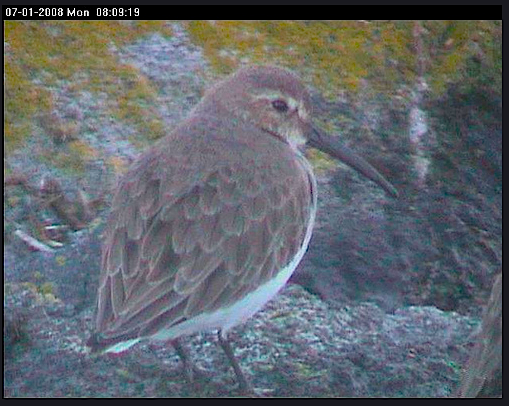
Dunlins at Race Rocks

PB-dunlinjan2008

Pam Birley took some nice images of Dunlins at Race Rocks today. The location of Race Rocks Islands is important for migratory birds both fall and spring, and overwintering birds.  See her Flickr site for more Dunlin photos.

See other dunlin posts here:

https://www.racerocks.ca/tag/dunlin/

Also one elephant seal male visible.