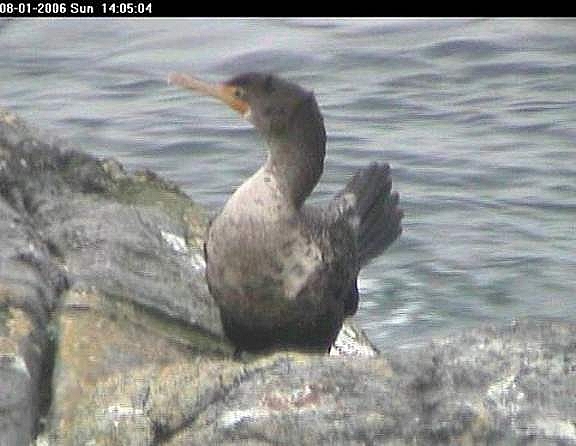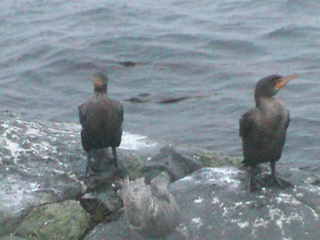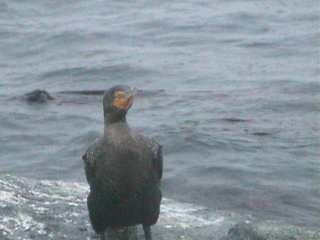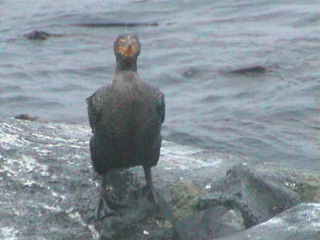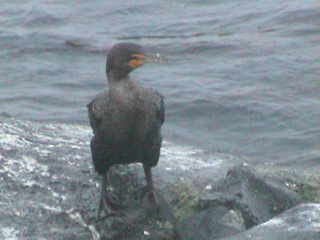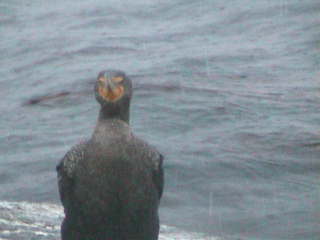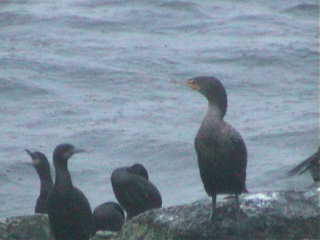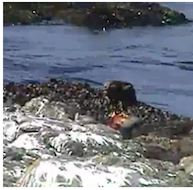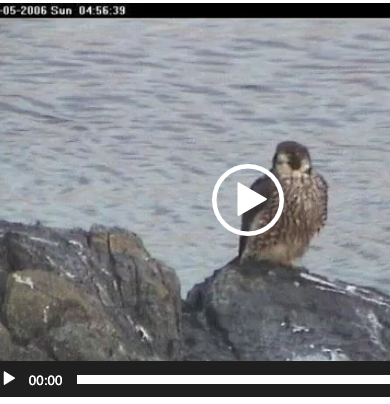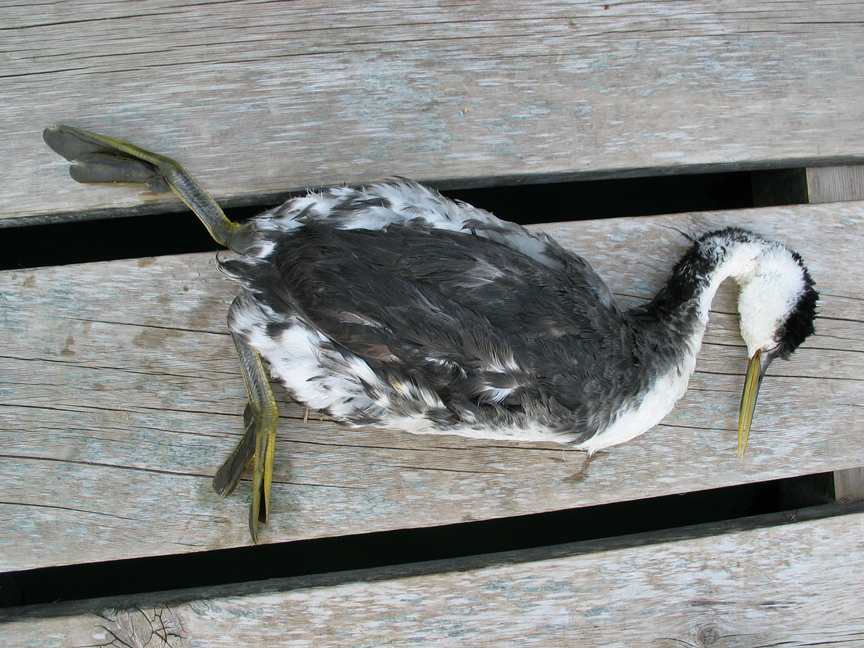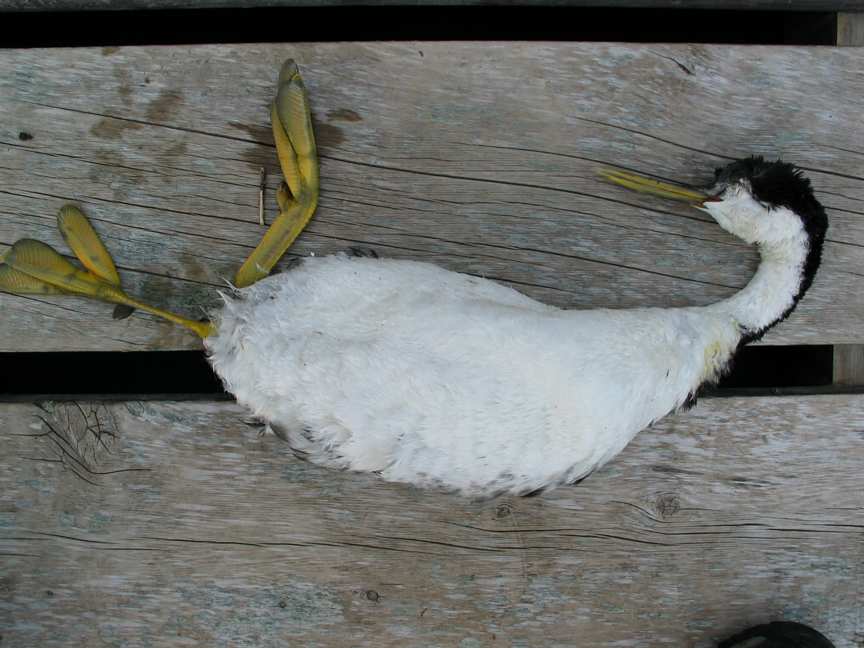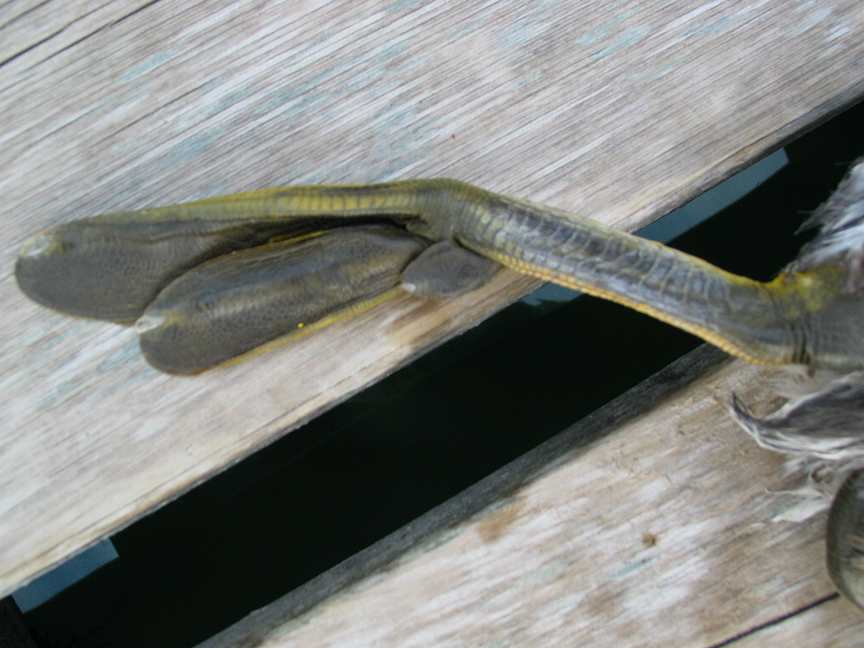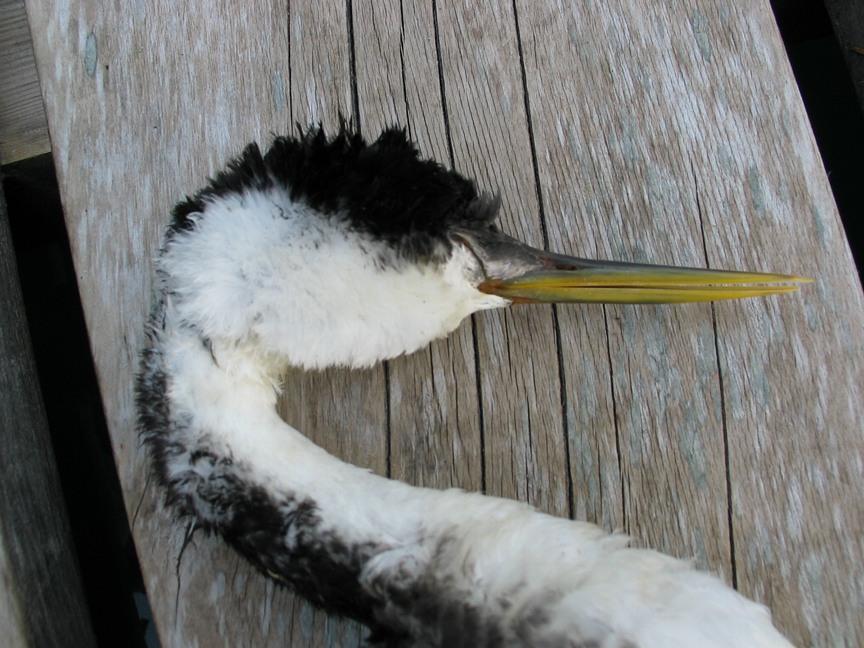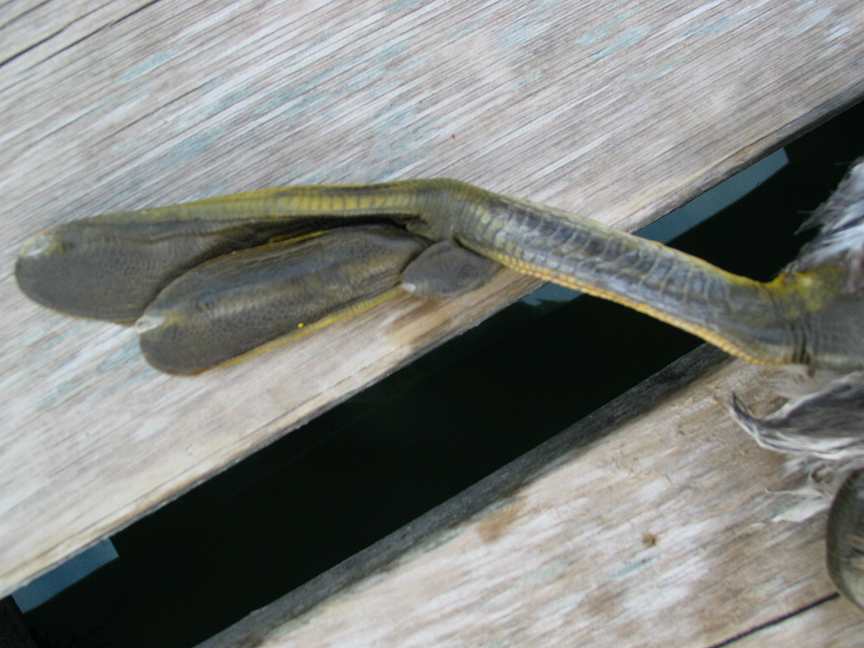
Phalacrocorax auritus: Double crested cormorant

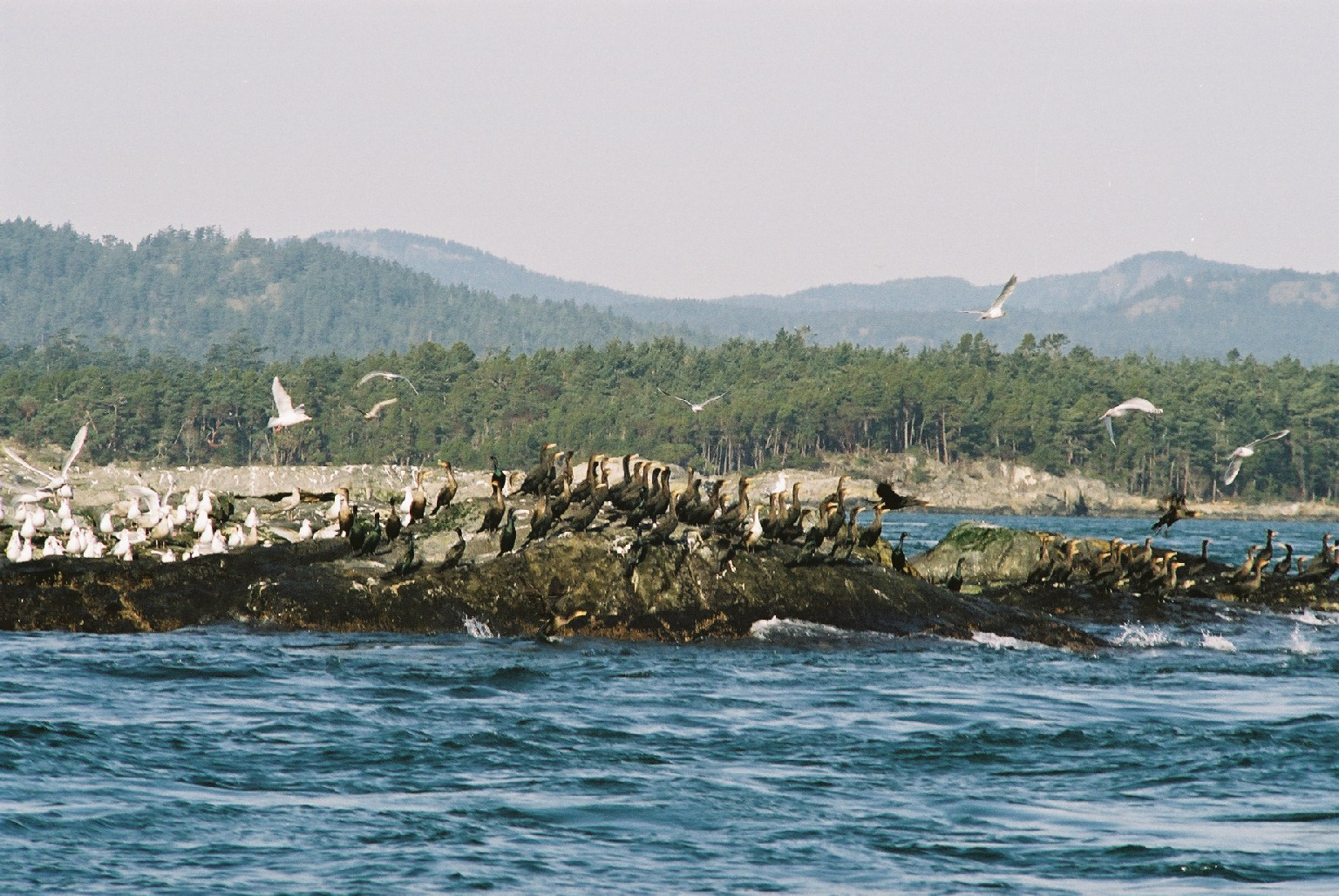
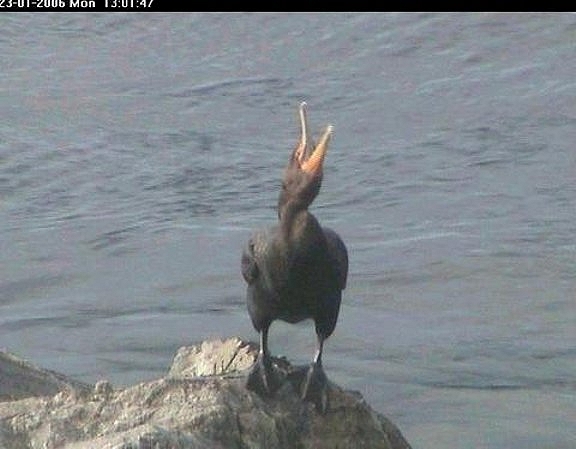
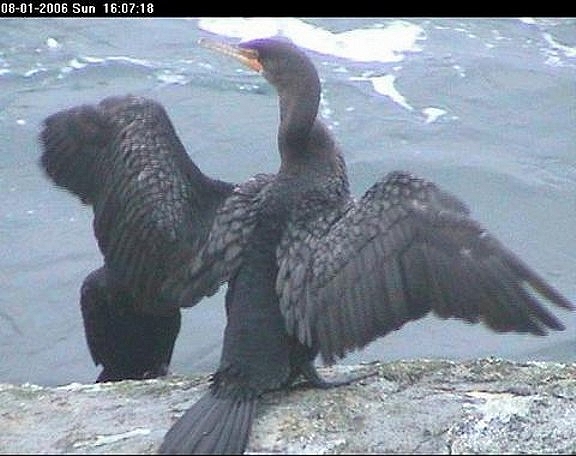
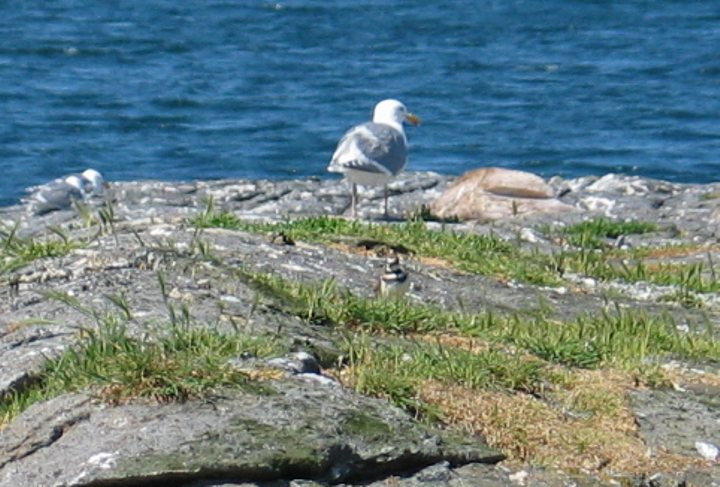
Double Crested Cormorants are winter residents at Race Rocks. They nest on other islands off Victoria.

Domain Eukarya
Kingdom Animalia
Phylum Chordata
Sub-Phylum Vertebrata
Class Aves
Order Pelicaniformes
Family Phalacrocoracidae
Genus Phalacrocorax
Species
auritus
Common Name: Double Crested cormorant

Other Members of the Class Aves at Race Rocks.
taxonomyiconReturn to the Race Rocks Taxonomy
and Image File
pearsonlogo2_f2The Race Rocks taxonomy is a collaborative venture originally started with the Biology and Environmental Systems students of Lester Pearson College UWC. It now also has contributions added by Faculty, Staff, Volunteers and Observers on the remote control webcams.

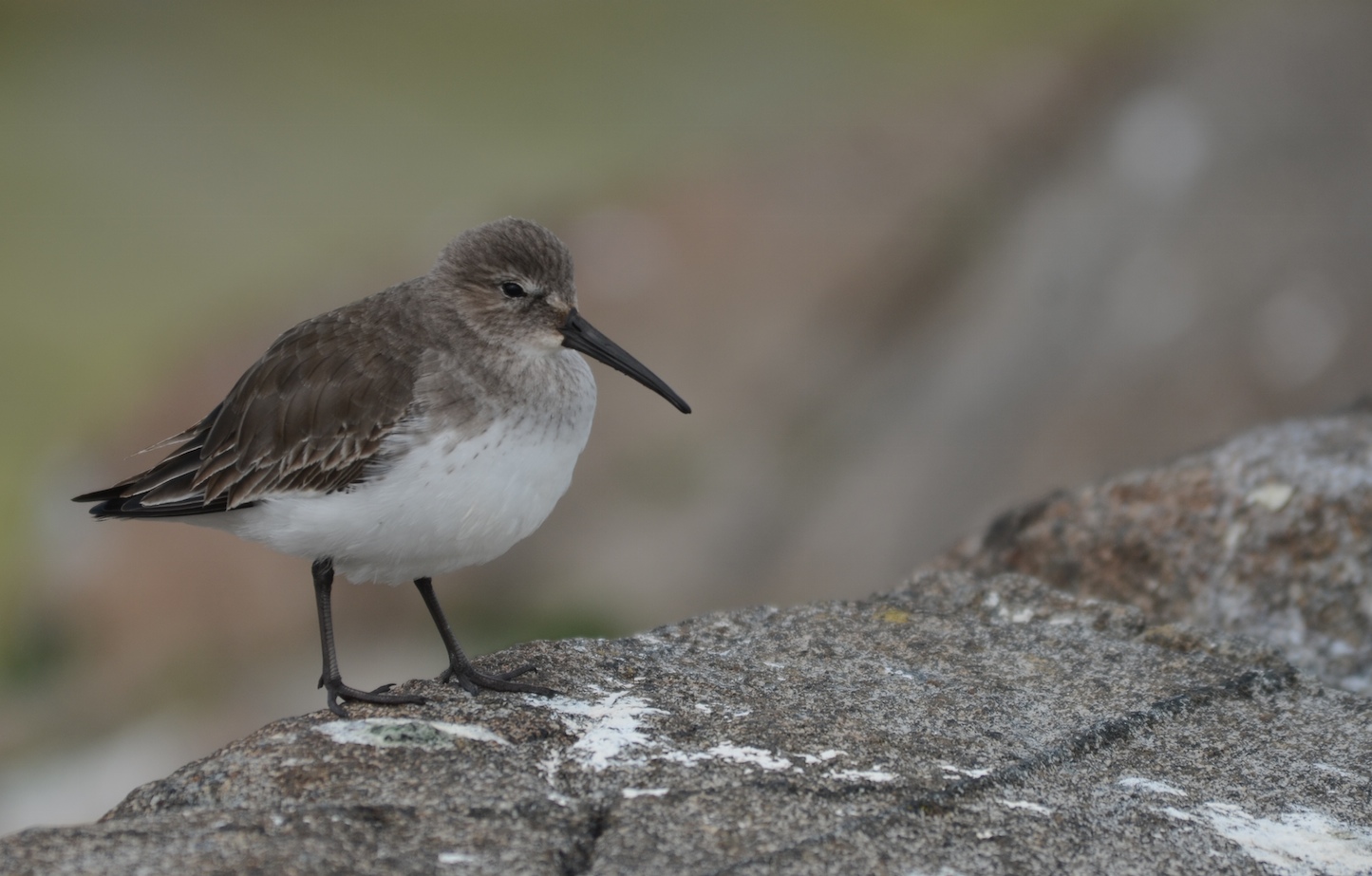
Calidris alpina: Dunlin–The Race Rocks Taxonomy

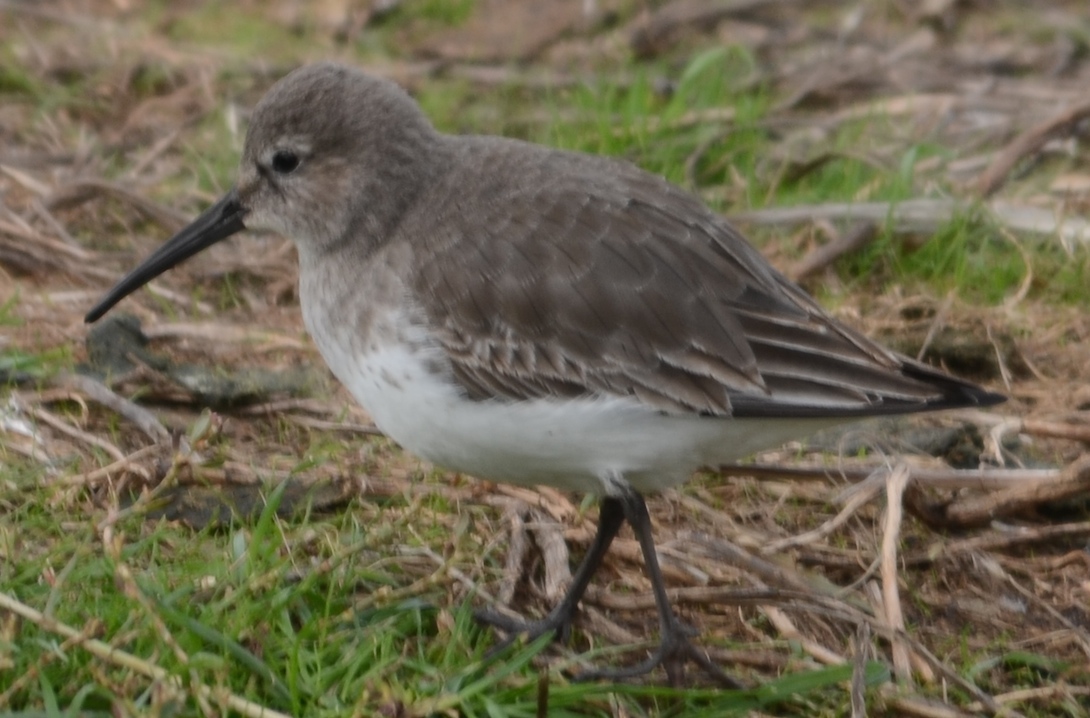
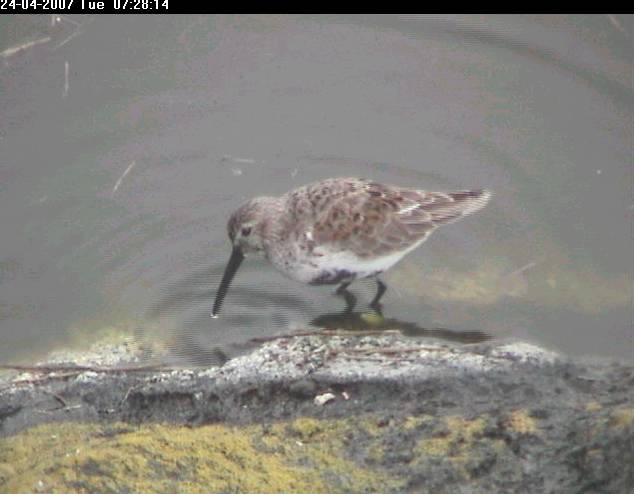
Dunlin, Calidris alpina … photo by Rod King March 18, 2021 ( click to see size comparison with a Canada Goose)

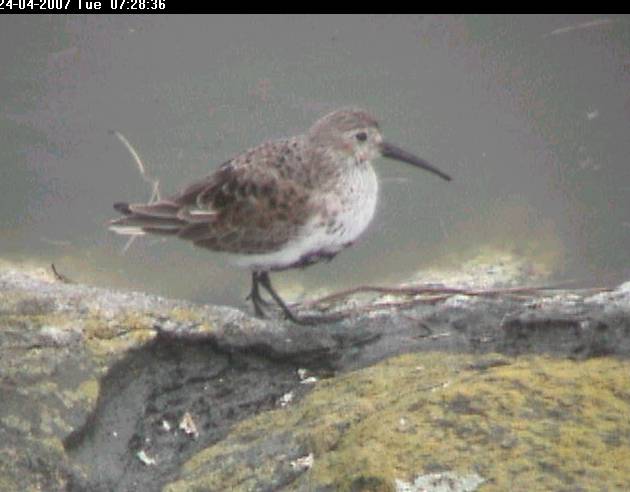
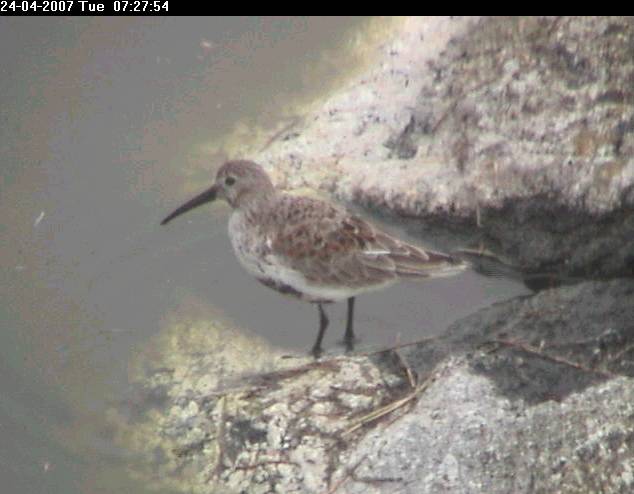
Dunlin?

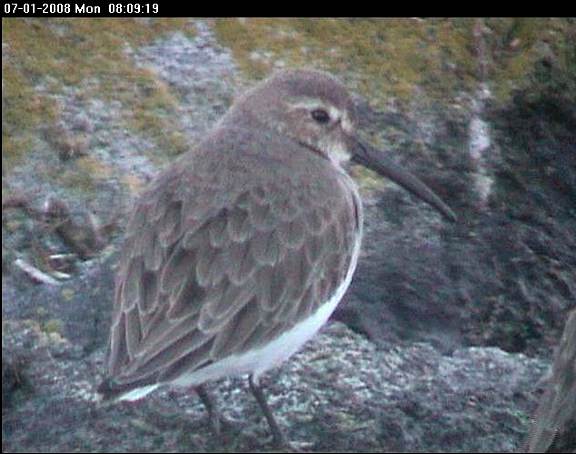
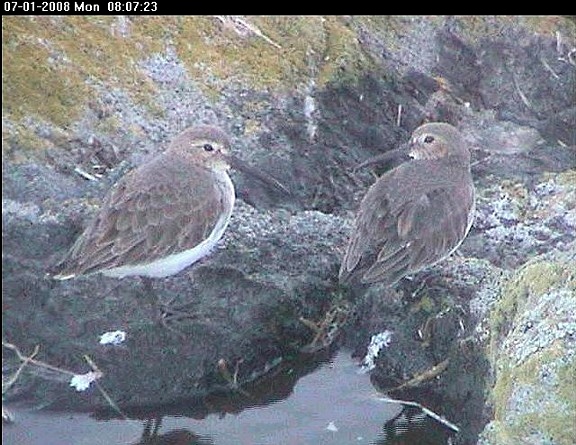
Dunlin, Calidris alpina in winter plumage, photo by Anne Stewart, Ecoguardian, October 14/2014

Dunlin?3

Dunlin photo by Anne Stewart, Oct 14, 2014

Dunlin

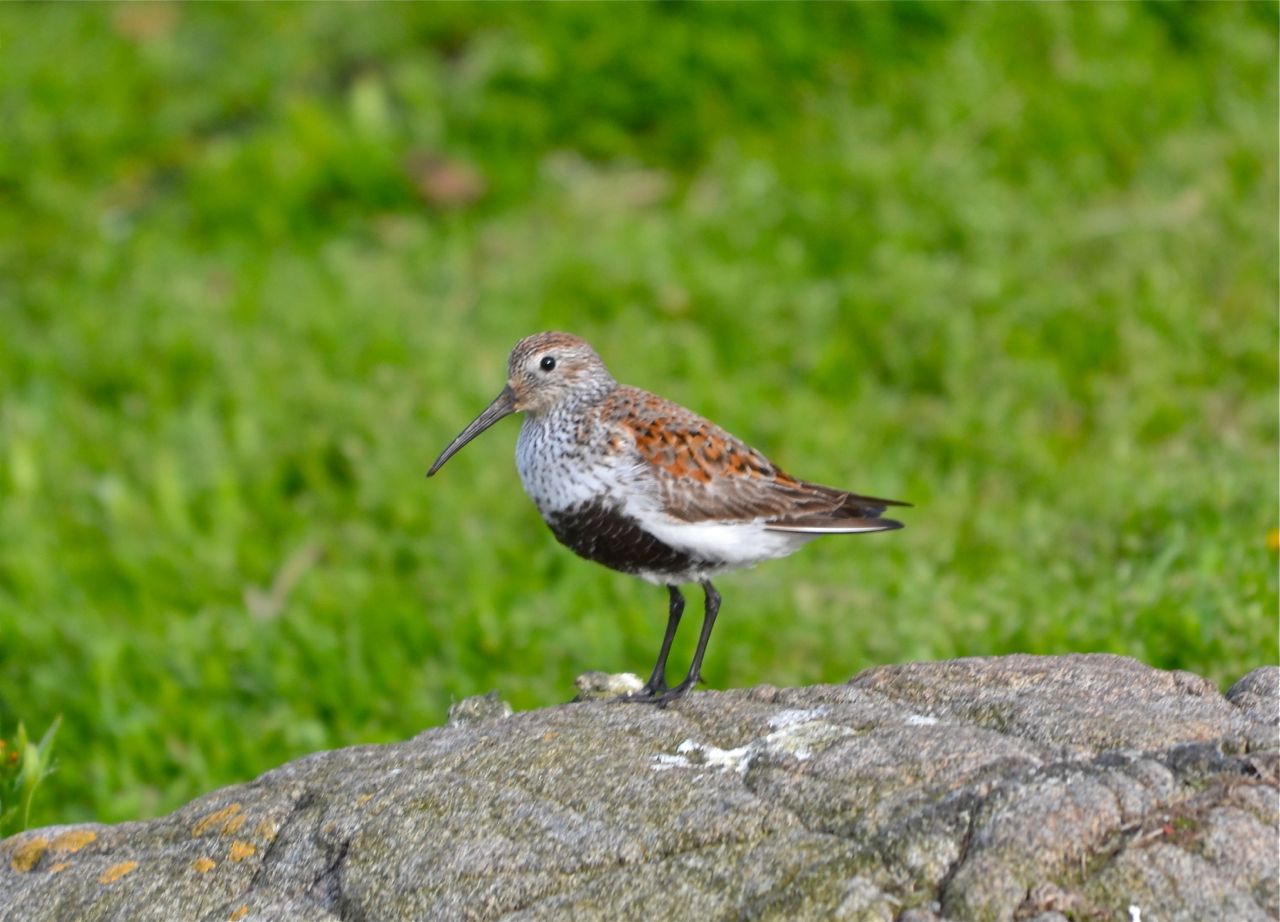
Dunlin in summer breeding plumage ( May 2, 2012-Mike Robinson)

Domain Eukarya
Kingdom Animalia
Phylum Chordata
Sub-Phylum Vertebrata
Class Aves
Order Charadriiformes
Family Scolopacidae
Genus Calidris
Species alpina (Linnaeus, 1758)
Common Name: Dunlin

The video shows the typical feeding pattern of the dunlin, probing the debris at the bottom of tidepools for crustaceans, insects and larvae.

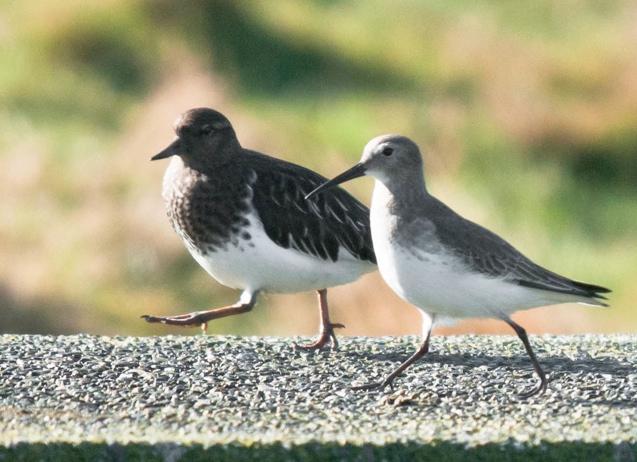
raisablkturnand-1In this picture taken by Raisa Mirza in December 2011,  you can compare the Dunlin in it’s winter plumage with the Black turnstone. They often feed together in the winter months around the tidepools and over  the rain-saturated lawn areas.


See other references on Dunlins posted on this website

Return to the Race Rocks Taxonomy

This file is provided as part of a collaborative effort by a website  observer, faculty, staff and students  of Lester B. Pearson College Date:
Oct 2006
Pam Birley

Melospiza melodia: Song Sparrow

Aside

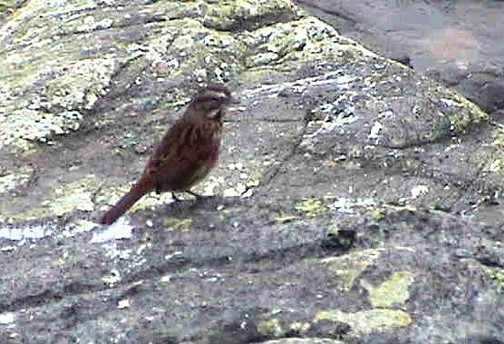
Song Sparrow in October, 2007 at Race Rocks. (Photo by David Sacks.)

Song Sparrow from the remote cam 5 (image by Pam Birley March 06)


Song Sparrows are winter visitors to Race Rocks. See the Christmas Bird Count File for other records.

1997 0 1999 0 2001 0 2003 na 2005 1
1998 4 2000 0 2002 3 2004 3 2006 na

On the Ecoreserves.bc.ca website , there are several posts about Song Sparrows. They have been the subject of research on other Ecological reserve Islands in BC.

Domain Eukarya
Kingdom Animalia
Phylum Chordata
Sub-Phylum Vertebrata
Class Aves
Order Passerifomes
Family Passeridae
Genus Melospizia
Species melodia
Common Name: Song Sparrow

Other Members of the Class Aves at Race Rocks 
taxonomyiconReturn to the Race Rocks Taxonomy
and Image File
pearsonlogo2_f2The Race Rocks taxonomy is a collaborative venture originally started with the Biology and Environmental Systems students of Lester Pearson College UWC. It now also has contributions added by Faculty, Staff, Volunteers and Observers on the remote control webcams.

Garry Fletcher 2006

Eremophila alpestris: Horned lark–The Race Rocks Taxonomy

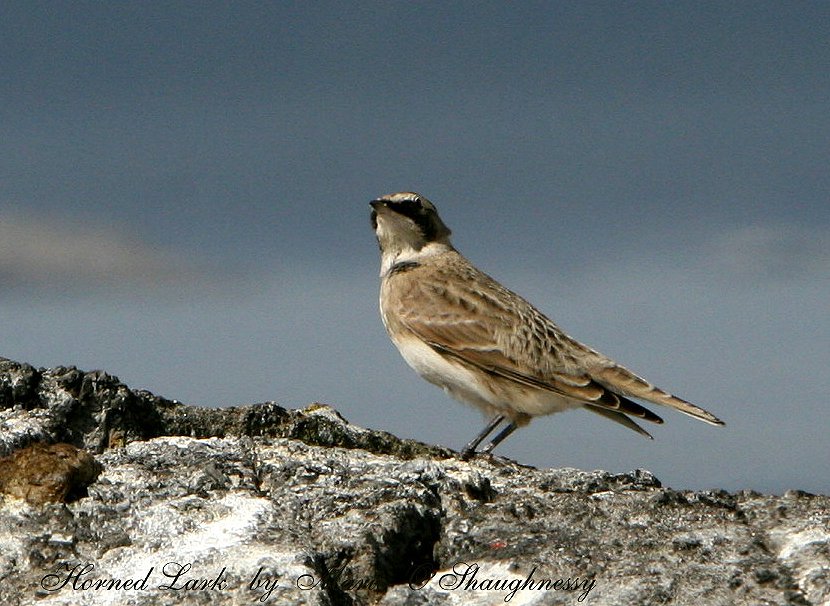
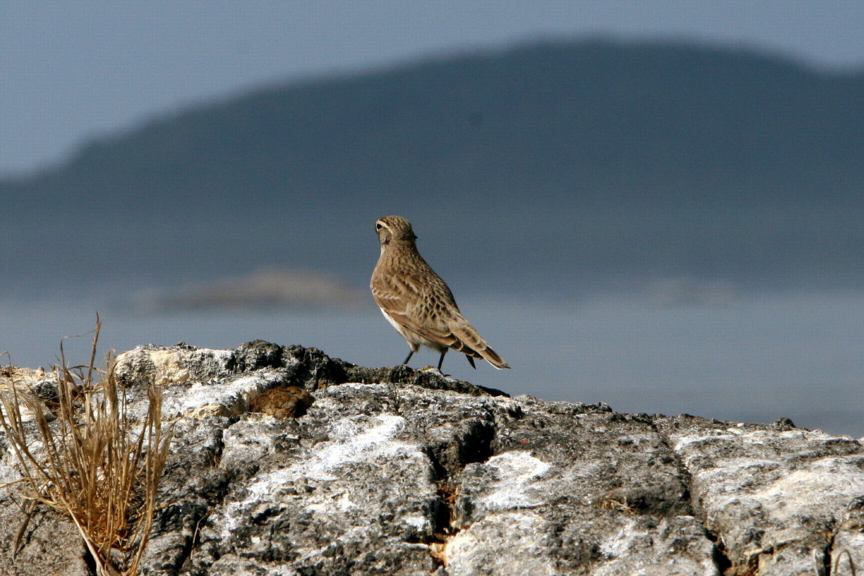
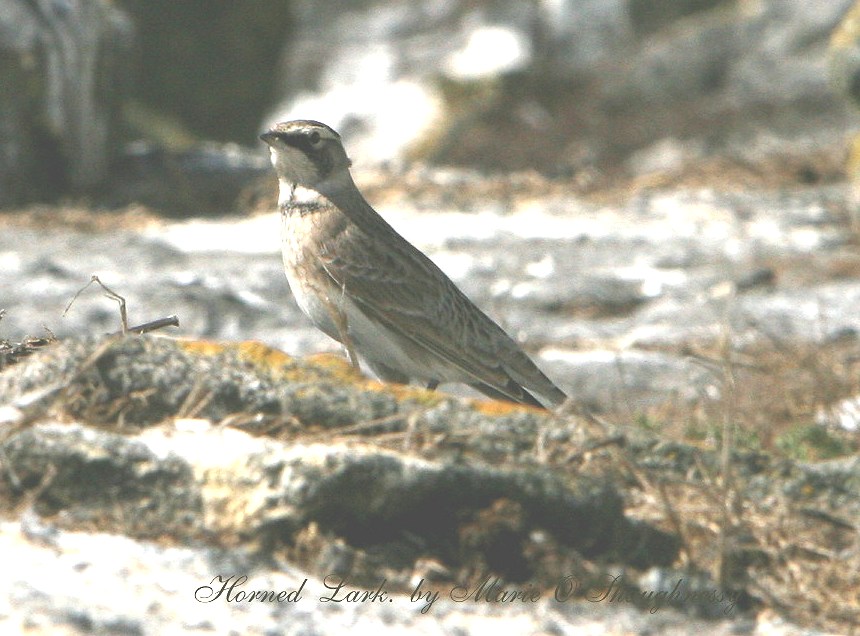
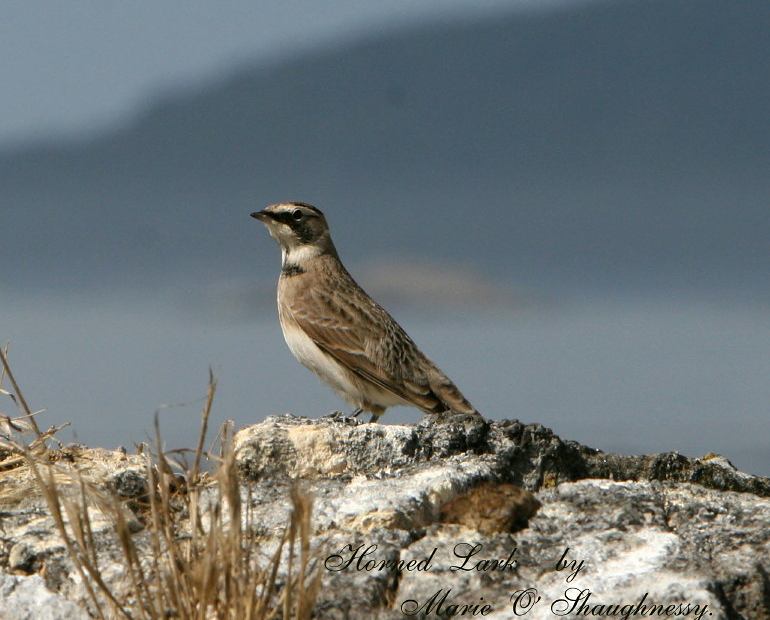
Horned Lark (Images by Marie O’Shaunessy Sept 19 2006)


This horned lark was on its migration route. It has stopped to feed in the area before continuing across the Strait of Juan de Fuca

Domain Eukarya
Kingdom Animalia
Phylum Chordata
Sub-PhylumVertebrata
Class Aves
Order Passerifomes
Family Alaudidae
Genus Eremophila
Species alpestris
Common Name:Horned Lark

Charadrius vociferus: Killdeer- The Race Rocks Taxonomy

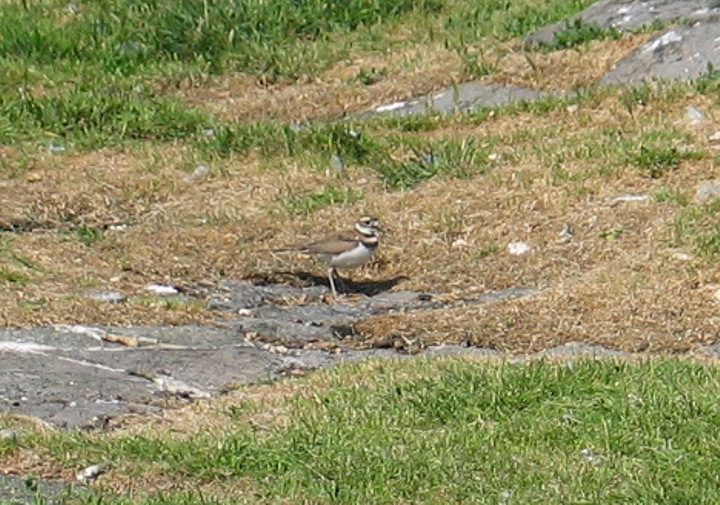
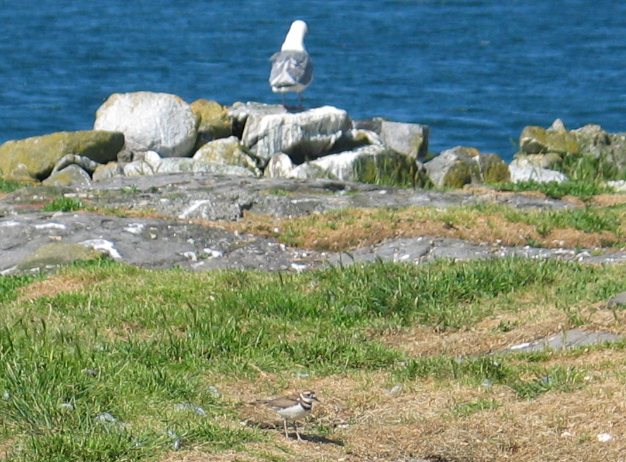
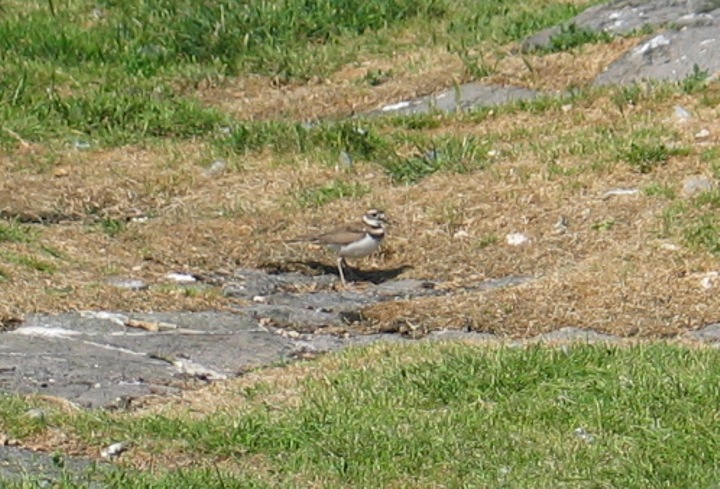
Killdeer are migratory visitors to Rave Rocks Ecological Reserve. Their calls are often heard at nigth in the spring

Domain Eukarya
Kingdom Animalia
Phylum Chordata
Sub-Phylum Vertebrata
Class Aves
Order Charadriiformes
Family Charadriidae
Subfamily Charadriinae
Genus Charadrius
Species vociferus
Common Name: Killdeer

reference link: http://www.birds.cornell.edu/AllAboutBirds/BirdGuide/Killdeer_dtl.html

Other Members of the Class Aves at Race Rocks.

taxonomyiconReturn to the Race Rocks Taxonomy
and Image File
April 2009 Garry Fletcher

Archived Video of Marine and Terrestrial Birds at Race Rocks

Nesting Seabirds, Migrating stopover species, and winter roosting species are portrayed in these videos.


 Overwintering Blk. Oystercatchers. behaviour
( 4 videos)
 Blk. Oystercatcher feeding in the intertidal zone.  Black Oystercatcher nesting behaviour  Black Oystercatchers on hatching day
 
Pigeon Guillemots on the western side of Race Rocks Cepphus columba   Pigeon Guillemots Cepphus columba
Taxonomy File
Feeding by Guillemot Cepphus columba
Taxonomy File
 Pigeon Guillemot scenes on Land and water. Cepphus columba
 
Harlequin Ducks overwintering Histrionicus histrionicus
Taxonomy File
 The Short-billed Dowitcher
Limnodromus griseus
Taxonomy file
 Black Turnstones Arenaria melanocephala  Ruddy Turnstone  Arenaria interpres
The Glaucous winged Gull feeding .–four videos in the Taxonomy file David and Satoshi,did a live webcasting project, making videos of gull behavior   May 1: Breeding in the gull colony has started and will continue throughout May and June.  August 2003- A helicopter causes adult gulls to attack scattering chicks = heavy mortality
   
Barn Swallows nesting at Race Rocks  North Western Crow Corvus caurinaus  Eagles congregate at Race Rocks in January.
Taxonomy file
Juvenile Eagle eating a harbour seal
   
slideshows of Peregrine Falcon by Pam Birley  Brandt’s Cormorants Thayer’s gulls over-wintering  Great Blue Heron Ardea herodius


Aechmophorus occidentalis: western Grebe__ The Race ROcks Taxonomy

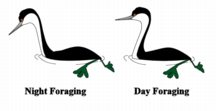
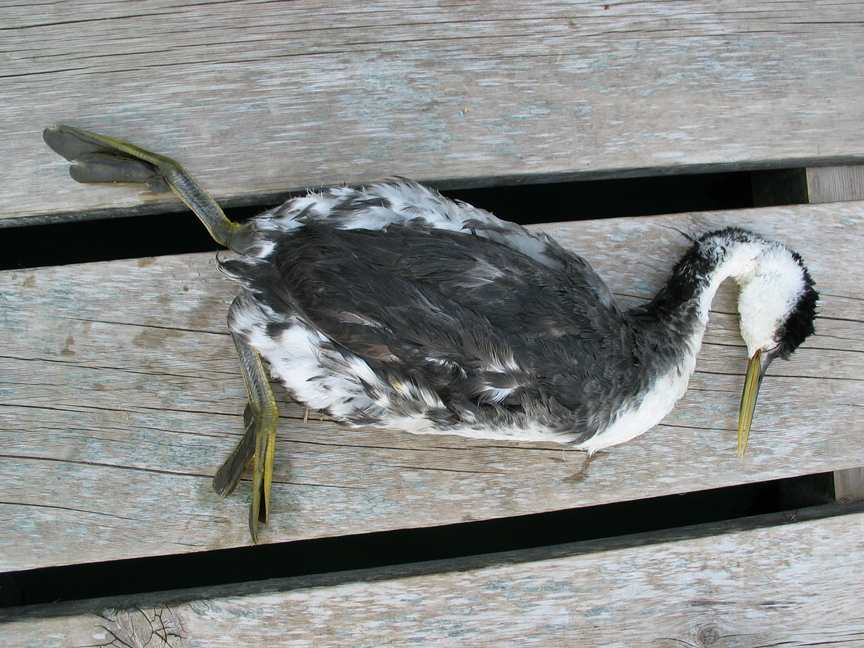
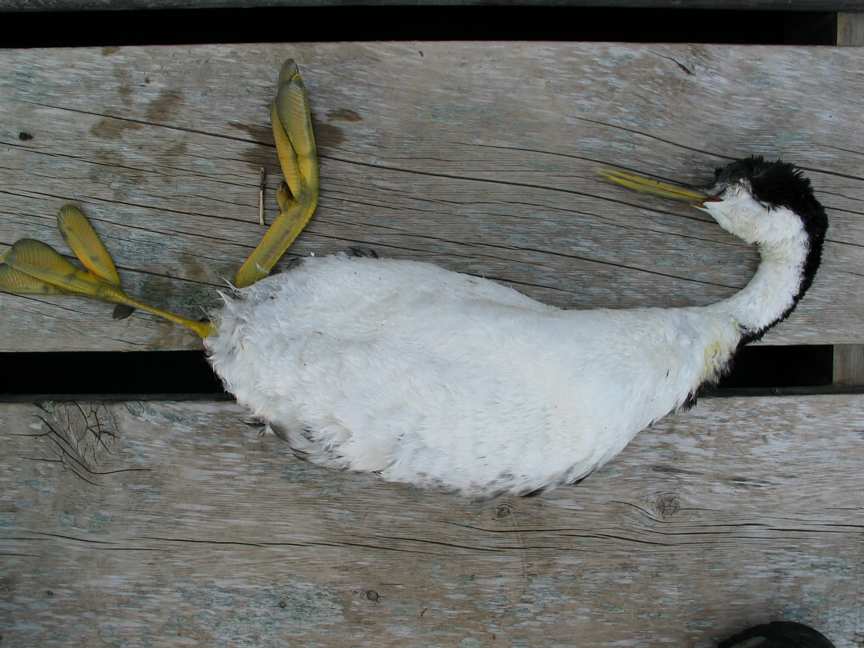
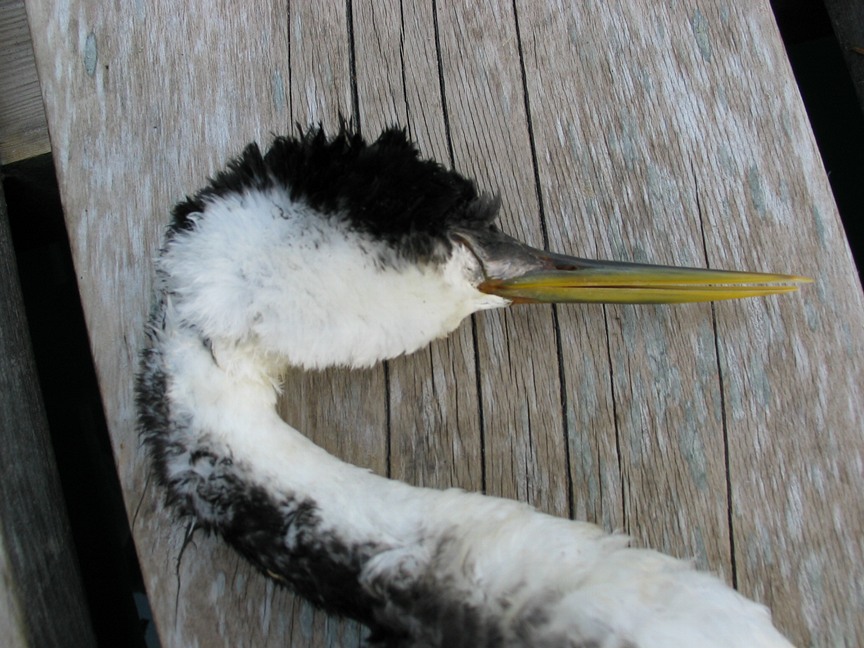
Western grebes overwinter here on Southern Vancouver Island in the protected coastal bays. Three pairs were seen in Pedder bay throughout January and February of 2006. They feed on fish at night following trails of bioluminescence as the fish swim through the water. ( see reference below)

It may surprize some to know that this is one of the few prairie pond birds which do not migrate South during the winter, but instead migrate West over the Rocks mountains to the Coastal Bays of Vancouver Island.

The Western Grebe is classified by the Alberta Government as a Species at Risk. This Field Summary gives further information on it.

Research on Foraging indicating a night-feeding pattern is presented in the research of James Clowater, See the link to his thesis at the bottom.


Aechmophorus occidentalis: Western grebe- The Race Rocks Taxonomy

Western grebes overwinter here on Southern Vancouver Island in the protected coastal bays. Three pairs were seen in Pedder bay throughout January and February of 2006. They feed on fish at night following trails of bioluminescence as the fish swim through the water. ( see reference below)

It may surprize some to know that this is one of the few prairie pond birds which do not migrate South during the winter, but instead migrate West over the Rocks mountains to the Coastal Bays of Vancouver Island.

The Western Grebe is classified by the Alberta Government as a Species at Risk.

Research on Foraging indicating a night-feeding pattern is presented in the research of James Clowater, See this link to his thesis.
CLASSIFICATION:
Domain Eukarya
Kingdom Animalia
Phylum Chordata
Sub-Phylum Vertebrata
Class Aves
Order Podicipediformes
Family Podicipedidae
Genus Aechmophorus
Species occidentalis
Common Name: Western Grebe


taxonomyiconReturn to the Race Rocks Taxonomy
and Image File
pearsonlogo2_f2The Race Rocks taxonomy is a collaborative venture originally started with the Biology and Environmental Systems students of Lester Pearson College UWC. It now also has contributions added by Faculty, Staff, Volunteers and Observers on the remote control webcams.  G. FLetcher

Hirundo rustica: Barn Swallow


UPDATE 2023 Derek Sterling has taken some excellent photos and written about the return of barn Swallows to Race rocks

This video shows the barn swallow fledglings in their nest.

June, 2005: the adult birds were observed going in and out of the vents on the north side of the water desalinator building on Race Rocks.
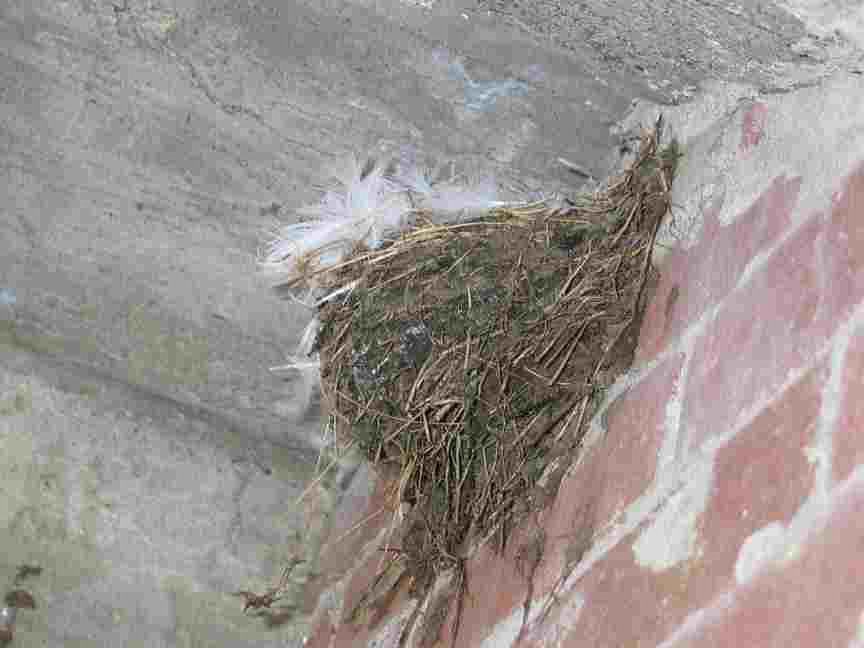
June-July 2006: This nest was built of mud, lined with goose and gull feathers under the concrete stairway of the Marine Science Centre. (Tis structure was replaced with a wooden staircase in 2020) On July 4, they were seen to be flying in and out of the opening frequently. Barn swallows are frequent nesters in rural areas all throughout western Canada. They choose a nesting site always located in an assured dry location.Frequently this is an out-building on a farm with an open door or window. They have excellent aerodynamic  maneuvering control as they fly quickly over open areas catching insects with a wide opening mouth. They are valued for their voracious appetite for mosquitoes and flies. With their food being flying insects, the island certainly provides an abundant supply of the kelp fly Coelopa vanduzeei
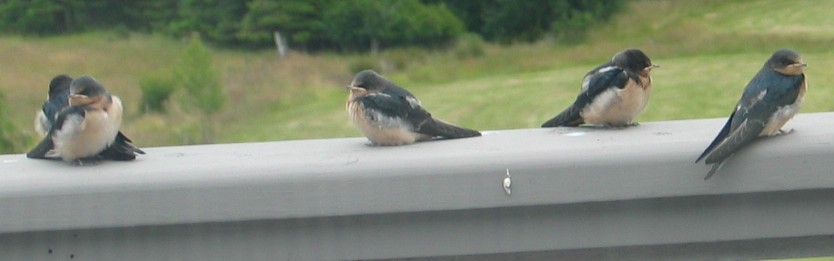
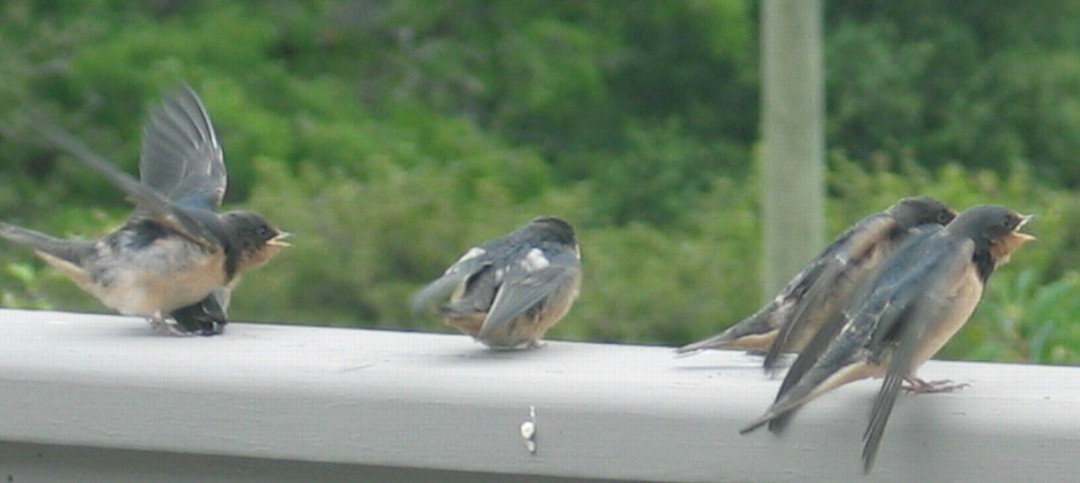
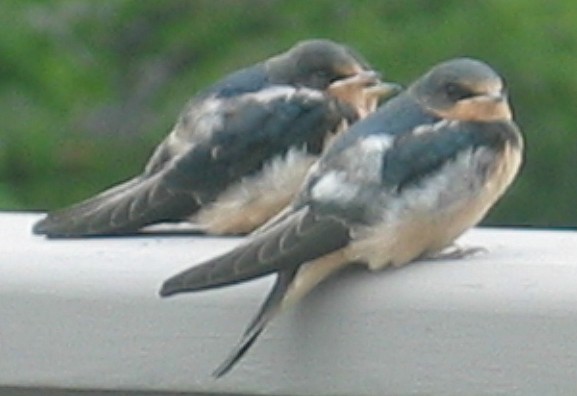
These pictures were taken of a newly-fledged family on a balcony in nearby Metchosin. The juvenile birds were waiting to be fed

An interesting question was posed by someone recently. Since swallows fly from the brightly lit outside rapidly into a dark building, do they have a specially evolved vision system for rapid dark adaptation? We know that bats do this with their echolocation system, but birds don’t have that ability.

Domain: Eukarya
Kingdom: Animalia
Phylum: Chordata
Sub-phylum: Vertebrata
Class: Aves
Order: Passeriformes
Family: Hirundinidae
Genus: Hirundo
Species:
rustica
Common Name:Barn swallow

Physical Description:
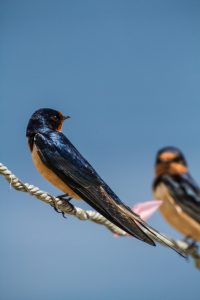
The barn swallow is the only one of its family with a deeply forked tail. It can be identified by its rusty under parts and orange rump as well as a dark orange forehead and throat. Like all swallows, it is a strong and elegant flyer. Its legs and bill are short, but it has a wide mouth for capturing insects. These birds are generally around 15 cm in length.


Habitat:
True to its name, the barn swallow is common near farms. It builds a nest of mud on the timbers of barns and other such buildings. It commonly inhabits caves and areas

underneath bridges. Barn swallows are migratory birds, and fly south from North America to South America for the winter.

Reproduction:
The length of incubation for barn swallow eggs is 13 to 17 days. They lay in open-cup nests made of mud pellets and grass. The eggs are speckled and nesting begins in the second half of May. If the pair of swallows is successful, two broods are raised each year.

Feeding Habits:
This swallow feeds exclusively on insects. Hunting typically takes place on or close to ground level. However, on summer afternoons, they can be seen flying high in the air. The barn swallow simply follows the desired insects and catches them in flight.

Global Distribution:
The barn swallow can be found in almost all parts of Canada and the USA. It typically inhabits every continent except Australia. It is a resident of rural areas, and populations are most heavily concentrated in southern Texas and central USA.

Predators:
Predators are most commonly cats and raccoons. When a predator approaches, the entire colony will launch an attack in a display of aerial acrobatics.

Interesting Fact:
The barn swallow’s song is long and twittering. They are commonly known to perch on wires and are often seen in large, mixed flocks.

References:
. Brunn, B. C.S. Robbins, Singer and H.S. Zim. 1966. A Guide to Field Identification, Birds of North America. Golden Press. New York, NY.
. http://www.americanartifacts.com/smma/per/b4.htm
. http://www.museum.gov.ns.ca/mnh/nature/msbirds/bns0261.htm
 

Other Members of the Class Aves at Race Rocks 
taxonomyiconReturn to the Race Rocks Taxonomy
and Image File
pearsonlogo2_f2The Race Rocks taxonomy is a collaborative venture originally started with the Biology and Environmental Systems students of Lester Pearson College UWC. It now also has contributions added by Faculty, Staff, Volunteers and Observers on the remote control webcams.
December 2005-  Chelsea Howard, Nfld. year( PC year 32)