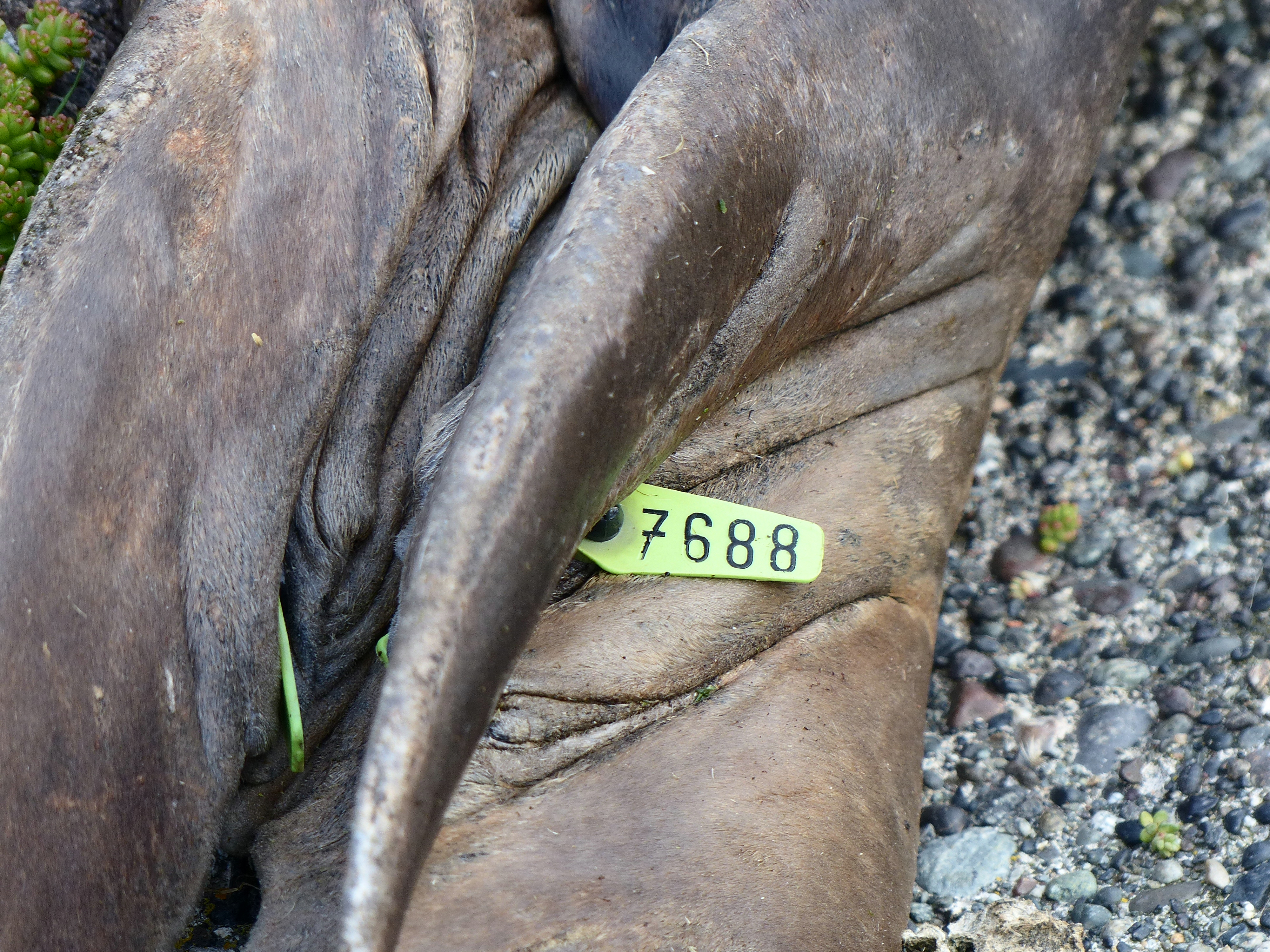
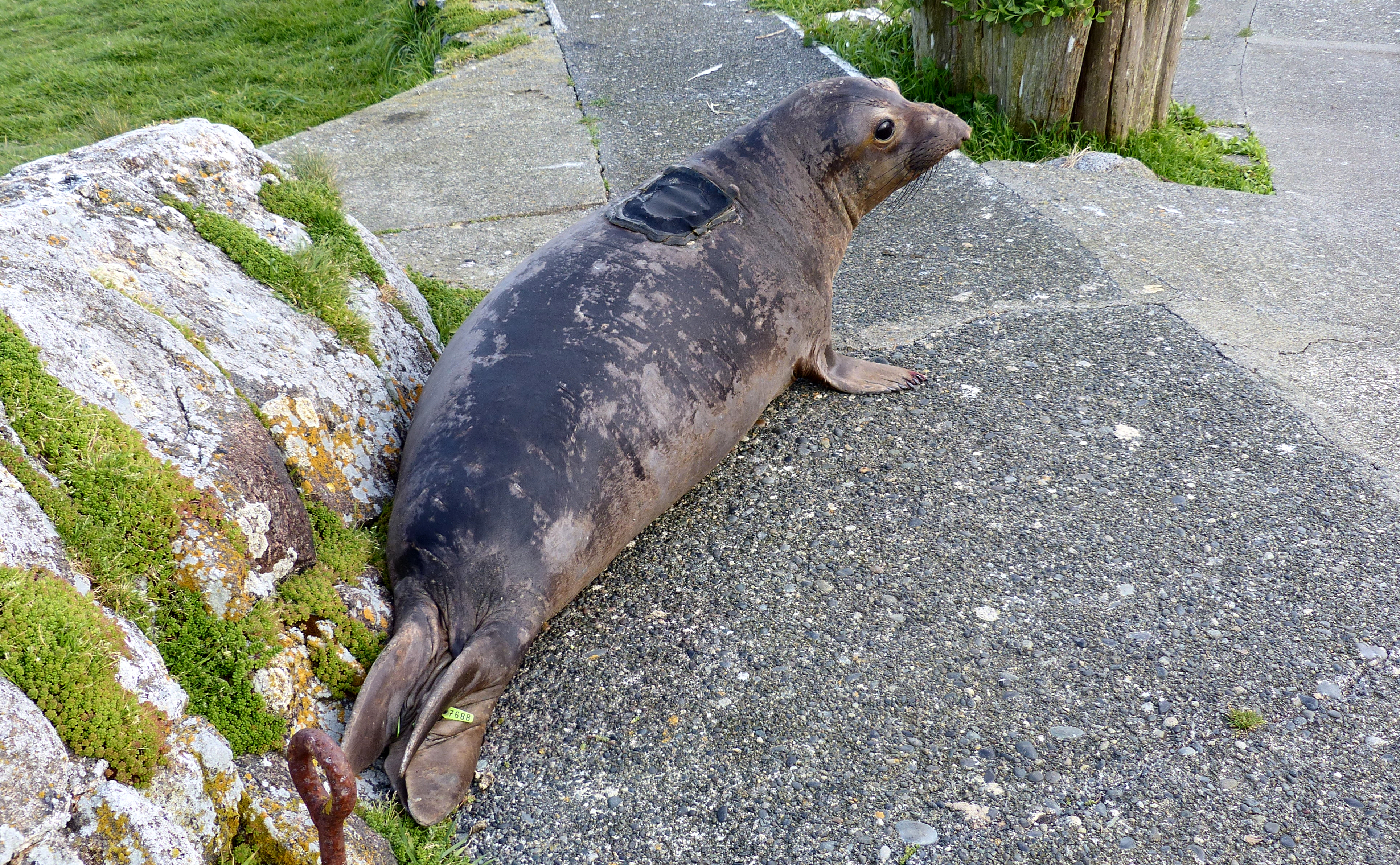
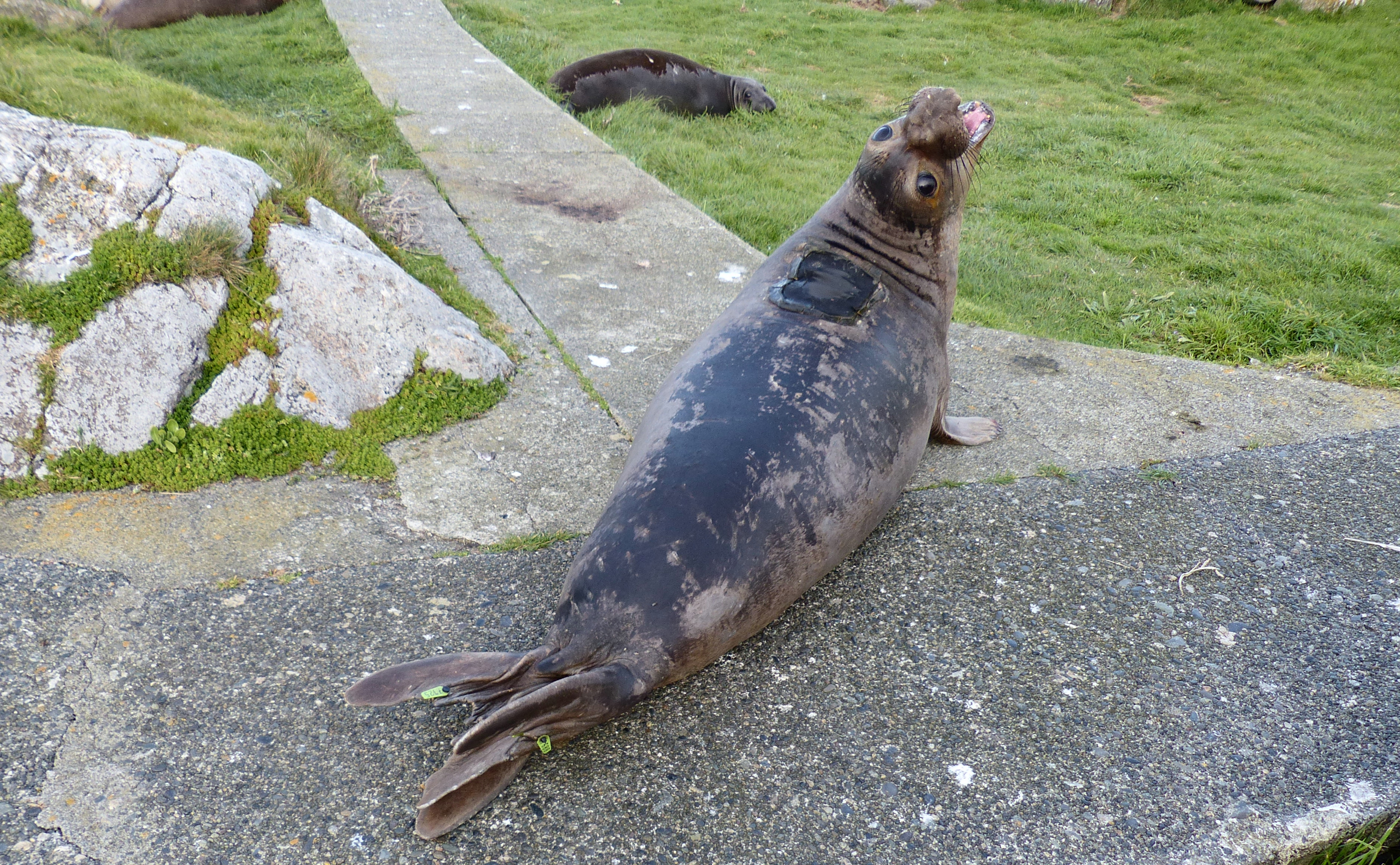
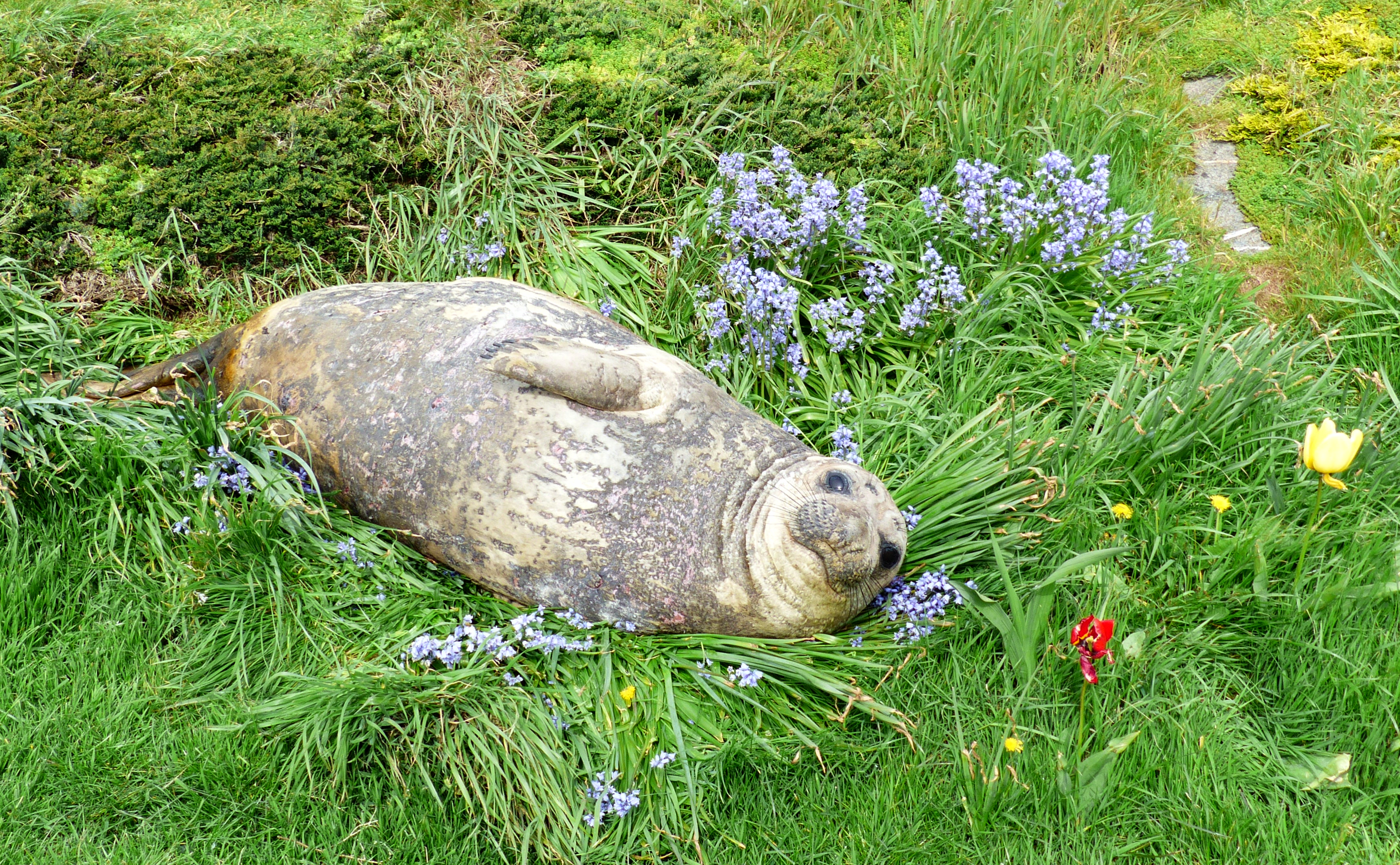
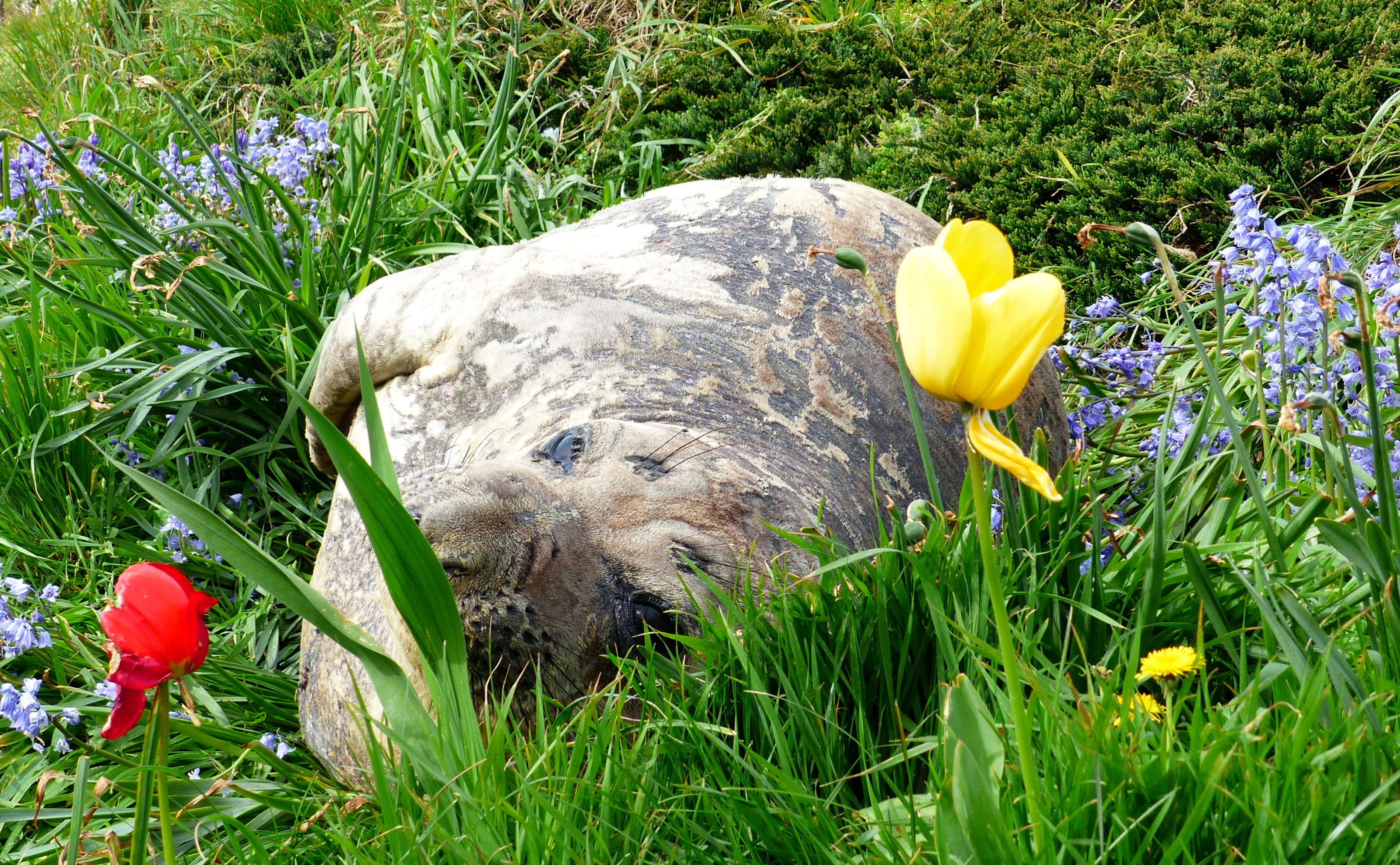
Elephant seal tag: green 7688

Clear skies.  Light Easterly wind all day. Beaufort Force 2-3
A beautiful day in the Reserve, but the barometer is falling and there is a front forecasted for tomorrow.
[I’m trying to learn the Beaufort wind scale off the top of my head, and get into the habit of checking the barometric tendency so that will be part of my weather log from now on]

I was sitting on the South edge of Great Race when an Elephant seal popped up to look at me and had what appeared to be a radio transmitter on its back. It promptly disappeared, but came up the boat ramp an hour later. I’m keen to find out if the researchers retrieved the transmitter and have the track of this seal. I am really curious about where these Northern-living Northern Elephant seals go when they are not in the reserve.

Continue reading →

West Wind

Strong West wind all day. Mixed weather, everything from clear skies to sideways rain.

4 tour boats
DND blasting: Several super loud blasts late morning.

The generator started up just fine this afternoon. Yeah!

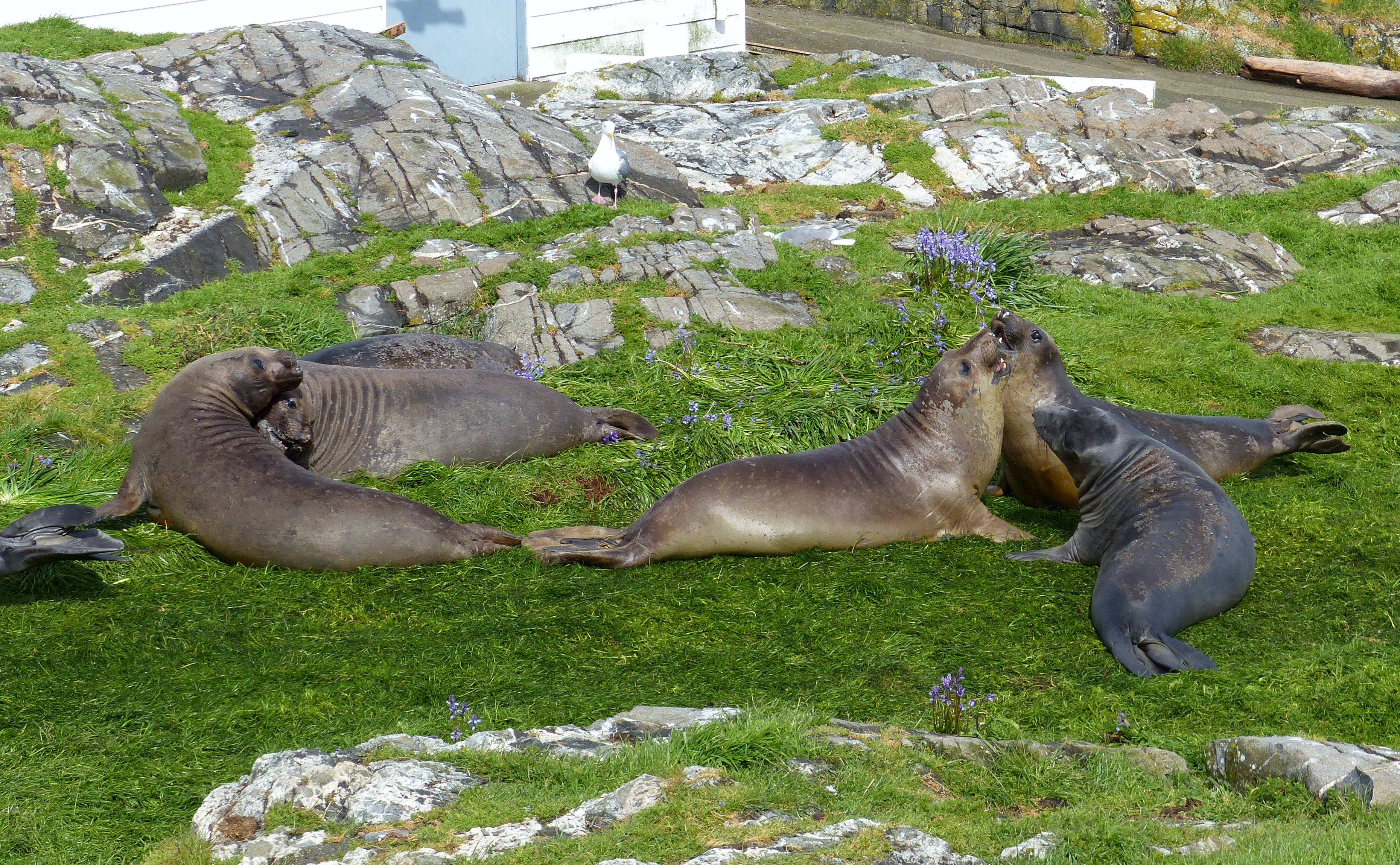
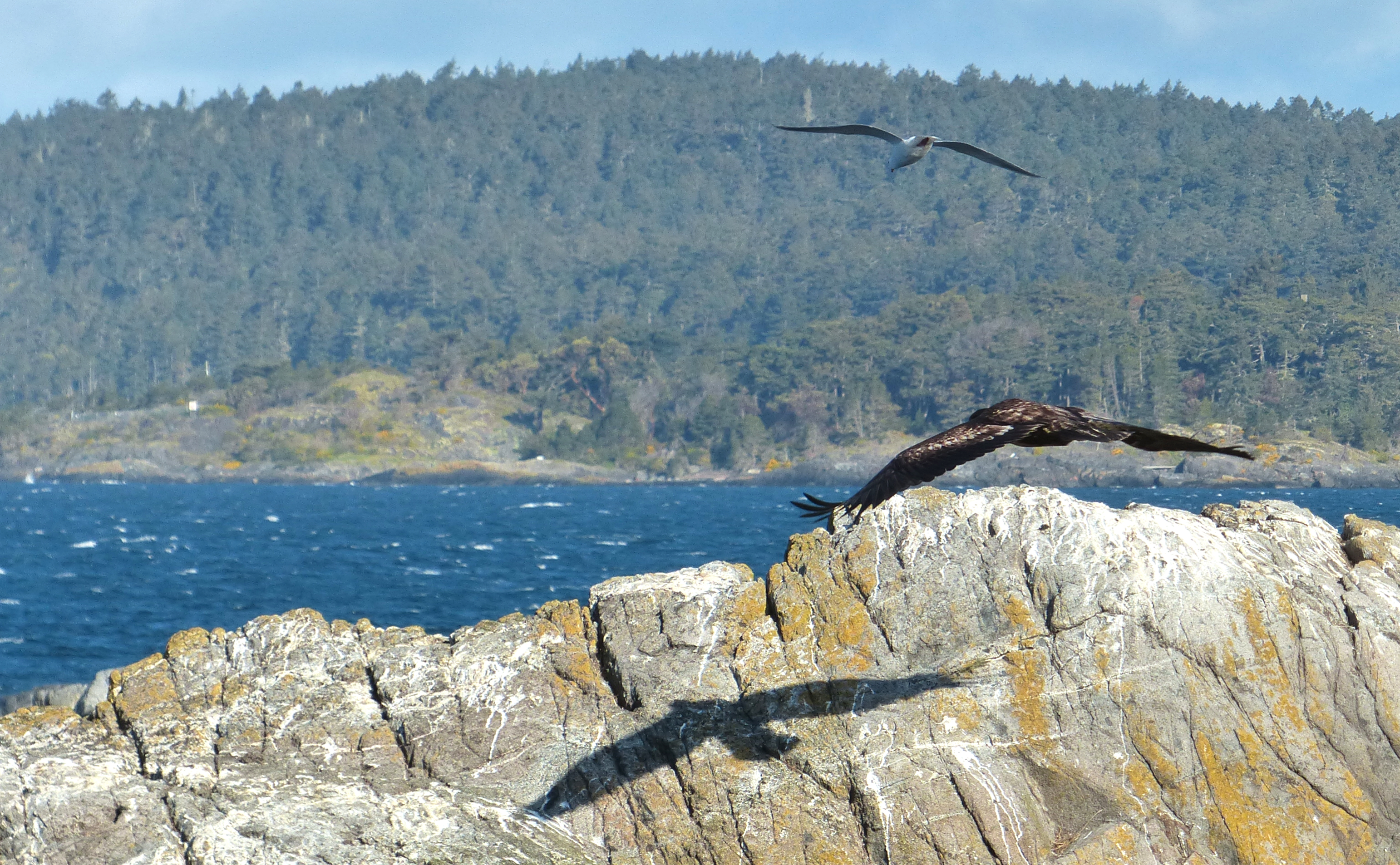
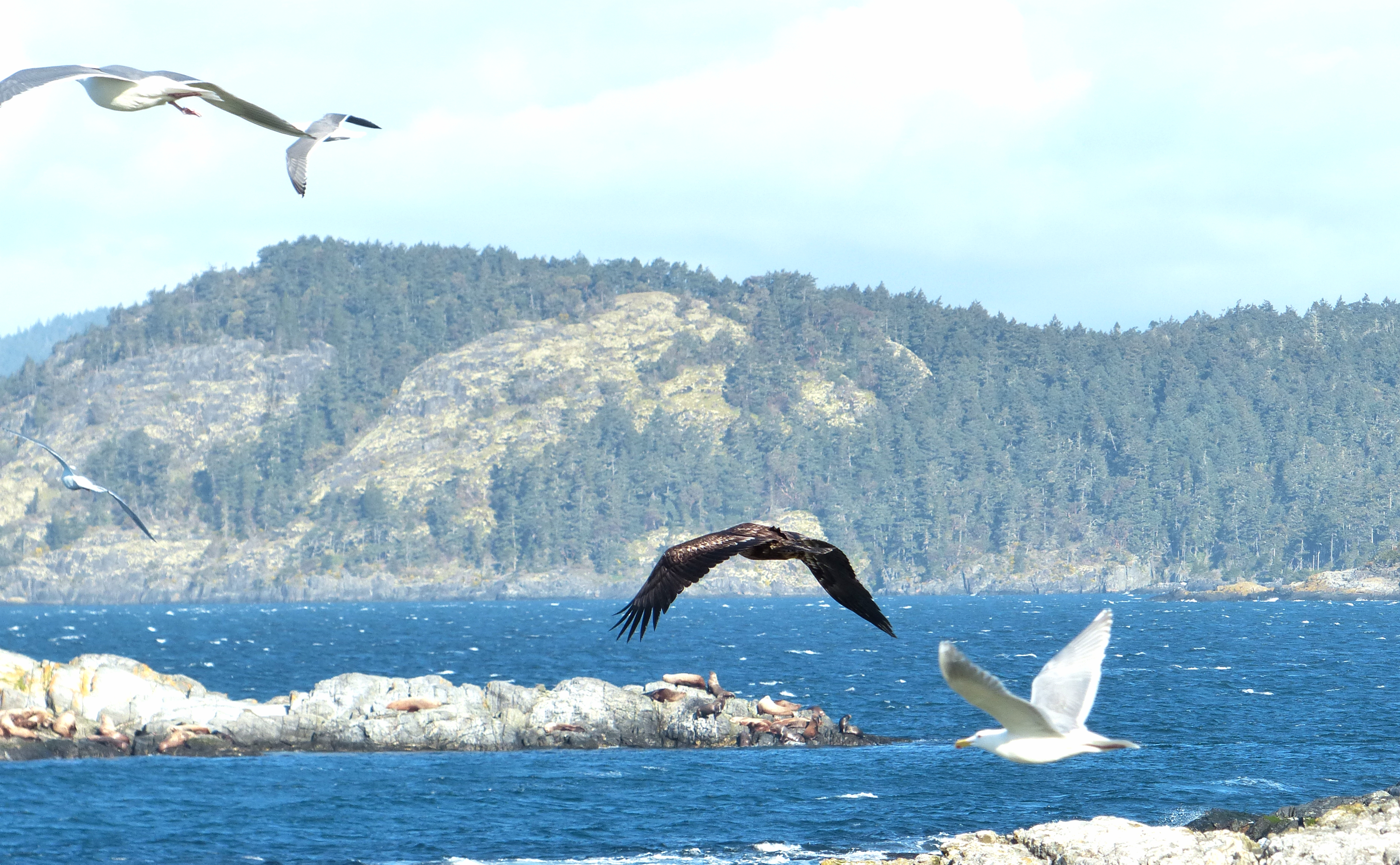
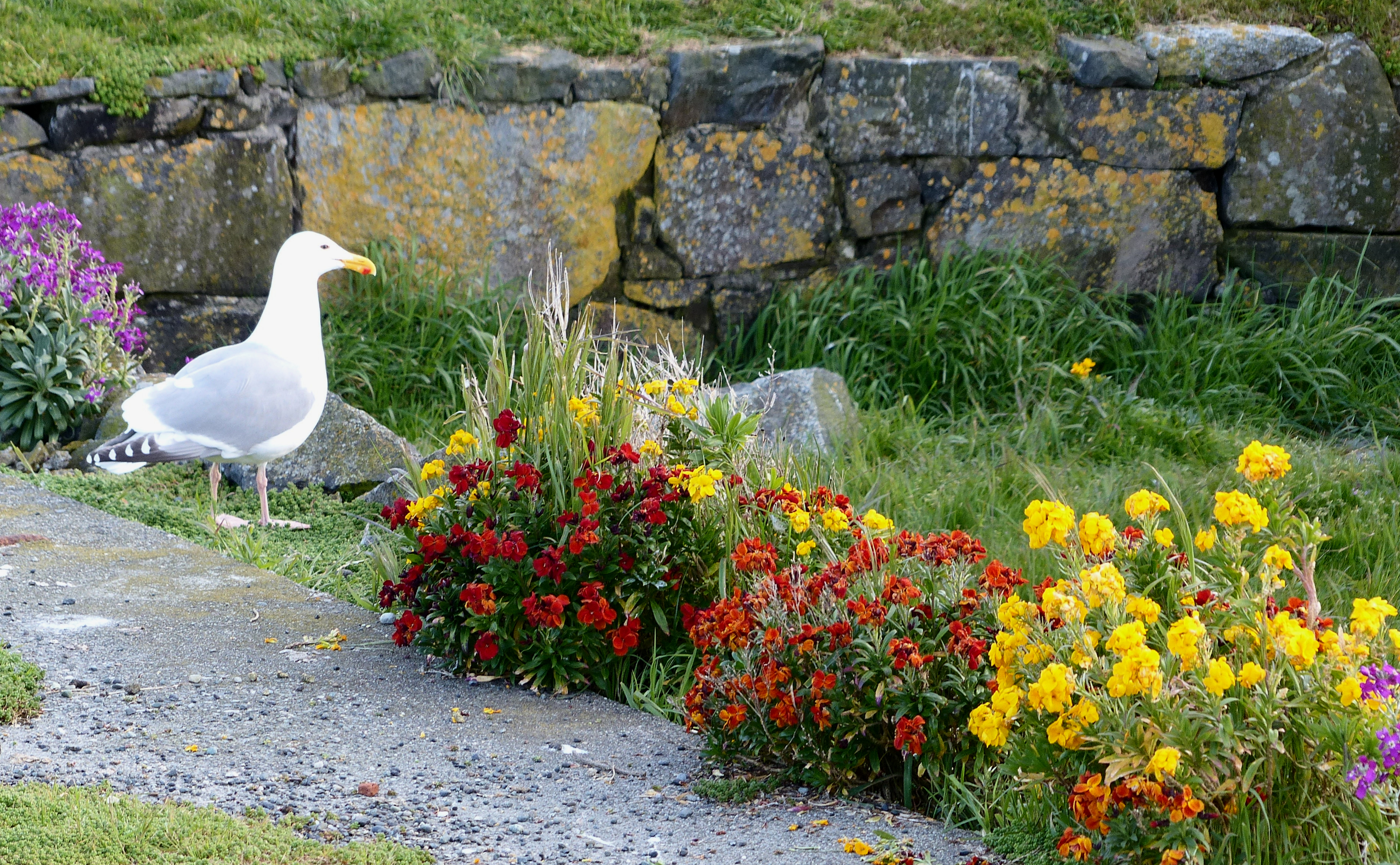
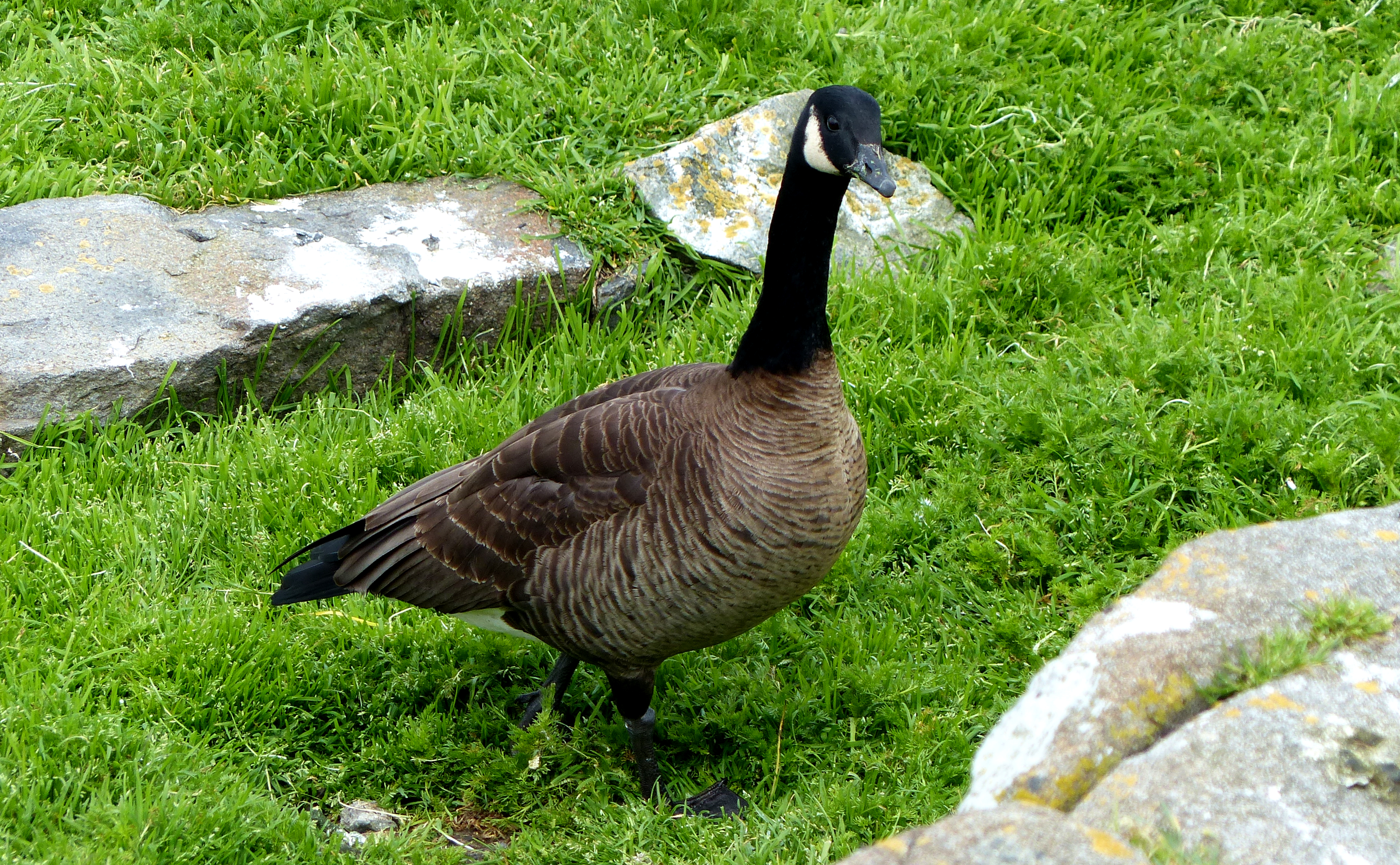
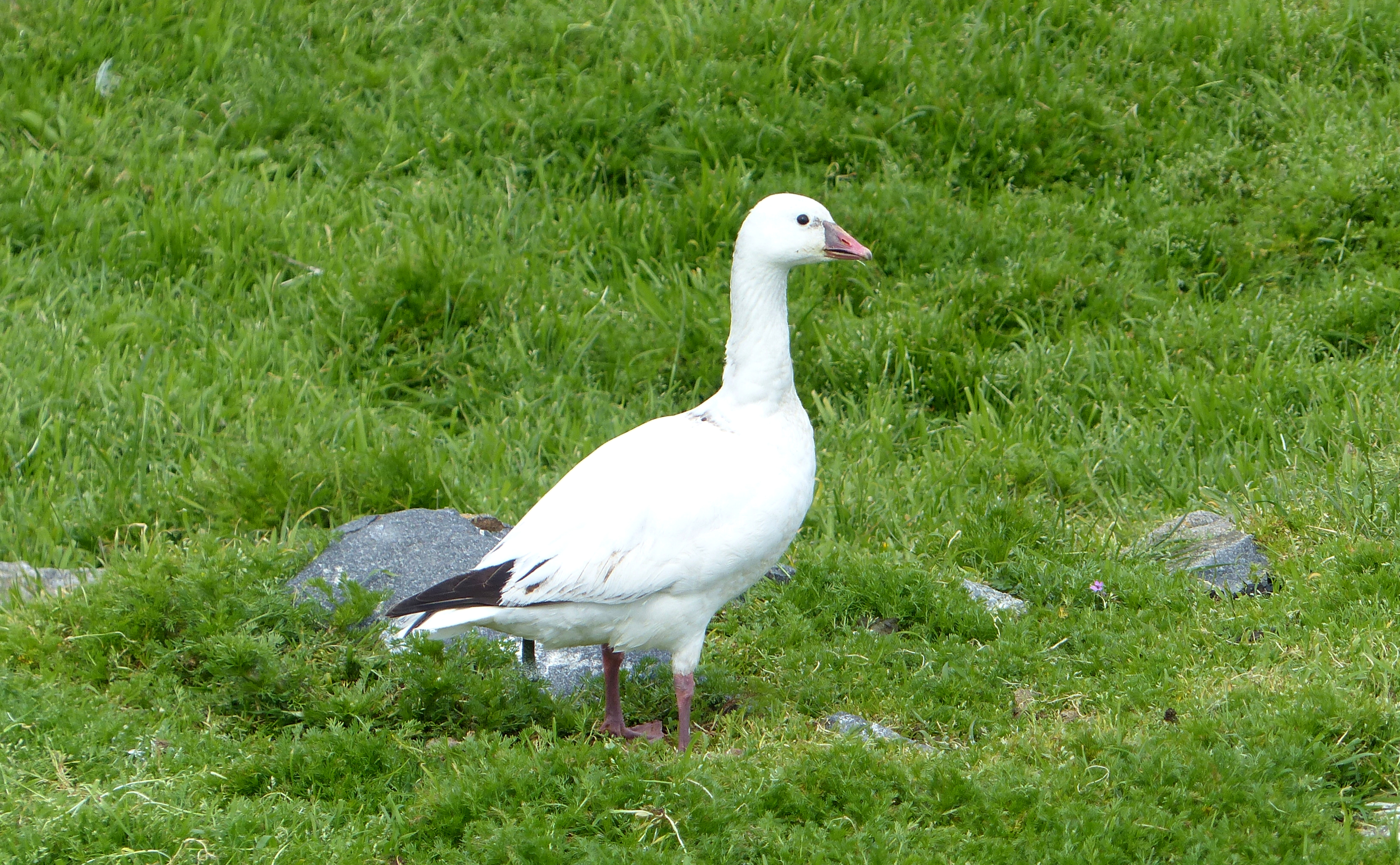
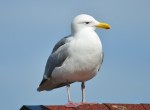
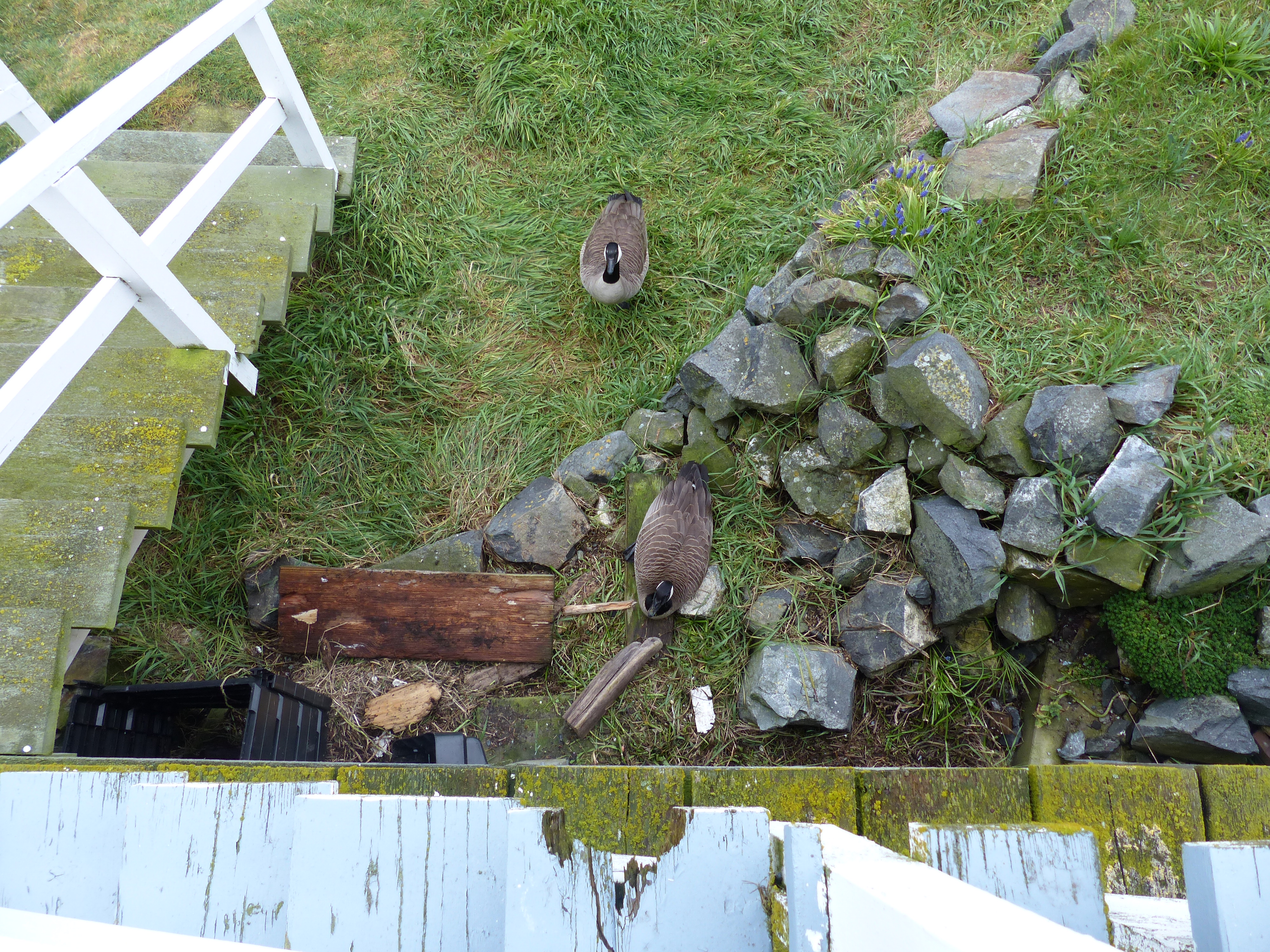
There are now 10 Elephant seals on Great Race. There are 6 below the tower by the hose box, two in the garden West of the Keeper’s house, and two lying just up from the tank shed. Needless to say, there are a lot of detours off the paths for me to get between the buildings since they seem to like sleeping on the very edge of the paths. I found another Canada goose nest today on the very edge of the island just East of the big yellow diesel tank. There are 7 nests on the island: on the East beach behind a rough stack rock wall, one next to the compost pile on the South side of the Keeper’s house, one just East of the base of the tower, one under the tower stairs, the nest I found today just East of the diesel tank, a nest West of the Science house underneath a log, and one on the East side of the camera on the bluff. There is still one pair of geese that I am pretty sure have a nest right in the middle of the island by the Science house, but I haven’t been able to find it yet. It looks like the Snow Goose is gone, but the lone Cackling Goose is still around. The Sea lions are still camped out on West Rocks. There were 4 Bald Eagles on South Rocks this morning. The Eagles, both juveniles and adults, are regularly flying over the island and stirring up the Gulls, but I have yet to see a Gull get taken by an Eagle. The Barn swallows are still cruising around, no sign yet of any nests. The Guillemots are still spending a lot of time on the jetty. And I’ve been watching the Oyster catchers, but I haven’t seen any nesting behaviour.

-Cleaned up the generator room
-Keeper’s house chores: laundry, cleaned the stand up freezer, tidied up the basement workshop, replaced some light bulbs, cleaned the really dirty windows, turned the North entryway into the best tea/reading/guitar spot in the house.

Cackling goose and Snow goose

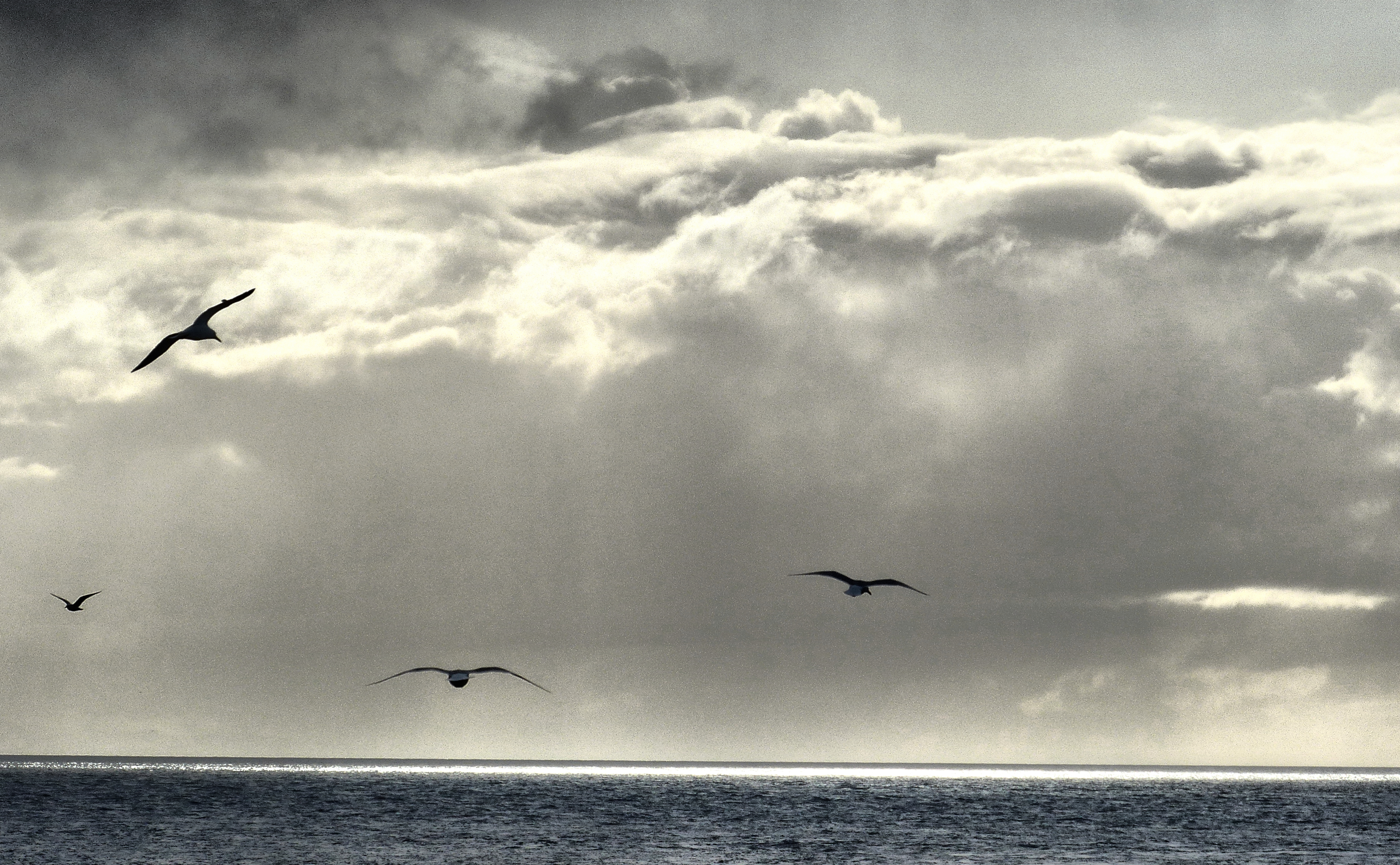
Light Wind in the morning, String Westerly in the evening. Cloudy with scattered showers. Rain in the evening. Tour boats:8 1030 flyover by a small float plane The Cackling Goose and Snow Goose (note — a new record for Race Rocks ) are still foraging on the grass on Great Race. The Canada Geese often chase these two smaller geese. The Sea lions all moved to the East side of West Rocks this morning. Up until today, they had been on South Rocks since I got here in the middle of March. Eagles are regularly flying over Great Race and making all the Gulls take flight, but I have yet to see an Eagle grab a Gull.

-Ran the fire pump -Cleaned all the fire hose fittings -Fixed tank shed storage door latch -Worked on SOPs

Calm Saturday

Light variable winds most of the day. Four brief periods of rain, clear skies in between. Very low West swell. Rainbows.

6 tour boats
2 dive boats

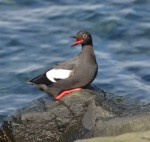
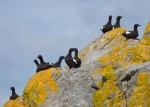
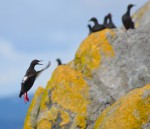
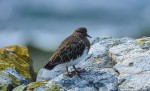
I spent some time today trying to learn to use the Nikon DSLR that lives out here at Race Rocks. The zoom on the big lens is awesome, but I still have a few technical issues to work out. My mission was to get a photo of a Pigeon Guillemot flying away from me with its red feet sticking out, but I wasn’t happy with any of my attempts. While wandering around looking for things to photograph I saw 10-15 Turnstones. They are spending most of their time in the middle of Great Race. There was 4 Western Sandpipers, 1 Sanderling, and 2 Dunlins all feeding in the muck-puddles on Great Race.The Elephant seal that has been next to the tank shed left this morning, but there are still two out on Middle Rocks. There are a few monster Steller Sea lions among the group out on South Rocks. There are now three Canada Goose nests, all with eggs in them.

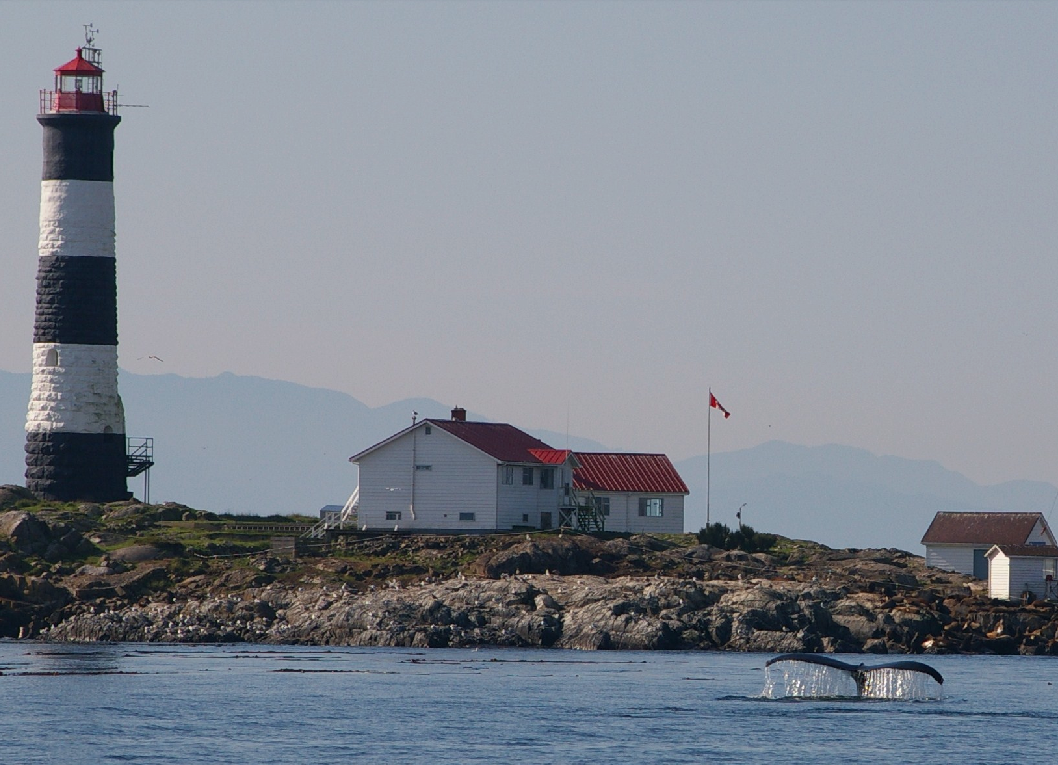
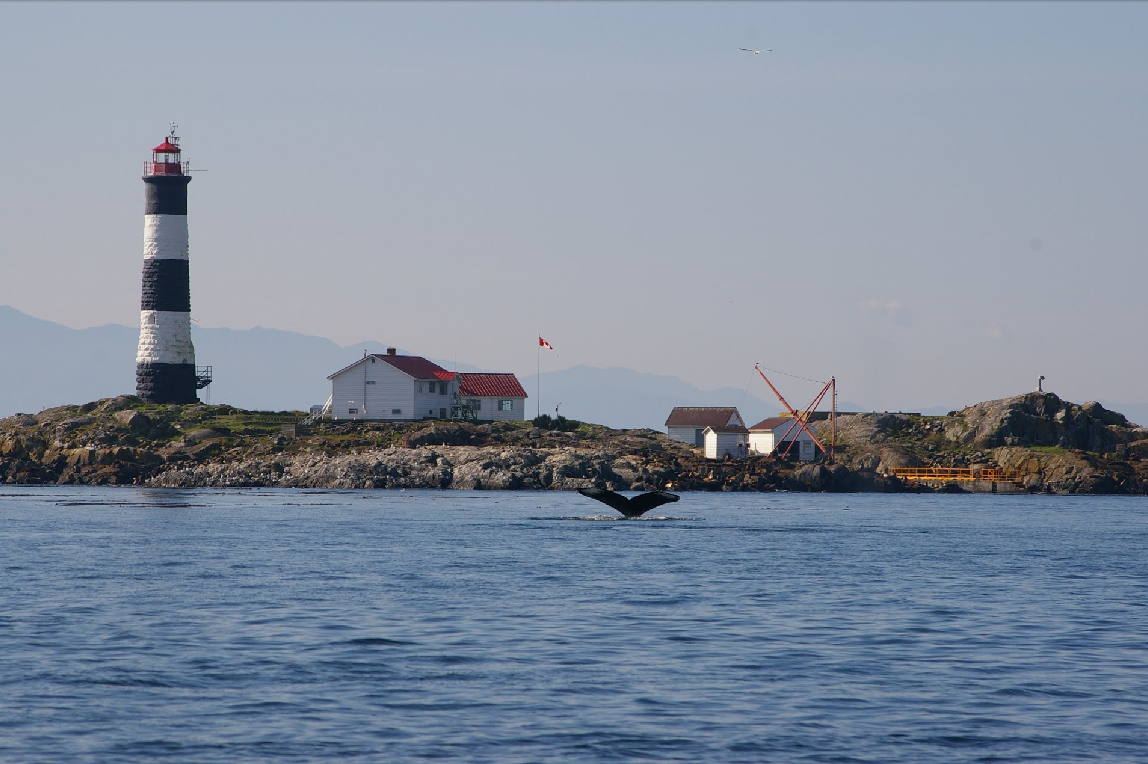
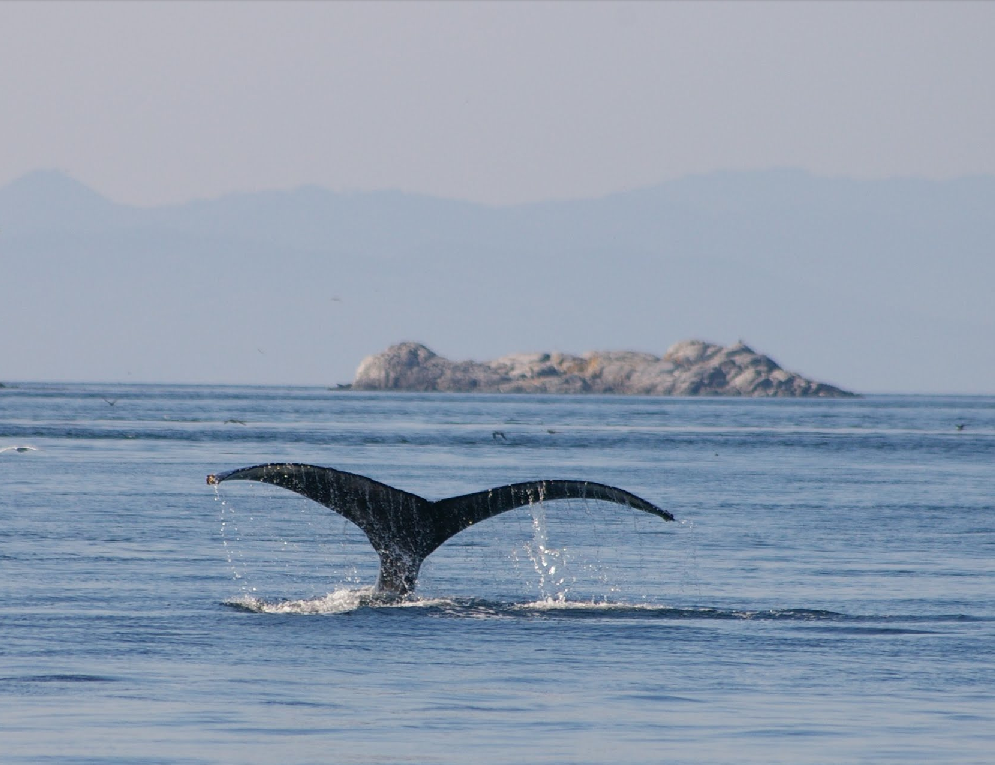
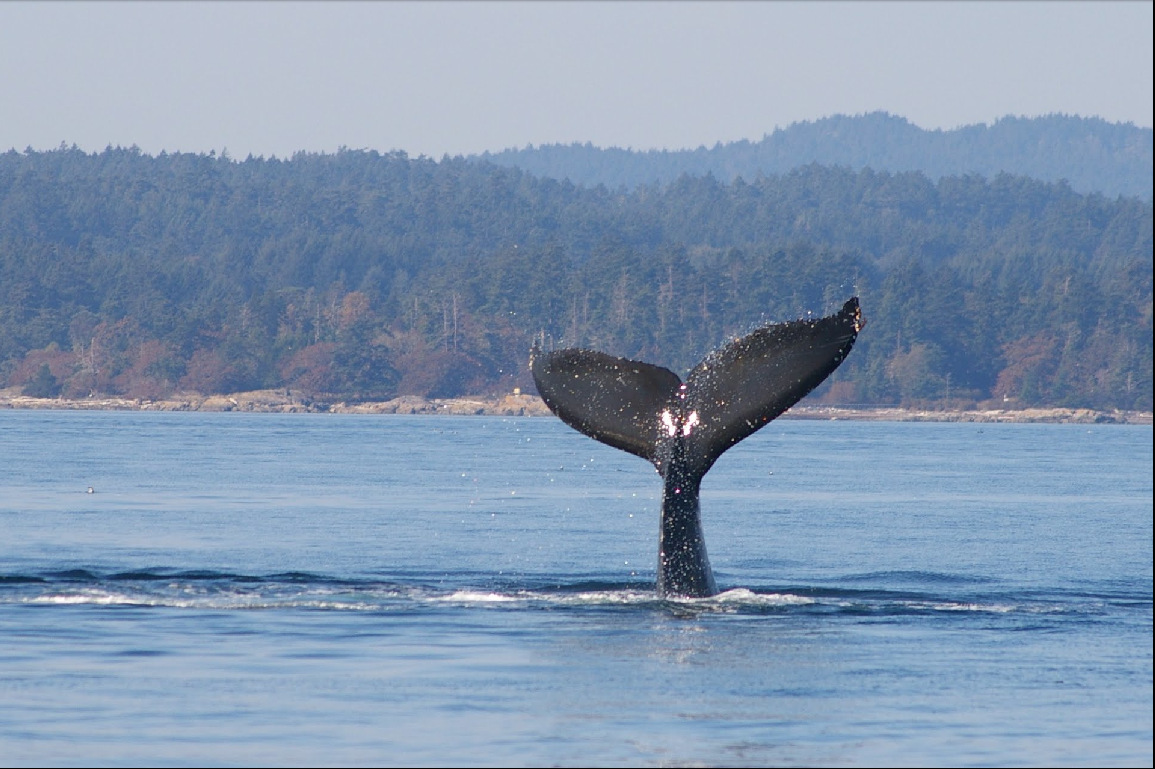
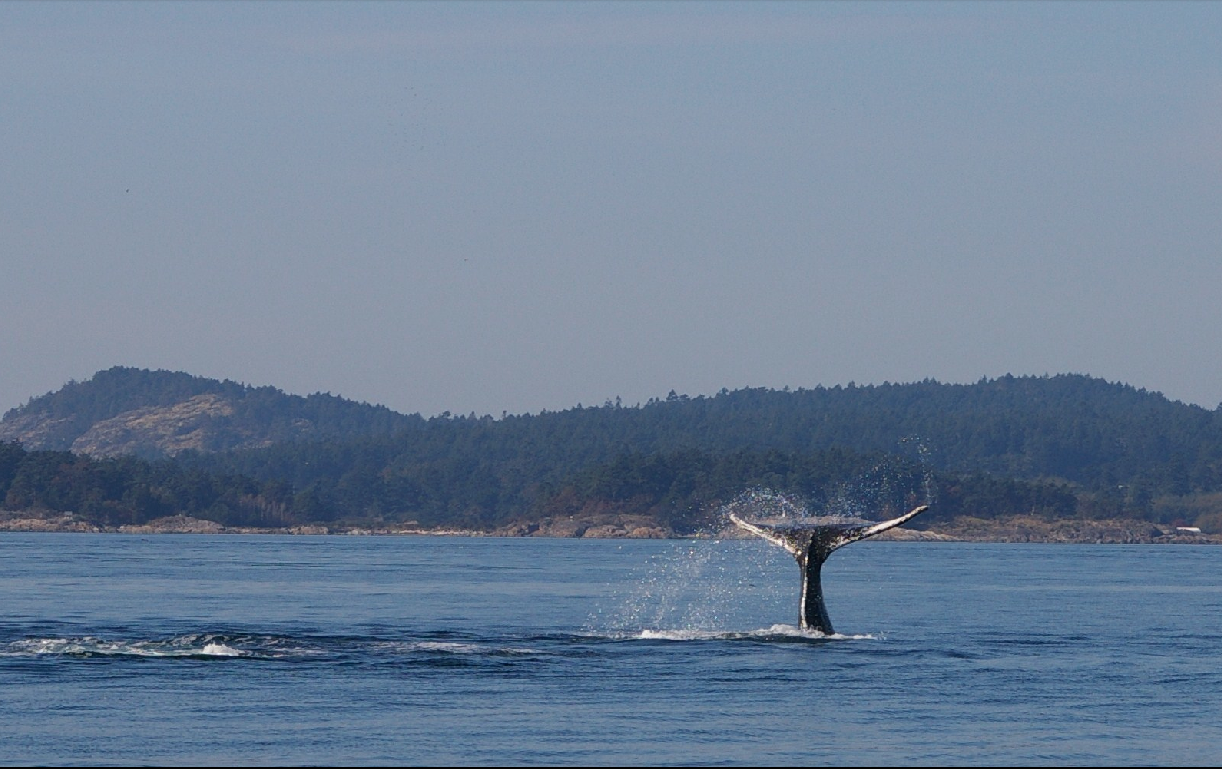
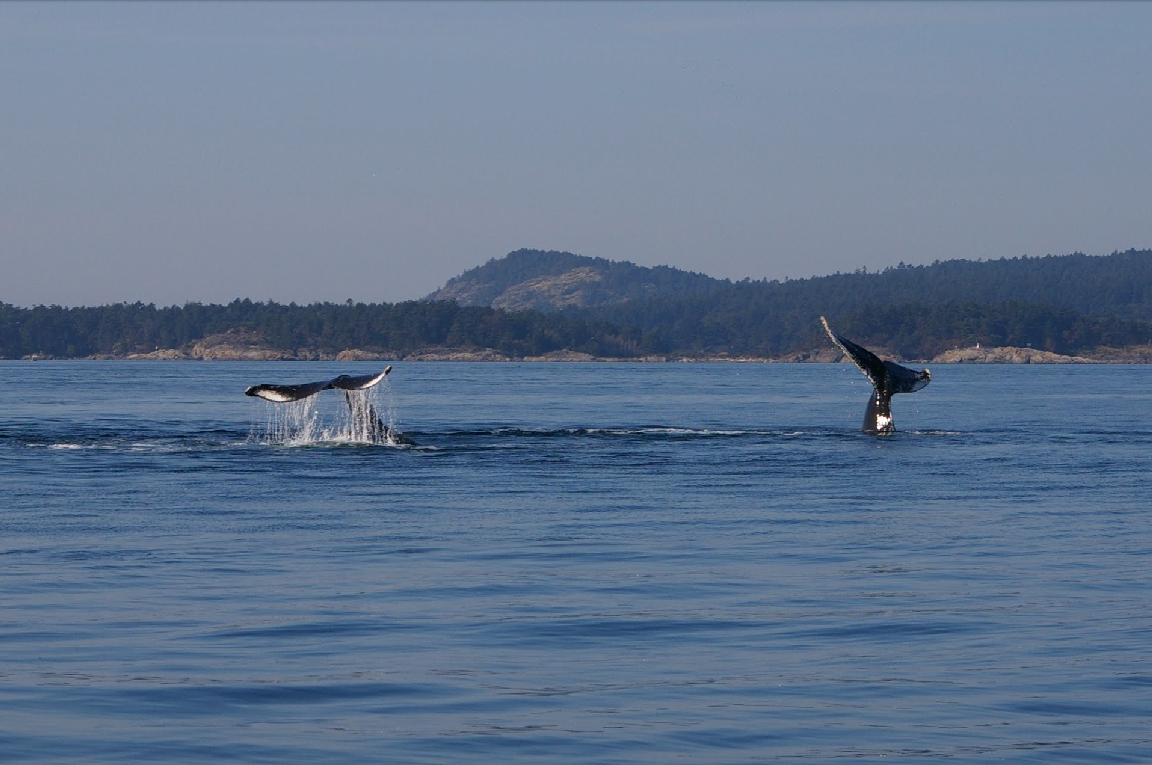
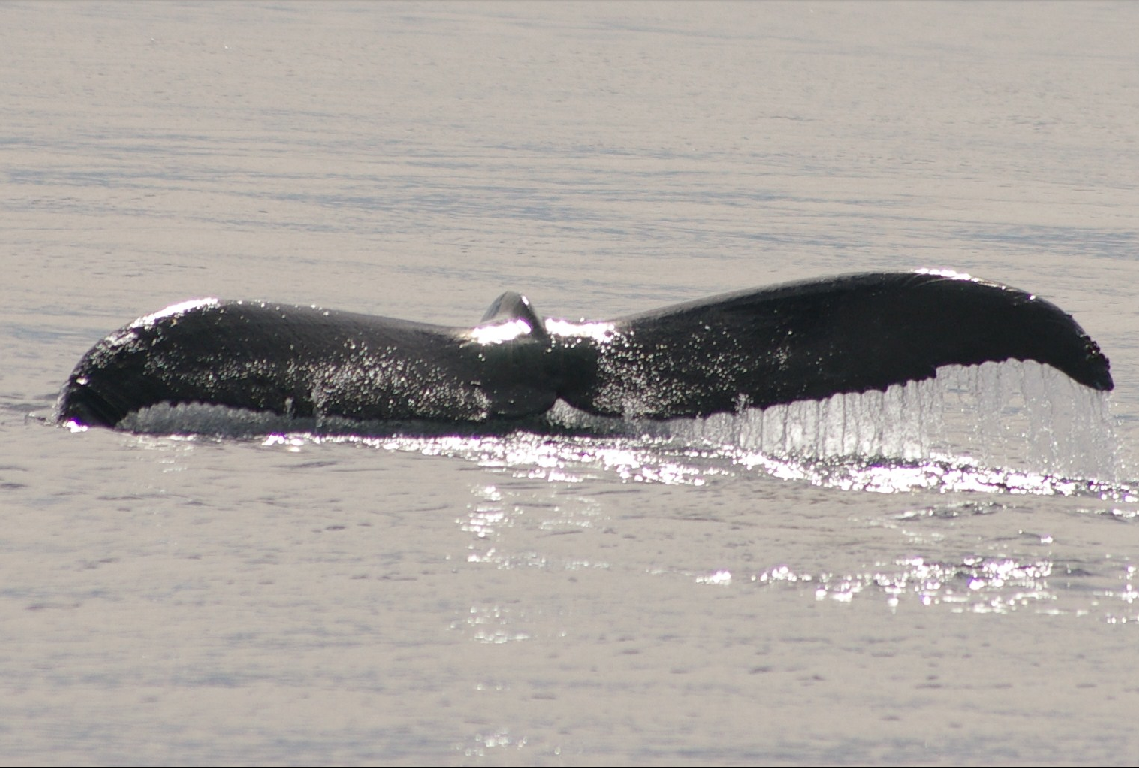
Humpback Whales in the Ecological Reserve

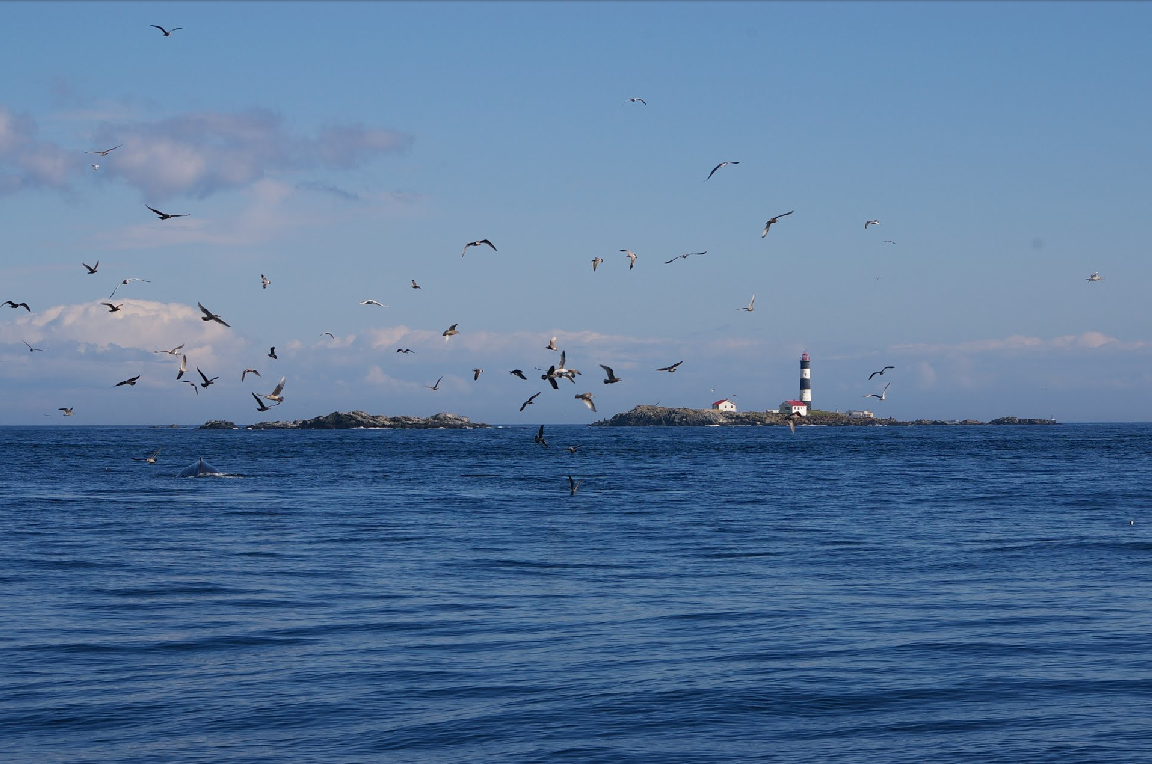
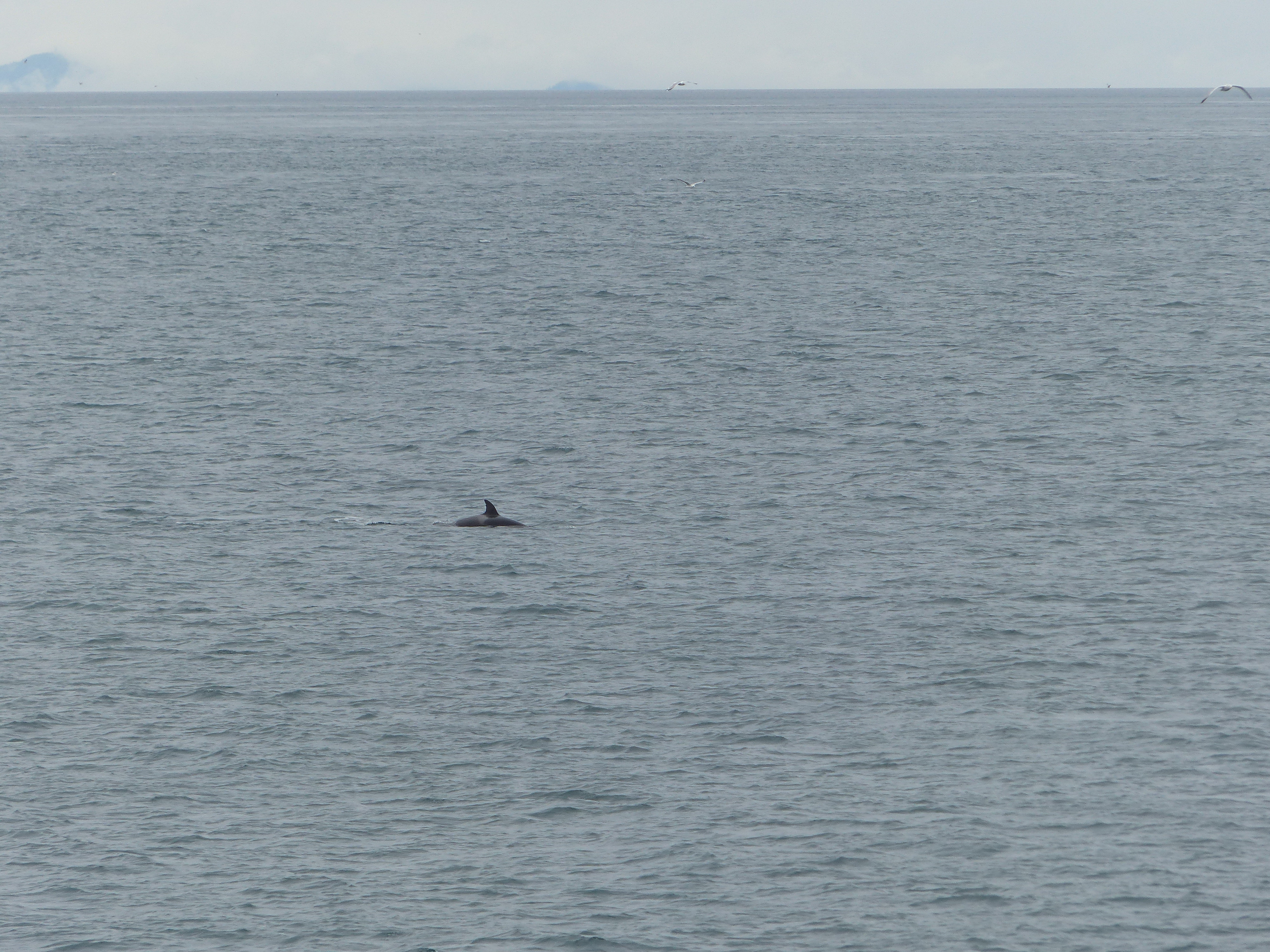
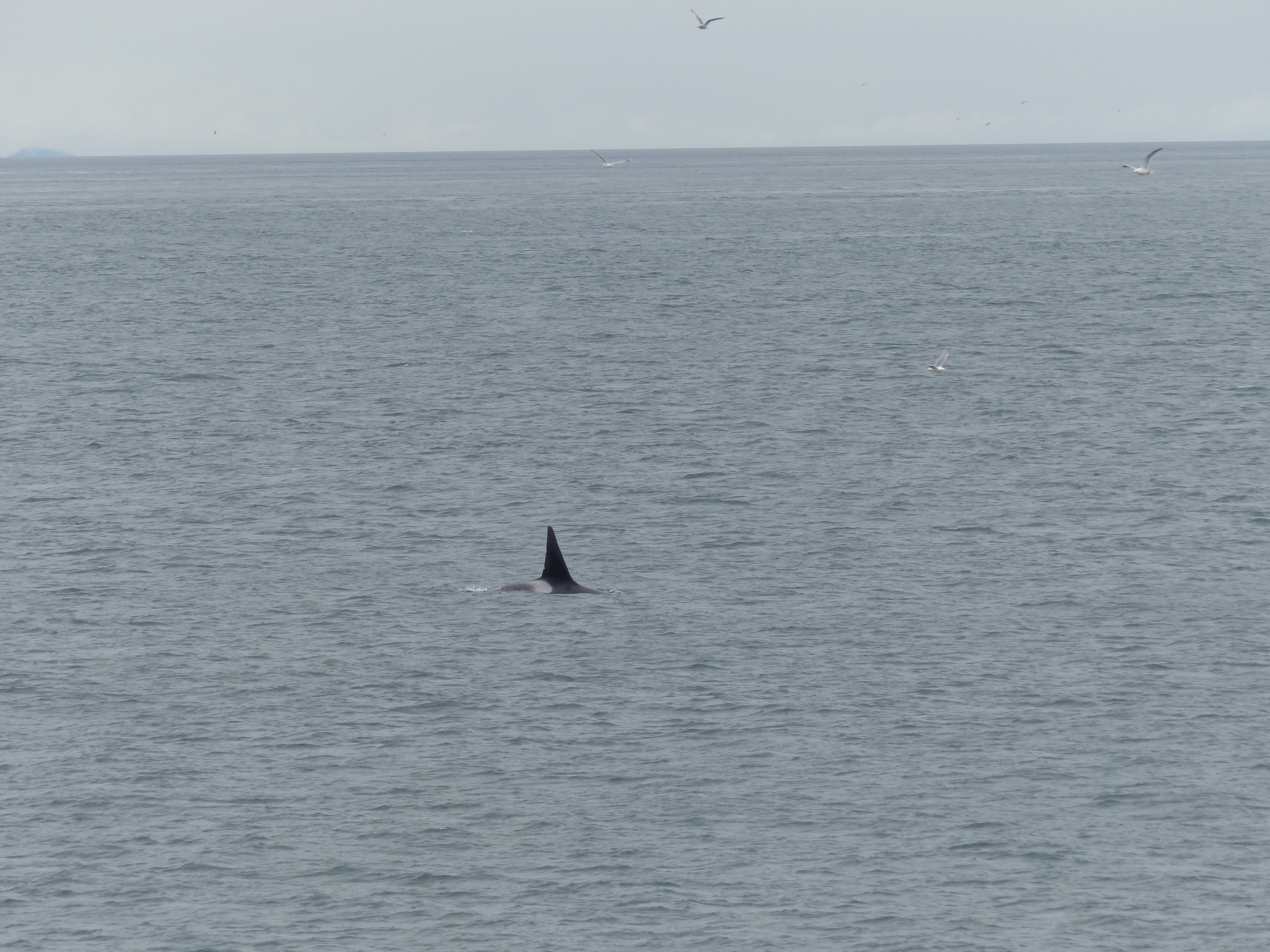
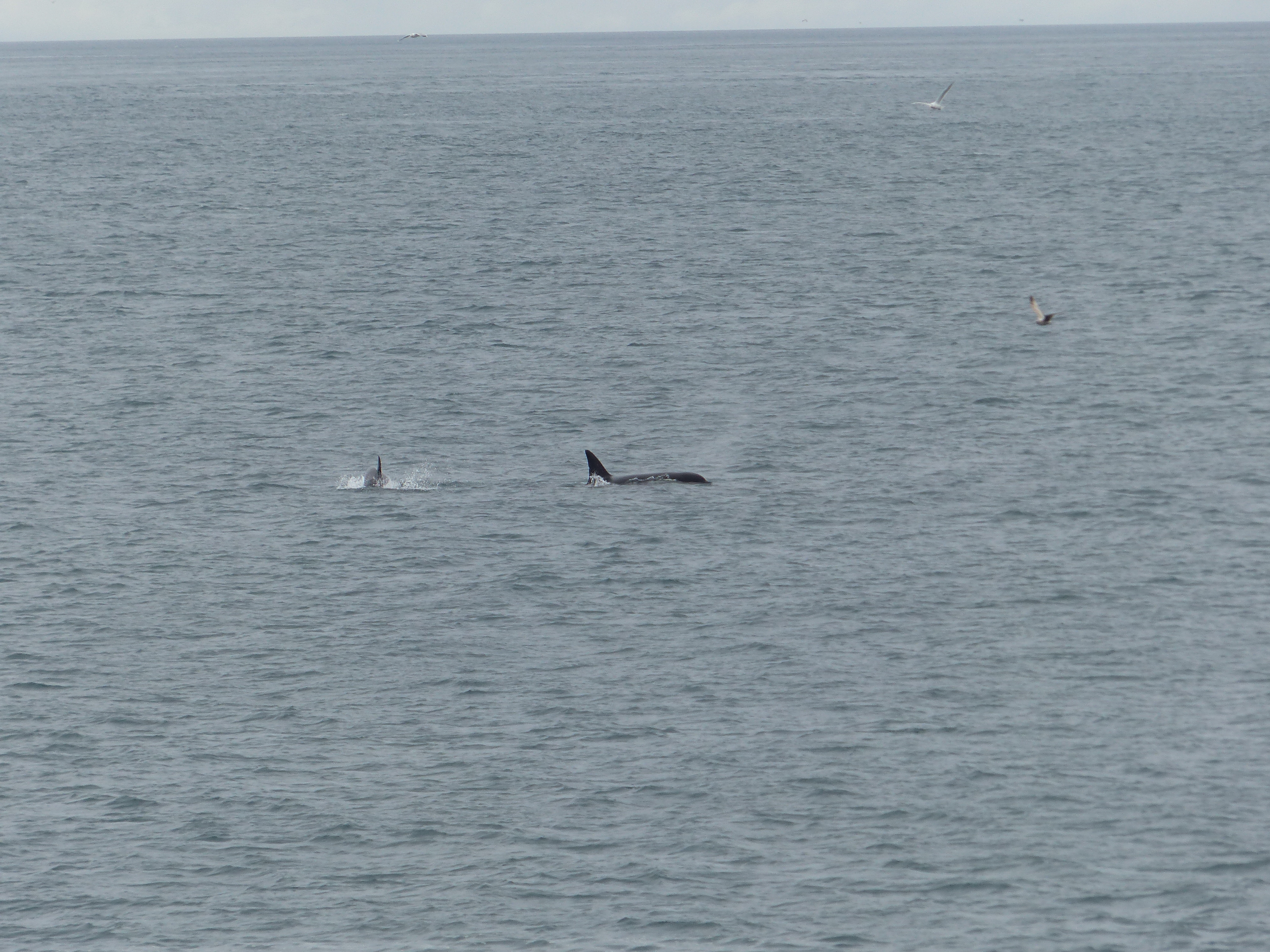
Paul Pudwell of Sooke Coastal Explorations & Salty Charters has sent us these images taken of a pair of humpback whales in the Race Rocks Ecological Reserve


See the Race Rocks Gallery and Taxonomy for the Humpback Whale

See all the posts on Observations of Humpback Whales at Race Rocks Ecological Reserve.

Spring Equinox

Clear skies. Variable North-East to South-East winds.
Waning gibbous moon, only one low day-time tide (~1m), and 4 to 5 kt currents.

I’m a day late, but Spring has officially arrived as determined by the sun crossing over the celestial equator.
There was a lot of Harbour seals out on Middle and Turbine rocks today. The Elephant seals are on the West Rocks. The Sea lions are still out on South Rocks. There was a large group of Harlequin ducks (14) in the water off the East beach. Cormorants were arriving in the reserve all day so assume my count dramatically under-estimates their numbers. The Canada geese with the nest next to the Keeper’s house have two eggs now. None of the other pairs of Geese seem to have settled enough to have eggs. The gulls are starting to pair up and settle into nesting spots. Amazingly, there were 7 Bald Eagles in the Reserve this morning. Most of them were sitting in pairs on the tops of various rocks. They were a fairly even mix of juveniles and adults. I saw a few sandpiper-like birds, but they were too fast for me to photograph or properly identify. Judging by the smell coming from the tank shed walkway, there is still a River otter living out here. And I saw some Scoters in the mouth of Pedder Bay on my way into the college this morning.

2 Tour boats

First Day of Spring Animal Census

Steller Sea lion: 31
California Sea lion: 6
Elephant seal: 3
Harbour seal: 144
Cormorant: 54
Gull: 133
Canada Goose: 15
Harlequin duck: 17
Black turnstone: 5
Unidentified sandpiper: 3
Oyster catcher: 6
Bald eagle: 7
Savannah sparrow:4
Pigeon Guillemots: 25
River otter: 1

Off station today from 0830 to 1030 to get keys and dive gear.
-fixed sagging corner on crane deck/walkway
-checked/cleaned Science House propane cleanout

Gale

Strong Westerly gale all day. Intermittent rain and sun. Rainbows.

So far the new chimney for the wood stove is coping with the wind. It’s only been blowing up to 40-ish knots, but it’s still going strong.

There are a few Steller Sea lions still hanging out on the South rocks, although they spent the day in the water because of the foul weather.
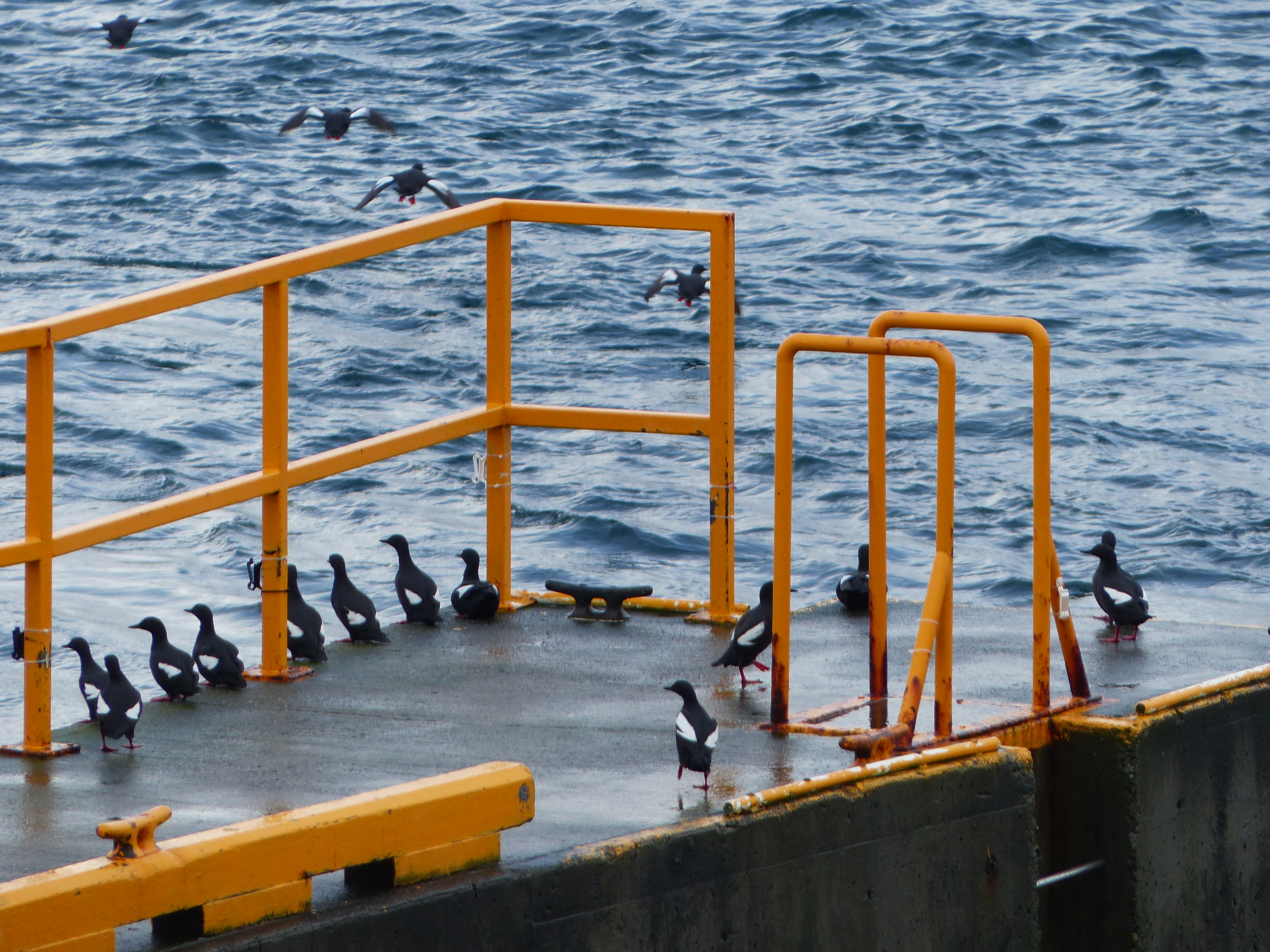
This morning there were Pigeon Guillemots all over the end of the jetty.
The eagles are still around, feeding on the Sea lion carcass on the East beach.

Earlier today, while up in the lantern room, all of the Gulls lifted off the island because an Eagle flew over Great Race. So while it was blowing 30+kts, every bird on the island lifted up to the height of the tower and did their best to avoid the eagle. The eagle settled on the East beach and eventually the Gulls sat back on the ground. For those few minutes it was pretty amazing seeing all of the gulls and a great big Eagle doing their aerial acrobatics up at 100ft.


-working on drainage issues around buildings
-trying to quiet down all the squeaks and rattles that happen in the keeper’s house when it’s windy

Project Week

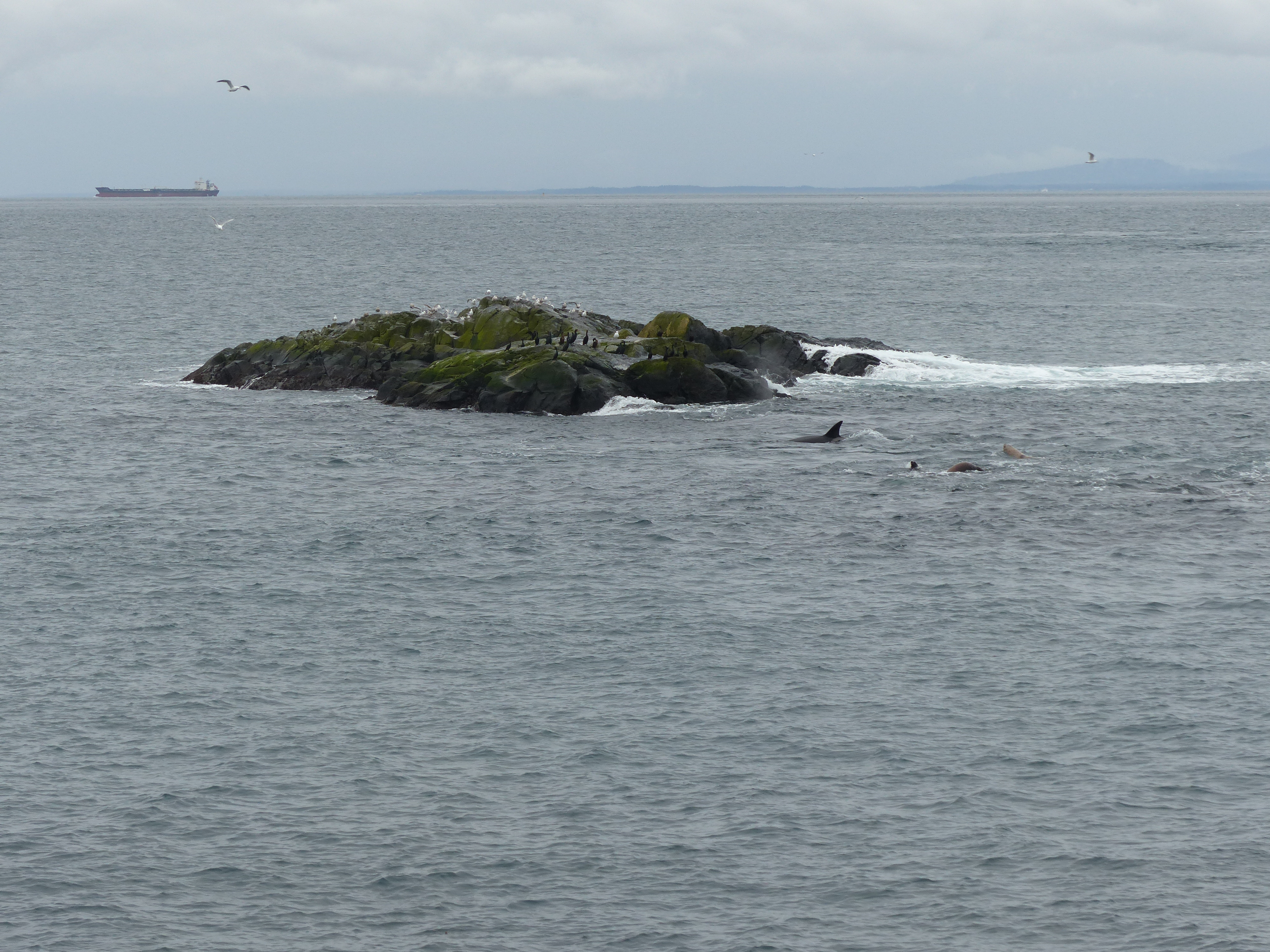
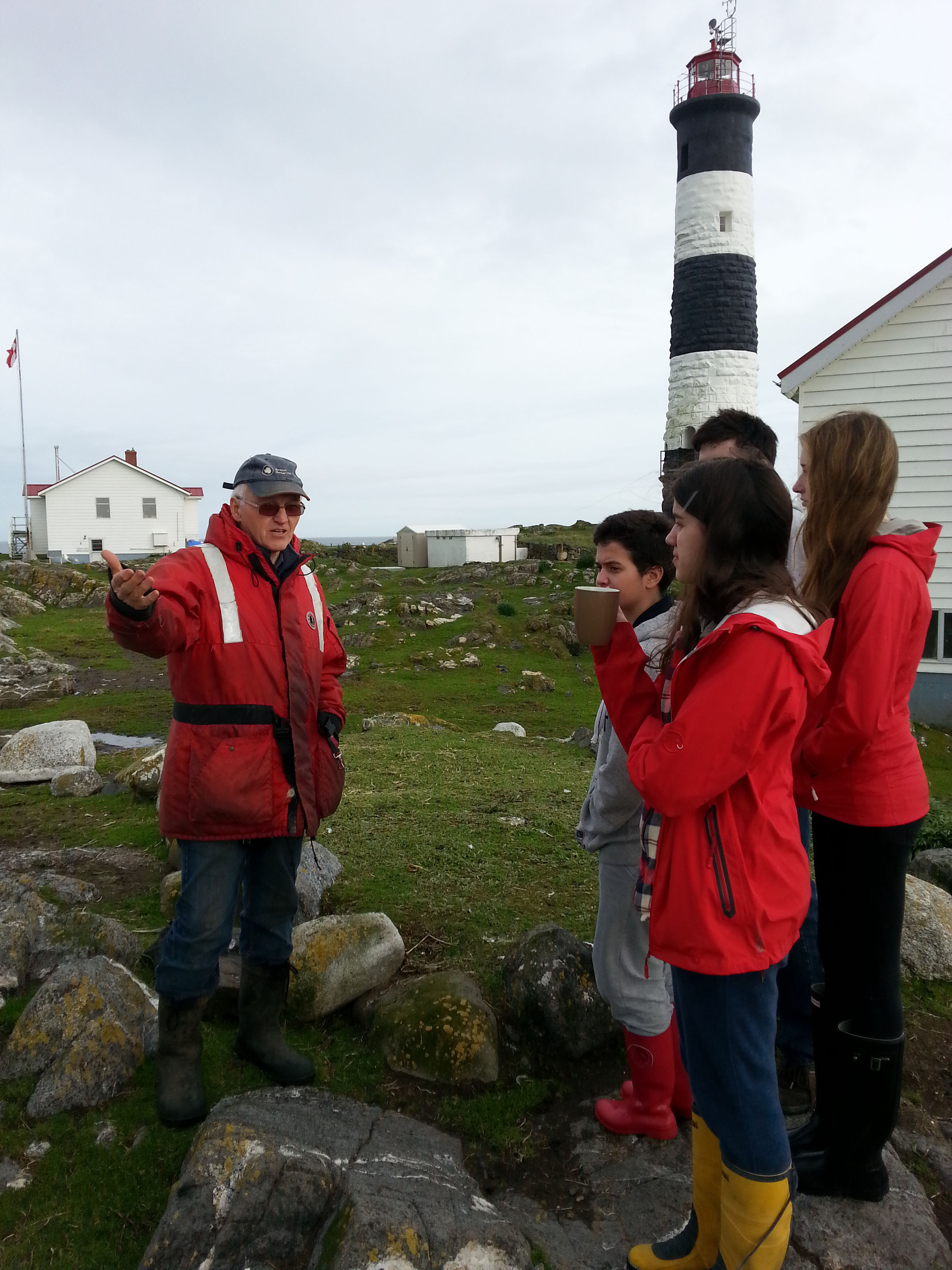
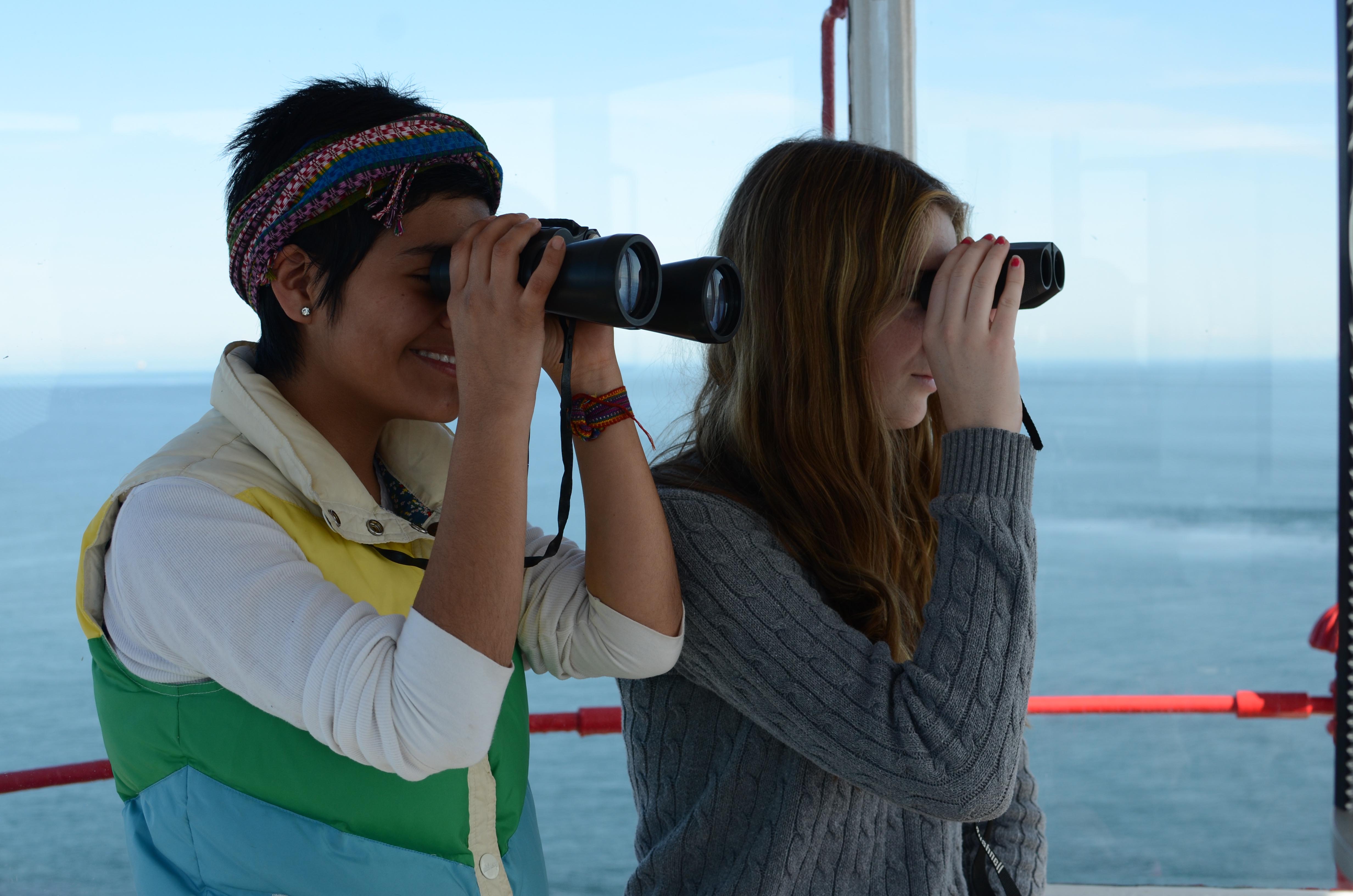
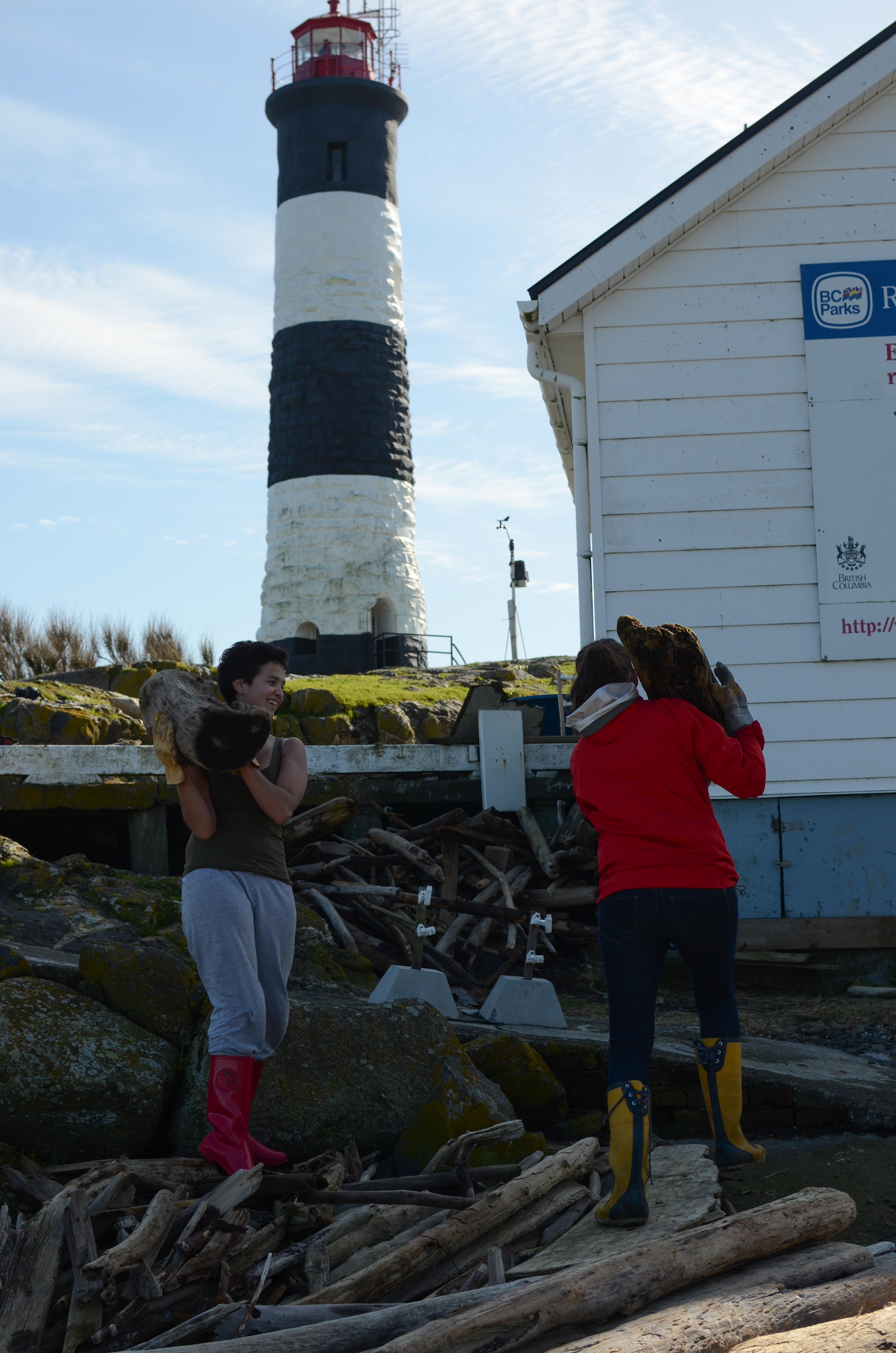
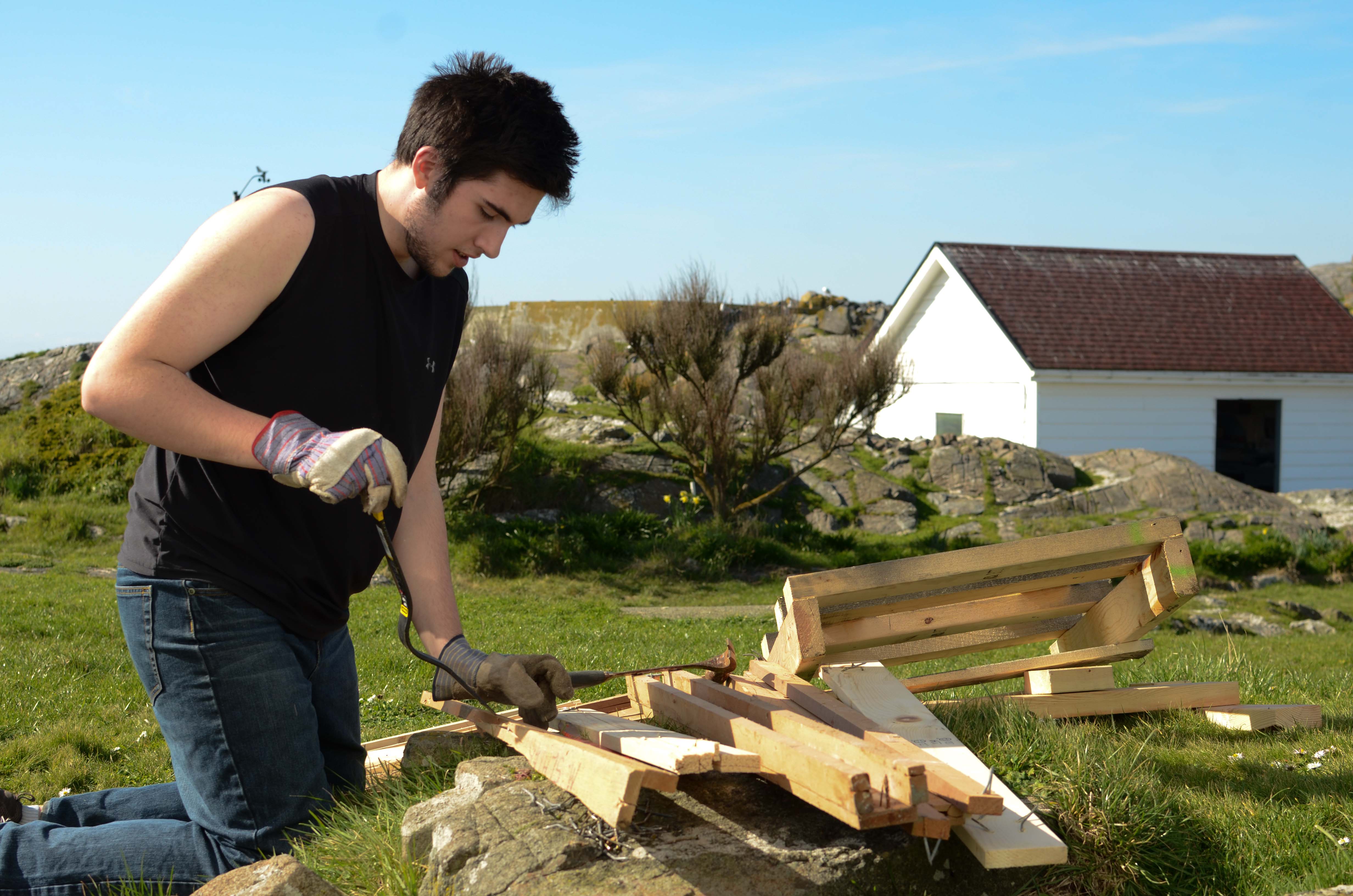
Despite the difficulties of dealing with the pup this week it has been a pleasure to have a group of 5 Pearson College students out here for project week.  The students have been working on some creative projects, have helped with daily tasks of seawater measurements and boat counts and have helped with a few projects including moving driftwood, counting animals in the reserve, running the fire pump, breaking down and de-nailing crate wood, pumping diesel for the furnaces, and assisting with the pup rescue.  We have been fortunate to have some really nice weather so they have spent lots of time outside appreciating this special place.

Animal Census-March 11
california sea lions: 7
stellar sea lions: 25
harbour seals: 25
elephant seal: 1
gulls: 107
cormorants: 59
Bl turnstone: 20
canada goose: 18
eagles: 3
Harlequin ducks: 10
Pigeon Guillemots: 23

Pup Deceased

Since the last update about the pup its condition continued to deteriorate.  On Wednesday March 12, the pup appeared to be losing coordination and mobility.  Its movement was very laboured and its behaviour seemed distressed.  In the afternoon it made its way to a puddle on the North side of the main house and went into convulsions.

While I had been sending updates and photos each day to DFO on Wednesday I sent two videos http://youtu.be/zv–ICW0TDc and http://youtu.be/nht2zTgkYrU to show its behaviour and movement.  I expressed concern that the pup may be going into paralysis. DFO was able to coordinate and get authorization for the Vancouver Aquarium to intervene the next day.

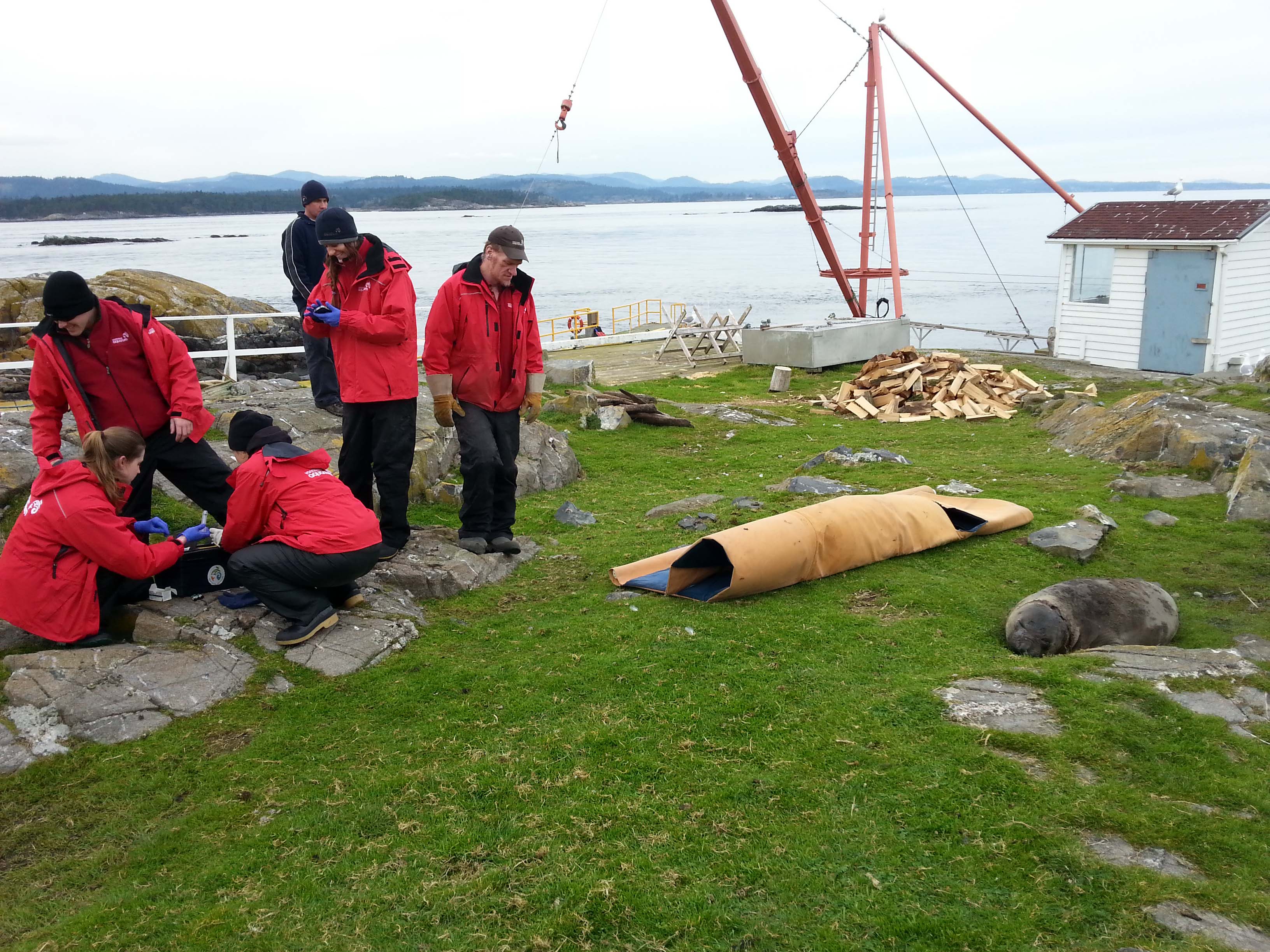
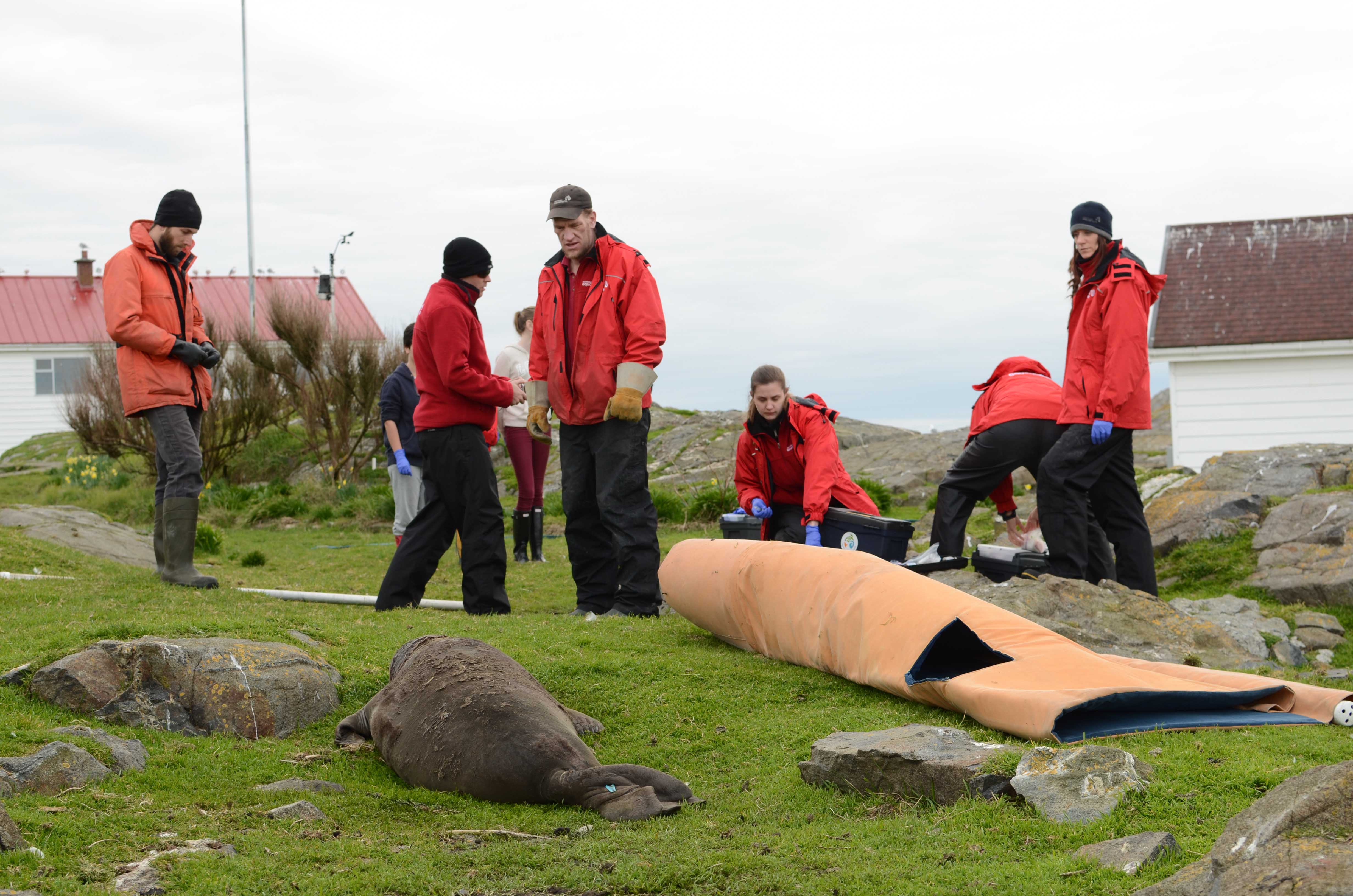
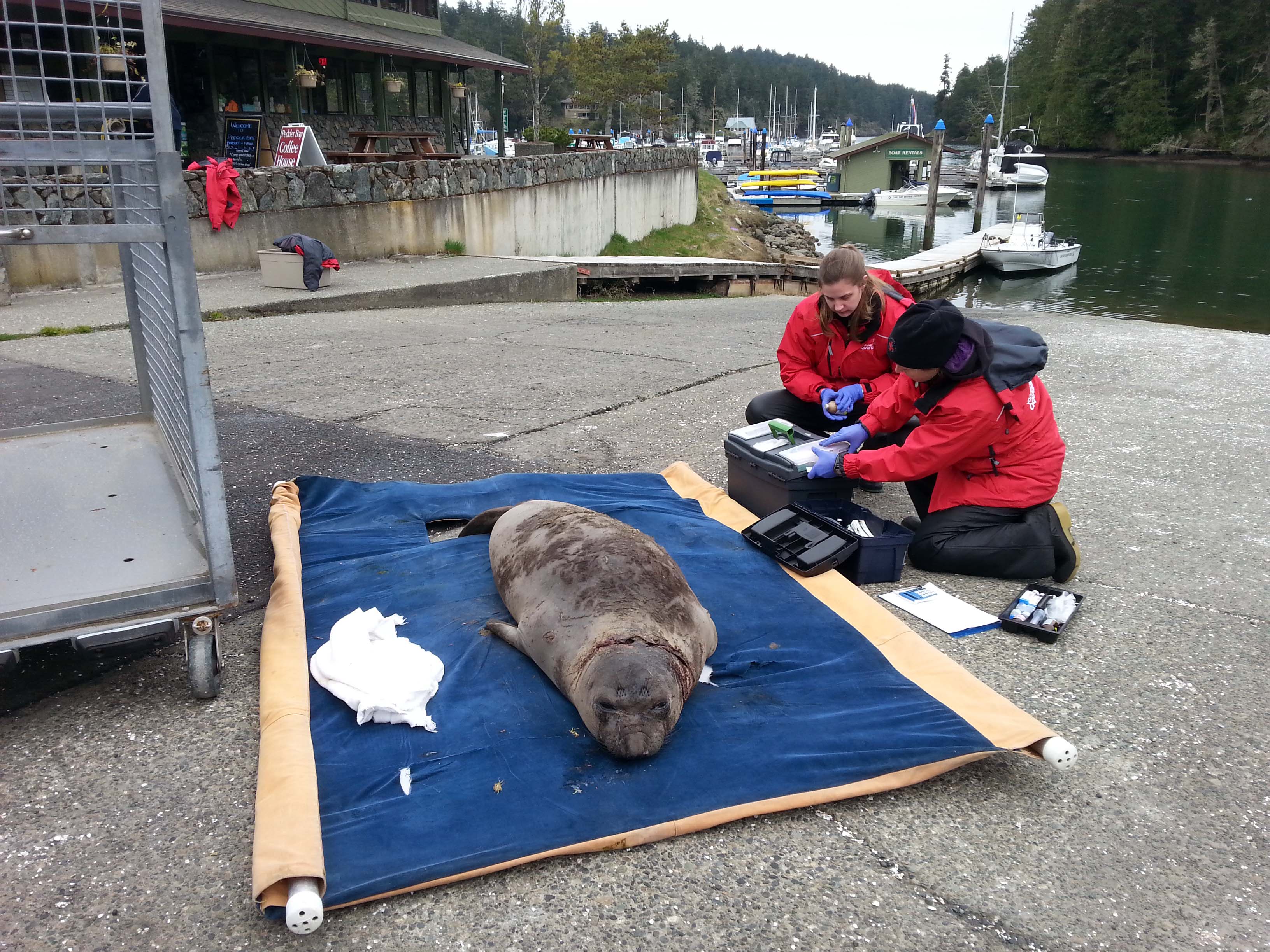
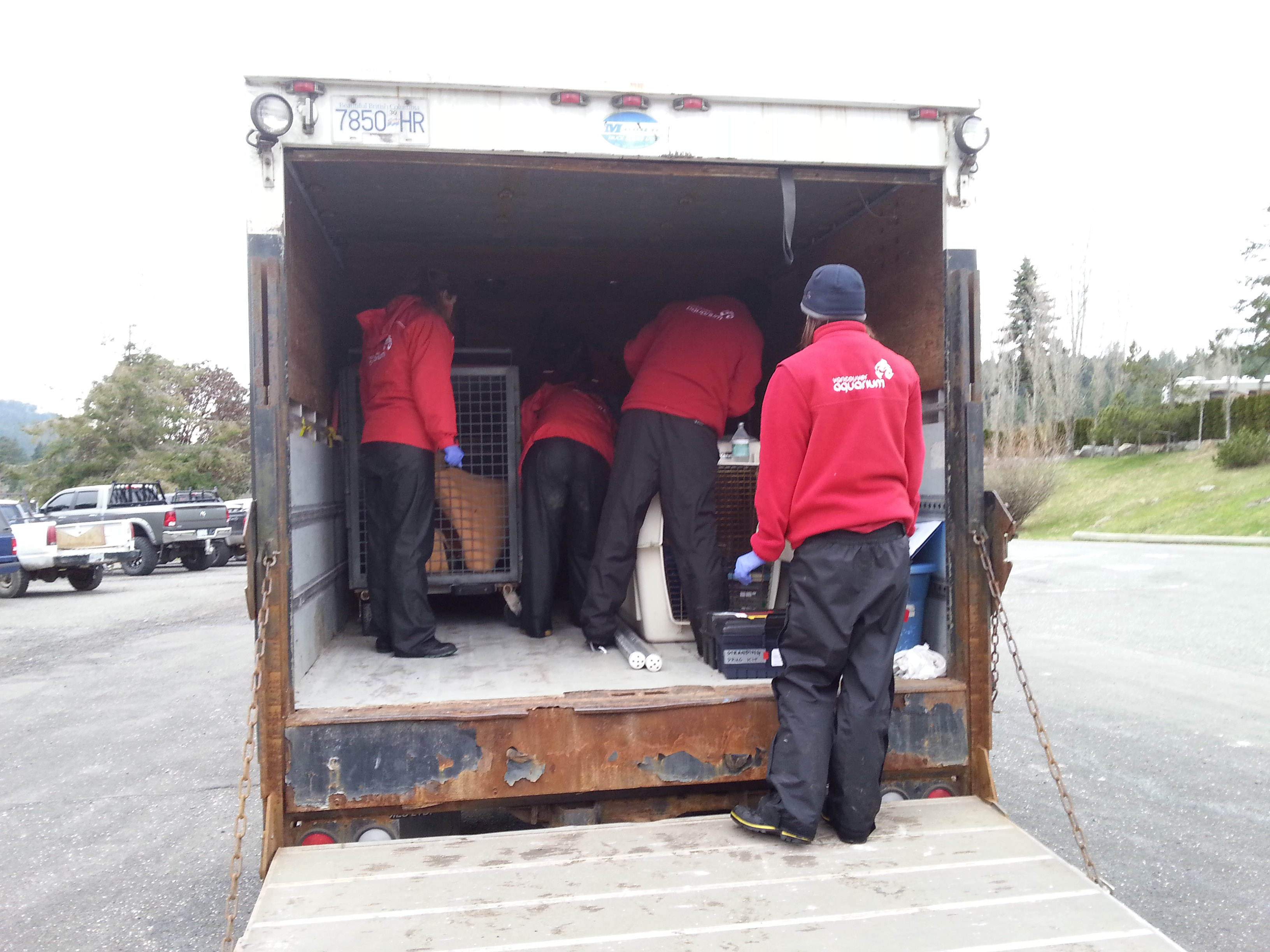
On Thursday March 13th the Marine Mammal Rescue team from the Vancouver Aquarium was deployed.  They arrived at the Pedder Bay Marina around 1600.  The marina had generously agreed to send out one of their boats and a staff volunteered to captain it.  I met them at the marina in the station boat and we brought the rescue team of 5 with gear out to Race Rocks.  Upon arrival they could tell that the pup was in critical condition. One of the team members told me they had never seen one in such bad shape.  They gave it a sedative and moved it onto a sling to transport it to the Pedder Bay Marina boat. Once back at the marina they set the pup down and gave it further treatment and washed out the wounds.  They left around 17:45 and made in time to catch the 19:00 ferry to Vancouver.

At 8:47 PM they sent the following update:

“Alright, we are just about to go off the ferry and drive toward MMR. The animal is still in critical shape. He is minimally responsive to stimuli…The animal is having episodes of full blown seizure lasting up to 2 minutes.”

Just after 11 pm they sent a final update:

“Unfortunately, our little guy did not make it. We treated him aggressively en route to the rescue center, but he arrested at 10:45 PM. Emergency resuscitation was attempted unsuccessfully. I am so sorry to have to share the sad news of his death.  Thank you so much to everyone who chipped in to help with his rescue today.”

I am  very grateful to everyone who was involved in this difficult situation and who helped try to rescue him.  The Vancouver Aquarium team were remarkably caring and dedicated; they did all they could do, it was too late.

My 3.5 month shift ends today. The highlight of the last few months has been watching this beautiful little creature every day since its birth in January.  Watching and listening to it die over the course of the past two weeks, right outside our house, has been more difficult, stressful and frustrating than I could have ever imagined.   I wish I could have done more for him. Living here with these creatures is like a blessing and a curse.

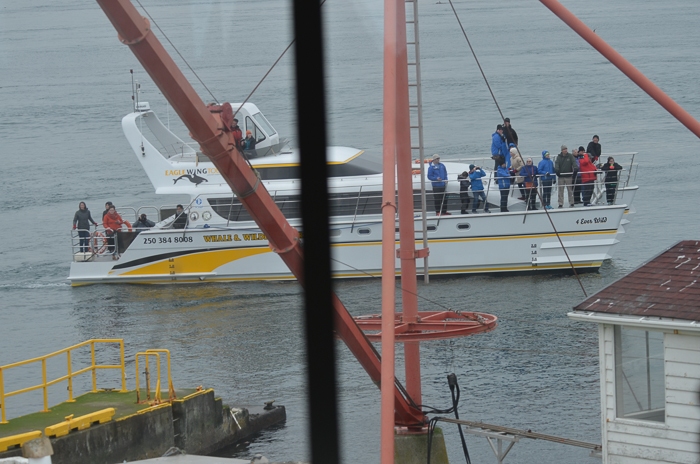
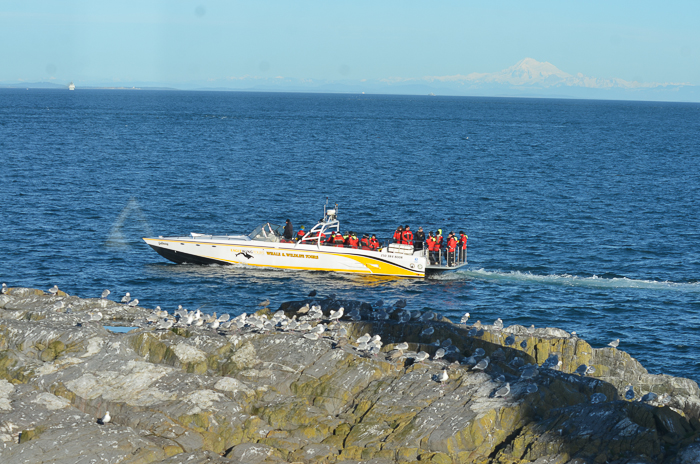
Ecotour Boats at Race Rocks–Observations on Human Impact.

 The Problem with Ecotourism boats:
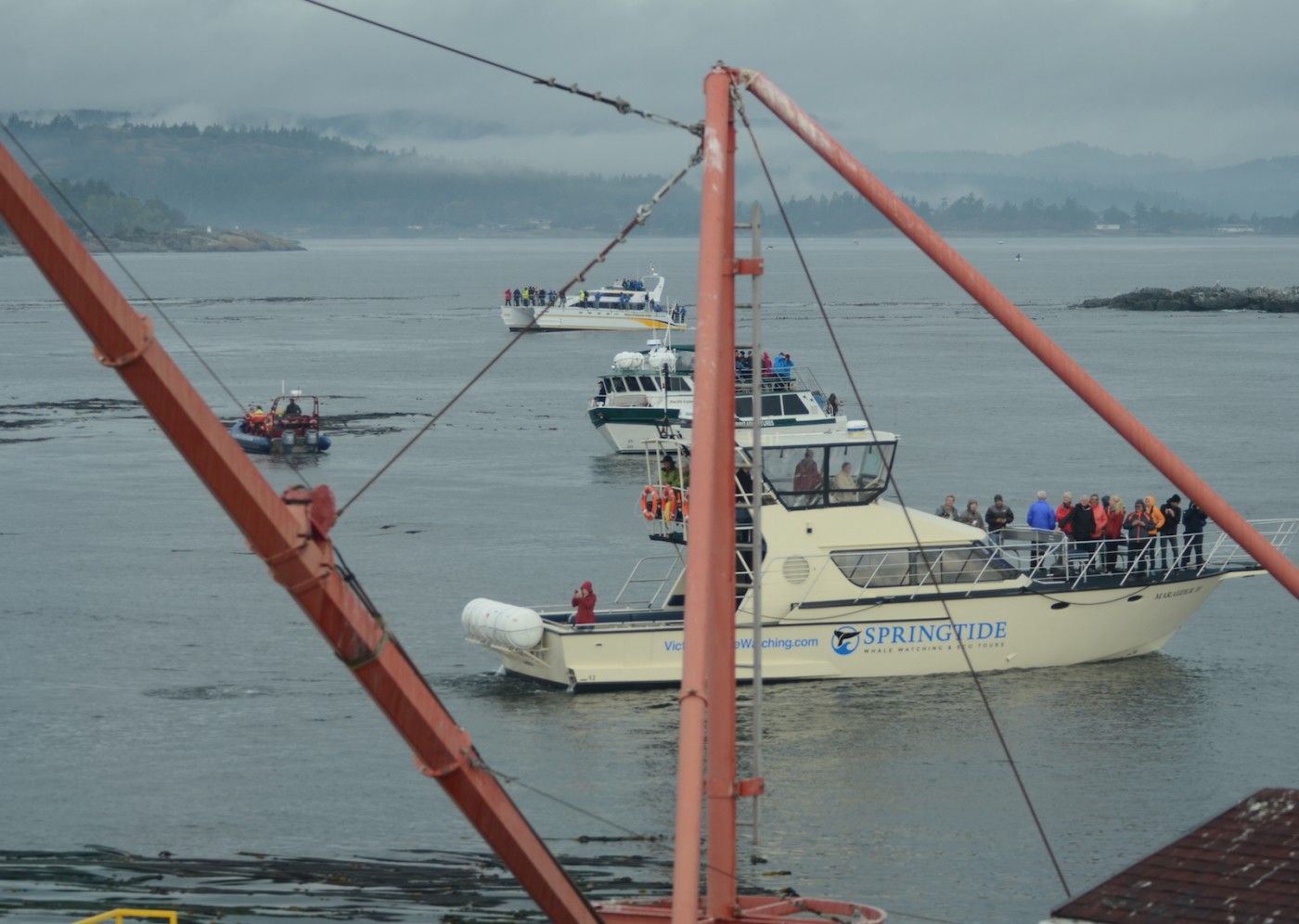
pod of whale watchers

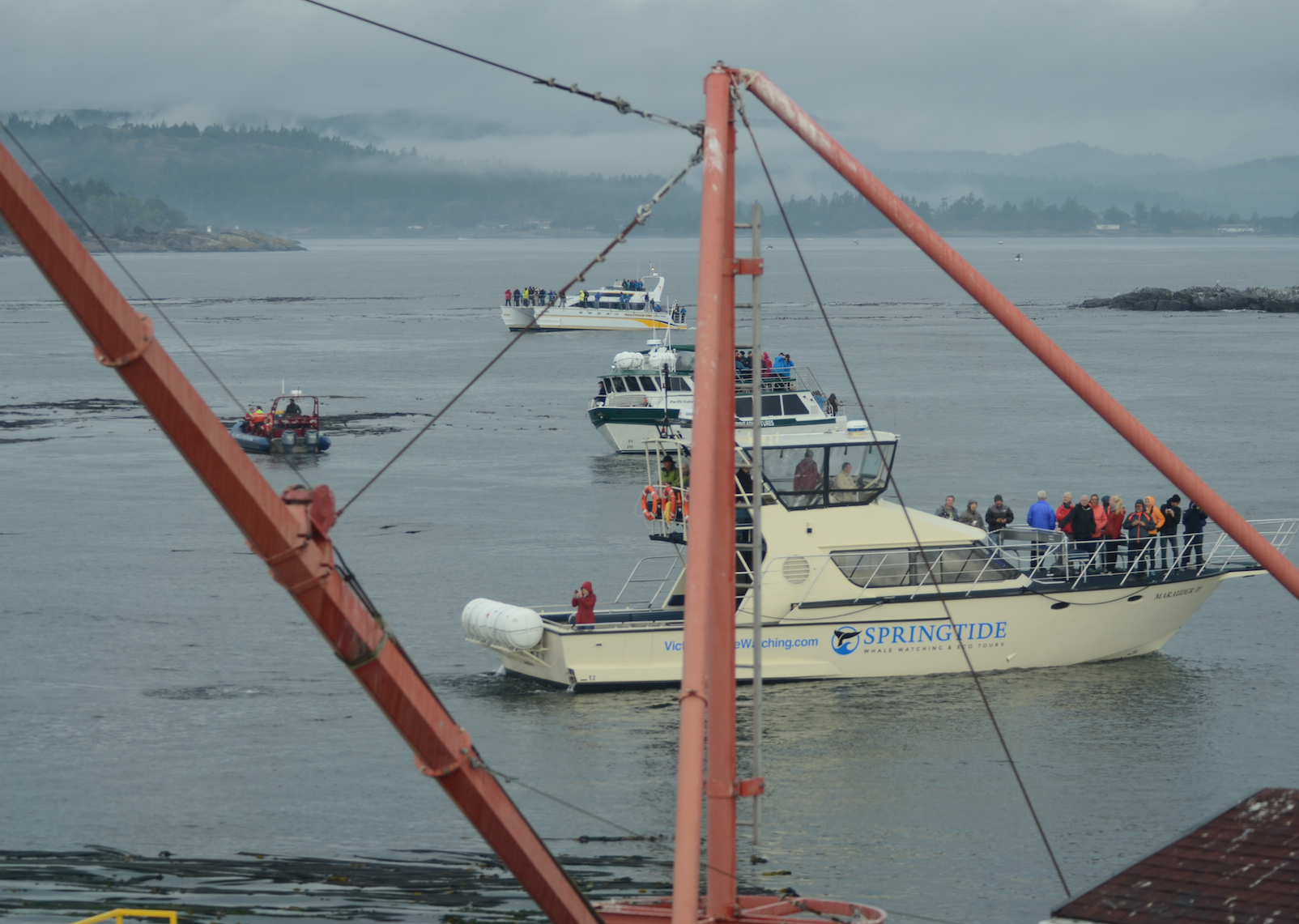
Might this not be too great a concentration of whale-watching boats , Sept 20, 2015

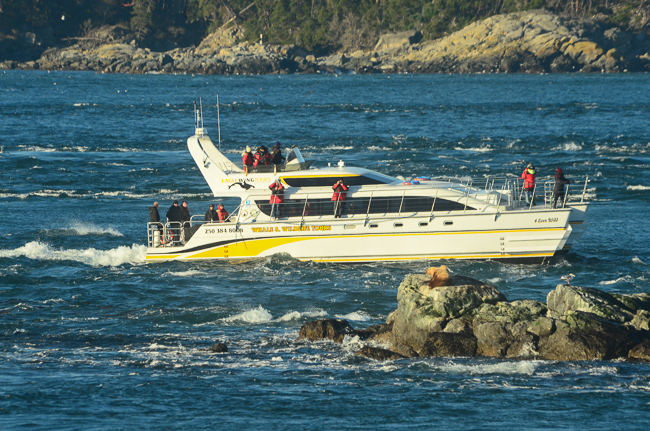
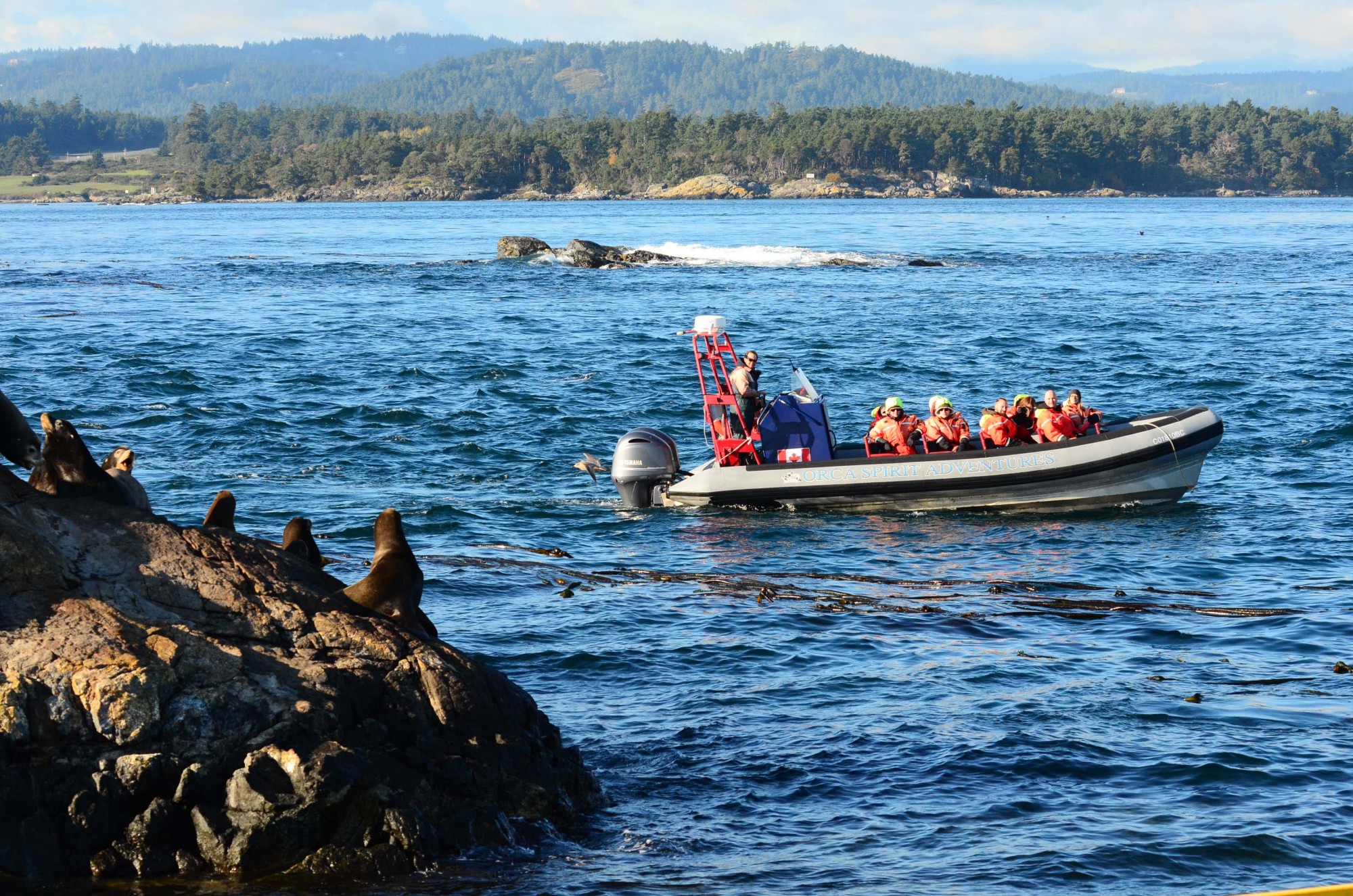
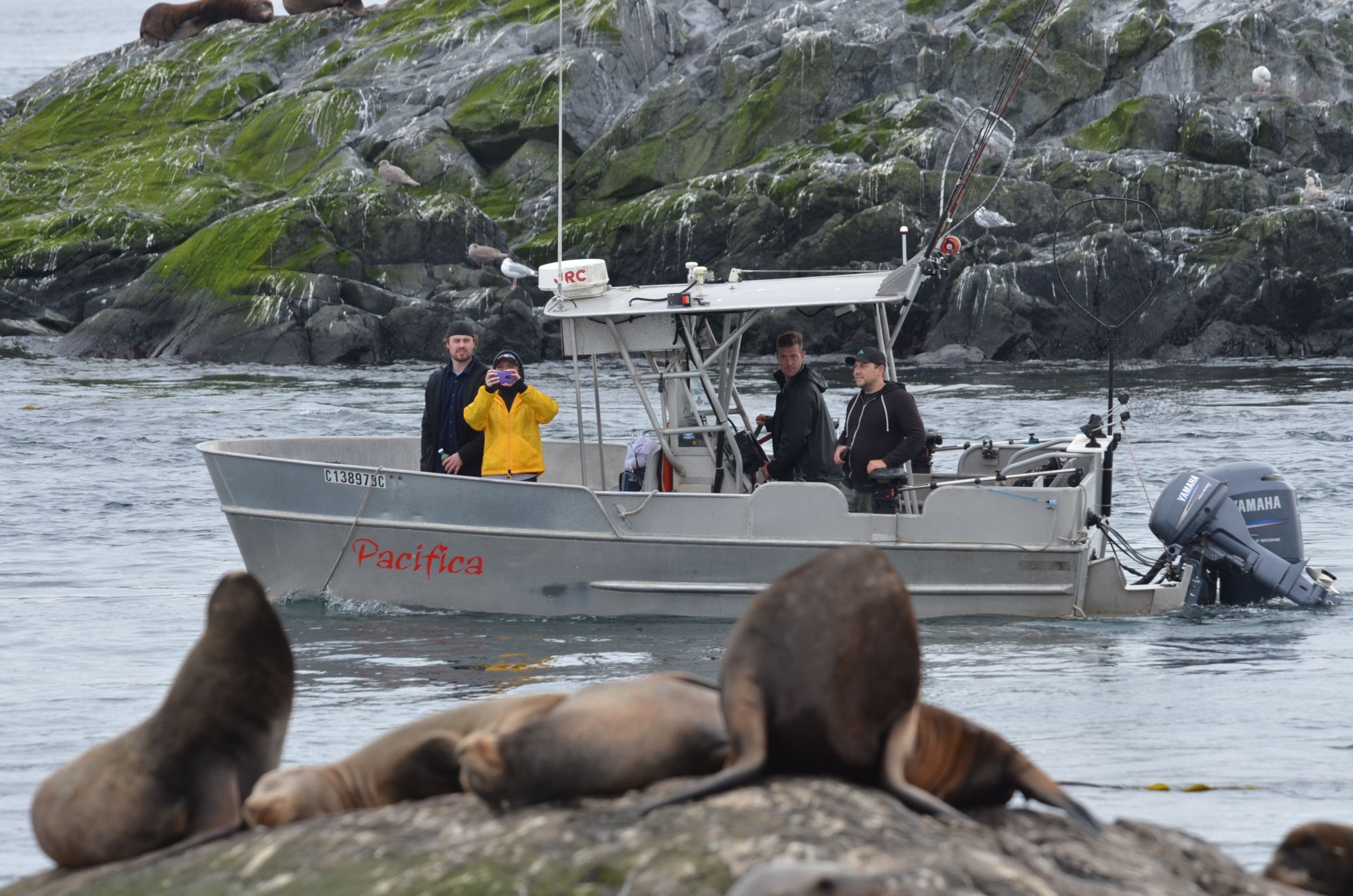
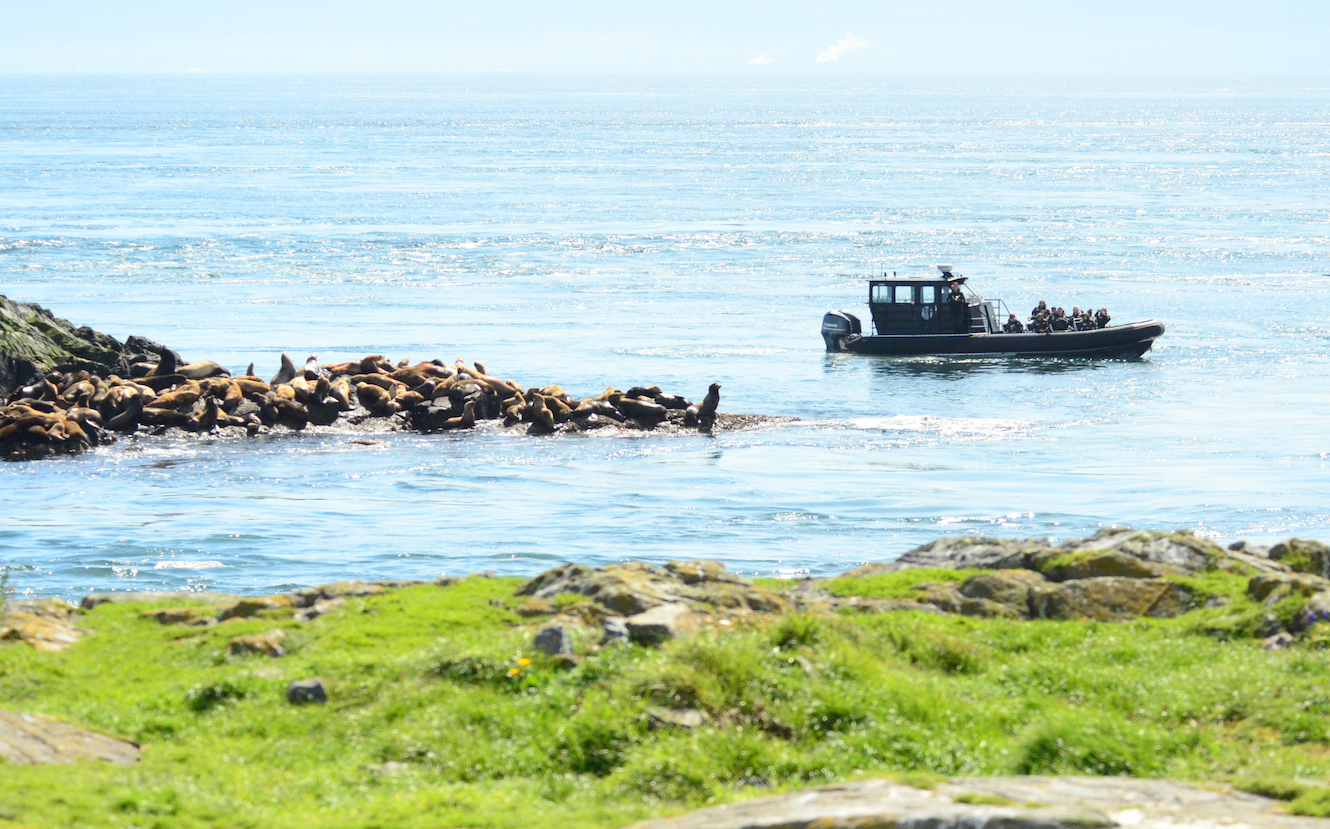
We are well aware that the marine ecotourism industry is important to the economy of the Victoria and Sooke area, and over the years have had  good record of cooperation with the whale watching companies in the observation of regulations for marine mammal and bird viewing at Race Rocks. There are times however when the operation of individuals in their fleet of vessels within the reserve is not in keeping with the ultimate goal of ensuring sustainability of this resource.

The Recommendations for Marine Mammal observation at Race Rocks:

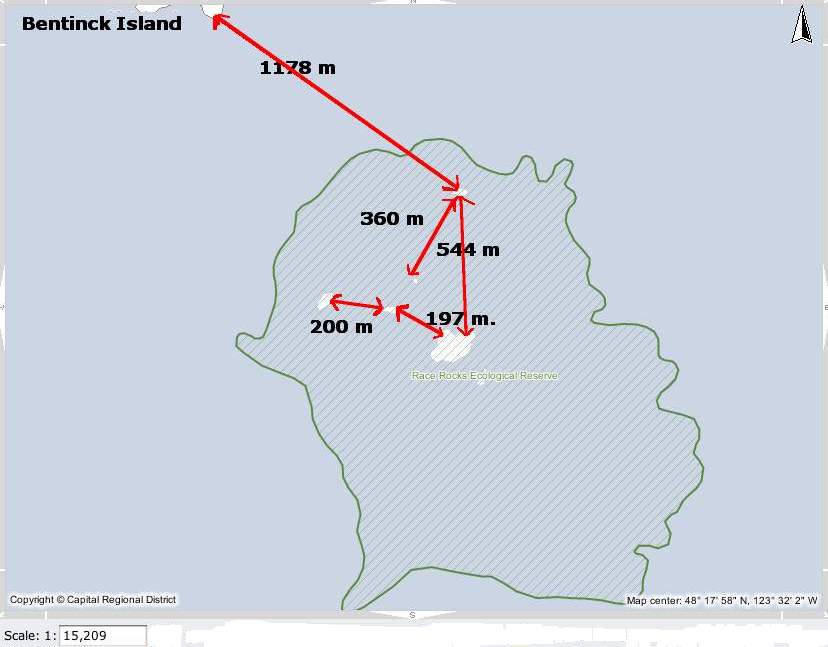
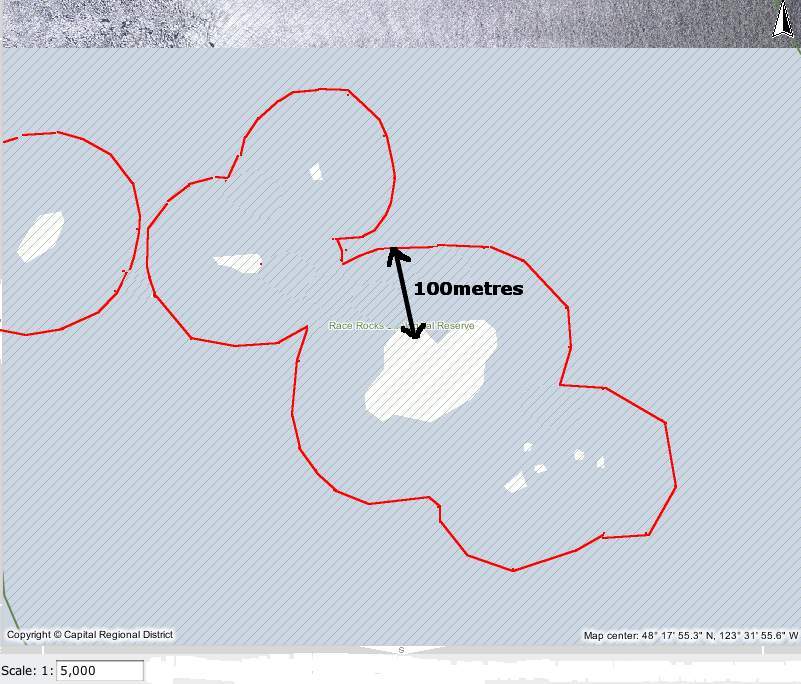
These two maps show the reality of the distances involved at Race Rocks:

The regulations for Marine bird and mammal viewing as DFO policy is 100 metres. In the early negotiations about a marine protected area for Race Rocks, stakeholders agreed that the distance between the middle islands and Great Race be in under 200 metres would preclude any vessel from using that passage. It was agreed with the ecotourism community that they could transit that area near the centre line, either drifting  or slowly under motor.  The 200 metre zone would be respected however for all other parts of the Ecological Reserve .

The Pacific Whale-watch Association lists the folllowing regulations for the
RACE ROCKS SPECIAL OPERATING AREA

1. “Go Slow Zone” = 1/8 mile (220 yards) from any rock or landmass around Race Rocks.
2. Vessels will slow on their approach to Race Rocks such that speed at 1/8 mile (220 yards) from any rock or landmass is reduced to approx… 7 knots (minimal wake and wash, relative to the condition of the seas state at the particular time).
3. Vessels in the Go Slow Zone will remain as close to mid-channel as is practicable between the major rock outcroppings known as Great Race, North Race Rock, West Race Rock, and Helicopter Rock.
4. While in the Go Slow Zone vessels will transit the area with the current whenever conditions are suitable to do so. Drifting is encouraged relative to other boat traffic and where safe navigation is not compromised.
5. Vessels exiting the area may increase speed gradually outside the Go Slow Zone.
6. Vessels will remain 1/8 mile (220 yards) outside the Go Slow Zone whenever any whale species are present in the Race Rocks Reserve (Go Slow Zone).

This is the ” Be Whale Wise advice” from DFO for marine mammal viewing
Quote: from DFO: ” Why do we need guidelines?”
“The diversity and complexity of marine life in the coastal waters off British Columbia and Washington is truly extraordinary. It is a fragile world. Pollution, global climate change and other impacts are taking their toll at all levels of the coastal food web. Many species of marine wildlife, such as the endangered southern resident killer whales, are showing signs of vulnerability. Meanwhile, vessel traffic in our waters is steadily increasing, placing added pressures on marine animals and their habitats. We need to minimize our impact. These guidelines are designed to help you enjoy your wildlife encounter, and reduce the risk of disturbing marine wildlife.”

I have documented the History of how amendments to Marine Mammal Viewing regulations worked on over a decade have still not been included in the current Marine Mammal Viewing regulations at this post: https://www.racerocks.ca/?p=19751

Why we need updated regulations is clear from the following examples recorded at Race Rocks:   Also see this  tag for logs of vessel observations on viewing recommendations at Race Rocks.

rm070510eagwingnarrow

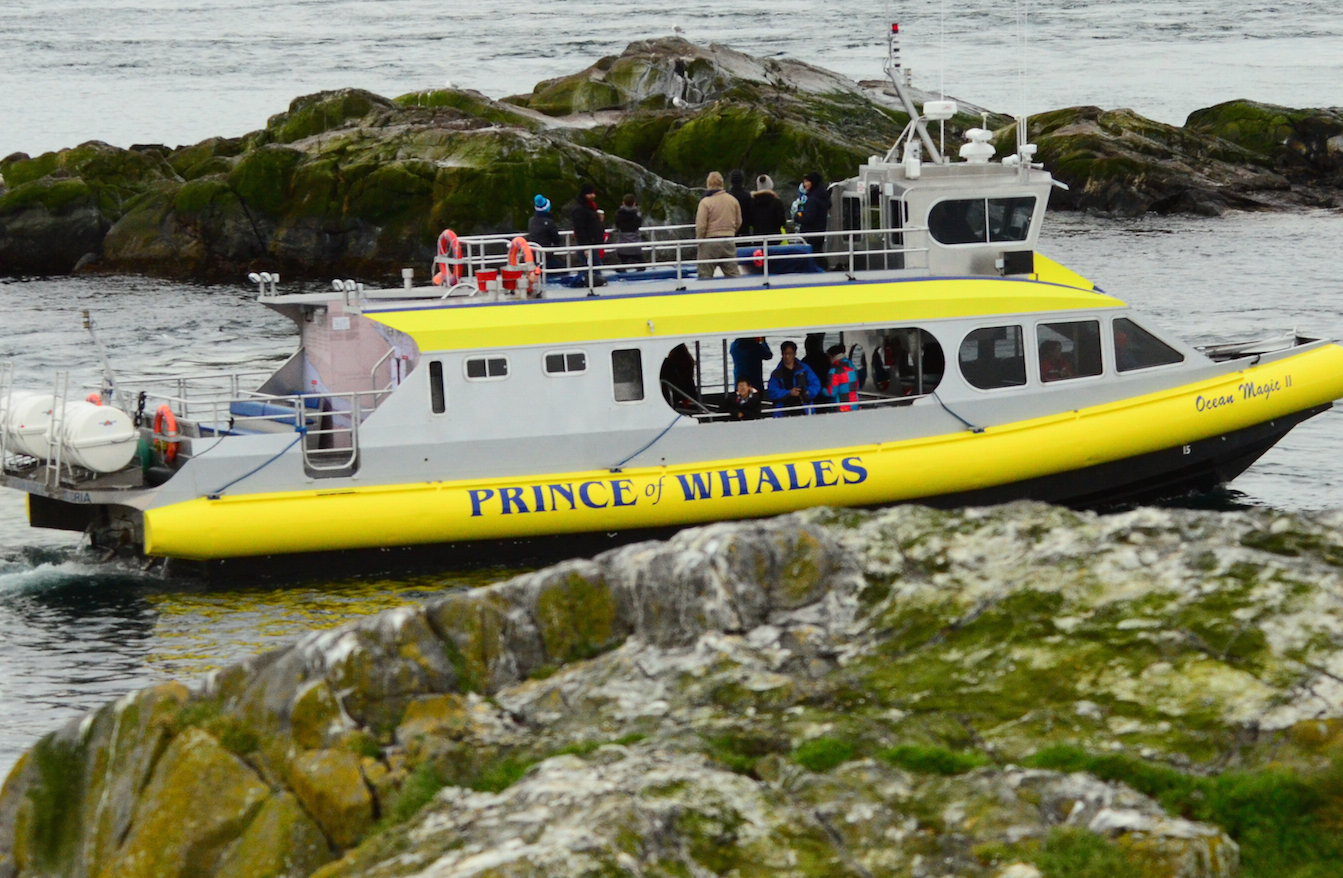
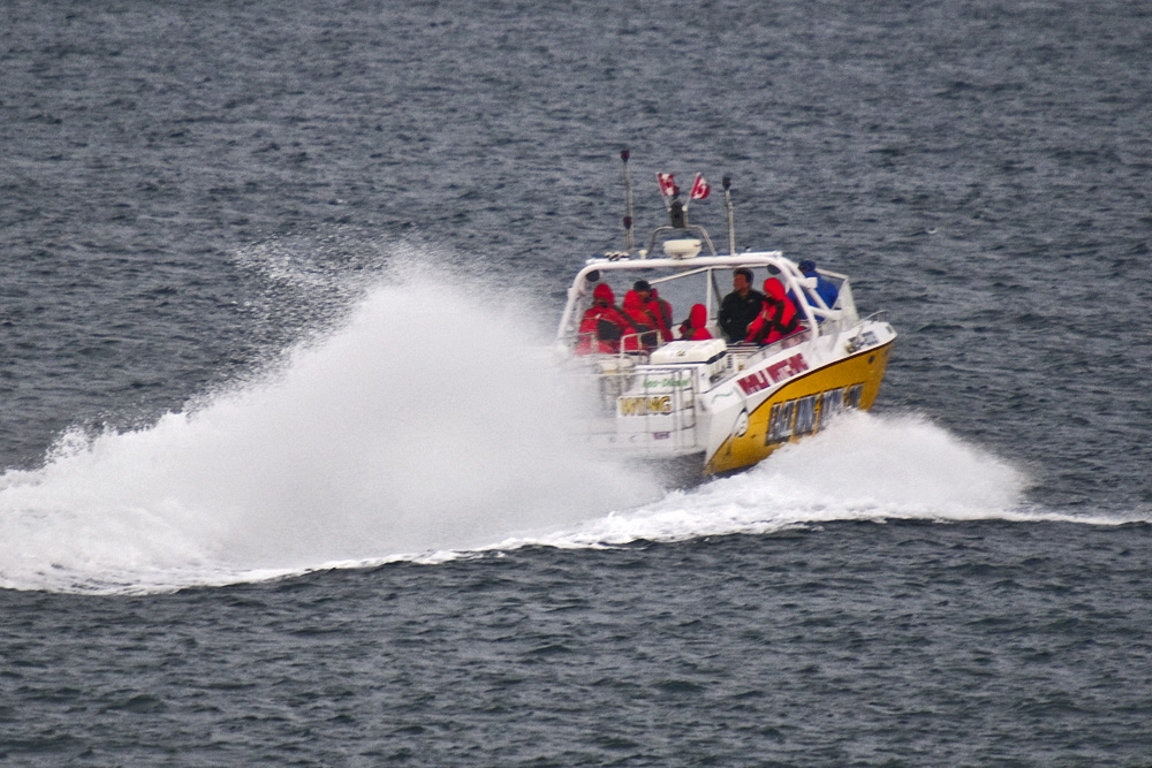
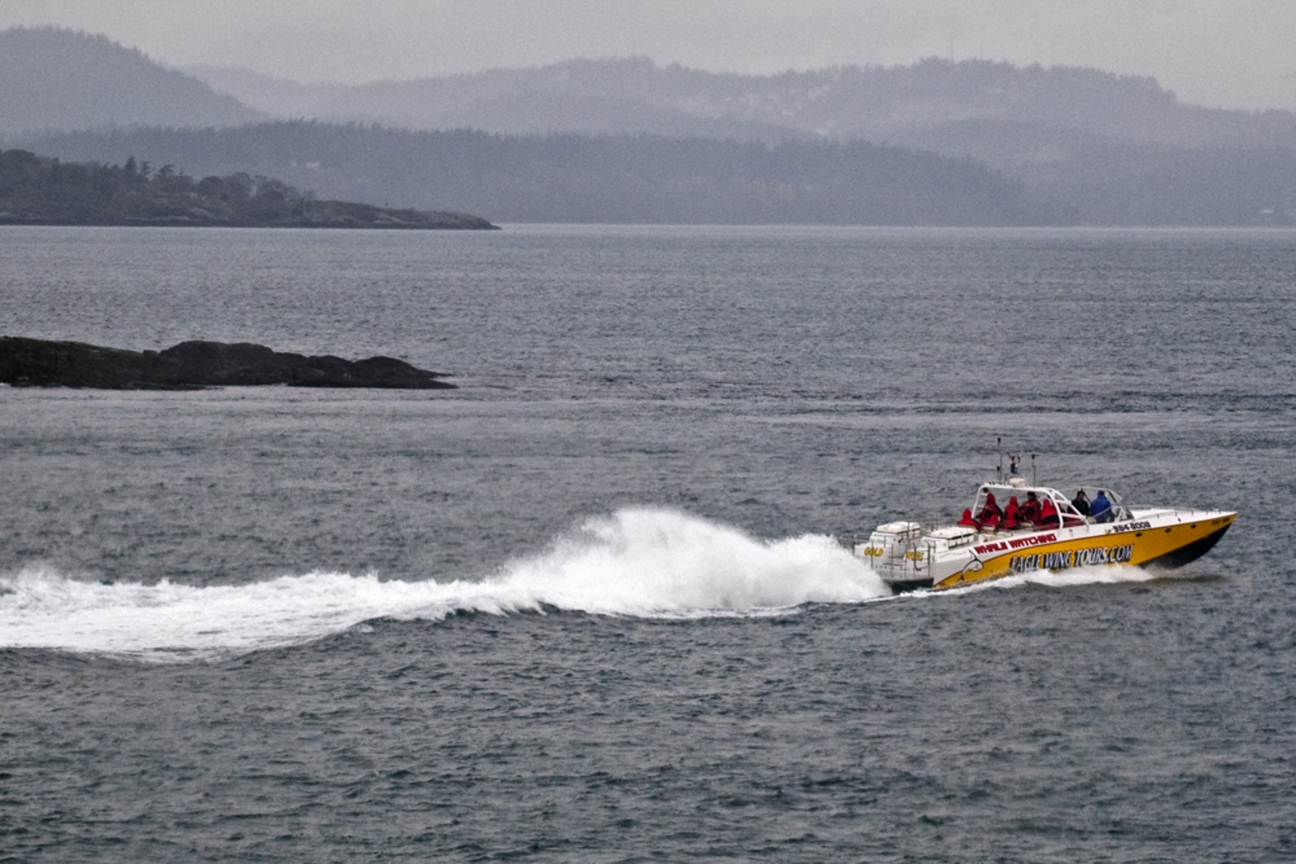
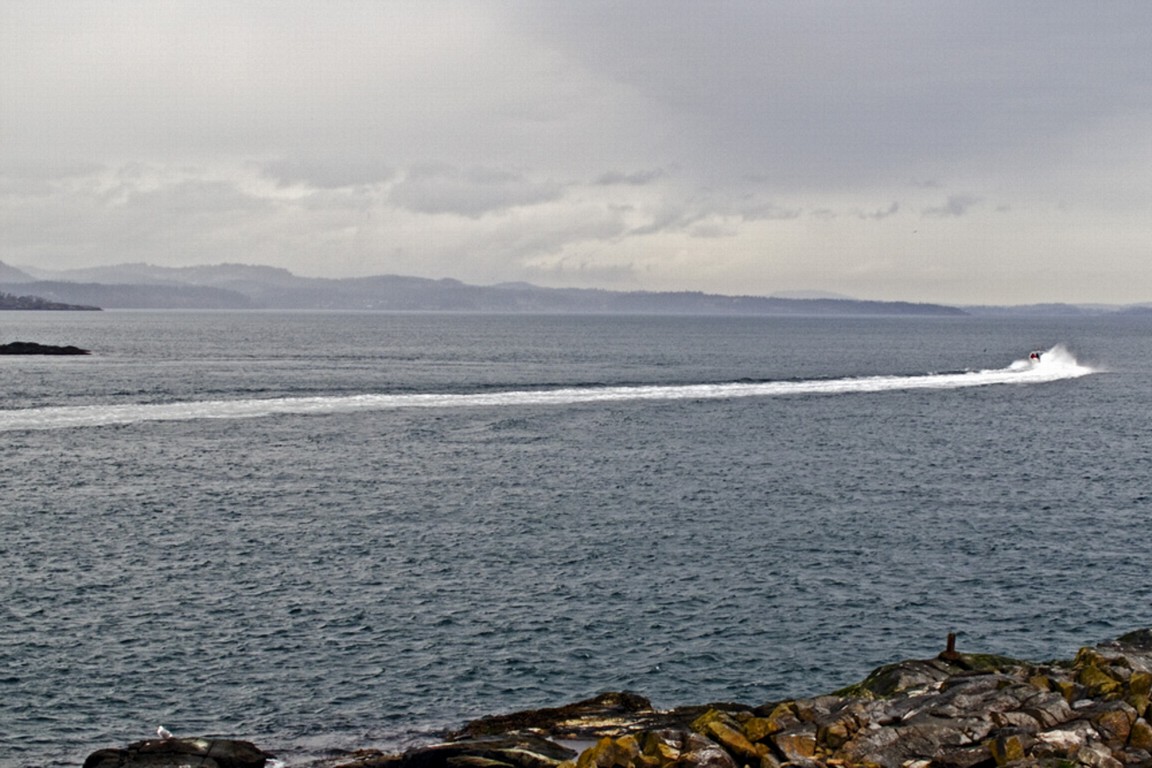
March 2010: Unfortunately there are a very few individuals in the whale watching industry who continue to give a bad name to the usually cooperative group of skippers and operators. The following sequence of images was taken on March6, 2010. The ecotour boat made a short tour of the reserve but was in a rush to leave, accelerating in the waters between Great Race and North Rocks creating wake as it sped out of the reserve.


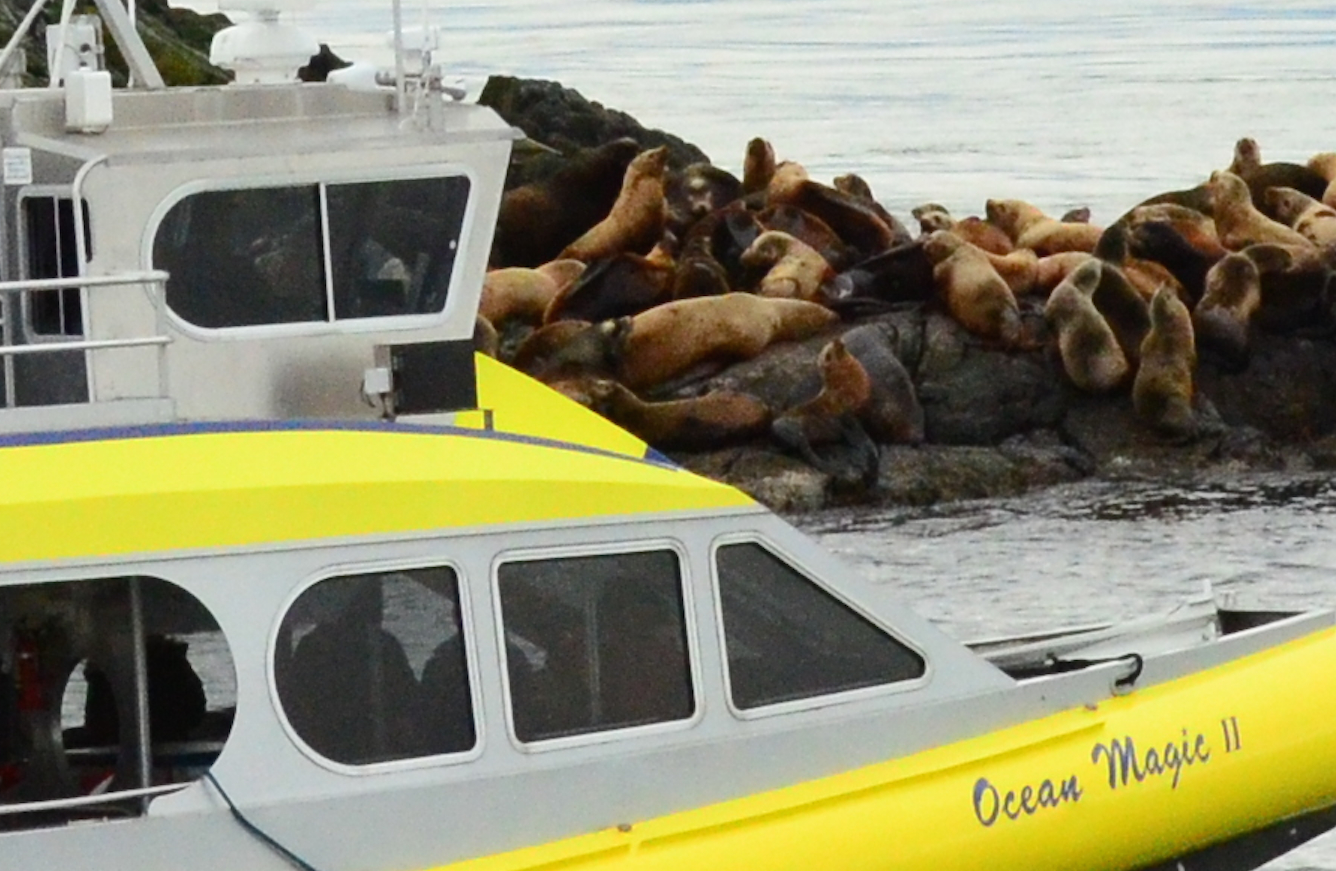
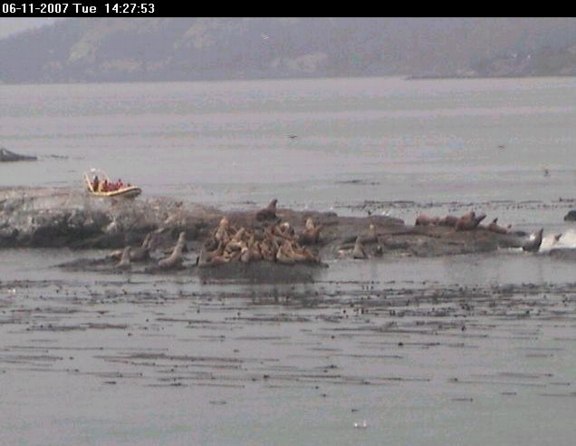
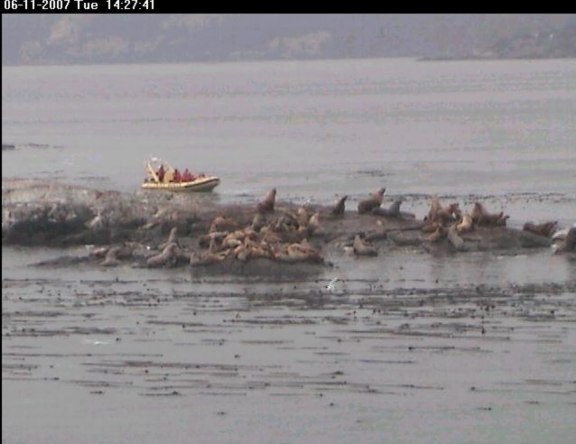
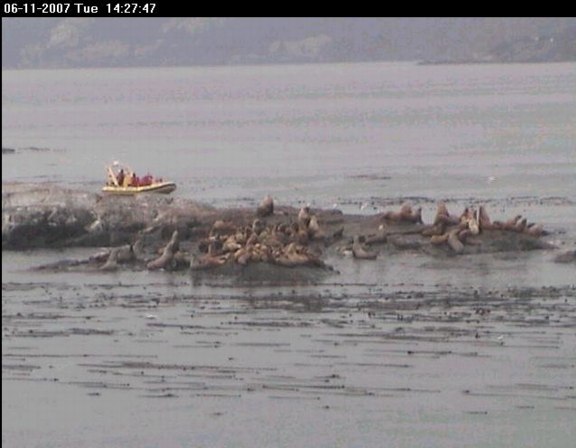
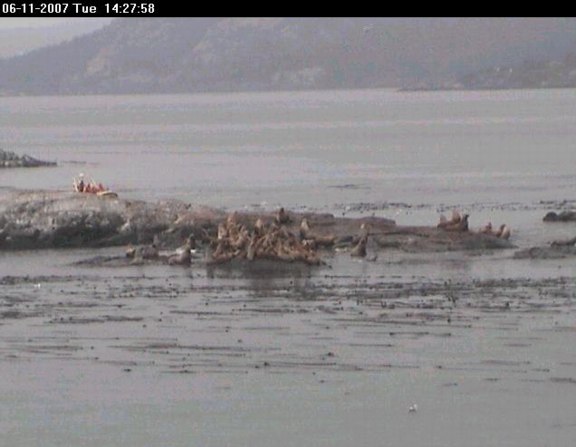
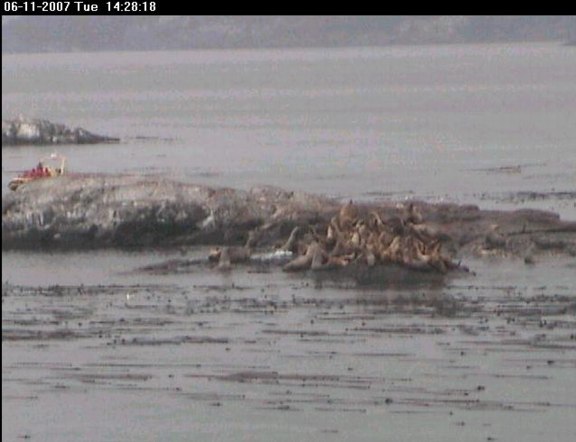
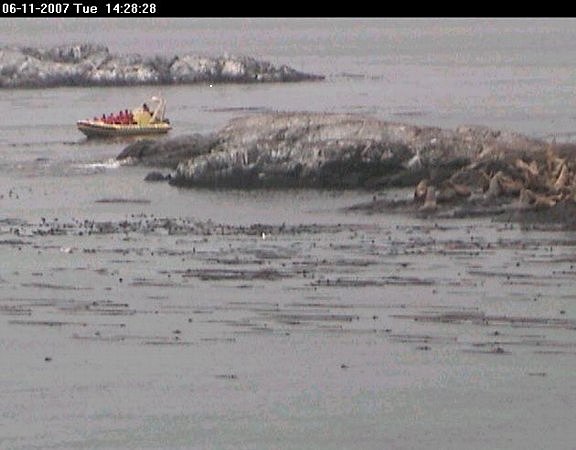
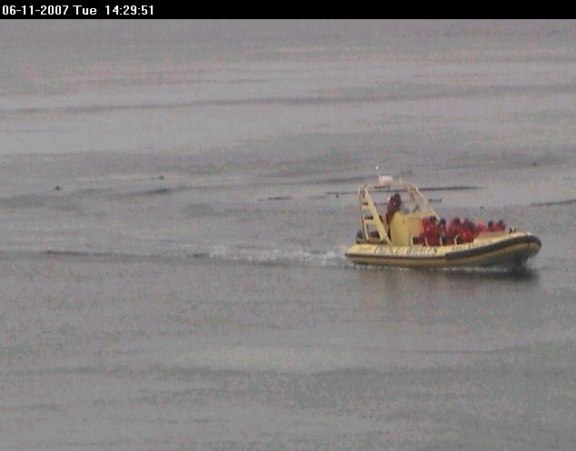
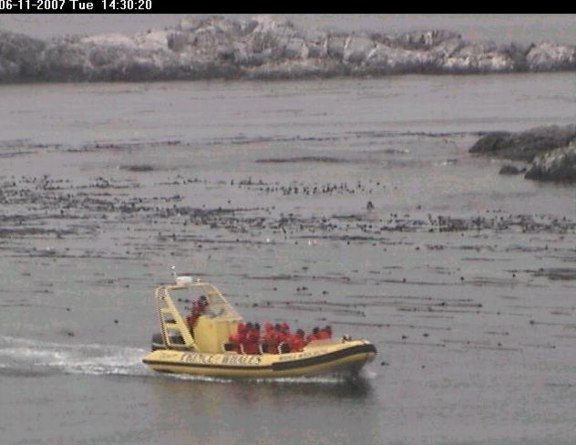
Below, a viewer on the remote camera 5 captures a sequence of one tour boat with an impact on the sea lions in November 2007.


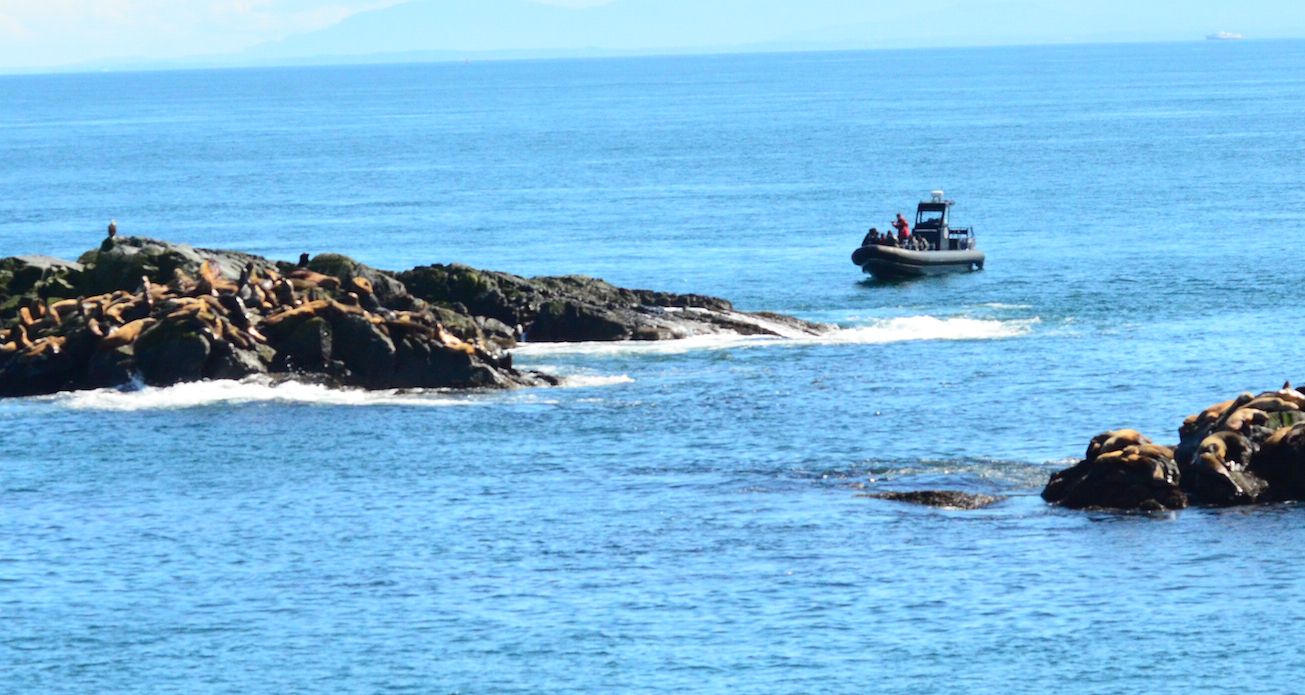
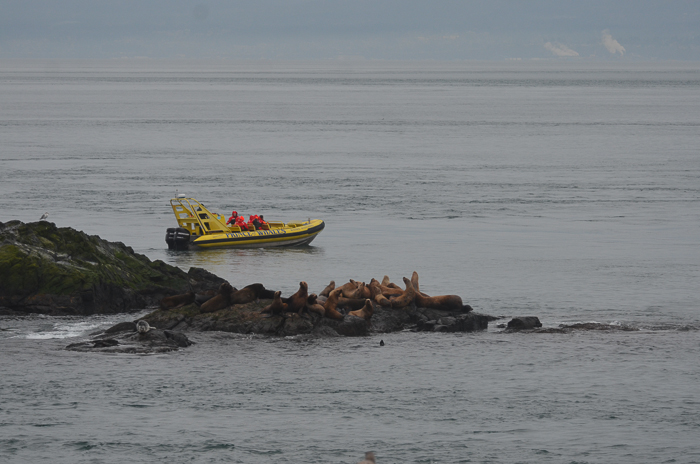
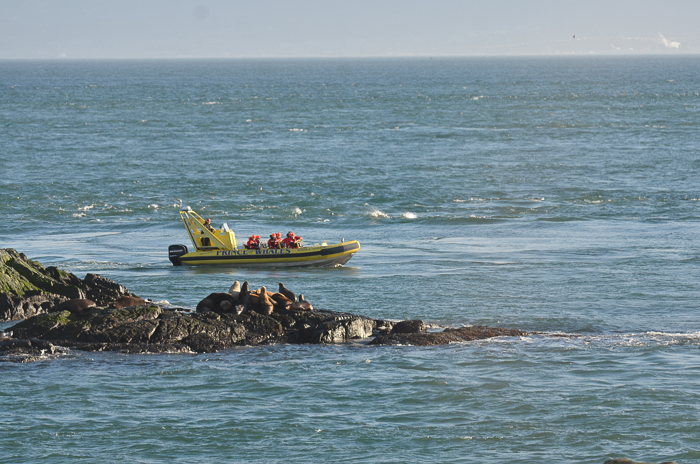
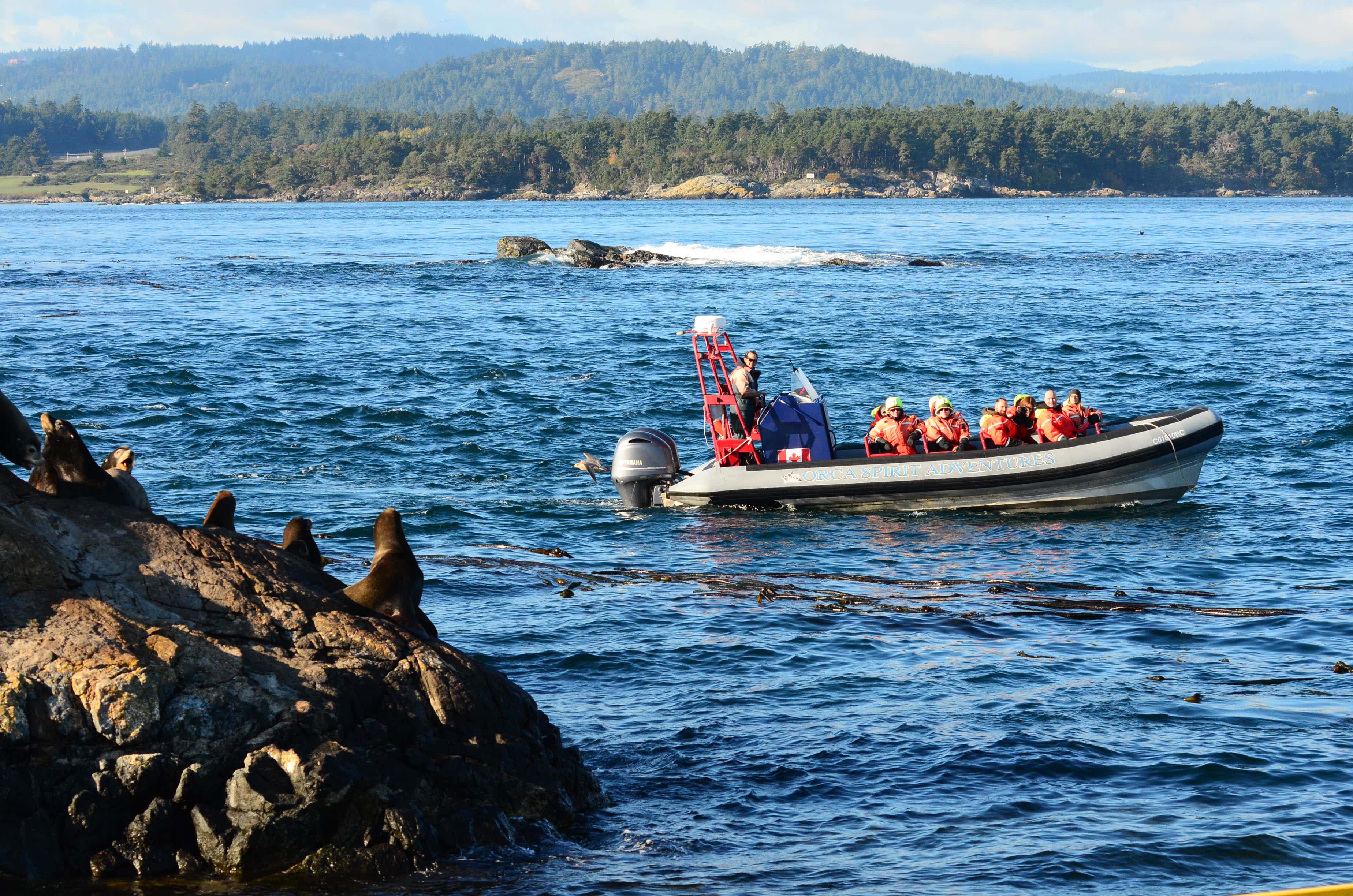
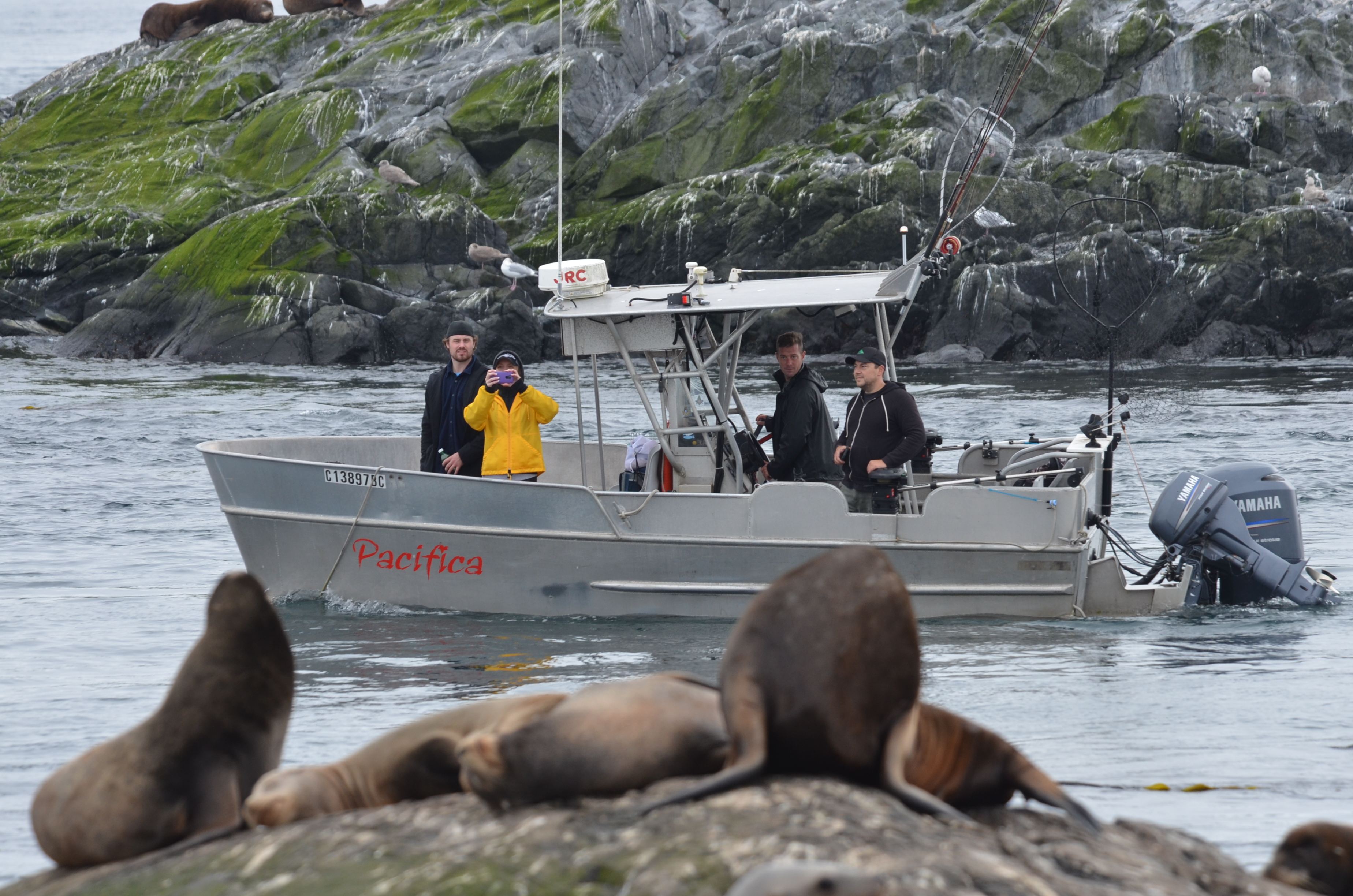
Ecotourism can have both positive and negative effects. In this video, you see two ecotourist whale-watching boats from Victoria B.C. that demonstrate two methods of viewing marine mammals. The yellow boat, rounds the middle rock inside the kelp bed, much too close to the island which is covered with northern sea lions and a few California sea lions. Since the animals on the North side of the island do not see the boat coming at this close distance, they are startled and about 25 of them take to the water. The high profile of the boat is increased by the individuals standing on the top of the boat, probably adding to the scare value.

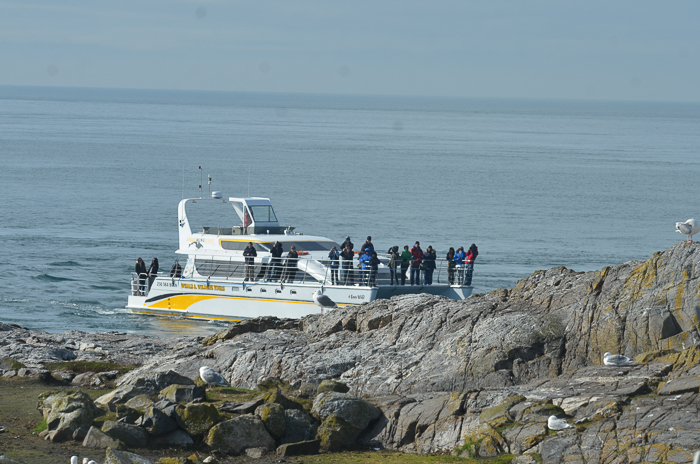
The white boat, comes down the main passage between Great Race and the middle rock. They have approached slowly, drift with the current and present very little impact on both the sea lions on the middle rock and the harbour seals hauled out on the main island down in the foreground. Missing from this video however is video of their departure from the reserve where they swing in very close to the end of the docks, causing a stampede of a dozen sea lions in that area.  Disturbance of any marine mammal colonies by vessel operators is against the law. Every time an animal has to change it’s behaviour because of human behaviour, there is a cost in terms of energy expenditure.

September 8, 2009: some whale watching boats still fail to stay a good distance off shore for viewing. It is questionable whether voluntary guidelines are adequate to ensure the ongoing sustainability of this resource as the number of whale watching boat visits continues to increase. In this video, the extent of ecotourism on a calm day and the effects on marine life are discussed.