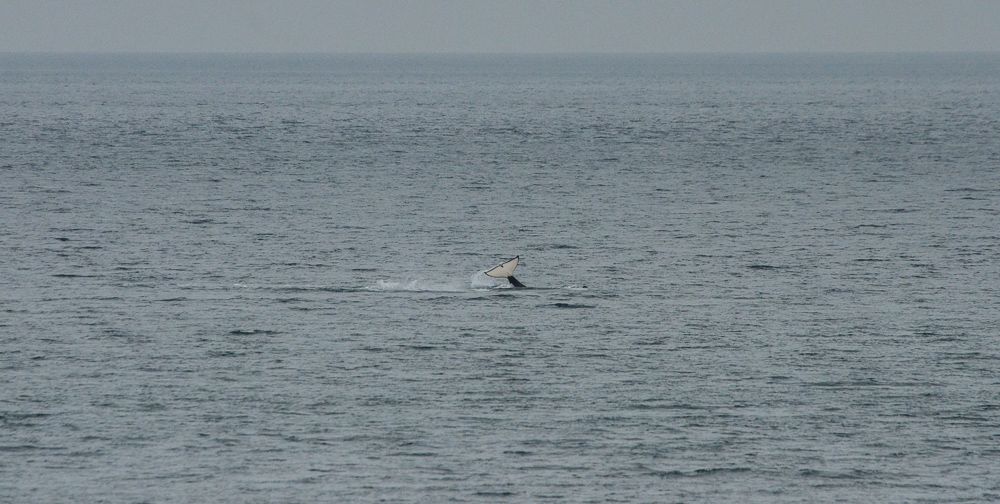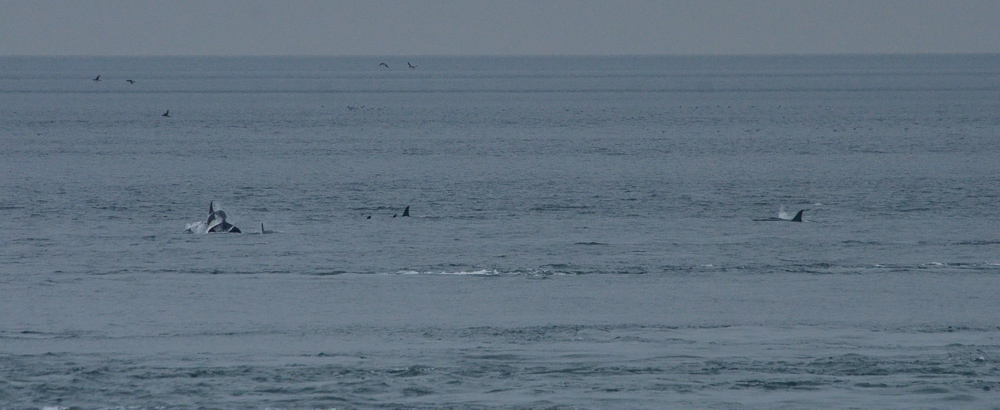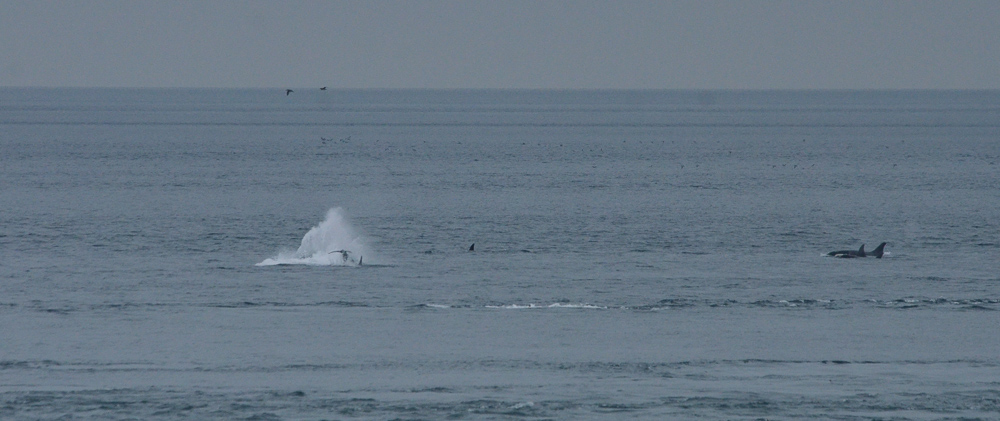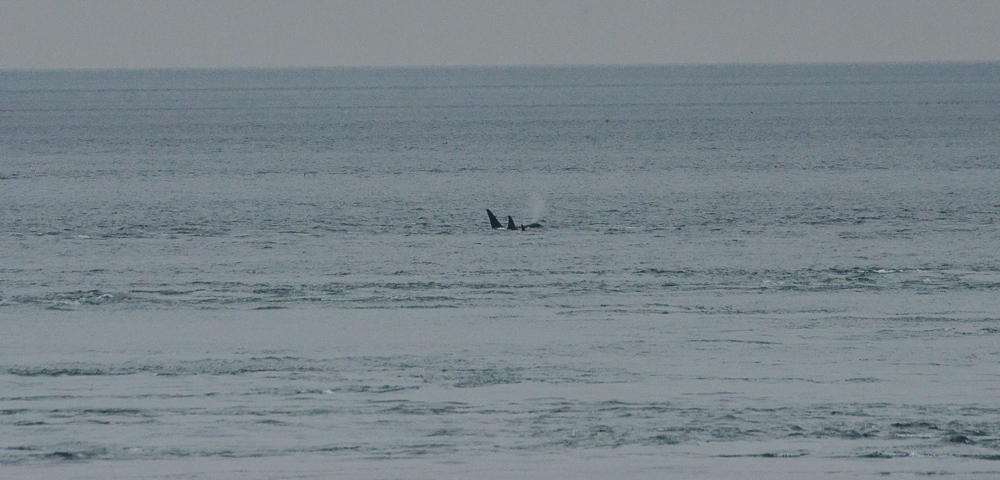
Orcas out

Sunday, December 16, 2001
MARINE LIFE: 4 Bald Eagles visited the Reserve today,3 immatures and one mature.The first one(mature) arrived just after 9:30 this morning with it’s breakfast-an unidentified fish -grasped in it’s talons. The big bird set down on the NW bluff just above the boat house to eat. As the eagle tore off pieces of fish the 5 crows danced around it, wary, but anxious to get any bits that scattered.After only 5 or 6 minutes the eagle flew off leaving the crows to scour the rocks for any scraps however tiny! I did not see anything that would have scared the eagle,certainly not the crows!
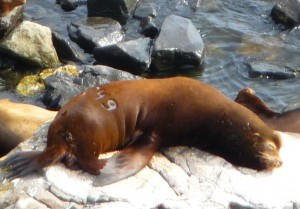
Just after 10 a.m. a lone California Sea Lion came ashore just east of the boat dock and proceeded to lumber across the island stopping every 3 metres or so to roll and rub on the grass.The reason we took note of the poor fellow is that he has a terrible scar around his neck -garbage in the sea or maybe some type of discarded fishing gear.Sea Lions with this type of wound, unfortunately are not that rare.We could not get close enough to see if it was just a scar or whether something was still in the wound.About noon 3 immature Bald Eagles landed on the ridge of West Race.They sat there for about 10 minutes until a boat approached (divers) and they flew over to N Rocks.After 1/2 hour or so they flew over to SE rocks where they stayed except for a couple of flights around the islands, unsuccessful attempts at getting a bird dinner.Two of these birds looked somewhat bedraggled with the mottled appearance of the head and tail feathers.The distinctive white plumage gradually appears with each molt over 4 or 5 years.
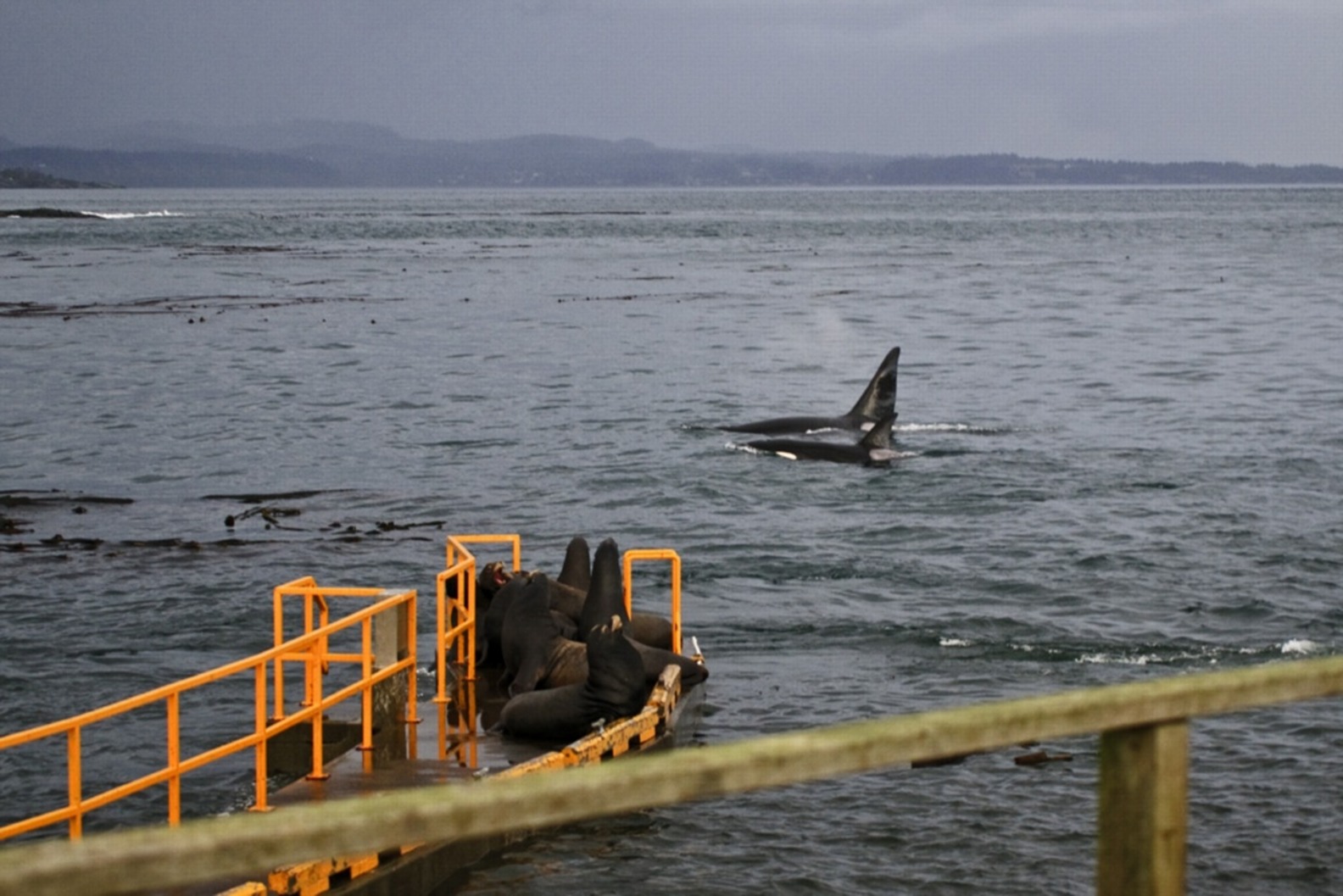
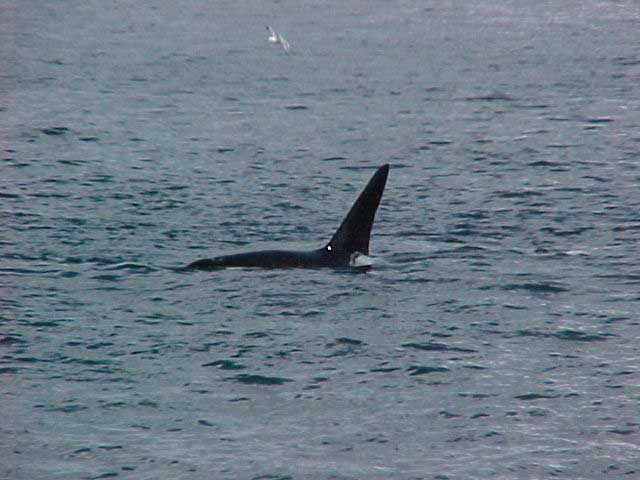
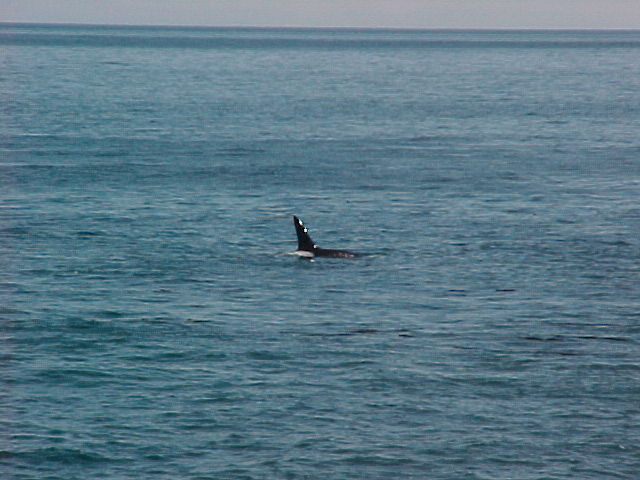
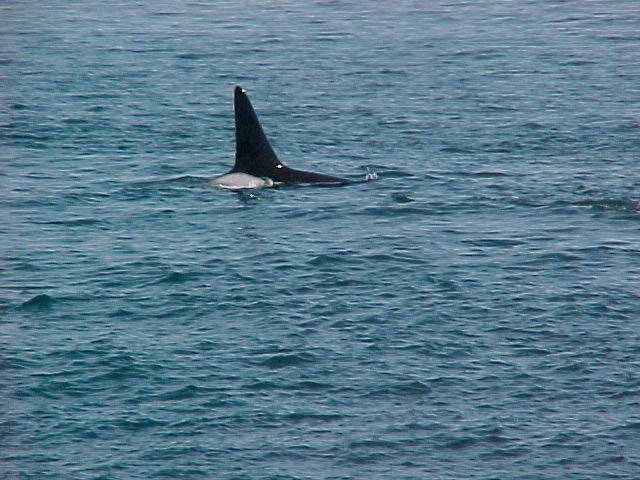
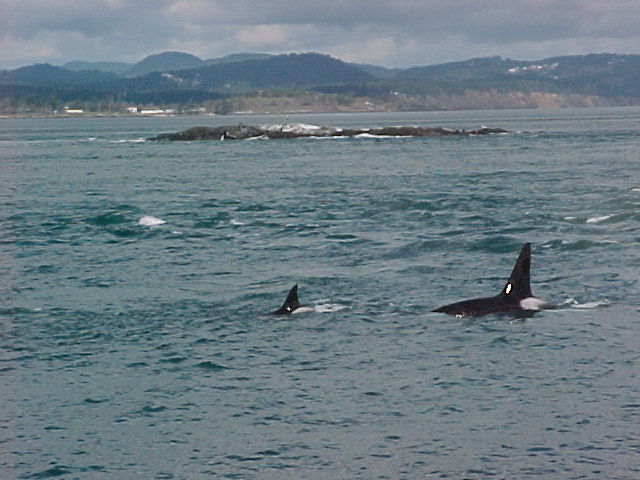
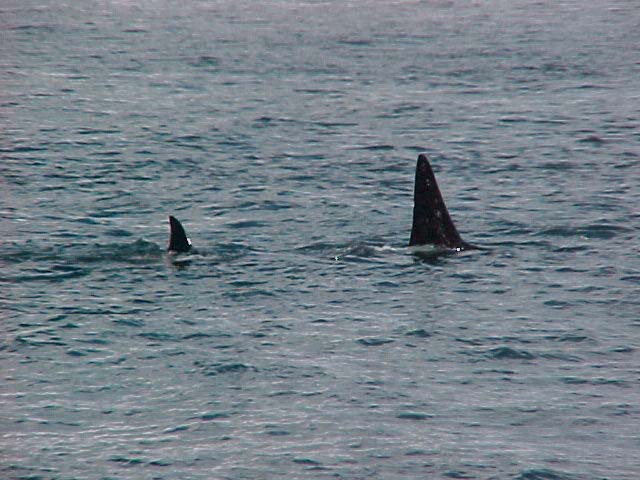
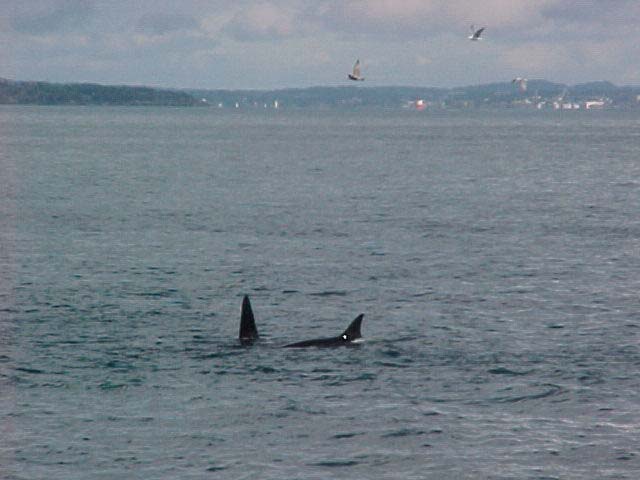
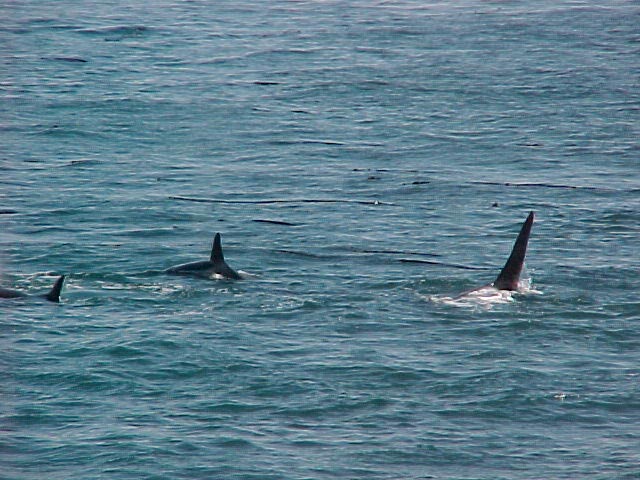
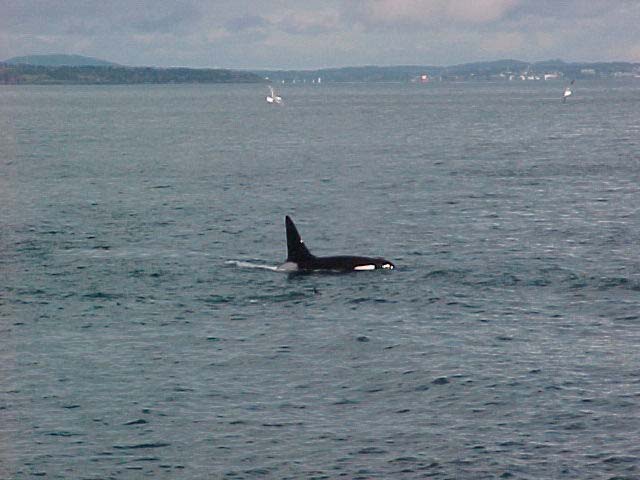
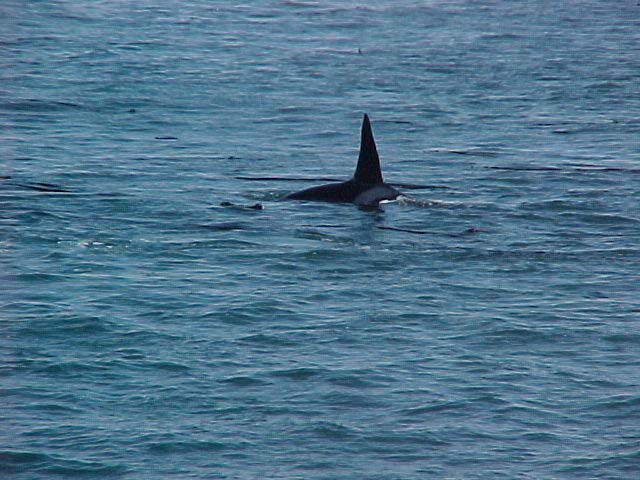
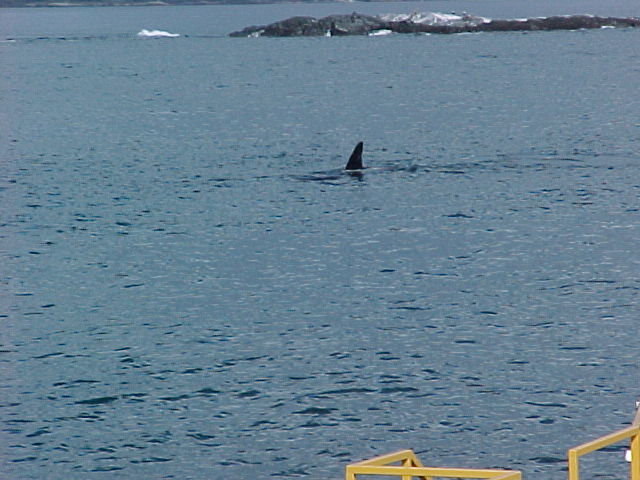
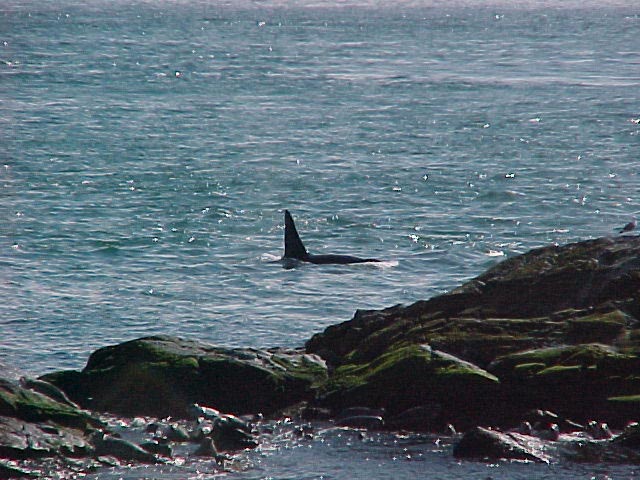
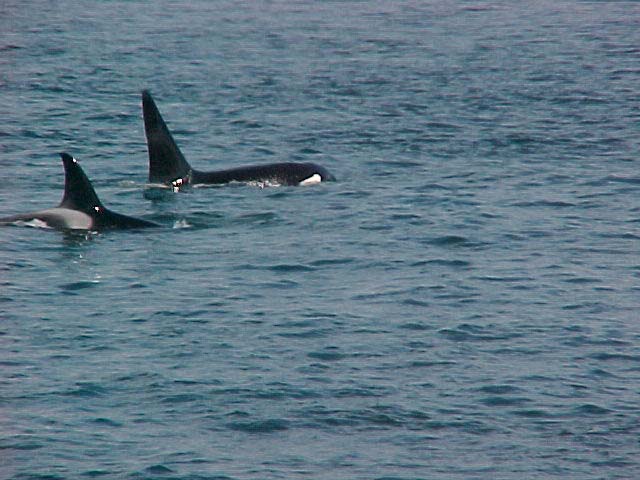
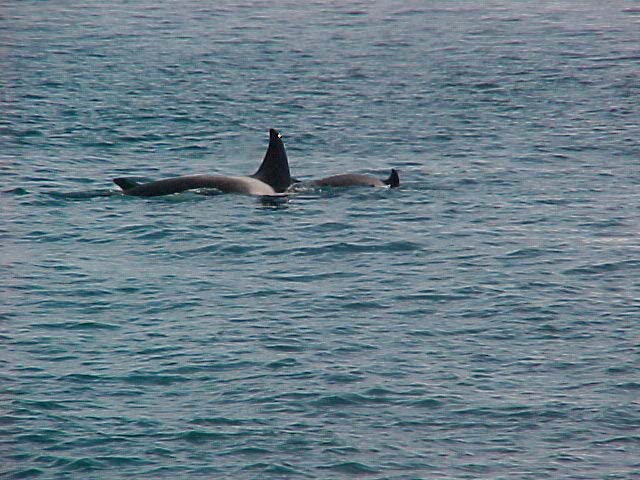
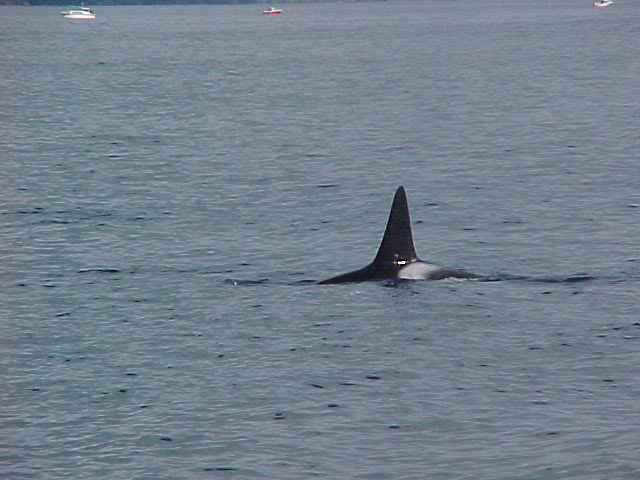
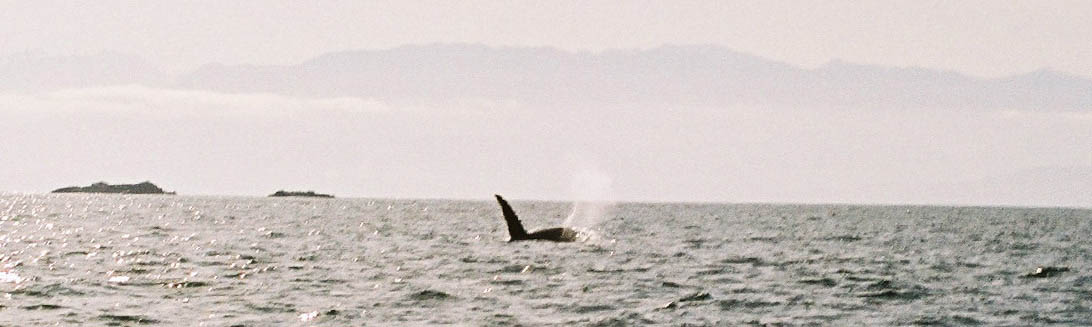
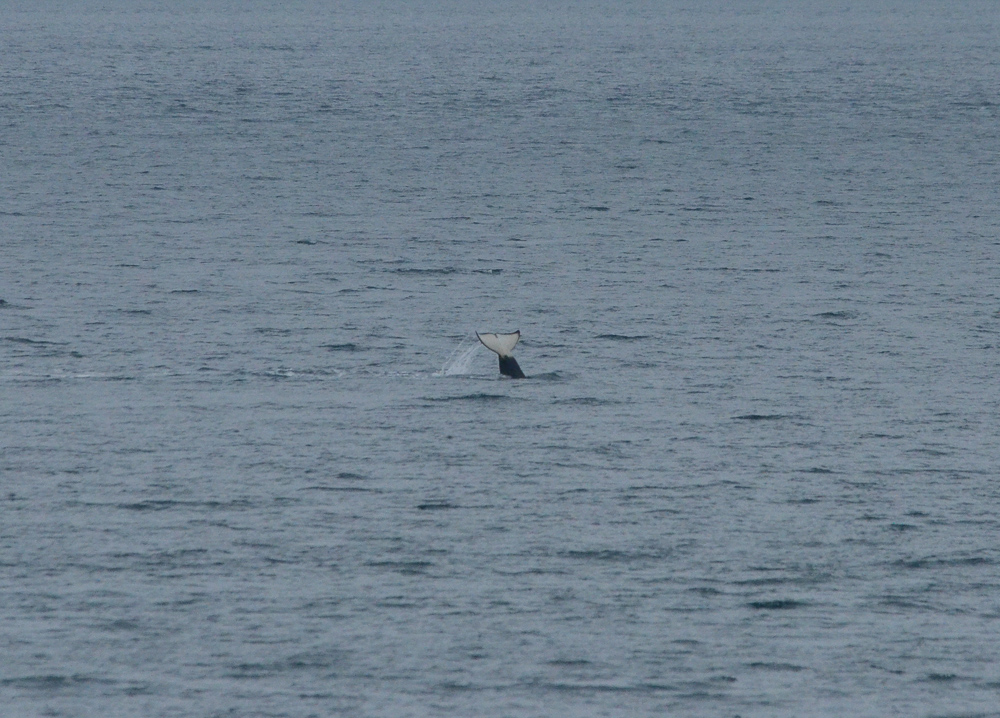
Just before 1:30 I noticed two Orcas northeast of North Rks. They were being followed by several groups of Sea Lions at about 100 metres. The whales surfaced 4 or 5 times as they made their way south just at the edge of the east side kelp bed.The last we saw they were in front of the engine room 200-300 metres off shore.As we watched for the whales to come back a 3-4 metre bull Elephant Seal drifted by and came into the small east bay. I did get some video as he floated around with just his head and unmistakable nose above the surface.He stayed in the bay only 12-15 minutes,arched his back,flared his great nostrils,dove into a wave and was gone! We often hear the elephant Seals vocalizing at night, it sounds like a calf bellowing in a tin can, but not lately, and from the sound of the roaring 45+ knt. not tonight either!
HUMAN INTERACTION: 12:10am -1:45pm Boat with 6 divers -West Race
TEMPERATURE: Max. 10.1C — 6.3C — Reset 8.7C — Rain 26.2 mm — Total rain fall for December 109.9 mm
posted by Carol or Mike S at 10:11 PM
Good Morning
WEATHER: Sky Overcast — Vis. 15 Miles — Wind West 13 Knots — Sea 1 Foot Chop
posted by Carol or Mike S at 7:32 AM
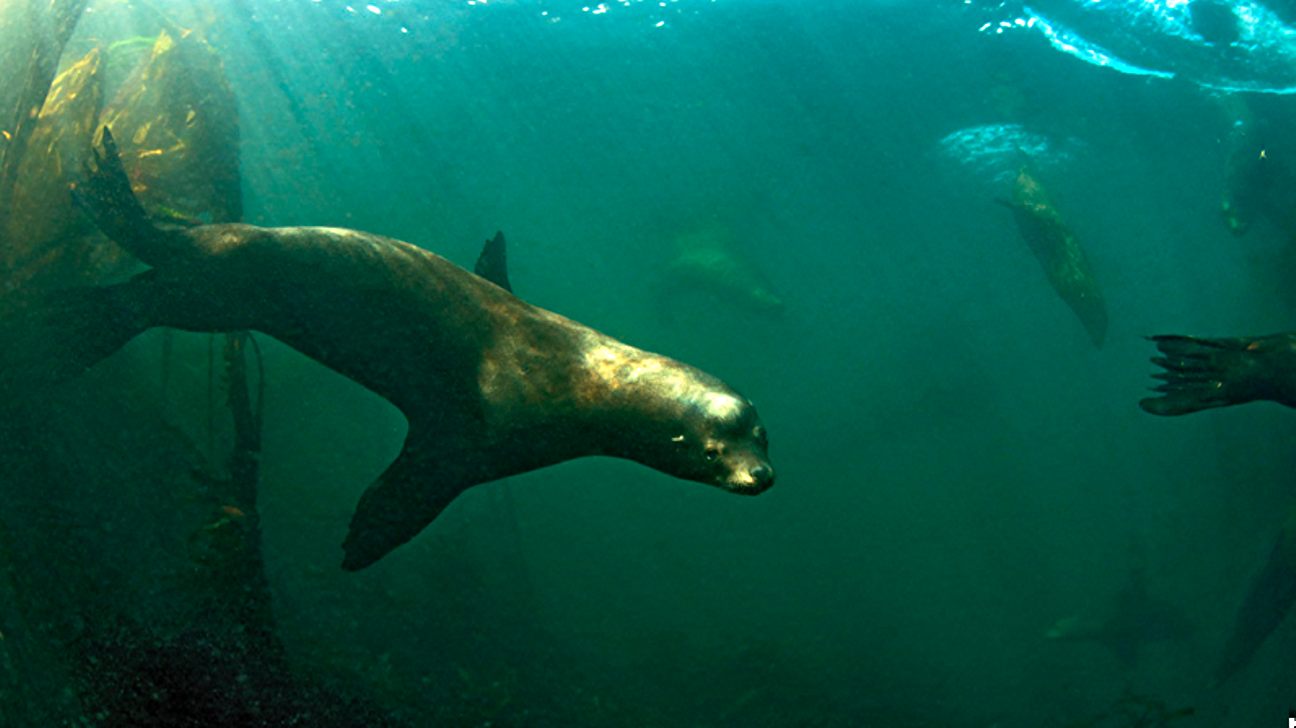
Zalophus californianus: California Sea lion–The Race Rocks Taxonomy

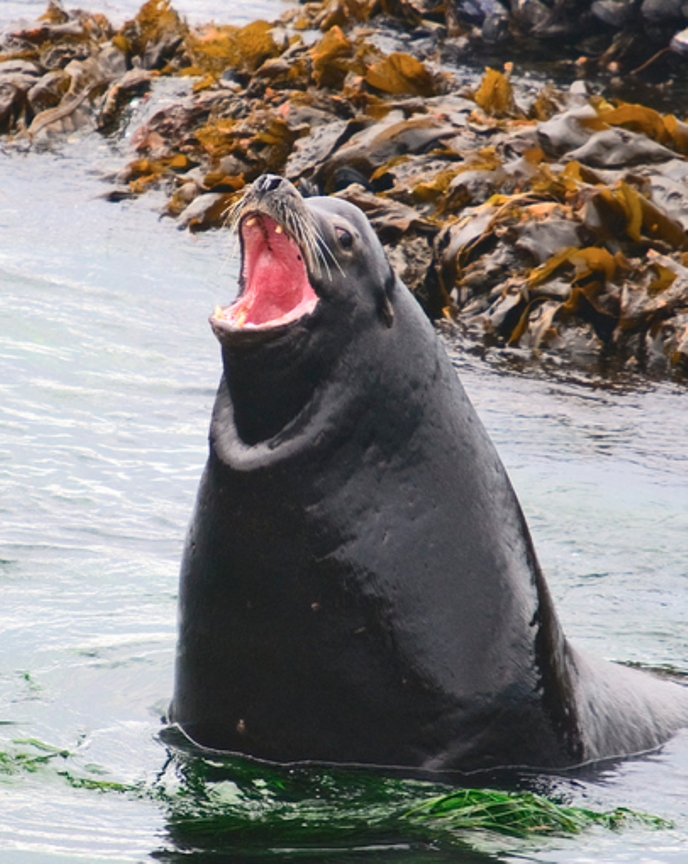
rmuwoct11califswim

California sea lion photo by Ryan Murphy


rm2010calsl

Male California sea lion– note ears;

gf15092006calsealion

California sea lion. still wet and therefore almost black. When they are dry they are dark brown. G.Fletcher photo.

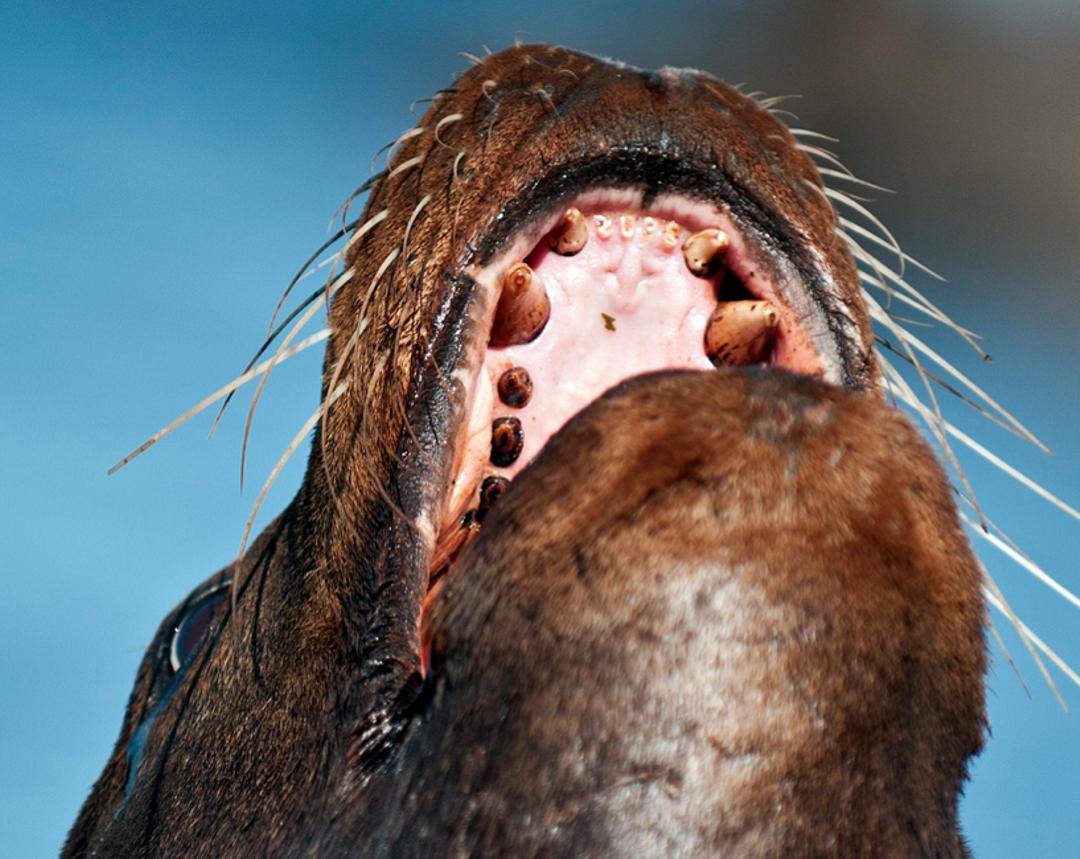
California sea lions are known for their intelligence, playfulness, and noisy barking. Their color tends toward chocolate brown, although females are often a lighter golden brown. Males may reach 1,000 lbs. (more often 850 lbs.or 390 kg) and 7 feet (2.1 m) in length. Females grow to 220 lbs. (110 kg) and up to 6 feet (1.8 m) in length. They have a “dog-like” face, and around five years of age, males develop a bony bump on top of their skull called a sagittal crest. The top of a male’s head often gets lighter with age. These members of the Otariid, or walking seal, family have external ear flaps and are equipped with large flippers which they use to “walk” on land.

The trained “seals” in zoos and aquaria are usually California sea lions.

calif

Dry sea lion on the left and wet one on the right with a northern sea lion lying behind them. Sept 2006-G.Fletcher photo

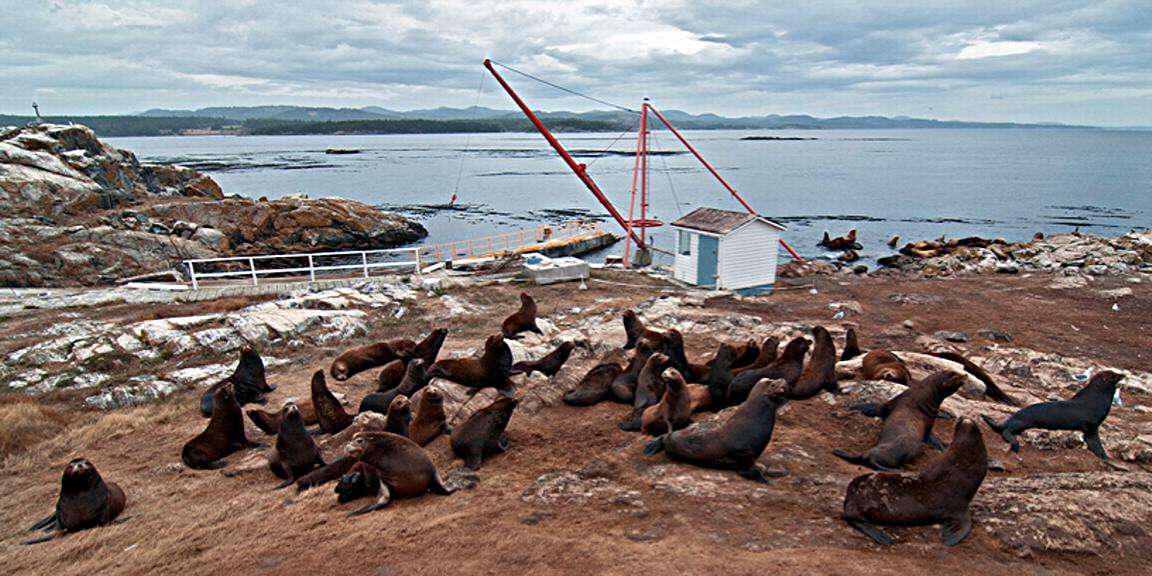
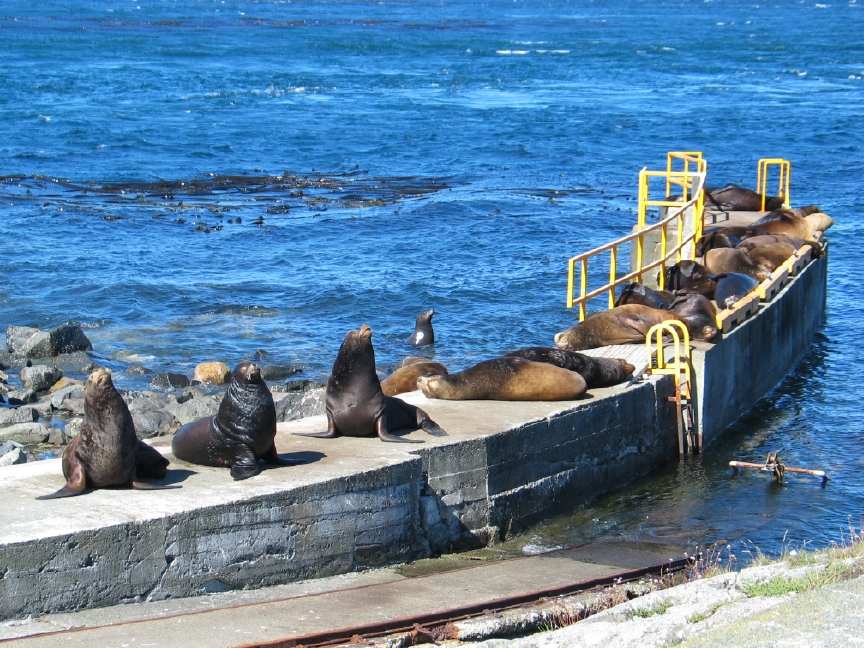
In this picture they are seen mixed in with the Northern Sea Lions on many of the islands at Race Rocks. They do prefer however, West Rock, North Rock and the North West corner and the docks area of Great Race Rocks.


bakerlion

Northern and California Sea lion with Mt Baker in the background. photo: G.Fletcher

In 1970 , Trevor Anderson reported to David Hancock for the Journal article “California Sea Lion as a Regular Winter Visitant off the British Columbia Coast” that ” California Sea Lions had hauled out on rocks near the light every winter since 1966…. and a peak of population of 30 was reached in February, 1969.”

It is clear that the population of these animals has risen considerably over the years, and by 2007, up to 300 may haul out in the fall of the year.

rmsept1411slstair

In the fall of 2011, the California sea lions were especially attracted up near the house in mid September . They all departed when an earthquake struck the north end of Vancouver island. Ryan Murphy photo

BREEDING

Sea lions do not pup at Race Rocks, it is strictly a winter haulout colony. Most pups are born on the outer coast to the South in June or July and weigh 13-20 lbs. (6-9 kg). They nurse for at least 5-6 months and sometimes over a year. Mothers recognize pups on crowded rookeries through smell, sight, and vocalizations. Pups also learn to recognize the vocalizations of their mothers. Breeding takes place a few weeks after birth. Males patrol territories and bark almost continuously during the breeding season. Gestation lasts about 50 weeks and lactation 5 to 12 months. The longevity is estimated to be around 17 years.

FEEDING HABITS

California sea lions are opportunistic feeders and eat such things as squid, octopus, herring, rockfish, mackerel, anchovy and whiting. The California sea lion competes with the Northern Sea Lion Eumetopias jubata for habitat and food

NOTES

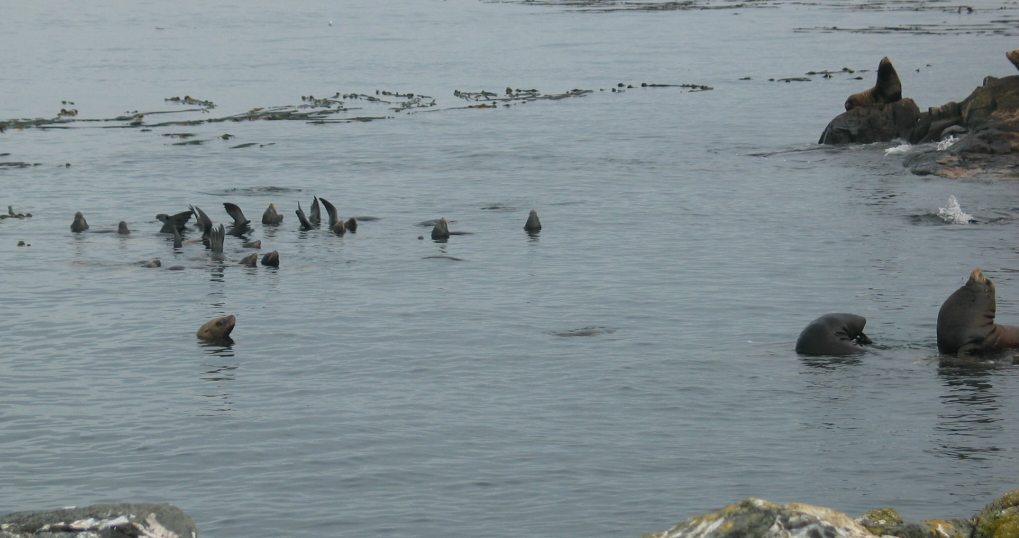
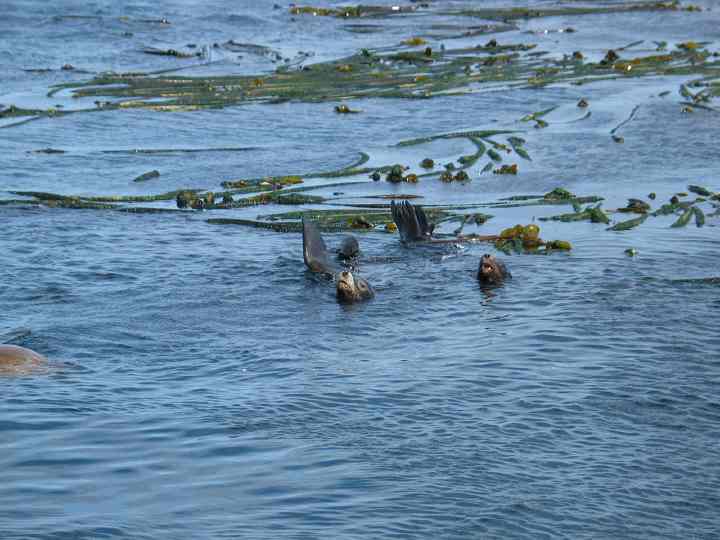
California sea lions are very social animals, and groups often rest closely packed together at favored haul-out sites on land, or float together on the ocean’s surface in “rafts.” They are sometimes seen porpoising, or jumping out of the water, presumably to speed up their swimming. Sea lions have also been seen “surfing” breaking waves.

The males are probably the most vocal of all mammals, and let out a loud incessant honking bark to protect over their territories. They are faithful to their territories, and to their harems of up to 15 females. Sea Lions swim up to 25mph which makes them one of the fastest aquatic carnivores.

Sea lions are known to damage fishing gear and steal or destroy fish in the nets. As a result a lot of California sea lions drown in nets and they are frequently shot at by commercial fishers.
See examples below and in the video.

Sea lions are preyed upon by killer whales. Sea lions are known to have such diseases as pneumonia, caused by a parasitic lungworm, and a bacterial infection called leptospirosis, which affects their livers and kidneys.

Other problems for California sealions involve humans. Sea lions have been found illegally shot and also caught in drift or gill nets and other marine debris. However, their population is growing steadily, and California sea lions can be seen in many coastal spots

The Californian Sea lion was once killed in great numbers for their blubber which could be made into oil, and the rest would be made into dog food. Today the seal lion is protected by international treaty which has led to a positive shift in their populations.

Domain Eukarya
Phylum: Chordata
Class: Mammalia
Order: Pinnipedia
Family: Otariidae
Genus: Zalophus
Species: californianus
Common Name: California Sea Lion

 ARCHIVED VIDEOS of Sea lions at Race Rocks
sealionimpactsSeptember, 2003 : This past few months we have seen three California and Northern Sea lions with fishing flashers hanging from their mouths. These animals pursue fishing lures , probably especially when live bait is used. They swallow the bait, and take down the meter plus length of leader line before the flasher comes to their mouth. The individuals will be seen for several days trailing these flashers. It is not known whether they eventually shed the flasher or whether this leads to an untimely death. Although they can pick up a flasher in waters at some distance from their haulouts, it certainly makes sense to restrict fishing activity when marine mammals are in the vicinity of a fishing vessel.
slionsFrom August to November, a group of California sea lions hauls out on the shore to the East of the Docks with a few even staying on the docks. They get very used to the boats docking there and are often joined by a few large Northern sea lions as well. The constant barking sound comes from the California Sea lions, and the low growls are from the Northerns.”
lionblastsEffects of DND Blasting at Bentinck Island: On November 7, 2002, the DND were still doing their demolition blasting exercises at Bentinck Island. (not Oct 7 as stated in this draft version of the video) The students from Lester Pearson College who were out for a project week were able to catch the images of the impact of these blasts on the first day from the science centre window and on the second day from the top of the light tower. In the tower, they interviewed Mike Demarchi of LGL who is currently doing a $50,000 contract for the Department of National Defence to monitor the impact of these blasts and to compare them with other disturbances at Race Rocks. ( Click on audio icon below)
ecotourimpactsEcotourism can have both positive and negative effects. In this video, you see twoecotourist whale-watching boats from Victoria B.C. that demonstrate two methods of viewing marine mammals. The yellow boat, the Prince of Whales rounds the middle rock inside the kelp bed, much too close to the island which is covered with northern sea lions and a few California sea lions. Since the animals on the North side of the island do not see the boat coming at this close distance, theyare startled and about 25 of them take to the water. Thehigh profile of the boatis increased by the individuals standing on the top of the boat, probably adding to the scare value.The other boat, the Discovery Launch, comes down the main passage between Great Race and the middle rock. They have approached slowly, drift with the current and present very little impact on both the sea lions on the middle rock and the harbour seals hauled out on the main island down in the foreground. Missing from this video however is video of their departure from the reserve where they swing in very close to the end of the docks, causing a stampede of a dozen sea lions in that areaThere are definite guidelines on viewing distance which are occasionally ignored by commercial operators and by private boats of the public that come into the reserve. Disturbance of any marine mammal colonies by vessel operators is against the law. Every time an animal has to change it’s behaviour because of human behaviour, there is a cost in terms of energy expenditure. Violations of this regulation should be reported to federal fisheries.If you feel you would like to provide feedback on this issue to the Department of Fisheries see contact information in this booklet on their Guidelines
dndblastsDND blasting at Bentinck Island.This video was made on October 7, 2002 in order to document the effect of the Department of National Defence demolition exercises on Bentinck Island on the behaviour of birds and marine mammals at Race Rocks MPA. In previous years we have observed considerable disruption by military exercises involving blasting on nearby Bentinck Island in the fall just after the sea lions have returned to the island. We have requested that blasts be spread out over a longer period of time during an exercise. Traditionally blasts have come in a series of three. The first one would alert the sea lions, the second would send a few in the water and the third would clear the islands. This year on this one occasion, only two blasts were held at five minutes apart. The results are shown in the video.gfsept0809brand849BRANDING:We often encounter marine mammals in the reserve which have been marked when trapped in another location as part of a scientific study. We are including in this file a set of pictures of marine mammals which have been tagged in various studies, along with the particulars of the observations. sealion12ENTANGLEMENT:

In September 1999, this California sealion, with a plastic hoop around his neck, was photographed from the docks at Race Rocks by MPA Guardian Carol Slater.

Sea lion with a plastic ring on his neck.

A sea lion with a plastic ring on his neck. See this file for our posts on “entanglement”. It shows the many examples of human debris compromising the health of sea lions.Sometimes however, there is a good news story. It seems like this California sea lion has made somewhat of a recovery, with skin growing over the plastic. See this and other images by . Ryan Murphy in his Flickr album.

SUBSPECIES

Three subspecies are recognized: Zalophus californianus californianus (Lesson, 1828), Zalophus californianus wollebaeki (Sivertsen, 1953) and Zalophus californianus japonicus (Peters, 1866), each living in a clearly separate range. According to Rice (1998), the differences between these types justifies classification as separate species: Zalophus californianus, Zalophus wollebaeki and Zalophus japonicus

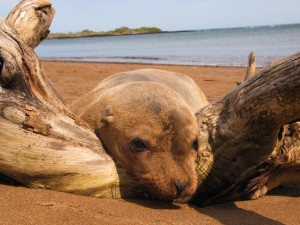
seali2sleep

Ecological Equivalents:  The subspecies Zalophus wollebaeki sea lion from the Galapagos Islands.


Other Members of the Class Mammalia at Race Rocks.

taxonomyiconReturn to the Race Rocks Taxonomy
and Image File
pearsonlogo2_f2The Race Rocks taxonomy is a collaborative venture originally started with the Biology and Environmental Systems students of Lester Pearson College UWC. It now also has contributions added by Faculty, Staff, Volunteers and Observers on the remote control webcams.

File originally compiled by Caroline Mwaniki (PC yr. 27)


Orcinus orca: Killer Whale–The Race Rocks Taxonomy

Screen Shot 2015-01-16 at 9.58.02 PM

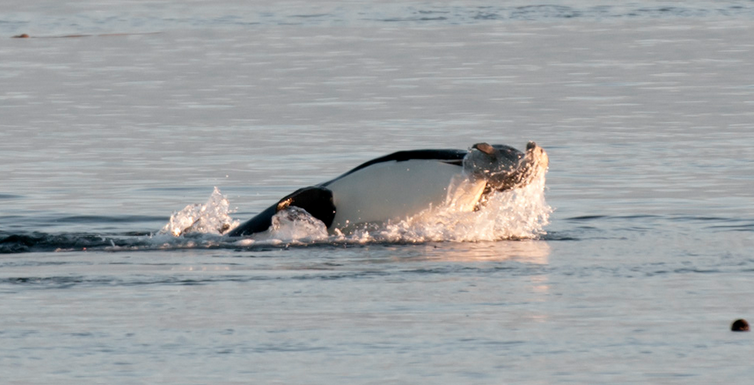
Orcinus orca with prey– photo by Ryan Murphy, Sept 21 2010

rrwhale

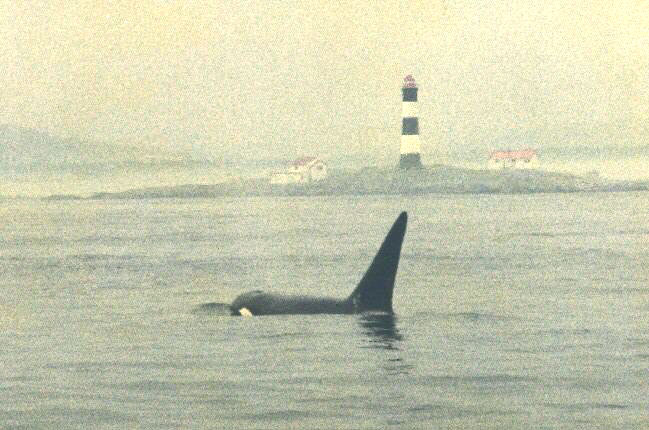
In 1978, a group of divers from Lester Pearson College were mapping the underwater life in the Rosedale Reef area just South of Great Race Rocks. A large bull orca, from a transient pod surfaced near the boat. Duane Prentice who was then a student in the Diving Service at Pearson College, took this photo from the dive boat. The photo was featured the following year in the Lester Pearson College Proposal for an Ecological Reserve at Race Rocks. Duane is now a photo-journalist living in Victoria.


AF-orca-and-ship2jan132014

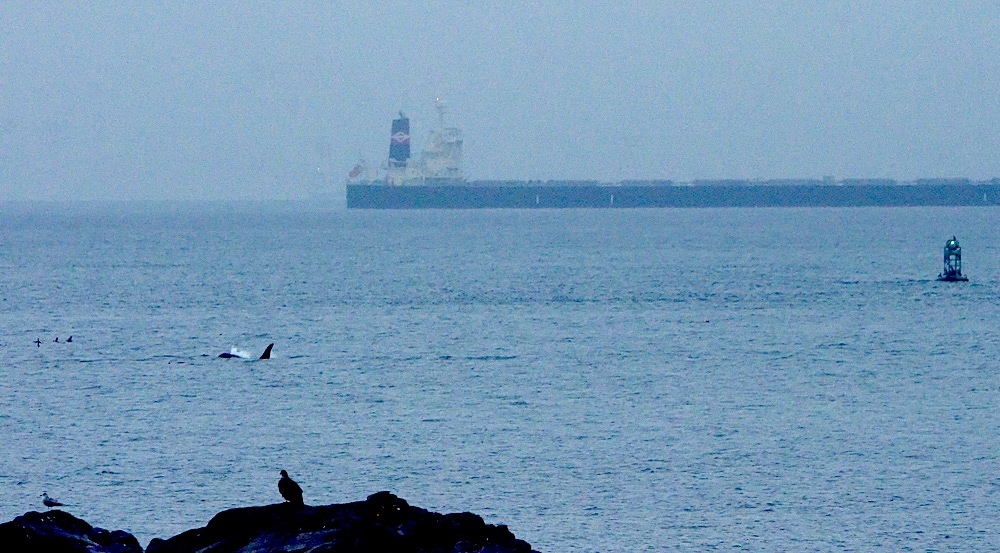
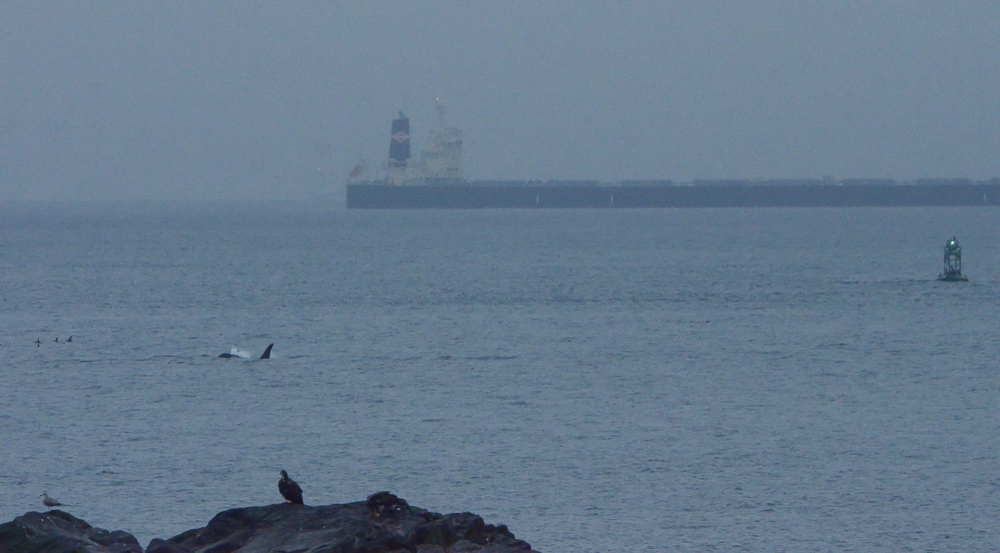
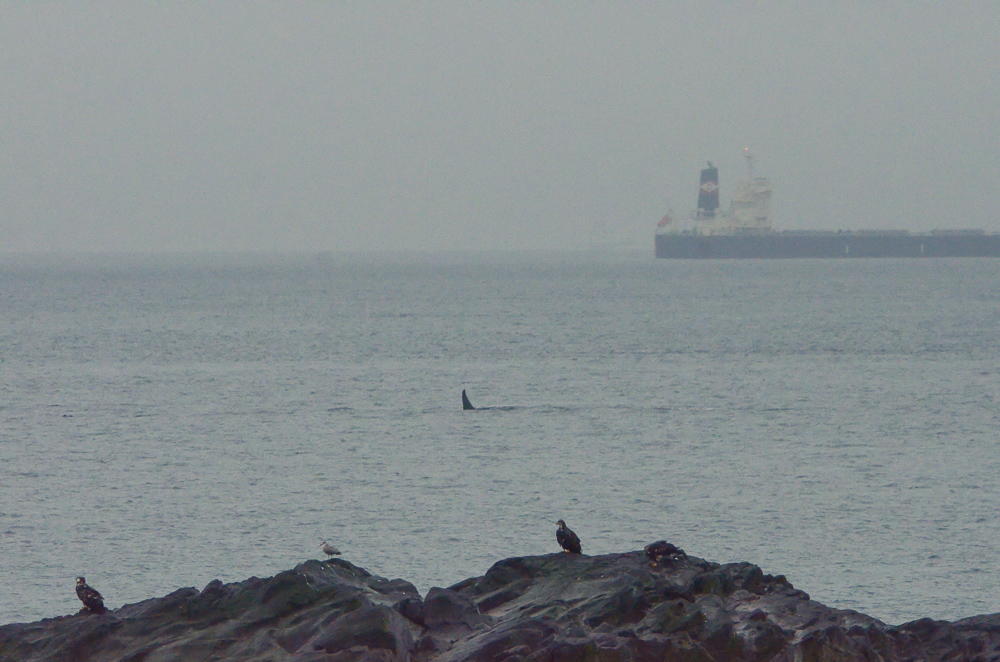
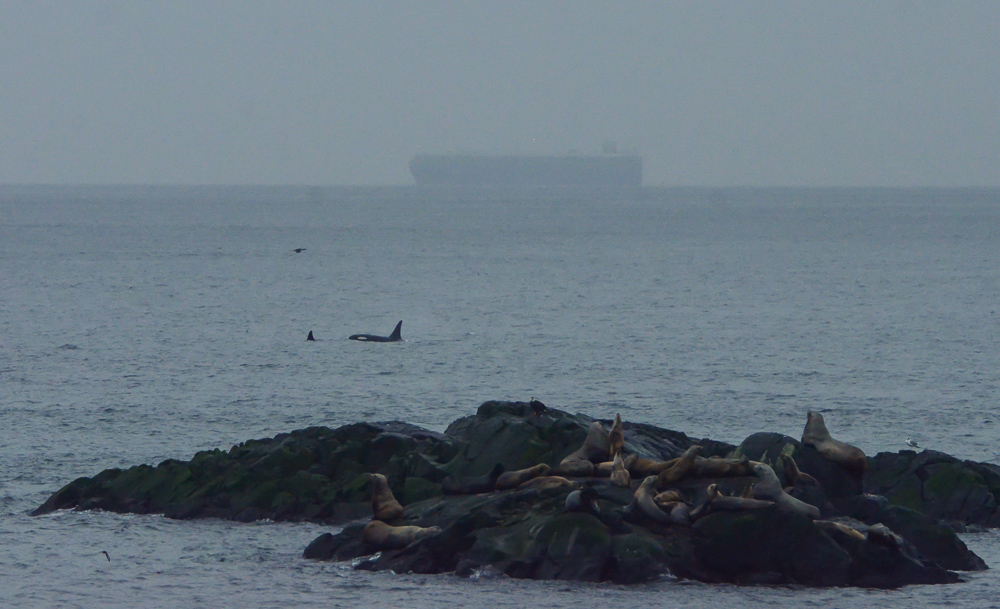
This image of a bulk carrier , whales and eagles is one that was added to our Oil Spill and Animals at Race Rocks page photos by Alex Fletcher.

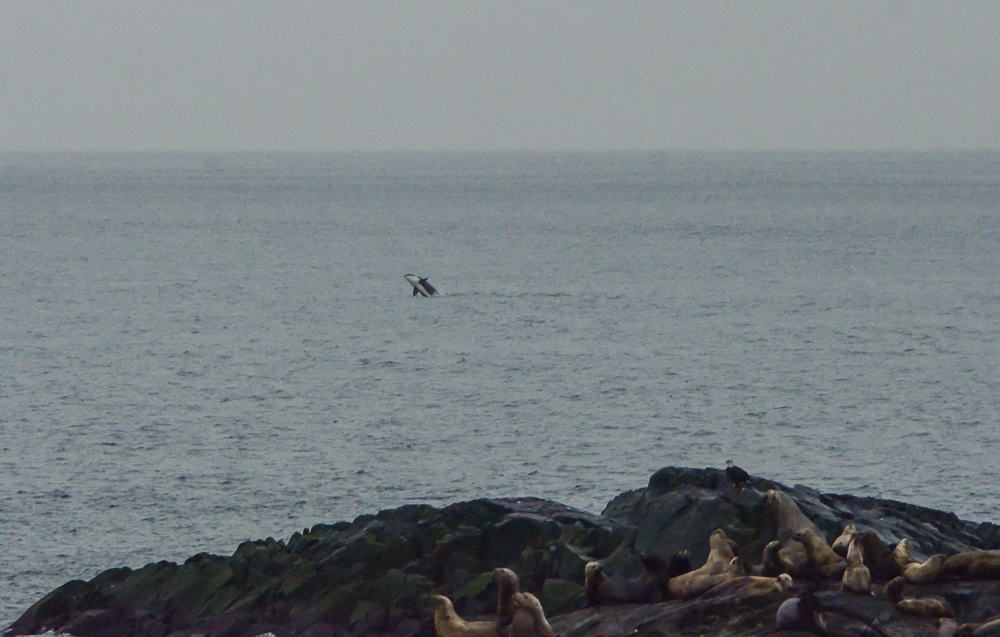
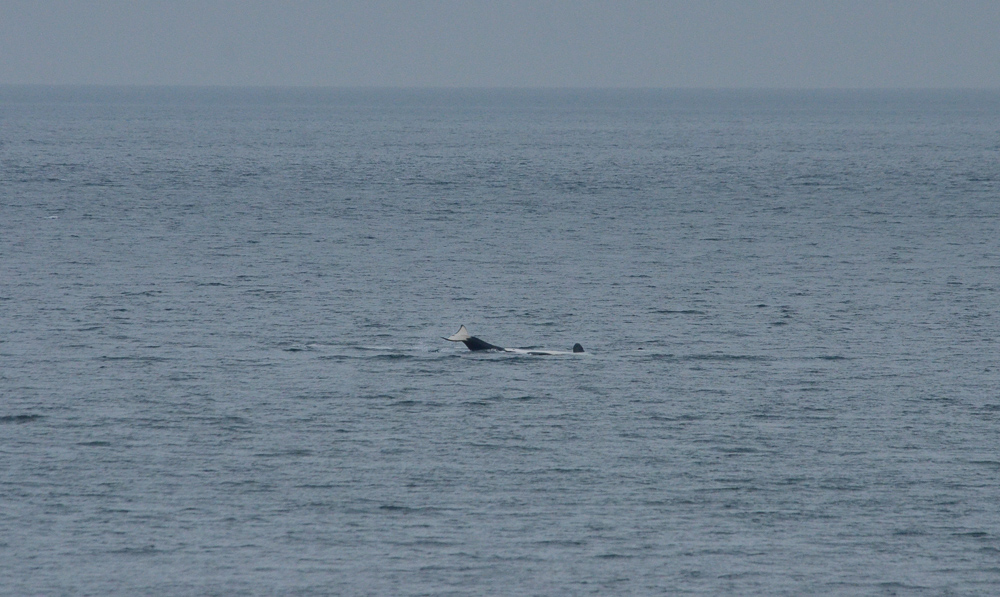
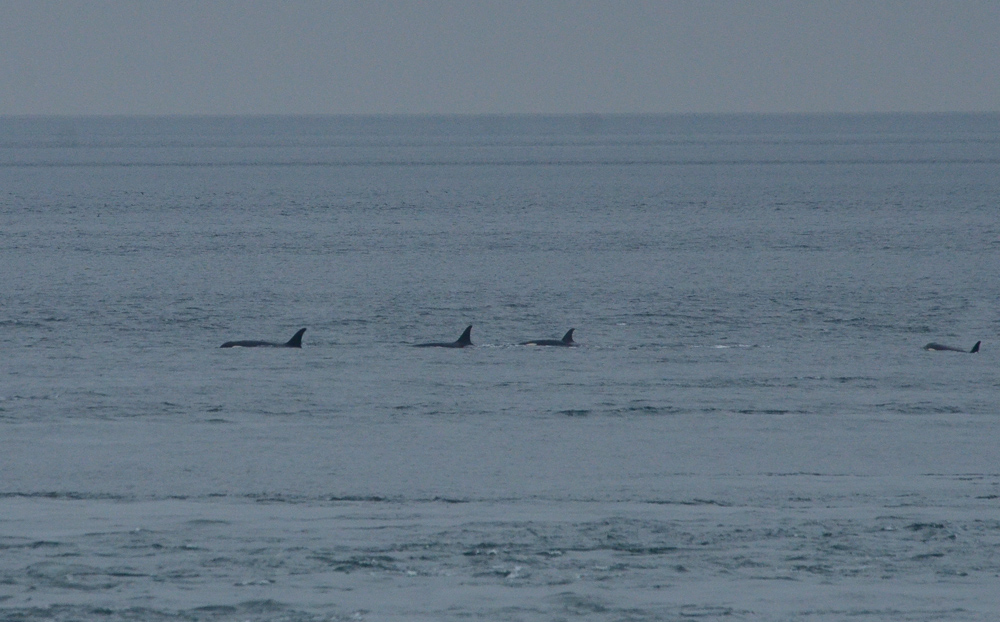
In the Ecoguardian log of January 13, 2014, Alex Fletcher reported his sightings of Orcas that week at Race Rocks Ecological Reserve. See the images below:

Physical characteristics:
Size:

1crooked

From one of the Race Rocks Activity pages of 2002: “We spotted an Orca on our way back to Pearson College from Race Rocks. An exciting end to an exciting day.”

Although small compared to some whales, killer whales are the largest predators of mammals known.  Male killer whales, or bulls, average 5.8 to 6.7 m (19-22 ft.) and usually weigh between 3,628 and 5,442 kg (8,000-12,000 lb.). Females, or cows, average 4.9 to 5.8 m (16-19 ft.) and usually weigh between 1,361 and 3,628 kg (3,000-8,000 lb.). Individual sizes vary significantly between geographical areas.  Length estimates for more than 2,000 killer whales taken by North Atlantic whaling operations show male North Atlantic killer whales average about 6.1 m (20 ft.) while females average about 5.5 m (18 ft.).

Body Shape:
A killer whale has a sleek, streamlined, fusiform (tapered at both ends) body shape.

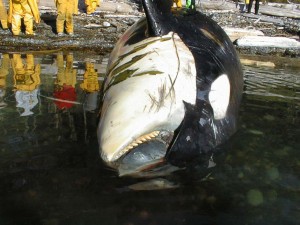
frontOn Sept 25, 1999 students from Pearson College and teacher Catrin Brown went out to Whirl Bay to retrieve the bones of a female Orca, L21 who had died.
The photos and story of that episode can be found in this post.

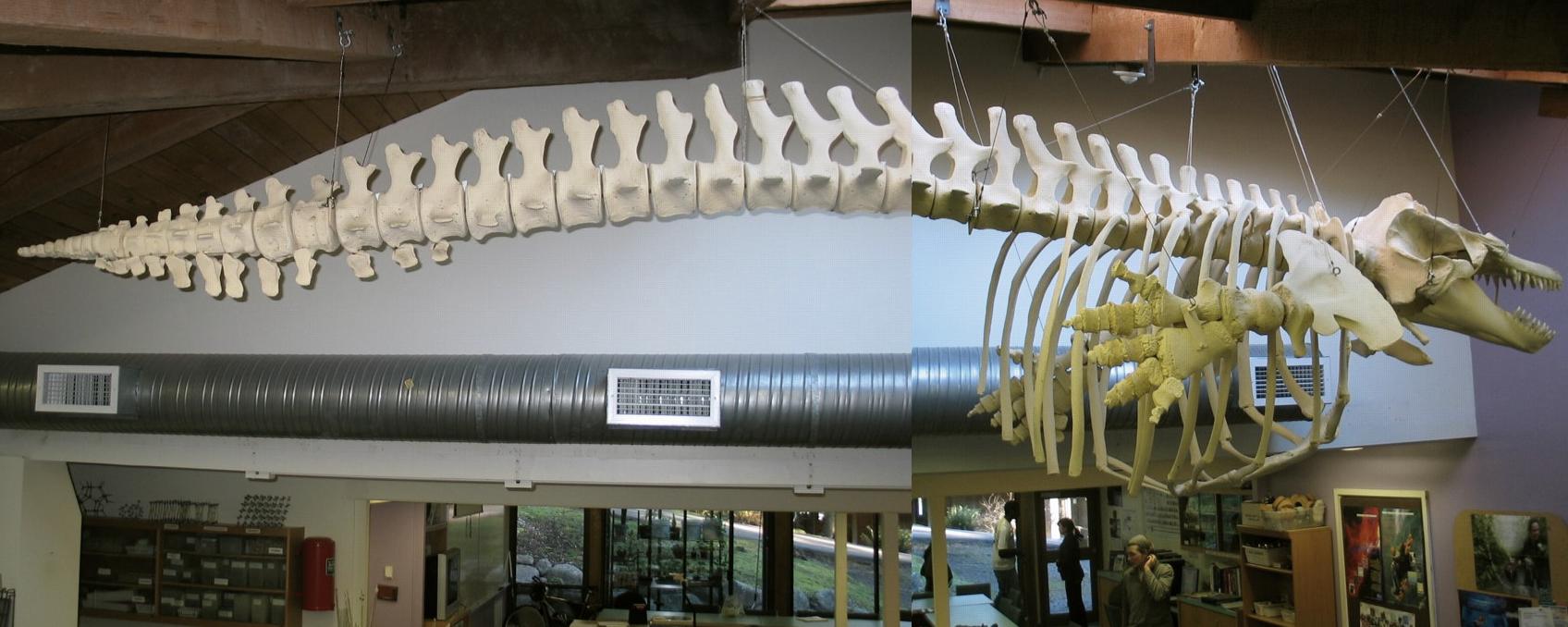
rightside


See images of the skeletal mount which now hangs in the biology lab at Pearson College


Coloration:

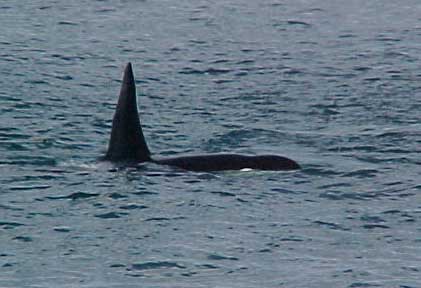
lortonwhale-1

Orcinus orca, (killer whales),  South West of Race Rocks …Photo by Jeff Lorton

The dorsal surface and pectoral flippers are black, except for the gray saddle area located just behind the dorsal fin.  The ventral (bottom) surface, lower jaw, and undersides of the tail flukes are mostly white.  The undersides of the tail flukes are fringed with black. A white ‘eyespot’ is located just above and slightly behind each eye. The markings on the flukes and saddle patch have been used as the standard method of identification of Killer whales. Their vocalizations were researched in the 1980’s by John Ford. He spent many hours in the Race Rocks and the rest of the waters around Vancouver Island for his research.

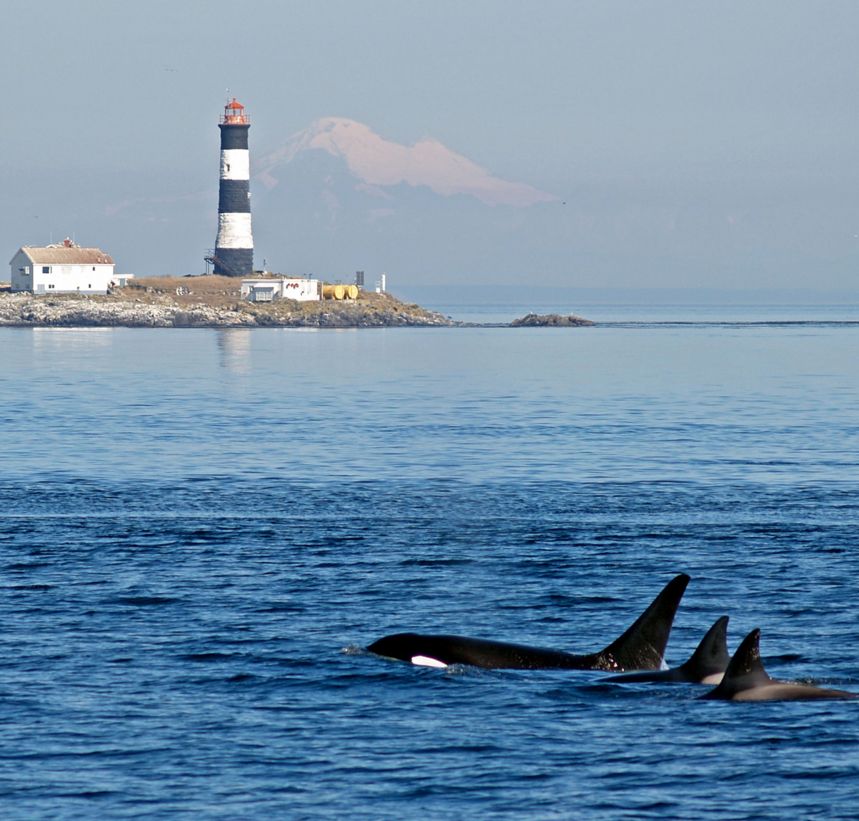
rmorcadock

Ryan Murphy has taken pictures of the Orcas that he has seen in the Ecological reserve since 2009.See this Flickr set for the complete set.

Photos below by
Roberto Serpelloni, (PC yr 25) March, 2000

Kingdom Animalia
Phylum Chordata
Sub-Phylum Vertebrata
Class Mammalia
Sub-Class Eutheria
Order Cetacea
Sub-Order Odontoceti
Family Delphinidae
Genus Orcinus
Species orca

Behavior:

Sound travels well in water and orcas communicate with calls, clicks and whistles. They use ‘echolocation’ clicks to navigate and find food.  Orcas can leap out of the water to ‘breach’. Orcas also ‘spy-hop’, rising vertically in the water with their heads in the air, looking around.

Permanent mother-led family groups form extended families called ‘pods’. Though mothers are the primary caregivers, everyone plays a part in caring for the young.  The social life is vital.  Each pod has its own distinct dialect.

orcaisll

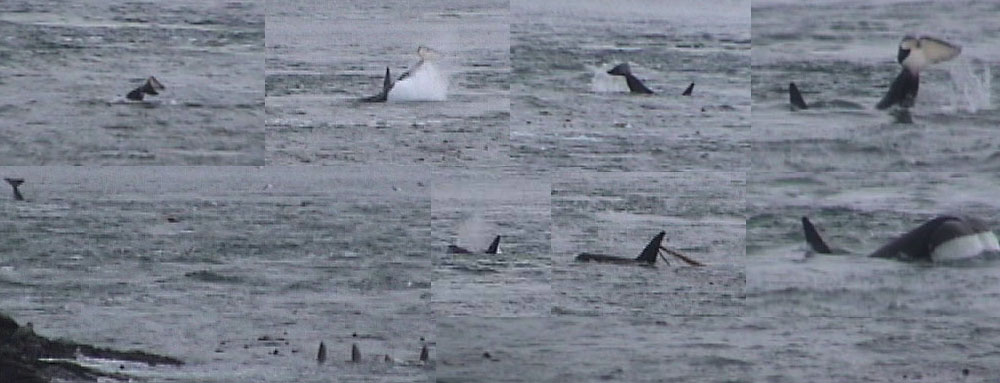
A collage of pictures of an Orca killing a seal- taken from the video..


Living at Race Rocks affords the rare opportunity to see attacks by Transient Orcas on the resident harbour seal population. In this video below,  Mike and Carol Slater captured some of the sequence in an event that happened some distance off the South islands.[video width=”640″ height=”480″ mp4=””https://www.racerocks.ca/wp-content/uploads?2015/12/orca_300.mp4″}{/video

orcollageA collage of pictures of an Orca killing a seal- taken from the video above.
 Biotic-associations:

The website http://www.cgo.wave.ca/~wolfy/orca.html offers detailed information about orca’s bio-associations and hunting manners. It is based upon a comprehensive bibliography that includes several research papers and books. (Link opens in a new window).

Local Research on Killer whales:
Robin W. Baird and Hal Whitehead ,Social organization of mammal-eating killer whales: group stability and dispersal patterns
.2000,

Ford, J.K.B. 1991. Vocal traditions among resident killer whales (Orcinus orca) in coastal waters of British Columbia.
Can. J. Zool. 69: 1454-1483.
Bigg, M.A., P.F. Olesiuk, G.M. Ellis, J.K.B. Ford & K.C. Balcomb III. 1990. Social organization and genealogy of resident killer whales (Orcinus orca) in the coastal waters of British Columbia and Washington State.
Rep. Int. Whal. Commn. (Special Issue 12): 383-405.
Ford, J.K.B. 1989. Acoustic behaviour of resident killer whales (Orcinus orca) in British Columbia.
Can. J. Zool. 67: 727-745.

From John Ford’s website you can hear Killer whale sounds of the Southern Resident Killer Whales.

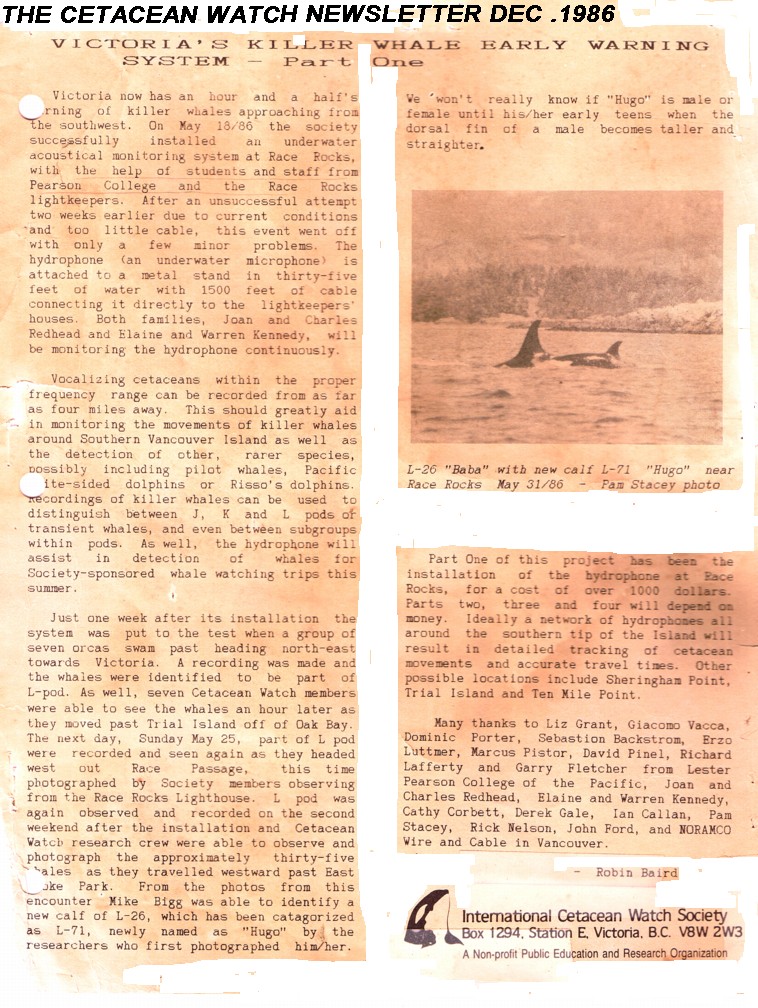
cetaceanEarly research: The Cetacean Watch Newsletter , Dec 1986. A Discussion of Victoria’s Killer whale early warning system, and the installation of the first hydrophone at Race Rocks.(1986)


Link to the Ecotourism problems  page:

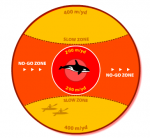
bewhalewiseLink to the Be Whale Wise website for viewing guidelines
Other Members of the Class Mamalia at Race Rocks.

taxonomyiconReturn to the Race Rocks Taxonomy
and Image File
pearsonlogo2_f2The Race Rocks taxonomy is a collaborative venture originally started with the Biology and Environmental Systems students of Lester Pearson College UWC. It now also has contributions added by Faculty, Staff, Volunteers and Observers on the remote control webcams.

Jaffar Saleh Subaie PC yr 27

Phoca vitulina: Harbour Seal –The Race Rocks Taxonomy

The total harbour seal population in the eastern north Pacific is estimated to be  330,000, and in California the estimated population was 40,000 in 1997.  They usually are found in small groups, but sometimes occur in numbers of up to 500.
shoulder
RANGE/HABITAT:  Harbour seals are found across the Northern Hemisphere in both the Atlantic and Pacific Oceans.  In the Northeast Pacific, they range from Alaska to Baja California, in Mexico. They favor near-shore coastal waters and frequent sandy beaches, mudflats, bays, and estuaries.

See the most recent posts on harbour seals by the Ecoguardians at Race Rocks 

sealman

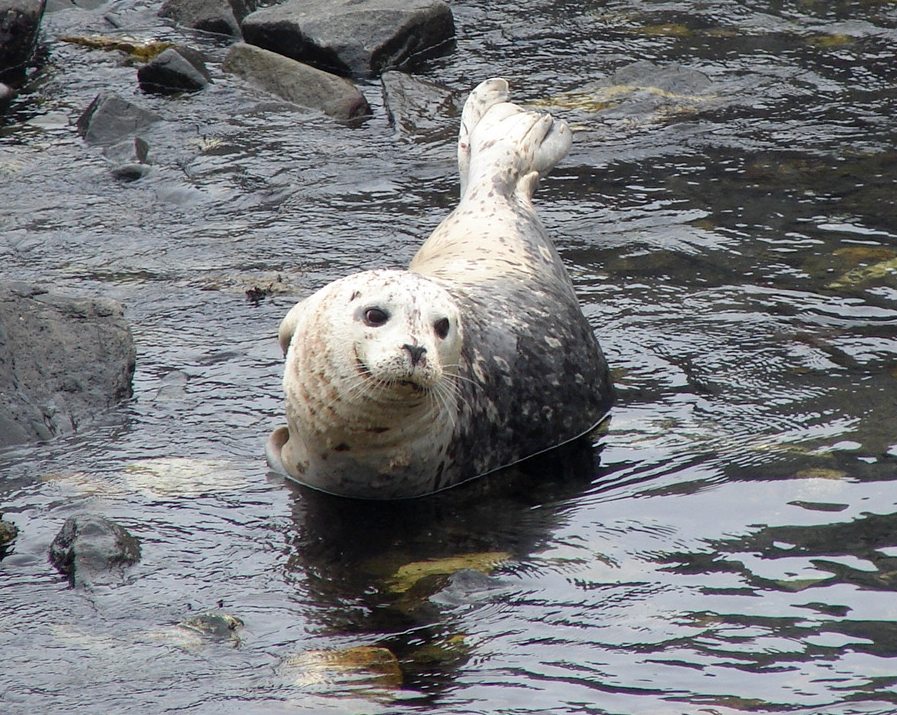
Harbour seal photo by Ryan Murphy 2002

silverHarbour seals spend about half their time on land and half in water, and they sometimes sleep in water.  They can dive to 1,500 feet (457 m) for up to 40 minutes, although their average dive lasts 3 to 7 minutes.  They are opportunistic feeders and hunt for sole, flounder, sculpin, hake, cod, herring, octopus, and squid.They will also take fairly large salmon.

This image of a mother an baby harbour seal was taken by Ryan Murphy when he was the Ecoguardian at Race Rocks 2009-2011 See this and many more excellent shots  on his Flickr album of Race Rocks Seals here.rmharbsealandpup

” Ryan and I were doing a live webcast from West Race Rocks, when we came across this harbour seal. It kept returning for a view of our activities so we were able to take several video shots while it hovered nearby. We noticed how it seemed to like returning to this rock pinnacle which was covered with kelp and the plumose anemone. When the lights of the camera get in at close range on the stalks or stipes of the kelp, you can see the brightly colored brooding anemone.” Andras Rozmer, (PC year 26)


Birthing location. Mother and and baby harbour seal. A few scenes taken in June at the time of the harbour seals giving birth. Note membranes still attached to the mother in the swimming scenes near the end.


Harbour seals are year-round residents of Race Rocks. Their numbers increase to over 400 in June and July at the peak of the pupping season. This video shows a quiet scene with seals hauled out on the shore on the west side of Race Rocks.


Domain: Eukarya
Kingdom: Animalia
Phylum: Chordata
Class: Mammalia
Order: Carnivora
Clade: Pinnipedia
Family: Phocidae
Genus : Phoca
Species : vitulina

Phoca vitulina (Linnaeus, 1758 )

COMMON NAME: Harbour Seal

sealbay

In the summer, the South East bay is often populated by harbour seals. In this view taken in July, 2005 from the tower, you can count at least 25 seals.

southrock

This shot is from the tower of the south bay by PB, Sept. 14 2007, the seals can be seen swimming underwater.

sleeprock

Harbour seals on the south intertidal island, Sept. 2007

sealislandlong

A panorama of the seals on South Islands in June.. photo: GF

sealeaten2

The cause of death of this seal is unknown.It could have been hit by a boat.

sealeaten

It had been providing food for an eagle several days before this picture was taken: see video:

rmsept2009decapsealAt Race Rocks,the Harbour seals are year round residents, although their numbers peak in mid summer to over 400. They have pups on the island from March to July. This file shows what happens if boat traffic is too fast in the ecological reserve or around any seal haulout area,


Damion Wilson PC Year 27.
Other Members of the Class Mammalia at Race Rocks.

See the most recent posts on harbour seals by the Ecoguardians at Race Rocks 

taxonomyiconReturn to the Race Rocks Taxonomy
and Image File
pearsonlogo2_f2The Race Rocks taxonomy is a collaborative venture originally started with the Biology and Environmental Systems students of Lester Pearson College UWC. It now also has contributions added by Faculty, Staff, Volunteers and Observers on the remote control webcams.


Sea lions growling again

Saturday, December 15, 2001
Good Evening
TEMPERATURE: Max. 7.0C — Min. 4.7C — Reset 6.9C — Rain 1.4 mm
posted by Carol or Mike S at 6:08 PM
WEATHER: light winds all day,a nice break from the roaring westerly. It was nice to be able to hear the sea lions growling and barking again. Looks like we may be in for another stormy night judging from the swell that is starting to come in from the south east.Some of the Sea Lions on the east ridge are jumping into the water as the 3-4metre waves break over them while others are moving down the west side of the ridge to join a group of 14 California sea lions and the 2 Elephant Seals that have been hauled out all day.The Harbour seals are hauling out as the tide ebbs and unless disturbed will stay ‘high and dry’ until the tide comes in again.
–Today is the first day we have seen the large male elephant seal back on middle rock – ( see camera1- note added by Garry)
posted by Carol or Mike S at 4:37 PM

Good Morning

WEATHER: Sky Overcast — Vis. 15 Miles — Wind North East 9 Knots — Sea Rippled
posted by Carol or Mike S at 7:26 AM

Westerly blows and Elephant seals huddle

Friday, December 14, 2001

Good Evening
TEMPERATURE: Max. 8.9C — Min. 6.8C — Reset 6.8C — Rain 6.2 mm
posted by Carol or Mike S at 6:12 PM

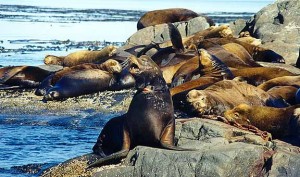
MARINE LIFE:the westerly continues to howl at 44-50 knots and the favoured spot on Gr.Race is the east Bay area.There are 250-300 gulls,beaks into the wind,along the ridges of the cliffs.The 26 Black Oyster Catchers prefer to huddle in twos and threes in the shelter of large bolders.There are 67 Northern Sea Lions and 26 California Sea Lions packed together like ‘pick-up’ sticks also along the east ridge.Closer to the water and in the lee of the house, two juvenile Elephant Seals are ‘cuddled’ together as if to keep warm.The Harbour Seals however seem to enjoy the surf and spend a lot of time diving into the 2-3 metre waves.
posted by Carol or Mike S at 4:23 PM

Good Morning
WEATHER: Sky Part Cloudy Vis. 15 Miles — Wind 30 Gusting 45 Knots — Sea 6 Foot moderate with Moderate South West Swell
posted by Carol or Mike S at 8:48 AM

Wind!

Thursday, December 06, 2001
Good Evening
TEMPERATURE: Max 8.8C — Min 4.5C — Reset 7.7C Rain 5.0 mm — Windy day
WEATHER: A great weather day! Very noisy with the howling and whistling 35-46knt. winds out of the west.At times the rain, moderate and horizontal, reduced visibilty to 1/2 mile as some of you may have noticed on cameras #1 and #3. The constant pounding of the waves,especially during high tide causes the house to ‘rumble’ not unlike small earthquakes.
MARINE LIFE: The dead mammal is a very small Harbour Seal, looked to be about 8 or 9 kilos and 70cms. There are no external wounds, however the seal seems under sized with not much body fat, and for some reason failed to thrive.It would appear that it has been dead for 2 or 3 days and came ashore on a flooding tide in a knot of kelp and driftwood.
Many of the sea lions rafted about in the relative calm sea in the lee of Gr. Race while 40-50 Harbour Seals spent several hours ‘surfing’ in the 3-4metre breakers between the Southeast Rocks and Gr. Race
posted by Carol or Mike S at 6:08 PM
Good Morning
WEATHER: Sky Overcast — Vis. 15 Miles — Light Rain Shower — Wind South West 23 Knots — Sea 4 Foot Moderate
posted by Carol or Mike S at 7:19 AM

Tour Boat Disturbance

Wednesday, December 05, 2001
Good Evening
TEMPERATURE: Max 6.1C — Min 3.3C — Reset 4.9C — Rain 0.8 mm
HUMAN INTERACTION: Two groups of students came over in 2nd Nature this afternoon to learn the intricacies of the desalination plant that provides our fresh water. Two tour boats were in the reserve at 14:40 one of which did approach Middle Rock a little too close and caused some Sea Lions to take to the water. I think actually having people standing so high on an observation deck was very threatening to the animals. Garry happened to be in the tower so obtained this video of the disturbance:
http://www.racerocks.com/racerock/archives/videcotourimpact.htm
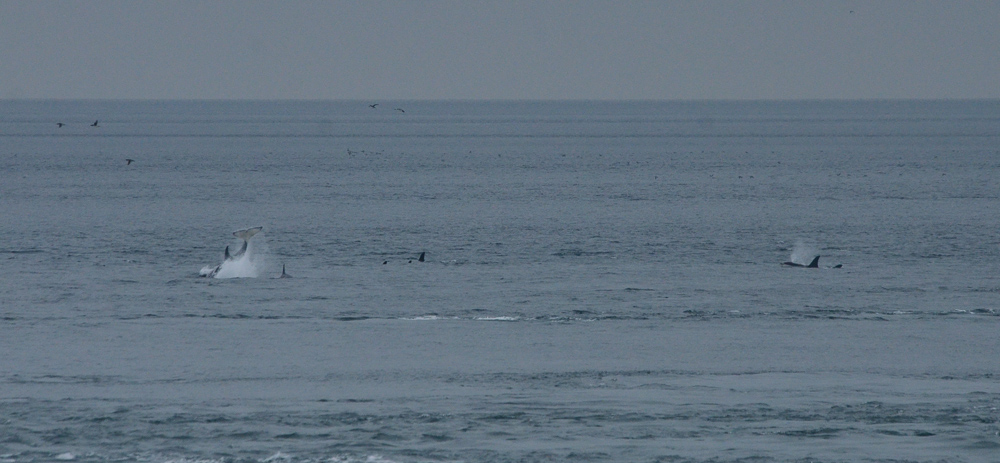
Sadly we have a dead marine mammal at the base of the ridge along the east shore of Great Race. Even with the telescope I cannot tell whether it is a Harbour Seal,an Elephant Seal or a California Sea lion and I can’t get close enough without disturbing the 50 or so Sea Lions and 2 Elephant Seals hauled out all around to make a positive ID.MARINE LIFE: At approximately 16:00 we saw 6 or 7 Orca just east of North Rocks, unfortunately it was too dark for filming but what a sight! There was one very large bull in the group and one quite small Orca, possibly a calf. They were breaching and slapping their tails and really churning up the sea. They started out in fairly large circles diving, porpoising and rolling and the large bull breaching quite often. After about 10 minutes the circles got smaller and they started swimming very fast on their sides with their dorsals at about a 45 degree angle to the water. They were quite low in the water and were sort of ‘plowing’ the water,back and forth,around and around.Finally with the telescope we did see the reason for all the activity, one unlucky California Sea Lion. Twice the Sea Lion was tossed in the air. We watched until it was too dark to see anything except a few white splashes. As all this was going on there was a group of 30-40 sea gulls circling over-head ready to snatch up any ‘crumbs’ that might come their way -nothing is wasted in this example of the food chain.
posted by Carol or Mike S at 6:08 PM
Good Morning
WEATHER: Sky Cloudy — Vis. 15 Miles — Wind North West 5 Knots — Sea Rippled
posted by Carol or Mike S at 7:19 AM

Rosedale Breakers!

Tuesday, December 04, 2001

 Good Evening
TEMPERATURE: Max. 6.9C — Min 2.9C — Reset 4.8C — Rain 5.6 mm no Snow
posted by Carol or Mike S at 6:19 PM
HUMAN IMPACT: The racerocks.com group went to the island today to drop off a Sony camera with Carol and Mike. Carol and Mike have been requested by Fisheries (DFO) to record the ecological impact of the DND blasting that is to occur tomorrow at Rocky Point. Often, by the third blast, the sealions are scared off the rocks, possibly resulting in injury. Many of the sealions on Race Rocks have quite large scars on their undersides. Sealions are also scared by boats passing too close to the rocks.
ENVIRONMENT: We were treated to the rare sight of two Rosedale breakers. These breaking waves are the result of long, high energy waves, generated in the Pacific Ocean. When the waves reach Rosedale Reef, the most shallow point in the area, the pent up energy causes the wave to break. Refer to http://www.racerocks.com/racerock/data/data.htmto get a link to NOAA/NCEP Wavewatch for more information.We can see that the snow is building up on the Olympic Mountains with the snow line moving down almost daily. At this time of year the clearcuts are quite visible.
posted by Damien Guihen at 5:19 PM
Good Morning
WEATHER: Sky Overcast — Vis 15 Miles — Wind West South West 15 Knots — Sea 2 – 3 Foot Chop
posted by Carol or Mike S at 7:22 AM
Harbour seal antics

Monday, November 26, 2001
Good evening
TEMPERATURE: Max 8.1ºC — 5.0ºC — Reset 7.1ºC — Rain 1.2 mm — total so far this month 122.1 mm rain
MARINE LIFE: A great day -a bonus really when you consider it is now the last week of November. The Sea Lions did what they do best on calm days-catch up on their sleep.Most of the Northern S.L’s hauled out on Middle Rock while the Californias preferred to raft about in the kelp beds East and South of Gr. Race. The 5 Harlequins were back in the east bay and spent the afternoon by the boat dock.2 Mature Bald Eagles arrived about 9:30,one took up position on the high point on West Race and the other maintained look-out on the log on North Rocks.They stayed about 45 minutes then flew off towards Whirl Bay. 4 Harbour Seals enjoyed what I can only describe as the quintessential log rolling competition in the kelp,east side of Gr.Race. 3 seals on the log,3 seals off the log! It was the 4th seal wanting on that log that kept me watching for 35 minutes and yes, that 4th seal finally succeeded,unfortunately success was short lived. The log was caught up in the tide between the South East Rks. and Gr. Race and just twirled too much for the seals to stay on it.
posted by Carol or Mike S at 6:23 PM
Good morning
WEATHER: Sky clouydy — Vis. 15 miles — Wind calm — Sea rippled
posted by Carol or Mike S at 7:29 AM