at 1405 Spring Tide tour boat came through the reserve. There are a large group of gulls, and cormorants, as well as a flock of 60+ European starlings around the reserve today. The 16 oyster catchers are still in the East Bay area. Three elephant seals are hauled out on the South Shore by the engine room for some part of each day.
Category Archives: Mammal Notes
Moulting Elephant Seal video
The video of this female elephant was taken off the South side of Race Rocks. It was done iby Alex Fletcher in hi 8 – before we had SONY cameras that would record in Digital. One can see the patchy skin typical of the moulting stage just behind the head. This seal had probably already gone through the most serious part of the juvenile moult, which may have occurred on one of the sandy beaches over near Metchosin.
Status of the Northern Fur Seal, Callorhinus ursinus, in Canada
ROBIN W. BAIRD1 and M. BRADLEY HANSON2
1) Marine Mammal Research Group, Box 6244, Victoria, British Columbia V8P 5L5 and Biology Department, Dalhousie University, Halifax, Nova Scotia B3H 4J I
2) National Marine Mammal Laboratory, National Marine Fisheries Service, 7600 Sand Point Way N.E., Building 4, Seattle, Washington 98115
*Reviewed and approved by COSEWIC 16 April 1996-status assigned: Not at Risk (NAR).
This report reviews the general biology, status. and management of the Northern Fur Seal (Callorhinus ursinus), with special reference to its status in Canadian waters While Northern Fur Seals do not breed within Canadian waters. They can be found in large numbers in the waters offshore of British Columbia year-round, and occasional stragglers are found inshore. Generally found only in small groups during the pelagic phase of their life, the largest numbers occur in British Columbia waters from January through June. The eastern North Pacific population has declined significantly over the last 30 years, but the cause is unknown.
Baird, Robin W., and M. Bradley Hanson. 1997. Status of the Northern Fur Seal, Callorhinus ursinus. in Canada. Canadian Field-Naturalist 111(2): 263-269.
Key Words: Northern Fur Seal, Callorhinus ursinus, otariid, status, British Columbia
This review of the general biology, status, and management of the Northern Fur Seal, Callorhinus ursinus (Linnaeus 1758), was prepared on behalf of the Committee on the Status of Endangered Wildlife in Canada (COSEWIC). A compilation and assessment of the available information on this species is used to evaluate its status in Canadian waters. For this species such a task is relatively easy in comparison to the many lesser known species of marine mammals in Canadian waters, because of the extensive investigations undertaken by U.S., Russian, and Canadian researchers.
The Northern Fur Seal, a member of the sea lion family (Otariidae), is the second smallest pinniped found on the west coast of Canada. Adult males reach a length of 1.9 m and a weight of about 200 kg, while females are much smaller, reaching a length of 1.3 m and a weight of 35 kg (Figure 1). The pelage of adults is generally a brownish-grey colour. The vibrissae colour varies with age, being black in juveniles and white in fully grown adults.
Distribution
Northern Fur Seals range throughout the northern Pacific from central Japan (latitude 36ºN) and the Sea of Japan north to the Bering Sea, and south along the west coast of North America to the area of the U.S.-Mexican border (latitude 32ºN) [Figure 21. Fur seals can be found throughout this range in almost all months of the year, but peak abundance varies seasonally and geographically. Off the Canadian west coast, females and subadult males are typically found during the winter off the continental shelf (Bigg, 1990). Occasional animals are seen in inshore waters in British Columbia, and stragglers occasionally come ashore, usually at sea lion haulouts (e.g., Race Rocks, off southern Vancouver Island).
Three breeding colonies occur in Russia; at Robben (Tyuleniy) Island and the central Kuril Islands in the Sea of Okhotsk, and Commander Island in the western Bering Sea. In the United States, colonies occur at the Pribilof Islands (St. George and St. Paul islands) in the eastern Bering Sea, at Bogoslof Island in the southeast Bering Sea, and at San Miguel Island and nearby Castle Rock off southern California. Reeves et al. (1992) noted that a few fur seals also haul out seasonally on Southeast Farallon Island and occasionally on San Nicolas Island, off California.
Protection
International
The Interim Convention on Conservation of North Pacific Fur Seals lapsed in 1984, when the United States Senate failed to ratify a protocol for extension. This international agreement protected the fur seal from hunting at sea, but also allowed for the commercial harvest of fur seals in the Pribilof Islands. Attempts to establish a new treaty for the protection of the fur seal have failed; consequently the species is vulnerable to future hunting of animals at sea. Under the terms of this agreement Canada received 15 percent of the skins from harvests, and was also obliged to undertake research on this species.
The Northern Fur Seal is not listed under the Convention on International Trade in Endangered Species of Wild Fauna and Flora (CITES), thus international trade is not monitored or regulated.
National
Canada: In Canada the Northern Fur Seal is protected under the 1993 Marine Mammal Regulations of the Fisheries Act of Canada. These regulations control the hunting of this species in Canadian waters by all except aboriginals, who are required to obtain a licence. Fees for such a licence are low ($5), and issuance is at the discretion of the Minister of Fisheries and Oceans. “Disturbance” is prohibited through these regulations, except when hunting under licence, as is the operation of aircraft within 600 m of any live seal on land.
United States: After the international convention lapsed in 1984, management of this species in U.S. waters became subject to the Fur Seal Act of 1966 and the Marine Mammal Protection Act of 1972. The commercial harvest on the Pribilof Islands ended because the National Marine Fisheries Service (NMFS) determined that such a harvest could not take place under domestic laws. Current levels and conditions for a subsistence harvest are regulated under these Acts. In 1988 the U.S. population was listed as depleted under the Marine Mammal Protection Act. Under this Act, a conservation plan was prepared for this species (National Marine Fisheries Service 1993), outlining protective measures and research activities to be undertaken by the U.S. National Marine Fisheries Service.
Population Size(s) and Trends
Several stocks have been generally recognized for the Northern Fur Seal; however, tag returns suggest that some exchange occurs between breeding colonies. The Pribilof Islands population is the largest, comprising three quarters of the world’s total, with just less than one million individuals in the early 1990s (National Marine Mammal Laboratory, unpublished data). This population was thought to number between two to three million individuals in the mid-1800s (National Marine Fisheries Service 1993), and was estimated at approximately 2.1 million individuals in the 1940s (Kenyon et al. 1954; Lander and Kajimura 1982; Briggs and Fowler 1984). Based on pup counts, the population on St. Paul Island (representing about 80% of the Pribilof stock) has remained relatively stable since the early 1980s, while the St. George stock has undergone a significant decline since the late 1970s (York and Fowler 1992). The Pribilof Island population(s) appear to be well below the level of maximum net productivity (Ragen 1995). Northern Fur Seals first began breeding at Bogoslof Island in the southeast Bering Sea in 1980, and the population in 1988 comprised over 400 individuals, increasing at a rate of 57% per year (Loughlin and Miller 1989). Fur seals also began breeding at San Miguel Island (California) in 1968 and at nearby Castle Rock in 1972. The San Miguel colony numbered approximately 5000 individuals by 1993 and was increasing (DeLong et al. 1993).
Habitat
Terrestrial habitats for Northern Fur Seals are generally limited to their rookeries, which are scattered around the North Pacific rim in close proximity to the continental slope. Fur seals have strong fidelity to traditional sites that are typically composed of a rocky substrate (on San Miguel Island they use a sand beach). Although all rookeries in the U.S. are federally owned, the Pribilof Islands are inhabited and non-rookery lands are owned by local communities which are developing support facilities for fishing industries. Consequently, several types of habitat degradation are possible.
Ocean habitats appear to vary by the sex and age group(s) of fur seals present. In the summer breeding season, continental slope waters in the eastern Bering Sea are the principal destination for adult females on foraging trips. The use of continental shelf and slope waters of British Columbia and the states of Washington, Oregon, and California by adult females during winter is well documented from pelagic sealing data (Bigg 1990). Adult males from the Alaskan populations appear to remain in Alaskan waters year-round, some remaining in the Bering Sea and some moving south into the Gulf of Alaska in mid-winter. Subadults of both sexes use coastal waters of British Columbia and Washington as well as offshore areas of the North Pacific (Kajimura 1984; Bigg, 1990). The highest concentrations in the open ocean occur along the continental shelf break and in association with other major oceanographic frontal features, such as canyons, sea mounts and valleys (Kajimura 1984). Although water quality in these areas is unknown, it appears to be suitable with the exception of areas subjected to oil spills. Trends in the availability of prey in these areas are unknown.
General Biology
Reproduction
Female Northern Fur Seals may produce their first pup at four years of age, and the majority are pupping by six years of age (York and Hartley 1981). A single pup is born within two days of the arrival of a female at the breeding colony. Parturition appears to be stimulated by arrival at the breeding colony and the presence of conspecifics (Bigg 1984). For the first 8-10 days after birth, females remain ashore until they come into estrous and mate. After that time they regularly leave the colony for foraging trips of 4- 10 days. Insley (1992) demonstrated that calls used between mother-offspring pairs of Northern Fur Seats were highly variable between individuals, but varied little for a particular individual, allowing the mother and pup to reunite after separating. Pups remain on the breeding islands until they are weaned in late fall. Pup weight depends in part on that of the mother and on sex, male pups are larger at birth (Bottnev 1993). Adult males remain ashore and fast while defending breeding territories. Juvenile males also haul out during the breeding season and fast, typically losing about 20% of their body mass during this time (Baker et al, 1993).
Figure 1: Northern Fur Seals Photo by O. W. Otsen. The small animal at left is an adult female, the large animal is an adult male.
Diet
Knowledge of the diet of the Northern Fur Seals comes primarily from the examination of stomach contents of animals killed as part of a joint U.S.-Canadian research program from 1958 to 1974 (Kajimura 1984; Perez and Bigg 1986), and in part from scat analysis (Antonelis et al, 1990, 1993). Primary prey species vary seasonally (Perez and Bigg 1986). Differences in diet also occur throughout their range, both on a large (Perez and Bigg 1986) and small scale (Antonelis et al. 1993). Small schooling fishes are the primary food species in terms of energy content. In Biitish Columbia waters, Pacific Herring (Clupea harengus) and various species of squid comprise about 70% of the diet. Walleye pollock, sablefish, rockfishes, whiting, and salmonids form the remainder of the diet (Perez and Bigg 1986). Historical evidence suggests that the composition of the diet has fluctuated over time with changes in fish stocks; sardines were once extremely abundant in the eastern North Pacific but were over-fished in the 1940s until the stocks collapsed. There is some evidence that sardines were commonly eaten by Northern Fur Seals off Vancouver Island in the early 1930s (Clemens and Wilby 1933).
Movements
In general, Pribilof Island fur seals migrate south to winter along the west coast of Canada and the United States. However, patterns of movement of this species are extensive and complex, with timing and migratory routes depending on age, sex and reproductive condition (Bigg 1990). Bigg (1990) suggested that fur seal migration from the Bering Sea after the breeding season facilitated both the avoidance of low temperatures and access to sources of prey. He also suggested that the age-related differences in migratory timing and routes likely results from a combination of the learning of productive foraging areas and the need to return to the breeding areas when animals reach reproductive age. The origin of sex-related differences in migration may result in part from differences in the timing of arrival to and departure from the breeding colonies. Adult females both arrive at and leave colonies later than adult males. Males start to arrive at colonies in May to establish territories and females start arriving in mid-June. Males depart in late summer while females remain until late fall while they continue to nurse their young. The fall movements of pups away from the rookeries is not random; estimated minimum swimming speed of pups between St. Paul Island and the Aleutians was between 36 to 61 km/day (Ragen et al. 1993). Fowler et al. (1993) demonstrated that male Northern Fur Seats generally return to their natal rookery, although individuals sometimes emigrate to other rookeries or, rarely, form new colonies.
Short-distance movements around San Miguel Island by females nursing pups were examined by Antonelis et al, (1990), who found that females foraged primarily in oceanic waters over the continental slope. These females departed the colony in greatest numbers in mid-day, possibly a thermoregulatory behaviour in response to increasing temperatures and solar radiation.
Behaviour
Northern Fur Seals generally exhibit strong site fidelity to their rookeries. Despite disturbance associated with commercial harvesting by human inhabitants on the Pribilof Islands from the late 1700s until recently, seals continue to occupy nearly all the same rookeries. This species appears to be tolerant to short term disturbance associated with human activities (Gentry and Gilman 1990). The proximity of these islands to the continental slope likely contributes to their continued use of these rookeries.
Limiting Factors
Commercial harvesting has affected the population of Northern Fur Seals in the Pribilof Islands since shortly after it was first discovered in 1786 (National Marine Fisheries Service 1993). From 1786 to 1828 an average of a hundred thousand Northern Fur Seals per year, primarily pups, were killed. Commercial harvesting of this species was directly responsible for the large reductions in population size in the late 1800s and early 1900s. The commercial harvest during this early period included pregnant females; during the period of pelagic sealing, large numbers of animals were taken off British Columbia and in the Bering Sea (National Marine Fisheries Service 1993). Hunts were reduced in size in the early 1900s, and the population grew up to the 1940s. Approximately 300 000 females were killed between 1956 and 1968, in an effort to move the population towards the level where productivity would be maximized. The population did not respond as expected however, and pup production decreased (York and Hartley 1981). When the commercial harvest of females ceased in 1968, pup production increased and the population grew until 1976. While hunting continued during this period, it is considered unlikely to be the cause of a decline in the population size after 1976 (National Marine Fisheries Service 1993). Commercial harvests continued for this species up until the expiration of the Interim Convention on Conservation of North Pacific Fur Seals in 1984. Since that time, between about 1200 and 3700 juvenile males have been killed each year as part of a subsistence harvest. Such levels are not thought to contribute to the lack of recovery of the population (National Marine Fisheries Service 1993).
A variety of other natural and anthropogenic sources of mortality for this species have been observed. Several authors have examined causes and levels of mortality in pups, both at breeding colonies and during the winter. Calambokidis and Gentry (1985) observed that pup survival from birth to weaning was positively correlated with birth weight, which in turn was correlated with the age of the mother. Pups which weighed less than average were more likely to die from trauma, parasitic infestation and infectious disease. as well as “emaciation syndrome”. Baker and Fowler (1992) examined pup weight and overwintering survival. and found that the overwintering survival of males increased with pup weight. Their small female sample size likely precluded a similar determination (Baker and Fowler 1992). They suggested that larger overwintering animals were better able to withstand cold temperatures. Larger animals are also able to dive longer (Kooyman 1989 in Baker and Fowler 1992), possibly increasing the ability to find prey. Predation by sharks, foxes, Killer Whales (Orcinus orca) and Steller Sea Lions (Eumetopias jubatus) has been recorded (Bychkov 1967: Gentry and Johnson 1980; Hanna 1922; Reeves et al. 1992; National Marine Fisheries Service 1993). Three to seven percent of fur seal neonates on St. George Island were killed by sea lions in 1974 and 1975 (Gentry and Johnson 1980); no data on mortality levels from Killer Whales or sharks are available.
Natural environmental fluctuations, such as the periodic occurrence of El Niño, has negatively affected the population breeding at San Miguel Island, although conditions for the Pribilof Island population may be enhanced by increased sea surface temperatures associated with these events (York 199 1 ). The 1983 El Niño occurred just prior to implantation of embryos at San Miguel Island, and resulted in an increase in pup mortality and a decrease in pup weights. DeLong et al. (1993) suggested that the later onset of the 1992 El Niño affected this population less intensely. Competition with fisheries has been suggested as a possible limiting factor for this species, both in waters surrounding breeding colonies, along migration routes, and during the non-breeding season in the North Pacific. The interactions between commercial harvesting of prey species and fur seal movements, reproductive rates or mortality is unclear, however (National Marine Fisheries Service 1993).
FIGURE 2. Distribution of the Northern Fur Seal off the west coast of North America.
Breeding islands are located in the circles. Reproduced from Loughlin and Miller (1989) by permission.
Calambokidis and Peard (1982) examined levels of chlorinated hydrocarbons from Northern Fur Seals in Alaska, but found concentrations well below levels thought to contribute to reproductive problems in other populations of pinnipeds. Anas (1974) reported levels of heavy metals in fur seals from Alaska and Washington State, but no information is available on potential impacts. An analysis of heavy metals by Noda et al. (1995) revealed higher cadmium concentrations in northern fur seals than in other otariids. Cadmium levels were higher, and mercury levels lower, than those reported by Anas (1974); however, heavy metal concentrations in Northern Fur Seals are variable with age, location, and probably season, making comparisons between studies difficult (Noda et al. 1995). Entanglement in fishing gear is probably a more significant problem. Northern Fur Seals were the third most commonly caught species of marine mammal recorded in an observer program of the Japanese driftnet fishery for squid in 1989 (Anonymous 1990). Two animals were killed in an experiment drift gillnet fishery for Neon Flying Squid (Ommastrephes bartrami) in Canadian waters in the mid-1980s (Jamieson and Heritage 1988). Entanglement in marine debris is also a source of mortality. Fowler (1987) suggested that mortality due to entanglement in marine debris has contributed significantly to the decline in the population on the Pribilof Islands. Recent declines have also occurred in the numbers of Steller Sea Lions (Loughlin et al. 1992) and Harbour Seals, Phoca vitulina (Pitcher 1990) in the central and eastern Gulf of Alaska. While many possible causes have been identified (reviewed above), the exact causes of these declines continues to remain unclear.
Special Significance of the Species
This species is the only fur seal found in the temperate waters of the north Pacific Ocean and is endemic to this region. Alaskan natives on the Pribilof Islands harvest approximately 2000 subadult males annually for food.
Evaluation
The present world population of Northern Fur Seals is substantially lower than historical levels,and causes of the decline are unclear. Although the market demand for furs is currently low, the lack of any international regulatory body or agreement on the management of the species means that killing of this species at sea could be undertaken at any time, and trade is not restricted or monitored through any international agency. Rapid development of fishing industry support services on the Pribilof Islands has the potential to adversely affect this population.
Acknowledgments
We thank the Canadian Wildlife Federation for financial assistance for the preparation of this report, Robert Campbell and COSEWIC for providing assistance and support, and several anonymous reviewers for helpful comments on the manuscript.
Literature and Documents Cited
Anas, R. E. 1974. Heavy metals in the northern fur seal, Callorhinus ursinus, and harbor seal. Phoca vitutina richardi. Fishery Bulletin, U.S. 72: 133-137.
Anonymous. 1990. Final report of squid and bycatch observations in the Japanese driftnet fishery for neon flying squid (Onimastrephes bartrami). Joint Report of Fisheries Agency of Japan. Canadian Department of Fisheries and Oceans, United States National Marine Fisheries Service and United States Fish and Wildlife Service.
Antonelis, G. A., B. S. Stewart, and W. F. Perryman. 1990. Foraging characteristics of female northern fur seals (Callorhinus ursinus) and California sea lions (Zalophus californianus). Canadian Journal of Zoology 68:150-158.
Antonelis, G. A., E. H. Sinclair, R. R. Ream, and B. W. Robson. 1993. Inter-island variation in the diet of female northern fur seals (Callorhinus ursinus) in the Bering Sea. Page 23 in Abstracts of the Tenth Biennial Conference on the Biology of Marine Mammals, November 11-15, 1993. Galveston, Texas.
Baker, J. D., and C. W. Fowler. 1992. Pup weight and survival of northern fur seals Callorhinus ursinus. Journal of Zoology, London 227: 231-238.
Baker, J. D., C. W. Fowler, and G. A. Antenelis. 1993. Mass change in fasting immature male northern fur seals. Page 25 in Abstracts of the Tenth Biennial Conference on the Biology of Marine Mammals, November I 1- 15, 1993. Galveston, Texas.
Bigg, M. A. 1984. Stimuli for parturition in northern fur seals (Callorhinus ursinus). Journal of Mammalogy 65: 333-336.
Bigg, M. A. 1990. Migration of northern fur seals (Callorhinus ursinus) off western North America. Canadian Technical Report of Fisheries and Aquatic Sciences 1764.
Boltnev, A. 1. 1993. Pre-natal investment in reproduction and age composition of northern fur seal (Callorhinus ursinus) females on Bering Island, Russia. Page 29 in Abstracts of the Tenth Biennial Conference on the Biology of Marine Mammals, November 11-15, 1993. Galveston, Texas.
Briggs, L., and C. W. Fowler. 1984. Tables and figures of the basic population data for northern fur seals of the Pribilof Islands. In Background papers submitted by the United States to the 27th annual meeting of the Standing Scientific Committee of the North Pacific Fur Seal Commission. March 29-April 9. 1994, Moscow. U.S.S.R. Available from National Marine Mammal Laboratory, Seattle.
Bychkov, V. A. 1967. On killer whale attacks on fur seals off Tyuleniy Island. Zoological Zhurnal 46: 149-150.
Calambokidis, J., and R. L. Gentry. 1985. Mortality of northern fur seal pups in relation to growth and birth weights. Journal of Wildlife Diseases 21(3): 327-330.
Calambolkidis, J., and J. Peard. 1982. Chlorinated hydrocarbons in the tissues of northern fur seals from St Paul Island. Alaska. Final report to Nationai Marine Mammal Laboratory, Seattle.
Clemens, W. A., and G. V. Wilby. 1933. Food of the fur seal off the coast of British Columbia. Journal of Mammalogy 14: 43-46.
DeLong, R. L., S. R. Melin, and G. A. Antonelis. 1993. Comparison of 1983 and 1992 El Niño impacts on California sea lion and northern fur seal populations in California. Page 41 in Abstracts of the Tenth Biennial Conference on the Biology of Marine Mammals, November 11 – 15, 1993. Galveston, Texas.
Fowler, C. W. 1987. Marine debris and northern fur seals: a case study. Marine Pollution Bulletin 18: 326-335.
Fowler, C. W., J. D. Baker, G. A. Antonelis, and A. E. York. 1993. Homing behavior in sub-adult male northem fur seals. Page 49 in Abstracts of the Tenth Biennial Conference on the Biology of Marine Mammals, November I 1- 15, 1993. Galveston, Texas.
Gentry, R. L., and J. H. Johnson. 1980. Predation by sea lions on northern fur seal neonates. Mammalia 45: 423-430.
Gentry, R. L., and J. F. Gilman. 1990. Responses of northern fur seals to quarrying operations. Marine Mammal Science 6: 151-155.
Hanna, G. D. 1922. What becomes of the fur seals Science 60: 505-507.
Insley, S. J. 1992. Mother-offspring separation and acoustic stereotypy: a comparison of call morphology in two species of pinnipeds. Behaviour 120: 103-122.
Jamieson, G. S., and G. D. Heritage. 1988. Experimental flying squid fishery off British Columbia, 1987. Canadian Industry Report of Fisheries and Aquatic Sciences Number 186.
Kajimura, H. 1984. Opportunistic feeding of the northern fur seal, Callorhinus ursinus, in the eastern North Pacific Ocean and eastern Bering Sea. NOAA Technical Report NMFS SSRF-779.
Kenyon, K. W., V. B. Scheffer, and D. G. Chapman. 1954. A population study of the Alaska fur seal herd. U.S. Fish and Wildlife Service. Special Scientific Report on Wildlife. 12. 77 pages.
Lander, R. H., and I-L Kajimura. 1982. Status of northern fur seals. In mammals in the seas. 4, FAO Fish Service 5, Volume 4: 319-345.
Loughlin, T. R., and R. V. Miller. 1989. Growth of the northern fur seal colony on Bogoslof Island, Alaska. Arctic 42: 368-372.
Loughlin, T. R., A. S. Perlov, and V. A. Vladimirov. 1992. Range-wide surveys and estimation of total number of Steller sea lions in 1989. Marine Mammal Science 8(3): 220-239.
National Marine Fisheries Service. 1993. Final Conservation Plan for the northern fur seat (Callorhinus ursinus). Prepared by the National Marine Mammal Laboratory/Alaska Fisheries Science Center, Seattle, Washington, and the Office of Protected Resources/ National Marine Fisheries Service, Silver Spring, Maryland.
Noda, K., H. Ichlbashi, T. R. Loughlin, N. Baba, M. Kiyota, and R. Tatsukawa. 1995. Distribution of heavy metals in muscle, liver and kidney of northern fur seal (Callorhinus ursinus) caught off Sanriku, Japan and from the Pribilof Islands, Alaska. Environmental Pollution 90(l): 51-59.
Perez, M. A., and M. A. Bigg. 1986. Diet of northern fur seals. Callorhinus ursinus, off western North America. Fishery Bulletin, U.S. 84: 957-97 1.
Pitcher, K. W. 1990. Major decline in number of harbor seals, Phoca vilulina richardsi, on Tugiduk Island, Gulf of Alaska. Marine Mammal Science 6(2): 121-134.
Ragen, T. J. 1995. Maximum net productivity level estimation for the northern fur seal (Callorhinus ursinus) population of St. Paul Island, Alaska. Marine Mammal Science 11(3): 275-300.
Ragen, T. J., G. A. Antonelis, and M. Kiyota. 1993. Early phase of northern fur seal (Callorhinus ursinus) pup migration from St. Paul Island. Alaska. Page 88 in Abstracts of the Tenth Biennial Conference on the Biology of Marine Mammals, November 11-15, 1993. Galveston, Texas.
Reeves, R. R., B. S. Stewart, and S. Leatherwood. 1992. The Sierra Club handbook of seals and sirenians. Sierra Club Books, San Francisco.
York, A. E. 1991. Sea surface temperatures and their relationship to the survival of juvenile male northern fur seals from the Pribilof Islands. Pages 94-106 in Pinnipeds and El Niño: responses to environmental stress. Edited by F. Trillmich and K. A. Ono. Springer-Verlag, Berlin.
York, A. E., and J. R. Hartley. 1981. Pup production following harvest of female northern fur seals. Canadian Journal of Fisheries and Aquatic Sciences 38(l): 84-90.
York, A. E., and C. W. Fowler. 1992. Population assessment, Pribilof Islands, Alaska. Pages 9-26 in Fur seal investigations, 1990. Edited by H. Kajimura, and E. Sinclair. U.S. Deptartment of Commerce NOAA Technical Memo. NMFS-AFSC-2.
Accepted 8 July 1996
Eschristius robusta : Gray Whale– Race Rocks Taxonomy
n November 1990, students and faculty took on a project of preparing and mounting the skeleton of a Gray whale that had been found floating near shore, dead in the Strait of Juan de Fuca, West of Race Rocks.
-
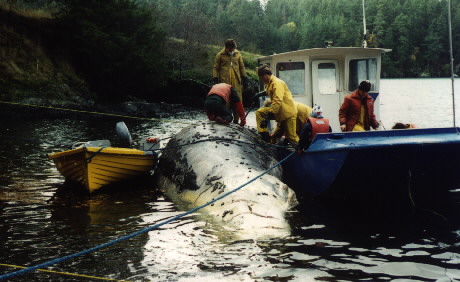
- Early on a Saturday morning a group of determined people, Kalle Kronholm, Chris May, Brian Heard, Shawn Steil, Patrick Decowski, Jacob Breugem, Brian Poston, Luis Marcano ,and Rosy Mackintosh along with biology faculty member Garry Fletcher and his son Alex
-
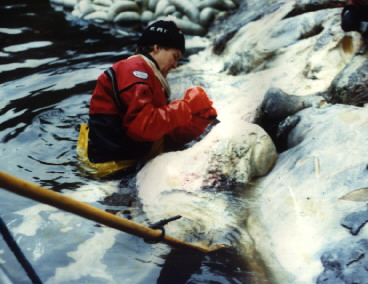
- and two volunteer students from the Biology Department of the University of Victoria, proceeded to attempt to remove the flesh
-
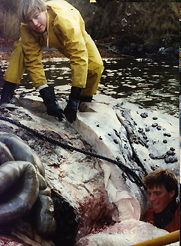
- Kalle Kronholm flensing the whale. It was almost an impossible task. The knives we used became dull immediately, and the smell was incredible. The mature adult female had been dead for about a week. Very little of the outer skin had been disturbed.
-
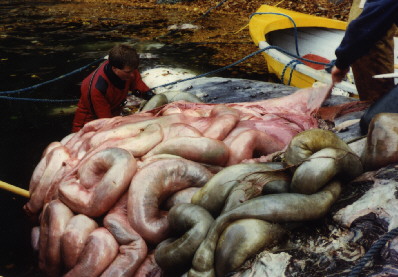
- We anchored the carcass in a small bay closer to the college, and tried to weight it down with concrete buckets. 1000 kgs would not sink it so it was tethered and left there. Over Christmas it broke loose from it’s mooring in a storm and ended up further down the bay at Weir Point. It had however dropped it’s baleen intact where it had been tethered. These were later recovered by the divers and dried for the display here.
-
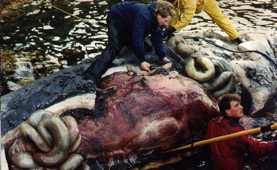
- From this final resting place on shore over the next two months, we removed bones as they became free by decomposition. We found that any piece touching the bottom would be cleaned rather quickly, and if it wasn’t removed soon after, it became blackened by the contact with the mud, probably from hydrogen sulfide build-up from anaerobic bacteria. You can still see a number of darkened areas that were produced in this way and would not clean. Some of the smaller vertebrae near the tail had dropped off with the baleen and had to be retrieved after some searching by the divers. Many pieces such as the tail vertebrae were taken back to the docks and tied together for the final decomposition on the bottom.
-
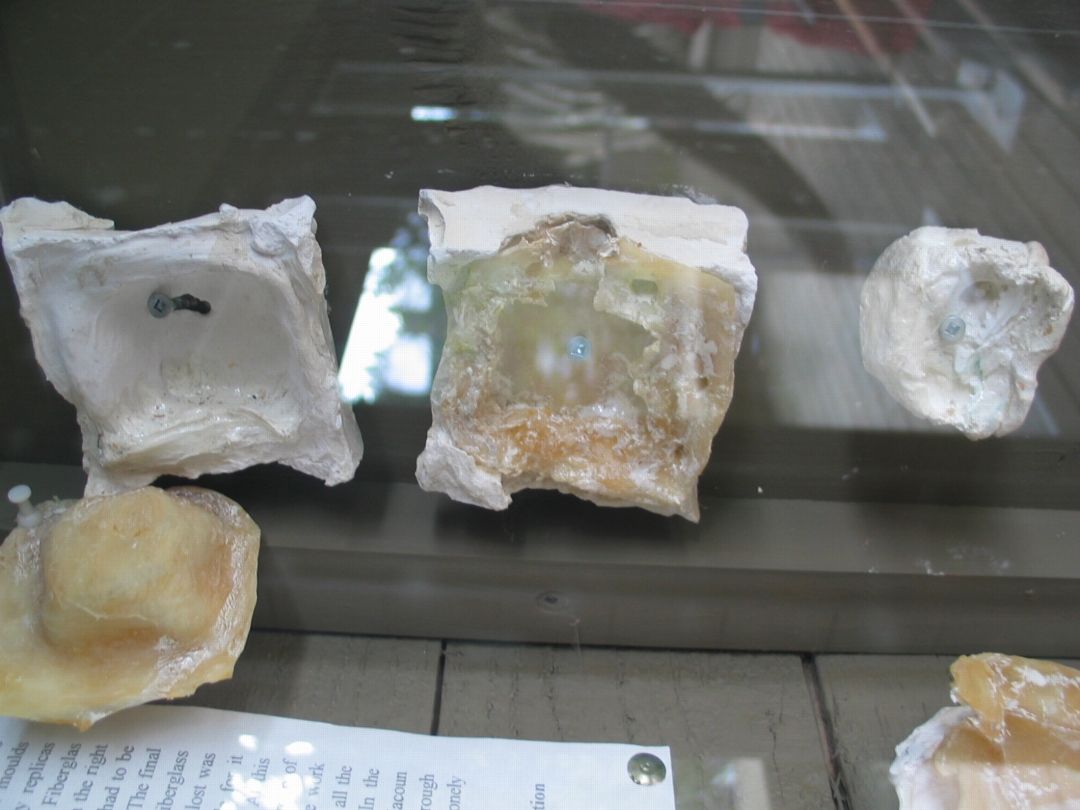
- Gary Stonely of Nanaimo,a vertebrate zoologist who had worked on other large skeletons, vertebrae mold was commissioned in the fall of 1991 to work with our students once a week in the final stages of skeletal preparation. He showed the students how to mould the missing pieces. Shown here are the rubber moulds and the plaster of paris mould-holders, and the clay replicas made for moulding the missing tail vertebrae.
-
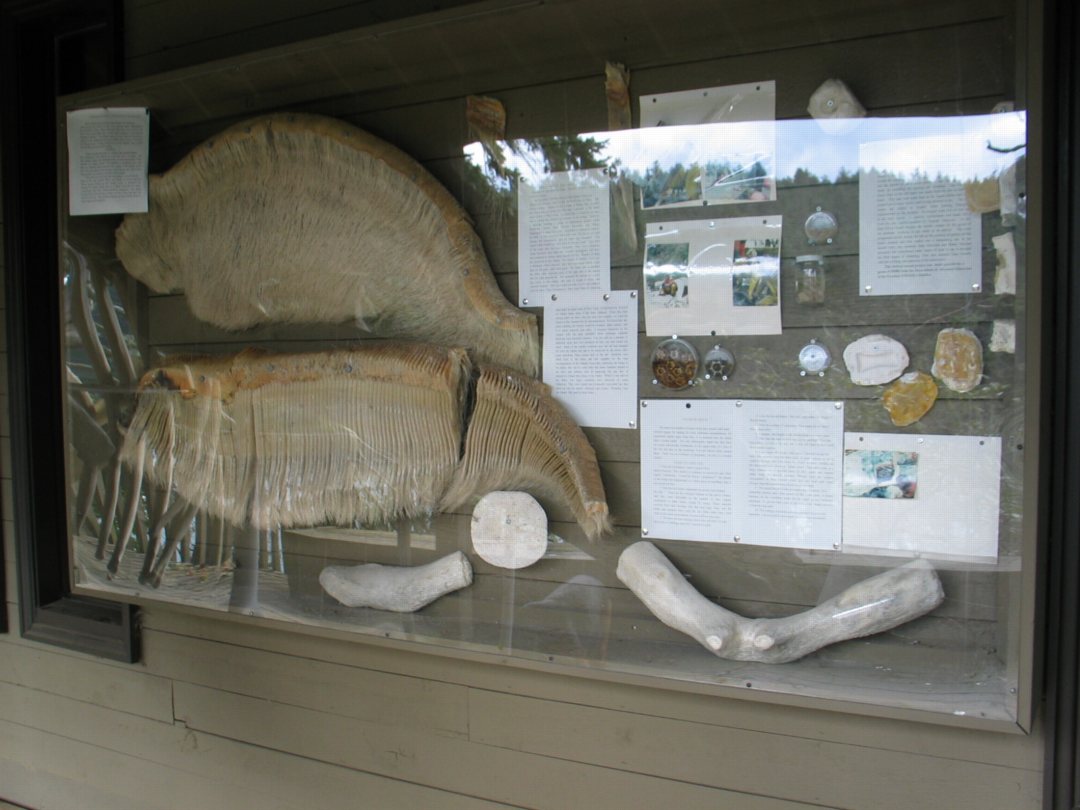
- The display on the wall next to the whale skeleton at Lester Pearson College. The two sides of the baleen plates are shown mounted here.
-
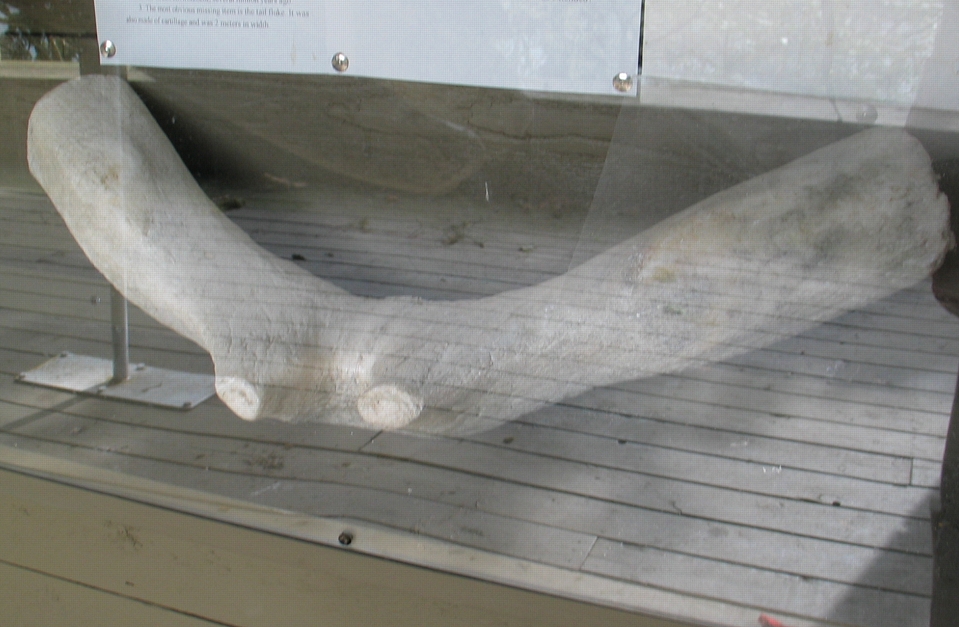
- The hyoid bones of the lower neck region are not attached to the skeleton. They are displayed here in the case
Even after retrieving the bones to the docks, they had to sit for some time and many students helped in the slow and arduous task of removing the last bits of connective tissues that clung to the bones. While the decomposing remains were anchored to the shore, two large vertebrae were removed by some fishermen. They were traced and eventually recovered but they show up now as slightly yellowed and cleaner. (Probably from the bleach used to clean them.)
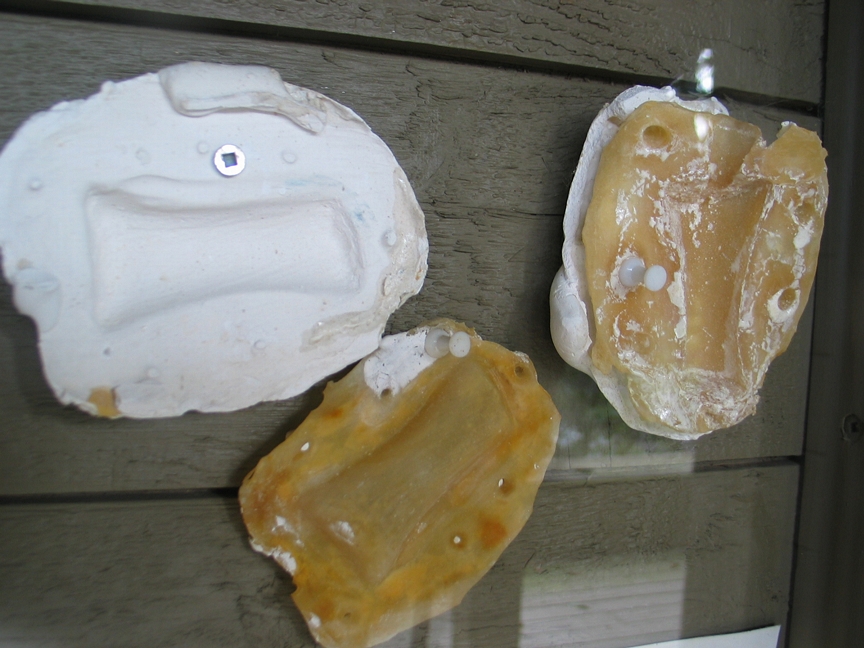
Finger mould
The Fiberglass finger bone on the left hand was made from the one on the right hand. This task took some time as the liquid rubber had to be painted on in many layers, each being allowed to dry. The final results are visible as slightly white looking fiberglass replacements on the skeleton. The largest bone that we lost was in the neck region. A concrete replacement was made for it from the clay replica moulded by Siegmar Zacharias . At this time Sylvia Roach became the faculty contact for the group of six students working on the whale as an activity. The work progressed slowly during the fall as the process of getting all the bones cleaned and then sealed was a demanding one. In the second term, two students, Jody Snowden and Becky Macoun persisted and contributed many hours of time to see it through the final stages of mounting. They also assisted Gary Stonely with the welding, cutting, polishing and painting of the metal parts.
Our former administrator, the late John Davis was instrumental in promoting the project. In addition to taking the photographs in the display case, he was responsible for securing a grant of $5000 from the Ministry of Advanced Education of the Province of British Columbia to enable us to complete the project.
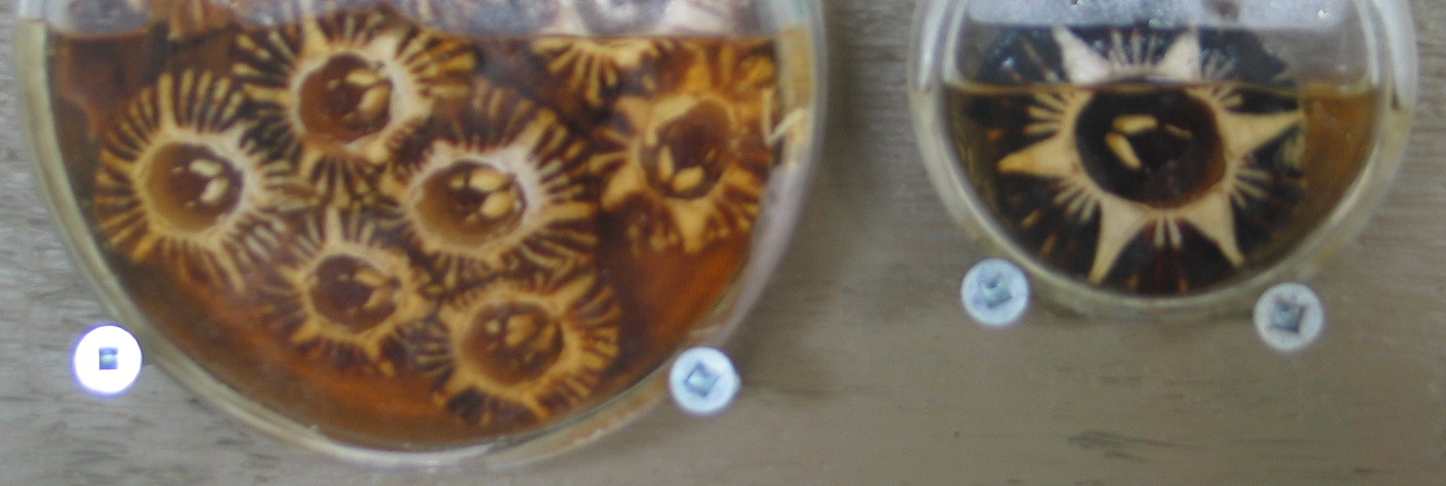 Two species of Arthropod lived parasitically on the whale’s skin. The Gray Whale barnacle, Cryptolepas rachianecti . Also, The Gray Whale Lice Cyamus kessleri was located on the skin.
THE MOUNTED GRAY WHALE SKELETON AT PEARSON COLLEGE
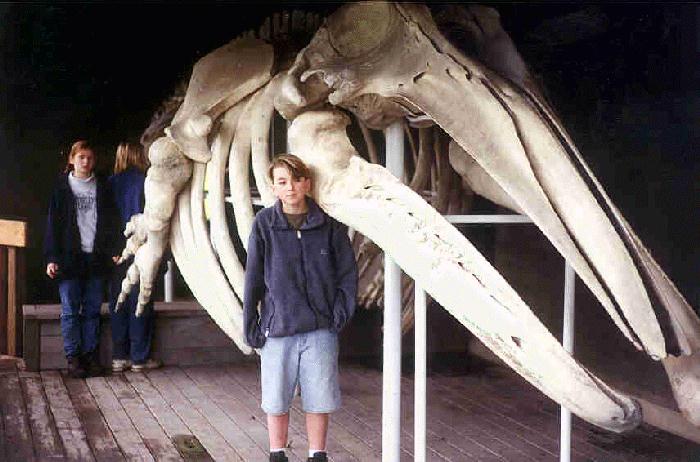
Gray Whale Skeleton , Eschristius robusta at Lester B. Pearson College.. (with Alex Fletcher)
-
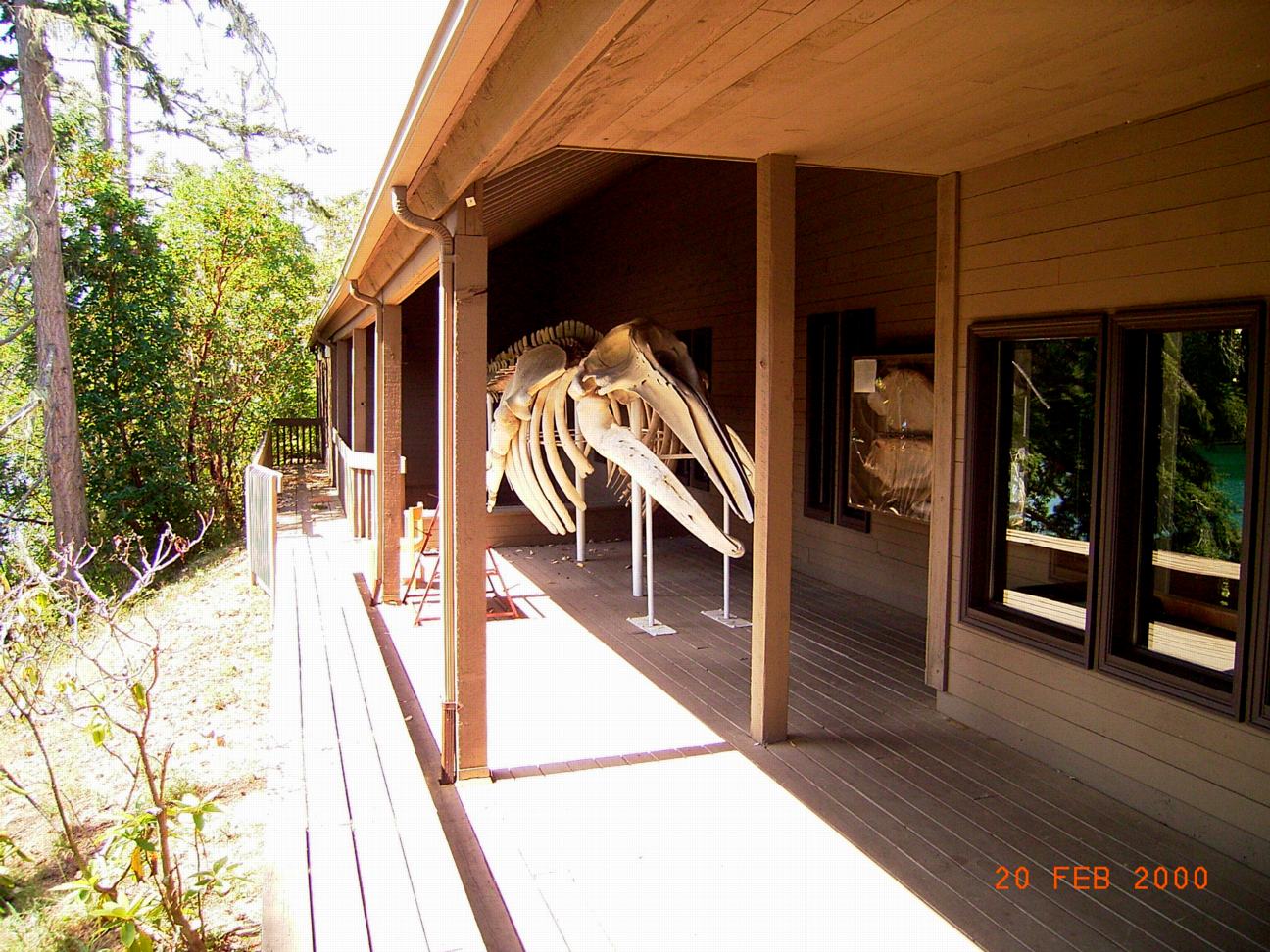
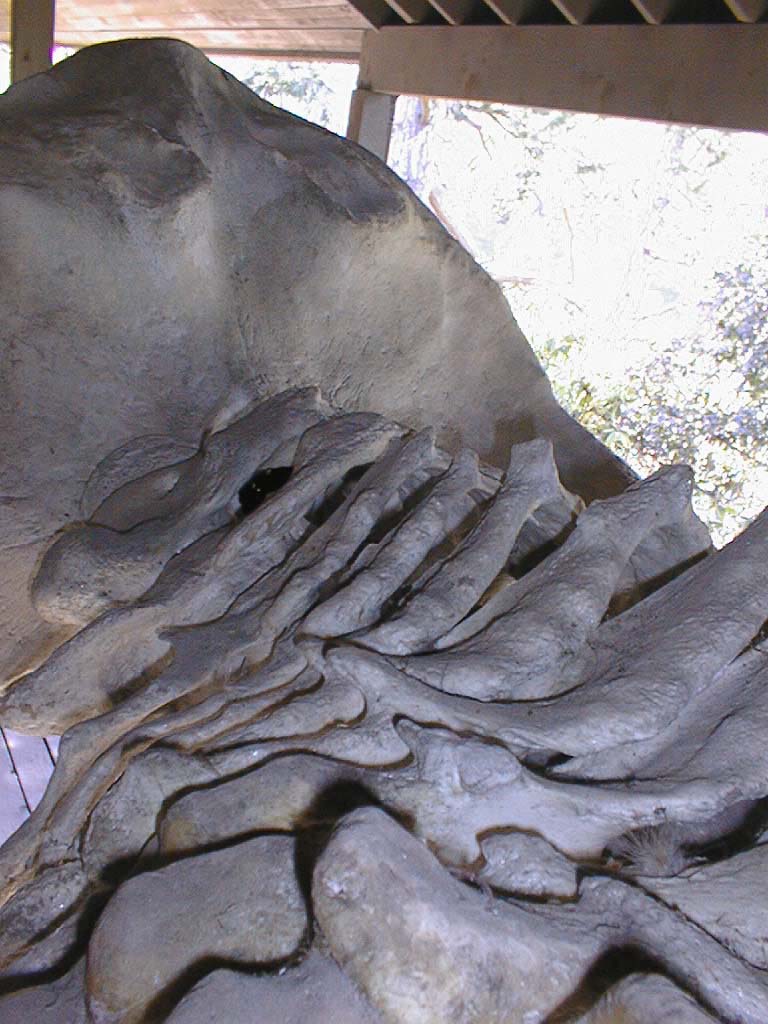
- Gray Whale Skeleton
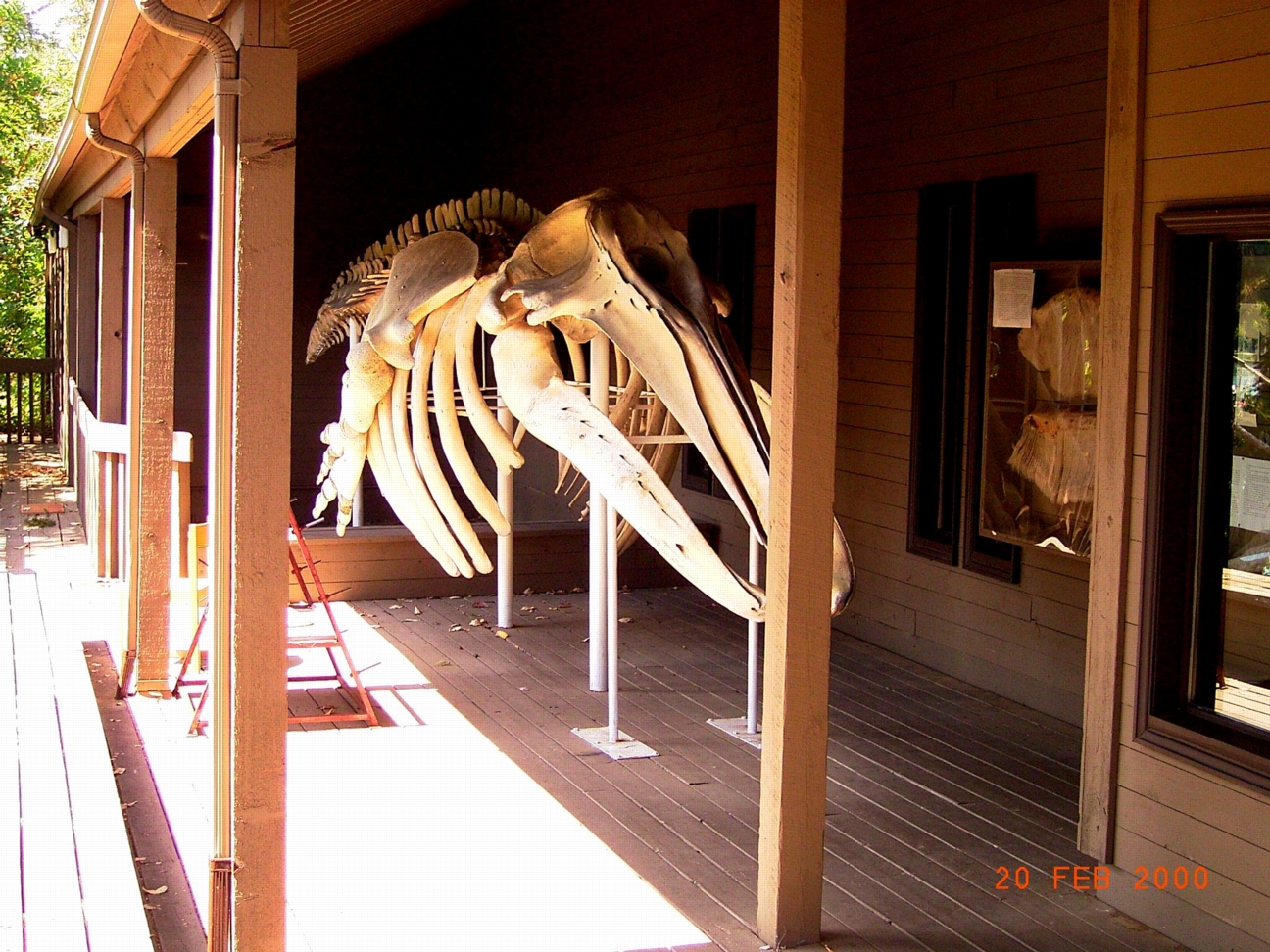
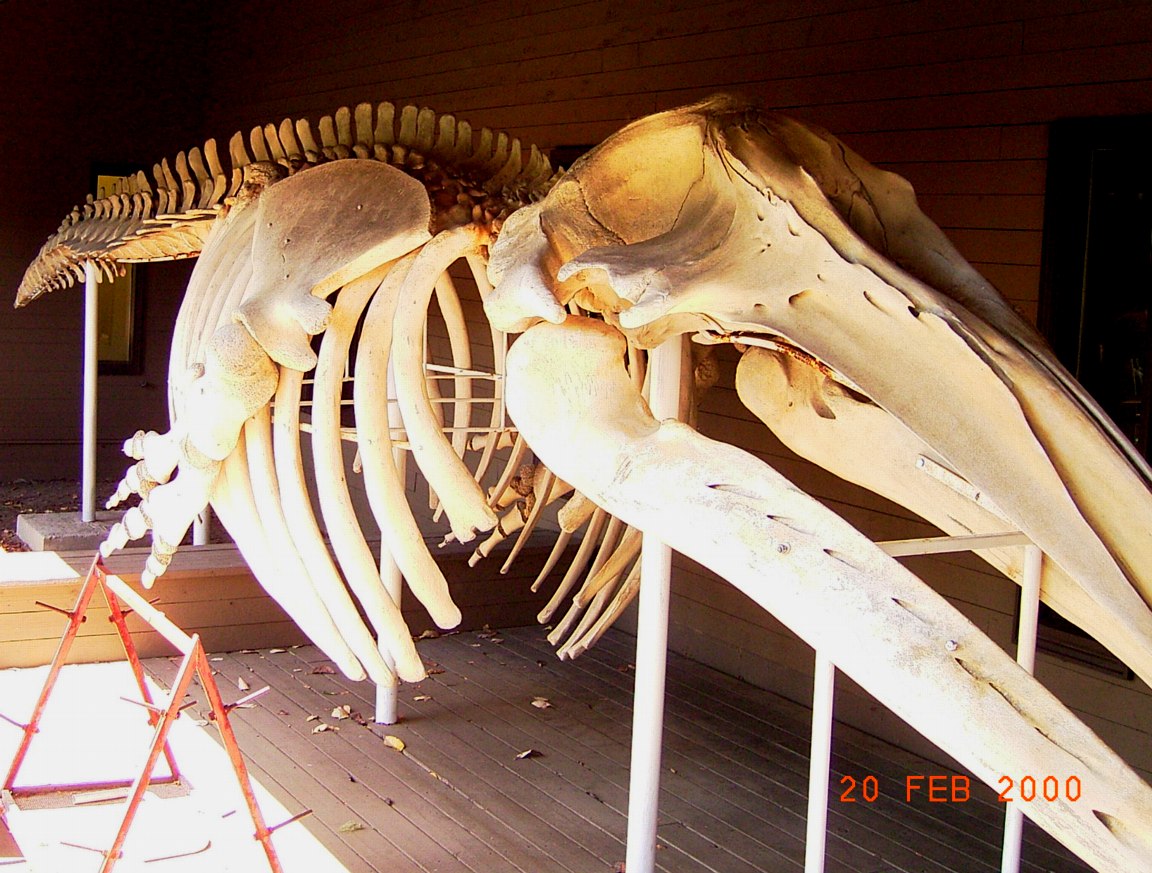
-
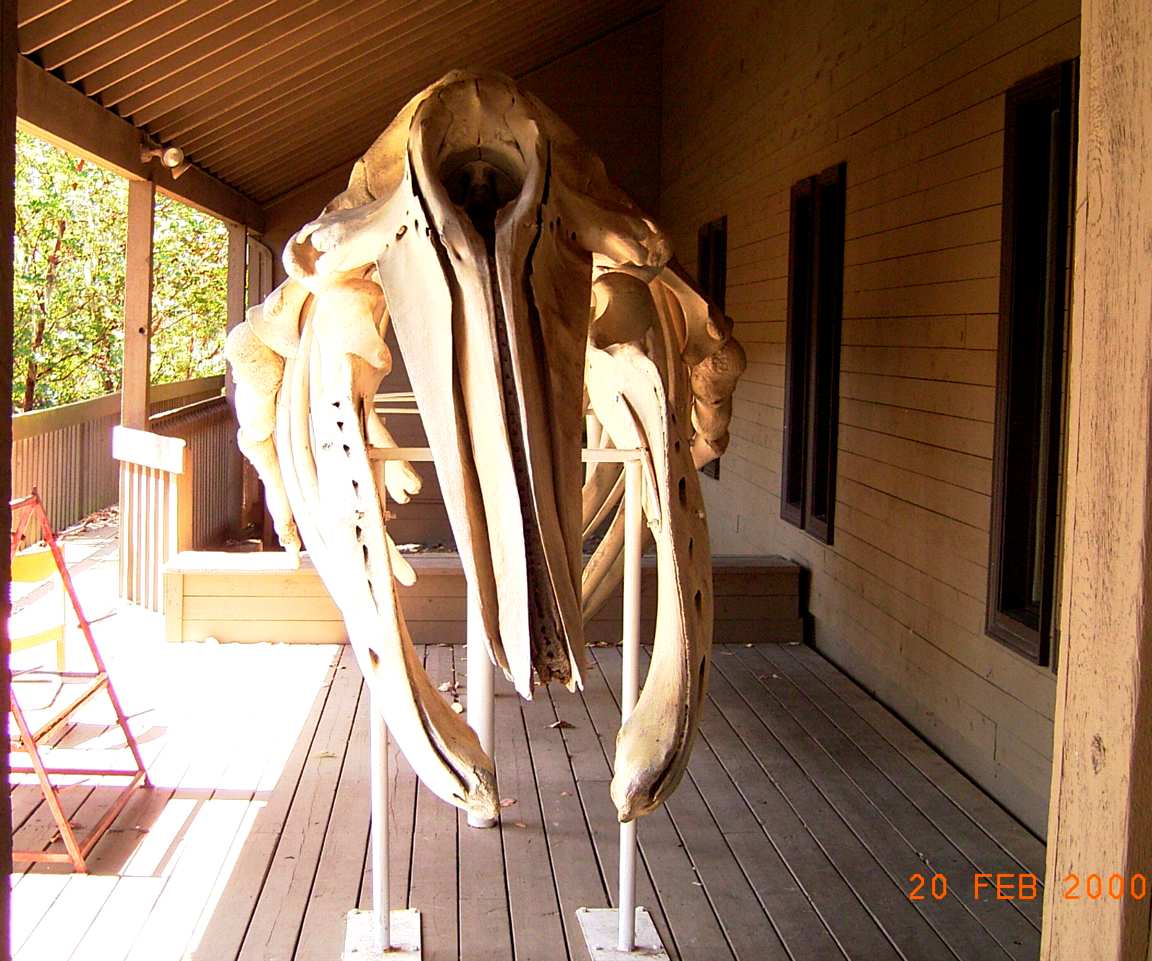
- View from head
-
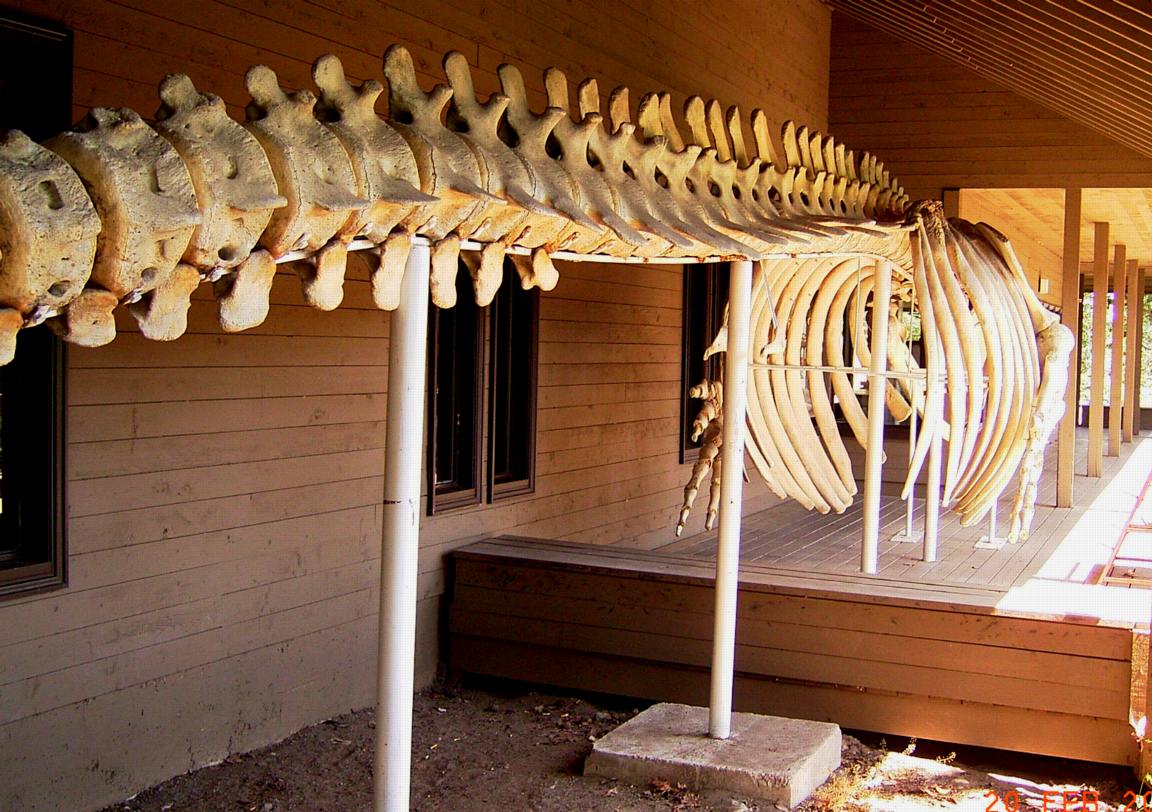
- backbone
-
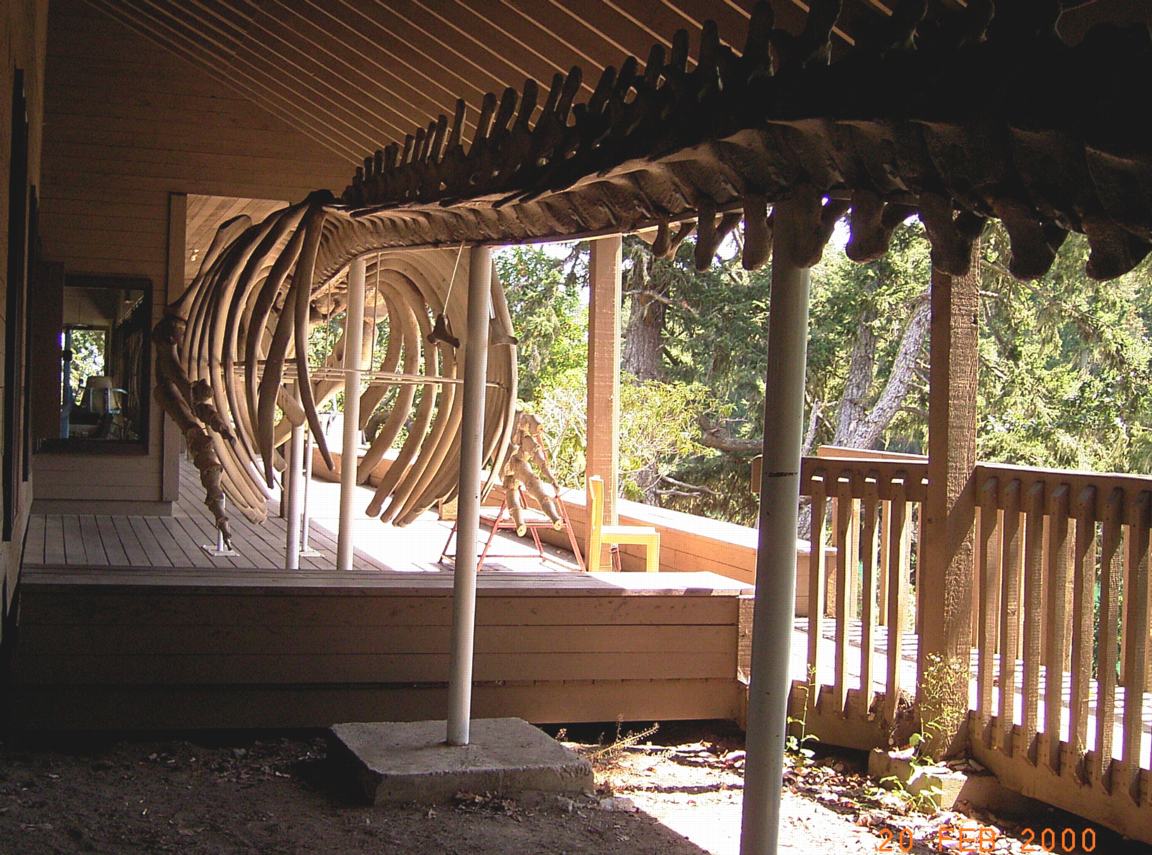
- view from tale
INGI FINNSON (PC-Year 25) took this series of closeup photos for a project being done by a scientific artist:
-
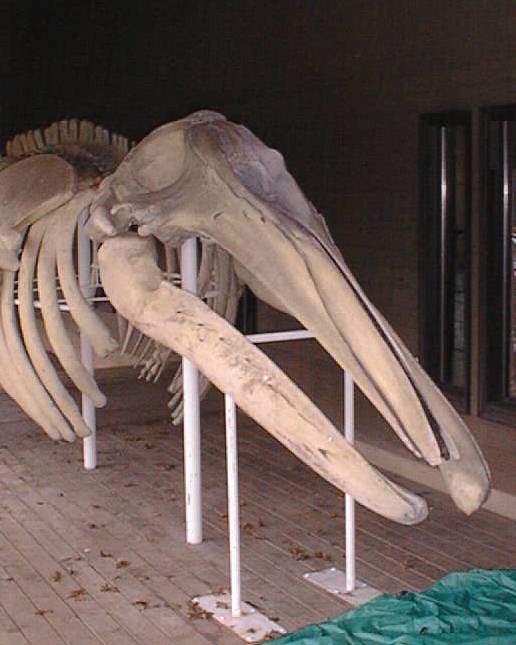
- skull front
-
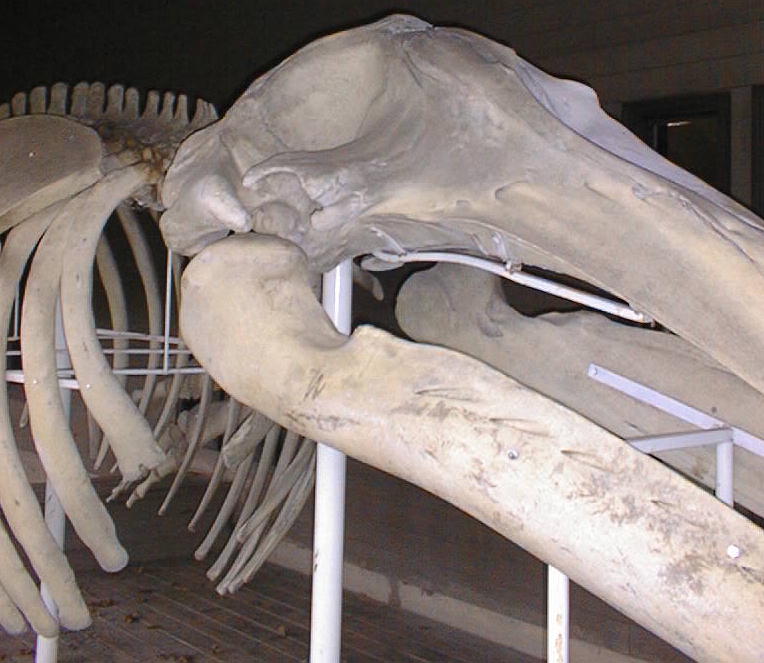
- skull right side
-
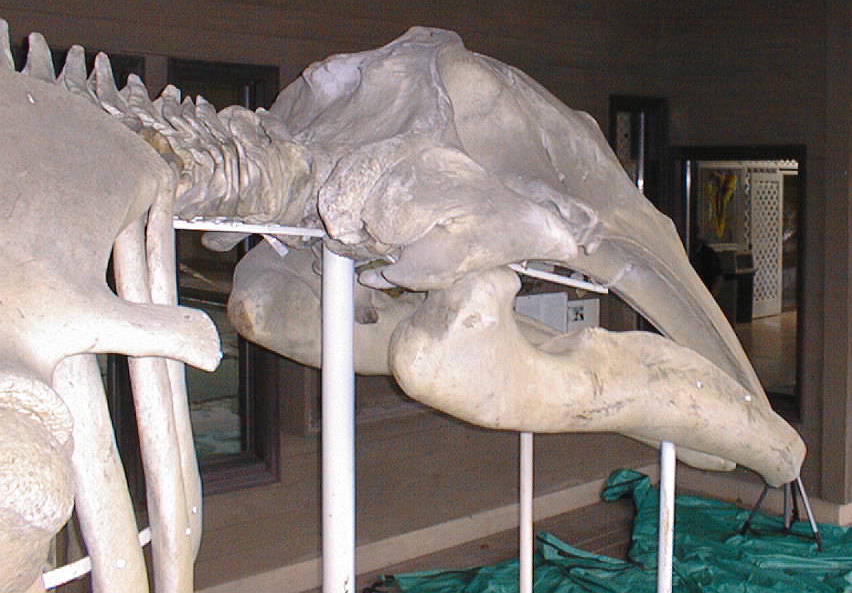
- neck and skull right side
-
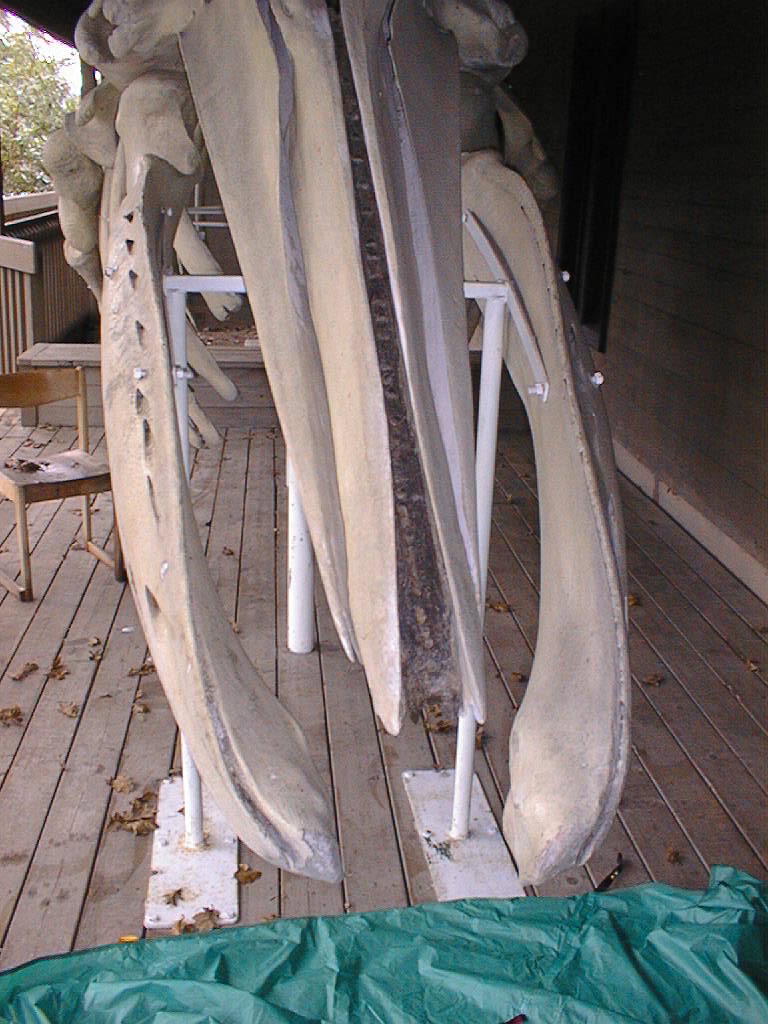
- Nose- cartillage remains to hold pieces together
-
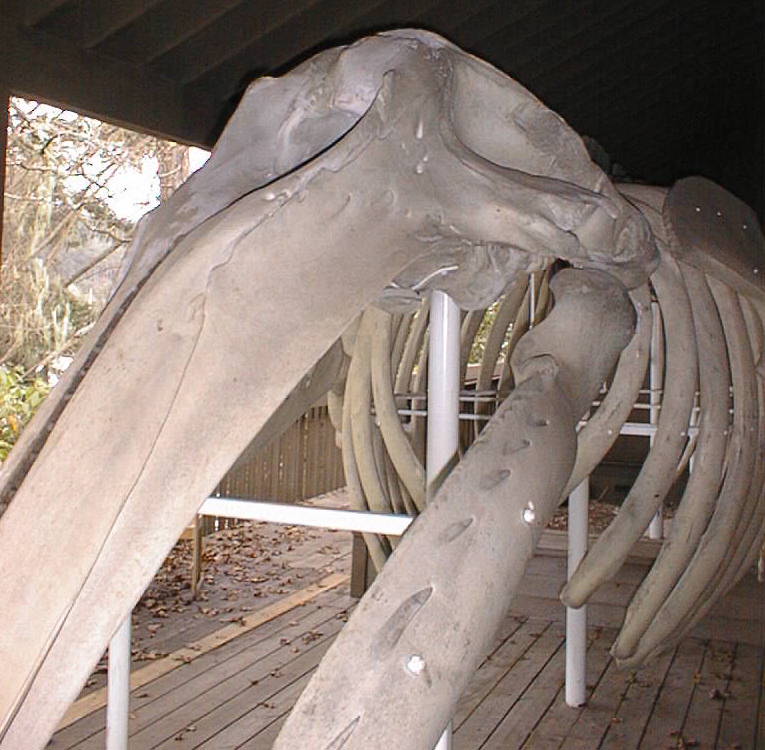
- skull left side
-
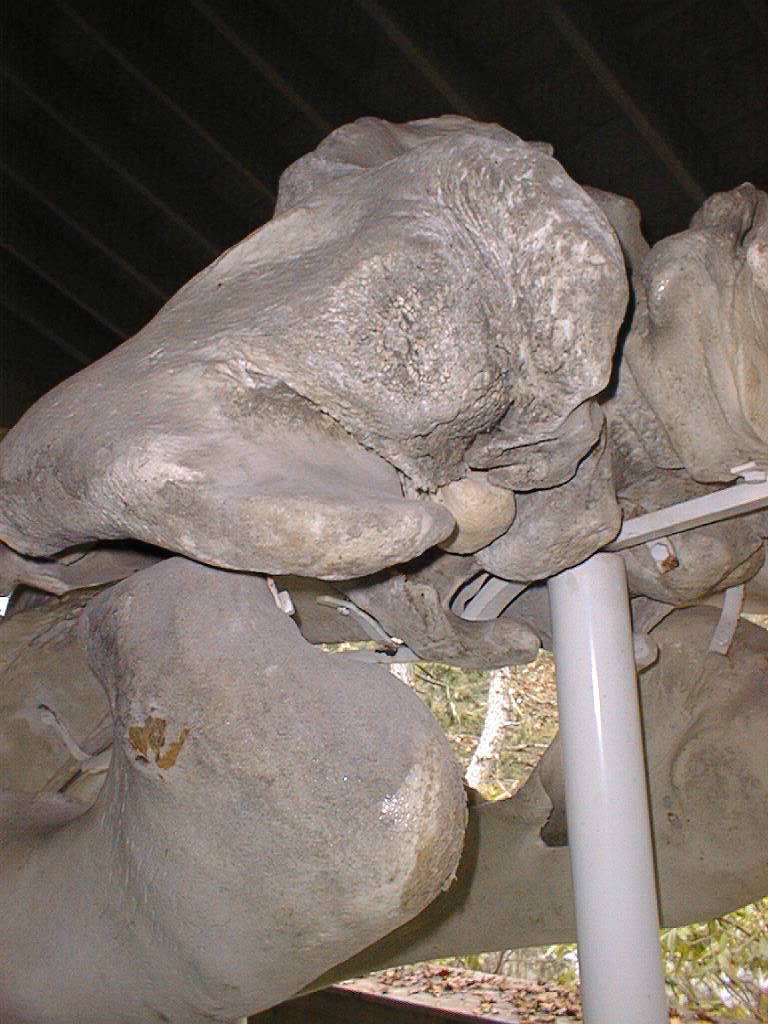
- skull left jaw
-
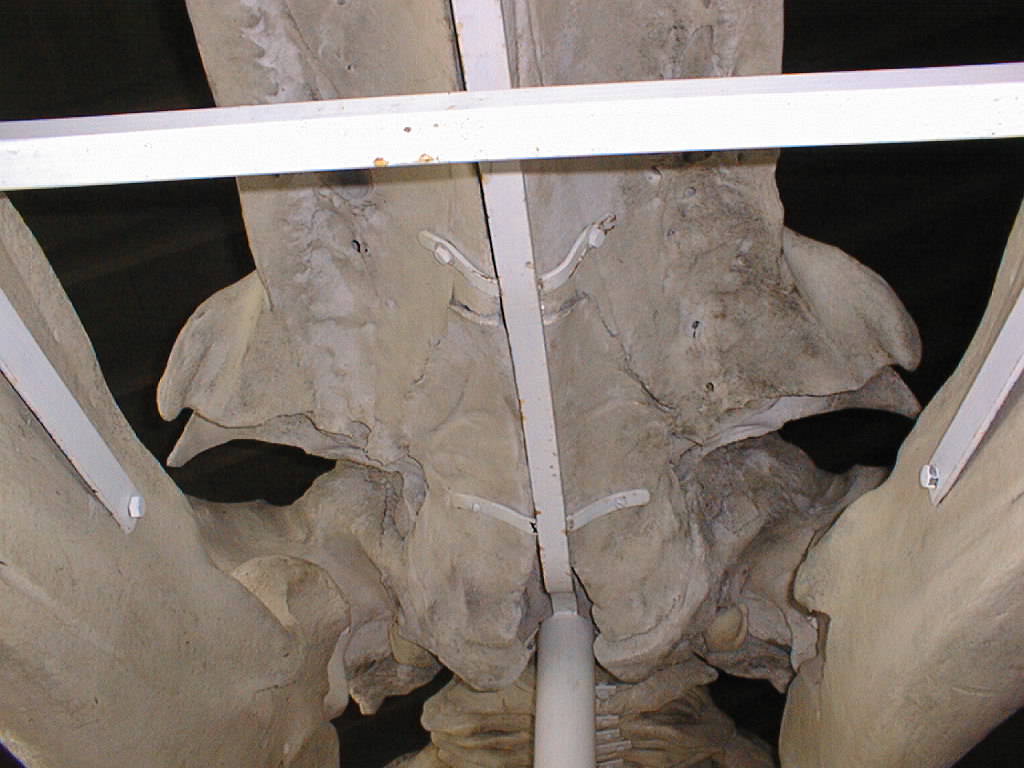
- underneath skull
-
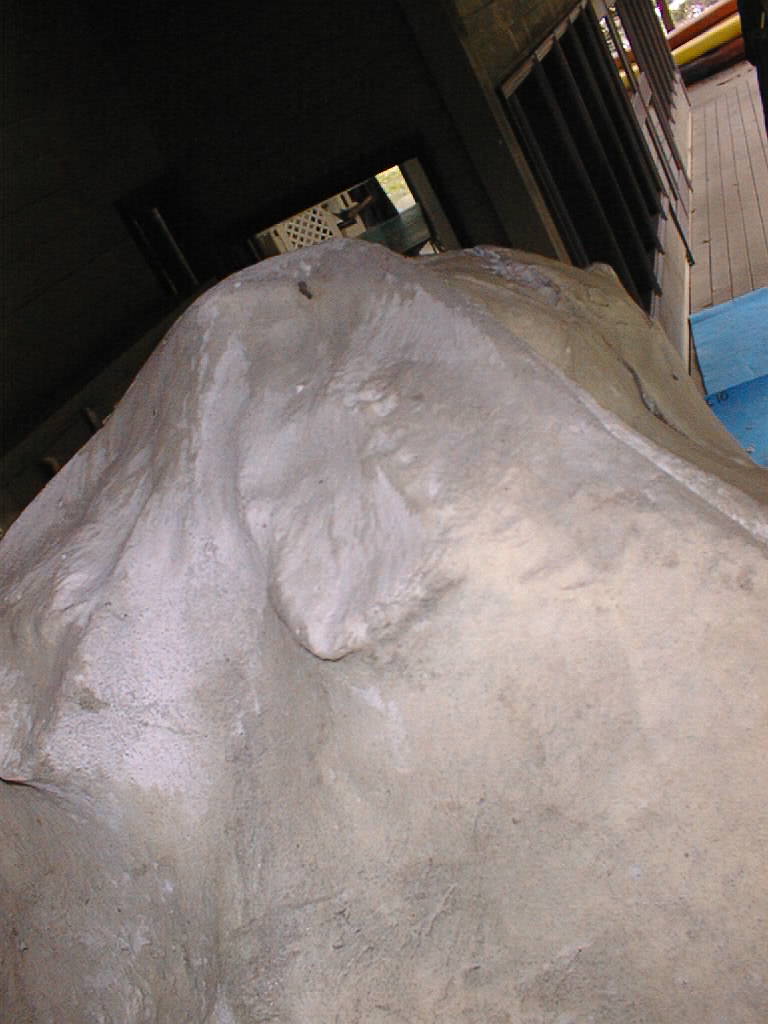
- skull top rear
-
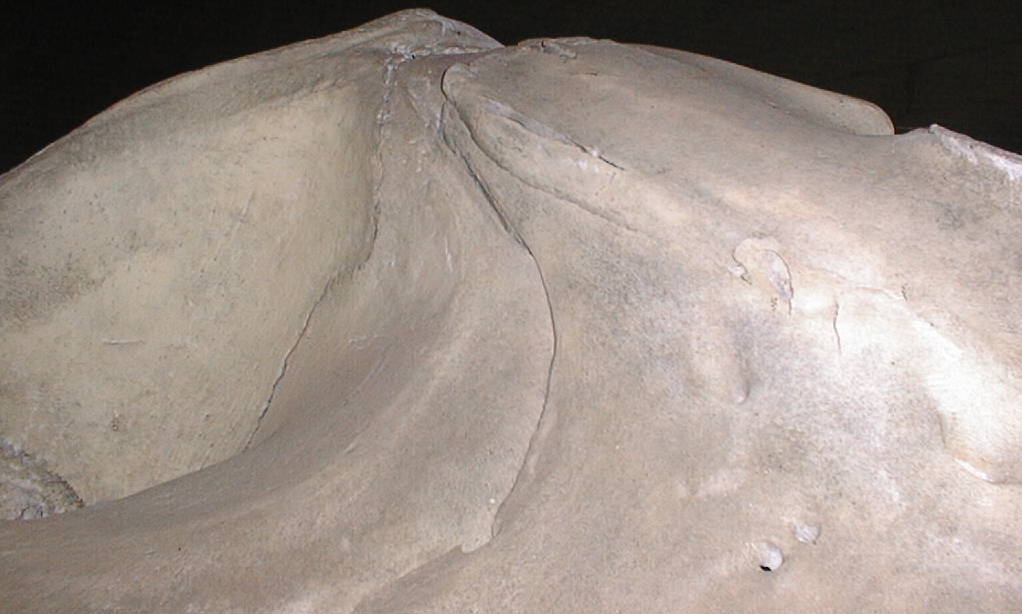
- skull top left side
-
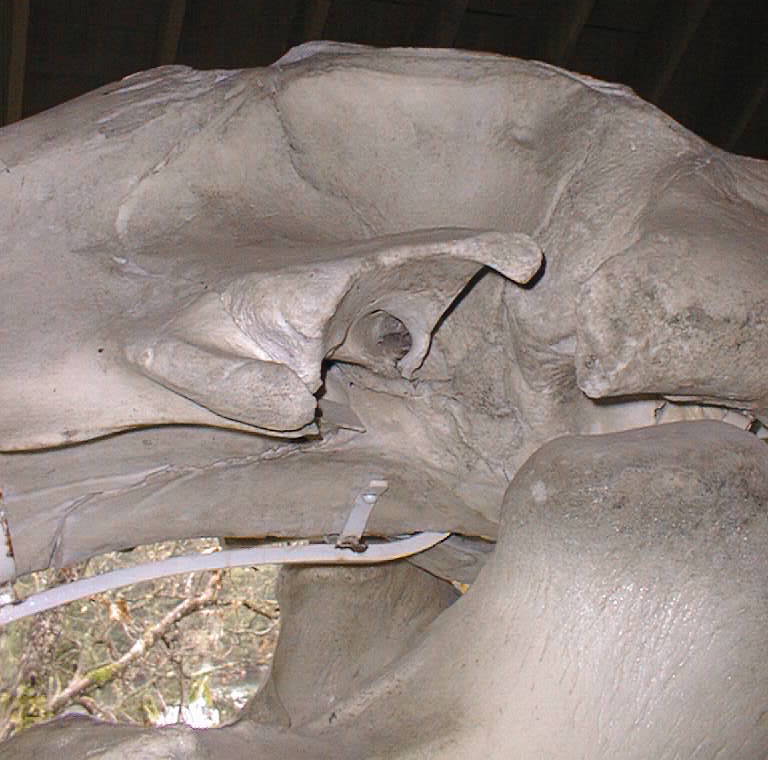
- skull left middle
-
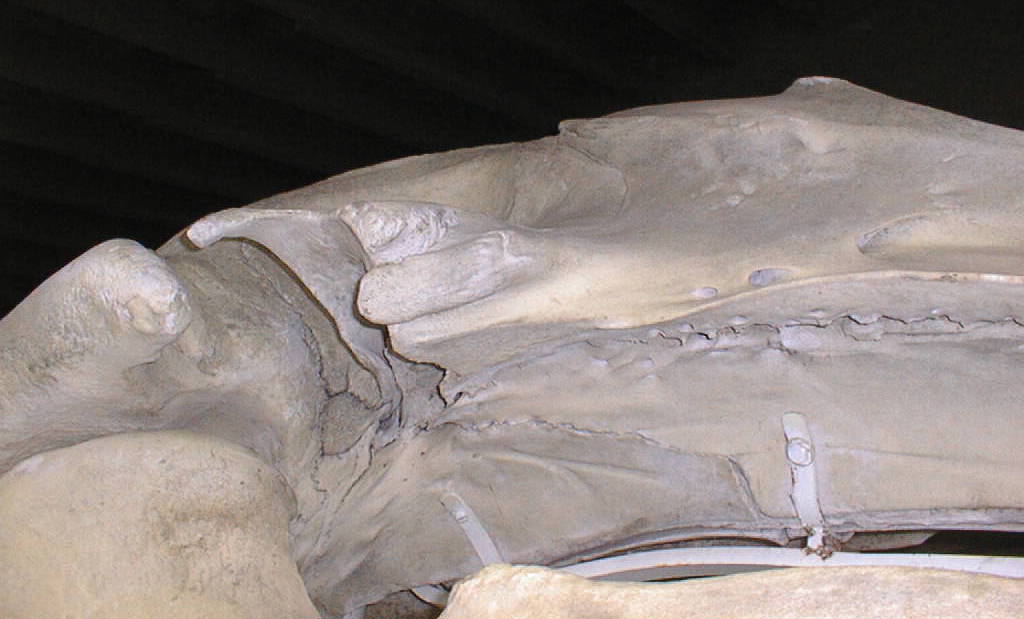
- right condyle
-
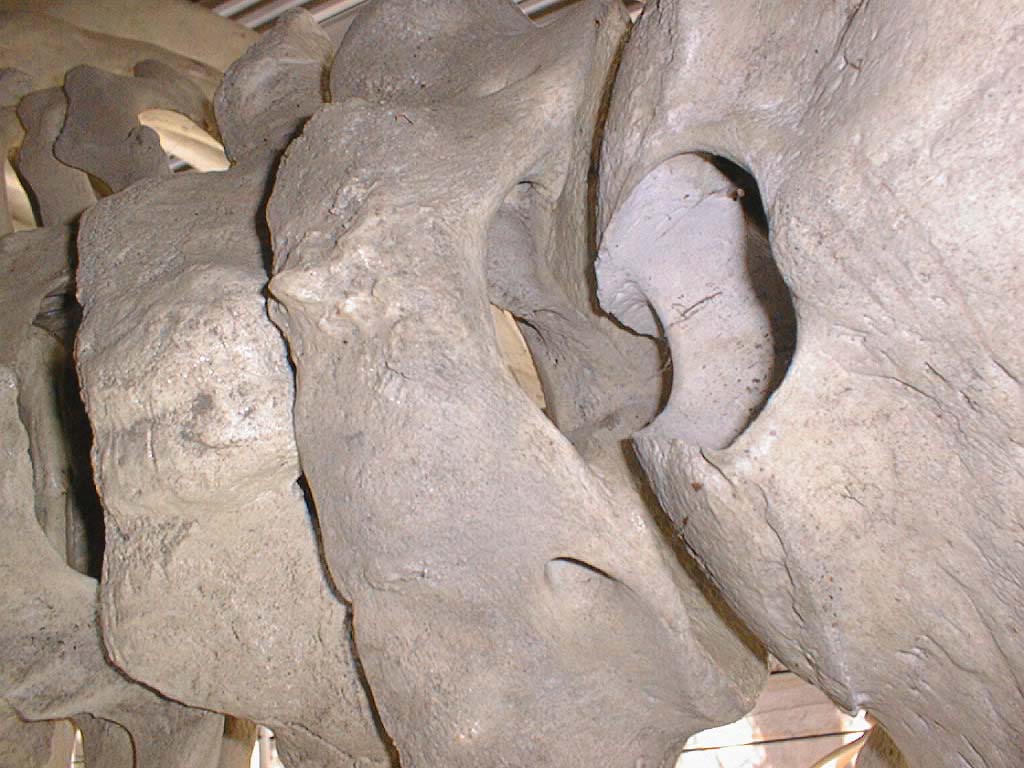
- skull foramen dorsal
-
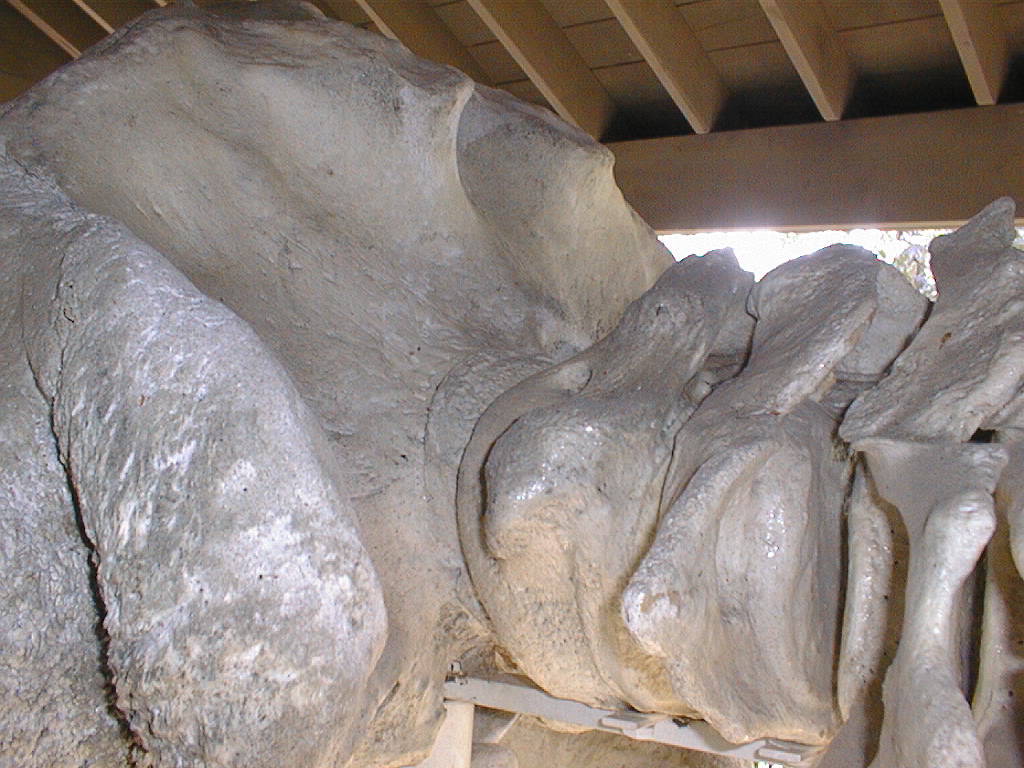
- upper left side
-
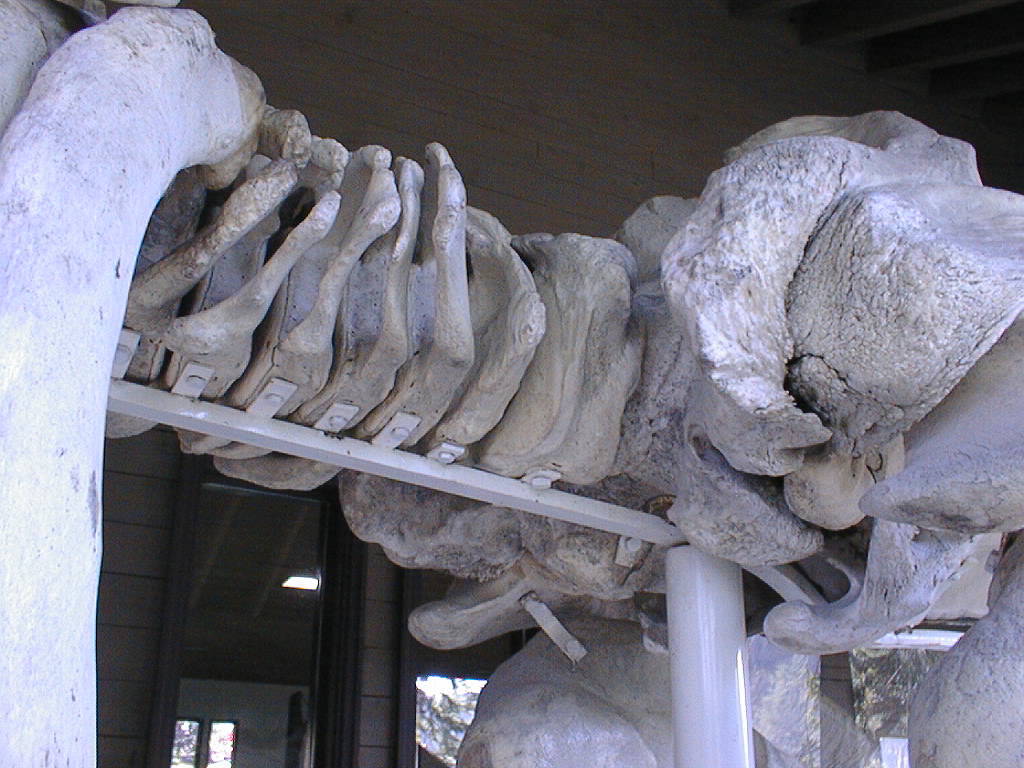
- neck vertebrae


| Domain | Eukarya |
| Kingdom | Animalia |
| Phylum | Chordata |
| Class | Mammalia |
| Order | Cetacea |
| Sub Order | Mysticeti |
| Family | Eschrichtiidae |
| Genus | Eschrichtius |
| Species | robustus |
| Common Name: | Gray whale |
Title: Taxonomy of the gray whale
Description:
Gray whales have mottled gray skin which sometimes seems to look slate-blue or marbled white and its head arches between its blowhole and snout – grey whales have relatively small heads. They don’t have a dorsal fin; instead there is a low hump with between 6 and 12 knuckles between the hump and the tail. Their flippers are small and paddle-shaped. Their baleen plates are about 50cm in length. Gray whales have what look like yellow spots on their skin, these are, in fact, small parasitic crustaceans. Many cetaceans are infested with these although not always the same type – some parasites live on only one type of whale. The gray whale is more heavily infested with a greater variety than any other cetacean. They do not seem to harm the whale in any way although when they leave the whale’s skin in warmer waters it still shows the scar.
Yankee whalers named the gray whales “devilfish” because they were so protective of their young when approached, often charging or attacking whalers. Today, they are better known for being not only one of the most active of the large whales but also one of the most inquisitive and friendly.
• The scientific order Cetacea includes all whales. This large order is further divided into three suborders: the toothed whales or Odontoceti (killer whales, dolphins, porpoises, beluga whales, and sperm whales), the baleen whales or Mysticeti (blue whales, humpback whales, gray whales and right whales), and the Archaeoceti (which are all now extinct).
• The word “cetacean” is derived from the Greek word cetus, which means whale.
Suborder–Mysticeti.
• The term “baleen whale” is another name for the scientific suborder Mysticeti.
• The word Mysticeti is derived from the Greek word for moustache, mystax. It may refer to the hairy appearance of the baleen plates, which baleen whales have instead of teeth. Baleen whales have two external blowholes and are larger in size than most toothed whales.
• Baleen whales are sometimes referred to as the “great whales.”
Family– Eschrichtiidae
• This family has one living member, the gray whale. The gray whale has a few throat grooves, short baleen plates, and a small dorsal hump followed by a series of bumps.
Trophic level:
Because of their relative size, gray whales are usually at the top of the food chain:
Main danger to whales:
Ed note : since this was written , there is a greater recognition now of the danger to whales by ship strikes and ship casued noise in the seascape which interferes with the whales echolocation
• Whalers, who kill whales to sell their meat.• Human activities such as pollution. Currently( 2006, both Japan and Norway still pursue whales ( Minke and others) under the guise of scientific whaling. Japan harvests several hundreds from the waters of the Antarctic, and Norway gets theirs from the North Sea.
(Chinyere Amadi PC Yr 31 2005)
 Return to the Race Rocks Taxonomy and Image File |
 The Race Rocks taxonomy is a collaborative venture originally started with the Biology and Environmental Systems students of Lester Pearson College UWC. It now also has contributions added by Faculty, Staff, Volunteers and Observers on the remote control webcams. |
Elephant Seals Around Southern Vancouver Island : 1990
By Robin W. Baird
Elephant Seals occur fairly frequently on -the B.C. coast, but few people recognize them when they do see them. Adult males only rarely come ashore, and while in the water animals of all ages and both sexes spend up to 90% of their time beneath the surface. Their behaviour while at the surface makes them very difficult to notice as well: at first glance they appear similar to a large, partially waterlogged log floating vertically at the surface (commonly termed a deadhead). Unlike real deadheads, which may bob up and down with waves or a swell, Elephant Seals just sink slowly out of sight after several minutes, and may not surface again for half an hour or more. In fact, the maximum recorded dive length (actually, for the similar southern Elephant Seal) is exactly two hours (Hindell et al. 1989), and they usually only surface for two to three minutes before repeating their dive. They do this day and night, for days, weeks and even months on end, even sleeping underwater. As well, they are generally solitary except during the breeding season, and only breed off the California and Mexican coasts.( now-2006, also at race Rocks)
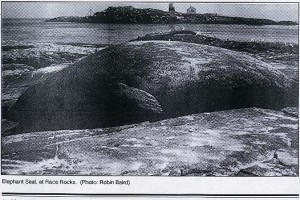
Elephant Sea[, at Race Rocks. (Photo: Robin Baird)
Moulting occurs at different times throughout the year depending on the age and sex of the animal. Juvenile Elephants Seals (about 1.5 – 2 metres in length) moult in the spring. In B.C. this is the age class most frequently seen hauling out to moult.
Moulting in Elephant Seals not only involves losing the hair, but the entire outer layer of skin, often in great sheets, and frequently the animals suffer from skin infections, resulting in bleeding. These infections are usually of low level and do not typically seriously harm the animal. When Pinnipeds (seals, sea lions and walruses) come out of the water their eyes continuously water to keep them moist, an adaptation that protects their eyes but also contributes to their sick appearance.
Most people assume that Elephant Seals are much larger than the juveniles which typically haul out in this area, but at this stage they appear fairly similar to Harbour Seals. In fact, confusing juvenile Elephant Seals with Harbour Seals occurs frequently. Despite the fact
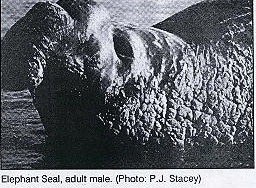
Elephant Seal, adult male. (Photo: P.J. Stacey)
that Elephant Seals can be approached closely by people on foot, have watering eyes, and due to their epidermal moult have skin that is literally falling off and sometimes infected, these are normal conditions and the animals are in reality quite healthy. There have been several occasions around Victoria in the last year where such Elephant Seals have been mistakenly identified as sick Harbour Seals and this has resulted in the inadvertent euthanization of the animals.
The differences between juvenile Elephant Seals and Harbour Seals are fairly obvious once you know what they are. Unlike Harbour Seals, Elephant Seals have no spots on the skin, rather they are a uniform greyish brown or yellowish colouration, although while moulting, their skin appears very patchy. The rather “swolled’ snout, and the horizontal crease just below the nostrils are characteristic of Elephant Seals, and a harbinger of the bulbous nose that comes with adulthood for the males. The hind flippers of Harbour Seals are relatively straight along the trailing edge, while Elephant Seals have a inverted U-shaped curve to the trailing edge of their hind flippers. Many of the animals are also tagged on the hind flippers, while very little work has been done in tagging Harbour Seals.
More accurate identification of Elephant Seals will both prevent the types of accidents mentioned above from occurring, and will assist research in terms of trying to monitor the numbers of Elephant Seals in the province. If population numbers in B.C. mimic the increase seen in their breeding range off California, Elephant Seals may become a more common sight off our coast. Such an increase should not worry those concerned with potential conflicts with fisheries, as the diet of the Elephant Seal consists mainly of species largely ignored commercially, such as Ratfish, Dogfish and other sharks, various species of skate, some squid, Cusk Eels, and occasionally deep water, slow swimming fish.
Records of Elephant Seals around southern Vancouver Island have been increasing in the last year, although it is not known if this is due to an actual increase in their presence, or just that more people are aware of the differences between Harbour Seals and Elephant Seals, and are reporting their presence.
We have been attempting to respond to most reports of hauled out Elephant Seals, or of 1arge sick Harbour Seals that you can walk right up to”. We try to check for tags, record age and if possible sex (not an easy task since you’d have to roll the distress.
Some animals are branded as well as tagged, although they lose the brand when they moult. Many are double tagged, with a different number on each tag, so both left and right hind flippers should be checked if an animal is found.
A summary of records of Elephant Seals in B.C., including information on their origin (for tagged individuals), is presently being compiled by Victoria resident Marcel Gijssen and others. Dr. Burney Le Boeuf is responsible for tagging many of the animals born near Ano Nuevo, a site in central California between Santa Cruz and San Francisco.
Anyone observing elephant seals in B.C. can assist with this project by reporting sightings to me at the following address:Department of Biological Sciences,Simon Fraser University, address now not applicable
References:
Hindell, M.A., Slipp, D.J., and Burton, H.R. 1989. Diving Be-haviour and Foraging Ranges of Southern Elephant Seals (Mirounga leonina) From Macquire Island. Page 29 in Abstracts of the Eighth Biennial Conference on the Biol ogy of Marine Mammals, December 1989, Pacific Grove.
6The Victoria Naturalist Vol. 47.2 (1990)
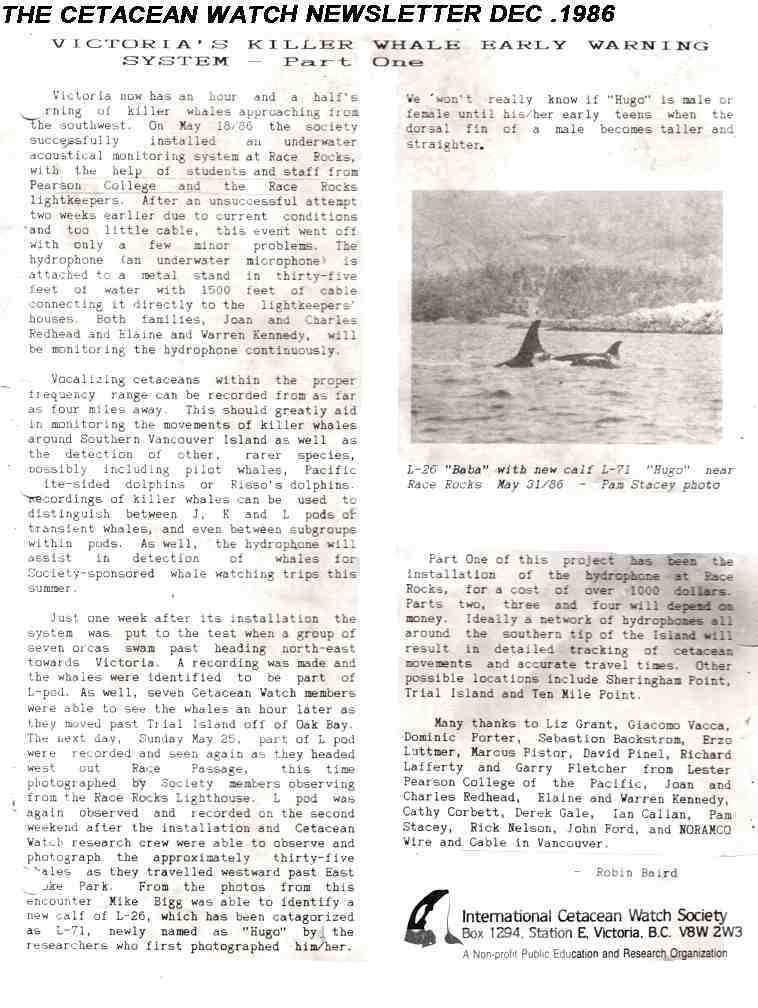
Victoria’s killer Whale Early Warning System Dec 1986.
By Robin Baird –From The Cetacean Watch Newsletter , Dec 1986.
A discussion of Victoria’s Killer whale early warning system, and the installation of the first hydrophone at Race Rocks.
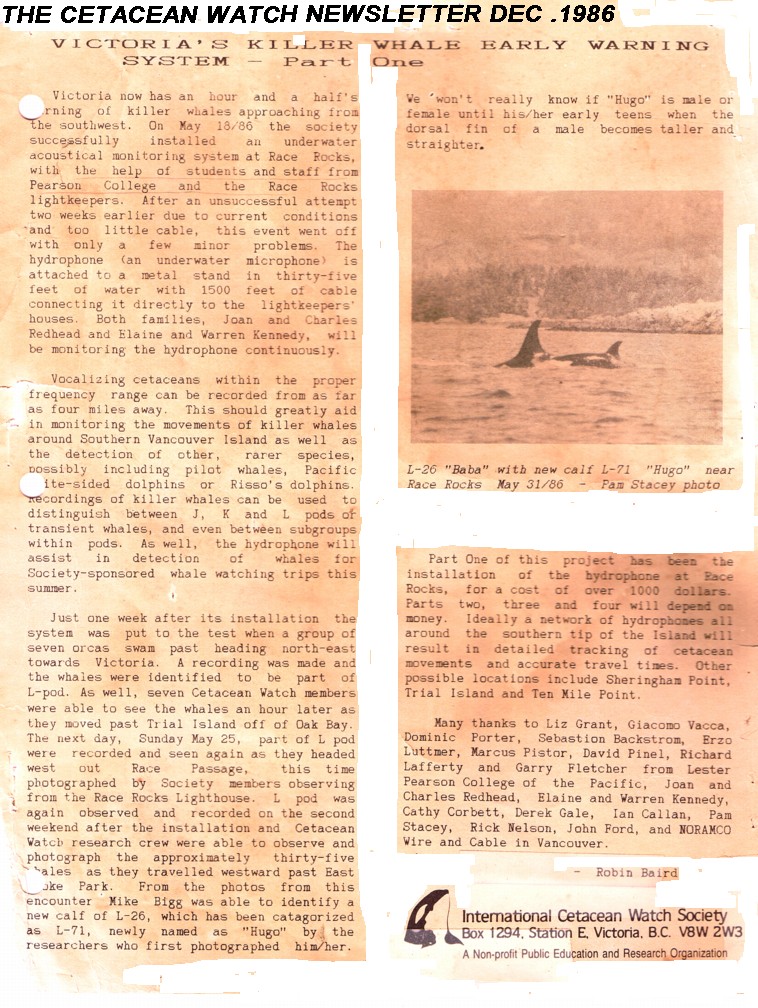
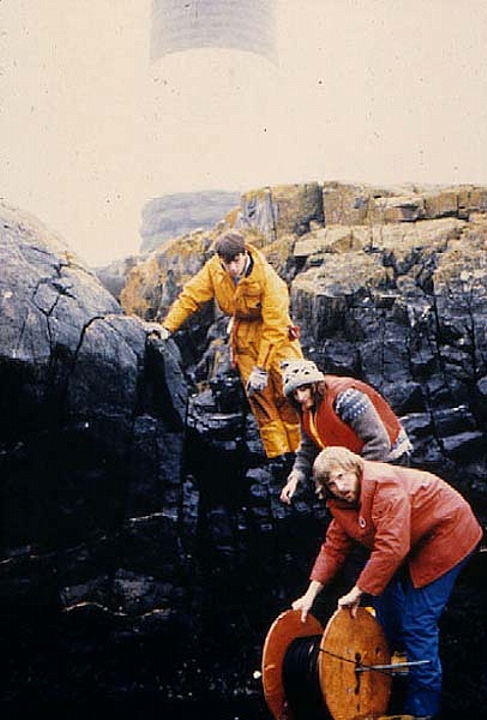
Marcus Pistor ( PC student) Pam Stacey and Robin Baird installing the hydrophone cable on the south-east side of Great Race Rock.
Status of the Stellar Sea Lion (Eumetopias jubatus) and California Sea Lion (Zalophus californianus) in British Columbia
BIGG, M. A. 1985.
Spec.Publ. Fish. Agnat. Sci. 77: 20 p.
Abstract: Aerial censuses were undertaken for Steller sea lions (Eumetopiasjubatus) and California sea lions (Zalophus californianus) during 1971-84, and a review was made of published and unpublished data on numbers seen and numbers killed since 1913.
These data were used to describe the location of haulout sites, season of occupation at haulout sites, regional movement patterns, and trends in numbers seen for each species during this century.
See the remaining Abstract and the complete PDF at: sealionbigg17899
Marine Mammals in British Columbia
by Peter F. Olesiuk and Michael A. Bigg (~1984)
MARINE MAMMALS IN BRITISH COLUMBIA
Peter F Olesiuk and Michael A. Bigg, (~ 1984)
Introduction
Seals and sea lions, also known as pinnipeds, are a familiar sight in coastal waters off British Columbia. These mammals lead partly a terrestrial and partly a marine existence. Their streamlined bodies, specialized flippers and insulating layer of blubber allow them to travel and forage at sea with ease. However, unlike dolphins, porpoises and whales, pinnipeds require land to bear and suckle their young and to rest.
The waters off B.C. are home to five species of pinnipeds representing two families. These are the Phocidae, or true seals, which includes the northern elephant seal and harbour seal, and the Otariidae or eared seals, which includes the northern fur seal and the Steller and California sea lions.
The true seals are characterized by the absence of external car flaps and by their short, fur-covered flippers. On land they cannot easily raise their head and shoulders and thus tend to remain prostrate. The rear flippers cannot be rotated forward, so while on land they move in a caterpillar-like fashion, rhythmically undulating their bodies with synchronized dragging strokes of the front flippers. In water, they swim by alternating side-to-side strokes of their rear flippers, while the front flippers aid in steering.
Members of the Otariidae, on the other hand, have small external ear flaps and large hairless flippers. On land the front flippers are used for body support to raise the head and shoulders. The rear flippers can be rotated under the body, which allows these animals to amble over land using both the front and rear flippers. While swimming, they use their front flippers like wings to propel and steer themselves.
Seals and sea lions in B.C. have evoked a great deal of interest over the years. At one time, they were utilized extensively for food and clothing by coastal natives. Between the early 1900s and late 1960s, they were hunted commercially and their populations regulated by predator control programs. However, increasing public sympathy toward marine mammals prompted changes in management and in 1970, harbour seals, northern elephant seals, and Steller and California sea lions were protected under the federal Fisheries Act. The northern fur seal has been protected since the early 1900s under the terms of the Interim Convention on Conservation of North Pacific Fur Seals, an international agreement involving Canada, Japan, the Soviet Union and the United States.
Since 1970, several species have become more abundant off our coast, causing concern among fishermen, who often view these animals as competitors for fish and as a source of damage to their gear and catch. It is not surprising, therefore, that many fishermen support culling programs that would maintain populations at low levels. However, this solution conflicts with the goals of many others, who believe populations should be left to reach a natural balance. Resolution of these differing perspectives presents a dilemma for fisheries managers in B.C., and in many other parts of the world.
This pamphlet provides the most recent scientific information on the status of seals and sea lions in B.C. It describes the general biology, trends in abundance and feeding habits of species that occur on the B.C. coast. The conflicts that arise with commercial and sport fisheries are also discussed.
Northern elephant seal (Mirounga angustirostris)
The Northern elephant seal is the largest species of pinniped inhabiting the Northern Hemisphere. Adult females grow to about 3 m (10 ft) in length and may weigh up to one tonne (2200 lbs). Adult males are larger and may attain a length of 5 m (16 ft) and weigh as much as 2 tonnes (4,400 lbs). Males may also be distinguished from females by their pendulous snouts. Pups weigh about 30 kg (65 lbs) at birth and are weaned in about a month, by which time they have tripled in weight. The pelage of both sexes is a uniform light brown.
Northern elephant seals are found in the northeast Pacific between California and southern Alaska. Nineteenth century sealers operating off the coasts of California and Mexico hunted these seals to the brink of extinction, and by the turn of the century the species had been reduced to a few hundred individuals. Since then the population has made a remarkable recovery to near historic levels of about 100,000 and is continuing to increase.
During December to March, most northern elephant seals congregate on islands and beaches off California and Mexico to bear their young and mate. By the end of March the pups have been weaned and all animals begin to disperse from the rookeries to forage on the continental slope. Pups and adult males tend to move north along the coast, occasionally as far as Alaska. Relatively few reach B.C. Adults rarely haul out in B.C. and are usually seen resting vertically in the water with their massive head and neck extending above the water like a large log. However, weaned pups, which weigh about 70 kg (150 lbs.), occasionally come ashore to rest. Because of behavior, they are often thought to be sick.
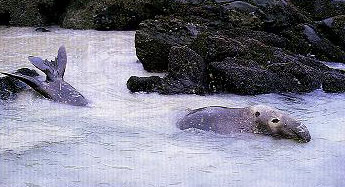 Northern elephant seals are capable of diving for up to 45 minutes and to a depth of 806 m (2,600 ft). They prey mainly on ratfish, sharks, cusk eels and squid. This seal has not been a problem for fishermen in B.C.
(PHOTOS) Northern elephant seals have likely been the source of more than one sea monster sighting. Photos courtesy of Kenneth Balcomb, Center for Whale Research, Friday Harbour, Washington.
Harbour seal Phoca vitulina
 The harbour seal is a relatively small phocid. Males and females are similar in size and as adults attain a length of 1.2-1.6 m (4-5 ft) and usually weigh 60-80 kg (130-180 lbs). Pups weigh about 10 kg (22 lbs) at birth and double their weight during a 4-6 week suckling period. Males live up to 20 years, while the life span of females extends to 30 years. The pelage varies in color from nearly black with light spots to nearly white with dark spots.
Harbour seals occur in most temperate coastal areas of the North Atlantic and North Pacific Oceans, and also enter navigable rivers and lakes. Although no precise figures are available, the northeast Pacific population is estimated to number at least 350,000.
These seals are typically seen in small groups resting on tidal reefs, boulders, and sandbars, but they can sleep under-water on the ocean bottom if no suitable haulout site is available. The population is traditional in the particular sites utilized as haulouts. There is little social organization in these colonies. Unlike many other pinnipeds, harbour seals do not congregate on rookeries but breed throughout most of their range. The birth season lasts about 2 months and varies from February-March to August-September, depending on location. In southem B.C., births occur in July-August and during May-June in northern B.C. Pups are usually born on tidal reefs or sandbars and begin to swim immediately. Although local movements associated with breeding and feeding may occur, harbour seals are otherwise non-migratory.
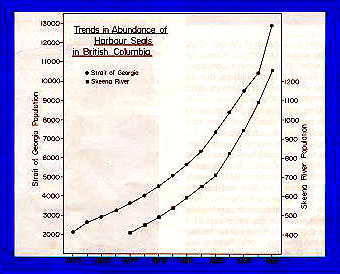
The abundance of harbour seals has been monitored in Georgia Strait since the mid 1960s. Counts are usually conducted from small aircraft at times when most of the population is hauled out. In Georgia Strait about 90% of the animals haul out on low tides, on calm days, in the morning, and toward the end of the pupping season.
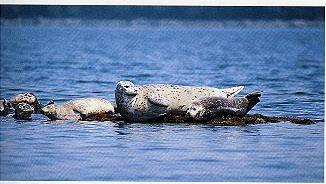 The pelage of harbour seals varies considerably in color and pattern. Harbour seal populations in B. C have been increasing in all areas surveyed by DFO. The increases, believed to be occurring province-wide, represent the recovery of populations that had been depleted by bounties and hunting.
Department of Fisheries and Oceans (DFO) surveys conducted under these conditions indicate that the harbour seal population in Georgia Strait has grown from about 2,100 in 1973 to 12,500 in 1987, a rate of increase of 12.4% per year. Similar increases have occured in all other areas censused. For example, in the lower Skeena River counts have increased from about 400 in 1977 to 1,250 in 1987. It is estimated that the total population in B.C. currently numbers about 65,000 and may be approaching historical levels.
This recent increase in numbers in B.C. represents the recovery of a depleted population, which in the late1960s had probably been reduced to less than 15,000. A bounty offered by DFO for each seal killed between 1913 and 1964 reduced populations to about half historic levels. Harbour seals were also intensively hunted for their pelts between 1962 and 1969. The population could not withstand this additional hunting and declined sharply during the mid 1960s.
Researchers at the Pacific Biological Station in Nanaimo recently began examining the impact of the growing harbour seal population on fisheries. Data are presently being collected on diet, seasonal movements and abundance in conflict areas to establish the extent to which seals interfere with fishing activities and their impact on important fish stocks, such as salmon and herring.
One of the main topics now being studied is the amount of salmon consumed by harbour seals. The amount of food eaten by a seal depends on its size and sex, the season and the caloric content of the prey. On average, harbour seals consume about 1.8-3.2 kg (4-7 lbs) of fish daily. At present not enough is known about the diet of harbour seals to accurately estimate the amount of salmon eaten. Preliminary findings indicate that in most localities, harbour seals prey mainly on a wide variety of small fishes that occur in shallow water around reefs. These include sculpins, small flatfishes and rockfishes, greenlings, smelts and perches. During winter their diet consists mainly of hake and, to a lesser degree, herring. However, salmon may constitute an important part of the diet in some rivers and estuaries while salmon are spawning.Harbour seals also create problems for fishermen by removing salmon from gear. Gillnetters and sport fishermen experience the greatest losses.
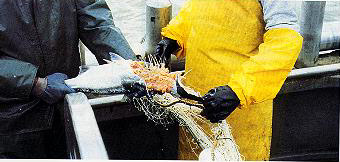
Harbour seals create problems for commercial fishermen by removing and damaging salmon in gillnets. Harbour seals also take salmon from the lines of recreational fishermen.
Harbour seals typically occur in small groups on tidal reefs (above) but large herds occur at the mouths of major rivers (left).
Northern fur seal Callorhinus ursinus
Adult male northern fur seals are much larger than females, attaining a length of 1. 9m (6 ft) and weight of 200 kg (450 lbs) compared to 1.3 m (4 ft) and 35 kg (80 lbs) for females. Pups weigh 4.5-5.5 kg (10-12 lbs) at birth and are nursed for 4 months, during which time they increase 2-3 fold in weight. Females can live to about 25 years whereas males rarely live longer than 15 years. The pelage of both sexes is greyish brown and includes a dense layer of underfur.
The northern fur seal is found in off-shore waters throughout the North Pacific Ocean from the latitudes of southern California and southern Japan into the Bering and Okhotsk Seas. The eastern North Pacific stock numbers about 900,000 seals. This stock has declined in recent years, for reasons which are not clear. One likely cause is increased mortality of juveniles many of which drown each year from entanglement in plastic debris, such as discarded nets and packing bands. Two other stocks, with a combined population size of about 400,000 seals, are found off the Asian coast.
Fur seals inhabiting the eastern North Pacific congregate on the Pribilof Islands in the Bering Sea during June to October to give birth and mate. When animals leave the rookeries in November they disperse widely throughout the eastern North Pacific, but tend to be most concentrated over the continental shelf. Most adult females and a few juveniles migrate to California and pass south through B.C. waters in early winter and north in late spring. Some individuals remain off the B.C. coast during winter and spring, but few come closer than 10 miles to shore. Most adult males remain in the Gulf of Alaska during the non-breeding season.
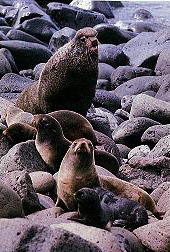
Northern fur seal
The northern fur seal has been hunted commercially for its fur since the late 1700s. Most seals were taken on rookeries, although many were also taken at sea during the late 1800s and early 1900s. Victoria was an important port for these pelagic sealing operations. For most of this century only young males, aged 3-5 years, have been harvested on the rookeries. Under the terms of the Interim.
Above: Northern fur seal bull (rear), cows (middle), and pups (front) during the breeding season. In many species of pinnipeds males are larger than females, probably because of their polygamous breeding customs.
Northem ,fur seals inhabiting the northeast Pacific gather on the Pribilof Islands in the Bering Sea each summer to give birth and mate.
Convention on Conservation of North Pacific Fur Seals, Canada received 15 per cent of the skins from harvests of the Pribilof Islands and Asian rookeries. However, the Convention expired in 1984 and only subsistence sealing is now permitted on the Pribilof Islands.

As part of Canada’s obligations under the Interim Convention, the reproductive biology, diet, and food requirements of this species were studied extensively at the Pacific Biological Station during 1958-80. Northern fur seals feed mainly on small schooling fishes. In waters off B.C., 20 % of the diet is salmon and 43 % herring. The amount of food consumed varies with season, but adult females typically eat about 2.5 kg (5.5 lbs) of prey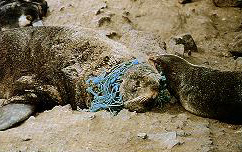 daily. However, the total amount of fish consumed off B.C. cannot be precisely determined because of the difficulty in estimating the number of seals wintering off our coast. Few fishermen in B.C. consider fur seals to be a serious problem.
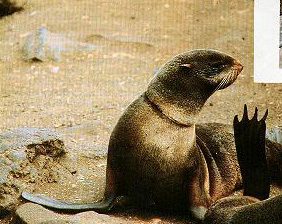 Entanglement of fur seals in fishing debris (above) and packing bands (below) may be responsible for recent population declines.
Steller sea lion Eumetopias jubatus
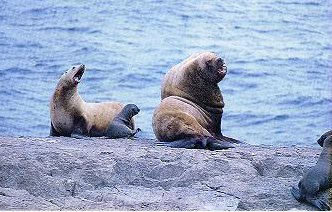 Steller sea lions are the largest member of the Otariidae. Adult males reach 3 m (10 ft) in length and weigh 450-1,000 kg (1,000-2,200 lbs) whereas the smaller females are 2.4 m (8 ft) long and weigh 180-230 kg (400 – 500 lbs). Pups weigh about 20 kg (45 lbs) at birth and may be nursed for more than a year. The life span of males is about 20 years and that of females about 30 years. The pelage consists mainly of coarse guard hairs and is usually tan in color.
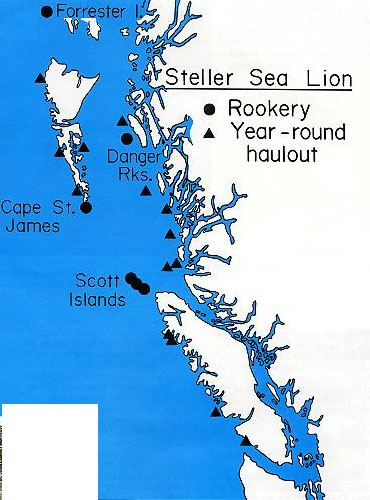 The Steller sea lion occurs along the coastal rim of the North Pacific Ocean, from California to the Bering Sea and Kurile Islands. The species tends to remain within a few miles of shore, but is occasionally seen as far as 130 km (80 miles) offshore. Although juveniles have been found up to 1,500 km (900 miles) from their place of birth, adults are largely non-migratory. The total population numbers about 200,000 with most occurring in the Gulf of Alaska. However, populations in Alaska have recently been declining inexplicably, and are now only half the size they were in the 1950s.
During June and July most of the population gathers on rookeries to breed. In B.C., rookeries are situated at Cape St. James, North Danger Rocks and on the Scott Islands. Animals tend to return to the rookery on which they were born. Some adults and juveniles are also found on sites known as year-round haulouts during the breeding season. In late summer and fall individuals on rookeries disperse locally along the coast to numerous wintering sites.
Aerial censuses conducted during the breeding season indicate that the population in B.C. is currently about 7,000 (including 1,100 pups) and has changed little since the mid 1960s. The current population represents only about one-third the number present at the turn of the century. The reason for the decline was extensive kills between 1912 and 1968. During that time, DFO staff made annual trips to rookeries and haulouts to kill sea lions for predator control. Adults were also commercially harvested on rookeries for mink food.
Why the population in B.C. has not recovered appreciably since it was protected in 1970 is not clear. Competition with Steller sea lions breeding at Foffester Island in Alaska, a few km north of the B.C. border, may be a factor. The Forrester Island stock increased from a few hundred animals in the 1920s to about 6,000 by the 1970s. In fact, almost twice as many pups are now born on Forrester Island as on all rookeries in B.C. Thus, the combined breeding populations for B.C. and southeast Alaska may now be close to historic levels.
Fishermen have long been concerned over the impact of Steller sea lions on commercially valuable fish stocks. On average, females consume about 5-10 kg (11-22 lbs) and males 10-20 kg (22-45 lbs) daily. During the breeding season, Steller sea lions feed predominantly on octopus and a variety of fish, mainly rockfish. During the non-breeding season they prey mainly upon schooling fishes such as herring, hake, pollock, dogfish, and salmon. Overall, salmon constitutes only a few per cent of their diet.
Steller sea lions also create problems for fishermen by interfering with fishing activities. Some individuals apparently learn to follow commerical trollers and remove salmon from their lines. Sea lions also occasionally pilfer salmon and herring from gillnets and may inflict considerable damage to gear in the process.
Steller sea lion bull (right), pup (middle), and cow (left) showing the difference in size between sexes. Because males must staunchly defend breeding territories, they fast and may lose 200 kg (450 lbs.) during the 2 month breeding season.
Province-wide censuses are usually conducted when animals are congregated during the breeding season. Shown here is a portion of the Forrester Island rookery just north of B. C. which has grown dramatically in size over the last 50 years.
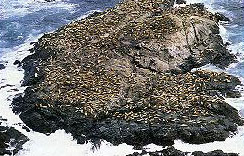 While the remaining animals are relegated to year-round hautouts . During the non-breeding season animals disperse to numerous wintering sites along the coast.
California sea lion Zalophus californianus
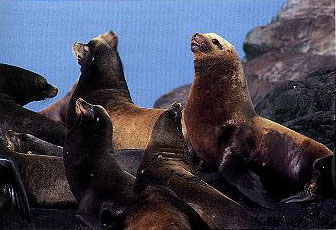 The California sea lion is smaller and darker than the Steller sea lion. Adult males are about 2.25 meters (6.5-8 ft) long and weigh 200 – 400 kg (450-900 lbs) whereas females are 1.4-1.7 meters (4.5-5.5 ft) and 70 – 110 kg (150-250 lbs). Pups weigh about 8 kg (18 lbs) at birth and may nurse for up to a year. The pelage is usually dark brown and appears almost black when wet. Mature males develop a patch of fight colored fur on the crest of their head.
There are three populations of California sea lions: the largest population numbers about 120,000 and breeds off the coasts of California and Mexico; another population of 20,000-50,000 breeds on the Galapogos Islands; and a small population, perhaps now extinct, was known to breed off Japan. Large kills off California and Mexico during the 1800s depleted that population and reduced its range. However, the population has been increasing since the turn of the century and may now be approaching historic levels.
Only adult and sub-adult male California sea lions occur in B.C., mainly during winter months. Between May and August most animals congregate on rookeries off the coast of California and Mexico to pup and mate. At the end of the breeding season animals leave the rockeries. Females and juveniles remain in California and Mexico during the nonbreeding season. Adult and sub-adult males tend to travel north, venturing as far north as central Vancouver Island. They arrive in B.C. in September-October and depart in April-May.
The number of California sea lions wintering off southern Vancouver Island has grown dramatically in recent years. Prior to the 1960s this species was rarely seen here, but by the early 1970s about 500 were present. Numbers increased to about 1,500 by the early 1980s, peaking at 4,500 in 1984. Numbers have since stabilized at about 3,000. The expansion of California sea lions into B.C. is probably a result of the recovery of the breeding population off California. The warm El NiÒo currents in the early 1980s and the recovery of local herring stocks may also have attracted more animals to B.C.
California sea lions wintering off southern Vancouver Island mix extensively with Steller sea lions. The impact on fisheries here is thus being examined for both species combined. The number of Steller sea lions wintering off southern Vancouver Island has increased slightly from about 700 in the early 1970s to about 1,200 currently. It is unclear whether this increase represents a redistribution of Steller sea lions that breed on local rookeries or whether Steller sea lions are being displaced northward from California and Oregon by the expanding population of California sea lions.
The increase in the number of sea lions wintering off southern Vancouver Island raised many concerns over their impact on local salmon and herring fisheries. Between 1982 and 1985 DFO collected extensive data on the abundance, distribution and feeding habits of these animals. Preliminary analysis of these data indicate that the wintering population feeds mainly on schooling fishes such as herring, hake, pollock and dogfish. Herring make up about 35 per cent of the diet and approximately 2,400 tonnes are consumed annually. This represents about 15 per cent of the average annual roe herring harvest off Vancouver Island in recent years. Salmon comprise about 10 per cent of the diet and 600 tonnes are consumed annually, representing less than I per cent of the commercial salmon landings in B.C.
Sea lions wintering in B.C. are also a problem during the short herring fishery. Animals may swim through the fragile gillnets, tearing large holes in them, and occasionally get into purse seines.
 Male California sea lions (left) can be distinguished from a male Steller sea lion (far right) by their darker pelage, smaller size, light fur on the crest of their head, and honking bark as opposed to the Steller sea lion’s deep growl.
In areas where no suitable haulout site is available, sea lions may rest in rafts. The flippers are often held out of the water, perhaps to minimize heat loss.
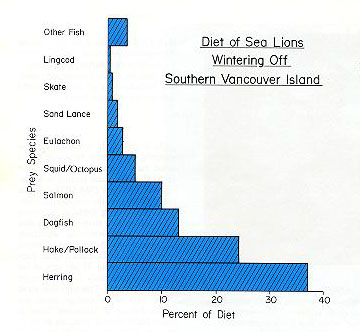
 Recent studies into the feeding habits of sea lions wintering off southern Vancouver Island indicate that they prey mainly upon mid-water schooling fishes.
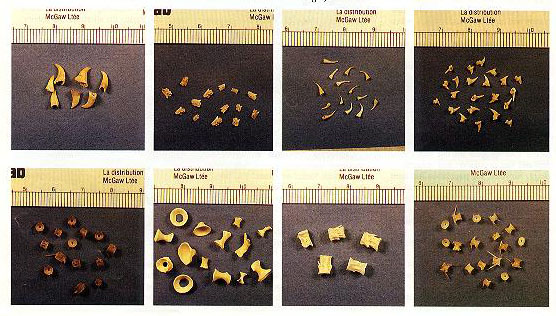
The diet of seals and sea lions can be evaluated by examining undigested remains in scats. Shown here are salmon, dogfish, hake, and skate teeth (top row, left to right) and salmon, dogfish, hake, and herring vertebrae (bottom row, left to right).
Management Policy
The Department of Fisheries and Oceans is responsible for the management and conservation of marine resources including seals and sea lions. The goals of management are to conserve these resources and to utilize them in the best interest of all Canadians. Management policy must balance the diverse and sometimes conflicting interests of Canadians.
For the first half of this century, management of seals and sea lions in B.C. focused on maintaining populations at relatively low levels by culling and hunting for meat and pelts. This kept competition for fish and interference with fishing activities at a low level. In the 1960s a greater interest developed in the preservation of natural resources and controversy arose around the hunting of whales and seals. Strong opposition to the killing of marine mammals emerged.
In 1970 regulations made under the Fisheries Act were amended such that the killing of sea lions, harbour seals and northern elephant seals required a license from the Minister of Fisheries. Since virtually no licenses were issued, this allowed some species, like the harbour seal and California sea lion, to become more abundant in B.C. The presence of more seals and sea lions in B.C. means that there are more animals for tourists to view in their natural habitat and that visibly reassures people that they are not endangered. On the other hand, the increases have raised concern among fishermen and fisheries managers over the impact on fishing gear, catches and on fish stocks, particularly salmon. The conflict of interests makes the management of seals and sea lions considerably more complex than in the past.
Appropriate balancing of the interests depends on information on the actual impact of seals and sea lions on fish stocks and the extent of damage to gear and catch. Research on seals and sea lions in B.C. being conducted by the Department of Fisheries and Oceans is providing this biological information to permit improved assessment of the social and economic implications of various management policies. The assessment process will also require input from the fishing industry, recreational fishing interests, conservation groups and other interested parties.
Suggested Reading
Haley, D. (ed.) 1976. Marine Mammals, 2nd edition. Pacific Search Press, Seattle. 256p.
Pike, G.C. and I.B. MacAskie. 1969. Marine Mammals of British Columbia. Fisheries Research Board of Canada. Bulletin 171 54p.
Ridgway, S.H. and R.J. Harrison (eds.) 1981. Handbook of Marine Mammals. Vol. 1. The walrus, sea lions, fur seals and sea otter. Academic Press, London. 235p.
Ridgway, S.H. and R.J. Harrison (eds.) 1981. Handbook of Marine Mammals. Vol. 2. Seals. Academic Press, London. 359p.
Social organization of mammal-eating killer whales: group stability and dispersal patterns
by Robin W. Baird and Hal Whitehead
See the full PDF:KWSocOrg
Abstract
: The social organization of mammal-eating “transient” killer whales (Orcinus orca) was studied off southern Vancouver Island from 1985 through 1996. Strong and long-term associations exist between individual transients, so sets of individuals with consistently high association levels, termed pods, can be delineated. Pods consist of individuals of mixed ages and sexes, and typically contain an adult female and one or two offspring (averaging 2.4 individuals). The mother–offspring bond remains strong into adulthood for some male (and less often for female) offspring. Other males disperse from their maternal pod and appear to become “roving” males, spending some of their time alone, and occasionally associating with groups that contain potentially reproductive females. These males appear to have no strong or long-term relationships with any individuals, and adult male – adult male associations occur significantly less often than expected by chance. Females that disperse from their natal pod appear to be gregarious (having high average association rates) but socially mobile (having low maximum association rates). Differences in social organization from the sympatric fish-eating “resident” killer whales (where no dispersal of either sex occurs) likely relate to differences in foraging ecology. Transient killer whales maximize per capita energy intake by foraging in groups of three individuals,whereas no such relationship has been documented for resident killer whales