Unsafe Snorkeling, Fall Changes, Census

Weather: 

  • Visibility 15+ NE
  • Sky overcast, cloudy
  • Wind 15-25 kn N
  • Water moderate waves, white caps.

Visitors/Boats: 

  • Around 15 whale watching boats yesterday
  • Corey, Guy, and a student with their visiting grandparents visited yesterday, and delivered water- the desalinator is on the horizon!
  • We are ending our term on Race Rocks tomorrow, so Greg and Guy will come for a debrief before the next eco-guardian takes over.

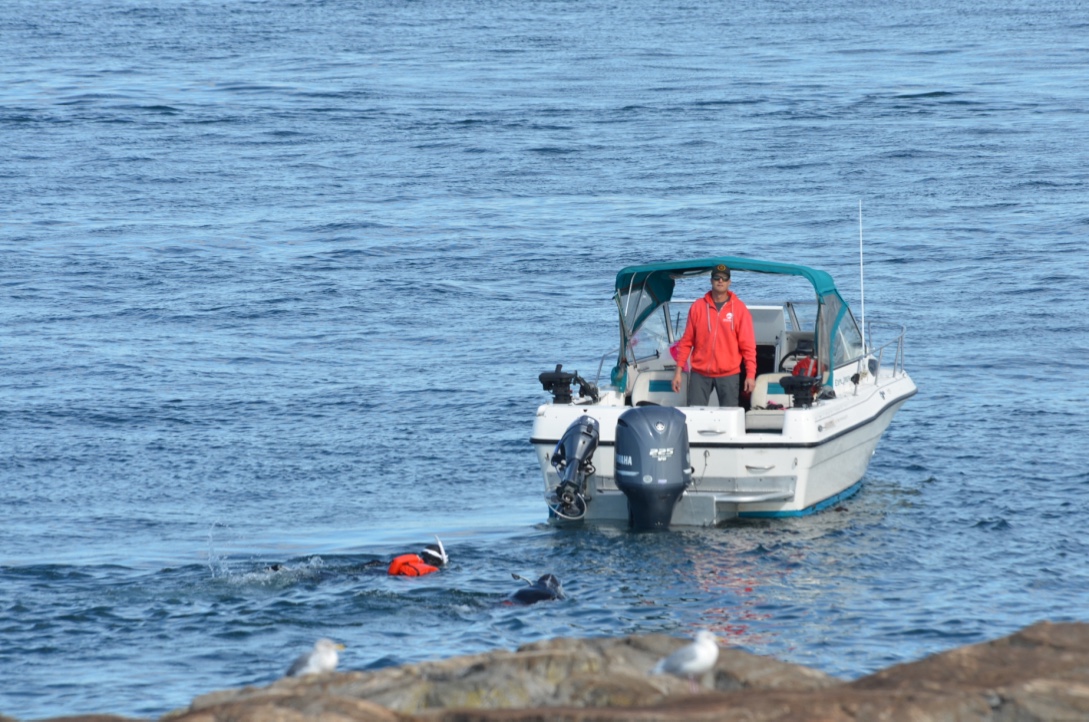
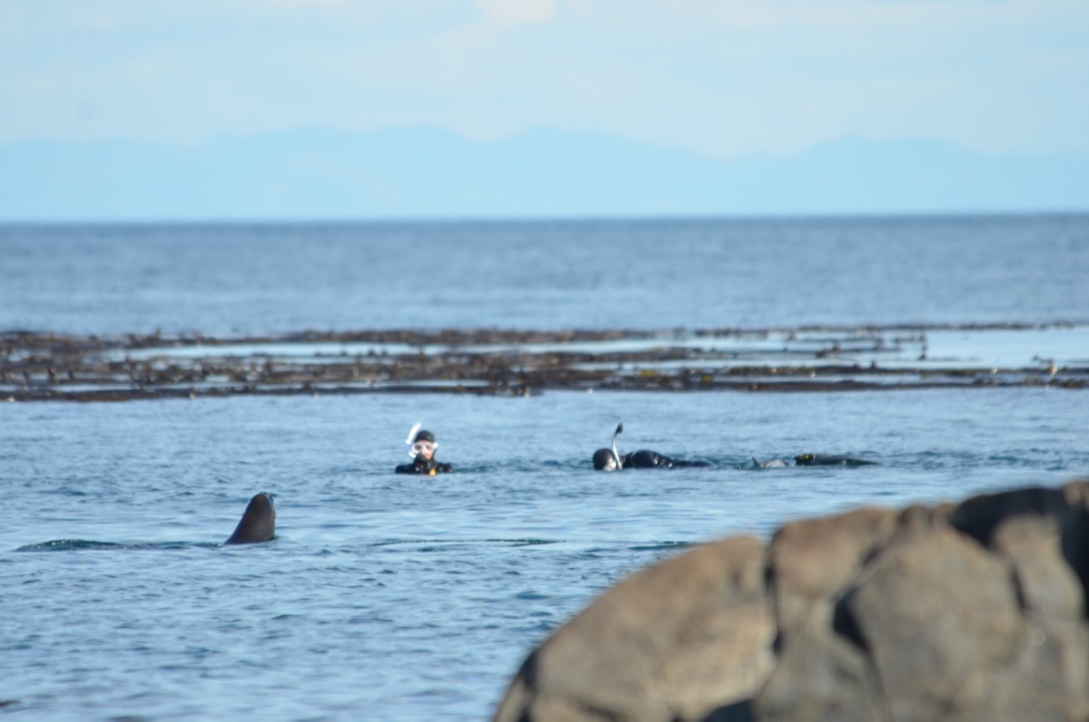
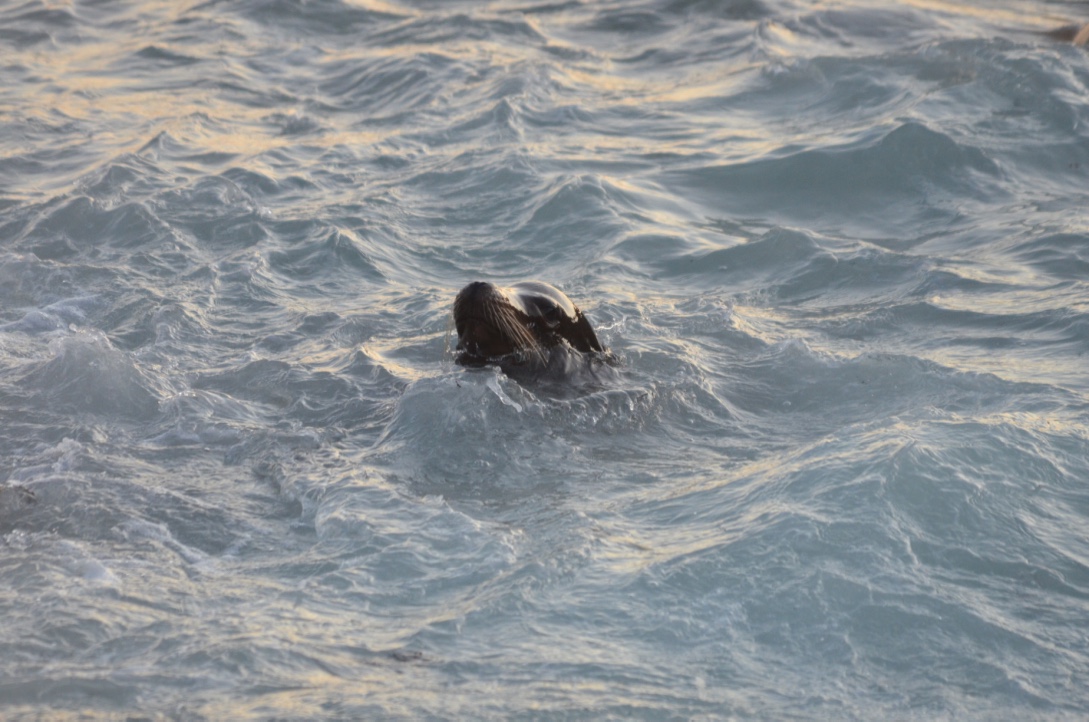
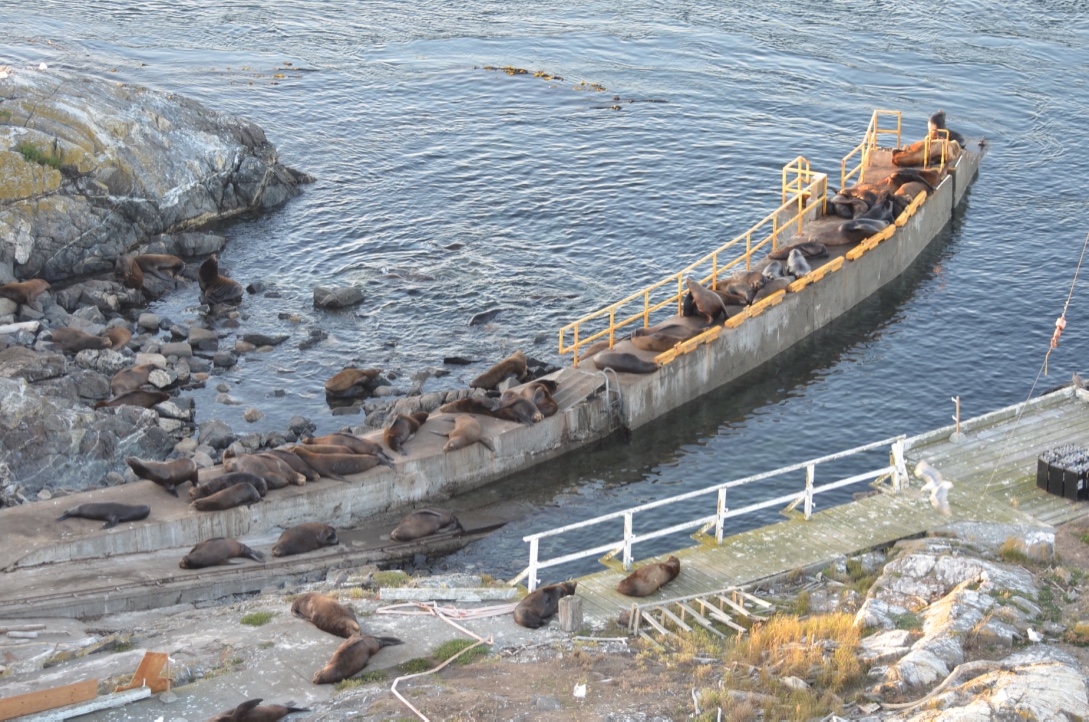
Yesterday we saw a pleasure craft enter the reserve and drop snorkelers into the water less than 100 m from our jetty, within 5 m of shore and the hauled out sea lions. The animals were distressed and swam around the snorkelers barking. The current was flooding very quickly (5 knots), which creates dangerous water currents, eddies, and upwellings. We as well as Corey in Second Nature motioned for the boat to move away, but they simply gathered the snorkelers and moved around the corner where they presumably thought we would not see them. An eco-tourism vessel in the reserve also noticed them and contacted us to let us know, out of concern for their safety given the animals present and the currents at the time.

In the past scuba divers and vessels have found themselves capsized or pulled away from their dive site and rescued by helicopter, and in 2015 a diver went missing and was found deceased days after they disappeared by a fisherman after rescue crews were not able to find them. We were especially concerned for this group’s safety due to lack of float marking their position and the frequent boating traffic through the reserve. In the past, seal pups have been decapitated by vessels passing through too quickly and unable to see them. If these snorkelers had been pulled away by the currents, there would have been a high chance of being struck by a vessel unable to see them in the rough water.

Ecological: 

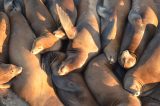
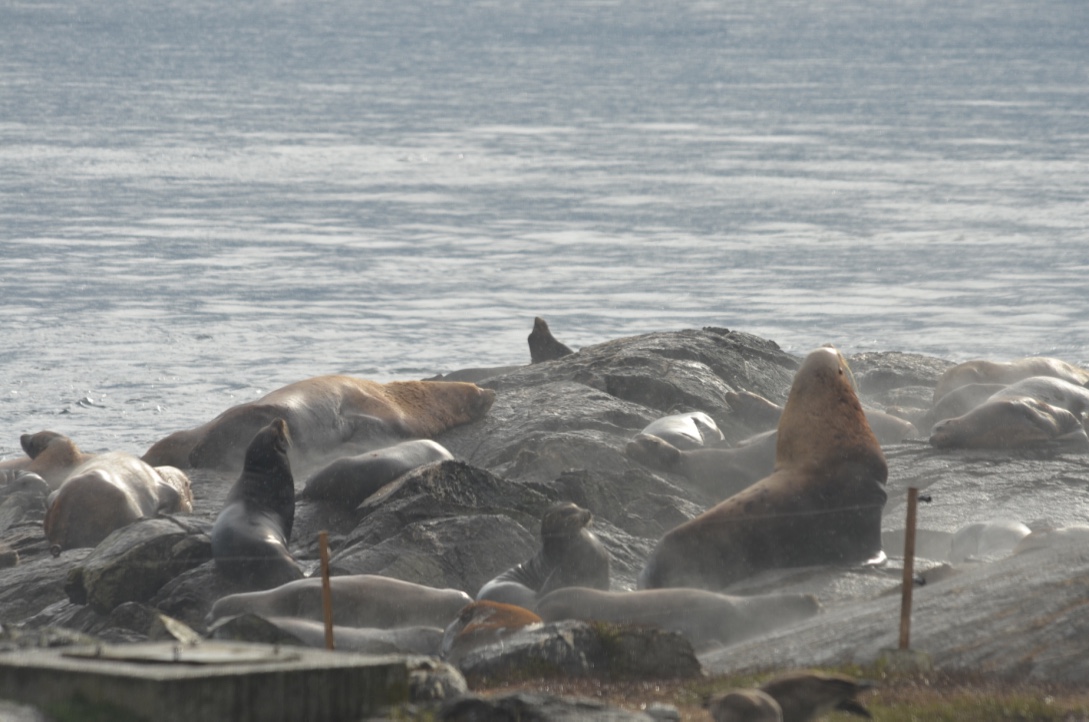
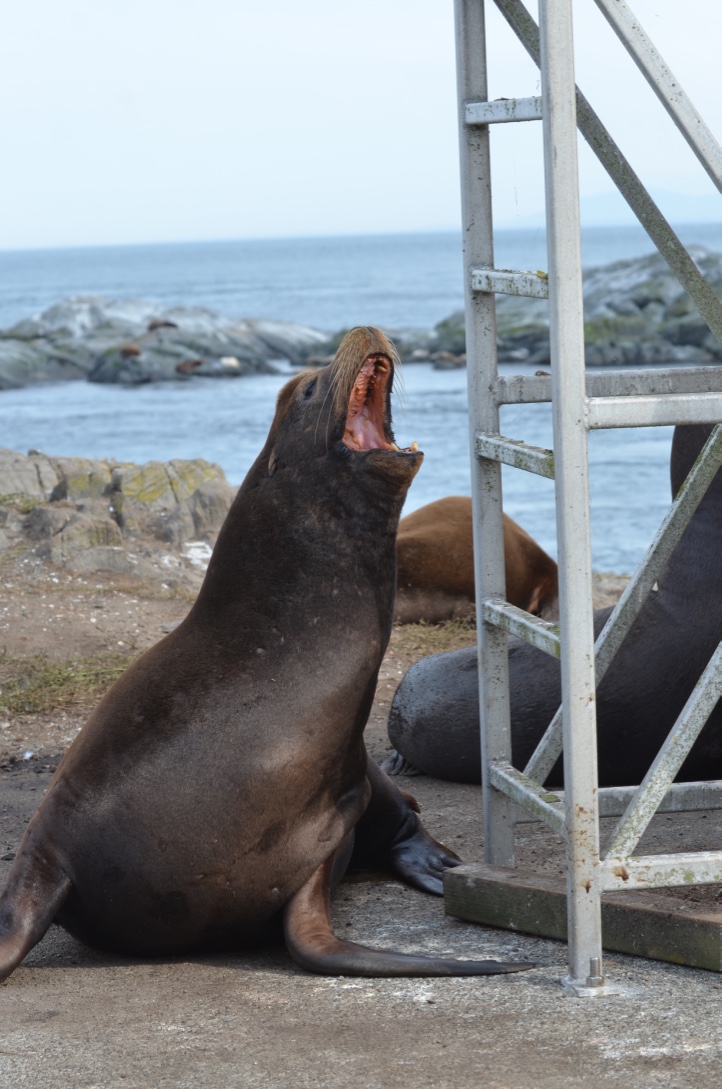
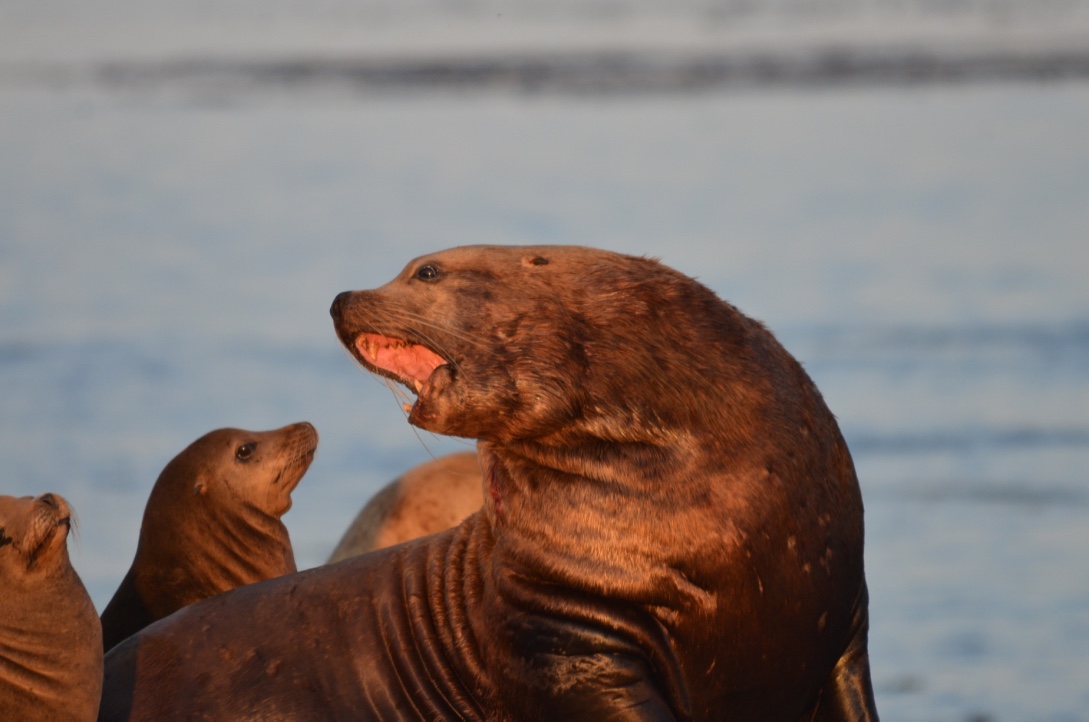
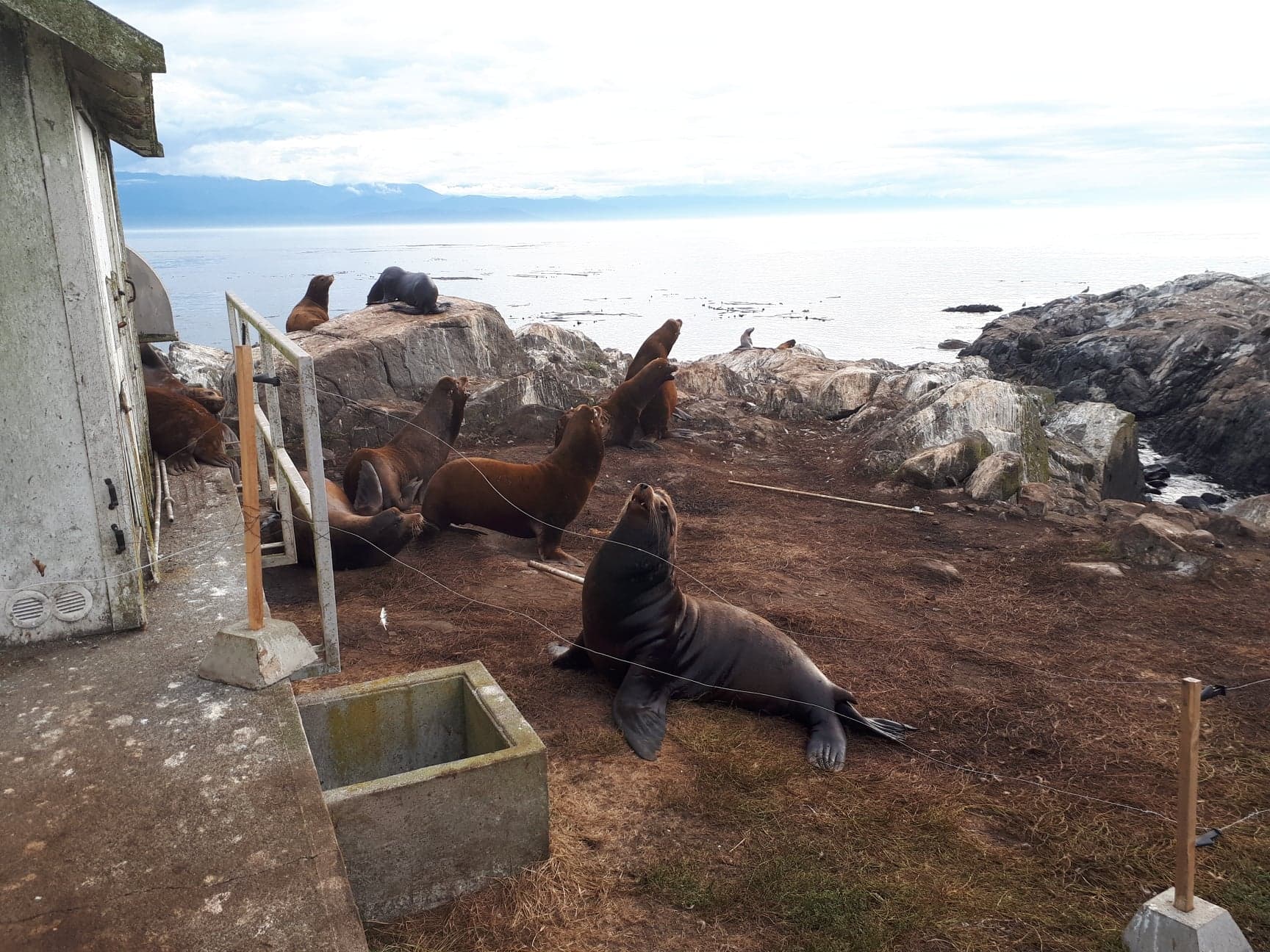
  • The sea lions population continues to grow! We are having to repair the fences sometimes twice per day. It seems like a more powerful electric fence energizer could be a good idea.
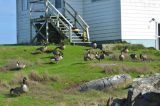
  • We spotted a little Greylag goose among the Canadian geese yesterday.
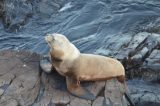
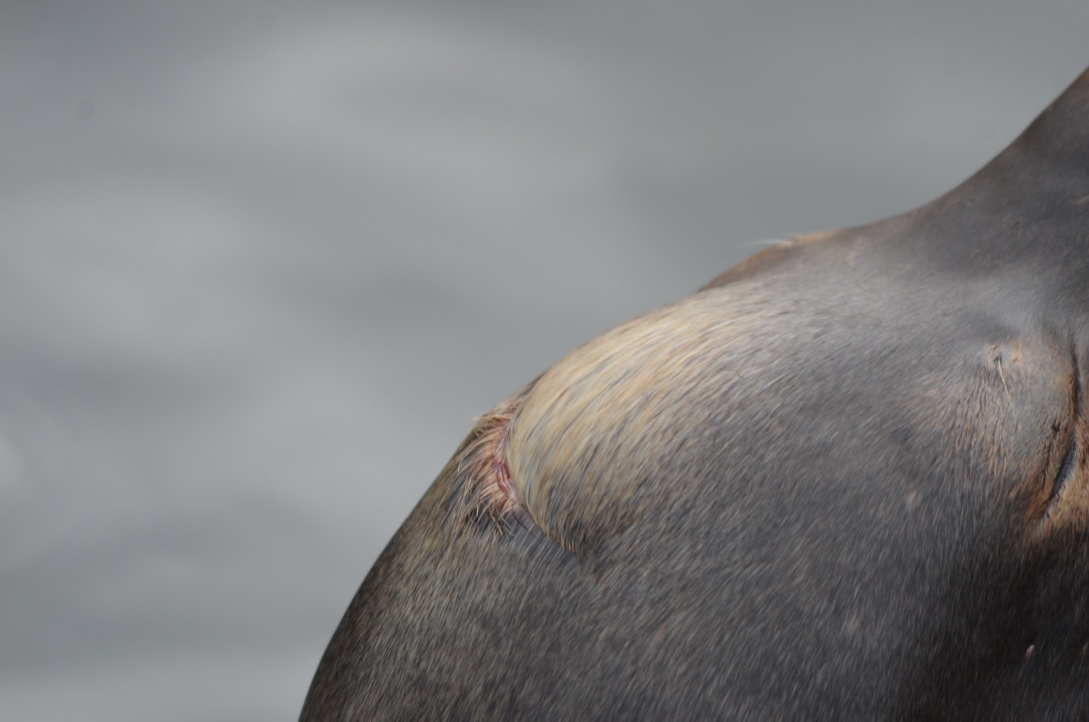
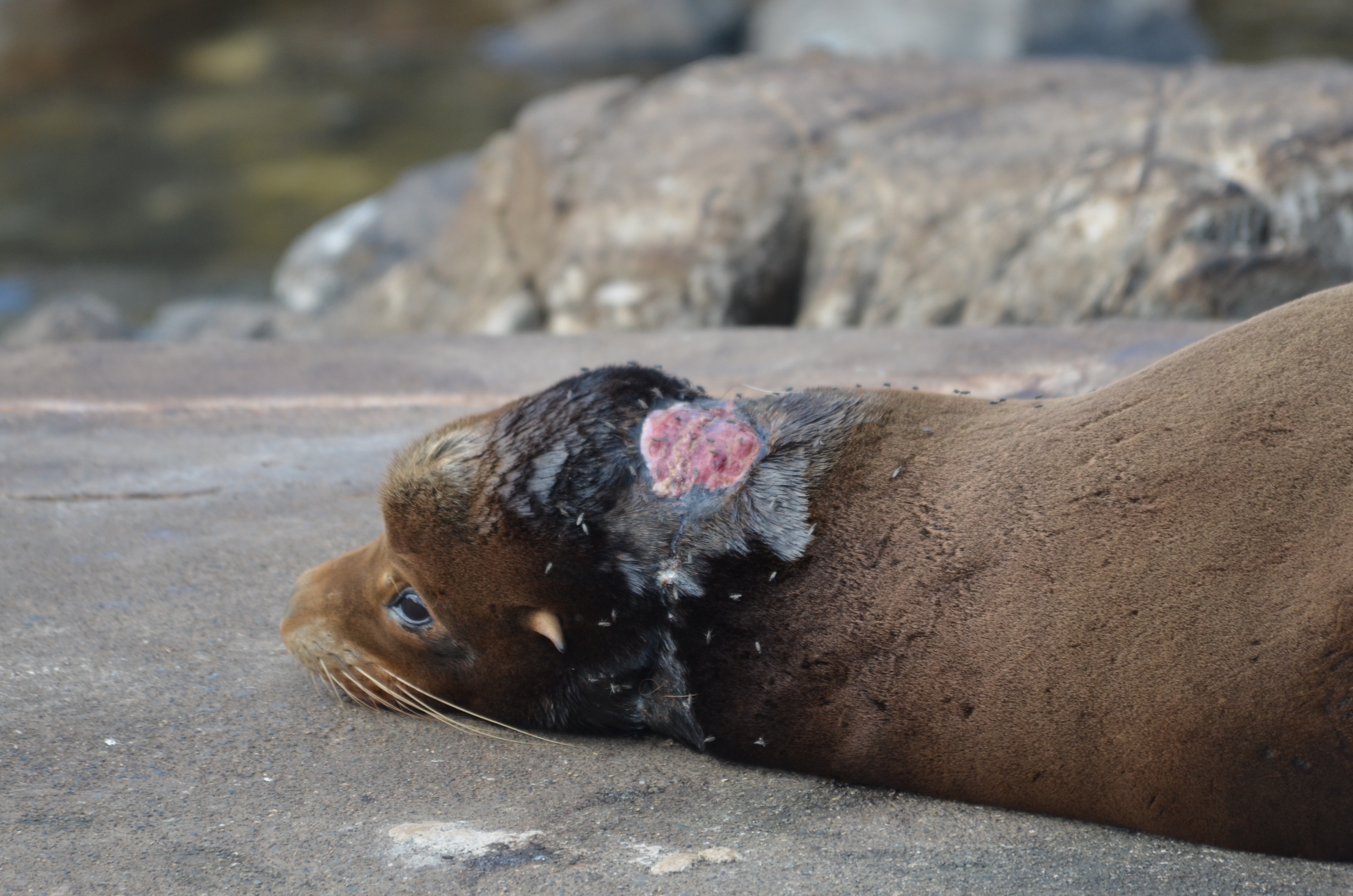
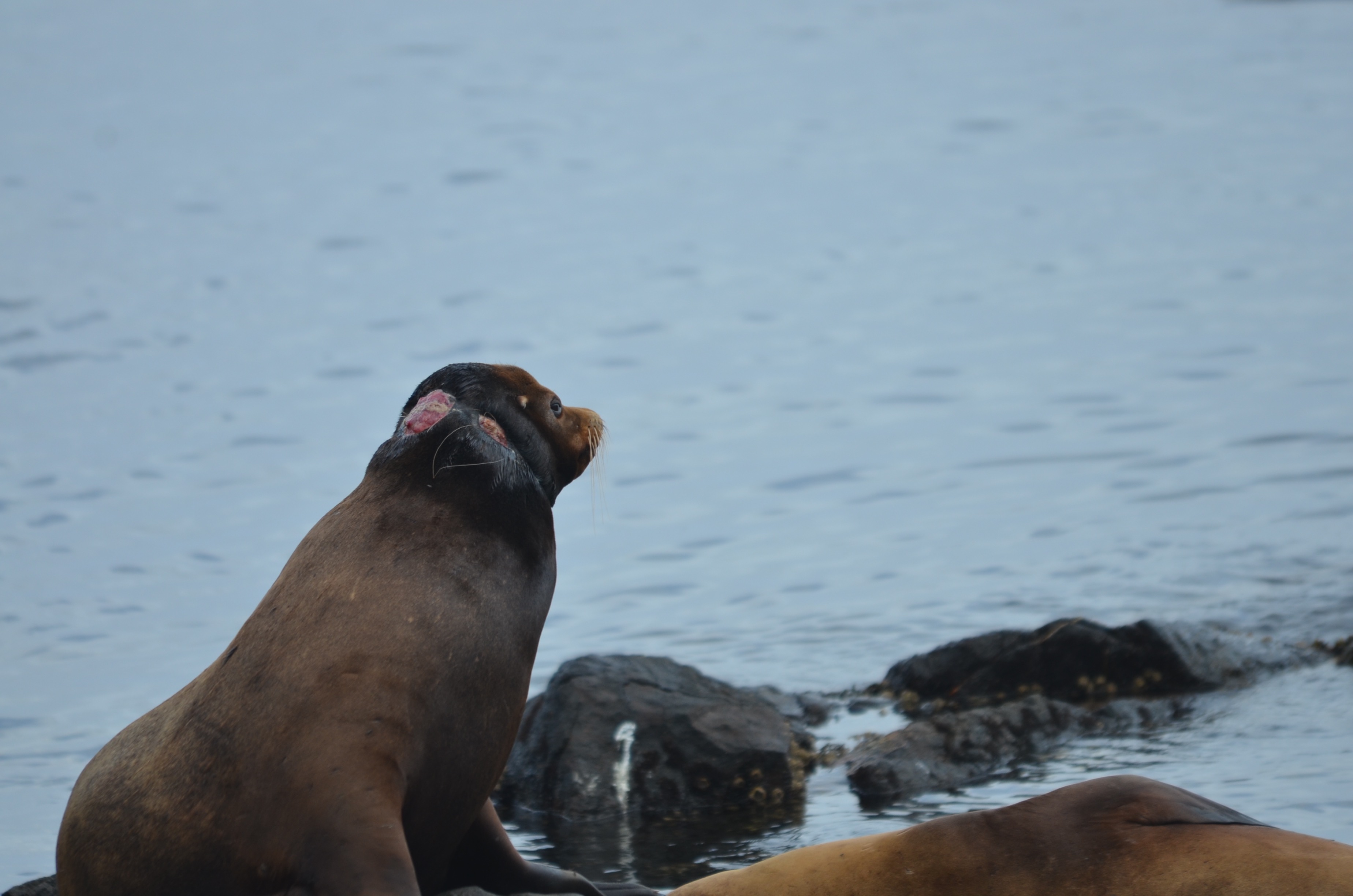
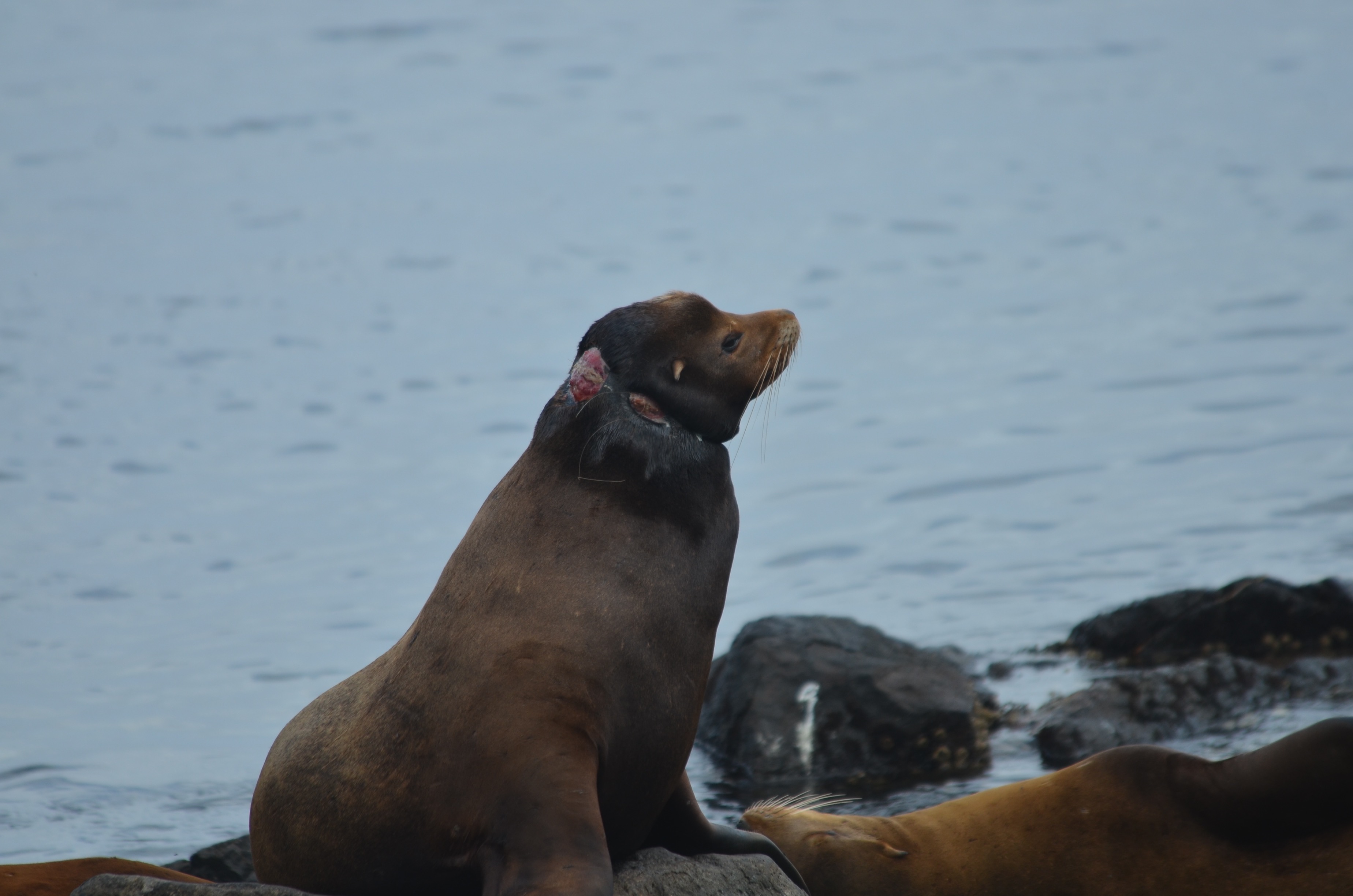
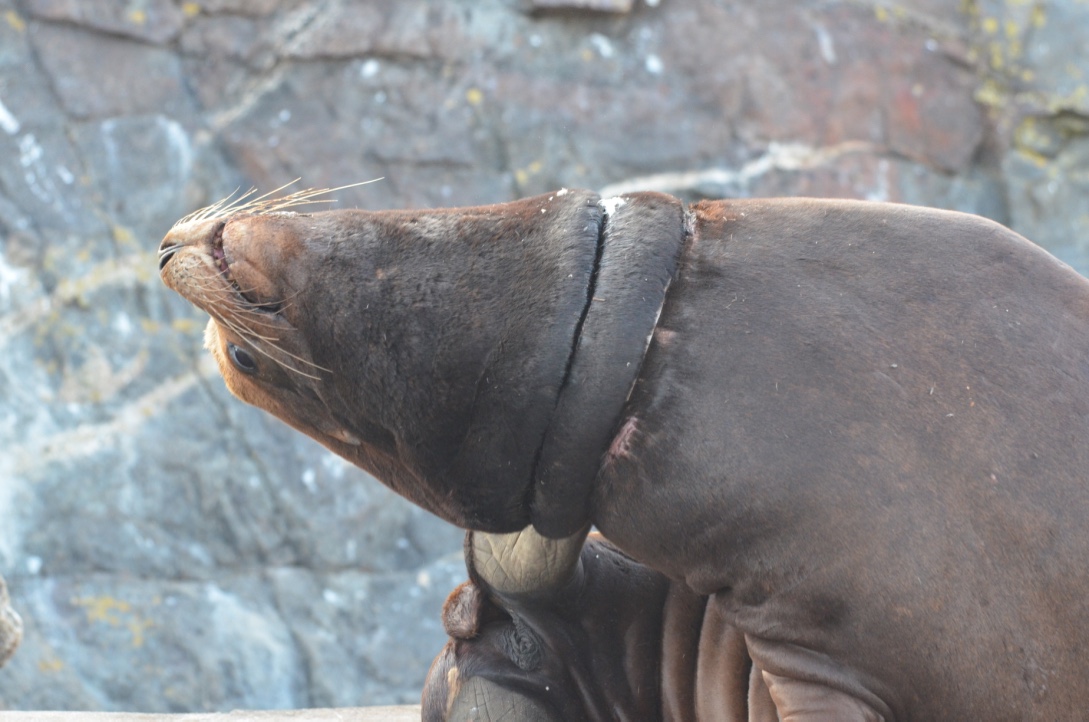
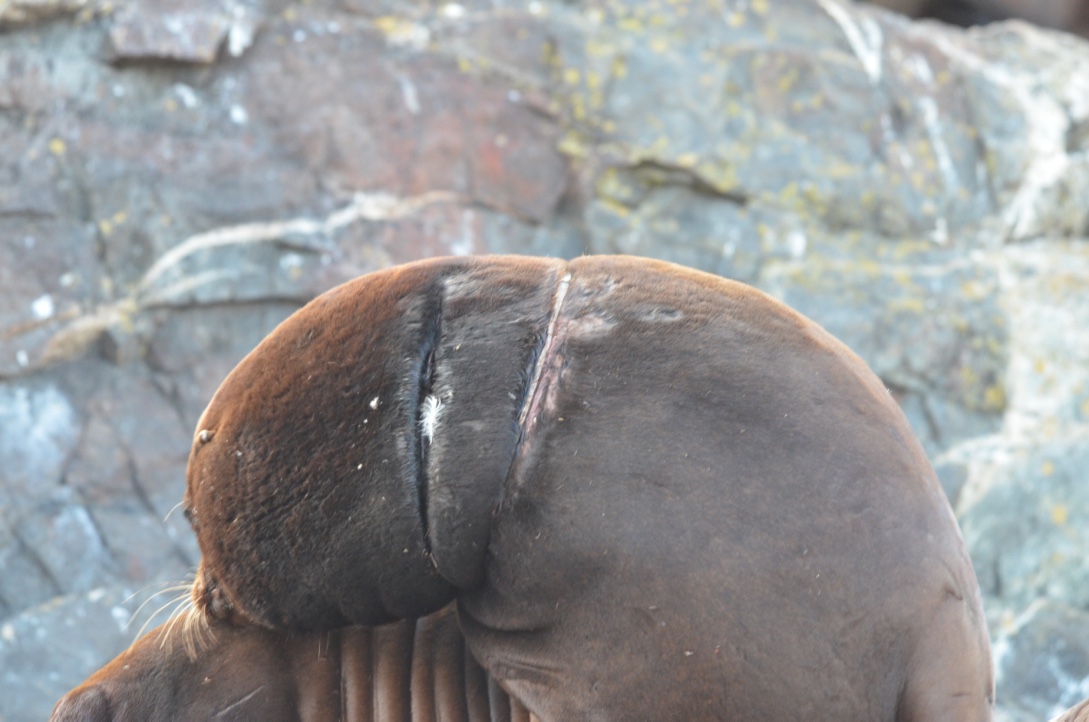
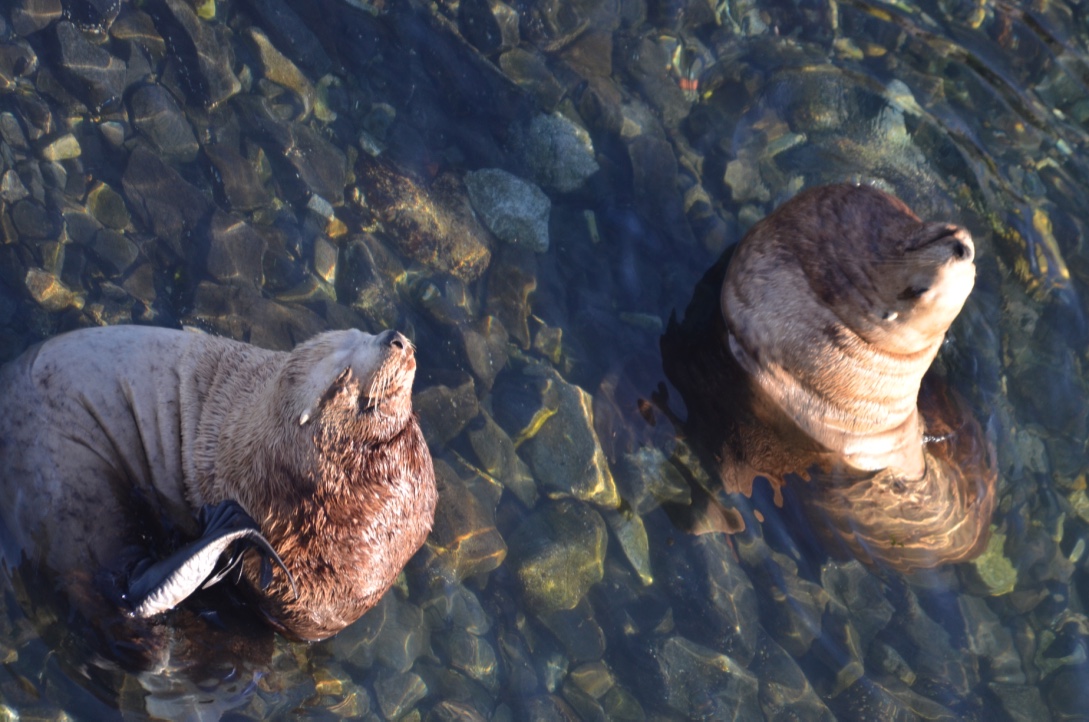
  • The sea lion that we spotted on Sept. 12th with an apparent propeller wound to his head is still here. He stays near the jetty and seems to have some behavioural anomalies, presumably due to the head injury. He is not afraid of us like the others, and does not move away into the water with the others when we clear the jetty. We haven’t had any problems but are weary that his behaviour could be unpredictable. Marty (the vet that came to aid in rescuing the entangled sea lion) mentioned that sometimes when this happens a shard of their skull can splinter and cause a brain infection. We hope this little guy is on the mend.
  • There have been many Canadian Geese passing through this week; A few days ago we counted over 20. The geese are not native to the island, but according to Gary Fletcher they arrived somewhere in the 80’s as the population of geese on Vancouver Island were introduced/grew. Addling the eggs began somewhere in the late 90’s. Unfortunately, this year two nests survived and hatched goslings, meaning that 20 geese left the island after 8 nested here in the spring.

Census: 

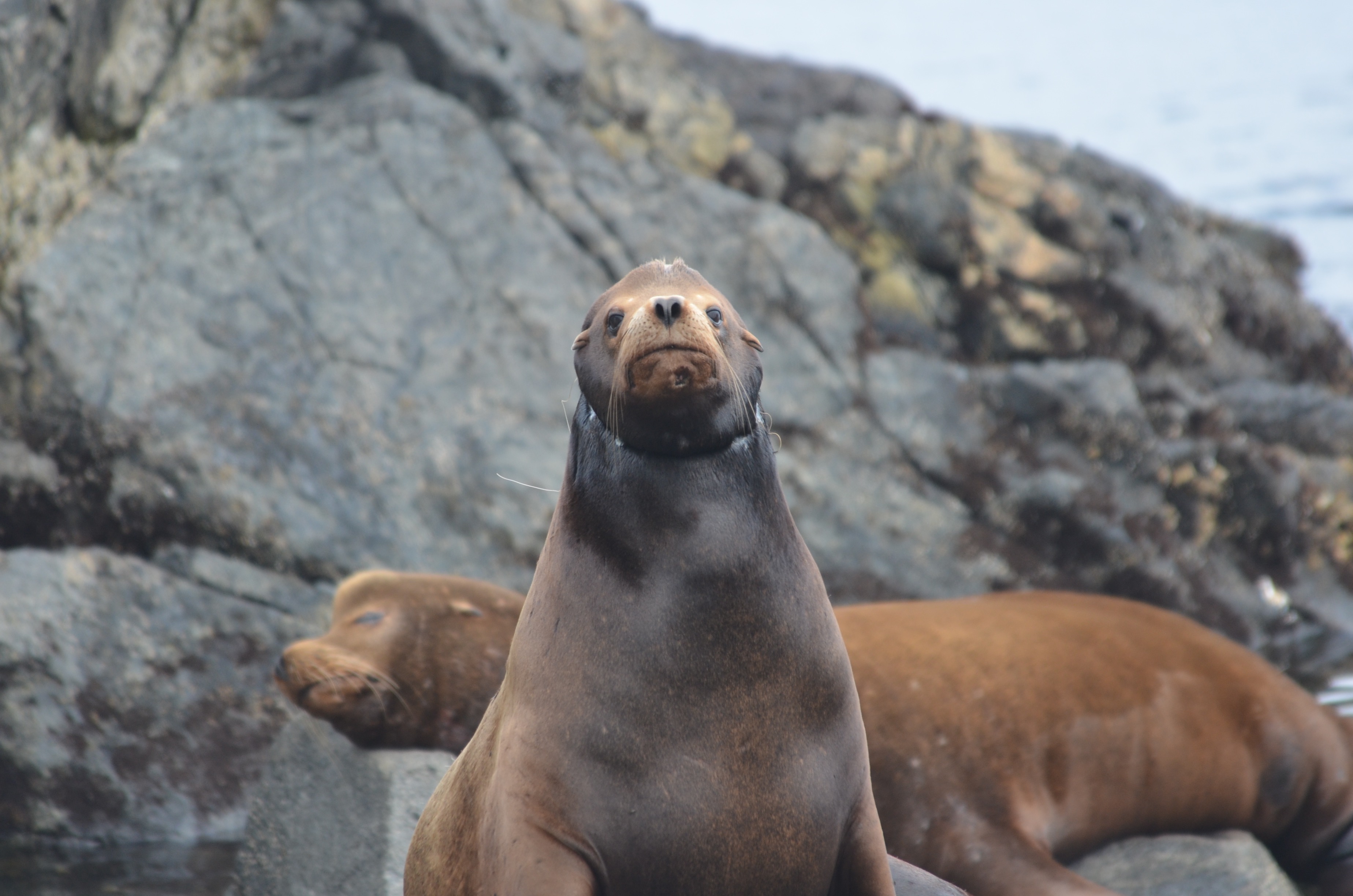
  • 500 Sea lions
  • 15 harbour seals
  • <20 seagulls
  • Approx. 20 cormorants
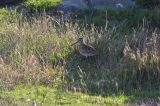
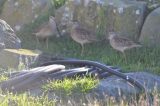
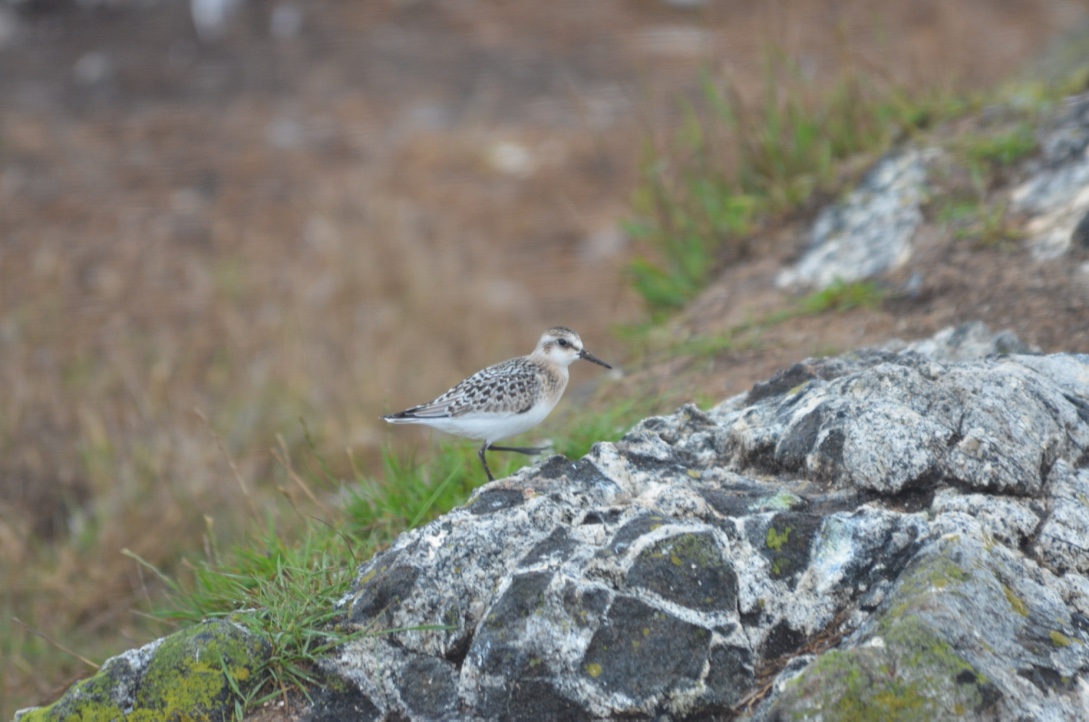
  • 3 short billed dowitchers
  • 1 Greylag goose
  • 1 sanderling
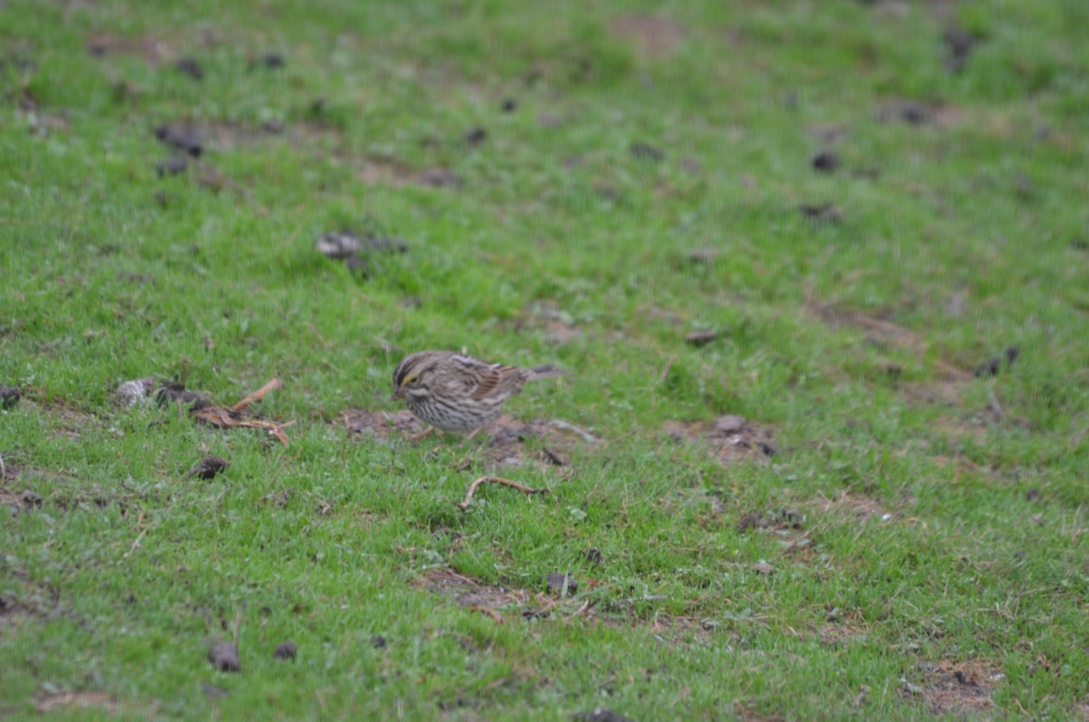
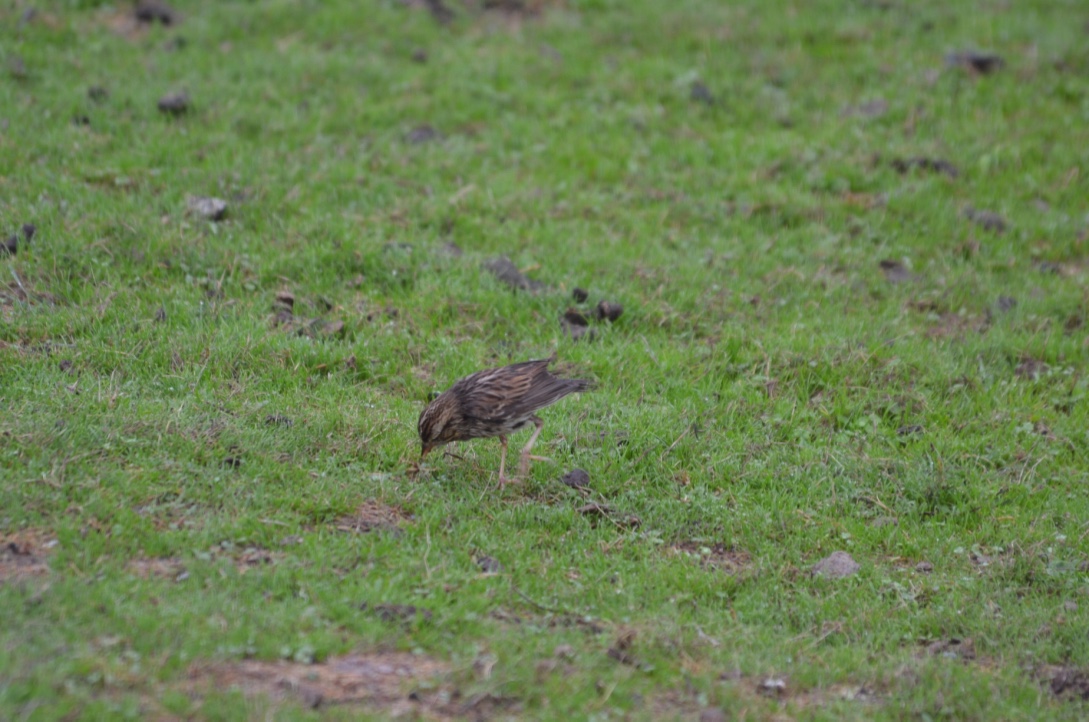
  • 1 Savannah sparrow
  • 20-23 Canada geese
Island Invaders (Invasive Thistle Removal)

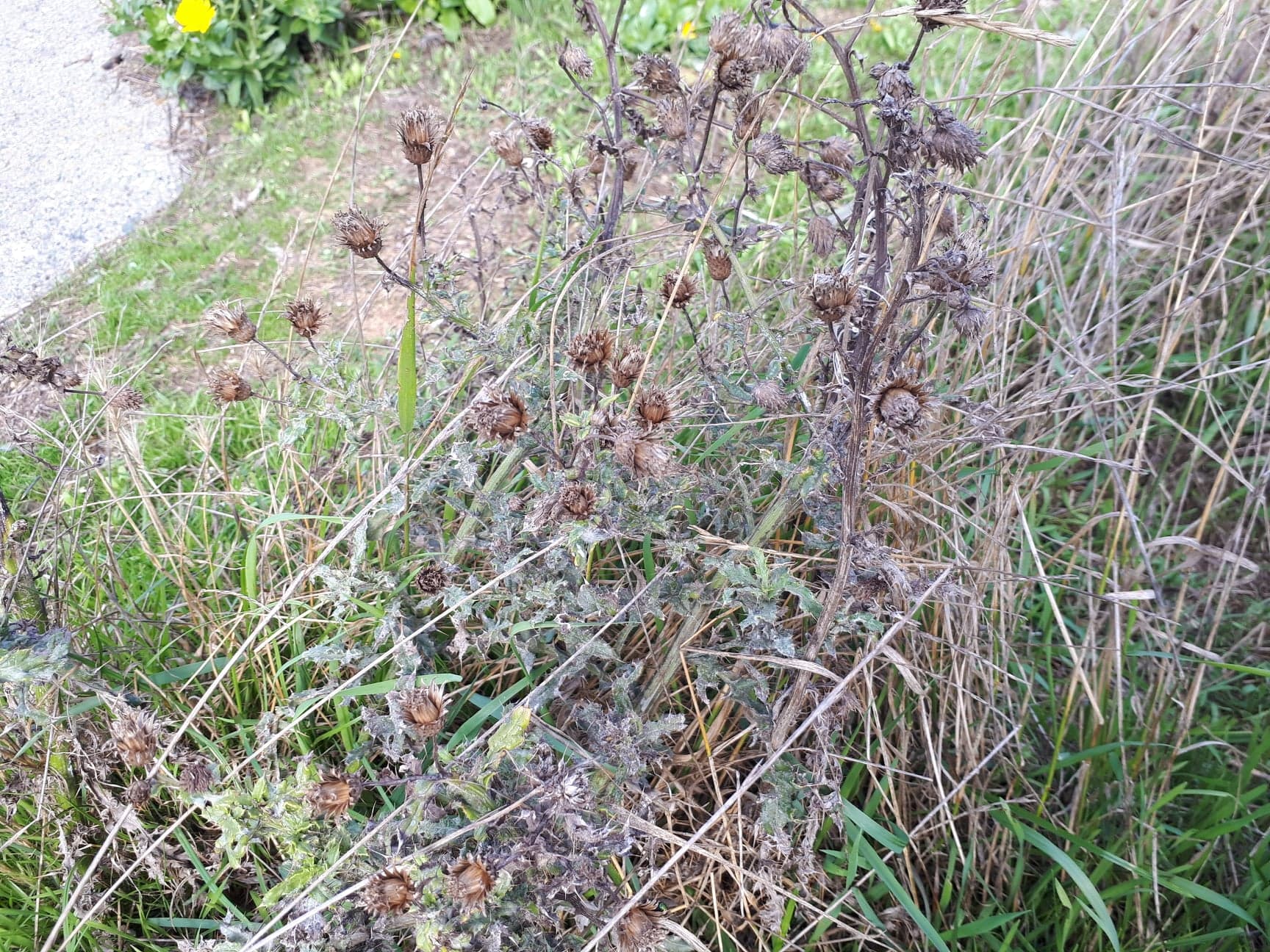
Invasive Species: Canada Thistle Removal 

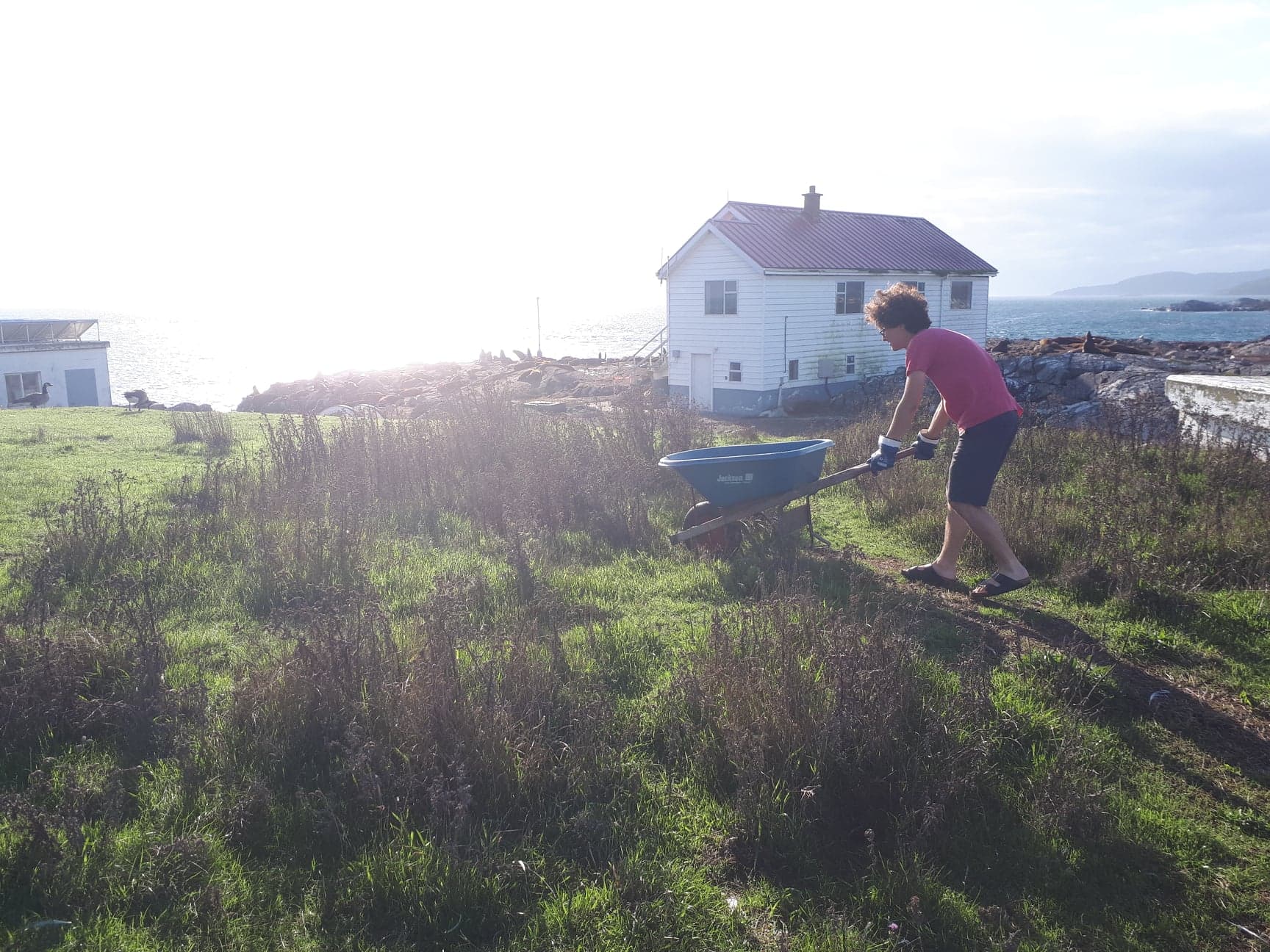
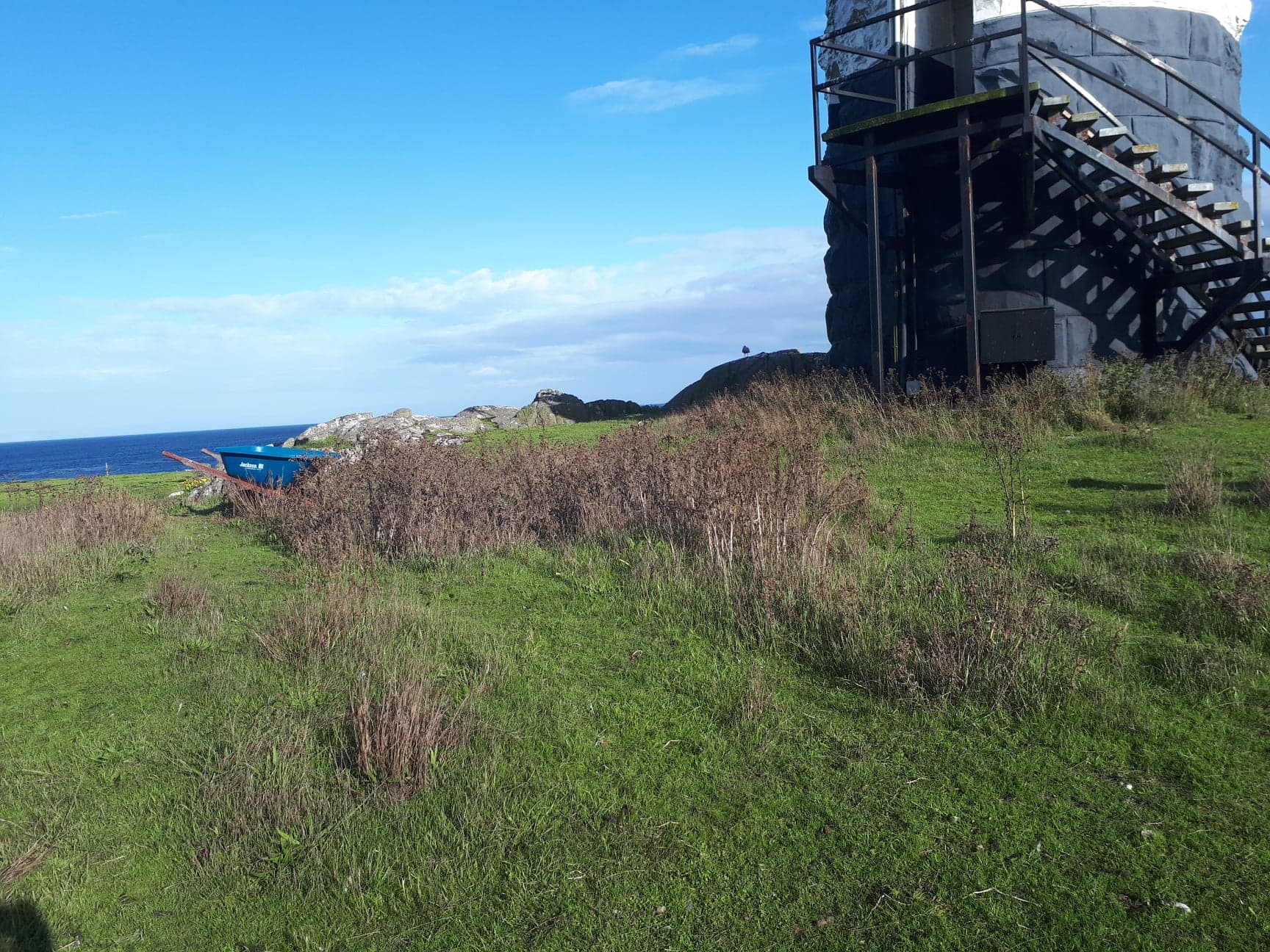
We removed 6 large garbage bags full of invasive “Canada” thistles over the past few days. Considered a “noxious weed” under the BC Weed control act, these perennial (grow back every year) weeds can reproduce through seed and root regeneration. Thought to have been introduced to North America via contaminated crop seed in the 1700’s, this plant is actually native to southeast Europe and Asia. Presumably they were introduced to Race Rocks by a visitor on clothing or equipment, or perhaps by an animal.

They can be a bit laborious to remove, due to their tap root and ability to regenerate through “cloning” (growing back if you leave the root in the ground). Incredibly, the seeds can remain viable for 3-6 years when buried at typical depth, and some up to 21 years (yikes!). Each plant produces an average of 1500 seeds, but can sometimes exceed 5000.

Because of this, we collected them into garbage bags to remove from the island instead of composting them where they would have the opportunity to reproduce. Unfortunately it appeared that these aggressively persistent weeds were whipper snipped in past seasons, allowing the seeds to disperse and roots to regenerate. Hopefully with some attentiveness, they can be eradicated from Race Rocks in the next few years. More information on other introduced plants available in this post from Garry Fletcher, 2006.

Weather: 

  • Sky partly cloudy, some sunshine
  • Visibility 15+ miles (some fog last night)
  • Wind 20-30 knots W
  • Water choppy, whitecaps

Visitors: 

  • Today Laura (Pearson’s marine science teacher), and her class came for a bit for their first trip to Race Rocks! Two more classes will visit in the next couple of days.
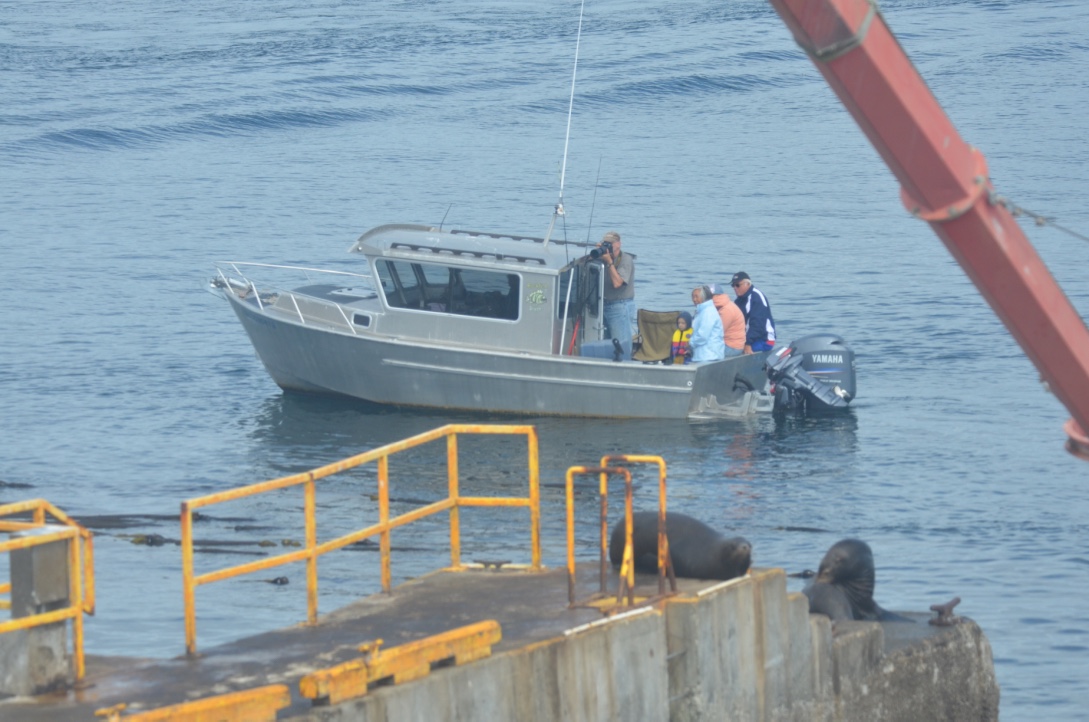
  • Less frequent eco-tourism traffic now that the summer tourism has slowed down. They have been getting quite close to the sea lions though, often causing them to climb over each other to get further away from the vessels. Since it has been overcast, we’ve been seeing the use of flash photography much more, which seems to audibly cause quite a stir.

Ecological: 

  • There have been some birds passing through that we don’t often see: western sandpiper, savannah sparrow, song sparrow, and juvenile sandpiper (or possibly sanderling- we have a hard time with bird ID!) Also, we think we spotted a yellow warbler a while back, but it was too speedy for us to snap a photo.
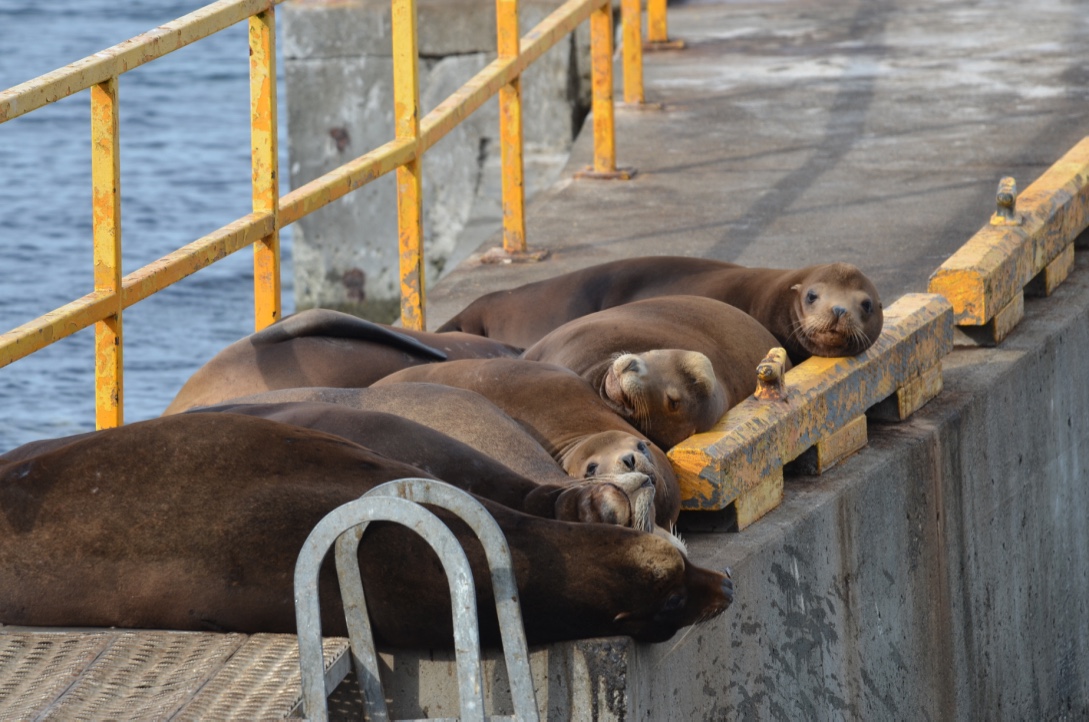
  • The sea lions have continued to haul out- notably, there are typically over 100 animals on the jetty alone.

Suspicious Seagull Suppers, A Busy Few Days

Weather: 

  • Sky partially overcast, some light showers throughout the week
  • Visibility 15 miles this morning, consistent throughout the day, some heavy fog a few days ago
  • Wind 10-15 knots W
  • Water ranging from calm to choppy with waves up to 1.5m over the last few days

Boats/Visitors: 

  • There’s been a lot going on over the past few days! Our apologies for the lapse in updates.
  • On Monday, after a few weeks of planning, the Marine Mammal Rescue team from the Vancouver Aquarium came out to RR with support from DFO, to attempt disentanglement of the troubled sea lions we’ve been spotting. Stay tuned for an in-depth post detailing the days events with many photos and videos! 
  • We have been having minor trouble with the water supply/storage for our house here, but with a little investigation and some extra water deliveries it seems to be changing for the better!
  • With water deliveries, there have been a handful of guests, notably including a guest speaker visiting the college to address students. It’s always nice to see some friendly faces!

Ecological: 

  • The sea lions continue to haul out in larger numbers, but it seems to be tapering off. Our electric fence lines are holding better as they learn (through trial and error) not to push through them.
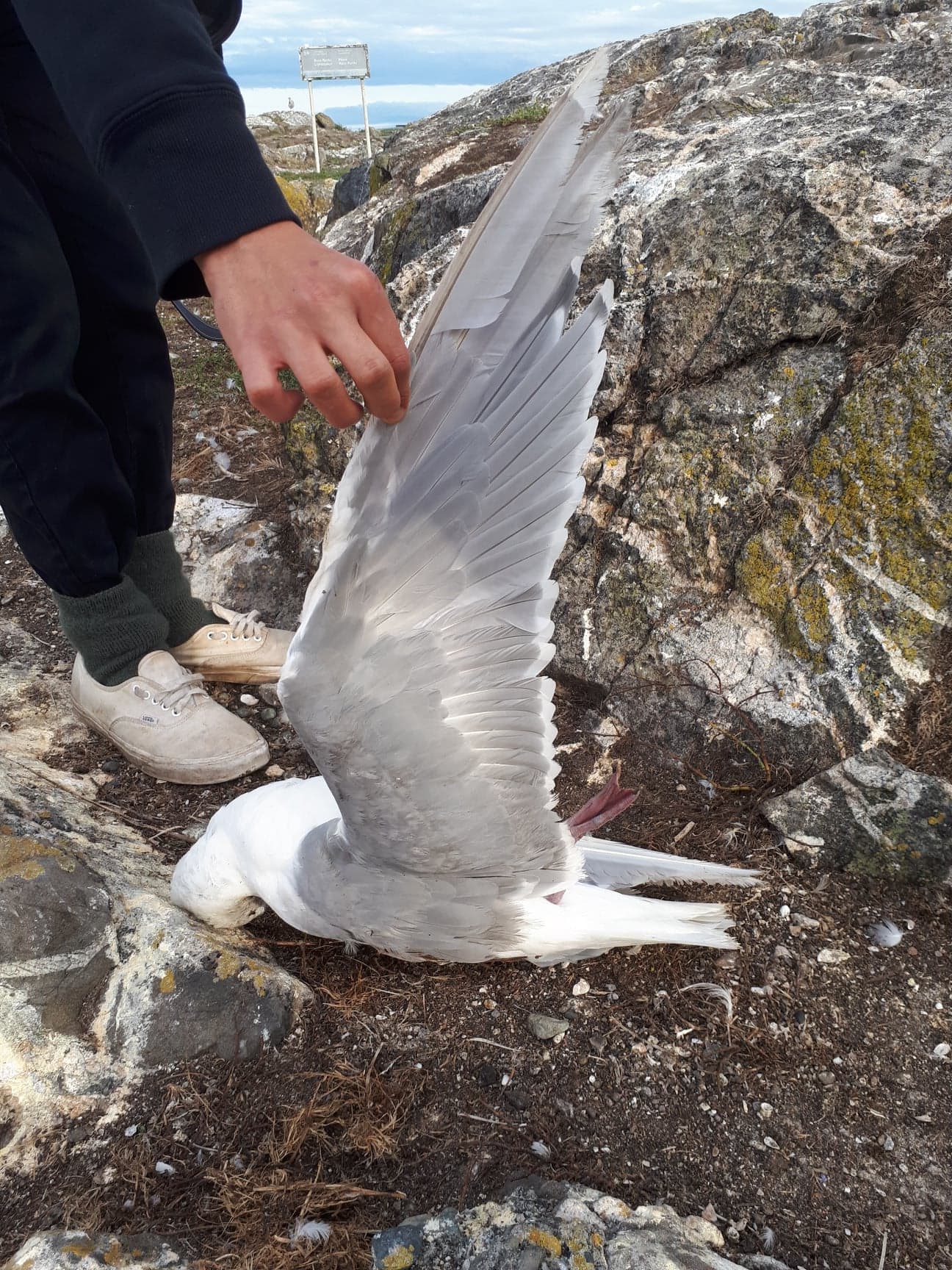
  • Young seagulls are naive to the danger sea lions pose – we have observed juvenile birds being trampled to death by a sea lion simply moving quickly to a different area of the rock. The birds who learn quickly live to fish another day…
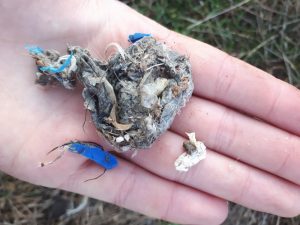
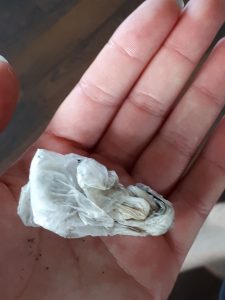
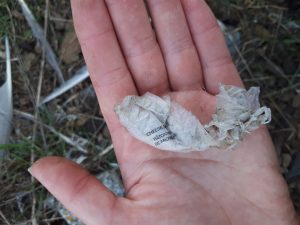
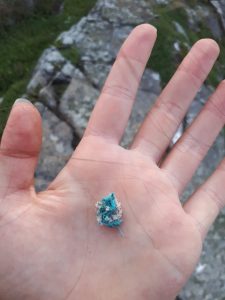
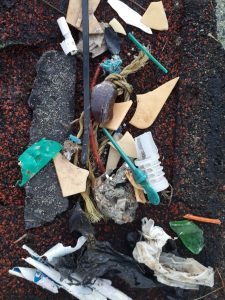
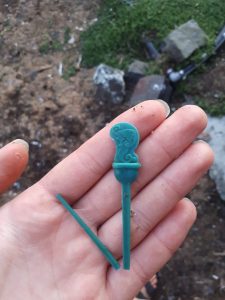
  • Over our time on Race Rocks we have been finding plastic/general garbage across the island compressed into a similar size and shape. After observing a seagull regurgitate a condiment packet (ex: rectangular, fast food style ketchup package), we believe this plastic to be consumed by seagulls on land or at sea, and then carried back to Race Rocks when the birds come to feed their young or rest. Regurgitating the foreign waste, perhaps to feed their offspring or out of discomfort, they deposit this human trash here.
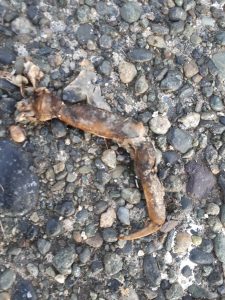
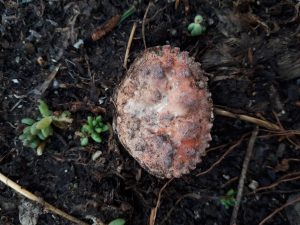
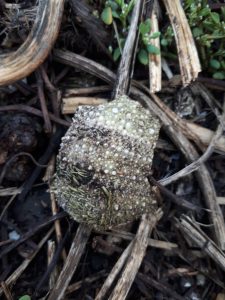
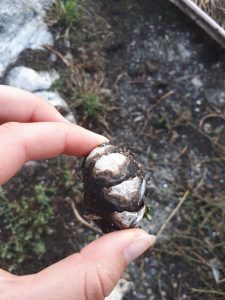
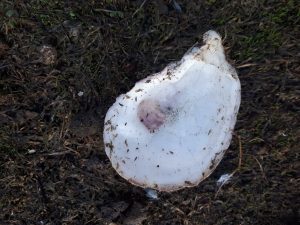
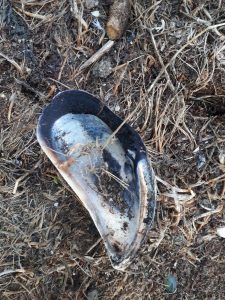
  • Here are some picture showing the plastic/garbage described above:
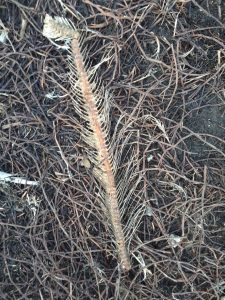
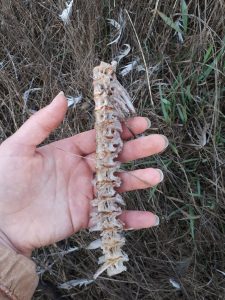
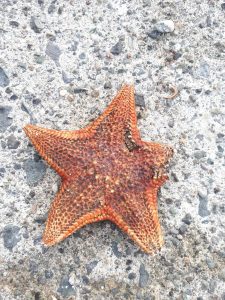
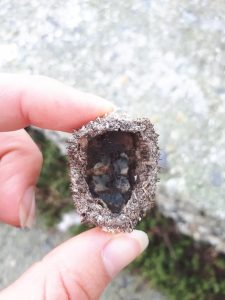
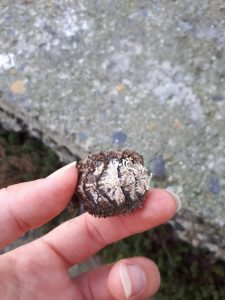
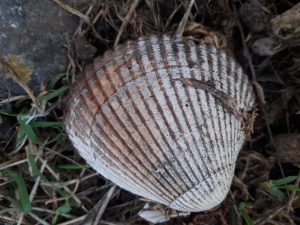
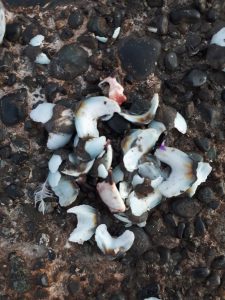
  • On the note of seagull diet, here are some picture of sea life remains found around RR which would seem to be left overs (and examples of what they should be eating) –  talk about sea food from the source!

Hustle and Bustle / Pleasure Craft Violation / Census

Weather: 

  • Sky overcast, hazy, steady rain this afternoon
  • Visibility 15 miles this morning, < 2 miles this afternoon
  • Wind 0-10 knots NE
  • Water calm

Boats/Visitors: 

    • A whole boat load of visitors this morning! VP of Pearson College Tyrone, Alum in residence Norbert and friends to advise on our solar panel system, a desalinator consultant (in preparation for the new desalinator!), and an insurance appraiser.
    • Fewer whale watching boats this week, but we have been concerned about the frequent use of flash photography and its possible effects on the wildlife.
    • Greg also made another trip to bring us some water this afternoon.
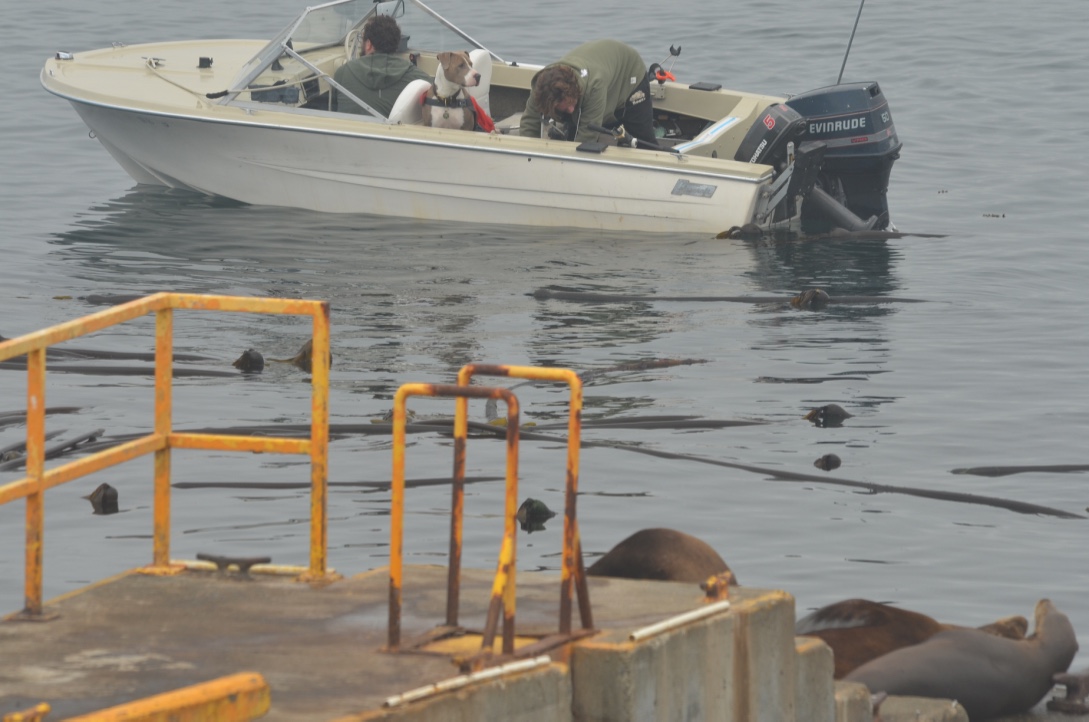
    • Yesterday we watched a pleasure craft approach the sea lions near our jetty and throw some kind of food at them (some of it hit the sea lions). We were able to capture them scaring the animals, who stampeded into the water. They hovered to take photos and unfortunately pose with their open alcohol. Even more unfortunate, the bait that we saw being thrown at the sea lions previously and perhaps this time as well is not suitable for consumption, as many times it has been treated with formaldehyde.

Ecological: 

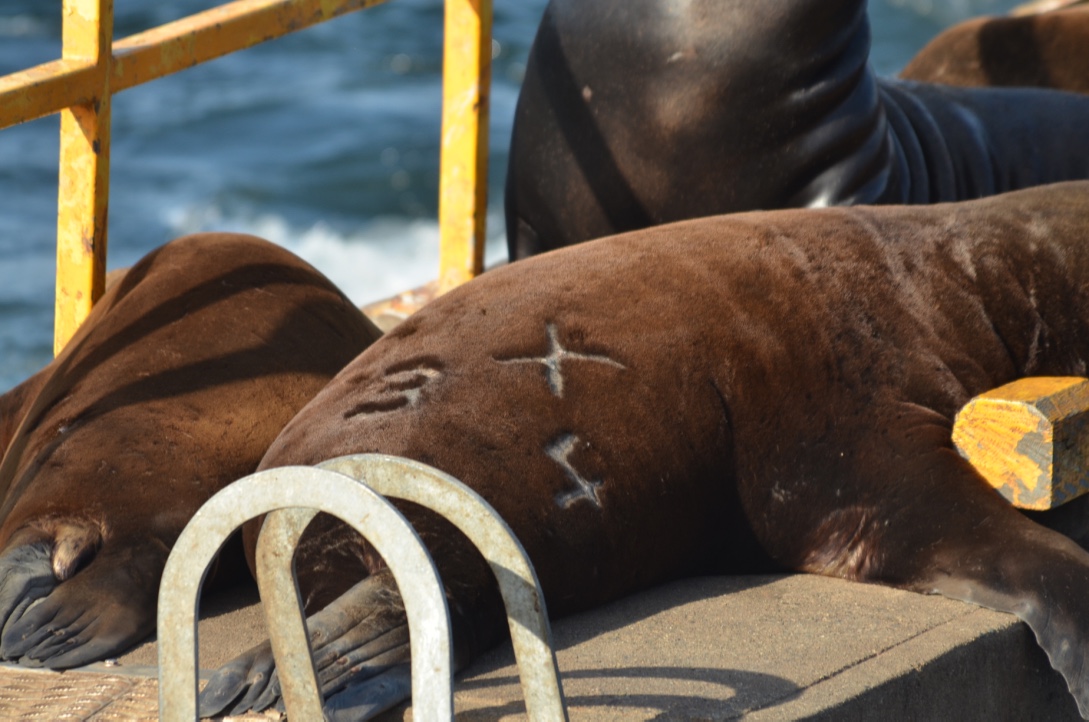
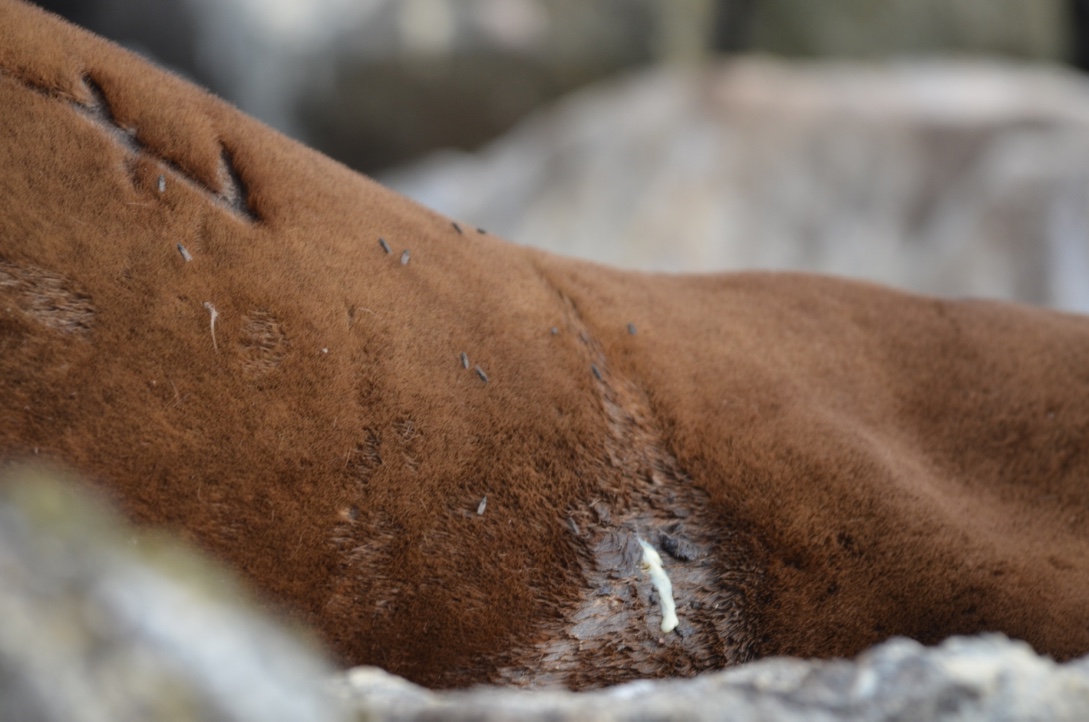
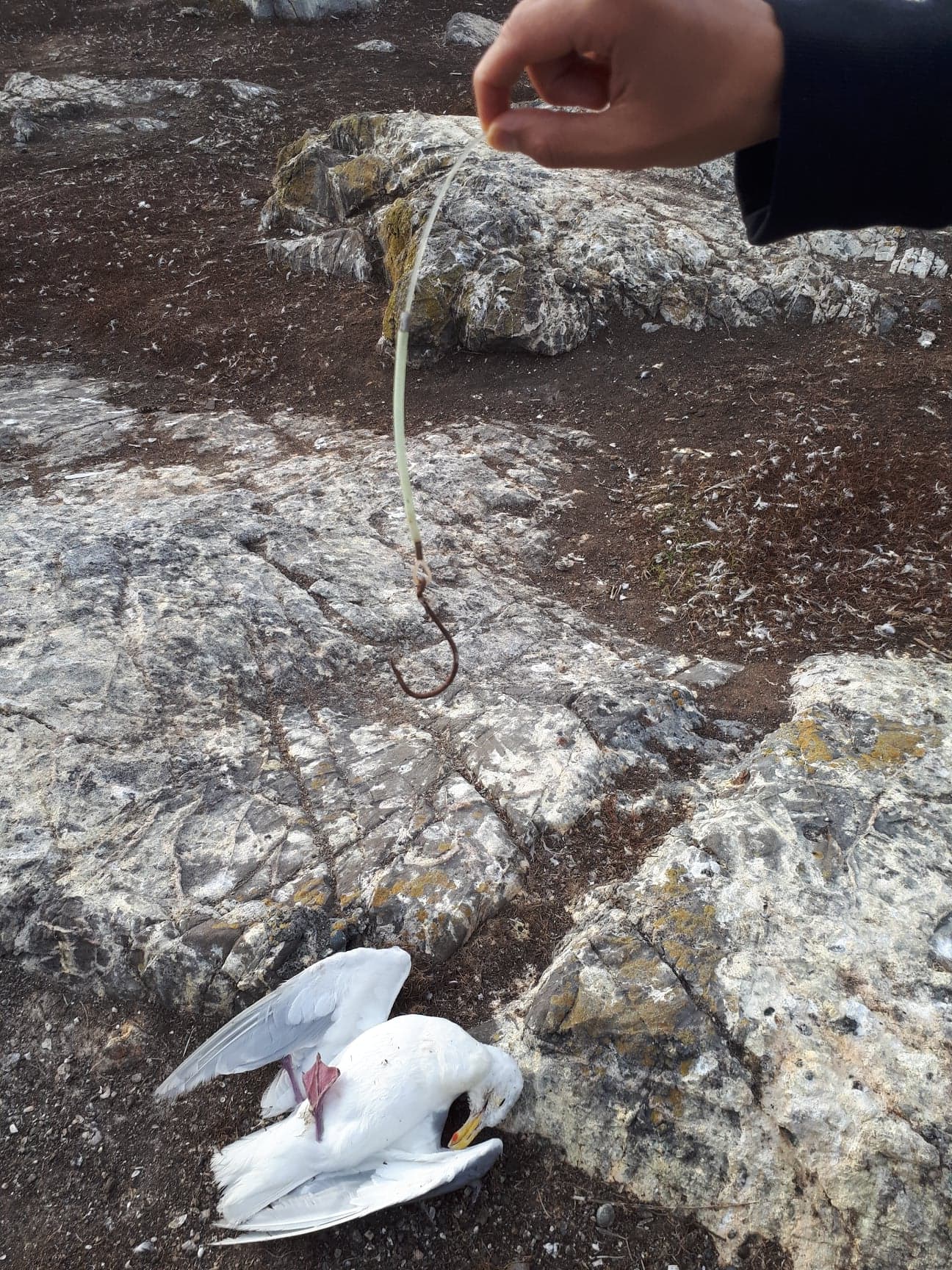
  • Many sea lions now, and unfortunately a few that are injured. Aside from the two that we have mentioned previously, we have been finding more fishing hooks scattered around and a sea lion appearing to have a nasty wound possibly caused by an embedded fishing hook.
  • This afternoon we also noticed a sea lion with a propeller inflicted gash on his head. He seemed to be dazed or perhaps concussed due to the injury. Normally the sea lions are skittish and make a ruckus if we get too close, but this one didn’t react to our presence and seemed notably lethargic. We were concerned that he might fall victim to the injury, but approximately an hour later he seemed more alert, reacted to our presence, and seemed to be doing okay.
  • We reported the tagged sea lion to the researchers in California and were excited to hear that they have some information about him and his early life. We hope to be able to share more soon! This little guy has already swum almost 1500 km from his birth place, Ana Nuevo CA.
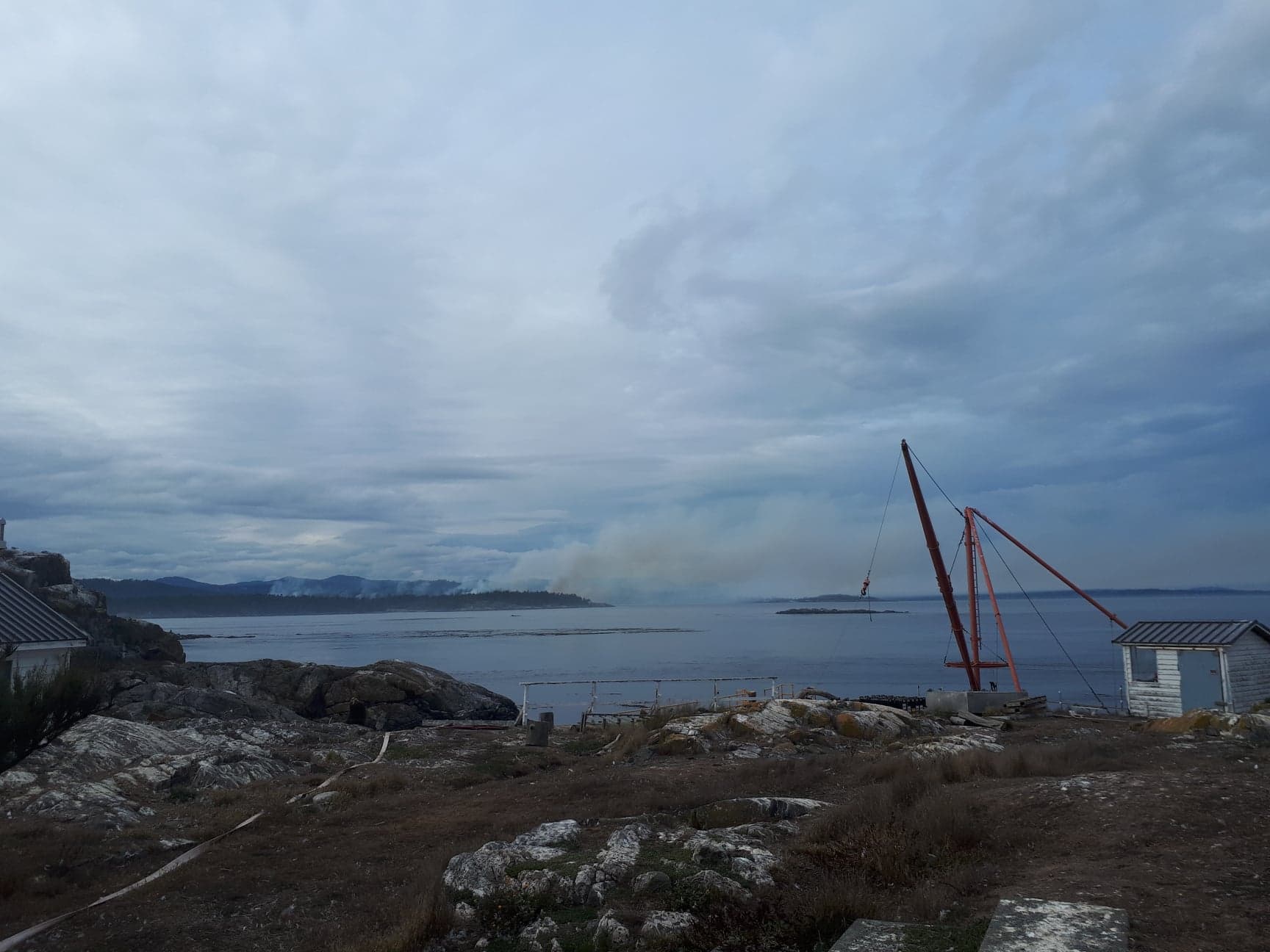
  • Yesterday there was quite a bit of smoke caused by controlled burning taking place on the nearby DND land. They burned 20 hectares of Gary Oak habitat to protect the species (from invading conifers) and and prevent spread of invasive plants.

Census:

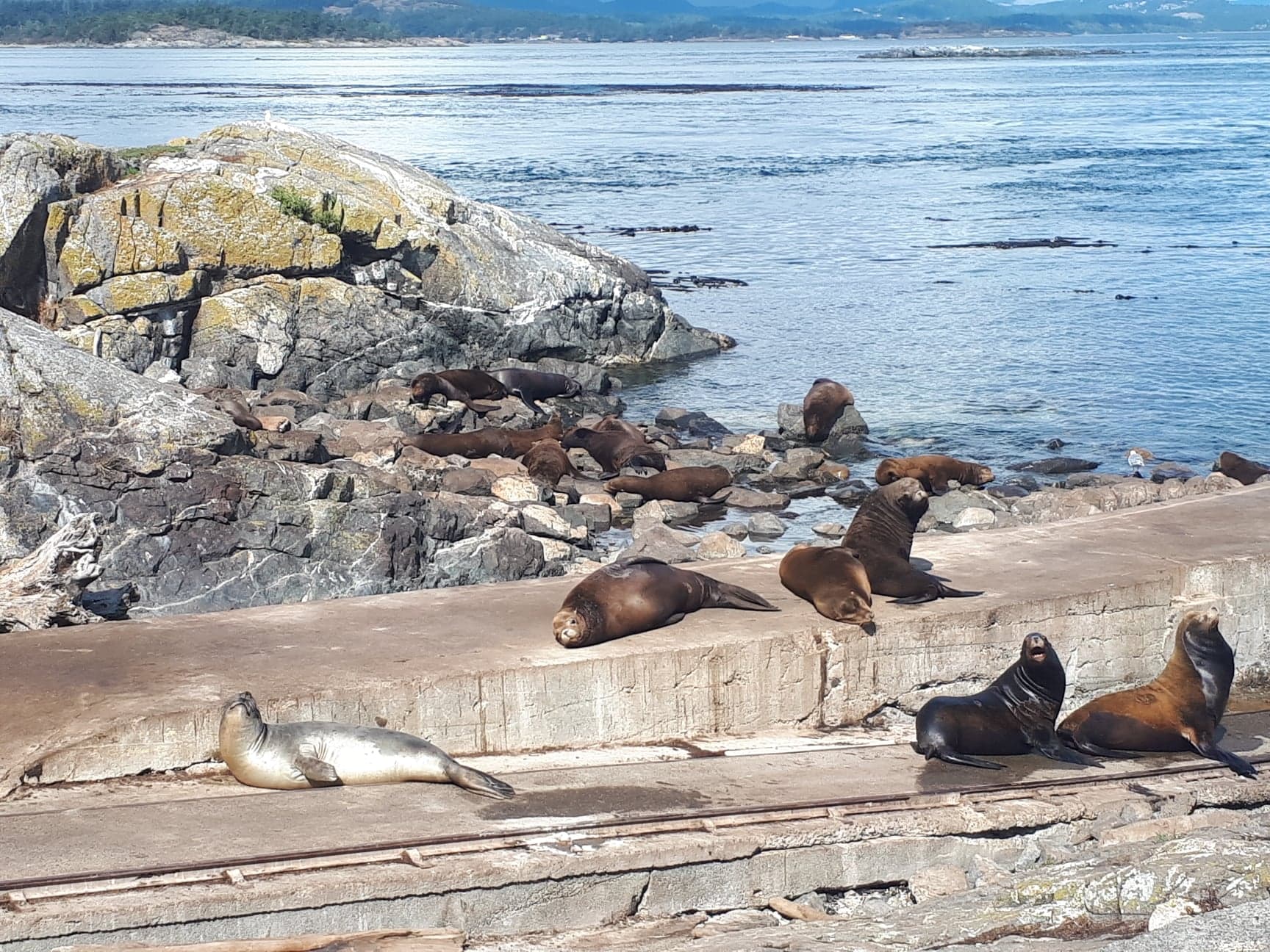
  • 350 sea lions
  • 50 harbour seals
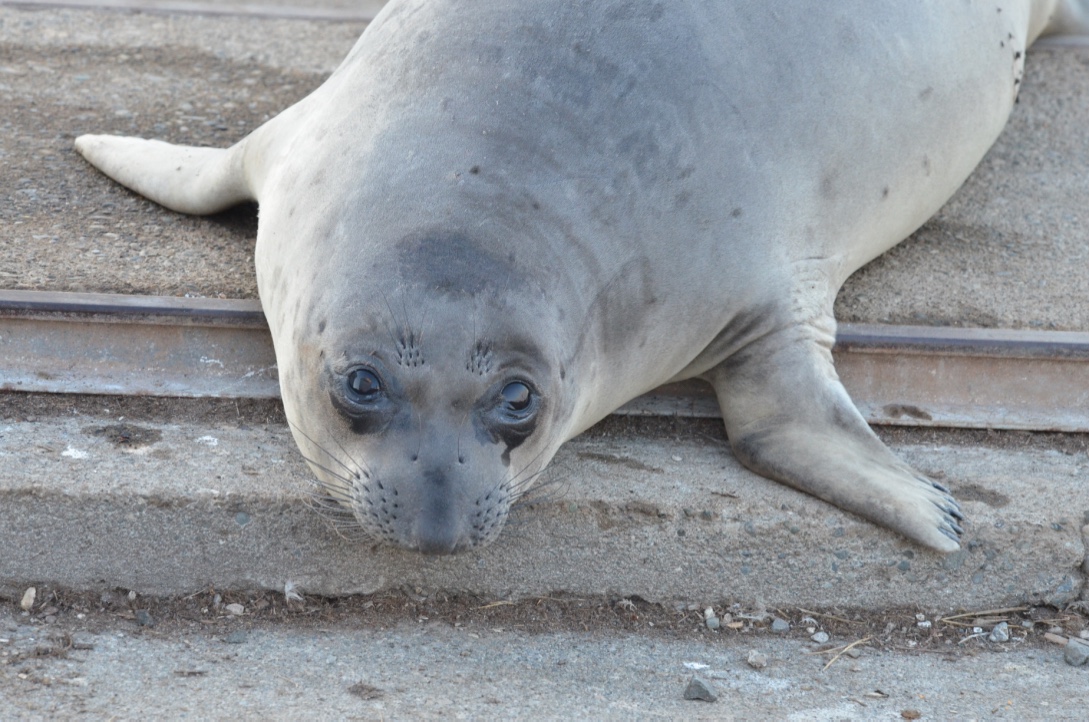
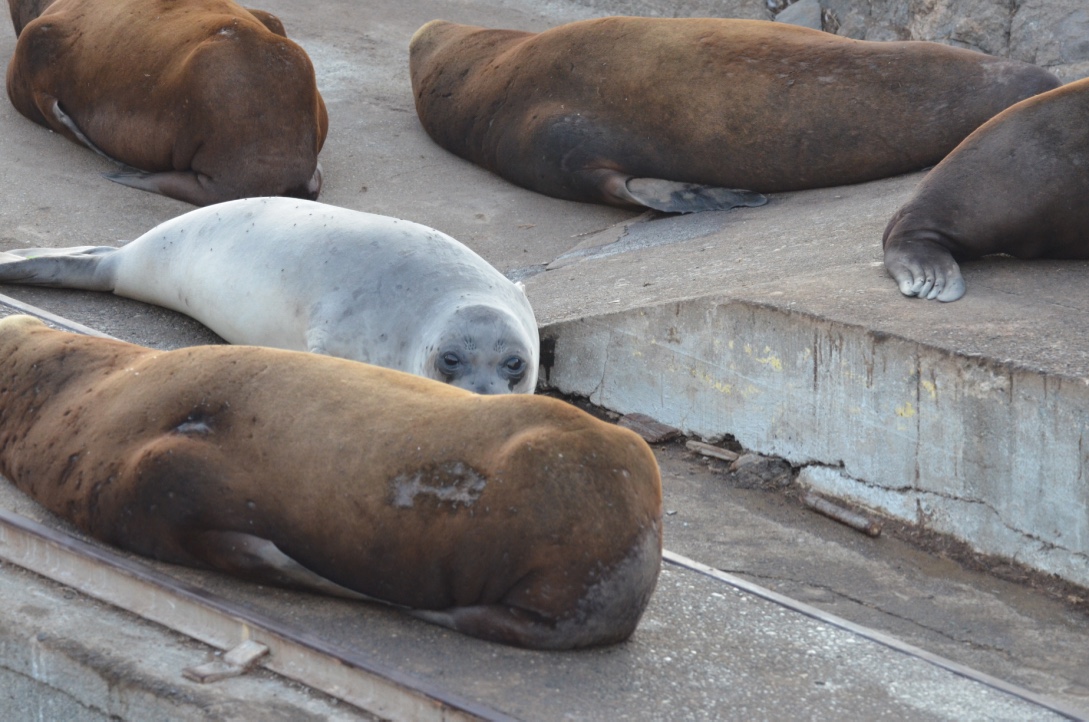
  • 1 elephant seal
  • 40 cormorants
  • 60 adult gulls, and some chicks (they are too hard to see from the lighthouse)
  • 4 geese
  • 20 turnstones


Plastic Pollution Strikes Again, Injured Sea Lion


Today we saw another entangled sea lion hauled out near the jetty. It appears to be wrapped in fishing line, which has embedded itself in the sea lions flesh over time causing infection/rotting.

Seeing these injured animals is a reminder that improperly disposing of garbage, fishing (cut/broken lines, lost nets, etc.), and other ecologically detrimental human activities causes the suffering and death of large (and small) marine life.
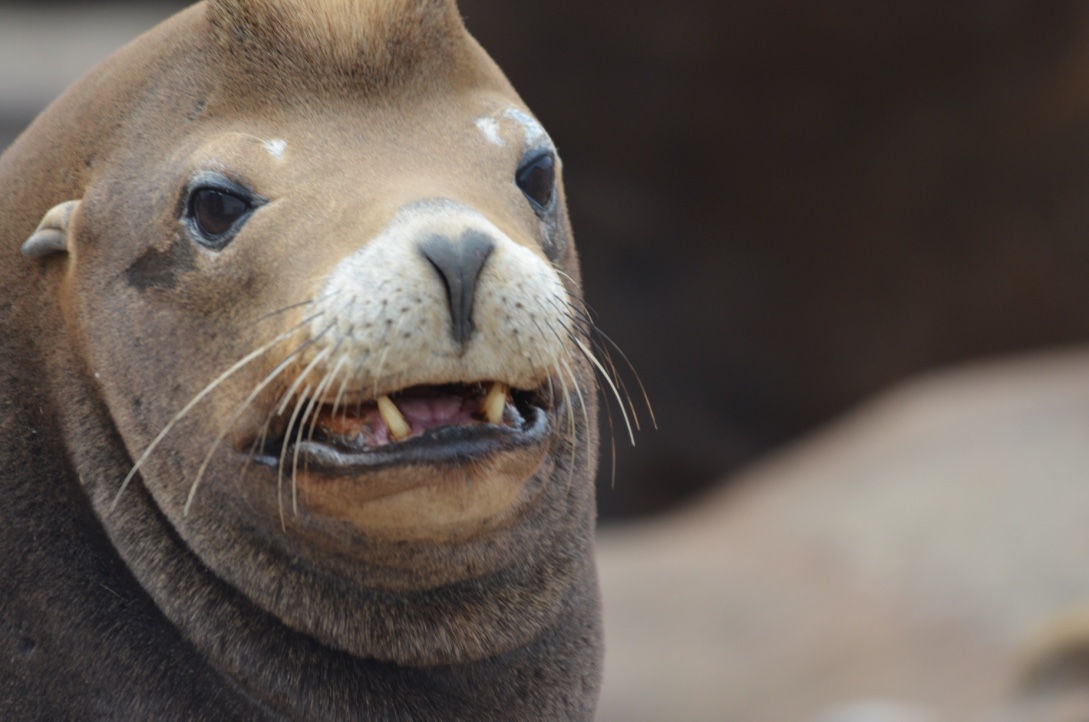
Even after an entangled animal dies the damage continues. Modern fishing line made of nylon or polyvinylidene fluoride can take hundreds of years to decompose and after that, it continues to have detrimental effects. The majority of plastics used by humans decompose into ‘microplastics’ composed of/leeching out toxic chemicals such as BPA (bisphenol A) which can then magnify up the food chain accumulating in the organs of larger and larger animals, humans included.
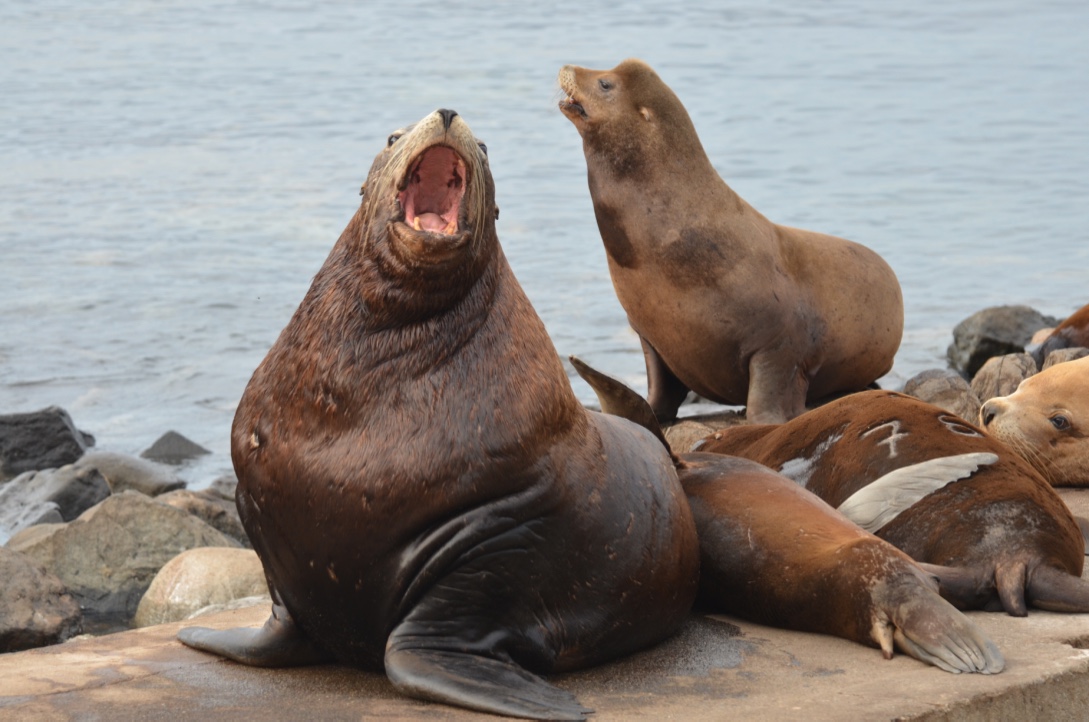
BPA and other compounds such as plasticizer (plastic softener) Diethylhexyl phthalate effects humans as well as other animals, long after we pollute our environment. As the polymer chains break down, humans can be easily exposed by eating seafood, drinking contaminated water, and many more avenues of exposure. This may lead to cancer, birth defects, childhood developmental issues and more. 

We’ve notified Marine Mammal Rescue, hopefully they will be able to help this sea lion and the other entangled one.

Coast Guard Visit, The Entangled Sea Lion Is Still Here

Weather: 

  • Sky partly cloudy, intermittent fog
  • Visibility varying between 0-15 miles
  • Wind 20-30 knots W
  • Water rough, waves to half a metre with some whitecaps

Boats/Visitors: 

  • No visitors today
  • The whale watching boats continue to decrease in volume, this month looks to be a turning point in their season.

Ecological: 

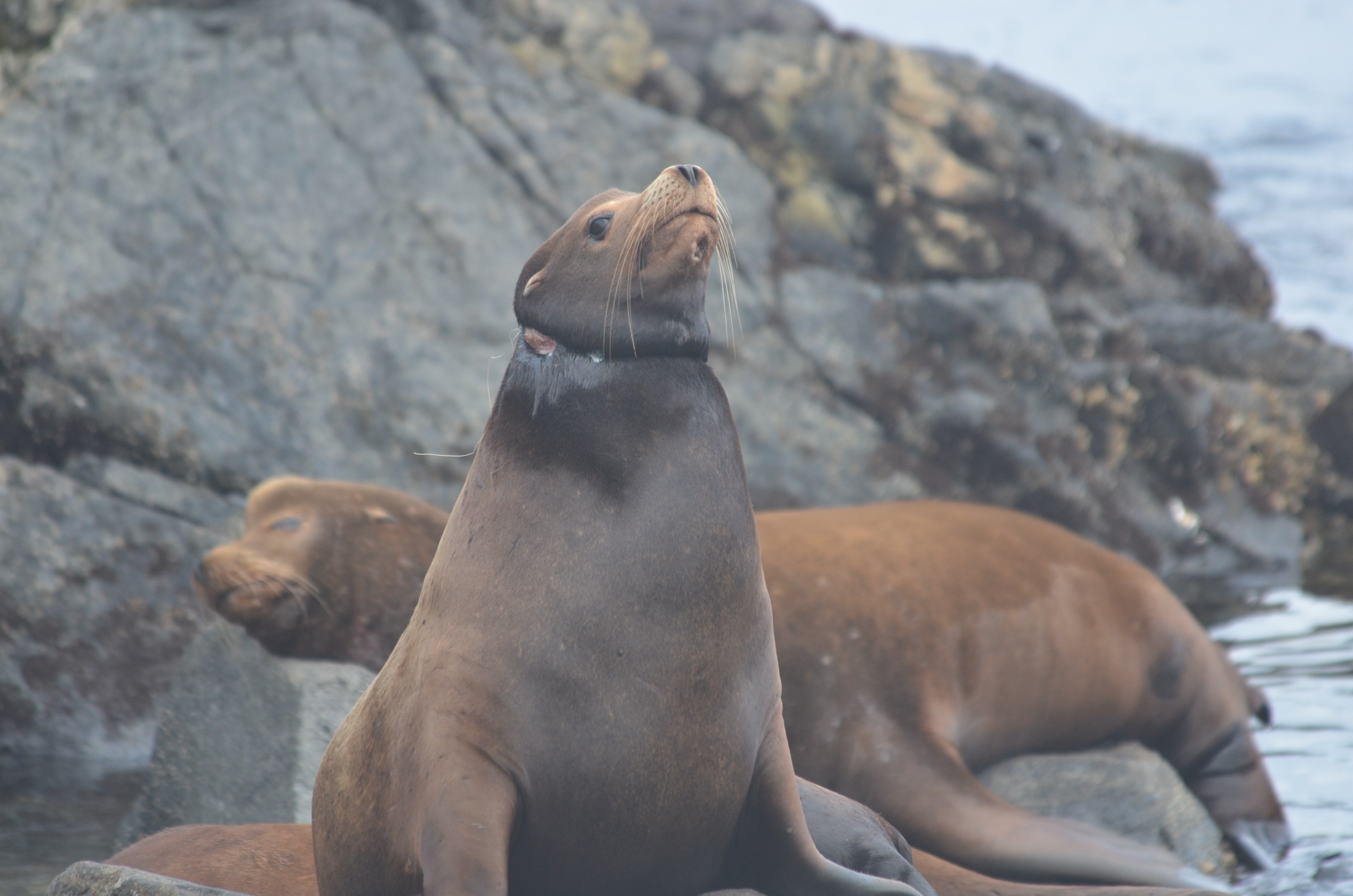
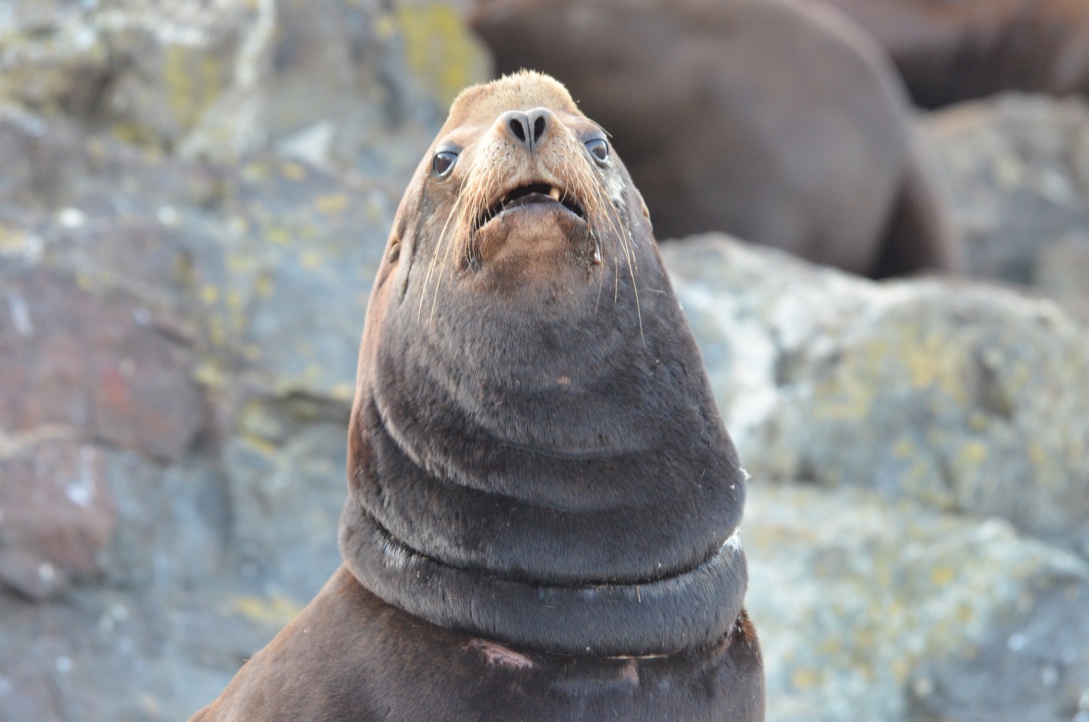
  • We spotted the sea lion with plastic around its neck on the jetty last night, and today it was hauled out onto land between the helicopter pad and the guest house. We contacted DFO, and the entanglement response team will assess if it’s a job that they can do.
  • This afternoon we saw a blue heron, which we haven’t seen before out here.

Maintenance:

  • The Coast Guard visited briefly a few days ago. They stayed on RR for about an hour and did some maintenance on the fog horn system. Two people came on to land, and a third stayed in the Coast Guard zodiac.

More Sea Lion Injuries Due to Fishing

Weather: 

  • Sky partly cloudy, some periods of fog
  • Visibility 1-15 miles intermittently
  • Wind 20-30 knots W – NW
  • Water rough, whitecaps, swells around 1m

Boats/Visitors: 

  • No visitors today, but on Sunday Corey drove us back to Race Rocks with some more water as we were having troubles getting our boat to start.
  • There have not been many whale watching boats but when they are here they often get quite close to the sea lions (within 10m). We can tell when there is a boat present in the reserve by the increase in “barking” and distressed sounds that the sea lions make.

Ecological: 

  • Over the weekend a sea lion was spotted with some fishing line wrapped around its neck. We believe that it could be the same one spotted last year. As it grows it will likely die due to slow suffocation caused by the line. Unfortunately it’s virtually impossible to have someone come to tranquilize and remove the line as the sea lions move on before they can get here. However, if we see it again we will report the injury.
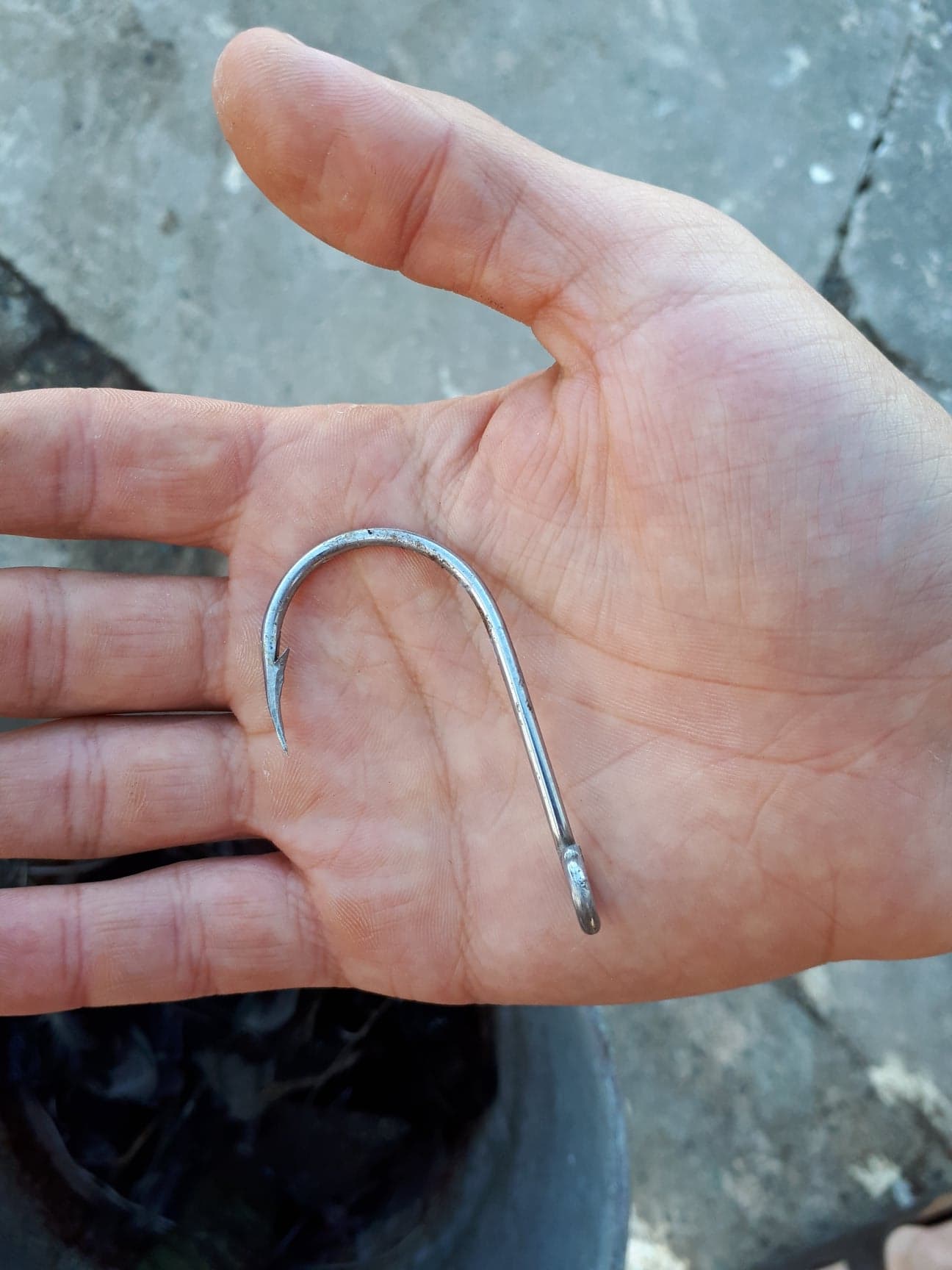
  • Today we found a large fishing hook which must have come loose off of a sea lion. We’ve previously observed sea lions trying to remove fishing hooks from their skin by rubbing against the jetty.
  • There are quite a few sea lions all over the island now. We have been delaying our water sample that we normally take from the jetty to avoid having to chase them off, since when they are startled they climb over each other or rush off of the side of the jetty where the water isn’t very deep. The few that have come near the house don’t seem to be moving around much, just resting and getting away from the crowds.
  • With the return of the sea lions we’ve been getting bitten by little black fleas that we also saw in late spring. They were not a problem while the sea lions were not here, so we’re wondering if the two are connected.
  • Many of the young seagulls have left or are flying very well. A few of the latest hatched are still here, but the mothers are starting to leave them to fend for themselves.
  • We have been spotting the odd young elephant seal hauling out for a few hours before continuing on.
  • We’ve been noticing eagle feathers and dead adult seagulls around the island. Oddly, we haven’t seen the eagles hunting.

Maintenance: 

  • We’ve been needing to do daily fence repairs on the electric fence at the back of the island as the sea lions have been trampling it and breaking the wire and insulators that hold the wire on the posts. Hopefully with some persistence on our part they will learn to leave it alone.
  • Today we also set up the electric fence that runs between our house and the jetty/north island to prevent them from coming up around the infrastructure. They are stinky and destructive if you let them get too close!
  • We are still picking up sharp bits of tin and shingles/tar paper/ misc. litter from around the island. Some of it is from the roofs being redone recently, but a lot of it is older and becoming exposed now that the grasses are dormant for the summer.  Today we filled two buckets in an hour or two of scavenging.

A Foggy Weekend

Weather: 

  • Sky partly cloudy, some thick fog banks passing over us
  • Visibility 5-15 miles, intermittent fog
  • Wind 0-5 knots W
  • Water calm

Boats/Visitors: 

  • Yesterday we had a great team of volunteers come to help remove the rest of the shingles and accumulated rubbish from around the island. We still have some more to go but it’s looking great!
  • Greg showed us how to set up the electric fencing to keep the sea lions off some of the island. Yesterday we set up one at the back of the island and will need to set up the fence near the jetty soon.
  • Today Corey and his family will pop in for a visit
  •  Our friend is going home this afternoon

Ecological: 

  • We spotted the seagull chick that had been attacked (and lost an eye) yesterday and it’s doing well. It is missing an eye now but is learning to fly alongside the others.
  • We saw two orcas pass just outside of the reserve on Thursday
  • The sea lions have started to come further onto the island, and there are more and more each day


Getting Your Feet Wet

Weather: 

  • Sky partially overcast
  • Visibility 15+ miles in the afternoon, heavy fog in the morning
  • Wind 15 knots W
  • Calm water

Boats/Visitors: 

  • This afternoon I (Kai) dropped Mara off on land, she will be away for a few days – I have the rock to myself!
  • Pearson vessel Second Nature has been doing water tours around Race Rocks

Ecological: 

  • The sea lions double in number every day, and you smell them before you see them… Many can be seen with open wounds, 3-6″ long bloody cuts in their sides and back.
  • Beside the jetty, I spotted a young seagull getting its feet wet in the protected waters. This is the first time we’ve seen them enter the sea.

The Flag is Back

Weather: 

  • Sky overcast, some clear patches (not much solar power generated today)
  • Visibility 15+ miles, no fog
  • Wind 10-20 knots W
  • Water calm. Some interesting standing wave patterns lately.

Boats/Visitors: 

  • On Thursday Greg came in the afternoon to top up our water supply. Pearson alum Norbert (currently alum in residence) also came along for the ride to check out our solar panels and provide suggestions for future improvements. Pearson maintenance volunteer Jimmy also stopped in for the night to visit race rocks before he goes home to Mexico. Safe travels!
  • We had many hands on deck, so we were able to successfully repair and raise the flagpole.
  • Yesterday Greg visited with a group of college guests who toured the island.

Ecological: 

  • The sea lions have started to haul out on the N + S/SW sides of Great Race Rock.
  • The oyster catcher chicks have grown to be nearly as big as their parents and are flying all over!
  • The seagull chicks are getting bigger and when rival adults attack they now fight back. On Thursday we spotted a chick with one eye pecked out and were concerned that it would not survive. Fortunately, when we checked later it was doing well.
  • There have been large numbers of black turnstones present this past week, 30+ at once