Carrier, Vulture, Relief Guardian

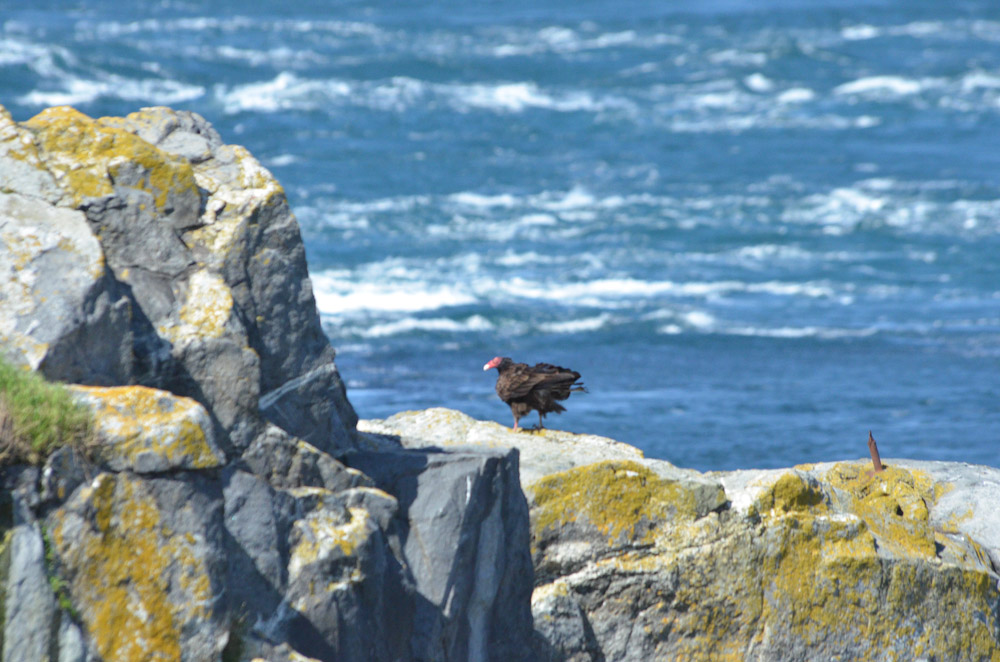
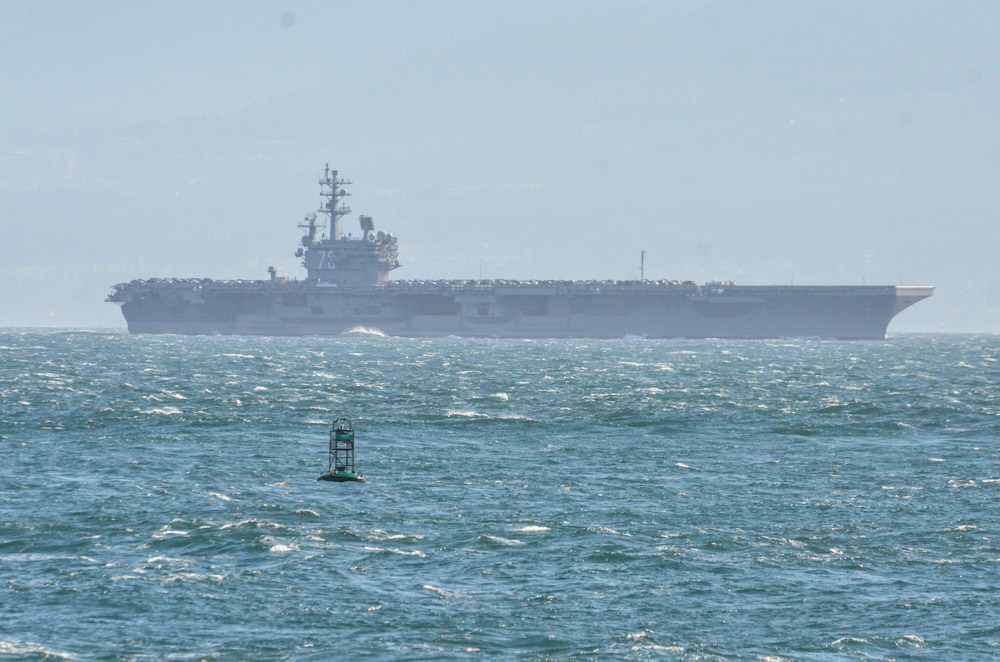
Today a relief guardian came out to take my place for about a week.   A pair of Turkey Vultures  landed on the island and an air craft carrier passed by in the distance behind Rosedale Reef.  Oddly, on close examination this carrier appears to be carrying cars not aircraft on its upper deck.

http://www.racerocks.com/racerock/eco/taxalab/2006/cathartesa/cathartesa.htm

turkey vulture
See this file on Turkey Vultures at Race Rocks

carrier

Alaskan Frontier

AlaskanFrontier

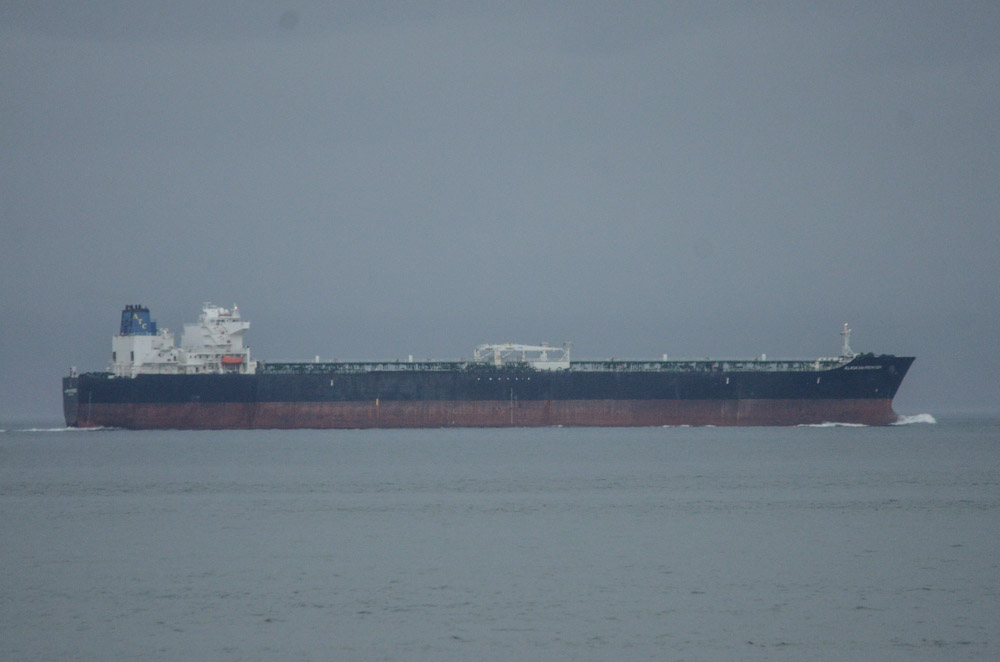
There is a constant flow of shipping traffic passing by Race Rocks to and from Seattle and Vancouver each day.  Once in a while there are ships that are very loud with a low, rumbling sound that I can hear and feel in the house as they pass by.  This oil tanker, the Alaskan Frontier, on its way West towards the infamous Port of Valdez, Alaska, was one of the loud ones.  The information below was obtained from http://ais3.siitech.com/VTSLite/AView.aspx which tracks all major marine traffic in the area.

This ship may have been louder than others because as is shown in the  photo it is sitting quite high out of the water, likely empty on its way to fill up on crude in Alaska.  Which means that when carrying a load it would be projecting this sound underwater, maybe louder, where sound travels further.  Which begs the question: how much noise pollution are we subjecting marine mammals to in this area? What impact does it have on their ability to communicate, hunt, and navigate?  It would be great to  be able to listen to the sound underwater and measure these sound levels at Race Rocks.

As well as the sound, there is the unregulated emissions from these ships.  On a clear busy day there is a haze that hangs over the ocean to the East.  Sometimes I can smell and taste diesel fumes out here when ships are miles away.  On top of this of course is the constant risk of an accident; it doesn’t have to be a tanker to spill fuel.

With the potential of an increase in tanker traffic and tanker size in this area, to handle increased production from the Tar Sands, the focus of environmental groups seems to be on the risk of increasing traffic.  I think the question we should be asking is what is the impact and risk of the existing traffic?  Are there any impact studies being done?  More broadly: Do we value the ocean more as an access route for cheap goods or as a habitat for marine life?  What is the true cost of cheap shipping?  What is acceptable risk?

On a related note, I have not seen many whales this winter.

Name ALASKAN FRONTIER
MMSI 366948190
IMO 9244659
Call Sign WDB7815
Type/Cargo Tanker:DG,HS,MP(A)
Length x Beam 286m x 50m
Draught 9.8m
Nav. Status Under way using engine
Last Seen UTC 3/13/2013 1:25 AM
Last Seen Local 3/12/2013 6:25 PM
Latitude 48°15.225’N
Longitude 123°33.623’W
Speed 16.1knt
Course 280.0°
Heading 281°
Rate of Turn 0°/min
Destination VALDEZ, AK
ETA 3/16/2013 6:00 AM
Pos. Accuracy High (<10m)
Pos. Fix. Dev. GPS

Crane work

Erik was out today to help fix the crane and offload garbage from removing old carpet and linoleum from the guest house.  The cable had come off the upper pulley so Erik climbed the boom to get it properly seated again while i belayed him off the diesel transfer tank.

ErikCrane
Once fixed we were able to offload the two bulk bags and sling load onto Second Nature while at a low tide of 5.6 feet.  I went off island to unload the waste from the boat into a dump bin on campus.

RenovationWaste


Screen Shot 2013-02-12 at 10.44.14 AM

Winch house and sling load. Image captured from web cam (5) by Garry.

Screen Shot 2013-02-12 at 10.49.11 AM

Image capture from tower web cam by Garry

Sea Lions

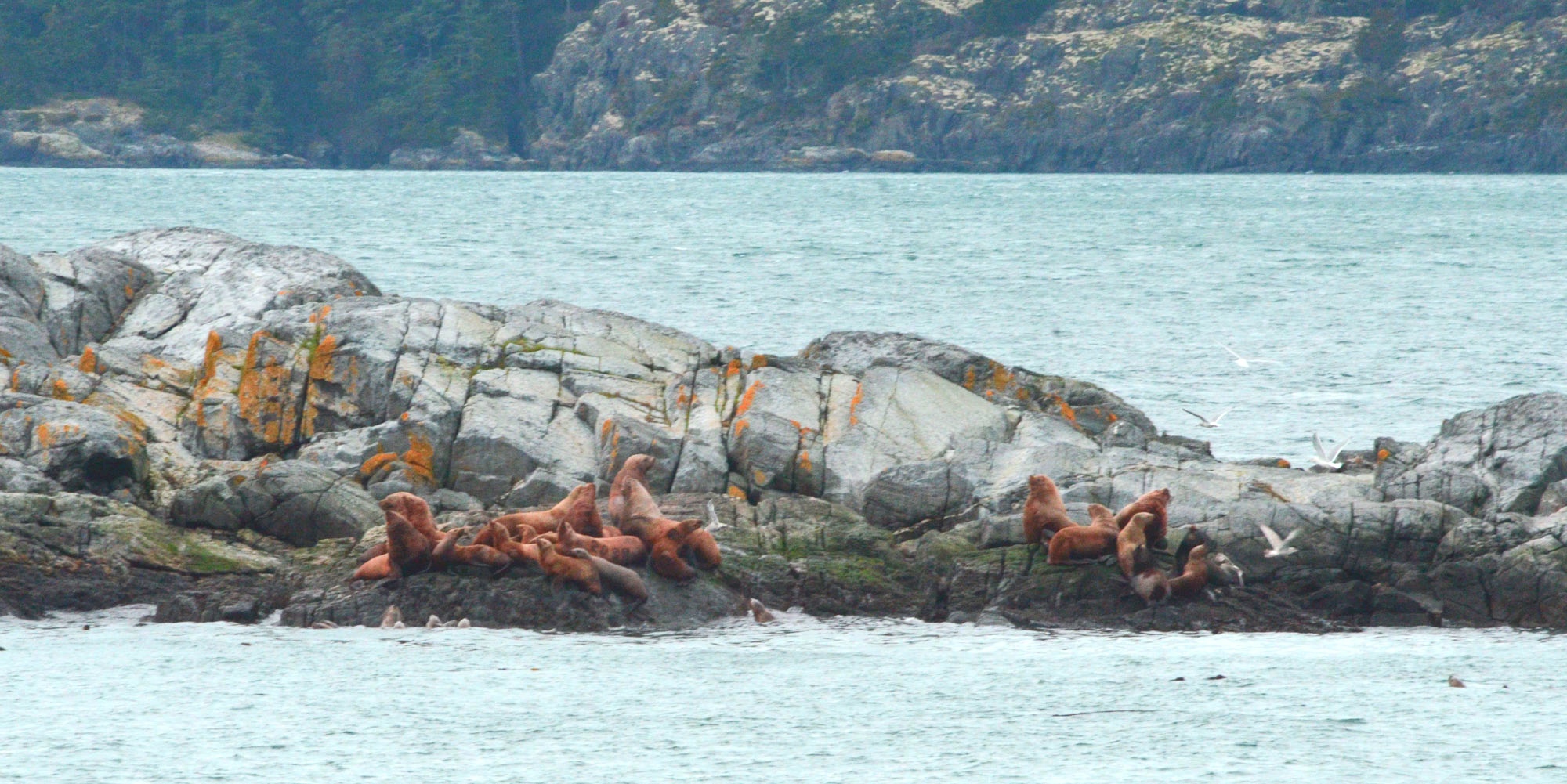
Sea lions on West Rock

Sea lions on West Rock

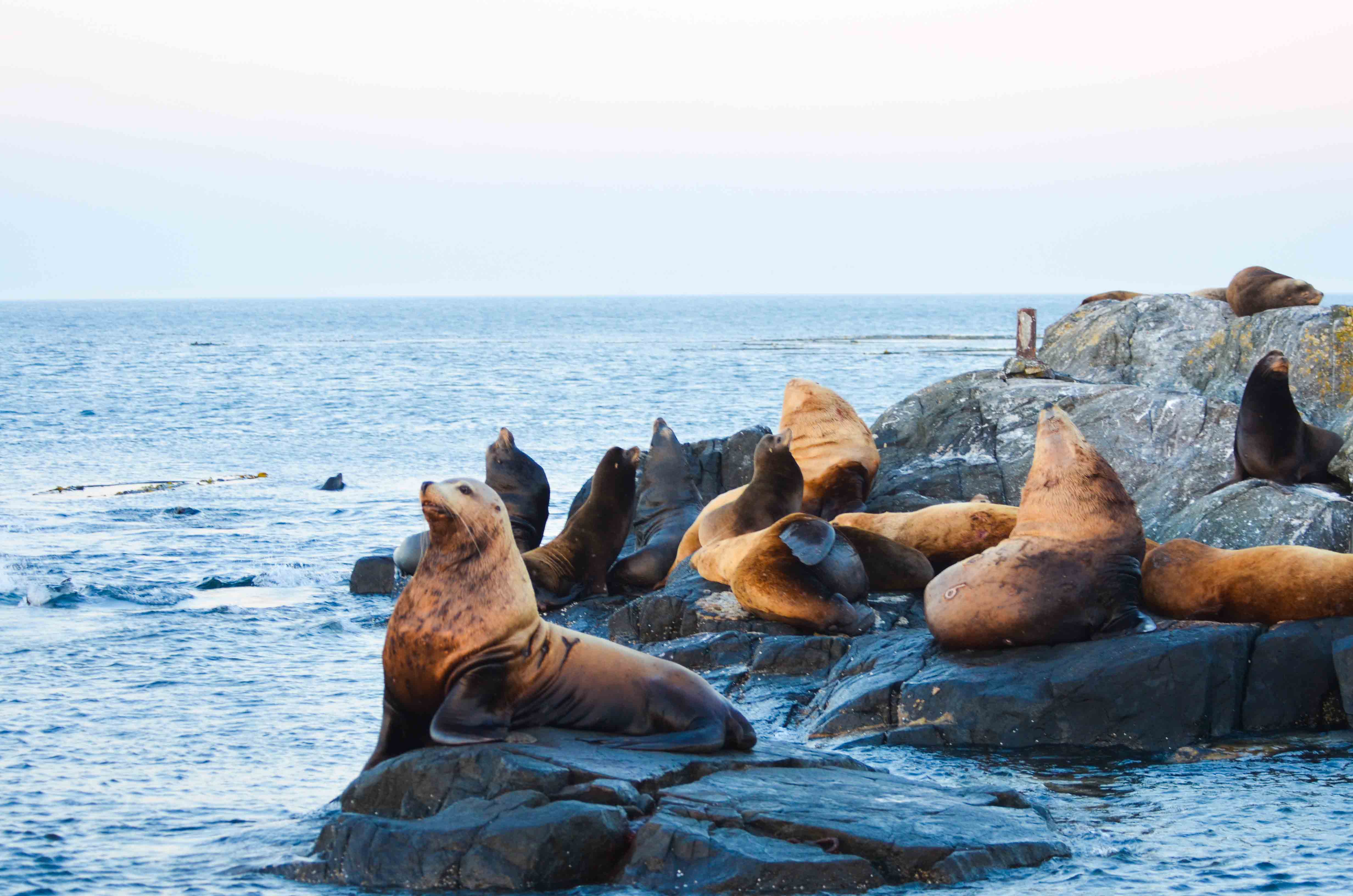
The sea lions have been switching their haul-outs lately.  Some days there have been almost no sea lions visible on the rocks.  Recently i have been seeing them on West rock (above) which is not usual in my observations.

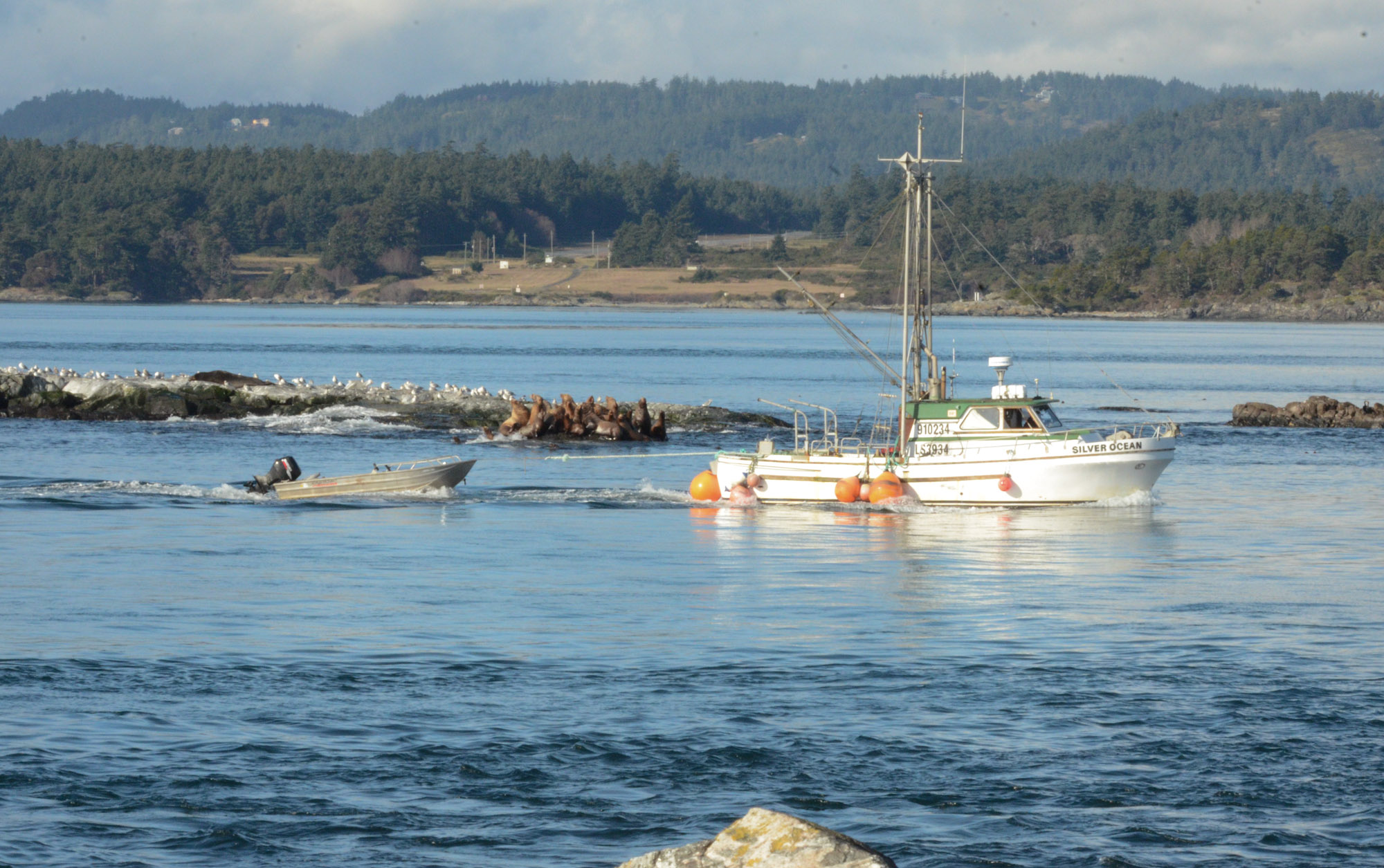
fishboat

Most fishing boats pass by on the outside of the reserve but this one took the scenic route.  Sea lions in the background on middle rock and one of the male elephant seals on the top of the rock.

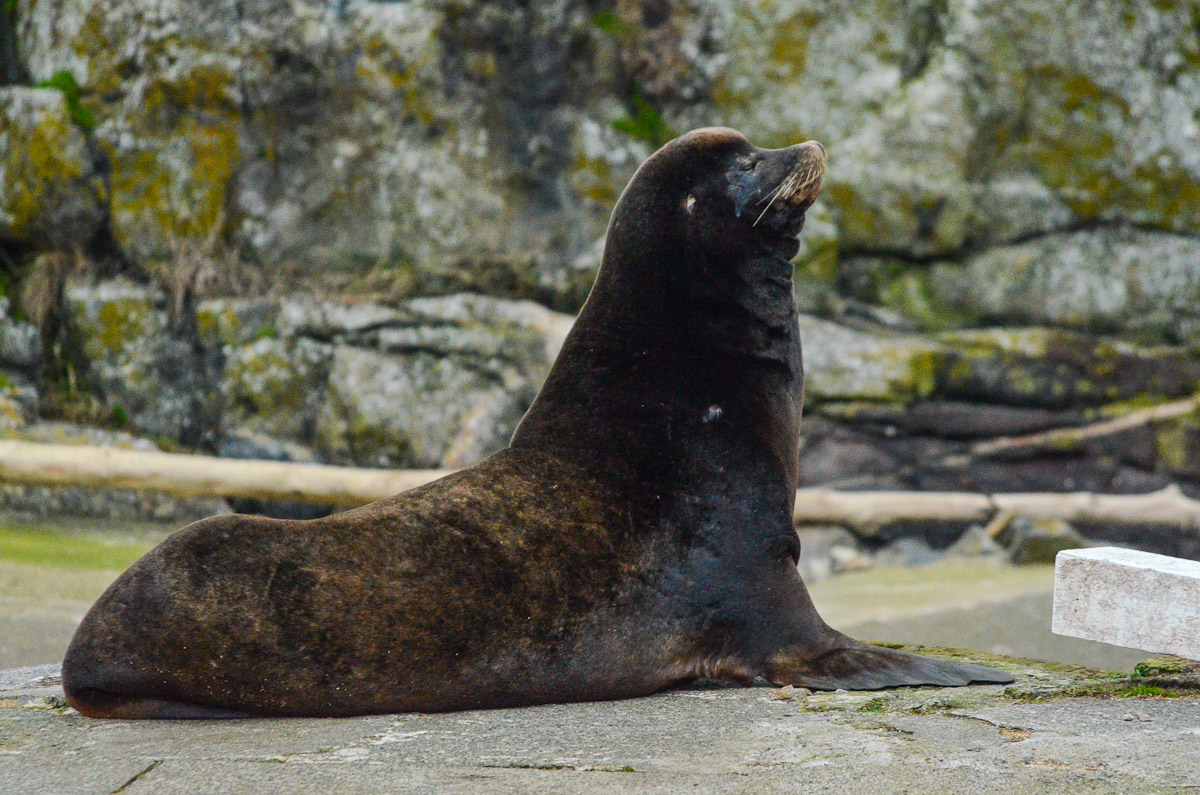
CaliforniaLion

California sea lion

There is one California sea lion that I have been seeing occasionally, it seems to keep to itself.


Change of Guardian

Wednesday morning we switched guardians, Mike has finished a 3 month shift and I will be here for the next 4 months. It has been 8 months since i was last out here, nice to see that Mike and Julie have done a great job out here and that the place is in good shape.

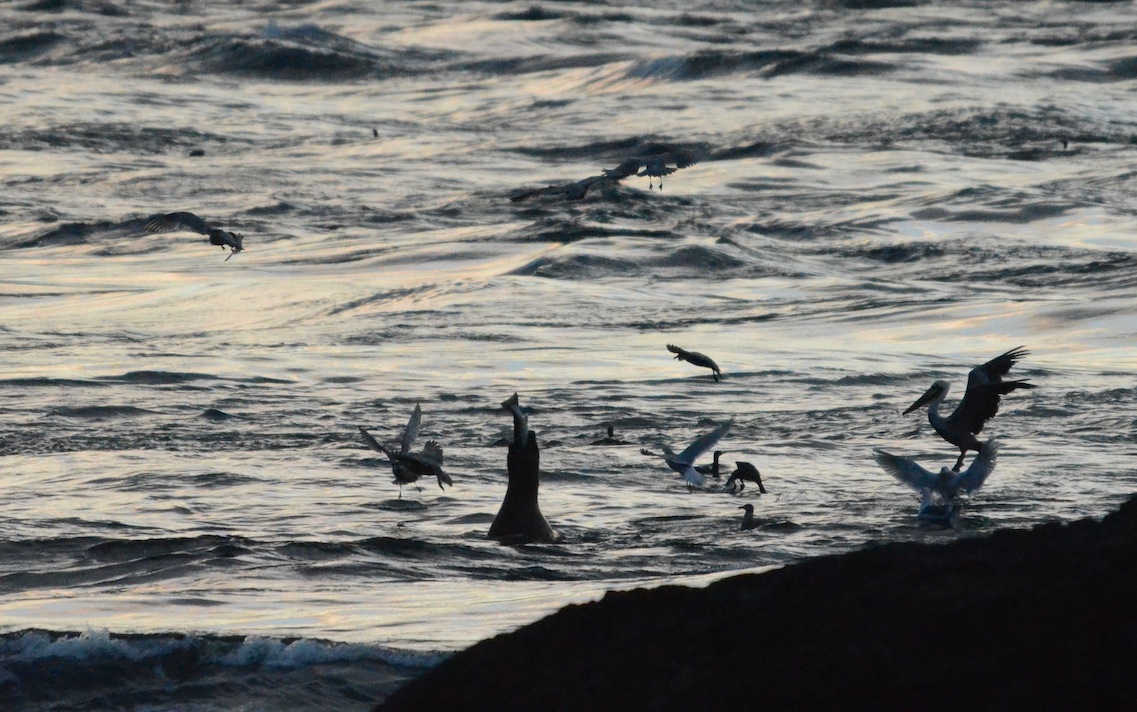
I have been on the lookout for the pelicans that Mike has observed out here and was thinking they were gone. But this morning, while photographing a sealion taking down a fish I noticed a large bird in the frame.  The pelican must have been on the east face of the Eastern rocks which is out of sight from the main island.

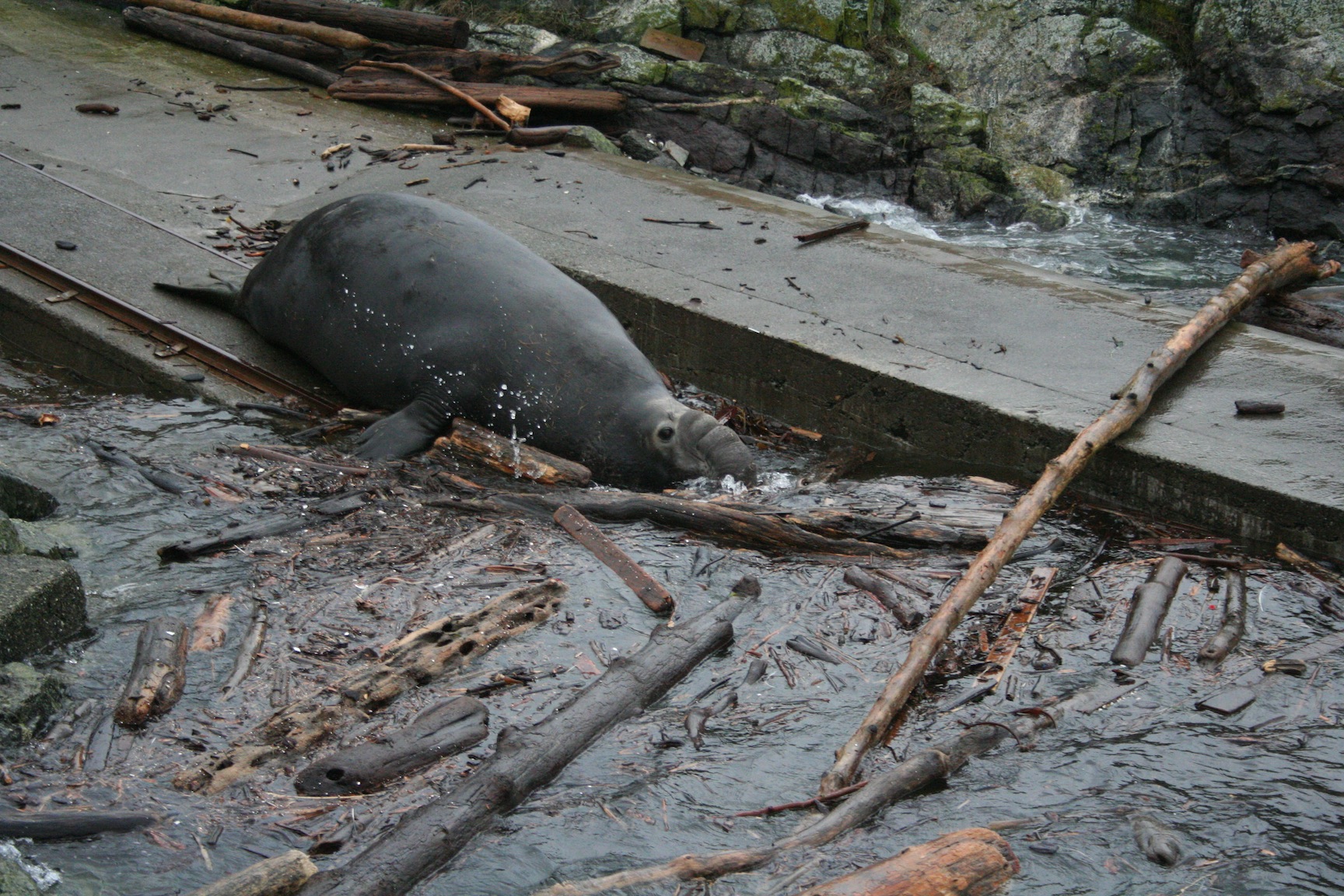
On Wednesday the winds picked up to over 25 knots.  Misery hauled out on the main island that night and stayed here until yesterday.  After making his way down the ramp and through the debris he stayed at least an hour amongst the logs, floating and making bubbles.


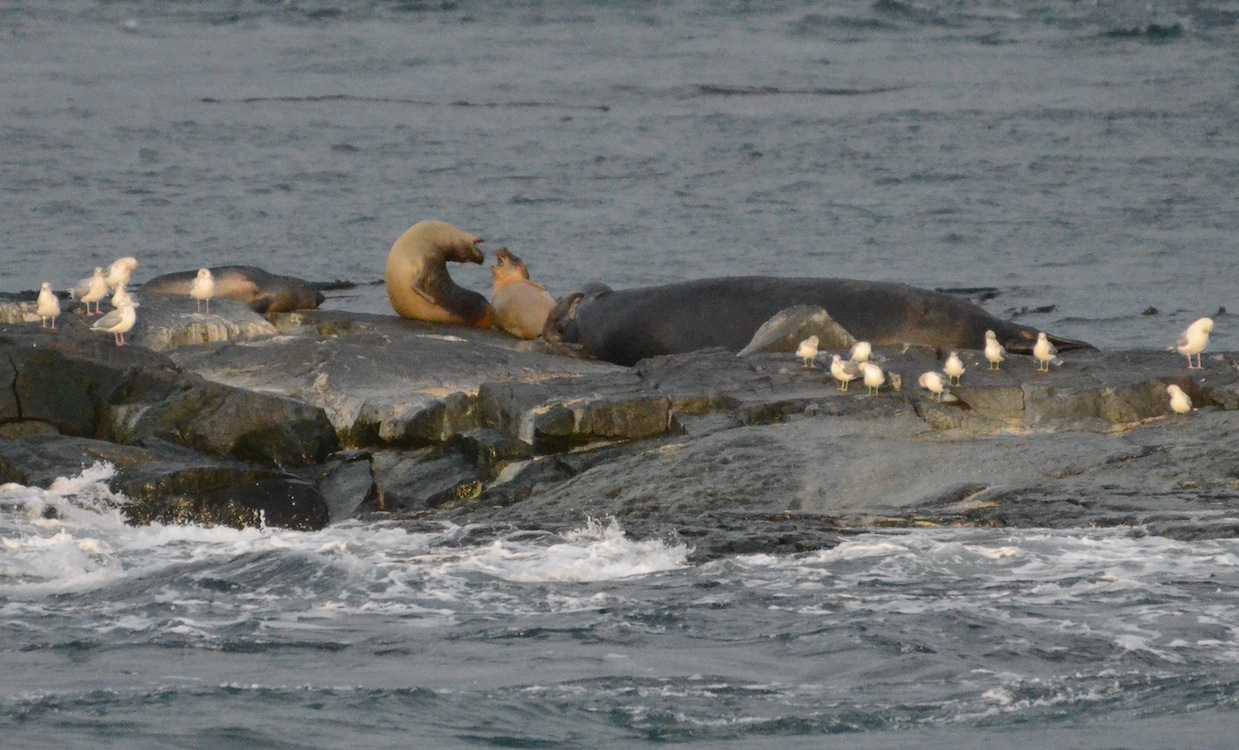
This morning Misery was out on West rock with at least 3 female elephant seals.


Not a lot of traffic in the reserve the past days.  On Wednesday two whale watching boats toured around the elephant seals on West rock and today there is a dive boat off the west side.


August 13 Update

Slowly the sea lions, both Stellar and California, are making their way to the main island from West Race Rocks. I’ve decided to take regular shots of their progress. The first image is August 7, after the first night of their arrival, and the next is of August 10.

7 August 2012

10 August 2012

The second is a notably less clear image because of the fog. Over the past week the fog has been incredibly thick mostly in the morning and late evenings. Just a few moments after that photo was taken the sea lions disappeared altogether.

The fog provides an obstacle for mariners which is why I was surprised to note half a dozen whale watching boats appear near the jetty at times of less than 50m visibility.

The last image illustrates only a glimpse of how dense the fog can be. It is taken from the tower facing westward.


Fog after sundown, 11 August 2012

Marine mammals and vessels

Stellar and California sea lions near sunset

The sea lions have moved in! Last night more than a dozen spent their first night on the main rock. Around sunset there were over 20 on rocks across from the jetty and in close waters. About 50-75 are still camped out on North and West Race Rocks.

I’m unsure if it is a coincidence, but the sea lions’ arrival was directly after the elephant seals’ departure. Although there are still 3 juveniles on site, our 2 alpha males and half dozen other seals haven’t returned since Saturday, 4 August.

Two of the 3 elephant seals left on the island

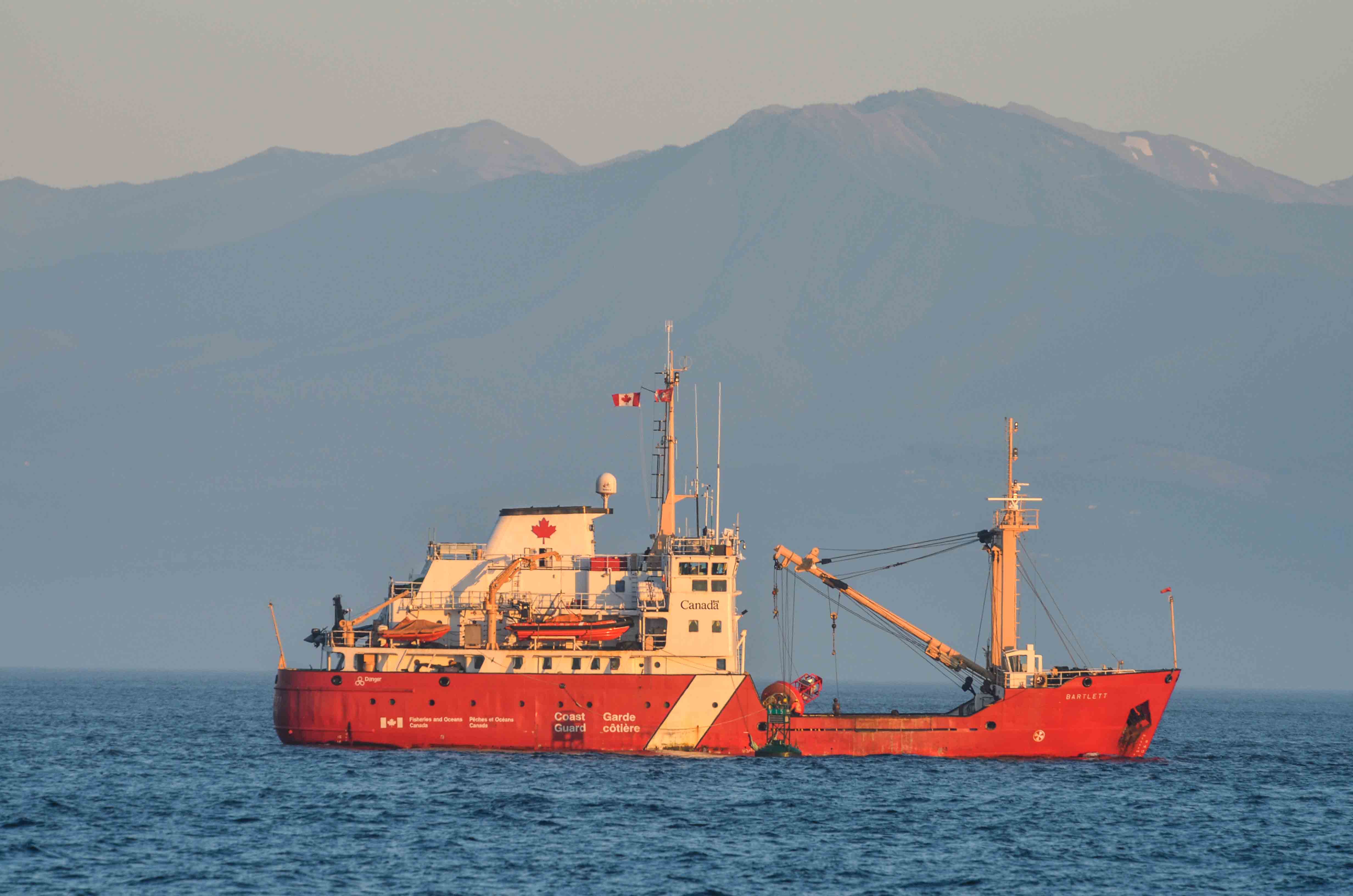
On another note, a Canadian Coast Guard vessel was tied up to the Rosedale Reef buoy on the edge of the reserve yesterday for a couple of hours late in the day. It’s the first time I’ve seen the buoy being used since my time out here.

On Sunday 37 whale watching boats entered the reserve as well 3 private boats. It’s a lot of activity for such a small area and I wonder about the effects it has on the wildlife. A new 2-deck whale watching ship of Orca Spirit Adventures has a capacity of 200 passengers. I can’t help but think the noise pollution created by this vessel that advertises its indoor dining area and dance floor does harm to the very animals they are in search of.

Coast Guard vessel at Rosedale Reef Buoy

Seal Pups and traffic

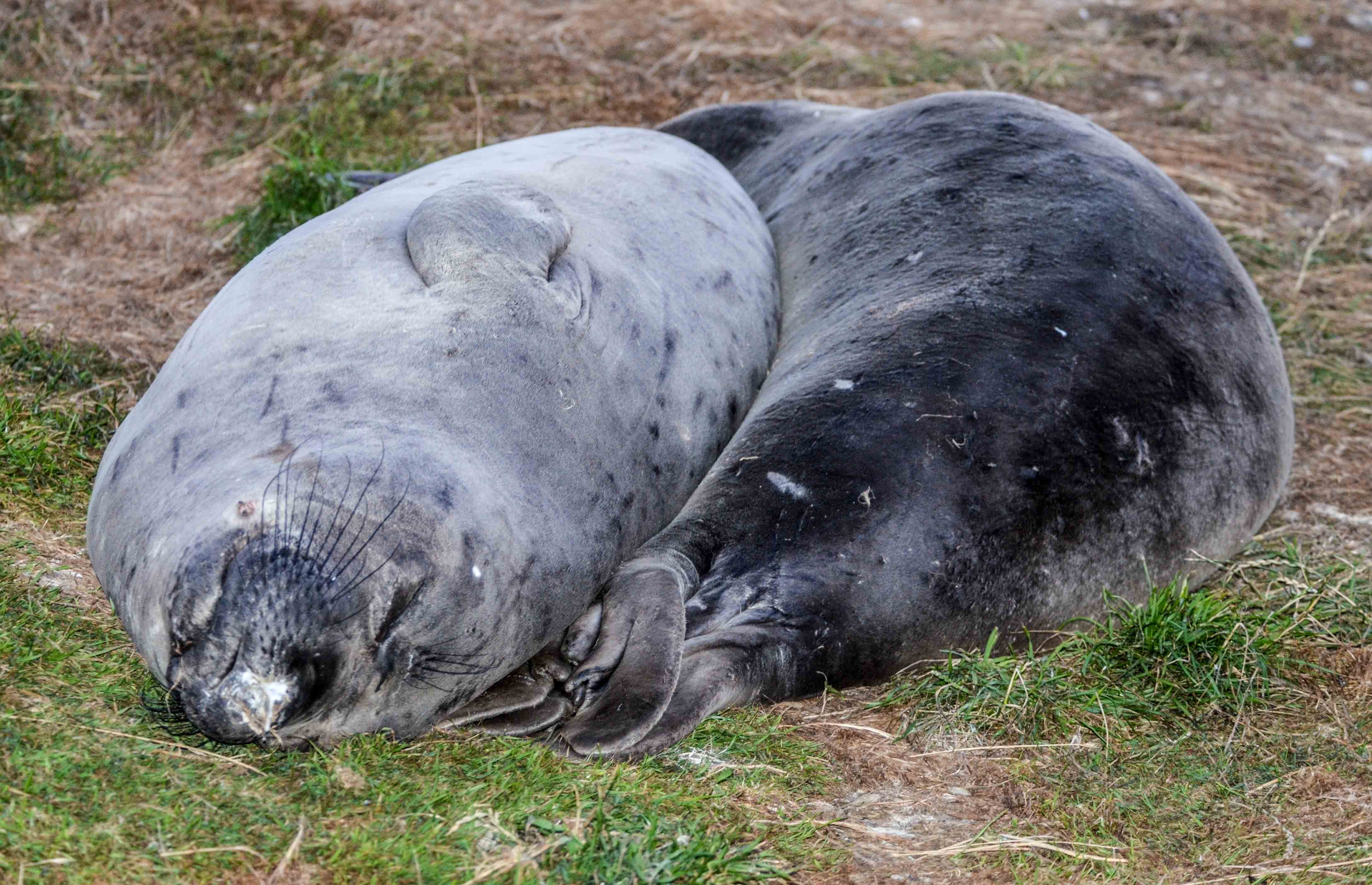
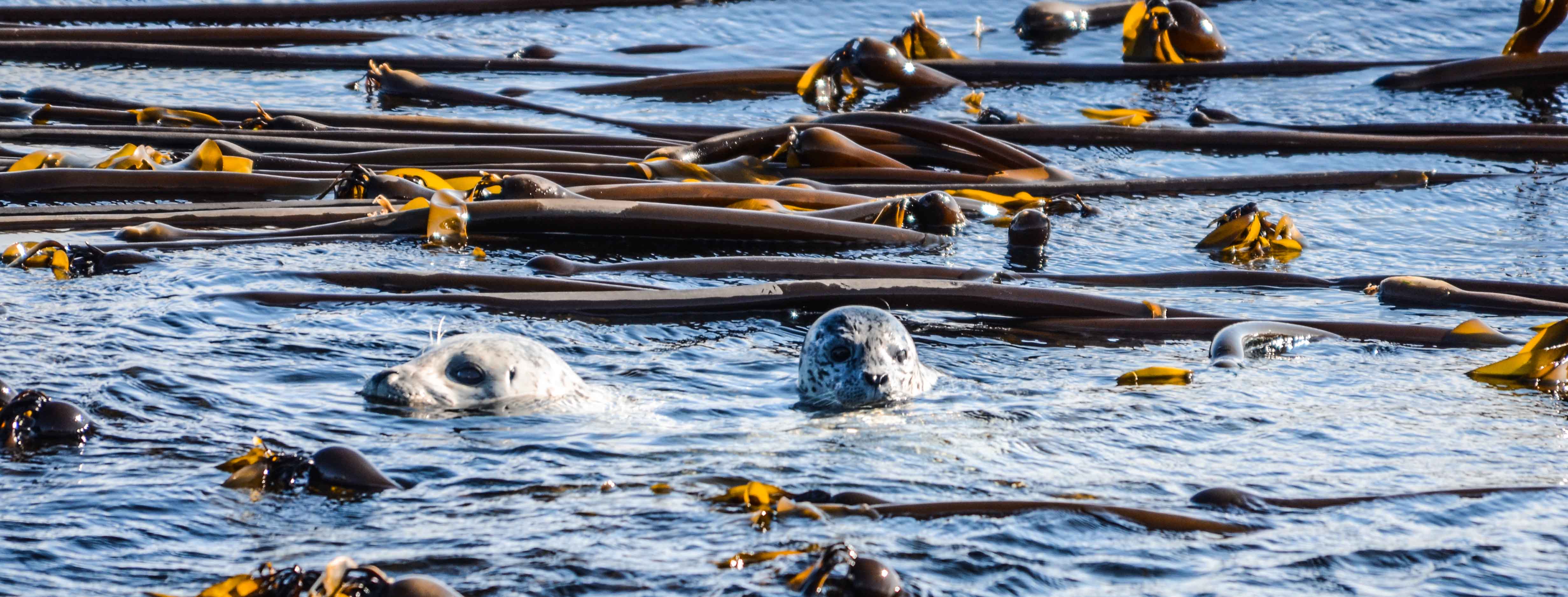
Harbour seals are frequenting the kelp beds regularly with their new pups. I have spotted a half dozen pups so far. Harbour seals (Phoca vitulina) are most often found in estuaries and shallow bays but here in the reserve there are approximately 35 right now. They feed at hide tide and rest during low tide usually somewhere within the south-eastern part of the reserve.

Habour seal with pup

Marine traffic has increased significantly this week. Today, whale watching boats alone exceeded 40 in the reserve and there were around a dozen private boaters as well. In the last post I mentioned the whale tour boats are well mannered though unfortunately speeding between North Race Rocks and Great Race Rocks has become much more common in the past week.

There is a count of 9 elephant seals at the moment, which dropped from 11 earlier in the week. Some, like Misery (our largest male), seem to spend equal time in water and on shore now.

Also, 3 groups of student visitors came out on Monday, Tuesday, and Wednesday for tours to learn about the reserve, its importance, and to get a peek at the elephant seals. The tours were kept brief as to not disturb the gulls who are still rather anxious to protect their young.


Recent marine traffic in the reserve

Marine traffic in the reserve over the past month has increased mainly with a rise in visiting whale watchers. On days of good weather there have been as many as two dozen whale watching boats pass through the reserve. However on days like today when the wind has averaged around 30 knots, or yesterday when there was fog until late afternoon, only one boat toured through.

Illegal fishing on reserve

Whale watching boats usually abide by the rules of the reserve by not speeding and being respectful of marine mammals. But this week there were two boating infractions by private boaters. Fishing in the reserve is not permitted. Two boat renters from Pedder Bay marina, despite being reminded by marina owners of the regulations, were fishing off the southwest side of the main island.

Speeding in the reserve

The speed limit in the reserve is 7 knots. This white zodiac, right, sped through the reserve last week at about 15 to 20 knots. The reason for the speed limit is to create as little disturbance for the marine mammals as possible. When boats speed through the harbour seals in particular react by fleeing to the water.