To Seek A Nest

Weather

  • Visibility: 15+ miles
  • Wind: 5-10 knots SE, later up to 15 W
  • Sky: clear
  • Water: rippled

Ecological

  • Spent over an hour searching for Black Oystercatcher nests for the new webcam to focus on, yet I found nothing.
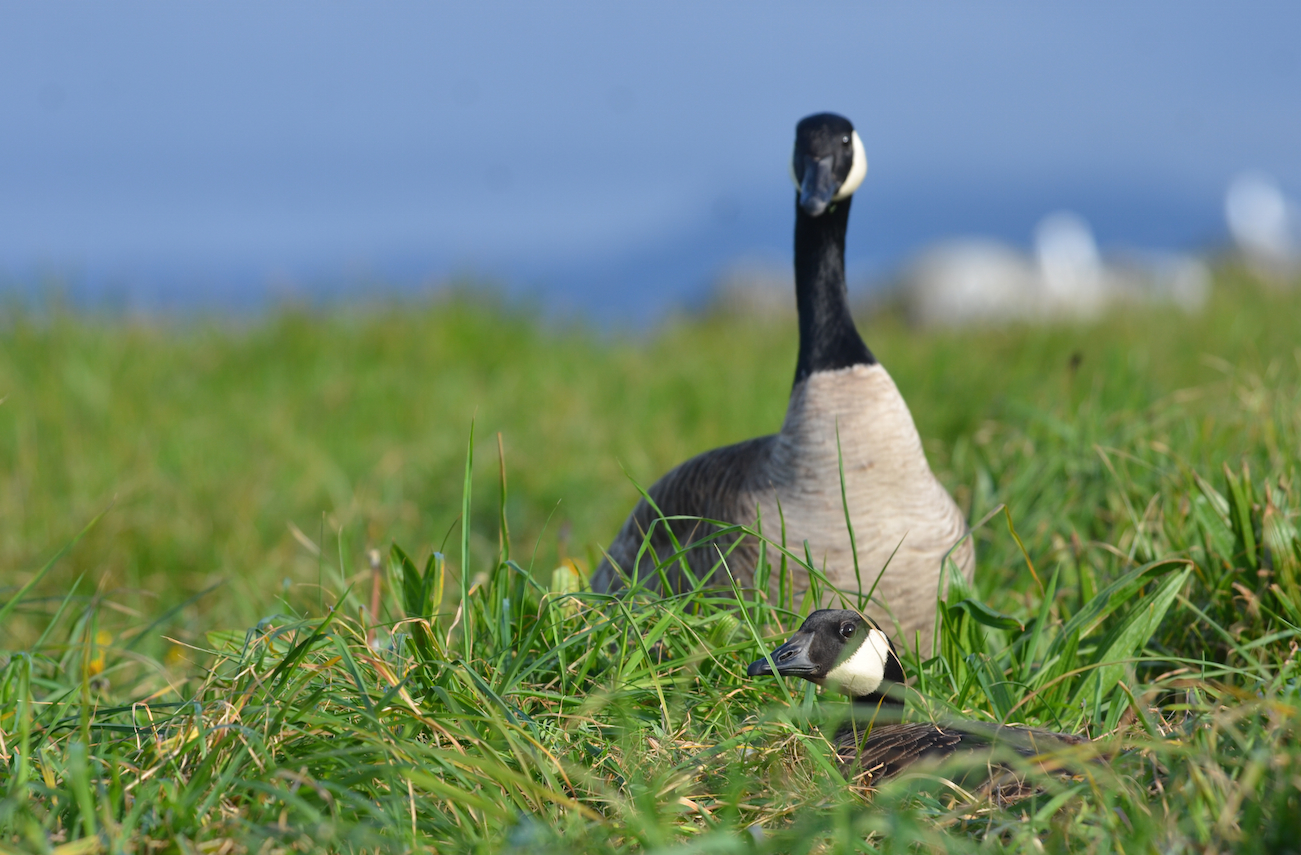
  • Found one abandoned Canada Goose nest, confirming yesterday’s suspicions.
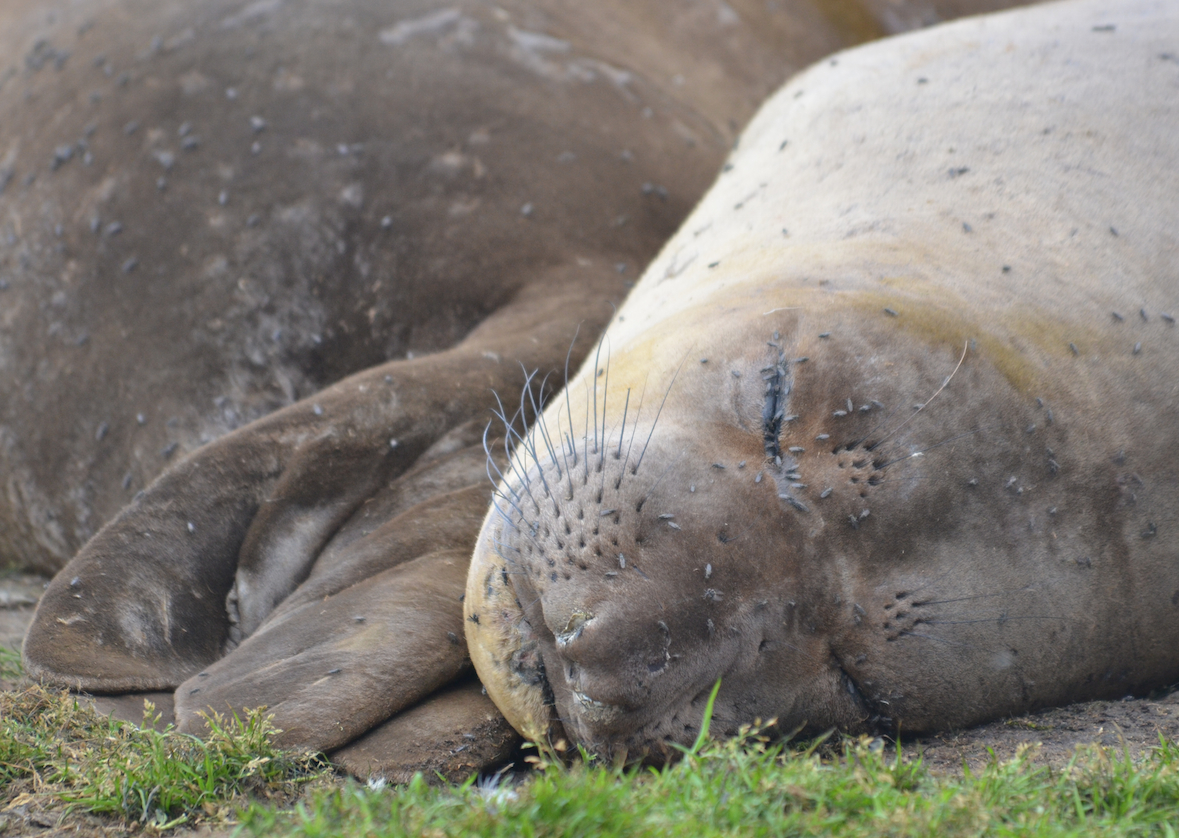
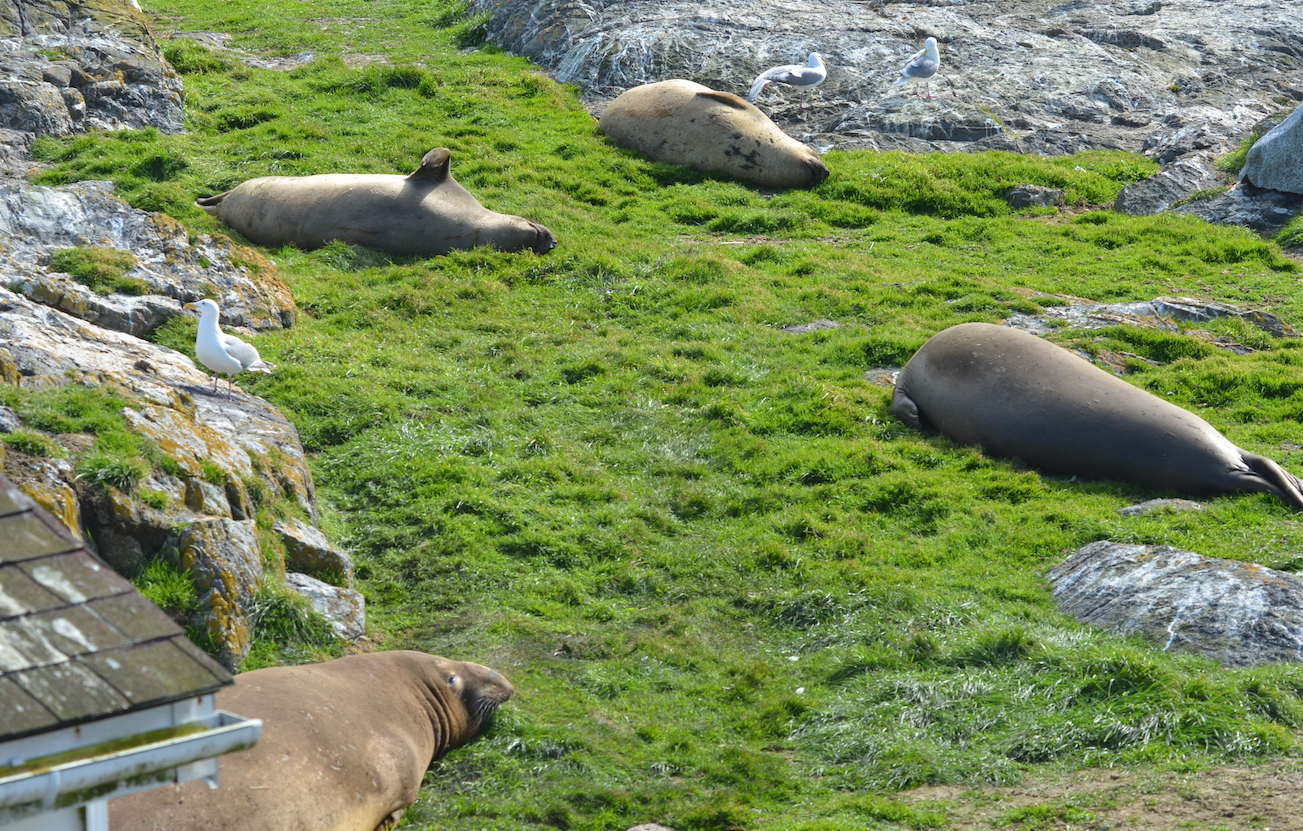
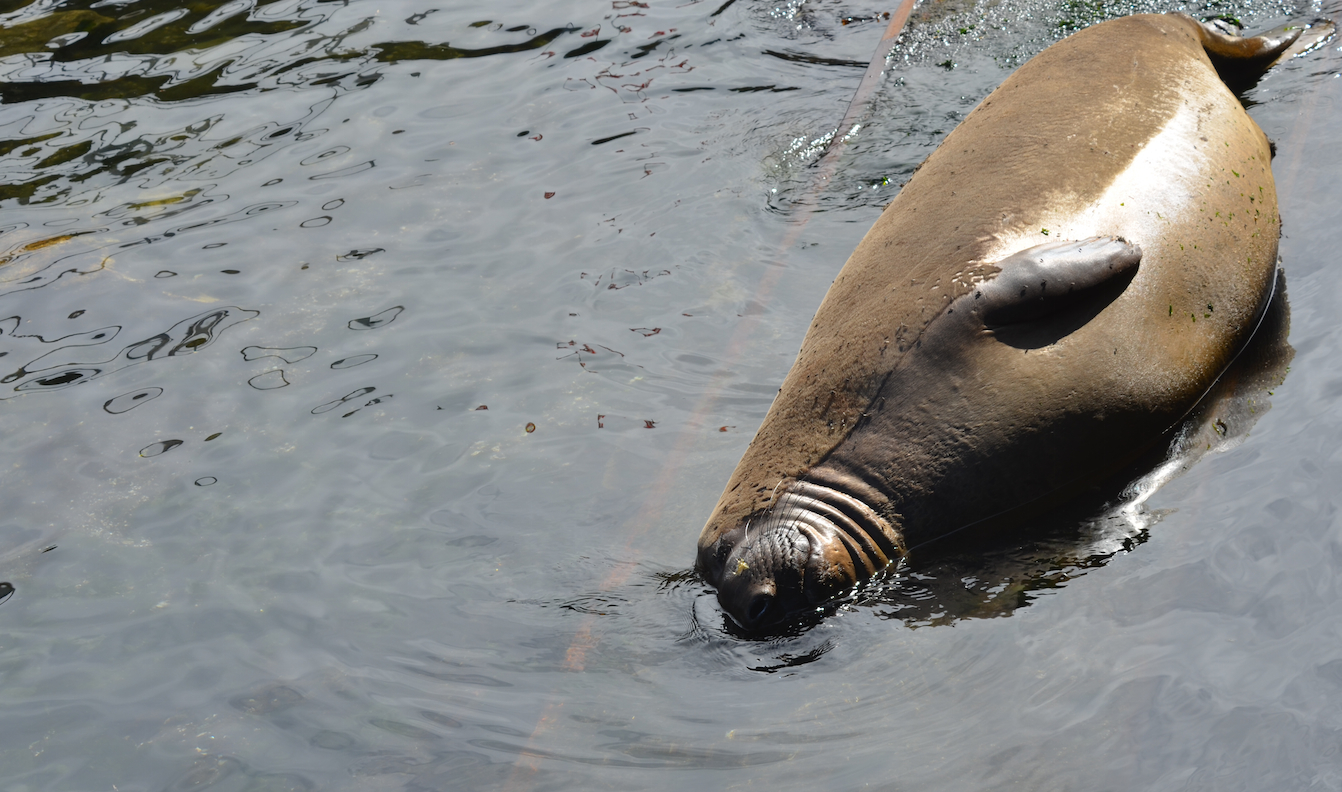
  • The elephant seals continued their moulting, play-fighting, and ramp bathing.
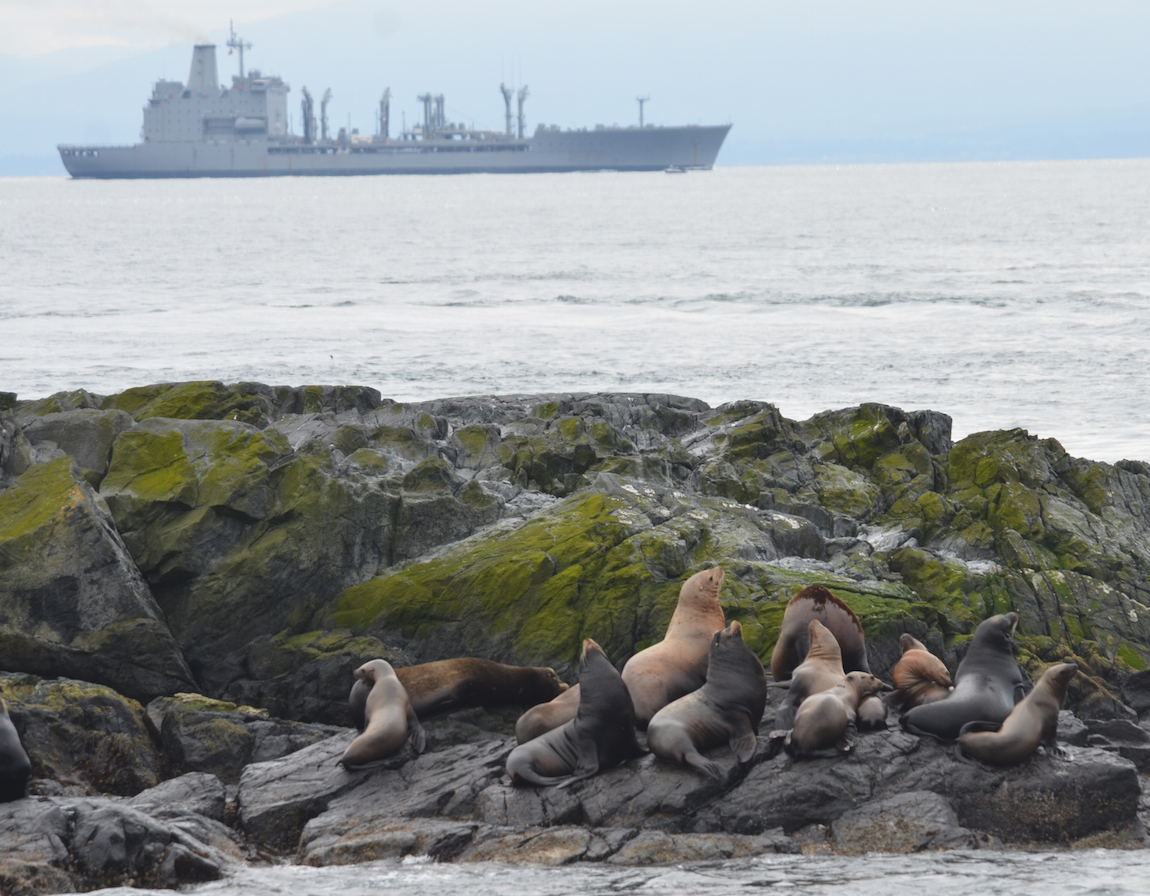
  • About 9 on Great Race today, and 6 on Middle Rock.
  • Check out the e-seals in their flight squadron formation!

Elephant Seal flight squadron formation

Maintenance

  • More Canada Goose themed maintenance.
  • It is mutually unfortunate that they choose to nest so close to key areas.

Boats

  • Observed three eco-tours lined up to the north of the reserve. I suspect they had found whales?
  • Later they made their way through the reserve in customary fashion.
  • One dive boat was anchored just south of the South Rocks for a few hours.
  • Spied a funny looking barge with heavy duty vehicles on it. They looked like toys from my distance!
  • The Queen of Cumberland (BC Ferries) was out near Esquimalt, presumably doing some test runs, as she is currently undergoing a refit until April 21.

Other

  • 5 DND blasts today at Bentinck Island.
  • 2 medium blasts around 11:00.
  • 3 smaller ones between 13:30 and 14:00.

Elephant Seal Play-fighting

Weather

  • Visibility: 15+ miles
  • Wind: 5-10 knots E
  • Sky: clear
  • Water: calm
  • Another spectacular sunrise!

Ecological

  • About 8 elephant seals on Great Race today. Six or so on Middle Rock.
  • A few of the younger e-seals (2 or 3 year old males?) spent much of the day play-fighting. Very entertaining to watch.
  • We seem to be down from 8 nesting pairs of Canada Geese to 7.
  • Observed a Giant Green Anemone (Anthopleura xanthogrammica) in the water. Very beautiful.

Maintenance

  • Spent several hours dealing with various Canada Goose themed activities.
  • Cleaned the solar panels.
  • Checked the tidy tank. 11.5″ of fuel remaining, down from 13.5″ on March 30th.

Boats

  • A couple of pleasure craft came by today. One appeared to be anchored quite close to the sea lions on the North-West side of Great Race.
  • Only one eco-tour came by today.

Pleasure Craft Today's only eco-tour

Many Boats Afloat

Weather

  • Visibility: 15+ miles
  • Wind: 0-10 knots NE
  • Sky: mix of sun and clouds
  • Water: rippled, later some gentle swells

Epic Sunrise

Ecological

  • As many as 10 elephant seals on Great Race today.
  • Counted at least 4 elephant seals on Middle Rock.

One big family

Maintenance/Chores

  • Pretty standard day.
  • Solar Panels remained unusually clean.
  • Ran the desalinator in the evening.

Boats

  • There was a near continuous stream of eco-tours today.
  • I saw at least 6, plus many fishing boats doing their own observations.
  • One dive boat was anchored near South Rock.

Mid Month Shift Change

Weather

  • Visibility: 15+ miles
  • Wind: 0-10 knots
  • Sky: sunny with clouds
  • Water: 1′ chop

Ecological

  • There were 8 elephant seals on Great Race today.
  • In the afternoon, 5 of them headed down to the ramp for a dip, but none of them departed.
  • There seem to be less seagulls and cormorants than last time I was here.
  • By contrast, there seems to be more songbirds and ducks.

Maintenance

  • Everything seems to be in good order. Spent the afternoon unpacking and settling in.

Boats

  • Kyle picked up Anne around 10:00, and brought me out to Great Race around 11:00.
  • Saw one eco-tour in the reserve.
  • Several fishing boats out of the reserve.
  • A tug towing a large barge passed by the Rosedale Rock.
  • Another tug towing what looked to me like a pile driver passed to the north of the reserve.

Last Blast on Bloghorn

Weather and Sea Conditions

North wind, 15 to 20 knots replaced the overnight southeaster and brought cool moist air and overcast skies for the morning today. In the afternoon light winds were variable and turned to light west by early evening. The barometer spent the day crawling out of the hole it was in and by 18:30 was around 1008 hPa. The sky cleared and brightened by evening. A strong wind warning is in effect. The marine forecast for central Juan de Fuca Strait calls for west wind to increase to west 20 to 30 knots early this evening and then drop to west 10 to 15 by early Friday morning. It is expected to be cloudy tomorrow with a 30 percent chance of showers or drizzle and a predicted UV index of 3, or moderate. Sea conditions were calm today once the overnight storm and morning wind chop settled down. As evening starts the wind is moving and the chop is starting again.

Vessel Observations

Three whale-watching operators were observed working in the protected area today and more passed close by through Race Passage heading out to the west and back. One sports fishing vessel was observed transiting the reserve today.

General and Ecological Observations

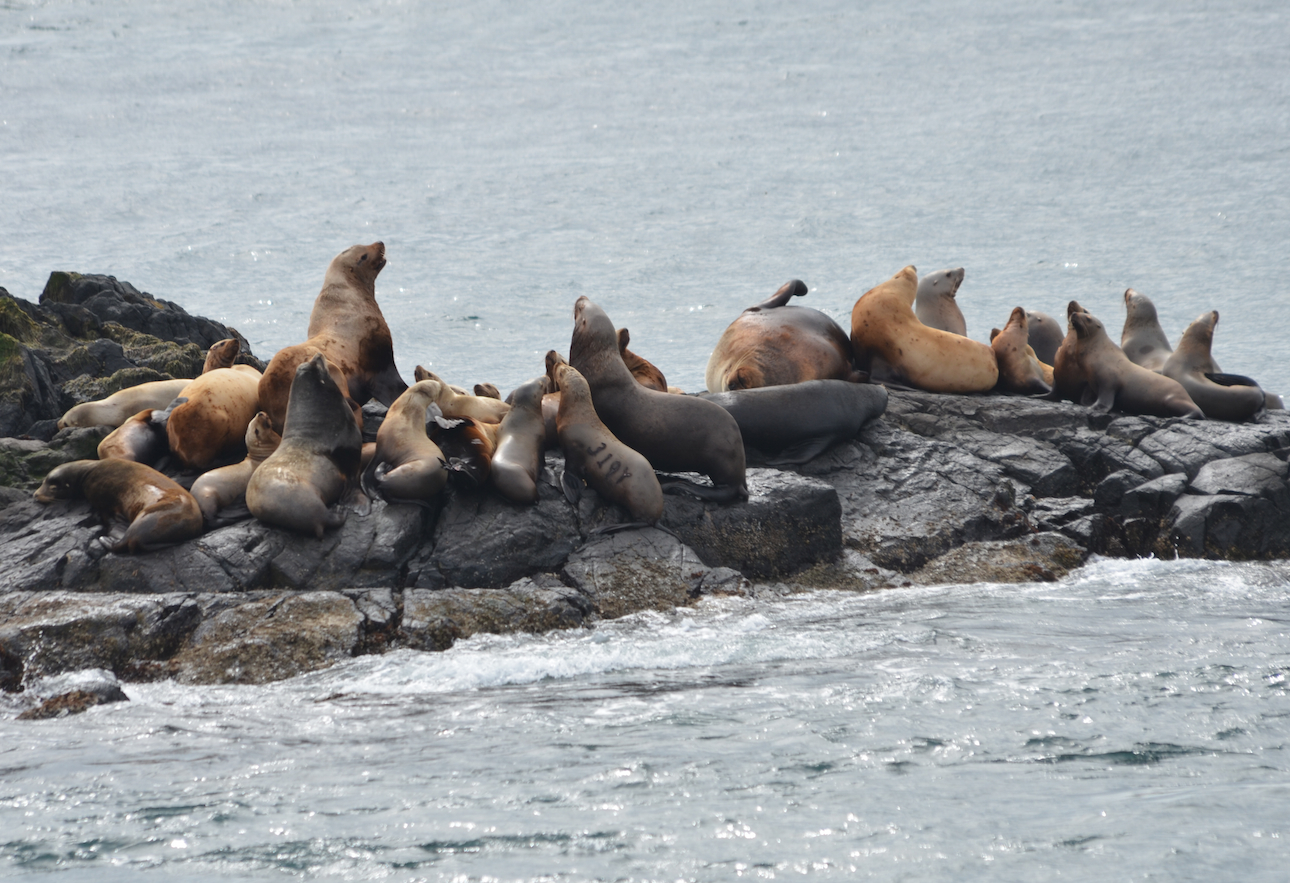
One Steller Sea Lion 319Y, branded on her left side, was observed hauling out on South Rocks today. She was marked as a young weaner at Rogue Reef in the very southern part of Oregon in 2013, so she is almost 3 years old.

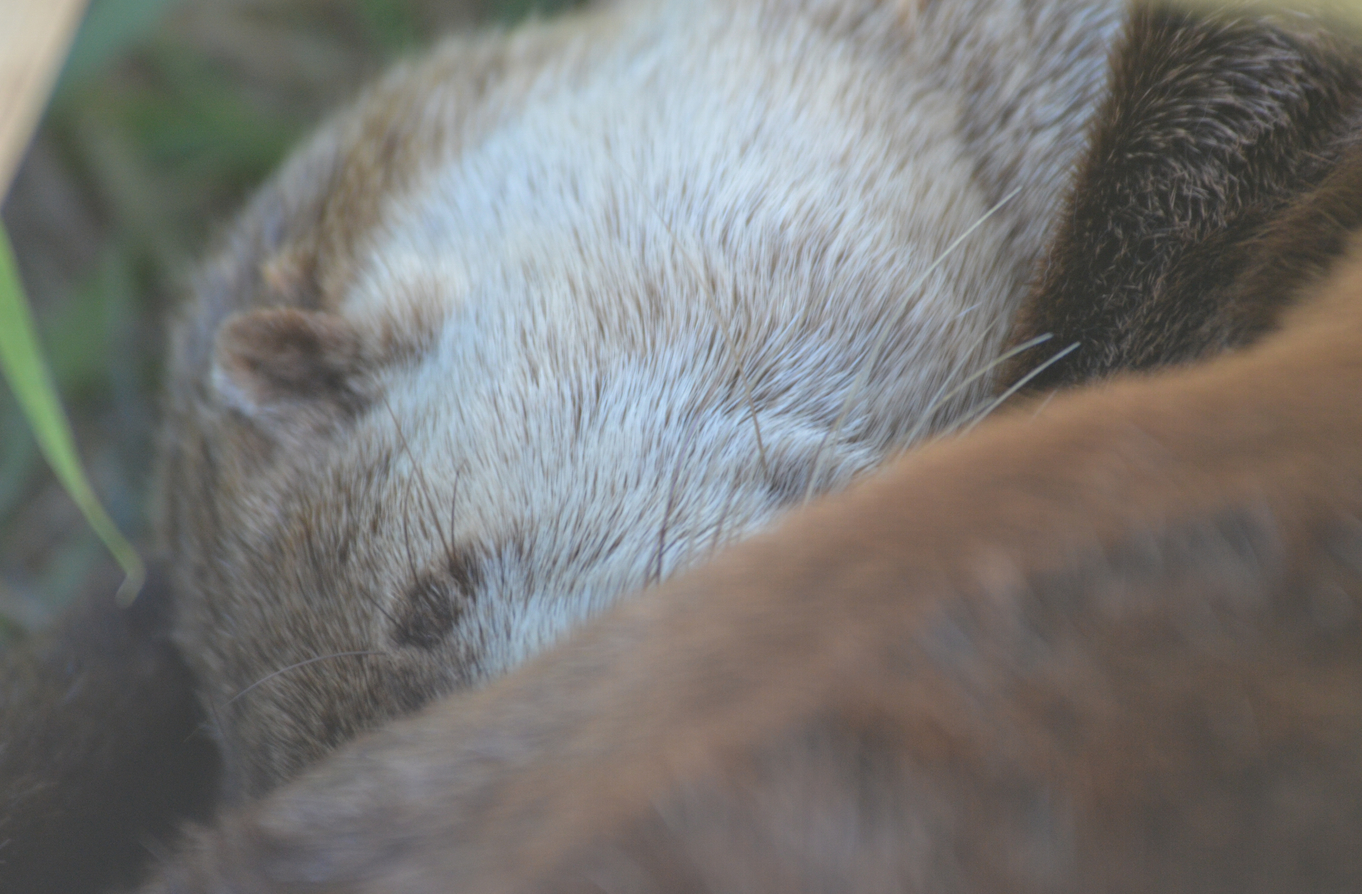
The old male River Otter has taken to napping under the back staircase of the main house in the mornings now and one of the positive things about this new habit, is that it keeps the geese who were interested in nesting there away from the stairs.

This is the end of my shift, my last blast on the blog-horn and it is a little bittersweet to be leaving just as elephant seal show-time starts and spring develops more fully. I leave tomorrow and  want to wish the best to this wonderful Ecological Reserve, which was started by students and faculty at Pearson College. Those folks were brave enough to fight for this place, they had the fortitude and vision to found Race Rocks as a protected area. In BC, Ecological Reserve status is the highest level of protection given, by BC Parks. Fisheries and Oceans Canada protects the water area, as a Rockfish Conservation Area, so jurisdictionally that covers the sea bottom, islets (BC Parks) and the water (Fisheries and Oceans), and makes Race Rocks a de facto marine protected area (no caps).

Of course this is also a special Indigenous place with an intersection of cultures and a complex history of use and ownership by different families, groups and Nations. This is a unique, socio-ecological place to celebrate and protect. From its human history to its natural history, lets make sure that Race Rocks remains a marine protected area and is able to provide ecological education and research opportunities for future generations of British Columbians, as well as Pearson College.

Today was animal census day and the results are posted below.

2016- 14-Apr

River Otter 2

Sea Otter 1

Northern Elephant Seal 11

4Harbour Seal 170

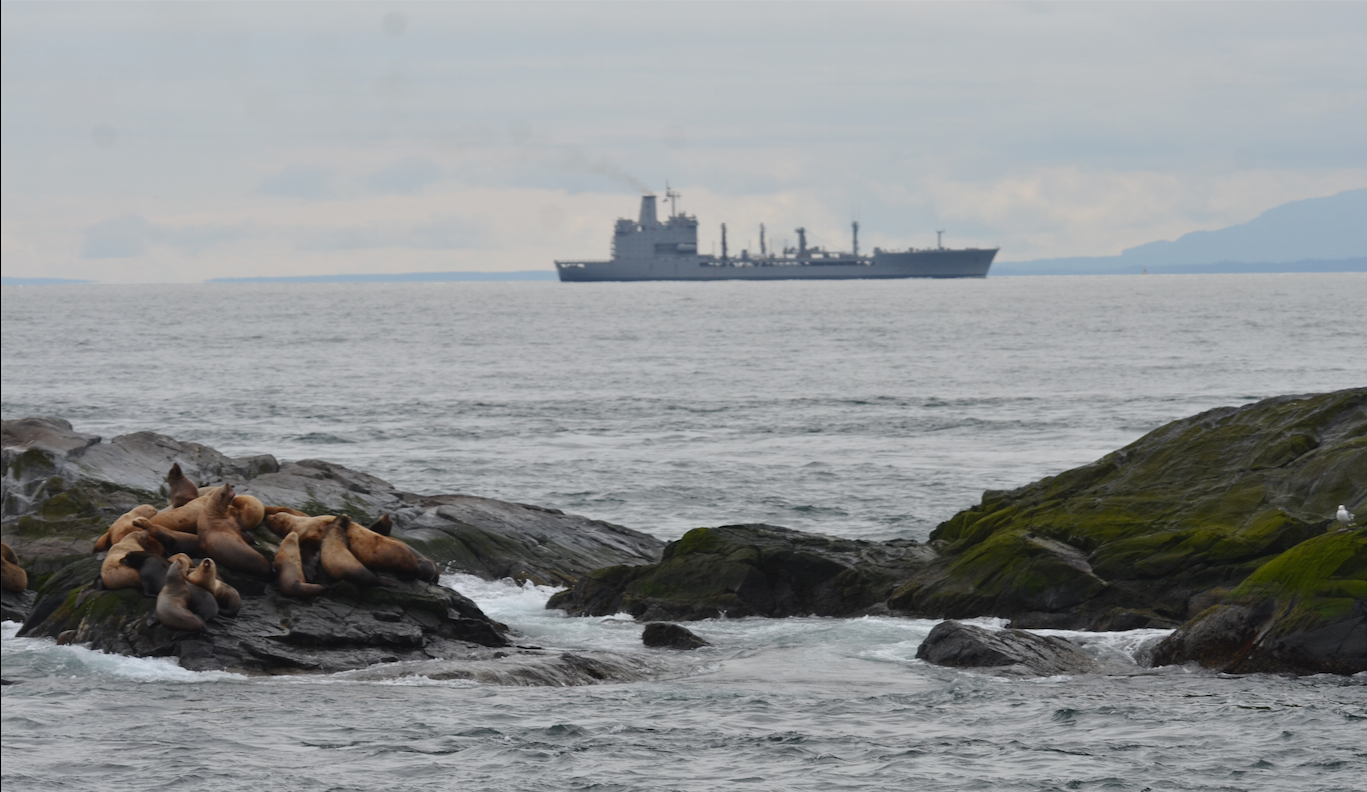
Northern Sea Lion (Steller’s) 72

California Sea Lion 99

Canada Goose 22

Brandt (flying through) 350

Harlequin Duck 8

Surf Scoter 6

Common Merganser 1

Brandt’s Cormorant 2

Double-crested Cormorant 2

Pelagic Cormorant 14

Cormorant (not ID’d to species) 5

Bald Eagle (juvenile) 8

Bald Eagle (adult) 4

Killdeer 0

Black Oystercatcher12

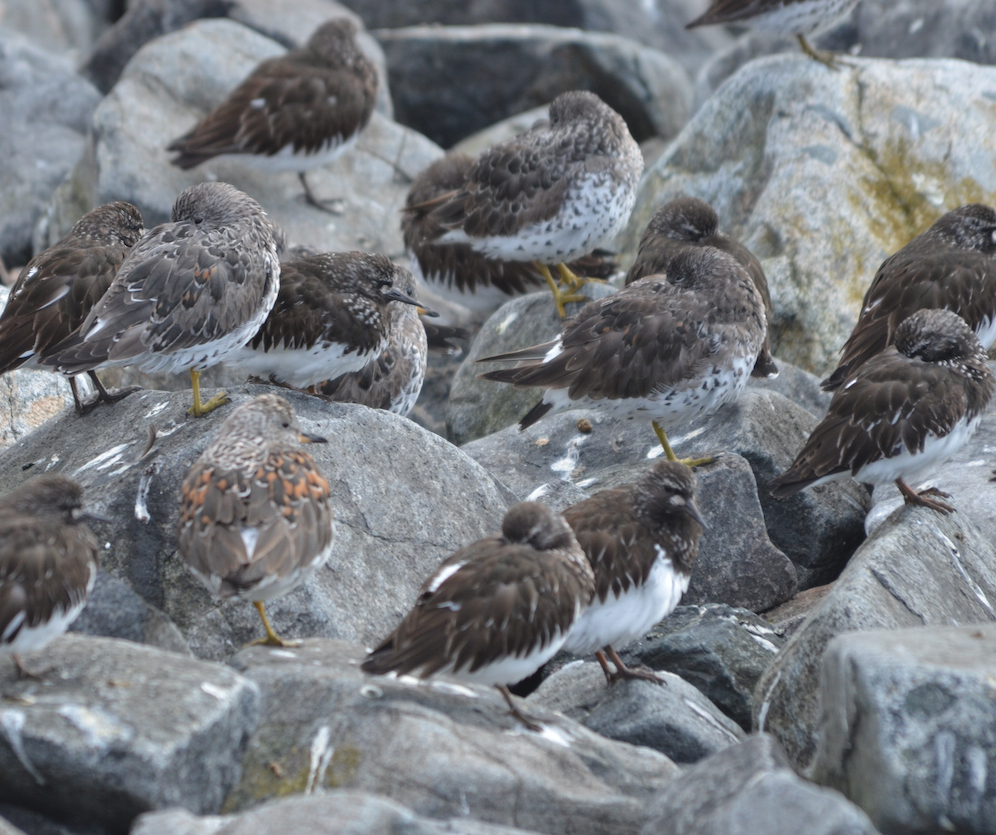
Black Turnstone 54

Surfbird 5

Rock Sandpiper 2

Glaucous-winged Gull 560

Common Murres fly through 9

Rhinoceros Auklets flying 6

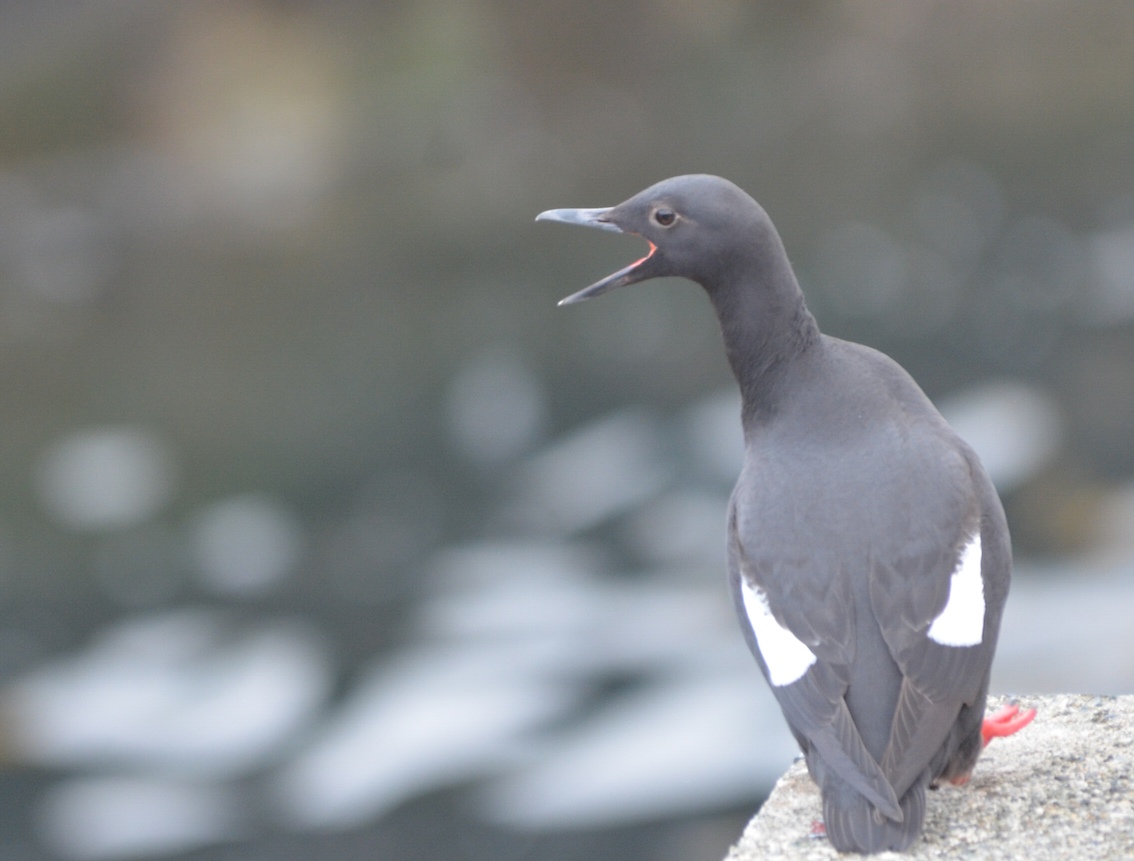
Pigeon Guillemot188

Northwestern Crow 2

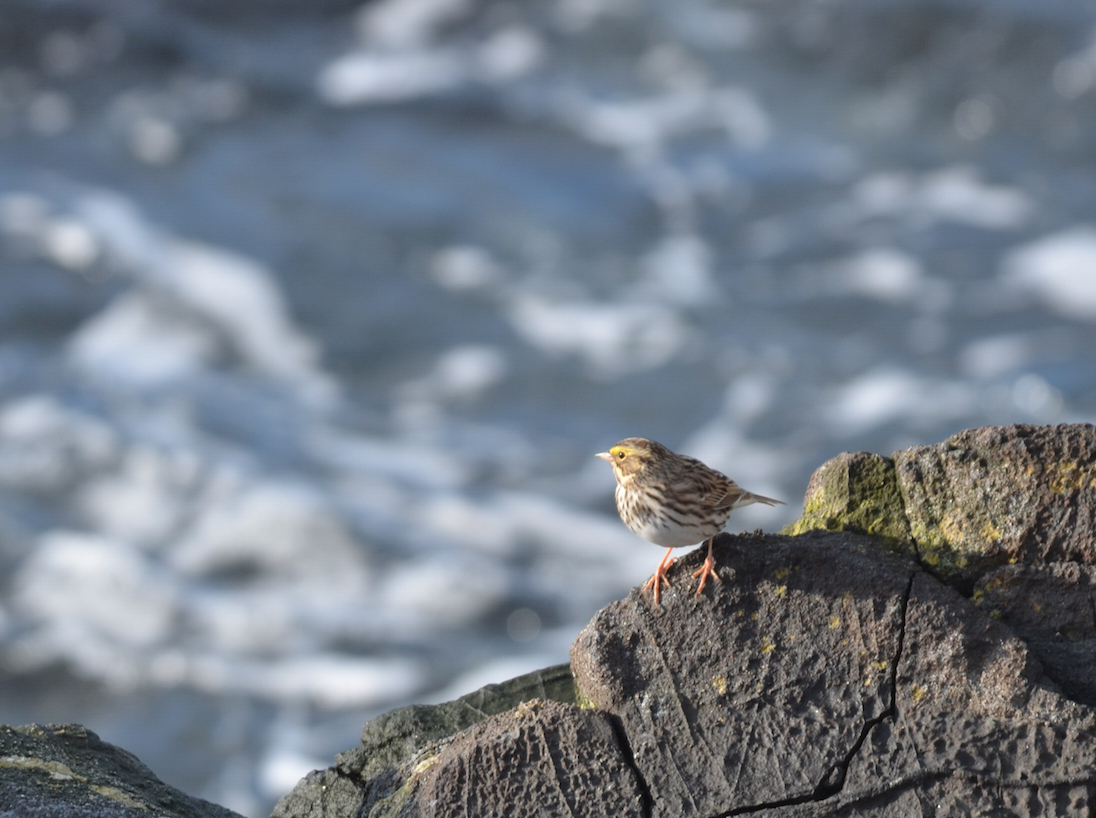
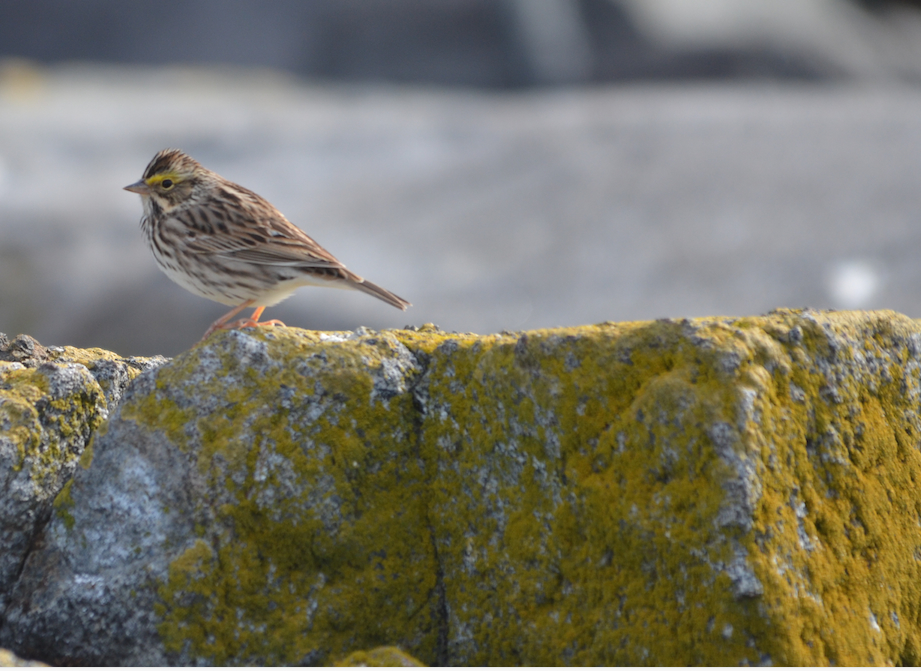
Savannah Sparrow 2

Barn Swallows4

Chores and Visitors

Today was cleanup day in preparation for departure tomorrow. Other chores were routine and there were no visitors.

All the best goes out to Riley, Eco-guardian for the next six weeks.


Slow Day at the Race


Weather and Sea Conditions

Light southeast winds kept the skies grey today but clouds were high and there was no noticeable precipitation at sea level. A new dusting of snow, high on the Olympic Mountains informed the chill in the air. By evening, winds had backed to northeast 10 to 15 knots. The barometric pressure dropped steadily starting after midnight last night and at 18:30 was around 1001 hPa and still falling. The marine forecast for central Juan de Fuca Strait calls for a repeat of this morning southeast 10 – 20 knots increasing to westerly 15 to 25 Thursday afternoon. It will be cloudy with a 60 percent chance of showers in the early morning followed by a mix of sun and cloud. Sea conditions were fairly calm with a light inshore chop, rougher out in the strait and in collision with current generated turbulence.

Vessel Observations

Three whale-watching operators were observed working in the protected area this morning and one was observed in the evening. One sports fishing vessels was observed transiting the reserve today.

Ecological and General Observations

Afternoon low tides reveal Race Rocks’ high diversity and productivity of seaweeds and marine invertebrates. Many of the birds depend on the table being set when the tide is out and for millennia, the indigenous people who used the area did the same. The rock cairn burials here are a daily reminder of the human significance of the site going above and beyond the history of the lighthouse.

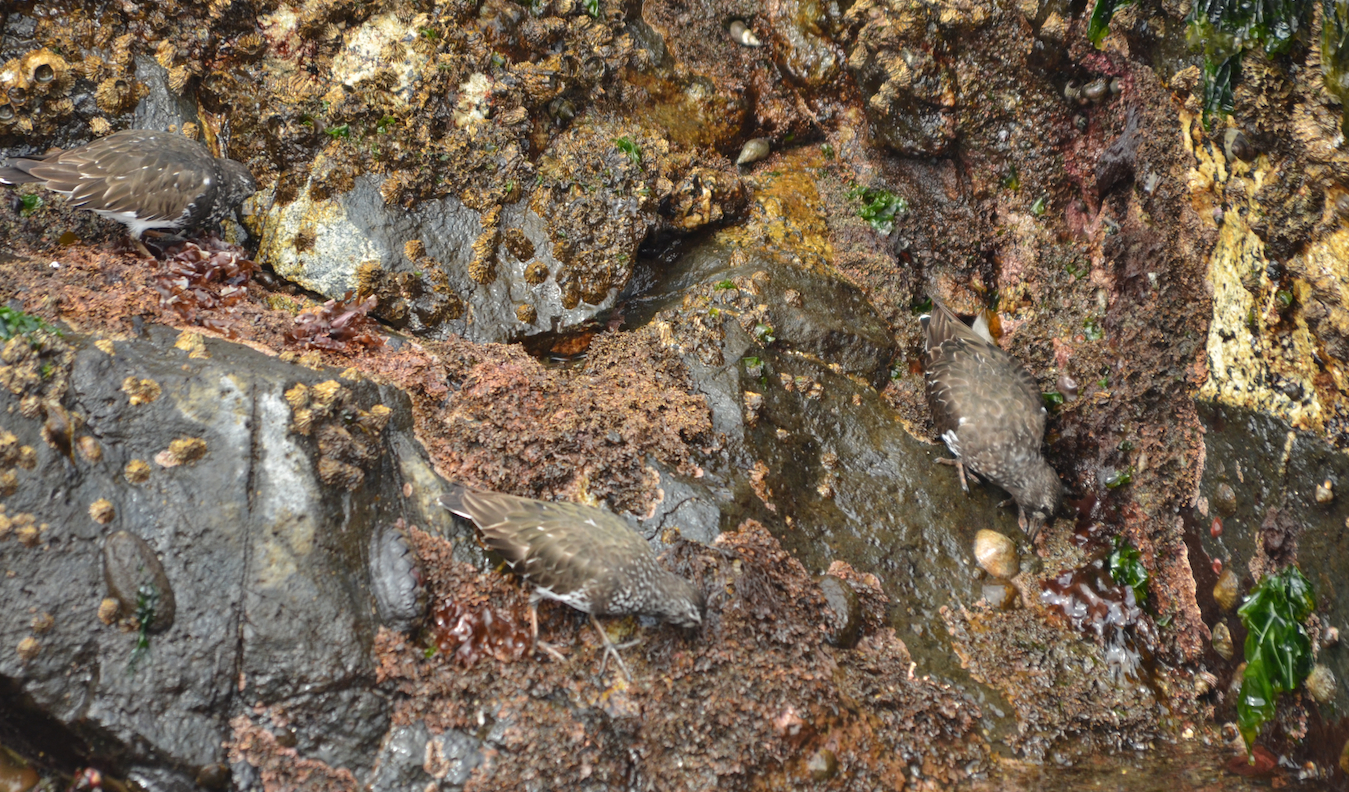
Back to birds, Black Oystercatcher totally depend on the riches of the intertidal. The Black Turnstones here are the only ones I have ever seen foraging in the garden but otherwise they and the Surfbirds are intertidal feeders as well.

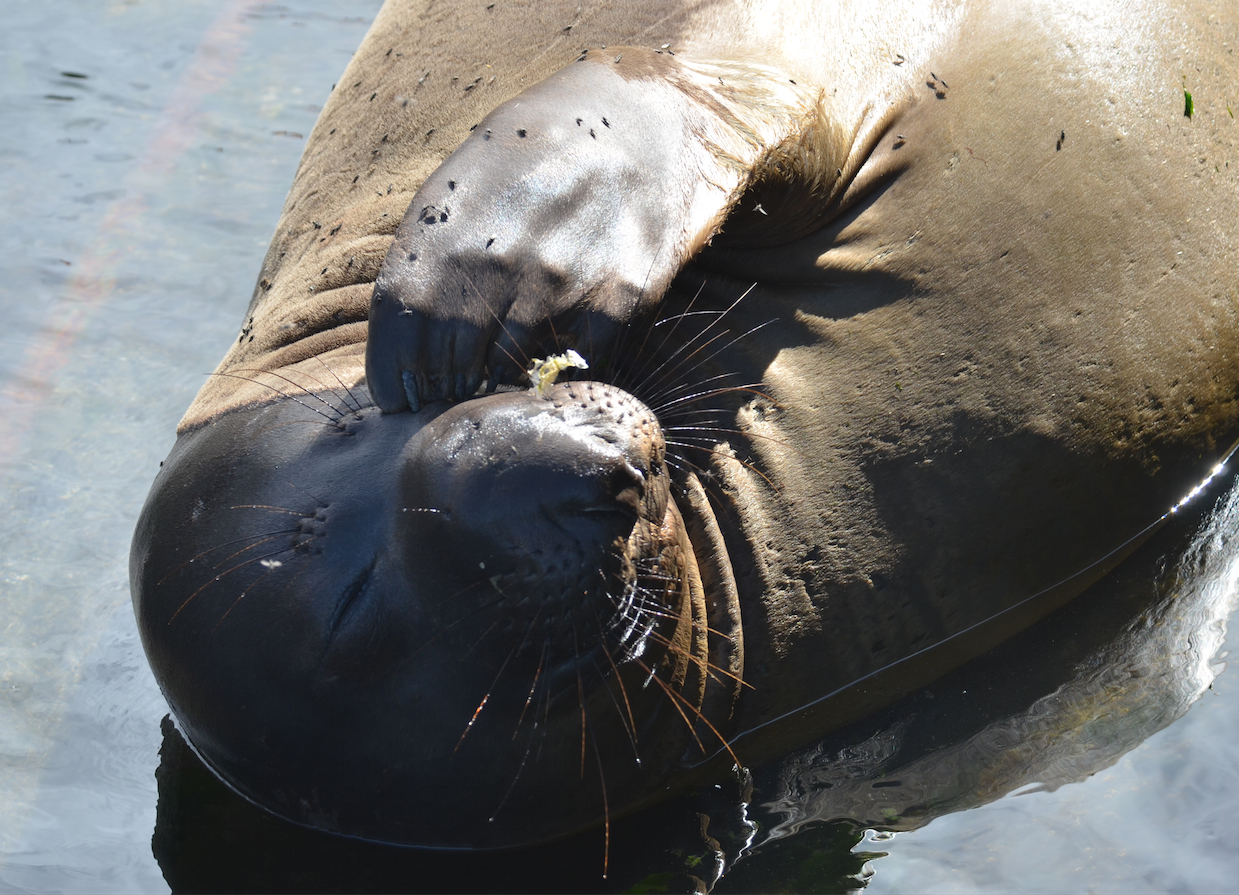
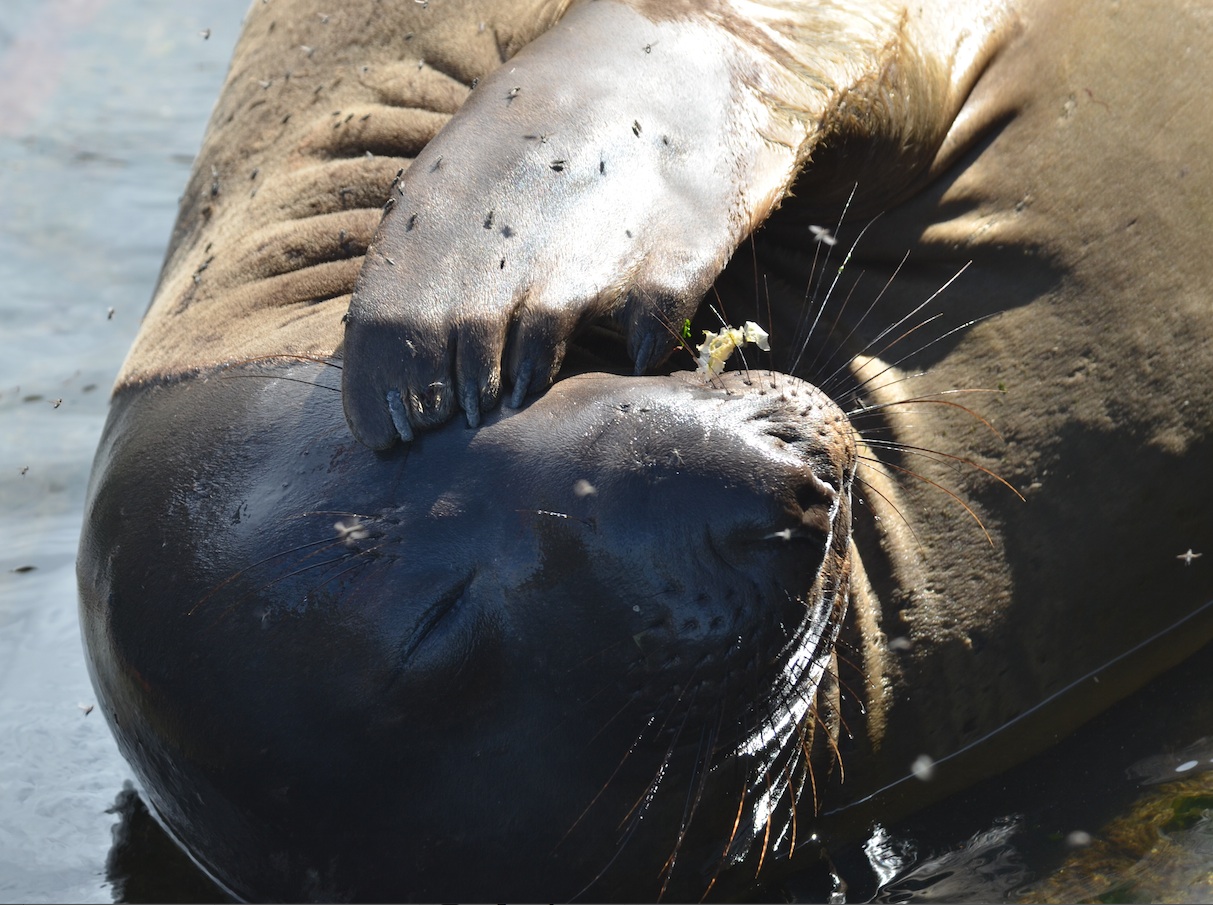
There are eleven elephant seals moulting in the garden now and their faces are really starting to peel.

Chores and Visitors

Alex is back, the roof patches were revisited and more blown shingles were retrieved from the latest blow. Other chores were routine and there were no other visitors.


Evergreen

Weather and Sea Conditions

Light northwest winds backed and veered bringing waves of silver and leaden clouds. Showers were visible from far away, travelling with the wind and tied across the Strait with rainbows, tops of arcs obscured in cloud. In spite of being overcast and chilly, the high was 11o C, there were brief periods of intense sunshine and the UV index was very close to 4 (moderate). Accumulated solar energy was low, about half of what we have been receiving. Just before dusk there was an intense downpour accompanied by winds over the 30 knots. It was short-lived but may foretell of what the forecaster are calling for by late morning. The barometer remained fairly steady today at ~1015 hPa but is expected to drop with the passage of a low that will bring southeast winds and showers tomorrow. Sea conditions were rough at times out in the Strait today but generally there was just a light chop inshore.

Vessel Observations

No vessels were observed in the protected area today.

Ecological and General Observations

An influx of 14 more Canada Geese kept the established geese busy on their own wild goose chase today. There were many running and aerial chases and clashes. These seem to be new animals with different behaviours than the ones who have been so doggedly determined to nest here for the last six weeks.

Many flocks of 100 to 200 Brant were observed moving through the reserve from west to east and I wonder if these are still flocks that have travelled up the coastal flyway from California and Mexico.

Harlequin Ducks are rafting up in strings of birds and moving around more than they have since I arrived nearly six weeks ago. They are usually so site-fidel that you can almost predict where they will be.

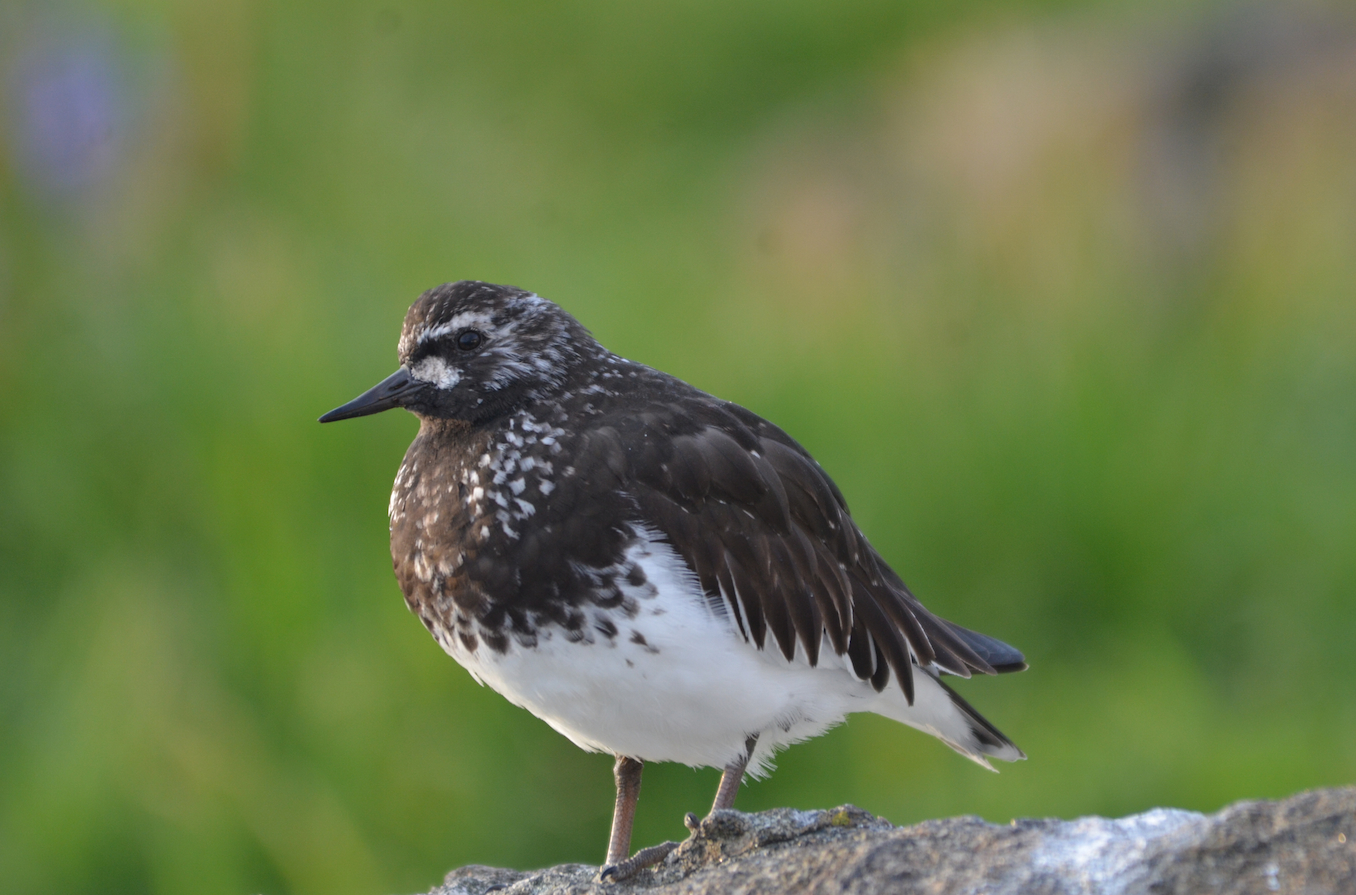
Black Turnstones continue to be the most common shorebirds on Great Race. Seeing them forage everywhere on island is a good reminder that this is essentially an inter-tidal island. Their plumage is looking new and shiny, ready for their big northern migration.

The late spring elephant seal moult is definitely in full swing now and the animals are catching up on sleep and using stored blubber to see them through the moult. Sea Lions continue to haul out on South Rocks every morning. The male Californians are also well established on Great Race in the two haul-outs near the two houses.

Work was routine today and there were no human

visitors.


Resolute and Steadfast Geese

Weather and Sea Conditions

West winds blew 10 – 20 knots all day, under overcast skies, with brief periods of sunshine. Barometric pressure rose, but not significantly, staying at around 1010 hPa and then it started to drop, by evening. Marine forecasts call for a continuation of west winds until Tuesday afternoon when it is supposed to back to southeast and then back more, to east by Wednesday. In the short term, chances of showers are highest on Tuesday, (60%). Sea conditions were a little gnarly today due to wind on top of currents generated by big tidal cycles, right now. Generally there was a light chop near shore and it was rough in places out in the Strait.

Vessel Observations

Six whale watching vessels were observed working in the protected area today – end of commentary. It is worth mentioning in light of my previous, daily comments on tour boat operations within the protected area, that the Pacific Whale Watching Association has industry guidelines for operating in the Race Rocks Ecological Reserve and Rockfish Conservation Area. Canada’s Laws, Regulations and Guidelines also apply. The Association also has a scientific advisory board made up of well-respected American and Canadian scientists. Most, but not all whale-watching vessels that operate at Race Rocks are members of the Association. The guidelines can be found here: http://pacificwhalewatchassociation.org/guidelines

These are the Pacific Whale Watching Association’s guidelines specific to Race Rocks :

RACE ROCKS SPECIAL OPERATING AREA
1. “Go Slow Zone” = 1/8 mile (220 yards) from any rock or landmass around Race Rocks.
2. Vessels will slow on their approach to Race Rocks such that speed at 1/8 mile (220 yards) from any rock or landmass is reduced to approx… 7 knots (minimal wake and wash, relative to the condition of the seas state at the particular time).
3. Vessels in the Go Slow Zone will remain as close to mid-channel as is practicable between the major rock outcroppings known as Great Race, North Race Rock, West Race Rock, and Helicopter Rock.
4. While in the Go Slow Zone vessels will transit the area with the current whenever conditions are suitable to do so. Drifting is encouraged relative to other boat traffic and where safe navigation is not compromised.
5. Vessels exiting the area may increase speed gradually outside the Go Slow Zone.
6. Vessels will remain 1/8 mile (220 yards) outside the Go Slow Zone whenever any whale species are present in the Race Rocks Reserve (Go Slow Zone).

Ecological and General Observations

Spring progresses. Geese and oystercatchers are laying eggs. Gulls, geese, oystercatcher and guillemots are mating. Elephant seals are moulting, starting on the face around the eyes, chin and mouth and of course sleeping. They also spend a lot of time socializing. Seaweed is growing and the plankton is full of barnacle moults, which means that they are growing too, which means there is plankton for them to eat. The grass is longer than last year but that won’t last, now that the geese are so determined.

Moulting is Itchy Business

Weather and Sea Conditions

After a hesitant start, with locally overcast skies and fog to the southeast, the sun was blazing by afternoon and it stayed that way into the evening. The UV index rose to almost 6 today, which is high. The wind started at 15 to 20 knots from the west, dropped and turned to the south and southeast and then returned to west15 to 20 knots by early evening. The barometric pressure stayed fairly steady between 1005 and 1010 hPa. The forecast calls for the westerly to increase to 15 to 20 early this evening and to 20 to 30 late this evening, then to drop to 5 to 15 knots late overnight. They expect a similar wind pattern tomorrow with more cloud.

Vessel Observations

Seven whale watching vessels were documented working in the protected area today and most followed the rules. One yellow zodiac exited past West Rock heading west, at high speed. Better communication is needed about boundaries, limits and a reminder about keeping at least 100 meters away from marine mammals might be helpful. I know these ecotourism operators want this good thing to last.

Ecological and General Observations

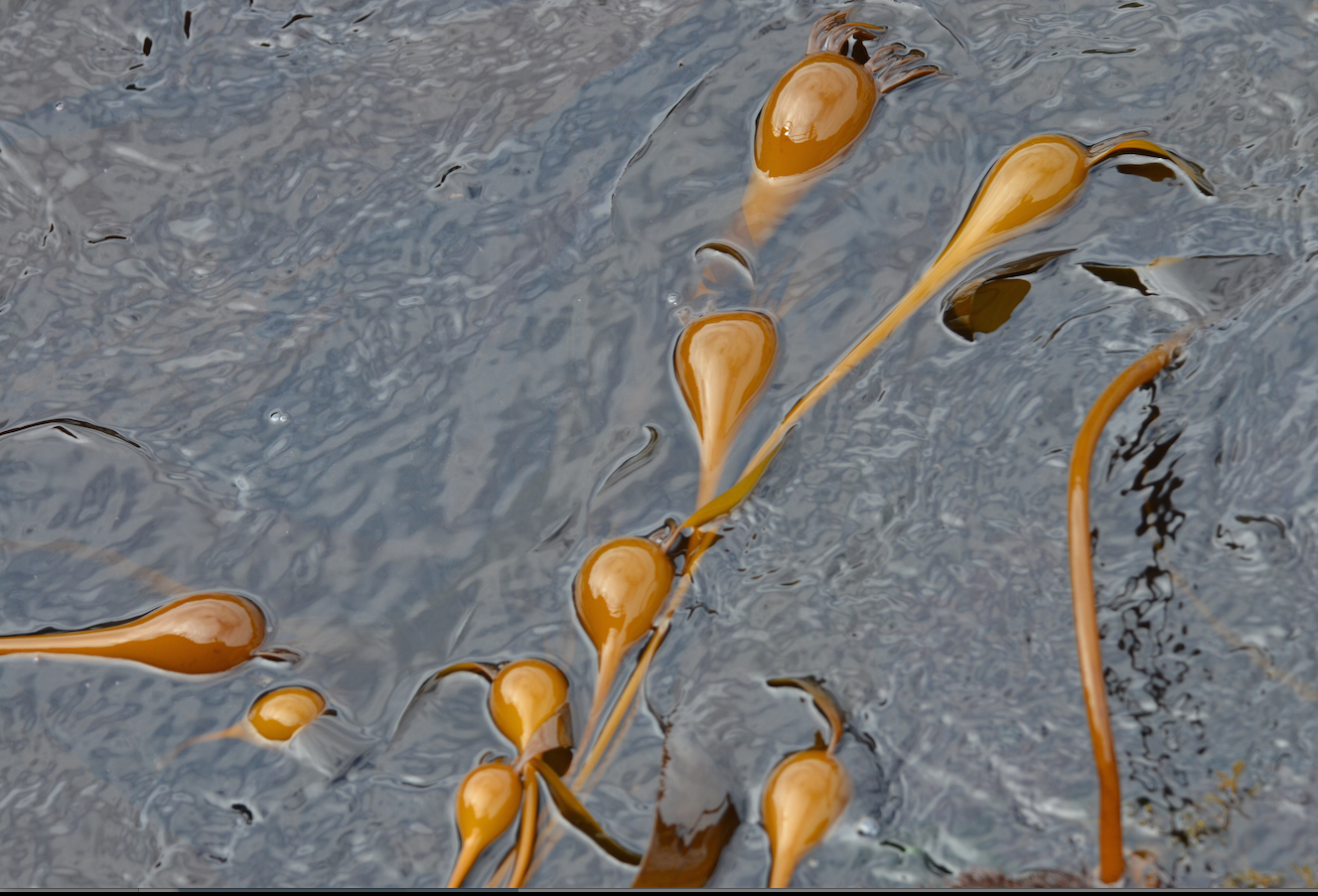
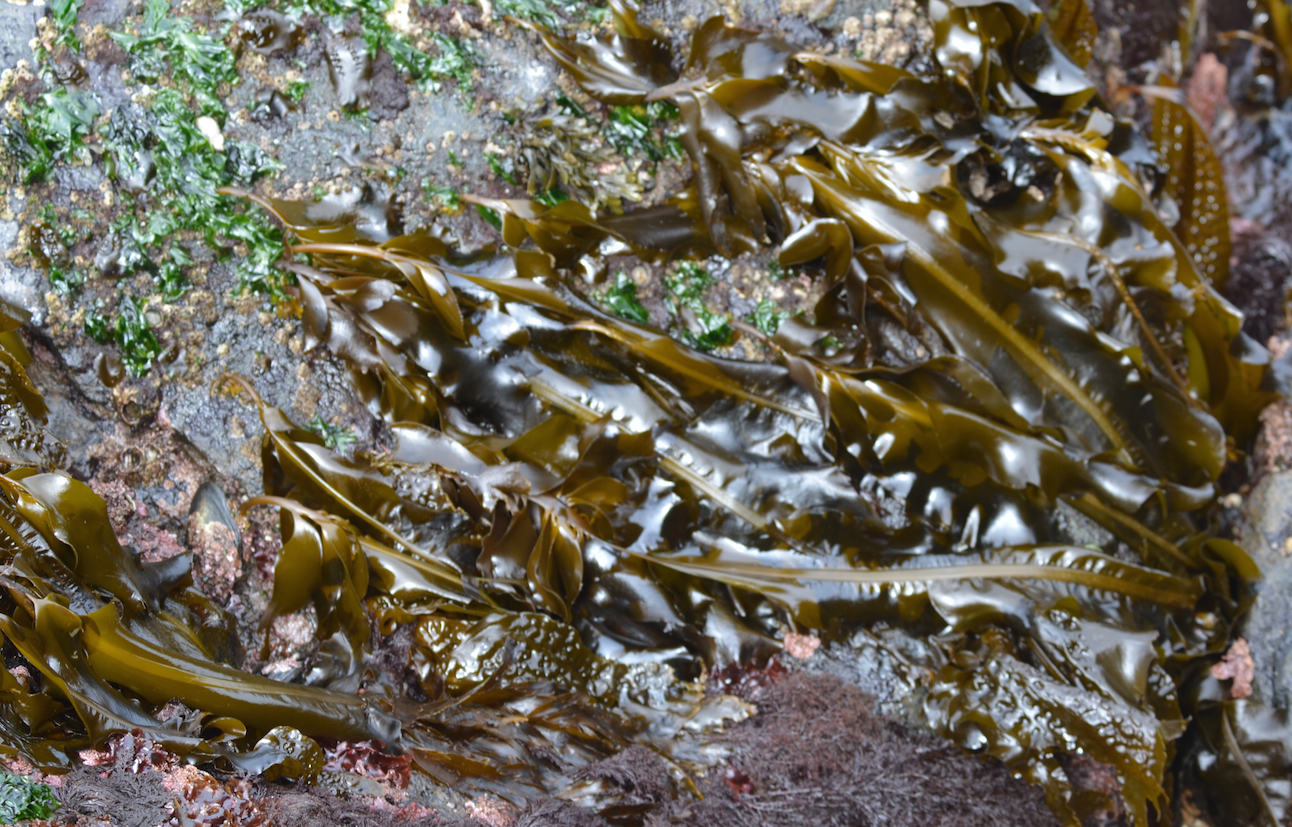
A nice low tide this morning exposed all the beautiful new seaweeds of the season. Bull kelp is growing fast and the Mazzaella splendens is a rich, iridescent burgundy colour. Fresh kelps like Alaria, Laminaria and Cymathere triplicata festoon the rocks in the lower intertidal areas. Up high, the more ephemeral species of nori and sea lettuce are starting to go reproductive and lose their ‘bloom’.

A high density of grazers, keeps the seaweeds in check and feeds the gulls and oystercatchers.

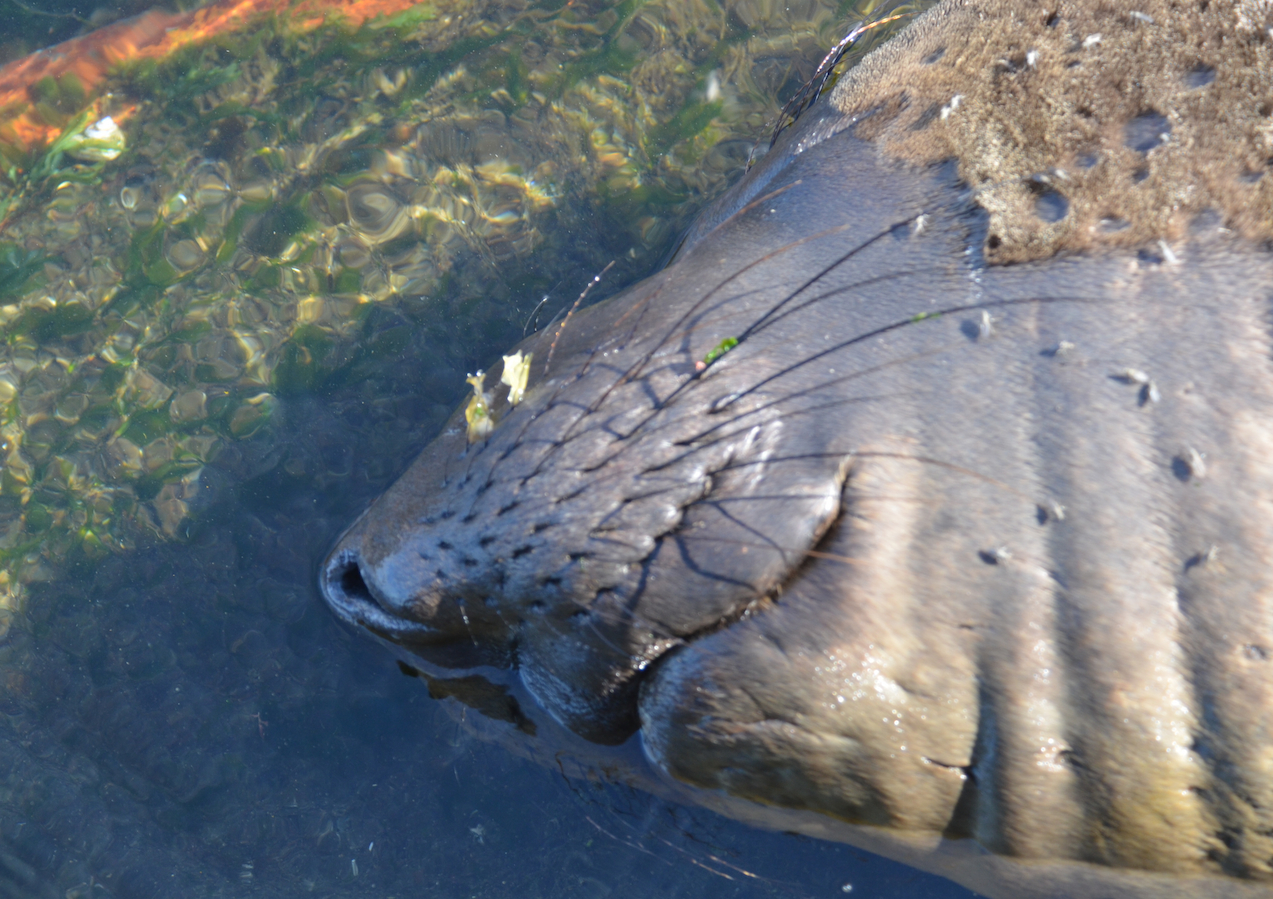
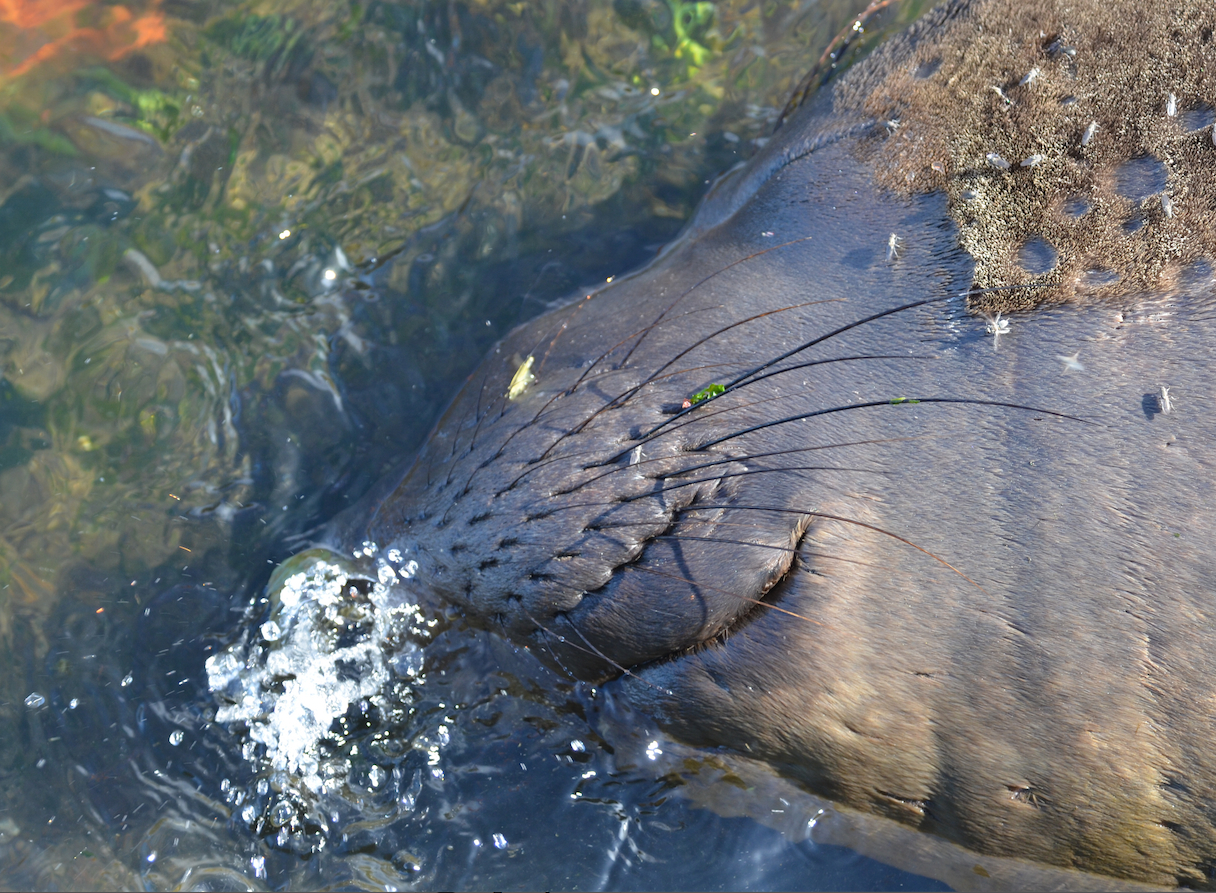
More elephant seals arrived today bringing the number moulting in the garden to eight. On land they are the epitome of lethargic. It is a real treat to watch them in the water, they are so graceful and languid as they chase and roll and spin in slow motion. I also see the River Otter and Sea Otter daily, which is always interesting. The Sea Otter hung out with the Harbour Seals today while they were hauled out on South Rocks. He just floated a couple of metres away as they slept on the rock. He dozed in the water, using the back eddies to stay close. Later he positioned himself in a back eddy that kept him almost stationary, while meters away the current that blasted past at almost six knots. Very savvy sea otter.

There were a lot of shorebirds today, about fifty Surfbirds, a few Rock Sandpipers and a couple of Dunlin. The Black Turnstone numbers are swelling too so I think the migration is happening. The turnstones I watched foraging seemed voracious.

Fog in the Morning

Weather and Sea Conditions

There was thick fog in the morning and it took longer to clear than yesterday. The fog bank which came in from the west coast was more extensive today. According to a scout who called from the top of Mount Finlayson, the fog extended down towards Seattle and up through Haro Strait. By early afternoon, there were clear blue skies and sunshine. Wind was light and variable picking up from the west at sunset, to 15 -20 knots. Sea conditions were calm other than the large tidal movements, which make it rough in the narrow and constricted areas.

It was sunny enough once the fog lifted, that the UV index reached a high of 5 (moderate). Barometric pressure stayed fairly steady at about 1005 hPa. There is a strong wind warning in effect on the marine forecast for the Central Juan de Fuca Strait and the forecast calls for westerly winds of 10 to 15 knots increasing to westerly 20 to 30 early Sunday afternoon.

Vessel Observations

No whale-watching vessels were observed working in the protected area today. Transient (Bigg’s) Killer Whales elsewhere kept them busy. Several sports fishing boats went through the reserve, slowly and respectfully.

Kyle takes visitors for a tour around the Ecological Reserve.

Kyle takes visitors for a tour around the Ecological Reserve.

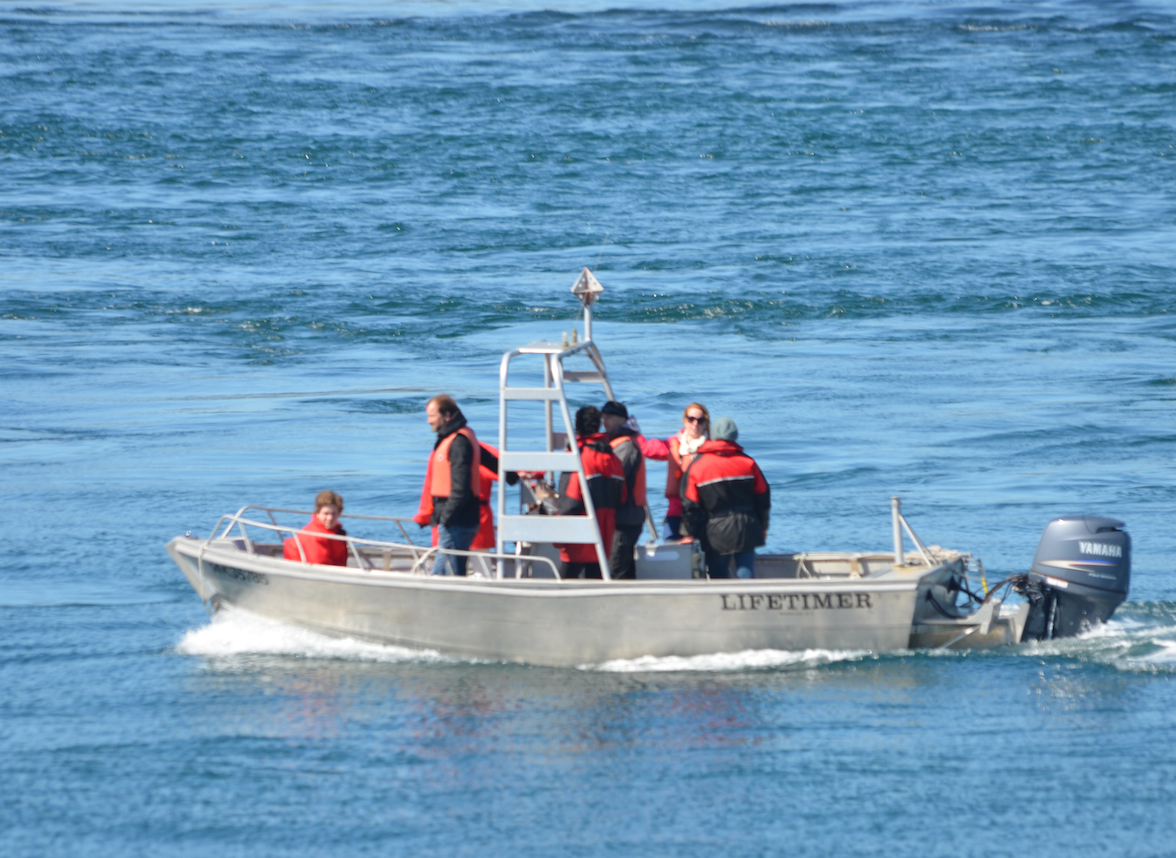
Kyle, the new Pearson College foreshore person, brought visitors out for a tour around the reserve in Haiku, but did not land.

Ecological and General Observations

Now there are five young, male, Northern Elephant Seals ashore on Great Race. They are just starting moult on their faces, around their mouths. They spend most of their time asleep in the garden but squidgle down to the water for a swim in the afternoon, taking their time coming and going. I saw the Steller’s Sea Lion 433Y again today on South Rock. The two species of sea lion seem to be separating out from each other a little more, with better defined separation of haul-outs.

Three pairs of Canada Geese that we had been keeping off the island,  took advantage of the cover of yesterday’s wind to move in. The males are very belligerent and aggressive enough that they are going to be difficult to move. This could be fun.

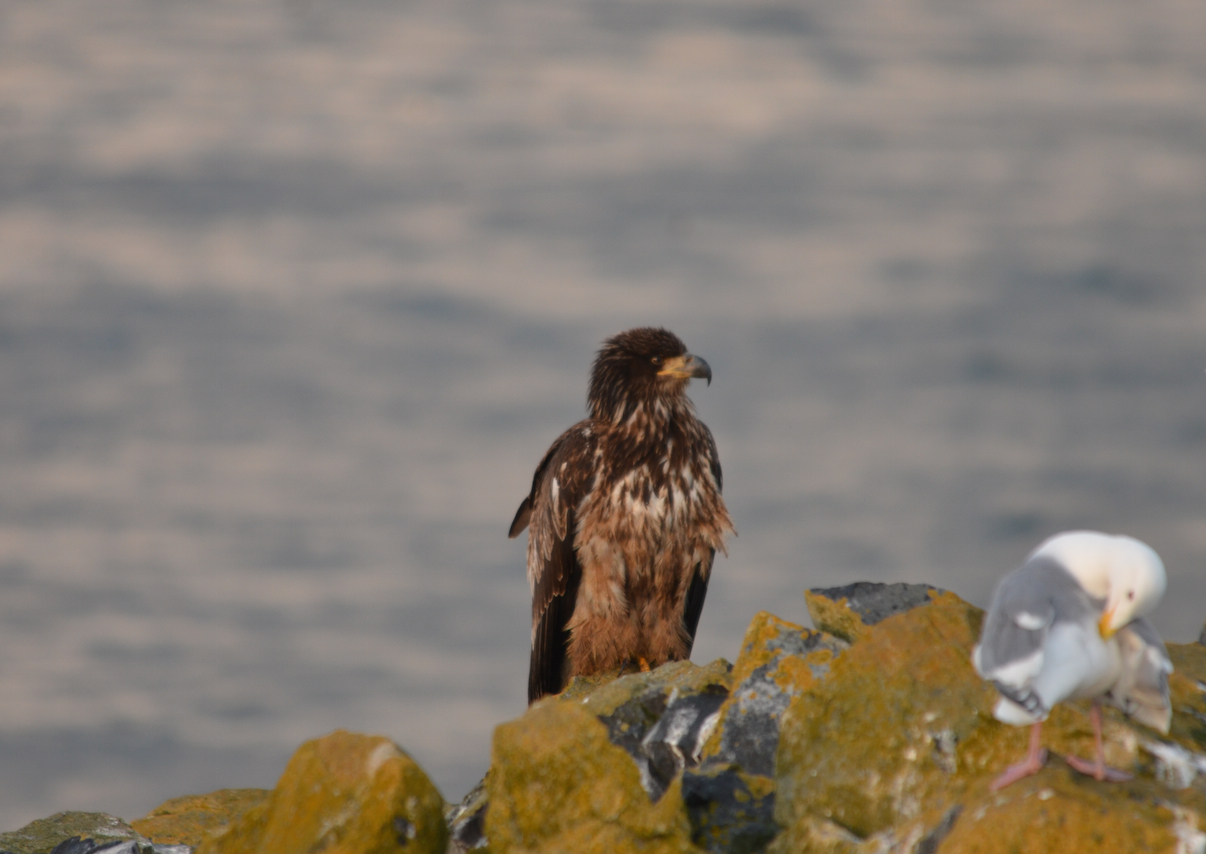
Other birds that continue their pair bonding and nesting rituals include the Black Oystercatchers, Pigeon Guillemotts and Glaucous-winged Gulls. The Black Turnstones may be getting ready to migrate, as they seem to be taking flight together more than usual, going for wheeling spins off the island. They move very quickly and together as a living unit, flashing their black and white in flights away and then back to the reserve. The Bald Eagles continue to roost and hunt, seemingly all day, everyday.

Sunlight levels were high enough to generate extra electricity for laundry and making fresh water, with the de-salinator, in spite of thick fog until early afternoon.

Chores were routine. There were no visitors.