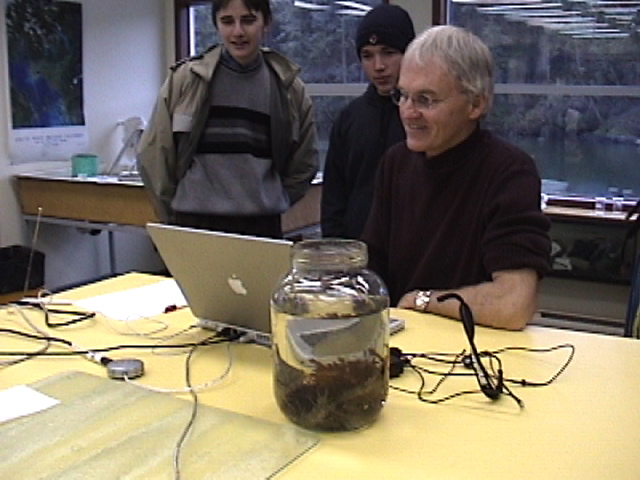
In the high intertidal areas of Race Rocks, there are tidepools with wide fluctuations of abiotic factors. The organisms inhabiting these pools are well adapted to these extremes. Garry talks to a biology class about some of the variables influencing these high tide pools, and the flagellated green algae living within them.
Category Archives: ER Warden Report
Racerocks.com Activity October, 2003
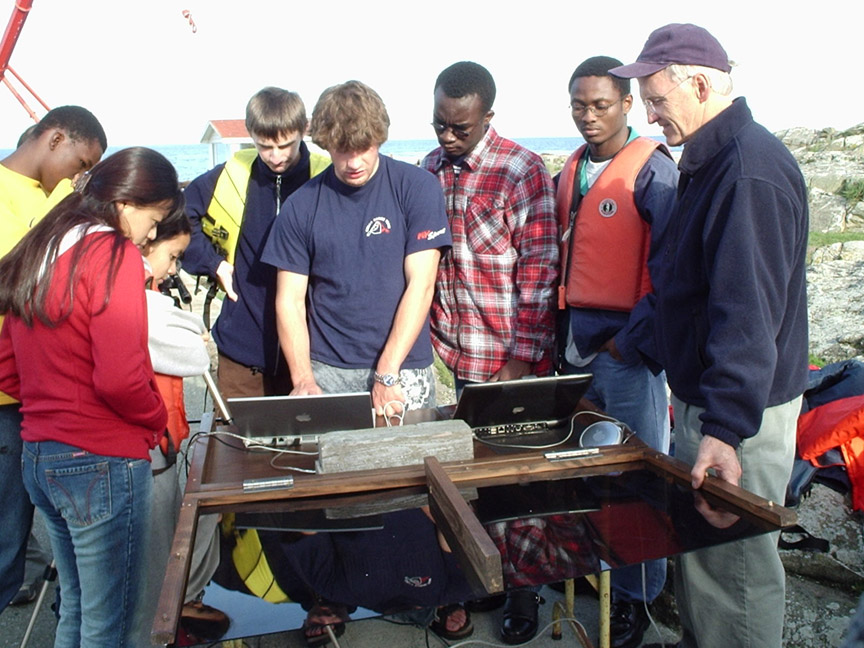
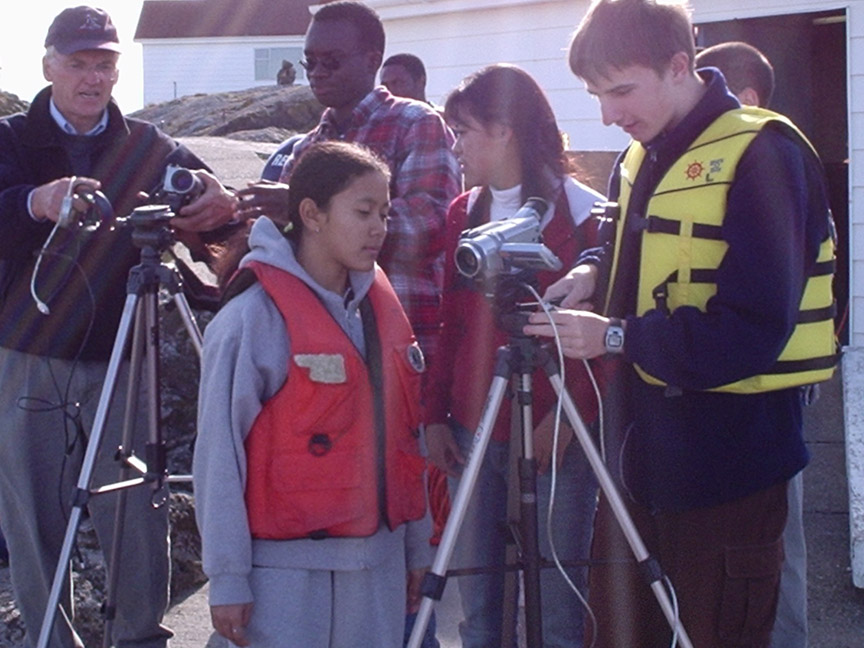
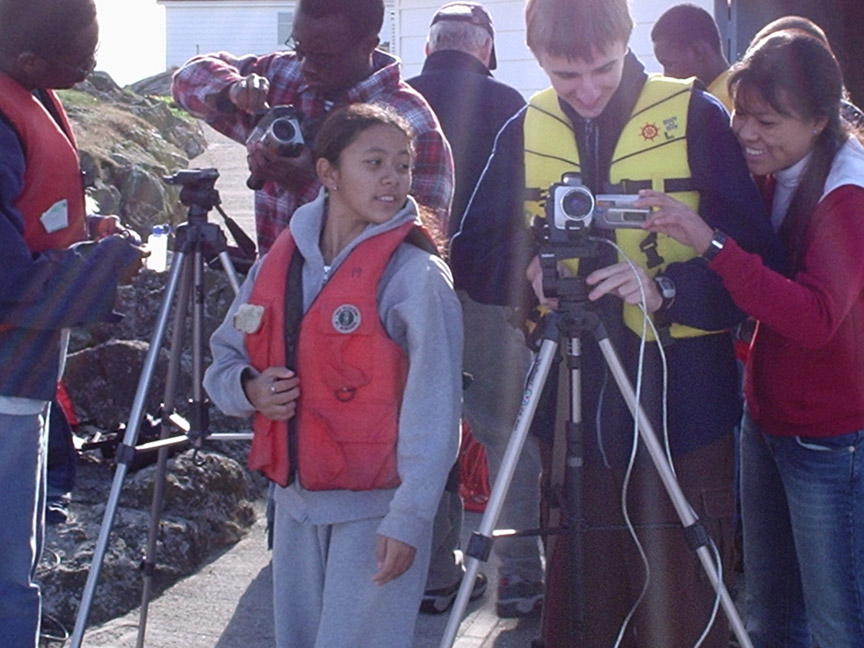
Race Rocks Ecological Reserve and the web activity. The racerocks.com activity went out to Race Rocks to practise live webcasting from the island.
-

- OLYMPUS DIGITAL CAMERA
-
- an and Jon come in for one of the Saturday morning webcasts
-
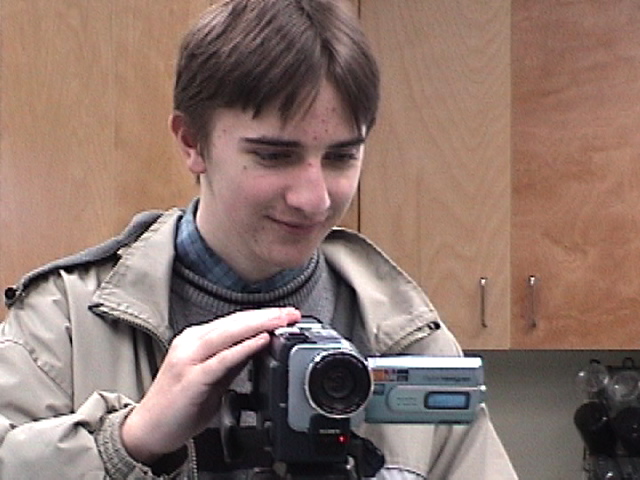
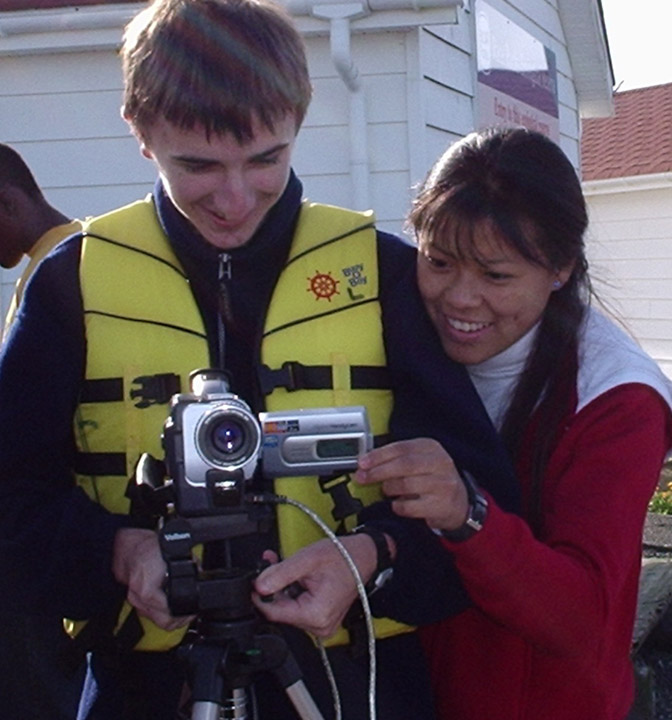
- Jan doing the camera work
-
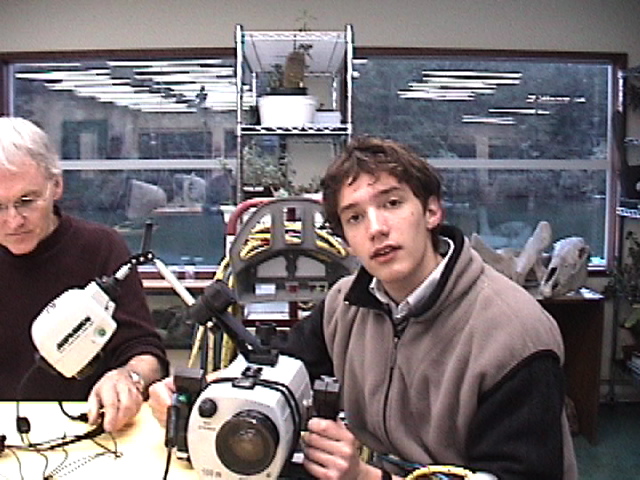
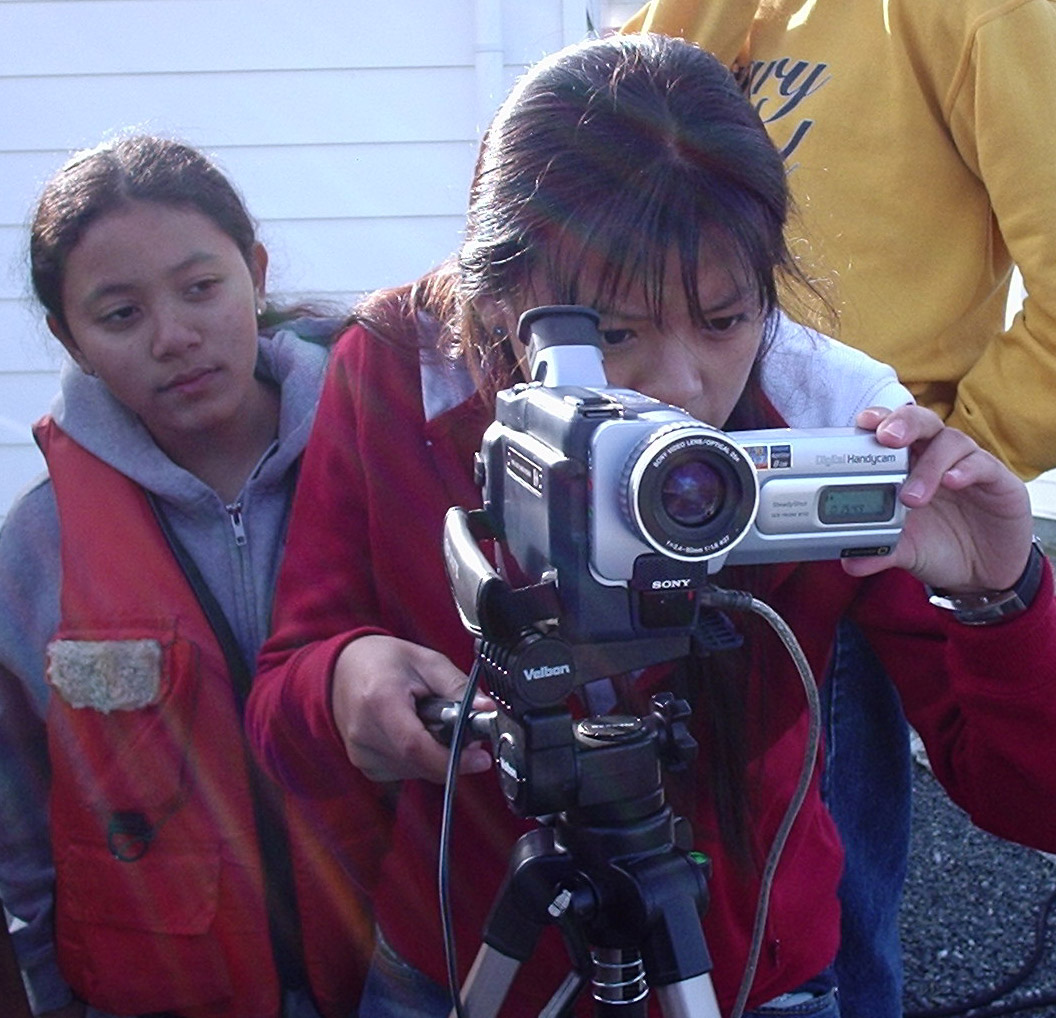
- work Jeremias helps explain the operation of the underwater camera.
Apodichtys flavidus: The Race Rocks Taxonomy
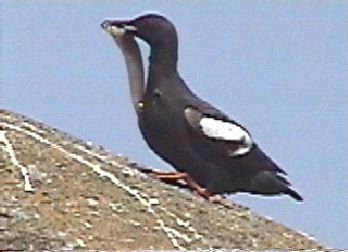
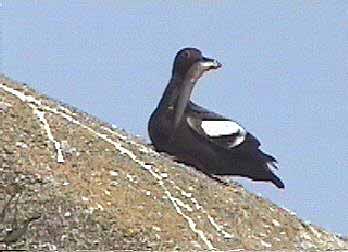
These images were taken on the remote camera 5 shows a Pigeon Guillemot prior to feeding a Penpoint gunnel to chicks.During the months of May and June, the Pigeon Guillemots (Cepphus columba) are constantly diving off the north side of Great Race Rock and bringing up penpoint gunnels for their young. They nest under loose rock on several locations arounf the island. They are very cautious about going to their nest burrow where they may be seen by predators,
PUGET SOUND/ Strait of Juan de Fuca SPECIES
Apodichthys flavidus Penpoint Gunnel
Pholis clemensi Longfin Gunnel
Pholis laeta Crescent Gunnel
Pholis ornata Saddleback Gunnel
Pholis schultzi Red Gunnel
Xererpes fucorum Rockweed Gunnel
PENPOINT GUNNEL
This is a family of littoral fishes of the northern Pacific and northern Atlantic.They are typically found hiding under rocks and logs or in tidepools at low tide.The longest gunnel , at maximum of 46 cm,is the Penpoint Gunnel.Most gunnels feed on small crustaceans and molluscs.There are about 14 species, six are found here. Although secretive , this family is common in Puget Sound. This fish is not important commercially and is not considered threatened.This species can breath air when out of water.
PHYSICAL DESCRIPTION: Body elongate and compressed (eel-like body with no pelvic fins). Contains only flexible spines ,may have a dark streak that runs through the eye from top of head downward . Eye round, its diameter about one fifth the into length length of head. It may have small dark spots along the sides.Distance from snout to anal origin greater than half of body length.Maximum length is 1.5 feet.10 large melanophores along dorsal surface of gut and anus, melanophores can be also along postanal and dorsal near caudal region,ventral surface of gut has a row of small melanophores.Colour very variable depending upon diet as well as environment, from green through brown to red, the green colour from pigments dispersed through skin, the red in special pigment cells, the brown in combination (Hart 1973).Teeth are sharp,pointed, apparent in post-larvae.
Dorsal fin KC-XCIV (Miller and Lea 1972).
Anal fin I,36-42 (Miller and Lea 1972); I,38-42 (Hart 1973).
Pectoral fin 15-16 (Hart 1973).
Mouth Terminal,small,with thick lips (Hart 1973).
Verebrae 96-101 (Miller and Lea 1972)
DISTRIBUTION: Southern California to southeast Alaska and Kodiak Island.In British Columbia on both coasts of Vancouver Island, the Strait of Georgia .Common in Burrard Inlet in September.Queen Charlotte Islands (Hart 1973). In costal or bay water blending with vegetation such as Sargassum spp.,Ulva spp., and Zostera spp.,settling on the bottom at ca. mm TL (Wilkie 1966).Pelagic,along coastal waters and bays. Horseshoe Cove and vicinity of Portero Power Plant on San Francisco Bay,Marconi Cove of Tomales Bay.
REPRODUCTION: Spawing occurs from January to March.The egg mass is coiled around by one or both parents.The incubation period is about two and two a half months.Newly hatched larvae average about 13mm, and the body is transparent and positively phototactic (Wilkie 1966).The age of maturity of the penpoint gunnel has not be documented in the literature.Growth appears to be rapid during the first year from 20 to 40 milimeters in April and May to 100 to 120 millimeters by the end of summer.
REFERENCES: J.L.Hart- Pacific Fishes of Canada(1973),Wilkie (1966)
|
Other Members of the Class Actinopterygii at Race Rocks.
|
 Return to the Race Rocks Taxonomy Return to the Race Rocks Taxonomyand Image File |
 The Race Rocks taxonomy is a collaborative venture originally started with the Biology and Environmental Systems students of Lester Pearson College UWC. It now also has contributions added by Faculty, Staff, Volunteers and Observers on the remote control webcams. The Race Rocks taxonomy is a collaborative venture originally started with the Biology and Environmental Systems students of Lester Pearson College UWC. It now also has contributions added by Faculty, Staff, Volunteers and Observers on the remote control webcams.
March 8 2003- Miroslav Lestanin |
Red-tailed hawk arrives exhausted.
“On 9 October 2003, Virgil Hawkes and Mike Demarchi, of LGL Limited, were conducting a monitoring session as part of our research on the effects of disturbance on marine birds and mammals at Race Rocks Ecological Reserve, British Columbia. At 15:20, something scared hundreds of Thayer\’s Gulls from an area just north of the light tower on Great Race Rock. We figured it was likely a Bald Eagle or Peregrine Falcon, based on the gulls\’ behaviour. We then spotted an adult Red-tailed Hawk flying in from the northeast. It landed on a rock right in front of a large male California sealion (photo). The hawk looked very tired and was breathing hard. Perhaps it had attempted to migrate across the Strait of Juan de Fuca, but had to turn back (all day, wind direction was unfavourable for such a crossing). We figured it would just rest up then head back to Vancouver Island. At 15:38 we were observing it once again when suddenly, the hawk collapsed and fell backwards into a crevice. A few seconds later a surge of water flushed the bird into view. It was facing breast-down in the water, lifeless. The surge then drew it back into the crevice and out of view. We were interested in retrieving the carcass for further inspection of its body condition (besides it being a beautiful specimen), but in keeping with the conditions of our research permit and because doing so would have caused many sealions to charge off into the water, we refrained. We were just left to contemplate the strange event and consider ourselves fortunate to have witnessed one of nature’s fascinating dramas.–Mike Demarchi– See photo here: http://www.racerocks.com/racerock/marmam/sealion/redtail.jpg
Garry’
Fabia subquadrata: The Pea Crab — The Race Rocks Taxonomy
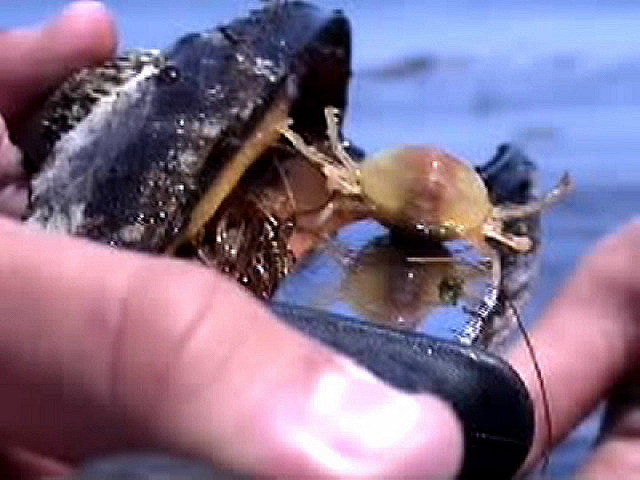
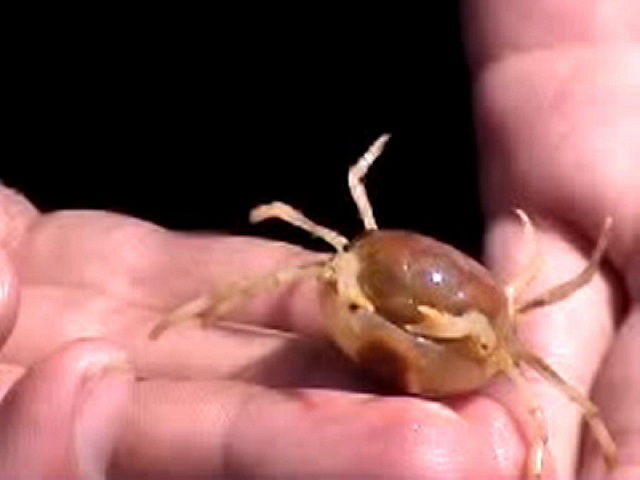
Jeremias, Carmen and Felix remove a pea crab from the mantle of a California Mussel.
At Race Rocks there are many large mussels; (up to 30 cm) with such parasite inside.
Domain Eukarya
Kingdom Animalia
Phylum Arthropoda
Class Crustacea
Order Decapoda
Family Pinnotheridae
Genus Fabia
Species subquadrata
Common Name:Pea crab
Brief Definition
Pea/Mussel crabs are tiny creatures that live as symbionts, on or in the bodies of other invertebrates (bivalves)
Size
As their common name implies, Pea crabs are small creatures. The female pea crabs are distinctively larger than the male crabs, reachimg a size of 22mm (0.8in). The males however reach a size of 7.3mm (0.3in).
Habitat
Pea crabs occupy 2 different niches during their lifetime. Prior to and after their mating season, the adult female lives in a host. Host species include:
California mussels ( Mytilus californianus )
horse mussels ( Modiolus modiolus ).
Mytilus edulis
As well as other species of bivalves including scallops, oysters, cockles and clams.
The juvenile crabs also occupy a host before they become mature.
Range
These crabs live in mainly the northern hemisphere waters.
Including eastern and western U.S.(Akutan Pass, in the waters of Alaska to Ensenada.), Europe, Argentina and British Columbia, Canada.
It is found in 1 to 3% of California mussels along the central California coast, and 18% of mussels along Vancouver Island, BC, Canada.
Adaptation
Mussel crabs live in specific hosts because each crab responds positively to only certain chemicals that their hosts emit. In this way, they are able to infest the hosts that have the right conditions for them to survive. While in the host, these crabs do not posses an exokeleton. This is beacause the hosts provide them with protection against predators and other harmful external factors. However, when they leave their host to mate in the planktonic environment, the adult crabs grow an exoskeleton to protect their membranous carapace. These crabs also posses 10 legs, of which 2 of them develop into large and powerful claws to help fend off predators when exposed in the plankton, and to also help in the grasping of food.
Relationship with Host
The relationship that exists between the mussel crab and the bivalve is a symbiotic one. The advantage of this relationship is that the crab is protected while it scavenges the necessary nutrients needed by it, in the host. The crab however at times robs its host of a large mount of food and it also feeds off the protective mucus layers that cover the host’s tender tissues.This results in the mussel’s gills been injured. When this occurs the relationship becomes a parasitic one as the crab benefits while the host is affected negatively. Hence they are classified as parasites.
Precautions are taken when animals such as Mya arenaria, Placopecten magellanicus, Argopecten irradians and oysters are sold as to not have a pea crab inside it.
Reproduction and Lifecycle
The pea crabs’ life cycle has two distinct stages. These two stages are so different that in fact they were classified into two different genera.
The first stage comprises of the large, adult females that have soft membranous crapaces. These adults occupy a host each and they produce larvae that mature into the second stage. In the second stage, the offspring (larvae) of the female (that she had produced inside her host) grow up into adults of both sexes.Having reached maturity, they leave their hosts and join swarms in the water to mate. At this stage the pea crabs look more ‘traditional’. They have hard shells, strong legs (for swimming) and at the front of the carapace they have thick hair. Upon completion of mating, the female returns to her host. For a period of 21-25 weeks, she goes through 5 molts before reaching maturity. The female can inhabit here for up to a year, producing larvae from eggs that where fertilised by sperm from her single mating and then the cycle begins again. The mating takes place in late May.
Note: the male after mating dies.
References
Source 1: Pacific Coast Crabs and Shrimps by Gregory.C. Jensen, Ph.D
Source 2: Port Townsend Marine Science Center. Marine & Natural History Exihibits
Source 3: http://www.ptmsc.org/html/peacrabs.html
Source 4: http://life.bio.sunysb.edu/~jmatth/Science.htm
Source 5: http://www.pac.dfo-mpo.gc.ca/sci/shelldis/pages/pcbmu_e.htm
Source 6: http://www.indian-ocean.org/bioinformatics/crabs/crabs/tex1.html
| Other Members of the Phylum Arthropoda at Race Rocks |
| Return to the Race Rocks Taxonomy and Image File |
| The Race Rocks taxonomy is a collaborative venture originally started with the Biology and Environmental Systems students of Lester Pearson College UWC. It now also has contributions added by Faculty, Staff, Volunteers and Observers on the remote control webcams.
October 2003- Michelle(PC) |
Fishing Flashers Entanglement in Sea lions
September, 2003 : This past few months we have seen three California and Northern Sea lions with fishing flashers hanging from their mouths. These animals pursue fishing lures , probably especially when live bait is used. They swallow the bait, and take down the meter plus length of leader line before the flasher comes to their mouth. The individuals will be seen for several days trailing these flashers. It is not known whether they eventually shed the flasher or whether this leads to an untimely death. Although they can pick up a flasher in waters at some distance from their haulouts, it certainly makes sense to restrict fishing activity when marine mammals are in the vicinity of a fishing vessel.
Helicopter Landing Kills Gulls
Human disruption in a seabird nesting colony at certain times of the year can have disastrous consequences for young birds. The territorial instinct is so strong that young birds leaving the envelope of their nesting territory get attacked by other adults of nearby territories. This incident was precipitated when a Canadian Coast Guard helicopter made an unscheduled landing at the island in August 2003. Normally they do not come to the island in the sensitive period, this time a mistake was made!
Race Rocks Transects : Sample
| Tidal Levels | |
| Procedures for Processing the Images | |
| 1998 Class Photo transects of PEG #15 North side of Great Race Rocks Island |
|
| Other transect images from different locations |
BACKGROUND
The students and faculty of Lester B. Pearson College which is a member of the United World Colleges have used the ecological reserve and now the MPA of Race Rocks for studies of marine ecosystems, both subtidally and intertidally since1978. During that time a number of exercises have been developed to use in teaching ecological concepts in the International Baccalaureate Environmental Systems and Biology classes.
While using basic research techniques it has been possible to start to build up a library of information that can be more useful for determination of the effects of long term climatic changes or changes induced by humans, (anthropogenic). In addition this record may provide ideas to encourage others to apply the techniques to other ecosystems. In 1999 the Race Rocks Ecological Overview was added to help bring together the ecological information on Race Rocks.
NUMBERING SYSTEM
A numbering system had to be developed that reflected the concept that this was only one of many that could be referenced from this site if individuals from around the world were willing to collaborate with us in building the project.
LOCATION….PEG NUMBER…TRANSECT NUMBER….QUADRAT NUMBER..
A0………………….05………………………..01…………………………………..01………
Where:
A0 refers to the first site to be added to this WWW site
05 refers to the peg location ( we have 15 such locations permanently identified at the Race Rocks Ecological Reserve.)
01 refers to the first transect entered from this location.
01 refers to the first quadrat picture that you can access on this photographic strip.
SOME IDEAS FOR USE OF THESE TRANSECT PHOTOS
- Quantify the distribution of organisms
- Relate the distribution to the intertidal elevation
- Find out how to capture these images
- Use other technology to analyze the photos
- Study the mussels in greater depth
- Study other organisms from the transects in greater depth.
- Students in environmental systems will use this as a source to prepare for investigations in the intertidal zone when we have the opportunity to do a field lab at the ecological reserve. The photo strips also could be used by those living far from an ocean shore to study the relationship between abiotic or physical factors and organism distribution. Also by noting the location of certain species, for instance the mussels, M. californianus and then seeing where they would fit on a tidal level chart for the area (using the Victoria Tide Tables) ,students could calculate the length of times for submergence and emergence of the species in a week, a month, or a year. In addition they could compare the conditions in the winter months, with the extreme low tides occurring in the night with the conditions in the summer months when the low tides occur every two weeks in the daytime. Students should be encouraged to discuss the results of their investigations and pose further questions about conditions in the intertidal zone. For a more in depth exercise on the Ecological Niche of organisms go here.
- TIDAL LEVELS Since the location of organisms in the intertidal zone is partially determined by tidal levels, that is one of the essential measurements given with our transect images. It is important to understand that the levels given here are based on the Canadian tide tables
Victoria Tide TablesThese are not calculated the same way as tables from the United States. To convert the elevations given here to conform to the US pattern in which 0.0 equals mean lower low water, subtract 0.8 meters from these Canadian readings.You may find further explanation on the operation of Tides in any marine Biology or Oceanography text. One that may be useful is:
Seashore Life of the Northern Pacific Coast– by Eugene Kozloff, page 7-9. - For TIDAL Heights of Other LOCATIONS, use this link
- THIS IS JUST A START!
By looking here you might get a few ideas of how you can do some interesting investigations using these pictures. But don’t stop there, we would like you to collaborate with us by adding ideas and new transects to our list. It would be excellent if someone living on another ocean shore with different intertidal zonation patterns could supply a similar set of photographs for comparison.Go back to techniques for directions on how to contribute
Tidepool #2 at Race Rocks
This file has been started to present some of the information we have accumulated on the pool in order to stimulate students to raise further questions and devise problems that can be investigated at the pool. It is also intended to be part of a cumulative digital legacy that those examining the pool can pass on to future students. A characteristic of the pool that is significant is that it is deeper than most of the other pools and it provides good variations in stratification of temperature and salinity.
-
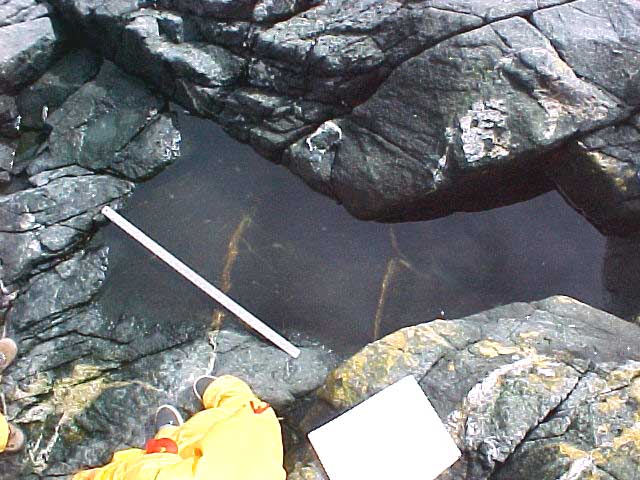
- Surface area calculation.Meter stick is shown. This pool has low species diversity, with only those vertebrates shown below occurring in the species count.
-
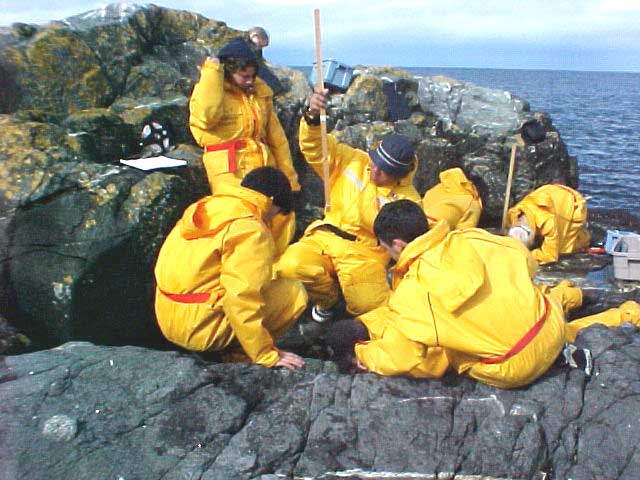
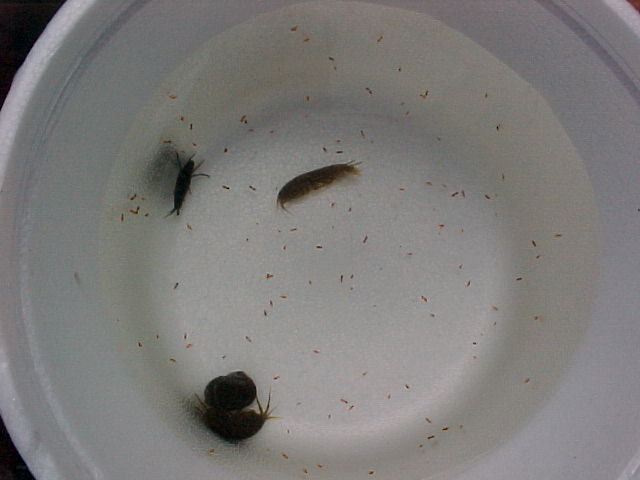
- Environmental Systems class 2000 . On the right are some of the species found in the pool: amphipods, harpacticoids and the odd littorine snail.
-
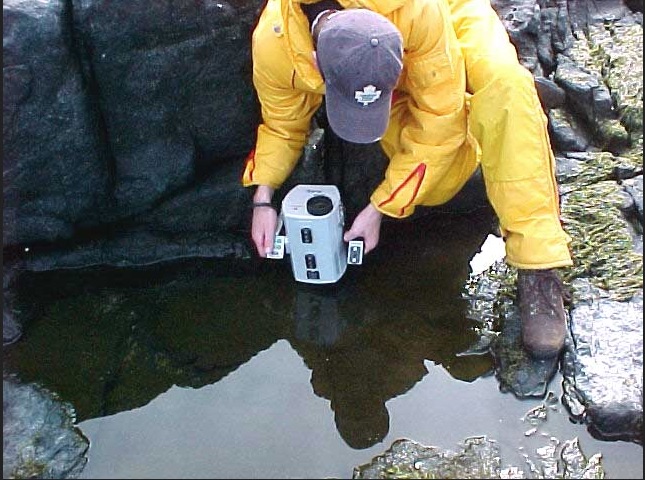
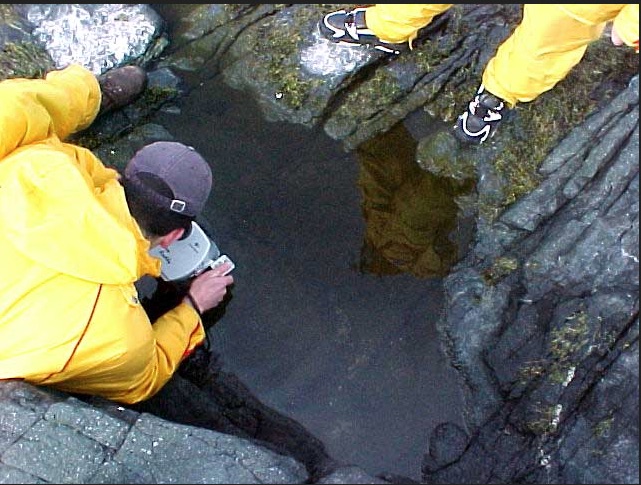
- Matt and Hugo and members of the environmental system class try to film the harpacticoids in the pool.

-
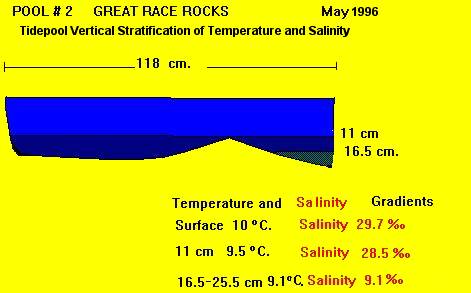
- The profile of the pool.
Some ideas to consider:
The stratification of Salinity and Temperature in this pool is quite distinct. More work could be done in gathering seasonal records of this. Also, the main organisms, harpacticoids are abundant in the late spring and summer. It may be interesting to identify their source of food, probably diatoms that form a thin layer on the walls. Since the pool only receives new salt water occasionally, temperatures can fluctuate. The pool is however usually shaded by the rock cliff to the South.
Tidepool # 1 – Near Peg 6
This file has been started to present some of the information we have accumulated on the pool in order to stimulate students to raise further questions and devise problems that can be investigated at the pool. It is also intended to be part of a cumulative digital legacy that those examining the pool can pass on to future students.
This pool is located beside Peg #6 and is one of the highest elevated tidepools of the set.
-
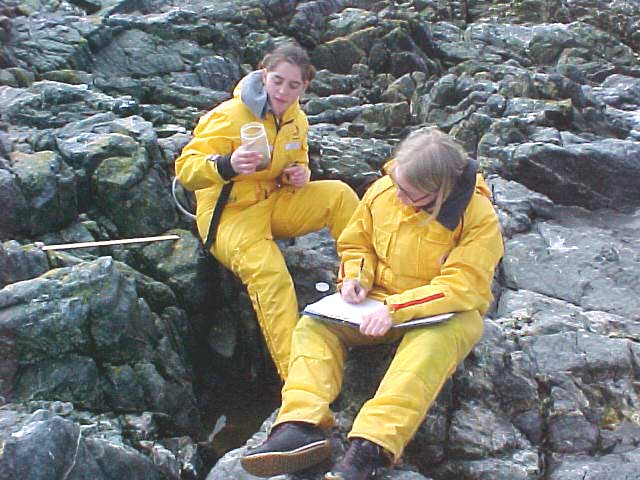
- pool 1 Students doing measurements in Pool # 1
-
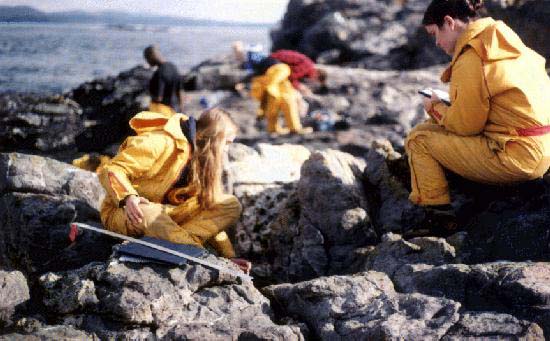
- Students checking Salinity and Temperature
-
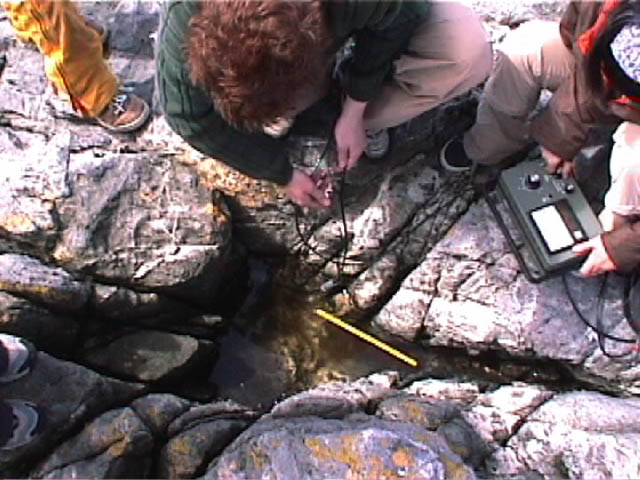
- A general view of the pool with the salinometer being used.
-
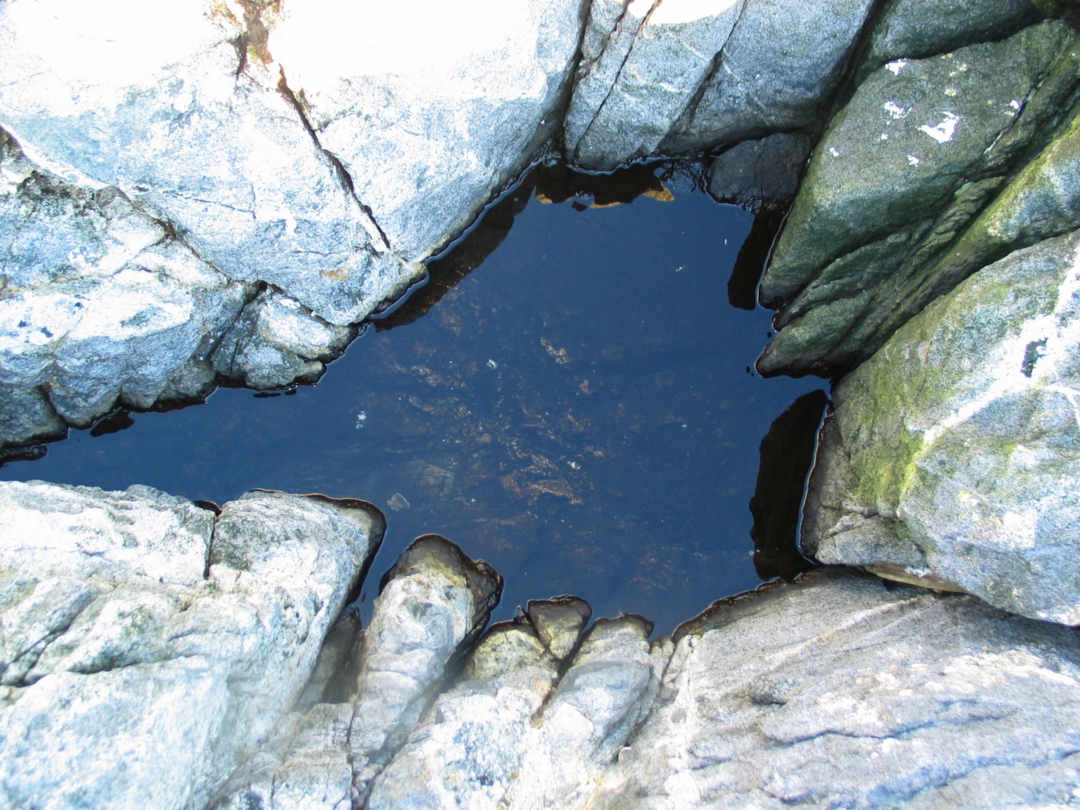
- View from above in February 2007