Diodora aspera: Keyhole limpet– The Race Rocks Taxonomy


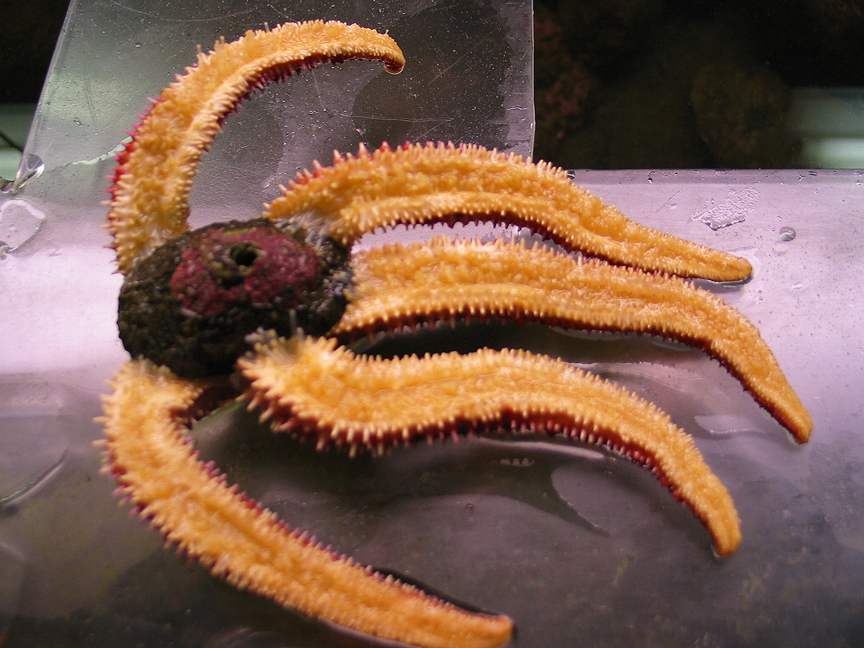
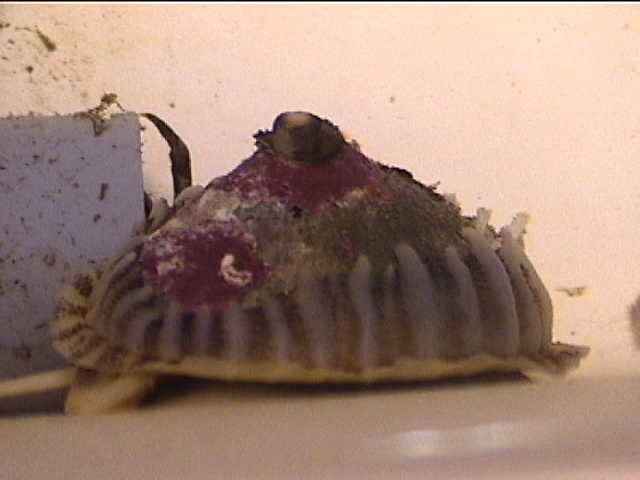
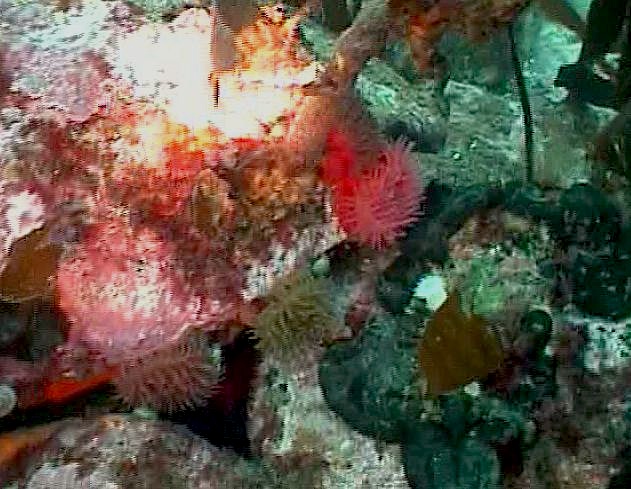
Keyhole limpets have a distinctive mantle-covering response when they are approached by a predatory sea star such as Pycnopodia.sp

Physical Description:

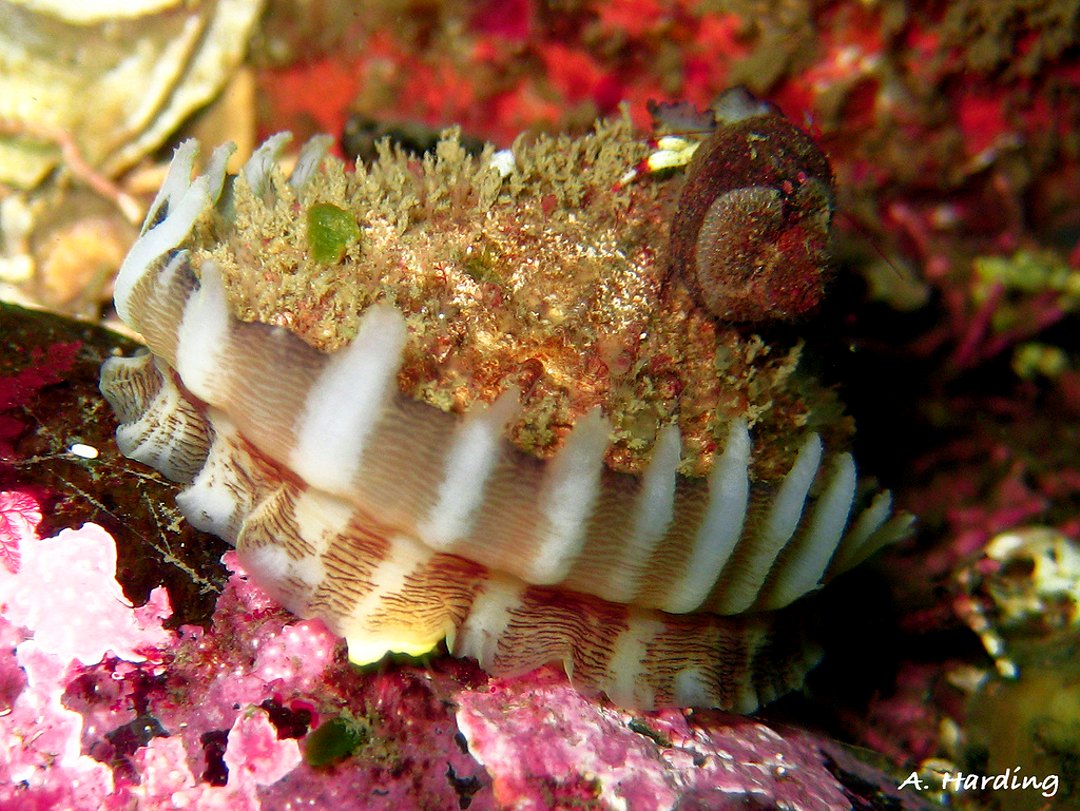
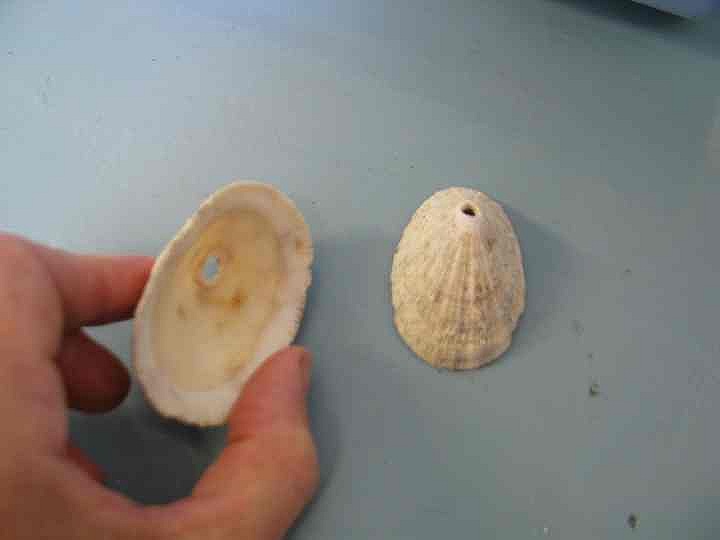
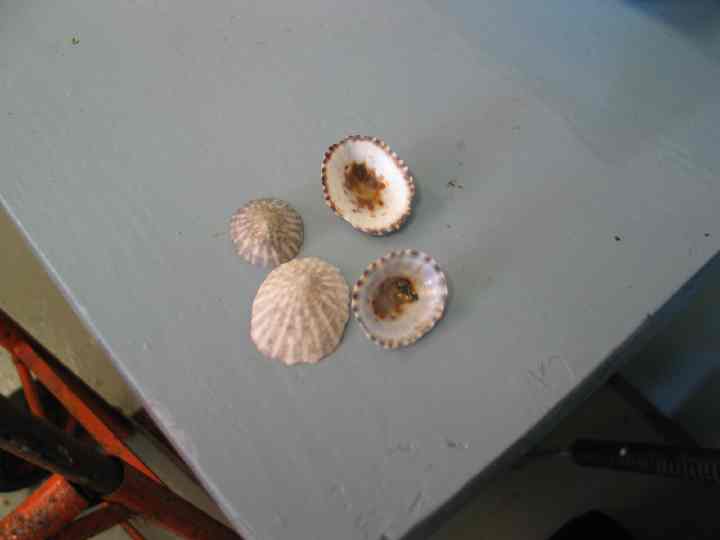
it has a small oval opening at the top of its short, conical shell. Although the keyhole limpet superficially resembles “true” limpets, its soft anatomy reveals an important difference. True limpets draw water into their mantle cavity on the left side, pass it over a single gill and discharge it on the right side. Keyhole limpets draw water in both sides, where it flows over paired gills before flowing out through the “keyhole” aperture at the peak of the shell. Size: Length is about 75 mm


Global distribution:
The Rough Keyhole Limpet can be found anywhere in coastal regions from Afognak, Alaska, to Baja California. It is found primarily in low intertidal areas, and has been seen up to 40 feet subtidally in the south (Morris et al. 1980).
Habitat:
The Keyhole Limpet clings tenaciously on and under large rocks in the sub to low intertidal. They can also be found on large kelp stipes. Their strong foot allows them to thrive in some intertidal areas where turbulent wave action is prevalent.

Domain Eukarya
Kingdom Animalia
Phylum Mollusca
Class Gastropoda
SubClass Prosobranchia
Order Archaeogastropoda
Family Fissurellidae
Genus Diodora
Species aspera
Common Name: Key-hole limpet
Feeding: This particular limpet is an omnivorous grazer. It feeds by scraping rocks with its radula. Various bryozoans are its food of choice, but it also consumes algae, as well as some sponge species.
Predators:
Sea stars, the limpet responds by raising its mantle up over the outside of its shell, a behavior that may prevent the sea star from gripping the shell surface.
Reproduction:
Keyhole limpets have separate sexes, and sexually ripe individuals can be found during any season of the year. Eggs and sperm are released into the water in mass quantities and larval settlement ensues.
One interesting Fact: Recent studies suggest that this animal’s unique apical opening is not only associated with sanitation, but also plays an important role in inducing passive flow through the mantle cavity. In studies where the keyhole of Diodora aspera was blocked (either naturally or experimentally) no evidence of damage to the mantle cavity or associated organs was found. In these experimental trials, water entered ventro-posteriorly with respect to the gill tips, and exited over the head region (near the anus). The apical opening proved unnecessary as a means of waste removal. Researchers did find however, that the keyhole played an essential role in allowing water to flow passively through the mantle cavity. Thus, it is thought that this function of the apical opening may have been just as significant as its role in sanitation in terms of limpet evolution

References:
Wylam, B. 2001. “Diodora aspera” (On-line), Animal Diversity Web. http://animaldiversity.ummz.umich.edu/site/accounts/information/
Diodora_aspera.html.

Guide of Marine Invertebrates.- Alaska to Baja California
Daniel W. Gotshall.- Sea Challenges.
Monte Rey – California, USA 1994

Other Members of the Phylum Arthropoda at Race Rocks 
taxonomyiconReturn to the Race Rocks Taxonomy
and Image File
pearsonlogo2_f2The Race Rocks taxonomy is a collaborative venture originally started with the Biology and Environmental Systems students of Lester Pearson College UWC. It now also has contributions added by Faculty, Staff, Volunteers and Observers on the remote control webcams.

 October 2005-  Claudia (PC yr 32)

Hildenbrandia ruber : The Race Rocks Taxonomy

hildenbrandia

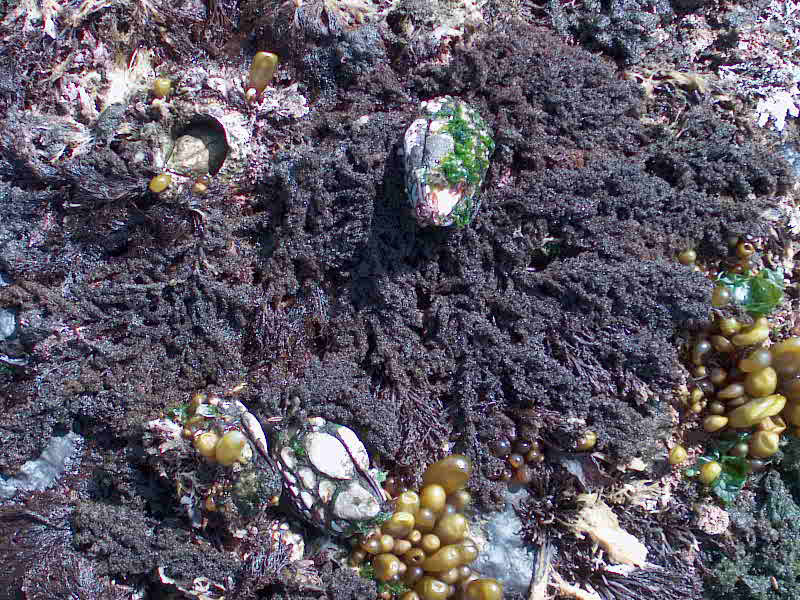
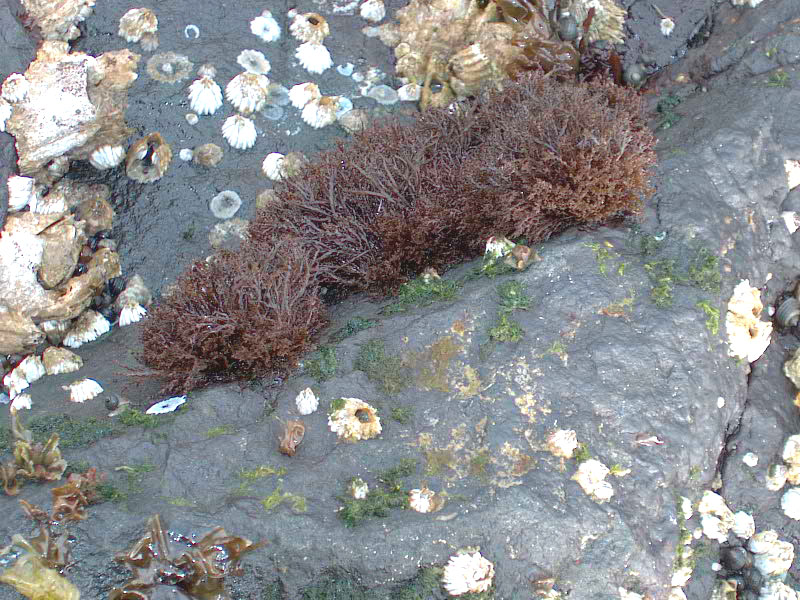
Hildenbrandia ruber covering rocks in a tide pool. All photos by Ryan Murphy

Phylum: Rhodophyta
Class: Florideophyceae
Order: Hildenbrabdiales
Family: Hildenbrandiaceae
Genus and species: Hildenbrandia ruber (Sommerf)

Description: This plant exists as a thin encrusting layer on rock substrata. Its common name “rust spot” aptly describes this plants appearance.
Habitat: On rocks in the middle and upper intertidal zone, and on ship hulls.
Distribution: Most of Pacific Northwest

taxonomyiconReturn to the Race Rocks Taxonomy and Image File
pearsonlogo2_f2The Race Rocks taxonomy is a collaborative venture originally started with the Biology and Environmental Systems students of Lester Pearson College UWC. It now also has contributions added by Faculty, Staff, Volunteers and Observers on the remote control webcams. -Ryan Murphy


Heptacarpus tenuissimus: The Race Rocks Taxonomy


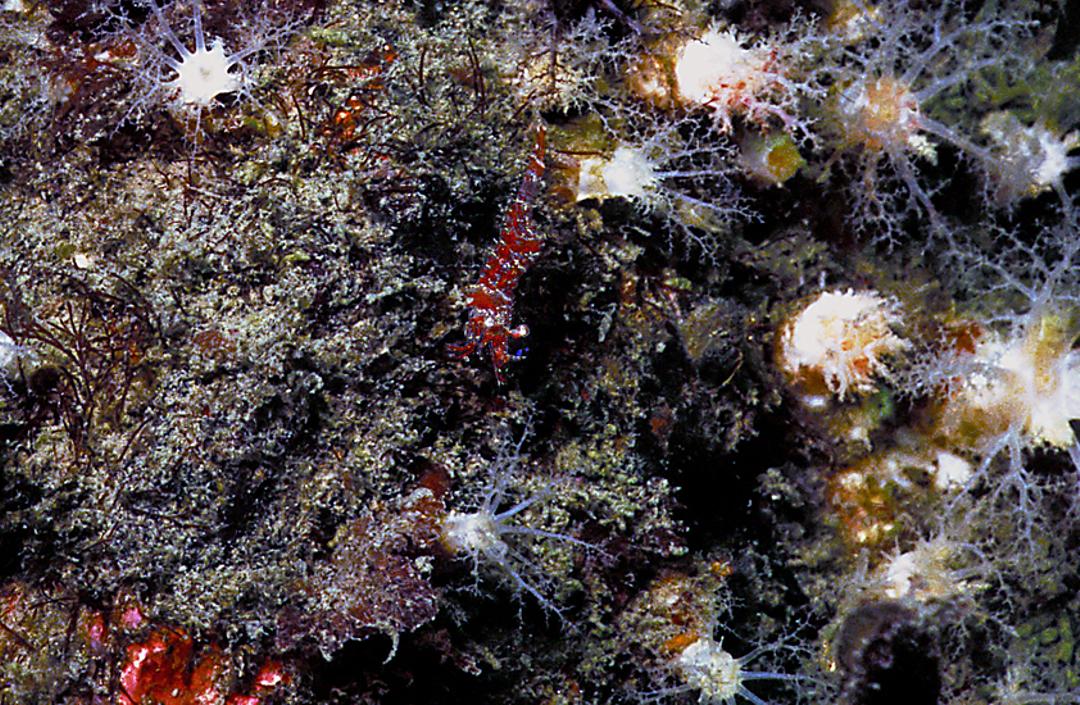
A very small shrimp, not often noticed but probably common at Race Rocks.
Domain Eukarya
Kingdom Animalia
Phylum Arthropoda
Class Malacostraca
Order Decapoda
Family
Genus Heptacarpus
Species tenuissimus
Common Name:
slender coastal shrimp

Other Members of the Phylum Arthropoda at Race Rocks 
taxonomyiconReturn to the Race Rocks Taxonomy
and Image File
pearsonlogo2_f2The Race Rocks taxonomy is a collaborative venture originally started with the Biology and Environmental Systems students of Lester Pearson College UWC. It now also has contributions added by Faculty, Staff, Volunteers and Observers on the remote control webcams.

 March October 2003- 

Elassochirus tenuimanus The Race Rocks Taxonomy

Domain Eukarya
Kingdom Animalia
Phylum Arthroppoda
Class Malacostraca
Order Decapoda
Family Paguridae
Genus Elassochirus
Species tenuimanus
Common Name: Wide-hand hermit crab

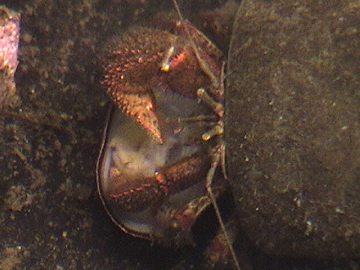
In this video, Elassochirus has been disturbed from eating a limpet (Collisella instabilis). It recovers and returns to eating. Note the colouration of the appendages of the hermit crab. Also note that one arm is much wider than the other. The Collisella which normally has a pale shell, is encrusted with the pink algae Lithothamnion.

General Description:
Named as wide-hand, this species hermit crab has a large and flattened right side of chela, carpus and propodus more than its left side. The right cheliped has a wider carpus than it is long. The walking legs have colours of white, reddish brown and purplish-blue on its merus.

Size:
The exterior length is up to 42 mm (1.6 inches).

Natural History, Habitat and geographical and depth range:
Mud, sand, shell bottoms, and especially rocks. The depth range is intertidal (infrequently) to 388 m (1272 feet). For the geographical range, the hermit crab lives in Bering Sea and Aleutian Islands, from Alaska to Washington, and the northwestern Pacific.
Ovigerous females in Washington usually appear from August to May.  Larvae produce from March to May and Planktonic are in last months of the year.

Behavior
When the animal retreats inside, the right claw is used to block the access to the shell itself. The crab bents this claw beneath the body while walking.

References:
– Pacific Coast Crab and Shrimps, Gregory C. Jensen; Sea Challengers Monterey, California, 1995.

– Marine Invertebrate of the Pacific Northwest, Eugene N. Kozloff; University of Washington Press, Seattle and London, 1996.

http://people.wwc.edu/staff/cowlda/KeyToSpecies/Arthropoda/Crustacea/Malacostraca/Eumalacostraca/
Eucarida/Decapoda/Anomura/Family_Paguridae/Elassochirus_tenuimanus.html


Rhodomela larix : The Race Rocks Taxonomy

rhodosp

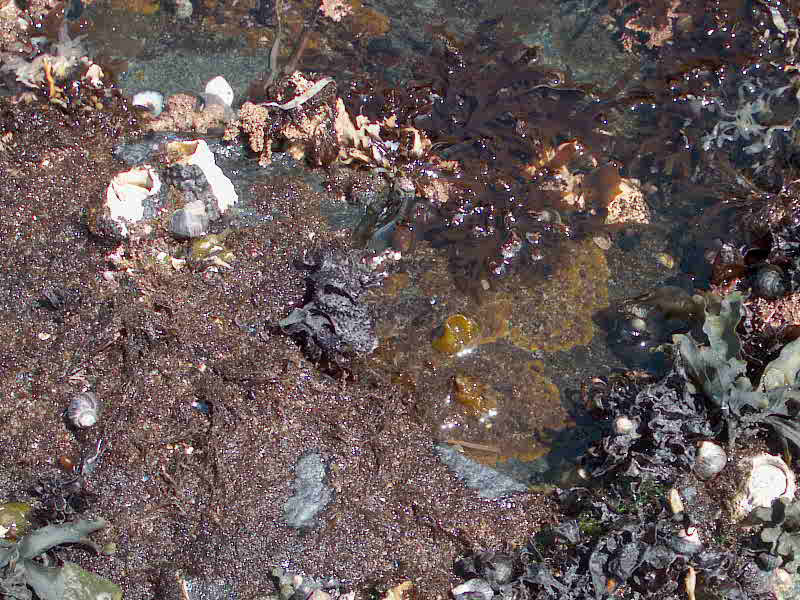
Rhodomela larix surrounding two species of barnacles and the Red Algae Halosaccion sp.


Classification:
Phylum: Rhodophyta
Class: Rhodophyceae
Order: Ceramiales
Family: Rhodmelaceae
Rhodomela larix (Turner) C. Agardh

redpool

Many Rhodophytes are represented in this photo, including Rhodomela larix

Description: This plant is erect, up to 30 cm. high, brownish black in colour, in clusters, attached to the substrate by a discoid holdfast. The plant is branched, usually with one or more major cylindrical axes. The major axes have a profusion of radially arranged cylindrical branchlets, all approximately the same length and unbranched. At the apices of the branches, evanescent trichoblasts are apparent.

Habitat: On rocks in the intertidal zone.
Pacific Coast Distribution: Bering Sea to California
Robert Scagel, 1972

Other Rhodophytes or Red Algae at Race Rocks

taxonomyiconReturn to the Race Rocks Taxonomy and Image File
pearsonlogo2_f2The Race Rocks taxonomy is a collaborative venture originally started with the Biology and Environmental Systems students of Lester Pearson College UWC. It now also has contributions added by Faculty, Staff, Volunteers and Observers on the remote control webcams.  Ryan Murphy


Prionitis lanceolata : The Race Rocks Taxonomy

prion

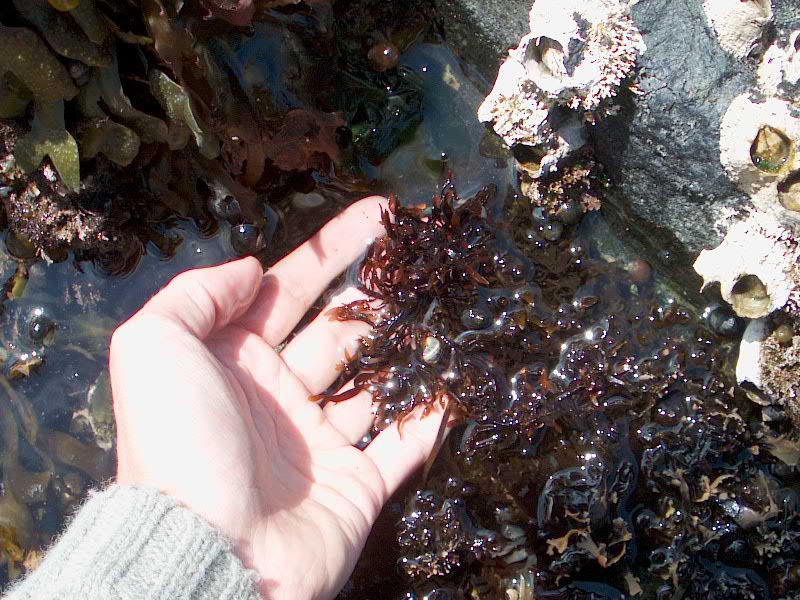
Prionitis lanceolate in the author’s hand. Photos by Ryan Murphy


 Description: This plant is erect, up to 30 cm. tall, reddish brown in colour, growing in clusters, and attached to the substrate by small discoid holdfast. The erect portion is narrowly stipitate below, tapering above to a flattened lanceolate portion. The apices of the branches taper gradually to a point. Numerous proliferous flattened short pinnately arranged branchlets occur along the margins of the main axes

Classification:
Phylum: Rhodophyta
Class: Rhodophyceae
Order: Cryptonemiales
Family: Cryptonemiaceae
Prionitis lanceolata (Harvey)
Habitat: On rocks in the lower intertidal and upper subtidal zones
Pacific Coast Distribution: Alaska to Mexico.  Robert Scagel, 1972

Other Rhodophytes or Red Algae at Race Rocks

taxonomyiconReturn to the Race Rocks Taxonomy and Image File
pearsonlogo2_f2The Race Rocks taxonomy is a collaborative venture originally started with the Biology and Environmental Systems students of Lester Pearson College UWC. It now also has contributions added by Faculty, Staff, Volunteers and Observers on the remote control webcams. — Ryan Murphy


Mastocarpus cristata: (Gigartina)–The Race Rocks Taxonomy

mastocarpus-1

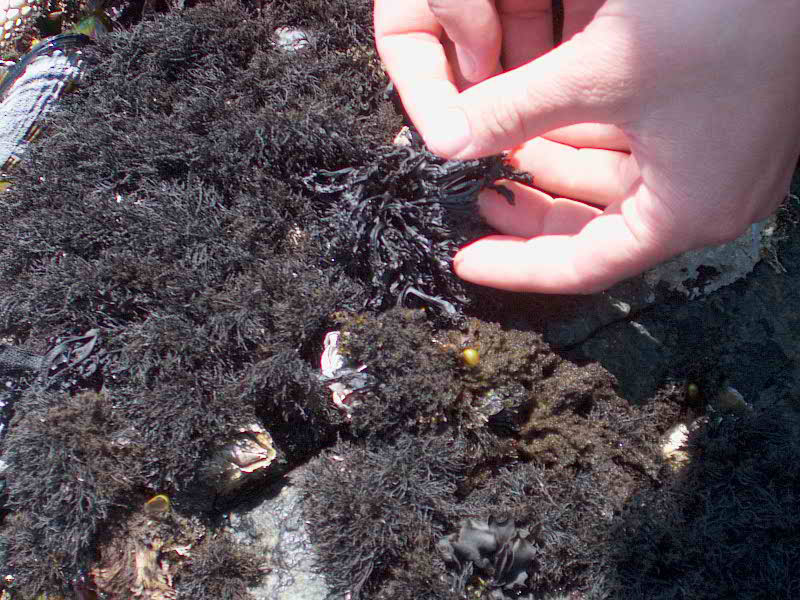
Mastocarpus sp.in a bed of Endocladia sp.Ryan Murphy photo


Phylum: Rhodophyta
Class: Rhodophyceae
Order: Gigartinales
Family: Petrocelidaceae (formerly Gigartinaceae)
Mastocarpus cristata (Setchell) Setchell and Gardner, -or- Gigartina cristata

The photos below are by Ryan Murphy:

Description: This plant is erect, up to 15 cm. high, dark reddish brown in colour, in clusters, attached to the substrate by a small discoid holdfast.   The erect branches are flattened, with branching dichotomous.  The flat dichotomies are generally narrow and often twisted. The surface of the plant is at first smooth, later developing many small papillate outgrowths.  One tetrasporangiate life stage known as petrocelis is shown in pictures below.

Habitat: On rocks in the lower intertidal zone.

Pacific Coast Distribution:  British Columbia to Mexico.

Robert Scagel, 1972

See other members of the Phylum Rhodophyta, Red Algae.

taxonomyiconReturn to the Race Rocks Taxonomy and Image File
pearsonlogo2_f2The Race Rocks taxonomy is a collaborative venture originally started with the Biology and Environmental Systems students of Lester Pearson College UWC. It now also has contributions added by Faculty, Staff, Volunteers and Observers on the remote control webcams. Ryan Murphy


Codium setchellii: Green felt algae–The Race Rocks raxonomy

codiumsetchelliiHabitats of Codium setchellii:
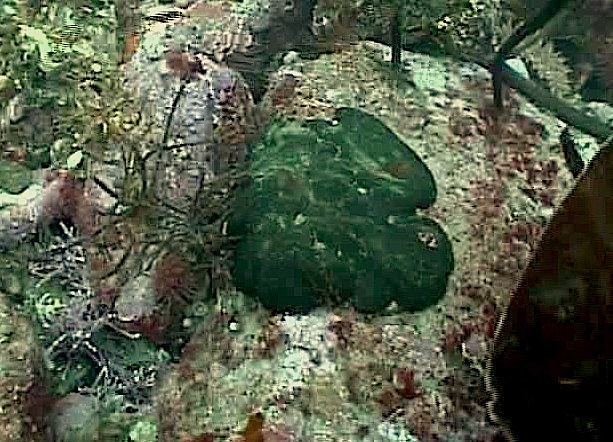
This species of Green algae lives directly out from the docks at 3 -8 metres depth. Without a light it often appears almost black as wavelength deteriorates at that depth.

codiumixIt looks and feels like a lump of green felt. Here you can see it growing in association with brooding anemone.
Classification :
Domain: Eukarya
Kingdom: Protoctista
Division: Chlorophyta (Green Algae)
Class: Chlorophyceae
Order: Codiales
Family: Codiaceae
Genus: Codium
Species: setchellii N.L. Gardner
COMMON NAME:Green felt algae

taxonomyiconReturn to the Race Rocks Taxonomy and Image File
pearsonlogo2_f2The Race Rocks taxonomy is a collaborative venture originally started with the Biology and Environmental Systems students of Lester Pearson College UWC. It now also has contributions added by Faculty, Staff, Volunteers and Observers on the remote control webcams. Nov 2005–G.Fletcher


Endocladia muricata : bristle algae–The Race Rocks Taxonomy

Description: This plant is erect, 4-8 cm. tall, profusely and irregularly branched, usually growing in tufts, and dark red to blackish or greenish brown in colour. The branches are cylindrical, about 0.5 mm. in diameter and covered with minute conical spines about 0.5 mm. in length.
Habitat:  On rocks in the upper intertidal zone.
Pacific Coast Distribution: Alaska to Mexico.
Robert Scagel, 1972


Phylum: Rhodophyta
Class: Rhodophyceae
Order: Cryptonemiales
Family: Endocladiaceae
Endocladia muricata (Harvey) J. Agardh

taxonomyiconReturn to the Race Rocks Taxonomy and Image File
pearsonlogo2_f2The Race Rocks taxonomy is a collaborative venture originally started with the Biology and Environmental Systems students of Lester Pearson College UWC. It now also has contributions added by Faculty, Staff, Volunteers and Observers on the remote control webcams. Dec 2001–Ryan Murphy  PC.


Notoacmea scutum : Checkered Limpet -The Race Rocks Taxonomy

Physical Description:
The average size of this species is 4-6 cm in length (shell) and 3-4 cm wide, with a low profile and rounded apex found forward of its center. The shell of this species is relatively smooth, conical or oval in shape, sculptured with coarse, flat-topped ridges. The color of the surface varies, though externally brown or green with radiating with white spots or lines.
Habitat:
The Notoacmea scutum are found “between the high and low-tide lines” on smooth surfaces, usually rocks, while showing a “tidal rhythm of activity” which occurs more often at night.
Reproduction:
Spawning occurs, most abundantly, from autumn to spring, but can happen throughout the entire year. Spawning results in the external fertilization via males releasing sperm into the females, who then release their fertilized eggs into the flowing water.

Range (global):
Research has been shown that the Notoacmea scutum species can be found in the Aleutian Islands and Mexico and from Alaska to Baja, California.

Domain Eukarya
Kingdom Animalia
Phylum Mollusca
Class Gastropoda
Sub class Prosobranchia
Order Archaeogastropoda
Family Acmaeidae
Genus Notoacmea
Species scutum
Common Name: Checkered Limpet

Reference:

www.nmarinelife.com/htmlswimmers/n_scutum.html
www.nbl.noaa.gov/(zeajfizhdjfdsf45hn4n3k55)/itis.aspx?tsn=69716
http://academic.evergreen.edu/t/thuesene/animalia/mollusca/gastropoda/notoacmea/scutum.html
www.people.wwc.edu/staff/cowlda/keytospecies/mollusca/gastropoda/prosobranchia/order_patellogastropoda/family_lottiidae/tectura_scutum.html
¬ Intertidal Invertebrates of California
¬ Reproduction and Development of Marine Invertebrates of the Northern Pacific Coast Data and Methods for the Study of Eggs, Embryos, and Larvae

Other Members of the Phylum Mollusca at Race Rocks.

taxonomyiconReturn to the Race Rocks Taxonomy
and Image File
pearsonlogo2_f2The Race Rocks taxonomy is a collaborative venture originally started with the Biology and Environmental Systems students of Lester Pearson College UWC. It now also has contributions added by Faculty, Staff, Volunteers and Observers on the remote control webcams.

Original text for this file was done by Shaterra Redd PC student year 32 . 2005