Big Creatures and Big Winds

Weather: 

  • Visibility 14 miles
  • Partly cloudy, sunny
  • Wind 25-35 knots (gale warning in effect)
  • White caps and spray. Waves up to 4 m.

Visitors/Boats: 

  • The college boats are still in for maintenance, so we have not had any visitors. We are hoping to go to the main island soon but winds were much too strong and unpredictable today.
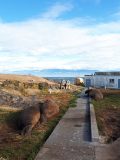
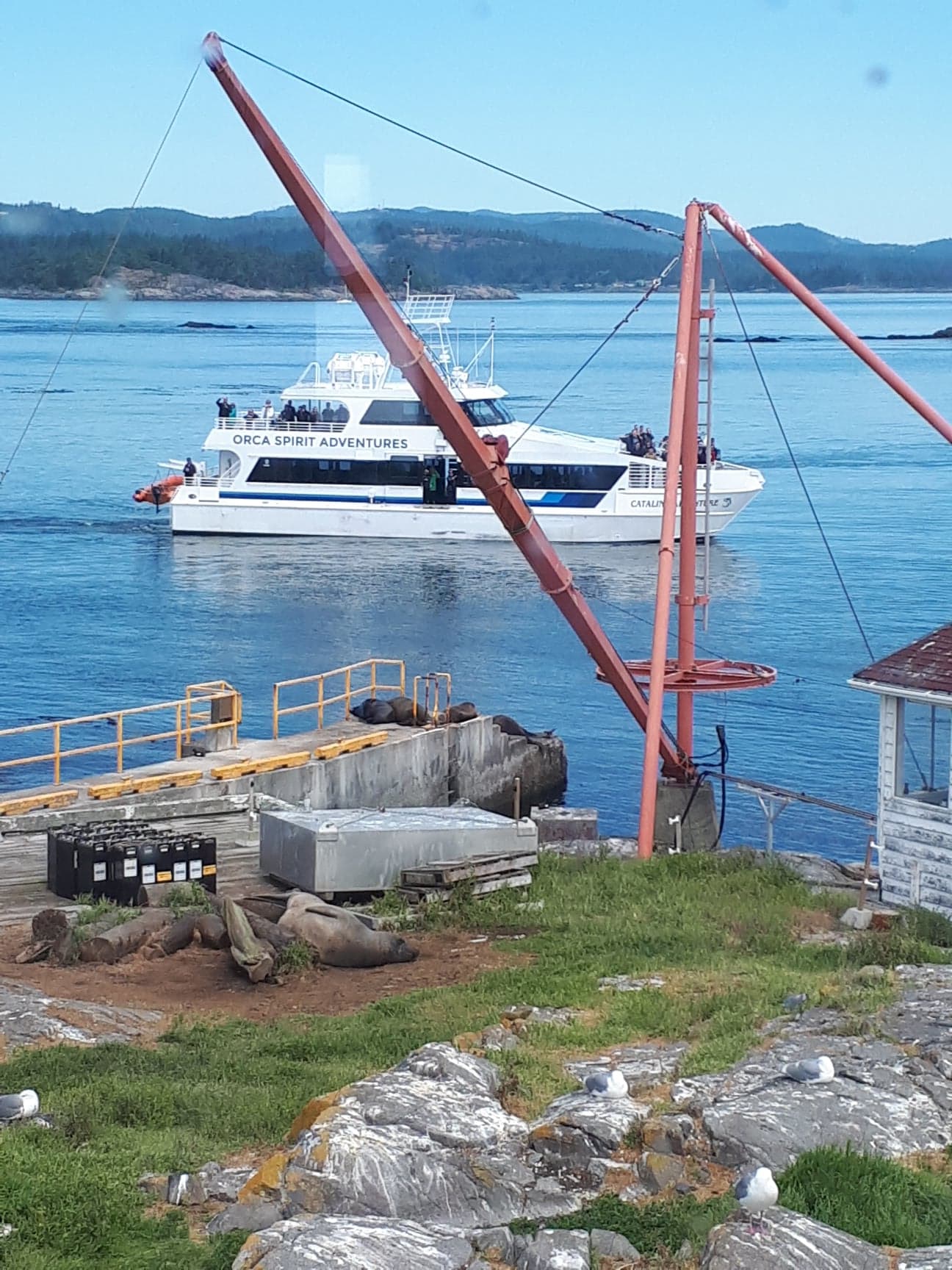
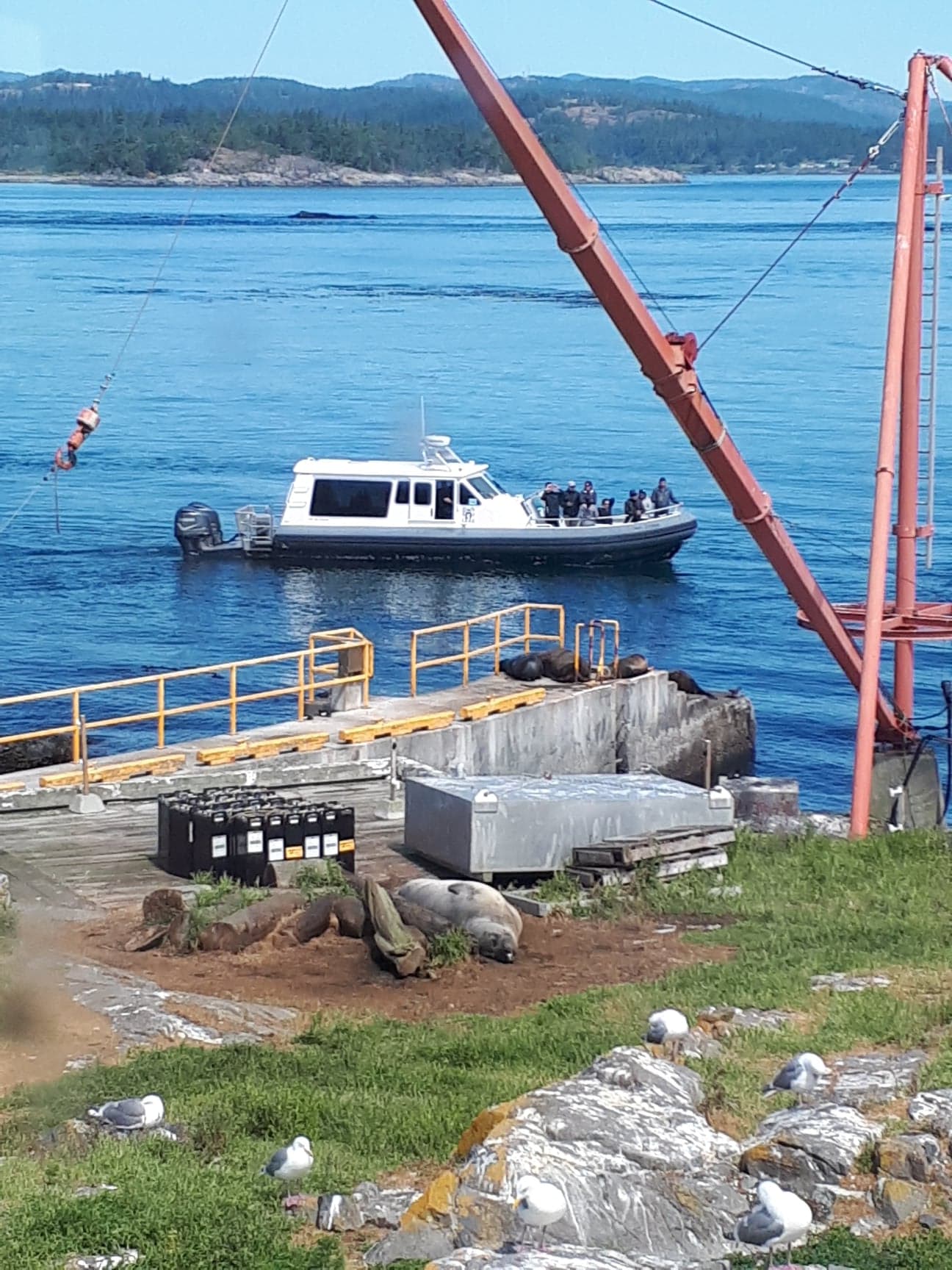
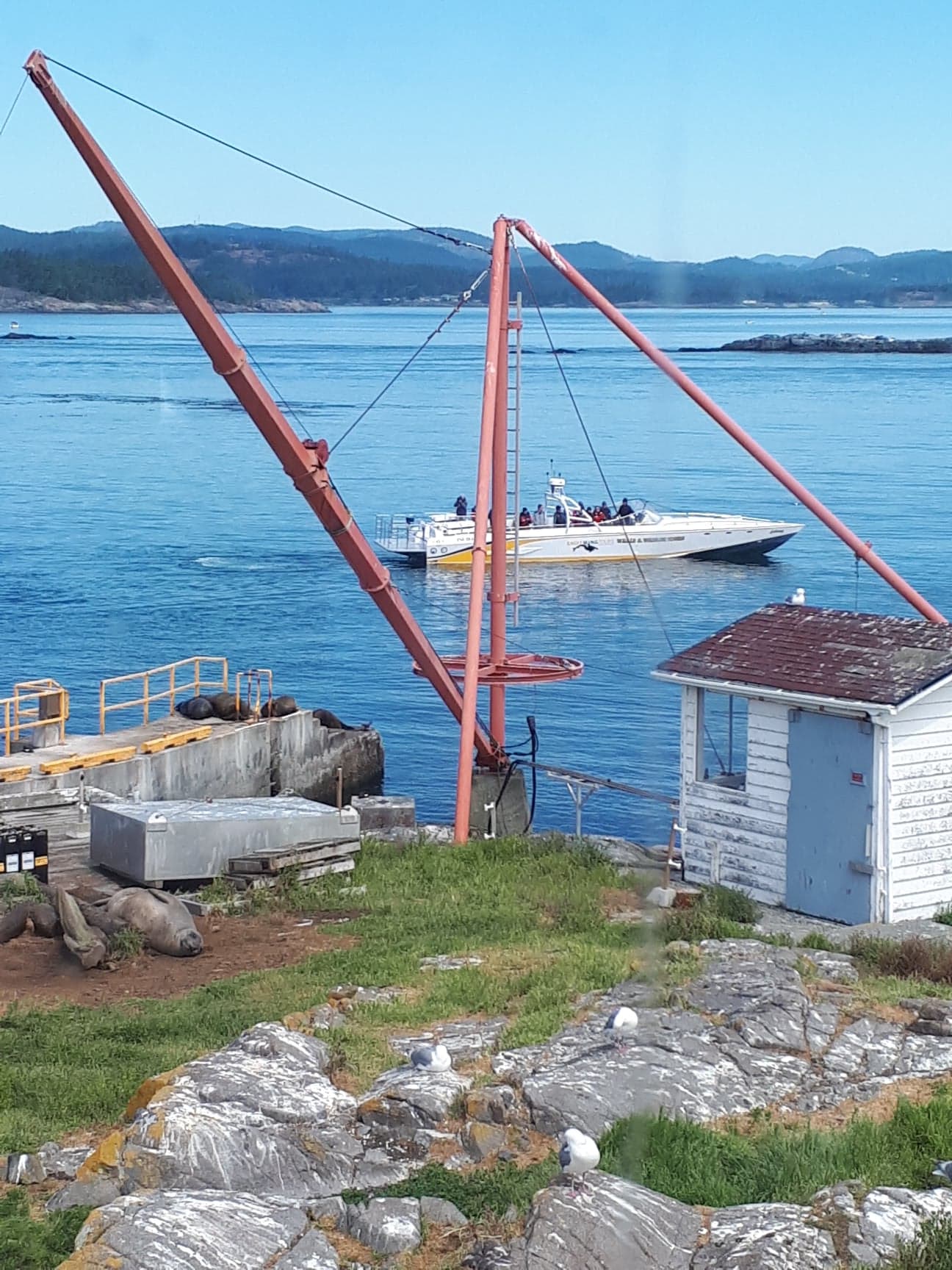
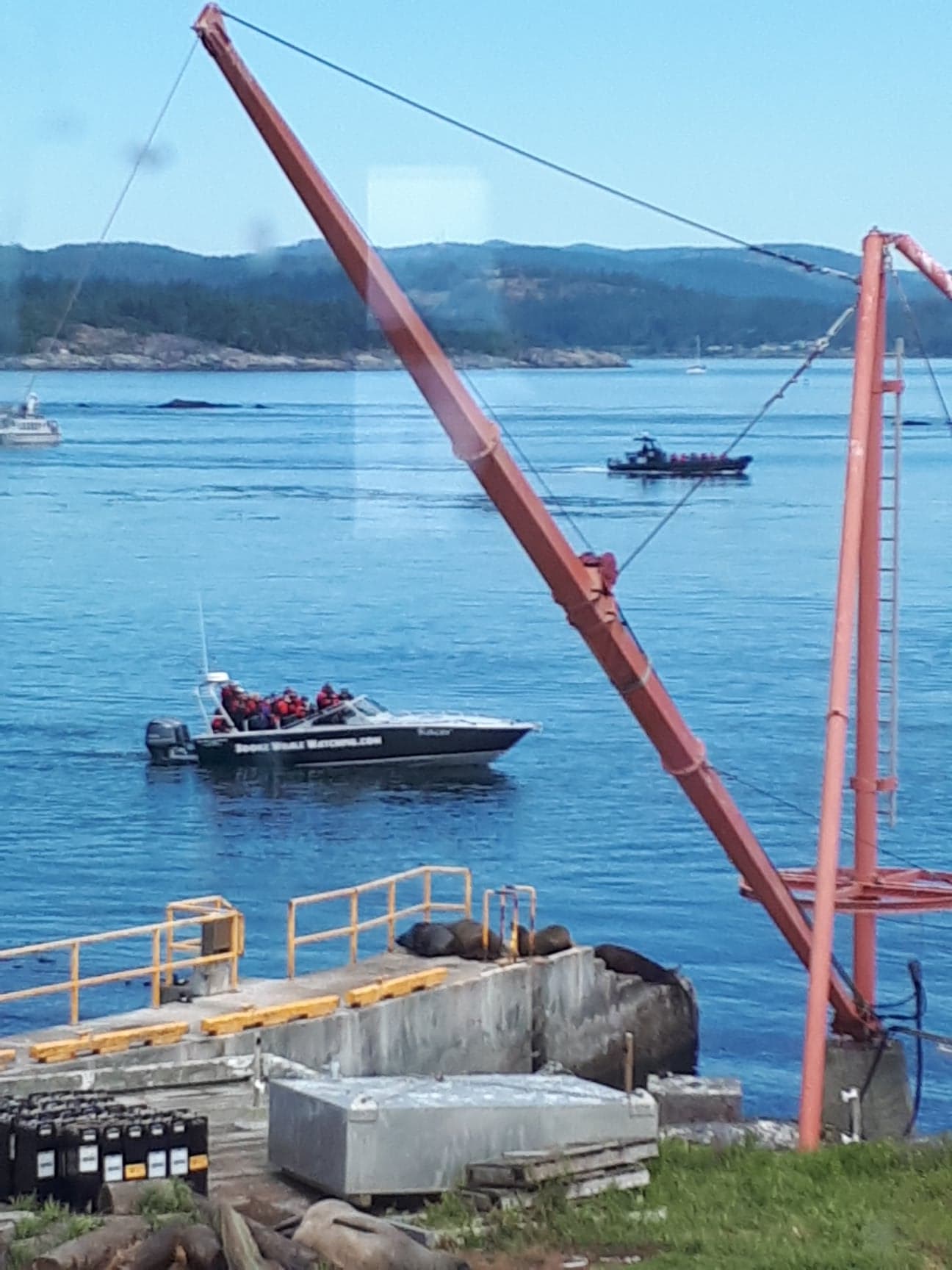
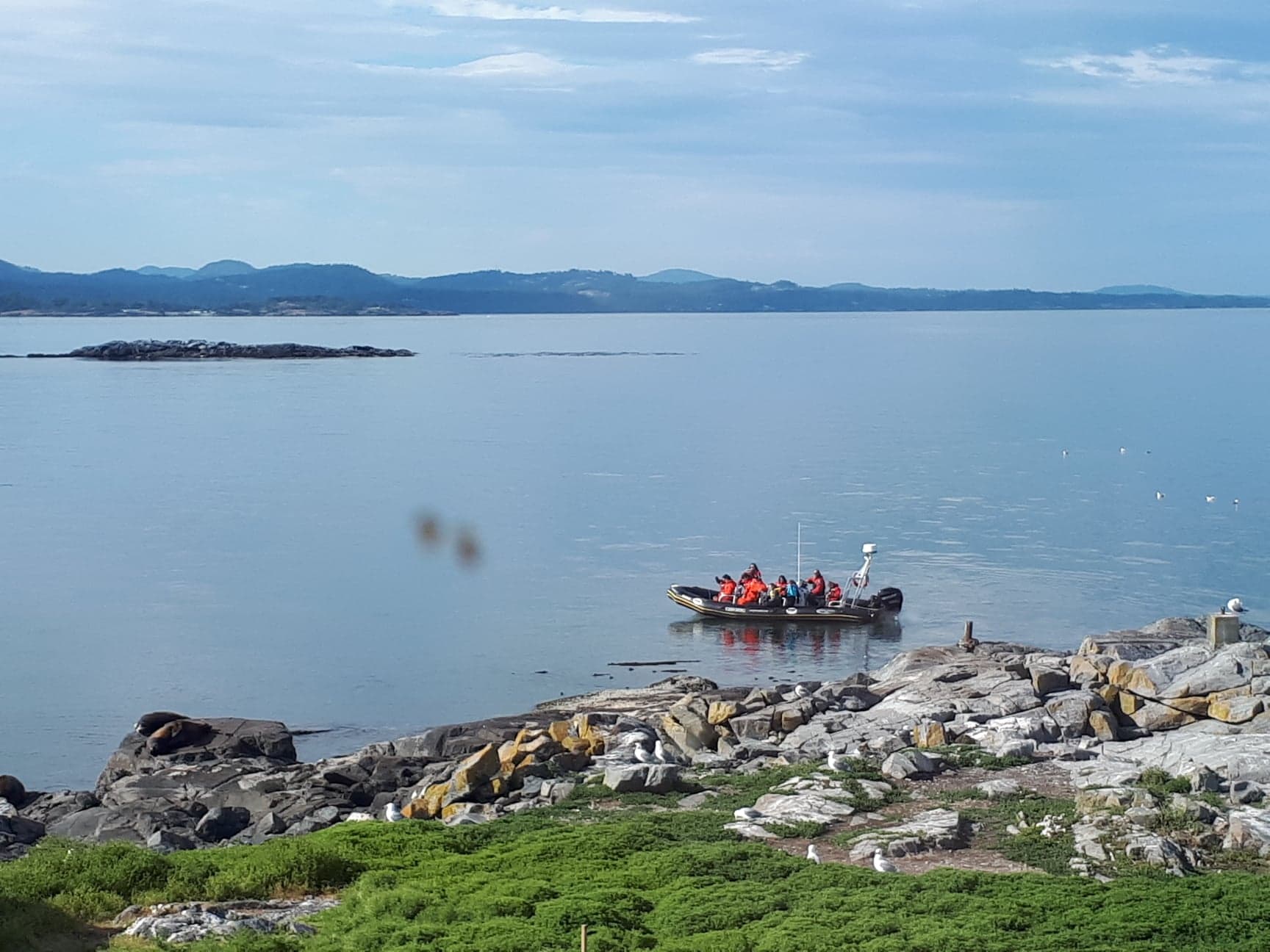
  • The past couple of days we have seen a handful of eco-tourism vessels and pleasure craft. Some vessels have approached within 20 m of our jetty and surrounding Great Race Rock. The elephant seals have been scooting up the jetty to get away and the few sea lions remaining appear disturbed.

Ecological: 

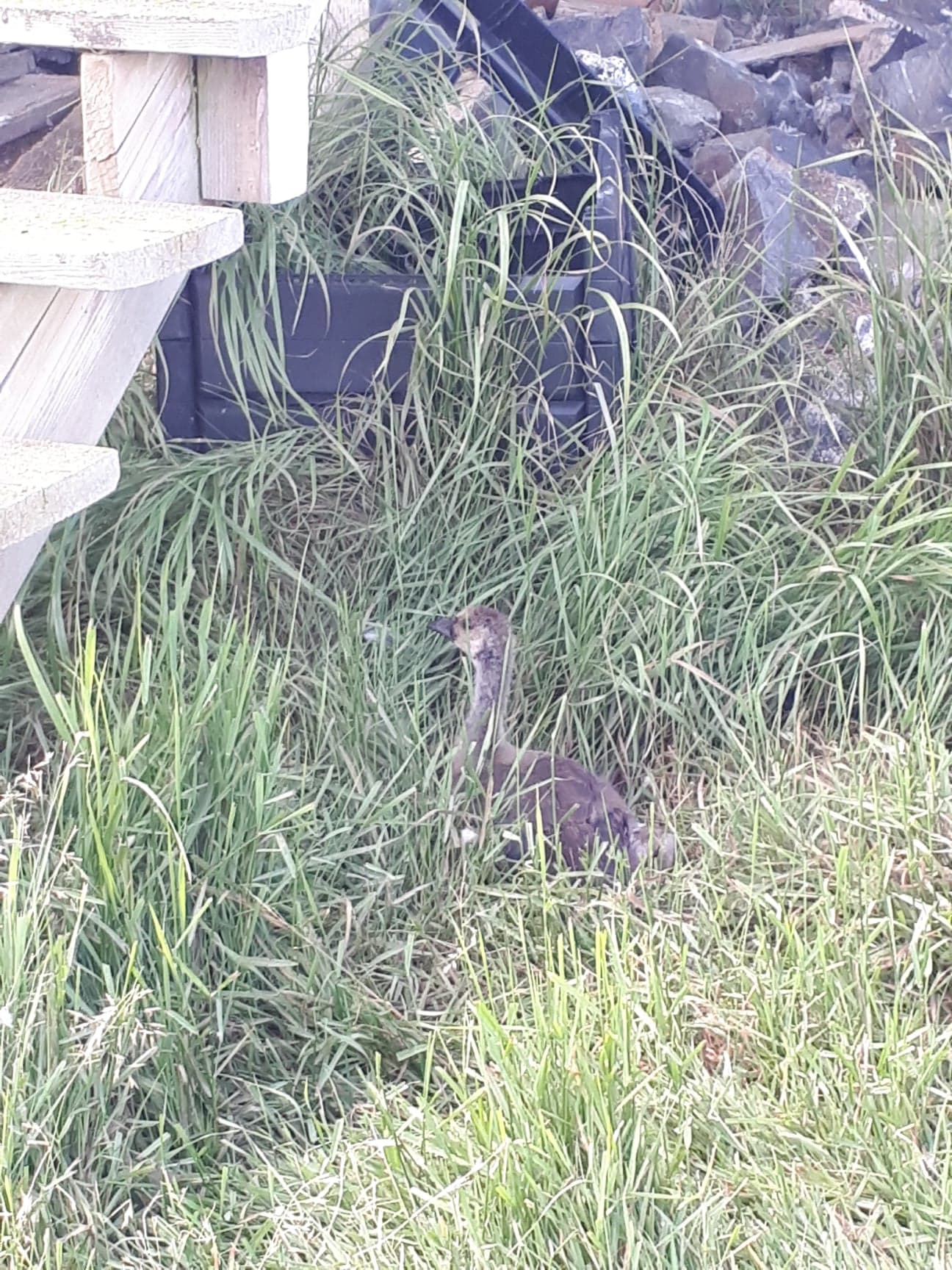
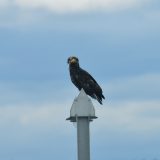
  • We were sad to find the missing gosling deceased. It seems that due to its injured foot it was easy prey for the bald eagles that have been swooping by lately.
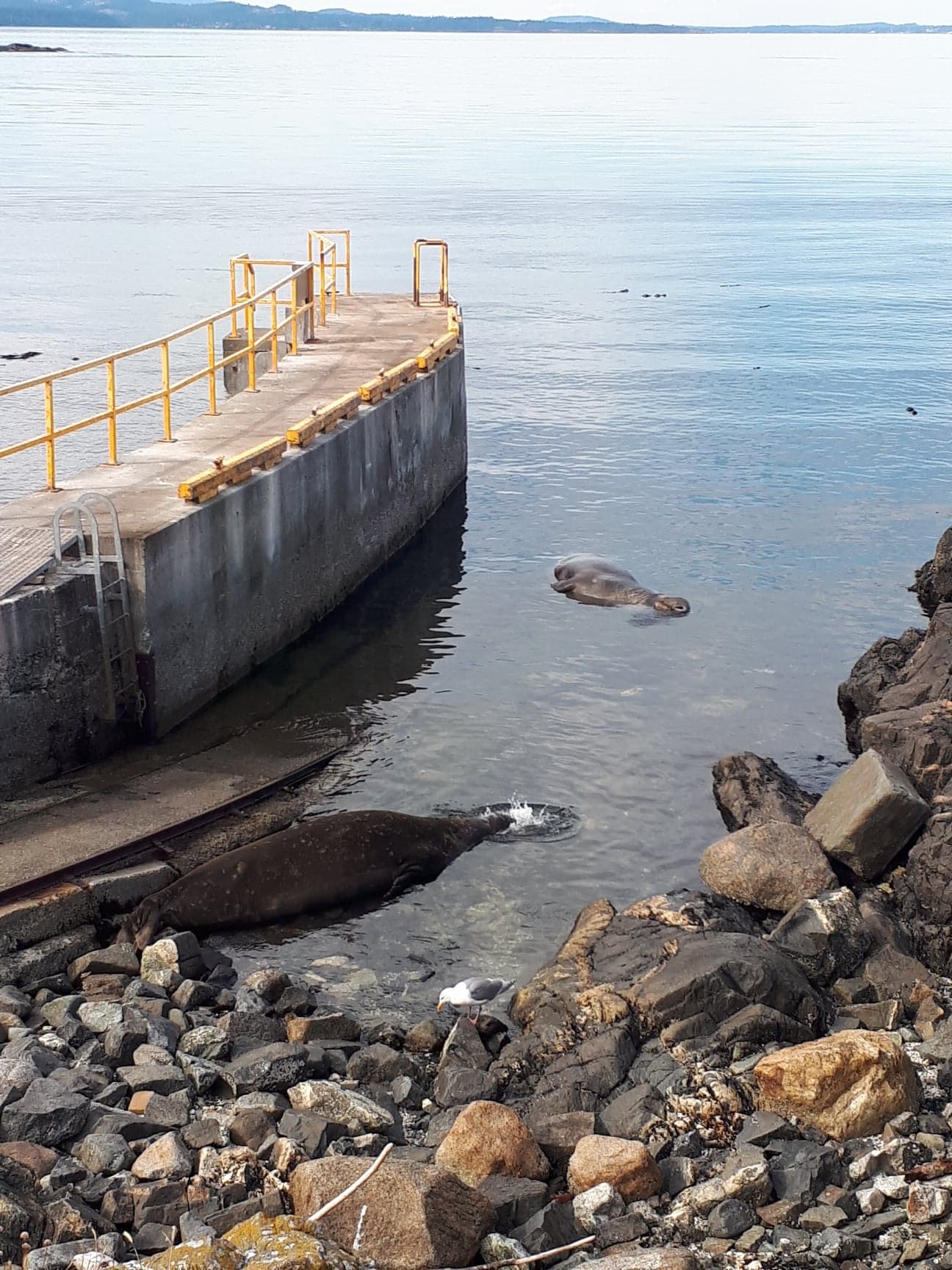
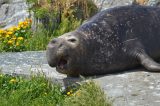
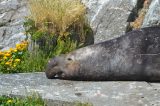
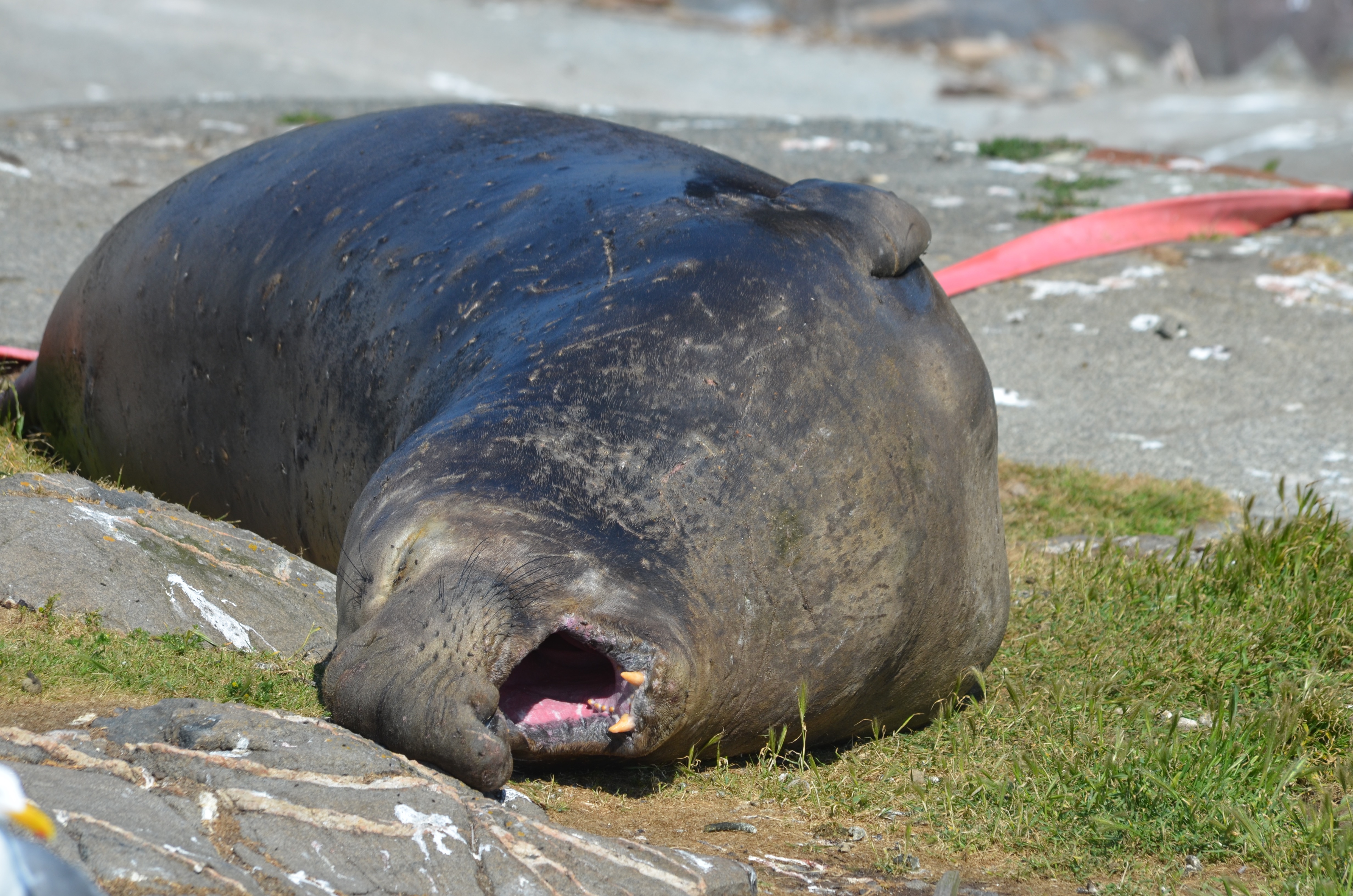
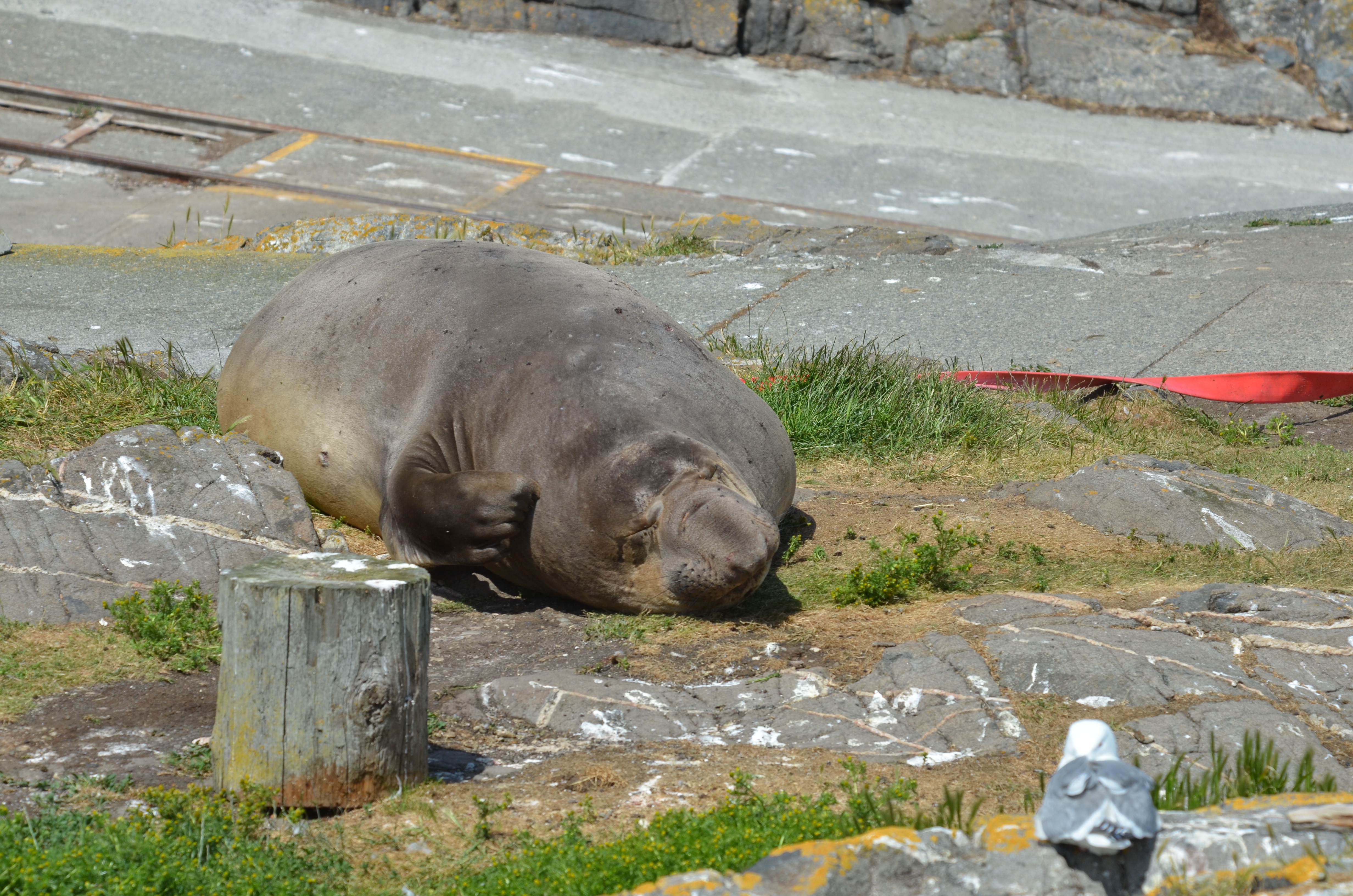
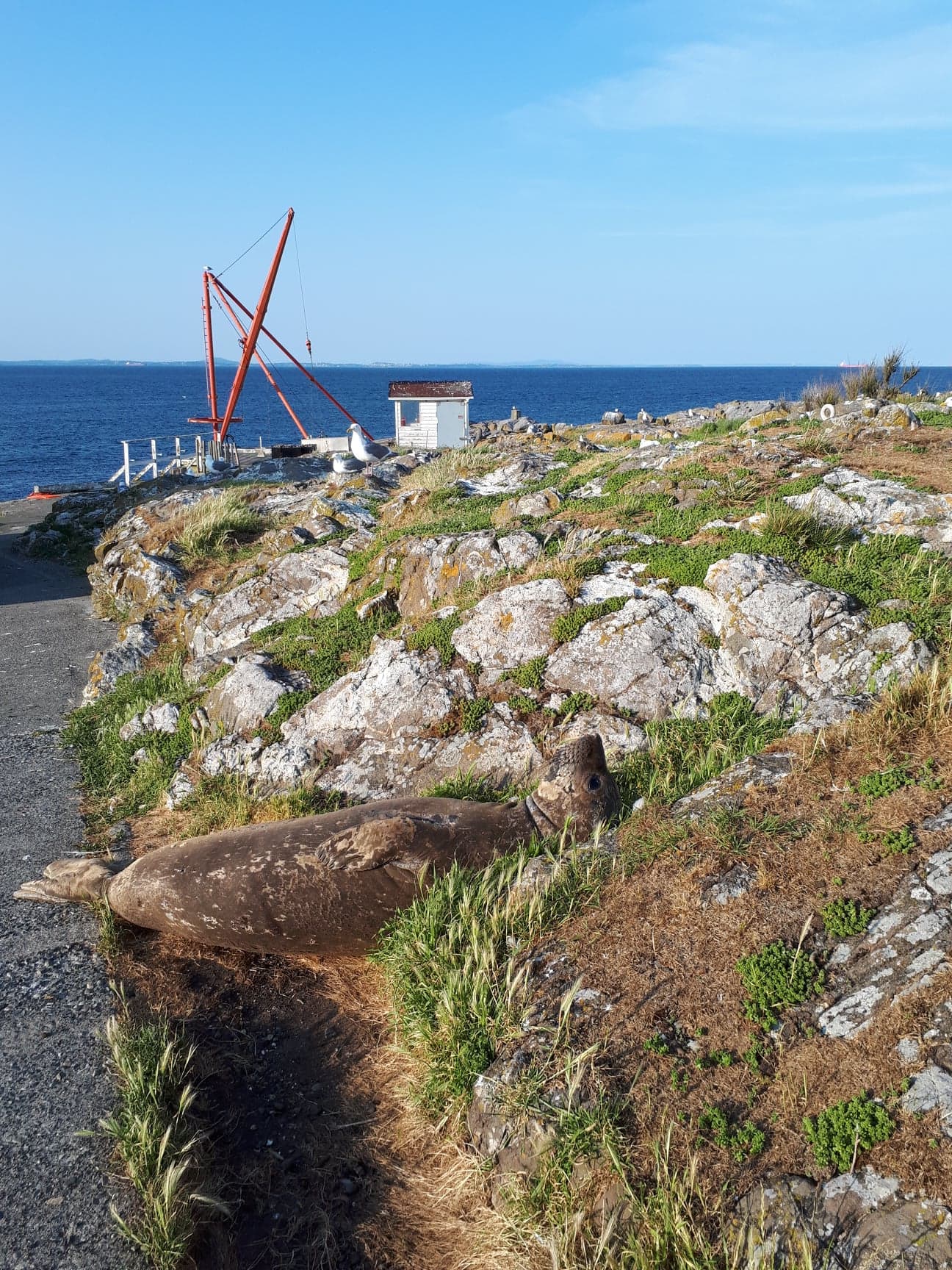
  • We are now in the company of 4 very large male elephant seals who have stopped here to moult. They are enjoying taking regular baths in the shallow and protected jetty waters.
  • The occasional sea lion has stopped by and hauled out for a rest, but otherwise they have all moved on.
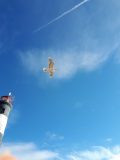
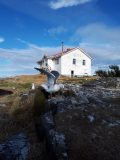
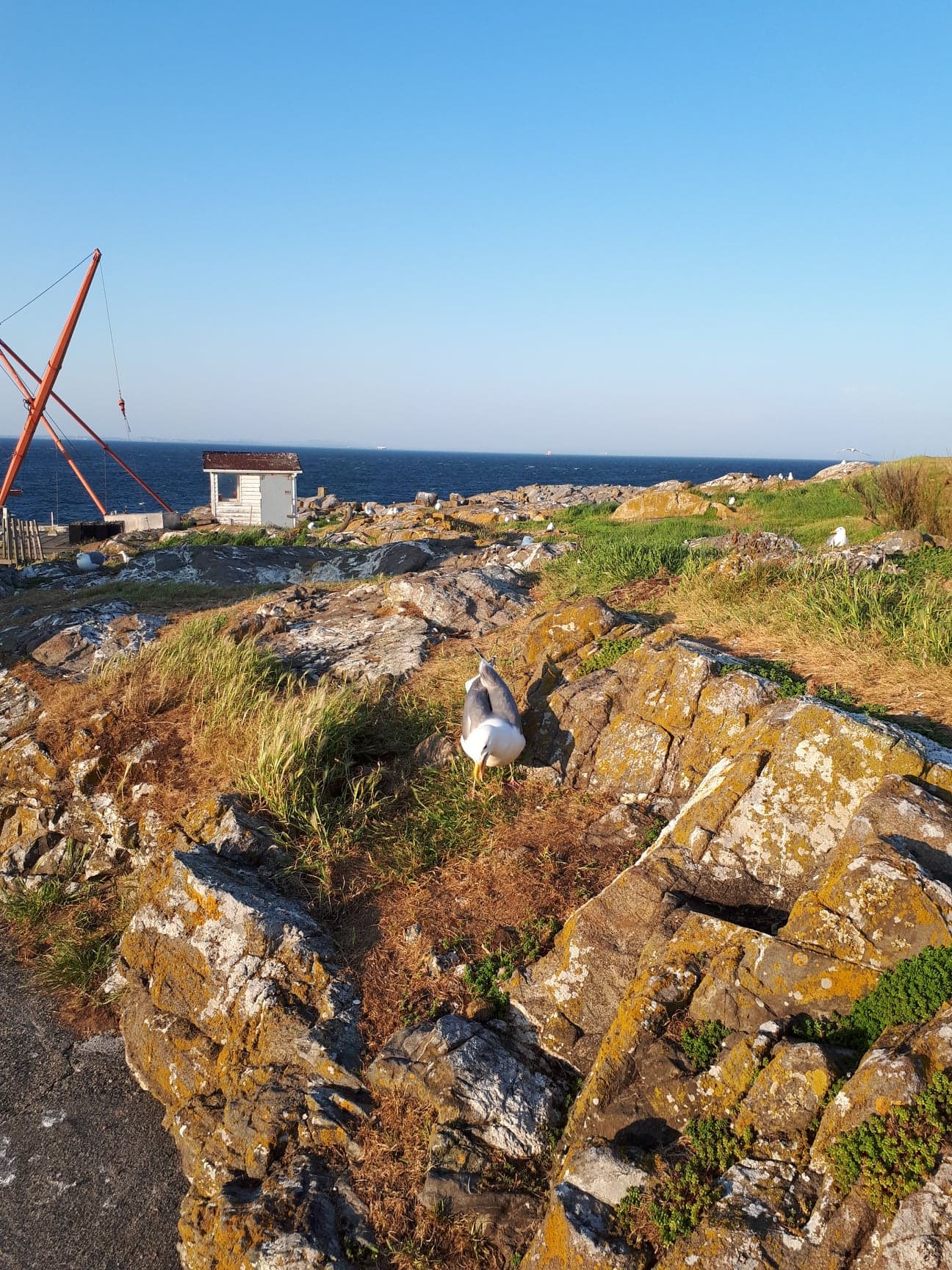
  • The seagulls are becoming more and more aggressive. We are anticipating the need to wear protective equipment sometime in the coming week!

Maintenance/Other:

  • We are still waiting for the delayed desalinator, so we are conserving water as much as we can in the meantime, as it is not possible for more to be delivered without the use of the college vessels.
  • We have been collecting shingles as the high winds are tearing them off of the sheds (new metal roofing is expected sometime soon), and often find fishing lures, bits of rope, and other litter wedged into the rocky intertidal.
  • The beautiful sunny days lately have meant that we have been able to operate entirely on solar power most days. We’ve been having some troubles with the battery charge readings but otherwise the system is working without a hitch!

A Quiet Week

Weather: 

  • 15 miles visibility
  • Skies clear with some clouds
  • 40+ kn wind
  • Rolling waves up to 1/2 m breaking into whitecaps

Boats/Visitors: 

The boats at Pearson are in for annual maintenance so we have not had any college visitors. The wind conditions have limited all boat traffic.

Ecological:

There are have been no sea lions over the past few days. The gosling that appeared to be injured has not been spotted in a while. The large male elephant seals are clearly moulting now and have been fighting over the best sleeping spots. The seagulls have become more aggressive and will now fly towards us even if we keep a distance from their eggs.

There has been DND blasting nearby almost every day lately. The birds take flight and the mammals are visibly disturbed.

Census: 

  • 30 harbour seals
  • 5 elephant seals, all moulting. 4 male 1 female
  • Roughly 200 seagulls
  • Two families of geese, minus one missing gosling
  • Two barn swallows nesting in our rafters

Divers And Disappearing Eggs

Weather: 

  • 5-10mi visibility
  • Clear skies
  • 25kn wind
  • Small whitecaps

Boats/Visitors: 

We had three tours from the college over the last two days, two today and one yesterday. Now, with the seagulls becoming more aggressive every day, non-essential visits restart after nesting season.

The whale watching continues, with roughly 10-15 boats a day – most coming in close (inside of 25m from the jetty, and other areas of greater rock). The recreational/rental boats are becoming more frequent, and sometimes appear to be operated a bit dangerously. Today we saw a small speedboat boat going against the current passing the jetty, and a large tour catamaran came around the corner and they both had to manoeuvre quickly to be a safe distance from each other

We noticed a dive boat in the marine protected area, with five to six divers on it. After holding position in middle channel for about 15 minutes they entered the water.

Ecological:

The injured gosling is nowhere to be found, yesterday and the day before it could be seen taking shelter in the long grass beside the house. The oyster catcher nests seem to have been robbed, perhaps by the seagulls. The eggs are missing and the adult birds seem distressed.

We’ve been seeing bald eagles every few days. They kill seagulls and leave them dismembered all around. When an eagle appears, the gulls take flight as one big cloud and seem to try and chase the eagle away.

Maintenance:

We were able to get up and running in the Race Rocks whaler. Following the other boat between the two trips today, we went to the college dock and back for training purposes.

An Injured Gosling

Weather: 

  • Clear Skies
  • 15mi visibility
  • 10kn NE wind
  • Calm water

Boats/Visitors: 

There have been lots of whale watching boats over the last few days, most coming within 25m of greater Race Rocks. Greg has came from the college a few times to resupply diesel (today) and water (yesterday).

Ecological:

There are three large elephant seals here, and today they were all resting in the water at the end of the boat ramp. One of the goslings from the younger family of geese appears to have injured its food or leg. It has separated from the rest of them over the last few days, and can be seen limping and moving slowly, it is unable to keep up with the rest.

The DND has been blasting, it is very loud and sometimes occurs four to five times in a day. It startles all of the animals, and the birds take flight.

We have noticed some barn swallows flying around out front window. On closer inspection, they appear to be nesting under our eves where a soffit panel has blown out of place.

Maintenance:

We have replaced the hinges on both doors of the water tank shed, and removed old hinges fasted or corroded to the doorframe. Opening and closing the doors is easy now, and with a touch of anti-seize paste on the hinge pins it should stay that way.

We cleaned the solar panels for the first time in a while. The desalinator being out of commission means pressure washing is too resource intensive – we found an old hand pump sprayer, and found it to be very helpful for cleaning while conserving water.

Census:

  • 5 elephant seals
  • 12 geese
  • 2 seal lions
  • 190 seagulls
  • 8 oystercatchers
  • 2 barn swallows

Extreme Tides & Extraordinary Critters

Weather: 

  • Visibility: 10-14 miles
  • Wind: 10-20 knots
  • Sky: Slightly cloudy clearing to sunny and clear
  • Water: rippled

Boats/Visitors: 

  • Yesterday there were 20+ whale watching vessels in the reserve.
  • Today we had a group of 9 from Pearson College visit and tour the island.

Ecological:

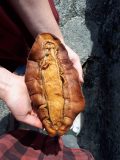
  • Lately we have been having very low tides, and today we spotted two gumboot chitons on the jetty track in an area that would not normally be exposed.
  • The younger goslings are learning to swim!
  • The two large male elephant seals appear to be beginning to moult. Today we noticed that one of them has some cracking skin in his chin area.
  • Over the past few days we have noticed more bald eagles, and notably a few young ones.


Whales! (and census)

Gallery

This gallery contains 4 photos.

Weather:  Visibility: Very clear, 15 miles Wind: 15-25 knots Sky: Mostly clear, some clouds Water: Choppy, white caps Boats/Visitors:  Today a contractor visited to fix our internet/ phone cable in the main residence. At the same time Corey, two BC … Continue reading →

Big Seals, Many Seagulls

Weather:

  • Visibility: 50m, very heavy fog
  • Wind: 20-25kn
  • Sky: Overcast
  • Water: Choppy

Boats/Visitors:

We have had no visitors over the last few days.

Ecological:

A large male elephant seal has been resting on land for the last day and a half. This morning we noticed another, larger in size, has joined him.

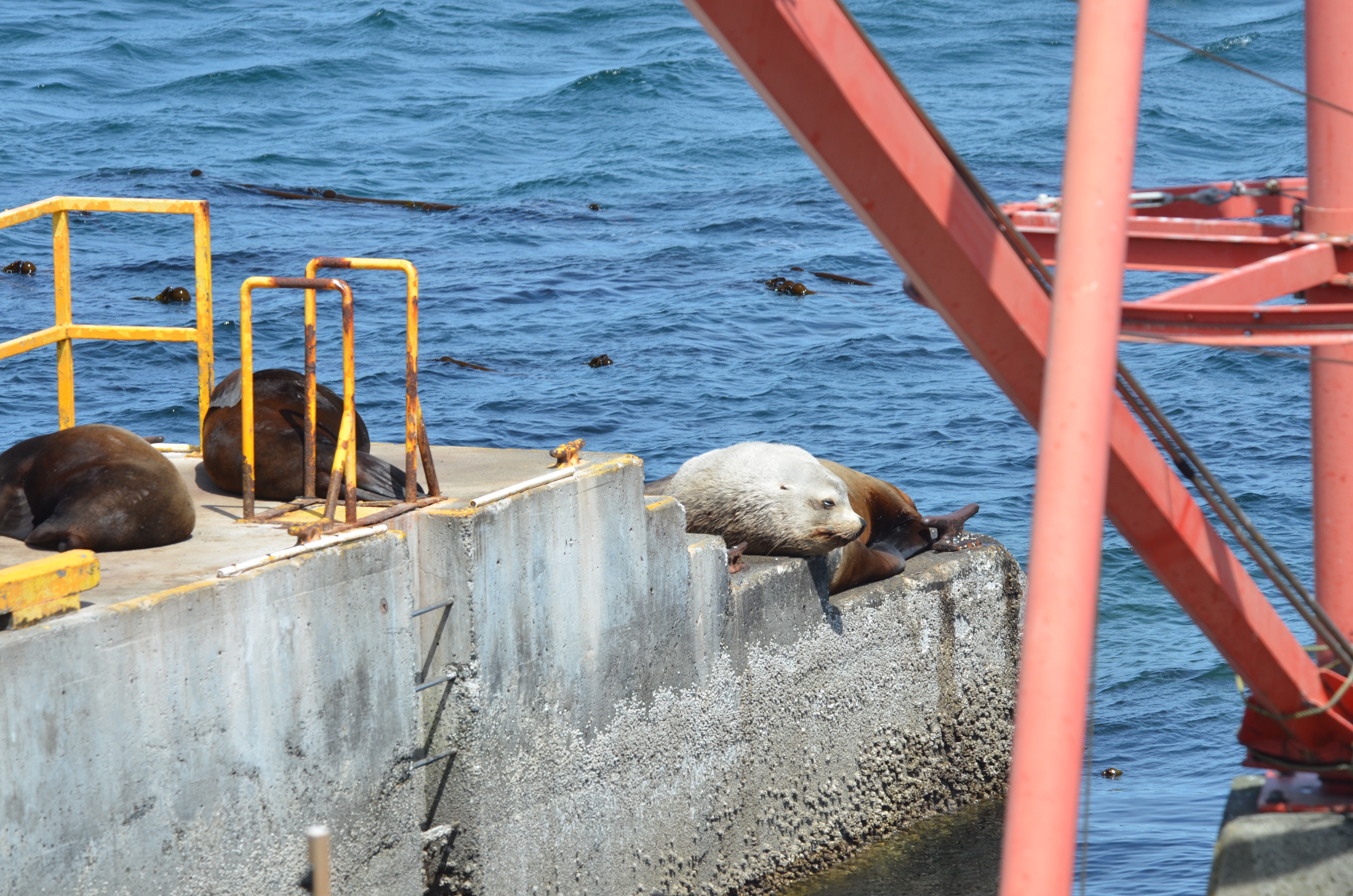
The two moulting females are still here. We’ve been noticing a few harbour seals every day. Yesterday afternoon, we were able to get a picture of a sea lion with an interesting color.

The seagull activity has increased. They remain protective of their nests, and as they continue to lay eggs and establish nests it’s becoming harder to freely move around the island.


Spotted: Turkish Marsh Gladiolus!

Weather:

  • Visibility: 5 miles
  • Wind: 12 knots
  • Sky: Overcast in the morning, clearer skies in the second half of the day
  • Water: Calm

Boats/Visitors:

Greg came again on Tuesday to bring us more water, we get a few hundred litres per load so our main water tank is over half full again. There has been a steady trickle of tour/whale watching boats, approximately 10-15 per day.

Ecological:

The two moulting elephant seals are still here, and they appear to be in less pain and are doing well.

The seagulls continue to get more and more aggressive, we’ve noticed that their eggs go missing. Yesterday, near the main path to the jetty there was a nest containing one egg and a territorial pair of gulls. Today, they are off the nest and the egg is missing.

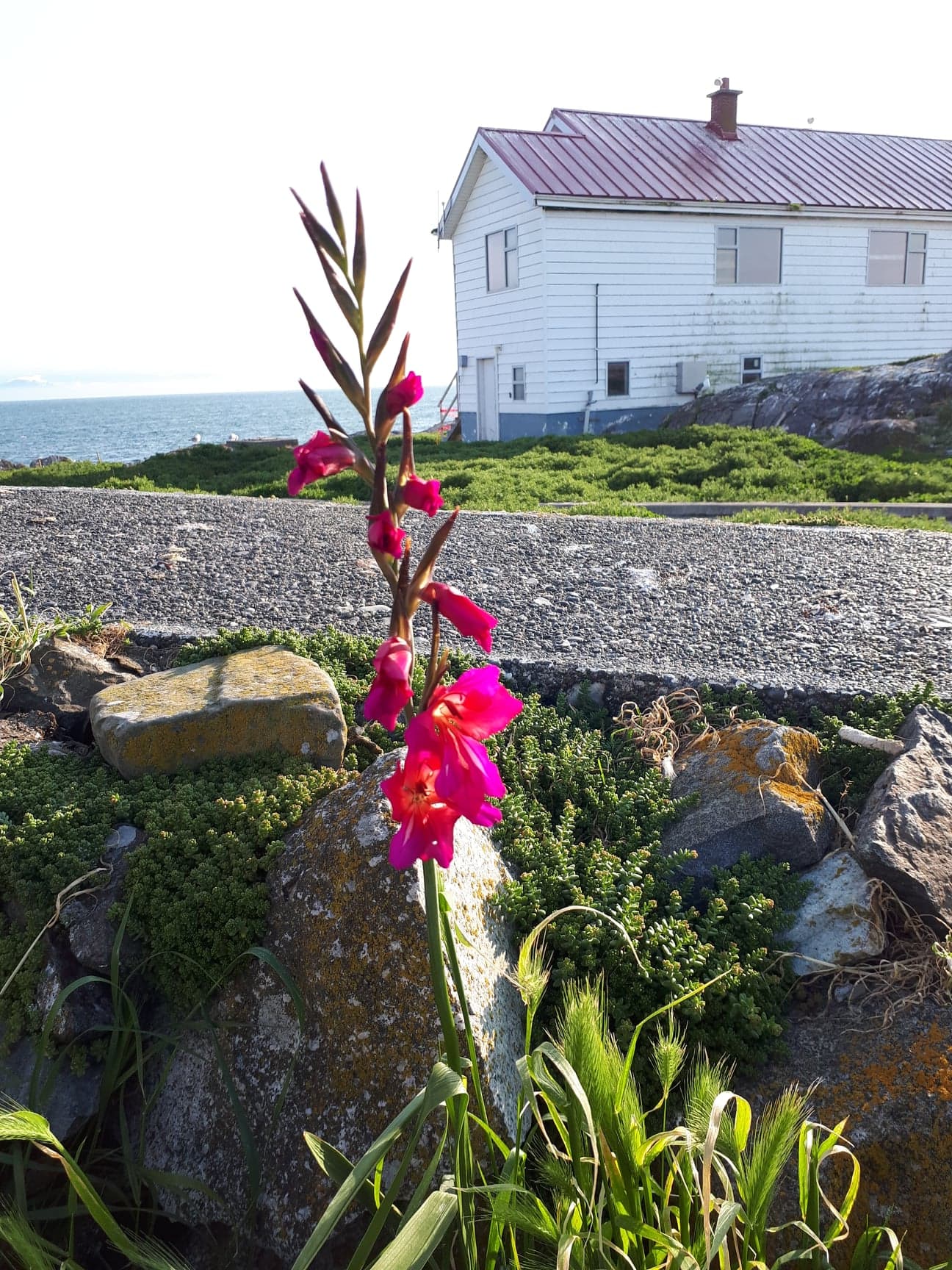
Near desalination building we found a great example of what appears to be Gladiolus Imbricatus in bloom. According to a previous log post by Garry Fletcher: “Originally from south-eastern Europe/Turkey, it was introduced in the garden of an early lightkeeper and has been growing unattended here for over 50 years.”

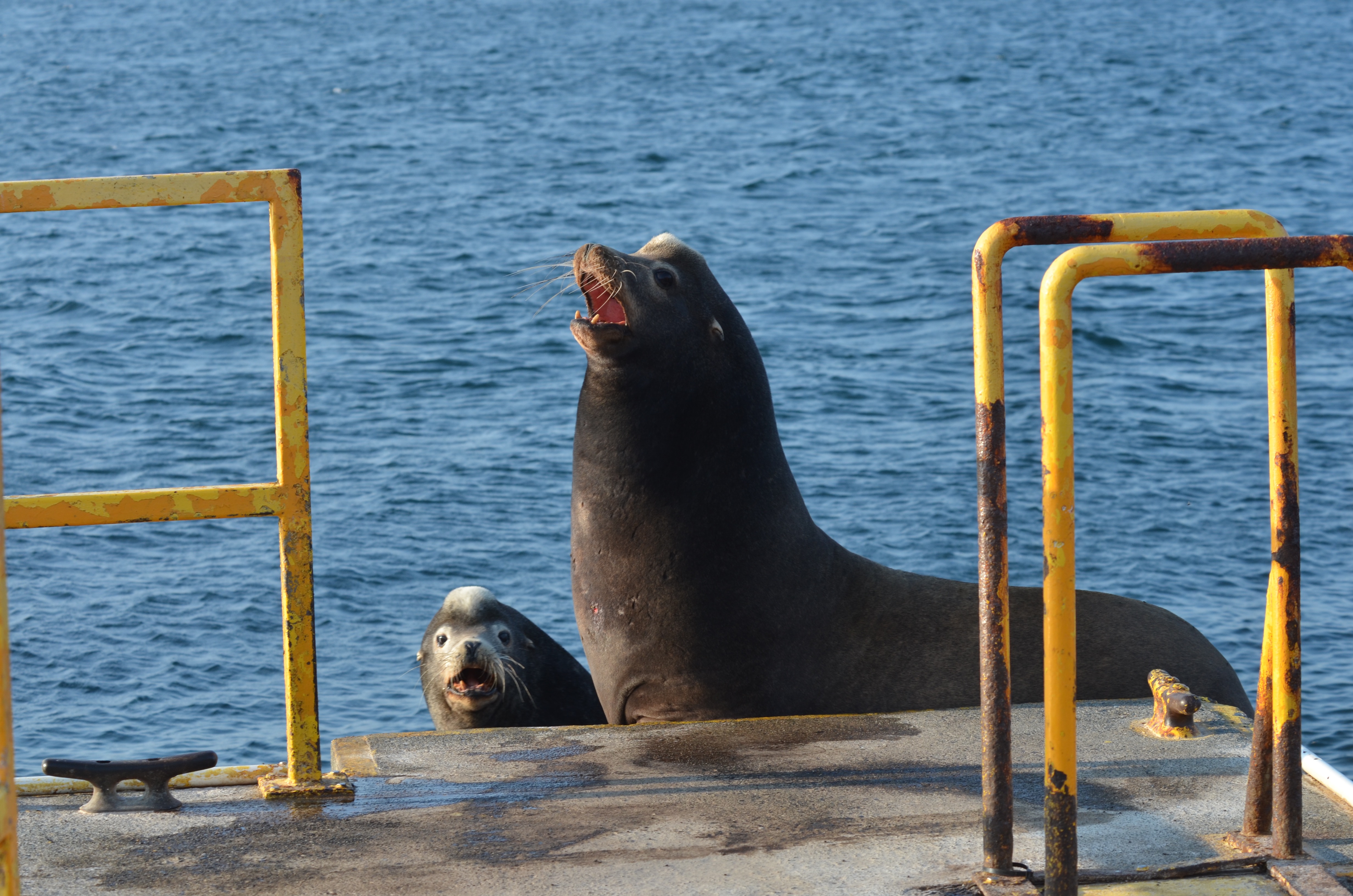
While doing our daily seawater salinity and temperature sample, we were able to get a great picture of two sea lions on the jetty that were basking in the evening sun.

Wind, Fog, and Eggs!

Weather: 

  • Visibility varied today. This evening visibility is excellent, 10-13 miles. This afternoon we were surrounded by fog and could not see even nearby north rock (less than 1 mile).
  • Wind this evening is blowing 30-40 knots. This morning was calmer, 12 knots.
  • Sky clear. This was interrupted mid afternoon by thick fog.
  • Water white capping and breaking into spindrift.

Boats/Visitors: 

  • Today was fairly quiet, with only a few whale watching boats in the morning which seemed to mostly keep a good distance. Greg visited this afternoon to deliver water as we are still waiting for the new desalinator. A former student visited as well.
  • The swiftsure international sailing race passed Race Rocks on Saturday, so we have been seeing the boats trickle back towards Victoria over the past couple of days.
  • Yesterday we spotted a rental boat from Pedder Bay Marina attempt to pass through the channel between our main island and the south islands.
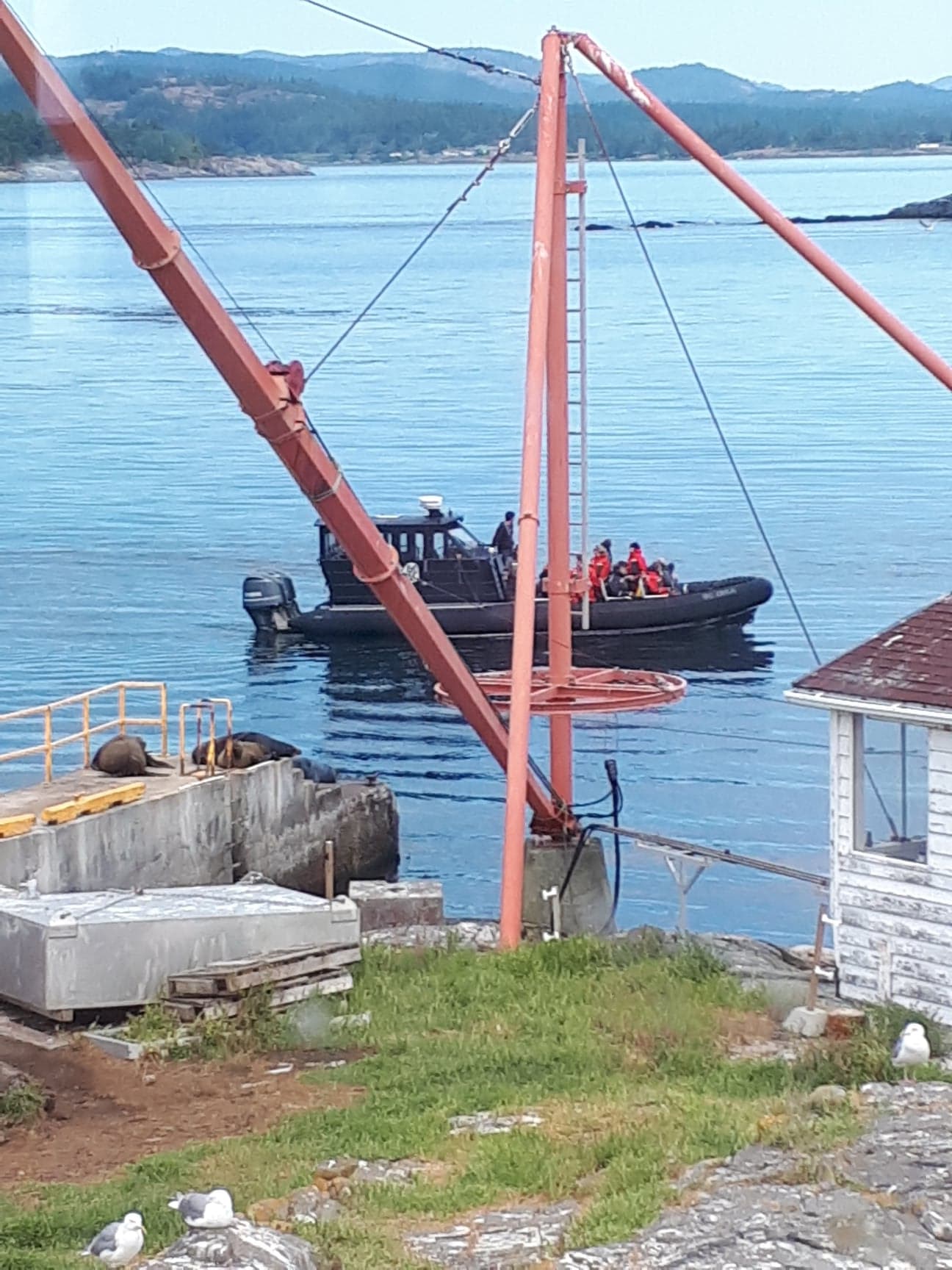
  • Lately whale watching boats have been present viewing the elephant seals and sea lions. Many have appeared to be well within the 100m distance from sea lions required by DFO.

Whale watching boat disturbs sea lions on jetty

Whale watching boat approaches sea lions on rocks

Ecological: 

  • Two evenings past we noticed the first seagull eggs of the season. We noticed that one nest was missing its egg the next morning. The seagulls have become quite aggressive towards us but only if we get too close to their nest by accident.
  • There are still four elephant seals on the island, two moulting, the juvenile male from this past spring, and an older female.
  • The sea lions have remained on the SE side of the island, although fewer than what we were seeing before surrounding our jetty. They have been enjoying surfing the waves periodically.
  • Another oyster catcher nest spotted on the SW side.
  • We have been finding dead seagulls presumably killed by the bald eagles that have been hanging around. They especially like to sit on top of camera three.

Seagull guarding its egg and nest.

Other: 

  • Except for in the occasional presence of fog, we have been able to operate the island completely with solar on clear days.
  • We were in need of batteries so missed a few days of salinity/temperature data collection.

Oil cleanup near Island impossible much of the year TC May 2019

I was involved as an intervenor  in the NEB reconsideration Hearings in the fall of 2018. We presented the wind data from Race Rocks which confirms much of the information in this newspaper article. Note Race Rocks is also  mentioned below:

From The Times Colonist -Island Voices: May 26 2017 

Oil cleanup near Island impossible much of the year

If an oil spill occurred in the Juan de Fuca Strait, a cleanup would be impossible or severely limited 198 days of the year, according to Christianne Wilhelmson, executive director of the Georgia Strait Alliance

If you are wondering whether our coast is ready for an oil spill, you might like to know that responding to one at the mouth of the Juan de Fuca Strait, near Port Renfrew, would be impossible or severely limited 198 days of the year.
As part of the National Energy Board’s re-review of the Trans Mountain pipeline expansion, Georgia Strait Alliance examined the physical limits of booms, which are foundational pieces of equipment to contain and deflect spilled oil. We compared their limits to wind, wave and currents along the tanker route, and found that responding to a spill on our coast is likely to result in a significant amount of oil being left in our marine environment.

Most of the booms used to respond to spills along the tanker route are meant for protected water areas, such as harbours. They aren’t built to withstand the currents we find along the route, with 87 per cent of them failing at about 1.5 knots (2.8 km/h). Even the most effective high-current booms on our coast fail at four knots. Meanwhile, in some locations, such as Race Rocks on the southern tip of Vancouver Island, currents can exceed seven knots.
Strong wind and waves carry oil over or under booms, sometimes even breaking them. In the heaviest weather, booms can’t be deployed. Wind and waves surpass boom capabilities for days, sometimes weeks, at a time during the fall and winter at the mouth of the Juan de Fuca Strait. If an oil spill were to happen during one of these periods, our coast would likely be awash in oil.
When the tug Nathan E. Stewart sank in Heiltsuk Nation territory in the northern part of the province in 2016, weather conditions suspended spill cleanup for 11 of 40 days of recovery efforts recovered 1,400 litres of oily water and waste, leaving 110,000 litres of fuel and lubricant in the surrounding waters. The spill contaminated shellfish harvesting areas, forcing the Heiltsuk to halt food and commercial harvests, as well as cultural practices.
Unfortunately, this level of failure is common. The International Tanker Owners Pollution Federation estimates that 10 to 15 per cent of spilled oil is recovered, with the weather limits of spill equipment being a major factor. Spills are complex and difficult to manage — and their repercussions last for decades. We’re 30 years on from the Exxon Valdez disaster in Alaska, which saw the loss of thousands of local jobs and the functional extinction of a pod of orcas, and oil is still being found on beaches in Prince William Sound.
An outcome such as this isn’t one that the people who live and work in the Salish Sea area should have to navigate. The federal government can say no to the expansion of the Trans Mountain pipeline and protect our coast from the risk of a future spill.
The government’s rationale for the pipeline expansion is unravelling: The NEB acknowledges there would be devastating impacts to southern resident orcas; Alberta’s carbon tax and oil-production cap are on the chopping block with the election of Premier Jason Kenney; and oil-spill response is nowhere near being “world-class.” The NEB recommends reviewing nearly every aspect of how we respond to spills — from response resources to the methods we use for spill response to including Indigenous and municipal governments in planning.
The federal government continues to claim that this project is in the national interest, while evidence and research suggest otherwise. The economic case for fossil fuels is unravelling, as the benefits of government revenues and jobs decline, while the impacts of their production on climate change and the natural world continues to climb.
It is time for Prime Minister Justin Trudeau to acknowledge that the government’s case for Trans Mountain is crumbling and move on from this project that puts our coast at risk.

Christianne Wilhelmson is the executive director of Georgia Strait Alliance, a regional marine conservation organization and intervener in the National Energy Board process.