A Changeable Spring Day.

During the early part of the morning, the flag hung vertically, stuck to the flagpole, wetted by fresh rain. Later in the morning, when it occasionally fluttered, it was from almost imperceptible, easterly zephyrs. After lunch it blew north 10-15 knots for a while before switching over to the afternoon westerlies mid afternoon. Although there was significant rain (see figure below) throughout the day, there was also lots of sunlight and we surpassed yesterday’s level by over 30%. The barometer started rising in the early morning and by 17:30 was at 1008 hPa. The forecast for Saturday is for a continuation of the afternoon westerly pattern.
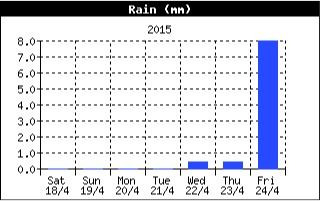
A graph of  the past week's rainfall recorded by a Davis instruments tipping bucket rain gauge.

A graph of the past week’s rainfall recorded by a Davis instruments tipping bucket rain gauge. Check the web-site for lots of cool data.

Only one whale watching boat was observed in the Ecological Reserve, just at dusk, although several headed west and back through Race Channel. One sports fishing boat fished very close to the boundary at Rosedale, but clearly outside. The Life Saving vessel ‘Spirit of Sooke V’ came through middle Channel this afternoon at a very stately pace and then swung around and went in between South and Great Islands and returned to the west.

A pod of at least four Killer Whales passed to the south of Race Rocks, heading west at ~07:00. It was not possible to determine which population and there were probably quite a few more than four. They were quite spread out and moving fairly fast, travelling about half way out to the US/Canada border (yellow can buoy) from Race Rocks. A flock of 23 Black Brandt flew through Middle Channel about the same time, also heading west. The Barn Swallows appear to be staying on the island somewhere; at least they were here bright and early. This place is certainly a haven for an insectivore. I hope they stay.
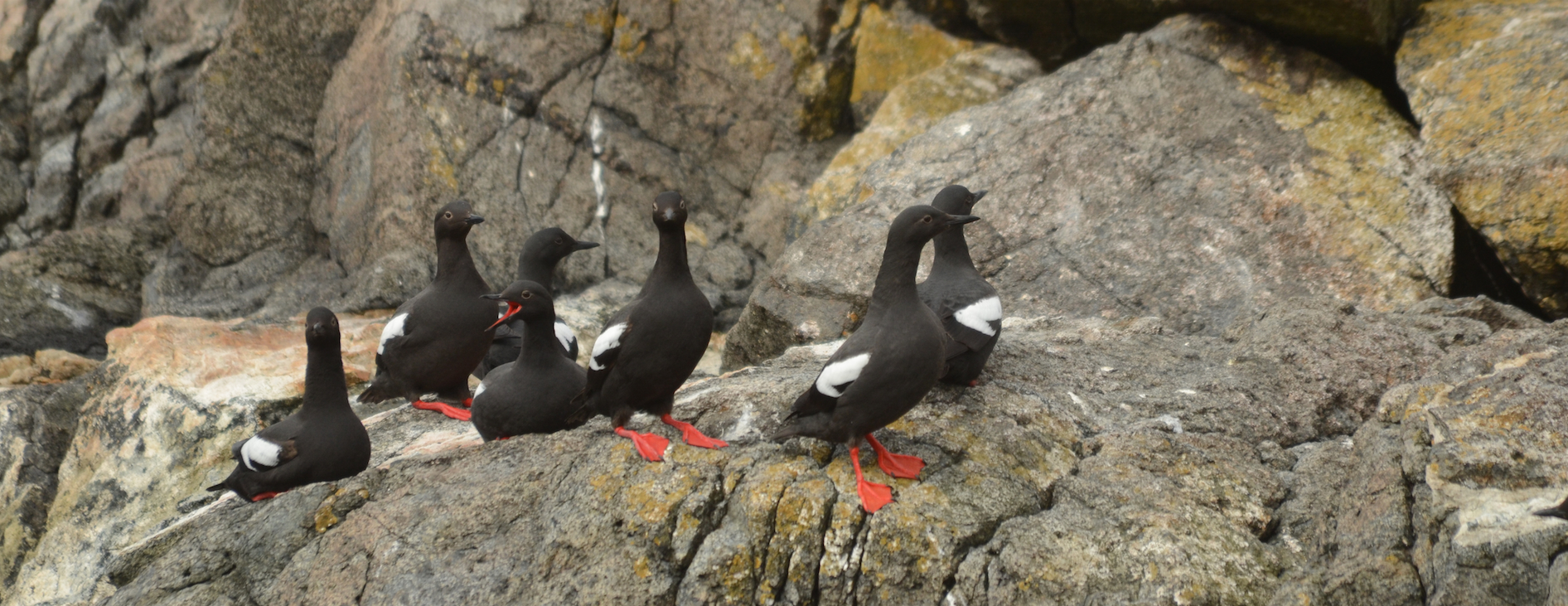
Pigeon Guillemots are members of the auk family, related to murres. They swim underwater using their wings and steer with their feet.
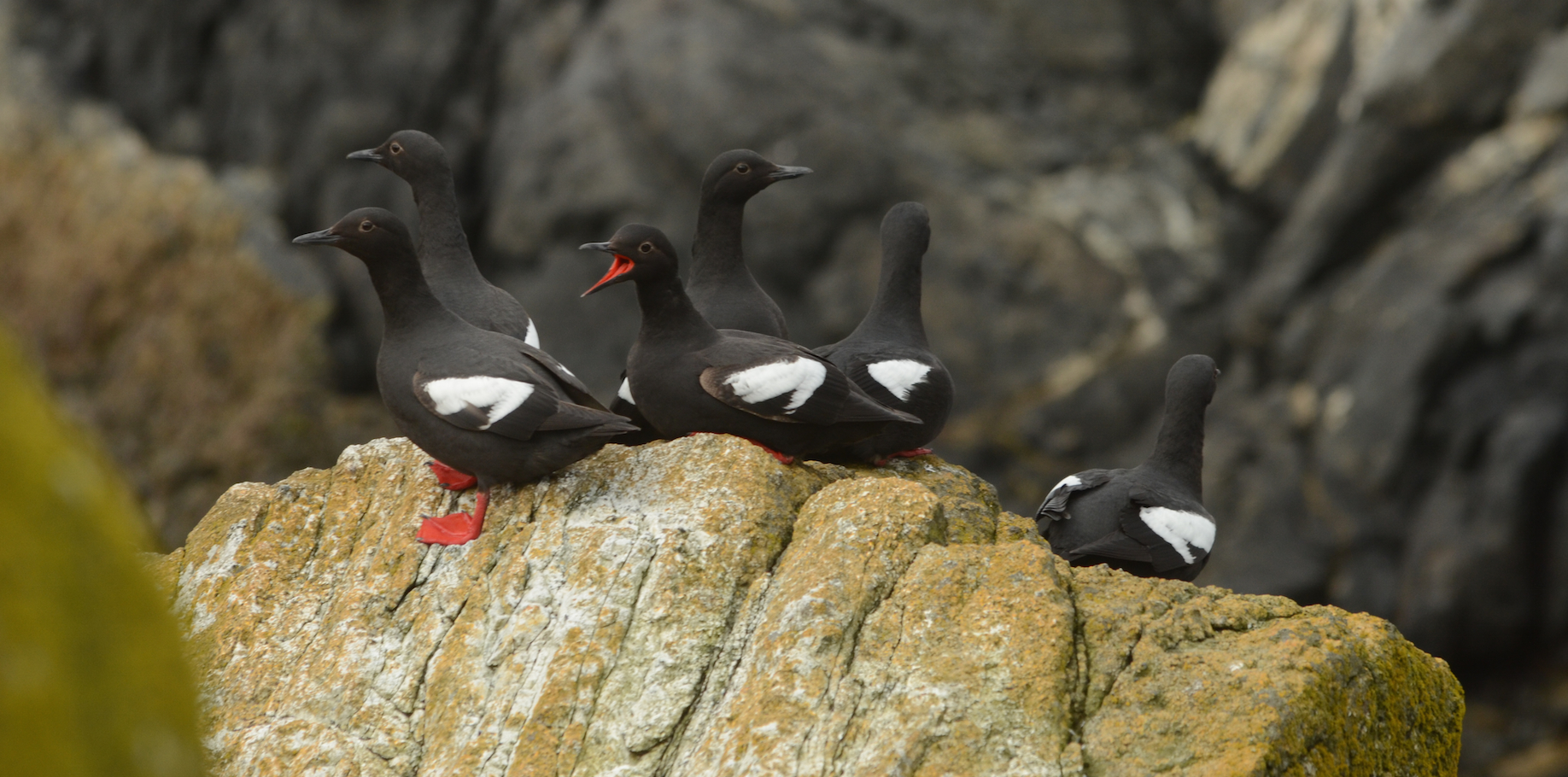
Pigeon Guillemots are members of the auk family, related to murres. They swim underwater using their wings and steer with their feet.


Right now they are in their alternate, or breeding plumage, otherwise in the winter their colouring is more like a winter murre or murrelet with lots of white, gray and dark gray.

Right now they are in their alternate, or breeding plumage, otherwise in the winter their colouring is more like a winter murre or murrelet with lots of white, gray and dark gray.

The Pigeon Guillemots are spending more time on land as spring progreses. These true seabirds are ill equipped for walking with their feet used as rudders for underwater flight, and set far back on their muscular little bodies. I don’t think they are actually nesting yet but certainly getting use to land. Their favorite roosting spots are in the surge channel between the energy building and the science house, on the jetty and its’ upland scree and cliff area and on the little cliffs just southeast of the light-tower.

Now that the winds have settled down, the eagles are back and making determined attempts on the Canada geese. They also spend a considerable time on the pinniped haul-out rocks.

I keep expecting the Harlequin Ducks to leave and head for the mountains, where they nest and lead their summer  lives. There are at least four here still and probably more.
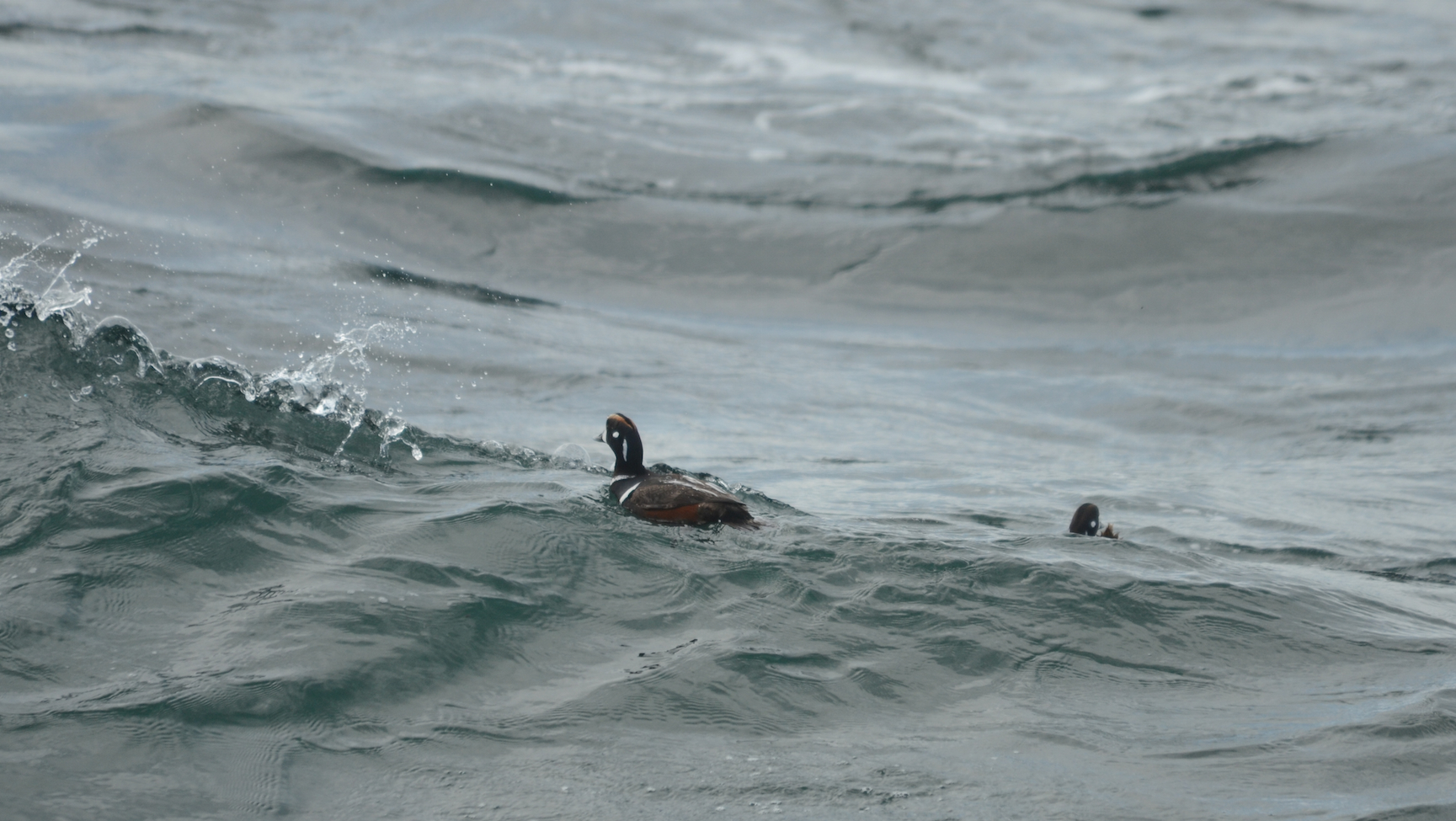
Harlequin Ducks are also supreme under-water swimmers and specialize in white water: in rushing  mountain rivers and streams in breeding season and in the sea the rest of the time.

Harlequin Ducks are also supreme under-water swimmers and specialize in white water: in rushing mountain rivers and streams in breeding season and in the sea the rest of the time.

A new (to me), young, female Northern Elephant Seal joined the Great Race elephant seal group today bringing the total to nine, five males and four females. #5850, the three year old male, embraced the new female (literally) and although he is the smallest of the males on the island, while the other males were practicing their jousting he had his ‘pinky’ out and was snuggling up to the new arrival. It is the first time I have seen seals hold ‘hands’.

A student group is arrived just before dinner and are staying over. They will be part of a first year biology field trip that will be here most of tomorrow. Work was routine today but the day was anything but routine. Amazing place.
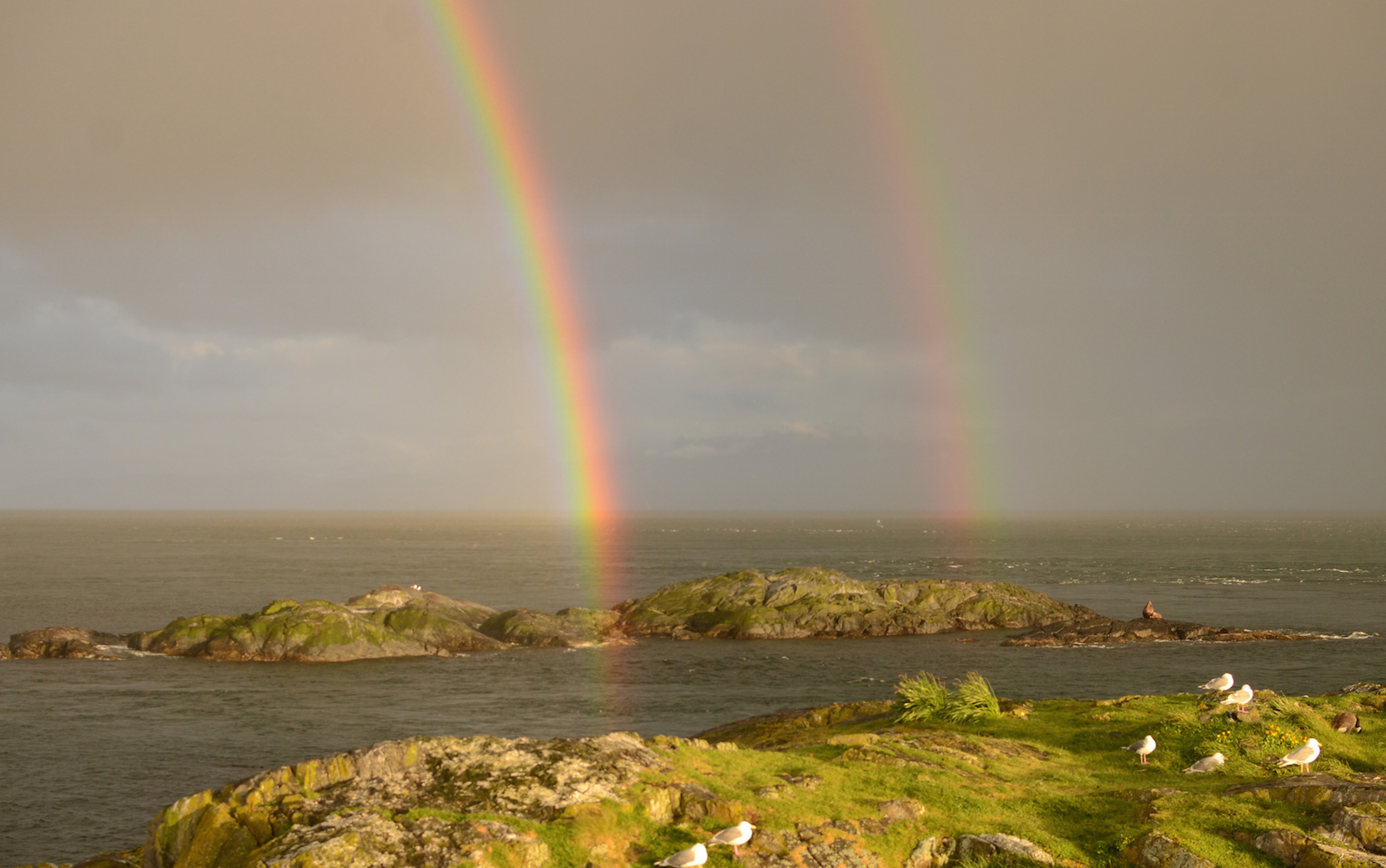
double rainbow

The Day After Blue Planet Day

Winds started out very light from a northerly direction and eventually backed all the way through east, southeast and around to westerlies, 15 to 20 knots and gusting, in the afternoon. Although there were some clouds and showers it seemed to be a nice day, but when you look at cumulative solar radiation values they were less than half of yesterday’s values at just below 300 Langleys. The barometer fell gradually all day and levelled out near dusk ending up at ~100.5 HPa. The strong wind warning remains in effect and is forecast to be strongest in the afternoons for the next few days.

Whale watching boats were back today after the storm subsided and four were observed in the Ecological Reserve. They were meeting and exceeding the Marine Mammal Regulations and although a couple of the smaller cowboys did manage to get between Great Race and South Islands. They were going so slowly and cautiously that the sealions that didn’t even wake up as the boats passed by.

No sports fishers or other vessels were observed in the ER.

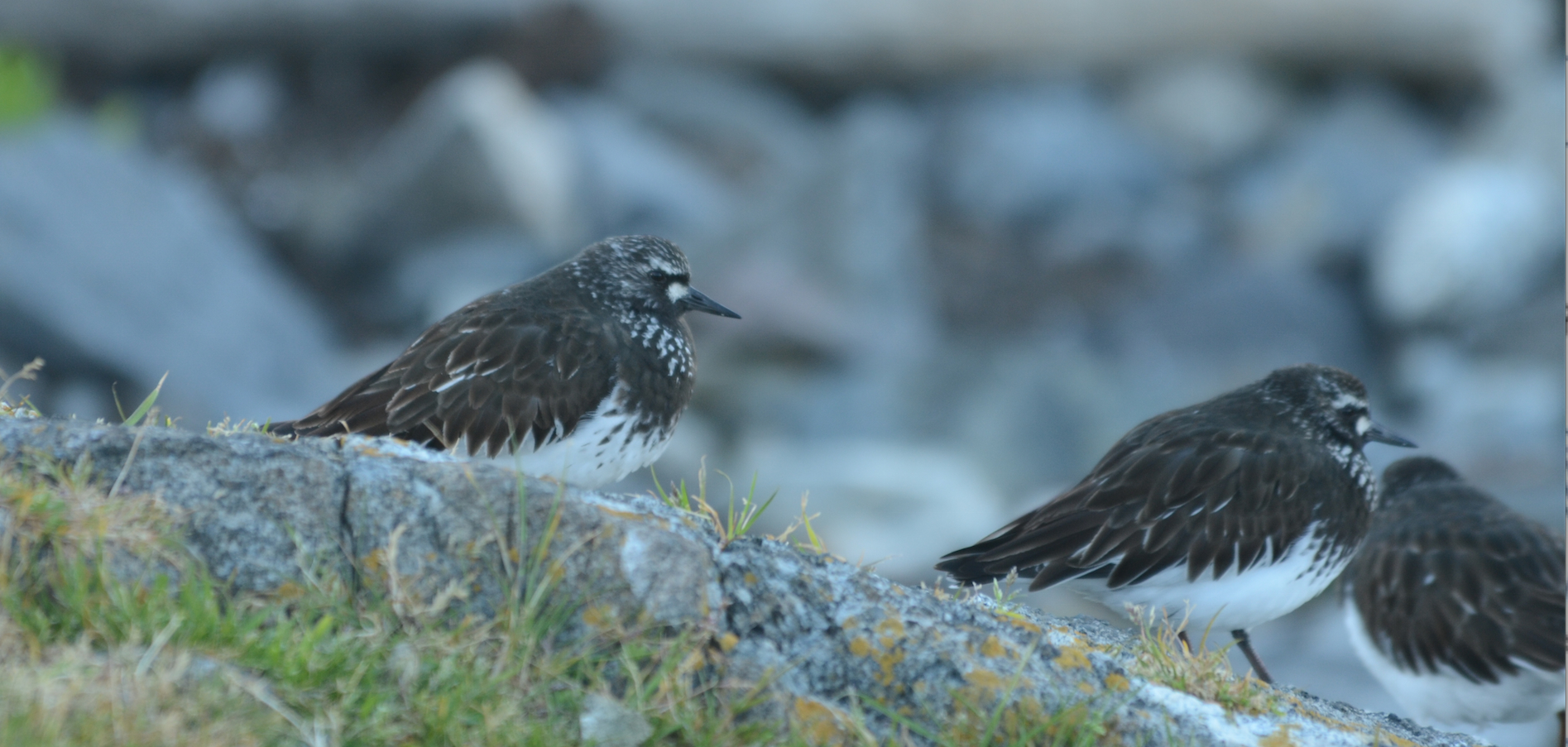
Black Turnstones in all their summer finery.

Black Turnstones in all their summer finery.

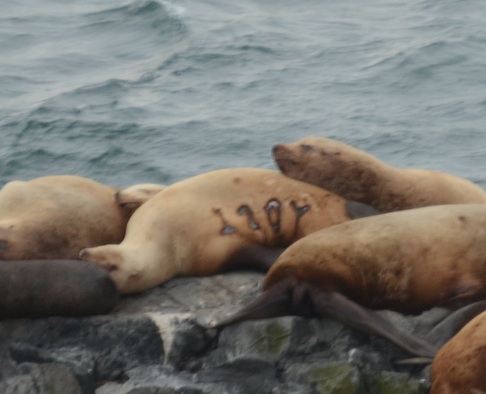
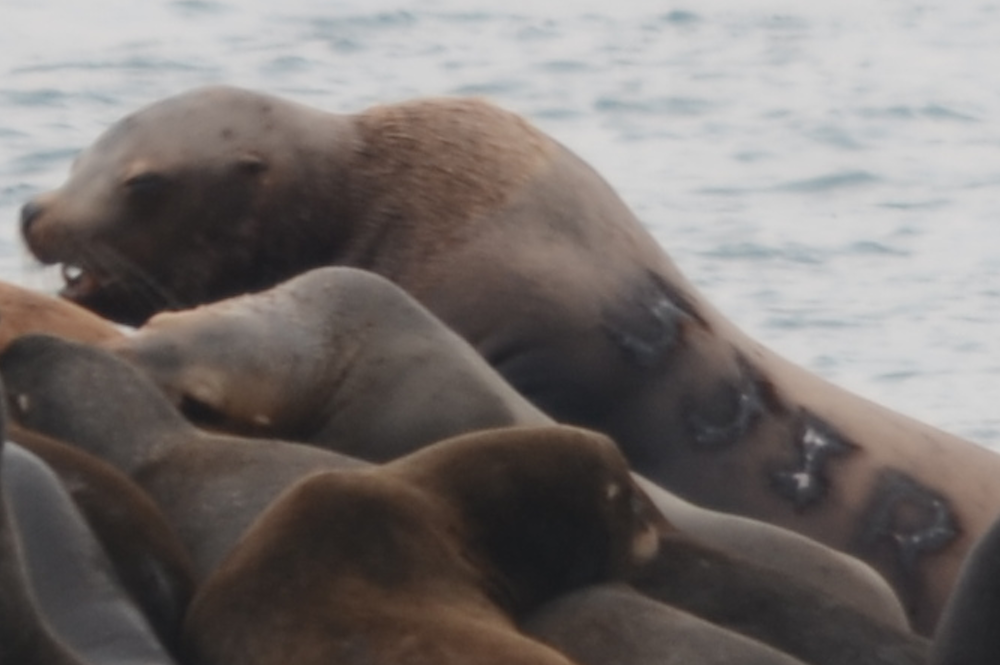
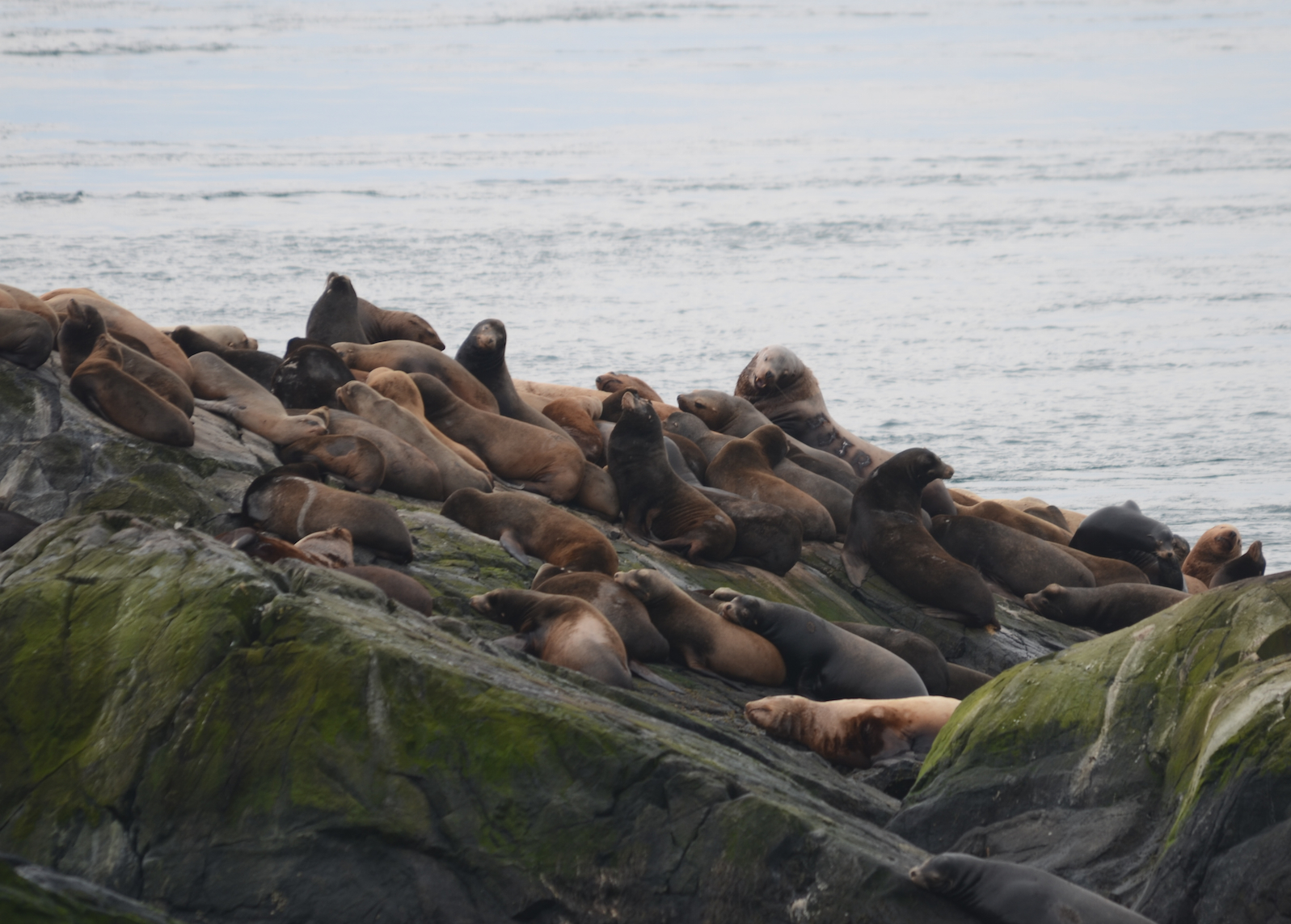
One branded Steller’s Sealion was noted hauled out on the South Islands. This female with brand # 120Y was born at St. George Reef, California in 2002.

Female Steller's (or Northern) Sealion # 120Y. This animal was born in northern California and will be 13 years old this summer.

Female Steller’s (or Northern) Sealion # 120Y. This animal was born in northern California and will be 13 years old this summer.

Today was animal census day and the results are as follows:

Northern Elephant Seals 34 (8 on Great Race)

Harbour Seals 44 (note 137 counted following day, less windy)

California Sea lions 11

Northern Sea lions 38

Sea Otter 1

Canada Geese 18

Harlequin Ducks 4

Pelagic Cormorants 4

Double Crested Cormorants 5

Bald Eagle 2 adults, 2 sub-adults

Killdeer 1

Black Oystercatchers 10

Black Turnstones 15

Surfbird 23

Dunlin 4

Pigeon Guillemots 383

Glaucous-winged Gulls 488 adults 18 sub-adults

Caspian Tern 1 (flying through)

Common Raven 1

Barn Swallows 2

Savannah Sparrow 6

There were no visitors today. Chores were routine.


All About the Wind.

The west wind blew all night and by daylight, the 30 to 35 knot winds had sucked in low cloud, rain and rough seas from offshore. Winds increased to 35 gusting to 40 knots in the late morning and continued unabated all afternoon. Air temperature was close to yesterday’s sea surface temperature of 9.7 o C and with the wind chill was hovering around 4oC. Light levels were the lowest of the last week and not even 60% of yesterday. The barometer bottomed out just before midnight last night and has been slowly creeping up and out of its hole today. Gale warnings remain in effect for tomorrow with the wind predicted to turn southeast Thursday.

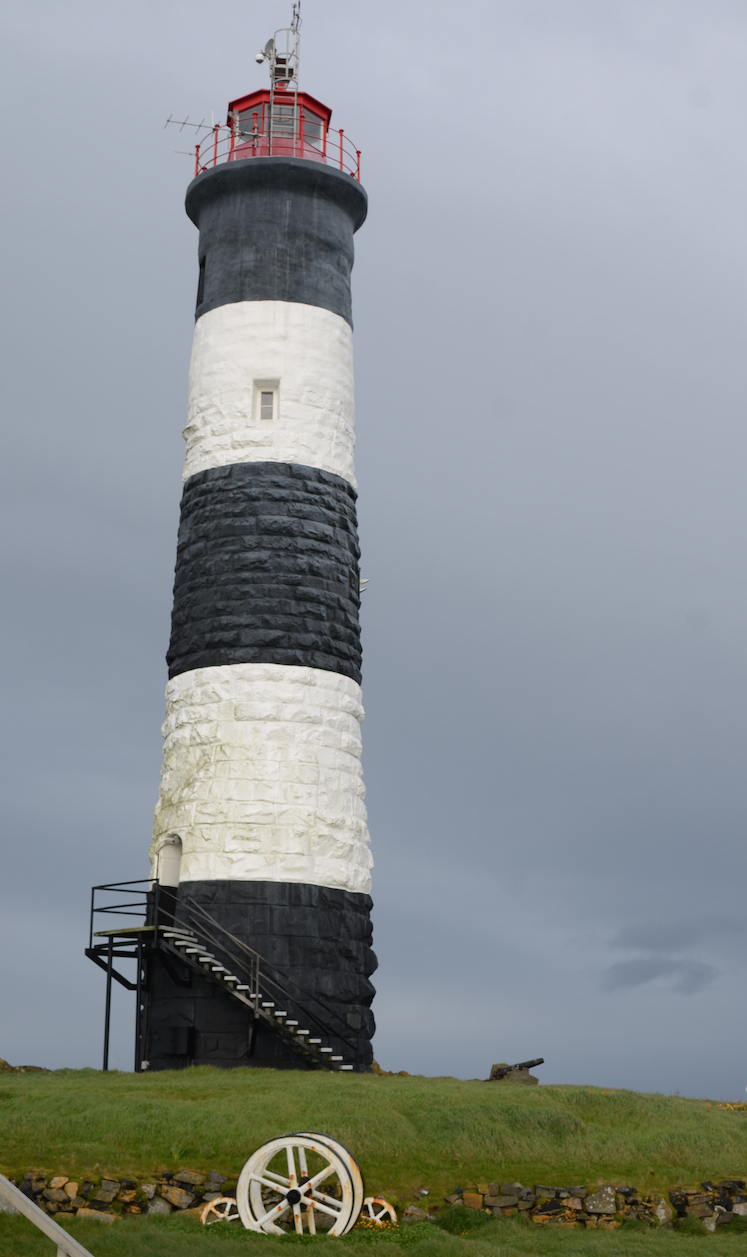
The only thing not affected by the wind today was the stone tower.

Standing firm after 155 years.

Standing firm after 155 years.

There were no whale-watching tour boats in the Ecological Reserve today. Sea conditions were not conducive.

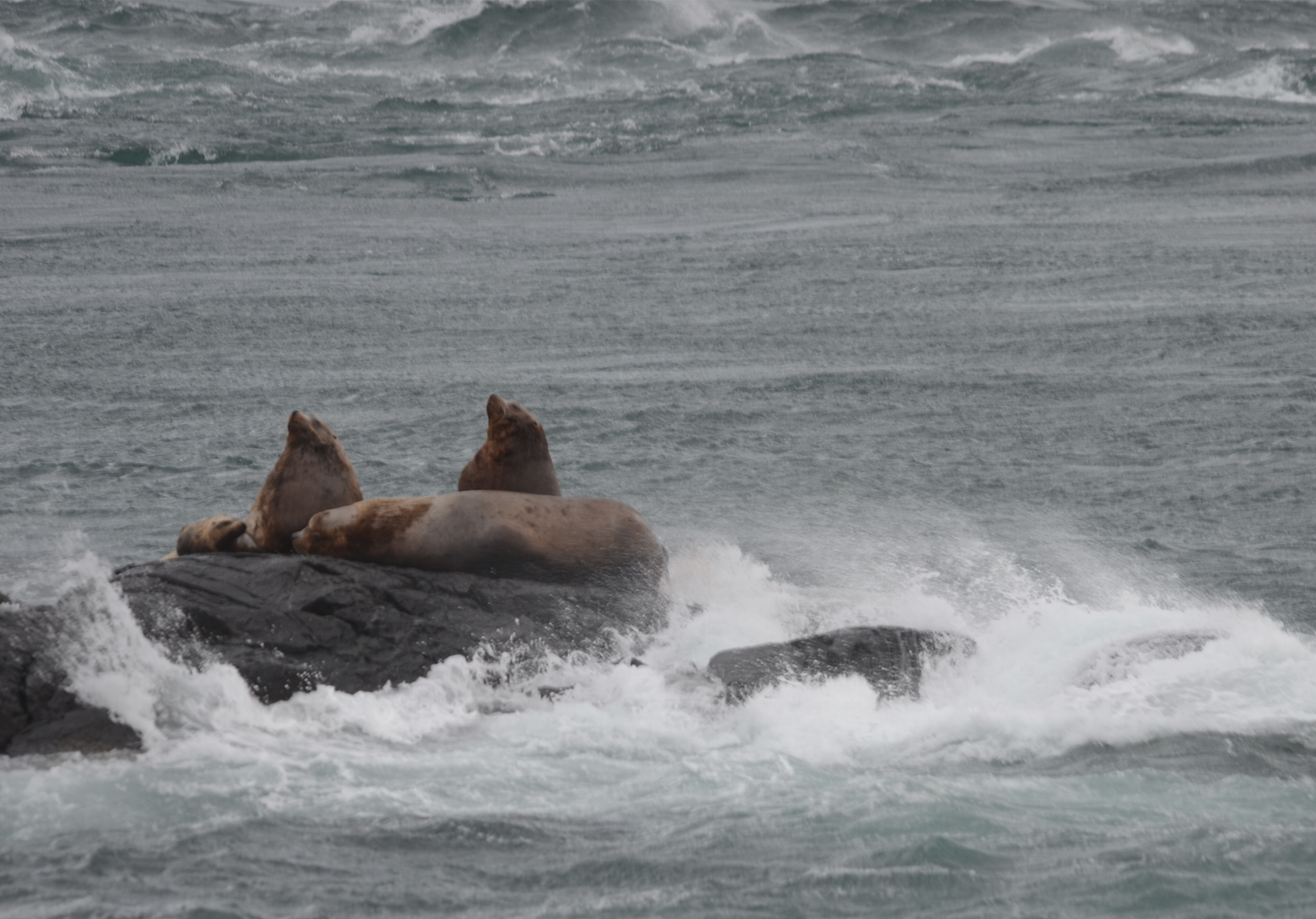
The ecological focus today was to observe how the mega-fauna behaved in the wind. Only a few sealions hauled out, the remainder rested in the water near the haul-out where it was probably quite a bit warmer without the wind chill factor.

This is a day when having blubber really makes sense.

This is a day when having blubber really makes sense.

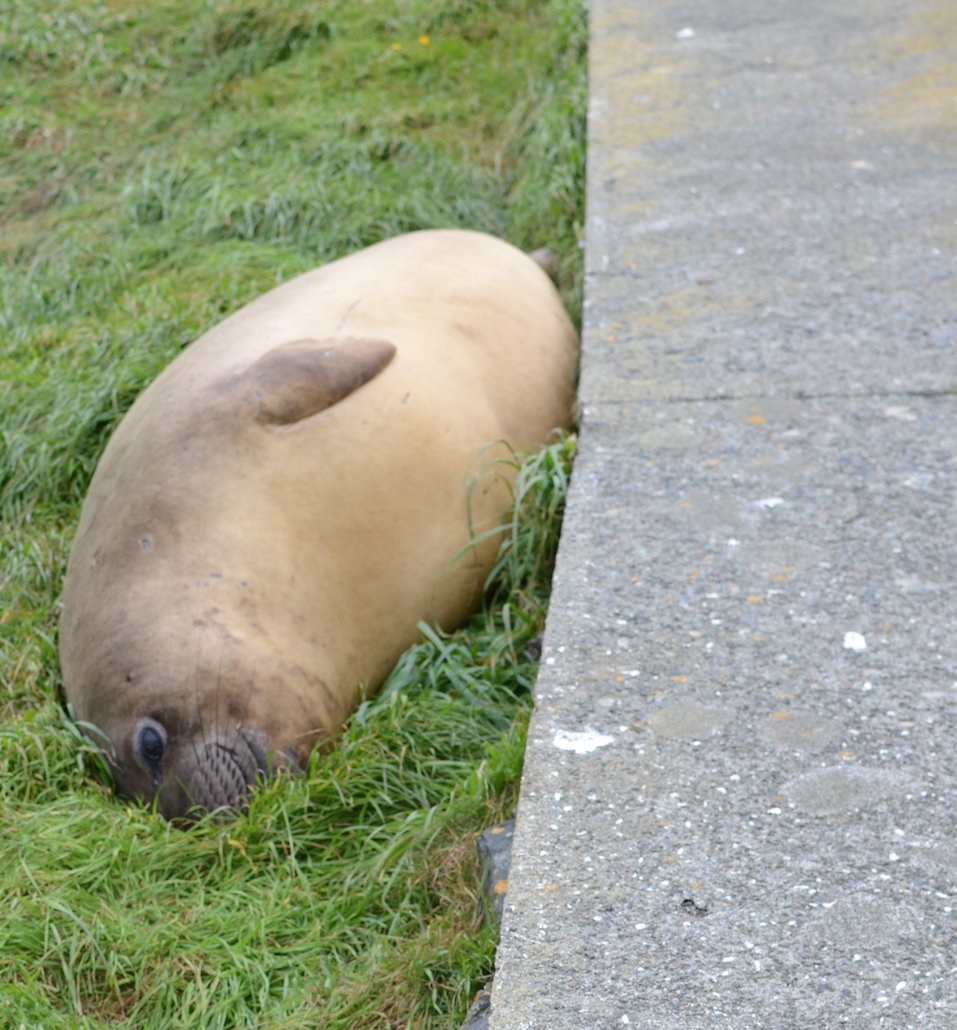
The Northern Elephant Seals made a huddle and “took turns” being in the coveted central, heating position. One female slept off by herself, maybe not quite as warm but definitely more peaceful. Only #5850 went for daily ablutions, the others stayed dry, even if a bit mucky.

Female Northern Elephant Seal huddles up to sidewalk.

Northern Elephant Seal huddles up to sidewalk.

Glaucous-winged Gulls hunkered down with heads under wings, keeping a low profile and perhaps holding on with their toenails, as they seemed to totter and grimace during the big gusts. The geese with nests were on them with ganders close by guarding and staying low. The three pairs that are still trying to set up nests were observed chasing gulls . The Bald Eagles, so ubiquitous every other day for the last 25 days, were nowhere to be seen, nor were oystercatchers, turnstones, nor guillemots.

GwGu in wind

Two marine science classes were supposed to visit today but the weather just didn’t cooperate and Courtney wisely cancelled the trips. Thus there were no visitors and chores were basic routine.


Smokey Skies

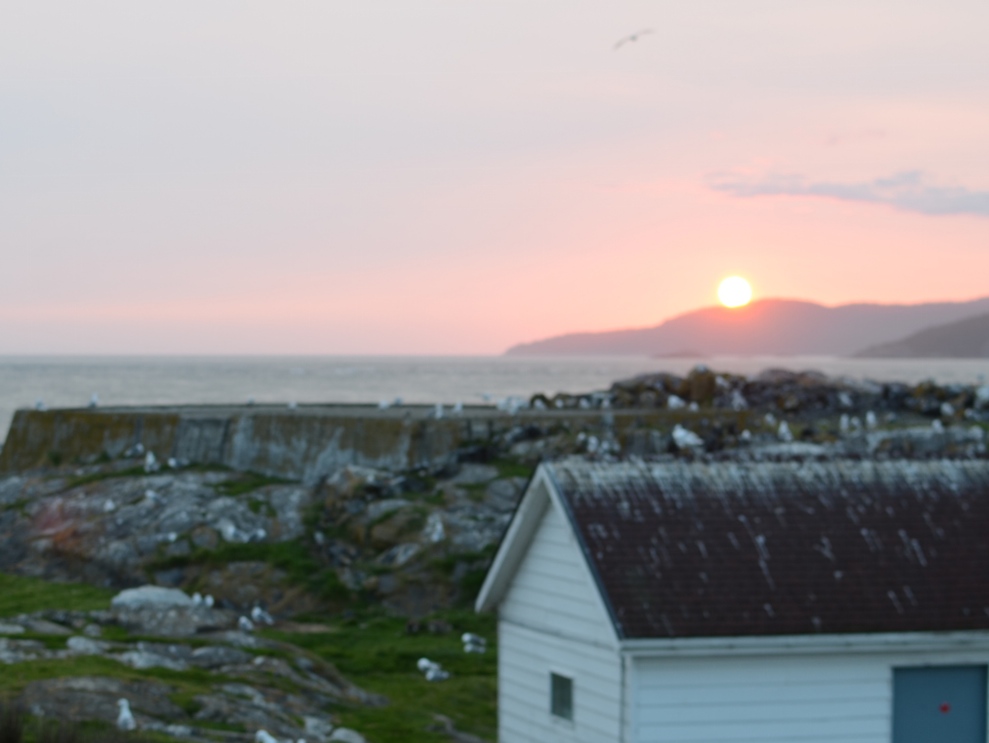
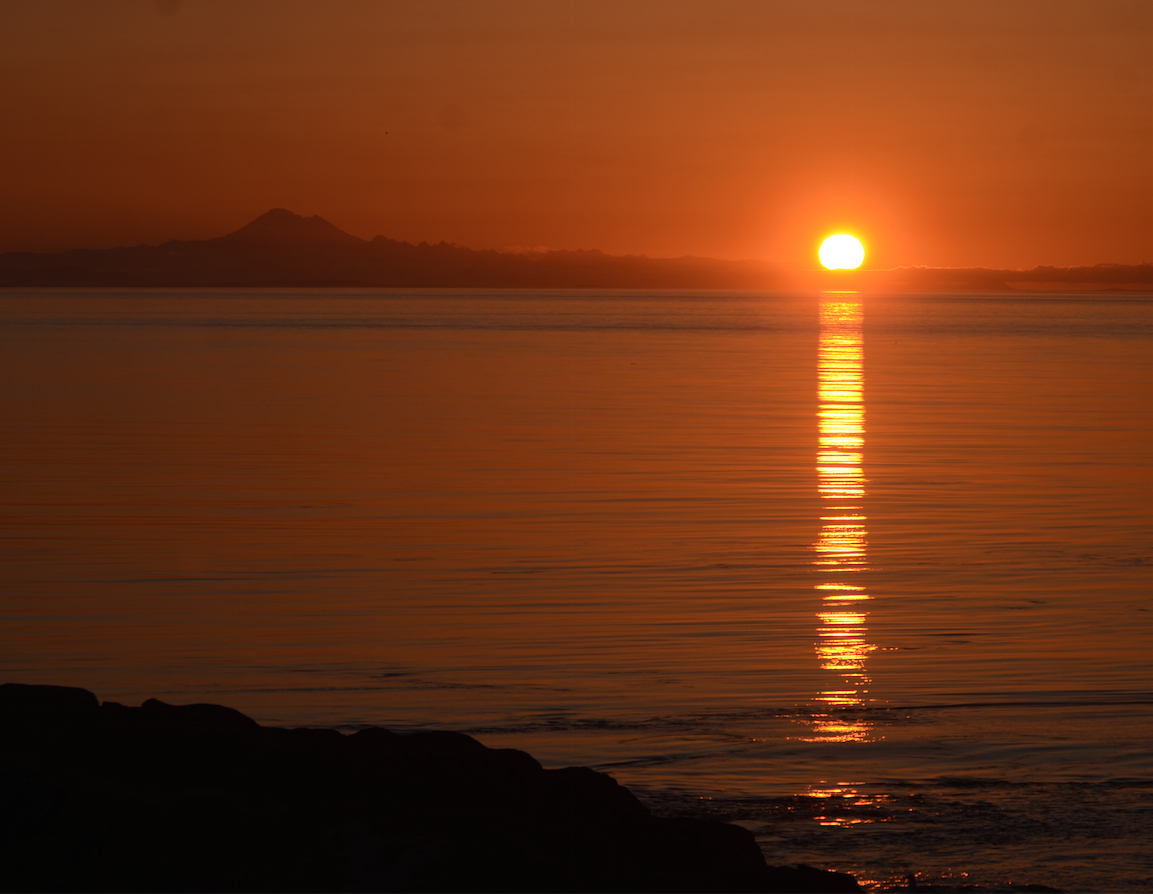
The wind was still, early this morning. It didn’t really start moving until mid-afternoon, 5 – 10 knots from an east-southeastly direction. Although it was sunny, there was a haze in the air that made for a blazing sunset last night and sunrise today. I am curious if this is smoke, all the way from Squamish, where there was a big creosote wharf fire a few days ago?

sunset

Are these red skies in the evening and the morning a result of the Squamish wharf fire?

Are these red skies in the evening and the morning a result of the Squamish wharf fire?

The barometer rose slowly until about noon and then it started to slowly fall, nothing dramatic and no strong winds. The forecast is for more of the same, with afternoon westerlies tomorrow.

Three whale watching boat were noted in the Ecological Reserve today. The last whale watching vessel of the day, idled slowly through, keeping a deferential distance away from the animals, Tourists were out on the bow, shooting pictures of the blazing sunset and lounging marine mammals. It was a tranquil scene. No sports fishers were observed either speeding in the Ecological Reserve or fishing in the closed area, although several passed through at speeds respectful of the wildlife in the area.

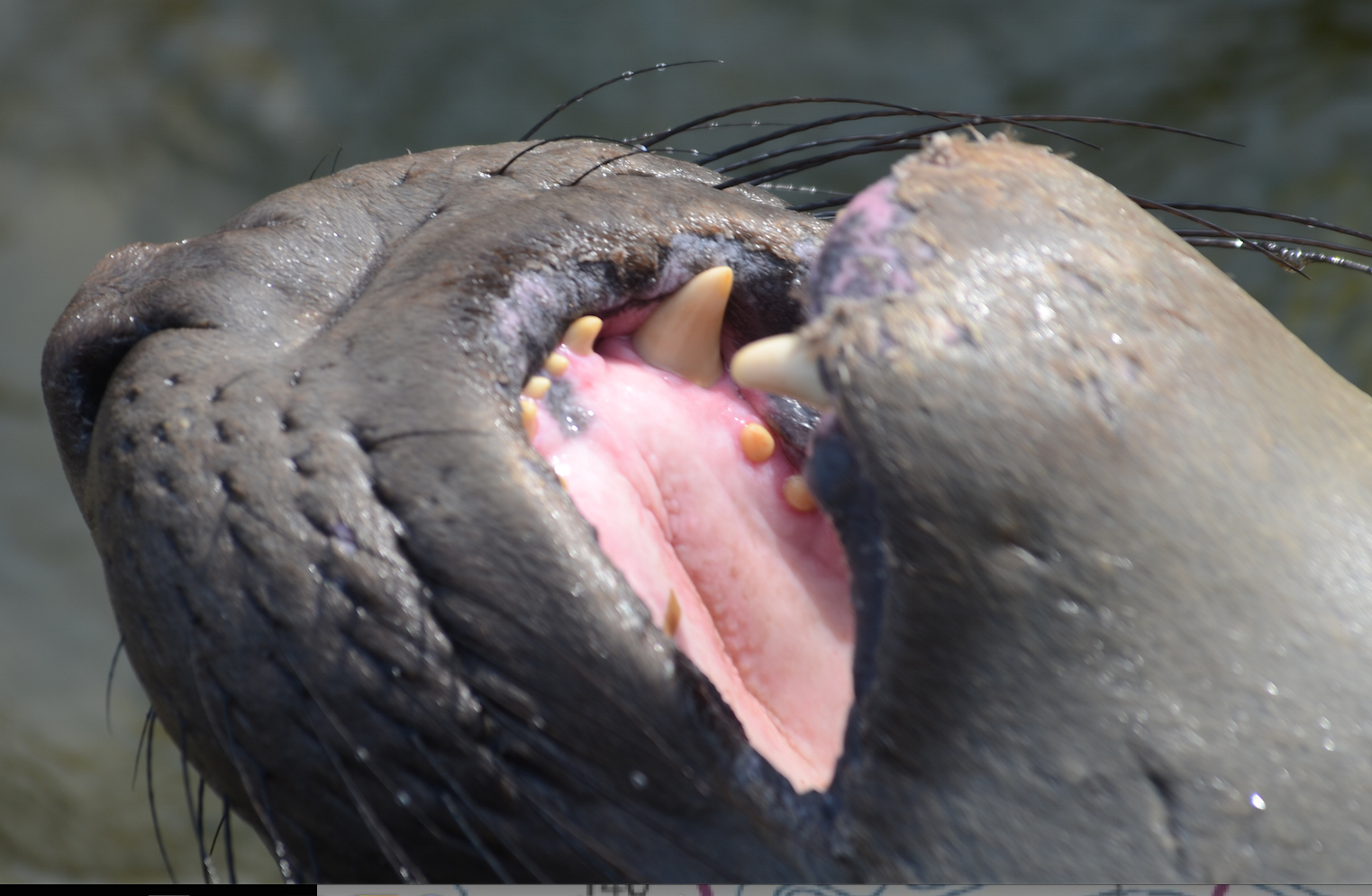
Passive Northern Elephant Seal data collection continued. As luck would have it, all seven animals that had been sleeping in the garden, woke up and decided to go for a swim late morning. This allowed me to take their photos as they passed by the measuring device. I was also able to get some photos inside mouths for dentition information while they were wallowing around gargling saltwater and ‘wrestling’. Tagged animal #5850 continues to hang out as one of the seven ‘gardeners’.

Dentition changes with age and can be a health indicator. Say ah.

Dentition changes with age and can be a health indicator. Say ah….

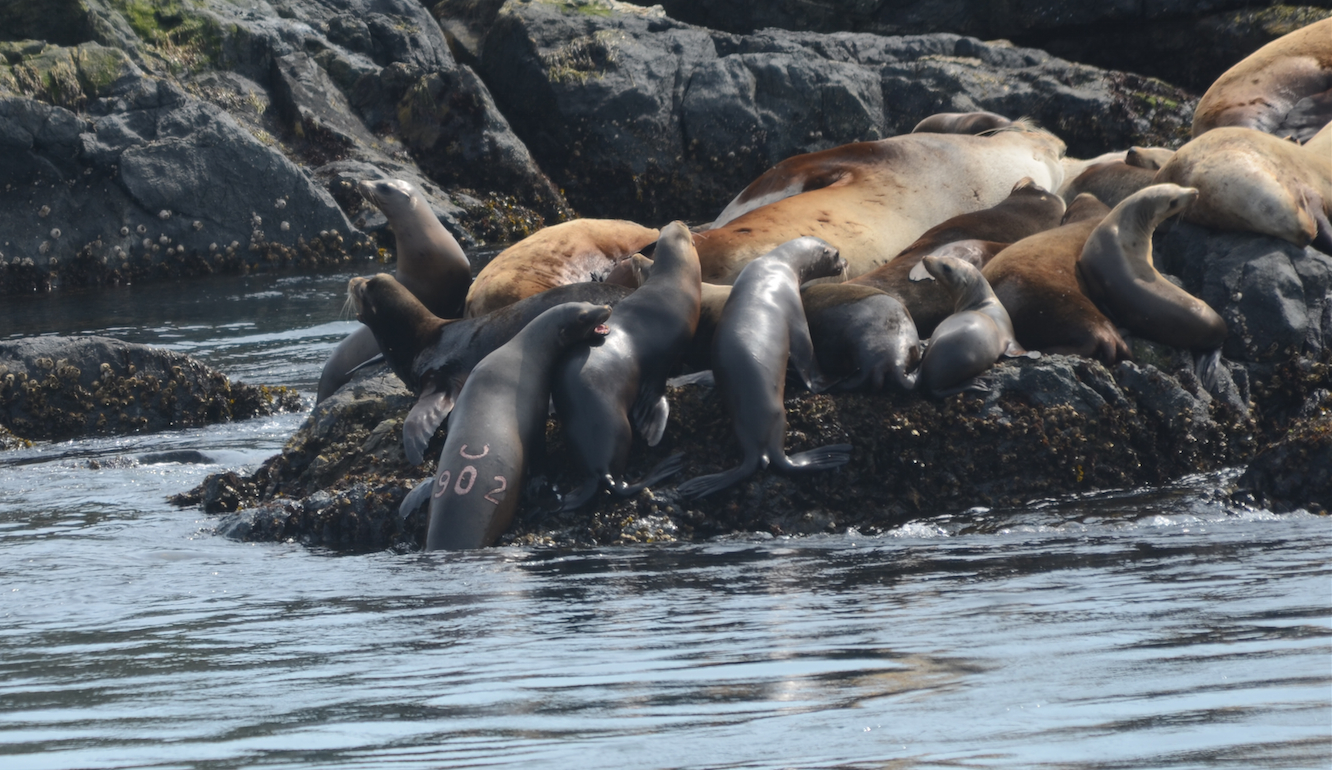
A branded and tagged California Sealion # U 902 was noted hauling out on South Islets this afternoon. Note the large range of sizes of both species.

California Sealion branded and tagged U902 also read as C902 C is for the mouth of he Columbia River where it was born.

California Sealion branded and tagged U902 (lower left) can also be read as C902. C is for the mouth of he Columbia River, where it was born.


There are still three pairs of Canada Geese trying to establish nest sites and they are having a hard time finding territories on this tiny island that already has at least nine Canada Goose nests. Maybe they will head over to Vancouver Island where there is more room. Their territoriality can get in the way of other species having a piece of the very small island as they chase off, not just each other, but Glaucous-winged Gulls, Black Oystercatchers and Pigeon Guillemots.

There were no visitors today. Maintenance chores were routine.  About 9:30 PM the phone/Internet went down for the seventh time since I arrived. Even that is becoming routine.

Bald Eagle versus Canada Goose

Today’s weather was a mixed bag. Early on there was thick fog, which thinned by dawn and cleared in the early morning. Then for a short time it was glorious and fairly calm with winds westerly up to 15 knots. The westerly wind doubled in the early afternoon and by 4:00 PM it was gusting well over 35 knots in the tower. On radio watch for the afternoon’s activities, I kept a weather eye on Pearson College sailing vessel Amatuana as she was blown across to Victoria in no time flat. Nicely done.

Only one whale watching boat was noted in the Ecological Reserve today and when I finally spotted them, they were pounding out through wind and tide towards Race Passage. Their sound alerted me to their presence.

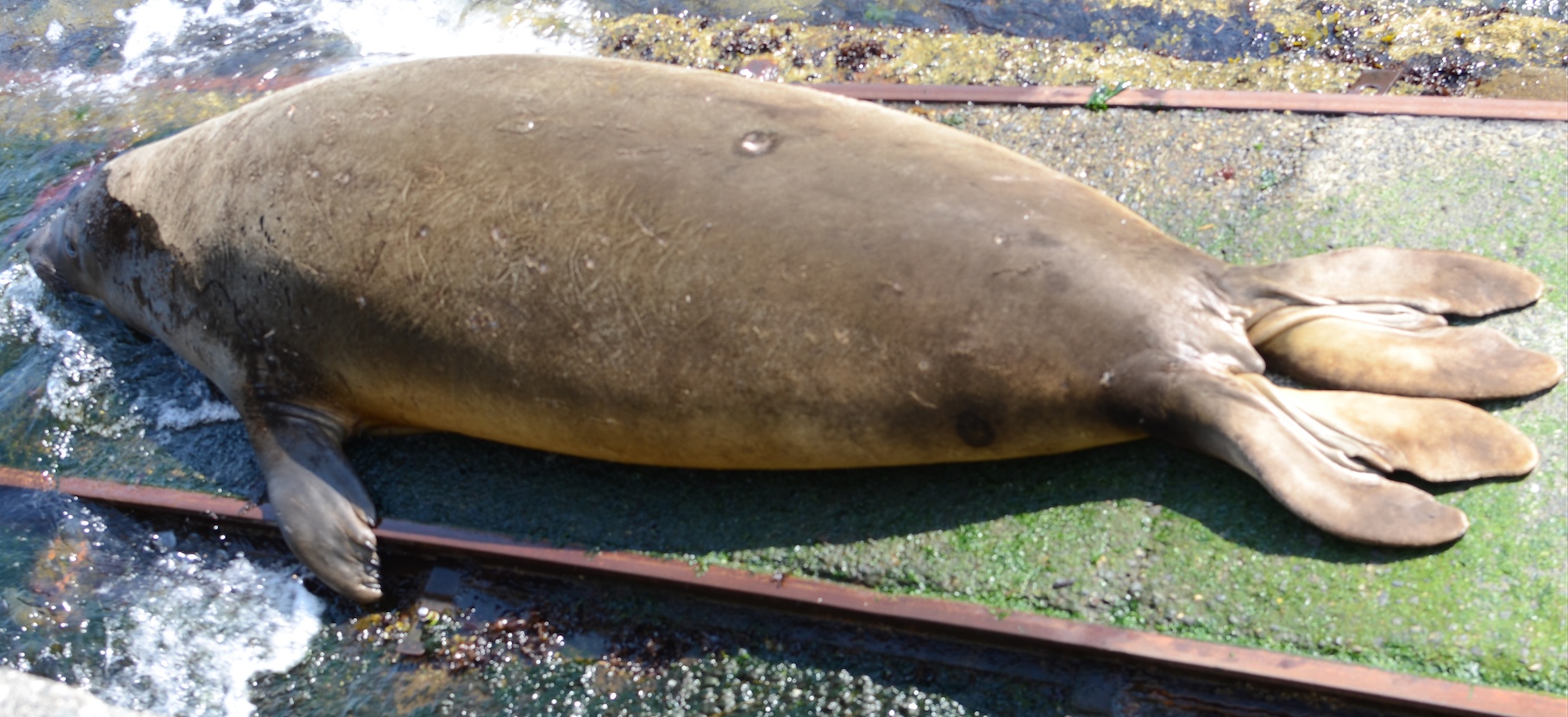
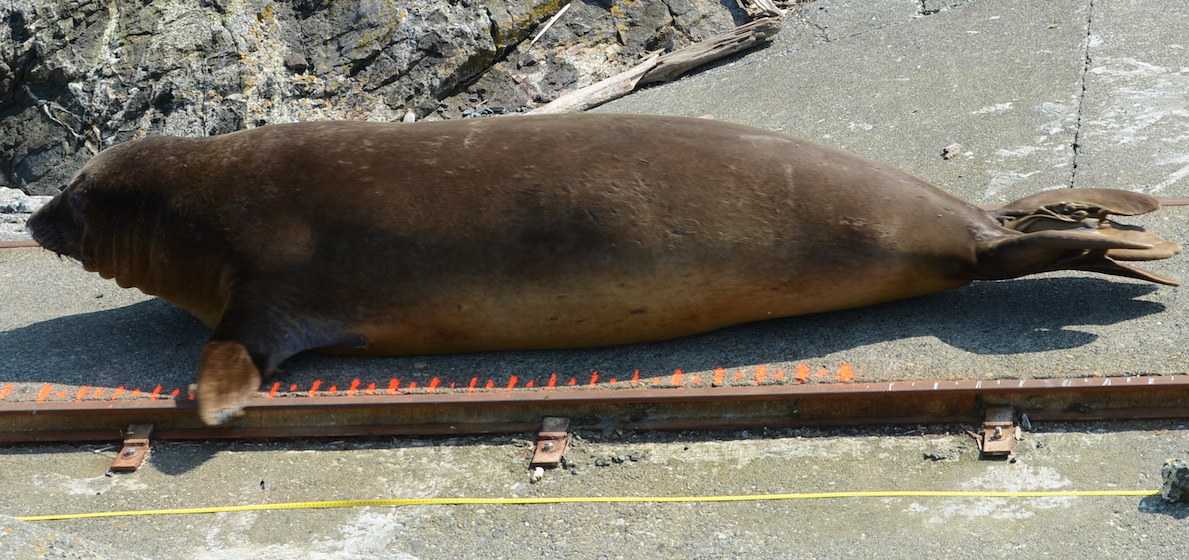
The Northern Elephant Seals are starting to moult and data collection on basic biological parameters began today including non-invasive, length measurements using the marine railway as a big meter stick.


If only this female were lying next to a big ruler, we would have a complete data set on her for April 17, 2015.

If only this female were lying next to a big ruler, we would have a complete data set on her for April 17, 2015.

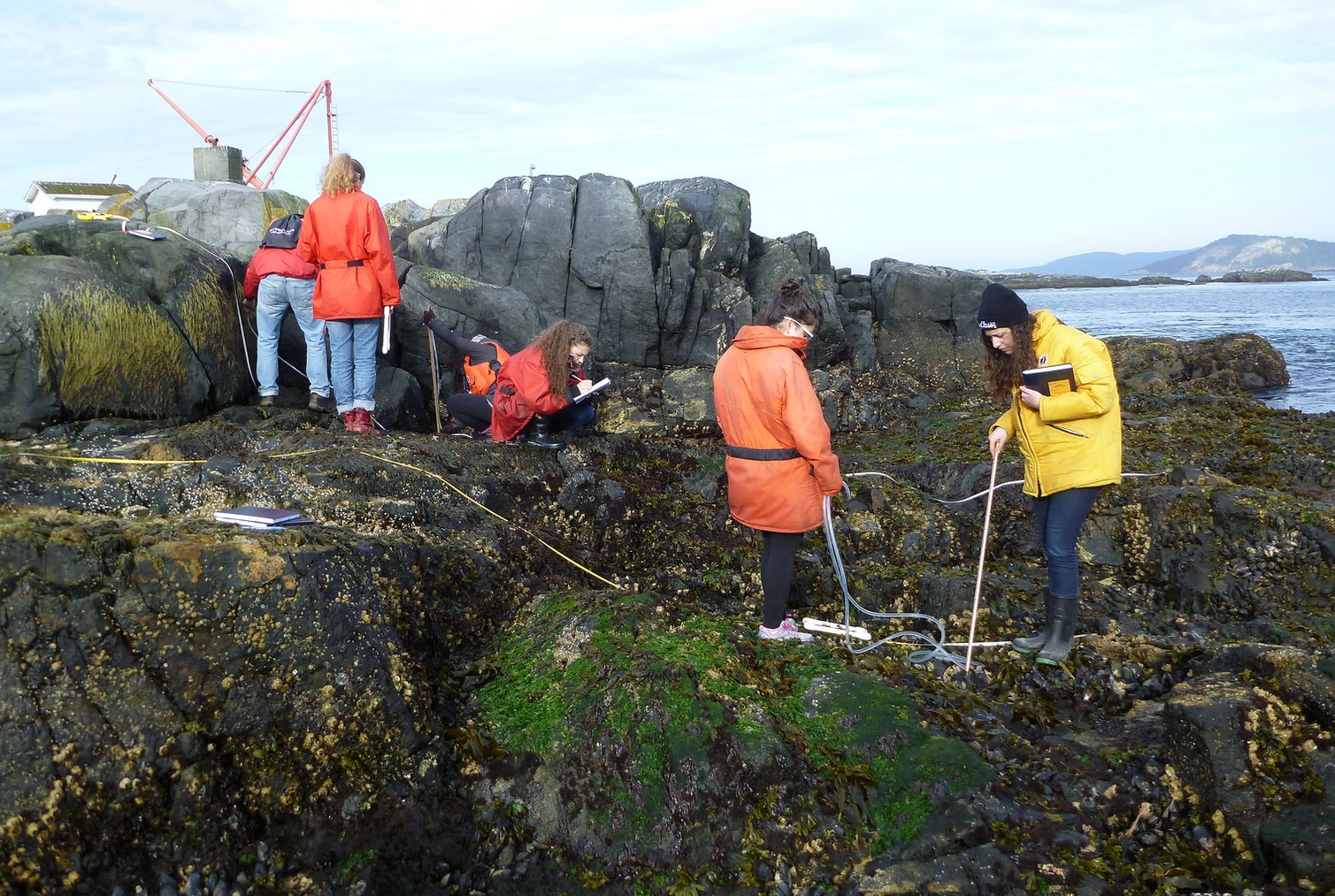
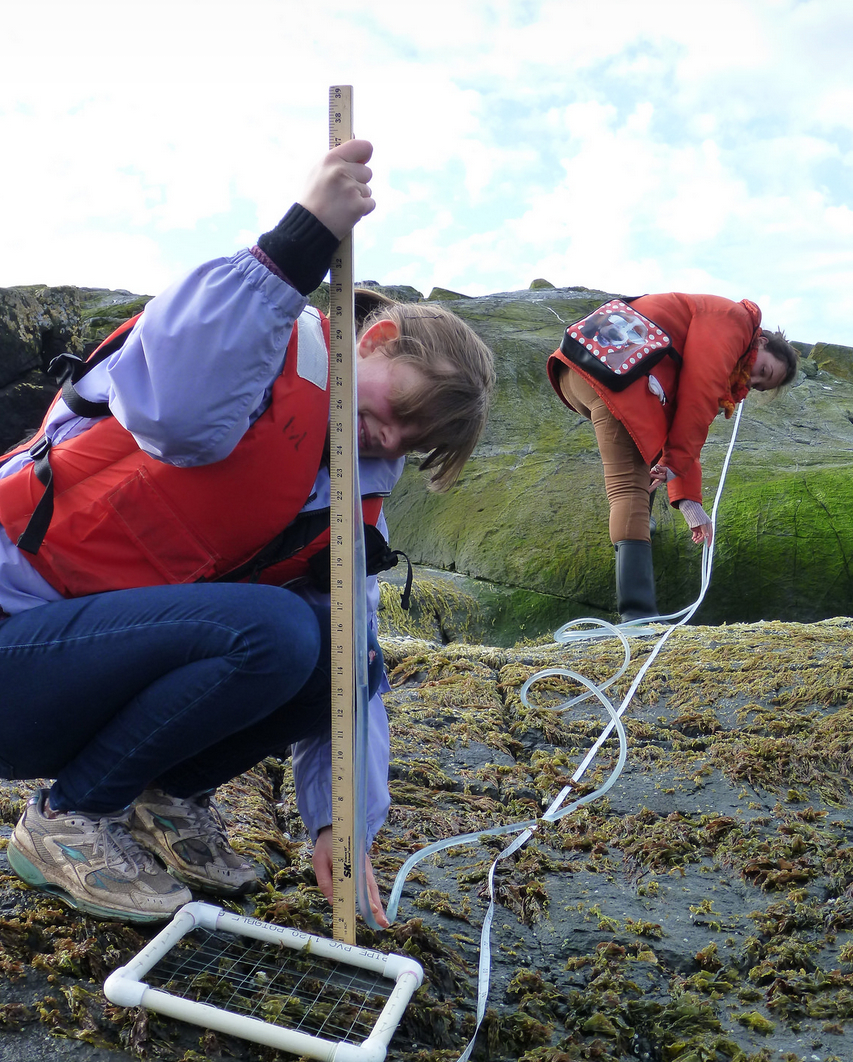
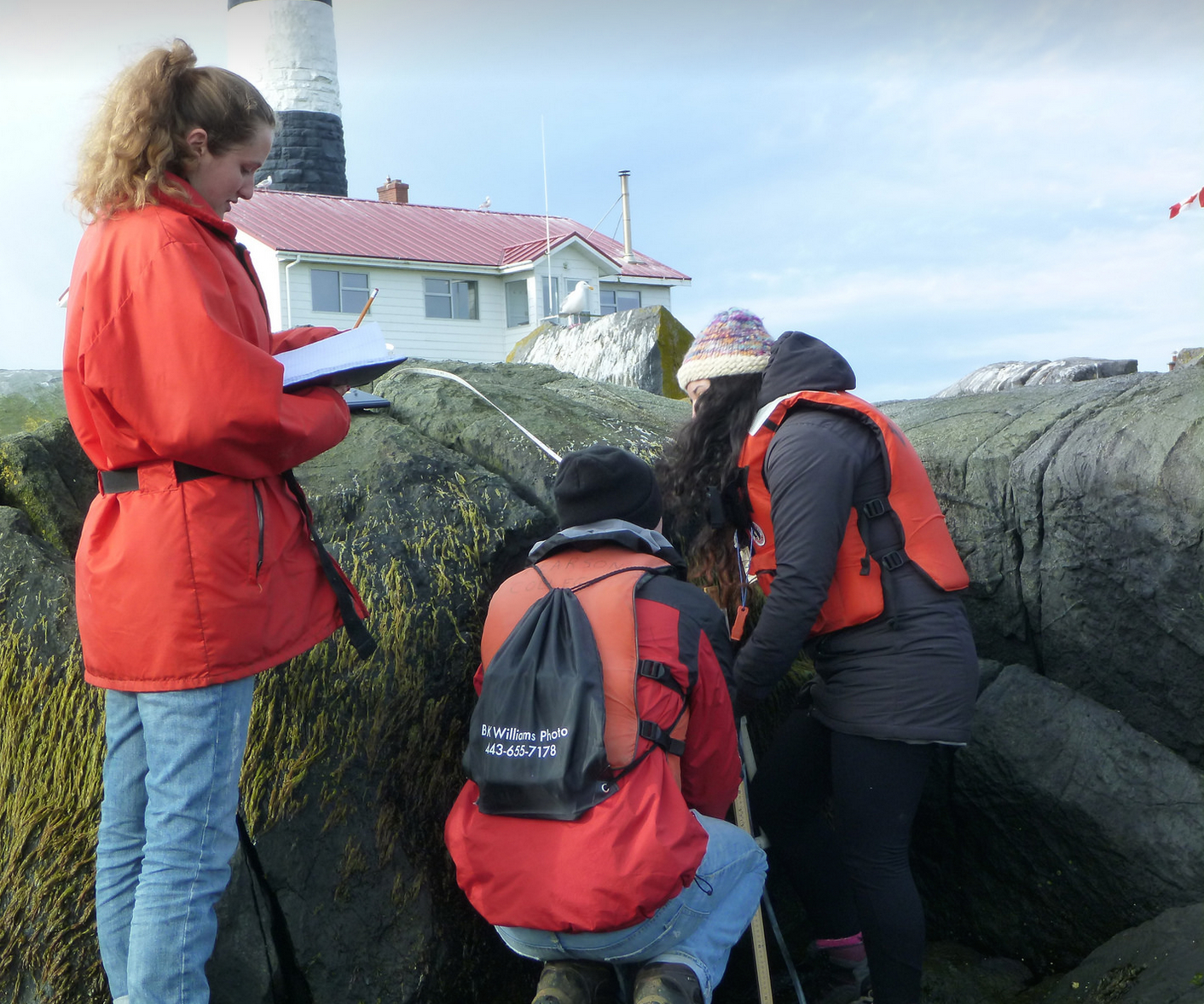
There were 14 visitors first thing this morning. Courtney, driving Second Nature, brought out one of Laura’s first year, marine science classes. It was an early start for these  students but they had breakfast en route and were very efficient on shore. They did a quantitative, community ecology activity on the low tide. They were trying to determine if and how the diversity, abundance and distribution of intertidal macro-biota changed with vertical height. They used water levels to measure vertical height, (an ancient Egyptian leveling technique based on the fact that water will always find its’ own level), transect lines to position sampling and quadrats to focus sampling efforts. These photos of the students, were all taken by Laura Verhegge.

First year marine science students from around the world learn science experientially at Lester B. Pearson College of the Pacific.

First year marine science students from around the world learn science experientially at Lester B. Pearson College of the Pacific.

Catriona and Claudia demonstrate skill and teamwork using the waterlevel to measure vertical height ti the next sample.

Catriona and Claudia demonstrate skill and teamwork using the water-level to measure vertical height to the next sample.


tella, Connor and Tamara discover the intricacies of inter-tidal life.

Stella, Connor and Tamara discover the intricacies of inter-tidal life.

Courtney is a big fan of elephant seals and so she was keen to help with the first elephant seal measurements this morning and assisted in working out a way for one person to measure the elephant seals without disturbing them. As of this afternoon the marine railway is the new ruler and first measurements made of a young male were very close to those made earlier with a laser, measuring device. The laser technique required two people, two long boards, a right angle check and eye safety protocols. The laser technique had potential to bother the animal (if it was awake). The new technique is passive, non-invasive and non-threatening.


Male elephant seal entering the "measuring device".

Male elephant seal entering the “measuring device”.

I saw a juvenile Bald Eagle attack a goose sitting on her nest today. I had suspected this was going on but good to verify. The eagle might have been successful with back-up, but the gander flew in and together with the goose, drove the eagle off. You can guess who I was cheering for. I know it is not science but there is no hockey out here and I am Canadian, eh.


A Stellar Day

Calm seas, sunshine and light winds combined to make it a very pleasant day. The wind really didn’t do much and direction changed throughout the day from west to southeast and back again. There was enough sunshine  to power the solar panels, run the de-salinator  and build up the batteries. The barometer declined slowly all day after a high start and the forecast is for a mix of sun and cloud tomorrow with a strong westerly winds predicted.

Two whale watching boats used the Ecological Reserve today.   From where they were, I am guessing that they enjoyed the pinnipeds and sea otter as well as the birds. Several sports fishing boats transited through at high speed and one fished close to the boundary.

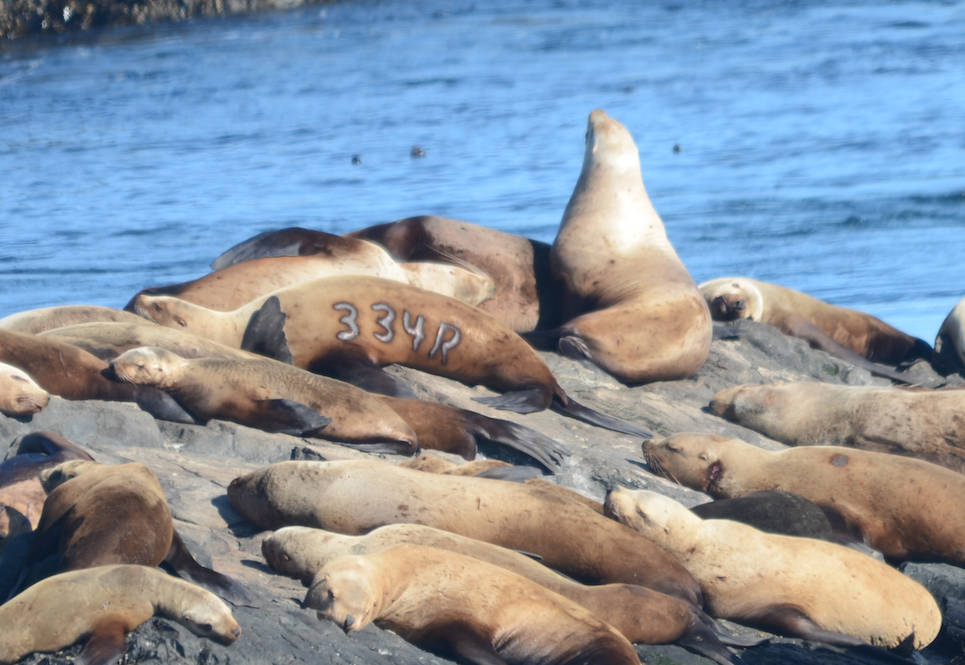
Female Steller’s or Northern Sealion #334R was photographed today. She was branded as a pup in July 2003 at Rogue Reef in  southern Oregon.

Northern or Steller's Sealions hauled out on South Islets,  a female born in southern Oregon, branded with #334R is visible.

Steller’s Sealions hauled out on South Islets, a female born in southern Oregon in 2003, and branded with #334R is visible.

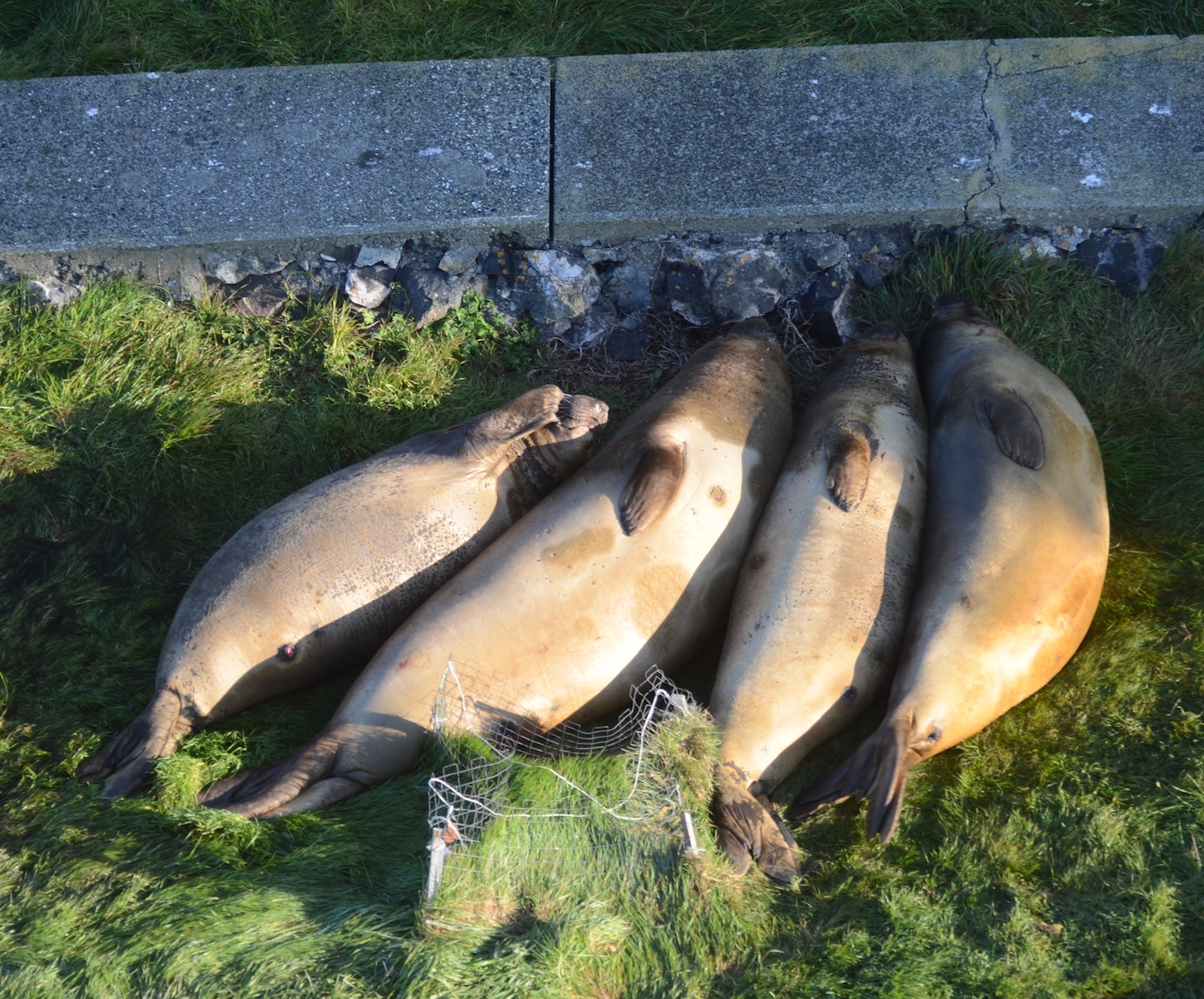
The Northern Elephant Seals continue to grace Great Race and I am getting used to them not reacting at all to my presence on the walkways.

Four Northern Elephant Seals like peas in a pod, next to the walkway to my house with their tails in the goose exclusion cage.

Four Northern Elephant Seals like peas in a pod, next to the walkway to the basement door.

The Glaucous-winged gulls are starting to mate and gather nesting materials. The Canada Geese are busy defending territory and brooding eggs. Black Oystercatchers are likewise busy when not foraging in the intertidal where limpets seem to be their favourite food.

Today was Animal Census Day and here are the results:

Northern Elephant Seals 26

Harbour Seals 147

California Sea lions 30

Steller’s Sea lions 36

Sea Otter 1

Canada Geese 18

Harlequin Ducks 3

Pelagic Cormorants 8

Double Crested Cormorants 7

Bald Eagle 2 adults, 5 sub-adults

Killdeer 1

Black Oystercatchers 10

Black Turnstones 9

Surfbirds 8

Pigeon Guillemots 164

Glaucous-winged Gulls 345

Northwestern Crow 6

Common Raven 1

There were no visitors today and maintenance chores were routine including running the fire pump to fill cistern.


Westerly Winds Prevail


Well it blew hard west, west-southwest all night and all day without let up. I didn’t see the tower anemometer drop below 20 knots and it was often gusting to 30 (and over last night). Although there were a few serious clouds and showers that came through it was overall a sunny day and the barometer climbed high and fast in the late morning, slowing to a more gradual ascent in the afternoon. The forecast continues to be the same with a strong wind warning in effect but winds are forecast to drop to 10 to 20 overnight and become light in the morning.

There were no boats of any kind in the Ecological Reserve today. It was a wild place with the wind combing whitecaps, on top of a big oceanic swell. Beautiful to watch from shore but not something you would want to be out in, especially in a small boat.

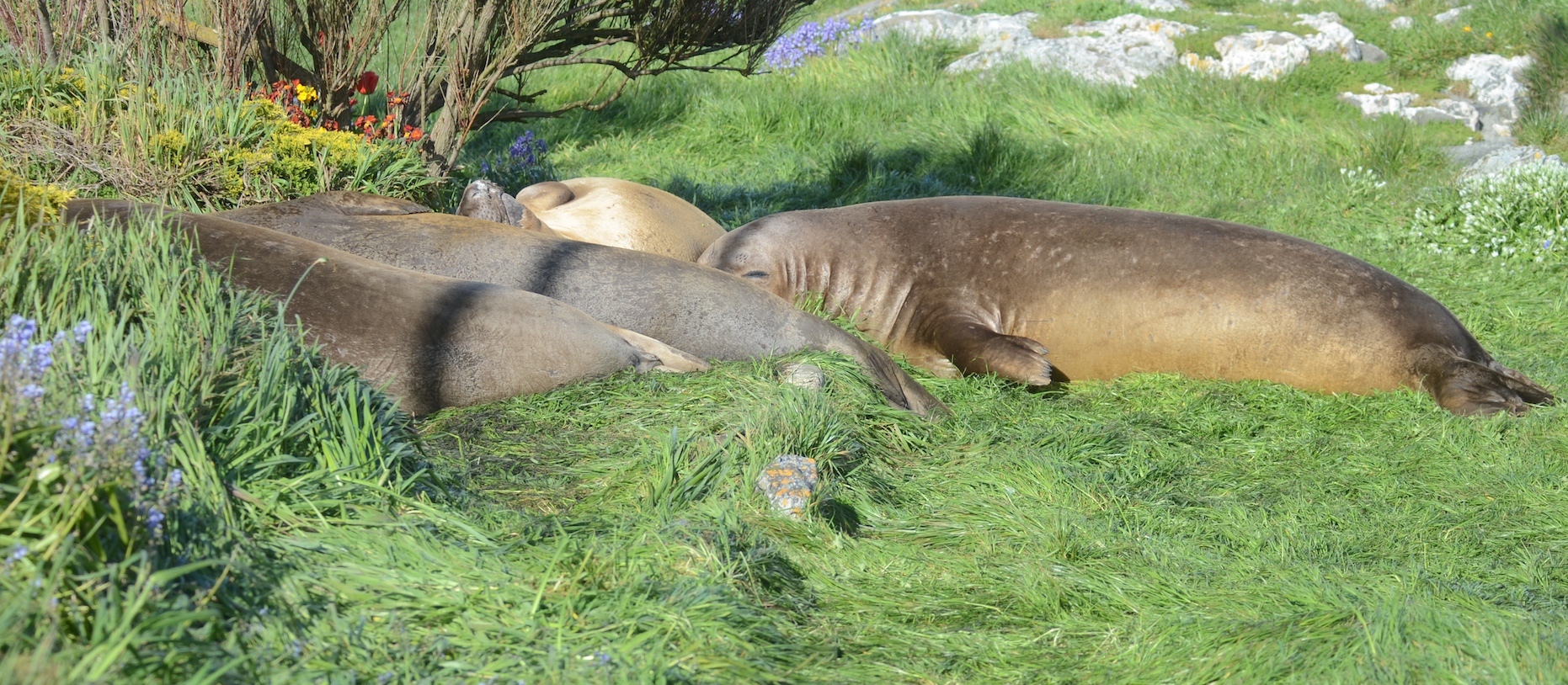
Northern Elephant Seals sleeping in the old garden.

Northern Elephant Seals sleeping in the old garden.

The ecological happenings are subtle right now. There is nest building, courtship, egg laying and brooding, lots of resting and sleeping by the seals and sealions and continuing predation by the eagles. The Northern Elephant Seals visiting Great Race spent the day sleeping in the heritage garden and another 22 animals could be seen asleep on Middle Rock bringing the total to 27. These are mostly sub-adult animals and some of them appear to be starting their moult. This time on land looks really labourious for them but it is important in building bone density to have some weight bearing time ashore.

Mian  sleeepy M

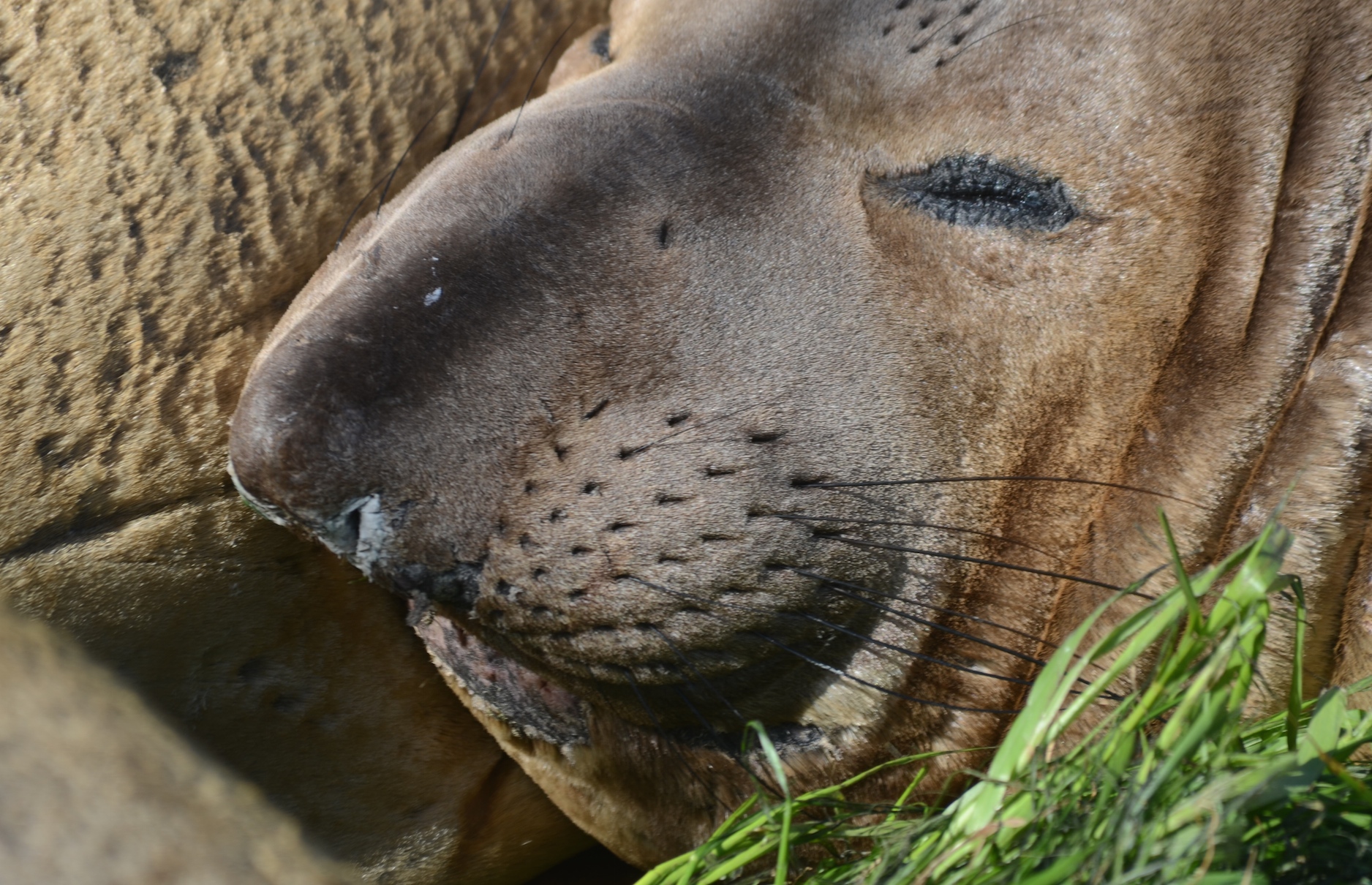
I believe that the animals here on Great Race now are the some of the same ones that were here in the fall. It is easy to know for sure with the tagged animal and I am quite sure with one other animal that had terrible looking psoriasis last fall and still does now. The only place the skin is not scratched raw is under the flippers. The others look really familiar too but that could just be their generic elephant seal look.

It was sunny enough to run the desalinator off the solar energy today and it always feels good to know that the sustainability plan is paying off. Now we just need to add to the suite of diesel alternatives and wind is such a natural for this site.

There were no visitors today.

Benchmark

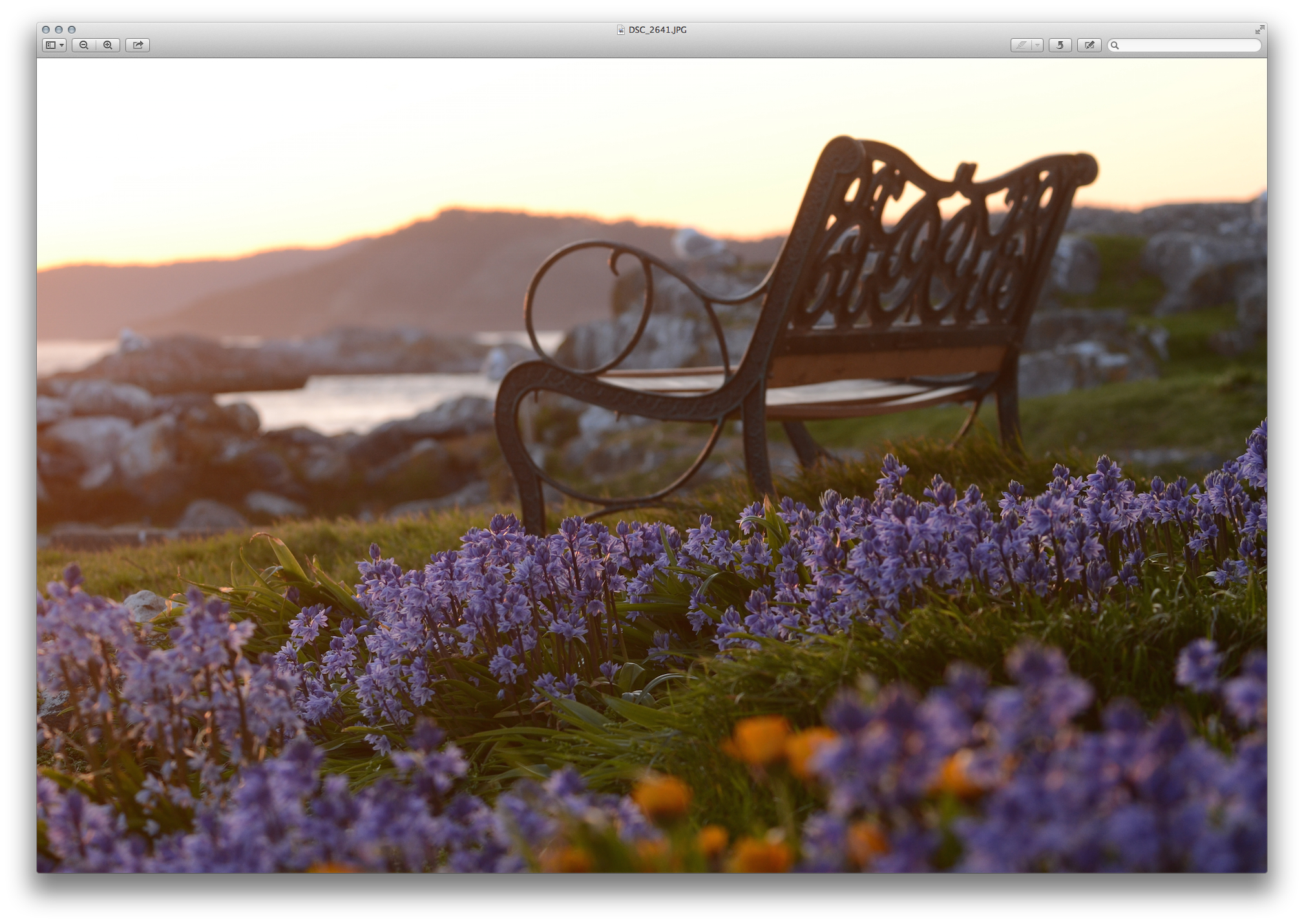
Resurrected with found and modified pieces, this old bench graces the front of the science house now with a broad panorama for sunset viewing.

Resurrected with found and modified pieces, this old bench graces the front of the science house now with a broad panorama for sunset viewing.

Dawn broke in reds and pinks heralding another glorious day. Early on there were feeble zephyrs from the southwest and east but the most obvious wind tell-tale on Race Rocks, the Canadian flag, hung limply most of the morning. Westerly breezes started in the early afternoon and developed into moderate breezes, late afternoon with gusts to 23 knots. The strong wind warning forecast is downgraded now to 15 to 20 knots westerly, overnight in the central Straits of Juan de Fuca and it is already dropping, as the sun sets.

No tour boats were observed in the Ecological Reserve although one hardtop sport-fishing boat cruised past the sea lions at a respectful distance and speed.

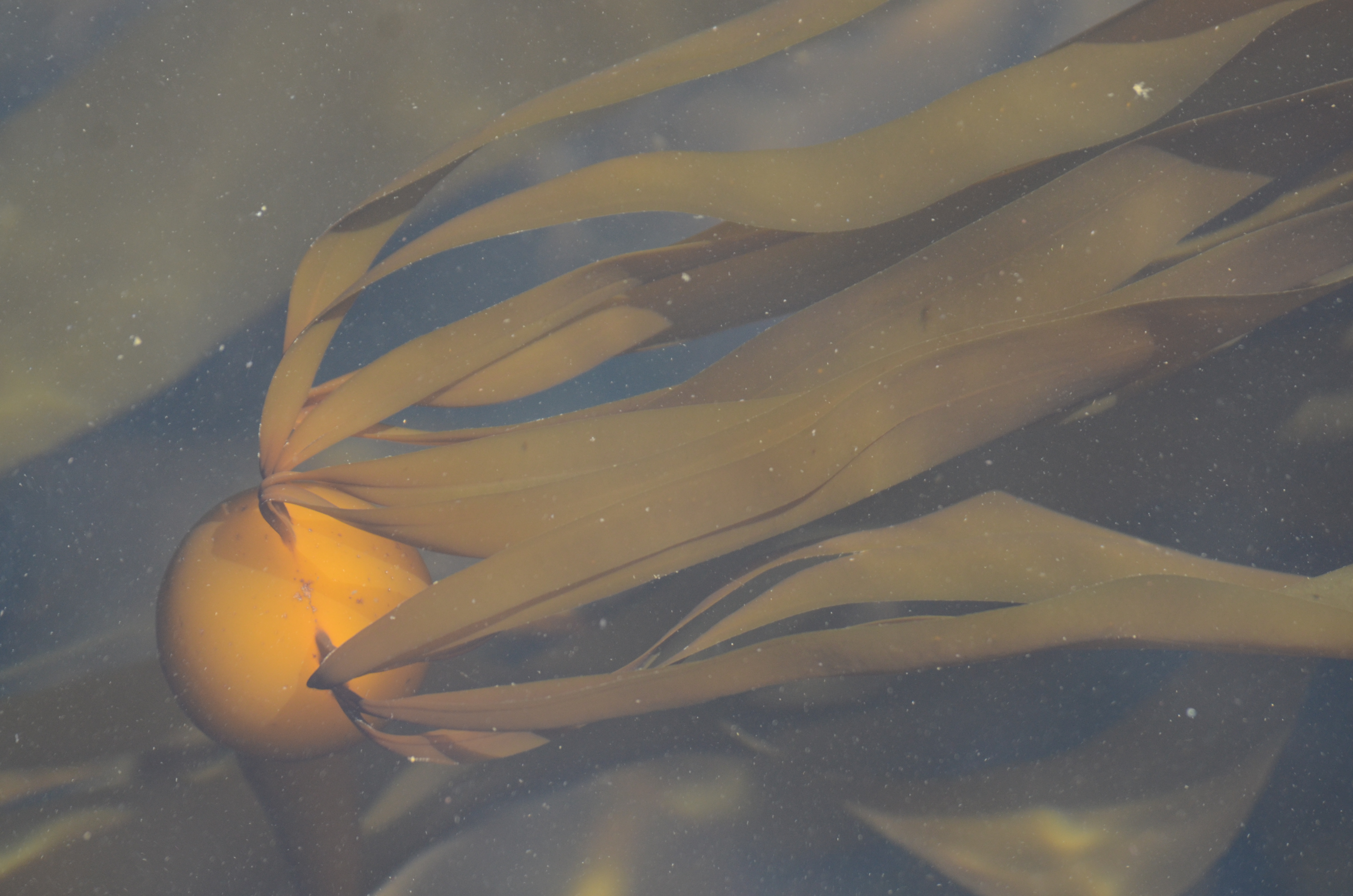
In the water new Bull Kelp are growing quickly, shooting to the surface buoyed by their float and photosynthesizing faster than any land plant.

Bull kelp, Nereocystis luetkeaena is growing fast now.

Bull kelp, Nereocystis luetkeaena is growing fast now.

A Northern Elephant Seal visited the marine railway for a snooze on the falling tide this morning. It was a perfectly symmetrical ellipsoid. From the light tower another 16 elephant seals could be seen on Middle Rock. Two more in the shallows of Middle Rock, looked so much like smooth rocks draped in seaweed, that they had me fooled for a while. That makes 19 in total, a high count for me so far.

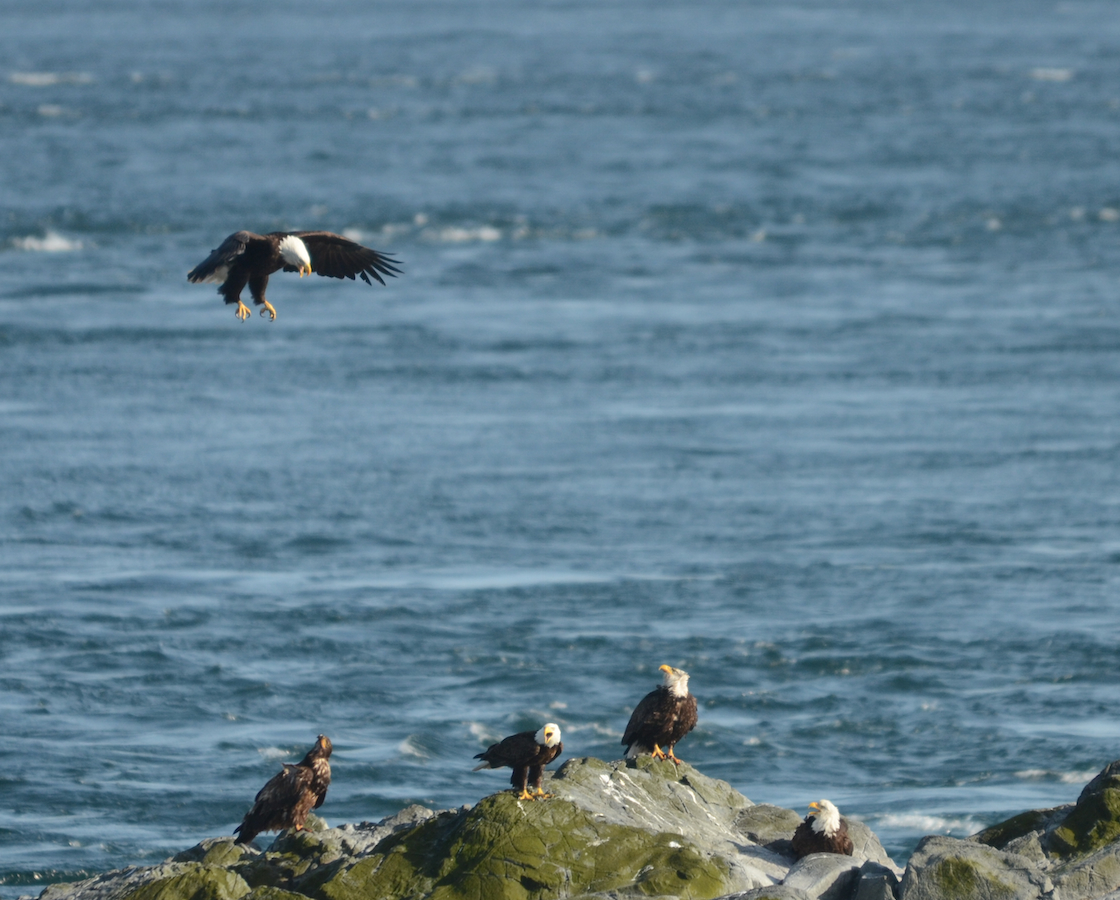
There have also been a lot of Bald Eagles present with a total of twelve individuals today. I have been trying to figure out what they are eating and have seen them chasing both gulls and geese.


Five of the twelve Bald Eagles on site today.

Five of the twelve Bald Eagles on site today.

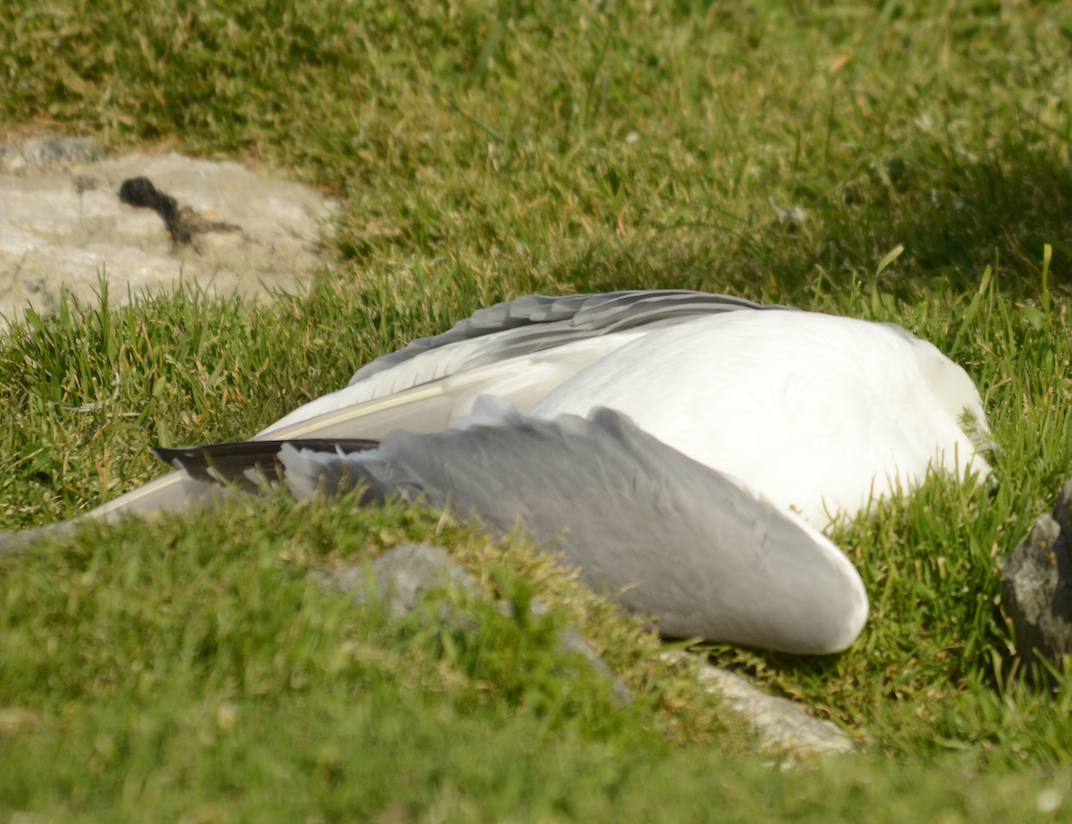
GwGumort

I have also seen some casualties, including three gull carcasses but they do not have the look of eagle food. The one in the photo above is completely pristine even after several days, with no trace of blood or predation.

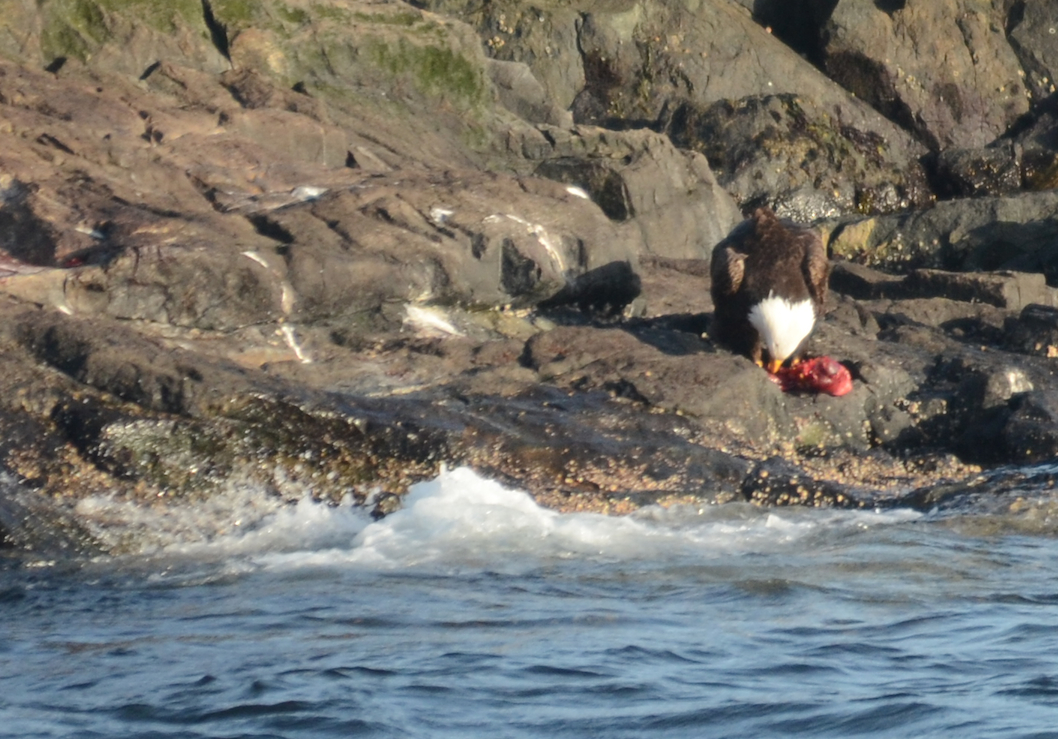
Adult Bald Eagle feeding on fresh meat.

Adult Bald Eagle feeding on fresh meat.

This evening the eagles caught and ate something but I could not tell what it was, there were no feathers at the site where they were dining but it may have been turned inside out (skinned). Four adults and two sub-adults fed off the one carcass.

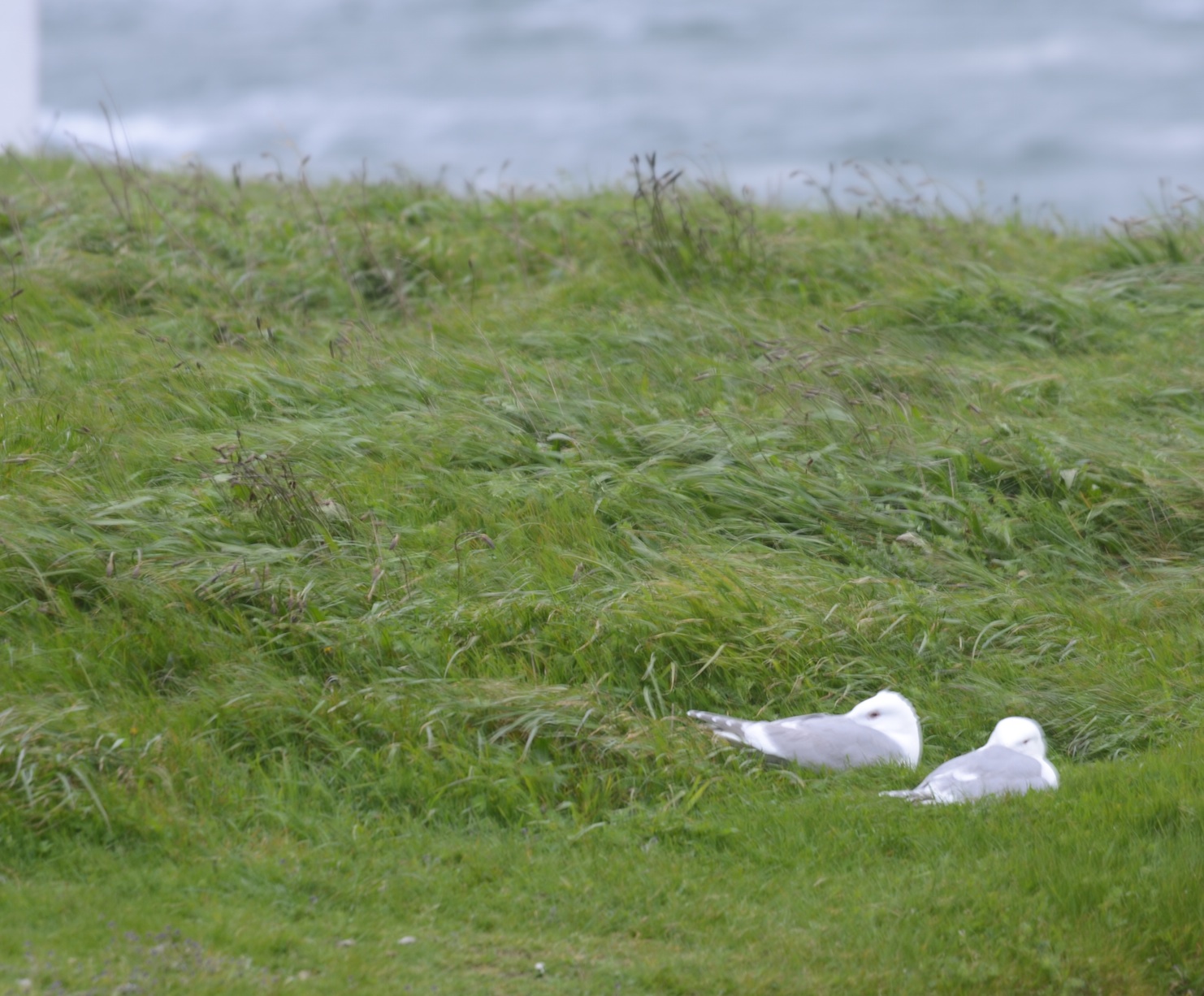
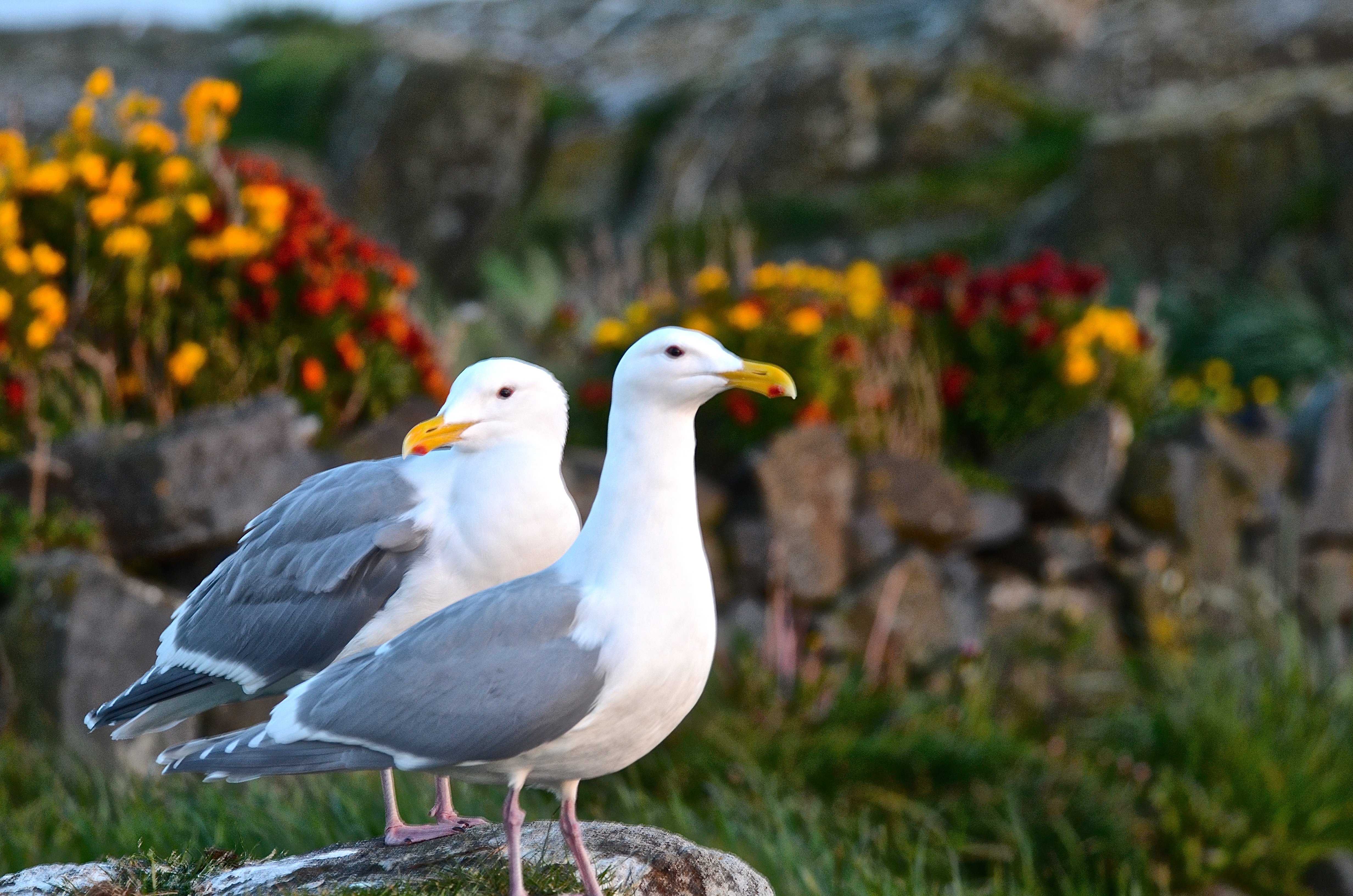
Glaucous-winged gulls in their fine new feathers,  are guarding their nesting territories but have not started nesting yet.

Glaucous-winged gulls in their fine new feathers, are guarding their nesting territories but have not started nesting yet.

Alex continues to be my only visitor and we had a belated Easter dinner, highlighting delicious, fresh halibut. I wonder when the last time was, this kitchen had freshly jigged halibut? Alex resurrected a bench that was both broken and had missing parts. It now sits in front of the Science House with a view out to sea and east up the Strait.

The phone and Internet went off again last night and I didn’t realize it until late. The problem was different this time and required a UPS reset in the tower this morning. I am getting quite adept at restarting the weather system now and we also tried (again) to fix the wind direction indicator on the system. I had success getting the underwater camera going again but it really needs a good scrub. The desalinator filled up the water tank again, running on sunlight through the solar panels. I cleaned up the visitor sign-in cabinet a little and put in some fresh pamphlets about how the public can support Race Rocks through Pearson College.

Note this blog posted next day due to yet another failure of phone/Internet last night due to UPS overload in tower.

April 4th – Full Moon and Blood Moon

The weather was much more subdued today with light winds and a morning switch in direction to the east, northeast and then back to westerlies at sunset. The sky was partially overcast but more sunny than cloudy with only the slightest of showers. The barometer continued its very slow and not very steady, decline that began on Thursday. The forecast is for more of the same. Today’s full moon was in total eclipse early this morning and although I was up at 5:00 AM, I did not see it, maybe that is because it was totally eclipsed ; – )?

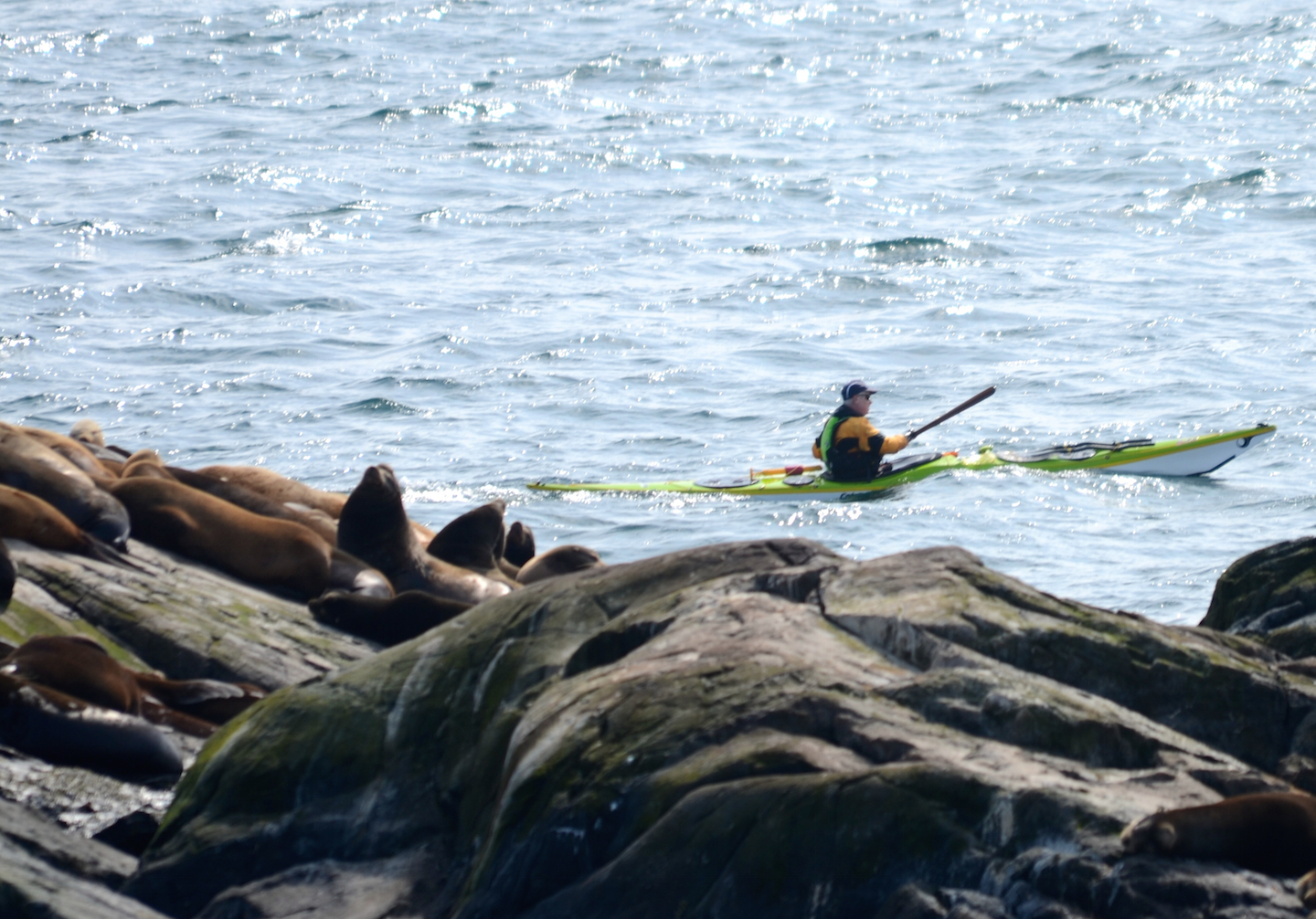
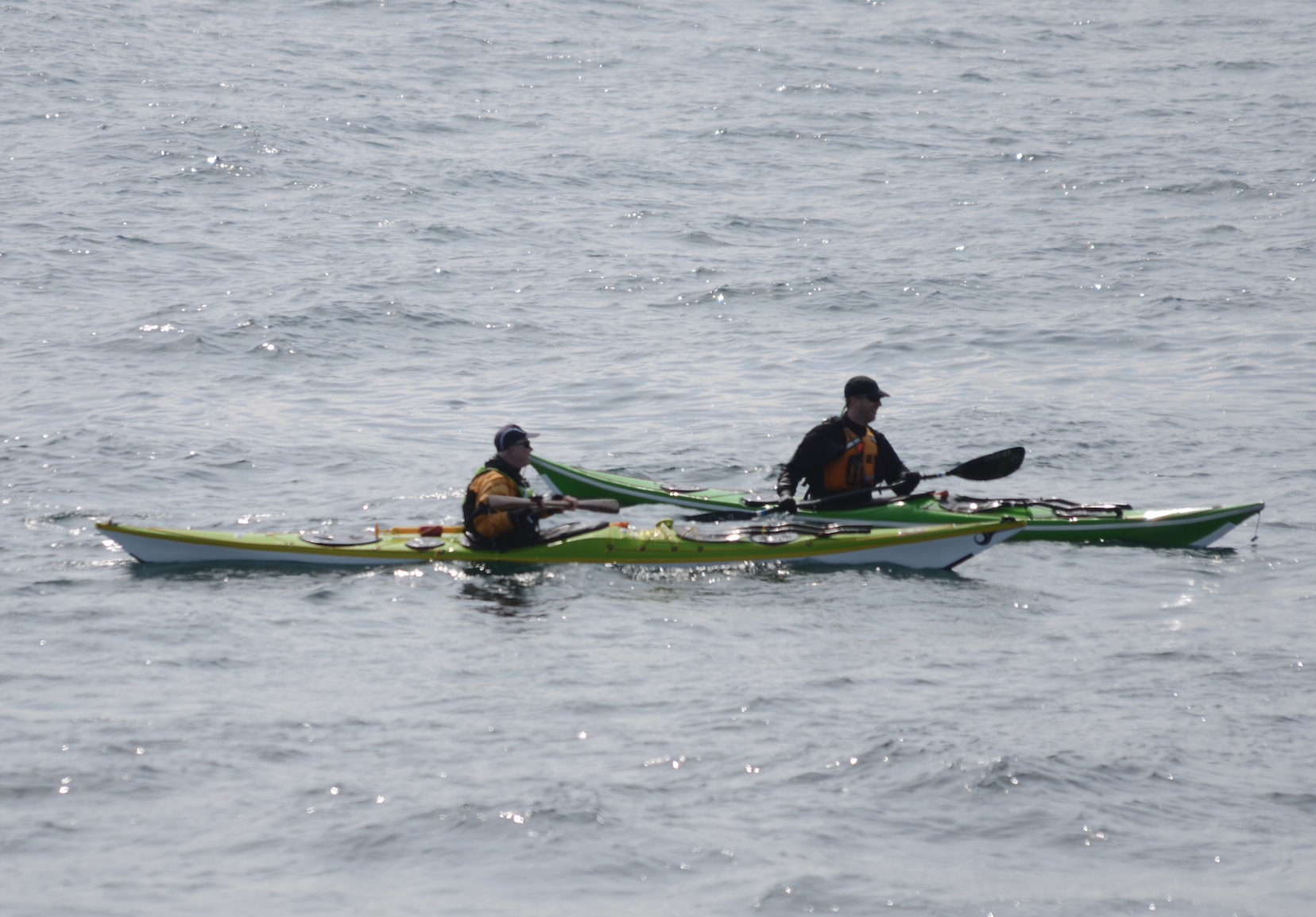
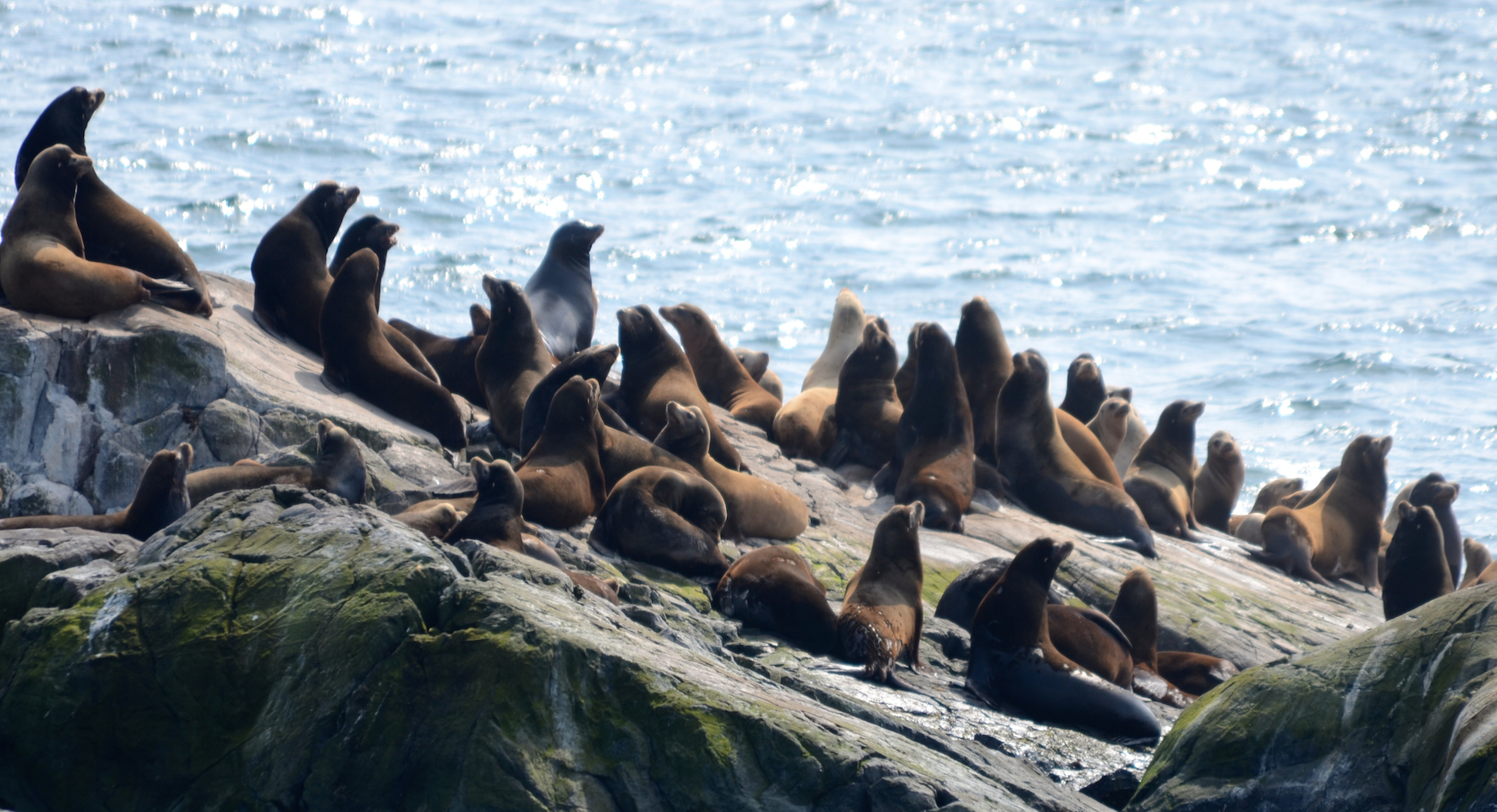
Only two tour boats were noted within the Ecological Reserve today and they both kept their speed down and seemed to be very respectful of the wildlife. There was no fishing activity noted inside the Conservation Area.  A couple of Kayakers were paddling in the Ecological Reserve today and they were very close to the sea lions. They managed to make it past them without any disturbance, but the sea lions woke up after the kayakers passed. They were only concerned enough to do some neck craning and alert behaviour before falling back asleep.

Paddler passes close by sleeping sea lions.

Paddler passes close by sleeping sea lions.

The two kayaks regroup after getting by the sea lions on South Islands.

The two kayaks regroup after getting by the sea lions on South Islands.

Sea lions wake up and smell the kayakers. Looking alert but not too disturbed.

Sea lions wake up and smell the kayakers. Looking alert but not too disturbed.

Ecologically things were very much like the previous two days, the gulls are slowly becoming a little more territorial and parental looking. I saw two holding nesting material in their bills today and several pairs were doing a synchronous bill down dance that might demonstrate to the other how beautifully they will be able to regurgitate into any chicks they might produce together. I also witnessed some nasty bill holding that drew blood and descended into an outright wrestling match. I was not sure if these gulls were territorial competitors or mates but they were determined to not let go of each other. Gulls are supposed to mate for life so it makes me wonder, when I see the same gulls sitting poignantly all alone, on their spots, day after day. Is their mate missing in action or just late?

The Canada Geese are very broody and in some places are running the gulls off. Some geese are already incubating four to eight eggs per clutch.  I guess the crows know this and there is often a small murder of crows strutting around the nesting areas and also being chased off by the geese.

The Bald Eagles are here all day everyday right now and I watched one adult chase off another so there must be something good to eat. Is it gulls? The chase was quite spectacular with climbs and dives and at one point, upside-down flying in self defence. The defeated intruder headed over to Bentick Island.

It wasn’t sunny enough today to just go with solar power and I had to run the generator for a couple of hours in spite of having no extra draw on energy. I know the day is coming when there will be enough sunshine to go through a whole day, entirely on solar power.

Thirteen visitors came to the island today. Chris brought out a group of eight students and his son accompanied him with a school friend. Alex was deckhand again and brought his father who was visiting, along for the brief version of the Race Rocks tour. Alex’s Dad likes using the Race Rocks video cameras, so one more reason that I need to figure out how to get cameras #2 and #5, back up and running. The students will go back mid-day on Monday and are already earning their keep.

Chores were a mix of entropy fighting of  today. It was really nice to know that there is lots of water in the midst of churning compost and the usual tasks. I am still tidying up wood and very grateful to Alex and Virginie for all the firewood and lovely kindling. I also want to thank Nick for leaving the house so spick and span, very nice.

Branded Sea Lion Back

Today the weather was like a sandwich, with winter as the bread and spring in the middle. The wind did not relent all day, blowing north by northwest in the morning, with more of a southwest spin, peaking in the afternoon. Now as the sun sets, the wind is easing a little and dramatic rain showers sweep out of the bottom of clouds to the west. The barometer bottomed out late morning and is tentatively climbing now. Tons of new snow on the Olympic Mountains, gives them a magnificent look and brings a chill to the air here only 15 kilometres across the Strait.

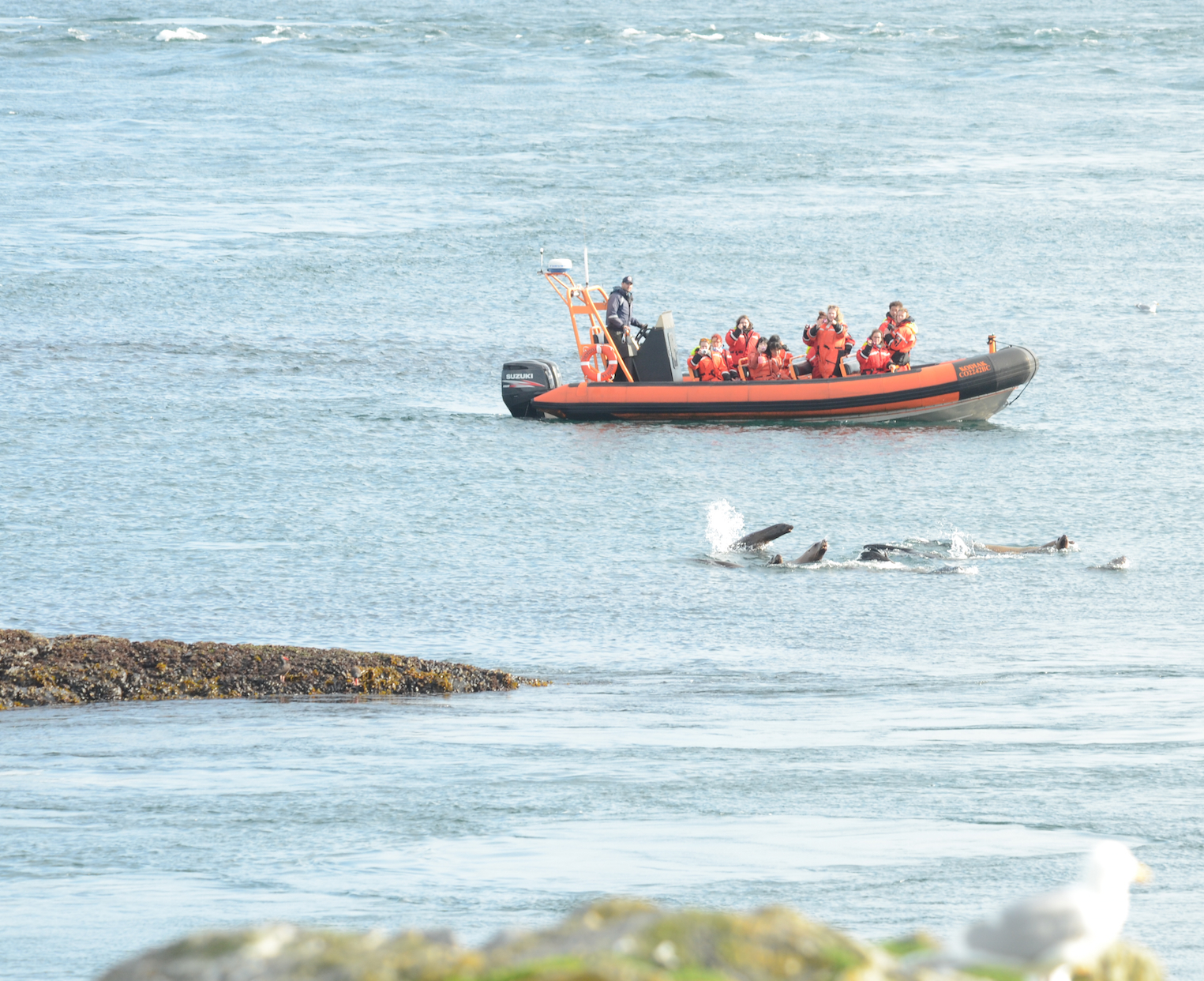
I only noted one whale watching boat today but may have missed some while working out of view. Most of the tour boats stop by on the south side to see sea lions hauled out and sleeping in the water there. The photo below was taken a few days ago when the weather was kinder and the animals in the water had just awoken with a start. There were no sports fishers observed in the Ecological Reserve today.

"Whale watchers" and sea lions that just woke up.

“Whale watchers” and sea lions that just woke up.

The first thing I noticed this morning was that there were a lot more sea lions hauled out than yesterday (census day). I scanned them with binoculars and noticed right away there was a branded Steller’s or Northern Sea Lion. Even before coffee, which is something for me, I was outside taking photographs. Although the image quality isn’t great due to the distance, it is good enough to match to an individual that was here on September 10, 2014 during my first shift.


A branded sea lion interacting with haul-out mates on South Seal Islands.

A branded sea lion interacting with haul-out mates on South Seal Islands.


This male 533R was branded as a pup in July, 2007 on Rogue Reef. His daytime activity here is practically nil. He lifts his head once and a while to interact with his closely packed neighbours, otherwise he sleeps all day. I wonder if he is full of herring? I also wonder if they forage at night right now?

Sealions hauled out on the south islet. 533R is in the middle of the back row.

Sealions hauled out on the south islet. 533R is in the middle of the back row.

Glaucous-winged Gulls seem to sit tight during the day now too. I guess they are establishing nesting territories and resting up for parental duties. They all lift off when a Bald Eagle passes over or a Peregrine Falcon swoops around the island but soon settle back in place waiting patiently.

There are many more Pigeon Guillemots in the Ecological Reserve now than can nest here and they seem to like to forage in fairly large groups, right in the rips and standing waves of the big currents. I would like to see one underwater, using their little alcid wings to fly through the water while steering with their wildly red feet.

Eleven visitors graced the island with their presence today and it was good to interact with people again. Michael who is on the Pearson College board and his family came out with Chris and Alex for a tour. Alex, a student at Pearson College was deckhand and tour guide and did an excellent job of both. Chris solved my water woes by simply turning on a valve that I hadn’t managed to get open.

Chores today included unsuccessful trouble-shooting on cameras #2 and #5, disassembling a bunk bed (probably much easier with two people), and moving the bed frame to the foreshore for pick-up. Seawater sampling, fresh water production and electrical generation, balanced out with more wood clean-up and walkway sweeping. The best thing, was putting up a fresh, new Canadian flag to replace the winter worn one that was fraying badly in the wind.