New Baby Elephant Seal

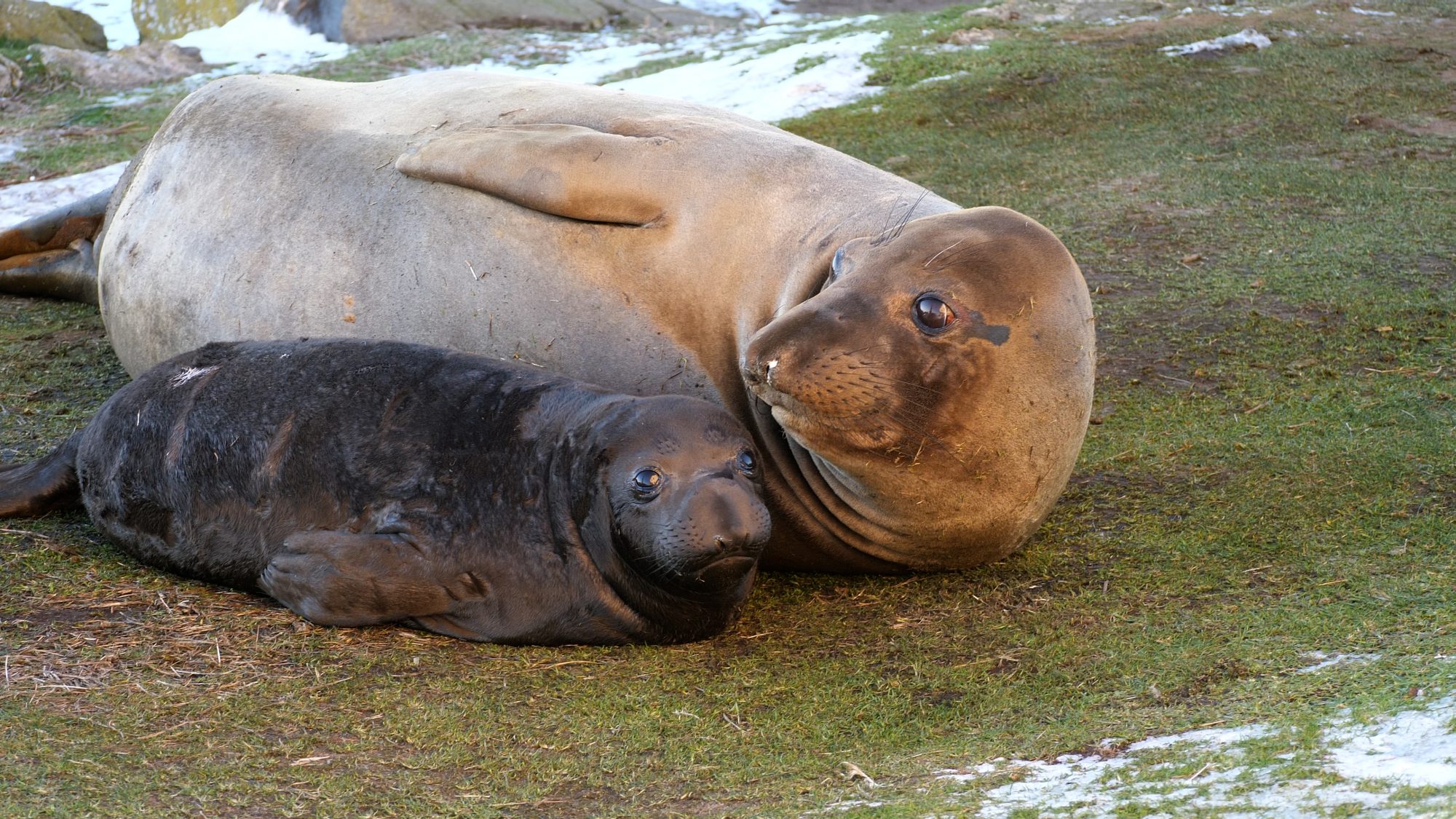
Typically the newborn Elephant Seals don’t move their heads around much after birth, but this new pup seems to have something to prove.

Jocelyn decided to give birth this morning, after spending 5 days sussing out the island. This is the same time spent on land as the other mom this breeding season, and the same timeline this seal had last year. These seals having remarkably consistent timing!

The new pup seems incredibly well developed and mobile, and immediately after getting born started squawk-chirping this our resident wean-ling Mikey. While some Elephant Seal mom’s can be very protective of their young, Jocelyn seems very chill about having another pup hanging out around her.

Our current Elephant Seal family, not shown here the grumpy Beachmaster who only wants to mate. Shows the difference between a newborn pup and a 28 day old weanling.

Elephant Seal Swapping

Mikey is all on his own, exploring the island mouth-first and trying to avoid running into the angry Beachmaster.

Ecological Notes:

Beverly wrapped up her time nursing her pup, mated a couple of times, and headed back to the open ocean to recover her lost weight. She spent 27 days on land, nursing her pup for 21 days, the exact same number of days as last year. She has remarkably consistent timing.

Beverly and Micheal Day 1. Starting around 500kg she’ll end up losing around 200kg throughout nursing.

Beverly and Micheal Day 21. Beverly has lost around 40% of her weight throughout nursing.

The next working we woke up to the bellowing of a new pregnant elephant seal, timing and characteristics point to this seal being Jocelyn (another return from last year), but she is not tagged, so we’re guessing that it’s her by comparing photos of identifying scars. This is a day later than she showed up last year, and we’re excited at the prospect of another elephant seal pup! After 5 pups last year the thought of only having one pup born here was pretty disappointing.

The seal we suspect is Jocelyn, she is soooo big I’m surprised she could make it up the ramp.

For those interested, the Beachmaster mated with Beverly 27 times 4 days (that were noticed/documented). It’s an impressive feat for sure, but seems to depend on the exhaustion that sets in towards the end of nursing. On bigger beaches a Bachmaster can have a harmem of 30-100 females, so only having 1 or 2 females to mate with could be related to our males ‘vigour’.

Elephant Seal mating can be pretty unpleasant to watch sometimes, but it’s clearly a method that works for them or the population wouldn’t have recovered from near-extinction.

Facility Work:

After last weeks 50 knot blasting, we spent this week repairing the electric fence and picking up the pieces that blew off the buildings. We’ve had some massive high tides, as well as some logs piling up on the jetty. I’m still unsure what the actualy conditions are that contribute to the log pileup, but we made sure to snag some good looking firewood logs for next winters Eco-Guardians.

Beverly navigating the log-jam on the boat ramp.

DND events:

2 days with blasting since the last update, but it’s been very quiet. We did see Coast Guard heading offshore during the big blows, practice makes perfect!

Feature Event:

Weather – Current:

http://www.victoriaweather.ca/current.php?id=72

Flat calm weather and winds under 3 knots have been delightful the last couple of nights. We’re still trying to figure out how you can get a crystal clear sky, and enough fog to set off the fog horn…

Weather – Past:

http://www.victoriaweather.ca/station.php?

Last weeks wind scouring led to this weeks flat calm, perfect time to pick up the pieces and get ready for whenever the next storm rolls through.


Weaning for Elephant Seals consists of abandoning their pups on the beach. Mikey didn’t enjoy that much, and screamed for the whole first night before accepting his independence.

Happy New Year from Race Rocks!

Coming into 2022, the snow is melting and the elephant seal pup is getting faaaaat.

Mikey has ballooned from his starting weight (around 50lbs) to his current blubbery size around 200lbs, quadrupling his size in 10 days. It’s pretty remarkable to see the massive increase in size for this little seal pup, and you can see the calories flowing from his mom into the pup.

Day 1 for Mikey the Elephant Seal pup

Day 10 of Mikey the Elephant Seal Pup

As Beverly gets closer to weaning her pup (typically they nurse for 20 days), the Beachmaster is getting increasingly interested in mating. Last year Bev didn’t start mating until the last 2 days of nursing, which means we are expecting anther week until the mating starts.


The Race Rocks Beachmaster checking to see if Beverly is ready to mate yet. We are expecting another week until she’s interested.

One of the more ‘stressful’ events during this time is the Beachmaster checking on the pup. This involves mouthing the pup, which looks like the pup is going to get bit, but I think it’s more of a full contact smell than an actual bite. Last year this was alarming when this 4000lb seal would roll up on a little 200lb pup, but as we saw Bev mating with this same Beachmaster, odds are that the pup is his, and to date none of the mouthing has resulted in any damage to the pup.

We’ve found it incredibly interesting to watch Beverly raise her pups on Race Rocks, and the way she used to geography of the island to protect her pup. Bev uses the steps and walkway right outside of the eco-guardian house as a kind of fortification around her pup. When the Beachmaster comes up to check on Bev and her pup he can’t climb up the steps , and also can’t really get at the pup when he’s wedged on the ledge. This buys her time to get the pup nice and big before starting to adventure around the island with him, which started on day 9.

Bev’s magic ledge of protection.


December 29th – A Break in the Snow

Ecological Notes:

First things first: the new Elephant Seal pup is doing great! 8 days old today, very vocal and mobile; especially when compared to last years pups. The seal pup doesn’t seem to mind the cold, and we’re reached the point of nursing where the mom starts moving around throughout the day. Maybe to stimulate the pup to get moving and muscle-y, or maybe to get a break from the nursing.

The Beachmaster left the island after the first 2 days of snow. He was spotting wallowing around Race Rocks, so maybe just using the warmer ocean water rather than sitting on land getting snowed on.

Once the snow stopped falling we had a shift in birds, with 12-20 eagles spotted in the early mornings feeding on what looks like bits of other birds. Maybe the cold was enough to provide some good food for all those eagles. Prior to the snow we were seeing 3-5 eagles in the mornings.

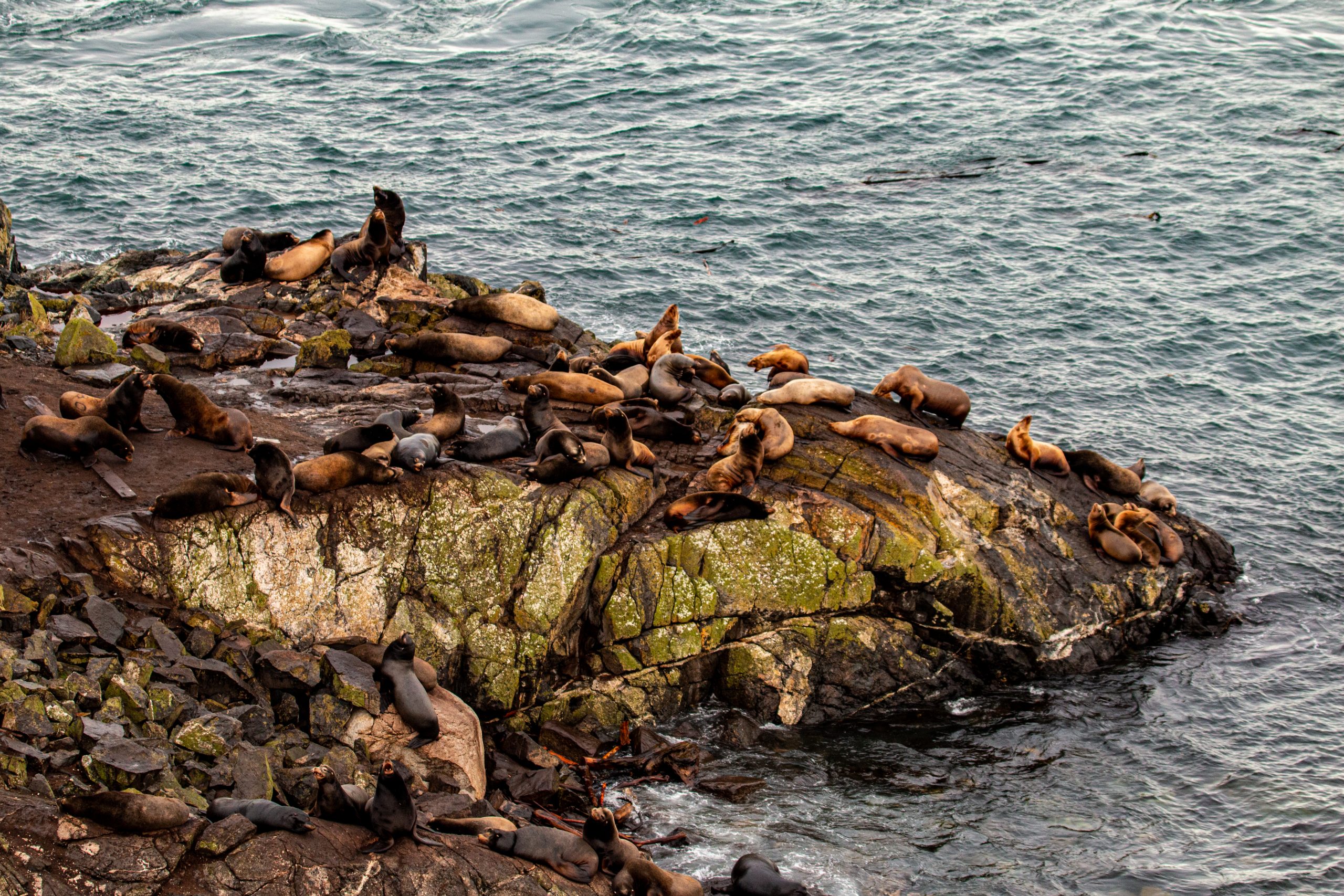
The California and Steller Sea Lions have been moving around the islands trying to find spots where they can group up and keep warm. This has provided an opportunity for the Harbour Seals to haul out, something that we don’t see much with the available real-estate claimed by the larger sea lions. It’s funny to me that the seals choose to be on land when the sea lions choose to hang out in the water.

Facility Work:

We have been fighting to keep things unfrozen for the last week, with temperatures dropping the water pipes froze and we’re working to keep the desalinator and other infrastructure from freezing as well. Shovelling walkways and keeping things snow free.

DND events:

Real quiet on the DND front. No boats or blasting over the holidays.

Weather Events:

The snow showed up Christmas night, heralded by the foghorn. Not much snow lands on Race Rocks when it’s blowing, and the cold (around -5 to -7 for a few days) kept the snow nice and powdery, perfect to be swept!

30-40 knot winds and cold weather have made us VERY appreciative of the new windows in the Eco-Guardian house, significantly improving the insulation.


Weather – Current: 

http://www.victoriaweather.ca/current.php?id=72

Weather – Past:

http://www.victoriaweather.ca/station.php?

First Elephant Seal Pup of the Season!

It’s that magical time of year where the Northern Elephant Seals come ashore and give birth! Our first mom is the same female who showed up first last year, Pink Tag 2 (who we affectionately call Bev), who came ashore on December 15th. After several days of being sassy and pregnant she gave birth to a new male pup on December 21st.

Bev seems to have a purposeful strategy showing up and birthing before the other females. Last season Bev showed up almost a month before the other moms, and left before the other moms were even getting ready to birth. By this time her pup was pretty huge and mobile. She gave birth last year on December 22 2020, so pretty much on schedule with what she did last year.

One of the first big hurdles for newborn pups is just figuring out just how to nurse, some pups take days to figure this out, but not this first pup: he was nursing within hours of being born is already looking plumper than when he was born.

A view from the top

Ecological Notes:

  • 1 Female Elephant Seal
  • 1 Male Elephant Seal, appears to be last year’s Beachmaster
  • First time I’ve personally noticed this type of tag …. On the Female Elephant Seal

Tag with holes in a pattern


harlequin ducks

Facility Work:

  • Cleaning and firewood prep for the next Ecoguardians
  • Looks like tomorrow morning will be all about clearing the pier area of debris and redoing the electric fence. The swells and incoming wind knocked concrete blocks right off the pier.

DND events:

  • 2 days of blasting with noticeable reactions from the Scea Lions.

Noted Vessel Traffic:

  • 3 different Ecotourism vessels
  • Several Sailboats back and forth, cutting between the reserve and Bentinck Island

 Feature Event:

  • Took a few Pictures from the top of the light while I was doing the animal Census.


Weather Events:

  • Mostly average winds from the west. Wednesday greeted us with 30-40 knot southeasterly wind, with very large swells!


** All wildlife photos taken at the furthest distance possible, and may be cropped to improve detail! **


Weather – Current:

http://www.victoriaweather.ca/current.php?id=72


Weather – Past:

http://www.victoriaweather.ca/station.php?

Maintenance and Repairs

Ecological Notes:

  • The younger Elephant Seals left after just a short visit. The adult female stayed and rested for about 4 days.

  • The sub-adult male is still onsite, nestling in the bushes in the center of the island. At one point, the contractors left the basement door open on the main house, and we caught the male bee-lining for the door! Luckily, he stopped once someone called out to him.

    As he slowly turned back towards his favorite spot by the tall bush.

  • Sealion numbers are down to about 1/3 since the big storms left (will do a count on Monday)

  • Many Black Turnstones present at this time.

    Many nestled in the rocks

Visitors:

  • Window Contractors, and deliveries by both Greg and Jeff.

Facility Work:

  • Almost continuous repairs and upgrades to electric fencing.

Sometimes it’s lucky and they just knock down the posts without damaging anything.

  • Collecting wood brought in by the storms.

Pulled up by hand and pipe pole!

  • I keep an eye on the Web Cams by checking them daily. A little water got in, and this happened!

 DND events:

  • Detonations most of the week, some very heavy ones. Marine Mammal Observers were on the water, keeping an eye out for cetaceans. Noted sealion disturbance, they have seemed to be very edgy since the storms subsided.

Noted Vessel Traffic:

  • Mostly just daily visits from Ecotourism operators, and a couple private vessels, also primarily looking at the birds and wildlife.

Weather Events:

  • Variable weather, medium winds and rain showers.


** All wildlife photos taken at the furthest distance possible, and may be cropped to improve detail! **


Weather – Current:

http://www.victoriaweather.ca/current.php?id=72

Weather – Past:

http://www.victoriaweather.ca/station.php?

A busy week!

Really hit the ground running this time! Many things going on at the same time, as well as getting myself re situated in the ecological reserve!

Ecological Notes:

  • California Sealions taking over any area available to them. The Steller Sealions pretty much keep to the outer edges and off-island rocks

    California Sealions wanting to hold their ground

  • Now  4 Elephant Seals working their way up the ramp towards the grass area. Looks like an almost mature Male, a fully mature female, and 2 sub-adults. They’re all a little timid, so I’m giving them lots of space.

3 Elephant Seals, just before the male showed up (the sealions are not impressed)

  • Also 1 large male I can hear frequently but can’t find, (maybe he is staying in the water and circling the island as he bellows in the evening.)

Visitors:

  • Various contractors working on replacing windows.

Facility Work:

  • Window replacements on the main house, and soon proceeding to the student building as well.
  • New toilet in the student building!
  • New electric fencing from the power building, around past the outside of the lighthouse, then back to the corner of the main house. Really important as there were up to 300 California Sealions between the student house and the lighthouse, totally blocking off access to the power building (until they were persuaded to leave, but would return the minute the coast was clear)

Noted Vessel Traffic:

  • Many Ecotourism vessels and private vessels enjoying the sights, sounds, and smells of the Race Rocks Ecological Reserve this time of year.

 Feature Event:

  •  Canadian Coast Guard checked in with us, as they kept a watchful eye on the smoke level and direction from the freighter at Constance Bank that had a fire in some of it’s containers.

Weather Events:

  • A varied week, ending in 2 days of stormy weather with strong winds (up to 50 Knots), and swells from the southeast.


** All wildlife photos taken at the furthest distance possible, and may be cropped to improve detail! **


Weather – Current:

http://www.victoriaweather.ca/current.php?id=72


Weather – Past:

http://www.victoriaweather.ca/station.php?

A Wild Gull Chase

Today (Thursday) is my last full day as a relief Eco-guardian at Race Rocks, so it seemed fitting that there be a few interesting events. The first was waking up to a sky full of wildfire smoke. We’ve been so lucky with the westerly winds that kept all of the smoke away, but with the latest heat wave and drop in wind, it was on us before dawn today.

Smoke on the water

It was also eerily quiet.  The hundreds of California Gulls that have been somewhere around here each morning were missing.  What was present were tankers and bulk carriers. I’m sure they’ve been plying the waters of the shipping channel all week, but today was the first day I noticed them in such numbers.  There were 6 in quick succession in the first hour I was watching.

One of many vessels that passed by Race Rocks today.

It’s amazing how much traffic there is in the Juan de Fuca Strait. It’s possible to watch and get details on the ships in real time here.

I started the day by washing the solar panels–a necessary task given the amount of bird droppings on them.  They’ve been outfitted with bird spikes, but on my last panel today, I found this:

Yes, a gull demonstrating how clever he (or she) is in defeating the mechanisms we put in place to stop them. Just step on the flat side, not the pointy end!

A closer look revealed something else.  This bird is banded!!!  For bird banders, there’s little more exciting than finding out what has happened to birds you banded. That happens when others observe or find the bands, determine the band number, and report that information to reportband.gov  . Of course, I didn’t have my camera with me, and the bird also wasn’t going to stick around. In fact, it flew. The good news is that most of the gulls on the island are at least somewhat predictable as they are on territories right now. I saw him fly around the lighthouse but not come out the other side.  It was possible he was very close by.  When I finished the panel cleaning, I grabbed my camera from the generator room, and went off in search of a gull among 700. It didn’t take me too long to find him, but not in a very convenient spot.

Each bird band has a unique set of nine numbers.  You need them all to positively identify the bird.  This means you have to get a decent photo of all sides of the band, and that can take a bit of patience.  Fortunately, I have that! My presence riled the gulls enough that they were all yelling at me and the banded gull came in to help chase me off. That was good enough to get me a partial set of numbers.  Now I had to get him from the other side. I moved closer to the house and waited. After about 4 times of him coming to the ground and flying off, I finally had all the numbers!

If you ever find or photograph a bird band, you should report it to reportband.gov. There are a series of questions to answer, but in the end, you will learn about the banding of the bird and receive a certificate of appreciation.

Ecological Notes:

Mammals

1 male Elephant Seal – departed today after molt. After he spent the night at the dock last night, I suspected this might happen.  He was in the water most of the day, and when I looked for him around suppertime, he was nowhere to be seen.

Steller’s Sea Lions – Good numbers now on Great Race Island

California Sea Lions – Numbers increasing dramatically on Great Race and surrounding islands


Harbour Seals – Many throughout the area

Birds

7 Black Oystercatcher, including young bird near the dock

18 Black Turnstone

5 Least Sandpiper

1 Western Sandpiper

Western Sandpiper in the lead, followed by Least Sandpiper

11 Common Murre

136 Pigeon Guillemot counted by clicker at around 8 am. There could be more, but no fewer.  Many catching gunnels or blennies (see last bird on right).

3 Heermann’s Gull

400 California Gull, mostly feeding on krill today

700 Glaucous-winged Gull, including 1 banded

Tussles like this are going on all the time

6 Pelagic Cormorant

1 Bald Eagle on Turbine Island at dawn

22 Purple Martin – biggest bird surprise of the day! Flock circled the lighthouse at 8:35 pm and continued south. Only flyovers I have seen this week.

1 Song Sparrow, rummaging in the compost


Facility Work: Cleaned solar panels. Not one window had gull droppings today, thanks to the calm winds.

Vessel Traffic: Many vessels in the shipping lanes today. Smaller than usual number of eco-tourism vessels, likely due to Biggs Orcas in other areas around the region. Several private fishing vessels came by the dock because of the sea lions.

Infractions: Private vessel coming through the reserve at too high a speed. Warned them to slow down, which they did.

Weather Events:  First day of noticeable smoke from fires on the mainland. Reduced visibility. Low winds from the south and east.

Wildfire smoke was present all day.

 Weather – Current: http://www.victoriaweather.ca/current.php?id=72

Weather – Past: http://www.victoriaweather.ca/station.php?
A Whale of a Day

The sunsets here at Race Rocks are amazing, but the sunrises are pretty spectacular as well. This morning the roving mass of California Gulls were hanging out among the kelp on the southeast side of the island. Hundreds of gulls all looking for breakfast!  The krill is still around, at least early in the day, but you can tell that it’s moving around because the flock of birds will be here one minute and gone the next.

Sunrise at Race Rocks with Mt Baker in the background

While I’m not seeing a lot of bird diversity during my stay here, I have been given the chance to study the behaviours of the gulls. With all the krill in the area, there is no shortage of food, and the young Glaucous-winged Gulls know that.  Depending on their age and whether or not there are siblings, the adults may regurgitate directly into the chick’s mouth, or onto the ground so the young can fight over it.

Single chick gets special delivery of food

Triplets fighting for the goodies the adult brought from the sea.

One of the most interesting behaviours I’ve seen has been that of a young gull that has figured out that even though it can’t fly, it can swim!  For three days now, I’ve seen this single chick in the channel to the east of the island. I suspect that it accidentally ended up in the water one day and survived to tell the tale. It certainly is more mobile than the other youngsters on the island.

Meandering along like this is normal

Completely able to come ashore when it wants to

And speaking of flying, it’s incredibly amusing to watch the antics of the youngsters trying to make their wings work.

Today I saw the first Orcas of my visit here. The marine radio is a constant companion, and while most of the chatter is about where the best fishing is, tonight a call came in about Orcas just off Bentinck Island. A pod of 5 put on an incredible show for the whale-watching boats and private vessels.  They moved from Bentinck to the mouth of Pedder Bay and continued the action for more than half an hour.

Surprise! The pod surrounded this small boat.

Earlier in the day, Daniel Donnecke was at Rocky Point and spotted Humpback Whales to the east of Race Rocks. I managed to get on them thanks to his sighting. Two whale species day!

Ecological Notes:

Mammals

2 Humpback Whale

5 Orca

2 Harbour Porpoise

1 male Elephant Seal (went to the water early today–around 10 am–and spent the whole day there. Still on the ramp at dark)

California Sea Lion

Steller’s Sea Lion

Good contrast between male Steller’s in the rear and male California in front of him

Harbour Seal

Mom and nursing pup

Birds

5 Canada Geese

1 Killdeer

8 Black Oystercatcher

14 Black Turnstone

This Black Turnstone hasn’t yet moulted all of its breeding plumage. Note the white speckles on the chest and pale eyebrow.

This one is a little closer to the birds we typically see here in the winter.

3 Surfbird

6 Common Murre

60 Pigeon Guillemot

3 Heermann’s Gull

700 California Gull

Little white specks of a massive flock of (mostly) California Gulls

600 Glaucous-winged Gull

3 Pelagic Cormorant

5 Double-crested Cormorant

Double-crested Cormorants with Pelagic Cormorant and Pigeon Guillemots

1 Brown-headed Cowbird

Facility Work: Cleaned solar panels and continued fly-busting in the houses

Vessel Traffic: Late start for the eco-tourism vessels. Saw very few before 11, then they were steady the rest of the day until dusk. Very large container vessel heading west.

 Weather – Current: http://www.victoriaweather.ca/current.php?id=72

Weather – Past: http://www.victoriaweather.ca/station.php?