Elephant seals occupy

The barometer climbed right out of its 996 hole today and there was glorious sunshine mixed with dark and nasty, west to southwest squalls. Some of the gloomier squalls also brought thunder and lightening. Band after band of bright and dark passed from the southwest. There was also a substantial groundswell. All of the weather drama made for a spectacular sunset.
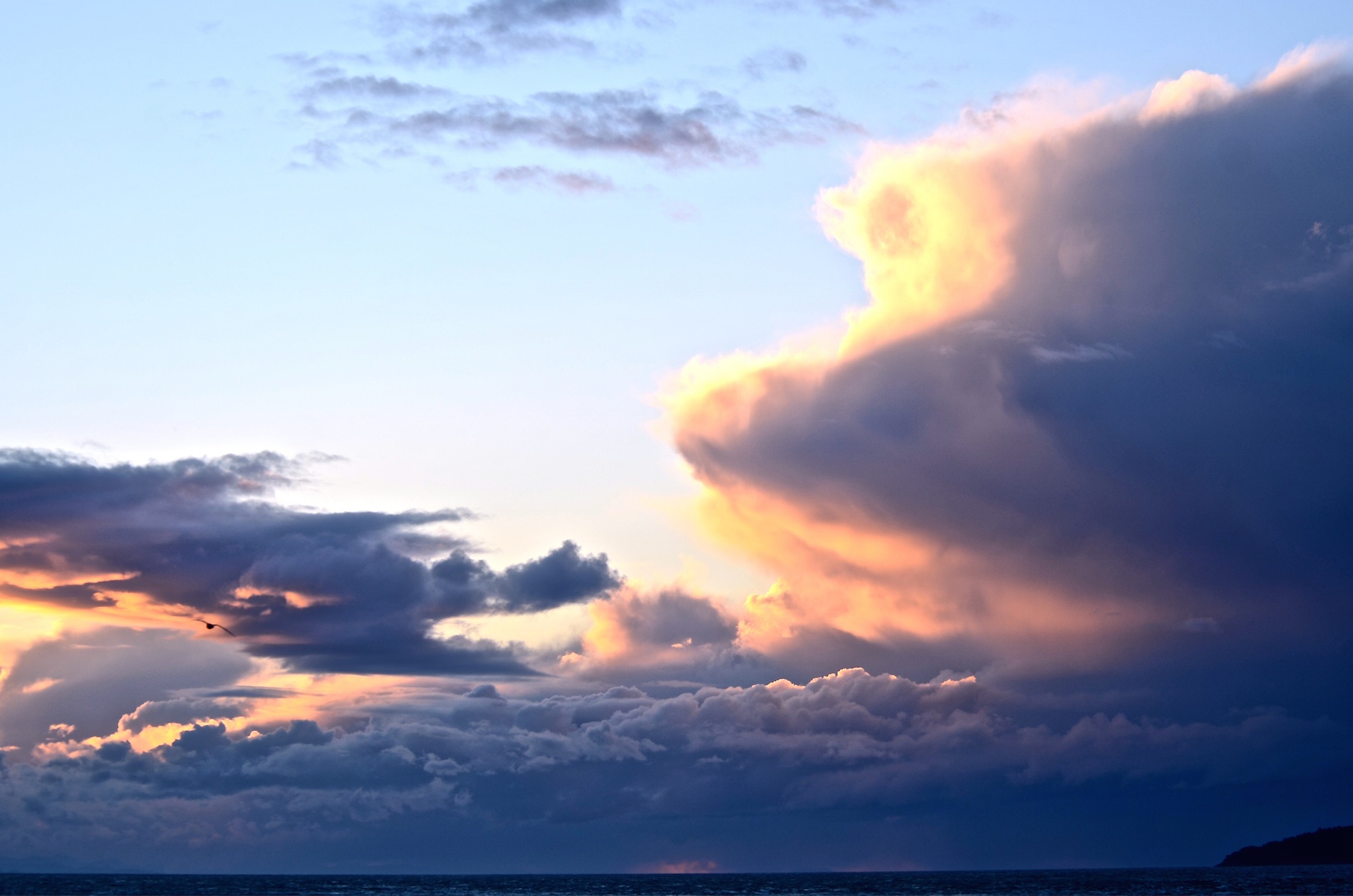
Oct24 sky

Six brave whale watching boats were observed in the Ecological Reserve today and the folks in open boats must have had an interesting time during the big, mid-afternoon windstorm with a sudden and sodden downpour. I was out in the middle of it too, standing by, on the end of the jetty, waiting for a landing, but was too rough. It was gusting ~ 25 knots when I left the lighthouse to meet the boat and there were about 300 sealions hauled out in front of the science house.

There were also five adult Brown Pelicans on South Rock in the middle of this tempest’s blast. They can huddle down into a very low aerodynamic, face into the wind, posture and they didn’t get blown away.

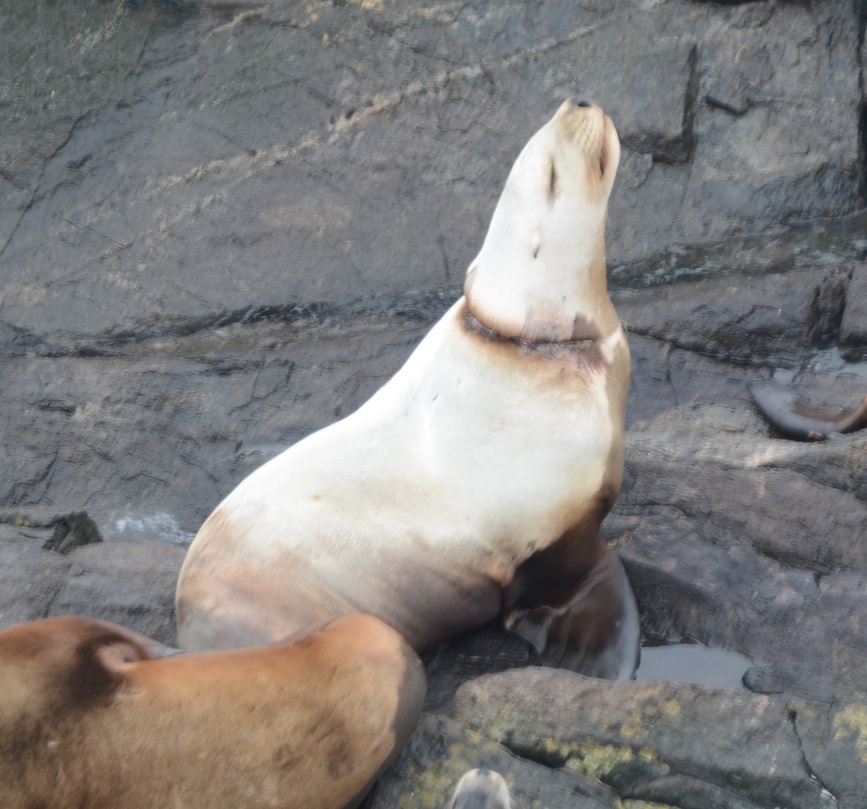
The sealions retreated to the water during the deluge and have only now hauled out again en masse, three hours later. Many of the Stellers are in full molt now and some of them are looking quite scruffy. ‘Flake’ is the only Northern Elephant Sea of the ten blocking the jetty this morning that looks like he is still moulting. He may have a skin condition, as it is quite pink and raw looking.

The biggest of this crew is starting to “sprout” the big proboscis for which the adult males are famous. It looked to me like it was quite uncomfortable and kept awaking and thrashing around and garbling. They must feel really heavy on land after being at sea so much of their life.
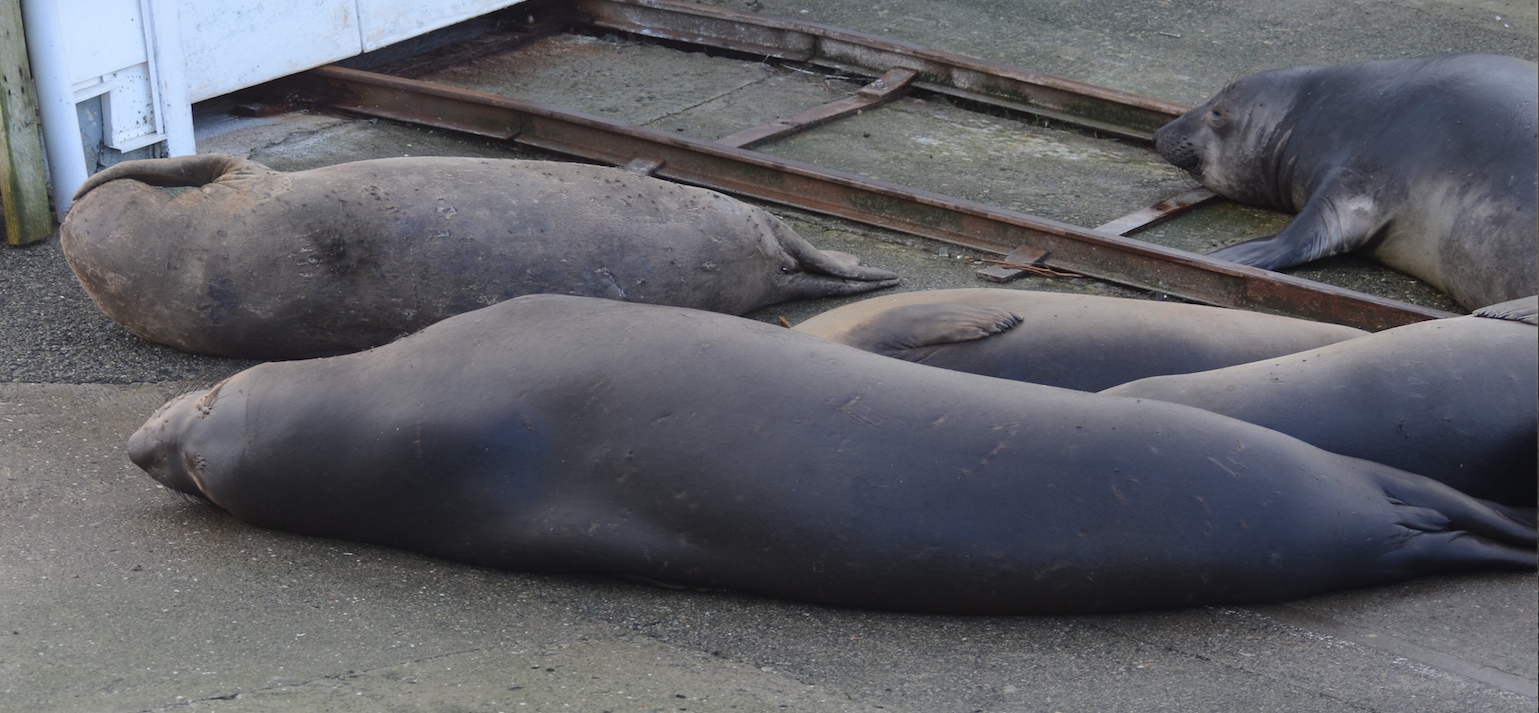
Flake, (top left) and other Northern Elephant Seals have taken over the entrance to the boat shed and jetty.
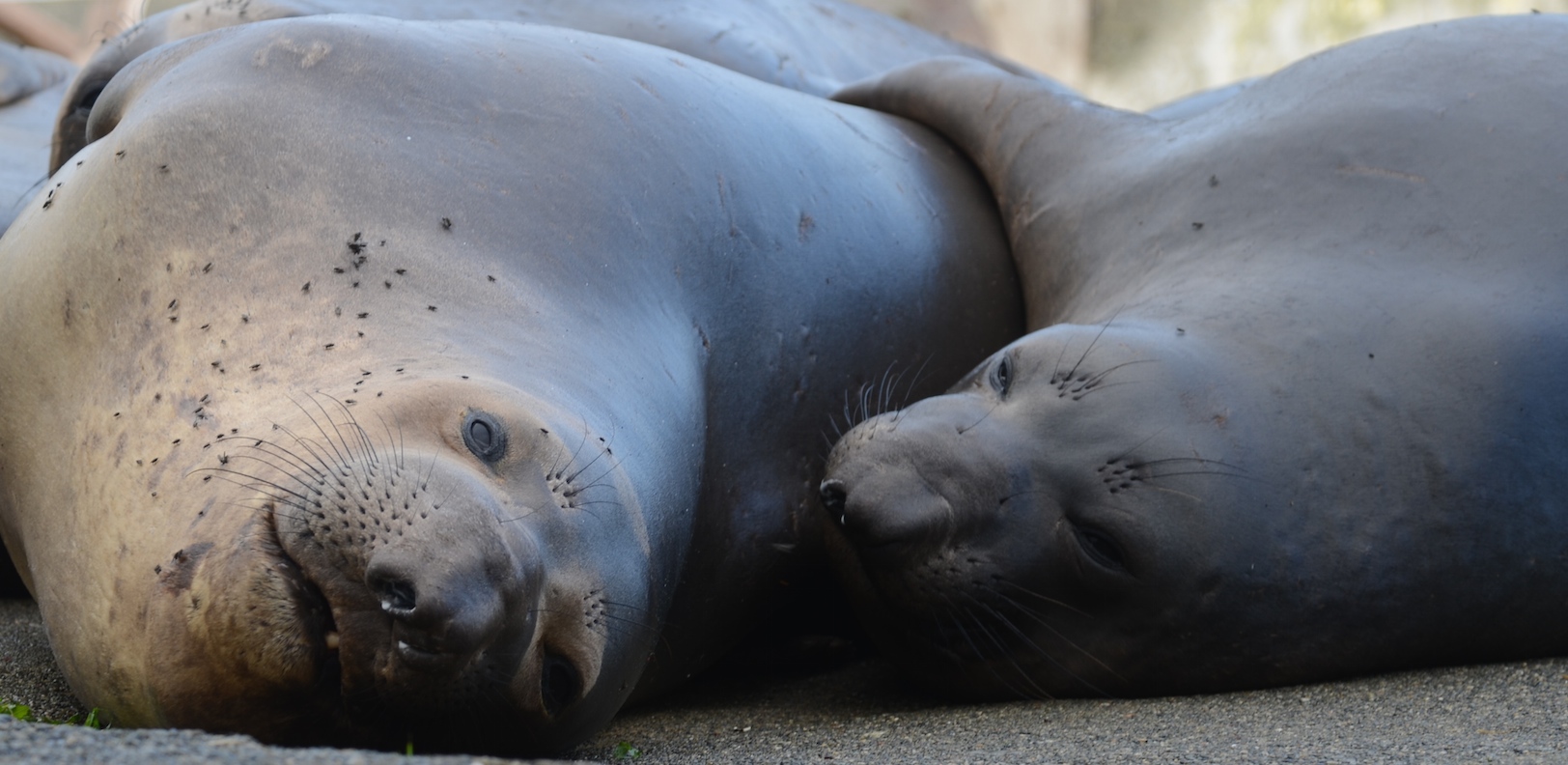
Flake, (top left) and other Northern Elephant Seals have taken over the entrance to the boat shed and jetty.


The seal on the left kept awaking from sleep disturbed and the one on the right would grip him each time it happened. I wonder if it hurts having your nose grow that fast?

The seal on the left kept awaking from sleep disturbed and the one on the right would grip him each time it happened. I wonder if it hurts having your nose grow that fast?

Today was census day and the results are listed below. I missed the Harbour Seals due to the ferocity of oncoming squalls but will try to catch them tomorrow.

Steller Sealion 318

California Sealion 381

Northern Elephant Seal 10

Canada Goose 22

Greater White-fronted Goose 1

Harlequin Duck 5

Double-crested Cormorant 118

Pelagic Cormorant 19

Brown Pelican 5

Black Turnstone 9

Surfbird 5

Sanderling 3

Western Sandpiper 2

Dunlin 2

Black Oystercatcher 12

Killdeer 2

Glaucous-winged Gull 150

Thayer’s Gull 1200

California Gull 2

Western Gull 7

Heerman’s Gull 4

Gull sp. 50

Common Murre 3

Fox Sparrow 2

Dark-eyed Junco 1

Savannah Sparrow 15


Whistling House

There was a big blow last night and I learned that this house can whistle; with three distinct tones, synchronously, very musical. This morning there was a swell from the southeaster and an even bigger groundswell coming in from open sea to the west. Add the tidal race to the mix and you can imagine that the wave patterns created were mesmerizing.

It seemed like the day was in recovery from the storm, with gentle winds from the north-northeast, light rain and overcast. The pattern of barometric pressure change was not so reassuring, falling since noon it is now back below 998 hPa. That is where it was for last night’s big blow. It looks like the forecast is for more of the same.

There were six whale-watching boats observed in the Ecological Reserve today; five Canadian and the almost daily visitor from Port Angeles, called Island Explorer. The big draw, other than Race Rocks itself, were abundant Humpback Whales in the area. It certainly wasn’t the weather. At least two of the Humpback Whales were in the Ecological Reserve .

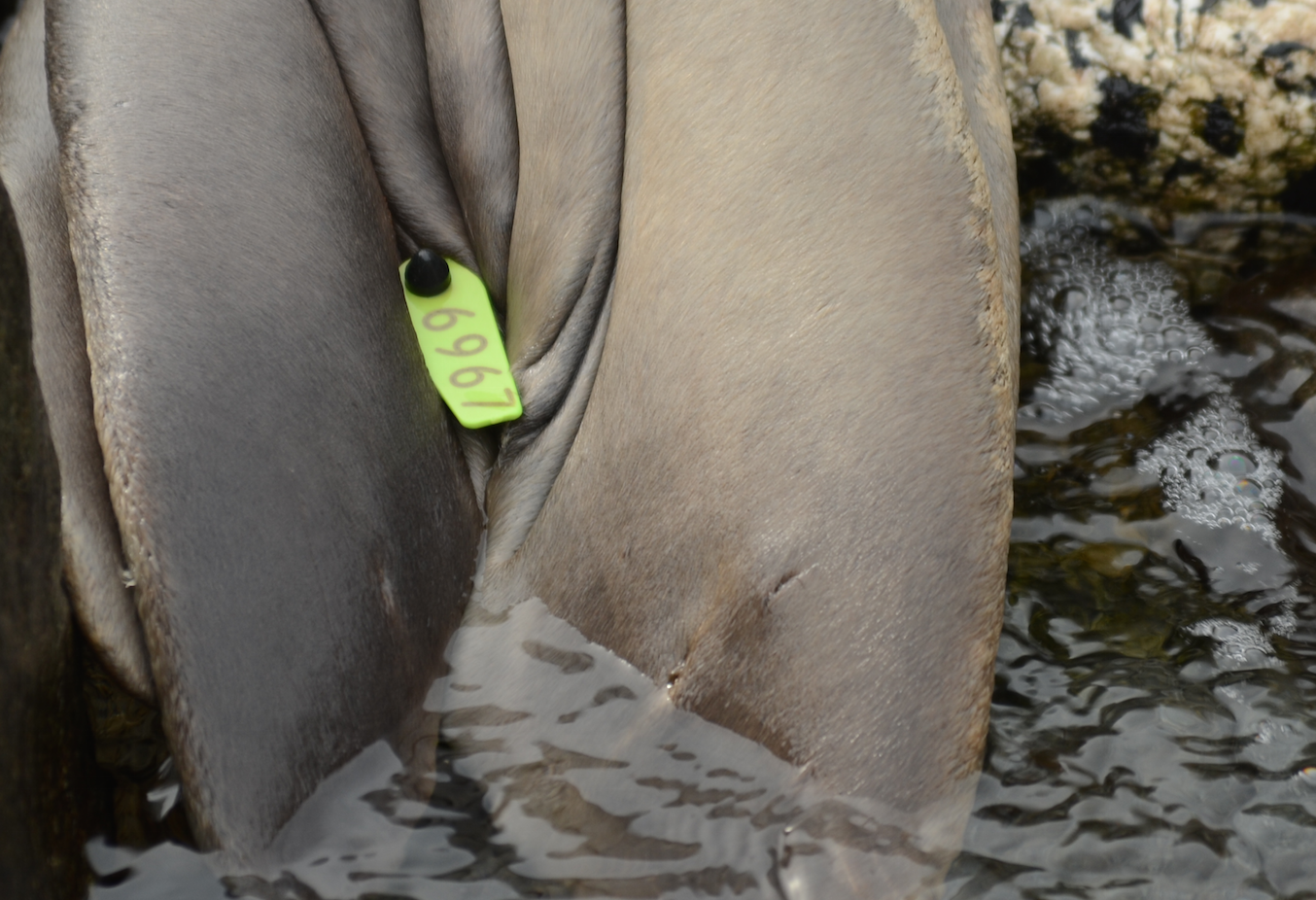
There were four Elephant Seals on the marine railway today, Gat (#5850-6967) , Flake and two larger animals. They ‘played’ together and then slept together for most of the day. More sealions than have hauled out since about a week ago, were also sleeping soundly throughout the day today, perhaps recovering from last night.

Euju ringneck south2 Oct 22

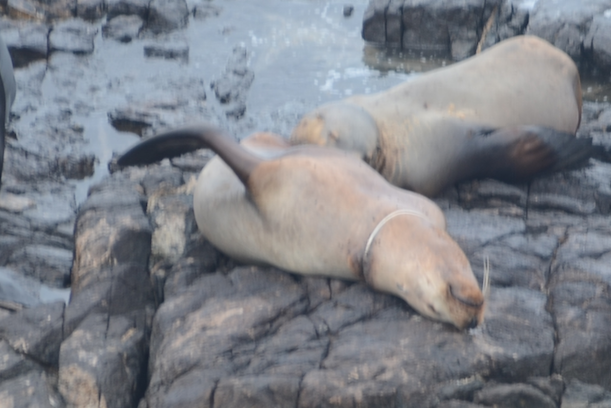
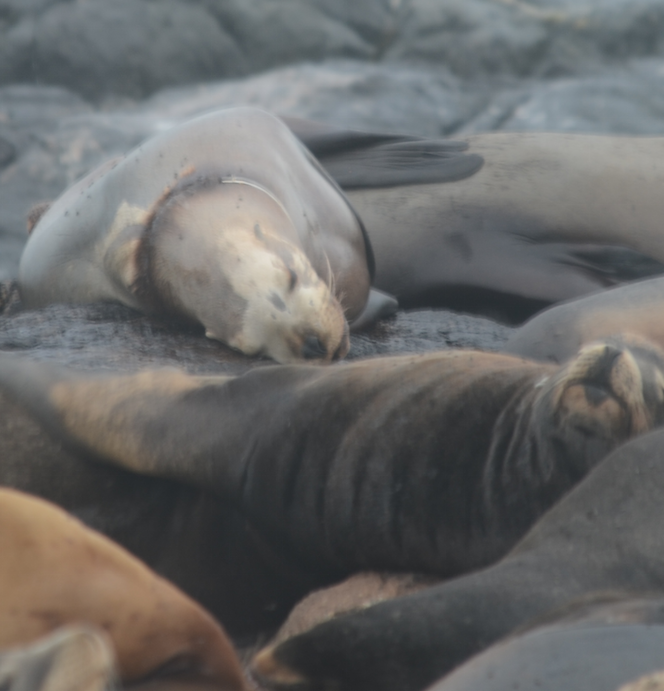
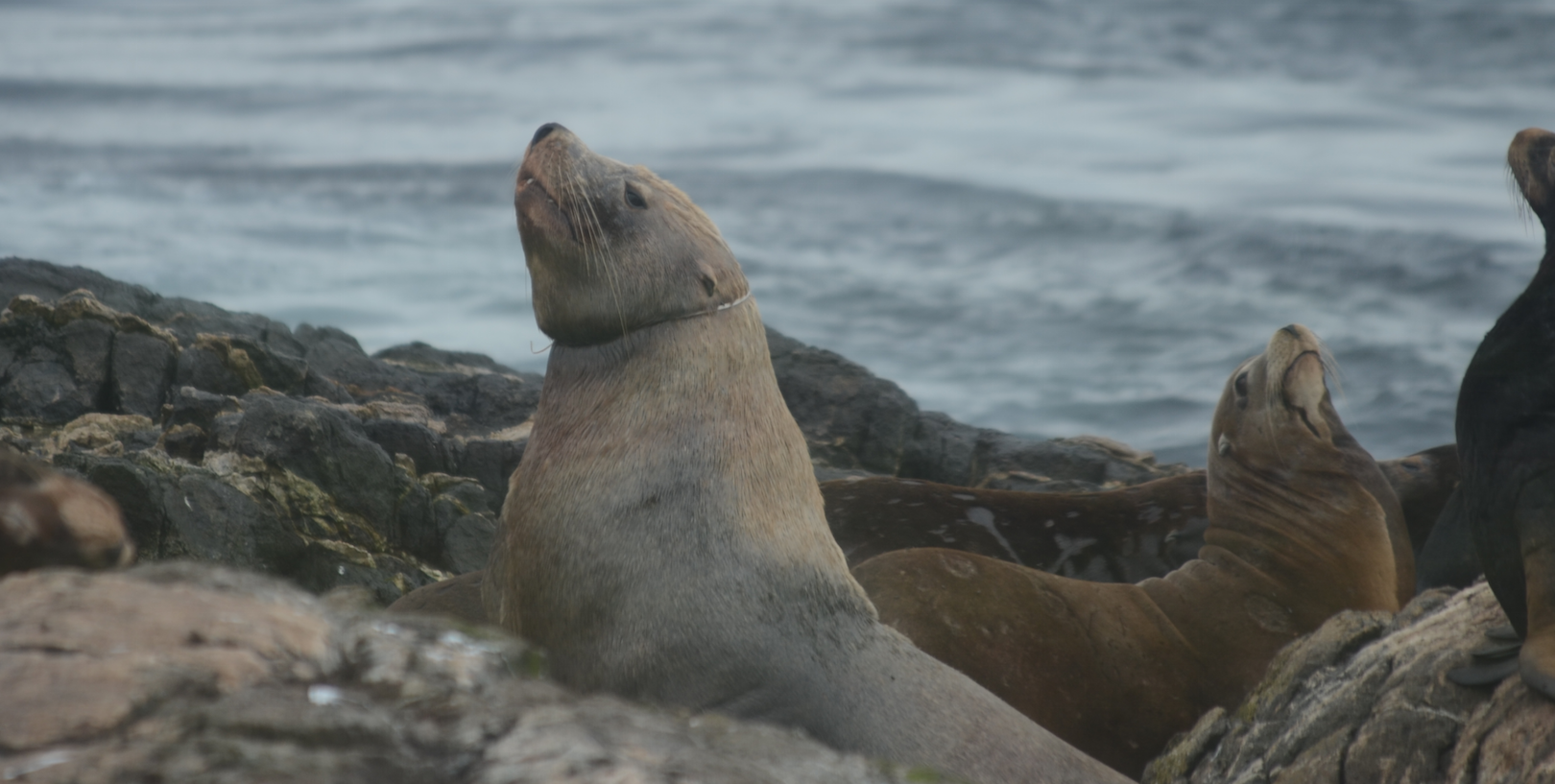
The three entangled Stellers sealions that are proposed candidates for disentanglement were all attending, two of them hauling out close to the living-room window of the science house.


Euju ringneck west 2 Oct 22

Euju ringneck west Oct22 Euju hi-top ringneck Oct22

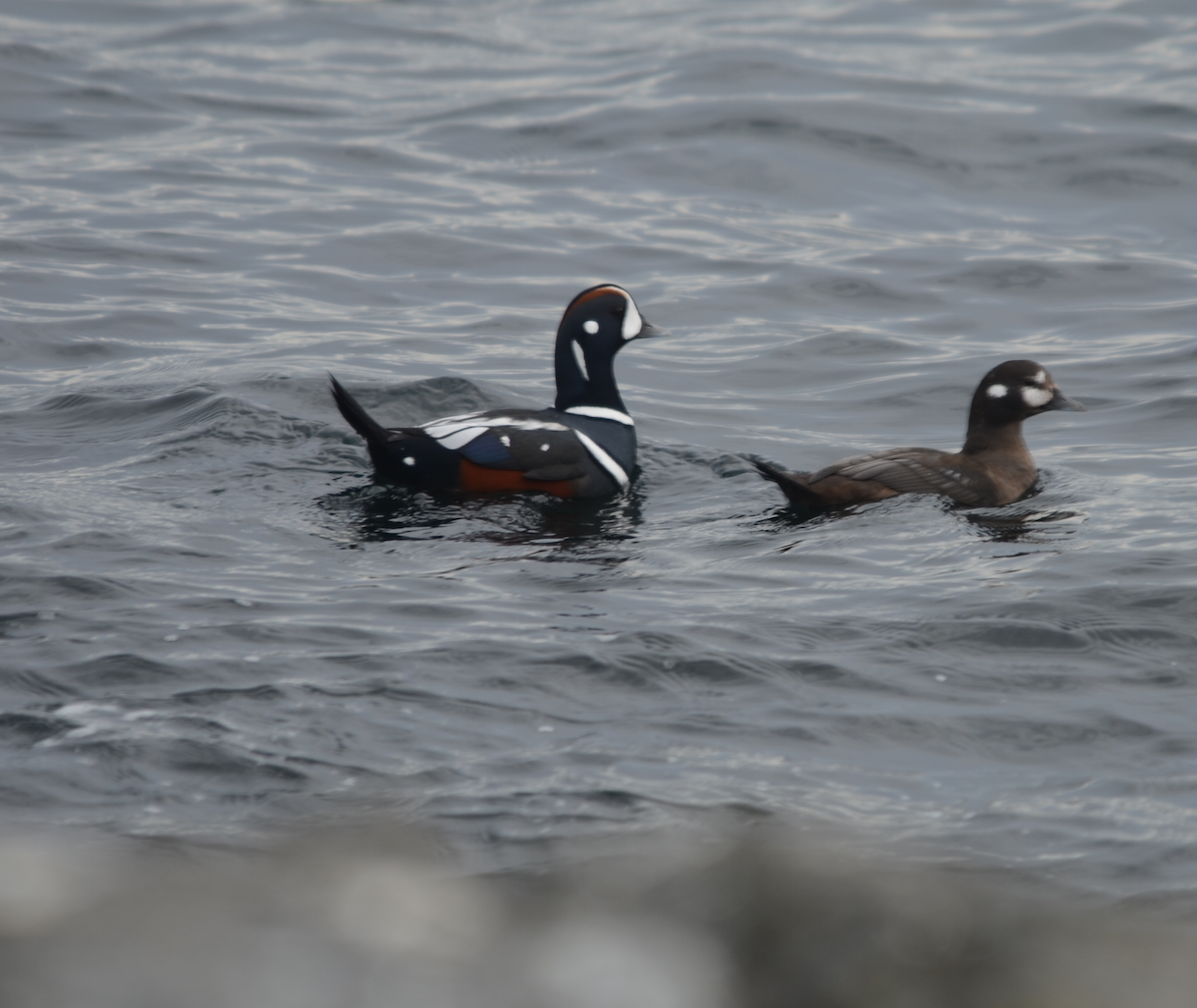
When I was doing the seawater sample I noticed a couple of Harlequin Ducks foraging on the north side of the island. I would like to see them on the underwater camera.

Hadu M & F

More shorebirds were observed foraging on the abandoned sealion haul-out today; Dunlin, Western Sandpipers and Sanderlings were foraging with the Black Turnstones. The smaller birds were kneading the substrate with their feet and probing. That area is completely covered in a mat of sealion hair from their moult.

sand tapping

Even though it was a dark and gloomy day, the solar panels managed to keep up with operational, electrical use. The generator is just cooling now after topping up the batteries for the night.

Wild and Wet.

It was a wild and wet day at Race Rocks with waves breaking over the jetty and the feeling of the first storm of the season. Even though it rained fairly hard in the morning, there were only sprinkles in the afternoon, as the wind switched from northeast to southeast and then back to north. The barometer kept on its downward slide, started yesterday afternoon until mid-afternoon when it started to climb again. The climb may be short-lived though as the forecast is for more of the same.

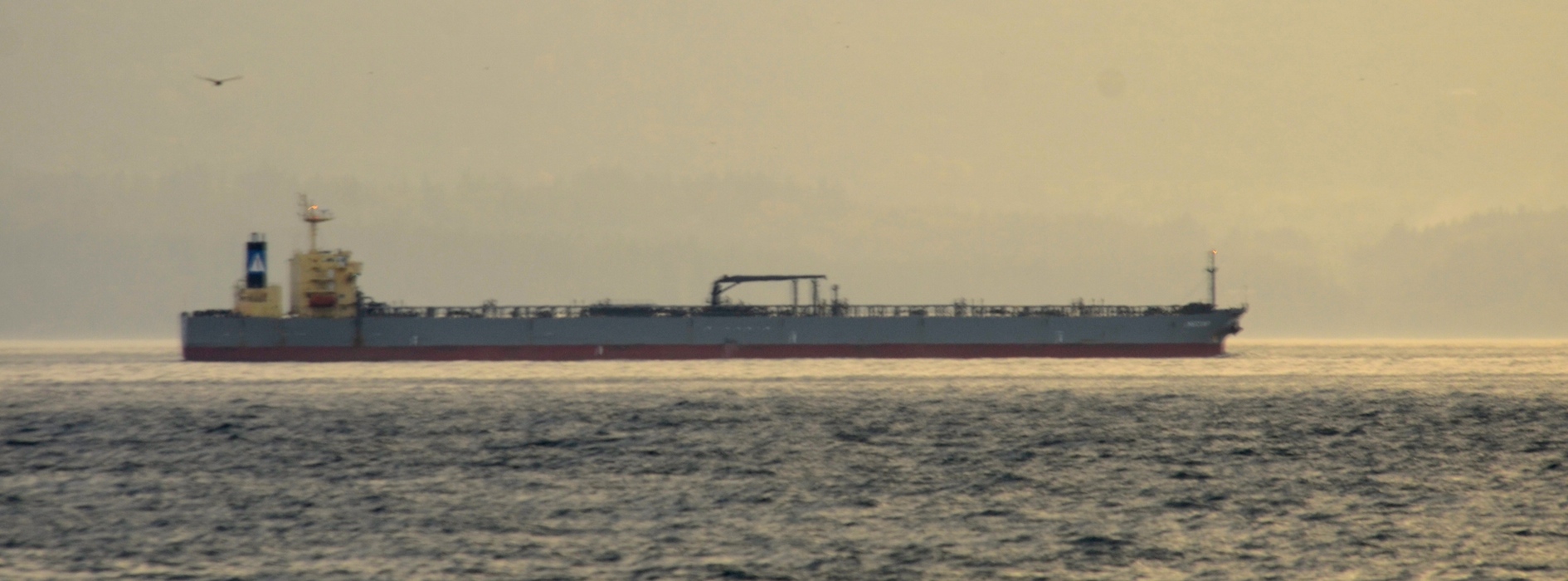
There were no vessels noted in the Ecological Reserve today, but at least one came fairly close.

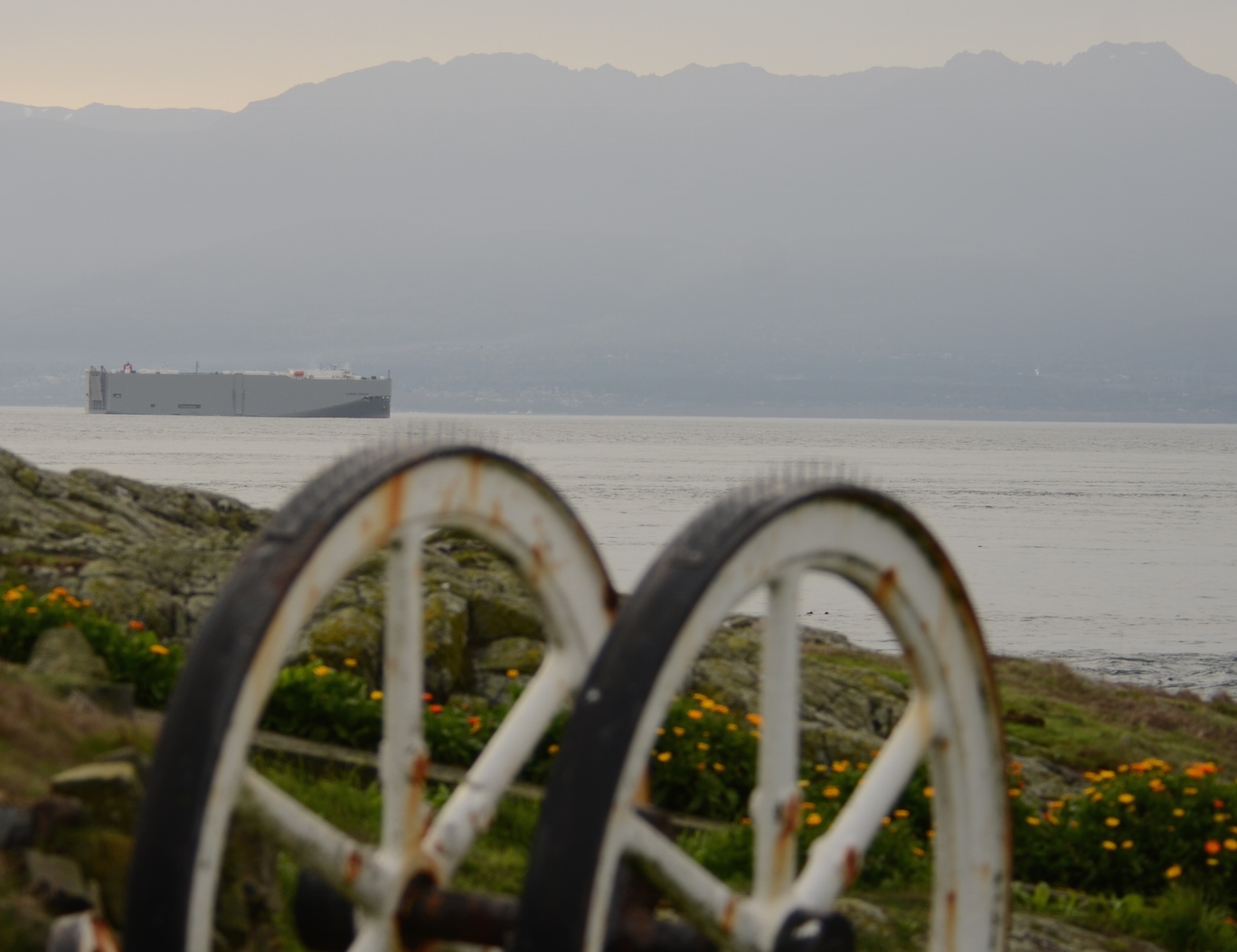
Race Rocks Ecological Reserve is on the edge of a busy shipping lane.

Race Rocks Ecological Reserve is on the edge of a busy shipping lane.

Great Race and the other islets that are not awash in the heavy seas, are almost completely covered with birds and mammals right now. It really is a natural haven.

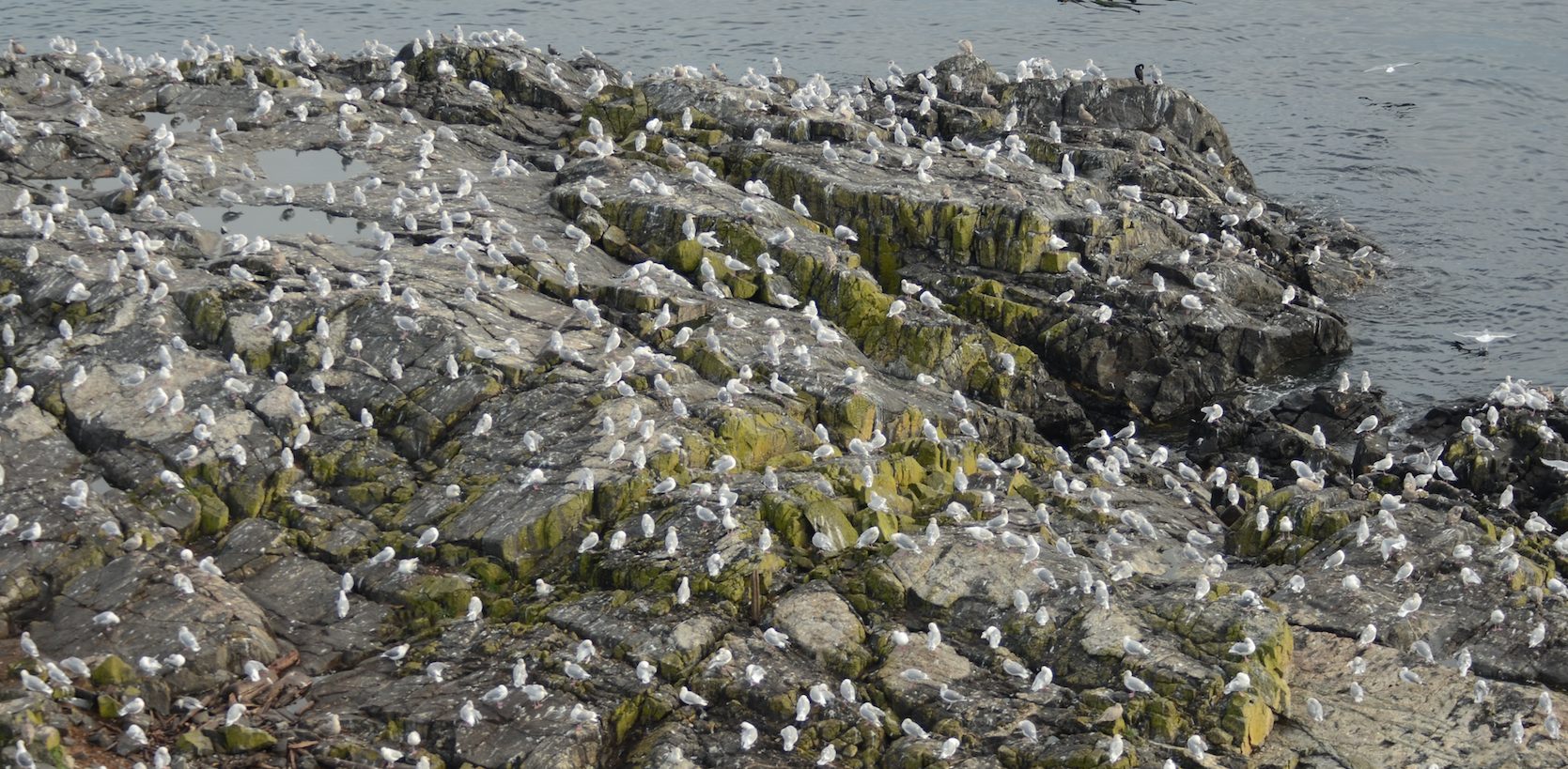
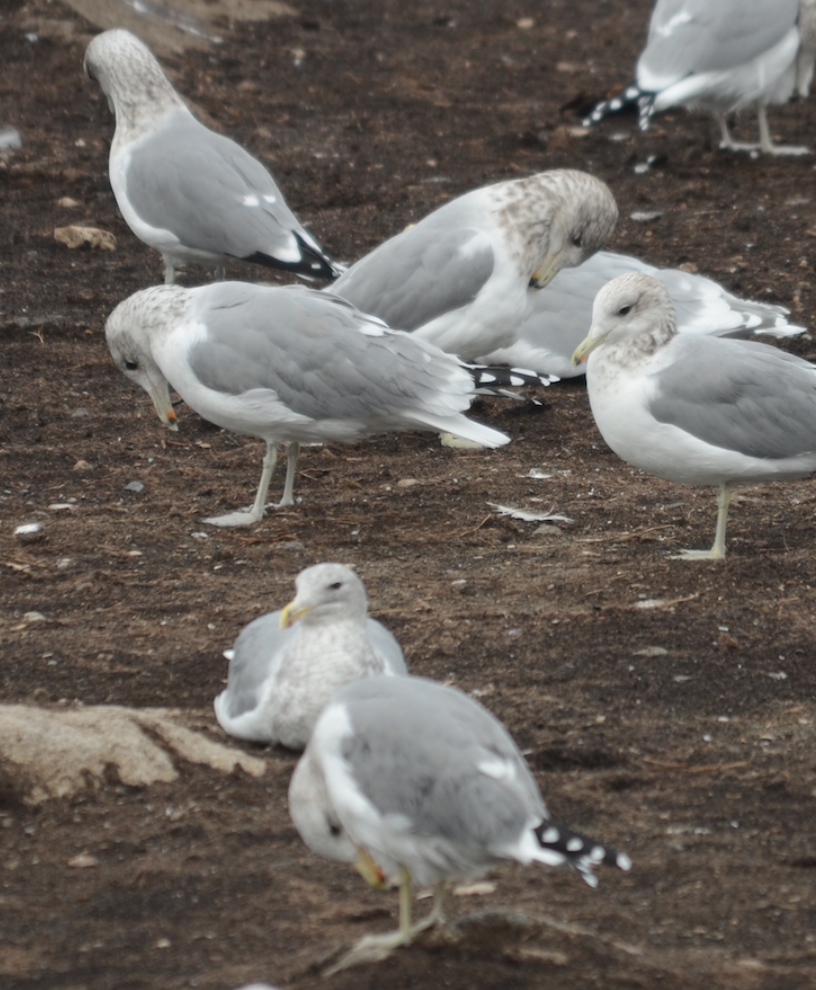
Mixed species flocks of gull dominated by Thayer's rest and preen on the east end of Great Race.

Mixed species flocks of gull dominated by Thayer’s rest and preen on the east end of Great Race.

With close to 900 seals and sea lions, thousands of gulls, and hundreds of other seabirds, it is surprising that there are still some unoccupied bits of terra firma around the house.

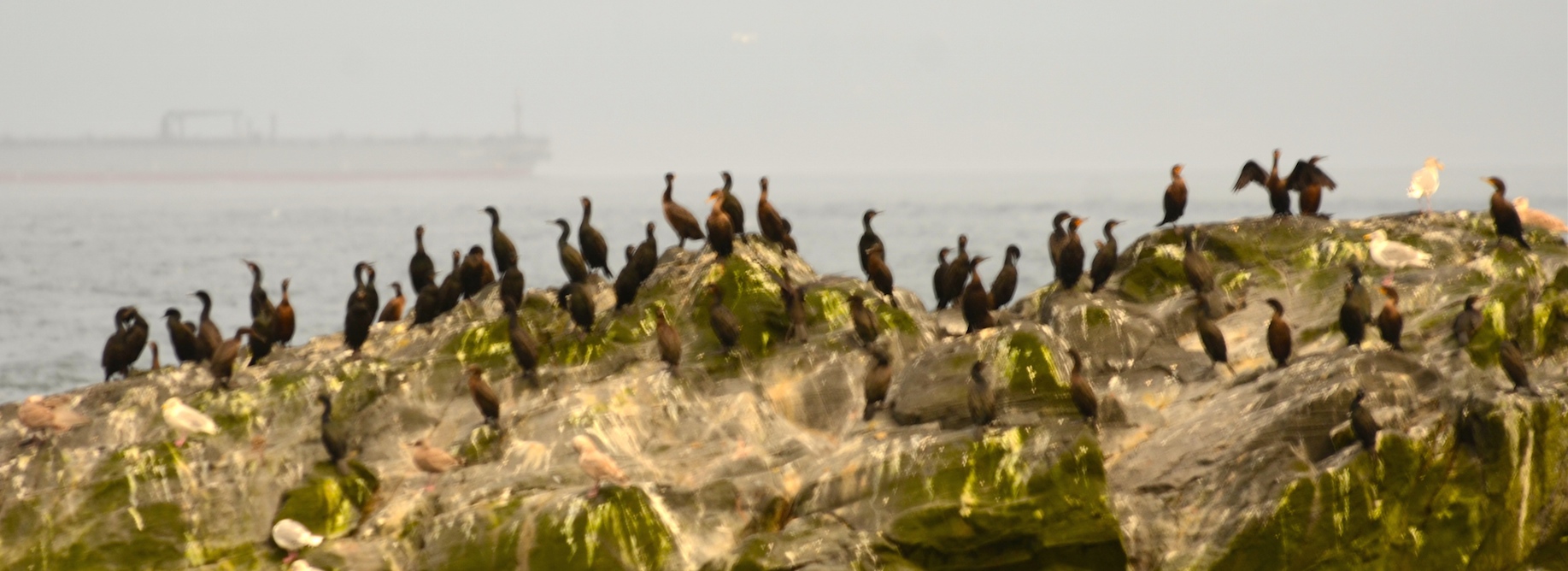
Double-crested Cormorants have significantly increased in number over the last two months.

Double-crested Cormorants have significantly increased in number over the last two months.

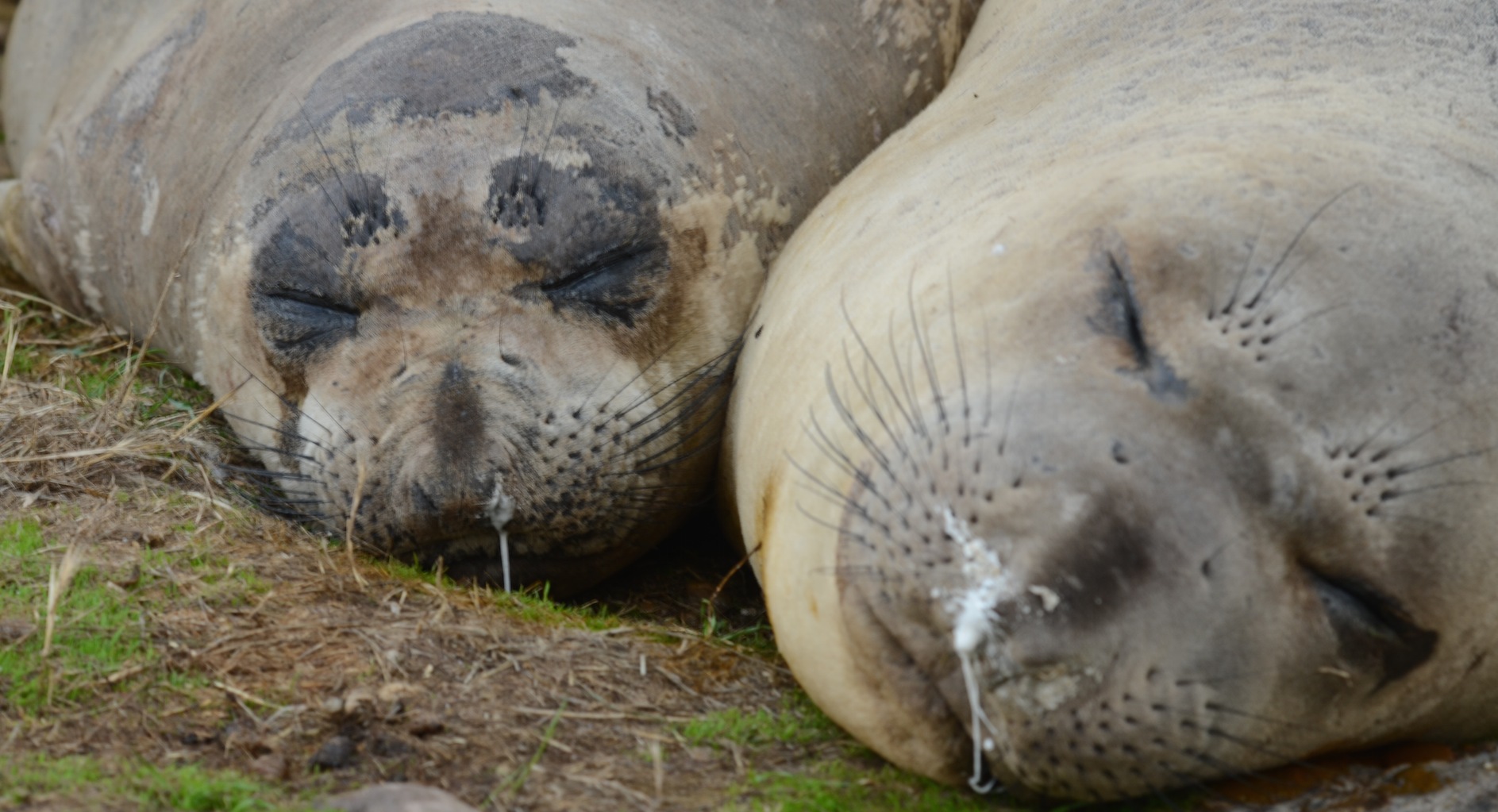
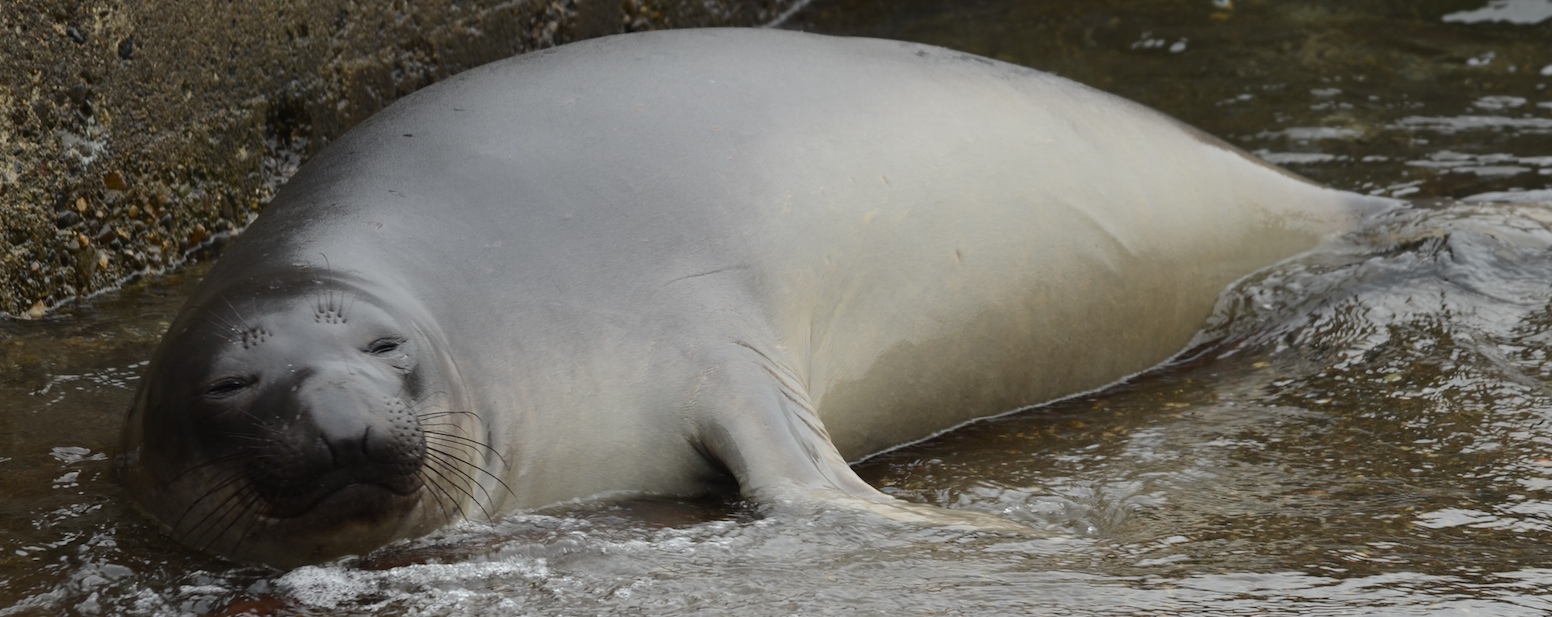
The tagged Northern Elephant Seal 5850_6967 which I am going to call Gat (the noise he makes and Tag backwards) and his little buddy Flake spent the whole day asleep, pressed up against each other and the back of the boat house.

The animal on the right, Gat will be three years old in January. How old do you think Flake (on the left) is?

The animal on the right, Gat will be three years old in January. How old do you think Flake is?

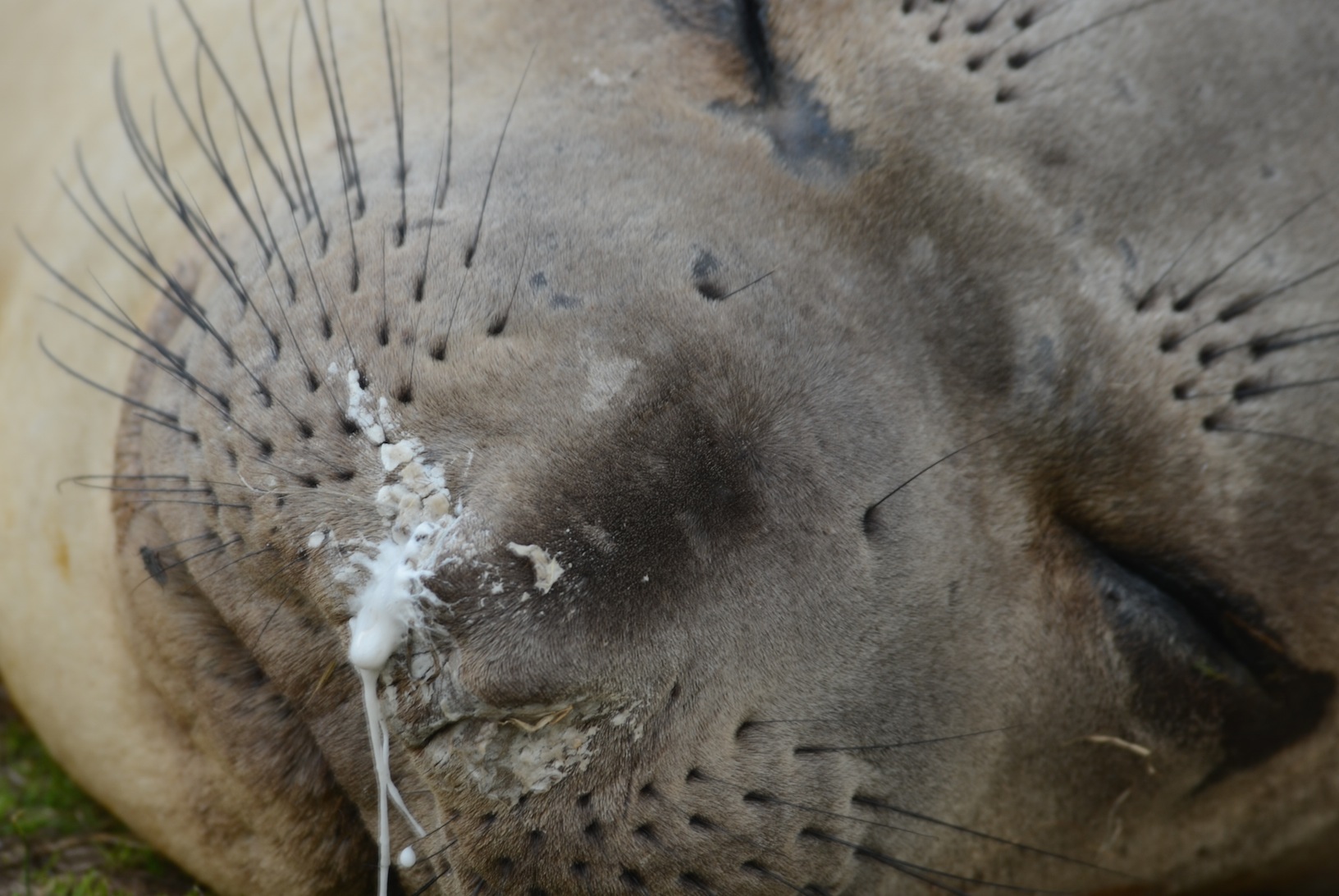
Something that most, but not all of the Elephant Seals have here, is extremely white mucous coming out of their noses. They are such amazing divers and spend so much of their life diving, that the default position for their nostrils is closed. Many truly marine birds and even marine iguanas have ways of conserving water and secreting salt through nasal glands and I am curious if Northern Elephant Seals can secrete salt that way? Will report back on my findings about the mystery of the white snot.

White mucus can be seen on the noses of many of the hauled out Elephant Seals.

White mucus can be seen on the noses of many of the hauled out Elephant Seals.

I had no visitors today and could not go anywhere due to sea conditions but thanks to conference calling, I was able to attend a wonderful meeting at Government House in Victoria. The meeting was about a new initiative to empower youth stewardship in British Columbia, a legacy project of the Lieutenant Governor. Very exciting news will be shared in November. Yes, you will have to wait.

For outdoor adventure I swept walkways and cleared the marine railway of woody debris and seaweed, adding to the woodpile and enhancing the compost pile with some lovely bull kelp. Otherwise I did the regular maintenance to keep things going.

Musical Rocks at the Race

It was another north-easterly day, with an ocean swell running up and down the islets of the Race. Although it was mostly overcast in the morning, periods of sunshine dominated and it was a pleasant, autumn day. The barometer continued to climb until about noon and then slipped back down, but not as far as yesterday’s low. The marine forecast is for variable winds in the morning and west Wednesday evening with periods of rain during the day.

In the pinniped world of Race Rocks, haul-outs are shifting around like musical chairs. Steller Sea lions are now abundant on North Rock, which in September was the exclusive domain of Harbour Seals. There is a small Harbour Seal hauling out in the jetty bay now and most of the California Sea Lions have moved to the south and west side of Great Race. Middle Rock, which had ten Elephant Seals, a few weeks ago, now has over one hundred Steller Sea Lions and five of the Elephant Seals have moved back onto Great Race. They arrived all wet and big-eyed this morning and moved in for all day slumbering. All of these pinnipeds make interesting sounds, music to their ears, I am sure, and they all distinctly different. More on that another day.

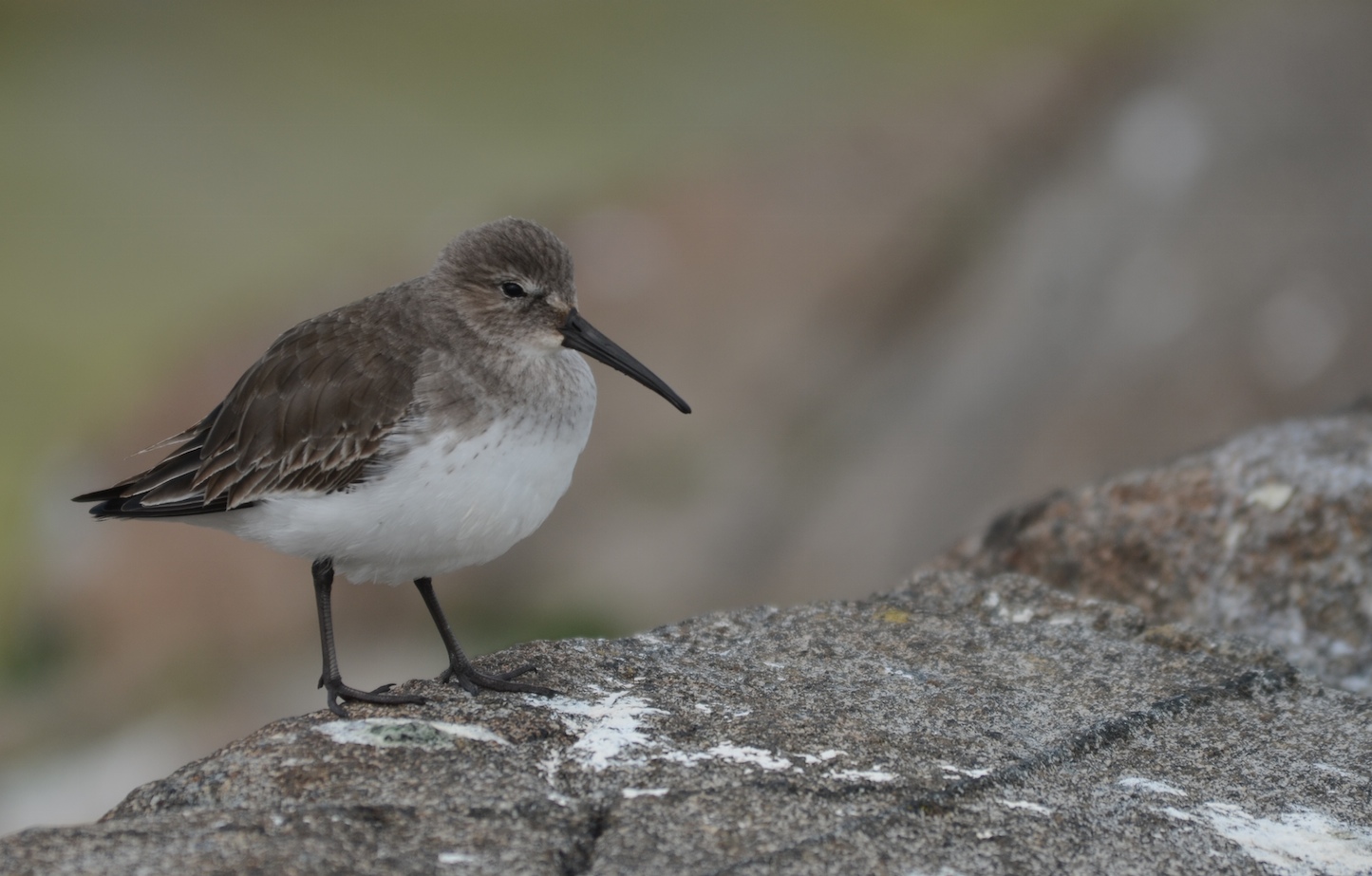
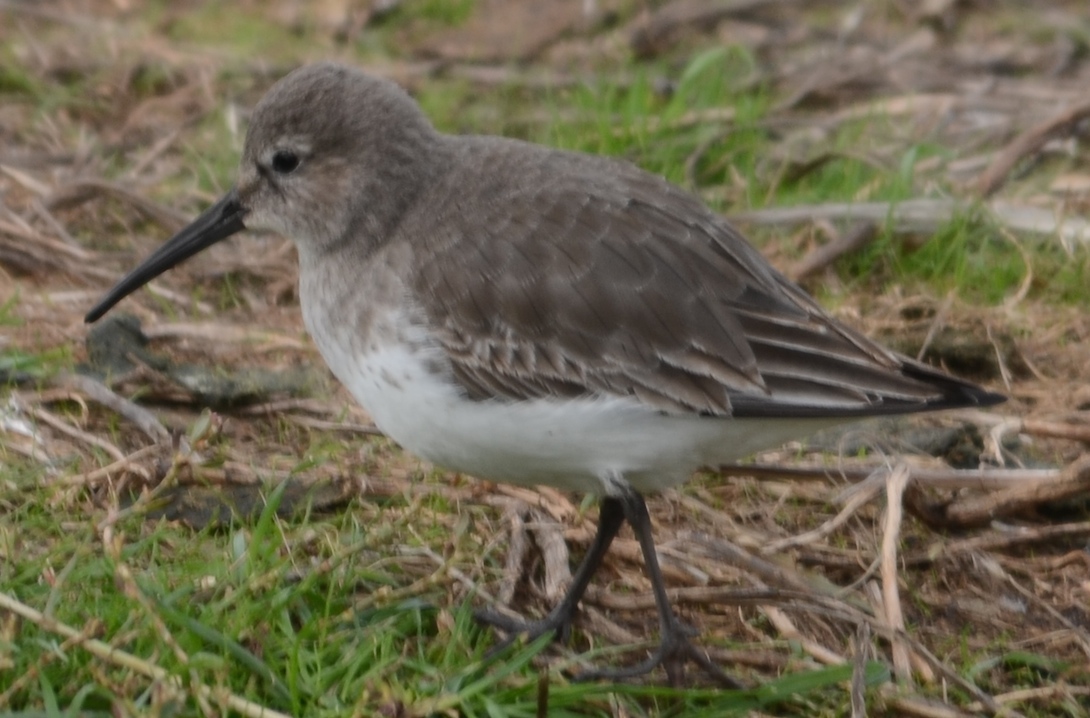
It is quite delightful what you can see out your kitchen window here. I looked out while doing dishes this evening and saw two large Humpback Whales to the south, just outside the Ecological Reserve near Rosedale Reef. There were no boats around, just the two of them blowing and diving, circling around in the same area, taking fairly short dives and showing their big flukes in a beautiful display of might and grace. The dishes were quickly superseded with the spotting scope and binoculars. A sport fishing boat approached, slowed and stopped a respectful distance away and just sat there taking it all in, for a long time. When they left the scene, they did so slowly, giving the whales a wide berth. I believe that this sort of respect insures a better viewing experience as well as protecting the whales. Earlier in the day, I stopped for tea and was just heading for my book when I looked out the kitchen window and saw this plain, medium-sized shorebird foraging with the Canada Geese. It was a Dunlin in winter plumage.

Dunlin?Dunlin?3

Routine maintenance was augmented with getting the Underwater Video Camera (Camera #2 on this web-site) hooked up to the Internet and starting winter preparations such as getting the furnace running. I had hoped to join the marine science class by boat for their kelp forest adventure but the swell and wind waves were a bit too large to launch and retrieve the boat.

Northeast Winds Switching to Westerlies.

Northeast winds predominated from early morning until late afternoon when they switched around to west-southwest. There were only sprinkles of rain, until the switch and once the wind turned, you could see laden clouds scudding across the foothills and pouring in through the Strait. It started raining in earnest, early evening and is blowing 25 knots from the WSW as I write this blog. The barometer bottomed out today at just over 1000 hPa and is now steadily vacillating in that trough.

There were still hardy whale watchers out in spite of the weather and five whale watching boats were noted in the Ecological Reserve during the day. There was a surprising amount of sports fishing activity in the vicinity. Everyone was well behaved in the Reserve.

Steller Sea Lion numbers seem to be on the rise with over 110 individuals hauled out on Middle Rocks with the Elephant Seals and several hundred more on Great Race. Two more of the smaller (two year old) Elephant Seals and a bigger sub-adult scooted up the ramp, under the fence and off to their favourite Great Race haunts. It is surprising how fast they can move doing the wave. Later I watched two of them sparring, in practice for a fighting adulthood.

It is a treat to have the Harlequin Ducks back from their rushing mountain summer streams. They are such thoroughly white-water birds and seem to seek out exciting places to forage.

Other than the regular duties, I spent some time cleaning up the boat today after a wild landing in the northeast waves. There are a couple of improvements that would improve landing safety including auxillary bunks on the trailer. These could act as a tunnel and help centre the boat so that as a wave comes in and lifts the stern, the boat is not pushed off track. More weight would also be good and so would a bailer that is lashed on. Yes it was a good work-out.

Thanksgiving Edition (No Turkeys Here.)

The day started with a hazy, overcast sky and an ocean swell rolling in from the open Pacific. Although visibility was 10 to 15 nautical miles, the marine air gave everything a soft, muted look and both Port Angeles and Victoria looked further away than they actually are. In the morning, winds were light to gentle breezes starting in the southwest and swinging over to southeast. In the afternoon it shifted to north-northeast and became noticeably colder and wetter.
The ocean swell became dramatic by mid-afternoon, exploding over north rock and making a rolling break into the jetty bay, surging right over the jetty. Although the barometer was higher today than it has been all week, it is now slowly dropping and Monday ‘s forecast is for more clouds, wind and rain. Hmmm sounds like October.

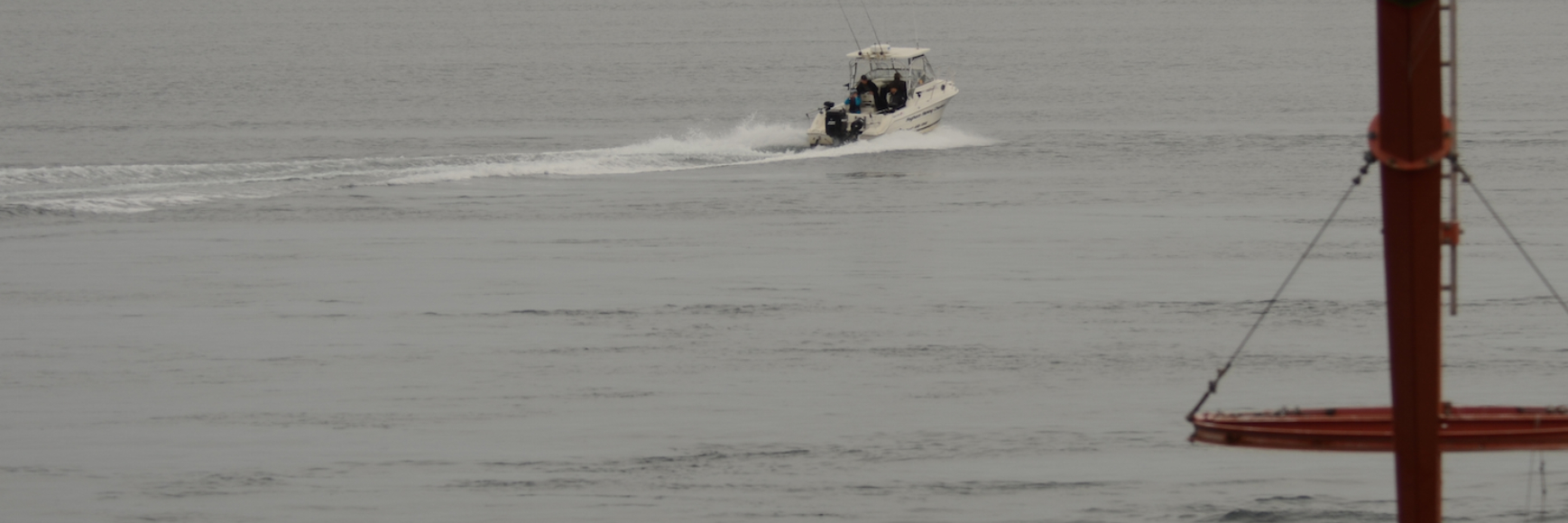
Whale watching activity was fairly brisk today with seven boats in the Ecological Reserve. Everyone was fairly well behaved. Seaking Adventures was certainly giving a lot of throttle in the Reserve, crossing from Great Race over to North Rock but that may have been because he was bucking the tide. There were also a couple of sports-fishing boats passing through the Reserve in a hurry, Foghorn Charters was one of those two.

Some operators may not know that the speed limit is only 7 knots within the Reserve.

Some operators may not know that the speed limit is only 7 knots within the Reserve.

A large Humpback Whale passed through the Reserve westbound, late afternoon, there were no whale watching boats around.

A lot more gulls arrived with the cool wet weather and are roosting just about everywhere on Great Race now. I am curious what the numbers will be for this week’s census on Wednesday.
CaGu California Gulls resting and preening on Great Race.[/caption]

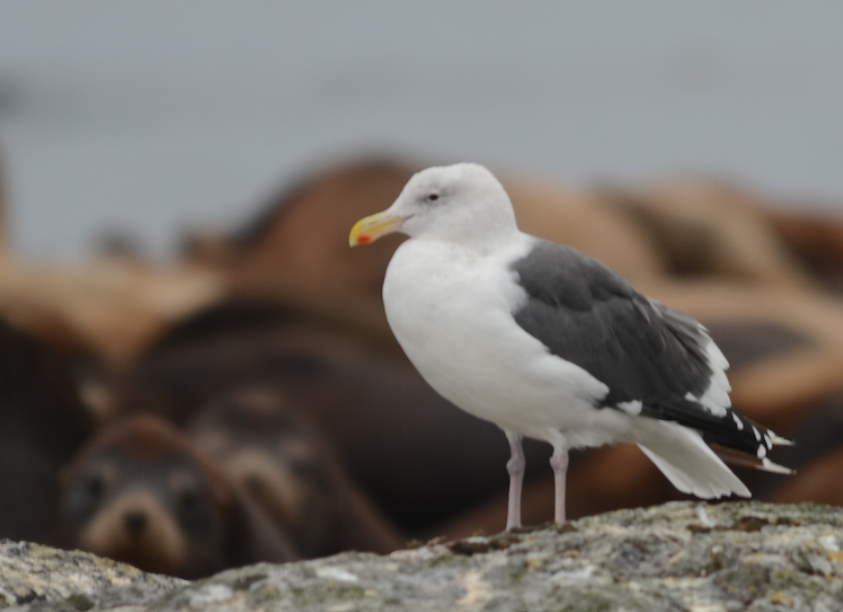
Western Gulls are a little north of their usual range here and hard to distinguish from Glaucous-winged X Western Gull hybrids.

Western Gulls are a little north of their usual range here and hard to distinguish from Glaucous-winged X Western Gull hybrids.

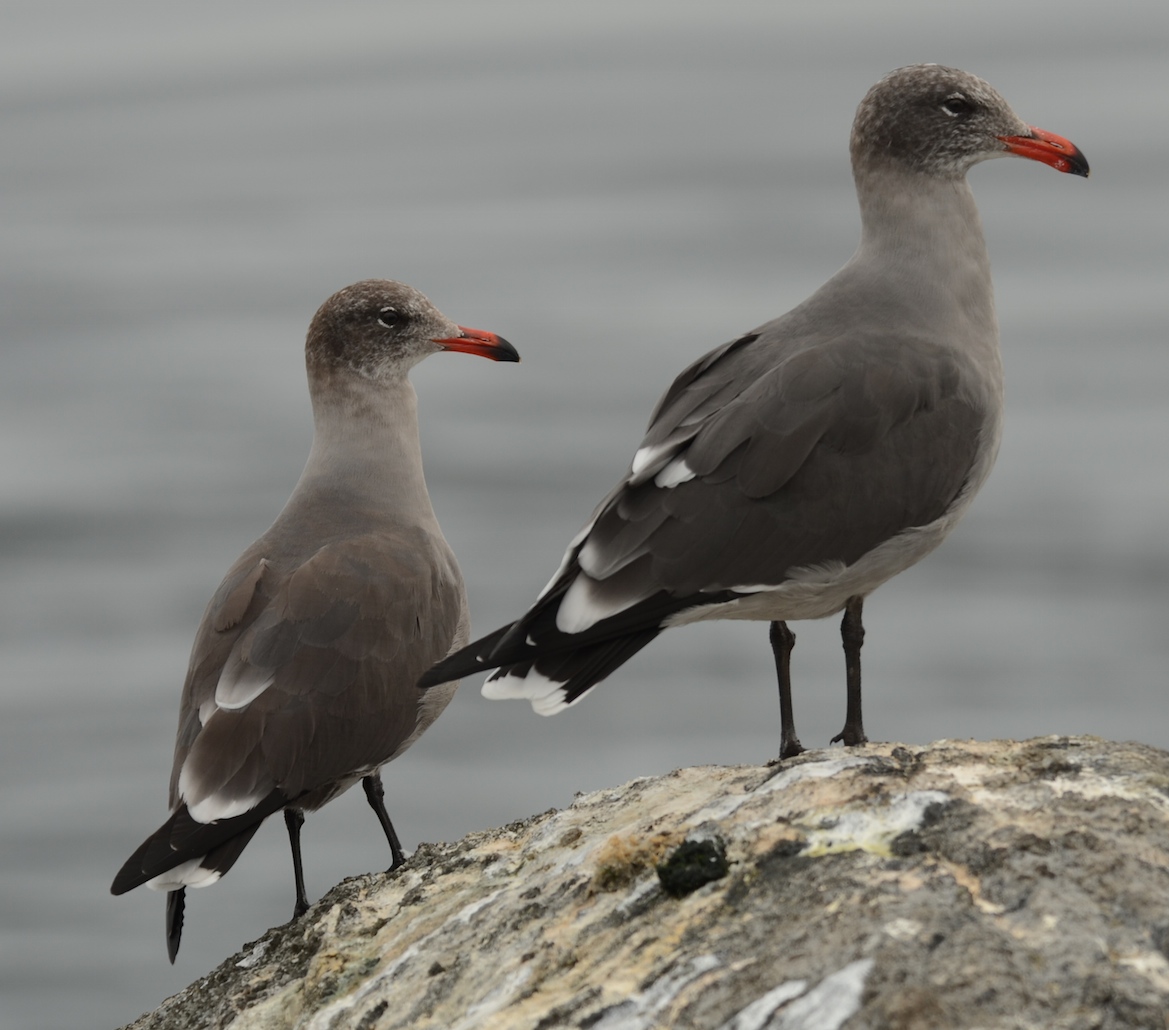
With the influx of California Gulls it is going to be tricky distinguishing and counting all the large gulls. A gull that is easy to distinguish and also a favorite of mine, is the Heerman’s Gull.

Heerman's Gulls are our most exotic looking gulls.

Heerman’s Gulls are our most exotic looking gulls.

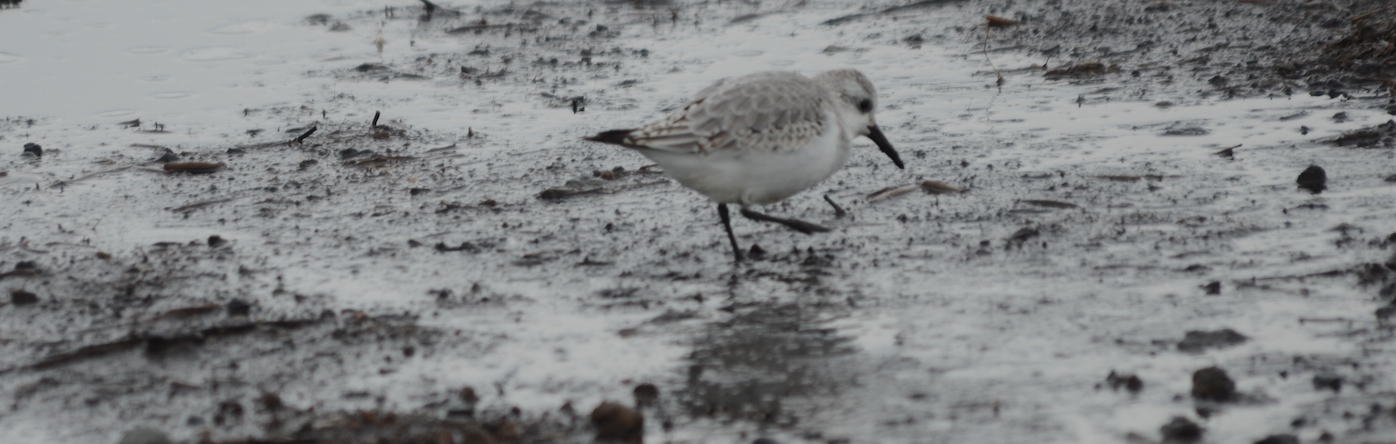
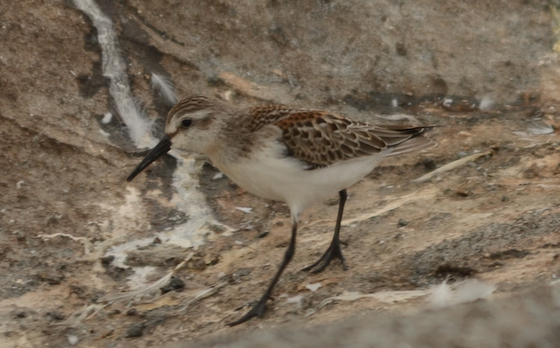
Another avian visitor spotted today was the small to medium sized sandpiper pictured below, I think it is a Western Sandpiper but would like confirmation.
WeSa
There were two young Elephant Seals on Great Race today and one of them was “tagged as a weiner in 2012” at Ano Nuevo Island in California “and hasn’t been seen since, so this is an important data point” according to Dr. Patrick Robinson, Año Nuevo Island Reserve Director.
Mian 6967
The second Elephant Seal was sleeping on the marine railway in the morning.
mian jetty

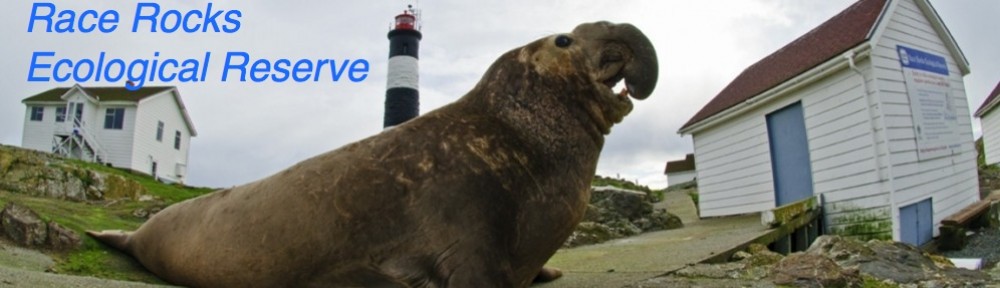
Race Rocks has become Canada’s main Elephant Seal colony. It is important as a fall haul-out location for sub-adults, as well as a winter birthing and mating site and spring moulting site.
Race Rocks is an ecological treasure located at a key location next to busy shipping lanes and popular sport-fishing grounds. I am thankful to those who had the vision to protect this amazing area and thankful to be able to experience it.
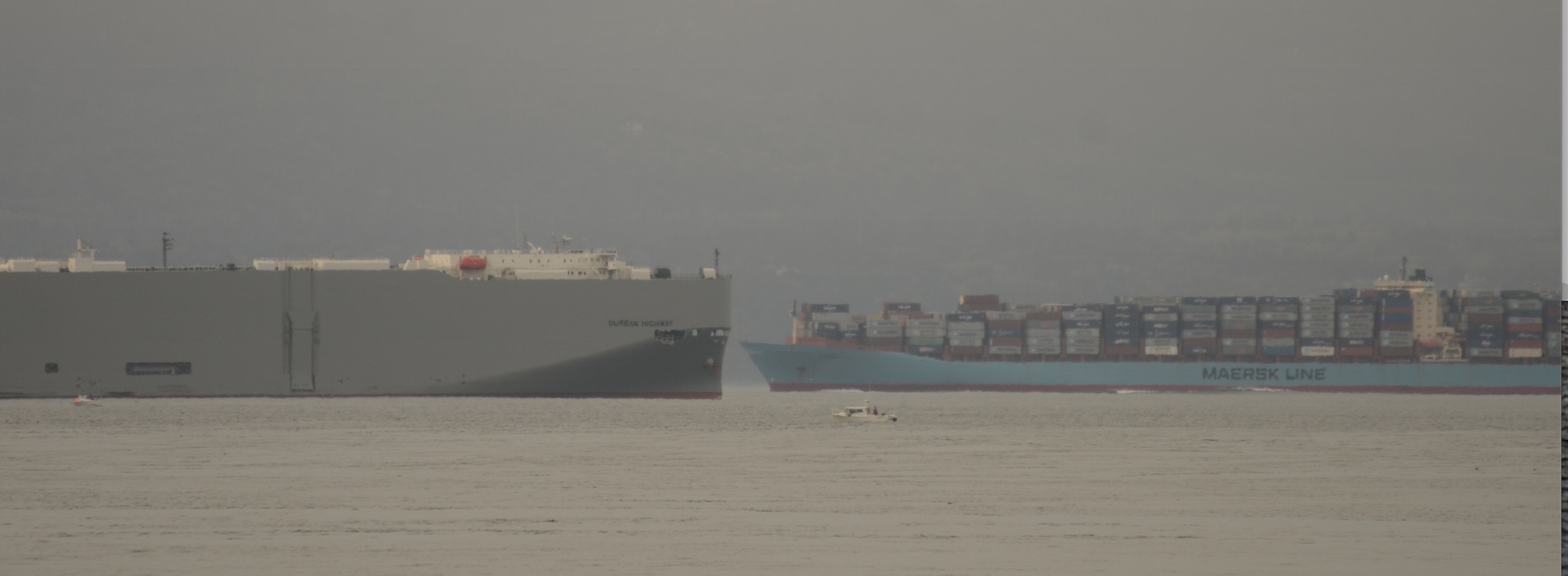
roro close to RR
roro & maersk

Fogimatrix.

The weather here was dominated by fog today. It lifted in an interesting way this morning so that you could see out and under the fog for several miles yet there was thick fog above, at very low elevation. The rising sun shone through this clear layer, creating a weird and wonderful lighting effect from below. By mid-day the fog had burned off and sunshine prevailed at sea level. There was still fog in the shipping lane and the tops of the Olympic mountains were visible. The fog flowed back in by mid-afternoon and thickened steadily after that, pushed in by a westerly fog wind. During the day there wasn’t much wind until late afternoon/early evening when it picked up to 15 to 20 knots from the west. The barometer continued its slow trend downward that started a few days ago and the forecast looks relatively good until rain on Friday.

There was a fairly steady parade of whale watching boats in the Ecological Reserve today. They were looking at Humpback Whales, Harbour Porpoise and of course the Sea Lions. Sixteen tour boats were noted although I may have missed some in the fog. One of the tour operators had the chance to see a really big (tyee) spring salmon swimming through the kelp forest.

There were sports fishers catching Coho, Spring and Chum Salmon to the south and west of Race Rocks and many sea lions were also busy catching salmon while at the same time helping to feed the gulls with their scraps, not out of any benevolence, just because they are messy eaters.

There are many gulls here now including Glaucous-winged, Glaucous-winged hybrids and Thayer’s gull which are challenging to distinguish. I look forward to doing the census first thing tomorrow to try and figure out how many of which species. The Heerman’s Gulls continue to benefit from sea lion salmon treats which they certainly can’t do where they breed in Mexico. I like watching them. They are very beautiful and have a interesting feeding behaviours that they may have learned from birds like skimmers where they live rest of the year. They fly with their lower bill hanging down just above the water and occasional skim the water with it, catching small prey.
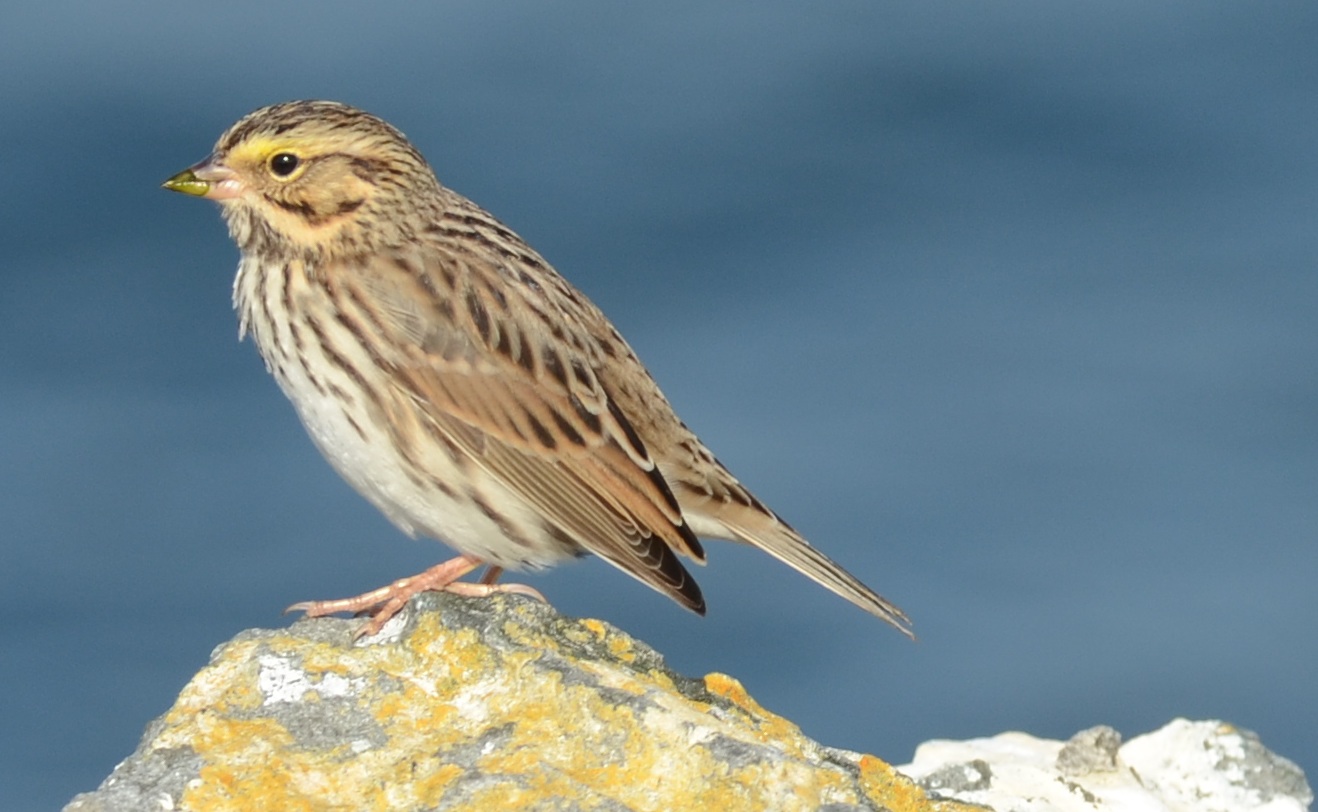
There are many sea lions on the west side of the island now and the westerly wind carries the dusty grime from them onto everything in its path. The Savannah Sparrows feed in and around the sea lions.

These little Savannah Sparrows forage through the sea lion waste picking up morsels and probably a few parasites.

These little Savannah Sparrows forage through the sea lion waste picking up morsels and probably a few parasites.

Elephant Seals have been hauling out on Middle Rock for over a month and now some are back on Great Race again. There was a small one hauled out on the northeastern side and a bigger one on the railway with the sea lions.

This Elephant Seal is napping with California Sea Lions on the marine railway.

This Elephant Seal is napping with California Sea Lions on the marine railway.

Washing the solar panels took a long time this morning. They were really dirty. I will do them after the census and it will probably take even longer, tomorrow as I want to shovel off the organic stuff that has accumulated before the electrician arrives to work on the panels. Today I readjusted to life on Race Rocks, finished the month-end report for September, did the seawater sample, made freshwater with the desalinator, ran the Lister generator and sorted photos as well as sea lion brand and entanglement data.

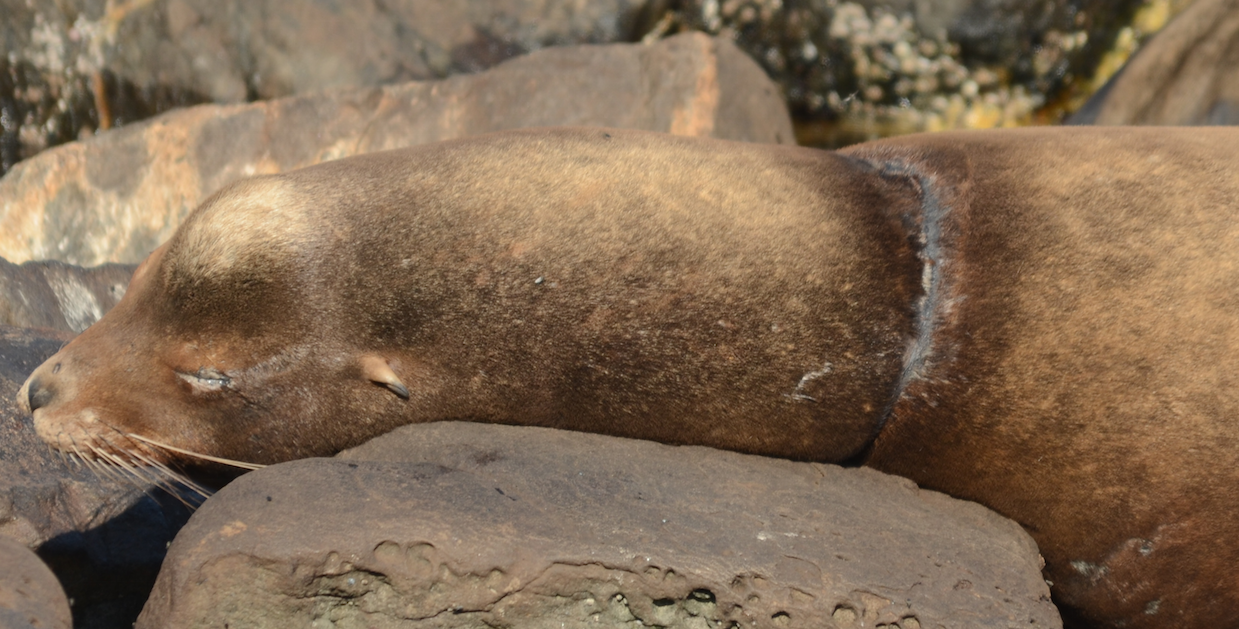
This entangled California Sea Lion has been spotted repeatedly since the end of August.

This entangled California Sea Lion has been spotted repeatedly since the end of August.

Out of the Fog

I returned to Race Rocks today after attending the Trans-Atlantic workshop on Ocean Literacy and the European Marine Science Educator’s conference last week, in Gothenburg, Sweden. I am refreshed and inspired to finish off my shift at Race Rocks.
It was warm and sunny when Courtney and I left Pearson College in Pedder Bay this morning but as we drove southeast towards Race Rocks, we were soon enveloped in the cool, damp fog. As the sunny peaks of the Olympic Mountains slid out of view, obscured by fog, the dark shape of North Islet emerged and behind it came Great Race and the light-tower, out of the fog. It is great to be back and was just as great for Jeff, who was filling in, to leave.
It was foggy on and off all day with a few periods of sunshine with visibility of over a nautical mile. Throughout the day, the foghorn blew and I could hear ships signaling as they navigated the Strait of Juan de Fuca in the fog. There was no wind for most of the day but it has been consistently blowing about ten knots out of the west for the past several hours and the fog is thickening.
The fog did not deter the whale watching boats as there were Humpback Whales feeding in the area today and the last cruise ship of the season in port. One smaller Humpback was diving and presumably feeding right in the Ecological Reserve diving against the flooding tide. I wonder if they can use the flow to their advantage in feeding more efficiently with less effort? Natural history speculation aside, the count of observed whale watching boats from 11:00 to 19:00 (dusk) was thirteen with some vessels visiting more than once.
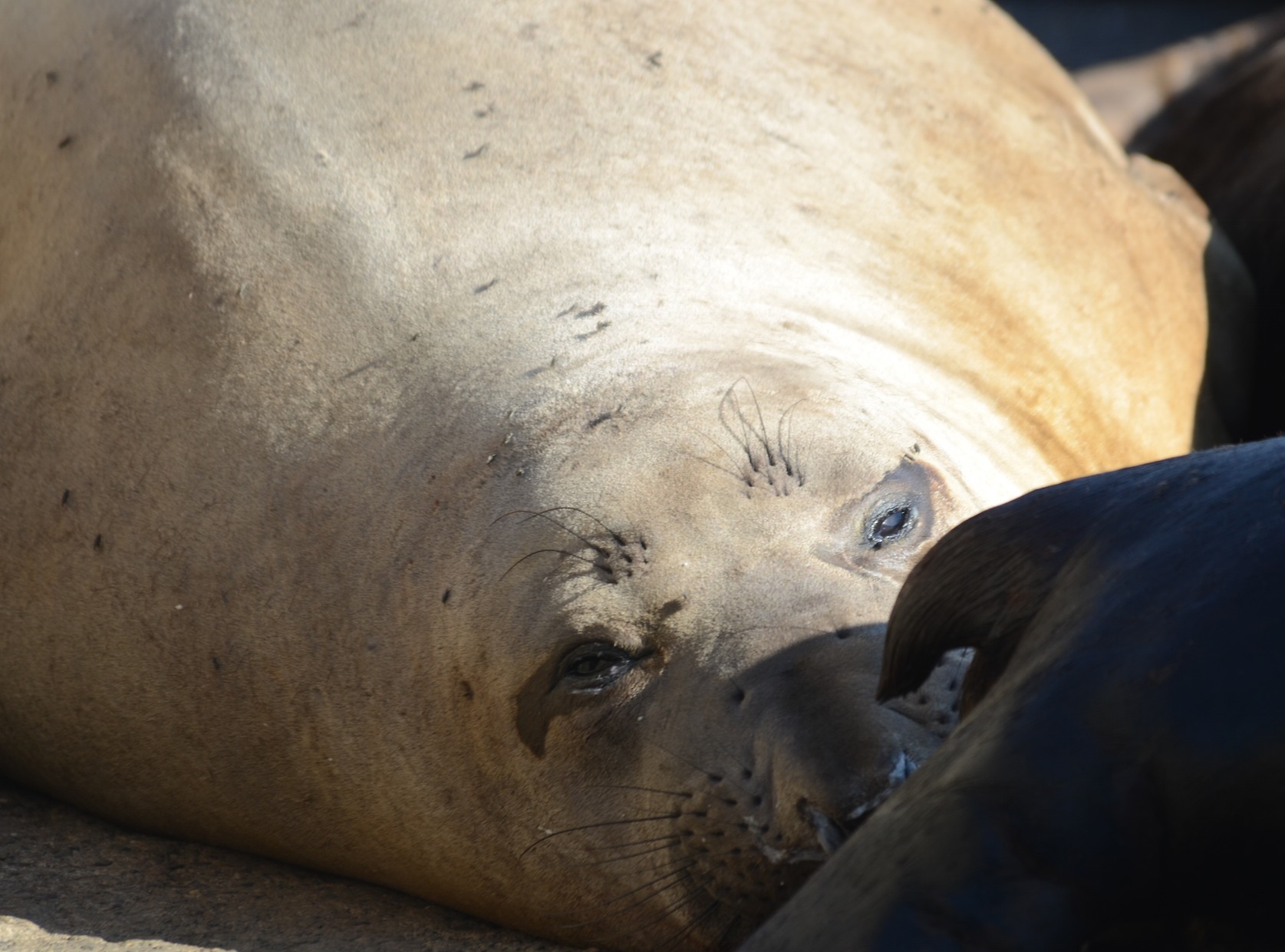
The Chum Salmon run started in earnest while I was away and there appears to be fewer sea lions hauled out than there were before. There are many in the water however. Sea lions of both species are very busy eating Chum Salmon with most of the kills I observed, happening right in or at the edge of the tidal flows. They thrash the fish and rip it apart at the surface and swallow large chunks tail last at the surface as well. This source of scraps, of course attracts gulls. Several species of gull were seen in these sea lion driven feeding flocks today; Glaucous-winged, Hermann’s, Thayer’s and Ring-billed Gulls. There were three or four fairly hefty Elephant Seals hanging around the marine railway today. They have such huge eyes and such clean looking pink mouths. Many of the Sea Lions have serious tooth decay and oral disease.

While I was away there were several a visits to the island. The Victoria Natural History Society made it part of their birding trip on September 27, sixteen friends of the Royal BC Museum made a visit October 4th and a family visit was made by by Mike and Carol Slater, one of their daughters and several grand-children. Mike and Carol were the last light-keepers at Race Rocks and the first Eco-Guardians. They survived some epic storms and I am sure they have some great stories to tell. If you are interested in the “contemporary” history of Race Rocks, there is a lot of information on this web-site, including ancient videos, images and even historic weather events.

My main tasks today were to get moved back into the house, to do the seawater sampling, fix the pier fence and run the generator for a few hours in order to top up the batteries. There is new clean oil in the Lister gen-set and new filters etc. thanks to Jeff. The old Lister seems to run better than ever tonight a I finish my last task, posting this blog..

Gray on gray.

It was a bit of a gray day with some thick fog and even a few patches of sunlight, which made fog-bows. This is my made up word for the colourless, rainbow-like arches made by the sun in the fog. Winds were light and swung around out of the north, northeast and over to the east, with the northeast predominating, at about 5 knots. The barometer was fairly steady today and the forecast for tomorrow is for more of the same only more southeast, also with showers.

There were Dall’s Porpoise and Humpback Whales nearby late in the afternoon, which brought a few whale watching boats with a total of nine noted in the Ecological Reserve. The operator of the vessel King Salmon, of Great Pacific Adventures needs to review the regulations for operation in the Ecological Reserve.

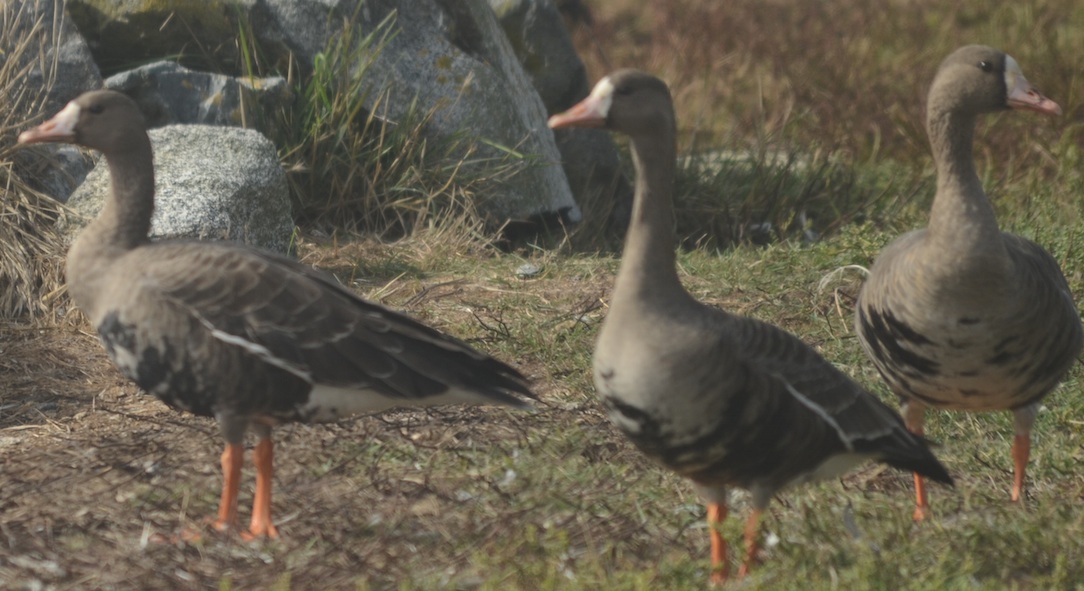
The newcomers today were four Greater White-fronted Geese. This species nests in the arctic west of Hudson’s Bay and the western populations winter from here down to Mexico.

Greater White-fronted Geese were resting and recovering here today.

Greater White-fronted Geese were resting and recovering here today.

Today was the day, for the weekly census of megafauna and these are the results:
Steller’s Sea Lion 176
California Sea Lion 406
Elephant Seal 6
Harbour Seal 168
River Otter 2
Canada Goose 4
Greater White-fronted Goose 4
Double-Crested Cormorant 18
Pelagic Cormorant 8
Cormorant sp. 2
Black Oystercatcher 8
Black Turnstone 11,
Killdeer 2
Surfbird 28
Common Murre 4
Thayer’s Gull 113
Glaucous-winged Gull 22
Heerman’s Gull 6
California Gull 1
Western Gull 1
Gull spp. 256 (probably in similar proportions to above, unable to tell due to distance and fogged glass in the tower)

Fence maintenance takes quite a bit of time right now as new sea lions arrive for the winter and learn to stay away from the houses and off the jetty. They would probably prefer to be right here in the kitchen but that is a trade-off with having a guardian here. Fresh-water production and electrical generation continue to be a priority. Today was also the day for month-end report, house cleaning and packing. I am off to Scandinavia to share and learn more about Ocean Literacy. Thanks to all the PC Marine Science students who were willing to share their thoughts with the participants of the gathering at the University of Gothenberg.

Marine Science Students Visit Race Rocks

Coming from Bamfield, I expect large volumes of water when the barometer drops and it starts to blow southeast. It was grey and wet today but the wheelbarrow I left out to collect rainwater only has about 500ml of water in it at the end of the day. The barometer is still sliding so maybe I should be careful what I say. The wind did turn around to westerly for a while as it cleared in the late afternoon and is now flowing out from the northeast with more drizzle approaching real rain. From Environment Canada’s forecast it looks like the trend for this week.

Although there are still plenty of recreational fishers around, only one was noted in the reserve today and they were looking at sea lions. There was only one whale watching boat noted in the reserve.

Laura brought the first of her three marine science classes, from Pearson College to Race Rocks today. Courtney masterfully landed Second Nature at the very unforgiving pier and we had a wonderful field trip with a student:teacher ratio of 4:1. The students were really good at moving with stealth so as to not startle the sea lions. This allowed for good sea lion observations, which were noted in their journals. They saw all four species of Pinnipeds and added to their growing species lists with Black Oystercatchers, Black Turnstones, Glaucous-winged, Heerman’s and Thayer’s Gulls. They spotted new (to me) branded California Sea Lions including three branded in the Channel Islands. All of the students had a bird’s eye view from the top of the light-tower thanks to Courtney and we finished off with warm cinnamon buns at the keeper’s house.

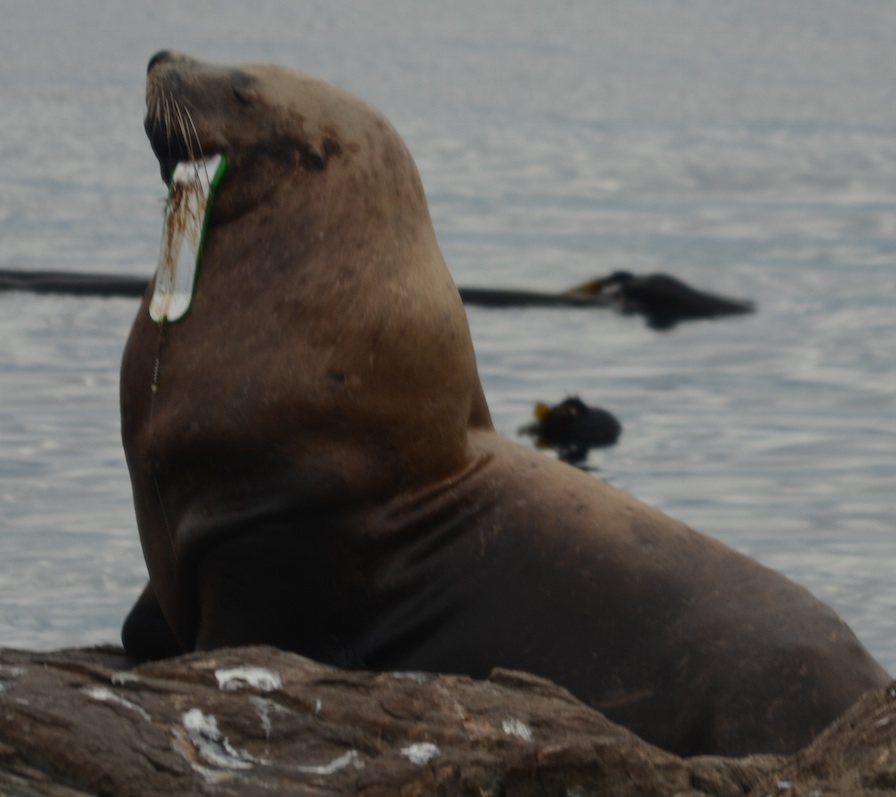
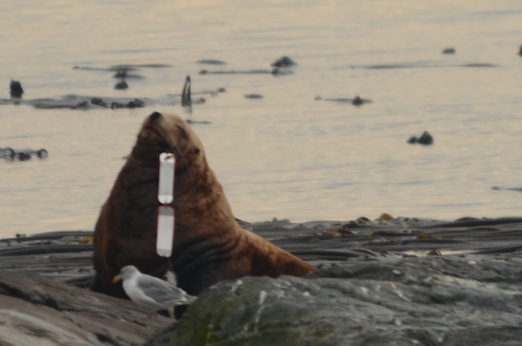
After the visitors left, I caught a glimpse of these two Steller’s Sea Lions entangled in sports fishing gear. Those are salmon flashers hanging out of their mouths, which is not good news, as these cannot be disentangled the way the neck-rings can. The individual with one flasher has been hauling out at this same spot for a few weeks now. The one with two flashers, has not seen before today.

I will be watching out for  this animal over the next month.

I will be watching out for this animal over the next month.


Today was the first time this animal with two flashes was seen here. It will be easy to distinguish it from the one with only one flasher.

Today was the first time this animal with two flashes was seen here. It will be easy to distinguish it from the one with only one flasher.