Black Oystercatchers are the species of the day with the first chicks sighted in the nest to the E of the Main Keeper’s house. Camera 1 will just be able to make them out if they stay put. Another nest was discovered directly behind tank #1 that is a “limited-time only” infrastructure feature on the island. 3 nests with eggs:3,2,3 (now 2+chicks,2,3), 2 brooding pairs with undiscovered nests, and 2 pairs with overlapping feeding territories but no suspected nest sites.
Elephant Seal: 3
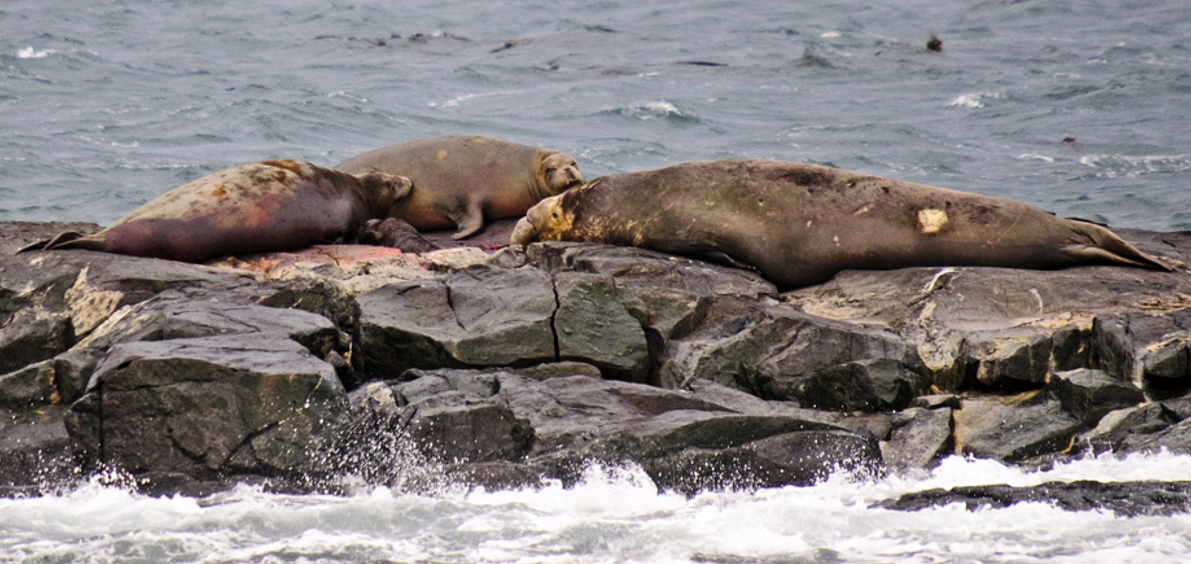
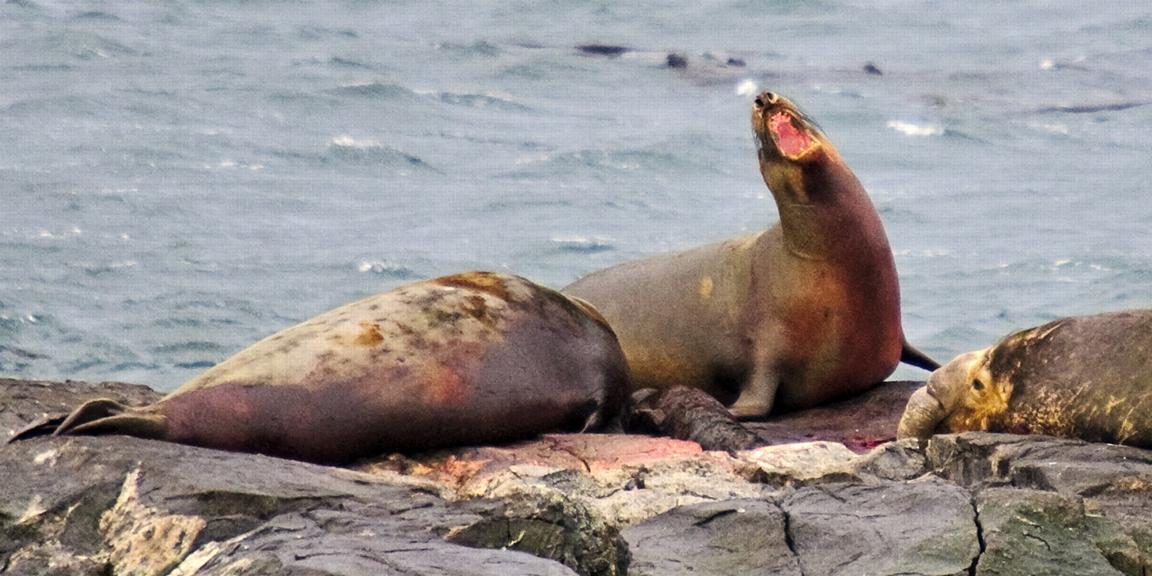
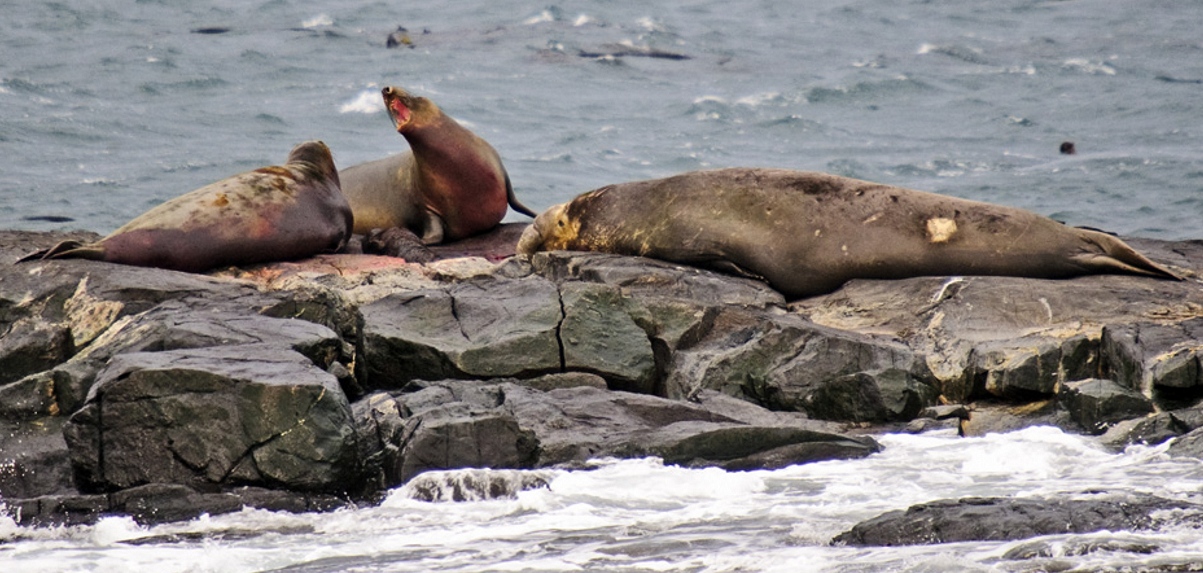
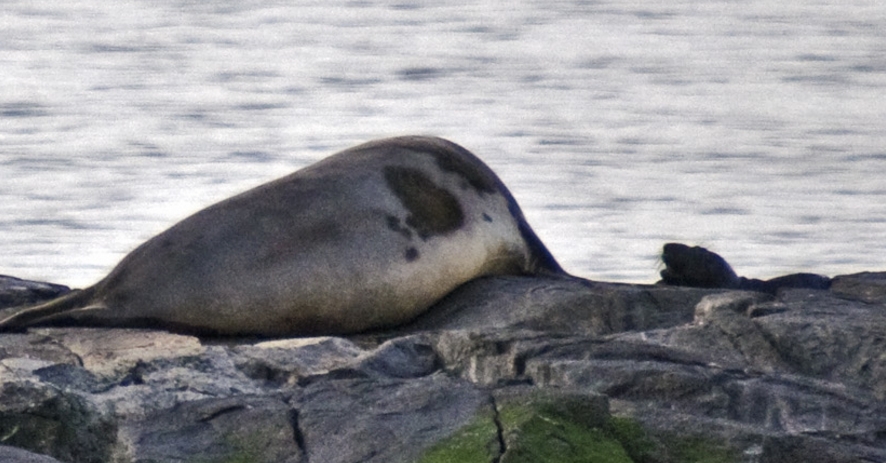
An eventful day for the elephant seals. More sunlight and less wind than we’ve been used to this spring brought all three Elephant Seals on Great Race down to the water… but not before Misery had a go at mounting Bertha. She escaped up the “steep” path to the grass on top of the foundation left from the original keeper’s house. Bertha then slipped past the sleeping Misery and lay on the ramp right at the water line in the shade but not in the water. Misery woke and detected the deception and came barreling down the path and boat ramp. Bertha took off through the water like a startled harbour seal, moving closer to the hauled-out California sea lions. She did not come back on land until dark. After all his effort, Misery followed just until he was in the water and took to splashing water back across his body which both trickled and steamed off his late winter coat. Once refreshed, he moved further into the water, floating and steaming in the warm sunshine. Seeing/smelling Bertha in deeper waters, he followed her only to have her swim even further away. El seal tagged#4252 was already in the water and Misery soon sensed her and tried to pin her against the rocks in the shallow sea lion haul-out, but she snapped at him and also swam to deeper waters. Just before sunset, Misery returned to land, trumpeting in the shallows. Looking at records (and noting how much girth Misery has put on lately), the habitat use of our two adult bull elephant seals is very different. Misery: showed up for the ‘season’ first in October, was back before Slash showed up for the pupping season, stayed longer through the breeding season, and is now here moulting (as he did this time last year). His moult is delayed 1-2 weeks compared to last year. That all said, Misery has grown significantly this season after spending much of the last 6 months here at Race Rocks, while our dominant bull spends much greater times away before returning with added mass.
Tag Archives: elephant seal
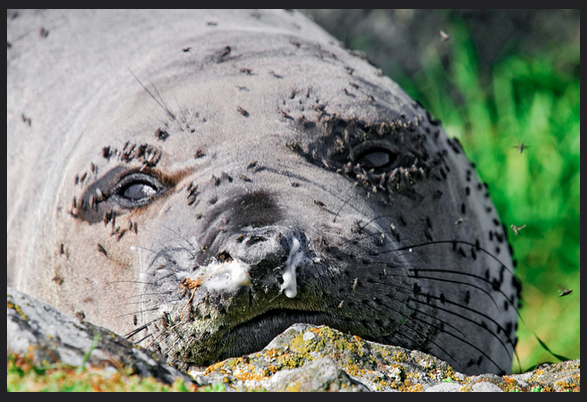
Kelp flies on the face
 Swarm
SwarmMay is the beginning of kelp fly season here at Race Rocks, they swarm over the island and congregate in huge dark swarms on the leeward building and rock surfaces during windy and wet periods. Unfortunately for our pinnipeds, noses, eyes, and genitals are tasty smorgasbords for these nasty little pests!
-Ryan Murphy
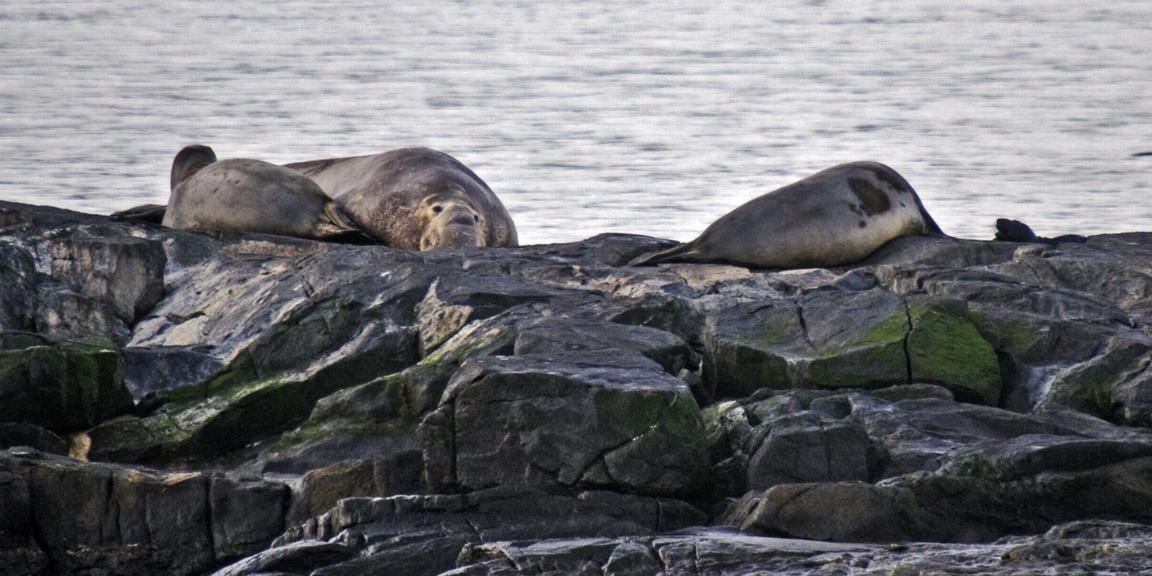
Female elephant seals on Middle rock
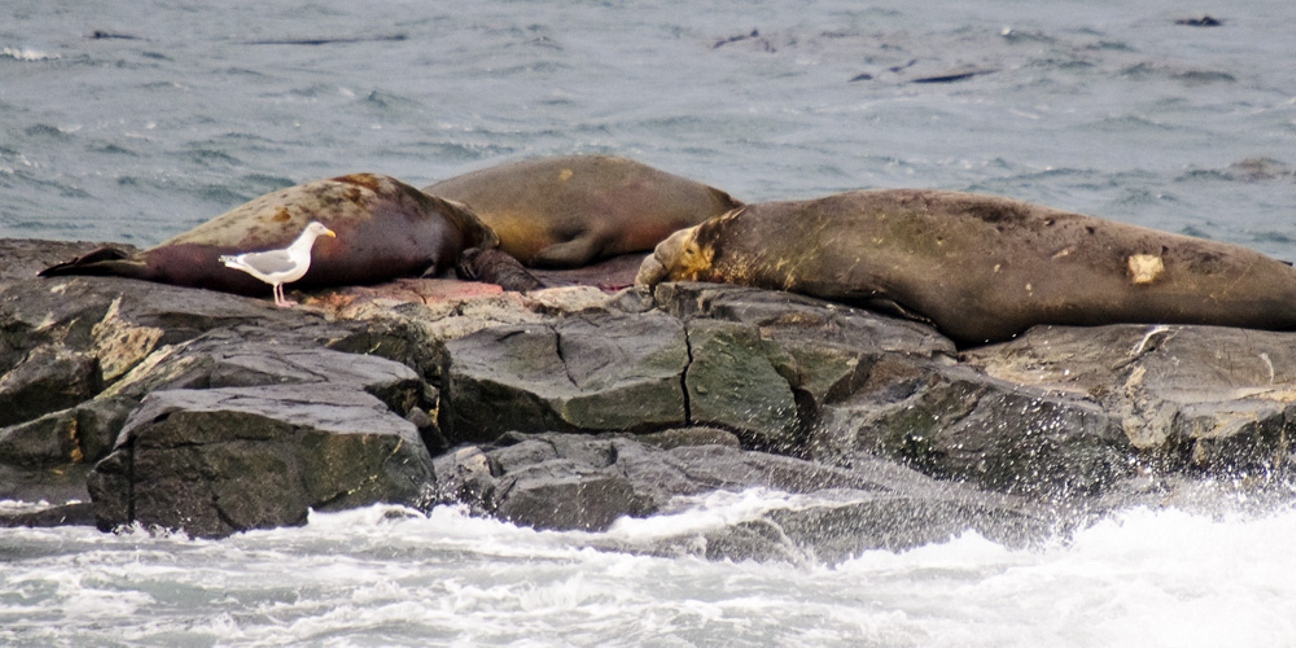
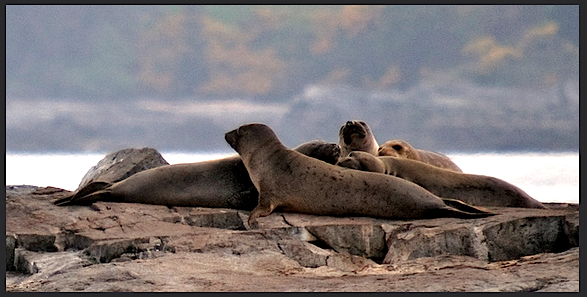 Elephant seals spend much of their lives in solitude as they travel great distances around the Pacific. At Race Rocks, we see congregations of elephant seals for the breeding season (late January) with most seals staying through to the end of their moults in late May. Here, elephant seals (adult and juvenile, male and female) begin to scout around the area at the end of October. This year females arrived first and left before the males arrived. I observed two size classes of elephant seal cows: the large breeding females, and the 3 to 5 year juveniles. The cows generally sort themselves by size with larger females bullying/harassing the smaller females.
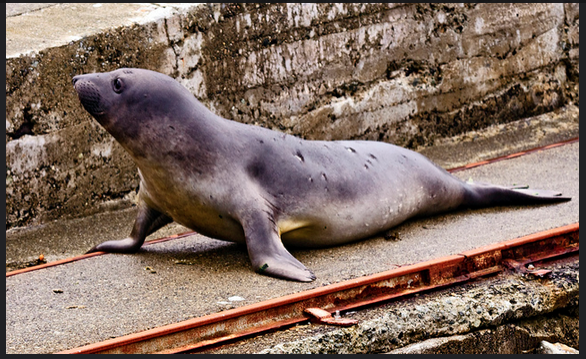
Svelte –Photo by Ryan Murphy May 16, 2010
This is X201/X202 a tagged elephant seal cow whose first recorded visit to Race Rocks was October 2009. She has completed her moult but is still hanging around the reserve. Of the 10+ cows now in the reserve, she stands out as being the only one to routinely travel back and forth between the group on Middle Race Rocks and Great Race Island. She generally spends less than a week here on the main island, then 1-2 days with the others before returning. This last time, Bertha (the cow who pups here on Great Race) followed her within minutes.
Oystercatcher’s territory
‘Elephant Seal’, 5, ‘Fewer females are visible on Middle Rocks. The tagged female has returned to Great Race Island despite having completed her moult. The larger females on Middle Rocks are in various stages of their moults.’, ‘Ryan’, ’20:56:43 ,
-93, ‘2010-05-12’,
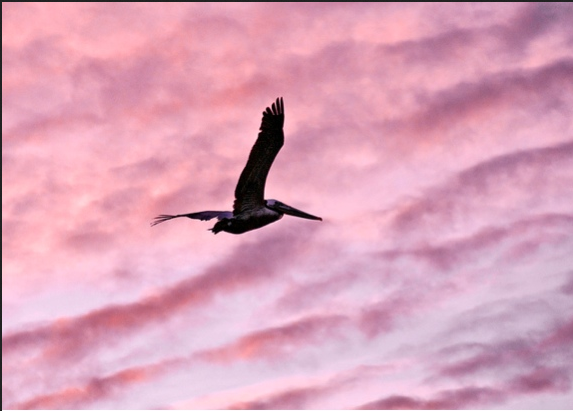
“Brown Pelicans are becoming a common sight at Race Rocks. See the log of May 12, 2010: Ryan Murphy
‘The diversity of bird life continues to increase with the appearance of
Dunlins, Brandts and Pacific Loons today.
Small groups of Brandts flew West throughout the day, followed by several large flocks numbering up to 100 birds in the evening.
A mature Brown pelican roosted here for the night, much to the gulls ” dissatisfaction.
There are still 2 pairs of Harlequin ducks spending their days around Great Race Island, plus
4 Whimbrels were again seen on the SW corner of the island where up to
3 Black Oystercatcher pairs have staked nesting territories. There are a total of
7 pairs of Oystercatchers with territories on the island, but only 2 confirmed nests so far, and of those only one nest with 2 eggs at the moment. Could be a bumper year as a maximum of 5 breeding Oystercatcher pairs have been recorded in the past. ‘,
‘Northern Sea Lion’, 10, ‘The numbers of Northern Sea Lions have been down the past several days, however they are still finding food in the reserve. A commotion right above the tidal turbine today attracted a number of gulls, and I could soon see a Northern sea lion was thrashing a large fish on the surface. Reviewing my photos it turns out the sea lion had captured a wolf eel! Long tasty filets on those protected fish, I can ”t say I ”m not envious!’,
‘Ryan’, ’21:10:38 ,
Diversity of Bird Life
‘The diversity of bird life has increased greatly with the improving weather this week. Rock sandpipers, Western sandpipers, Red Knots, and Greater Yellowlegs have all been seen in the intertidal zone. Yesterday evening a juvenile brown pelican spent a number of hours on Great Race before heading towards Port Angeles just after sunset. Today around noon a peregrine falcon zipped by Great Race and scared most of the small bird species away for the day. The Black Oystercatchers are becoming very territorial with one another, and the nest above the cove on the E side of Great Race now has 2 eggs.’, ‘Ryan’, ’17:42:48 ,
Mammal census:
‘Elephant Seal’, 8, ‘8 females remain on Middle Rocks, still in various stages of their moults. The tagged female X201/X202 recently left Great Race Island after completing her moult, but was photographed yesterday on Middle Rocks with the other females. This year is a pattern reversal compared to last year when it was the sub-adult male -Misery) who completed his moult on Great Race and few if any female elephant seals were seen here during this time.’, ‘Ryan’, ’17:45:02 ,
Transient orcas through the reserve.
Orca: 5, ‘The group of transients that has been in the area over the weekend came by the reserve in a near carbon copy of their Sunday route. The large male breached once while in the SE end of the reserve and 2-3 times S of the reserve. The group spent about 20 minutes criss-crossing around SE rocks in apparent feeding behaviour -tail slaps, etc.).’, ‘Ryan’, ’11:45:23 ,
Elephant Seal’, 7, ‘5 females were seen hauled out on Middle Rocks; they ranged from small juveniles to large adults. They join the 2 small females here on Great Race.’, ‘Ryan’, ’16:04:03 ,
Elephant Seal Pup Born on Great Race Rocks February 7, 2010
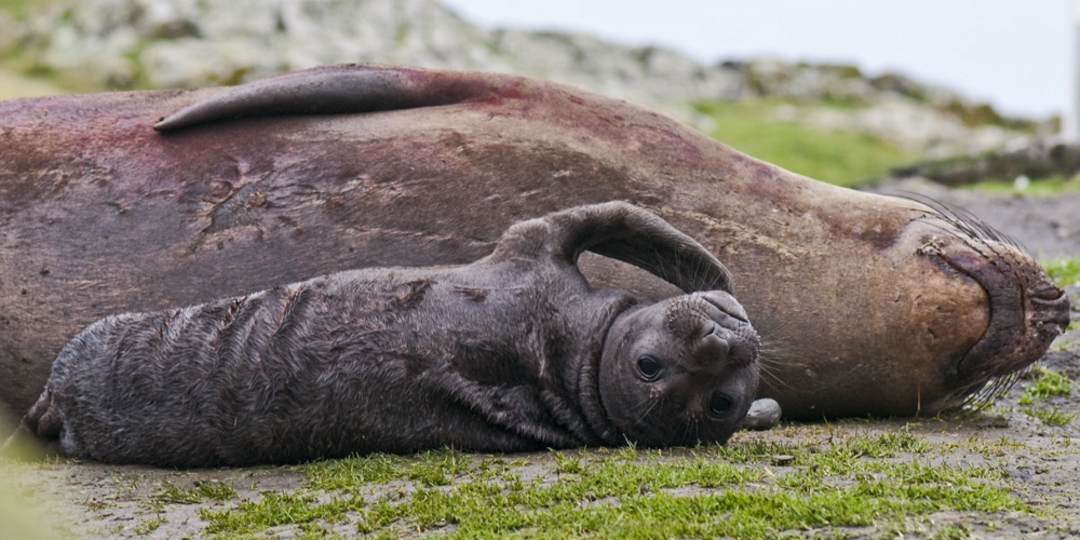 |
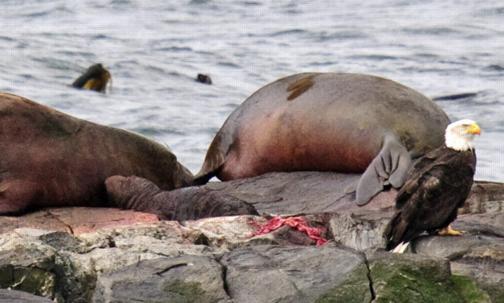
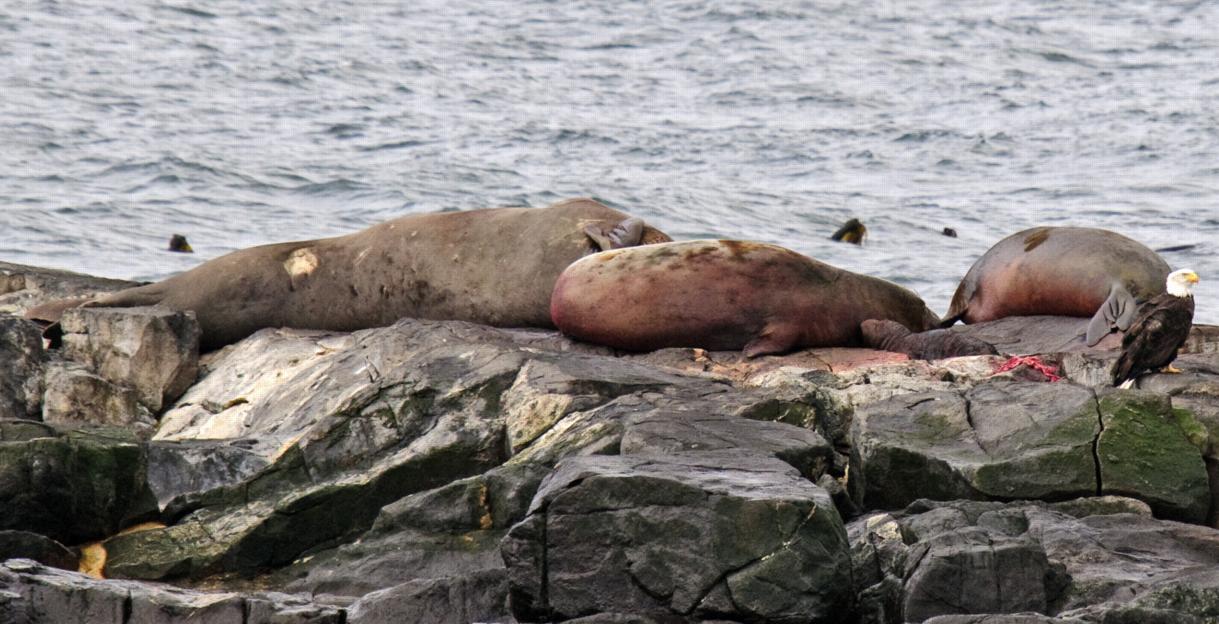
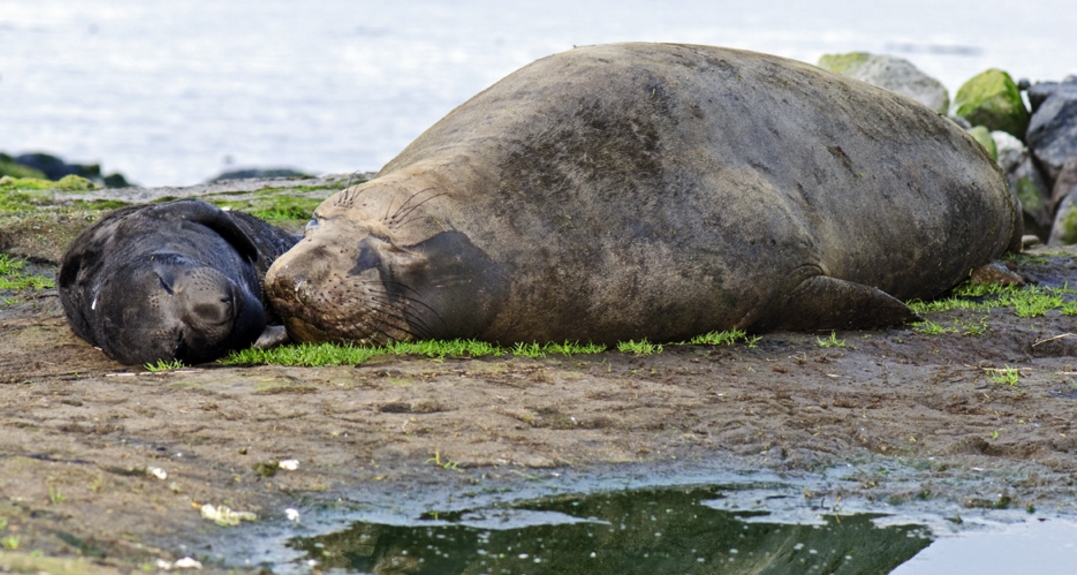
0758 hrs February 7, 2010: Today a new elephant seal pup was born on Great Race Rock . Follow the story below as we track what happens to this new pup. Photos by Ryan Murphy
Also see the excellent photos and video by Raisa Mirza of the pup in 2010
‘Elephant Seal’, 7, ‘I received a phone call this morning from the Chemistry teacher at Pearson College who was here overnight. He and his mother had heard “Bertha ” in the night and woke to see a new elephant seal pup and a group of eagles tearing at the afterbirth. Both Camera 1 and 3 are now located in the S window of the Science Centre, right above the action. The pup appears to be a male, and this time is the offspring of our other resident male “Misery” not “Slash”.’, ‘Ryan’, ’13:13:04 ,
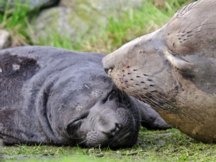 This pup appears to be a boy; the mother is Bertha (Ninene’s mother) and father is perhaps Misery (the younger of our two resident males). This would be Misery’s first offspring. |
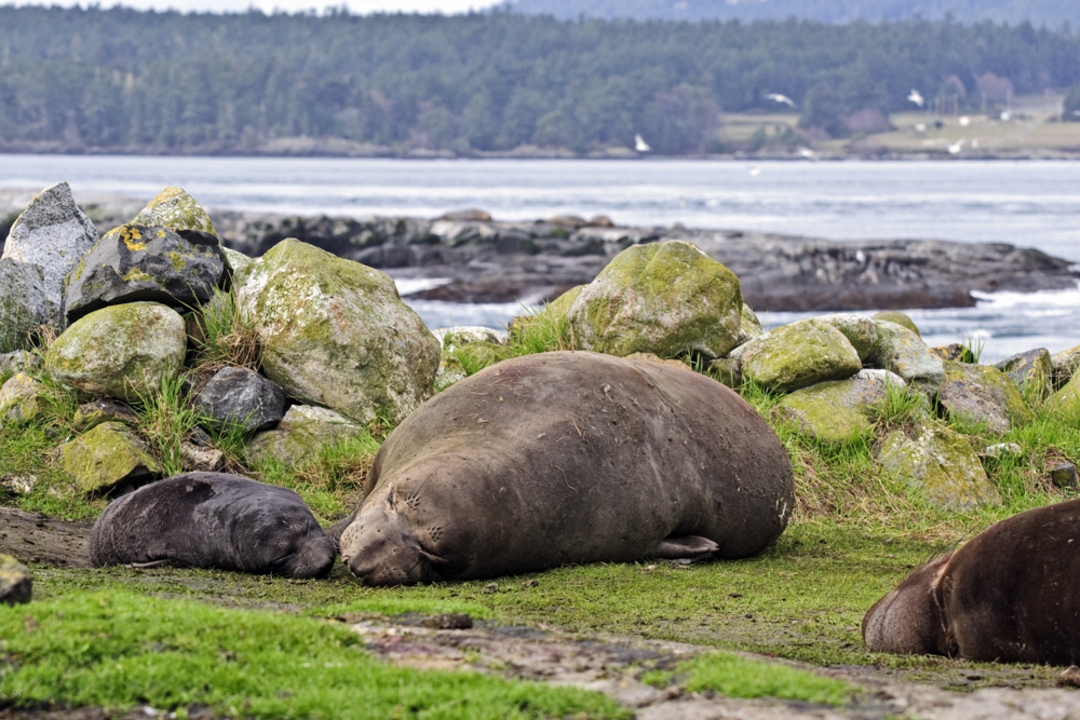 “In this picture you can see Slash and his harem in the background. Slash (our oldest resident male) is hauled out on Middle Rocks with 3 females. There have been at least two births out there this year, but the high tides and storm surges washed away the first and most likely the second as well. . |
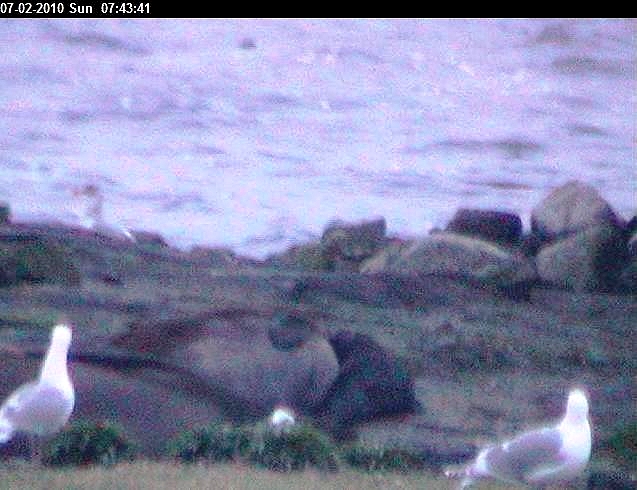 A minute after Ryan sent in his report of a new pup, at 7:59 AM, Pam from England reported it on Camera 5. She had taken the photo just at dawn at 7:43.. |
Pam went on to say “Saw the eagle eating near Bertha and Misery ..guessed it was a placenta…..new pup seen when it became light…lying by Bertha’s head.”Pam goes on to say “I think the pup had only just been born. It certainly wasn’t there last night when I was watching Bertha. At that time she looked uncomfortable and kept shifting about. Misery incidentally has hardly lifted a flipper during all this excitement.” PB.
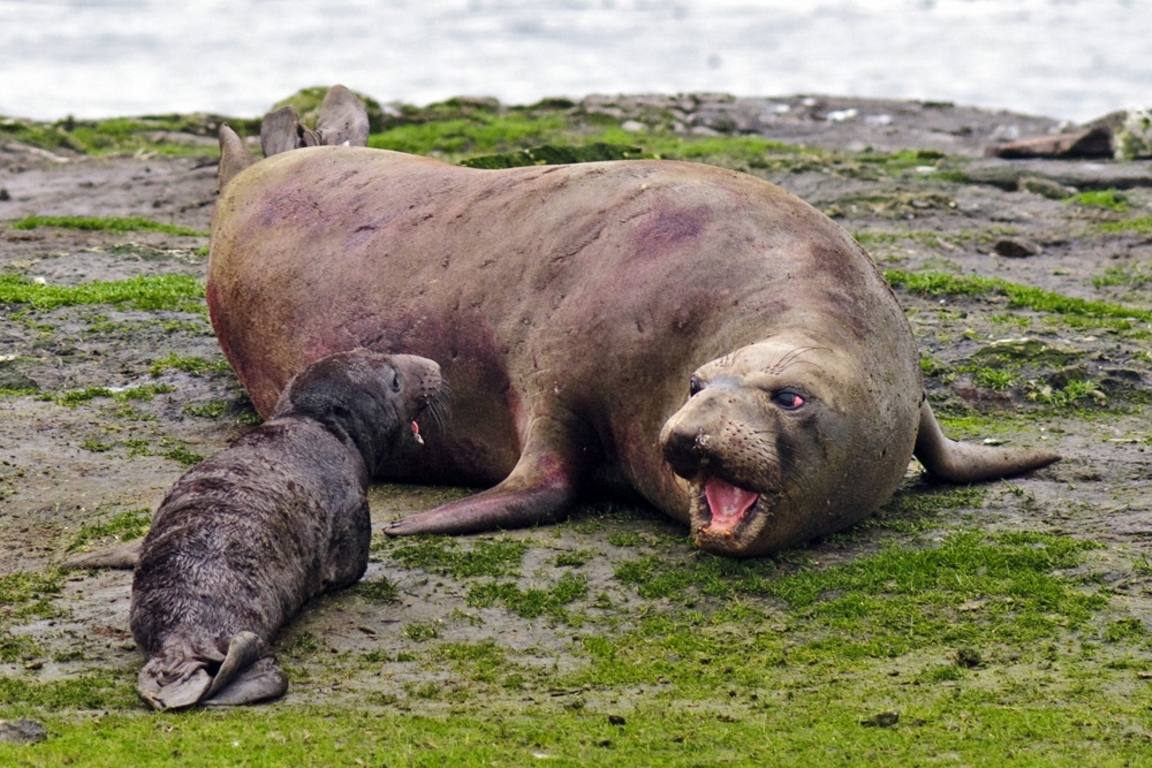 |
 |
|
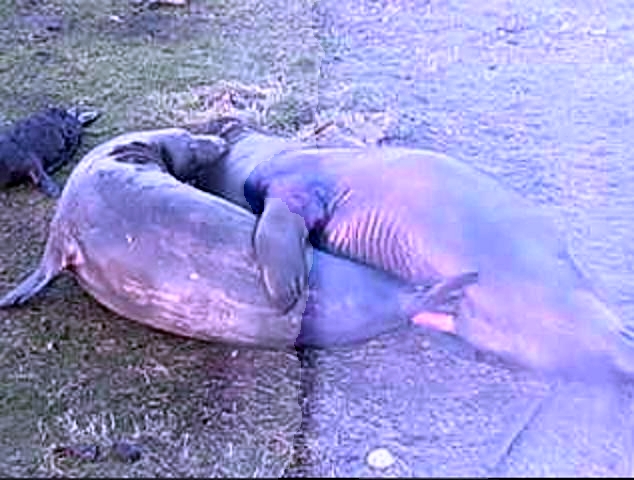 |
| February 8, Bertha and the pup are doing well. Photo by Ryan Murphy. | Mother and pup sleep on the lawn south of the science centre. Photo by Ryan Murphy | Photos from camera 1 by Pam Birley ..see next few lines: | Misery mating with Bertha, photos by Pam Birley from Camera1 |
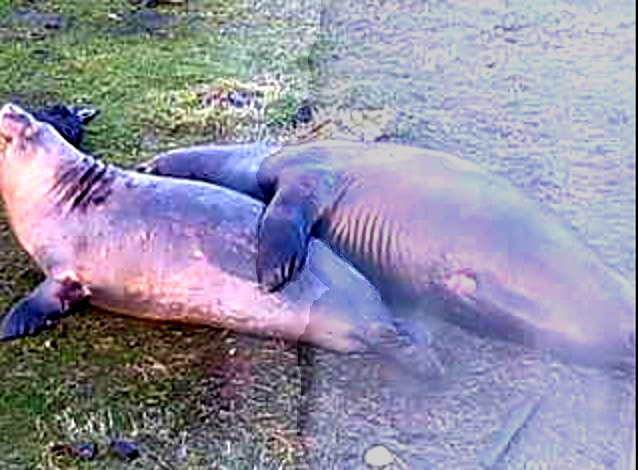
On Feb.13, Ryan reported in the Daily Log: ” Misery was observed mating with Bertha today around 1500hrs. Much less of a production than last year and the baby is keeping out of harm’s way.”
On camera 1 ( above two images) : Early morning Feb. 17 Pam Birley reports: “The family seem to have settled down very well and Bertha is allowing Misery to mate with her quite often. Misery seems very contented therefore right now and does not seem to be harming the pup in any way. The pup just keeps out of the way when they are mating and then goes back to feeding afterwards.
However the optimism was only for a few days.
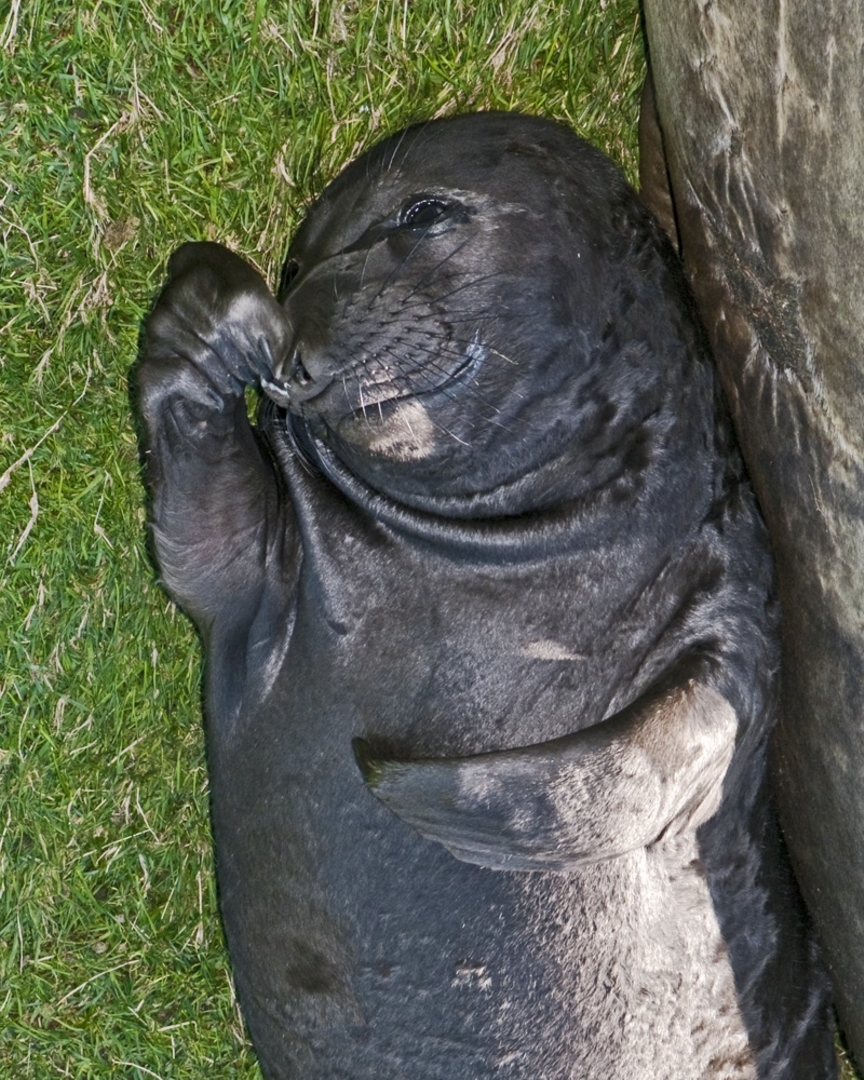 Ollie when life was good! |
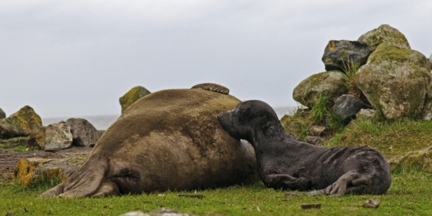 For the first two weeks the pup had done well, nursing almost constantly and gaining weight in preparation for weaning at 5 or 6 weeks.. and then. tragedy strikes.. |
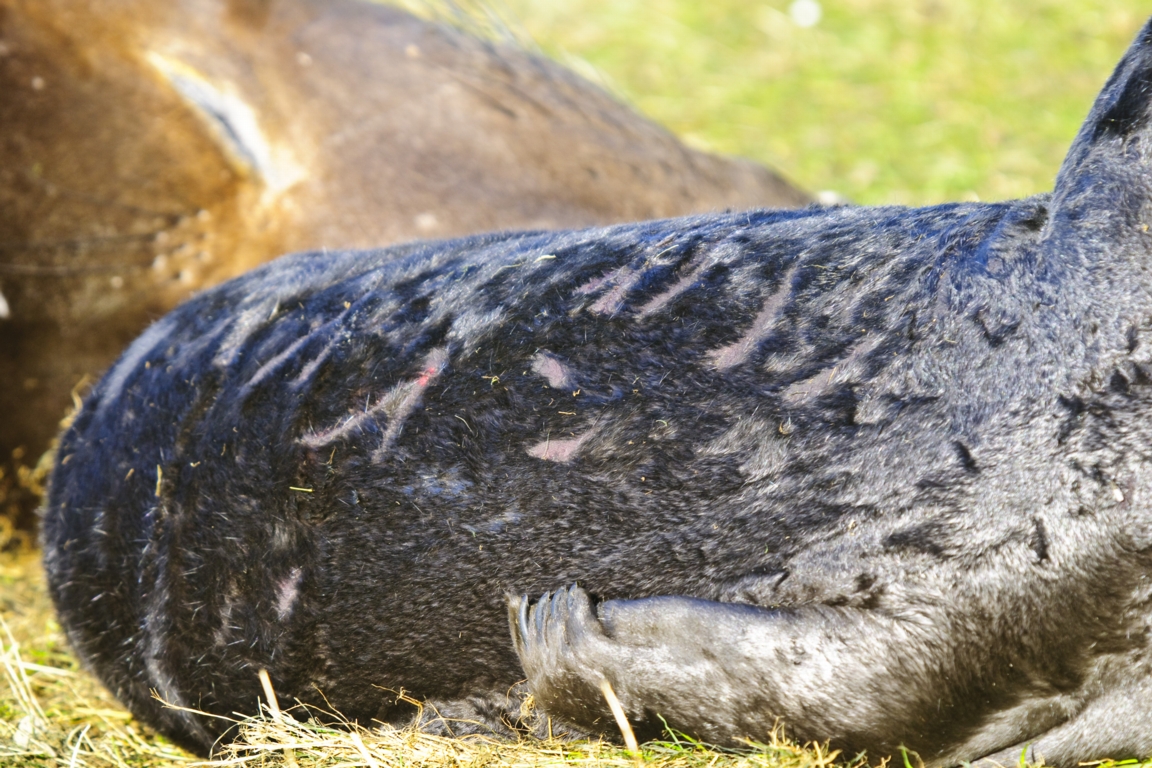 By February 17.Ryan sent this image: “The pup has 20 or so long scratches across its back this morning. I heard a lot of noise last night and was able to see Misery go after the pup numerous times. It seems that this bad behaviour only happens at night, and the pup is quite chubby and active compared to poor Ninene last year. Still another 6 weeks to go, and who knows what Misery will do once Bertha leaves. I had noticed cuts on the pup’s chin a couple days ago, but its perfect baby coat is now marred. Ryan reported in the daily log of February 17:” Last night was a rough night for our newest pup as Misery was trying to mate with it. Tooth marks on the pups chin were evident a couple days ago, but now its baby coat is marred by 20cm scratches from Misery’s sexual aggression.”
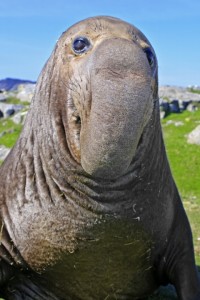
- No doubt the accused and the guilty one.
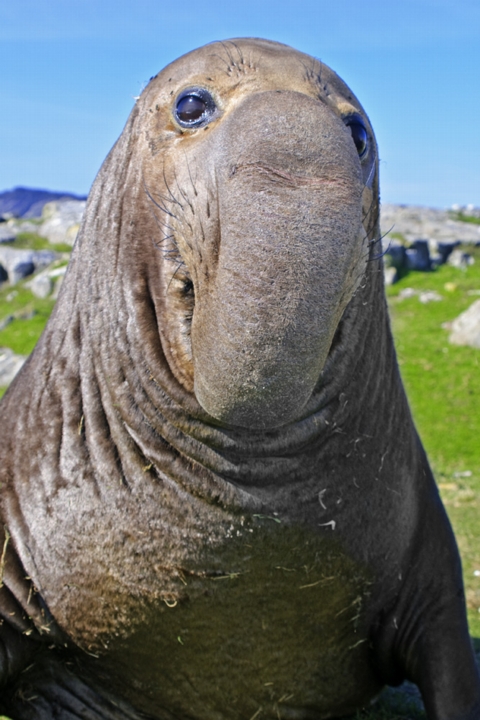
In this second week Ollie too had become the object of aggression by Misery. Eventually, after three weeks, Ollie was dead and the bite marks on the back and the loud cries heard at night suggested that Misery was to blame.
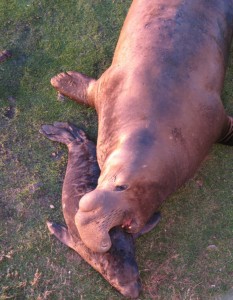
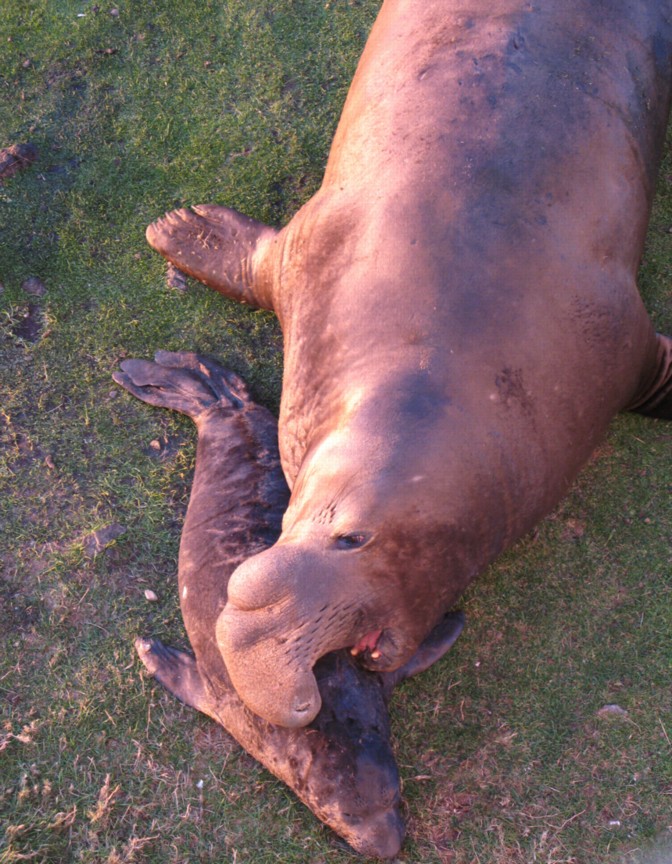
- Assistant guardian Murray took this photo from the window of the science centre from above. It shows Misery and the dead pup.
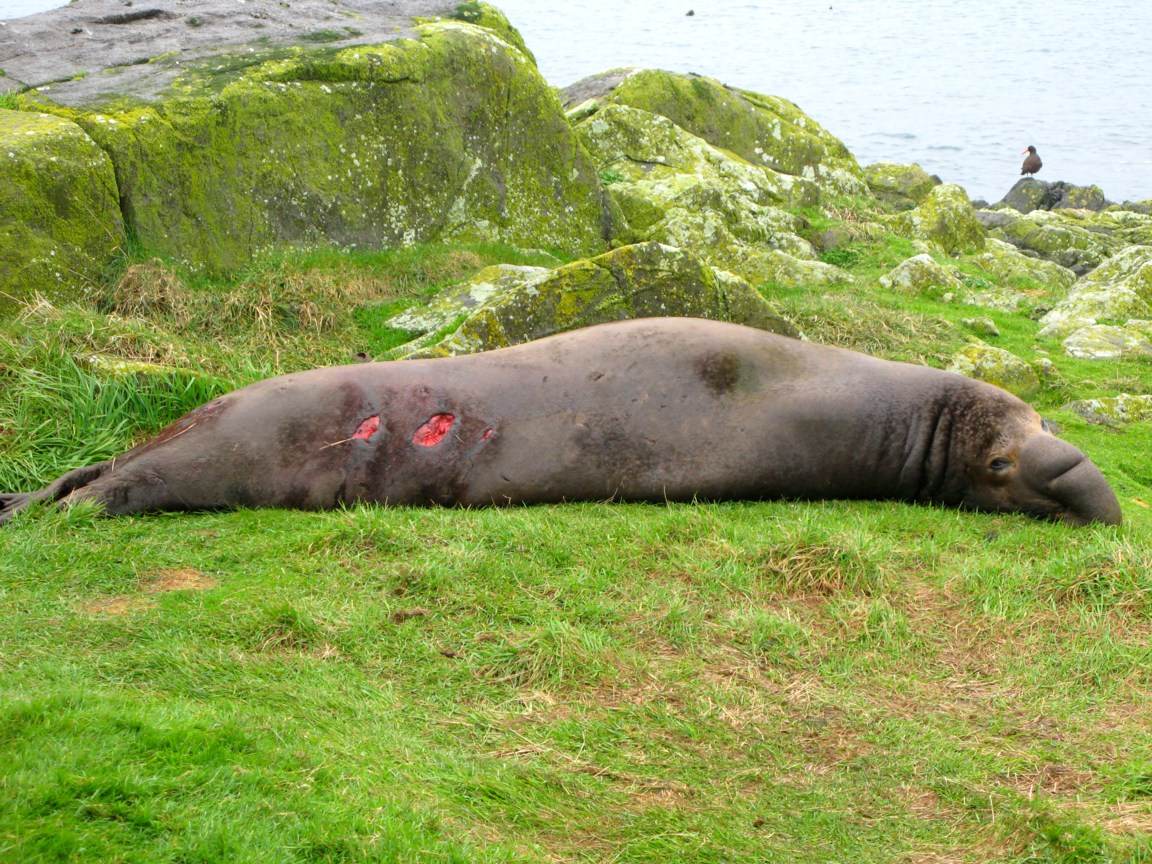
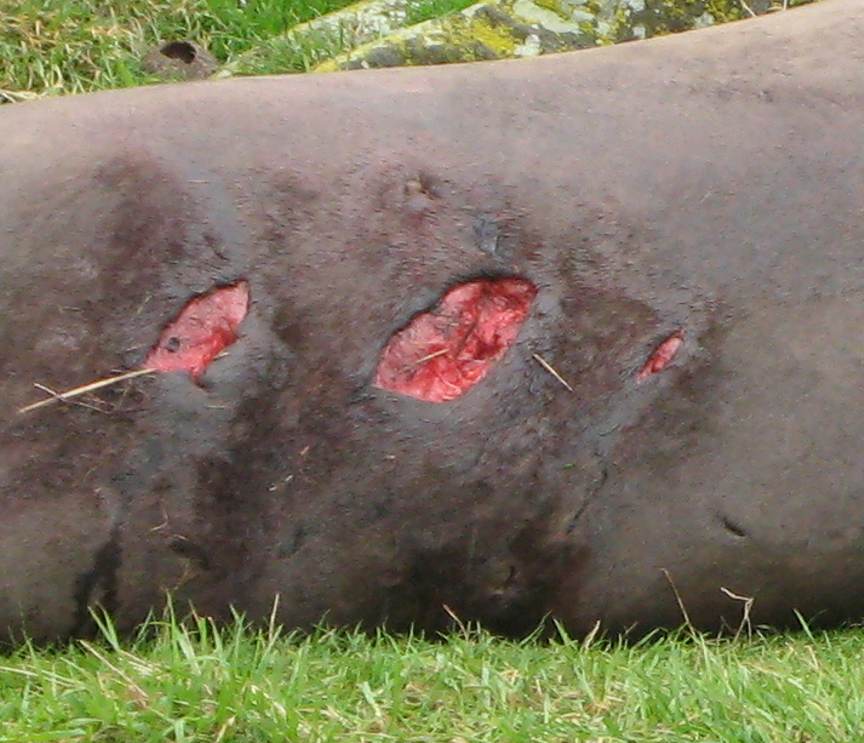
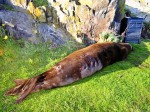
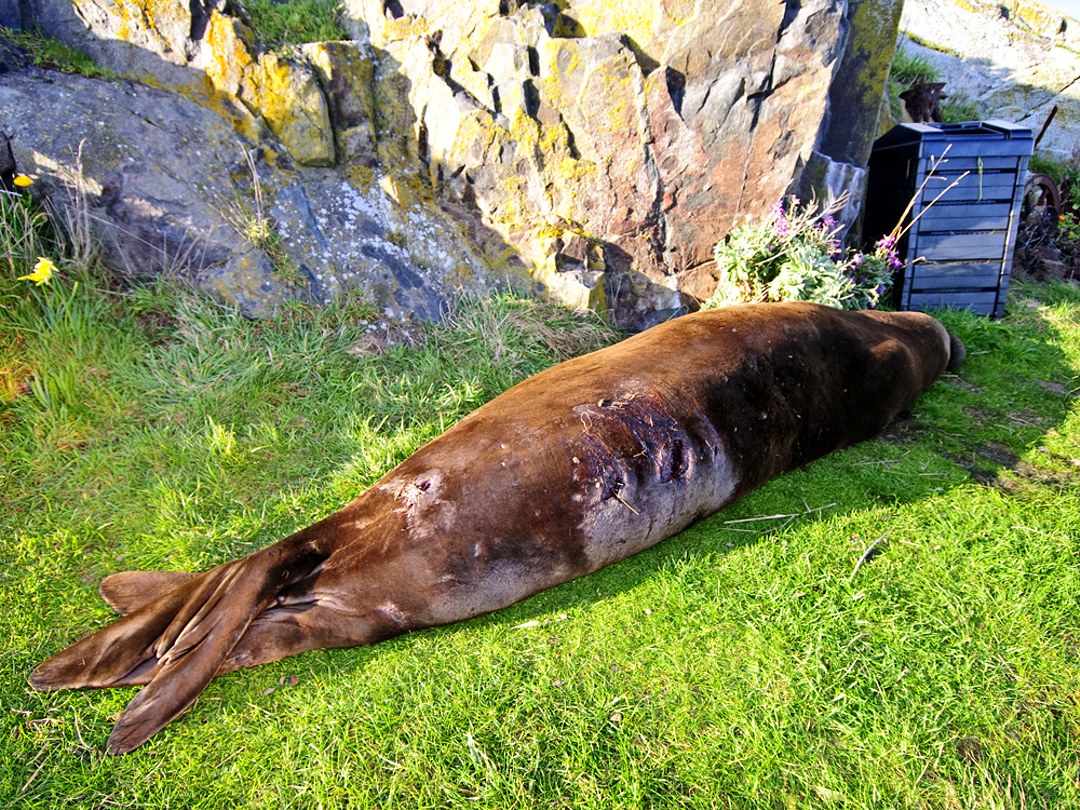
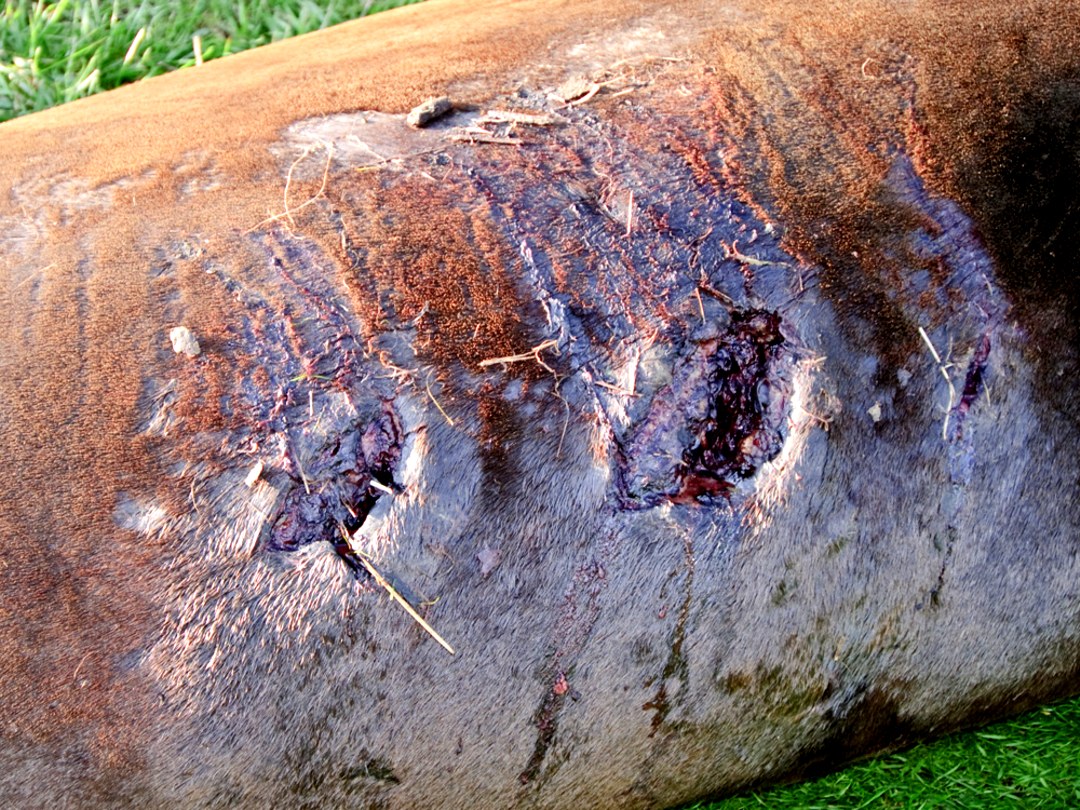
| And then in what seemed to be a repeat of last year’s behaviour patterns. In the March 2nd daily log Ryan notes that Slash was on Great Race Island, mating with Bertha and Misery had had a fight with the old male. The following pictures show the end result with the injuries sustained by Misery.(Perhaps to anthropomorphize…you might say justice is served?)
In 2011, another pup was born to Bertha. Given the past record with Misery, the outcome was inevitable. The pup lived only a week or so and then was crushed by Misery |
-
- March 1, 2010: Misery after the fight with Slash Murray Sager Photo
-
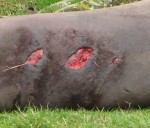
- March 1 Misery after the fight with Slash.
-
- March 3, Misery with cuts
-
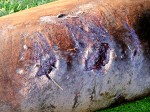
- March 3 cuts close up (Ryan Murphy photos.)
Elephant seal pup on Middle Rock
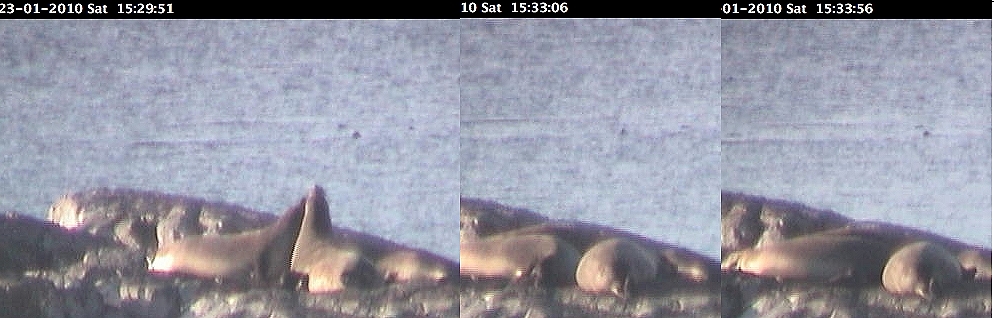
The elephant seals out at Middle Rocks still with at least one pup Photos from Camera 5.
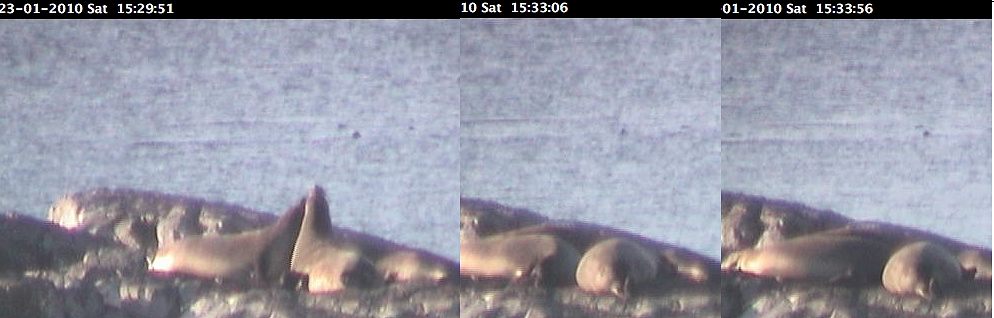
Elephant seal gives birth on Middle Island
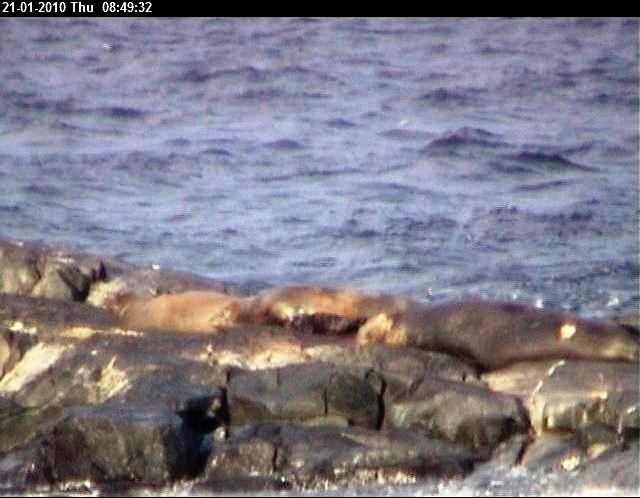
‘Elephant Seal’, 5, ‘Camera 5 user Pam Birley first spotted our FOURTH recorded elephant seal birth here at Race Rocks. The new pup is with two adult females and Slash on Middle Rocks and so far appears to be doing well. Its mother has been discouraging eagles, gulls, and black turnstones attracted to the afterbirth.’, ‘Ryan’, ’10:31:06 ,
Elephant Seal pup on Middle Rocks, 2010
Elephant Seal pup on Middle Rocks, January 21, 2010.
|