The Long Weekend.

Fog followed an overcast dawn and was repetitively beaten back by sunshine throughout the day. While the sun was out, it was intense (900 Watts/meter2), but fog lingered just to the west and Beechey Head was repeatedly obscured as the fog came and went. Eventually in early evening, pushed by the west-southwest wind, the fog rolled back in and enveloped Race Rocks. For most of the day day the wind blew west a fairly steady, 10 – 15 knots. The fog wind was more intense though, pushing 25 – 30 knots. The barometer went up a bit in the morning and then, after noon it dropped by a little more than it had gone up, ending up at ~1014 hPa and falling. The forecast is for a strong wind warning, (more westerlies), mainly sunny, with a few clouds.

No whale watching vessels were observed in the Ecological Reserve today. Several private, sportsfishing boats went through at a respectful speed and they were not fishing in reserve. One rental boat from Pedder Bay Marina was fishing in the Rockfish Conservation Area on both the east and on the west side of the houses. The people seemed to know that they were not supposed to be there and were playing a bit of hide and seek. Two couples were all fishing for and keeping rockfish in the Rockfish Conservation Area (RCA). Whether or not they exceeded the limit for outside RCA (1 rockfish per day) is open for speculation.

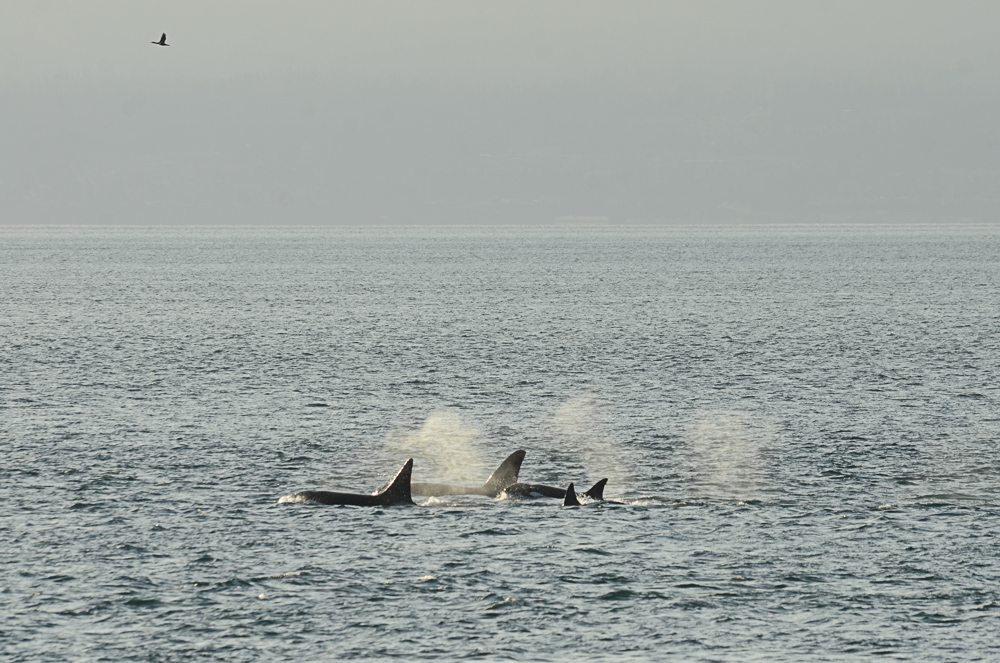
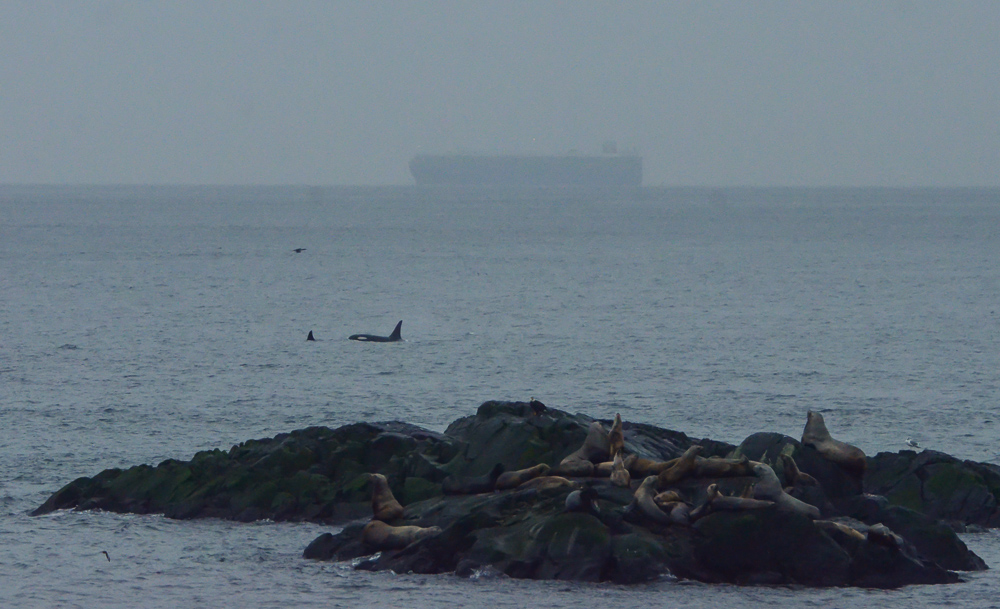
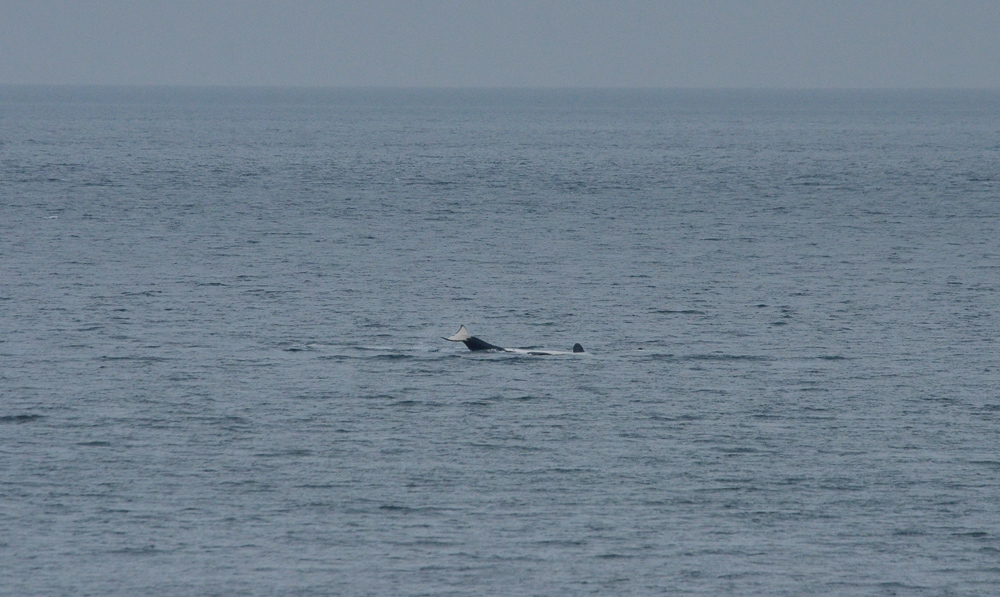
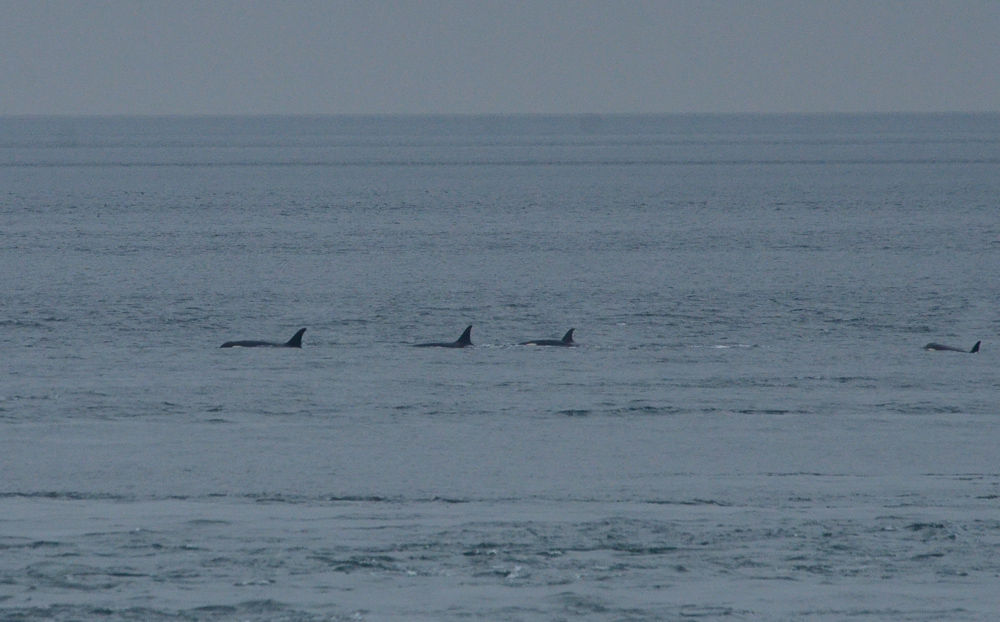
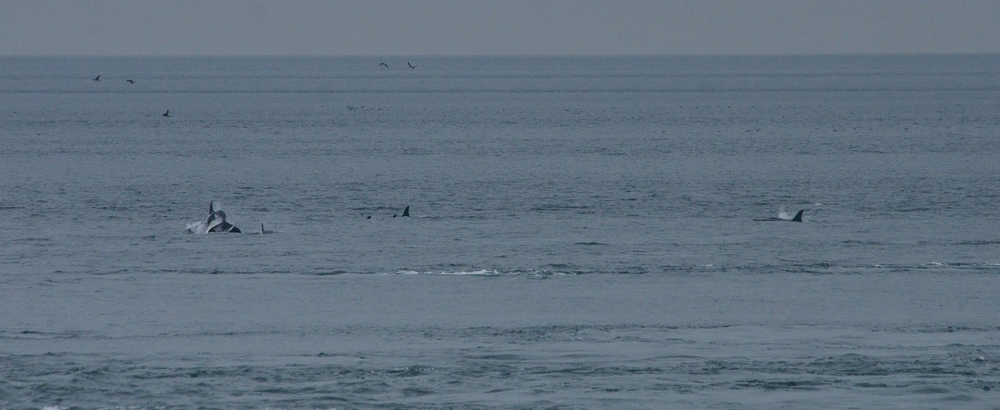
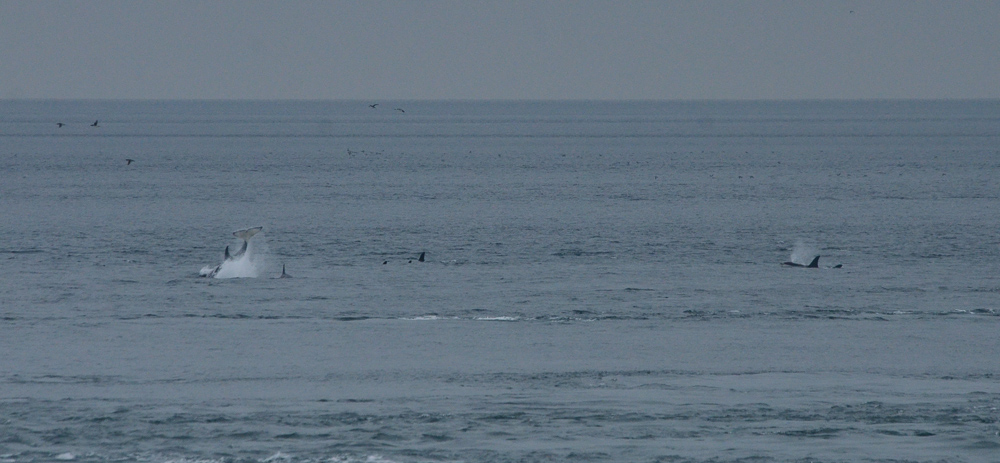
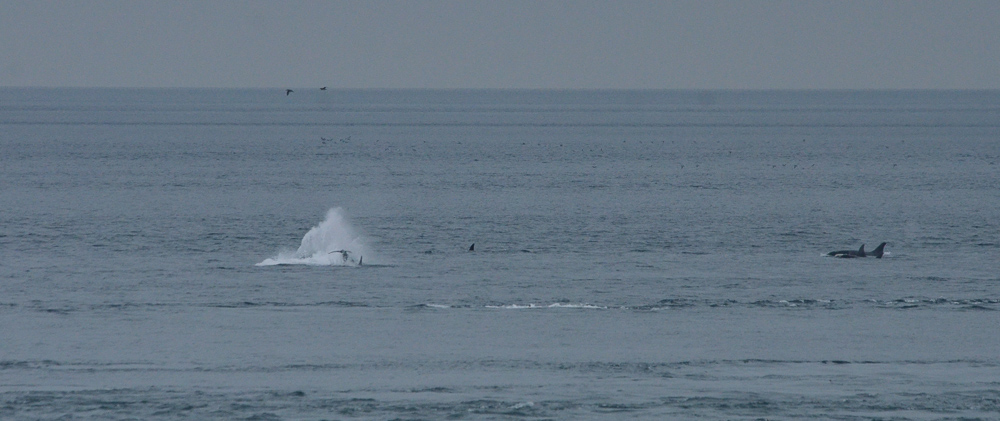
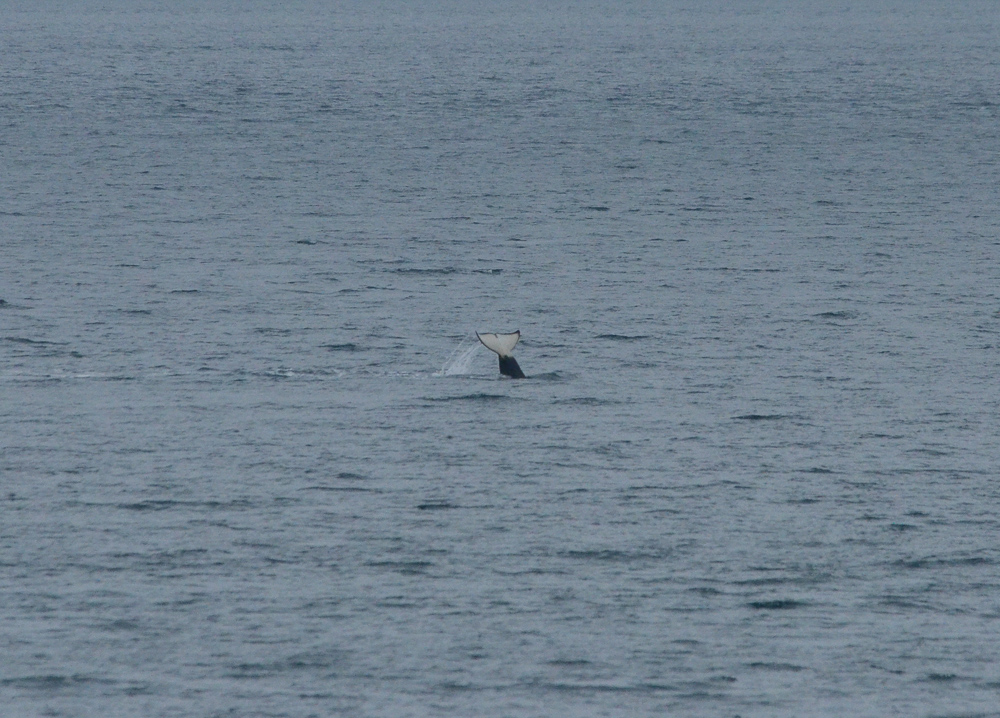
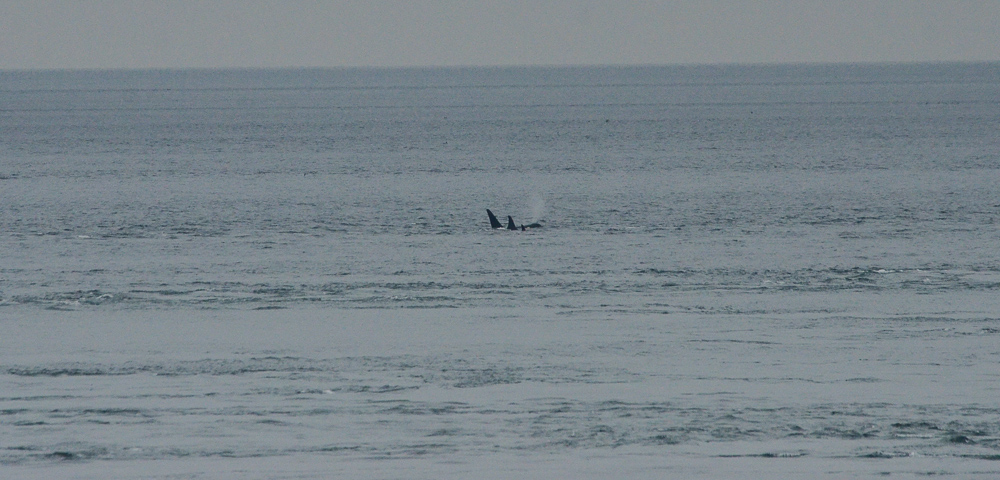
Two large male Killer Whales were spotted travelling east, along the north edge of the Ecological Reserve in Race Passage. As is often the case with Bigg’s Killer Whales, they seemed to be evasive, perhaps exhaling underwater. They were spotted again near nNorth Rocks and then skirted around to the south. From their behavious, it is likely that these were Bigg’s Killer Whales.
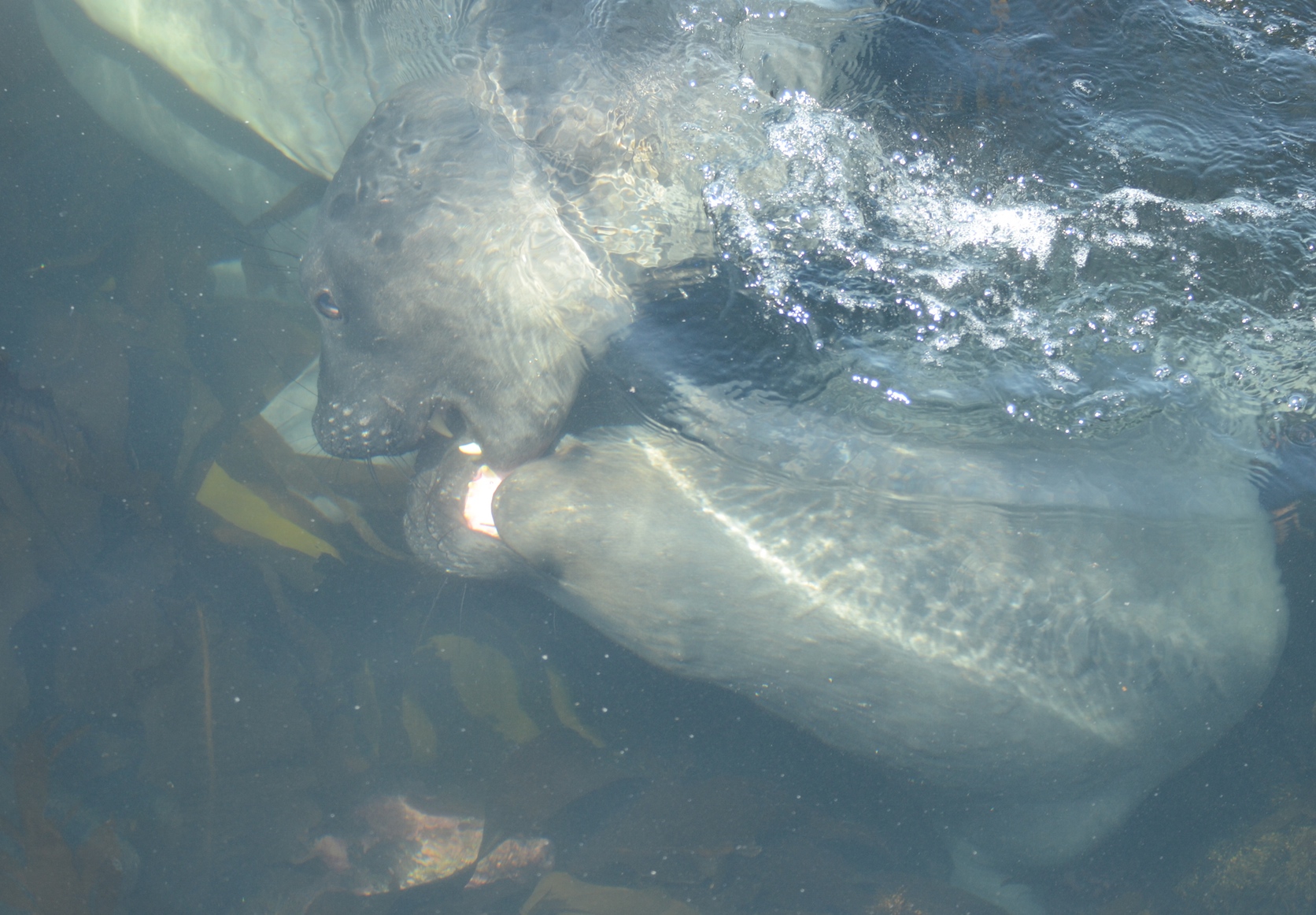
It takes a lot less energy to play when suspended in water.

It takes a lot less energy to play when suspended in water.

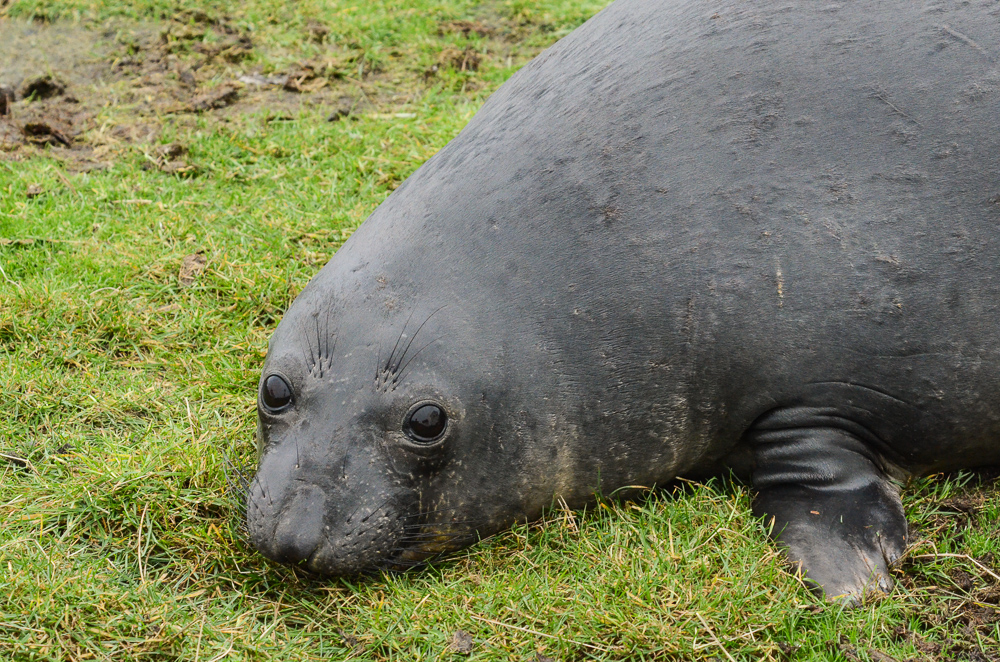
The Northern Elephant Seals have been sticking very close to shore during their swims, preferring the shallow sub-tidal in the bull kelp fringes. The young males who love to play fight when they are hauled out continue their sparring activity in the water. I wonder if the Bigg’s Killer Whales could hear them?
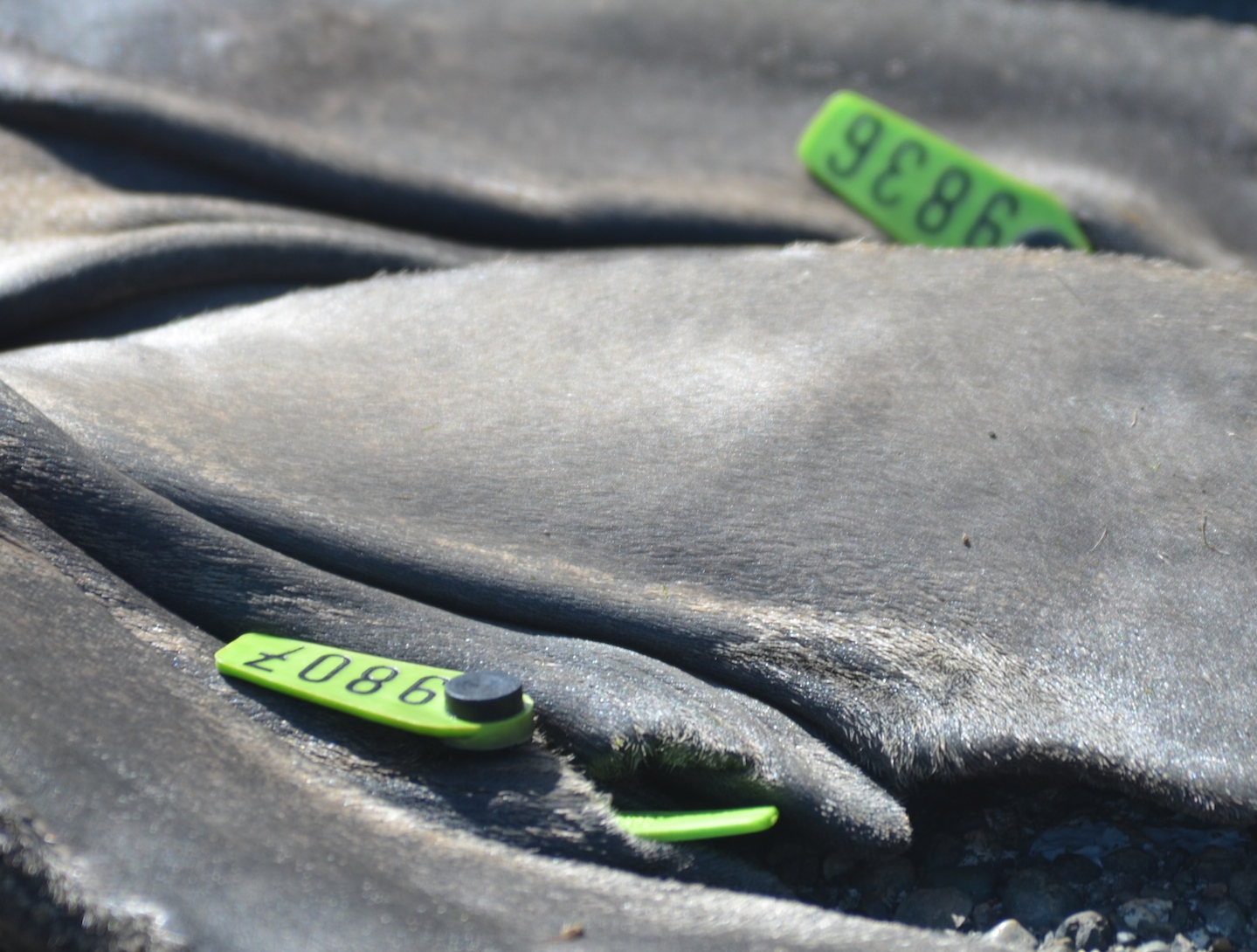
A small seal with new tags.

A small seal with new tags.

Another new (to me) Northern Elephant Seals showed up today, well tagged with #9836 on the right and #9807 on the left. All four tags looked really new as did the seal. The smallest one ashore since I arrived in March, it had almost completed its’ moult and the skin was looking too big for it, so I venture to guees that it has been hauling out on Middle Rock moulting for a while and came over to Great Race because of all the bustling seal activity here.
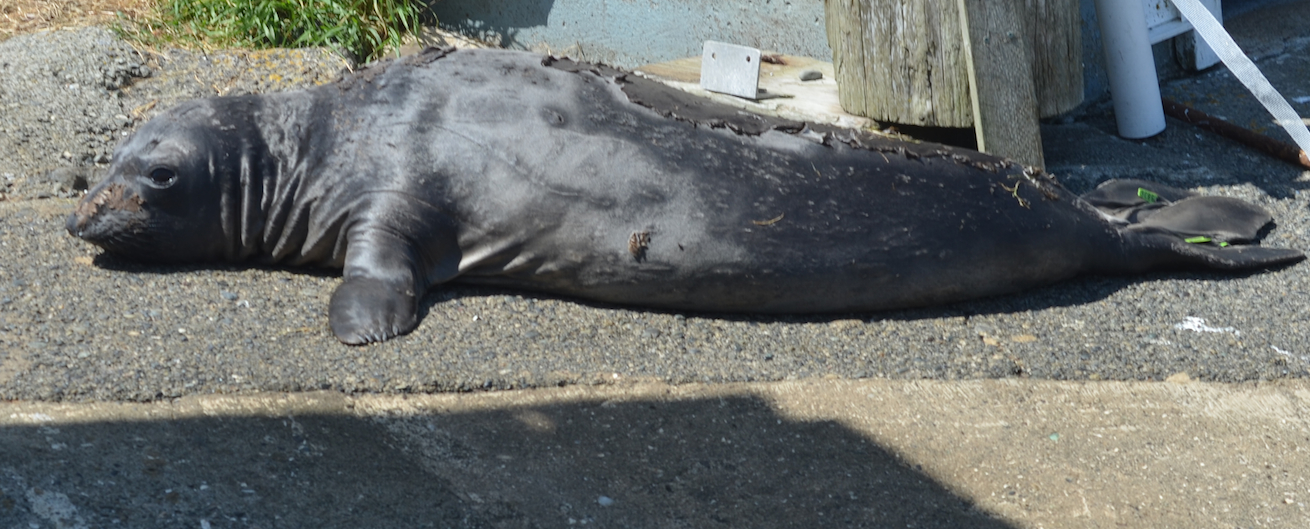
This small animal is starting to look like her skin is a bit too big for her.

This small animal is starting to look like her skin is a bit too big for her.

Both routine chores and seasonal maintenance were accomplished today. The grated, aluminum ramp on the jetty was repaired and trouble-shooting completed on the Whaler’s electrical system. There were no new visitors today.
Misleading information in recent STANTEC report on Whales.

Also see the APRIL 23 post with graphs on Whale Observations from Race Rocks 2009-2014.
I believe that the increasing frequency in recent years in the number of humpback whales observed in the area which will be affected by increased tanker traffic from the Kinder Morgan/ TMX project has not been taken into account In the Consultant’s report issued today
“ Quantitative Assessment of Increased Potential for Marine Mammal-Vessel Interactions from the Trans Mountain Expansion Project TRANS MOUNTAIN PIPELINE ULC TRANS MOUNTAIN EXPANSION PROJECT –-Prepared by: Stantec Consulting Ltd. 500 – 4730 Kingsway Burnaby, BC, V5H 0C6 Ph.: (604) 436-3014, 

Quoted from the report :
“While the BC CSN data includes numerous opportunistic sightings of humpback whales in the study area over the course of the last four decades, the majority of the Marine RSA is generally not recognized as a humpback whale hotspot, although the western extent just overlaps with the eastern-most extent of humpback whale critical habitat –(Fisheries and Oceans Canada 2013a). As such, and since actual humpback whale density values for the Marine RSA (Regional Study Area) do not exist, this species was assigned a density according to the lowest density observed for humpback whales during the surveys reported on in Best and Halpin (2011) elsewhere in BC ((Williams and Thomas 2007) did not observe any humpback whales during their summer 2004 survey in this area) This value corresponds to roughly 10 whales distributed across the majority of the Marine RSA

——As a result, humpback whales were assigned a proportion of time in the study area of 0.17 (i.e., two months of the year) based on the largest concentration of sightings from the BC CSN data (British Columbia Cetacean Sightings Network 2013)”

Here is a good example, in my opinion,  of how a decision having long term implications regarding the welfare of a species recovering from near extinction may be completely misdirected if based only on a consultants interpretation of officially published scientific resources which can quickly become dated.

G.Fletcher

Killer Whale # T103 possibly.

The day started with a gorgeous sunrise with lots of golden light pouring under a low violet cloud layer, scattering pinks, reds and oranges. The wind was out of the northeast at 10 – 15 knots and stayed that way until early evening when it turned to west. The barometer continued the climb it started Friday morning, until late in the day when it hit ~1020 hPa and levelled out. The forecast is for east winds and rain.

Six whale watching vessels were noted working in the Ecological Reserve today, one in the morning with a videography crew and five in the afternoon associated with the Killer Whales. Five out of six totally respected the reserve and the regulations.

Although the ER was surrounded by Sunday sports fishers, there was no fishing observed in the ER. One sports fishing charter boat, white ~ 21 – 24’ long, came through Middle channel at high speed, heading towards Victoria.

There were Bigg’s Killer Whales (transients) in the area today and we watched as a large male, possibly T103, made his way from Church Island, through Race Passage and on towards Constance Bank, with a bevy of whale watching boats. Five of those boats also passed through the Ecological Reserve

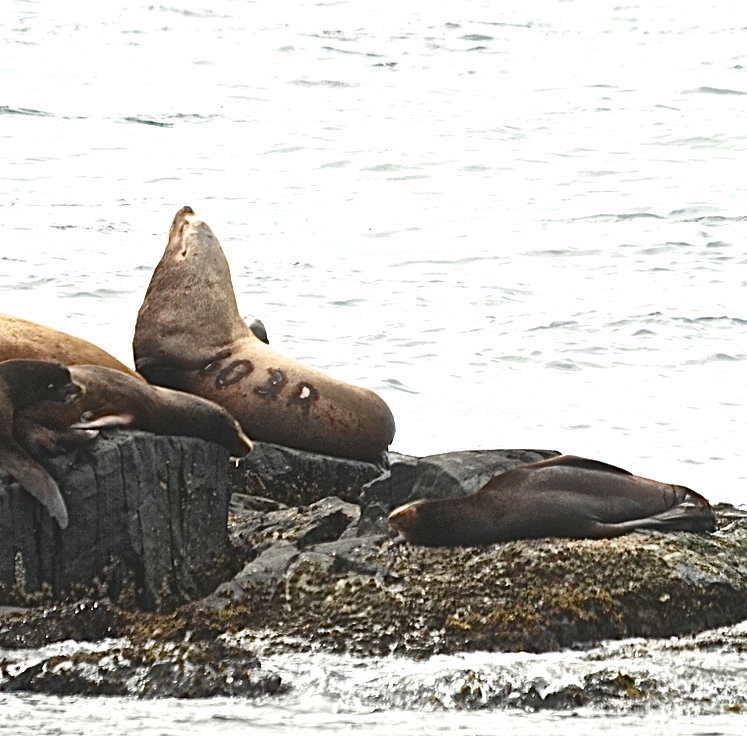
A branded, male Steller’s Sealion was noted today, hauled out on South Islands. He was branded 603R, as a pup in July 2007, at Rogue Reef in southern Oregon. That makes him 8 years old this summer.

Steller's Sealion # 603R is an eight year old male branded in Oregon, near the California border.

Steller’s Sealion # 603R is an eight year old male branded in Oregon, near the California border.

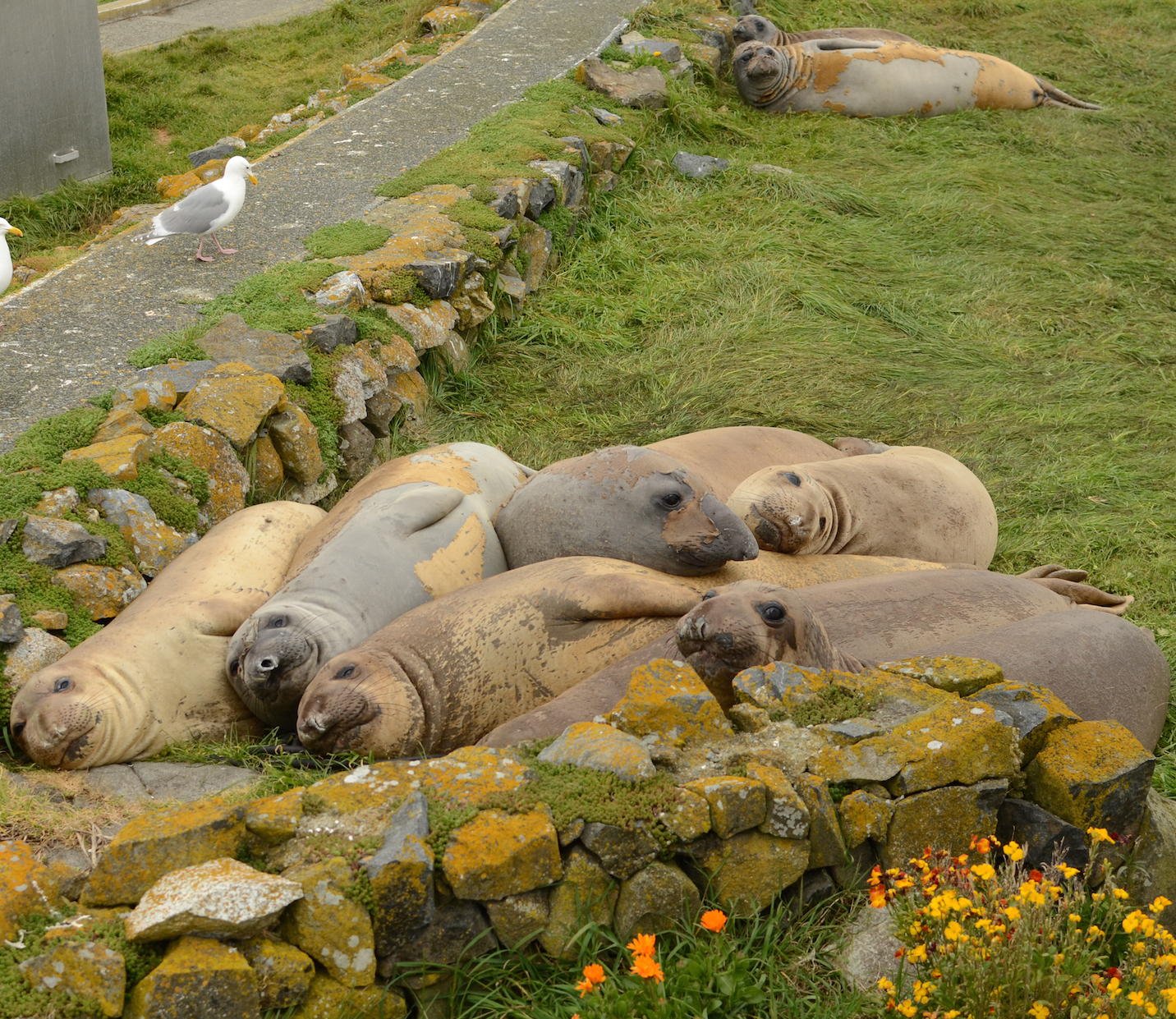
Bald Eagles continue to attack the geese, the Black Oystercatchers continue to gang up on the Raven that may be up to some tricky business with their unsheltered ‘nests’ and the Pigeon Guillemots are spending a lot of time on the jetty and ashore, practicing landing, taking off and walking around. The Glaucous-winged gulls are mating which is quite an acrobatic feat of balance and the Northern Elephant Seal moult is progressing quite fast in the larger animals.

Northern Elephant Seals hauled out near the desalination building.

Northern Elephant Seals hauled out near the desalination building.


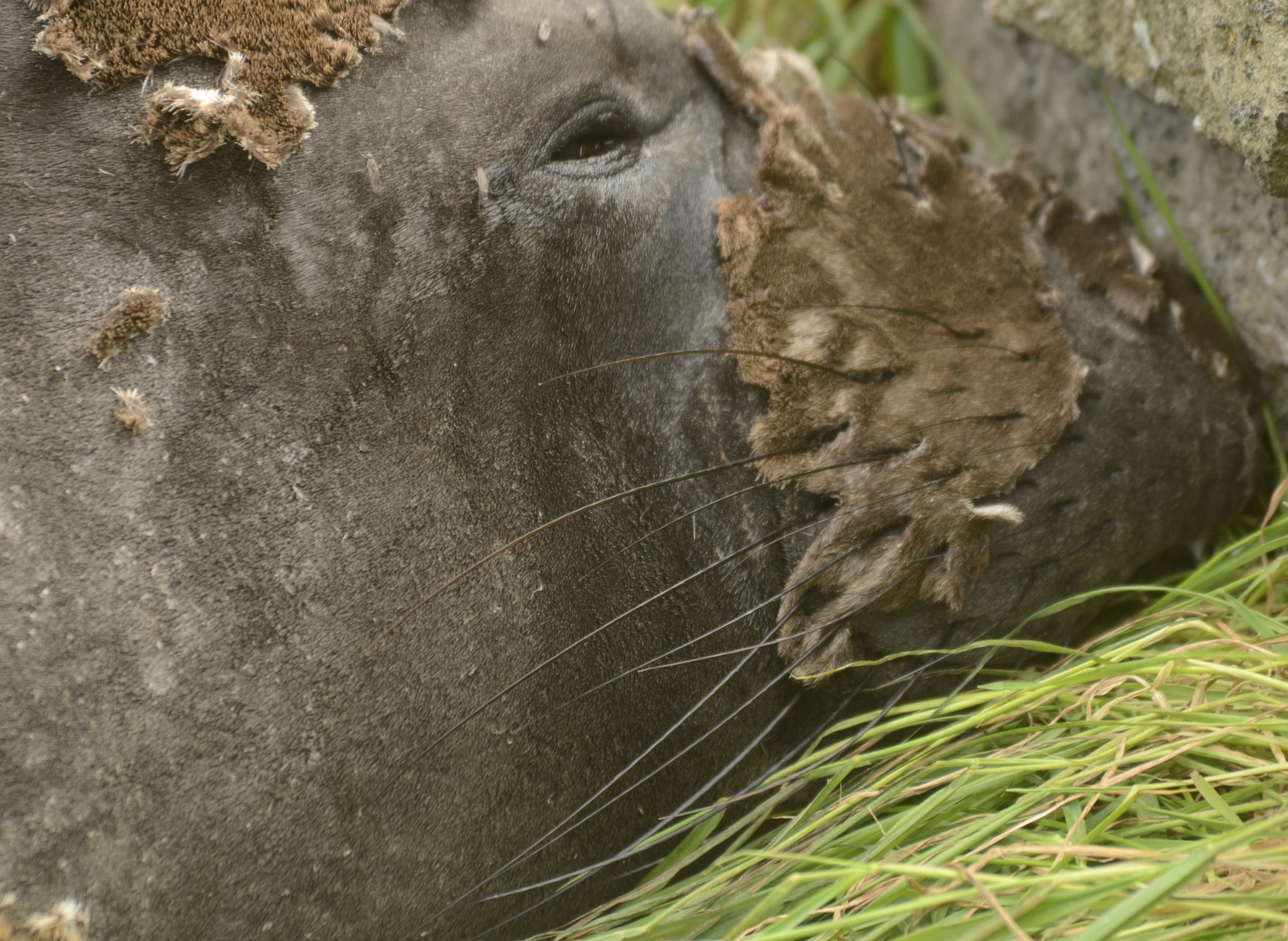
As the moult progresses, the skin and fur peal off revealing a new, gray look.

As the moult progresses, the skin and fur peal off revealing a new, gray look.

There were no new visitors today and the work/maintenance was routine.

A Changeable Spring Day.

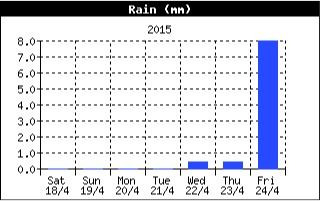
During the early part of the morning, the flag hung vertically, stuck to the flagpole, wetted by fresh rain. Later in the morning, when it occasionally fluttered, it was from almost imperceptible, easterly zephyrs. After lunch it blew north 10-15 knots for a while before switching over to the afternoon westerlies mid afternoon. Although there was significant rain (see figure below) throughout the day, there was also lots of sunlight and we surpassed yesterday’s level by over 30%. The barometer started rising in the early morning and by 17:30 was at 1008 hPa. The forecast for Saturday is for a continuation of the afternoon westerly pattern.

A graph of  the past week's rainfall recorded by a Davis instruments tipping bucket rain gauge.

A graph of the past week’s rainfall recorded by a Davis instruments tipping bucket rain gauge. Check the web-site for lots of cool data.

Only one whale watching boat was observed in the Ecological Reserve, just at dusk, although several headed west and back through Race Channel. One sports fishing boat fished very close to the boundary at Rosedale, but clearly outside. The Life Saving vessel ‘Spirit of Sooke V’ came through middle Channel this afternoon at a very stately pace and then swung around and went in between South and Great Islands and returned to the west.

A pod of at least four Killer Whales passed to the south of Race Rocks, heading west at ~07:00. It was not possible to determine which population and there were probably quite a few more than four. They were quite spread out and moving fairly fast, travelling about half way out to the US/Canada border (yellow can buoy) from Race Rocks. A flock of 23 Black Brandt flew through Middle Channel about the same time, also heading west. The Barn Swallows appear to be staying on the island somewhere; at least they were here bright and early. This place is certainly a haven for an insectivore. I hope they stay.

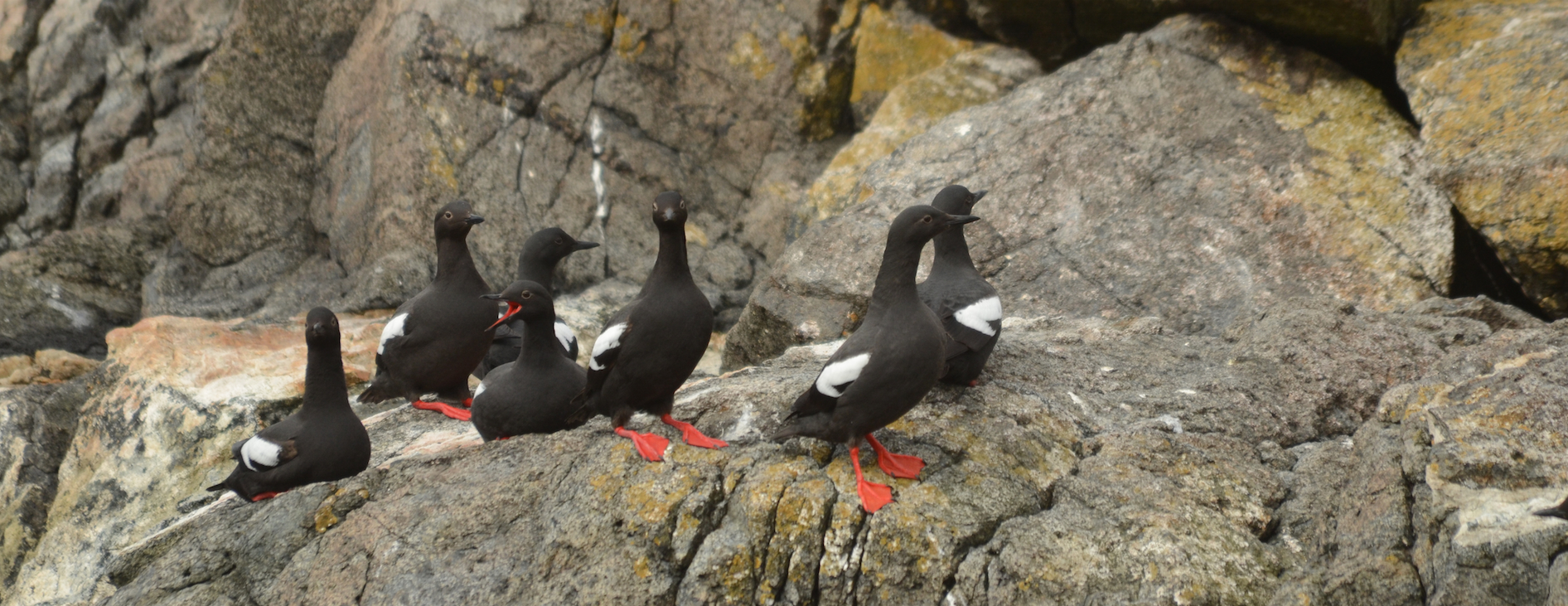
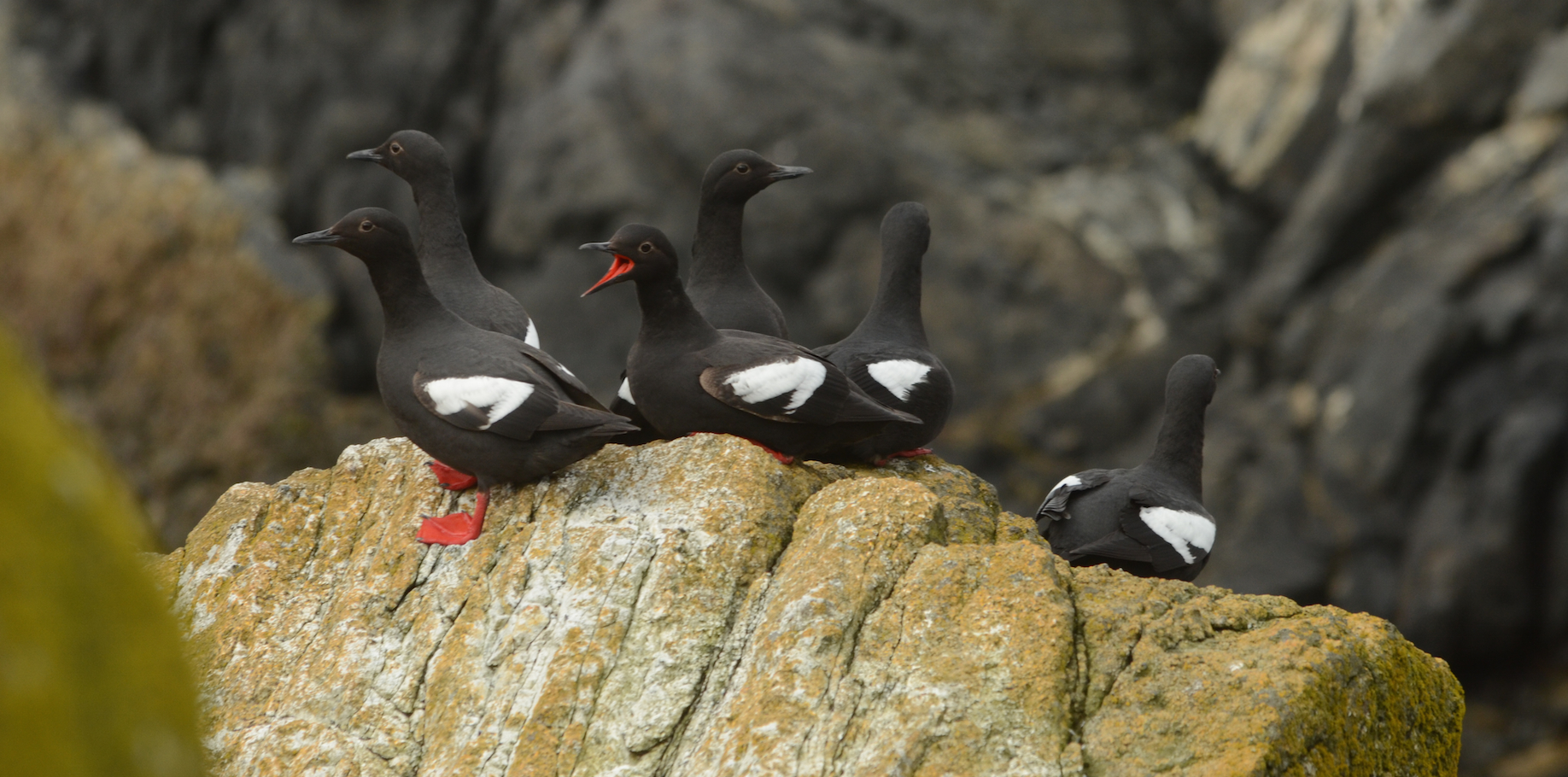
Pigeon Guillemots are members of the auk family, related to murres. They swim underwater using their wings and steer with their feet.

Pigeon Guillemots are members of the auk family, related to murres. They swim underwater using their wings and steer with their feet.


Right now they are in their alternate, or breeding plumage, otherwise in the winter their colouring is more like a winter murre or murrelet with lots of white, gray and dark gray.

Right now they are in their alternate, or breeding plumage, otherwise in the winter their colouring is more like a winter murre or murrelet with lots of white, gray and dark gray.

The Pigeon Guillemots are spending more time on land as spring progreses. These true seabirds are ill equipped for walking with their feet used as rudders for underwater flight, and set far back on their muscular little bodies. I don’t think they are actually nesting yet but certainly getting use to land. Their favorite roosting spots are in the surge channel between the energy building and the science house, on the jetty and its’ upland scree and cliff area and on the little cliffs just southeast of the light-tower.

Now that the winds have settled down, the eagles are back and making determined attempts on the Canada geese. They also spend a considerable time on the pinniped haul-out rocks.

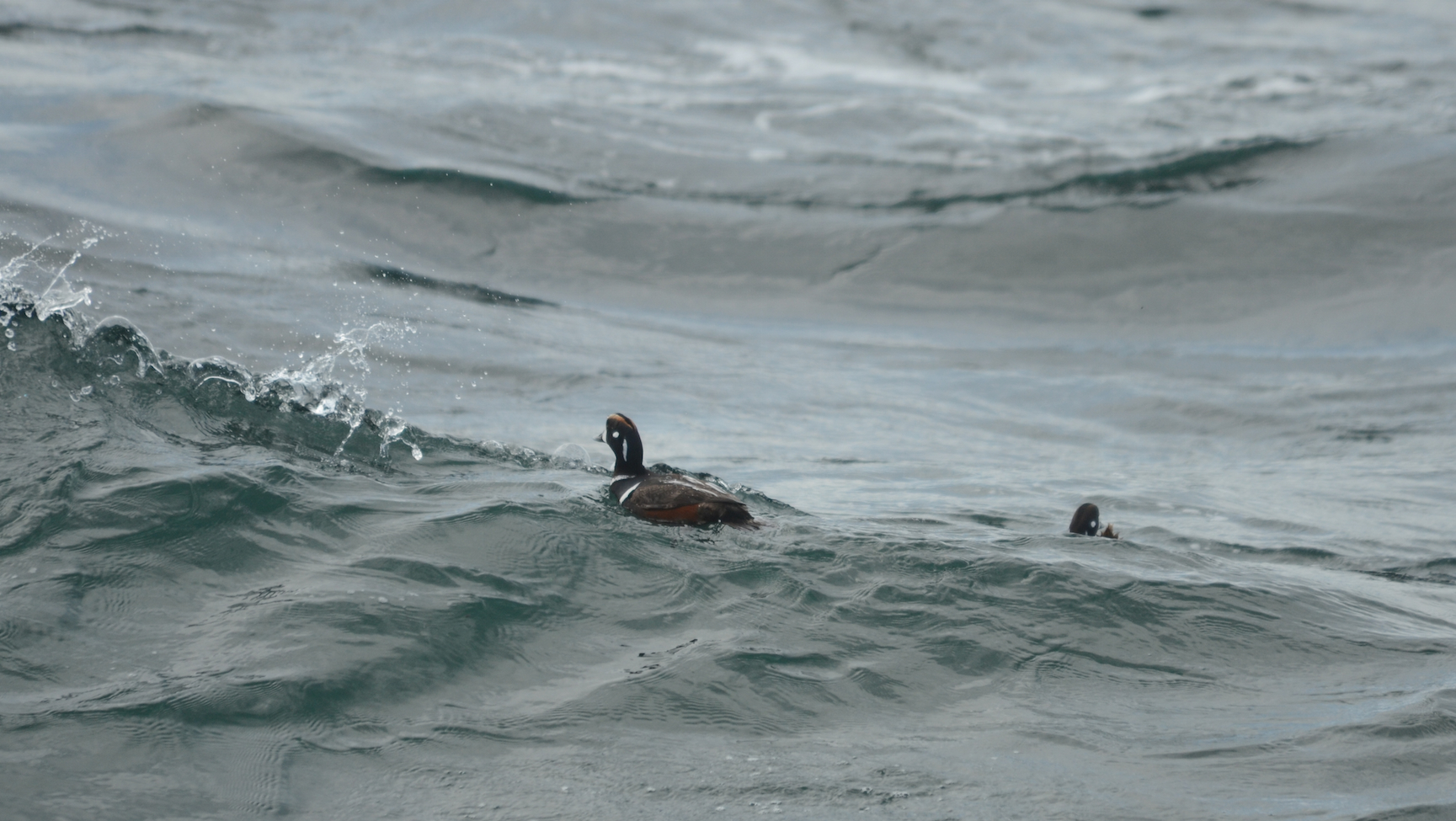
I keep expecting the Harlequin Ducks to leave and head for the mountains, where they nest and lead their summer  lives. There are at least four here still and probably more.

Harlequin Ducks are also supreme under-water swimmers and specialize in white water: in rushing  mountain rivers and streams in breeding season and in the sea the rest of the time.

Harlequin Ducks are also supreme under-water swimmers and specialize in white water: in rushing mountain rivers and streams in breeding season and in the sea the rest of the time.

A new (to me), young, female Northern Elephant Seal joined the Great Race elephant seal group today bringing the total to nine, five males and four females. #5850, the three year old male, embraced the new female (literally) and although he is the smallest of the males on the island, while the other males were practicing their jousting he had his ‘pinky’ out and was snuggling up to the new arrival. It is the first time I have seen seals hold ‘hands’.

A student group is arrived just before dinner and are staying over. They will be part of a first year biology field trip that will be here most of tomorrow. Work was routine today but the day was anything but routine. Amazing place.

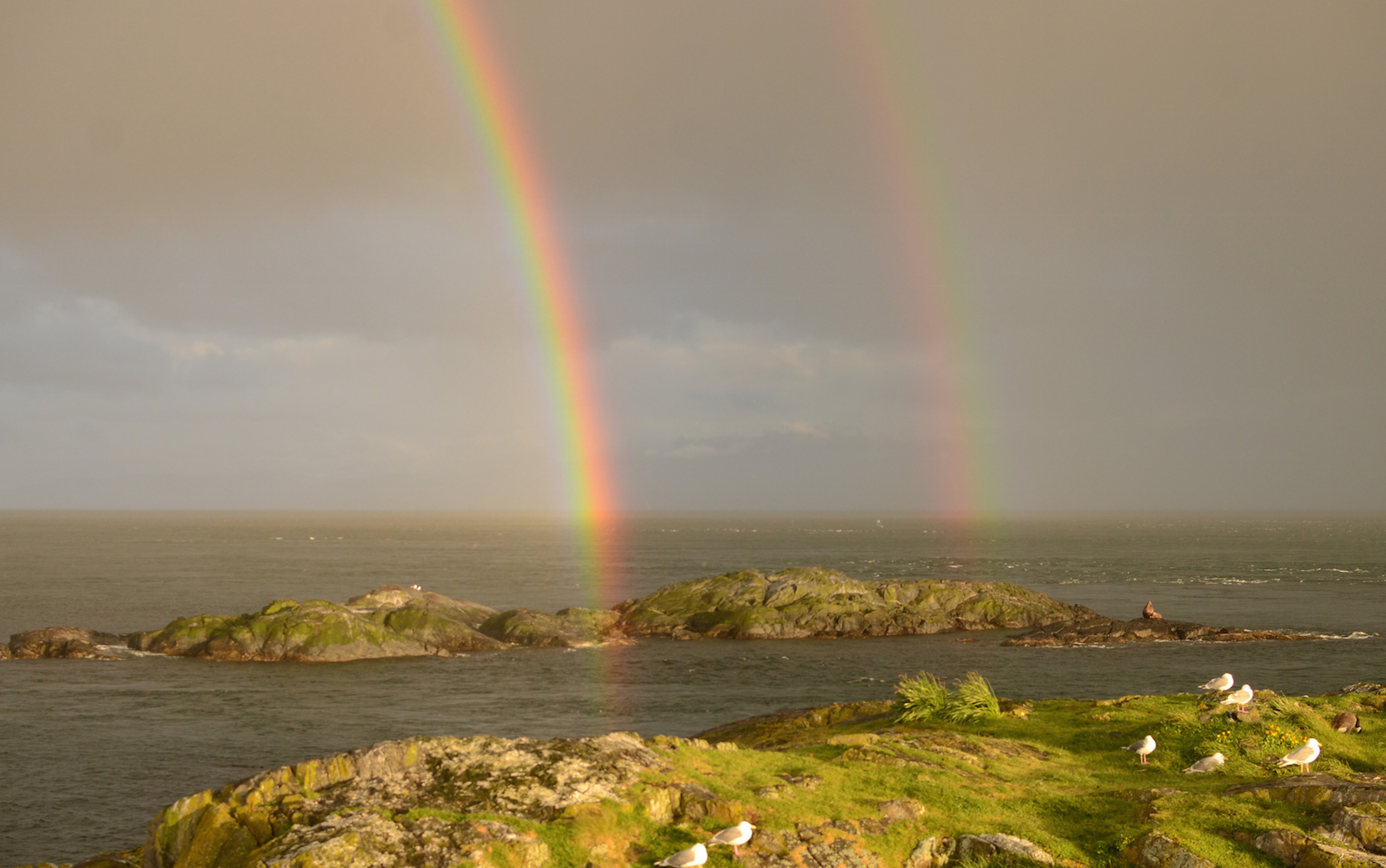
double rainbow

Thursday is Census Day at Race Rocks

The weather was fine today with sunshine from dawn until about four o’clock. Winds were very light and the direction shifted around west, from northwest to southwest. As the barometers drops, rain is forecasted, southeast winds and then improving with only scattered showers by tomorrow afternoon.

The fine weather brought two small sports fishing boats into the Ecological Reserve today, both fishing and speeding inside the Ecological Reserve boundary.  My guess is that neither of them were aware of the Eco-Reserve and its protection from speeding and jigging.

There were three, whale watching boats in Reserve today and several others that passed outside of the boundaries. One of the attractions for the whale watchers were Biggs’ Killer Whales, also known as transients. The ‘T”s as they are known to the tour operators were travelling from west to east when I saw them and they passed very close to the seal haul-out on North Rocks before I lost them to view. It looked like four individuals. I saw a single, adult male Killer Whale two days ago, it was just a one-off sighting and I didn’t spot it again in spite of watching for quite a while. That one was also probably also a Biggs, just from the behaviour.

Today was Mega-fauna census day and here are the results.

Bigg’s (Transient) Killer Whales 4

Northern Elephant Seals 12

Harbour Seals 117

California Sea lions 69

Northern Sea lions 21

Canada Geese 24

Harlequin Ducks 9

Pelagic Cormorants 18

Double Crested Cormorants 15

Brandt’s Cormorants 12 (Flying through.)

Great Blue Heron 1

Bald Eagle 2 adults, 3 sub-adults

Killdeer 2 (at least two, difficult to count in the dark)

Black Oystercatchers 10

Black Turnstones 22

Surfbirds 37

Rock Sandpipers 7

Dunlin 11

Pigeon Guillemots 241 (Not a complete count. Had planned to quickly move over and do a north count but unable to count other side due to disruption with speeding boat and subsequent mass pandemonium and movement of birds everywhere.)

Glaucous-winged Gulls 365

Herring Gulls (present earlier in week)

California Gulls (present earlier in week)

Ring-Billed Gulls (present earlier in week)

Peregrine Falcon 1

Northwestern Crow 2

Common Raven 1

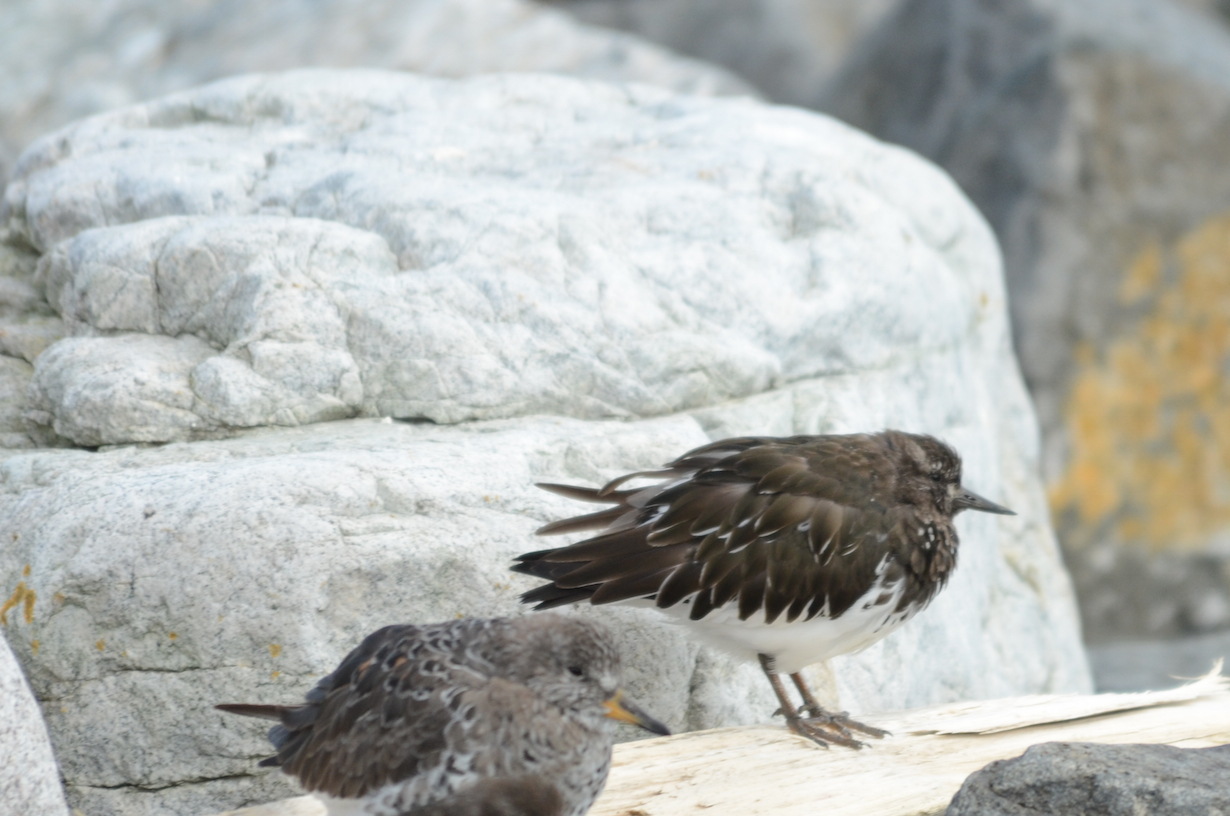
The Back Turnstone was one of the many species of shorebirds shown in yesterday's mystery photo. Easy to distinguish from Surfbird when they are side by side.

The Back Turnstone was one of the many species of shorebirds shown in yesterday’s mystery photo. Easy to distinguish from Surfbird when they are side by side.

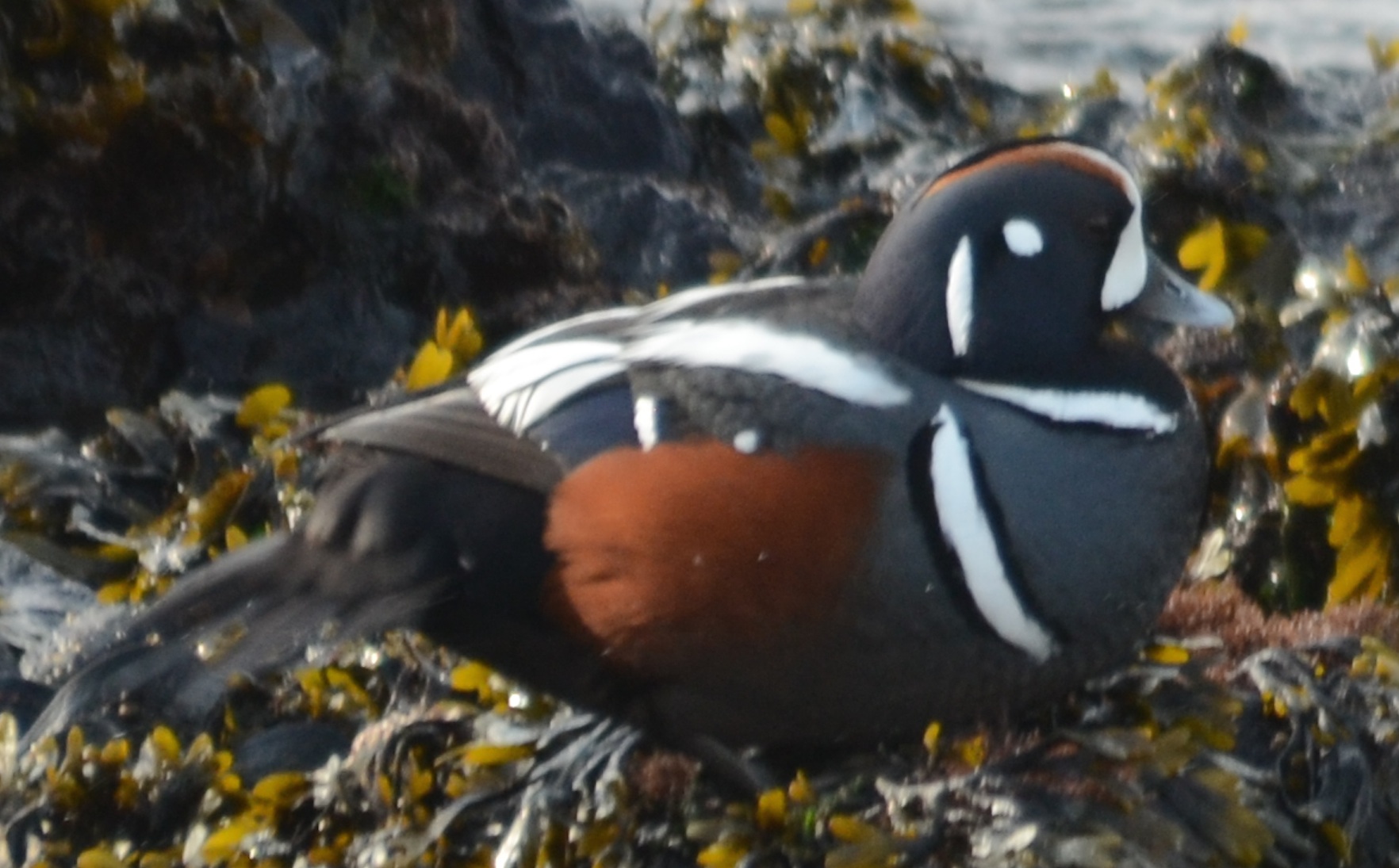
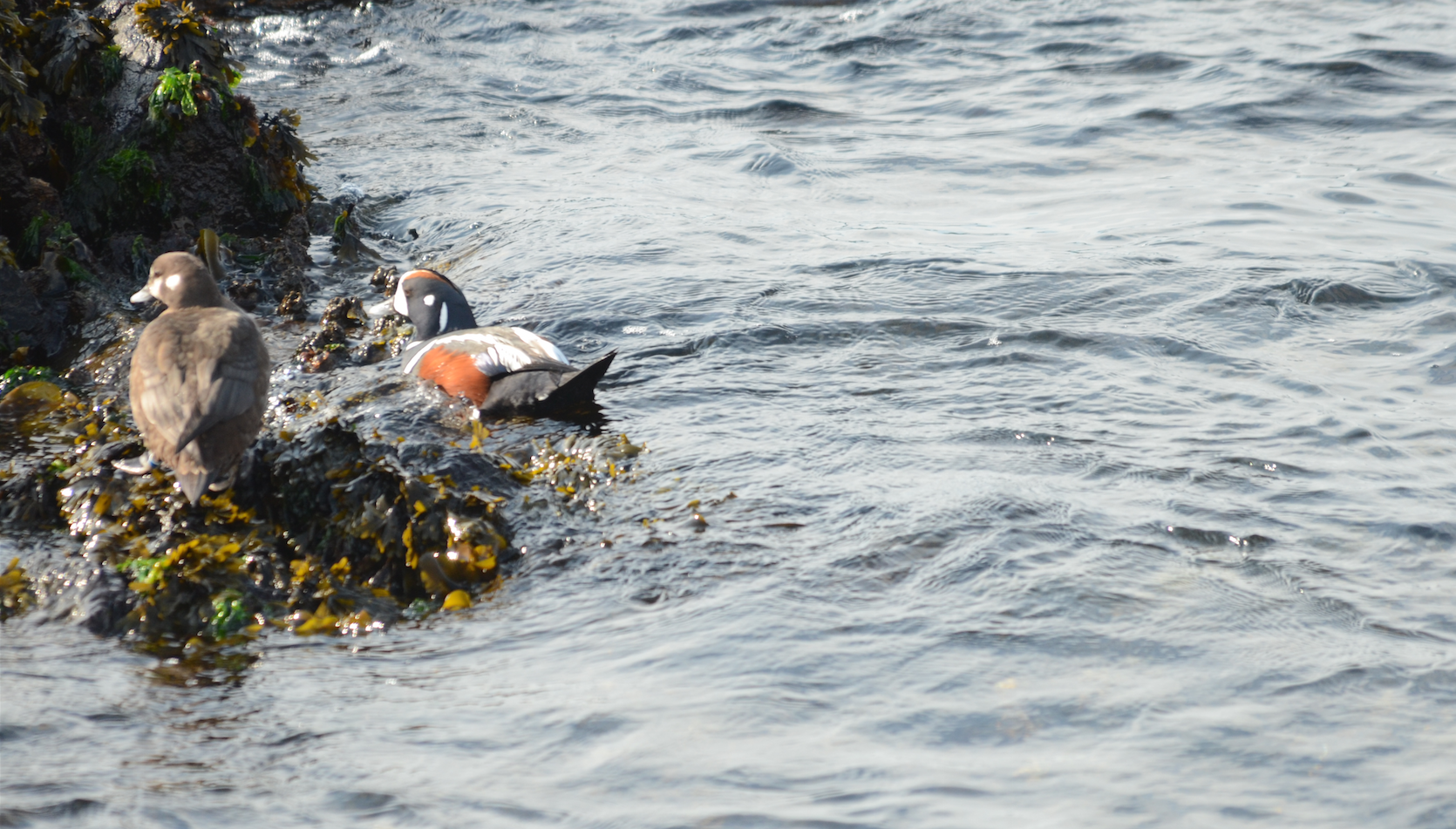
Male Harlequin Duck sitting on rockweed in the inter-tidal.

Male Harlequin Duck sitting on rockweed in the inter-tidal.

What a difference between drake and hen. These 'white water' birds nest in the mountains by rushing streams and rivers.

What a difference between drake and hen. These ‘white water’ birds nest in the mountains by rushing streams and rivers.

It was a busy day with lots accomplished. I managed to get the weather station back up and connected to the Internet, thanks to good instructions. I have been on a bit of a wild goose chase, mapping out the nest locations of the Canada Geese. I troubleshot water loss problem (to no avail) and ran both the desalinator and generator. Sweeping the walkways and tidying up wood is ongoing. The census took quite a while and was totally enjoyable. This is such a special place, a real biodiversity hotspot especially underwater. What we see on the surface is like the tip of the biodiversity iceberg or the biomass (food) pyramid. All that biological activity can traced right back to plankton and sunshine that drives it. Sunshine made most of the fresh water today, thanks to the solar panels and desalinator.

New DFO Report highly critical of Kinder Morgan /TMX environmental assessment on Whales

The recentlly released DFO report:
(See Full PDF) SUFFICIENCY REVIEW OF THE INFORMATION ON EFFECTS OF UNDERWATER NOISE AND THE POTENTIAL FOR SHIP STRIKES FROM MARINE SHIPPING ON MARINE MAMMALS IN THE FACILITIES APPLICATION FOR THE TRANS MOUNTAIN EXPANSION PROJECT was very critical of the Trans Mountain Expansion Project Application documents. The Conclusion of the report is concerned with Vessel strikes on Whales and the overall impact of noise from increased Project-related traffic.  Included below are the conclusions of the report.

Conclusions

There are deficiencies in both the assessment of potential effects resulting from ships strikes and exposure to underwater noise in the Trans Mountain Expansion Project Application documents.

There is insufficient information and analysis provided with which to assess ship strike risk in the Marine RSA from either existing or Project-related traffic. Ship strike is a threat of conservation concern, particularly for baleen whales such as Fin Whales, Humpback Whales and other baleen whales (Gregr et al. 2006). If shipping intensity increases as projected in Section 4.4 in the Marine RSA and the Strait of Georgia and Juan de Fuca Strait as a whole, the significance of this threat to cetacean populations that occupy the region will increase.

Incidence of recovered whale carcasses is not considered to be an adequate measure of the frequency of ship strikes. No information is provided about the speed and maneuverability of Project-related ships or the distribution of whales in relation to the shipping lanes. Analyses that consider the statistical probability of ship-whale encounters and the risk of collisions are considered appropriate methodologies to assess this potential effect.

The JASCO MONM model, as it has been applied by the Proponent, is not adequate to assess the overall impact of noise from increased Project-related traffic. Although state-of-the-art acoustic modelling has been used to model the noise propagation associated with a single Project-related tanker in the Marine RSA, only four locations were chosen to represent the Marine RSA; therefore, the assessment does not adequately represent the noise exposure for the entire time a marine mammal would be in the RSA. The assessment represents only Project-related tanker traffic and not the current noise environment or the potential increase due to Project-related traffic. Finally, the method used to assess the significance of impacts from the modelled noise level contours resulting from a single Project-related tanker and tug on indicator cetacean and pinniped species is qualitative and the lack of an appropriate assessment framework reduces DFO’s ability to evaluate the assessment.

(See Full PDF) SUFFICIENCY REVIEW OF THE INFORMATION ON EFFECTS OF UNDERWATER NOISE AND THE POTENTIAL FOR SHIP STRIKES FROM MARINE SHIPPING ON MARINE MAMMALS IN THE FACILITIES APPLICATION FOR THE TRANS MOUNTAIN EXPANSION PROJECT

See other posts on Oil Spill Risk for the Race Rocks Ecological Reserve

Feb 15, orcas and traffic

4_orcas_feb15

family of four orcas off the south side of Race Rocks

Sunny, wind NE 10-20 becoming 5-10 E.  4 orcas passed by in the morning heading east.

orca and geaorge feb 15

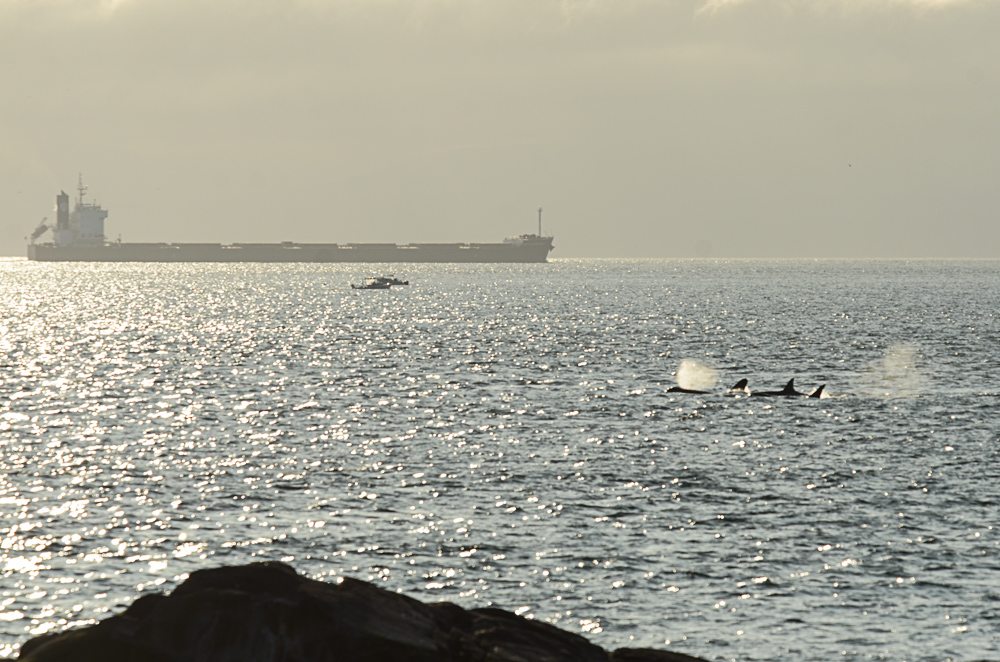
Orcas beyond south island with halibut sports fishing boats and the Captain George, a 229mx 32m bulk carrier heading to Itaquai Brazil, in the background

There were several boats in the reserve again today, at least 10 whale watching boats and one dive boat, and at least 5 halibut fishing boats around the perimeter of the reserve in the morning. I raised a new Canadian flag on the flag pole for the anniversary of the flag. Worked on firewood cutting and organizing firewood storage.  The composting toilet in the assistant’s house still has liquid in the bottom though it is decreasing.  I can notice a relative draw on the battery bank while running the unit with it’s electric heating element and vent fan.

Jan 22-26: fog, eagles, orcas

DSC_0090

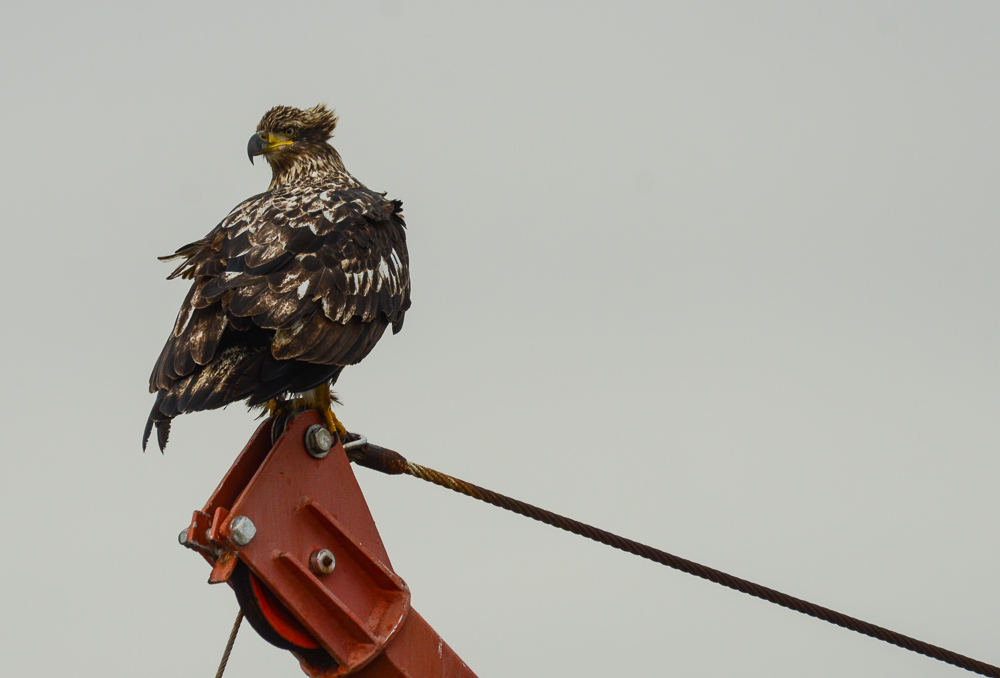
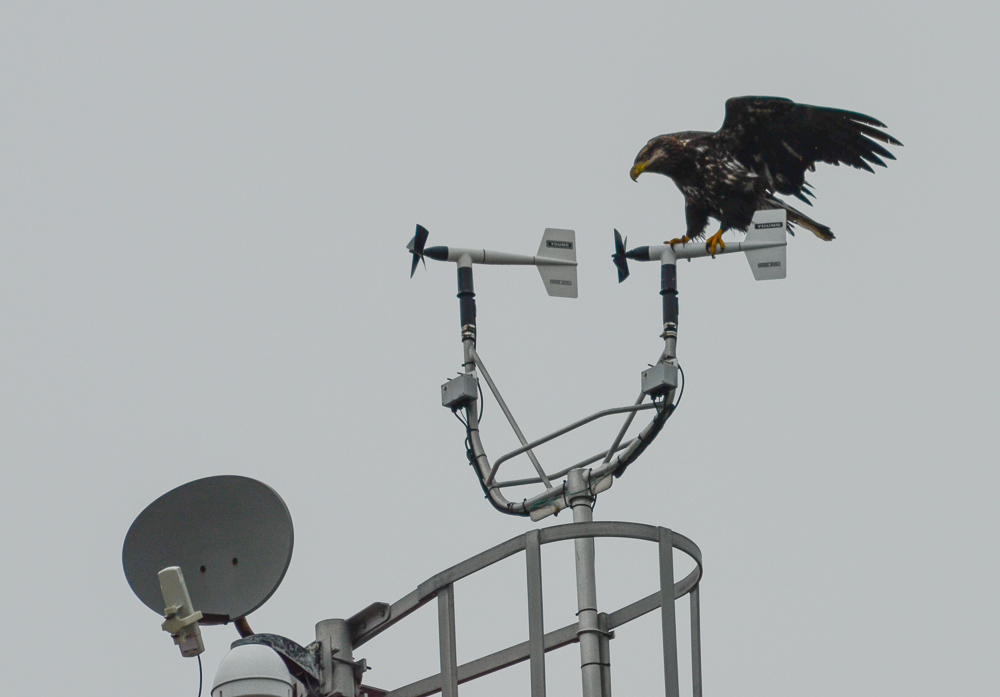
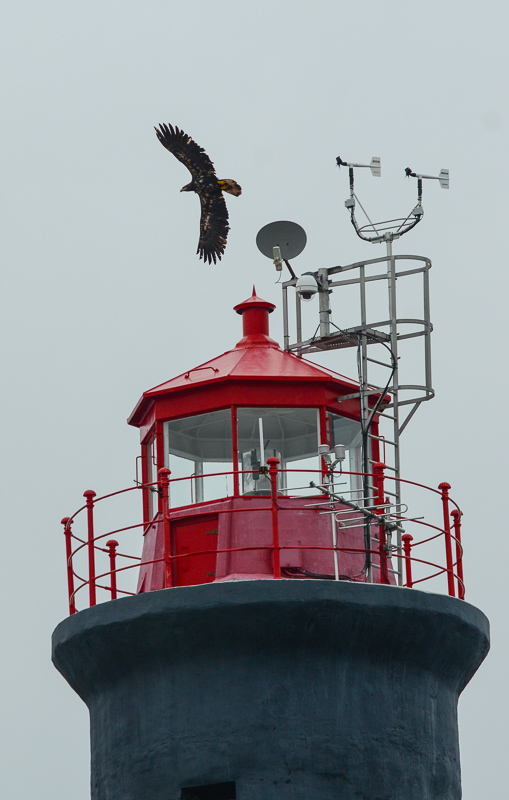
juvenile bald eagle on the tope of the crane boom

Jan 22: Misty, low visibility. Wind N 10-15 knots. 1 private pleasure craft in the reserve. Cut and chopped firewood.

Jan 23: Rain, wind N 10-15 knots.  1 ecotour vessel in the reserve.  Followed up with eco tour company I spoke to a couple days ago about one of their boats, distance to mammals and avoiding disturbance. Also called a different eco tour charter company, that I hadn’t seen here before, about distance from mammals and speed in the vicinity of the rocks.  Cut and chopped firewood. Could hear elephant seal pup again today.

DSC_0106.jpg

juvenile bald eagle on one of the anemometers on top of the tower

DSC_0122

Jan 24:  A blanket of fog rolled in from the North in the morning reducing visibility and triggering fog horn including in the middle of the night. Periods of rain too.  Two ecotour vessels in the reserve. Went off island around noon in the fog, navigated by GPS on boat with cell phone as back up.  Picked up supplies in Colwood including extra chains, files and lube for the station chainsaw.  Brought three guests back out with me in the afternoon to stay overnight.  Sea was very calm on the way over and the fog had lifted enough to see to Port Angeles. The fog came back before dusk but lifted overnight.

Jan 25:  Cloudy, light rain, light wind.  10-15 orcas passed through race passage going with the current, heading SW. I brought guests back to college around noon. On the way over we passed by elephant seal rock and were able to see the pup with its mother.  It was on the West side of the mother, out of sight from the main island or tower cam. Came back out before dark.

Jan 26: Foggy in the morning, fog horn went off during the night. Cloudy throughout day, wind light.  1 ecotour vessel.  Cut and chopped wood. Foggy again in the evening.

Orcas, Jan 11-13

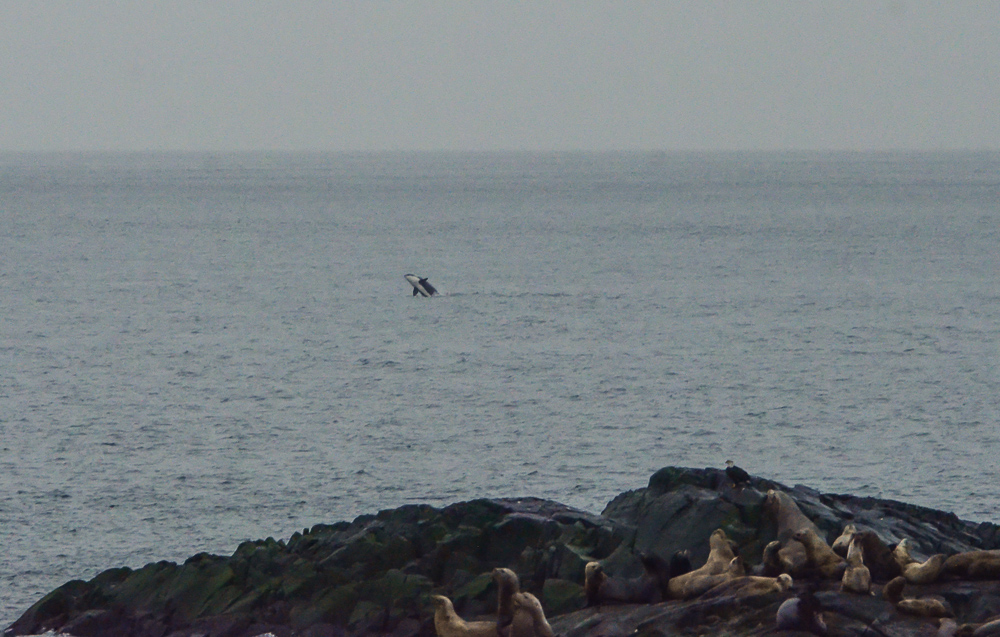
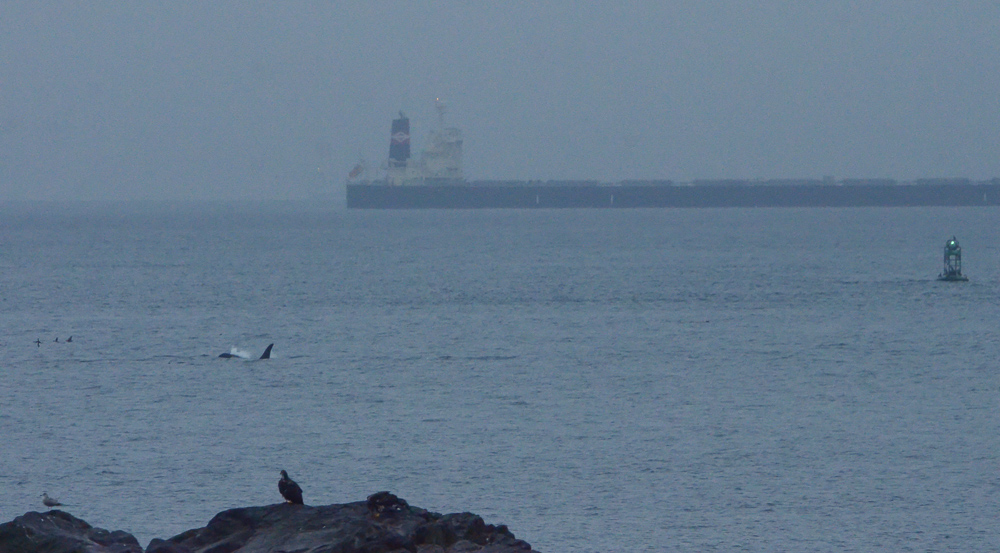
On the morning of Jan 11 a pod of at around 20 orcas passed by in the morning on both sides of the reserve heading NE.  Mid morning they returned passing by on the East side of the reserve.  The whales were spread out and some were breaching as well as lying on their back slapping the surface of the water with their tails.

DSC_9575

the sealions on the south islands seemed apprehensive as the orcas swam nearby


DSC_9589

beyond south island, Rosedale Reef buoy and bulk carrier in background


DSC_9642

off the south islands


DSC_9675

on its back tail slapping the water


Persistent NE wind 10 -20 knots with mostly overcast sky for the past days.

Jan 11: 1 private vessel, 1 dive boat, 2 ecotour

Jan 12: one sea otter seen circling the island and a female elephant seal came on the main island briefly.  There have been very few female elephant seals on the main island so far this winter.

DSC_9807

Jan 13: 2 ecotour

Jan 14: 3 ecotour

I haven’t seen or heard the elephant seal pup in several days, dont know if it still alive. Have been working on wood cutting and did some more work on the composting toilet install, levelling the chamber so it drains, plumbing the chute and fastening the seat.

Generating History

High clouds settled in today and there were even a few minute raindrops for a short time in the late morning and early evening. Hazy marine air was evident along the coast to Victoria while across on the American side, it looked like it might really be raining in the Elwha Valley, Olympic National Park. The barometer continues its slow slide, which started last Thursday. The westerly wind is forecast again for tomorrow and it has already started.

A Humpback Whale feeding and resting to the south of the rocks and Killer Whales to the west, continued to draw whale–watching boats from Victoria and a total of 22 were noted in the Ecological Reserve today, mostly observing pinnipeds (Steller’s and California Sea Lions, Harbour and Elephant Seals). One commercial, charter, fishing boat also stopped by to watch the sea lions.

One of the Brown Pelicans came back today and some members of the Victoria Historical Society group saw it on their way out to the island. Three groups of twelve people each had historical tours of Race Rocks today.

The historians were very interested in Garry Fletcher’s on-site presentations about the history of Great Race Island, the 500 year-old plus, indigenous rock cairns and the 154 year history of the Lighthouse. Race Rocks is designated as a heritage site but that only means it is registered in Ottawa, not offered any conservation protection. The Race Rocks Ecological Reserve protects Race Rocks’ biodiversity and natural history and is part of BC Parks, but it does not include human history.

Federal law passed specifically three years ago to protect historical lighthouses does not apply to the six original Imperial Lighthouses, of which this is one. Race Rocks  light-tower pre-dates the confederation of Canada and it is the only stone-constructed light tower and one of a handful of standing stone structures this old, in western Canada. It needs protection. You can learn more about its’ fascinating history through this web-site under history. There is even historical video footage of the demolition of the historic, granite, light-keeper’s house in the 1960s by bulldozer and explosives. Fisgard Light which was completed six weeks before Race Rocks is a much less impressive brick tower and is endowed with full heritage protection by Parks Canada.

With 37 visitors to attend to, I did not spend much time making ecological observations today. I did a few maintenance chores before they arrived, washing windows, sweeping the main walk-way with an historical broom and weed-eating around the fly wheels of an old Fairbanks-Morse engine from the turn of the last century, with an historical weed-eater from late in the last century. There are quite a few pieces of old Fairbanks-Morse machinery lying around that could be of historical interest. Here is a YouTube link to a similar 1906 Fairbanks-Morse engine, running. What a beast. http://www.youtube.com/watch?v=jTiK2B88EJs

My last tasks of the day are to move deionized water, delivered with the guests by Courtney on MV Second Nature, up to the energy building, and to make fresh water with the desalinator, while the historic Lister generator tops up the batteries which are powered mostly by solar panels.