Re-runs

Weather & Sea Conditions

Light, variable winds and overcast skies were the norm for most of today. The sun came out in the early evening but total accumulated sunlight levels were way down from the highs of last week. Of course this also meant a low UV index, which barely reached 2 today. The barometric pressure climbed steadily from a low of 1010 on Sunday, to over 1030 hPa today and tomorrow’s forecast calls for more sun and a moderate (5) UV index. Light winds are predicted to continue, rising to 15 knots Wednesday afternoon. Except for tidal rips and current driven standing waves, sea conditions were calm and rippled today.

Vessels

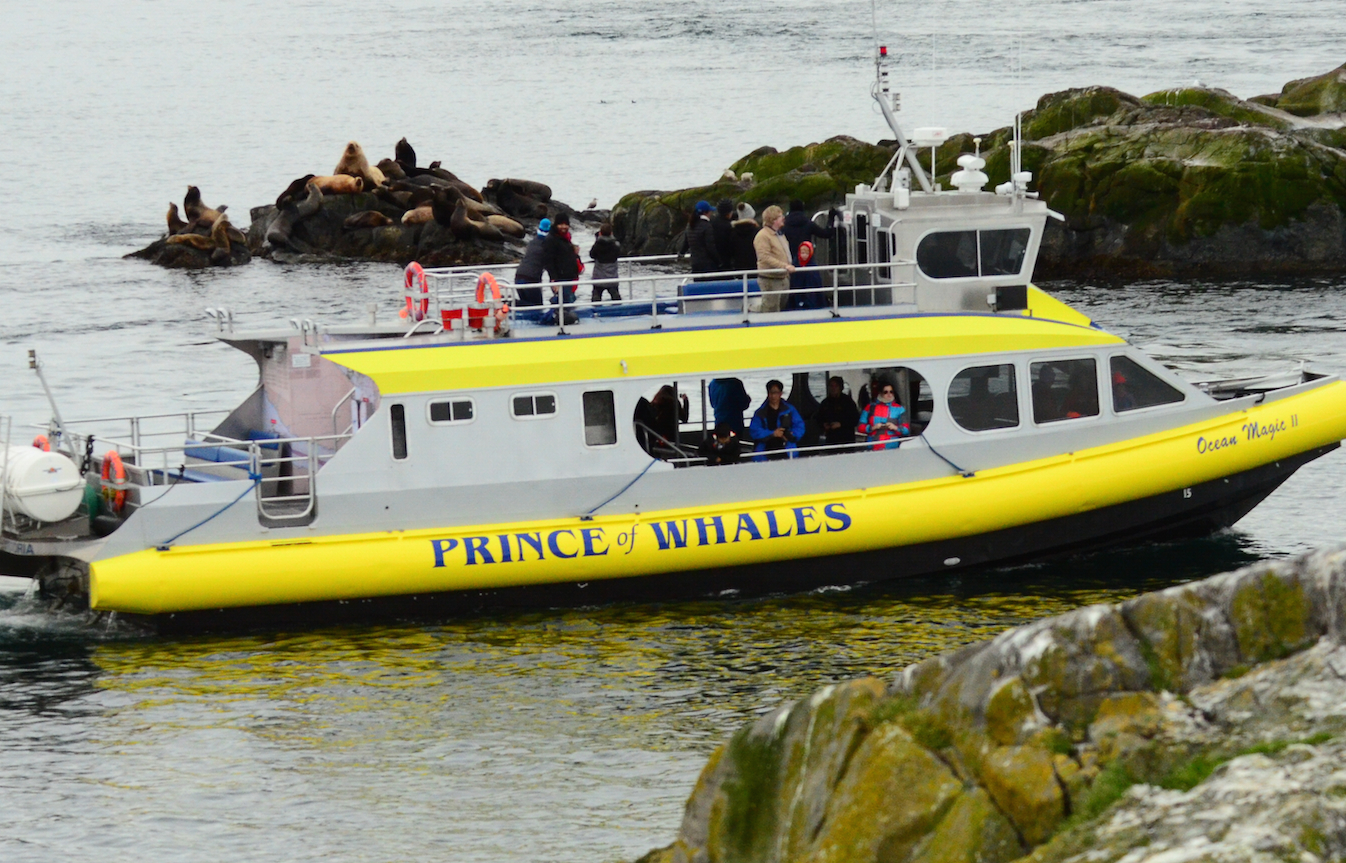
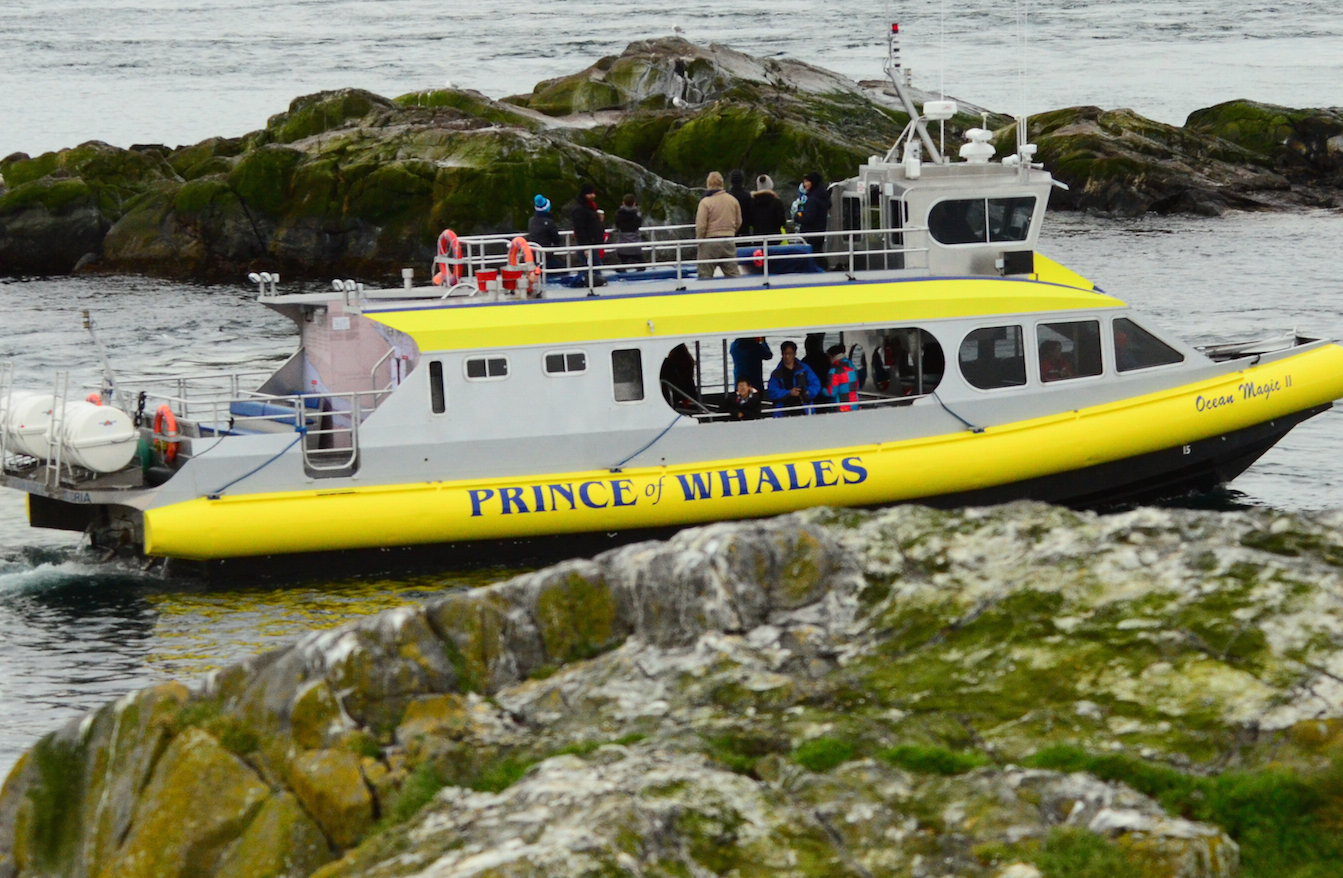
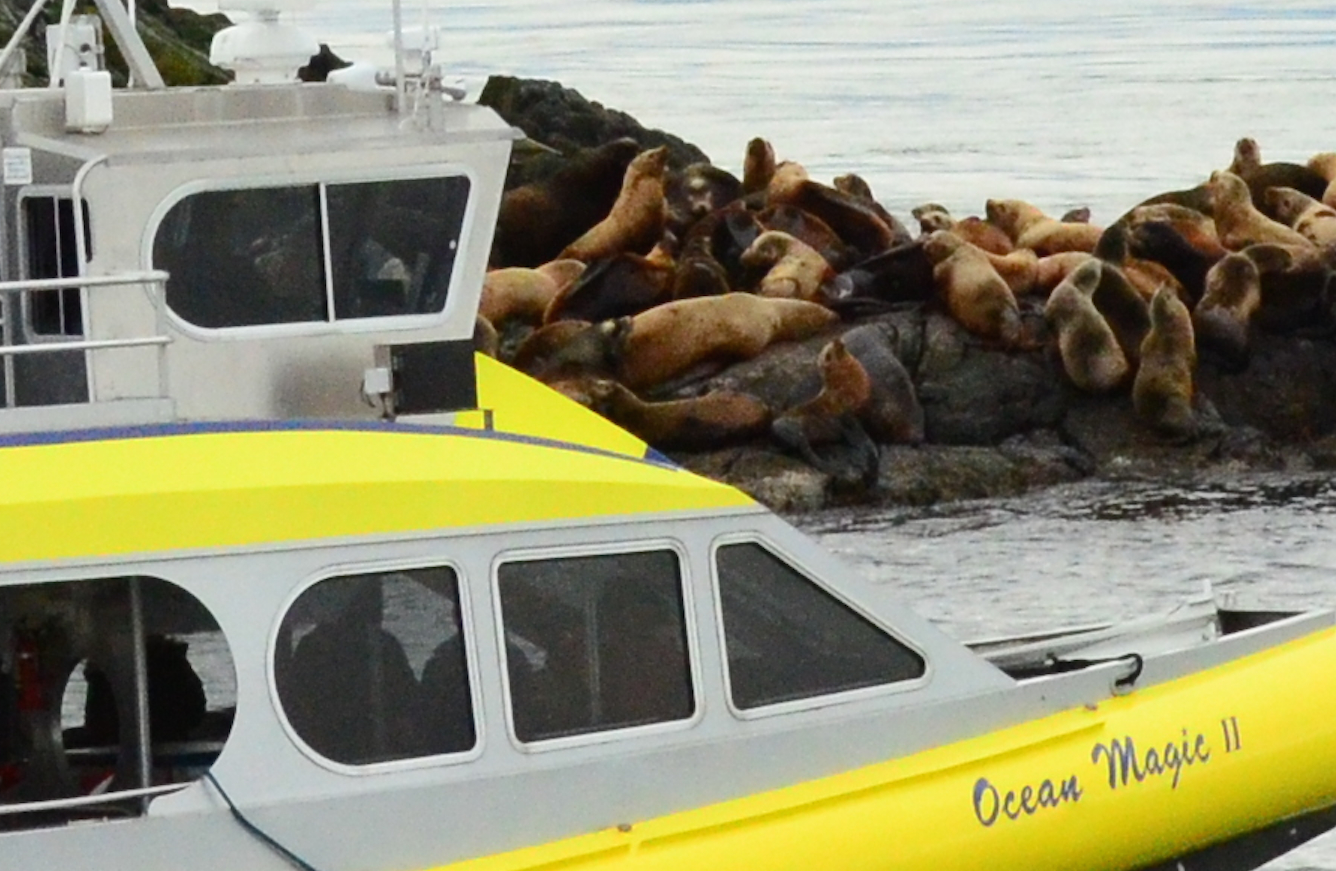
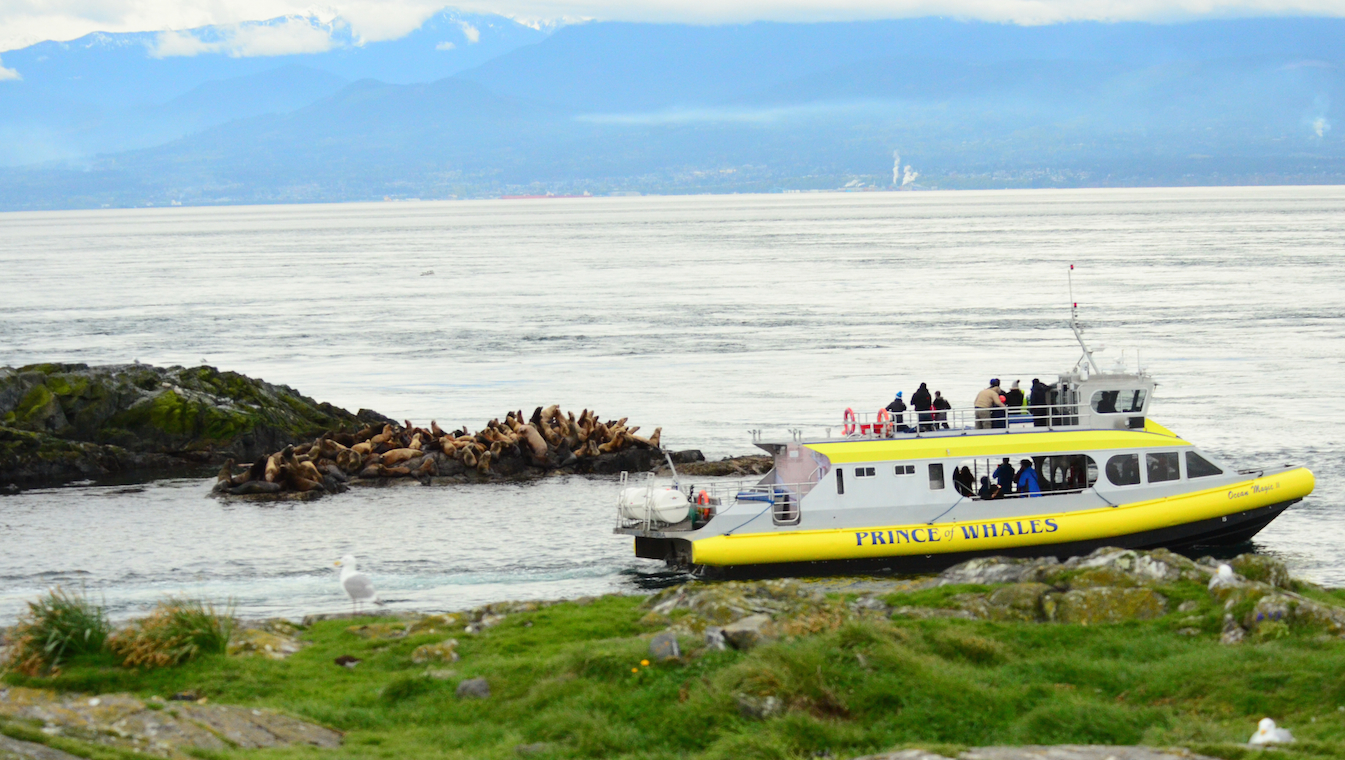
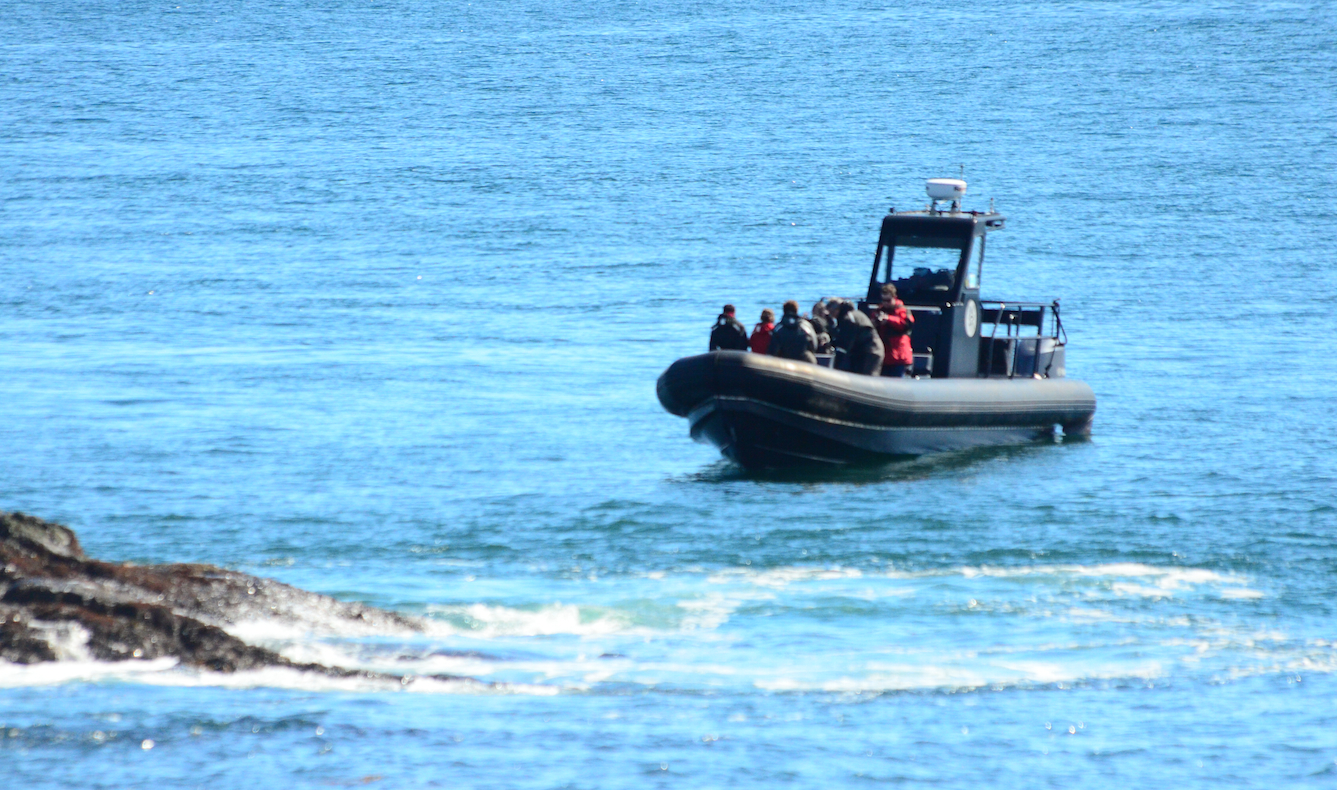
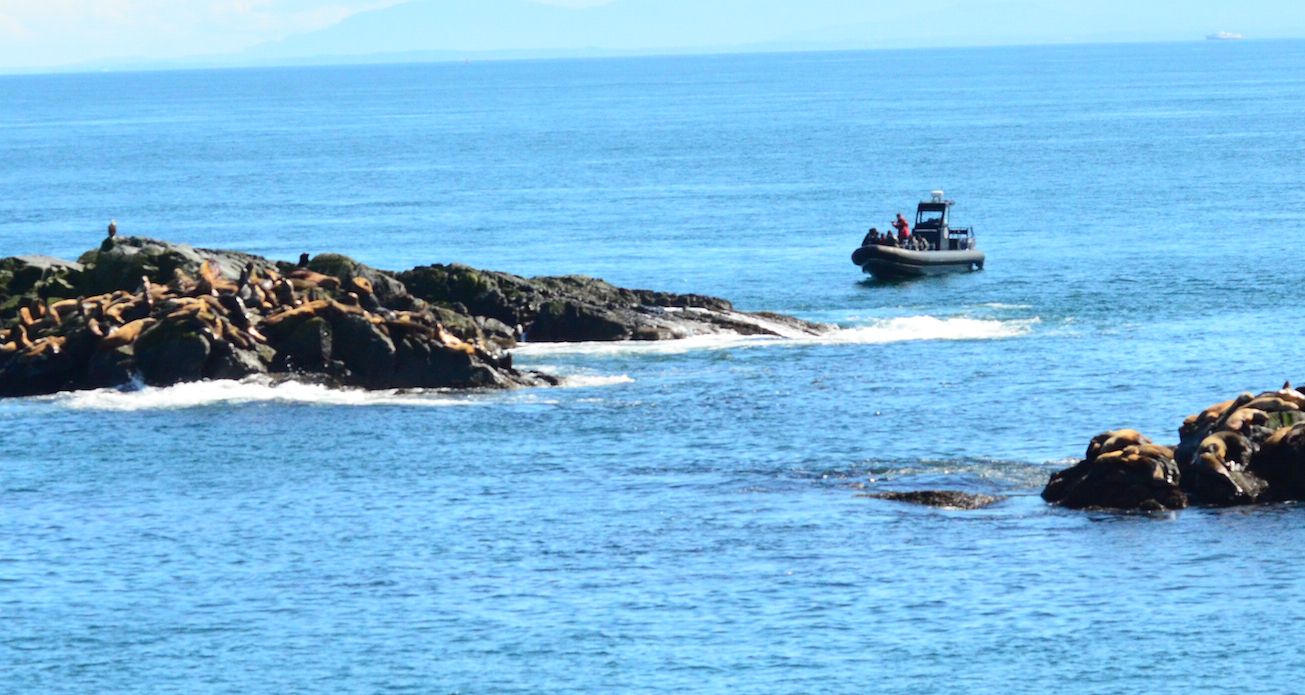
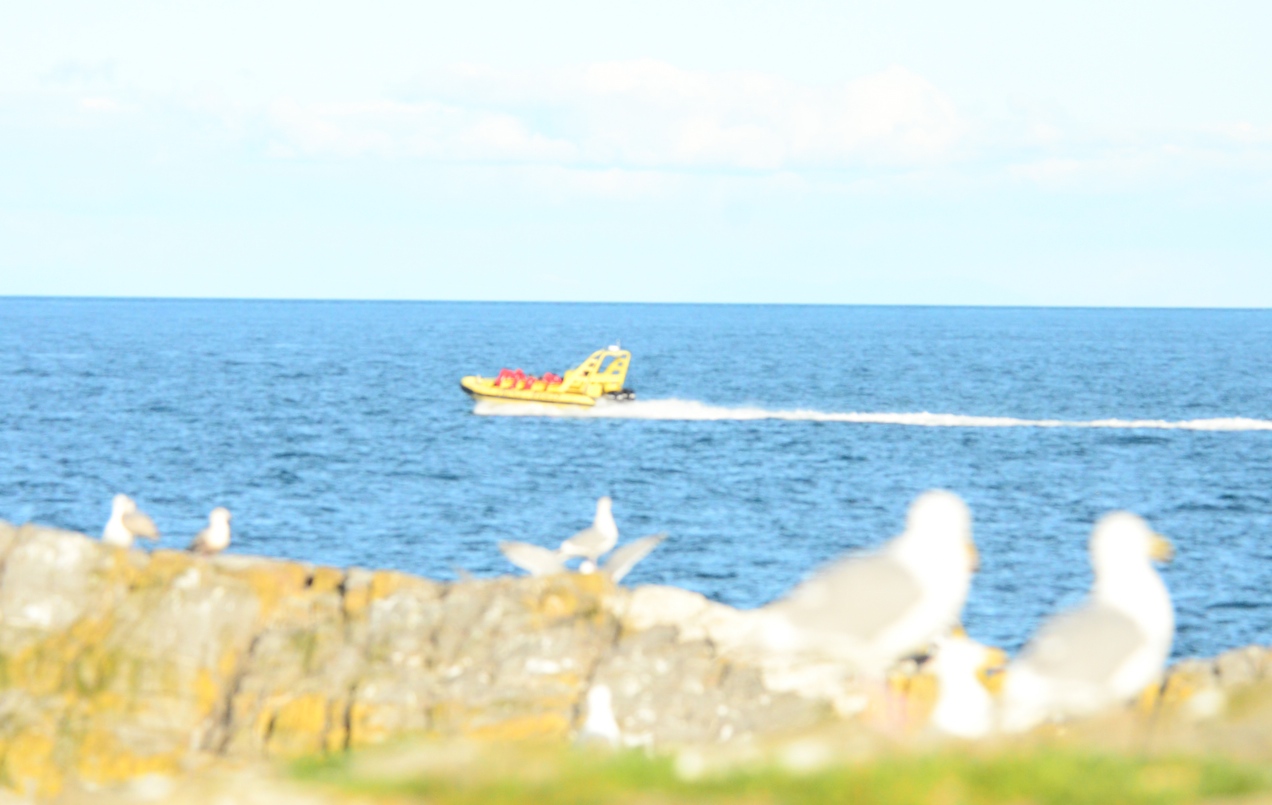
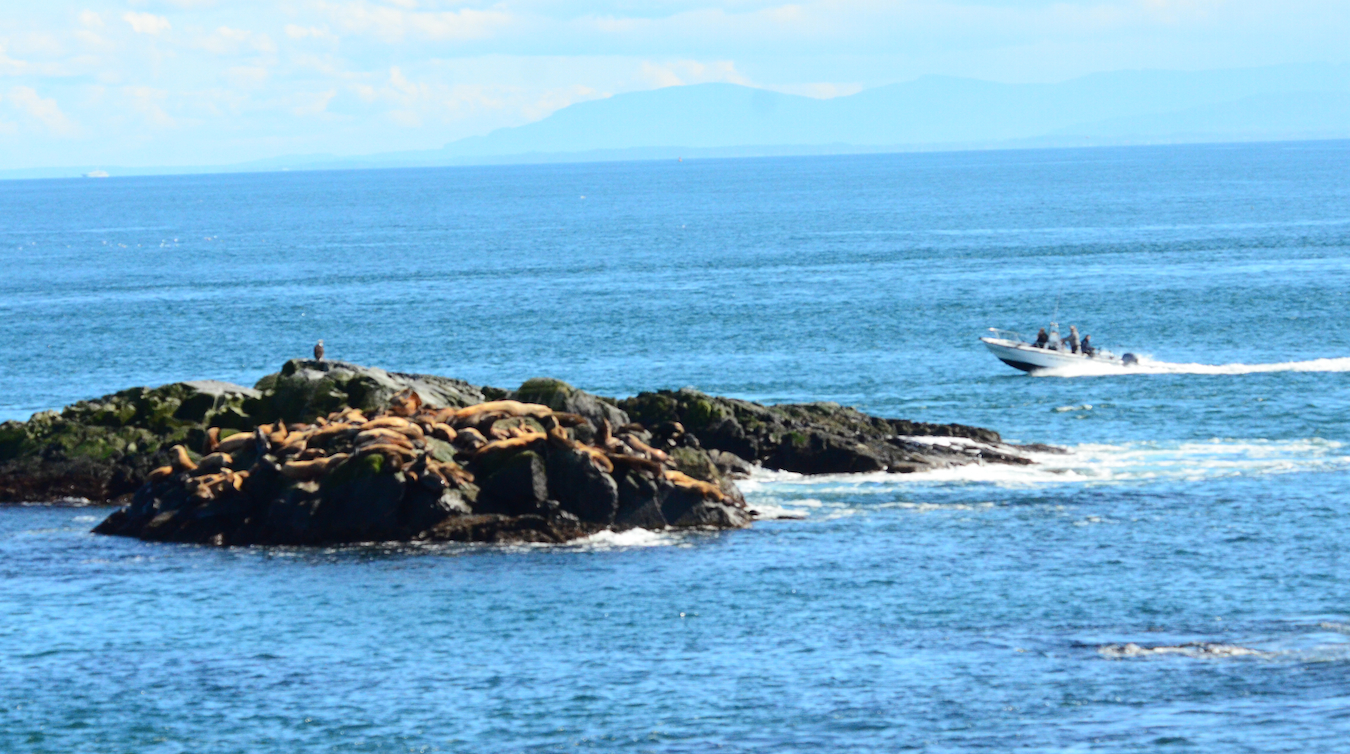
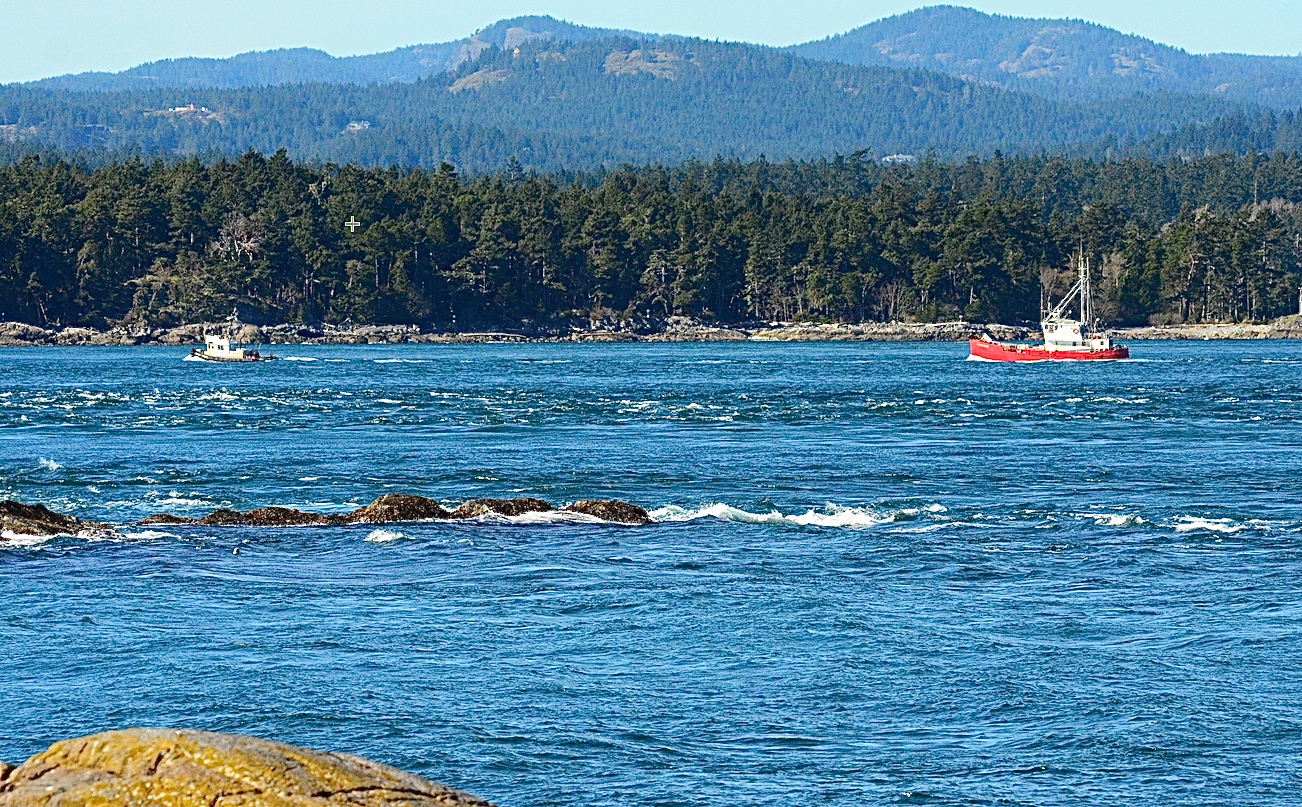
Six whale watching vessels were observed working in the protected area today. One of the larger yellow vessels took chances with safety and wildlife security, ignoring common sense and rules, by barging through the narrow, shallow passageway between the South Rocks sea lions haul-out and Great Race. They were lucky, they missed the shallow rocks and the sea lions were disturbed but did not stampede.

Why is it always the same company that pushes the limits? Not all of their operators take these kinds of risks but it certainly makes one pause and wonder: what kind of leadership allows this to happen repeatedly?

Very few sports fishing boats were seen today except in the distance at Constance Bank and Beechey Head. One was observed passing through the protected area (not fishing), near Rosedale Reef.

Ecological and General Observations

Ecologically it was the day of the goose. The time has come, (the Walrus said), for egg laying to start, whether nests are built and territories staked out, or not. There was a certain desperation and pandemonium amongst the geese today leading to much honking, numerous chases, physical battles between the males and general goose drama. They are here to stay, like the California Sea Lions.

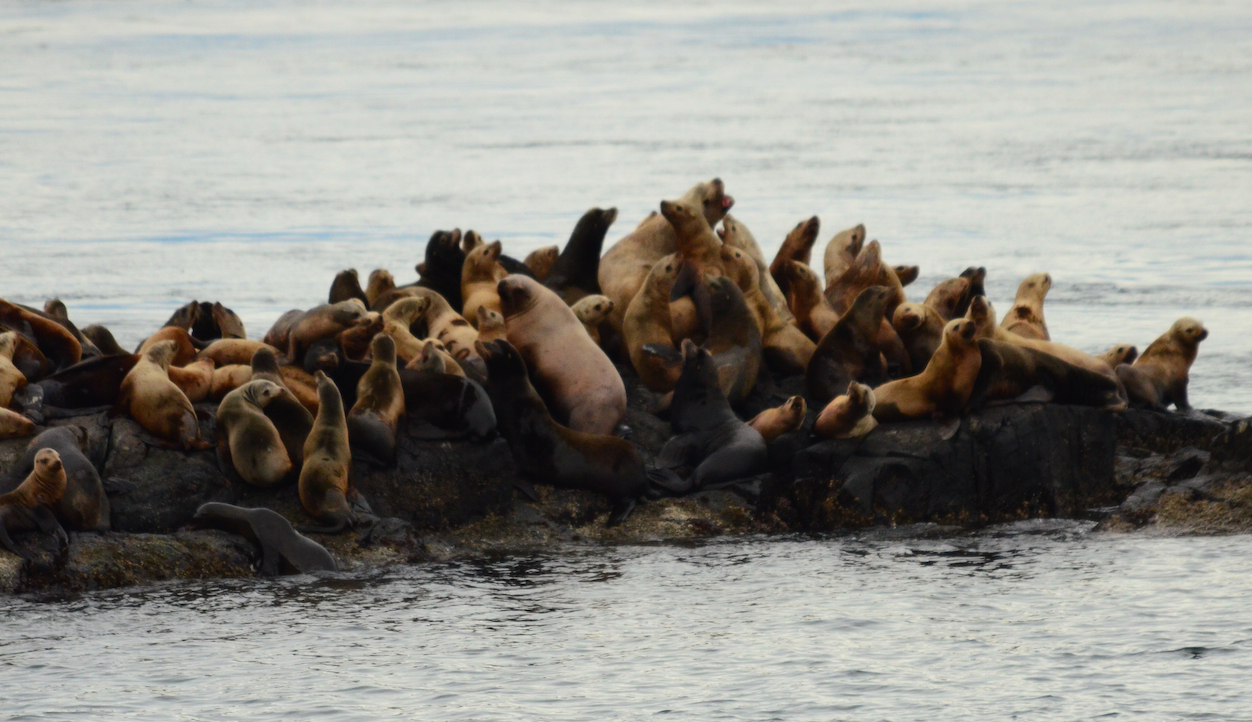
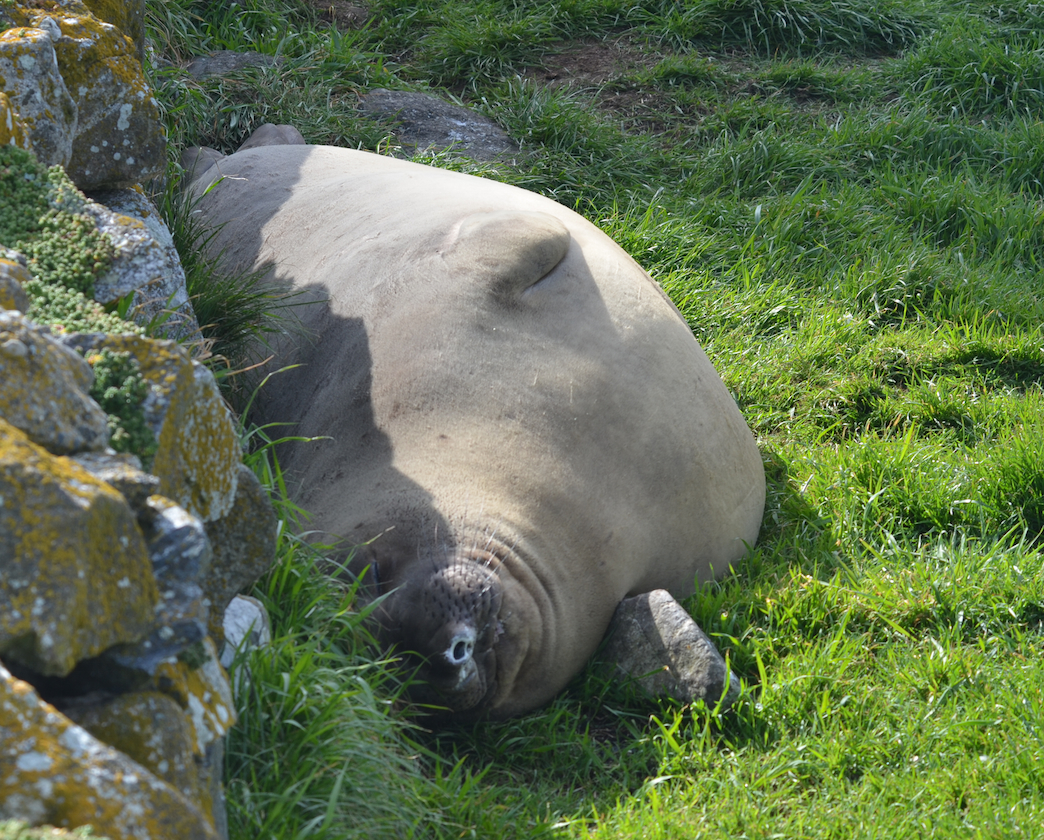
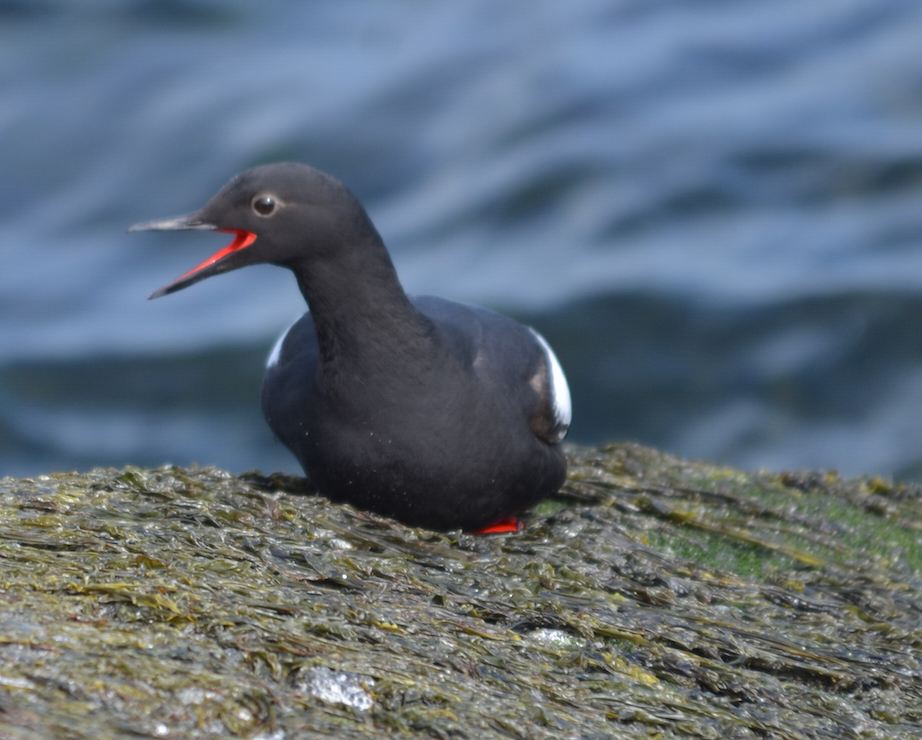
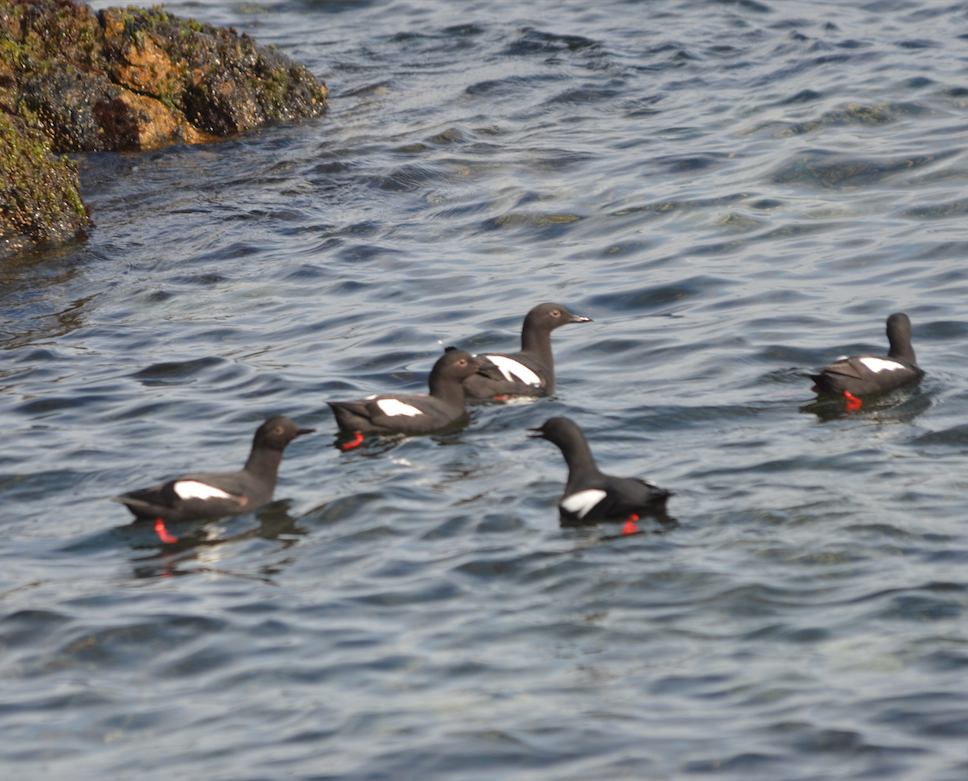
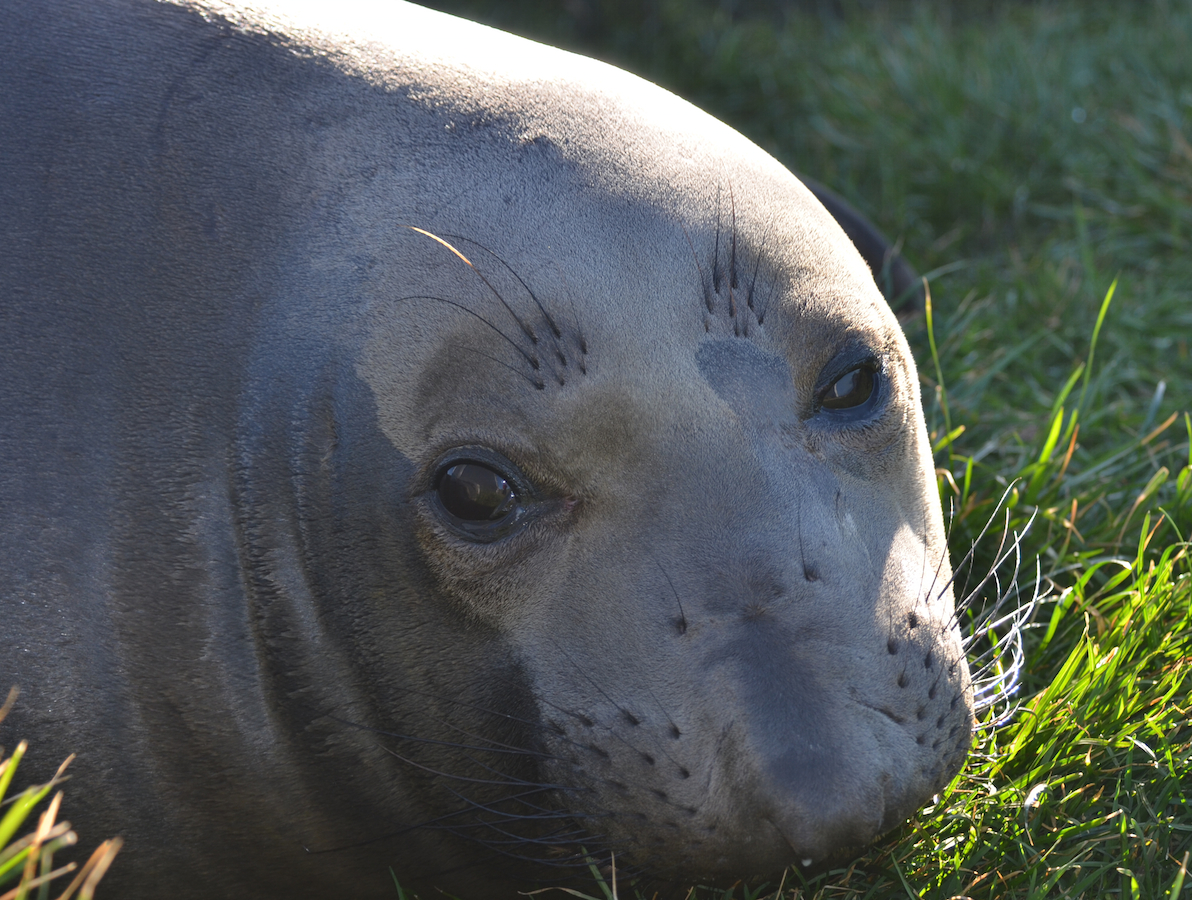
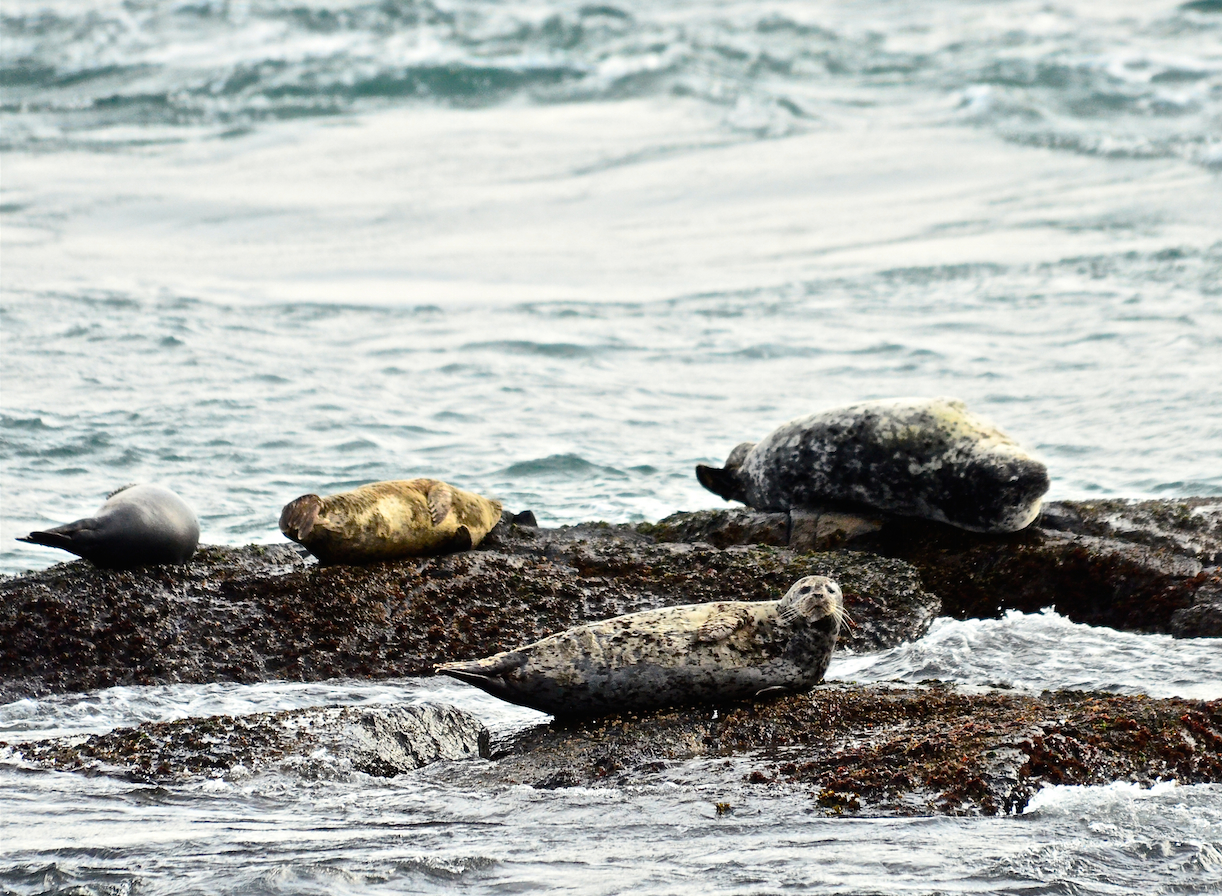
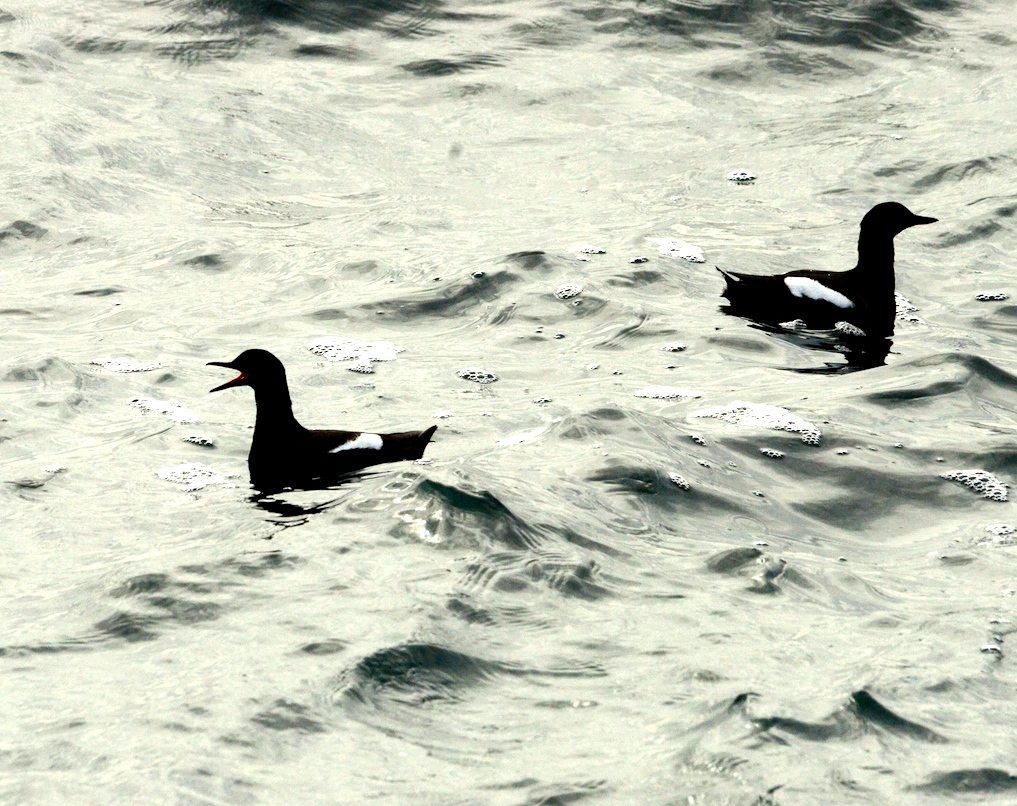
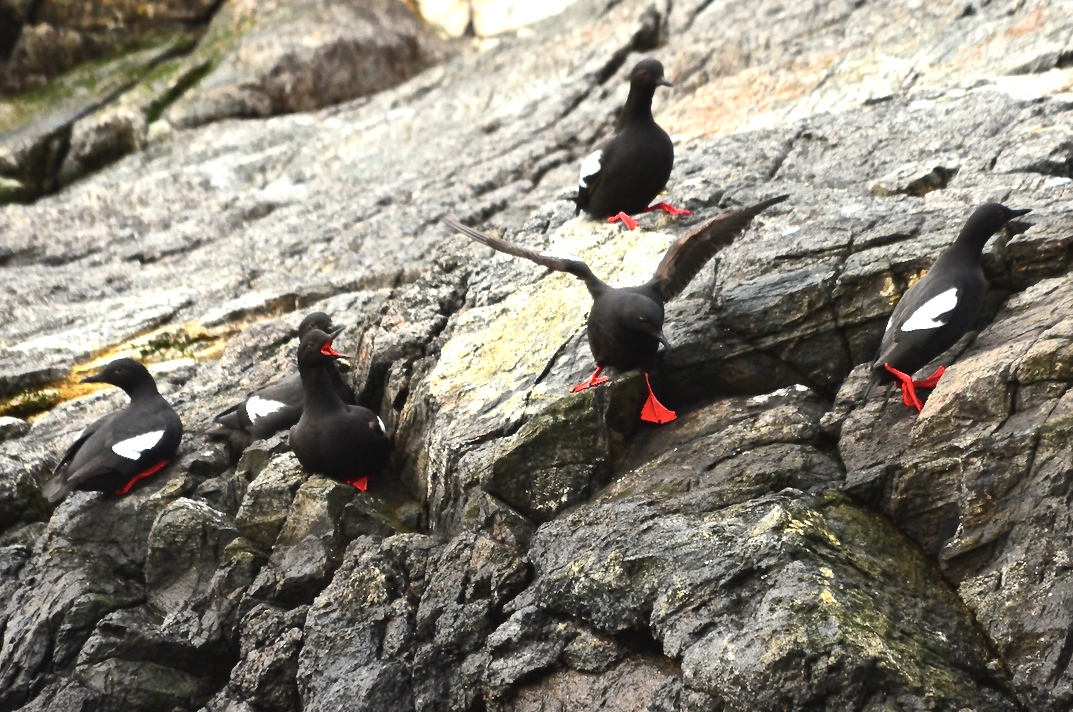
Everything else seemed to proceed as usual; sea lions and seals slept. Beulah crushed the beds where I picked tulips yesterday and then moved over behind the boat-shed. The river otter continues to use his two story, rock, otter spot and ‘decorates’ the walkway with evidence of his fish predation. The gulls seemed more settled and there seemed to be fewer marauding eagles. Black Oystercatchers are all in pairs in the same areas where they nested last year, through most of the day. The Pigeon Guillemots spent more of the day ashore and were still here in the late afternoon. The Harlequins were busy fuelling up for their move to the mountains.

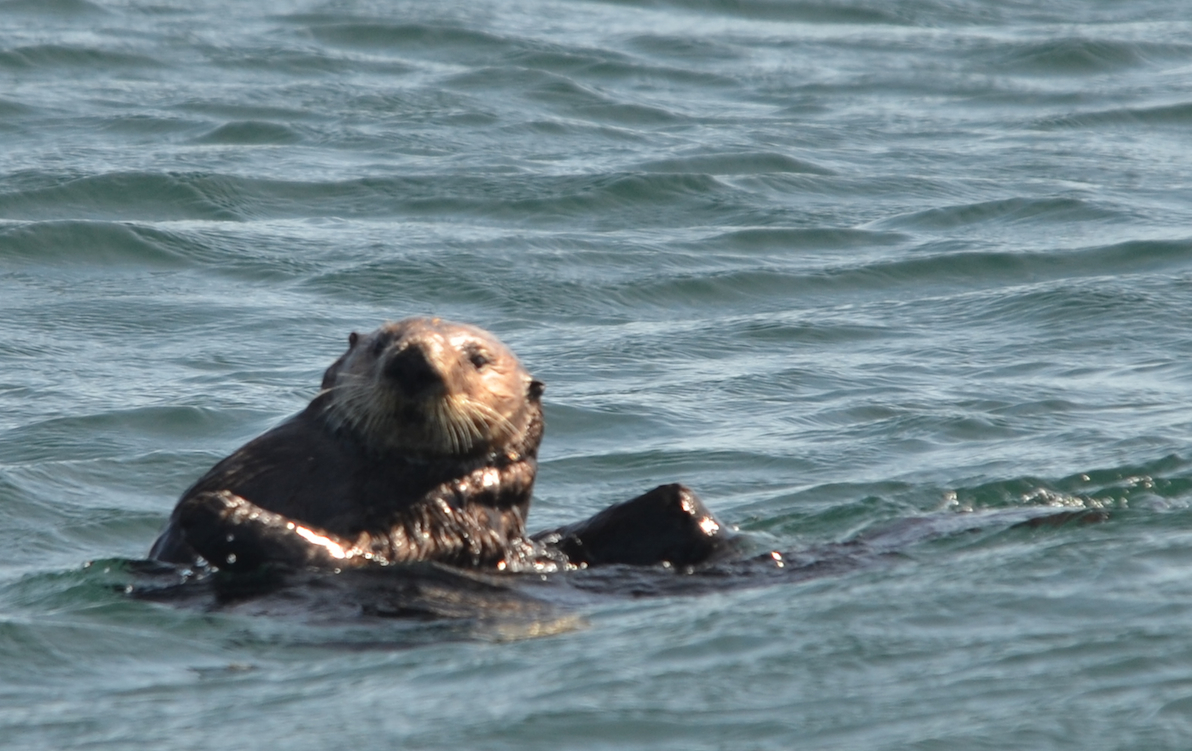
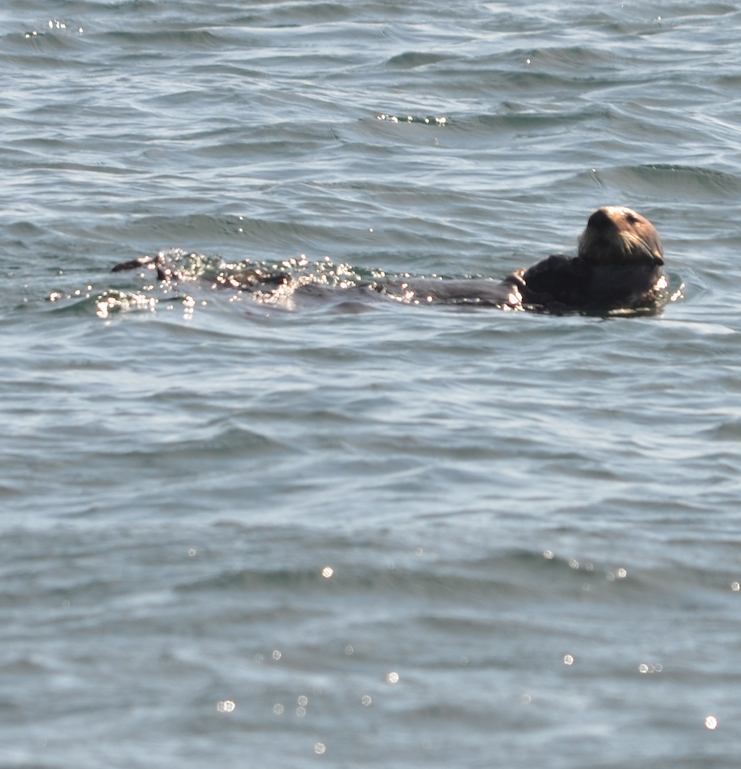
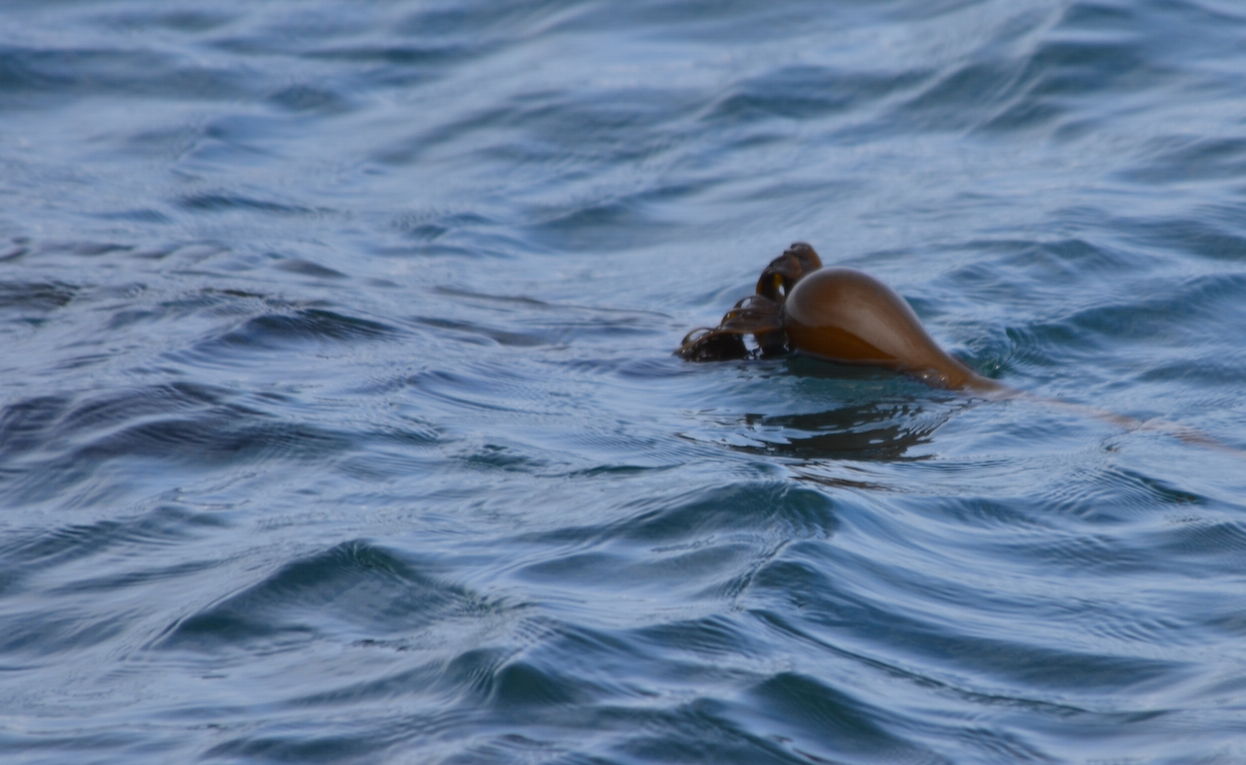
A true sign of spring, the bull kelp could be seen reaching the surface at low tide. Soon there will be beds of kelp around each rock making it easier for the skippers to see the underwater hazards that are compounded by ‘the race’. The Sea Otter made a brief appearance and appeared to be itchy. Maybe he was just doing his daily ritual of grooming to keep his fur impeccable and impenetrable to the ocean’s cold.

Chores were routine today. There were no visitors.

Lantern Fish Found

Weather and Sea Conditions

The day started with a beautiful sunrise and then quickly clouded over, clouds pushed in by light, southeast winds. Late afternoon, the wind veered through southwest to a light westerly.  The barometric pressure, which started at 1017hPa dropped all day and was below 1010 hPa by 19:30.

Light levels were the low today and the accumulated solar radiation for the day was just over 250 Ly, measured in Langleys. That was about half of yesterday’s sunshine. Although it was calm today, the forecast has a gale warning in effect and the west wind is expected to pick up to 35 knots tonight. Monday is expected to be windy, mainly cloudy with a 40 percent chance of showers.

Vessels

Victoria’s first cruise ship of the season, went past last night and today regular whale-watching vessels including Five-Stars and Pacific Explorer were back working in the protected area after an absence of at least a month and maybe more. The more regular visiting catamaran, 4-Ever Wild, cruised through carefully and respectfully. Several sports fishers passed through the reserve slowly, today and all fishing activity observed, was outside of the conservation area. There were many vessels in the vicinity, anchored and fishing for halibut, stretching out from Beechey Head to Constance Bank.

Ecological

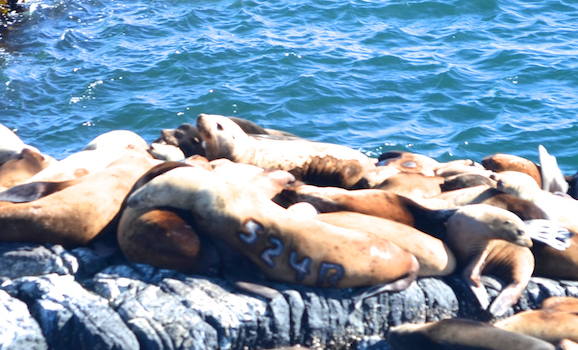
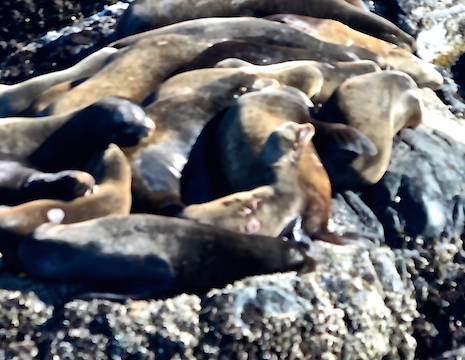
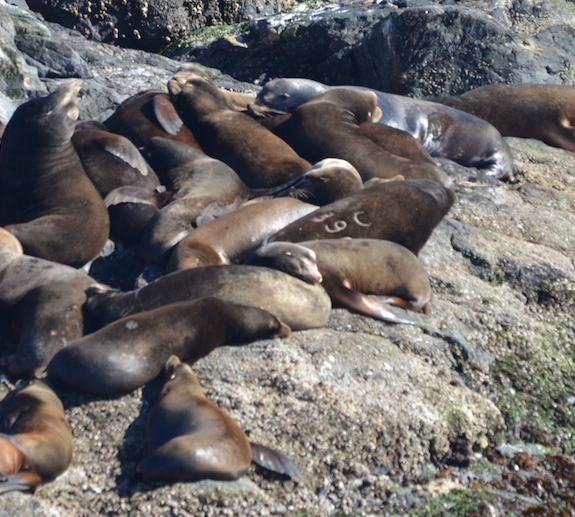
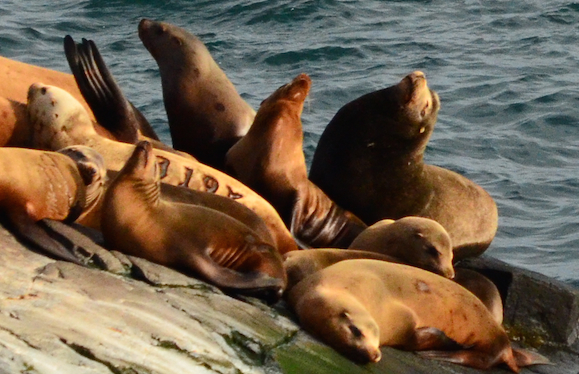
Several branded sea lions were photographed and included in the gallery here. The two California Sea Lions were X279 (brand still very pink) and X 10_ , where _ represents a number not yet identified. U390, from the Columbia River region was also photographed. The branded Steller’s Sea Lion noted was 524R a migrant from southern Oregon. Beulah, the large female Northern Elephant Seal was back on Great Race, adorning the lawn at first light and seven other elephant seals can be seen on Middle Rock.

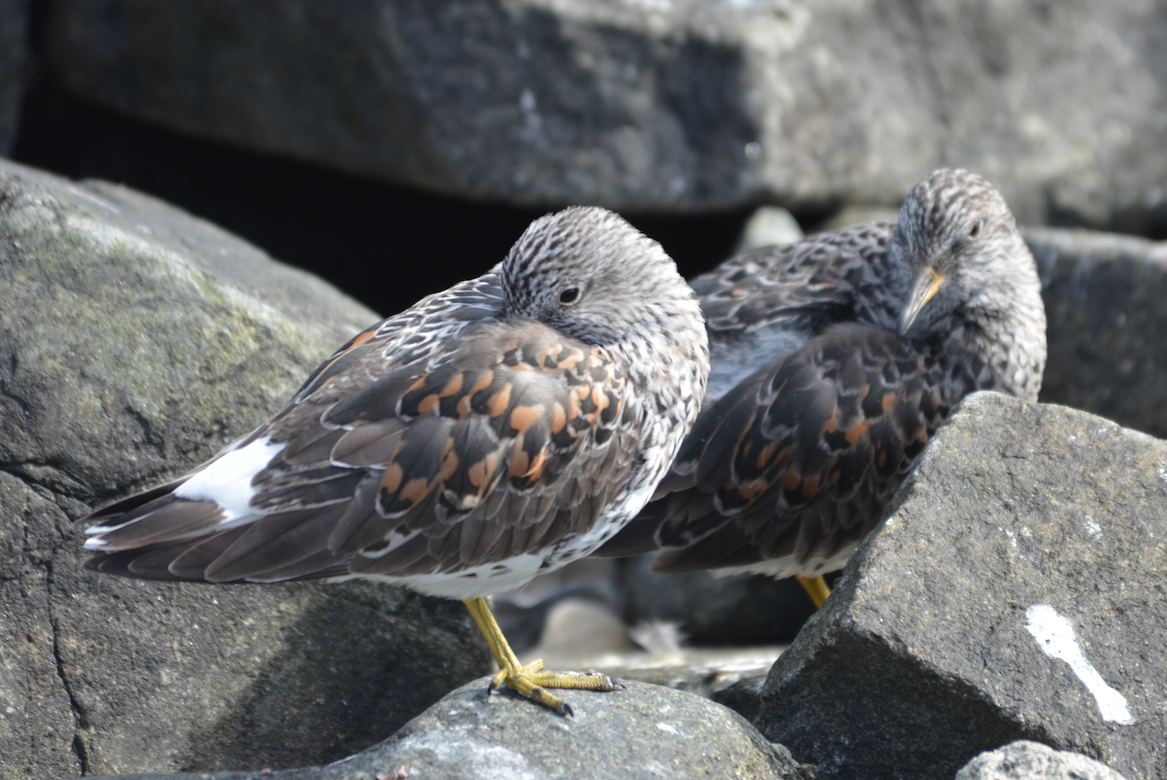
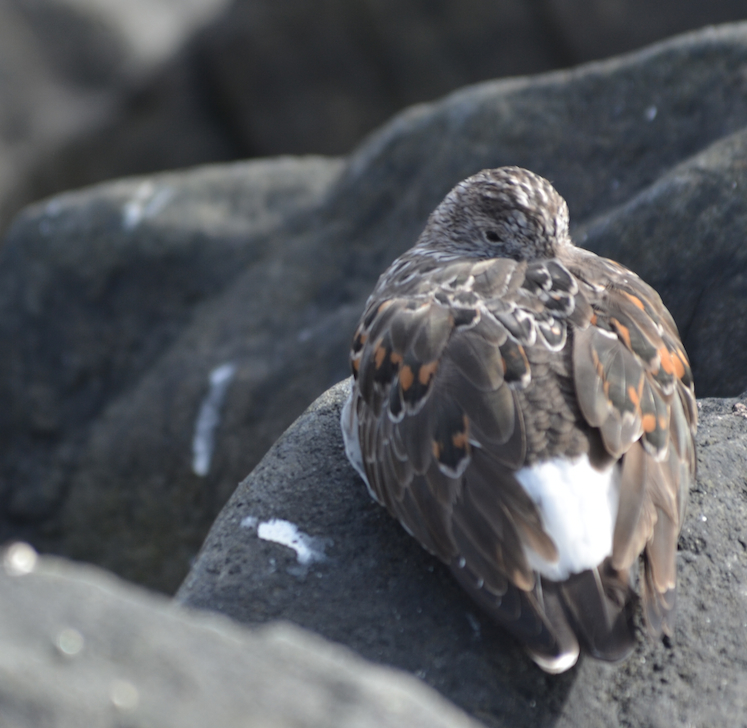
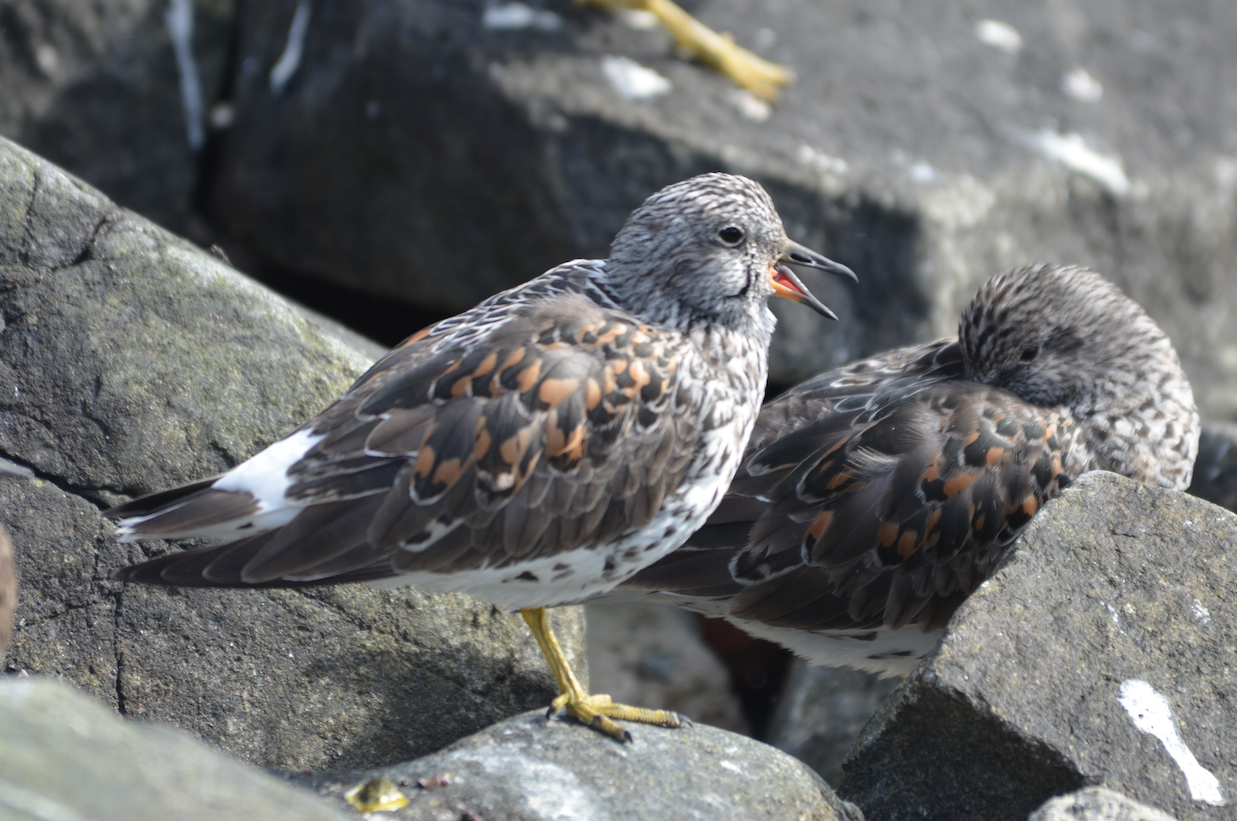
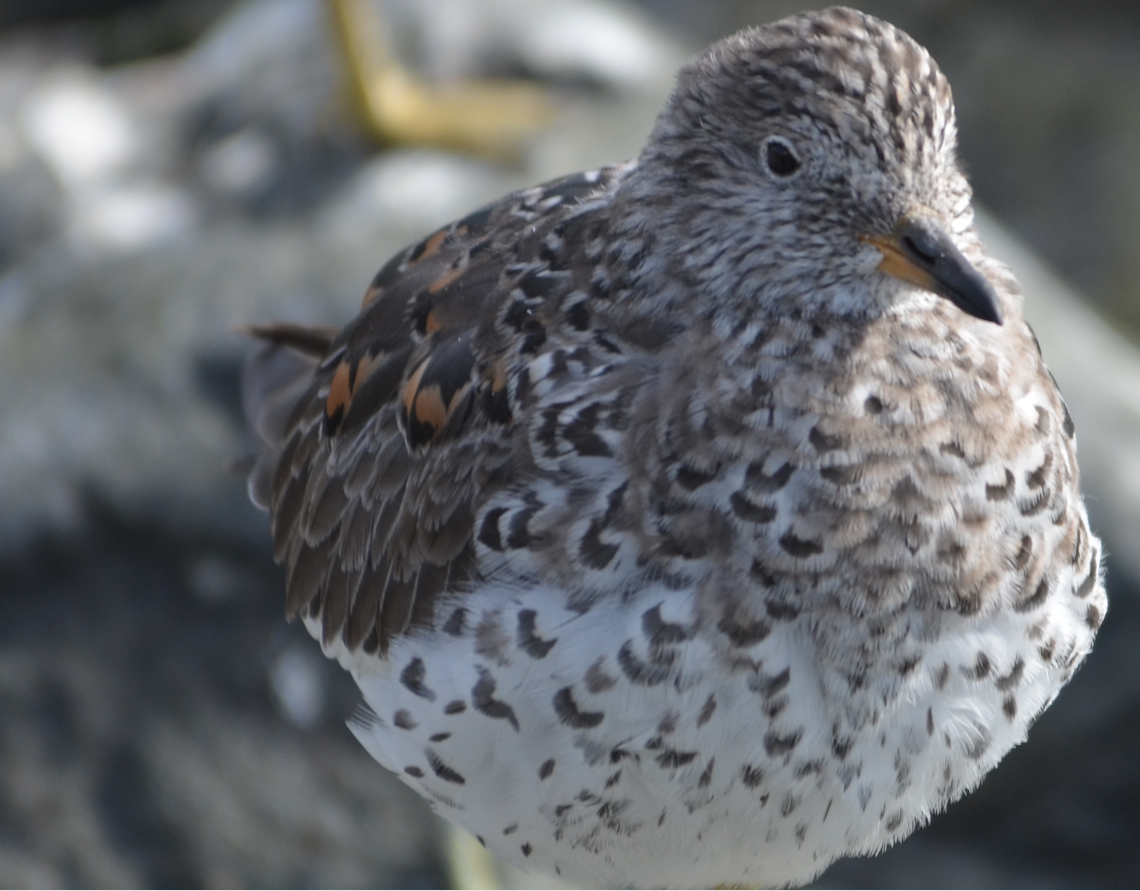
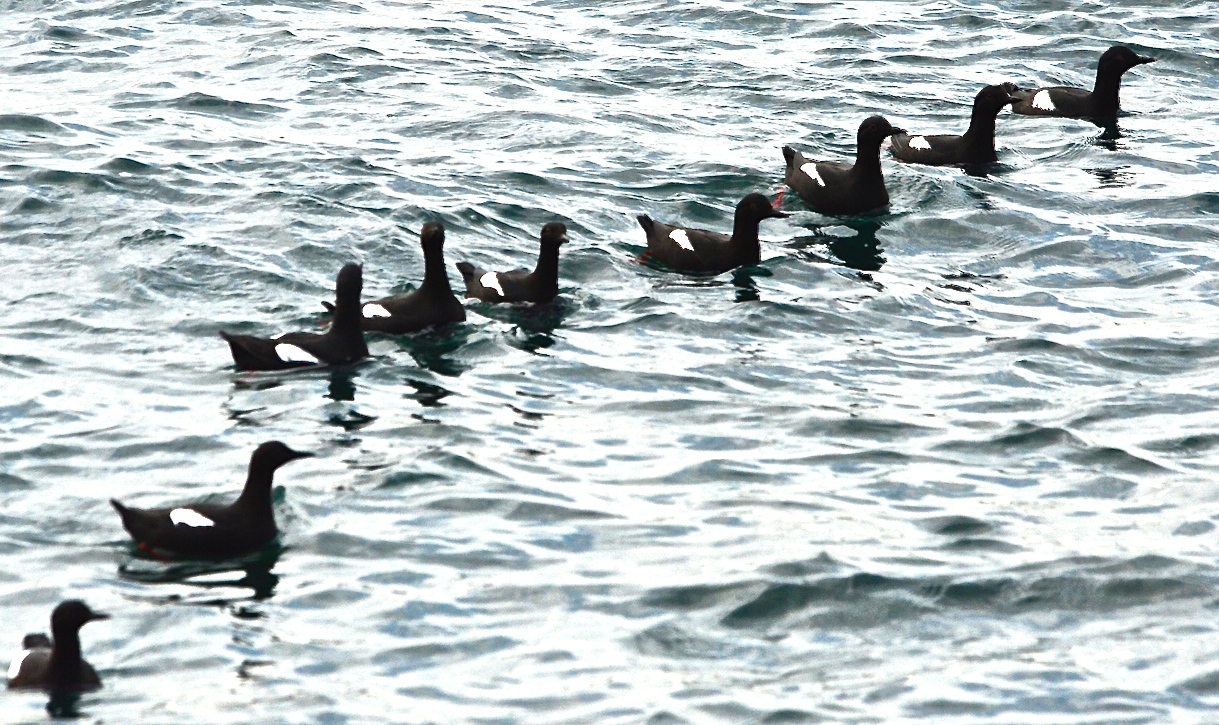
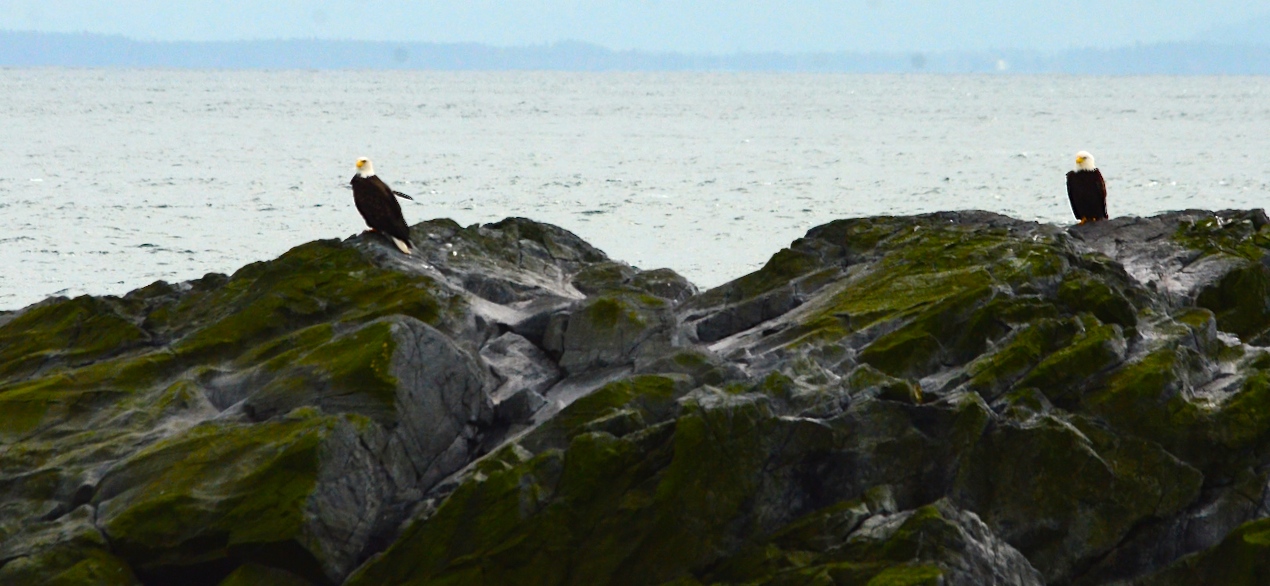
At least 200 Pigeon Guillemots were in and around Great Race in the morning, but gone by early afternoon. The eagles continue to chase gulls on Great Race as well as perching on North Rock, West Rock, South Rock, Middle Rock and Turbine. The geese do not seem to be bothered by the eagles and sometimes land right beside them. There were also over 30 Surfbirds resting here today, even though none were seen during the last census. They were in a mixed flock with Rock Sandpipers and Black Turnstone on the boulder area to the east of the main house.

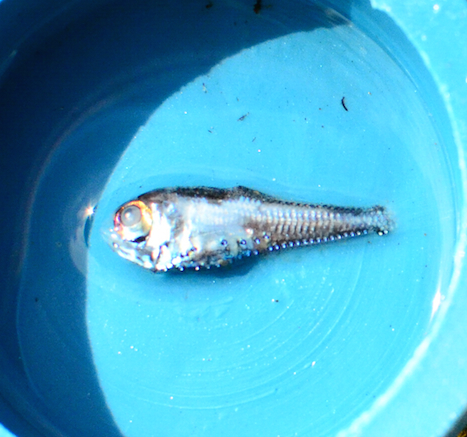
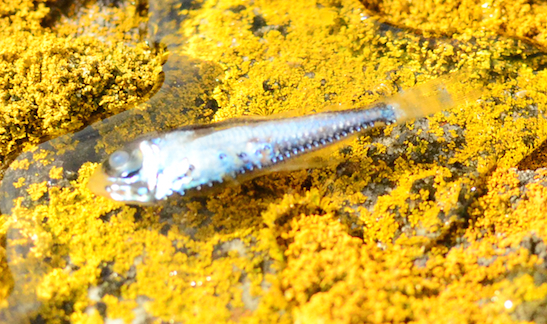
I found an unusual little (~2.5 cm. long) fish on the marine railway this morning. It was very fresh looking, but dead and undamaged. It looks like a member of the myctophid family.

Also known as a lantern fish, this little myctophid has a typical upturned jaw and rows of fluorescent blue photophores along its abdomen and on its sides. The photophores are packed with bioluminescent bacteria and allow the fish to communicate with light signals in the dark. The eyes are very large (relatively) because these fish are usually in very low, light conditions. Myctophids are very common fish in the ocean, but are not commonly seen, as they usually live deep, in the twilight zone and only come up during their nightly, vertical migration. I am not sure how it ended up on the ramp but currents here could have played a part.

Chores/Visitors

I went off-island briefly this morning and everything worked smoothly. Chores were routine today and there were no visitors.


Eagles Use Foghorn Daily


The morning started with either low cloud or high cloud. The sun shone under the fog on the Victoria side and on the Sooke side it thickened and the ceiling lowered to become more fog-like. Port Angeles was obscured early. The fog lifted from east to west and resulted in a beautiful clear day with a west wind of 20 – 25 knots, constant throughout the day. Barometric pressure held fairly steady as well, at 1016 -1017 hPa. The marine forecast for the central Strait has a strong wind warning in effect, calling for west winds of 20 to 30 knots and there are showers in forecast.

No whale watching vessels were observed today. One ‘sports’ fishing vessel was observed inside the boundary today but no fishing activity was observed in the protected area.

Second Nature visited briefly with Kyle at the helm and a second person that was supposed to be measuring things.

Today was census day and the results are below. It should be noted that the Bald Eagles were hunting gulls all day on Great Race Island. Although no takes were seen, the gull population thinned significantly during the day and the gull numbers today may not reflect a representative sample of the true numbers seen this week.

Animal Census

2016 01-Apr
River Otter 1
Northern Elephant Seal 8
Harbour Seal 176
Northern Sea Lion (Steller’s) 28
California Sea Lion 103
Canada Goose 5
Brandt (flying through) 75
Harlequin Duck 11
Surf Scoter 0
Common Merganser 2
Brandt’s Cormorant 2
Double-crested Cormorant 3
Pelagic Cormorant 3
Cormorant (not ID’d to species) 0
Bald Eagle (juvenile) 4
Bald Eagle (adult) 2
Red-tailed Hawk 1
Killdeer 4
Black Oystercatcher 12
Black Turnstone 70
Surfbird 0
Rock Sandpiper 0
Dunlin 2
Mew Gull 0
Glaucous-winged Gull (+ Xs in nesting area) 210
Glaucous-winged Gull (+ Xs outside of nesting area) 98
Thayers Gulls 0
Calfiornia Gulls 3
Western Gull 1
Common Murres 12
Rhinoceros Auklets 2
Pigeon Guillemot 40
Common Raven 2
Northwestern Crow 2
Fox Sparrow 1
Song Sparrow 1


Classic Spring Day

Weather Observations

Today was quintessentially spring. It was already getting light at 05:30 and although there were a few clouds around during the day, it was sunny all day. The UV Index reached almost four, which is rated as moderate. Accumulated solar energy for the day in Langleys was the highest day this week at over 450. (One Langley = 11.62 watt hours per meter2.) Winds were 5 – 20 knots from the west until evening, when they switched to light easterly breezes. There was a significant ocean swell late in the day. The barometer was steady most of the day at ~ 1020 hPA. The marine forecast is calling for light winds becoming easterly 10 to 15 knots early Saturday morning.

Vessel Observations

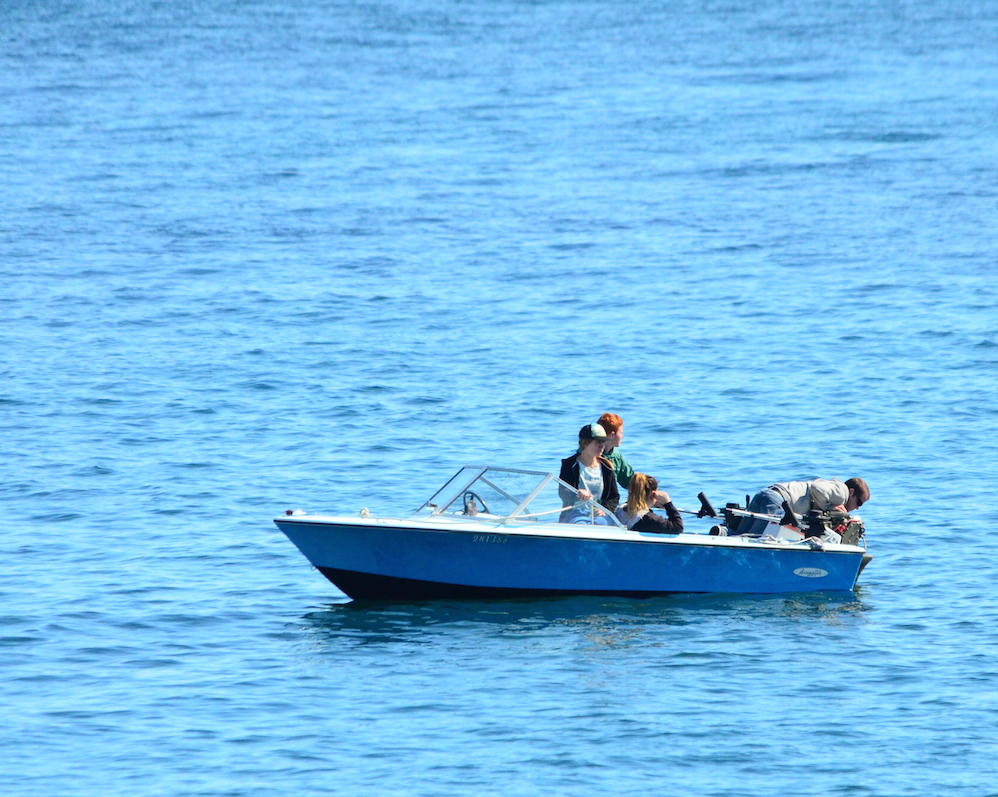
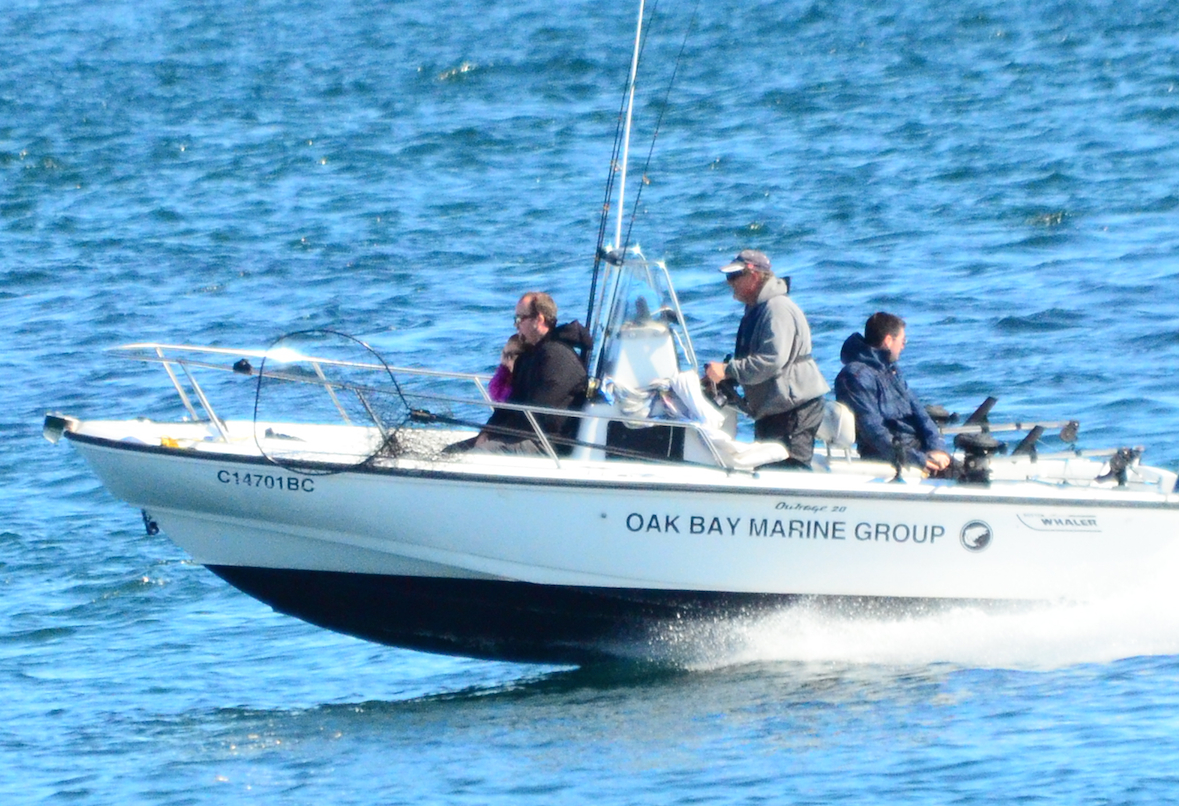
There were seven visits by whale-watching vessels into the Ecological Reserve. Except for getting too close to the rocks and wildlife, most operators followed the regulations and were careful. The same company that is problematic almost daily has a new larger vessel that sped in the Reserve twice today. The company was notified. Not all vessel operators in this company’s fleet behave badly however the reputation of the company will suffer with a hothead at the helm and so will animals involved in collisions. One speedboat broke down between Great Race and South Rock. The engine cover was off and they were drifting (slowly). I asked them if they were okay and they said they were fine. Soon after, the two-stroke sprung to life in a cloud of fumes and they motored off towards Pedder Bay. An Oak Bay Marine Group vessel followed one of the whale watchers in behind South Rock today and then sped out of the Protected Area. Pedder Bay Marina was advised although they are able to track their boats so can tell where the vessel is and how fast it is going.

Today was animal census day and the results follow.

2016 25-Mar
River Otter 1
Northern Elephant Seal 2
Harbour Seal 72
Northern Sea Lion (Steller’s) 78
California Sea Lion 176
Canada Goose 2
Harlequin Duck 12
Surf Scoter 0
Common Merganser 1
Brandt’s Cormorant 42
Double-crested Cormorant 71
Pelagic Cormorant 43
Cormorant (not ID’d to species) 75
Bald Eagle (juvenile) 7
Bald Eagle (adult) 2
Killdeer 4
Black Oystercatcher 12
Black Turnstone 30
Surfbird 6
Rock Sandpiper 1
Dunlin 2
Mew Gull 0
Glaucous-winged Gull (+ Xs in nesting area) 558
Glaucous-winged Gull (+ Xs outside of nesting area) 529
Thayers Gulls 0
Calfiornia Gulls 11
Western Gull 1
Common Murres 0
Pigeon Guillemot 93
Northwestern Crow 2
Fox Sparrow 1
Song Sparrow 1
Ruby-crowned Kinglet 1
Red-winged Blackbird 1

Maintenance

Chores were routine, plus tank shed reorganization and basement clean-up. Month-end report started.

Sunlight levels excellent for making water, doing laundry and charging batteries.


Green with Shades of Blue

March 17 was a windy day on Race Rocks. The early morning east northeast wind  kept intensifying and it was blowing 25 – 30 knots northeast by noon. It kept up for the rest of the day. The barometric pressure started to drop from a high of 1026 hPa, in the afternoon. The forecast includes a gale warning, with the easterlies continuing under sunny skies for at least tomorrow.

One whale-watching vessel was observed working in the Protected Area today and several others were seen transiting the area. Sports-fishing boats were all outside the reserve.

The Nanoose Yarder, a tug, headed west through Race Passage with the fishing vessel, Arctic Fox II in tow. The Arctic Fox II was damaged by fire in Cowichan Bay last winter and looks like she will need some serious TLC before heading out again to troll for tuna, offshore. DND blasting continued.

The impression that the gull population was rising daily, returning en masse was not wrong. Nest site locations from last year are almost fully occupied. Pairs are standing close, pulling vegetation and starting to jockey for position with neighbours. No actual nest building has been observed yet. Canada Geese have been discouraged.

The idea that more California Sea Lions were showing up was backed up by more brands observed today and of course by the counts themselves.  Today was animal census day and results are posted below.

2016 17-Mar
River Otter 0
Northern Elephant Seal 0
Harbour Seal 131
Northern Sea Lion (Steller’s) 41
California Sea Lion 123
Canada Goose 0
Harlequin Duck 15
Surf Scoter 0
Common Merganser 0
Brandt’s Cormorant 40
Double-crested Cormorant ~100
Pelagic Cormorant 28
Cormorant ~50
Bald Eagle (juvenile) 9
Bald Eagle (adult) 3
Killdeer 2
Black Oystercatcher 26
Black Turnstone 42
Surfbird 2
Rock Sandpiper 0
Dunlin 0
Mew Gull 0
Glaucous-winged Gull (+ Xs in nesting area) 486
Glaucous-winged Gull (+ Xs outside of nesting area) 229
Thayers Gulls 10
Calfiornia Gulls 6
Western Gull 1
Common Murres 1
Pigeon Guillemot 76
Northwestern Crow 2
Fox Sparrow 1
Song Sparrow 0


Today was a catch-up day inside and chores were routine.

Arctic Fox Nanoose Yarder 2


After the Blow

The west wind dominated today, 10 -15 knots in the morning rising to 25 – 35 in the afternoon. Periods of sunshine were obliterated by purple line squalls with heavy rain. Barometric pressure rose all day and was 1012 hPa at 20:00. The outlook is for west winds 10 – 20, a 70% chance of rain and then clearing and light winds on Wednesday.

Three whale watching vessels were observed working in the Ecological Reserve today. There were two large military explosions and the picket boats were on duty near, but outside the protected area.

The Harbour Seals and Pigeon Guillemots returned in numbers today and the gulls are preparing for spring in spite of low snow on the Olympic Mountains across the strait.

Temporary patches were applied to the derrick house, boathouse and tank shed between squalls. The basement of the science house was mopped out and various window leaks in both houses cleaned up. Other chores were routine.

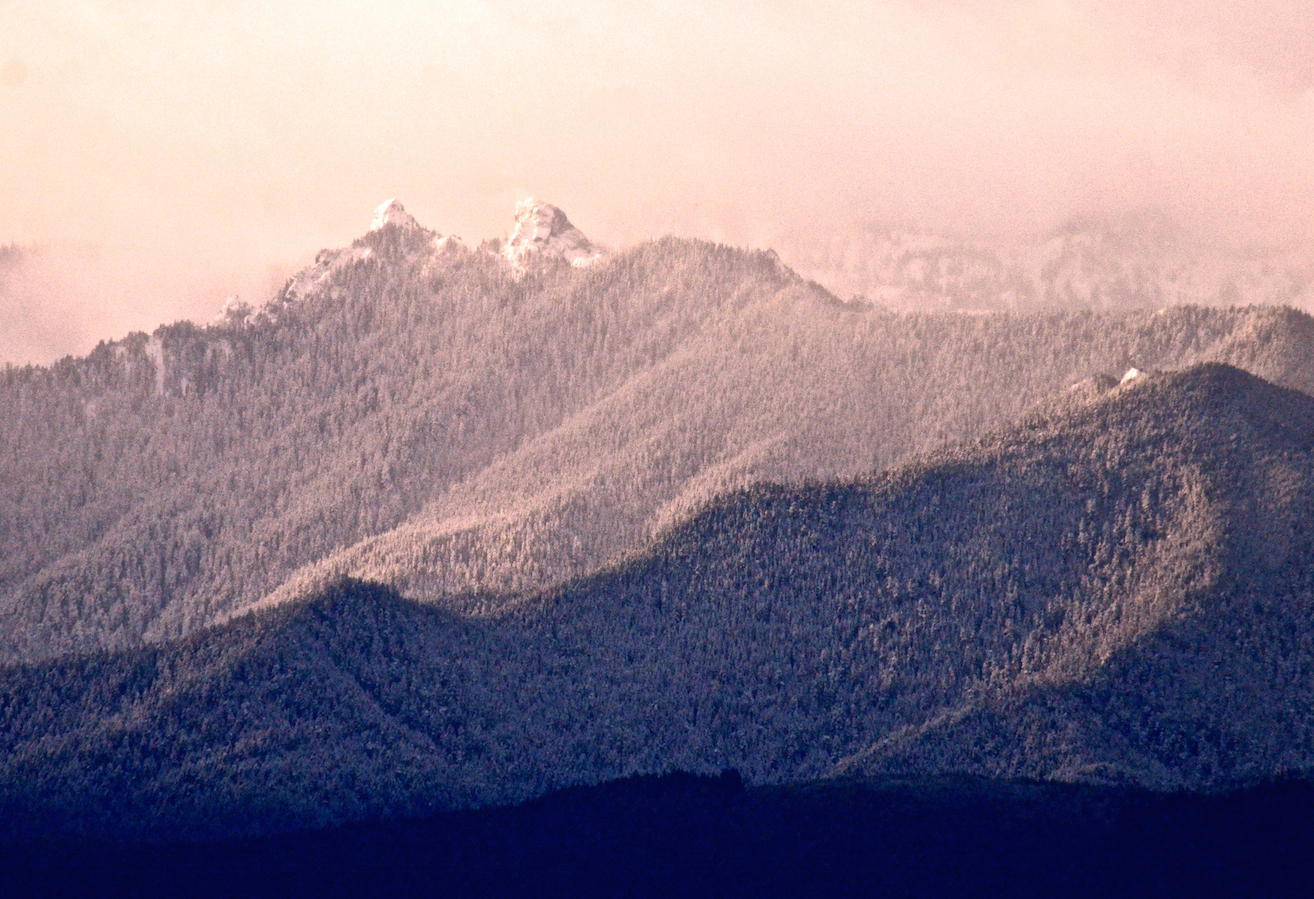
These two peaks in the Olympic Mountains, just east of the Elwha look a bit like Olympic Lions.

These two peaks in the Olympic Mountains, just east of the Elwha look a bit like Olympic Lions.

Sea Spray and Flying Foam

Update at 17:40

Since writing the log the wind turned to west, southwest and came up even stronger. We have sustained gusts up to 62.7 knots. Seas are coming over the helipad and the tank-shed and boat shed roofs are being stripped off and are flying past the house. Yikes.

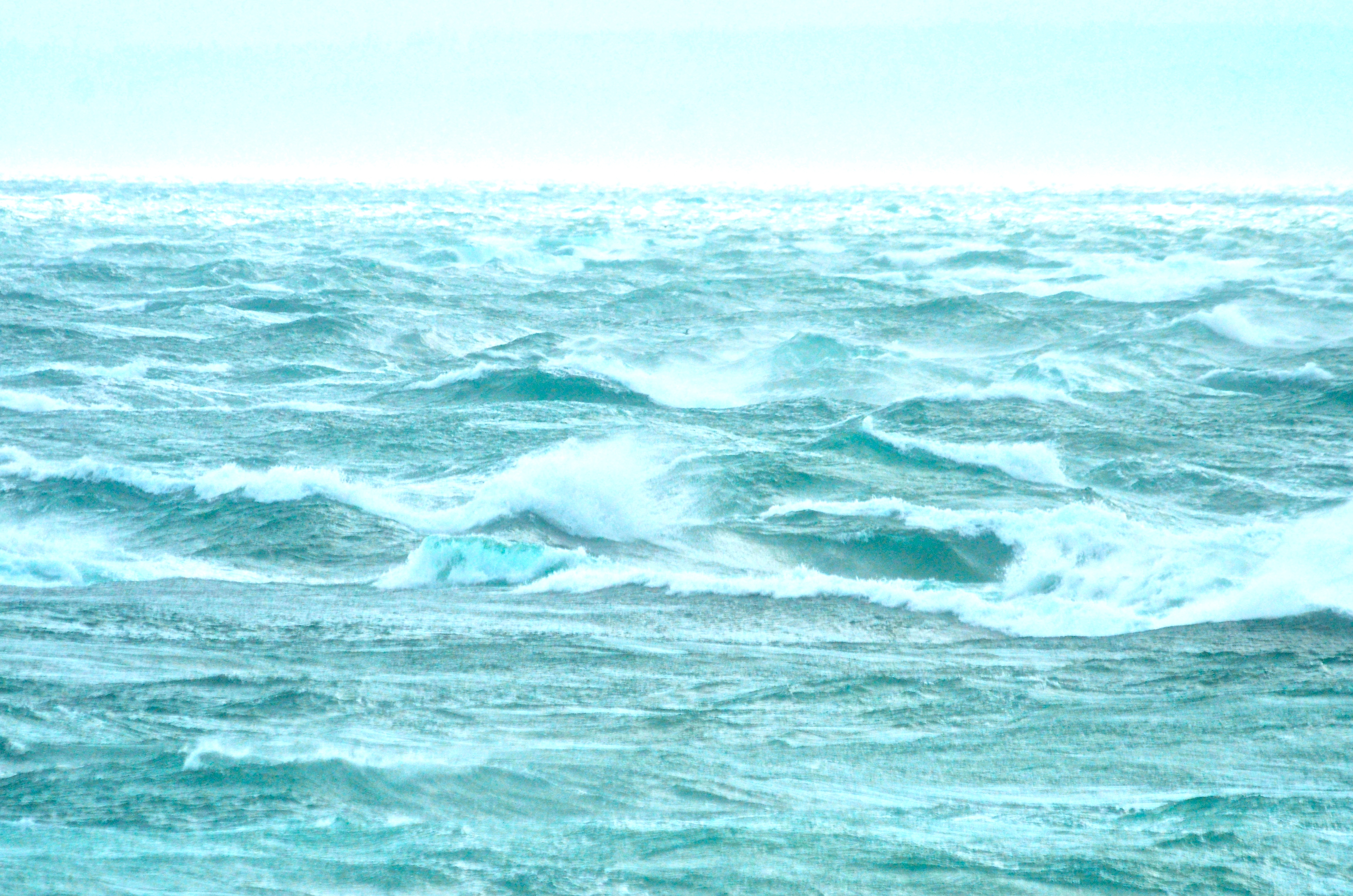
Sustained east, southeast winds of 30 to 40 knots, gusting to over 50, pushed seas up into breaking whitecaps this morning. Large breakers rolled down the jetty and rose up around the derrick base making seawater sampling impossible. Under heavy skies, waves crashed against the eastern face of Great Race and flying sheets of salt spray dominated the small landscape here. There was even a pocket of sea foam building up on the boulder beach and foam was flying right across the island.

Barometric pressure dropped overnight and kept going down in the morning, reaching 982 HPa by early afternoon. The highest gusts were observed late morning 53.4 knots on the Lighthouse system which we can monitor in the kitchen. Gale warnings continue and the forecast is calling for a turn to strong westerlies in the afternoon, diminishing to southwest 15 to 20 overnight. As this log is posted at ~15:00, there is no sign of it letting up and the rain has started.

It was not a day for small vessels to be out and none were seen. Pan pans on the VHF radio included an overturned Junior Flyer with a father and son (a child), clinging to the hull of the overturned vessel. Their call originated in Puget Sound and the US Coast Guard rescued them. What was that man thinking?

There is obviously a great deal of mixing going on in the sea, with all the wind and wave energy churning things. That means spring phytoplankton blooms are still some time away and early herring spawns may produce larvae that go hungry. Stratification (stable layering of the water) becomes possible when less dense surface waters (warmer, less salty, or both), float on top of denser seawater (saltier, colder or both). That layering in surface waters gives some stability for growth of photosynthetic plankton that drive the food chain and rely on light. Light levels are returning, there are lots of nutrients, so as soon as it calms down for a while there should be a plankton ‘bloom’.

On the bottom, microscopic Bull Kelp ‘plants’ are starting to grow now. They will be full size by July after phenomenal  growth fuelled by sunlight and nutrients. A few ‘old growth’ Bull Kelp were visible today, silhouetted through the waves on breaking reefs; for brief seconds as the waves crested, they stretched out fully vertical. Bull Kelp clings with tenuous holdfasts anchored through storms and calm. They are considered to be an annual species and don’t generally last much more than a year so the ones still here are very hardy.
The wild goose chase continued today as if the weather wasn’t enough to ward them off. It was too windy for the eagles and the gulls were hunkered down in nooks and hollows head into the wind in order to stand their ground against the wind. A few of the larger sea lions managed to haul out mid day. It looked too difficult (and dangerous) for the smaller animals that were seen cavorting in the waves. Again there was no sign of seals or guillemots.
Landing would have been impossible today. Even at low tide, big breakers were sweeping the jetty. Chores were routine as wind and spray permitted.

Like the farm of the same name 'Wind Whipped'.

Like the farm of the same name ‘Wind Whipped’.


Rest and Recovery: The Lull

Friday and Saturday were both calmer days, with light winds and a mix of cloud and sun. The barometric pressure dropped slowly all day Friday and then wobbled back up today to ~1001 hPa where it holds as this entry is posted at 19:00. There is a warning for central Juan de Fuca Strait, calling for ‘Gale’ force winds of 34 to 47 knots east to southeast. At dusk there were large thunder clouds dropping heavy rain, moving towards Sooke.

With the warning in place and the last storm a fresh memory, there were few small vessels seen on the horizon yesterday and today. Only two vessels were observed within the Ecological Reserve boundaries today. One was a speeding sports-fishing boat heading for Victoria. It passed remarkably close to the small reef that just shows above the surface, west of North Rock. The other was also a sporty boat equipped for salmon and halibut. It passed through Middle Channel very slowly, against the flood.

The Strait was busy with marine traffic including four RoRos, (roll-on, roll-off, car carrying vessels with a capacity of ~6,000 vehicles each), in a steady procession outbound. The cable laying ship was inbound as was the tanker Argent Sunrise amongst many others coming and going.

On Great Race, the Glaucous-winged Gulls are back in force, pairs occupying their favourite spots in shiny new plumage. The gull count today was 340 including ~25% juveniles and an estimated 125 paris of adults. One Western Gull and a few California Gulls were amongst the mix. Every time a bald eagle passes over, all the gulls lift off as though raising their collective hat in respect. The two birds observed killed by eagles, to date, on this shift, were both cormorants. They are not such skilful flyers as the gulls and probably easier to pick off.

Harbour Seals missing in action during the last census; have returned to their haul-outs and today’s count was 97 individuals. The Pigeon Guillemots returned this morning as well (~75) but were all gone by early afternoon.

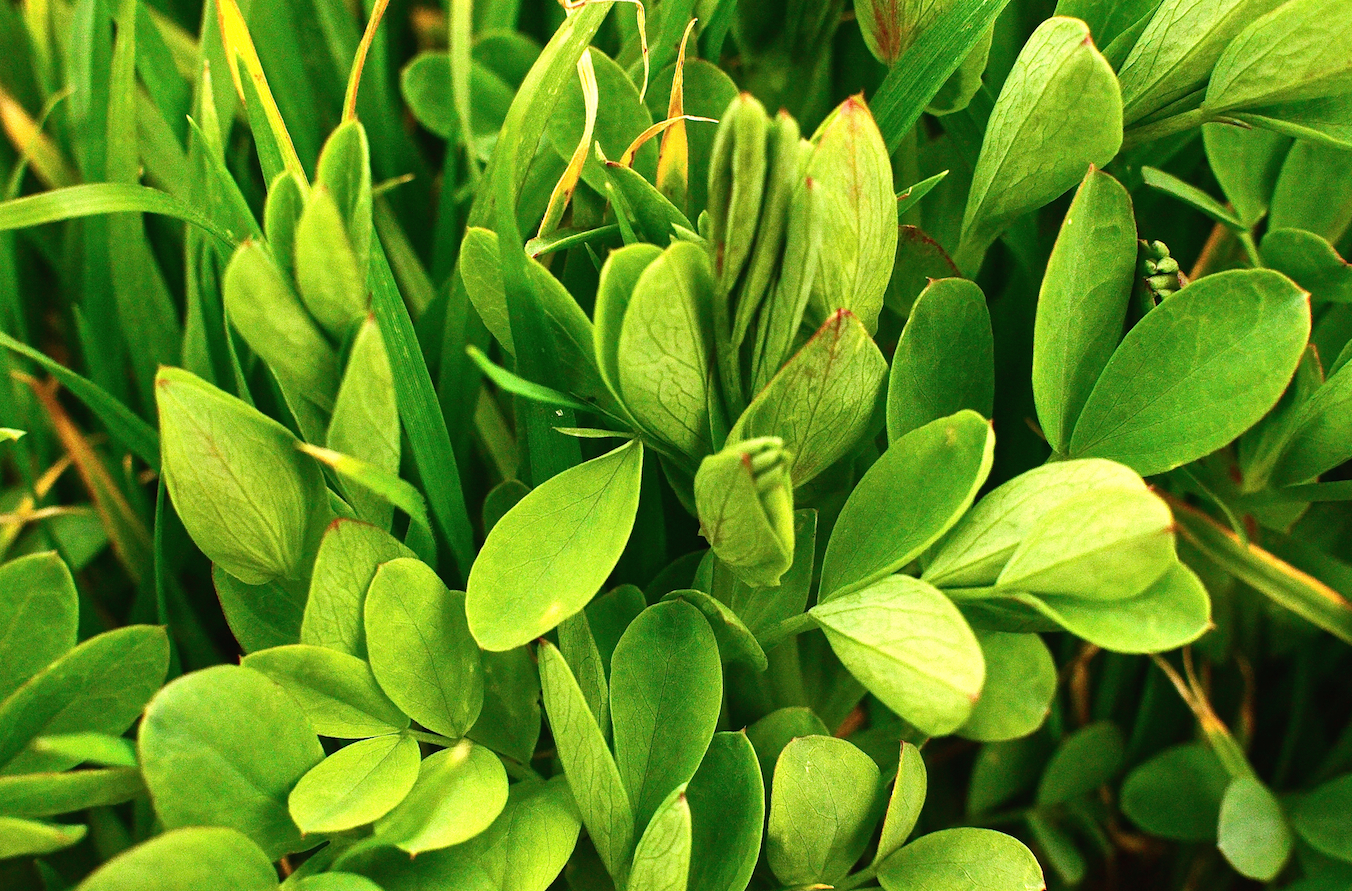
Remnants of the heritage lighthouse gardens are blooming everywhere right now and the rich green growth is a draw for Canada Geese.

Went ashore yesterday for first time this shift. Picked up Alex and supplies. The visit is timely on many fronts. Chores were much more than routine today and it is really great to have good company.


Eagle Food

There was nothing remarkable about the leaden morning with light and languid, north-northeast winds. Partially overcast skies cast a silvery pall over the Strait but bits of blue sky held promise for better things to come. The barometer held overnight at just above 1010 hPA and by mid-afternoon had dropped to 1008 As evening falls the barometer is holding at 1007. In the afternoon there was some sunshine but it was really a day dominated by cloud.

Five commercial whale-watching vessels were observed working in the Ecological Reserve today. Three were seen working in behind (south side) South Rocks and they were travelling very slowly and cautiously. Sea conditions were calm. The sea lions did not appear too disturbed by their presence. A few younger animals close to the water went in but it would be difficult to determine cause. On that note, military blasting continued as planned, from late morning to mid afternoon. Interceptor vessels and red flags warned boaters off. The sea lions and birds did not seem to react.

The wild goose chase continued and progress is happening. By early afternoon, most of the geese had retreated to the military zone to graze on the large lawn there. One pair staking out an area by camera 5 were more persistent, but eventually left for greener pastures. A couple of pairs of gulls were seen doing some of the broody things they do when nest building but as it is early yet, they are probably just practicing for the big day when they actually start to build a nest. The Pigeon Guillemots continue to flock here in the morning and leave in the afternoon as noted by Riley. Many were practicing walking on land today and in the water they worked the ebb flow through the rocks taking a ride and then flyew back upstream for another one.

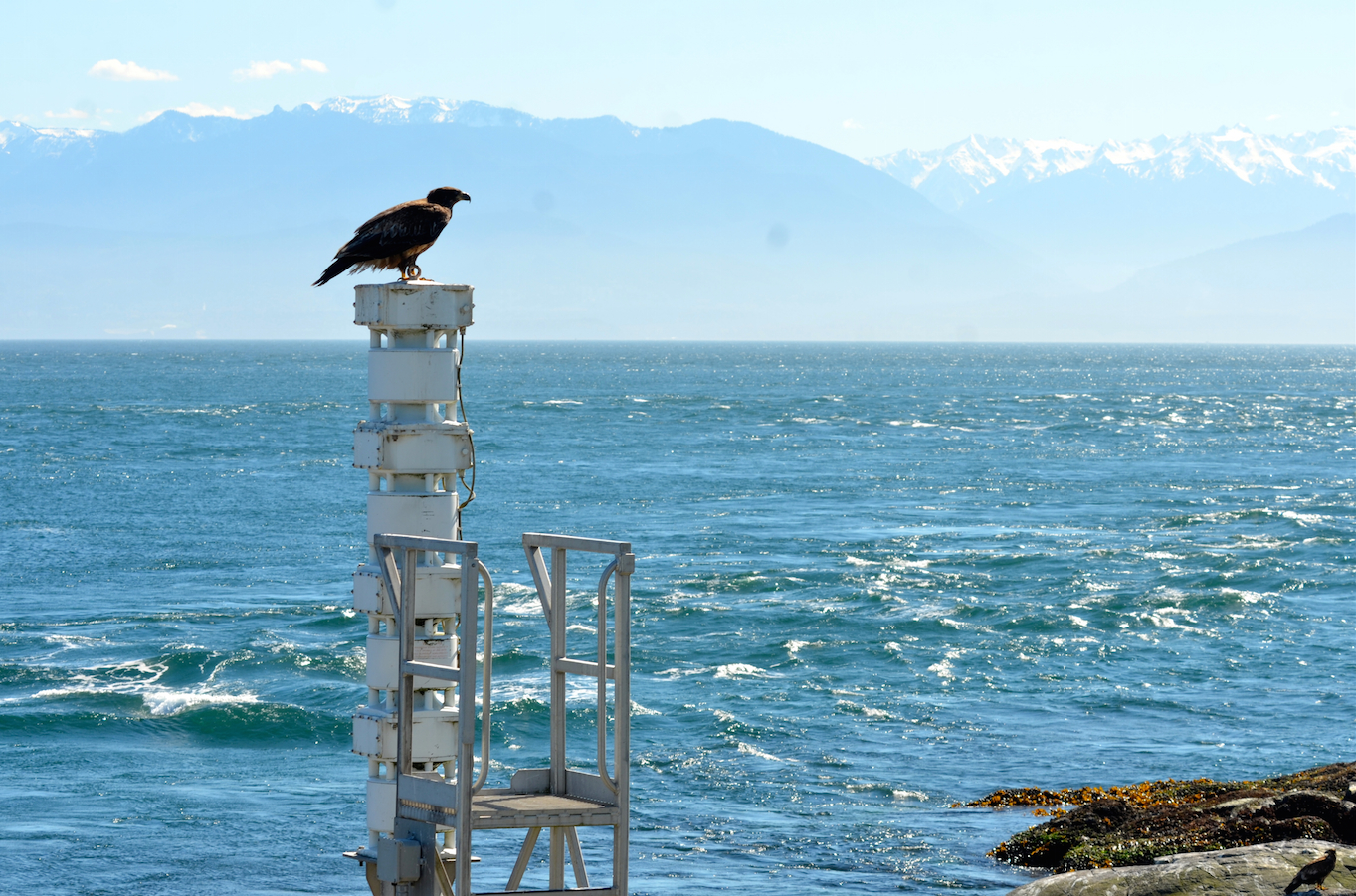
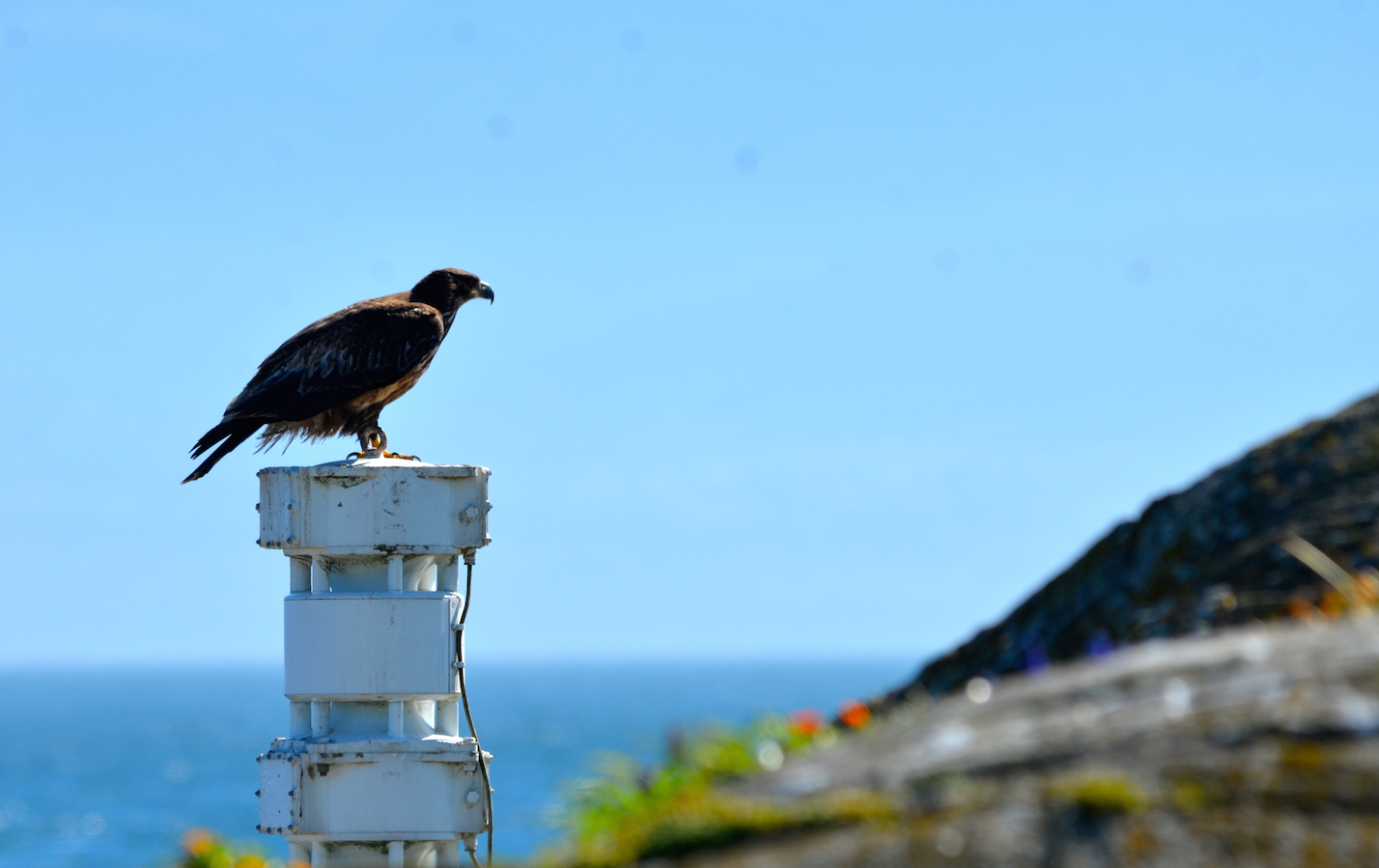
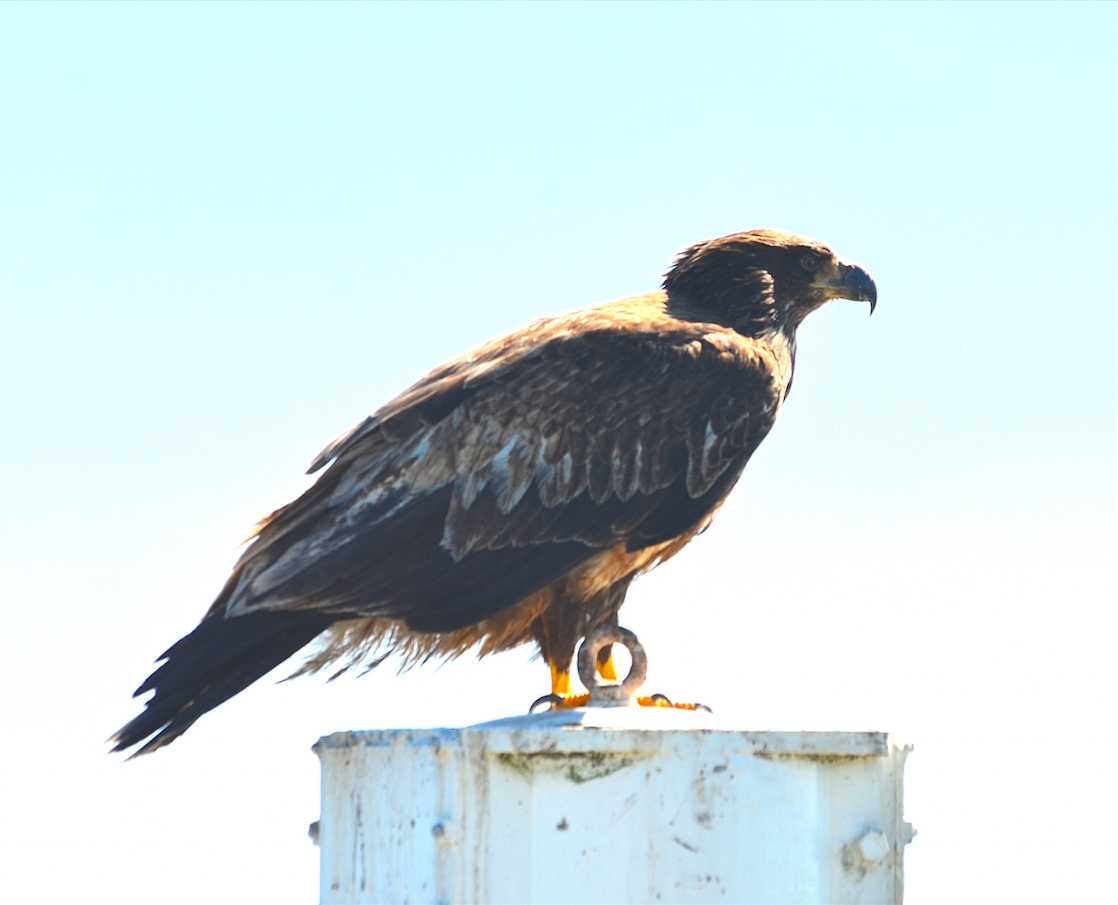
A partially decomposed Northern Elephant Seal pup and part of its skull was located not far from the octopus in the boulders beach east of the Ecoguardian’s house. From the size, it appeared to have been a very young pup, if not premature, at death. The octopus was bigger. The plentiful, rich food sources are starting to explain the large number of eagles here daily.

A branded Stellers Sea Lions was photographed today 319Y and 4332 was observed. A California Sea Lion with a number on its rump and an X anterior to that was observed but the number was not verified nor was a successful photo taken.


There were no visitors and chores were routine today.


Wild Goose Chase

Last night’s north easterlies created a bit of a symphony: percussion on soffits accompanied by back door whistling its multifarious tunes. Morning started with the call of Canada Geese arriving, southerly winds (10 – 15 knots) and rainy skies. By late morning the wind direction had changed to west and the sky eventually cleared to a mix of sun and cloud by late afternoon. The gentle to moderate westerly is forecast to continue tomorrow bringing a 30% chance of showers. The barometer has been rising all day, so things are looking up.

‘Sports’ fishers were seen passing and fishing in the distance today and there were no sightings of whale watchers in the Ecological Reserve.

I went out to clear off the geese first thing and saw a pair mating in the water. That inspired me to ramp up daily goose patrols. No sign of nests yet, but there are a few pairs that are hormonally persistent. The large number of Bald Eagles is potentially helping keep the geese nervous. I saw an adult eagle flying with some sort of large bird, hanging from its talons but could not tell if it was a goose or a cormorant. The gulls seem to be setting up their territories, even though it still seems quite early for anything very serious. Pigeon Guillemots, Glaucous-winged gulls, and Black Oystercatchers are all in breeding plumage, as are many of the three species of cormorant.

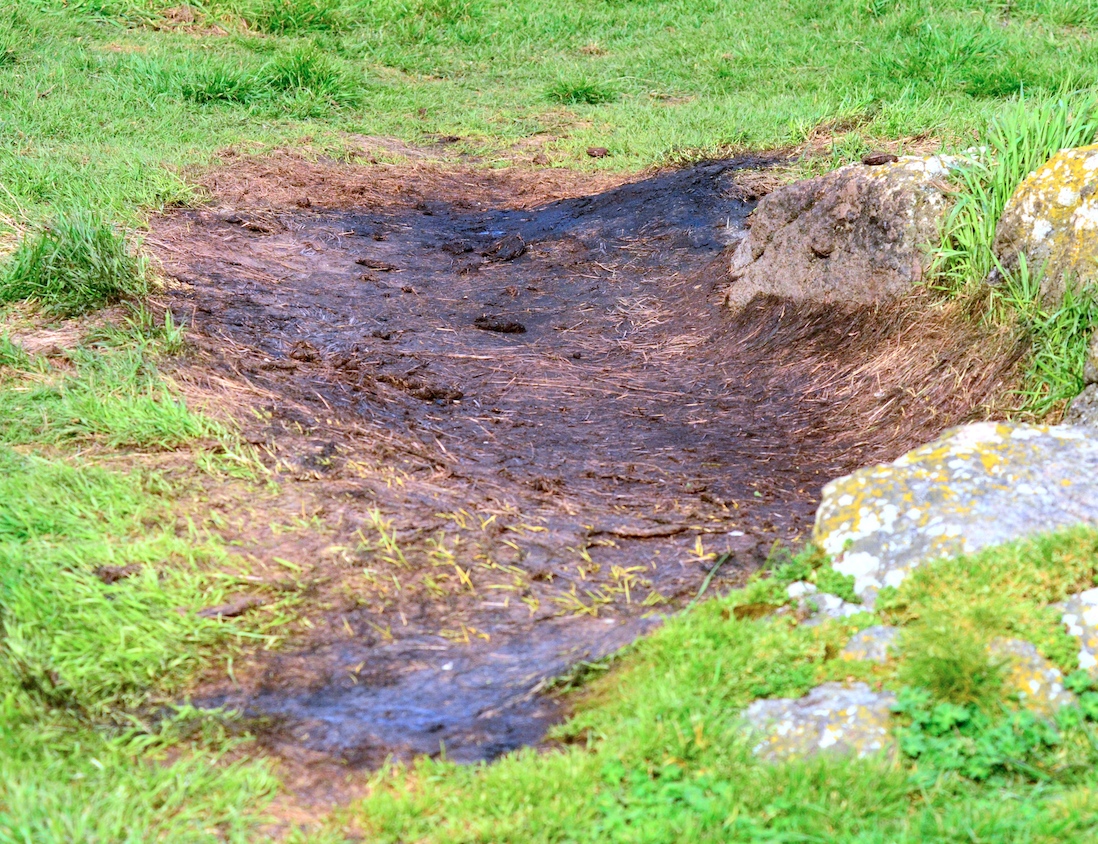
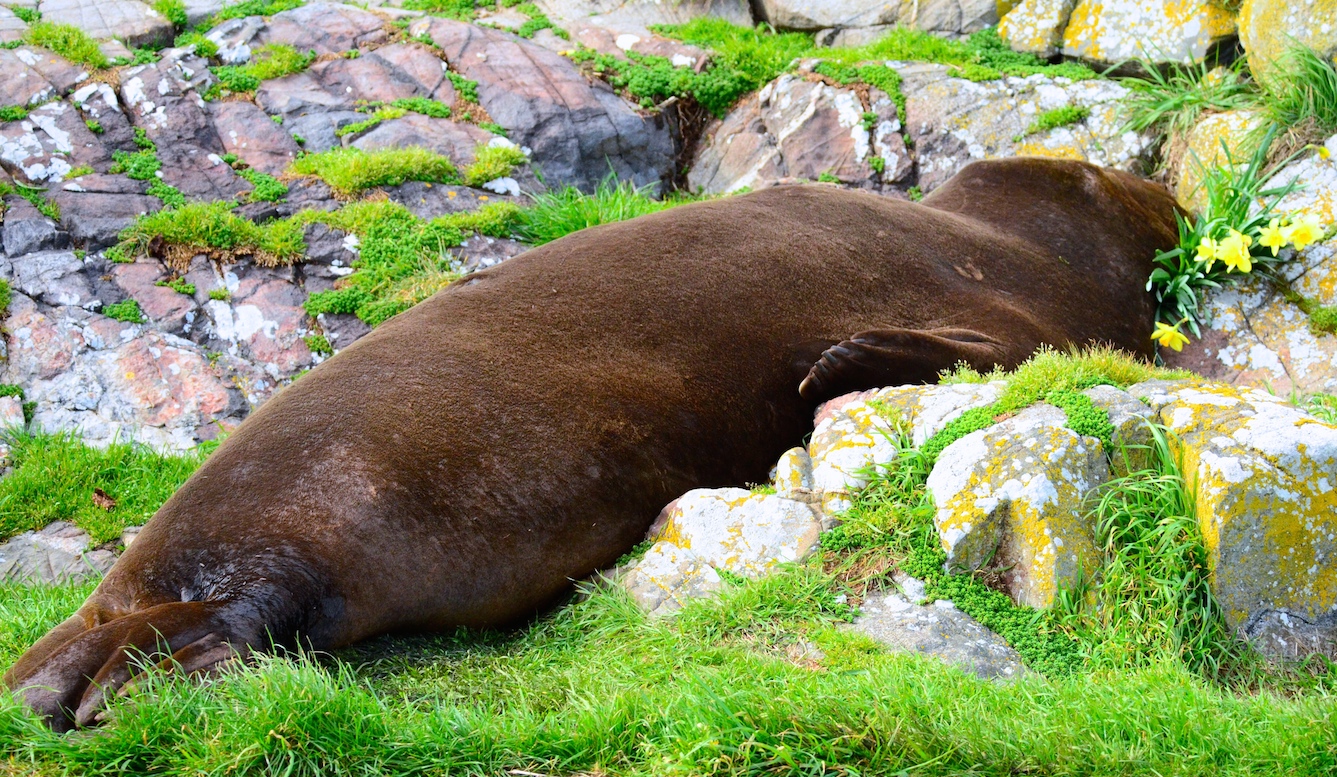
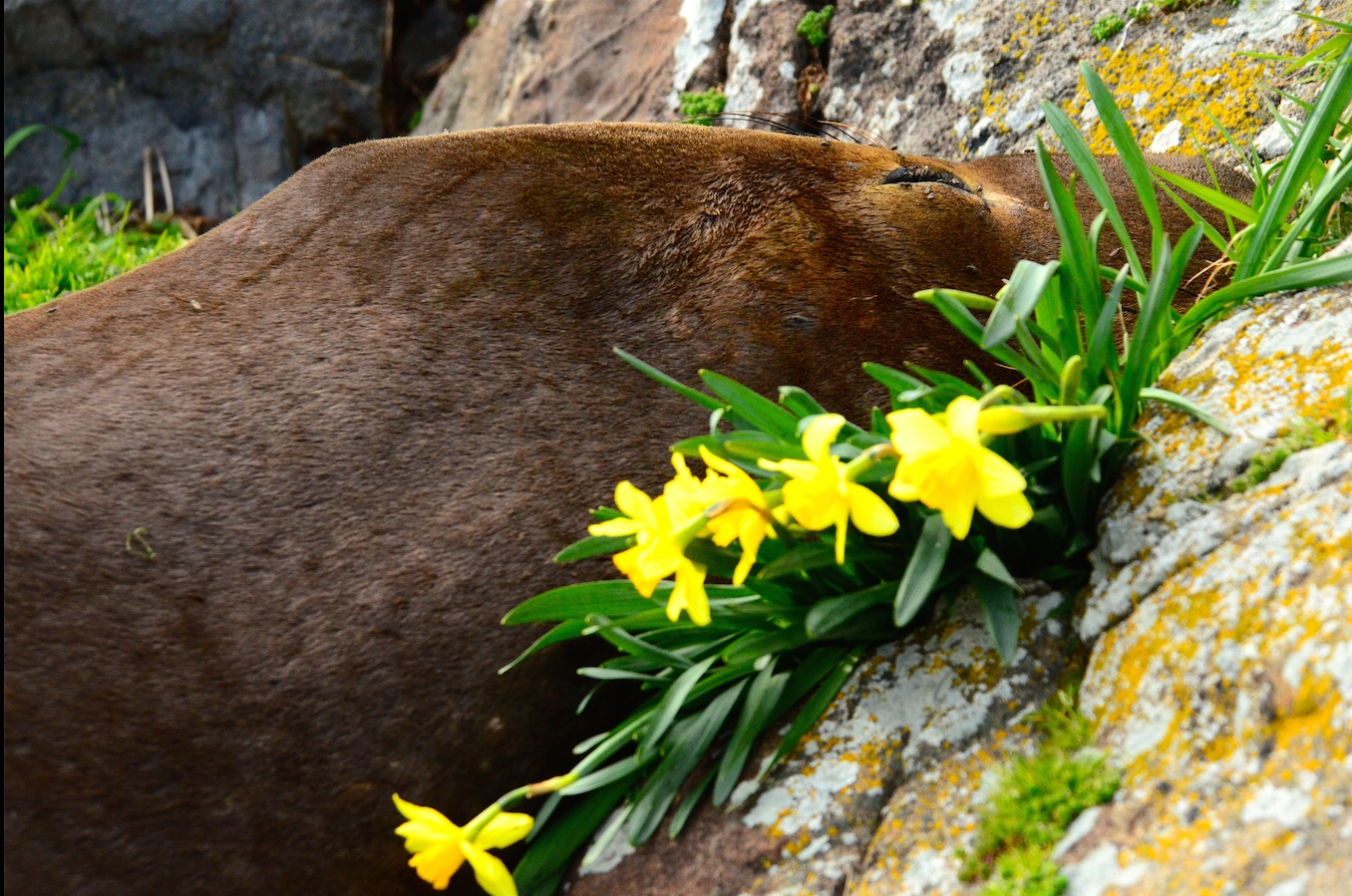
Chunk actually moved today, leaving his dead, stink zone for fresh flowers and a sloped recline on the other side of the paths. I also saw him open one eye as I walked past, a small feat of energetic response. He really is wiped out from all of his male activities.

A California Sea Lion, which is equally lethargic, is hauled out beside the derrick and he looks quite emaciated with backbones and ribs showing. The rest of Sea Lions that remain look healthy and haul out tightly together in two spots, a small group just down to the northwest of the Science House and a larger group on the South Islets. There are a few branded animals but I haven’t been able to get photos yet. A male Steller’s 76Y (left side) and a couple of rump branded Columbian California Sea Lions. 76Y was branded at St. George Reef in northern California, just south of Oregon, in 2002 as a pup. 443Y is just going into its third year and was branded at Rogue Reef in southern Oregon, just north of the California border, in 2013.


There were no visitors and chores were routine.