Blue Sky Grey Sky

It was a blue-sky day at Race Rocks for most of the day, as the wind switched from west to northeast and then finally greyed over. The wind started light in the morning and rose to 36 knots NE, by late afternoon. The barometer climbed out its early morning hole of 993 hPA and dove back in as night fell. As I post the log it is falling past 989. The forecast is calling for the wind to drop and switch to southwest 15 to 25 knots Sunday afternoon and to light Sunday evening.
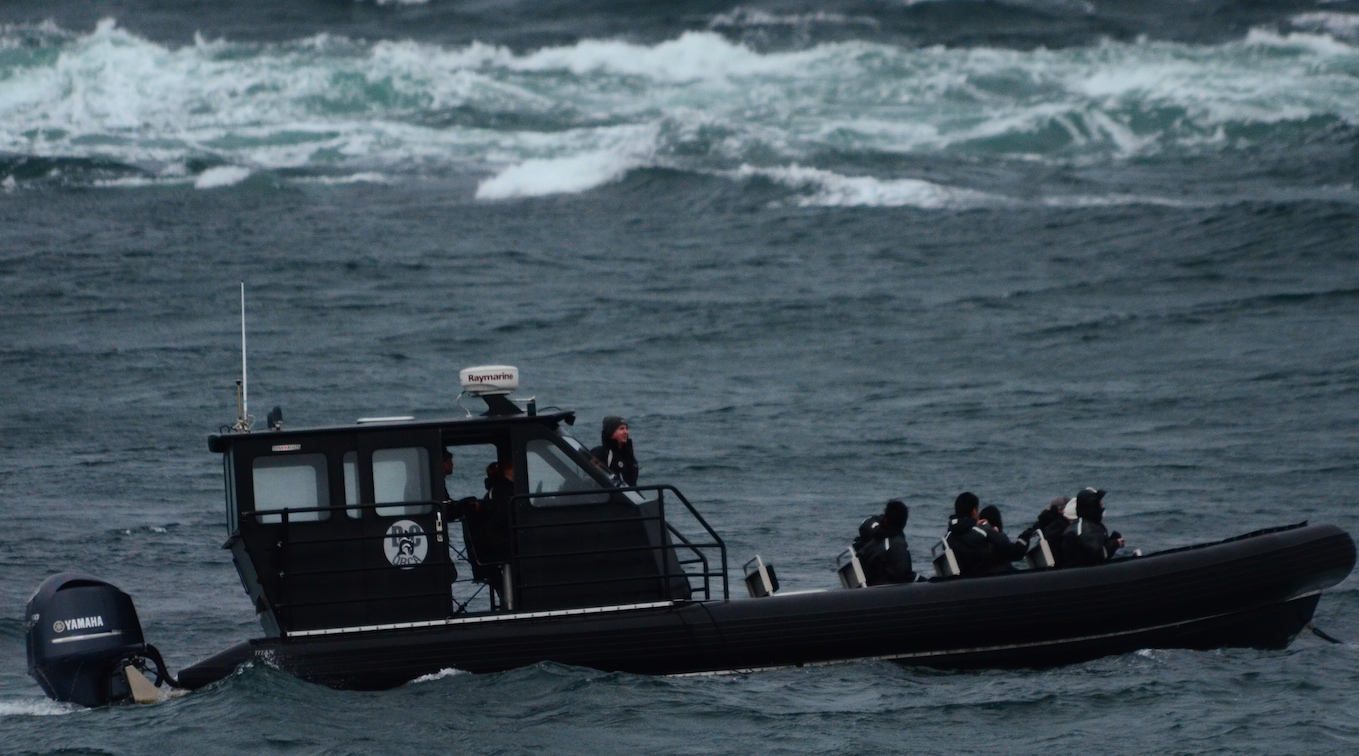
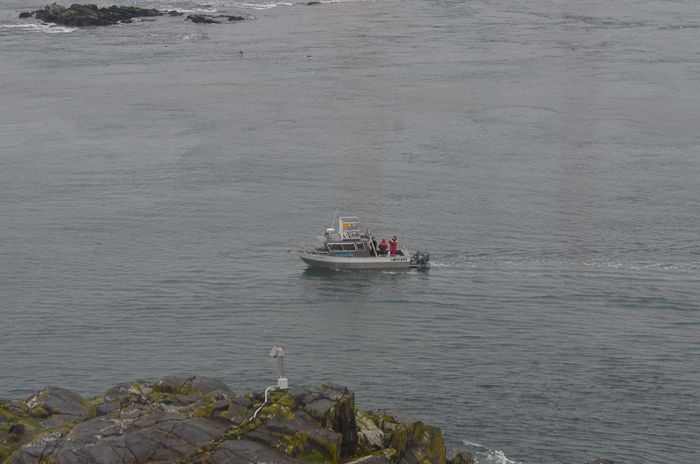
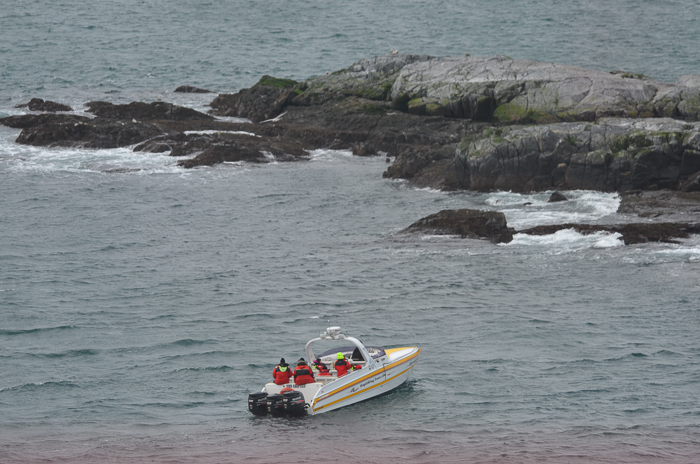
Four whale watching vessels were observed in the Protected Area today. They seemed to be travelling out to the west probably in search of migrating Gray Whales. They were a little more cautious on the south side, a trend, which tends towards sustainability.

The “sporty” halibut fleet was out fishing today. They anchor for the slackest part of the tide, spaced out like a beads on a necklace around the Ecological Reserve. Not all of them know about (or they choose to ignore) the ‘no go’ and ‘go slow’ limits of the Protected Area .

The reasons for speed limits in the Protected Area are the high density of marine mammals and birds and the location’s inherent dangers. Going slow protects the wildlife from boat strikes and reduces disturbance if boats stay far enough away. The no go areas also extend that protection to human life. I am not sure how many people have died in the waters around Race Rocks, but if it were a road intersection, it would have one of those high crash scene signs, combined with a wildlife crossing sign. I look forward to the day when boaters know and respect the rules. The quickest way for that to happen is by word of mouth and peer pressure. So if you boat in the area, please feel free to give others a friendly ‘reminder’ about the rules You might save their life. For the professional mariners, it is a very important part of being professional.

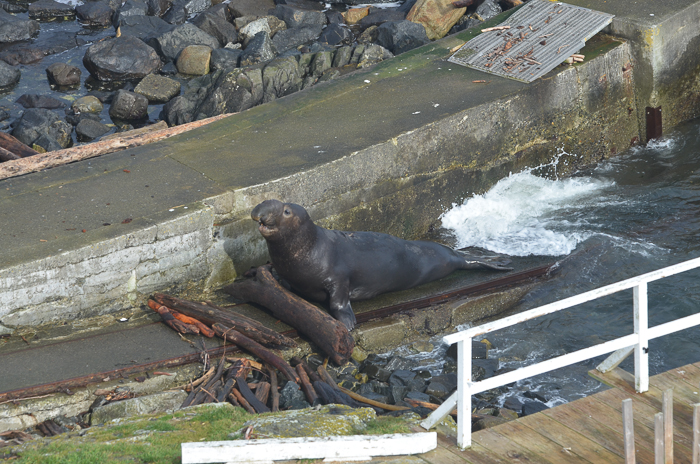
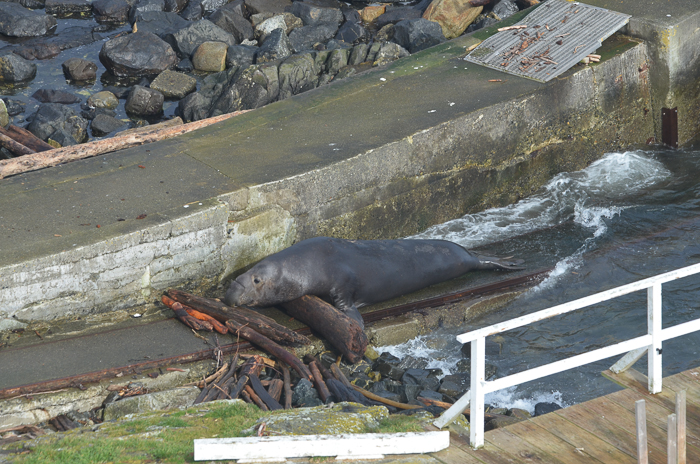
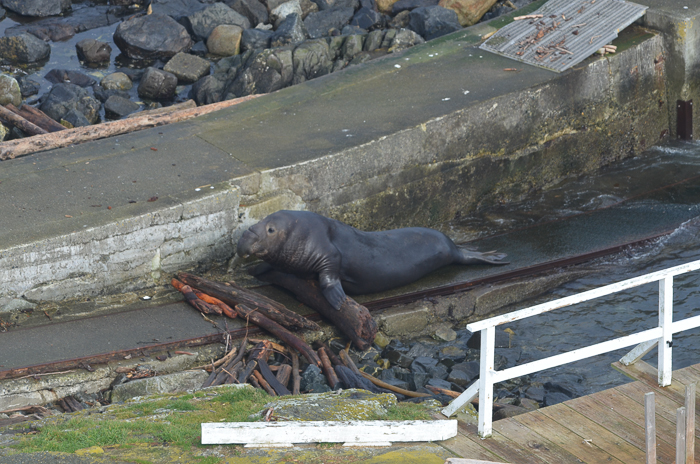
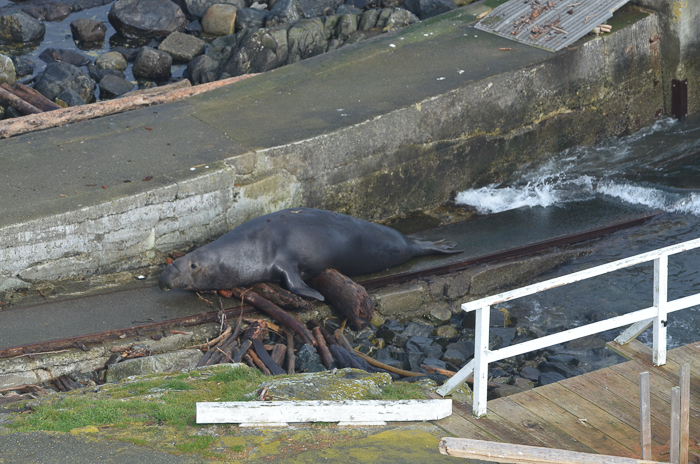
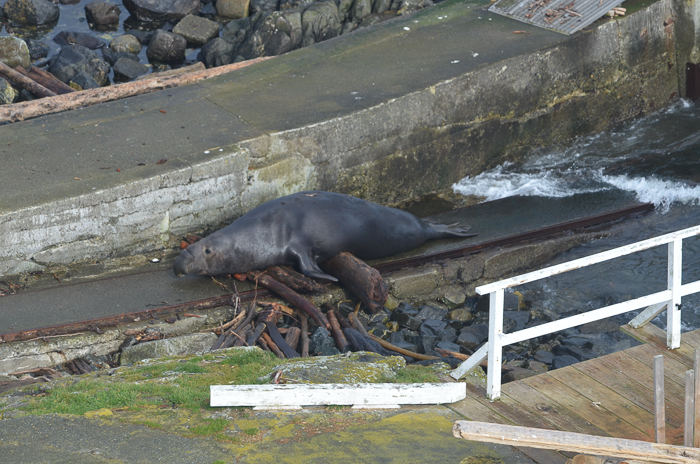
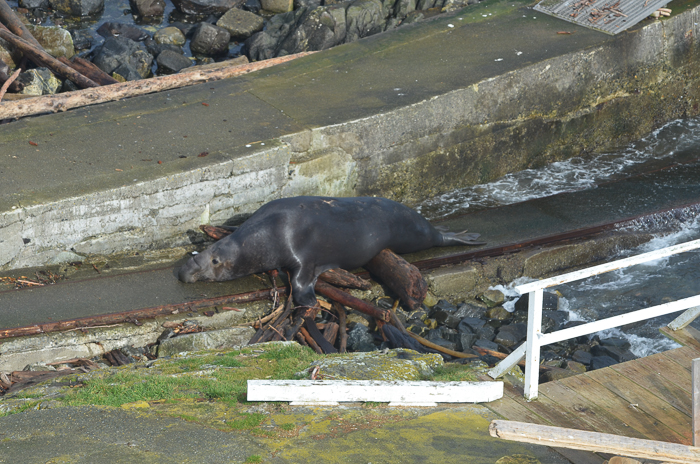
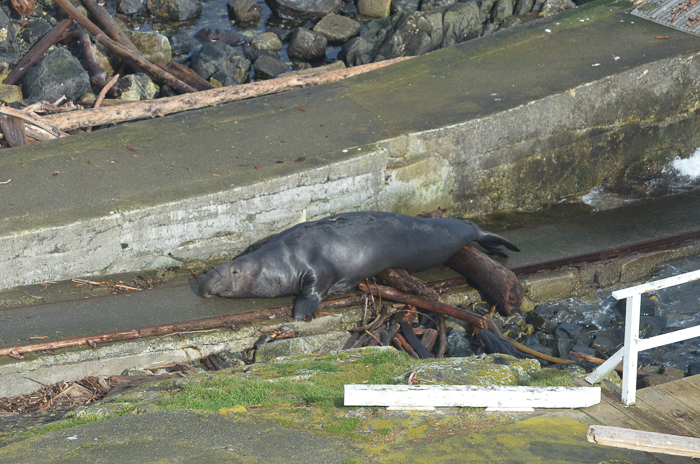
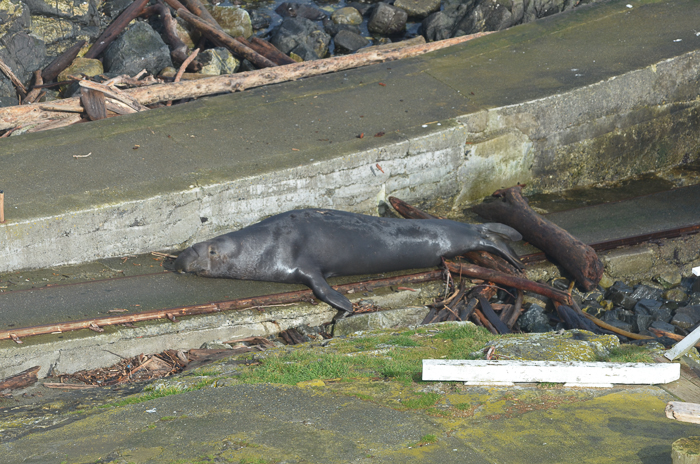
Chunk, the only remaining Northern Elephant Seal continues to slumber in the same spot. He has completely fried the vegetation where he is stretched out and seems to have lost a lot of mass since I saw him last fall. I guess he has been fairly engrossed with breeding, killing pups and fighting with other males. It must soon be time for him to head off and bulk up in the depths. He has massive “stretch marks” from slimming down to what looks like about 50% of his portly, fall physique.

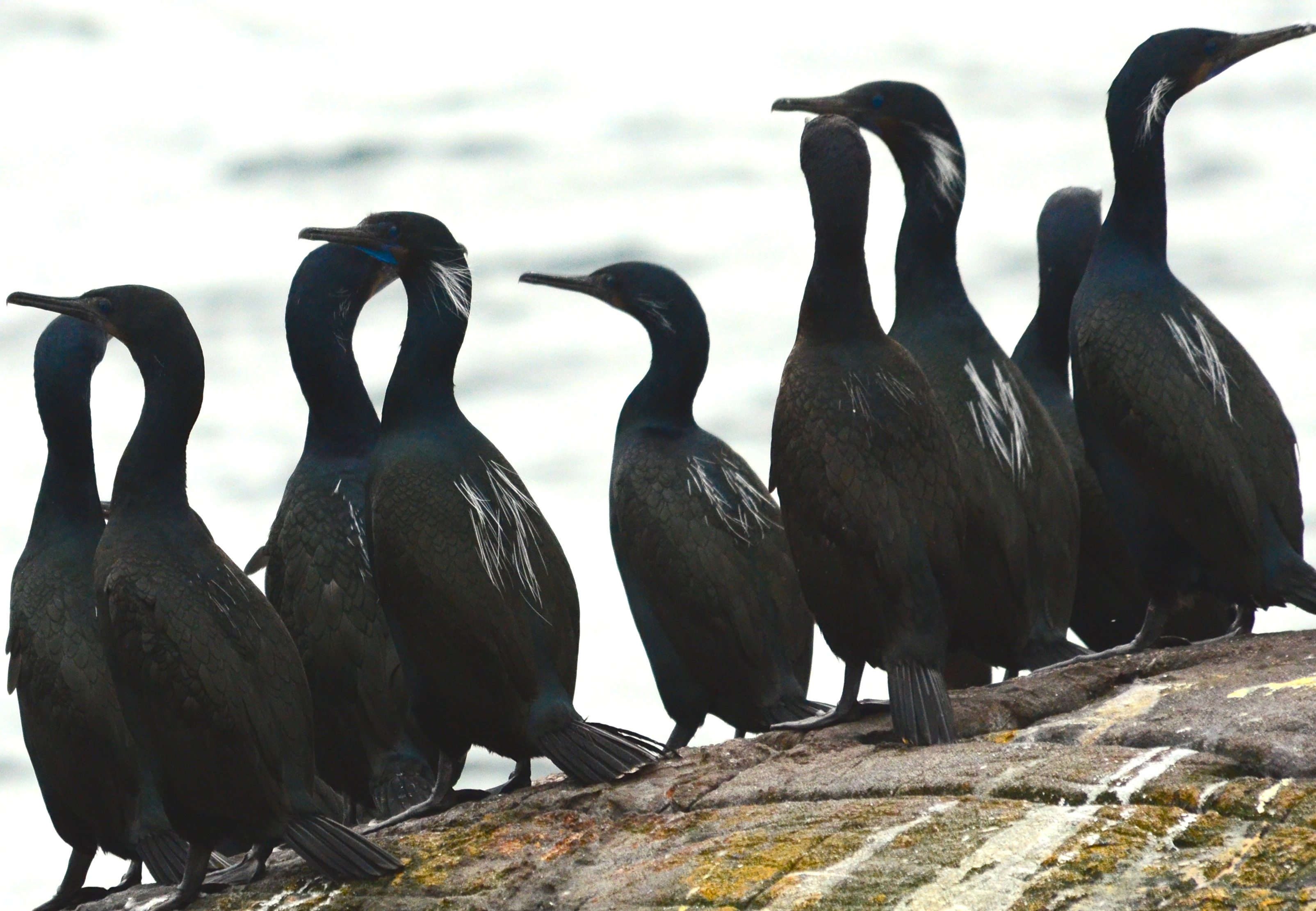
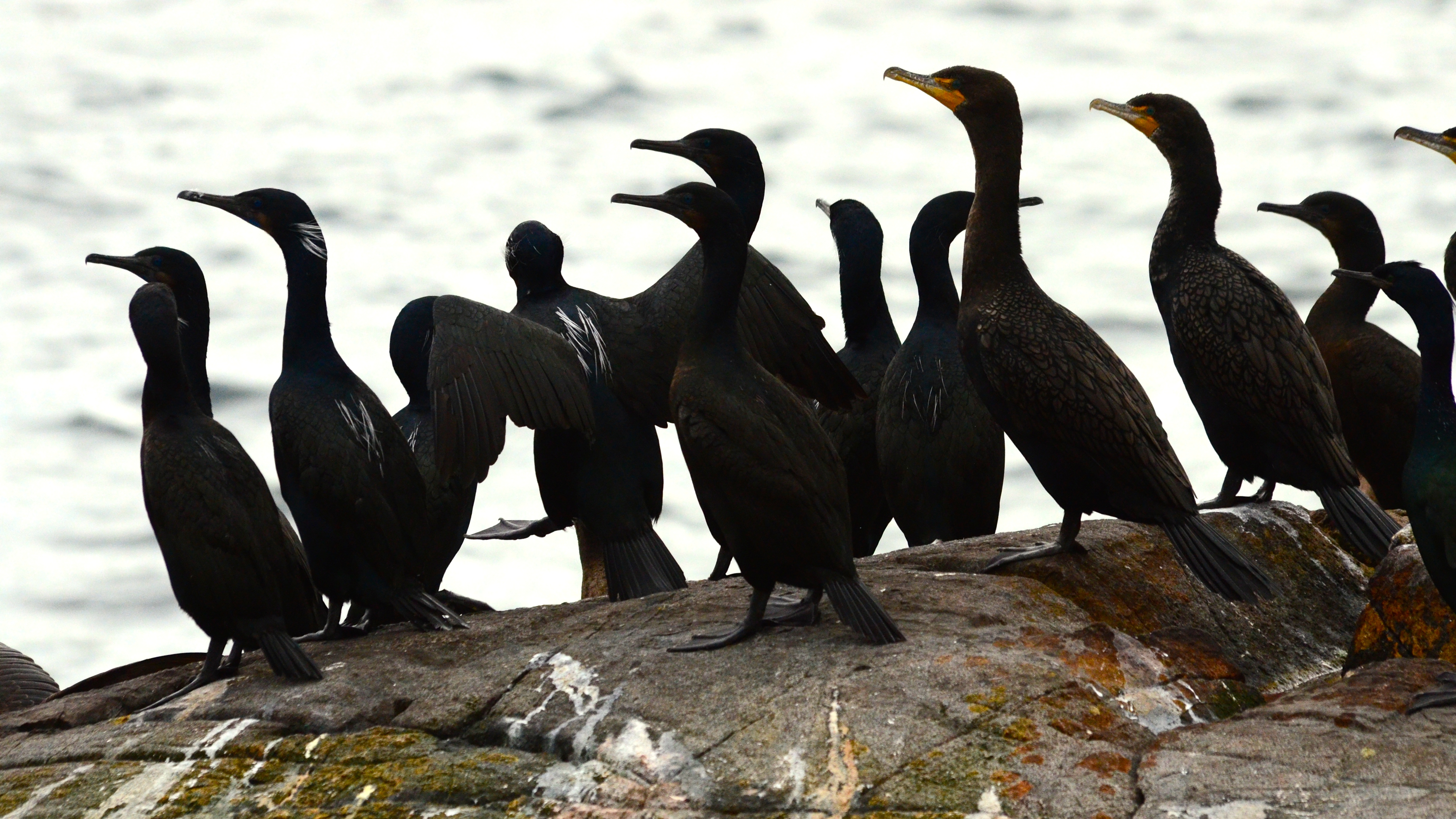
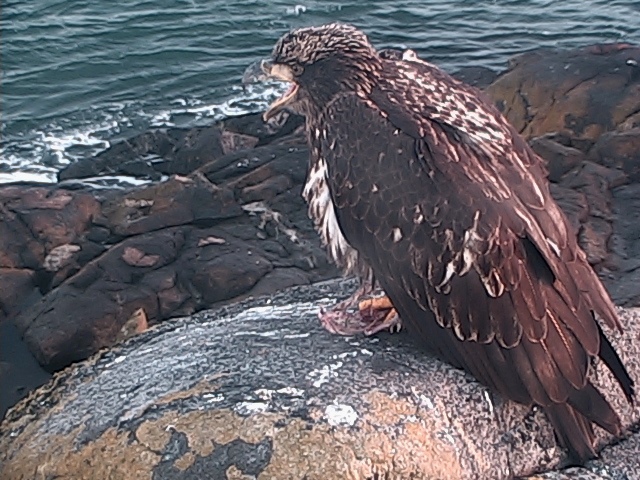
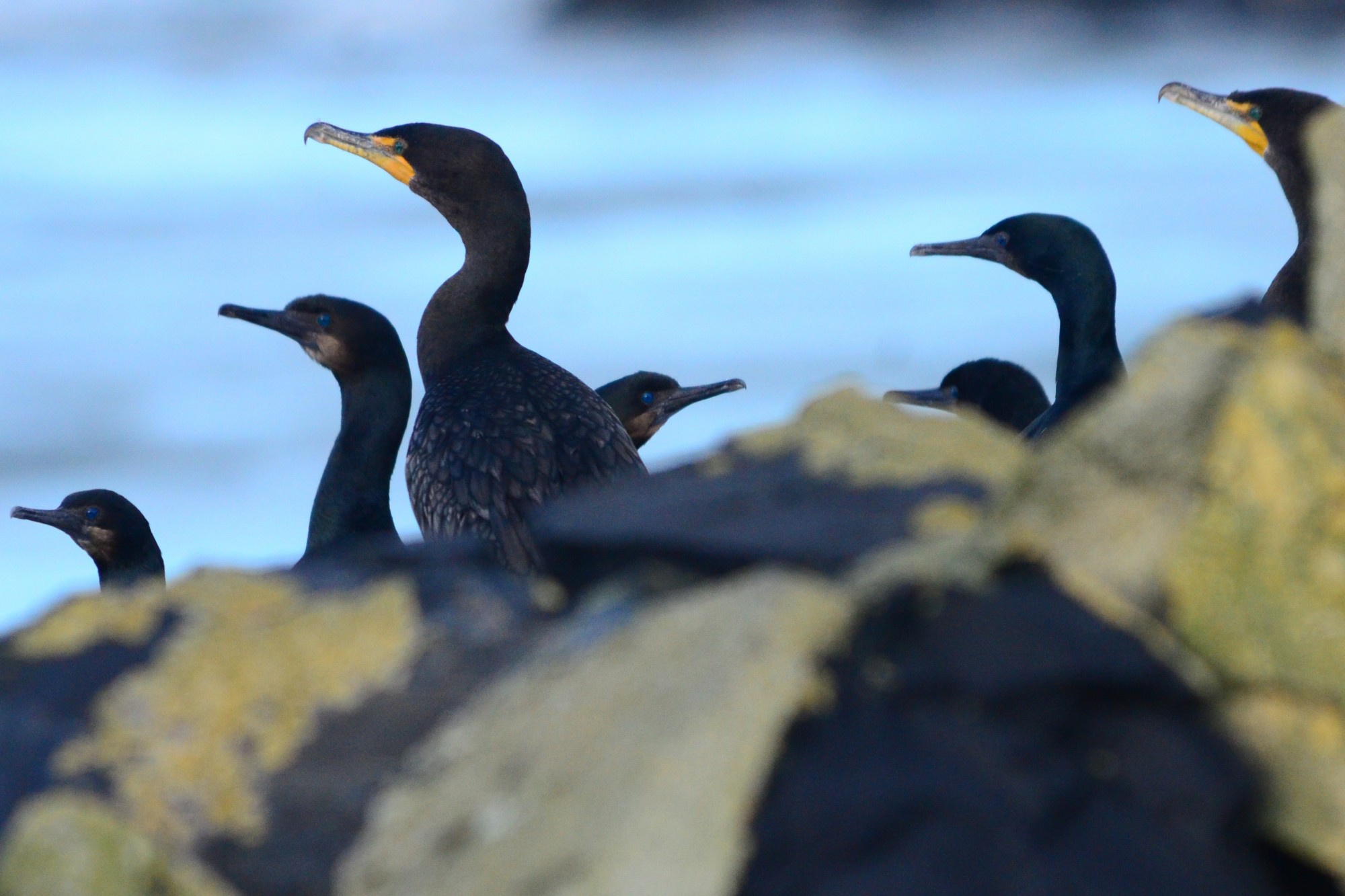
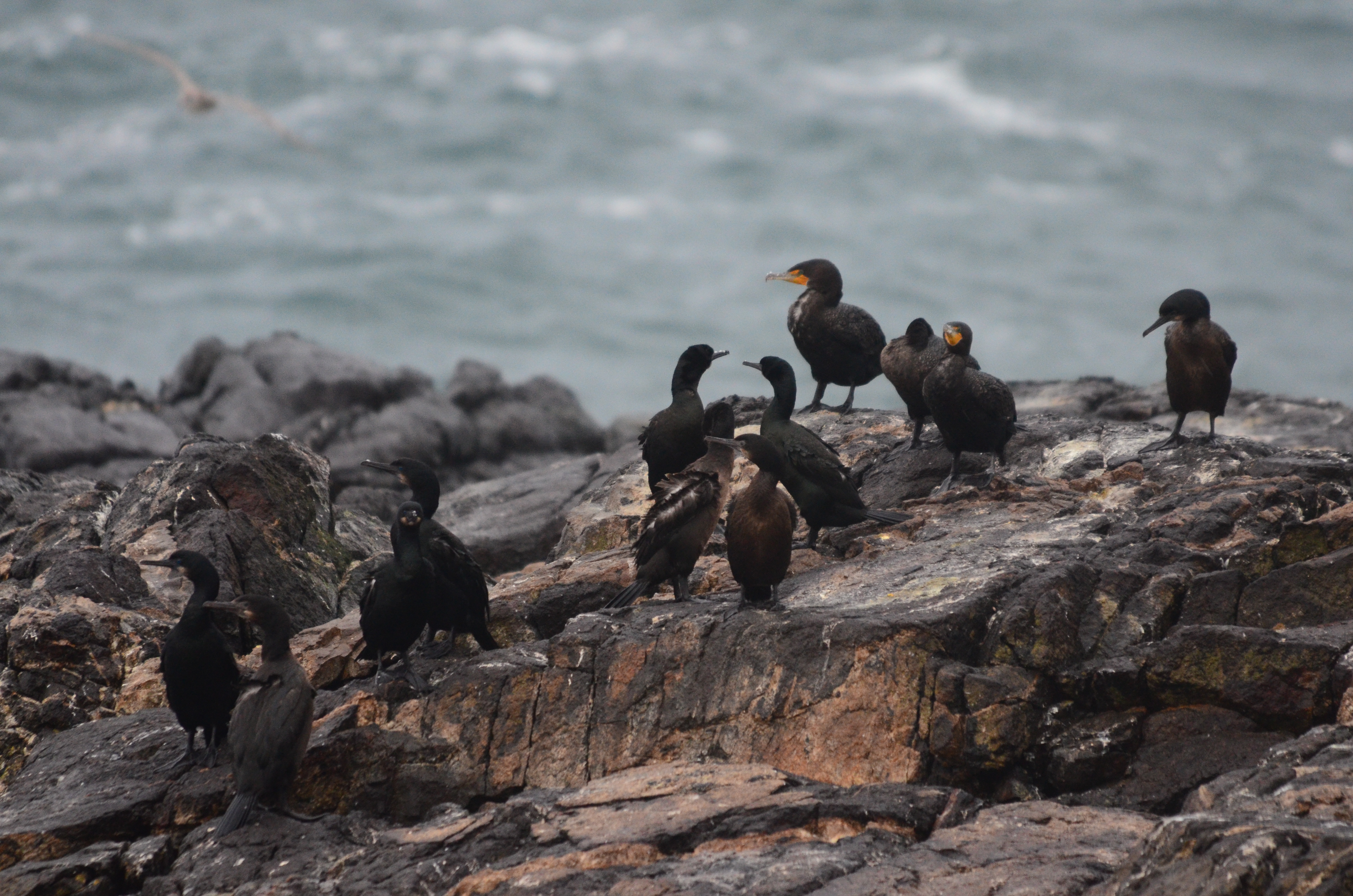
There were a dozen Bald Eagles here today and the cormorants roosted on Great Race so it was possible to see the subtleties of the neon blue under the Brandt’s Cormorants’ chins and their whiskery white feathers.

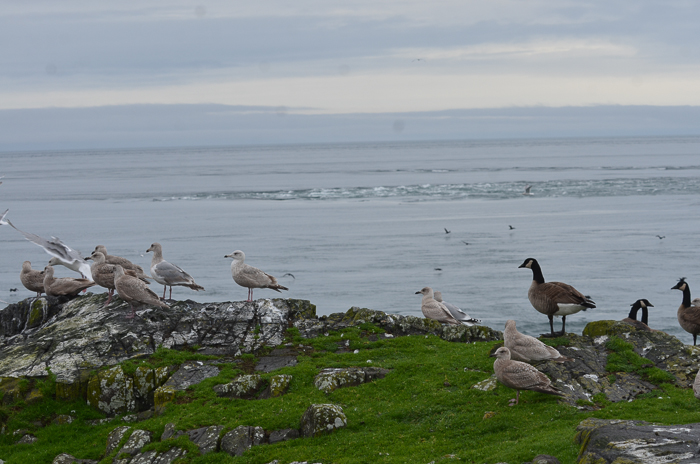
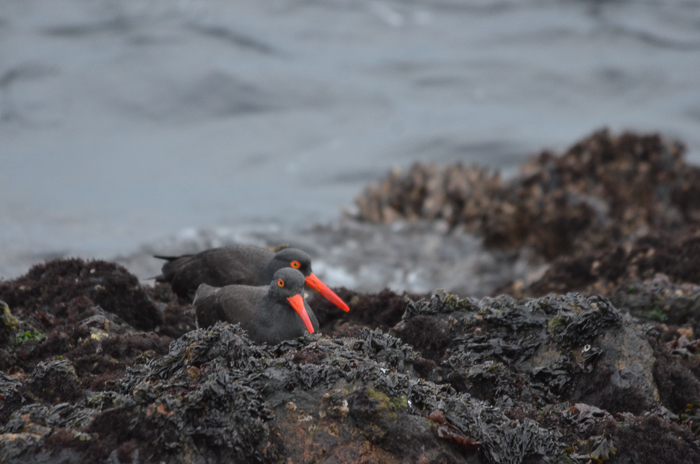
The numbers of Canada Geese have risen rapidly, going from six, the day I arrived, to twenty by this afternoon. Canada Geese are protected under the Migratory Bird Regulations, however, they can wreck havoc on a tiny islet like Great Race, which is also used by other species that cannot easily, (unlike Canada Geese), nest elsewhere successfully. Like some people, they are loud, pushy and tend towards aggression, not making the best neighbours for nesting Black Oystercatchers, Pigeon Guillemots and Glaucous-winged Gulls. Although the status of all three of these nesting species, is ‘Least Concern’ as listed by the International Union for the Conservation of Nature (IUCN), we are hoping to keep them that way and discourage geese from staying (under strict permit from Environment Canada).

Other than wild goose chases, chores were routine today including camera and computer care.

Back on the Rock: March 2– 4th

Wednesday morning, while tide, wave height and current speed were just right; we slipped a crew change through a narrow window between two gales. As we waved goodbye, and I turned to get moved in, the barometer started to drop again.

After four and half months away, it was good to be back on Great Race with its familiar views of the Strait of Juan de Fuca. As an averred naturalist, I couldn’t help notice that North Rock was bristling like a military brush cut, with 350 – 400 cormorants. All three species Pelagic, Double-crested and Brandt’s, were ‘drying out’ on this strategic roost after foraging in the sea. An adult Bald Eagle swooped in and the cormorants en masse, hit the water. The tidal ebb started to clear them out to sea, pulled by moon and pushed hard by rainwater rising in the Salish Sea. The cormorants dispersed and the counting moment was over; some flew, some dove and others disappeared into the gloom, as more rain squalls swept in.

Concentrating on moving in and checking all systems in order, counts were put on hold for Thursday’s census. Chunk, the big, pup-killing, male Elephant Seal was lying where he had apparently been, on and off, for a week. He was a little too close to the path for comfort, which meant that coming and going to the energy building involved tip-toeing by, while keeping a look-out for his eyes to open and being ready to run, if necessary. Of course it is never necessary but absence makes the fear forget.

Riley left things fairly ship shape and I knew that everything was going to be fine when the old Lister generator roared to life. In the evening, the wind gradually rose to 36 knots, ESE, a speed and direction that makes the back door of the house whistle a weird, three-toned tune, but it didn’t keep me from a deep sleep.

Seawater sampling came early and the morning weather was fairly wet and windy. The sun broke out with rainbows in the afternoon and the wind dropped to less than 10 knots. As the sun sets now, the forecast is calling for light winds, a chance of showers Friday morning with rain again by afternoon.

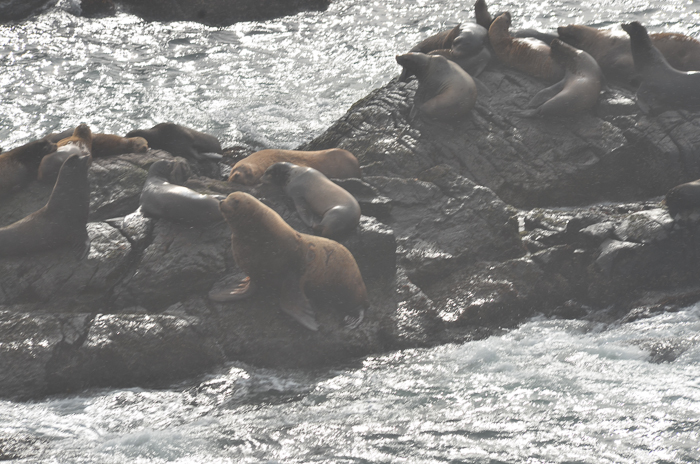
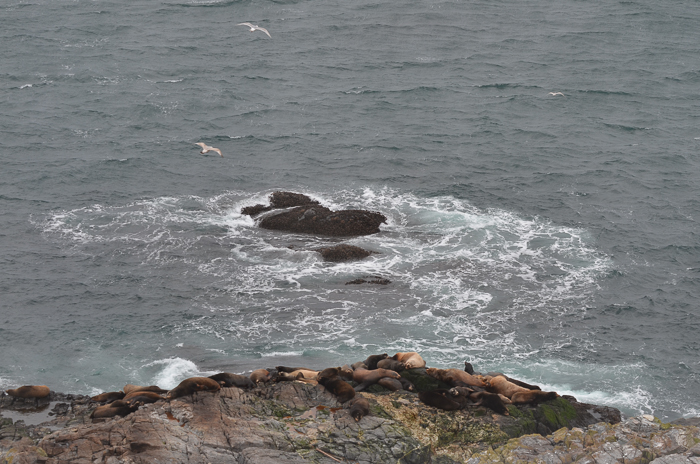
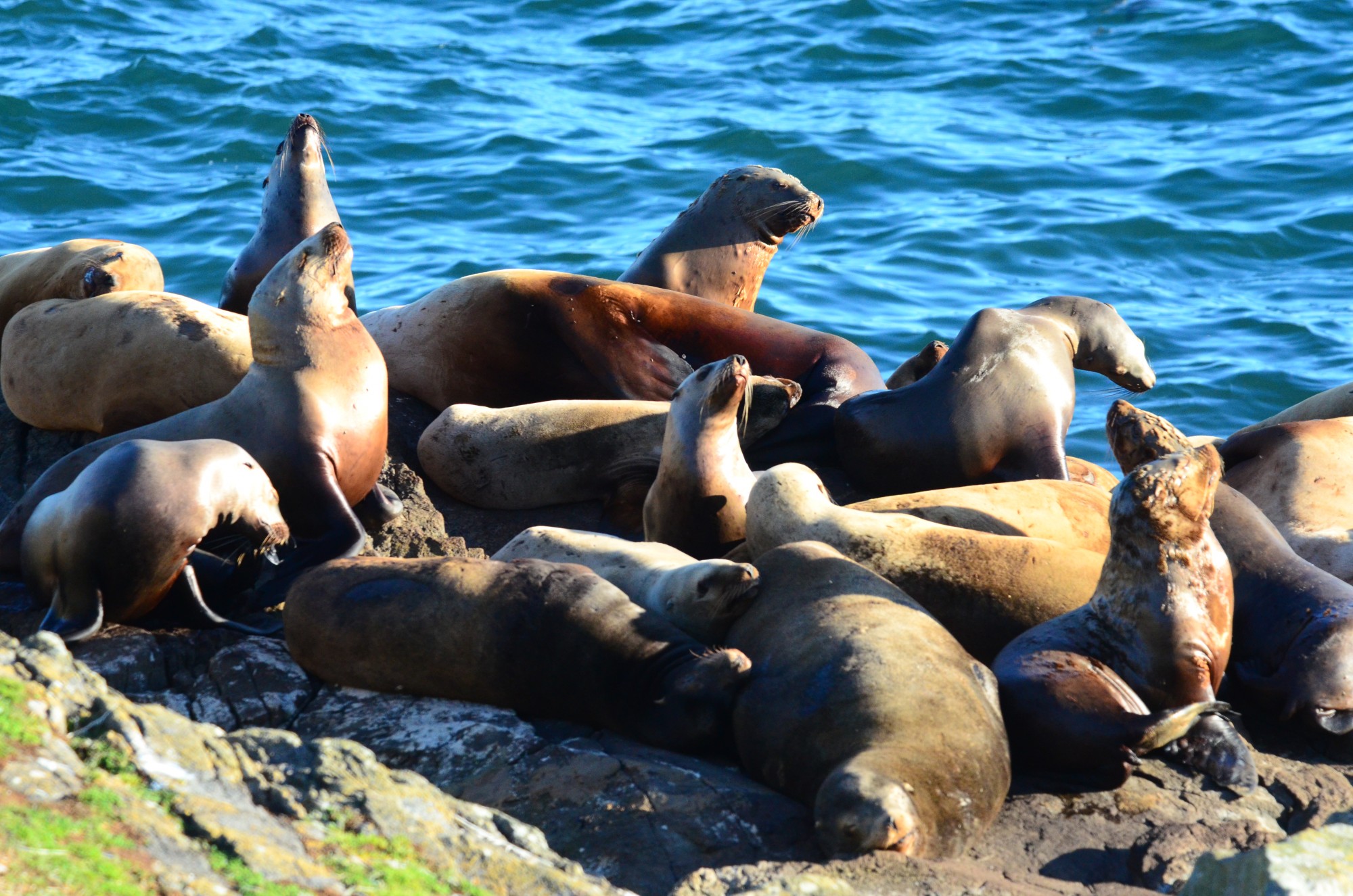
Once established that it was a beautiful afternoon, three small whale-watching boats came out to watch the sea lions on South Rocks. It always makes me a little nervous to see them with their human cargo in close to the south reefs and the sea lions. Their insurance companies probably wouldn’t be too keen on that sight either.

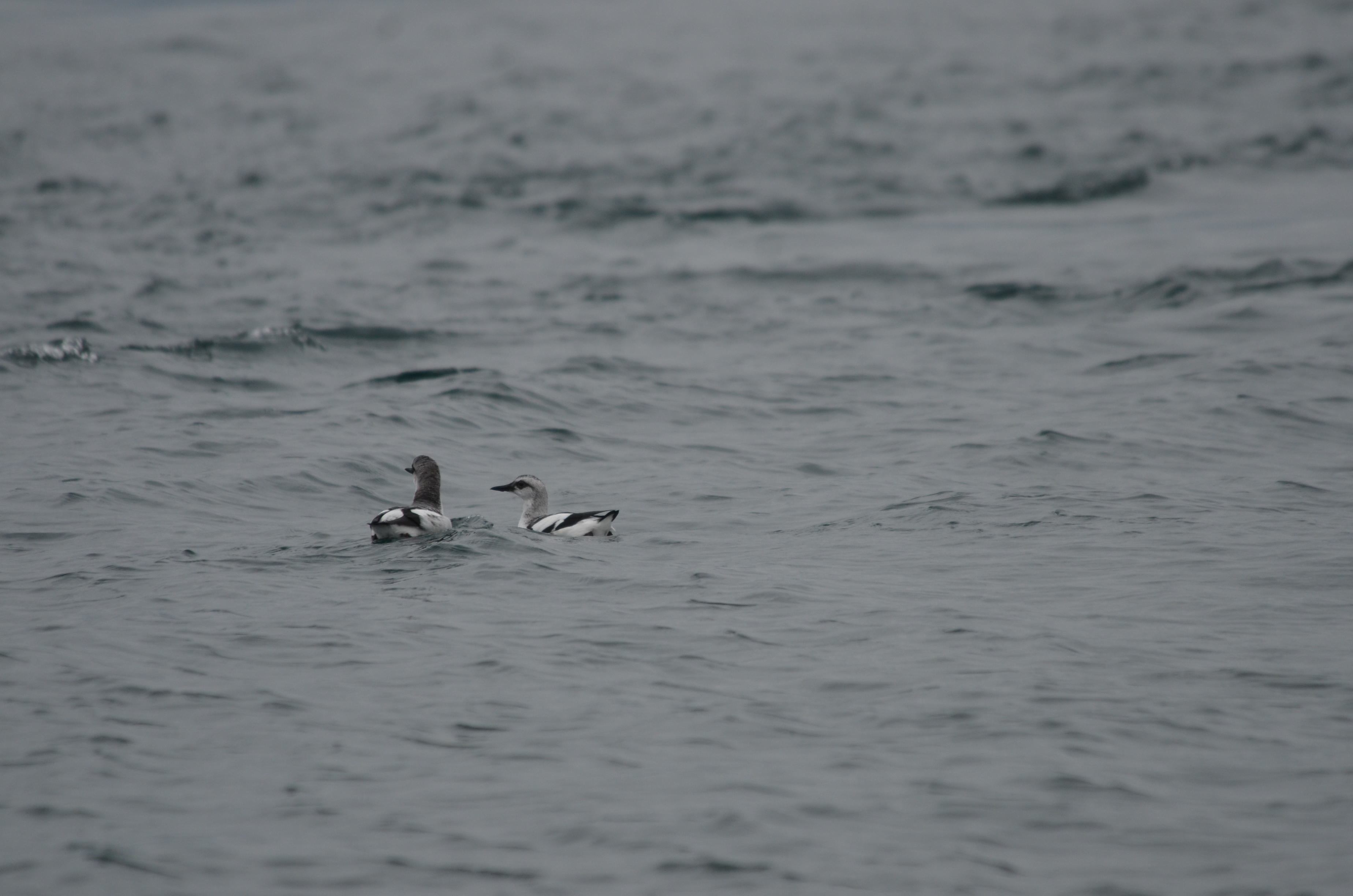
Today was census day and there were interesting differences in the timings of comings and goings of different species. Today, the Pigeon Guillemots were here at first light and numbers kept increasing until about noon. They were all gone by late afternoon. The Black Oystercatchers were together in a squawky flock early in the morning and then dispersed. The sea lions hauled out mostly in the morning but additional individuals hauled throughout the day. The cormorants started roosting late morning and were mostly back in the water by late afternoon. The Harbour Seals hauled out in the late afternoon. There were few gulls in the morning, but by mid-day some were pairing up and looking like they might already be standing near their nest sites. By late afternoon there were over 200 gulls roosting on the island but they were gone by the time I came back from shutting down the generator at 21:00. The Killdeer, as usual arrived after dark.

The diverse temporal use of the Ecological Reserve by different species would be missed in a standard count where the observer passed through during a set amount of time. By having an Eco-Gaurdian here throughout the day, a much more thorough accounting of the different species use of the Protected Area is possible.

Here are the results of the animal census:

2016 03-Mar
River Otter 1
Northern Elephant Seal 1
Harbour Seal 72
Northern Sea Lion (Steller’s) 36
California Sea Lion 41
Canada Goose 6
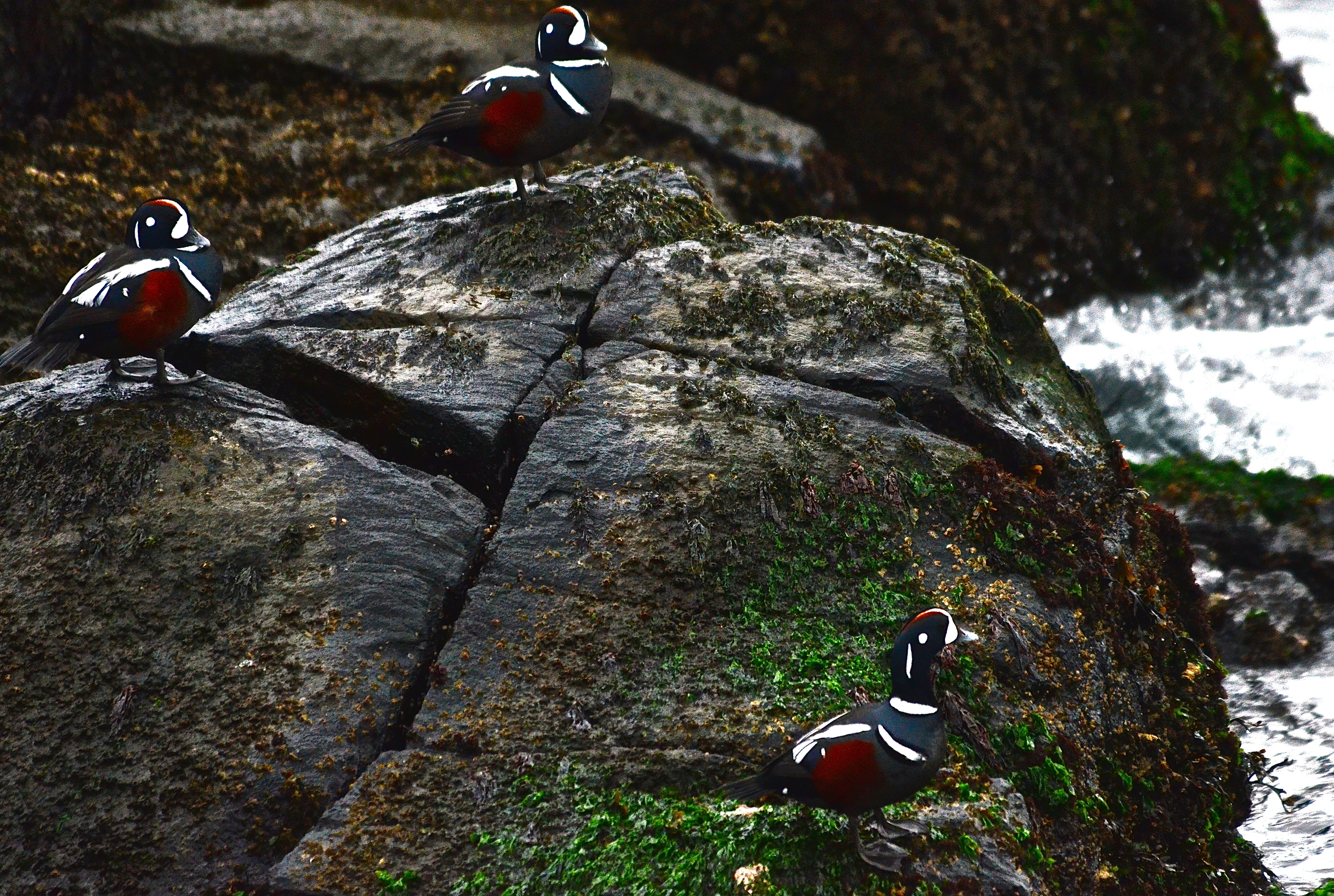
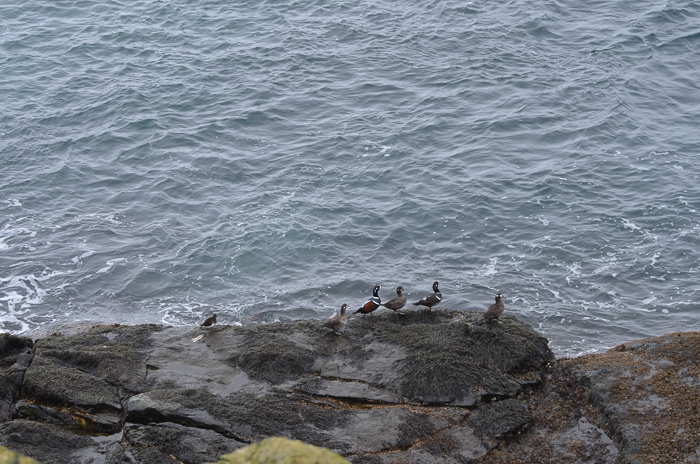
Harlequin Duck 16
Surf Scoter 11
Common Merganser 1
Brandt’s Cormorant 50
Double-crested Cormorant 150
Pelagic Cormorant 100
Cormorant 50
Bald Eagle (juvenile) 9
Bald Eagle (adult) 2
Killdeer 2
Black Oystercatcher 24
Black Turnstone 23
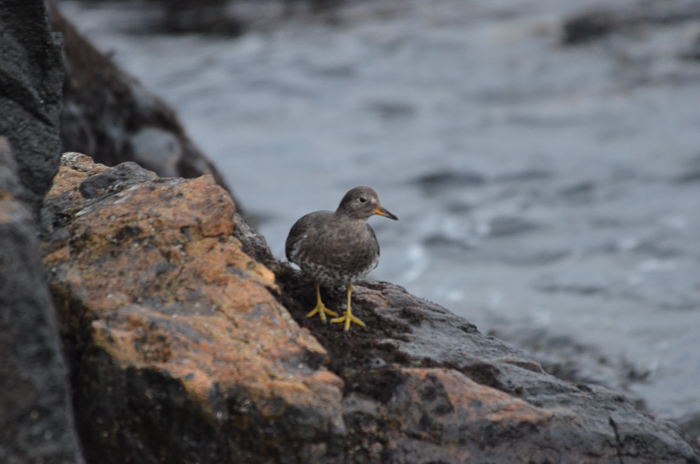
Surfbird 1
Mew Gull 2
Glaucous-winged Gull (+hybrids) 214
Pigeon Guillemot 147
Northwestern Crow 2
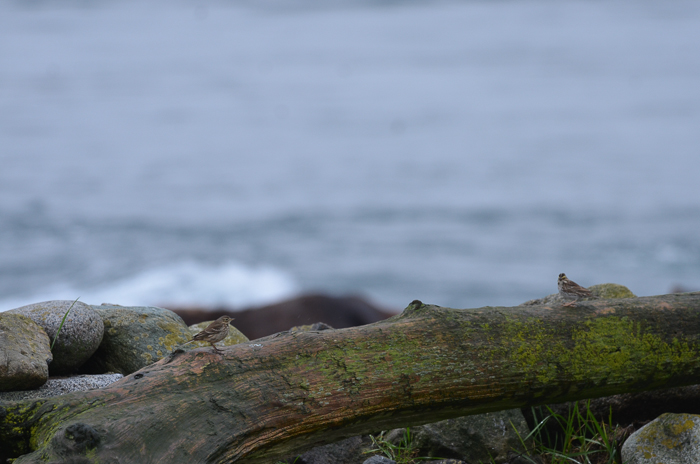
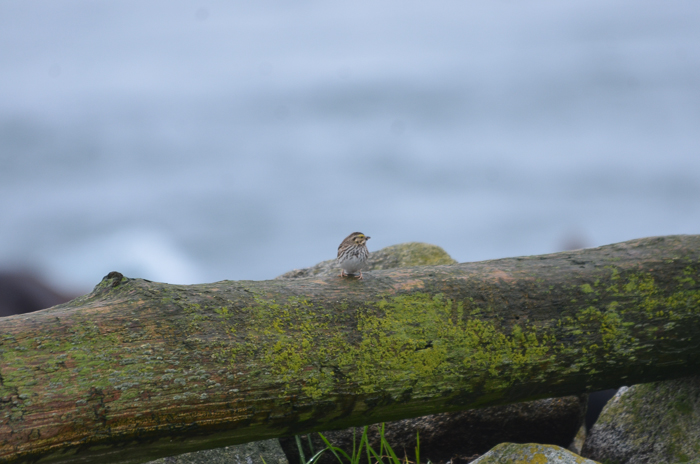
Fox Sparrow 1
Song Sparrow 1

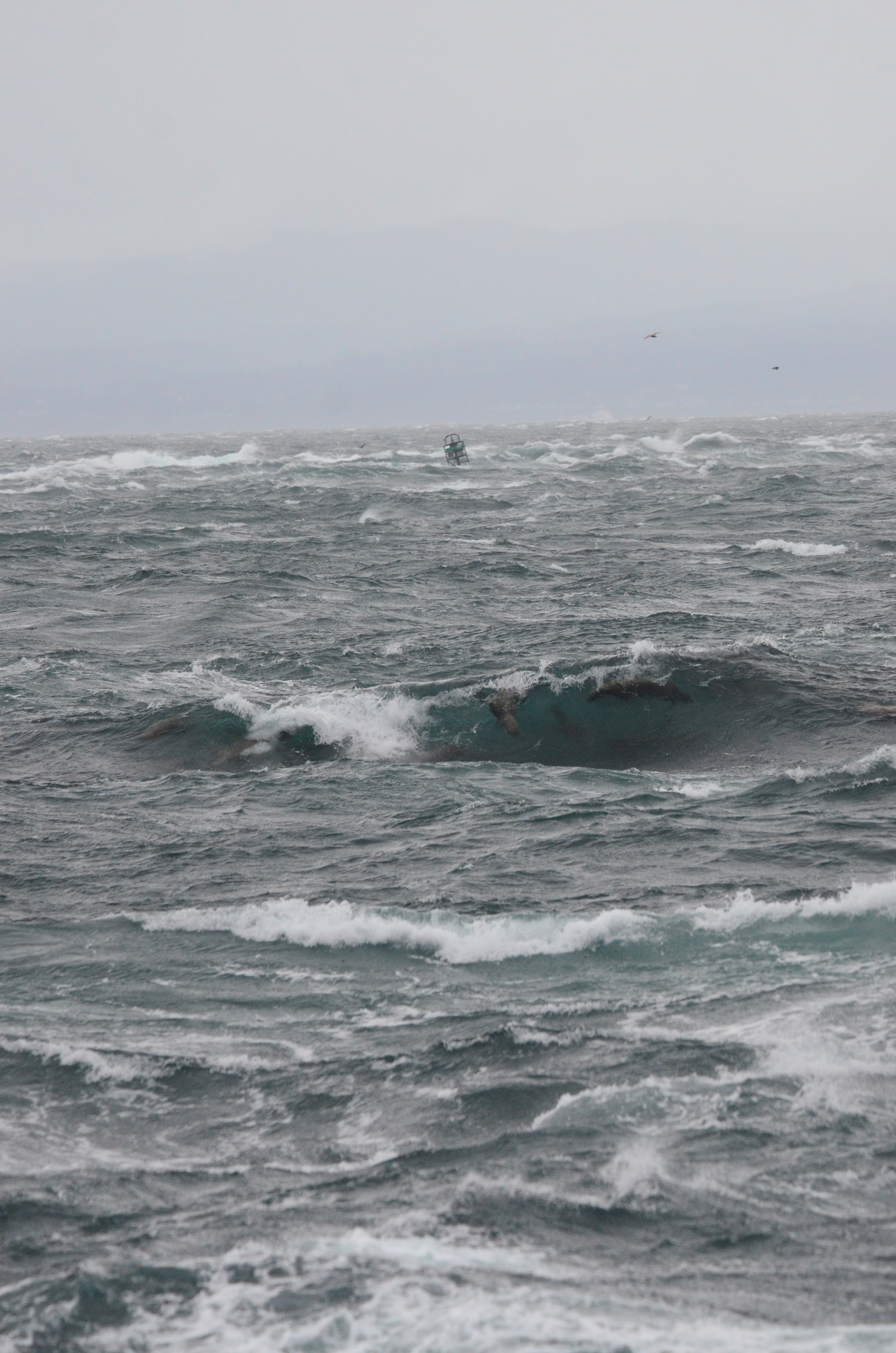
Friday’s weather was windy and wet. There was a lull early, as it switched for a short time to southwest but then turned back with a vengeance to strong northeast and big seas. The forecast is for a switching back and forth from southeast veering to southwest and back. It is blowing north 24 knots as I post this Friday evening, but is supposed to come down to light variable in the morning, rising againSaturday afternoon.

One whale watching vessel used the Ecological Reserve today and like yesterday’s boats, it too ventured into the danger zone of breaking reefs on the south side. The ebb was so large at the time that there were standing waves and a huge overfall along the string of rocks, islets and shallows. After a few tippy moments, they got out of there and I was glad they were all safe and sound.

I fought entropy today doing a few minor cleanups, making kindling and moving propane tanks around (downhill and empty). The usual chores also kept me busy. I tried to figure out what is going on with the camera, which has not yet fully cooperating. Now that I am through the technical barriers and able to post the blog I will be doing so daily and hope to post photos soon.


Animal Census and Gale conditions

Weather

  • In the morning:
  • Visibility: 15 miles
  • Wind: 5-10 NE
  • Water: 1′ chop
  • Sky: overcast
  • From 10 A.M. onwards:
  • Wind: 25-45 W
  • Sky: showers

Ecological

  • Chuckles spent all day on Great Race.
  • In the morning Chunk went into the water; he returned a couple of hours later. “Watch” him climb over a log in the photo slideshow!
  • Conducted a census. Unfortunately the gale force winds started up just before I climbed the tower to do the largest portion of the census, so by the time I began, many animals had fled seeking shelter.
  1. California Sea Lions: 44
  2. Northern Sea Lions: 13 (1 branded with ?6Y)
  3. Elephant Seals: 2
  4. Seagulls: 106 (there were more before I did my count)
  5. Pigeon Guillemots: 80 (these I counted before the gale)
  6. Cormorants: 57 (there were more before I did my count)
  7. Black Turnstones: 22
  8. Bald Eagles: 20 (13 immature, 7 adults)
  9. Surfbirds: 11
  10. Canada Geese: 10

Census

Weather

  • Visibility: 5 miles, later 15
  • Wind: 5-10 knots SE, late afternoon up to 33 knots from the West
  • Water: rippled, later wavy
  • Sky: foggy in the morning, overcast in the afternoon

Ecological

  • Chunk spent the day on Middle Rock with the mum and pup.
  • Lady, Grieving mum, mum and pup, were in the same spots on Great Race.
  • Chuckles arrived on Great Race in the late afternoon.
  • Conducted a census.
  1. California Sea Lions: 87
  2. Northern/Stellar Sea Lions: 50
  3. Harbour Seals: 21
  4. Elephant Seals: 8
  5. Cormorants: 742 (of the 742, I think that at least 10 were Male Brandt’s, 131 Double Crested, and 200 Pelagic; my identification is improving, but many were either too far away, or indistinguishable to me.)
  6. Seagulls: 605 (131 had darker plumage and therefore must be immature gulls?)
  7. Pigeon Guillemots: 50
  8. Bald Eagles: 30 (23 juveniles, 7 adults)
  9. Black Oystercatchers: 13
  10. Canada Geese: 10
  11. Harlequin Ducks: 8 (4 male, 4 female)
  12. Black Turnstones: 6
  13. Surfbird: 3 (unless they were Rock Sandpipers?)
  14. Raven: 2
  15. American Pipit: 2

Maintenance

  • Did some more cleaning in the Student’s House.

Boats

  • In the morning, one fishing boat passed through the reserve. The occupants did not fish in the reserve; they were going slow and appeared to be observing.
  • In the afternoon, one large eco-tour boat came through the reserve.

bald eagles

Ecological

  • N 10-15 N becoming E 25, partly clear sky
  • Pigeon Guillemots made a return to the waters around the island, this is the first time i have seen/heard them since starting my shift
  • 21 bald eagles counted in the reserve.  the broke-beak eagle was perched on a solar panel on the engine building in the morning.
  • Second large female e-seal was by boat house throughout day.  Chuckles down by compost bin.  Mother and pup doing fine.  Chunk has been going off island at night and returning in the morning, staying close to females and keeping Chuckles away.
  • One neck-ringed California sealion seen on west side of main island

Vessels

  • 1 ecotour

Maintenance

  • Contacted tidy tanks re dip chart
  • Contacted re wood stove parts delivery
  • Cut and chopped fire wood
  • Cleared ramp

Godwit and Guillemots


Marbled Godwit

Marbled Godwit

Ecological Happenings

  • Calm overcast day with light winds and settled seas.
  • Allot of driftwood and deadheads floating past in the current around the rocks from the storms and high tides of late.
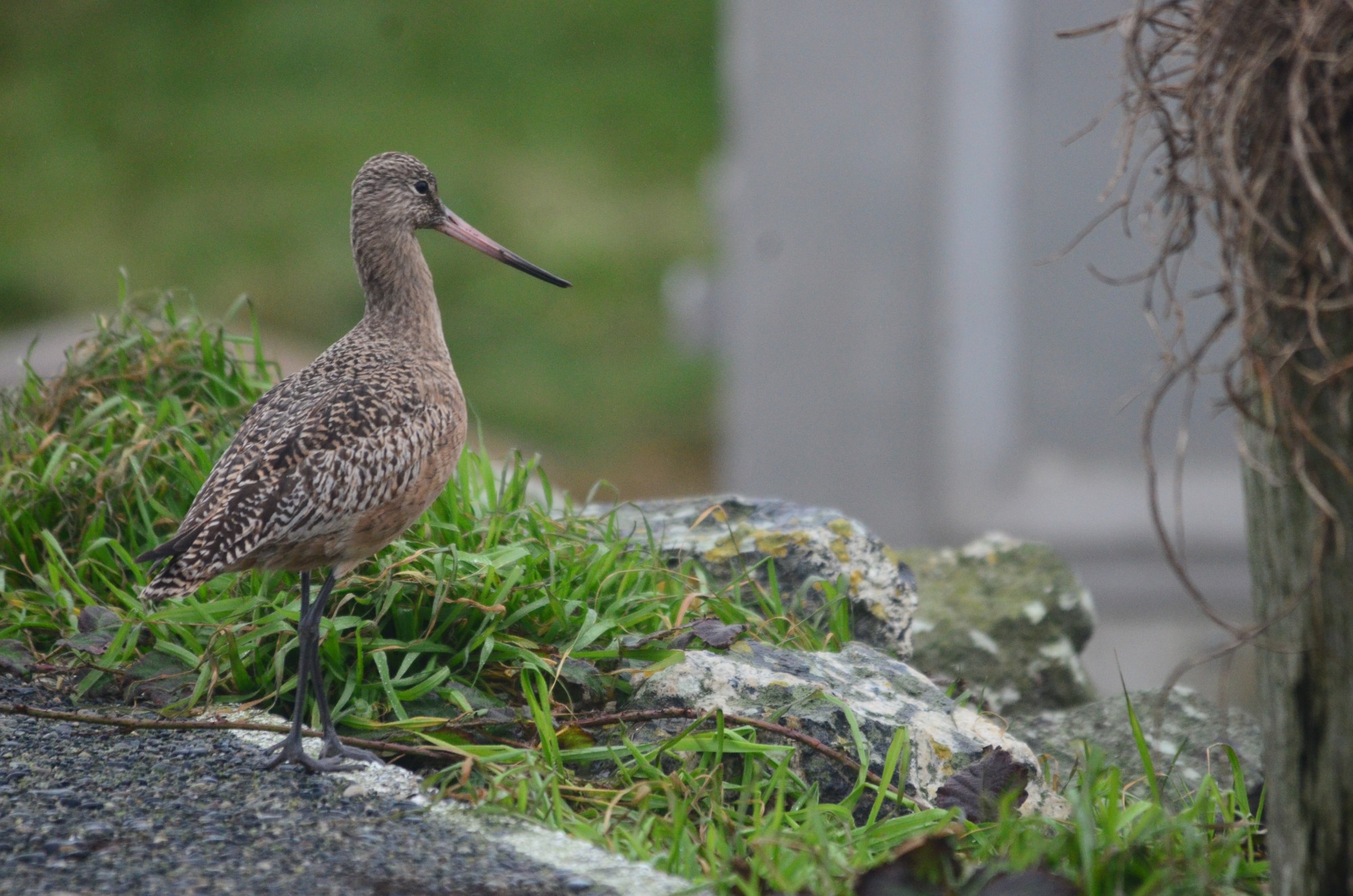
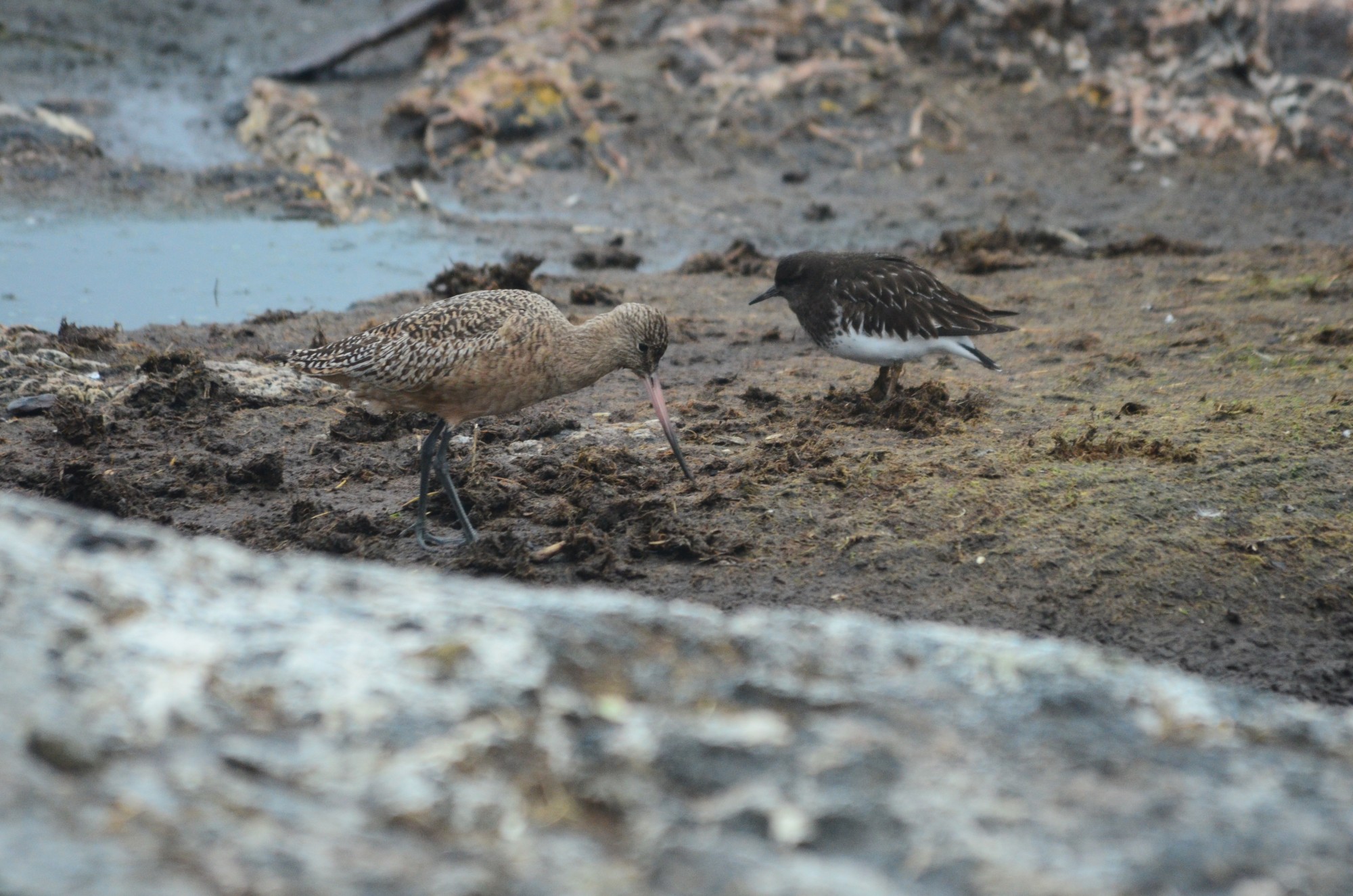
  • Marbled Godwit spotted on the main island in the afternoon.
  • Pigeon guillemots and Surf scoters observed around the main island to the North and East.
  • The female Elephant seal remains on middle rocks, while the males and smaller Elephant seal remain on the main island.
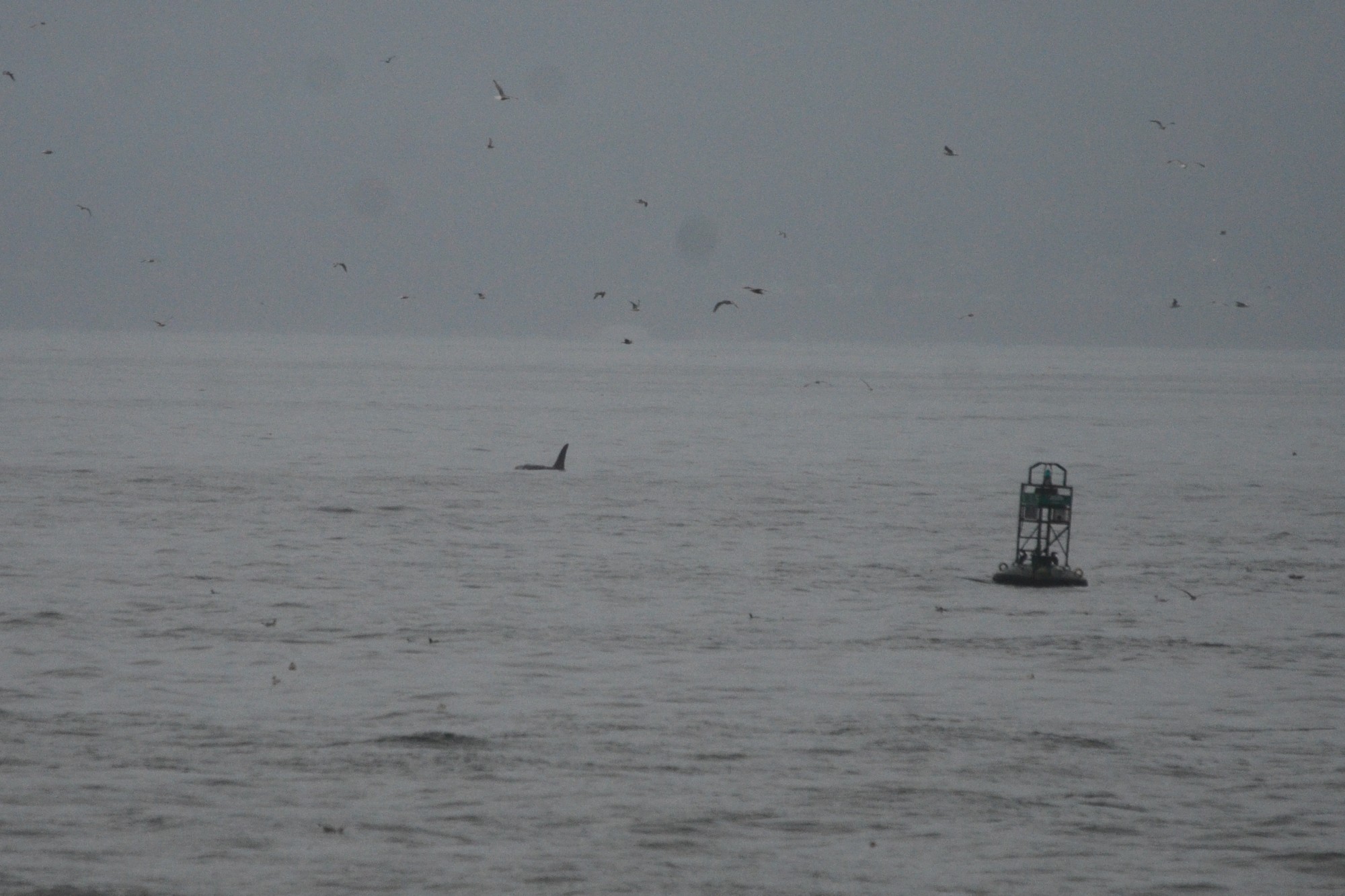
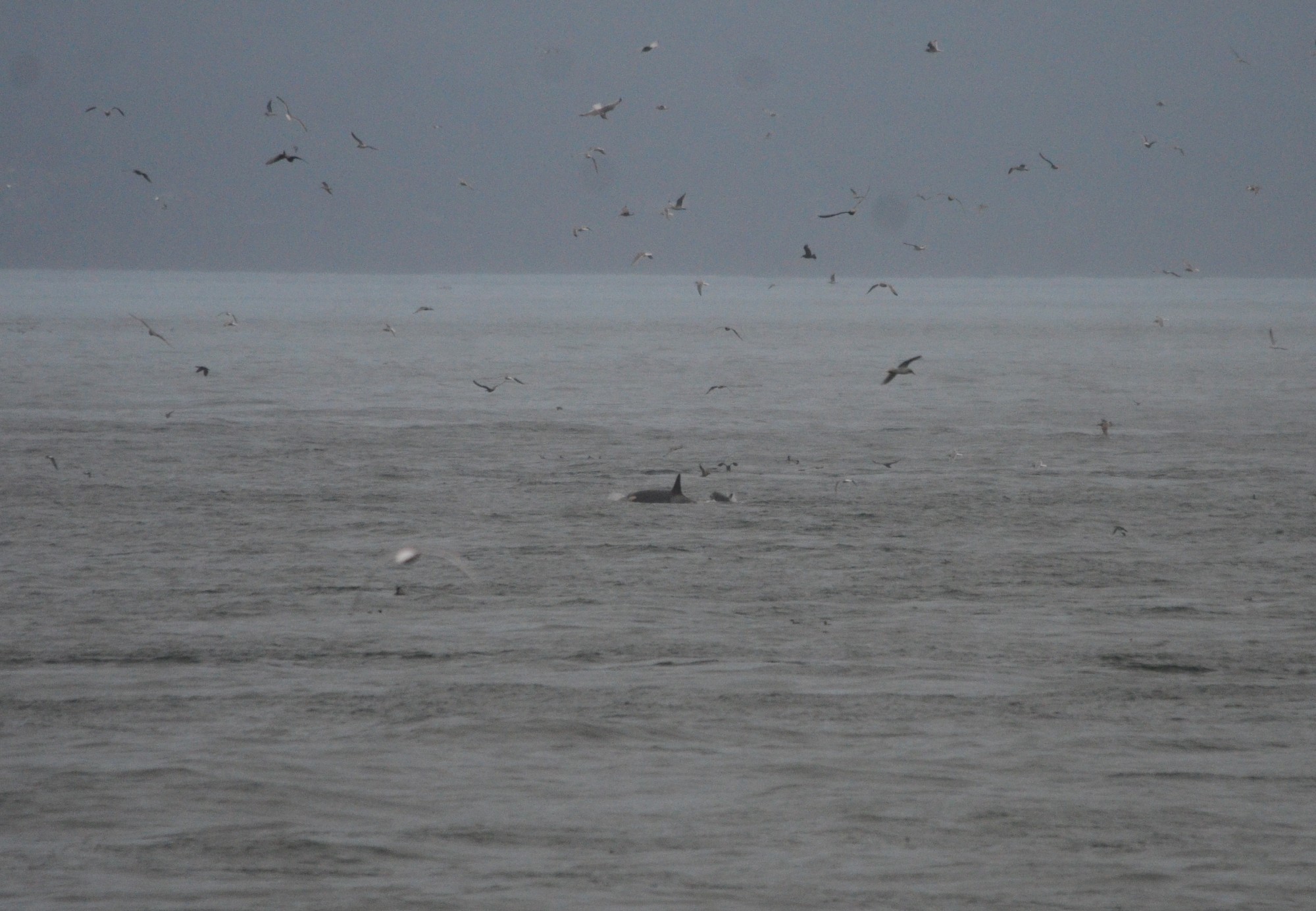
  • Pod of Orca seen passing to the south, feeding in the straight. Approximately five in group consisting of males (larger dorsal fins), female and a calf. Group of accompanying birds (gulls and cormorants) circling and highlighting their position.

Marine Vessels

  • One Whale Watching boat through the reserve.
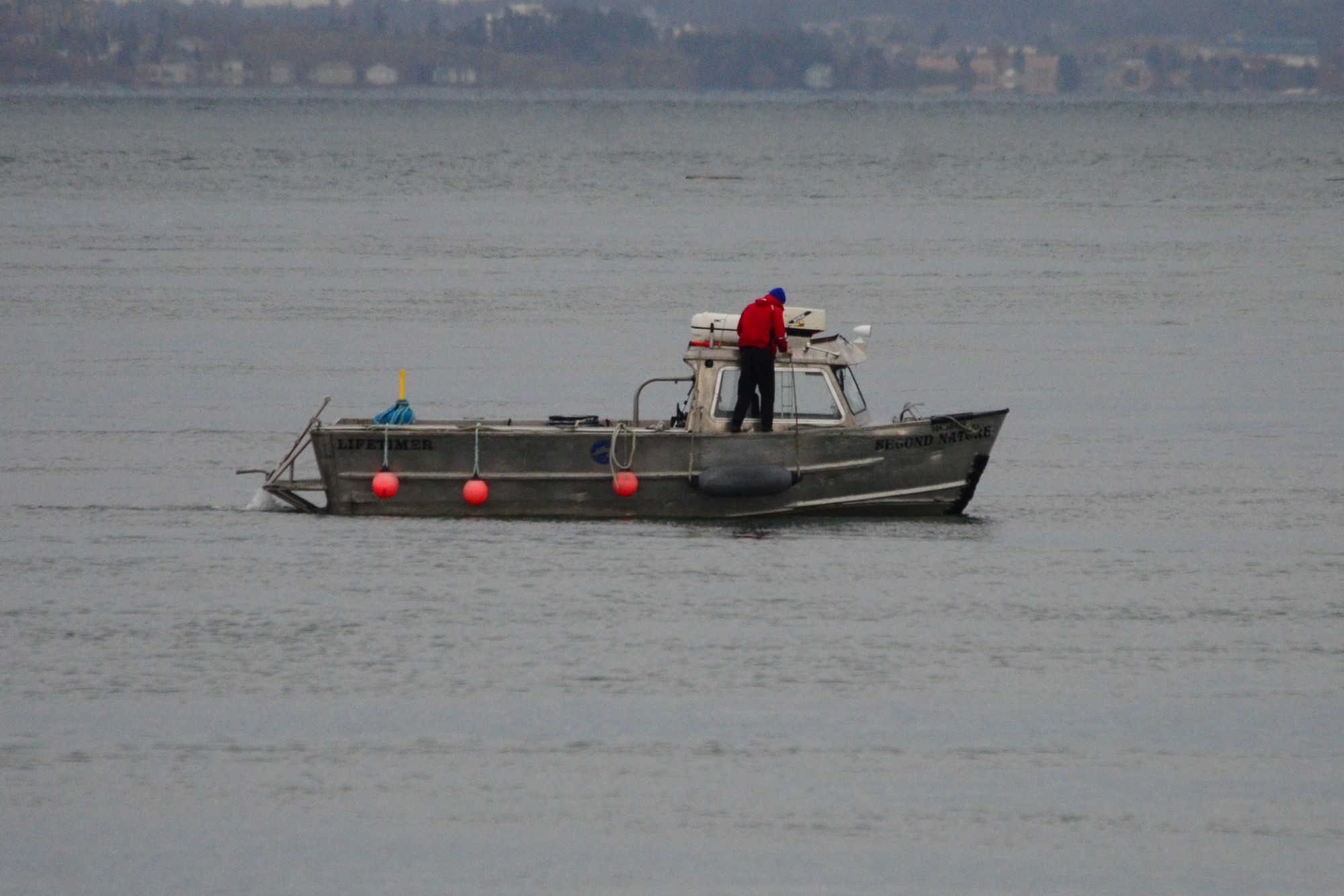
  • Courtney visited on 2nd Nature, from Pearson College, dropping off the winter fuel and a set of repaired steps for the jetty.

Maintenance

  • Steps and fuel unloading from 2nd Nature.
  • General tidying and preparation for end of shift.
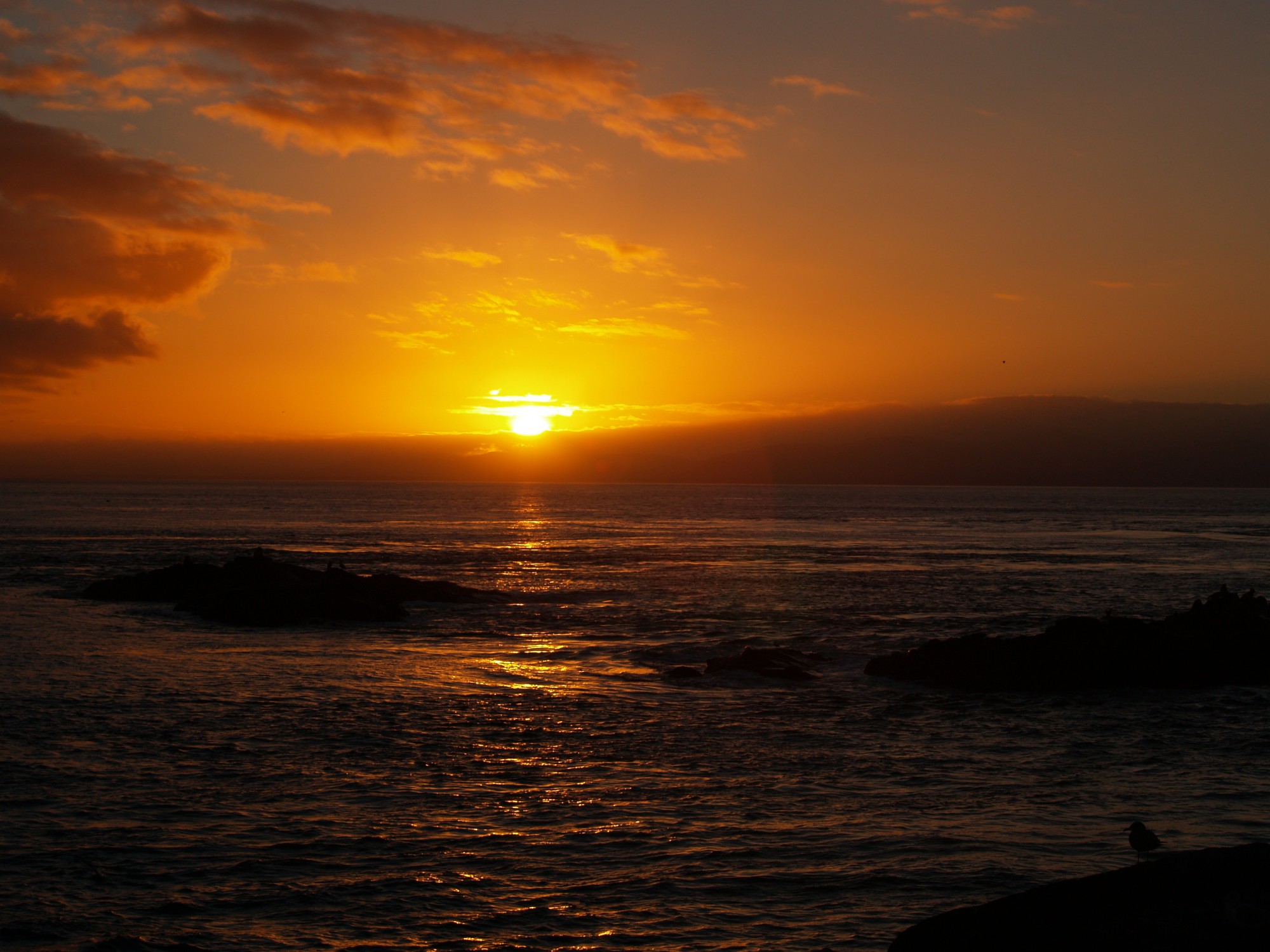
Cracking Sunrise

Cracking Sunrise

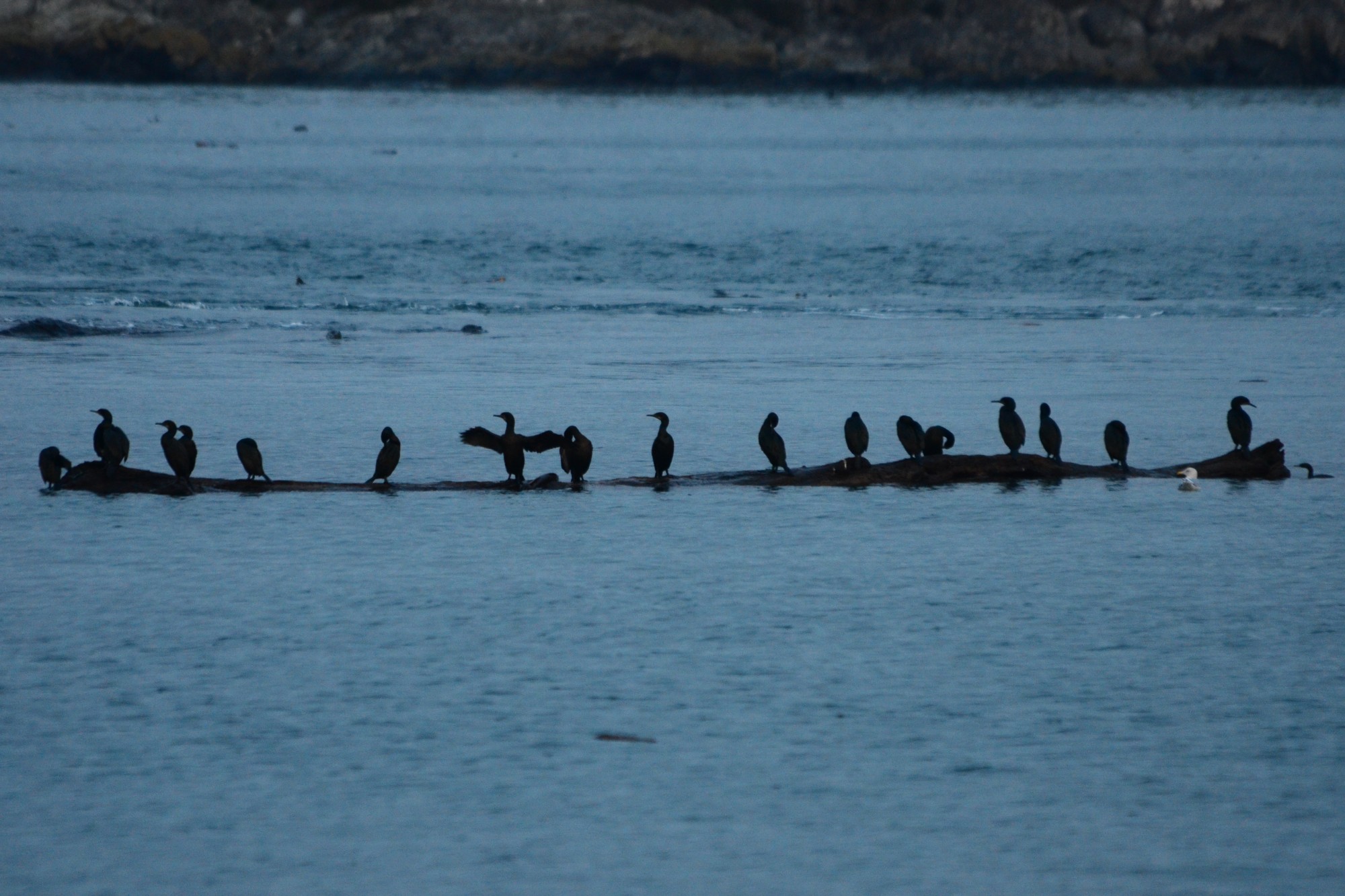
Cormorants taking a rest on some drift wood

Cormorants taking a rest on some drift wood

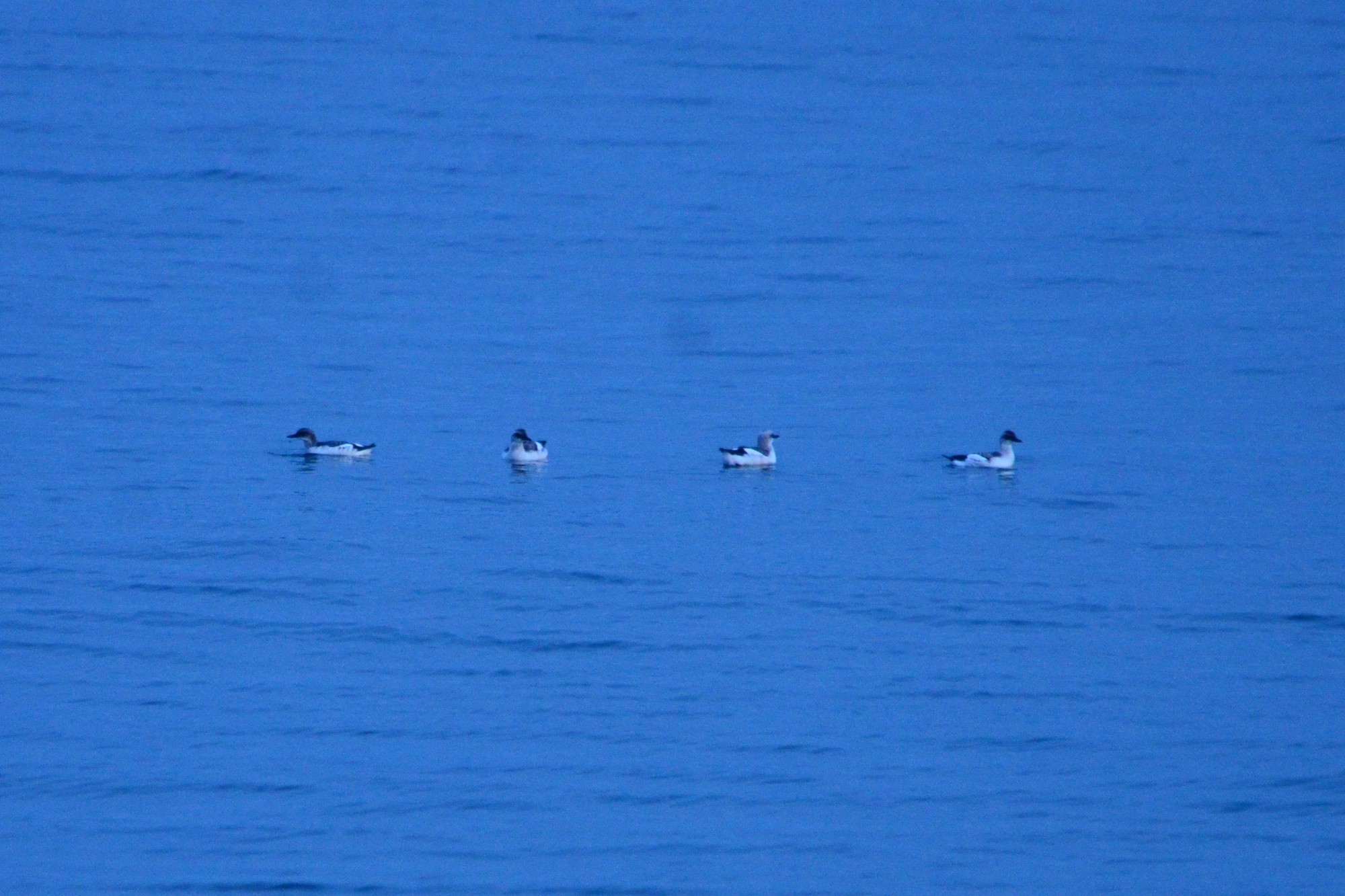
Pigeon Guillemots

Pigeon Guillemots

Marbled Godwit and Black Turnstone

Marbled Godwit and Black Turnstone feeding

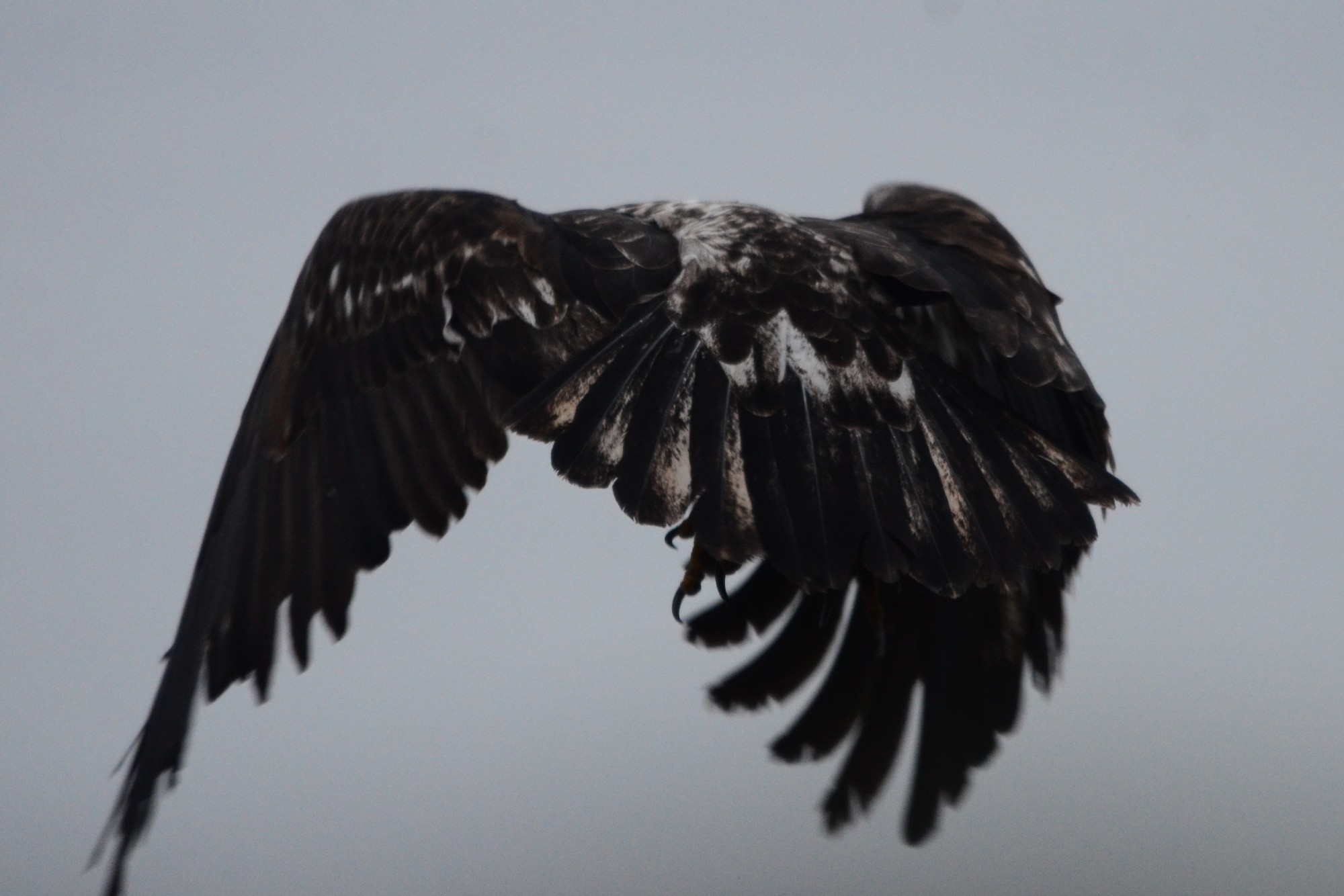
Immature Bald Eagle landing

Immature Bald Eagle landing. Beautiful plumage.

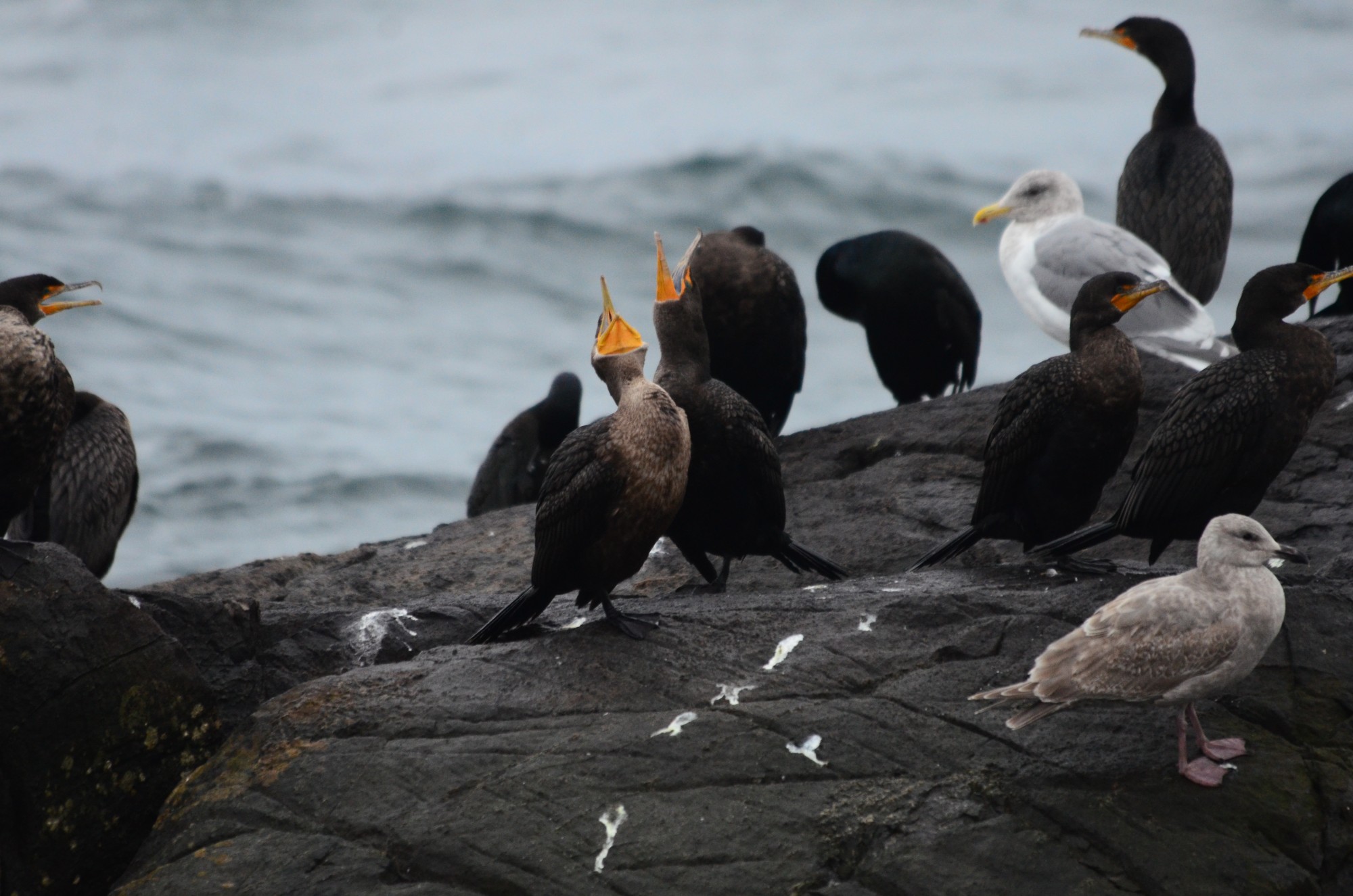
Double-crested Cormorants

Double-crested Cormorants and Thayer’s Gulls

Courtney prepping 2nd Nature

Courtney prepping 2nd Nature to come into the jetty

Male Orca in strait

Male Orca in strait

Female Orca and calf

Female Orca and calf

Sea lion Stampeed

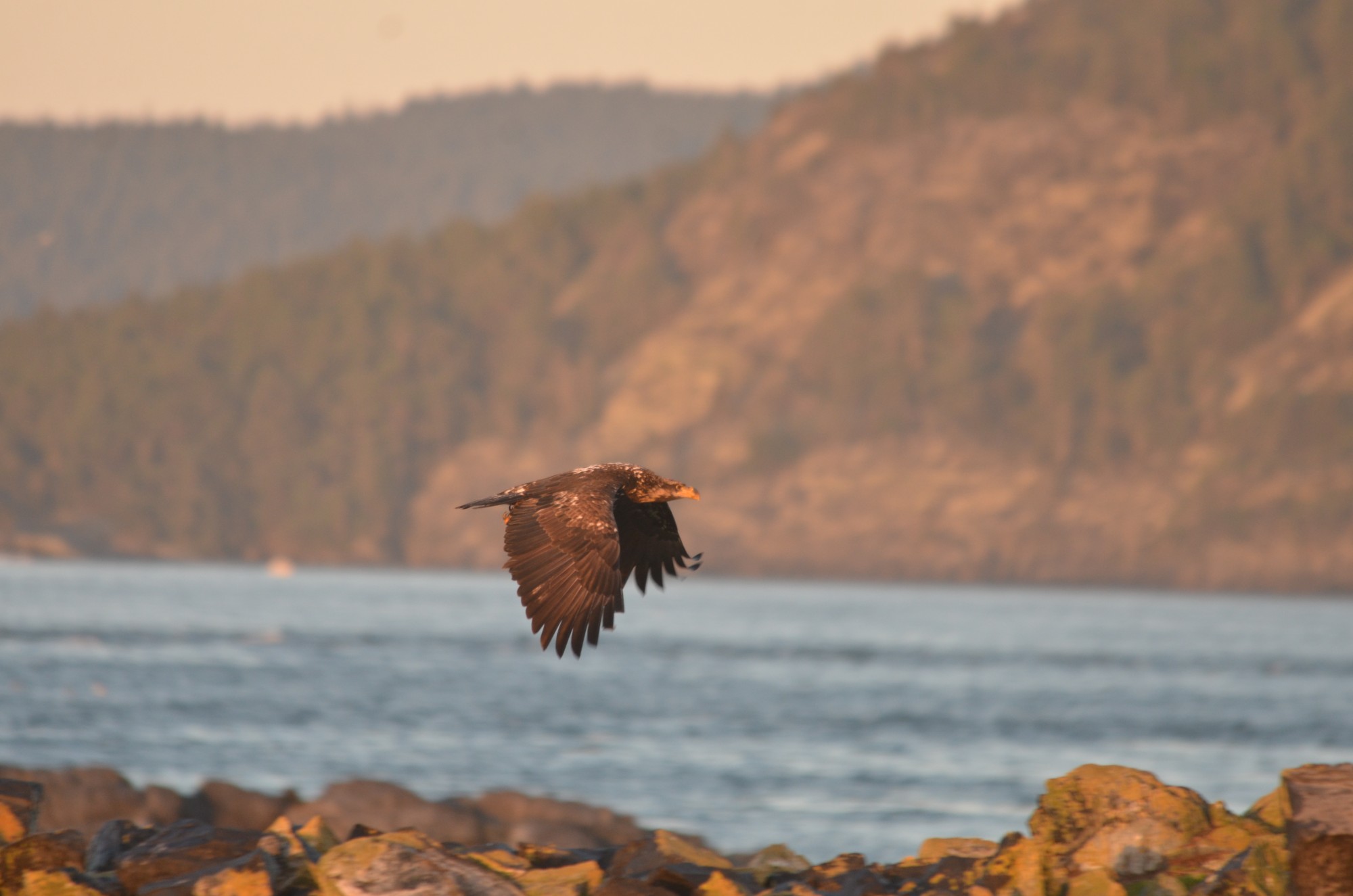
Juvenile Bald Eagle in flight

Juvenile Bald Eagle in flight

Ecological Happenings

  • A calm bright day with light winds and clear sky.
  • The female Elephant seal has been spotted on Middle Rocks. The two males and smaller Elephant seal remain on the main island.
  • Surf Scooters and Pigeon Guillemots observed to the north of the main island.
  • Whale spouts seen to the East of the rocks about 5nm out. Likely Humpbacks.

Marine Vessels

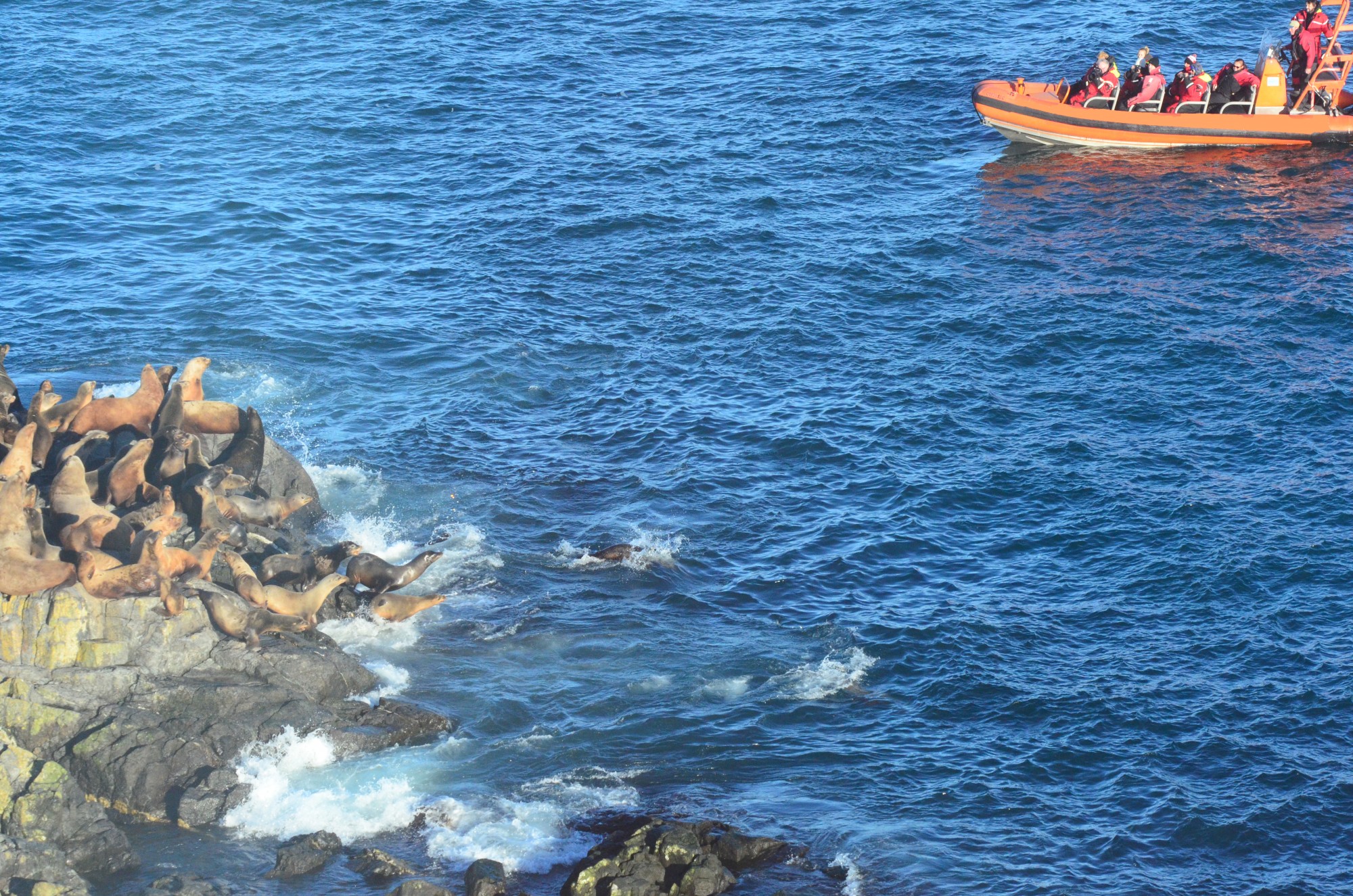
  • Two whale watching boats. Though they both respected the speed restrictions in the reserve one came too close to the rocks and caused the Sea lions to stamped into the water.
  • Several fishing vessels just outside the reserve.

Maintenance

  • Photo voltaics and windows to main house cleaned.
  • Rain-washed driftwood chainsawed into lengths for further rain-washing, splitting and drying.
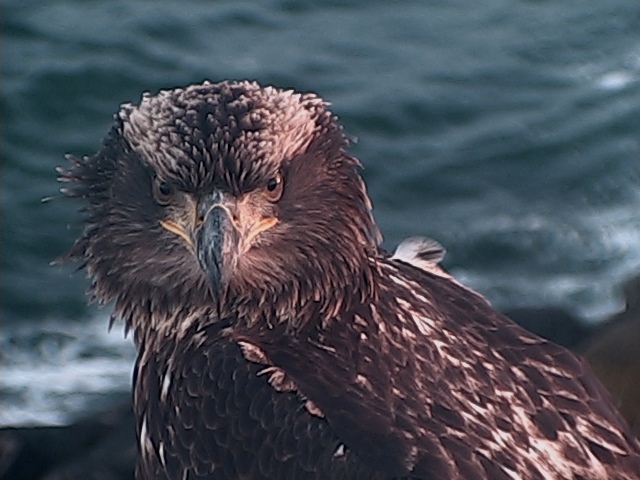
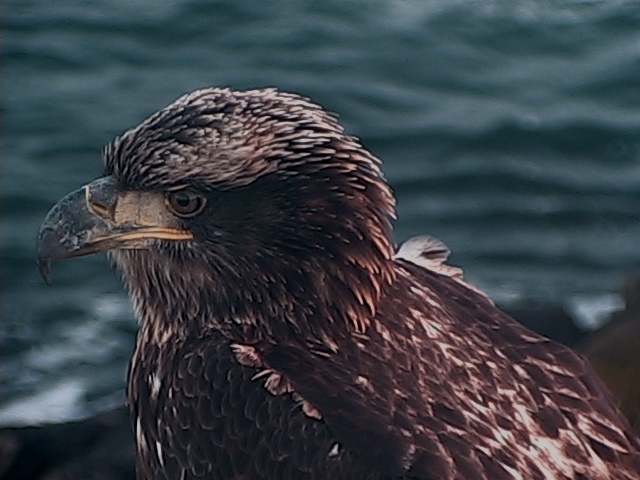
Juvenile Bald Eagle

Juvenile Bald Eagle at camera 5

Juvenile Bald Eagle1

Juvenile Bald Eagle2

Whale watching boat comes too close and causes Sea lions to stamped

Whale watching boat comes too close and disturbs the Sea lions causing them to stamped into the water

Brandt's and Double-crested Cormorants

Brandt’s and Double-crested Cormorants

Sea lions looking shabby, but just molting

Sea lions looking shabby, but just molting

1% for the Planet Donor Visits

Ecological Happenings

  • 6 winter plumaged Pigeon Guillemots spotted today.
  • Most of the Sea Lions were not around the island late this afternoon. The rocks around the island are bare!
  • Two of the Elephant Seals are back hanging out at Middle Rocks.
  • Weather turned today, with light fog and rain.

Visitors

A 1% for the planet donor was given a tour of the island today by Chris Blondeau. There were a total of 5 visitors.

No marine vessels today

Pigeon Guillemot

Pigeon Guillemot in winter plumage