Storm


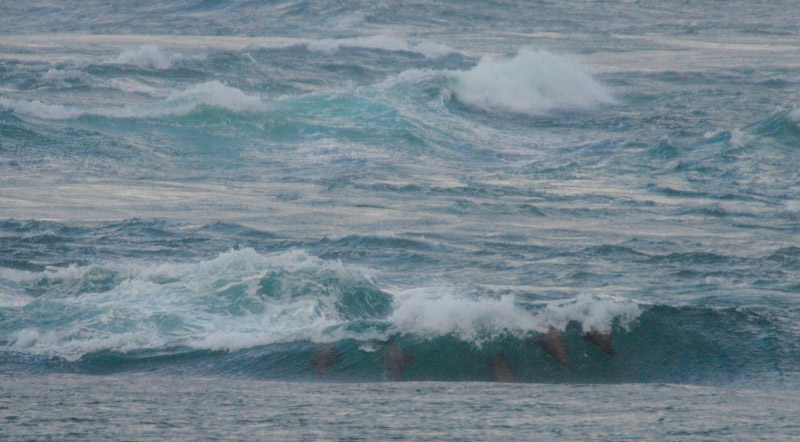
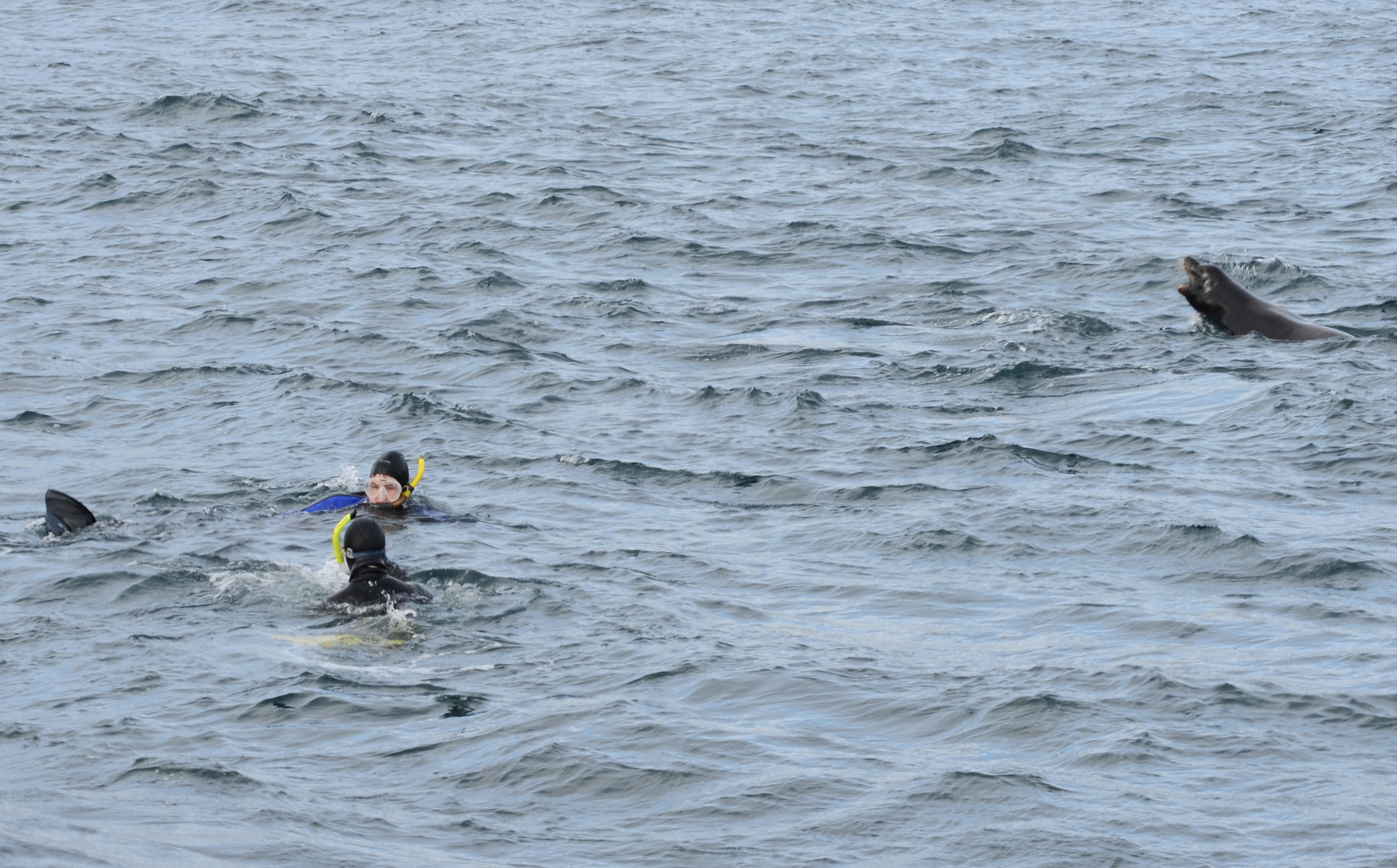
Westerly swells near middle rock, Northern sea lions surfing.
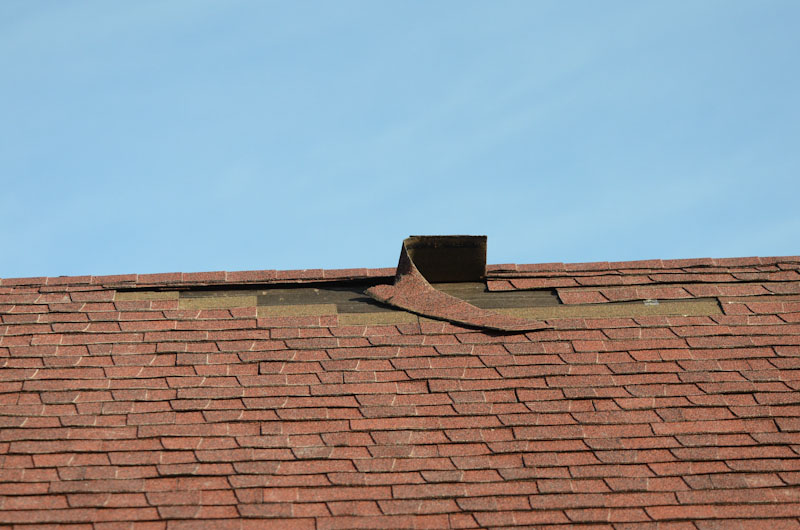
Storm damage to roof of Science Centre building.

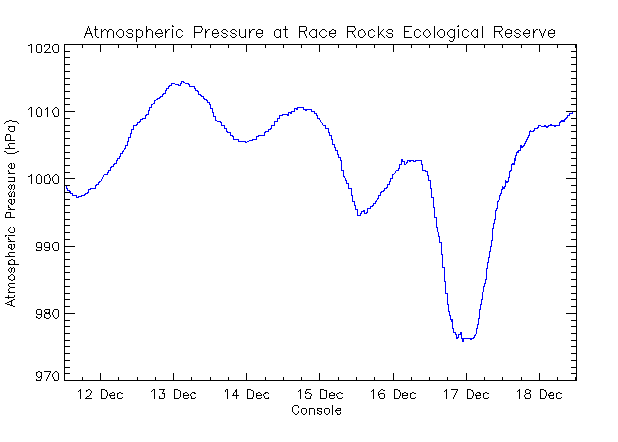
On Dec 16th in the afternoon a low pressure system moved in right over southern vancouver island bringing Easterly winds that exceeded 50 knots (measured from tower) and then switched 180 degrees, within a few hours over midnight, to Westerly winds toping out also over 50 knots the morning of Dec 17th.  As shown above atmospheric pressure reached a low of below 980 hPa, one of the lowest readings i have seen out here.
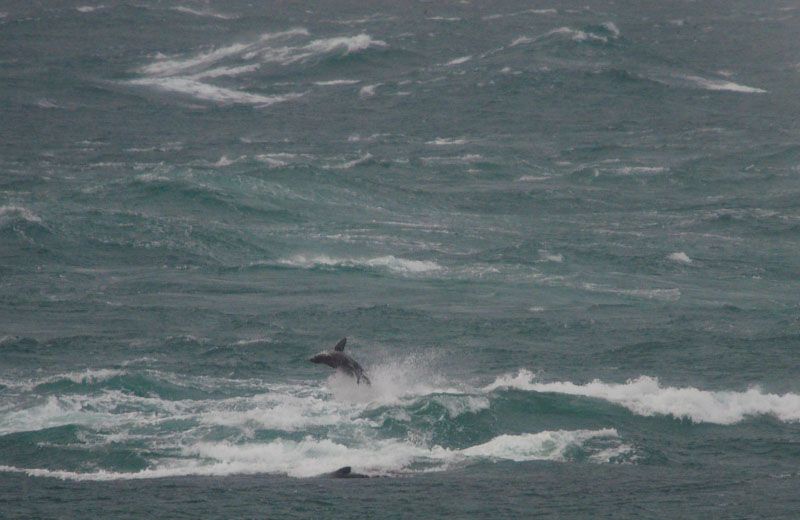
Flying sea lion

The westerly winds brought several dumps of hail and rain and created good surf conditions for Northern sealions to catch a few waves. Several shingles were blown off the Science Centre building on both the  South and North sides of the roof.
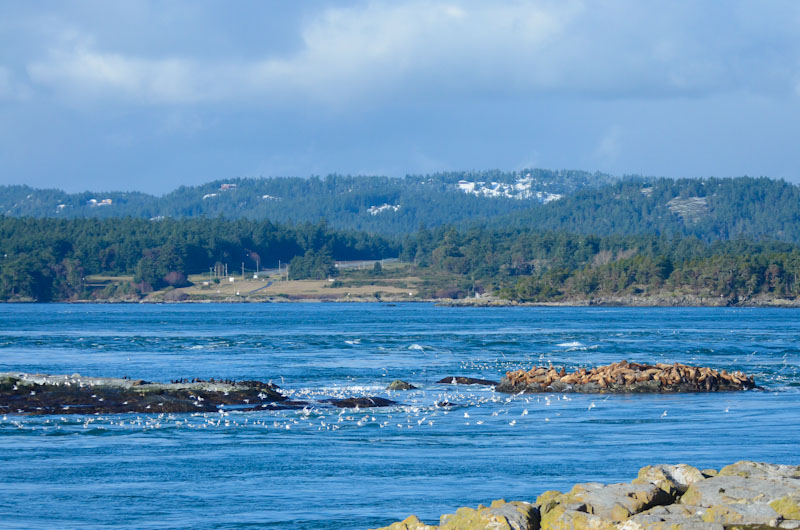
Fresh snow on vancouver island behind sea lions, gulls and cormorants on West and Middle rocks.
Pelicans

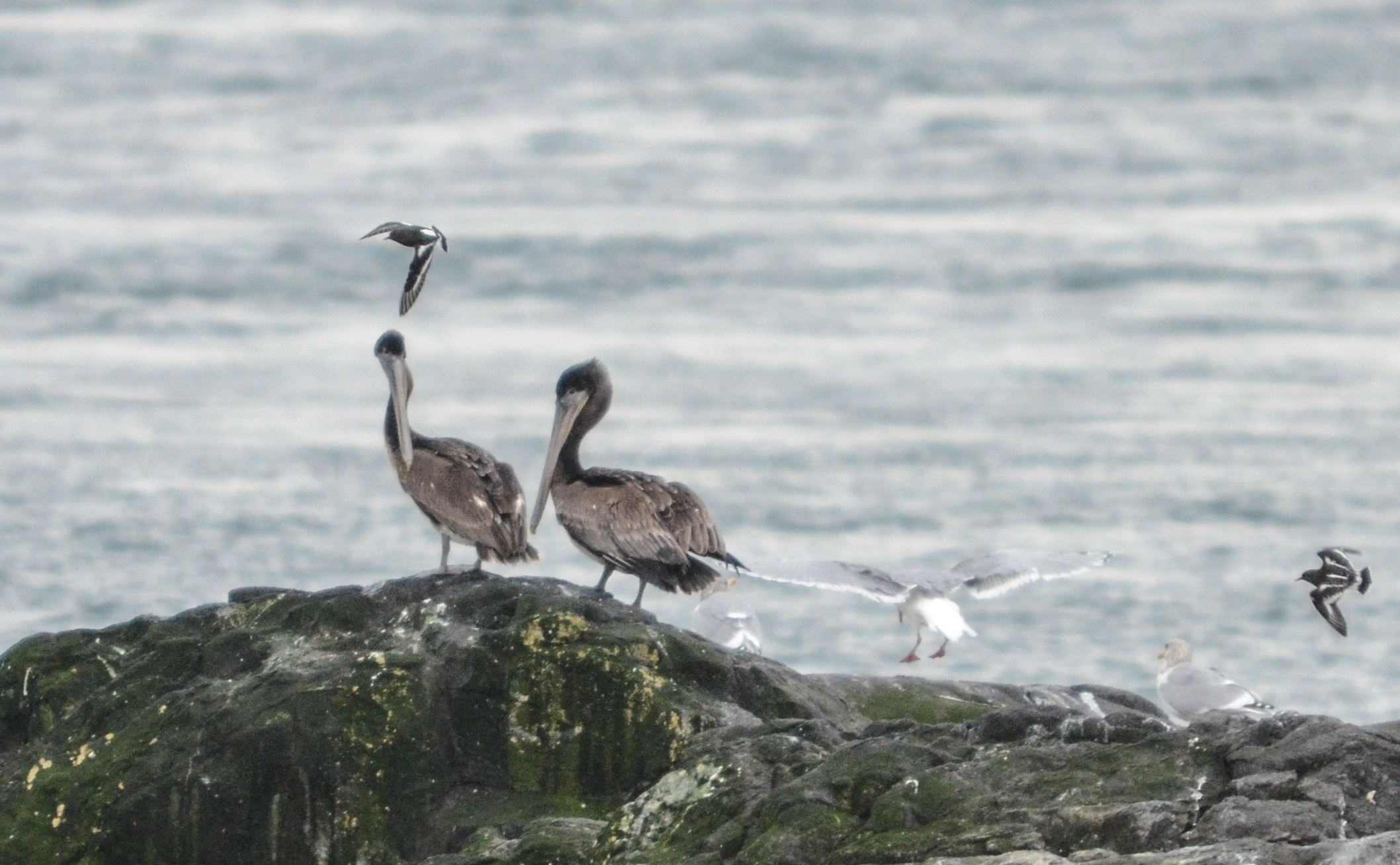
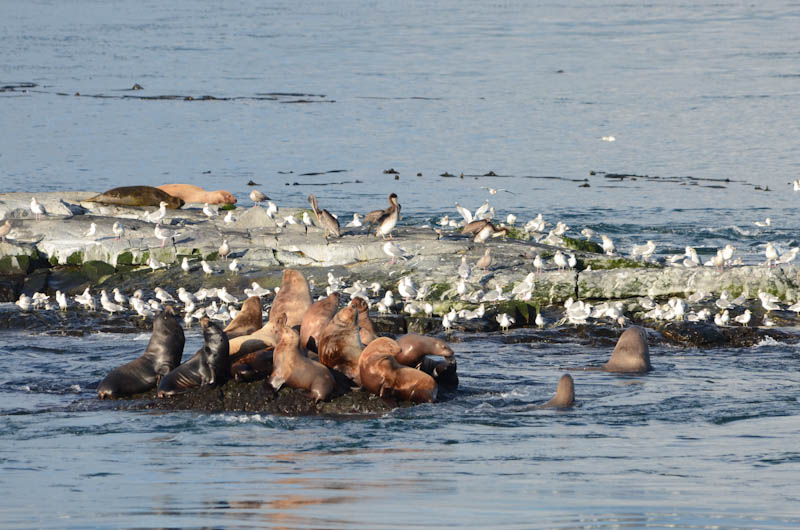
A couple of California sea lions (dark) and Northern sea lions with 3 pelicans and an elephant seal in the background on west rock Dec 13

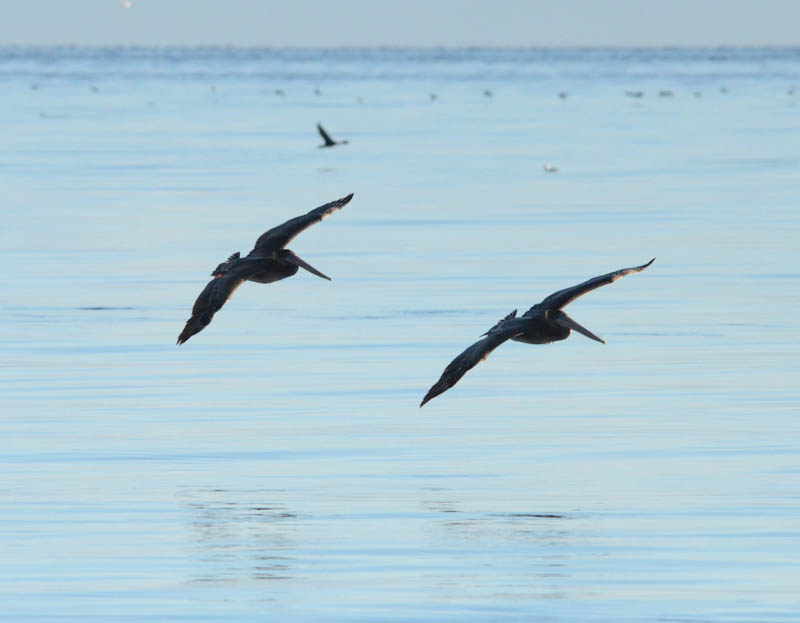
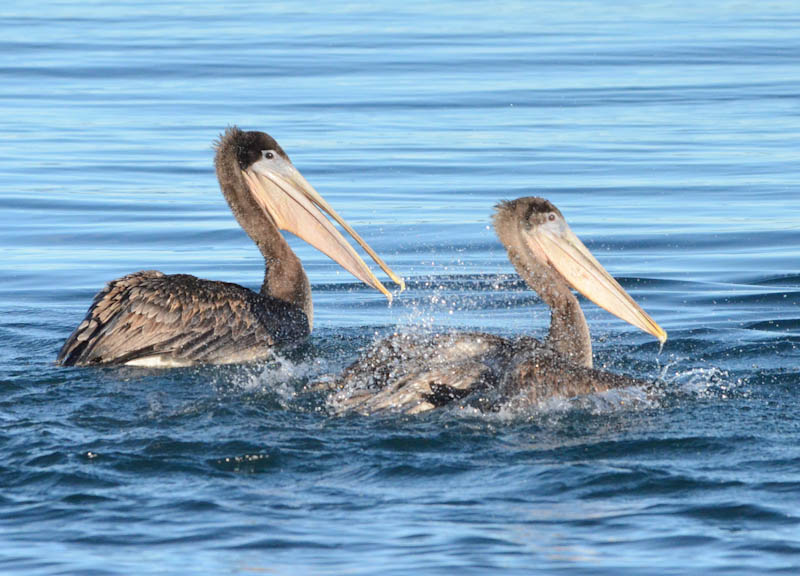
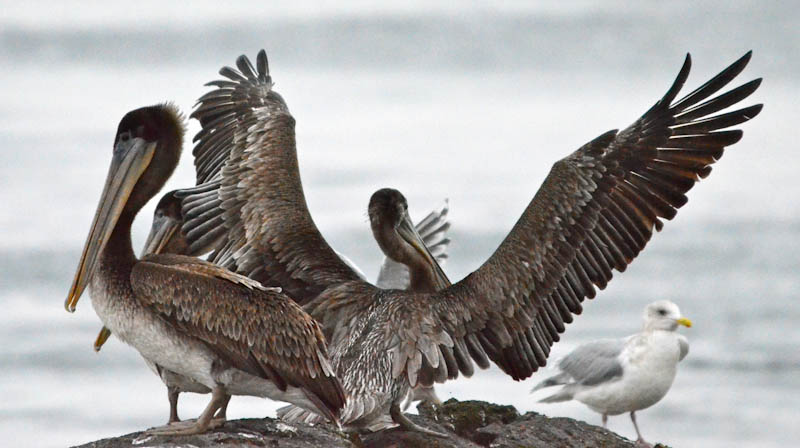
Pelicans have been in the reserve again Dec 13 and 14th.  There were up to 5 individuals, I was not able to see tags on any of them.

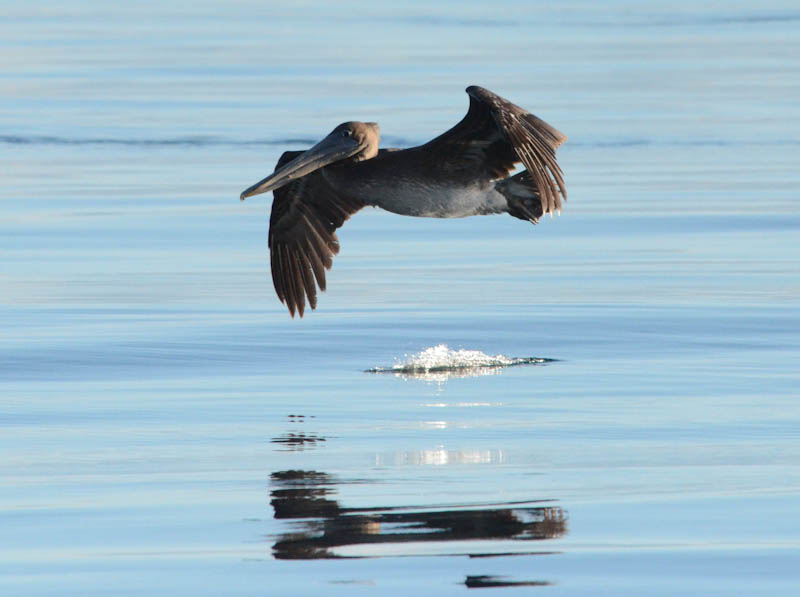
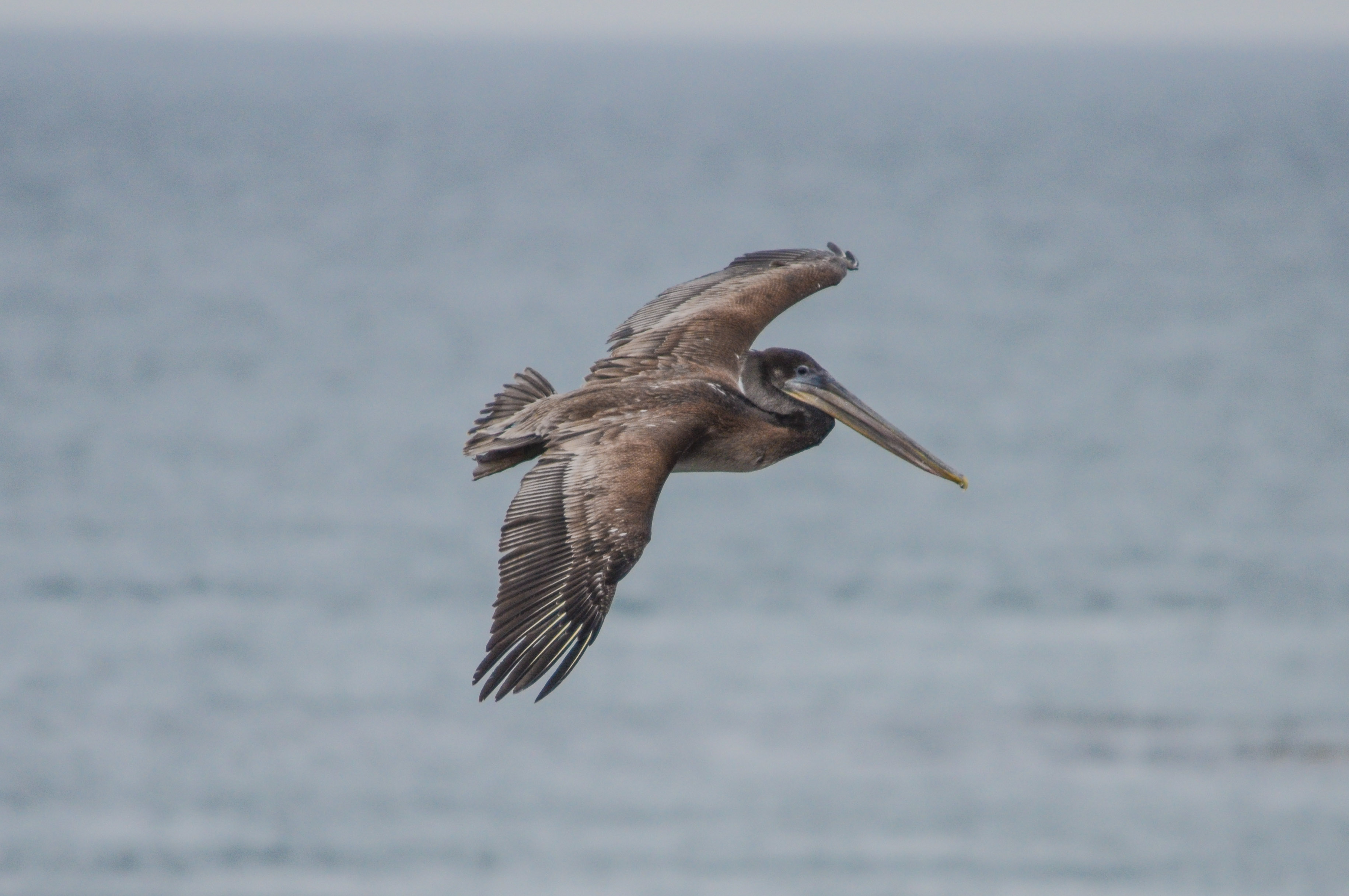
It is impressive to watch these birds, especially in flight.  They apparently have a wingspan of 6 to 8.5 feet.  They glide within what looks like a couple of feet of the water so when they flap their wings the tips will often touch the surface. 

touching the surface while flying low

Animal Notes and Census

A few days ago we had two unusual visitors to our waters. Two Brown Pelicans (Pelecanus occidentalis) spent several days on Great Race and North Rocks. Brown Pelicans, though the smalles of pelicans, are enormous birds weighing up to 6 kilos and measuring up to 135 cms with a wingspan of up to 2.5 meters.

A visitor from warmer climes….

Northern vacation to Race Rocks….

We have had two other unusual visitors in the last week. I discovered a Barred Owl in the boathouse attacking a Starling (another recent arrival), and Pam our avid photographer friend from England got several pictures of Peregrine Falcons that came through hunting sparrows and starlings. Pam’s pictures can be seen at: http://www.flickr.com/photos/66339356@N00/sets/72157628747376295/

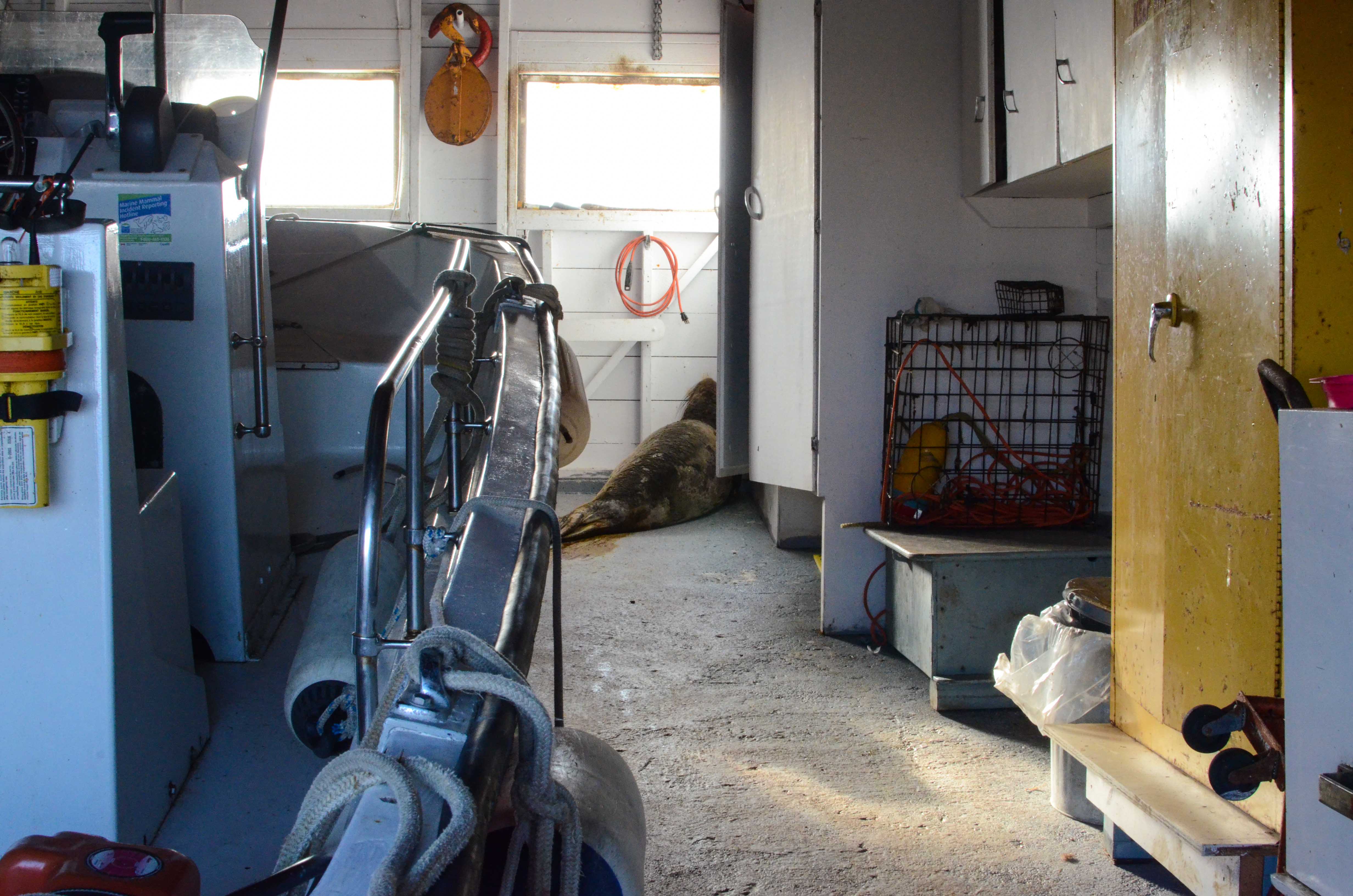
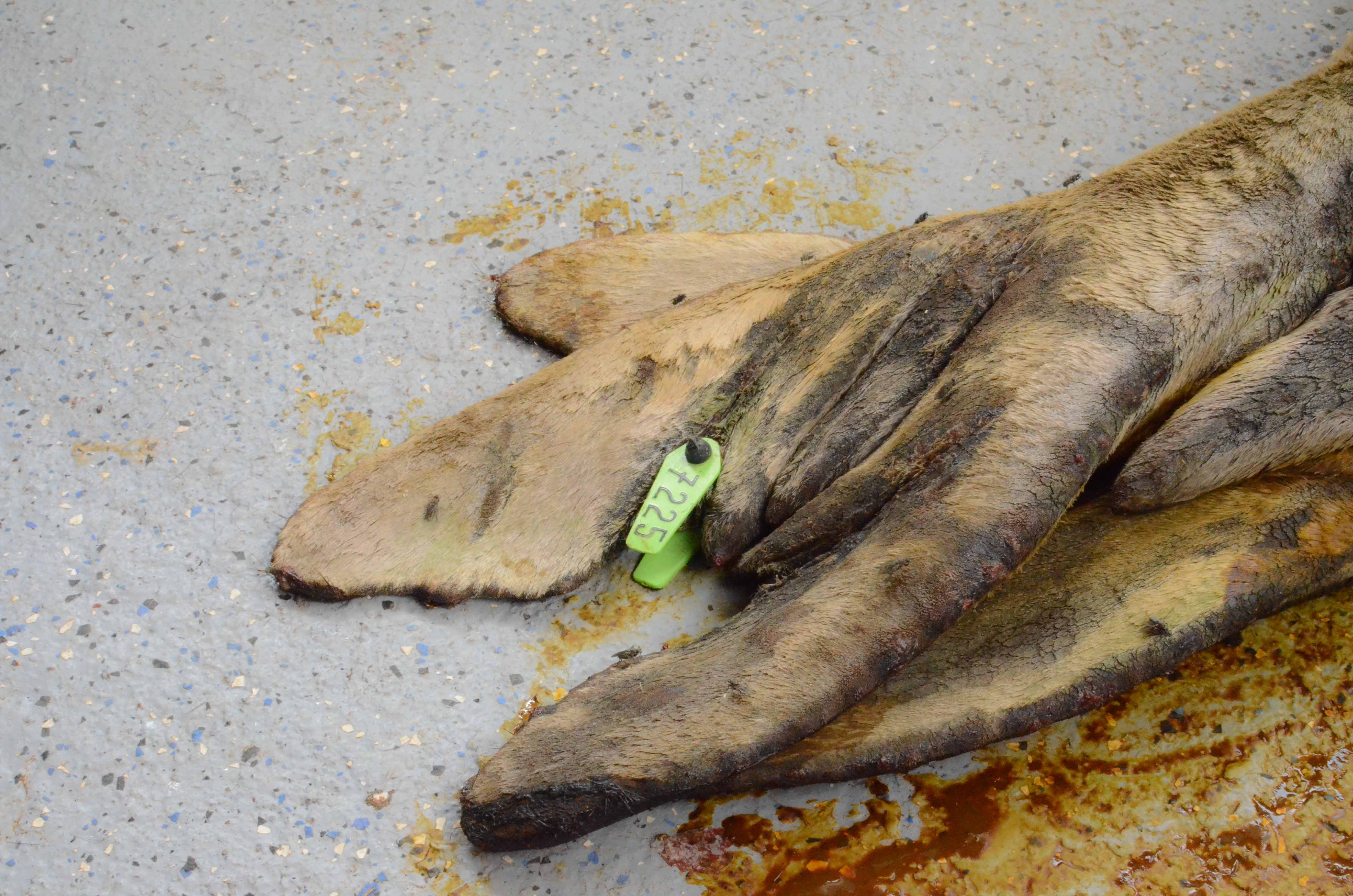
Another tagged e-seal showed up in the boathouse yesterday.

Might as well hang out somewhere cozy…

Tagged 7225

 Animal Census Nov 8 2012

Species Current Population (Est)
Stellar/Northern Sea Lion  30
Elephant Seal  7
Harbour Seal  200
California Sea Lion  50
Glaucous-winged Gull  150
Herring Gull  300
California Gull  30
Heerman’s Gull  80
Black Turnstones  100
Surfbird  6
Pelagic Cormorants  40
Brandt’s Cormorant  30
Killdeer   6
Dunlin  16
Harlequin Ducks  20
Canada Goose  14
Bald Eagle  3
Black Oyster-catcher  40
Sanderlings  8
Starlings  8
Race Rocks Eco-Guardian  1
Rhinoceros Auklet  100
Common Murre  100
Sparrows  20
Brown Pelican  2
Barred Owl  1
Peregrine Falcon  2


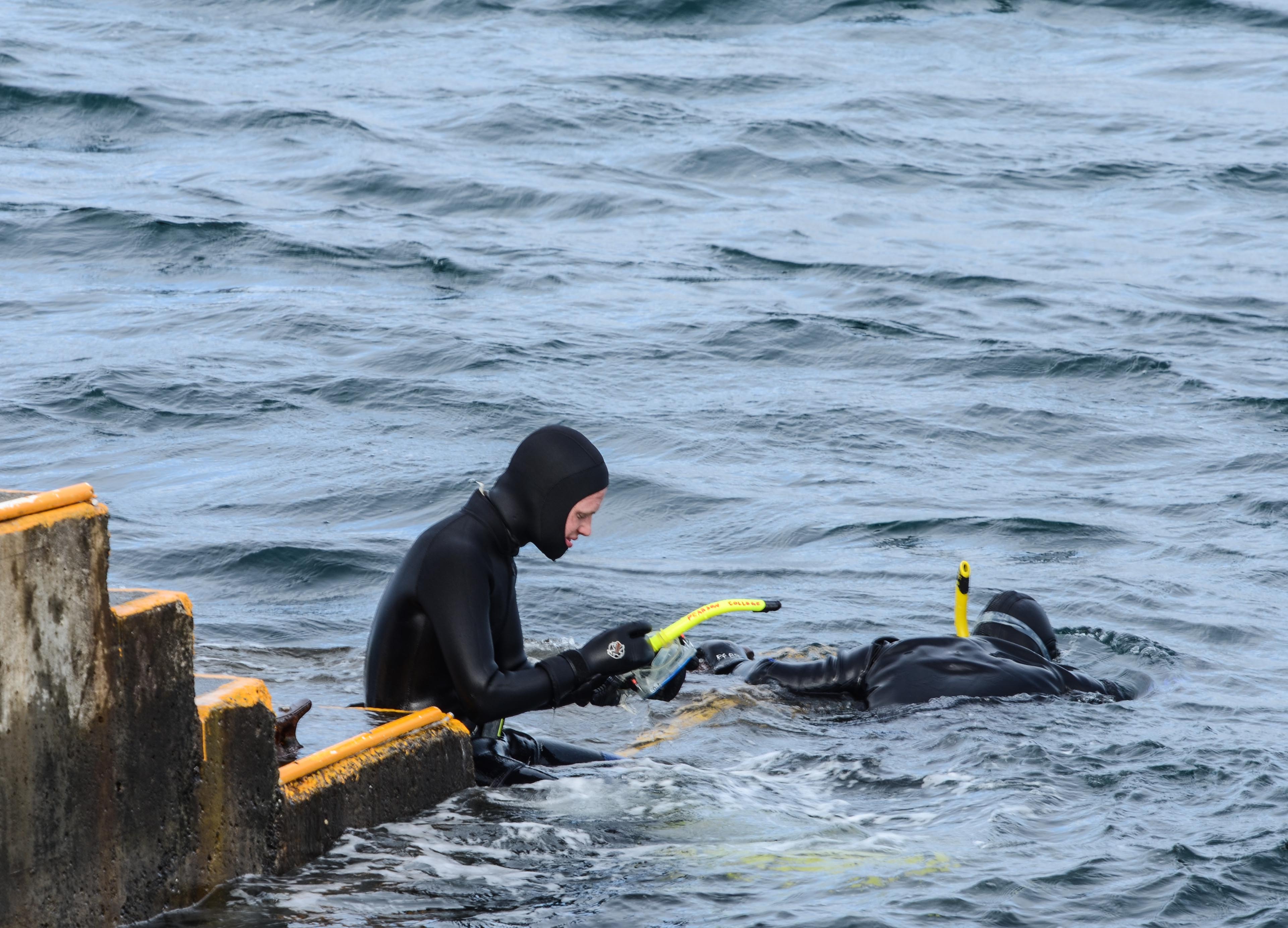
Students snorkelling with sea lions

Student snorkelling with Sea Lions

This week I am lucky to have the company of some great students from Pearson College. Along with the privilege of living out here for a week, they are helping me with some of the maintenance duties and sharing some adventures. Unfortunately for them the sea lions have all moved to their side of the island and are surrounding their house, making for some noisy nights! But they have front row seats to a spectacle that is better than any TV show.

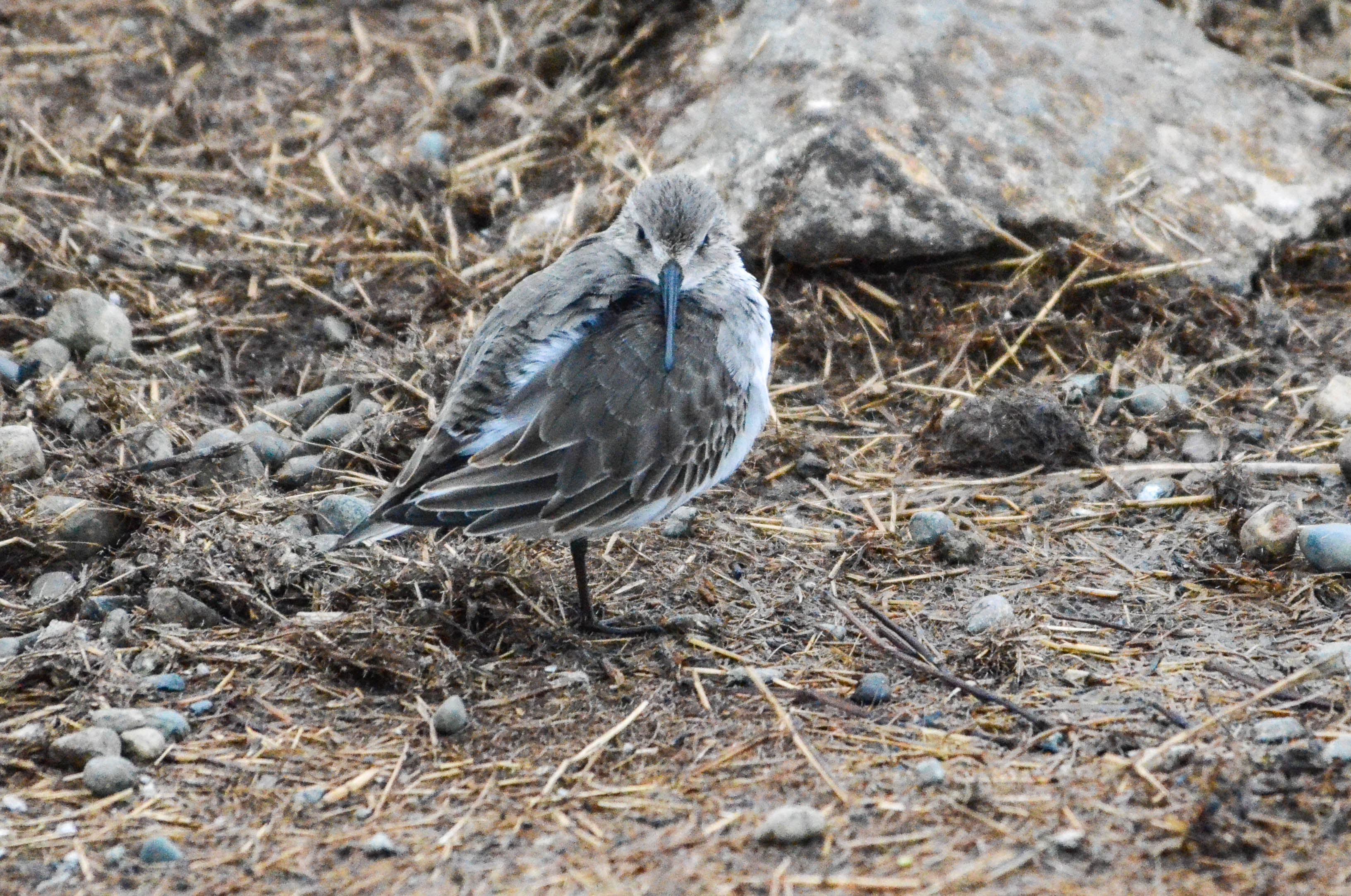
These days birds are showing up in winter plumage and look different from when they passed through in the spring.

A Dunlin in winter plumage.

We’ll have an animal census for you in just a couple of days… stay tuned.

A Blind Sea Lion!

I have enormous respect for pinnipeds. They are intelligent, resourceful and social animals and they are incredibly hardy. In my time here I have seen all manner of wounds and entanglements, but I never imagined a sea lion could survive in the wild while being totally blind. I first noticed this individual because it has a particularly reddish pelage, and it’s mannerisms appeared a bit different. I took a few pictures, but it was only when the other sea lions saw me and scattered that I noticed how different this fellow is.

This small Steller Sea Lion is completely blind.

Sea Lions appear to recognize injuries and fitness levels in one another. Absent in the interactions with compromised individuals are the threat displays and ritualized aggression of the bulls, replaced with what appears to be a kind of curiosity and concern (these may not be appropriate scientific terms). That said, since sea lions (and all higher order animals) have emotions, and as altruism has been observed in many many species, I don’t think it unreasonable to conclude that the words “curiosity and concern” aren’t too far off the mark.

A Unique Sea Lion


Whatever the case let us keep our fingers crossed for the well-being of this amazing and resourceful individual that has managed to survive in spite of extraordinary odds against it!

Changes in the weather

The first gentle sou’east weather pattern with clouds and rain occurred in the last few days. The rain is most welcome to wash away a summers worth of gull and pinniped excrement. This island can be smelled from a kilometer away!

At the edge of the world…

Surrounded by ankle-biters!

About 2/3s of the sea lions have left since the weather change. We are down to around 140 animals, perhaps 75 are Stellers down from the 175 of 10 days ago. Californians make up the remainder down from 225. Quite a few juveniles have showed up in the last week.


More birds are showing up. In the last few days several Harlequin ducks and a few dozen cormorants returned to dot the shoreline with the oystercatchers. Flocks of Bonaparte gulls feed on minnows in the eddies, forced to the surface from the deeper water by murres and rhinoceros auklets. Killdeers are spending the nights here. I hear them when I shut down the generator at night. Close to 30 sparrows are flitting about, and yesterday a few eagles and ravens were hunting and scavenging. Late developing gull chicks are on the menu. The flock of turnstones forages in the sea lion haulout ignored by the sea lions.

Tour boats are becoming less frequent and sport fishermen are waning too… yesterday for example a pod of orca passed with only 2 boats watching them rather than 8-10.

Animal Census

Species Current Population (Est)
Stellar/Northern Sea Lion 175
Elephant Seal 8
Harbour Seal 200
California Sea Lion 200
Glaucous-winged Gull 150
Herring Gull 30
California Gull 6
Surfbirds 1
Black Turnstones 40
Western Grebe 2
Brandt’s Cormorant 30
Sparrows 12
Horned Lark 5
Harlequin Ducks 1
Canada Goose 8
Bald Eagle 1
Black Oyster-catcher 10
River Otter  1
Pearson Students/Staff  16
Race Rocks Eco-Guardian  1
Rhinoceros Auklet  100
Common Murre  100

The Sad Reality

Sea Lions are tough and resilient animals. They can deal with sharp rocks and pounding waves but like many animals they have difficulties with human plastic products. Sometimes they will swallow salmon that are already hooked, or get snagged by a jigging hook, or they get entangled in strapping bands or nets. The consequences are usually disastrous.

This Steller is dealing with his entanglement but I hope he doesn’t grow too much bigger…

Education is a very important piece in preventing marine debris from getting into the ocean in the first place.It is often a difficult decision when to intervene because of the real possibility of an animal drowning when darting, and often the debris does break off on its own over time (ie many animals with scars from previous entanglements).

This is a recent snag. The animal is still healthy.

Please do what you can to ensure that plastics don’t escape into nature and that if you fish, do it far from marine mammals. The ocean is their home first.


This poor fellow has suffered for a while now.

Even a small hook can handicap a pinniped. This guy doesn’t put weight on the flipper and crawls around on his face. Likely this hook will tear out eventually.

Sept 15th..up to 175 sea lions

Today I used the new seawater pump to fill the cistern which had gotten pretty low. We de-salinate water here for household purposes as there is insufficient rain and the roofs are quite contaminated with gull poop!

The reserve is busy today with tour boats and divers. I had to call one of the companies to ask their operator to slow down at the edge of the reserve. Usually they are pretty good but occasionally a new driver doesn’t realize the reserve boundaries. More troubling are the recreational boaters who frequently speed through the reserve. The problem is that unless you are a local it is unlikely you will know the guidelines. As much as I dislike signs this seems a reasonable place for a few “5 knots” and ” No Fishing” signs. There is simply no way I can ask them to slow down from my perch on Great Race Island…

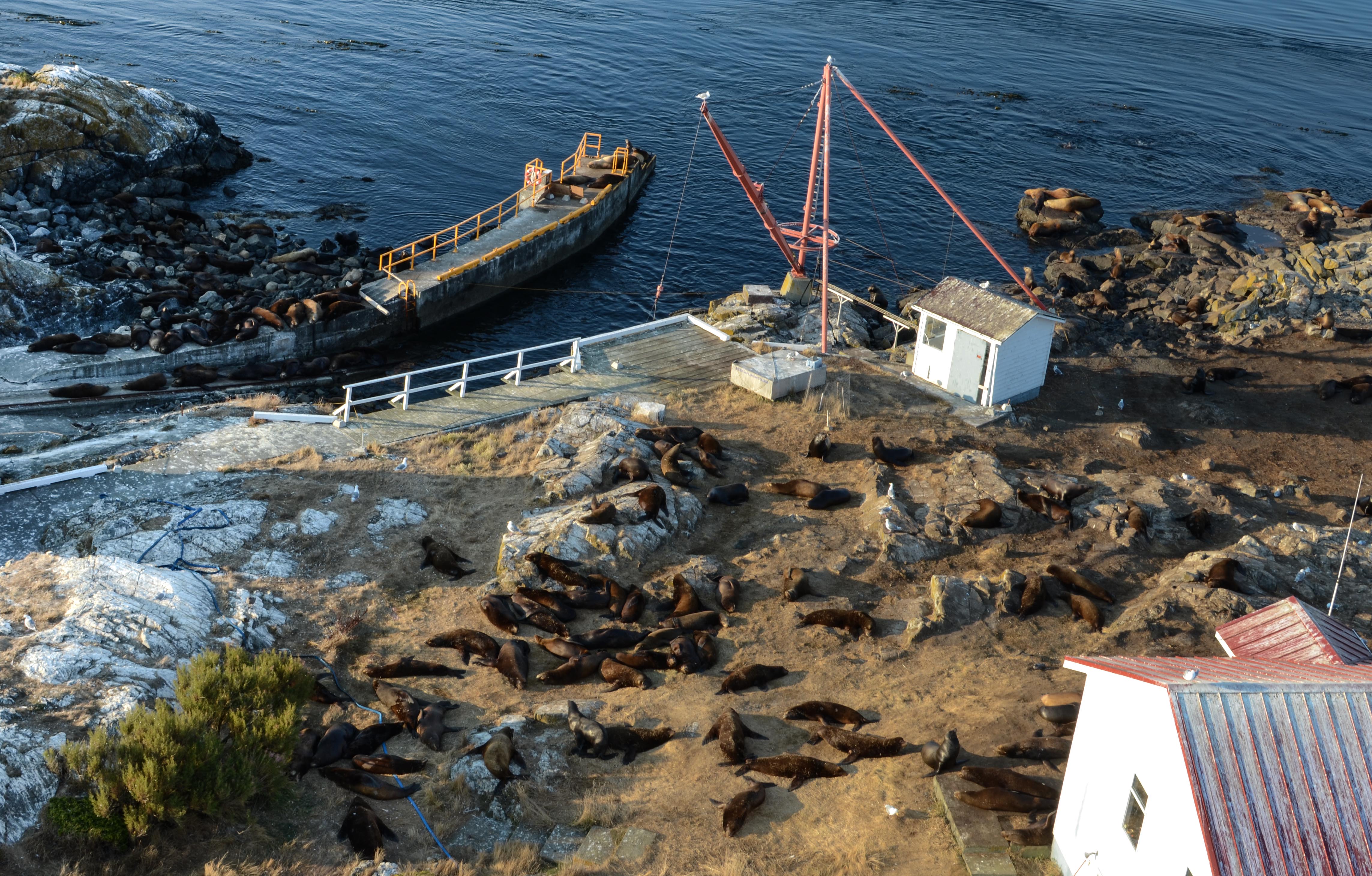
The California and Steller sea lions are here in droves. I counted more than 175 Stellers in the reserve. The vast majority are bulls but there are a few cows and in the last few days a number of yearlings have shown up. I will get some pictures for the next entry. The view from the tower shows the commotion outside my house!

Hundreds of California Sea Lions adorn the lawn.

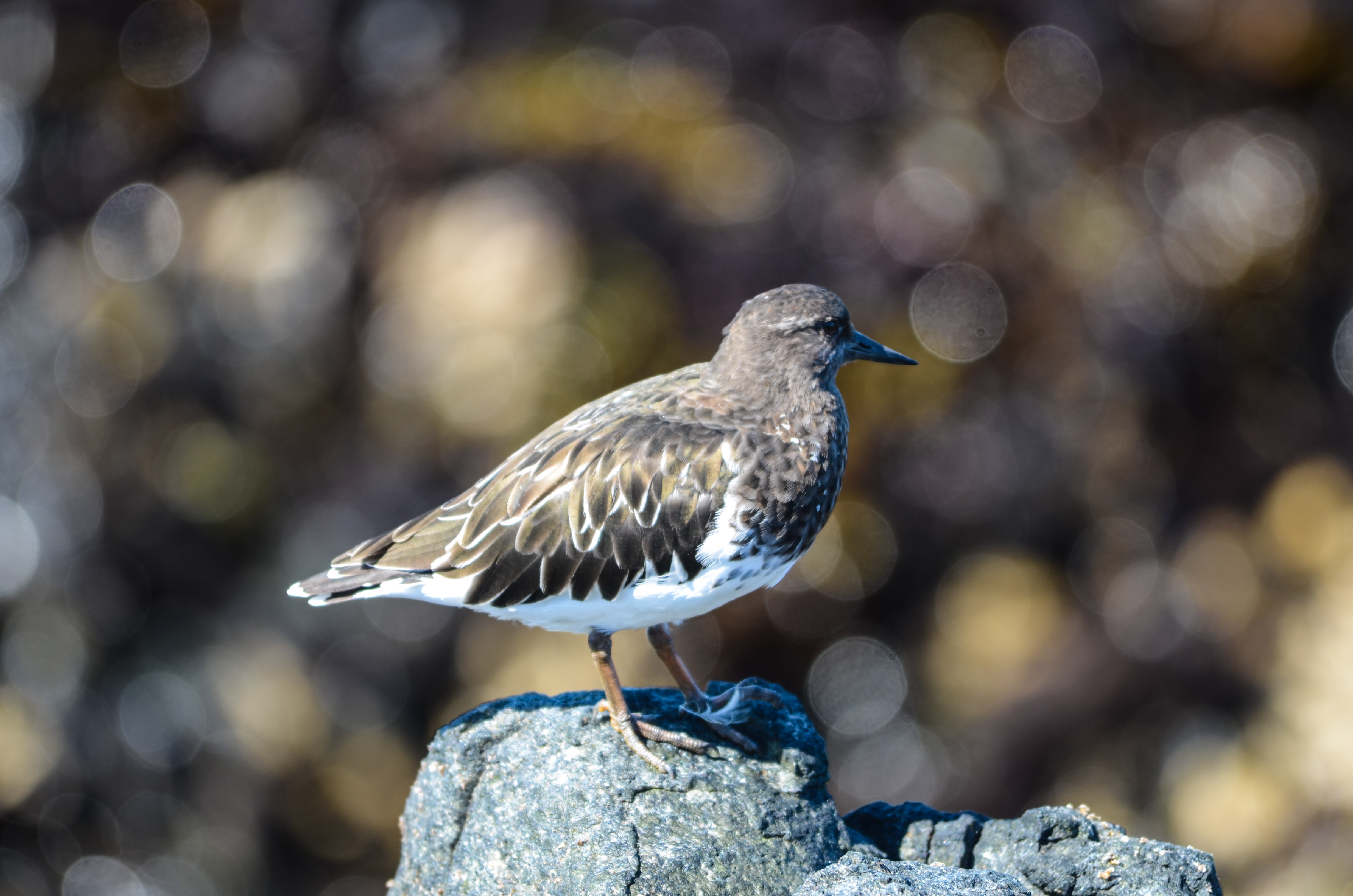
In other animal news, quite a few glaucous-winged gulls remain but i think all the chicks can fly now. A few cormorants have returned and about 50 black turnstones wander about between the sea lions picking off insects. I also observed some type of sandpiper picking insects off a dead gull chick. Very resourceful!

Black Turnstone (Arenaria melanocephala)

Sea Lion Madness

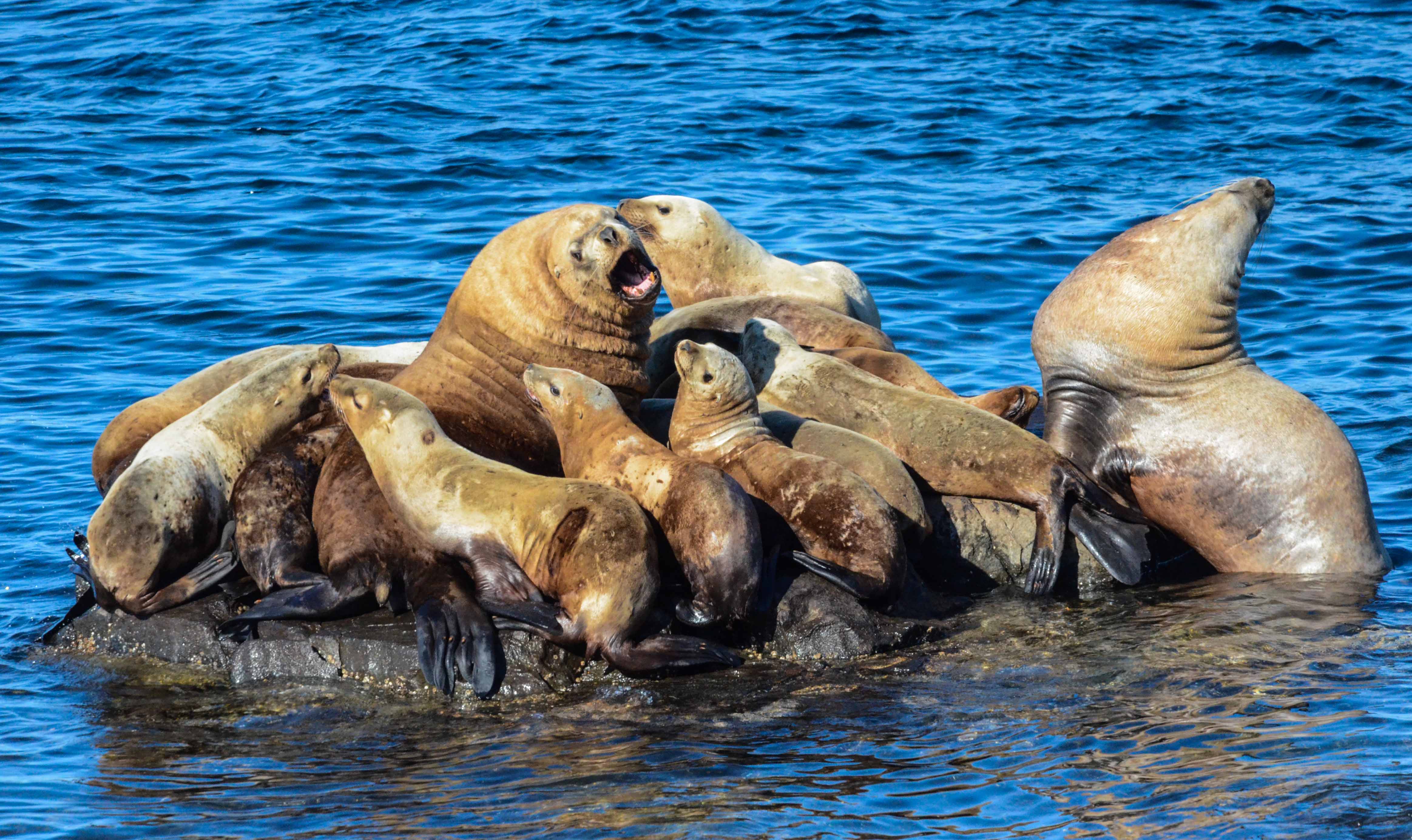
Since the gale on Saturday night, about 75 Steller and 150 Californian sea lions have been hanging out under my window in the shelter of the house. It is hard to describe just how loud and smelly it is. I wish you could witness it for yourself! Well you can at: http://www.racerocks.com/racerock/video1frame.htm

Here are a few pictures. The Steller bulls (Eumetopias jubatus) are particularly impressive. Some of them weigh in at 1000 kgs.

Huge Steller Bull


Steller in the Middle


Sea Lions are extremely social and appear boisterous and argumentative. Smaller individuals will always move for the bigger ones, though they roar, growl and hiss in protest. Clashes are very frequent but damage is rare. Most of the contact actually involves just the whiskers (vibrissae), though nips to the skin do happen. Usually a smaller one will snap back in defence then lurch away across the backs of the sleeping neighbours who lazily complain til the commotion stops and they drift back to sleep. 30 seconds later it happens again… all day long and most of the night too!

Sub-adult males playfighting