It is all in the branding

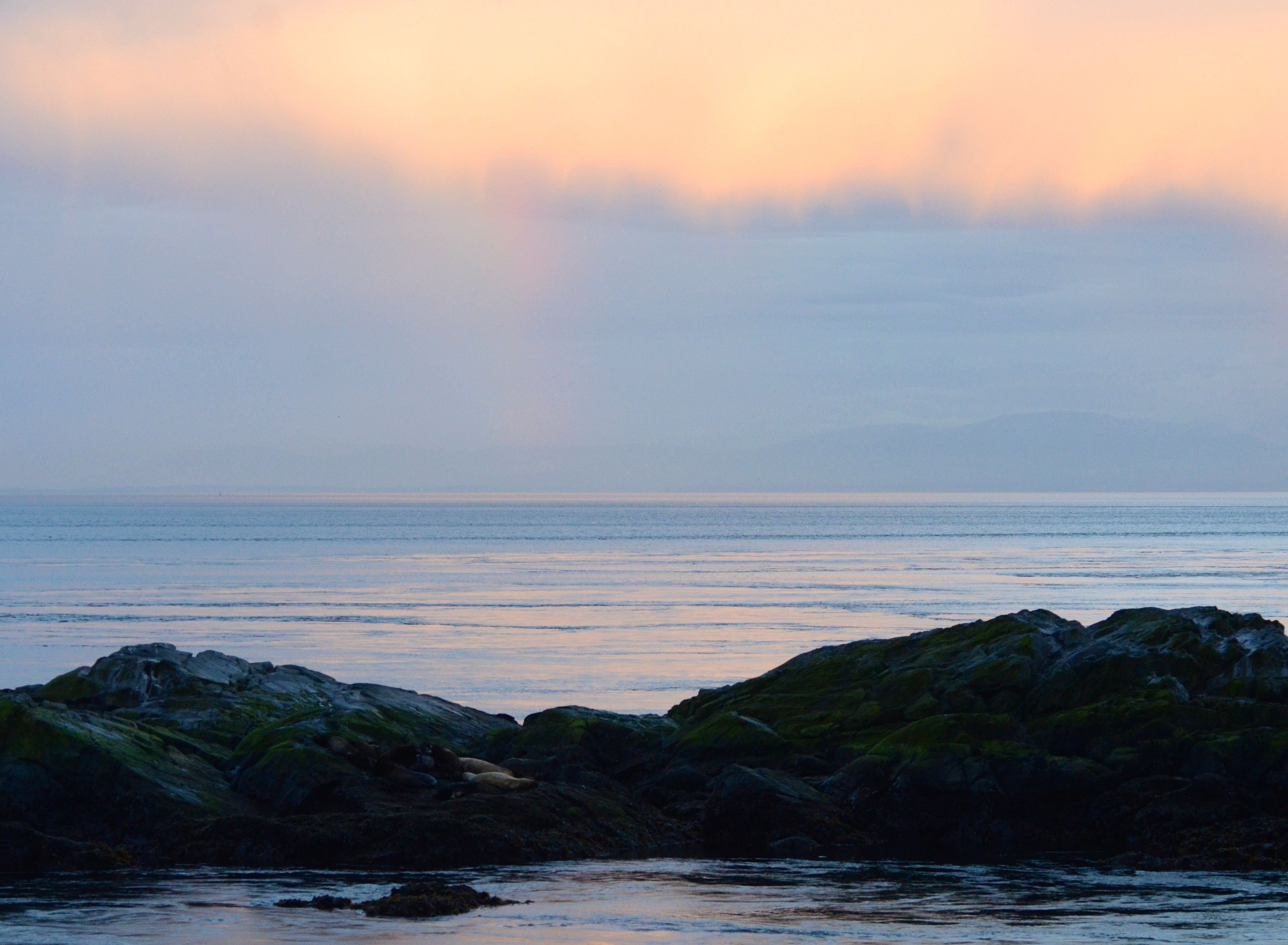
The weather was chilly today but bright, with breezes from the east and west and a few points in between. As the sun sets, brilliant pinks and orange light up the bottom of purple clouds and the wind has picked up to 10 knots from the west. The barometer started a slow climb for the first time since Thursday and the forecast is for a warmer, sunnier day tomorrow.

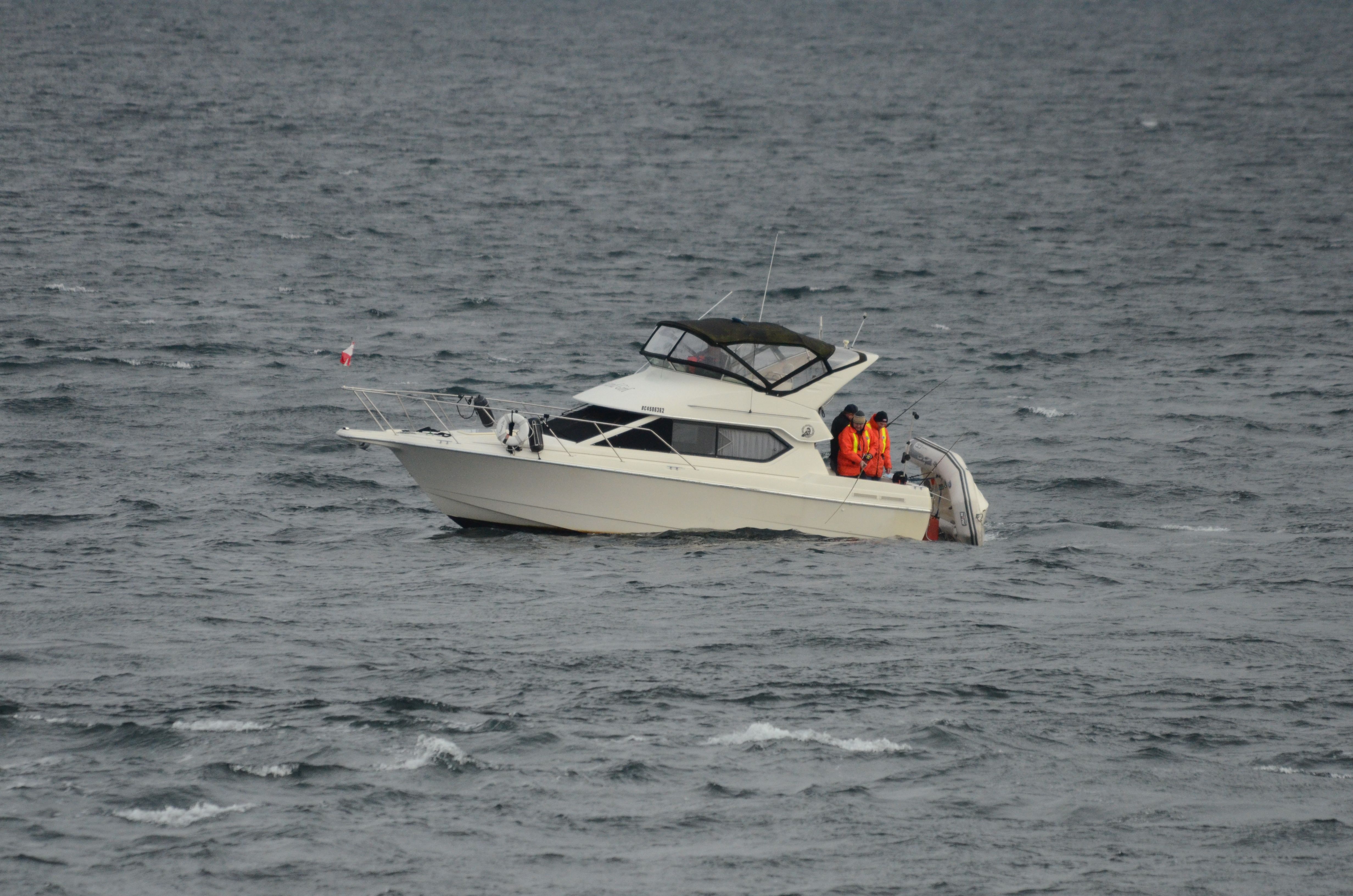
There were some very persistent sports fishers jigging in the Rockfish Conservation Area today: five men in a fibreglass run-about with an old engine and a kicker.

No tour boats were sighted today.

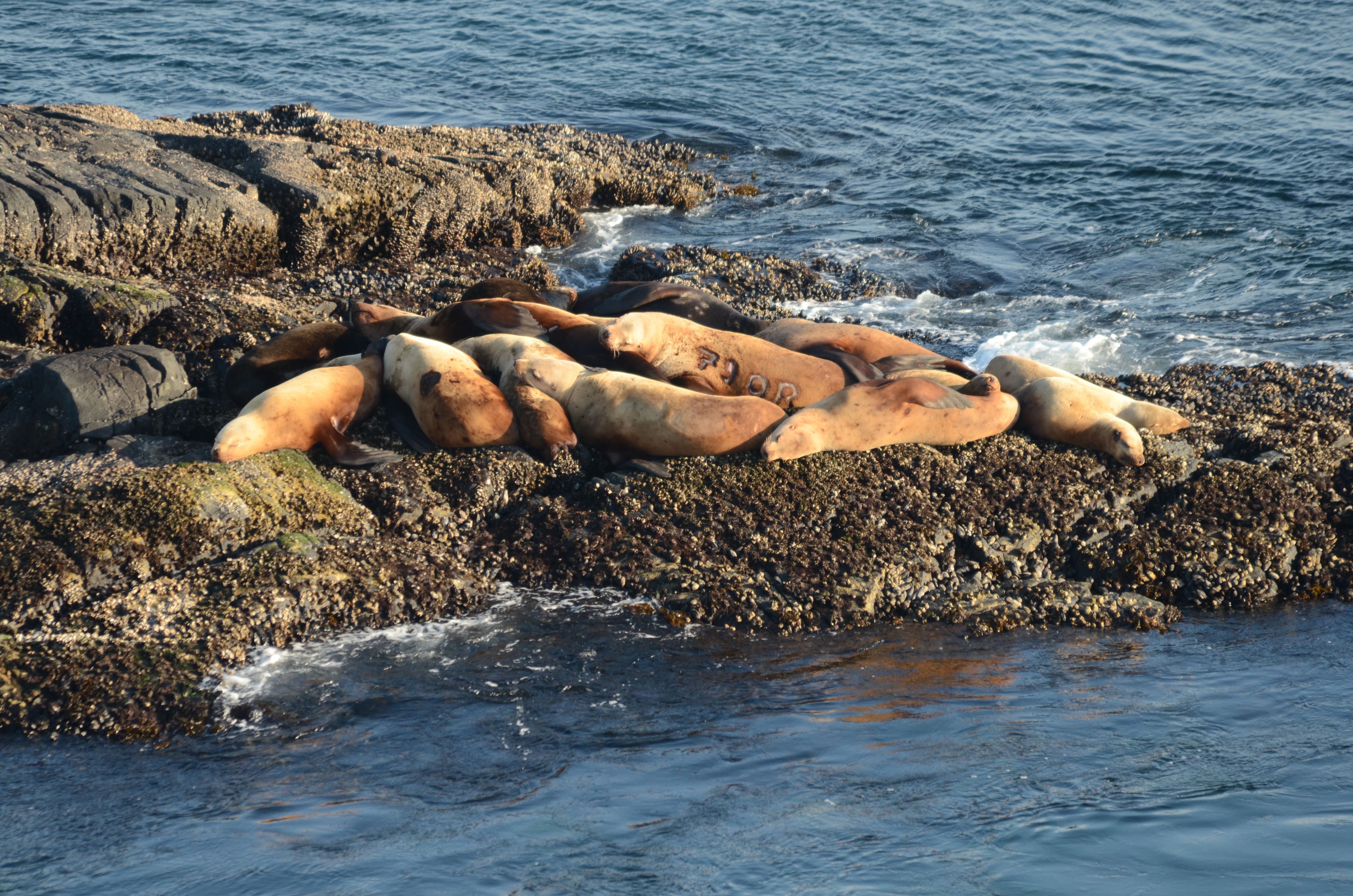
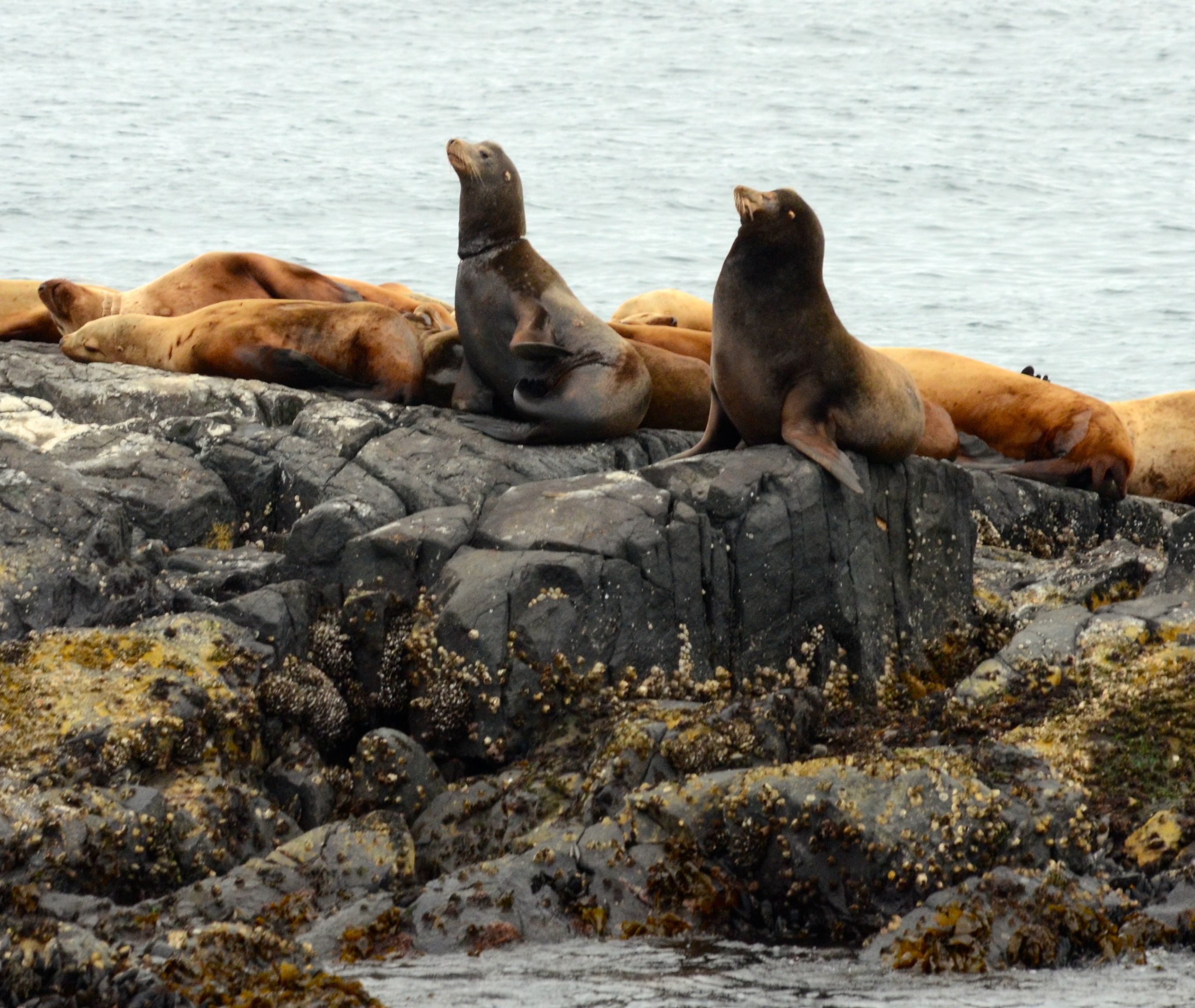
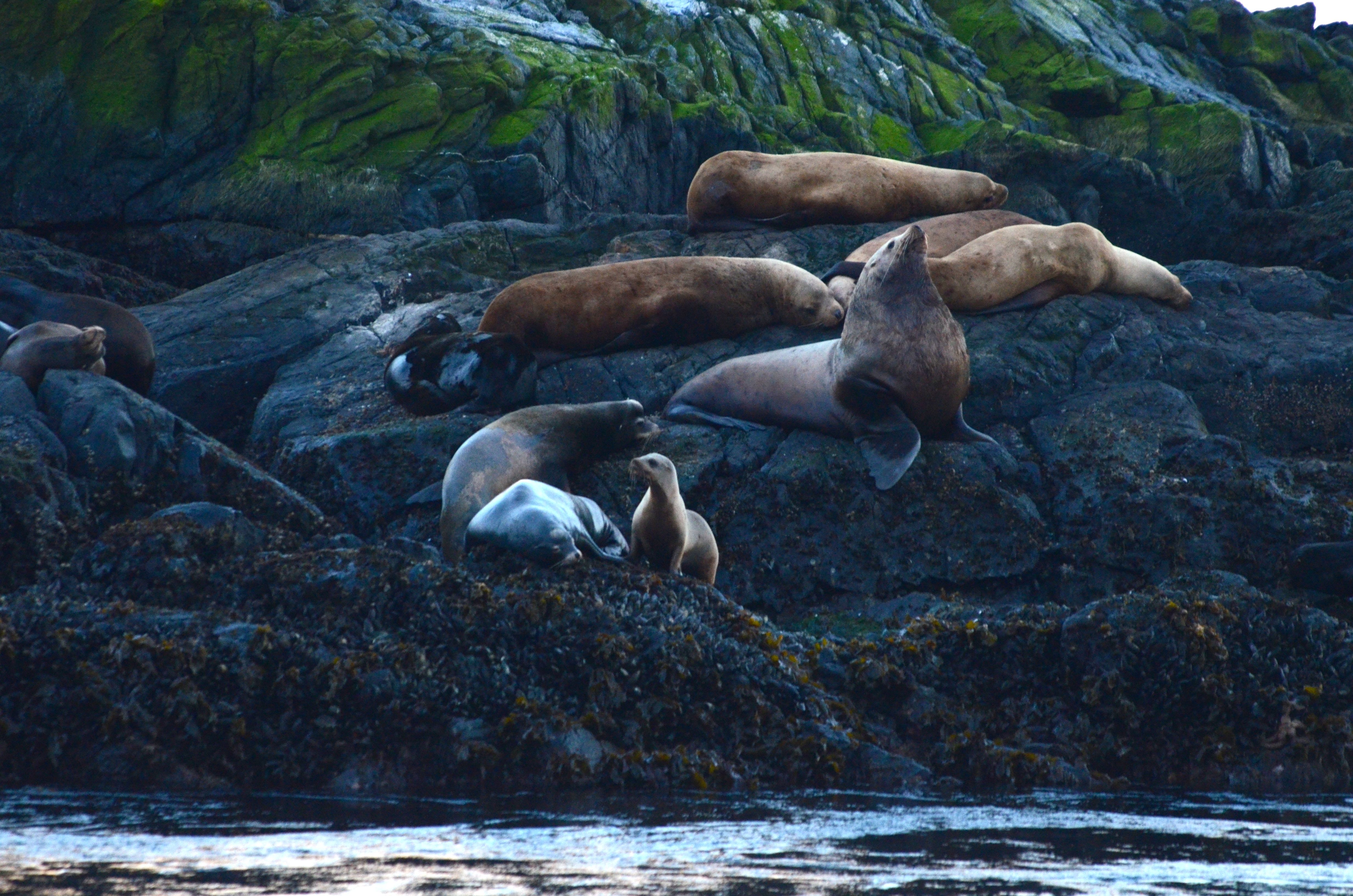
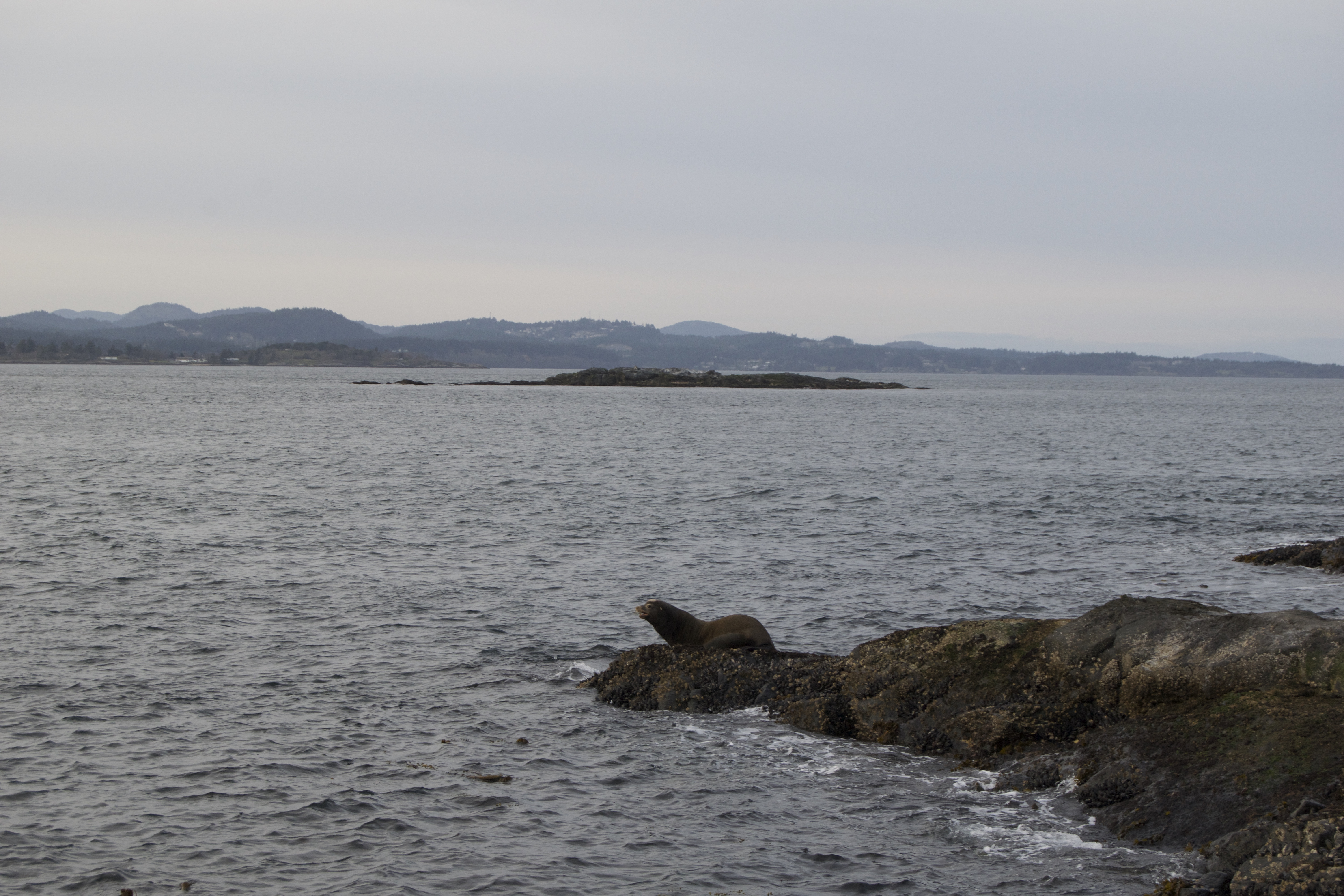
Another three branded sea lions, two Northern and one Californian were spotted today but only one photograph was good enough to be unequivocal – a Northern (or Steller’s) Sea lion #975R born at Rogue Reef, off southern Oregon in 2011.
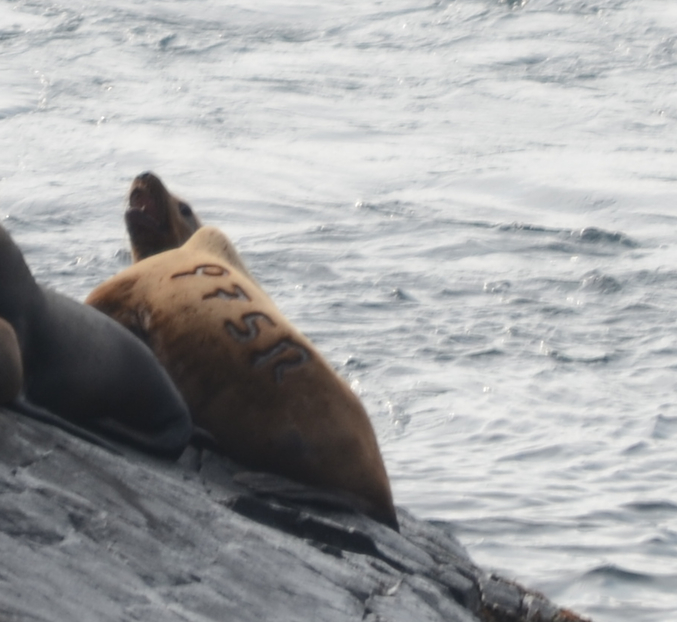
Another Steller's Sea Lion branded as a pup in southern Oregon.
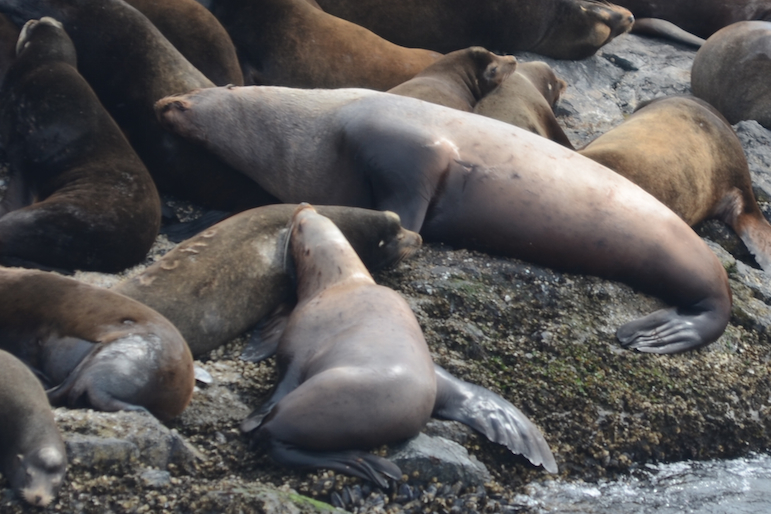
Another Steller’s Sea Lion branded as a pup in southern Oregon.

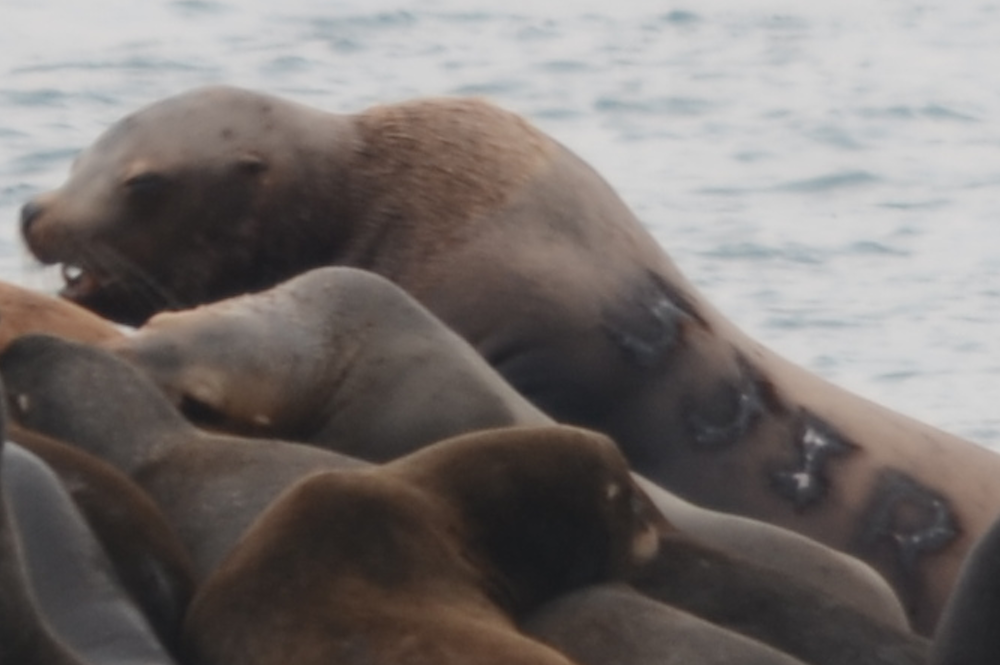
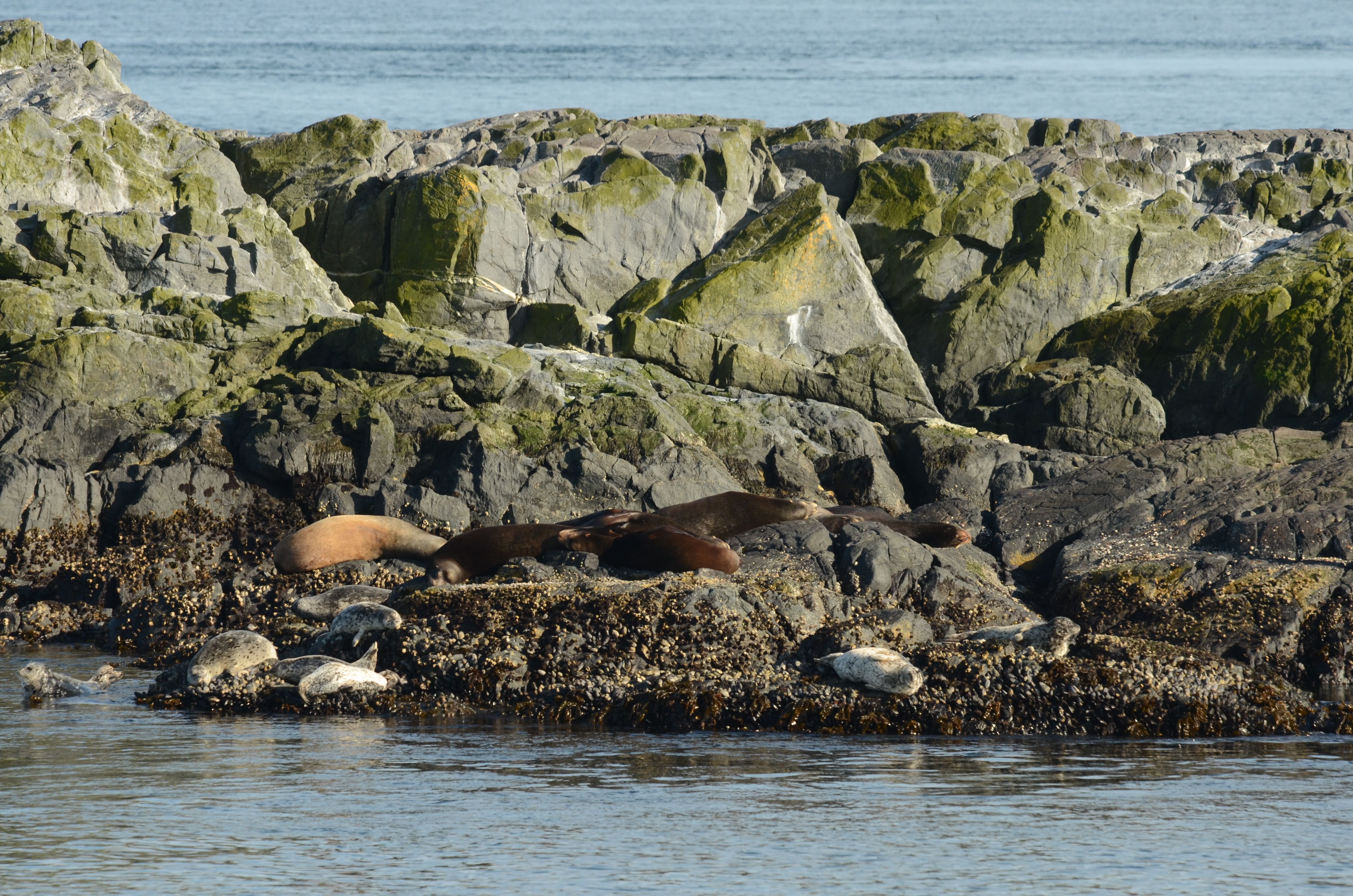
The California Sea Lion being used as a head rest by the  Steller's  has a brand on the left side but only the tops of numbers are visible.

The California Sea Lion being used as a head rest by the Steller’s has a brand on the left side but only the tops of numbers are visible. Maybe 3427 but I will get back to you on that one.
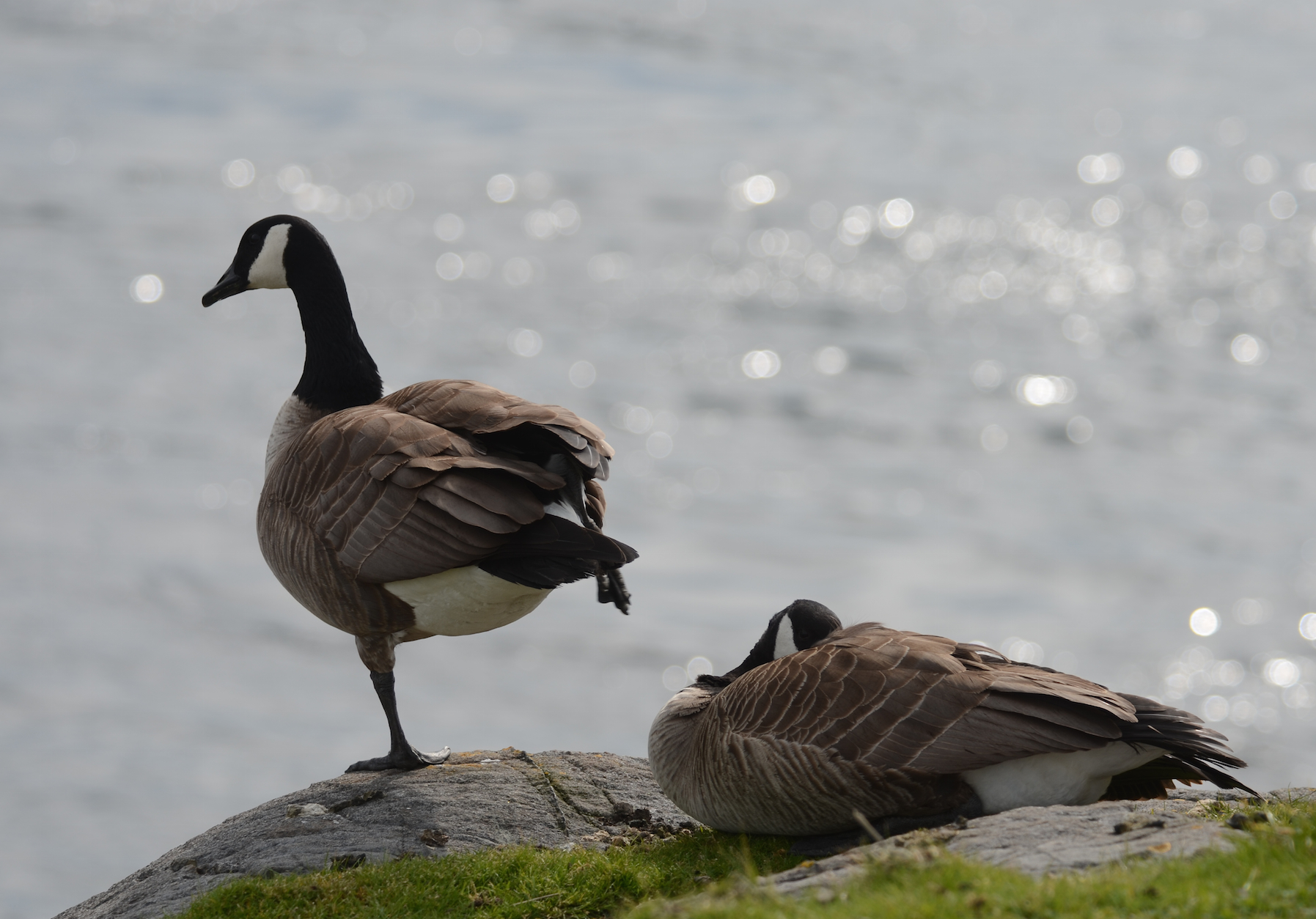
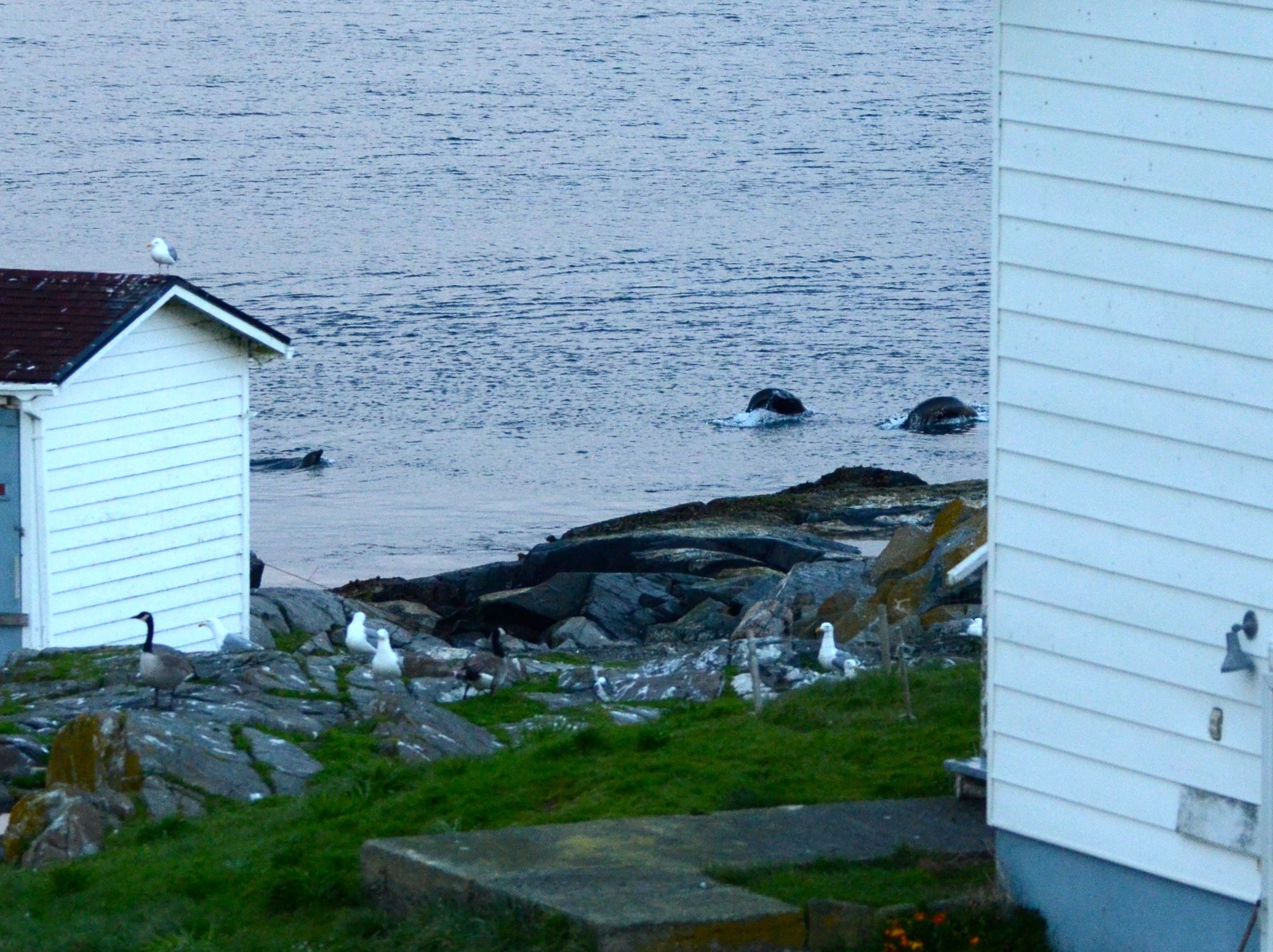
Ubiquitous Canada Geese - photogenic, but a bit hard on the vegetation and other island inhabitants.

Ubiquitous Canada Geese – photogenic, but a bit hard on the vegetation and other island inhabitants.

Chris in Second Nature, picked up the student group, which was here for the long weekend, just before noon today. It was a treat to have them here as visitors and they even managed to have fun helping with some of the chores. I was a little taken aback by the obvious increase in energy consumption while they were here though, and had to run the generator twice today to keep the batteries up, even though it was fairly sunny all day. Part of that may have been me staying up late to do the blog last night. After I discovered that the genny needed to be run a second time, I went over and turned off several breakers in the science house.
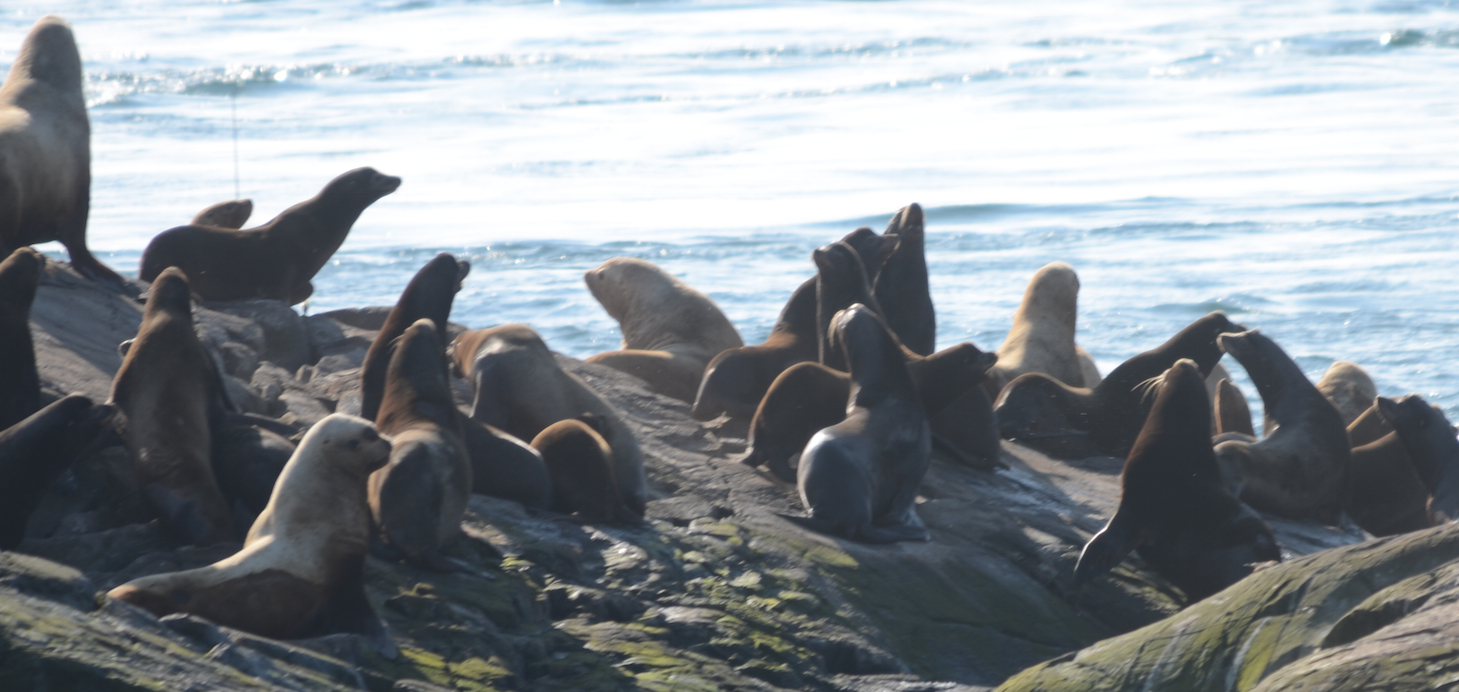
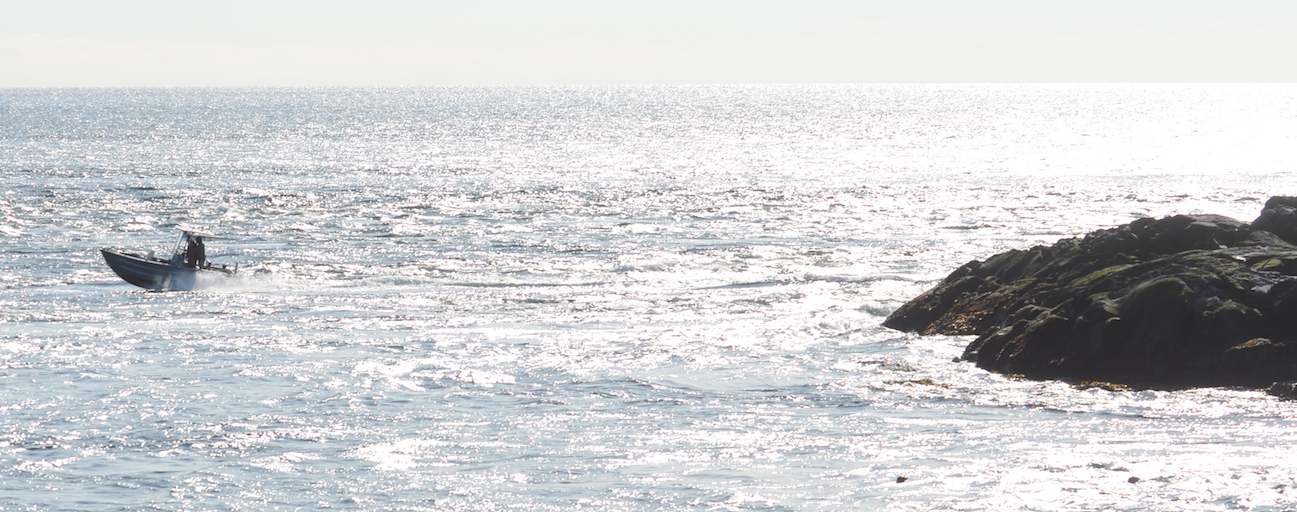
Mount Baker to Bahokas Peak.

It was clear here early and once easterly outflow breezes cleared the American side, it was a beautiful day on the Strait. There was a hazy view all the way to Mt. Baker in the east and out to Bahokas Peak in the west. The barometer is continuing its leisurely dive, started Thursday and as the sunsets, is close to 1003 hPa. The forecast is for more of the same with showers and a chance of thunderstorms.

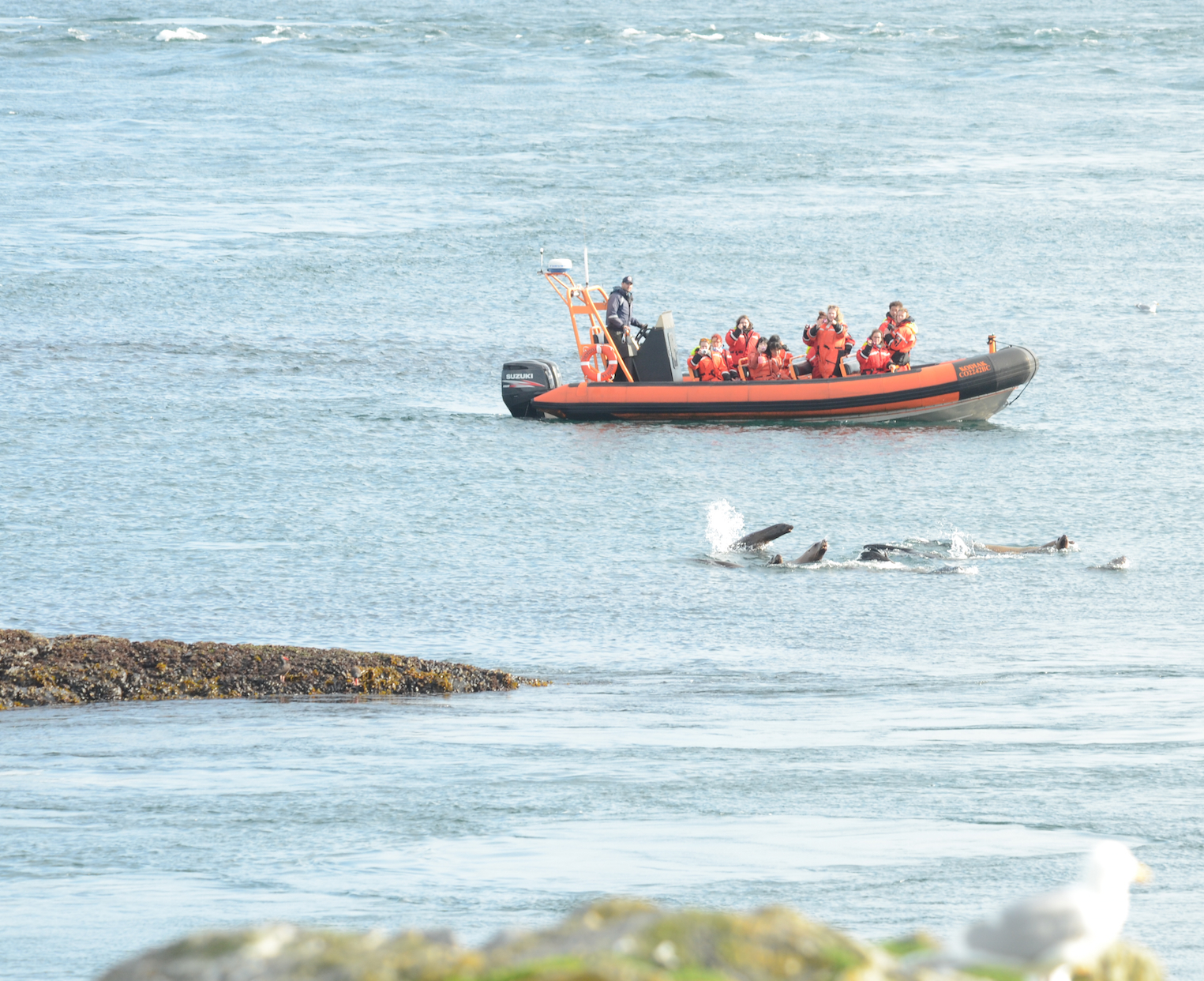
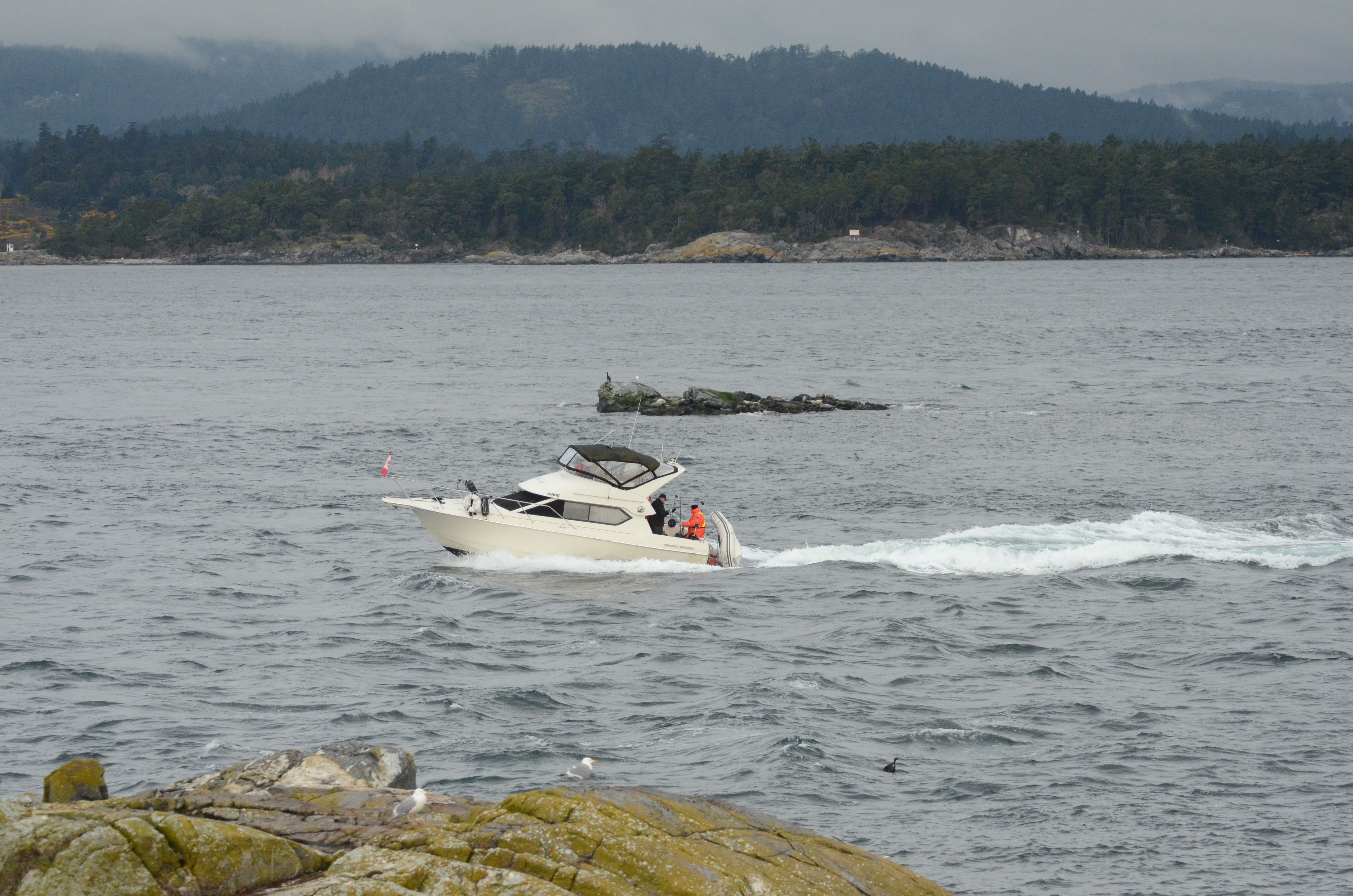
No tour boats or fishers were noted in the Ecological Reserve today however one boat sped through Middle Channel from the west and then after slowing down went between the South Islands and extremely close to seals and sea lions. Sea lions and seals were on high alert. All of the seals went into the water and some of the sea lions jumped in between the rock and the boat. The boat went back and forth very close to the sea lions several times before speeding off in the direction of Victoria. The whole thing only took a few minutes. The rest of the day made up for it in calm and peacefulness.

Antenna just visible in top left, boat below sea lions.

Antenna just visible in top left, boat below sea lions.

Speeding off.

Speeding off.

Last night as I was saying goodnight to the students who had been helping with chores, there was a definite smell of baleen whale breath in the evening air. I thought it might be the first Humpback Whale of the season. We looked but it was almost dusk and we didn’t see a whale. I heard on the VHF radio today that the whale watching boats had spotted their first Minke Whale of the season, so my guess is that there was a stinky Minke upwind last night.
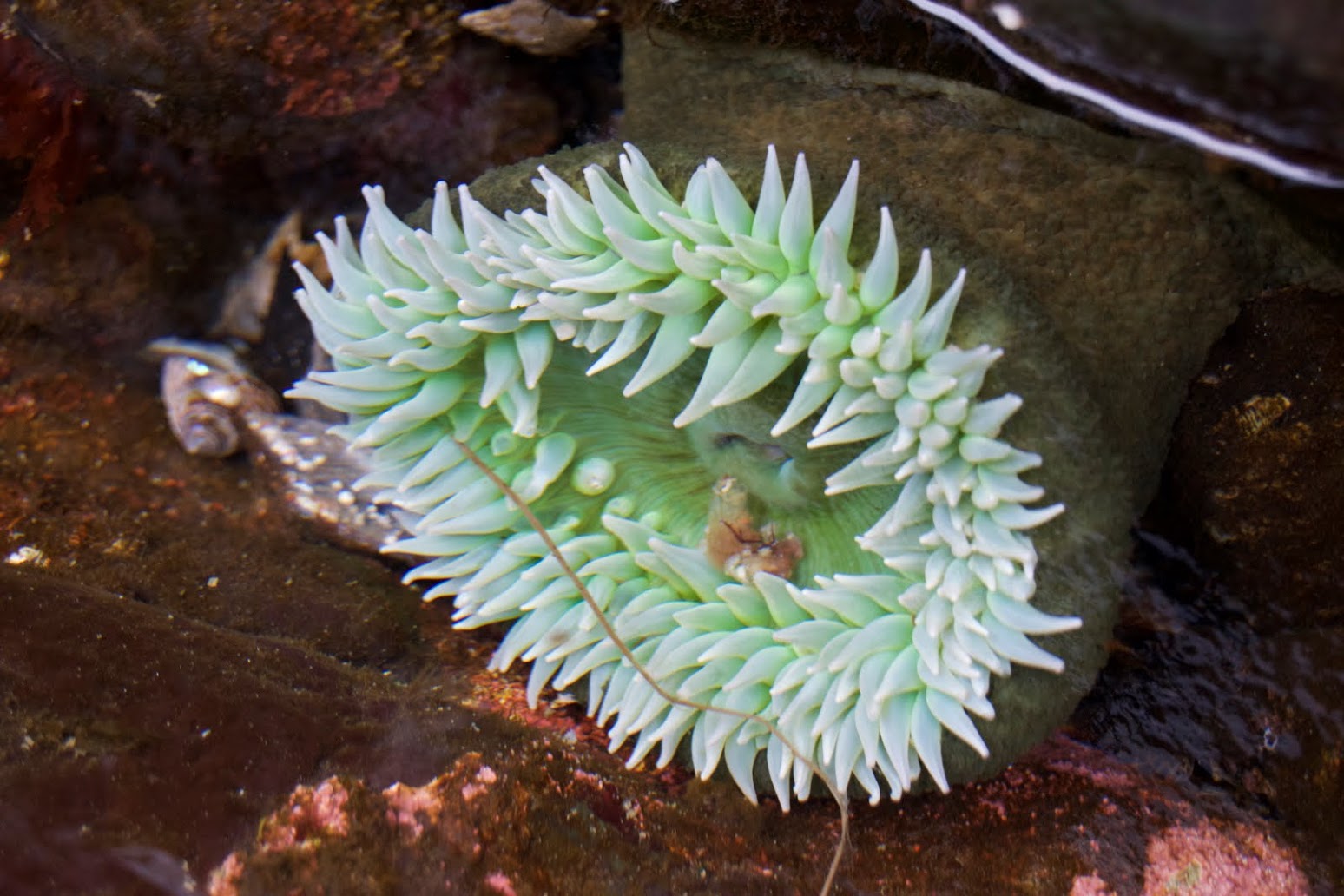
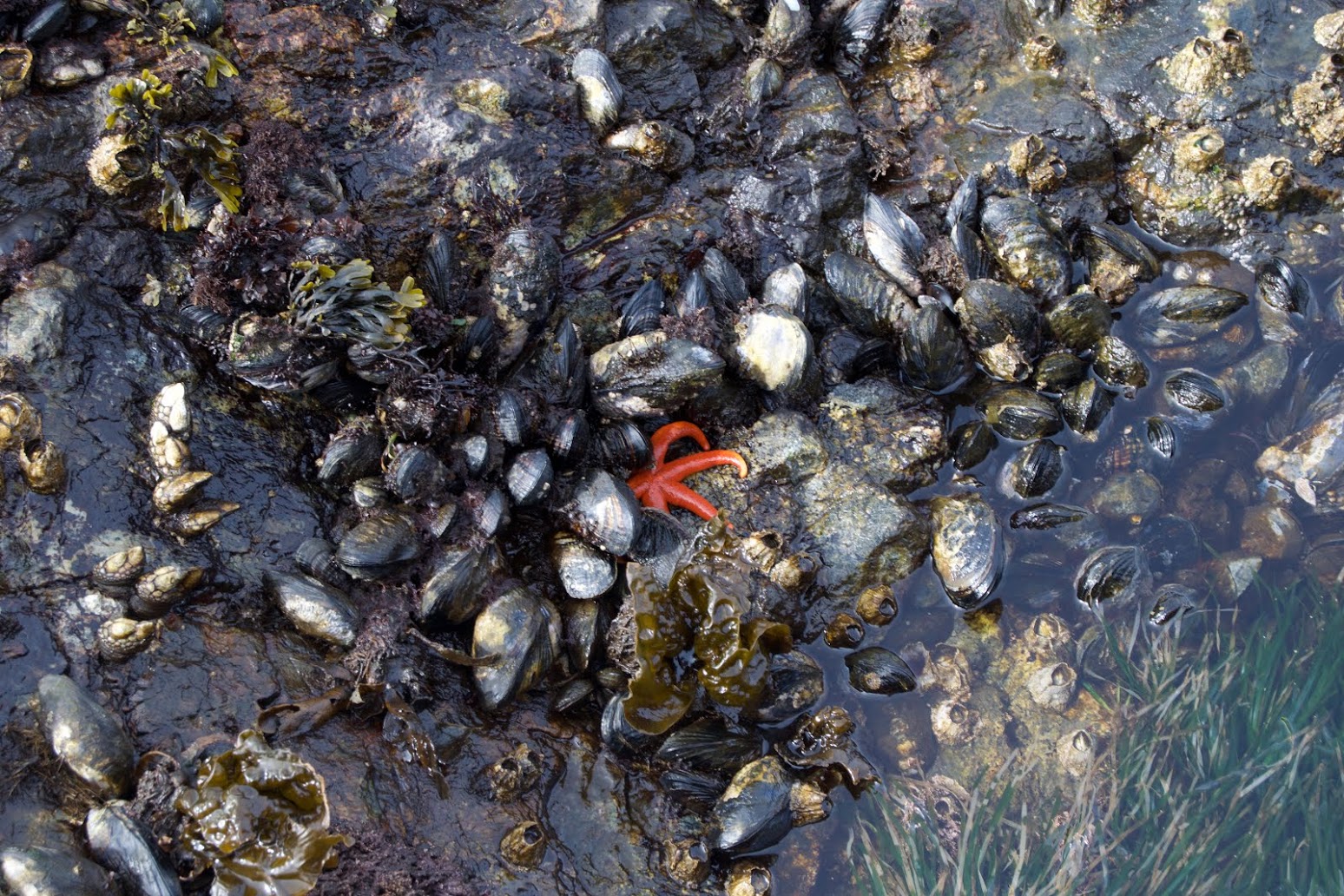
While doing the seawater sample today, I noticed that there is plenty of big plankton right now. Visible from the jetty are gazillions of beautiful ctenophores or comb jellies. Their scientific name is Pleurobrachia and another common name is sea gooseberry. These jellies are spherical and unlike most jellies they don’t have stinging cells, just sticky cells on their two dangling tentacles, to tangle their prey. They also have eight rows of amazing, tiny paddle-like structures called combs or ctenes. The combs basically do the wave and when they do, it makes a rainbow-like shimmering. So a clear ball, with eight rows of rainbow inducing pulsations and two trailing tentacles; this is a pretty intriguing looking creature.

Ctenophores are important top-down regulators of copepod abundance so they are important ecologically. Copepods are little crustaceans that feed directly on phytoplankton, the photosynthetic kind of plankton. The copepods can be so abundant that at times most of the phytoplankton biomass can be found in their guts. One reason the water is so clear right now may be due to an abundance of copepods. There are also lots of cross-jellies, which are true jellies or cnidarians, meaning they can sting. Their scientific name is Mitrocoma cellularia and they are also predators on smaller animal plankton like copepods. These large plankters are of course also food for baleen whales.

I had a bit of a catch-up day today. I gave the solar panels a thorough scrub and wash, fixed the underwater camera, took photos, cleaned up in front of the boat-house and generally monitored and documented things while tidying up.

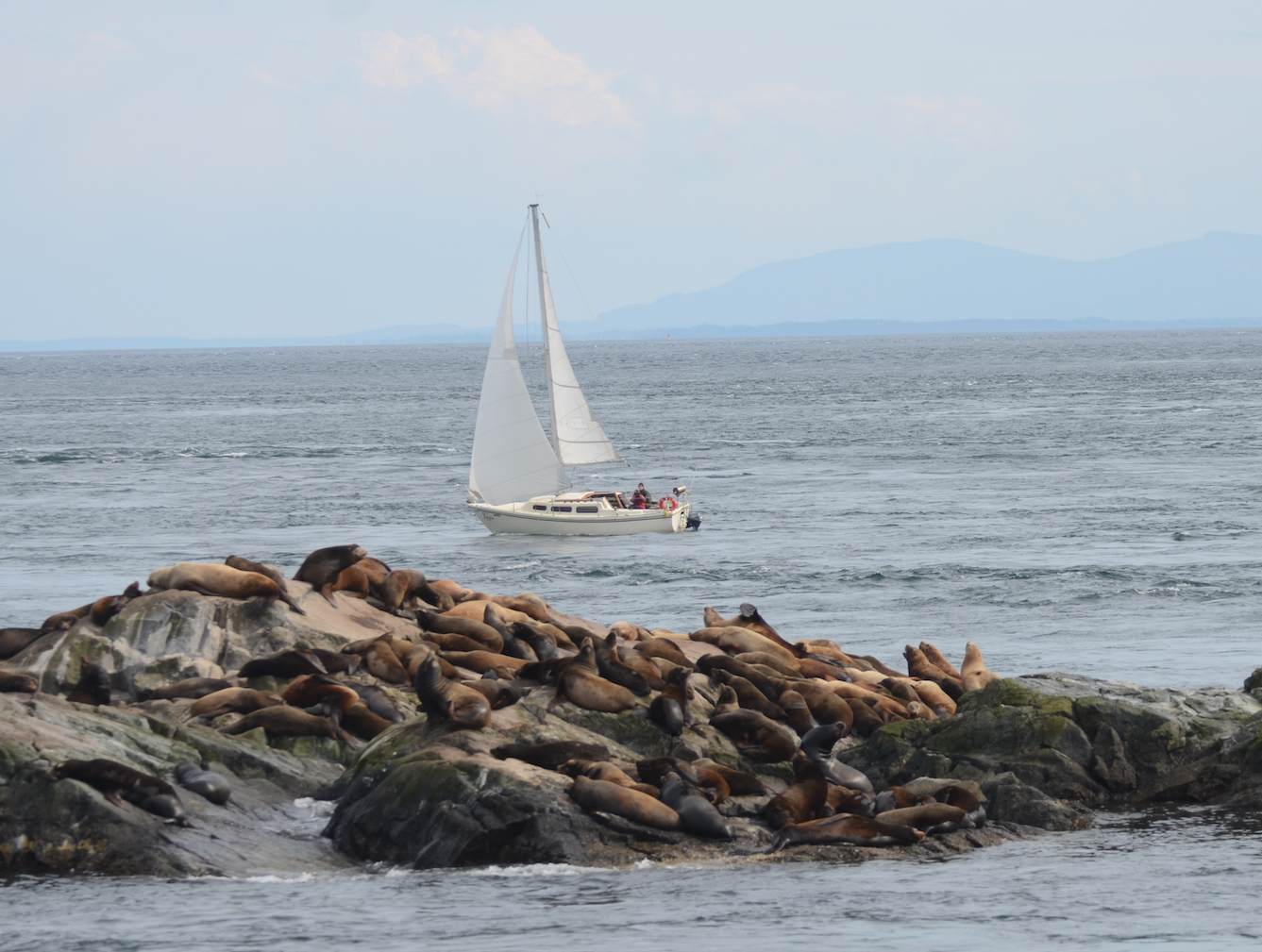
A more peaceful sail past ata more respectful and legal distance.

A more peaceful sail past at a more respectful and legal distance.

It has been a treat to have students out for the weekend and I think they have been enjoying the peacefulness, nature and each other’s company. I went out to dinner for the first time on the island and we had a delicious meal prepared by the students.


Branded Sea Lion Back

Today the weather was like a sandwich, with winter as the bread and spring in the middle. The wind did not relent all day, blowing north by northwest in the morning, with more of a southwest spin, peaking in the afternoon. Now as the sun sets, the wind is easing a little and dramatic rain showers sweep out of the bottom of clouds to the west. The barometer bottomed out late morning and is tentatively climbing now. Tons of new snow on the Olympic Mountains, gives them a magnificent look and brings a chill to the air here only 15 kilometres across the Strait.

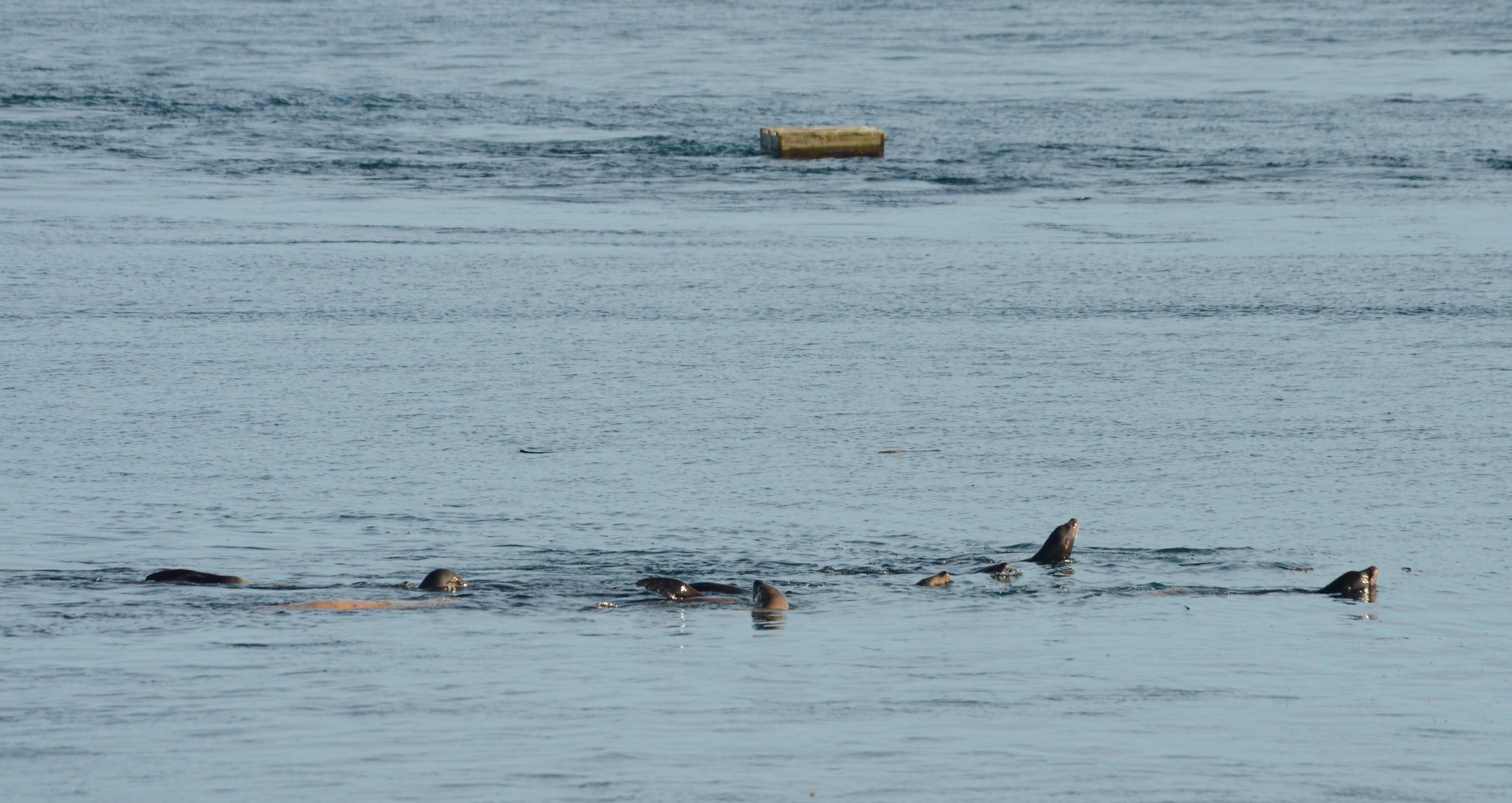
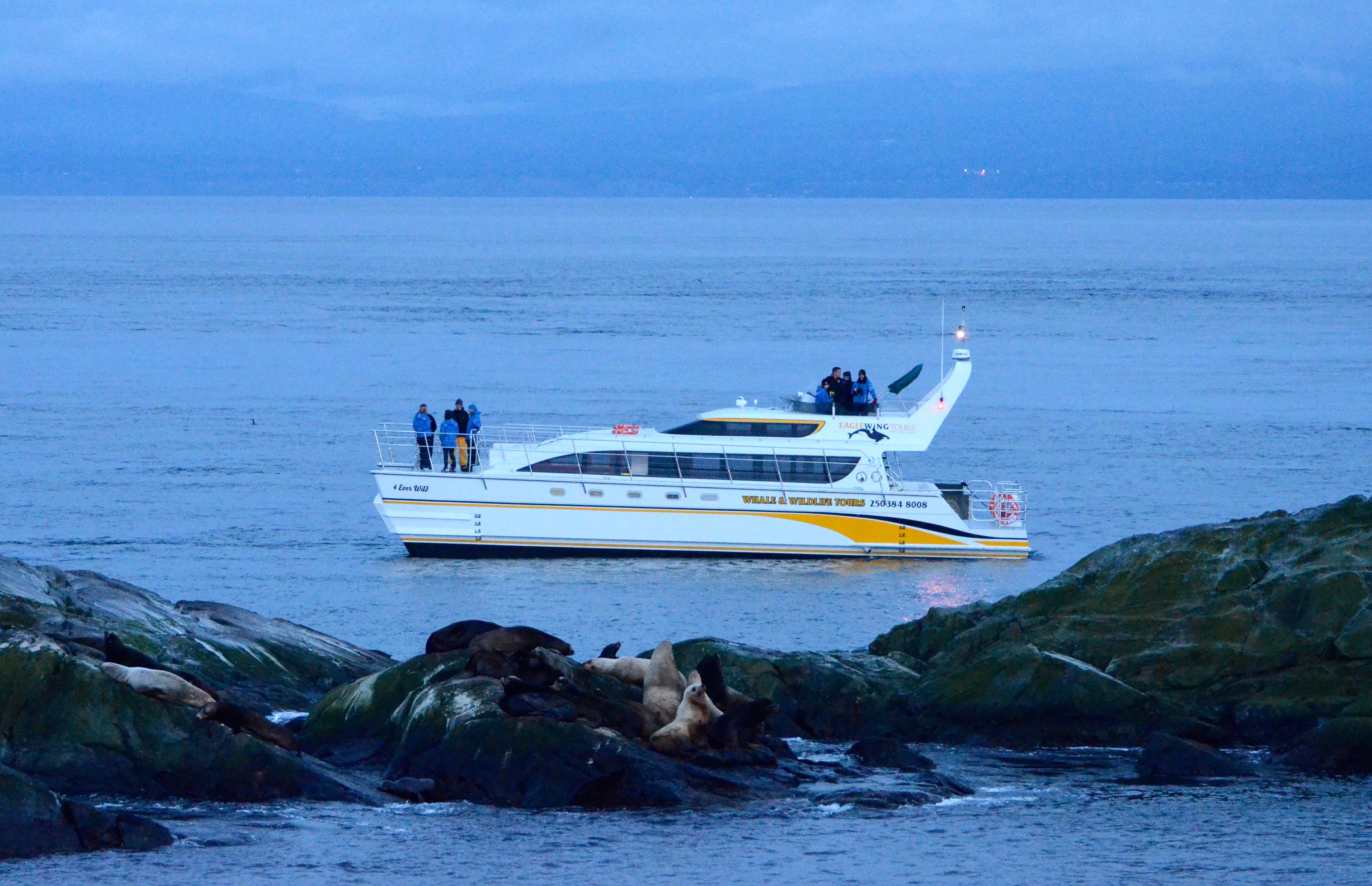
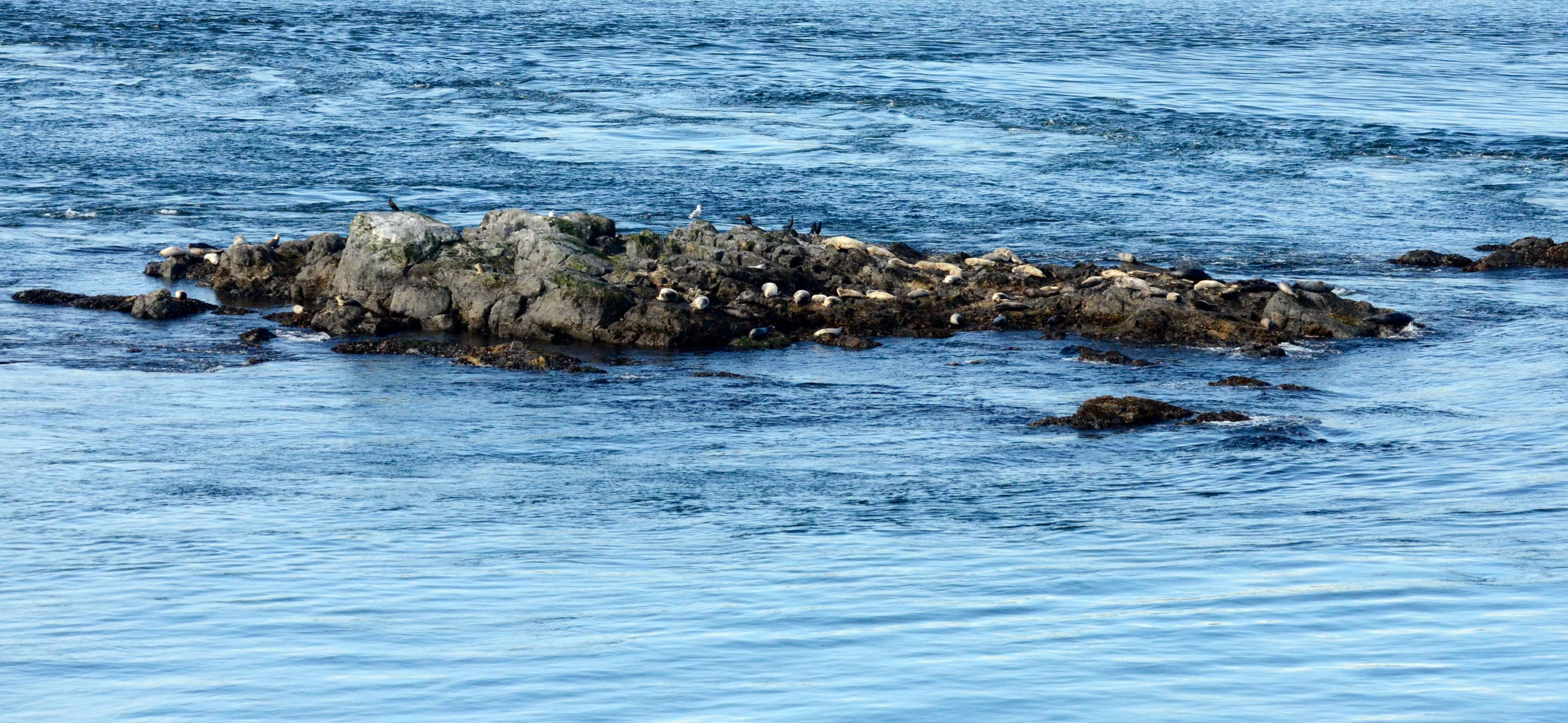
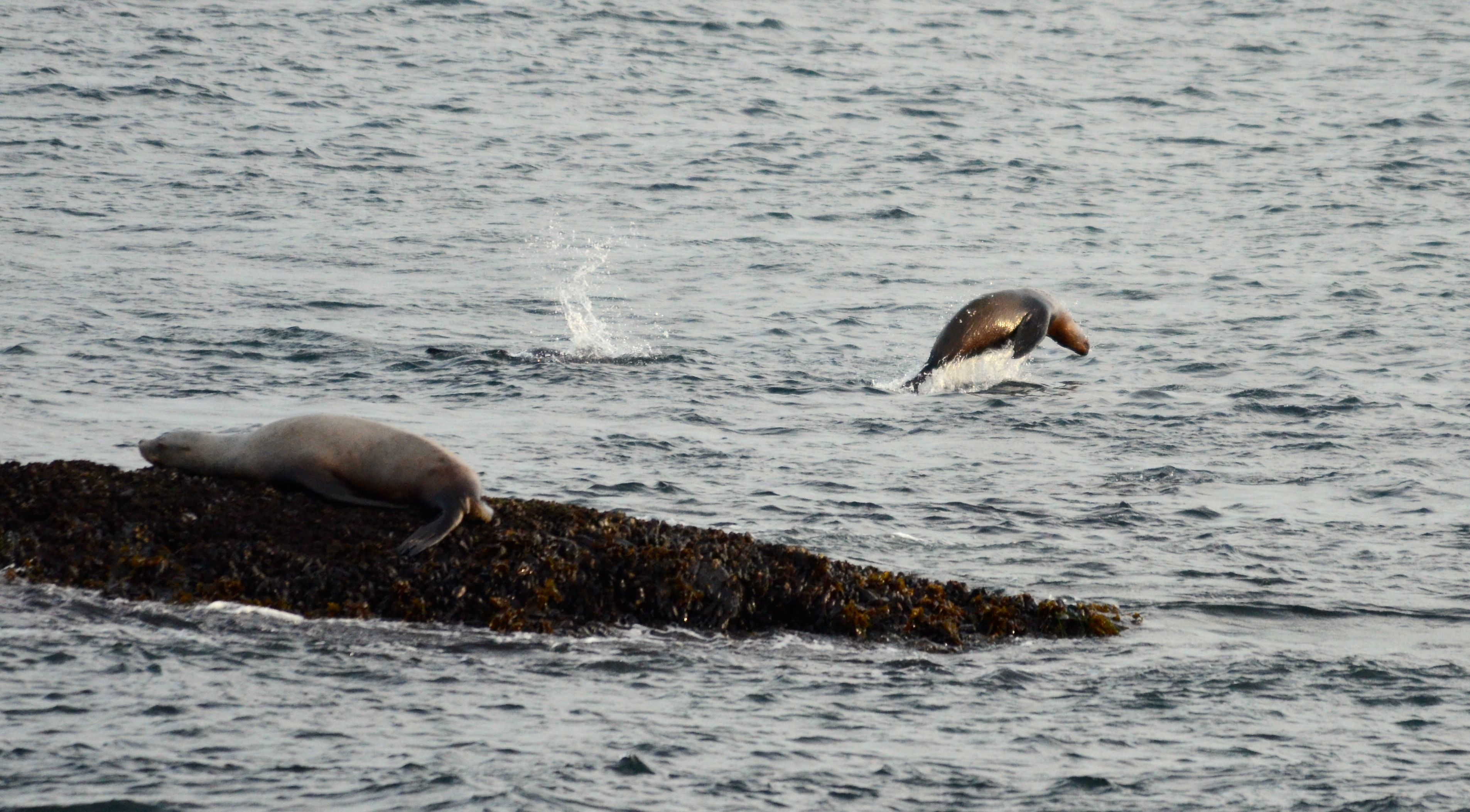
I only noted one whale watching boat today but may have missed some while working out of view. Most of the tour boats stop by on the south side to see sea lions hauled out and sleeping in the water there. The photo below was taken a few days ago when the weather was kinder and the animals in the water had just awoken with a start. There were no sports fishers observed in the Ecological Reserve today.

"Whale watchers" and sea lions that just woke up.

“Whale watchers” and sea lions that just woke up.

The first thing I noticed this morning was that there were a lot more sea lions hauled out than yesterday (census day). I scanned them with binoculars and noticed right away there was a branded Steller’s or Northern Sea Lion. Even before coffee, which is something for me, I was outside taking photographs. Although the image quality isn’t great due to the distance, it is good enough to match to an individual that was here on September 10, 2014 during my first shift.


A branded sea lion interacting with haul-out mates on South Seal Islands.

A branded sea lion interacting with haul-out mates on South Seal Islands.


This male 533R was branded as a pup in July, 2007 on Rogue Reef. His daytime activity here is practically nil. He lifts his head once and a while to interact with his closely packed neighbours, otherwise he sleeps all day. I wonder if he is full of herring? I also wonder if they forage at night right now?

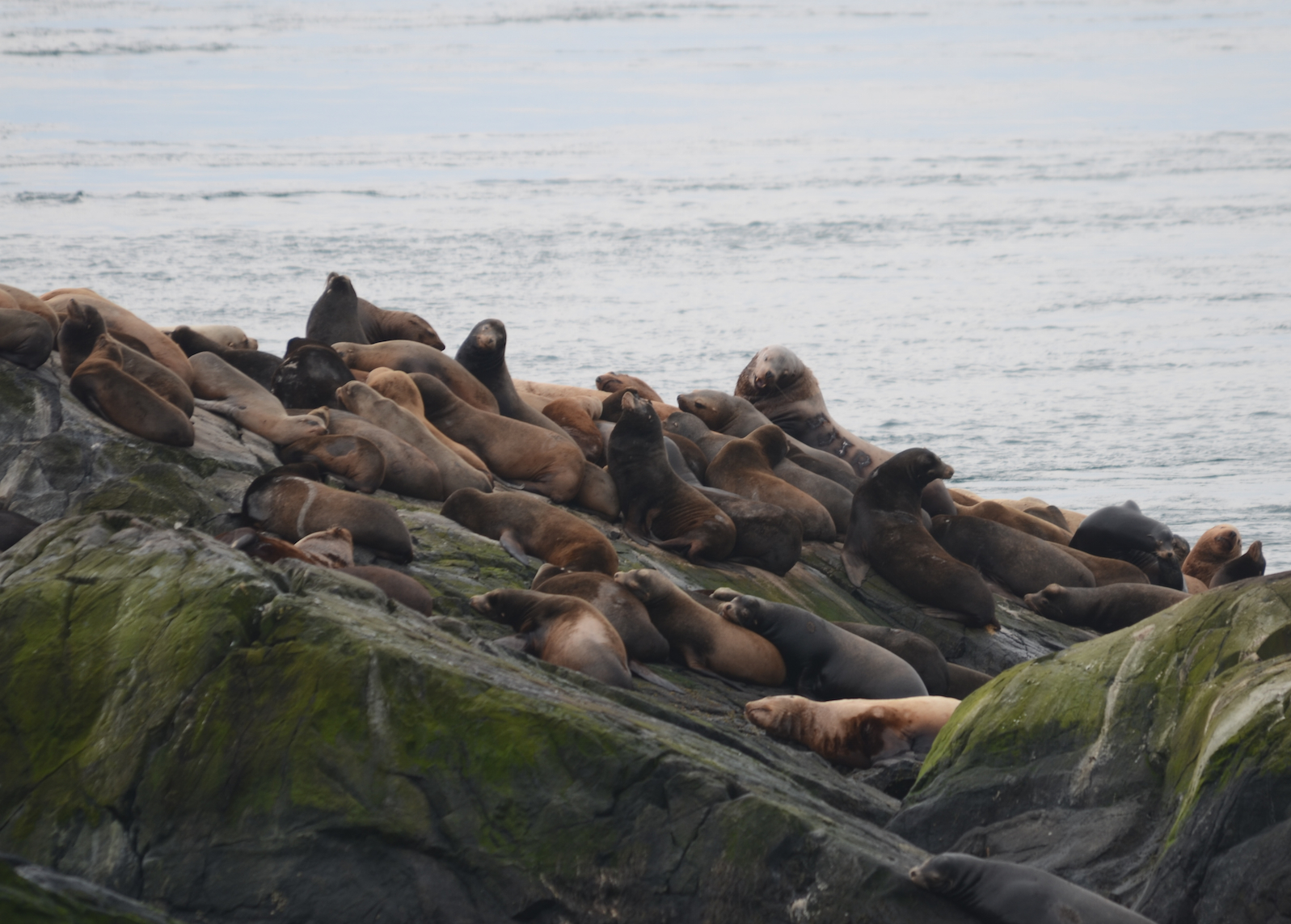
Sealions hauled out on the south islet. 533R is in the middle of the back row.

Sealions hauled out on the south islet. 533R is in the middle of the back row.

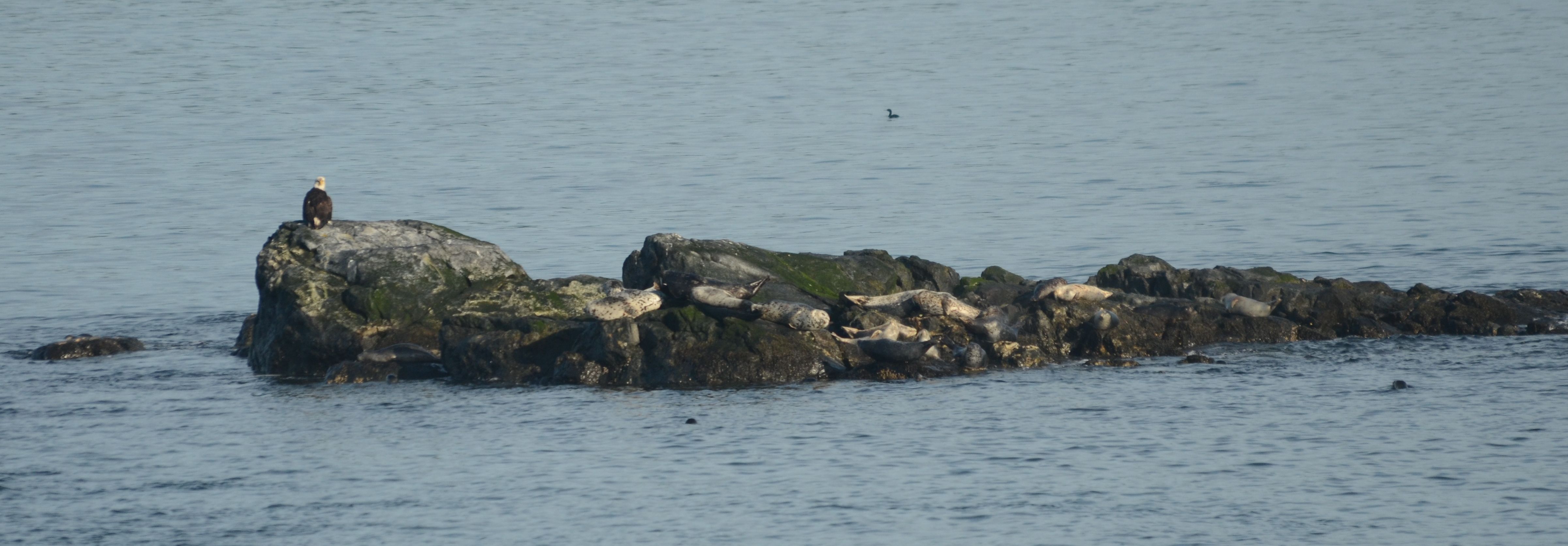
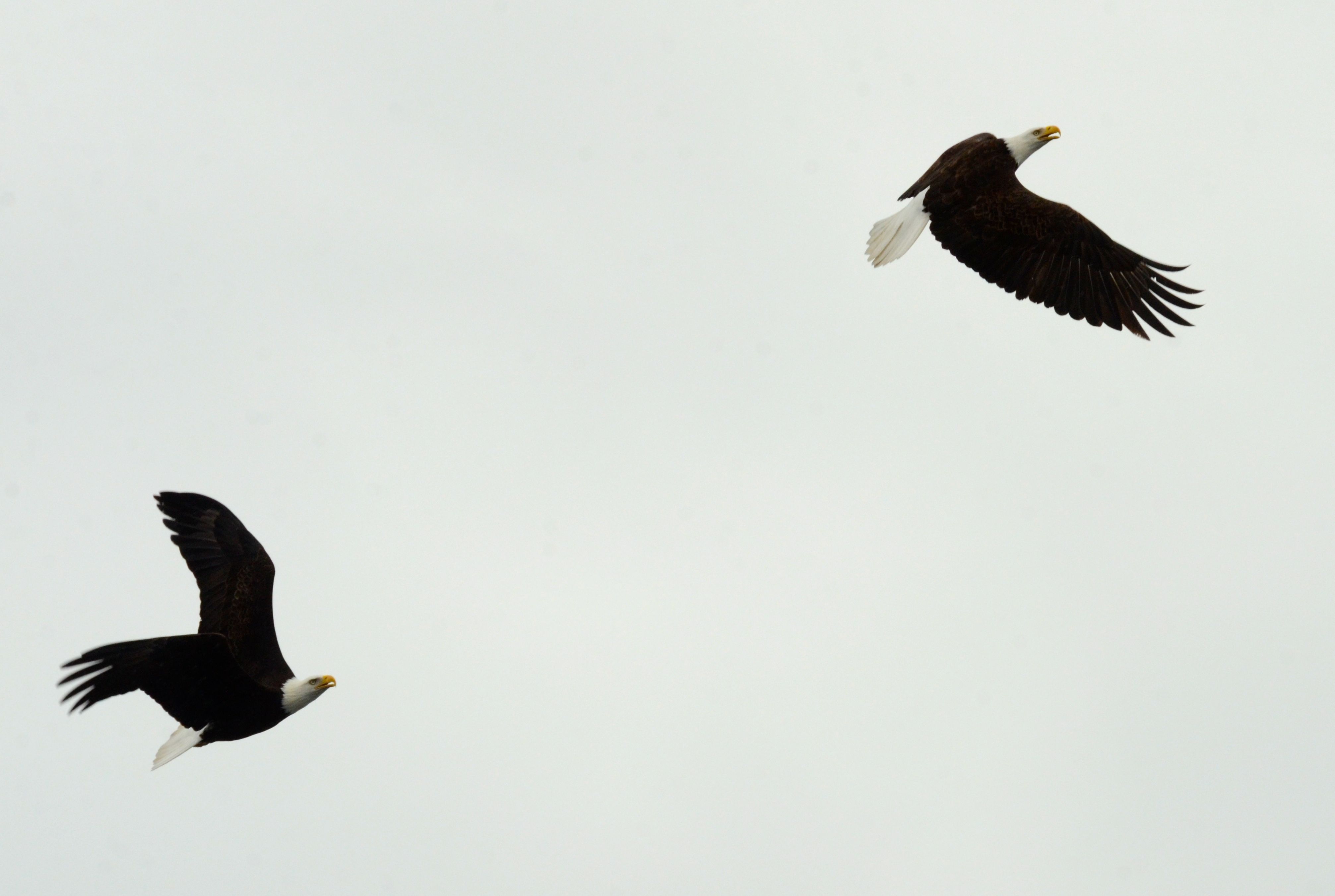
Glaucous-winged Gulls seem to sit tight during the day now too. I guess they are establishing nesting territories and resting up for parental duties. They all lift off when a Bald Eagle passes over or a Peregrine Falcon swoops around the island but soon settle back in place waiting patiently.

There are many more Pigeon Guillemots in the Ecological Reserve now than can nest here and they seem to like to forage in fairly large groups, right in the rips and standing waves of the big currents. I would like to see one underwater, using their little alcid wings to fly through the water while steering with their wildly red feet.

Eleven visitors graced the island with their presence today and it was good to interact with people again. Michael who is on the Pearson College board and his family came out with Chris and Alex for a tour. Alex, a student at Pearson College was deckhand and tour guide and did an excellent job of both. Chris solved my water woes by simply turning on a valve that I hadn’t managed to get open.

Chores today included unsuccessful trouble-shooting on cameras #2 and #5, disassembling a bunk bed (probably much easier with two people), and moving the bed frame to the foreshore for pick-up. Seawater sampling, fresh water production and electrical generation, balanced out with more wood clean-up and walkway sweeping. The best thing, was putting up a fresh, new Canadian flag to replace the winter worn one that was fraying badly in the wind.

March 26 – Census

Sunny
Wind: 0-17 from varying directions throughout the day
Air Temperature: Low 9.2ºC, High 11.8ºC
Ocean Temperature: 9.0ºC

Today was spent preparing for the shift change. Anne Stewart will arriving tomorrow to take over as the Eco-Guardian.

There was one eco tour boat seen in the reserve today.

Here are the results of today’s megafauna census:
Steller Sea Lion: 58
California Sea Lion: 31
Harbour Seal: 79
Bald Eagle: 3
Cormorant: 16
Canada Goose: 24
Gull: 256
Crow: 2
Oystercatcher: 4
Pigeon Guillemot: 234
Surfbird: 8
Black Turnstone: 16
Savannah Sparrow: 1

March 24 – Sea Otter

Sunny, patches of rain the afternoon
Wind: W 4-17 knots, calm in the late evening
Air Temperature: Low 7.7°C, High 10.7°C
Ocean Temperature: 8.9°C

This afternoon, a ring-necked california sea lion was observed on the South Islands. It had something tightly wrapped around its neck, which is digging into the flesh.

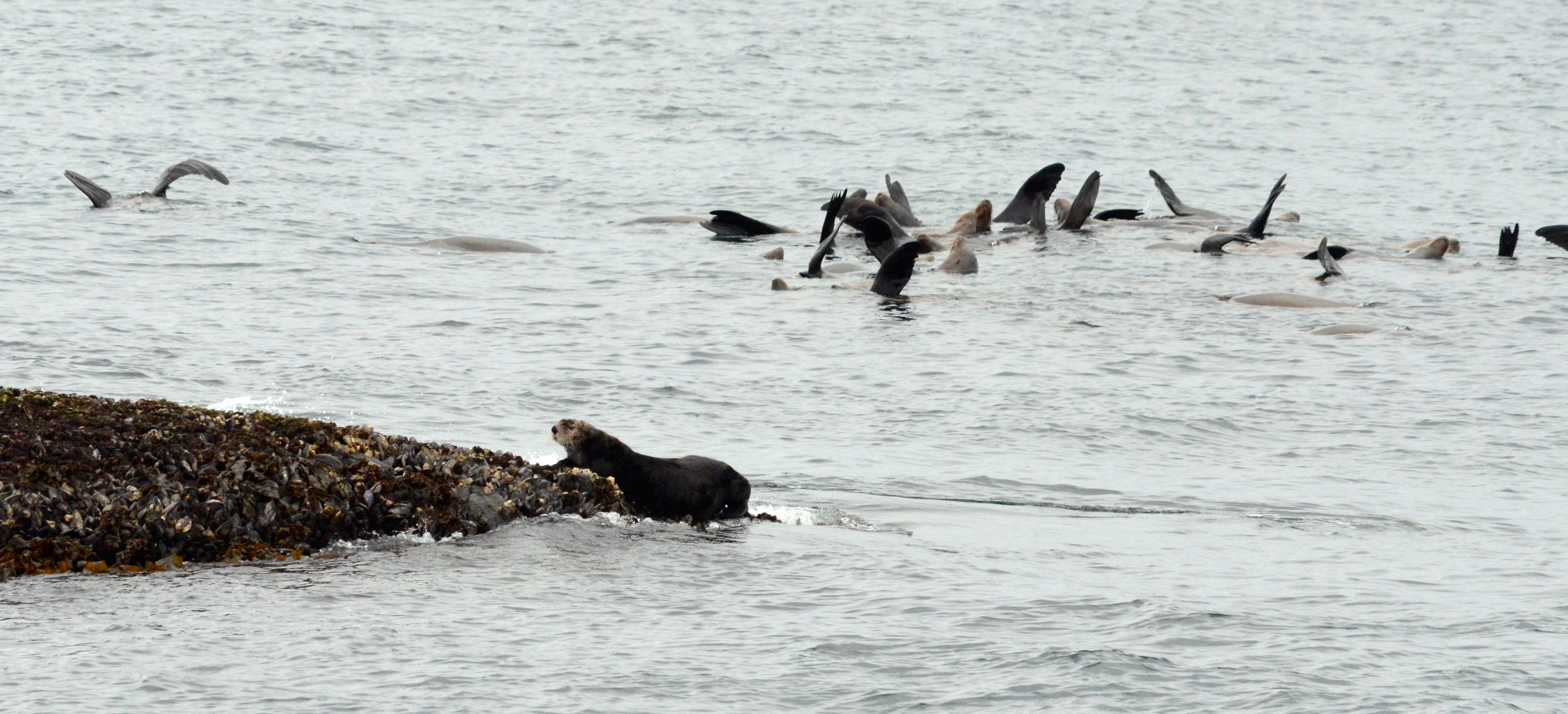
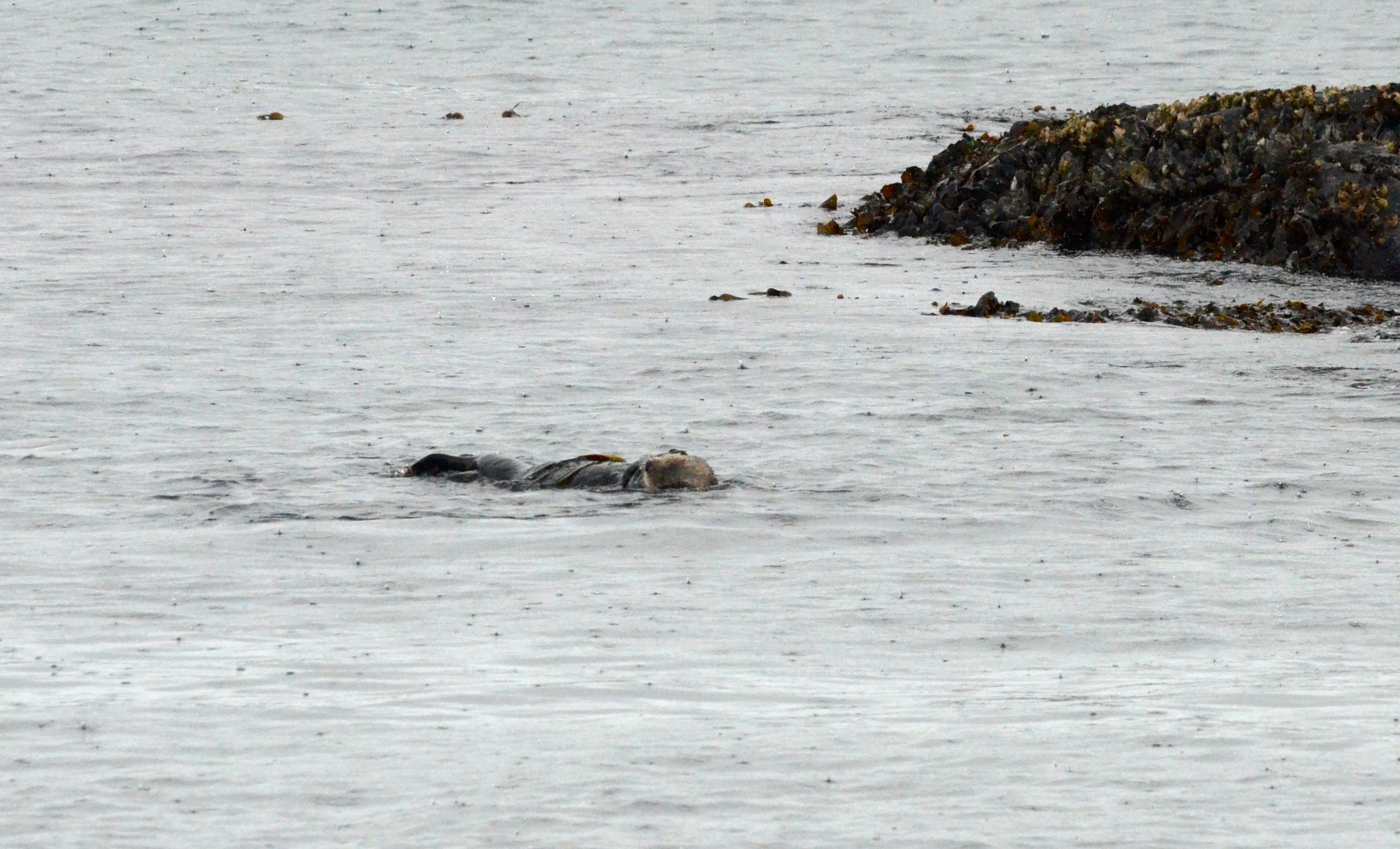
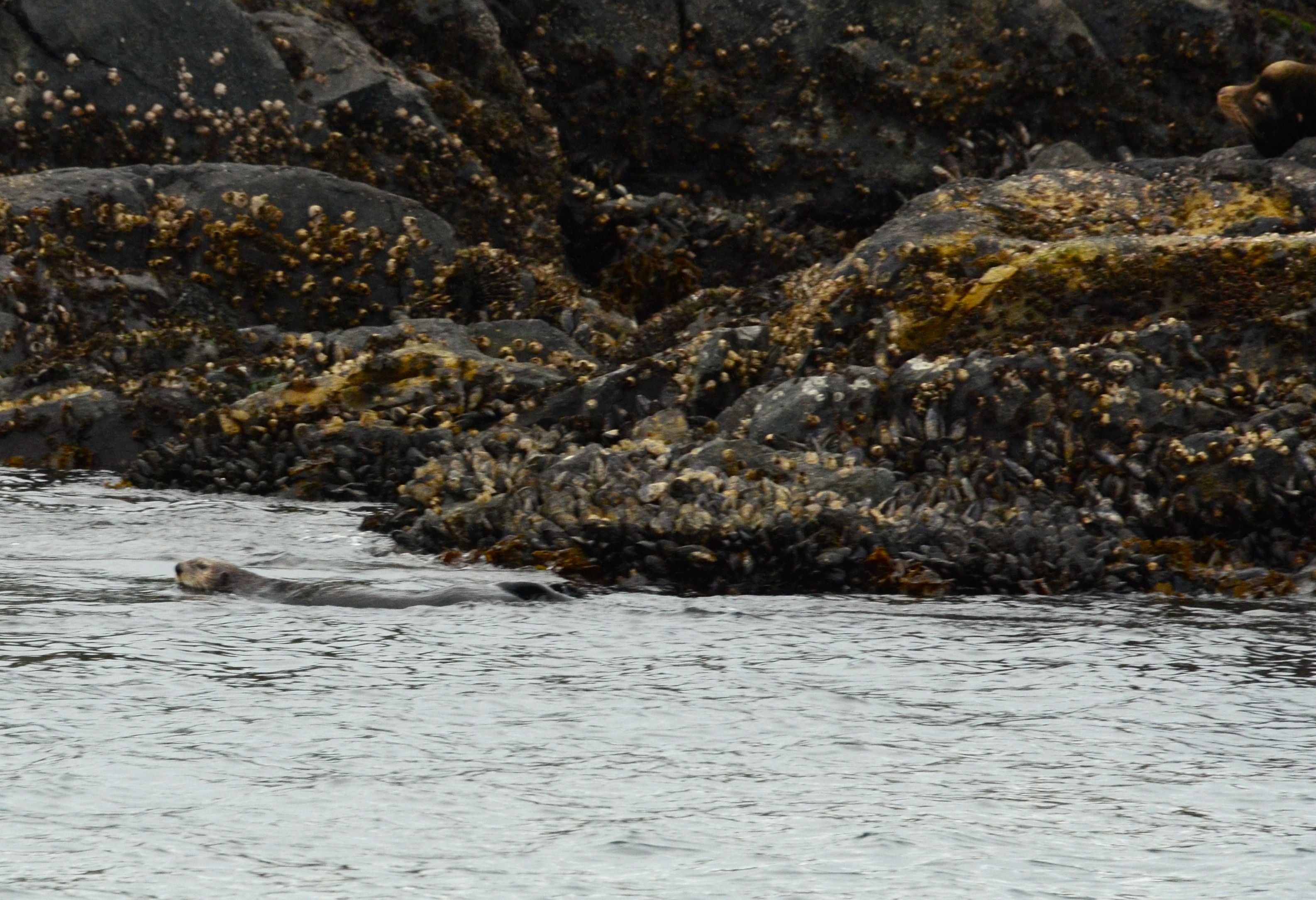
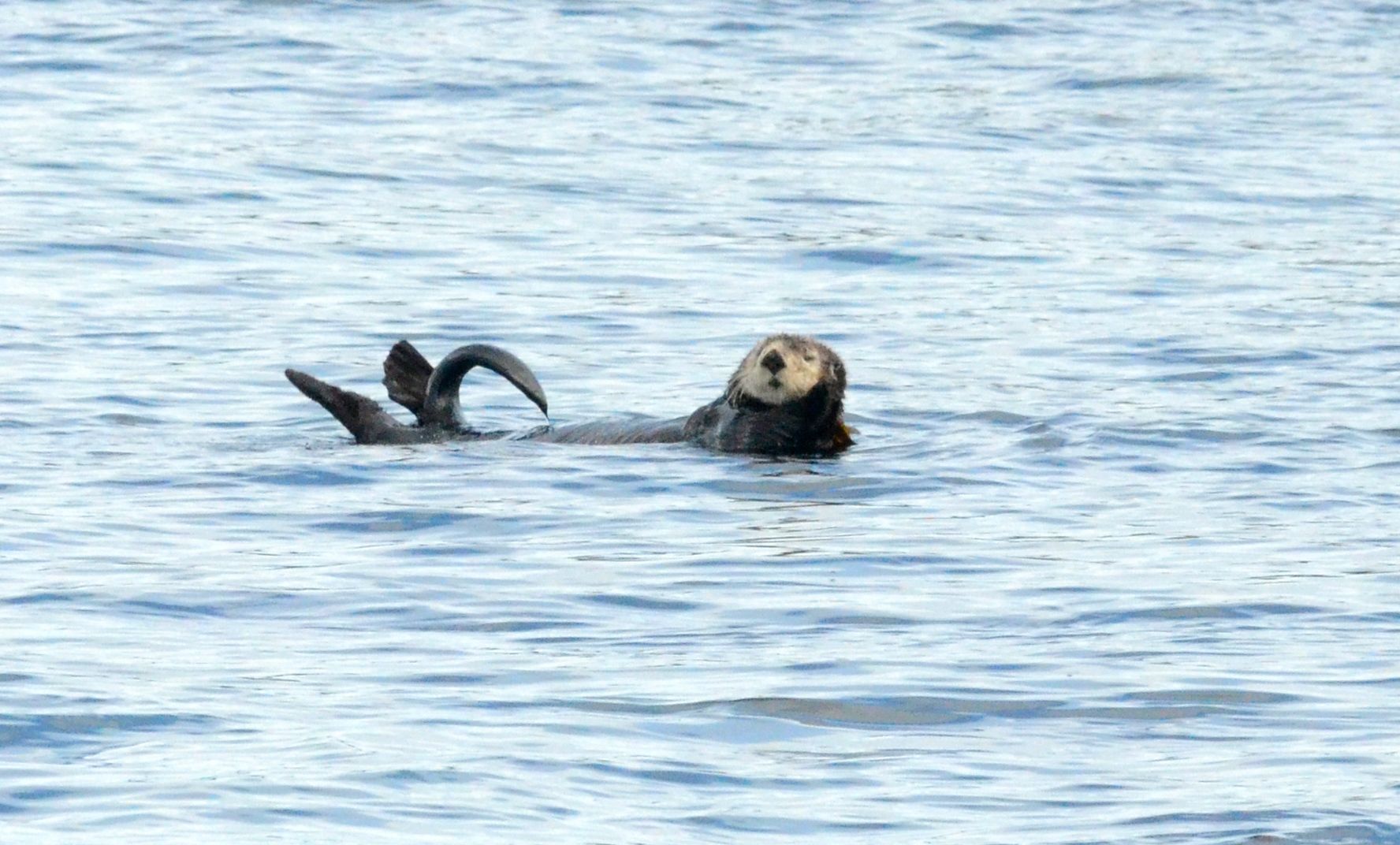
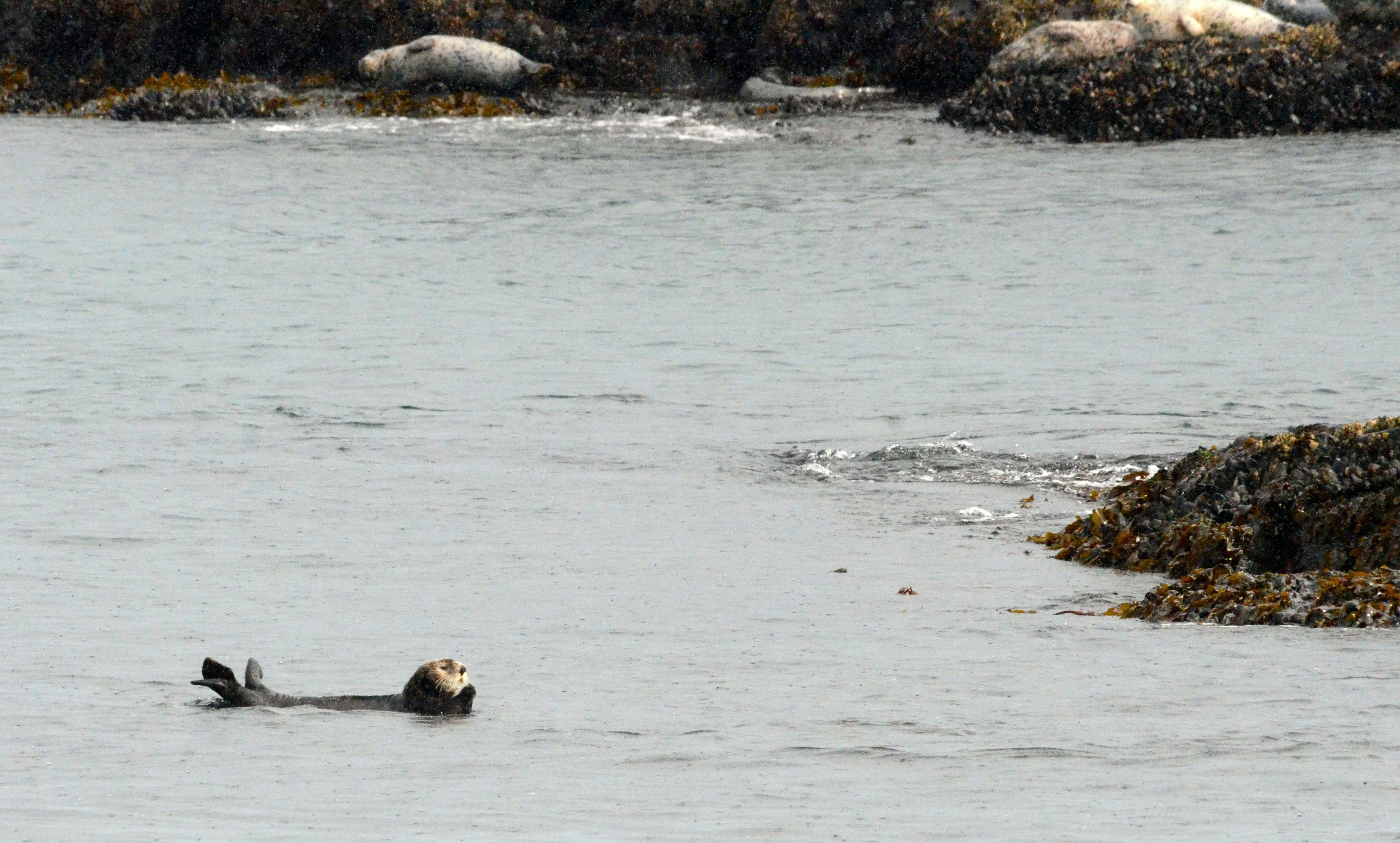
While observing the sea lions, a small creature appeared on the edge of the rock ten metres away from them. Much smaller than the sea lions, at about one metre long, it was eating the molluscs in the intertidal zone. To my great excitement, it was a sea otter (enhydra lutris). The sea otter ate, dove, rolled and swam around the South Islands for about two hours.

March 23 – Ships and Sea Lions

Overcast and light rain, sun breaks in the evening
Wind: NE 3-14 knots, switching to W 5-11 in the evening
Air Temperature: Low 7.2°C, High 9.4°C
Ocean Temperature: 8.8°C

Today was filled with the usual chores of cleaning rust of things, collecting wood, stacking firewood, running the generator, creating fresh water with the desalinator, measuring the salinity and temperature of the ocean water and looking out for the species of the ecological reserve.

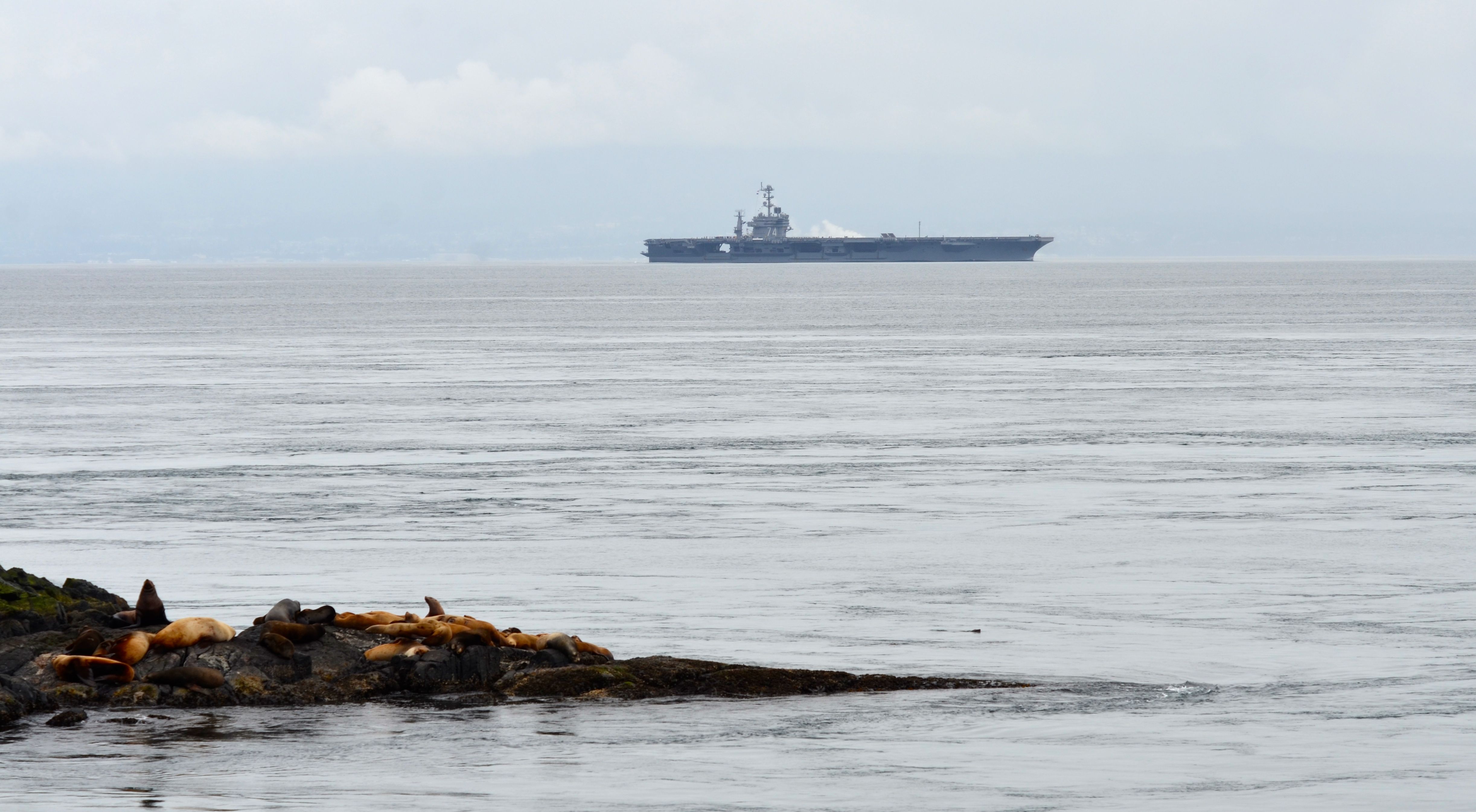
This afternoon, a large aircraft carrier passed within 4km of the ecological reserve. The USS John C Stennis is a nuclear powered super carrier, the largest type of aircraft carrier, measuring 333mx77m and weighing over 100,000 tonnes.

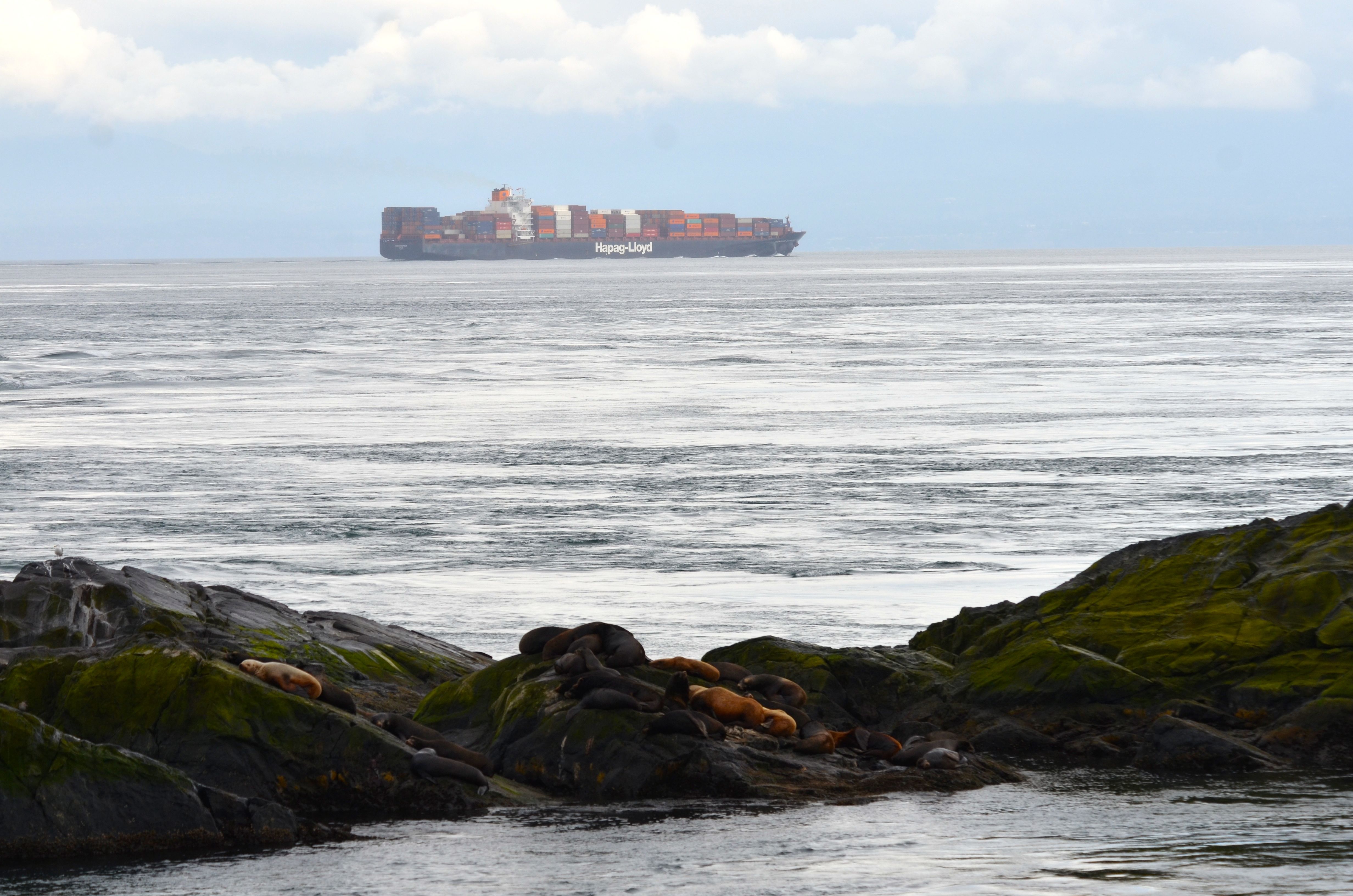
See the photos below of the ships that passed to the south of Race Rocks, close to where the sea lions swim, hunt and haul out.

Upon looking at the photo of the aircraft carrier, I noticed a sea lion in the foreground that is branded 26Y. This steller sea lion was born at Rogue Reef, Oregon in 2002.

March 19 – Last Day of Winter- Census

Raining
Wind: NE 4-14 knots
Air Temperature: Low 8.8°C, High 10.3°C
Ocean Temperature: 8.8°C

The wet conditions were helpful with cleaning some exterior walls and windows. The rain water cistern was filled up from the roof. The rain also helped wash away the algae and slime on the walls, along with some scrubbing.

The low light and rain made the census difficult. In recent days, there has been a much higher number of harbour seals hauled out on the rocks. The sea lions also spent most of the day in the water. It was not possible to distinguish between the species of cormorants on Turbine or Middle Rock.

There were no boats seen in the reserve today.

Census results:
Steller Sea Lion: 59
California Sea Lion: 62
Harbour Seal: 21
Bald Eagle: 7
Cormorant: 27
Canada Goose: 24
Gull: 352
Black Oystercatcher: 4
Harlequin Duck: 9
Pigeon Guillemot: 13
Surfbird: 4
Black Turnstone: 16
Rock Sandpiper: 6
Savannah Sparrow: 1

March 17

Sunny, light rain in the late afternoon
Wind: 3-9 knots NE in the morning, 1-6 knots SE in the afternoon, calm at 18:00, 9-15 W in the evening
Air Temperature: Low 7.6°C, High 10.7°C
Ocean Temperature: 8.9°C

The morning was filled with chores: collecting garbage, tidying, cleaning the solar panels and mistaking a swimming seal for a sea otter (three times). The sea otter, which visited the ecological reserve during the winter hasn’t been seen within the past few weeks.

I was off the reserve for a few hours in the afternoon to drop off garbage and pick up gas, groceries, deionized water for the batteries and cleaning supplies. It happened to coincide with Elizabeth May giving a talk at the college.

The sea lions were very active and vocal leading up to the sunset at 19:21.

There were no boats seen in the reserve today.

March 16 – Camera, Crane and Coruscating Sun

Sunny
Wind: 5-16 knots from the SW and S in the early morning, NE until 17:00, SE for a few hours and calm after 20:00
Air Temperature: Low 6.6°C, High 10.3°C
Ocean Temperature: 8.9°C

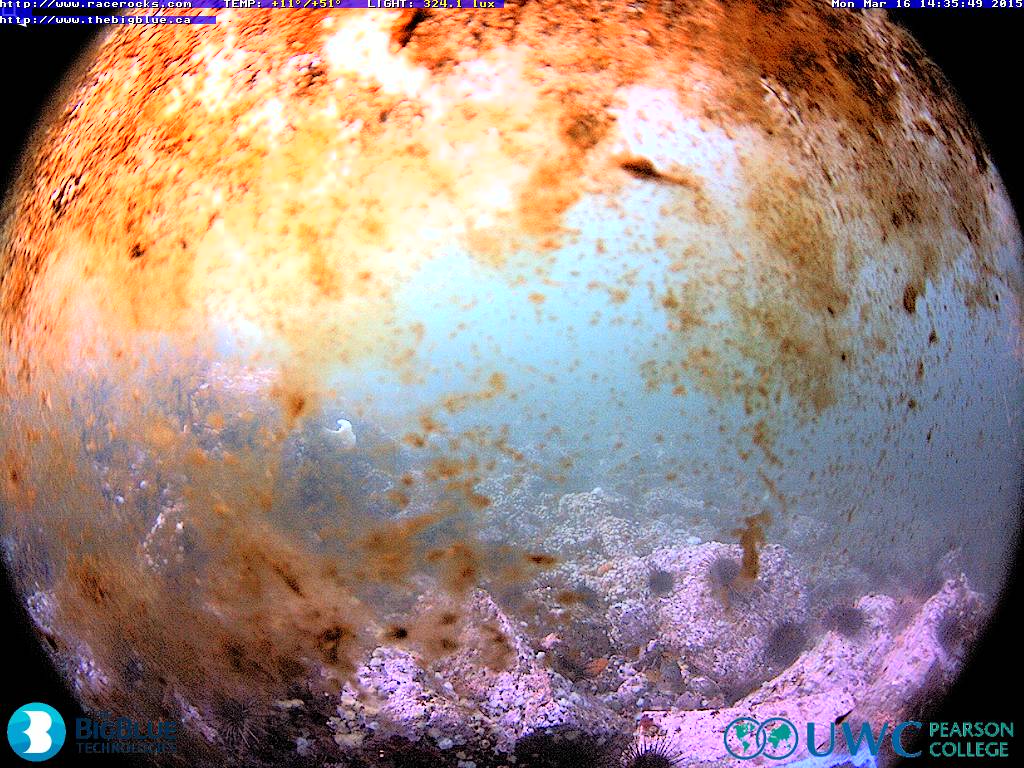
The underwater camera is back up and running, after a few weeks offline. The power issue has been solved. Algae on the dome around the camera is partially obstructing the view, but it will be cleaned soon by divers from the college.

This afternoon, there were two low flying aircraft: a floatplane and a Search and Rescue Helicopter.

Three fishing boats passed through the ecological reserve today. One boat spent an hour fishing within the Rockfish Conservation Area, which is prohibited by the Department of Fisheries and Oceans (DFO). The Rockfish Conservation Area is within the 40m depth contour of Great Race Rocks and Rosedale Reef, marked by the green buoy to the southeast of Great Race Rocks.

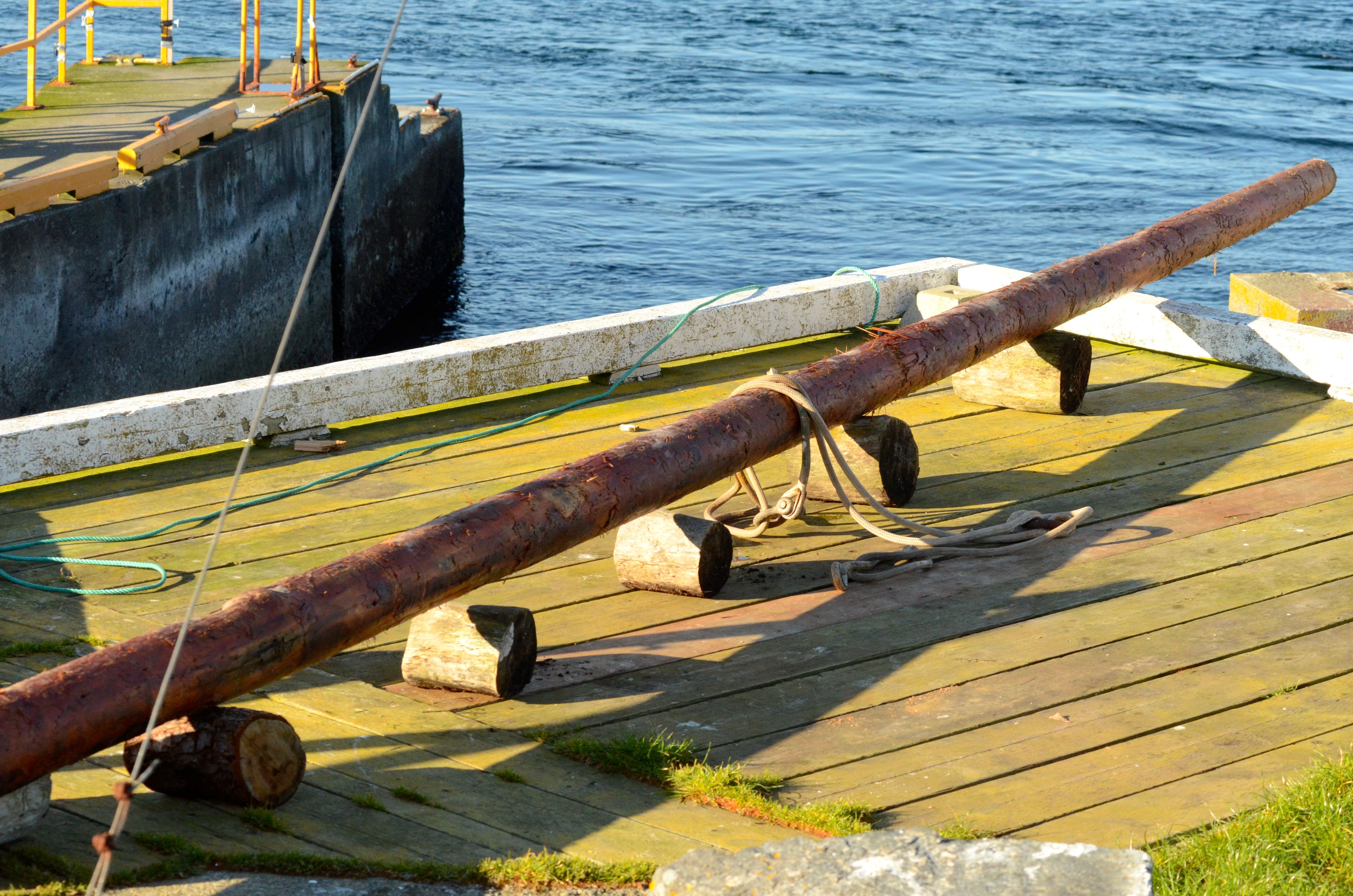
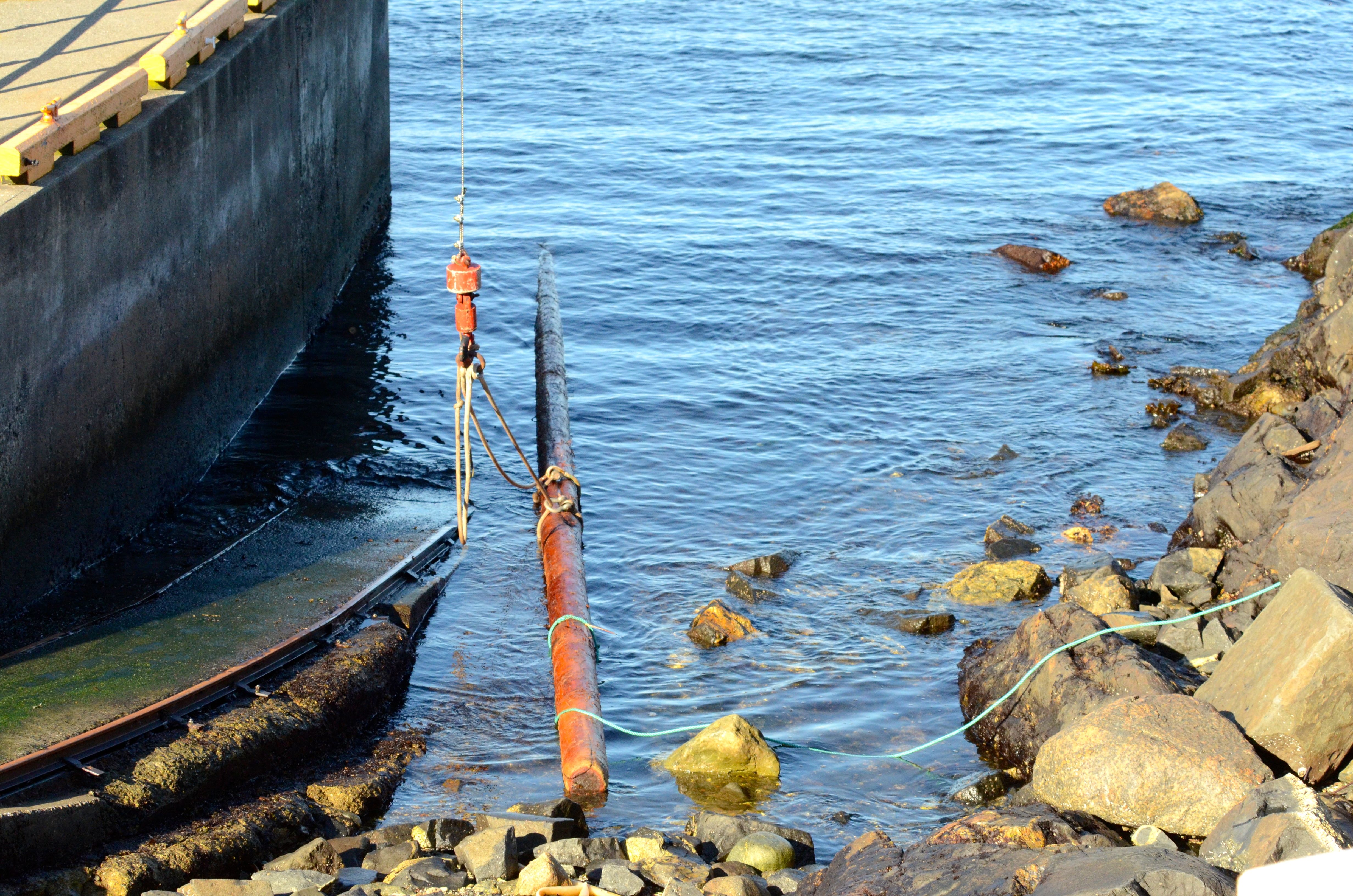
The crane needs to be run and serviced once a month. Today, it was used to lift a 12m log from the jetty beach to the boardwalk, where it will be chopped into firewood. In hindsight, it would have made it less challenging to cut the log in half while it was on the beach. Although, 6m sections wouldn’t have been as much fun to manoeuvre with the crane.

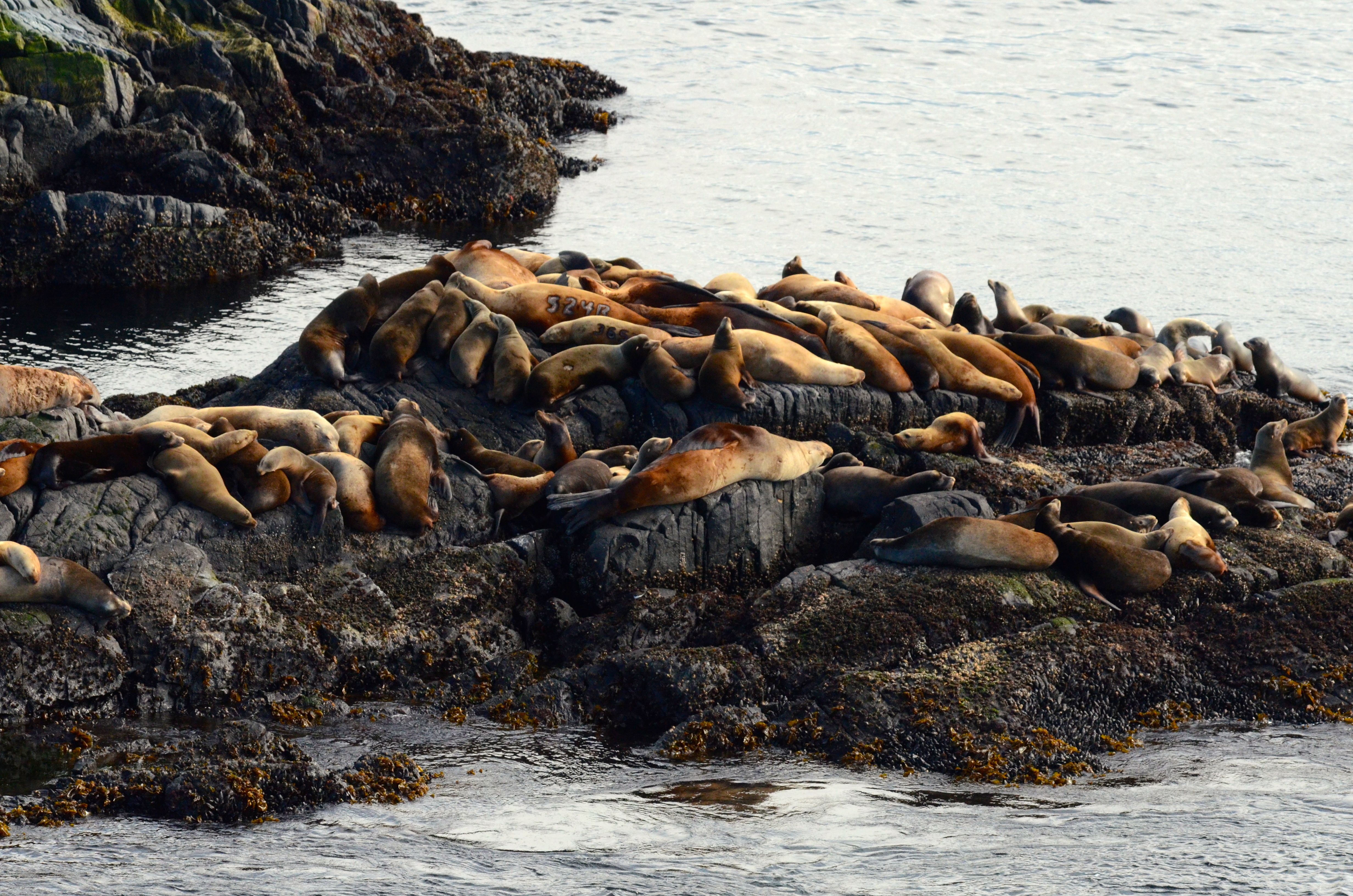
During the low tide in the afternoon, there was a large number of harbour seals and sea lions hauled out on the rocks. Two branded steller sea lions were seen on the South Islands. Both sea lions were branded as pups at Rogue Reef, Oregon. 524R was branded in 2007. 365Y was branded in 2013.

March 14 – West Wind and Waves

Overcast and rain in the morning, sunny in afternoon
Wind: 1-11 knots from the W and N in the morning, 22-46 knots from the W from the late morning onwards
Air Temperature: Low 9.3°C, High 11.3°C
Ocean Temperature: 9.2°C

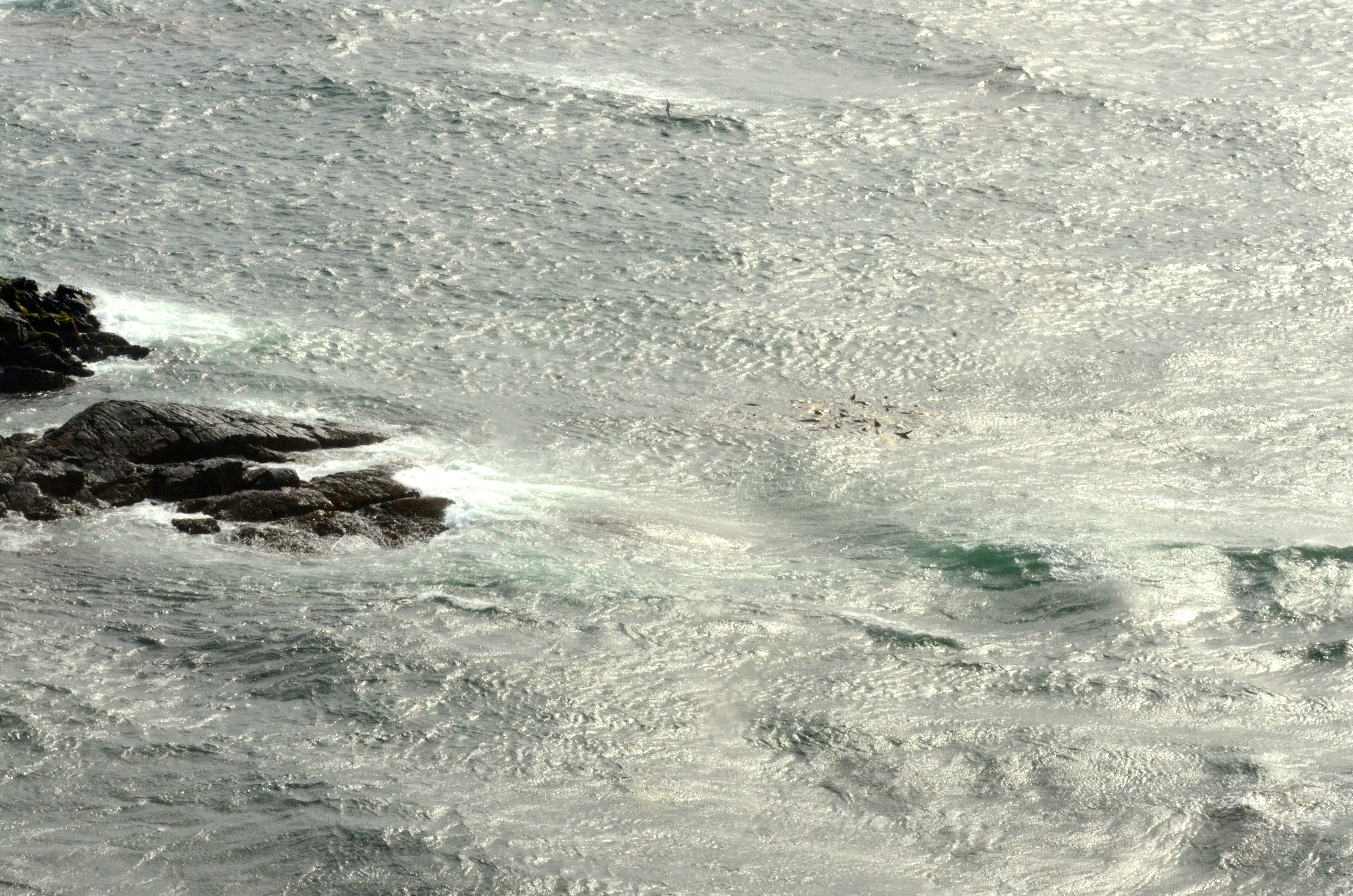
A gale warning in the afternoon, with winds gusts up to 46 knots, remained in effect for the rest of the day. The gulls had a hard time sitting and claiming their nesting sites when the wind gusts reached 46 knots. Due to the winds, the afternoon was filled with indoor tasks like cleaning, organizing the basement and drinking tea. The winds diminished in the evening.

Hanne Christensen, one of the visiting Pearson students, took some photos around the island yesterday and today. They are included in the gallery below.