Chunk Chilling

The morning was relatively calm with west winds of 5 to 10 knots. As the day progressed wind speed picked up gradually. When the fog rolled in, early afternoon, the wind rose more and by 18:00, it was blowing the more usual, 25 – 30 knots. By sunset it had calmed right down to 10 -1 5 again. The sky was clear all day and the blue was even visible, looking straight up through the fog. The barometer dropped very slowly all-day and ended up at ~ 1014HPA. in the early evening. The forecast calls for continuing west winds increasing to 15-20 knots (strong wind warning) Sunday afternoon, with a mix of sun and cloud.
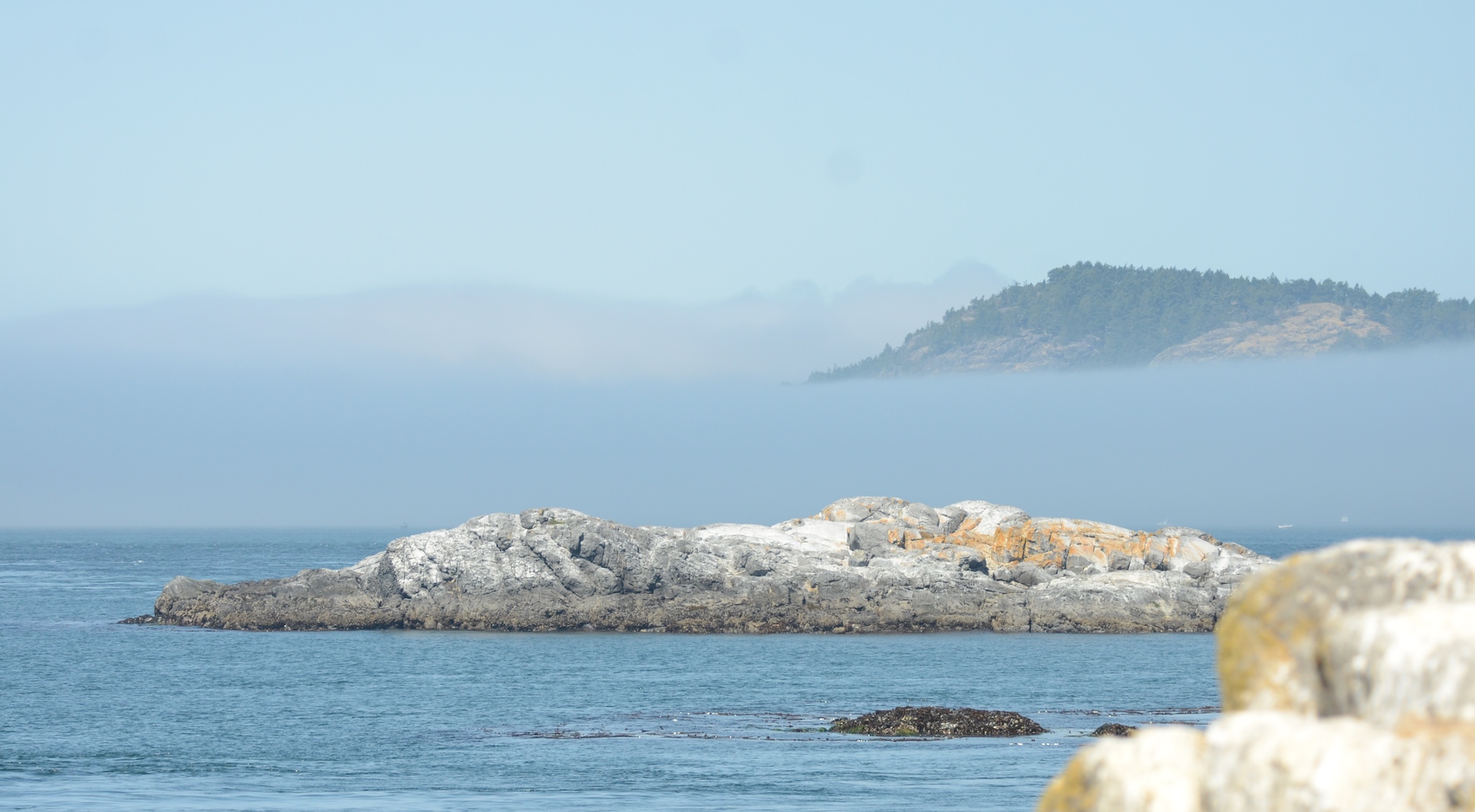
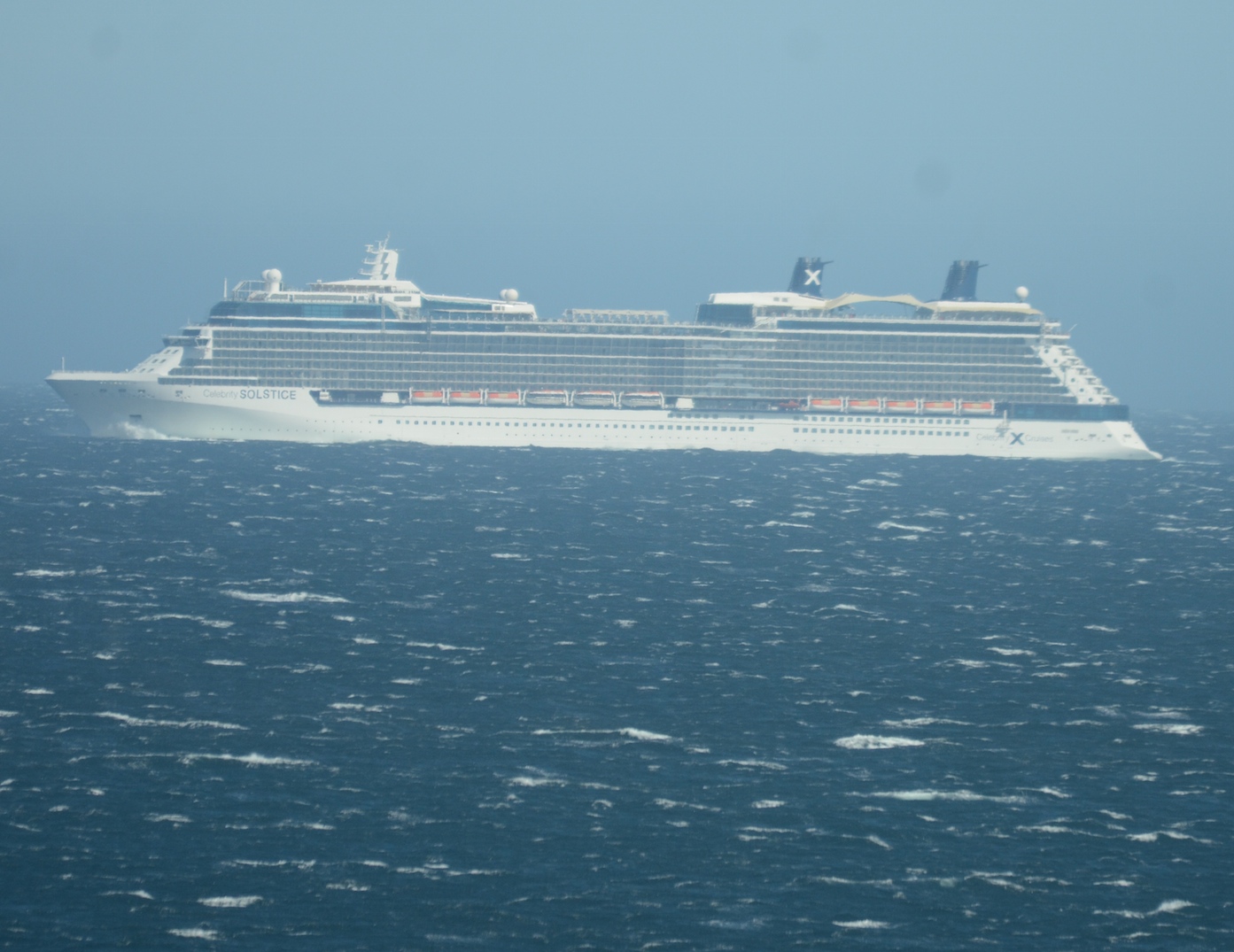
The fog rolling in past Church and Swordfish Islands (obscured).

The fog rolling in past Church and Swordfish Islands (obscured).

It was another busy whale-watching day at Race Rocks and 18 whale watching visits to the Ecological Reserve were noted. There were many more vessels that passed just outside the Reserve following pods of Southern Resident pods of Killer Whales. The usual Saturday dive charter operator also worked in the Ecological Reserve. Three sports fishing vessels came through as well and they mostly respected the speed restriction (7 knots) in the Ecological Reserve boundary.
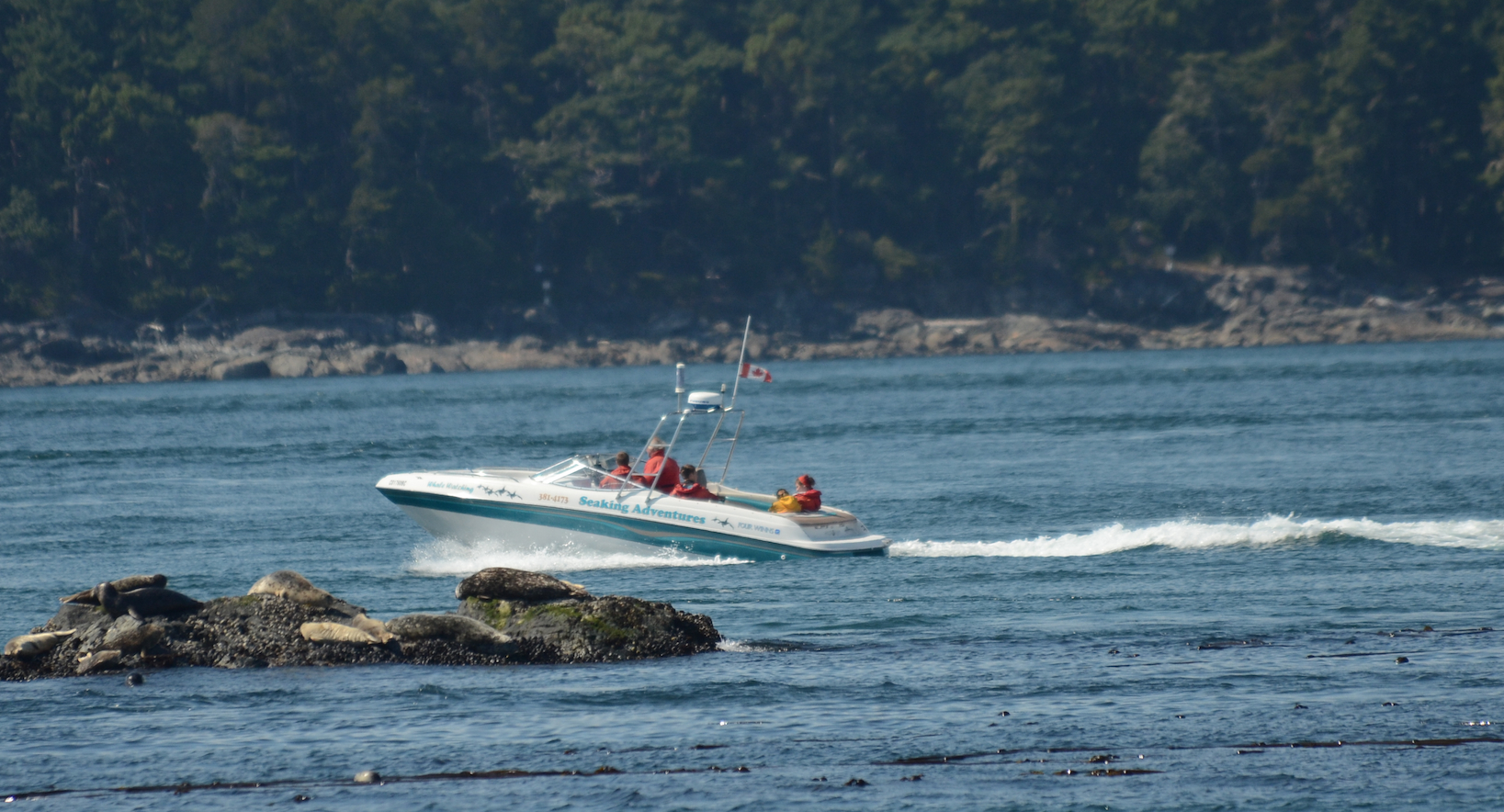
seaking speeding

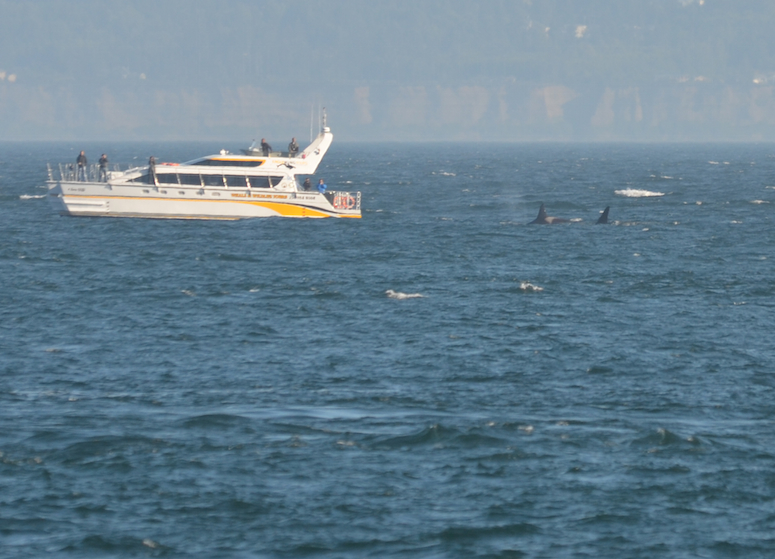
Race Rocks was again at the centre of whale activity today. A large Humpback was feeding to the east early and then headed west through Race Passage and then off to the south. Several groups of Southern Resident Killer Whales passed through the Ecological Reserve, through Race Passage and over Rosedale Reef, with the afternoon/evening flooding tide. One group of three to four individuals came right through middle passage passing within meters of the end of the Jetty. According to the whale-watching fleet there were animals from both J and K pods going through Race Rocks at the same time. Biggs’ Killer Whales also passed by Race Rocks through Race Passage also heading east with the flooding tide.
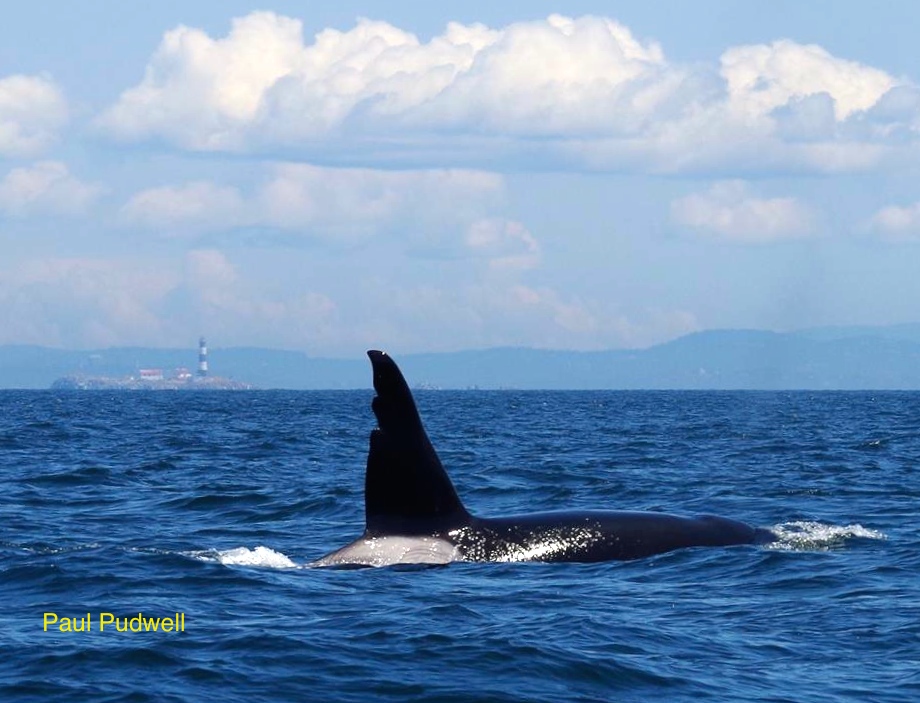
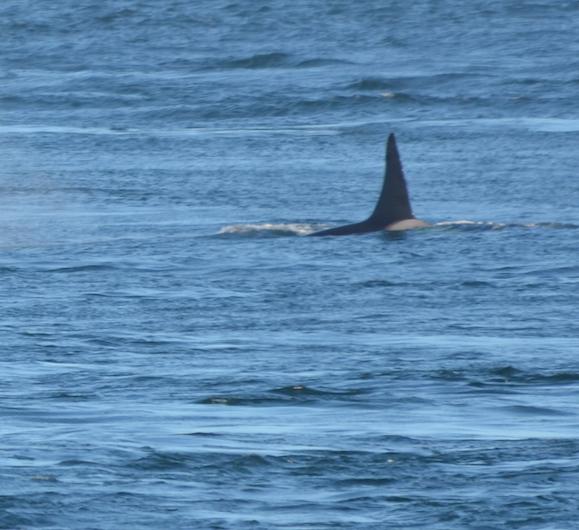
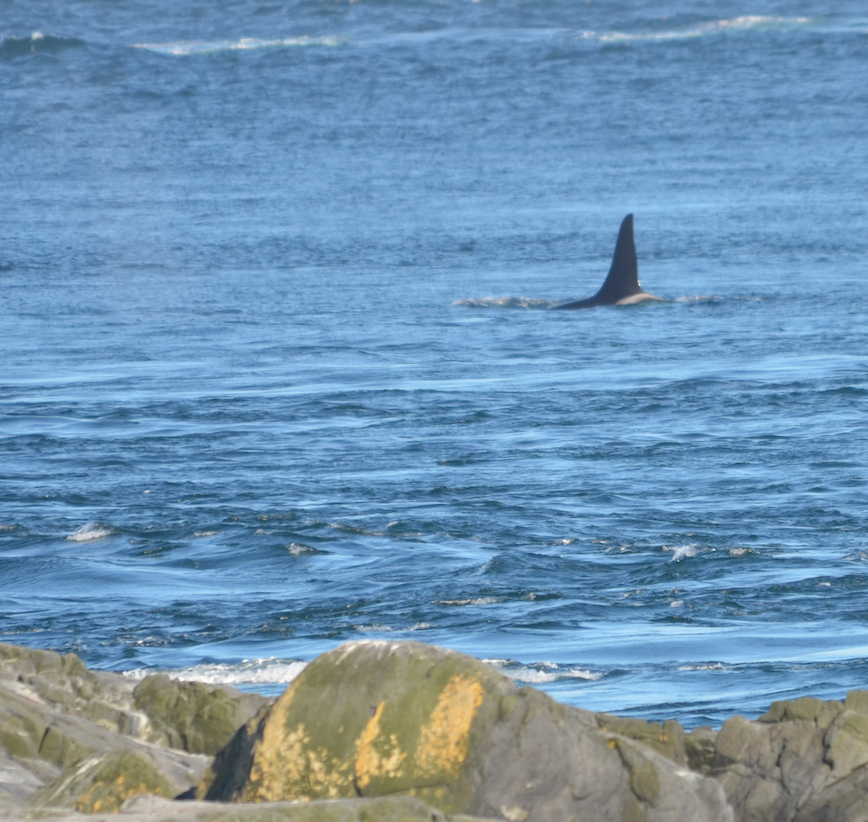
Chainsaw is the nickname for this big, male Killer Whale. Chainsaw is what we used to call a transient or T -killer whale. The Ts are now known as Biggs' Killer Whales named after the late Mike Biggs who did ground-breaking, pioneering work on Killer Whale identification and social systems on the west coast.

Chainsaw is the nickname for this big, male Killer Whale. Chainsaw is what we used to call a transient or T -killer whale. The Ts are now known as Biggs’ Killer Whales named after the late Mike Biggs who did ground-breaking, pioneering work on Killer Whale identification and social systems on the west coast. Photo thanks to Paul Pudwell.

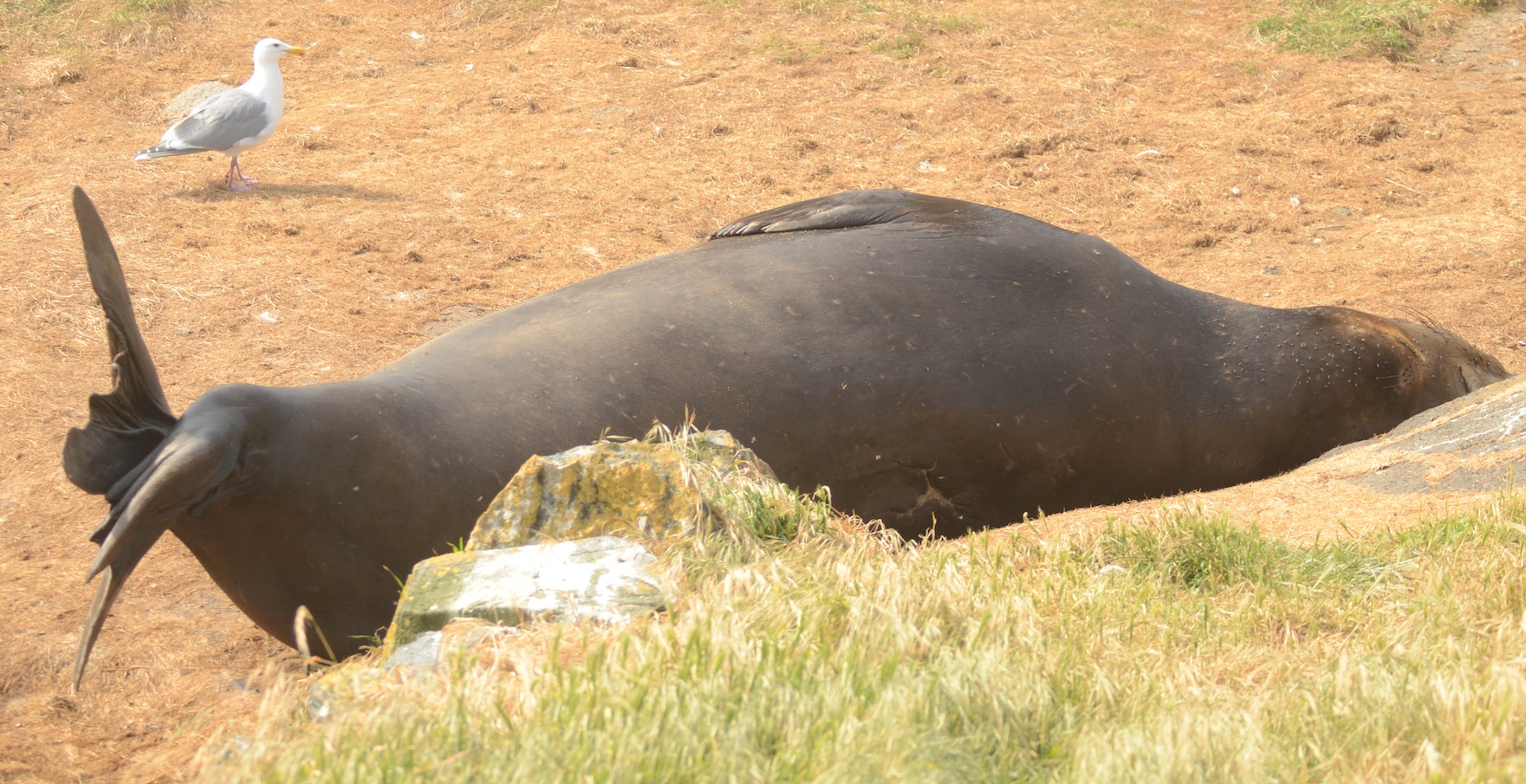
The same three Northern Elephant Seals continue their moults on Great Race. There are no elephant seals left on Middle Rocks. The little, two-year-old, Stellers Sealion was joined by the one and only Californian, on South Islands and it was just as well they were hauled out with the Biggs Killer Whales around. The usual spots were filled with Harbour Seals at low tide.
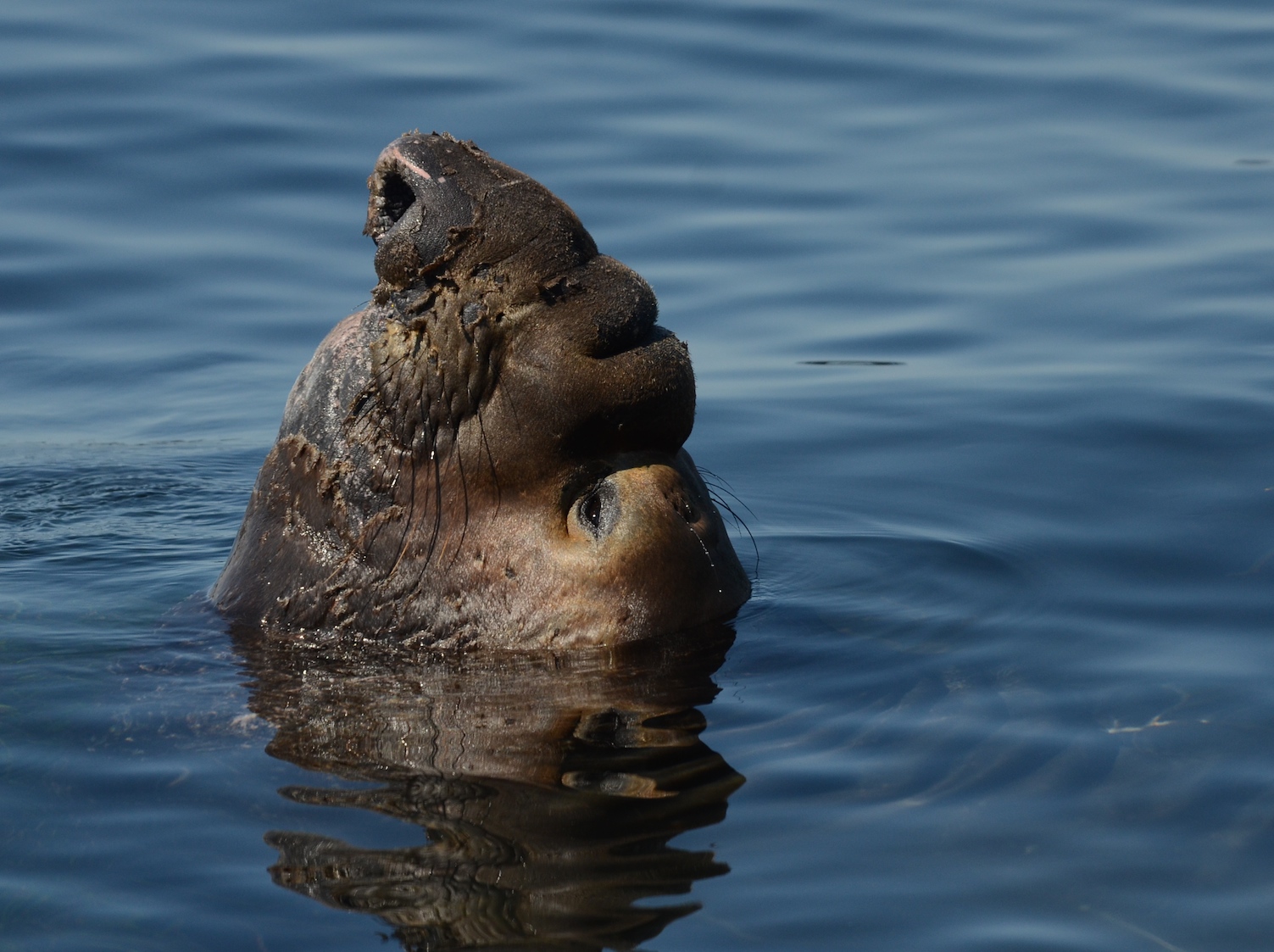
 

Chunk chilling.

Chunk chilling.

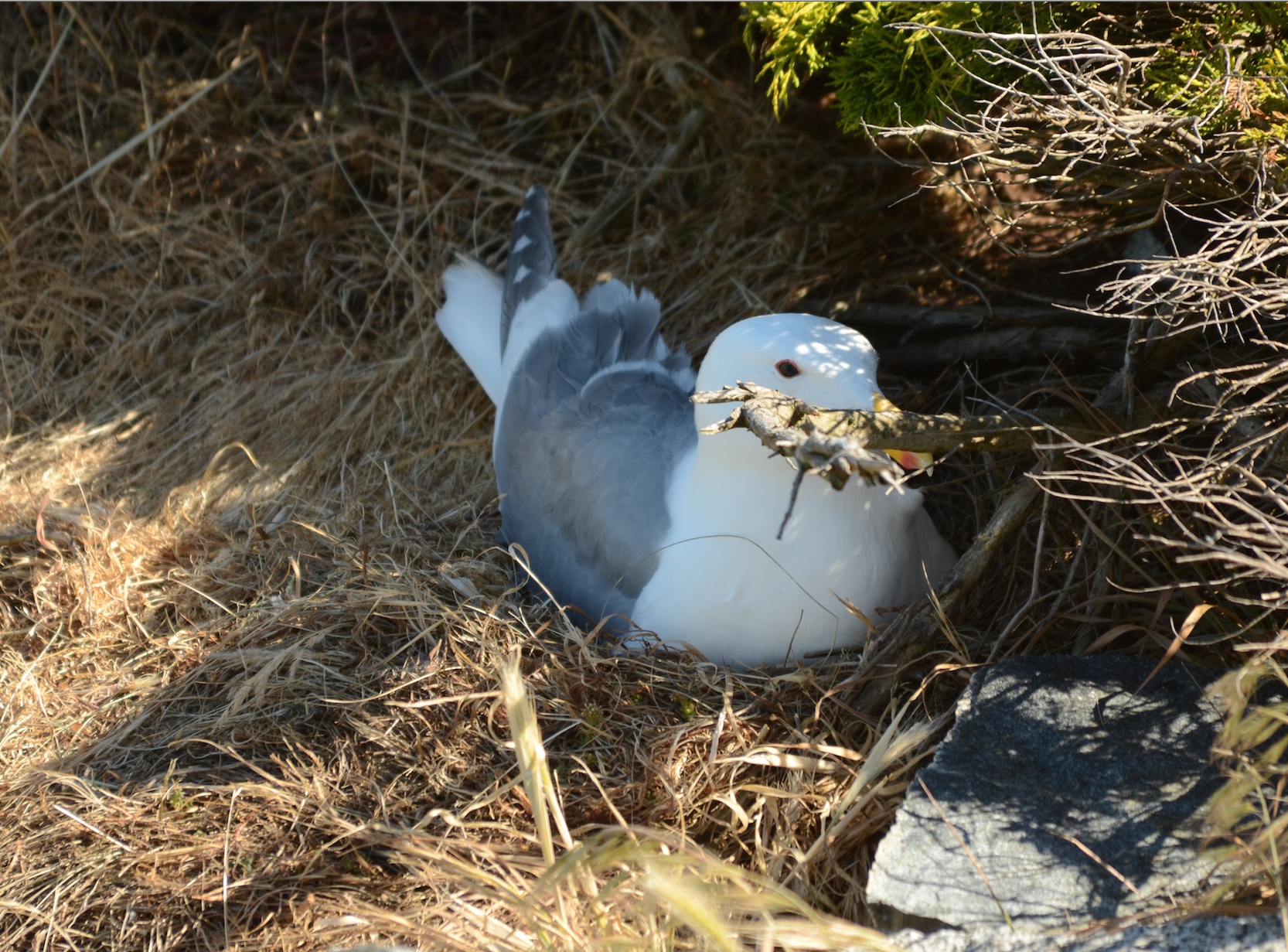
Lots of Glaucous-winged Gulls were seen mouth open and panting, to cool their eggs today during the intense sunshine. The Black Oyster catchers continue to incubate as well and Pigeon Guillemots continue to mate. The main nesting sites for the Guillemots seem to be in the rock piles just west of the jetty, west of camera five and in the surge channel southwest of the science house. There is also scattered guillemot activity around the perimeter of the island especially in boulder and crevice areas. The ten Canada Goose goslings left are at different stages of development but quite a few of them are getting flight feathers now and the black and white colouration on the head and tail (like the adults) is starting to fill in.
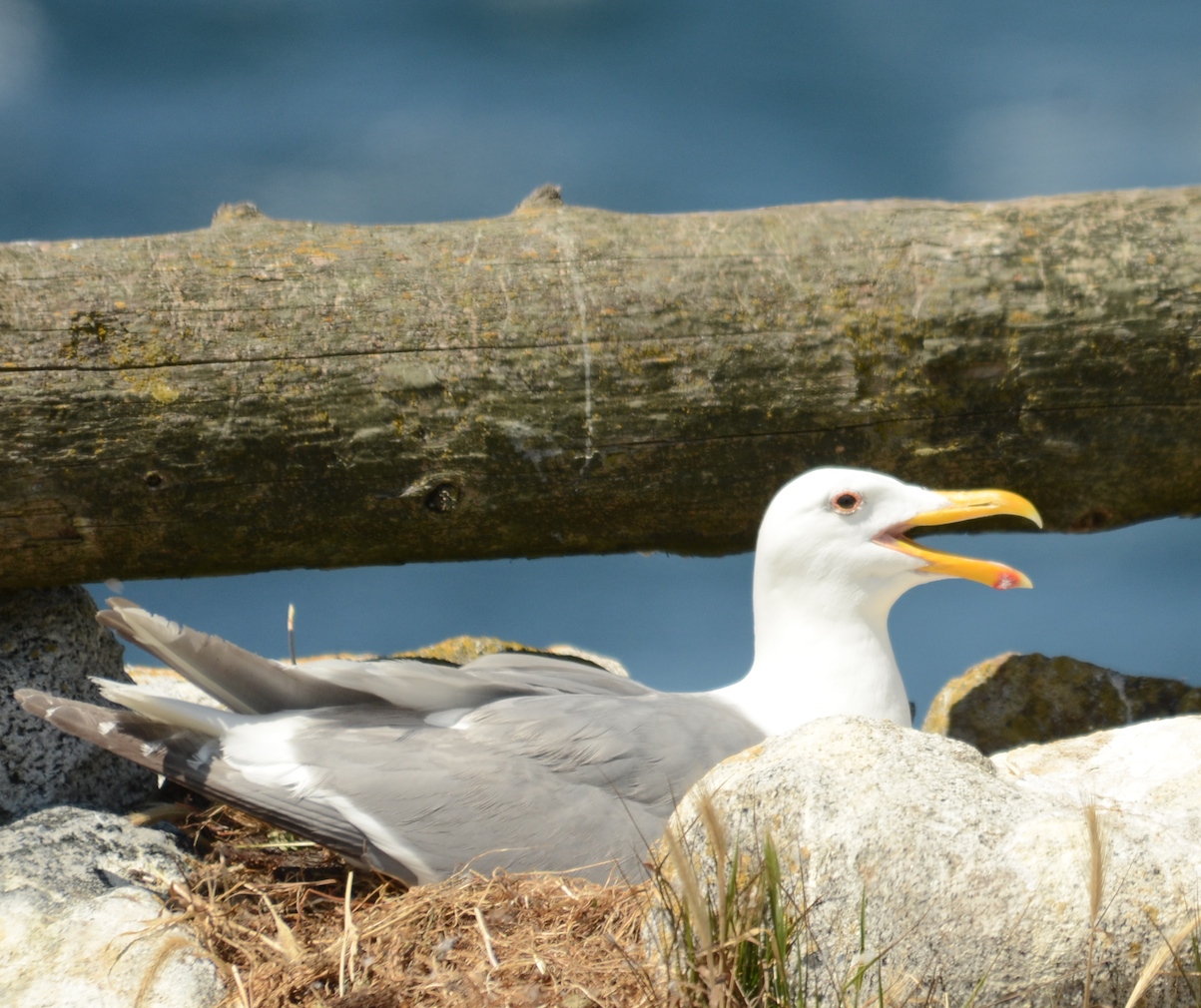
gwgu panting

An interesting sighting today was an Anna’s Hummingbird, spotted by Alex near the Science House. Missing in action was the Sea otter, which was nowhere to be seen today. There was quite a bit of Bald Eagle activity early on and that might have an effect but I was also thinking of the parade of 25 whale watching boats that all made up-close and personal connections with the sea otter a few days ago and wondering if it was just too much.

The sunshine continues to provide almost all of the electrical power requirements for the island. There were no visitors today and chores were routine.


A Tale of T-Whales

Today the wind continued its westerly path, bringing fresh ocean air in through the central Strait of Juan de Fuca at 20 to 35 knots. The sky was mostly clear, with clouds forming in the distance, along the tops of the Olympic and Cascade Mountain ranges. The barometer continued the climb it started yesterday until late afternoon, reaching almost 1020 hPa., before starting to gradually drop as the sun descended toward the horizon. Gale warnings continue to be in effect and the forecast calls for a mix of sun and cloud tomorrow.

Five whale watching vessels were observed working in the Ecological Reserve today in spite of adverse weather conditions. They all moved carefully and at a respectful speed being mindful of the marine mammals (Elephant Seal, Harbour Seals, Sea Lions, Sea Otter) and nesting seabirds in the Reserve. The only other vessel observed transiting the Ecological Reserve today was the Fisheries and Oceans vessel, Cape Kuper travelling at a discreet 25 knots towards Victoria, in the go slow zone.

Ecological happenings described in some detail in my earlier logs continue. (Elephant Seals haul out, socialize, sleep and moult. Other pinnipeds haul-out socially. Glaucous-winged Gulls, Pigeon Guillemots and Black Oystercatchers mate, nest, lay, incubate and get territorial. Mixed species feeding flocks (fish balls) attract gulls on the water and kelp is still growing.)

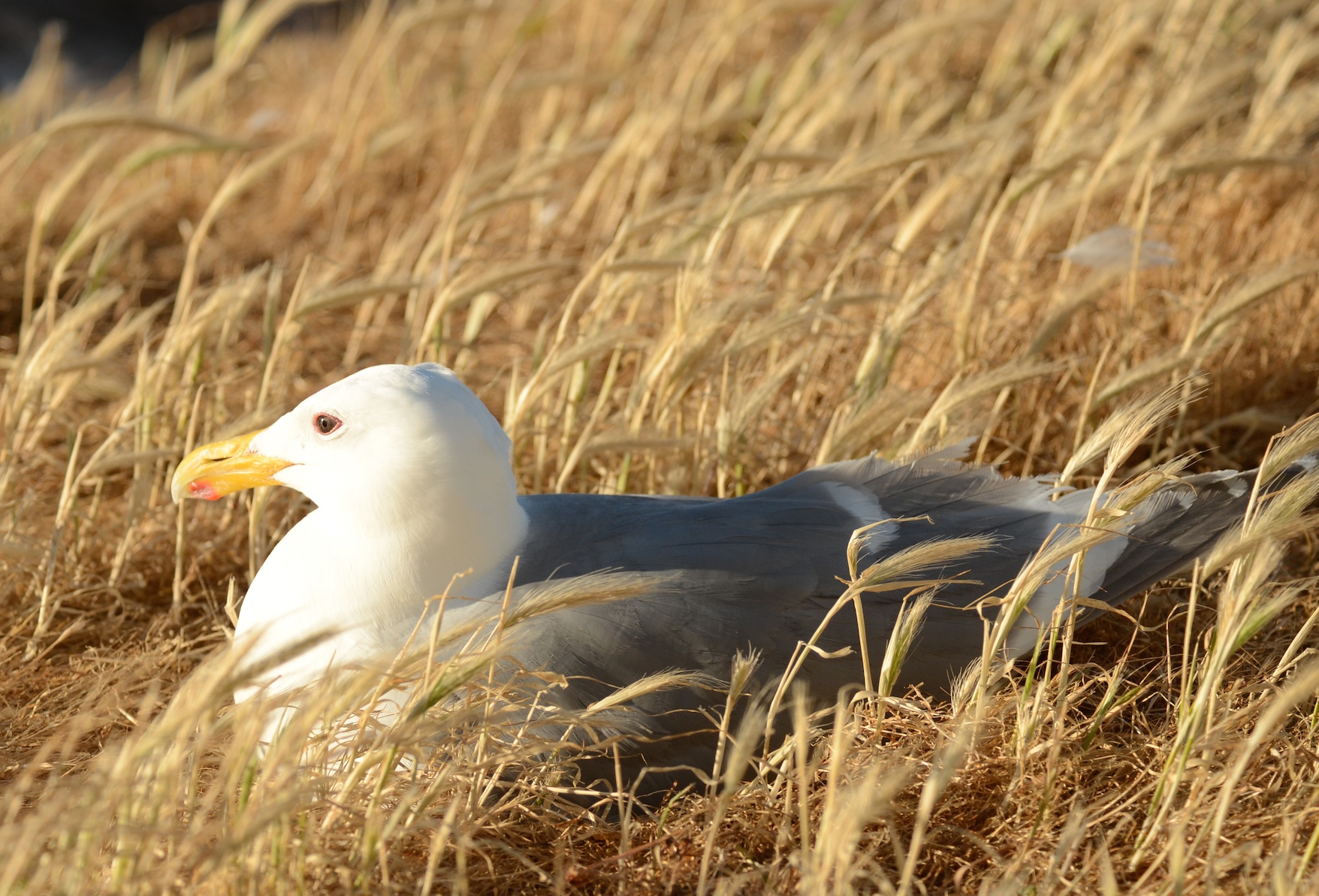
Glaucous-winged Gull incubating three eggs.

Glaucous-winged Gull incubating three eggs.

Of note was the sighting of Biggs’ Killer Whales (Transients) in the evening. I counted six individuals including a large bull with a very triangular fin. The two whale watching boats closer to them reported seven or eight individuals including a young calf. As often happens with T’s, as they used to be known, we spotted them a couple of times and then they totally disappeared. They showed up again, with the whale watching boats “in tow” a mile or so to the east.

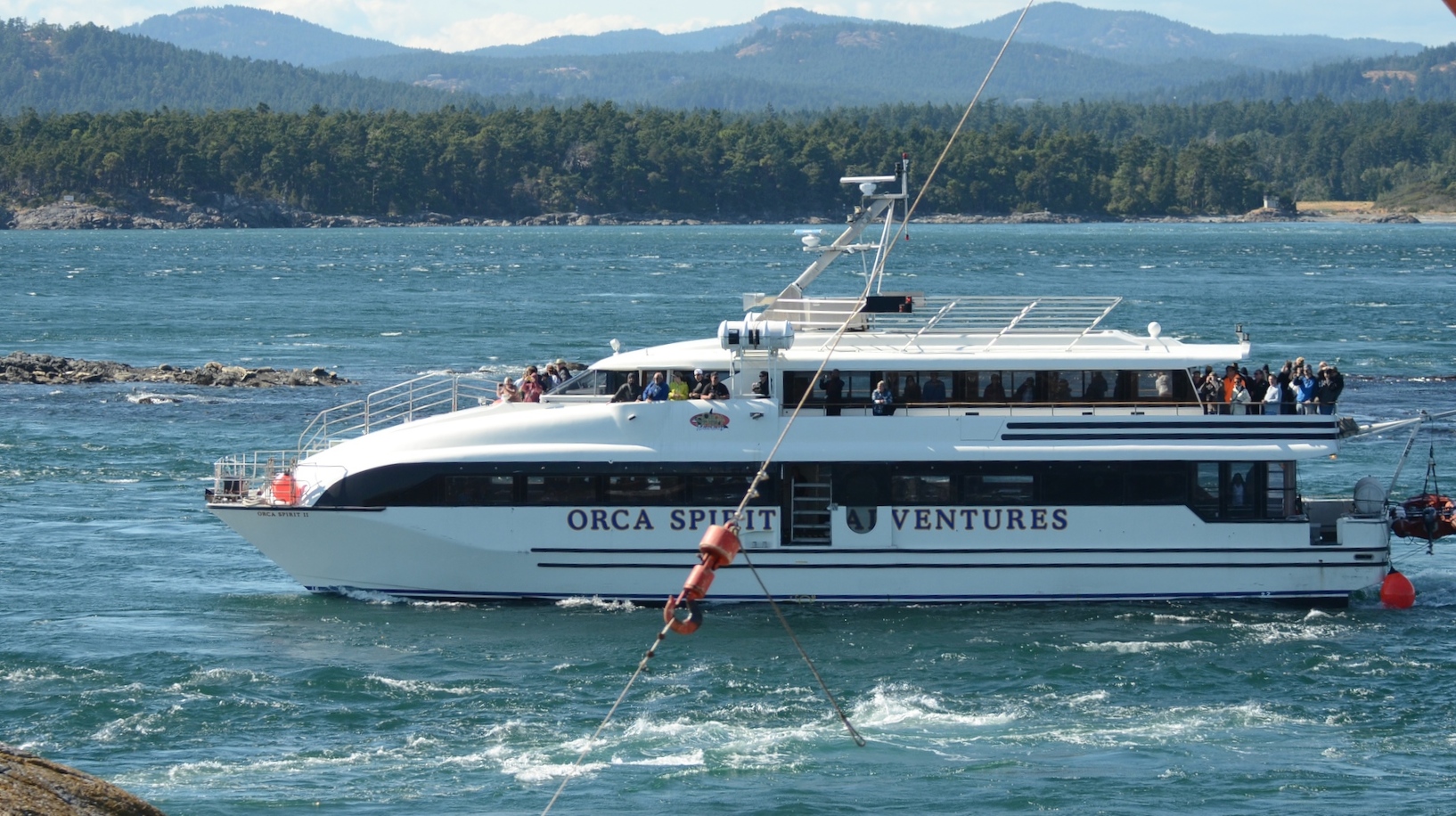
Orca Spirit runs upstream through Middle Channel.

Orca Spirit runs upstream through Middle Channel.

Here are the results of the weekly animal census.

Northern Elephant Seals 3 (Chunk, Floyd and young female) only on Great Race, none on Middle Rocks)

Harbour Seals 221

California Sealions 1

Northern or Stellers Sealions 1 (juvenile (Could be the two year old that was still with its mother earlier in the season (that size).)

River Otter (not seen but probably still here, fresh feathers in boat house)

Sea Otter 1

Biggs’ Killer Whales 6 (Transients) (Just north, outside of Ecological Reserve in Middle Channel near North Rock.)

Humpback Whale 1 (“Big Mama”) (Just outside of Ecological Reserve to the south of Rosedale Reef.)

Canada Geese 16 (= 10 goslings + 6 adults) (most have left)

Pelagic Cormorants 3

Double Crested Cormorants 5

Bald Eagles 1 sub-adult (no adults seen)

Black Oystercatchers 8 (4 nesting pairs)

Kildeer 2

Pigeon Guillemots ~100

Glaucous-winged Gulls total 457 (385 adults in nesting areas; 72 roosting/resting on Middle Island including 14 juveniles). Large majority of gulls are incubating now, although some are still getting started. No chicks observed yet

Alex and I came out on Second Nature last night with Chris. Christine and Guy returned to shore the same way. A big shout out to Chris for all his support.

There were no visitors and chores were routine, but more fun with company.

Double-Billing (Thursday-Friday)

Thursday was a howler. The wind started early and blew ferociously all day. Although it developed into a classic westerly, it actually started out from the west-northwest, which is closer to the direction running down the outside coast of Vancouver Island (NW). Most of the day, it was westerly from 30 – 40 knots and late in the afternoon there gusts over 40 knots. The fog that formed early on the Port Angeles side of the Strait was blown away early and the sky stayed clear until just after sunset when clouds became visible in the west. The barometer has been rising since Wednesday and the forecast is for continued gale warnings and mix of sun and cloud.


It really calmed down on Friday. The westerlies with a touch of southwest, continued but at moderate speeds of 15 -25 knots. Although there were clouds to the west early in the morning, they evaporated quickly and it was full on sunshine all day. The barometer is dropping from a high of 1020 hPa and the forecast is for strong winds and mostly clear skies.

There were no whale-watching boats, or sport fishers on Thursday, as the weather and sea conditions were just too wild. Friday was a totally different story with 16 whale-watching vessels observed, visiting the Ecological Reserve. Some vessels made multiple visits.

There was a lot of whale activity within and around the Ecological Reserve. Both a Minke Whale and a large Humpback were feeding just to the southeast and south respectively and three different pods of Killer Whales moved through the area in the afternoon and evening, including small group of Bigg’s Killer Whales (Transients), two pods of southern residents ( J-pod and L-pod according to the whale-watching boats). One of the SRKW pods came right into the Reserve within fifty meters of South Rock, heading east. There were two large adult males, one small calf and about 15 individuals all together. Another ~ 20 individuals were travelling in the same direction about one mile to south, at the same time. It appeared as though the two groups met up and mingled to the east of Race Rocks. Time for the sockeye to be running.

gwgu on nest juniper

Other ecological happenings are progressing as has been reported on for the past few weeks. I started a Glaucous-winged Gull nest survey Thursday and finished surveying about one third of the island. On Friday the female Northern Elephant Seal # 5866’s tags were noted. Chunk and Floyd have been peacefully moulting, sleeping and travelling up and down the ramp for several swims a day (more like lolly-gagging in the water).

Thursdays are animal census day. It is worth noting that the winter resident bird species such as Black Turnstone, Harlequin Duck and many species of gulls that nest elsewhere are gone now and so are the transitory migrant shorebirds and other migrants that stop off briefly or for a while. The sealions are at their lowest number which is expected since they too should be on or heading towards their breeding grounds. Census results follow.

Northern Elephant Seals 10 (including 5 on Great Race)

Harbour Seals 218

California Sealions 5

Northern or Stellers Sealions 2

River Otter 1

Sea Otter 1

Canada Geese 24 (= 10 goslings + 14 adults) (many appear to have swum away)

Pelagic Cormorants 3

Double Crested Cormorants 5

Bald Eagles 2 (1 adult, 1 sub-adult)

Black Oystercatchers 10 (5 nesting pairs all incubating)

Kildeer 2

Pigeon Guillemots 110

Caspian Terns 2

Glaucous-winged Gulls total 424 (402 adults in nesting areas; 22 sub-adults in roosting/resting area). Most gulls are incubating now, although some are still getting started.

There were no visitors on Thursday and two visitors Friday, who did a retreat in the science house. They came and went in Second Nature with Chris.

Chores and maintenance were routine today and I am glad to report that I am able to wash windows again.


Chunk Came Back.

Not surprisingly it was another day of westerly winds ranging from 15 to 20 knots. There was also thick fog almost all day, with only a few minutes here and there, with good visibility. The barometer didn’t do much and ended up where it started at ~1015 hPA and the forecast is calling for the usual strong wind warning and fog patches.

Five whale watching vessels were observed in the Ecological Reserve and there could well have been others, but I couldn’t see them due to the thick fog.

The demolition range at Rocky Point was very active today. There were some very large explosions, which when in succession, had the effect of scaring the Stellers Sealions into the water. The Northern Elephant Seals didn’t even flinch and the California Sealions became alert and then went back to sleep after a bit of barking.

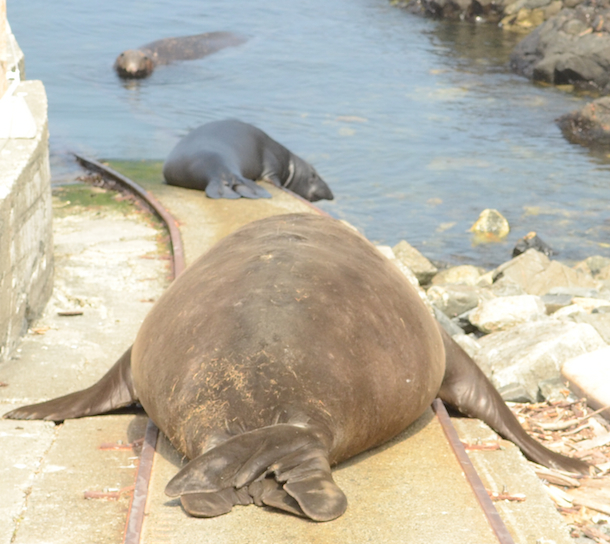
Chunk returned to Race Rocks today after an absence. He seems to have itchy flippers.

Chunk returned to Race Rocks today after an absence. He seems to have itchy flippers.

Chunk looks older and wiser.

Chunk looks older and wiser.

Chunk came back today. His absence has had me wondering whether he had met his fate in the deep or far offshore. I haven’t seen him since winter/spring 2014 and he is even bigger now. His unmistakable star shaped scar (the chunk that was torn out) is still prominent making identification straightforward.

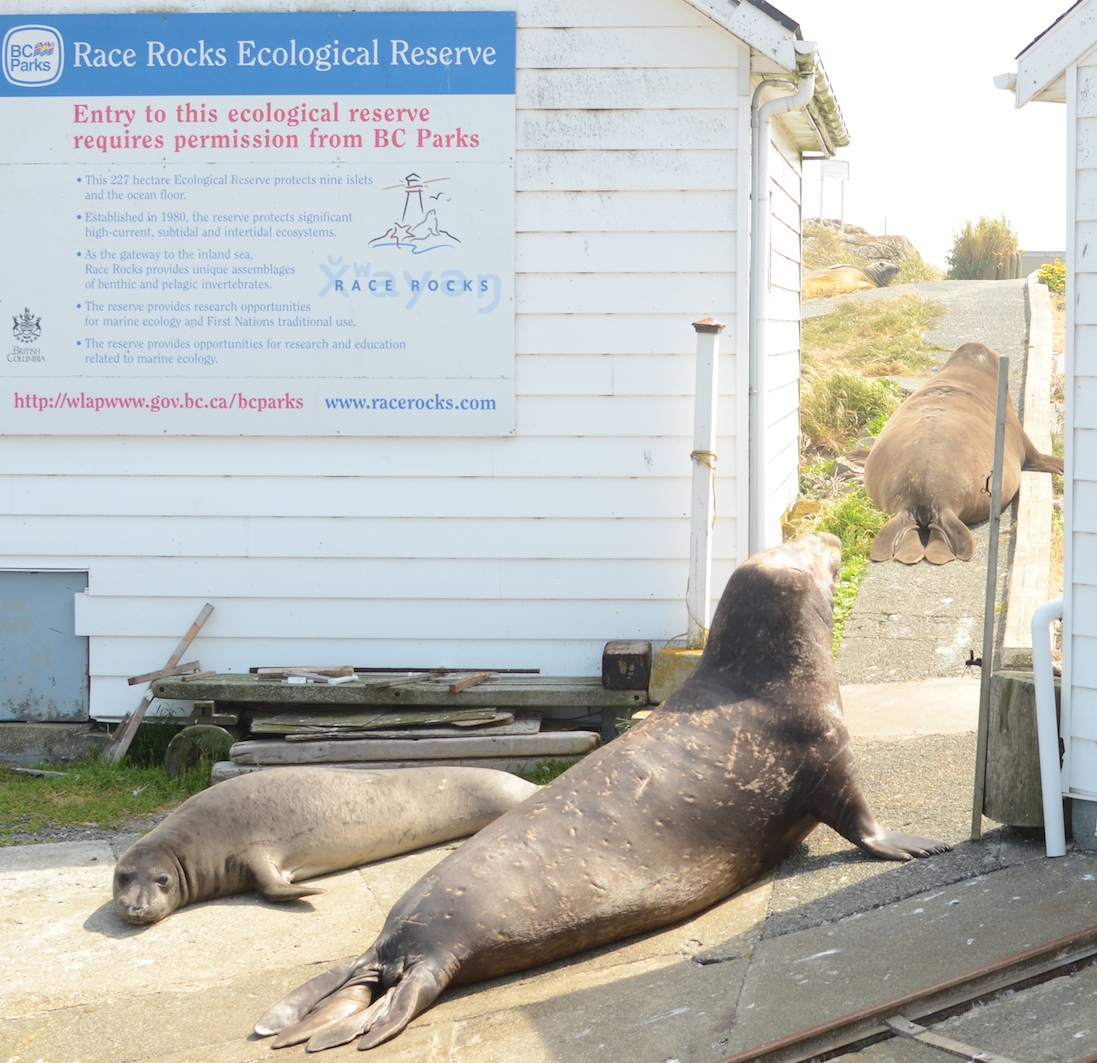
Chunk fills the marine railway as he heads down for a swim. Floyd is lurking at the bottom in the water.

Chunk fills the marine railway as he heads down for a swim. Floyd is lurking at the bottom in the water.

Chunk turns and heads up and around tank shed to avoid Floyd.

Chunk turns and heads up and around tank shed to avoid Floyd.

The interactions between Floyd and Chunk were interesting; Chunk tried to avoid Floyd, at one point rotating 180 degrees on the jetty ramp and then “hustling” up the ramp ahead of Floyd, who was also ascending. Floyd followed and Chunk went all the way around the tank shed and back down the other path to get into the water without an interaction.

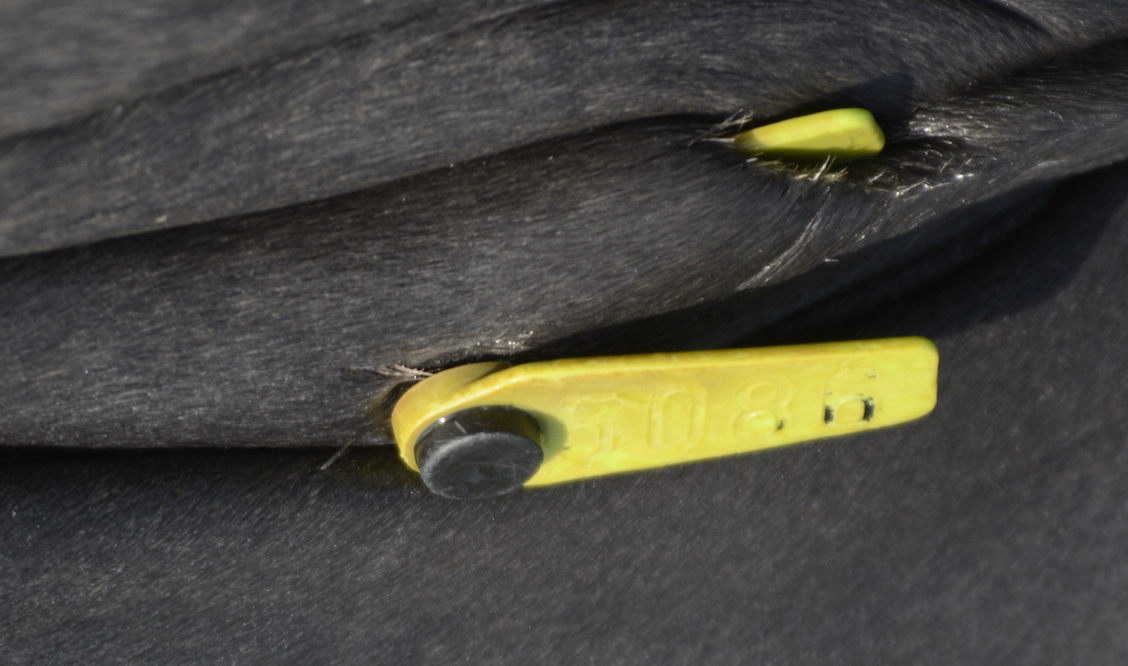
Tagged Northern Elephant Seal female #5086 was spotted today. Her tag is getting a little worn, as is her flipper where it rubs. Earlier a male was biting her on the tale hard enough to draw blood.

5086F Mian

5086F Mian

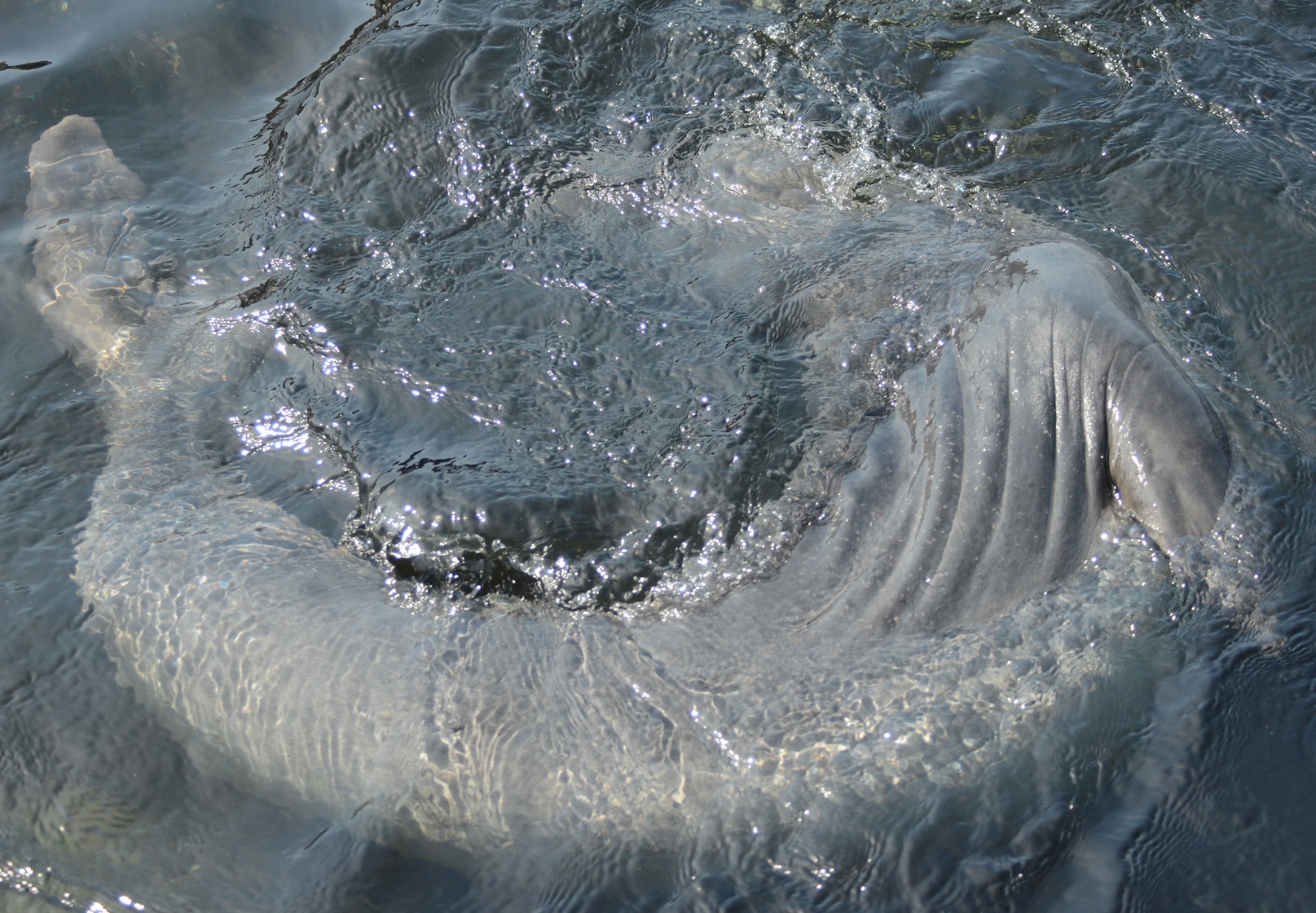
This little female loves chasing her own  tail in the water.

Round and round in the water, chasing her own tail. You can see from this photo how loose her skin is getting during this moulting fast.

Round and round in the water, chasing her own tail. You can see from this photo how loose her skin is getting during this moulting fast.

There were no visitors and chores were routine.
May 26

It was another steady, west by southwest day, blowing 15 to 20 knots, from morning to night and clearing out the clouds for a glorious afternoon and evening. There was just enough marine haze on the horizon to make a great sunset. This morning barometer gradually rose to 1016 hPA and then started a slow decline after noon ending up at 1014hPA just before 8:00 PM. The forecast is calling for strong westerlies to continue with a mix of sun and cloud.

Only four whale watching boats were observed in the Ecological Reserve today and everyone was on their best behaviour.

Ecological happenings were subtle today. More sealions are hauling out on Great Race including a few very chunky Stellers bulls. The California Sealions seem to putting the call out for others within hearing range to come and bark in concert. There are more birds mating wherever you look, the Canada Geese goslings are growing incredibly fast and the bull kelp is now forming a broad canopy even on the high tide. The gull bolus contents are shifting to more ‘forage fish’ bone content from the earlier strong bias toward chiton plates and the adults are feeding each other in practice for parenthood?

The Bald Eagles continue to fly in and scare all the gulls, geese and oystercatchers and it looked like they caught something today, but I am not sure what..

Chris and Courtney brought Second Nature out in the afternoon with two visitors from Scotland, (an alumna and her husband), and the two relief eco-guardians Guy and Christine who will be here for the summer. Chris, Courtney and Guy delivered diesel for the generator, using the derrick, barrels, a drum dolly and a fair bit of sweat. It looked scary to me but they pulled it off with aplomb and Chris said it is easier, safer and less risky than the old method, so that is really great.

My chores today were routine. I am going to post this now and update it with photos later in case the Internet goes down again in between. Must run and shut down the generator.


Yellow-headed Blackbird

Again it was a day dominated by the west and west-southwest winds. It was blowing 30 to 35 knots at dawn but the velocity subsided and most of the day it blew 20 to 25 knots. Skies were partially overcast and as predicted there were a few showers. Air temperature remains low, and is not much different than flooding sea surface temperature at ~ 9.7 oC. ranging between 10 oC and 12 oC .The wind is also chilling and today had the highest wind speeds of the week. The barometer rose today from 1008 to 1013 hPa and is dropping now while the forecast calls for gales and a gale warning has been issued. Saturday is supposed to be mainly cloudy with a 30% chance of showers.

There were four whale-watching boats observed, working in the Ecological Reserve today. No other vessels were observed in reserve.

Female Northern Elephant Seal # 5086 is on day seven of her moult now and has made great strides in losing skin during the last 24 hours. She has achieved the two thirds moulted milestone and is still grouchy.

5086_Day 7

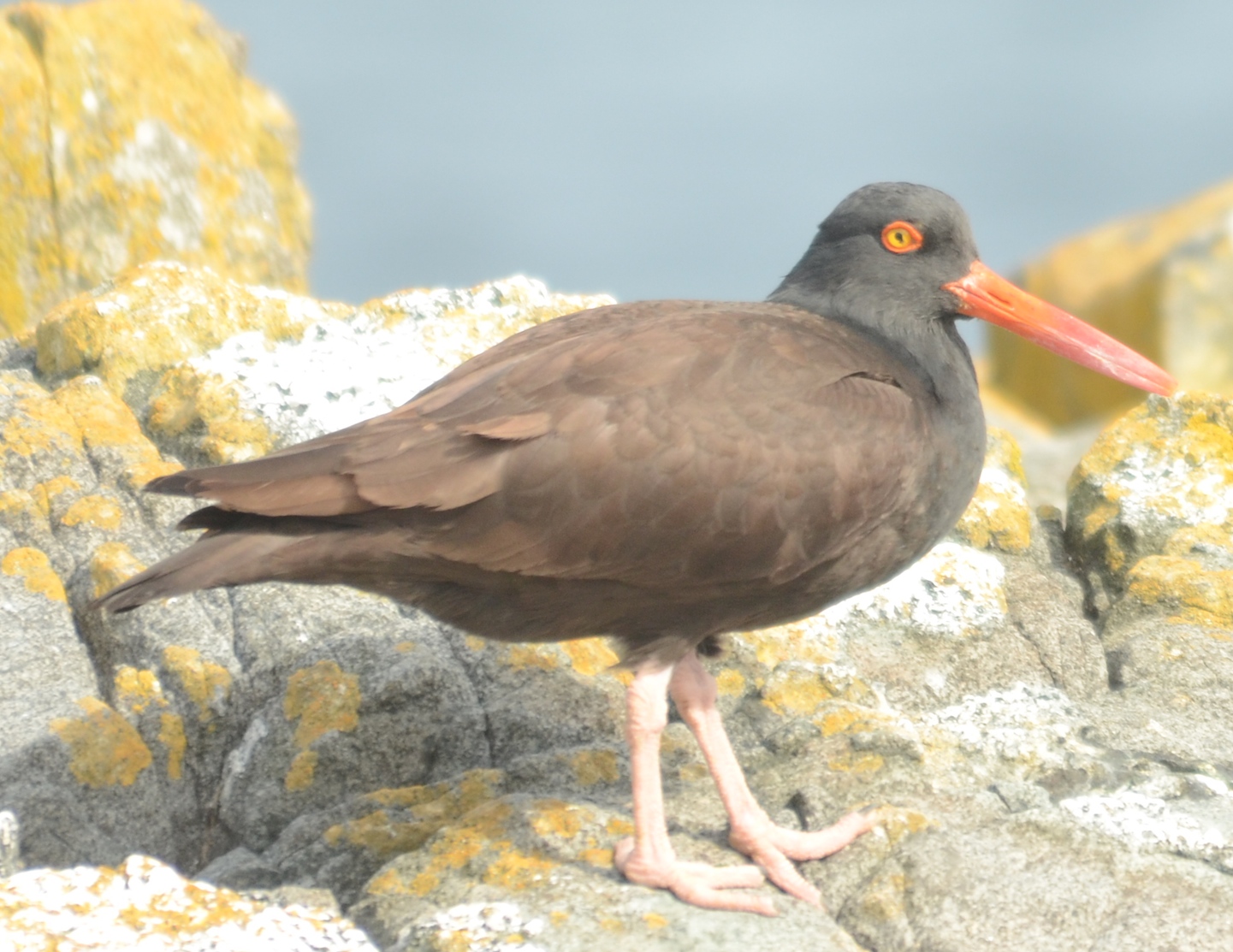
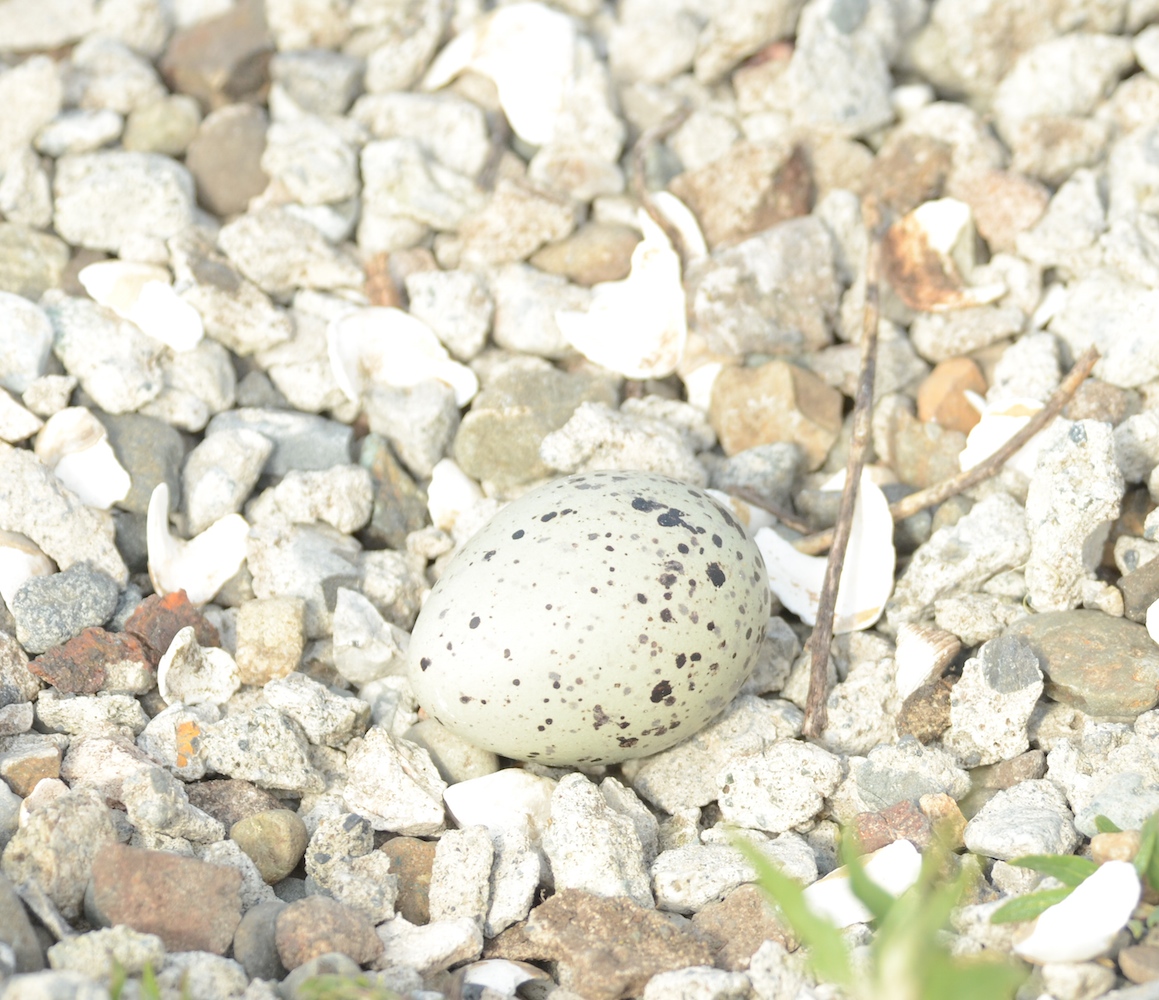
Black Oystercatchers are without a doubt nesting now and there are eggs in their terribly spartan nests, which have none of the comforts of home like soft vegetation or down.

Untitled bloy egg2

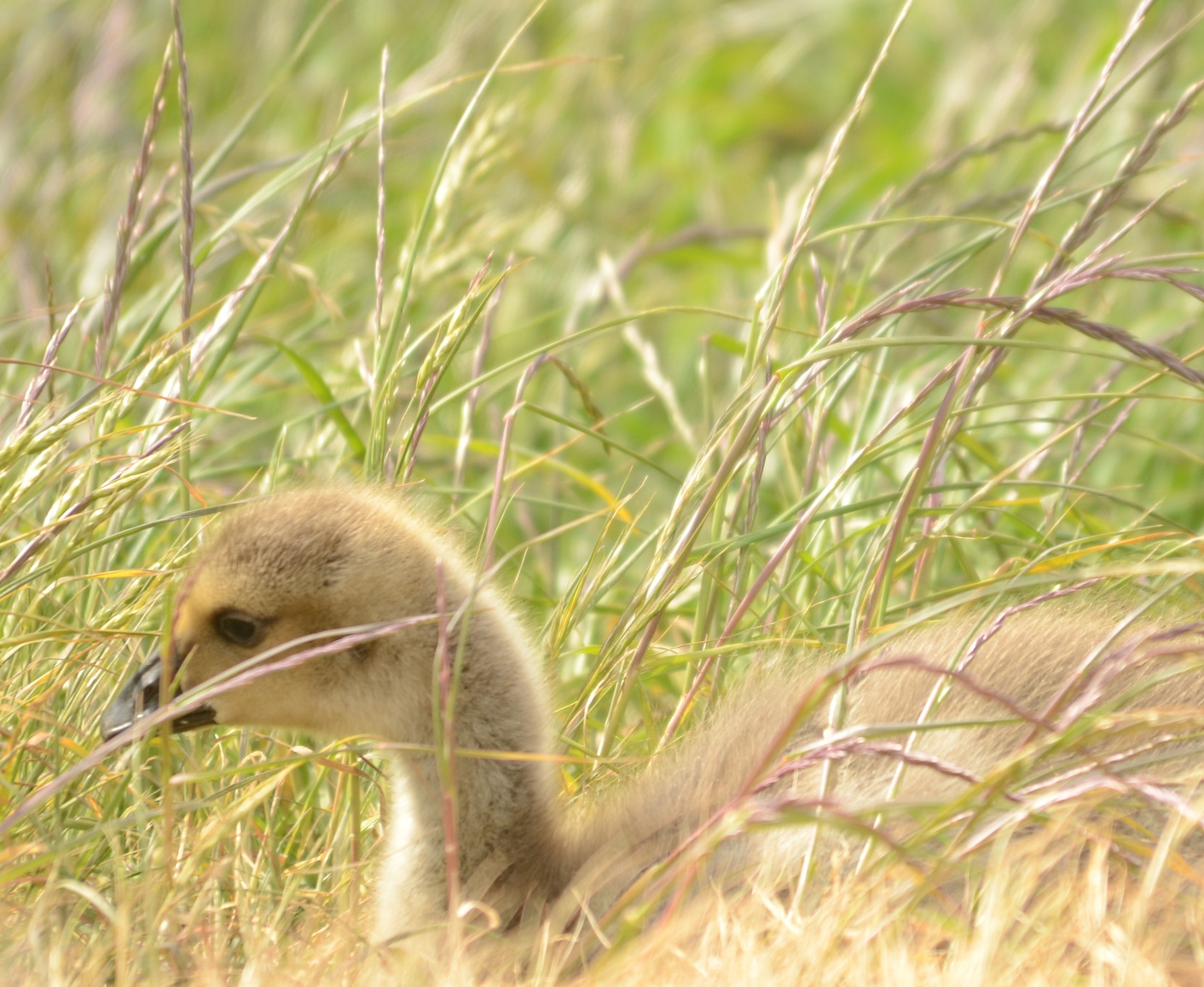
Some of the goslings are getting quite large and although they may be considered pesty, they are still fascinating to watch.

gosling

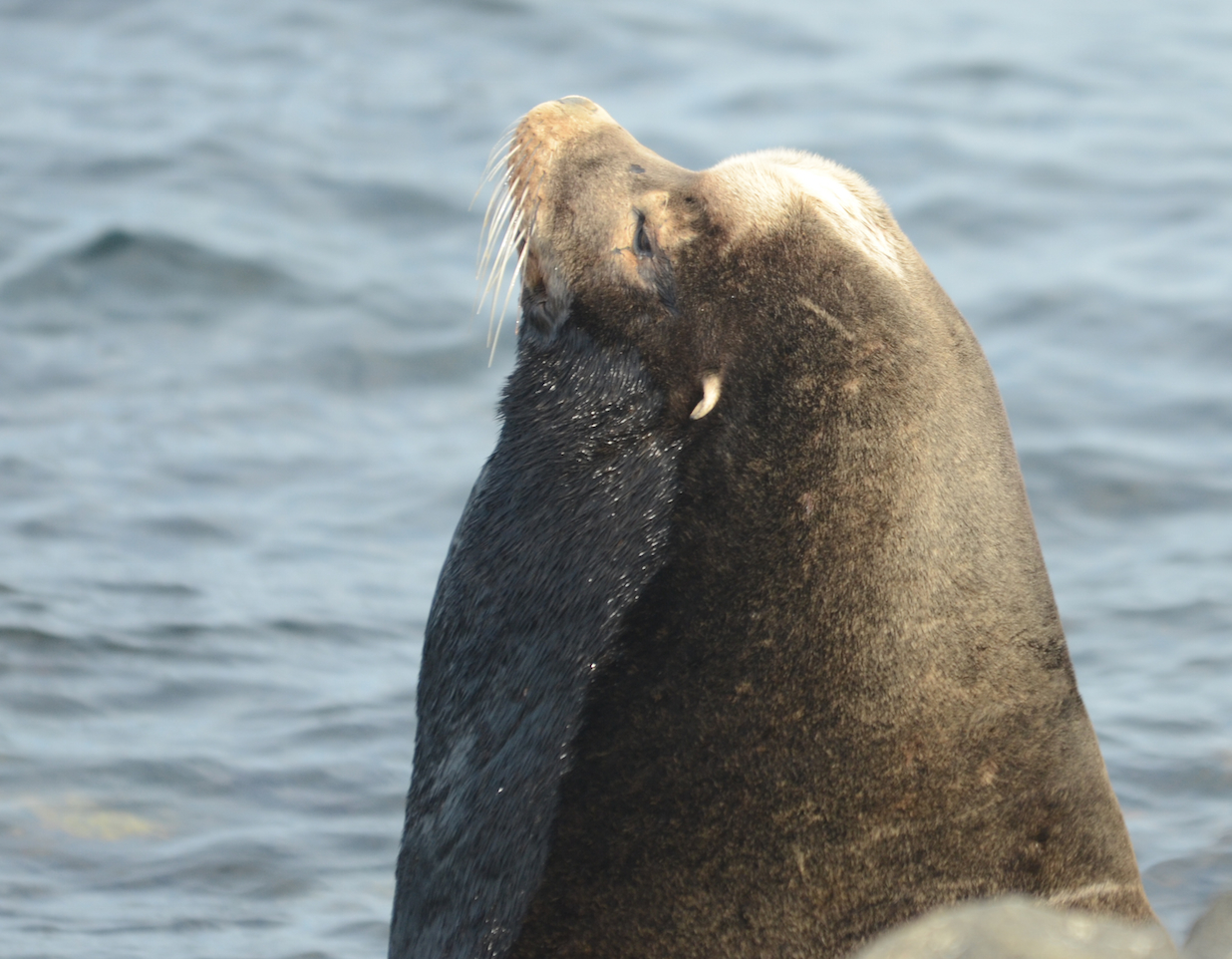
The California Sealions are moving back onto Great Race and I awoke to a chorus of them doing a call and response outside my bedroom window this morning.

ZACA

Thanks go out to Don Stewart for spotting and identifying an Anna’s Hummingbird on Great Race today, I believe this is a new addition to the species list here.

DCS

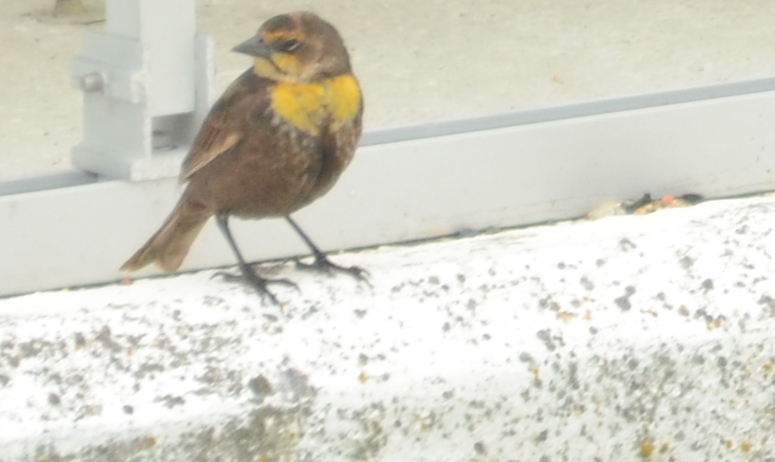
Another thank you to Rocky Point Bird Observatory for identifying a Yellow-headed Blackbird, another possibly new bird to the island. It has been hiding in the long grass and thistles near the base of the Light Tower and it has been difficult to get a photo fast enough. Today it flew to the roof of the Energy Building which made a photo much easier.

Yhblkbrd

Yesterday was census day but it was too foggy much of the day to do a good census. Here are the results from today’s census.

Northern Elephant Seals 26 (18 on Great Race, 8 on Middle Rock)

Harbour Seals 228

California Sealions 14

Northern (Stellers) Sealions 26

Canada Geese 24 (+ 21 goslings)

Harlequin Ducks 6

Pelagic Cormorants 8

Double Crested Cormorants 13

Bald Eagle total 3; 1 adult, 2 sub-adults

Black Oystercatchers          14

Kildeer                                   2

Pigeon Guillemots              230

Glaucous-winged Gulls total 564 (556 adults in nesting areas; 8 sub-adults in                           roosting/resting area)

California Gulls                    6

Common Raven                  1

Northwestern Crow             1

Anna’s Hummingbird         1

Yellow-headed Blackbird   1

Chores were routine today. Courtney came out with the new switch box for Camera 2 and installed it. Camera 2 is working again now but a close-up study on diatom film. Don left on Second Nature.


Spring Wind Blowing.

It was a day defined by wind, starting in the wee hours of the morning, with 30 – 40 knot northeasterlies which calmed just after dawn, then switched to equally ferocious westerlies. The afternoon westerly subsided to 20 – 25 knots early then built back up to 25 – 30 knots as I post this log blog.

The barometer’s fall, started Monday, was short-lived: it started to rise again in early hours today and is leveling off as the day ends. The forecast calls for afternoon westerlies tomorrow and the gale warning remains in effect. They are calling for only a 60% chance of showers and precipitation is taking on new meaning here south of latitude 48o18’ N. What we consider normal rain and showers on the outer coast just doesn’t materialize in the same way here in the Mediterranean climate of Race Rocks. It is so much more of a desert than the outer west coast.

I only saw one whale watching boat today and they were travelling east, well south of the Ecological Reserve. Sports fishing boats were also notably absent. Very wise considering the sea state, wind and current conditions today.

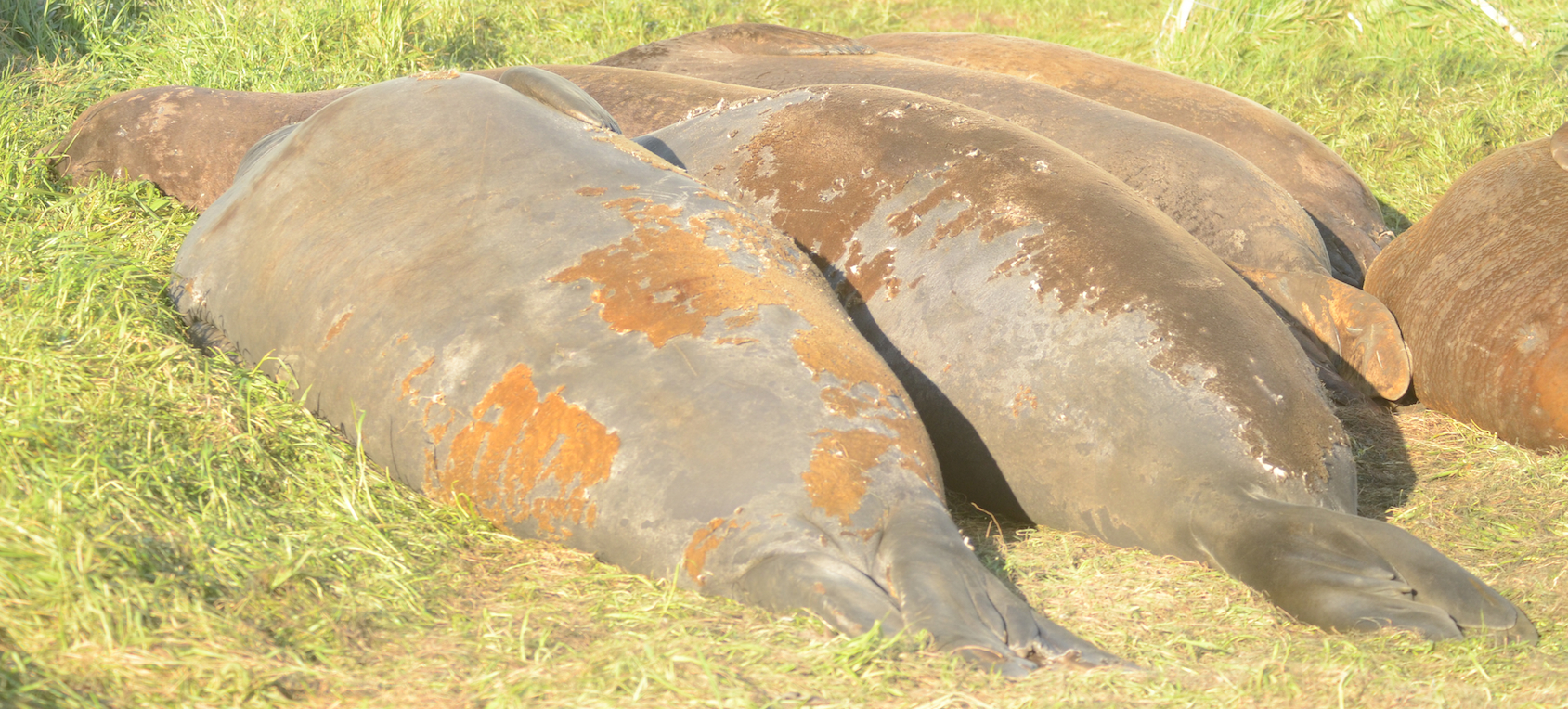
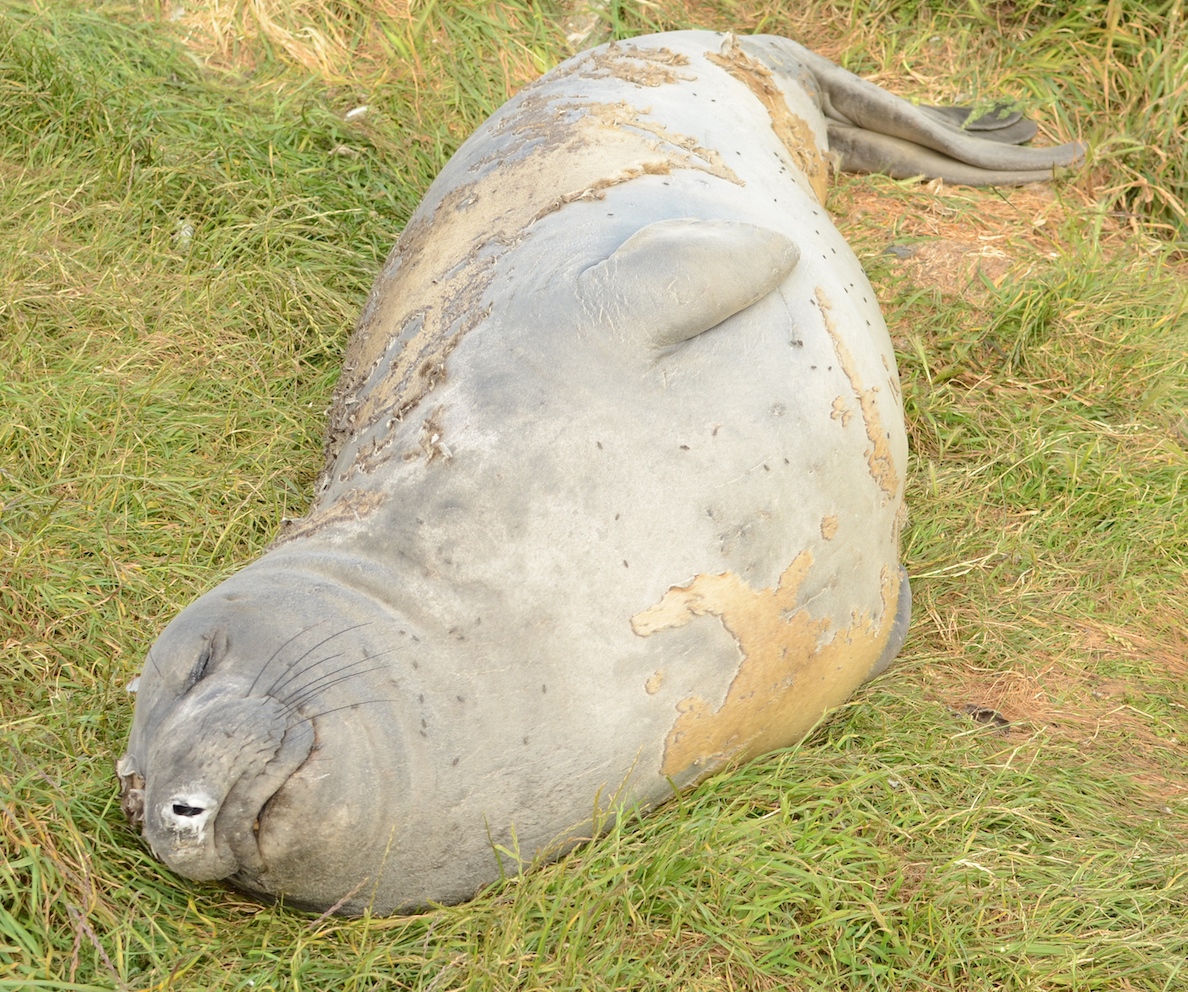
The Northern Elephant Seal moult is taking a new dive into the unconscious with fewer hours awake and active. Some animals have not moved more than a few metres in 24 hours. The larger females seem to be leading the race to moult and the two biggest females and largest male are almost 75% moulted. The soft grey fuzz look is taking over from a once brown and tattered look.

Two of the larger animals on the island are close to 75% moulted, a male (left) and female (right). Young males behind are not as far along.

Two of the larger animals on the island are close to 75% moulted, a male (left) and female (right). Young males behind are not as far along.

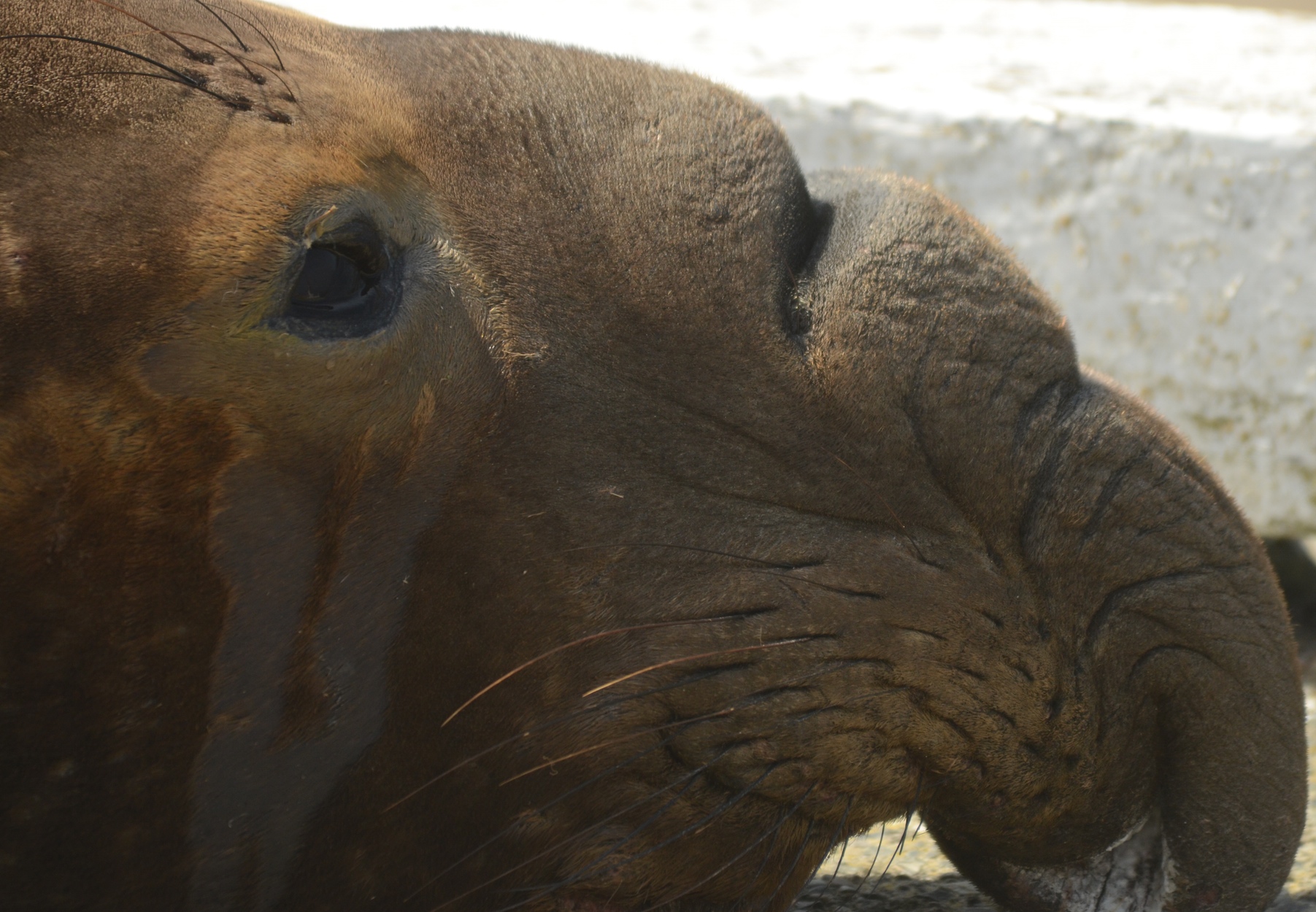
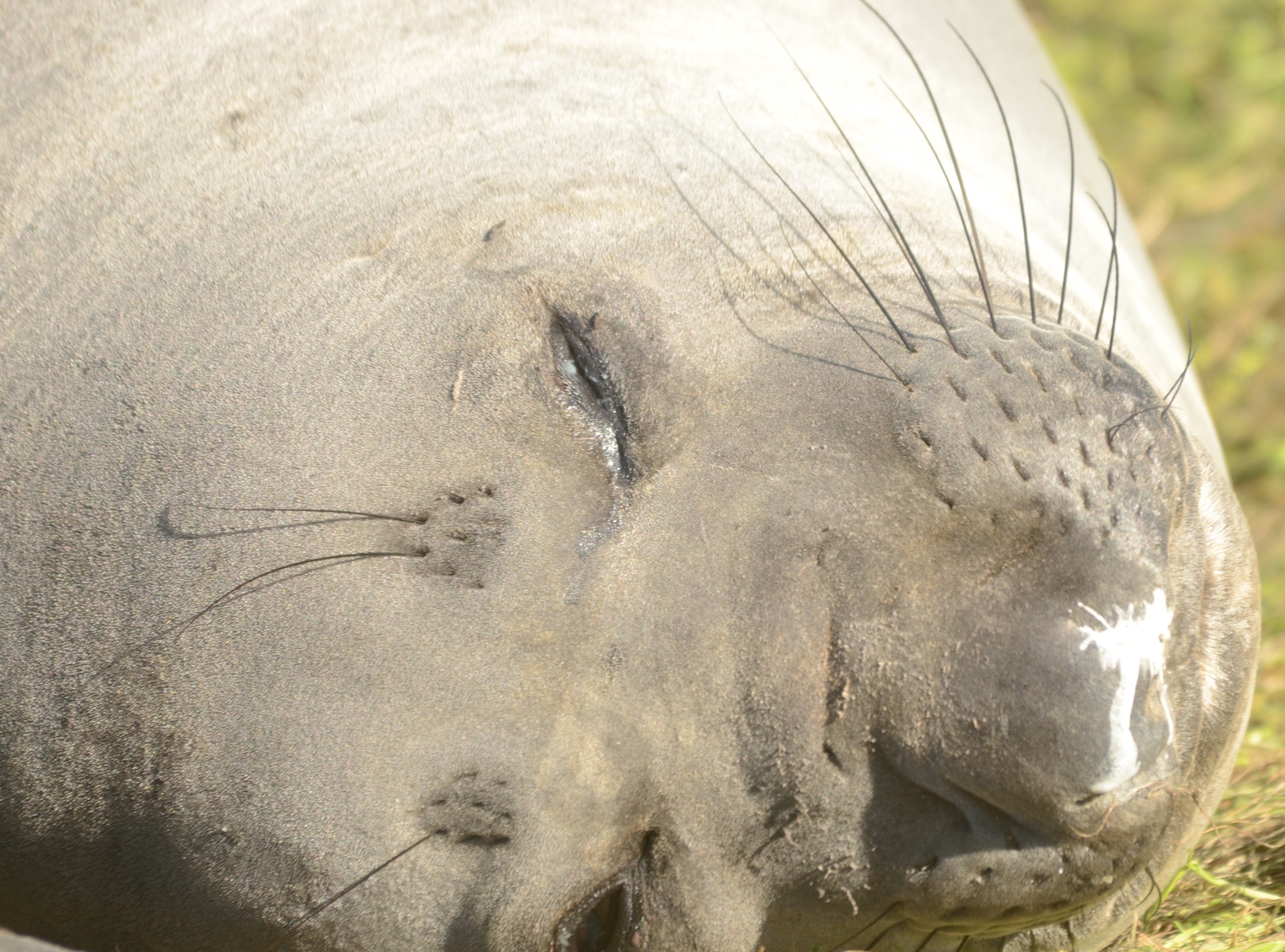
The seals are also moulting their “whiskers” which are referred to by biologists as vibrissae. It is thought they vibrissae are helpful in detecting vertically migrating prey at depths of greater than 500 meters. Of course it is a bit hard to make observations in situ but recent anatomical work on how these whiskers are enervated revealed over 1500 nerve axons per vibrissae giving more weight to their importance as sensory organs.

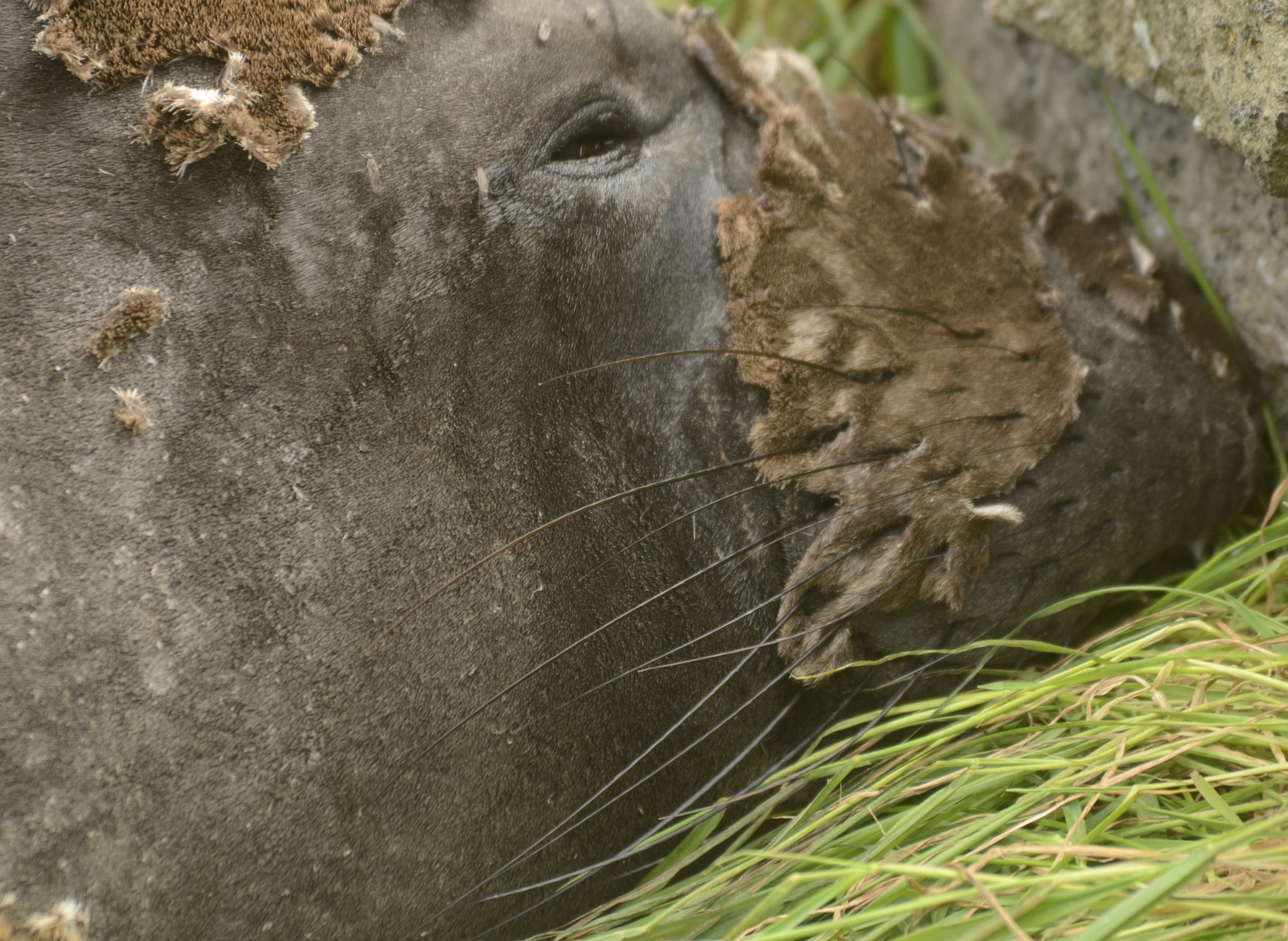
This female elephant seal has moutled her facial hair and skin, revealing a soft looking gray fuzz. Note that the "whiskers" and "eyebrows" are also moulting. These are important sensory hairs called vibrissae.

This female elephant seal has moutled her facial hair and skin, revealing a soft looking gray fuzz. Note that the “whiskers” and “eyebrows” are also moulting. These are important sensory hairs called vibrissae.

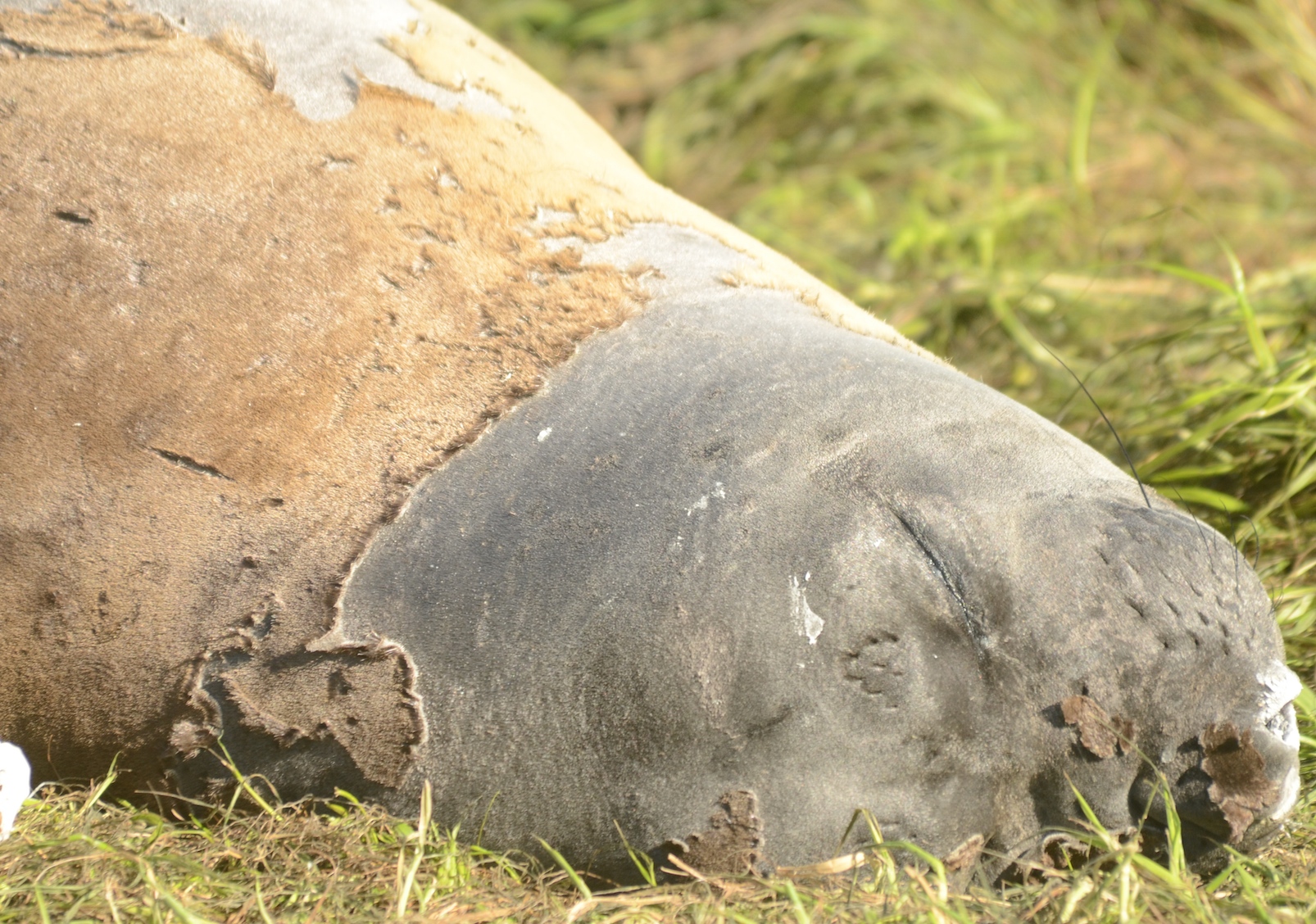
This young Northern Elephant Seal has moulted most of its skin and fur around the head area.

This young Northern Elephant Seal has moulted most of its skin and fur around the head area. You can also see that it has lost its eyebrow “hairs” also known as vibrissae.

More animals are arriving on Great Race Island and there are now fourteen ‘lawn ornaments’ and the lawn is well a truly crushed (Really beats mowing.)

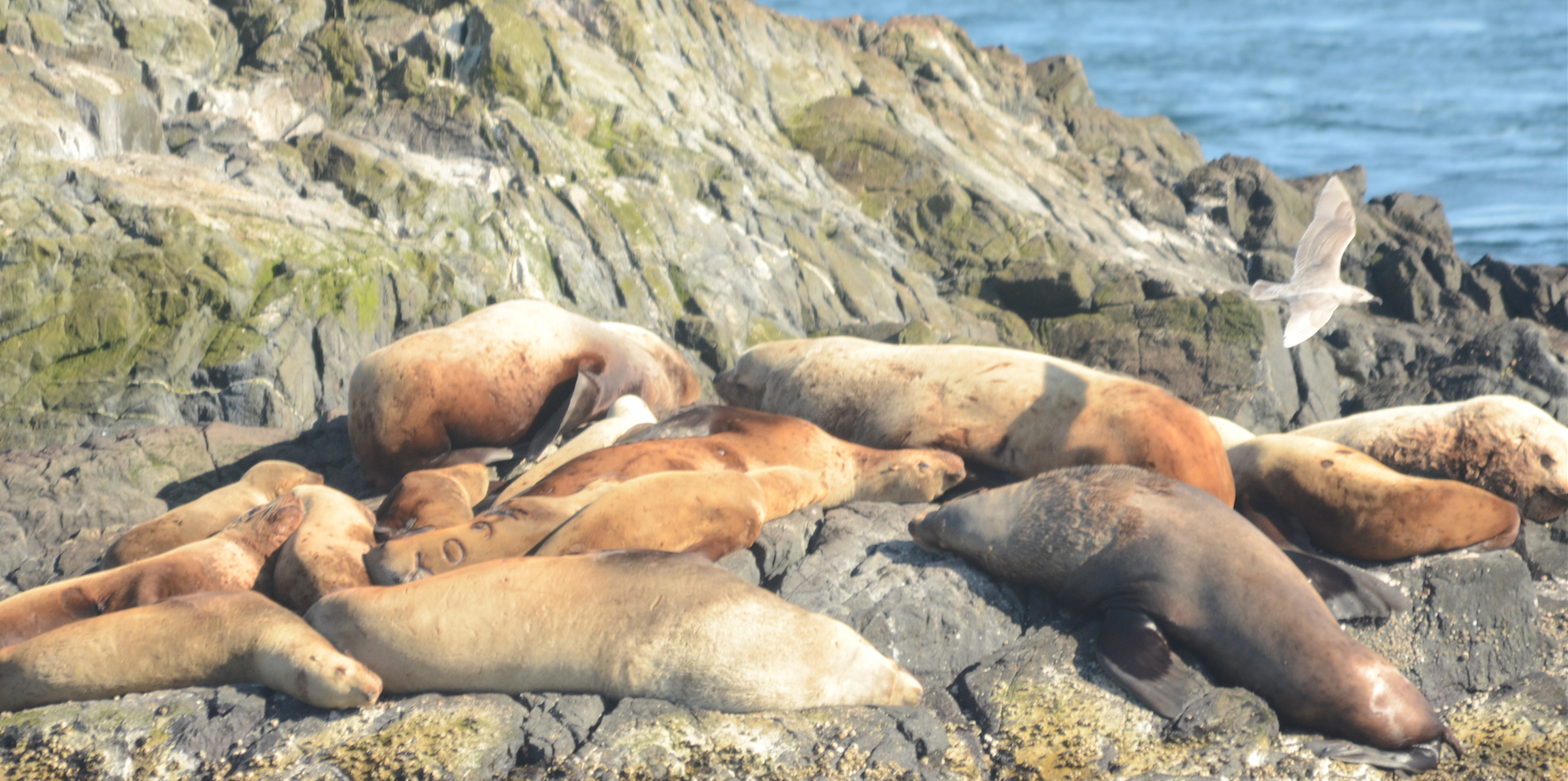
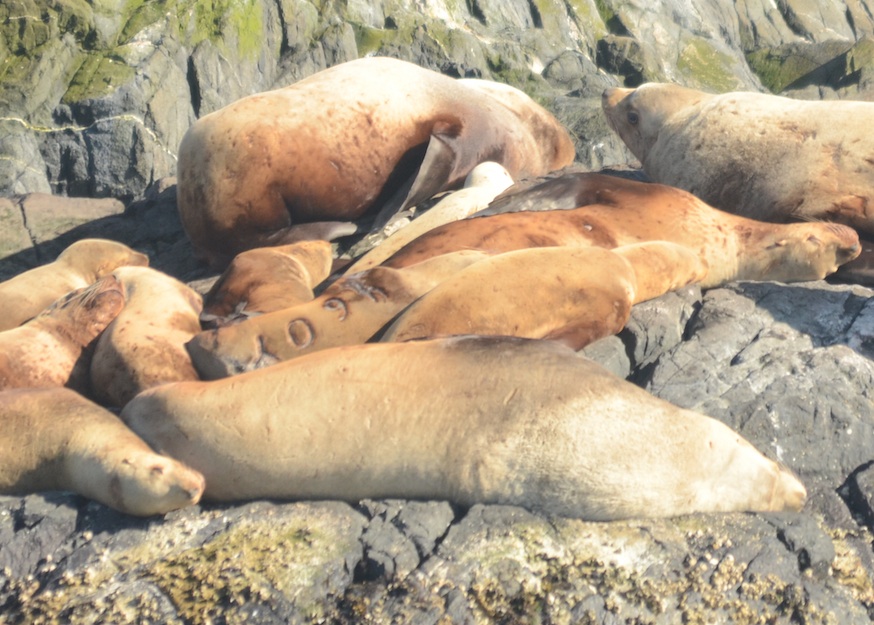
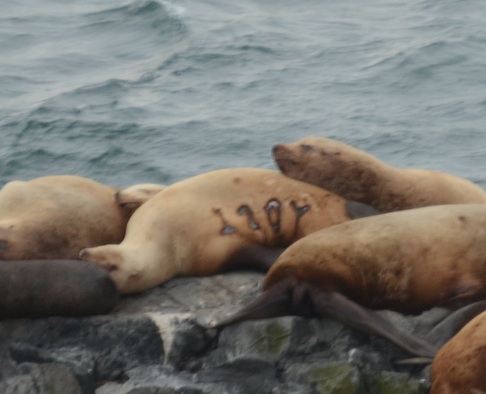
Stellers Sealions hauled out on South Islets. Note the young, branded animal # 460Y, one up from bottom left.

Stellers Sealions hauled out on South Islets. Note the young, branded animal # 460Y, one up from bottom left.

The Steller’s (or Northern) Sealions, and a few California Sealions continue to haul-out on South Islands and I spotted a brand today on the youngest Steller’s that I have yet to see here. #460Y was branded as a pup at St. George in northern California, in the summer of 2013, making it less than two years old at this stage. There are several other Steller’s Sealions that are the same size and appearance that may also be that young.


#460Y was branded in July 2013 . This young animal and probably several others its' size are less than two years old and may still be nursing occasionally.

#460Y was branded in July 2013 . This young animal and probably several others its’ size are less than two years old and may still be nursing occasionally.


There were no visitors today and maintenance was routine.

Killer Whale # T103 possibly.

The day started with a gorgeous sunrise with lots of golden light pouring under a low violet cloud layer, scattering pinks, reds and oranges. The wind was out of the northeast at 10 – 15 knots and stayed that way until early evening when it turned to west. The barometer continued the climb it started Friday morning, until late in the day when it hit ~1020 hPa and levelled out. The forecast is for east winds and rain.

Six whale watching vessels were noted working in the Ecological Reserve today, one in the morning with a videography crew and five in the afternoon associated with the Killer Whales. Five out of six totally respected the reserve and the regulations.

Although the ER was surrounded by Sunday sports fishers, there was no fishing observed in the ER. One sports fishing charter boat, white ~ 21 – 24’ long, came through Middle channel at high speed, heading towards Victoria.

There were Bigg’s Killer Whales (transients) in the area today and we watched as a large male, possibly T103, made his way from Church Island, through Race Passage and on towards Constance Bank, with a bevy of whale watching boats. Five of those boats also passed through the Ecological Reserve

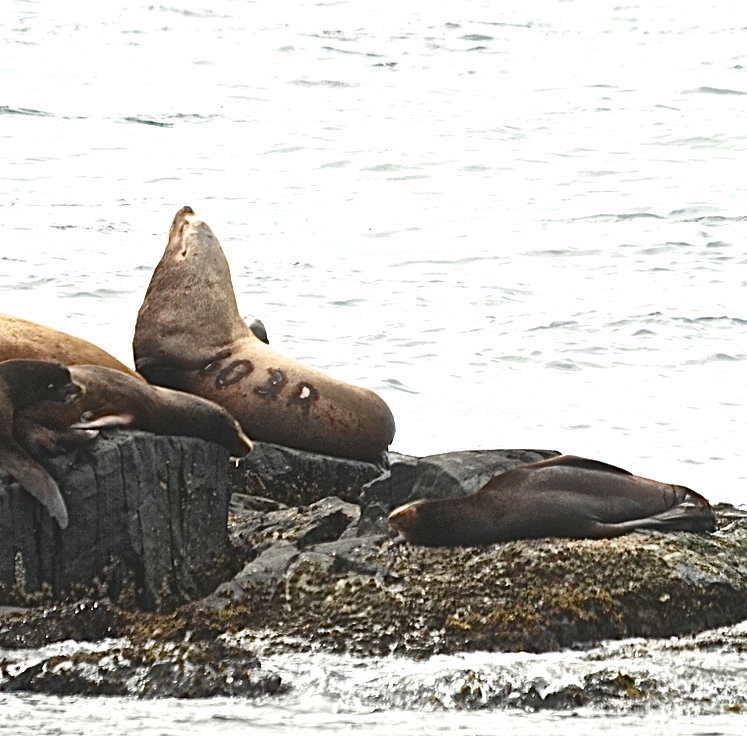
A branded, male Steller’s Sealion was noted today, hauled out on South Islands. He was branded 603R, as a pup in July 2007, at Rogue Reef in southern Oregon. That makes him 8 years old this summer.

Steller's Sealion # 603R is an eight year old male branded in Oregon, near the California border.

Steller’s Sealion # 603R is an eight year old male branded in Oregon, near the California border.

Bald Eagles continue to attack the geese, the Black Oystercatchers continue to gang up on the Raven that may be up to some tricky business with their unsheltered ‘nests’ and the Pigeon Guillemots are spending a lot of time on the jetty and ashore, practicing landing, taking off and walking around. The Glaucous-winged gulls are mating which is quite an acrobatic feat of balance and the Northern Elephant Seal moult is progressing quite fast in the larger animals.

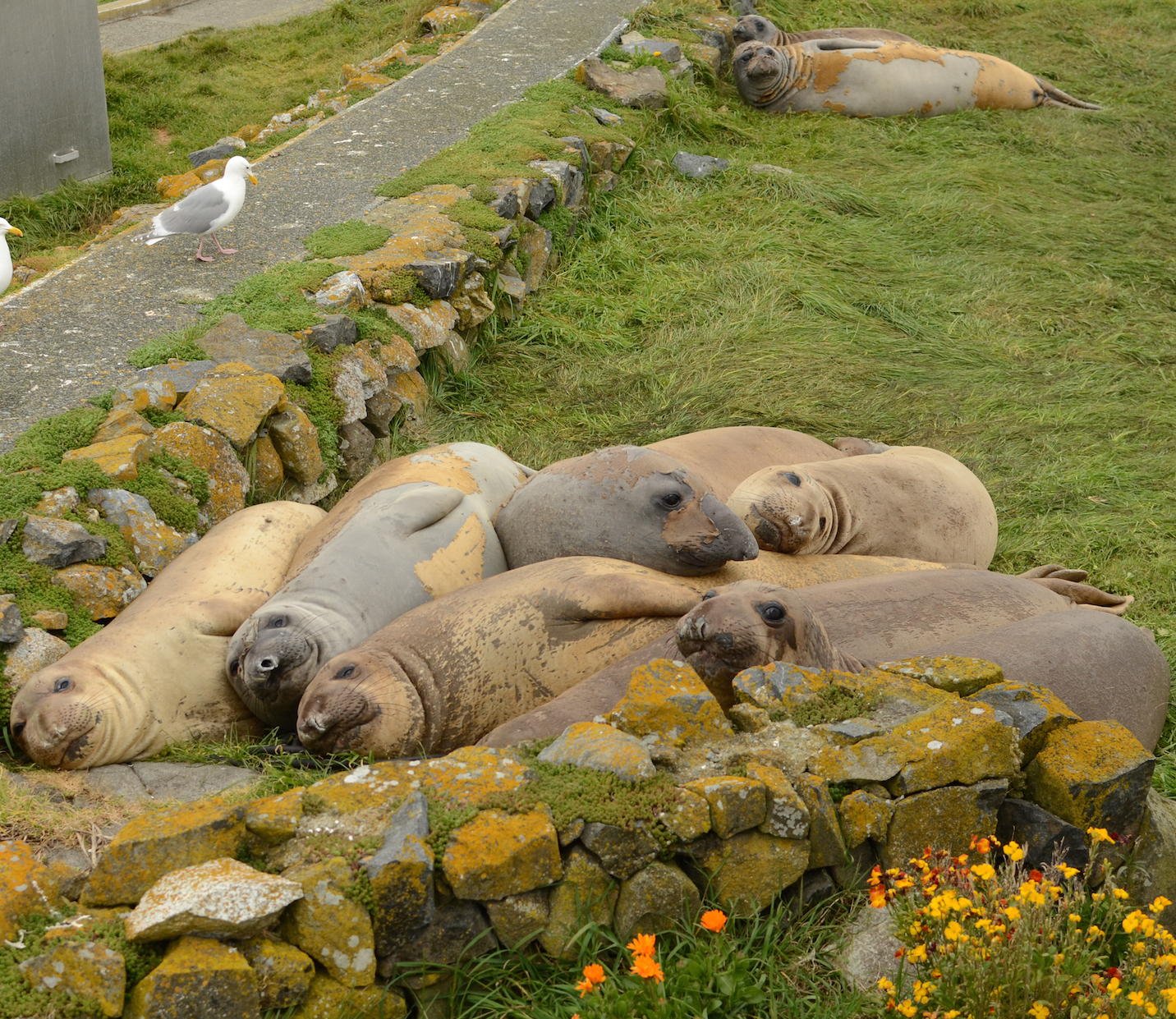
Northern Elephant Seals hauled out near the desalination building.

Northern Elephant Seals hauled out near the desalination building.


As the moult progresses, the skin and fur peal off revealing a new, gray look.

As the moult progresses, the skin and fur peal off revealing a new, gray look.

There were no new visitors today and the work/maintenance was routine.

The Day After Blue Planet Day

Winds started out very light from a northerly direction and eventually backed all the way through east, southeast and around to westerlies, 15 to 20 knots and gusting, in the afternoon. Although there were some clouds and showers it seemed to be a nice day, but when you look at cumulative solar radiation values they were less than half of yesterday’s values at just below 300 Langleys. The barometer fell gradually all day and levelled out near dusk ending up at ~100.5 HPa. The strong wind warning remains in effect and is forecast to be strongest in the afternoons for the next few days.

Whale watching boats were back today after the storm subsided and four were observed in the Ecological Reserve. They were meeting and exceeding the Marine Mammal Regulations and although a couple of the smaller cowboys did manage to get between Great Race and South Islands. They were going so slowly and cautiously that the sealions that didn’t even wake up as the boats passed by.

No sports fishers or other vessels were observed in the ER.

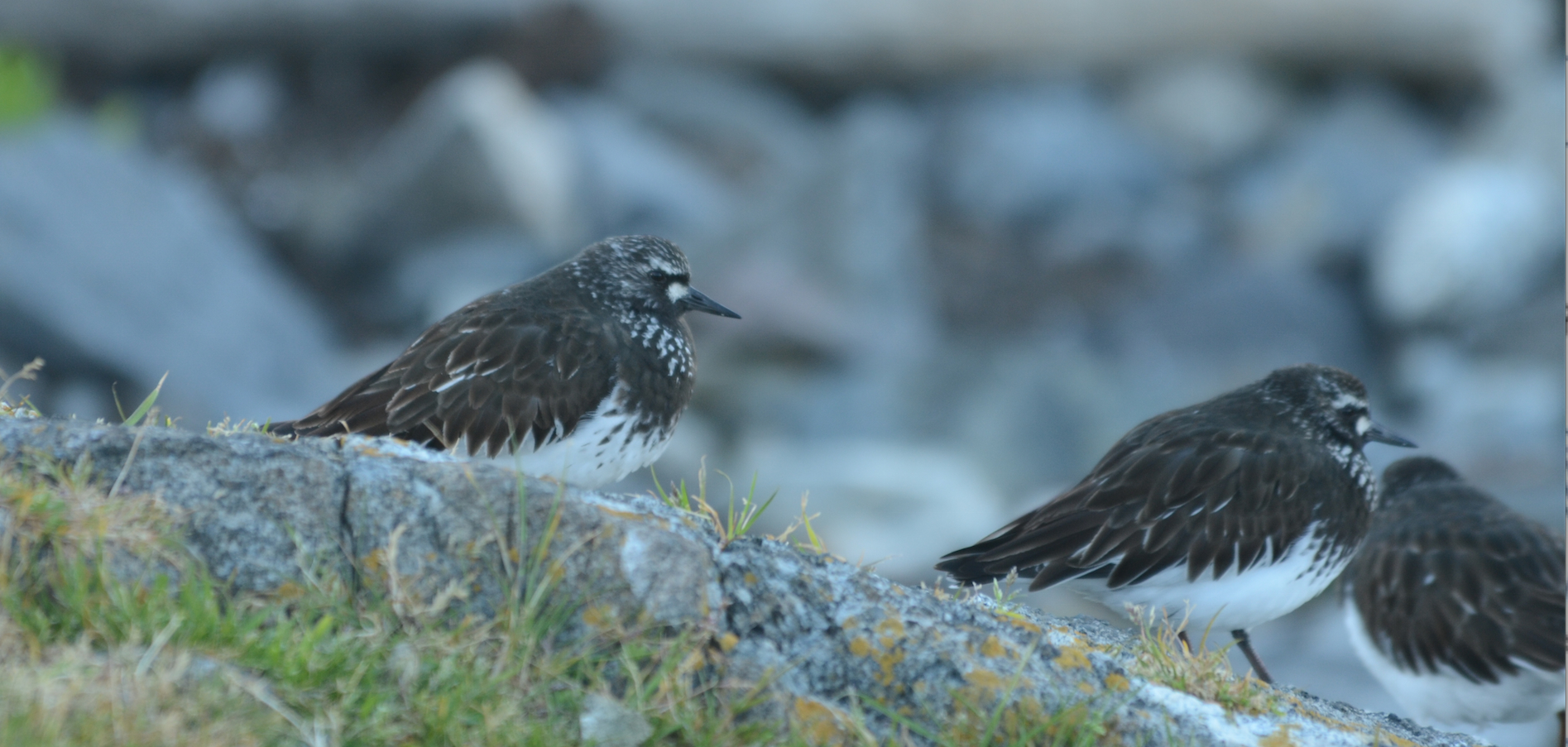
Black Turnstones in all their summer finery.

Black Turnstones in all their summer finery.

One branded Steller’s Sealion was noted hauled out on the South Islands. This female with brand # 120Y was born at St. George Reef, California in 2002.

Female Steller's (or Northern) Sealion # 120Y. This animal was born in northern California and will be 13 years old this summer.

Female Steller’s (or Northern) Sealion # 120Y. This animal was born in northern California and will be 13 years old this summer.

Today was animal census day and the results are as follows:

Northern Elephant Seals 34 (8 on Great Race)

Harbour Seals 44 (note 137 counted following day, less windy)

California Sea lions 11

Northern Sea lions 38

Sea Otter 1

Canada Geese 18

Harlequin Ducks 4

Pelagic Cormorants 4

Double Crested Cormorants 5

Bald Eagle 2 adults, 2 sub-adults

Killdeer 1

Black Oystercatchers 10

Black Turnstones 15

Surfbird 23

Dunlin 4

Pigeon Guillemots 383

Glaucous-winged Gulls 488 adults 18 sub-adults

Caspian Tern 1 (flying through)

Common Raven 1

Barn Swallows 2

Savannah Sparrow 6

There were no visitors today. Chores were routine.


All About the Wind.

The west wind blew all night and by daylight, the 30 to 35 knot winds had sucked in low cloud, rain and rough seas from offshore. Winds increased to 35 gusting to 40 knots in the late morning and continued unabated all afternoon. Air temperature was close to yesterday’s sea surface temperature of 9.7 o C and with the wind chill was hovering around 4oC. Light levels were the lowest of the last week and not even 60% of yesterday. The barometer bottomed out just before midnight last night and has been slowly creeping up and out of its hole today. Gale warnings remain in effect for tomorrow with the wind predicted to turn southeast Thursday.

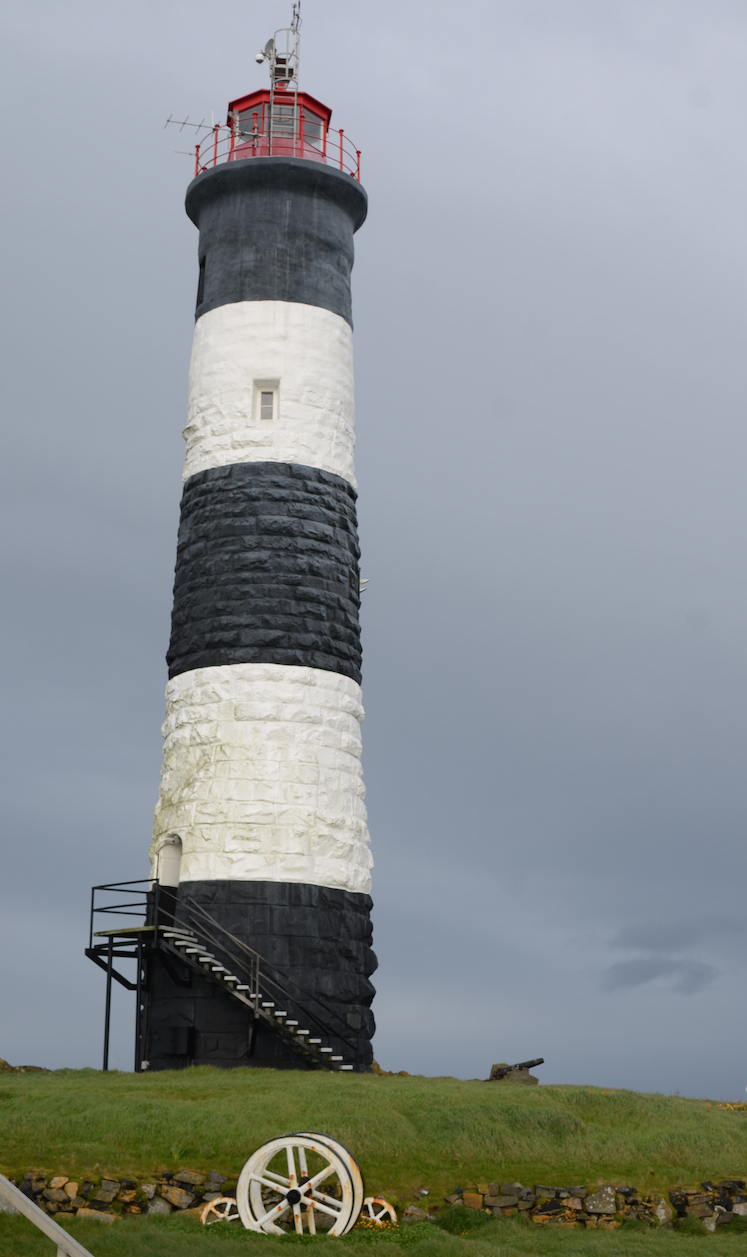
The only thing not affected by the wind today was the stone tower.

Standing firm after 155 years.

Standing firm after 155 years.

There were no whale-watching tour boats in the Ecological Reserve today. Sea conditions were not conducive.

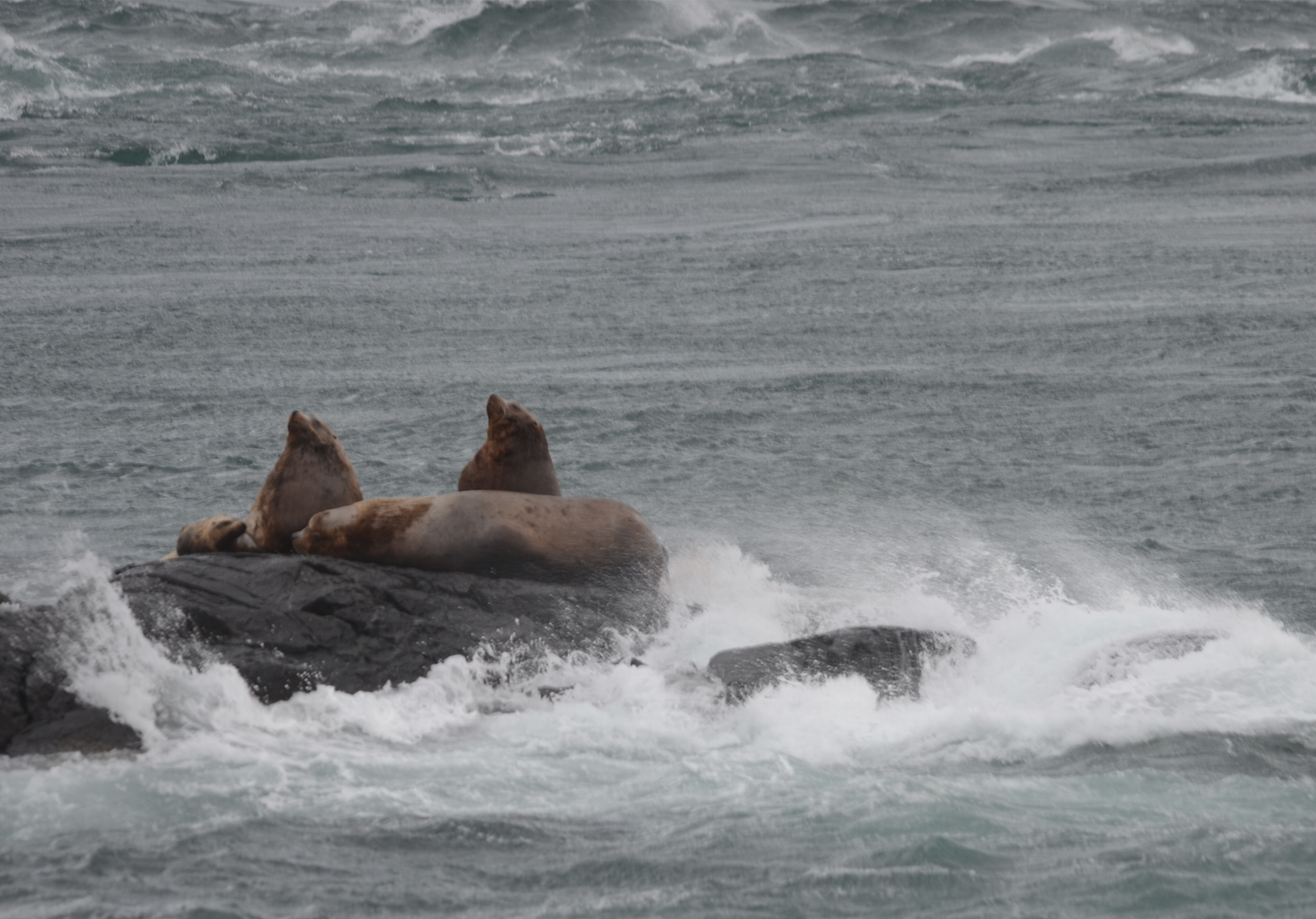
The ecological focus today was to observe how the mega-fauna behaved in the wind. Only a few sealions hauled out, the remainder rested in the water near the haul-out where it was probably quite a bit warmer without the wind chill factor.

This is a day when having blubber really makes sense.

This is a day when having blubber really makes sense.

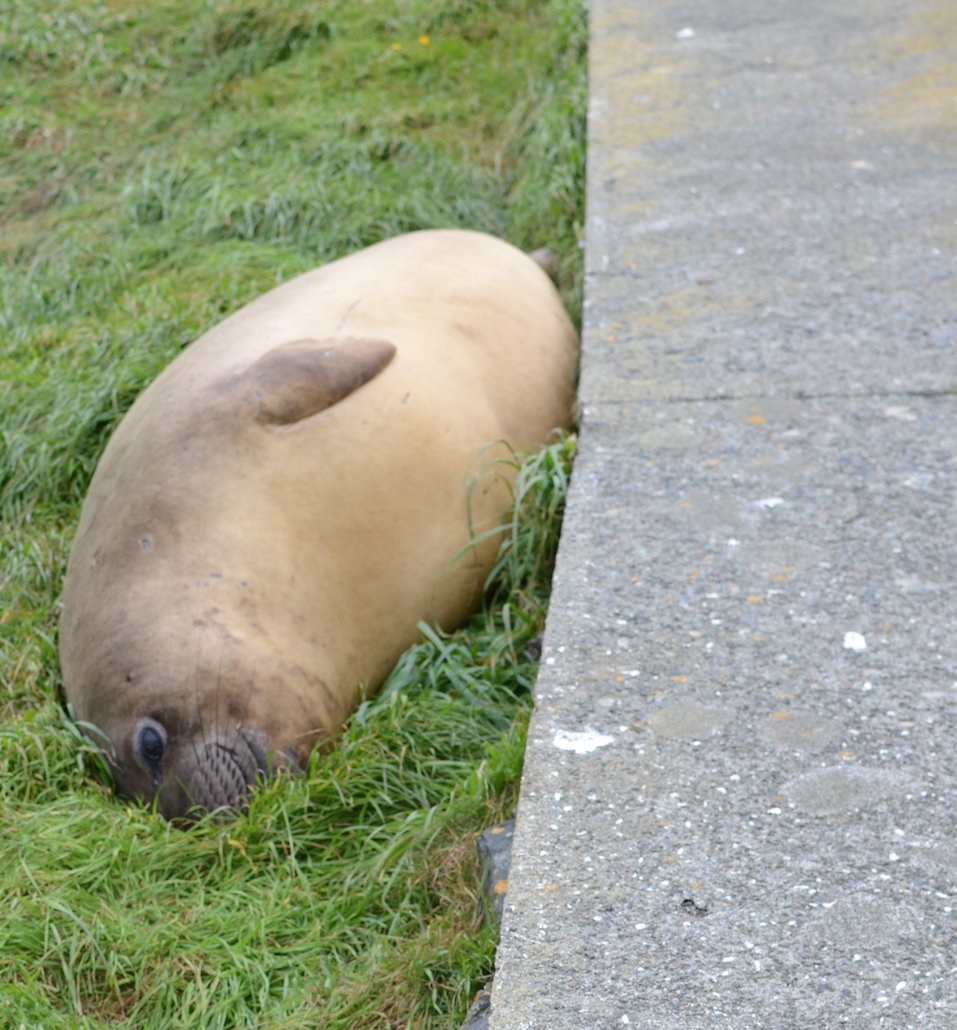
The Northern Elephant Seals made a huddle and “took turns” being in the coveted central, heating position. One female slept off by herself, maybe not quite as warm but definitely more peaceful. Only #5850 went for daily ablutions, the others stayed dry, even if a bit mucky.

Female Northern Elephant Seal huddles up to sidewalk.

Northern Elephant Seal huddles up to sidewalk.

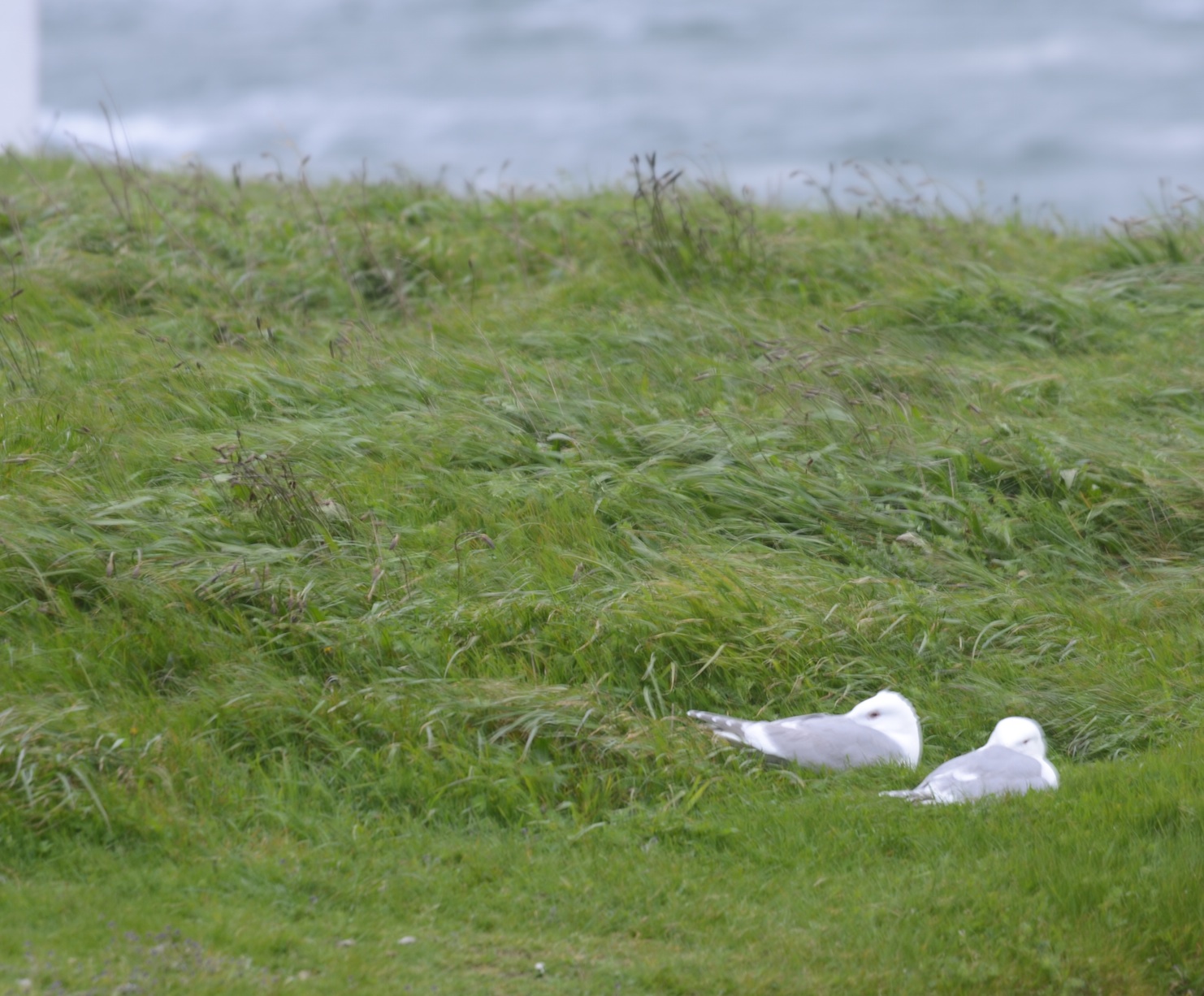
Glaucous-winged Gulls hunkered down with heads under wings, keeping a low profile and perhaps holding on with their toenails, as they seemed to totter and grimace during the big gusts. The geese with nests were on them with ganders close by guarding and staying low. The three pairs that are still trying to set up nests were observed chasing gulls . The Bald Eagles, so ubiquitous every other day for the last 25 days, were nowhere to be seen, nor were oystercatchers, turnstones, nor guillemots.

GwGu in wind

Two marine science classes were supposed to visit today but the weather just didn’t cooperate and Courtney wisely cancelled the trips. Thus there were no visitors and chores were basic routine.