Uneventful Weather: Perhaps a Small Blessing.

The weather at Race Rocks was spectacularly uneventful today. The barometer creeped down, little by little all day, to end not much lower than it started, at 2018 hPa. The sky was overcast with a bit of drizzle from time to time. Winds were light and at ground level the wind never got over 10 km/hr. The whole thing fizzled out into a patchy fog as darkness fell.

I didn’t see any tour boats in the Ecological Reserve today other than the Dive Boat from Ogden Point. There were plenty of sport-fishers, but all outside the reserve, trying to catch halibut. The currents are so strong here that they have to anchor to fish a specific spot and it looks like it can be challenging.

There were over 100 Pigeon Guillemots here today and it was a treat to watch them in their new, bright plumage as they bobbed and dove in the currents. The Glaucous-winged gulls are also looking very dapper in their new feathers and they seem to be spending a lot of time head dipping and bill raising and generally shuffling around looking like they are biding their time for the perfect alignment of day length and the Milky Way for nesting. Bald Eagles, two adults and sub-adult were hunting on Great Race today and they would make the gulls all lift off from time to time. That was the big excitement of the day. It was generally just a blissful sort of day.

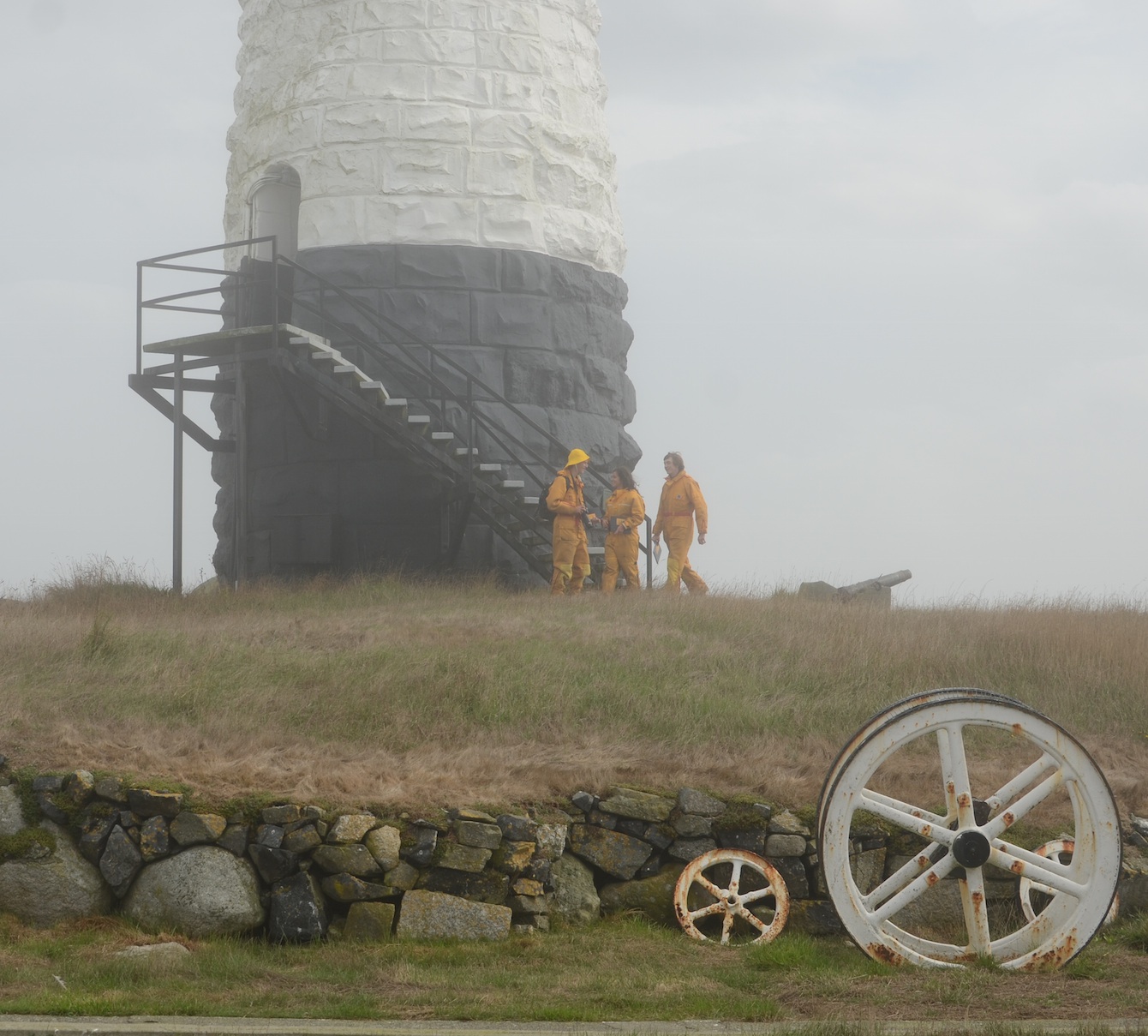
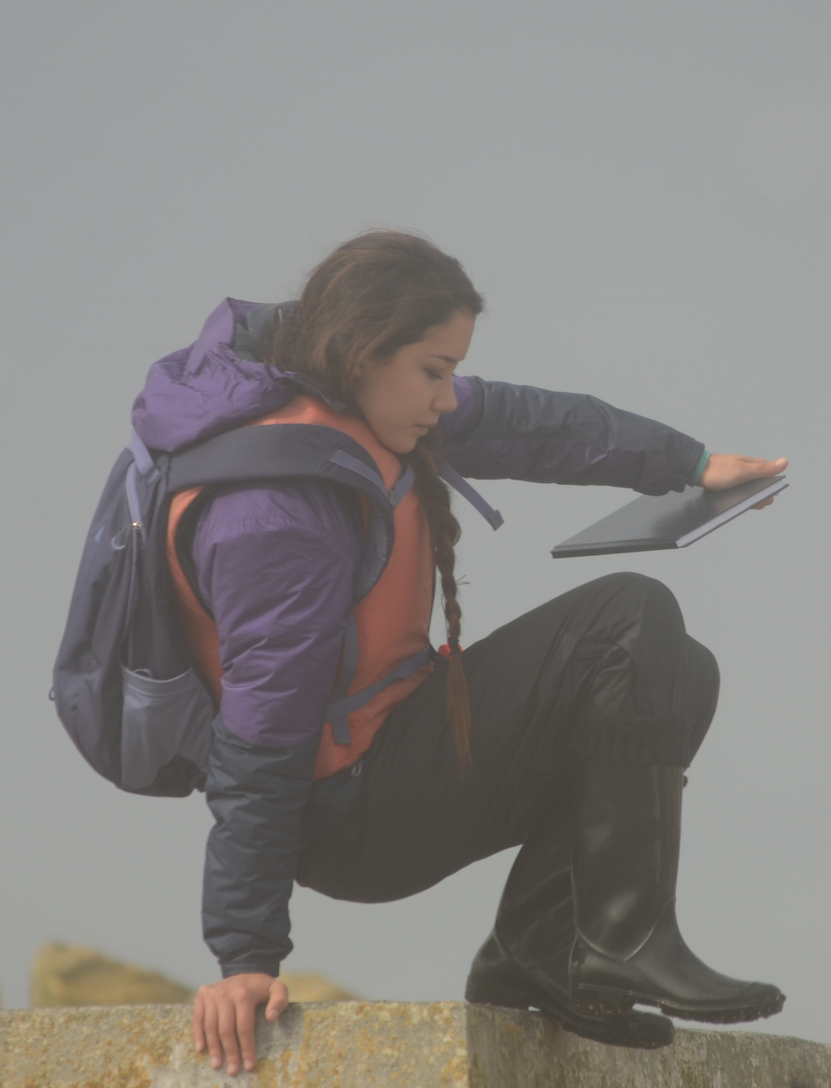
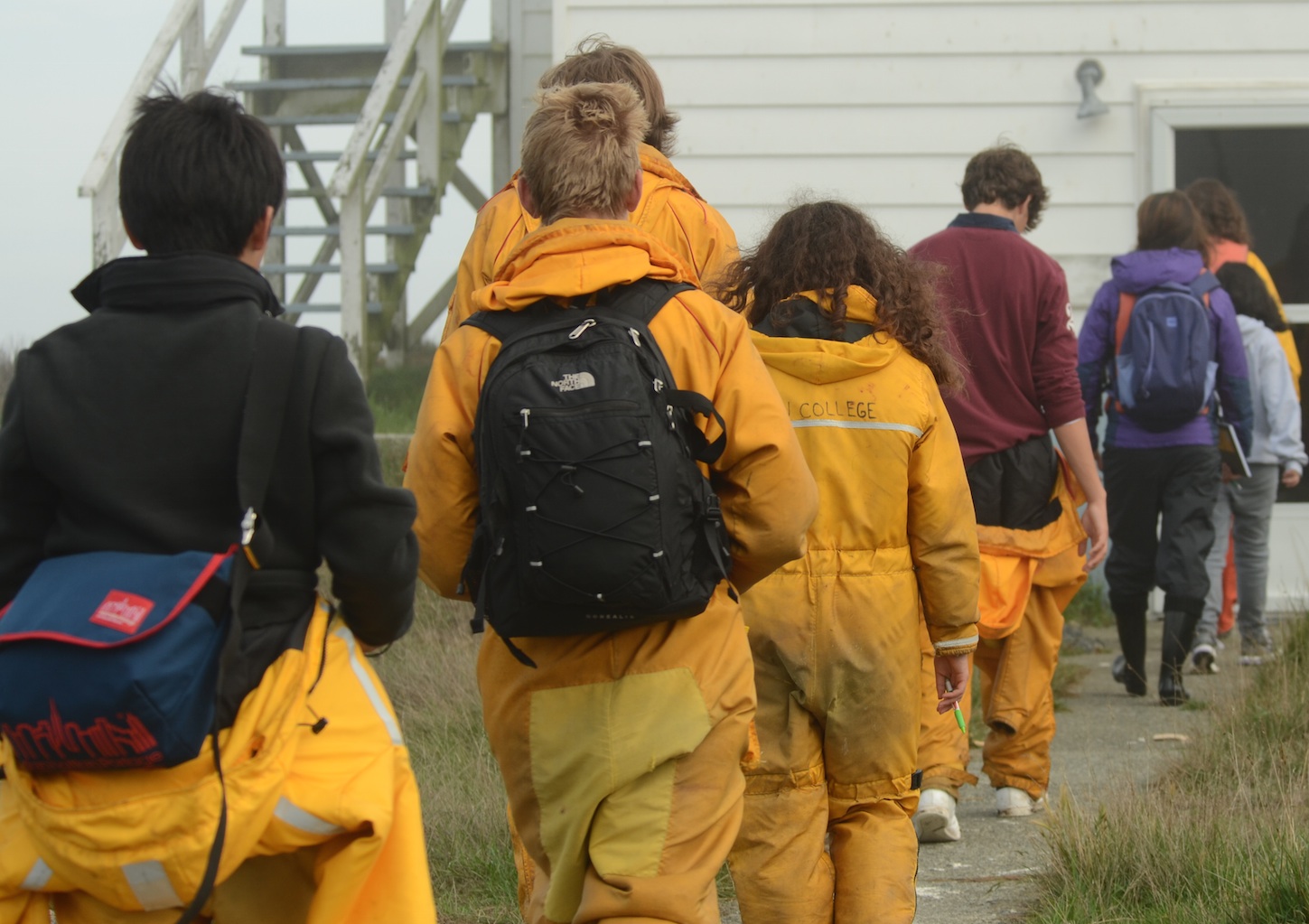
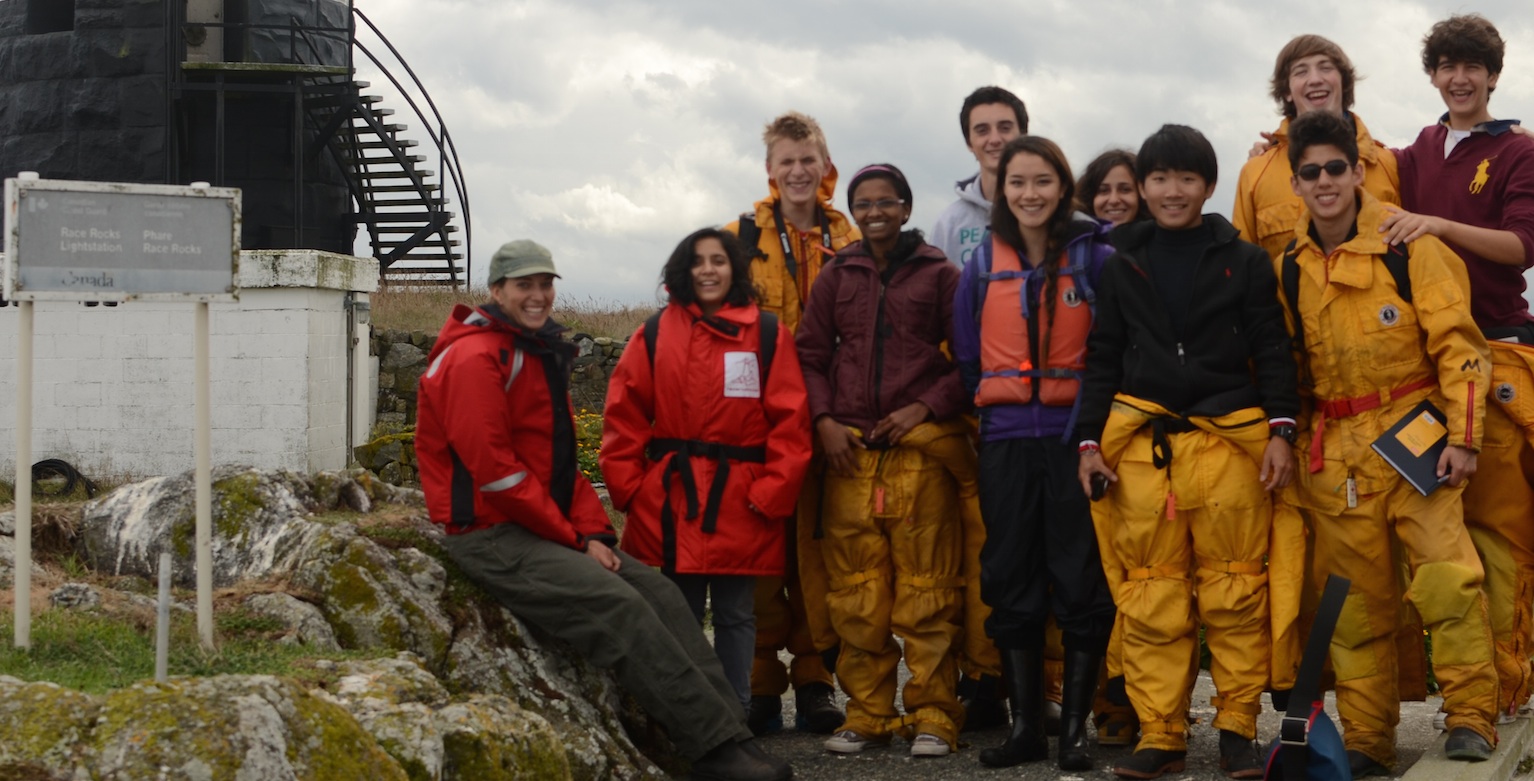
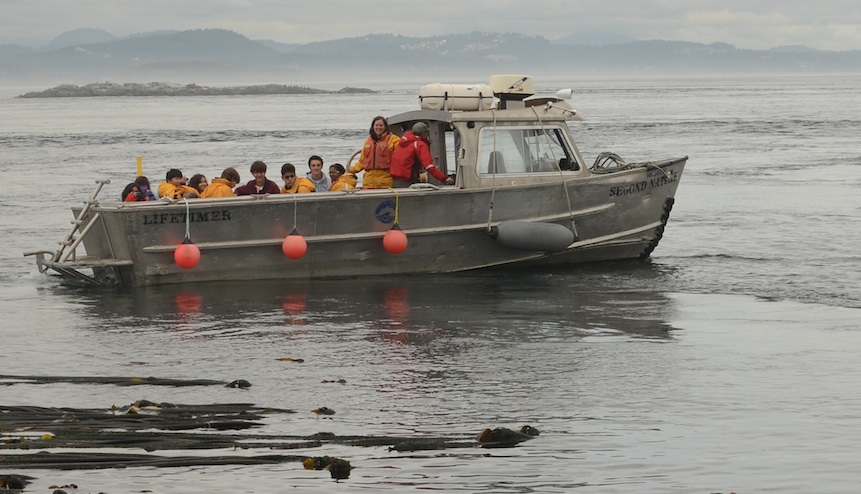
My student visitors left in the late morning, picked up by Chris Blondeau in Second Nature. It was such a treat to have them on the island for my first few days. I felt lucky to have such an auspicious start. These students may be humble but they are really very special. I found out during our safety briefing that the five young ladies from Greenland, Guatemala, Quebec and young man from New Brunswick, were collectively trained as fire fighters, first-aid responders and counsellors, as part of their duties at Pearson College. These young people have my respect and are really using education as “a force to unite people, nations and cultures for peace and a sustainable future.” When I asked them what made their stay on the rock special and why it should be maintained as part of Pearson College, they mentioned things like peacefulness, quiet, nature, hopefulness, the importance of the marine protected area. They also said how great it is to just get away and how lucky they felt, to be able to come to such a special and beautiful place.

As we said our goodbyes on the jetty, they presented me with a hand-drawn thank you card and a can of Maple Syrup from Quebec. How sweet! There is something about Maple Syrup that is beyond delicious.

I did the regular chores today, getting back into the routine of spot checks, VHF monitoring, seawater sampling, washing solar panels, clearing walkways, running the generator and generally fighting entropy. I also managed to clear a few pernicious, waterlogged chunks of wood that were blocking the marine railway, which was really satisfying. It was fun to use the pee-vee and pike pole and I managed to stay mostly dry.
Back on the Rock

Last night’s storm blew in just as shift-change finished. Nick Townley waved goodbye from Second Nature as Chris Blondeau, still in his dry-suit from the diving activity, pulled the vessel out into the tidal stream and headed her back to Pedder Bay.

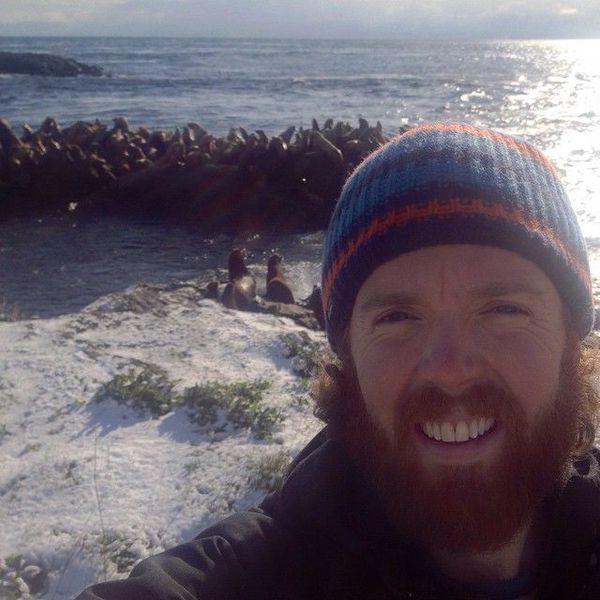
Nick Townley

Nick Townley ( a photo from last fall, selfie?).

Six students from Pearson College came out to the rock for the weekend and I started my shift with great company. Their goal was to catch up on studies (and sleep (my guess)) and to have their own experience in this gem of a biodiversity hotspot.

As we unpacked and settled into the two houses, heavy rain followed the black horizon moving in quickly from western Strait of Juan de Fuca. It was very nice to be snug inside as it was a wild night with heavy squalls. There were quite a few rattles and thumps that I didn’t recognize from last fall’s storms. Morning broke with gusts over 30 knots in the tower and alternate clearing skies and rainbows shone through and faded out on all sides. It was a white water scene with wind and current colliding in a frenzy. The barometer which had taken a nose dive Thursday and Friday, climbed back up to over 1024 HPa from Friday’s low of 1009. By noon, the westerly winds had dropped to 12 knots and the afternoon and evening was uneventful; overcast with showers and light winds shifting to northwest.

Although there was no fishing activity in the Ecological Reserve (ER) today, five wildlife viewing tour boats were noted. I was surprised by the number of both Northern and California sealions still hanging out and there were at least 75 Harbour Seals hauled out in the afternoon (not a complete count. I saw two pairs of adult bald eagles and numerous other birds including Canada Geese, Black Oystercatchers, Harlequin Ducks, Black Turnstones, Pigeon Guillemots, Double-crested and Pelagic Cormorants and an interesting mix of gulls. Many of the Glaucous-winged Gulls are already paired up and getting excited about spring. They are scattered around Great Race in all the places that there were nests last year. A much more condensed flock of gulls with about 100 birds was hunkered down in the lee of the rock on the west side of the science house. This flock was a mix of some unexpected visitors including Herring Gulls, Ring-Billed Gulls and even a few California Gulls, probably en route somewhere else. As dusk fell last night I heard the calls of Killdeer and it really felt like my home away from home.

It was great to get back up the tower again and have a good look around and for fun and more exercise, I started clearing off some of the winter’s woody debris accumulated on the marine railway. Greenlanders Hana and Malou joined in and we made it into a bit of a game, practicing our aim and strengthening arms. When we finished there was a stream of wood heading out to sea and we hoped that the whale watching boats were avoiding the busy tide lines.

Gray on gray.

It was a bit of a gray day with some thick fog and even a few patches of sunlight, which made fog-bows. This is my made up word for the colourless, rainbow-like arches made by the sun in the fog. Winds were light and swung around out of the north, northeast and over to the east, with the northeast predominating, at about 5 knots. The barometer was fairly steady today and the forecast for tomorrow is for more of the same only more southeast, also with showers.

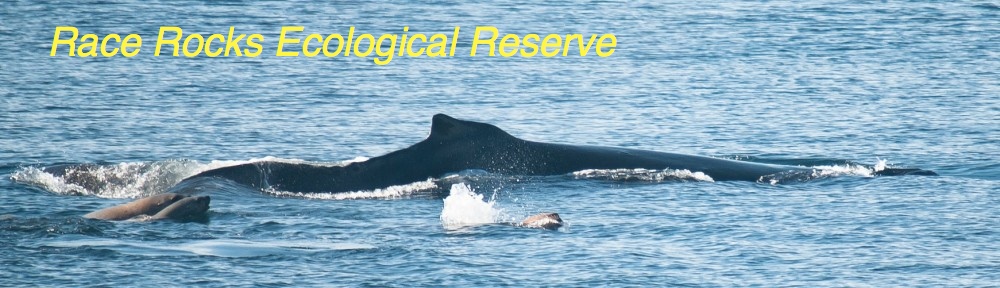
There were Dall’s Porpoise and Humpback Whales nearby late in the afternoon, which brought a few whale watching boats with a total of nine noted in the Ecological Reserve. The operator of the vessel King Salmon, of Great Pacific Adventures needs to review the regulations for operation in the Ecological Reserve.

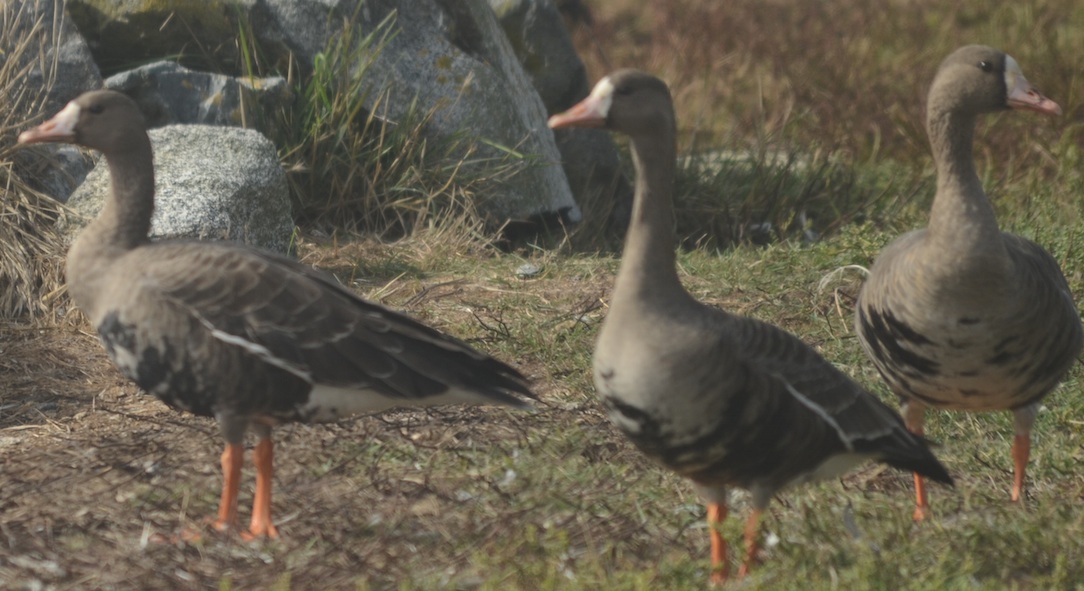
The newcomers today were four Greater White-fronted Geese. This species nests in the arctic west of Hudson’s Bay and the western populations winter from here down to Mexico.

Greater White-fronted Geese were resting and recovering here today.

Greater White-fronted Geese were resting and recovering here today.

Today was the day, for the weekly census of megafauna and these are the results:
Steller’s Sea Lion 176
California Sea Lion 406
Elephant Seal 6
Harbour Seal 168
River Otter 2
Canada Goose 4
Greater White-fronted Goose 4
Double-Crested Cormorant 18
Pelagic Cormorant 8
Cormorant sp. 2
Black Oystercatcher 8
Black Turnstone 11,
Killdeer 2
Surfbird 28
Common Murre 4
Thayer’s Gull 113
Glaucous-winged Gull 22
Heerman’s Gull 6
California Gull 1
Western Gull 1
Gull spp. 256 (probably in similar proportions to above, unable to tell due to distance and fogged glass in the tower)

Fence maintenance takes quite a bit of time right now as new sea lions arrive for the winter and learn to stay away from the houses and off the jetty. They would probably prefer to be right here in the kitchen but that is a trade-off with having a guardian here. Fresh-water production and electrical generation continue to be a priority. Today was also the day for month-end report, house cleaning and packing. I am off to Scandinavia to share and learn more about Ocean Literacy. Thanks to all the PC Marine Science students who were willing to share their thoughts with the participants of the gathering at the University of Gothenberg.

Real Rain

There was measurable rain last night and this morning for the first time in a long time, followed by fairly thick fog. Eventually the fog burned off and the northeast wind chased it out of the Strait. Although it is now blue sky above, it seems to be the donut hole with clouds all around, so expect more showers and outflow winds. The barometer started climbing out of the hole early this morning and kept climbing most of the day, until leveling off late afternoon. On the satellite, it looks like the first pineapple express of the season and we are in the lee of the Olympic Mountains.

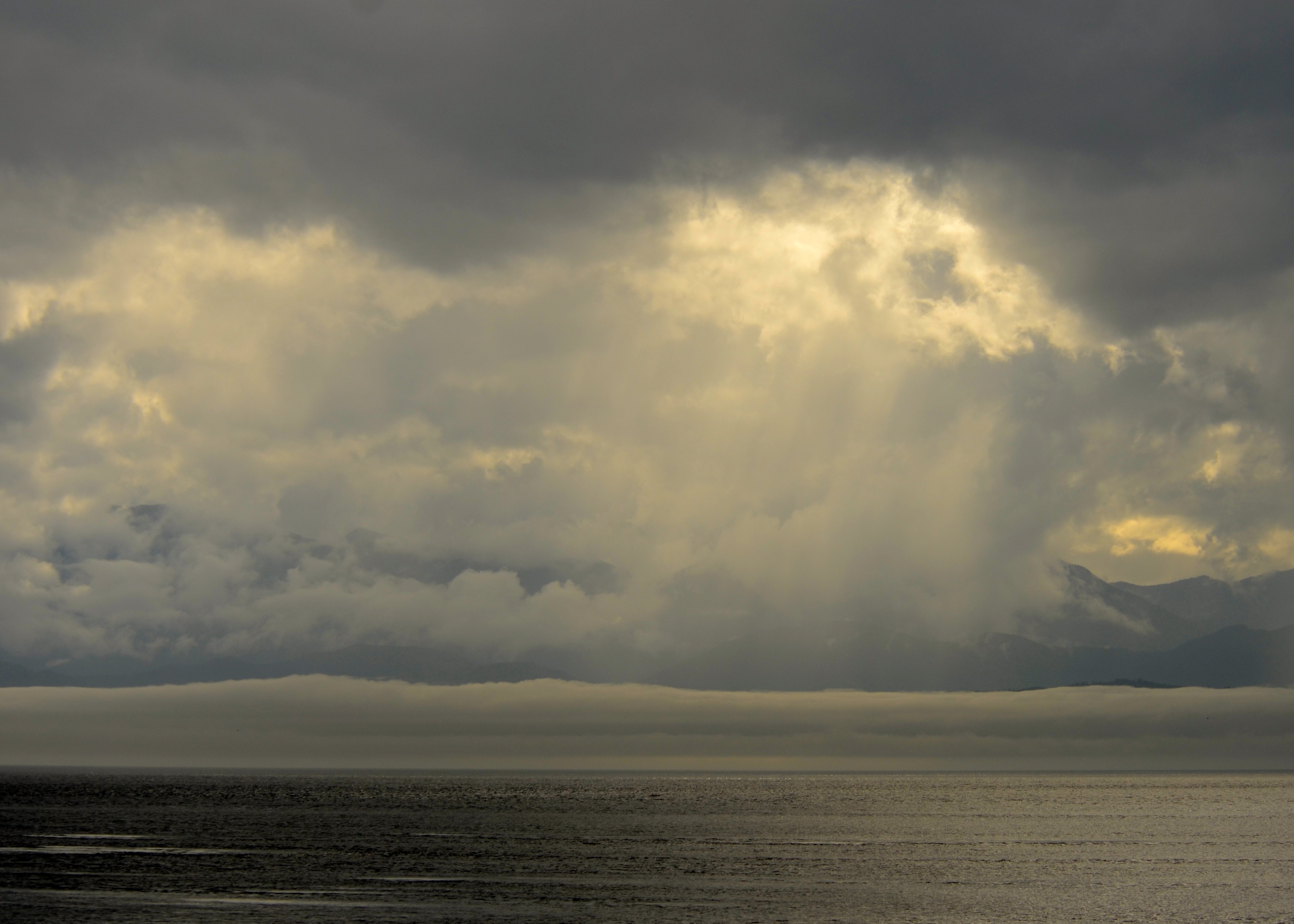
Rain, sunshine and fog, with god-rays for good measure.

Rain, sunshine and fog, with god-rays for good measure.

There was only one whale watching boat today ‘Gold Wing’, one recreational boat and a couple of commercial charter vessels.

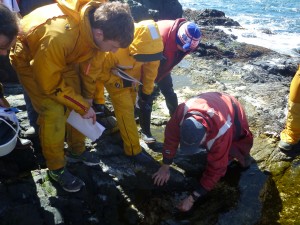
The second of three first year Marine Science classes came for a field trip today. Their quest was similar to yesterday’s class; to make first-hand observations and enter their notes and drawings into their field journals and to add to their species lists. I added consumption of warm fruit crumble, with very Canadian maple syrup to their to do list and the students seemed to enjoy the whole process.

Students making discoveries.

Students making discoveries.

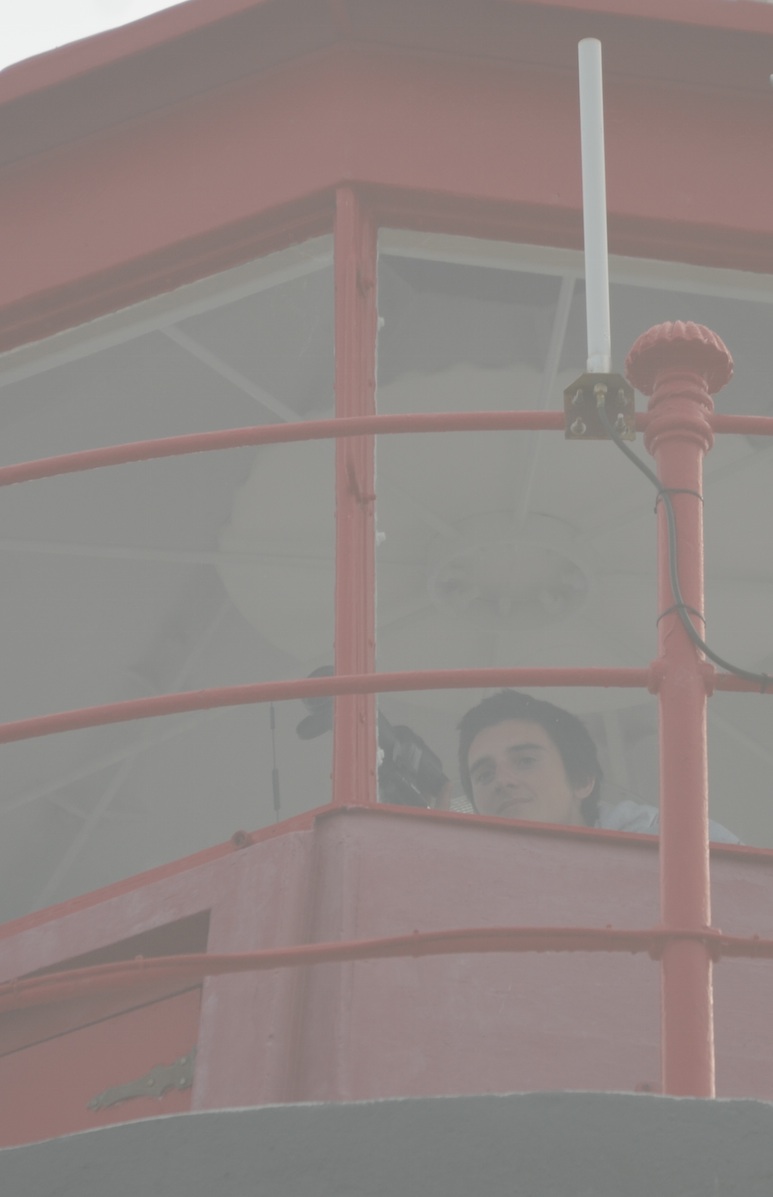
Canadian student observing from the top of the tower.

Canadian student observing from the top of the tower.

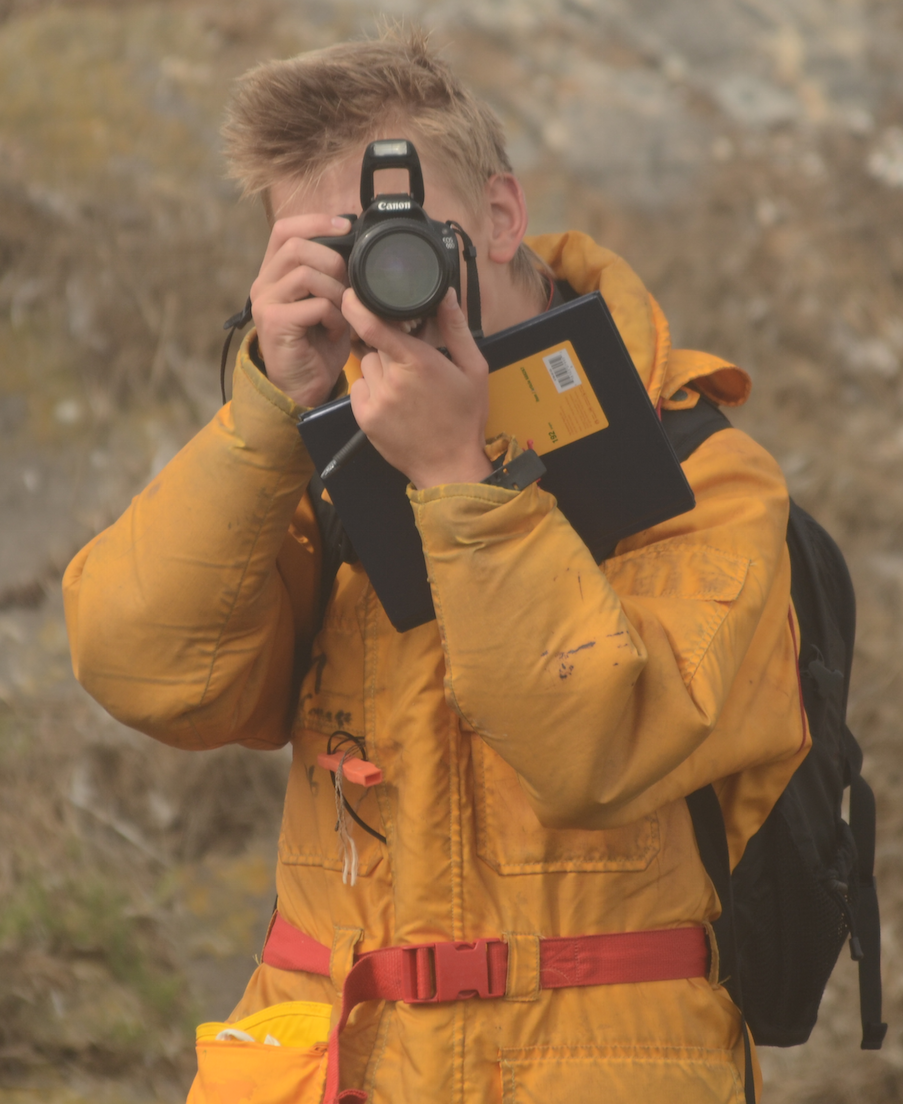
Journal and camera at the ready for marine science observations.

Journal and camera at the ready for marine science observations.

Hang on to that journal. You will need to keep track of it for two years.

Hang on to that journal. You will need to keep track of it for two years.

Class meeting at the ecoguardian house.

Class meeting at the ecoguardian house.

The crew

Second Nature departing with Courtney at the helm.

Second Nature departing with Courtney at the helm.

The California Sea Lions seem to be disturbed by the rain and spent the night making a lot of noise. In the morning most of them moved into the water when the rain started again. Could it be that there hasn’t been much rain where they have been? So far we have brands from the Channel Islands, Rogue Reef in southern Oregon and the Columbia River in northern Oregon.

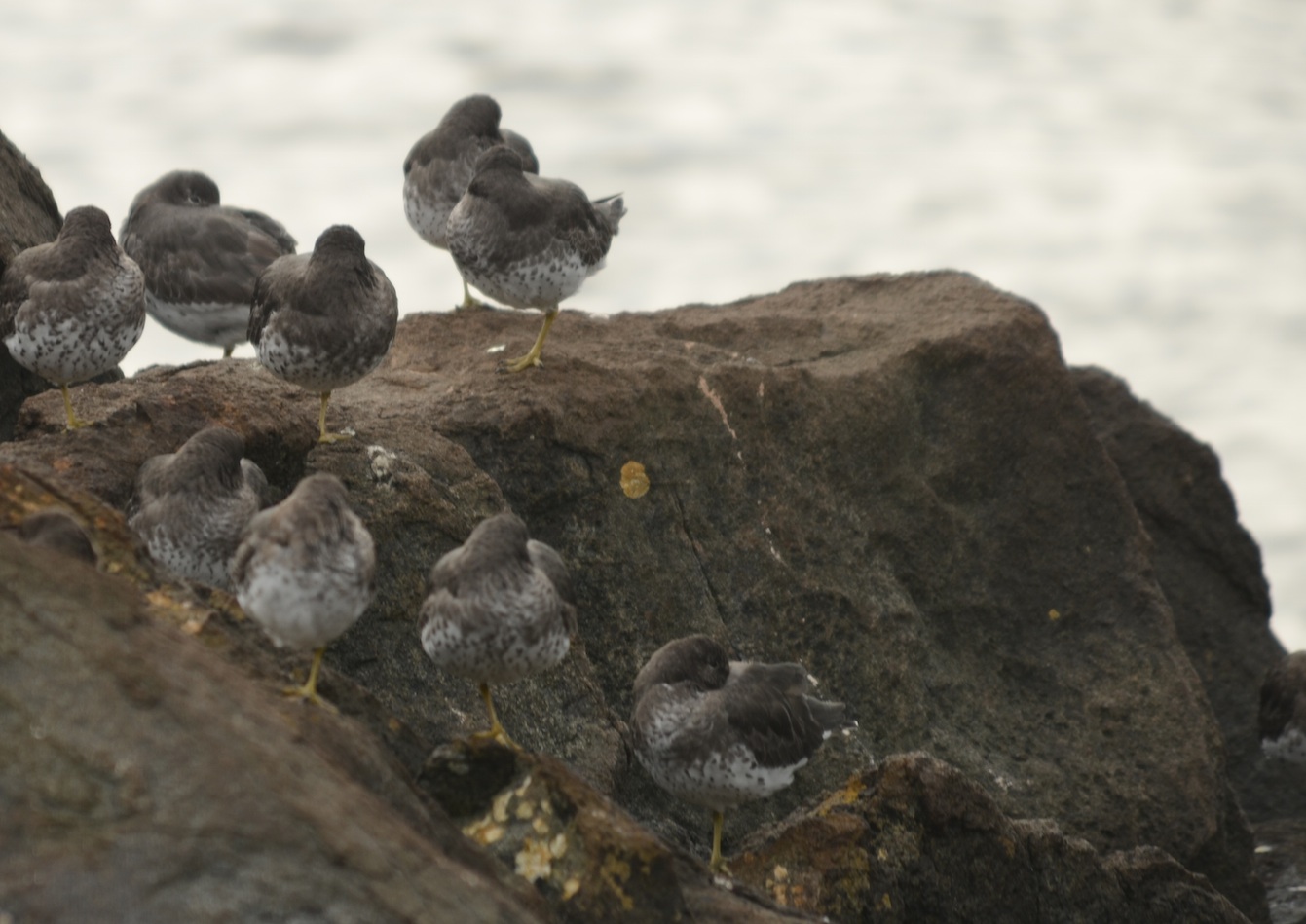
We had some new arrivals today in the form of a flock of very tired Surfbirds. They slept most of the day. Their breeding grounds are in the mountains of the Yukon and in Alaska and they winter here on the coast.

Surfbirds arrived today and rested.

Surfbirds arrived today and rested.

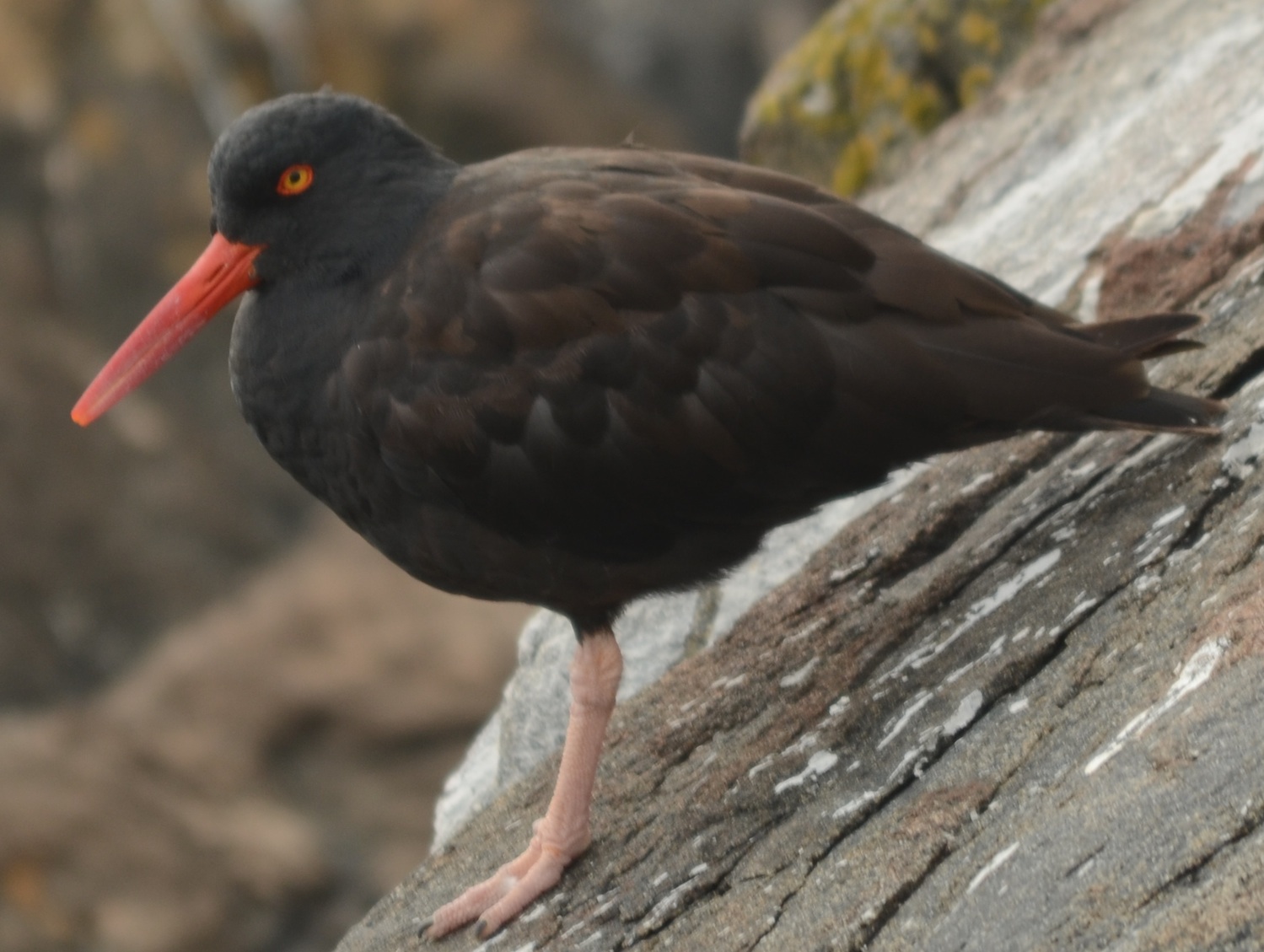
There were also a couple of Western Sandpipers flitting about today. They breed in western Alaska and are heading south, just passing through here. If they are looking for biofilm, Race Rocks is covered in it, even though with its’ high current and rocky substrate, it is the opposite of a mudflat, it has such a massive concentration of life that there is food for eveyone. I saw more Black Oystercatchers today than I have in a couple of weeks. They are one of my favourite birds.

Black Oystercatchers are very jazzy birds. They have the most spartan nests imaginable. The adult pairs are quite site fidel.

Black Oystercatchers are very jazzy birds. They have the most spartan nests imaginable. The adult pairs are quite site fidel.

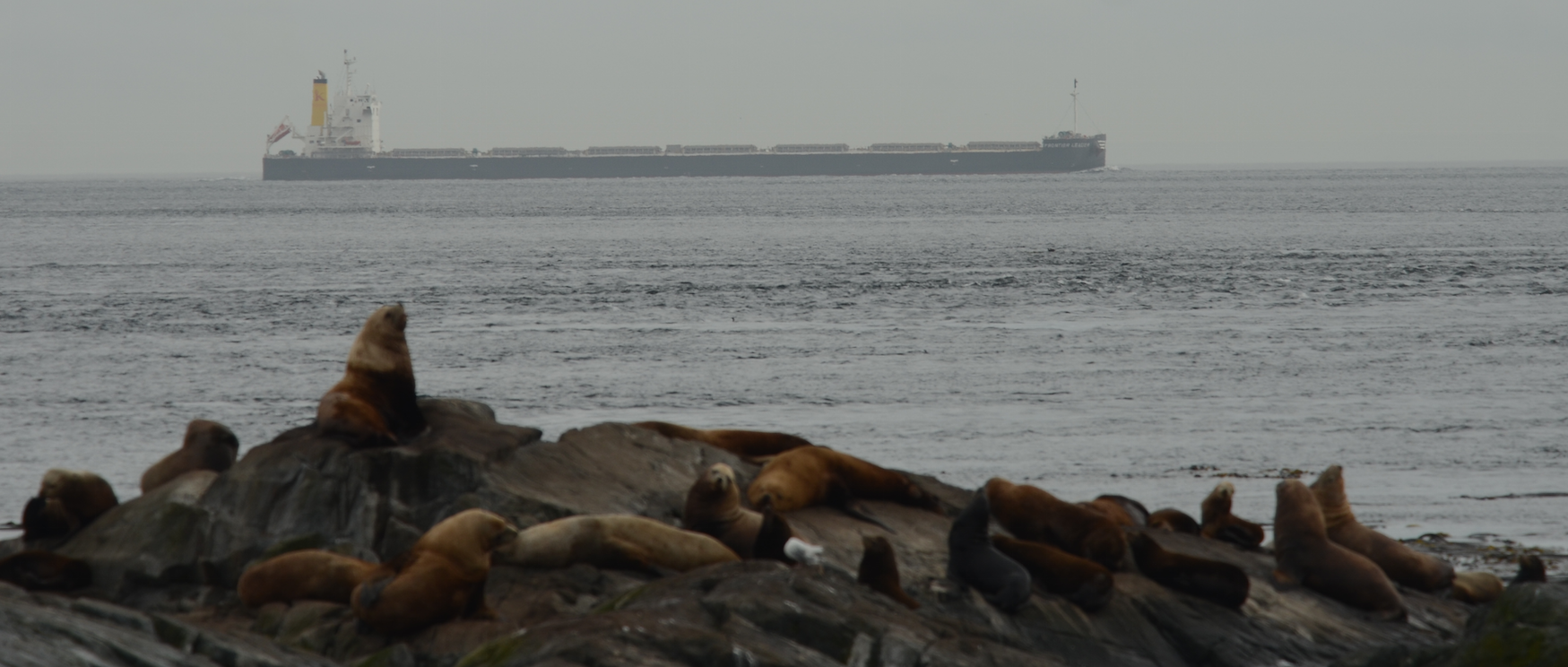
I am preparing to attend an international workshop on ocean literacy, followed by the European Marine Science Educator’s Conference. Also trying to trouble-shoot the Davis wind direction data, which is reading greater than 360o. All the normal, potential problems seem fine, so it is still a mystery. Regular tasks like making power, making water, testing the seawater, taking photos of branded animals and generally fighting entropy, continue. Here is another photo for Garry of sea lions in the foreground and shipping in the not too distant background.

Race Rocks Ecological Reserve is located adjacent to a very busy shipping lane.

Race Rocks Ecological Reserve is located adjacent to a very busy shipping lane.

Marine Science Students Visit Race Rocks

Coming from Bamfield, I expect large volumes of water when the barometer drops and it starts to blow southeast. It was grey and wet today but the wheelbarrow I left out to collect rainwater only has about 500ml of water in it at the end of the day. The barometer is still sliding so maybe I should be careful what I say. The wind did turn around to westerly for a while as it cleared in the late afternoon and is now flowing out from the northeast with more drizzle approaching real rain. From Environment Canada’s forecast it looks like the trend for this week.

Although there are still plenty of recreational fishers around, only one was noted in the reserve today and they were looking at sea lions. There was only one whale watching boat noted in the reserve.

Laura brought the first of her three marine science classes, from Pearson College to Race Rocks today. Courtney masterfully landed Second Nature at the very unforgiving pier and we had a wonderful field trip with a student:teacher ratio of 4:1. The students were really good at moving with stealth so as to not startle the sea lions. This allowed for good sea lion observations, which were noted in their journals. They saw all four species of Pinnipeds and added to their growing species lists with Black Oystercatchers, Black Turnstones, Glaucous-winged, Heerman’s and Thayer’s Gulls. They spotted new (to me) branded California Sea Lions including three branded in the Channel Islands. All of the students had a bird’s eye view from the top of the light-tower thanks to Courtney and we finished off with warm cinnamon buns at the keeper’s house.

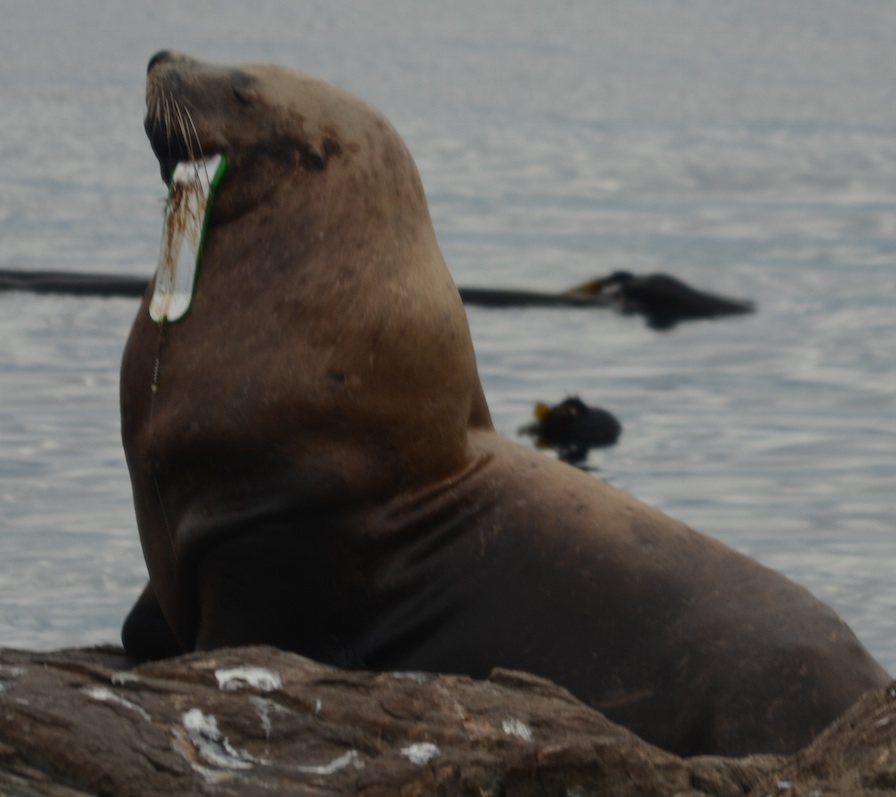
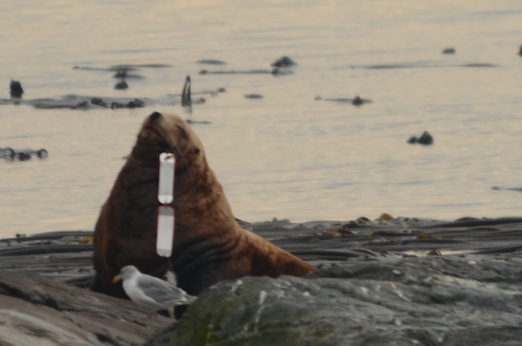
After the visitors left, I caught a glimpse of these two Steller’s Sea Lions entangled in sports fishing gear. Those are salmon flashers hanging out of their mouths, which is not good news, as these cannot be disentangled the way the neck-rings can. The individual with one flasher has been hauling out at this same spot for a few weeks now. The one with two flashers, has not seen before today.

I will be watching out for  this animal over the next month.

I will be watching out for this animal over the next month.


Today was the first time this animal with two flashes was seen here. It will be easy to distinguish it from the one with only one flasher.

Today was the first time this animal with two flashes was seen here. It will be easy to distinguish it from the one with only one flasher.

Sediment Filters Installed

What a beautiful, warm, summer day. The early fog to the south and west disappeared and it stayed calm and got warm. The smoke and particulates made for another spectacular sunset, this time without a cloud. The barometer has been slowly rising since last night with a bit of a leveling this afternoon and evening. It looks like they are forecasting outflow winds for tomorrow and that might keep the fog at bay.

There were 17 tour boats today and most of them were very respectful of the seals and sea lions that they were watching in the reserve. The recreational fishing fleet seemed to be off to the west towards Beechy Head and the Bait Shack. Although a few boats passed through slowly, no one was jigging in the reserve today.  Second Nature and Hyaku made several trips out and around the reserve with groups of students rotating through their orientation activities.

There were military explosions during the late morning and early afternoon.

There were only 99 adults Glaucous-winged gulls at sunset and I could only spot three young ones, (still actively begging). The rest have moved on. There is still one demented gull that is trying to nest, bringing bunches of grass and acting agitated. I wonder what happened to its internal clock? I also spotted both Heermann’s Gulls and California Gulls today. The number of cormorants, both Double Crested and Pelagics continue to rise. Every night a mystery bird arrives after dark and calls a bit. I would love to figure out what it is. It almost sounds like a Greater Yellowlegs but it is the wrong kind of habitat. I wonder if it flies out here because it is a safe(ish) place to sleep?

A lot of maintenance work was accomplished today. I started by washing the basement floor where plumber was going to be working. Courtney brought the plumber out in Second Nature in the morning and while he plumbed Courtney and I dealt with propane tanks and electric fences. It was good to be able to chat with this veteran eco-guardian who now works on the waterfront at Pearson College. I learned a lot. Now both houses have big cartridge filters in-line in and it looks like really professional.


lots of visitors

Pretty calm all day. Intermittent showers, moments of sun. 2 ft swell still running

Erik brought Maciek (our new volunteer) out this morning, he’ll stay until Friday to help out with two person projects.
Tharis came out for a visit for a few hours just to see the awesomeness of Race Rocks.
Students from the college and Catrin Brown came out for a lab on food webs, and Libby Mason’s brother (whose name escapes me right now) also came out with the students.

First day that I didn’t see any marine tour boats
Lots of commercial fishing boats heading back out to sea now that the bad weather has passed
Coast Guard was heading out this evening
Spotted a California sea lion with a line around its neck
Noticed a Glaucous winged gull with a broken wing

-Ran desalinator
-Cleaned tops of batteries and replaced cups; tidied battery room
-Chopped up log along jetty
-Reset Davis instruments computer. It was having issues since I installed the UPS yesterday.
-Posted missing seawater data to the log from February and August
-Posted branded sea lion photos to the log