Wildlife notes
The elephant seal family is content in the hollow. The pup is growing and the mom is determined to keep the birds away from the placenta and has large blood stains from rolling in it.
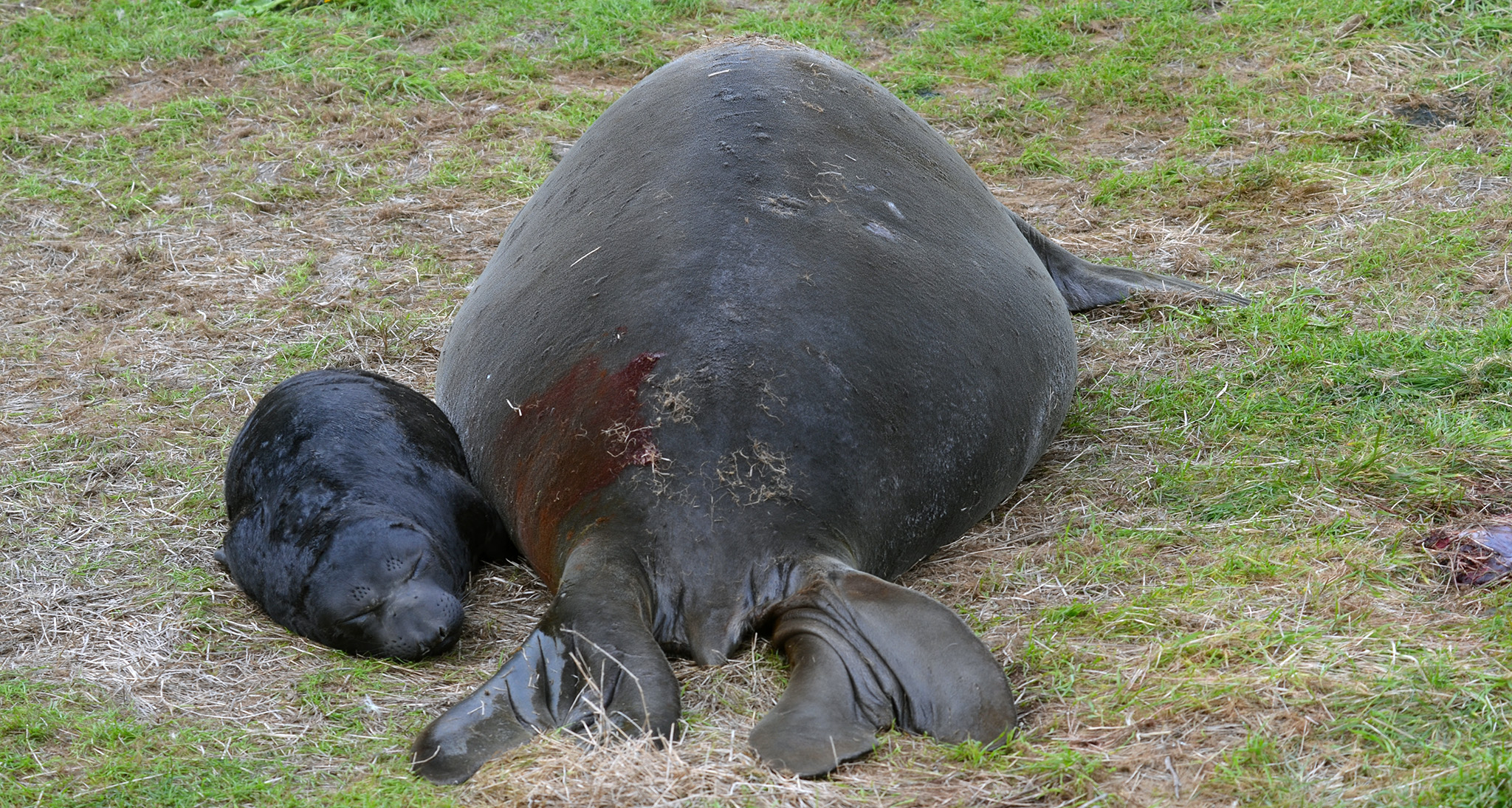
Mother and pup on Day 8. The red stains are from rolling in the placenta, seen on the far right.
A couple dunlins, a sanderling, a surf bird and several black turnstones were feeding at the low tide on the north shore. They are all roughly the same size but with different colourings and beak shapes – shame I didn’t have the time to observe if they were targeting different things to eat.
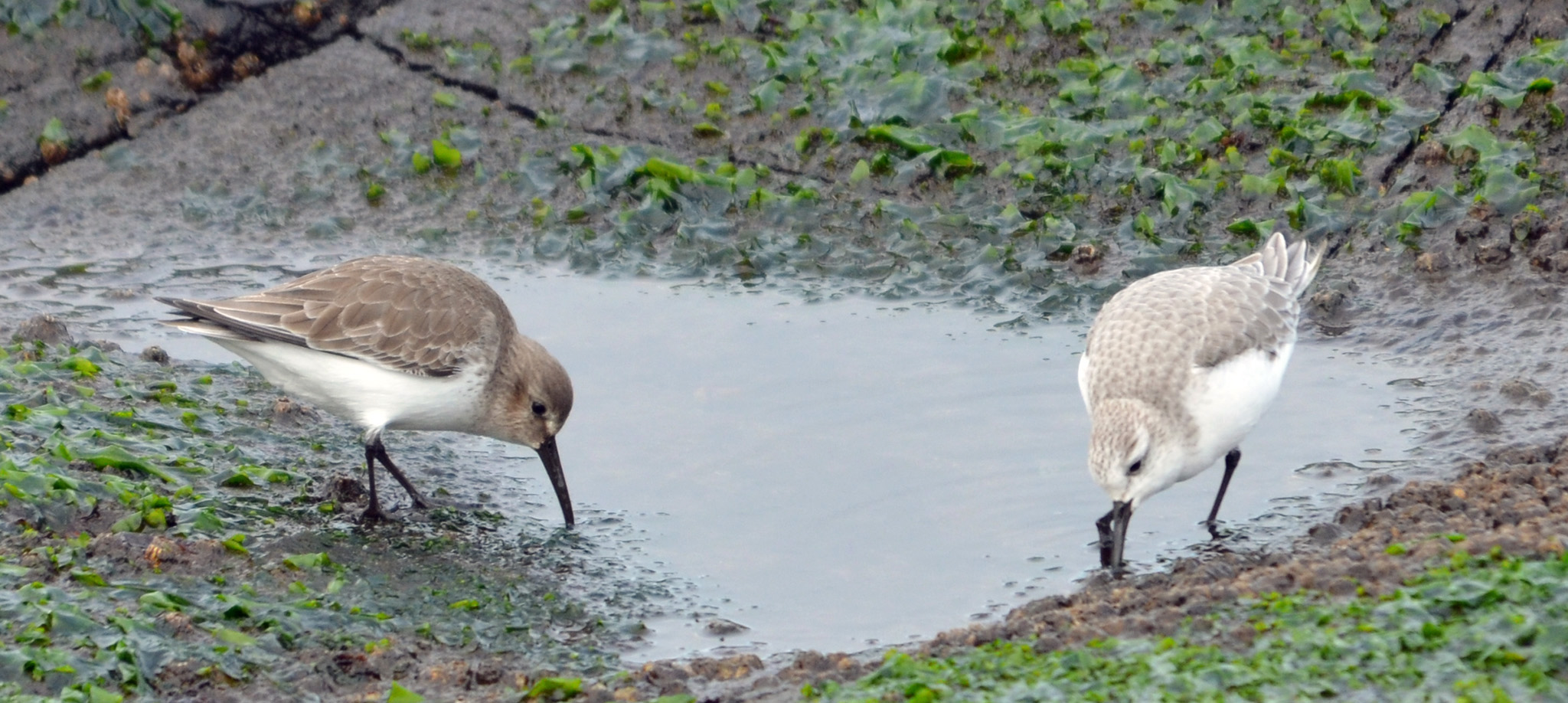
A dunlin (left) and a sanderling (right).
Facility work
The focus of today was filling the cistern with salt water as we need a huge reservoir of salt water. The ratio varies a bit but for every 1.5L of fresh water produced, about 9L of concentrated salt water is sent back to the sea (for pictures of the desalination plant see 26 | July | 2024 | Race Rocks Ecological Reserve-). Here are some photos of the fire hoses and pump setup we use to get salt water up to the massive rock and concrete cistern beside the Keeper’s house. It took many hours and 3.5 tanks of gas on the pump.
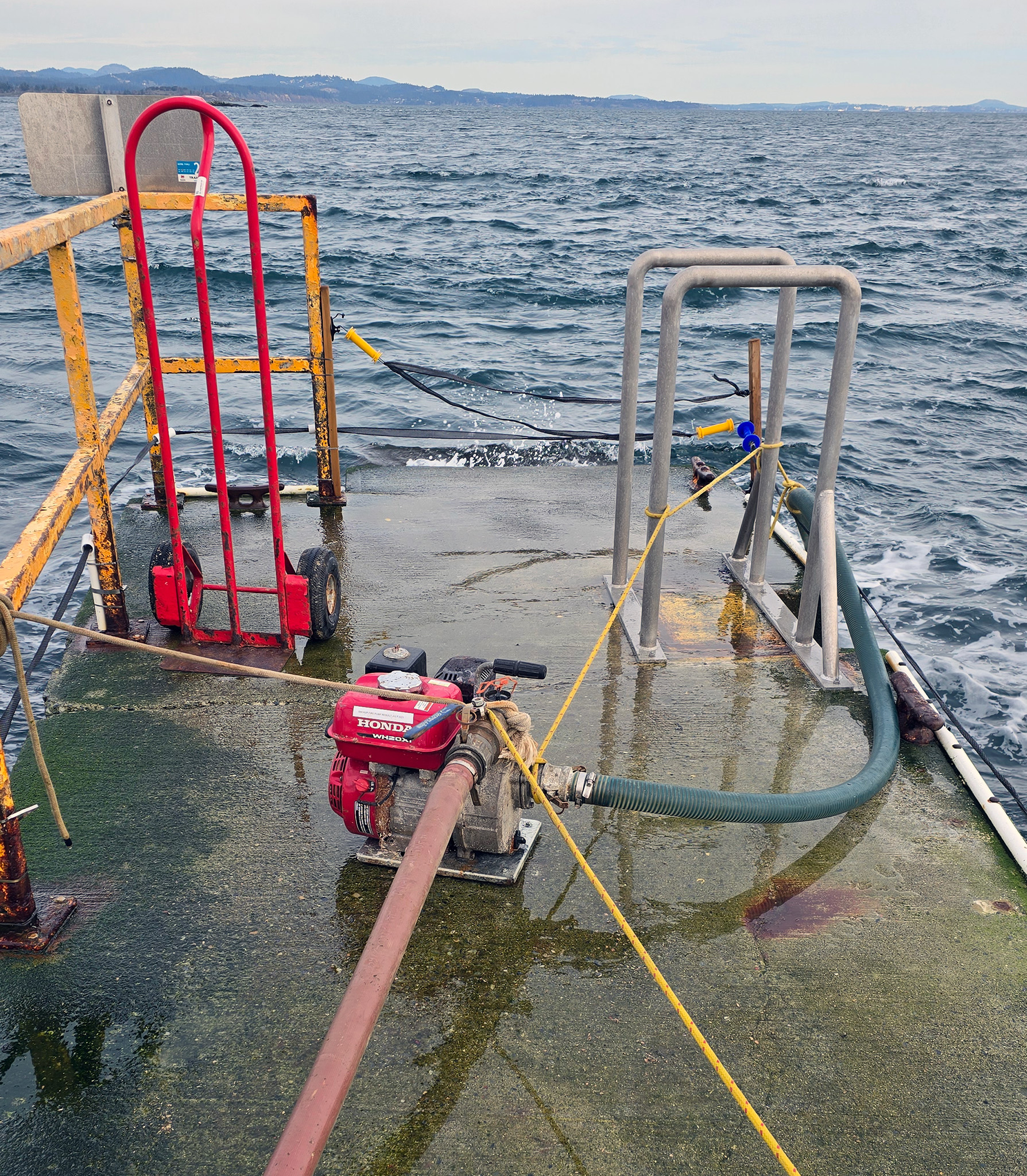
Pump tied down on the Jetty. The green intake hose on the right is lowered into the ocean and the pink hose sends the salt water up to the cistern.
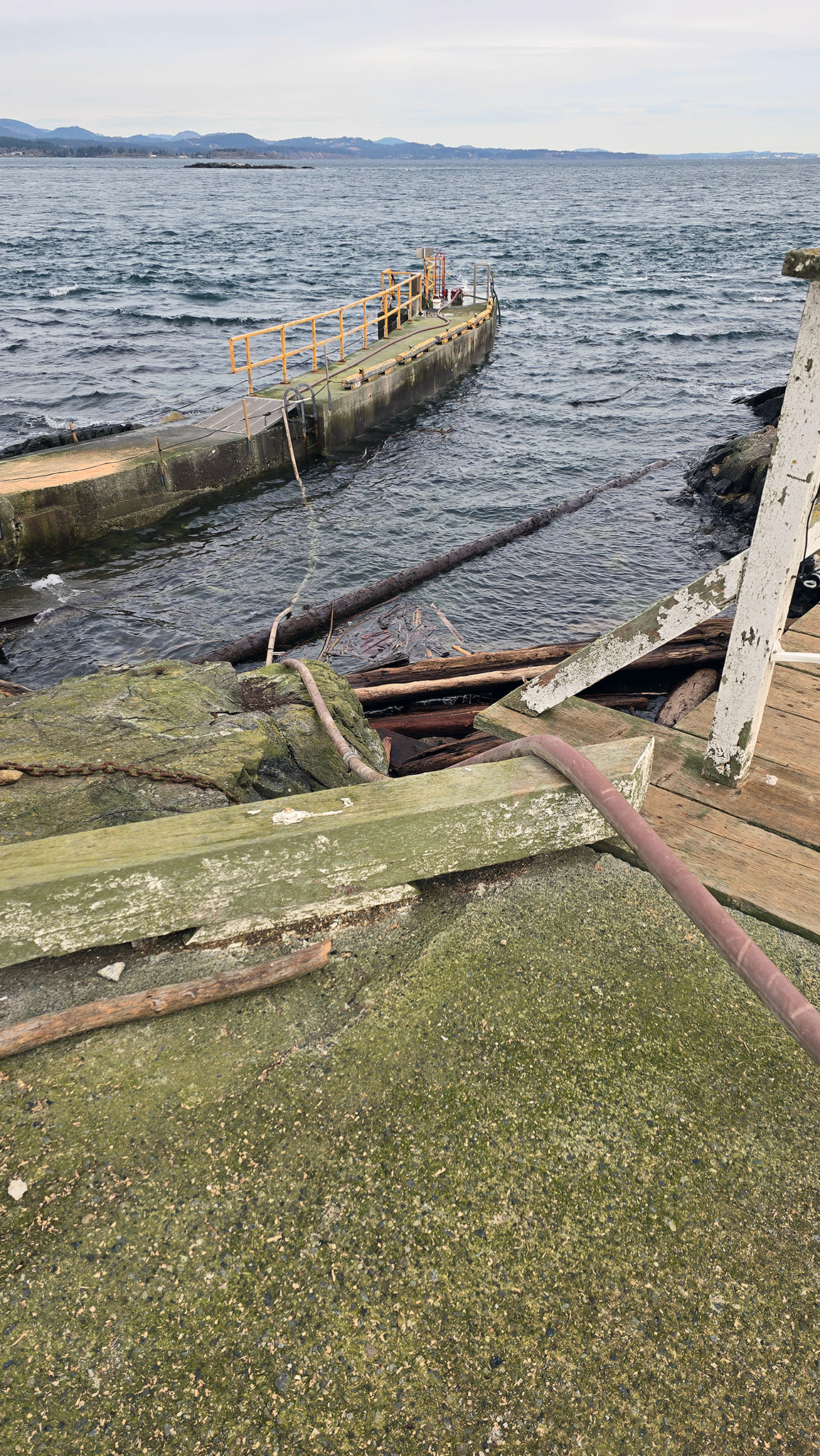
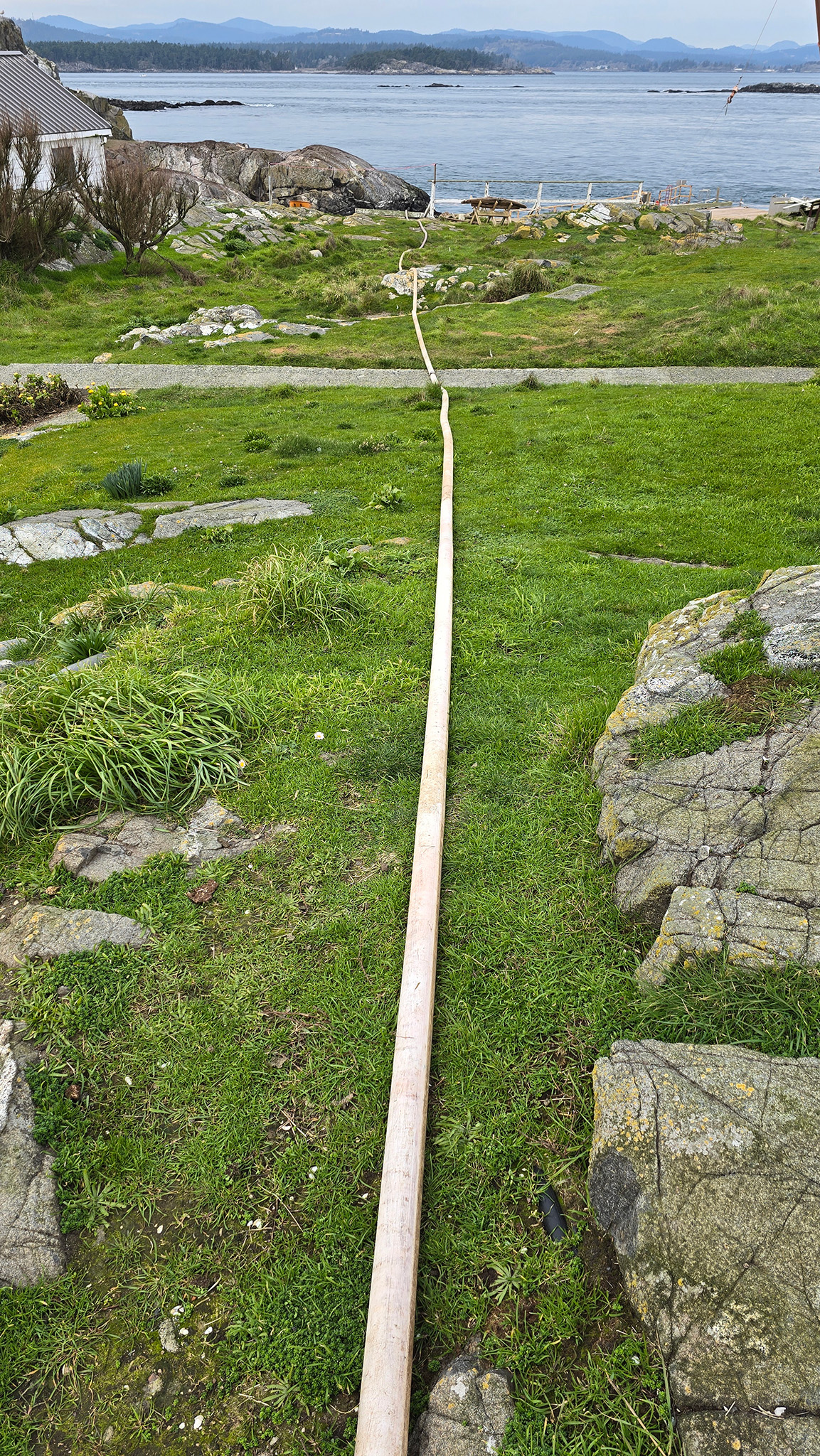
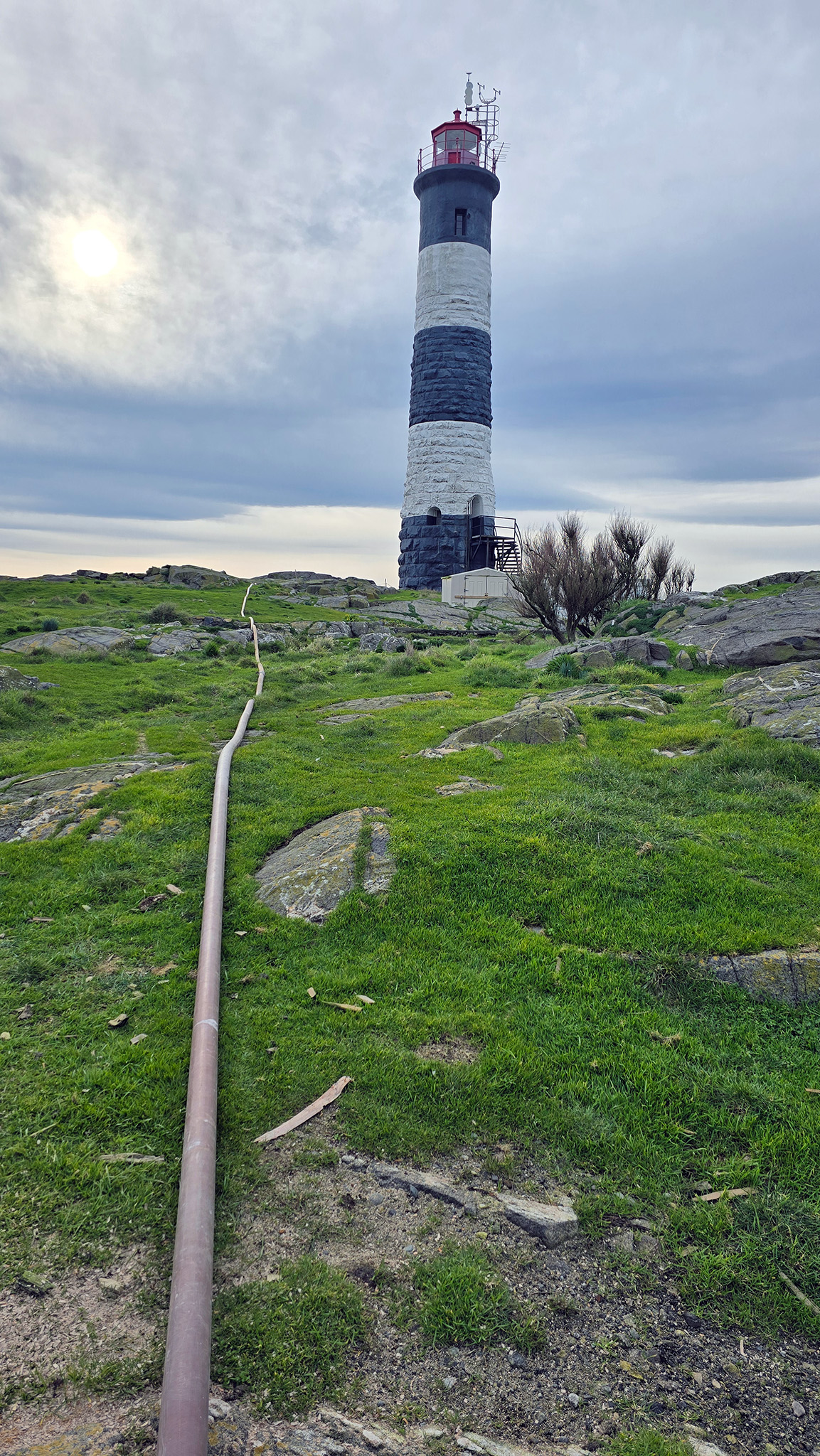
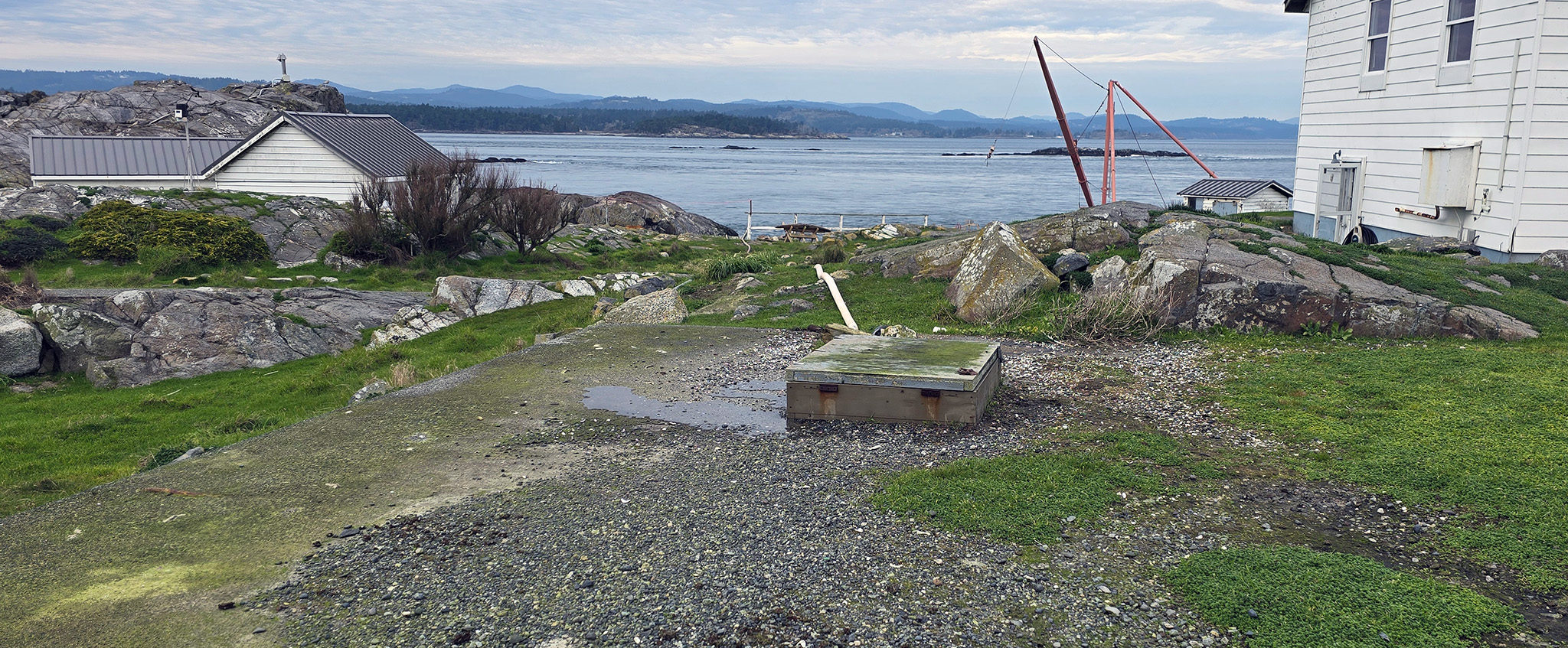
Fire hose leading into the cistern hatch. The foot print of the cistern is larger than the house.
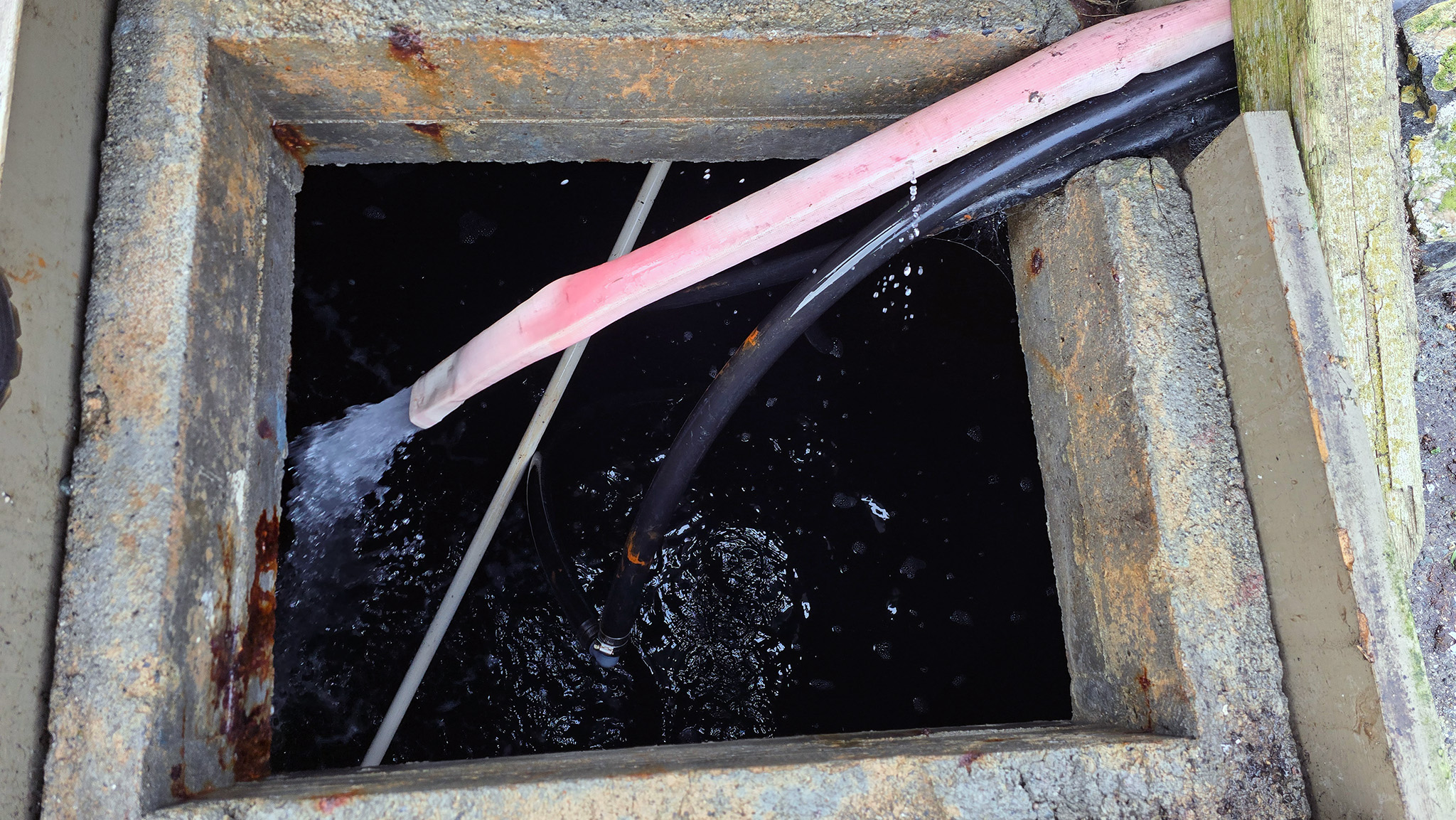
Fire hose filling the cistern with salt water
Vessels
- Ecotourism: 0
- Private: 2
Weather
Overcast. Light to gentle northeasterly breeze. Daytime temperatures 6 to 9 degrees.