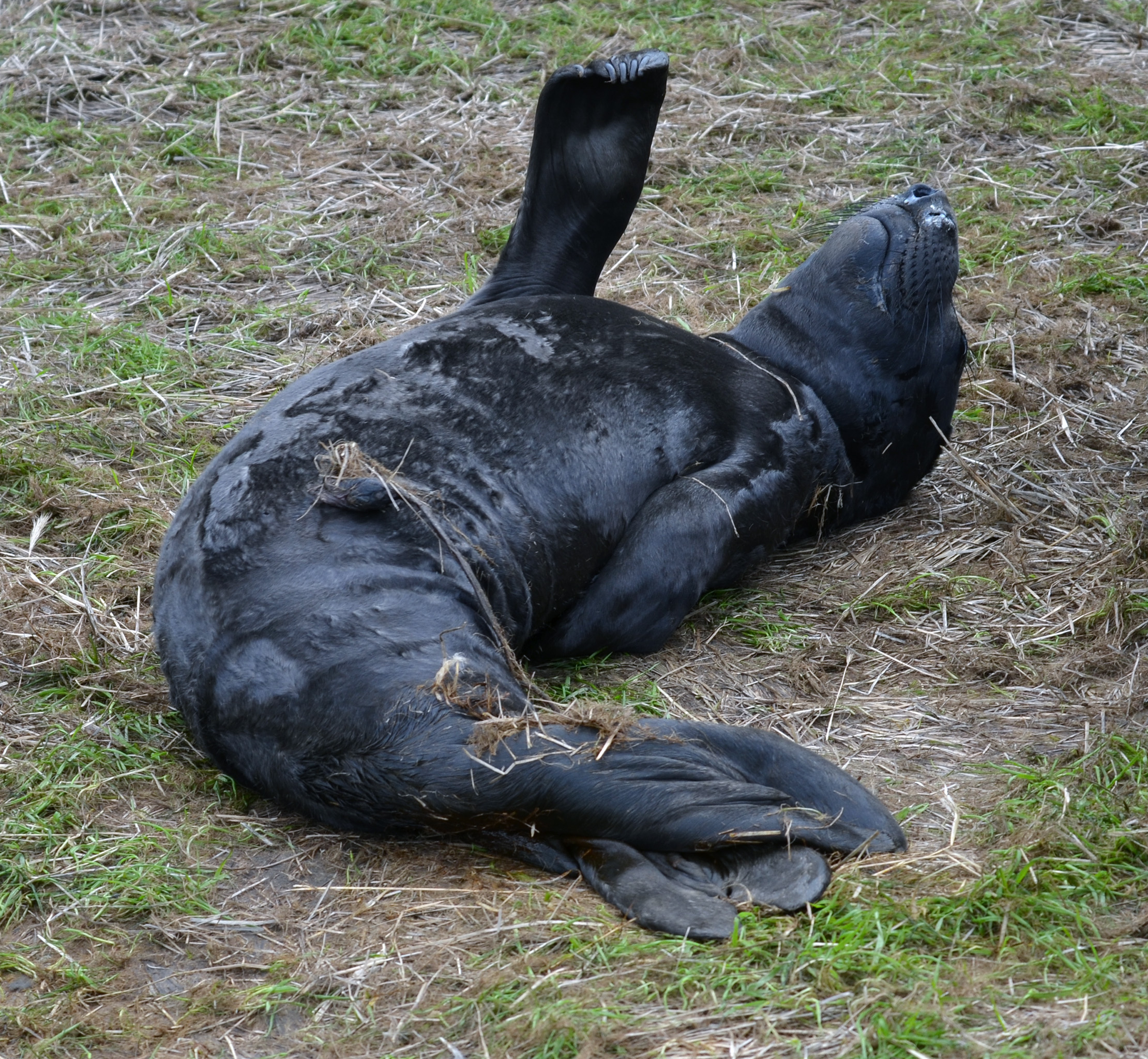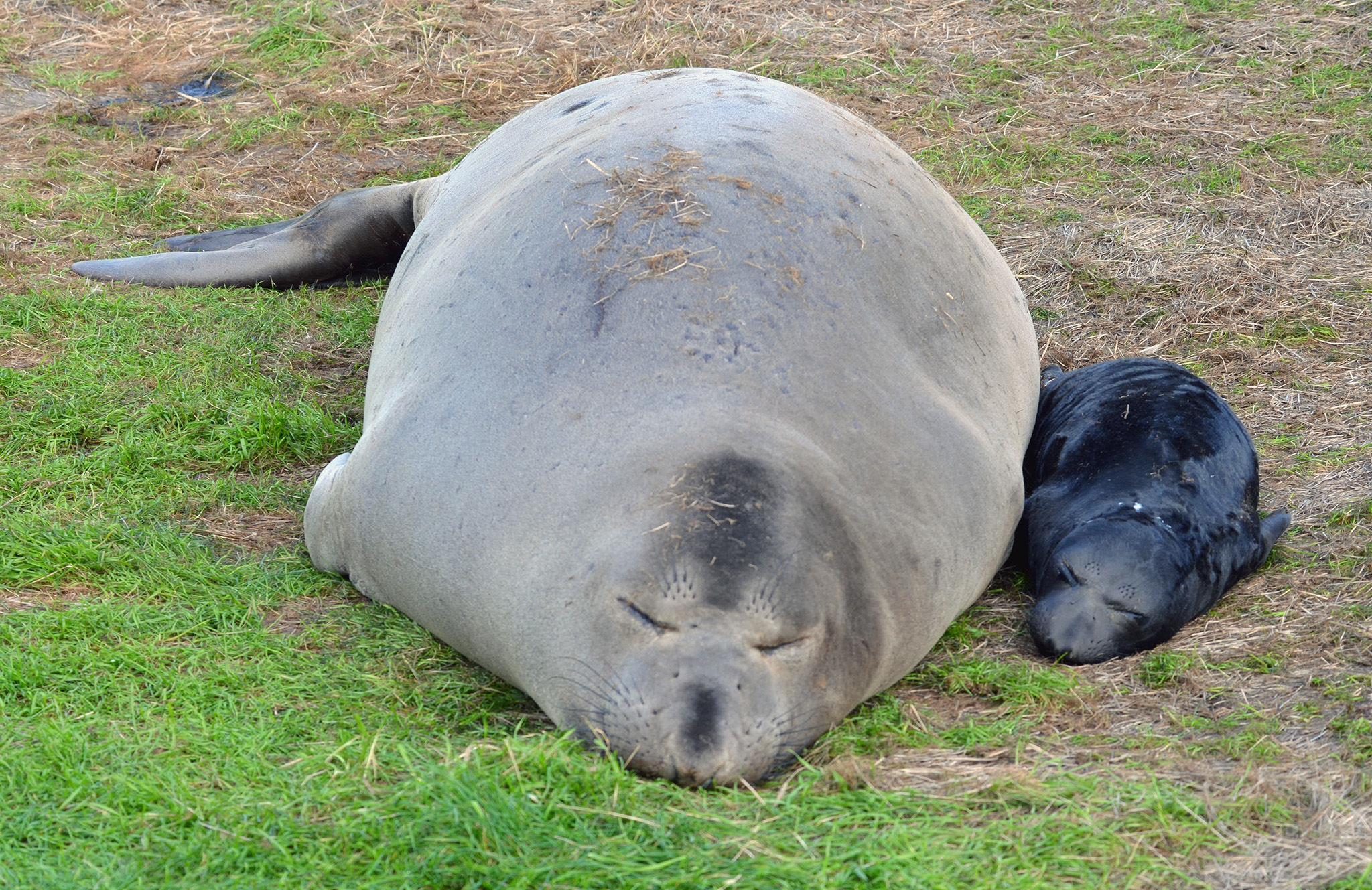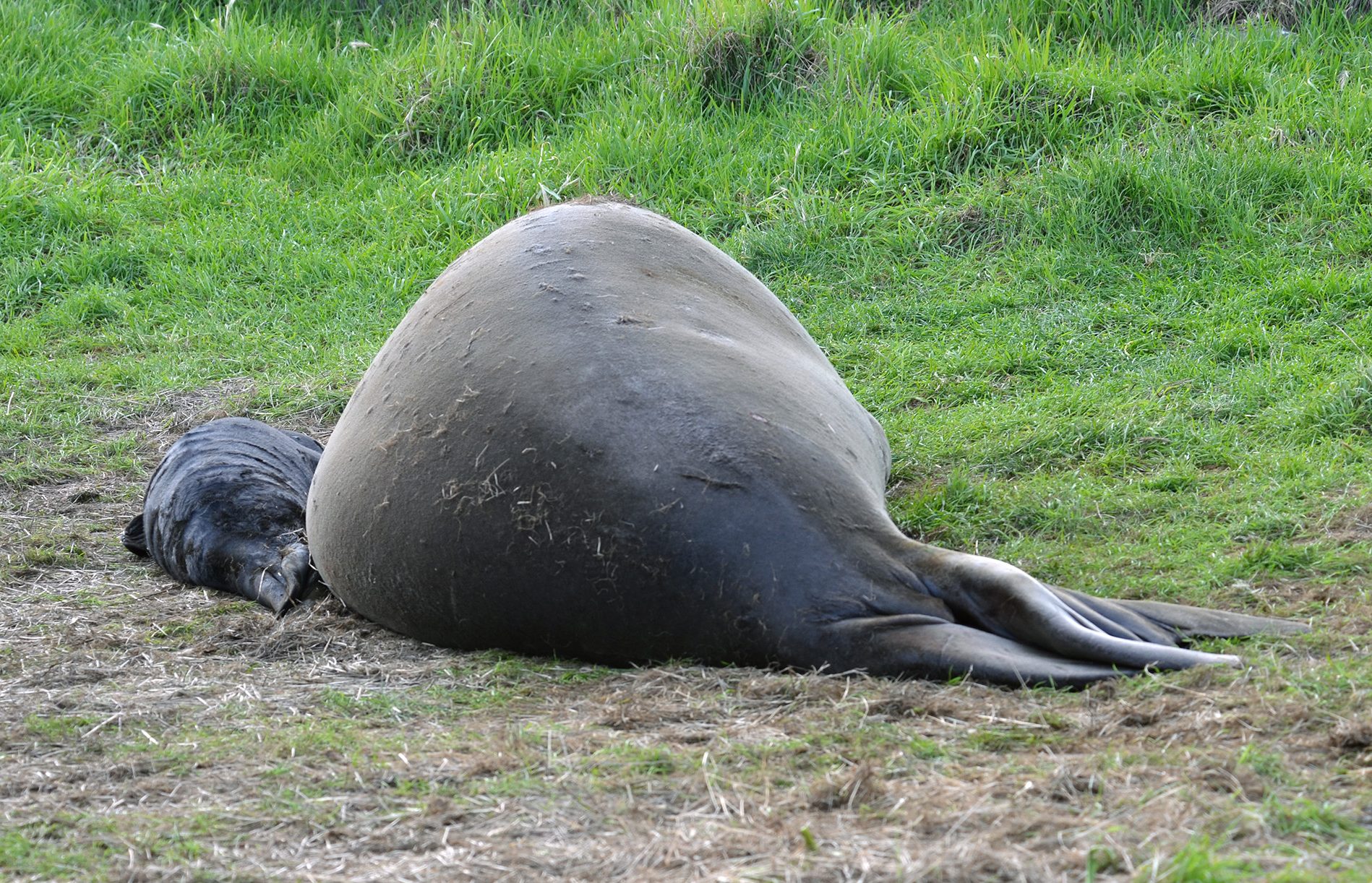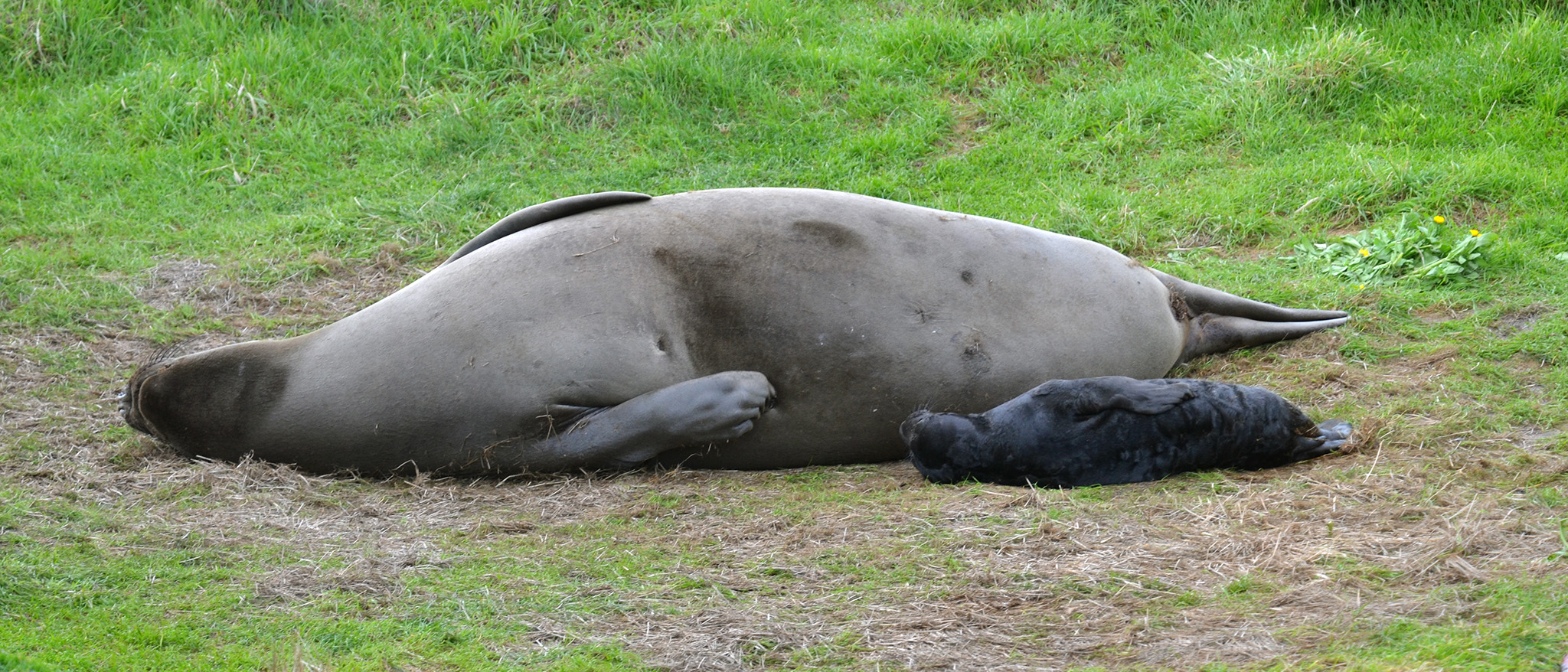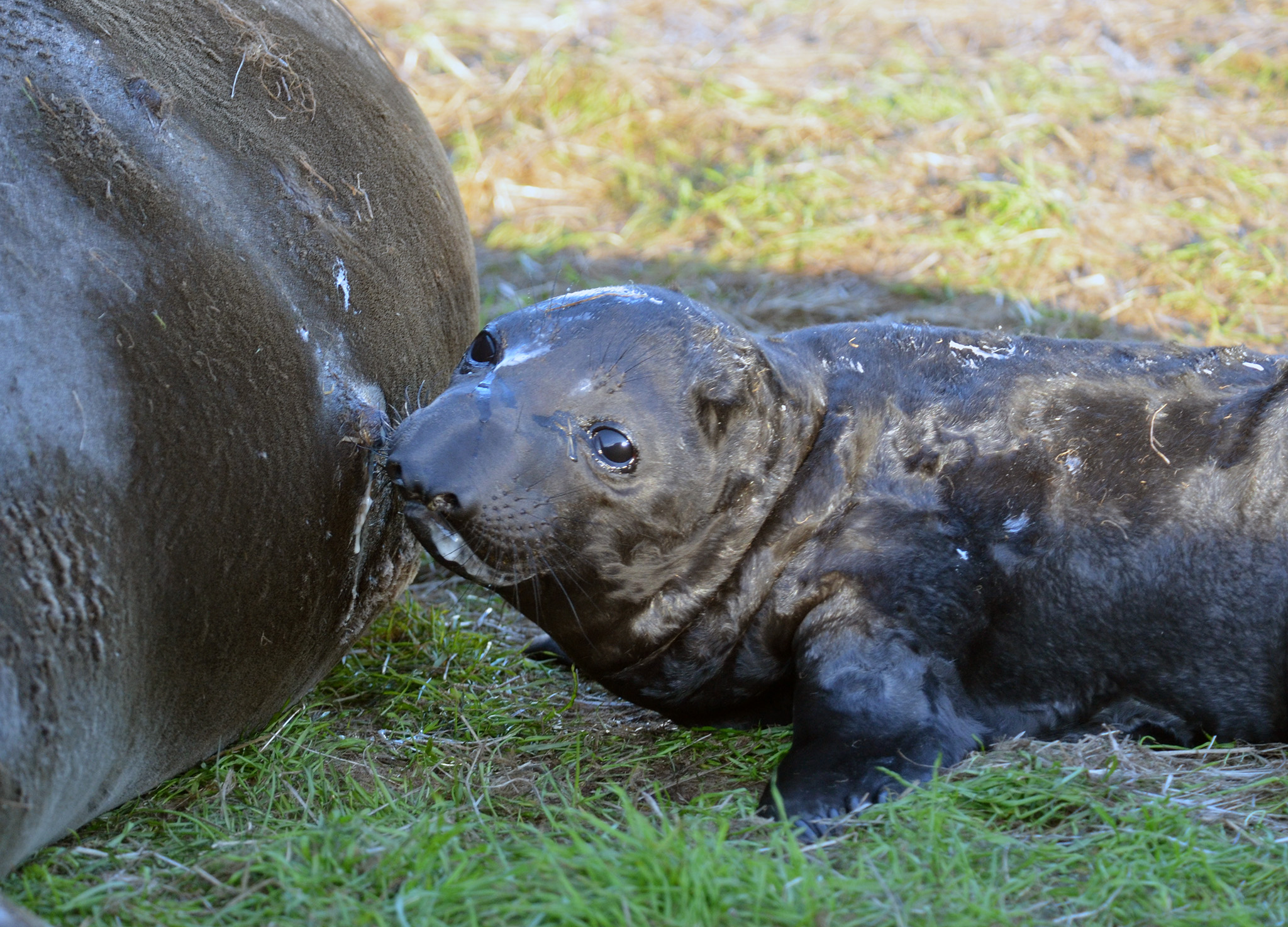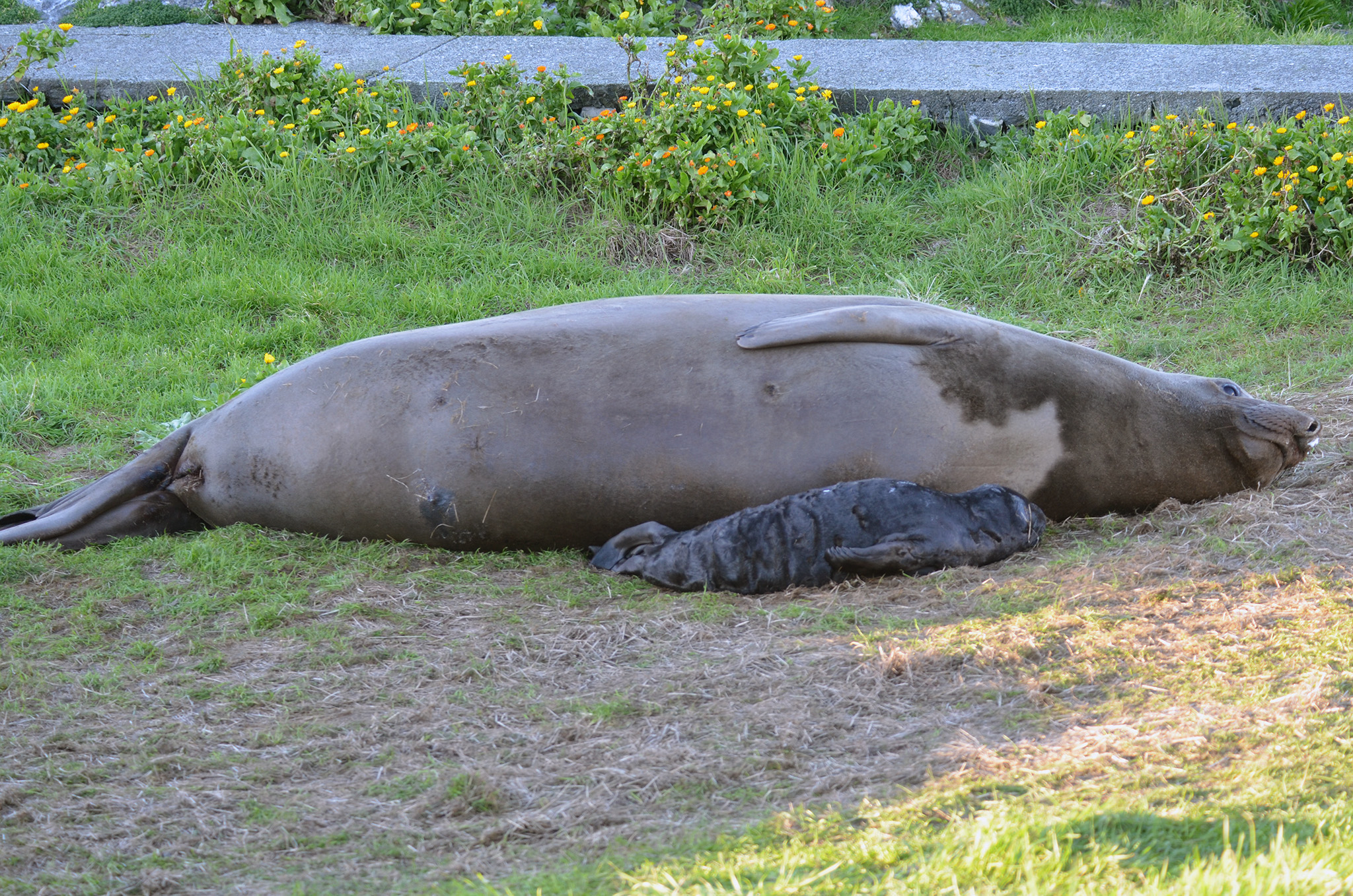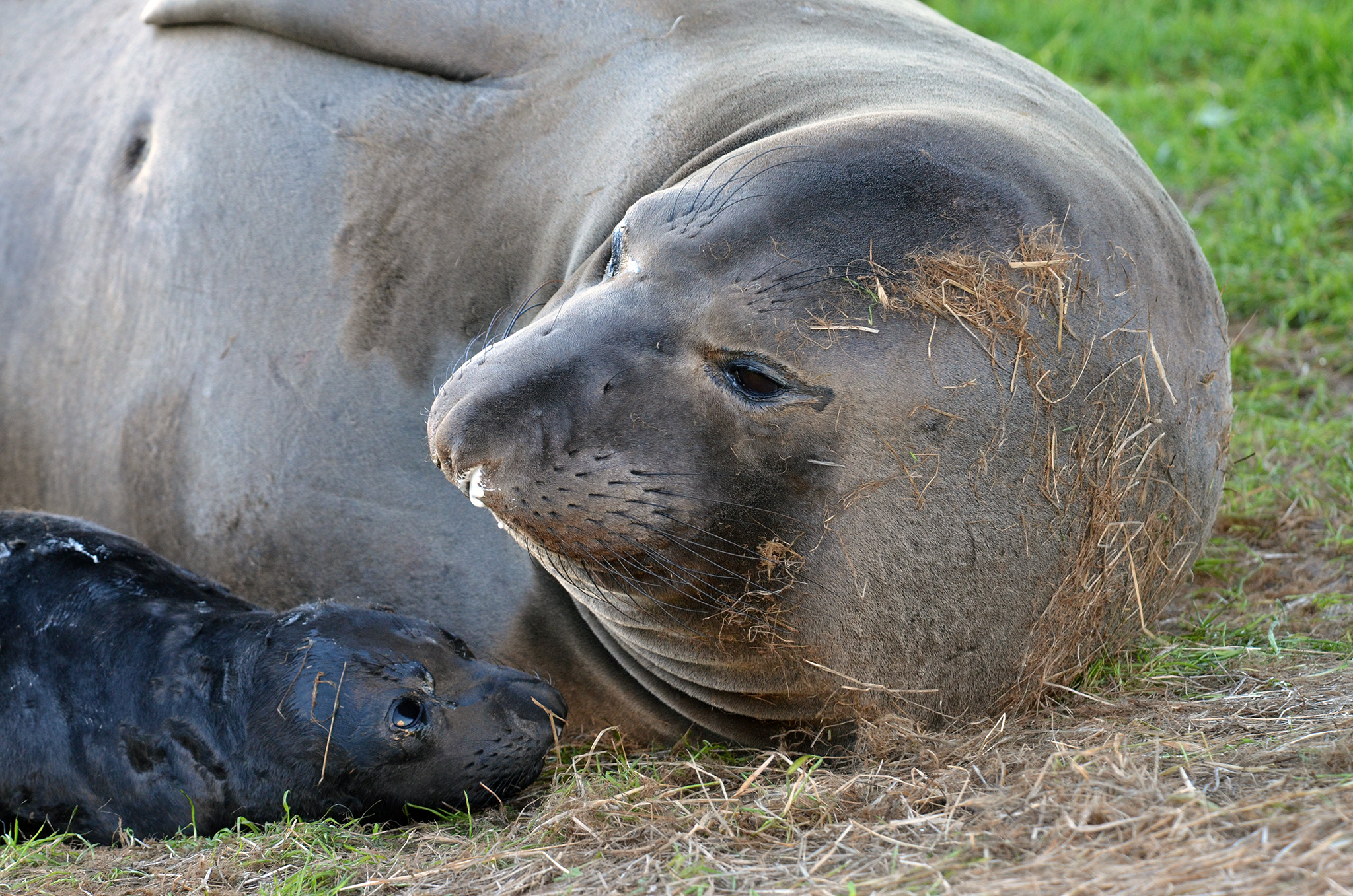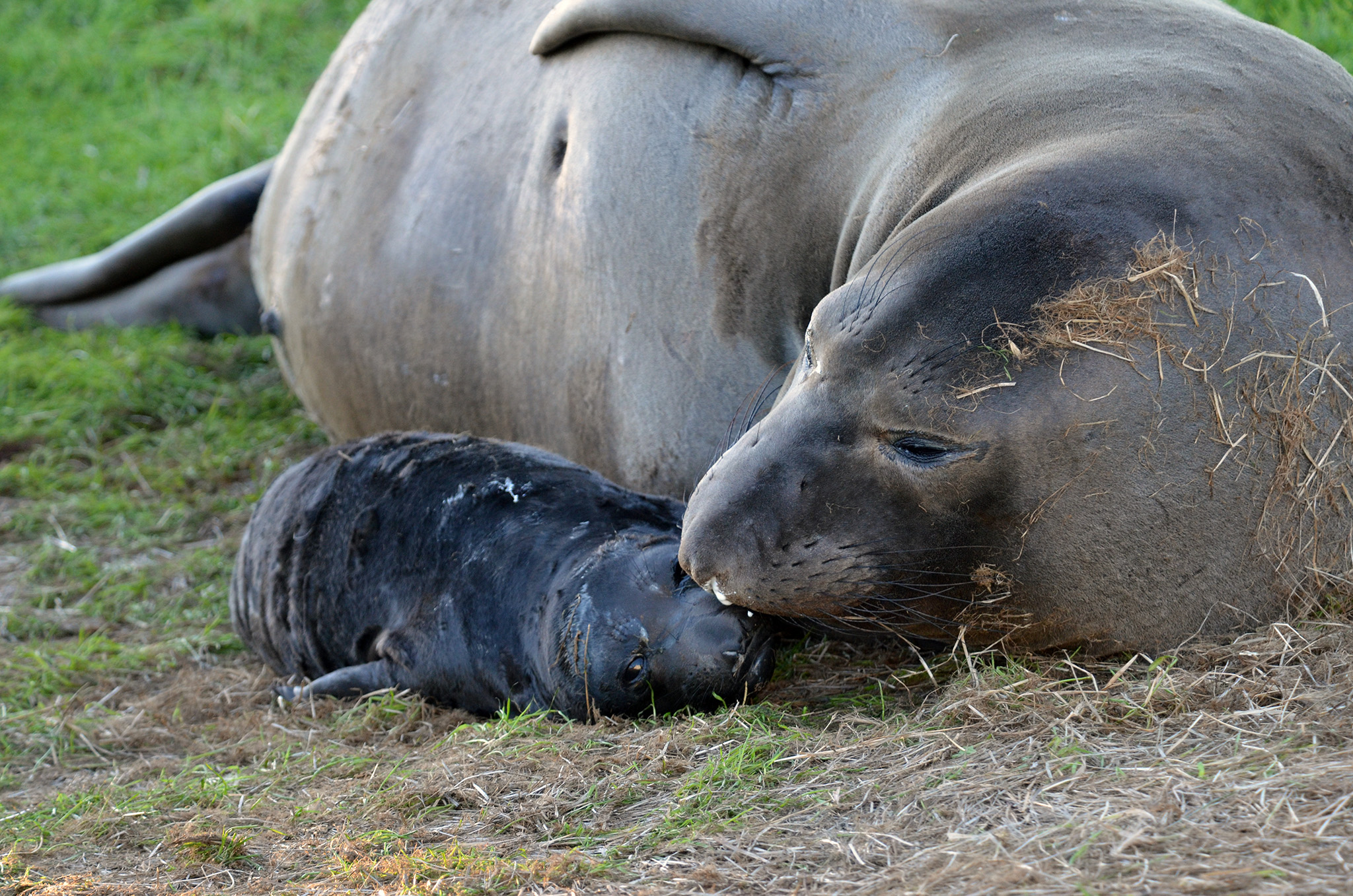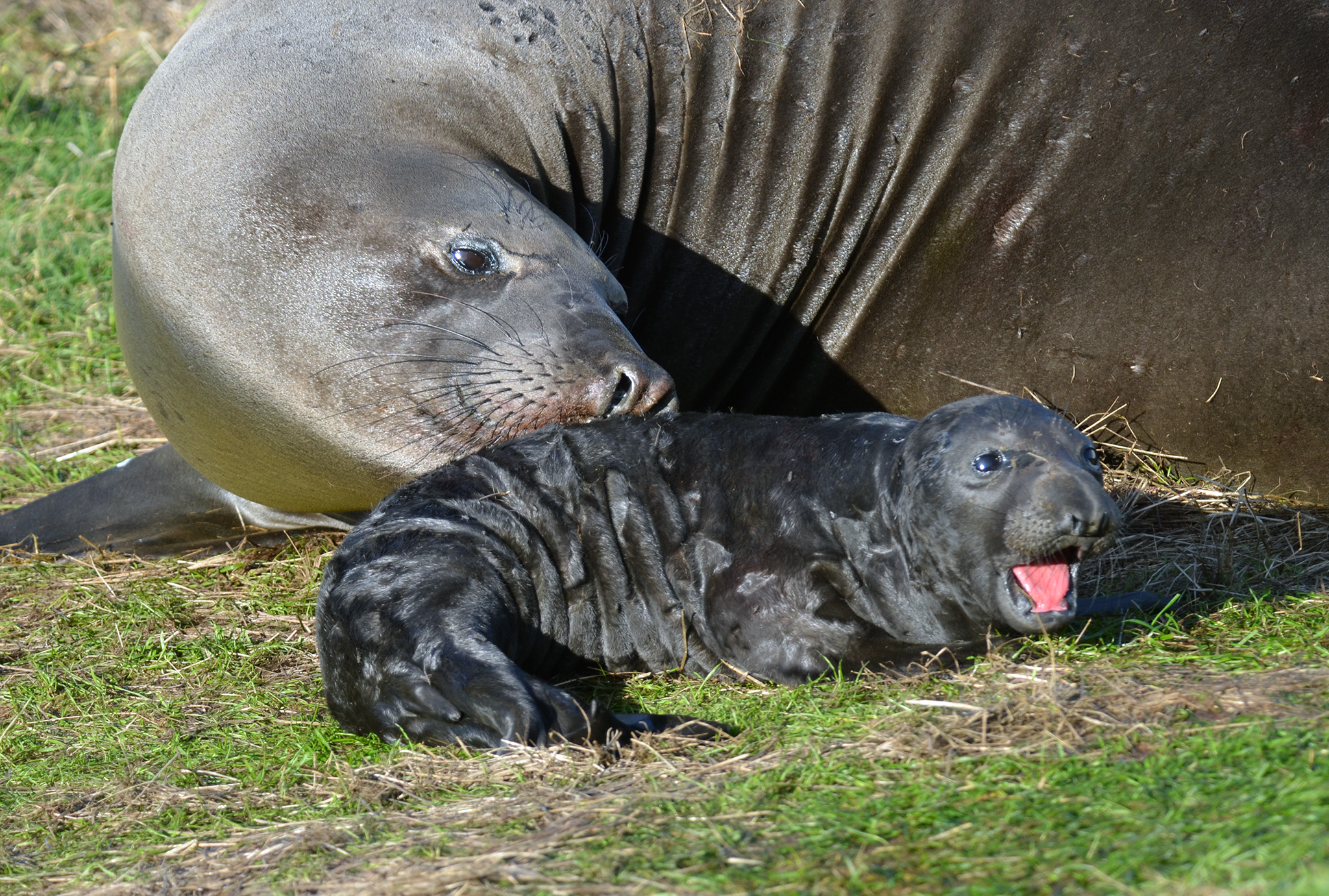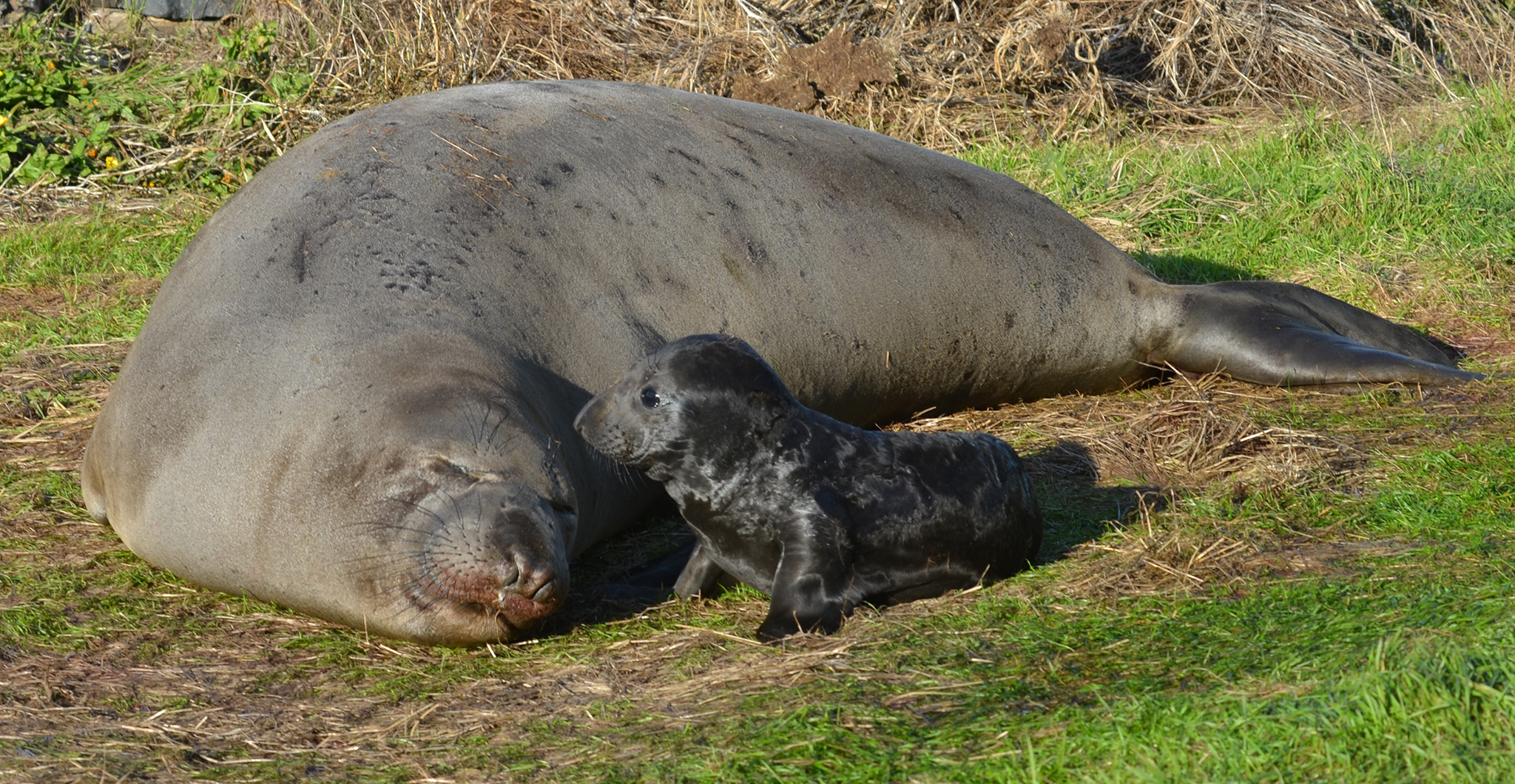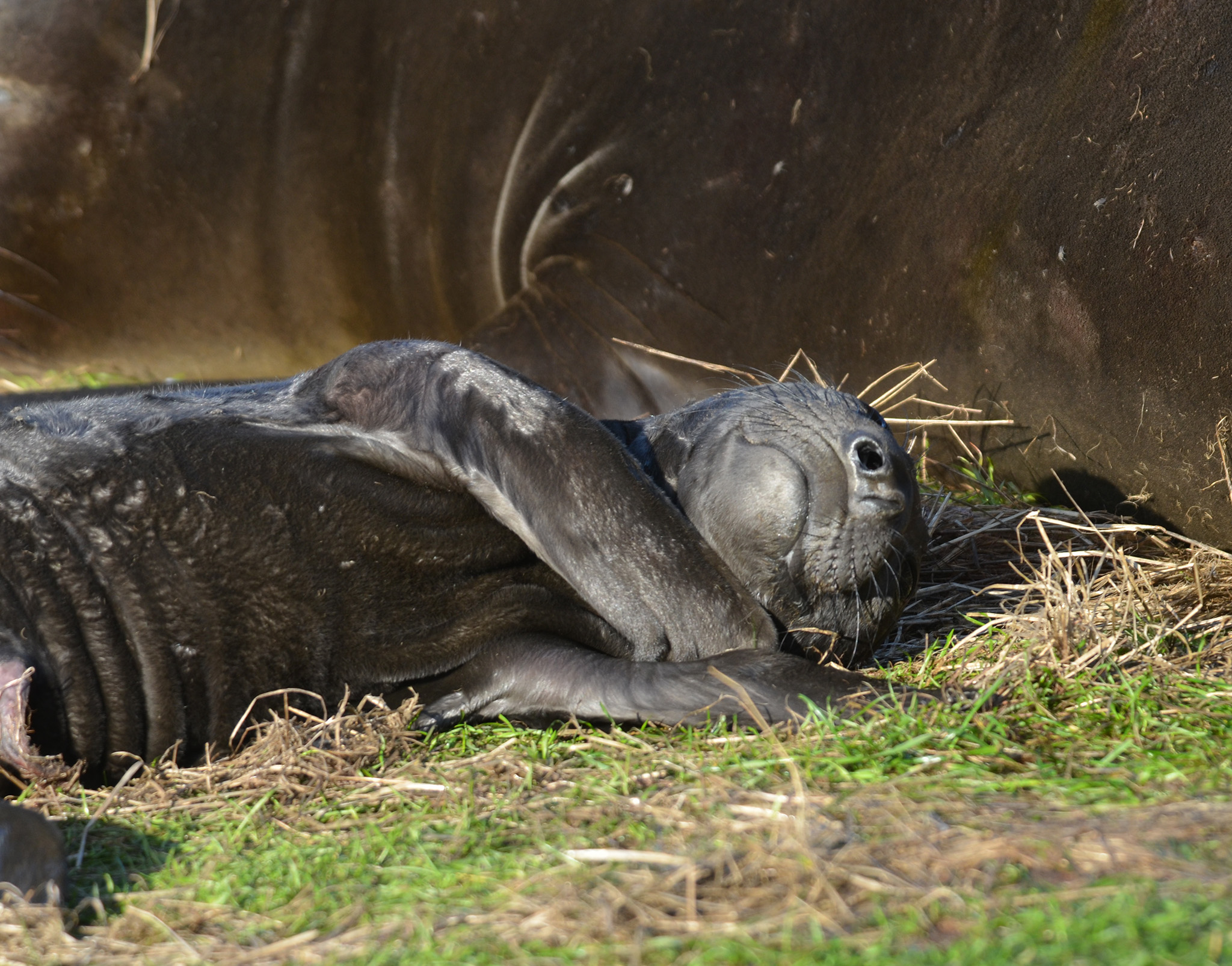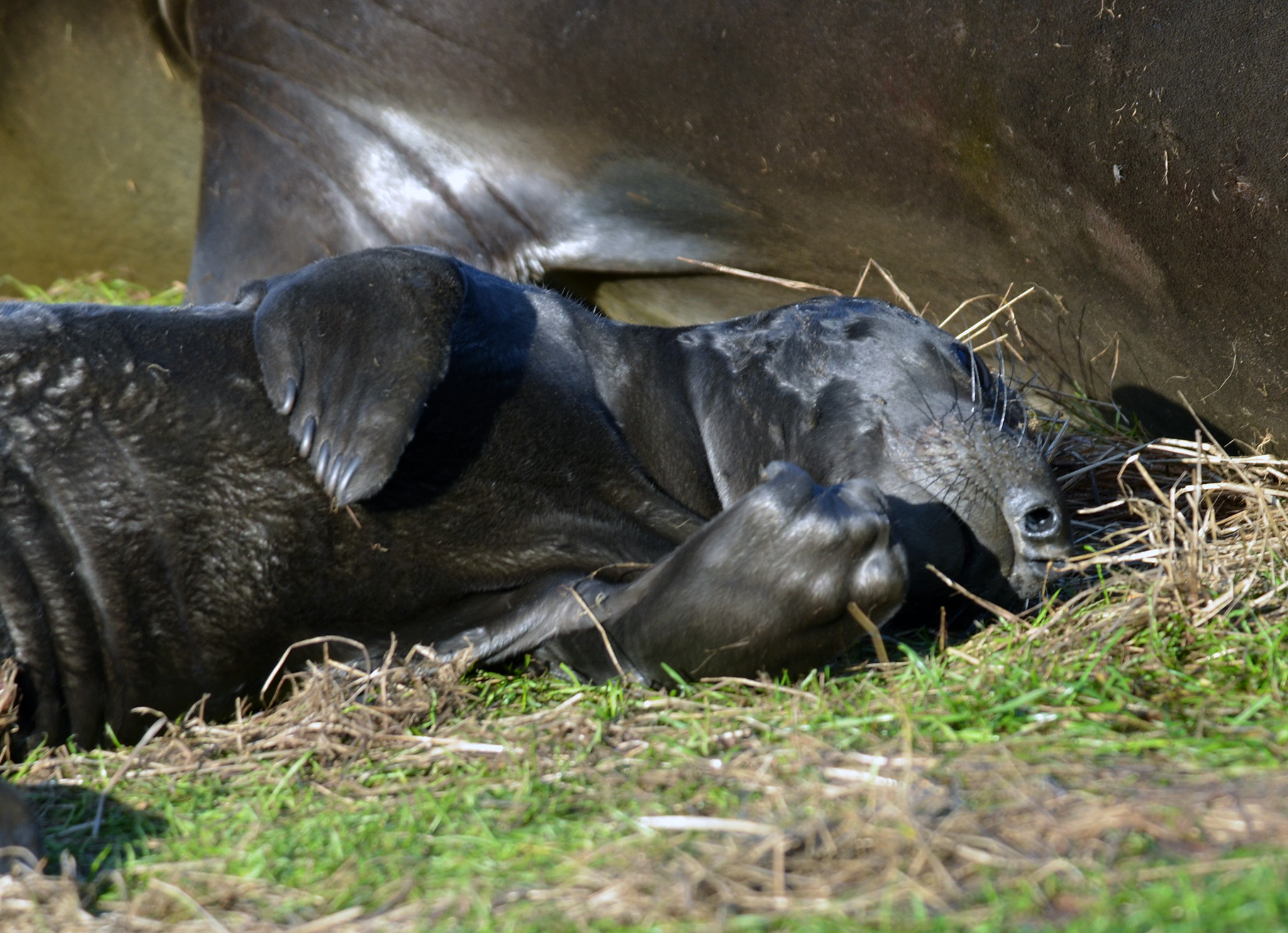
Day 3

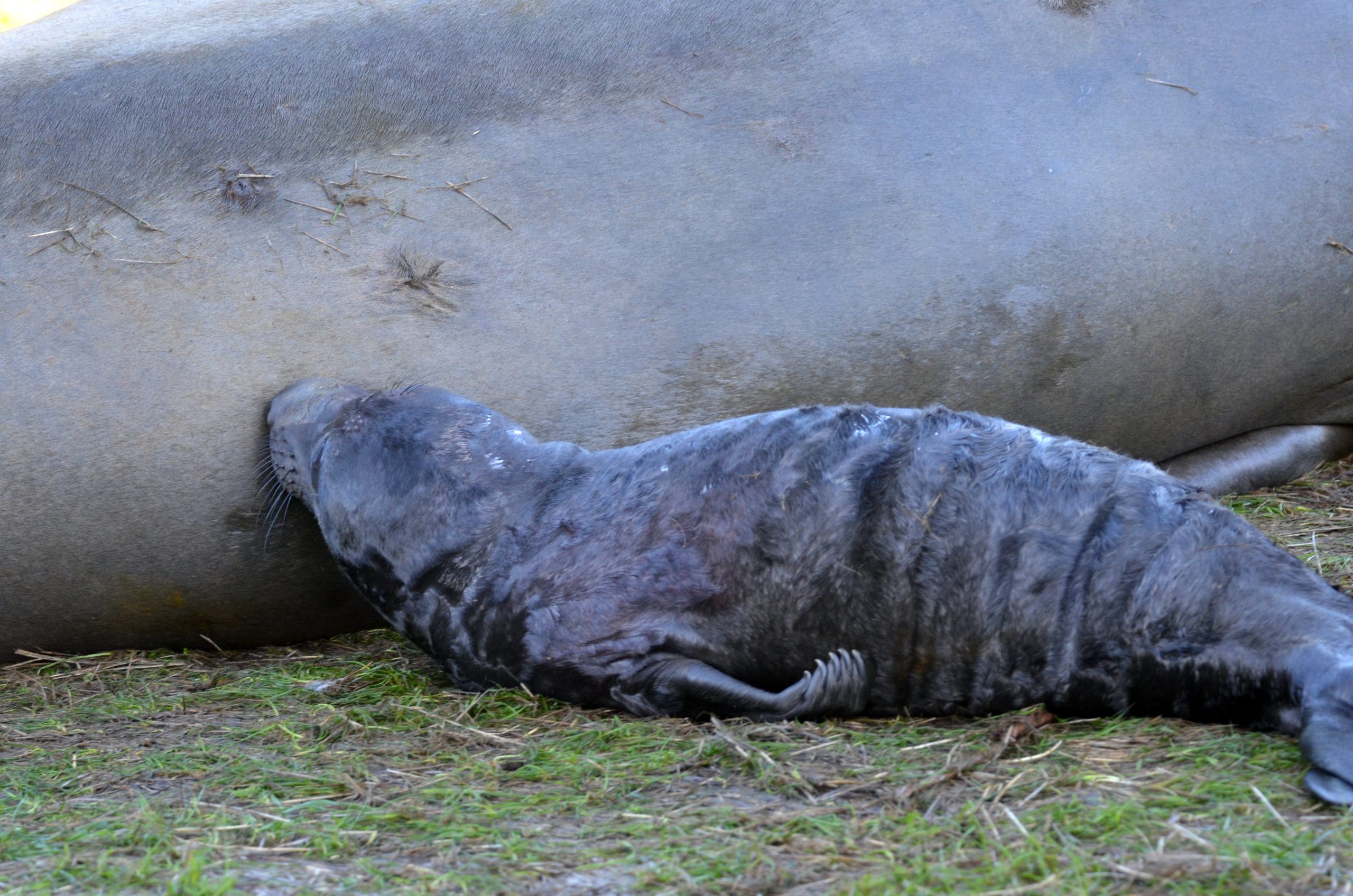
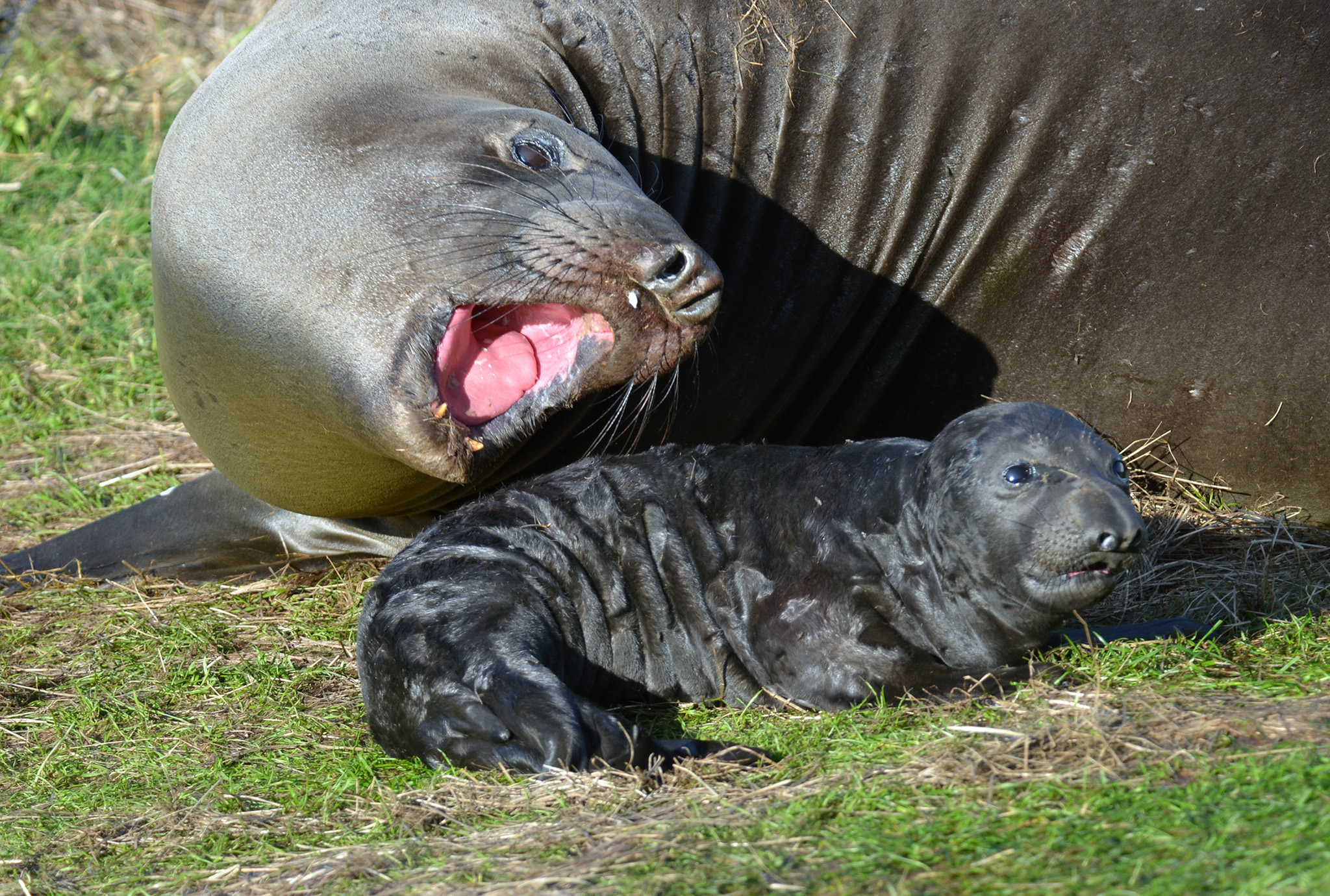
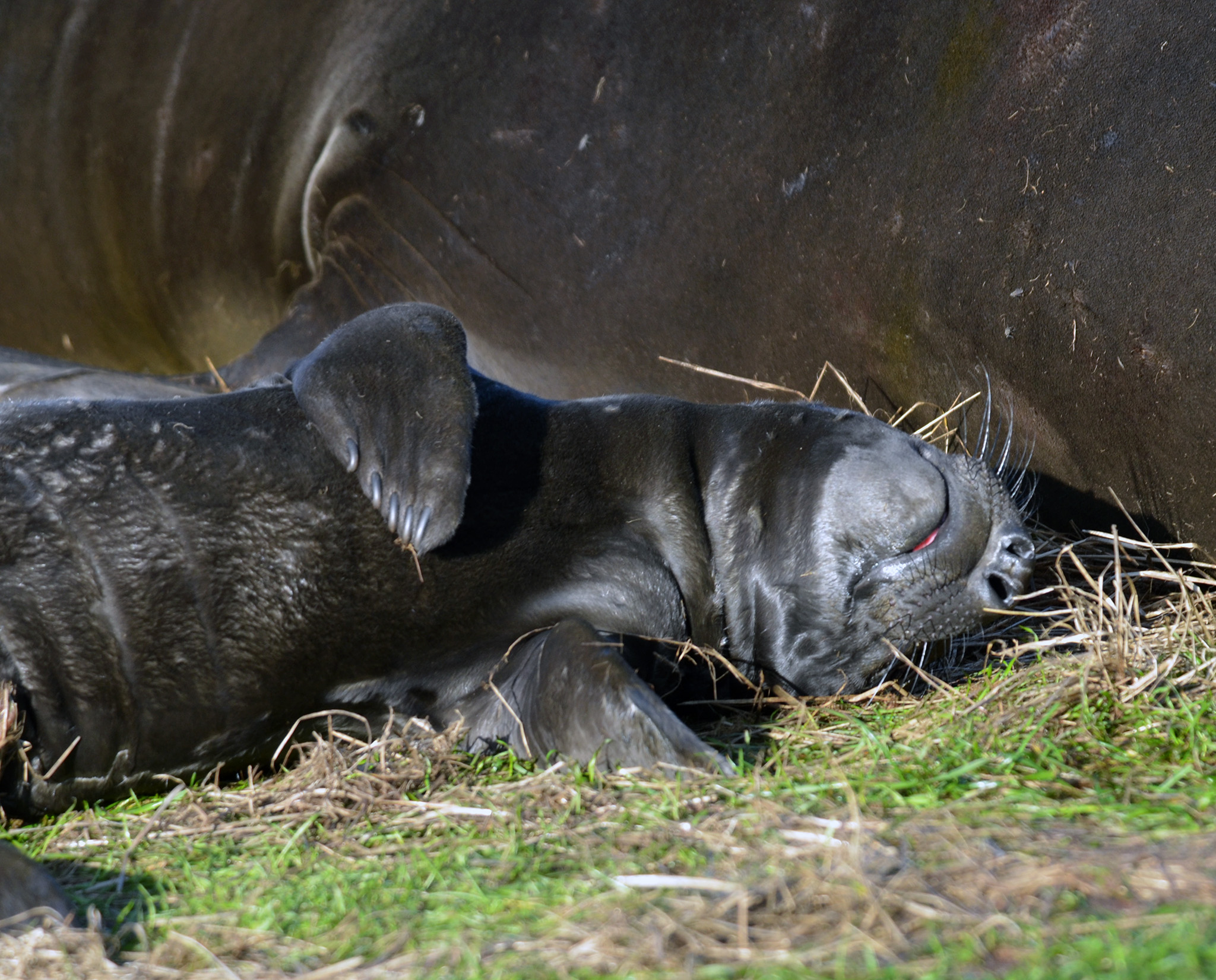
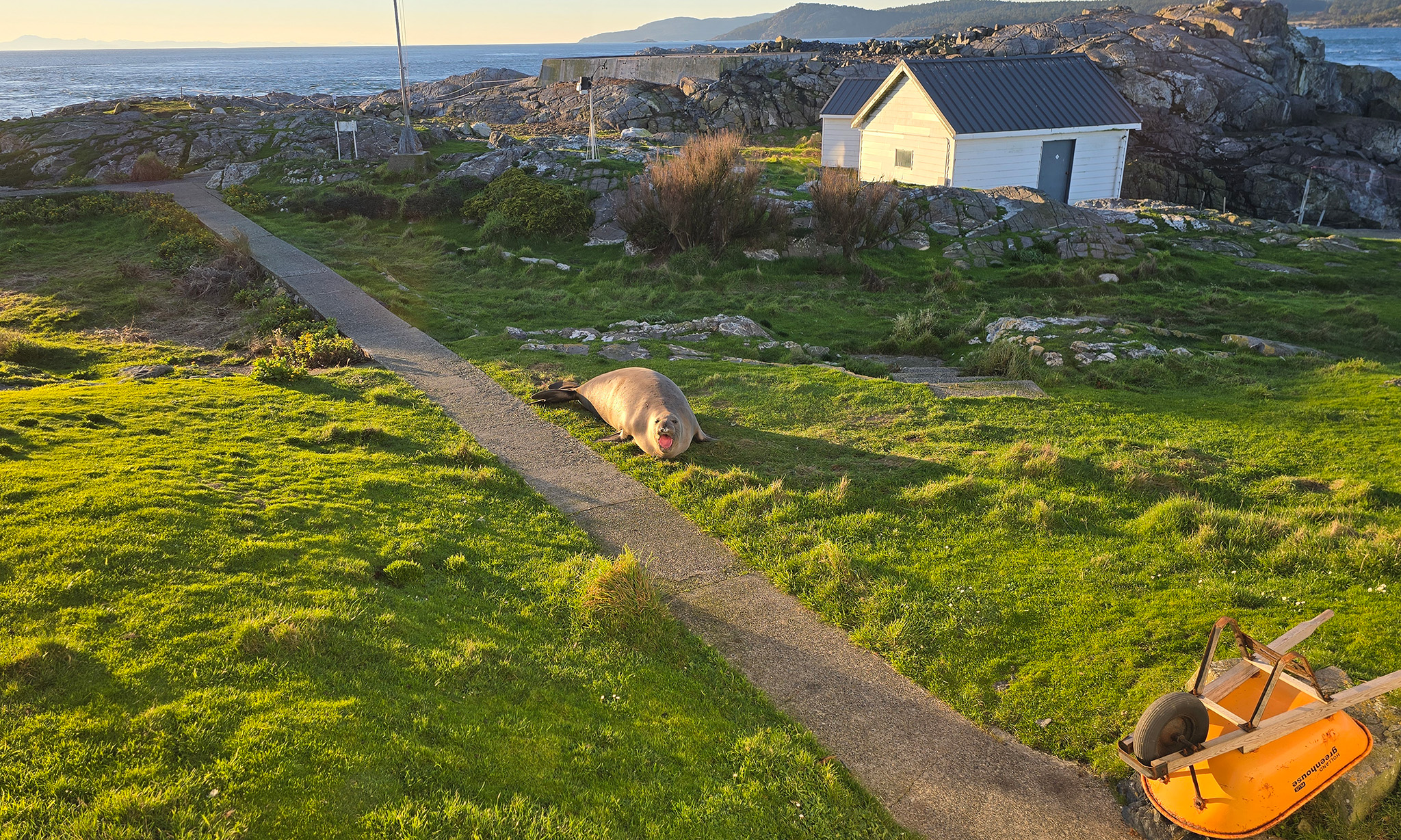
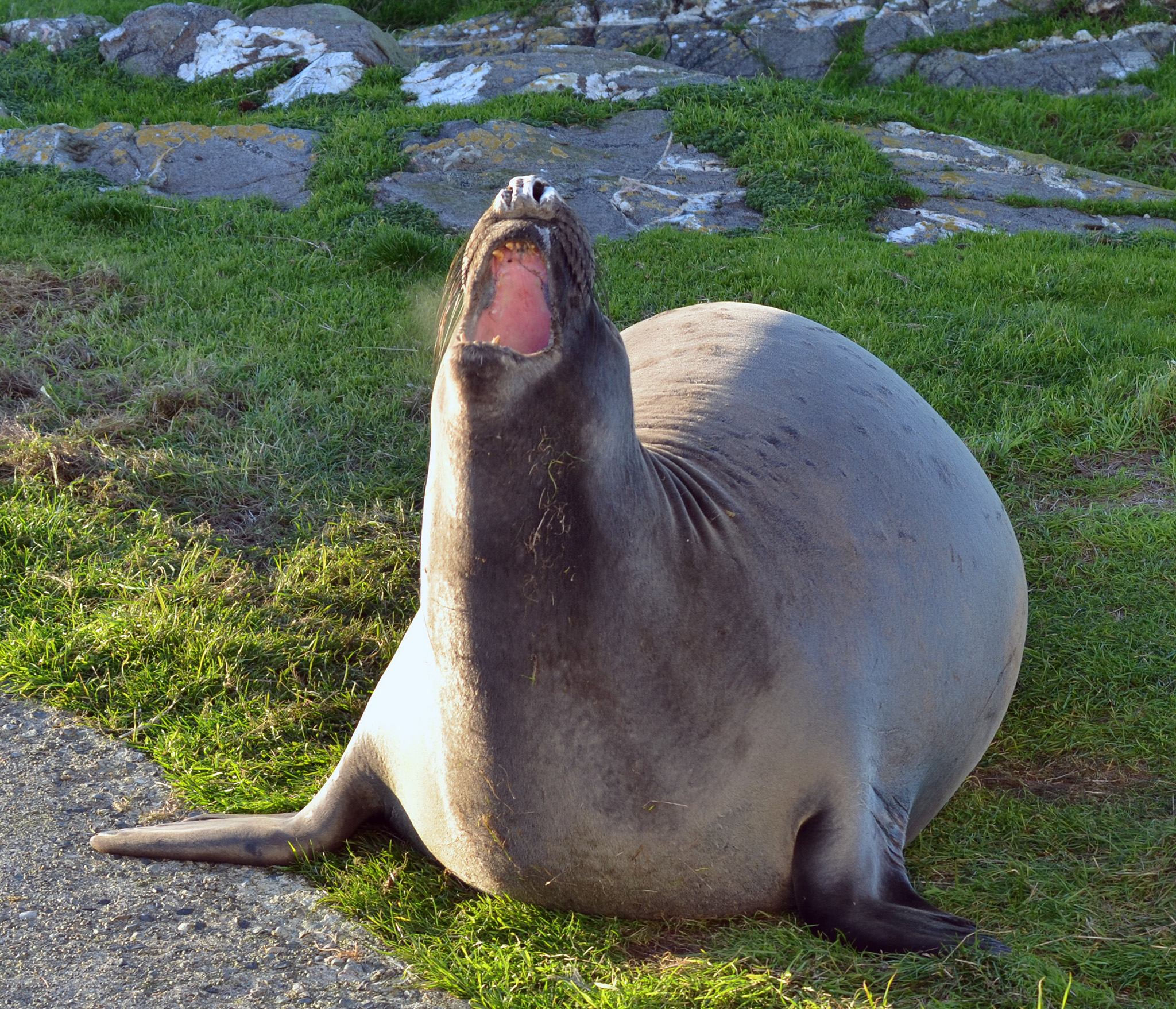
It is day 3 and no one has taken an interest in the high protein placenta!  The pup is starting to fill out its oversized birthday suit. It is also settling down better after feeding. For the two days it was twitchy and now it is moving on to squirmy, exploring it is body parts and rolling on its back.  It still seems to be itchy and scratches often.
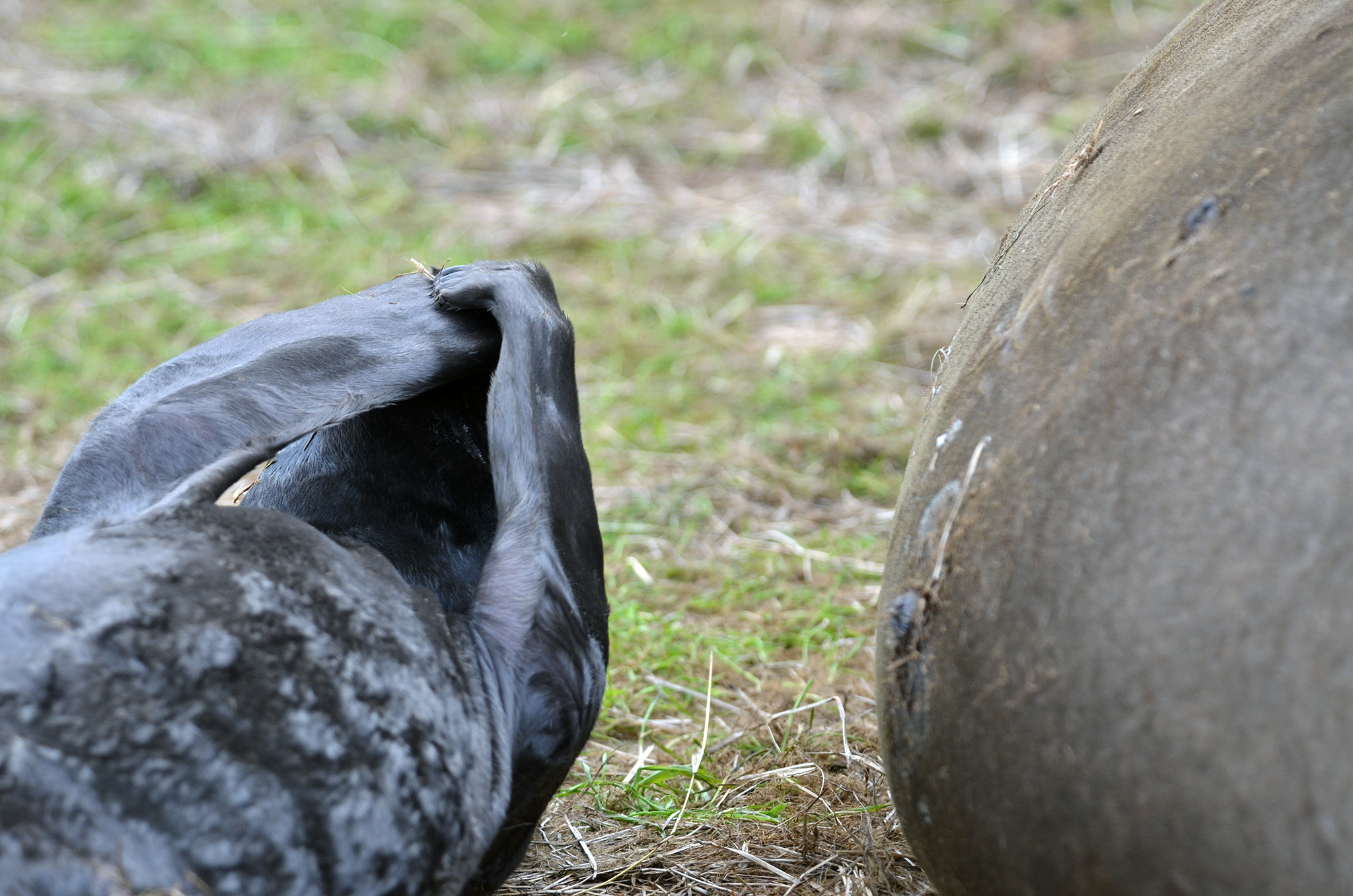
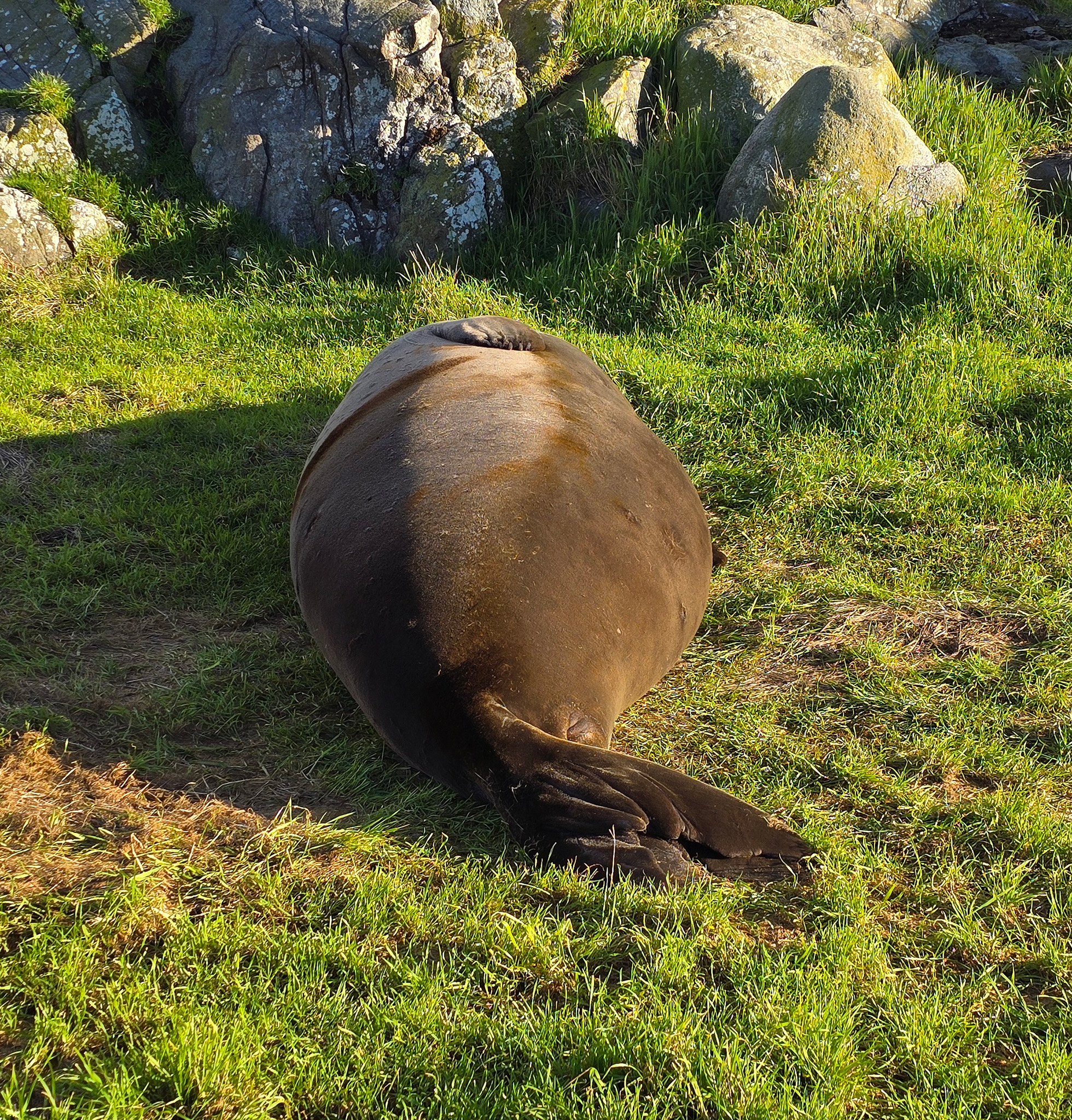
I have been asked to take daily pictures of the mom and pup from the front, back and side so a Pearson student can document the transformation of mom and pup from birth through to weaning.

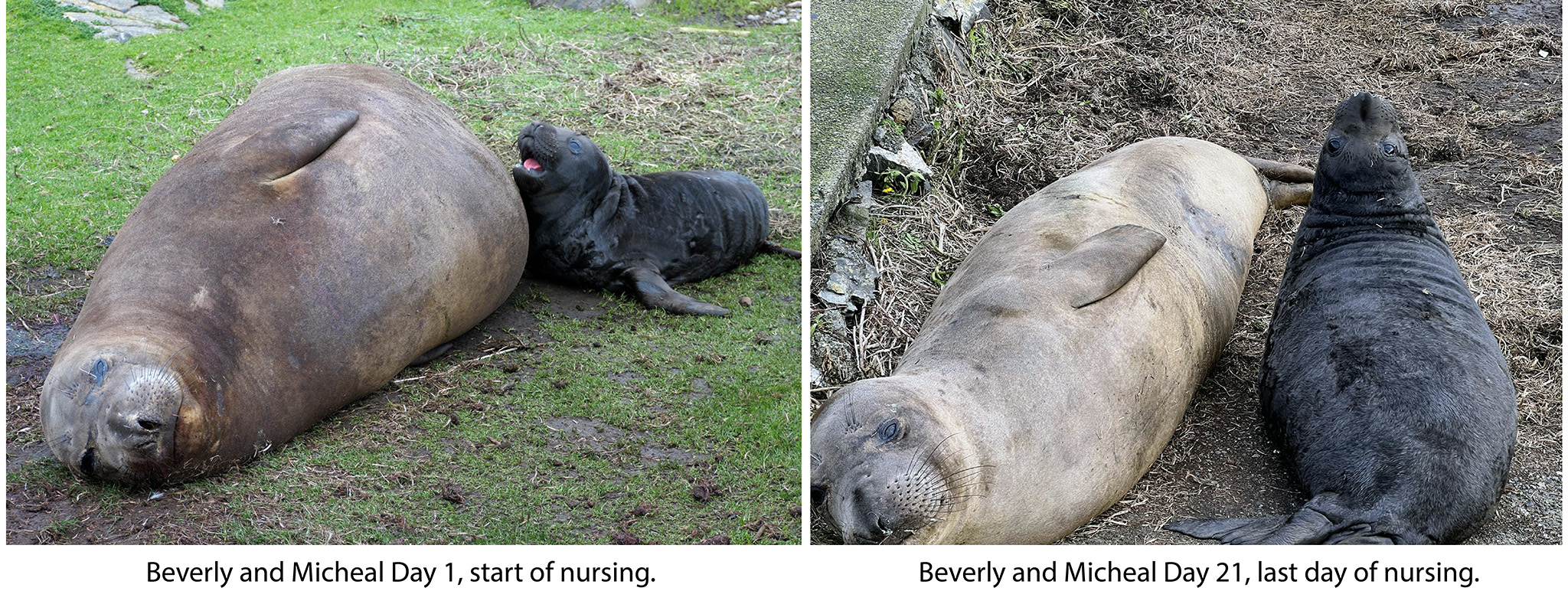
The transformation is a shocking one. During the nursing period of up to 28 days the mother does not eat. The milk she produces comes from her reserves and for every pound the pup gains, she loses two pounds (see source). By the end she will have lost 40% of her body weight. She will leave the fat little pup behind and head back to the sea to regain her weight.  I won’t be here then but Cedric will have lots of fun watching the pup explore the island and learn how to swim.

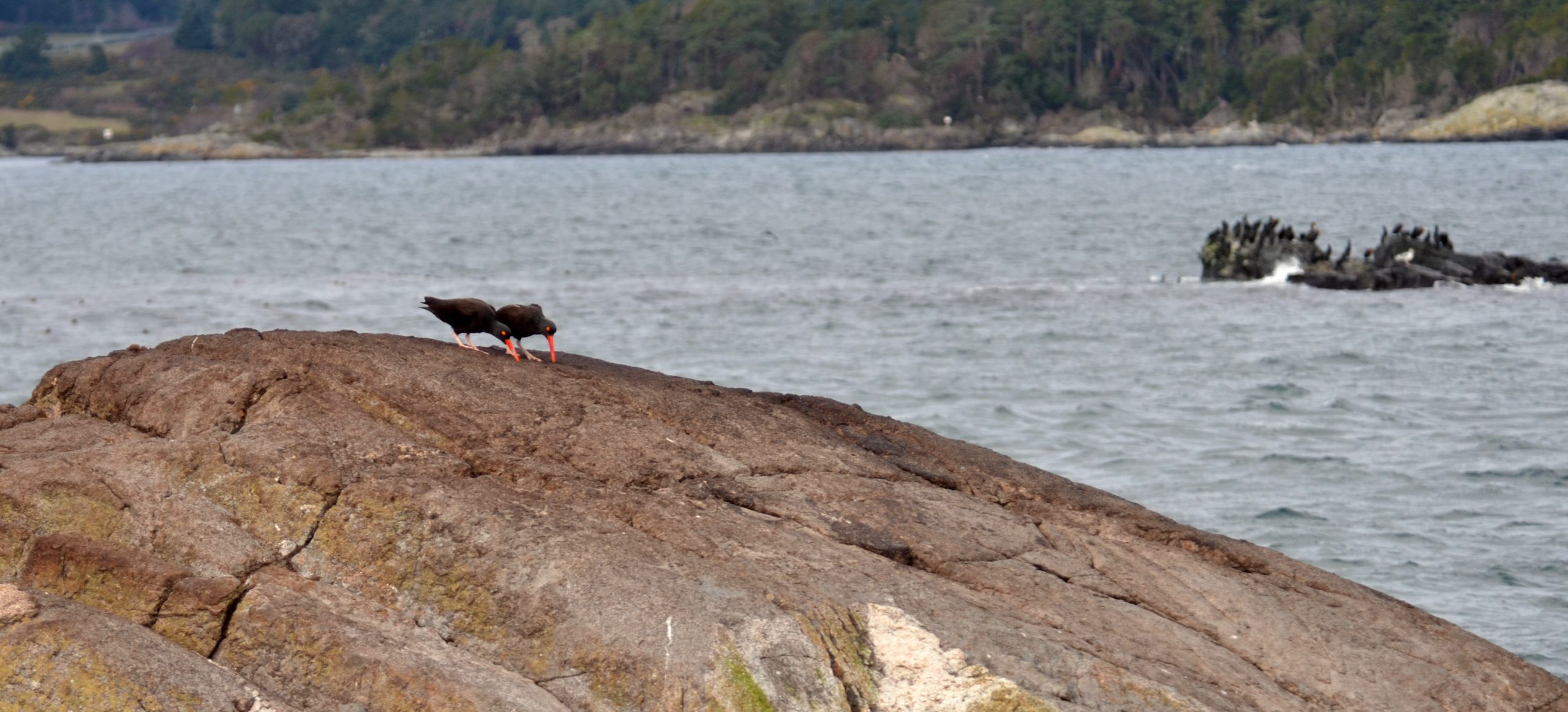
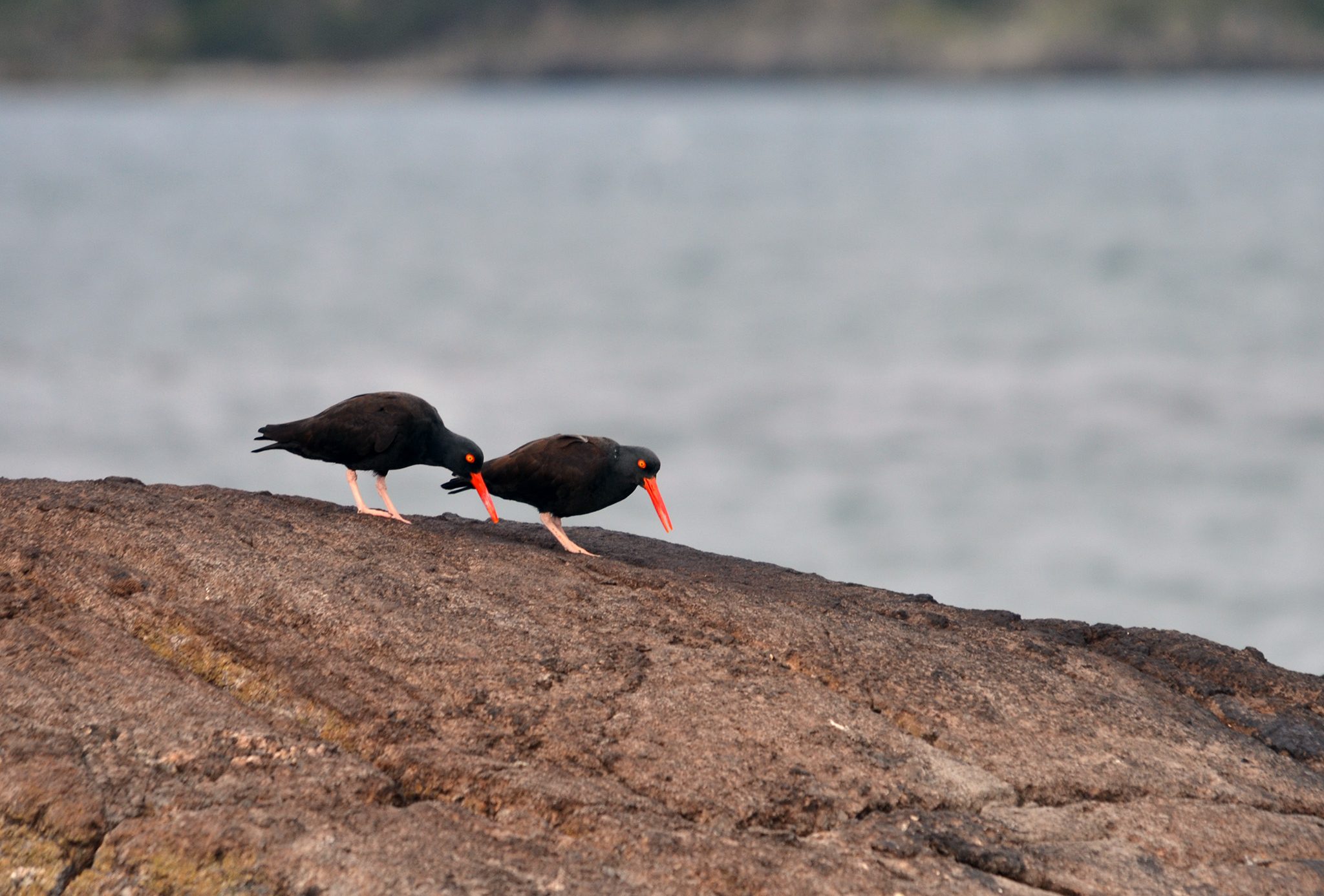
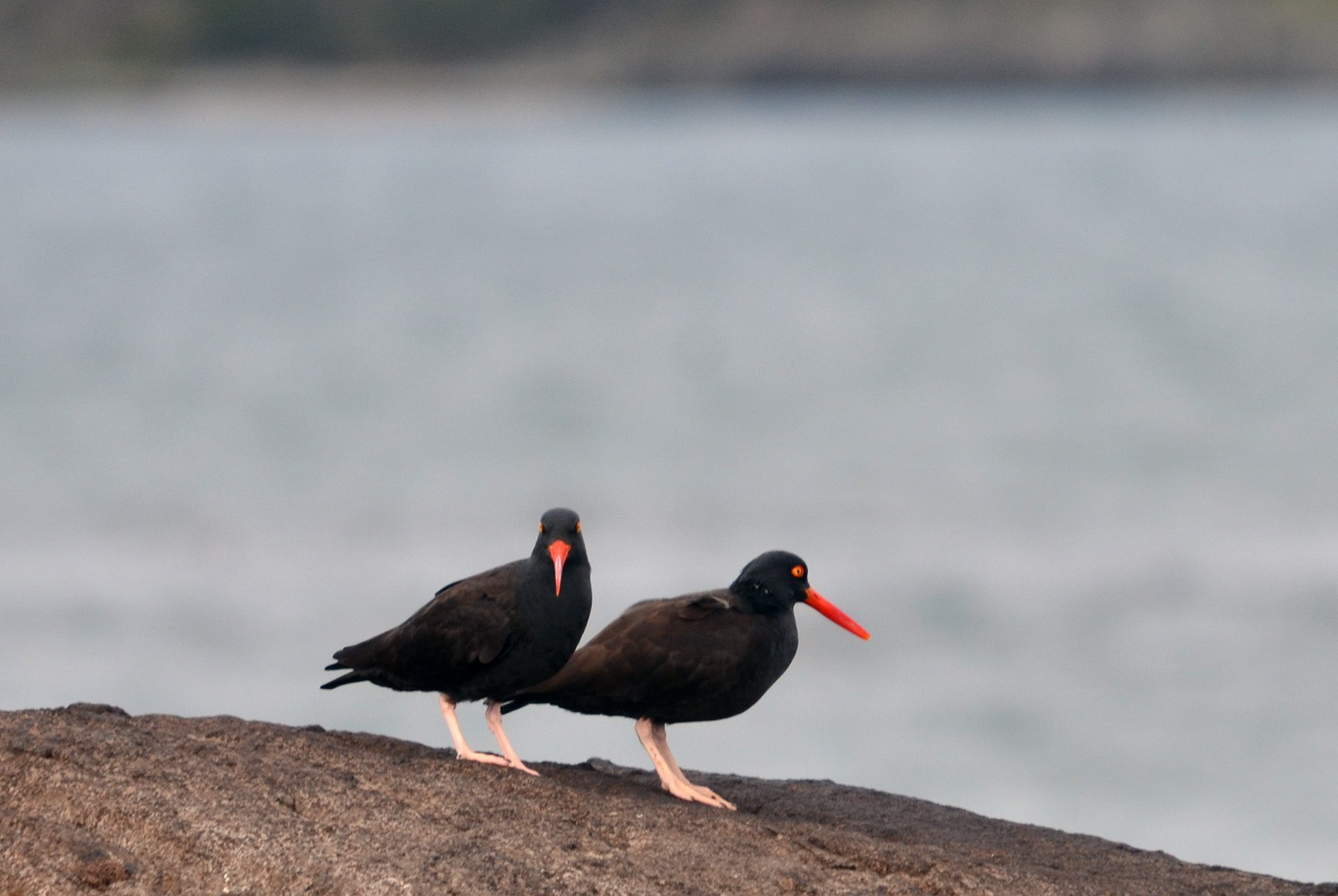
I searched through old posts and found these two photos taken by Courtney Edwards on her January 13, 2022 post. They nicely illustrate the weight transfer from mom to pup.
Visitors

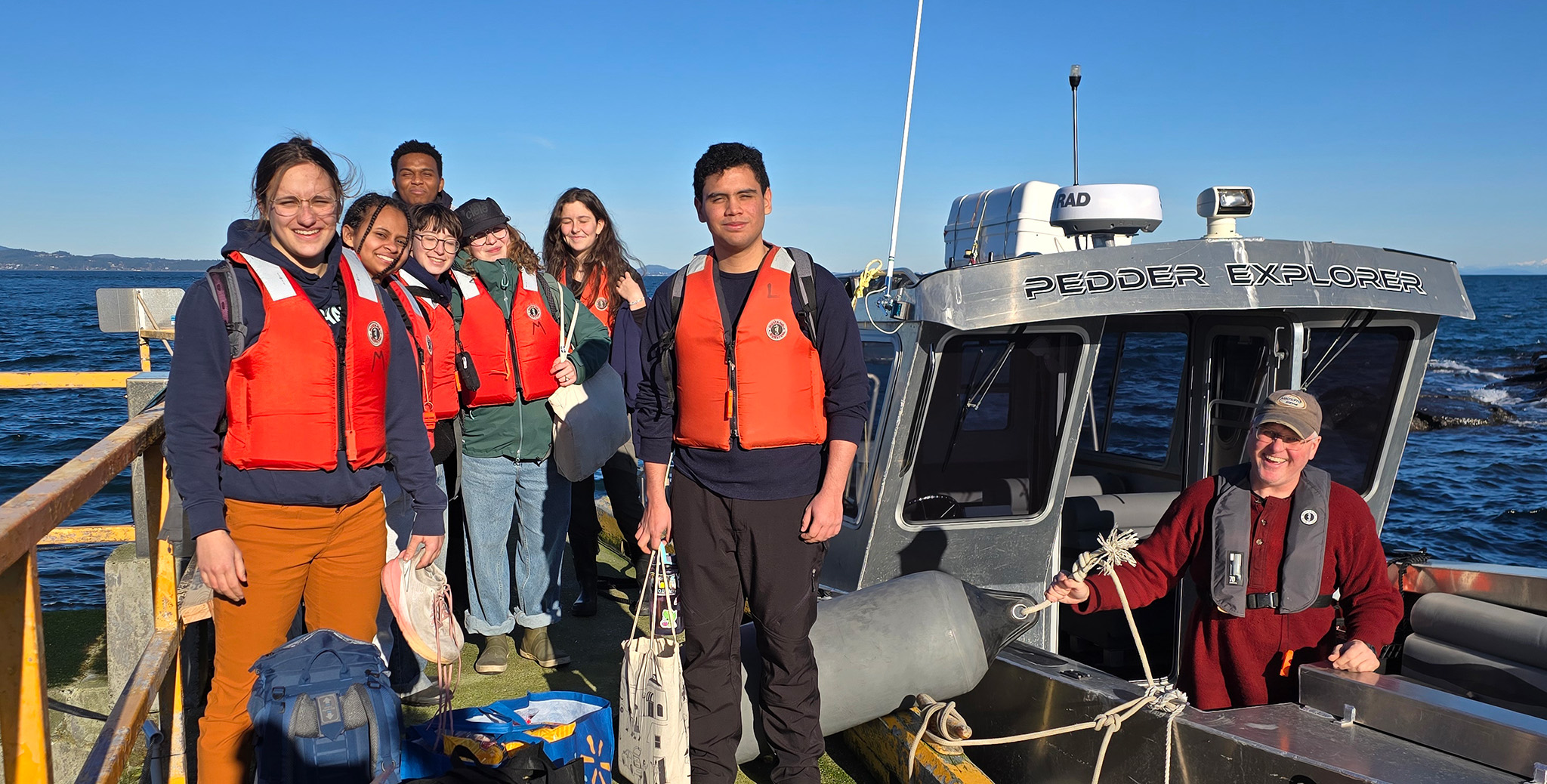
14 students, the marine biology instructor and two seafront staff were on the island today.

Facility work

  • battery fluid top up
  • getting firewood
  • reorganizing our basement firewood pile into to wet and less wet
  • started on kindling

Vessels

  • Ecotourism: 1
  • Private: 2

Weather

Skies mostly overcast. Light northeasterly breeze. Daytime temperature 4 to 5 degrees.
Day 2

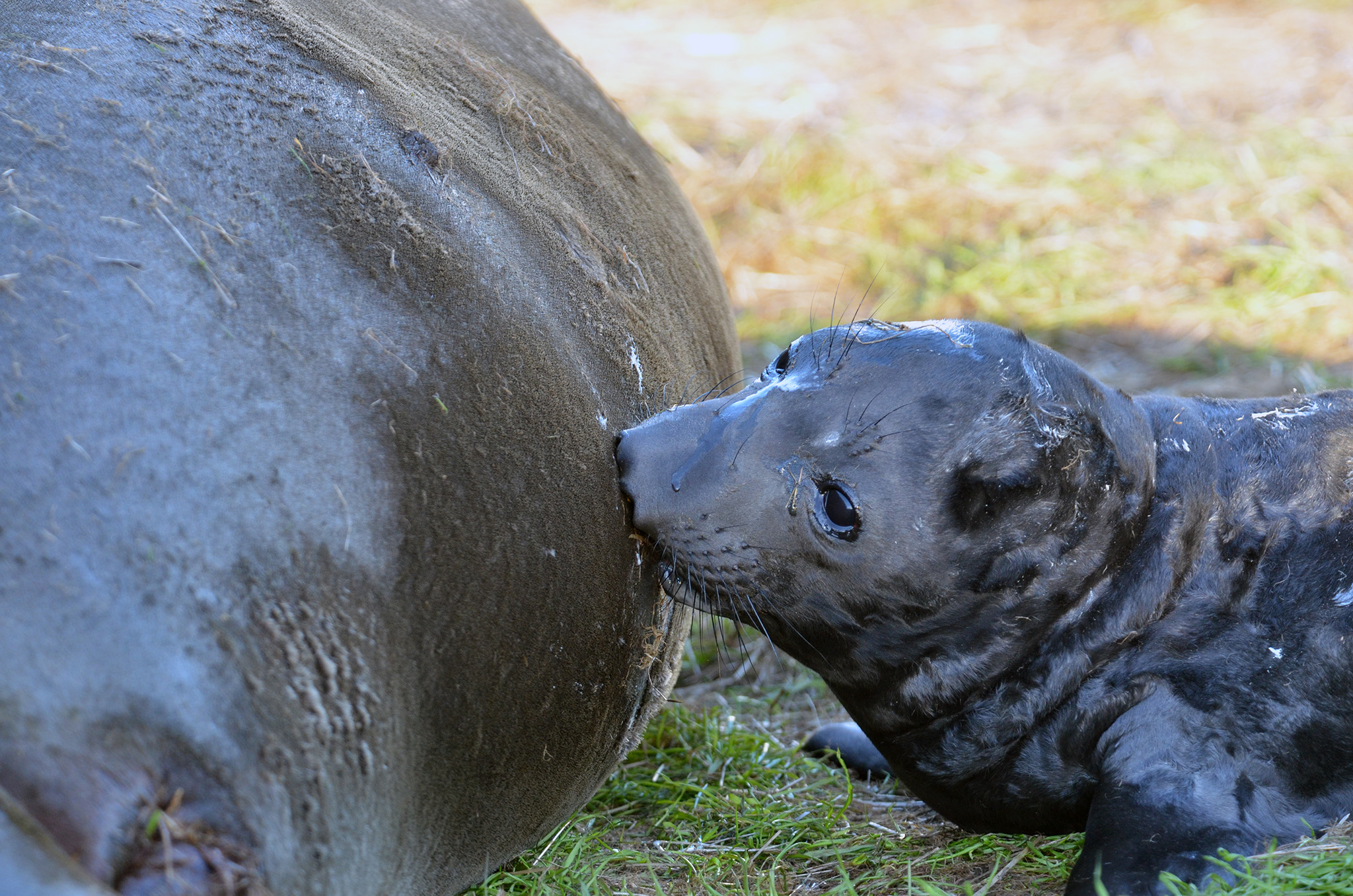
The last two nights have been spectacular for me – lots of stars, a stunning show of northern lights yesterday and now a sliver of a orange moon setting – but I worry about the skinny pup on these cold nights. Yesterday the low was 7 and as I write it has already dropped to 6 degrees. The pup must consume a lot of energy to stay warm, unlike her massive blubbery mom. I hear their feeding time “conversation” (the mom bellowing to encourage the pup to eat and the pub squawking when it can’t find the teat) during the night so I assume feeding continues in the dark.  The pup doesn’t seem to see very well and usually starts its search around mom’s armpit so I suppose it doesn’t matter much if it is pitch black out. But I am surprised the pup can’t smell the teat to determine which way to search. The mom has to do all the wiggling forward and micro adjustments to help it out.
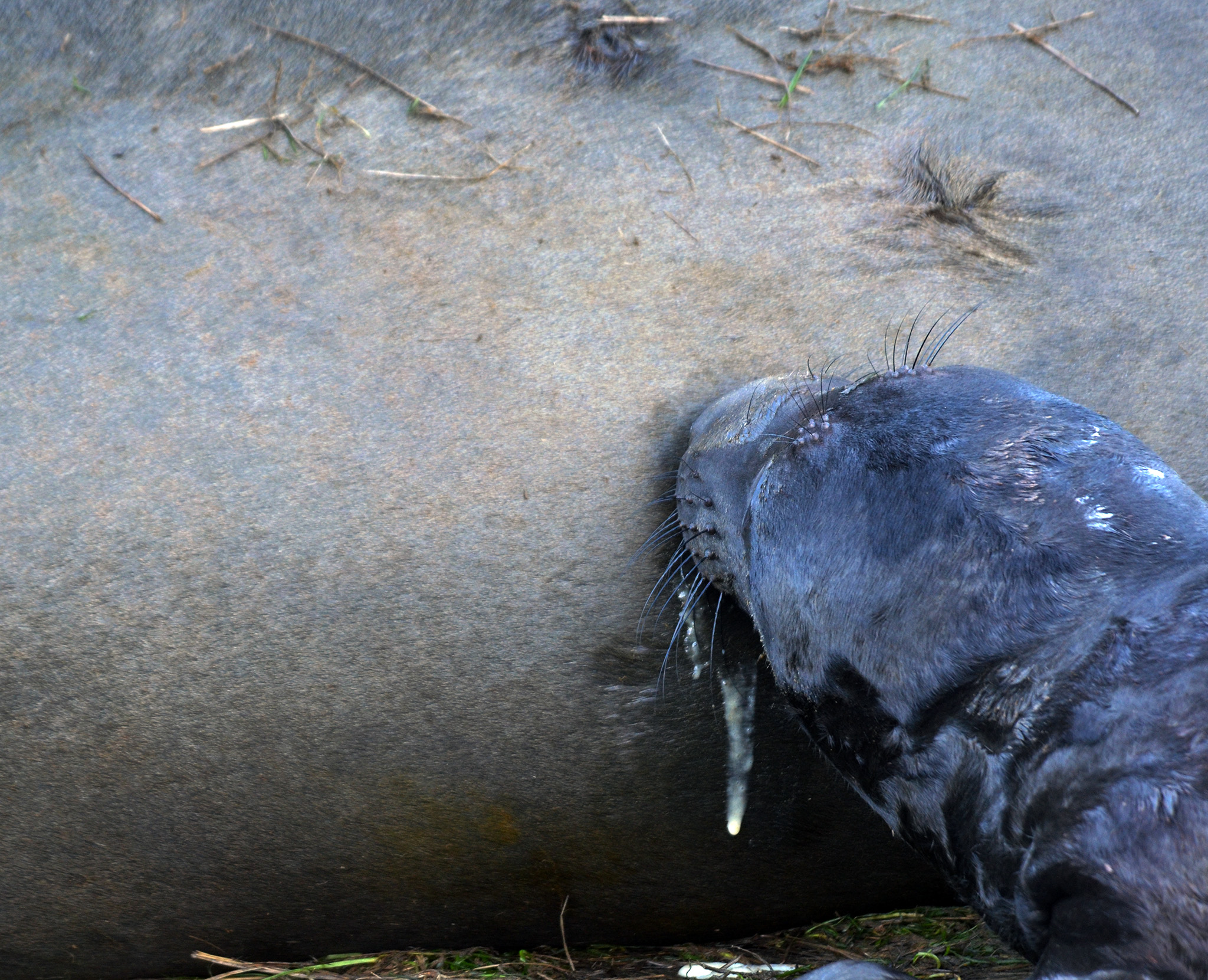
In terms of feeding, the pup will drink a bit, drop its heavy head and continue in short bursts. The white marks on the pups face, head and back are a mixture of milk from its clumsy search to relocate a teat and from its mom’s nose froth. This froth is a surfactant that stops their lung tissue from sticking together when their lungs collapses under the immense pressure of a deep dive.

Sorry to all you other beautiful creatures out here who haven’t been photographed today.


Taking a break from feeding

The pup has finished feeding and is making its way to toward mom’s face.

Mom checking in.

Facility work

  • getting firewood
  • transferring fuel

Visitors

3 student leaders from CALD guiding 9 students, the marine biology instructor and seafront staff.

Vessels

  • Ecotourism: 3
  • Private: 0

Weather

Clear skies. Gently northeasterly breeze. Daytime temperatures 6 to 10 degrees.
Birth

After 10 days on the island, the elephant seal gave birth in the early morning.  It took several hours for them (mom bellowing and pub squawking) to organizing themselves in the right position for the young pup to find a teat.  This is the first pup born here in three years. In 2023 there were three pups, in 2022 two pups, and in 2021, five pups were born. I believe this is the first year that no adult males where present to mate with the new mothers.

The wet pups first feed this morning.

Elephant seal milk is 55% fat.

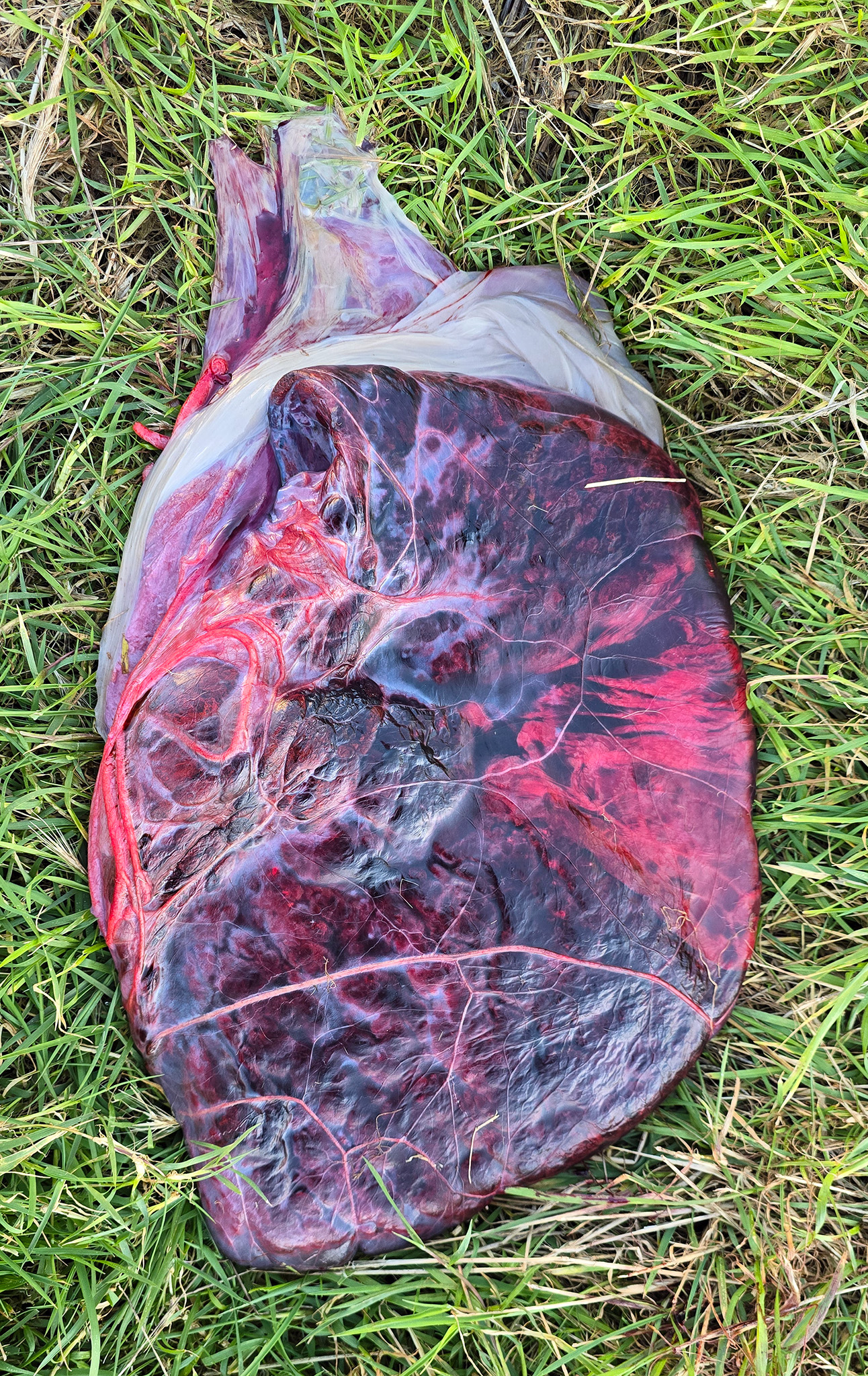
The placenta lay there the entire day unnoticed by any scavenging birds.


Photos below of the pup scratching and snoozing.

A pod of killer whales swam past the west shore this morning. Normally this would be the highlight of the day!

Facility work

  • Produced 360 L of fresh water
  • Moving firewood further on shore

Visitors

Two groups of marine biology students visited the island with their notebooks for a lecture.

Vessels

  • Ecotourism: 1
  • Private: 0

Weather

Clear skies. Gentle southeasterly breeze. Daytime temperatures 6 to 10 degrees.
Decay

Wildlife notes

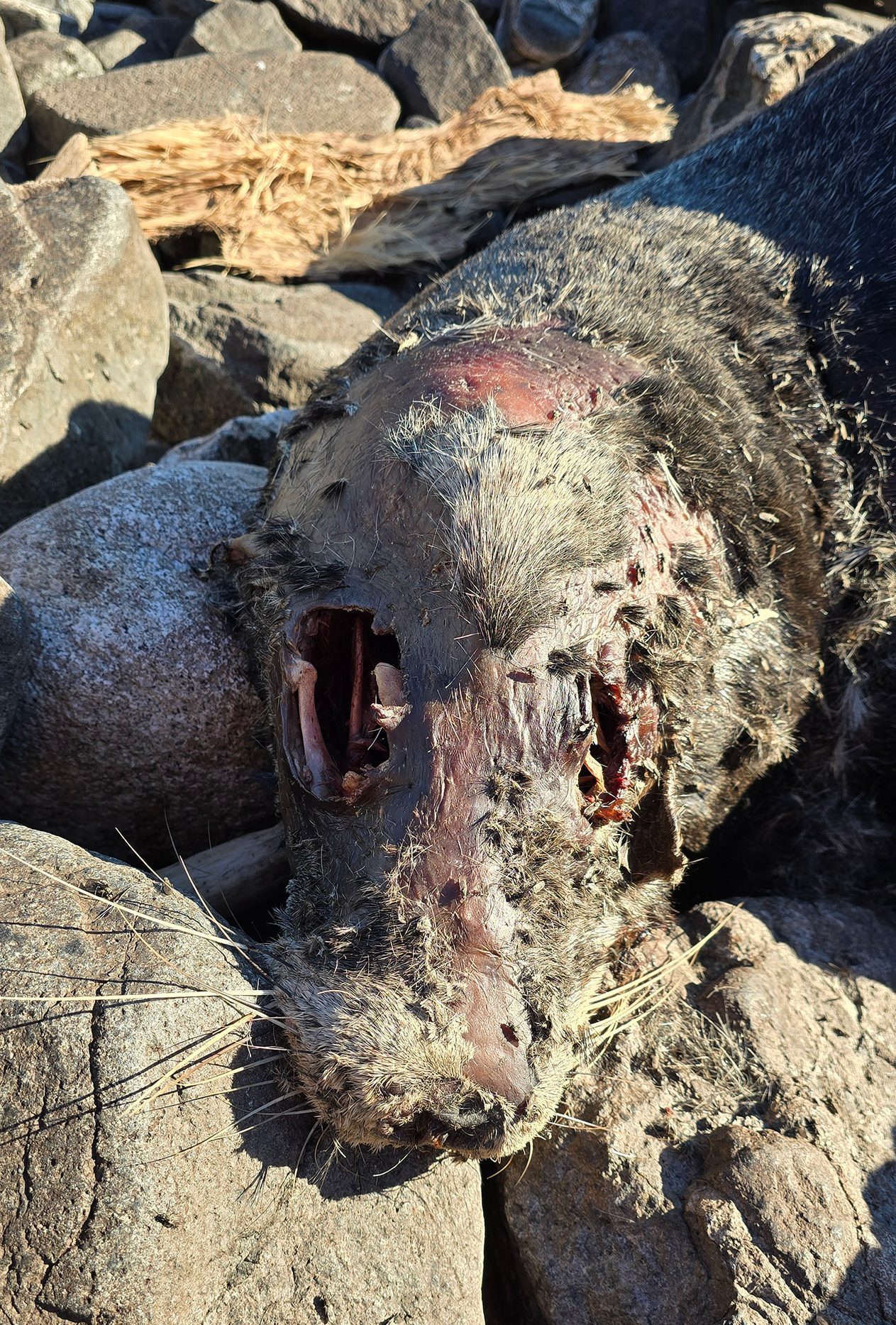
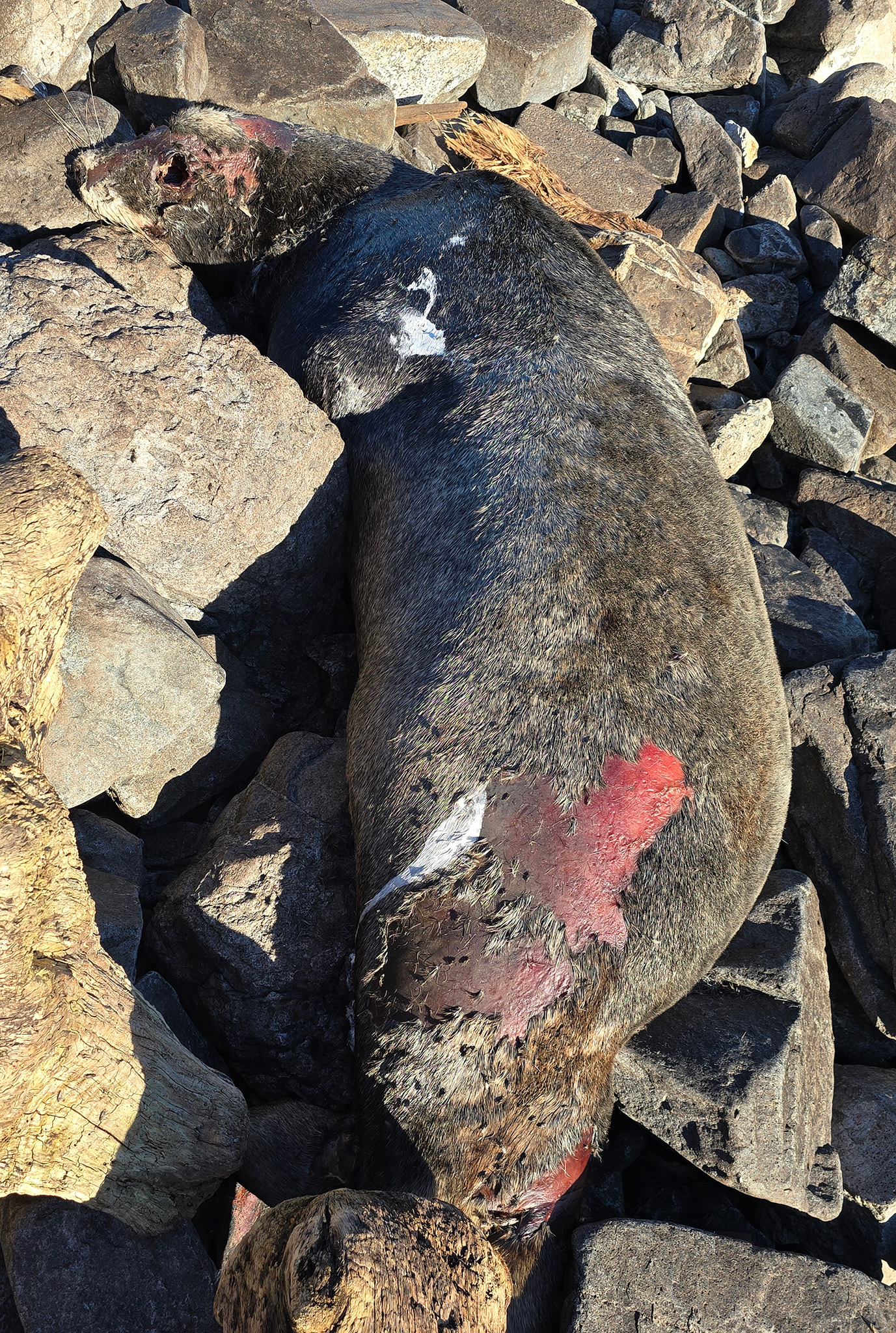
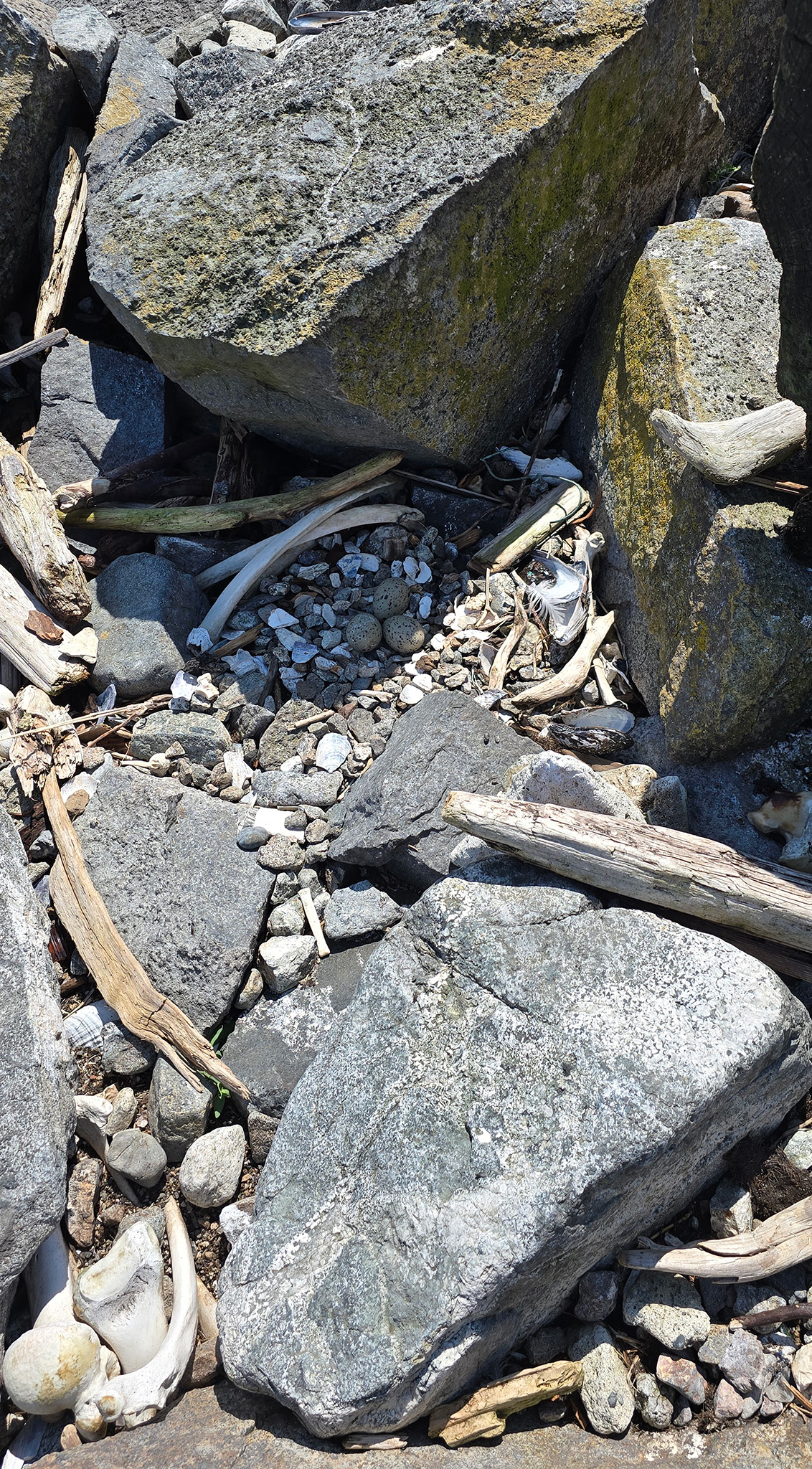
Everyday I hope to share news of a new elephant seal pup on Race Rocks. Instead of a story of new life, today I share one of death.  A California sea lion is decaying on East Beach.  I first noticed it a week ago. It had eyes back then. It is not uncommon for sea lions to die on this beach and there are various bones scattered about.

The East Beach black oyster catcher nest with three eggs (in the shadow) surrounded by old sea lion bones. Taken May 17th 2025.


Facility work

A lot got done today with Richards help.

  • Batteries topped up
  • generator fuel check
  • sharpened axes
  • Door to bunker rehung and now complete
  • 5 um and carbon prefilters replaced on the desalinator, hopefully this helps with the low pressure readings.
  • started installing new LED work lights in the basement of the Keepers House
  • a bit of firewood got hauled up, the rest may have to be cut in place or brought up with a block and tackle

Visitors

Two groups of students with note books in hand and the marine biology instructor visited the island for a lecture.

Vessels

  • Ecotourism: 2
  • Private: 1

Weather

Another glorious day. Skies clear. Light to gentle easterly breeze. Daytime temperature 7 to 9 degrees.
Gift from the sea

Wildlife notes

Lots to report today. Two Brants, two ravens and a pod of killer whales in Race Passage. The sea also brought us a gift…some logs! I pulled them in with the pike pole at high tide and got a line on the bigger ones so they can be pulled up when people arrive tomorrow.  The female elephant seal is still here and moving between her spot in the hollow and in front of the Keepers House.

Beachcombing at Race Rocks

Female elephant seal near the Keepers House

It is cold enough here you can see her breath.

Facility work

The student visitors this weekend used 490 L of water during their stay. To produce that amount of fresh water, our desalination plant will need to run for 4.5 hours.  It consumes a lot of power and can only be used while the generator is running, which today, happens to be this evening. I will make a trip out before bedtime to turn it off.

  • checking fuel levels
  • beachcombing
  • weeding
  • running the desalinator

Vessels

  • Ecotourism: 1
  • Private: 0

Weather

Skies clear. Light to gentle easterly breeze. Daytime temperatures 7 to 10 degrees.

Weekend Visitors

Visitors

A happy bunch of Pearson students arrived today to spend the weekend.

Richard delivering a group of students and their supplies to the Jetty.

Wildlife notes

The female elephant seal is still here.  She has moved closer to the Keepers House but there is still no indication of why she is here – to mate, birth or molt?

When I was last here in Nov 2025 the black oystercatchers were seen in large groups and did not participate in the island fly arounds.  Now they can be seen sometimes splitting pairs and starting to spend a bit of time near the nesting sites they used last year. I can occasionally hear them calling and doing a turn around the island. I will keep an eye out for nest building activity. Their nests are just a collection of little stones and shells laid down on top of the rocks or sand.

Black oystercatchers on west side of the Jetty.

Facility work

  • topped up battery fluids
  • topped up generator tank, filled tidy tank
  • general cleaning

Vessels

  • Ecotourism: 1
  • Private: 0

Weather

Skies clear. Moderate easterly breeze. Daytime temperatures 7 to 10 degrees.
Jan 15 Census

Mammals:

  • Steller sea lion: 168 South Islands
  • California sea lion: 2 South Islands, 67 Race Rock
  • Harbour seal: 1 South Islands, 19 Middle Rocks.

Birds:

  • Gulls: 399
  • Cormorants:  271
  • Bald eagle: 3 mature
  • Black oystercatcher: 6
  • Harlequin duck: 7
  • Black turnstone: 5
  • Song bird: 1

Wildlife seen this week inside the reserve but not observed today include: humpback whale. For several days this past week there have been 50+ black turnstones and up to four immature bald eagles.

168 Stellar sea lions dog piled on one of the South Islands.

Two male Harlequin ducks drying off on East Beach.

Wildlife notes

The elephant seal seem agitated this morning, moving about and calling. She settled in for the afternoon in the hollow beside the bunker.

A glorious day on Race Rocks. The elephant seal in the hollow between the bunker and the walkway on the right.

The girthy female elephant seal.

Facility work

  • dug in the compost bin
  • some fence repair
  • general cleaning

Vessels

  • Ecotourism: 3
  • Private: 0

Weather

Skies partly cloudy, clearing midday.  Moderate easterly breeze. Daytime temperature 9 degrees.

Still waiting

Wildlife notes

I am not sure what to say about the female elephant seal. Elephant seals come to land twice a year, either to birth and mate, or to molt. It’s the wrong time of year for their molt and she hasn’t given birth yet, if she happens to be pregnant at all. She hasn’t moved much today only to flip direction and face east.

Facility work

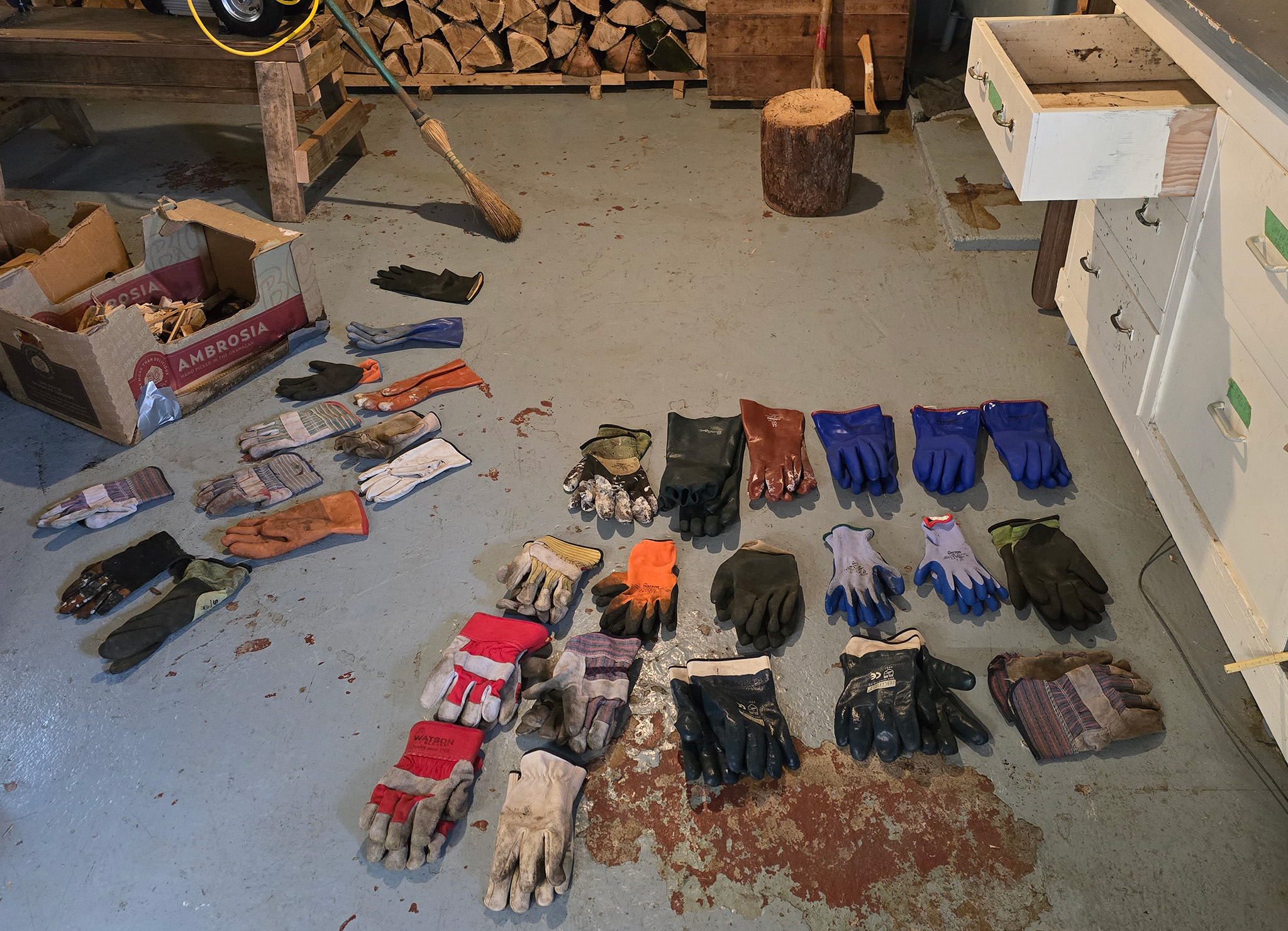
I started the desalinator while the generator was running this morning – at this time of year with the low solar input, it can only be used while the generator is running. In addition to general cleaning, I sorted our overstuffed glove drawer. I needed a razor knife to remove the remnants of several pairs of rubber coated gloves that had “melted” or attached themselves to the drawer bottom. Unlike with socks, you can’t blame the drier monster for the unmatched pairs. A colourful little job a toddler would enjoy.

Single on the left.

  • ran the desalinator
  • 560 L of diesel fuel delivered
  • cleaning, sweeping and sorting

DND activity

A loud rumble was heard in the morning.

Vessels

  • Ecotourism: 3
  • Private: 0

Weather

Partly cloudy most of the day, with showers late afternoon. Gently westerly winds 8-10 kts. Daytime temperature 9 degrees.

Diesel

Generator use

From Jan 1, 2025 to Dec 31, 2025 the generator ran for 1531 hours. With an average fuel consumption of 4L/hr, a total of 6124L of diesel fuel were burned in 2025. Besides the cost of purchasing and delivering this amount of fuel, there is the carbon footprint to consider. Using a Google AI derived average of 2.6 kg of C02 produced per L of diesel burned, a total of 16 TONS of C02 were produced in 2025, not to mention the particulate matter, volatile organic compounds or nitrous oxides generated from burning the diesel. This sure makes a good case for replacing the old solar panels with more efficient ones and using faster charging Lithium batteries to reduce generator run time.

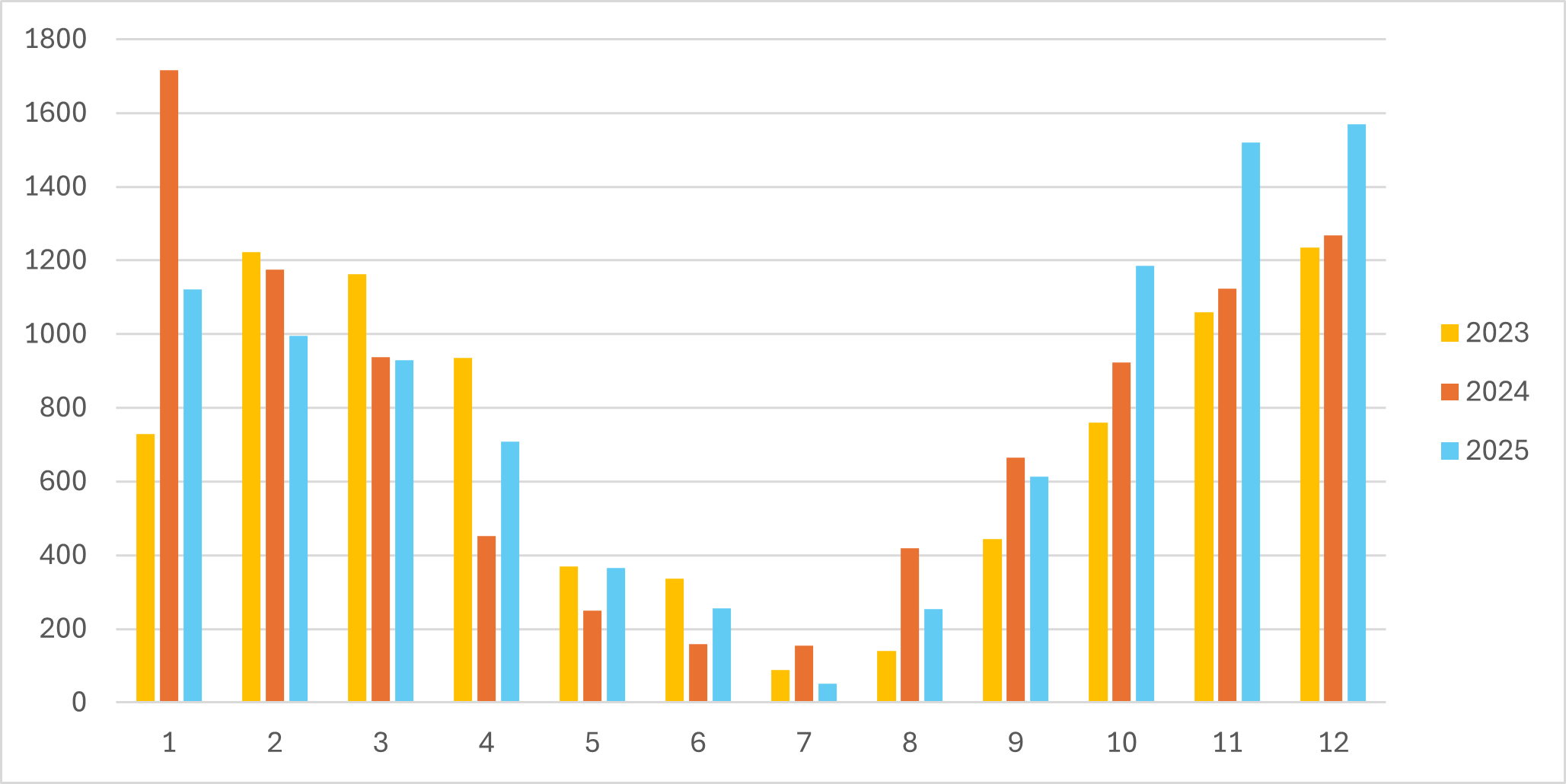
From the data I was able to download from 2023 to 2025 I produced a few charts and tables. We can see some irregular events like the high generator use in Jan 2024 and the higher use in the fall of of 2025 possibly from the increased use of the Student House (Figure 1).

Figure 1. Energy (kWh) produced by the generator each month from 2023 to 2025.

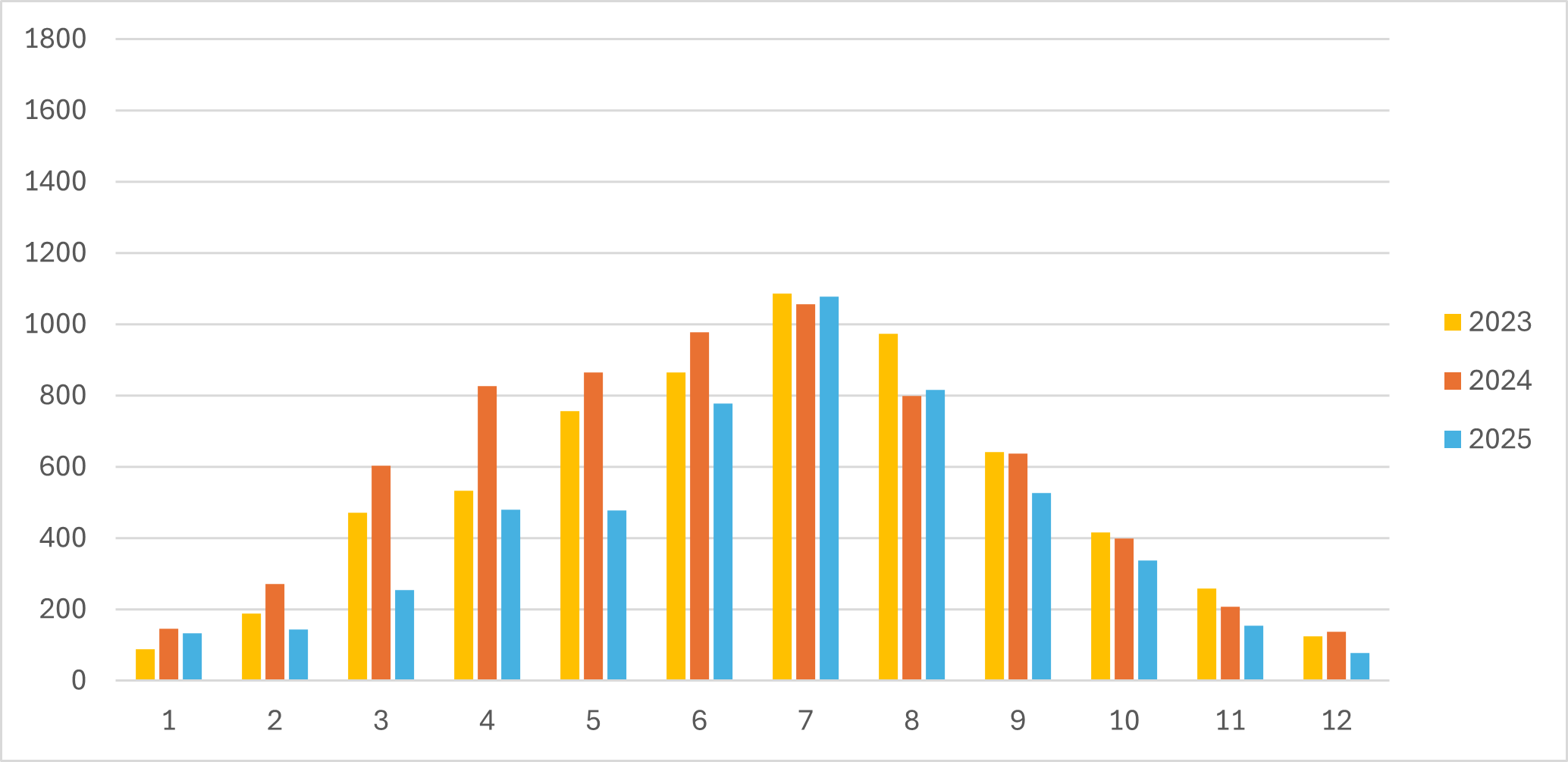
In terms of solar production we can see the great benefit derived from replacing the faulty connectors on the solar panels on June 11 2025 (Figure 2 and see the post from 18 | June | 2025 | Race Rocks Ecological Reserve-)

Figure 2. Energy (kWh) produced from solar each month from 2023 to 2025.

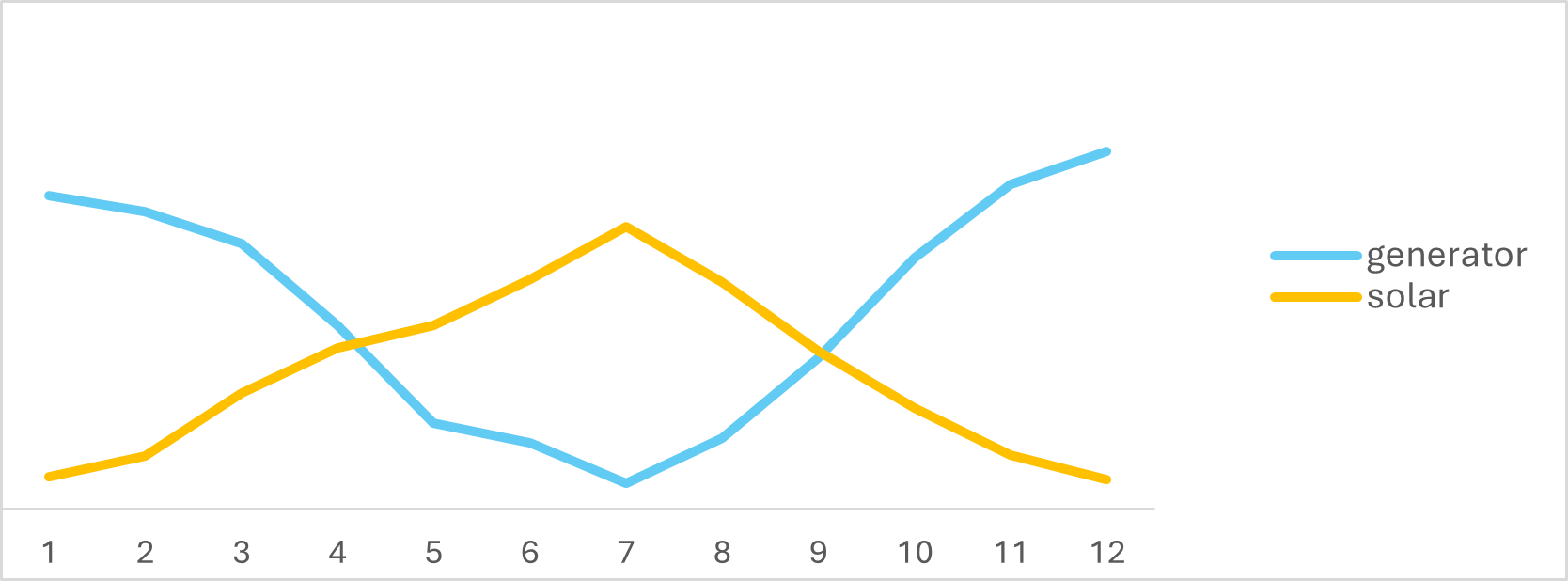
There is, as expected, a marked seasonal variation in generator use (Figure 3 and Table 1).  On average throughout the year, we are getting 60% of our energy from the generator and 40% from solar.  In an ideal world we would flip this ratio or even better, rely mainly on solar energy.  This brings me to why I took this deep dive into the data.  The notice from OpticsRE software package that the online data archives available for download were soon being reduced to 6 months (which prompted me to download all historical data) coincided with a request from Seafront to calculate average fuel consumption. Today we had an off-grid energy specialist visit Race Rocks.  Hopefully a more efficient, green energy power system is in our future!

Figure 3. Relative distribution of power from the generator and from solar for each month, using data from 2023 to 2025.

Table 1. Average monthly kWh produced by the generator and from solar, using data from 2023 to 2025.

Wildlife notes

No remarkable events to report. The female elephant seal moved another 20m today.

Facility work

  • transferring diesel to the generator building and filling fuel tanks
  • joining Greg, Richard and the energy specialist on a power system inspection
  • downloading and formatting data, producing pivot tables and charts

Vessels

  • Ecotourism: 0
  • Private: 2 people on jet skis

Weather

Skies overcast. Winds light and variable. Glassy seas and fog by late afternoon. Daytime temperature 10 degrees.


Waiting

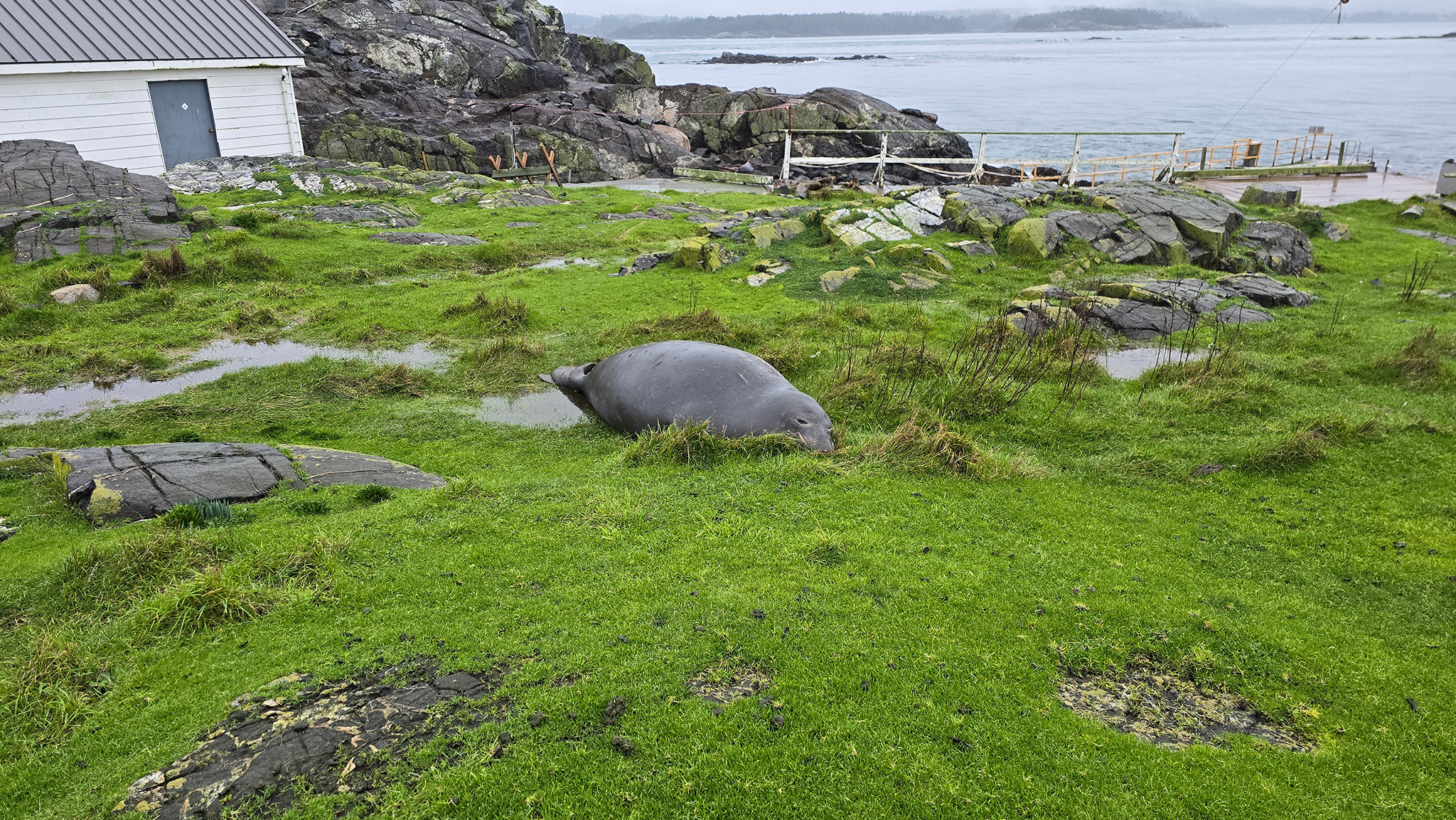
It was a quiet wet day here. The grass is soggy, puddles are present and parts of the island are muddy.  This is my first winter here so seeing standing water is novel. It is also quieter than I expected as most of the sealions in the area are on the outer rocks. The female elephant seal is still here. She moved 3 times today covering a distance of 20m. Pregnant or not, it’s a hard slog for a seal to move about on land. She mostly sleeps and rarely makes a sound. Pregnant or well-fleshed?

Water puddles and the female elephant seal.

Facility work

  • topped up battery fluids, cleaned battery tops, squeegeed the battery room floor
  • sorted and entered data from old generator logs to determine fuel usage.
  • downloaded and archived the OPTICSRE events and report data

Vessels

  • Ecotourism: 1
  • Private: 0

Weather

Skies overcast with periods of rain. Light winds 2 to 9 knots, NE veering to SE by evening. Daytime temperatures: low 9, high 11.