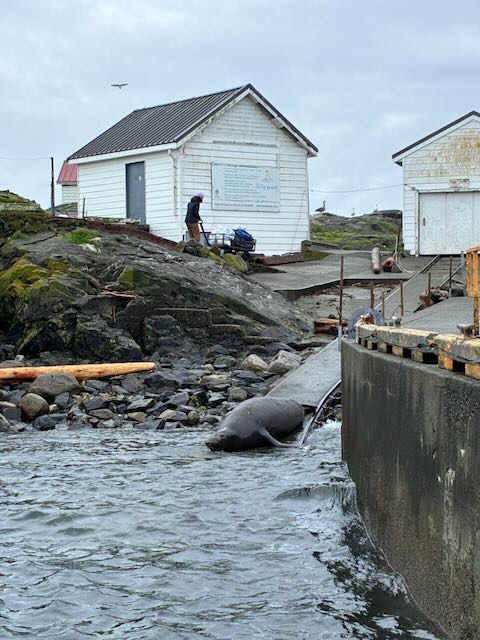
Au revoir, Race Rocks!

Time flies out here – a wonderful period is over. A particular highlight of this trip was seeing Race Rocks so busy with Pearson students again.

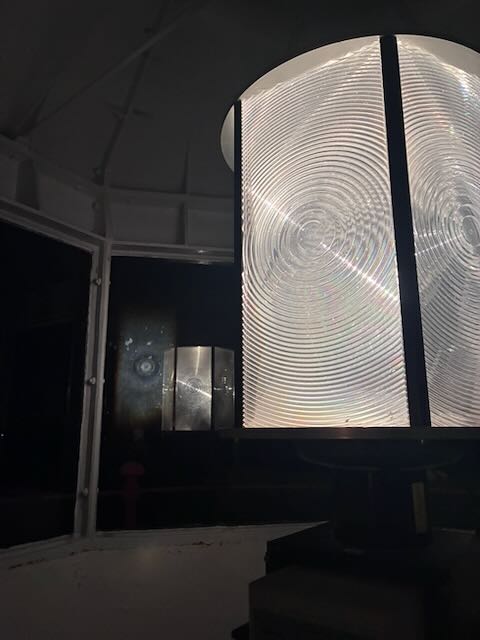
The light back in action

Thank you to everyone who looks after this magic place!


Facility Work

  • House deep-clean
  • Food inventory
  • Generator fuel tank topped up
  • Desalination (Wednesday)
  • Handover prep

AI on the Rocks

[FOR IMMEDIATE RELEASE]

Automated Palette Regulation Intelligent Lighting For Oceanic Observation & Luminosity System

In a groundbreaking development for maritime safety and coastal aesthetics, we are proud to announce that Race Rocks has been chosen as a trial site for the world’s first AI-powered system designed to dynamically to alter light house colour schemes. Developed by some of the world’s leading AI firms, the new system promises to enhance navigational guidance while continuing Race Rocks’ proud tradition of digital innovation in protecting coastal landscapes.

Traditionally, lighthouses have maintained a static colour scheme, providing vital navigation aid to seafarers. However, with the new Automated Palette Regulation Intelligent Lighting For Oceanic Observation & Luminosity System, Race Rocks lighthouse will for the first time be able to adapt its illumination in real-time, optimising visibility and aesthetics simultaneously.
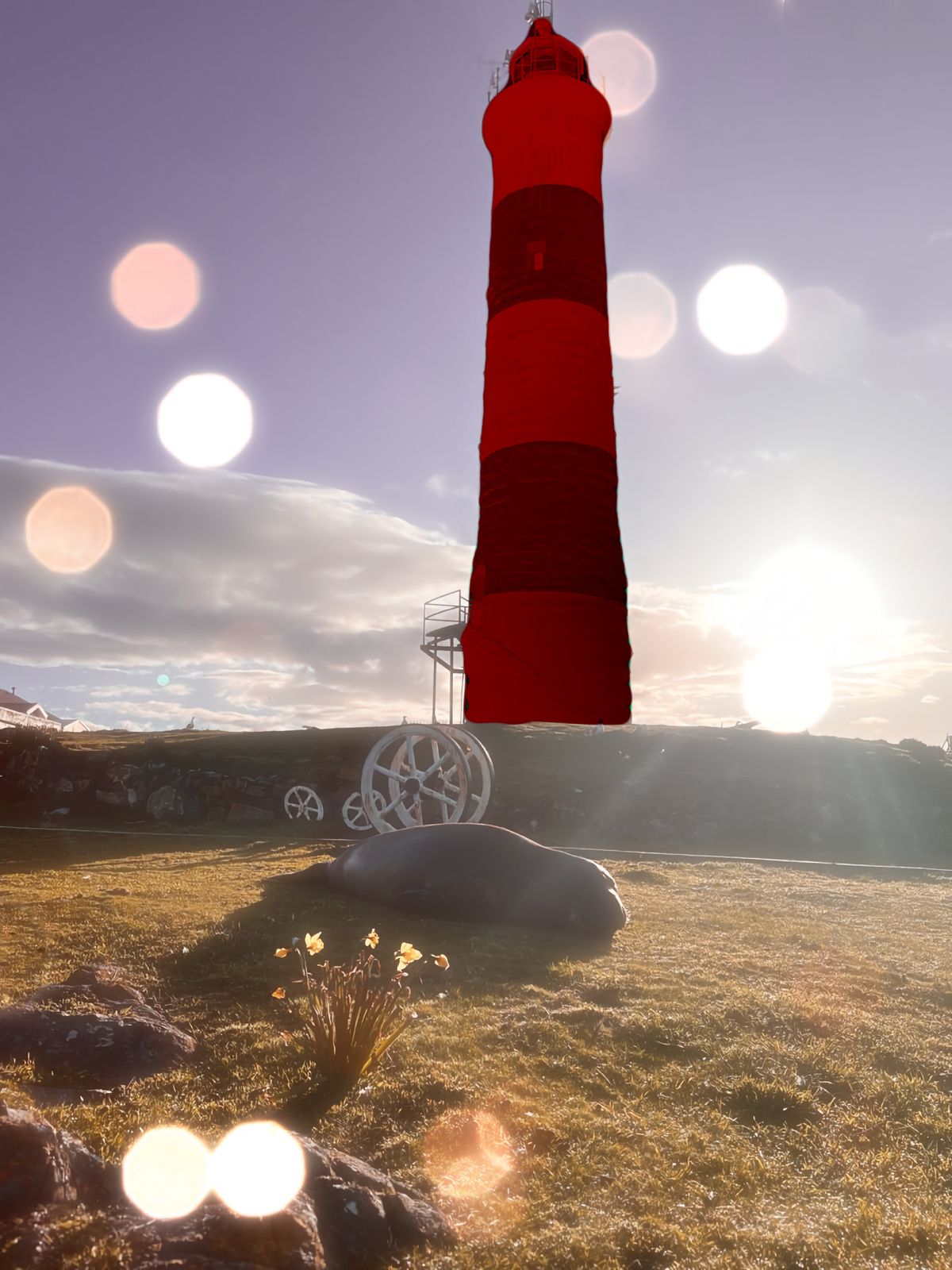
AI at Race Rocks (Sample Illumination)


Powered by advanced artificial intelligence algorithms, the system ensures optimal colour selection based on weather conditions, visibility range, and time of day.

C Lyon, director of mammalian affairs, commented:

“Our aim in bringing AI to Race Rocks is to marry safety and beauty along Vancouver Island’s coastline. By harnessing this exciting new technology, we can offer dynamic colour schemes that not only enhance navigational clarity but also elevate the visual appeal of lighthouses, enriching the coastal experience for locals and visitors alike.”

As a testing ground for AI deployment in lighthouses across the Pacific Northwest, a range of colour schemes have been proposed to showcase its versatility:

  1. Ocean Blue Serenity: A calming blue hue, perfect for clear nights and tranquil seas.
  2. Sunset Glow: Warm tones of orange and pink evoke the magic of a coastal sunset, ideal for twilight hours.
  3. Emerald Beacon: A vibrant green reminiscent of coastal foliage, enhancing visibility against rocky shores.
  4. Starry Night: Deep indigo with specks of white, creating a celestial spectacle against the night sky.

In deploying the Automated Palette Regulation Intelligent Lighting For Oceanic Observation & Luminosity System, lighthouses are not just beacons of safety – they become symbols of innovation and beauty, illuminating the way forward for coastal communities.

For further information please contact Elle P. Hantseal at 48.2983N | 123.531W.

[Race Rocks, 1 April 2026]

=== ENDS ===
Visitors!

One question eco-guardians often get is about visitors to the island – often there’s many days without any, and then suddenly there’s a lot of action in a day! Today was such an occasion, with two visits.

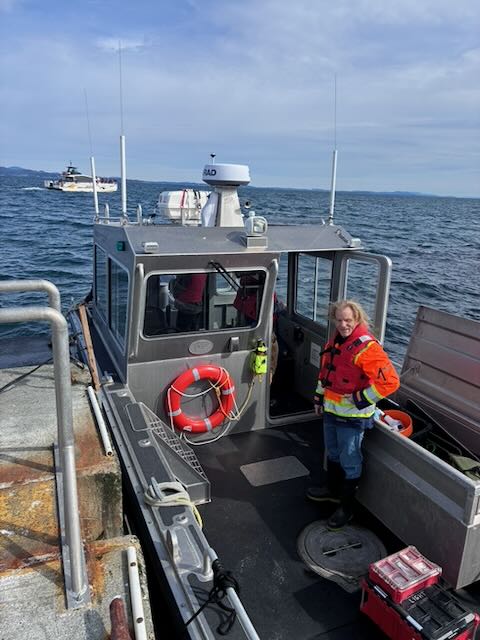
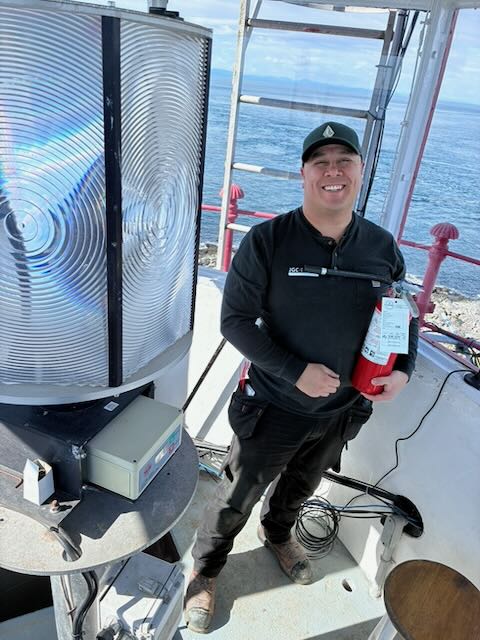
In the morning, the Coast Guard came from Victoria for maintenance work on the lighthouse…

Ready to fix the light!

… and in the afternoon, I was joined by Greg, Richard, and Bella who came out to work on various tasks on the island. It was great to catch up and learn more about their work Race Rocks.

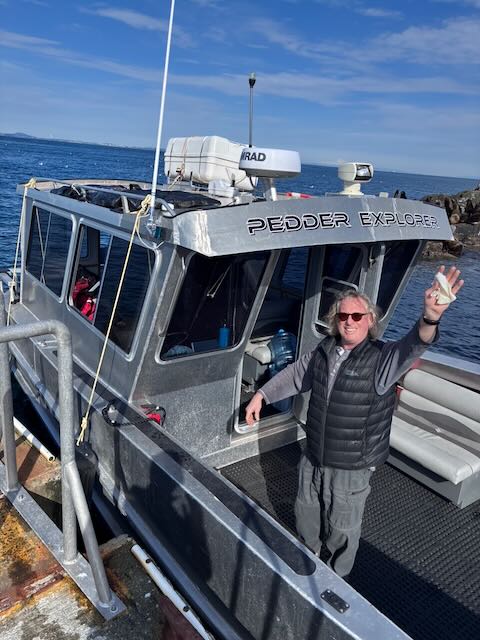
Greg and Bella on Pedder Explorer

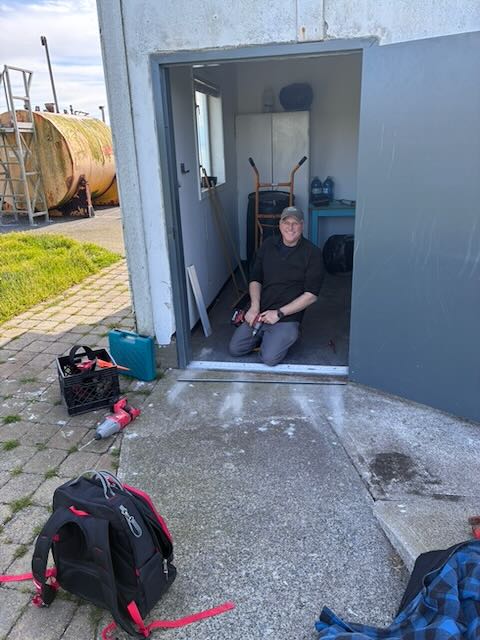
Richard installing a new battery room threshold

Before they departed, we set up the fire pump to top up the cistern for desalination.

Facility work

  • End-of-Month report prepared and submitted
  • Salinity sampling collated and submitted
  • Desalination
  • Clean-up in house basement
  • Stocked some more firewood
  • Water cistern topped up

Weather

  • Wind: 23 E
  • Mostly sunny
  • Air temp: 8C

Vessels: 2 landed on the island (one coast guard, one Pearson College), 6 eco-tourism


March Month-End

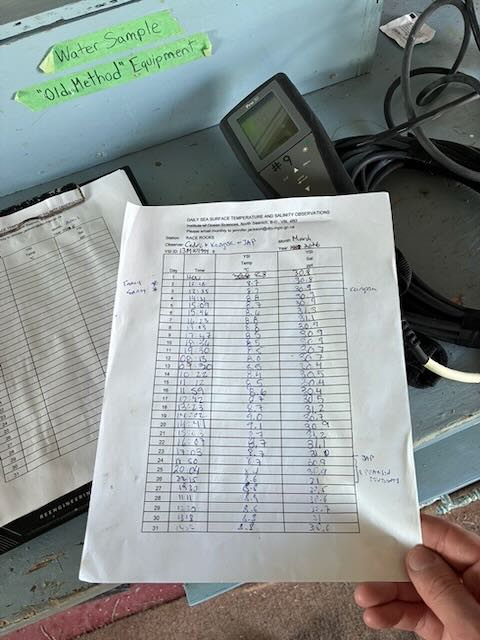
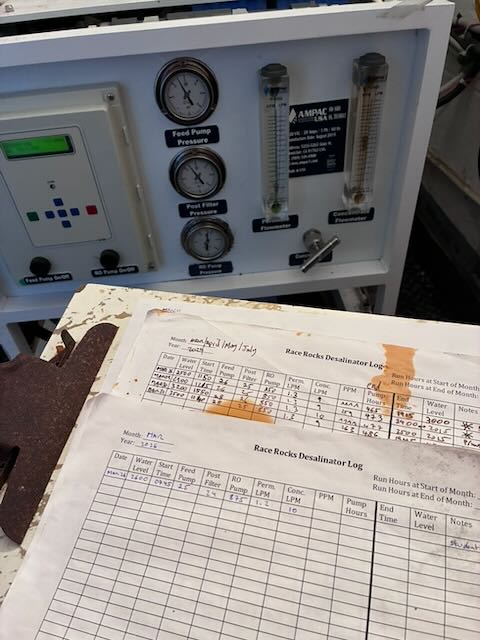
With the end of March quickly approaching, it was time to prepare for the end-of-moth reporting – collecting data on water and fuel consumption, generator and desalinator hours, water produced &c… it’s also the time to collate and submit the daily water sample results


March water samples

March water samples

Desalinator data

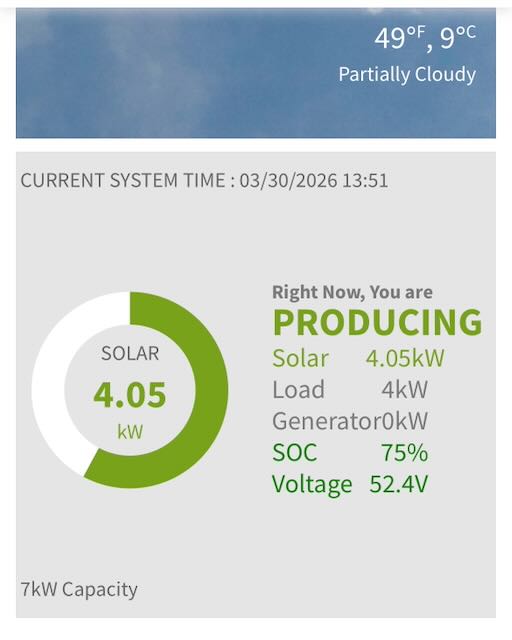
I got very lucky with the weather, and managed to run the desalinator off solar for a couple of hours!

A solar run!


Facility work

  • Seawater sample
  • Desalination
  • Window cleaning on both houses
  • Solar panel cleaning
  • Clean-up in generator room and tank shed
  • Stairs treated with anti-algae

Weather

  • Wind: 10 NE
  • Mostly sunny
  • Air temp: 7C

Vessels: 3 eco-tourism, 1 recreational

Elephant Seal Sunday

After a pretty busy week, today has been a quieter day – the generator came on early in the morning, so I managed to run the desalinator for nearly 4 hours to replenish water stocks.

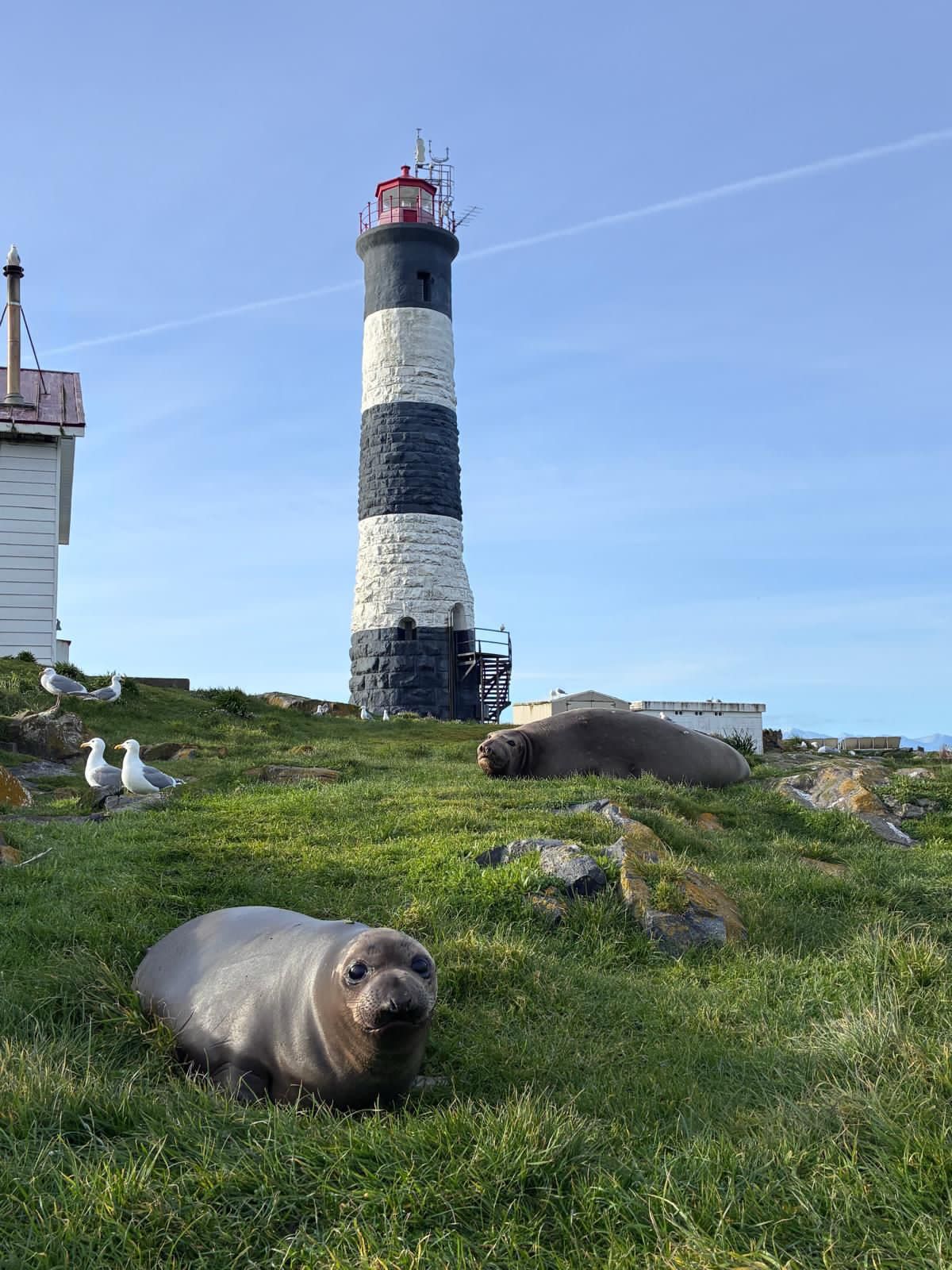
The elephant seals


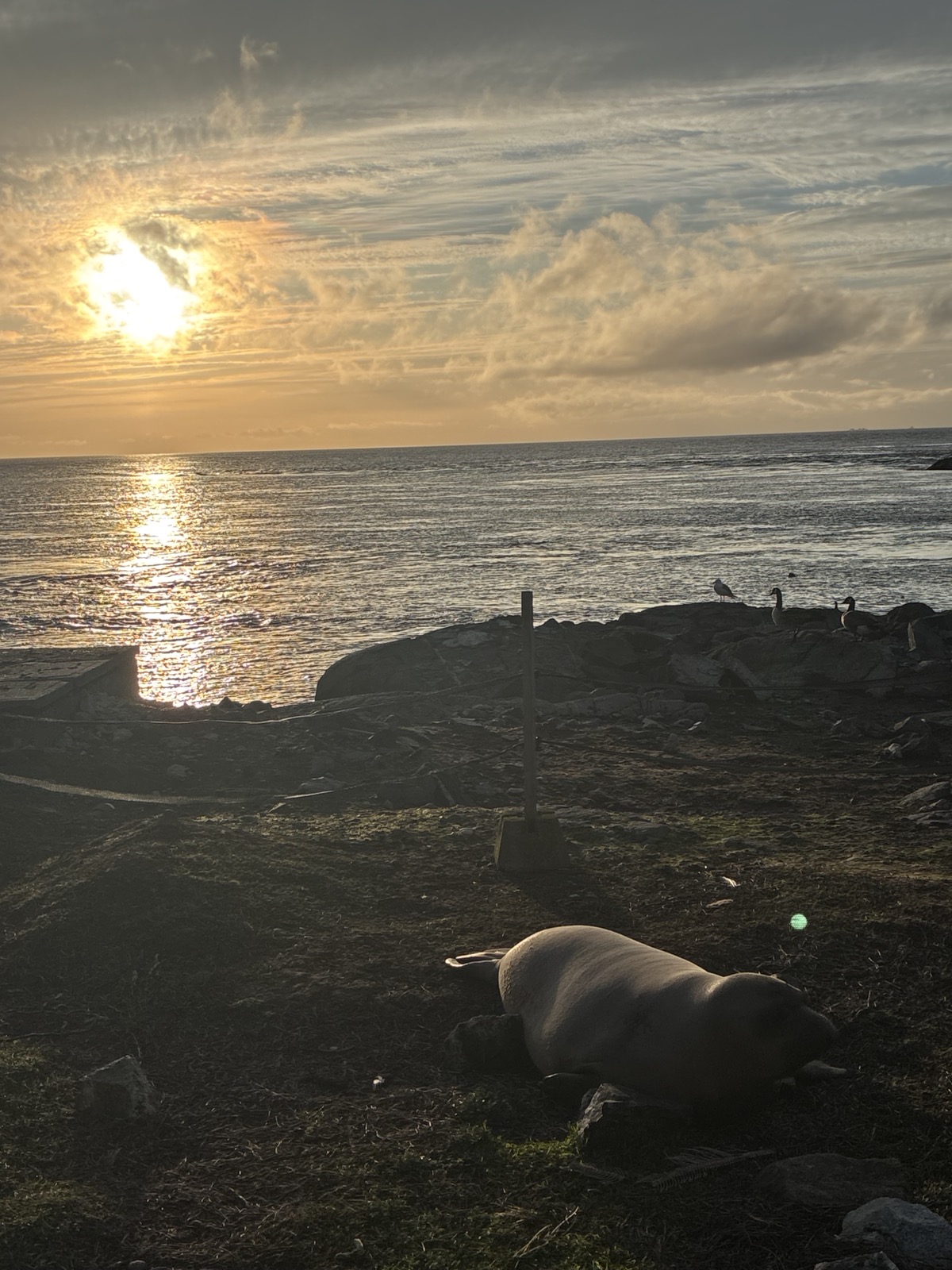
One of the joys of this trip has been the opportunity to share the Rocks with two elephant seals – an adult female, hauled out to moult, and the female pup born here a few weeks ago. They have both settled into their respective routines: the adult spends most of the day in the bushes close to the flag pole, with the occasional trip down the jetty to blow some bubbles. Pup, on the other hand, is much more adventurous, actively exploring all of the island’s nooks and crannies. I have spotted her by the firewood pile, in front of the water tank, and even on the east side of the island, behind the keeper’s house!

little adventurer enjoying the sunrise


Facility work

  • Seawater sample
  • Desalination (while generator running during early daytime hours)

Weather

  • Wind: 15 WNW (calm earlier)
  • Mostly overcast, a few rain drops
  • Air temp: 6C

Looking after Race Rocks

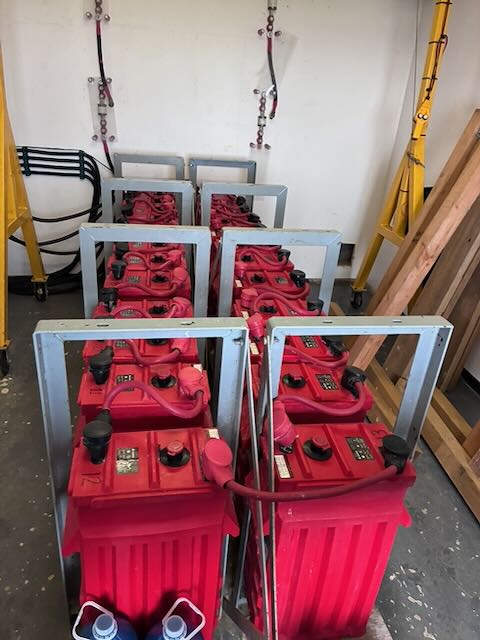
As Race Rocks is an off-grid facility, there’s always plenty of things to look after – including, for example, a bi-weekly check of the batteries, topping up fluids where necessary on Tuesday and Saturdays.

The Race Rocks power bank, freshly topped up and cleaned

This week, we also had the annual visit from a technician to check all of the fire extinguishers on the island – quite a fun task to track them all down, including one right on top of the tower!

It passed!


Facility work

  • Battery top-up
  • Fence repairs
  • Seawater sample
  • Desalination (while generator running during early daytime hours)
  • Fuel transfer

Weather

  • Wind: 20kt WNW (gusting)
  • Sunny, then overcast
  • Air temp: 8C

Vessels: 2 eco-tourism, 1 tug (passing outside reserve boundary)

Animal Census

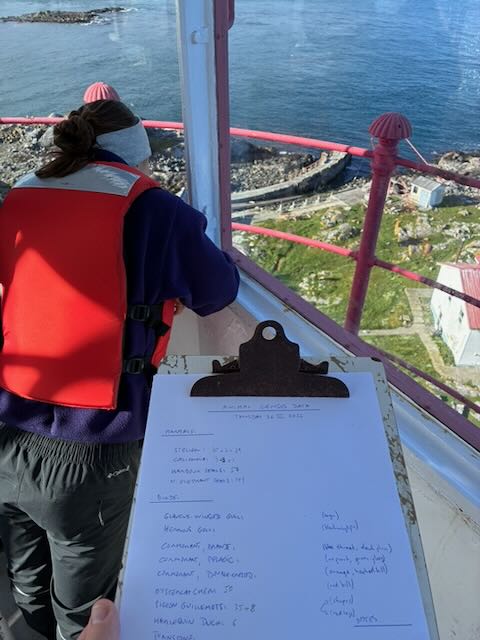
Regular readers of the blog will be aware of our weekly animal census, usually taking place towards the end of the week or over the weekend. As the Pearson students had already been counting different species on their boat trip they were keen to join, and  I decided to bring it forward a bit – with great results. Thank you everyone for your help!

Census in action

Pedder Explorer arrived at 9am to pick up Christie and the students and take them back to campus, and I found myself alone on the island (insofar as humans are concerned…) for the first time since my arrival.


Animal Census Thursday, March 26, 2026:

Mammals:

  • Steller sea lion: 71
  • California sea lion: 13
  • Harbour seal: 57
  • Northern Elephant seal: 2 (Baby and adult female)

Birds:

  • Glaucus-winged gull: 343
  • Herring gull: 12
  • Brandt’s Cormorant: 292
  • Pelagic Cormorant: 118
  • Double-crested cormorant: 18
  • Black oystercatcher: 40
  • Harlequin duck: 6
  • Ruddy turnstone: 4
  • Canadian goose: 10
  • Surfbirds: 12
  • Bald Eagle: 1 adult, 1 juvenile
  • Pigeon guillemots: 43

The pigeon guillemots (my favourite bird!) had evaded Karyssa on previous census days, so I went out early in the morning to count them.

But what kind of cormorant is it?


Facility work

  • Animal census
  • Fence repairs
  • Seawater sample (last one with Pearson students)
  • Solar panel cleaning

Weather

  • Wind: 5-10kts SW to W
  • Mostly sunny
  • Air temp: 10C
  • Sea state: calm

Vessels: 6 eco-tourism, Pedder Explorer (to pick up students)

Pearson students

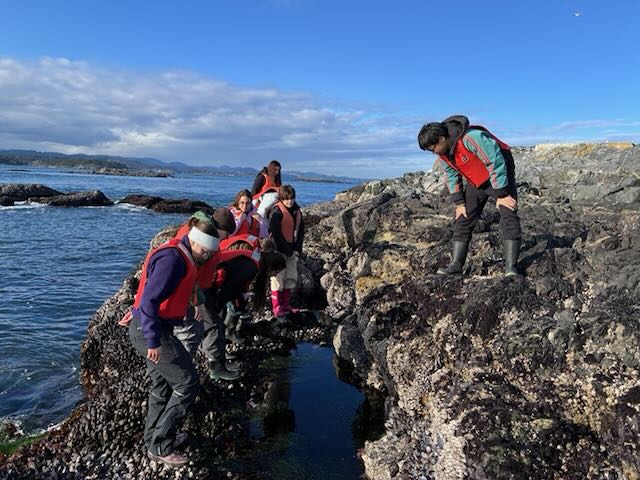
I first came to Race Rocks nearly 24 (!) years ago, as a first year Pearson student. Imagine then my joy at learning that I would be joined this week by biology teacher Christie and a group of her students, out on the Rocks for CAS week. Based in the science building on the westerly side of the island, they spent five days exploring fauna and flora.

Pearson students by the tide pools

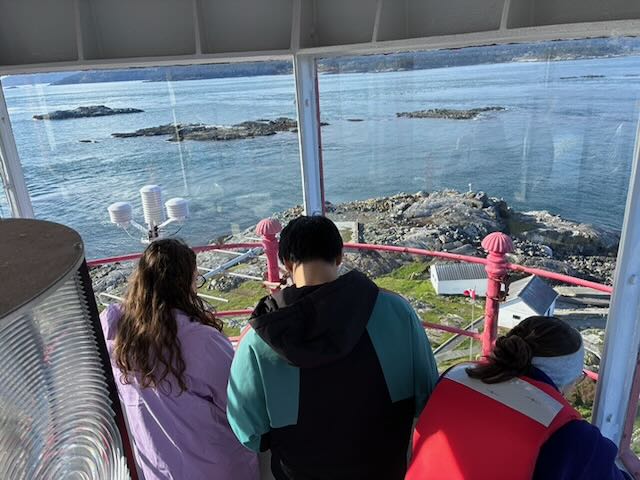
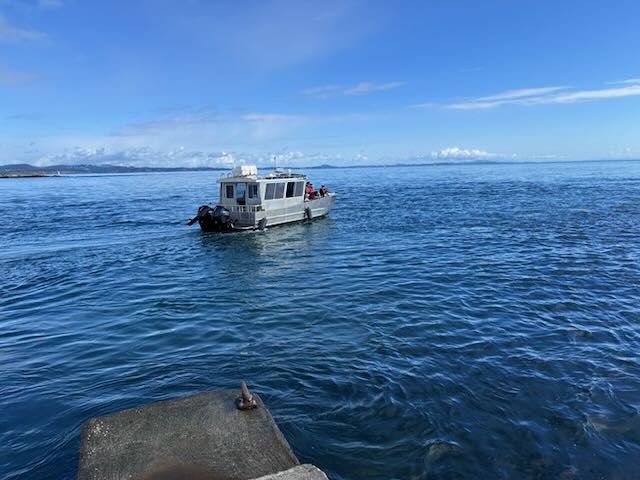
On Thursday morning, Richard came out in Pedder Explorer to take everyone on a field trip. Conditions were spectacular, though with other visitors on the island (more on that in an upcoming post) I had to stay behind. But at least I got to see the pack of five orcas transiting south of the island from the tower, with Pedder Explorer in the background.

Pedder Explorer on her way

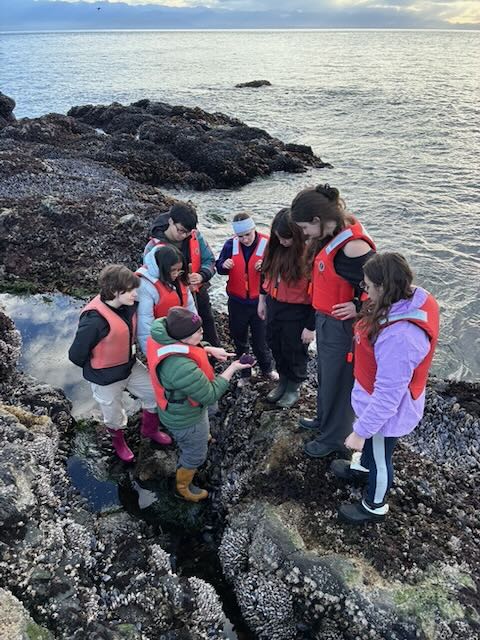
In the afternoon, I joined everyone in a detailed exploration of the tide pools. We have had really low tides during the day recently, which makes for excellent explorations of the intertidal zone – thank you Christie for your fascinating and entertaining insights into the complex ecosystems of the island!

Christie and Pearson students in the best outdoor classroom in the world


Facility work

  • Health and Safety Checks
  • Fire extinguisher re-certification
  • Desalination (using both generator and solar power)
  • Seawater sampling (with student assistance)

Weather

  • Wind: 6kts NNE
  • Predominantly sunny
  • Air temp: 10C

Vessels: more than half a dozen Eco-tourism boats, Pedder Explorer

Stormy days

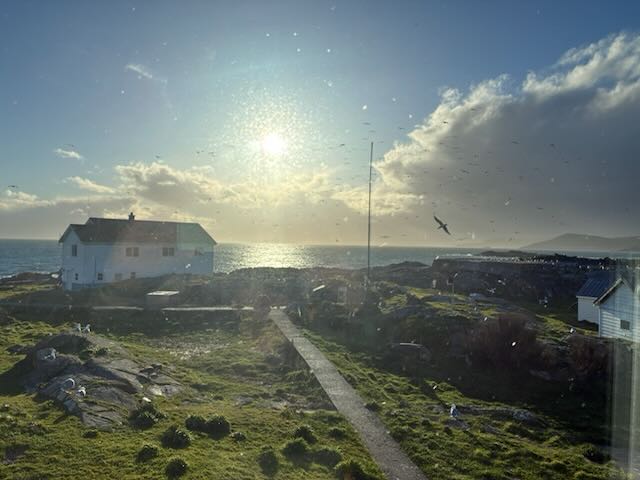
My first night on the Rocks coincided with some pretty impressive weather – while a storm front was moving in from the Pacific, the island enjoyed an hour of complete calm and sunshine.

The calm before the storm

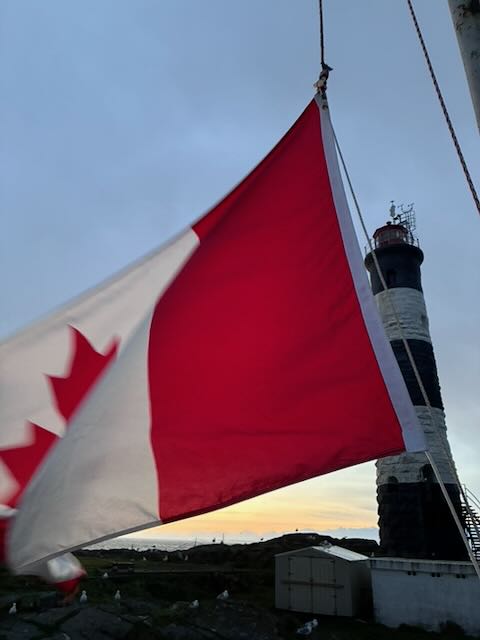
Notice something different? When windspeed is set to exceed 25kts, the Flag is lowered to protect it – but as soon as things calm down, it is hoisted again.

Hoisting the flag

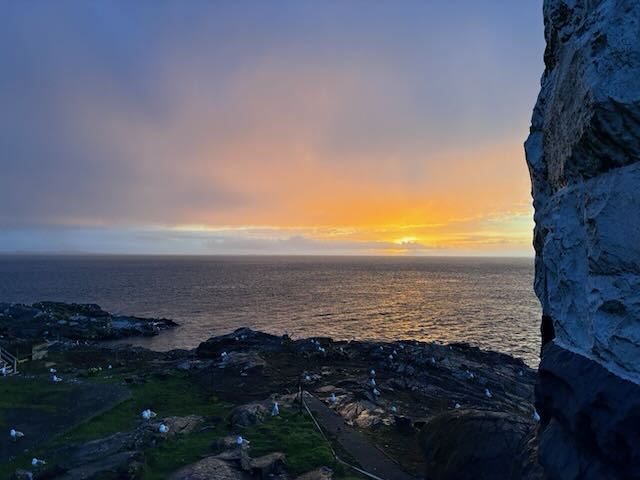
The system moved through fairly quickly, giving rise to some beautiful colours throughout the day. It’s always interesting to note what a difference tides make to waves around Race Rocks when the wind is up – a westerly wind with the flood, for example, can create an illusion of calm; whereas similar winds create impressive standing waves when the waters are ebbing.

Sun and the storm


Facility work

  • Determine fuel levels across the island, transfer fuel to generator building, top up generator
  • Desalination while generator is running
  • Top up drinking water in science building
  • Seawater sampling (with student assistance)

Weather

  • Wind: 25-35 SW and W overnight, calming to 15 SW by evening
  • Overcast, occasional rain showers
  • Air temp: 7C

Back on Race Rocks!

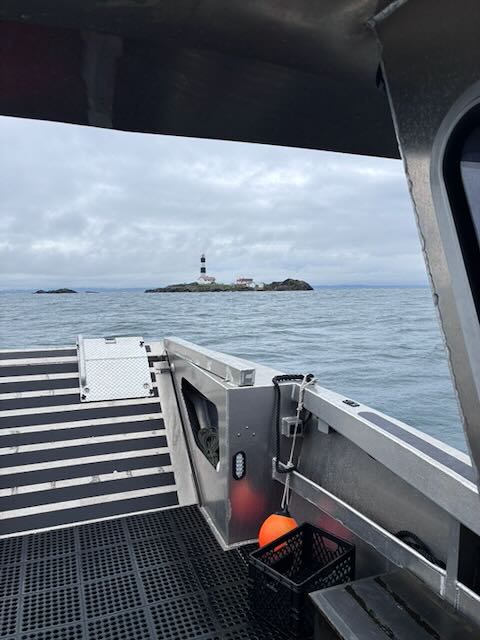
With a storm brewing and the tides receding, we worked hard to get out to Race Rocks as early as possible in the morning – my first ride on the new Pedder Explorer.

A first glimpse of Race Rocks

I don’t think I’ll ever tire of the excitement of coming out of the Bay, and catching the first glimpse of the lighthouse…

The Welcoming Committee

During a quick walk-through, Greg and Karyssa updated me on current operations and various recent changes I’m looking forward to exploring during the week ahead – and then, as the tides were about to fall below 1m (the safe minimum for Pedder Explorer), they were off. A big thank you to Karyssa for getting everything ready and perfectly set up for a smooth transition!


Facility work

  • House Move-In
  • Battery top-up
  • Seawater sampling (with student assistance)

Weather

  • Wind: 10kts W (picking up significantly into the night)
  • Highly variable
  • Air temp: 11C

Vessels: several Eco-tourism boats, Pedder Explorer