Changes in the weather

The first gentle sou’east weather pattern with clouds and rain occurred in the last few days. The rain is most welcome to wash away a summers worth of gull and pinniped excrement. This island can be smelled from a kilometer away!
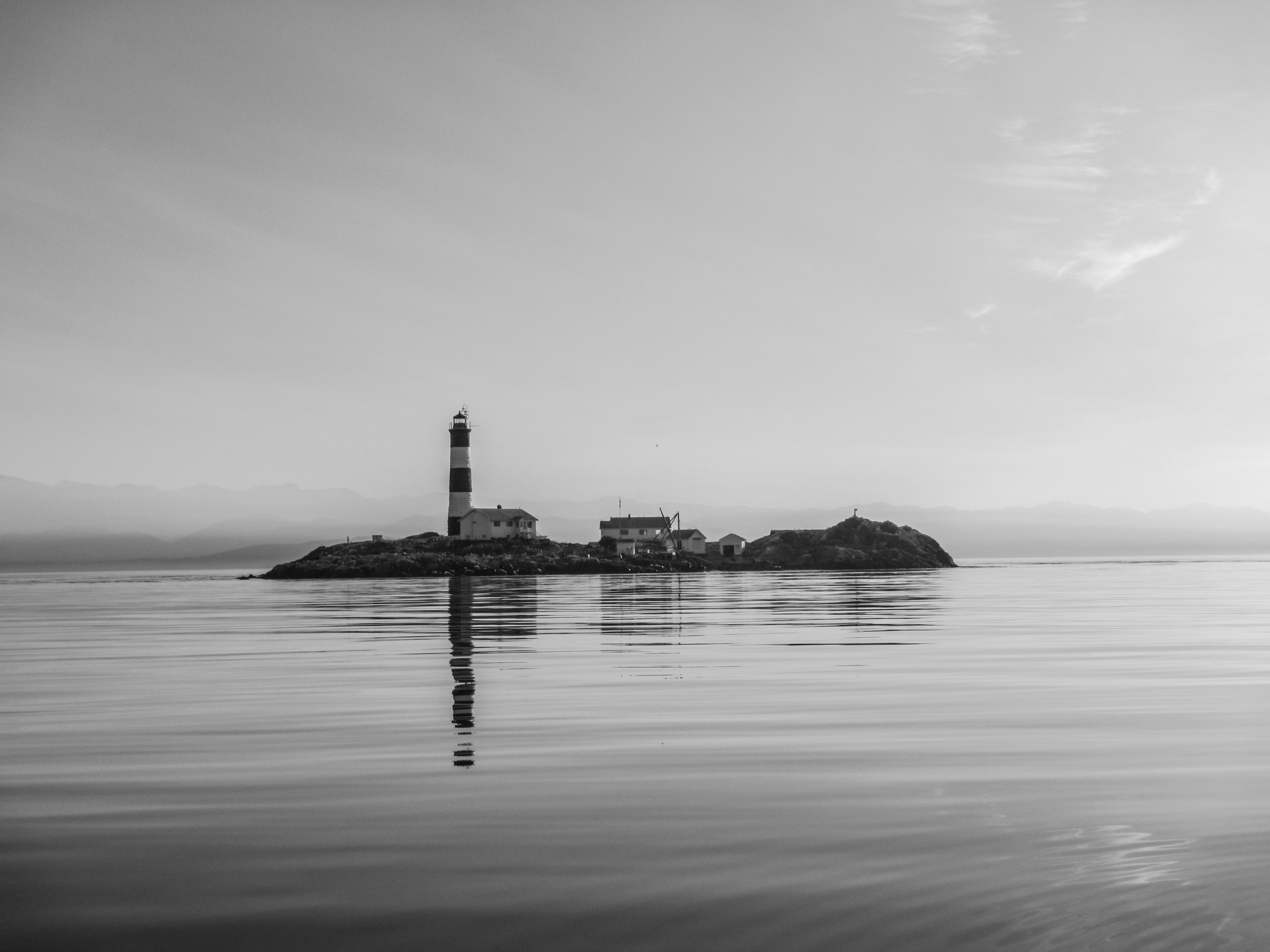
At the edge of the world…
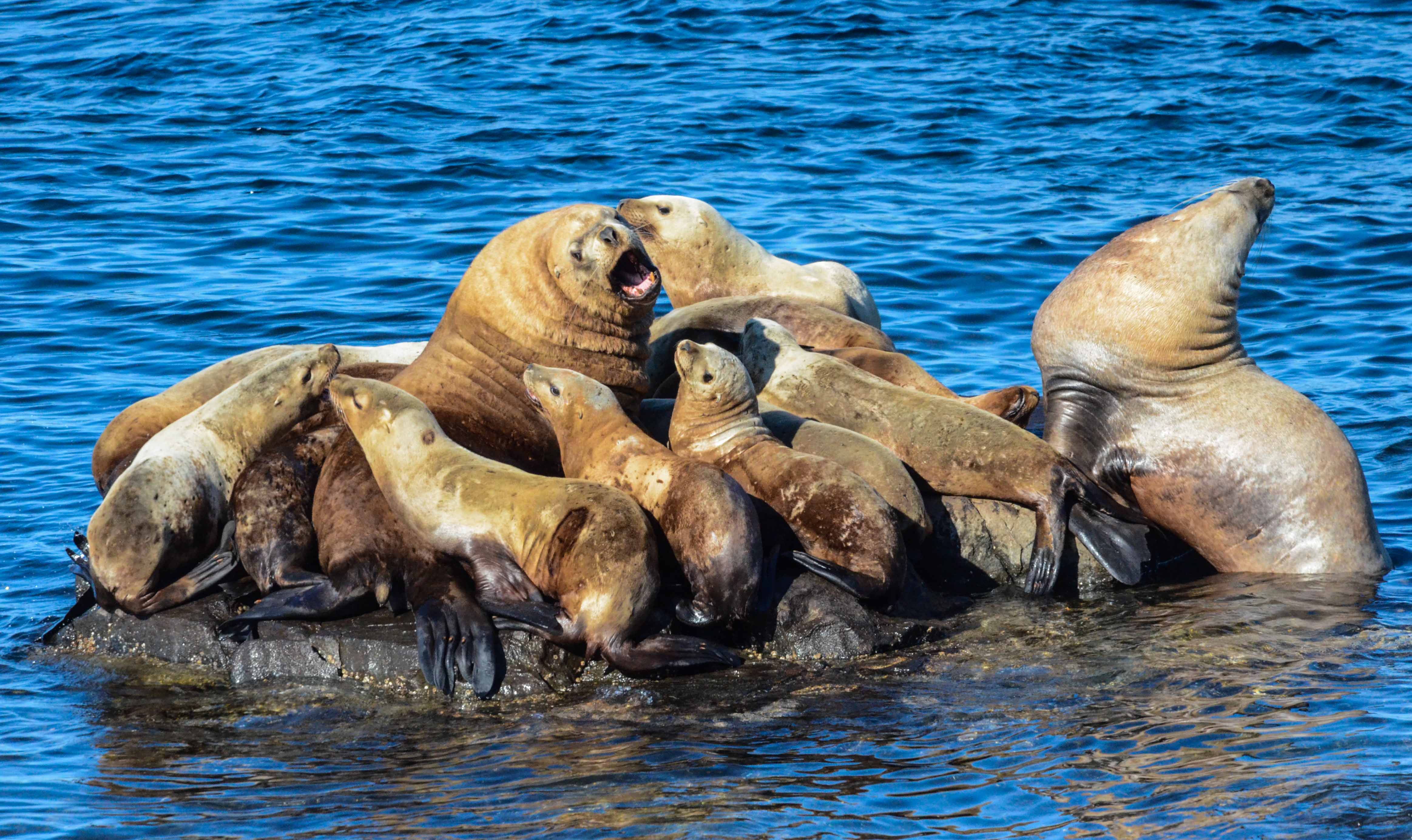
Surrounded by ankle-biters!

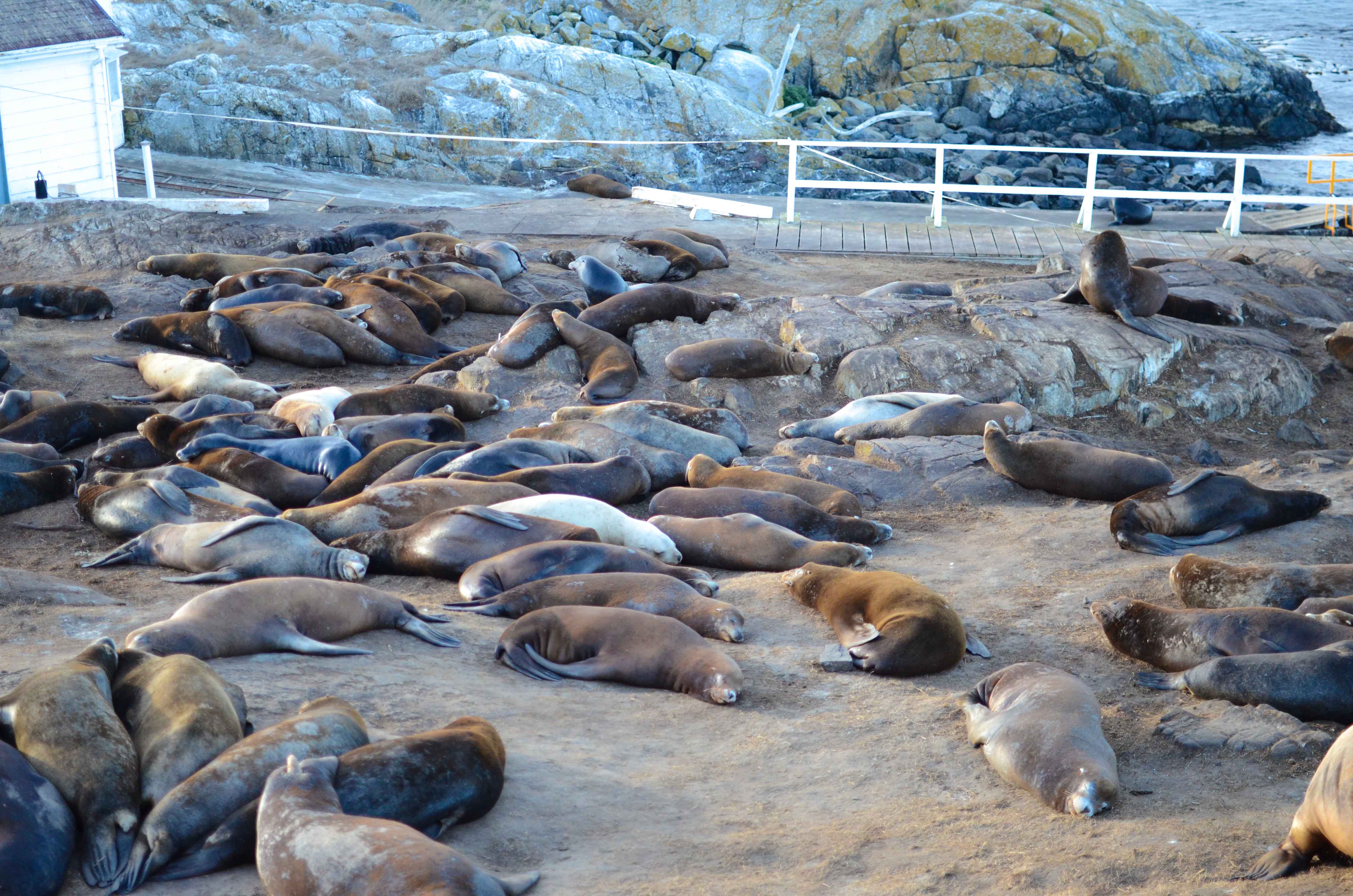
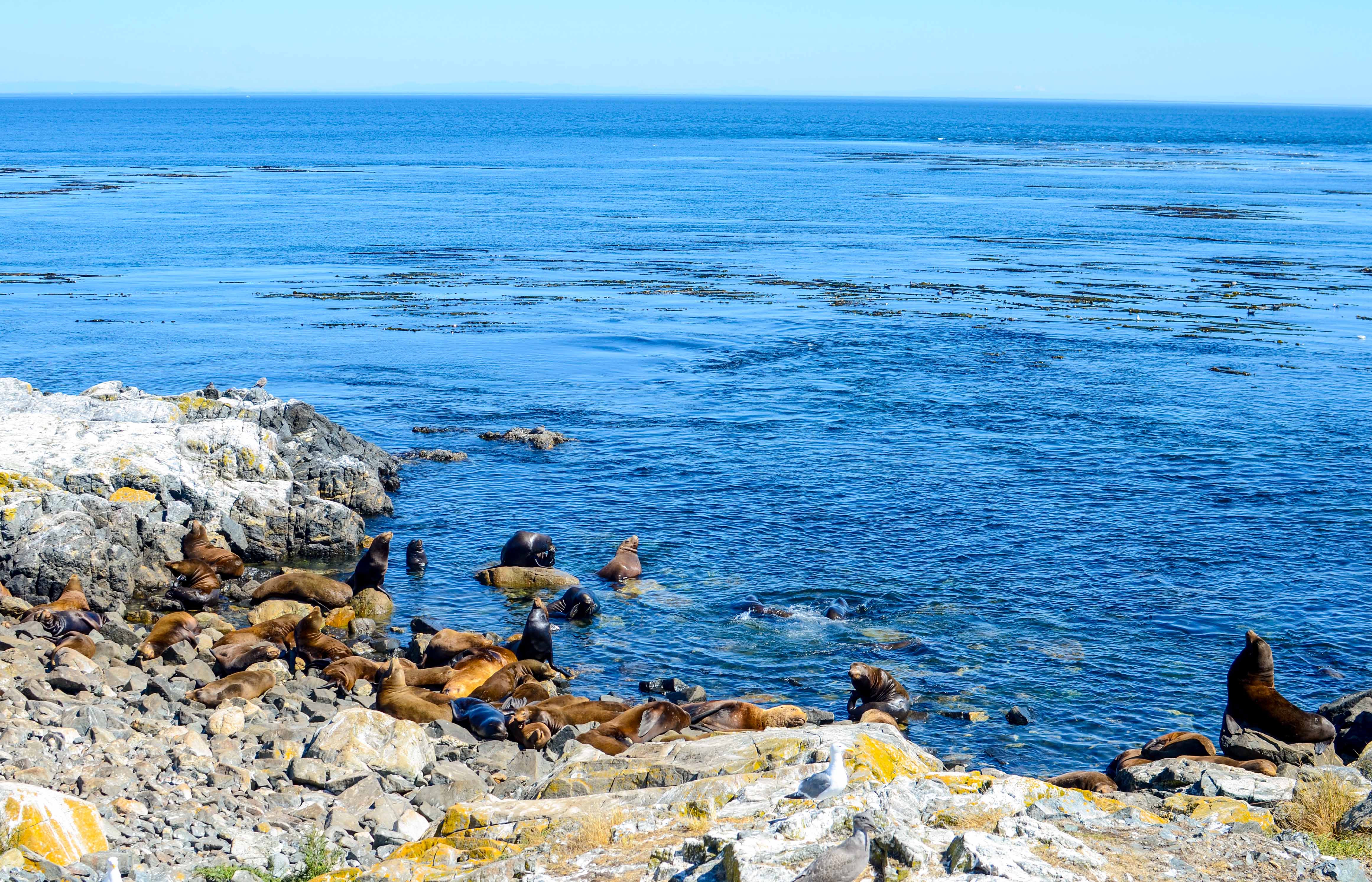
About 2/3s of the sea lions have left since the weather change. We are down to around 140 animals, perhaps 75 are Stellers down from the 175 of 10 days ago. Californians make up the remainder down from 225. Quite a few juveniles have showed up in the last week.


More birds are showing up. In the last few days several Harlequin ducks and a few dozen cormorants returned to dot the shoreline with the oystercatchers. Flocks of Bonaparte gulls feed on minnows in the eddies, forced to the surface from the deeper water by murres and rhinoceros auklets. Killdeers are spending the nights here. I hear them when I shut down the generator at night. Close to 30 sparrows are flitting about, and yesterday a few eagles and ravens were hunting and scavenging. Late developing gull chicks are on the menu. The flock of turnstones forages in the sea lion haulout ignored by the sea lions.

Tour boats are becoming less frequent and sport fishermen are waning too… yesterday for example a pod of orca passed with only 2 boats watching them rather than 8-10.
The Latest News

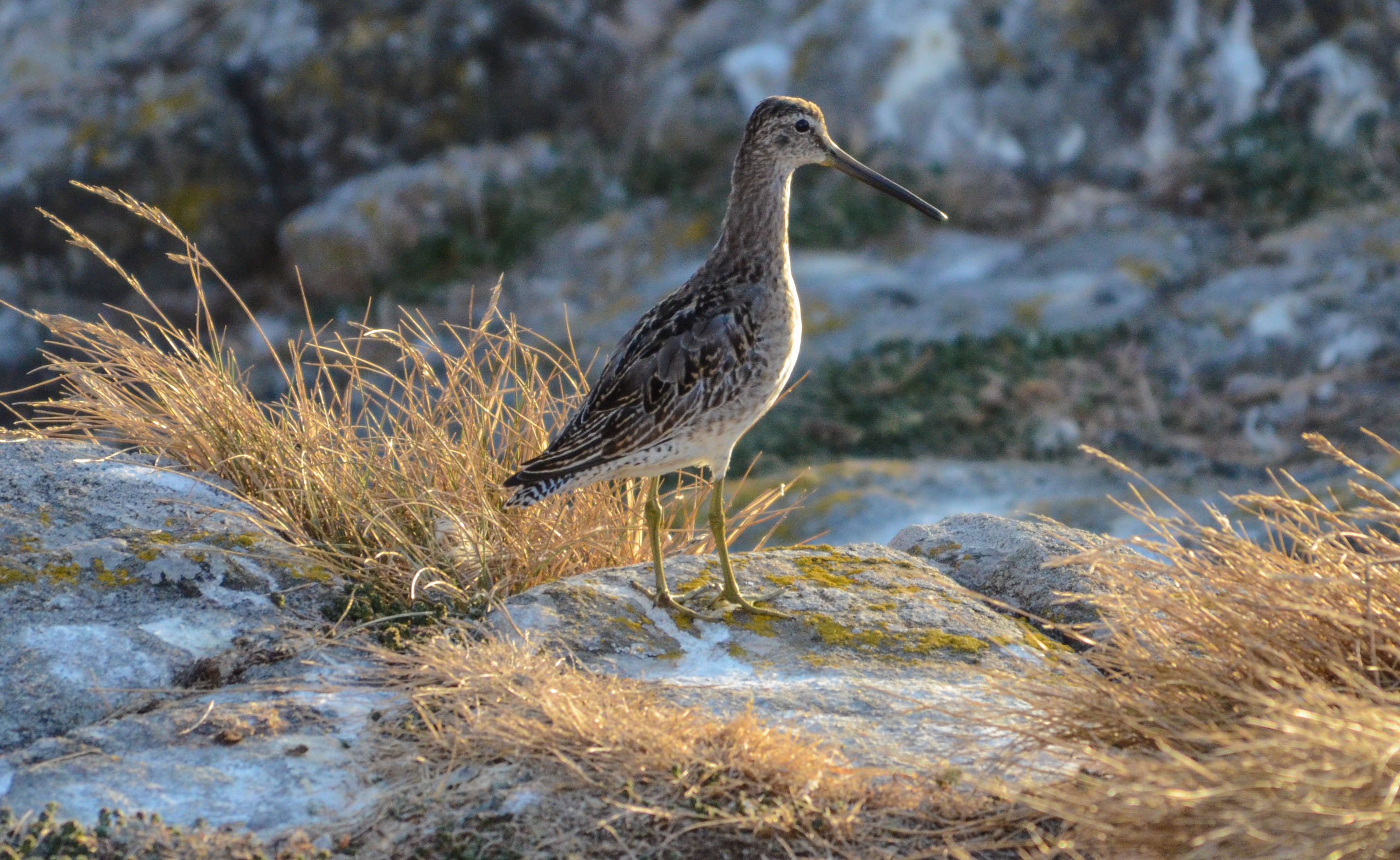
As observed with the Horned Larks last week, the southward migration of birds has begun. I was lucky enough to spot this Long-billed Dowitcher searching for food in the tufts of grass.

An unusual Long-billed Dowitcher in early winter plumage.


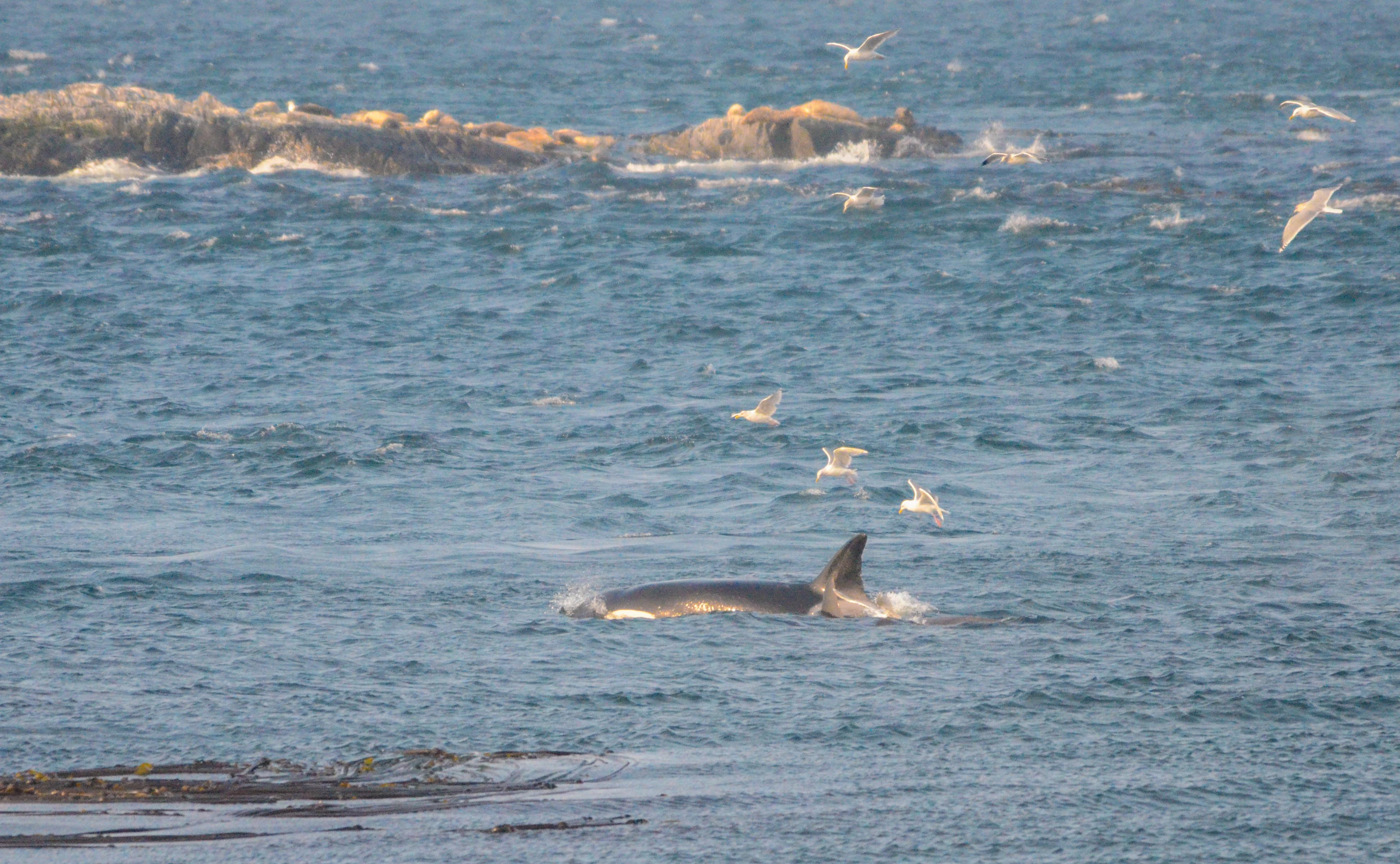
Another visitor the the reserve was a small pod of transient orca who created a scare surrounding some sea lions in the kelp bed. The orca thought otherwise of hunting the big carnivores in the tangle of the kelp bed and moved off toward William Head.

If you look close you can see a second small gray fin of a baby or juvenile.


The Sea Lions continue to dominate the environment. I had let them have their way and they surrounded the house and covered the yard. Eventually it became too much and I employed the electric fence to reclaim some territory.

The front yard became a popular haul-out.


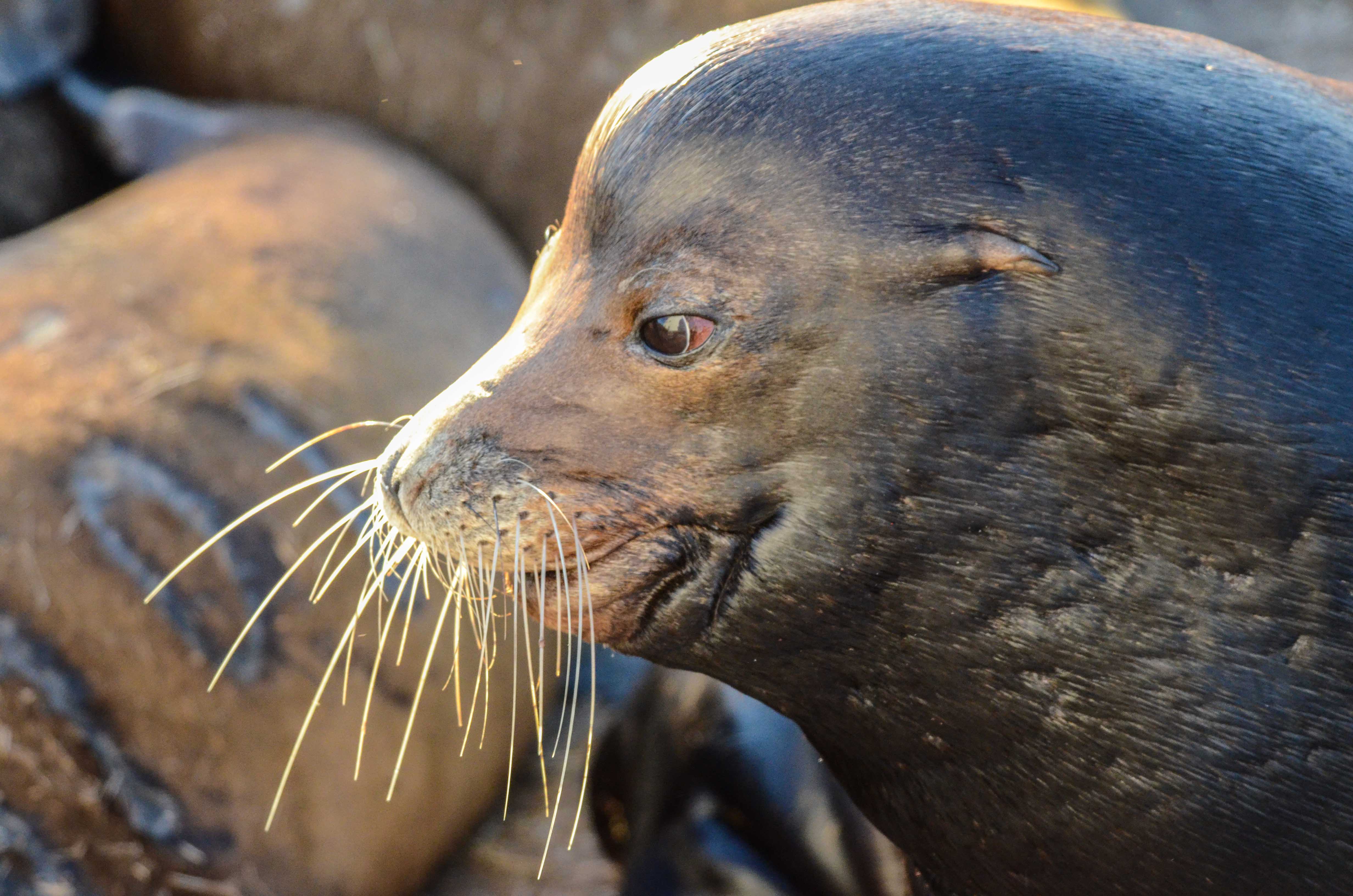
Expressive vibrissae – Californian

Birds and…

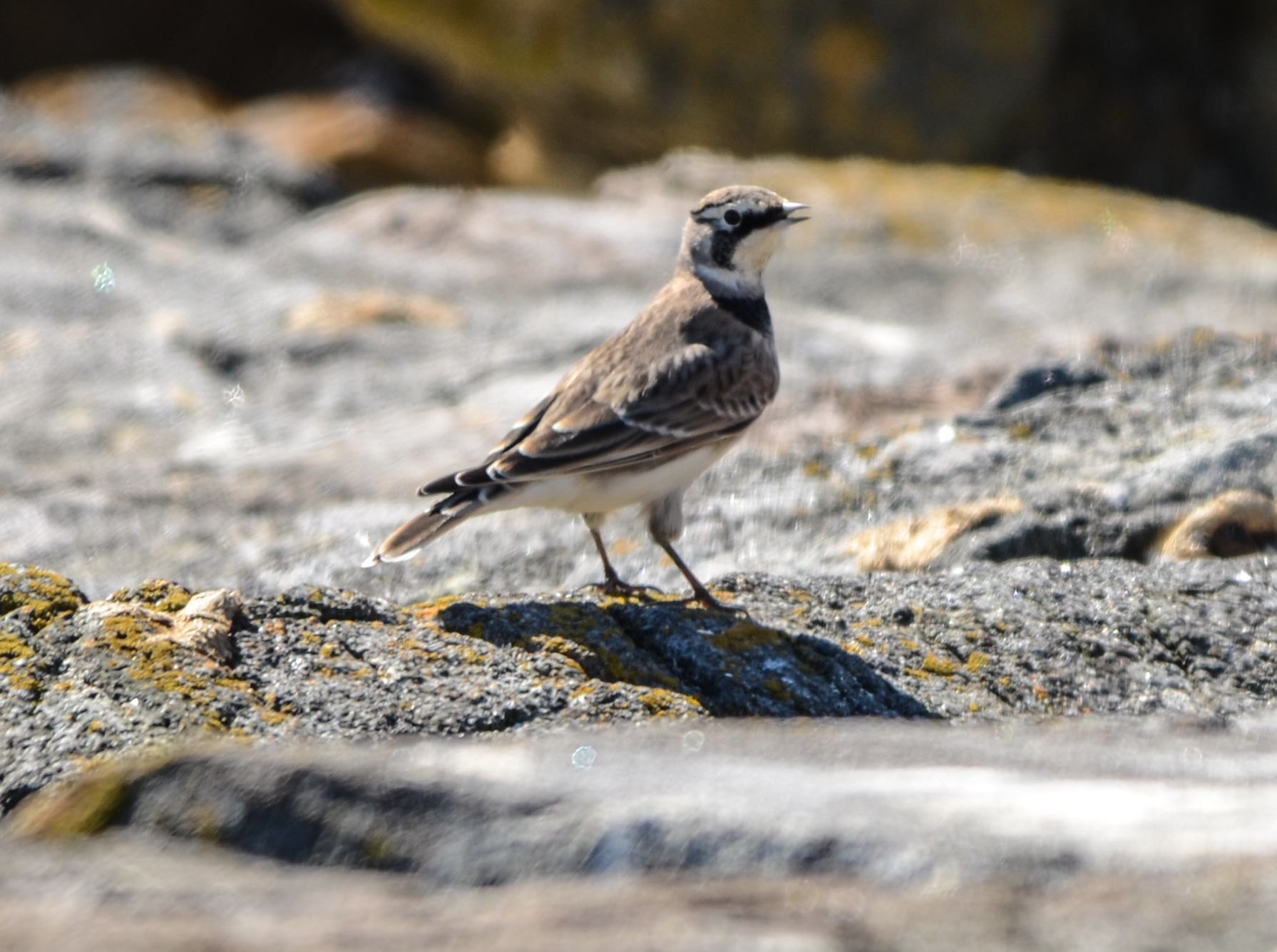
A few different bird species have shown up or passed through in the last few days. 5 Horned Larks (Eremophila Alpestris) stoppped by on its migration south.

Horned Lark


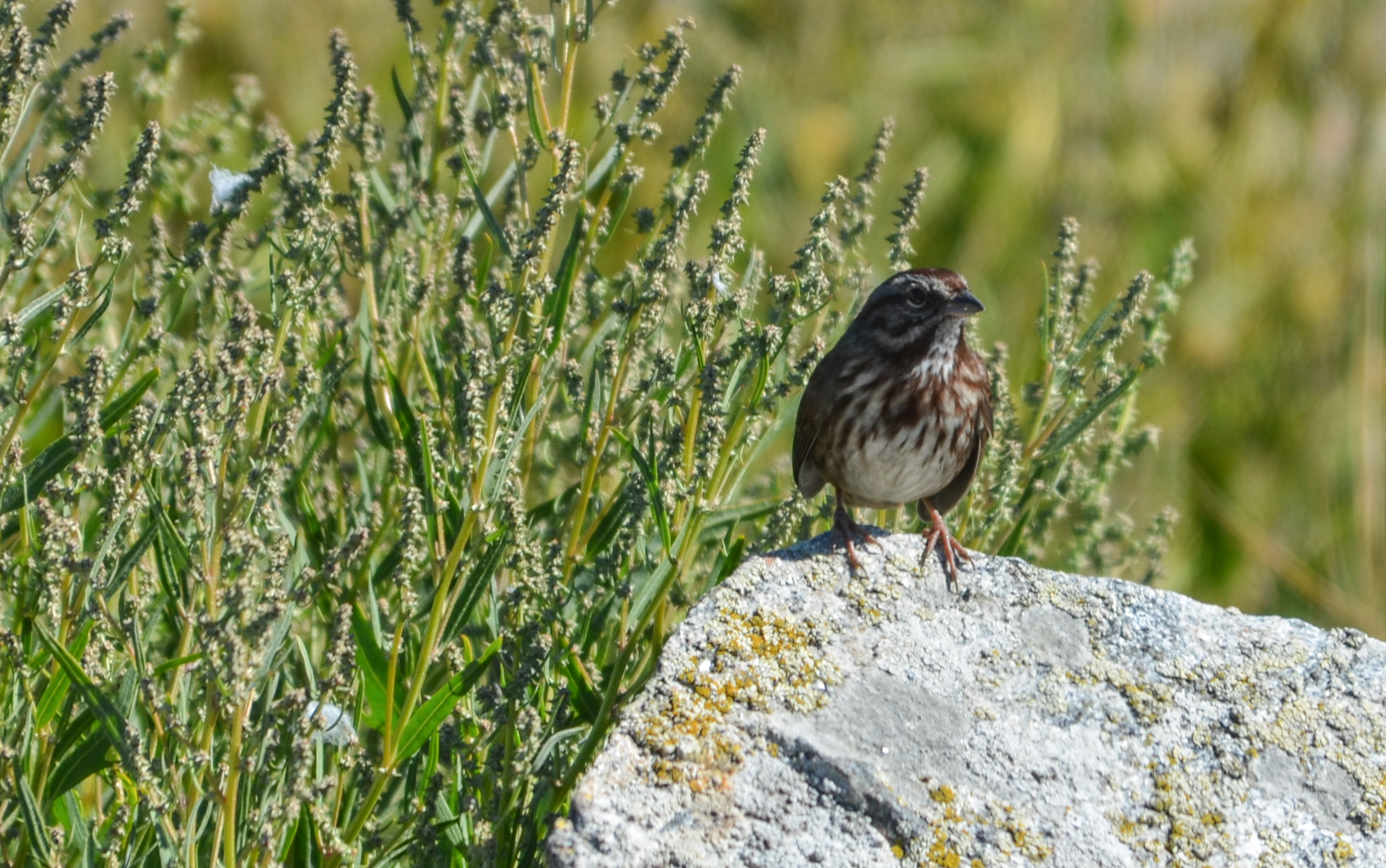
4 or 5 Sparrows (probably Fox) have been here but the little guys are pretty hard to photograph! They rarely stay still and flit away when they see me coming…

Fox Sparrow?


Other birds observed in the last few days (besides the ubiquitous Glaucous-winged Gull) have been:

1 Harlequin Duck

10 Brandts Cormorants

8 Oystercatchers

40 Black Turnstones

1 Surfbird

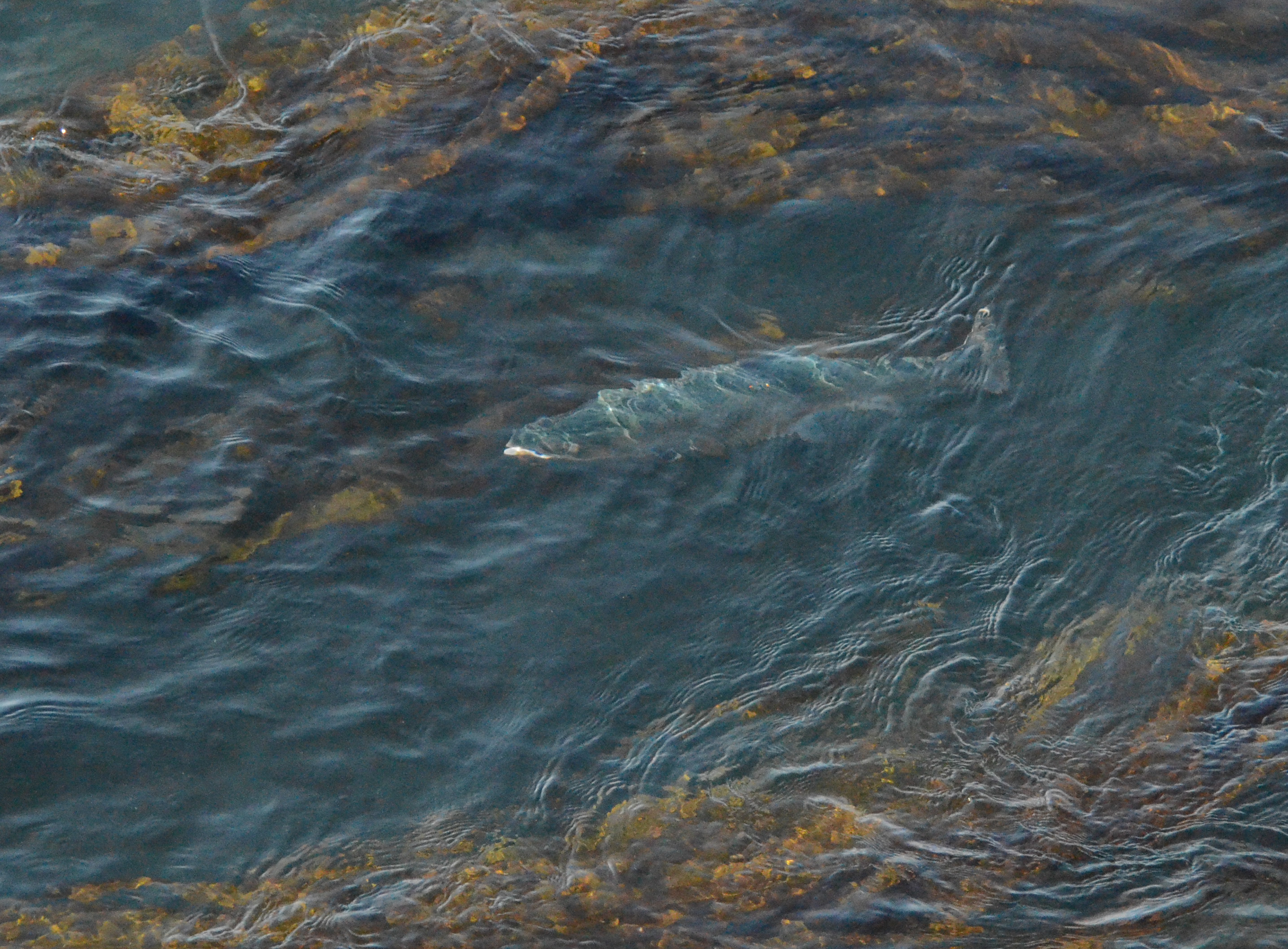
and, considering all the Sea Lions here, what I can only conclude is a suicidal salmon in the kelp bed!

Lone Salmon

Sept 15th..up to 175 sea lions

Today I used the new seawater pump to fill the cistern which had gotten pretty low. We de-salinate water here for household purposes as there is insufficient rain and the roofs are quite contaminated with gull poop!

The reserve is busy today with tour boats and divers. I had to call one of the companies to ask their operator to slow down at the edge of the reserve. Usually they are pretty good but occasionally a new driver doesn’t realize the reserve boundaries. More troubling are the recreational boaters who frequently speed through the reserve. The problem is that unless you are a local it is unlikely you will know the guidelines. As much as I dislike signs this seems a reasonable place for a few “5 knots” and ” No Fishing” signs. There is simply no way I can ask them to slow down from my perch on Great Race Island…

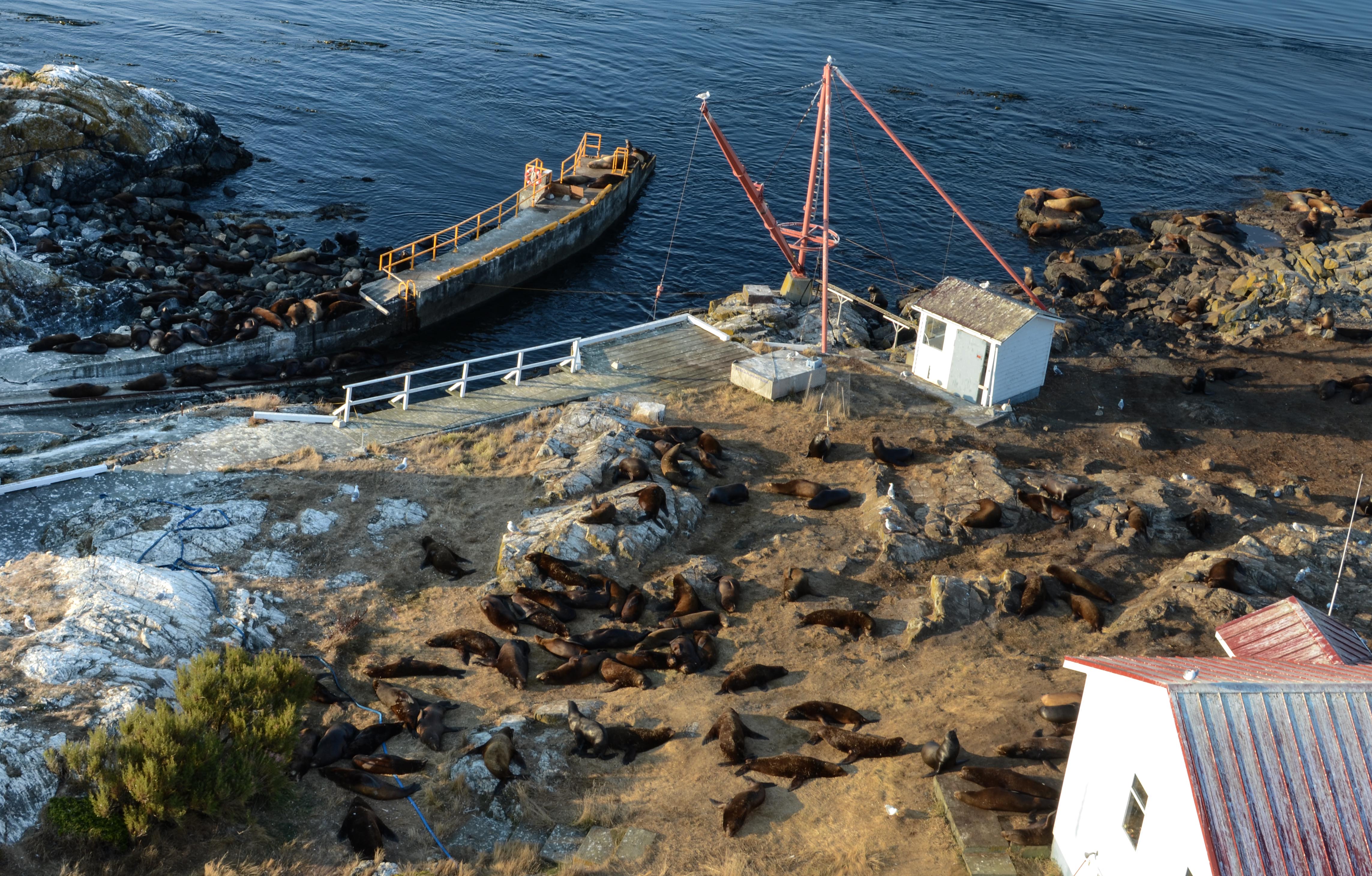
The California and Steller sea lions are here in droves. I counted more than 175 Stellers in the reserve. The vast majority are bulls but there are a few cows and in the last few days a number of yearlings have shown up. I will get some pictures for the next entry. The view from the tower shows the commotion outside my house!

Hundreds of California Sea Lions adorn the lawn.

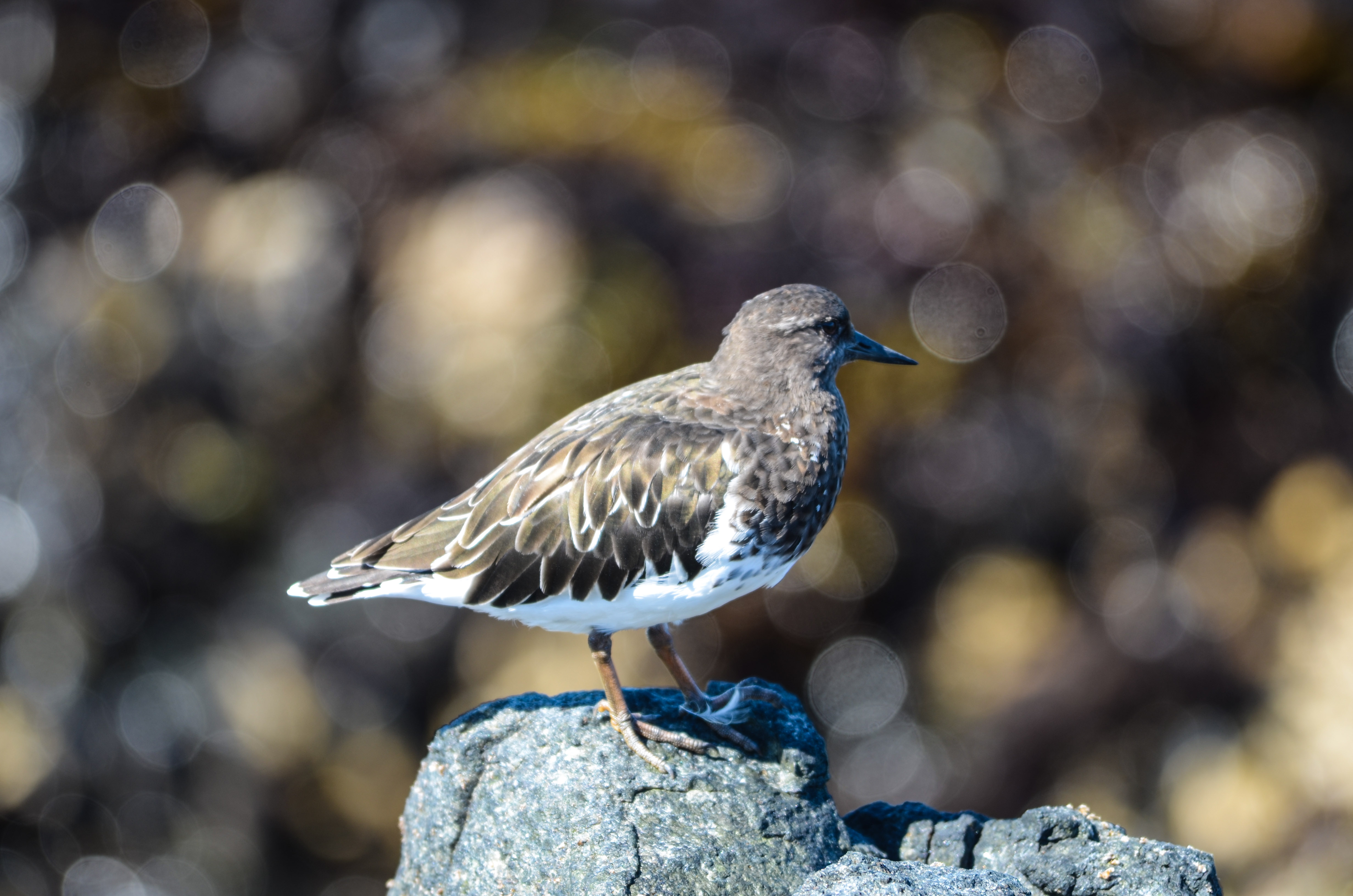
In other animal news, quite a few glaucous-winged gulls remain but i think all the chicks can fly now. A few cormorants have returned and about 50 black turnstones wander about between the sea lions picking off insects. I also observed some type of sandpiper picking insects off a dead gull chick. Very resourceful!

Black Turnstone (Arenaria melanocephala)

The return of the elephant seals

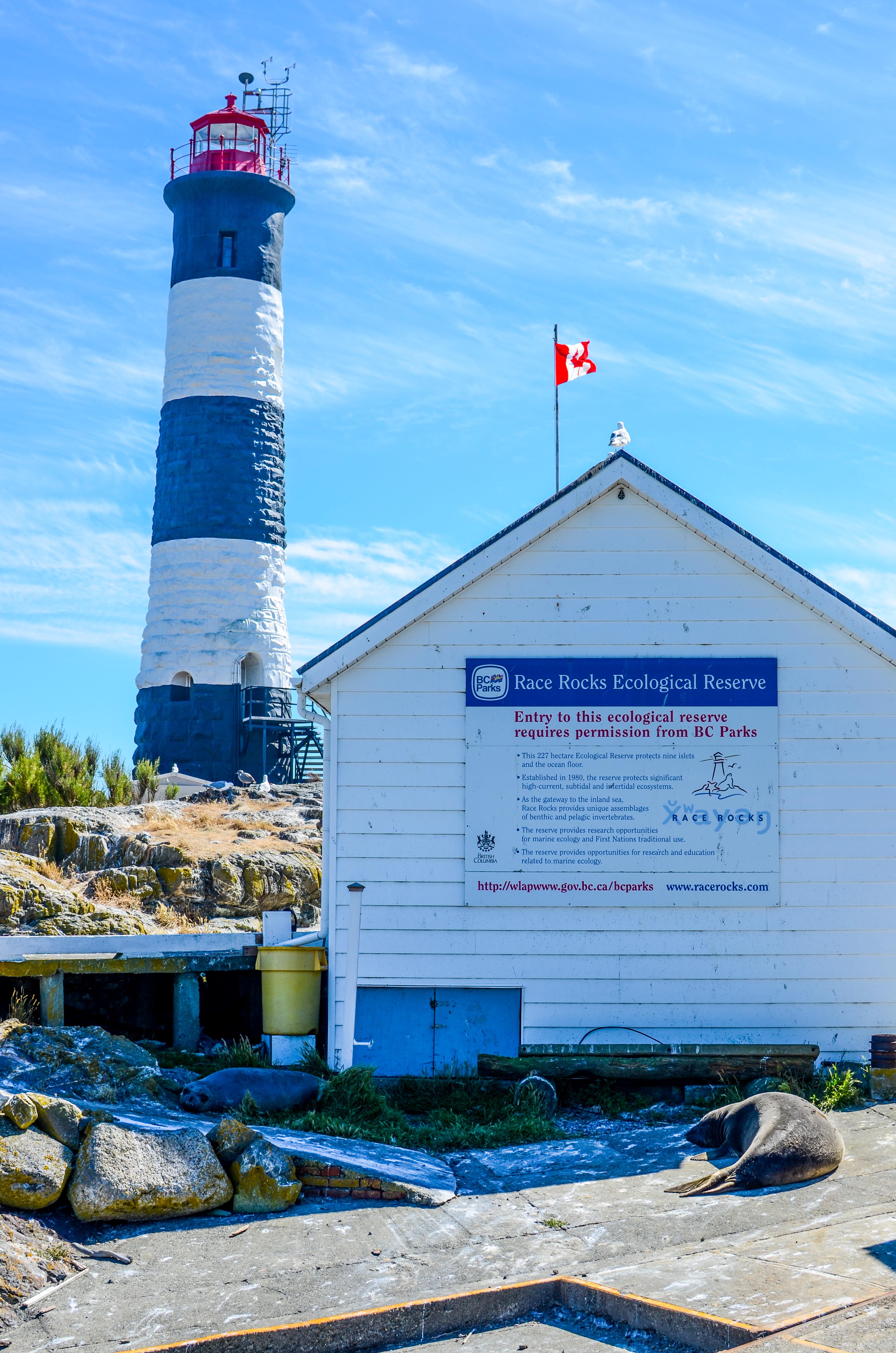
Elephant seals (on left is 8 foot female)

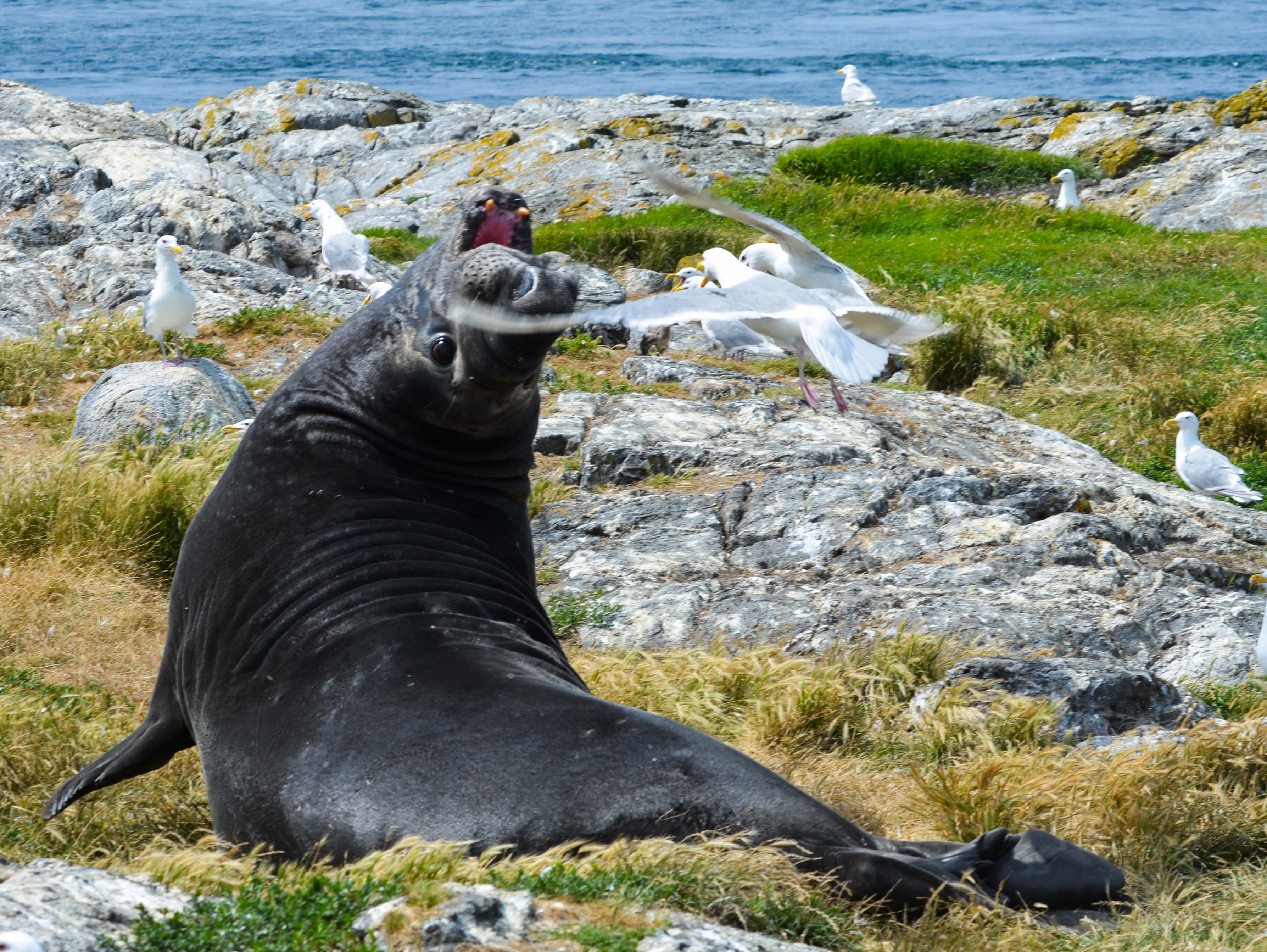
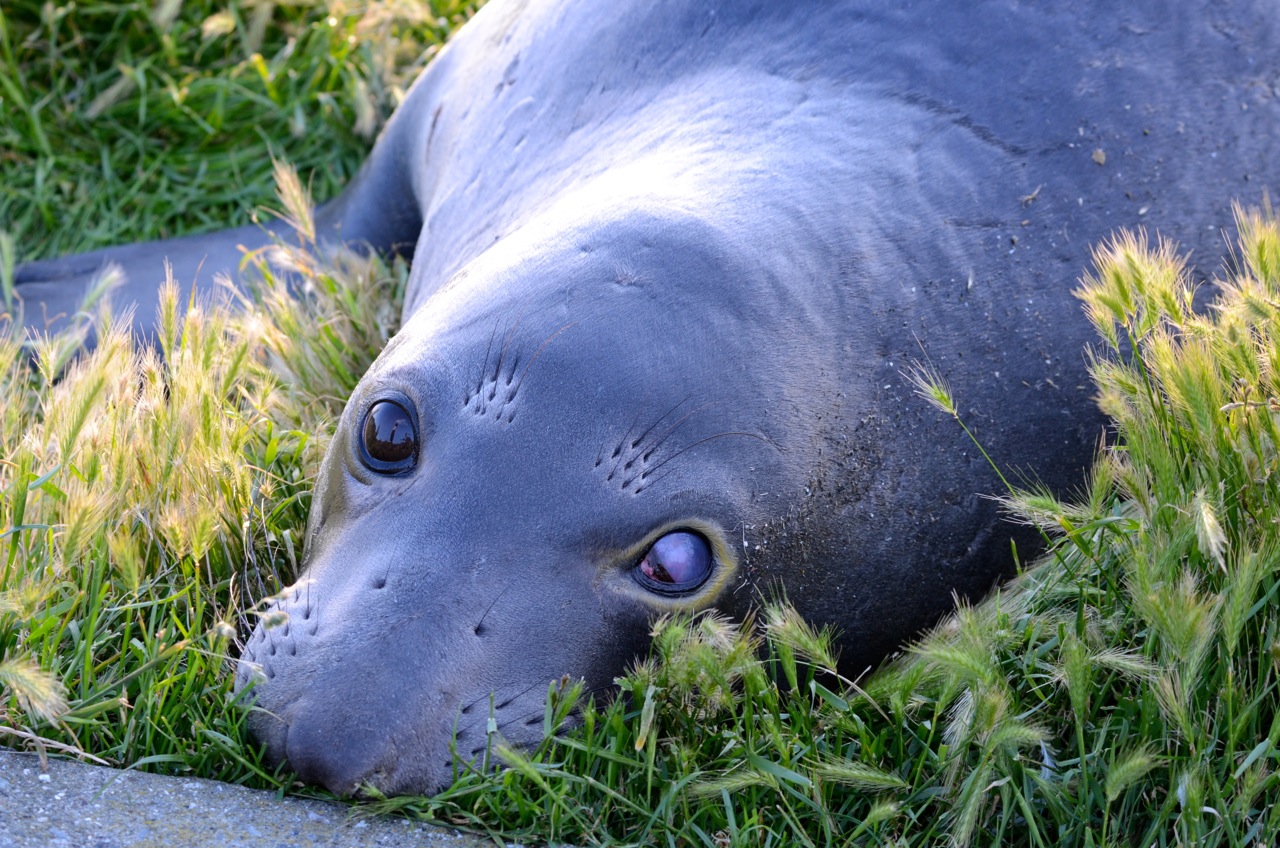
Over a week ago the last elephant seal had departed so I was surprised to see a new untagged seal arrive August 23. Since then, two have joined it and they all appear to be female. I recognize none of them and the larger one I measured to be nearly 8 feet long. The 3 don’t appear to have been fasting either and the 8-foot female in particular is quite large.

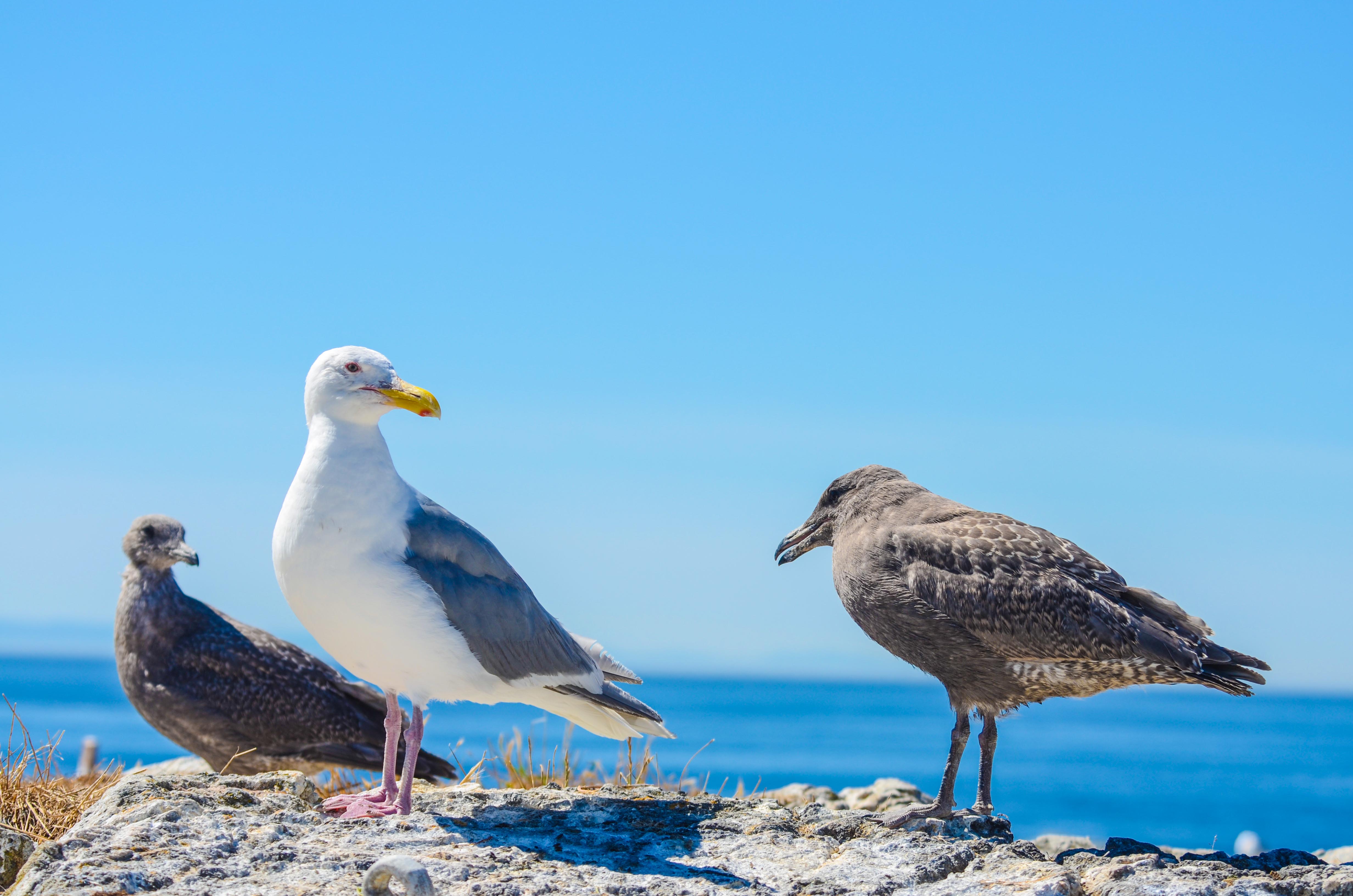
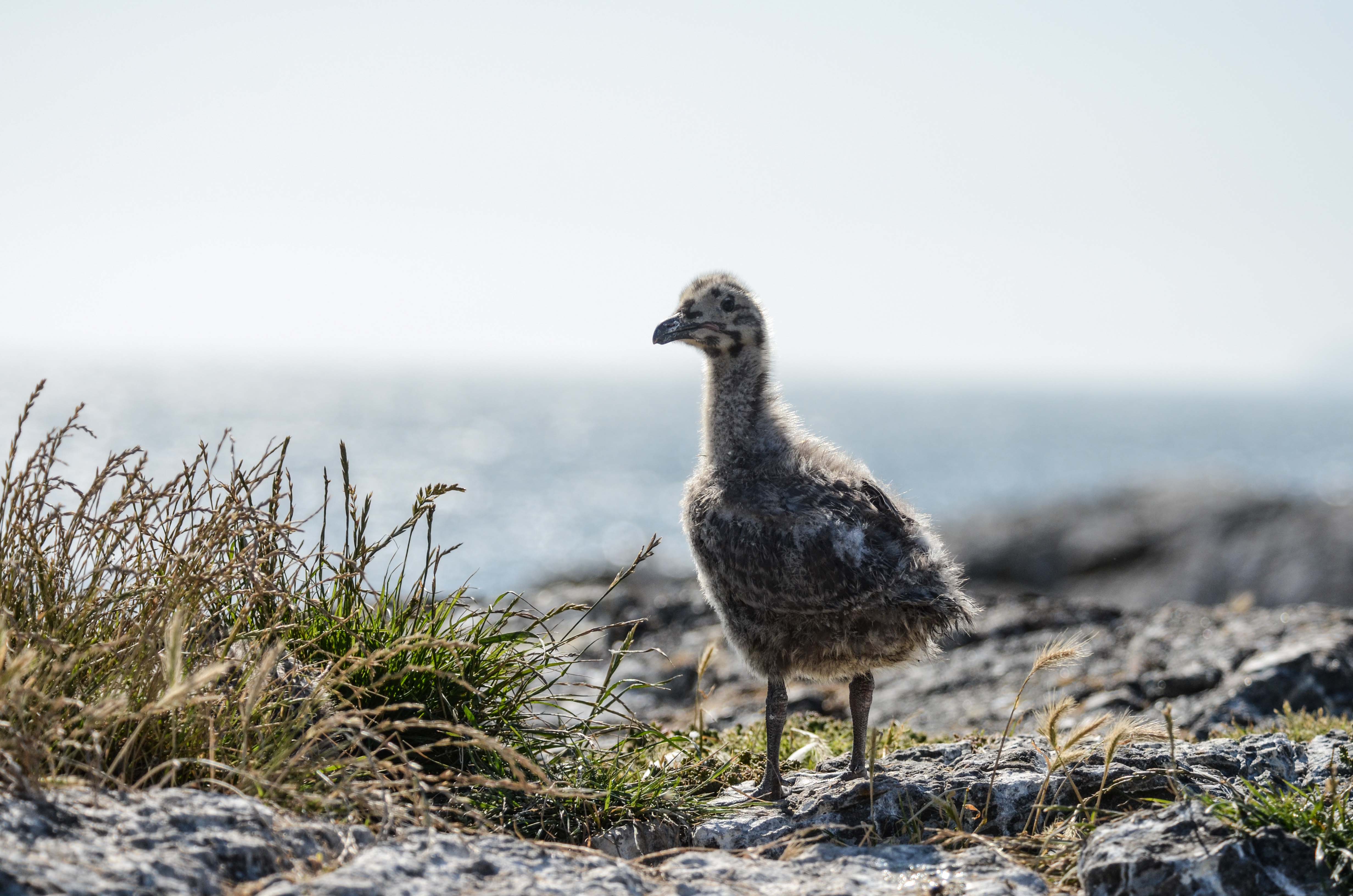
The new Glaucous-winged gulls born in late June are now flying all over the place and their parents are far less protective. The two pictured are the same from my earlier posts.

On a different subject, the island’s bird calls have been almost completely replaced by the sea lions’ barking now.

Glaucous-winged gulls

The sea lion numbers have grown and since August 21 have gradually moved from the jetty to the rocky shore on the East side of the island.

Sea lions on rocky East shore


21 July Update


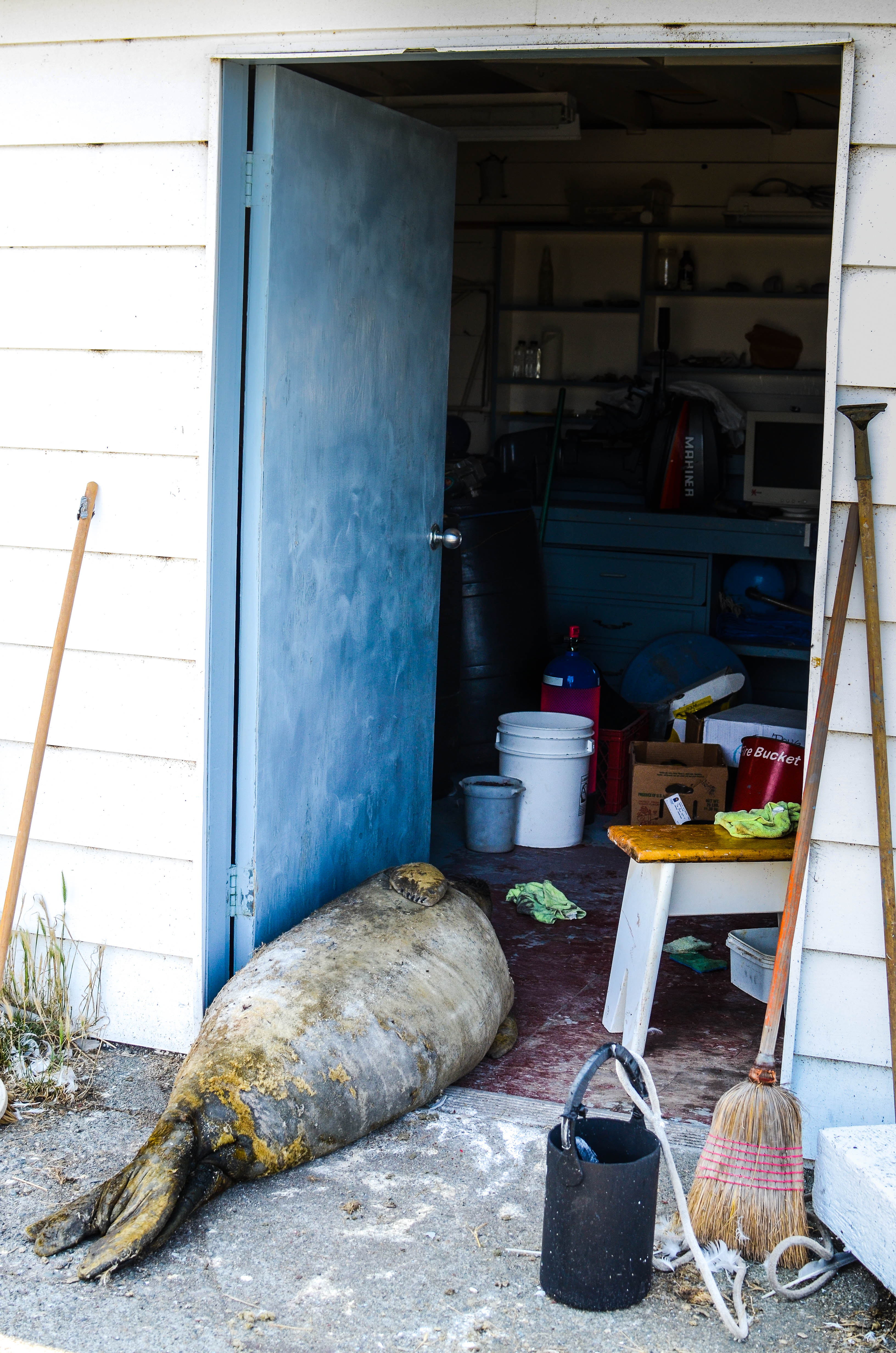
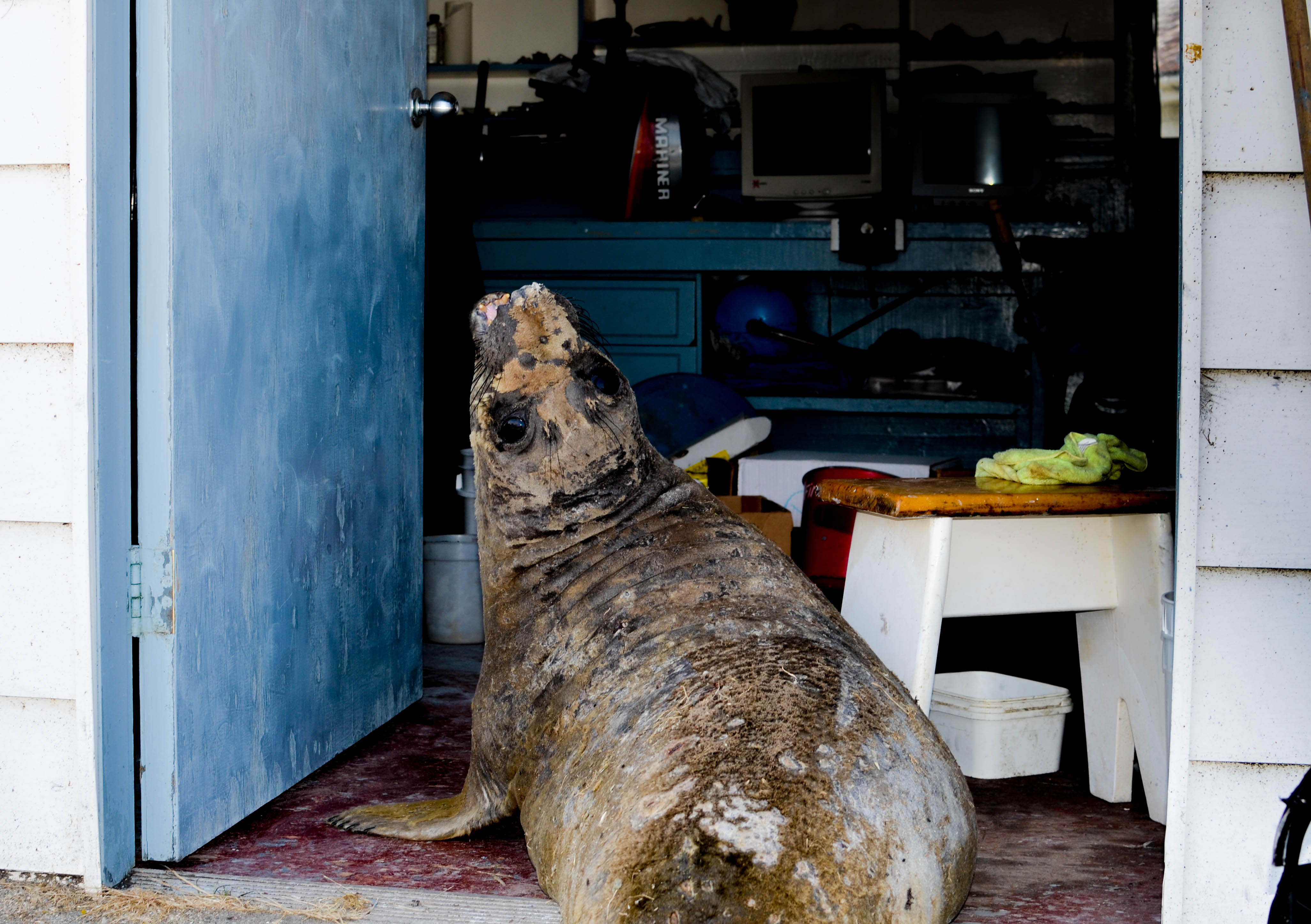
Today I scrubbed the tank room door with TSP (grease cleaner/remover) in order to paint it. Because it needs time to dry I decided to go and sand down the jetty in preparation for its paint job. In the short span it took me to do so our elephant seal friend managed to worm its way halfway into the tank room from ~10 metres away… Again!

After some prodding it finally manoeuvred out of the doorway. Although it seems rather humorous, this incident raises more serious questions about measures we will have to take in the future if the elephant seal population continues to rise.

The jetty, for example, which is the most preferred spot for water entries and exits, is hardly large enough to accommodate the two adult males we have here as it is.


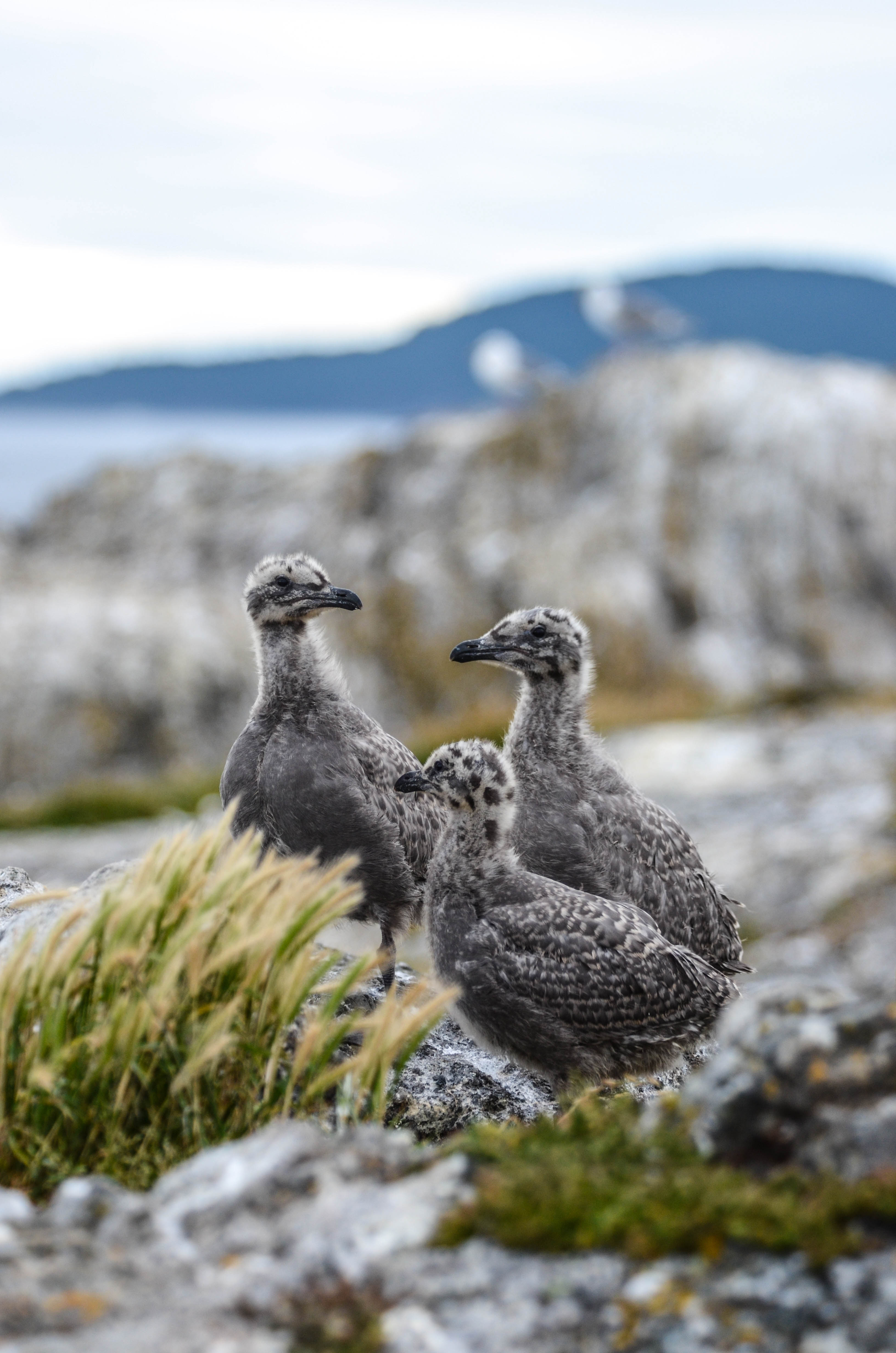
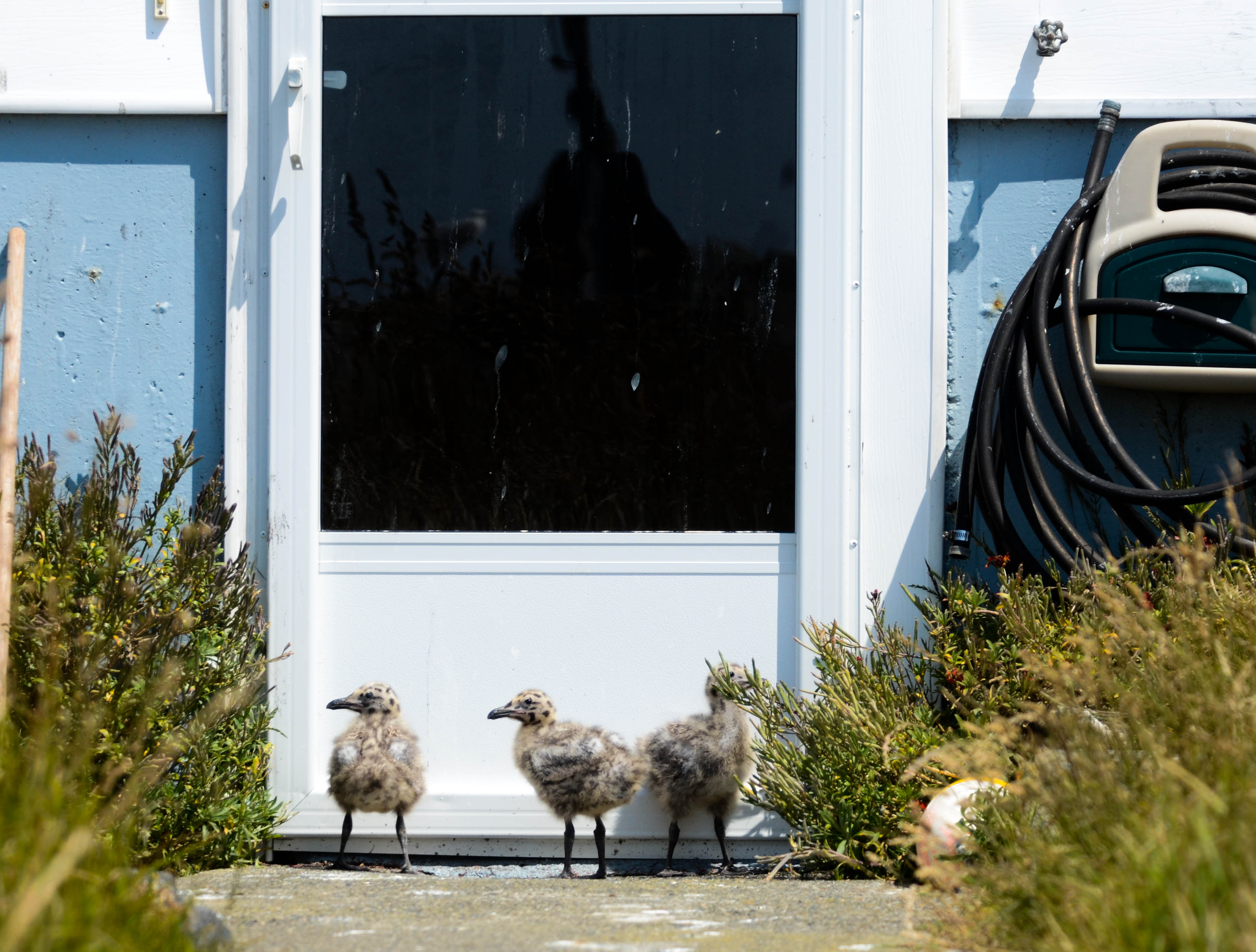
Also, an update on the progress of the 3 chicks shown left. Many chicks on the island are starting to show signs of trying to fly.

A different 3 have decided to block my doorway for the past week or so.

Yesterday Chris Blondeau came to clean camera 2 (the underwater camera) and there were six other visitors who toured the island.


Elephant seal encounters

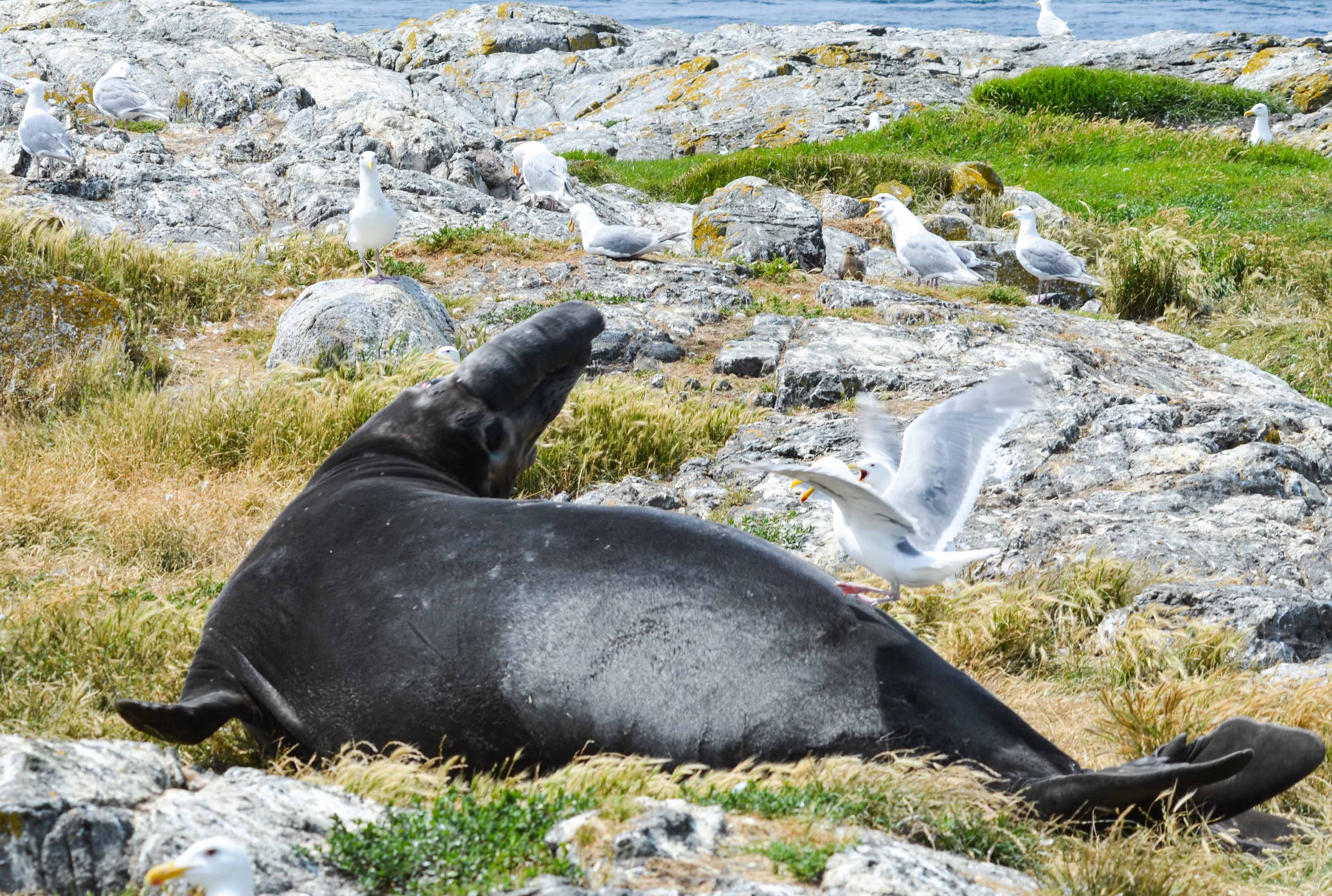
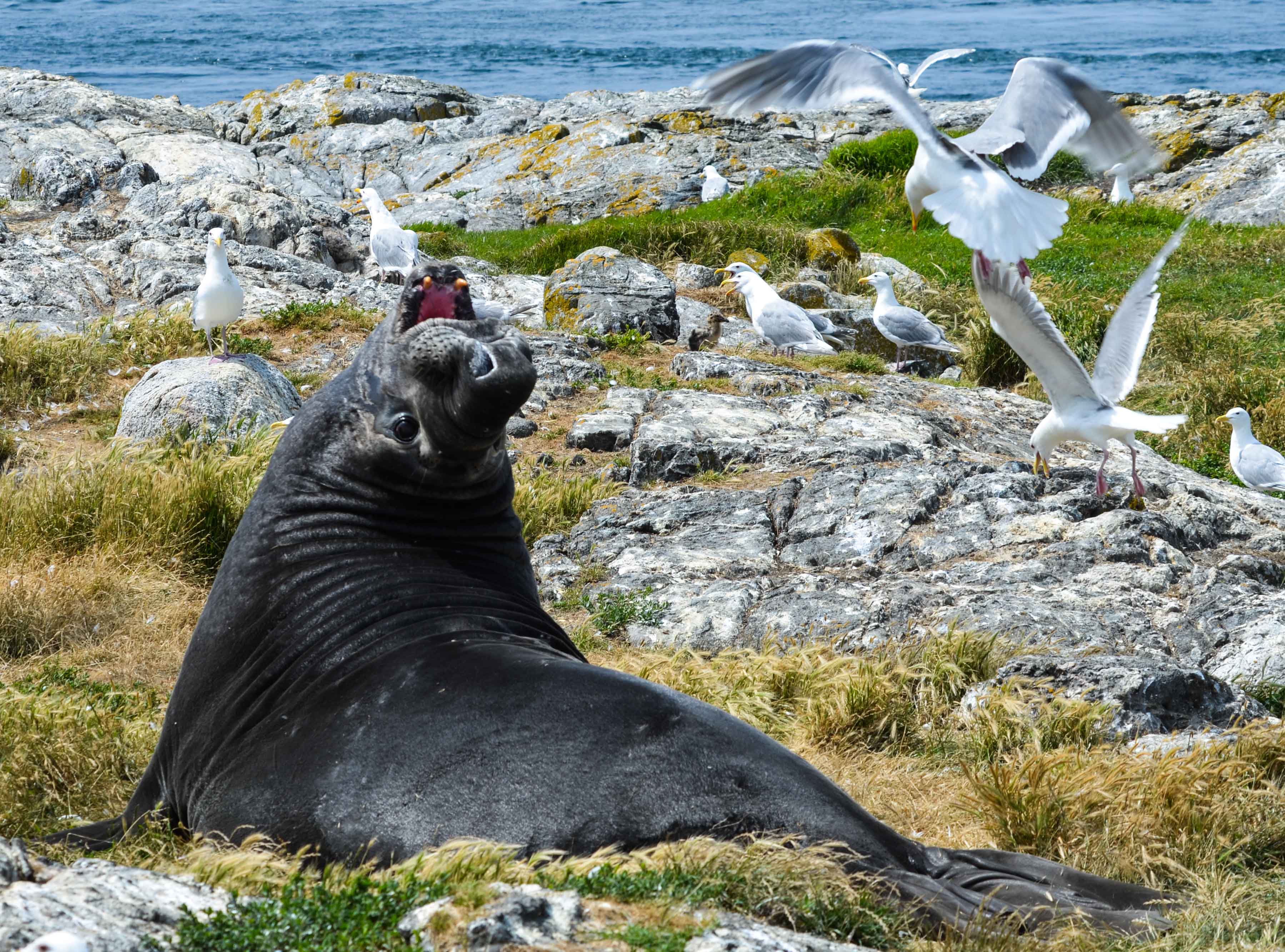
The elephant seals have had some funny encounters with some of the other animals on the island. There have been some close calls between the seals and the gulls, though I’m not sure on whose part.


On their way to and from the water each day, the seals cross over bird nesting areas (which are hard to avoid on the island). Recently they have been visiting the water more often so this is becoming a larger problem for the gulls who frantically call in defence of their young. I must say they put up a good fight. The above shots show two gulls who, while attacking Misery, dare to land on his back to distract him and deter his path. It made for quite the stand off.

Chunk with Sea Lion

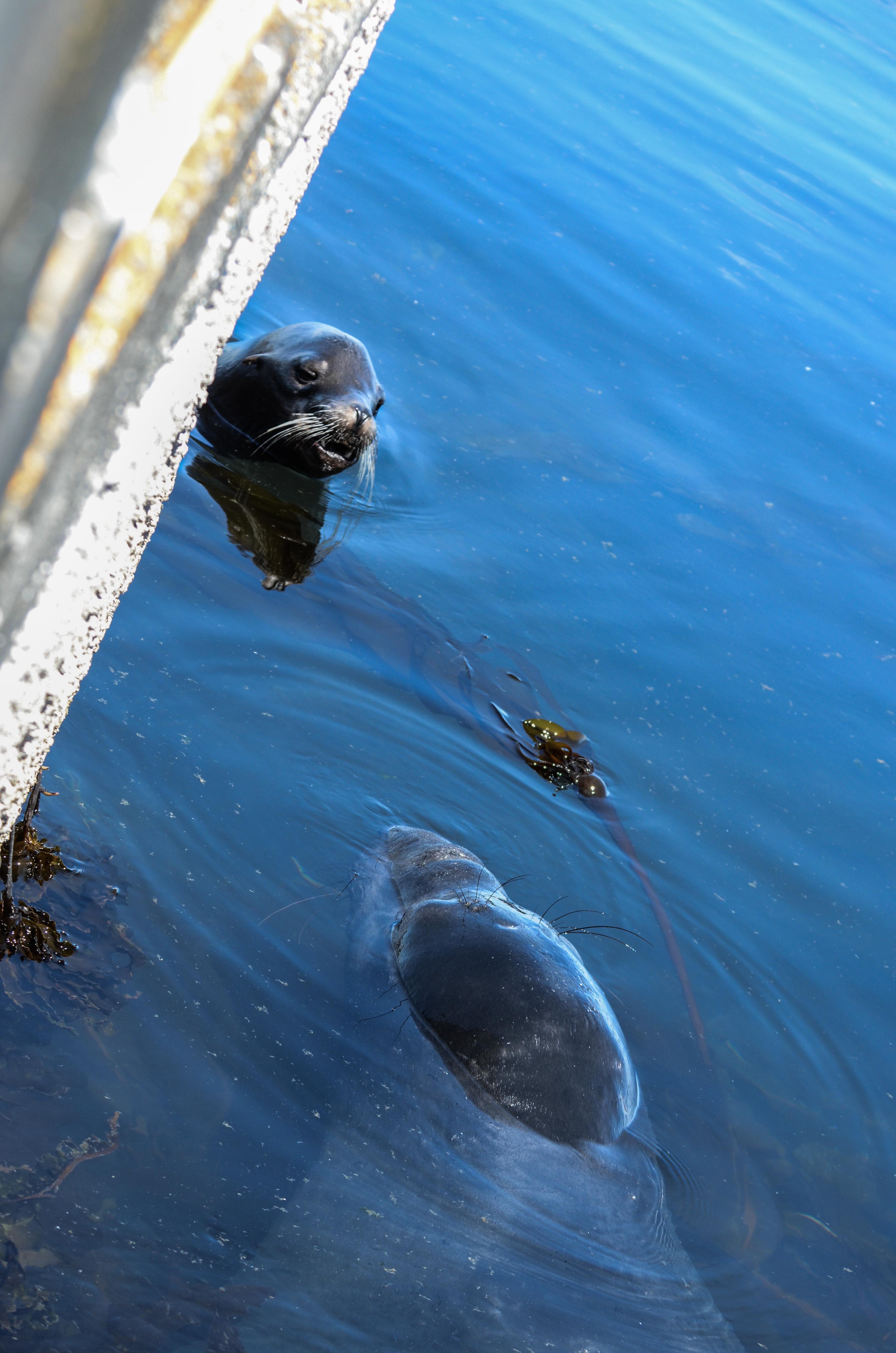
The elephant seals have also been interacting with the sea lions more, who have been hanging around the jetty more frequently. Unlike the gulls, the sea lions (both Stellar and California) happily share the space. Yesterday when docking the boat there was a sea lion on the boat ramp amidst 4-5 elephant seals in the water and on the ramp. However, if confronted the sea lion knows who the alpha male is and makes for a quick depart, as this one (pictured right) did just after the photo was taken.


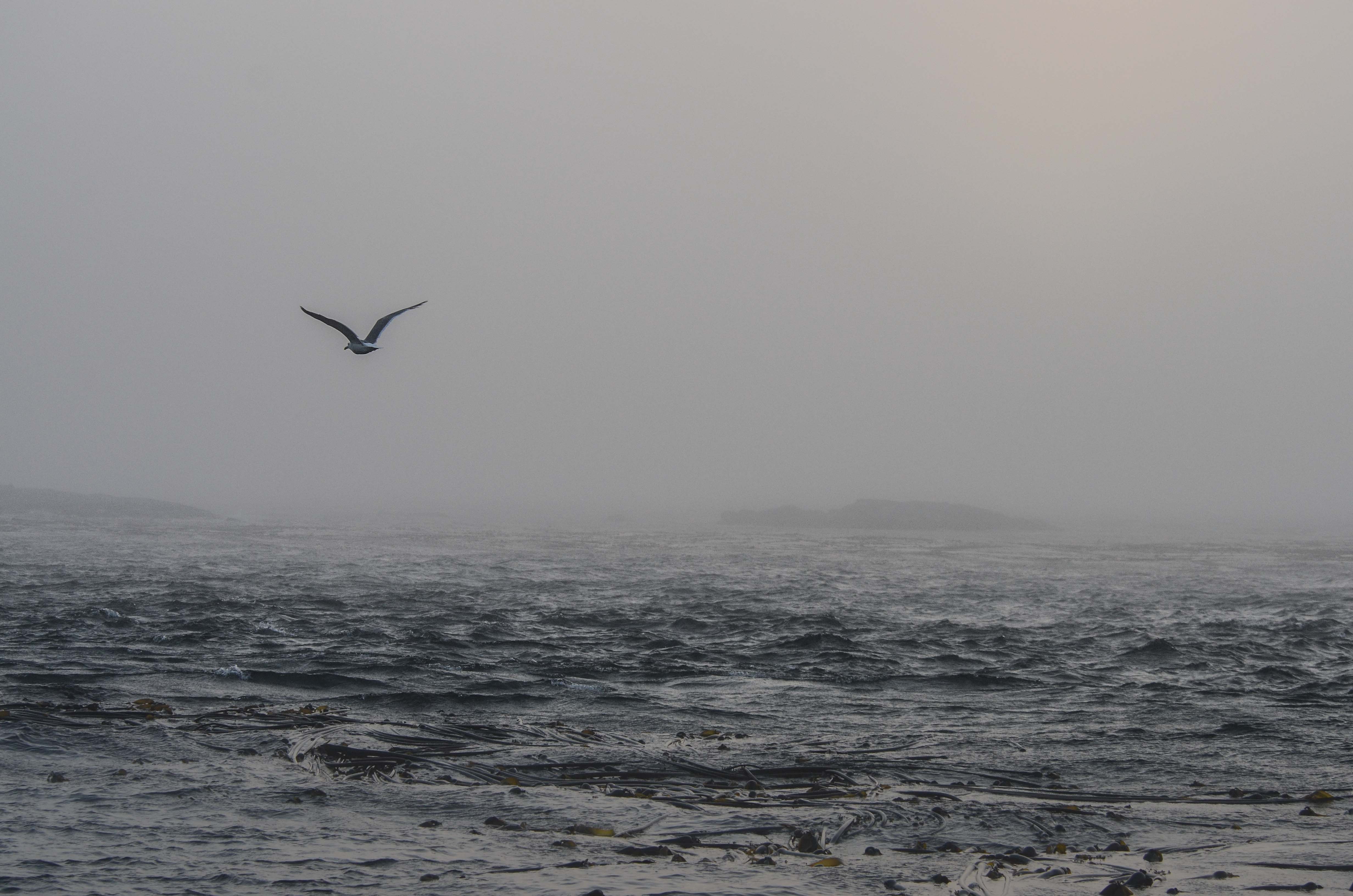
The fog is lifting!


View looking to North Race

Today was my first view of the mainland for the past couple of days excluding a few glimpses here and there.The past week has brought constant fog and winds of 20-40 knots which means boat traffic has been minimal. (At least as far as I can see!)


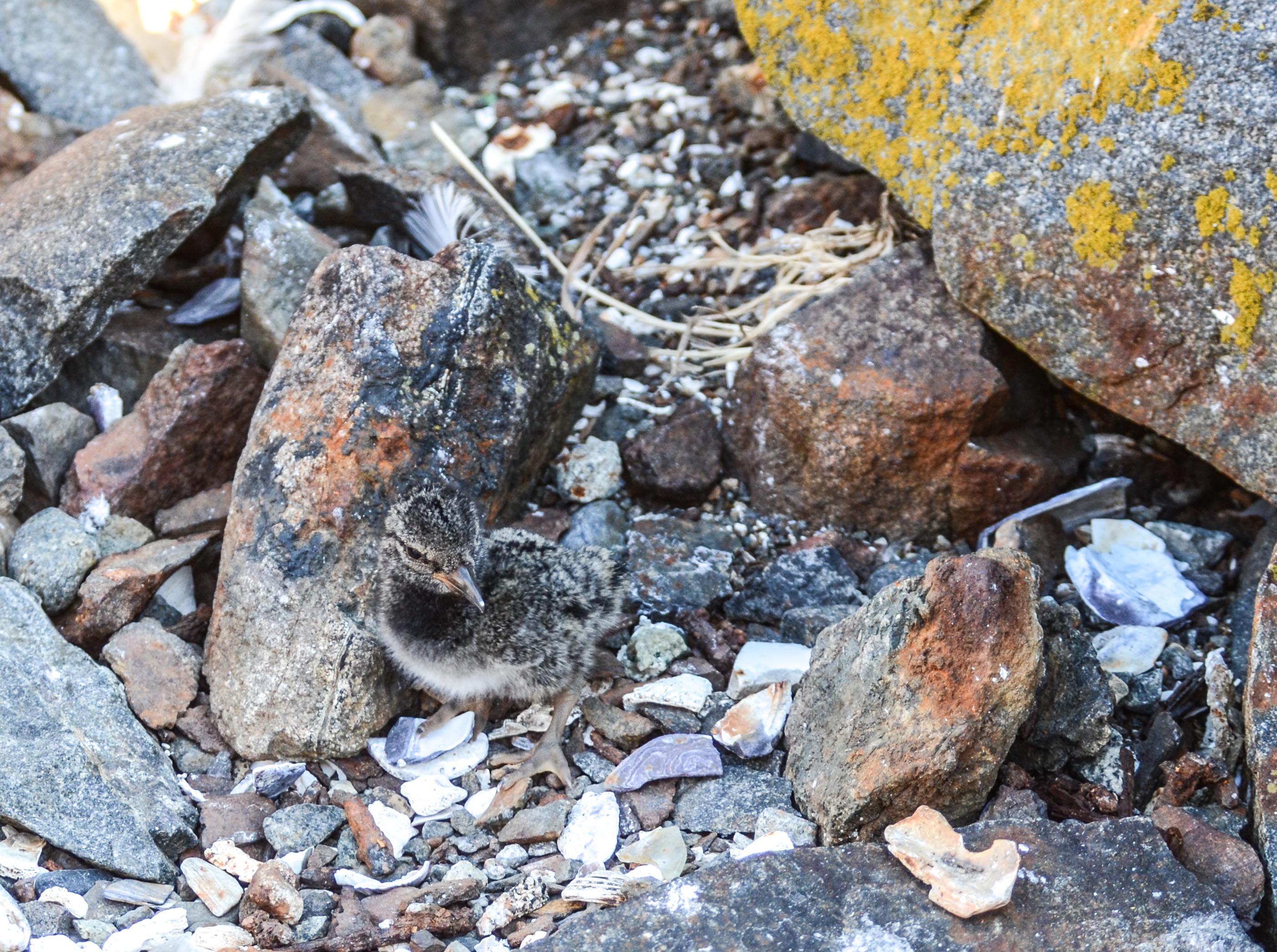
Newborn Black Oystercatcher

Today though, the sun has come out and with that yet another newborn. The Black Oystercatchers  (Haematopus bachmani) are hatching. These birds live mainly in the intertidal zone. Where the chick is shown in the photo below is where it just hatched and effectively camouflages itself. Quite a difference from its nest to that of the gulls’.

On another note, the elephant seals are spending more time wading in the water and are holding their breath for longer periods. I was startled the other day when I looked near the jetty to see one limp underwater only to realize it was snoozing and would come up for air every few minutes.

Glaucous-winged gull juvenile


And finally, an updated picture of one of the three infant gulls in past posts. It has become more difficult to get pictures of all three because they are more mobile now.


New and old faces

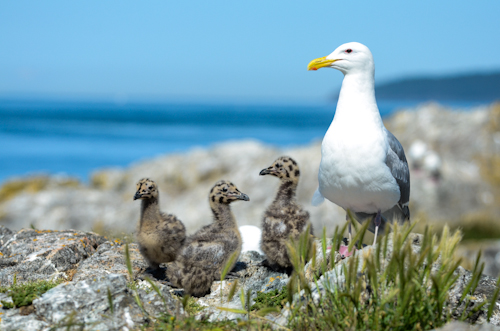
Glaucous-winged Gull with chicks

The past few days have seen a good deal of development with the wildlife on the reserve. Newborn gulls and elephant seals are still competing for the spotlight. The picture below of the gulls are the same three that Mike posted as newborns on his last post (June 29th) and luckily they have indeed been thriving since.


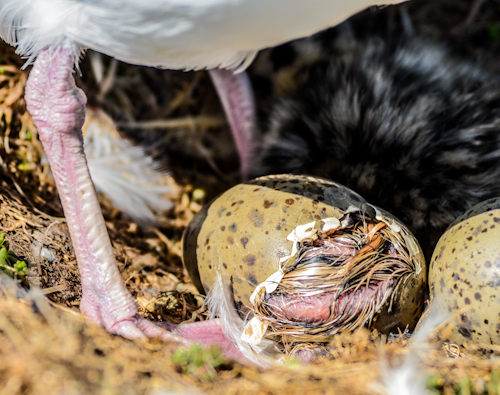
Hatching glaucous -winged gull chick

A few more are born each day and they can take hours to fully hatch.


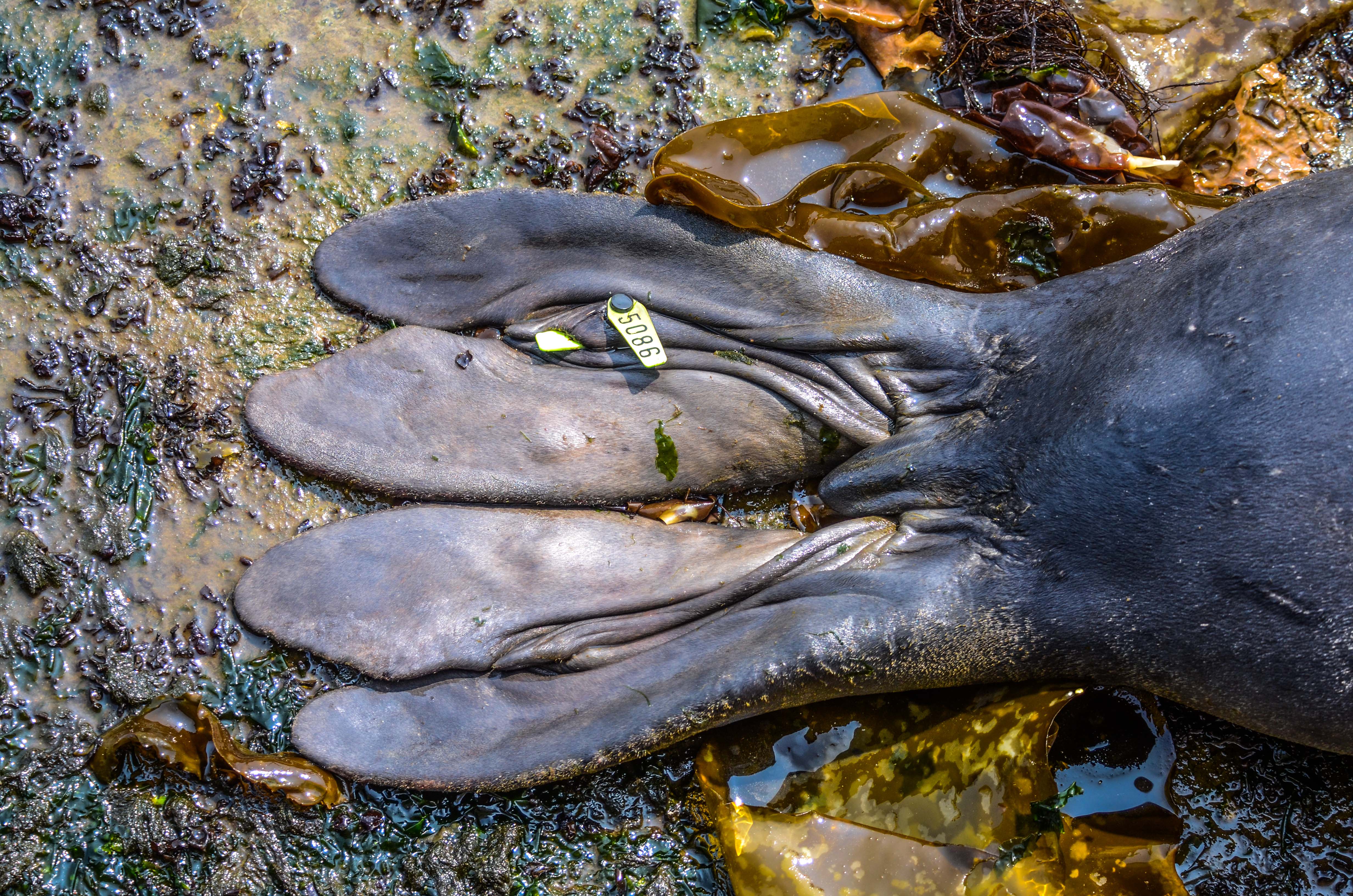
Elephant seal with green tag #5086

Yesterday we had two new visiting elephant seals. One had a green tag which implies that it was tagged by a team in California, on an eco-reserve in Ano Nuevo. March 10th, Alex posted a photo of an elephant seal that had been tagged twice. This appears to be the same one (minus one of its tags). She’s done a beautiful job of moulting.


Bertha is back!

Bertha is back after giving birth to Squall in January

Two nights ago on my way out to the jetty I was met by an elephant seal. I had originally thought it to be male but when it was on its back the following day I saw a scar that determined it was our beloved Bertha, the female who gave birth to Squall this past winter. She left early February after nursing her pup for a few of weeks and has finally made her way back to the reserve. She has gained a lot of weight since her last visit.

Another Elephant seal

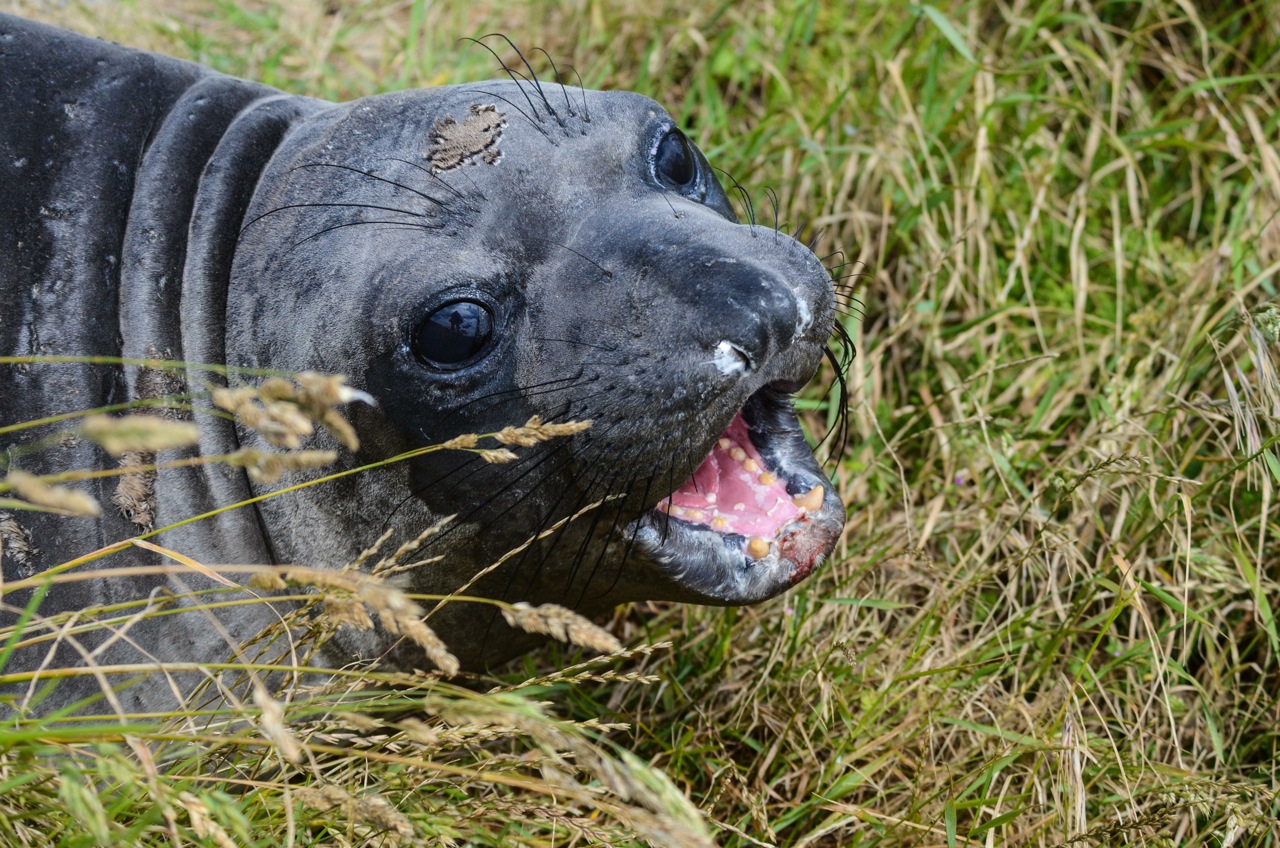
Another elephant seal that has been camped near the generator room for the past number of days has remarkably made his way up past the lighthouse and towards the cistern. He has been fairly vocal today and I noticed a splash of blood on his mouth. He now sits closer to the house.


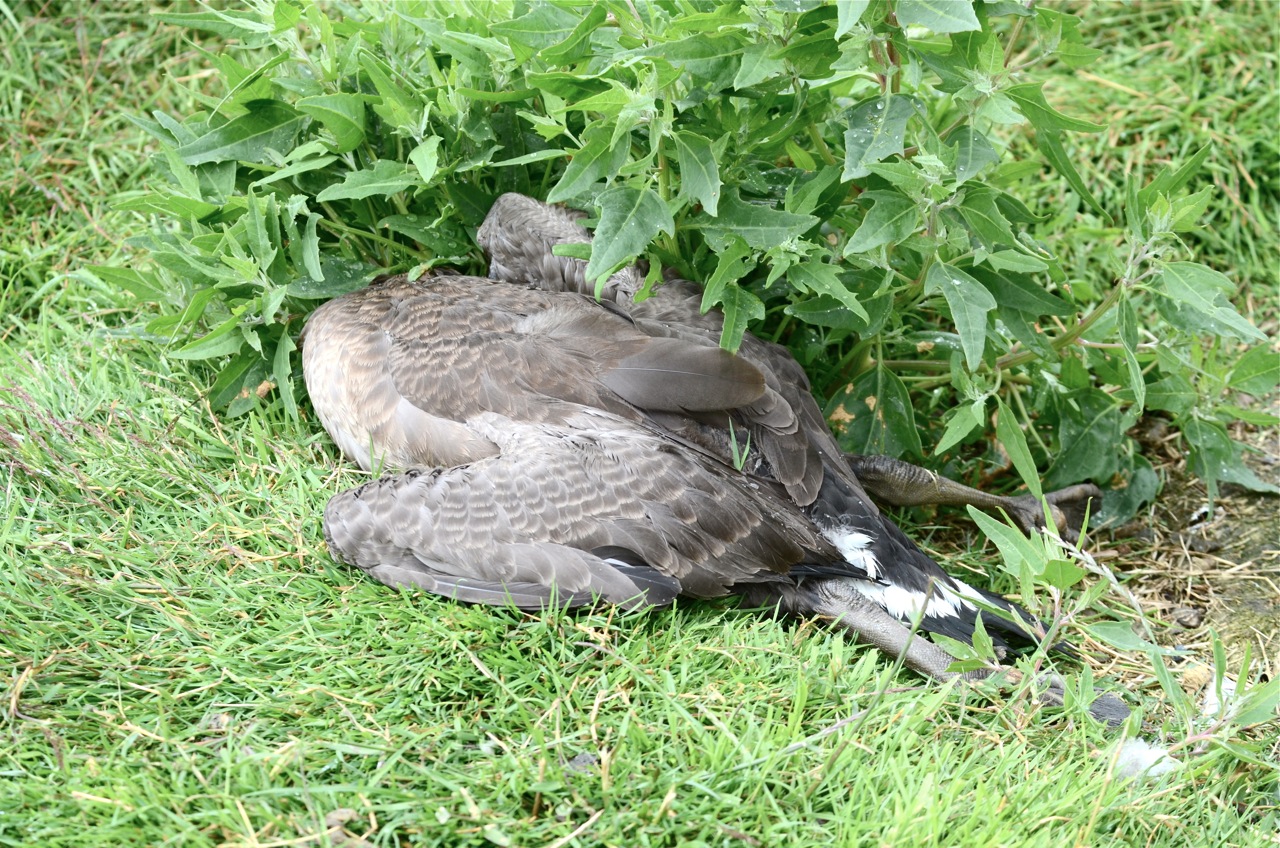
Dead Canada Goose

The Canadian geese have taken to grazing near the east side of the main house. This morning I found a dead juvenile which puts the total number of geese in the reserve (including adults) to 18.