Greener Pastures (Covering May 11 & 12)

The wind blew west 20 – 25 knots until early afternoon on Monday when it slowed, came in from the southwest and cleared out the cold, wet clouds. For the rest of the day, it stayed partially overcast with sunny breaks and the forecasted call for more of the same, with showers was spot on. The dropping barometer leveled out a bit Tuesday and the prediction is for continuing strong westerlies, which blew all day 10 – 20 knots. Wednesday looks like a wet one.

Monday morning  was blustery  and bristling with police and military activity on the water, all around but not in the Ecological Reserve. Only two whale watching boats were noted in Reserve on Monday.Tuesday only one whale watching vessel was noted in Reserve. There was a Pedder Bay rental with independent researchers counting seals and sealions. Tuesday, Second Nature arrived with a large contingent of support staff, maintenance, IT and volunteers. Tuesday was punctuated by military blasting.

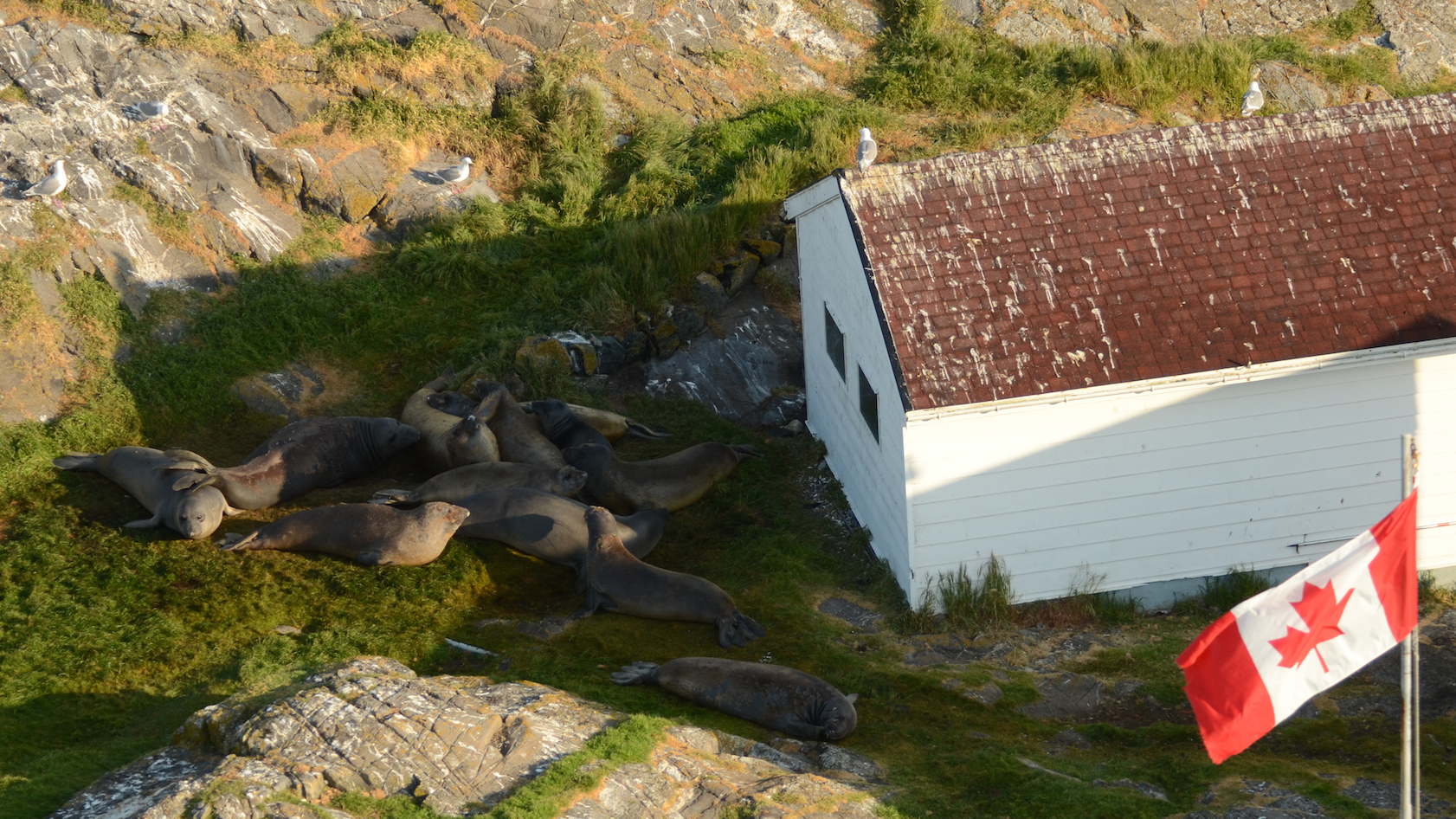
The elephant seals were on the move today and yesterday. After a dawn swim, Monday, only half the animals moved back behind the boathouse, where most of them have been sleeping for the last couple of weeks. The grass where they were lying, behind the boat house, is a fried brown colour. Although it looks dead, it will probably come back after a couple of weeks like the other crushed and cooked parts.
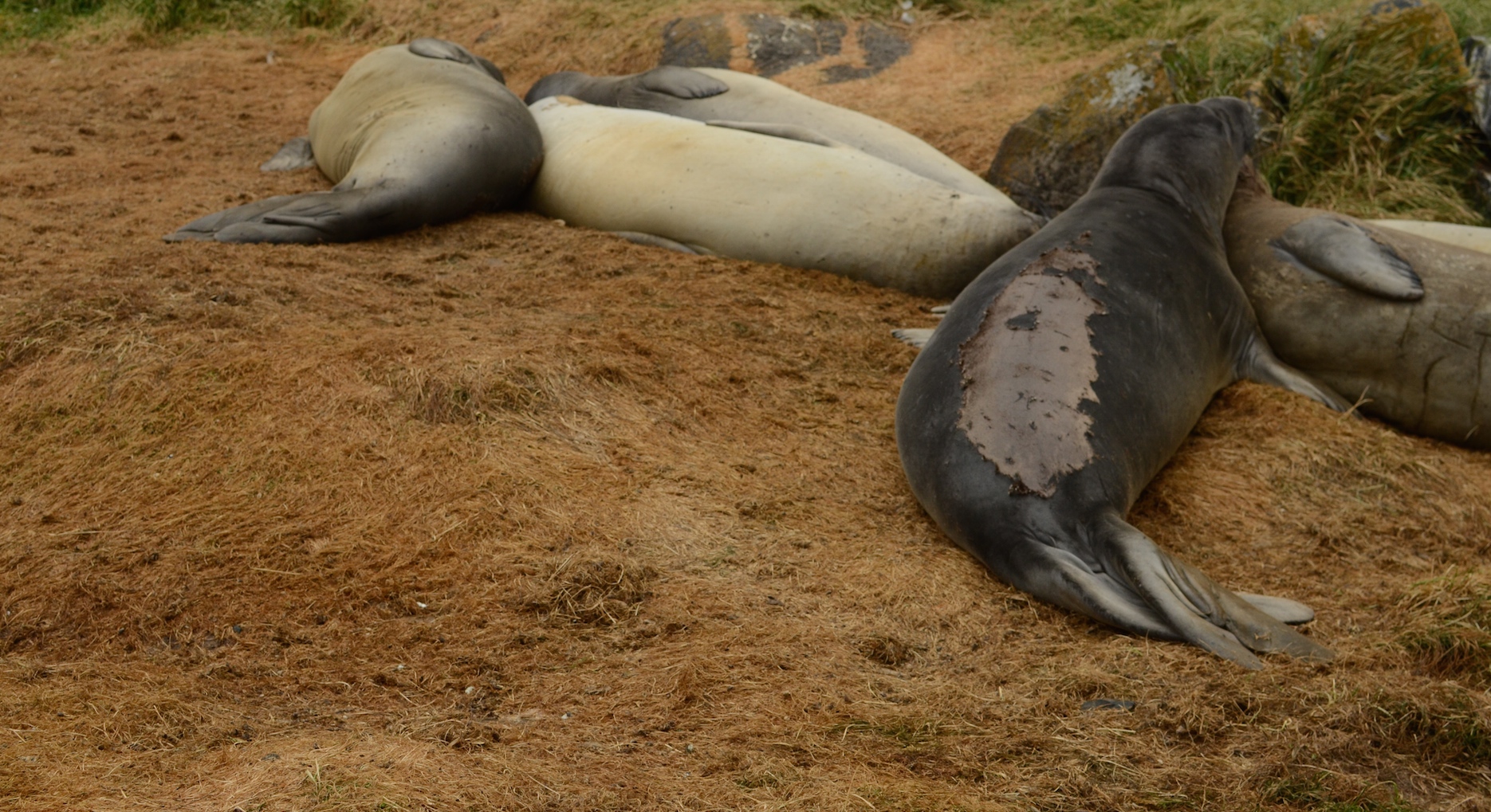
Elephant Seal lawn treatment results.

Elephant Seal lawn treatment results.

Seven animals, including two females who started the move, found fresh, green grass right outside my basement door. Tuesday was a repeat performance except that we were also graced by the presence of a very large male. It was a short visit and I was too busy to measure him but he was massive.
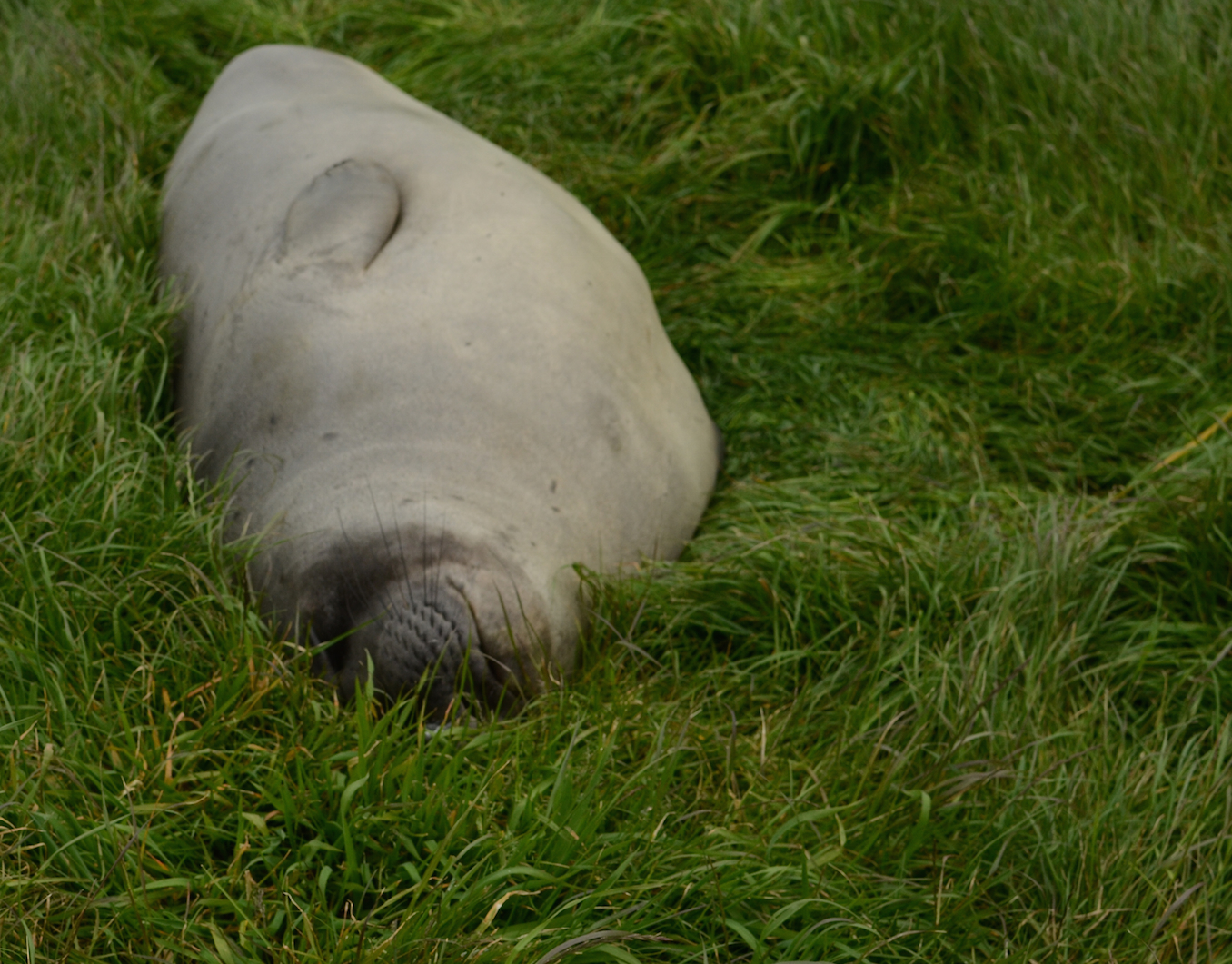
This before the lawn treatment, the previous photo is after.
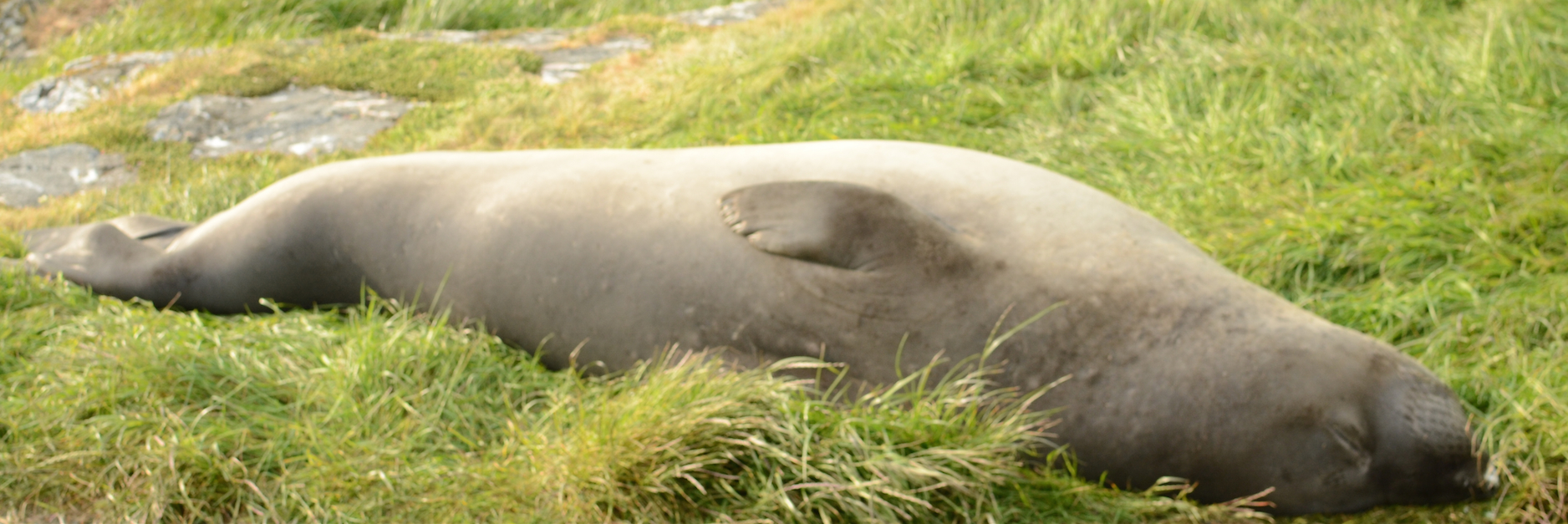
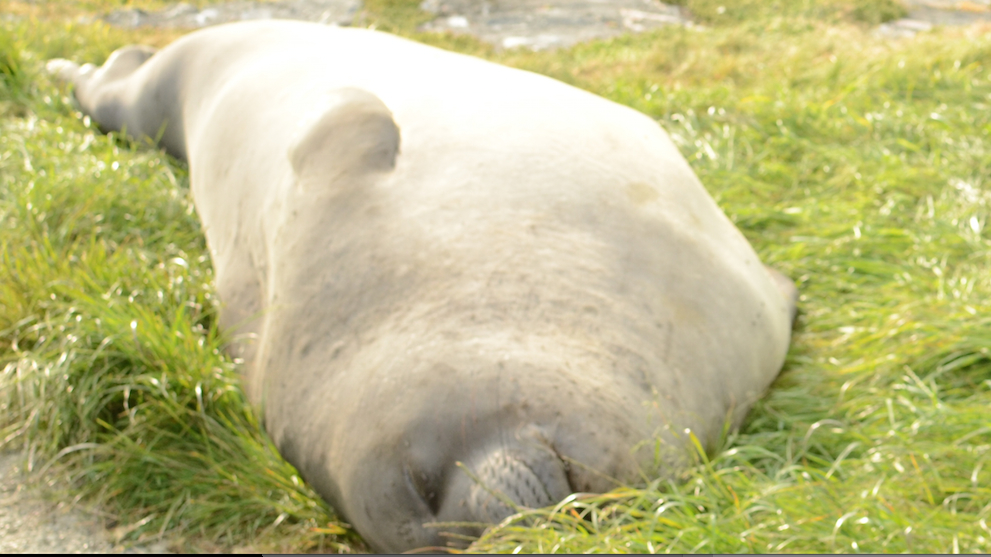
This before the lawn treatment, the previous photo is after.

big boy

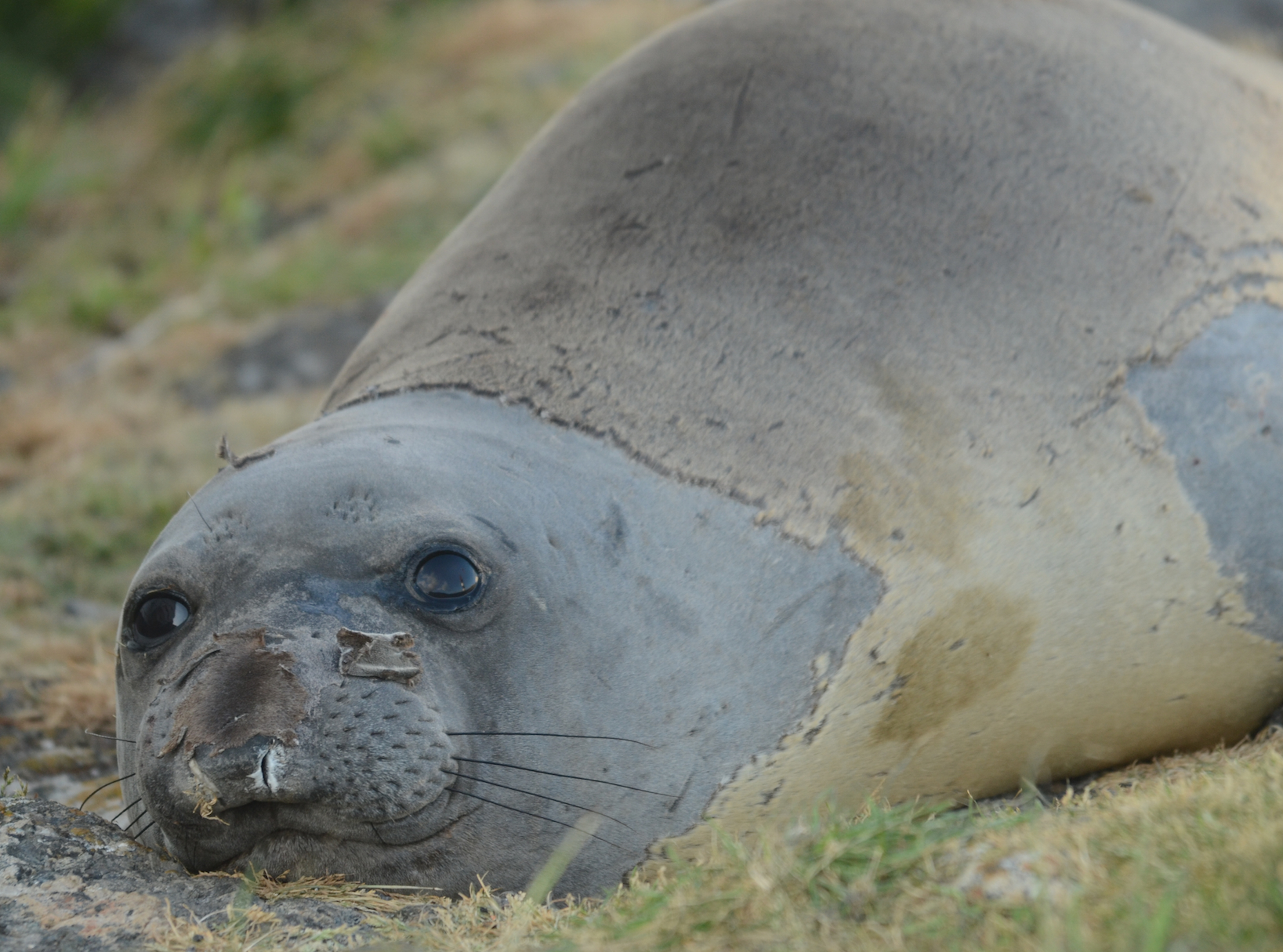
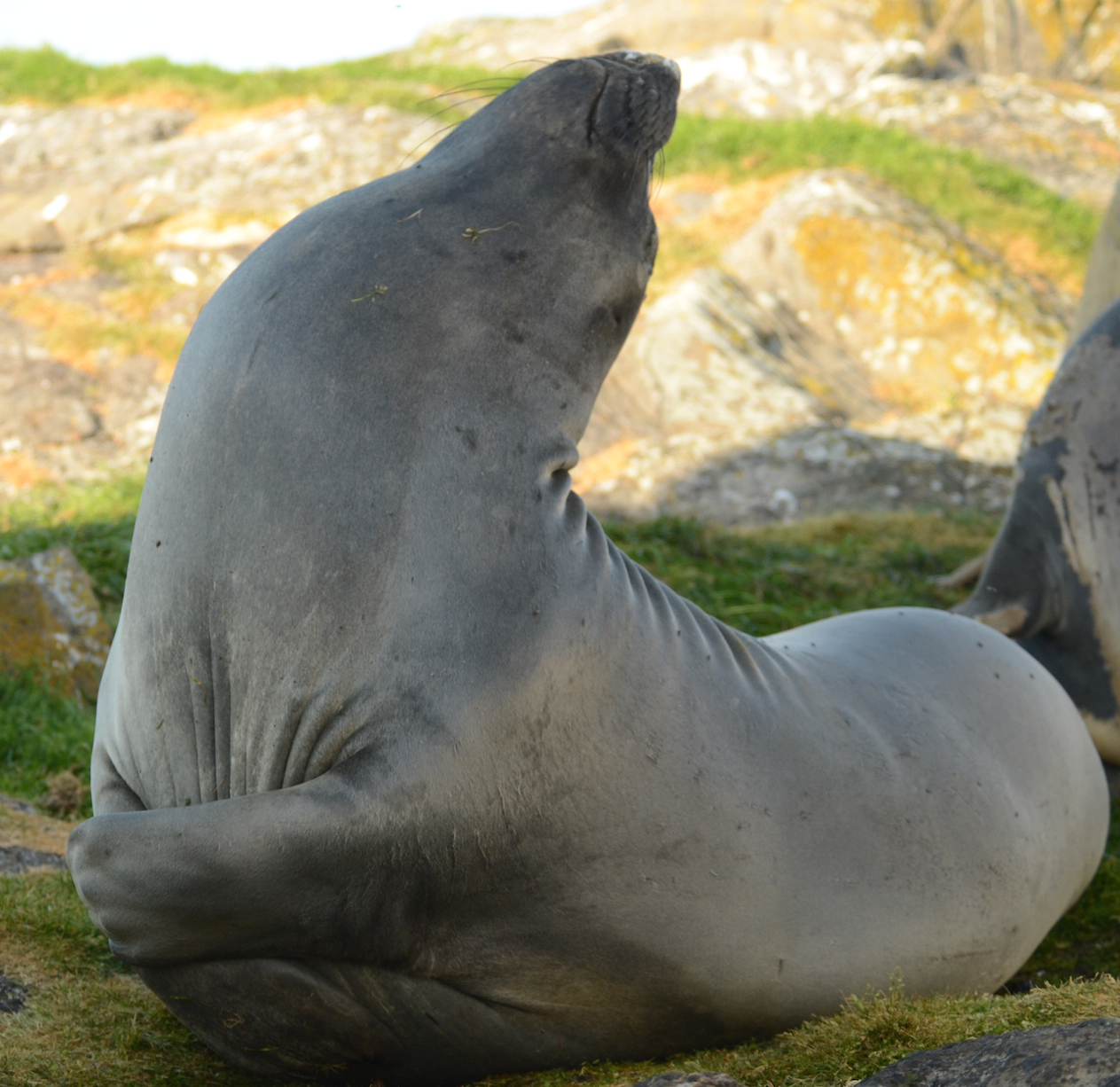
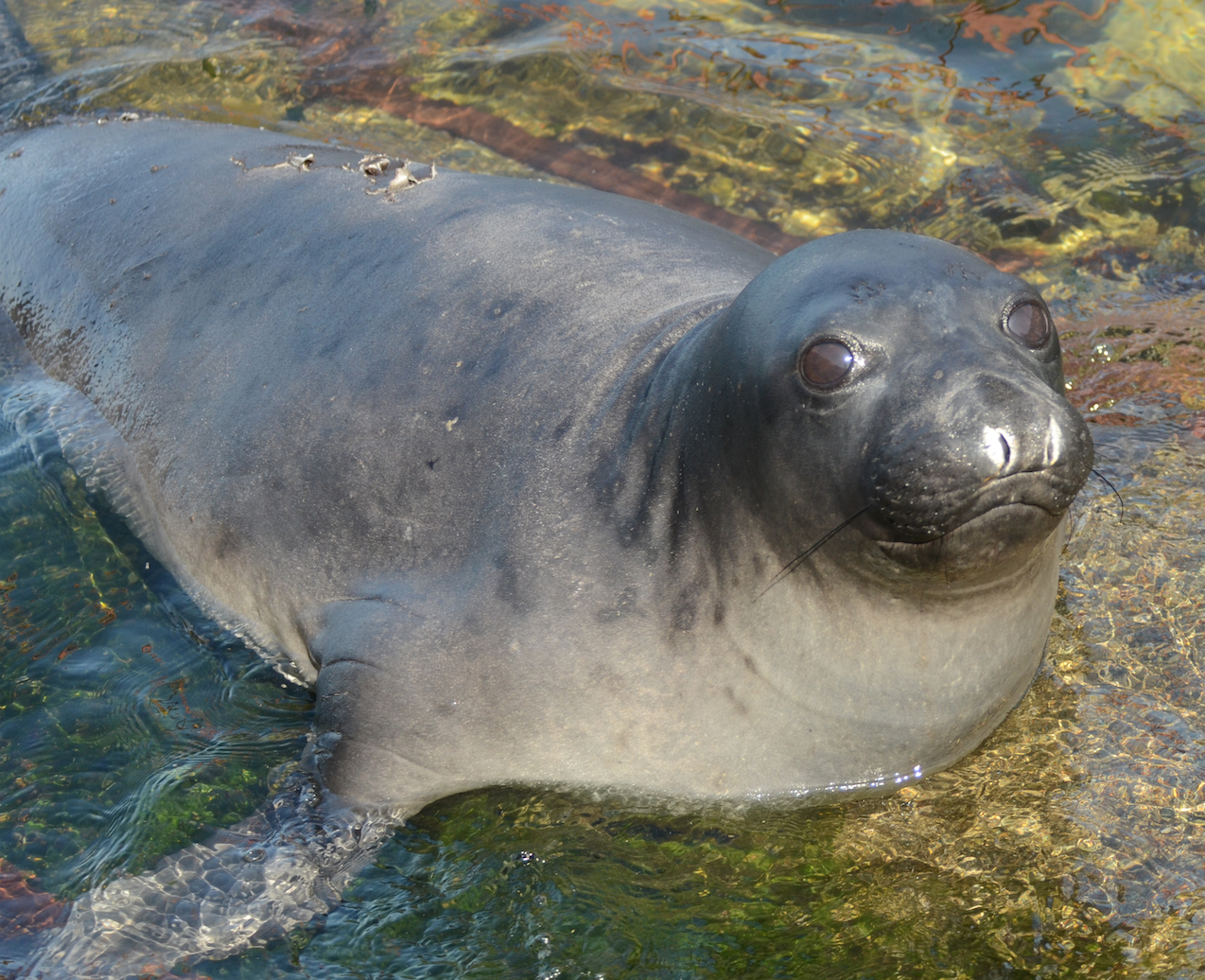
This big boy is luxuriating in the nice green grass.

This big boy is luxuriating in the nice green grass.

There were at total of 17 Northern Elephant Seals on Great Race Monday and at least two individuals here Sunday that were gone Monday. My guess is that there is exchange with the group hauling out on Middle Rocks and that was reinforced by the big visitor here today.

California Sealions started hauling out on the jetty today.

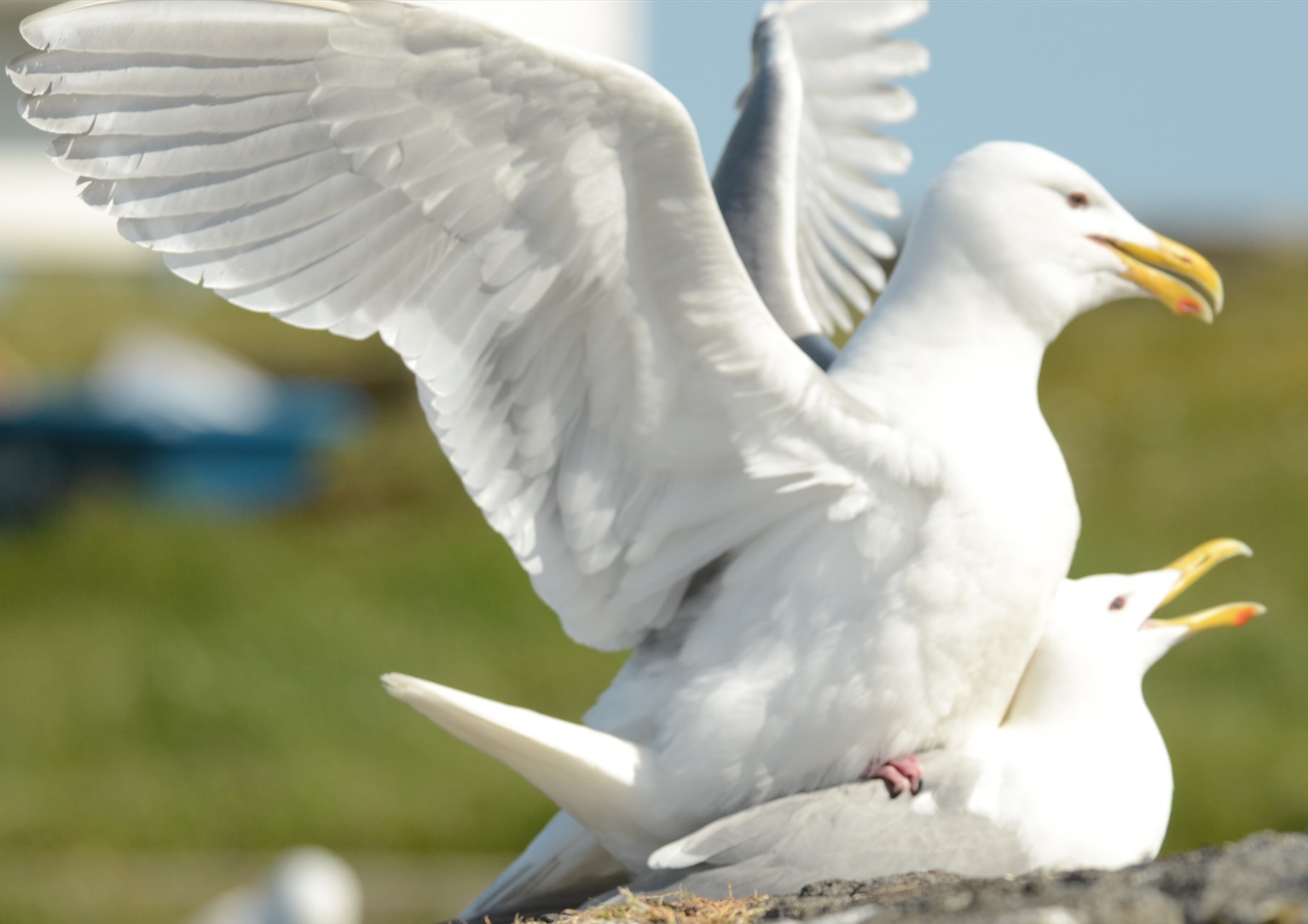
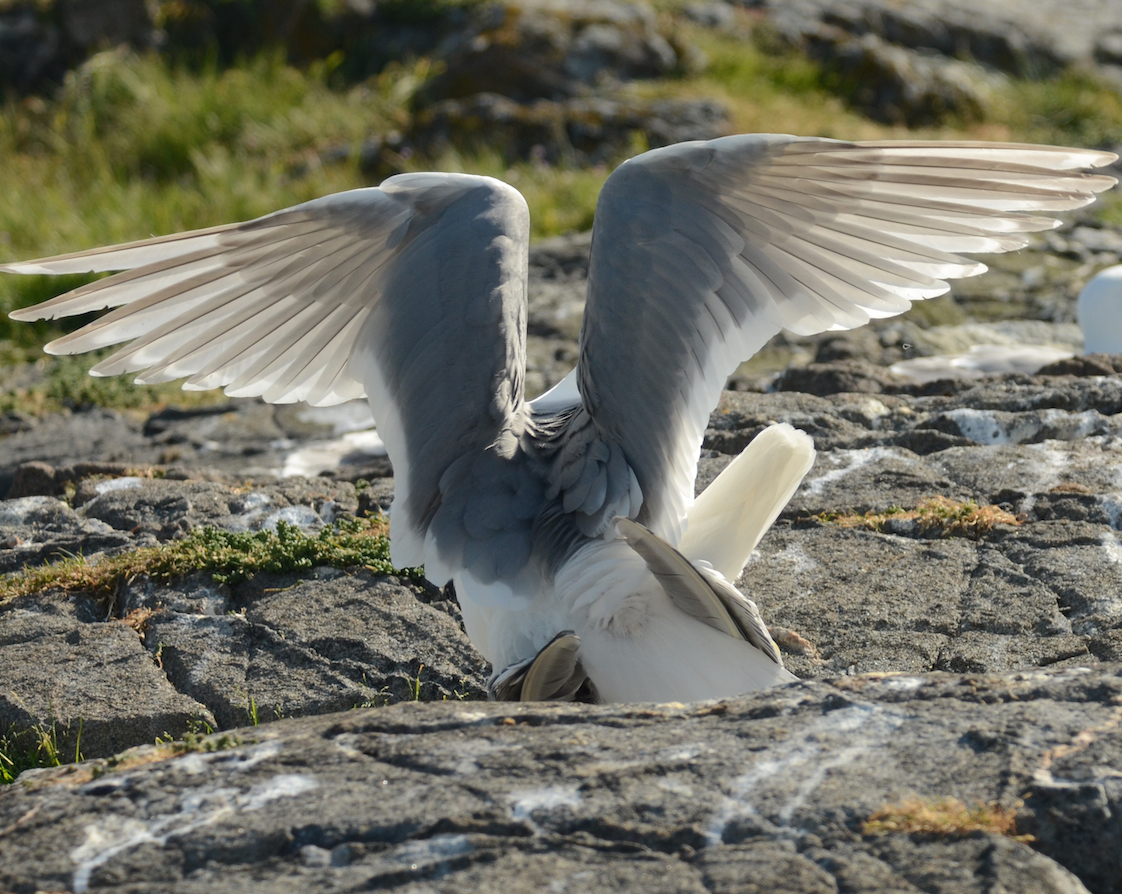
Some the gull pairs are getting quite good at their acrobatic feats of reproduction which involve the male standing, balanced on the females back.

Chores were minimized Monday due to an injury. There were no visitors Monday and six staff/volunteers Tuesday. The men moved a tidy tank across the island, Max fixed camera 5 and did some trouble-shooting and Courtney started training Guy.
 

More Than Radical Moult?

The east-northeast breezes that came with dawn, soon turned to west-southwest and became light winds by early afternoon. The early morning sky was quite hazy with smoke and “marine air”. A gale warning was in effect today and when the wind picked up to 20 knots in the late afternoon it cleared the haze temporarily, but then the “marine air” (with brown tinges) thickened and started to feel like a chill fog. The wind rose to 30 knots in the evening. The rising barometer leveled off for the afternoon then started dropping. The usual forecast continues.


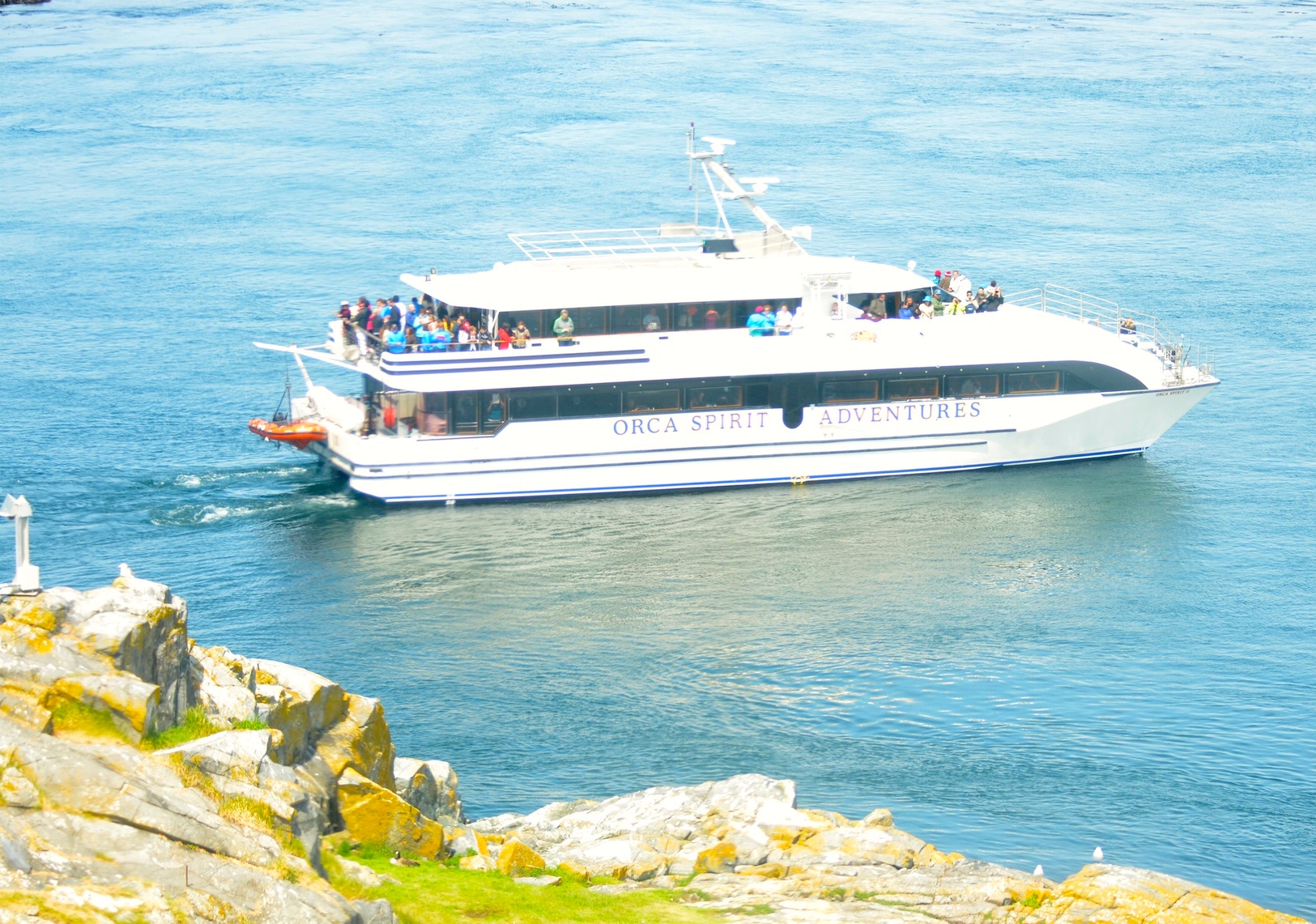
I was surprised that a vessel of this size would use Middle Channel but she was well driven, slowly and carefully.
I was surprised that a vessel of this size would use Middle Channel but she was well driven, slowly and carefully.
It was a busy Saturday on the water and a parade of whale watching boats came through the Ecological Reserve to observe the usual cast of characters. A total of 20  commercial whale watching boat visits to the Ecological Reserve were observed today.  All but one of these vessels took their time while in the ER, minimizing potential impact on wildlife by driving slowly.Their passengers probably saw more that way. The one vessel that seemed a bit pressed, just had a momentary lapse and dropped his speed after clearing away from a sports fisher also observing.

Some of the vessels that came through Middle Passage seemed a mite large. One of the smaller, open vessels took the passage between Great Race and South Islands. There really isn’t much room in there and there are a lot of animals in the water and on the rocks of that narrow passageway. Not a good practice, nor is it really following the regulations or guidelines.

A few sports fishers came through the reserve to have a look at the animals and they also drove slowly and kept their distance. There were several rental boats in the Ecological Reserve today, all but one behaving. One rental packed with people sped right through the “rockpile”, not slowing for wind, current or Ecological Reserve. A dive charter from Ogden Point dove a couple of sites in the Ecological Reserve today, All very calm and professional.

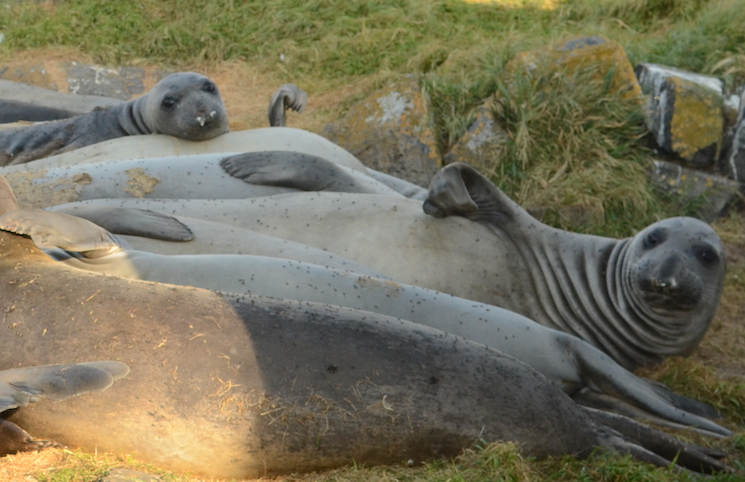
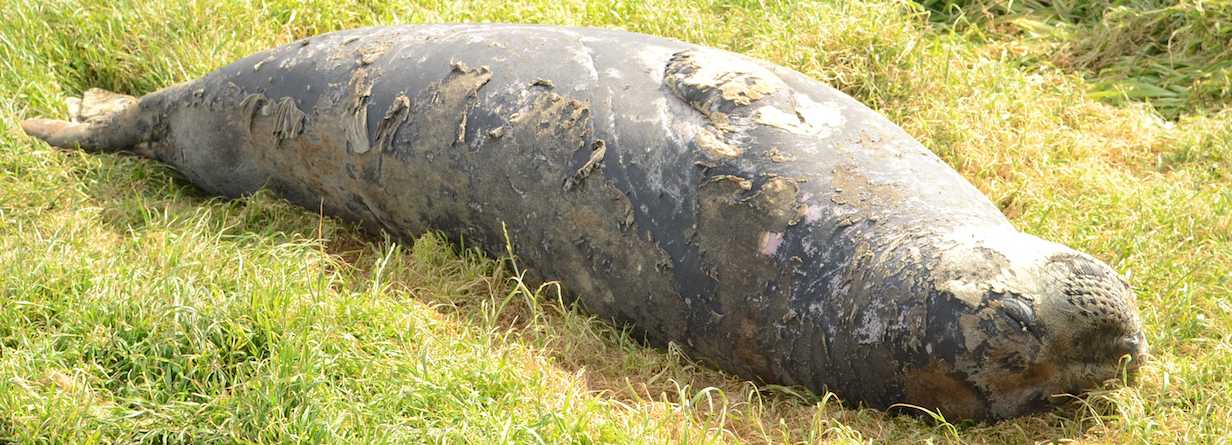
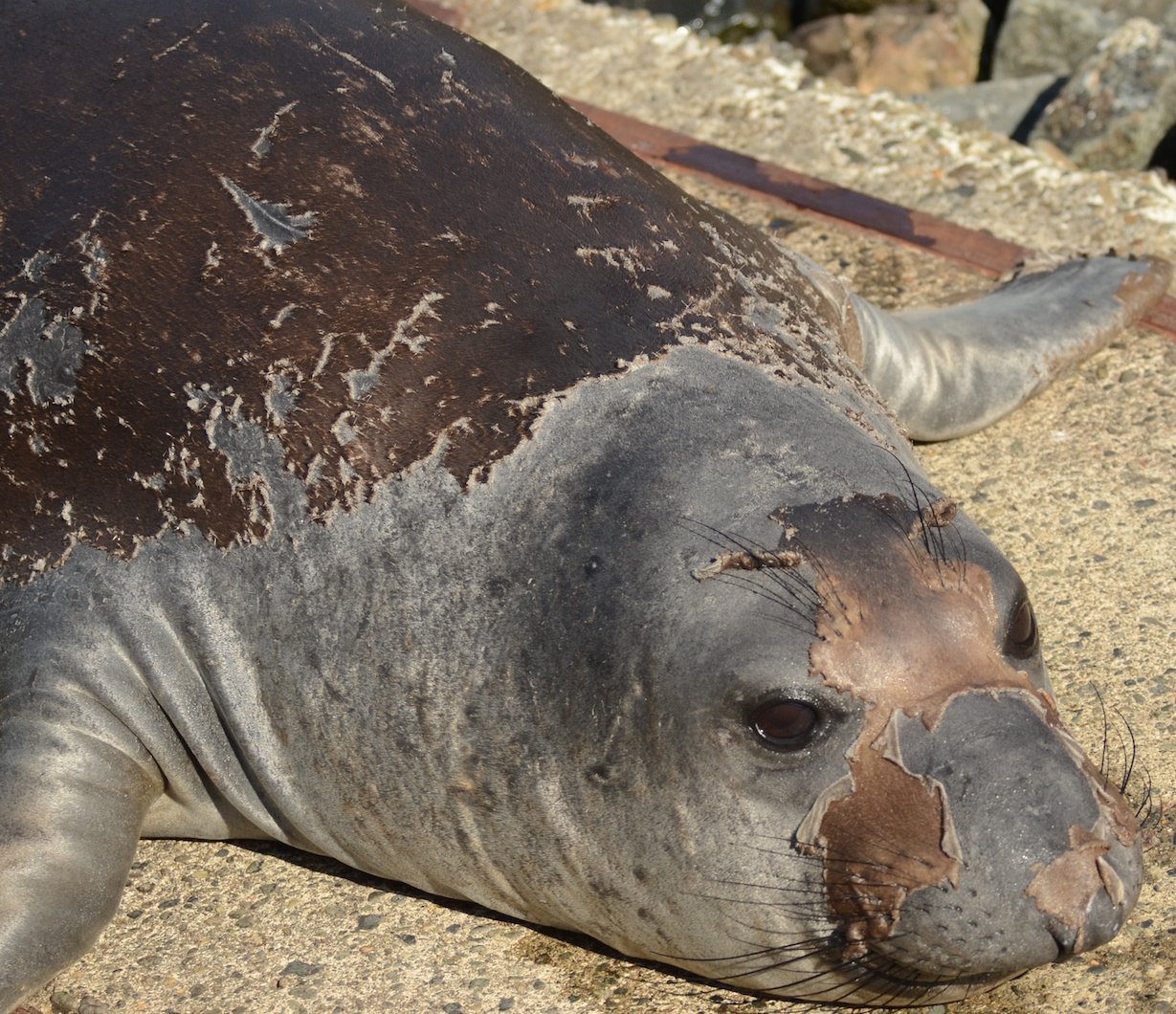
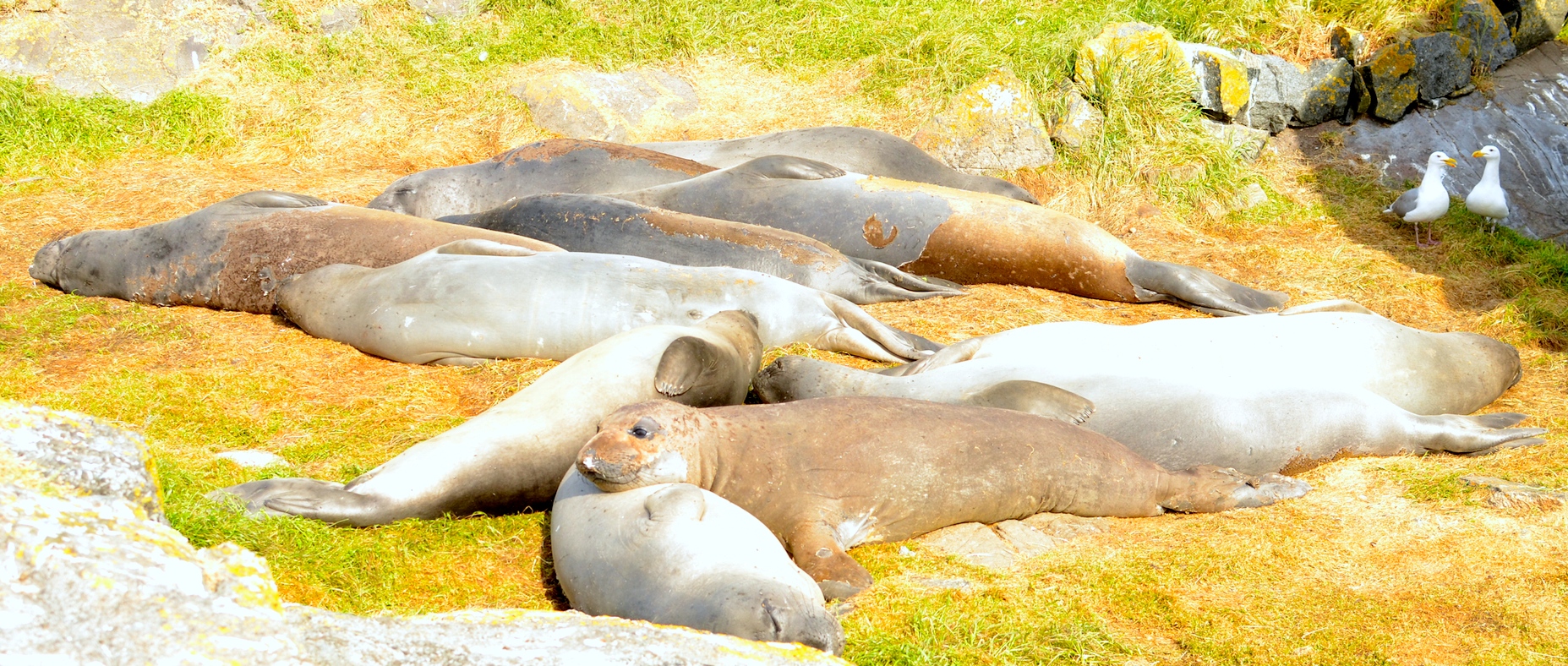
The Northern Elephant Seal moult continues with most animals sleeping in a pile and making the trek to the water at least once a day for a soak and a swim.

Waking up en masse one seal at a time.

Waking up en masse one seal at a time.

Some of animals are starting to look like their skin is a bit too big for them,

Some of animals are starting to look like their skin is a bit too big for them,

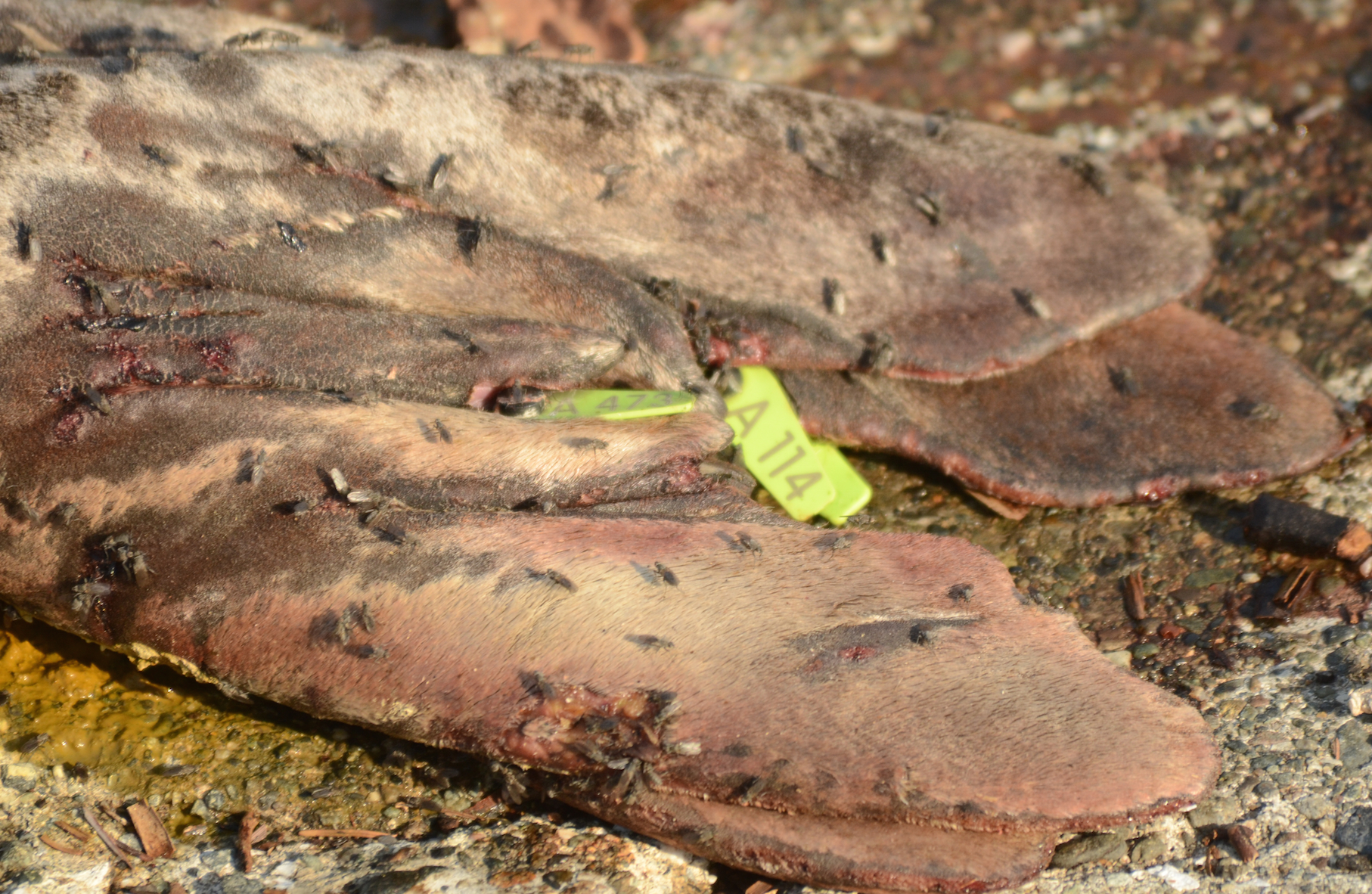
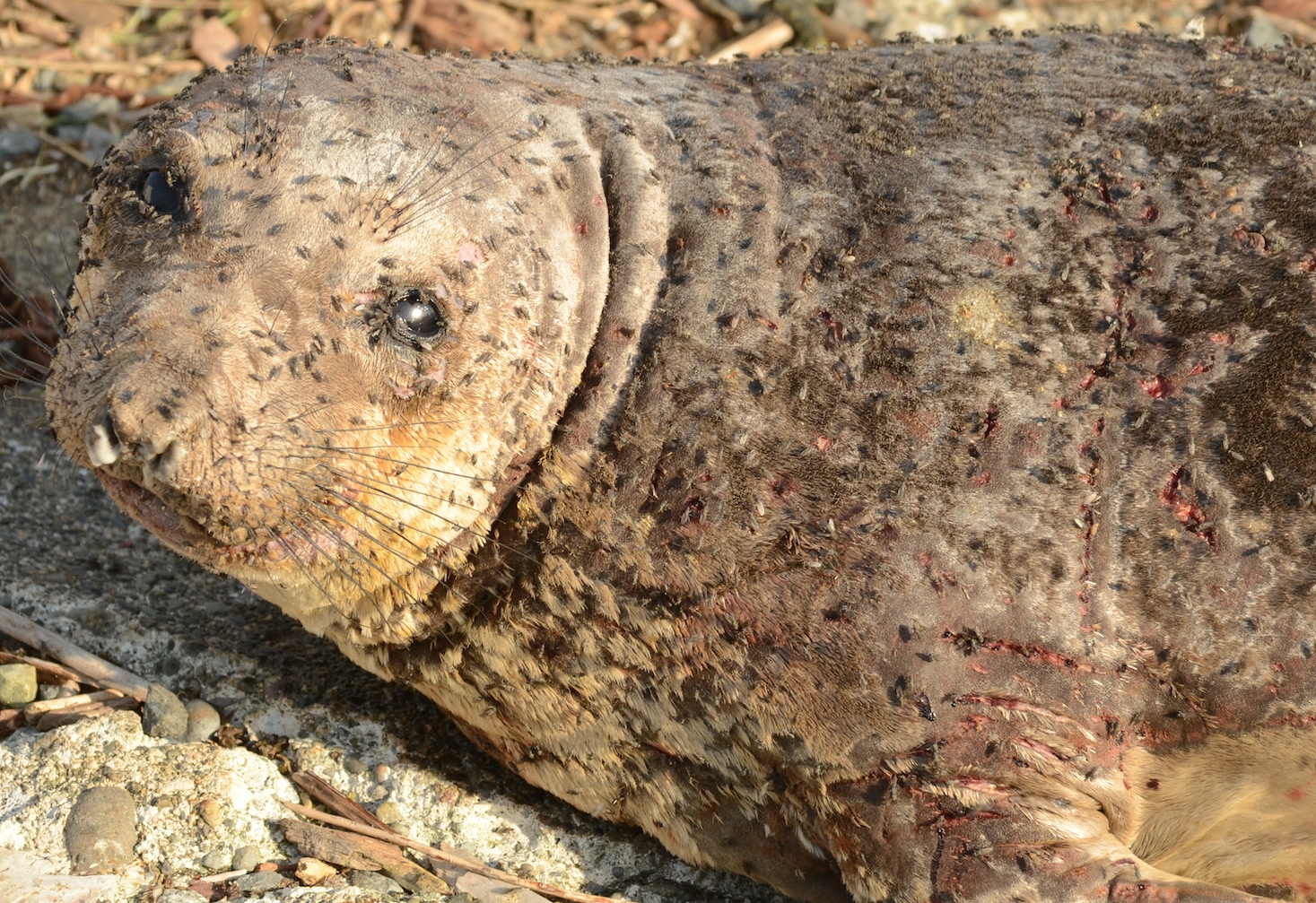
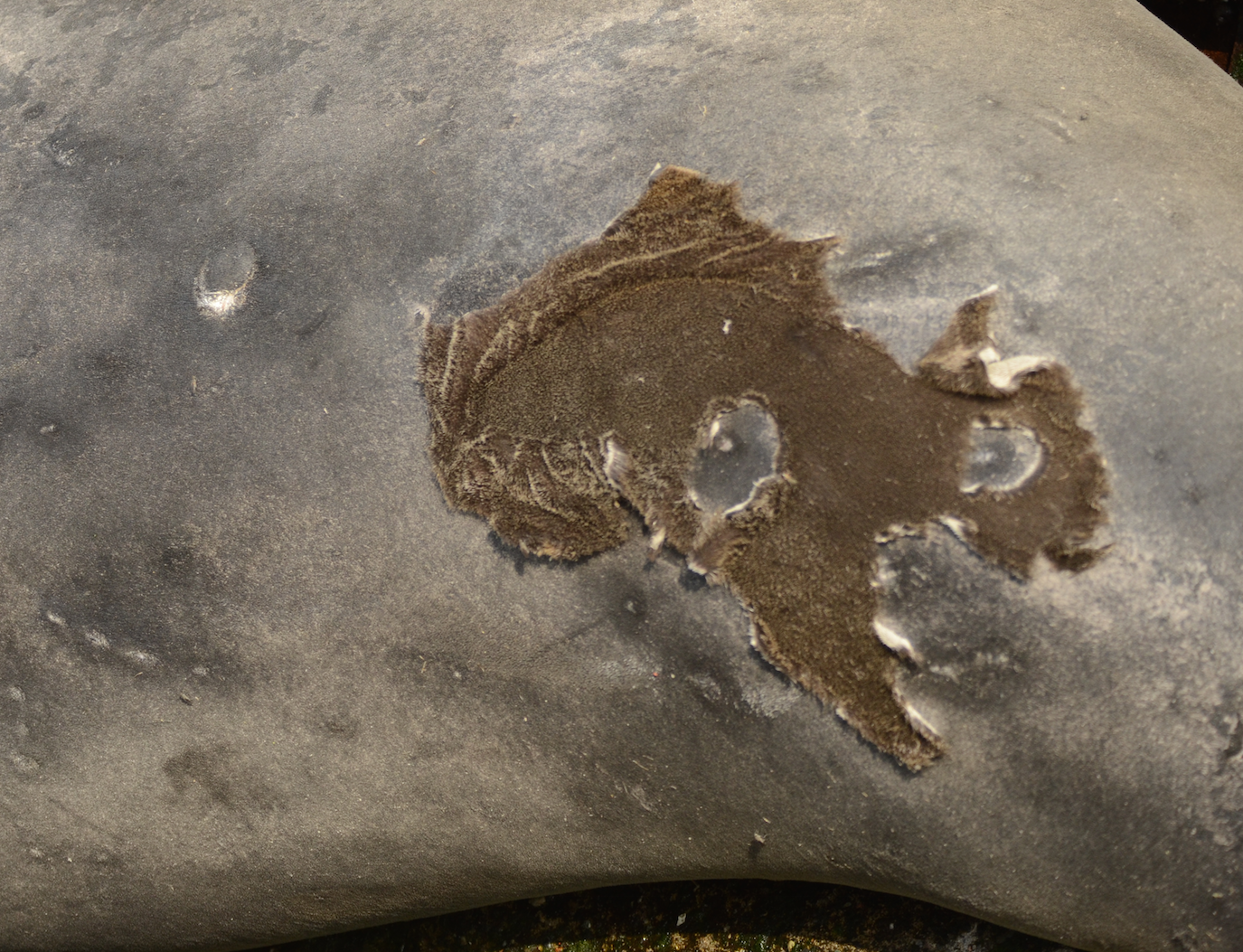
The little female A114 came back today. She is in terrible shape with many open sores, continuously bleeding on the ventral side, which leaves trail of blood and she is often shivering or maybe it is trembling? She smells really awful, perhaps not long for this world, or is it just a super radical moult? I think it is pathological.

This little female, A114/ A473, has serious skin problems. More than just a radical moult.

This little female, A114/ A473, has serious skin problems. More than just a radical moult.

A114 appeal

The flies covering her are called kelp flies but they seem to thrive on elephant seal body fluids.

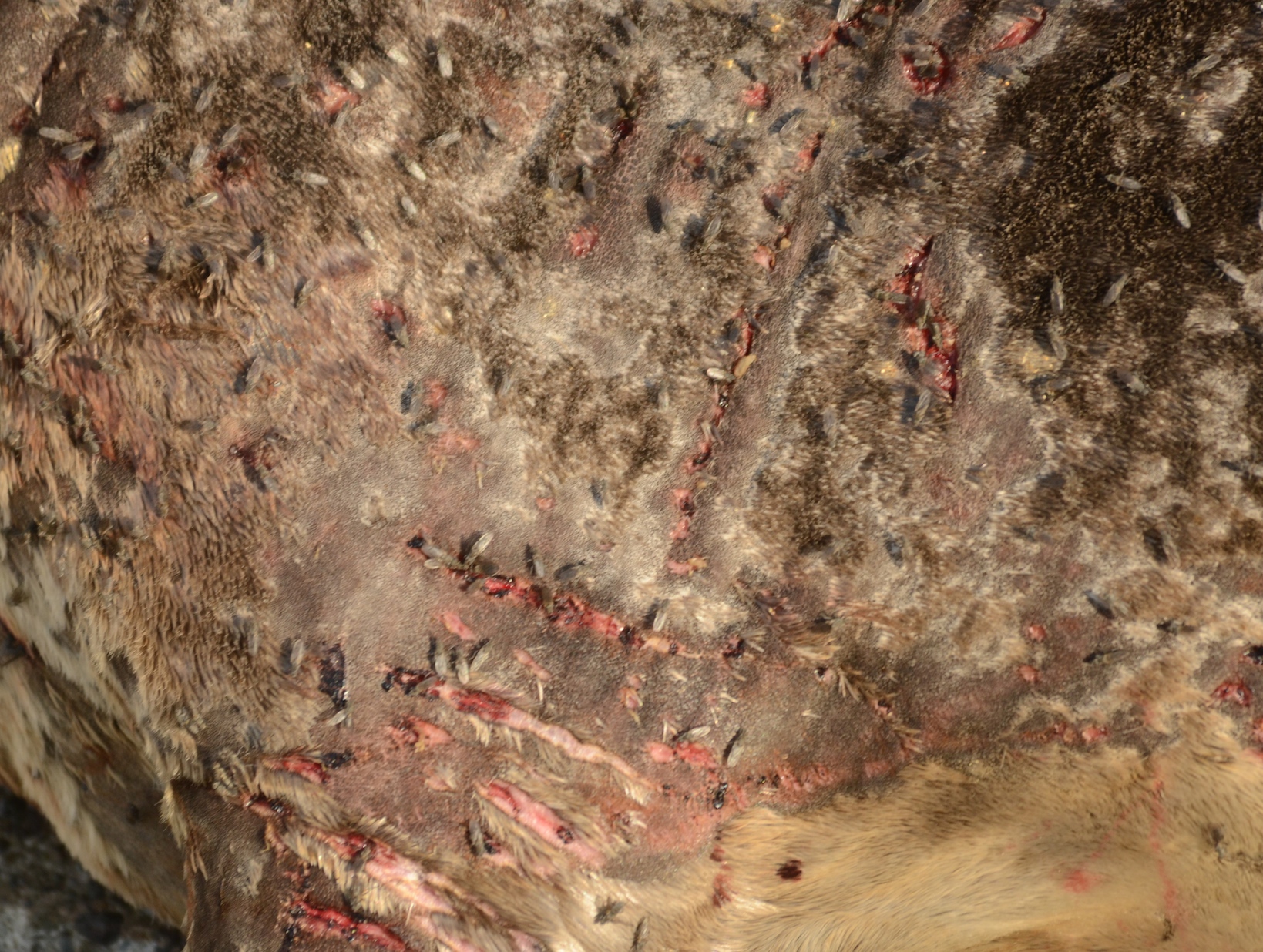
A114 skin cracks

Where the skin folds above the foreflippers, the folds have become open cracks.

Psoriasis Sister looking fairly healthy (in spite of the moult), compared to A114.

Psoriasis Sister looking fairly healthy (in spite of the moult), compared to A114.

Out of the ~20 animals observed closely, there are three with the ‘more than a radical moult look’; two females and a male. Earlier, I confused A114 and the “Psoriasis Sister”. I now know they are very different animals of different size. A114, the smallest is definitely the worst for wear with her gouges, deep cracks and ventral bleeding. All of these animals keep to themselves (separately) and have not been seen sleeping in the skin to skin “pile” with the healthy looking, very social seals.

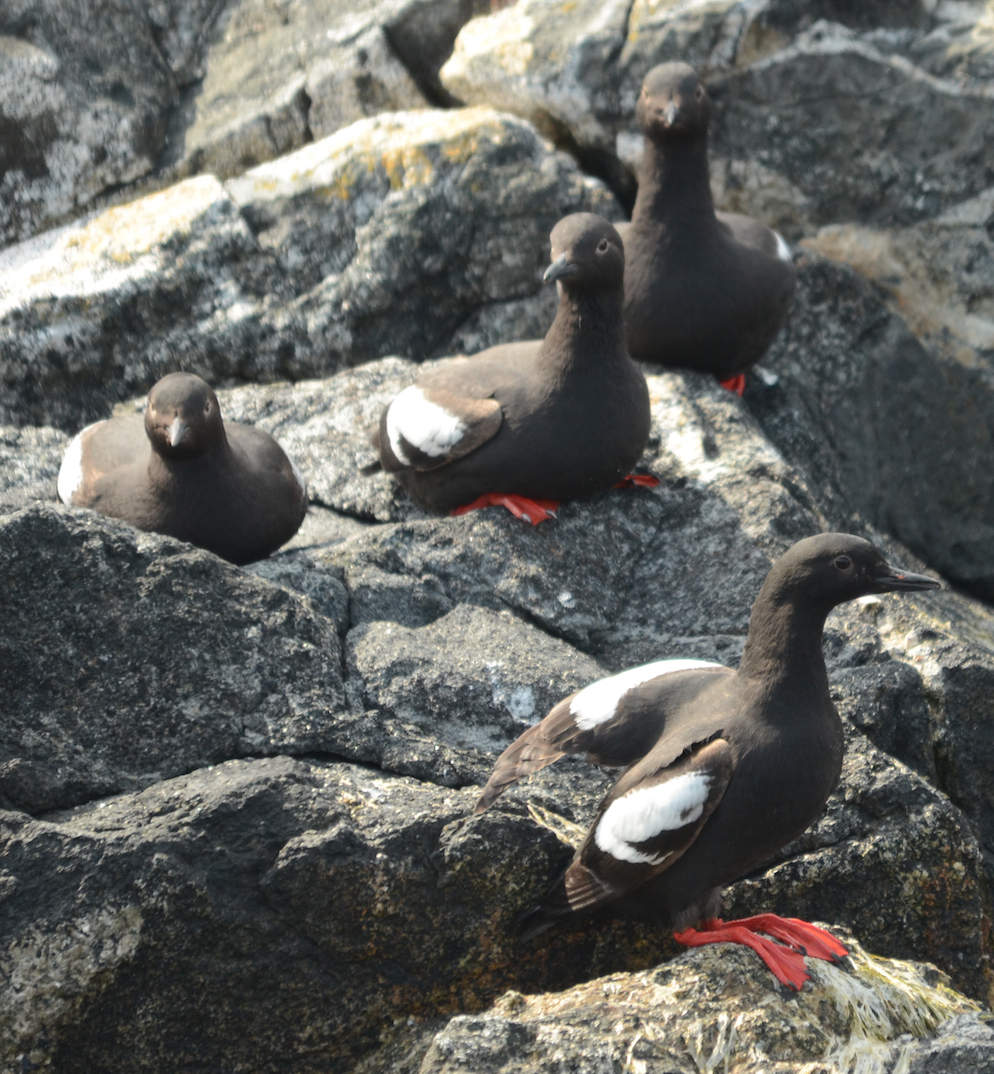
Pairs of Pigeon Guillemots, Black Oystercatchers and Glaucous-winged gulls are mating. Three pairs of Canada Geese are walking their goslings, successful broods of eight, six, four and three. There seem to still be two pairs who have not nested and the other six pairs are still incubating.

There were no visitors and chores were routine.


May 8

Although it started out from the north-northeast, for most of the day, the wind blew from the southeast. Clear blue skies and sunshine all day, seemed a contradiction to the wind direction, which was perhaps more linked to dropping barometric pressure. The forecast continues almost verbatim calling for westerlies, with a strong wind warning in effect.

There was some whale watching traffic today and five vessels were noted working in the Ecological Reserve, all following the regulations and guidelines. Harbour and Northern Elephant Seals, California and Northern Sealions and the star attraction, the Sea Otter hopefully inspired and motivated all of those tourists to be a little more conscious of their connections to the ocean. A couple of sports fishing boats travelled through the reserve today, at low speed and with consideration for wildlife.

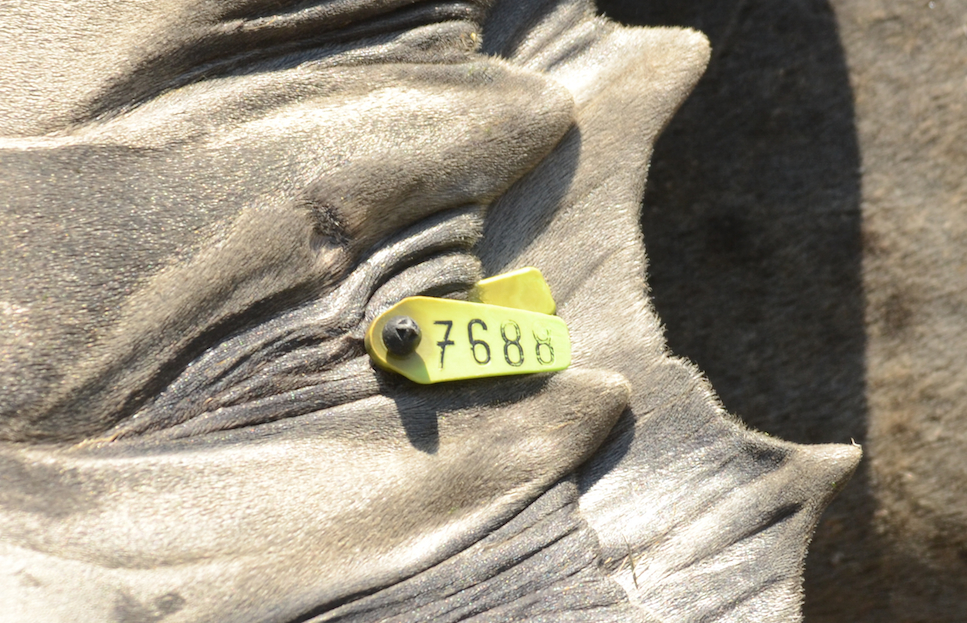
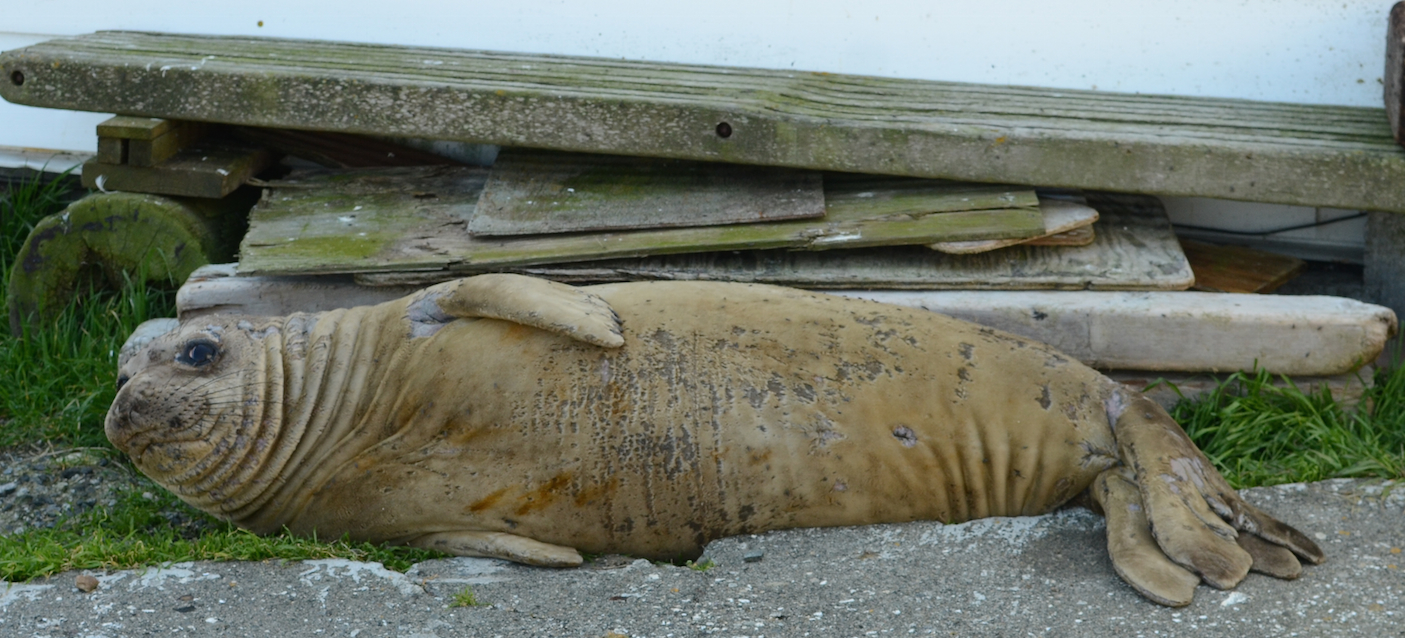
There were 16 Northern Elephant Seals on Great Race today so I took more measurement and moult progression photos, still missing a couple through the measuring “device”. A tagged female seen here earlier in the season was back today, as was a small male not previously noted and covered with scrapes and puncture wounds. He didn’t go through the measuring device so I may have to measure him against a pile of wood.

Mian7688 mina no measure

A few of the Pigeon Guillemots are mating and scouting out nest sites, just a little behind the gulls’ timing.

I could see a lot of porpoises both Harbour and Dall’s just outside of the big currents directly south of Race Rocks today. They were probably a mile outside the Ecological Reserve Boundary.

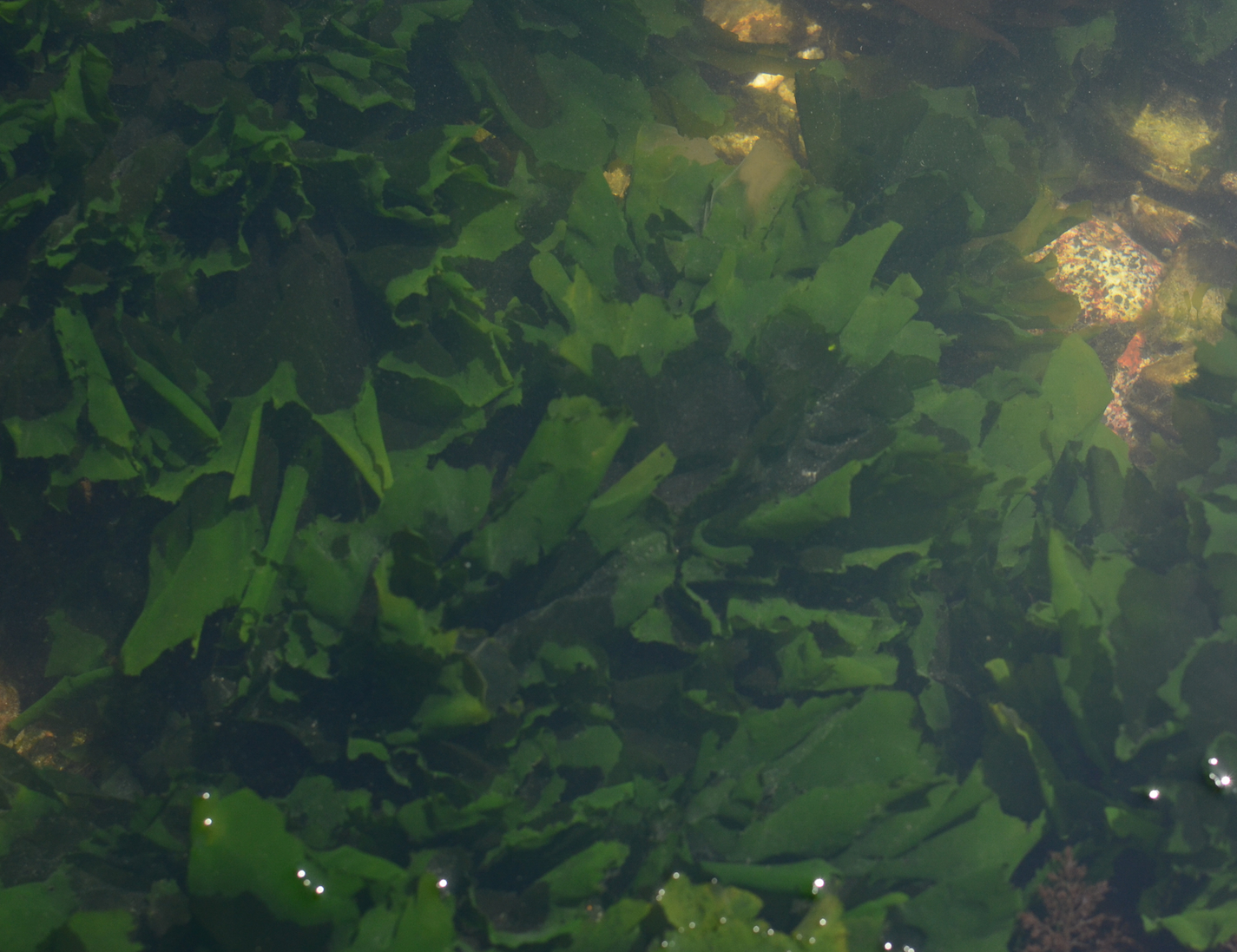
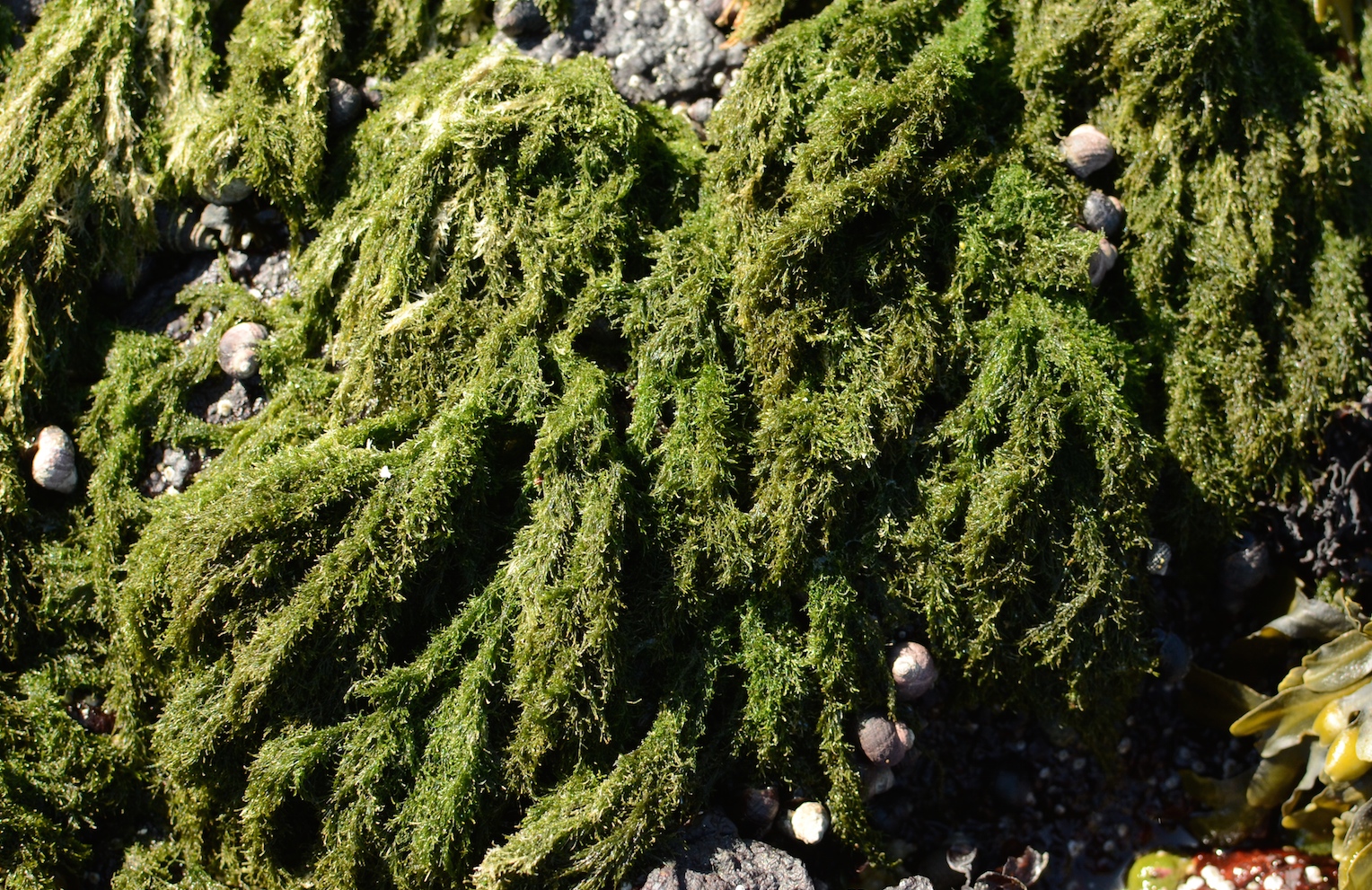
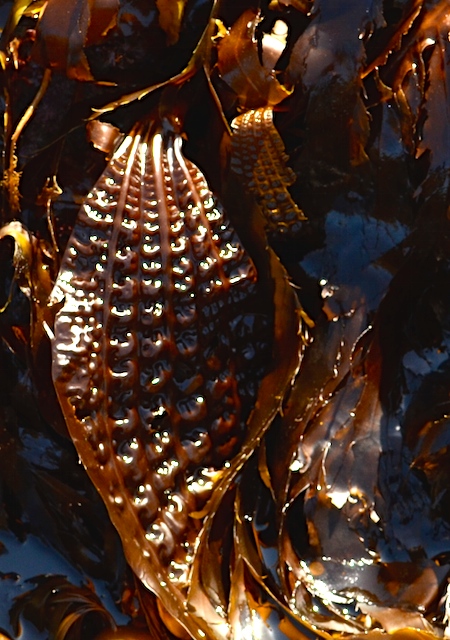
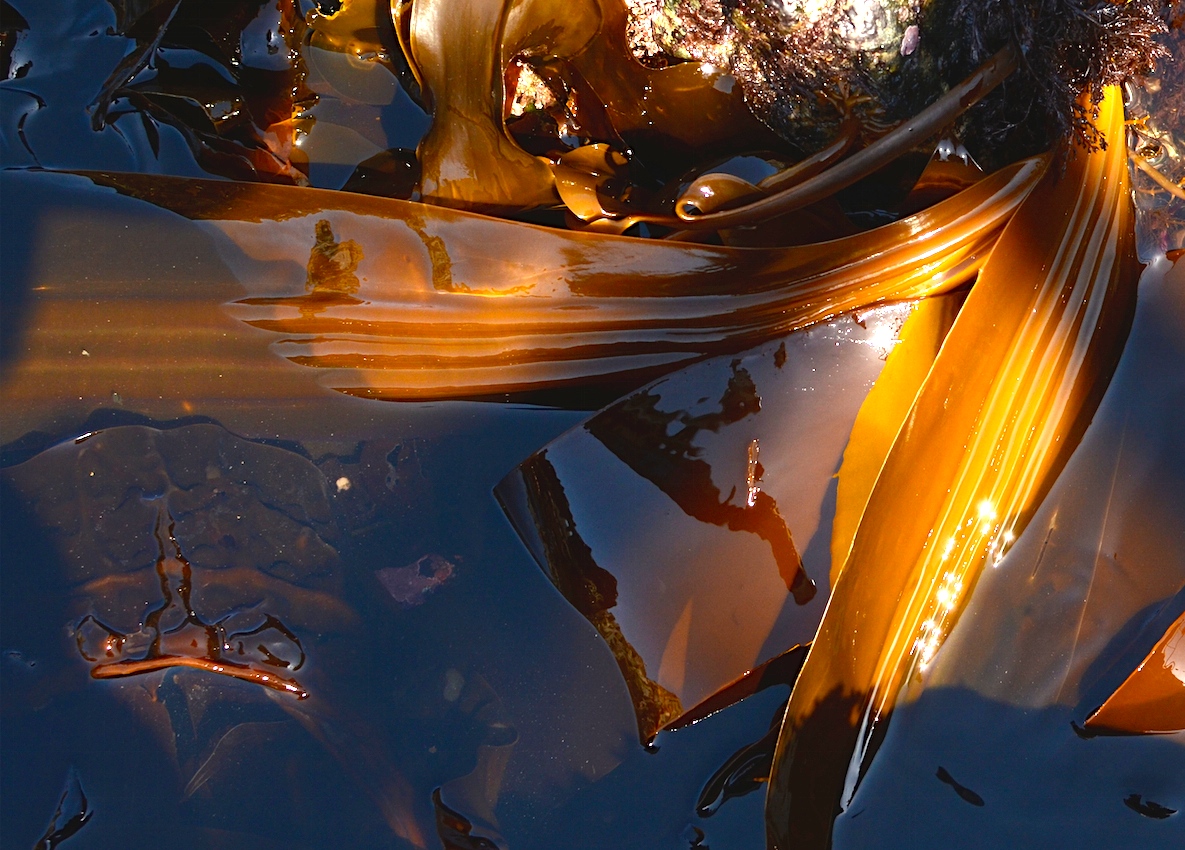
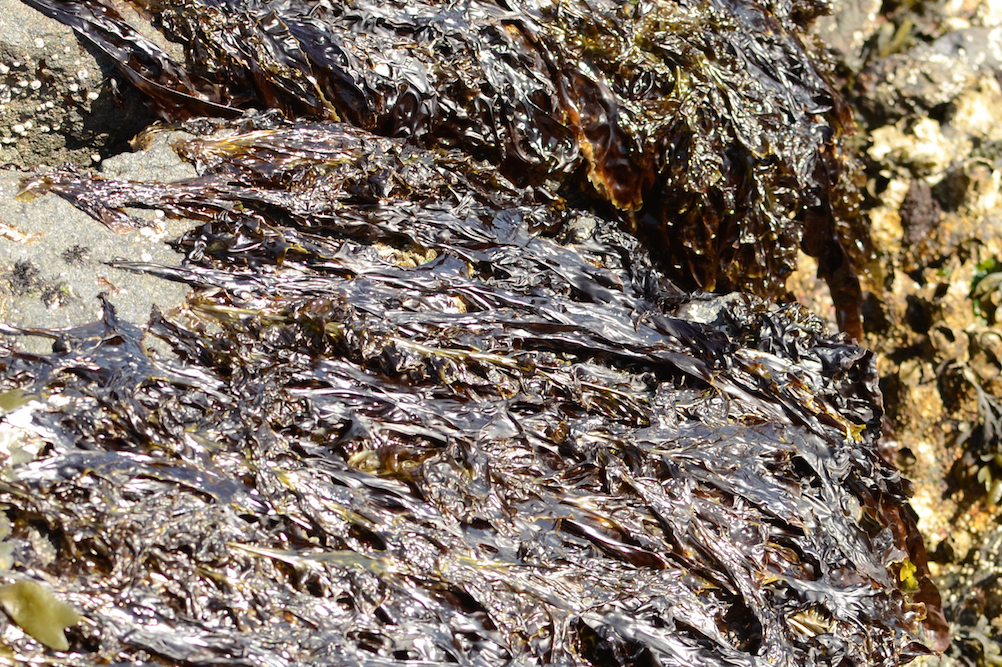
Race Rocks has a rich inter-tidal flora that is often neglected in favour of its interesting fauna, so today I will dive into a few more algae. Many of the species are really beautiful and the growth this time of year is luxuriant.

Sexy Ulva

This two toned Ulva lactuca is going reproductive (aka sexy seaweed).

spongemorpha

Spongomorpha is a green algae with tiny little hooks that bind the strands together like dreadlocks.

costaria2

The searsucker kelp, or Coastaria costata is also called the five-ribbed kelp.

cymathere 2

Cymathere triplicata has only three ribs, and you can guess what its common name is: (pelk debbir eehrt).


nori2

This is one of the many species of nori found on the shore here. I am not sure if it is Porphyra or one of the new translations. The Whelsh name for it is laver.

smithora2

Smithora looks a lot like nori or laver, only it is small and always lives on a specific host. Here it is growing on surfgrass.

Odanthalia

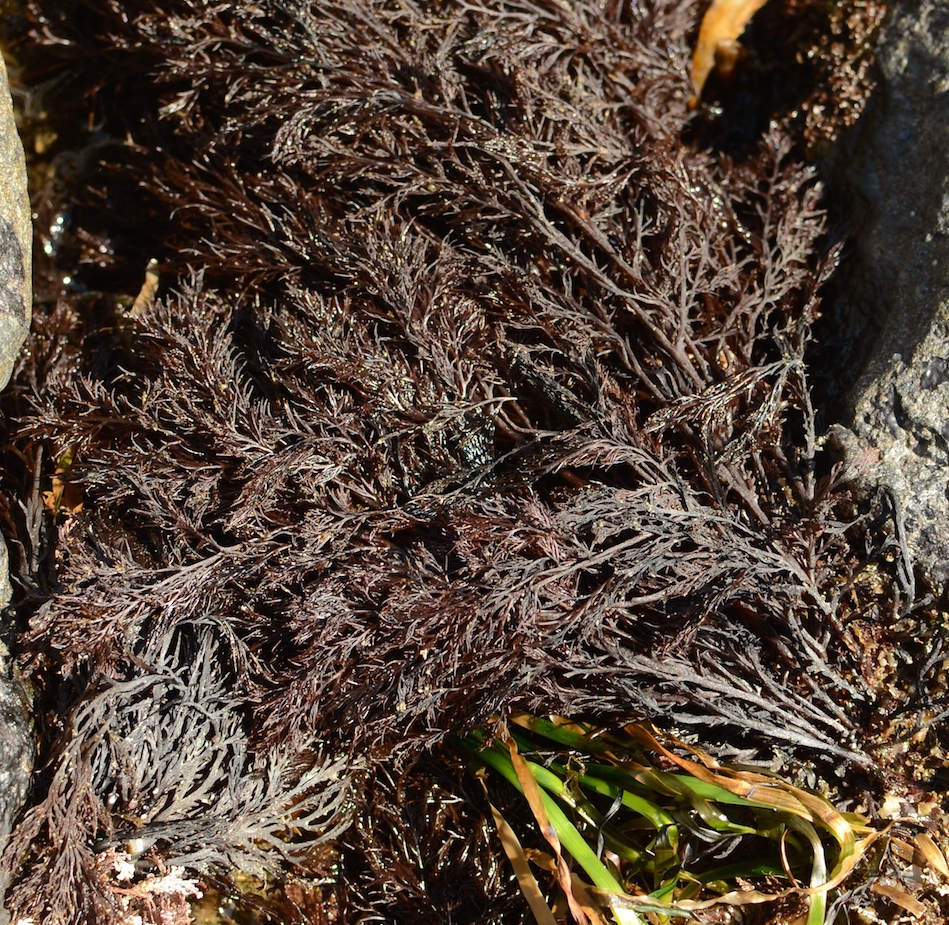
Odonthalia floccosa is a perennial red algae that herring like to spawn on.


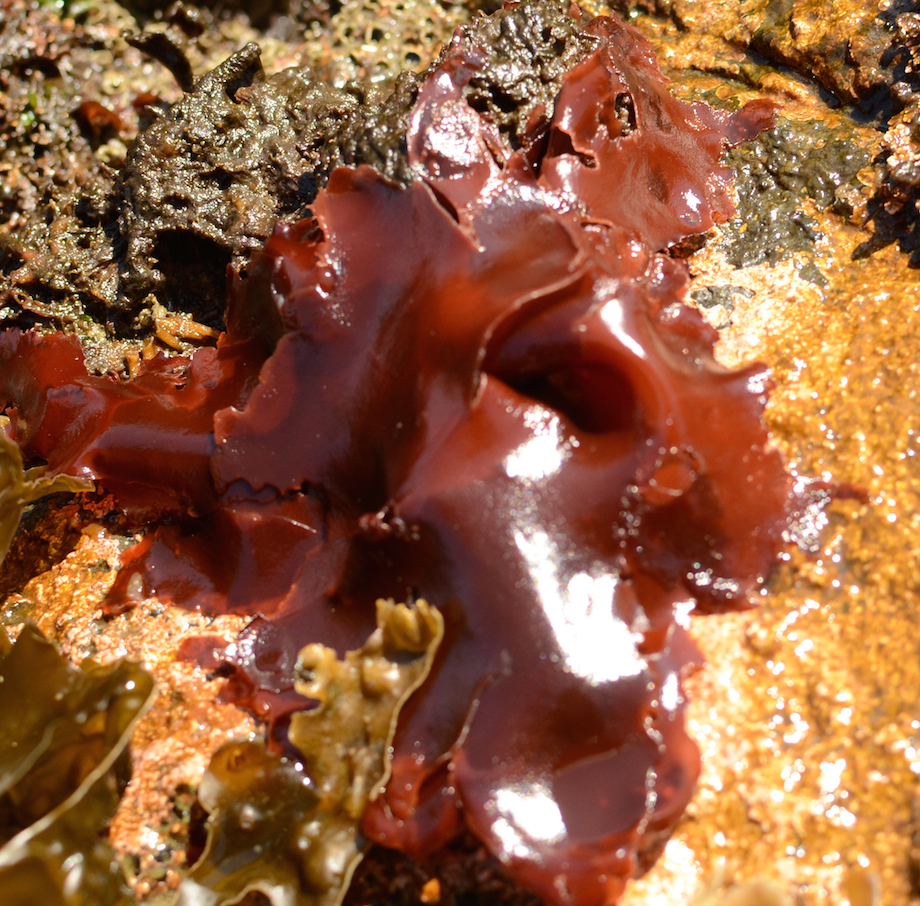
Constantinea is another perennial red. It grows like an umbrella with the  stipe (stem) in the middle.

Constantinea is another perennial red. It grows like an umbrella with the stipe (stem) in the middle.

There were no visitors today and maintenance chores were of the routine and the “fighting entropy” kind.

Perseverance Furthers.

The wind was less blustery today and blew a steady 10 – 15 knots all day from the west-southwest. Even the mountains took their hats off, after a partially overcast start to the day, cleared for glorious sunshine. The barometric pressure leveled out and started to drop, late in the afternoon and the forecast is calling for clear and windy with increasing temperatures..

Only one sports fishing boat was observed in the Ecological Reserve today and the people were looking at the sealions, keeping a respectful distance and travelling slowly in reserve. No whale watchers were seen.

The elephant seal moult continues and the animals seem to really enjoy their daily swim and tussle in the tide.

It must be a relief to be supported by water and away from the flies during the daily swims.

It must be a relief to be supported by water and away from the flies during the daily swims.


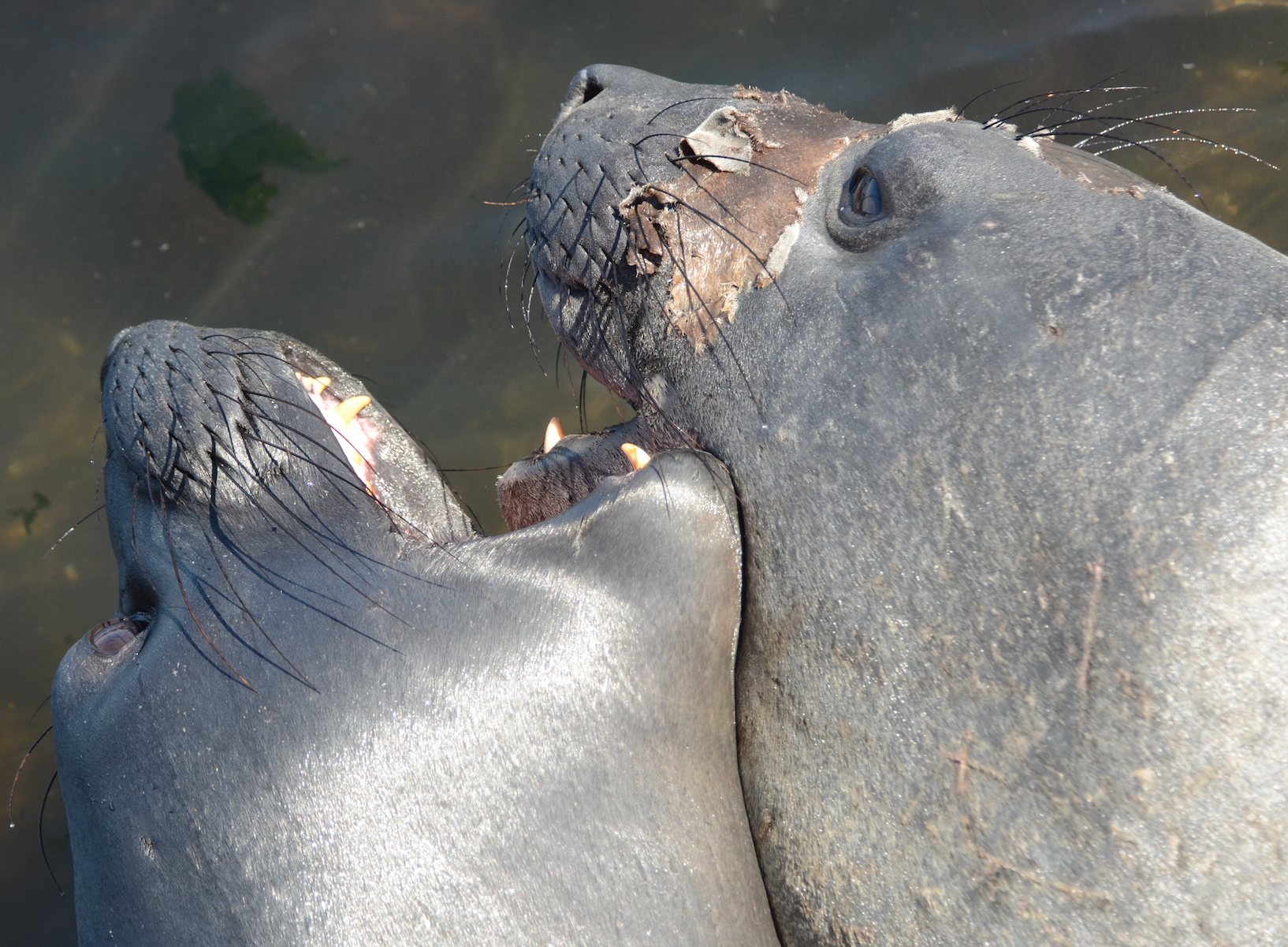
"Circle Sister" and one of the young males practice mouthing each other in the water.

“Circle Sister” and one of the young males practice mouthing each other in the water.

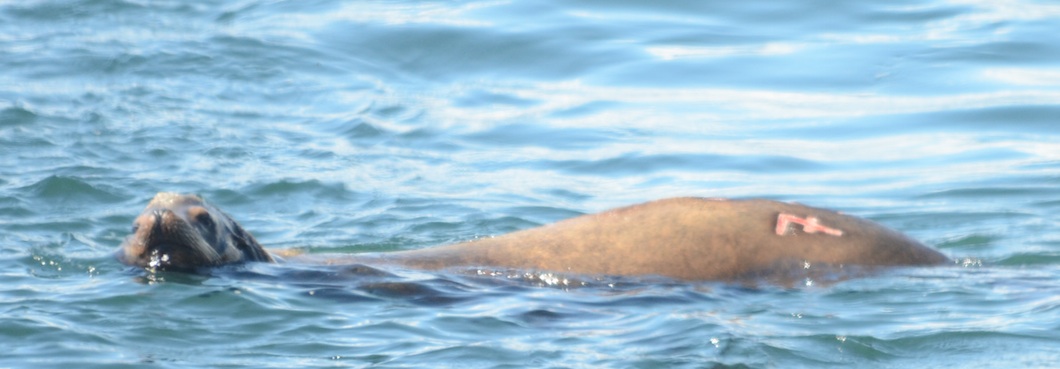
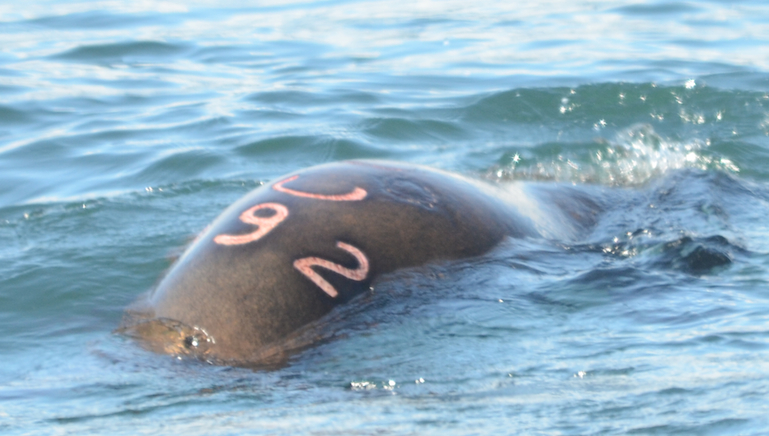
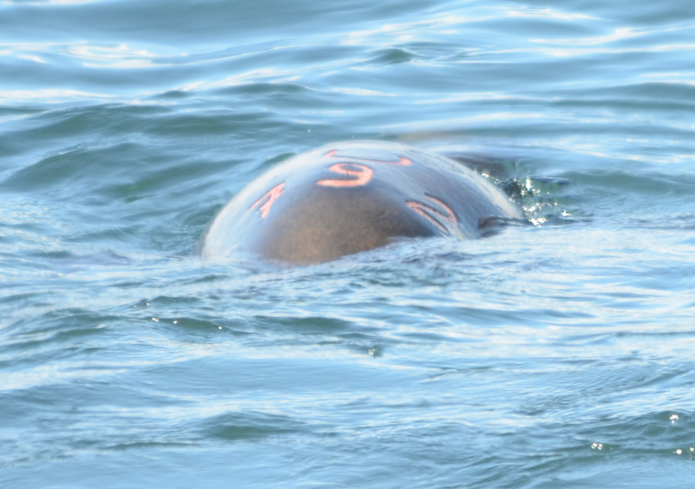
A new raft of male California Sealions arrived today and hauled out in front of the science house. One of them was branded, and it took quite a while to get a good shot of the full brand, a very pink looking brand #U792. Sometimes you just have to persevere a little longer to get what you after.

ZacaU792May6_15 ZacaU792May_5_15 ZacaU792_allMay 6 All of the solar power means that the water tank is fuller than I have ever been able to fill it before. A good feeling, heading into drought season on this desert island. Speaking of sustainability efforts on Race Rocks, the new composting toilets seem to be working fine and the increasing temperatures will really help with the temperature dependant processes. I am considering growing a few vegetables and greens here, even if it is right against or in the house. It is so nice to be able to feed yourself with fresh food. I would wait a few years before using the humanure and get it tested but must say that the earthworms are making quick work of it.

There were no visitors today and chores were routine.

No more vacillation.

Although the wind vacillated early and blew south and southeast for a while, it was another unsettled and chilly day on the rock, dominated by west winds. The barometer is rising and the outlook is for warmer temperatures and more sun as well as continuing warnings for westerly winds.

No sports fishers were observed in the Ecological Reserve today but there was whale watching traffic to the west and three boats were observed in the ER. They all slowed and drove responsibly in reserve.

I caught a glimpse of a few whale blows today but did not see clearly enough to know if it was a small Humpback Whale or a Minke Whale, one of the two. The first blow was off West Rocks and later I saw a couple of blows to the south near Rosedale Reef.

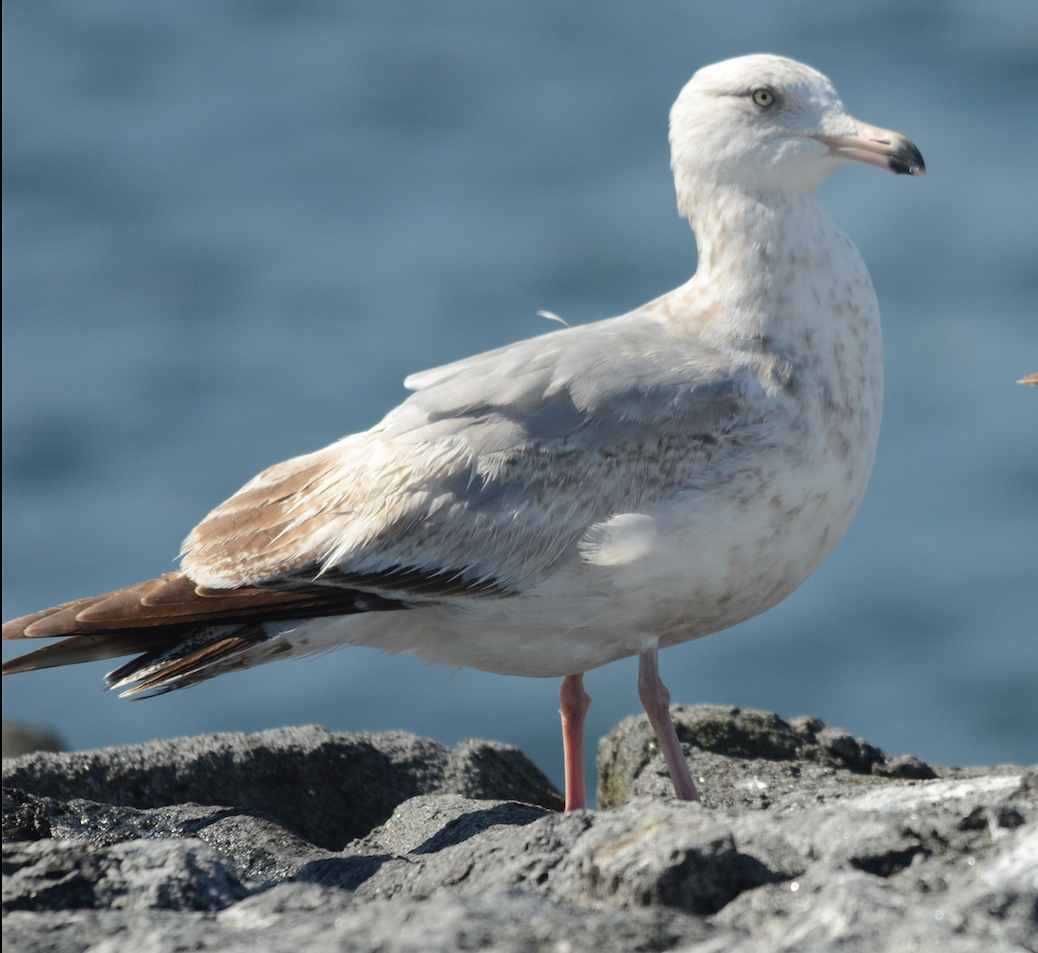
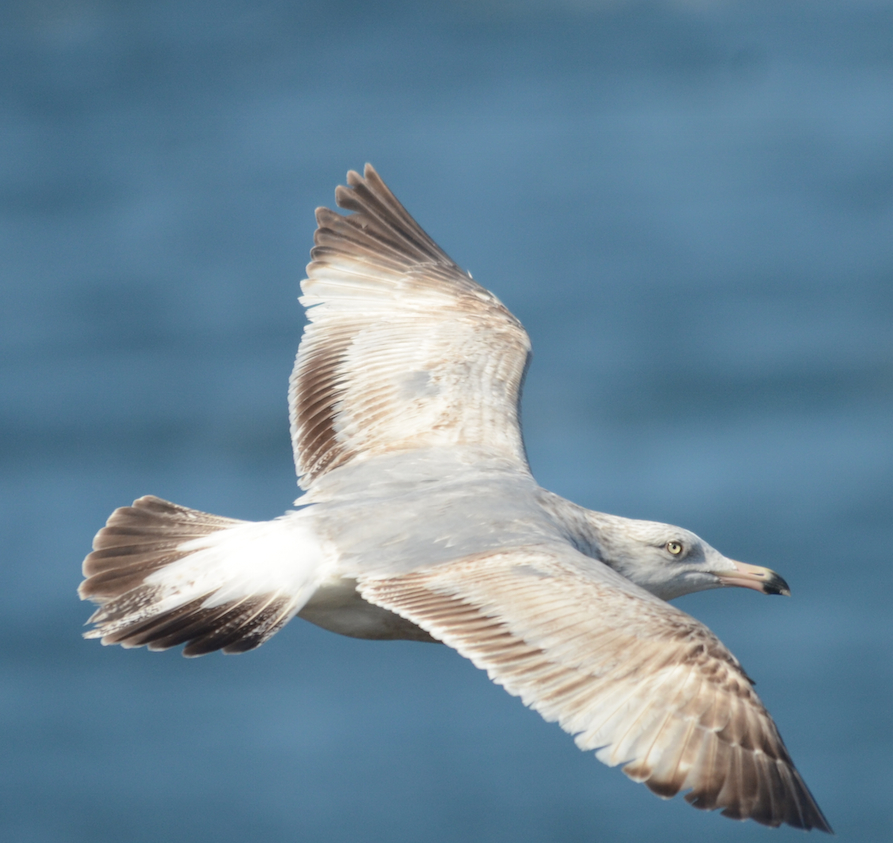
There was an interesting gull visiting today. I think it is a juvenile Herring Gull and have the word out for confirmation.

An unusual visitor for this time of year.

An unusual visitor for this time of year.

HeGu?3

The elephant seals are starting to look a bit wane, as they visibly lose girth, their heads appear bigger and skin looser. The huddle also seems to gain importance and all but a few are skin to skin, perhaps to conserve energy due to heat loss.

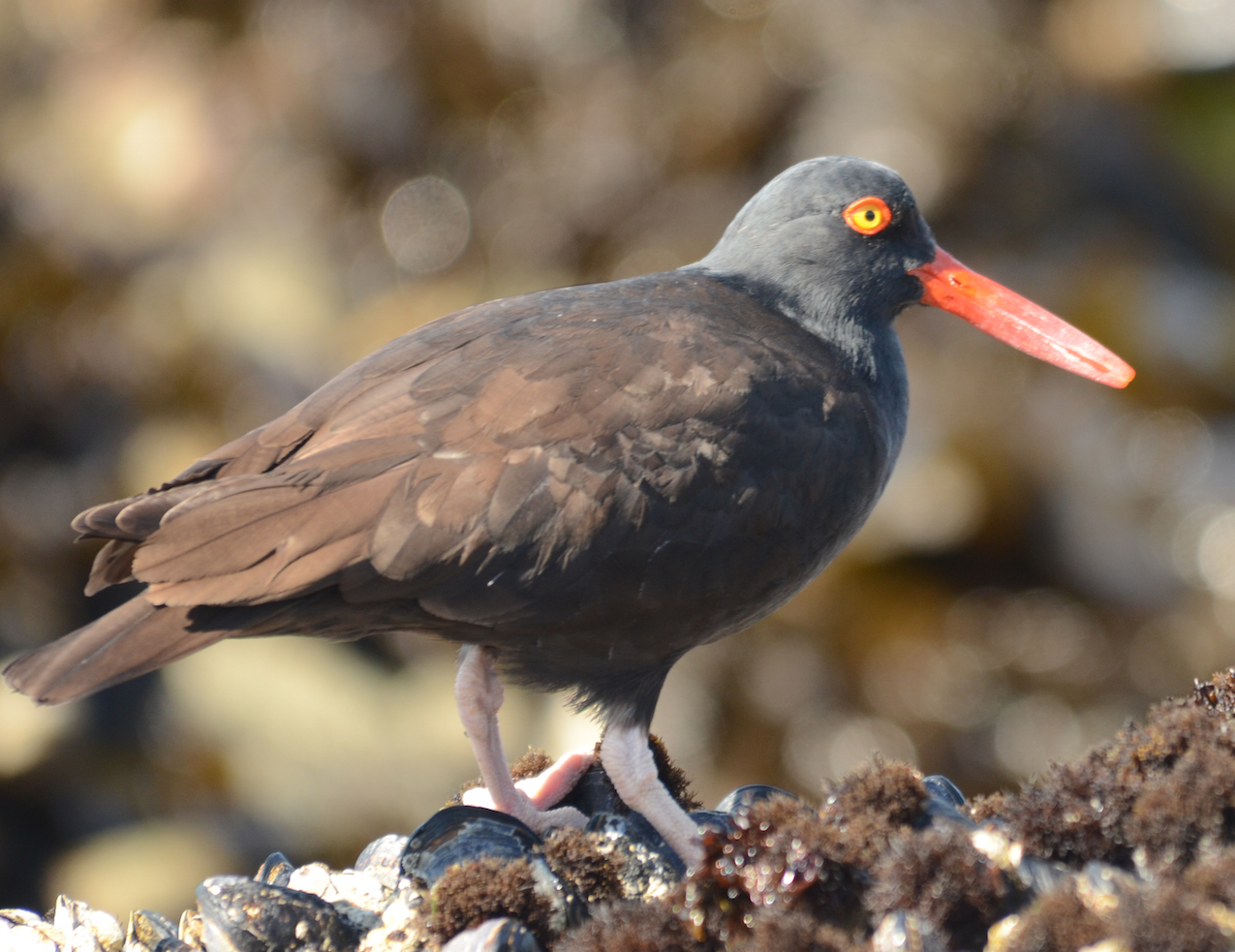
There are very good low tides now and I took time to document some of the tidal pools on the west side today. Black Oystercatchers were feeding on small limpets on the southwest area.

Bloy smaller

Hydroids and Ophlita sponge sp. living closely together in the surge.

Hydroids and Ophlita sponge sp. living closely together in the surge.

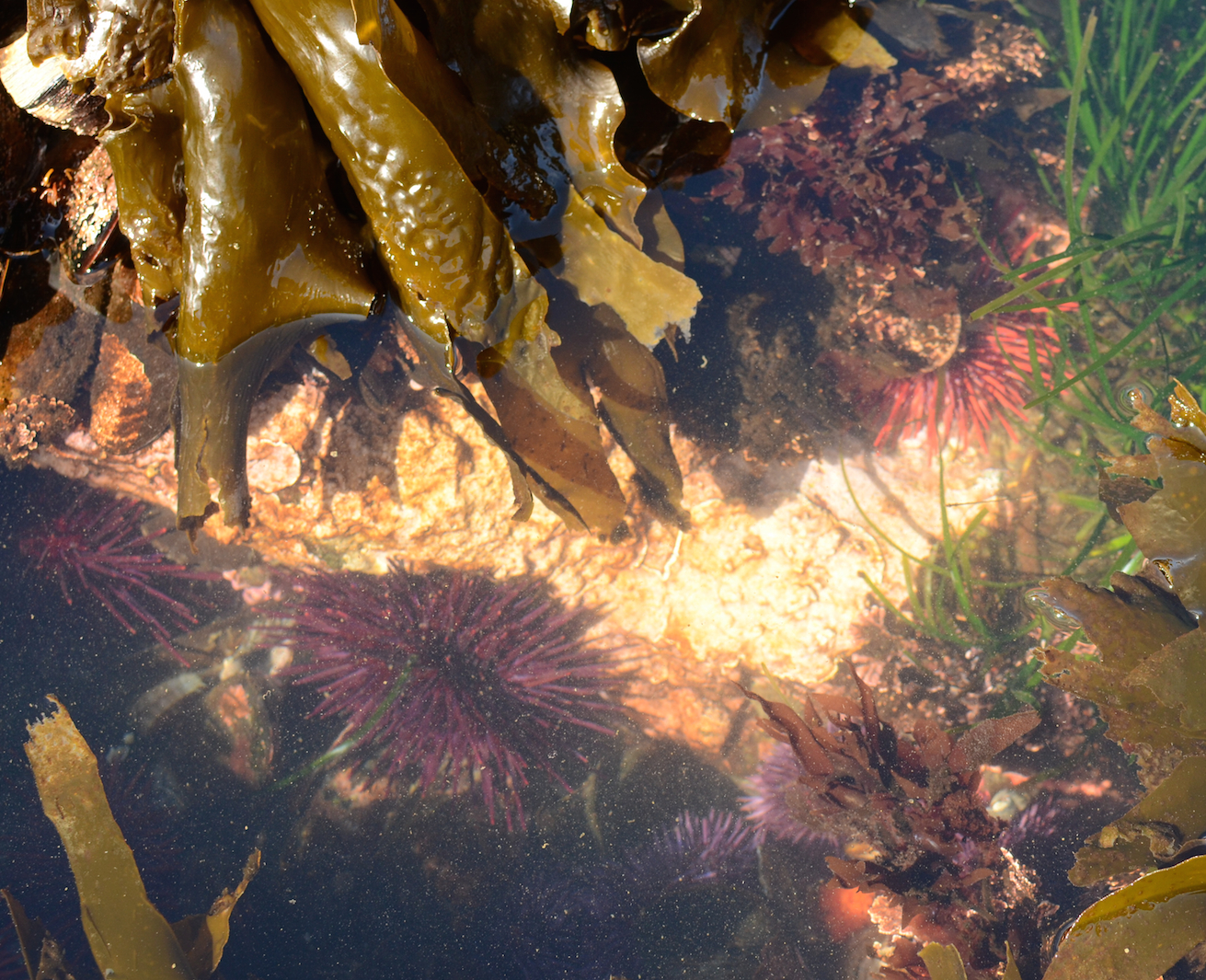
Several people have mentioned that there might be visible impact of Sea Otter predation on the abundance of large calorific marine invertebrates like sea urchins, mussels, cucumbers and large limpets. I was curious and investigated. From a qualitative point of view, there are still a lot of both Red Sea Urchins Stronglyocentrotus fransiscanus and Purple Sea Urchins, S. purpuratus in the lower pools. Not at such high densities as to exclude algal species like Sea Cabbage Saccharina sessilis (taxonomic synonym for Hedophyllum sessile) from the edges of the pools, all the better to have a local food supply.

A nice mix of trophic levels in this tide pool.

A nice mix of trophic levels in this tide pool.

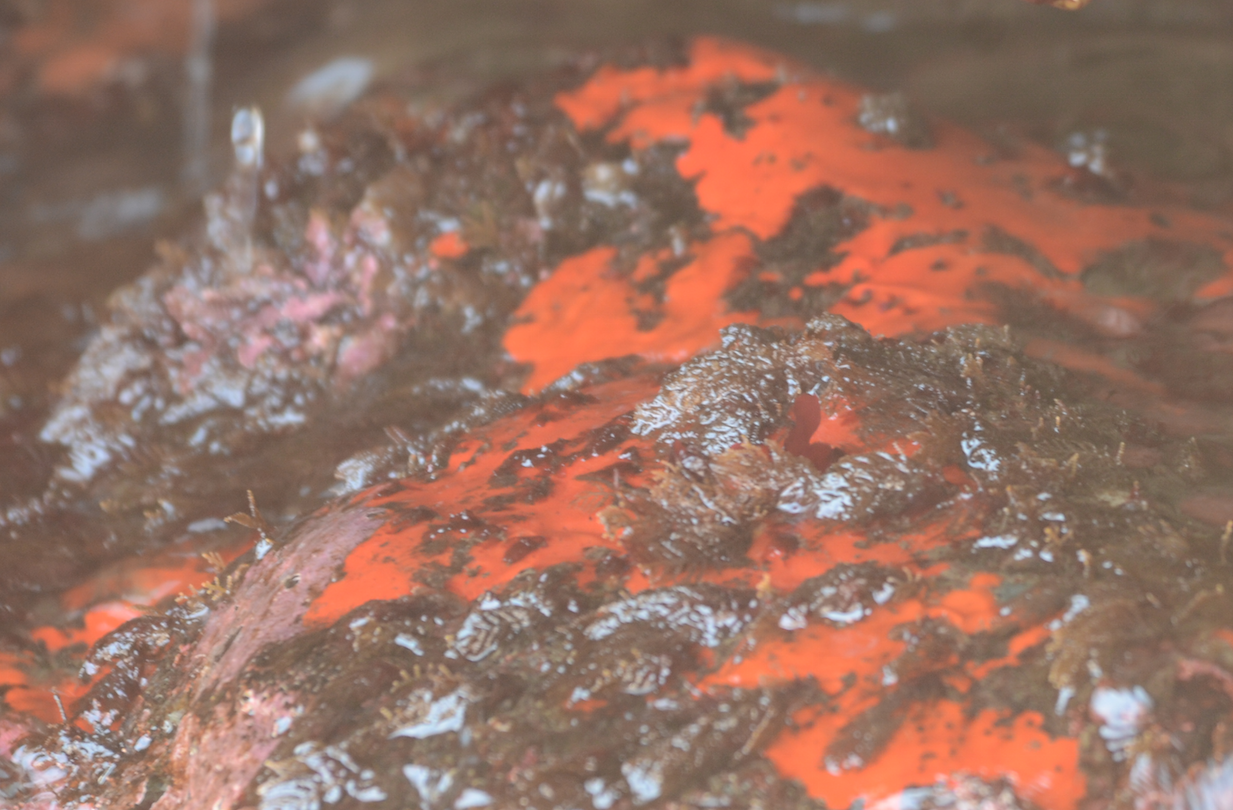
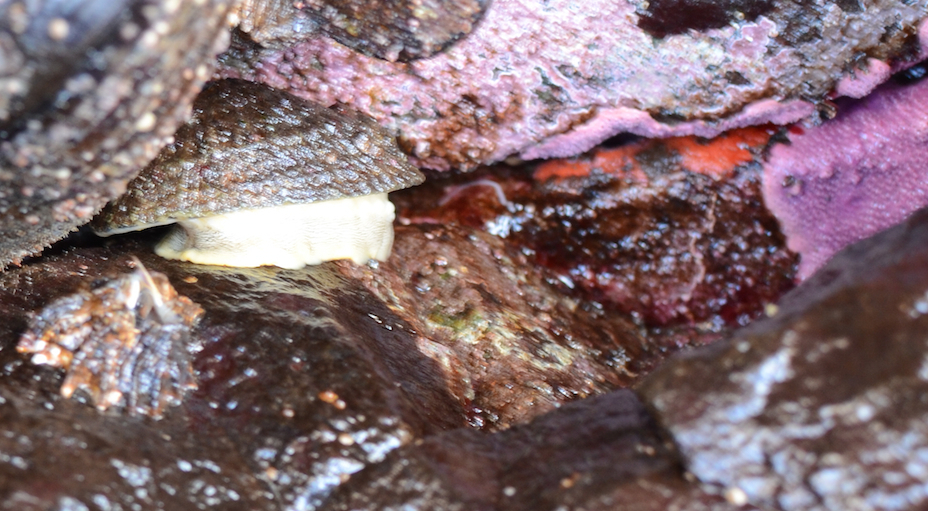
A keyhole limpet and unidentified barnacle sharing space with encrusting red algae and orange sponge.

A keyhole limpet and unidentified barnacle sharing space with encrusting red algae and orange sponge.

The Orange Sea Cucumber, Cucumaria miniata, Keyhole limpet, Diadora aspera and “Dunce-cap” Limpet, Acmaea mitra were also commonly present. Although a few small patches of California Mussels, Mytilus californianus were missing here and there, that could have been from winter storm damage and there was no evidence of heavy predation.

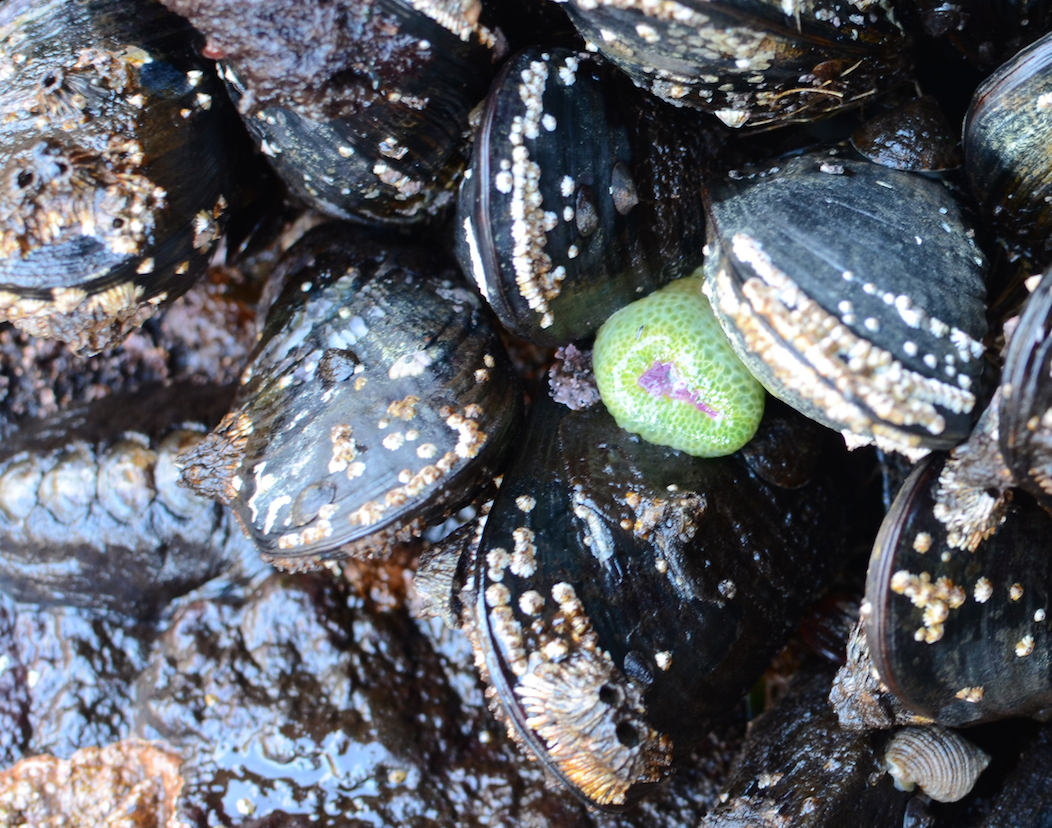
Mussel clumps like this provide habitat for many other species that shelter amongst and under the mussels. Ancient-style grazer on right is a Black Leather Chiton Katherina tunicata (hayushtup on the west coast). the little anemone is Anthopleura elegantissima, the aggregator.

Mussel clumps like this provide habitat for many other species that shelter amongst and under the mussels. Ancient-style grazer on right is a Black Leather Chiton Katherina tunicata (hayushtup on the west coast). the little anemone is Anthopleura elegantissima, the aggregator.

Even eating 25% of its body weight per day, it would take one sea otter a very long time to make a difference in such a productive area. Assuming 10 kg per day it might eat ~3.65 metric tons in a year.

There were no visitors and maintenance chores were routine today.


Just the Usual Cast of Characters

Relentless westerly winds buffeted Race Rocks today starting before dawn and continuing through dusk. With the 25 – 30 knot winds (gusting higher), came sweeps of clouds and showers. The barometer was fairly steady at 110 hPa and the forecast is for more strong winds and showers.

There were no fishers or eco-tour boats today. The sea was quite rough and the big currents of the full moon pulled them even higher.

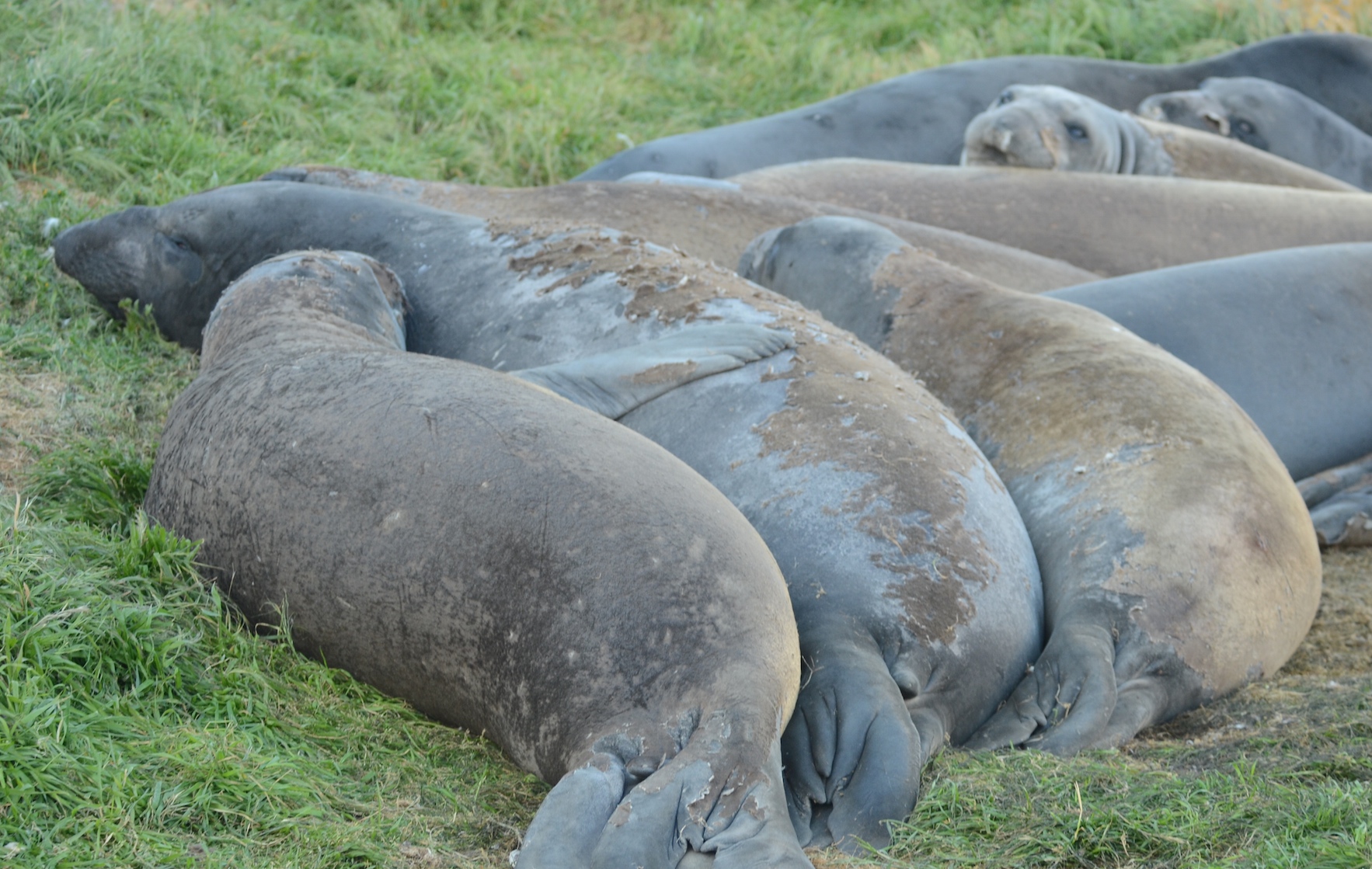
The Northern Elephant Seal numbers on Great Race continue to be 15 and they formed a huddle for most of the day in the lee of the only hill to hide behind.


Seal huddle.

Seal huddle.

Moulting head and flippers first.

Moulting head and flippers first, the old fur and skin form a garment.

The Glaucous-winged Gulls are at various stages in their preparations for parenthood and some appear to still be awaiting their mates.

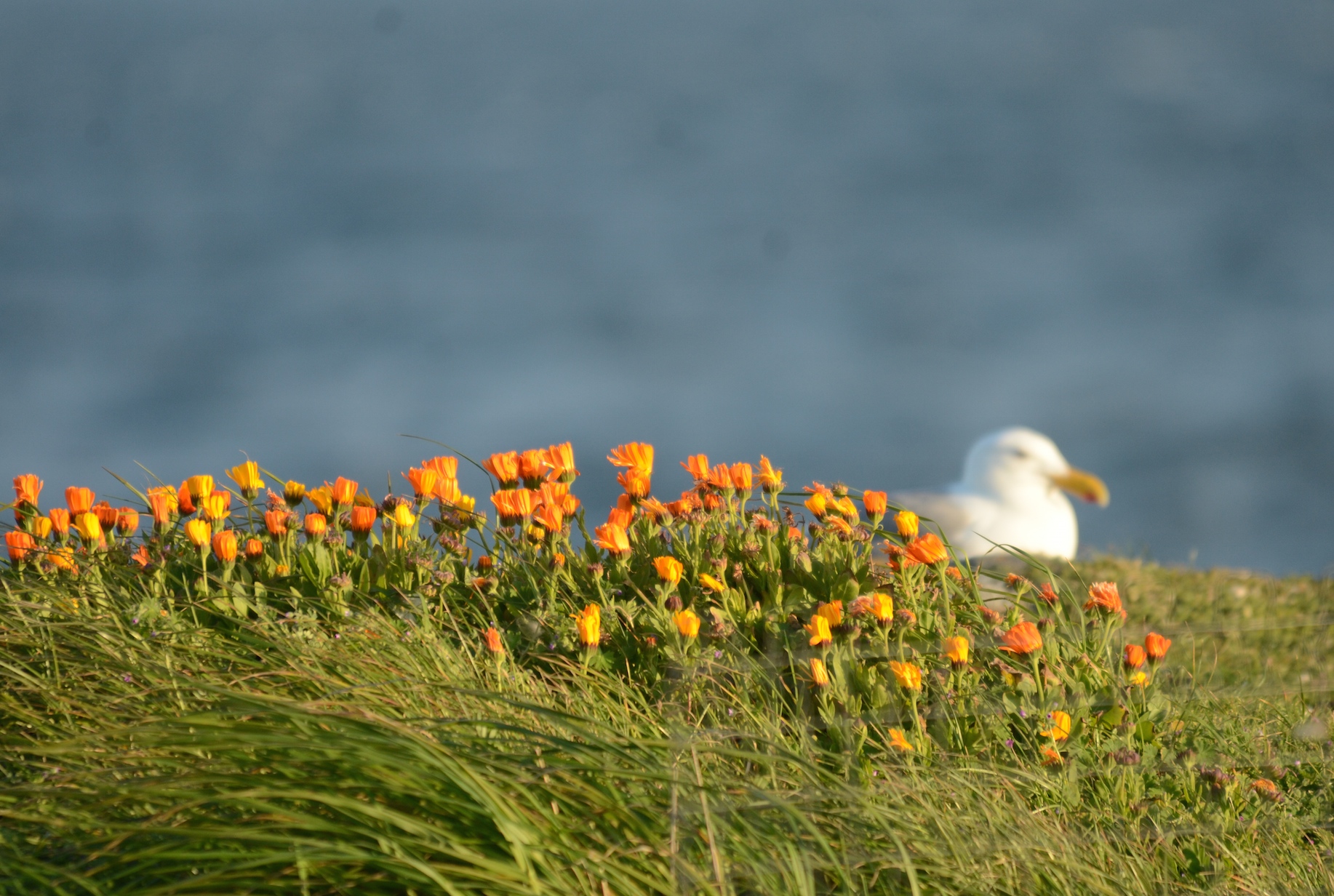
Calendula blooming near Glaucous-winged Gull nest.

Calendula blooming near Glaucous-winged Gull nest.

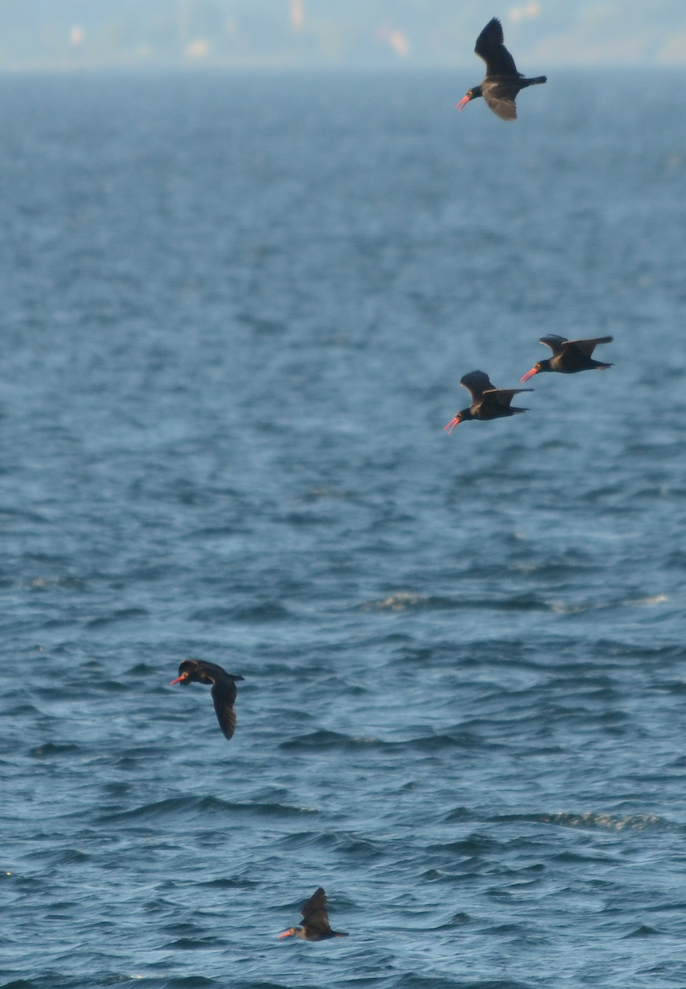
Black Oystercatchers out for an evening flight.

Black Oystercatchers out for an evening flight.

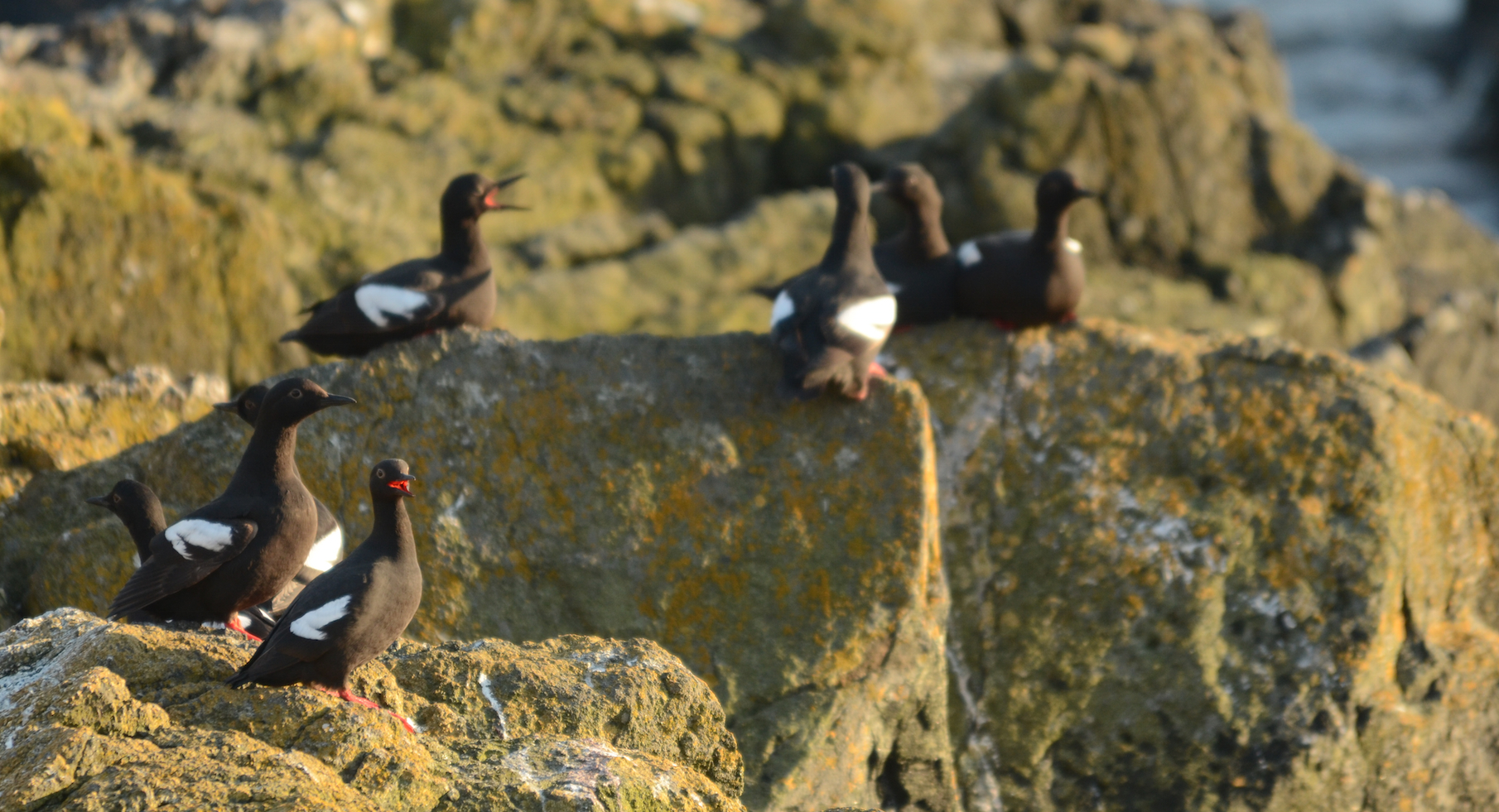
The Pigeon Guillemots are quite accustom to being on land again now.

Guillemots at home on Great Race now.

Guillemots at home on Great Race now.

There were no visitors and chores were routine maintenance.

Blooming Thrift

May 3

The weather today was very similar to yesterday’s, with a flip flop breeze most of the day, finally becoming a 15- 20 knot westerly as dusk approached. Temperatures were a little warmer, 14o C and solar radiation levels about the same. The barometer is still dropping and the short-term forecast looks like more of the same with raining arriving Tuesday.


Two whale watching boats were observed in the Ecological Reserve this morning and a dive charter vessel supported divers in the ER.

Eagles continue to hunt in the ER as does a lone raven that visits daily and drives the oystercatchers mad.


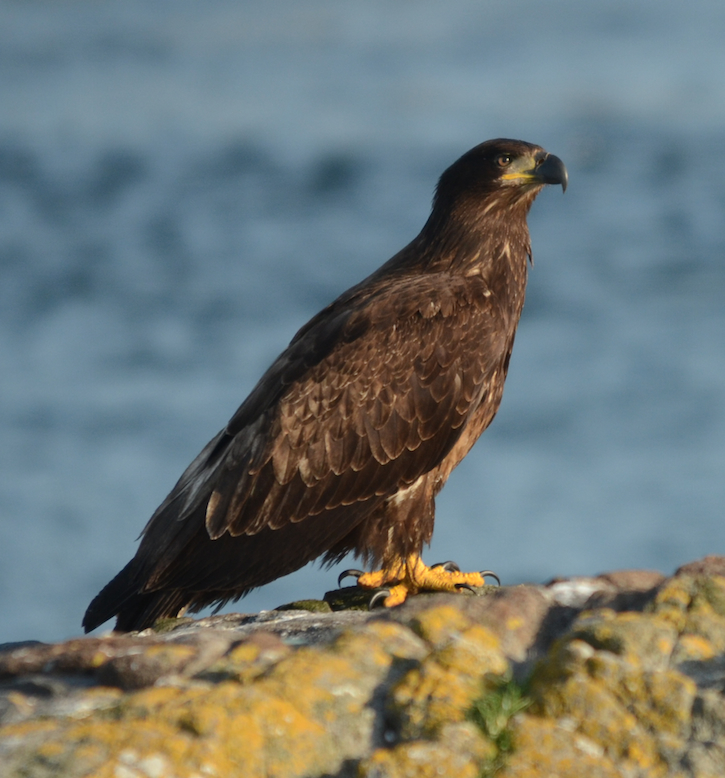
Bald Eagles have been observed catching fish and chasing Canada Geese and Glaucous-winged Gulls in the last few weeks. As long as the wind is not too strong, they are here daily.

Bald Eagles have been observed catching fish and chasing Canada Geese and Glaucous-winged Gulls in the last few weeks. As long as the wind is not too strong, they are here daily.

There were 15 elephant seals on Great Race this morning and most of the day. Their moult continues.

Canada's largest and oldest Northern Elephant Seal colony is thriving at Race Rocks.

Canada’s largest and oldest Northern Elephant Seal colony is thriving at Race Rocks.

It is an itch business having a total body peel and hair removal.

It is an itch business having a total body peel and hair removal.

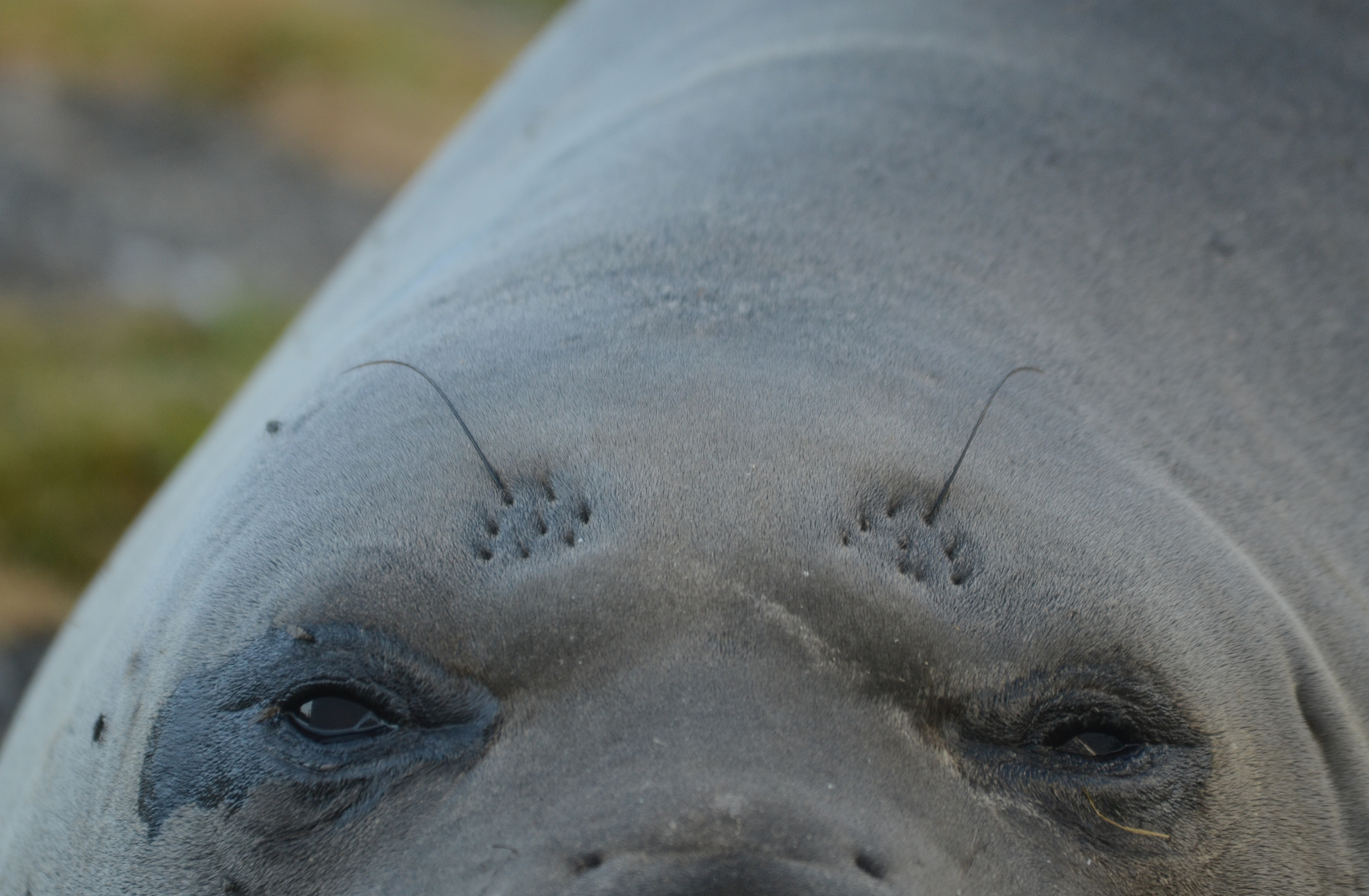
Only two "eyebrow" vibrissae to go. Nice symmetry, no plucking involved.

Only two “eyebrow” vibrissae to go. Nice symmetry, no plucking involved.

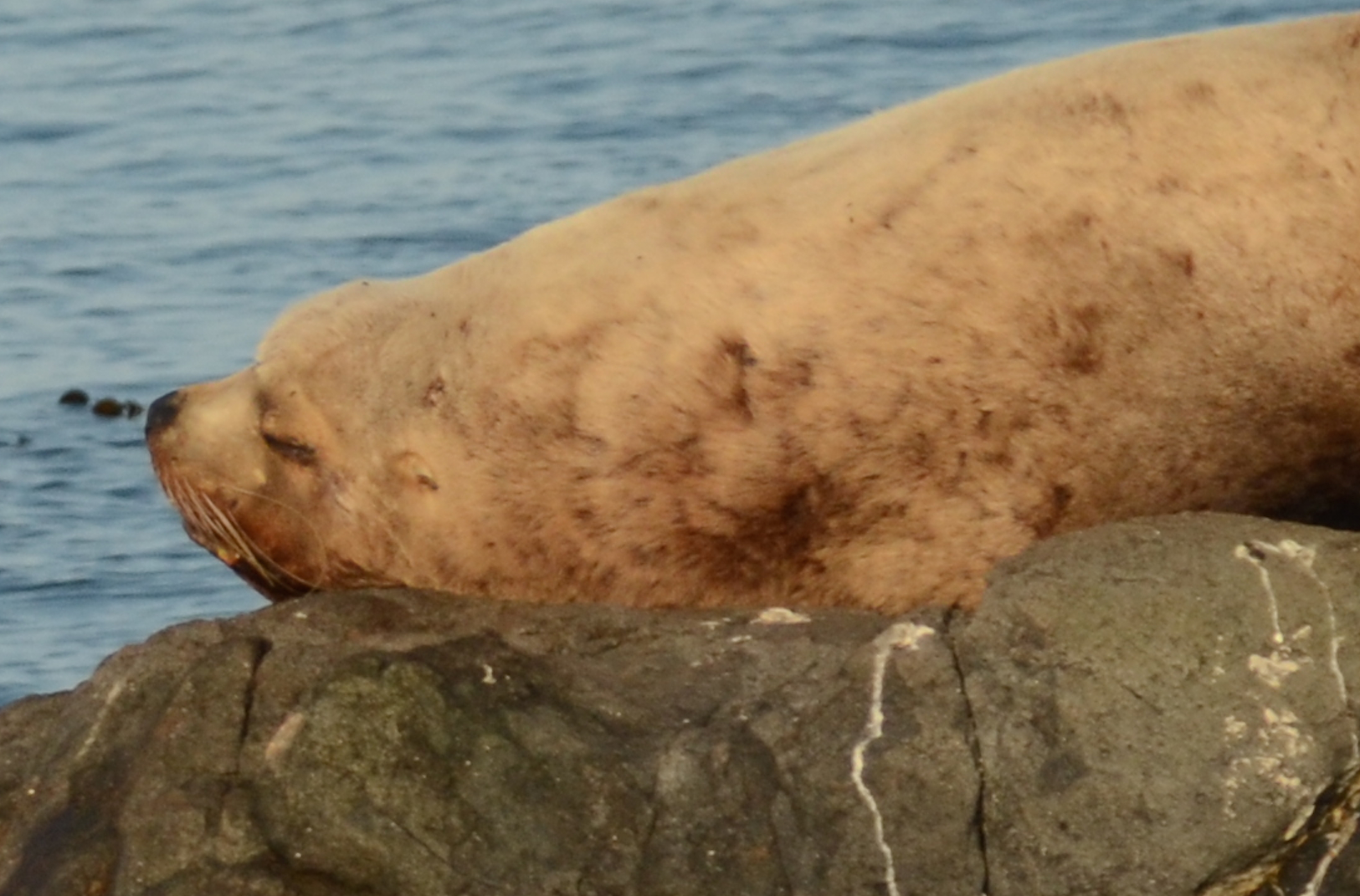
The southwest corner of Great Race is becoming an old age home for male sea lions and there were five hauled out there all day.

An 'old boy' having a snooze on the SW corner of Great Race, the new old boys club.

An ‘old boy’ having a snooze on the SW corner of Great Race, the new old boys club.


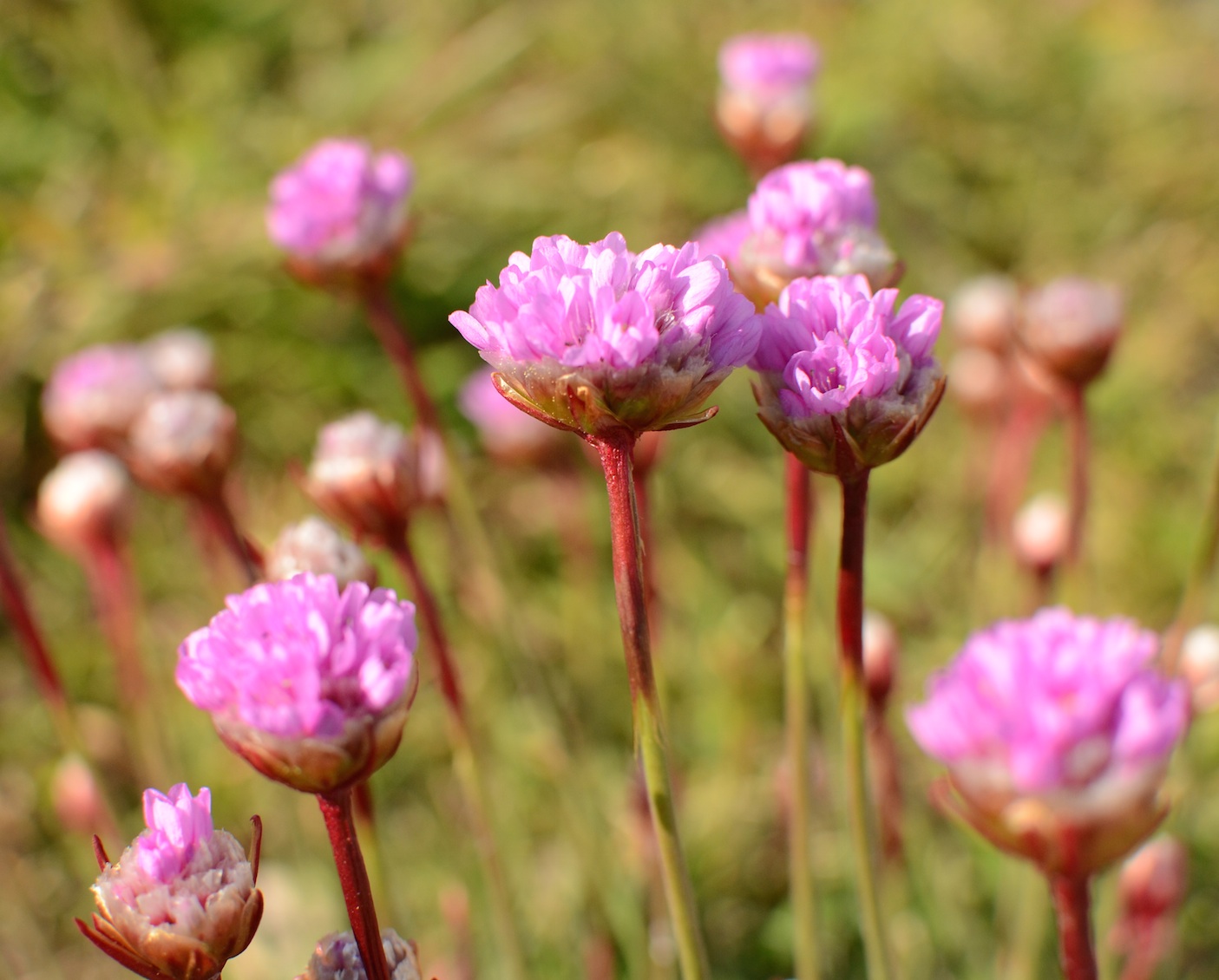
The Sea Thrift is blooming.

Sea Thirft, Armeria maritima supspecies maritima is an introduced species. I 'm not sure which sub-species this is, native or european.

Sea Thirft, Armeria maritima subspecies maritima is an introduced species. I ‘m not sure which sub-species this is, native or european.

I spent a bit of time in the inter-tidal today and soon discovered that the memory cards in the camera were full so I spent a lot more time culling and sorting photographs indoors.


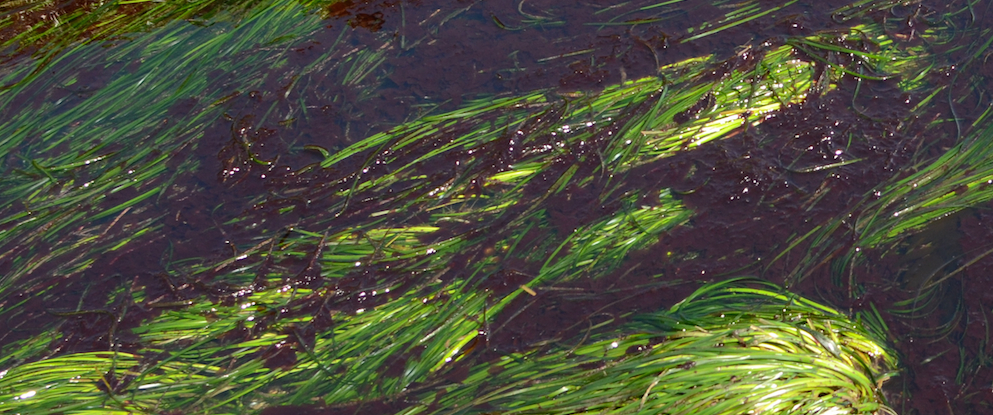
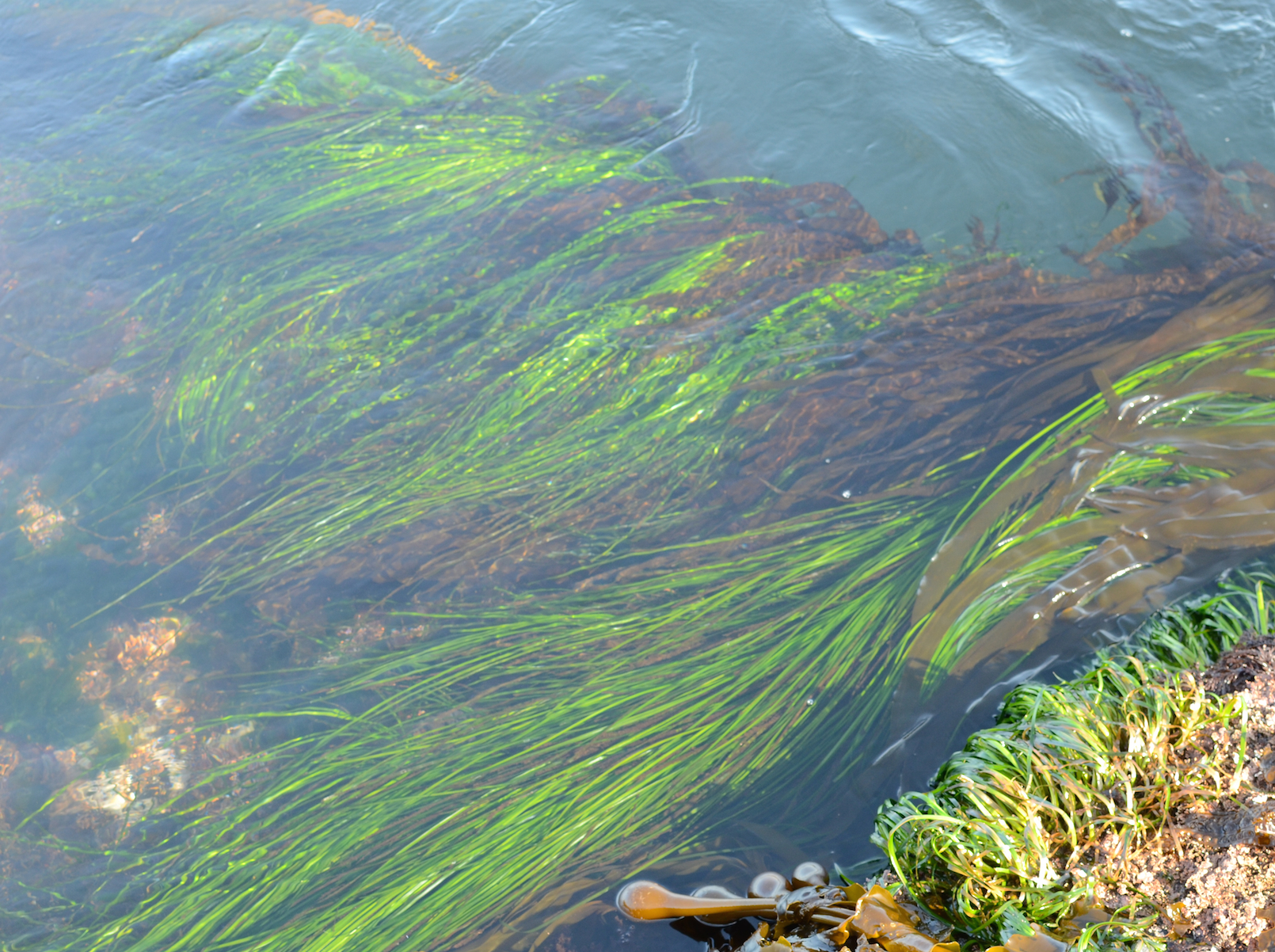
Phylospadix scouleri, also known as surf grass is found in the low tide zone and the top of the sub-tidal. Here it is mixed with Desmarestia aculeata and bull kelp Nereocystis lutkeaena both subtidal species.

Phylospadix scouleri, also known as surf grass is found in the low tide zone and the top of the sub-tidal. Here it is mixed with Desmarestia aculeata and bull kelp Nereocystis lutkeaena both subtidal species.

Many of the species found in the inter-tidal at Race Rocks are more usually associated with outer coast, more wave exposed sites. The current here makes it a very rich hotspot for marine biodiversity.

Many of the species found in the inter-tidal at Race Rocks are more usually associated with outer coast, more wave exposed sites. The current here makes it a very rich hotspot for marine biodiversity.

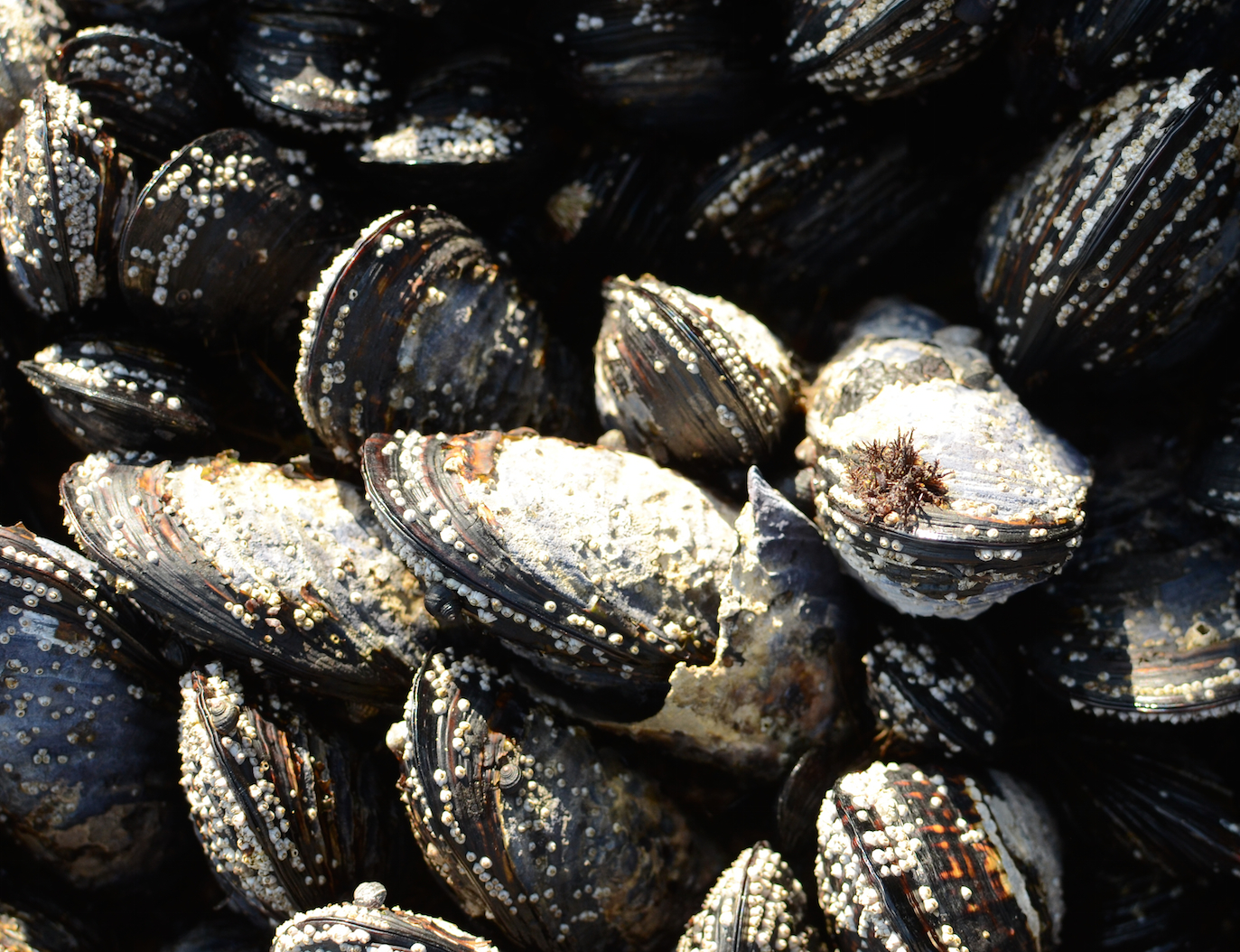
Competition for space and creation of more habitat go hand in hand. Notice set of tiny barnacles on the California Mussels and a spot of Endocladia muricata which is what larval  Mytilus californianus likes to settle out on.

Competition for space and creation of more habitat go hand in hand. Notice set of tiny barnacles on the California Mussels and a spot of Endocladia muricata which is what larval Mytilus californianus likes to settle out on.

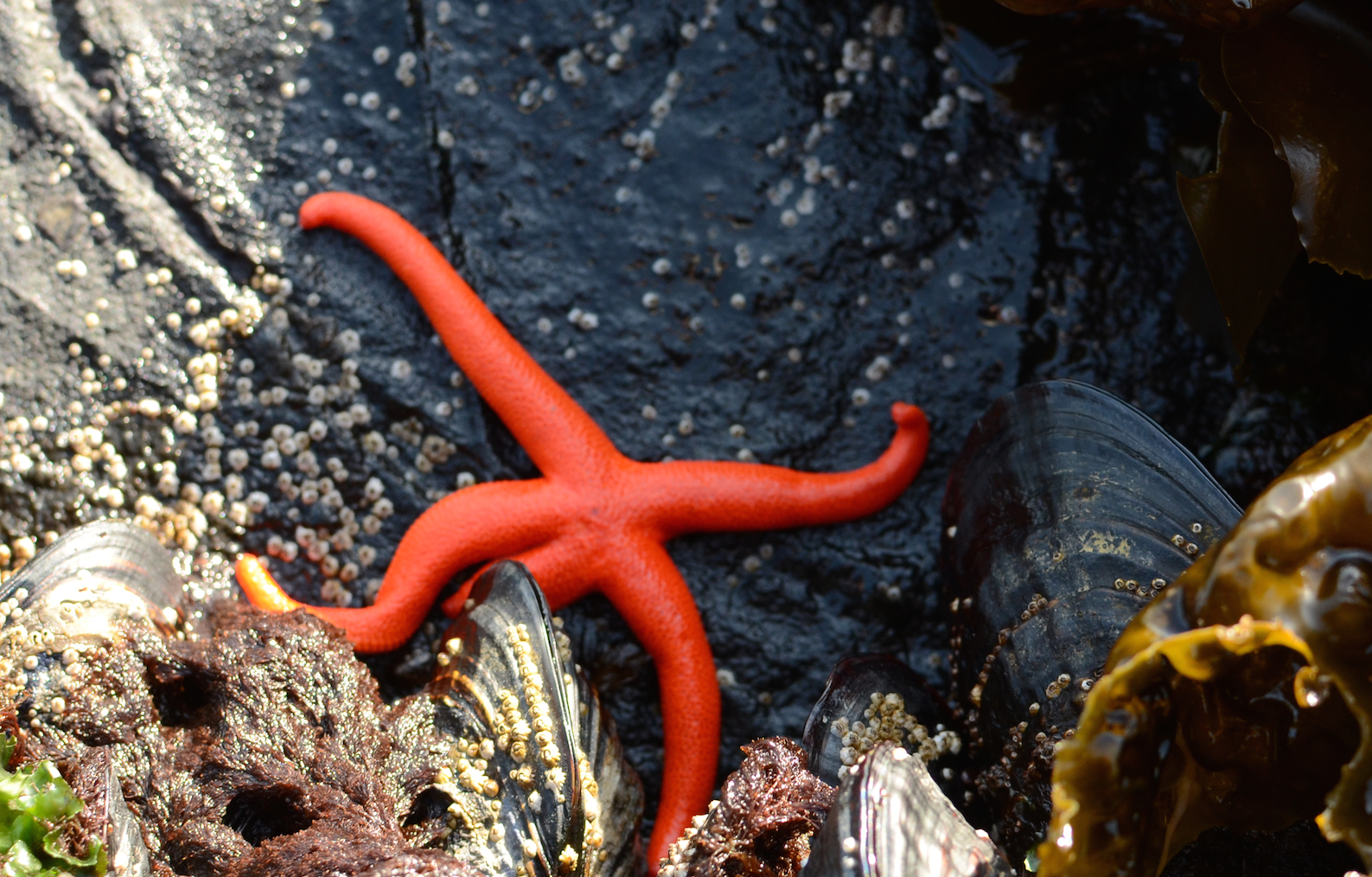
A Henry Star also known as the Blood Star or Henrycia spp.. It will need to find shade to conserve water so that it can breath through its skin.

A Henry Star also known as the Blood Star or Henrycia spp.. It will need to find shade to conserve water so that it can breath through its skin.

There were no visitors and chores were routine.

Enter the Merry Month of May

The wind was just a zephyr today, with a weightless push from south, then southwest, and then nothing for a while. Not much to sail with and the flag hung lifelessly. The barometric pressure was similarly lethargic, going up ever so slightly, then down by about the same. The strong wind warning continues, so it may get here by Sunday evening and the forecast is for sunshine.

There were no whale-watching boats in the Ecological Reserve today although a sports fishing boat came by to look at the sealions in the evening. One rental boat from Pedder Bay with three men, insisted on fishing for and catching rockfish in the closed Rockfish Conservation Area, while the regulars were well outside. There needs to be more notification and communication about where the conservation area is located.

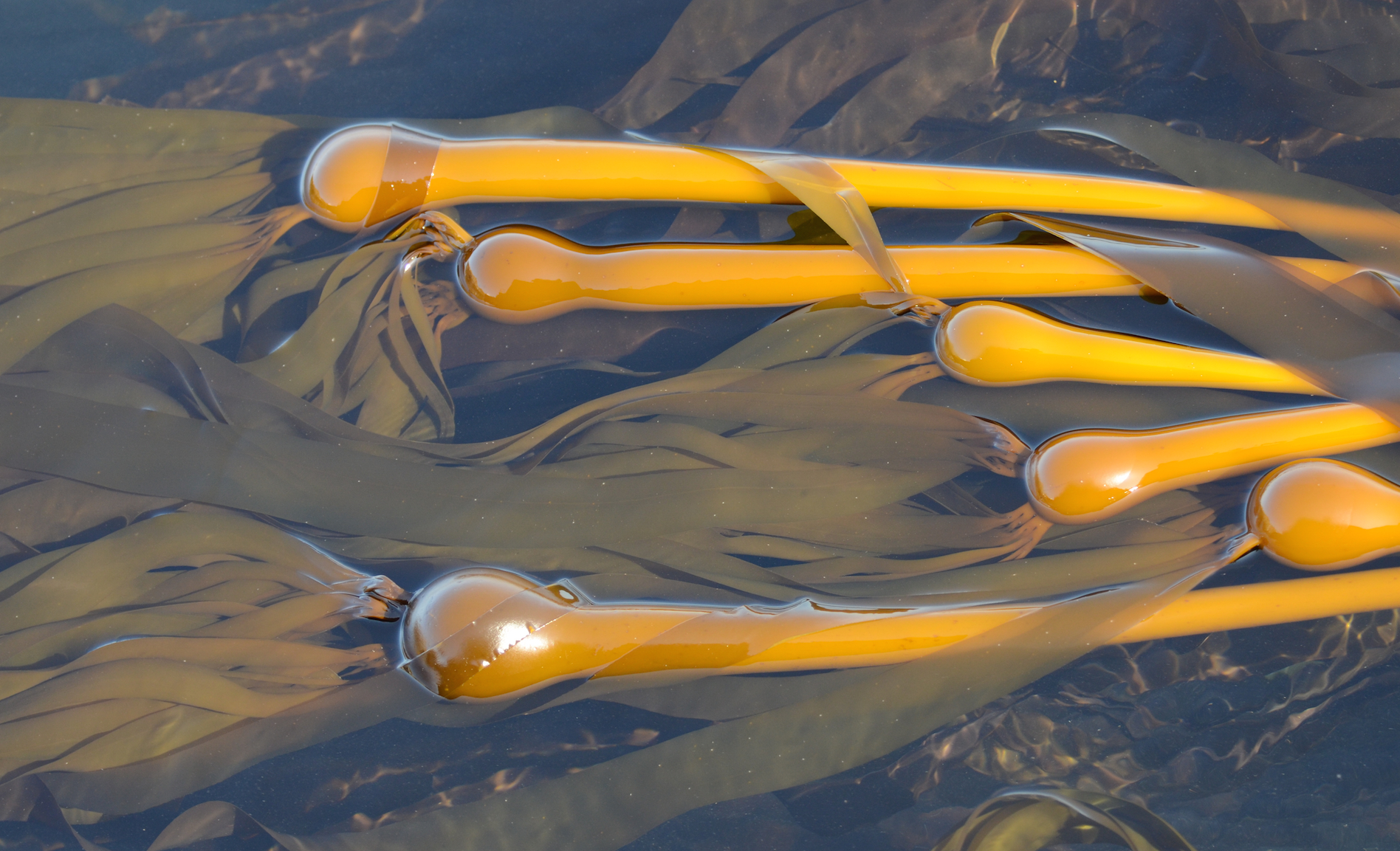
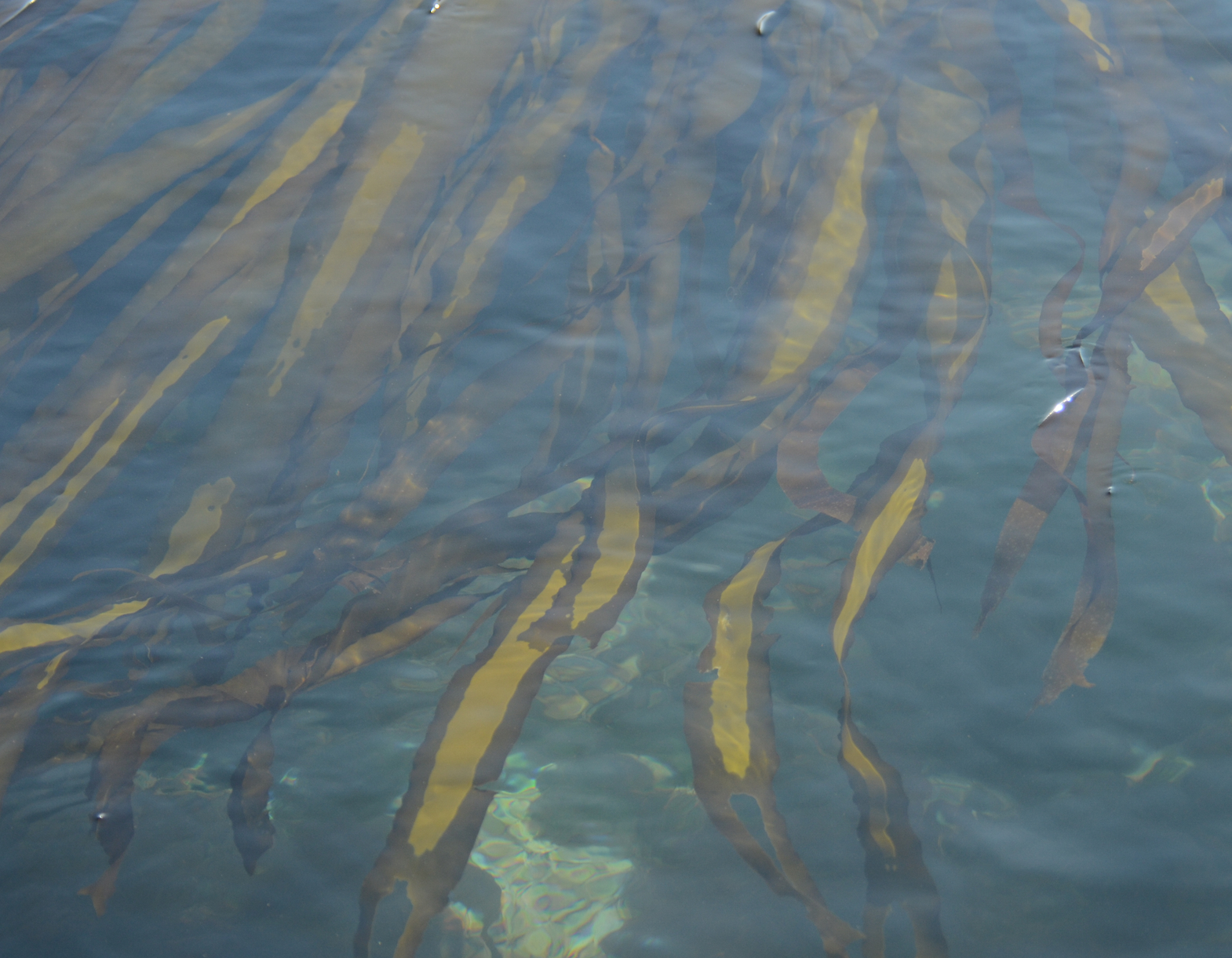
The bull kelp has reached the surface at low tides and is forming fairly massive beds around Turbine Rock where the Sea Otter likes to hang-out. In by the jetty where the current is less active it is at the surface all the time now and some of it is very reproductive, with large sori patches visible on the fronds.

Bull kelp fixes carbon faster than just about anything and grows so fast it makes bamboo look like it is standing still.

Bull kelp fixes carbon faster than just about anything and grows so fast it makes bamboo look like it is standing still.

Bull kelp sori

You can easily see where reduction division (meiosis) happens in the lighter yellow spore patches. You can also see where early patches have popped out of the frond and drifted off.


The pair of geese nesting at the base of the light-tower were out walking their goslings today. It looks like five out their eight eggs successfully hatched. The gander belonging to another, younger pair gave himself a real scare today, walking past the basement door where he could see his own reflection. That was really troubling to the pair and also very noisy. The gulls are also noisily going about their business.

Gwgu mate gwgu mate2

The elephant seals continue to moult although a few of them are down to just a few eyebrow hairs now. The younger males seem to be the last to moult and the most active. The same 12 to 14 individuals continue to frequent Great Race.

This almost three year old male (#5850) continues to spend day and night on Great Race. He has finally started to moult.

This almost three year old male (#5850) continues to spend day and night on Great Race. He has finally started to moult.

This young female is ahead of the young males in her moult.

This young female is ahead of the young males in her moult.

California Sealions were hauled out on Great Race today for the first time since I arrived in March and there was a male Californian (sealion) on the jetty that didn’t want to leave when I went down to sample seawater in the afternoon.

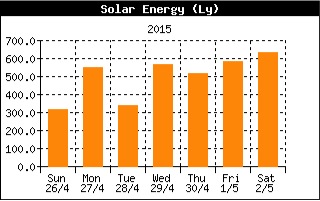
The solar panels were well supplied with sunlight today and produced enough energy to run the de-salinator and top up fresh water supply. The high value was 900 W/m2 and the cumulative amount for the day, at 7:00 PM broke the week’s record.

Untitled

There were no visitors today and maintenance included routine chores and a couple of little projects.

Mirounga Manicure

The west-southwest breeze sprang up early and quickly cleared the low morning cloud, revealing blue skies and a rippled Strait. With a sustained westerly wind of up to 20 knots the ripples grew into chop with whitecaps by mid-morning. It continued to blow in the afternoon rising to a steady 30 knots with gusts over 35. By early evening with the wind relentless, it is rough and streaked in white.

The barometric pressure, that harbinger of weather, slid almost imperceptibly downwards today, yet the forecast for tonight and tomorrow is for more west winds in the same pattern. There was increasing cloud throughout the afternoon.

There were no whale watching boats observed in the Ecological Reserve today and only one sports fisherman who sped through the ER, cutting over to the southwest, his favorite anchorage spot to fish for halibut, just outside the closed area.

The Northern Elephant Seals have moved to a more convenient spot behind the boathouse, which is closer to the water and more in the lee under the heli-pad hill. The moult continues.


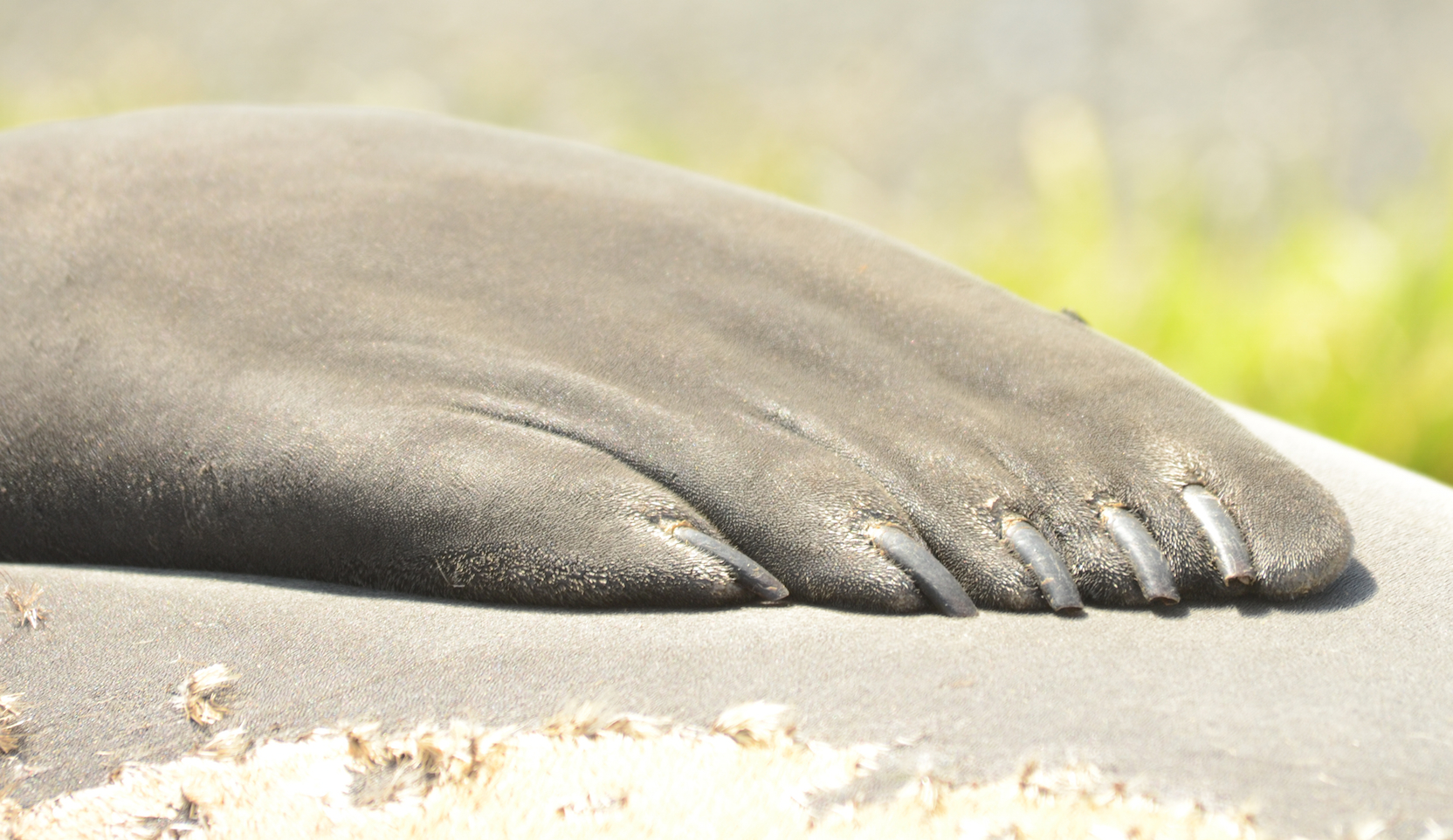
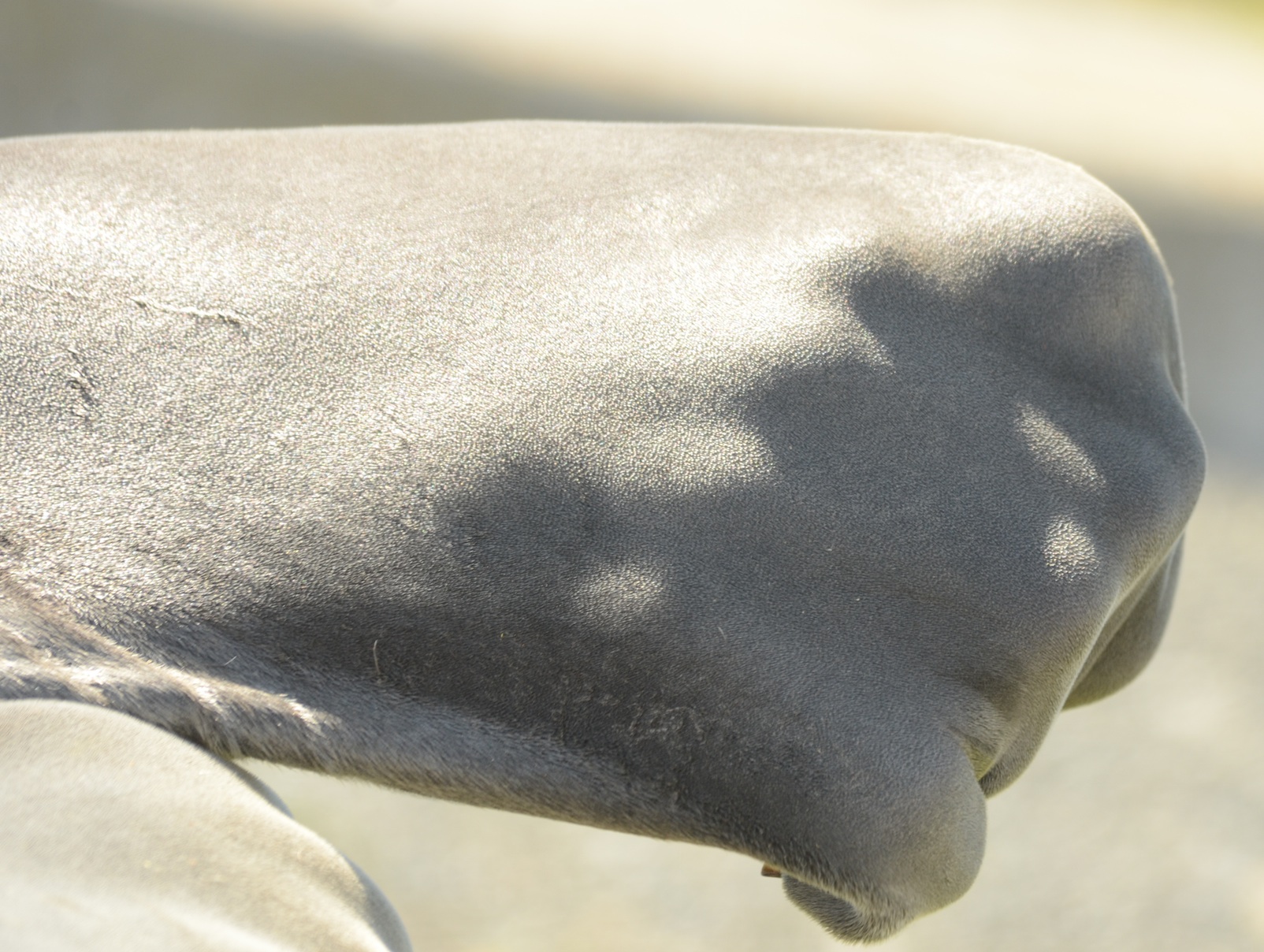
Mirounga manicure. This right “hand” belongs to the biggest male Mirounga (elephant seal) on the island.

Mirounga manicure. This right “hand” belongs to the biggest male Mirounga (elephant seal) on the island.


The same animal making a "fist".

The same animal making a “fist”.

It is fascinating to watch the elephant seals use their digits and make what looks like a fist in a mitten of freshly moulted skin and fur.

Many pairs of gulls are mating now and I observed a pair of Black Oystercatchers doing the same. Some of the oystercatchers may already have eggs. I am taking clues from the raven that frequents the island and is always interested in a couple of pairs’ territories. The raven really riles up the oystercatchers, who fearlessly mob it. It was so windy today that while the chase was on, the raven tried a tuck to avoid being hit by an oystercatcher and almost lost control.


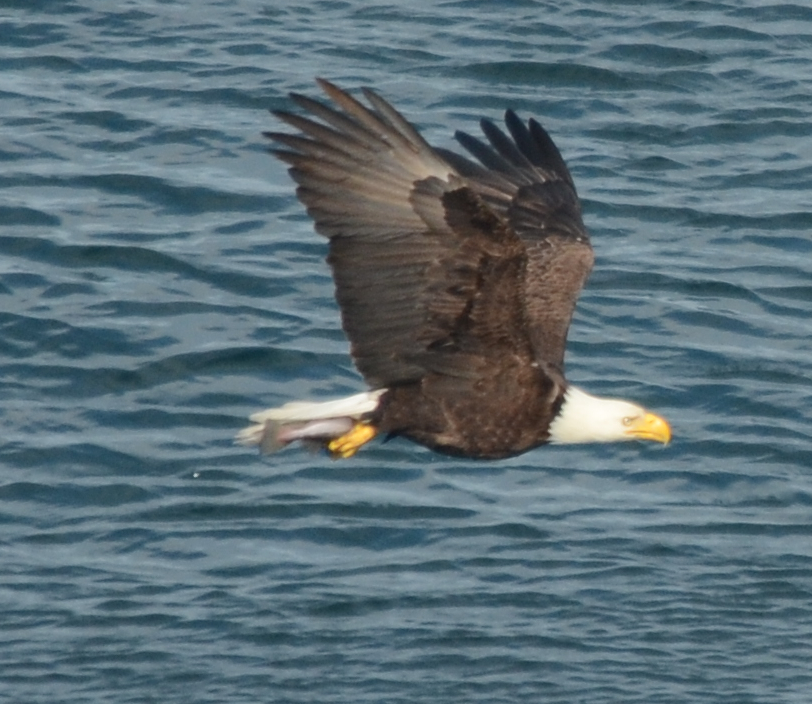
The eagles were fishing early but left when the winds came up. The photo below finishes the series I started a few days ago, to show how the eagle tucks the fish up under its tail in flight.

Notice the fish tucked up under the tail.

Notice the fish tucked up under the tail.

There were no visitors today and maintenance chores were routine.


April Almost Gone

The wind didn’t do much today other than puff a few light breezes in from the west with a few periods rising to 5 to 10 knots. It was mostly overcast with a few bright interludes and generally rather unremarkable in terms of weather. When the sun did shine through it had intensity foretelling the growing season. The barometer was fairly steady all day and is just starting to drop as I write this. The forecast is for a mix of sun and cloud, a chance of showers and a strong wind warning in effect for Friday afternoon.

There were nine whale watching vessels observed in the Ecological Reserve today, a bit of a spike, possibly due to a large cruise ship at Ogden Point.

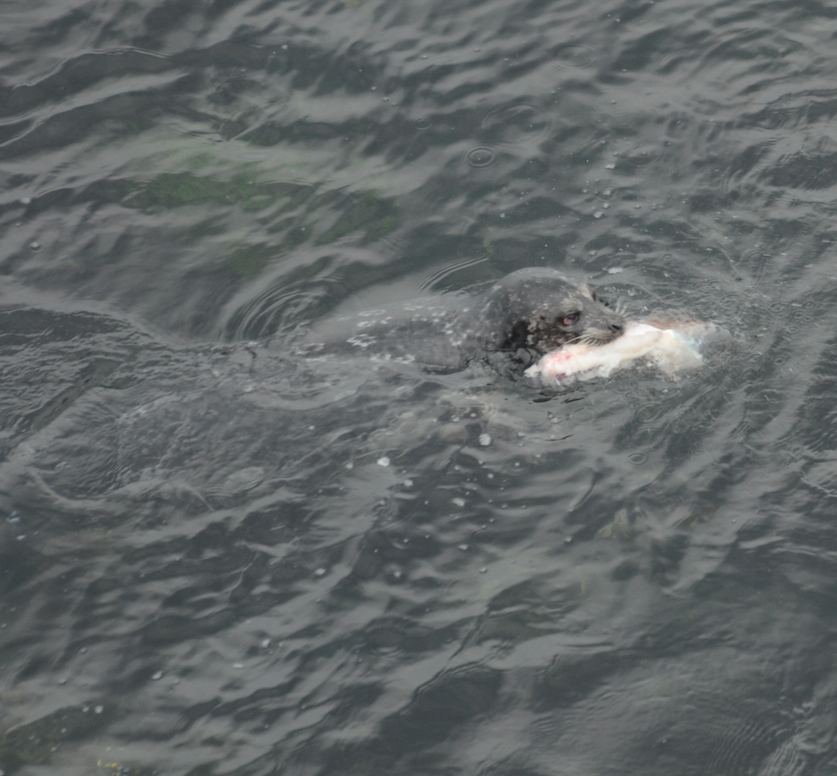
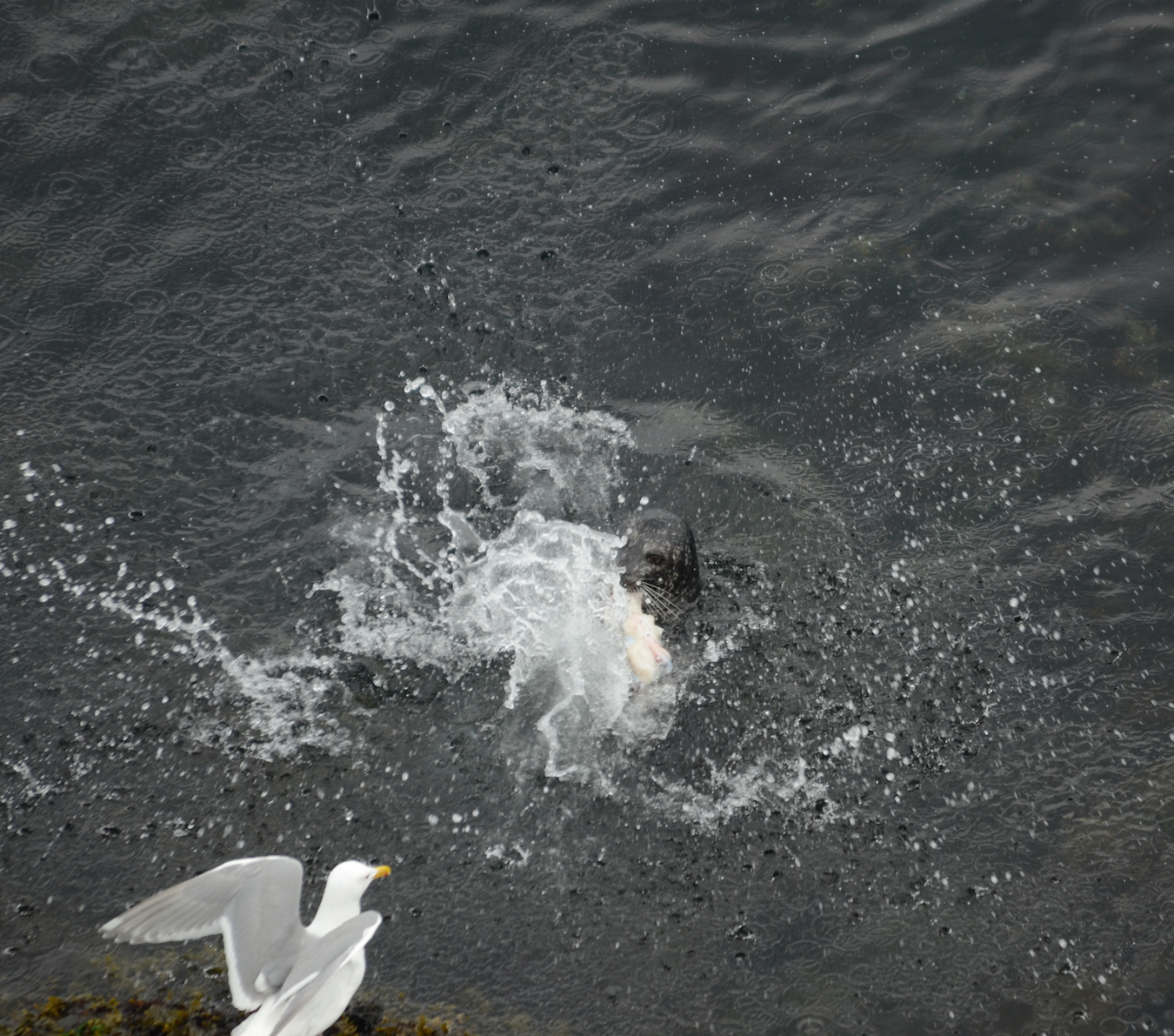
I watched a Harbour Seal tearing up and eating a fish today. It looked like it might have been a lingcod (Ophiodon elongatus).

This Harbour Seal was really exerting itself to rip up a lingcod.

This Harbour Seal was really exerting itself to rip up a lingcod.

Seal with Ling


The Pigeon Guillemots are getting really comfortable on land again.

The Pigeon Guillemots are getting really comfortable on land again.

This female elephant seal has no tags and I have been calling her circle sister because of the circular marks on her back. As you can see her moult is almost complete and the circles are  at least a little visible on the new coat so I will still be able to identify her as an individual.

This is the back left side of the newly moulted "circle sister", still identifiable by the small circular scars.

This is the back left side of the newly moulted “circle sister”, still identifiable by the small circular scars.

Today was animal census day and the results are as follows:

Northern Elephant Seals 30 (12 on Great Race)

Harbour Seals 102

California Sea lions 23 (includes brand C323)

Northern Sea lions 55 (includes brand 460Y)

Sea Otter 1

Canada Geese 18

Brant ~210 (passing through)

Pacific Loon 1

Harlequin Ducks 8

Pelagic Cormorants 5

Double Crested Cormorants 6

Bald Eagle 2 adults, 2 sub-adults

Killdeer 1

Black Oystercatchers 9

Black Turnstones 8

Whimbrels 10 (yesterday)

Pigeon Guillemots 268

Glaucous-winged Gulls 317 adults, 5 sub-adults

Common Raven 1

Barn Swallows 2

Savannah Sparrow 10

Red-winged Blackbirds 4

There were no visitors today. Chores were routine.