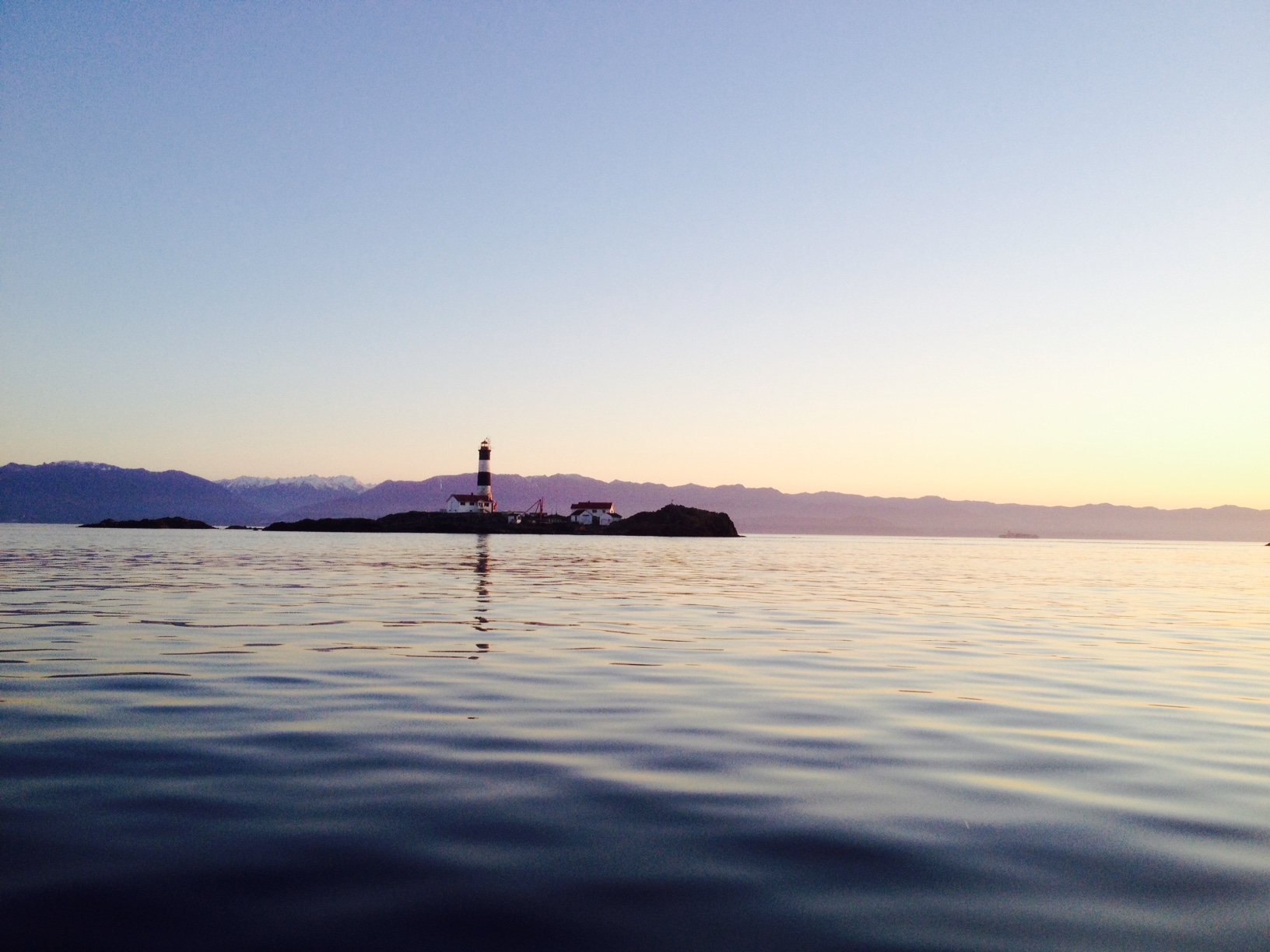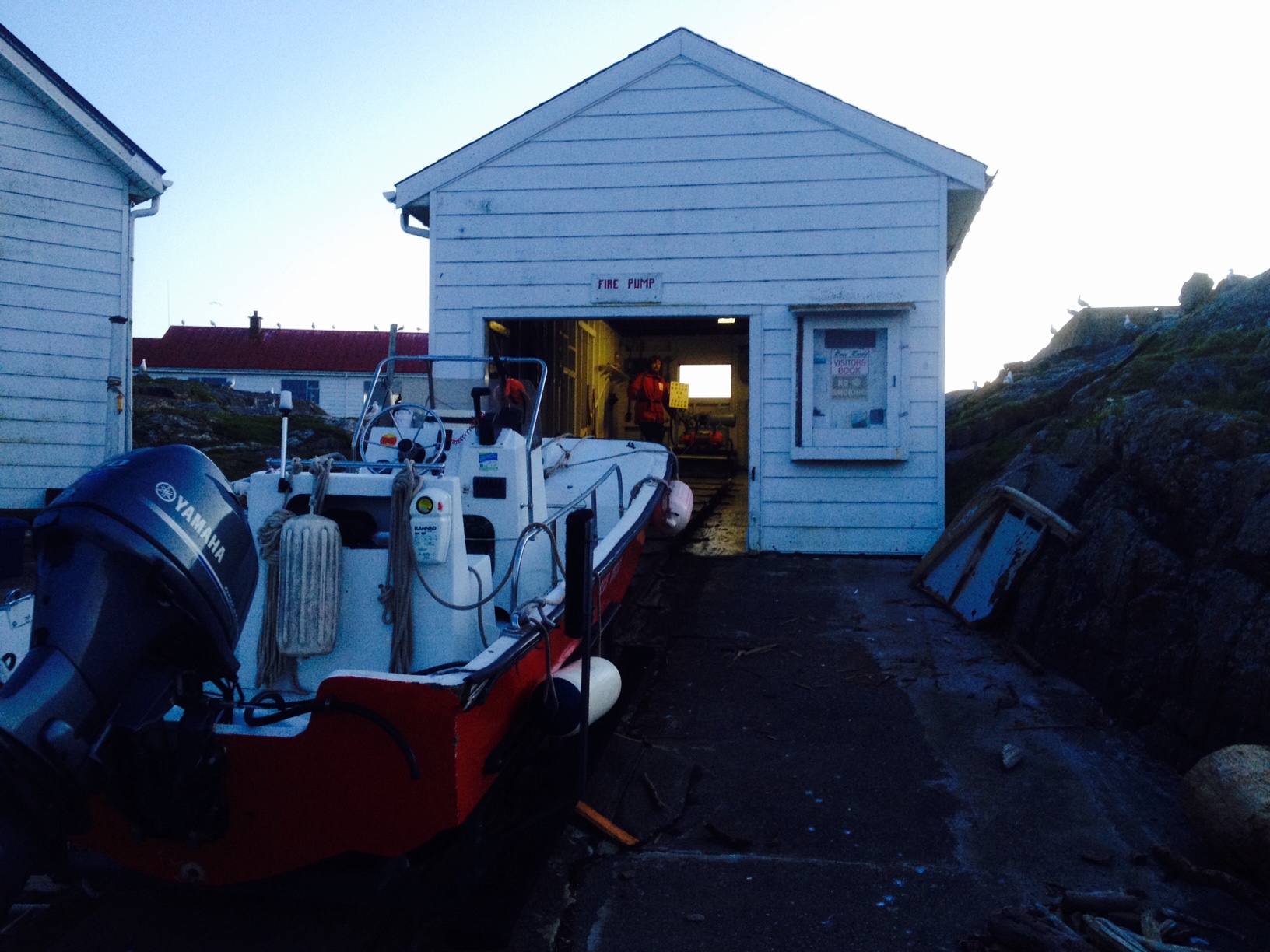
Thursday is Census Day at Race Rocks

The weather was fine today with sunshine from dawn until about four o’clock. Winds were very light and the direction shifted around west, from northwest to southwest. As the barometers drops, rain is forecasted, southeast winds and then improving with only scattered showers by tomorrow afternoon.

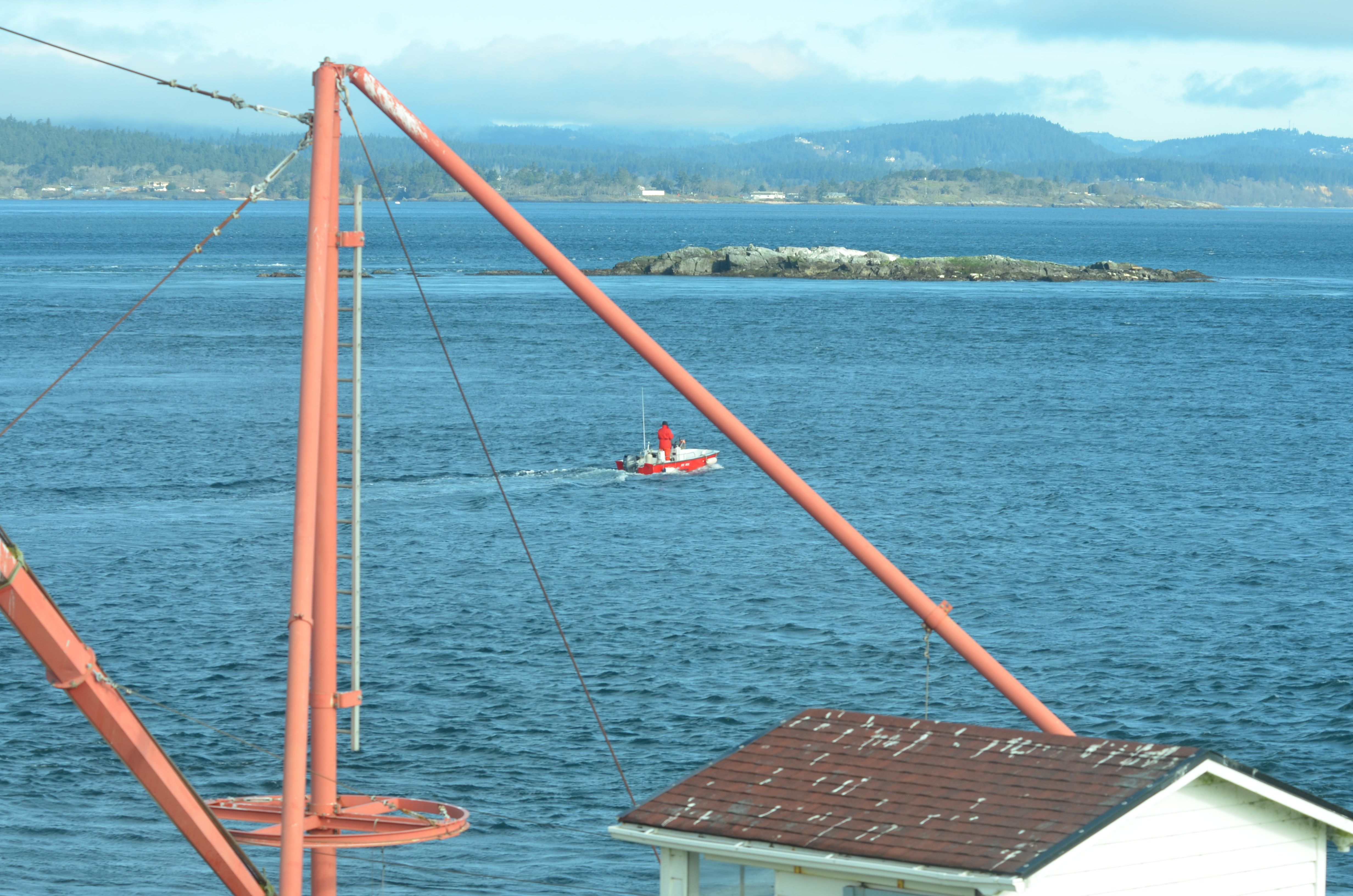
The fine weather brought two small sports fishing boats into the Ecological Reserve today, both fishing and speeding inside the Ecological Reserve boundary.  My guess is that neither of them were aware of the Eco-Reserve and its protection from speeding and jigging.

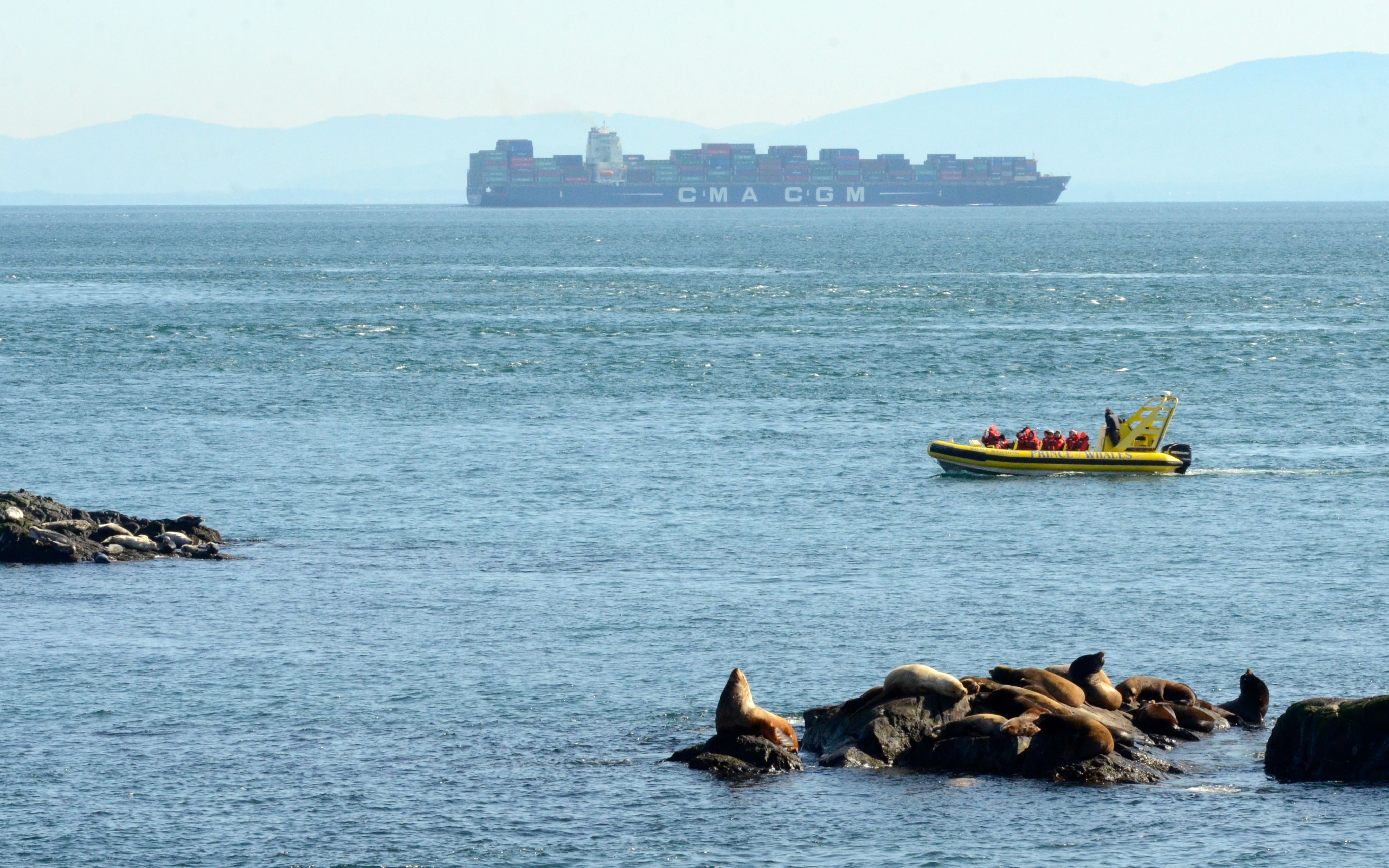
There were three, whale watching boats in Reserve today and several others that passed outside of the boundaries. One of the attractions for the whale watchers were Biggs’ Killer Whales, also known as transients. The ‘T”s as they are known to the tour operators were travelling from west to east when I saw them and they passed very close to the seal haul-out on North Rocks before I lost them to view. It looked like four individuals. I saw a single, adult male Killer Whale two days ago, it was just a one-off sighting and I didn’t spot it again in spite of watching for quite a while. That one was also probably also a Biggs, just from the behaviour.

Today was Mega-fauna census day and here are the results.

Bigg’s (Transient) Killer Whales 4

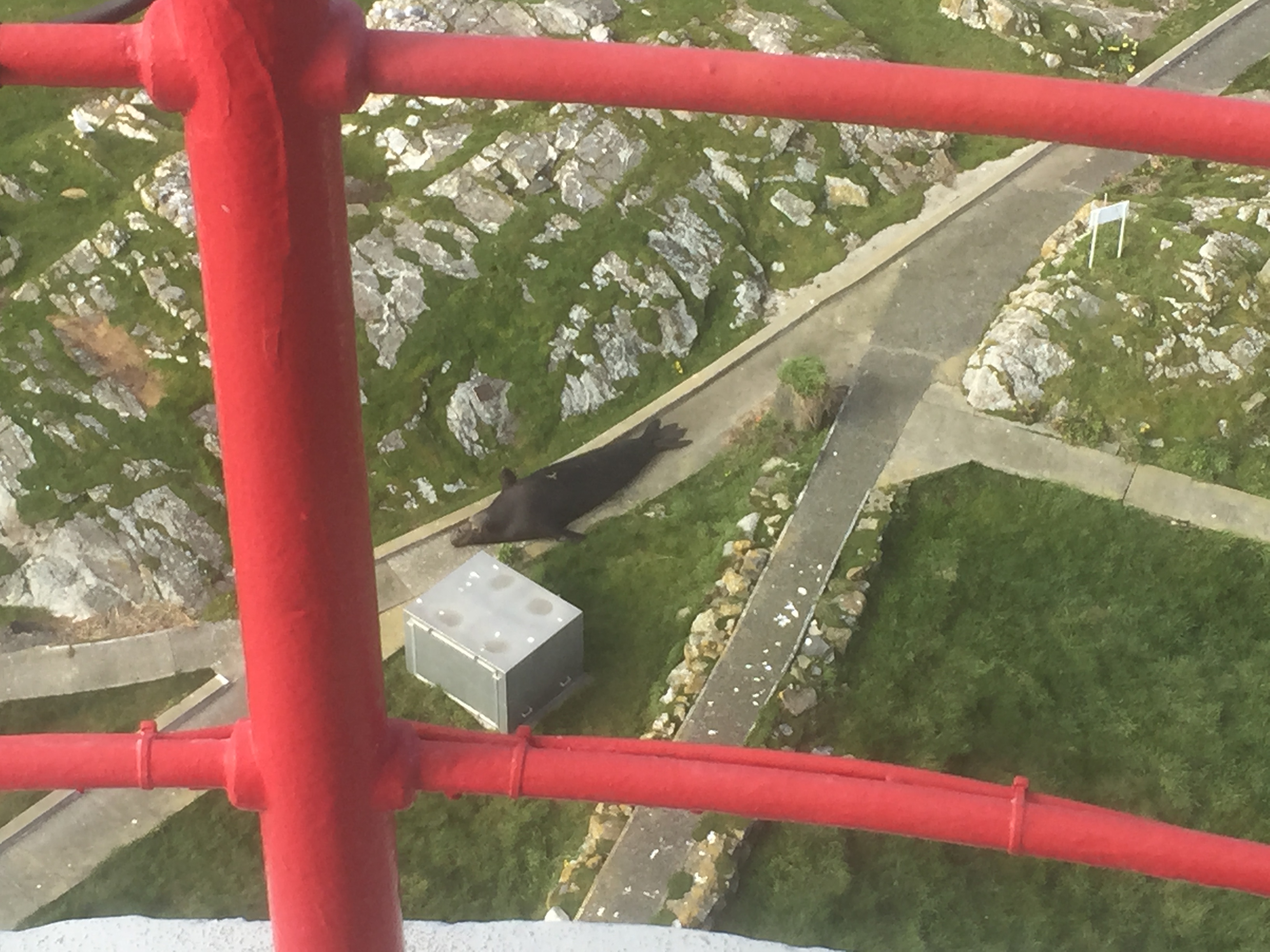
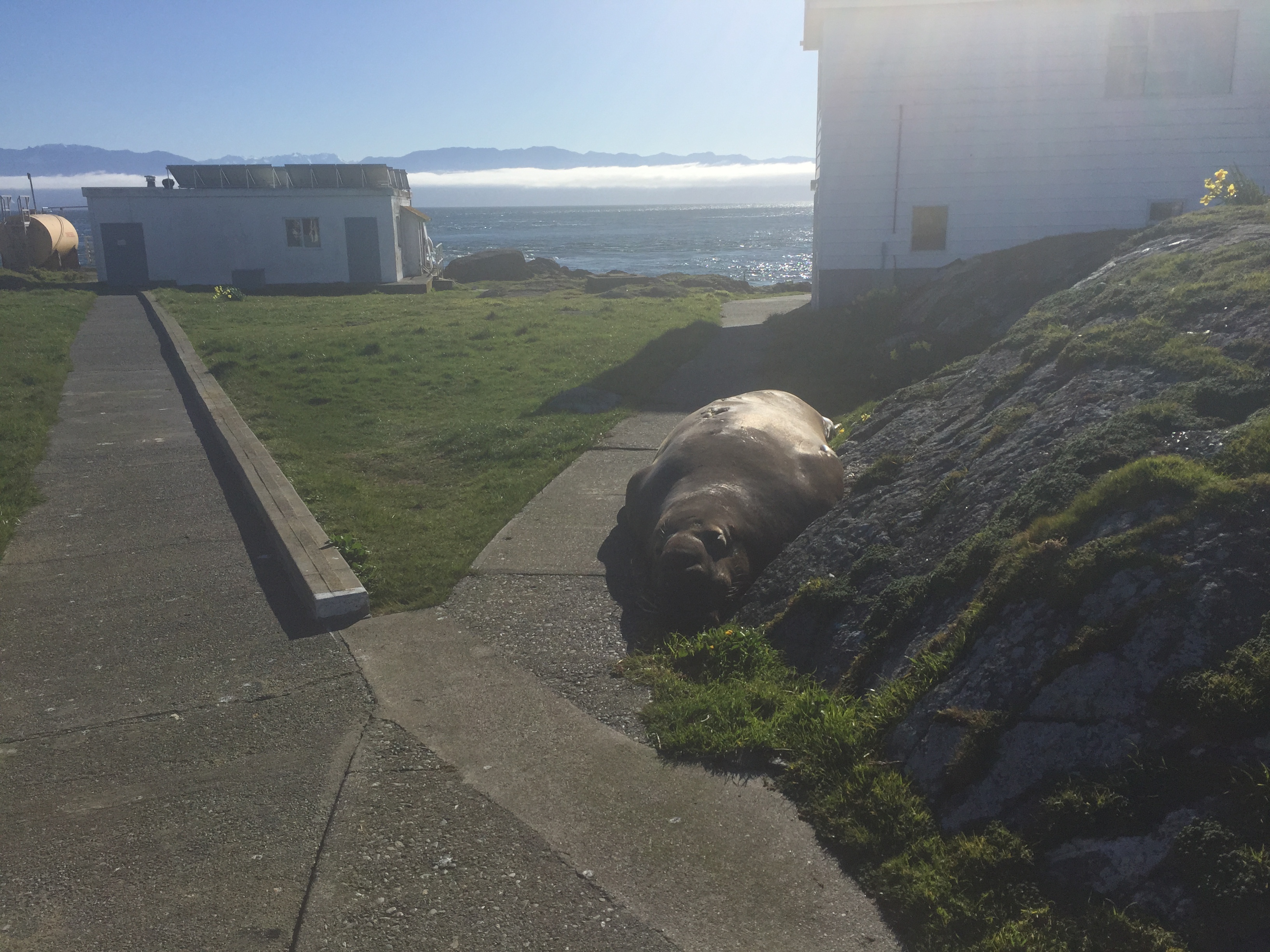
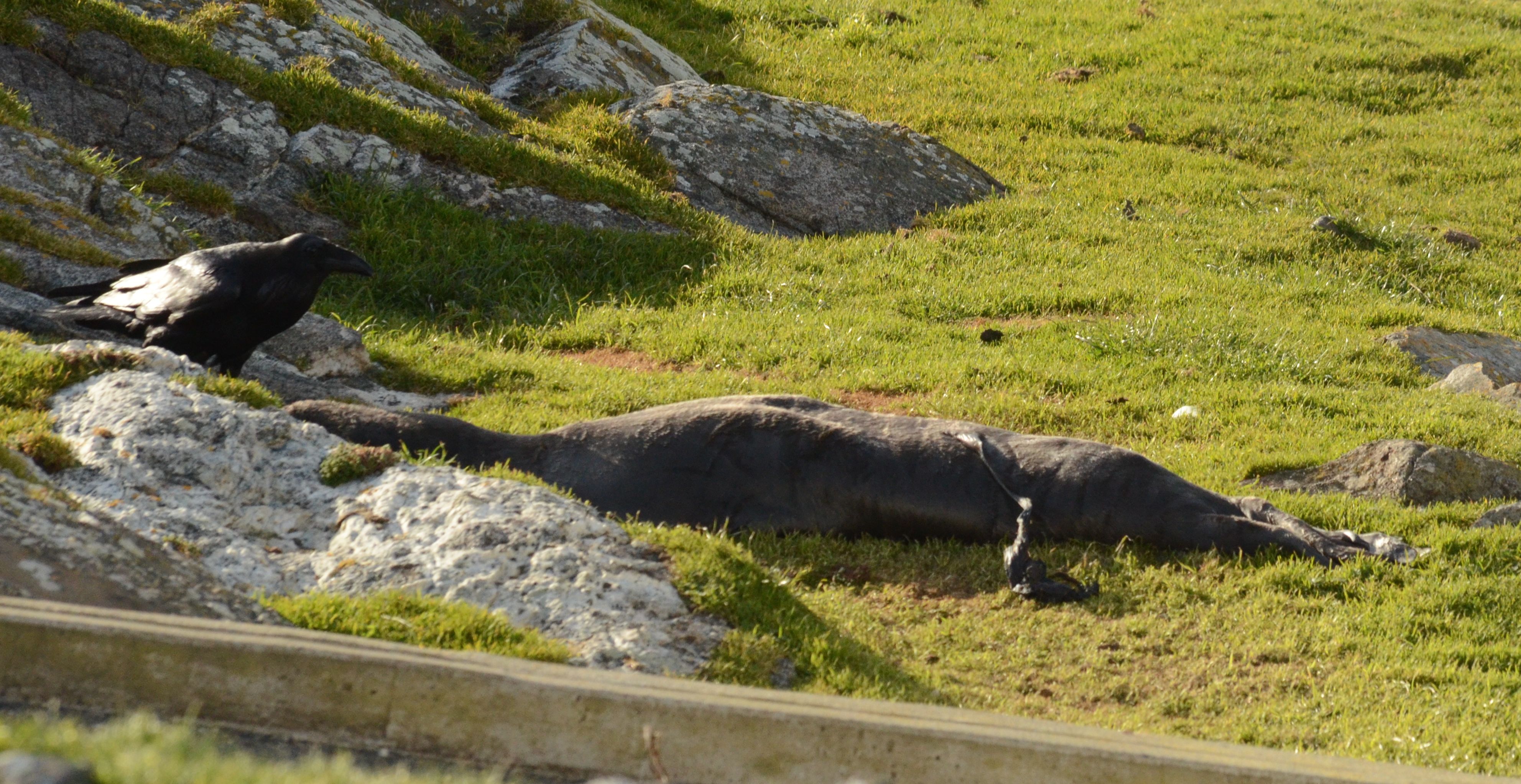
Northern Elephant Seals 12

Harbour Seals 117

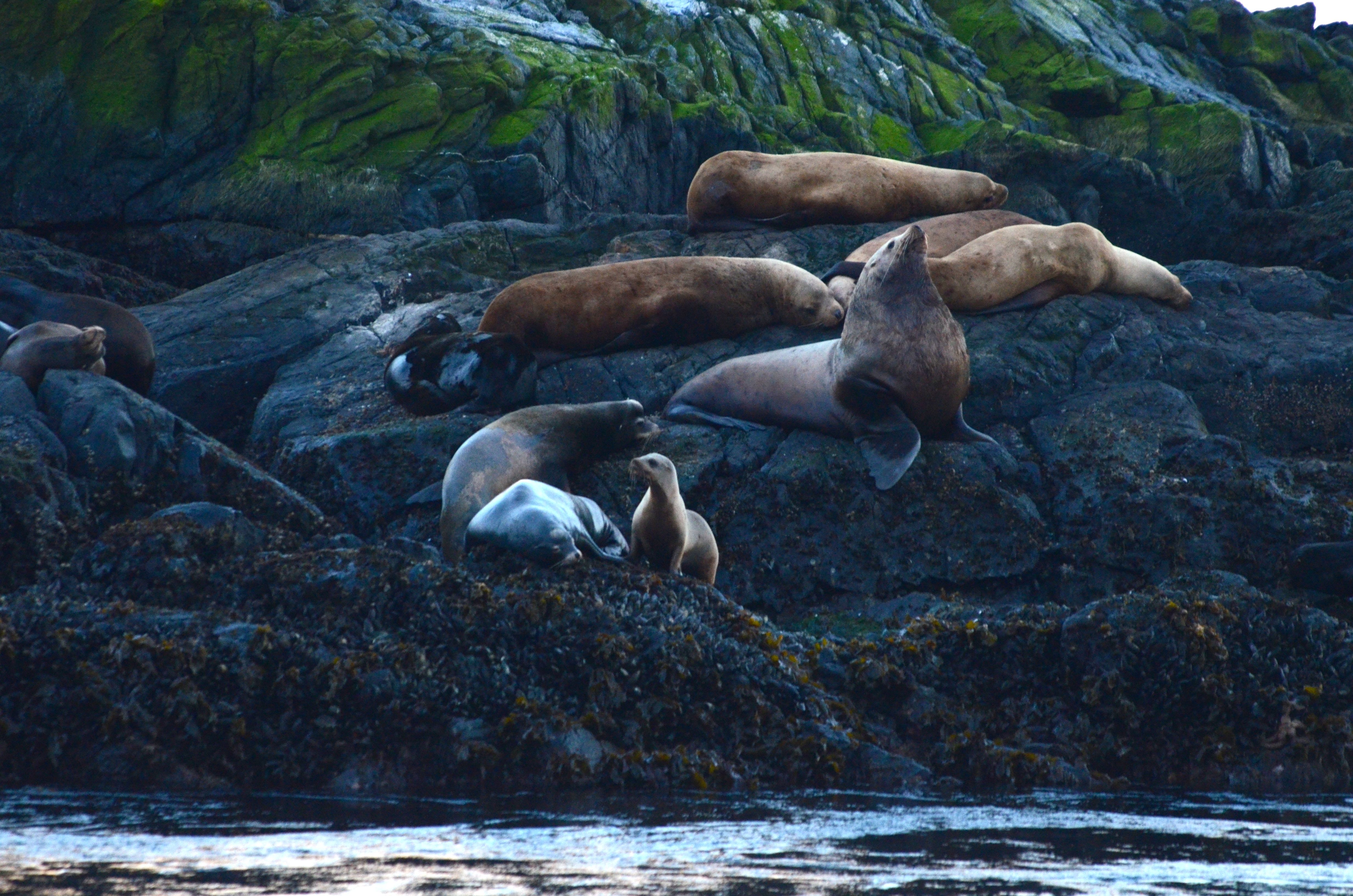
California Sea lions 69

Northern Sea lions 21

Canada Geese 24

Harlequin Ducks 9

Pelagic Cormorants 18

Double Crested Cormorants 15

Brandt’s Cormorants 12 (Flying through.)

Great Blue Heron 1

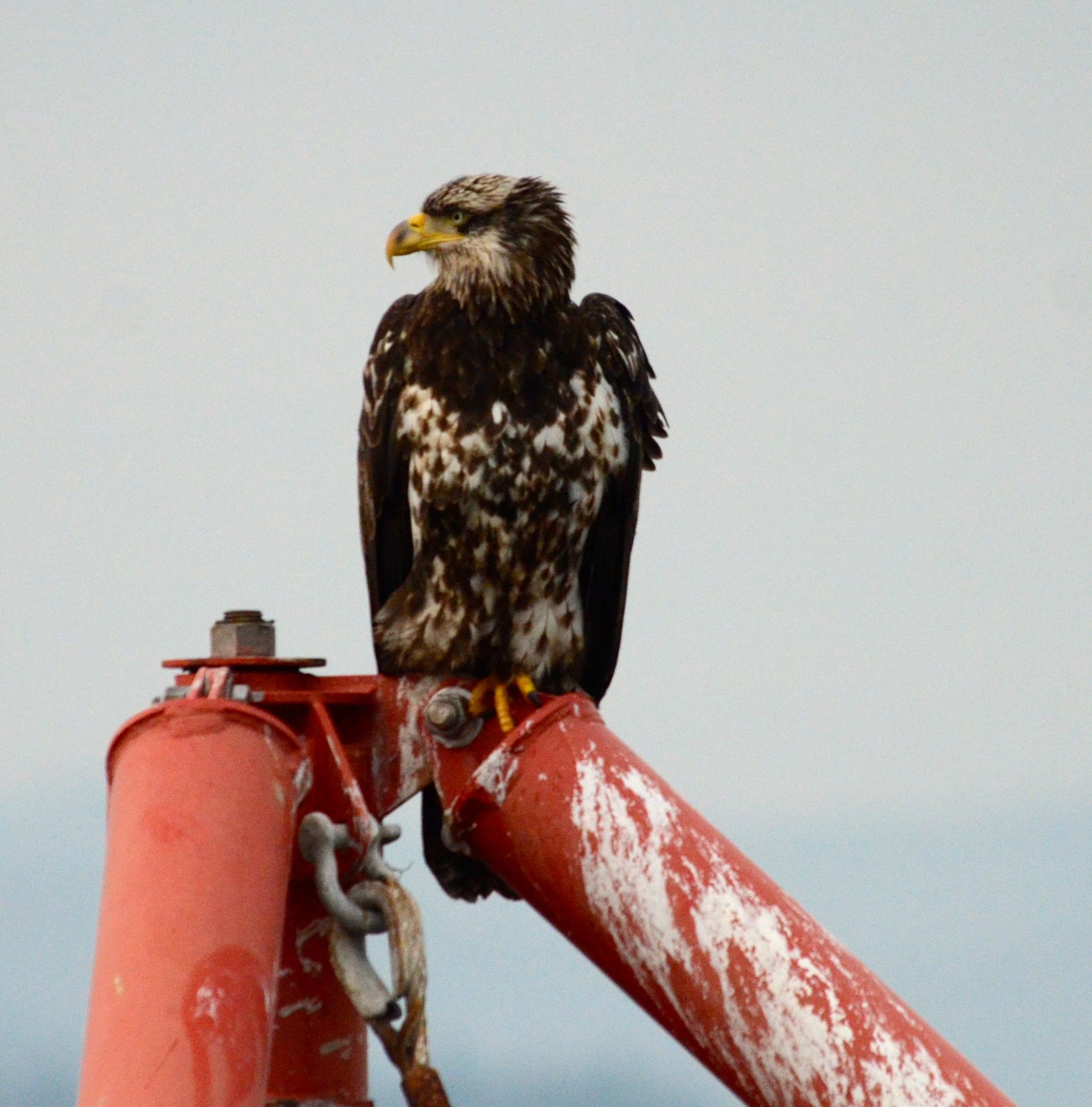
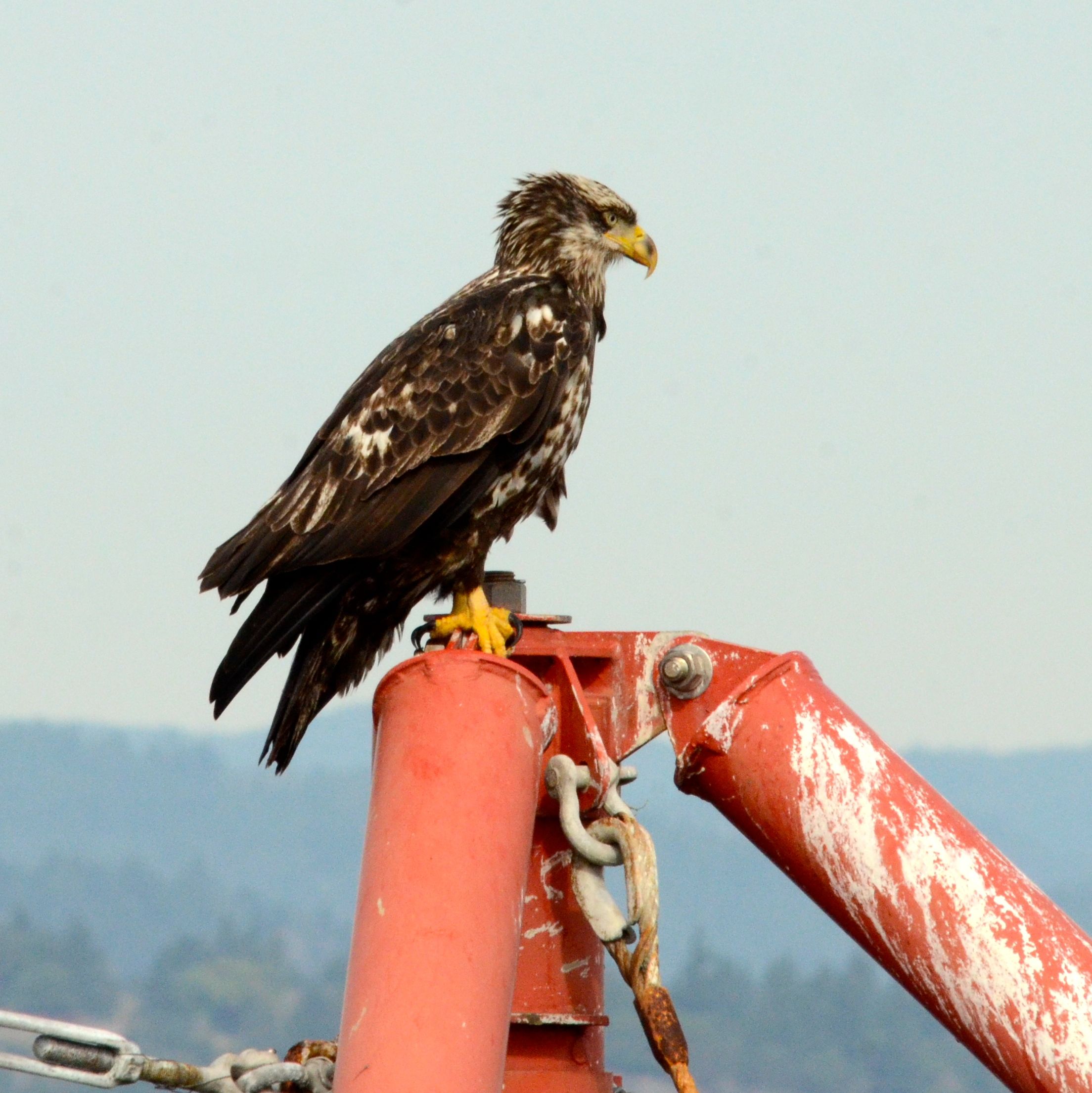
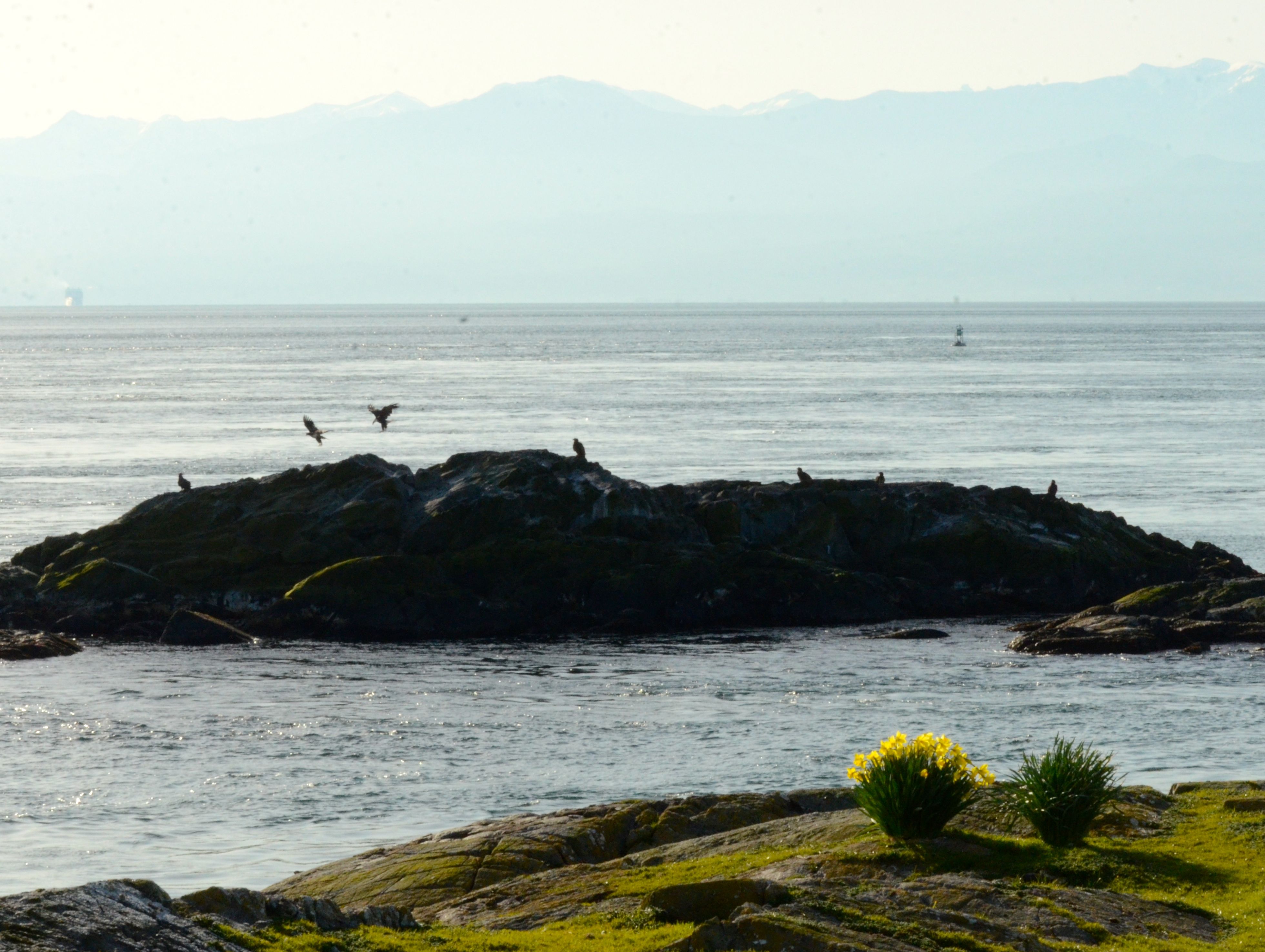
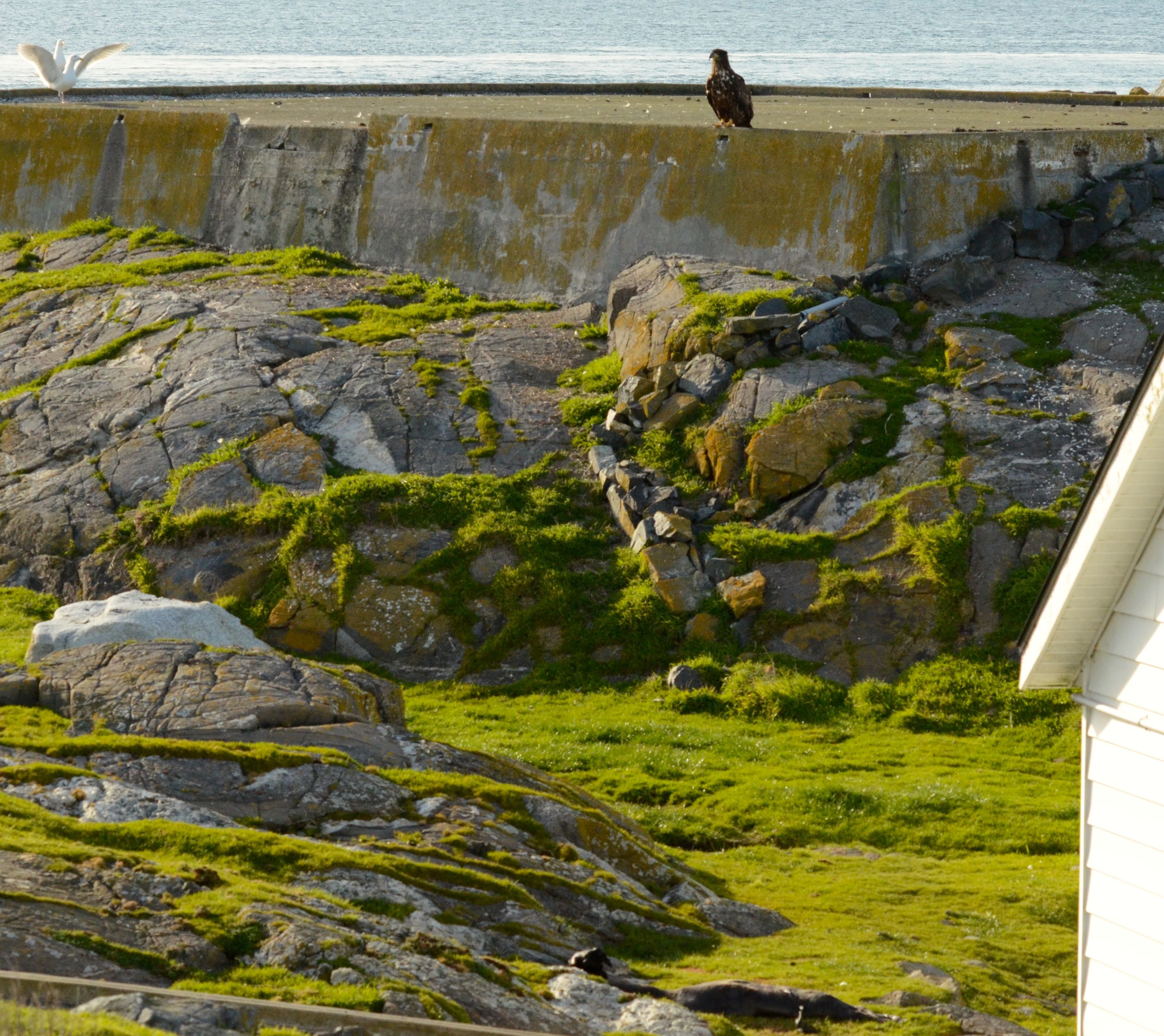
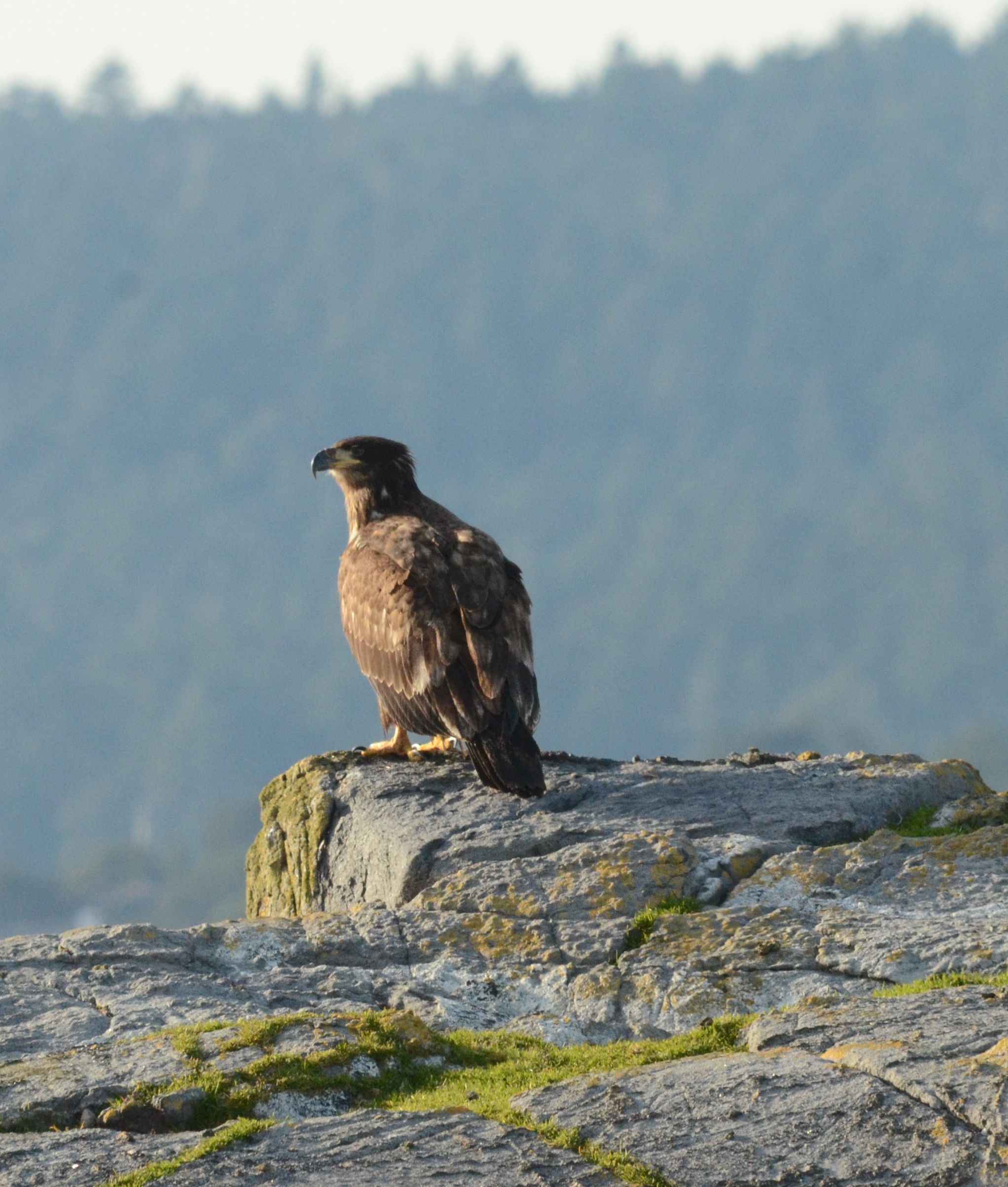
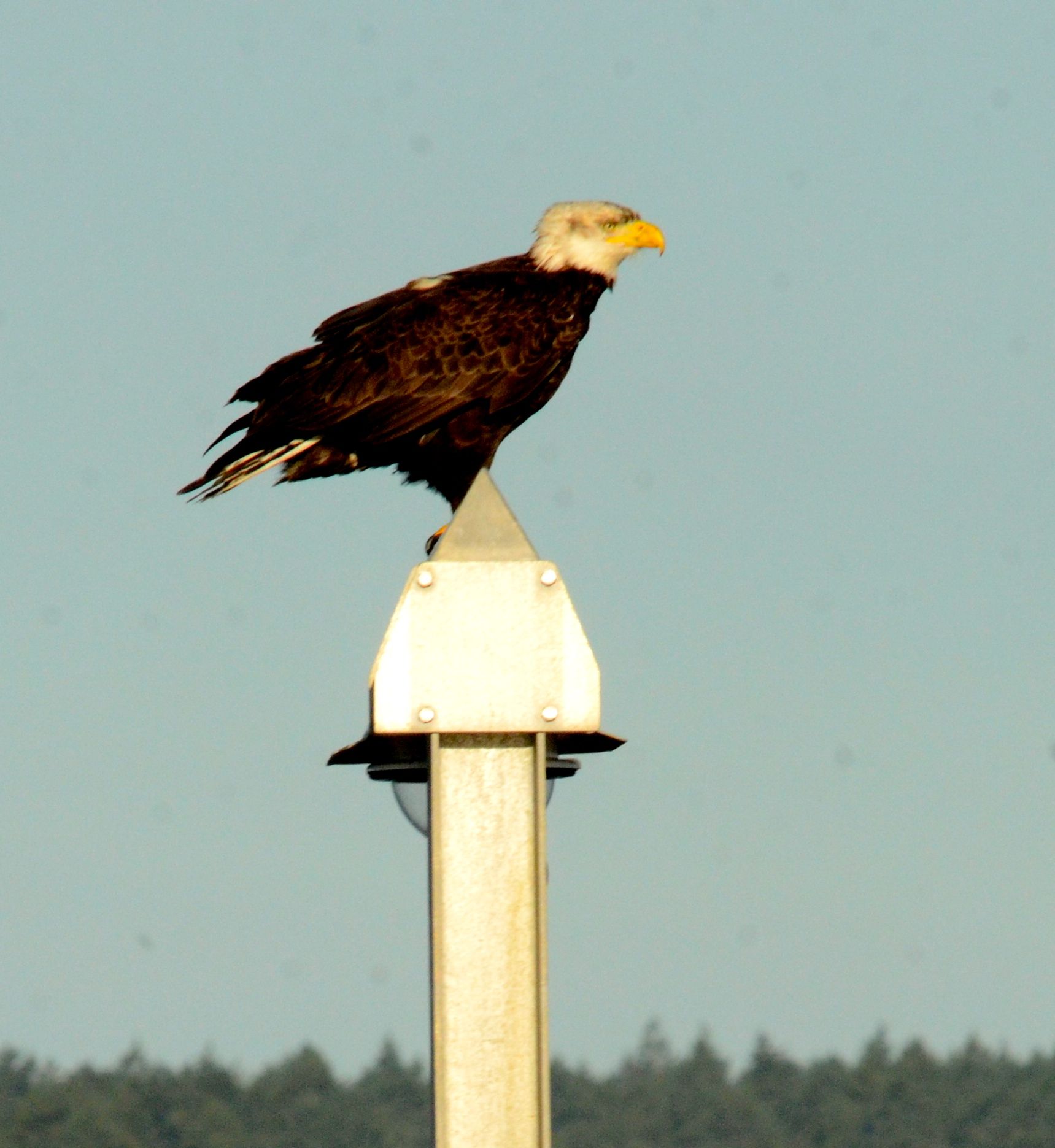
Bald Eagle 2 adults, 3 sub-adults

Killdeer 2 (at least two, difficult to count in the dark)

Black Oystercatchers 10

Black Turnstones 22

Surfbirds 37

Rock Sandpipers 7

Dunlin 11

Pigeon Guillemots 241 (Not a complete count. Had planned to quickly move over and do a north count but unable to count other side due to disruption with speeding boat and subsequent mass pandemonium and movement of birds everywhere.)

Glaucous-winged Gulls 365

Herring Gulls (present earlier in week)

California Gulls (present earlier in week)

Ring-Billed Gulls (present earlier in week)

Peregrine Falcon 1

Northwestern Crow 2

Common Raven 1
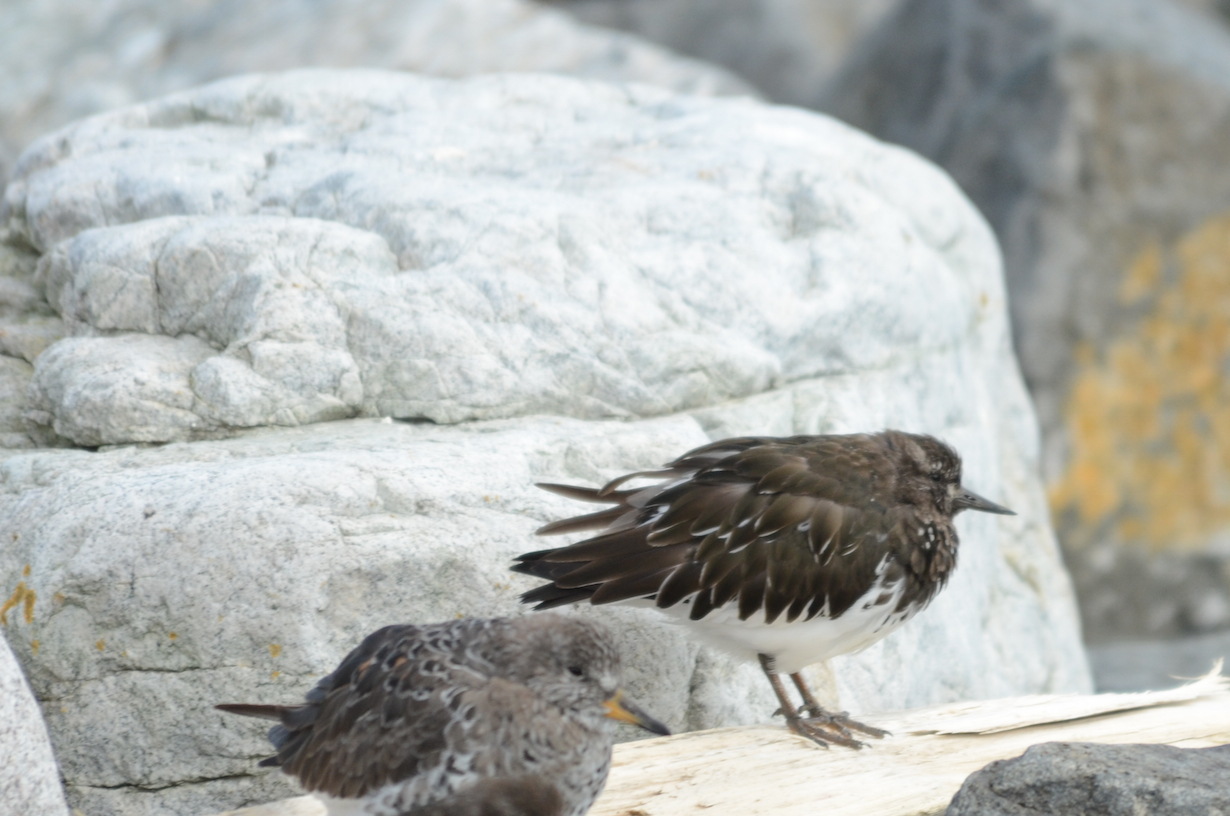
The Back Turnstone was one of the many species of shorebirds shown in yesterday's mystery photo. Easy to distinguish from Surfbird when they are side by side.

The Back Turnstone was one of the many species of shorebirds shown in yesterday’s mystery photo. Easy to distinguish from Surfbird when they are side by side.
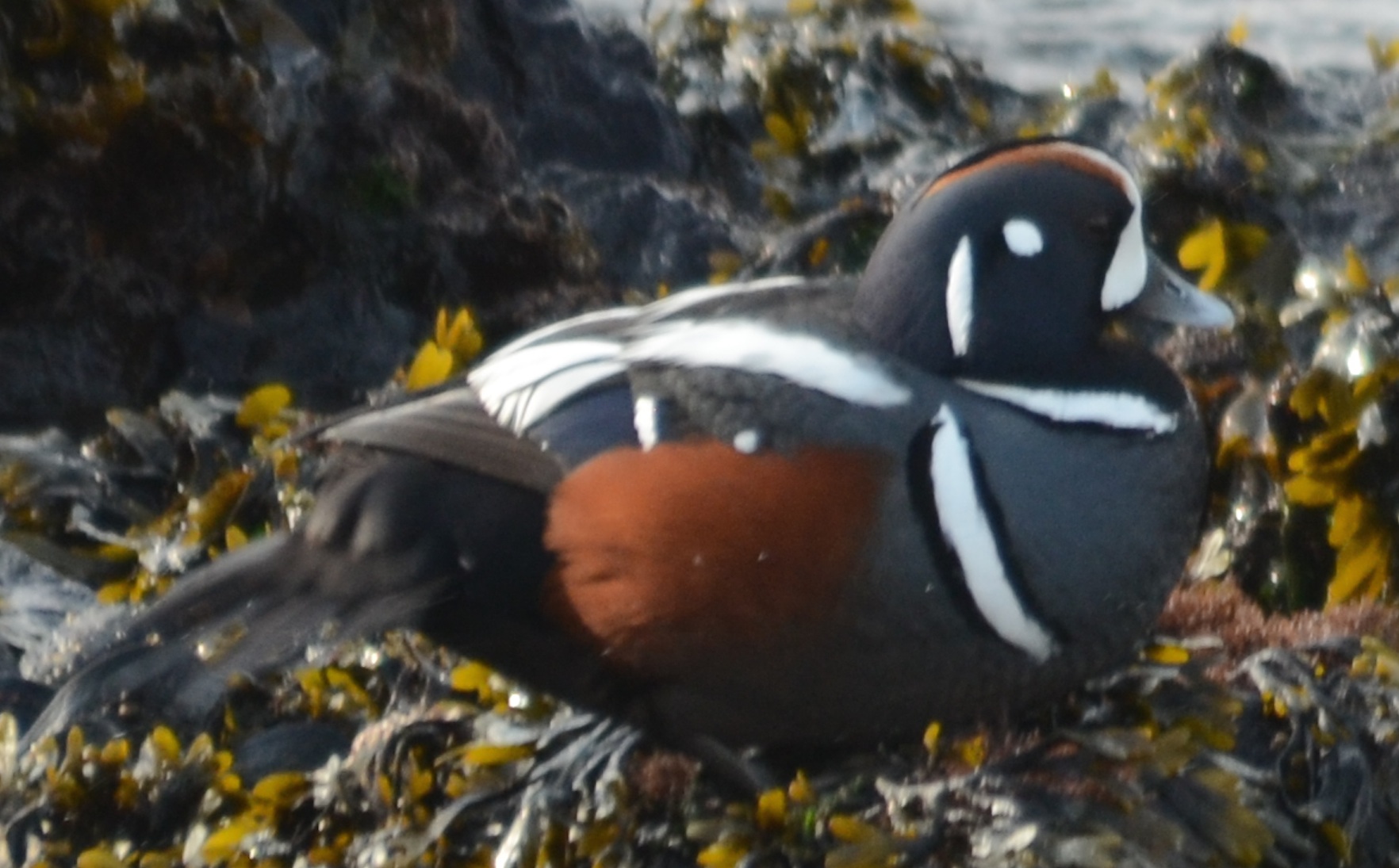
Male Harlequin Duck sitting on rockweed in the inter-tidal.
Male Harlequin Duck sitting on rockweed in the inter-tidal.

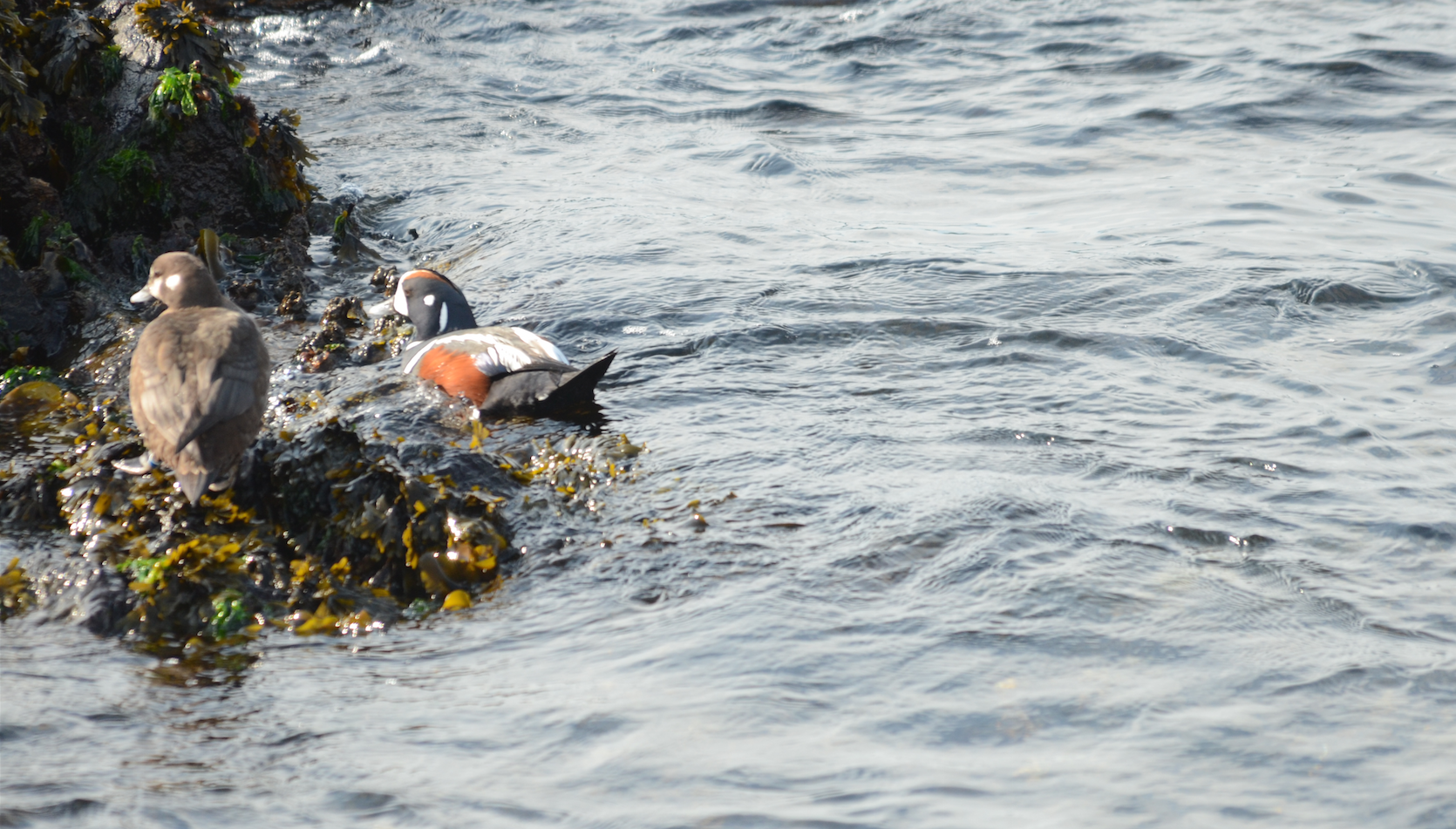
What a difference between drake and hen. These 'white water' birds nest in the mountains by rushing streams and rivers.

What a difference between drake and hen. These ‘white water’ birds nest in the mountains by rushing streams and rivers.

It was a busy day with lots accomplished. I managed to get the weather station back up and connected to the Internet, thanks to good instructions. I have been on a bit of a wild goose chase, mapping out the nest locations of the Canada Geese. I troubleshot water loss problem (to no avail) and ran both the desalinator and generator. Sweeping the walkways and tidying up wood is ongoing. The census took quite a while and was totally enjoyable. This is such a special place, a real biodiversity hotspot especially underwater. What we see on the surface is like the tip of the biodiversity iceberg or the biomass (food) pyramid. All that biological activity can traced right back to plankton and sunshine that drives it. Sunshine made most of the fresh water today, thanks to the solar panels and desalinator.
March 24 – Sea Otter

Sunny, patches of rain the afternoon
Wind: W 4-17 knots, calm in the late evening
Air Temperature: Low 7.7°C, High 10.7°C
Ocean Temperature: 8.9°C

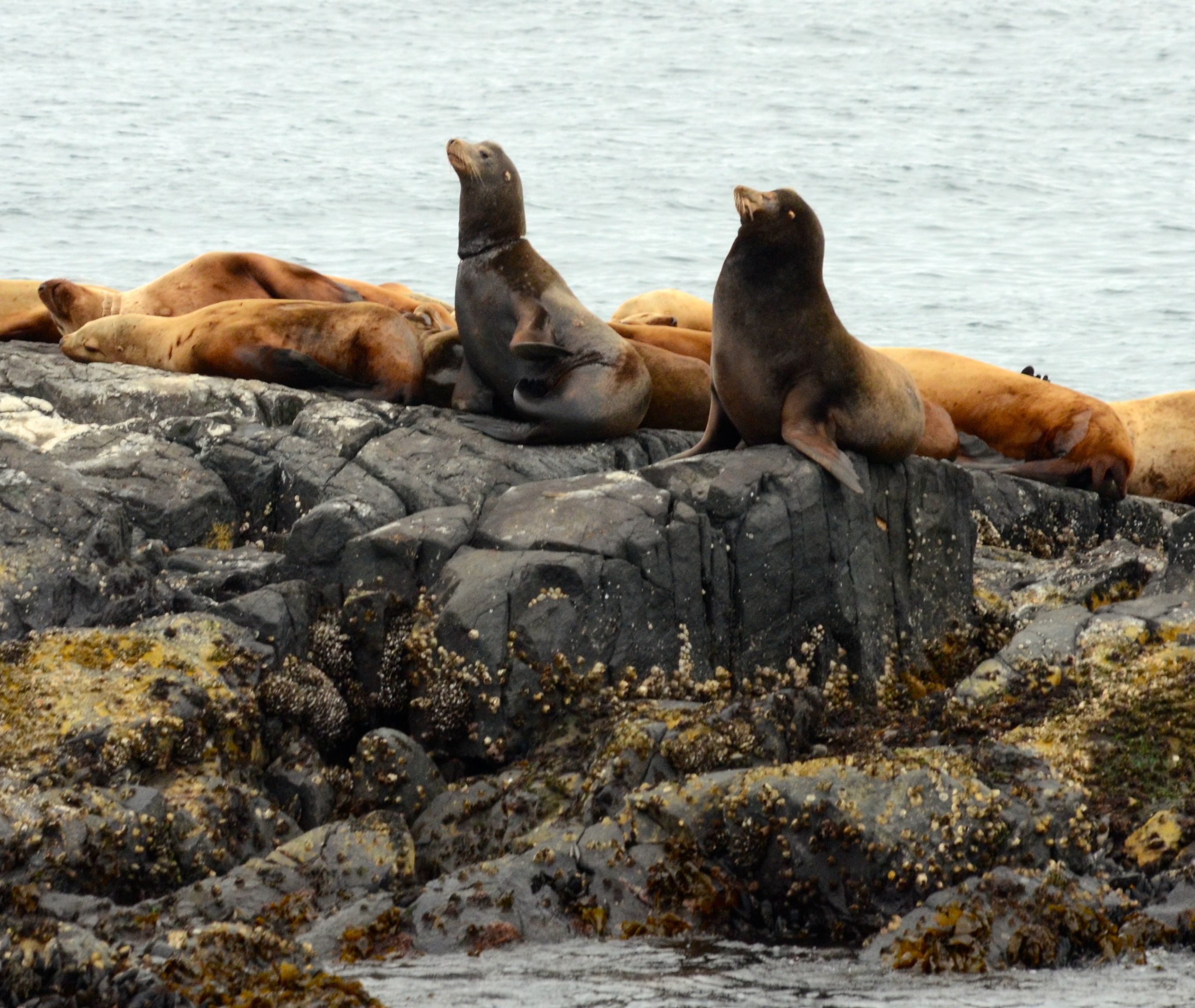
This afternoon, a ring-necked california sea lion was observed on the South Islands. It had something tightly wrapped around its neck, which is digging into the flesh.

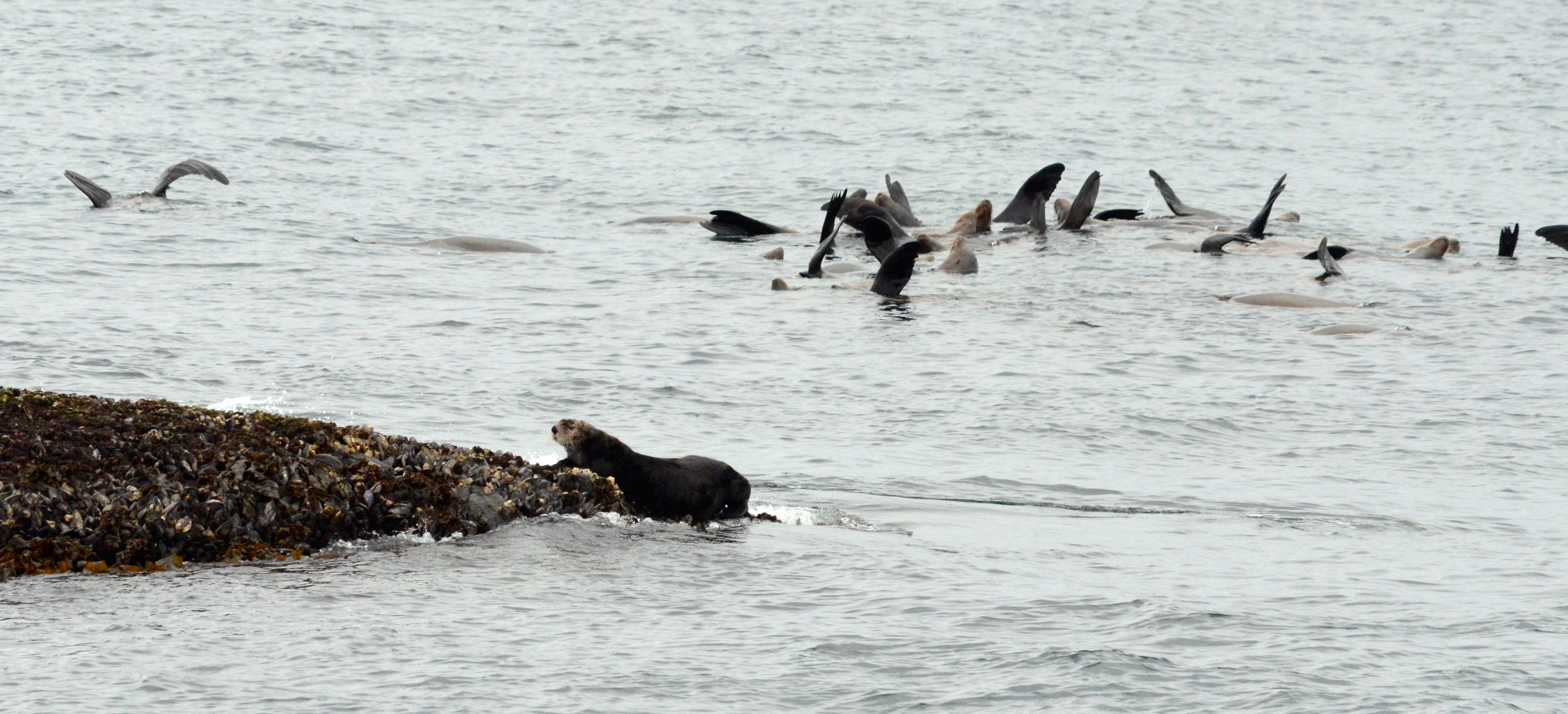
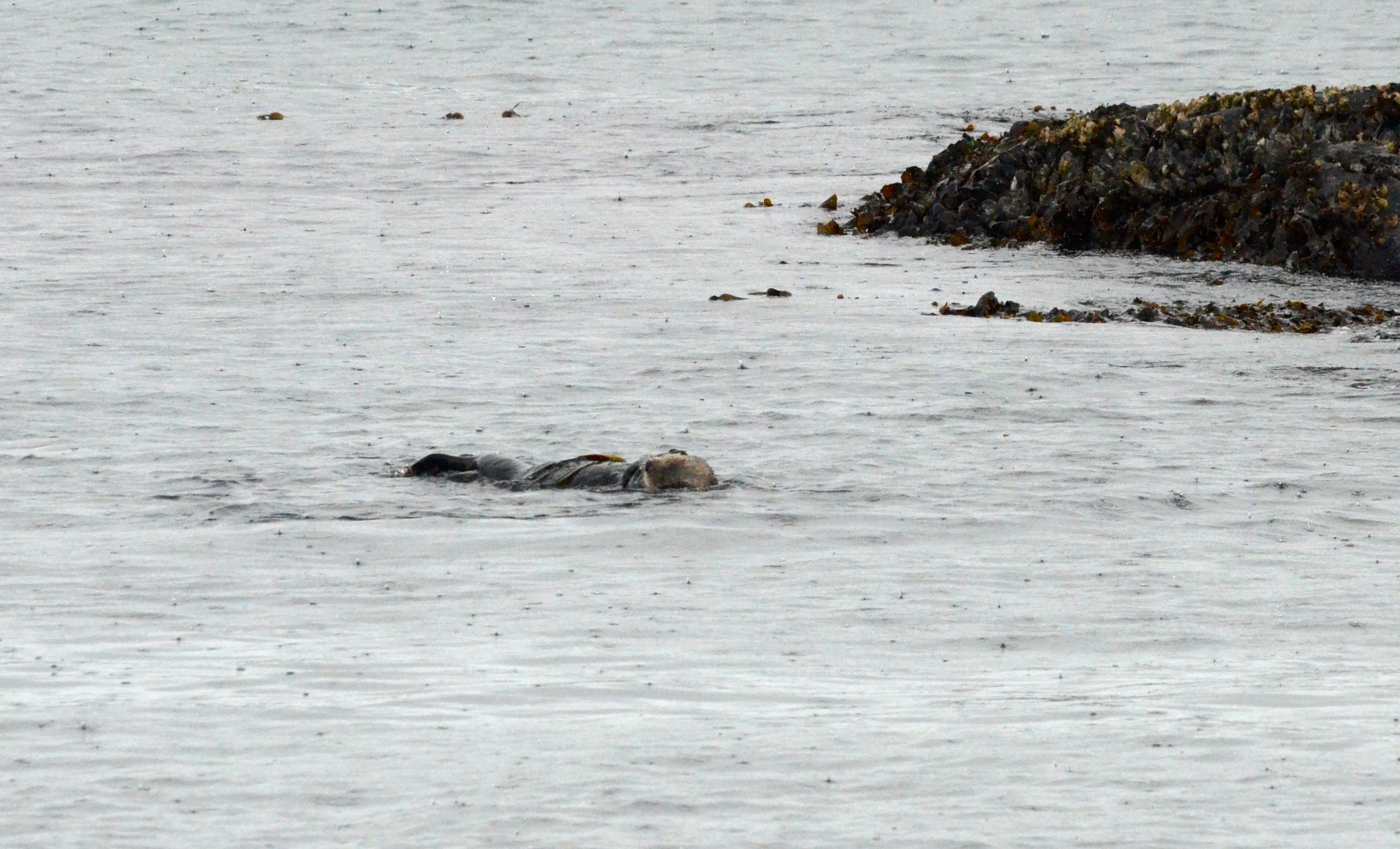
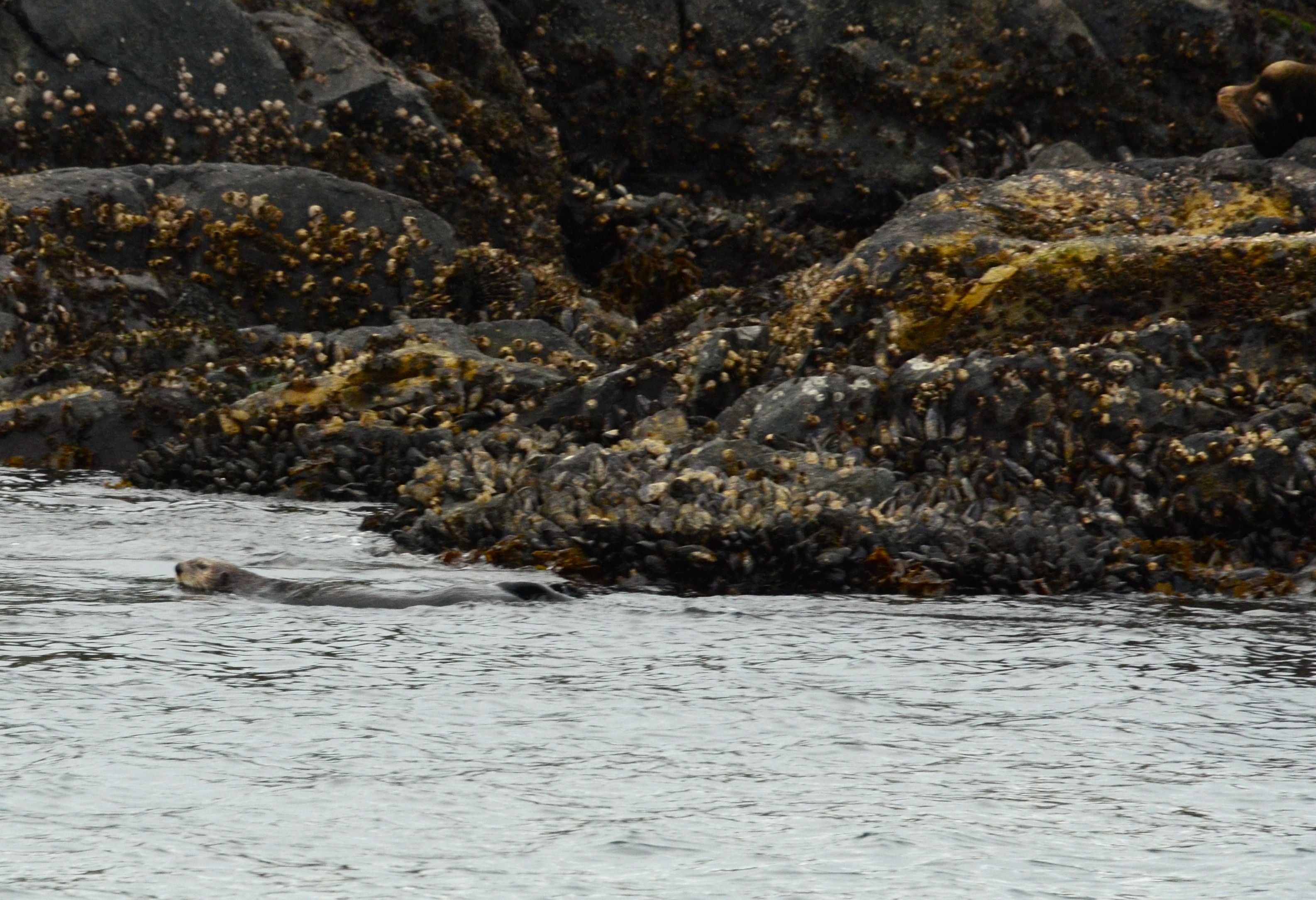
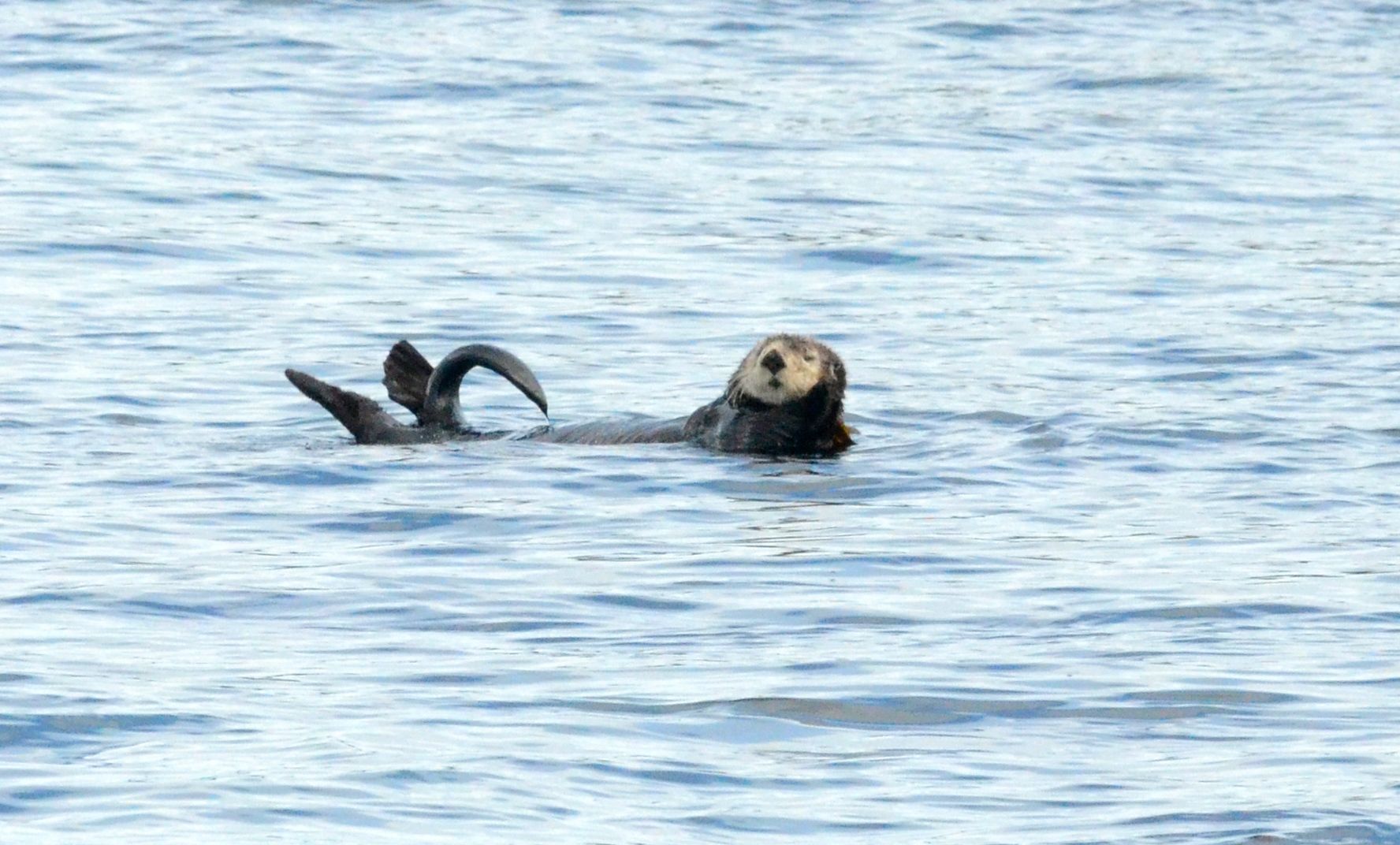
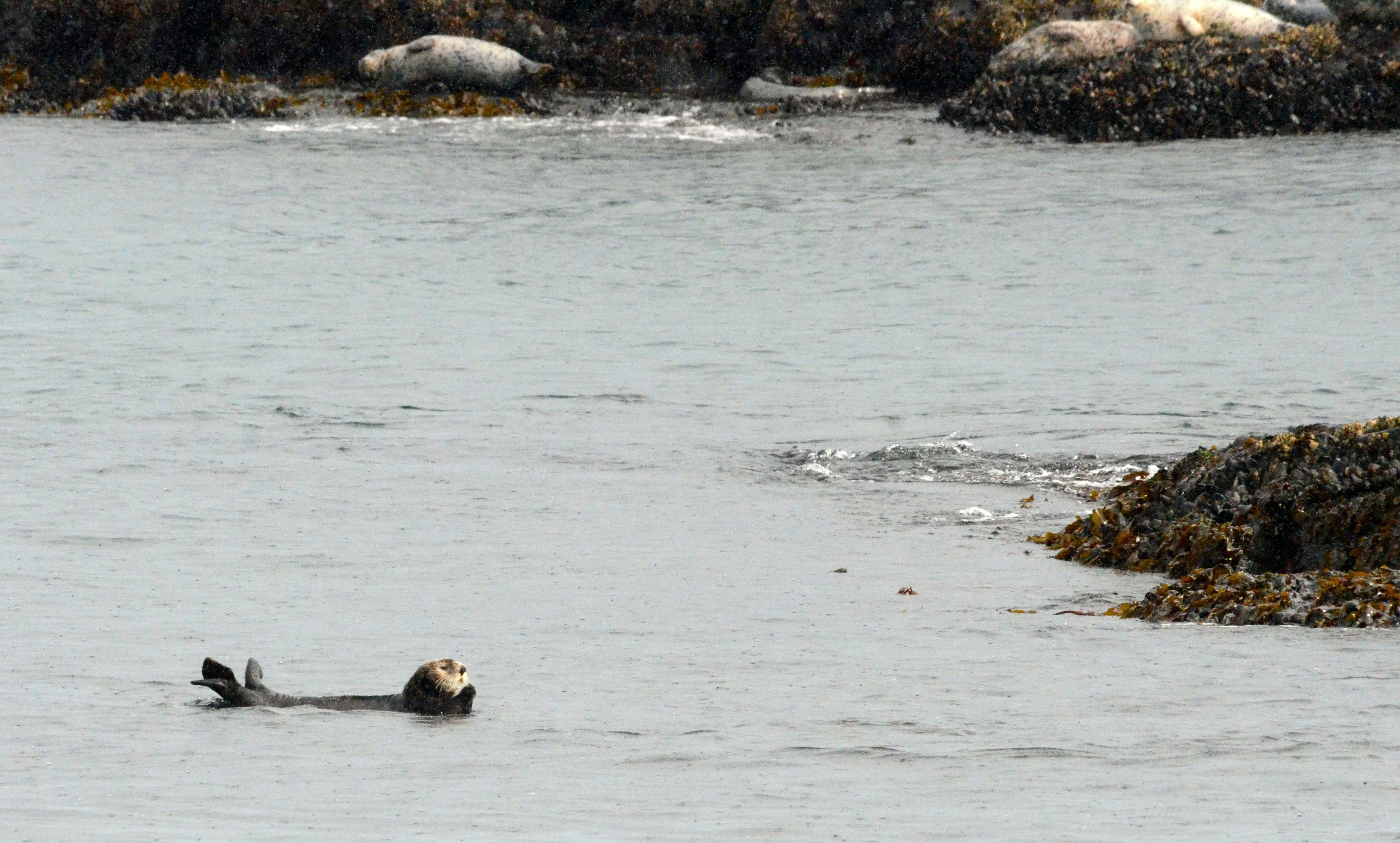
While observing the sea lions, a small creature appeared on the edge of the rock ten metres away from them. Much smaller than the sea lions, at about one metre long, it was eating the molluscs in the intertidal zone. To my great excitement, it was a sea otter (enhydra lutris). The sea otter ate, dove, rolled and swam around the South Islands for about two hours.

March 17

Sunny, light rain in the late afternoon
Wind: 3-9 knots NE in the morning, 1-6 knots SE in the afternoon, calm at 18:00, 9-15 W in the evening
Air Temperature: Low 7.6°C, High 10.7°C
Ocean Temperature: 8.9°C

The morning was filled with chores: collecting garbage, tidying, cleaning the solar panels and mistaking a swimming seal for a sea otter (three times). The sea otter, which visited the ecological reserve during the winter hasn’t been seen within the past few weeks.

I was off the reserve for a few hours in the afternoon to drop off garbage and pick up gas, groceries, deionized water for the batteries and cleaning supplies. It happened to coincide with Elizabeth May giving a talk at the college.

The sea lions were very active and vocal leading up to the sunset at 19:21.

There were no boats seen in the reserve today.

March 10 – Juncos and a Robin

Cloudy, with fog in the morning
Wind: 0 – 16 knots from the W then NE in the morning, switching to SE in the afternoon
Air Temperature: High 10°C, Low 7°C
Ocean Temperature: 8.9°C

This morning, the Pearson students here for Project Week helped stack firewood in the cupboards outside of the Engine Building.

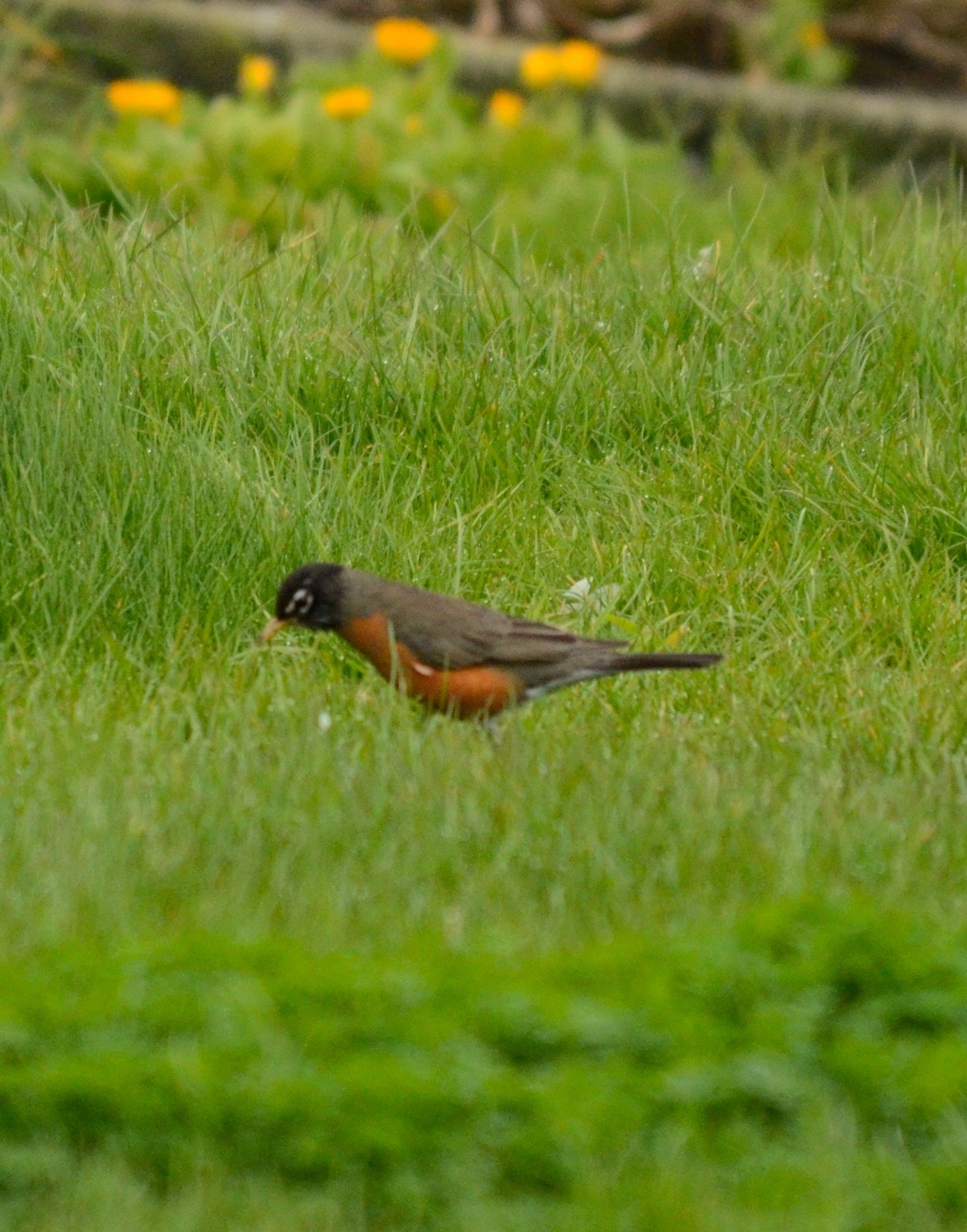
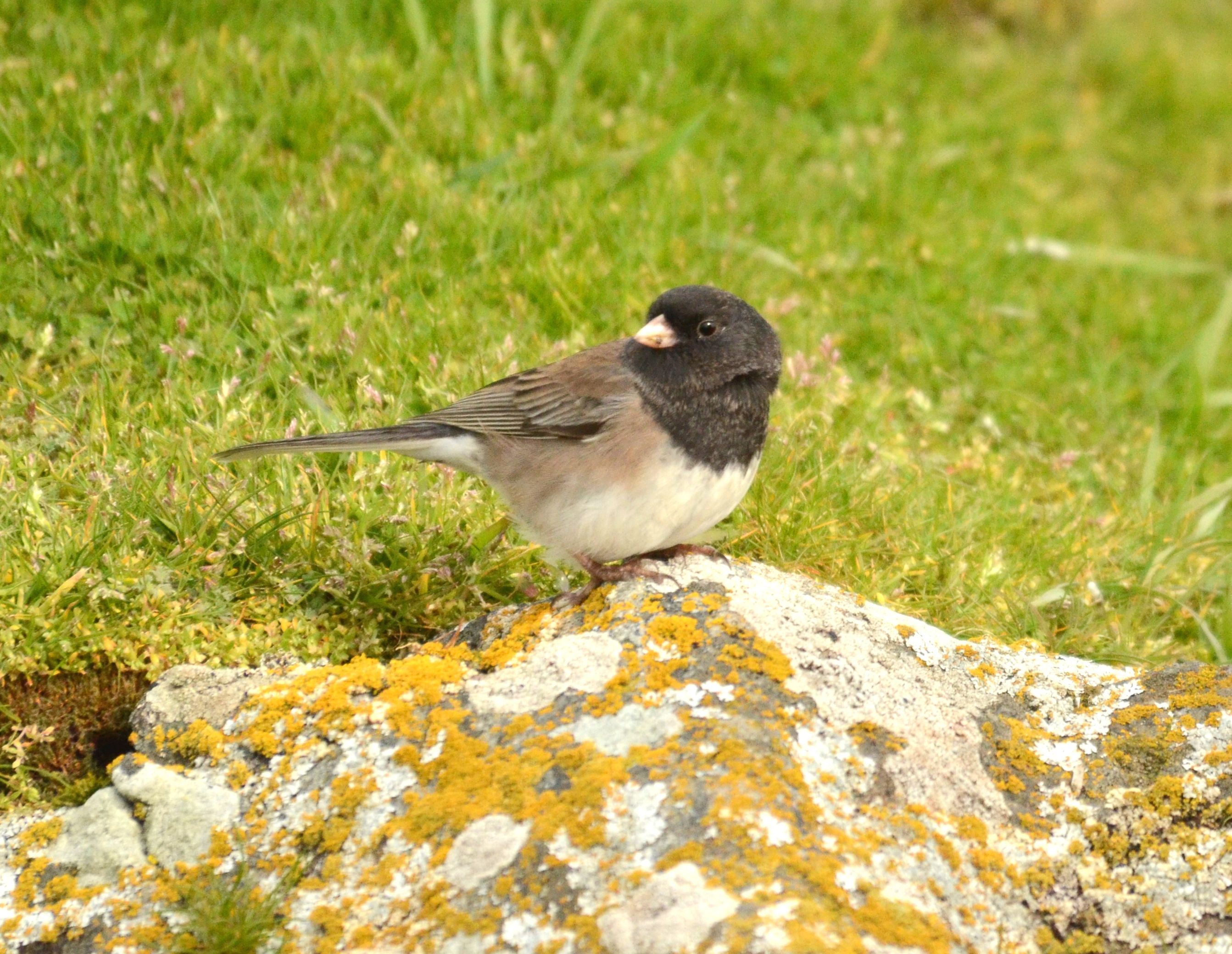
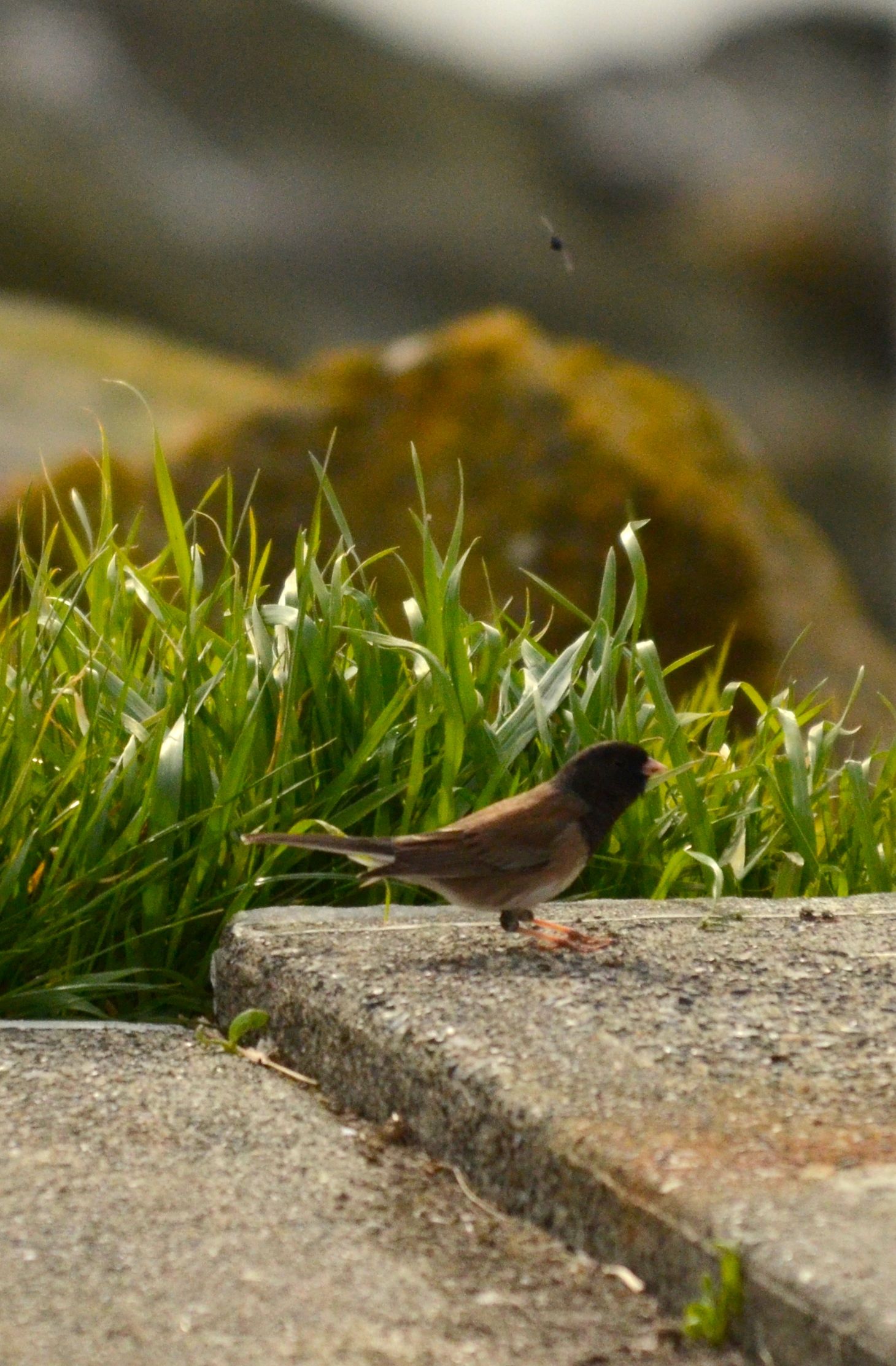
Four oregon juncos and a robin were seen flying around the southern part of Great Race.

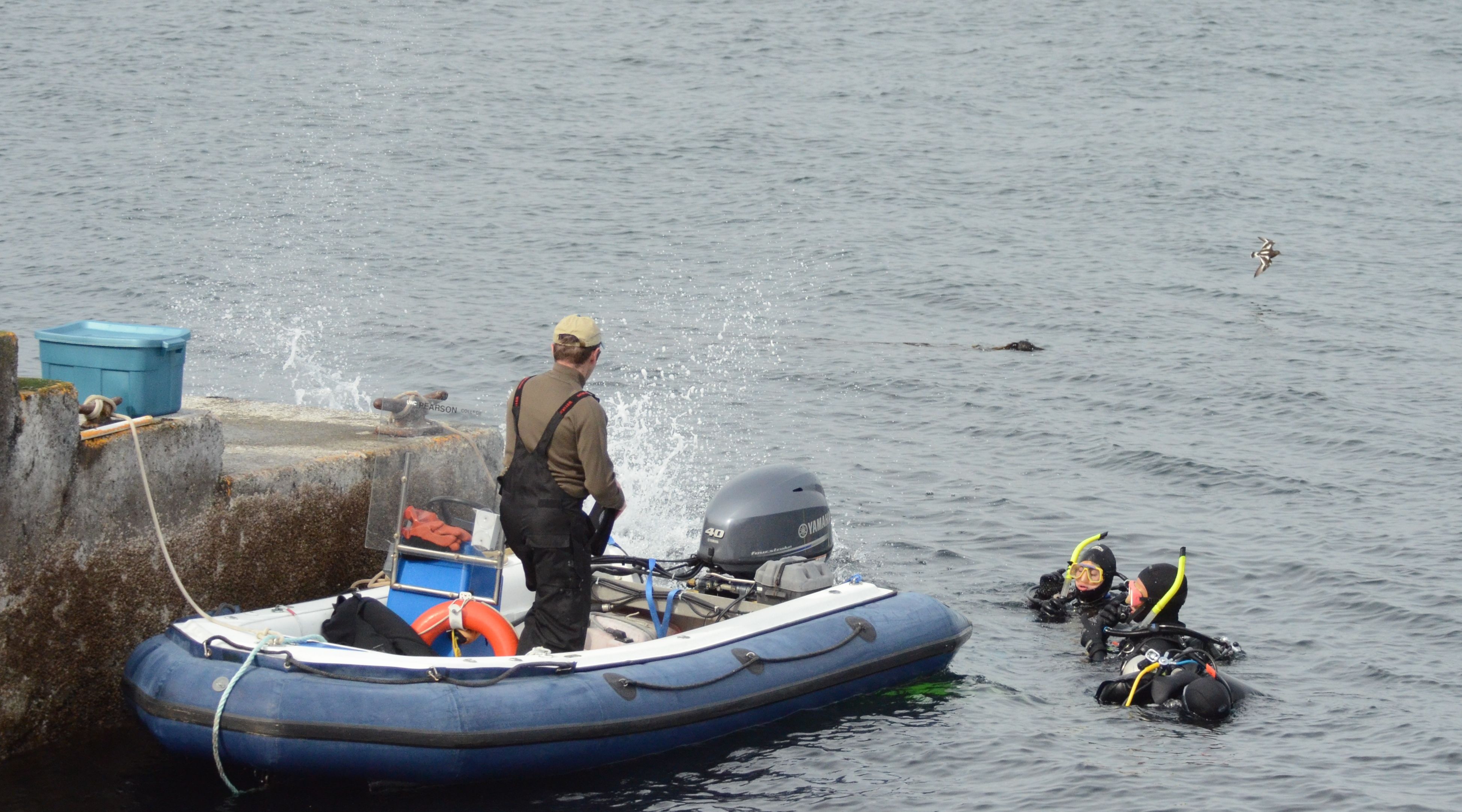
This afternoon, four students took part in rescue diving scenarios with Chris. Afterwards a few of them went snorkelling around the jetty to check out the sea stars, a sea slug and other species.

Chunk continues to hang out near the Marine Science Centre.

Three ecotour boats came into the ecological reserve to share the sights, sounds and smells of the marine mammals and birds with their customers.

March 9 – Pearson Project Week Visitors

Fog overnight, sunny begining at 9:00
Wind: 6 – 27 knots W to SW
Air Temperature: High °C, Low °C
Ocean Temperature: 9°C

Five second year Pearson students came to Race Rocks this morning to spend part or all of Project Week. Yam, Sean, Martin, Neel and Bader will be exploring Race Rocks, helping out with tasks, studying and diving. Chunk came back onto the island just in time to welcome the visitors as they toured around the ecological reserve.

Yam helped shrink the firewood pile by the tank house by stacking it underneath the stairs of the Marine Science Centre. It will dry out over the summer and be ready to heat the Ecoguardian’s house next winter.

One eco tour boat visited the reserve today.

March 7

Sunny
Wind: 3 – 9 knots NE, switching to SE in afternoon
Air Temperature: Low 7°C, Hight 11°C
Ocean Temperature: 9°C

The morning was spent preparing the Marine Science Centre, and tidying around the island, to get ready for visiting students that are coming to Race Rocks this week.

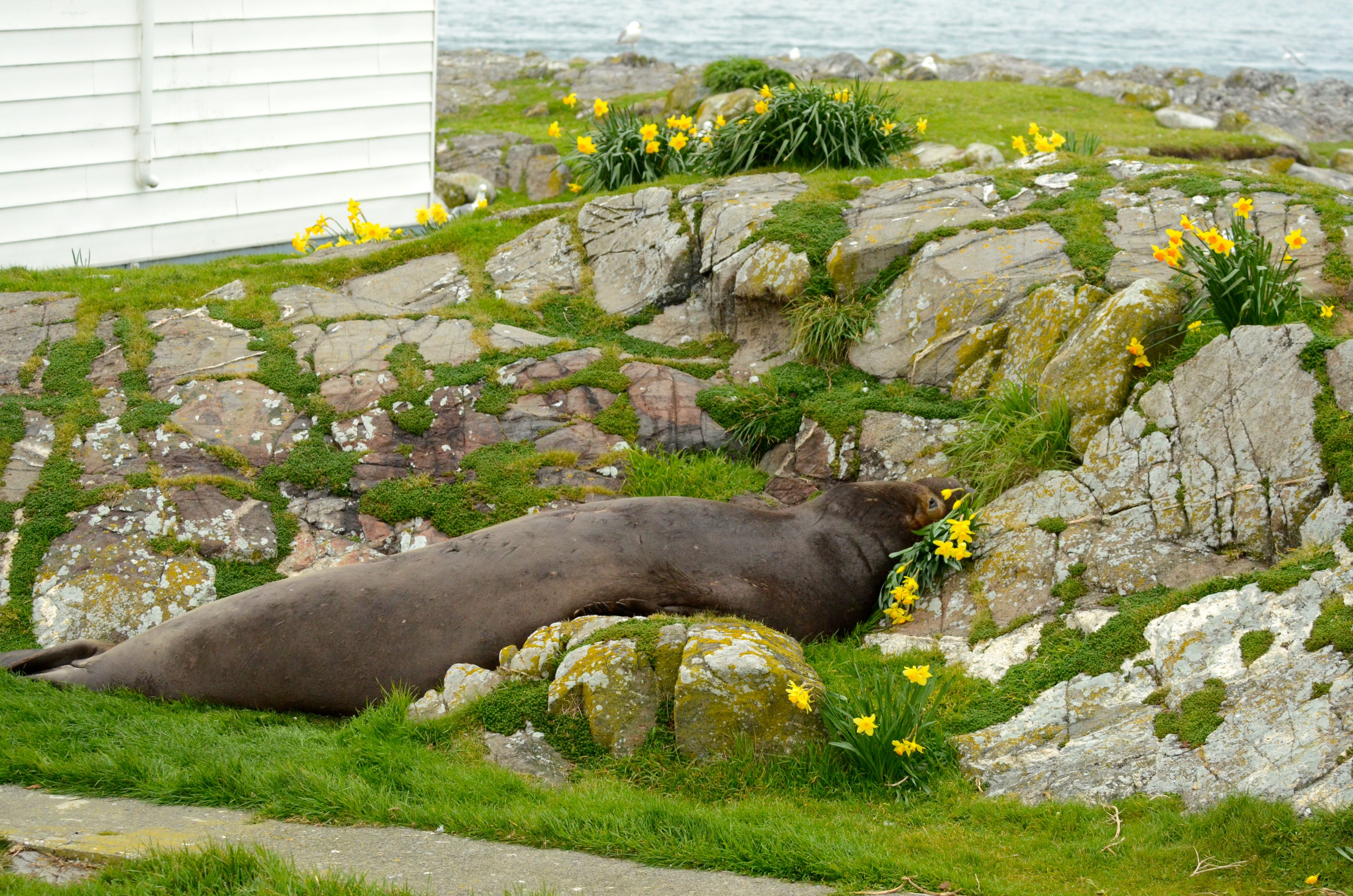
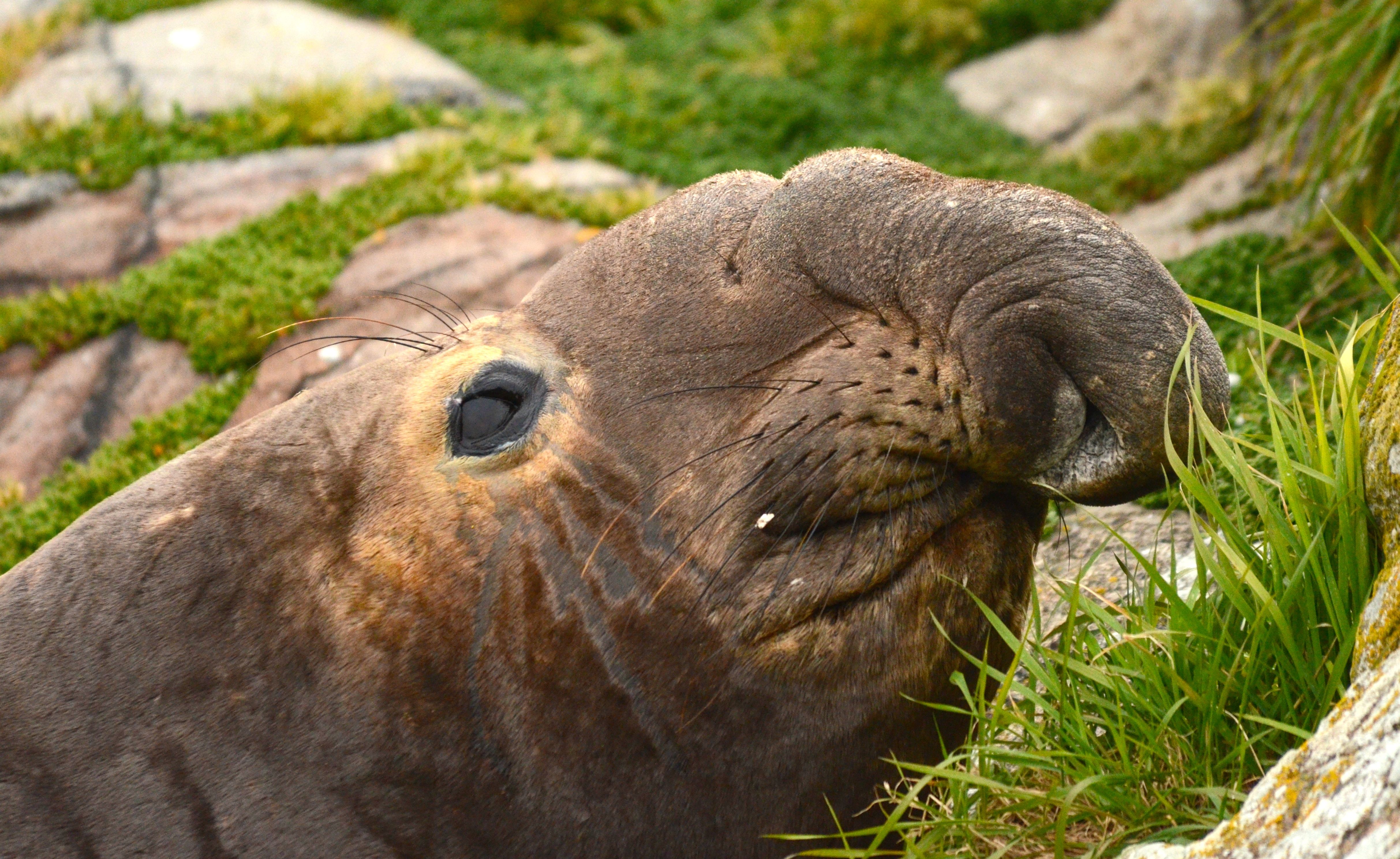
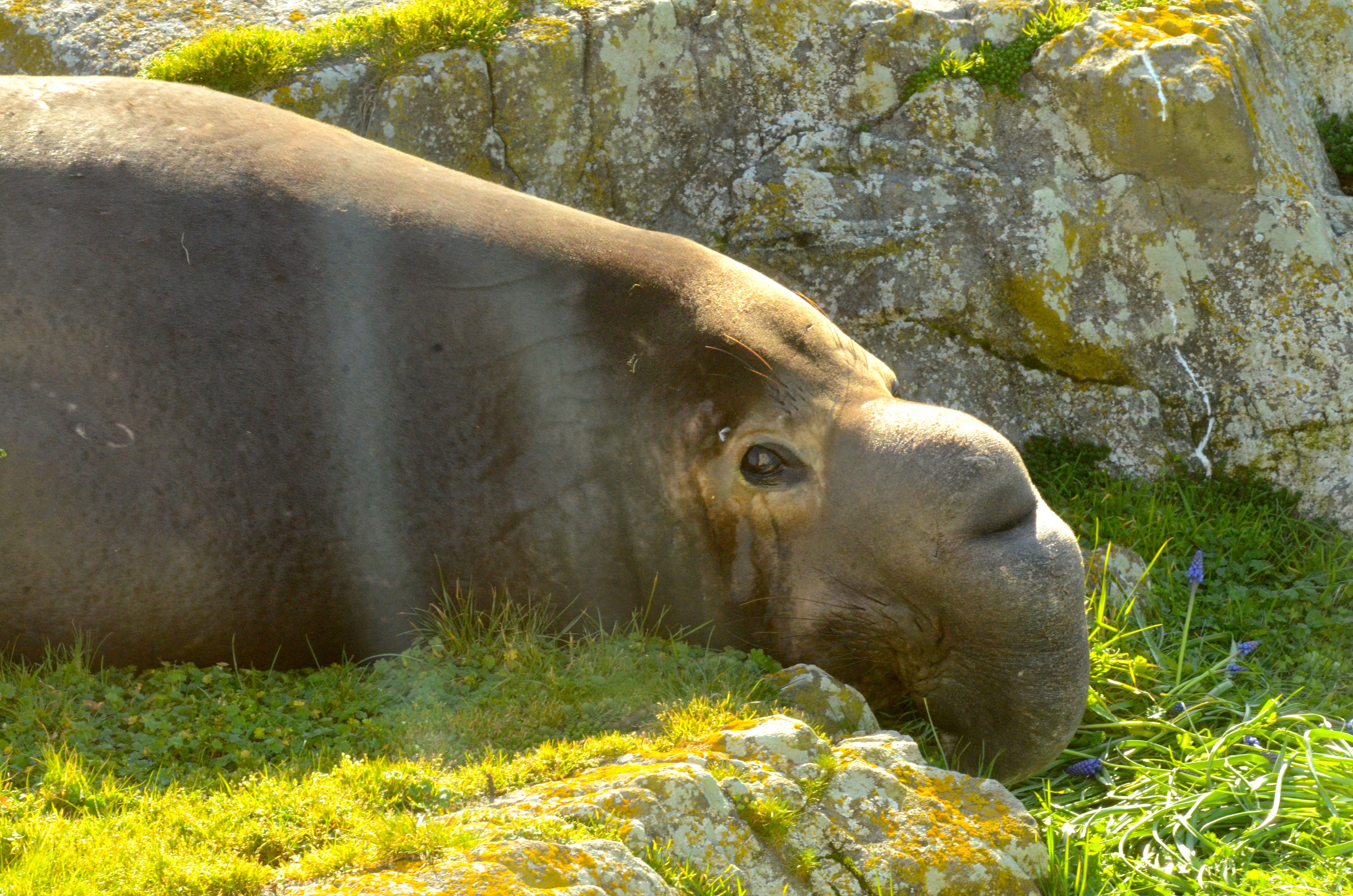
Chunk, the large male elephant seal, is still camped out on the grass below the helicopter pad.

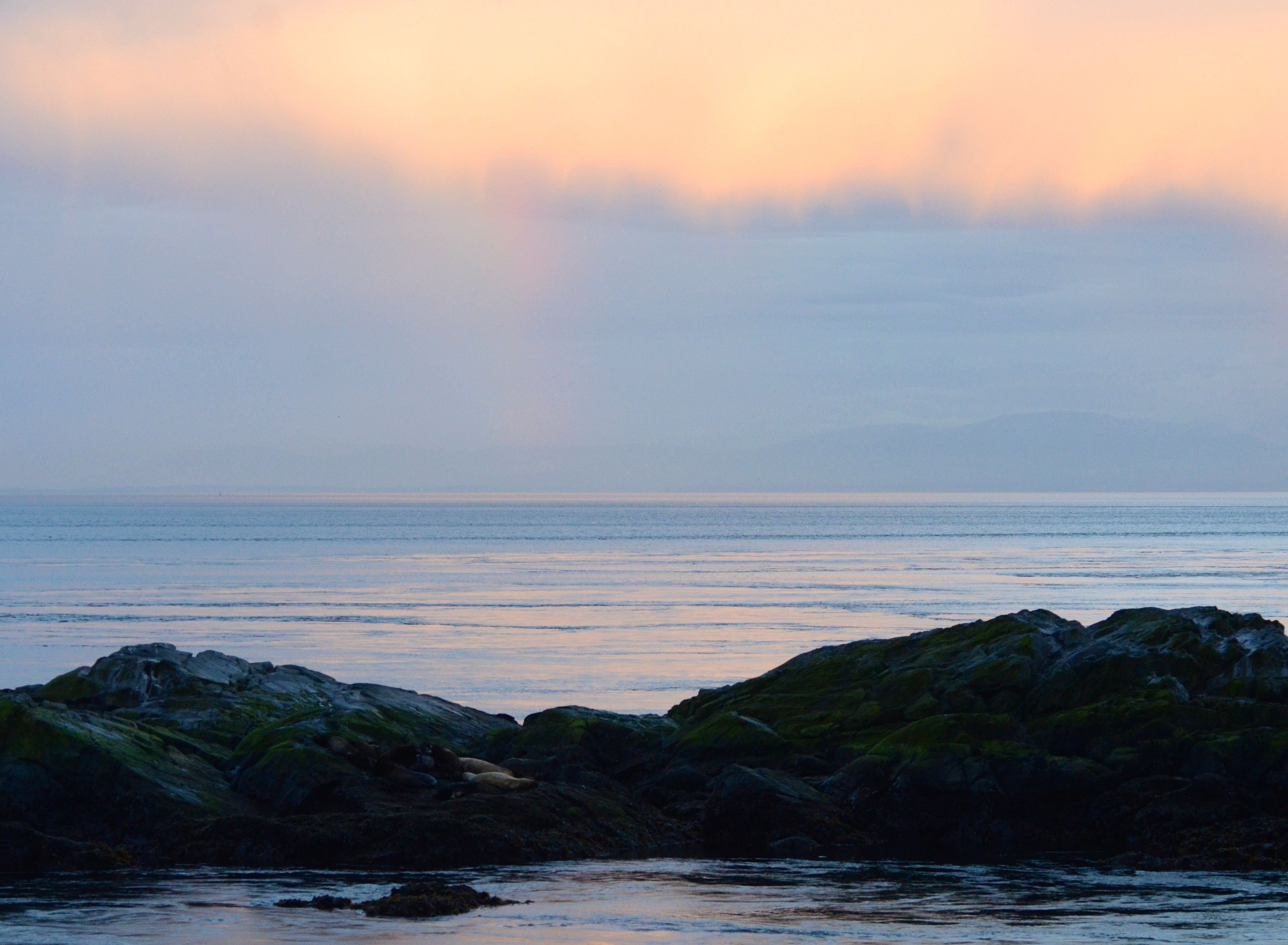
I left the reserve in the afternoon to attend One World, the annual show of dance, music and stories put on by Pearson students. I returned to Race Rocks with a visitor. The boat ride was spectacular as the sunset cast a rainbow of colours over the Juan de Fuca Strait.
Two eco tour boats were seen in the ecological reserve today.

Thank you to Travis, today’s Race Rocks visitor, for the photos.

March 6 – Bright Sun, Bright Moon

Mostly sunny
Wind: 3 – 11 knots NE
Air Temperature: High 10°C, Low 7°C
Ocean Temperature: 8.8°C

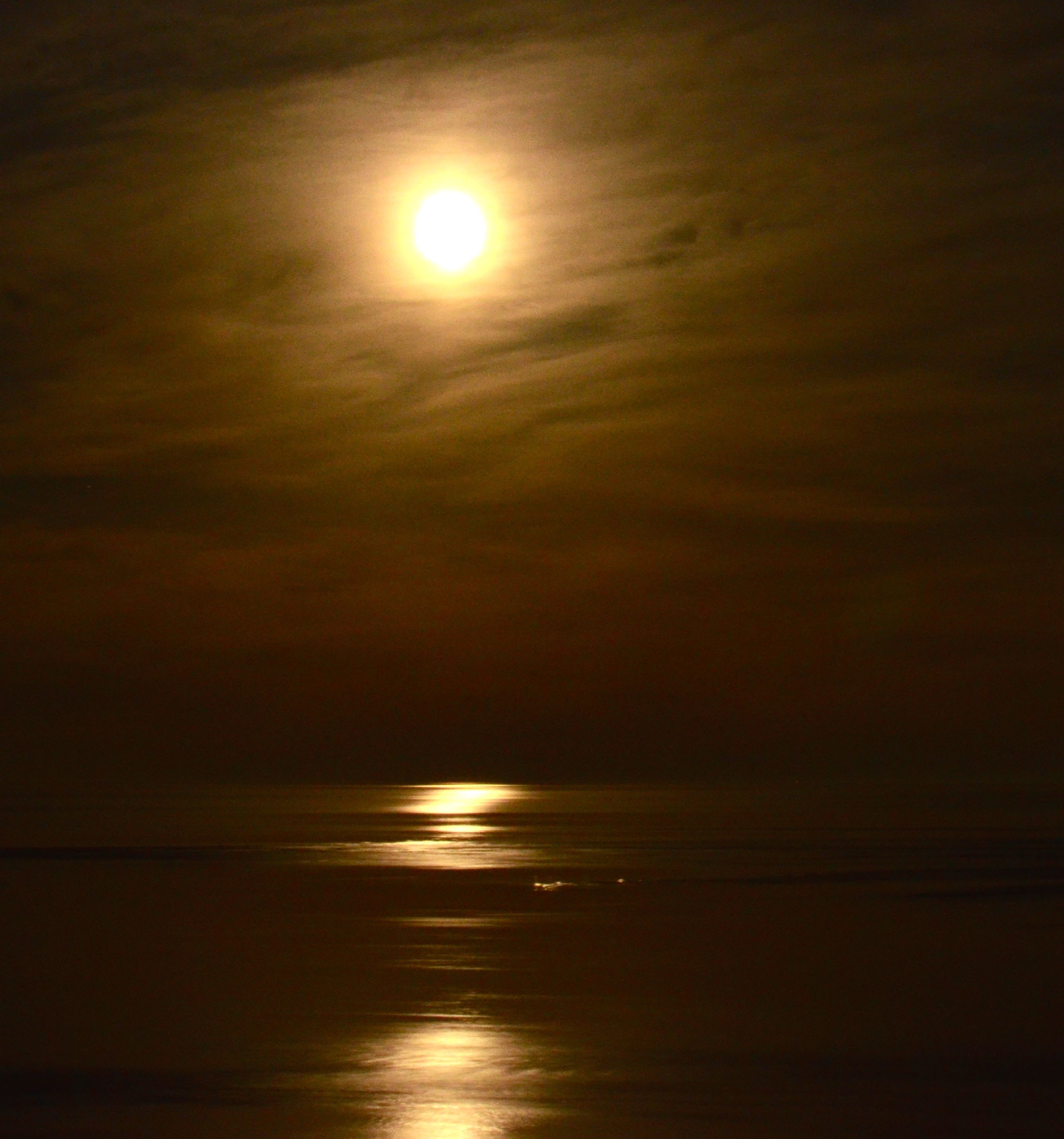
Last night was a full moon. Tonight’s moonrise happened at 19:25. It’s a waning gibbous moon, but it’s still as bright as last night.

The gulls seem to be getting more territorial by the day. I witnessed many gulls attacking each other throughout the day. One gull grabbed onto another’s wing and wouldn’t let go for a minute. Maybe the other gull got too close to a nesting site that was already claimed.

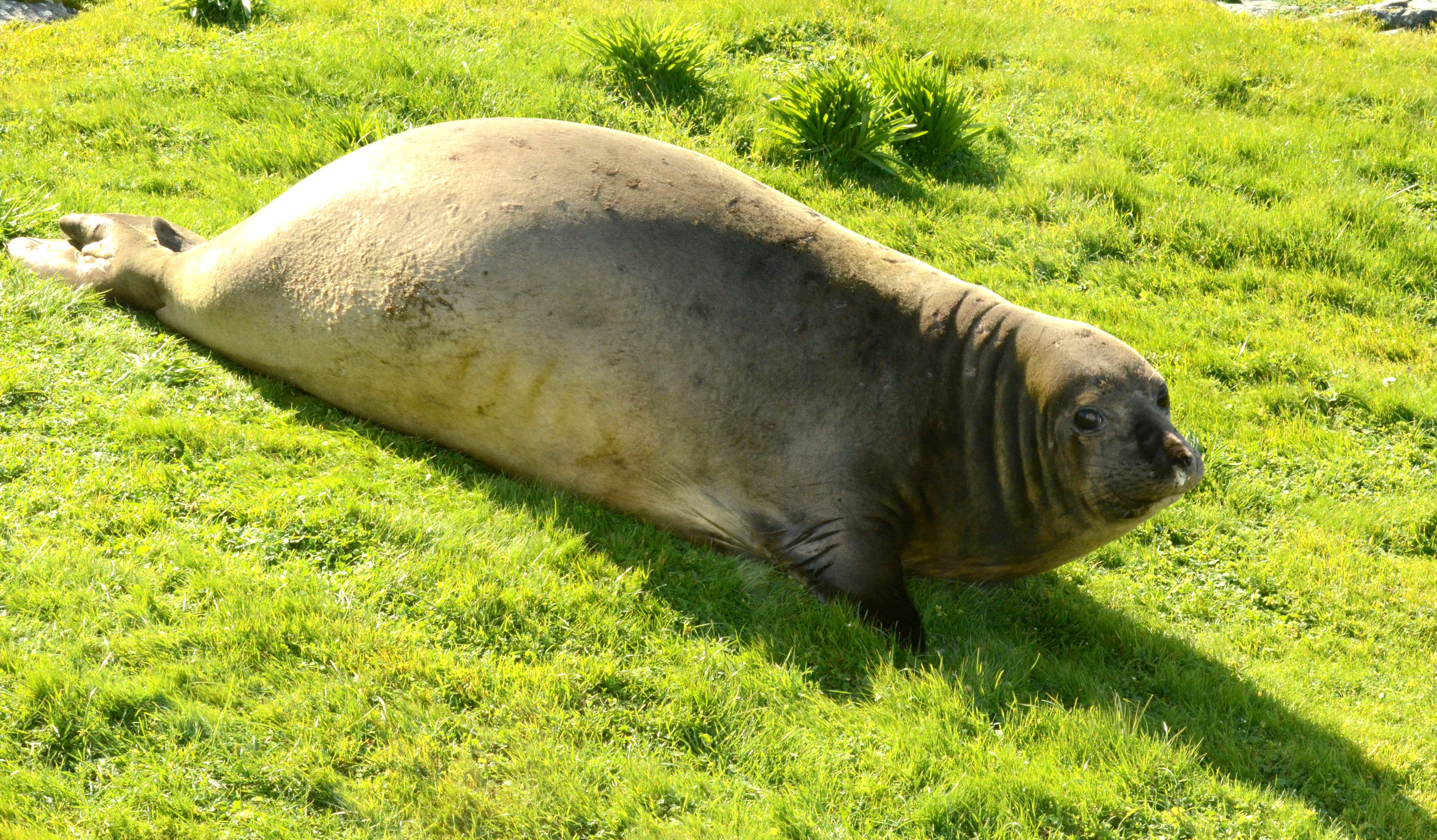
Chunk, the male elephant seal, spent another day in the same spot below the helicopter pad. The female elephant seal splashed around the jetty beach for most of the day.

One eco tour boat visited the reserve today.

New DFO Report highly critical of Kinder Morgan /TMX environmental assessment on Whales

The recentlly released DFO report:
(See Full PDF) SUFFICIENCY REVIEW OF THE INFORMATION ON EFFECTS OF UNDERWATER NOISE AND THE POTENTIAL FOR SHIP STRIKES FROM MARINE SHIPPING ON MARINE MAMMALS IN THE FACILITIES APPLICATION FOR THE TRANS MOUNTAIN EXPANSION PROJECT was very critical of the Trans Mountain Expansion Project Application documents. The Conclusion of the report is concerned with Vessel strikes on Whales and the overall impact of noise from increased Project-related traffic.  Included below are the conclusions of the report.

Conclusions

There are deficiencies in both the assessment of potential effects resulting from ships strikes and exposure to underwater noise in the Trans Mountain Expansion Project Application documents.

There is insufficient information and analysis provided with which to assess ship strike risk in the Marine RSA from either existing or Project-related traffic. Ship strike is a threat of conservation concern, particularly for baleen whales such as Fin Whales, Humpback Whales and other baleen whales (Gregr et al. 2006). If shipping intensity increases as projected in Section 4.4 in the Marine RSA and the Strait of Georgia and Juan de Fuca Strait as a whole, the significance of this threat to cetacean populations that occupy the region will increase.

Incidence of recovered whale carcasses is not considered to be an adequate measure of the frequency of ship strikes. No information is provided about the speed and maneuverability of Project-related ships or the distribution of whales in relation to the shipping lanes. Analyses that consider the statistical probability of ship-whale encounters and the risk of collisions are considered appropriate methodologies to assess this potential effect.

The JASCO MONM model, as it has been applied by the Proponent, is not adequate to assess the overall impact of noise from increased Project-related traffic. Although state-of-the-art acoustic modelling has been used to model the noise propagation associated with a single Project-related tanker in the Marine RSA, only four locations were chosen to represent the Marine RSA; therefore, the assessment does not adequately represent the noise exposure for the entire time a marine mammal would be in the RSA. The assessment represents only Project-related tanker traffic and not the current noise environment or the potential increase due to Project-related traffic. Finally, the method used to assess the significance of impacts from the modelled noise level contours resulting from a single Project-related tanker and tug on indicator cetacean and pinniped species is qualitative and the lack of an appropriate assessment framework reduces DFO’s ability to evaluate the assessment.

(See Full PDF) SUFFICIENCY REVIEW OF THE INFORMATION ON EFFECTS OF UNDERWATER NOISE AND THE POTENTIAL FOR SHIP STRIKES FROM MARINE SHIPPING ON MARINE MAMMALS IN THE FACILITIES APPLICATION FOR THE TRANS MOUNTAIN EXPANSION PROJECT

See other posts on Oil Spill Risk for the Race Rocks Ecological Reserve

March 4 – Eagle Gathering

Sunny
Wind: 8 knots NNE in the morning, diminishing in the afternoon and switching to W in the evening
Air Temperature: High 9C, Low 4C
Ocean Temperature: 8.8C

Twelve bald eagles were hanging out on the South Islands this morning. Many of them stuck around for the rest of the day, flying to different perches around the reserve.

Chunk left the main island at some point last night. The female elephant seal is still camped out to the east of the main house.

Courtney and Max visited for a couple hours this morning to do some maintenance on the cameras and other technology. Camera 5 is almost online again. One more replacement part needs to be installed in the coming days. The Davis weather station is back up and running after a few days offline. Thanks to Max fixing the computer that uploads the weather data.

There was more munitions blasting today at nearby Rocky Point.

Three eco tour boats visited the reserve today.

March 3 – Elephant Seals and DND Blasting

Sunny
Wind 18 knots from the North in the morning, switching direction to SE and diminishing throughout the day to calm in the evening
Air temperature: high 10C, low 5C
Ocean temperature 8.8C

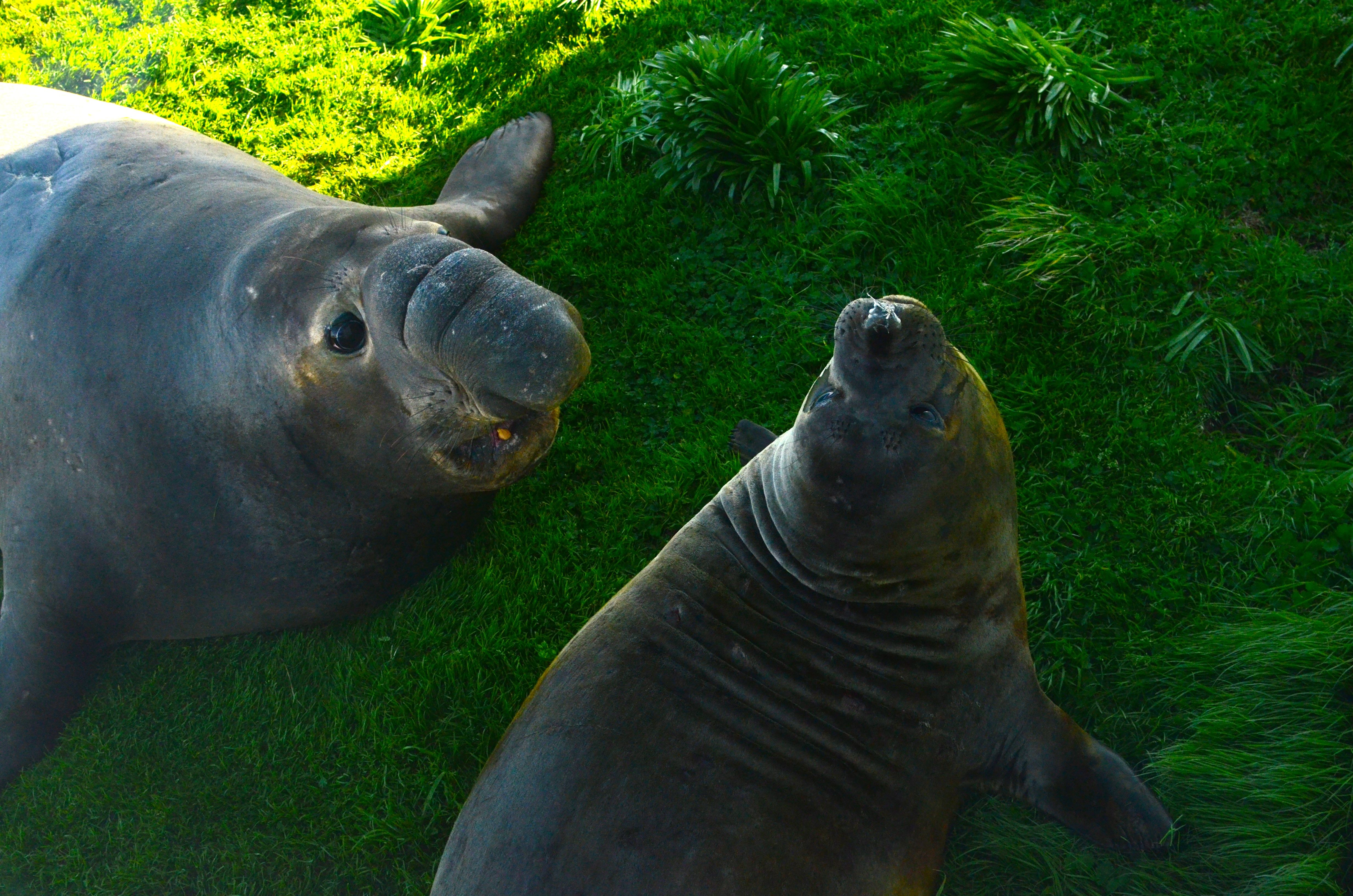
There is never a dull moment at Race Rocks. At 8:30 in the morning, Chunk (the large male elephant seal) and the female elephant seal that has been on the island for a couple weeks were on the grass to the north of the Ecoguardian’s House. From the window by the front porch, I watched as the female roared and kicked up grass with her flippers as she and Chunk were either fighting or mating. It’s hard to tell the difference. He approached her and bit into her back, adding to the many wounds and scars. The female fled to the other side of the house and Chunk followed. They spent the rest of the day at least 10 metres apart from each other on the west side of the house.

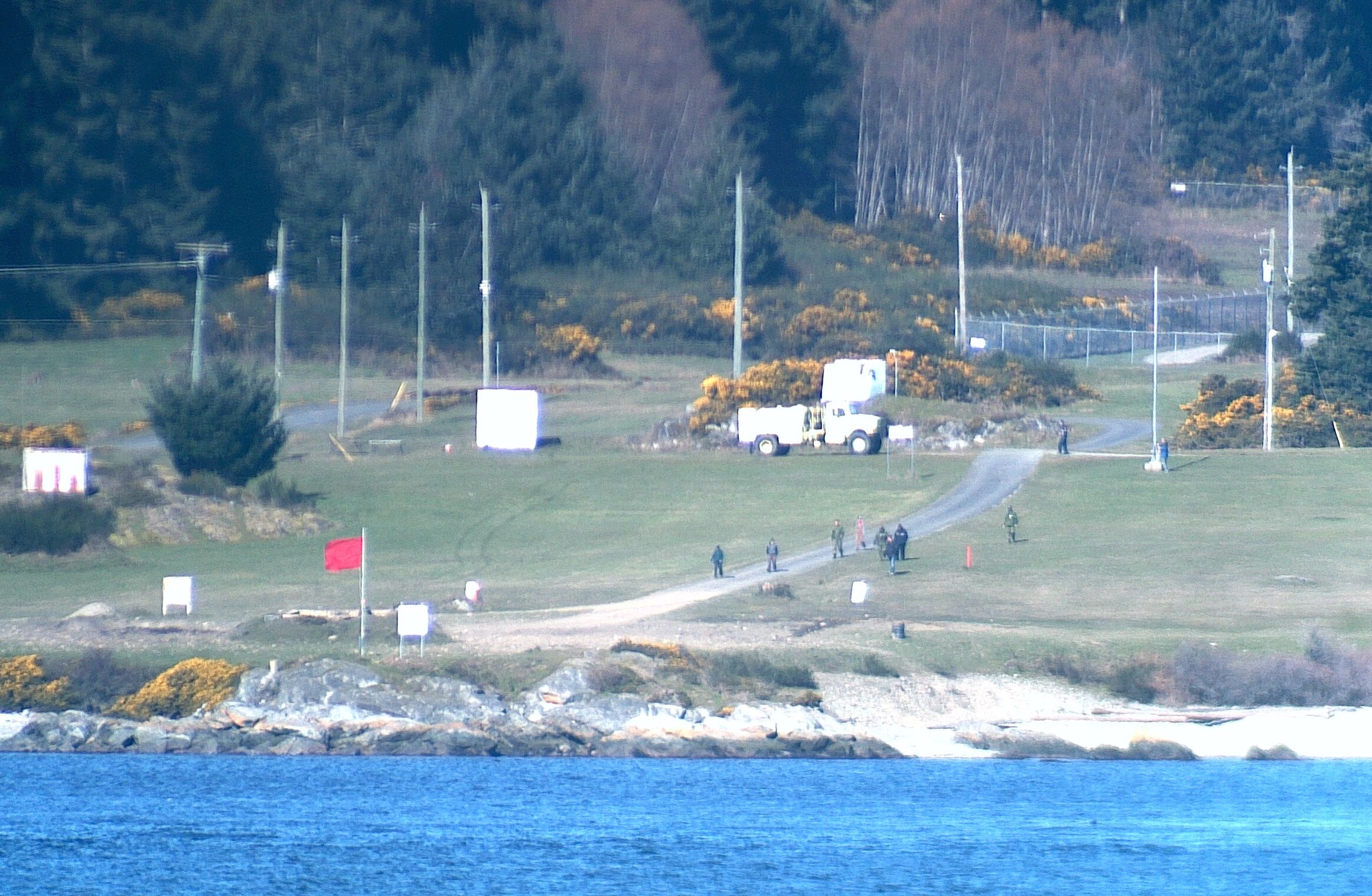
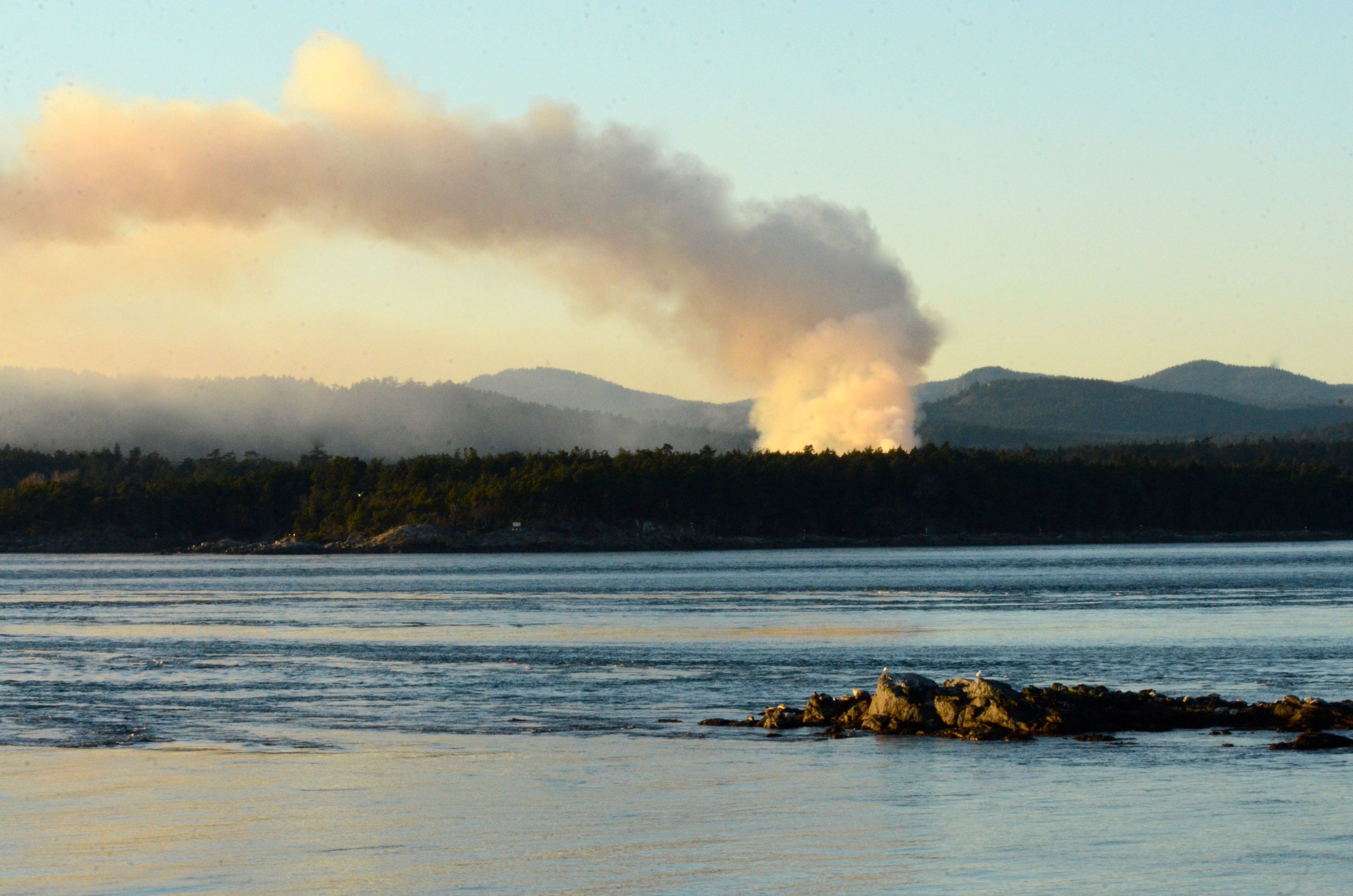
At 10:30, I was sitting in the house reading the SOP manual when I heard and felt a huge blast. There was a large puff of smoke rising from the Canadian Forces Ammunition Base Rocky Point, 2km to the NW. There were red flags to warn passing boaters. After the initial blast, a group of people appeared from a bunker to inspect the area where the munitions were detonated. There were a few more blasts in the next two hours.

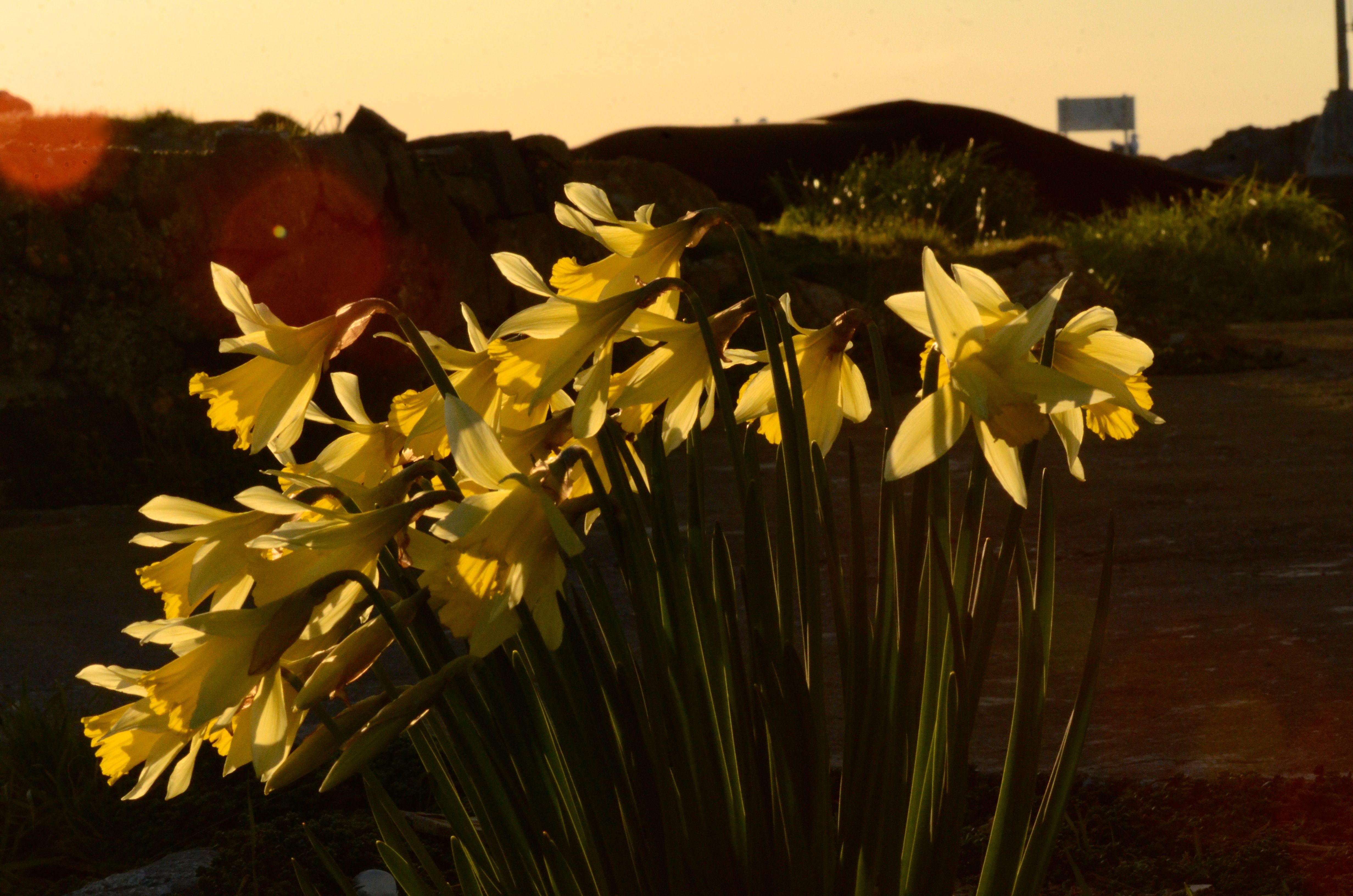
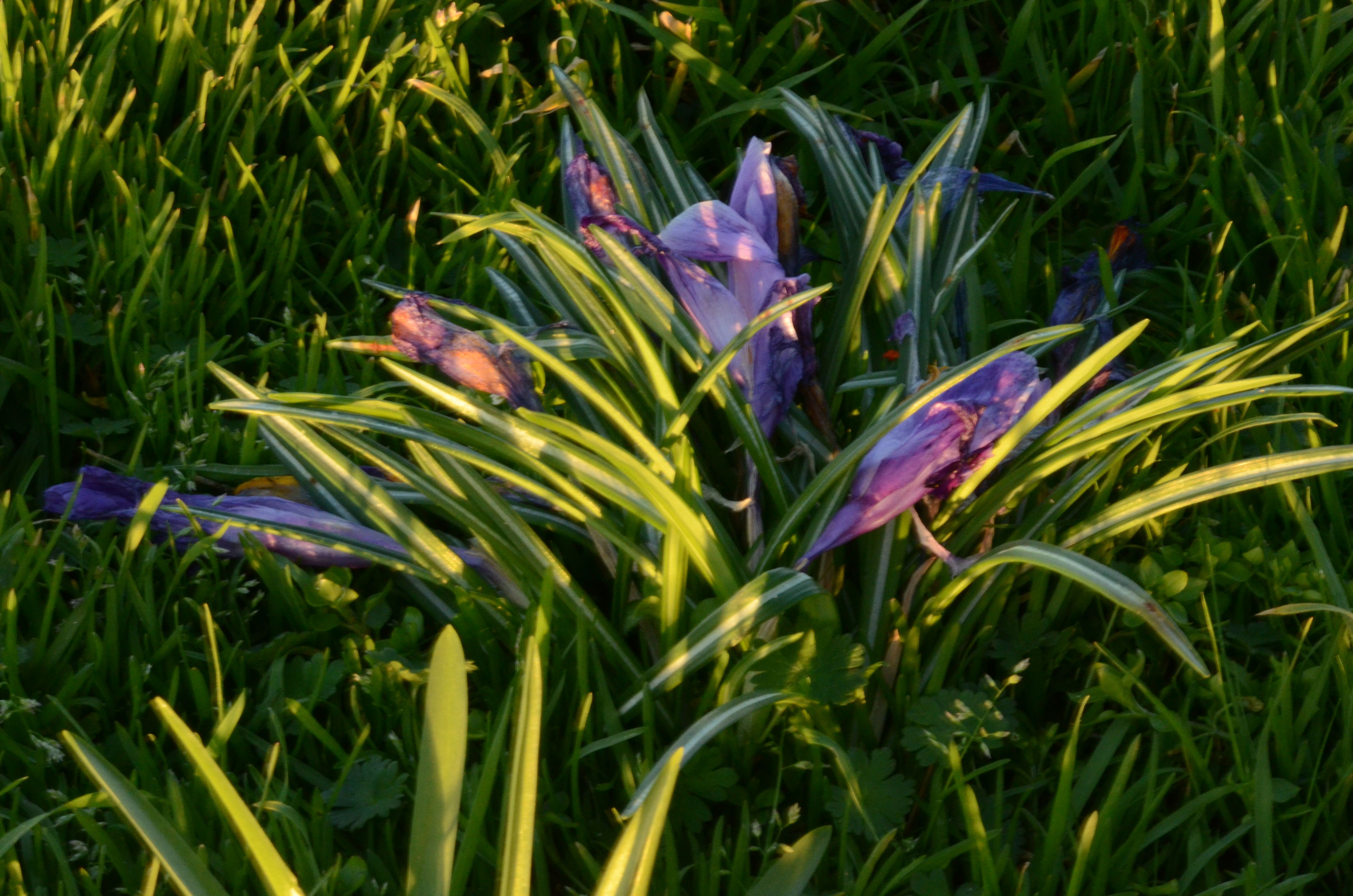
There are lots of flowers springing up around the island: daffodil, crocus, grape hyacinth, and calendula. Like several other plants that are not native to the island, they were planted by lighthouse keepers.

I spent the day reacquainting myself with the systems and species of the island.

The fog horn went off sporadically throughout the night, starting at 20:15. There didn’t appear to be any fog or clouds. The almost full moon lit up the night. It was so bright, I didn’t need to use a flashlight when I went to turn off the generator.