March 17

Sunny, light rain in the late afternoon
Wind: 3-9 knots NE in the morning, 1-6 knots SE in the afternoon, calm at 18:00, 9-15 W in the evening
Air Temperature: Low 7.6°C, High 10.7°C
Ocean Temperature: 8.9°C

The morning was filled with chores: collecting garbage, tidying, cleaning the solar panels and mistaking a swimming seal for a sea otter (three times). The sea otter, which visited the ecological reserve during the winter hasn’t been seen within the past few weeks.

I was off the reserve for a few hours in the afternoon to drop off garbage and pick up gas, groceries, deionized water for the batteries and cleaning supplies. It happened to coincide with Elizabeth May giving a talk at the college.

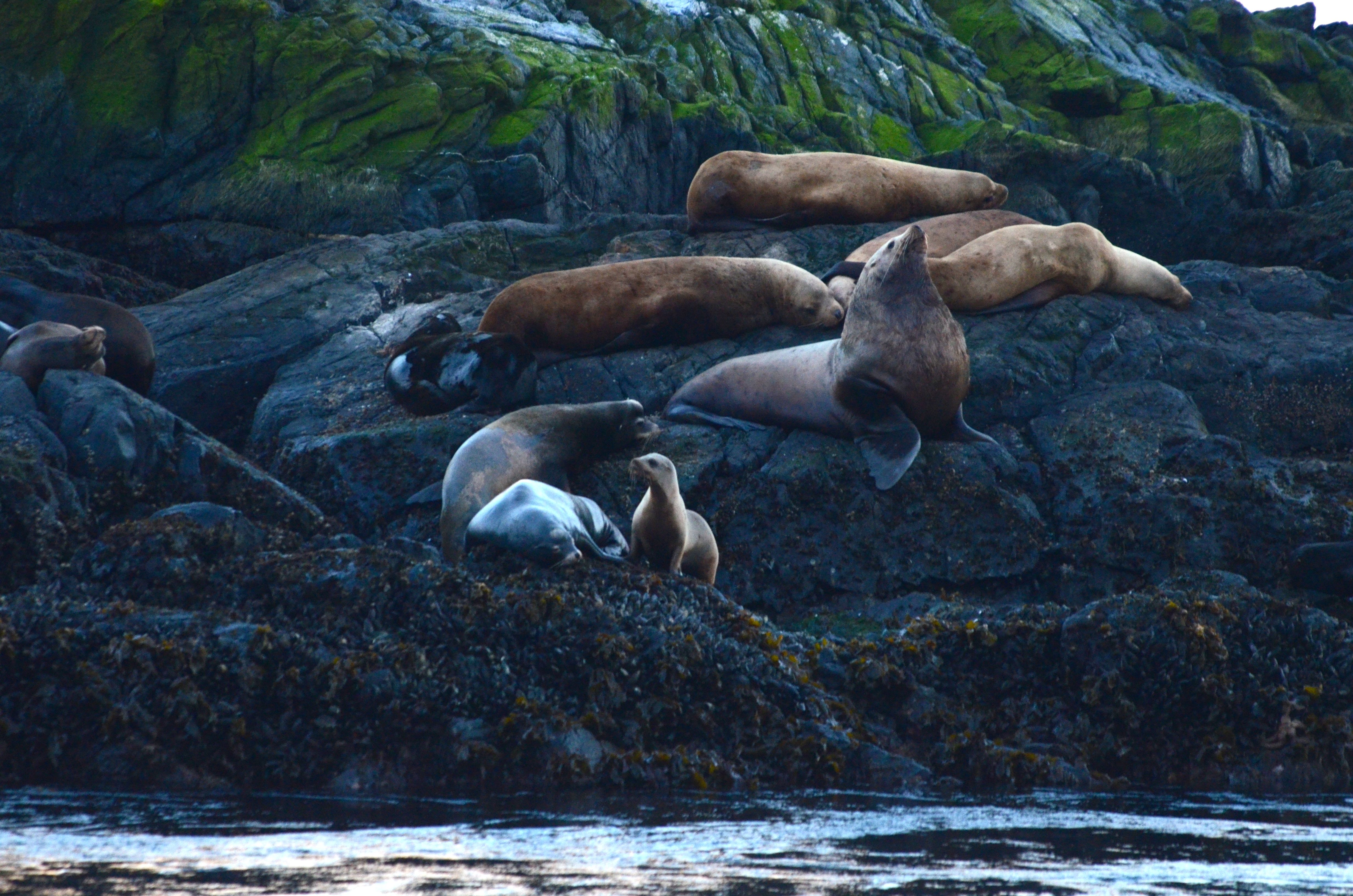
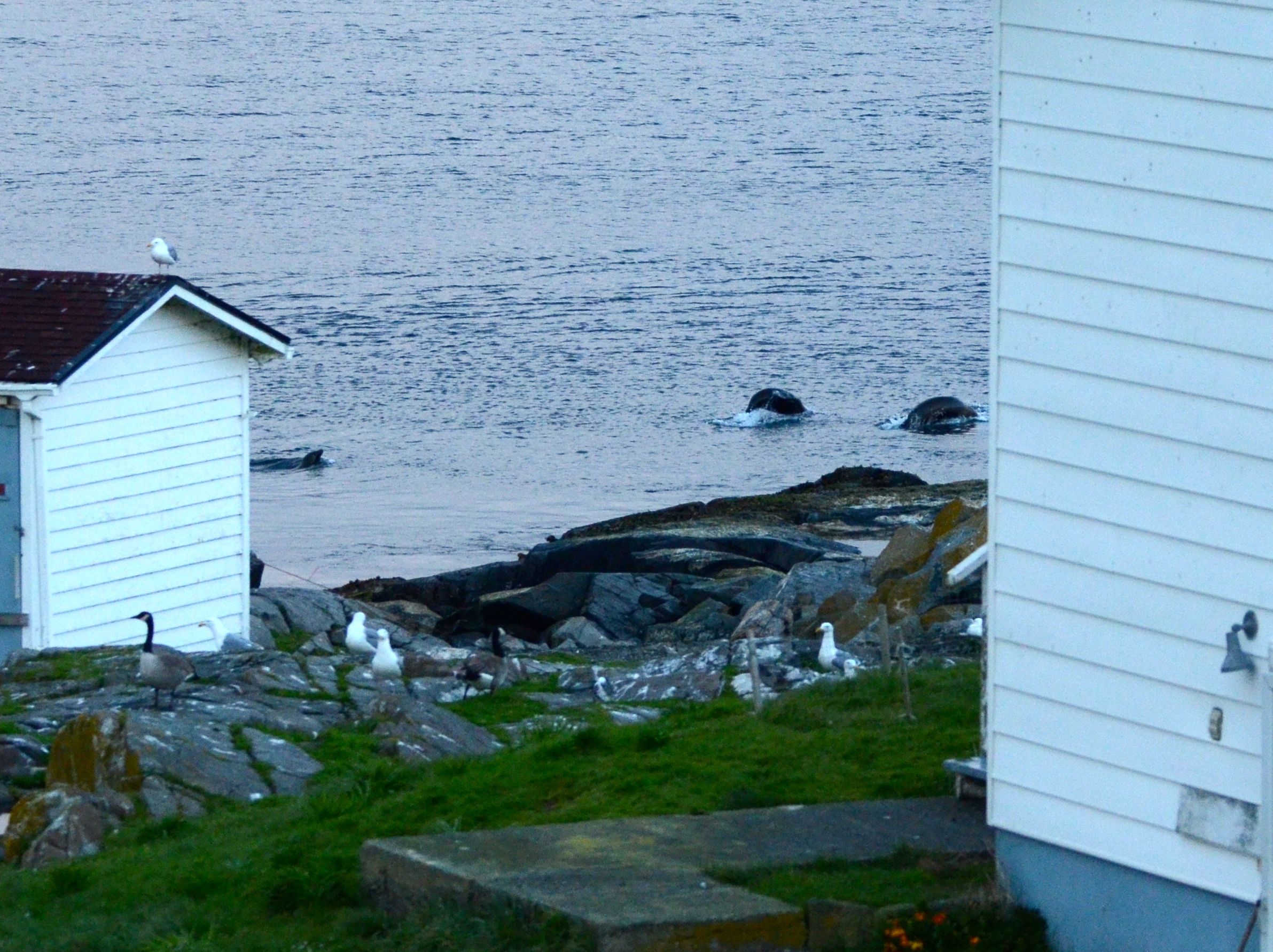
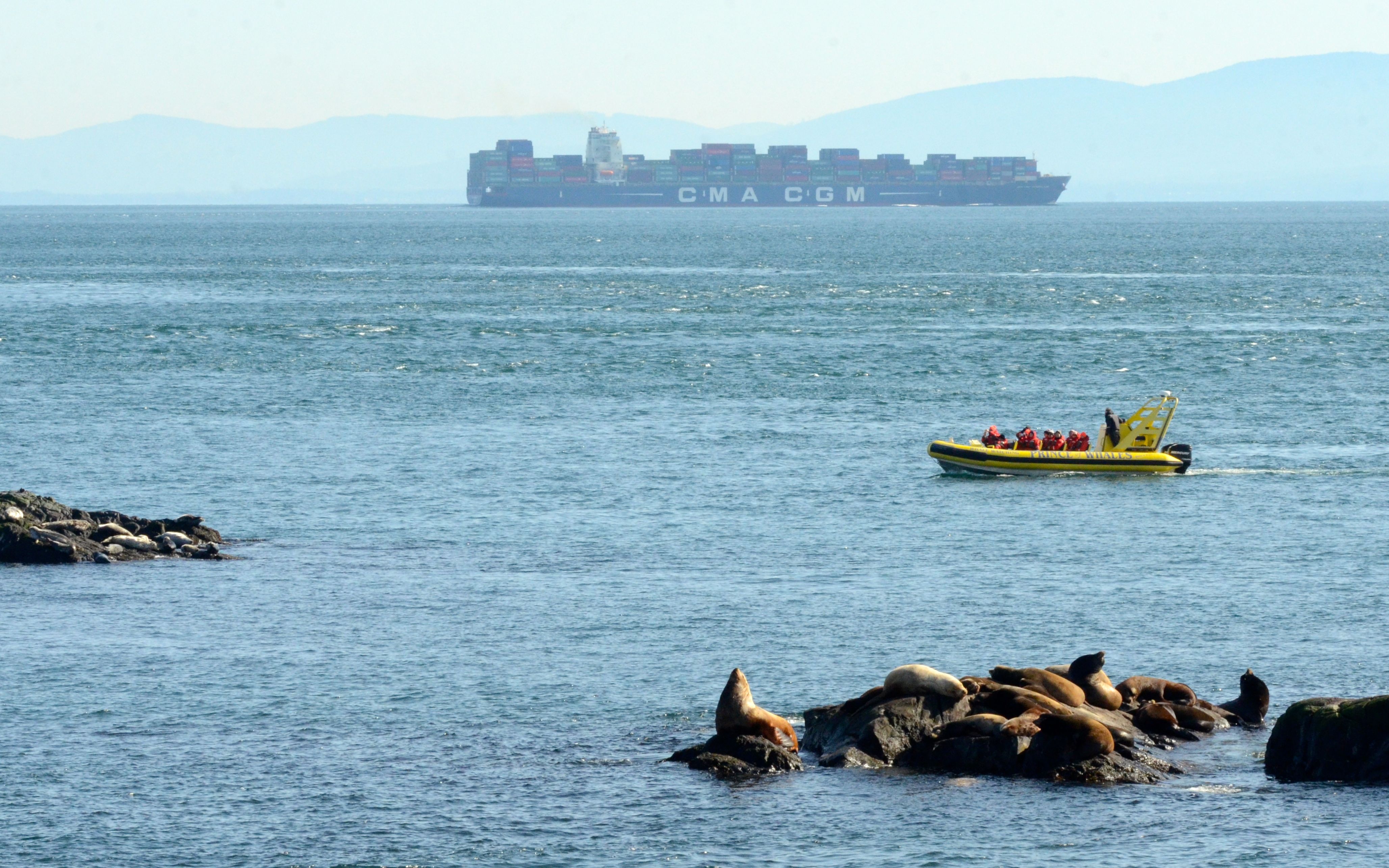
The sea lions were very active and vocal leading up to the sunset at 19:21.

There were no boats seen in the reserve today.

March 10 – Juncos and a Robin

Cloudy, with fog in the morning
Wind: 0 – 16 knots from the W then NE in the morning, switching to SE in the afternoon
Air Temperature: High 10°C, Low 7°C
Ocean Temperature: 8.9°C

This morning, the Pearson students here for Project Week helped stack firewood in the cupboards outside of the Engine Building.

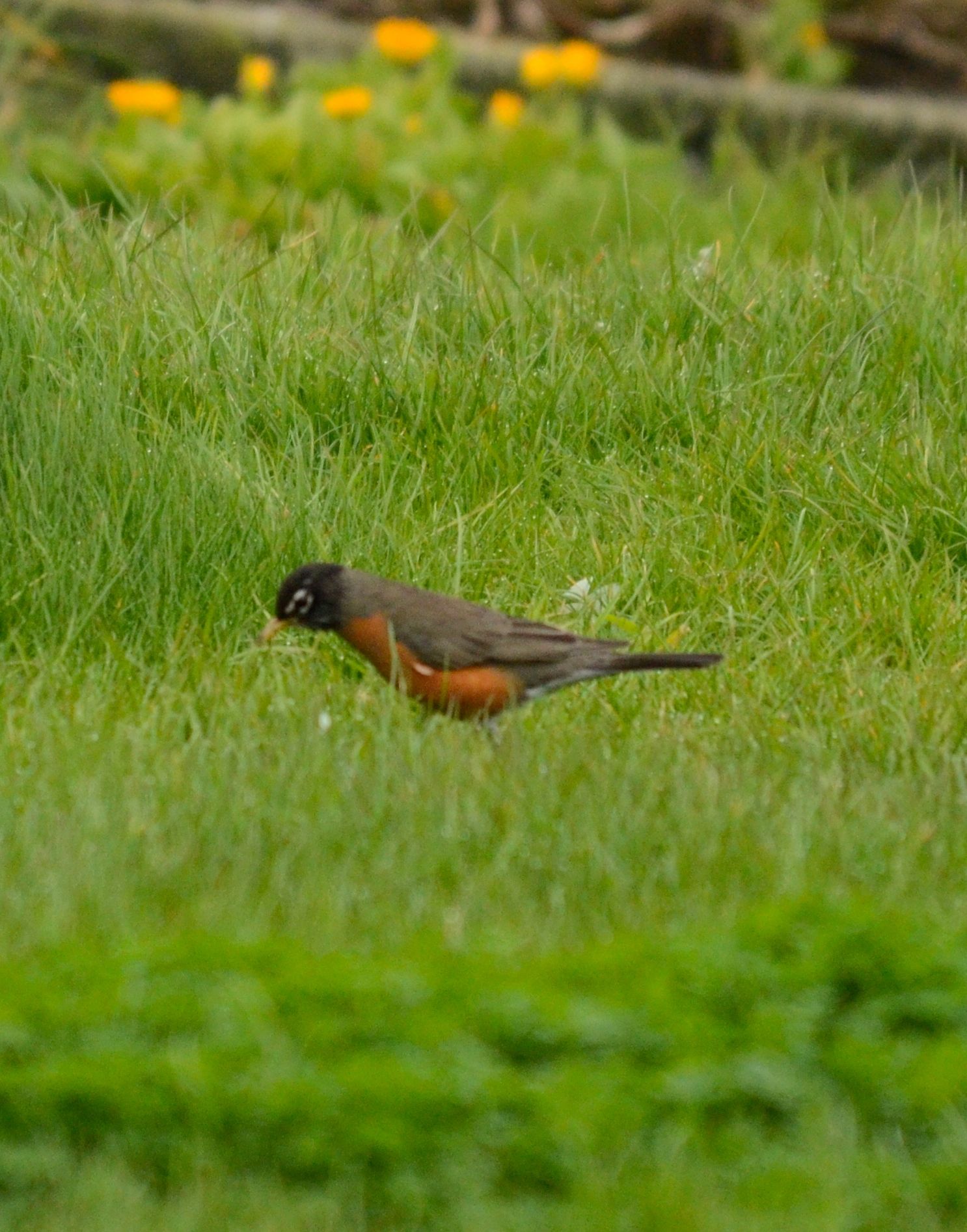
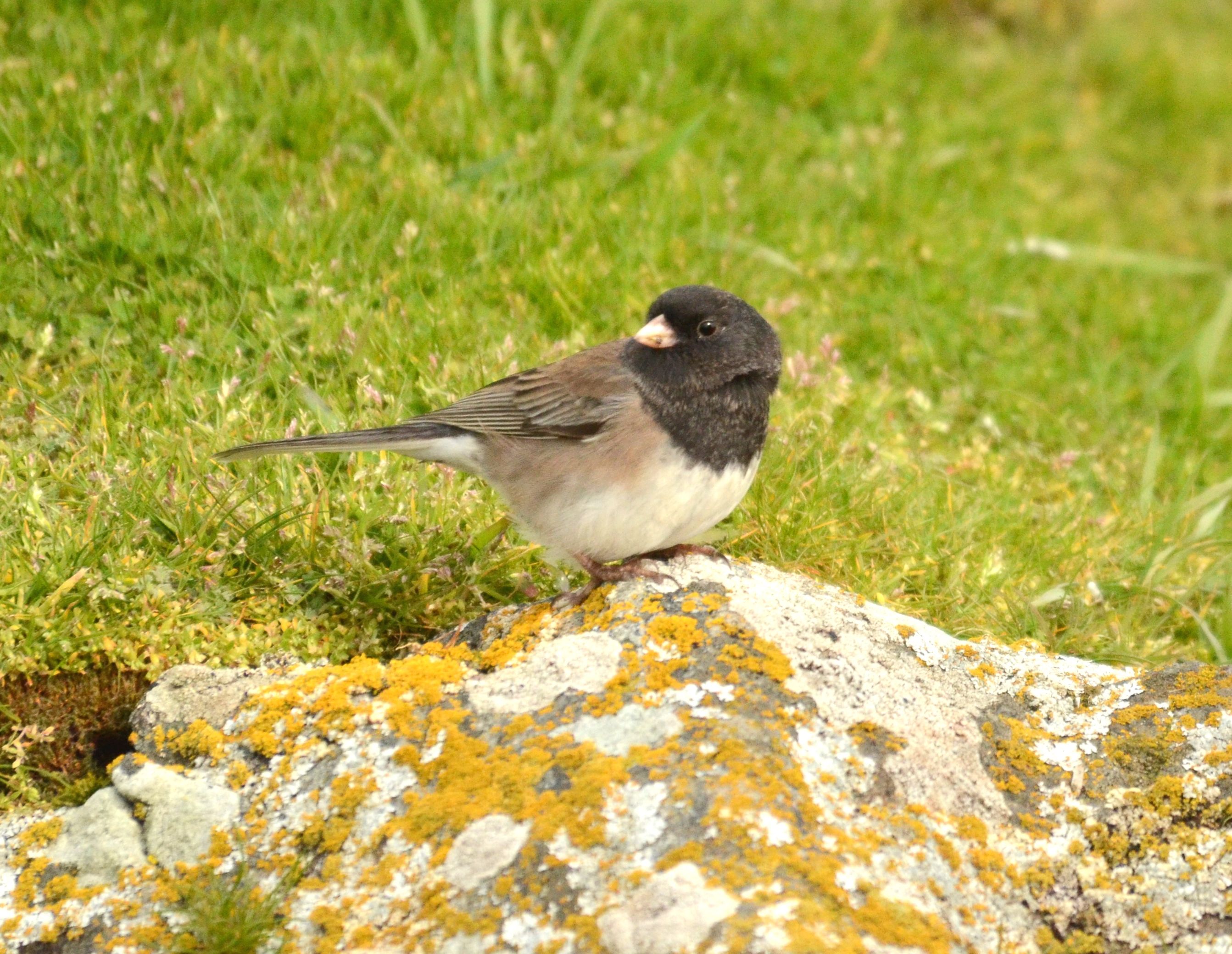
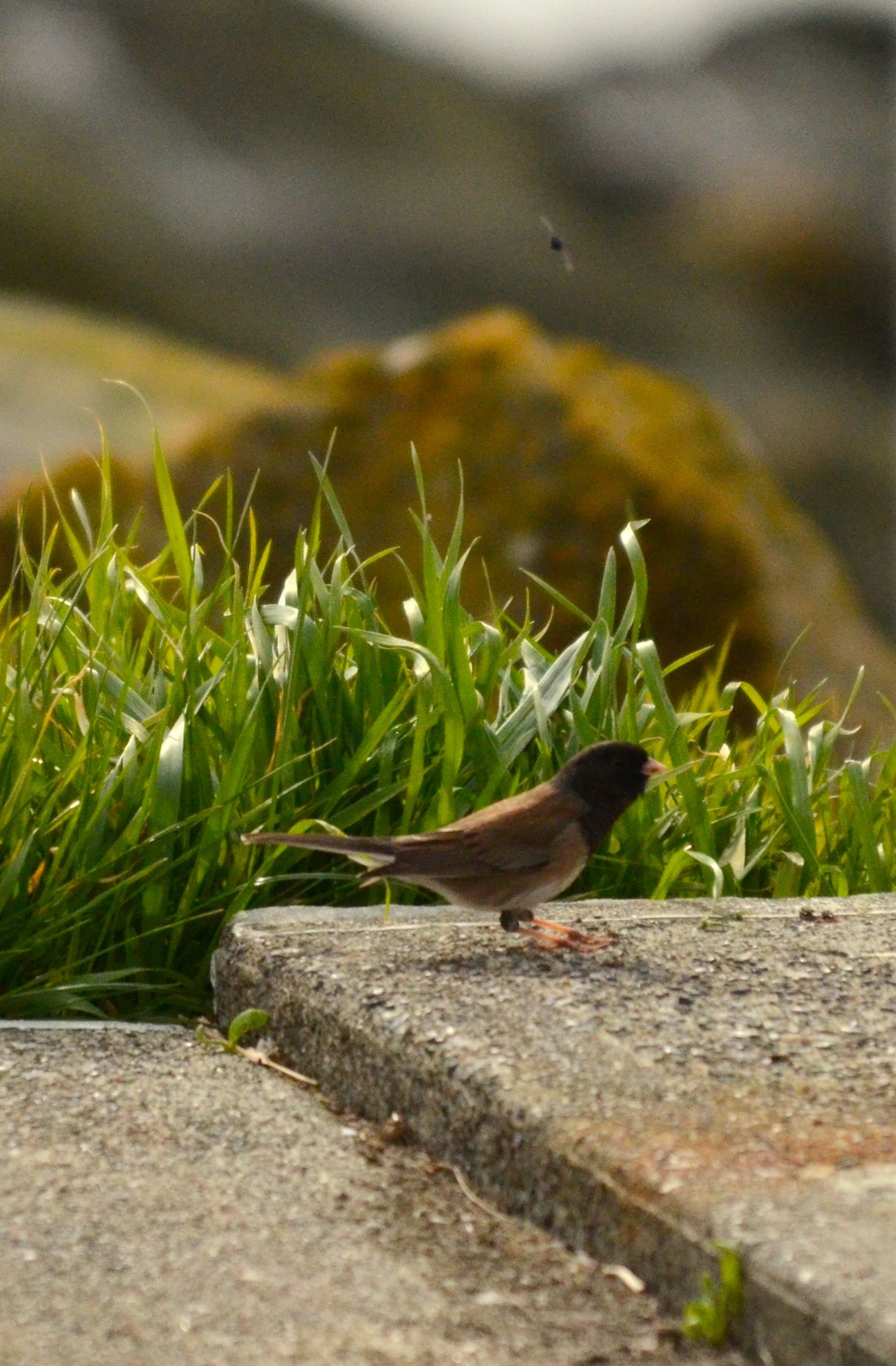
Four oregon juncos and a robin were seen flying around the southern part of Great Race.

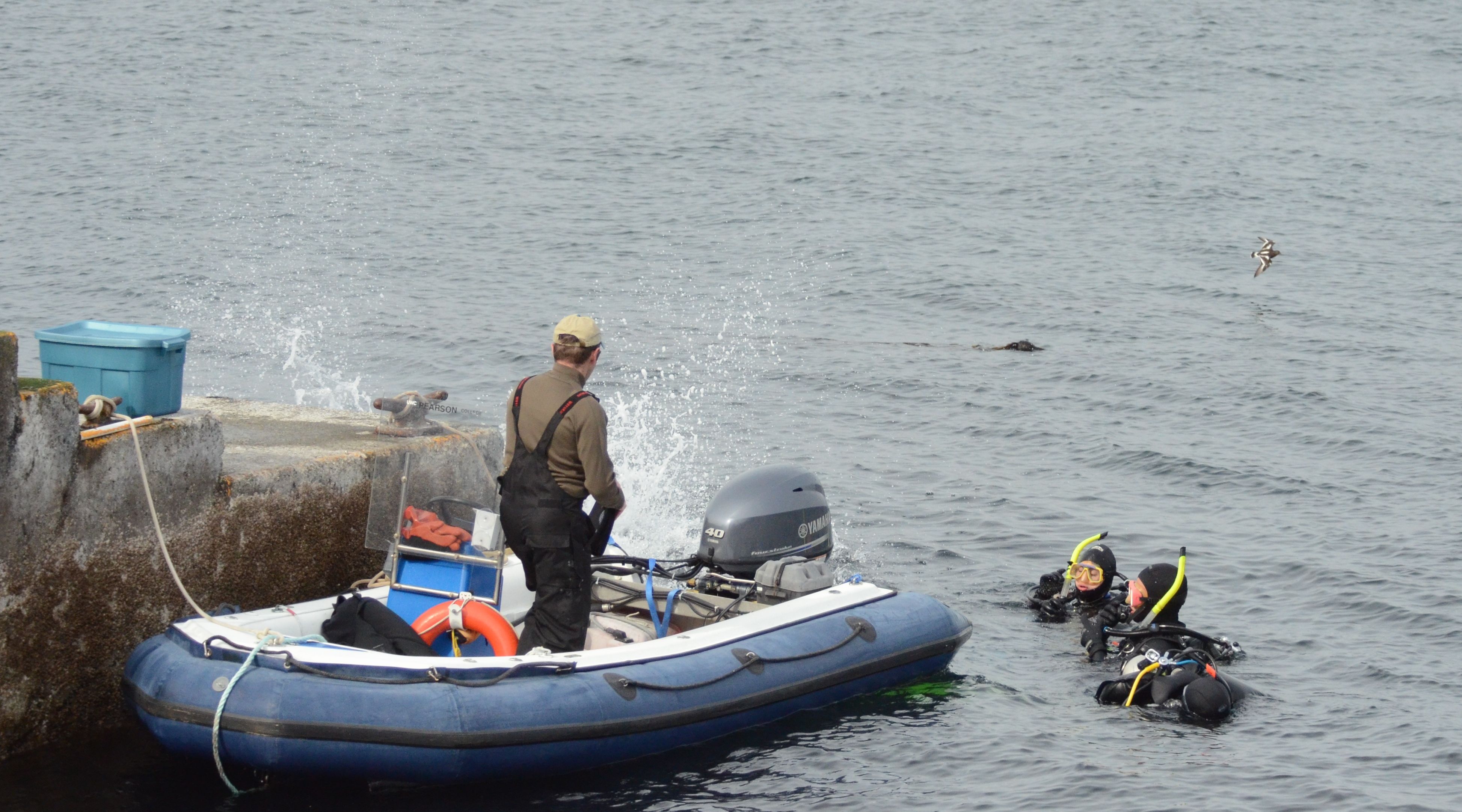
This afternoon, four students took part in rescue diving scenarios with Chris. Afterwards a few of them went snorkelling around the jetty to check out the sea stars, a sea slug and other species.

Chunk continues to hang out near the Marine Science Centre.

Three ecotour boats came into the ecological reserve to share the sights, sounds and smells of the marine mammals and birds with their customers.

March 9 – Pearson Project Week Visitors

Fog overnight, sunny begining at 9:00
Wind: 6 – 27 knots W to SW
Air Temperature: High °C, Low °C
Ocean Temperature: 9°C

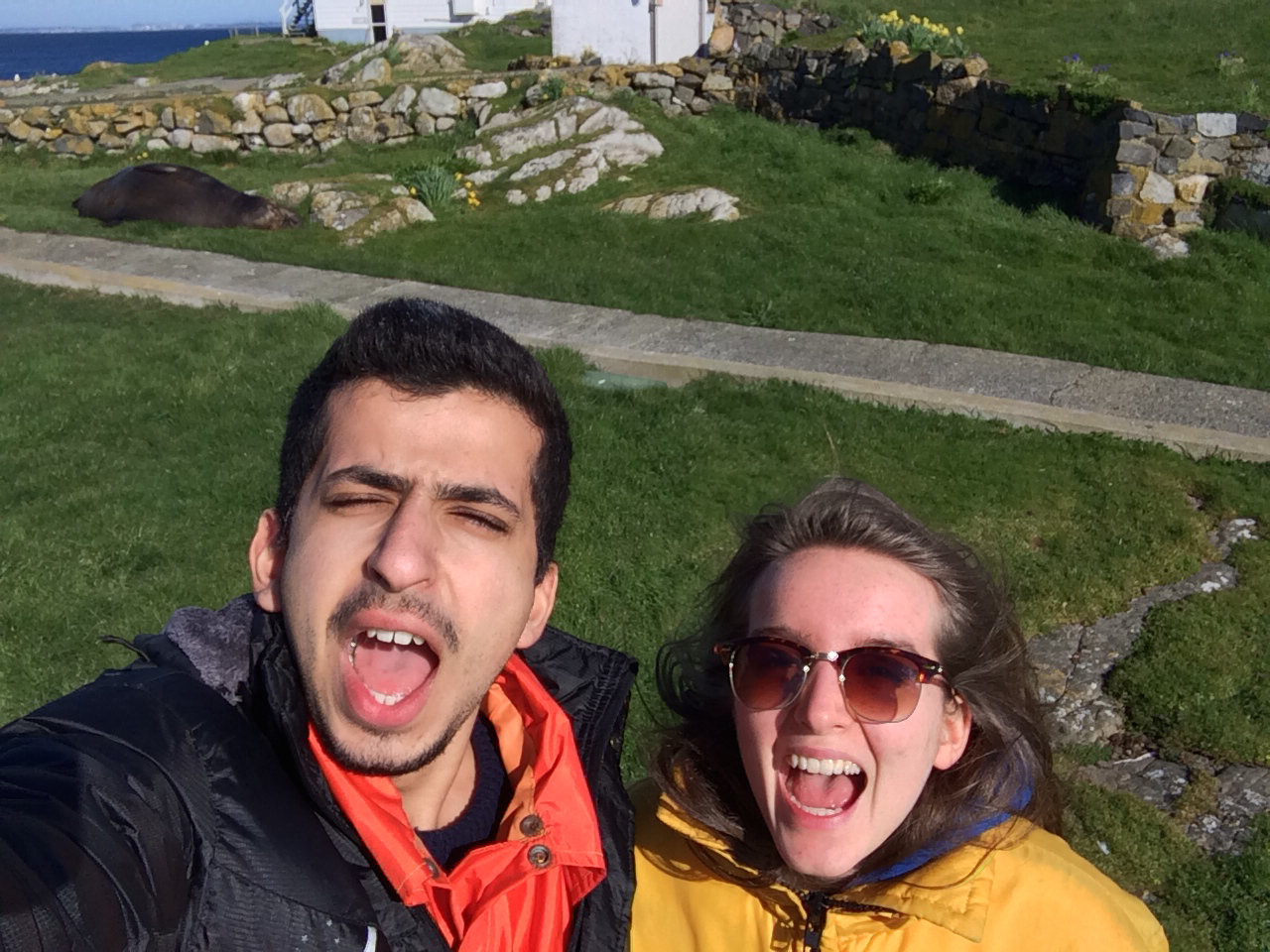
Five second year Pearson students came to Race Rocks this morning to spend part or all of Project Week. Yam, Sean, Martin, Neel and Bader will be exploring Race Rocks, helping out with tasks, studying and diving. Chunk came back onto the island just in time to welcome the visitors as they toured around the ecological reserve.

Yam helped shrink the firewood pile by the tank house by stacking it underneath the stairs of the Marine Science Centre. It will dry out over the summer and be ready to heat the Ecoguardian’s house next winter.

One eco tour boat visited the reserve today.

March 7

Sunny
Wind: 3 – 9 knots NE, switching to SE in afternoon
Air Temperature: Low 7°C, Hight 11°C
Ocean Temperature: 9°C

The morning was spent preparing the Marine Science Centre, and tidying around the island, to get ready for visiting students that are coming to Race Rocks this week.

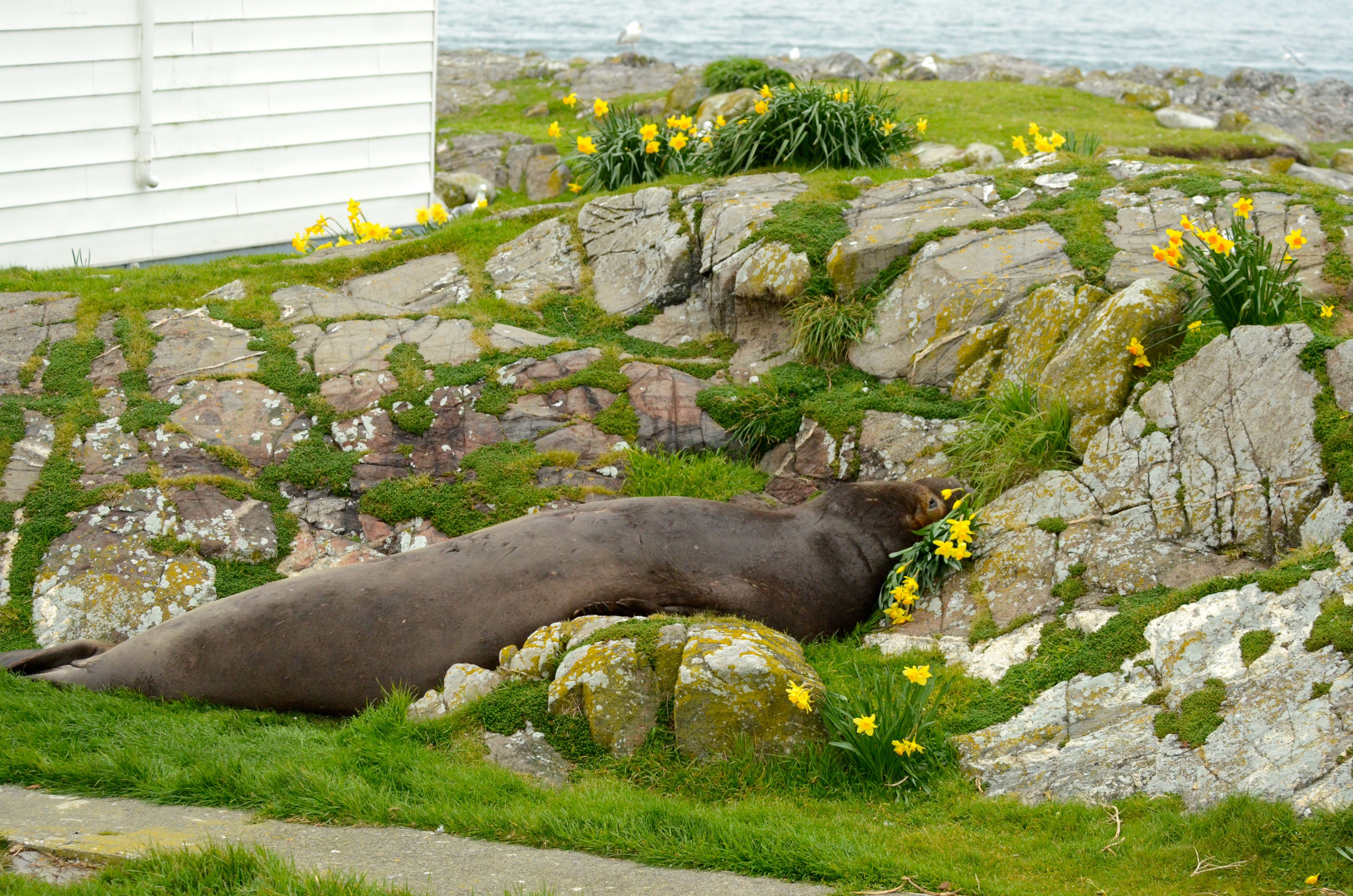
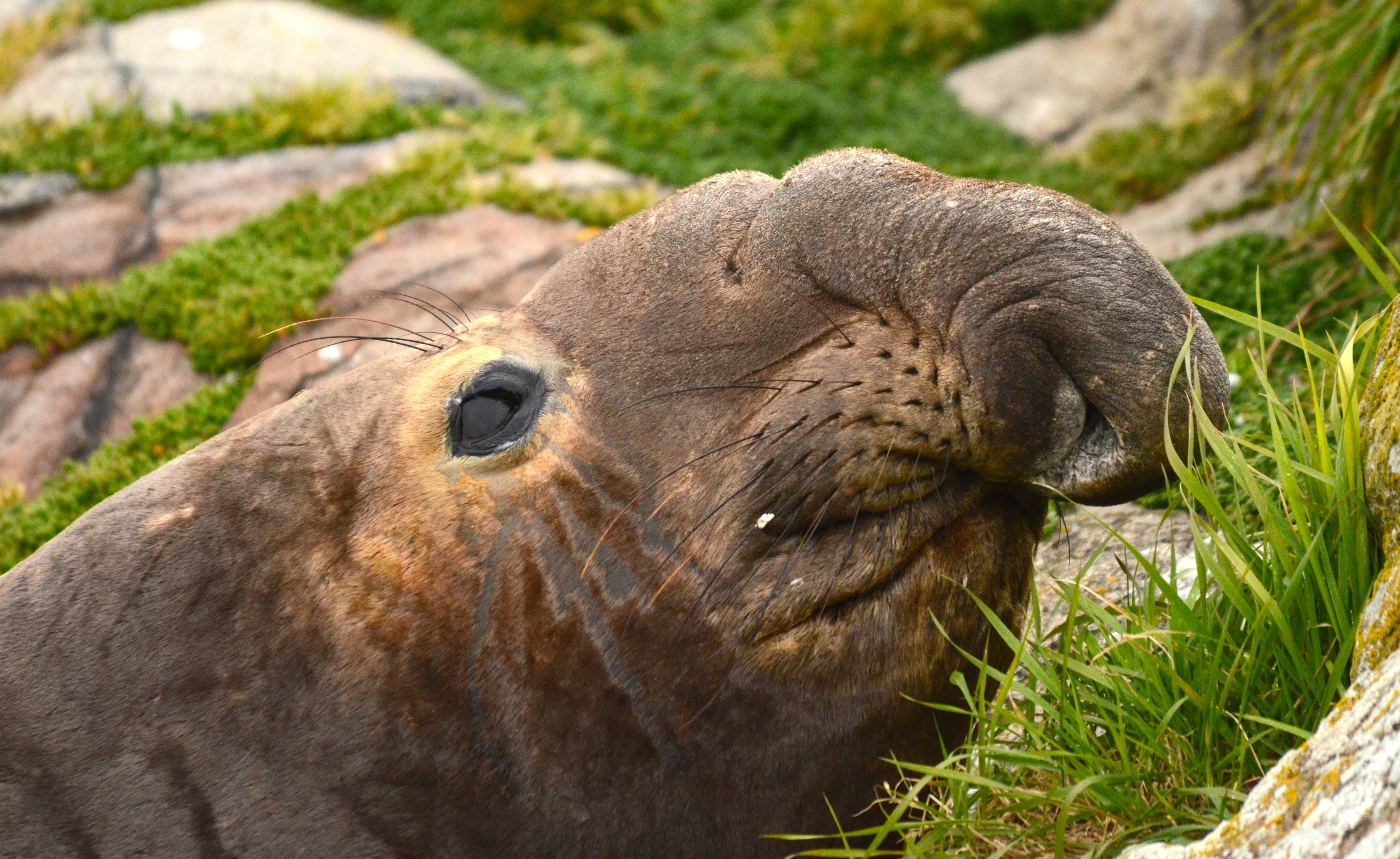
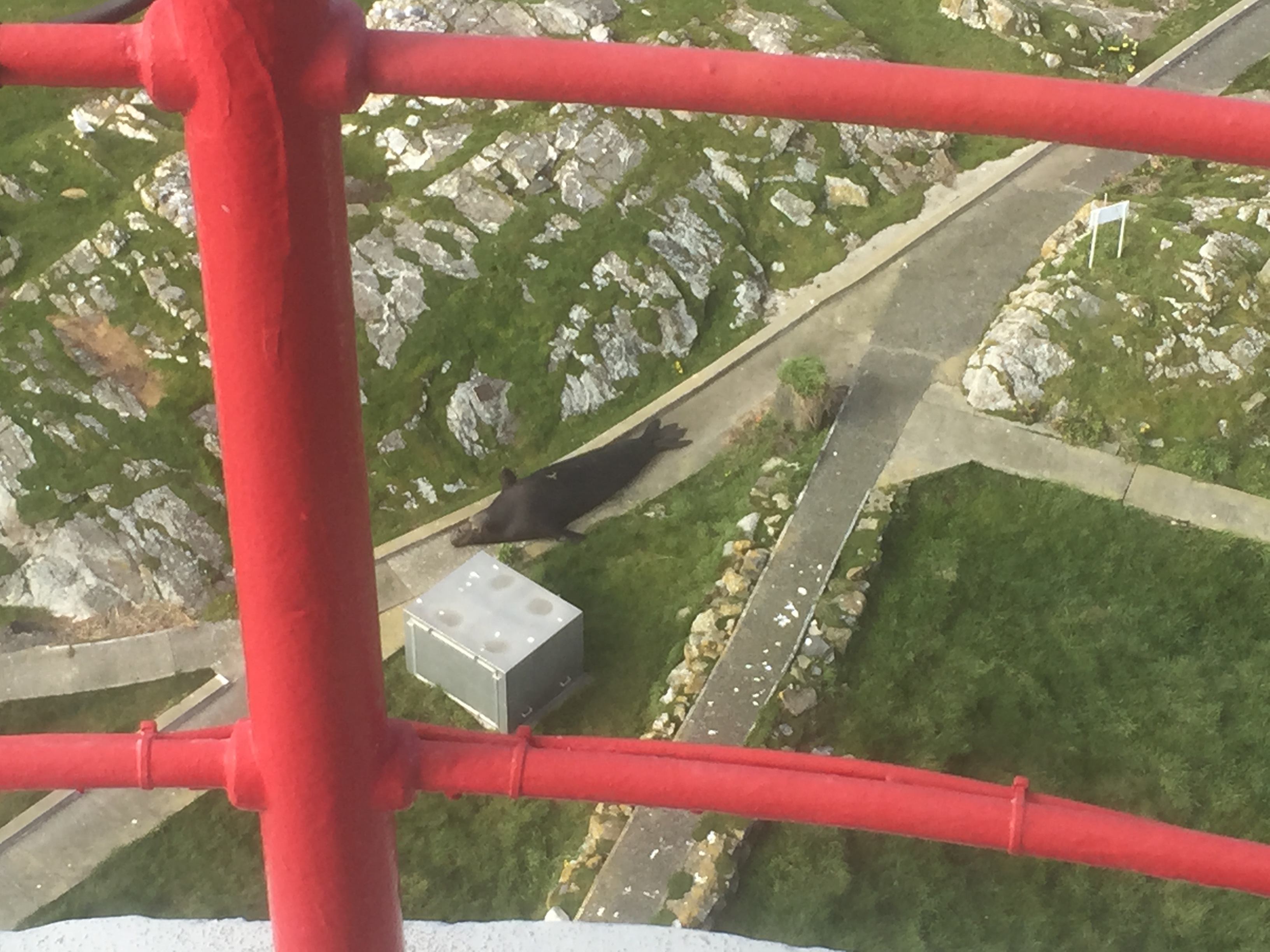
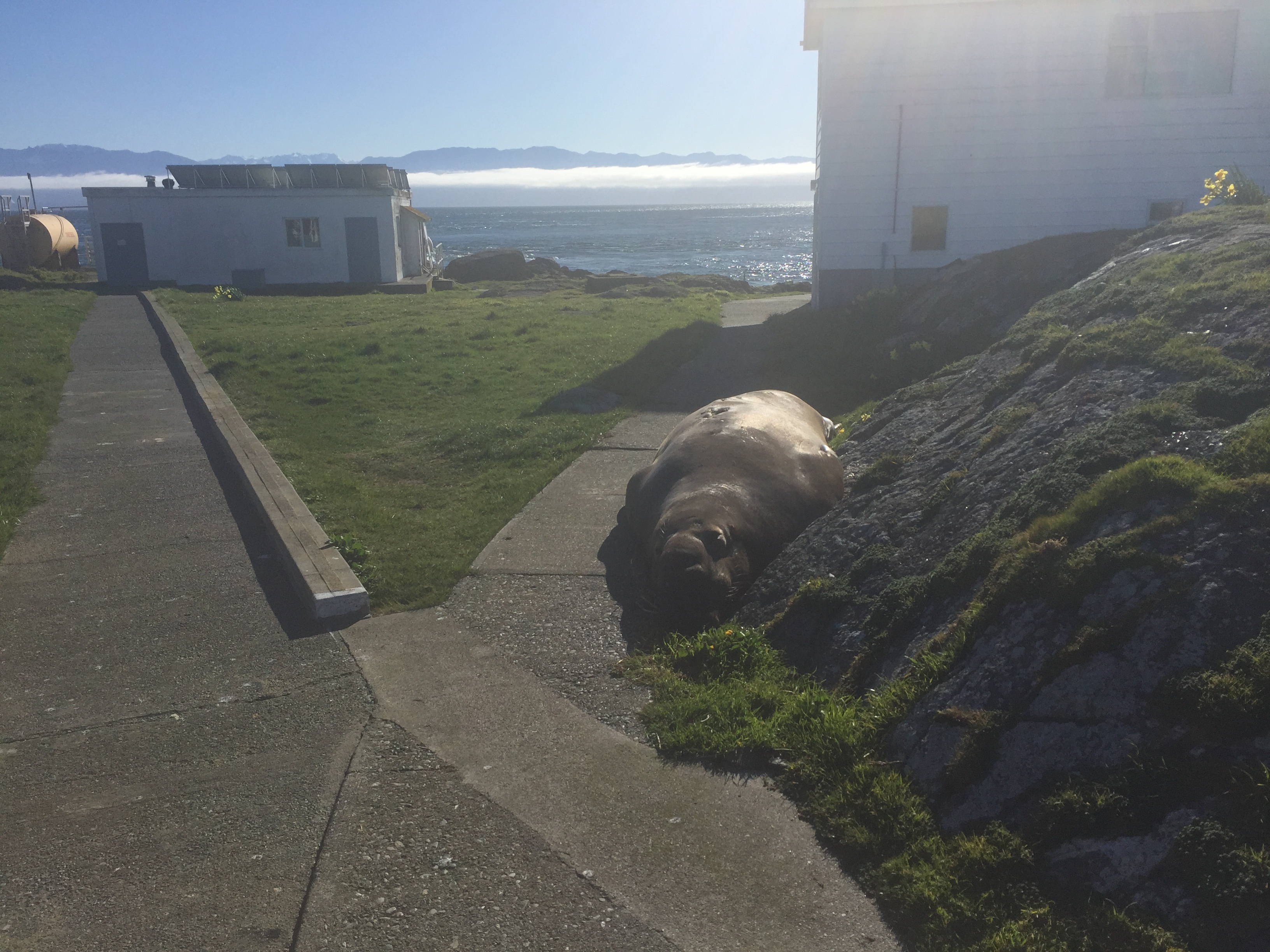
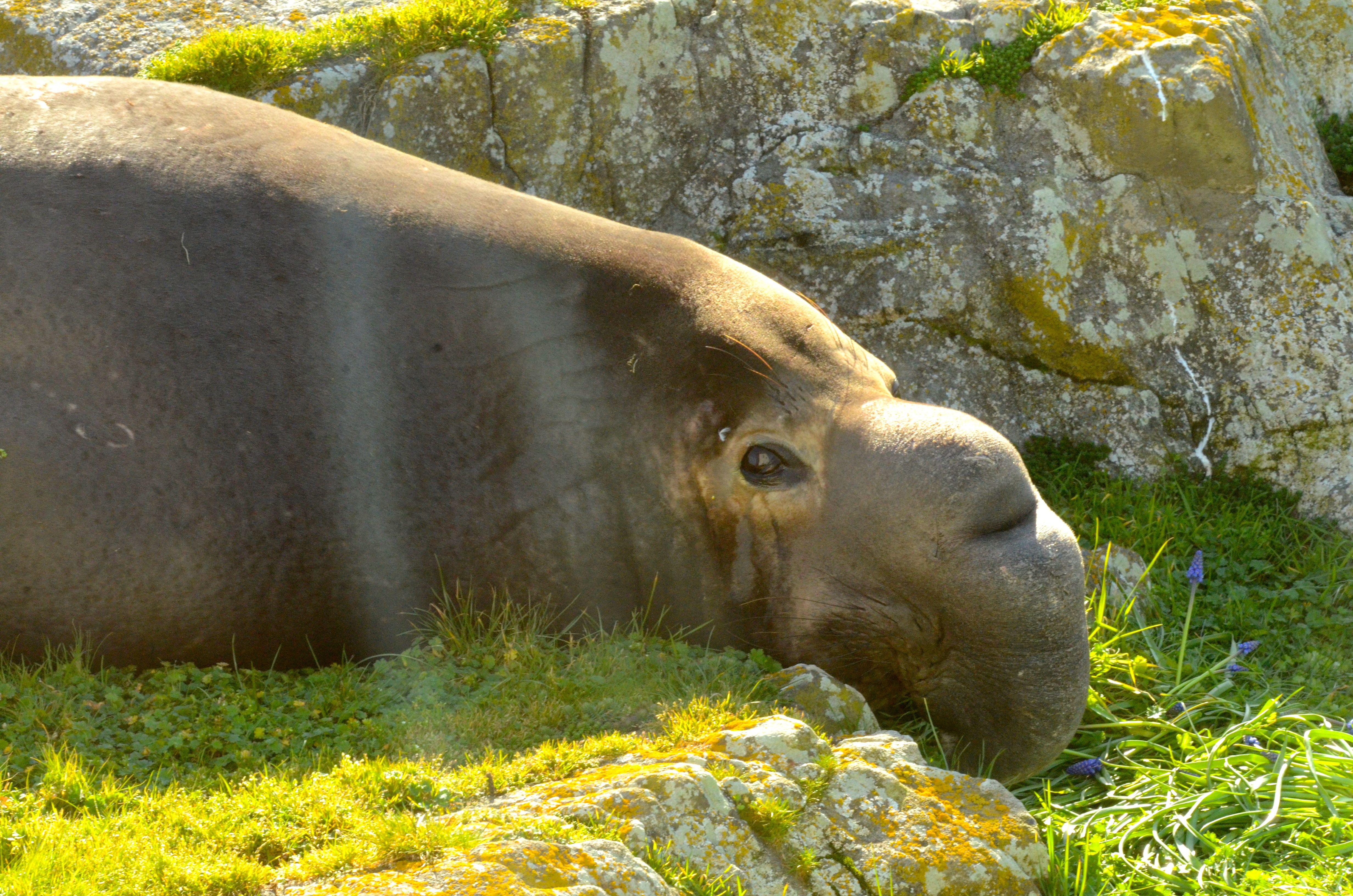
Chunk, the large male elephant seal, is still camped out on the grass below the helicopter pad.

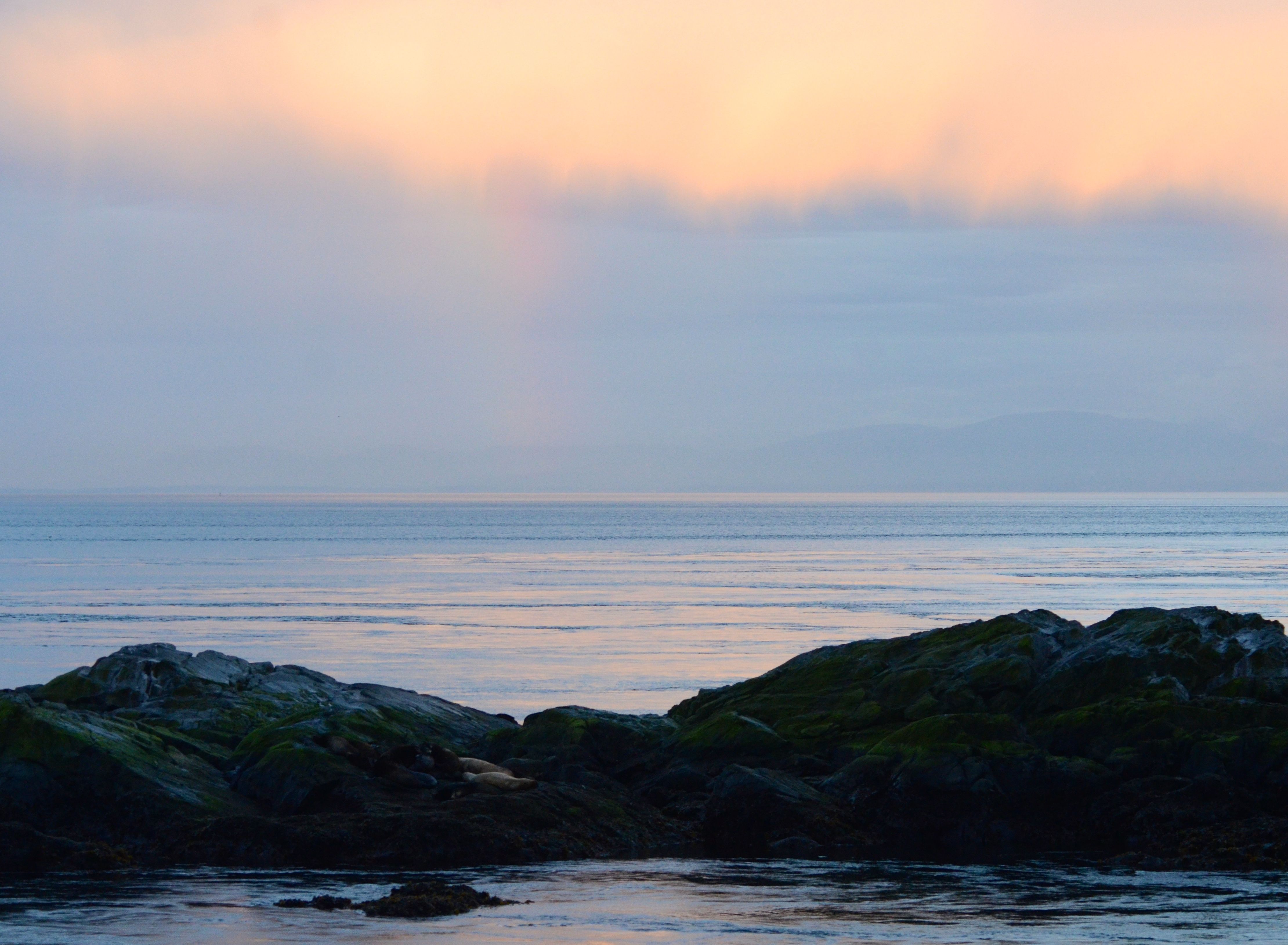
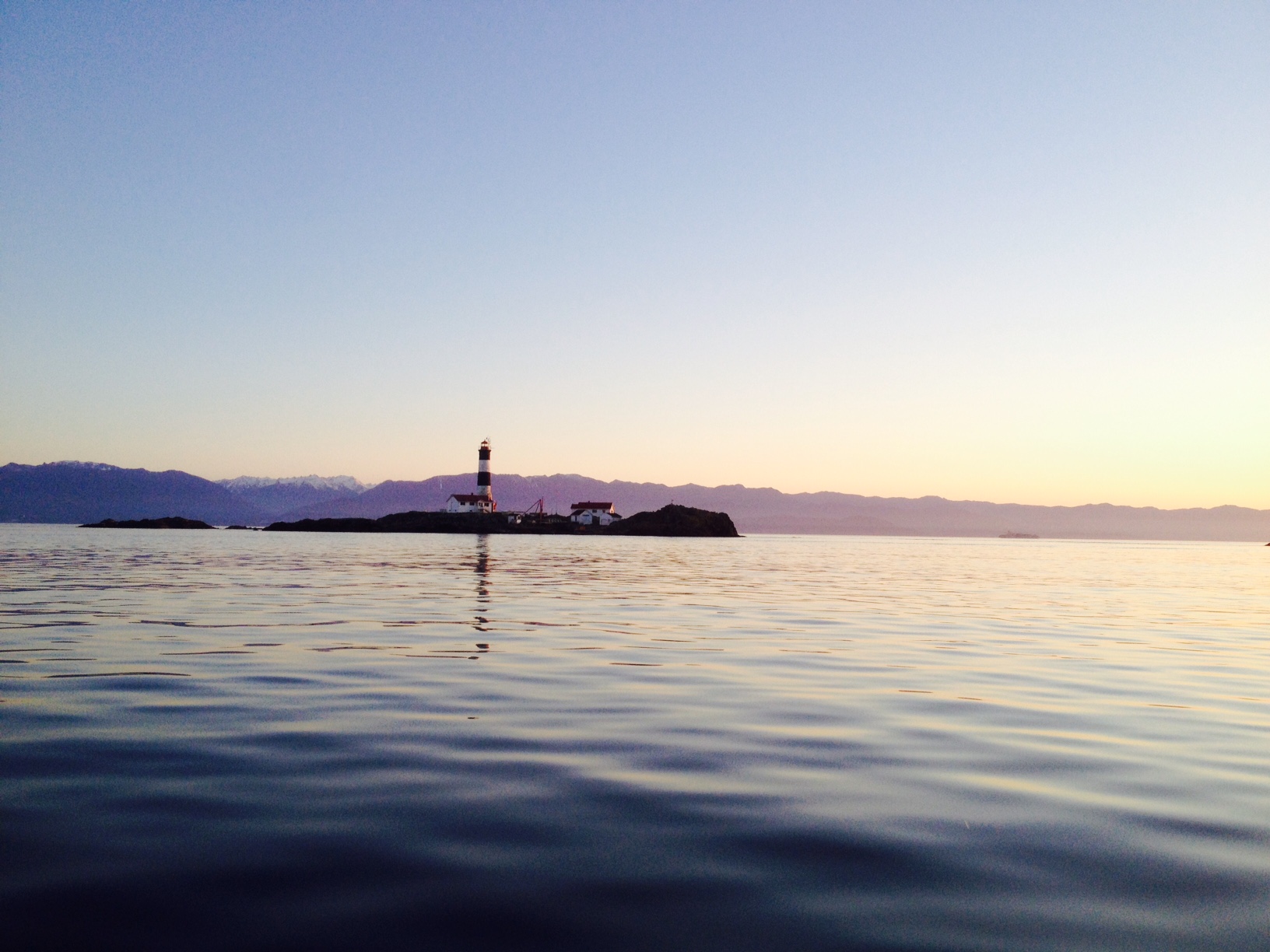
I left the reserve in the afternoon to attend One World, the annual show of dance, music and stories put on by Pearson students. I returned to Race Rocks with a visitor. The boat ride was spectacular as the sunset cast a rainbow of colours over the Juan de Fuca Strait.

Two eco tour boats were seen in the ecological reserve today.

Thank you to Travis, today’s Race Rocks visitor, for the photos.

March 6 – Bright Sun, Bright Moon

Mostly sunny
Wind: 3 – 11 knots NE
Air Temperature: High 10°C, Low 7°C
Ocean Temperature: 8.8°C

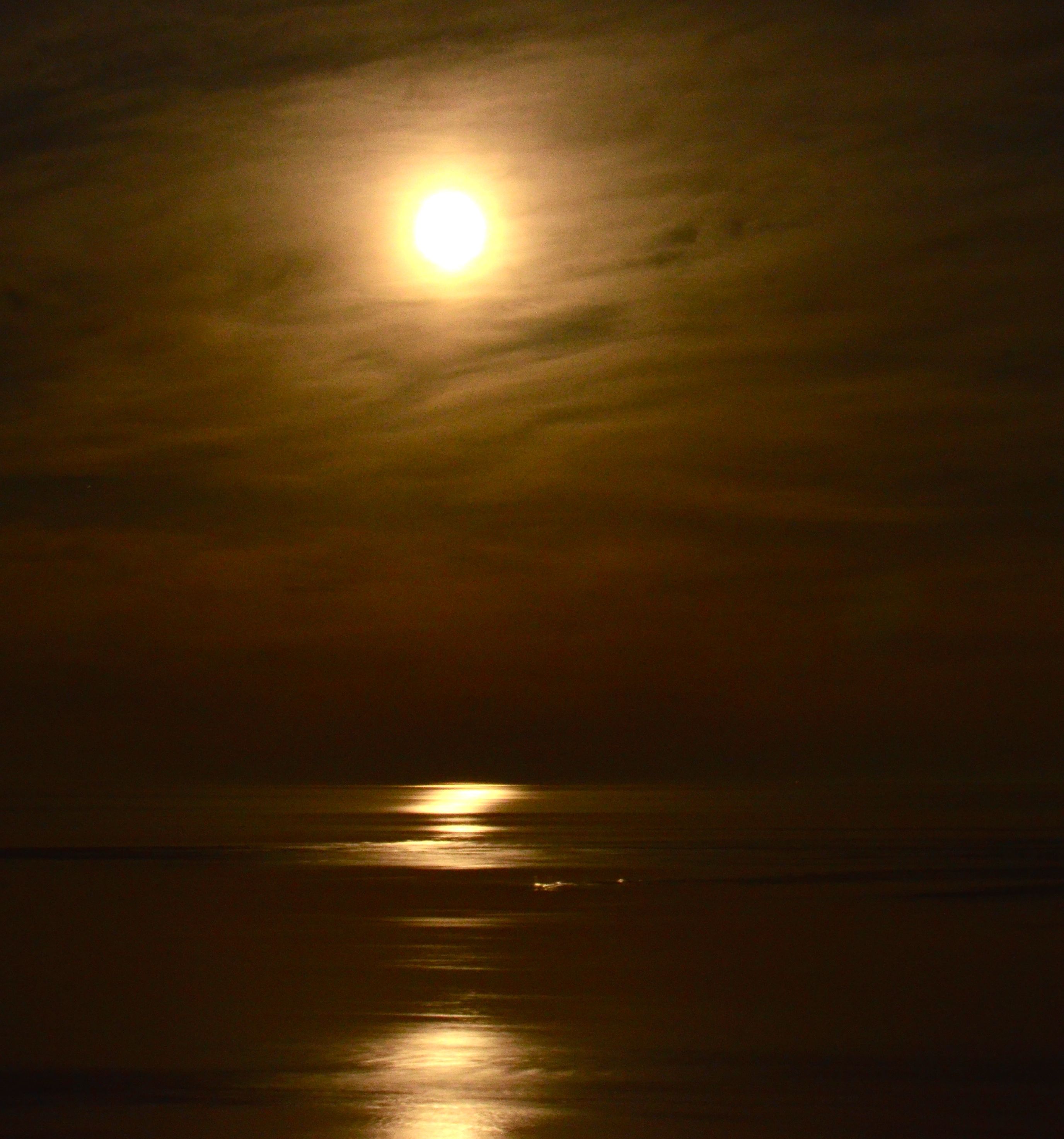
Last night was a full moon. Tonight’s moonrise happened at 19:25. It’s a waning gibbous moon, but it’s still as bright as last night.

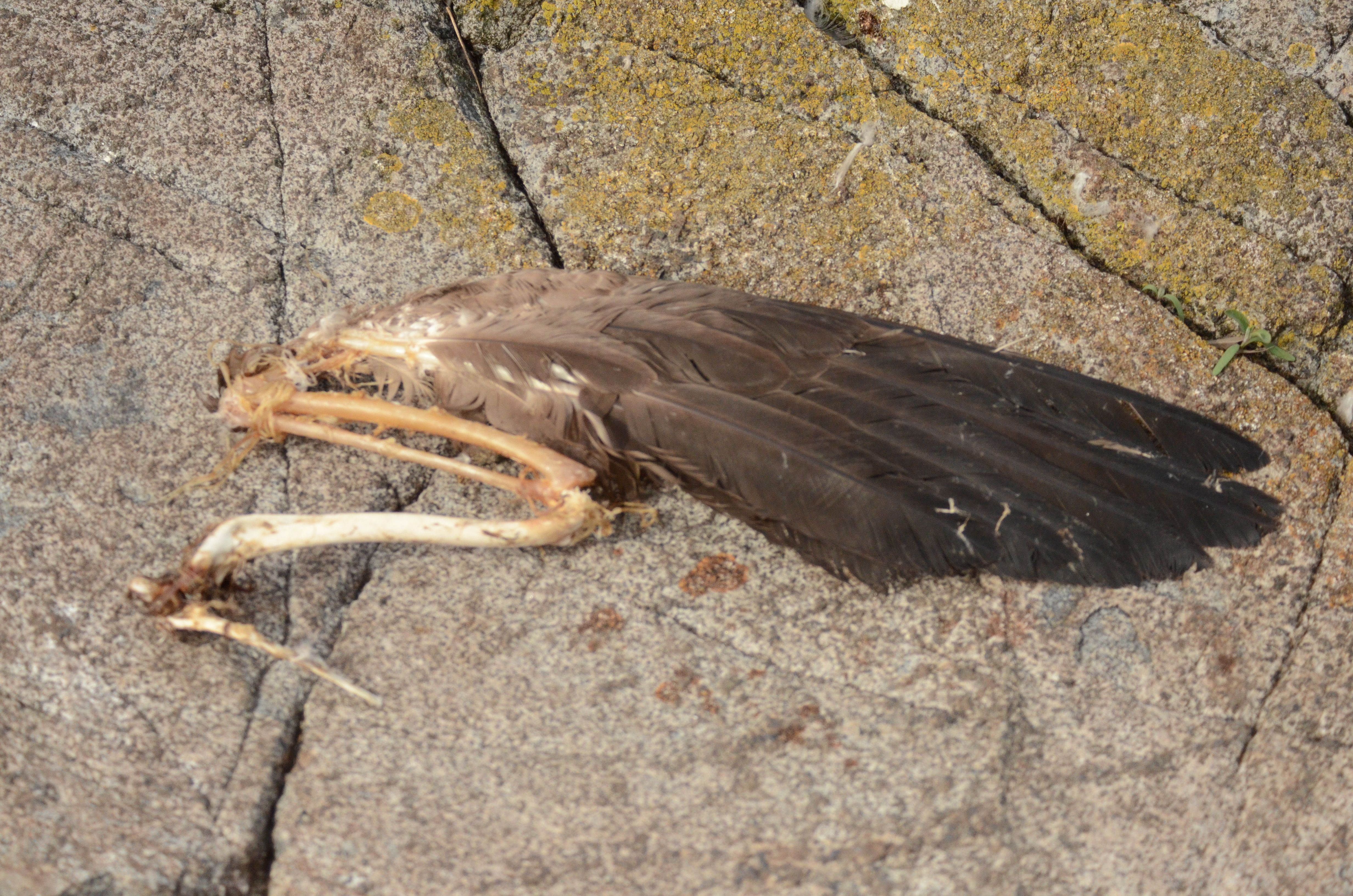
The gulls seem to be getting more territorial by the day. I witnessed many gulls attacking each other throughout the day. One gull grabbed onto another’s wing and wouldn’t let go for a minute. Maybe the other gull got too close to a nesting site that was already claimed.

Chunk, the male elephant seal, spent another day in the same spot below the helicopter pad. The female elephant seal splashed around the jetty beach for most of the day.

One eco tour boat visited the reserve today.

New DFO Report highly critical of Kinder Morgan /TMX environmental assessment on Whales

The recentlly released DFO report:
(See Full PDF) SUFFICIENCY REVIEW OF THE INFORMATION ON EFFECTS OF UNDERWATER NOISE AND THE POTENTIAL FOR SHIP STRIKES FROM MARINE SHIPPING ON MARINE MAMMALS IN THE FACILITIES APPLICATION FOR THE TRANS MOUNTAIN EXPANSION PROJECT was very critical of the Trans Mountain Expansion Project Application documents. The Conclusion of the report is concerned with Vessel strikes on Whales and the overall impact of noise from increased Project-related traffic.  Included below are the conclusions of the report.

Conclusions

There are deficiencies in both the assessment of potential effects resulting from ships strikes and exposure to underwater noise in the Trans Mountain Expansion Project Application documents.

There is insufficient information and analysis provided with which to assess ship strike risk in the Marine RSA from either existing or Project-related traffic. Ship strike is a threat of conservation concern, particularly for baleen whales such as Fin Whales, Humpback Whales and other baleen whales (Gregr et al. 2006). If shipping intensity increases as projected in Section 4.4 in the Marine RSA and the Strait of Georgia and Juan de Fuca Strait as a whole, the significance of this threat to cetacean populations that occupy the region will increase.

Incidence of recovered whale carcasses is not considered to be an adequate measure of the frequency of ship strikes. No information is provided about the speed and maneuverability of Project-related ships or the distribution of whales in relation to the shipping lanes. Analyses that consider the statistical probability of ship-whale encounters and the risk of collisions are considered appropriate methodologies to assess this potential effect.

The JASCO MONM model, as it has been applied by the Proponent, is not adequate to assess the overall impact of noise from increased Project-related traffic. Although state-of-the-art acoustic modelling has been used to model the noise propagation associated with a single Project-related tanker in the Marine RSA, only four locations were chosen to represent the Marine RSA; therefore, the assessment does not adequately represent the noise exposure for the entire time a marine mammal would be in the RSA. The assessment represents only Project-related tanker traffic and not the current noise environment or the potential increase due to Project-related traffic. Finally, the method used to assess the significance of impacts from the modelled noise level contours resulting from a single Project-related tanker and tug on indicator cetacean and pinniped species is qualitative and the lack of an appropriate assessment framework reduces DFO’s ability to evaluate the assessment.

(See Full PDF) SUFFICIENCY REVIEW OF THE INFORMATION ON EFFECTS OF UNDERWATER NOISE AND THE POTENTIAL FOR SHIP STRIKES FROM MARINE SHIPPING ON MARINE MAMMALS IN THE FACILITIES APPLICATION FOR THE TRANS MOUNTAIN EXPANSION PROJECT

See other posts on Oil Spill Risk for the Race Rocks Ecological Reserve

March 4 – Eagle Gathering

Sunny
Wind: 8 knots NNE in the morning, diminishing in the afternoon and switching to W in the evening
Air Temperature: High 9C, Low 4C
Ocean Temperature: 8.8C

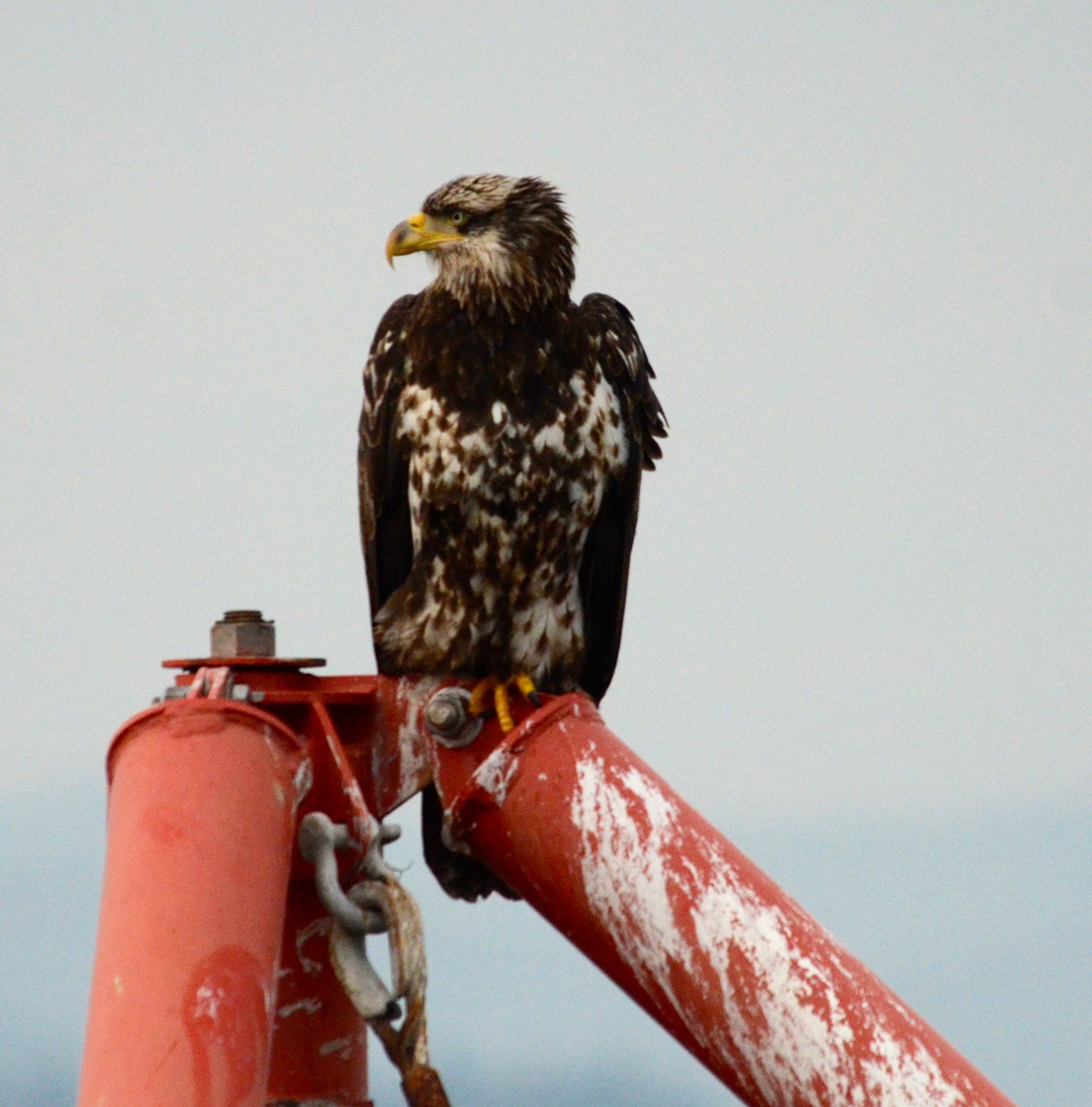
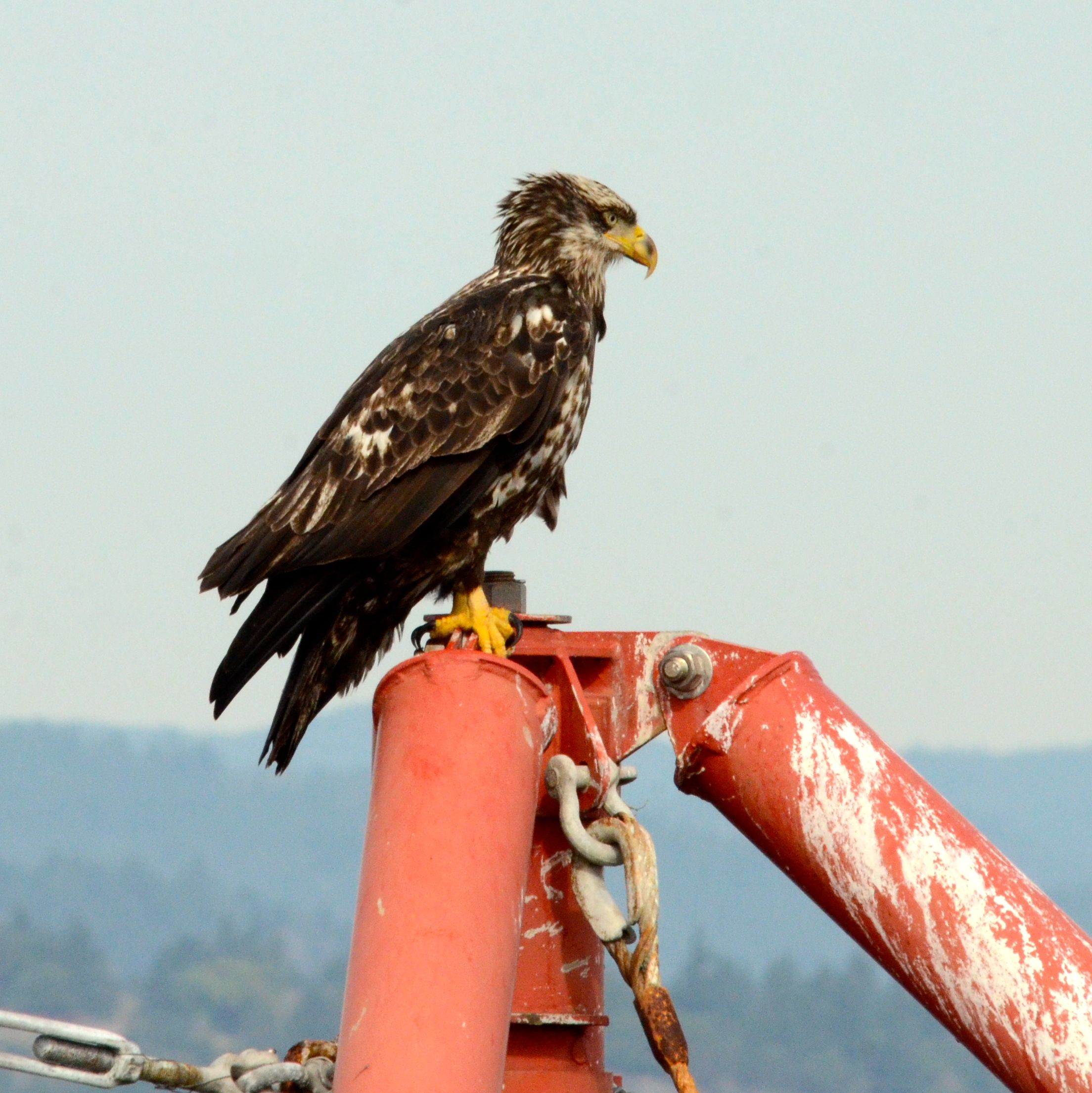
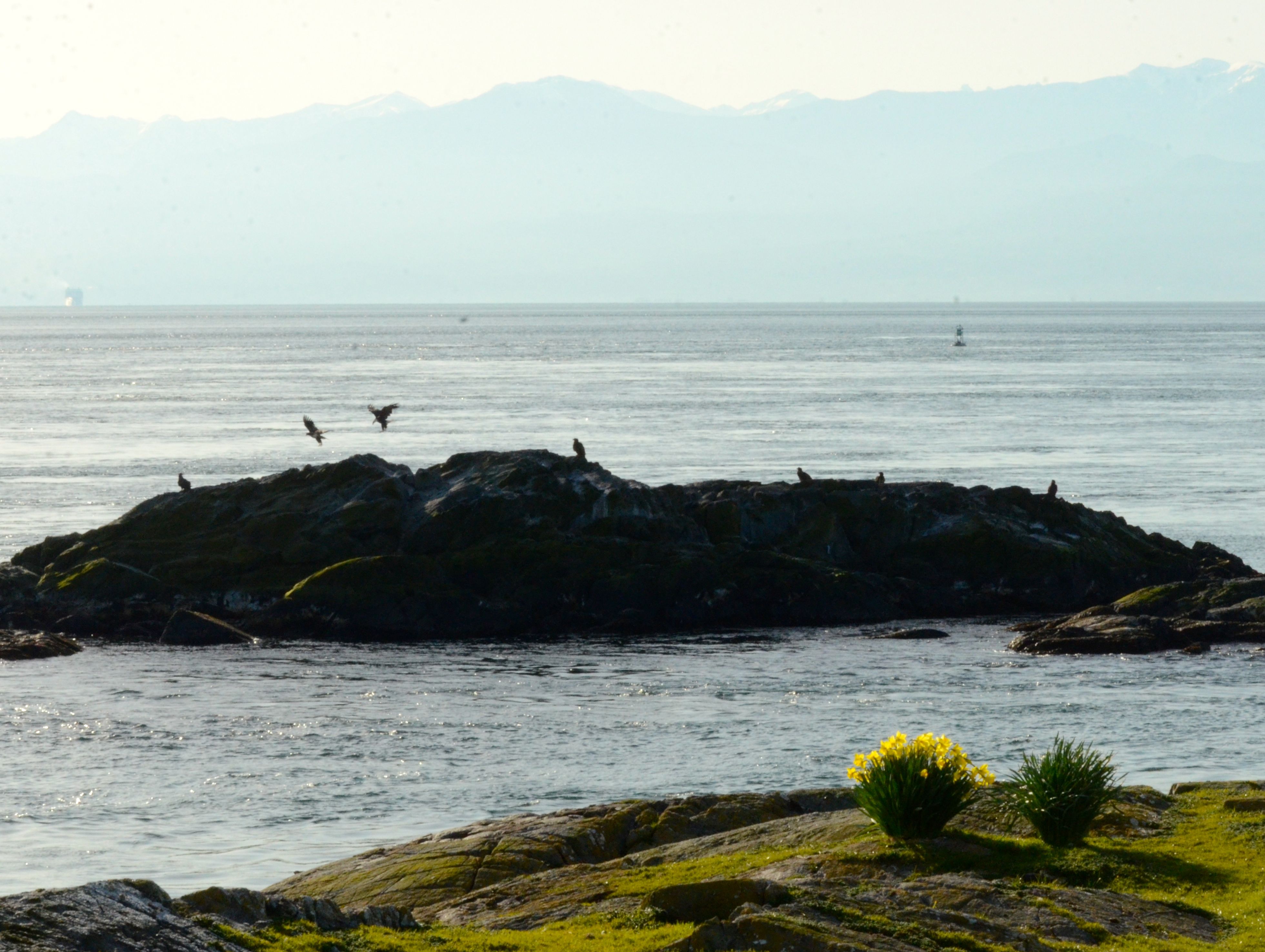
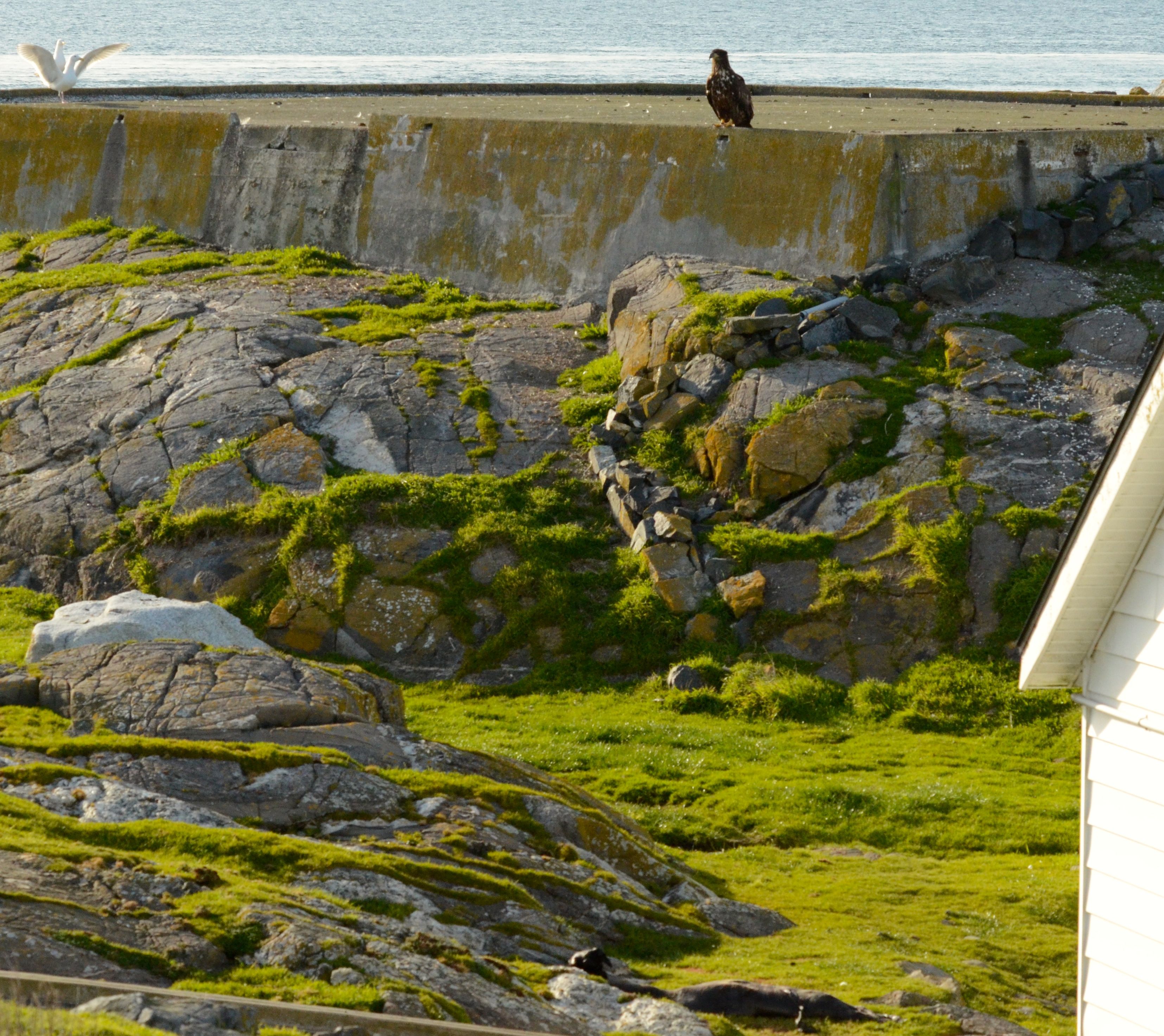
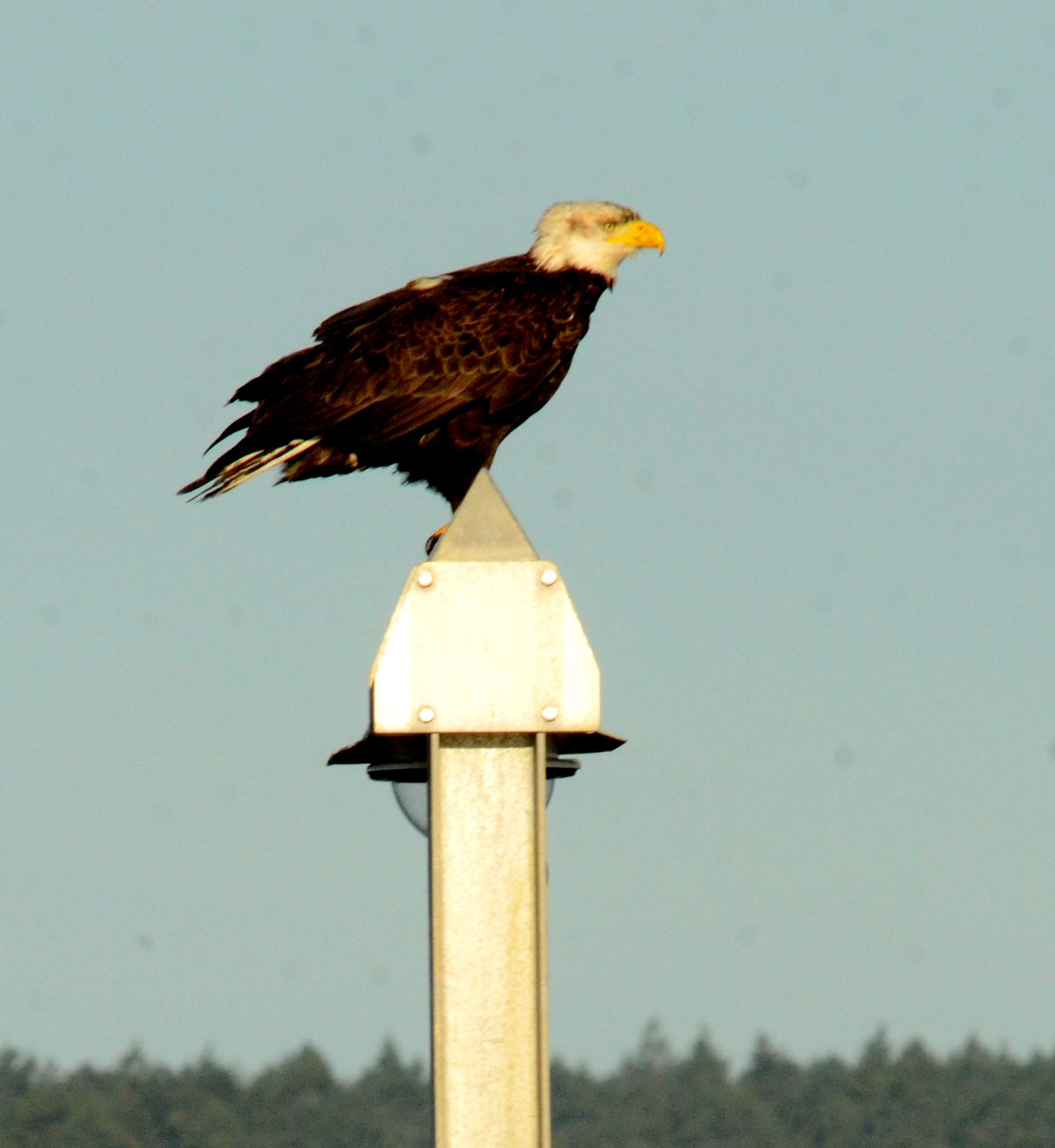
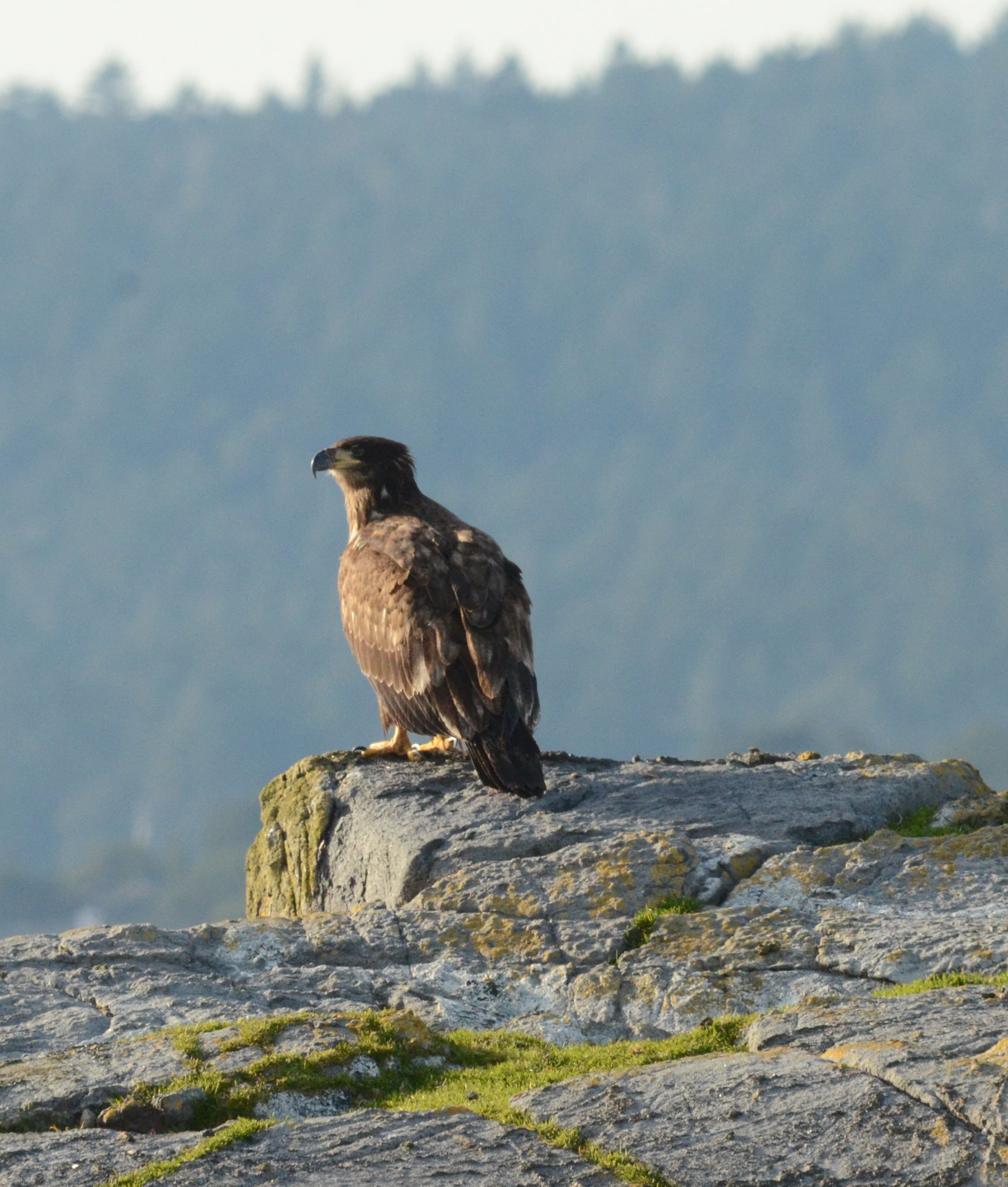
Twelve bald eagles were hanging out on the South Islands this morning. Many of them stuck around for the rest of the day, flying to different perches around the reserve.
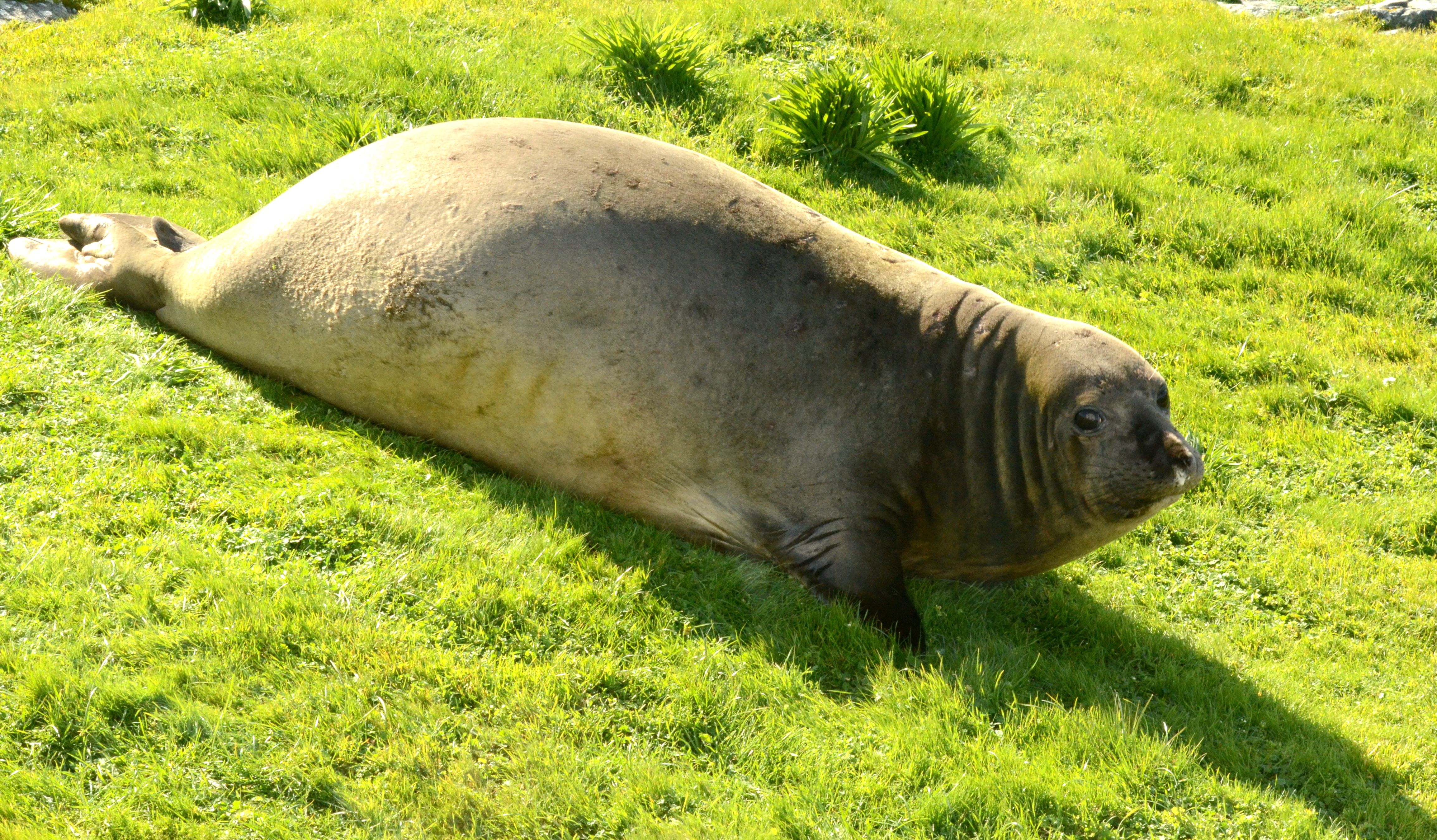
Chunk left the main island at some point last night. The female elephant seal is still camped out to the east of the main house.

Courtney and Max visited for a couple hours this morning to do some maintenance on the cameras and other technology. Camera 5 is almost online again. One more replacement part needs to be installed in the coming days. The Davis weather station is back up and running after a few days offline. Thanks to Max fixing the computer that uploads the weather data.

There was more munitions blasting today at nearby Rocky Point.

Three eco tour boats visited the reserve today.

March 3 – Elephant Seals and DND Blasting

Sunny
Wind 18 knots from the North in the morning, switching direction to SE and diminishing throughout the day to calm in the evening
Air temperature: high 10C, low 5C
Ocean temperature 8.8C

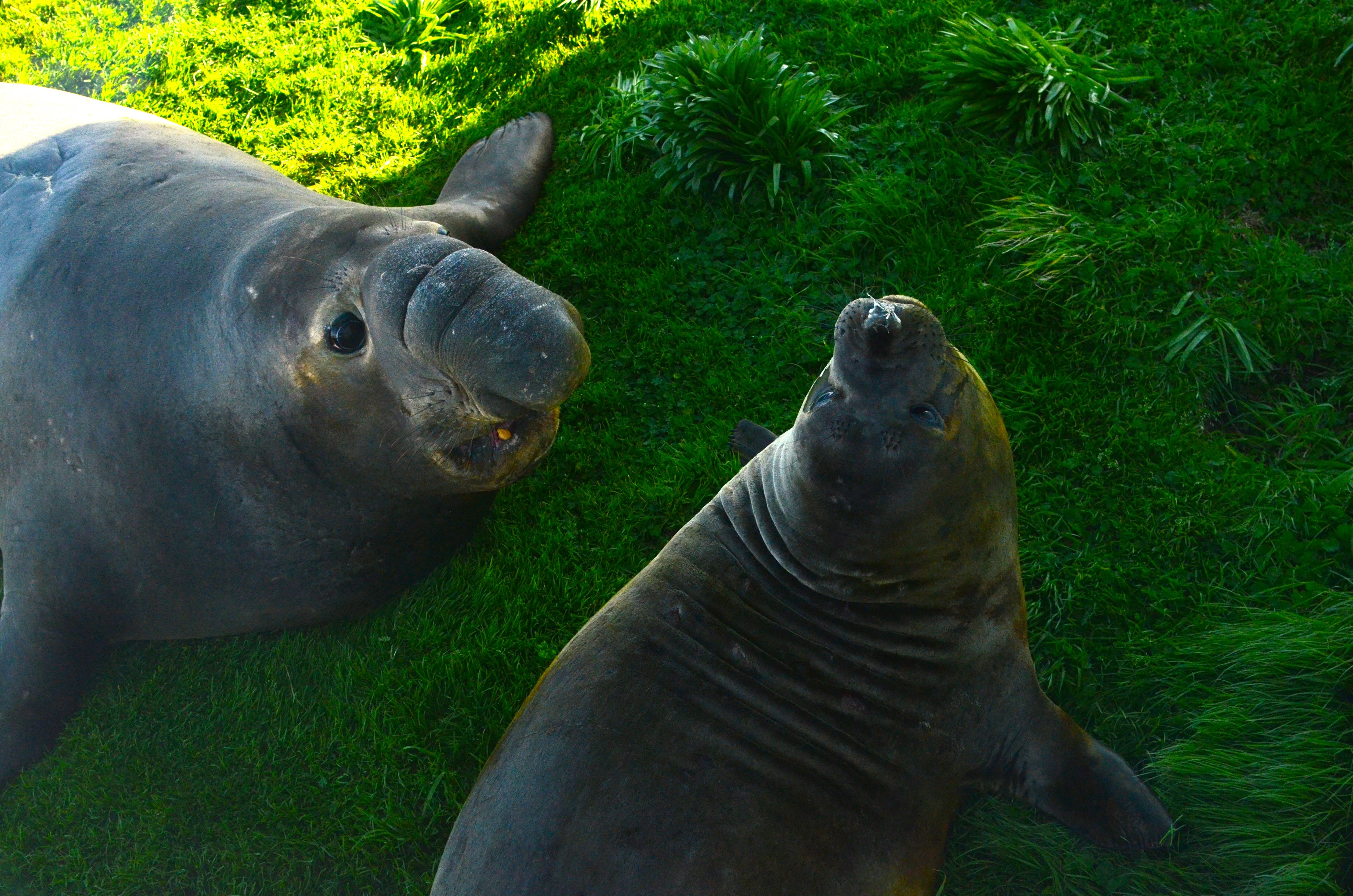
There is never a dull moment at Race Rocks. At 8:30 in the morning, Chunk (the large male elephant seal) and the female elephant seal that has been on the island for a couple weeks were on the grass to the north of the Ecoguardian’s House. From the window by the front porch, I watched as the female roared and kicked up grass with her flippers as she and Chunk were either fighting or mating. It’s hard to tell the difference. He approached her and bit into her back, adding to the many wounds and scars. The female fled to the other side of the house and Chunk followed. They spent the rest of the day at least 10 metres apart from each other on the west side of the house.

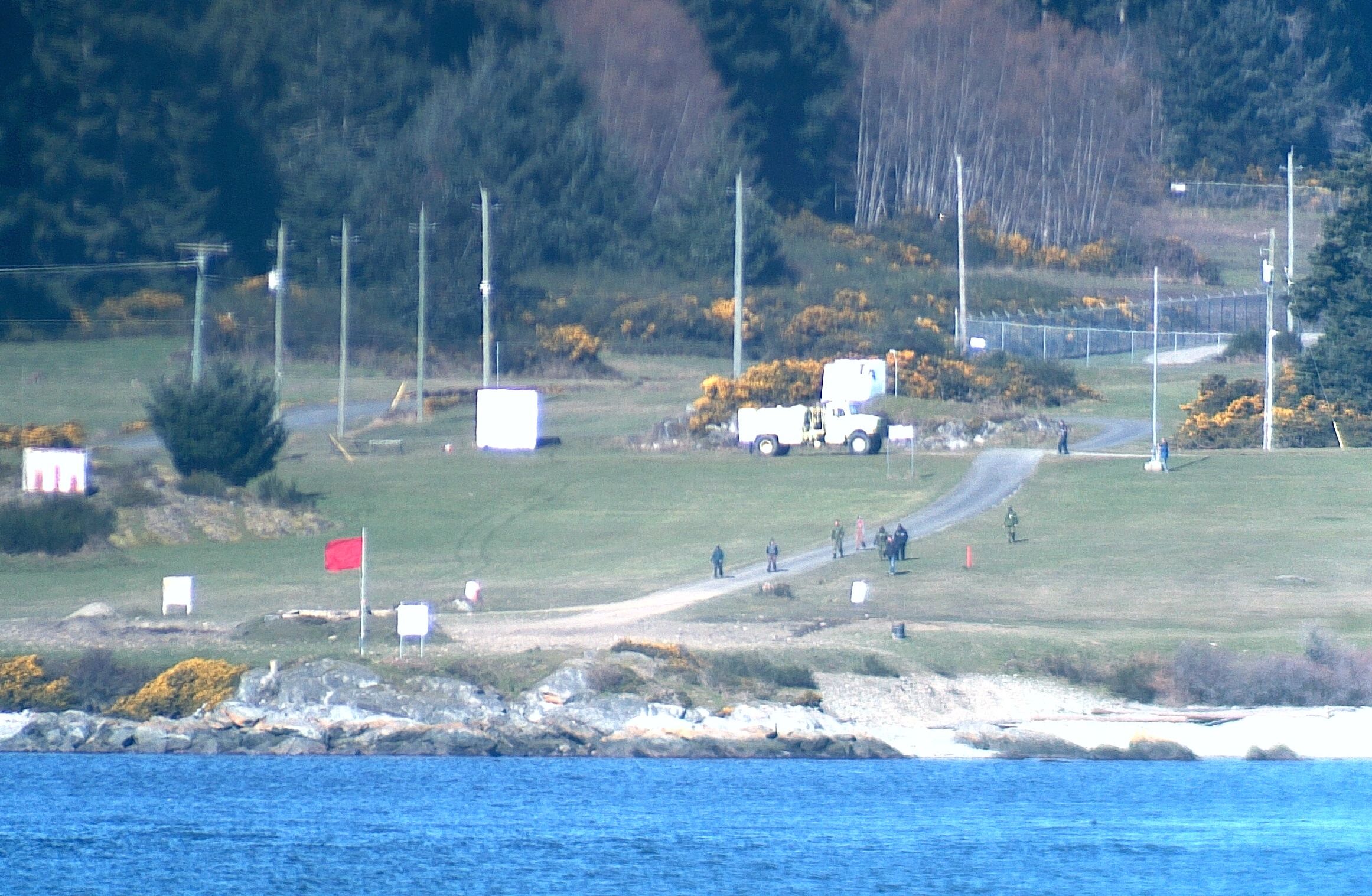
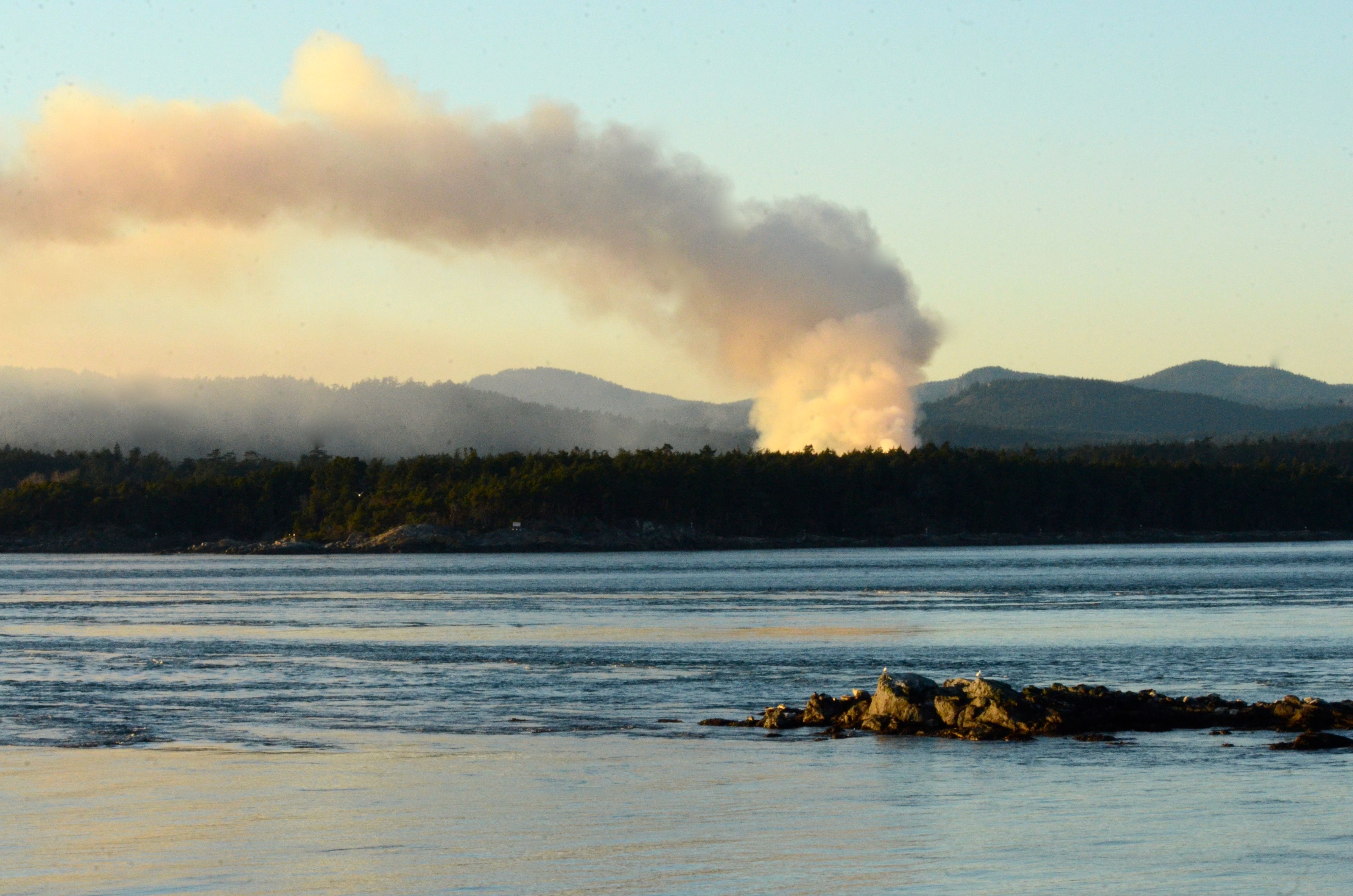
At 10:30, I was sitting in the house reading the SOP manual when I heard and felt a huge blast. There was a large puff of smoke rising from the Canadian Forces Ammunition Base Rocky Point, 2km to the NW. There were red flags to warn passing boaters. After the initial blast, a group of people appeared from a bunker to inspect the area where the munitions were detonated. There were a few more blasts in the next two hours.

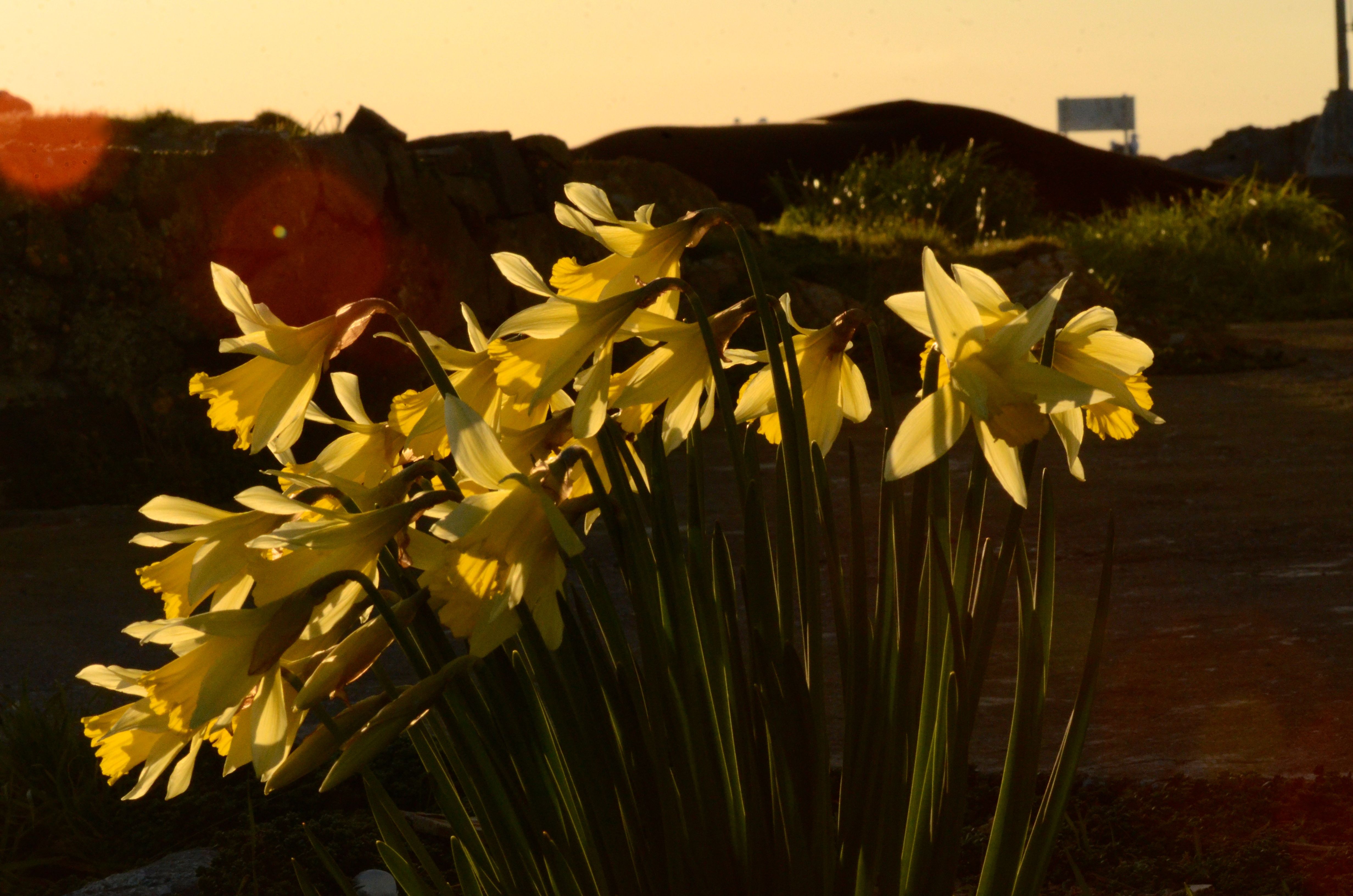
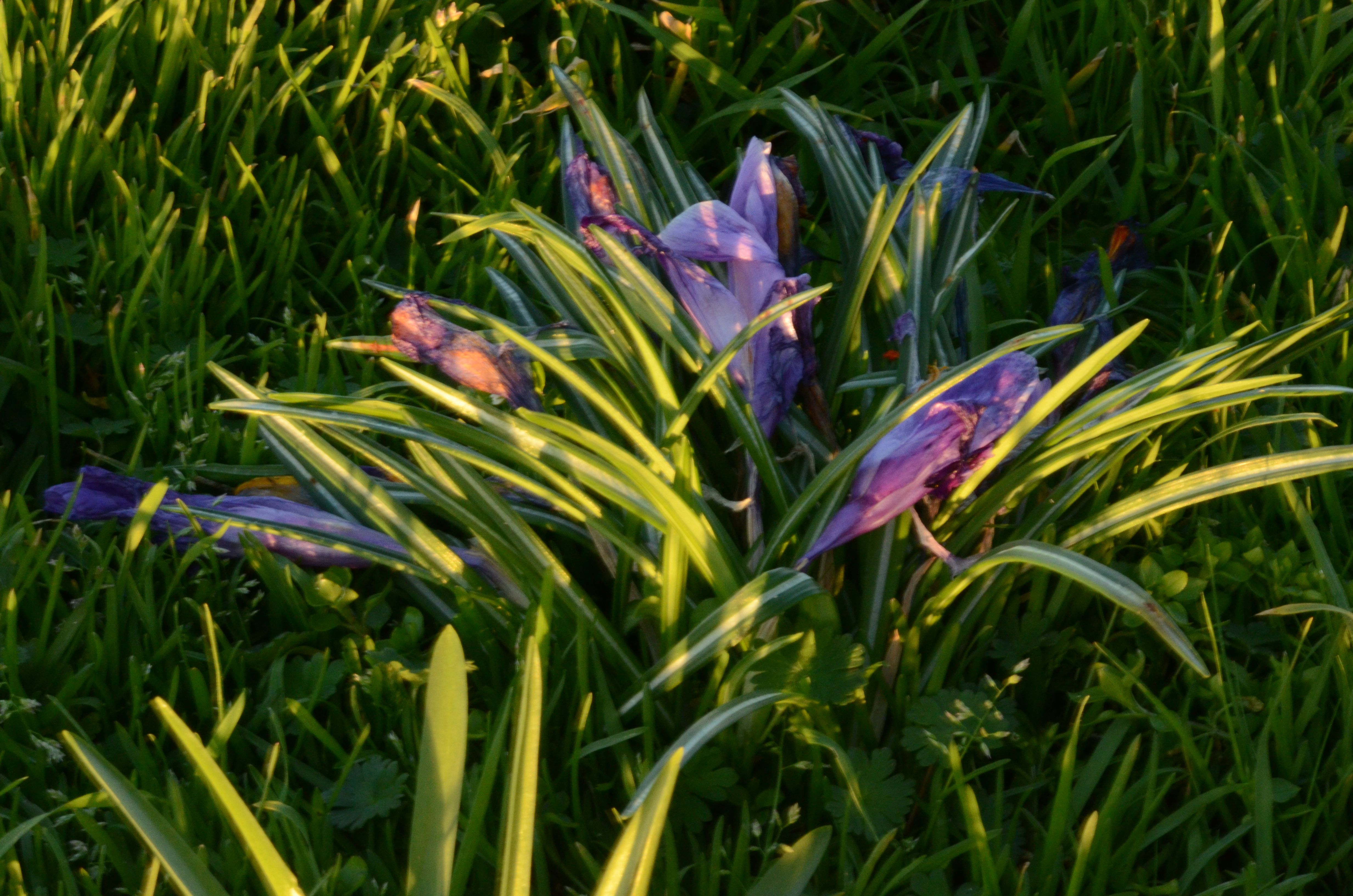
There are lots of flowers springing up around the island: daffodil, crocus, grape hyacinth, and calendula. Like several other plants that are not native to the island, they were planted by lighthouse keepers.

I spent the day reacquainting myself with the systems and species of the island.

The fog horn went off sporadically throughout the night, starting at 20:15. There didn’t appear to be any fog or clouds. The almost full moon lit up the night. It was so bright, I didn’t need to use a flashlight when I went to turn off the generator.

Feb 27-March 1

Feb 27: wind 10-20 knots N to NE, cloudy and some rain.  2 whale watching boats.

Chunk was back on the island again. As he came up from the boat ramp the female left the pup to get away from Chunk.  Chunk spent a while sniffing the pup and then stayed with it for a while.  Eventually he continued up the path but didnt pursue the female.

Feb 28: Sunny, wind 5-10 NE.

Working on cleaning, packing, finishing up a few projects for the upcoming end of my shift. Finally got around to finishing with the shoreline garbage sorting/inventory.  This is all the garbage that washed up around the jetty during the past 3 months.  The majority of it came in during the heavier NE wind storms.  It includes: 82 lids, 9 lighters, 16 plastic straws, 6 pens, 106 shotgun shells of wadding, 5 shoes/sandals/soles, 12 plastic cigarette/cigar butts, 2 party balloons, as well as countless random plastic pieces, soft plastic and various size chunks of styrofoam.

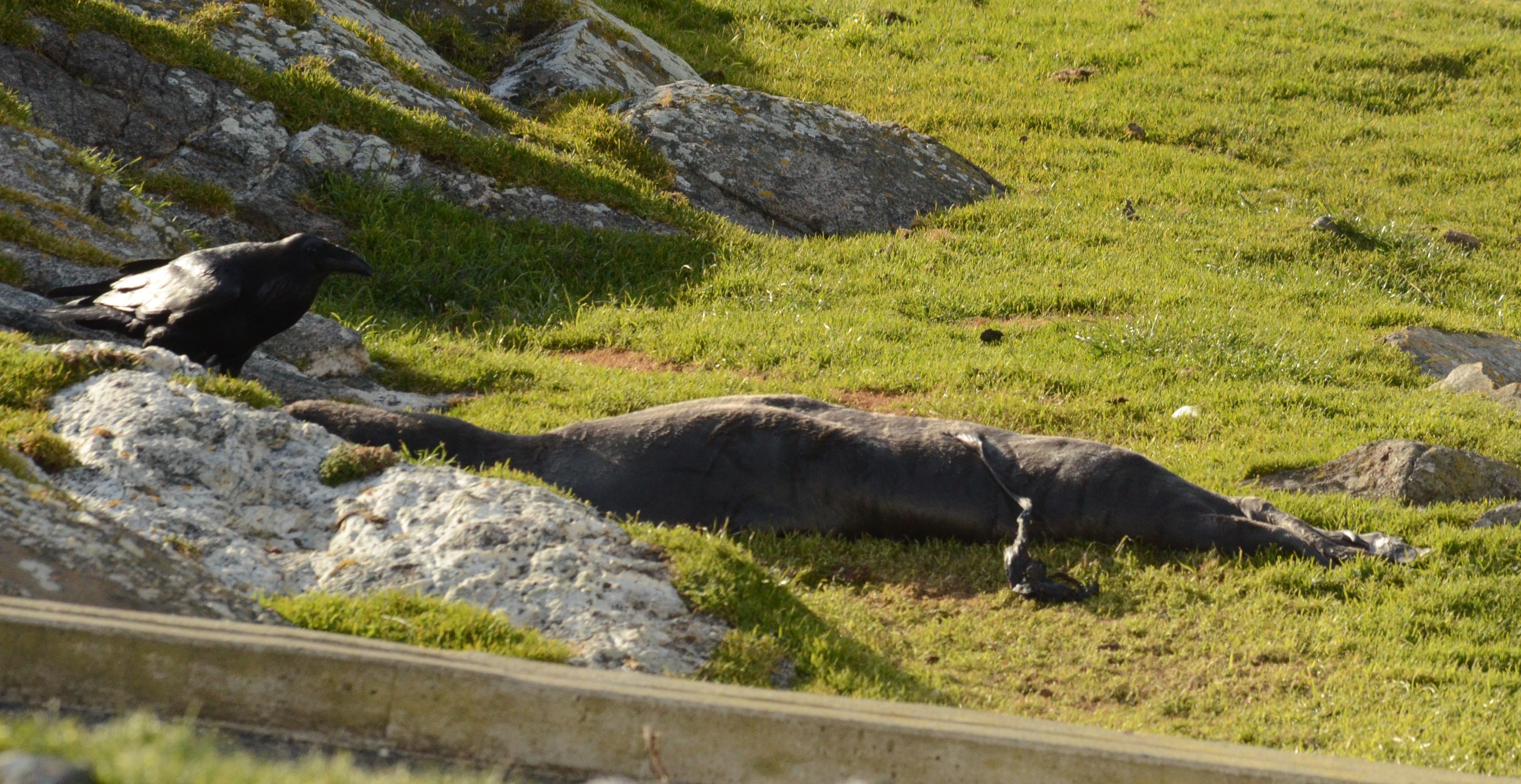
March 1: Partly sunny, wind variable 10-20 knots, light rain in late afternoon/evening.  The female elephant seal has now been away from the dead pup for a couple days, resting on the lawn in front of the main house.  The ravens and eagles have begun eating the softer tissue on the pup’s face.  Chunk has been very docile lying next to path on the way to the guest house, we have been passing back and forth past him for various tasks and he barely moves.  The female has stayed by the main house, also very passive and resting.

Packing, cleaning and finishing up: cleaned tank room, did month end records, switched out empty propane, sealed compass on whaler, firewood stacking, topped up battery bank.  Preparing for end of shift tomorrow and switch with Nick.

Feb28-2

Virginie working on the woodpile


Feb 26, derrick, Yellow tag 5086

Wind E 10 increasing to 20 N. Cloudy, rain in evening. DND blasting continued.

Courtney came out in the morning and brought Kim.  We worked most of the day on setting up the rest of the scaffolding, fixing the derrick cable, and taking down the scaffolding.  Had the new wire rope installed and working by afternoon.  Worked on fire wood and replaced (new) leaky pvc valve in desal with a brass one.

I was finally able to get a clear view of the female elephant seals yellow flipper tag, # 5086. Yellow tags indicate that this elephant seal comes from San Miguel Island or Santa Rosa Island.  We have had several previous sightings of an eseal with a 5086 tag, including this sighting by Julie https://www.racerocks.ca/2012/07/07/new-and-old-faces/ but they were always green tags and this one is clearly yellow.  At some point the pup’s body got flipped over and it is now possible to determine that it is male.