Female Elephant seal: Scarlet

Scarlet , the often reported “Entangled” female Elephant Seal at Race Rocks.

elephant seal and ropes elephant seal and ropes elephant seal and ropes
This photo was taken at Race Rocks, middle Island, May 2, 2008 by a visitor on a whale watching vessel. Photos taken on June 12 , Close up of June 12 photo
2008. photos:Erik Schauff.
Return to the Elephant Seal Page. June 2- 12- Staying on Middle Island, no evidence of change. It left shortly thereafter.
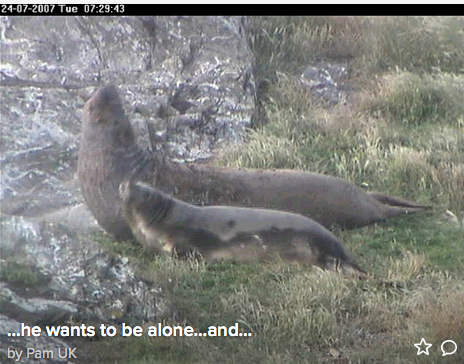
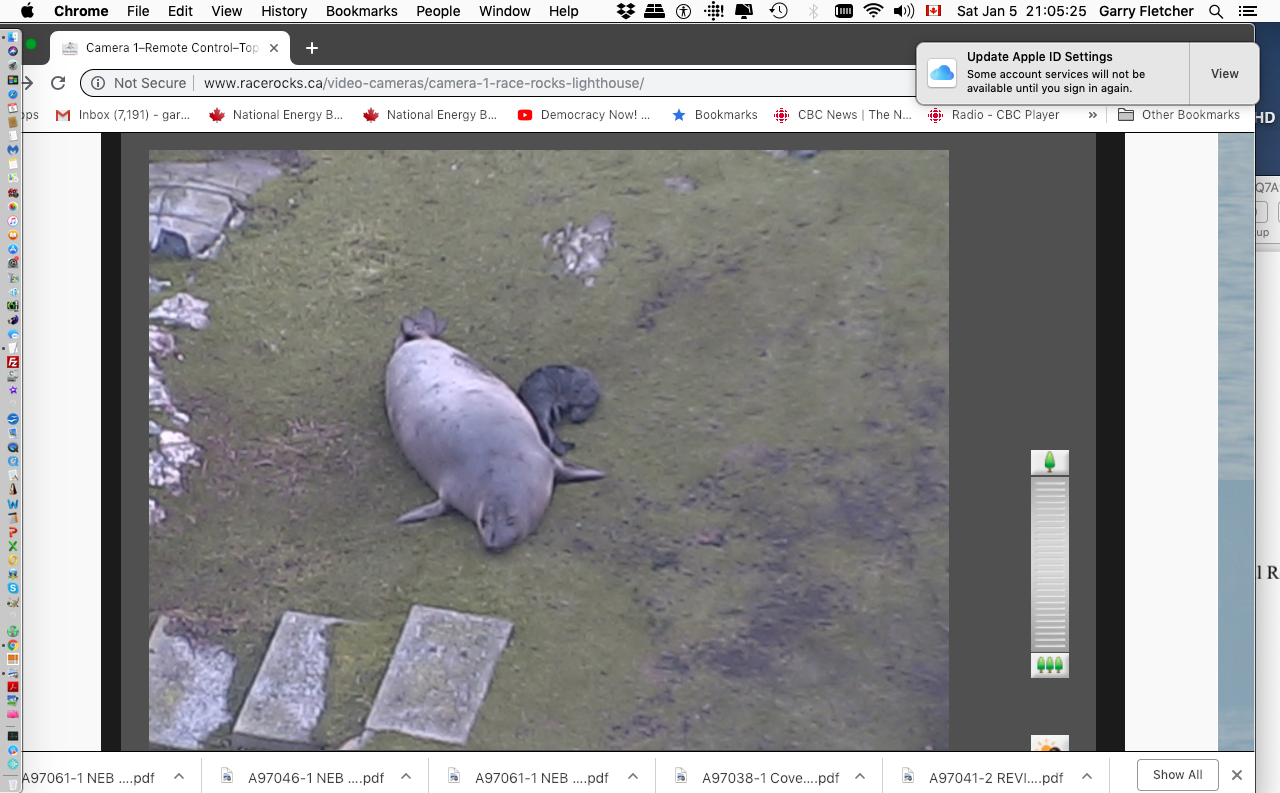
entangled elephant sealOn January 29, 2009, an elephant seal looking much like the one from last year appeared, looking very pregnant. We believe she proceded to have her pup in the following week. It did not survive, and may have been still born. This page tells the story of the second and third pups born on Middle Island in February 2009.Pam Birley sent us this image which she took from the remote camera for the daily log. She gave the name “Scarlet” to this female.
injurd elephant sealRyan had shot this image on January 24th 2009 of the female, showing the scars clearly on her stomach side only.
injured elephant sealWe also think now that this may have been the same female here back in 2004 when these pictures and video were taken.
ScarletPam Birley has taken a few images on the remote camera that are included on her June 2009 gallery

See the gallery index file on Elephant Seals.

Marine mammal Census May-June 2008

May 4 2008: photo in census file showing at least 3 elephant seals on Middle rock.

June 3 2008 Three male elephant seals were observed on middle rock. Two California and 1 Northern sealion are all that are left on the islands.

June 10, 2008 No Sea lions were seen. Very few harbour seals are around today. Estimated 10.

Two elephant seals on middle island, old Slash and one juvenile male ( dark colored)

Jan-March 2008 elephant seal photos

Jan 17,2008: PB photo” http://www.flickr.com/photos/66339356@N00/2201777700/in/set-72157603715095611/

February 26 2008:  (PB photo) Female on dock.

http://www.flickr.com/photos/66339356@N00/2297209880/in/set-72157603839644139/

February 29, 2008: female on lawn

http://www.flickr.com/photos/66339356@N00/2301780973/in/set-72157603839644139/

March 2, 2008:PB photo of a female on the lawn. http://www.flickr.com/photos/66339356@N00/2312433894/in/set-72157604021972398/

March 16,2008: PB photo of female elephant seal.

http://www.flickr.com/photos/66339356@N00/2341013333/in/set-72157604021972398/

Jan-Aug 2007 elephant seal images by Pam Birley on remote camera

Jan 2007 :(PB photo) Two individuals, possible Slash and a female?

http://www.flickr.com/photos/66339356@N00/1793395765/in/set-72157602771188891/

Jan 14 2007: (From Census file video)At least one large male on Middle rock

May 28, 2007: A young male and female at the boat ramp (picture in PB DIARY)

 http://www.flickr.com/photos/66339356@N00/1793559743/in/set-72157602768481458/

June 28, 2007: Slash on boat ramp(picture in PB DIARY)

http://www.flickr.com/photos/66339356@N00/1793618307/in/set-72157602768483920/

August 2007: (PB photo) two new elephant seals on lawn, perhaps one very young male.http://www.flickr.com/photos/66339356@N00/1793677311/in/set-72157602768487684/

A Biography of Misery

I believe it was Mike Slater who named Misery, since he was a juvenile male elphant seal with an attitude. After being at the lightstation for many years Mike got to know which elephant seals gave him a rough time when he was trying to move about on the pathways. Misery turned up in about 2007. He was known to growl and advance toward one if they got too close, and this happened often since the elephant seals usually come onto the main island via the boat ramp. One has to take a light at night as they are often sprawled across the pathways, Going down to take seawater samples for salinity and temperature when the sample time is at night can prove to be a bit of a hazard. Misery’s behaviour was in stark contrast to that of Slash ,who was very docile after spending a year on the island recuperating from his collision with a boat in January of 2003. Misery elephant sealThe story of Misery took a strange twist in the spring of 2009. At the end of January he was seen by Ryan to be hanging around the helicopter pad with an unknown female ( later named Bertha!).


When Bertha had a birth (Ninene) , Misery swung into action.   Heelephant seal bite was relentless in his pursuit of the baby as he was being rejected in mating by the female Bertha.   We believe that Bertha had been impregnated previously by Slash. This part of the story is told in the file on NInene. It shows video and images of the difficult beating she took from Misery. We are quite sure he was not the father, since in previous years it was Slash who seemed to be the male interacting with the females in January. When Ninene’s mother left the island, he kept attacking her relentlessly for several days andNinene was close to death. Misery, juvenile elephant sealWe believe she was saved only by Slash encountering Misery one night and giving him three sets of deep wounds on his back. From then on Misery stopped attacking the pup and when Slash moved back onto the island again, Misery departed.. Slash had been staying during the time of Ninene’s birth out on Middle Island with three other females. We believe that at least two of these had pups, one was photographed but probably because of the small space and exposed location, neither survived.
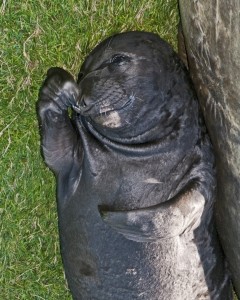
rmfeb10pup


On February 7 of 2010, Ollie was born and in the second week he too became the object of aggression by Misery. Eventually, after three weeks, Ollie was dead and the bite marks on the back and the loud cries heard at night suggested that Misery was to blame.


Elephant seal injury from fighting It turns out that the same behaviour was repeated in March of 2010 and Misery again sustained some more serious wounds.  
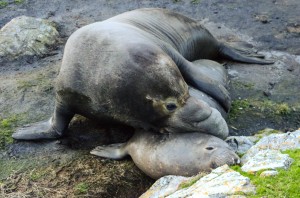


matingIn February 2013, Bertha returned to the island but did not have a pup, the first time in four years. Misery however was there to mate with her, This post by  Alex ipresents the images!


January 2014: we were expecting Misery back to harass the female elephant seals again as we come into breeding season. However, we have not seen Misery since he was seen sparring with Chunk back earlier in July 2013. His role has now been taken over by Chunk.


See all the postings on Misery in the Race Rocks log


See the Elephant seal index and gallery file
Phocoena phocoena: Harbour Porpoise–The Race Rocks Taxonomy

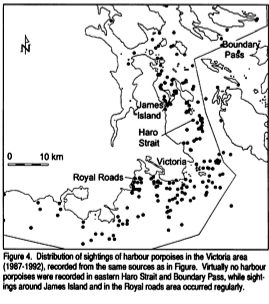
harbourdistrib


This map of distribution of the harbour porpoise is taken from the paper by Robin Baird. 1994. Status of Porpoises in the British Columbia/Washington Trans-Boundary Area: A Canadian Perspective


Scientific classification
Kingdom: Animalia
Phylum: Chordata
Class: Mammalia
Order: Cetacea
Suborder: Odontoceti
Family: Phocoenidae
Genus: Phocoena
Species: P. phocoena
PugetSoundNotes1994

Originally accessed Dec 2014 at: http://www.cascadiaresearch.org/robin/PugetSoundNotes1994.pdf

Other Members of the Class Mammalia at Race Rock

taxonomyiconReturn to the Race Rocks Taxonomy
and Image File
pearsonlogo2_f2The Race Rocks taxonomy is a collaborative venture originally started with the Biology and Environmental Systems students of Lester Pearson College UWC. It now also has contributions added by Faculty, Staff, Volunteers and Observers on the remote control webcams.  Garry Fletcher 2006


Phocoenoides dalli: Dall’s Porpoise–The Race Rocks Taxonomy

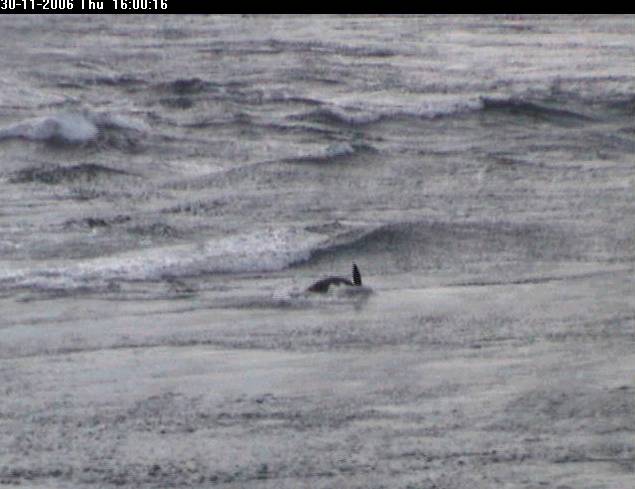
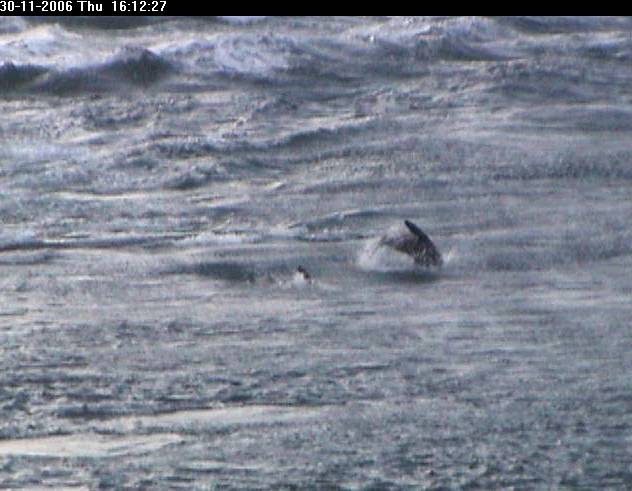
PB_Dalls2Porpoises diving in the rip current just west of the main Island. Photos taken by Pam Birley on the remote camera 5 November 30, 2006

Scientific classification
Kingdom: Animalia
Phylum: Chordata
Class: Mammalia
Order: Cetacea
Suborder: Odontoceti
Family: Phocoenidae
Genus: Phocoenoides
Species: P. dalli
Dall’s Porpoise
Other Members of the Class Mammalia at Race Rock

taxonomyiconReturn to the Race Rocks Taxonomy
and Image File
pearsonlogo2_f2The Race Rocks taxonomy is a collaborative venture originally started with the Biology and Environmental Systems students of Lester Pearson College UWC. It now also has contributions added by Faculty, Staff, Volunteers and Observers on the remote control webcams.  Garry Fletcher 2006


Dichotomous Key for Animals of Race Rocks

Description: This is a key to only the more common animals you may see using the remote cameras on Race Rocks. Use the taxonomy files to view others you may sight.

Go to the Race Rocks Taxonomy for more detailed descriptions of the organisms.

Number . Go to / and Identify
1a Bird 2
1b Mammal 30
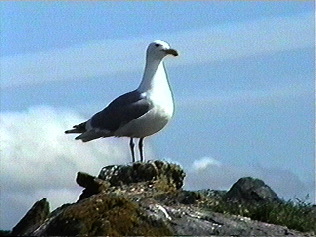
2a Gull-like, white or brown 3
2b Non-gull 11
3a The Largest white-headed gull we see at Race Rocks. It is present March to October
Glaucous- winged gull
3b Other gulls 4
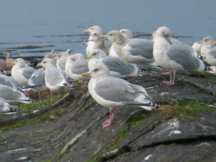
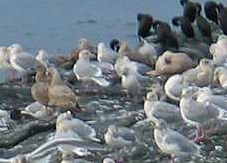
4a Present in large flocks – November to January. Colour white with beige-tinged flecks
Thayer’s gulls
4b Other gulls 5
5a White – smaller head with an outlined eye
Mew gulls  
5b Other gulls 6
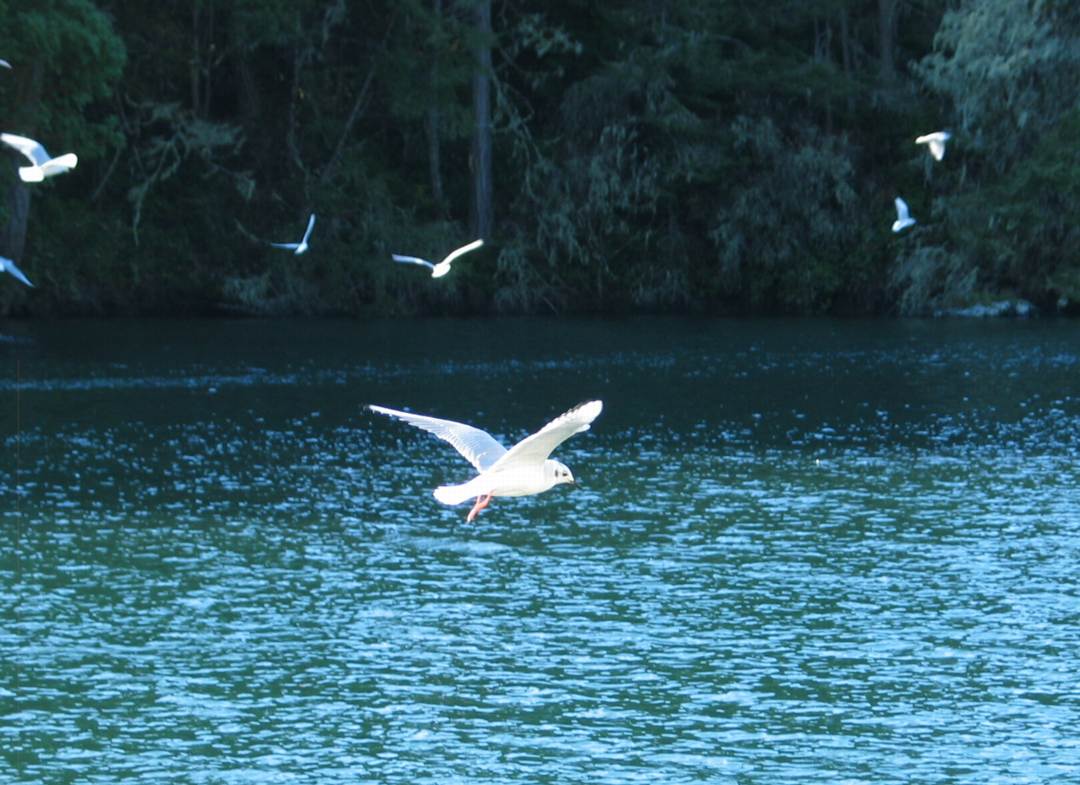
6a Small white-headed gulls with black eyes and small black markings over the body. Often seen in flocks diving into the water… Aug to Dec.
Bonaparte’s gullsbonapartes
6b Brown or dark grey gull. 7
7a Grey gull, short tail
Immature Glaucous winged gull
7b Brown gulls 8
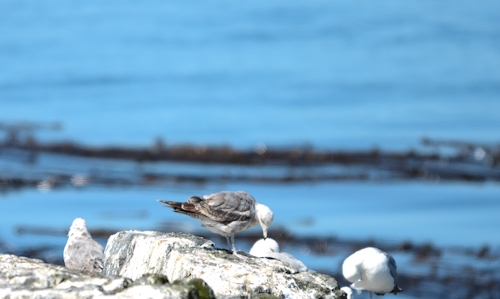
8a Brown mottled. appear November thru Feb.
Immature Thayer’s gulls
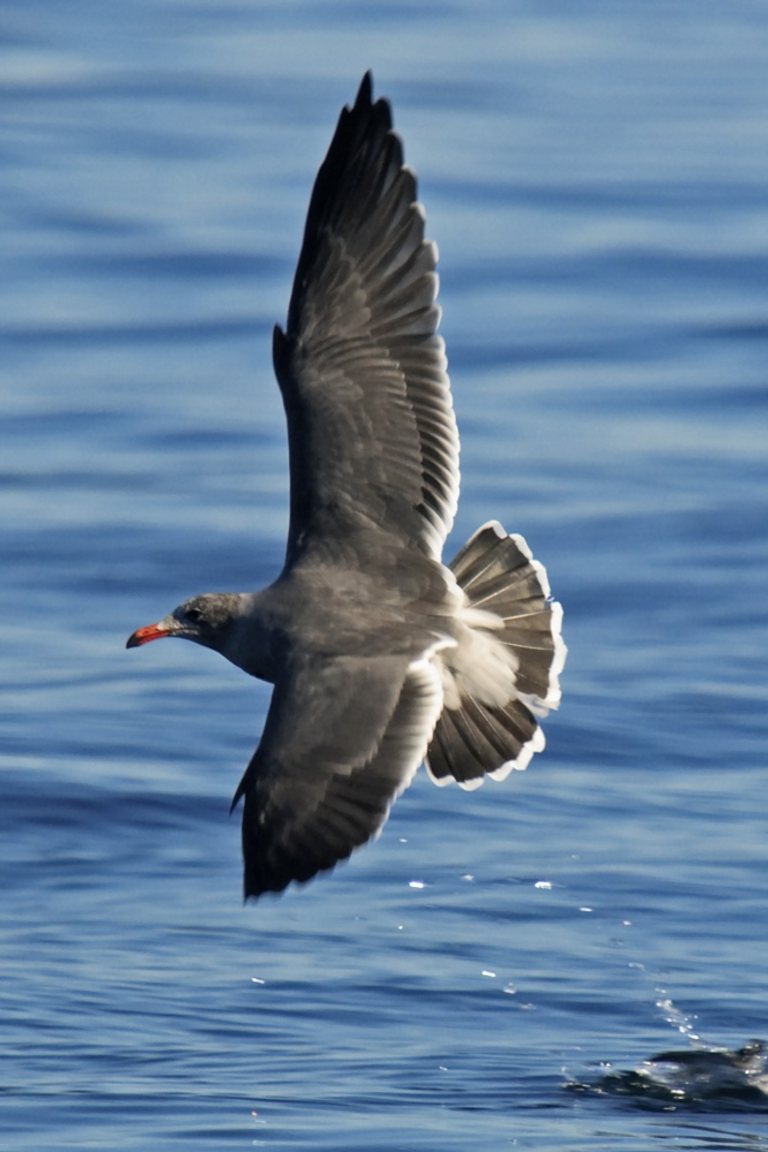
8b Brown Gull with orange beak. adults have white markings on the tail. Heerman’s Gull
9a For future additions.
9b
10a
10b NOTE : We are adding more birds frequently so they can not be anticipated in a key like this. Other gulls and shorebirds added since this key was made may be viewed in the Race Rocks Taxonomy files .. vertebrata-Aves-Charadriiformes


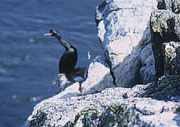
11a Predominantly black, long-necked bird:one of the 3 cormorant species 12
11b Birds other than gulls or cormorants: otherwise, all other shorebirds and land birds on Race Rocks. 14
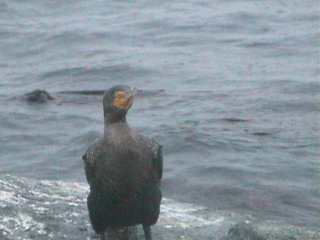
12a Pale or yellow coloured face – present only during winter months
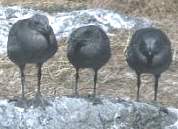
Double-crested cormorant
12b Predominantly black face 13
13a Light-coloured throat patch, males with white ears – present in January
Brandts’ cormorant
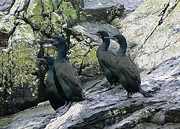
13b Snake-like neck, smallest of the cormorants
Pelagic cormorant
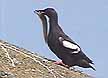
14a Black with white wing patches and red feet
Pigeon guillimot
14b Other shorebirds and landbirds and ducks/geese 15.
15a Shorebirds.and ducks/geese 16
15b Land birds.. shorter bills 21
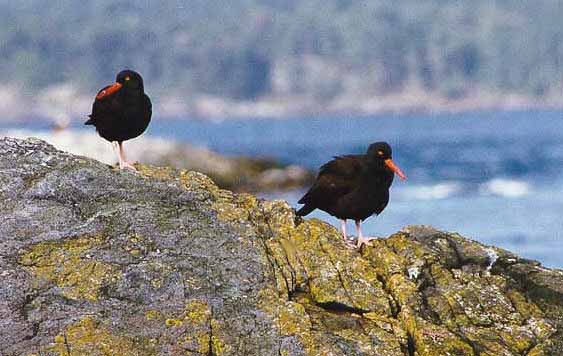
16a Black with long red bill.. crow-sized
Black oyster-catcher
16b ducks or geese and other shorebirds 17
17a Small shorebird, often seen in winter near the fresh water pools. White breast, uppers mottled.black and white pattern in flight
Black turnstone
17b Duck or goose or land birds 18
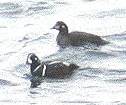
18a Small colourful duck..swimming in kelp beds or perched very near shore
Harlequin Duck
18b Geese and other birds 19
19a Geese 20
19b Other birds 21
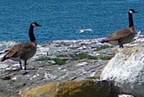
20a Large Goose, Black neck with white throat. Nests in April
Canada Goose
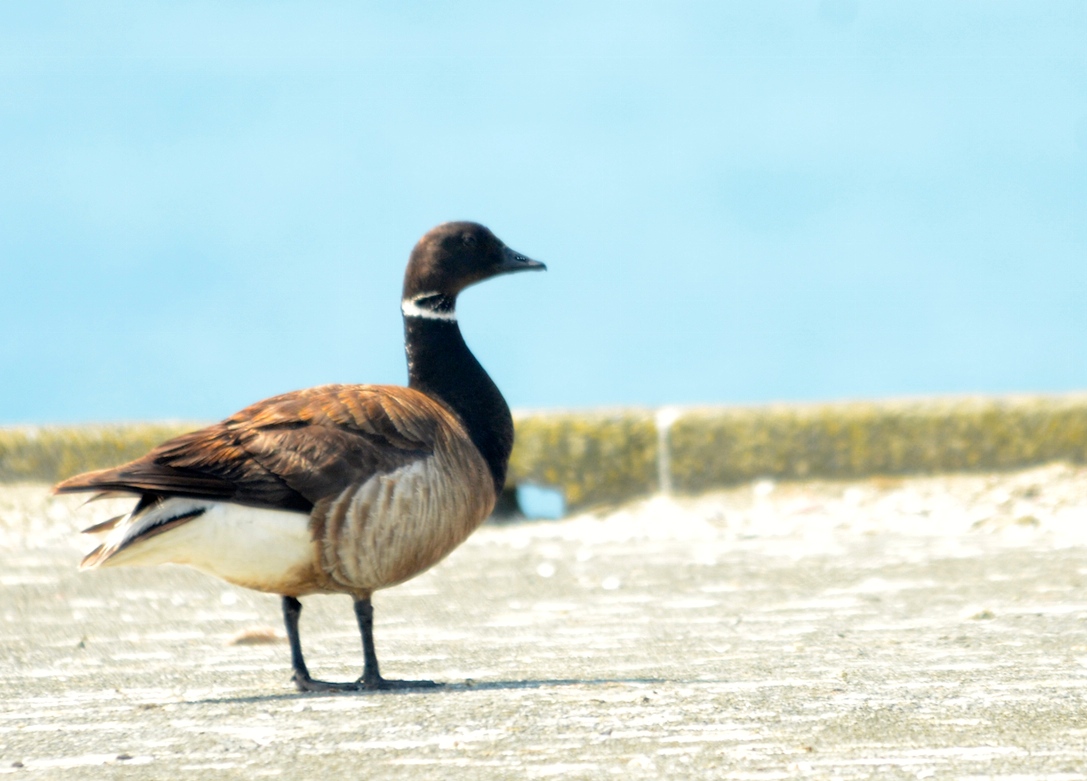
20b Half the size of the Canada goose, only rarely appears. white neck-ring and black chest.
Black Brant Goose
21a Black- Crow-like bird 22
21b Other birds,and songbirds 24
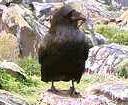
22a Large black bird with thick bill. They are as large as Glaucous-winged gulls
Raven
22b Medium sized black bird smaller than Glaucous winged gulls. go to 23
23a Large black bird , the bill is finer than a raven’s
North-western Crow
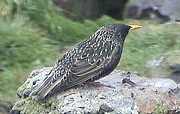
23b Small balckish bird, speckled with color
European
Starling
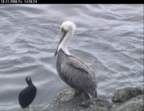
24a Very Large brown and white bird with a long bill equipped with a pouch
Brown
Pelican
24b Other shorebirds go to 25
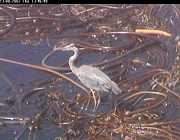
25a Long legged, and long necked bird… heron -like
Great Blue
Heron
25b Other shorebirds go to 26
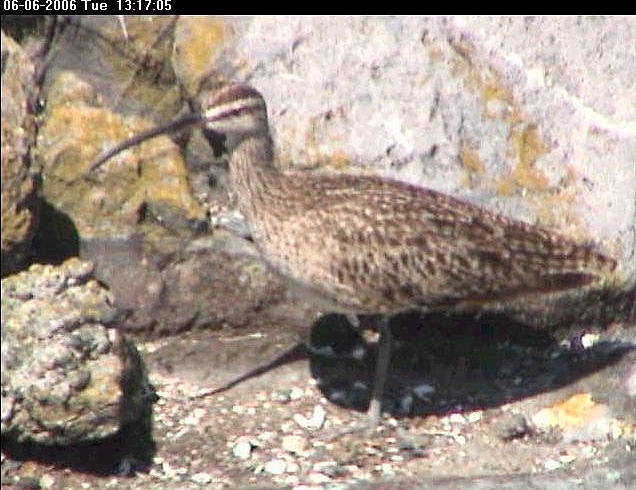
26 Brown shorebird with long bill curved downward. Brown eye- line.
Whimbrel


<>

30a Always found in water, with fins, and a large, flat, two-pointed tail – Whales, Dolphins, Porpoises 31
30b Often found resting on land or on rocks – size of a dog or larger 37
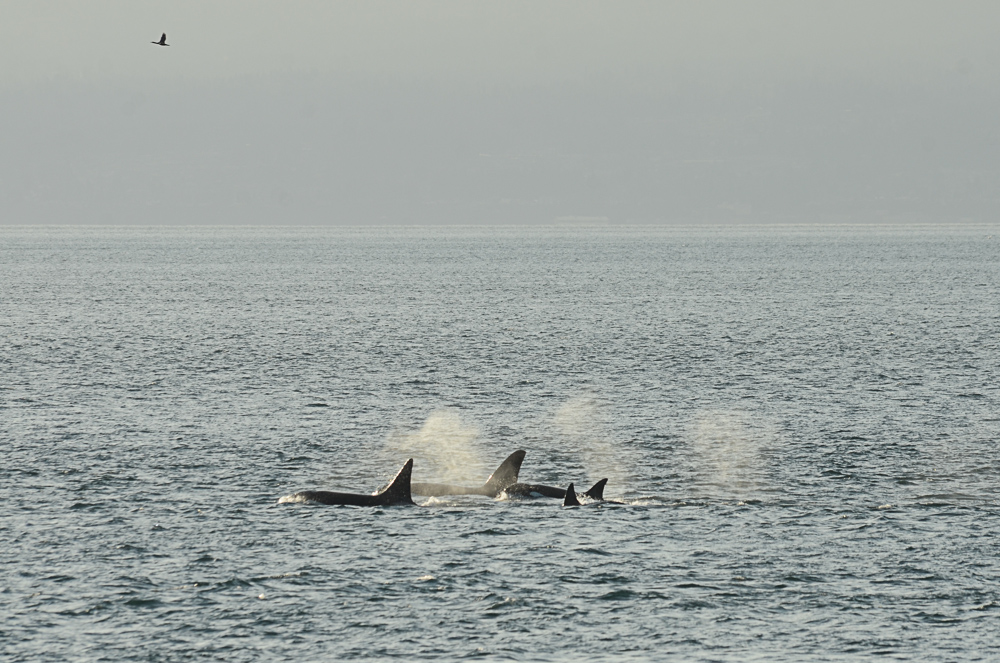
31a Black with a large white patch on the belly, greater than 4m long, males with large dorsal fin (1m high or greater)
Orca,
Killer whale
31b Not black or without white patches 32
32a Smaller, light grey colour, flippers smooth on edges
Gray whale
32b Other marine mammals 33
33a Large whale, dark grey to black, with distinct ridged underbelly, flippers jagged on edges. usually seen solitary.
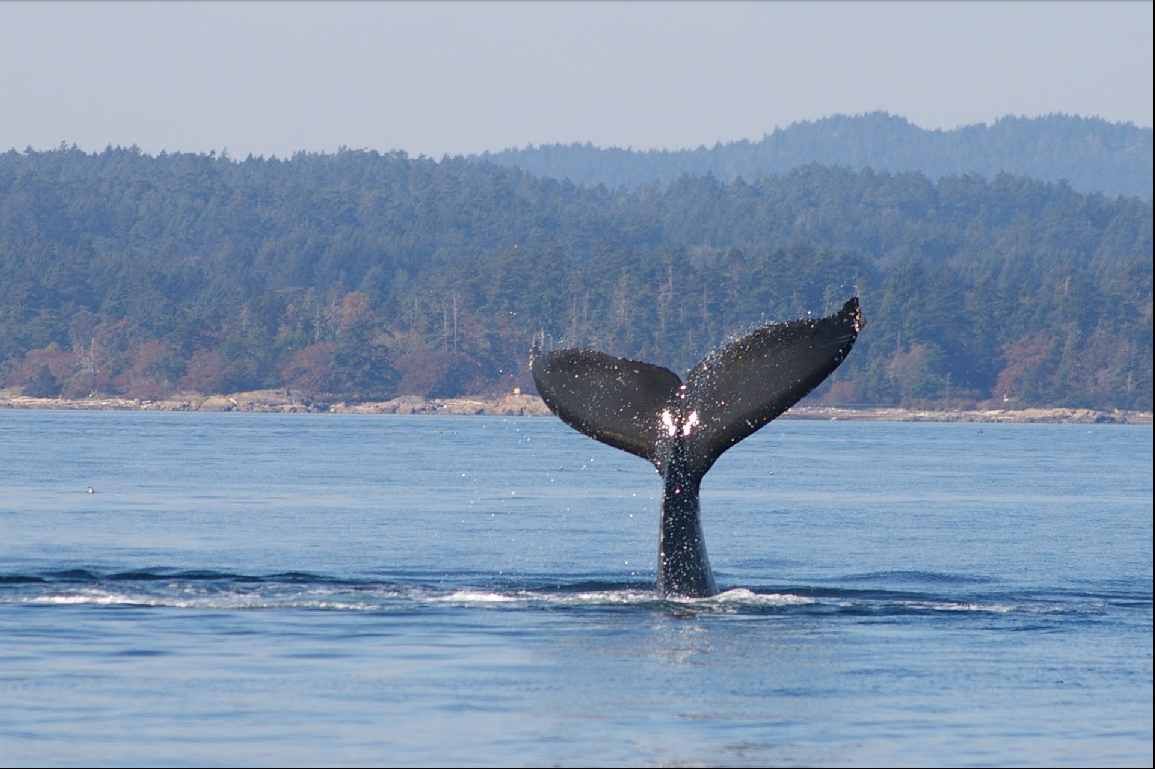
Humpback whale ” alt=”humpback” width=”129″ height=”107″ border=”2″ />
33b Small porpoise often seen in pods, leaping in the waves.
Dall’s
Porpoise
34a spare room for future whales and porpoises. See the taxonomy for other species that have been sighted near Race Rocks
34b
37a Lie prone on land, rocks, or very shallow water; when swimming, are mostly submerged – Earless seals 38
37b May be sitting on their elbows or lying prone on land; often visible swimming in the water; colour beige through chocolate. 39
38a White through black colouration, may have young from April through July
Harbour seal
38b May be very large; length up to 4m; males have a bulbous nose; colour grey through chocolate.. present year round.Females smaller, usually on the top of middle rock, but not year round.
Elephant seal
39a Small; furry animals the size of a cat or dog
Otters go to 41
39b Sea lions 40
40a High-browed; chocolate coloured
California sea lion
40b Round forehead; light beige coloured; may be twice as large as California sea lion
Northern sea lion (Steller’s sea lion)
41a Small; long tail; runs on all fours on land may appear as serpent-like in water. River otter
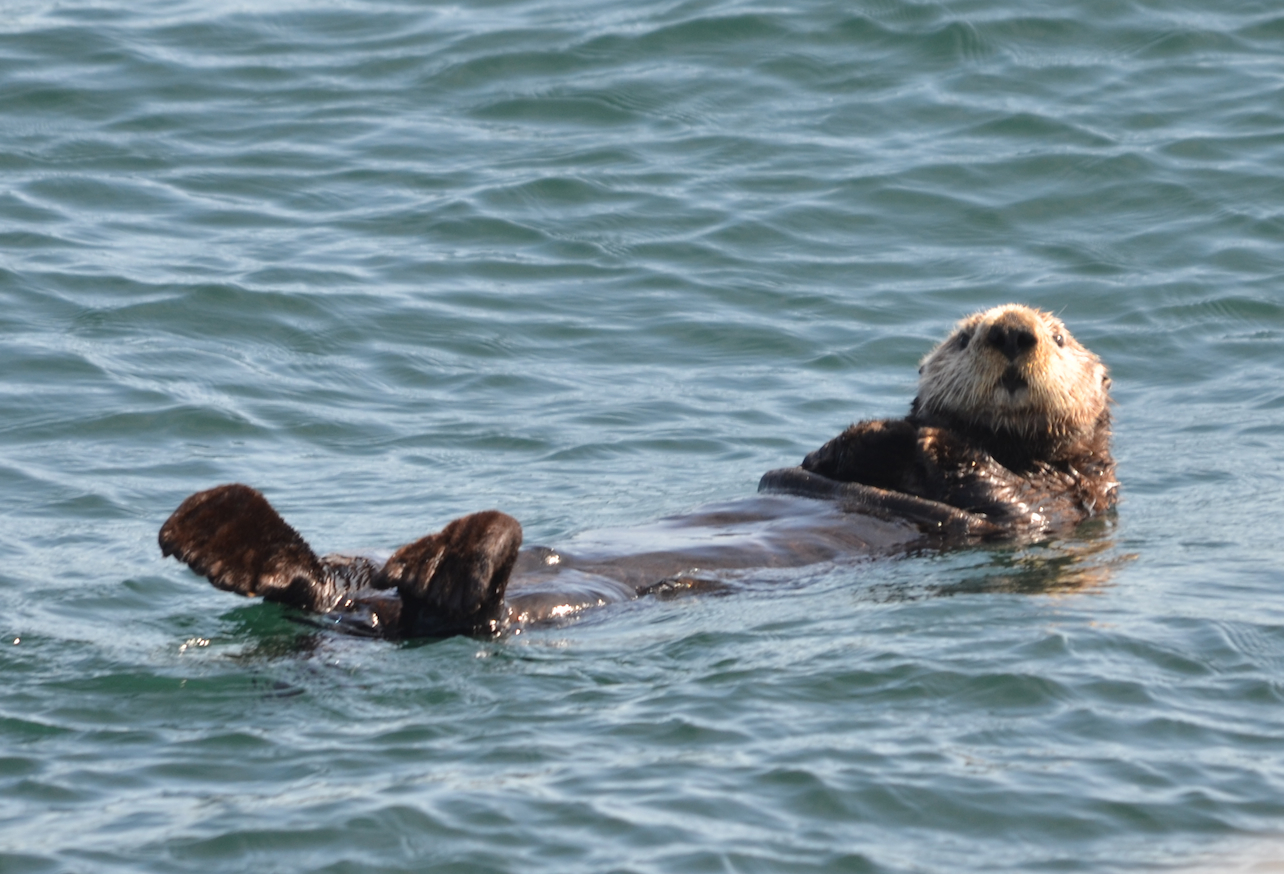
41b Small: always in the water,often  lies in kelp beds on back sea otter